

October 2026 | Bulletin num.192 |
Subscribe
|
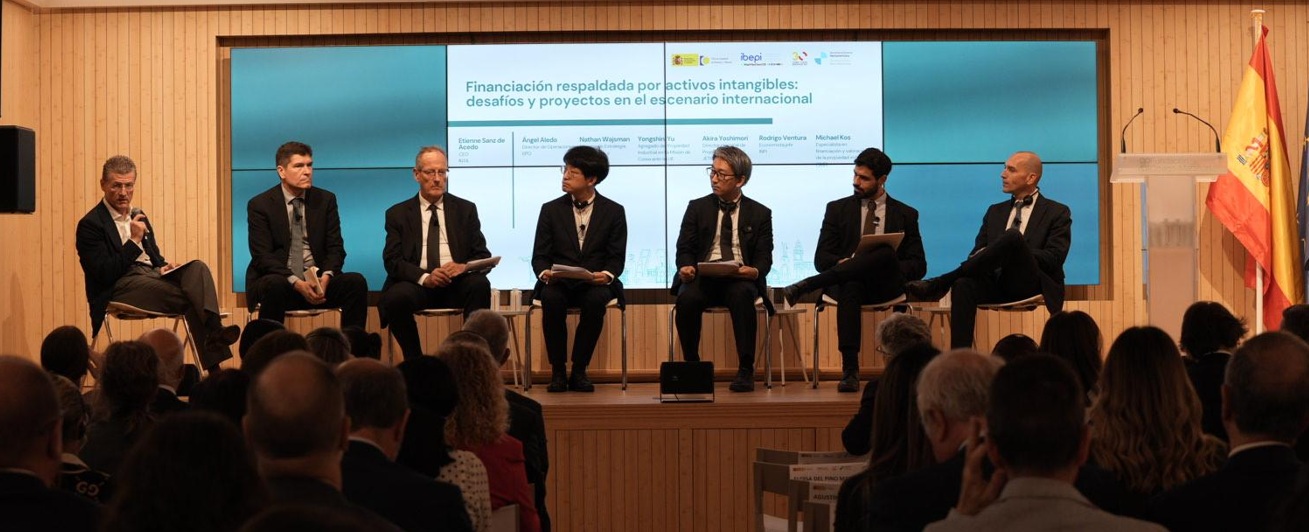
Ibero-American High-Level Conference: Backed Finance by Intangible Assets In early October, a High-Level Conference of the Ibero-American Program for Industrial Property and Development Promotion (IBEPI) was held in Madrid. The discussion centered on how to ensure that intangible assets serve as collateral for their owners to obtain financing. In the words of the Minister of Industry and Tourism, Jordi Hereu, there is a paradox in the field of innovation: Although intangible assets (trademarks, patents, and designs) currently account for most of a company’s value, financial institutions do not take them into account when assessing risk for granting loans to finance new projects. This debate takes on special relevance in an international context in which the European Union (EU) seeks to strengthen its industry and productive base as a way to ensure the preservation of the welfare state. Europe’s commitment to innovation is channeled through the strategic use of industrial property (IP) tools, which give industry greater identity and strength, ensure access to global markets, and significantly increase the competitiveness of SMEs and startups. The President of the European Patent Office (EPO), António Campinos, emphasized the shared need in Ibero-America and Europe to transform their scientific knowledge into innovative projects channeled through companies and entrepreneurs who bring them to the broader society. The EPO President stressed that these capabilities exist in both regions but noted that a lack of funding represents a stumbling block to undertaking new projects. Intangible assets already inspire confidence in investors today, and companies that own them are more likely to secure financing and attract capital. However, the challenge lies in establishing a standardized system in which industrial property rights serve as formal collateral for the financial sector. “We must bring the security offered by companies’ tangible assets on par with that provided by intangible assets,” Campinos asserted. Financing backed by intangible assets therefore requires a widely accepted international methodology that allows for the precise evaluation of their value. Hence the need to cooperate in jointly building a system that enables further progress along this path. The Executive Director of the European Union Intellectual Property Office (EUIPO), Joao Negrao, highlighted the competitiveness gap that currently exists between European companies, on the one hand, and those in more developed countries, such as China and the United States, on the other. Referring to the Draghi Report, “The Future of European Competitiveness,” he highlighted the need for European companies to grow in size. Elisa Rodríguez, director of the Spanish Patent and Trademark Office (OEPM), emphasized the objectives of the IBEPI Program during the Spanish presidency and the promotion of technical and political cooperation among countries in the region to bring the program closer to the productive sector. “We must be able to provide greater legal certainty to users of the industrial property ecosystem and listen to their needs,” she said. The event consisted of two roundtable discussions featuring several of the most renowned international professionals in the fields of innovation and industrial property, along with public sector officials and representatives from private organizations, such as the International Trademark Association (INTA). The first panel focused on the need to move beyond the purely legal dimension of intangible assets and unlock their full potential as tools capable of supporting the securing of financing for the development of new projects. The task of accurately assessing the value of, for example, a patent is by no means simple. The very intangible nature of these assets and the large number of variables involved—such as the manufacturing cost of products that use the technology covered by the patent or the economic sector in which the business operates—make valuation a complex challenge. The methodology used in this calculation must be constantly updated by incorporating and analyzing data, thereby enhancing the confidence of investors and global financial institutions. One of the challenges lies in helping the global banking sector understand the enormous potential and significant returns that IP rights provide to their owners, so that they can incorporate intangible assets as factors to consider in their risk analyses when granting or denying credit. National IP offices around the world, in collaboration with international organizations and other stakeholders in the ecosystem, face the mission of providing the market with reliable assessment tools that build confidence among financial institutions and promote greater access to credit for the development of new innovation projects. The way to achieve this is by bringing innovative companies and financial institutions to the same table and serving as the facilitator of that dialogue. Achieving this goal is especially important for SMEs and startups, which face greater difficulties in accessing financing, despite making up the bulk of the global productive fabric. The second panel focused on the Ibero-American perspective on this issue, and representatives from Brazil, Guatemala, Portugal, Peru, and Mexico shared their experiences in this area and had the opportunity to describe some of the pilot projects they are developing in their respective countries to further explore the use of financing backed by intangible assets. The conference concluded with remarks by Pablo Garde, Undersecretary of Industry and Tourism and President of the OEPM, who reiterated the importance of international cooperation and multilateralism as a means of making faster and more solid progress toward achieving shared regional objectives in Ibero-America and Europe.
|