Si deseas distinguir tus productos, servicios o ambos de los de otra empresa, es posible que necesites una marca o nombre comercial. Descubre qué son, en qué consiste su procedimiento de registro y qué implica.

Información sobre los plazos de presentación de solicitudes de transformación de marcas de la Unión Europea en marca nacional española. Más información


Si tienes un nuevo dispositivo, producto o procedimiento que resuelva un problema técnico o tenga una ventaja práctica, existen distintas formas de protegerlo en España y en otros países. Descubre cómo hacerlo.

¿Tu innovación reside en la estética, la ornamentación o la apariencia de tu producto? Protégela mediante un diseño industrial. Descubre qué derechos confiere el registro y cómo realizar la tramitación.

Las indicaciones geográficas protegen el nombre de un producto originario de una zona geográfica, a la cual le debe una determinada calidad, reputación u otra característica. Descubre qué son, en qué consiste su procedimiento de registro y qué beneficios conceden.

Las patentes publicadas en todo el mundo son una valiosa fuente de información científica, técnica y comercial.

Si eres emprendedor/a o una empresa y quieres potenciar y mejorar la rentabilidad de tu negocio protegiendo de forma adecuada los activos intangibles de tu organización, en este espacio encontrarás lo necesario.


 345
resultados
345
resultados
 Última actualización
02/07/2026 [11:25:00]
Última actualización
02/07/2026 [11:25:00]


 Resultados 325 a 345 de 345
Resumen de: EP4760607A2
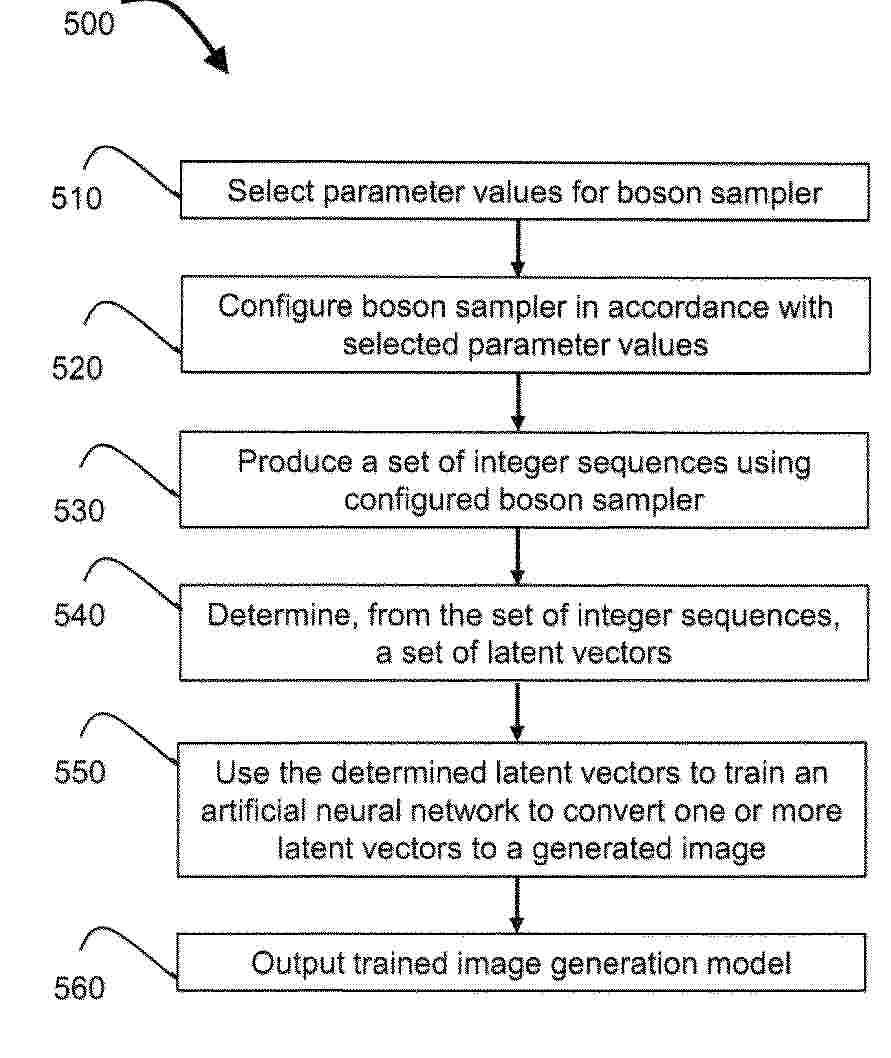
Methods are provided for generating a dataset (e.g., an image). According to an example, the method comprises controlling a boson sampler to produce one or more integer sequences, each of the one or more integer sequences representative of a measurement outcome of one or more photodetectors of the boson sampler; determining, from the one or more integer sequences, one or more latent vectors; and using the determined set of latent vectors, training an artificial neural network (ANN) to convert one or more latent vectors to a generated dataset. Methods for using the trained ANN are also provided. Systems and computer-readable storage media are also described.

Resumen de: EP4760603A1
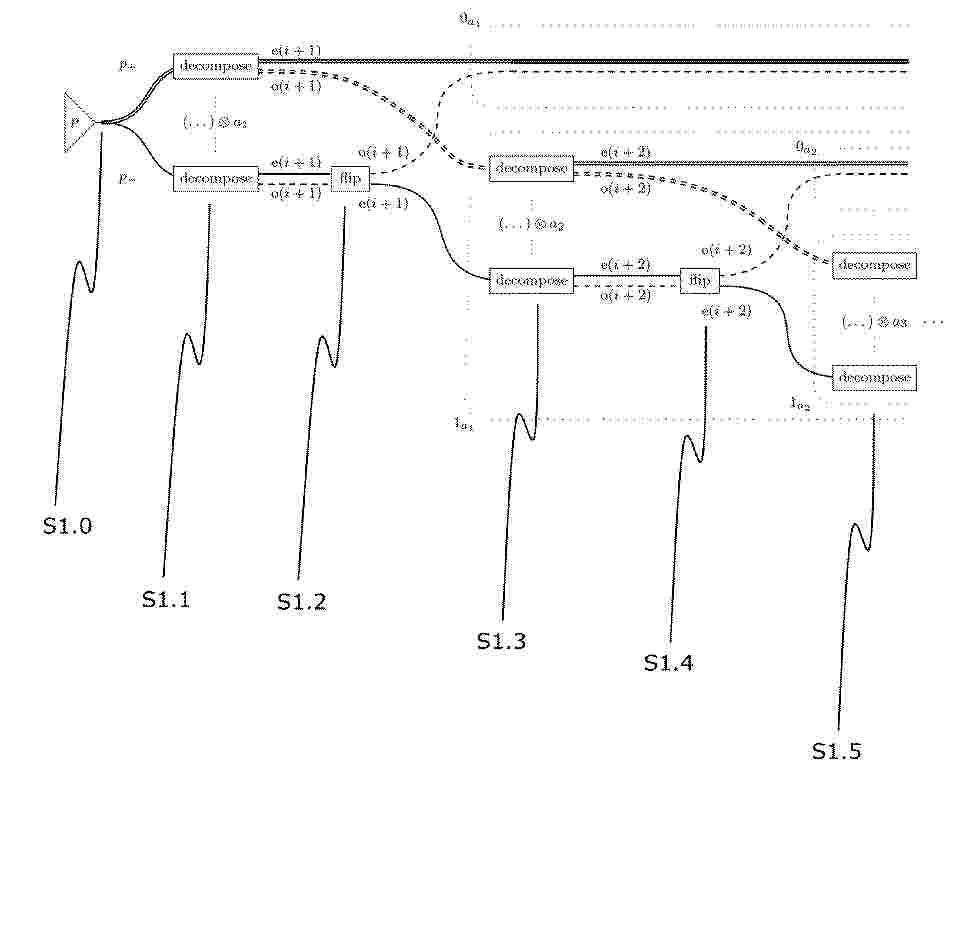
Disclosed is a method and a quantum circuit to be utilised for performing a multi-step quantum basis state shift. For a state vector space having the size of 2N+1, a full shift register comprises N+1 qubits. A last qubit (qN+1) of the full shift register is a superposition qubit, which allows for defining a superposition of substates. The superposition qubit is used to determine which substates are to be incremented and which substates are to be decremented. Even substates to be incremented can be incremented by simply applying a step of inverting an i+1th qubit (qi+1), namely a step qubit. Similarly, odd substates to be decremented can be decremented by applying the same step of inverting. Remaining steps of the quantum circuit are employed to perform a rearrangement of the even substates to be incremented, the even substates to be decremented, the odd substates to be incremented, and the odd substates to be decremented, such that applying the step of inverting performs the multi-step quantum basis state shift in one go.
Resumen de: EP4760728A1
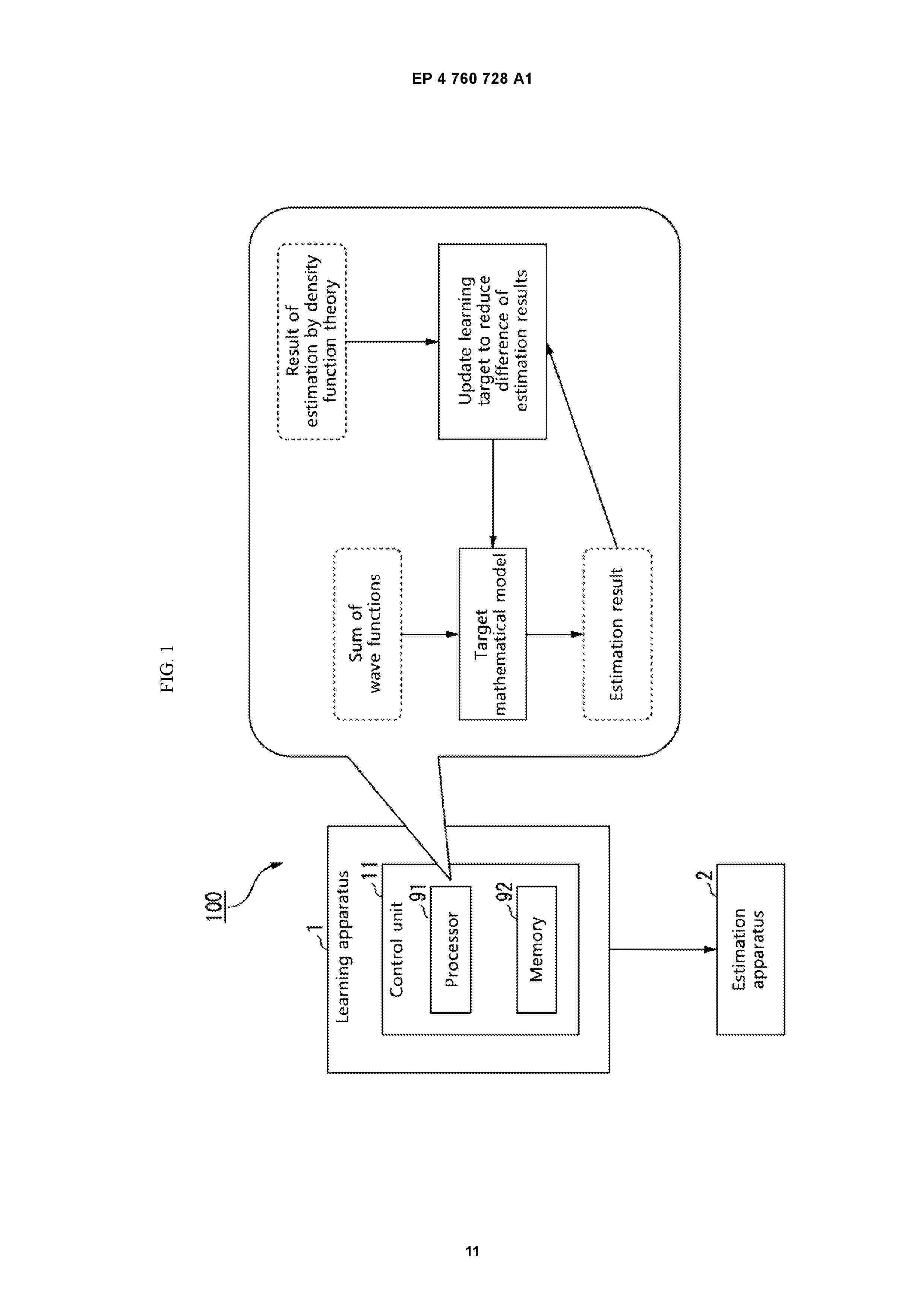
The present disclosure is designed to improve the accuracy of total energy estimation by neural network potential (NNP). An aspect of the present disclosure provides a learning apparatus including a control unit to carry out learning of an estimation model which is a mathematical model for energy estimation of an analysis target atom based on an evaluation target feature quantity indicating a first sum to a u-th sum, wherein the u-th sum is a sum of a three-dimensional (3D) wave function representing a u-th atomic orbital of the evaluation target atom located in a system including one or more atoms in descending order of occupied energy potential, and a 3D wave function of a u-th atomic orbital of each of other atoms in the system within a predetermined range of distances from the evaluation target in descending order of occupied energy potential, wherein in the learning, the estimation model is updated to reduce a difference between the sum of results of executing the estimation model for each atom in the system and the energy of the system estimated by density functional theory.
Resumen de: EP4760604A1
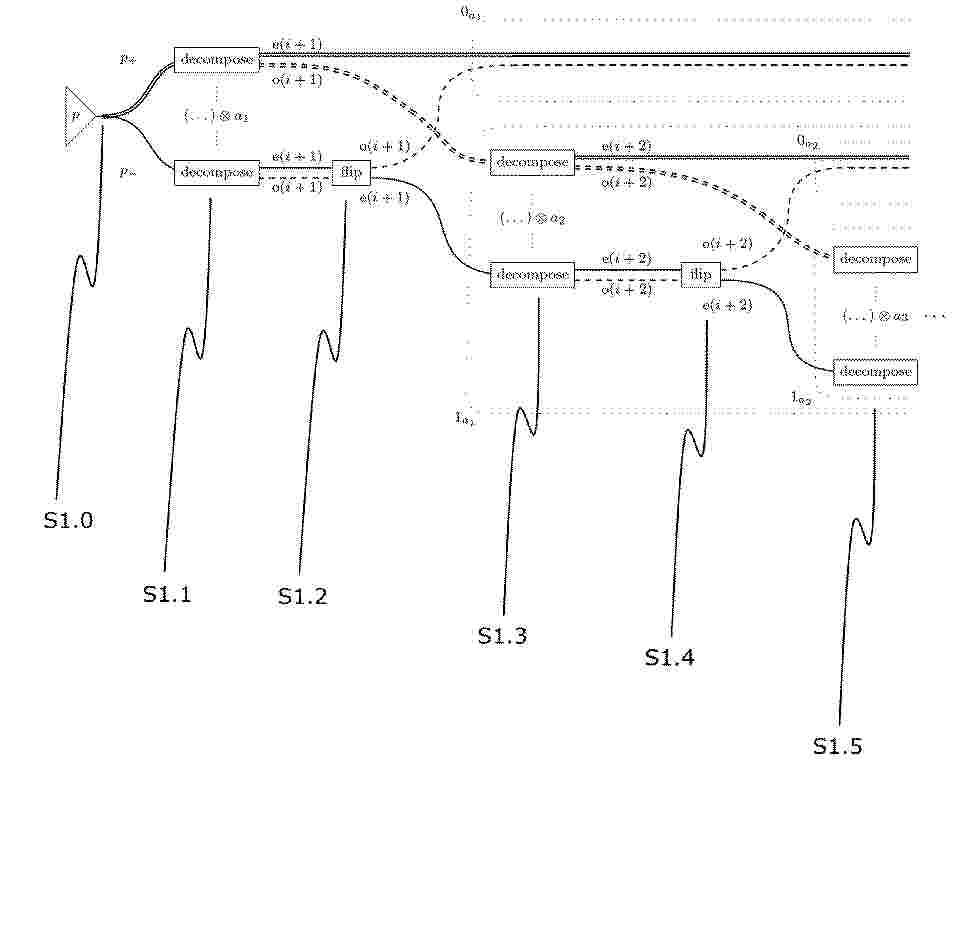
Disclosed is a method and a quantum circuit to be utilised for performing a multi-step quantum basis state shift. For a state vector space having a size of 2N+1, a full shift register comprises N+1 qubits. A last qubit (qN+1) of the full shift register is a superposition qubit, which allows for defining a superposition of substates. The superposition qubit is used to determine which substates are to be incremented and which substates are to be decremented. Even substates to be incremented can be incremented by simply applying a step of inverting an i+1th qubit (qi+1), namely a step qubit. Similarly, odd substates to be decremented can be decremented by applying the same step of inverting. Remaining steps of the quantum circuit are employed to perform a rearrangement of the even substates to be incremented, the even substates to be decremented, the odd substates to be incremented, and the odd substates to be decremented, such that applying the step of inverting performs the multi-step quantum basis state shift in one go.
Resumen de: EP4760605A1
Disclosed is a method and a quantum circuit to be utilised for performing a multi-step quantum basis state shift. For a state vector space having a size of 2N+1, a full shift register comprises N+1 qubits. A last qubit (qN+1) of the full shift register is a superposition qubit, which allows for defining a superposition of substates. The superposition qubit is used to determine which substates are to be incremented and which substates are to be decremented. Even substates to be incremented can be incremented by simply applying a step of inverting an i+1th qubit (qi+1), namely a step qubit. Similarly, odd substates to be decremented can be decremented by applying the same step of inverting. Remaining steps of the quantum circuit are employed to perform a rearrangement of the even substates to be incremented, the even substates to be decremented, the odd substates to be incremented, and the odd substates to be decremented, such that applying the step of inverting performs the multi-step quantum basis state shift in one go.
Resumen de: EP4760606A1
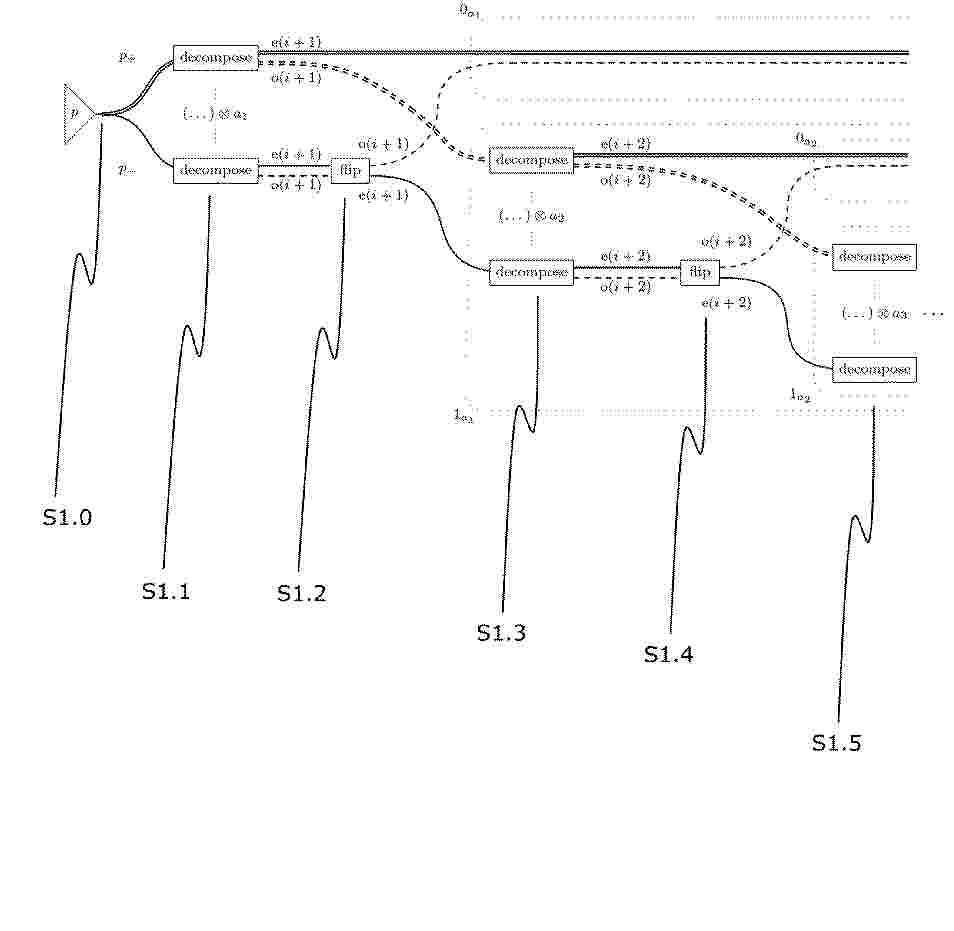
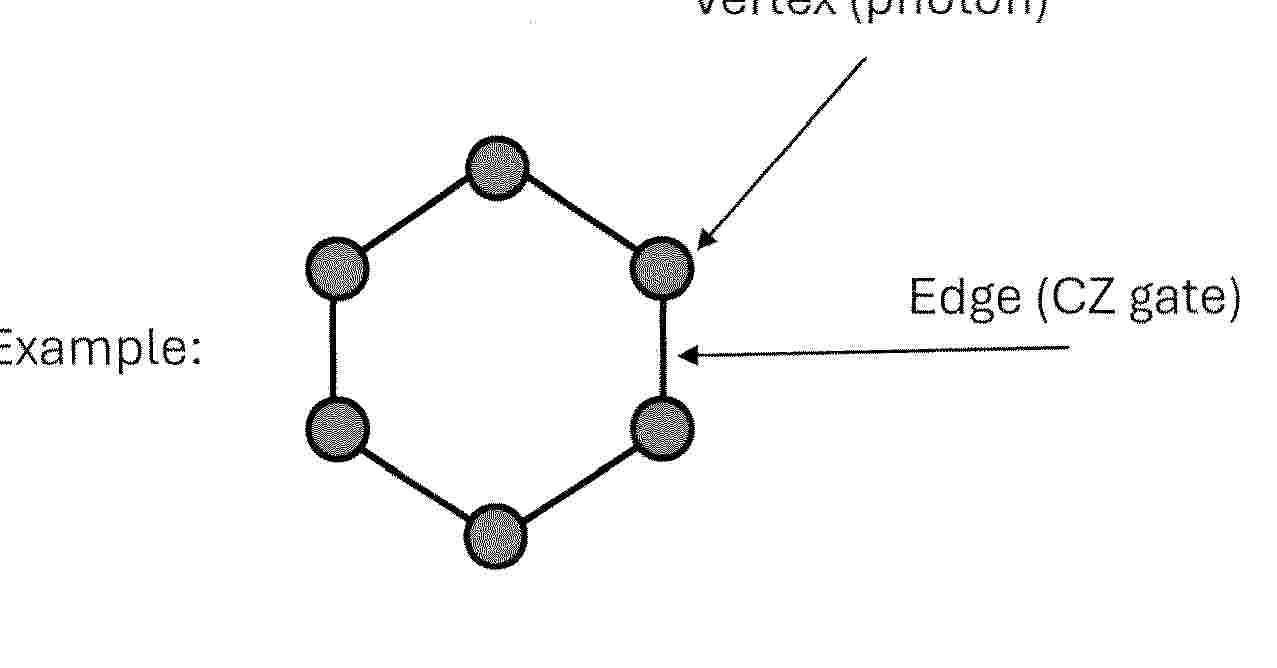
The present invention relates to a system and a method for generating entangled states of multiple quantum sources, capable of producing photonic qubits. The system includes a classical controller and various modules (pulse generation, source, multiplexing, entanglement, crossing network) controlled by the controller. Each pulse generation module controls a laser beam to control quantum sources, which generate photonic qubits. Photons are routed through switches, some directly to the entanglement module, and a crossing network creates two groups of photonic qubits for processing or release. The multiplexing module addresses each processed photonic qubit to a specific output at a designated time. The entanglement module applies quantum gates to selected quantum sources and measures their state
Resumen de: EP4760279A1
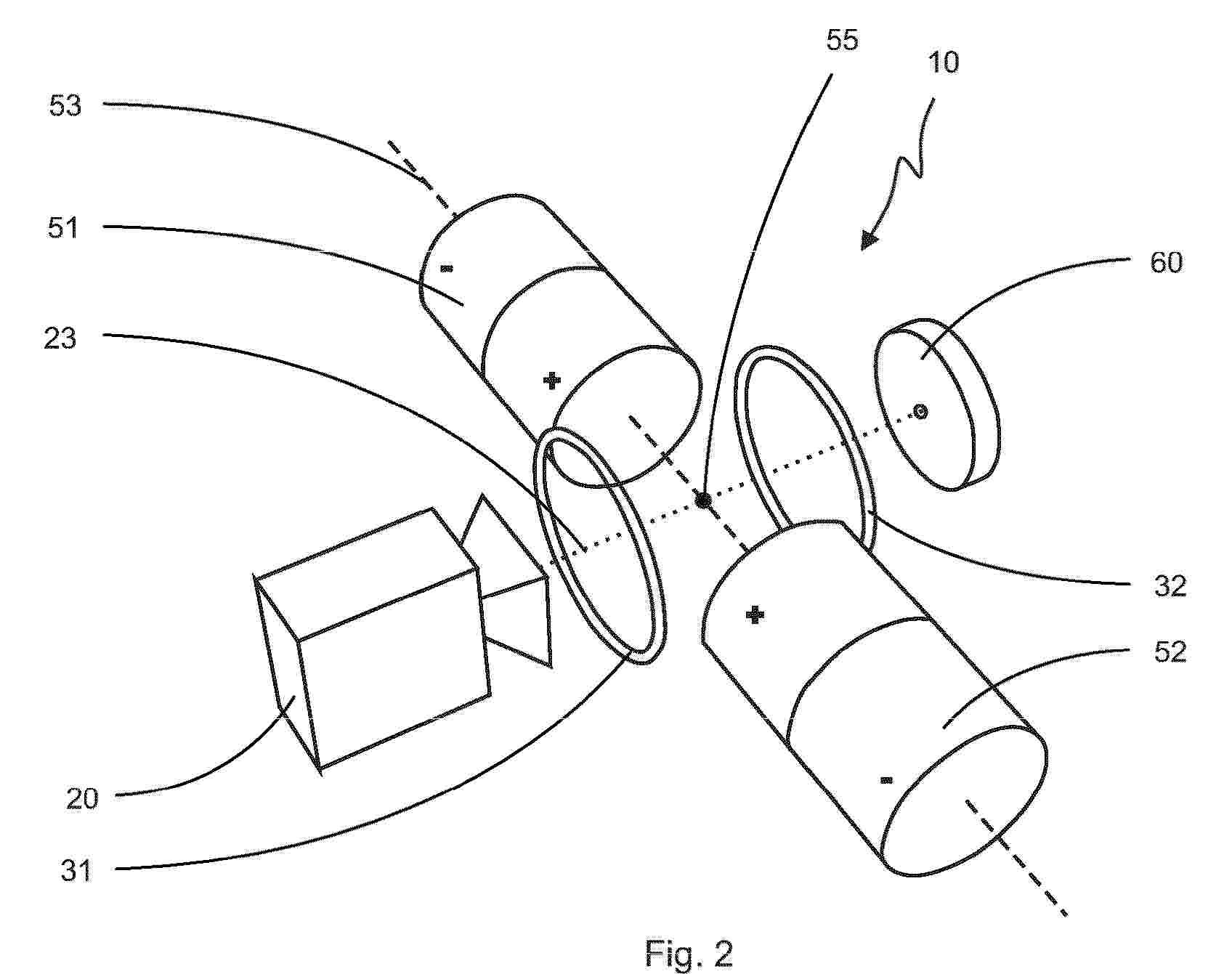
A method and detection system for detecting gauge waves from a quantum system. The method comprising generating a non-zero gradient in the time-component of the electric field, such that gauge waves are converted to electromagnetic waves and detecting transversal electromagnetic waves originating from the conversion. The non-zero gradient in the time component may be generated by a magnetic vortex. The magnetic vortex may be generated by a first magnetic field generator and a second magnetic field generator generating fields being oppositely directed along a magnetic axis and being subjected to an electric pulse applied perpendicularly to the magnetic field.
Resumen de: EP4760591A1
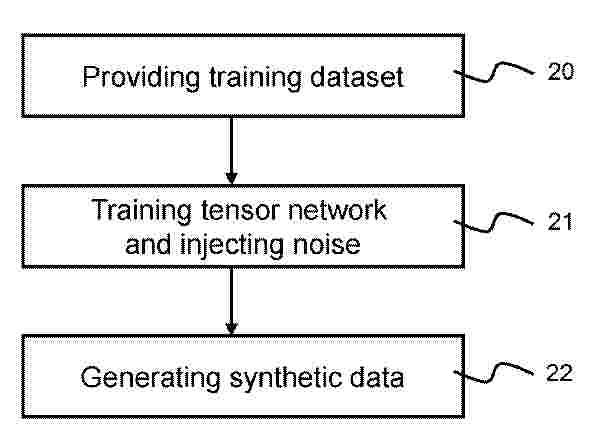
The present disclosure pertains to a computer-implemented method for generating synthetic data. The method comprises: providing a tensor network including a plurality of tensors and a training dataset including at least one training data string; training the tensor network with respect to the training dataset by gradient descent, comprising the following steps: determining a tensor network gradient from the tensor network, the tensor network gradient being evaluated using the training dataset; applying noise to the tensor network gradient; and adjusting the tensor network based on the tensor network gradient. The method further comprises generating, from the tensor network, synthetic data including a synthetic data string. Each component to be sampled of the synthetic data string is generated according to a sample probability which is a marginal probability for the component or a conditional probability conditioned on at least one value of a further component of the synthetic data string; and at least one of determining the marginal probability and determining the conditional probability comprises separating, for the component, a corresponding partial tensor network from the tensor network and determining a squared norm of the corresponding partial tensor network. Further, a data processing system, a computer program product, and a computer-readable medium are disclosed. (Fig. 2)
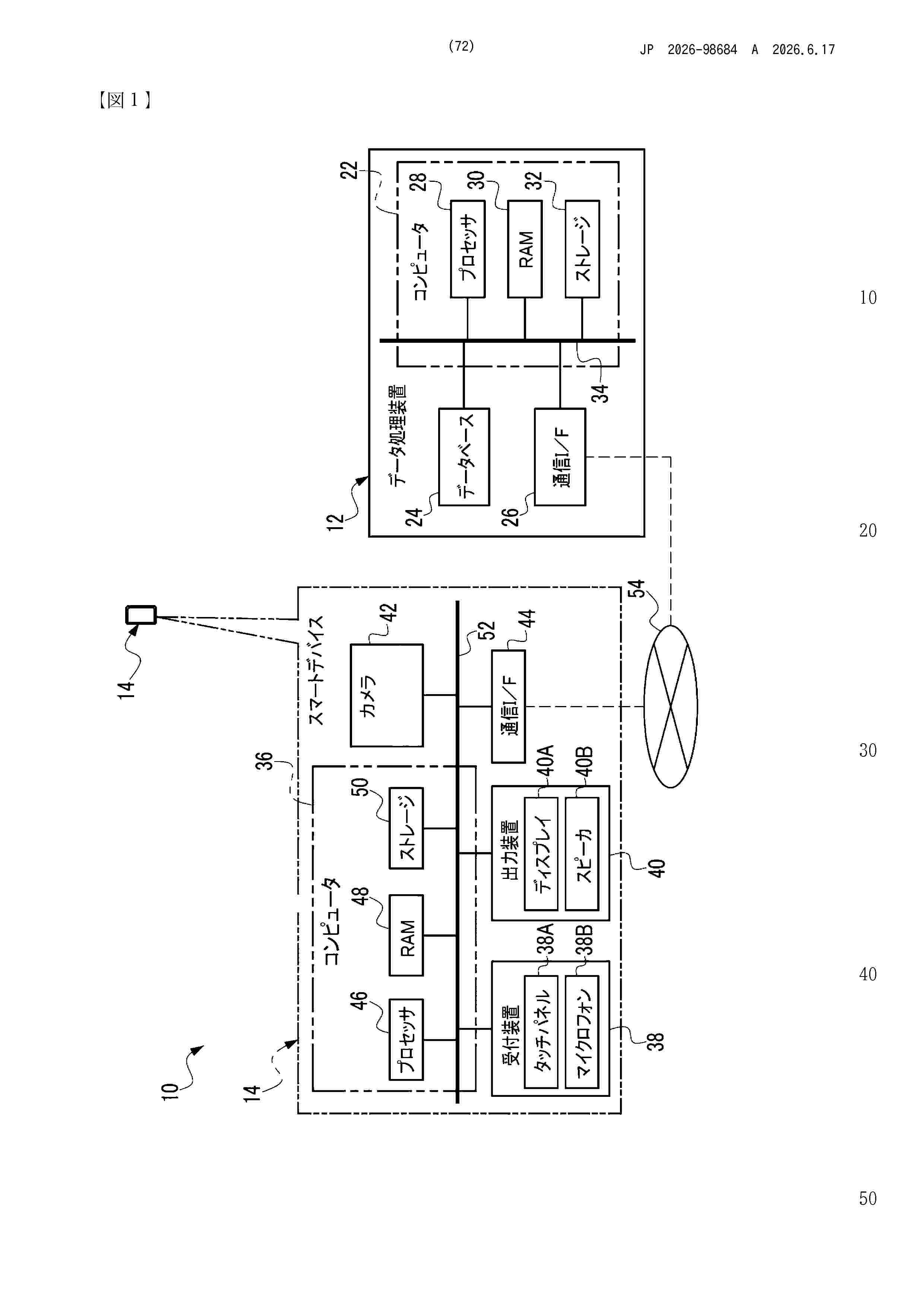
Resumen de: JP2026098684A
【課題】システムを提供する。【解決手段】自然言語処理手段を用いて、ユーザとの会話データを解析し、キーワードや文脈を抽出する手段と、抽出された情報に基づき、会話データをあらかじめ定義されたカテゴリに自動分類する手段と、分類された会話データをユーザの履歴データベースに記録し、検索可能に整理する手段と、期限付きタスクを会話から特定し、ユーザにリマインダーを設定するための手段と、ユーザが分類された会話履歴にアクセスし、検索するためのダッシュボードを提供する手段と、を含むシステム。【選択図】図1
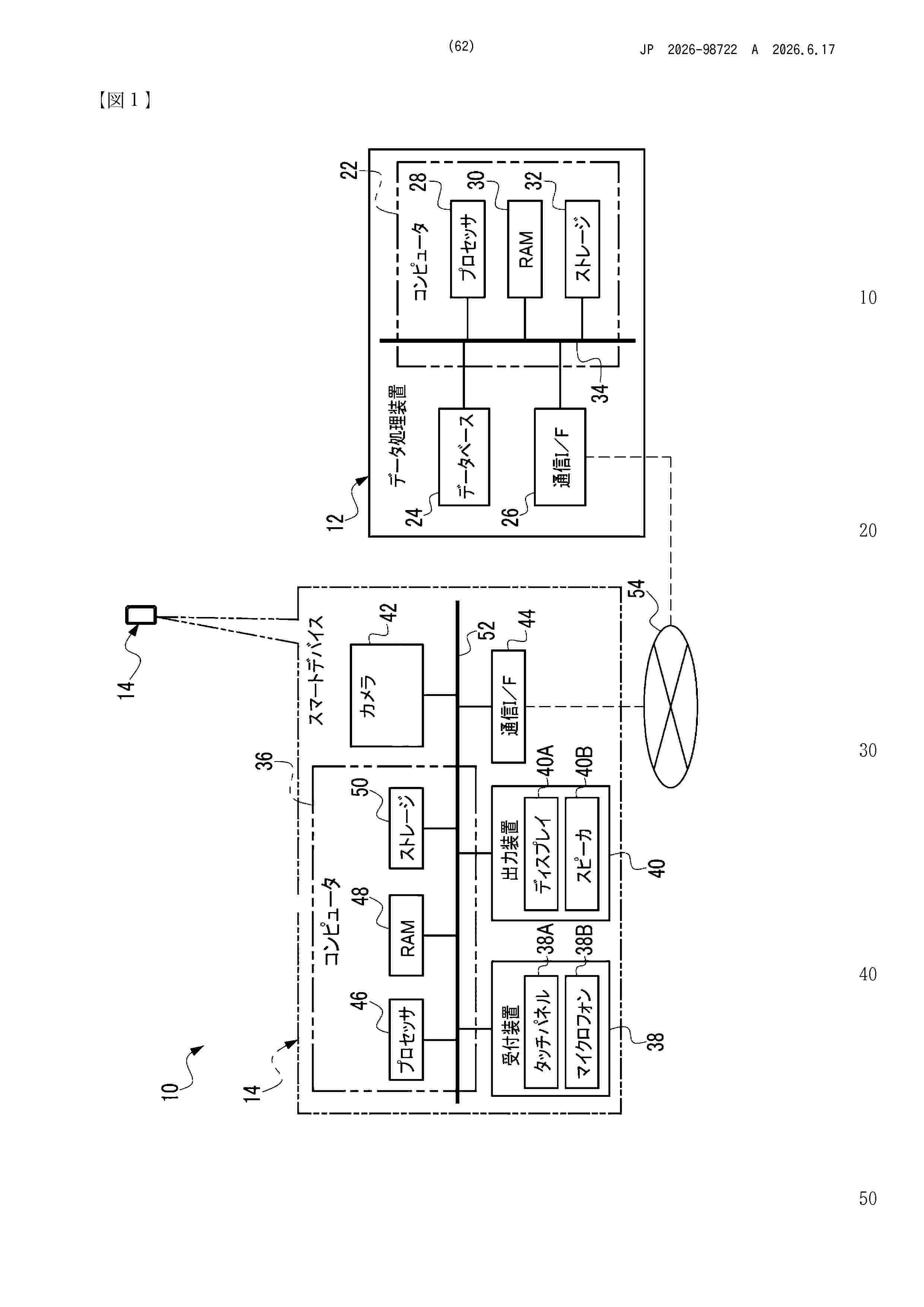
Resumen de: JP2026098722A
【課題】システムを提供する。【解決手段】生成型人工知能を用いて、教育施設からの質問を解析し、適切な学習回答を生成する手段と、生成された学習回答を利用者端末に送信する手段と、利用者端末に送信された学習回答を表示する手段と、を含むシステム。【選択図】図1
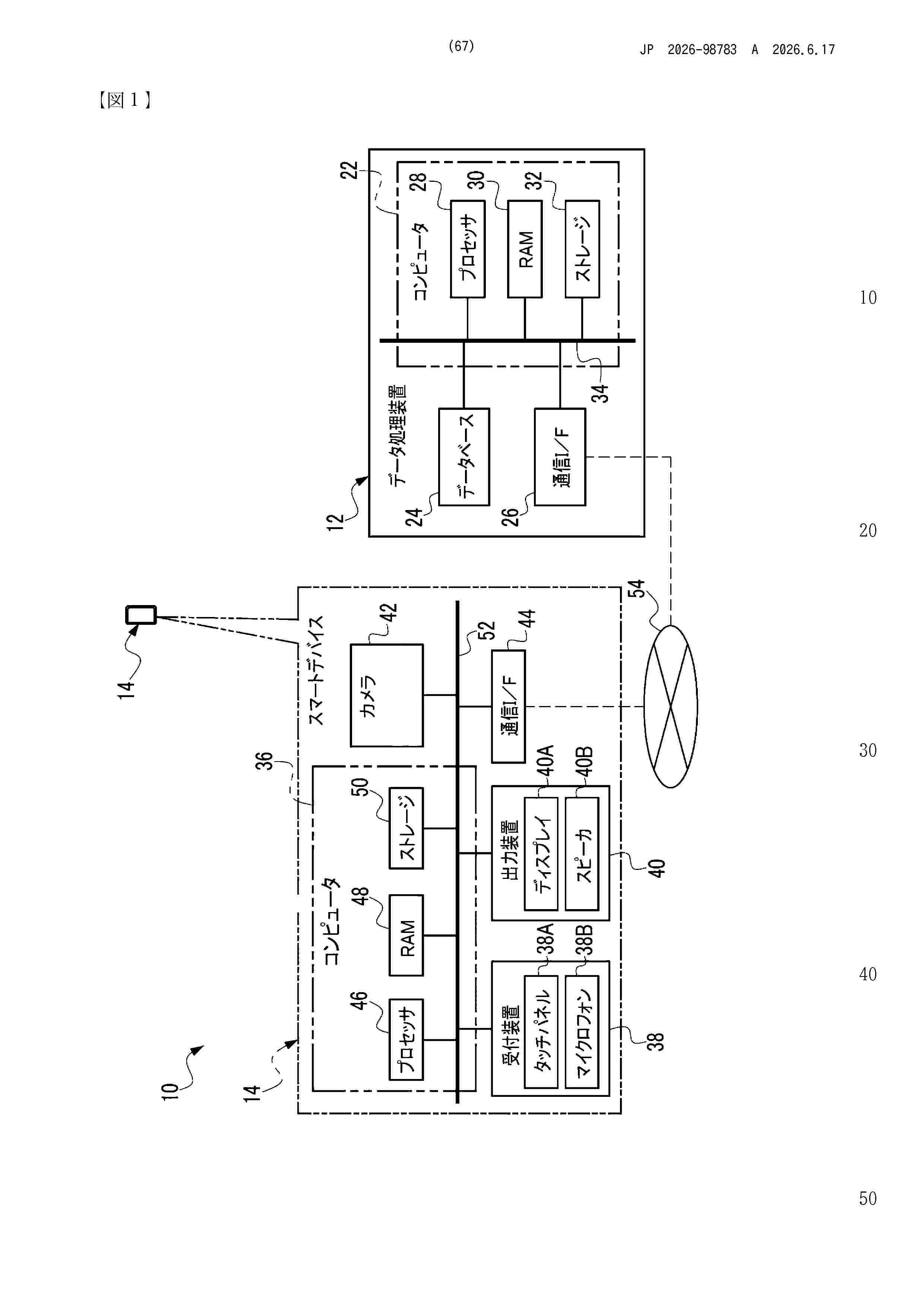
Resumen de: JP2026098783A
【課題】システムを提供する。【解決手段】エネルギー利用データを収集し、データベースに格納する情報収集手段と、前記エネルギー利用データを解析し、エネルギー消費のパターンを特定するデータ解析手段と、前記解析結果に基づいて再生可能エネルギーの利用を最適化する戦略を立案する戦略提案手段と、前記戦略を視覚的に表示し、ユーザからのフィードバックを受け取るインターフェース手段と、を含むシステム。【選択図】図1
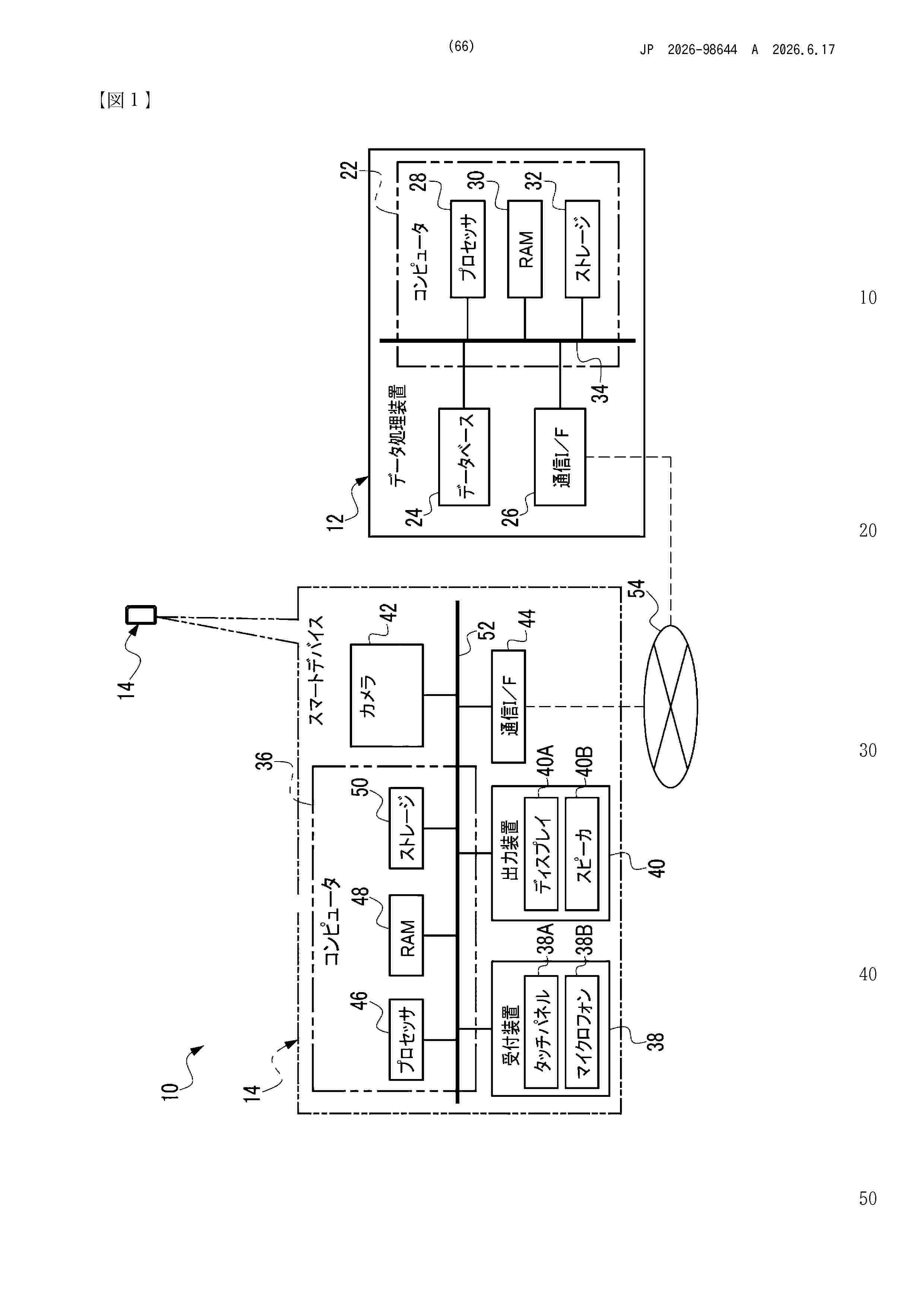
Resumen de: JP2026098644A
【課題】システムを提供する。【解決手段】ユーザーの入力に基づいて、多様な特性を有する異なる人工知能モデルを切り替える手段と、選択された人工知能モデルに対応したデータおよび設定をロードする手段と、ユーザーの意図に応じた応答を生成し、ユーザーに提供する手段と、ユーザーが特定の人工知能モデルをコレクションとして保存する手段と、を含むシステム。【選択図】図1
Resumen de: JP2026098826A
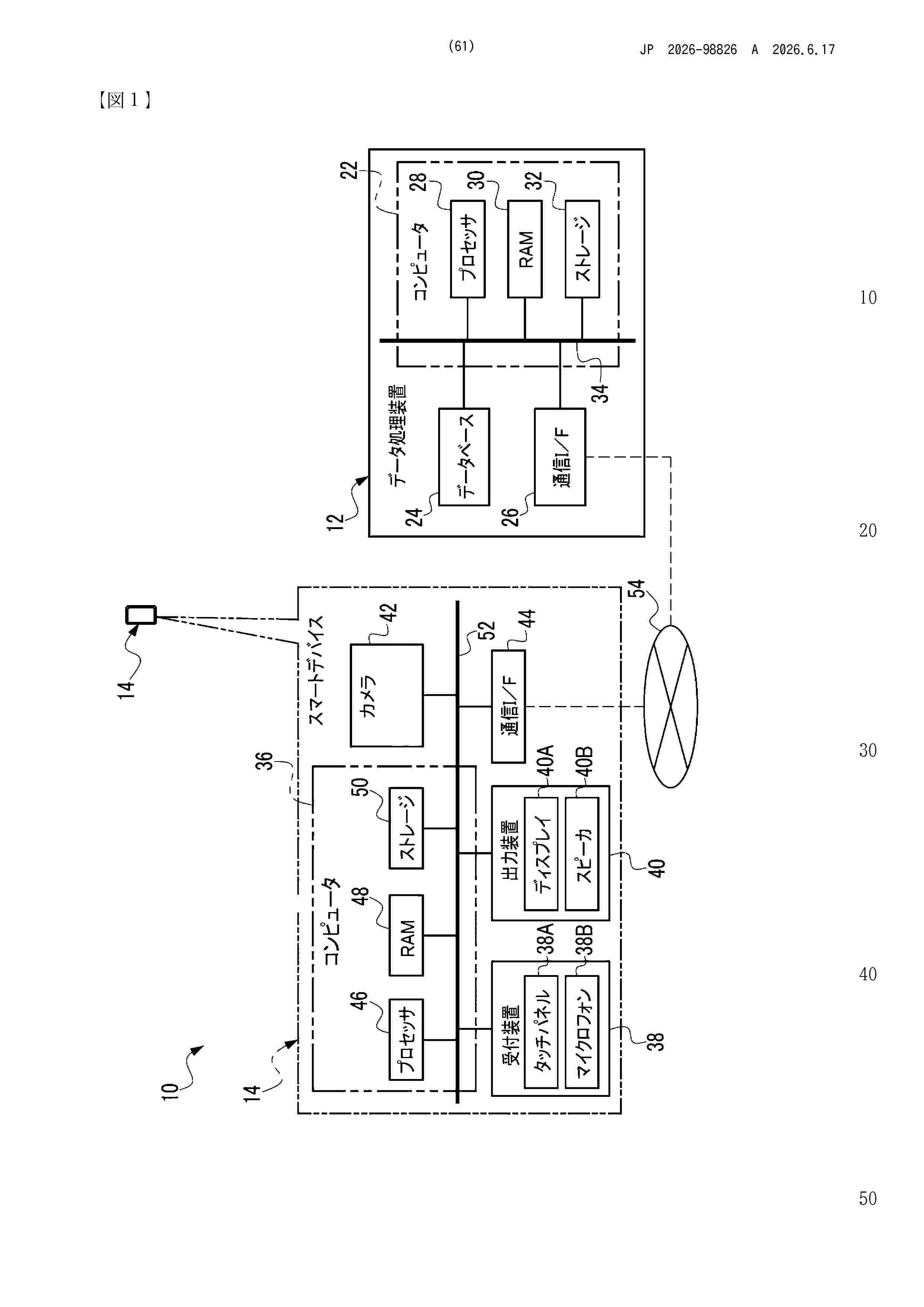
【課題】システムを提供する。【解決手段】無線通信信号を監視し、その変化を記録する手段と、記録された信号データを前処理してデータ解析が可能なフォーマットに変換する手段と、前処理された信号データを解析し、環境内の物体または人間の動作を推定する機械学習モデルを含む手段と、解析された情報を利用者に提供するための手段と、を含むシステム。【選択図】図1
Resumen de: JP2026098583A
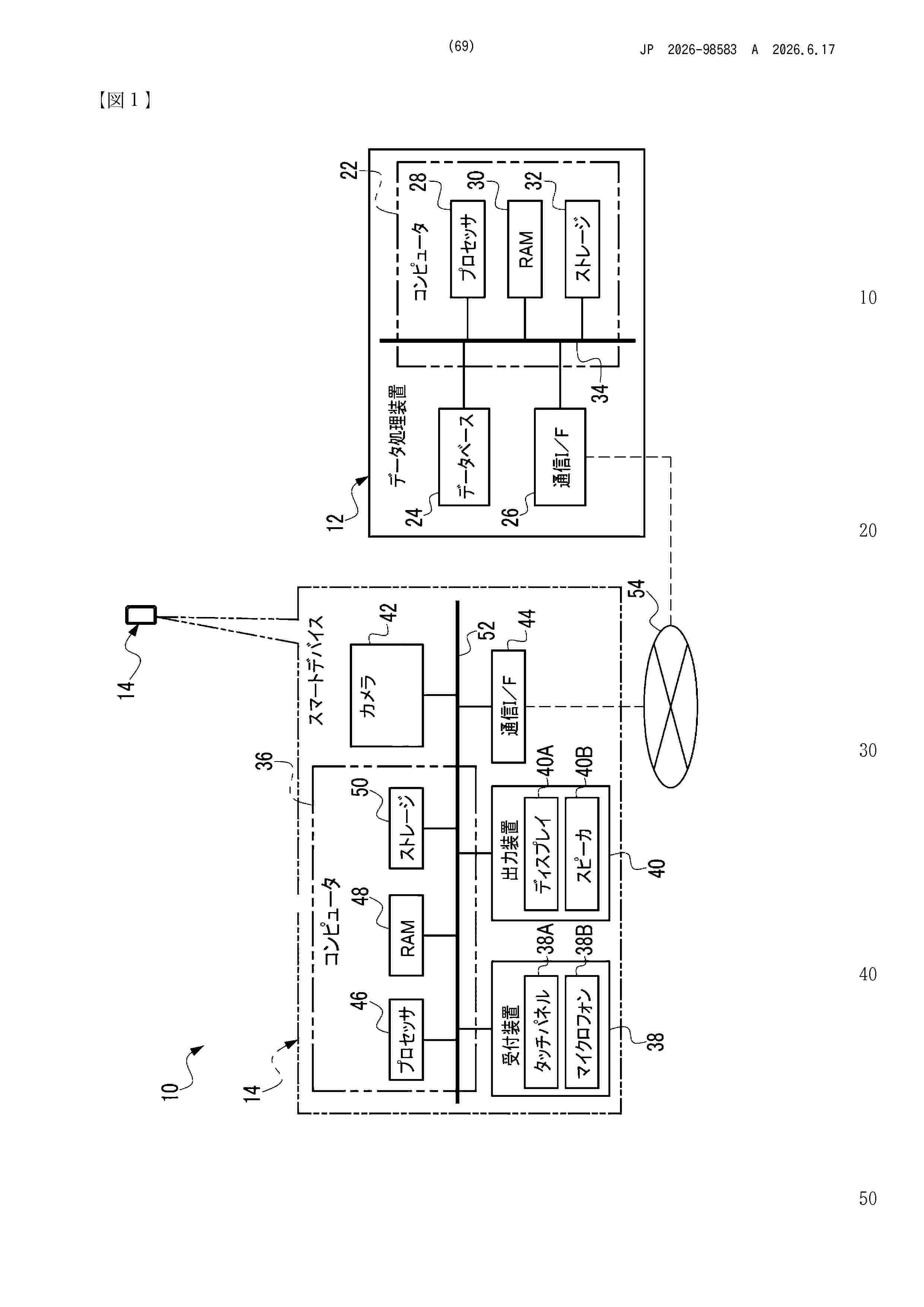
【課題】システムを提供する。【解決手段】プロジェクト要件を入力するための手段と、前記プロジェクト要件を解析する生成型人工知能を用いた演算手段と、前記解析されたプロジェクト要件を基に仮想環境を生成し視覚化する手段と、視覚化された仮想環境を利用してプロジェクトの実現可能性を評価する手段と、前記評価に基づいた分析結果を提示するための手段と、を含むシステム。【選択図】図1
Resumen de: EP4756680A1
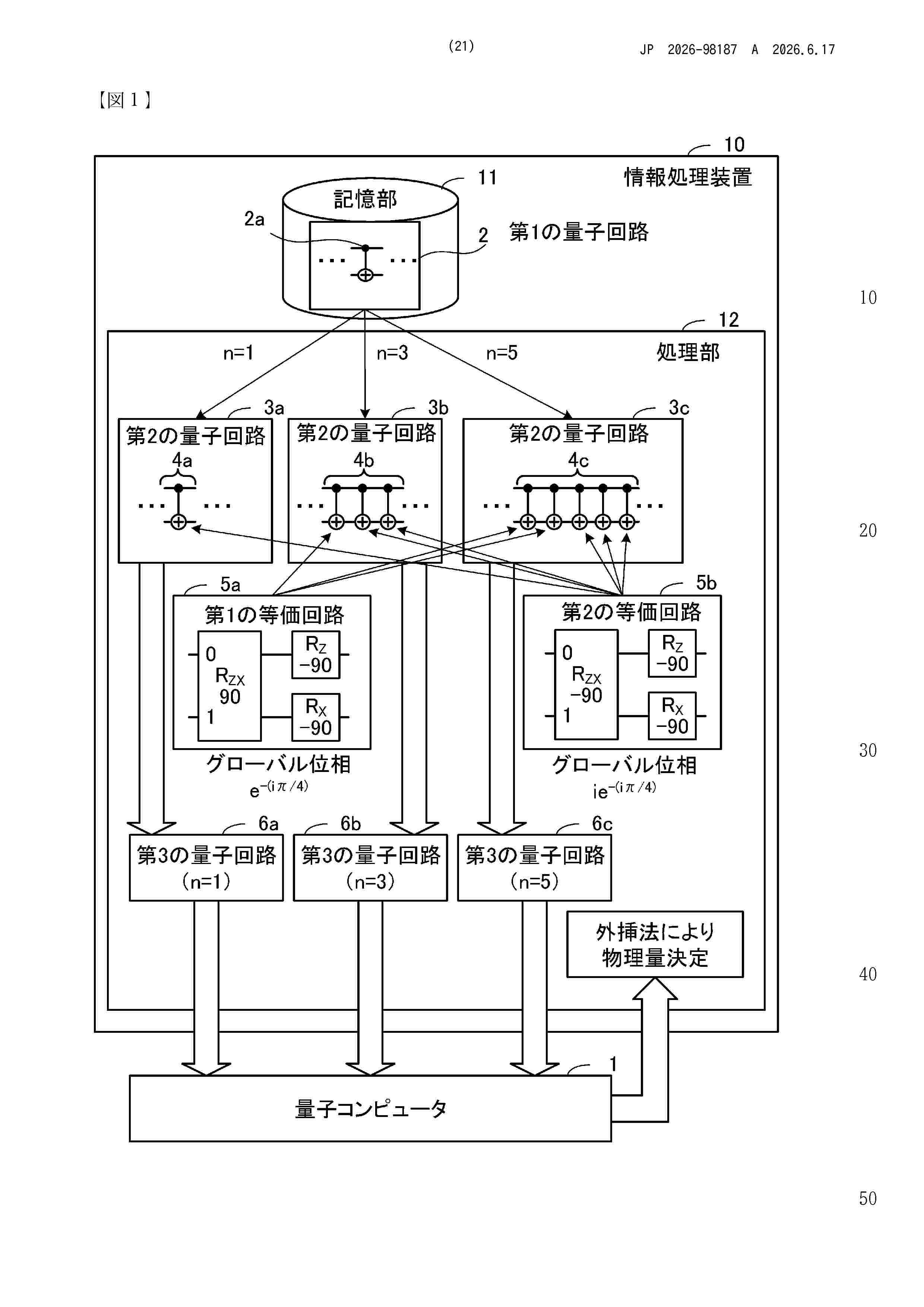
0001 An information processing apparatus generates a second quantum circuit by converting a first two-qubit gate included in a first quantum circuit into a two-qubit gate sequence in which the gate operation of the first two-qubit gate is repeated a predetermined number of times consecutively. The information processing apparatus converts a second two-qubit gate, which forms a part of the two-qubit gate sequence included in the second quantum circuit, into a first equivalent circuit representing a gate operation with a first global phase. In addition, the information processing apparatus converts a third two-qubit gate, which forms a part of the two-qubit gate sequence, into a second equivalent circuit representing a gate operation with a second global phase. Thus, a third quantum circuit is generated. The information processing apparatus then causes a quantum computer to execute the third quantum circuit.
Resumen de: EP4756677A1
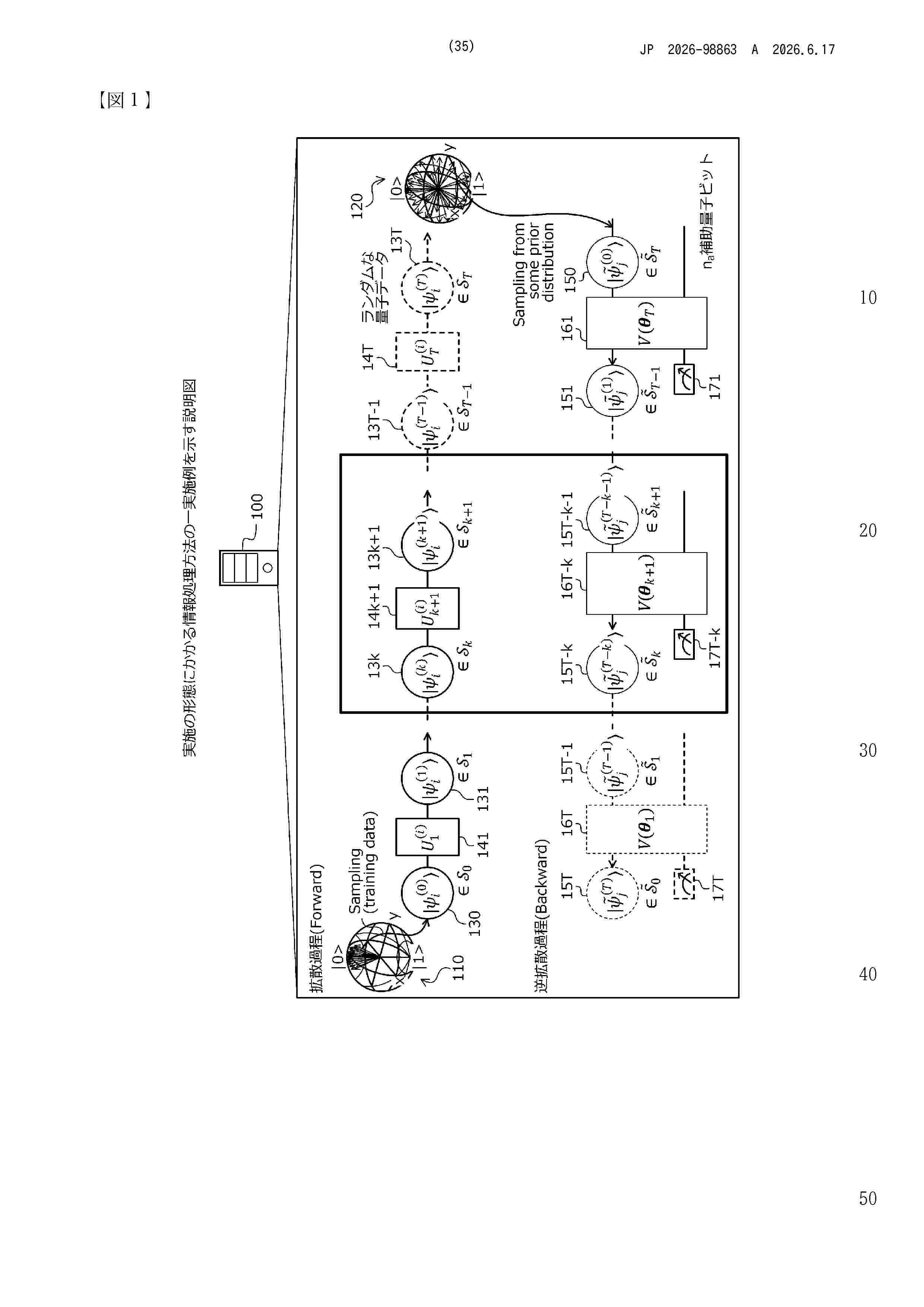
An information processing device generates a first data group that is before transformation at an a-th diffusion stage. The information processing device obtains a third data group that is generated by a second quantum circuit according to a second data group that is before transformation at a b-th reverse diffusion stage. The information processing device trains the first quantum circuit to discriminate the first data group as true and to discriminate the third data group as false. The information processing device trains the second quantum circuit so that the trained first quantum circuit discriminates the third data group as true. The information processing device sets the trained second quantum circuit as a variational quantum circuit expressing an operation of the b-th reverse diffusion stage.
Resumen de: WO2025035117A2
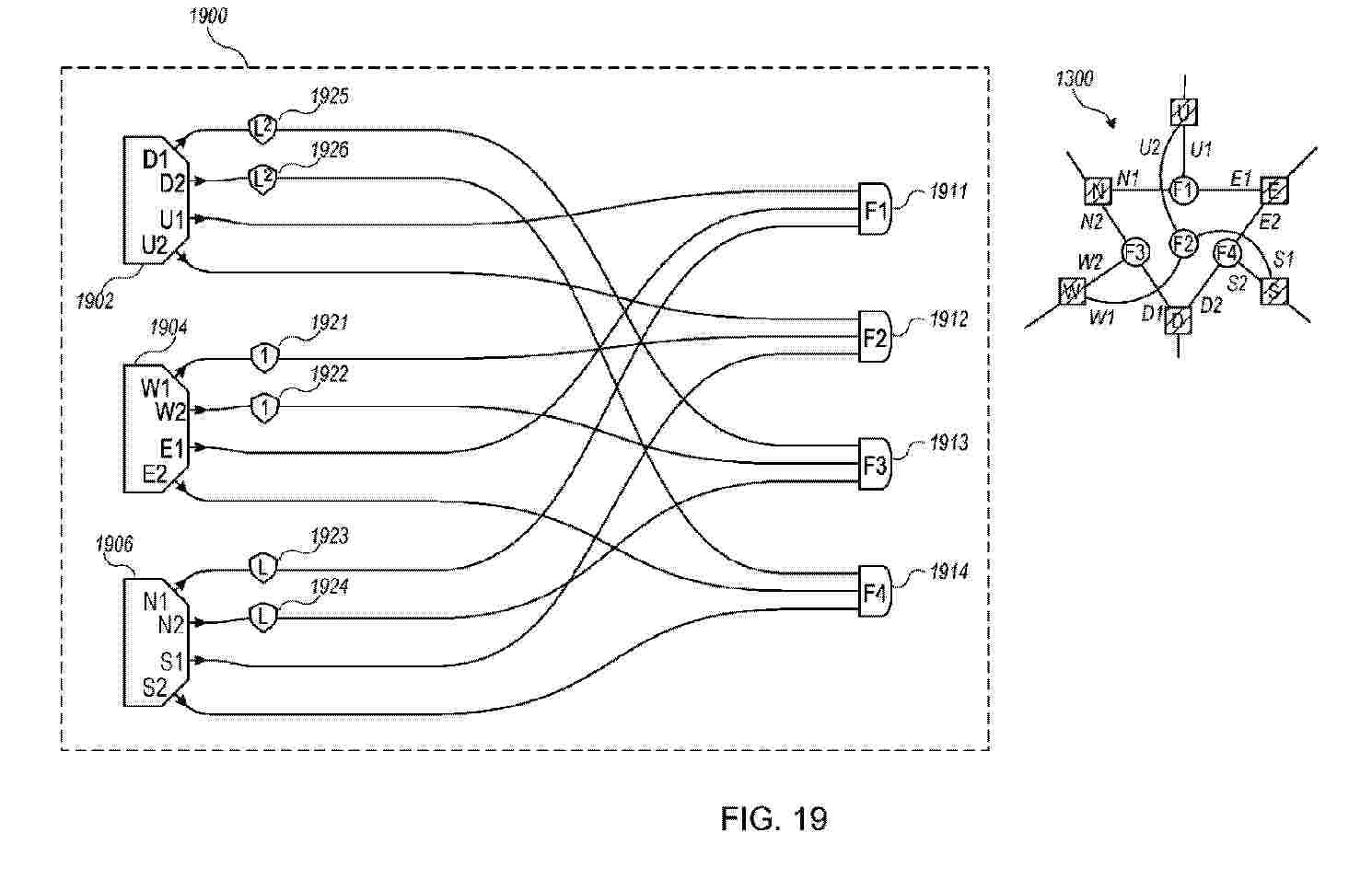
A system having reconfigurable fusion circuits can receive, obtain, or generate resource states, where each resource state includes multiple qubits that are entangled with each other and qubits of different resource states are not entangled with each other. Qubits of the resource states can be routed to the reconfigurable fusion circuits such that each fusion circuit receives a qubit from each of three or more of the resource states. The reconfigurable fusion circuits can selectably perform one of a number of measurement operations on the received qubits to produce measurement data. At least some of the selected measurement operations can be n-way fusion operations on all of the received qubits.
Resumen de: EP4760608A1
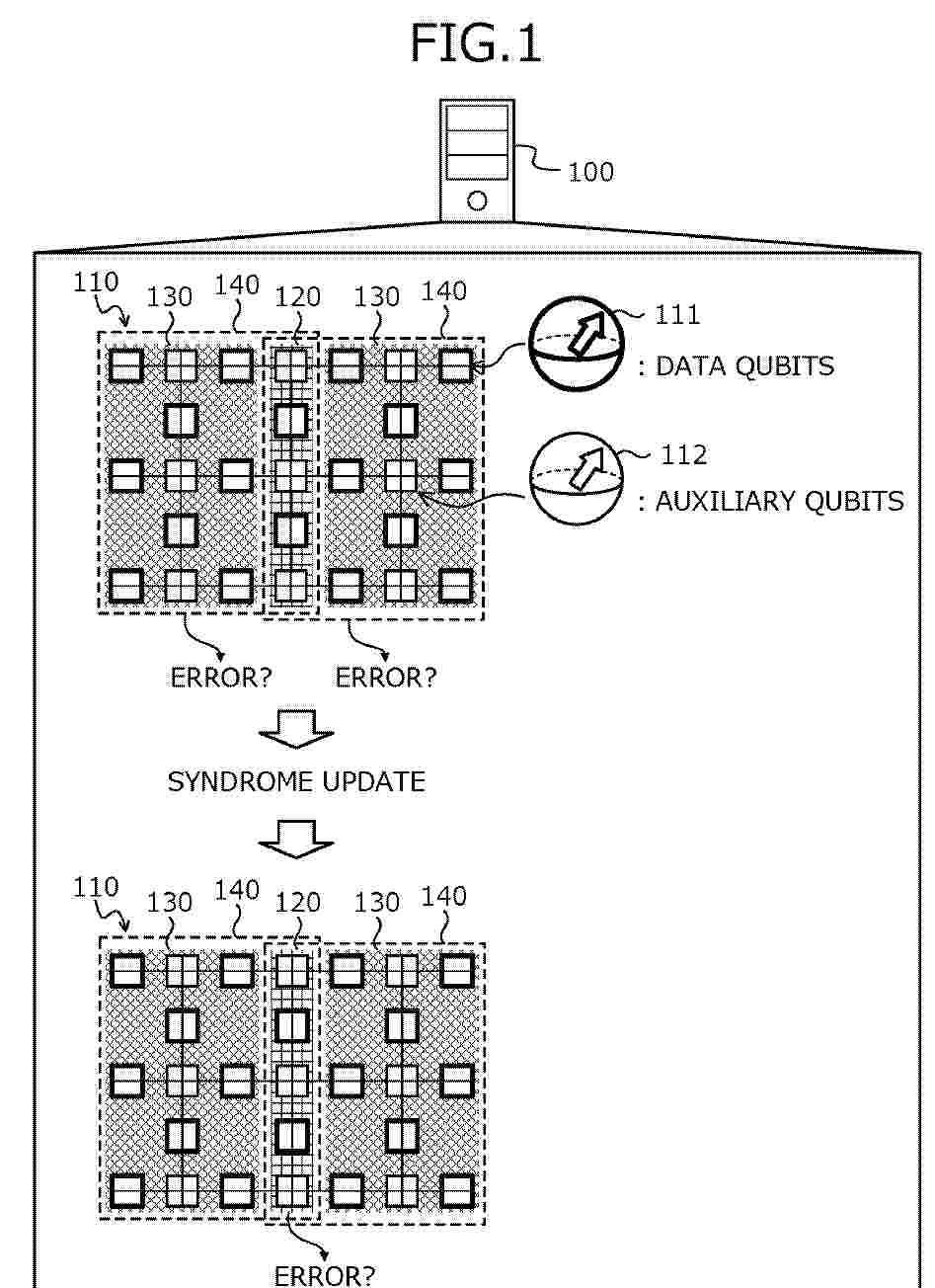
An information processing device (100) identifies multiple divided regions (140) obtained by dividing an entire region of a logical qubit (110). The information processing device (100) determines in each divided region (140) of the identified plurality of divided regions (140) and based on the obtained syndrome of each auxiliary qubit (112), a data qubit (111) that is to be judged as having an error. The information processing device (100) updates the obtained syndrome of each auxiliary qubit (112), based on the data qubit (111) determined to be judged as having an error in the logical qubit (110). The information processing device (100) determines the data qubit (111) that is to be judged as having an error in a partial region shared by the divided regions (140), based on the updated syndrome of each auxiliary qubit (112).
Resumen de: EP4506863A1
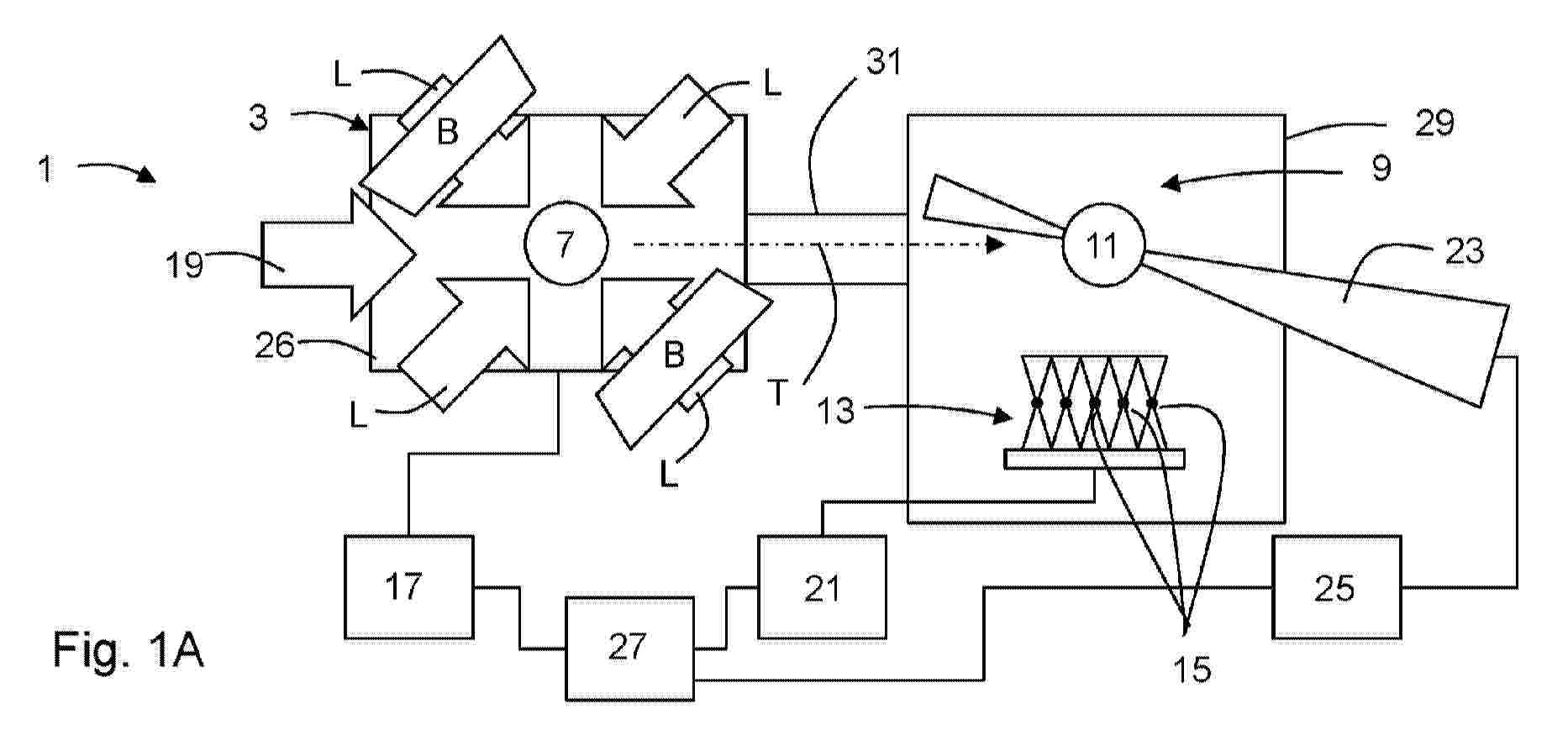
0001 A method and a system for quantum computation using a plurality of particles, in an array of optical tweezer traps as a quantum register, are provided. The method comprises: trapping a plurality of particles in a buffer trap, moving the optical tweezer array traps and the buffer trap relative to each other, simultaneously overlapping at least partly the optical tweezer array traps and the buffer trap for filling a plurality of particles from the buffer trap into at least some of the optical tweezer array traps, and forming at least part of the quantum register from at least some of the thus filled optical tweezer array traps offset from the buffer trap.
Nº publicación: EP4758755A2 17/06/2026
Solicitante:
IONQ INC [US]
IonQ Inc.
Resumen de: WO2025221285A2
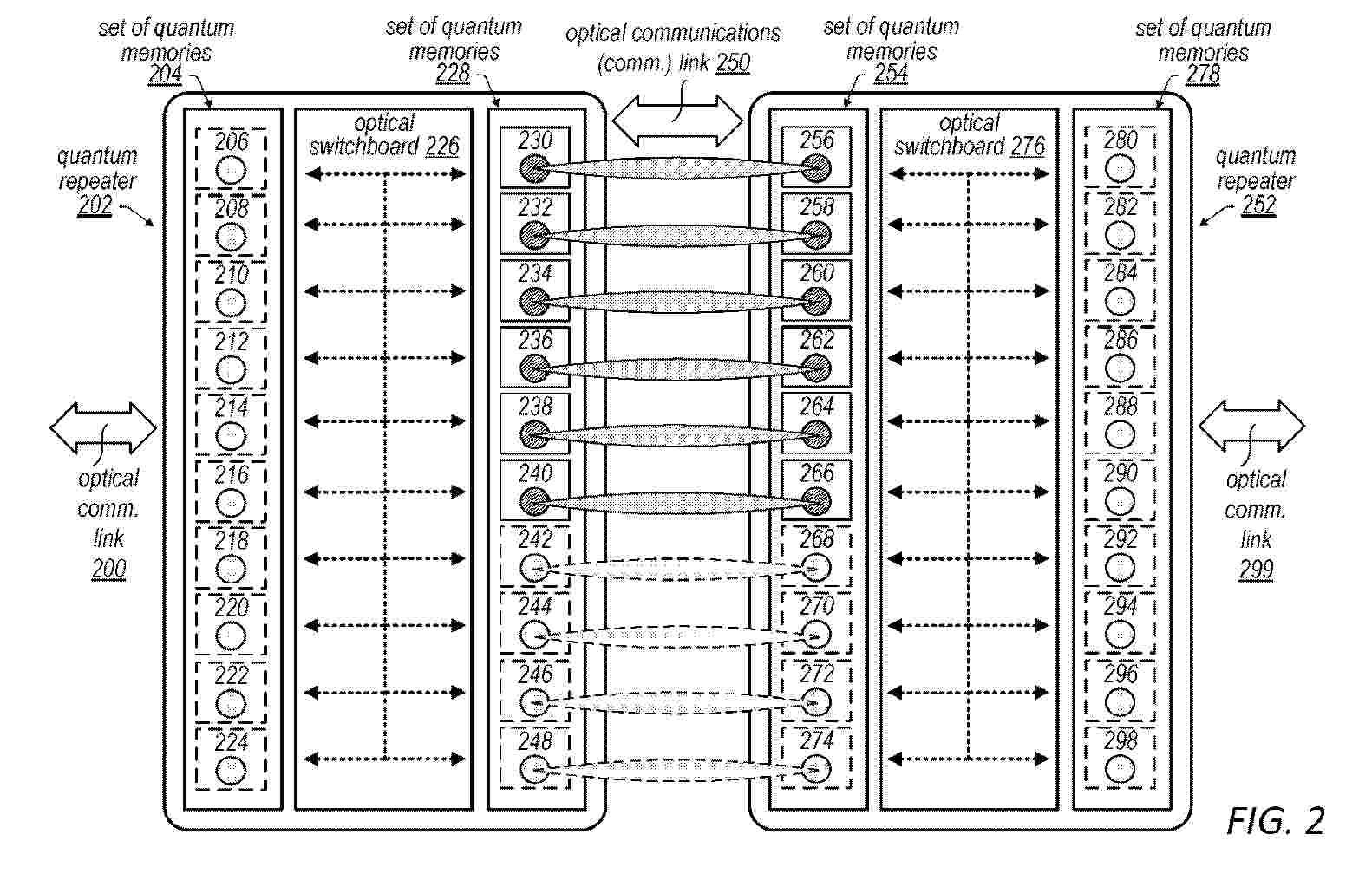
Techniques for generating and maintaining a buffer of on-demand, pairwise quantum entanglement instances using programmable optical switchboard architectures within quantum repeaters are disclosed. A rate of establishing pairwise quantum entanglement instances between quantum repeaters of a quantum entanglement network may be higher than both a rate of decay of said instances and a rate of consumption of said instances for providing distributed quantum entanglement, such that on-demand distribution of quantum entanglement may be provided for customers. Furthermore, an optical switchboard with a given quantum repeater may be configured to route between any of the quantum memory locations provided within the quantum repeater, such that an optimization of the usage of such buffers of quantum entanglement instances may be ensured.
 BOPI
BOPI
 Sede Electrónica