Si deseas distinguir tus productos, servicios o ambos de los de otra empresa, es posible que necesites una marca o nombre comercial. Descubre qué son, en qué consiste su procedimiento de registro y qué implica.

Información sobre los plazos de presentación de solicitudes de transformación de marcas de la Unión Europea en marca nacional española. Más información


Si tienes un nuevo dispositivo, producto o procedimiento que resuelva un problema técnico o tenga una ventaja práctica, existen distintas formas de protegerlo en España y en otros países. Descubre cómo hacerlo.

¿Tu innovación reside en la estética, la ornamentación o la apariencia de tu producto? Protégela mediante un diseño industrial. Descubre qué derechos confiere el registro y cómo realizar la tramitación.

Las indicaciones geográficas protegen el nombre de un producto originario de una zona geográfica, a la cual le debe una determinada calidad, reputación u otra característica. Descubre qué son, en qué consiste su procedimiento de registro y qué beneficios conceden.

Las patentes publicadas en todo el mundo son una valiosa fuente de información científica, técnica y comercial.

Si eres emprendedor/a o una empresa y quieres potenciar y mejorar la rentabilidad de tu negocio protegiendo de forma adecuada los activos intangibles de tu organización, en este espacio encontrarás lo necesario.


 525
resultados
525
resultados
 Última actualización
28/07/2026 [06:54:00]
Última actualización
28/07/2026 [06:54:00]


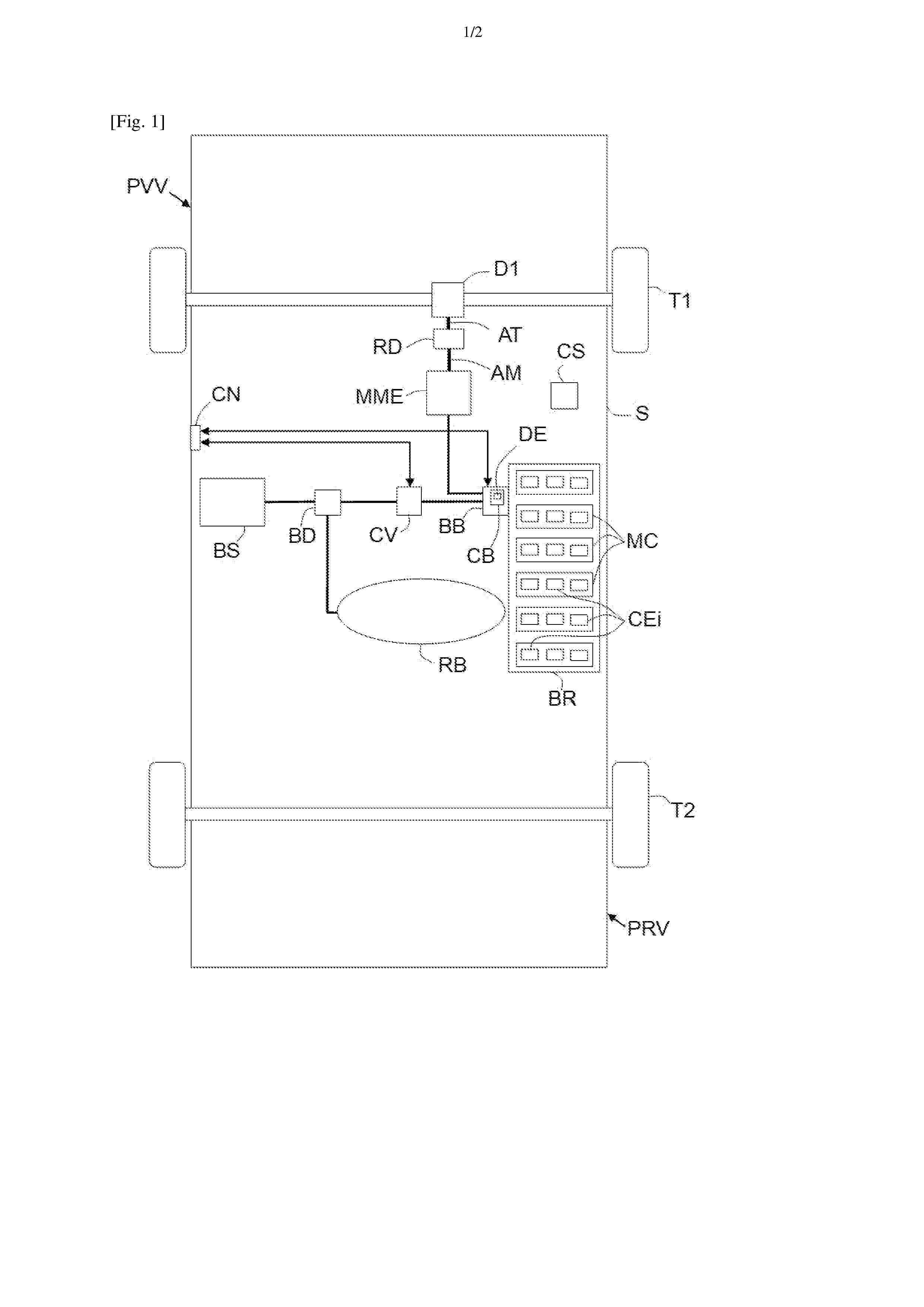
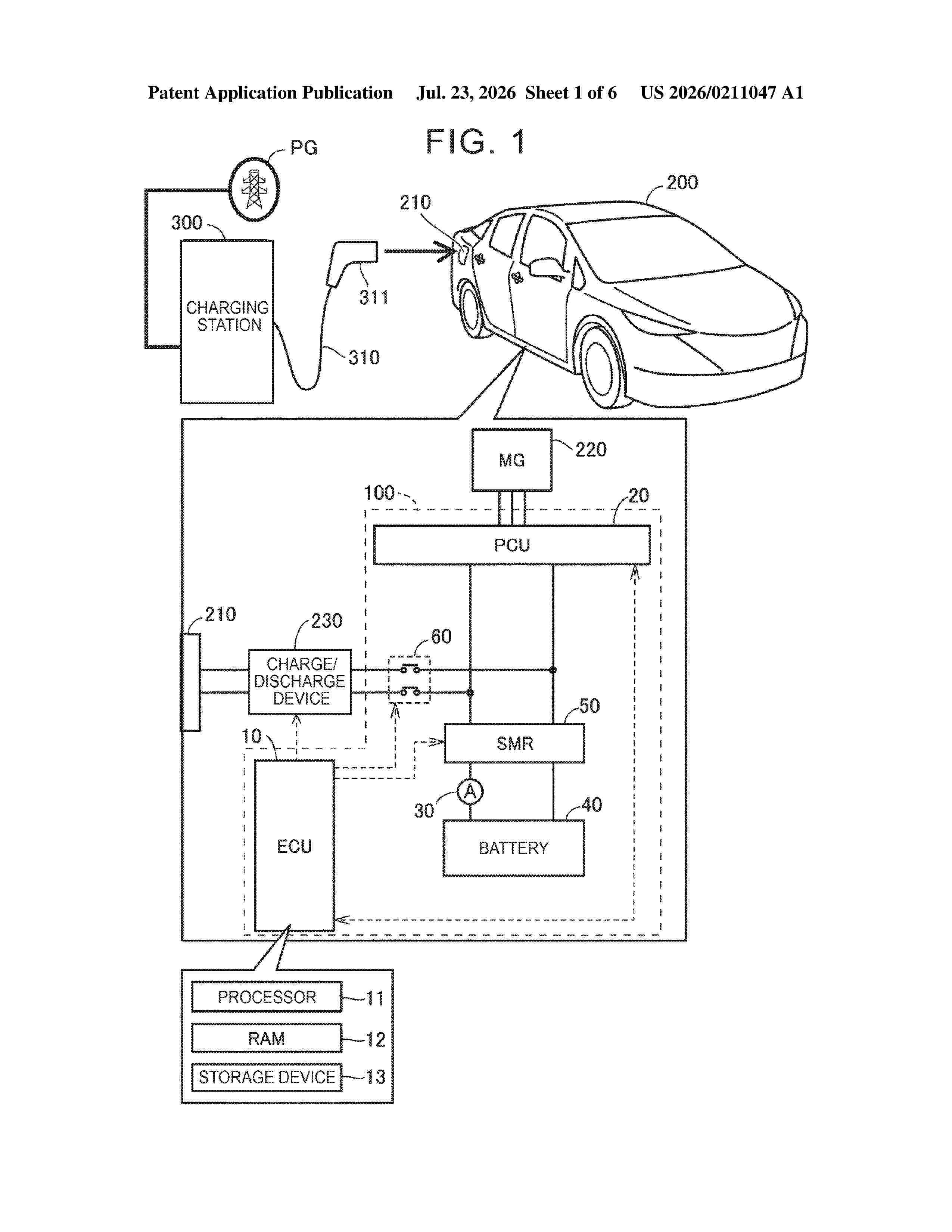
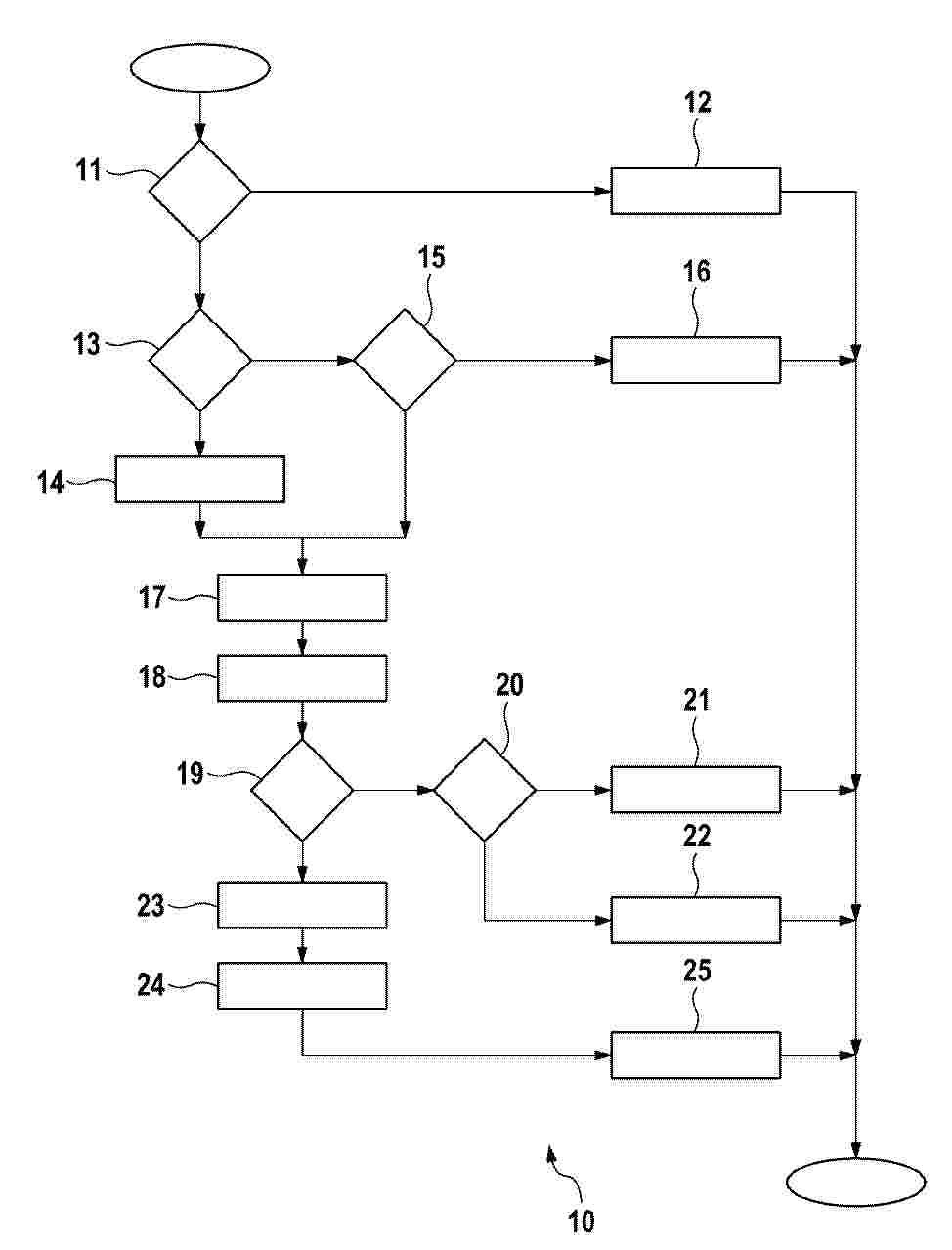
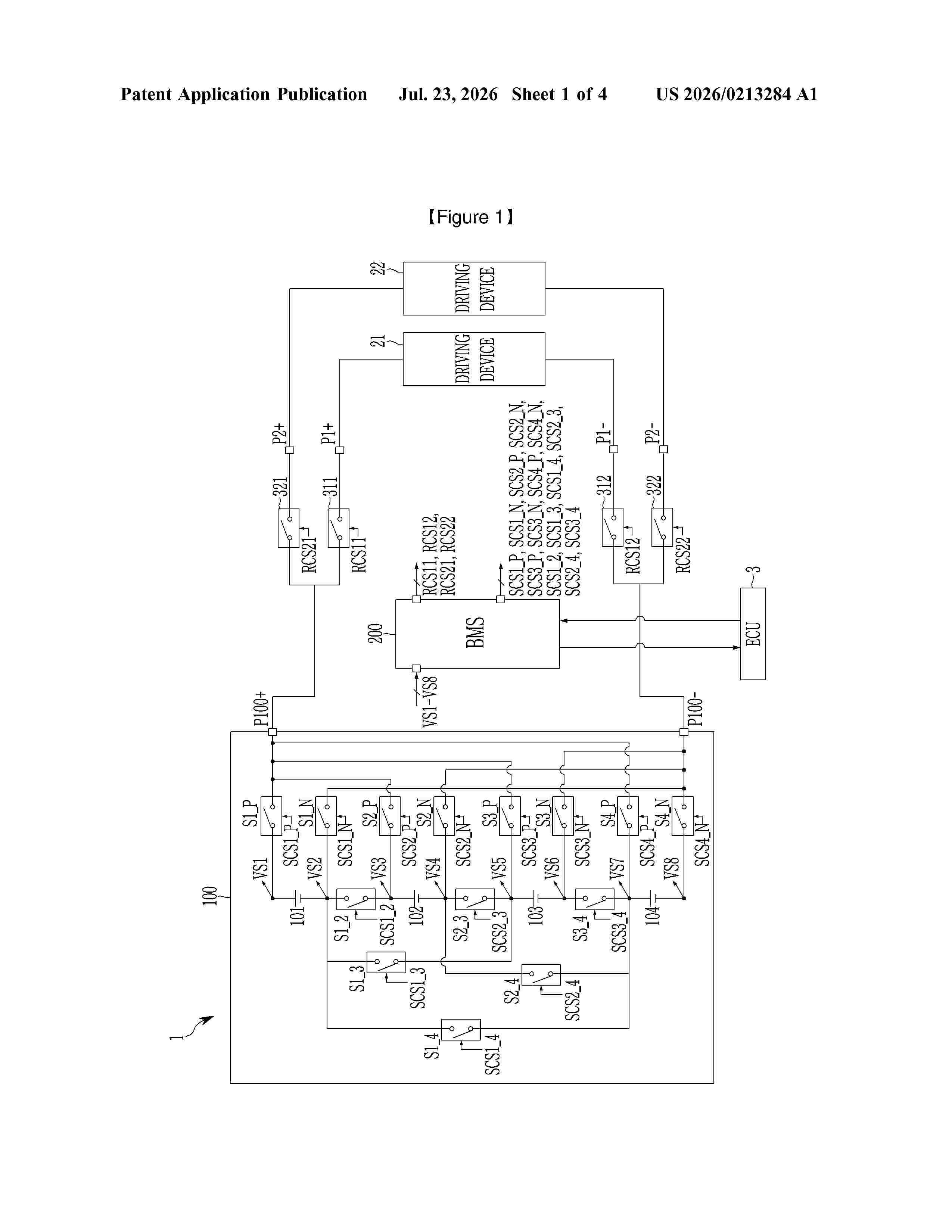
Resumen de: FR3171551A1
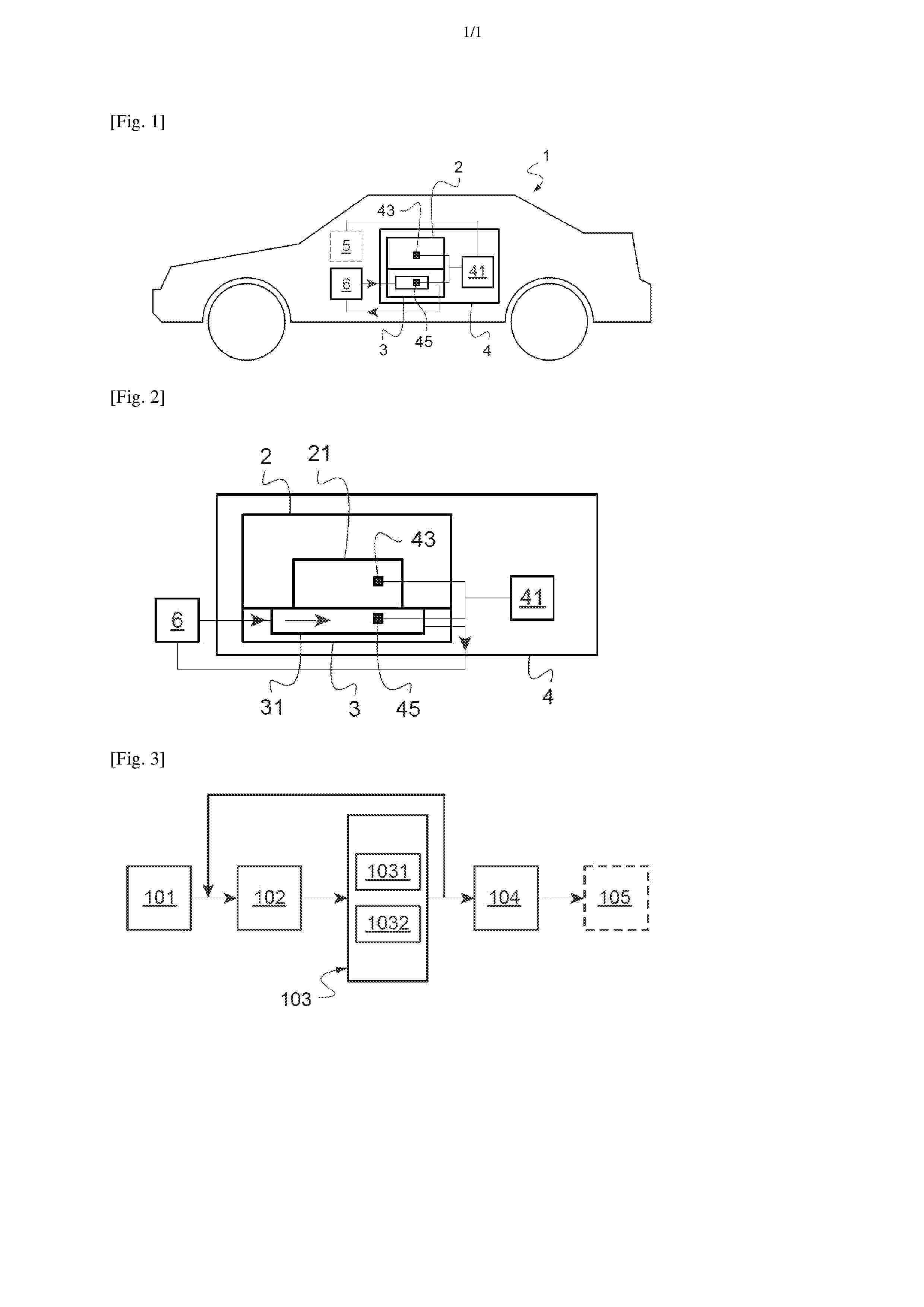
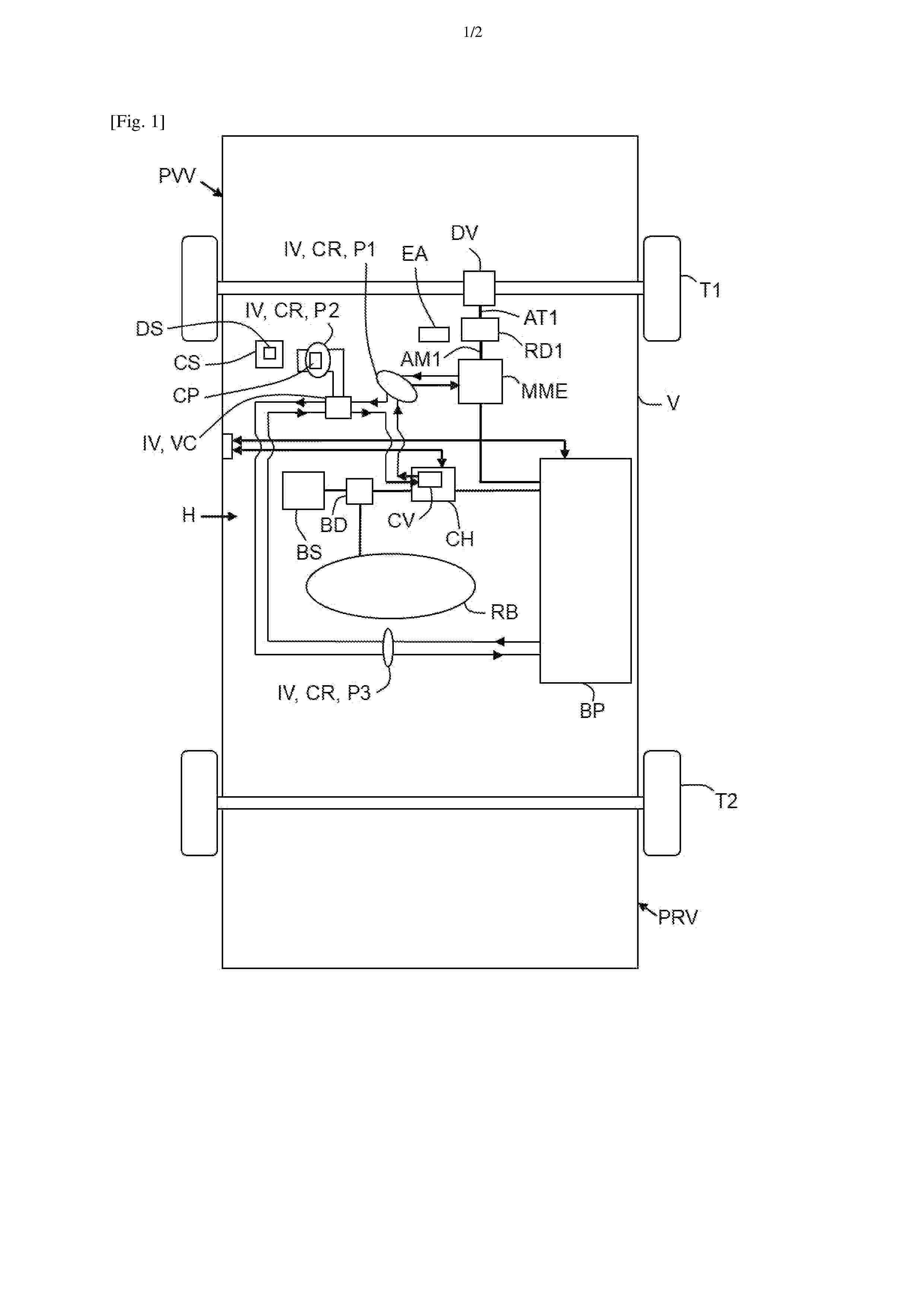
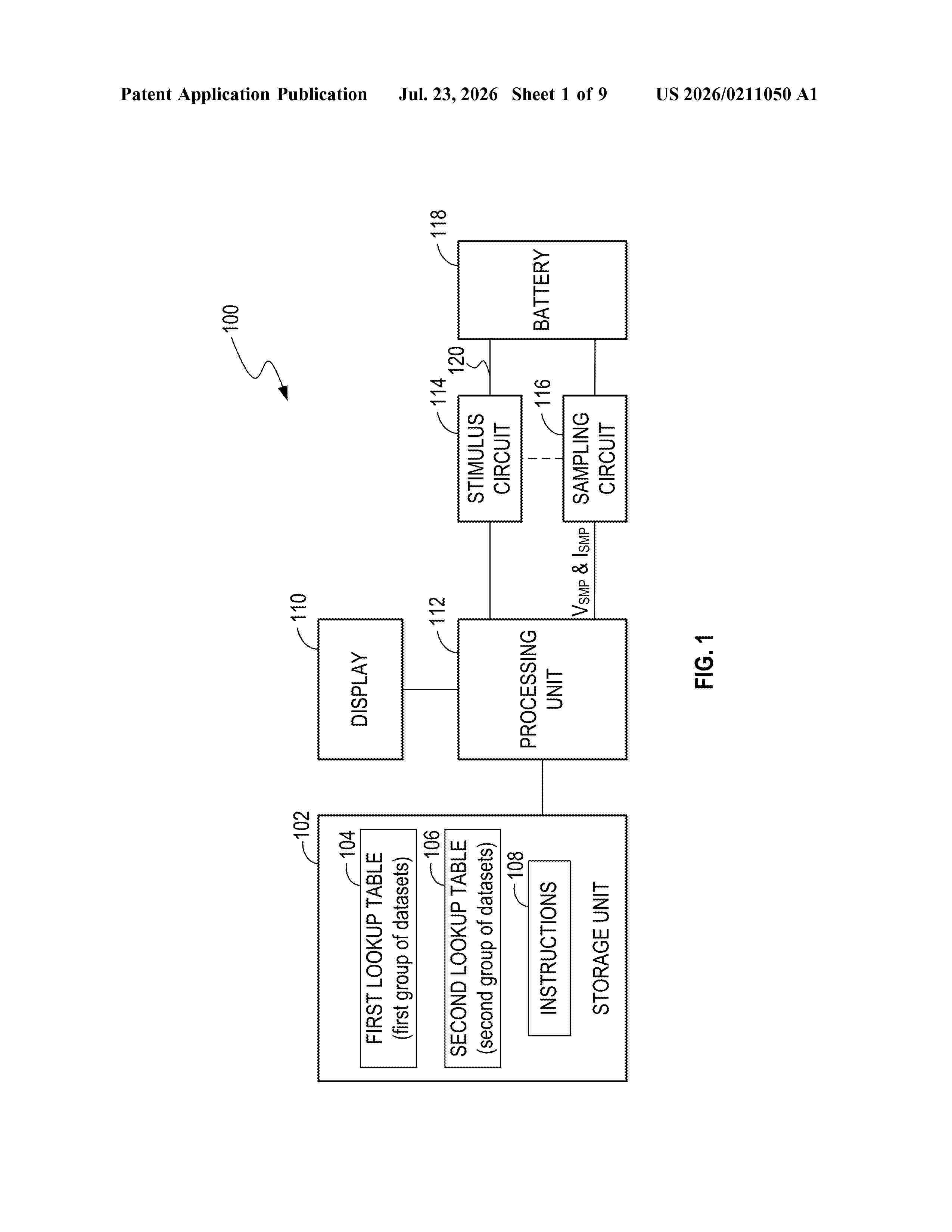
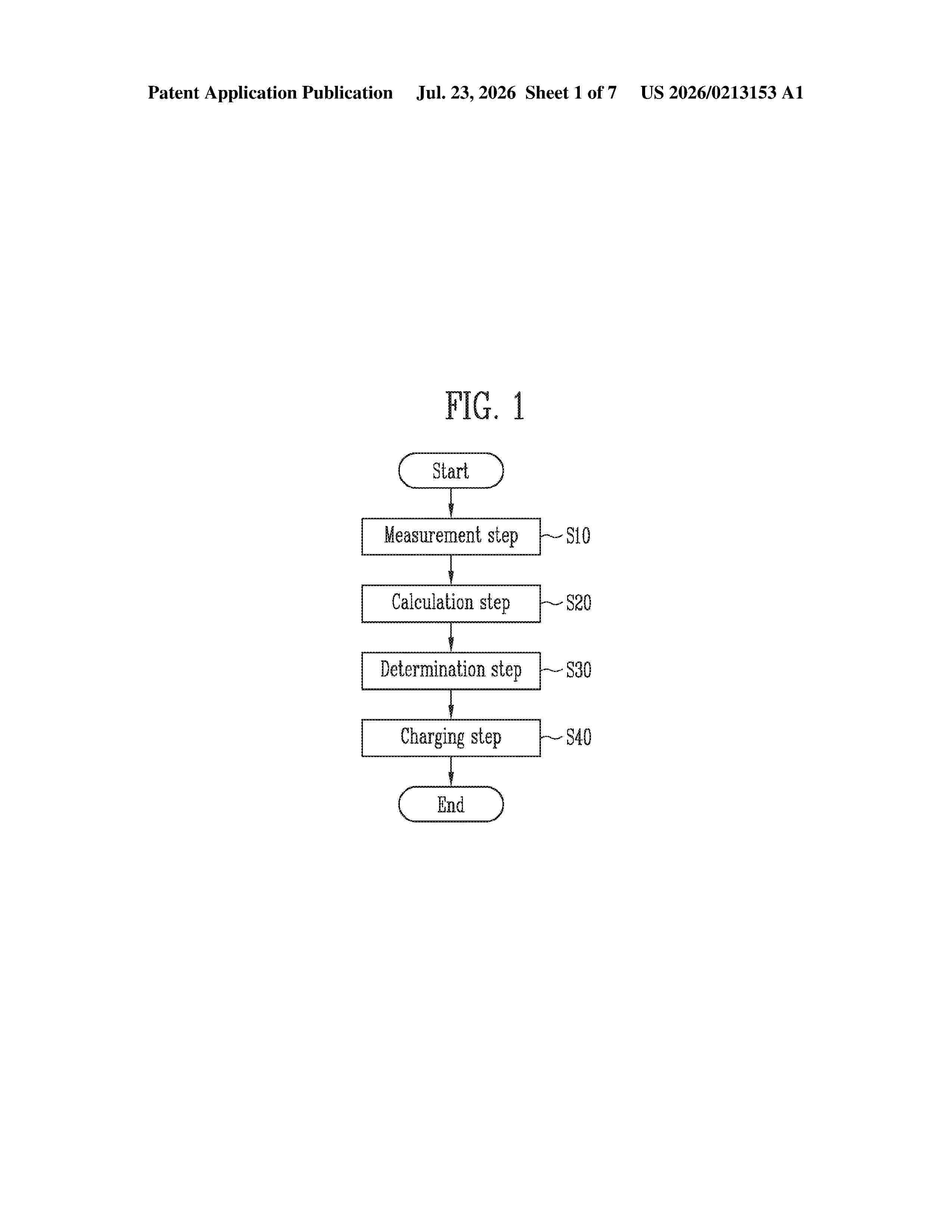
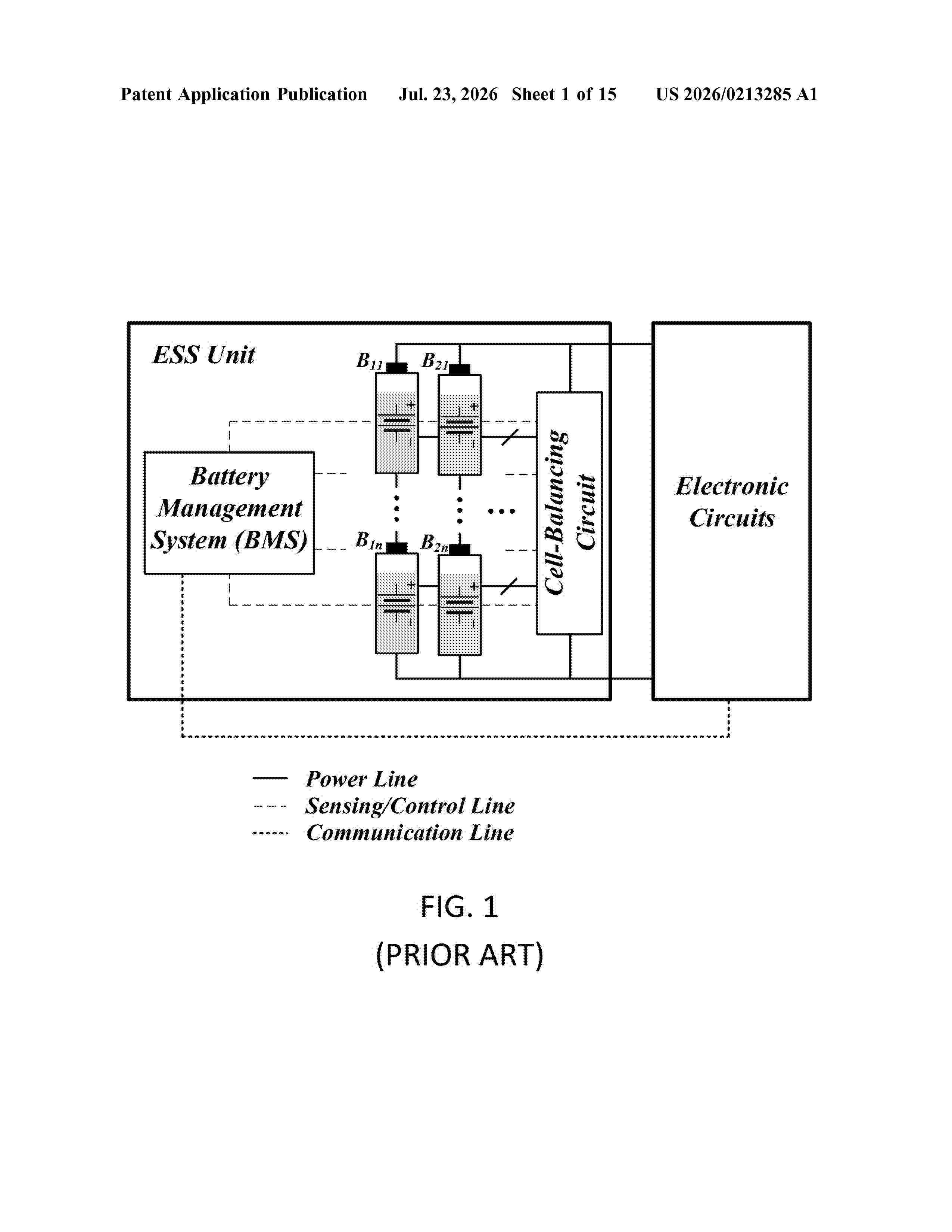
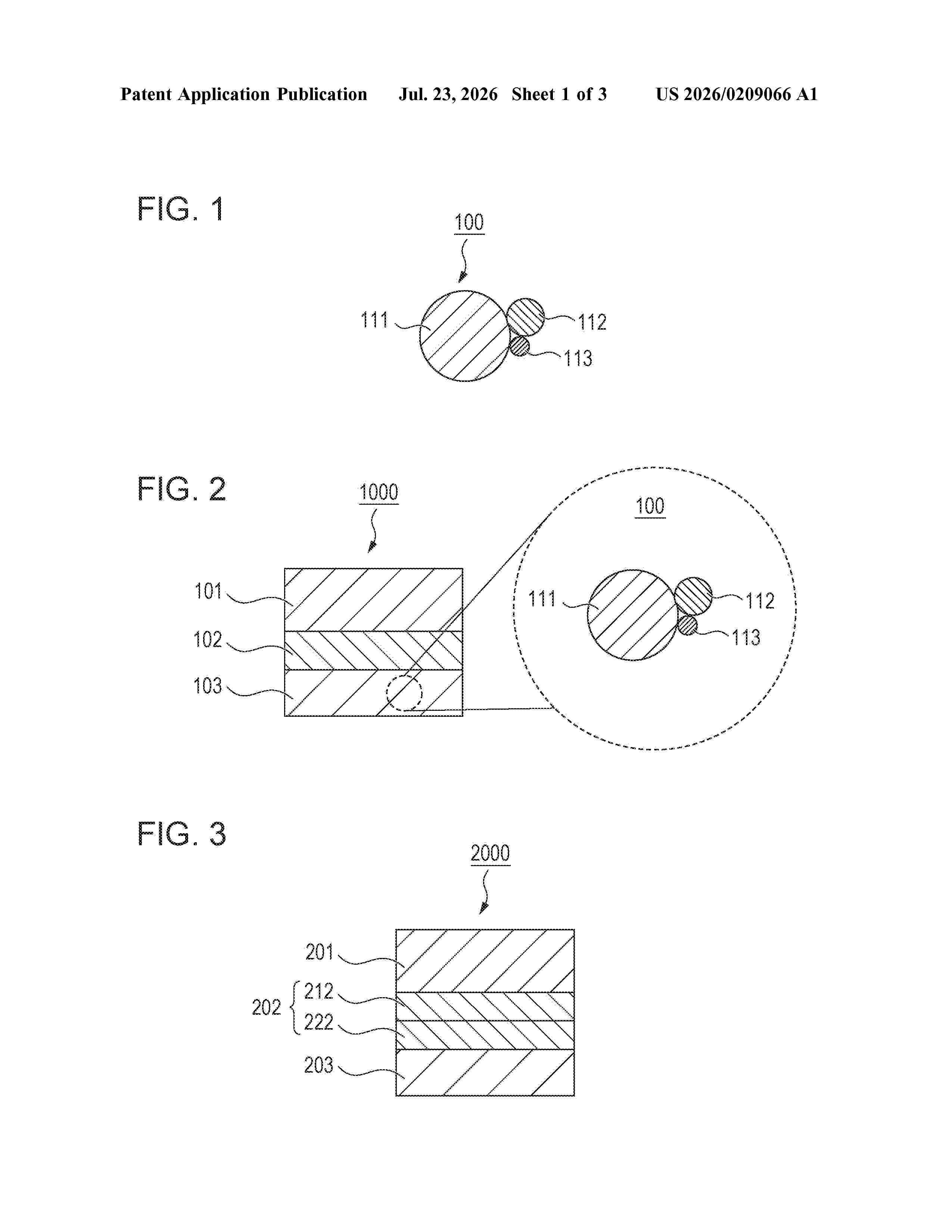
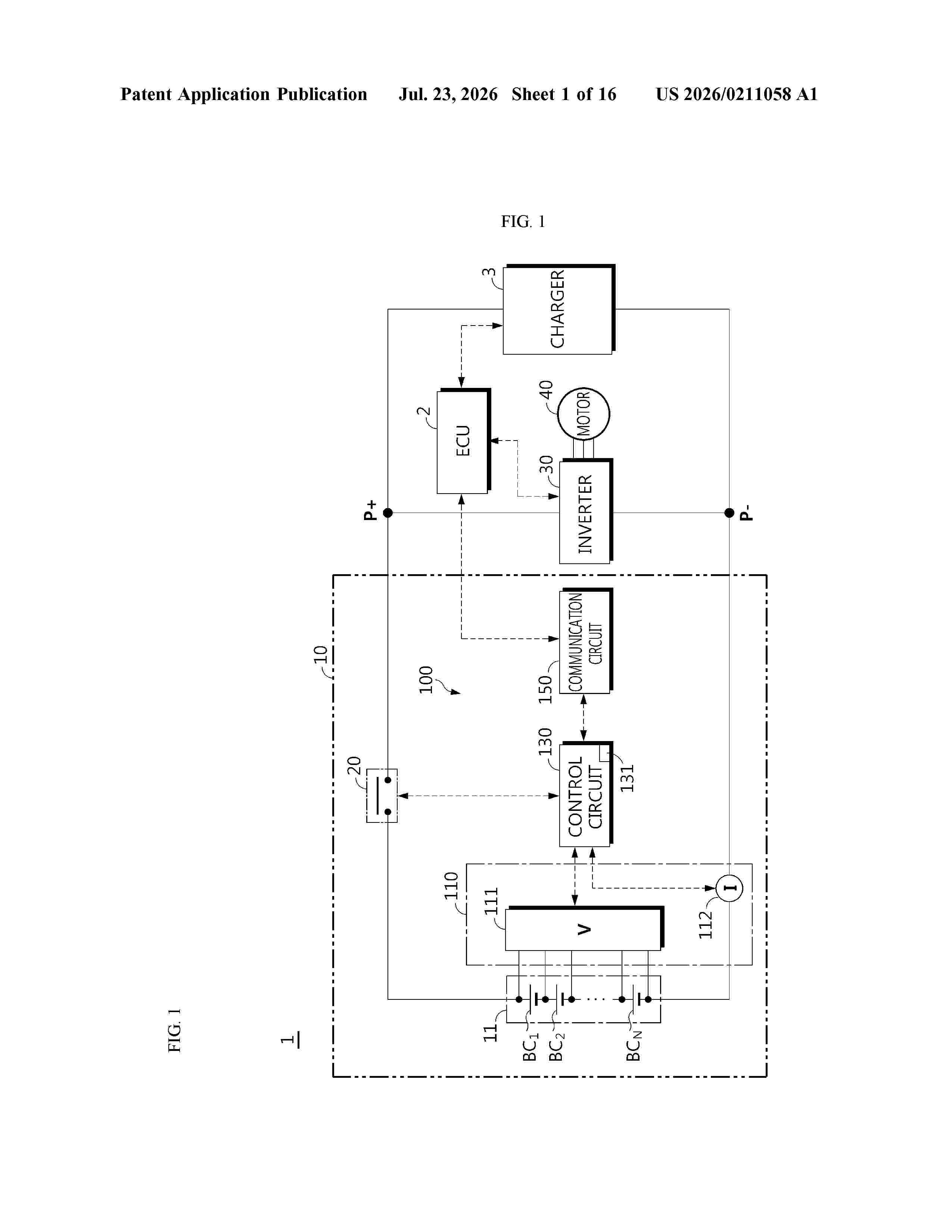
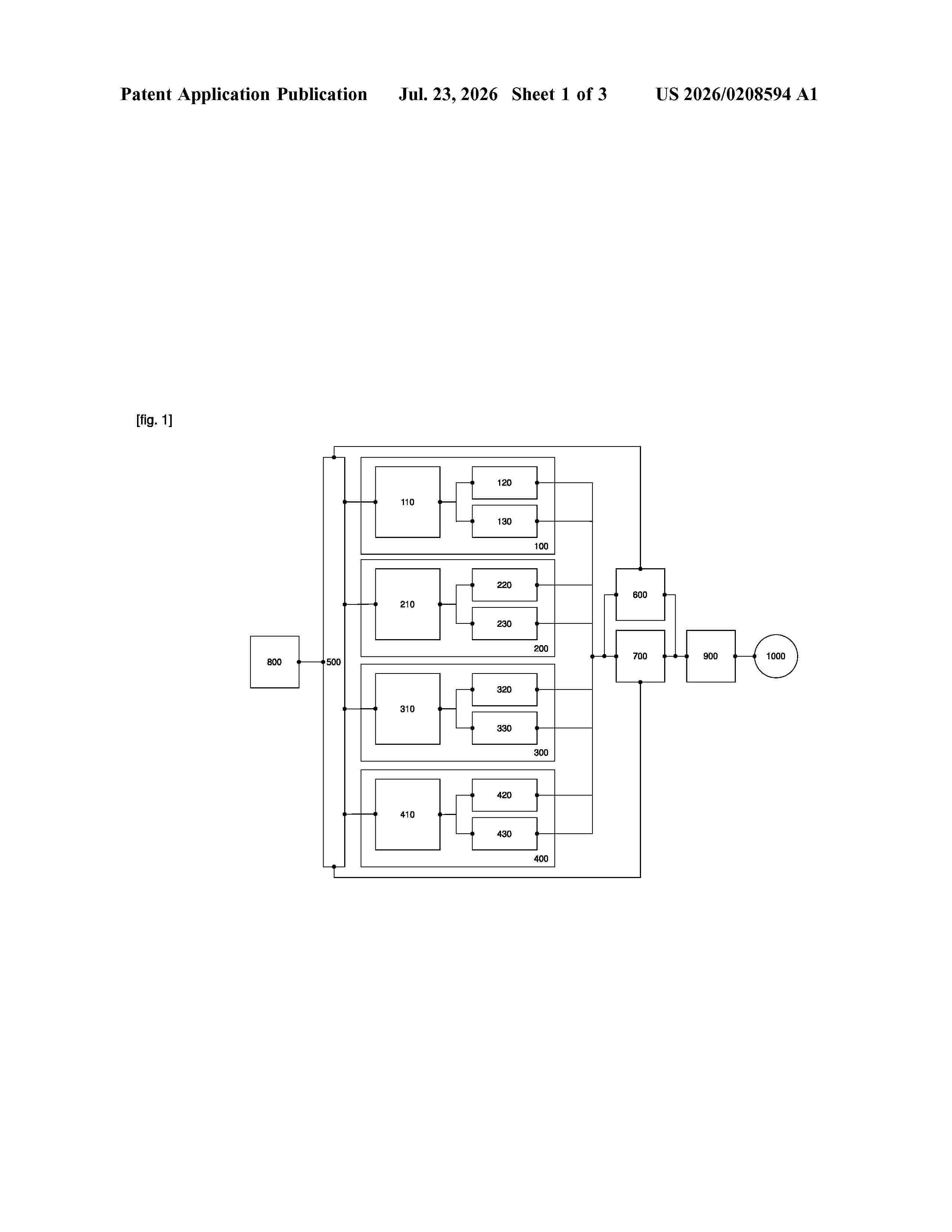
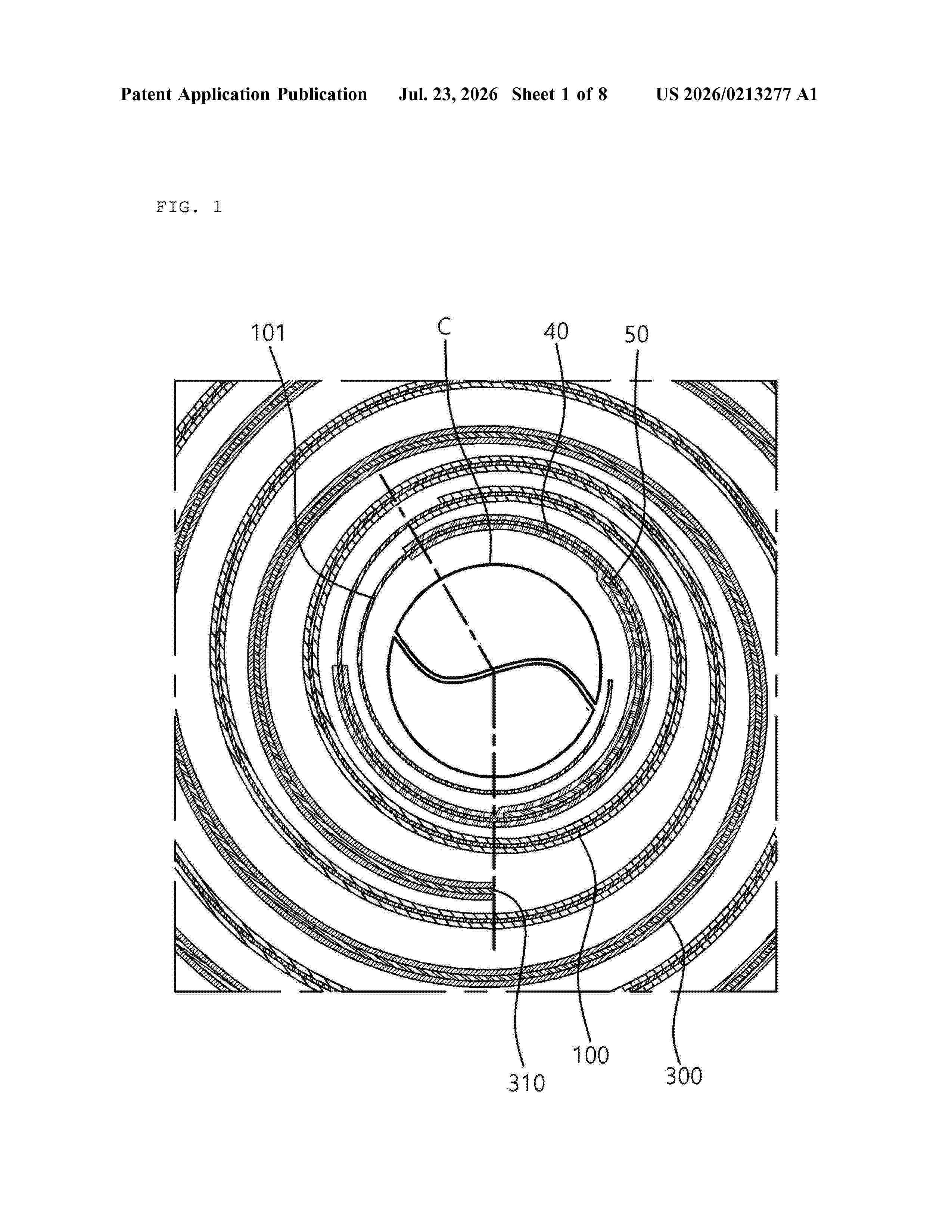
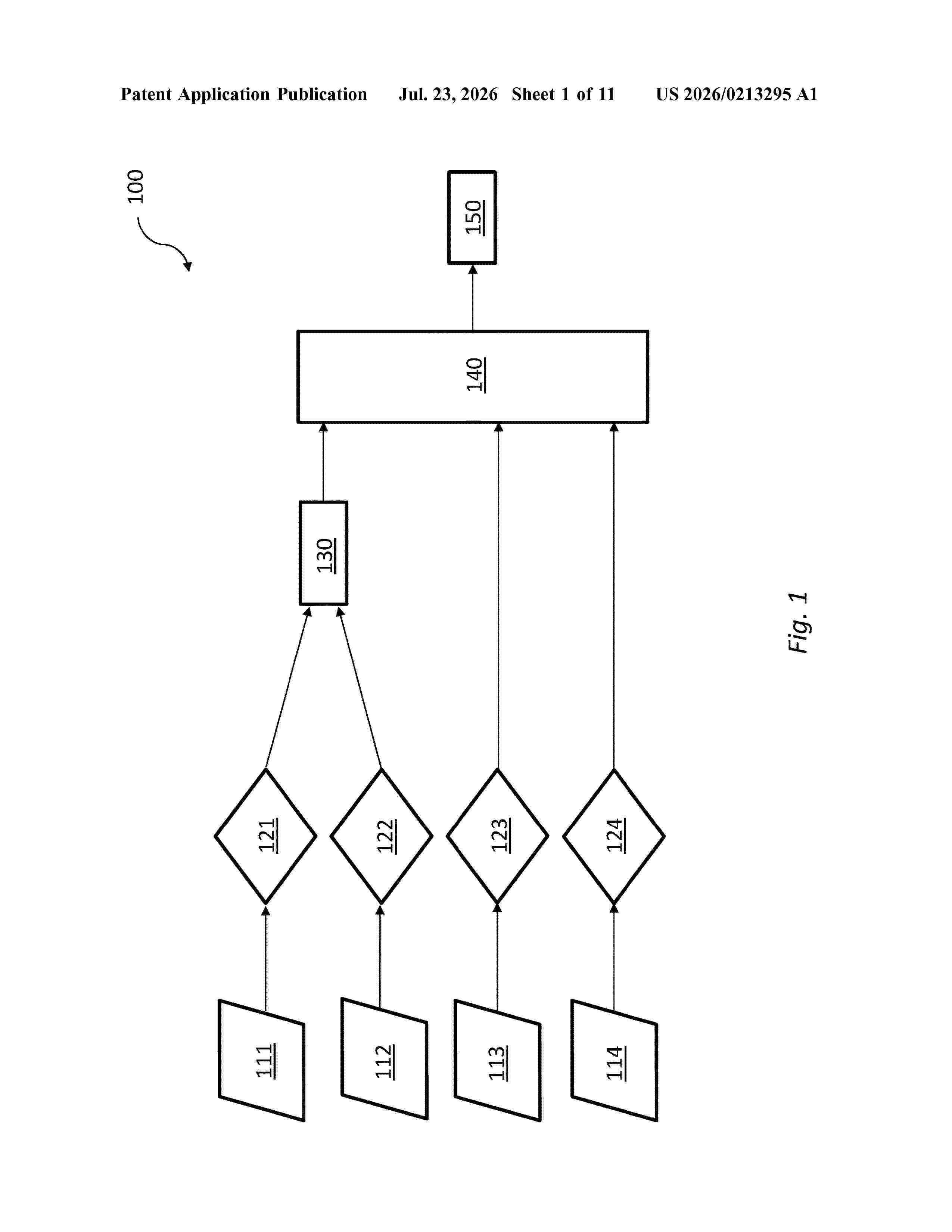
Un procédé est mis en œuvre dans un système comprenant une batterie rechargeable comportant des cellules ayant chacune un état de charge estimé et une capacité de stockage estimée. Ce procédé comprend une étape (10-60) dans laquelle, lorsqu’un temps écoulé depuis une dernière quantification de déséquilibre entre cellules est supérieur à un seuil choisi, on estime des écarts d’équilibrage des cellules en fonction des états de charge estimés, puis on effectue un équilibrage de chacune des cellules en fonction de l’écart d’équilibrage estimé correspondant et de la capacité de stockage estimée correspondante. Figure 3

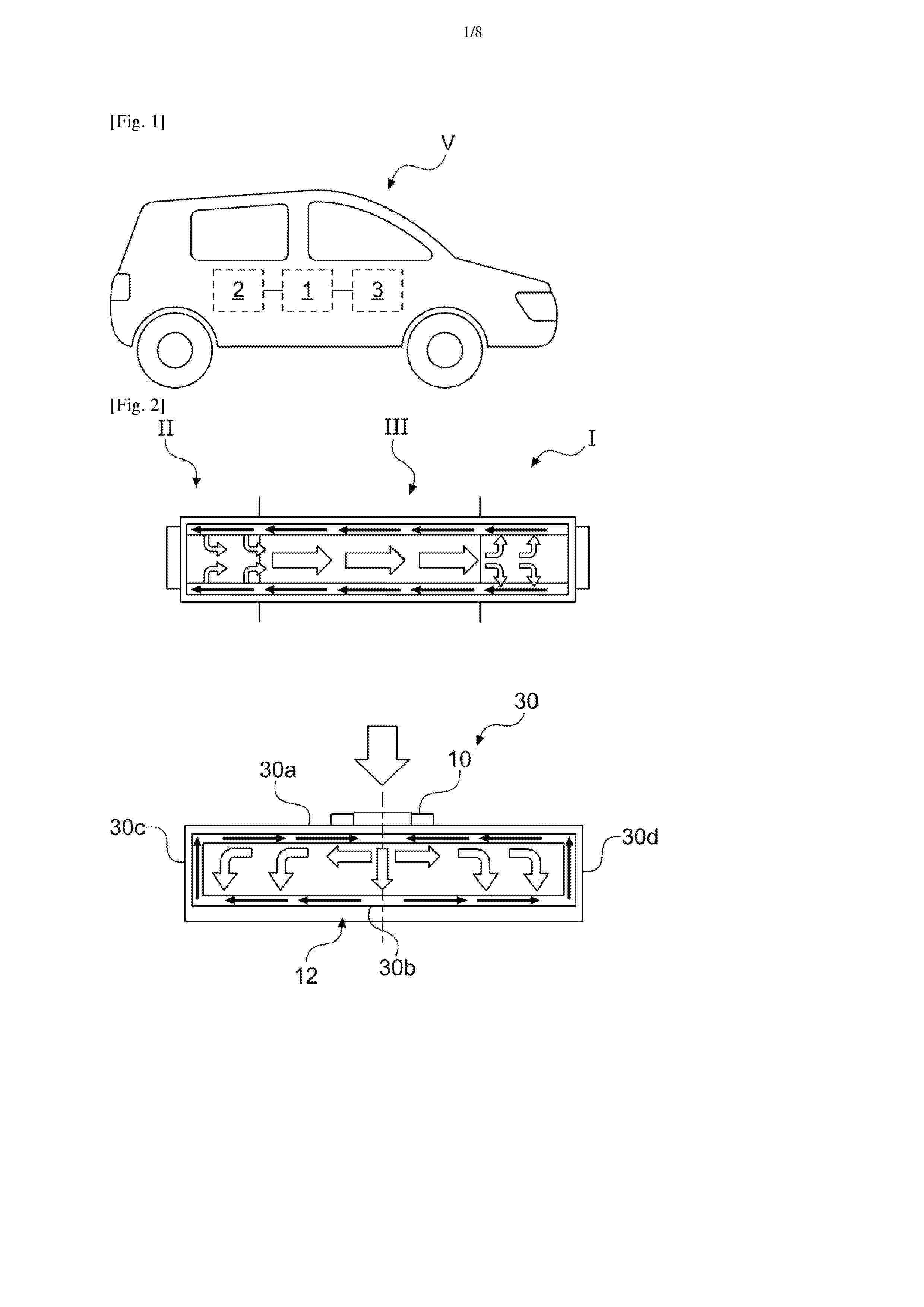
Resumen de: FR3171542A1
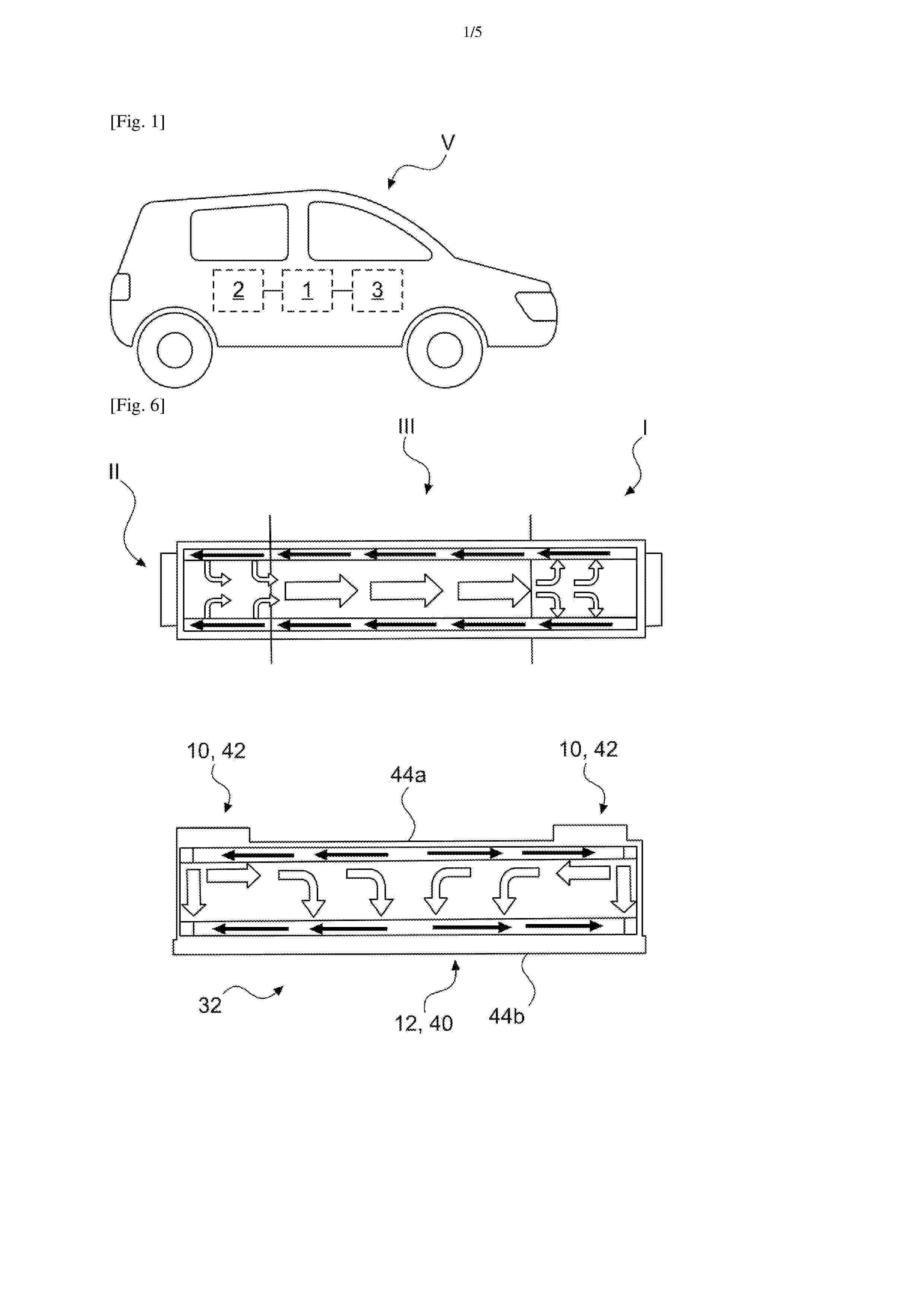
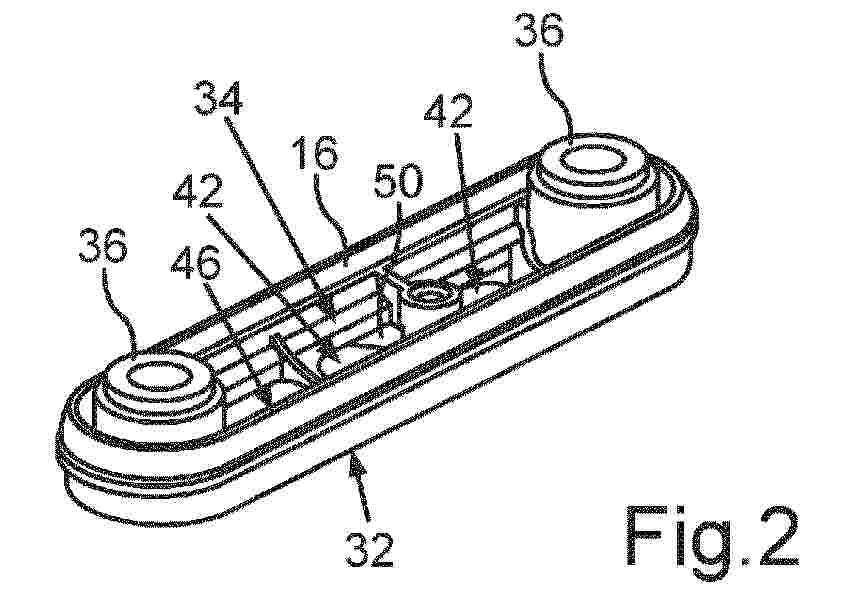
1. Dispositif de connexion électrique, notamment pour véhicule automobile, ledit dispositif comprenant une ou plusieurs sources chaudes (10) et une source froide (12), ladite ou lesdites sources chaudes (10) comprenant un organe électrique (14), ledit dispositif comprenant un caloduc (30), un premier organe d’interface thermique (32) pour un échange de chaleur entre ledit caloduc (30) et ladite source froide (12) et un ou des deuxièmes organes d’interface thermique (34) pour un échange de chaleur entre le caloduc (30) et la ou lesdites sources chaudes (10), ledit caloduc (30) présentant une première surface d’échange de chaleur avec ledit premier organe d’interface thermique (32) et une ou des deuxièmes surfaces d’échange de chaleur avec le ou les deuxièmes organes d’interface thermique (34), lesdites surfaces de chaleur étant configurées de sorte que ledit caloduc (30) fonctionne en épanouisseur thermique. Figure pour l’abrégé : Figure 11
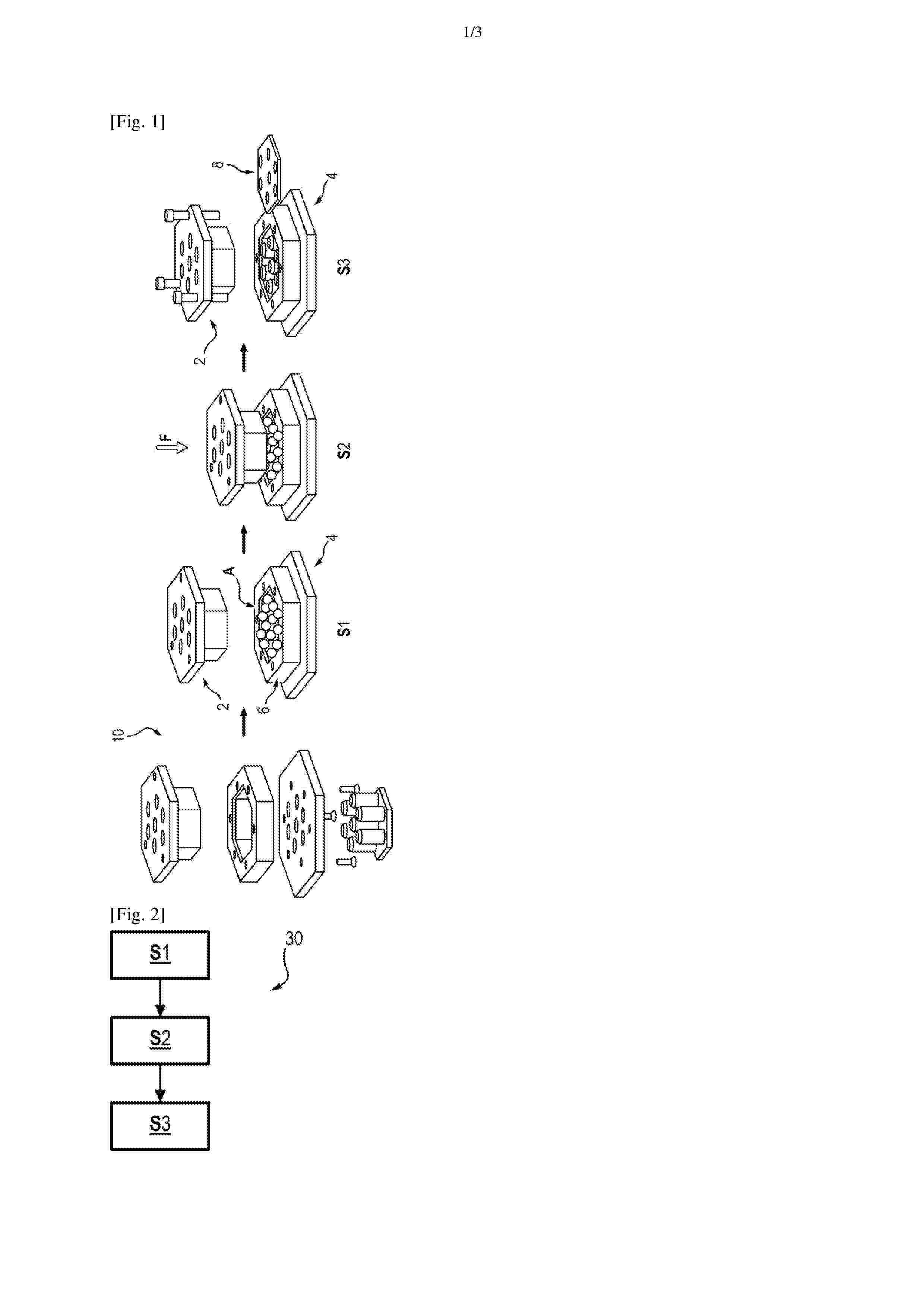
Resumen de: FR3171445A1
La présente invention concerne procédé de fabrication d’une pièce massive comportant un matériau à changement de phase solide-solide, le procédé comportant les étapes suivantes : - S1 : porter une composition initiale comprenant un matériau à changement de phase solide-solide à une température T1, le matériau comportant un composé hydride organique/inorganique à changement de phase solide-solide présentant un état ramolli dans une plage de température de ramollissement, la température T1 étant comprise dans la plage de température de ramollissement du composé, pour obtenir une composition ramollie qui présente une forme initiale ; - S2 : mettre en forme la composition ramollie dans une forme finale différente de la forme initiale ; et - S3 : refroidir la composition dans sa forme finale pour obtenir la pièce massive.
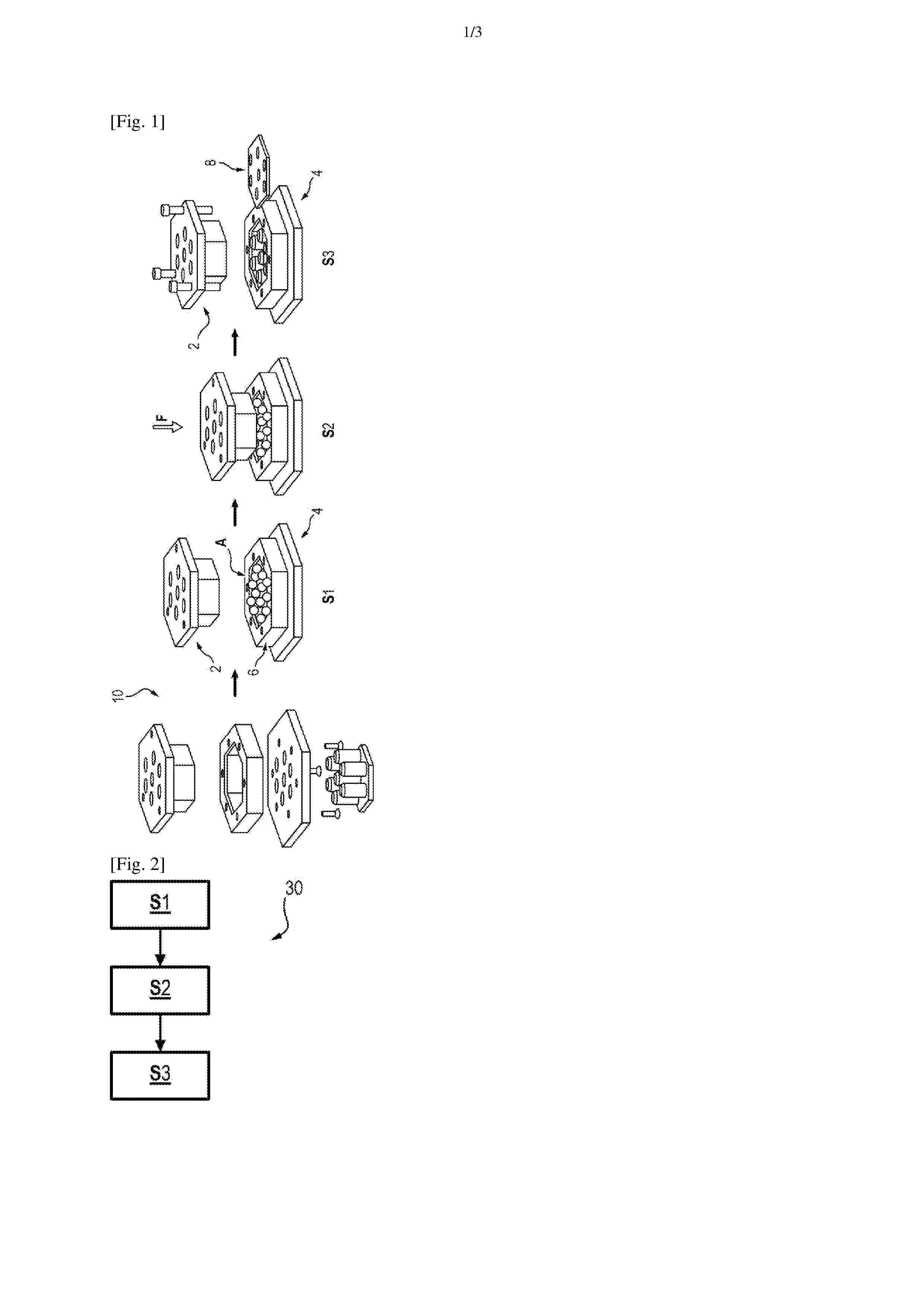
Resumen de: FR3171444A1
La présente invention concerne un système (20) comprenant :- un dispositif (22) susceptible de changer de température ; et - une pièce de régulation thermique (8, 24) montée au contact du dispositif (22) et configurée pour réaliser un transfert thermique avec le dispositif, la pièce de régulation (8, 24) étant une pièce massive comprenant un matériau à changement de phase solide-solide comprenant au moins un composé à changement de phase solide-solide, le composé à changement de phase solide-solide étant un composé hybride organique/inorganique, le matériau présentant une première structure solide lorsque le matériau est à une température inférieure à une température de transition du composé à changement de phase et présentant une deuxième structure solide, différente de la première structure solide, lorsque le matériau est à une température supérieure à la température de transition. Figure de l’abrégé : Fig. 3a
Resumen de: FR3171557A1
Dispositif de connexion électrique, notamment pour véhicule automobile, ledit dispositif comprenant une source chaude (10) et une source froide (12), ladite source chaude (10) comprenant un organe électrique (14) muni d’une première et d’une deuxième bornes de connexion électrique, ledit dispositif comprenant une première et une deuxième barres omnibus de conduction électrique (30a, 30b) ainsi qu’un premier caloduc (32p) relié thermiquement à ladite source froide (12), ladite première barre omnibus (30a) étant reliée à ladite première borne et audit premier caloduc (32p) pour un échange thermique entre ladite source chaude (10) et ladite source froide (12), ladite deuxième barre omnibus (30b) étant reliée à ladite deuxième borne et audit premier caloduc (32p) pour l’échange thermique entre ladite source chaude (10) et ladite source froide (12). Figure pour l’abrégé : Figure 2
Resumen de: FR3171543A1
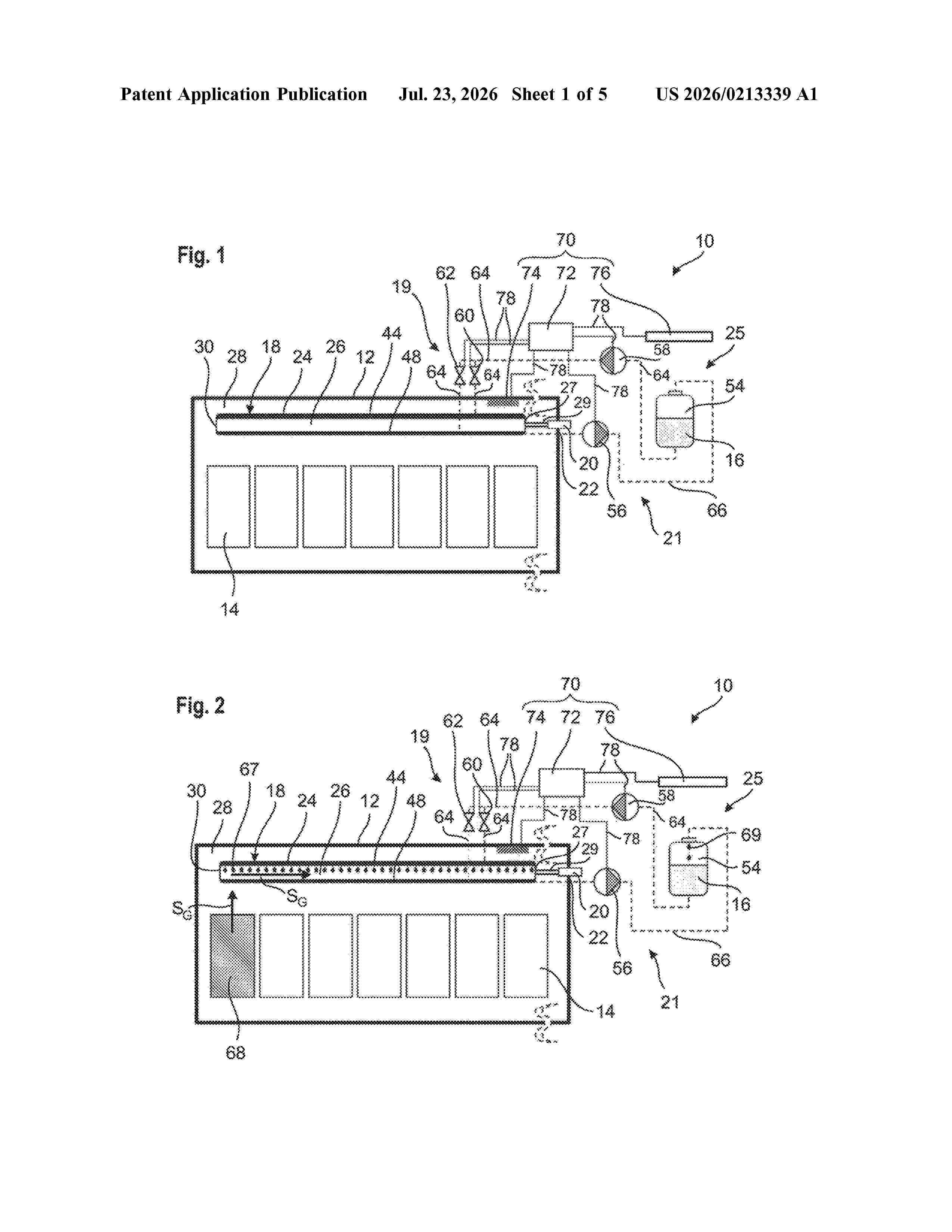
L’invention concerne un procédé d’évaluation d’un état de fonctionnement d’un système de refroidissement d’une batterie de traction, le système comprenant un moyen de refroidissement. Selon l’invention, les étapes suivantes sont mises en œuvre par une unité de contrôle informatique : a) Activation (101) du système de refroidissement à un premier instant lorsqu’une température interne de la batterie de traction dépasse une température de seuil, b) Enregistrement (102) au premier instant de la température interne de la batterie de traction et d’une température du moyen de refroidissement, c) Vérification (103) d’au moins une série de conditions comprenant une première condition (1031) qui est remplie si, pendant au moins une partie d’une durée suivant le premier instant, la température du moyen de refroidissement est inférieure à celle mesurée au premier instant et étant non-remplie sinon ; et une deuxième condition (1032) qui est remplie si la température du moyen de refroidissement à un second instant suivant le premier instant est inférieure à celle de la batterie de de traction mesurée au premier instant et étant non-remplie sinon, d) Evaluation (104) d’un état de fonctionnement du système de refroidissement en fonction d’un résultat de l’au moins une série de conditions. L’invention concerne également un dispositif et un véhicule automobile associé. Figure pour l’abrégé : Fig.3
Resumen de: FR3171541A1
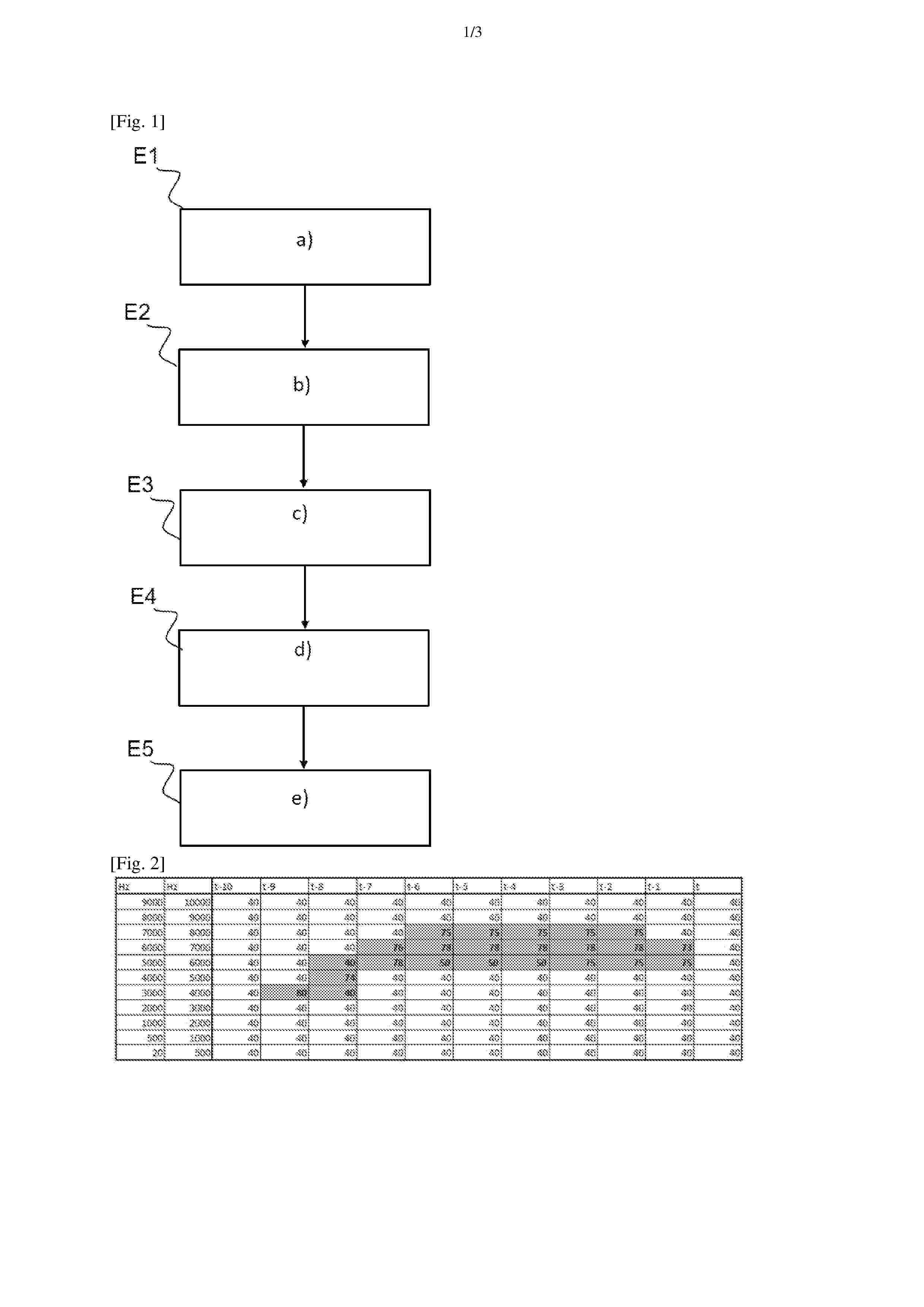
La présente invention a pour objet un procédé de détection d’un emballement thermique d’un élément électrochimique de stockage d’énergie mis en œuvre par une unité d’analyse acoustique, comprenant les étapes successives suivantes d’enregistrement (E1) d’un signal acoustique dudit élément électrochimique, de traitement (E2) dudit signal acoustique par une décomposition en transformée de fourrier et l’enregistrement d’un spectre fréquentiel dudit signal acoustique traité, de comparaison (E3) dudit spectre fréquentiel avec au moins une table d’enveloppe de spectre prédéterminée et l’enregistrement d’une table de correspondance spectrale identifiant un niveau de correspondance entre le spectre fréquentiel et la table d’enveloppe de spectre prédéterminée pour une pluralité de plages de fréquence, de détermination (E4) d’un score de reconnaissance calculé à partir de la somme des niveaux de correspondance de la table de correspondance spectrale, de détection (E5) d’un emballement thermique lorsque le score de reconnaissance est supérieur à un seuil prédéterminé. Figure 1.
Resumen de: FR3171398A1
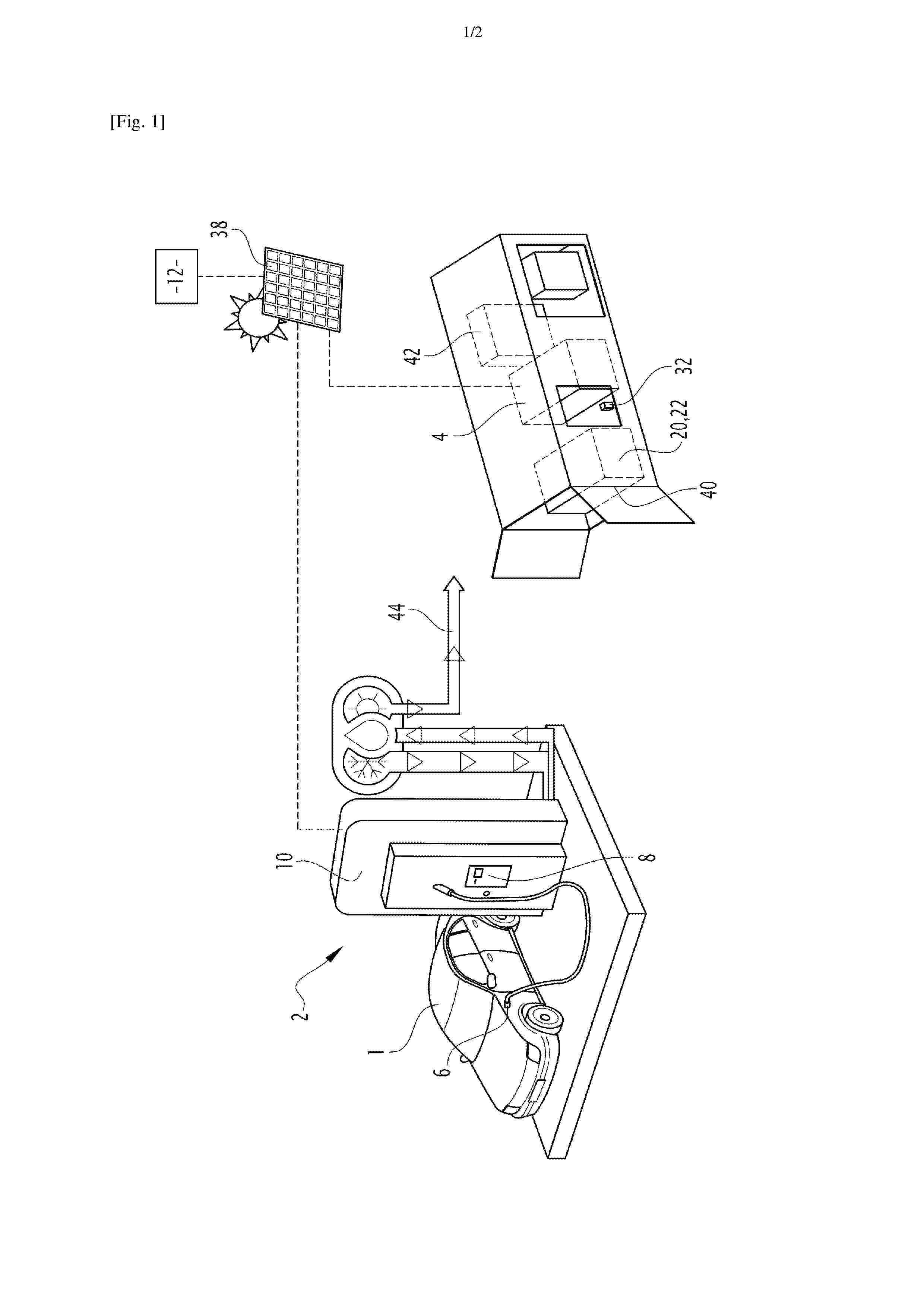
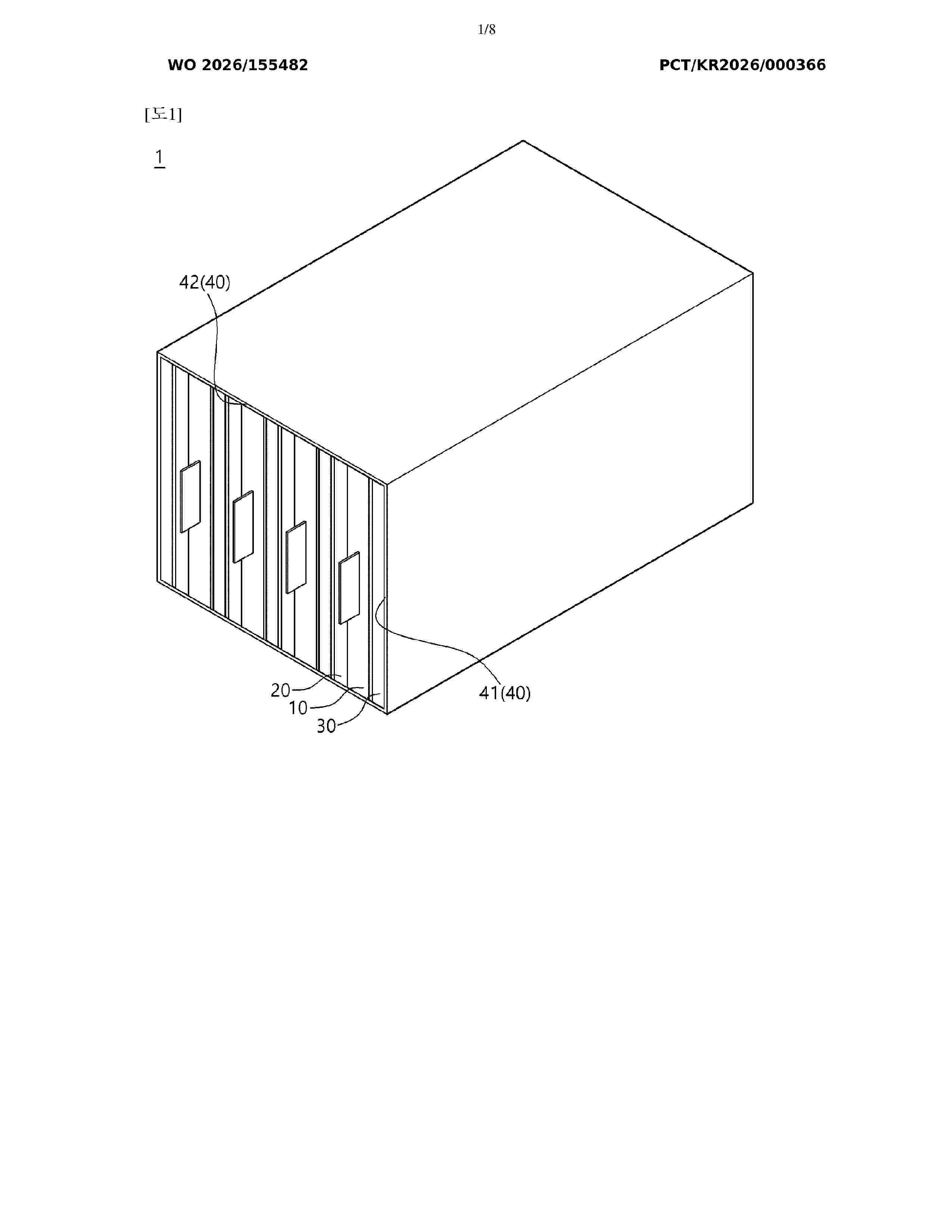
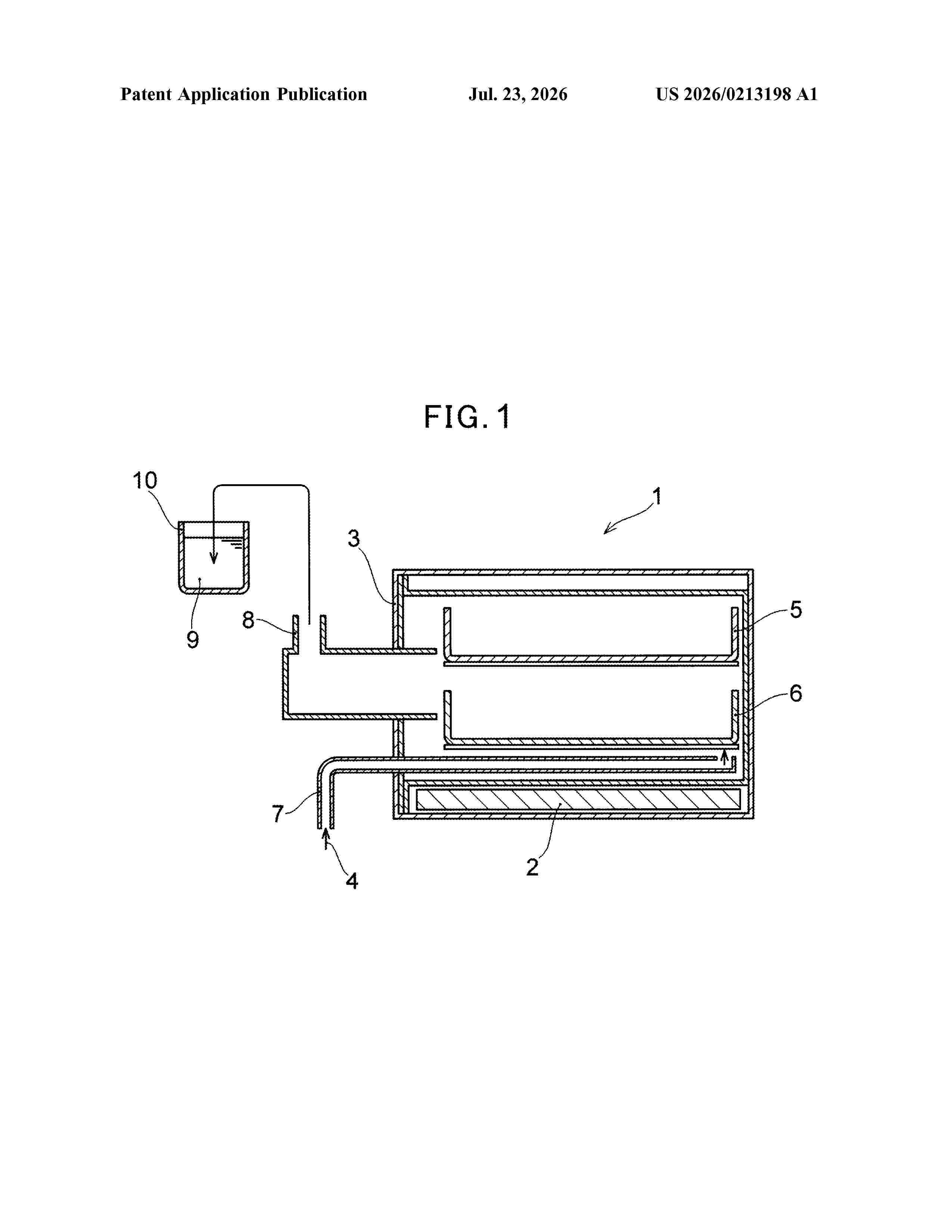
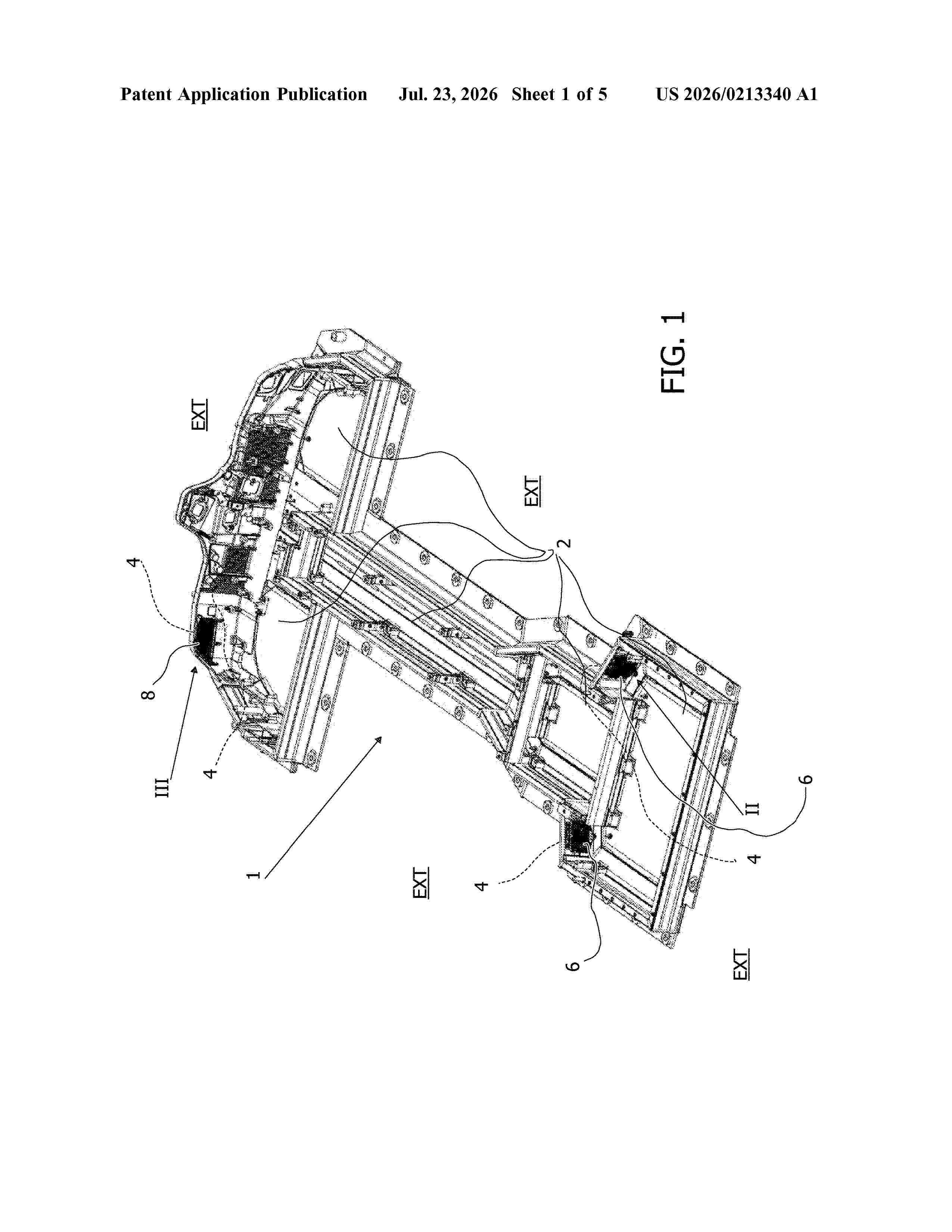
Station de recharge d’un véhicule électrique La station de recharge comprend : au moins un dispositif de recharge (2) d’un véhicule électrique (1) agencé pour fournir de l’électricité à une batterie électrique d’un véhicule électrique (1), ledit dispositif de recharge (2) comprenant au moins un élément chauffant produisant de la chaleur résiduelle,au moins une batterie électrochimique (4) connectée électriquement au dispositif de recharge (2), ladite batterie électrochimique formant une source de courant pour ledit dispositif de recharge. La station de recharge comprend en outre au moins un échangeur thermique (44) agencé entre l’élément chauffant et la batterie électrochimique (44), ledit échangeur thermique (44) transmettant la chaleur résiduelle produite par ledit élément chauffant à ladite batterie électrochimique (4) afin de favoriser les réactions d’oxydoréduction dans ladite batterie électrochimique (4). Figure pour l'abrégé : 1
Resumen de: FR3171545A1
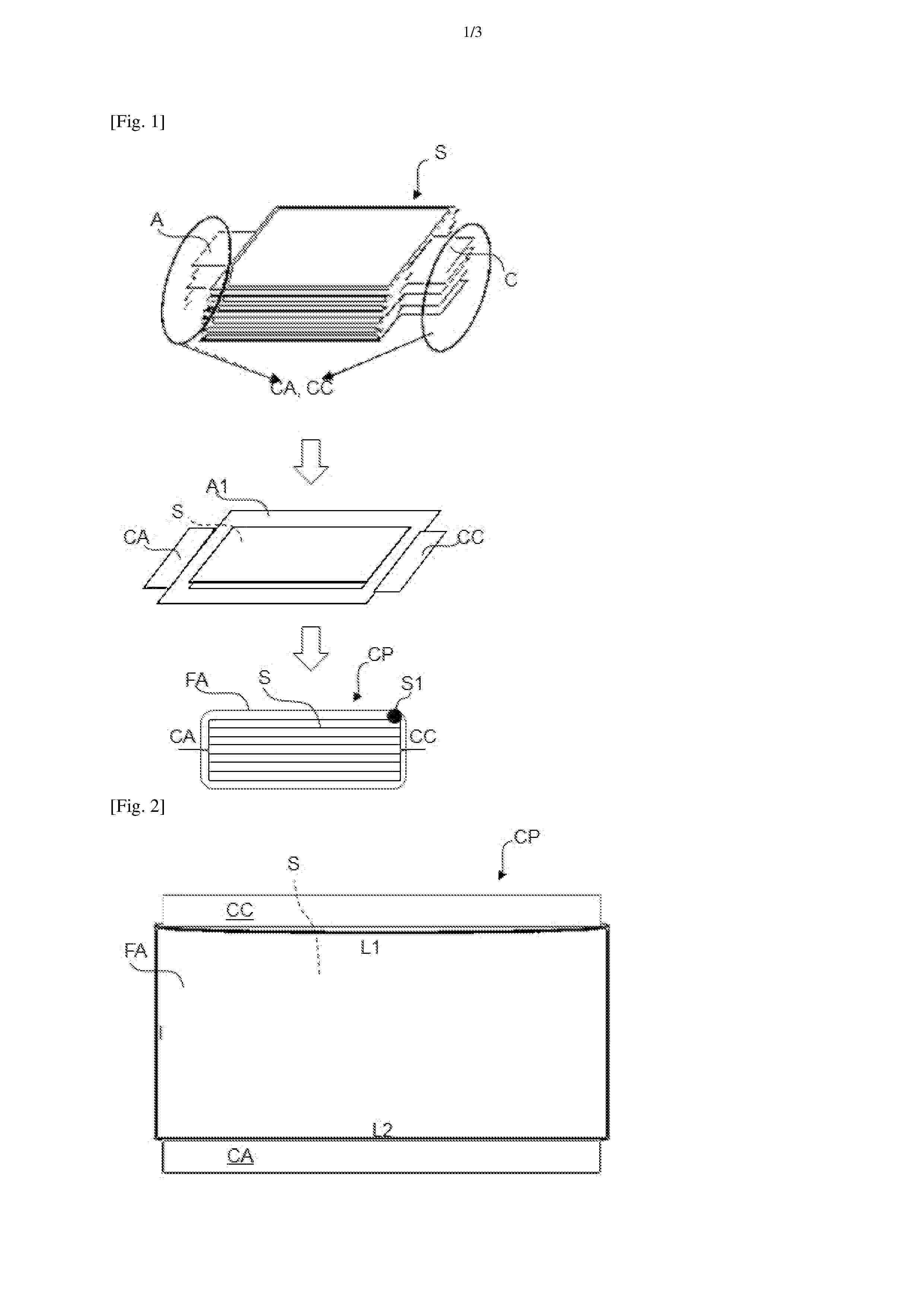
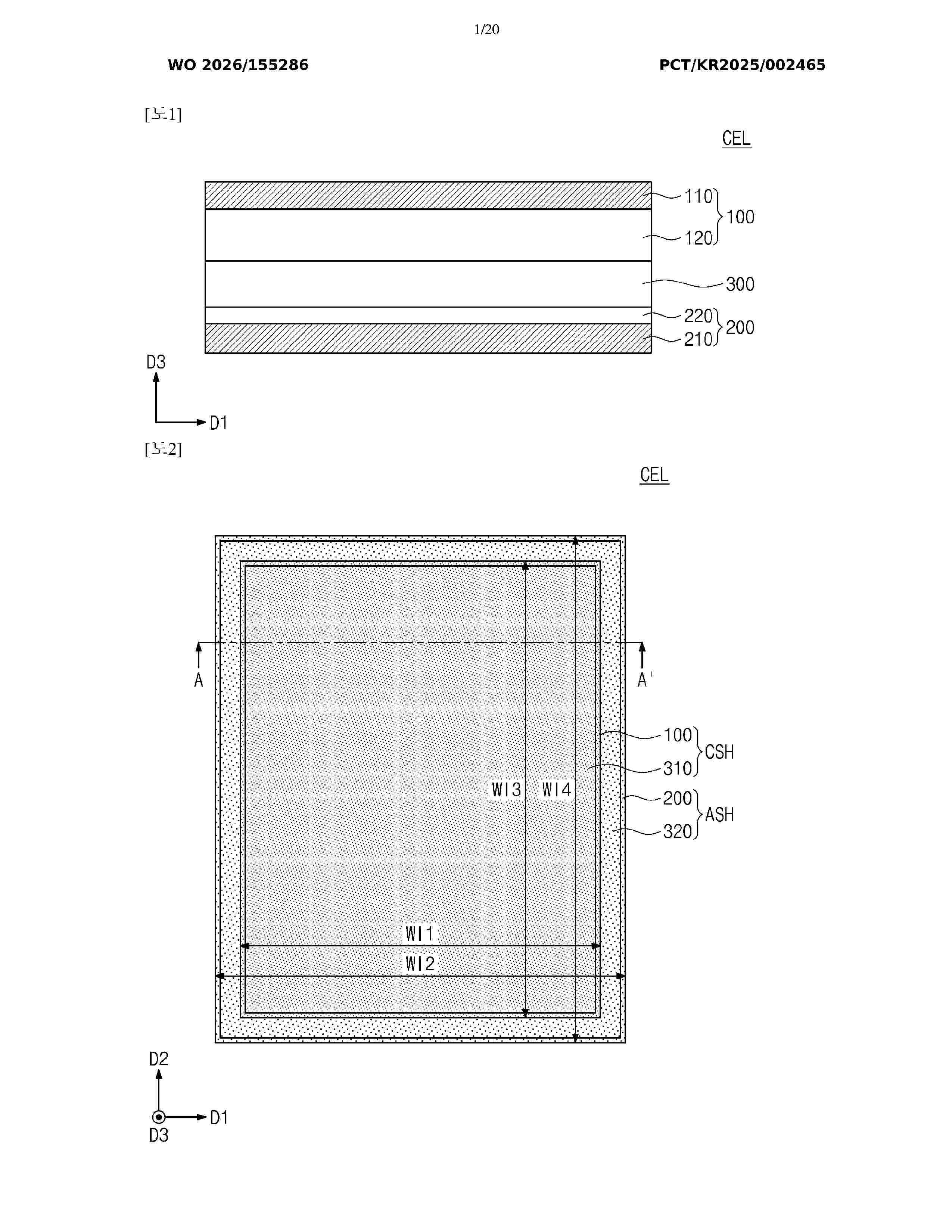
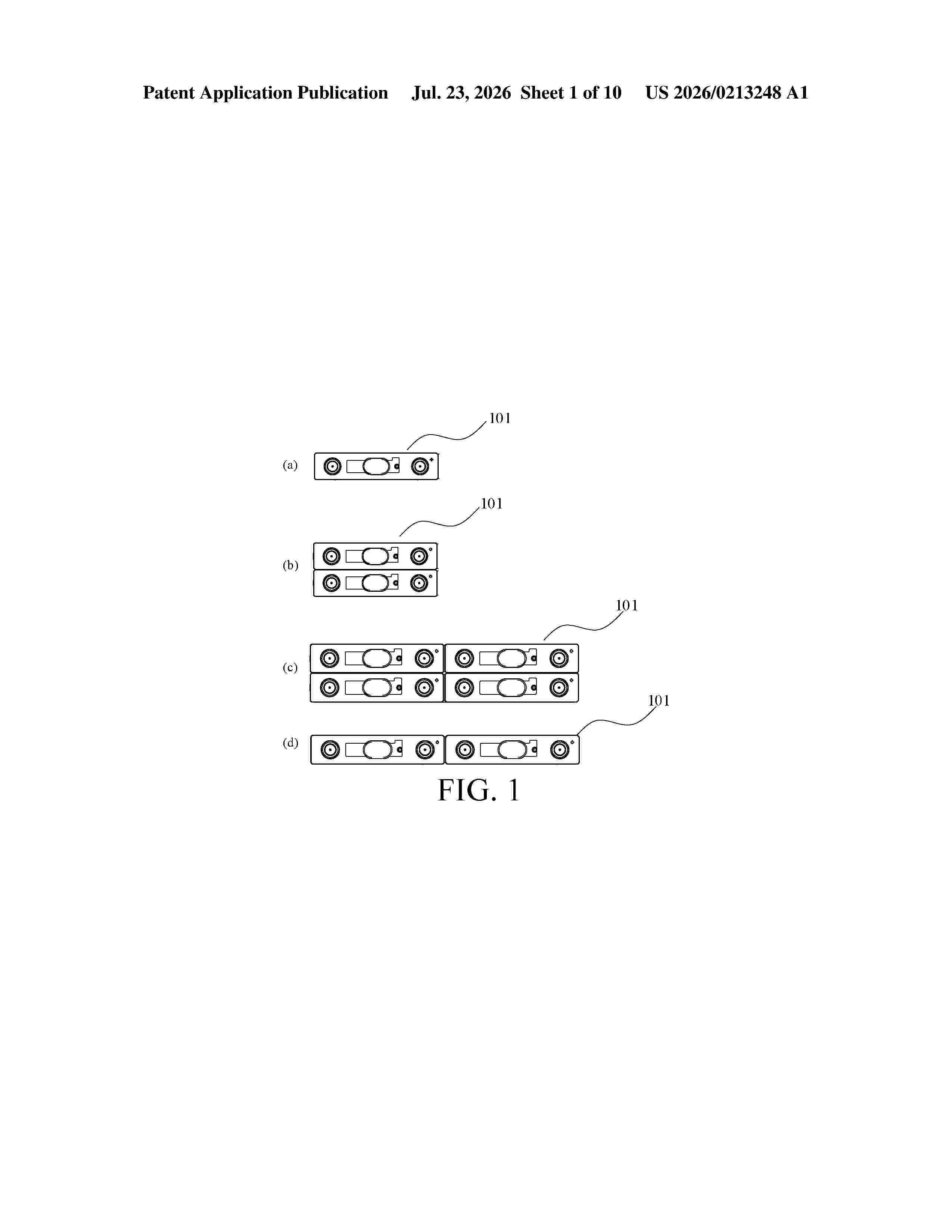
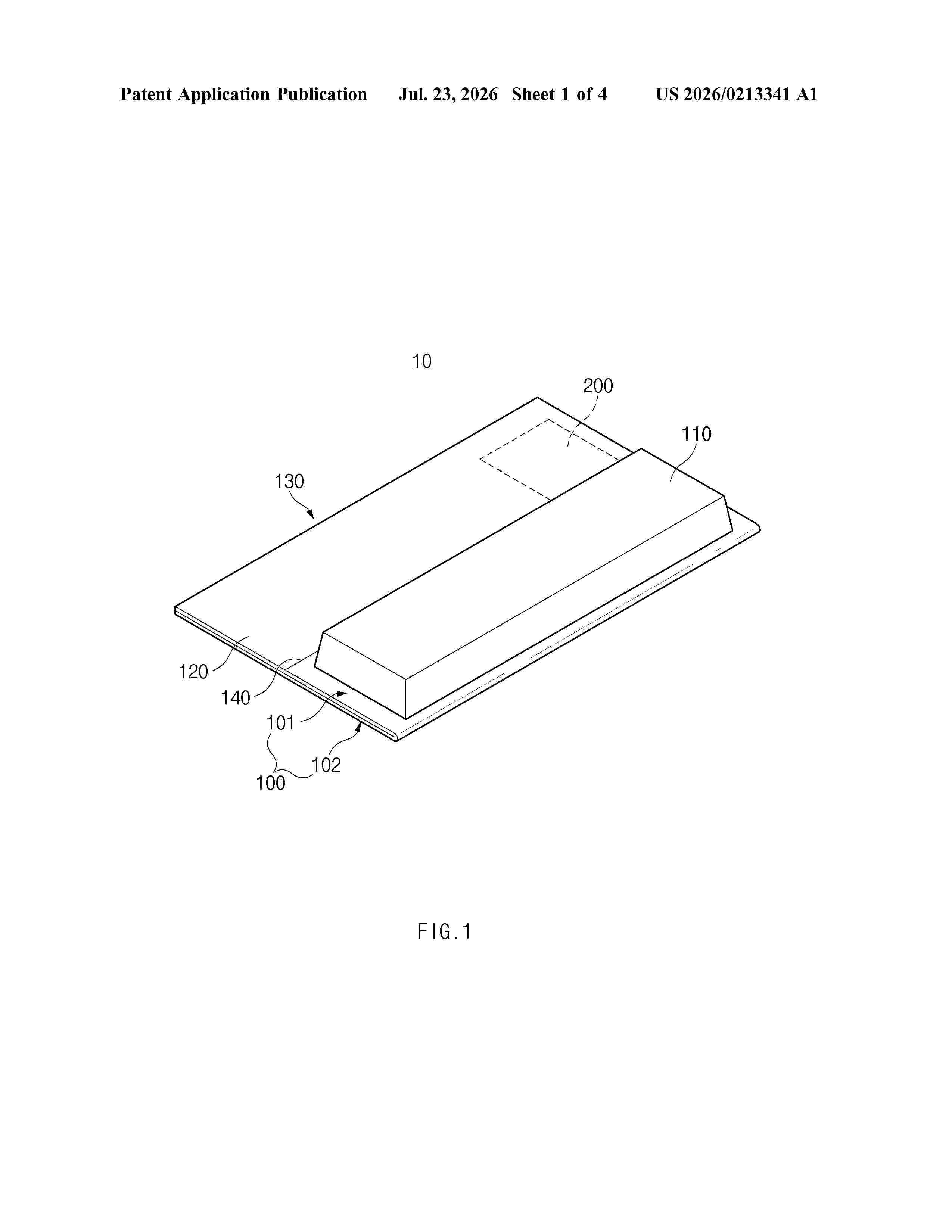
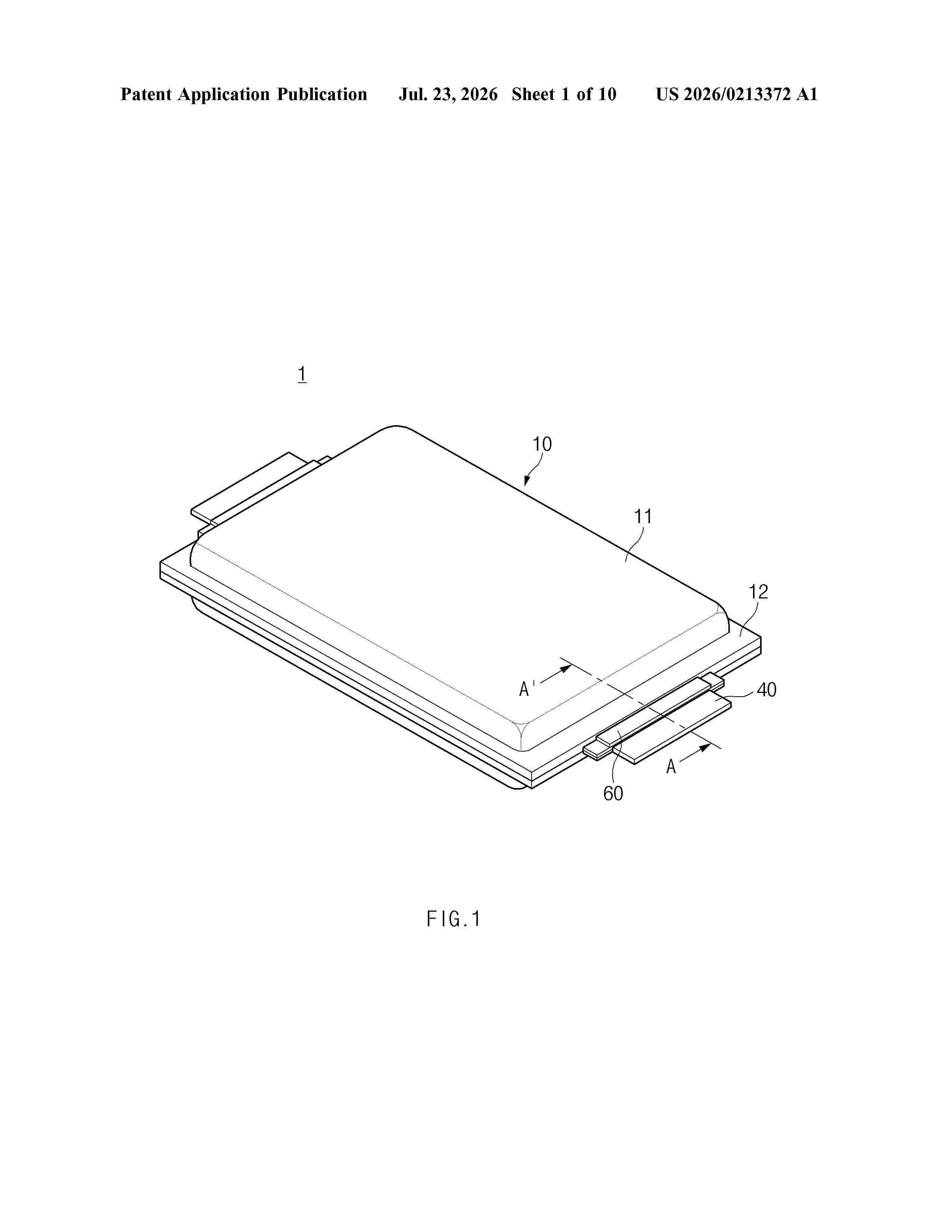
L’invention concerne une cellule poche (CP) comprenant un support de cellule (S) connecté à des collecteurs (CA, CC) de deux bornes électriques, le support de cellule (S) ayant une forme rectangulaire plane ou enroulée, et étant enveloppé dans une enveloppe étanche (FA),la cellule poche (CP) présentant deux largeurs et deux longueurs (L1, L2), les longueurs (L1, L2) de taille supérieure aux largeurs,caractérisée en ce que les collecteurs (CA, CC) de chaque borne sont répartis ou s’étendent le long d’une ou des deux longueurs (L1, L2),et en ce que l’enveloppe (FA) comprend des moyens de dégazage le long d’une ou des deux longueurs (L1, L2). L’invention concerne également une batterie, un véhicule et un procédé sur la base d’une telle cellule. Figure 2
Resumen de: FR3171399A1
Un procédé est implémenté dans un véhicule comprenant une batterie de puissance propre à fournir de l’énergie électrique, et une installation de chauffage/refroidissement comportant un circuit de chauffage/refroidissement dans lequel circule un fluide caloporteur, couplé à la batterie de puissance et comportant un compresseur propre, lorsqu’il est alimenté en énergie électrique issue de la batterie de puissance, à participer au refroidissement du fluide caloporteur. Ce procédé comprend une étape (10-30) dans laquelle, lorsque la batterie de puissance est utilisée et doit être refroidie mais que le compresseur est défaillant ou est dans un état inconnu, on impose une limitation choisie de l’utilisation de la batterie de puissance. Figure 3
Resumen de: FR3171544A1
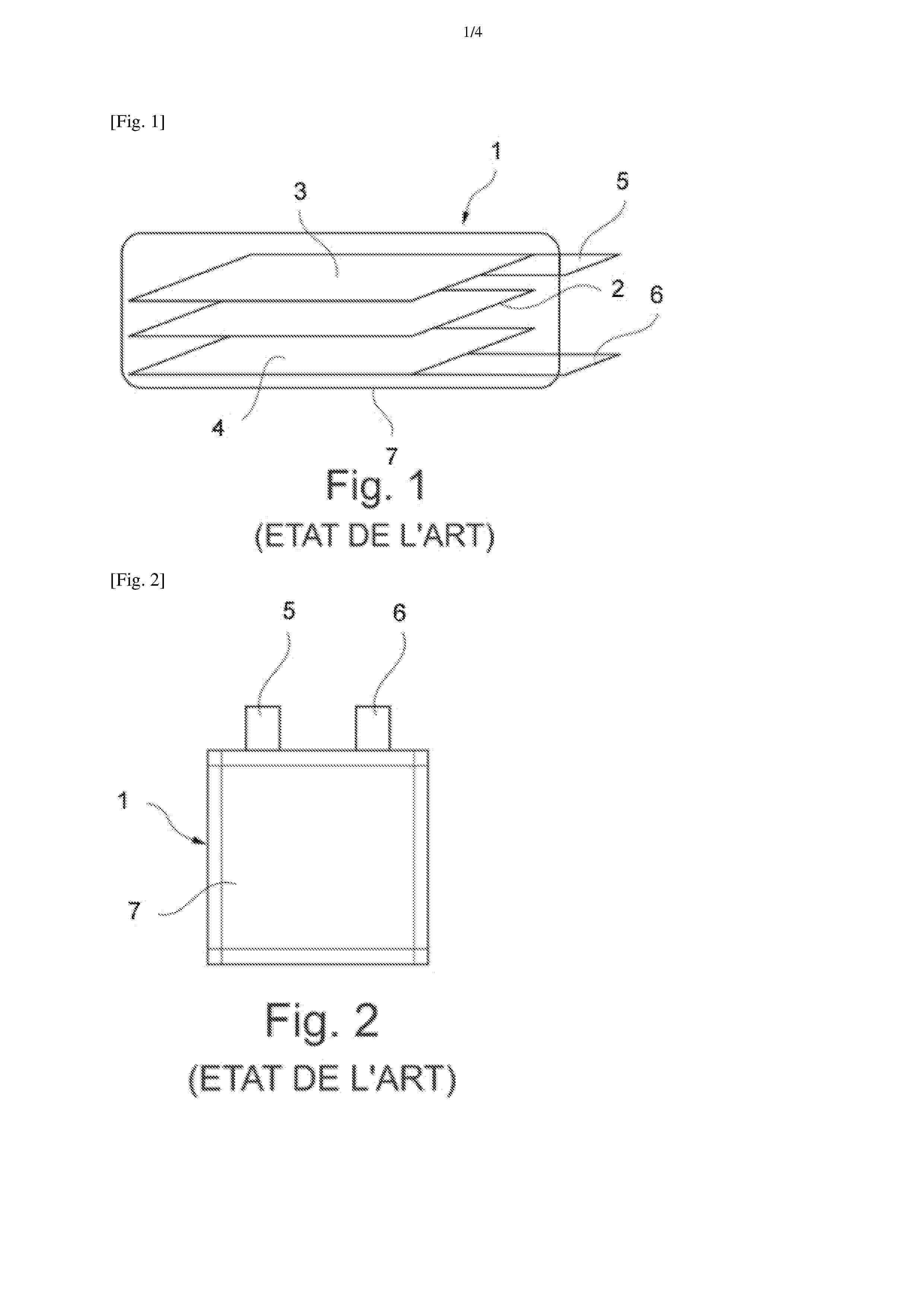
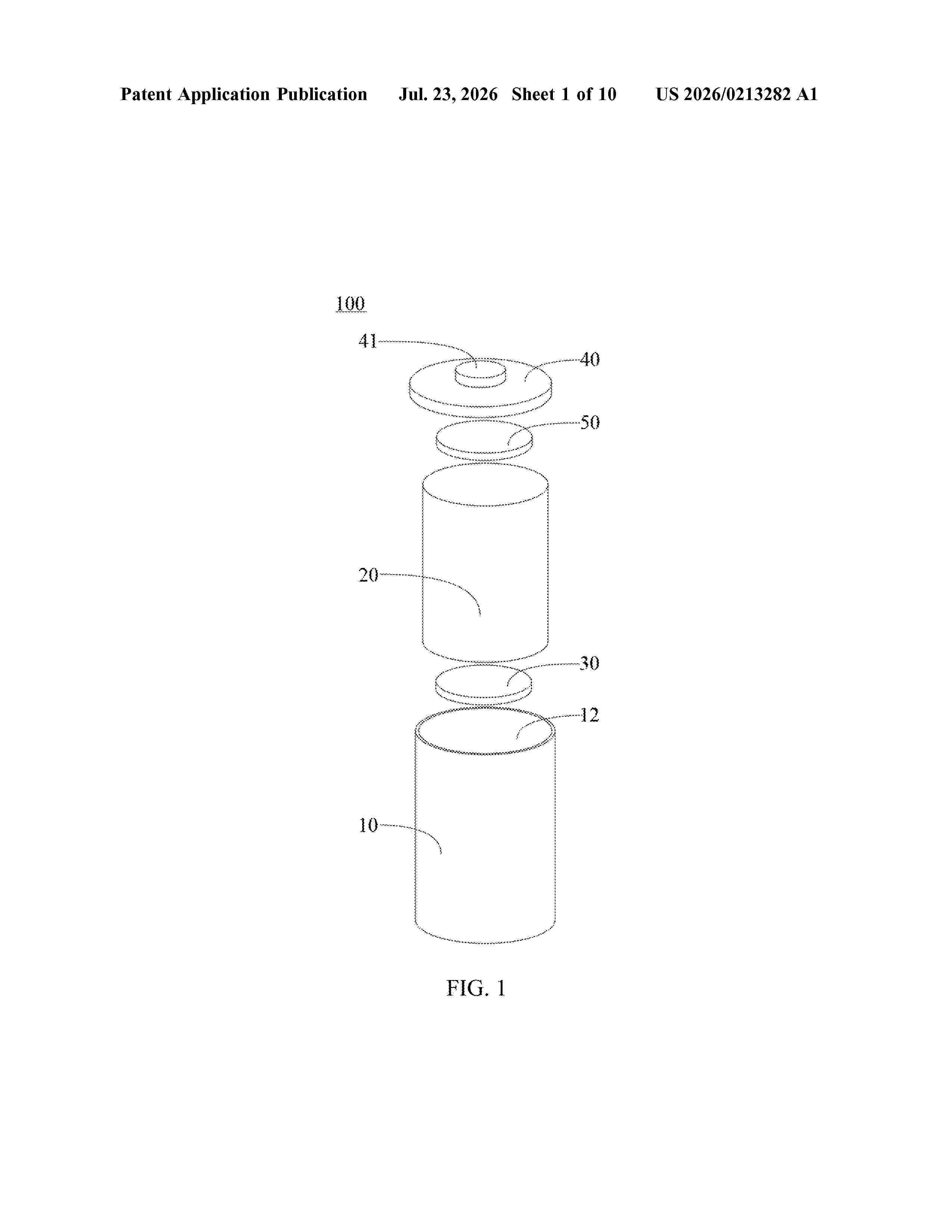
Accumulateur encapsulable dans un laminé, laminé comportant ledit accumulateur et procédé de fabrication dudit laminé. L’invention concerne un accumulateur Li-ion (1), comprenant :- au moins une cellule électrochimique comprenant une cathode (3), une anode (4) et un électrolyte (2) intercalé entre la cathode et l’anode, l’électrolyte comprenant au moins un solvant et un sel de lithium, chaque solvant de l’électrolyte présentant une température d’ébullition supérieure à 160 °C, le sel de lithium étant stable jusqu’à une température supérieure à 180 °C, voire 300 °C, la cathode et l’anode comprenant chacune une couche de passivation stable jusqu’à une température supérieure à 200 °C ;- un emballage (7) contenant avec étanchéité la cellule électrochimique en étant traversé par une partie de deux languettes formant des collecteurs de courant (5, 6) de l’accumulateur Li-ion qui s’étendent dans le plan de la cellule électrochimique. Figure pour l’abrégé : Fig. 3
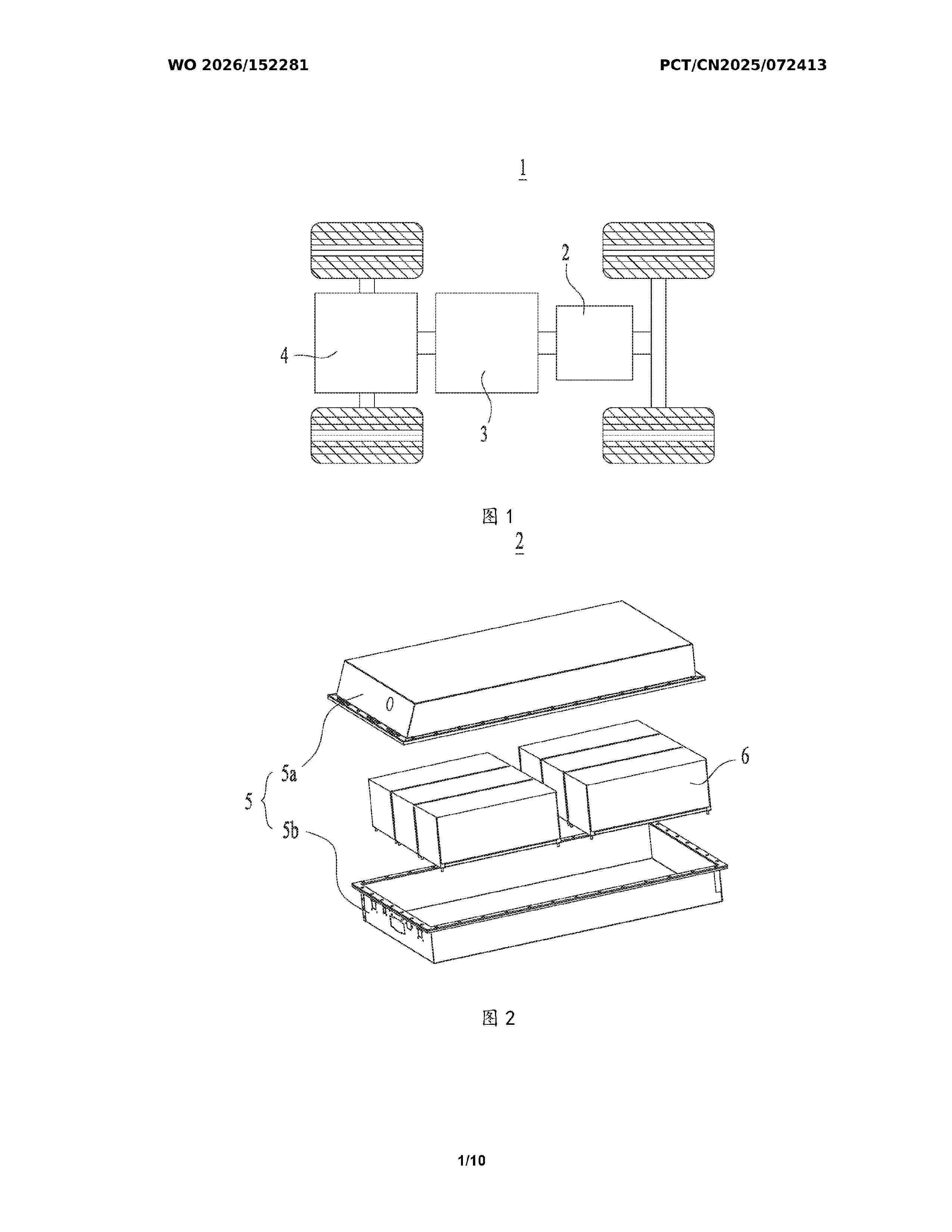
Resumen de: WO2026152340A1
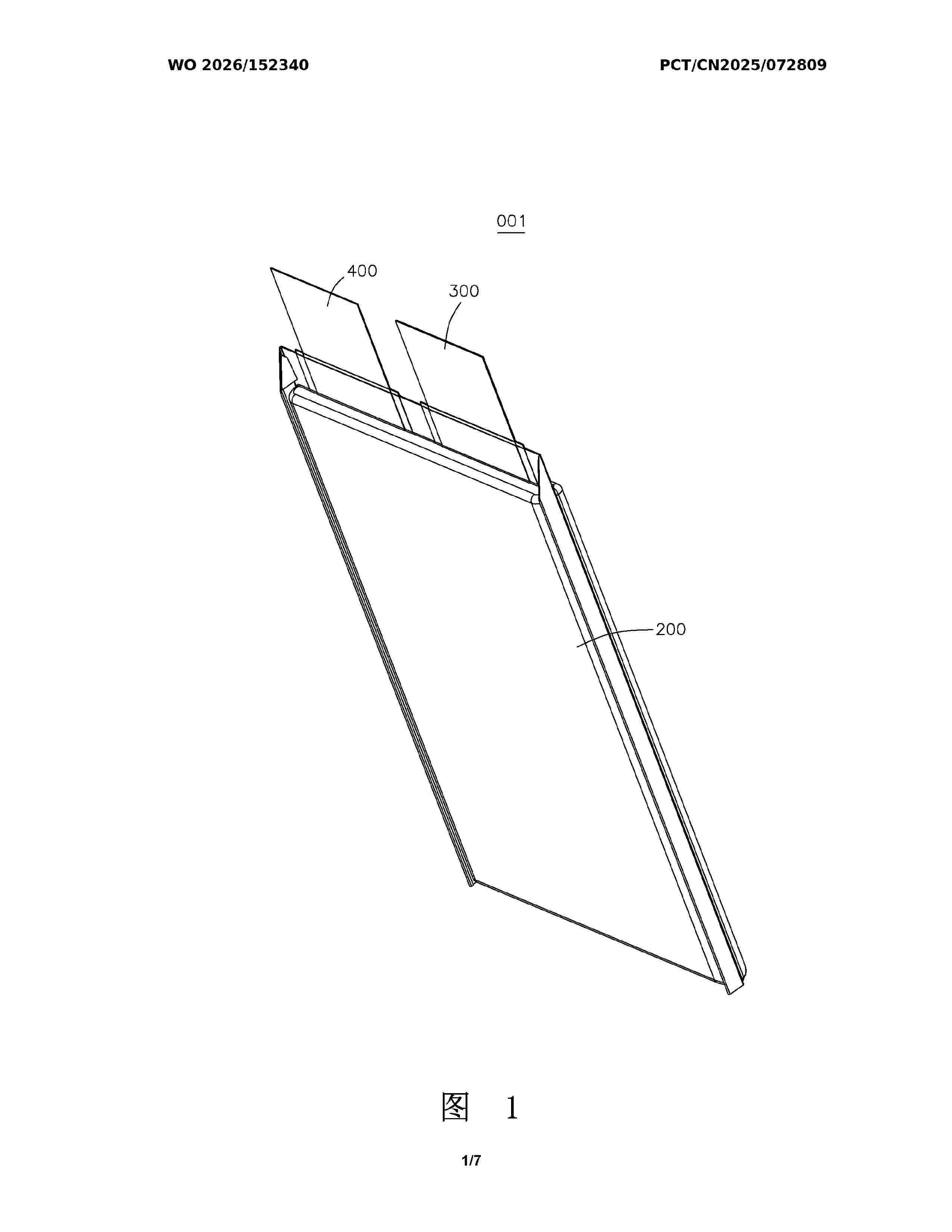
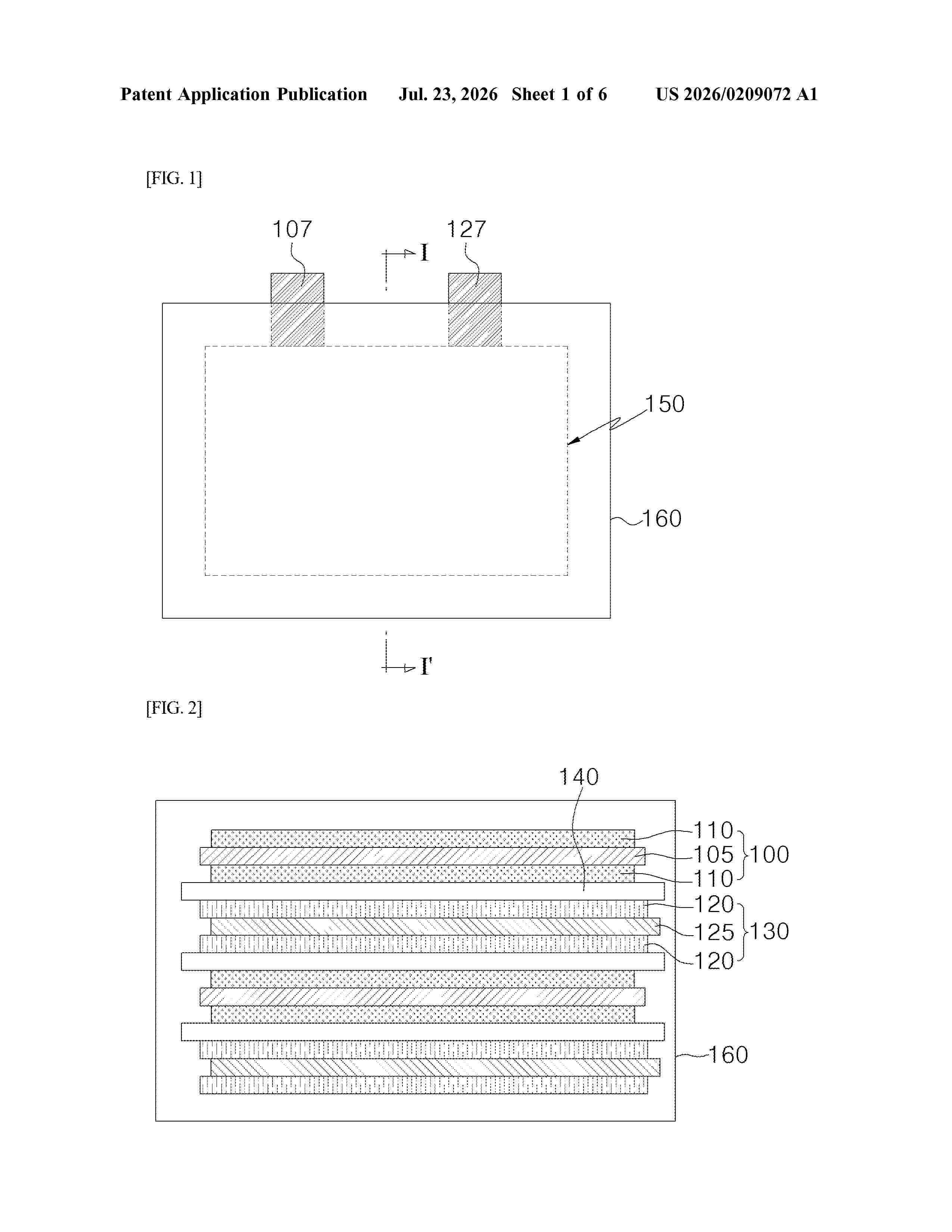
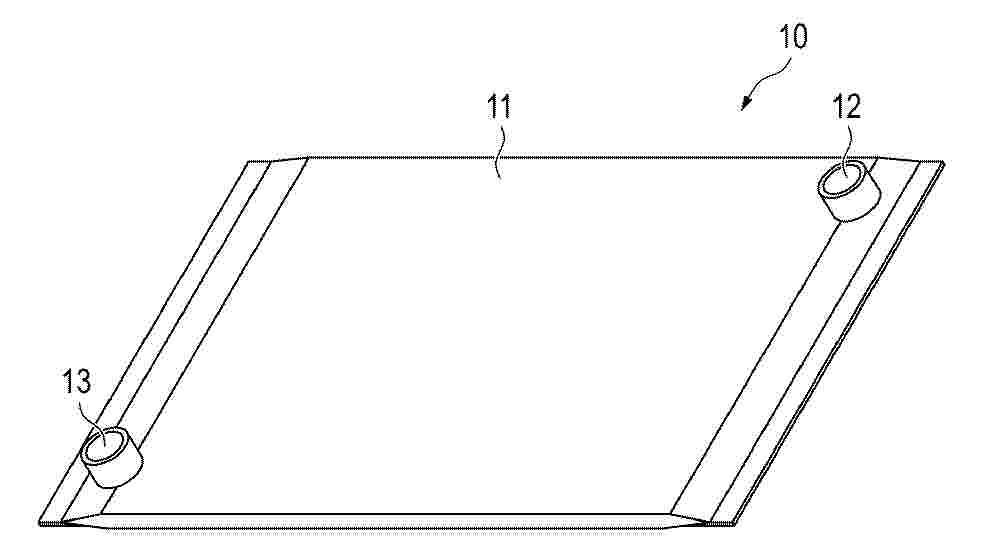
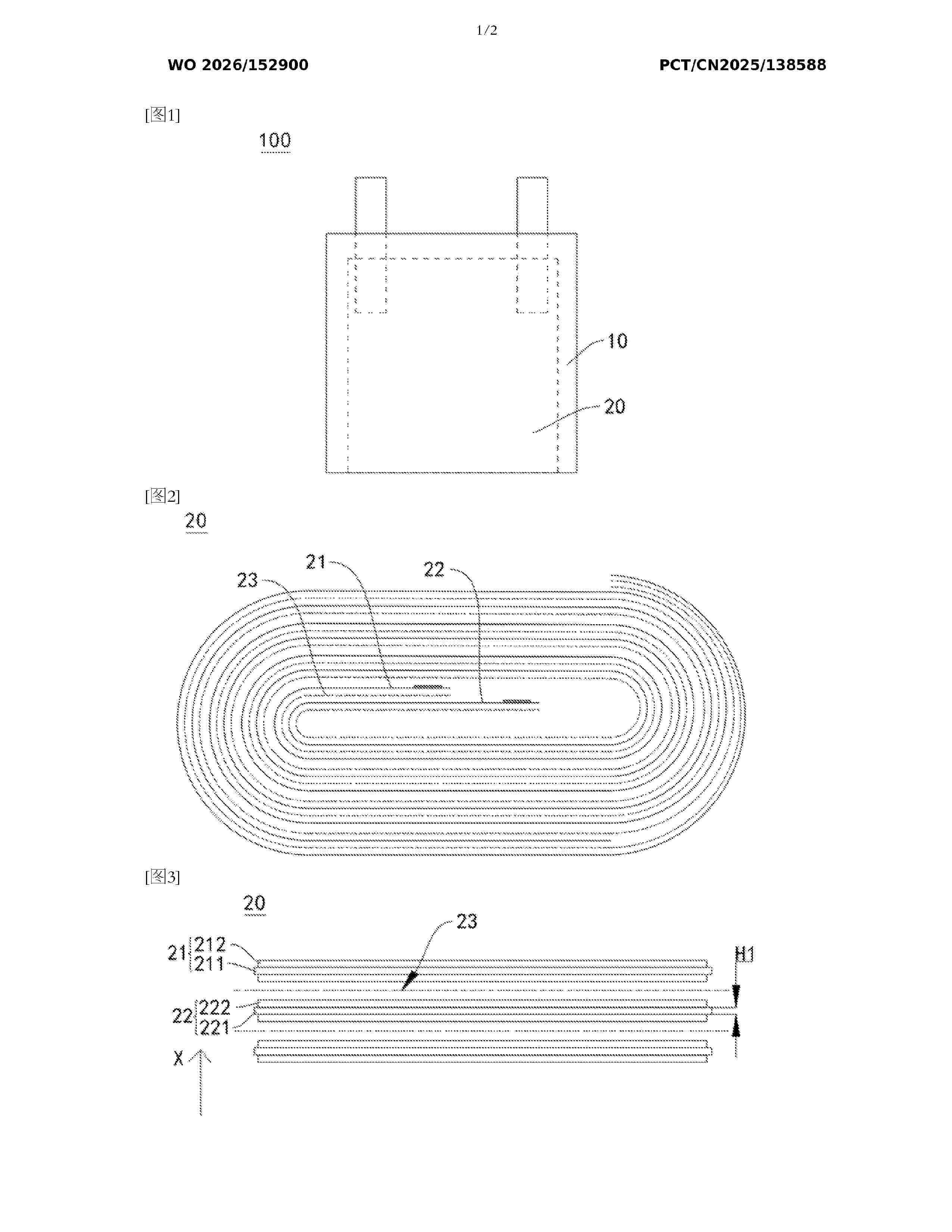
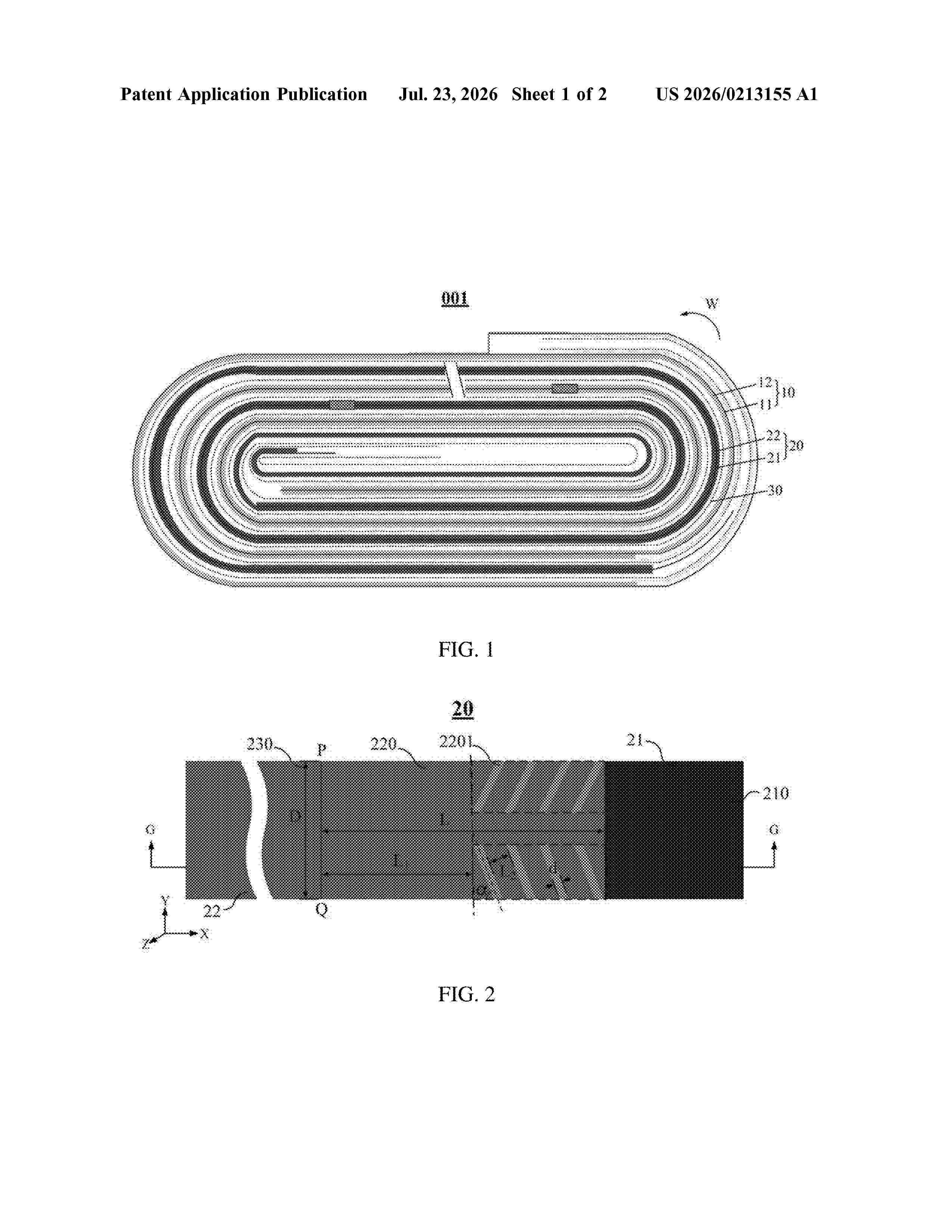
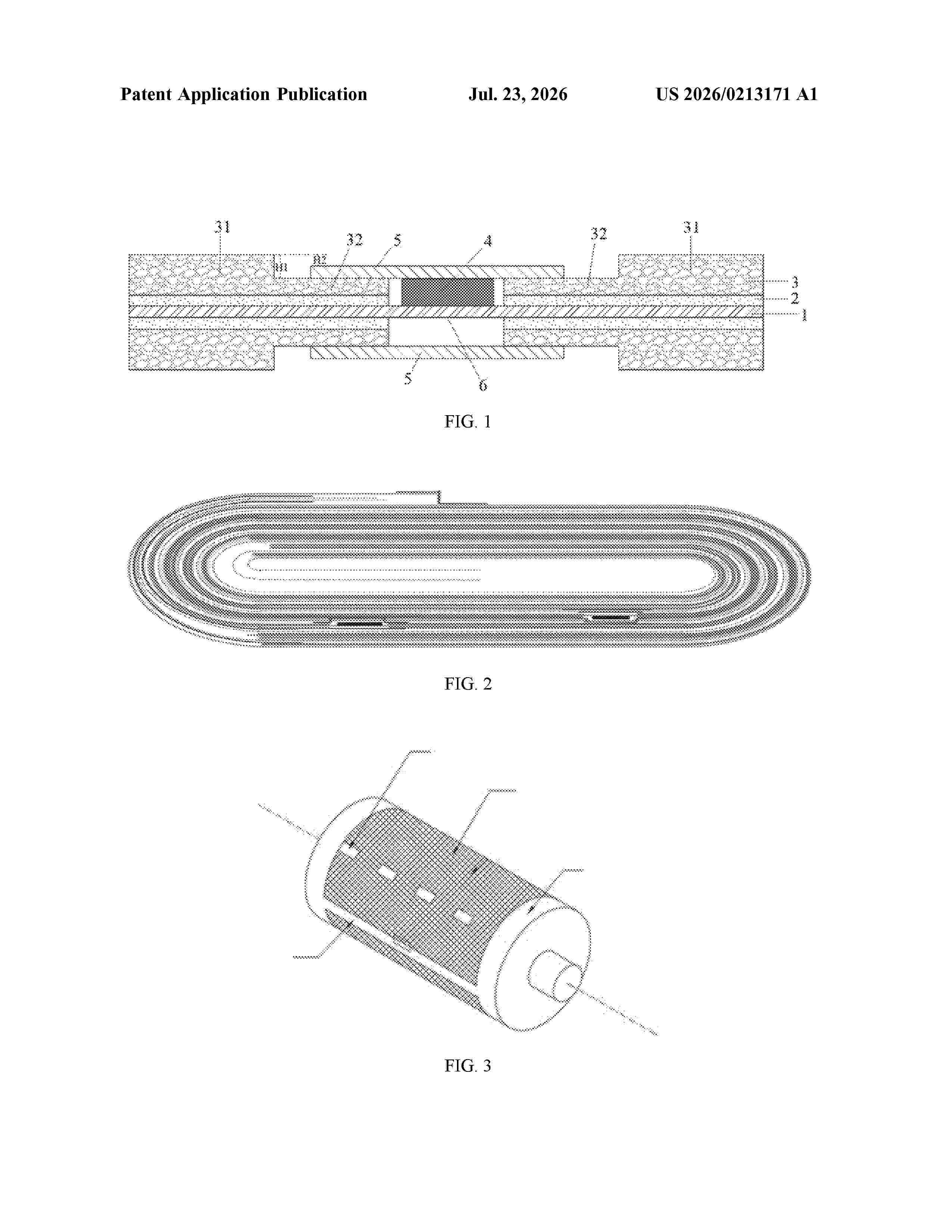
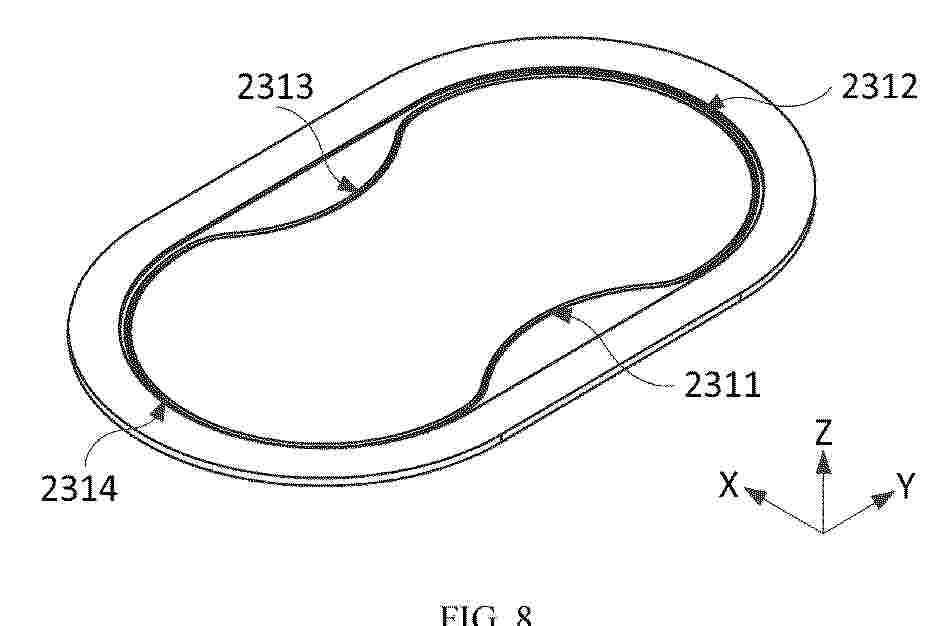
The present application relates to the technical field of energy storage, and in particular to a secondary battery and an electric device. The secondary battery comprises an electrode assembly; the electrode assembly comprises a first electrode sheet, a second electrode sheet, and a separator; and the separator is arranged between the first electrode sheet and the second electrode sheet. The first electrode sheet at the outermost side comprises first straight sections and first bent sections connected to each other; the first straight sections are located in a straight area; and the first bent sections are located in bent areas. Each first bent section comprises a first flattened portion and first raised portions; each first raised portion connects the first flattened portion and the corresponding first straight section; and a first interlayer gap is formed between the first raised portions and the second electrode sheet. Therefore, during expansion of the electrode assembly, the first interlayer gap is capable of buffering the tensile force on the first electrode sheet, thereby mitigating the problem of the electrode sheet breaking due to the tensile stress.
Resumen de: WO2026155190A1
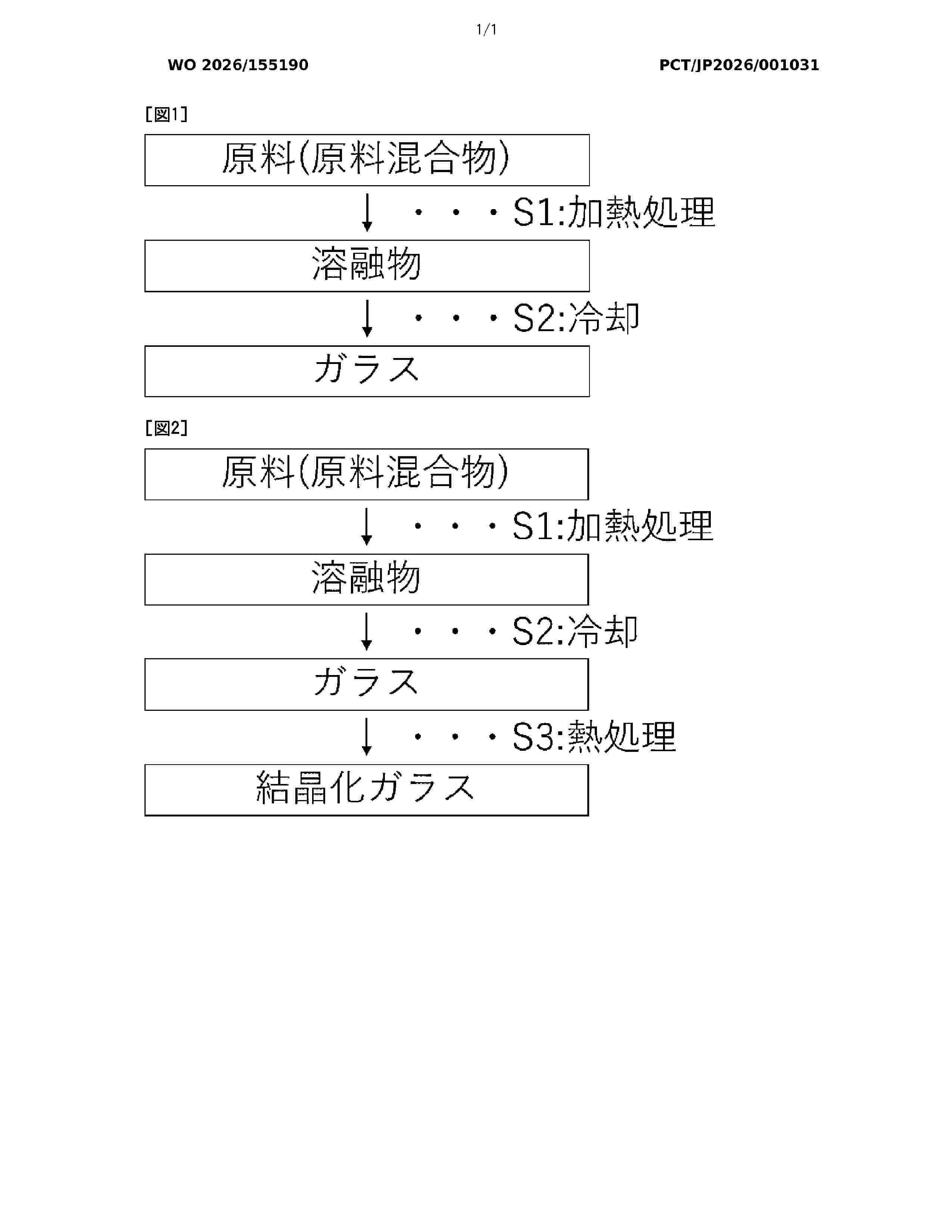
The present invention relates to glass which contains Li, P and, as an optional element, a prescribed element M as elements that constitute a cation component, contains S and, as optional elements, at least one of a prescribed element X and a prescribed element Y as elements that constitute an anion component, and is represented by compositional formula Li(a+c-m×d-y×e)MdP(1-d)SbXcYe. In the compositional formula, m is the valency of the element M, y is the valency of the element Y, and a to e in the compositional formula satisfy the relationships -5.00
Resumen de: WO2026155401A1
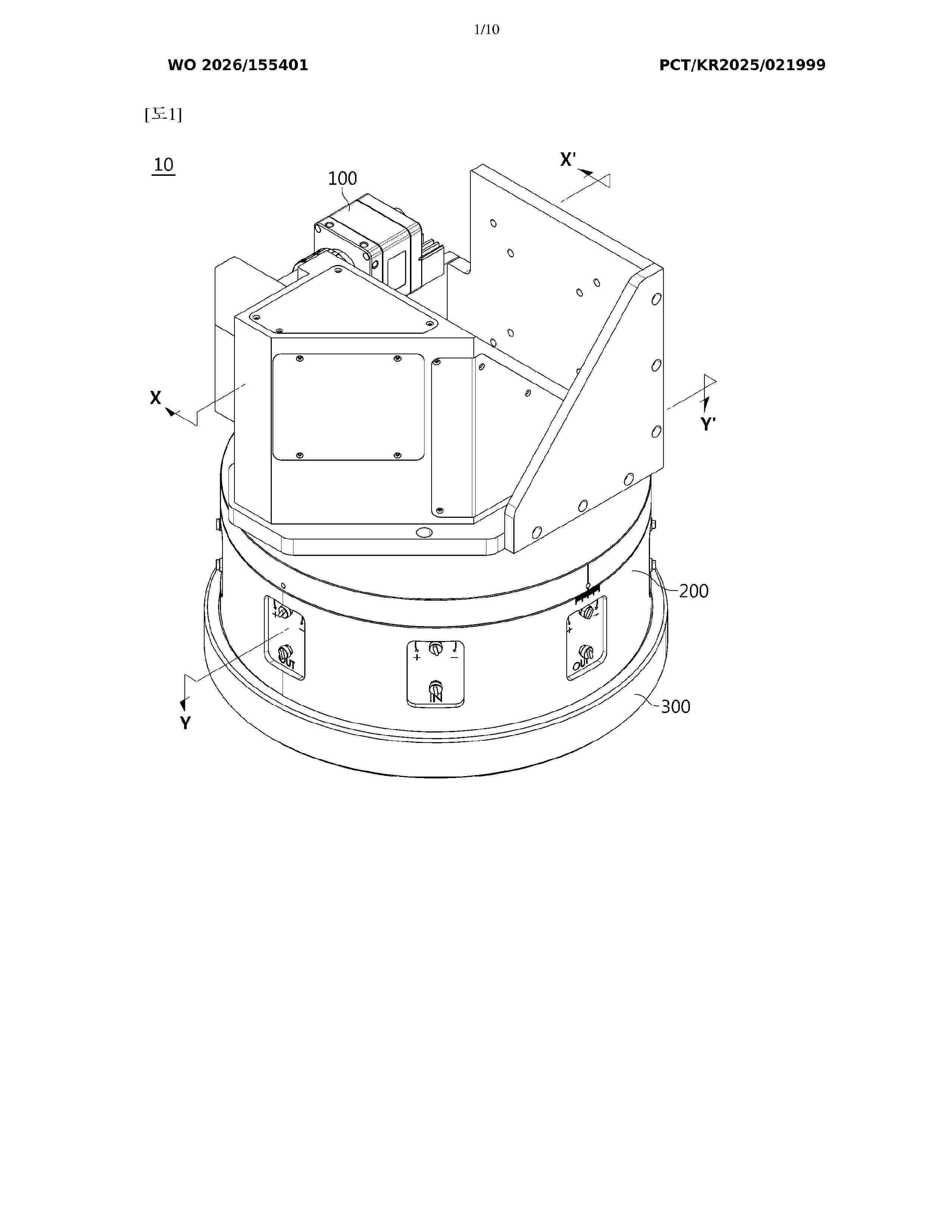
A battery cell inspection device, a battery cell produced using same, and a battery pack and a vehicle comprising the battery cell are disclosed. The battery cell inspection device according to one embodiment of the present invention comprises: a photographing member for photographing a welded portion of a battery cell; a reflective member which reflects light and is coupled to the photographing member or detached and removed from the photographing member on the basis of a welding position of the battery cell; and a lighting member for providing light to the battery cell.
Resumen de: WO2026154879A1
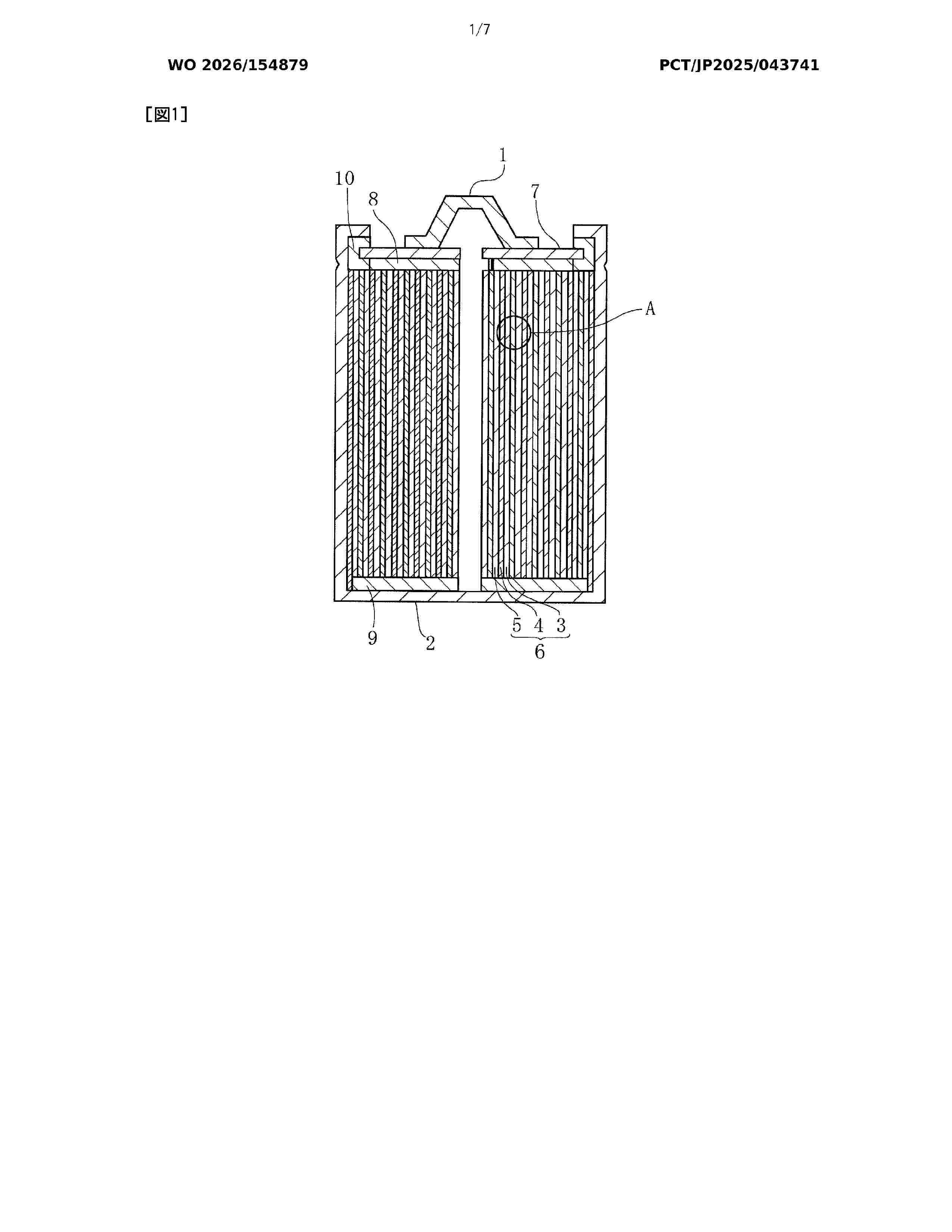
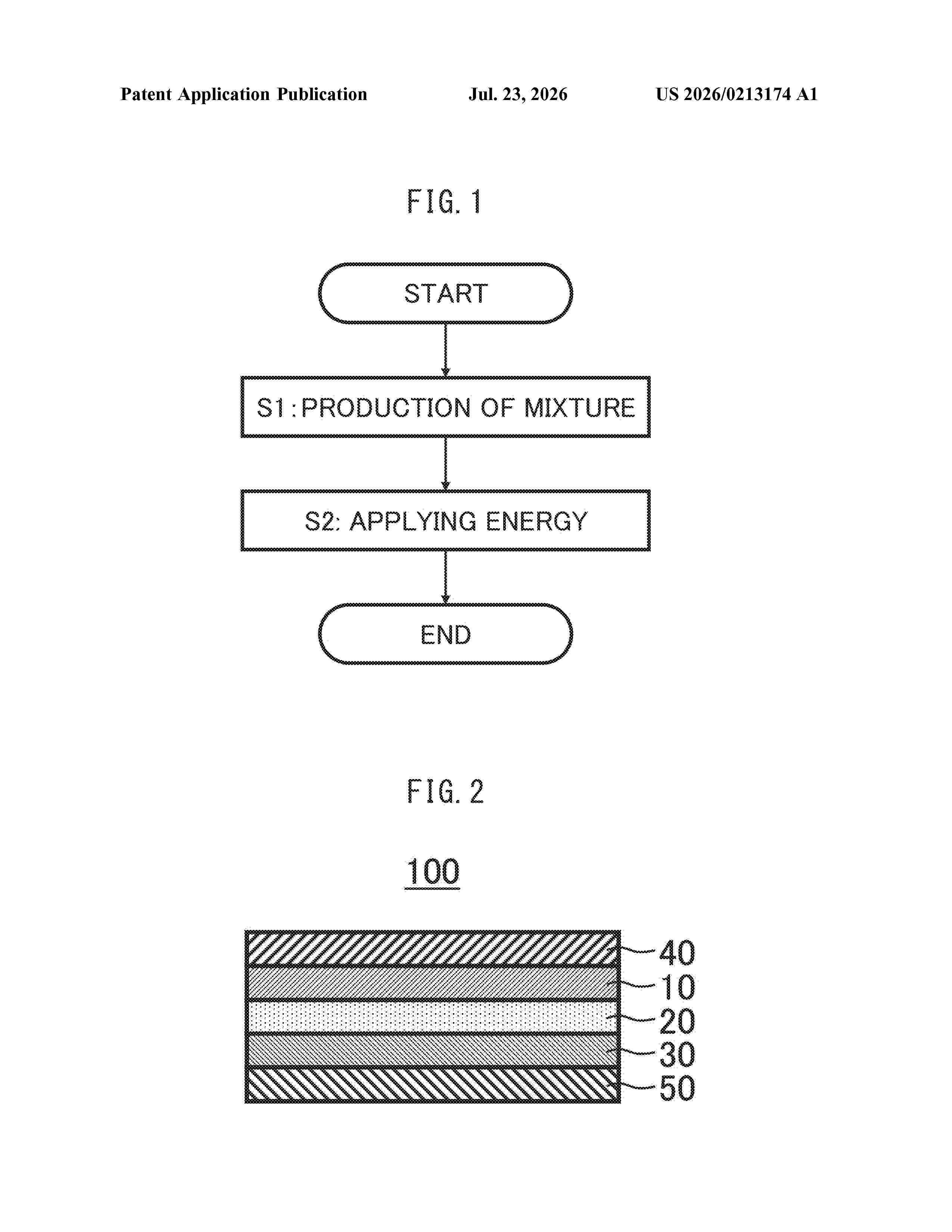
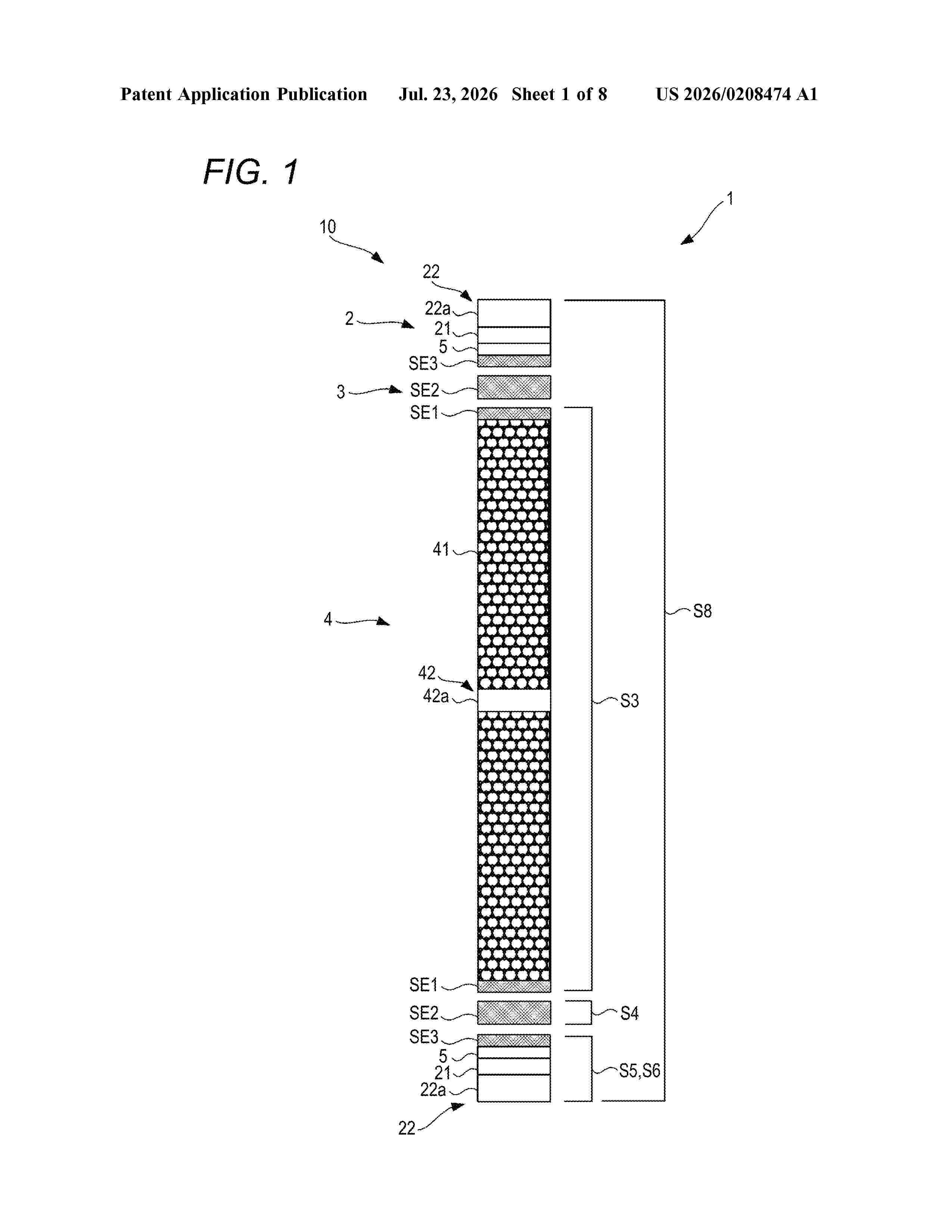
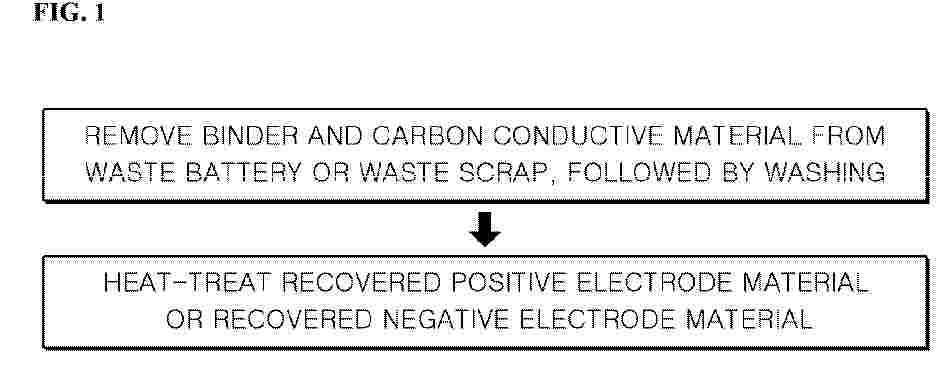
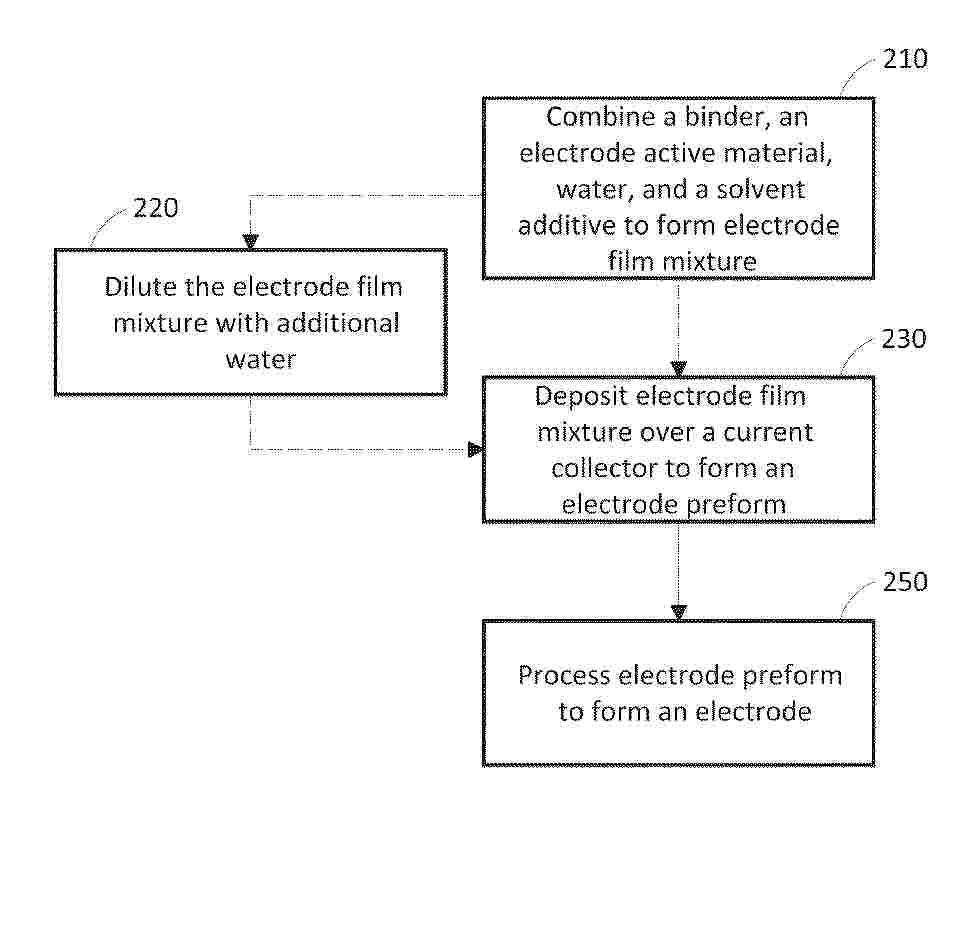
In the present invention, a plurality of metal salts containing Li and a ternary material are prepared (S1), a blending ratio of the metal salts is adjusted (S2), black mass and the metal salts are mixed (S3), and then heat treatment is performed to synthesize a positive electrode active material (S4). Next, the positive electrode active material, a conductive auxiliary agent, and a binder are charged into a vibration stirring device for vibration stirring to obtain a powder mixture (S5). Thereafter, sheet forming is performed on a positive electrode current collector by using a forming method such as a hot press method (S6), and a positive electrode composed of a dry electrode is obtained. Instead of black mass, a used waste positive electrode material and a waste electrode active material layer can be used. As a result, resources are effectively utilized by reusing used lithium ion batteries, and a practical electrode and lithium ion battery having desired good battery characteristics are obtained at low cost.
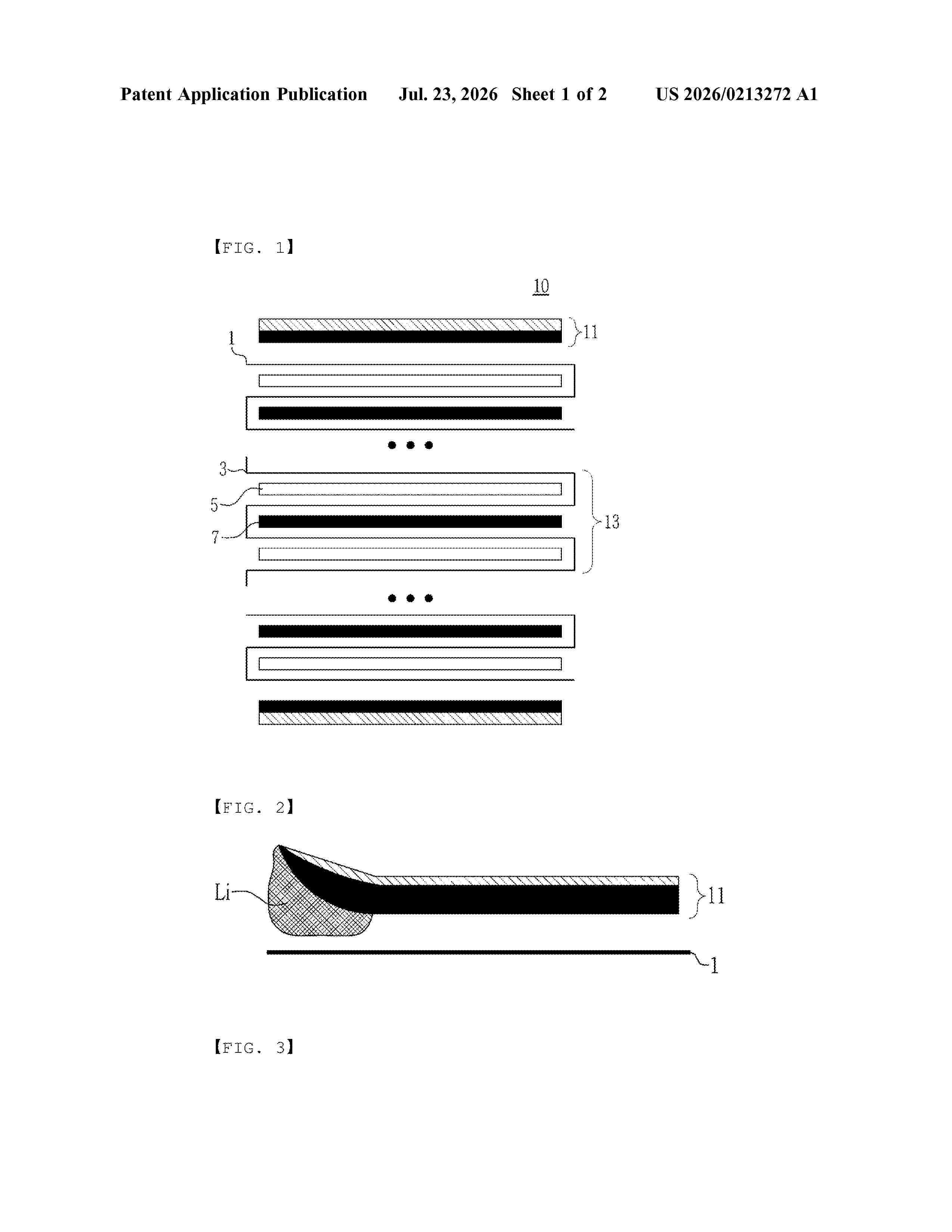
Resumen de: US20260213195A1
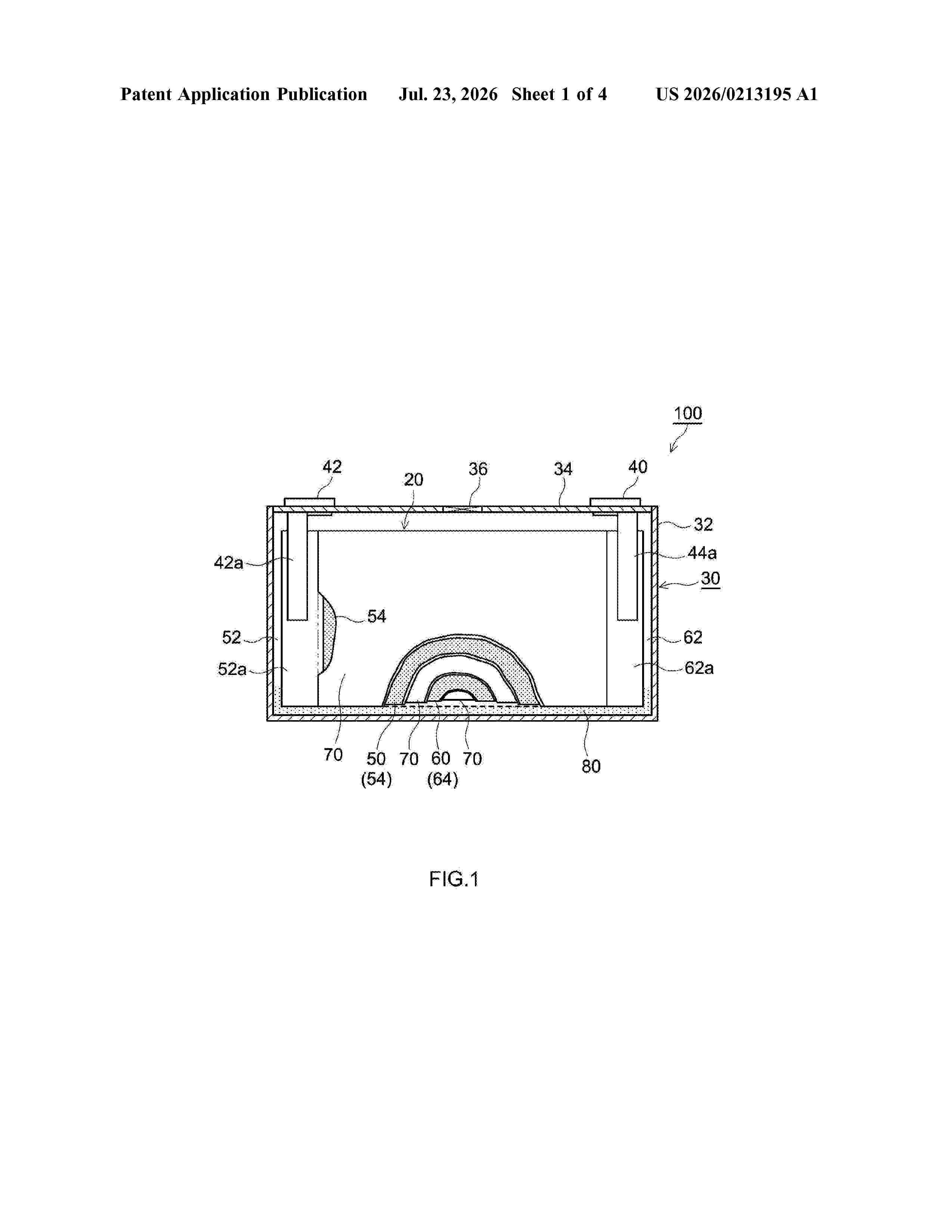
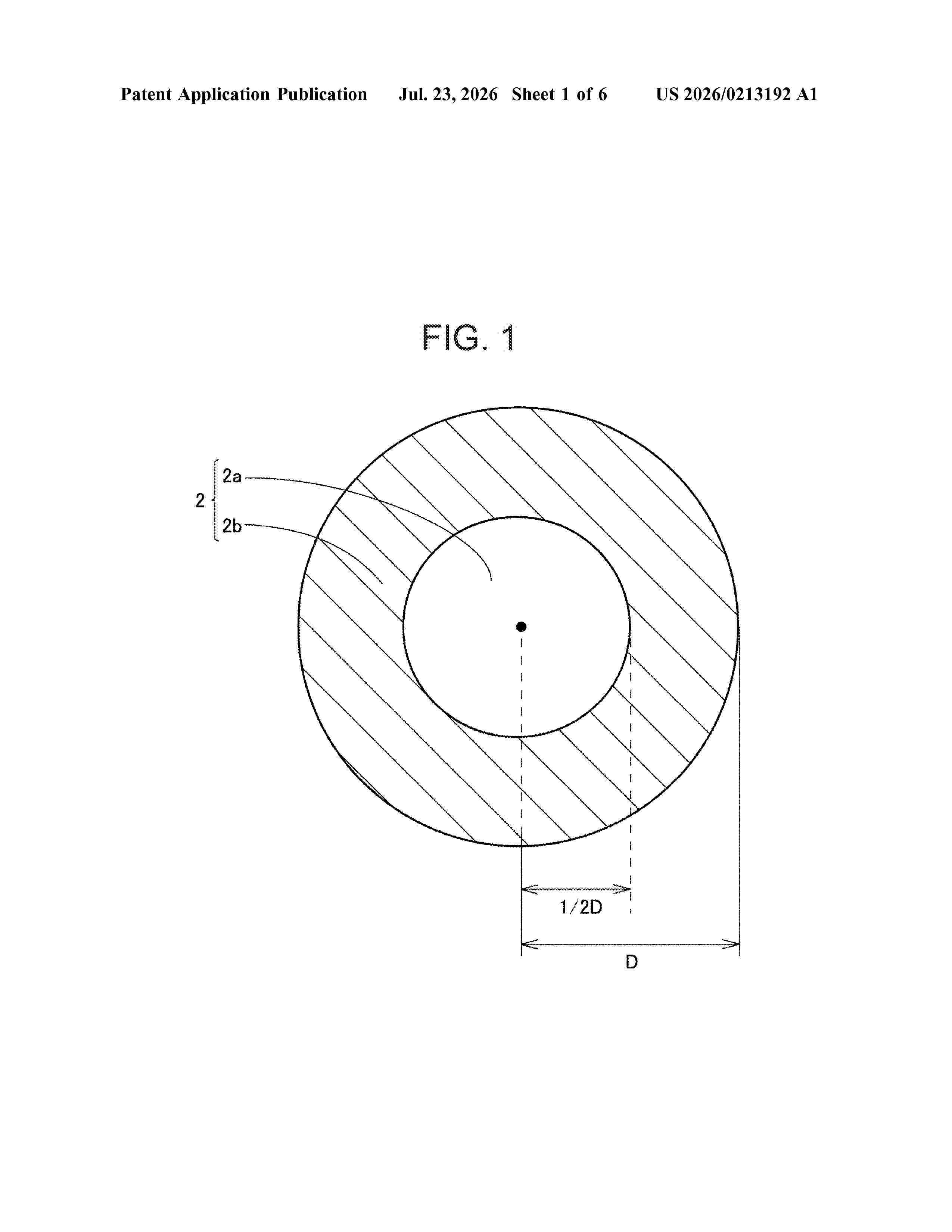
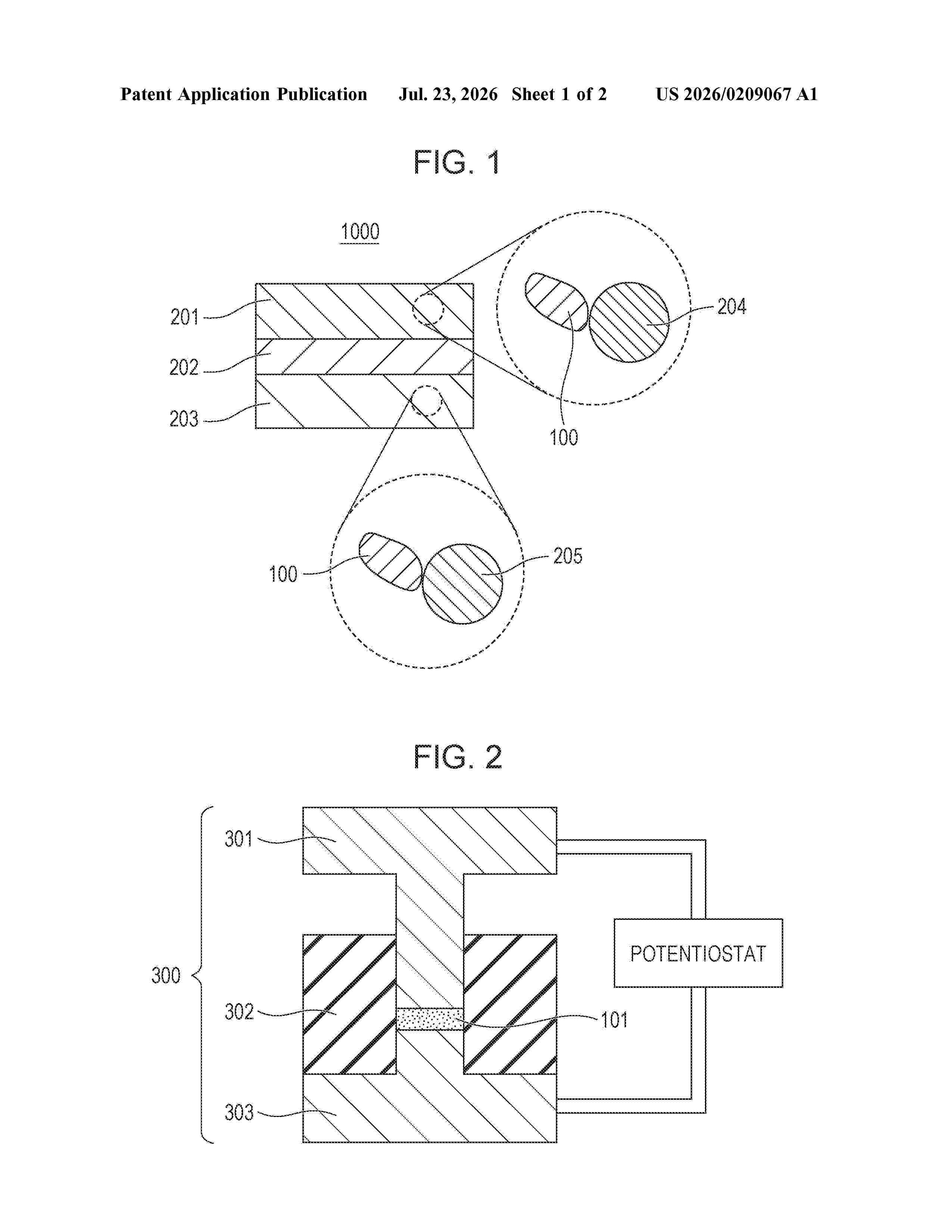
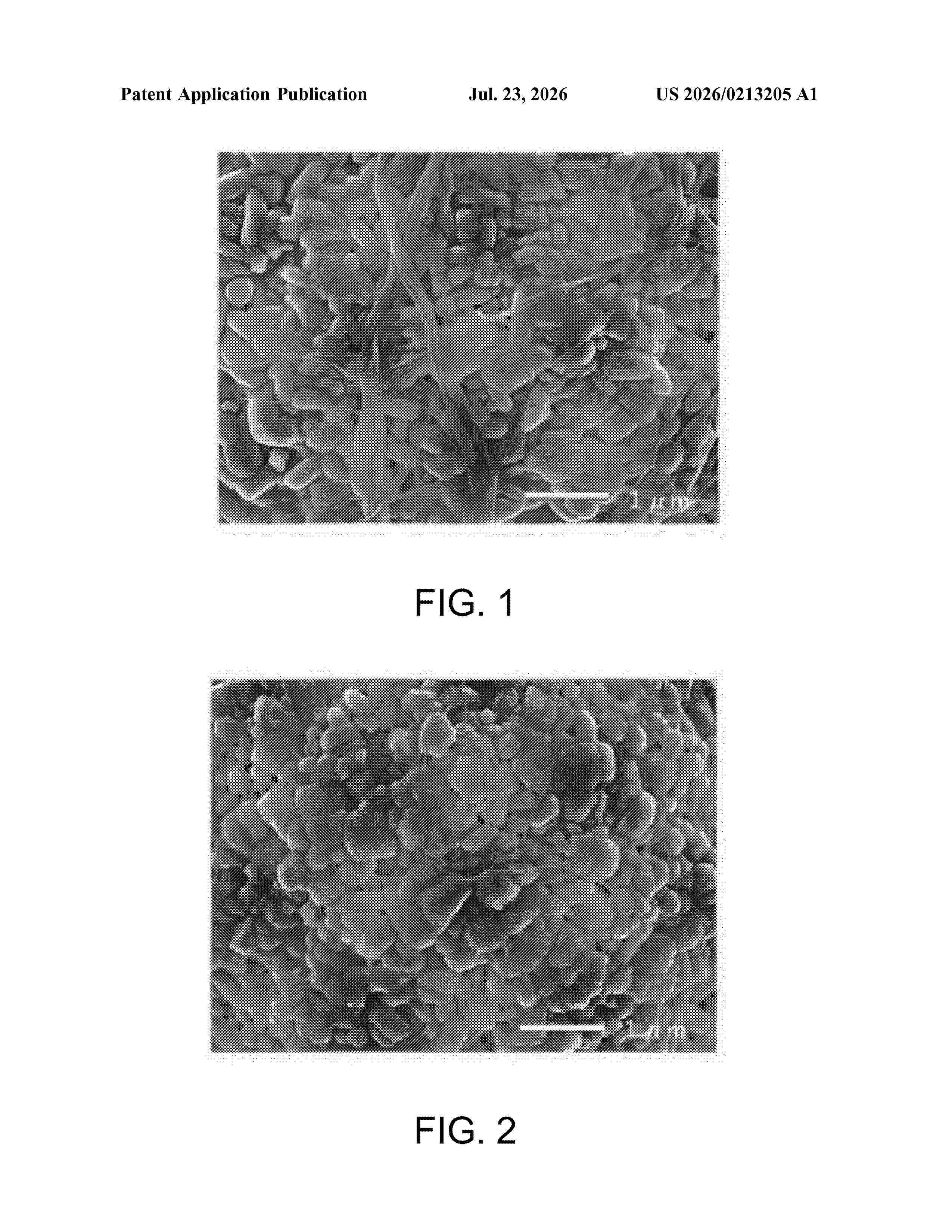
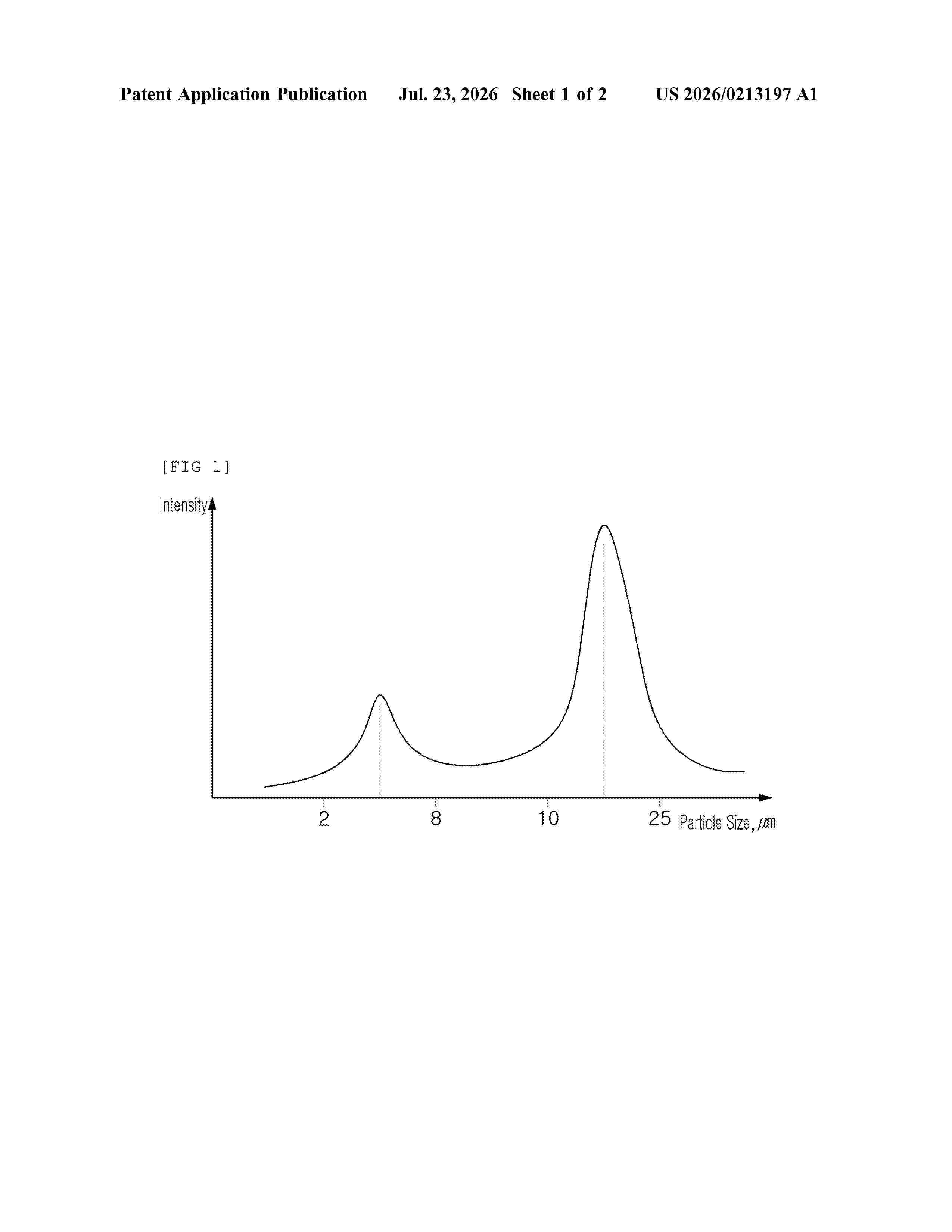
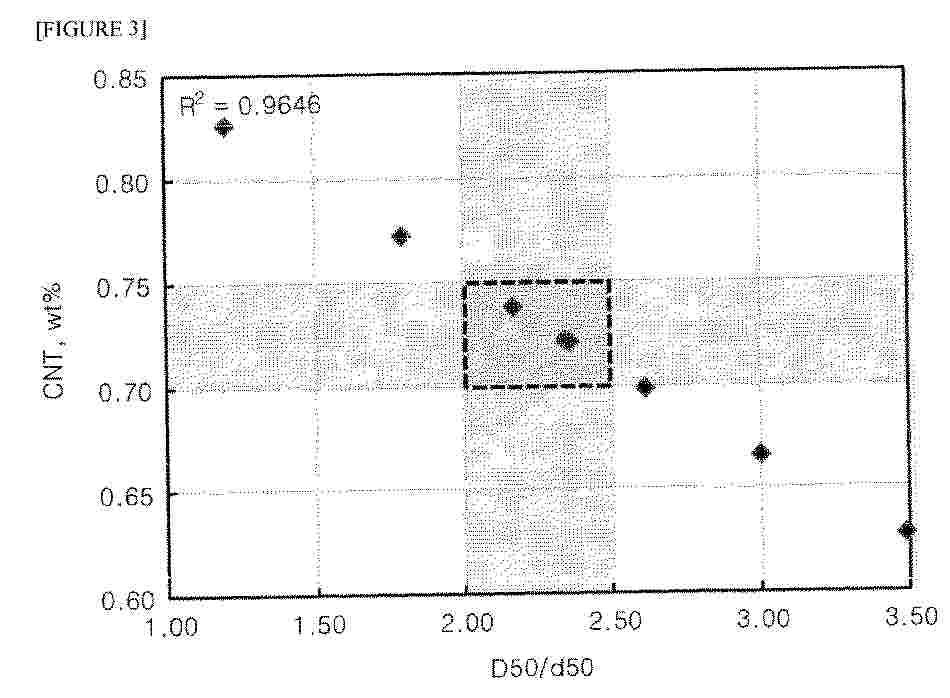
An electricity storage device disclosed herein includes an electrode assembly including a positive electrode and a negative electrode. The negative electrode includes a negative electrode composite material layer containing a graphite-based negative electrode active material particle. A mean circularity of the graphite-based negative electrode active material particle is equal to or more than 0.8. With respect to a particle size distribution on a volume basis of the graphite-based negative electrode active material particle that is obtained by a laser diffraction scattering method, all of following conditions are satisfied when a particle diameter whose cumulative frequency from a small particle side is 10% is treated as d10, a particle diameter whose cumulative frequency is 50% is treated as d50, and a particle diameter whose cumulative frequency is 90% is treated as d90: (1) d90/d10 is equal to or more than 5; and (2) d90/d50 is equal to or less than 2.
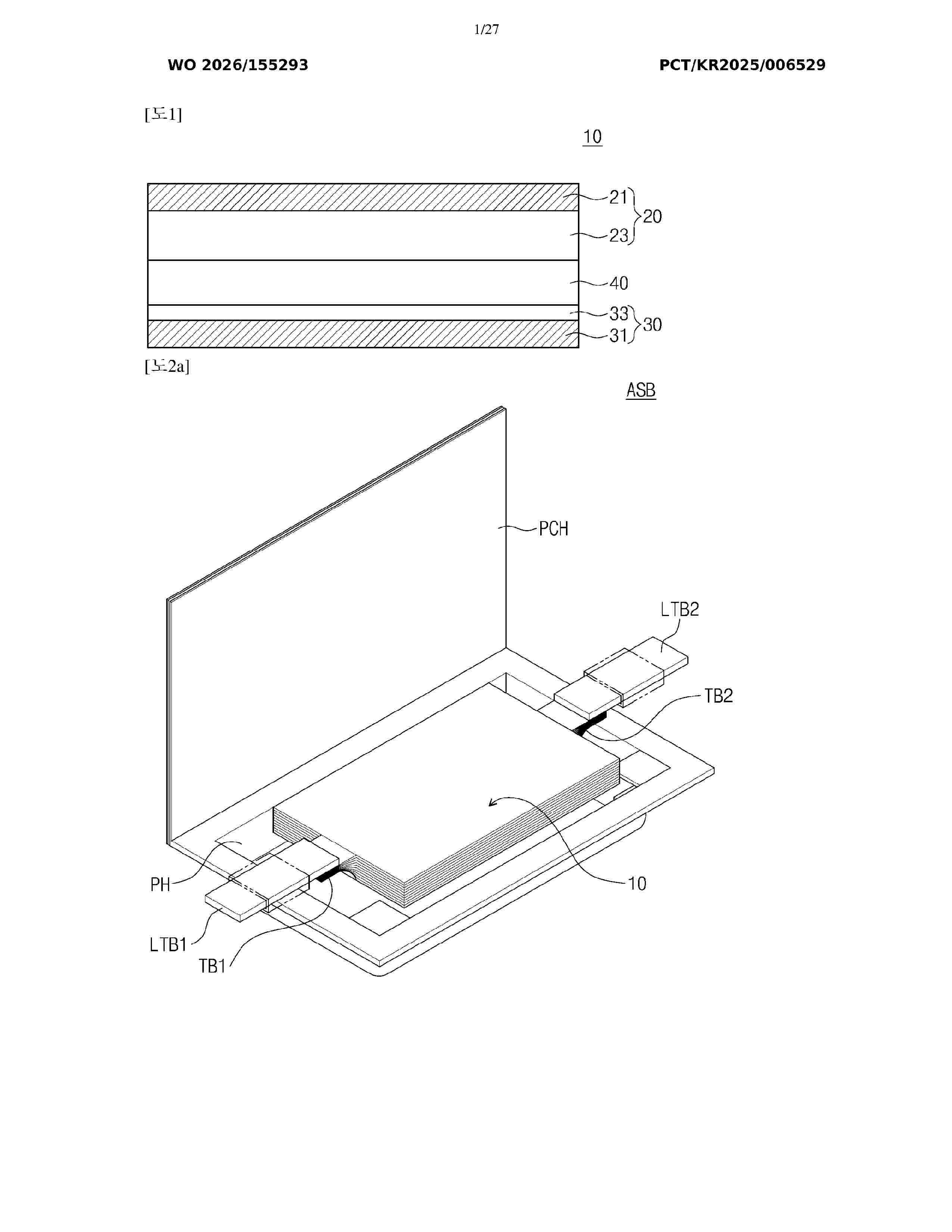
Resumen de: WO2026155293A1
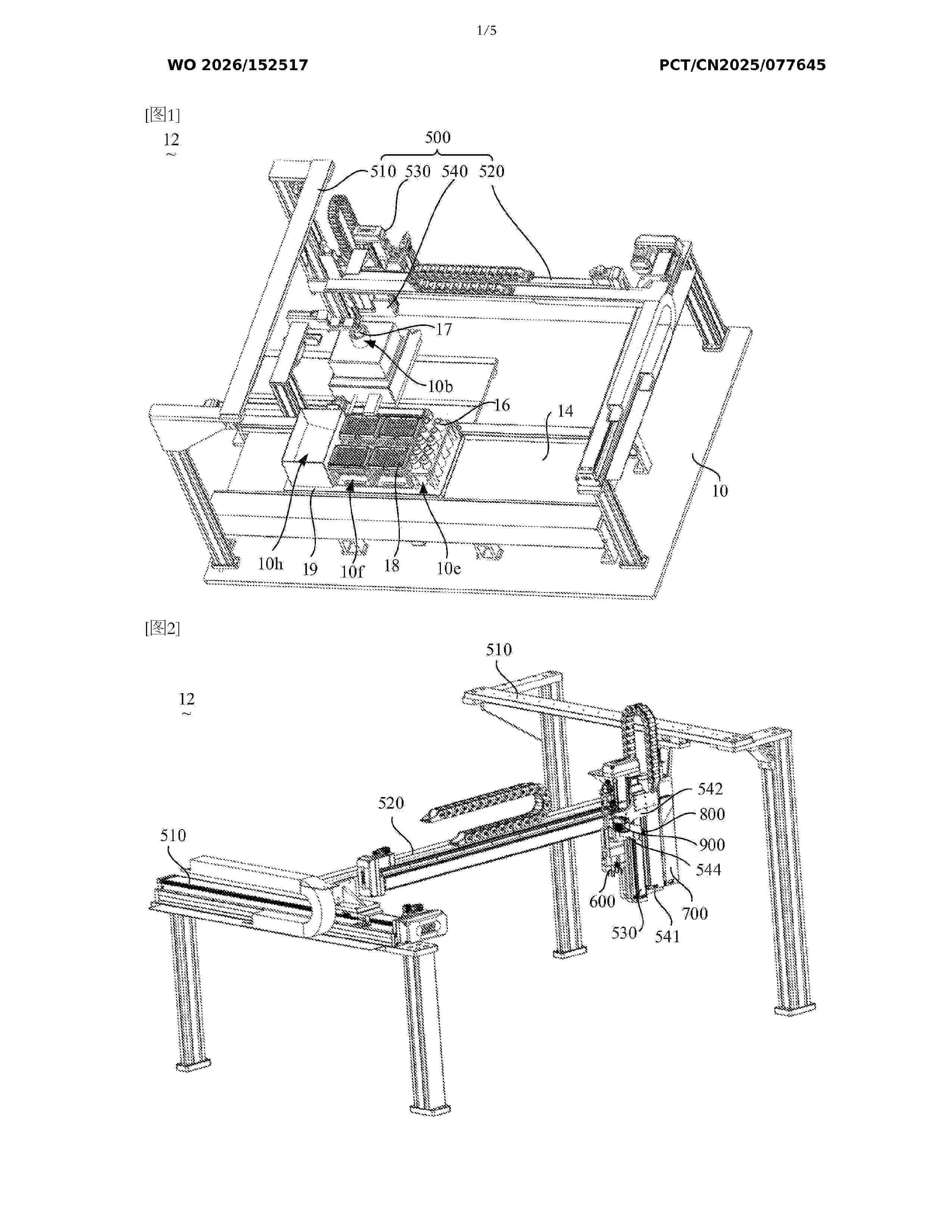
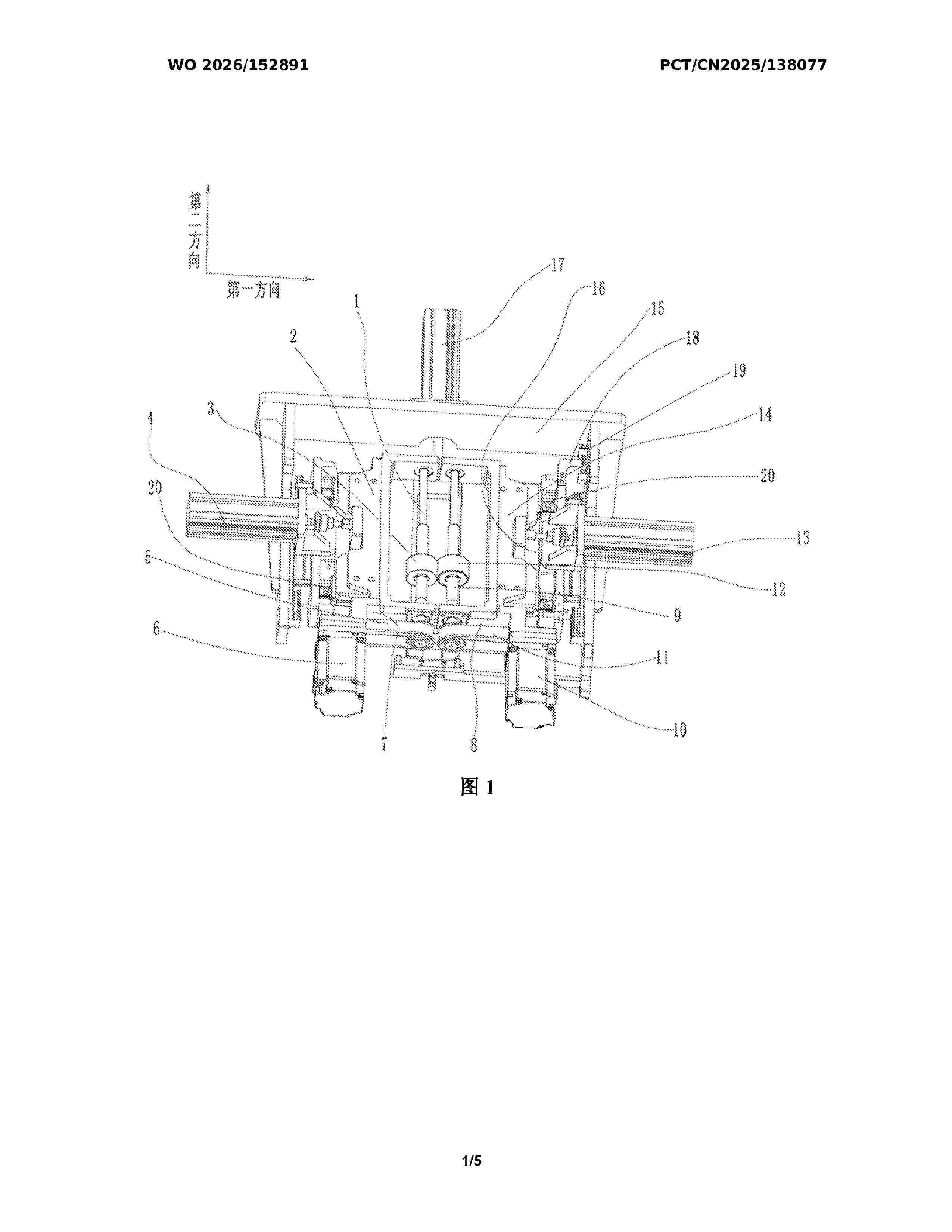
The present invention relates to a tray device and, more particularly, to a tray device comprising: a device frame including a first frame, a second frame, and a support frame, wherein the first frame and the second frame are spaced apart from each other at a predetermined interval along a first direction (D1), and the support frame connects the first frame and the second frame; a pressing part disposed in the device frame and configured to press a battery cell, wherein the pressing part includes a driving unit, a pressing unit, and a cell support block, the driving unit being disposed on the first frame and connected to the pressing unit, the pressing unit being disposed inside the device frame and configured to press the battery cell, and the cell support block being configured to support a lower portion of the battery cell; and a height adjustment part disposed in the device frame and connected to the cell support block, wherein the height adjustment part may be configured to move the cell support block in a third direction (D3).
Resumen de: WO2026153957A1
The present invention relates to the recycling of used lithium ion batteries and provides a method for processing black mass derived from lithium ion battery materials.
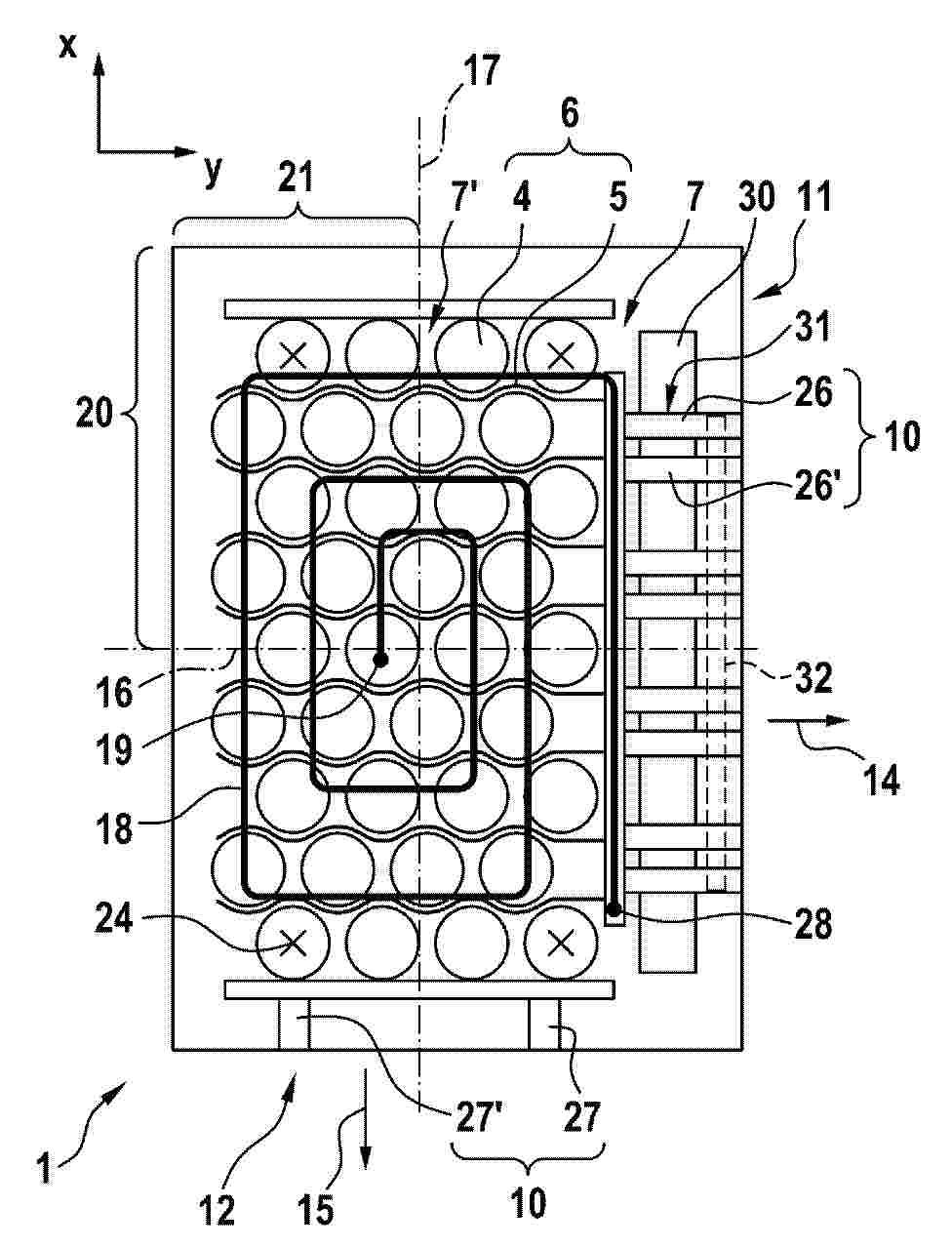
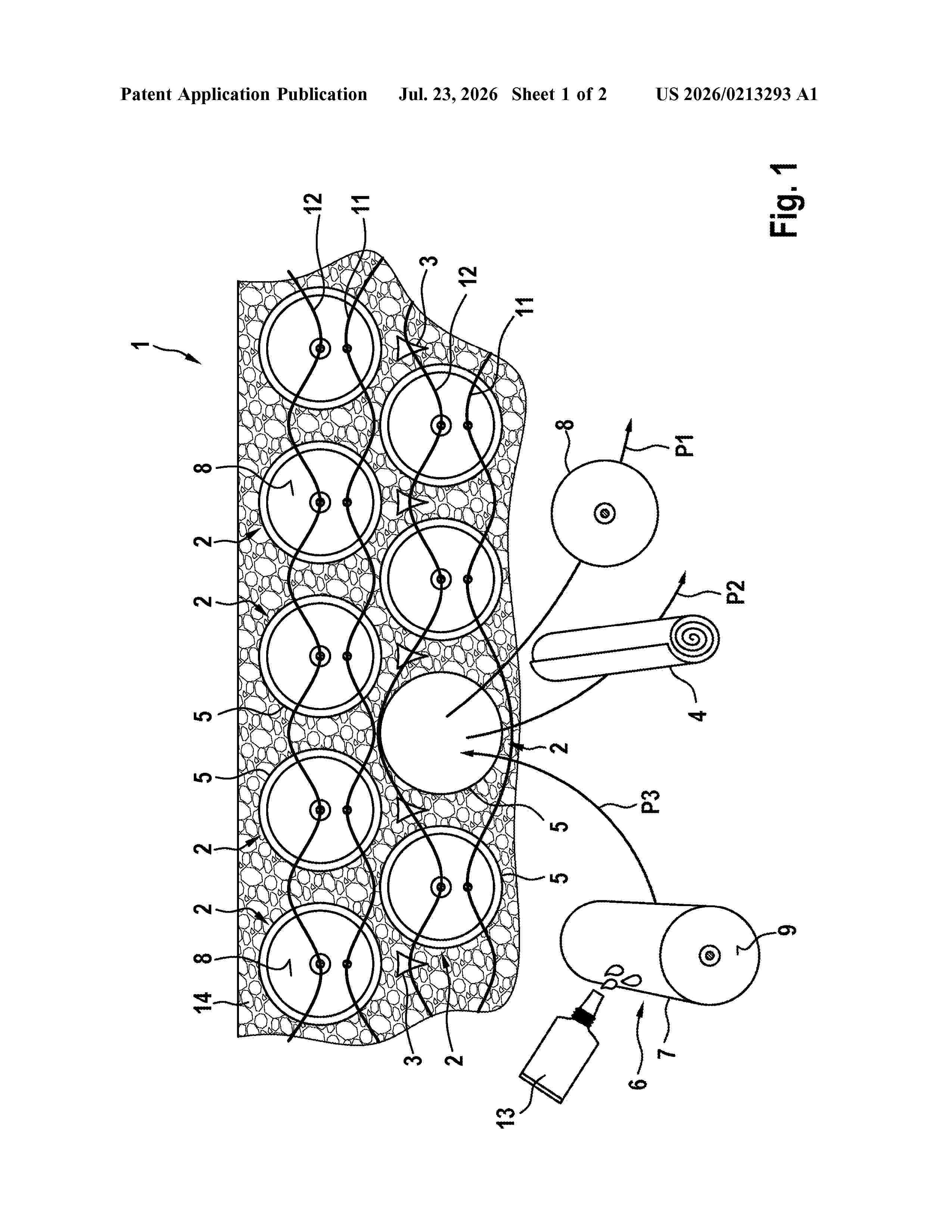
Resumen de: DE102025102429A1
Verfahren zur Herstellung einer Batterie (1), insbesondere einer Fahrzeugbatterie, umfassend die Verfahrensschritte:- Bereitstellen eines eine Aufnahmeausnehmung (3) aufweisenden Gehäusekörpers (2),- Bereitstellen einer Vielzahl von Energiespeicherzellen (4), welche über eine Verbindungseinrichtung (5) miteinander zur Ausbildung einer Zellenbaugruppe (6) verbunden sind,- Einsetzen der Zellenbaugruppe (6) in die Aufnahmeausnehmung (3),- Einbringen eines Schäummaterials (25) in einen Hohlraum (7, 7') der Zellenbaugruppe (6) und/oder in einen zwischen der Zellenbaugruppe (6) und einer Gehäusewandung des Gehäusekörpers (2) angeordneten Hohlraum (7, 7'),- Anordnen eines eine formgebende Formoberfläche (9) aufweisenden Formwerkzeugs (8), das während eines Schäumprozesses des Schäummaterials (25) einen Oberflächenabschnitt des Schäummaterials (25) formt,- Abstützten der Zellenbaugruppe (6) während des Einbringens des Schäummaterials (25) in einen Hohlraum (7, 7') und/oder während des Schäumprozesses des Schäummaterials (25) vermittels einer Abstützeinrichtung (10), wobei die Abstützeinrichtung (10) die Zellenbaugruppe (6) gegenüber dem Formwerkzeug (8) und/oder gegenüber dem Gehäusekörper (2) abstützt.
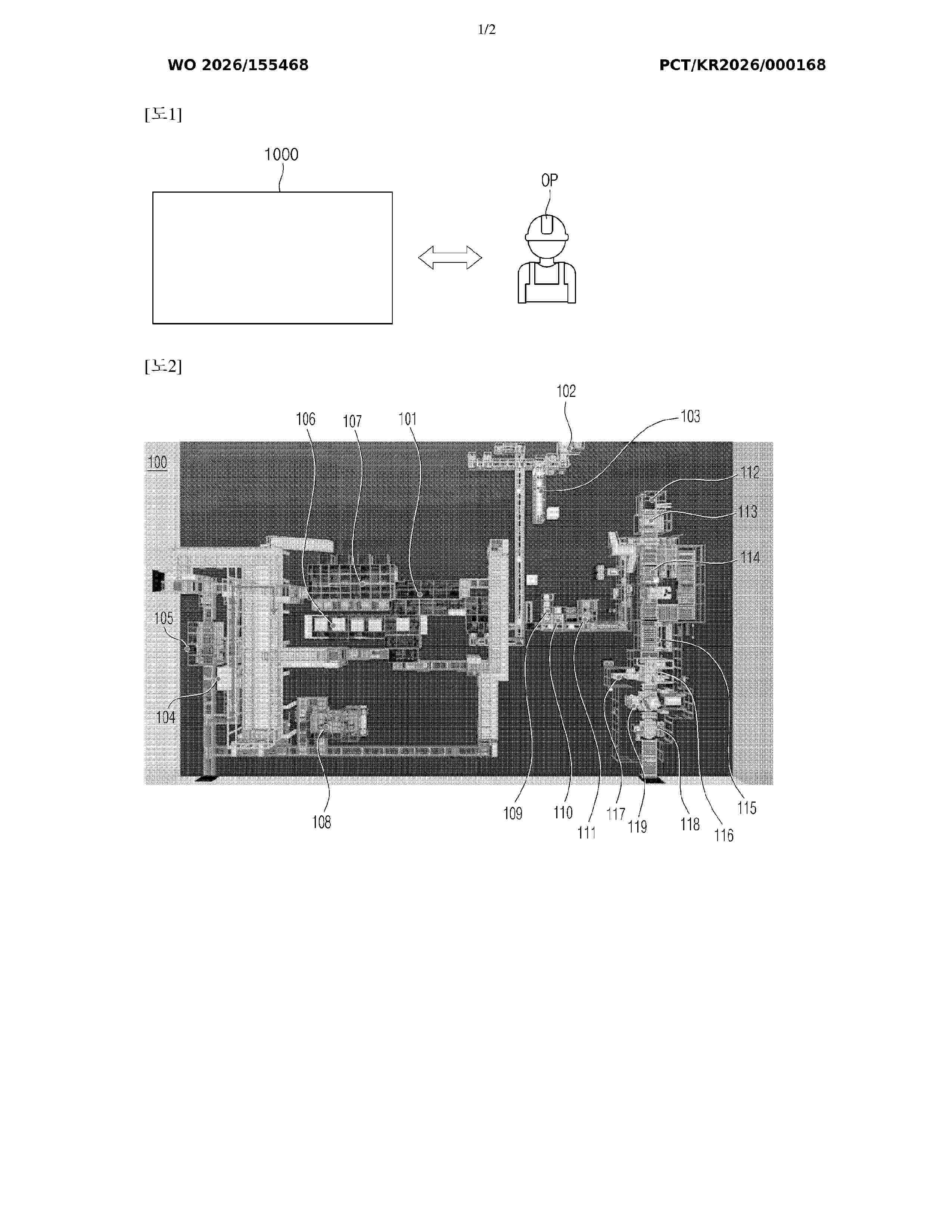
Resumen de: WO2026155468A1
According to exemplary embodiments, a secondary battery manufacturing system is provided. The system includes the steps of: modeling sub-models; loading the sub-models into an animation program; and merging the sub-models into a model representing a secondary battery manufacturing facility.
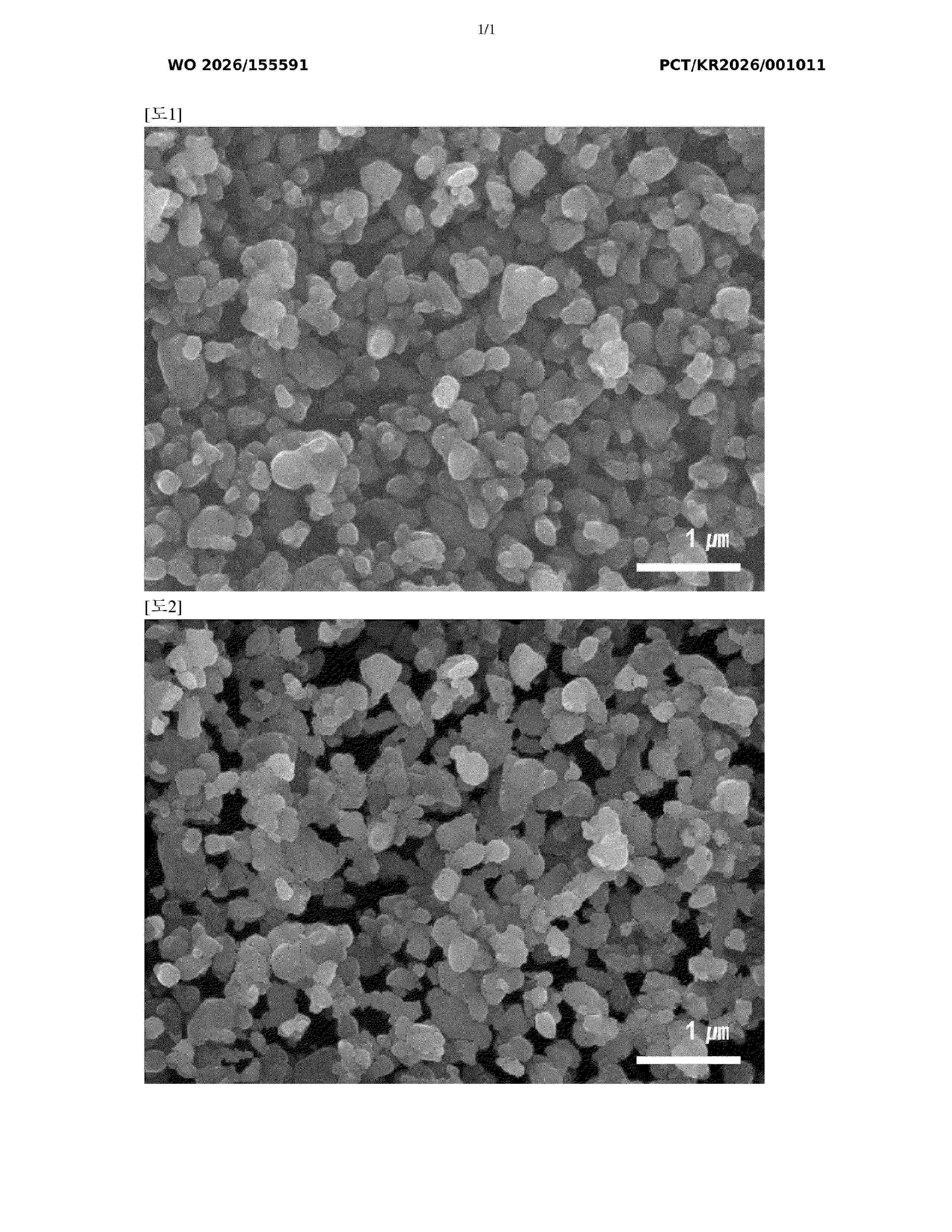
Resumen de: WO2026155591A1
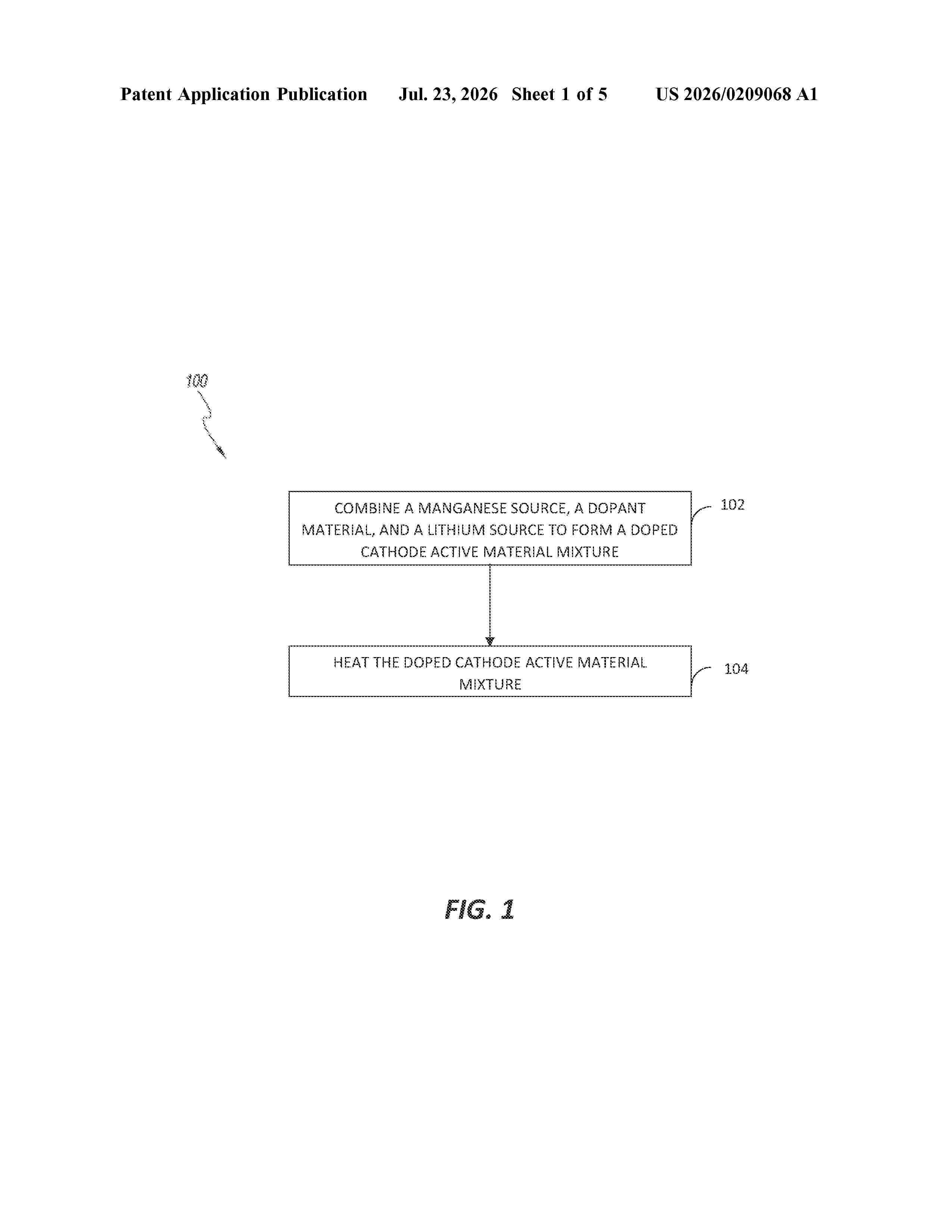
Provided are: a cathode active material having improved capacity characteristics and effects of inhibiting metal leaching; and a preparation method therefor, wherein the cathode active material comprises particles of a lithium composite oxide, wherein the lithium composite oxide comprises manganese and a doping element, an average Mn-O (manganese-oxygen) bond length in the lithium composite oxide is less than 2.55 Å, and the sphericity of the particles of the lithium composite oxide is 0.49-0.8. As such, through the preparation of the cathode active material, the structural and thermal stability of a battery may be simultaneously improved, and accordingly, the battery performance in terms of capacity and lifespan may be improved.
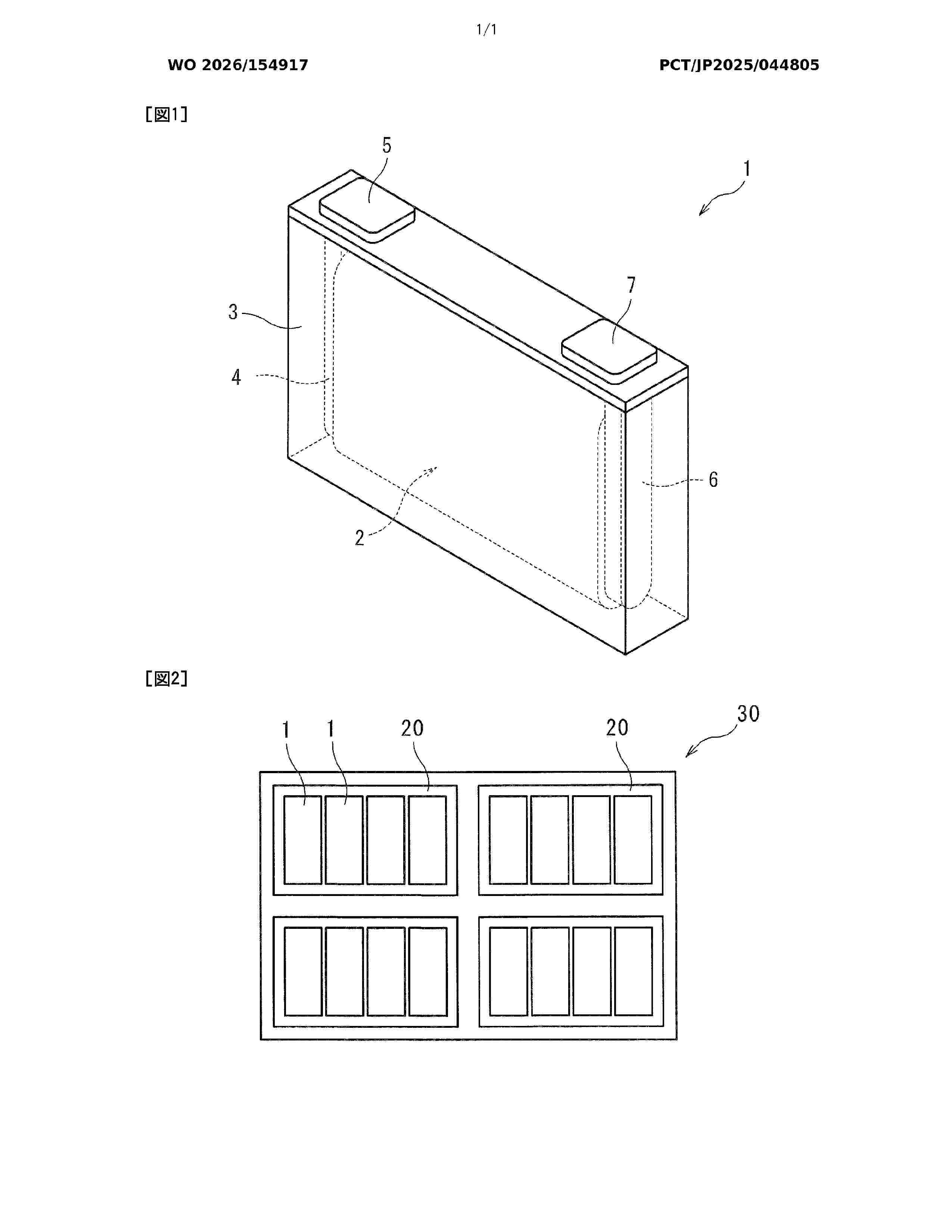
Resumen de: WO2026154917A1
A nonaqueous electrolyte power storage element according to one aspect of the present invention is provided with: a positive electrode that has a polyanion compound containing elemental iron; and a negative electrode that has a first graphite and a second graphite. The first graphite is artificial graphite in which at least a part of the surface is coated with non-graphitic carbon. The second graphite is scaly graphite. The average particle diameter of the first graphite is 14-22 μm. The average particle diameter of the second graphite is 2-8 μm. The mixing ratio (the first graphite/the second graphite) of the first graphite to the second graphite is in the range of 75/25 to 93/7 on a volume basis.
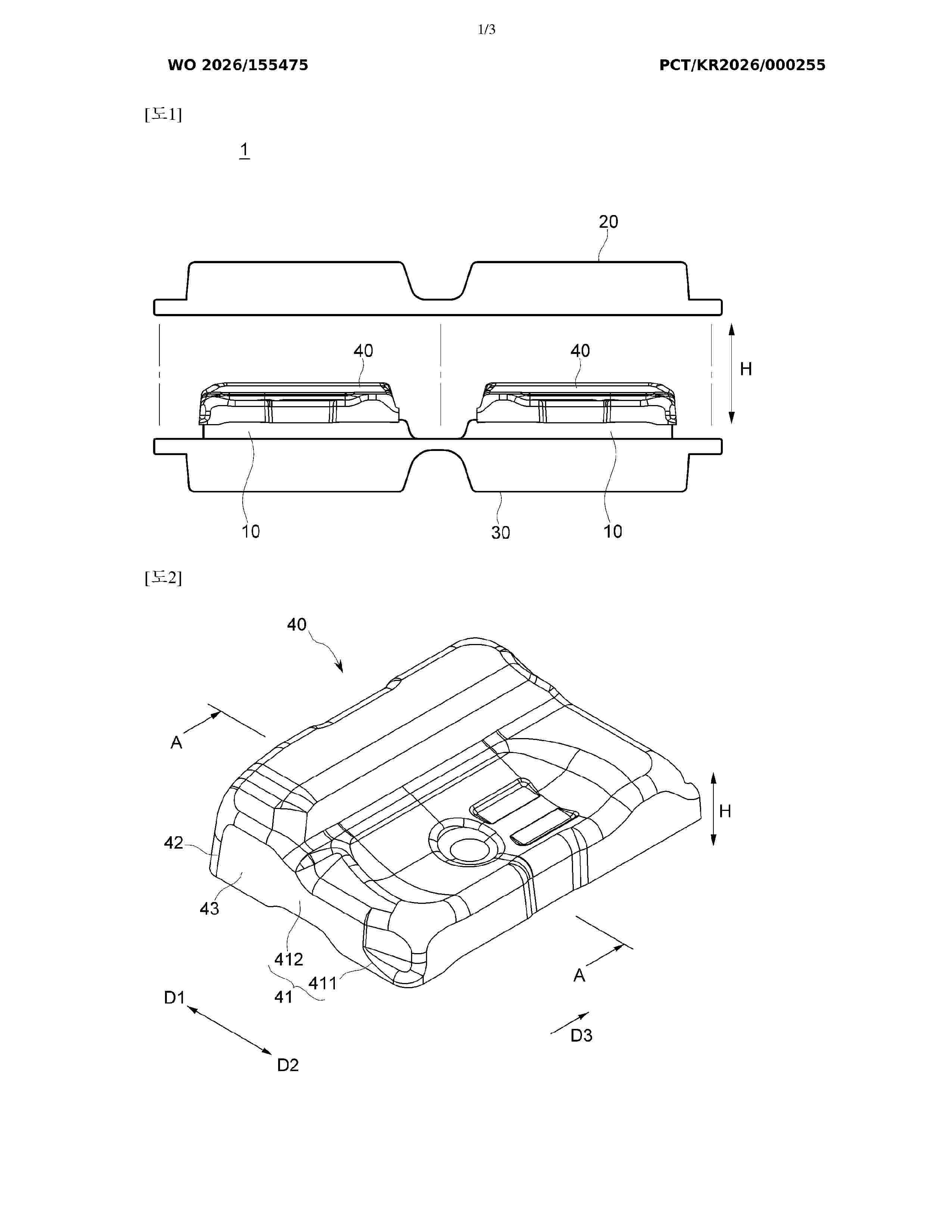
Resumen de: WO2026155475A1
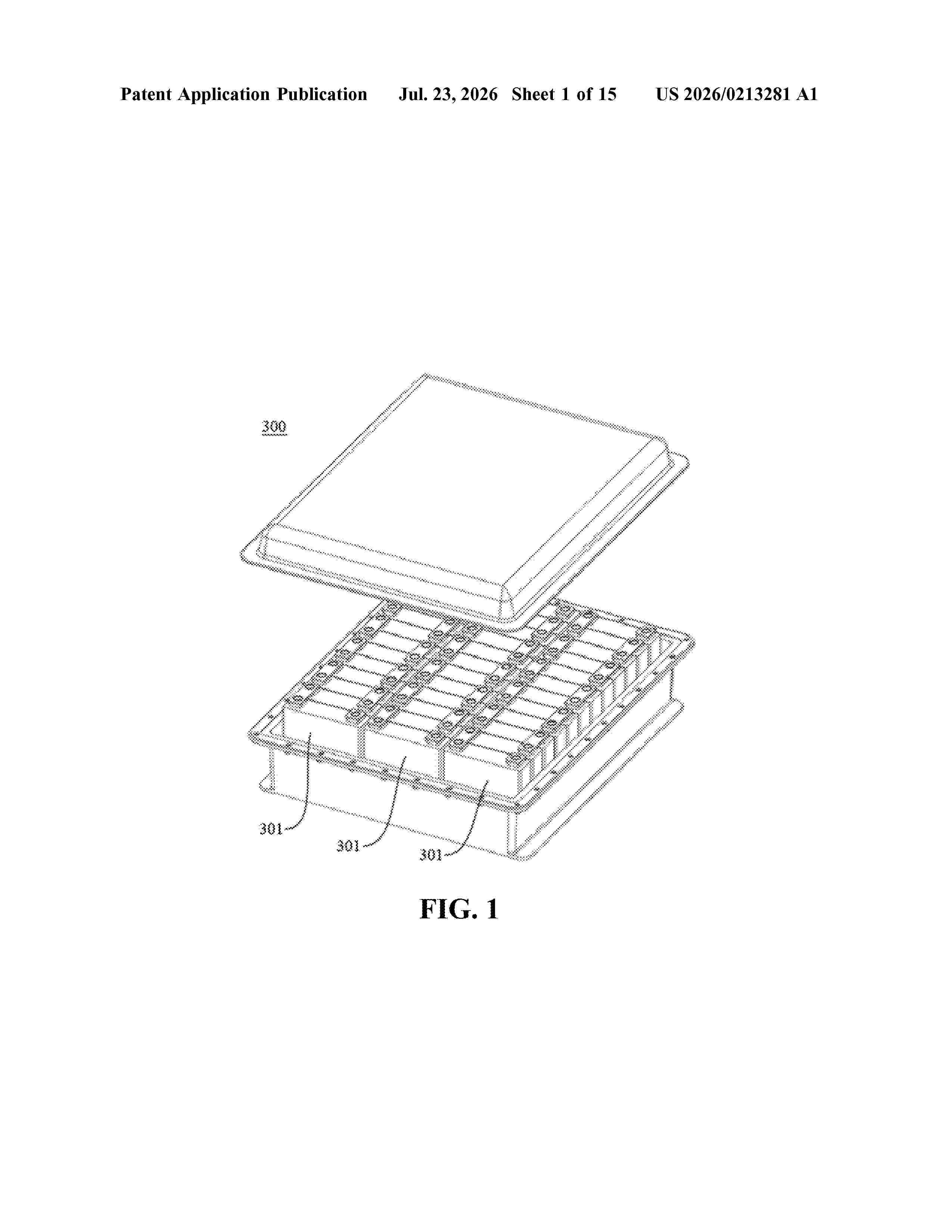
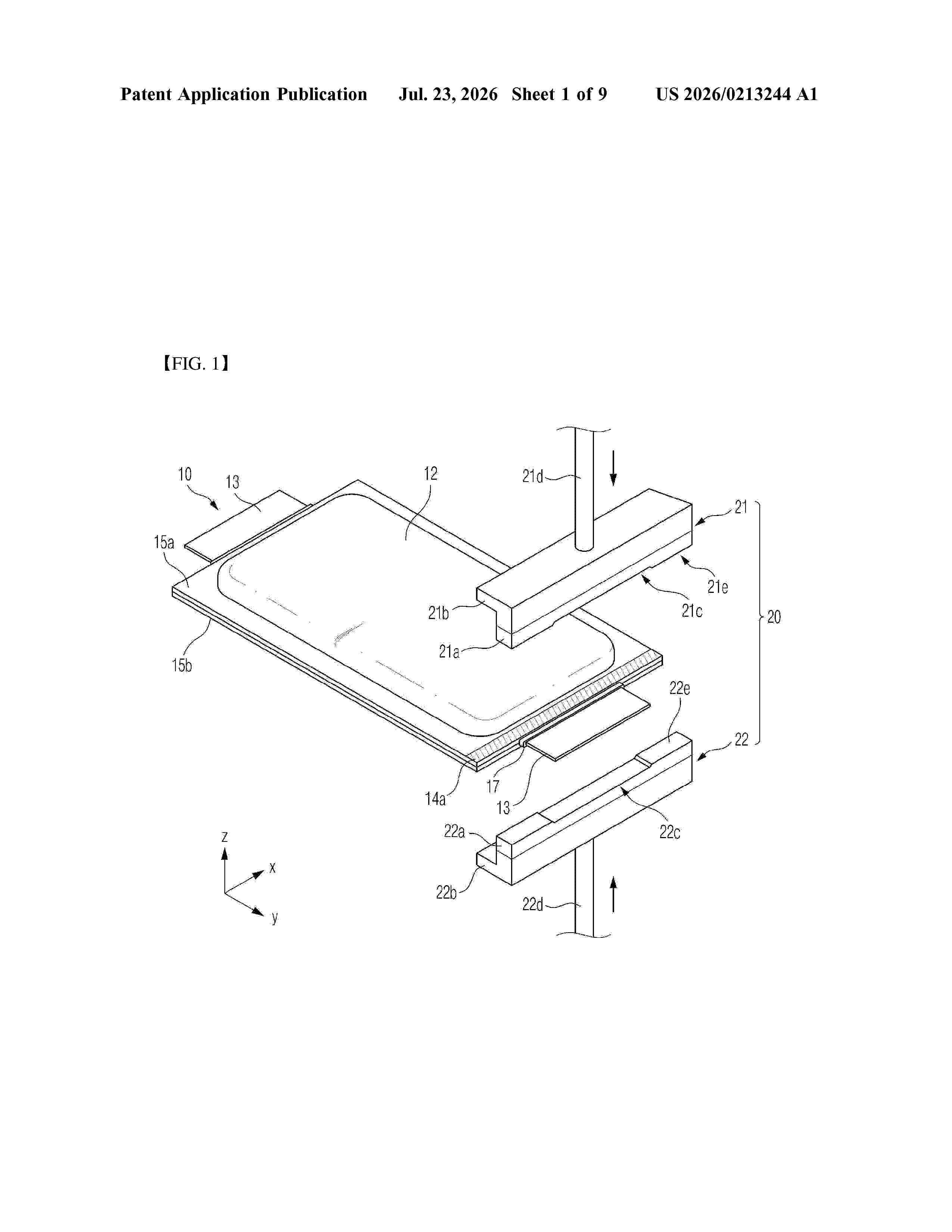
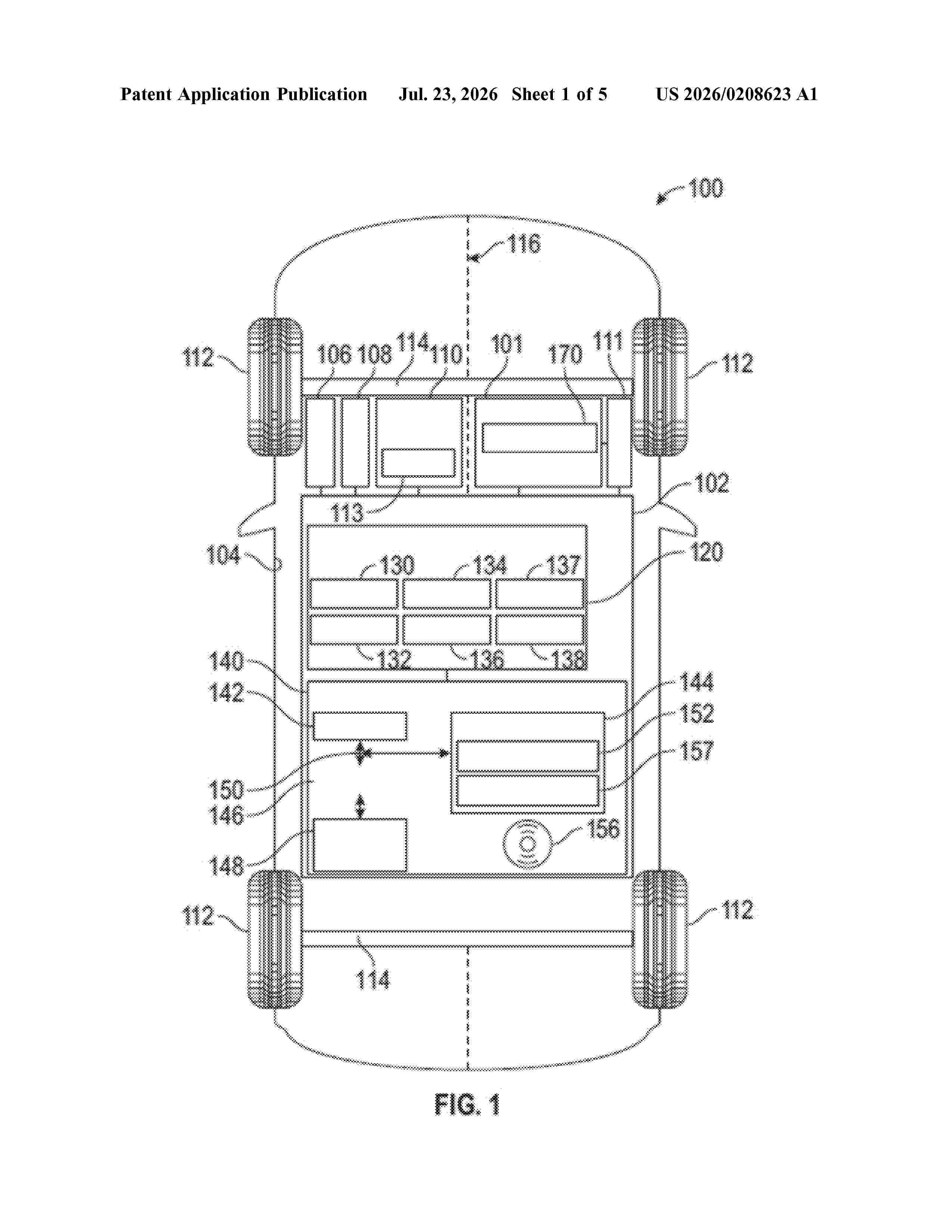
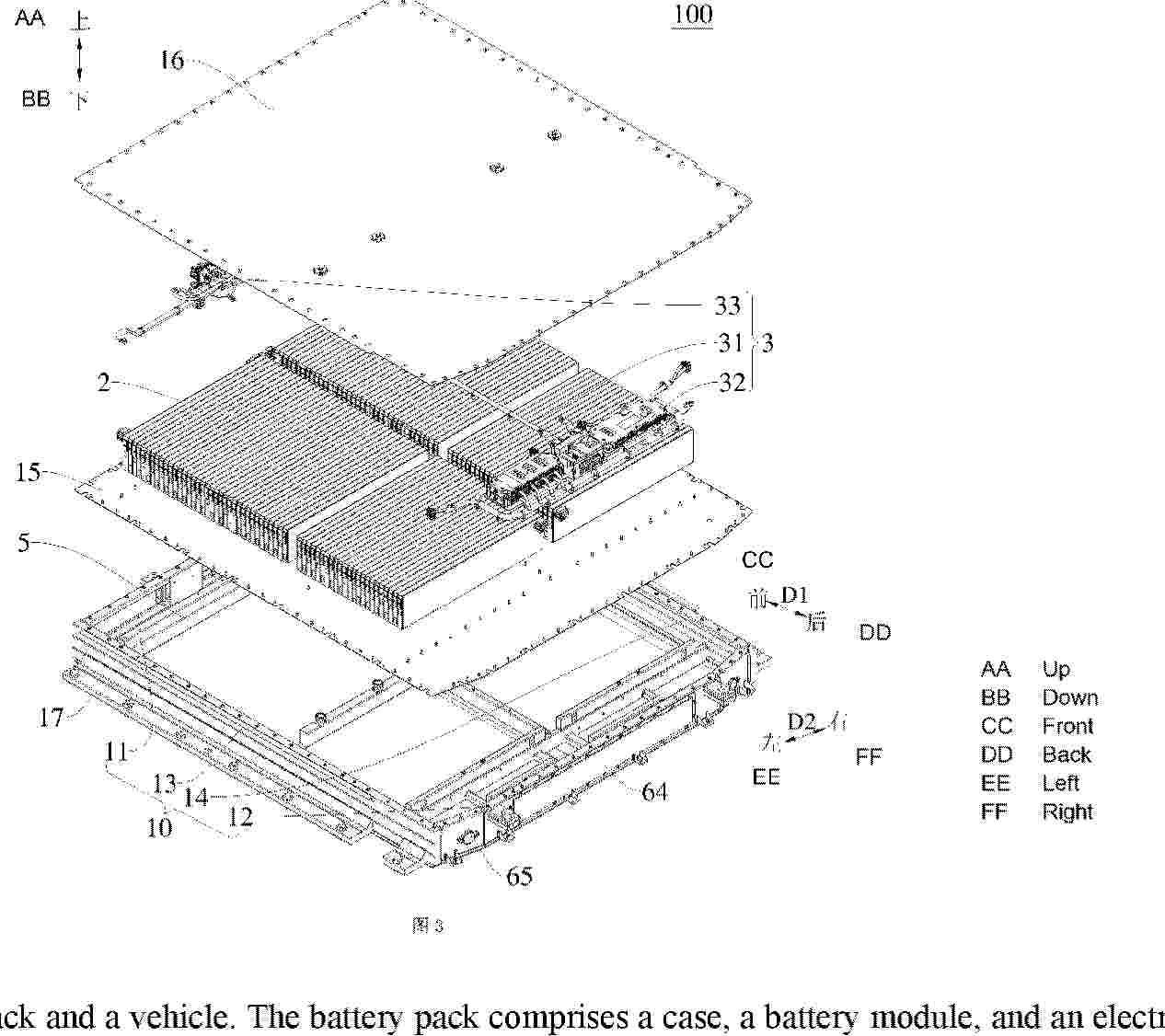
According to one embodiment of the present invention, provided is a battery pack comprising: at least one battery module; a first case configured to accommodate any one part of the battery module; a second case coupled to the first case and configured to accommodate the other part of the battery module; and a heat-resistant member configured to block thermal energy generated in the battery module from being transferred to the first case, wherein the heat-resistant member is disposed between the inner surface of the first case and the battery module so as to block any one of the first case and the battery module from the other.
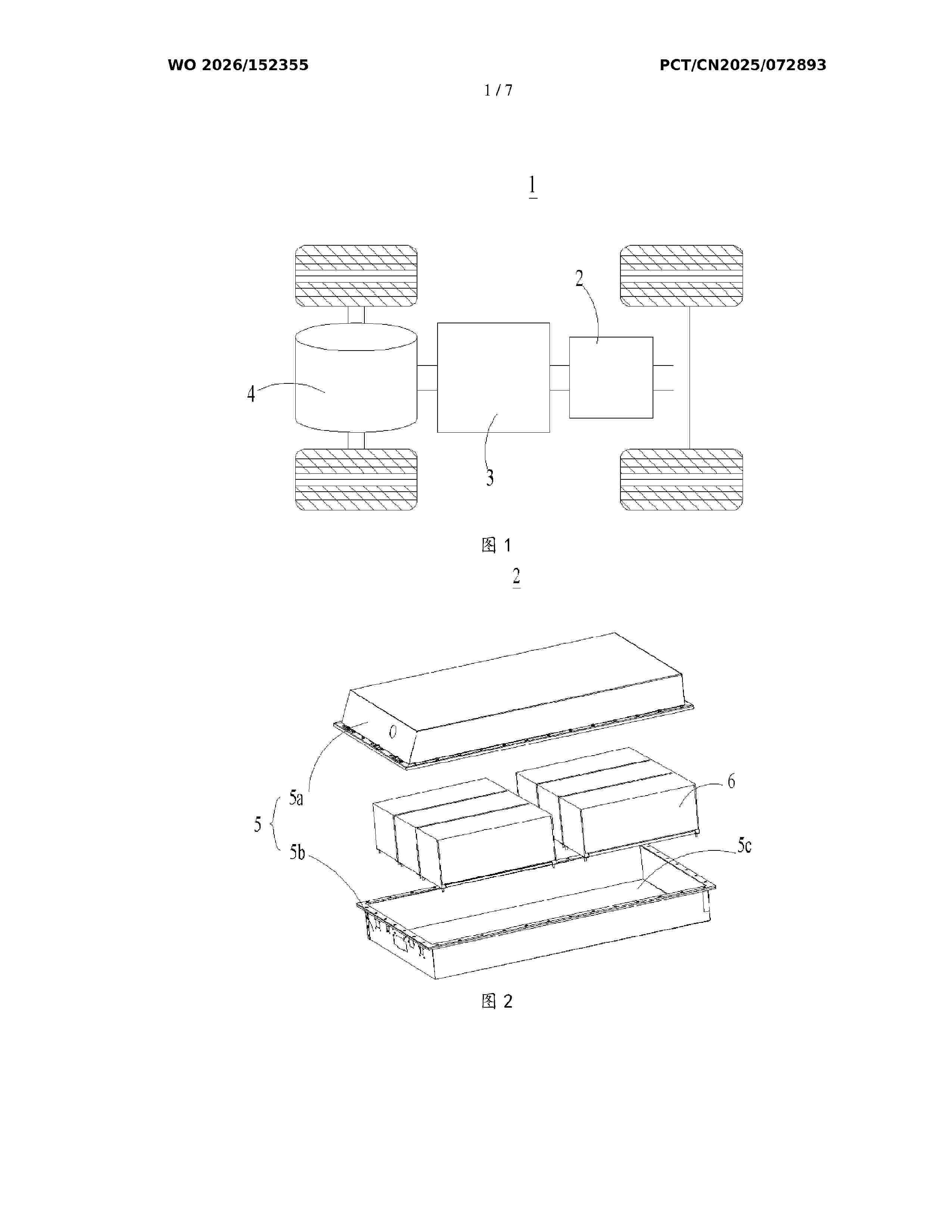
Resumen de: WO2026152355A1
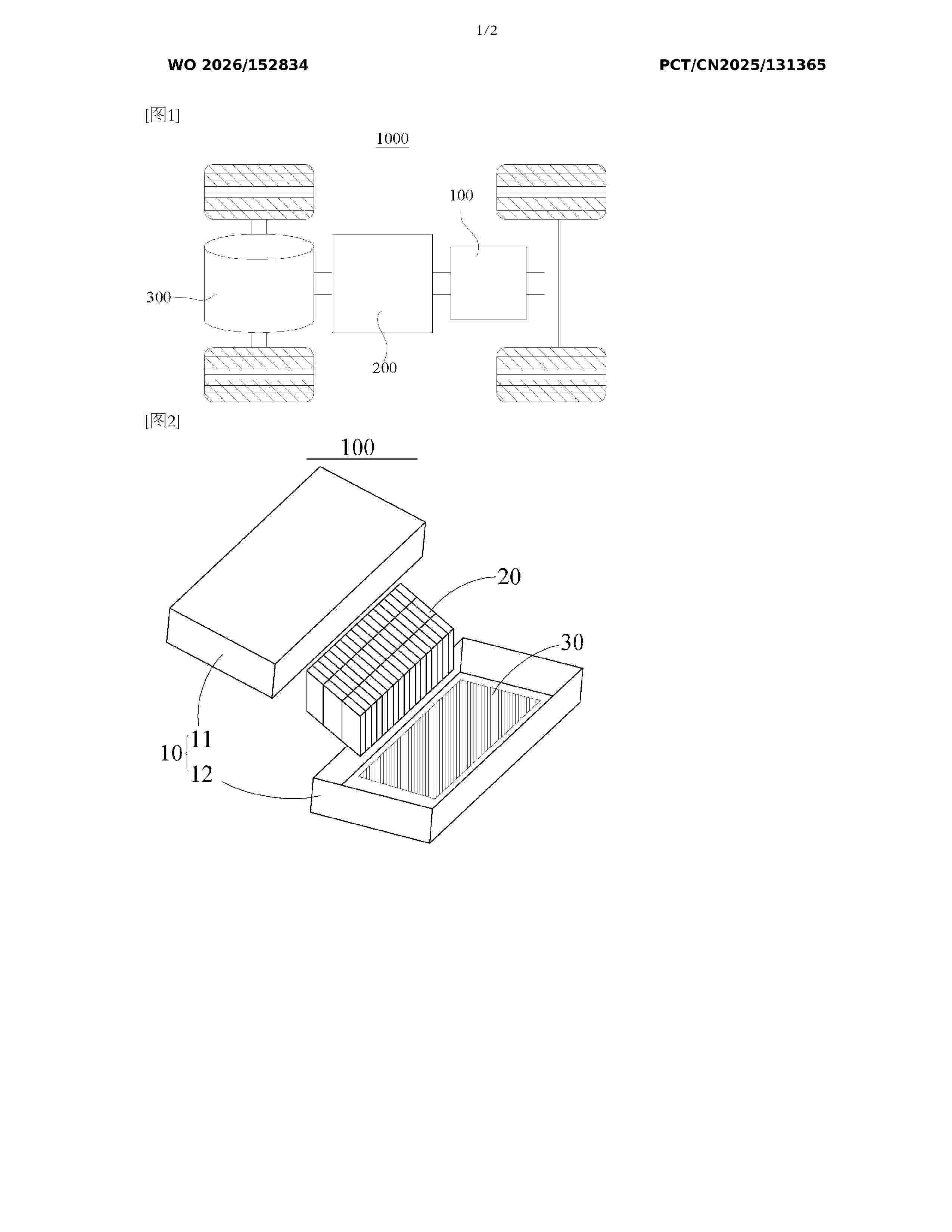
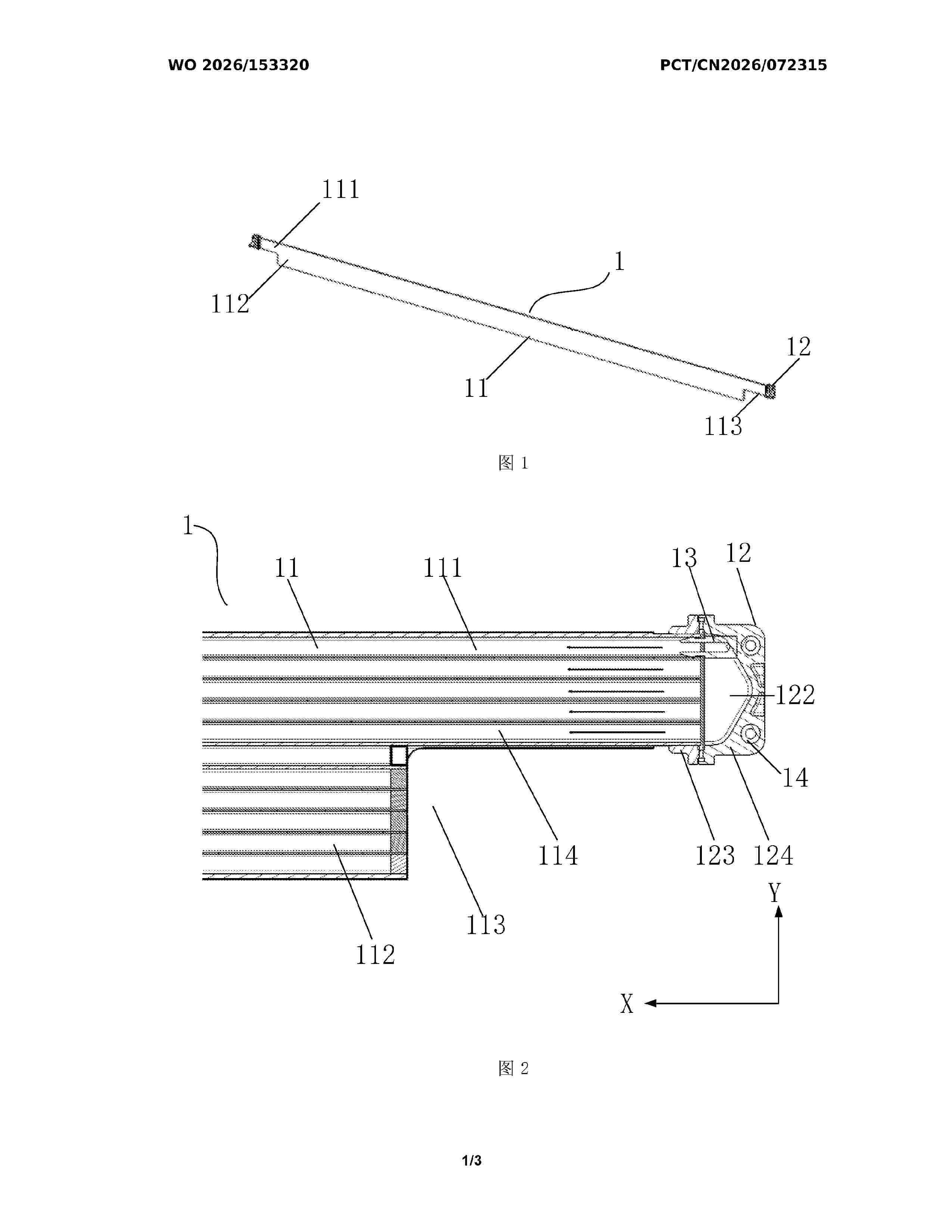
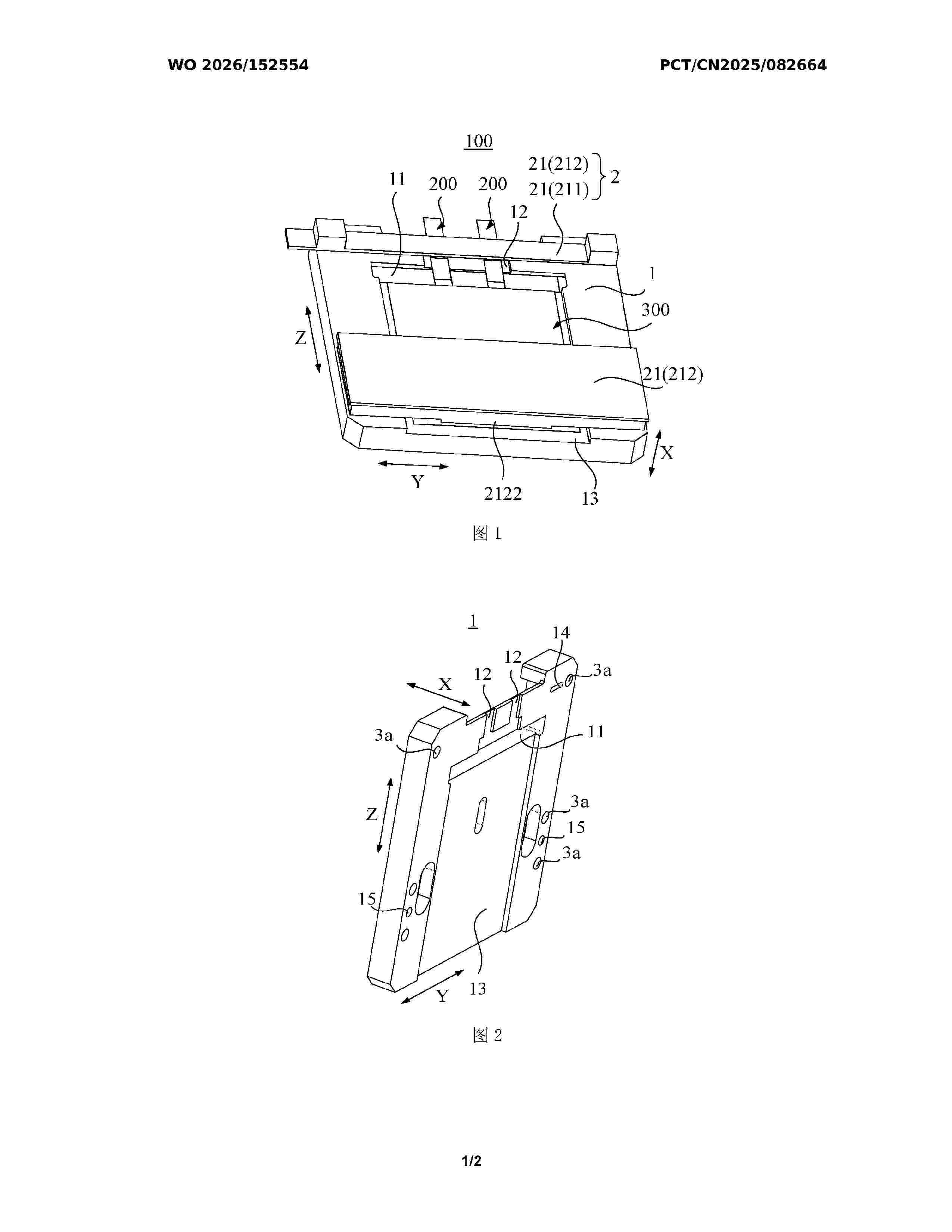
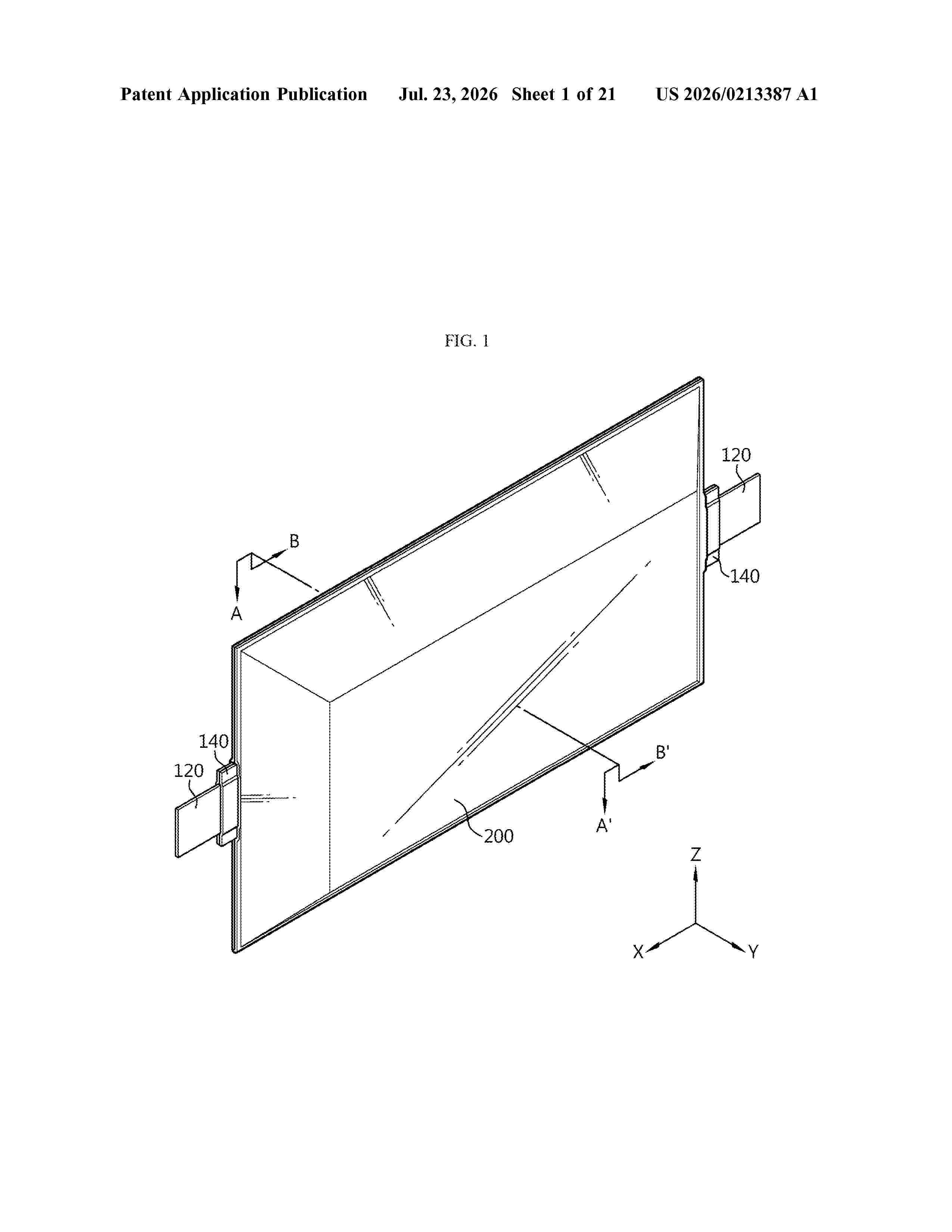
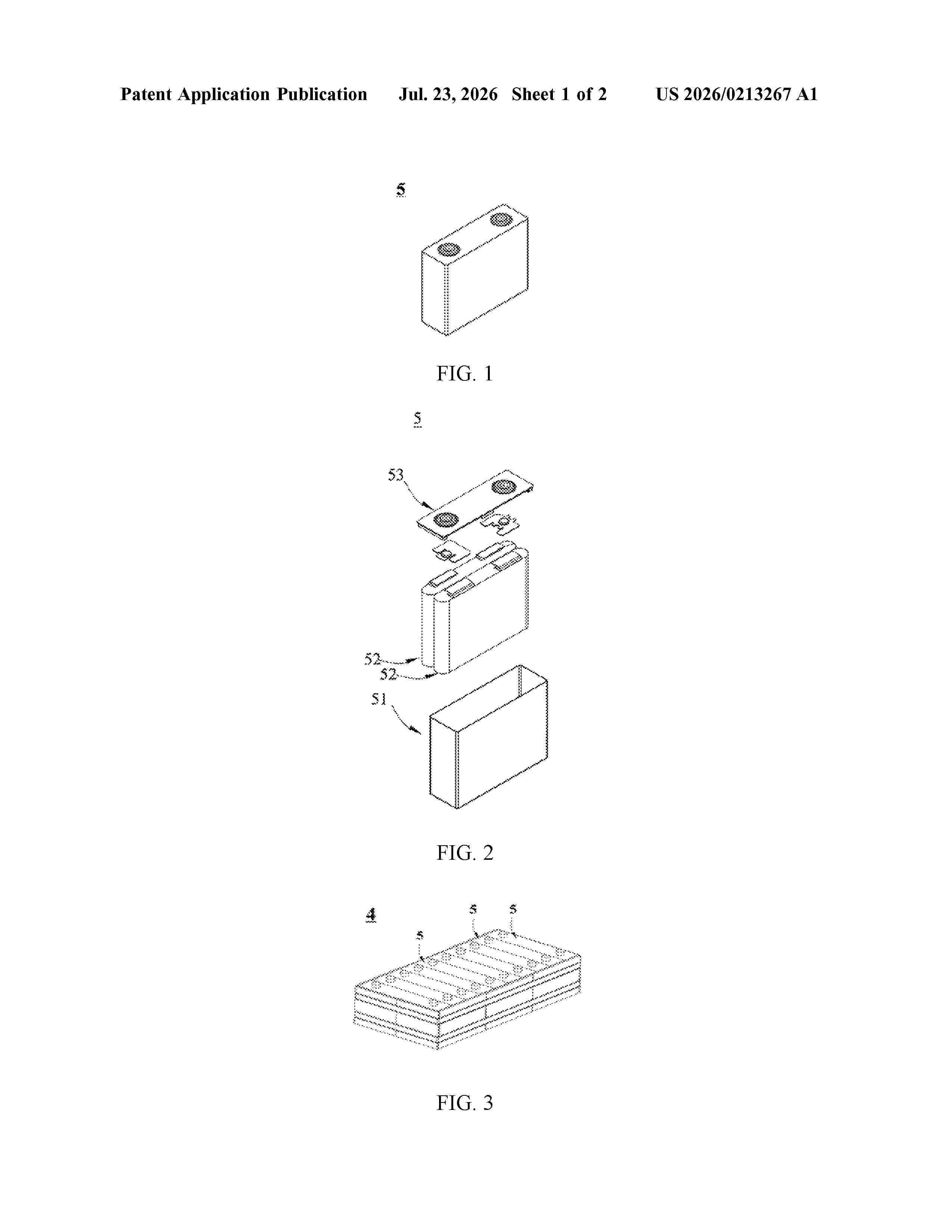
The present application discloses a battery cell, a battery apparatus, and an electric apparatus. The battery cell of embodiments of the present application comprises a casing, an electrode assembly, and connecting structures. An end portion of the casing is provided with an electrode terminal; the electrode assembly is arranged in the casing, and the electrode assembly comprises a main body portion and a tab assembly led out from the main body portion in a first direction; the connecting structures are arranged to connect the tab assembly and the electrode terminal, and each connecting structure comprises a first connecting member and a second connecting member which are connected to each other; the first connecting members extend in the first direction and are connected to the tab assembly, and the second connecting members are connected to the electrode terminal; a space is formed between the casing and the main body portion; and the height of the space in the first direction ranges from 5 mm to 40 mm. The problem of reliability of the battery cell is solved.
Resumen de: WO2026155484A1
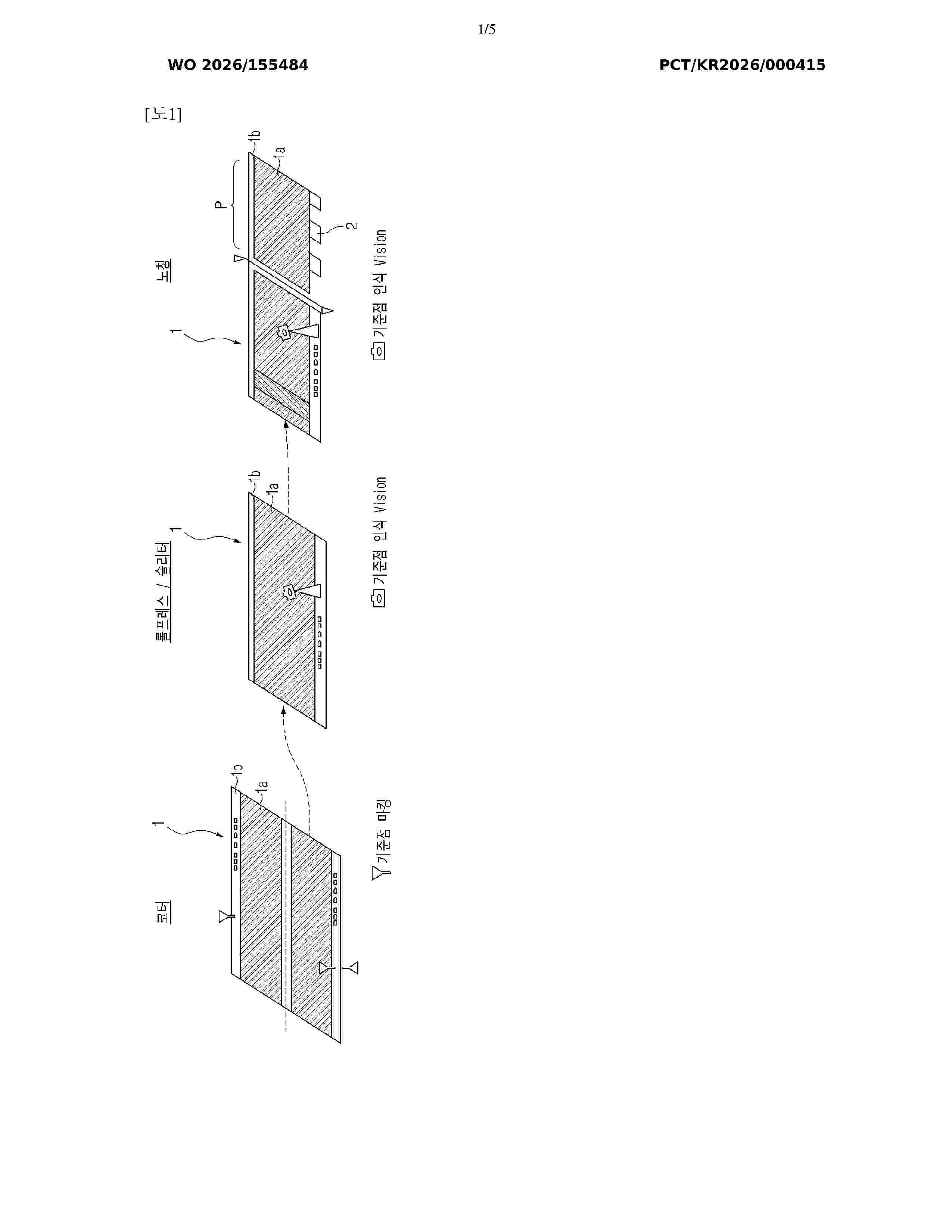
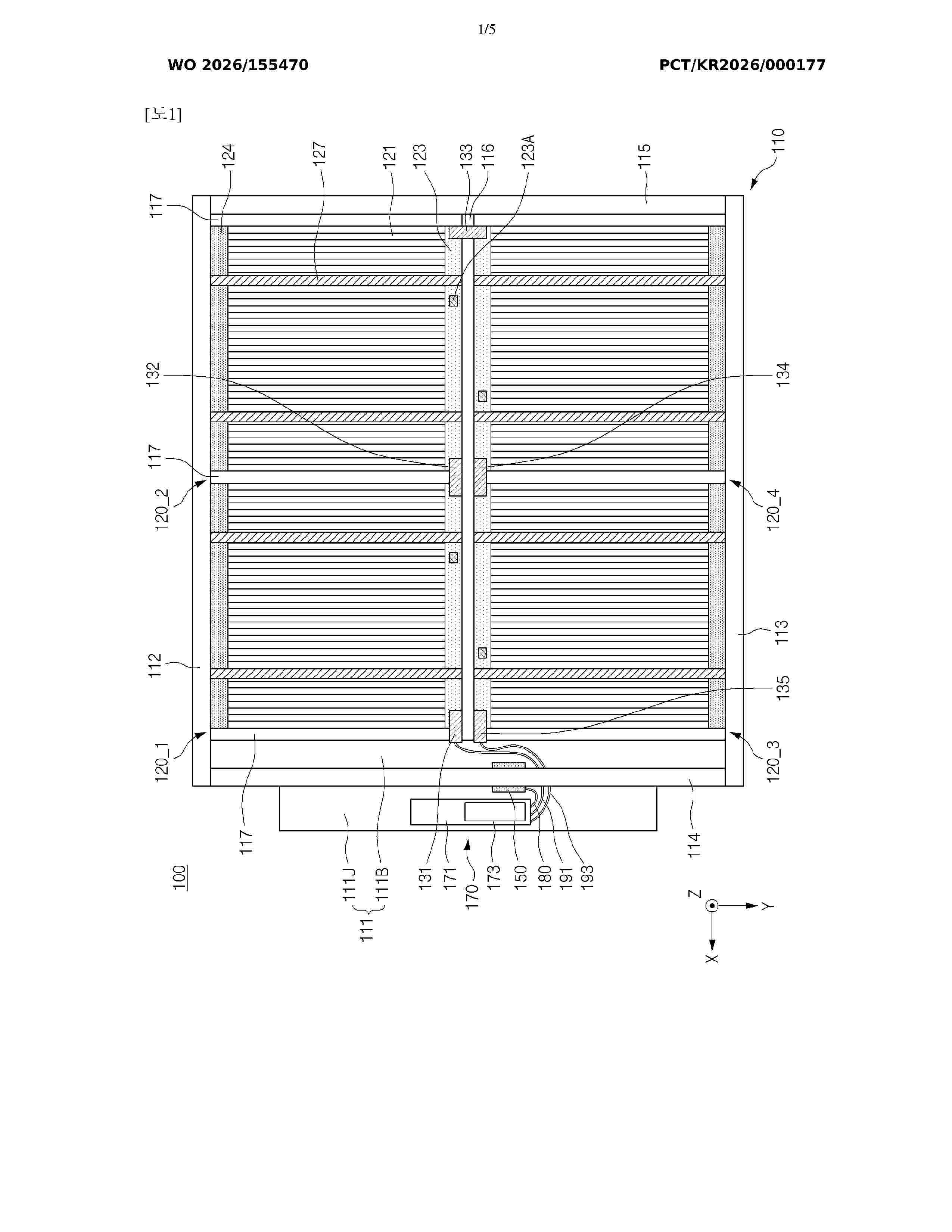
Disclosed is a method for manufacturing a battery, comprising the steps of: forming a first mark on an electrode sheet; forming a second mark on the electrode sheet on the basis of the first mark; and discharging, from the electrode sheet, a portion including an electrode tab associated with the second mark.
Resumen de: WO2026154408A1
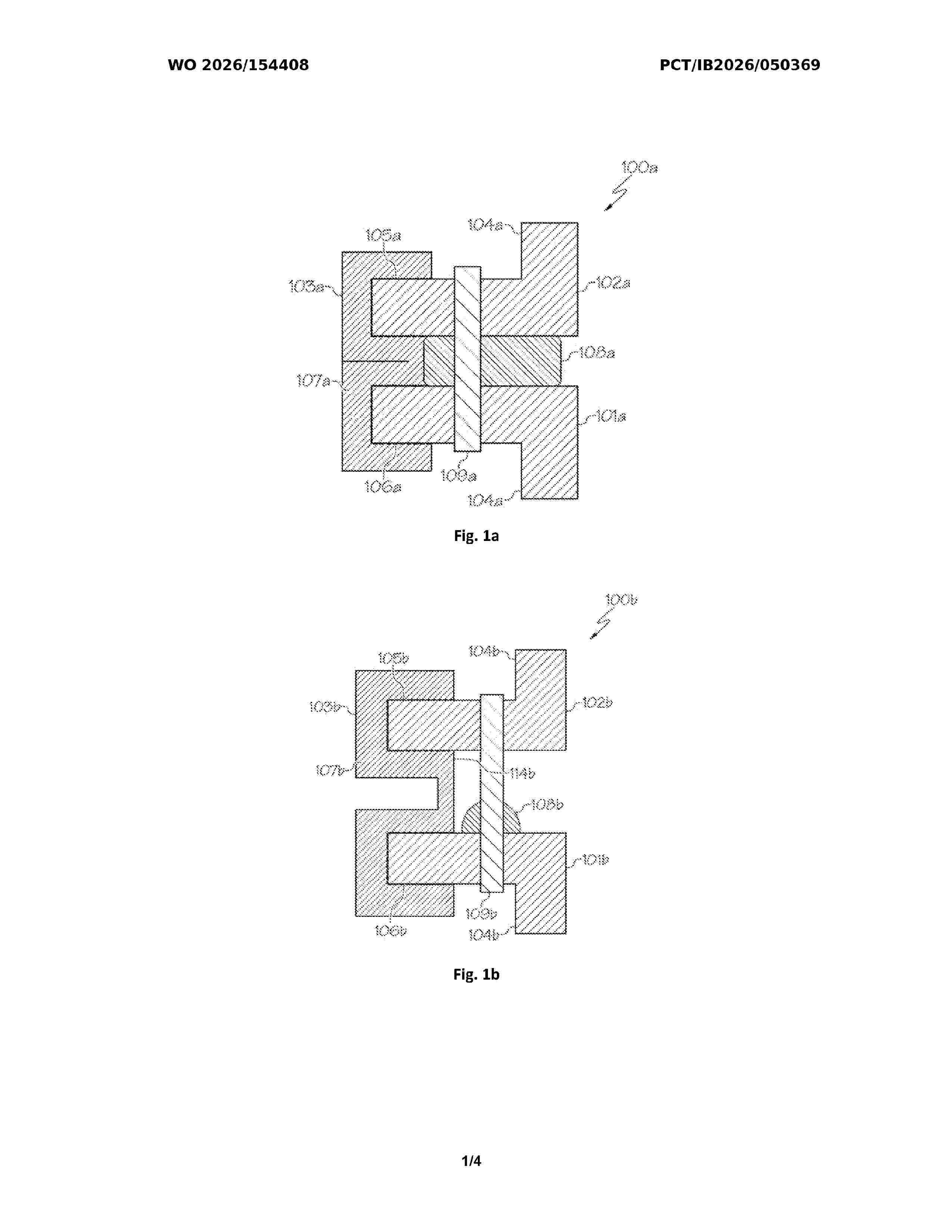
A fluid-containing assembly is described, as well as a method for sealing the fluid-containing assembly using an elastic sealing tape.
Resumen de: US20260211056A1
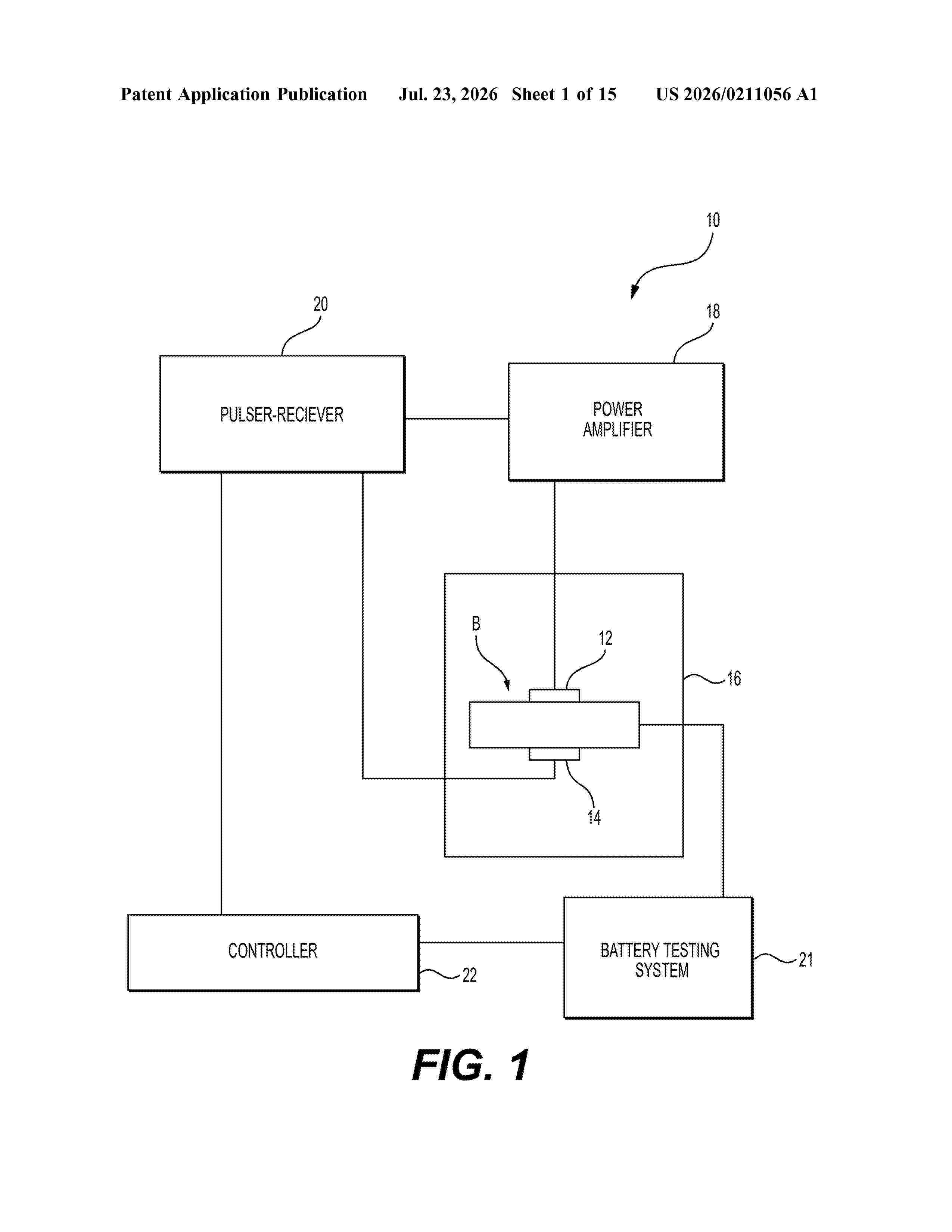
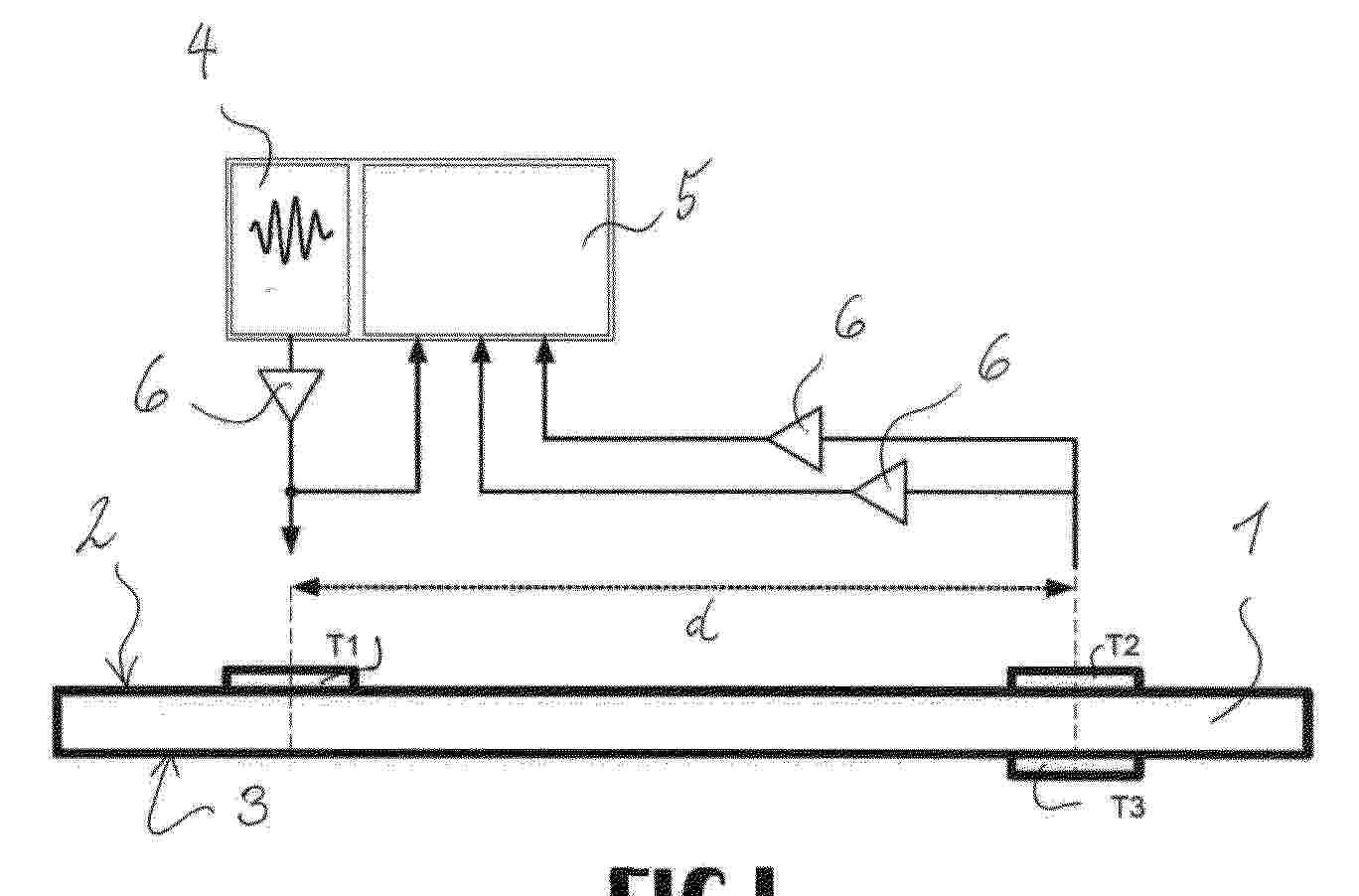
0000 Lithium plating in a lithium-ion battery is measured as a decrease in resonance frequency amplitude observed during the charging process of the lithium-ion battery. An ultrasonic transmitter is attached to one side of the lithium-ion battery and an ultrasonic receiver is attached to an opposite side of the lithium-ion battery. The lithium-ion battery is charged and, during the charging thereof, a resonance frequency ultrasonic signal is transmitted through the battery using the ultrasonic transmitter, and the signal is received by the ultrasonic receiver. The amplitude of the received resonance frequency ultrasonic signal is measured and compared against a known baseline amplitude associated with the lithium-ion battery to calculate a percentage decrease from the known baseline amplitude. The percentage decrease is output to the user. The percentage decrease corresponds to the degree of lithium plating in the lithium-ion battery and represents a quantifiable measure of the degree of lithium plating.
Resumen de: WO2026153395A1
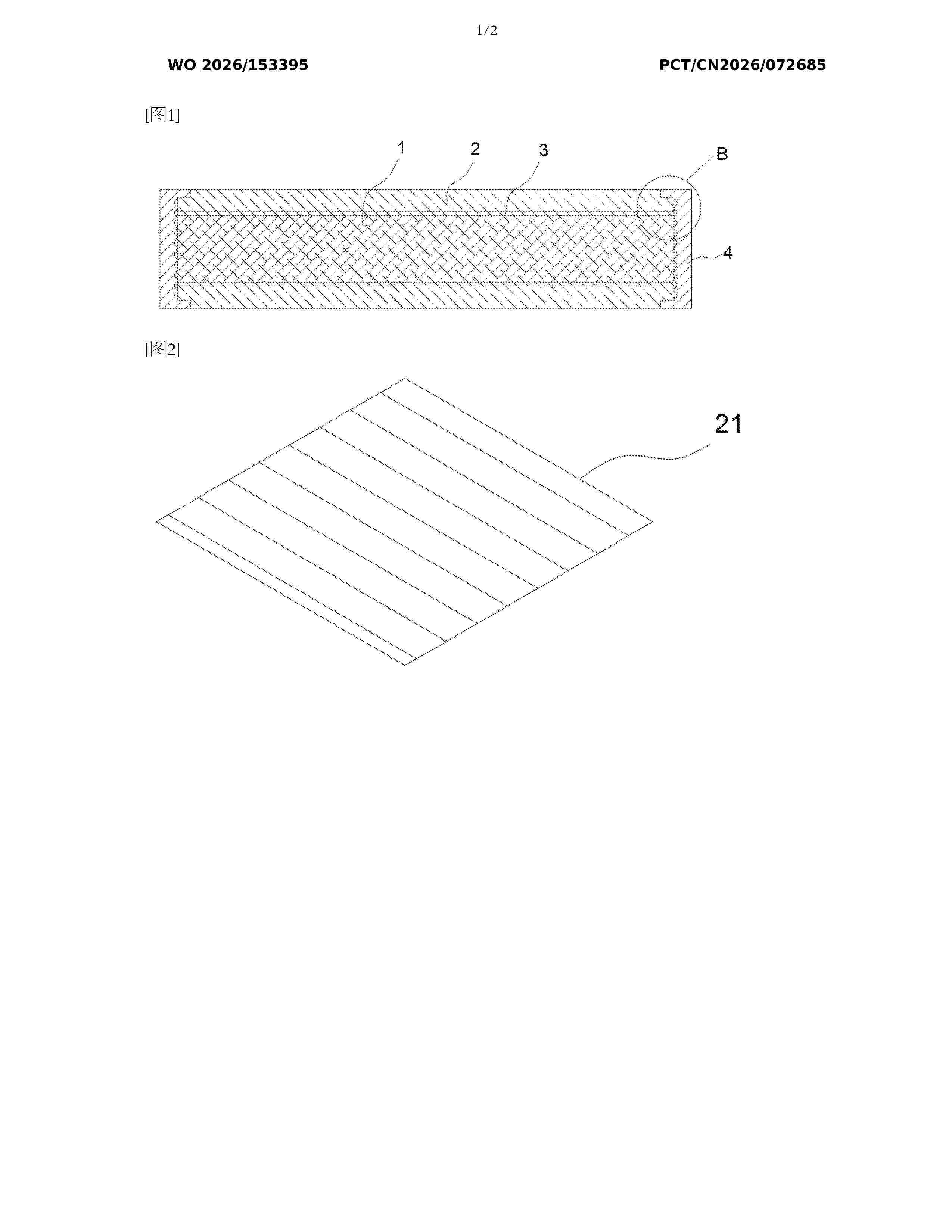
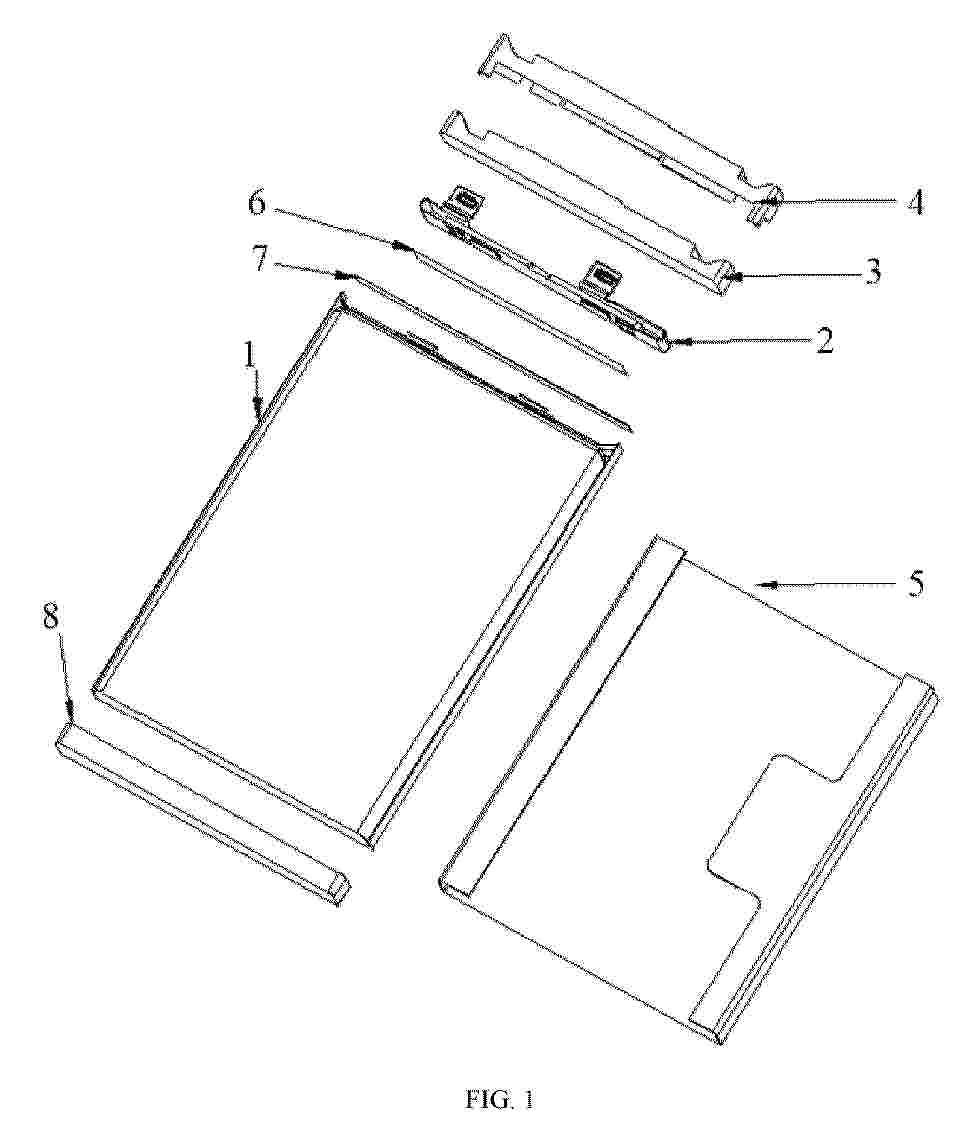
The present utility model relates to the technical field of new energy vehicle accessories, and more specifically, to a buffer plate configured for connecting to a battery bottom protective plate, and a battery pack. The buffer plate comprises a foam material layer and protective layers which are respectively connected to the upper and lower surfaces of the foam material layer, wherein each protective layer comprises a plurality of continuous fiber-reinforced resin composite material layers, and the projections on the horizontal plane of the fiber lengthwise directions of two adjacent continuous fiber-reinforced resin composite material layers have an included angle therebetween. Because the projections on the horizontal plane of the fiber lengthwise directions of two adjacent continuous fiber-reinforced resin composite material layers have an included angle therebetween, fibers in each continuous fiber-reinforced resin composite material layer form a dense, multi-angle interwoven structure. When the buffer plate is subjected to an external impact, energy can be absorbed by means of interlayer shearing force and delamination, thereby avoiding damage and collapse, and effectively protecting the bottom protective plate and a tray. The battery pack comprises the buffer plate, and therefore has a better impact resistance and waterproof performance.
Resumen de: US20260213191A1
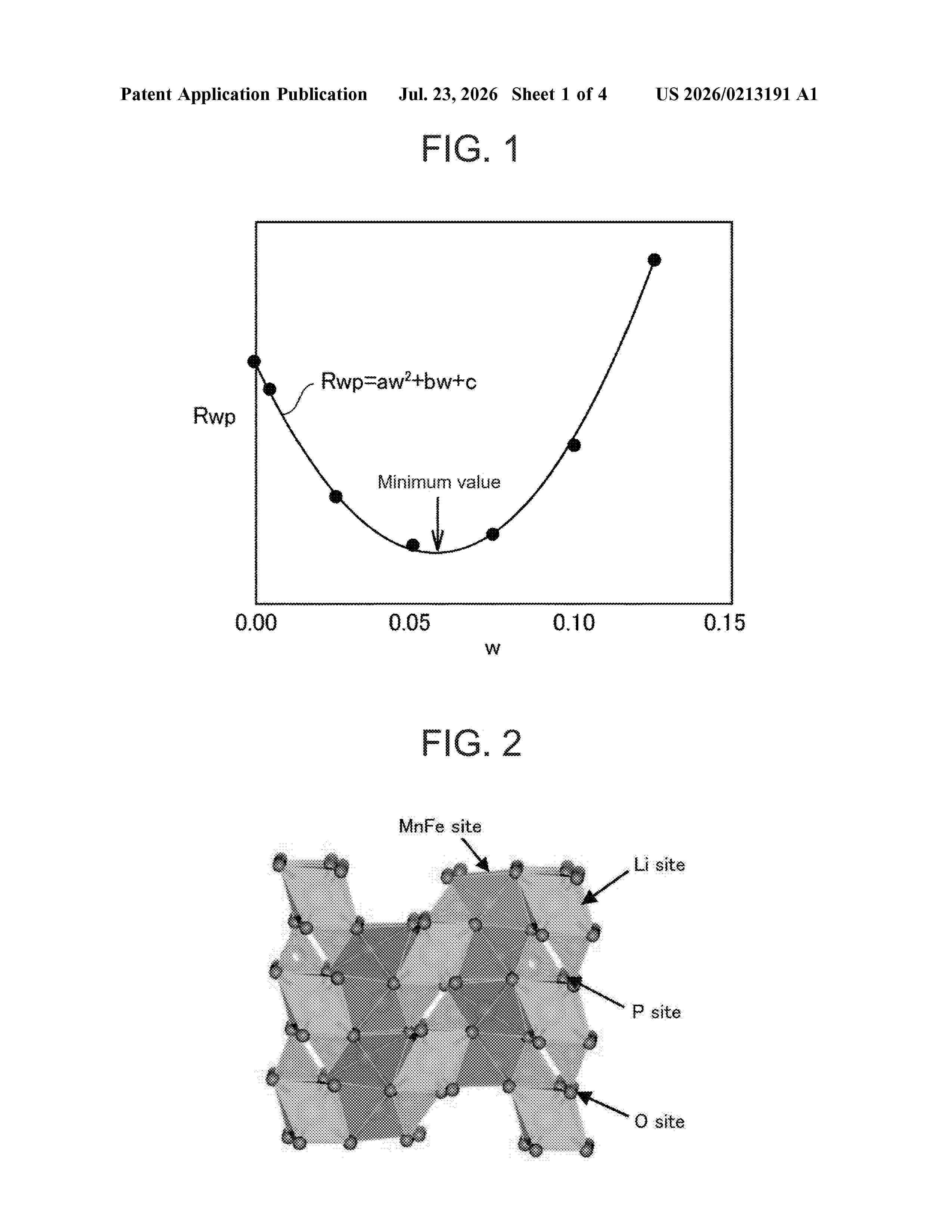
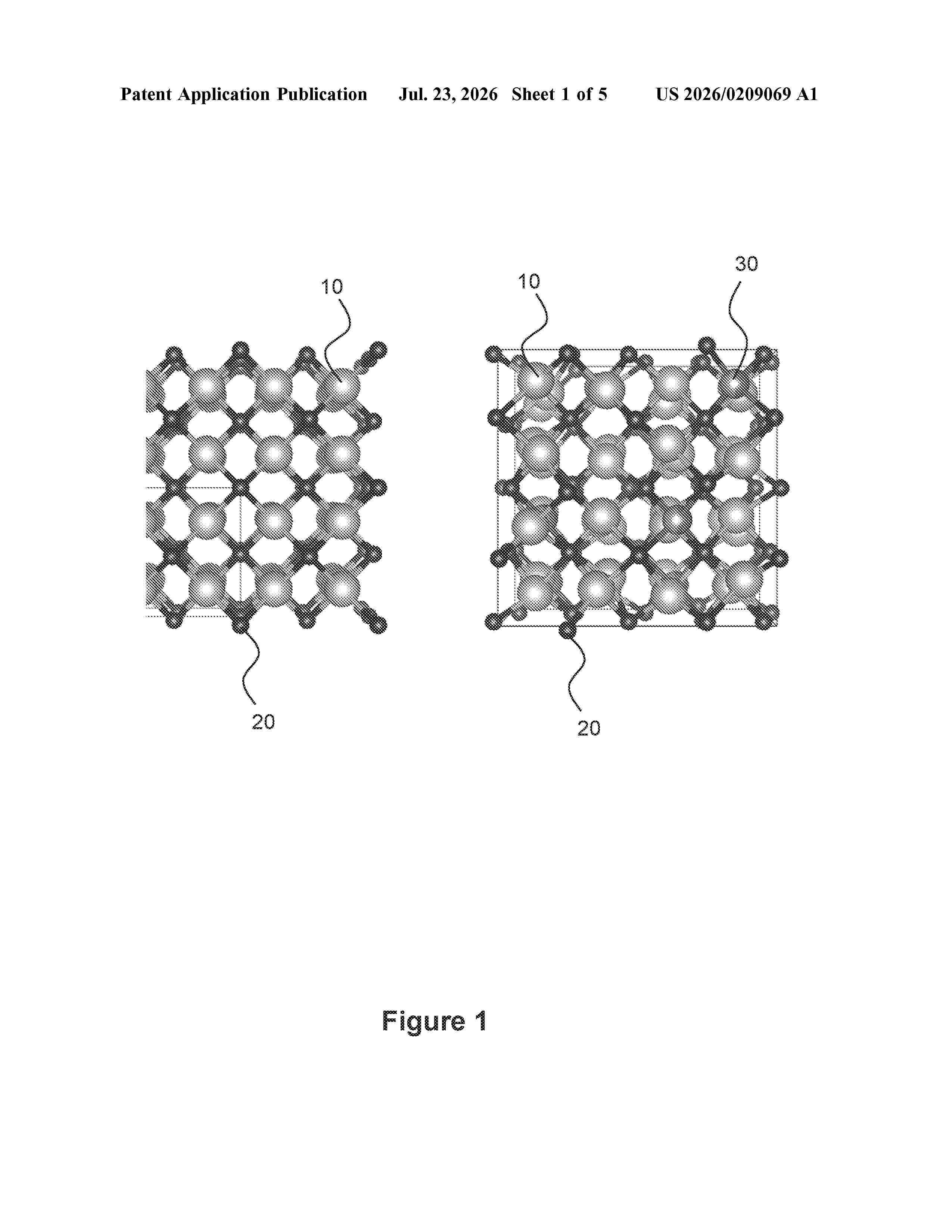
The positive electrode active material includes olivine lithium manganese iron phosphate. The olivine lithium manganese iron phosphate includes a first dopant at a manganese-iron site. The first dopant is at least one selected from the group consisting of tungsten and molybdenum. The first site occupancy of the first dopant is 1% to 10% at the manganese-iron site.
Resumen de: WO2026155520A1
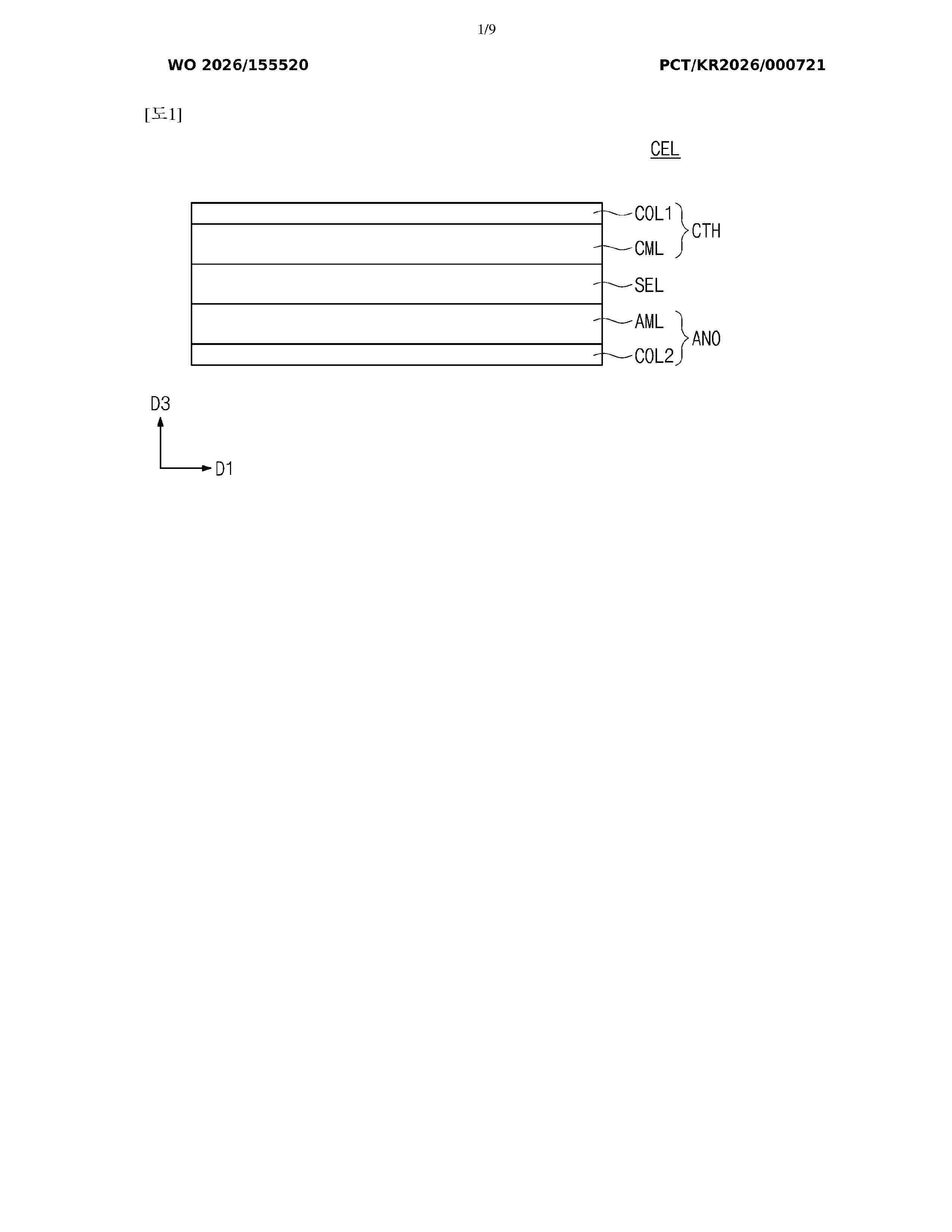
The present invention relates to a positive electrode mixture layer for an all-solid-state battery. More specifically, the positive electrode mixture layer includes: a positive electrode current collector; a positive electrode active material layer on the positive electrode current collector; and a first solid electrolyte layer on the positive electrode active material layer, wherein the positive electrode current collector includes a main body and a positive electrode tab protruding in one direction from the main body, and the first solid electrolyte layer may include a first region adjacent to the positive electrode tab and a second region excluding the first region. The first region includes first solid electrolyte particles, and the second region includes second solid electrolyte particles, wherein the average particle size of the first solid electrolyte particles is larger than the average particle size of the second solid electrolyte particles, and the ratio of the area of the first region to the area of the second region may be 2:8 to 5:5.
Resumen de: WO2026155553A1
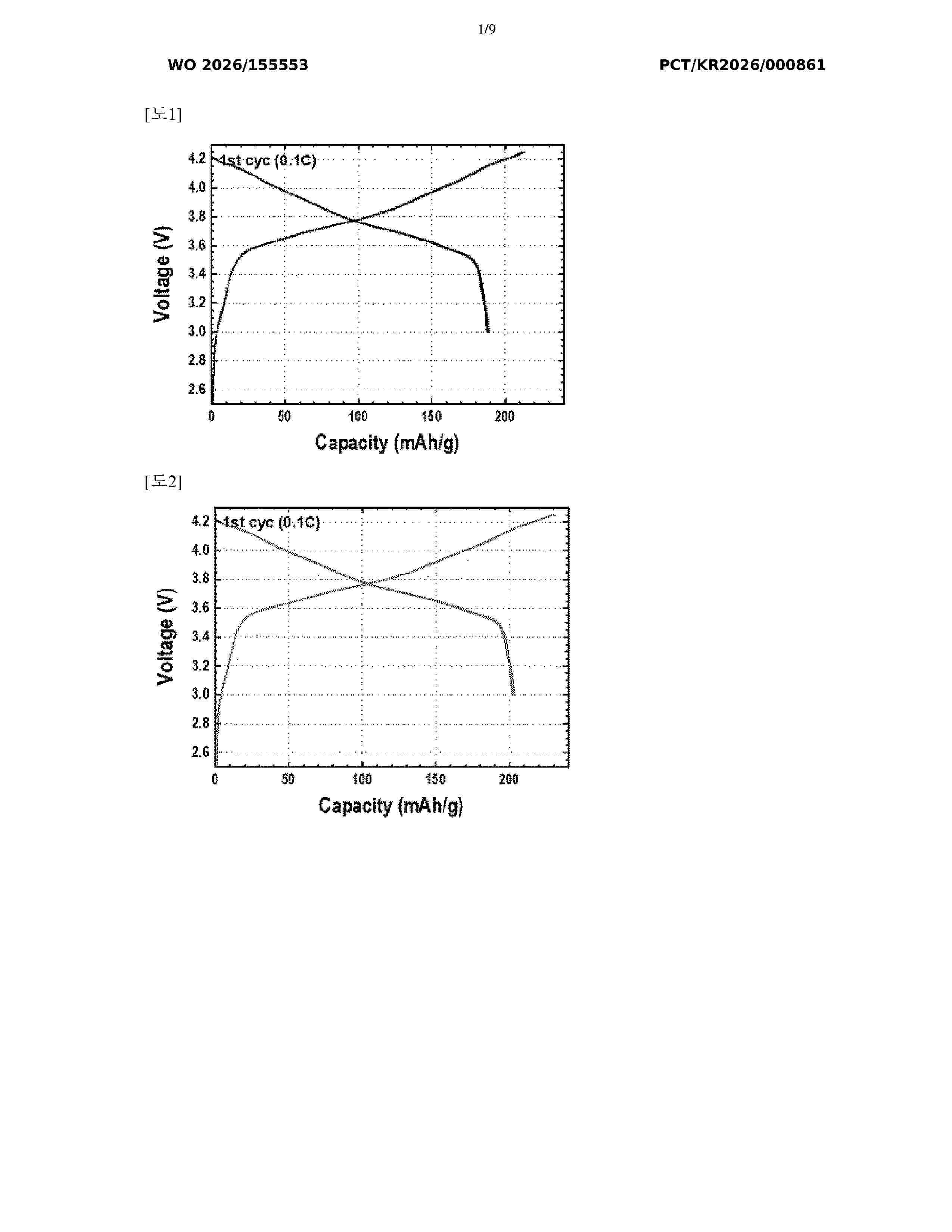
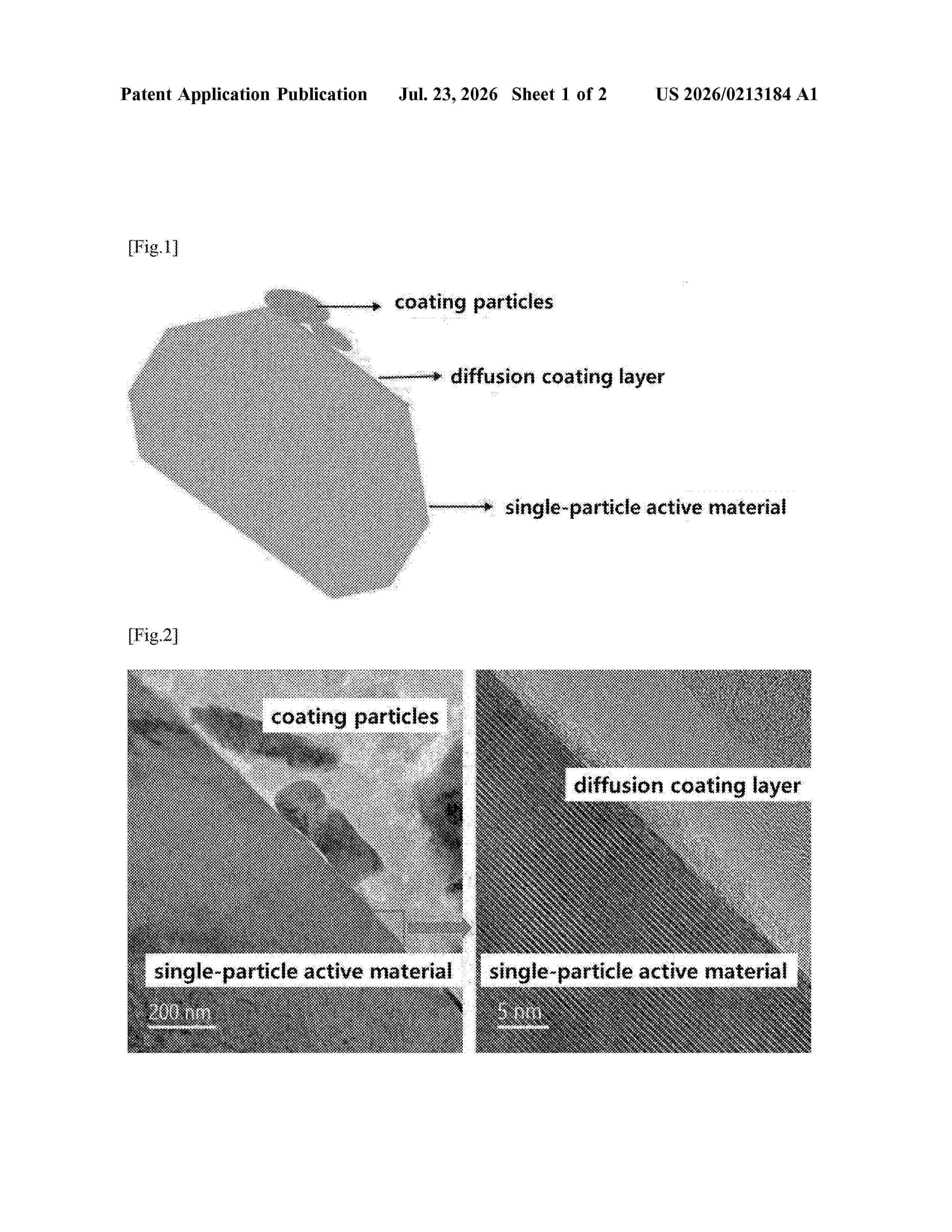
The present invention relates to a cathode active material composite comprising: a cathode active material; and a coating layer included on at least a portion of the surface of the cathode active material, wherein the coating layer comprises a Br-containing sulfide solid electrolyte and an oxide.
Resumen de: DE102025102114A1
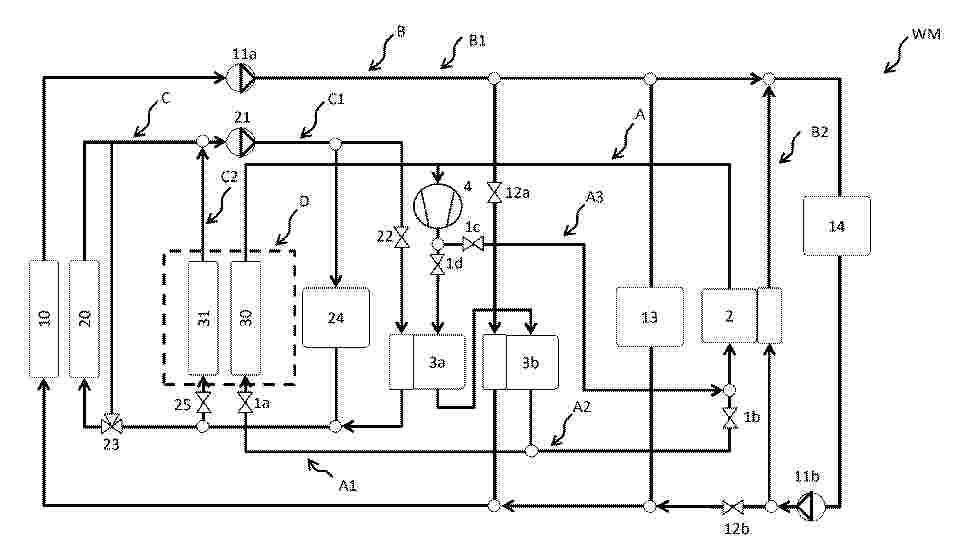
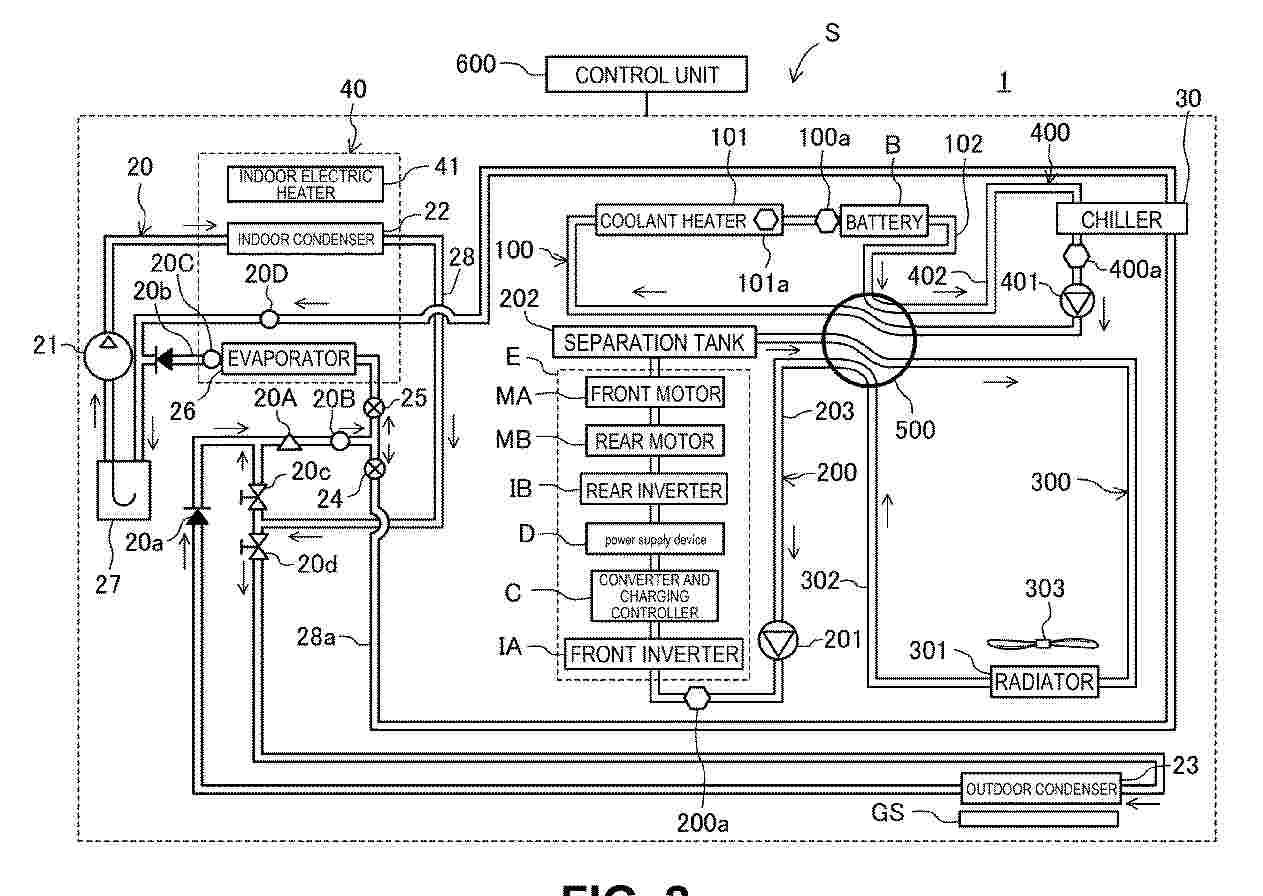
Die hier offenbarte Technologie betrifft erfindungsgemäß ein Wärmemanagementsystem WM für ein Kraftfahrzeug mit einem Niedertemperatur-Kühlmittelkreislauf B, einem Kältemittelkreislauf A, einem Hochtemperatur-Kühlmittelkreislauf C und einer Heizeinrichtung für einen Innenraum des Kraftfahrzeugs. Das Wärmemanagementsystem WM ist für einen Wärmefluss vom Kältemittelkreislauf A zur Heizeinrichtung ausgebildet. Die hier offenbarte Technologie betrifft erfindungsgemäß ferner ein Kraftfahrzeug mit einem solchen Wärmemanagementsystem WM.
Resumen de: WO2026155546A1
The present specification provides a lithium secondary battery, a battery module comprising same, and a battery pack comprising same, the lithium secondary battery comprising: a positive electrode; a negative electrode; a separator between the positive electrode and the negative electrode; and an electrolyte, wherein the negative electrode includes a negative electrode active material layer, the negative electrode active material layer includes a silicon-based active material, the electrolyte includes fluoroethylene carbonate (FEC), and a ratio (B/A) of parts by weight (B) of the silicon-based active material based on 100 parts by weight of the negative electrode active material included in the negative electrode active material layer to parts by weight (A) of the fluoroethylene carbonate (FEC) based on 100 parts by weight of the electrolyte is 4 to 7.
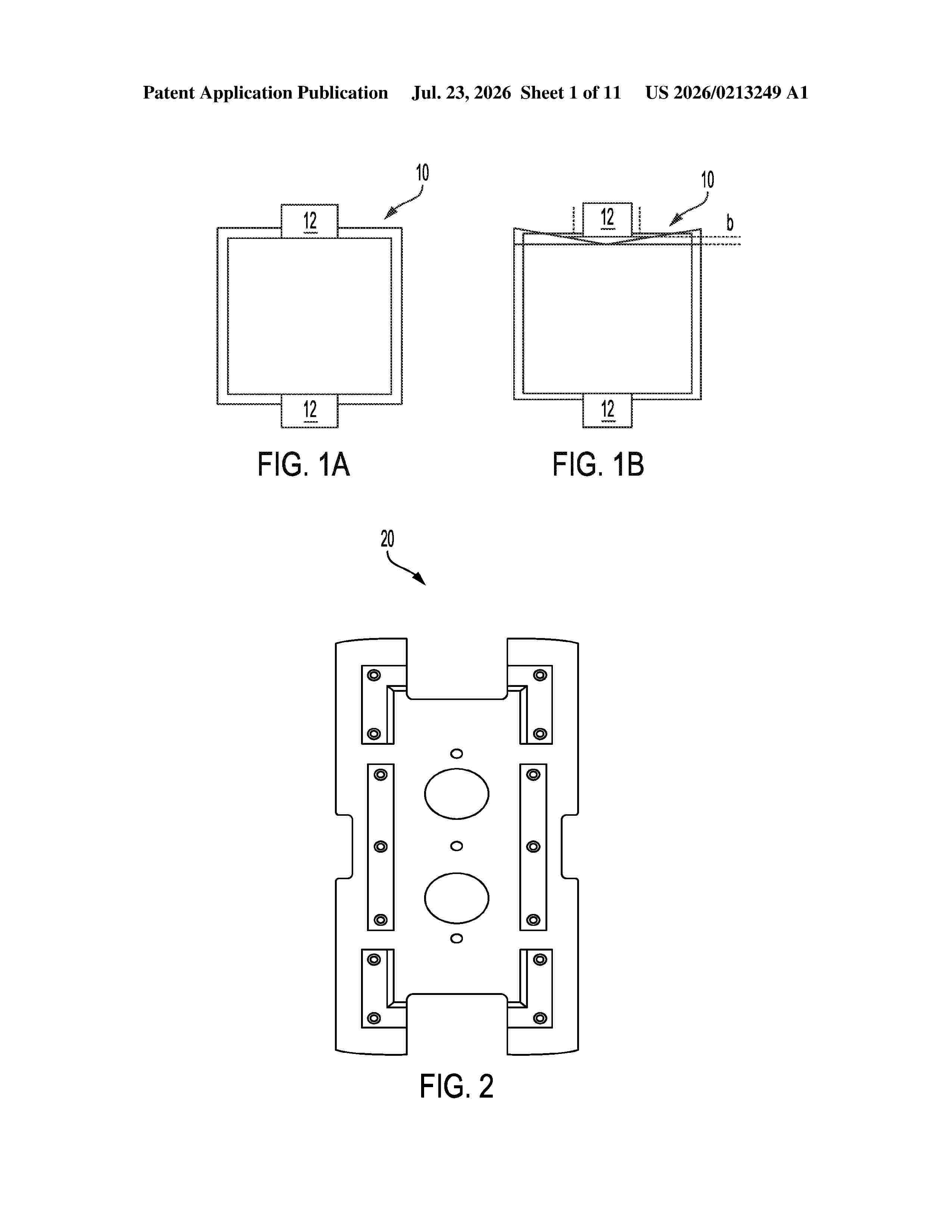
Resumen de: US20260213249A1
0000 A method of preventing separator slip in a battery cell that is stopped by a stopper in a production line, the method includes transporting the battery cell in a length-wise direction at the production line such that terminal tabs of the battery cell are parallel to a moving direction of the production line, and controlling an acceleration of the battery cell to move on the production line to less than 7G such that the separator slip is prevented in an impact between the battery cell and the stopper.
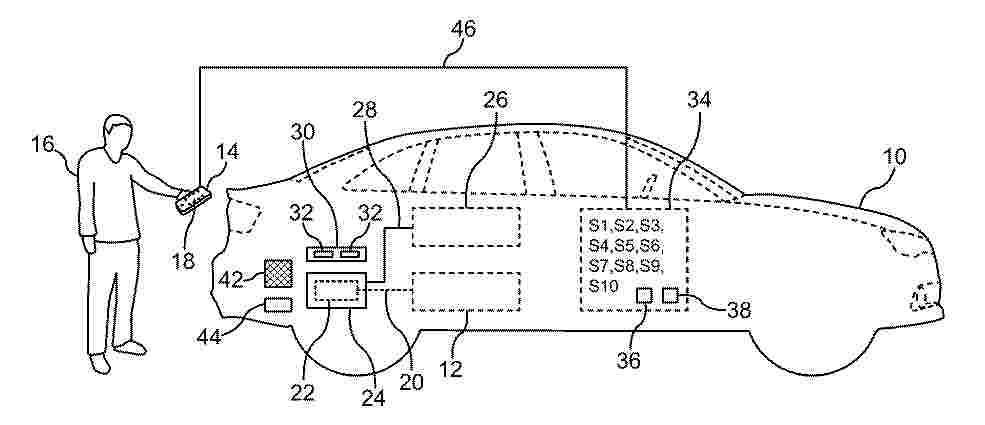
Resumen de: DE102025102269A1
Die Erfindung betrifft ein Verfahren zum Steuern eines Aufladevorgangs einer Energiespeichervorrichtung (18) eines mobilen Endgeräts (14), wobei eine Steuervorrichtung (34) ein Kraftfahrzeug (10) feststellt (S1), dessen Energieabgabevorrichtung (12) zum Aufladen mobiler Endgeräte (14) vorbestimmt ist; eine Datenkommunikationsverbindung (46) zwischen dem mobilen Endgerät (14) und der Steuervorrichtung bereitstellt (S2); prüft (S3), ob der Benutzer (16) des mobilen Endgeräts (14) zum Aufladen der Energiespeichervorrichtung (18) des mobilen Endgeräts (14) durch die Energieabgabevorrichtung (12) des festgestellten Kraftfahrzeugs (10) autorisiert ist; bei einem positiven Prüfergebnis ein Freigabesignal erzeugt (S7), das ein Freigeben eines Zugangs zu einem Ladeanschluss (22) an die Energieabgabevorrichtung (12) beschreibt; und das erzeugte Freigabesignal an eine Zugangseinrichtung (26), die einen Zugang zu dem Ladeanschluss (22) des Kraftfahrzeugs (10) reguliert, überträgt (S8). Optional kann die Steuervorrichtung (34) zusätzlich ein vorgegebenes Aufladekriterium überprüfen, welches eine Aufladebedingung beschreibt (S6); und das Freigabesignal nur bei Erfüllen des Aufladekriteriums erzeugen (S7).
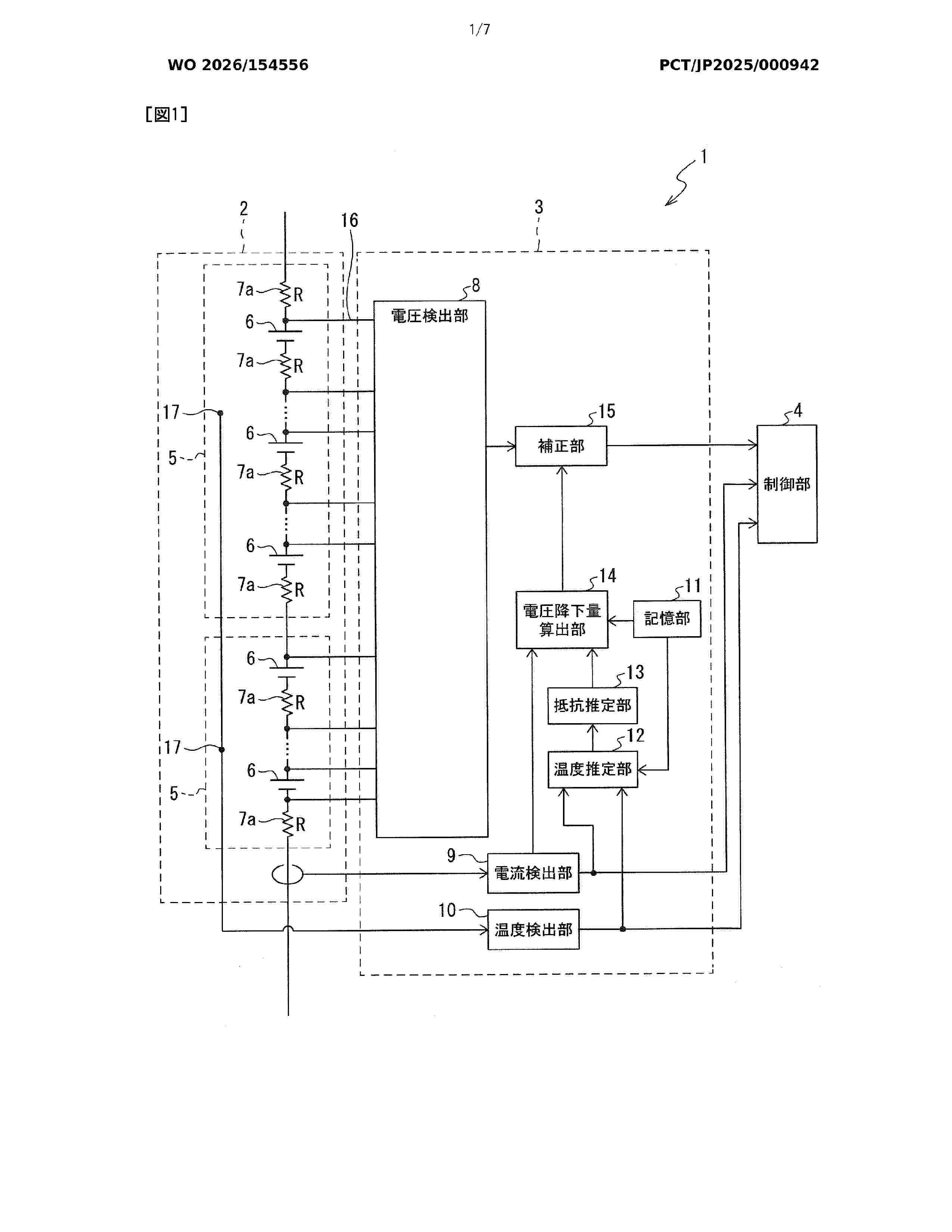
Resumen de: WO2026154556A1
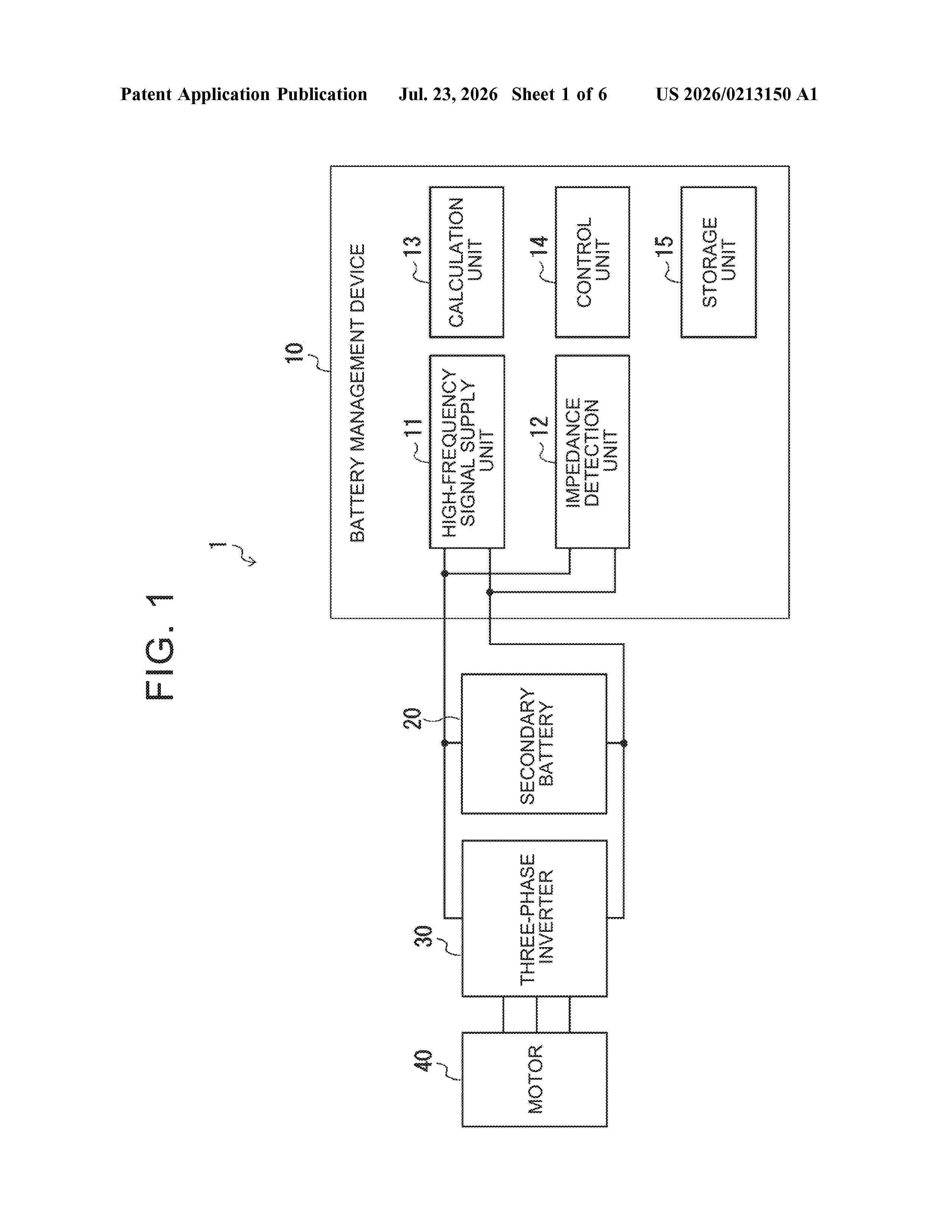
The present invention provides a battery management method capable of more appropriately controlling charging and discharging. Specifically, the temperature of a conductive member is estimated on the basis of a module temperature, a battery current value, and the material characteristics of the conductive member (including a bus bar and electrical wiring) (S103). Subsequently, a conductive member resistance value which corresponds to the estimated conductive member temperature is estimated for each conductive member by referring to correlation information which expresses a predetermined correlation between conductive member temperature and conductive member resistance value (S104).
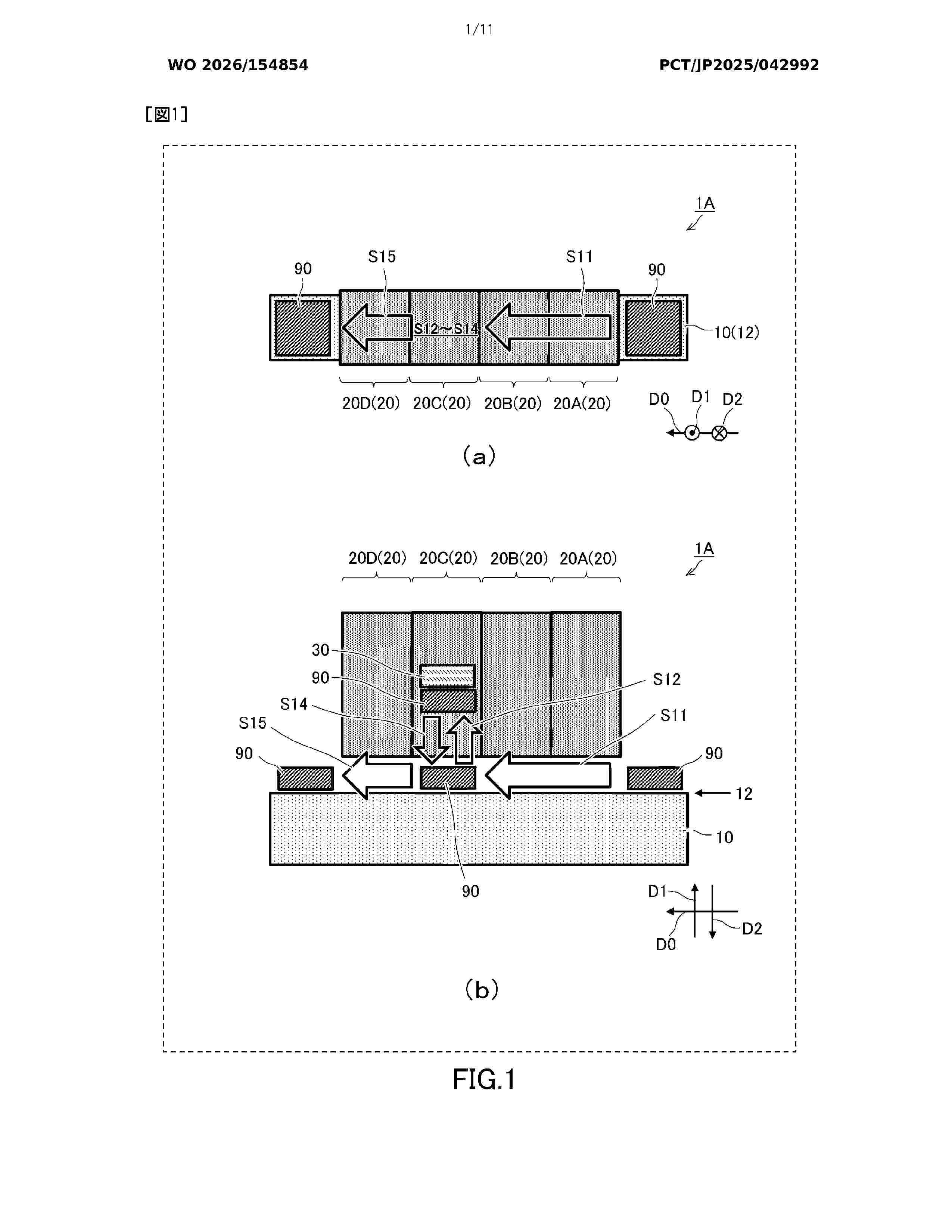
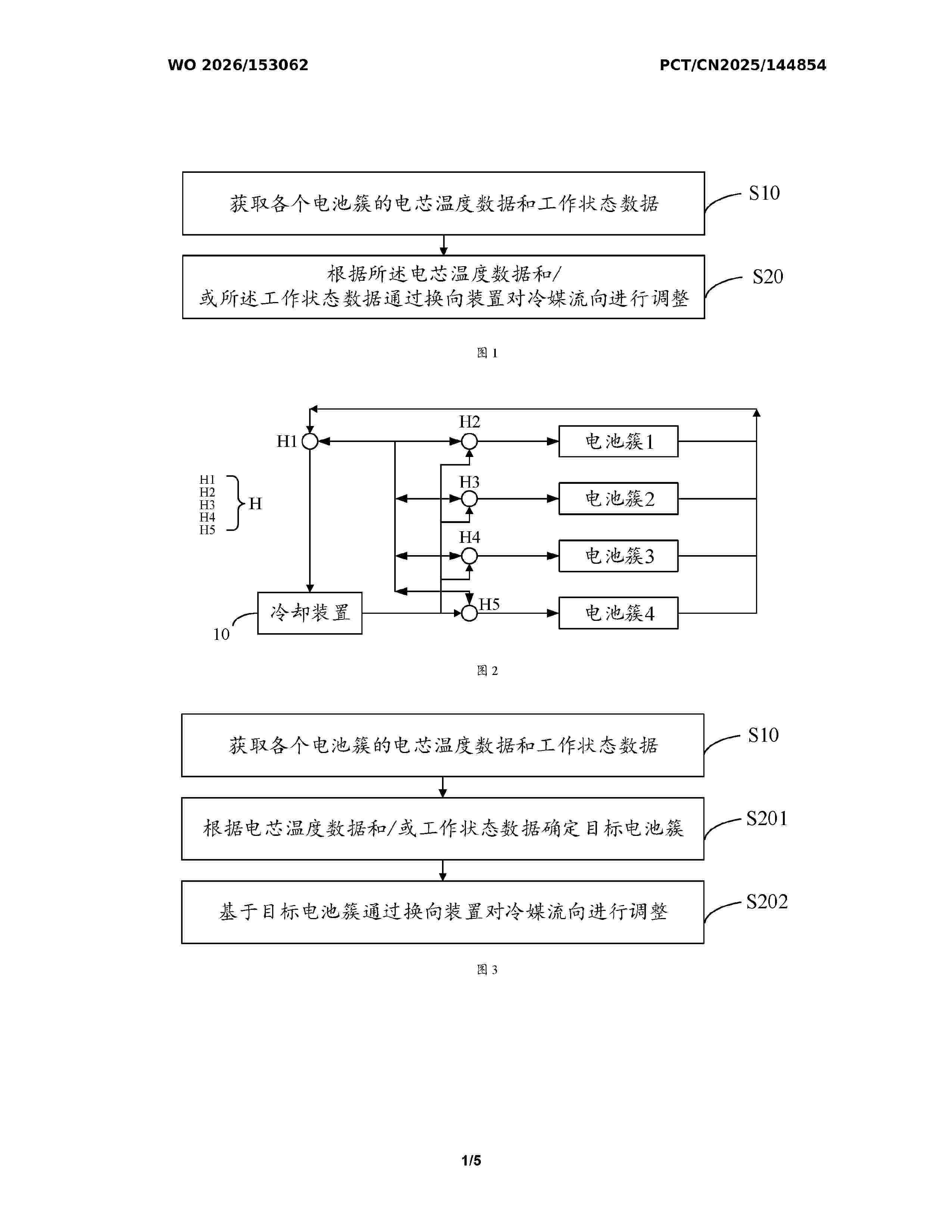
Resumen de: WO2026154854A1
A cell processing system (1A) comprises a transport device (10), a probe device (30), and a movement device (40). The transport device (10) transports a tray (91) along a transport path (12). A plurality of cells (95) are accommodated in the tray (91). The probe device (30) is disposed above the transport path (12). The movement device (40) moves the tray (91) from the transport path (12) to an upper position (45). The movement device (40) moves the tray (91) from the upper position (45) to the transport path (12). The upper position (45) is a position where the plurality of cells (95) are brought into contact with the probe device (30).
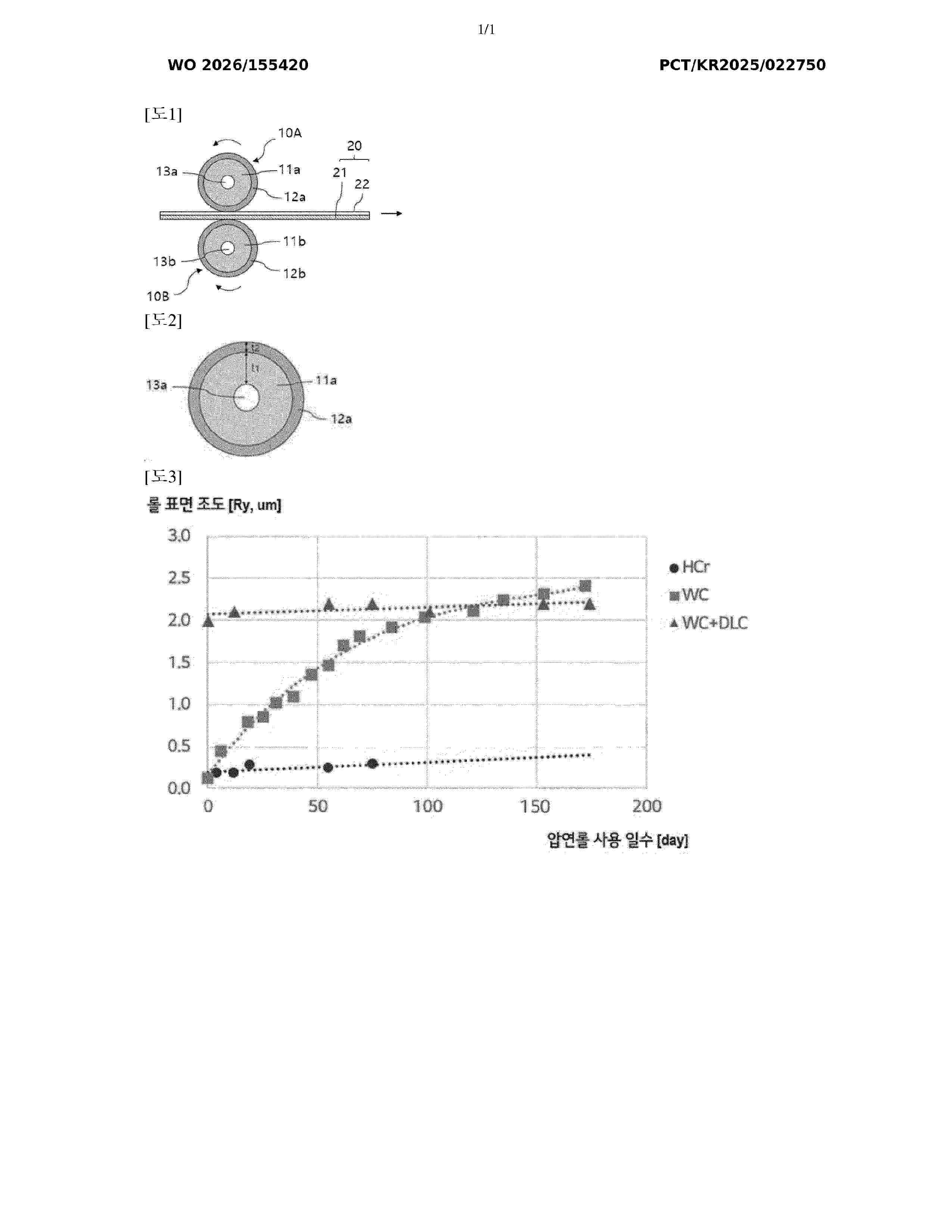
Resumen de: WO2026155420A1
The present invention relates to a method for manufacturing an electrode, an electrode, and a secondary battery comprising the electrode. The method comprises the steps of: applying an electrode active material slurry to one surface or both surfaces of an electrode current collector; drying the electrode active material slurry to form an electrode active material layer; and rolling the electrode active material layer, wherein the electrode active material slurry contains an electrode active material having an average particle diameter (D50) of 4 µm or less, and the rolling is performed using a rolling roll having a surface roughness Ry value of 1 µm or more. Accordingly, it is possible to provide an electrode having improved electrolyte impregnation and a high-performance secondary battery.
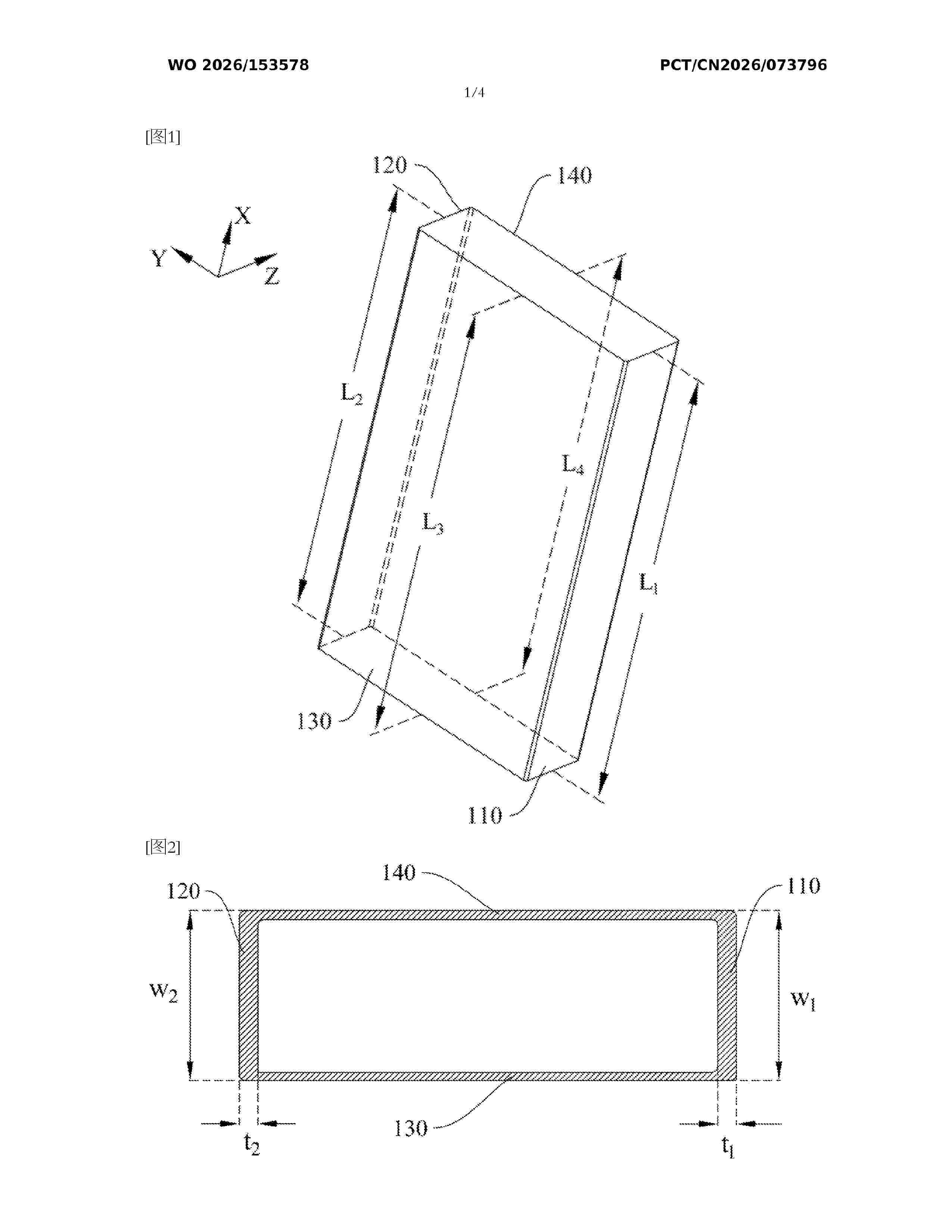
Resumen de: WO2026153578A1
A battery housing, a battery cell and a battery pack. The battery housing comprises a first plate body; a second plate body, which is arranged opposite the first plate body; a third plate body, which is arranged between the first plate body and the second plate body; and a fourth plate body, which is arranged between the first plate body and the second plate body and is arranged opposite the third plate body, wherein the first plate body, the second plate body, the third plate body and the fourth plate body form an accommodating structure having a hollow interior and two open ends; the area of the third plate body is greater than that of the first plate body and that of the second plate body; the area of the fourth plate body is greater than that of the first plate body and that of the second plate body; the thickness of the wall of the first plate body is greater than that of the wall of the third plate body and that of the wall of the fourth plate body; and the thickness of the wall of the second plate body is greater than that of the wall of the third plate body and that of the wall of the fourth plate body.
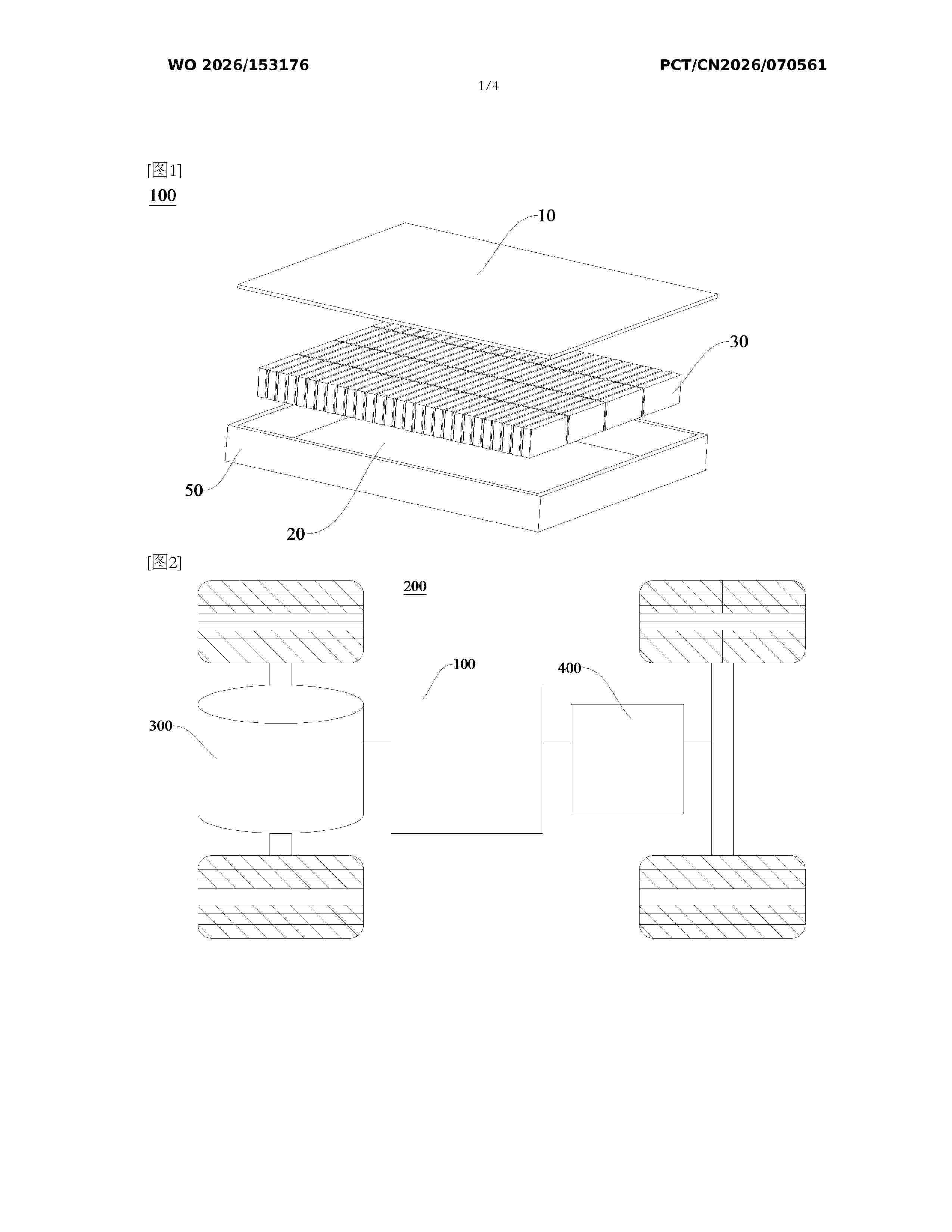
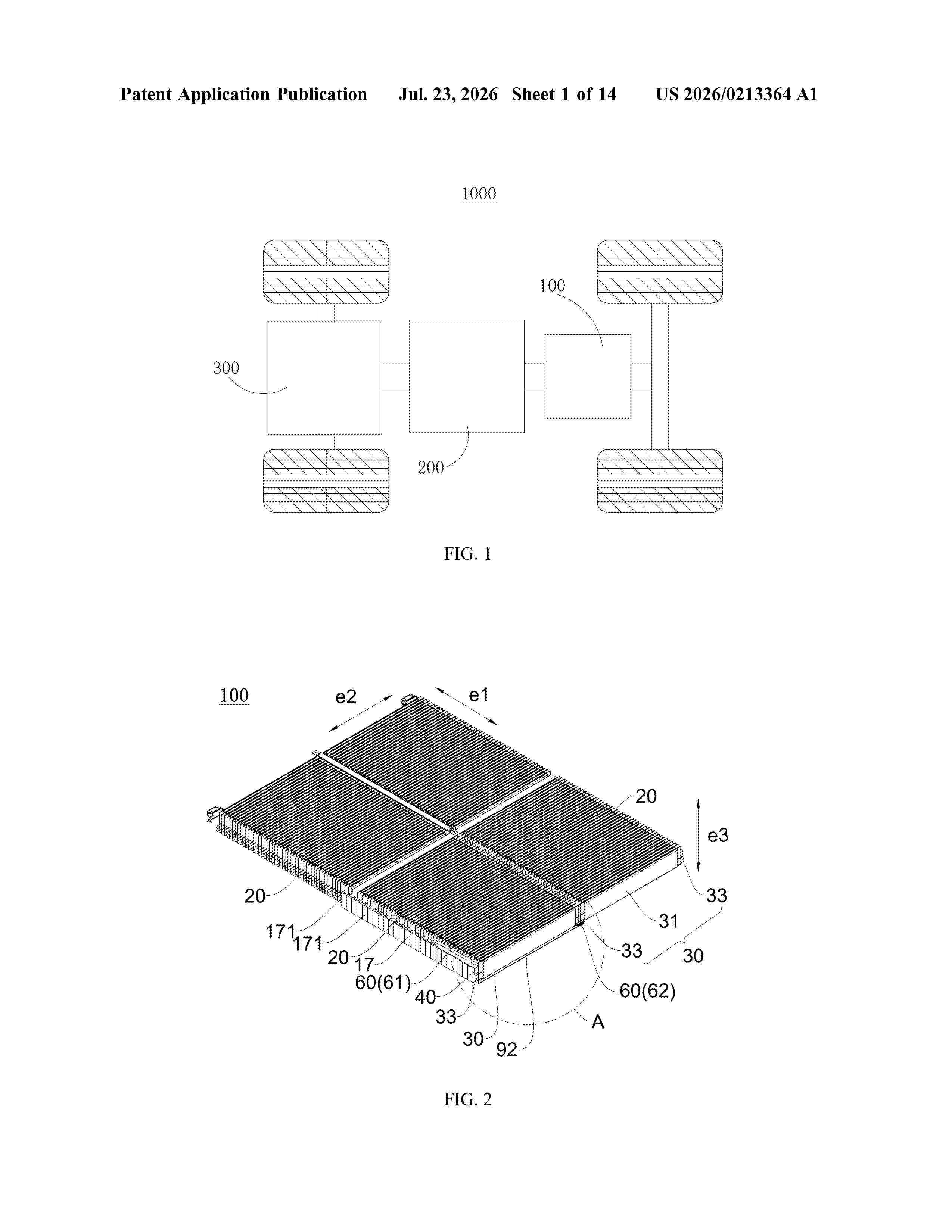
Resumen de: WO2026153176A1
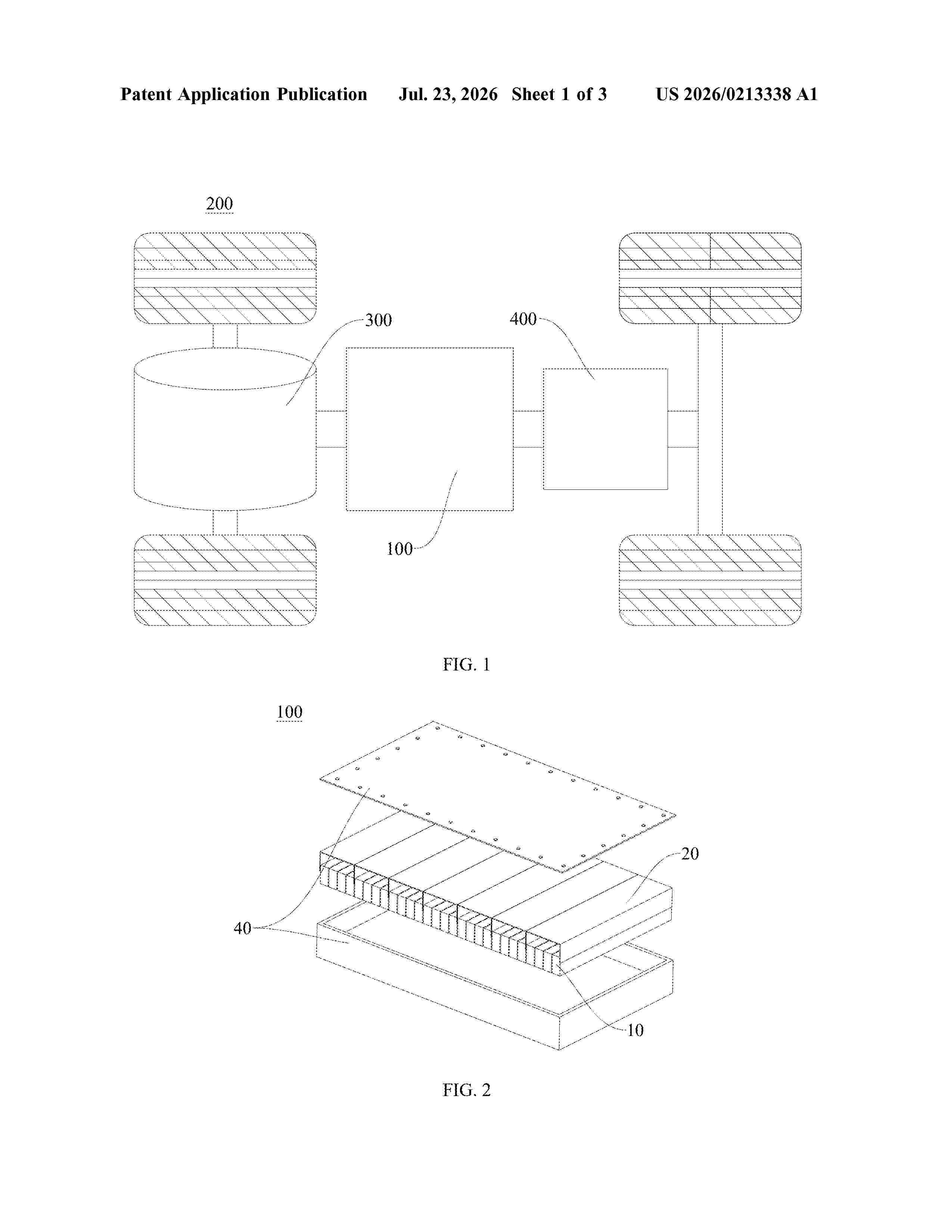
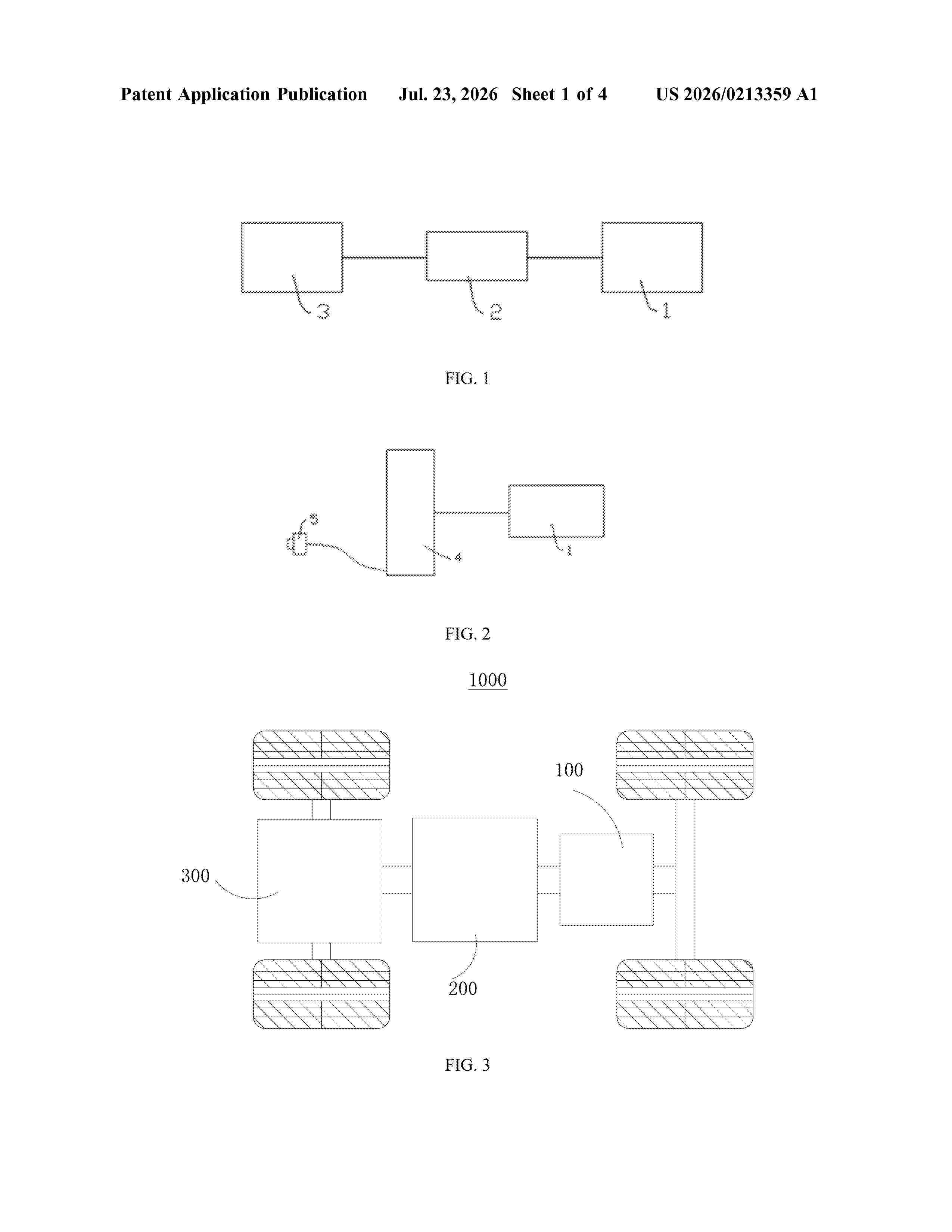
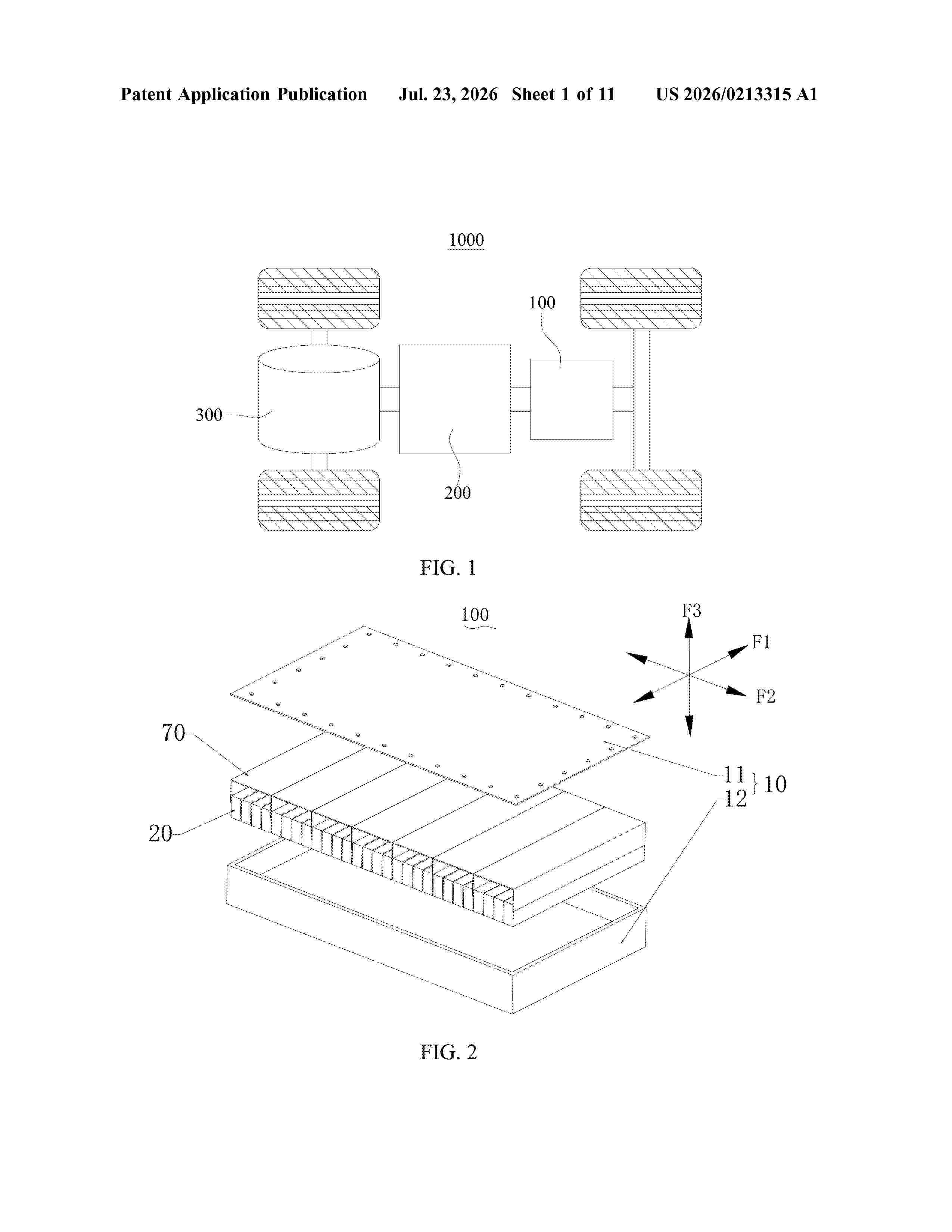
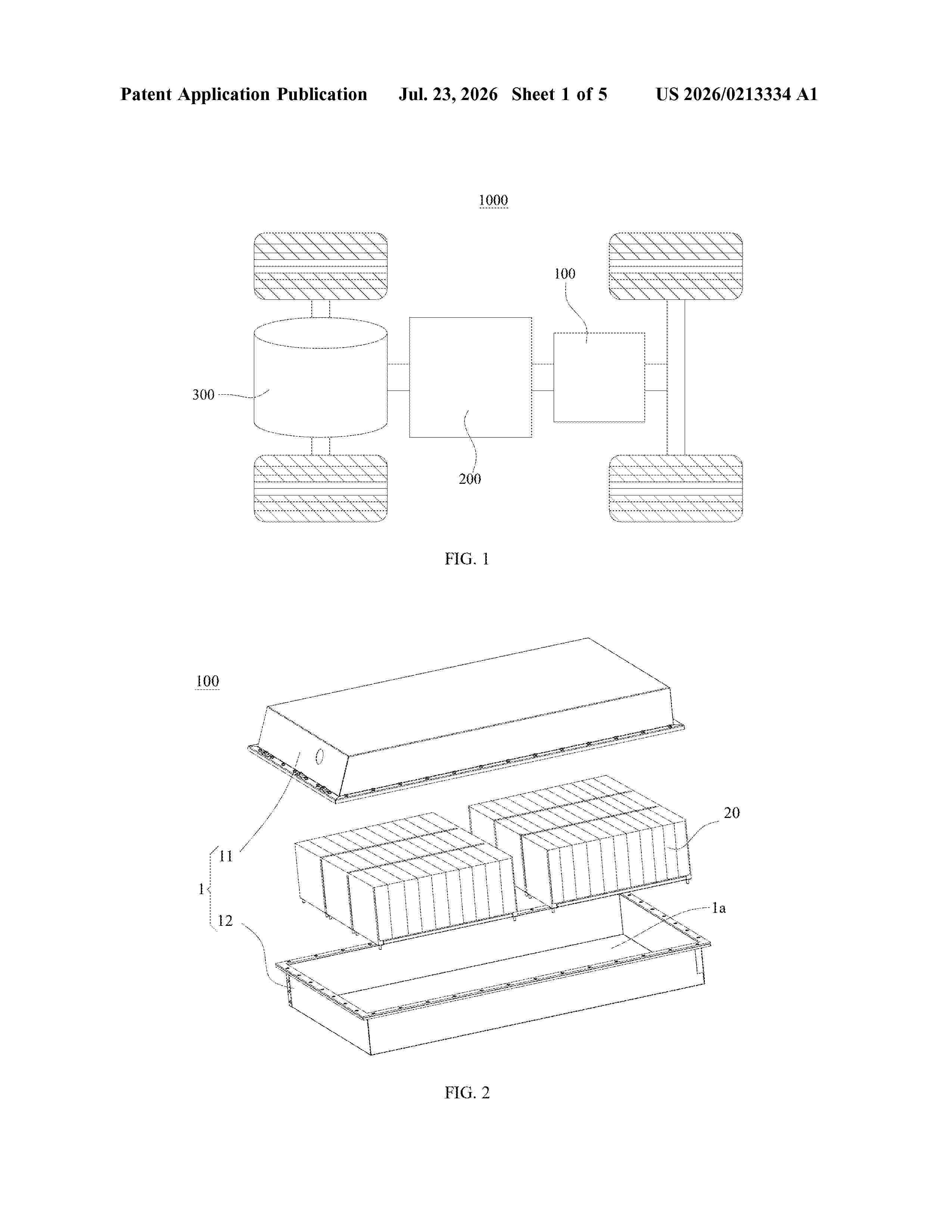
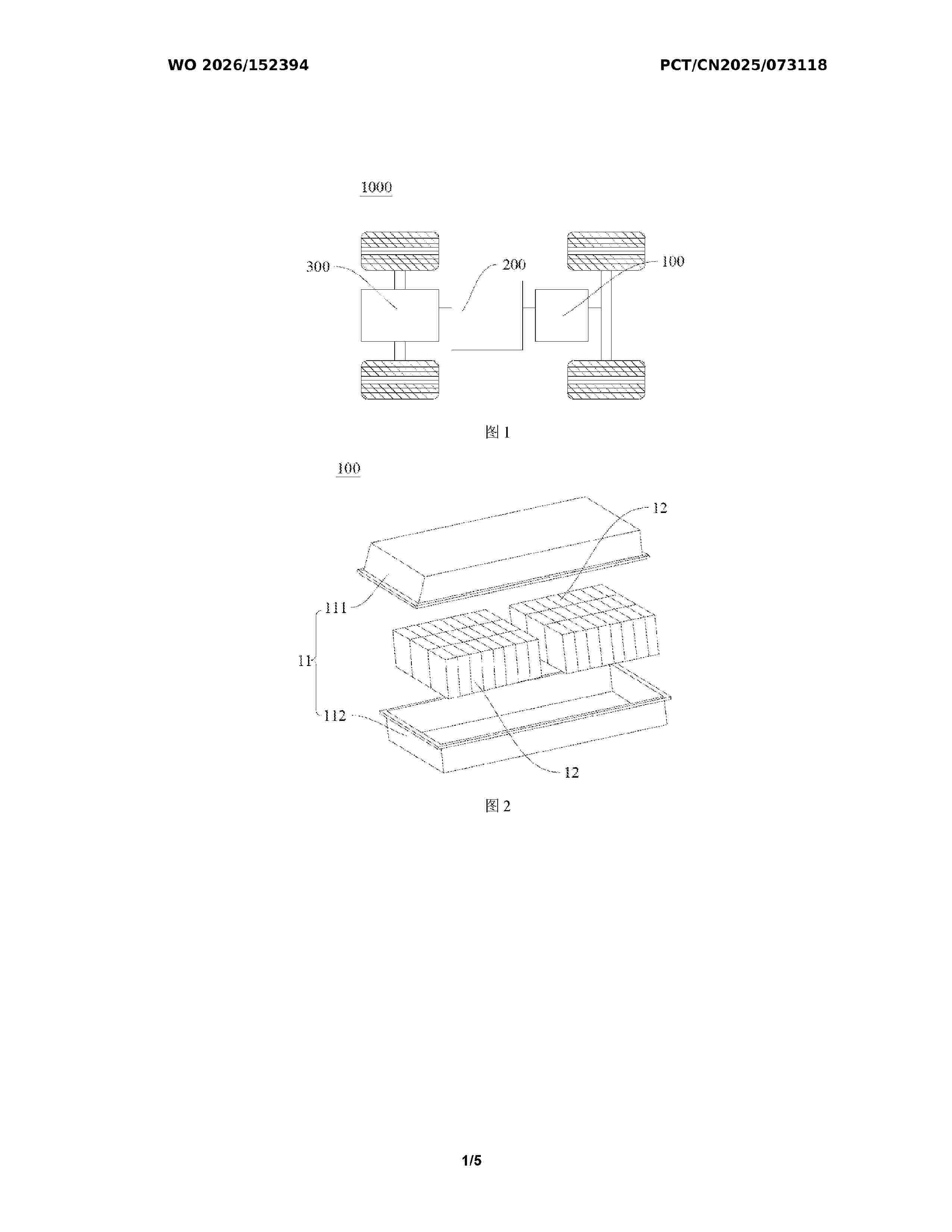
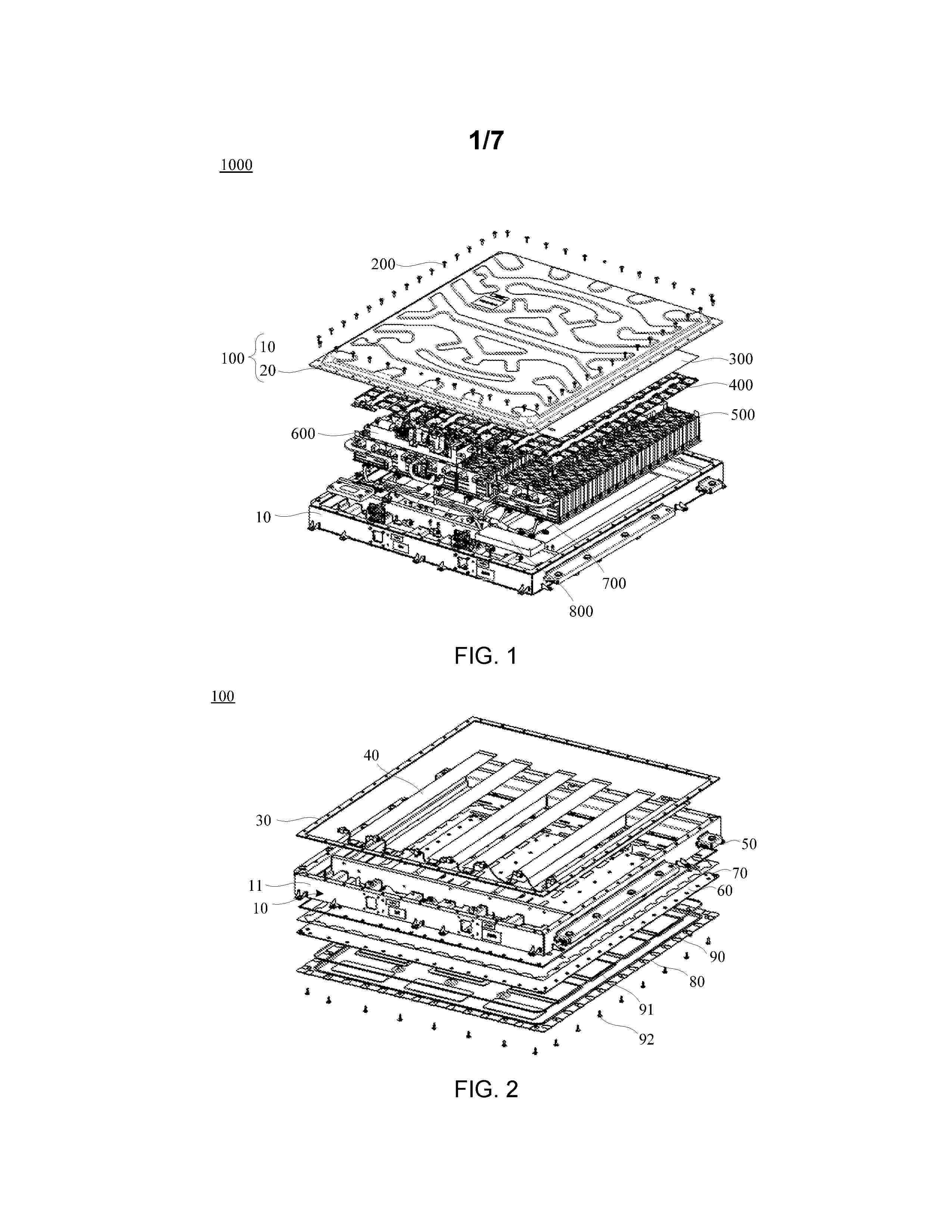
A battery device (100) and a vehicle (200). The battery device (100) comprises a first plate (10), a second plate (20), battery cells (30) and support members (40), wherein the first plate (10) and the second plate (20) are arranged opposite each other in a first direction; the battery cells (30) are arranged between the first plate (10) and the second plate (20); the support members (40) extend in the first direction; the support members (40) are located between the first plate (10) and the second plate (20); and the support members (40) are arranged closer to the second plate (20) than the battery cells (30).
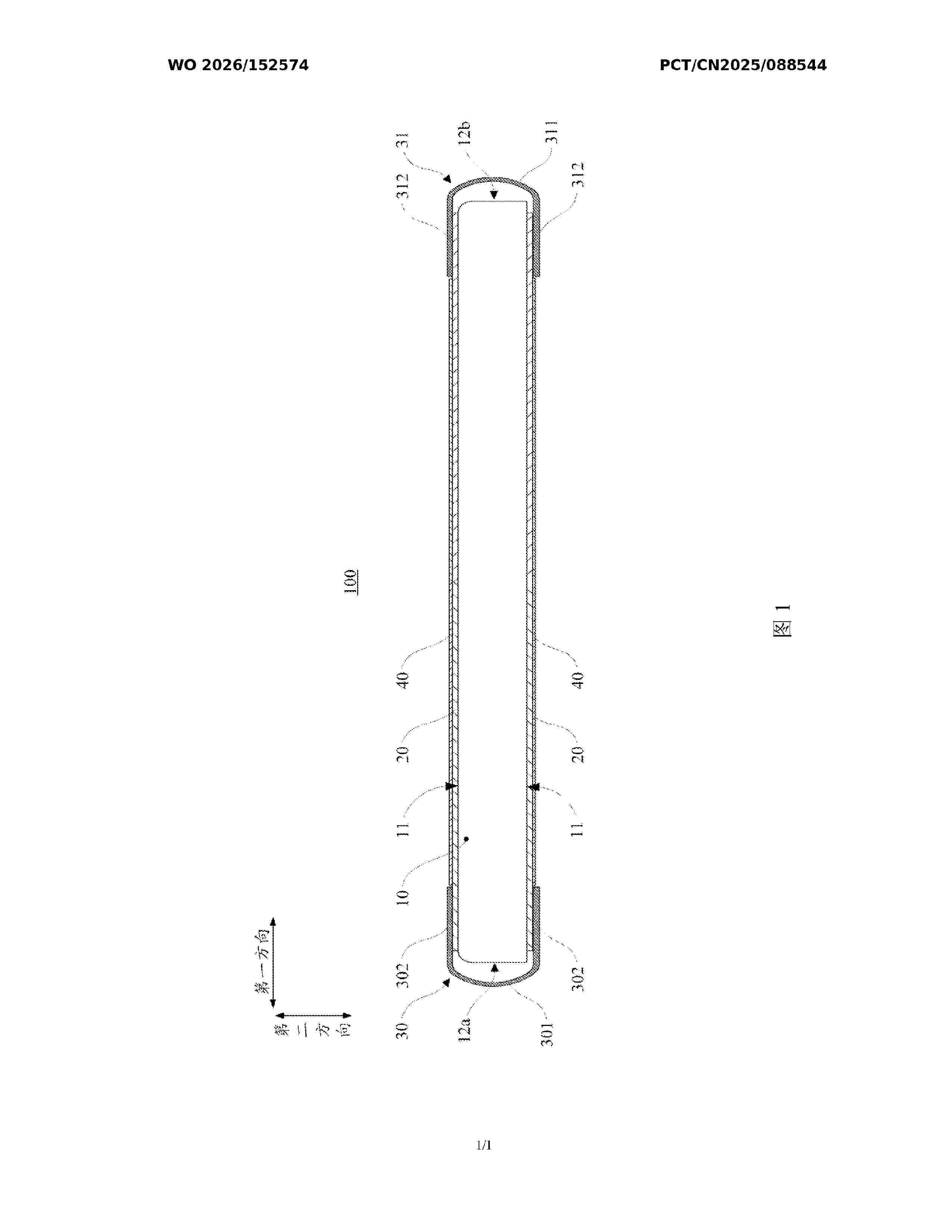
Resumen de: WO2026152574A1
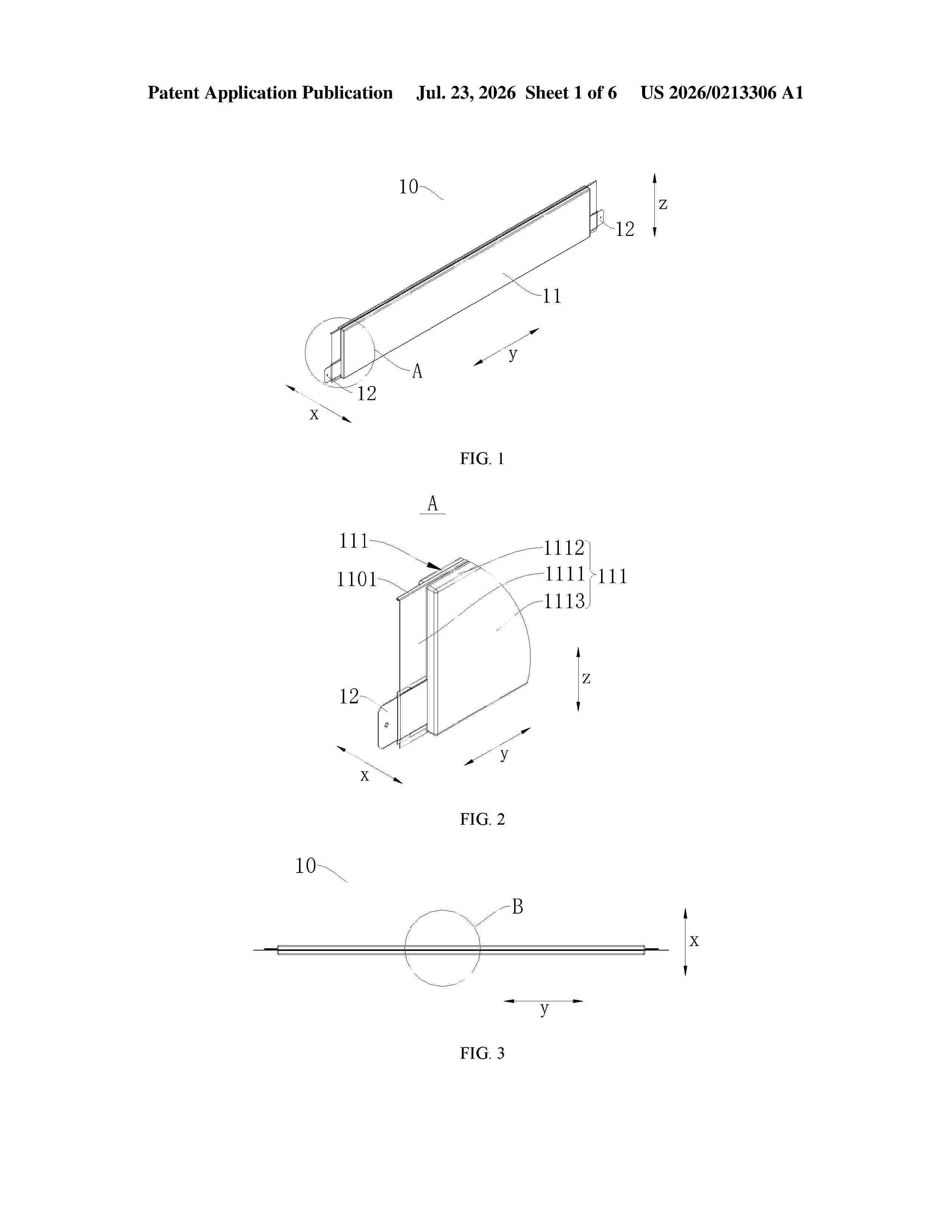
The present application belongs to the technical field of batteries. Provided are a battery cell assembly, a battery module, a battery pack and an electric device. The battery cell assembly comprises: a battery cell having two side planes opposite each other in a first direction and two main planes opposite each other in a second direction; elastic members arranged on the two main planes of the battery cell and configured to buffer the expansion of the battery cell during charging; U-shaped support members arranged at two opposite ends of the battery cell in the first direction; and a fixing structural member arranged around the outer sides of the battery cell and the U-shaped support members. Each U-shaped support member comprises: two U-shaped support legs, each of which extends in the first direction to cover a portion of an elastic member; and a U-shaped bending portion configured to connect the two U-shaped support legs, the two side planes of the battery cell being surrounded by the U-shaped bending portions. The technical problem to be solved is how to protect the internal structure at the edge of the battery cell from being damaged in a wound structure. The technical effect is to protect the internal structure at the edge of the battery cell from being damaged.
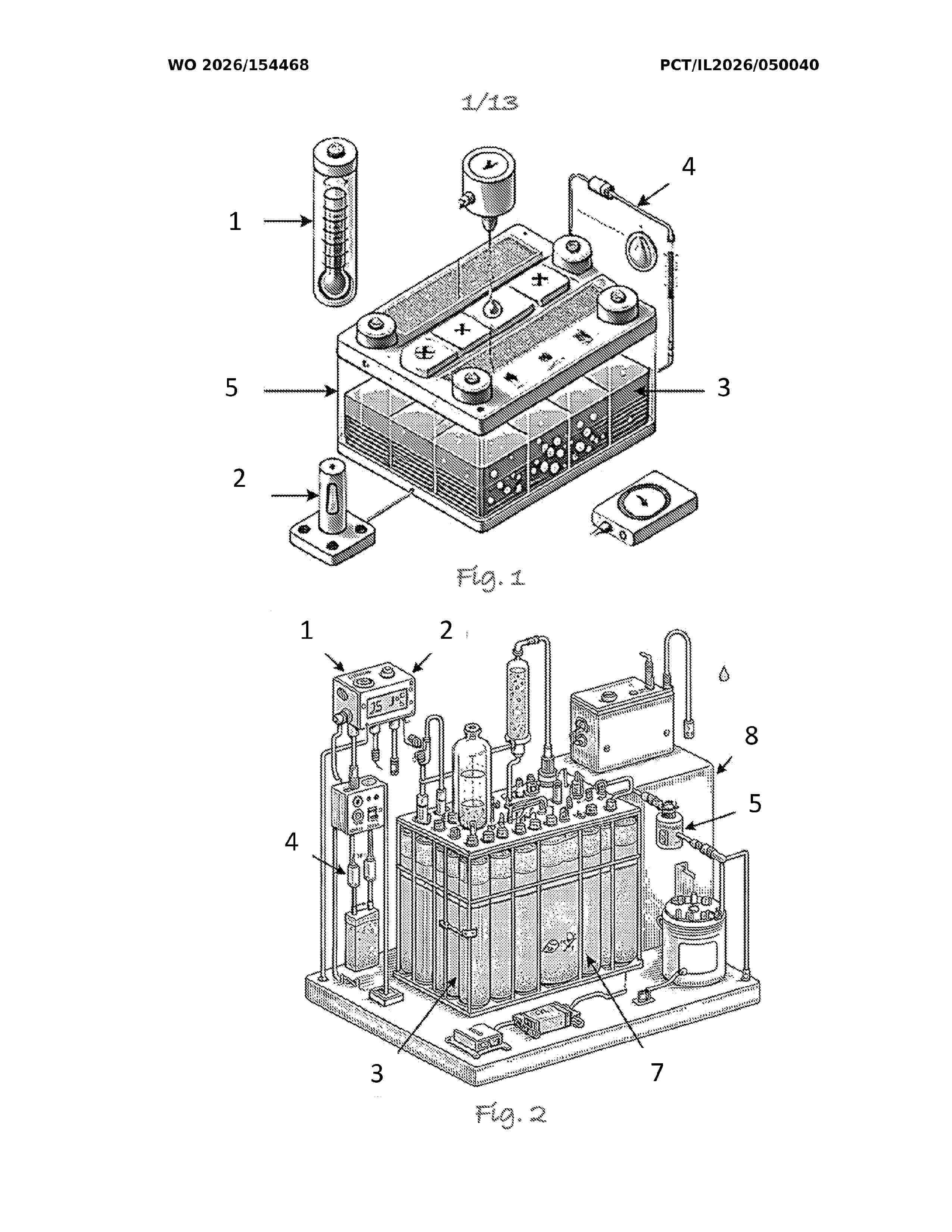
Resumen de: WO2026154468A1
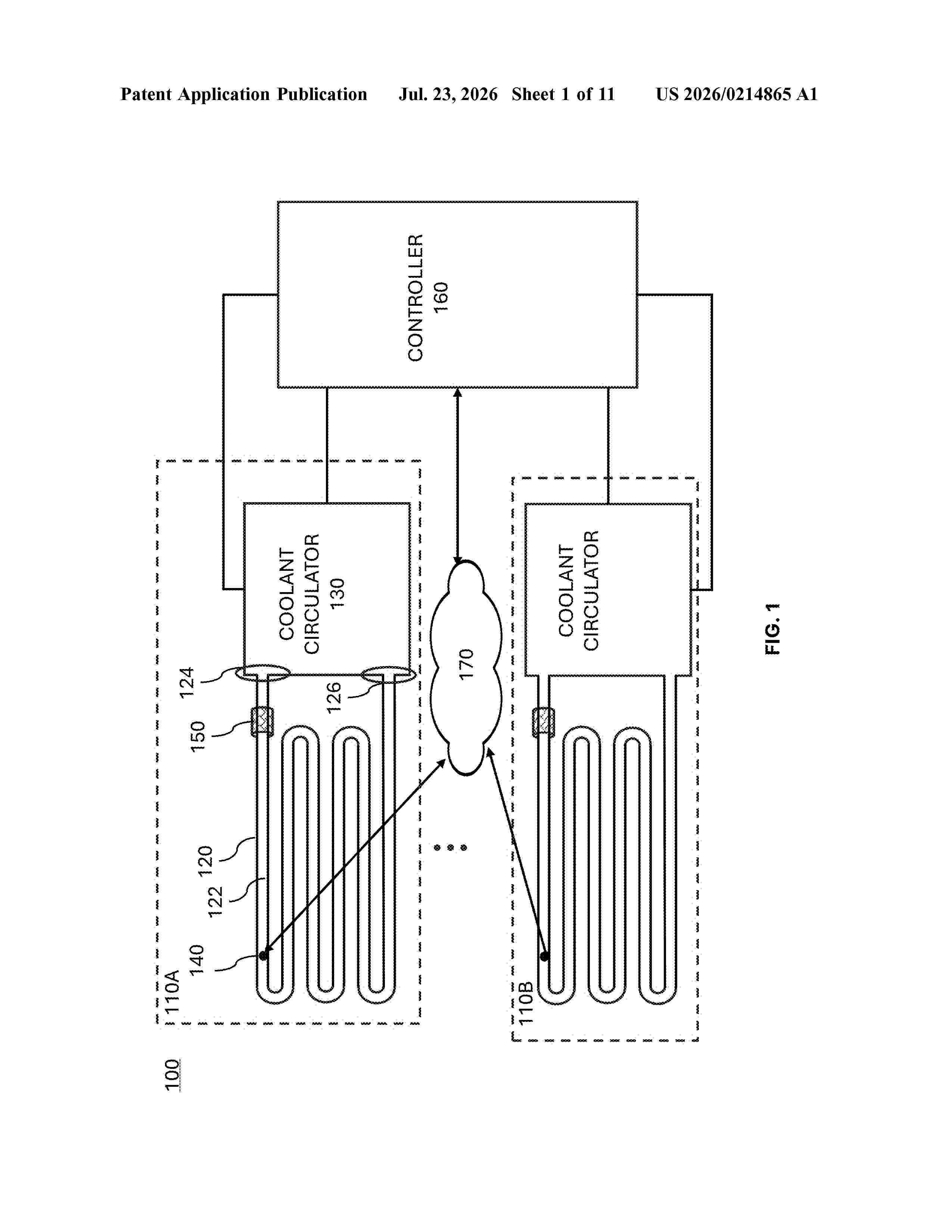
A cooling system for electronic components comprises a temperature sensor, a controller, and a flow management device, facilitating fluid release in response to temperature thresholds. The system includes features like a backup power source, mixing motor, and thermal insulation chamber to enhance heat management efficiency and ensure operational reliability.
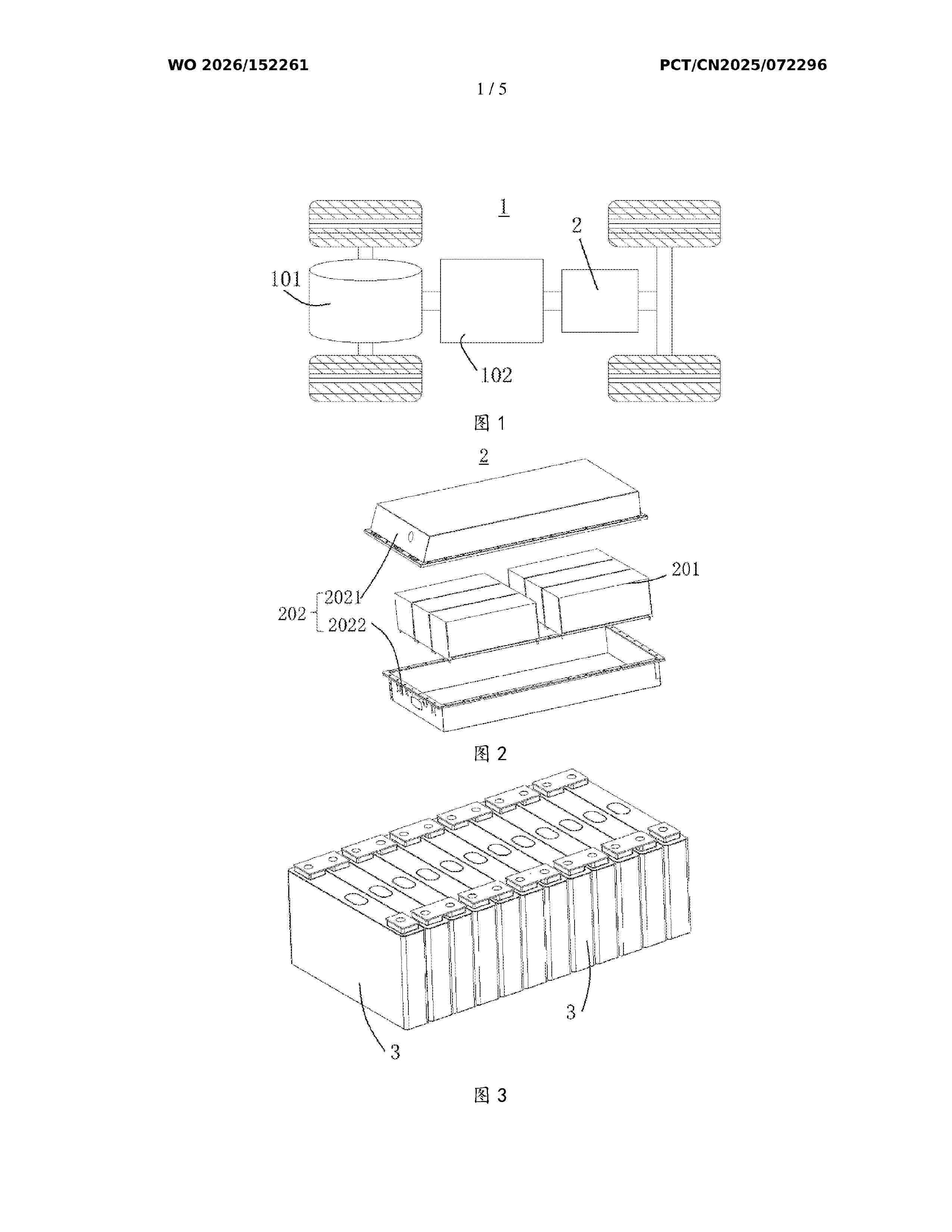
Resumen de: WO2026152261A1
The present application provides a battery cell, a battery device, and an electric device. The battery cell comprises a casing, an electrode assembly, and a thermally conductive assembly. The casing comprises an opening in a first direction. The electrode assembly and the thermally conductive assembly are accommodated in the casing. The thermal conductivity of the thermally conductive assembly is greater than the thermal conductivity of the casing. The casing comprises a thermally conductive wall configured to be connected to a heat exchange mechanism. The casing is easier to exchange heat with the heat exchange mechanism at the thermally conductive wall. The electrode assembly is connected to the thermally conductive wall by means of a thermally conductive portion, so as to facilitate the exchange of heat between the electrode assembly and the heat exchange mechanism. Thus, the rate of heat exchange between an internal environment and an external environment of the battery cell is improved, so as to better balance the temperature of the battery cell, thereby improving the performance of the battery cell and prolonging its service life.
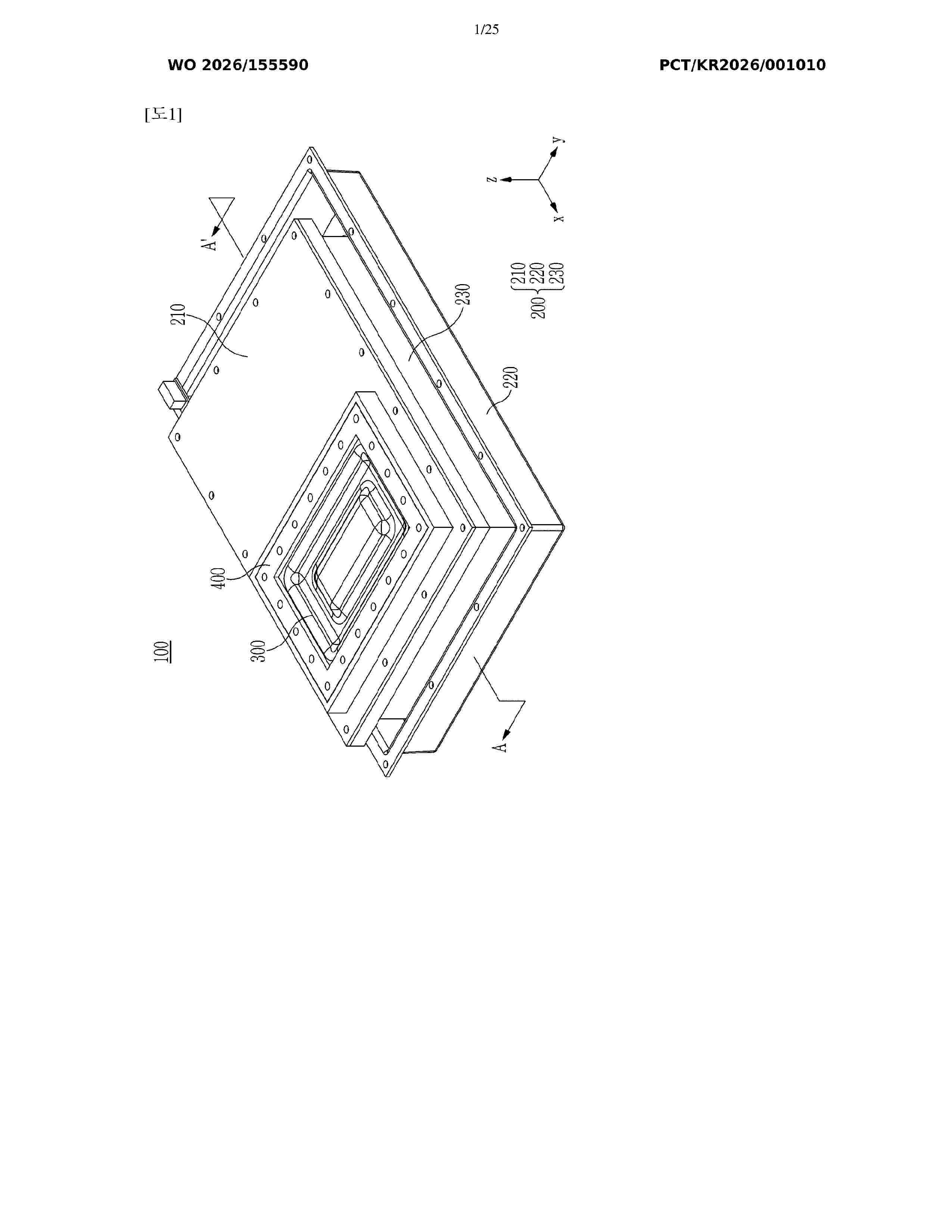
Resumen de: WO2026155590A1
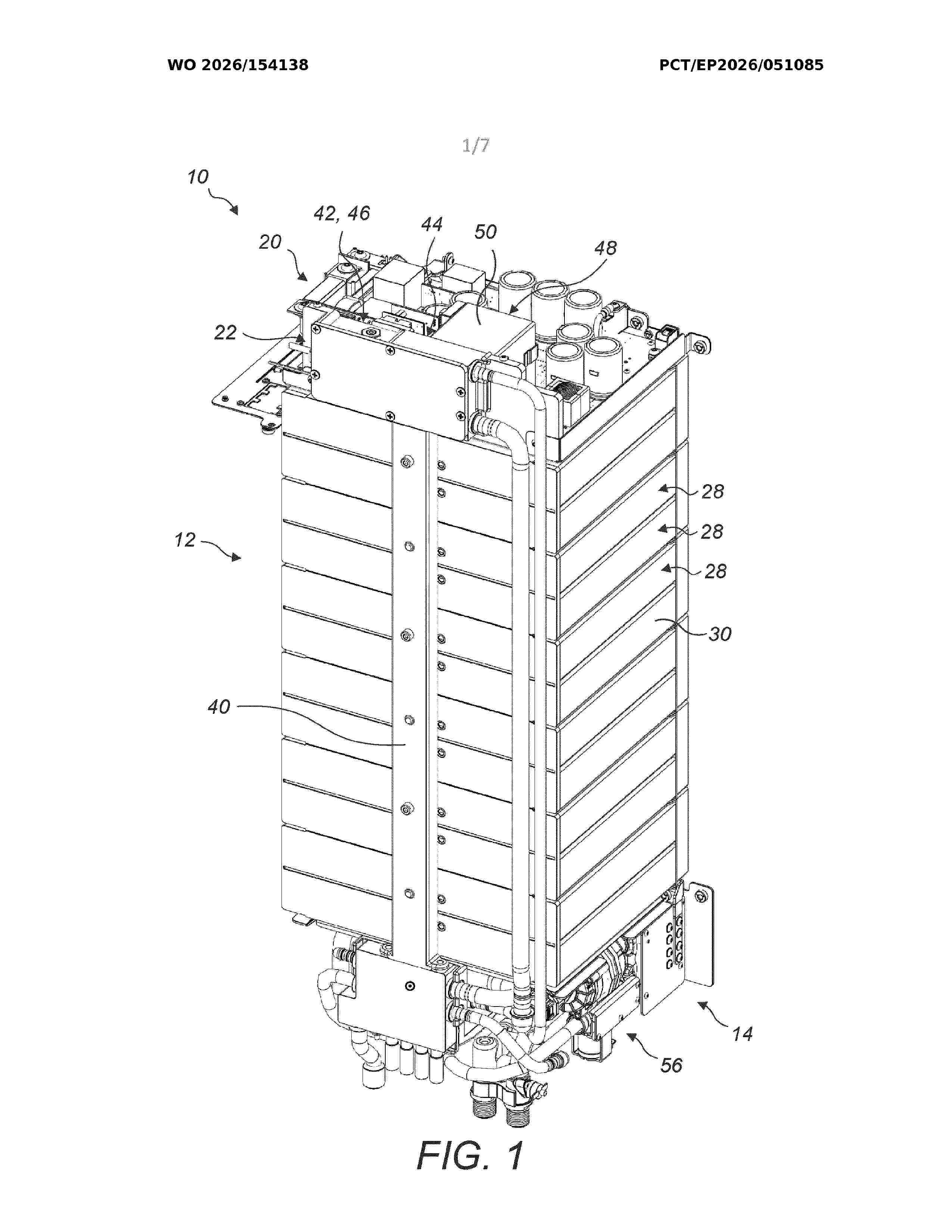
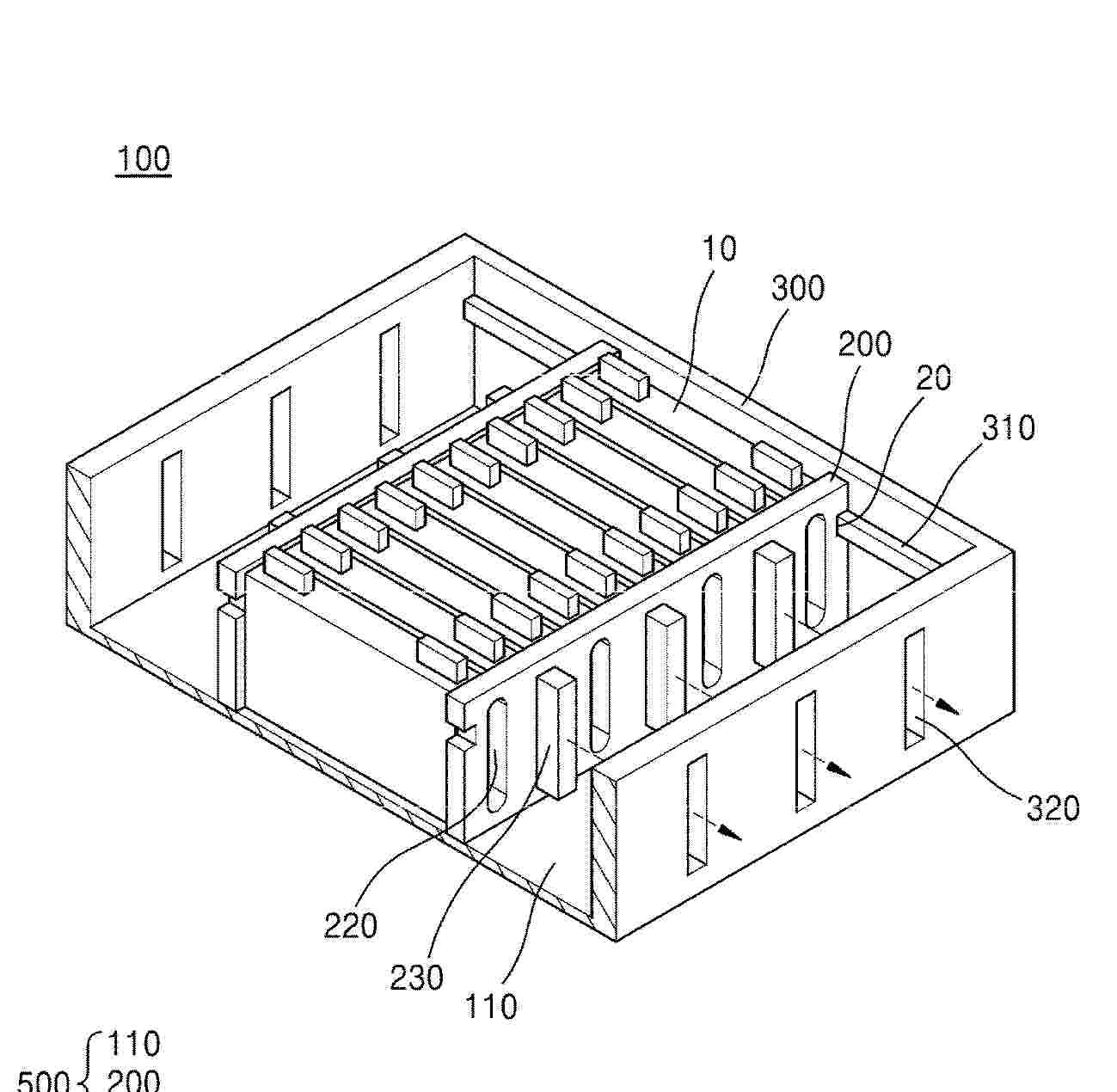
A battery assembly according to an embodiment of the present invention comprises: a plurality of battery cells; a housing having an accommodation space in which the battery cells are accommodated; and a cooling material positioned in the accommodation space and in contact with the battery cells. At least one shape part having at least one of a concave part or a convex part is provided in the housing.
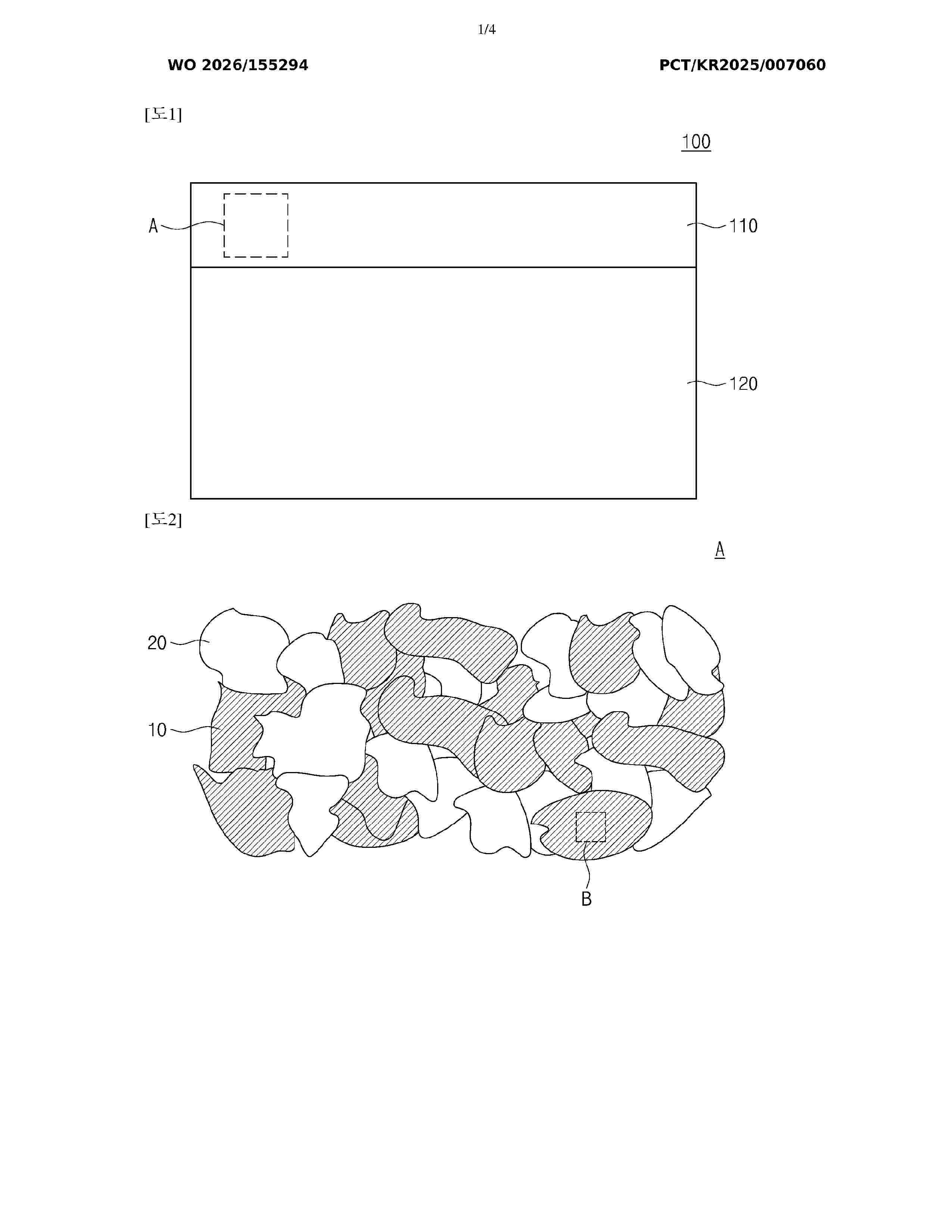
Resumen de: WO2026155294A1
Disclosed are a positive electrode and an all-solid-state battery comprising same, the positive electrode including a positive electrode active material layer which comprises a positive electrode active material and a solid electrolyte. The positive electrode active material comprises an Li2S-containing composite which comprises Li2S, a lithium salt compound, a boron group metal halide salt, and an electron conductive material, wherein the amounts of Li2S, the lithium salt compound, the boron group metal halide salt, and the electron conductive material are controlled.
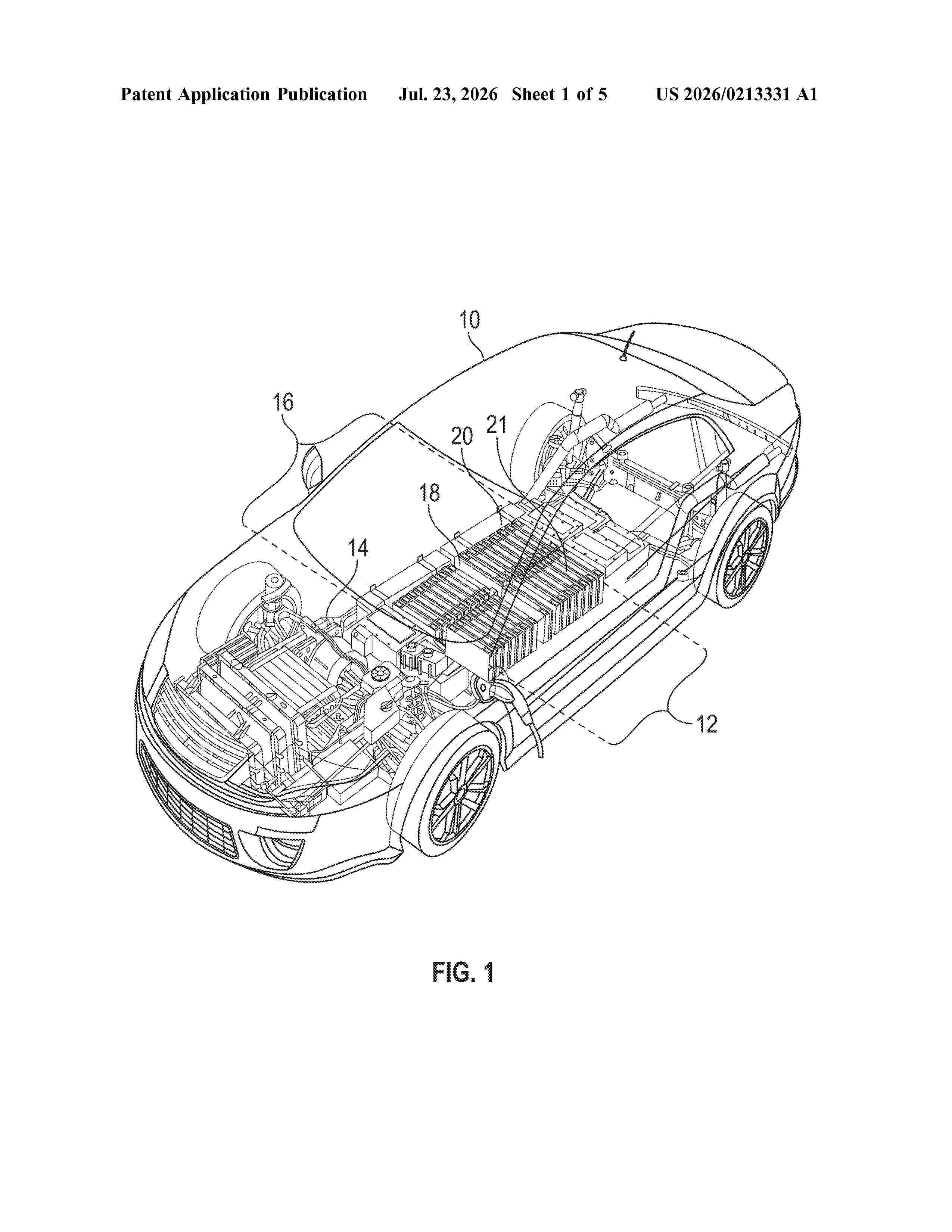
Resumen de: US20260213331A1
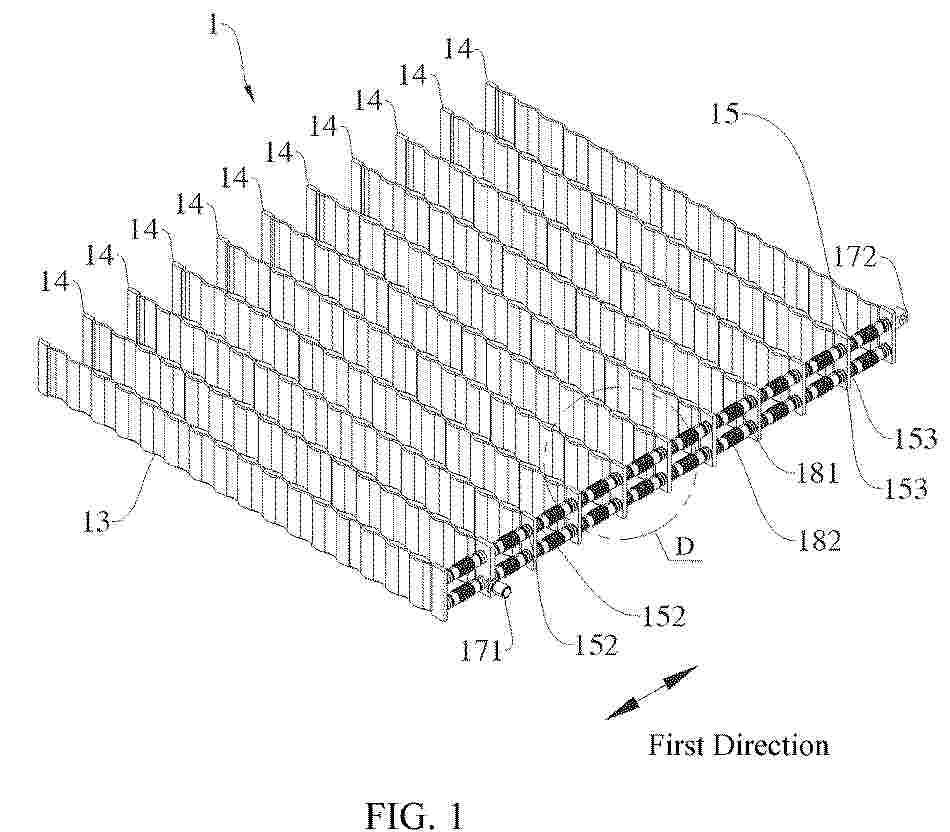
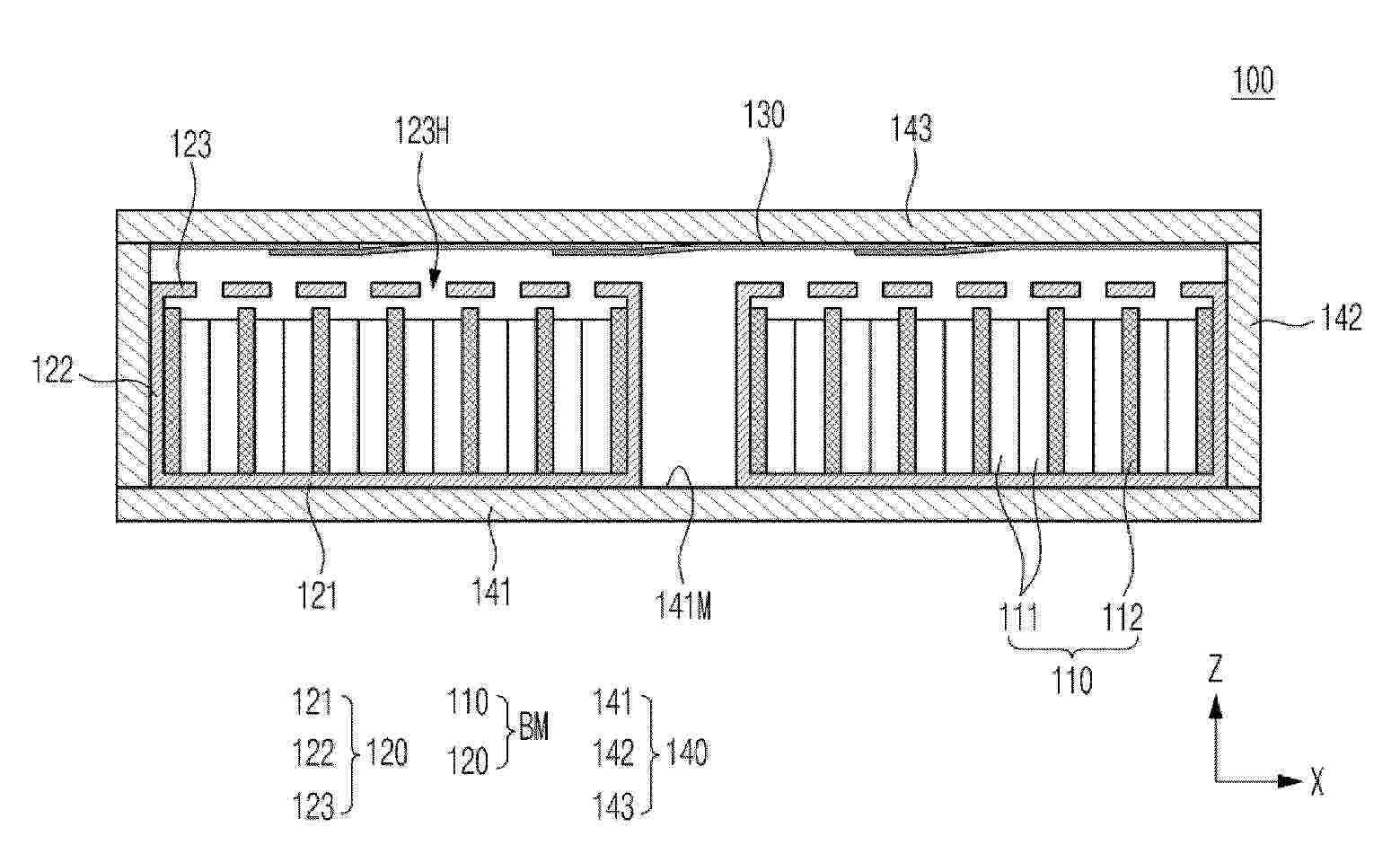
0000 A thermal runaway propagation mitigation system for a prismatic battery cell includes a plurality of louvres. The louvre provides vent control assistance to direct effluent and other particulates on a particular path while also providing sidewall protection for adjacent prismatic battery cells from particulates during a thermal runaway event. The louvre comprises a plurality of terminal windows that align with terminals on the prismatic battery cell and a thermal vent which detaches under an application of pressure. In an embodiment, the louvre is a one-piece “L” shaped design with a top face and a side face. In another embodiment, the louvre is an overlapping design that comprises two “L” shaped pieces. In another embodiment, the louvre is a one-piece “U” shaped design with a top face and two side faces. In another embodiment, the louvre is a two-piece “U” shaped design with a top face and two side faces.
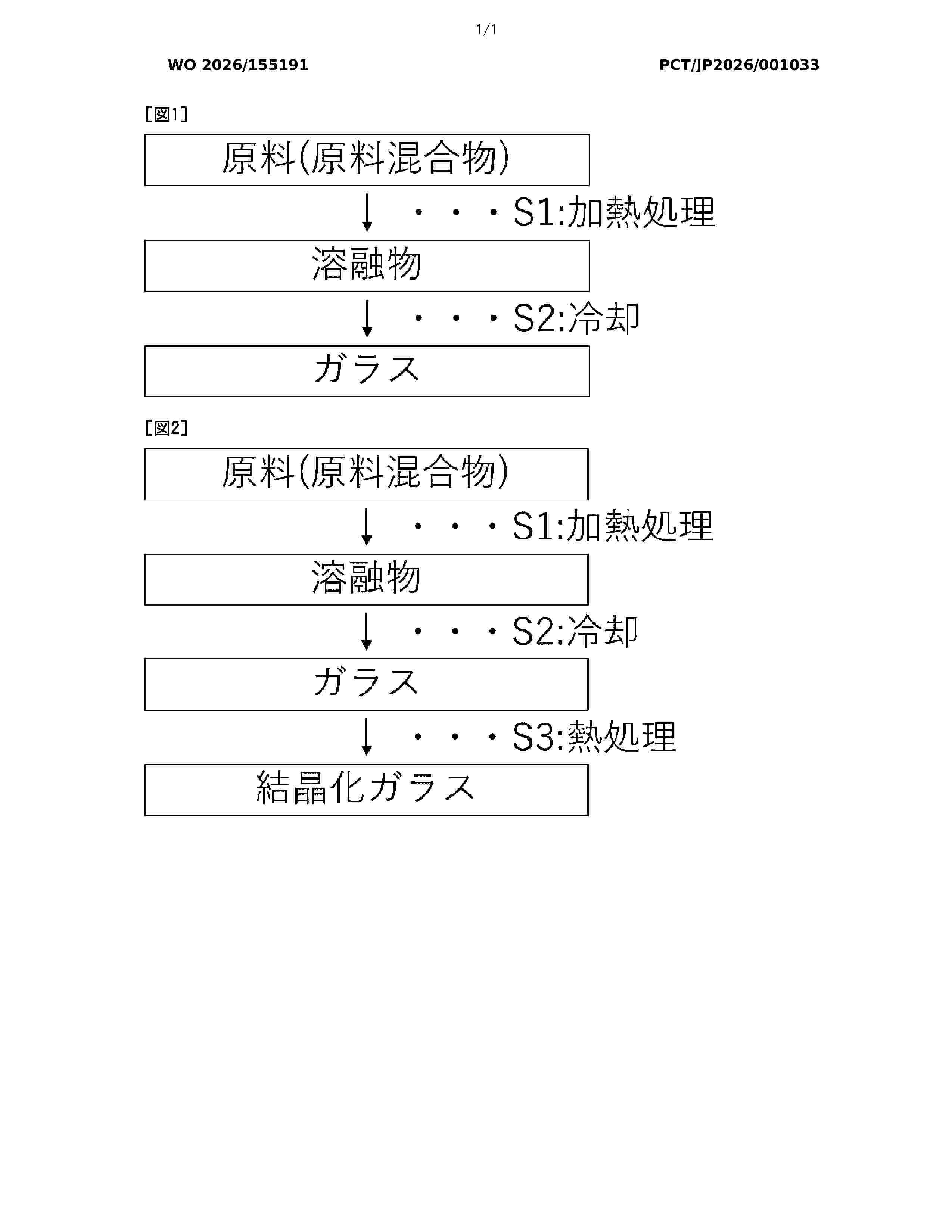
Resumen de: WO2026155191A1
The present invention relates to glass which contains, as elements that constitute a cationic component, Li, P, and a specific element M as an optional element, and also contains, as elements that constitute an anionic component, S and at least one of a specific element X and a specific element Y as an optional element, and which is represented by the composition formula Li(a + c - m × d - y × e)MdP(1 - d)SbXcYe. In the composition formula, m is the valence of the element M, y is the valence of the element Y, and a to e in the composition formula satisfy the relational expressions -5.30 < a - 2b - 5d < -5.00, 1.50 < a < 7.50, c ≥ 0, 0 ≤ d ≤ 4/7, and e ≥ 0.
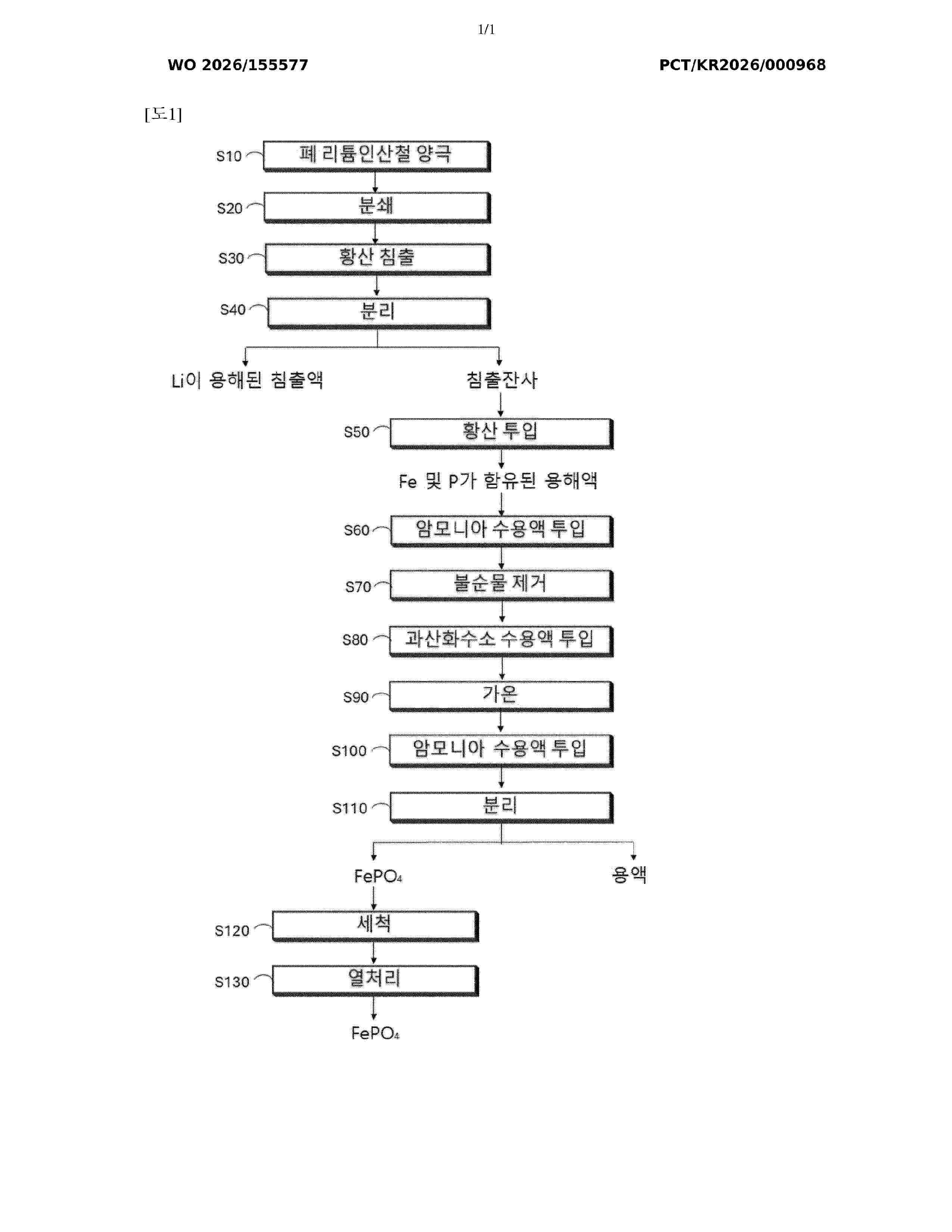
Resumen de: WO2026155577A1
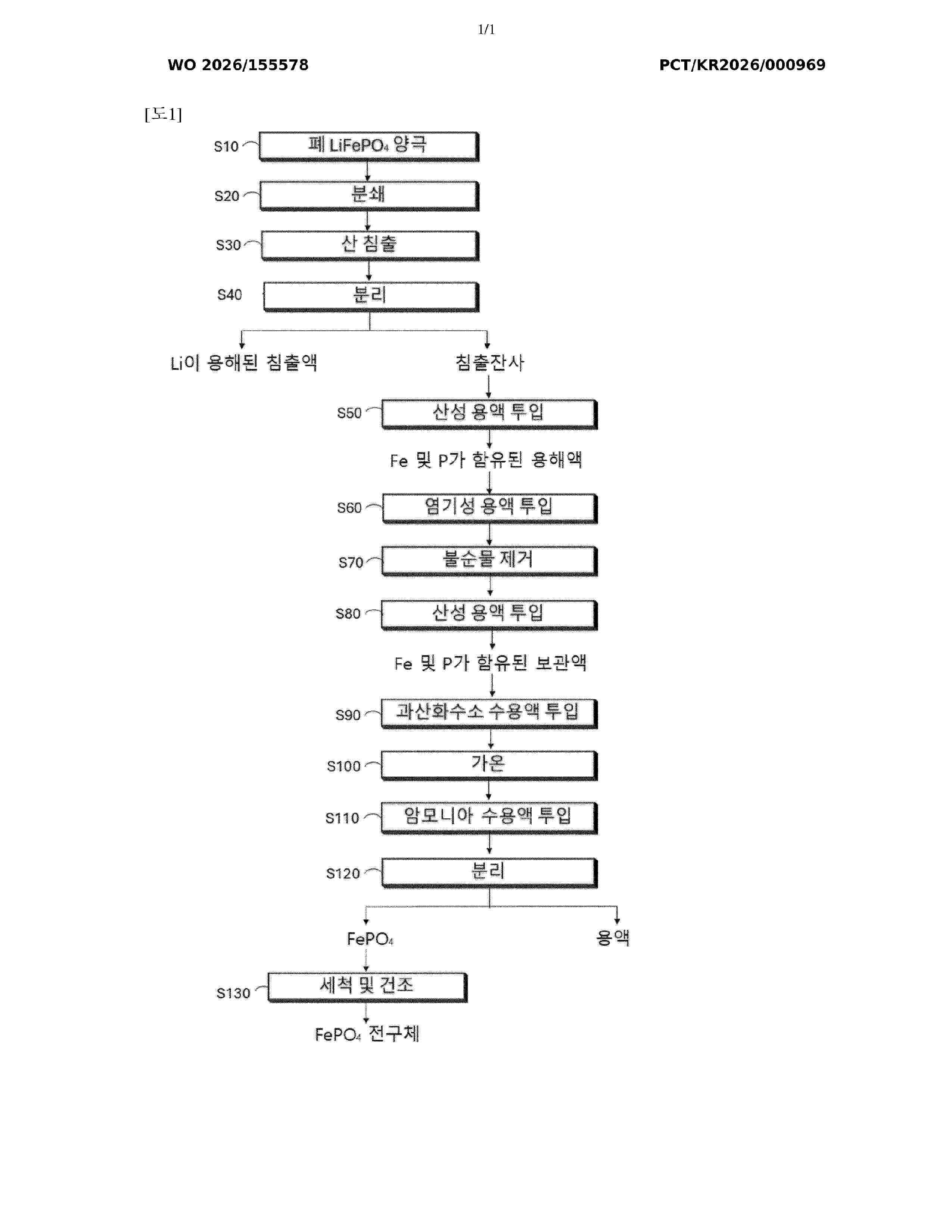
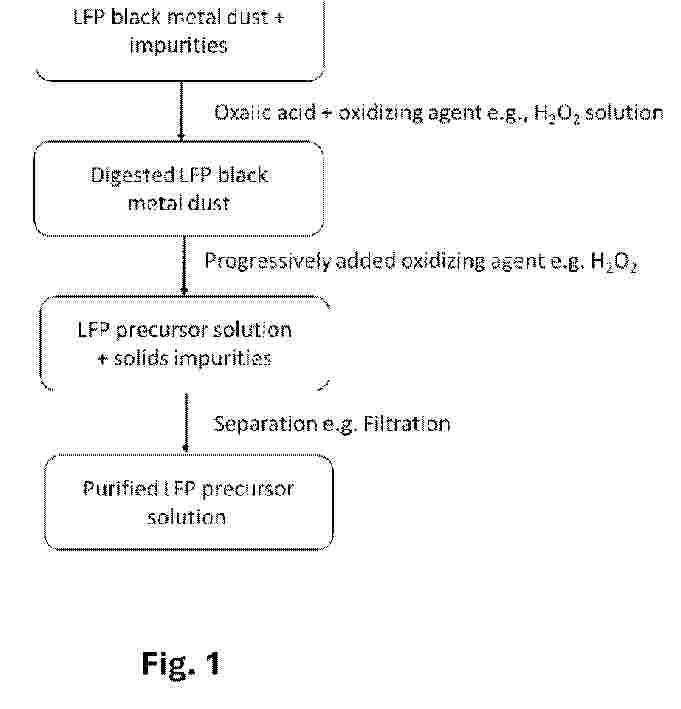
The present invention relates to a method for preparing ferric phosphate (FePO4) and, more specifically, to a method for preparing ferric phosphate (FePO4), the method comprising the steps of: (a) adding an aqueous ammonia solution to a solution containing Fe and P to precipitate impurities and remove the impurities; (b) adding an aqueous hydrogen peroxide solution to a solution containing Fe and P from which impurities are removed to manufacture a hydrogen peroxide mixture; (c) heating the hydrogen peroxide mixture to synthesize FePO4; (d) separating the synthesized FePO4; (e) washing the separated FePO4 with an acidic washing solution having a pH of 1.3 to 1.6; and (f) heat-treating the washed FePO4 at 600 to 800 ℃ for 3 to 17 hours. According to the present invention, there is the effect of providing a method for preparing ferric phosphate (FePO4), which suppresses the generation of sulfides derived from sulfuric acid and basic solutions as in the prior art in a process of synthesizing FePO4 from waste lithium iron phosphate cathode materials, and removes the sulfides generated from the synthesized FePO4 to increase purity.
Resumen de: DE102025101625A1
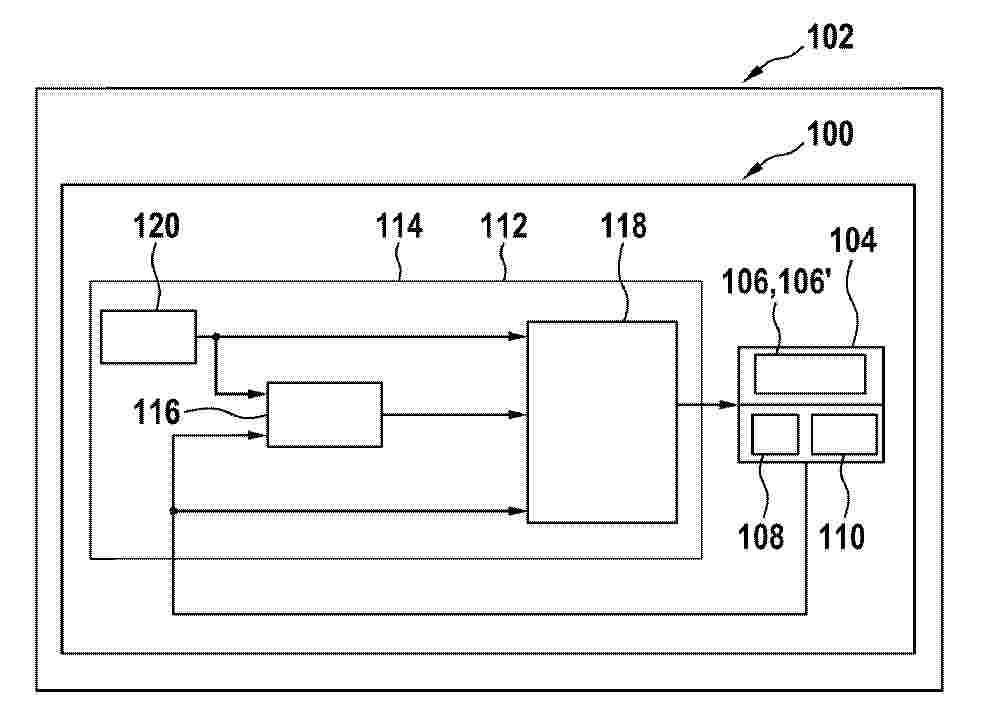
Es wird ein Verfahren zum Betreiben eines Fahrzeug-Energiesystems (100) mit einem Brennstoffzellensystem (104) mit mehreren Brennstoffzellenstapeln (106, 106') und mit mindestens einem Energiespeicher (110) zum Speichern von elektrischer Energie vorgeschlagen. Das Verfahren umfasst die Schritte: Erfassen von Informationen betreffend das Fahrzeug-Energiesystem (100), Ermitteln einer zu prädizierenden Zeitdauer (TH) für eine Betriebsstrategie des Fahrzeug-Energiesystems (100) basierend auf den erfassten Informationen, Ermitteln einer prädiktiven Betriebsstrategie zum Betreiben des Fahrzeug-Energiesystems (100) basierend auf der ermittelten zu prädizierenden Zeitdauer (TH), und Betreiben des Fahrzeug-Energiesystems (100) gemäß der ermittelten prädiktiven Betriebsstrategie.
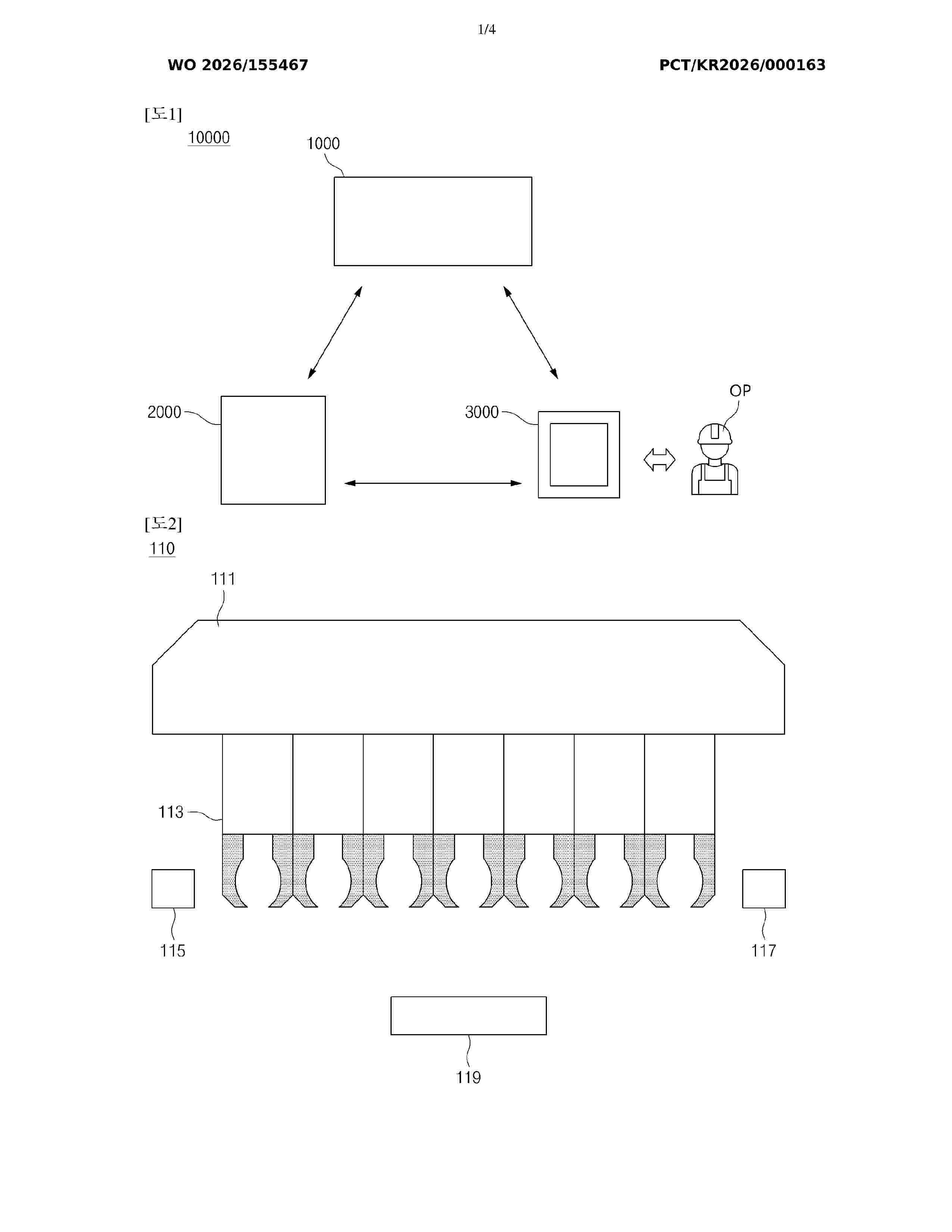
Resumen de: WO2026155467A1
According to exemplary embodiments, a secondary battery manufacturing system is provided. The system comprises: a secondary battery manufacturing facility including grippers; and a human-machine interface (HMI) configured to pop up a window for playing a video in response to gripper failures.
Resumen de: DE102025101573A1
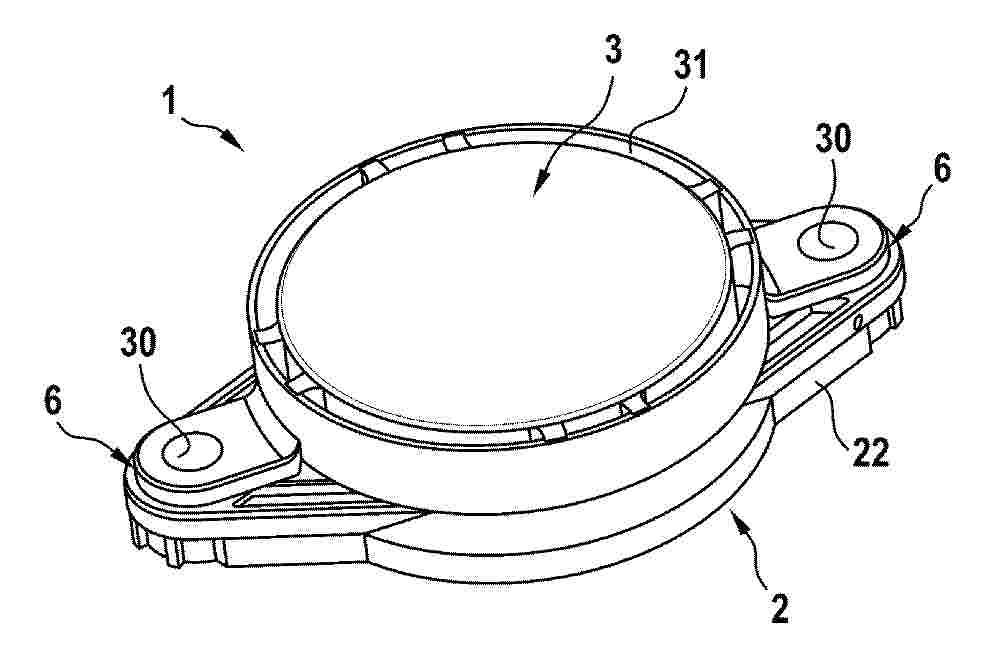
Die Erfindung betrifft eine Druckausgleichsvorrichtung für ein Gehäuse, insbesondere ein Batteriegehäuse, umfassend einen Grundkörper (2) aus Kunststoff, einen Deckel (3) aus Metall, welcher zu einer Außenseite des Gehäuses gerichtet ist, und ein Ventilelement (4) zur Notöffnung, wobei das Ventilelement (4) am Grundkörper (2) angeordnet ist und an einem Dichtsitz (5) am Grundkörper (2) abdichtet, und wobei zwischen dem Grundkörper (2) und dem Deckel (3) eine Pressverbindung (6) ausgebildet ist.
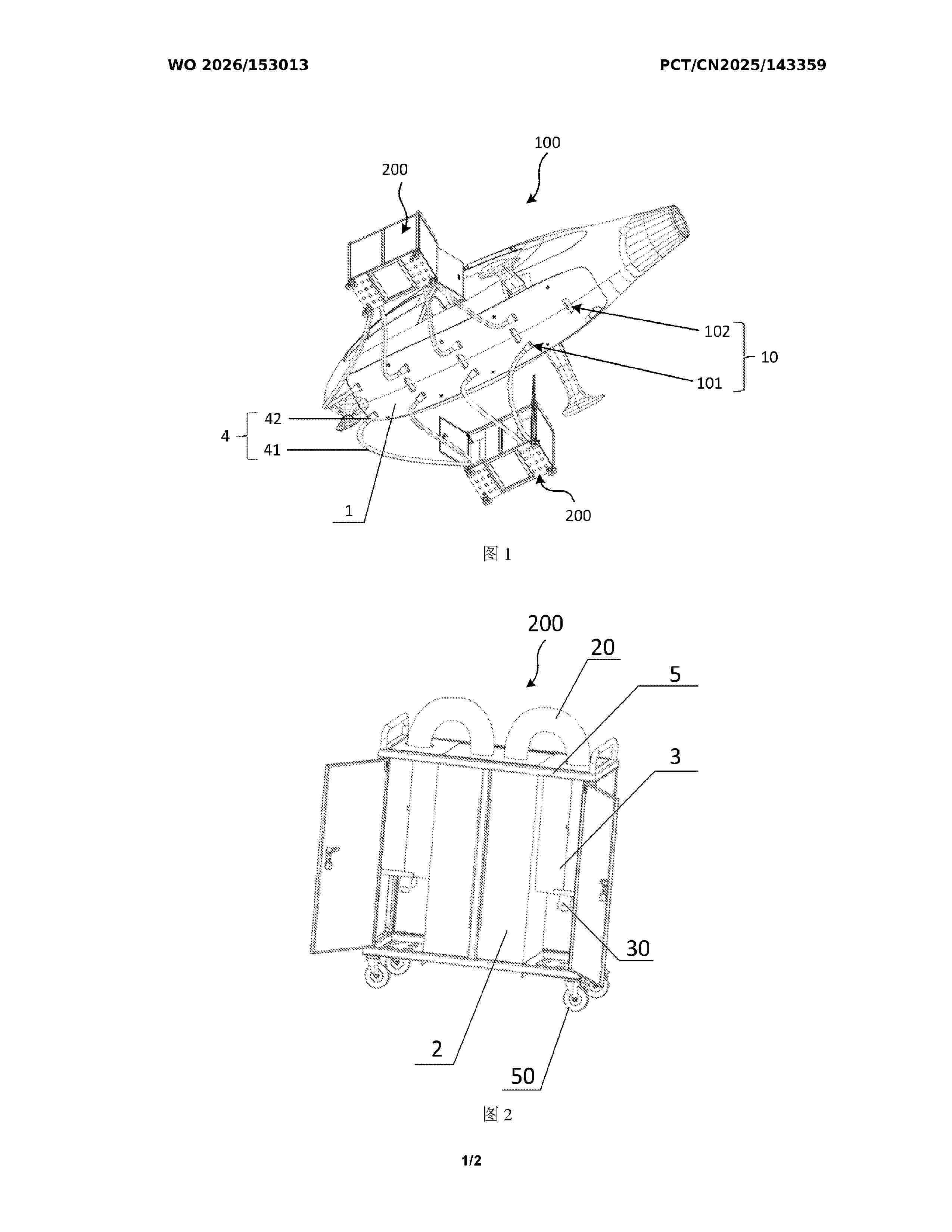
Resumen de: WO2026153013A1
The present application relates to the technical field of aircraft heat dissipation, and discloses an external heat dissipation device for an aircraft. The external heat dissipation device for the aircraft in the present application is applied to an electric aircraft. The electric aircraft comprises a battery compartment. The battery compartment internally comprises a plurality of heat dissipation channels and a plurality of openings in communication with the heat dissipation channels. The heat dissipation device can be in communication with at least a portion of the plurality of openings to introduce cooling fluid into the battery compartment through the openings, thereby dissipating heat from the interior of the battery compartment. The external heat dissipation device for the aircraft in the present application enables a battery to be cooled to a safe take-off temperature in a short time, thereby increasing the number of flights and increasing utilization.
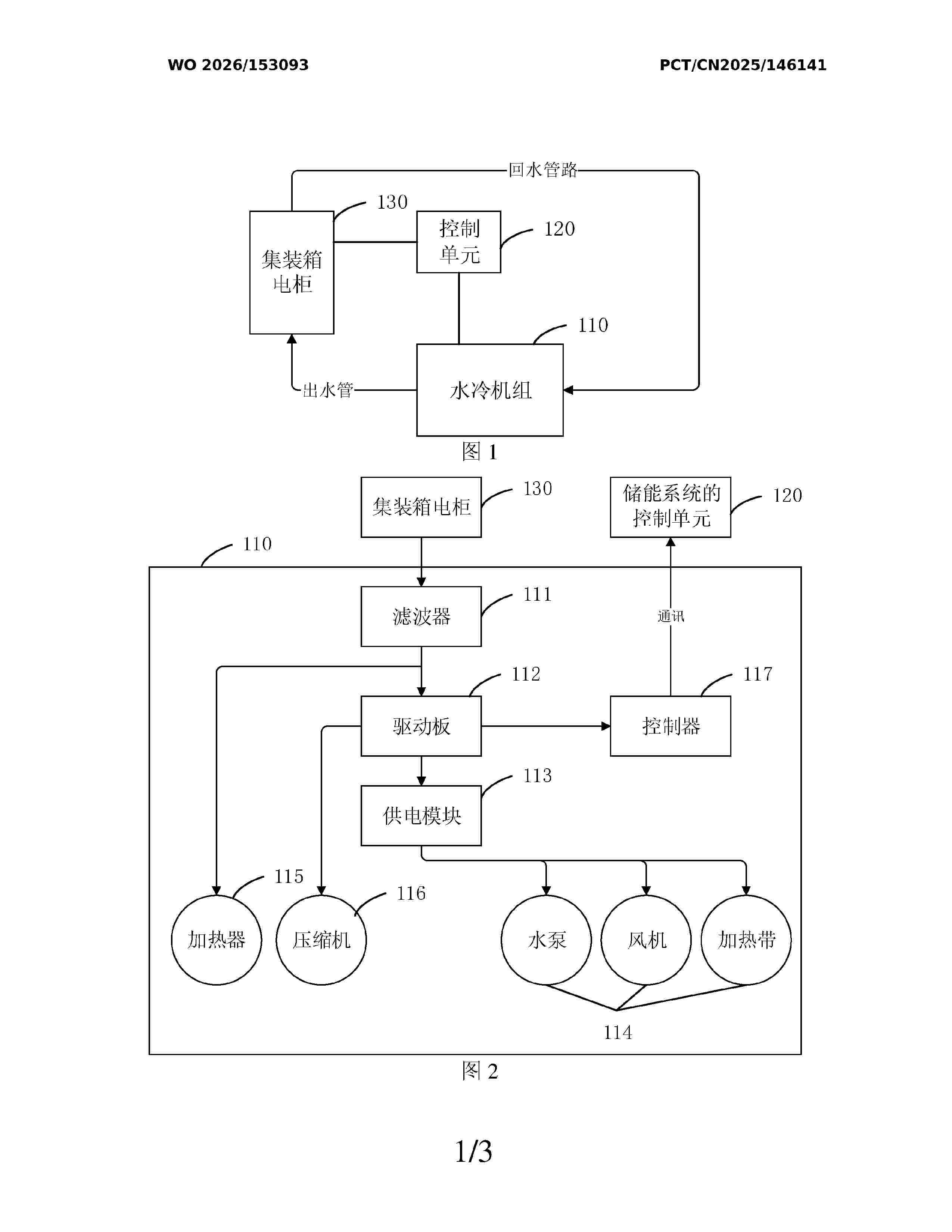
Resumen de: WO2026153093A1
Embodiments of the present application provide a water-cooling unit control method, a water-cooling unit, and an energy storage system. The method comprises: on the basis of an acquired first fault signal, determining a fault duration, the first fault signal indicating that a power supply module of a water-cooling unit operates abnormally; and when the fault duration is greater than or equal to a specified duration, controlling the water-cooling unit to shut down, and outputting a target fault signal to a control unit of an energy storage system, the target fault signal indicating that a fault has occurred in the water-cooling unit.
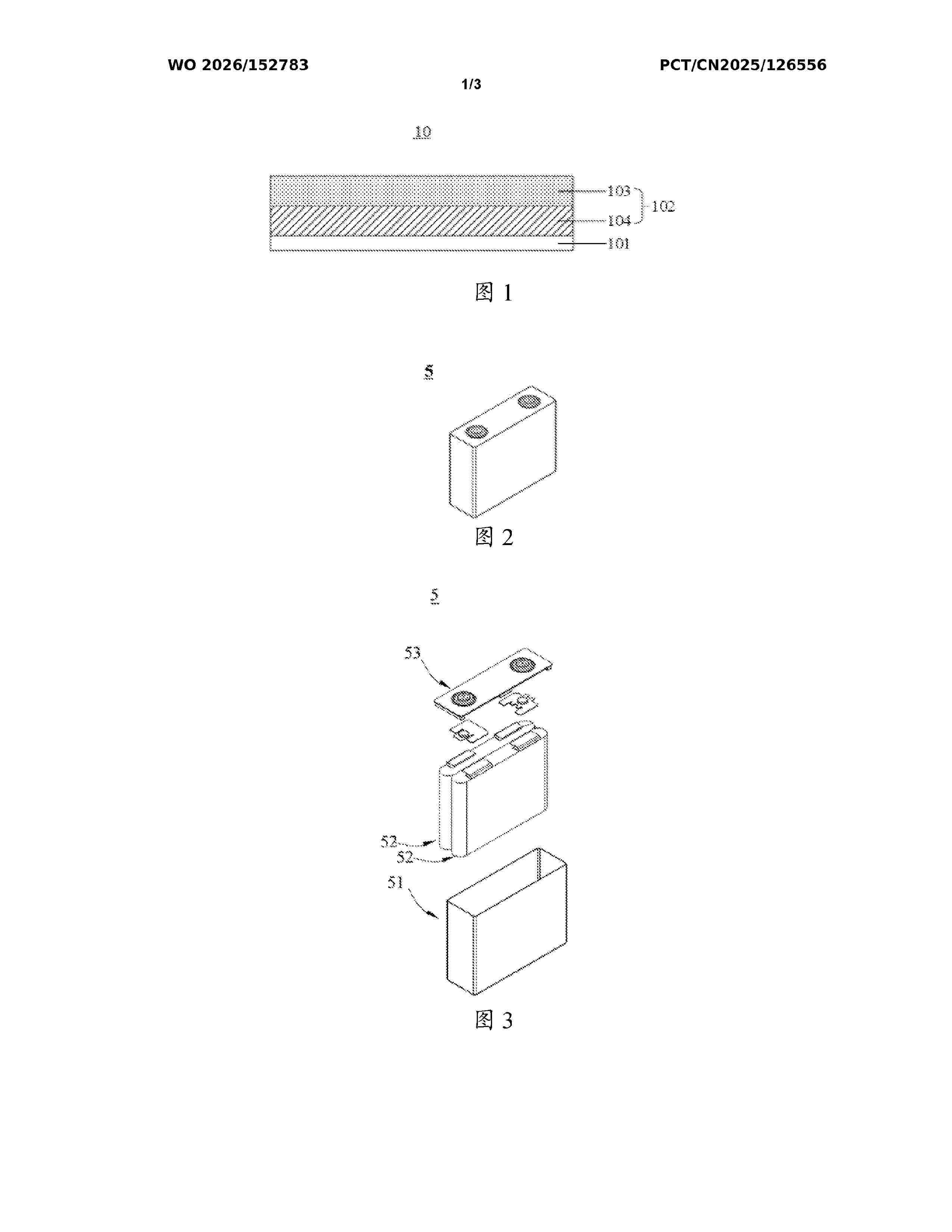
Resumen de: WO2026152783A1
A secondary battery cell and an electric device. The secondary battery cell comprises a negative electrode sheet, and the negative electrode sheet comprises a negative electrode current collector and a negative electrode film layer located on at least one side of the negative electrode current collector; the negative electrode film layer comprises a solid electrolyte material and a graphite material; the negative electrode film layer comprises a first region and a second region, and the second region is located between the first region and the negative electrode current collector; and the content of the solid electrolyte material in the first region is less than the content of that in the second region.
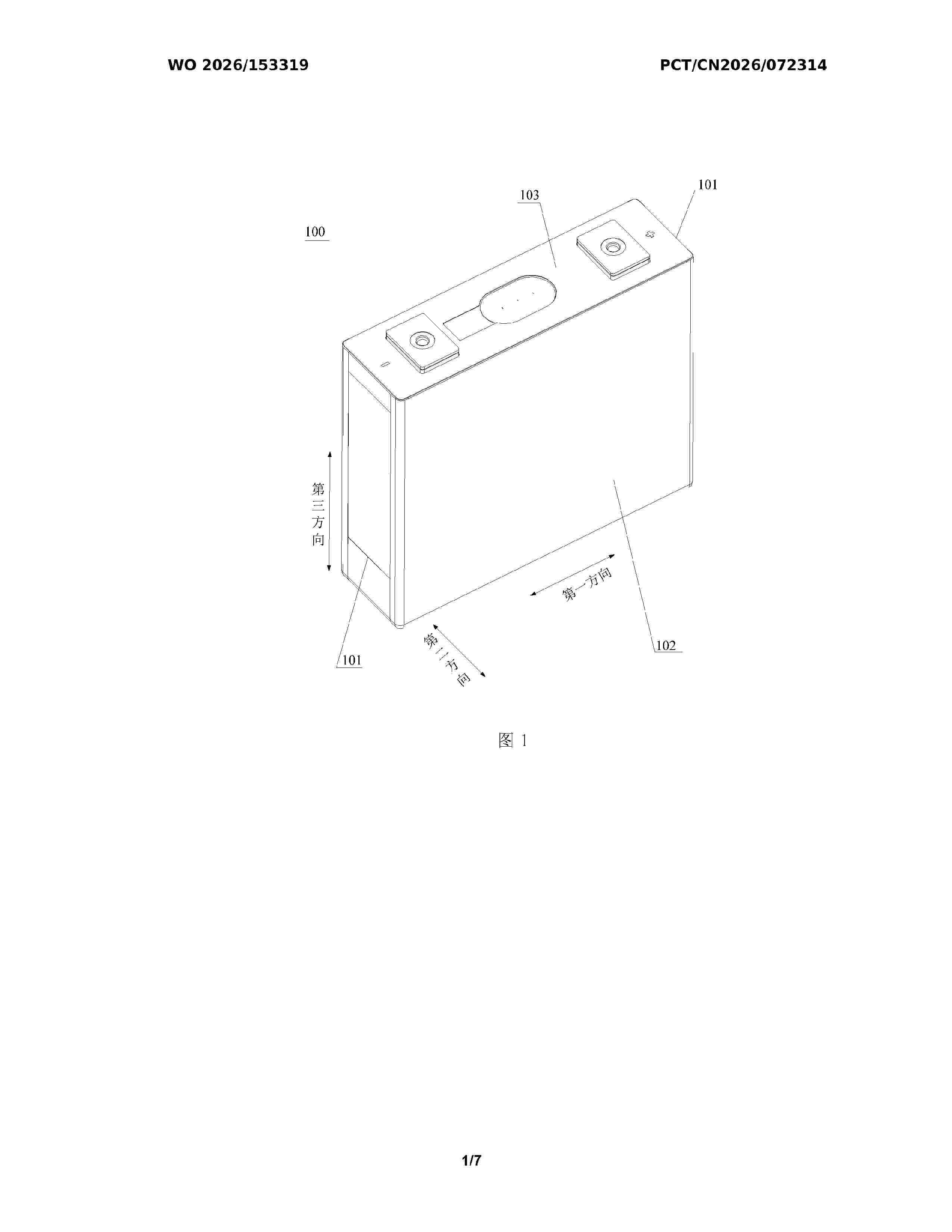
Resumen de: WO2026153319A1
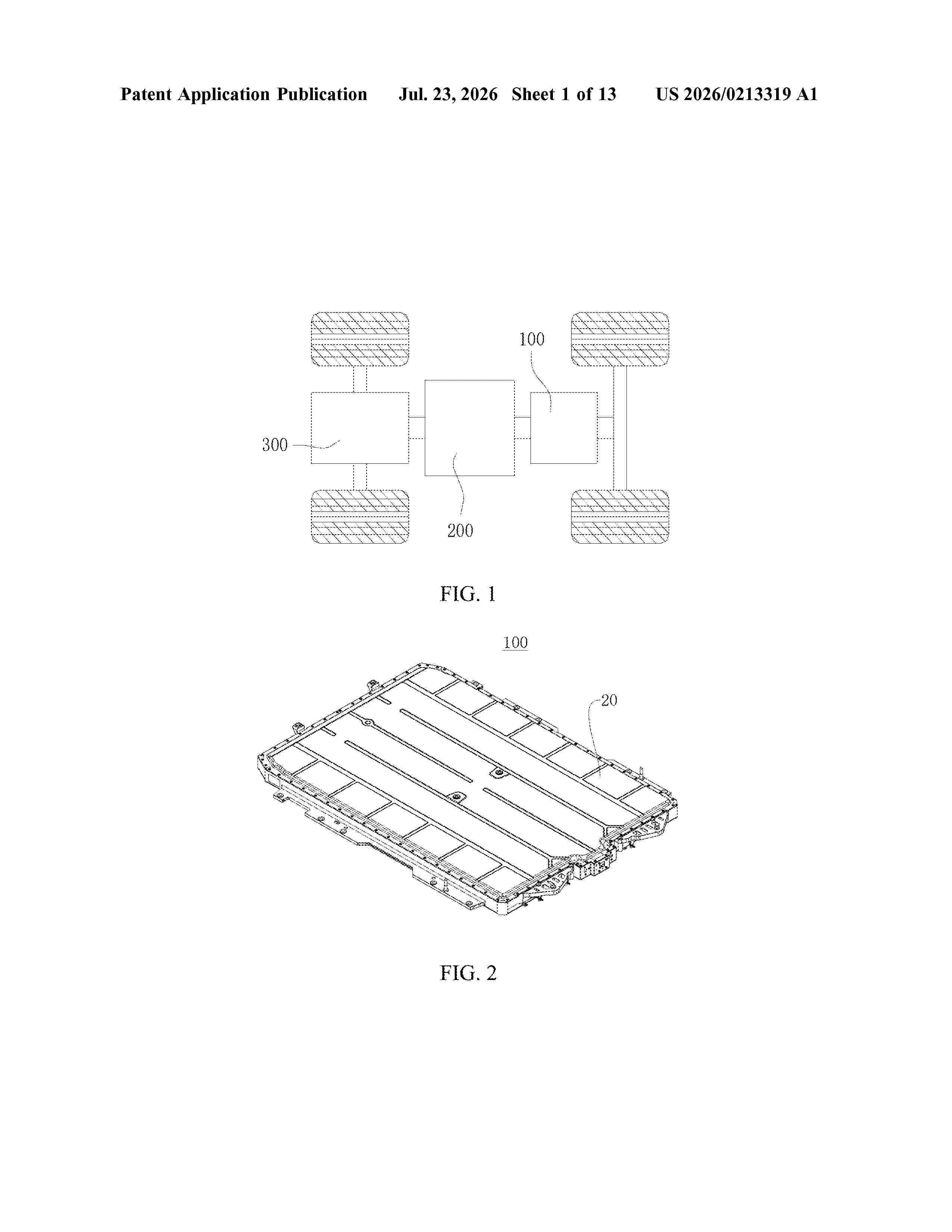
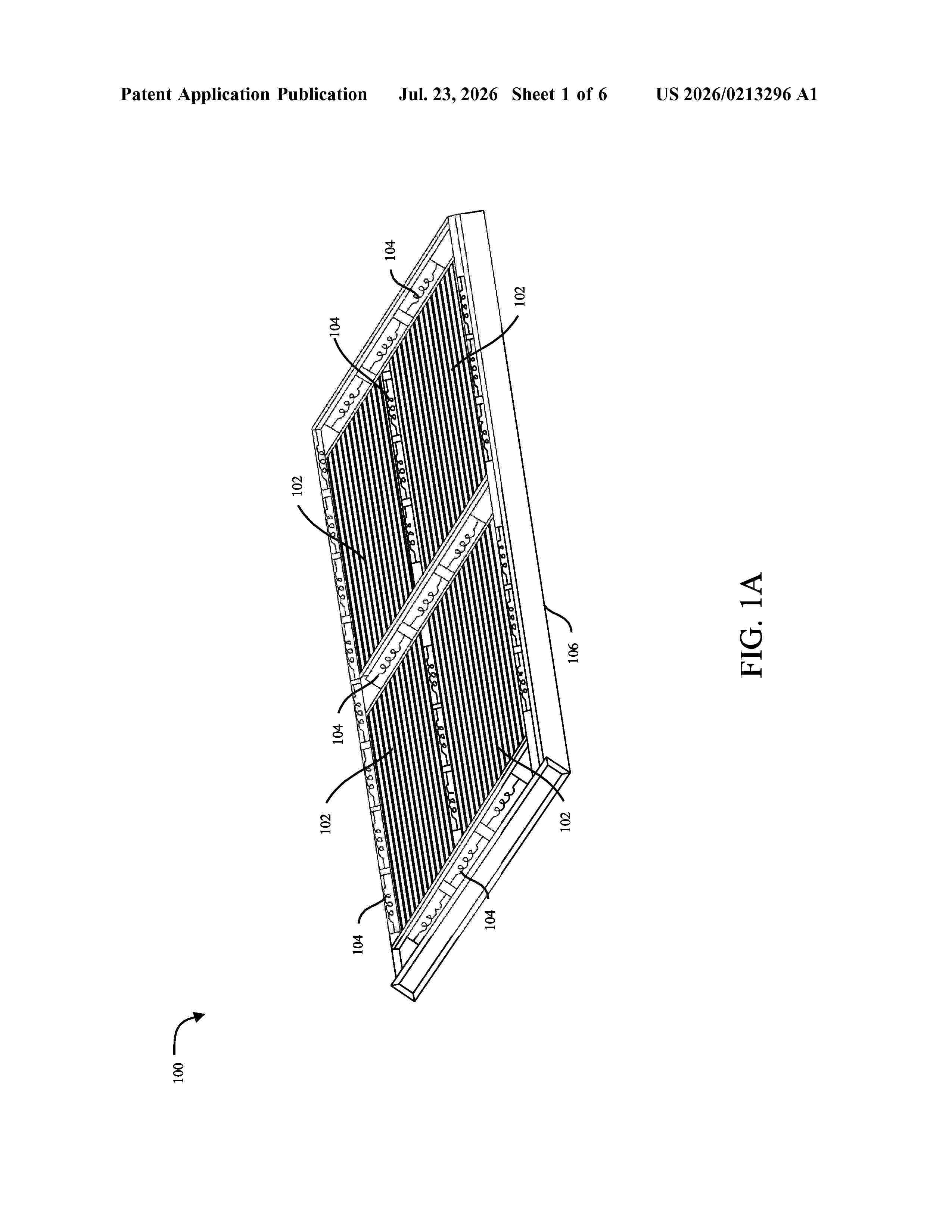
The present application discloses a battery pack and a vehicle. The battery pack comprises: a battery cell assembly, wherein the battery cell assembly comprises a plurality of battery cells; a first heat dissipation assembly, wherein the first heat dissipation assembly is arranged on one side of the battery cell assembly in a third direction; and a second heat dissipation assembly, wherein the arrangement position of the second heat dissipation assembly at least comprises any one of the following: the other side of the battery cell assembly in the third direction, at least part of the circumferential side surface of the battery cell assembly, and a position between at least some adjacent battery cells. The third direction is the height direction of the battery cells. By additionally providing the second heat dissipation assembly in the battery pack to dissipate heat from at least one position among the side surface of the battery cell assembly, one side in the third direction, and the position between adjacent battery cells, the contact area between a cooling system and the battery cell assembly is increased, that is, the heat exchange area between the battery cell assembly and the cooling system is increased, thereby enhancing the cooling effect on the battery cell assembly, enabling the battery cell assembly to satisfy temperature adjustment requirements, and ensuring the service life of the battery pack.
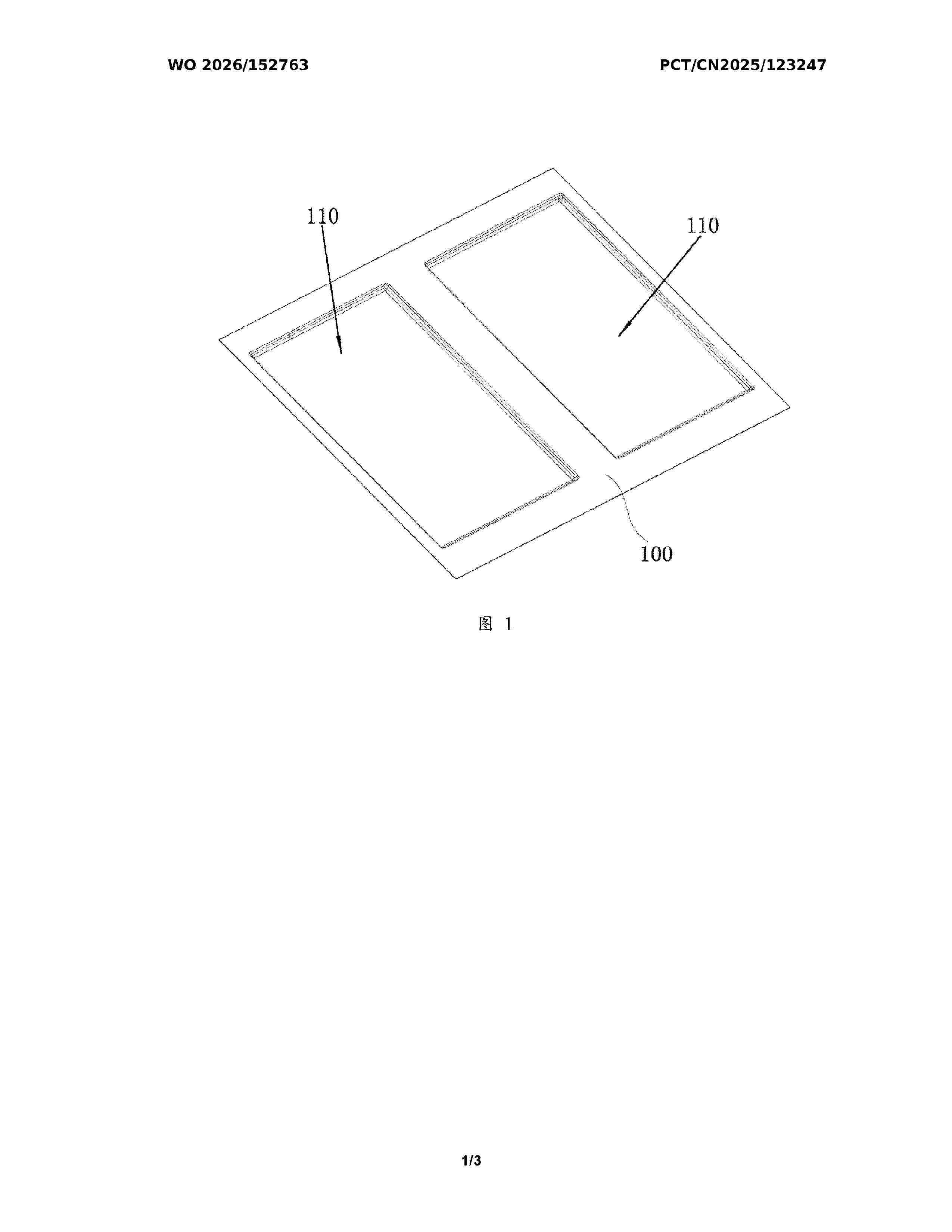
Resumen de: WO2026152763A1
The present application relates to a cell encapsulation fixture and a cell encapsulation apparatus. The cell encapsulation fixture comprises a first fixture plate, a second fixture plate and an adjustment plate, wherein the second fixture plate is arranged to be openable and closable relative to the first fixture plate; and when the second fixture plate covers the first fixture plate, the mutually facing surfaces of the second fixture plate and the first fixture plate are configured as respective clamping surfaces. The adjustment plate is arranged on the clamping surface of at least one of the first fixture plate and the second fixture plate, and is configured to place an aluminum-plastic film and a battery cell. The height of the adjustment plate relative to the clamping surface where the adjustment plate is located in the direction of thickness of the battery cell is adjustable, such that in the direction of thickness of the battery cell, the height of a clamping space for clamping the aluminum-plastic film and the battery cell can be adjusted.
Resumen de: WO2026152524A1
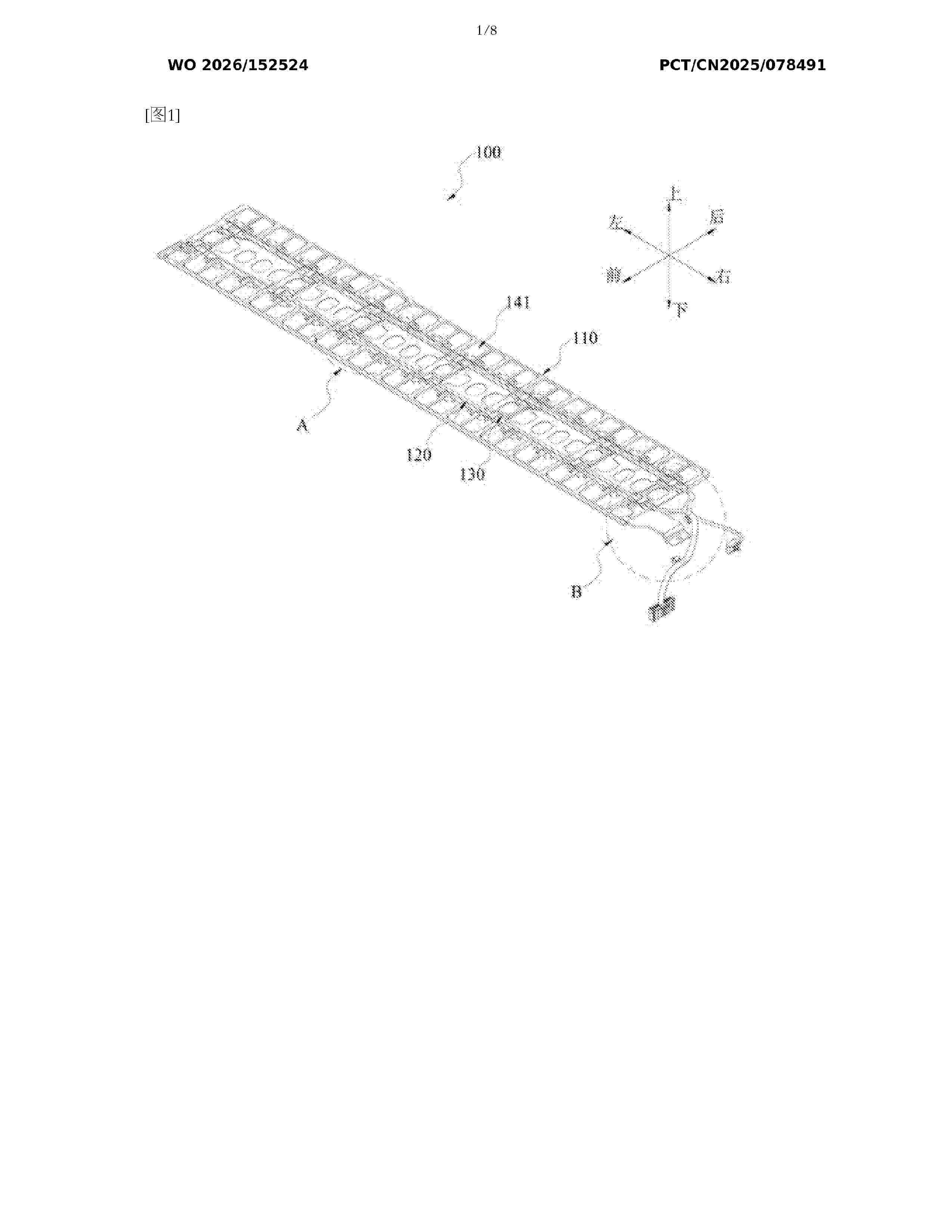
The present application provides a battery cell connection assembly, a battery module, and a vehicle. The battery module comprises the battery cell connection assembly, wherein the battery cell connection assembly comprises: an isolation substrate, a collection wire harness, and a plurality of wire harness holders. The isolation substrate is provided with first pressure relief holes corresponding to explosion-proof valves of battery cells; the collection wire harness extends in a first direction; and the plurality of wire harness holders are mounted on the isolation substrate at intervals in the first direction. The wire harness holders are provided with wire clamp structures configured to limit the collection wire harness, so that the collection wire harness avoids the first pressure relief holes.
Resumen de: WO2026155639A1
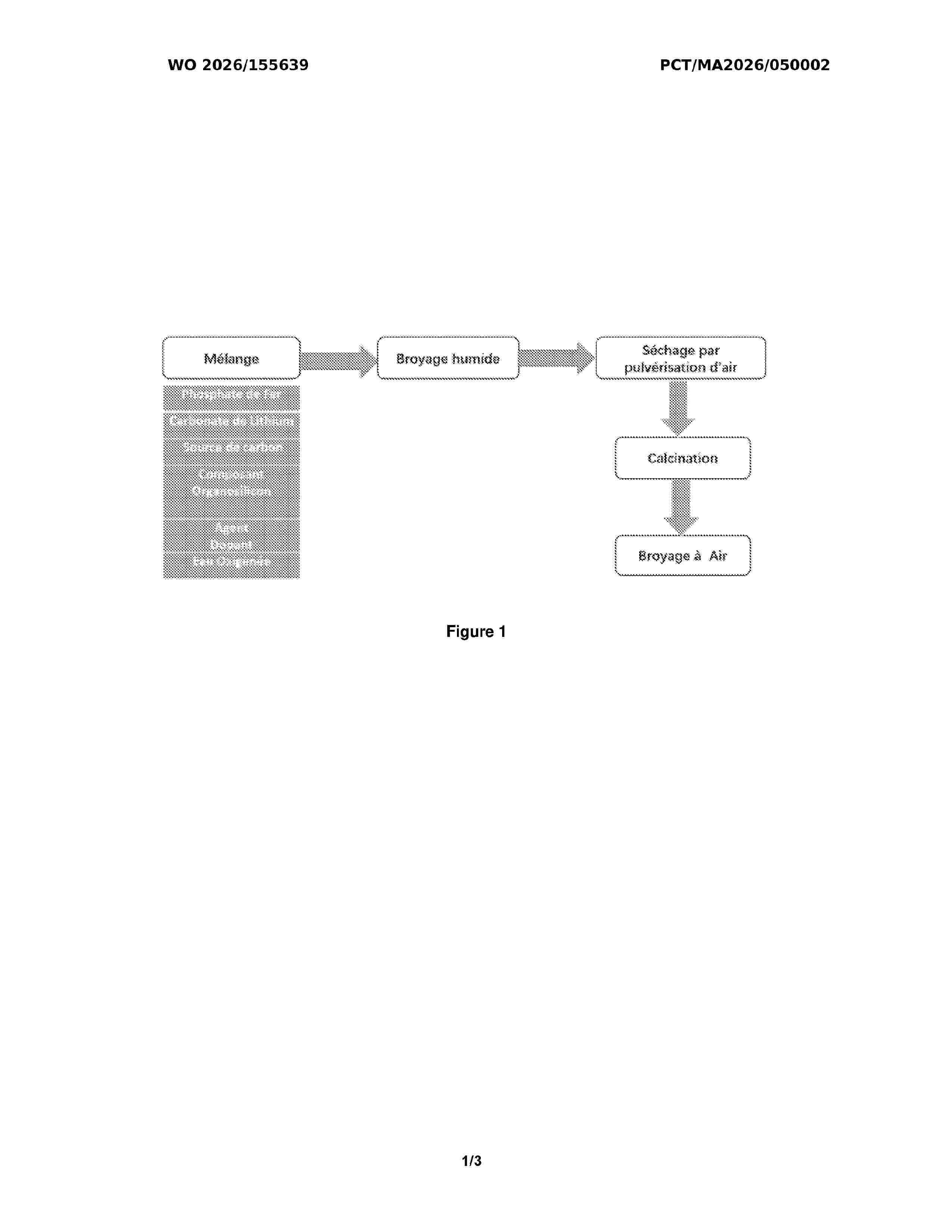
The present invention relates to a preparation method for a batch of the lithium iron phosphate (LiFePO4) cathode material. The method consists in coating the surface of the silicon (Si) particles with lithium iron phosphate (LiFePO4) particles to form a C-LiFePO4-Si composite. A large number of LiFePO4-Si interfaces are formed at the contact points between the LiFePO4 and Si particles, where the Si-O oxygen-containing particles are generated at the interfaces, acting as an additional lithium store, thereby contributing to additional capacity. The method also uses co-doping of the Fe site and the Li site to suppress Fe/Li antisite defects, further improving the initial charge capacity. In addition, by using a precursor of the LiFePO4 ratio, the LiFePO4 cathode material prepared by this method makes it possible to achieve an initial charge capacity of greater than 166 mAh/g. The invention also relates to the LiFePO4 cathode material, to a lithium-ion battery that uses this cathode and to a lithium-ion battery that uses this cathode material.
Resumen de: WO2026155612A1
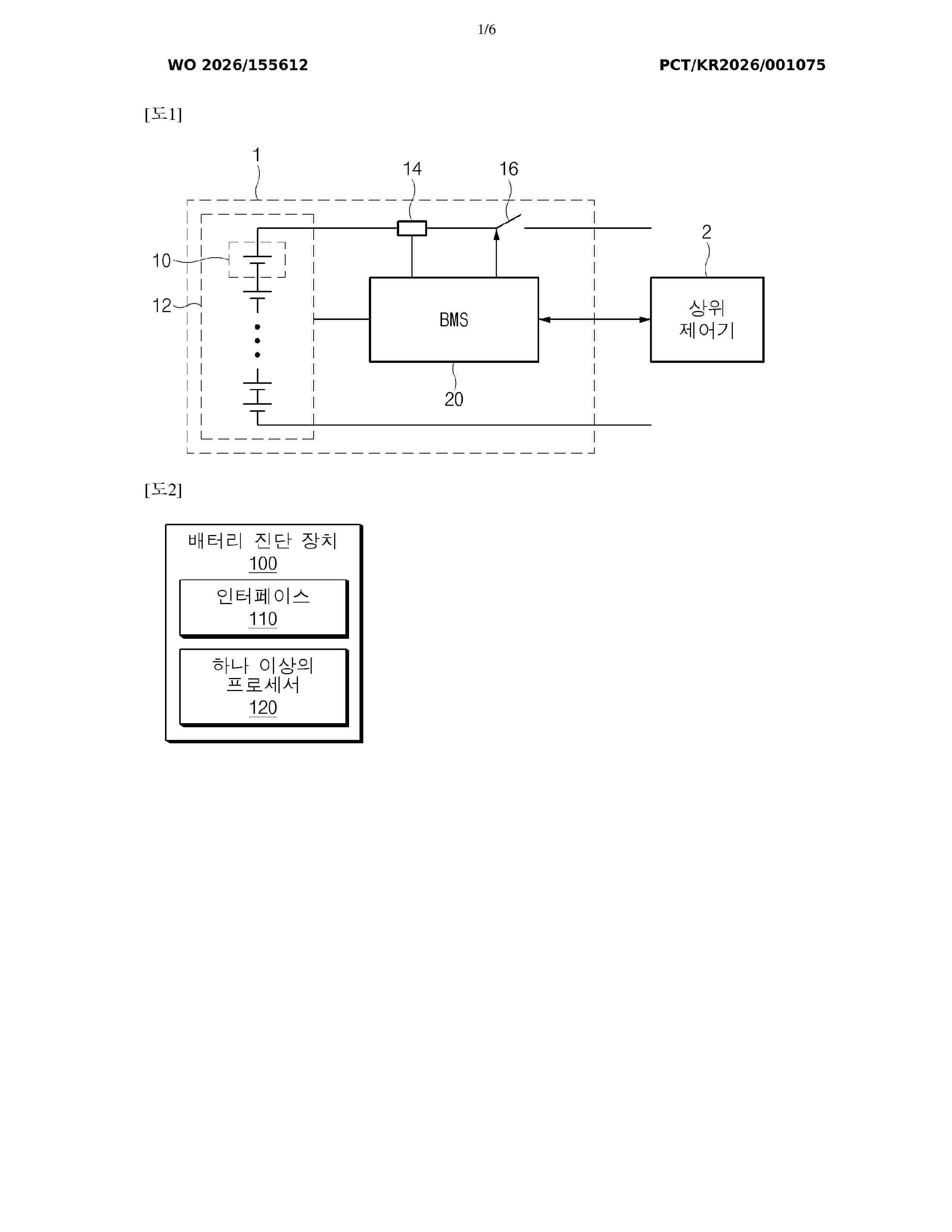
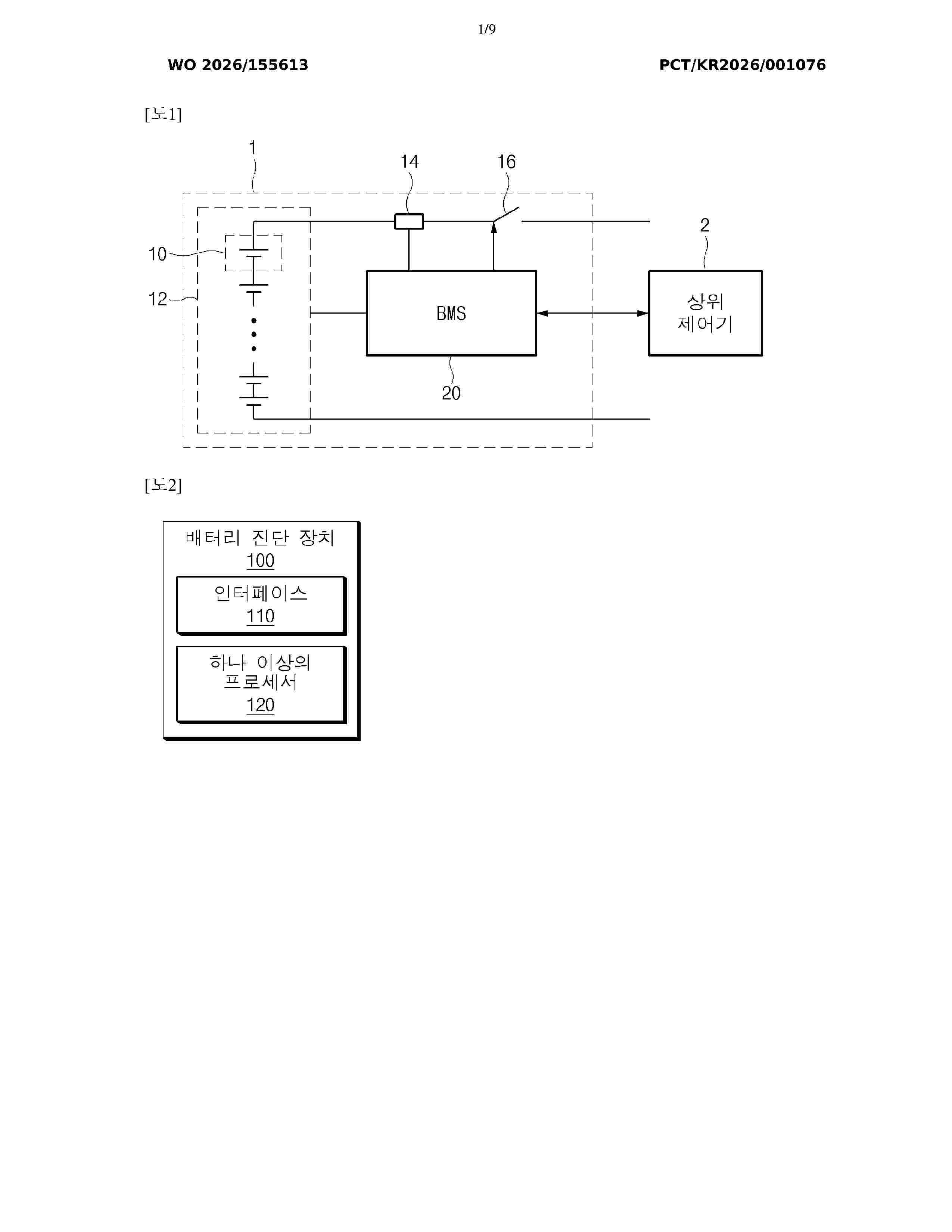
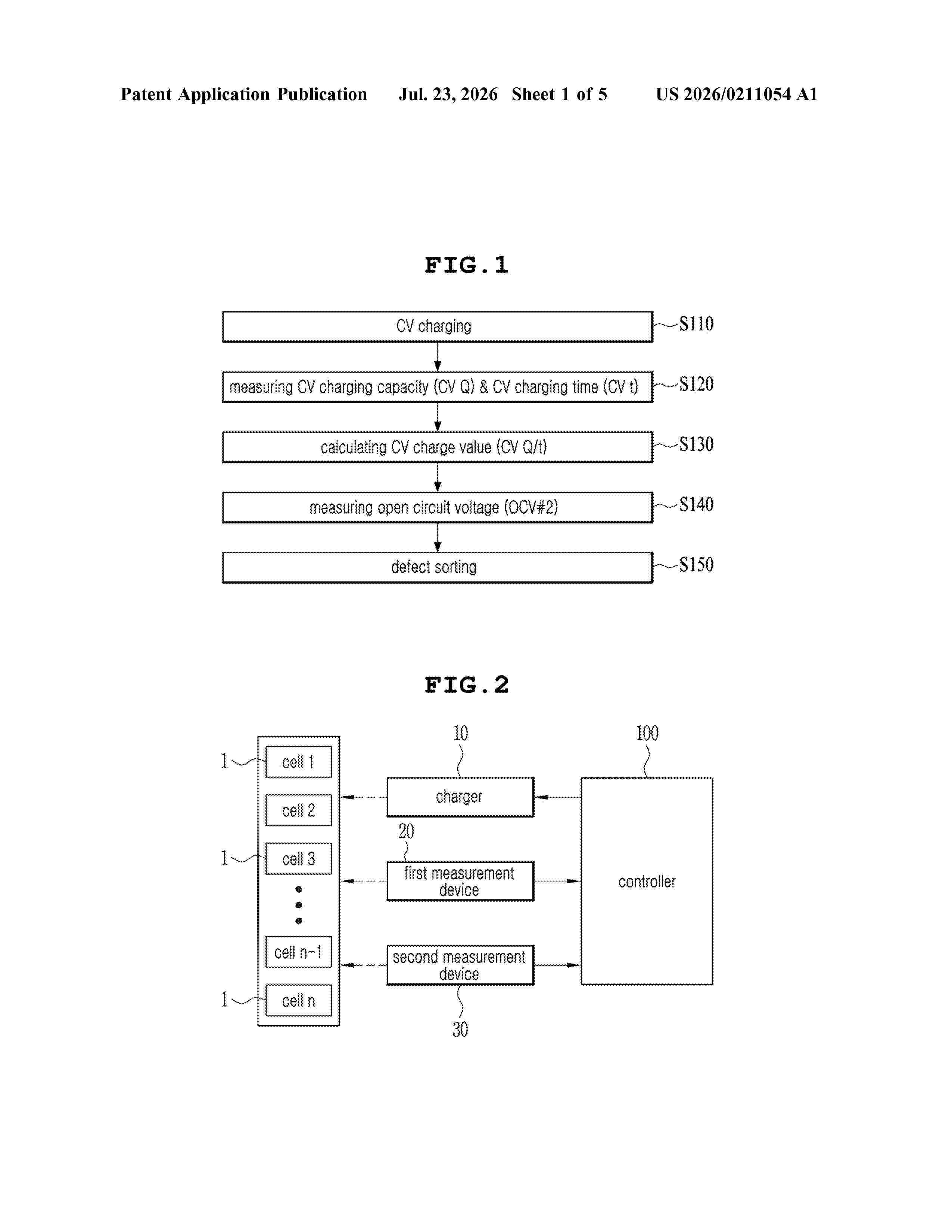
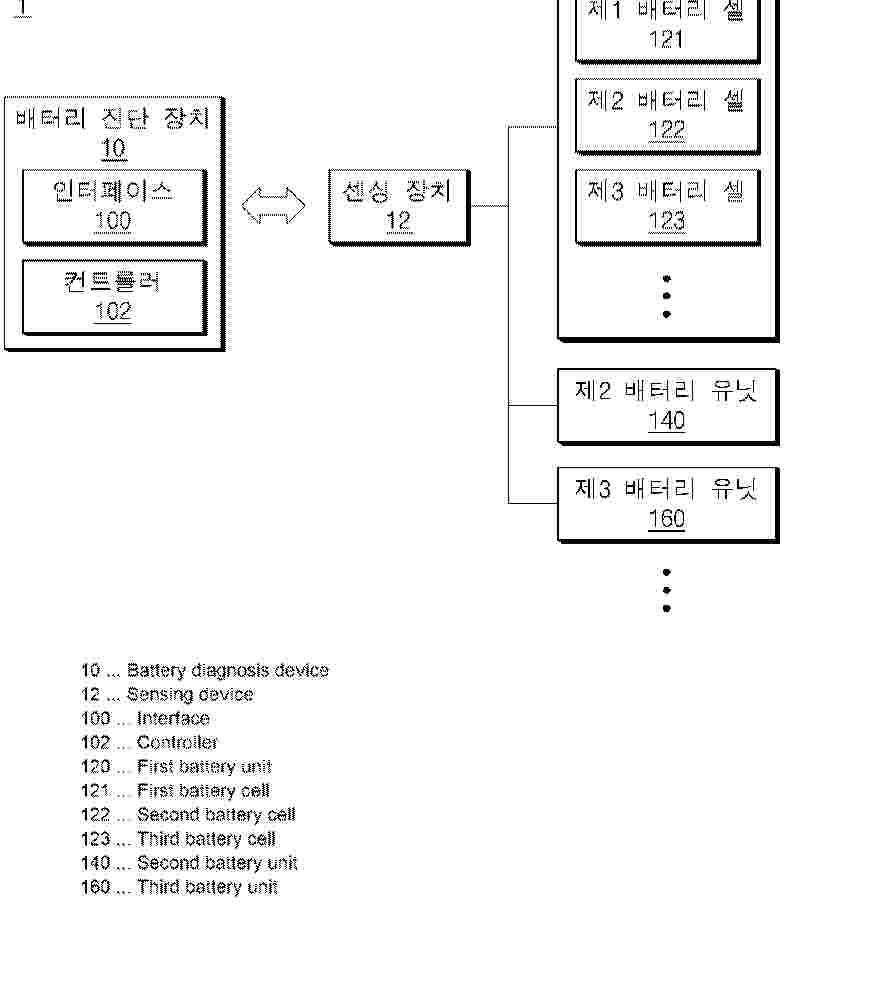
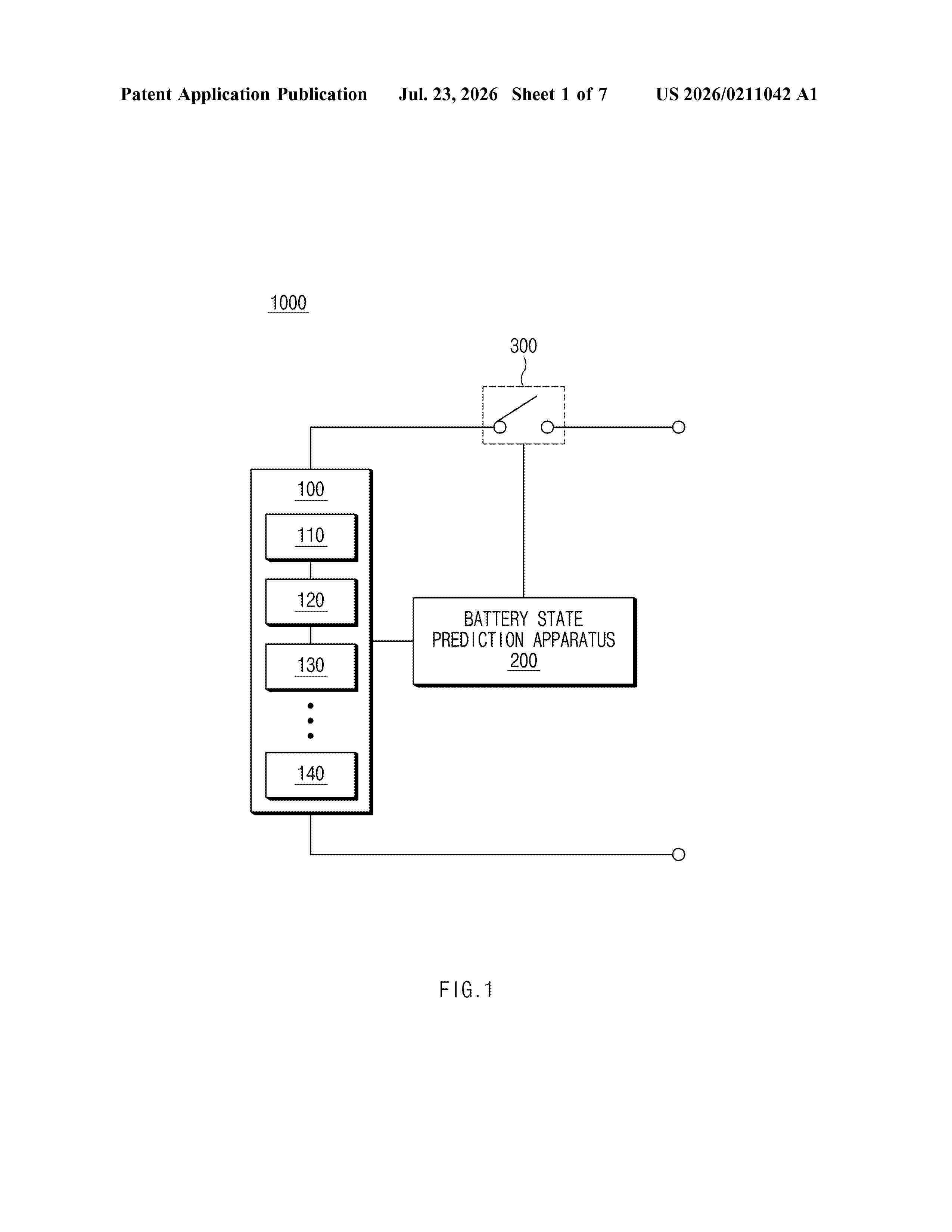
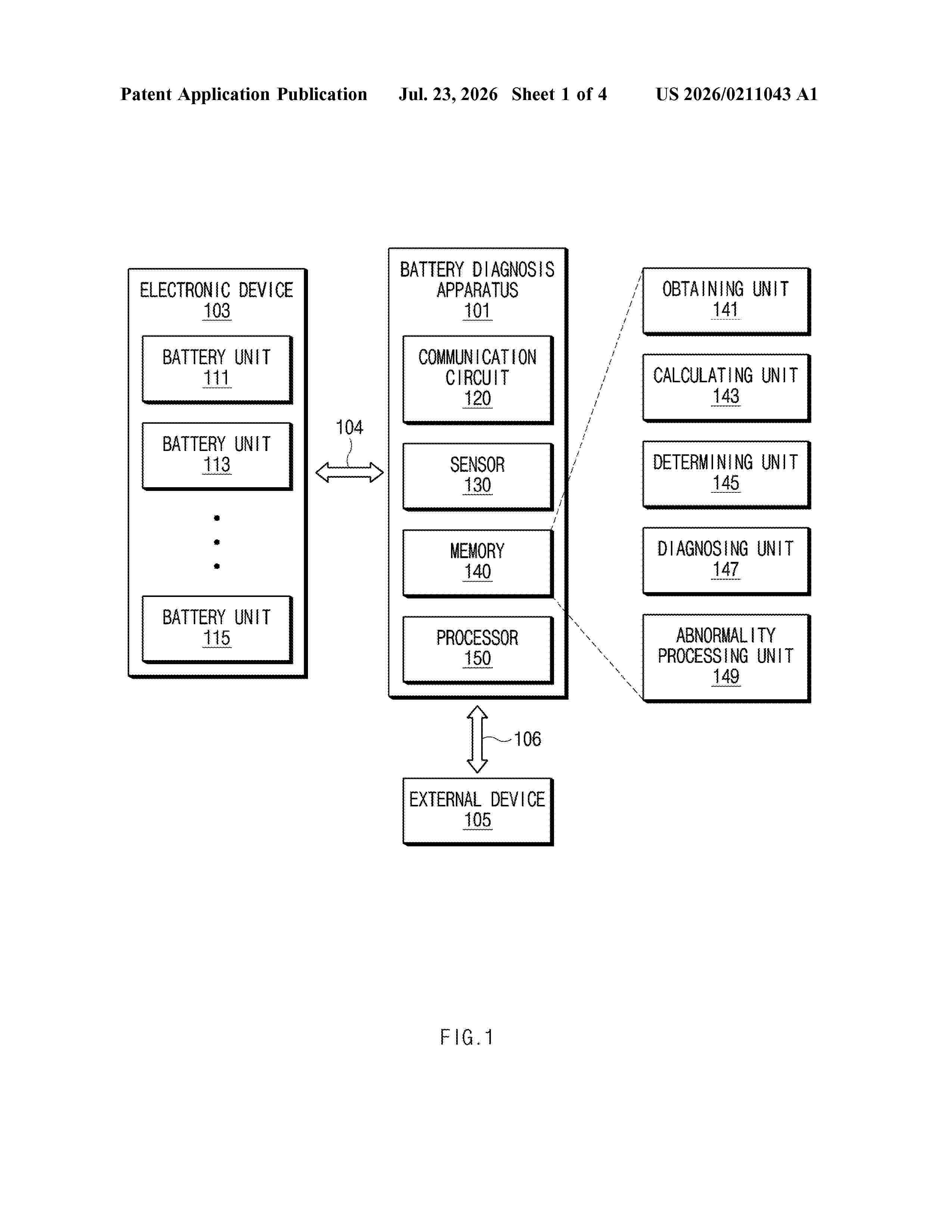
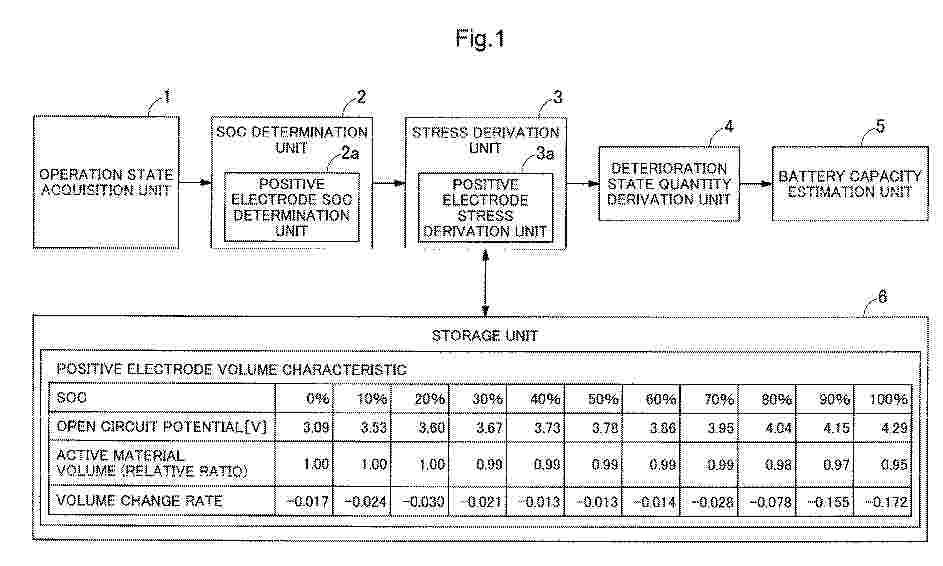
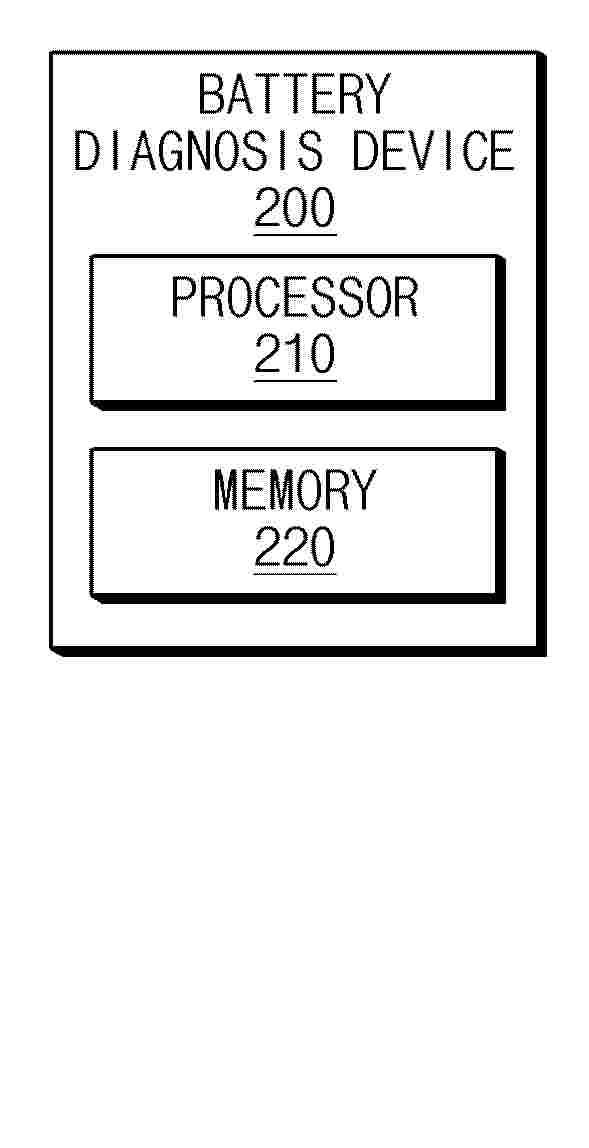
A battery diagnosis device according to one embodiment disclosed in the present specification may comprise: an interface for acquiring a plurality of open circuit voltage (OCV) data for a battery unit; and one or more processors for acquiring a plurality of estimated states of charge (SOC) corresponding to at least a part of the OCV data, acquiring a plurality of estimated states of health (SOH) corresponding to at least a part of the plurality of estimated SOC, and diagnosing a degree of occurrence of cathode capacity loss of the battery unit on the basis of a specific estimated SOH satisfying a threshold SOH condition among the estimated SOH.
Resumen de: US20260213167A1
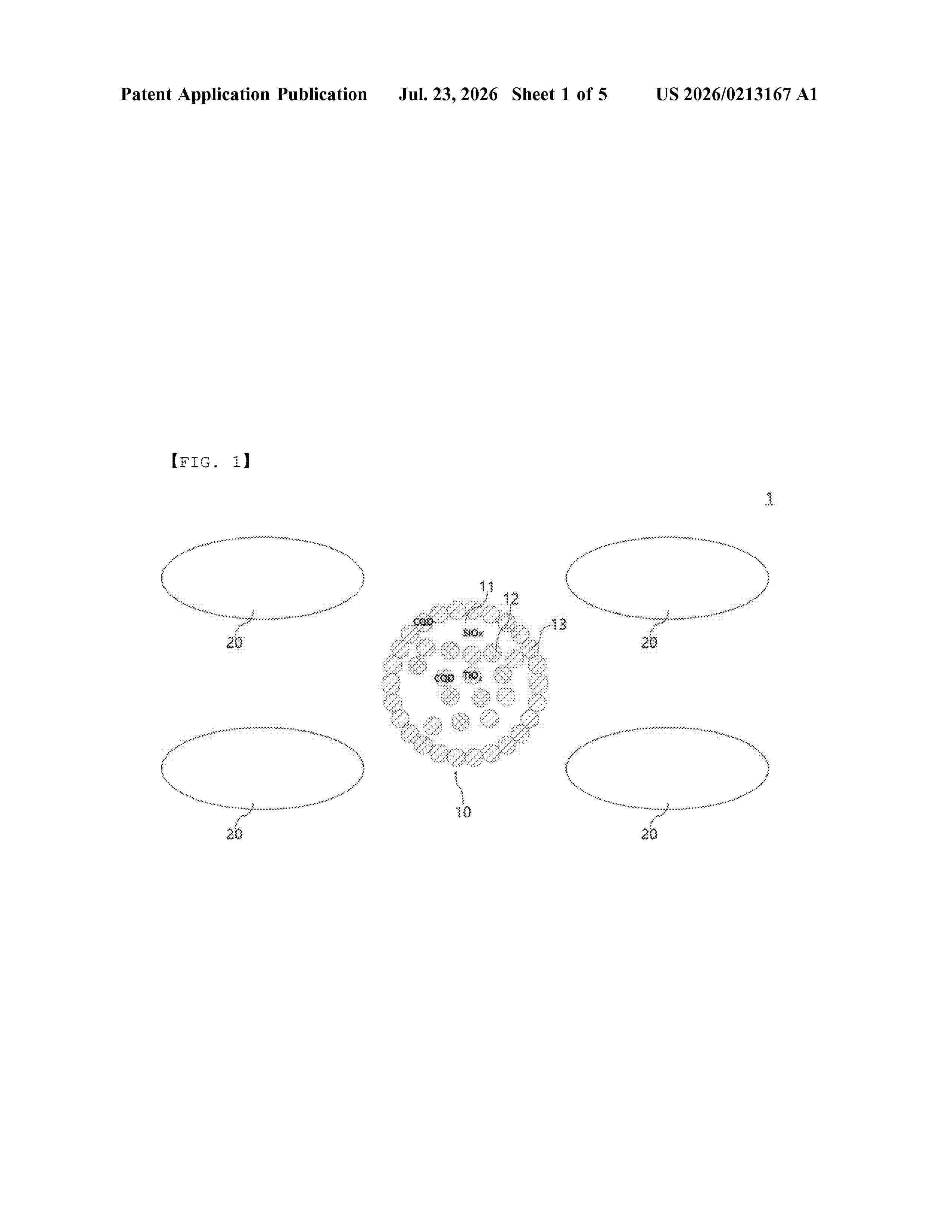
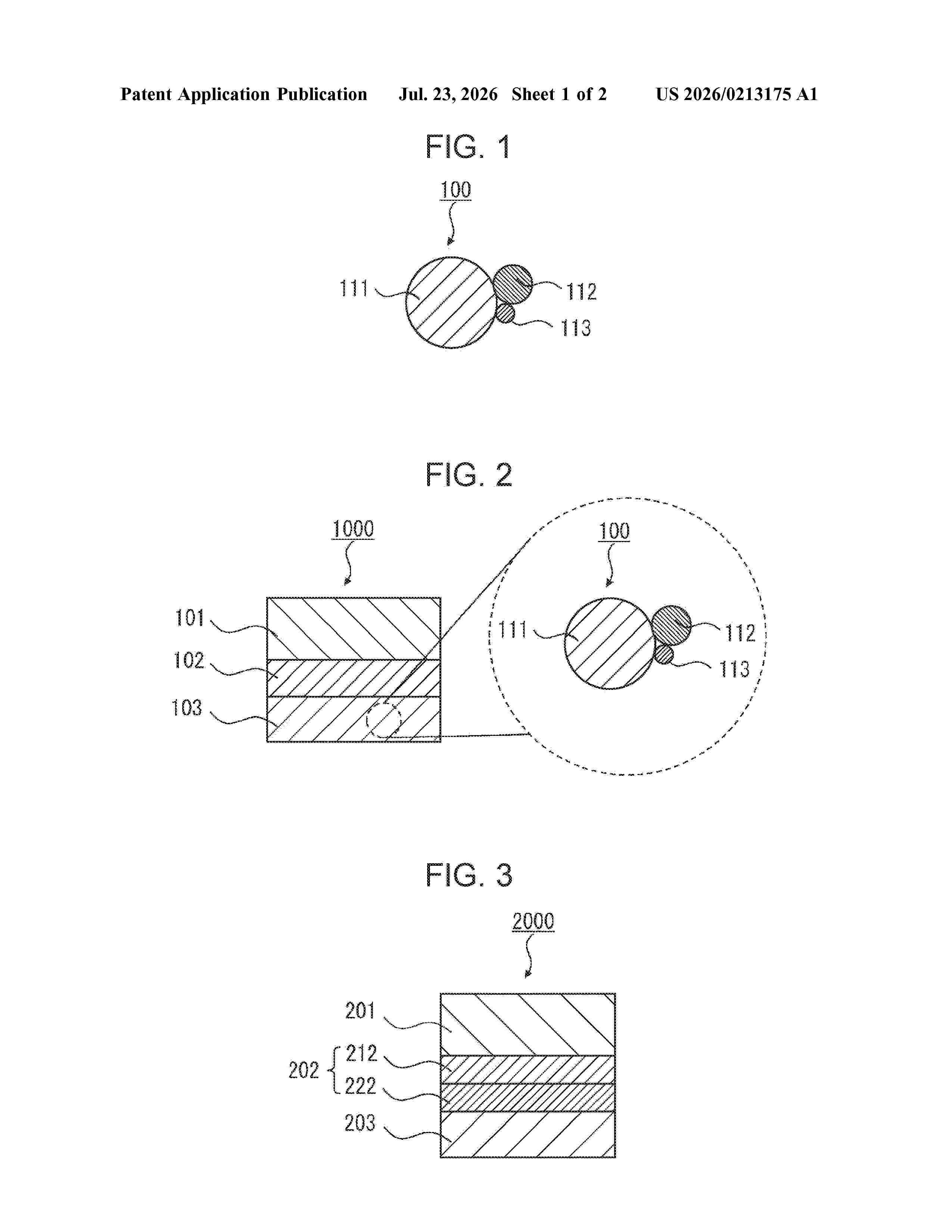
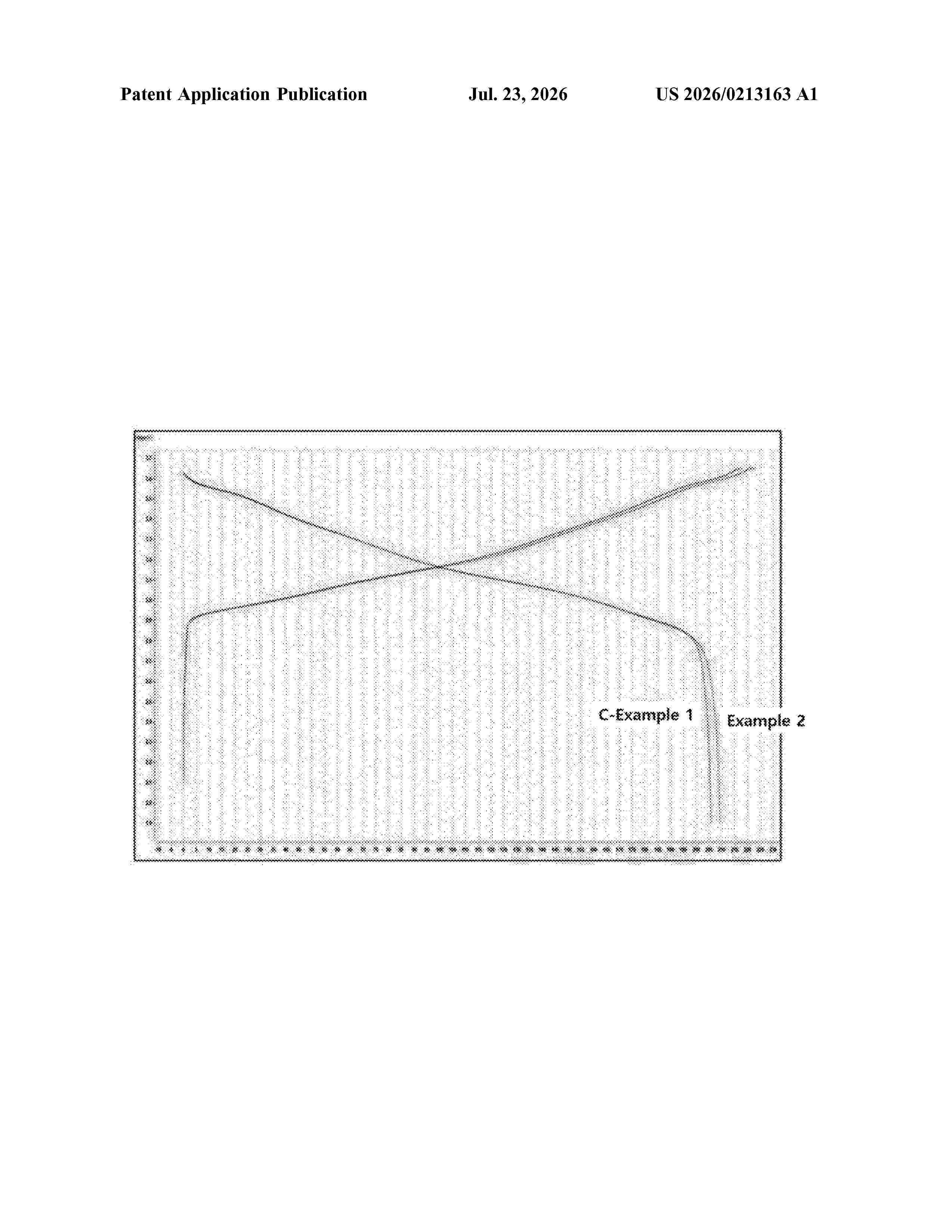
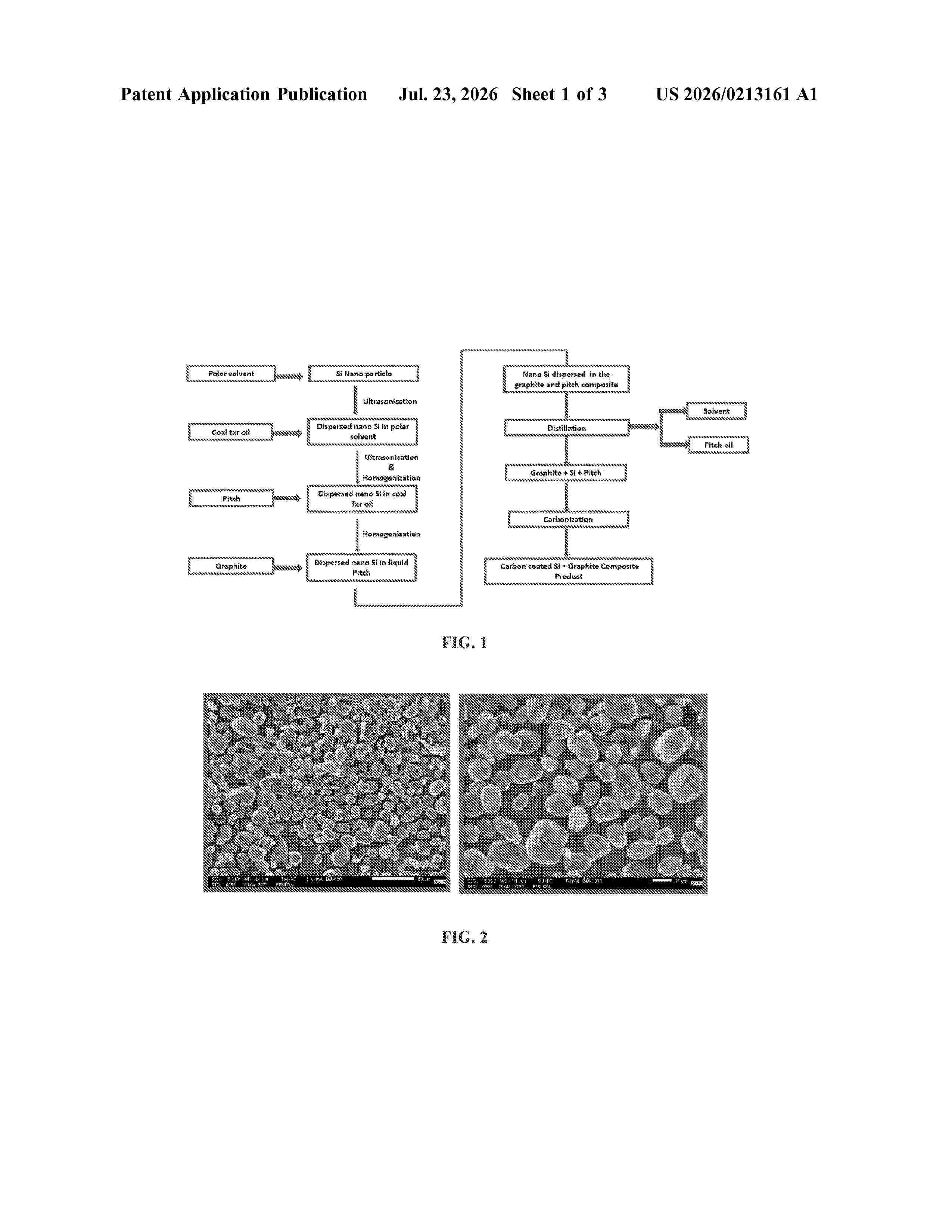
0000 The negative active material according to an embodiment may include a silicon-based active material composite; and a carbon-based active material, wherein the silicon-based active material composite may include silicon oxide (SiOx, 0
Resumen de: WO2026155404A1
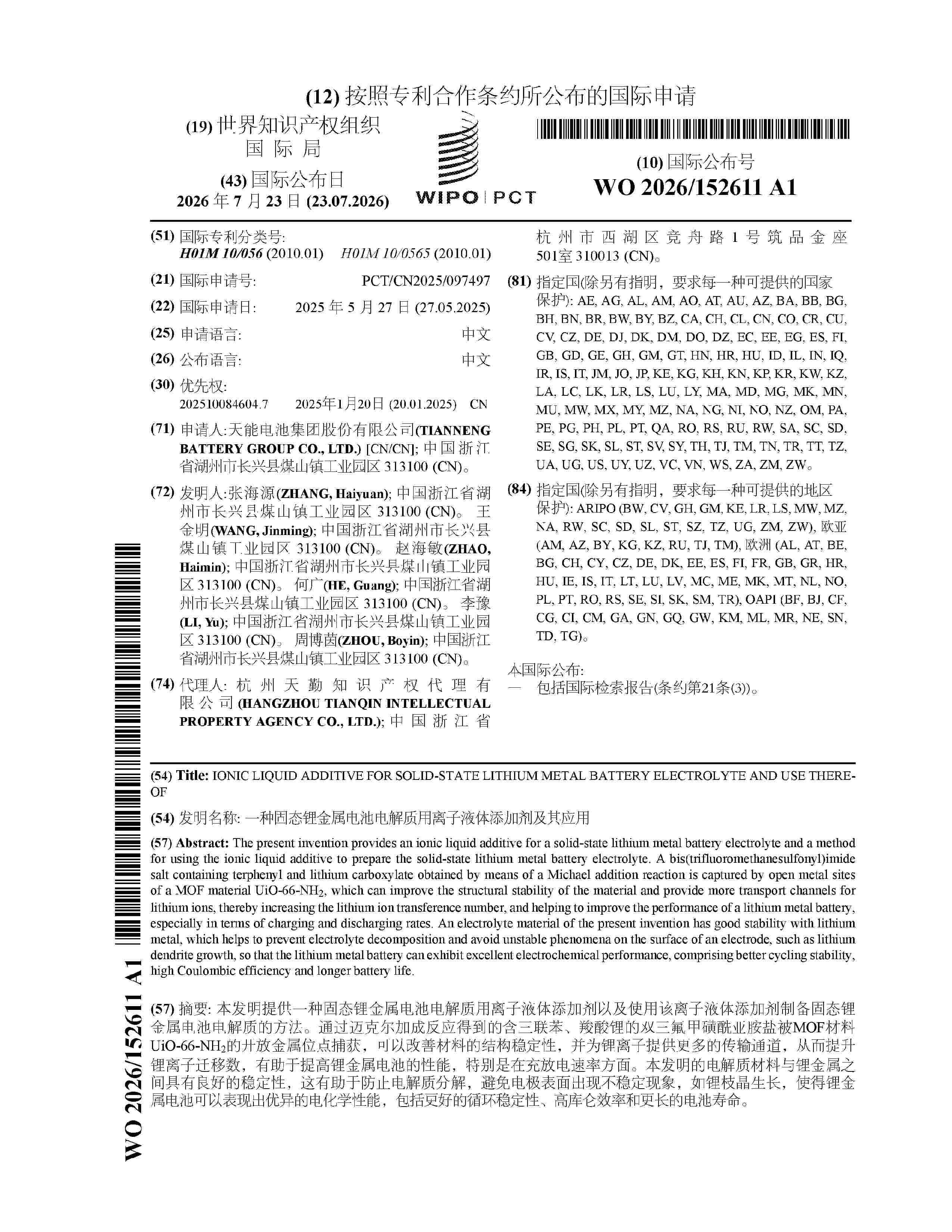
The present disclosure provides an electrolyte for a lithium secondary battery and a lithium secondary battery comprising the electrolyte. The lithium secondary battery according to the present disclosure comprises a positive electrode for a lithium secondary battery, a negative electrode including a negative electrode current collector, a separator interposed between the positive electrode and the negative electrode, and an electrolyte disposed between the positive electrode and the negative electrode, wherein the positive electrode may include a positive electrode active material and a sacrificial positive electrode active material, and the electrolyte may include lecithin.
Resumen de: WO2026155640A1
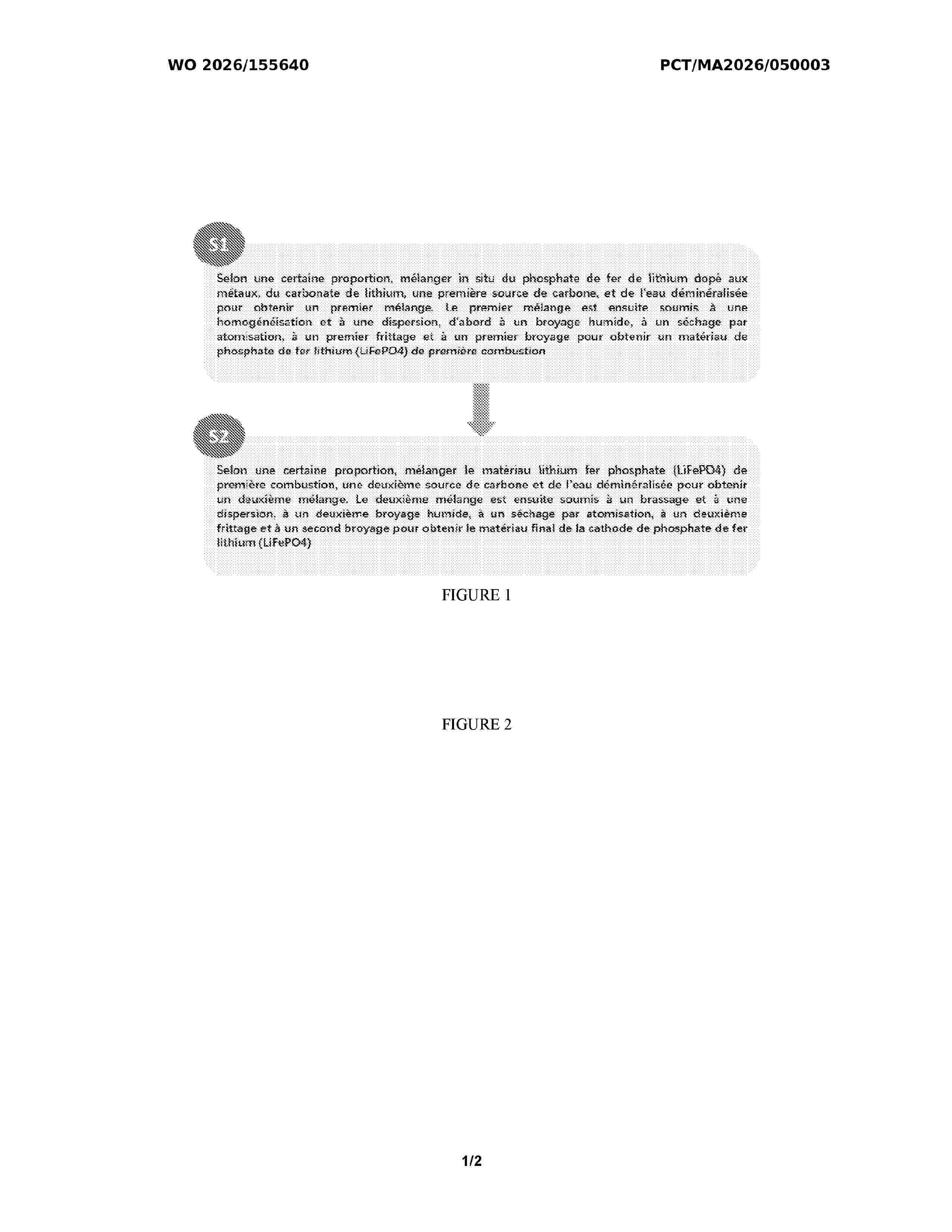
The present invention relates to a method for preparing a high-density and high-capacity lithium iron phosphate (LiFePO₄) cathode material, which is synthesised using a two-stage method. First, a high-density raw material is prepared by sintering and at a low temperature. Second, a portion of the large particles is ground to be smaller due to a high degree of grinding, followed by modification by sintering to prepare the high-density and high-capacity LiFePO₄ material. This method makes it possible to optimise the particle size by controlling the size of the ground particles and adjusting the proportions of large, medium and small particles, thereby obtaining a high-density and high-capacity LiFePO₄ material. Unlike conventional two-stage synthesis methods, this approach does not require large and small particles to be prepared separately, making the process simpler and more cost-effective. The invention also relates to a lithium iron phosphate cathode material and to a lithium-ion battery that uses this material.
Resumen de: WO2026154513A1
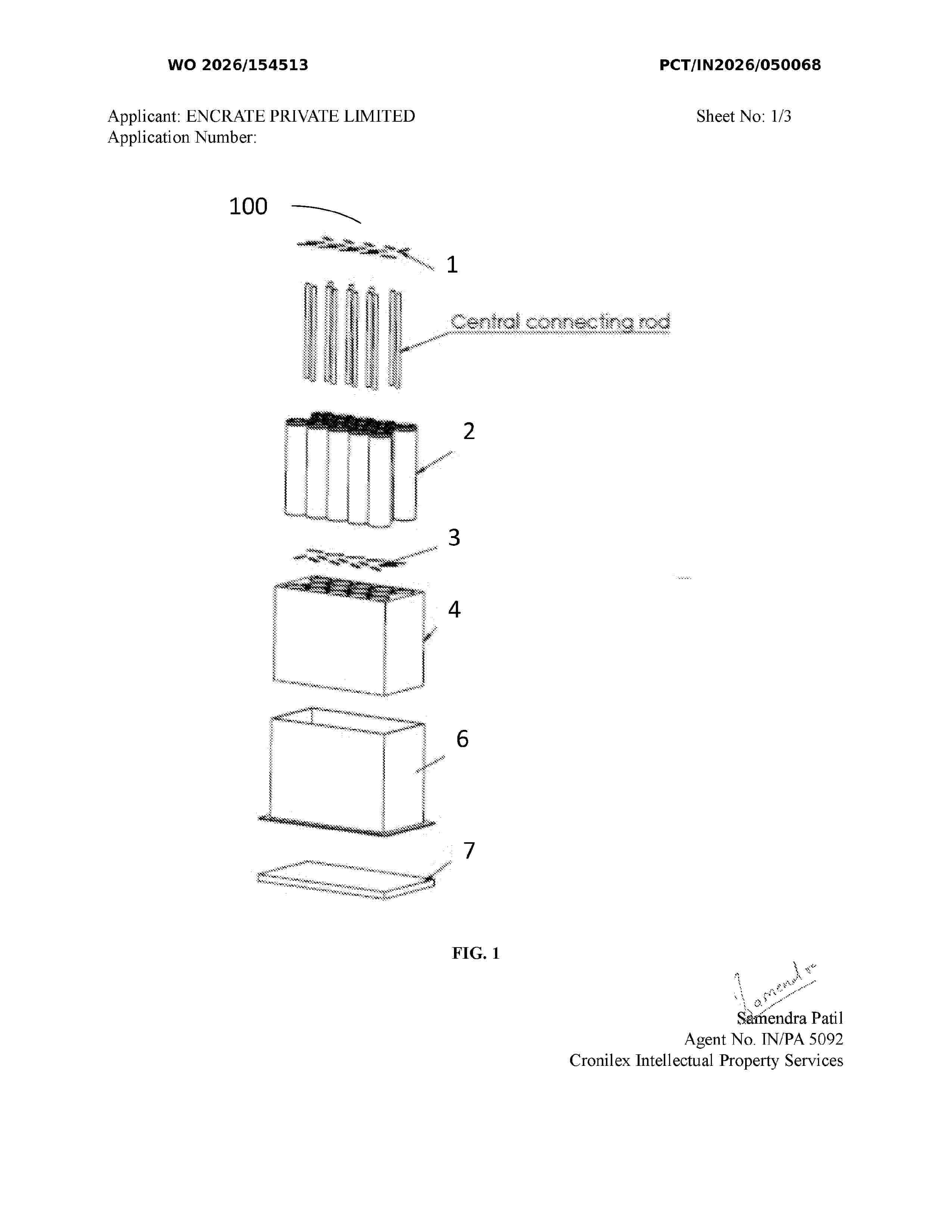
The present disclosure relates to an integrated electrical and thermal busbar system designed for cylindrical cell battery packs. The system comprises a first busbar (1) and a second busbar (3) interfacing with the positive and negative terminals of a plurality of cylindrical cells (2) via resistance welding. A central connecting rod (5), constructed from high-conductivity materials such as copper or aluminum, bridges these busbars to ensure electrical continuity and facilitate heat transfer. A thermal interface material (4) is strategically positioned to fill voids between the cylindrical cells (2), the central connecting rod (5), and a heat dissipation unit (7), which may be a cold plate or heat sink, thereby optimizing thermal conductivity. The assembly is enclosed within a casing (6) that provides structural integrity and protection. The central connecting rod (5) also functions as a heating element in low-temperature conditions, enhancing the system's versatility.
Resumen de: WO2026154553A1
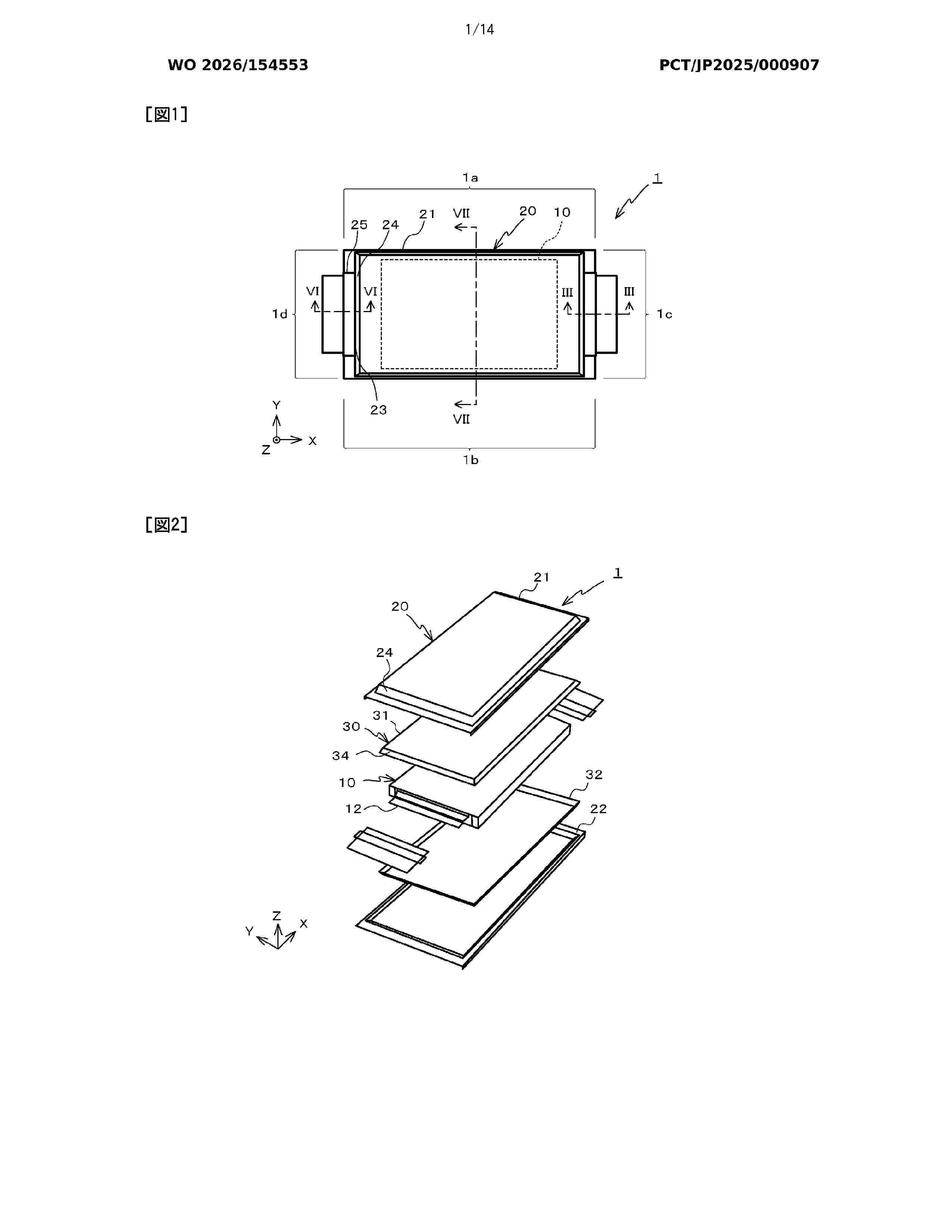
This cell structure (1) includes: a cell laminate (10) provided with a conductive extension part (12); an exterior body (20) that is formed while maintaining airtightness of an internal space (S) and is also formed so as to be plastically deformable; and an internal cover (30) including a first internal cover split body (31) and a second internal cover split body (32), which are capable of being split in a lamination direction (D1). The first internal cover split body (31) is formed with a first excess length part (33a) that protrudes outward, and the second internal cover split body (32) is formed with a second excess length part (33b) that protrudes outward. The first excess length part (33a) is fixed in contact with the second excess length part (33b), or is fixed to the second excess length part (33b) with the conductive extension part (12) interposed therebetween.
Resumen de: US20260213194A1
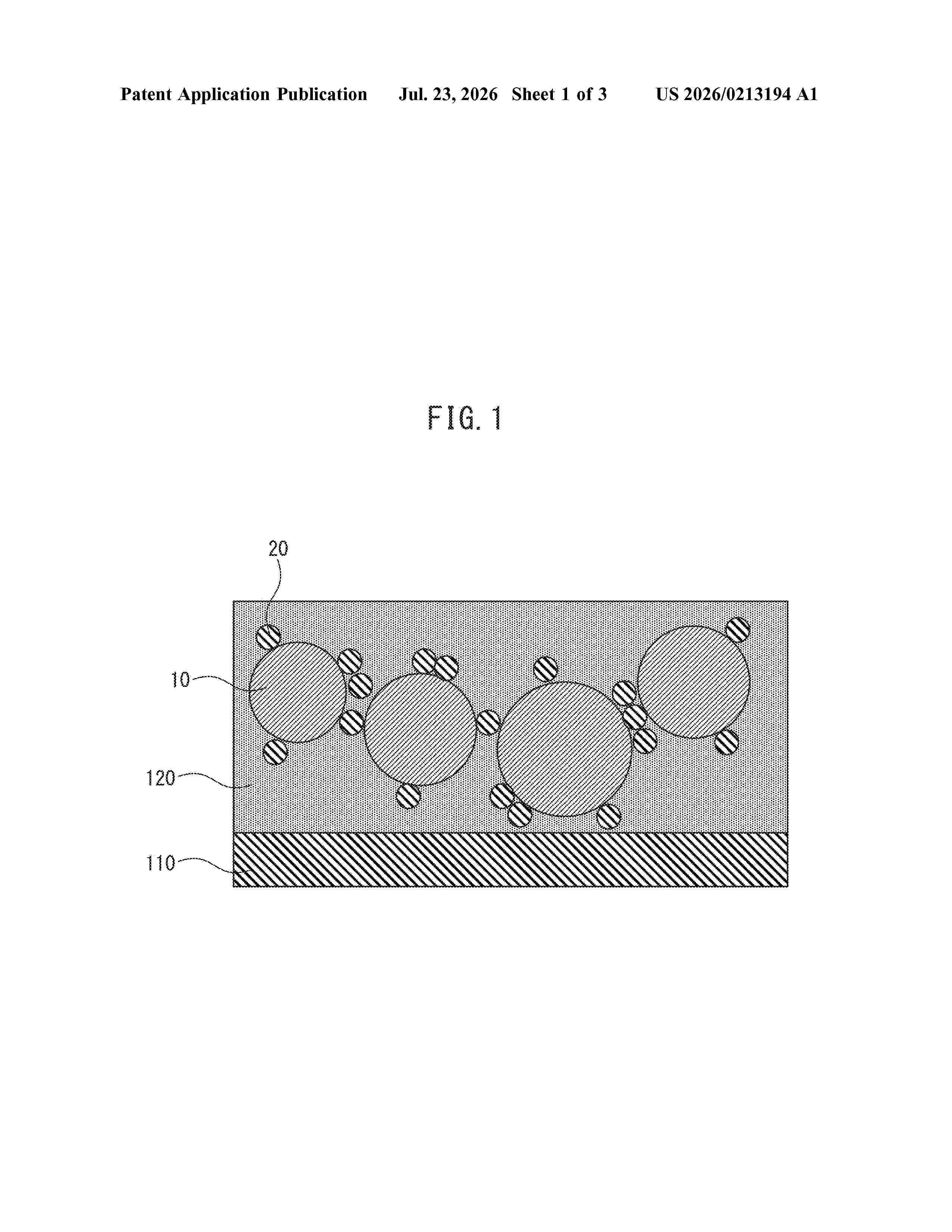
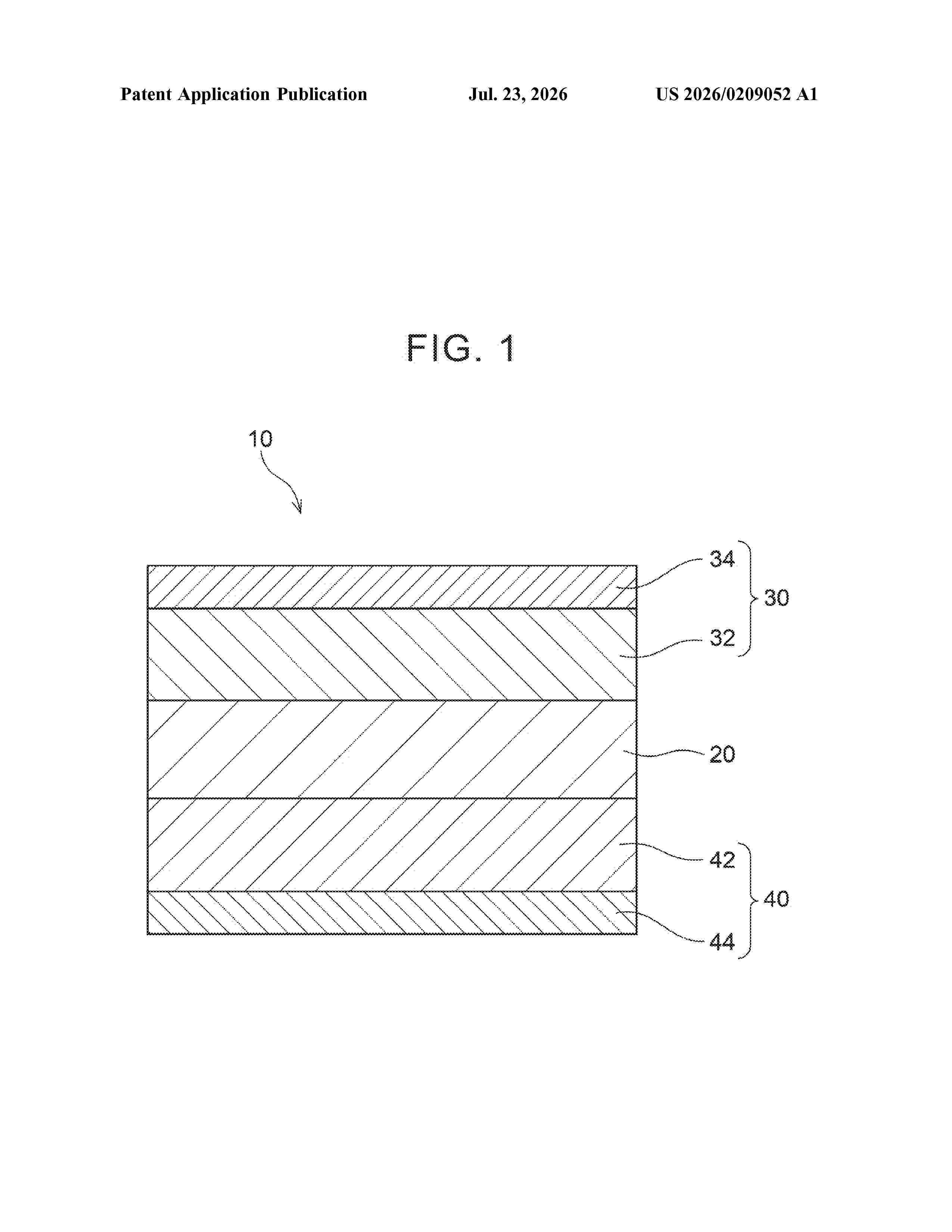
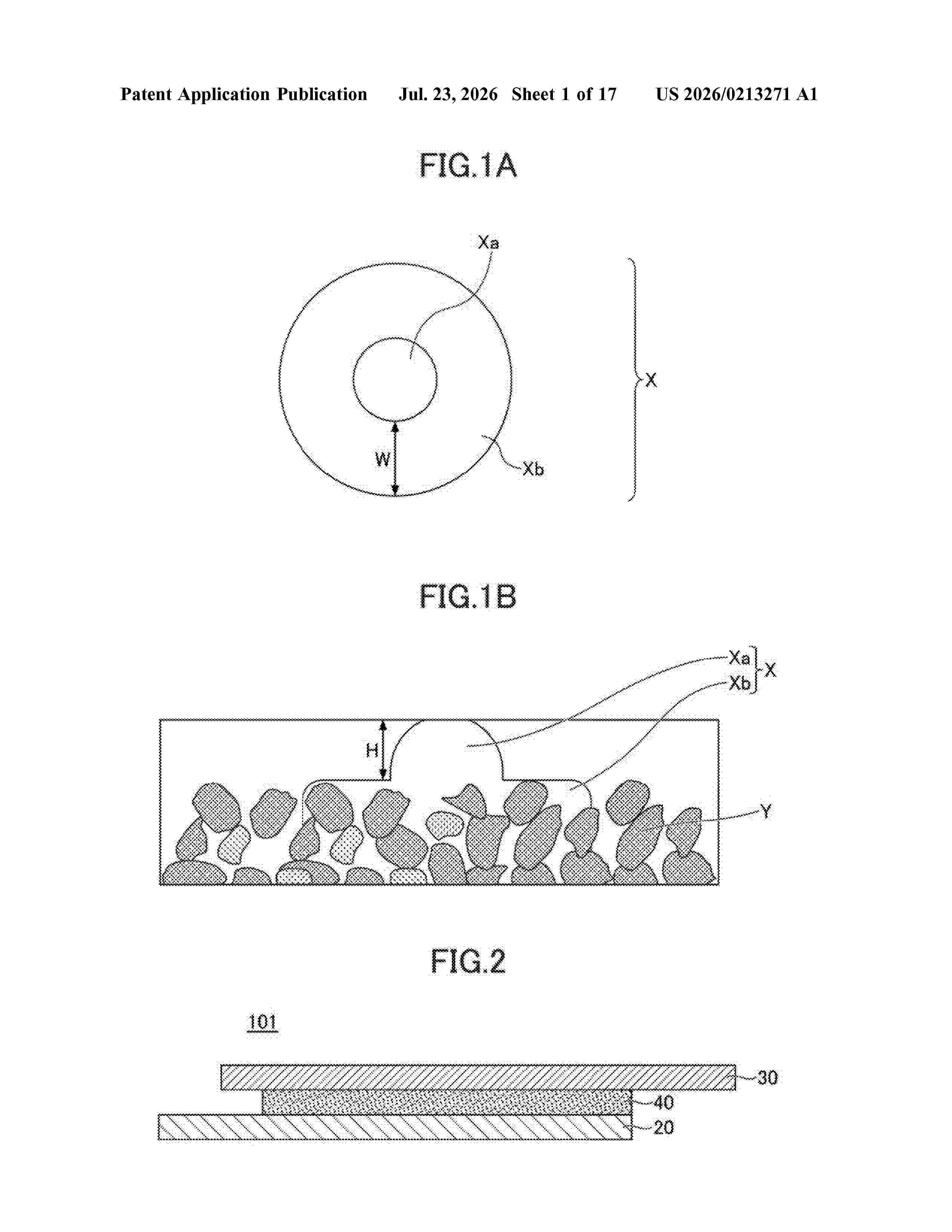
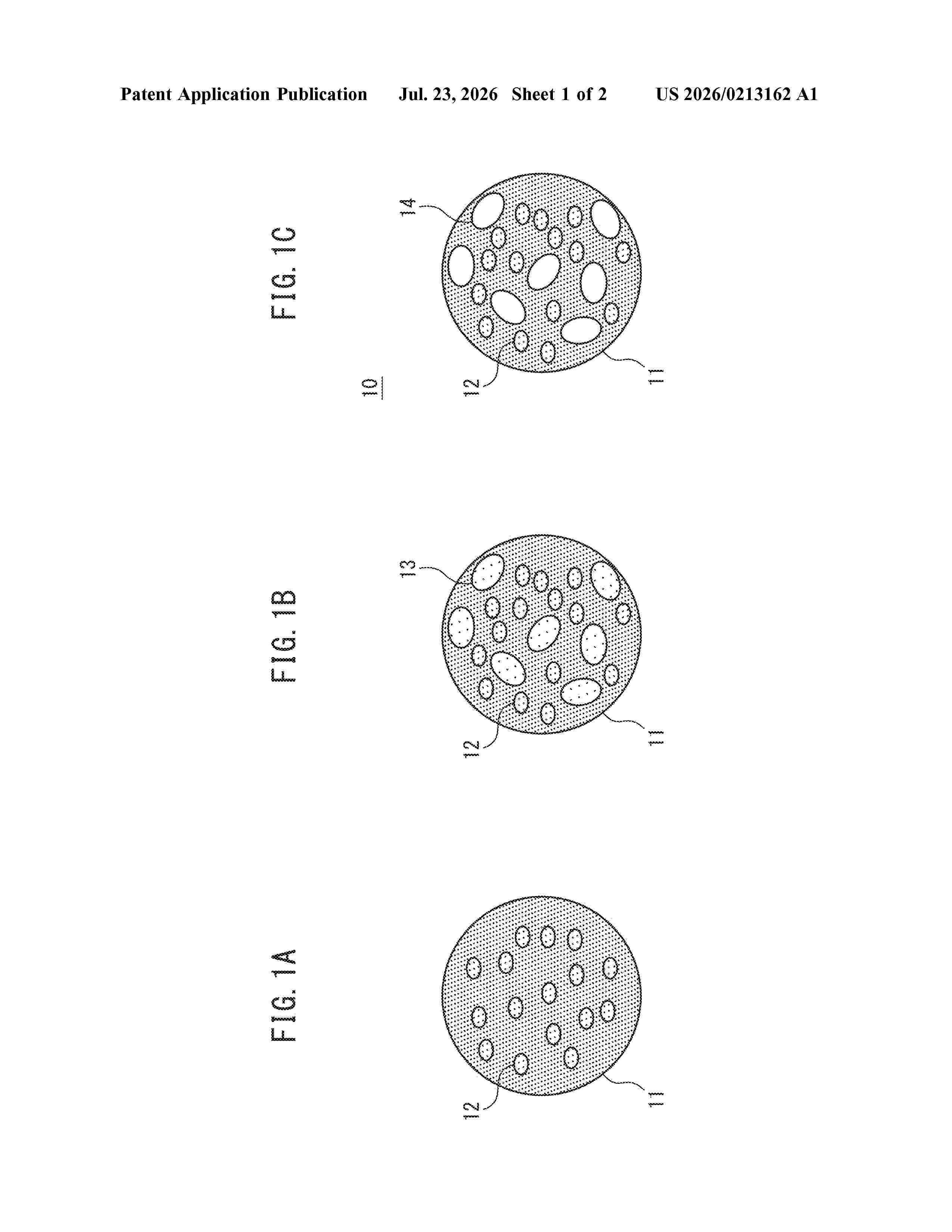
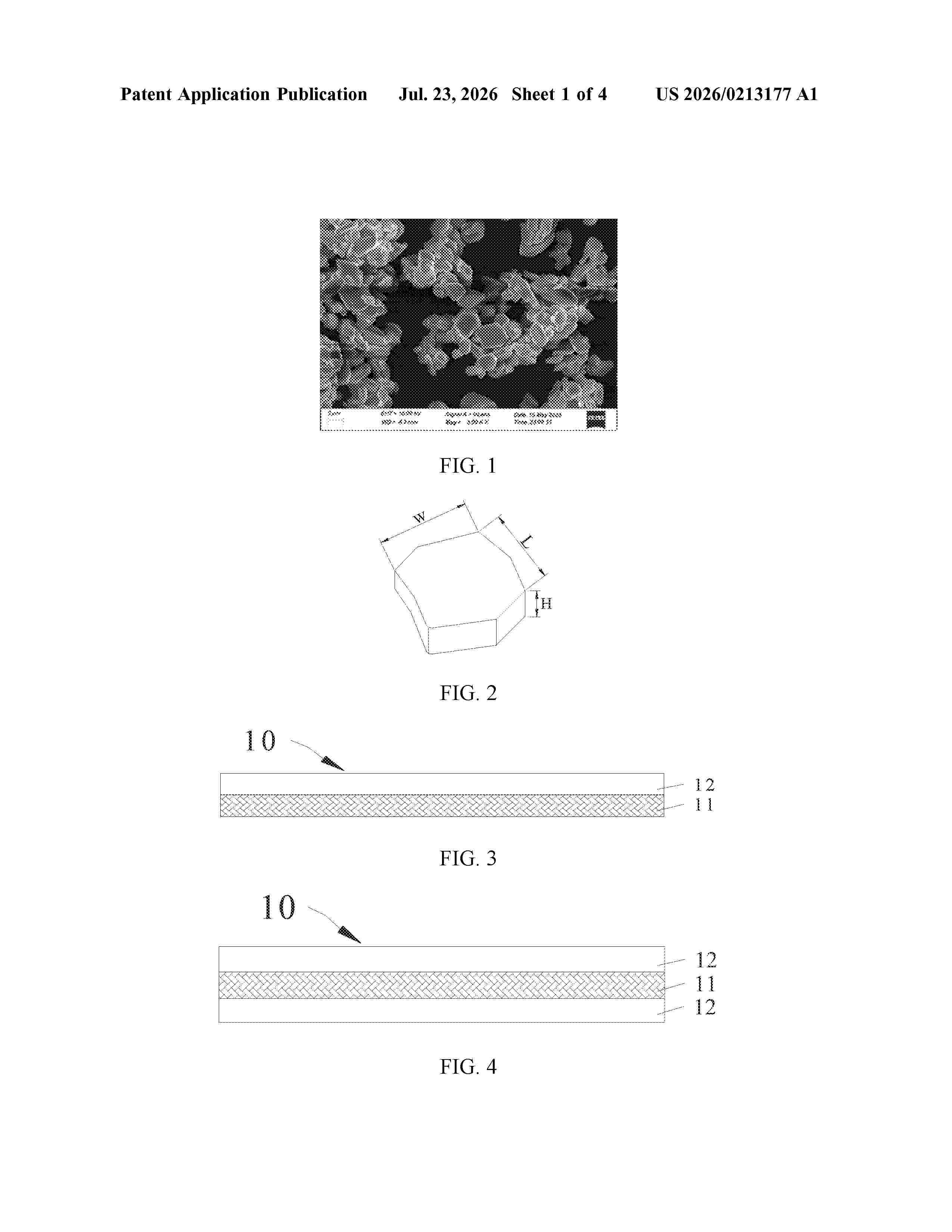
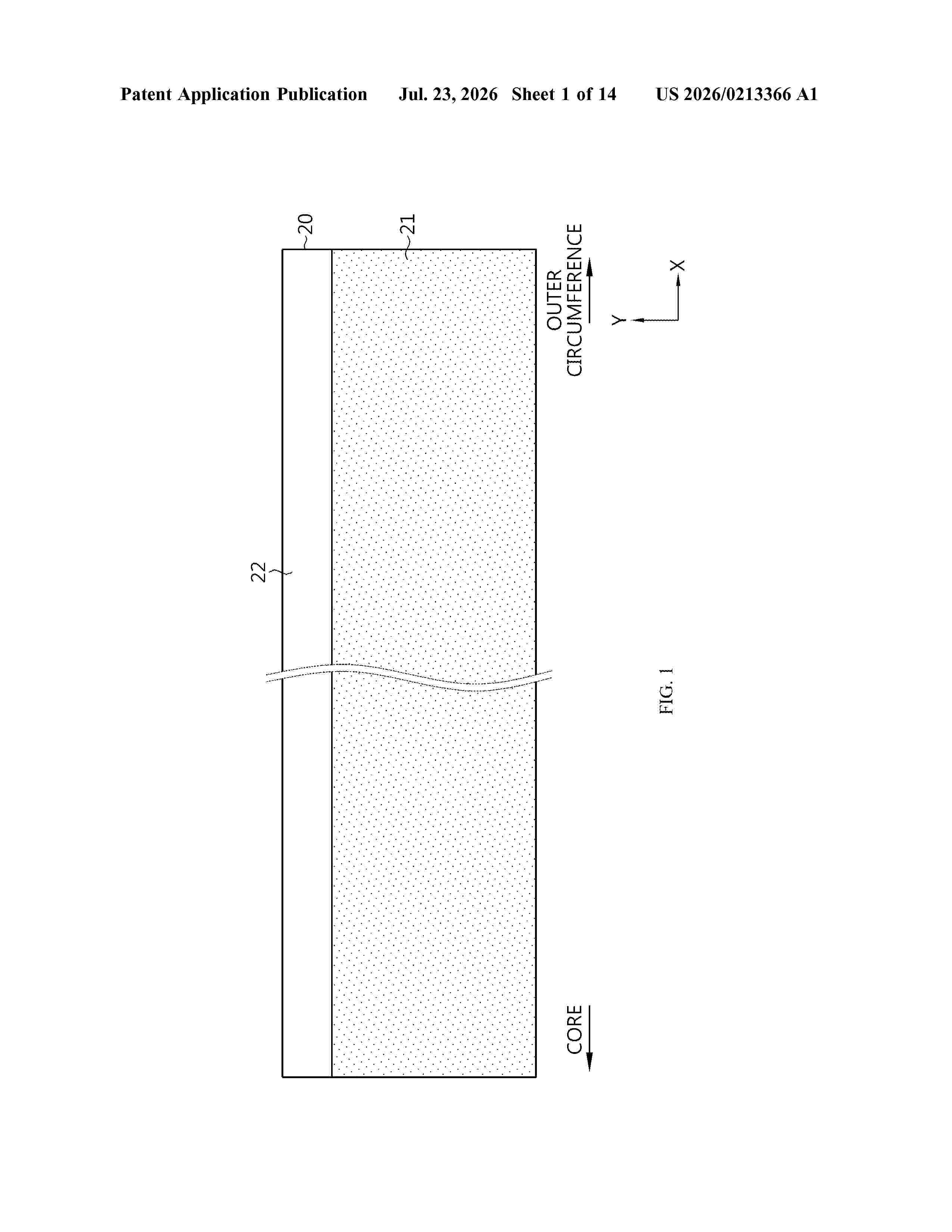
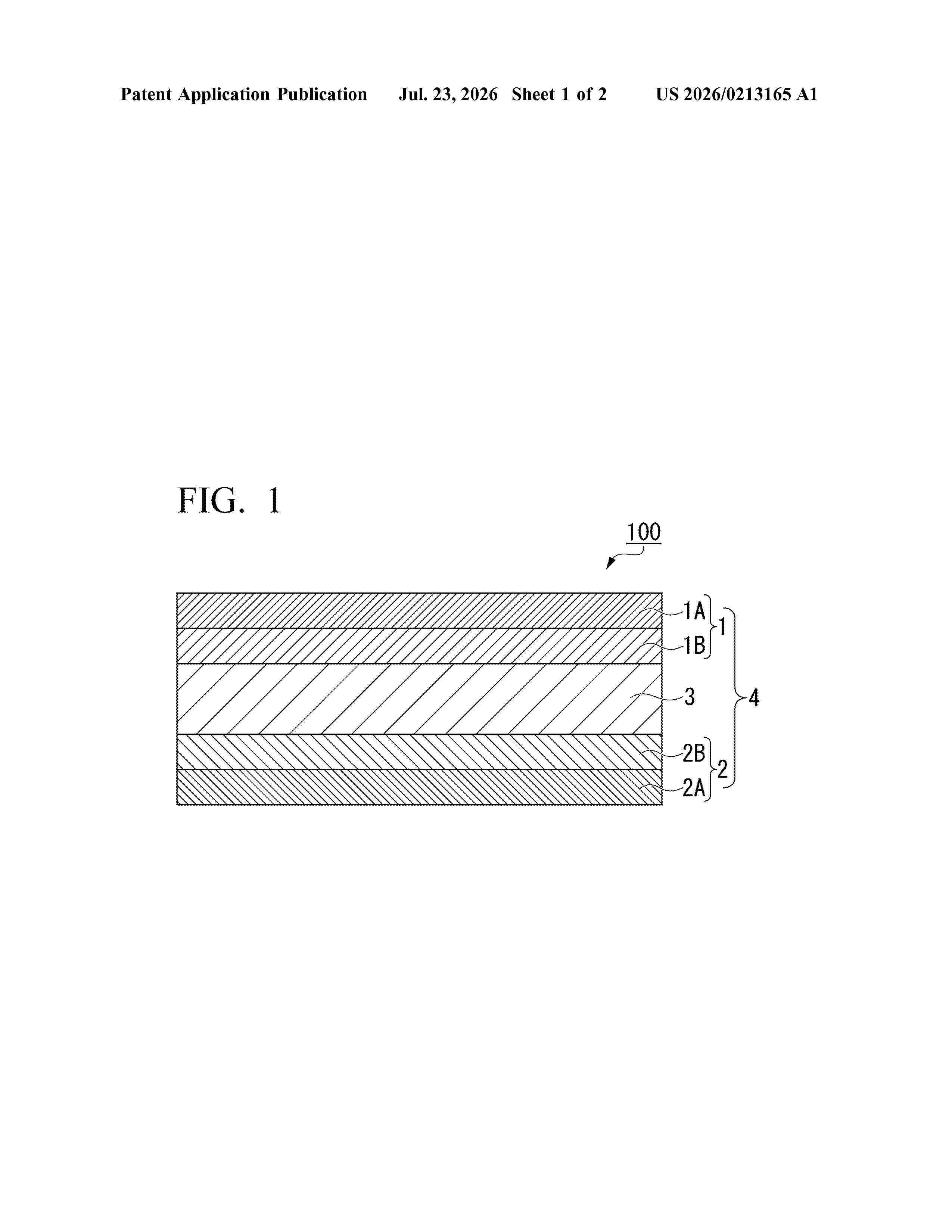
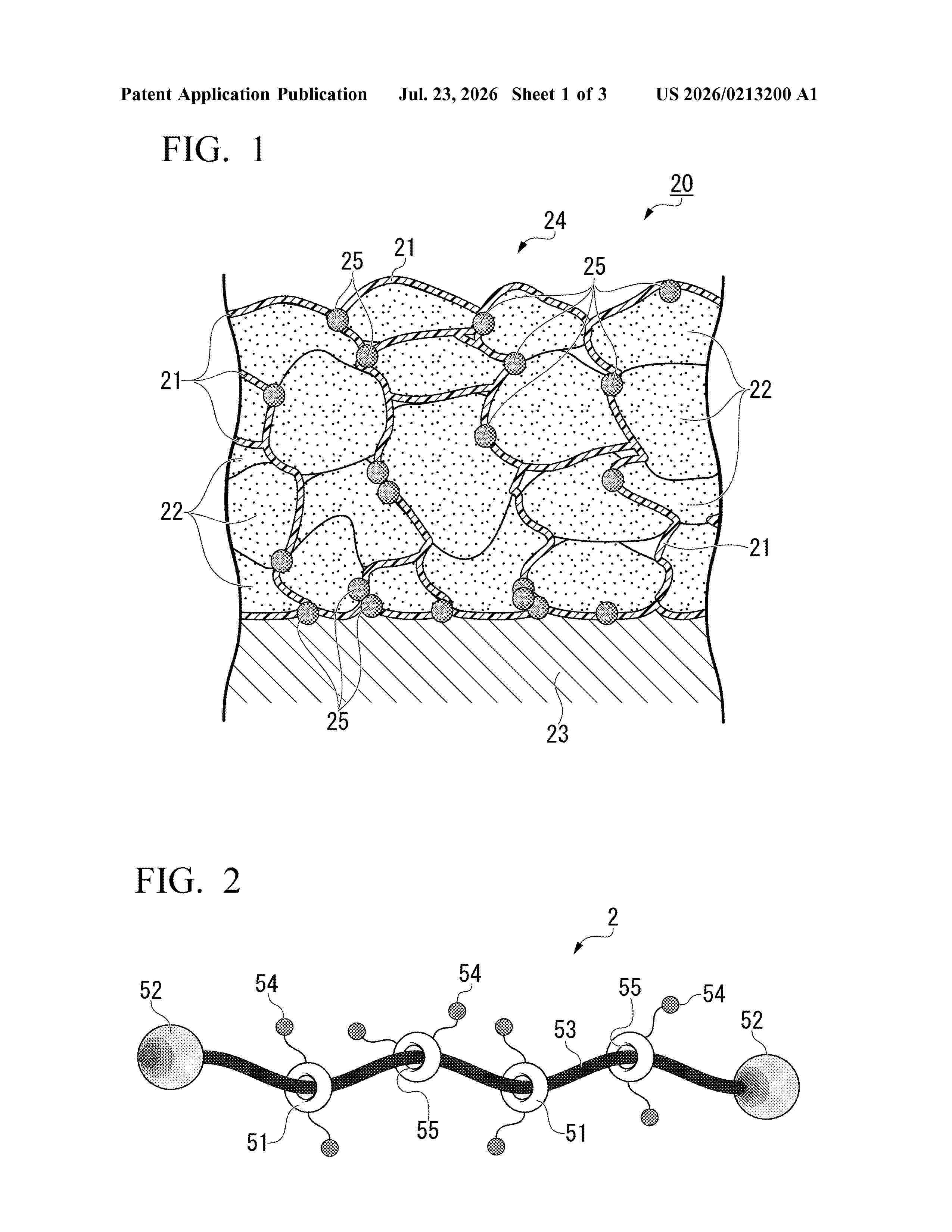
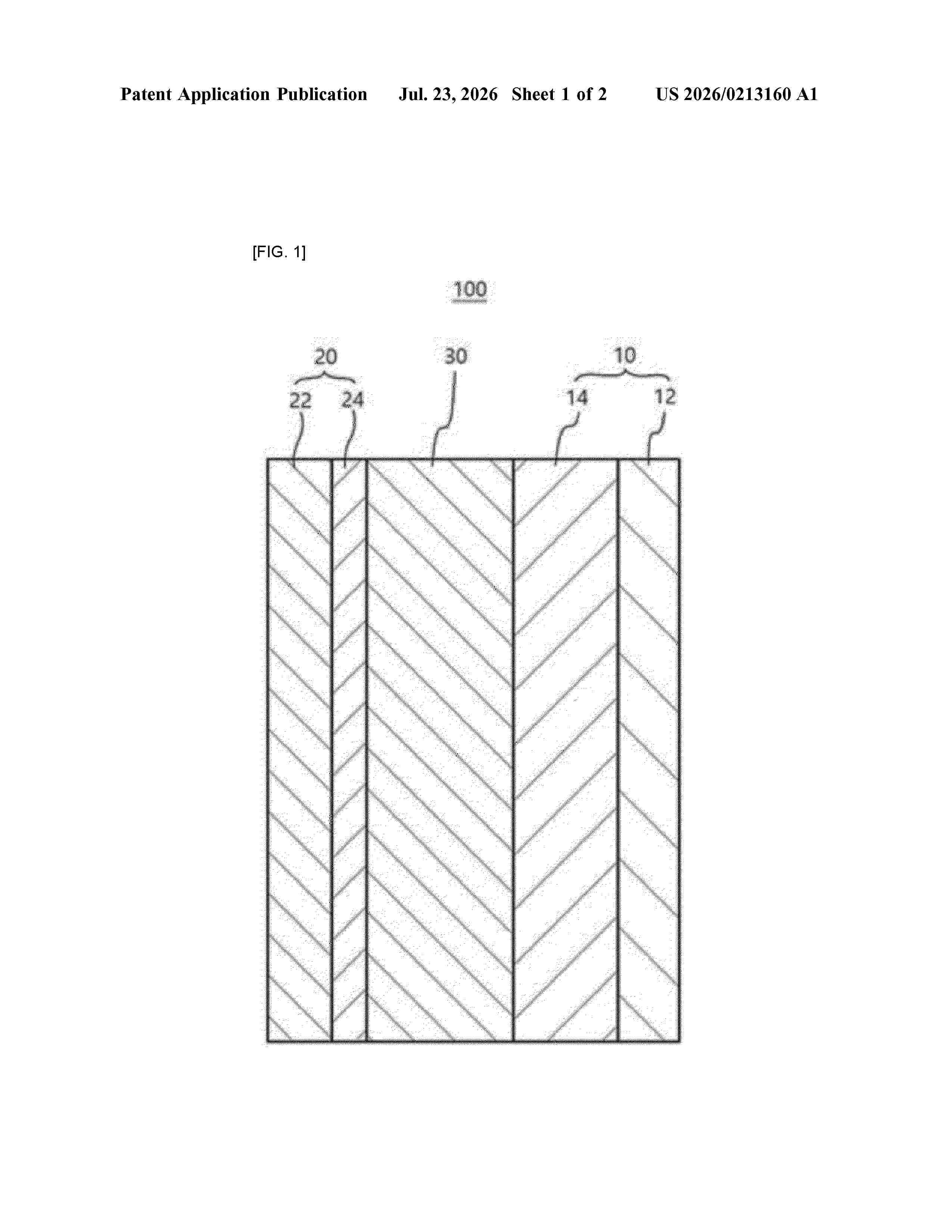
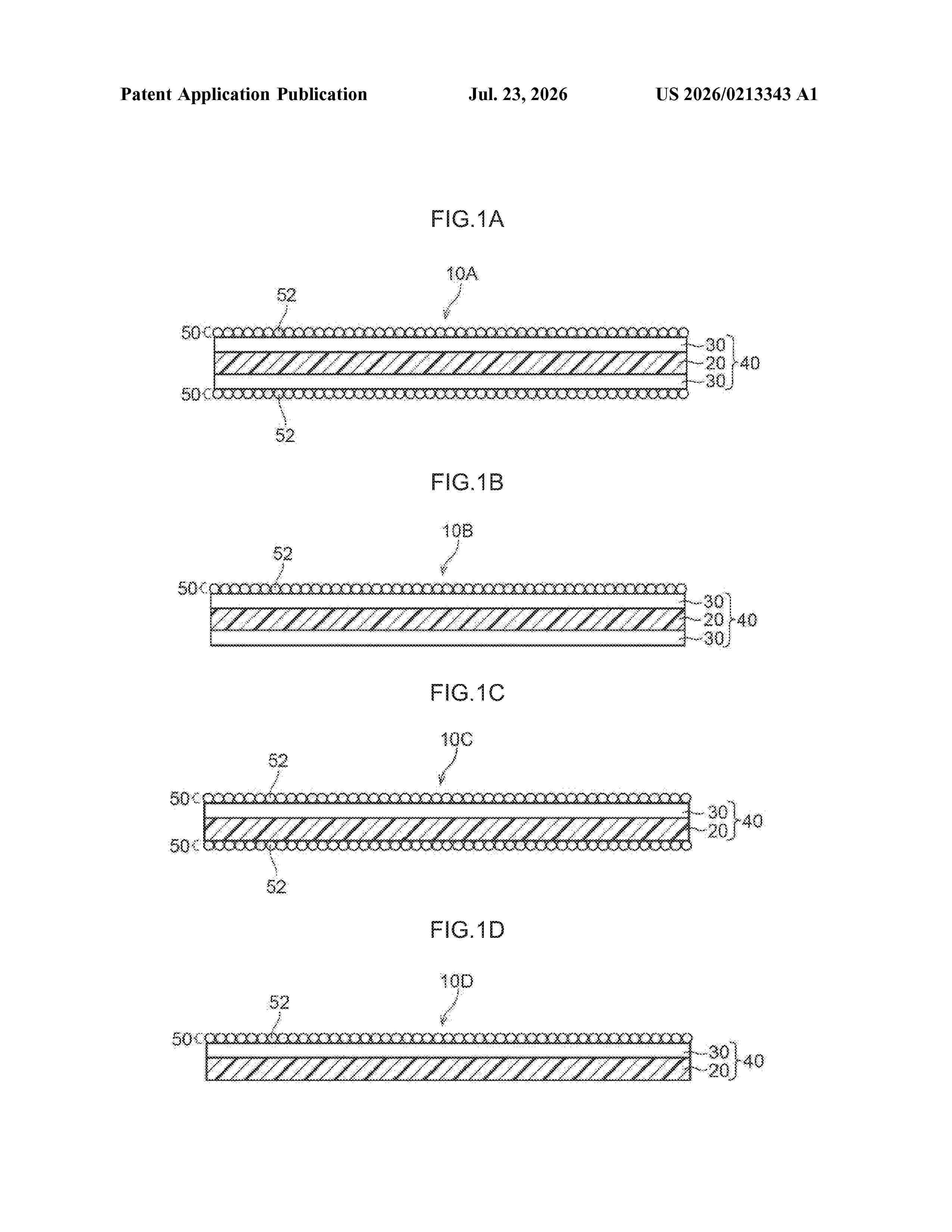
The present disclosure provides a negative electrode active material layer that can increase the initial charge-discharge efficiency of a battery, and a battery comprising the negative electrode active material layer. The negative electrode active material layer 120 of the disclosure comprises negative electrode active material composite particles 10, and a particulate binder 20 which binds together the negative electrode active material composite particles. The negative electrode active material composite particles of the disclosure comprise a carbon material 11 and a tin alloy 12 supported in the carbon material, and have pores 14. The battery 100 of the disclosure has a negative electrode active material layer 120 of the disclosure.
Resumen de: WO2026152817A1
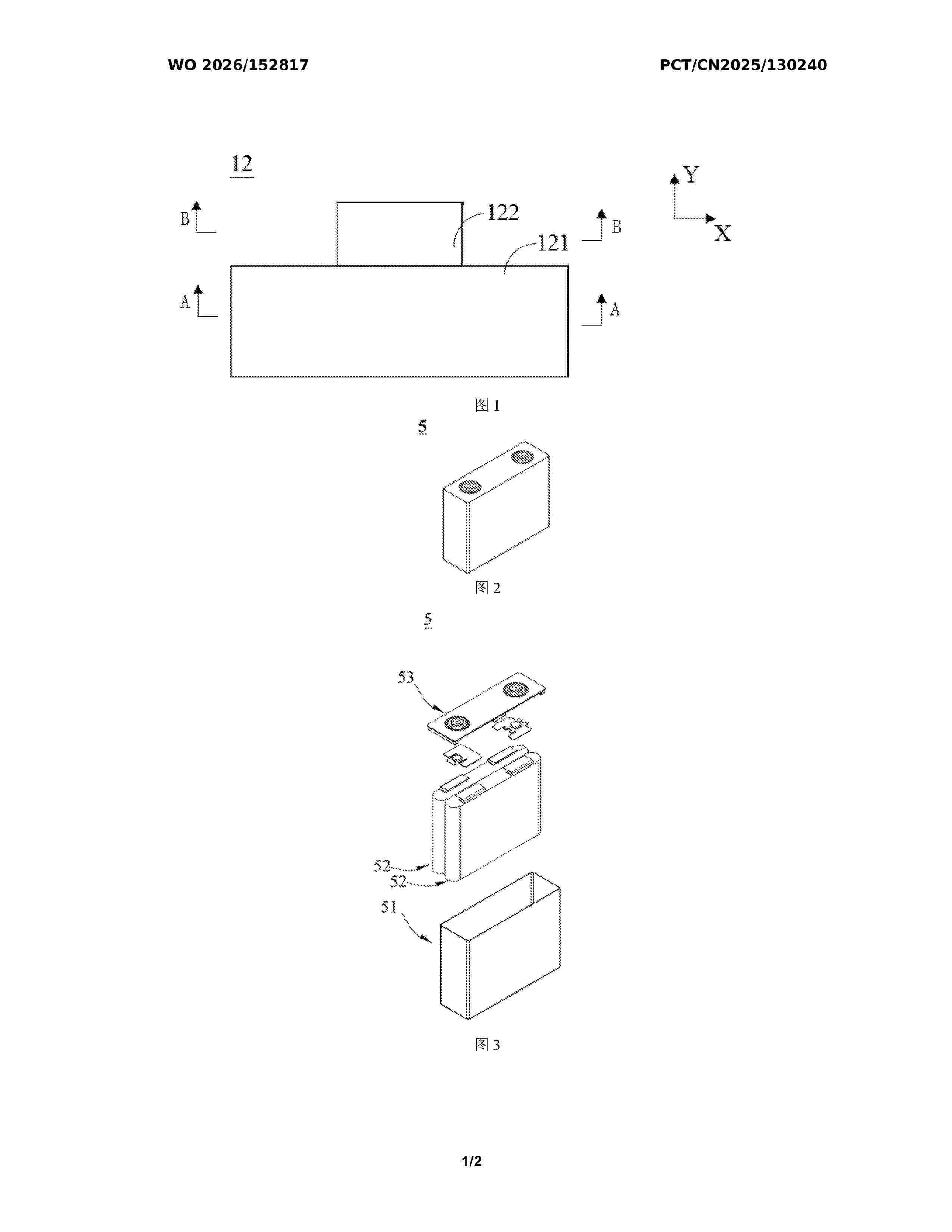
The present application provides a battery cell, a lithium-ion secondary battery and a preparation method therefor, and an electric device. The battery cell comprises a positive electrode sheet and a negative electrode sheet. The positive electrode sheet comprises a positive electrode current collector and a positive electrode active layer arranged on at least one side of the positive electrode current collector, and the positive electrode active layer comprises a lithium nickel cobalt manganese oxide. The negative electrode sheet comprises a negative electrode current collector and a negative electrode active layer arranged on at least one side of the negative electrode current collector, and the negative electrode active layer comprises graphite. The coating weight of the negative electrode active layer is 0.09 mg/1540.25 mm2-0.15 mg/1540.25 mm2. The battery cell satisfies: 0.12 mΩ≤DCR≤0.5 mΩ, wherein DCR is the direct current internal resistance of the battery cell at 25°C and 70% SOC under the conditions of a discharge rate of 4 C and a discharge duration of 10 s.
Resumen de: WO2026152776A1
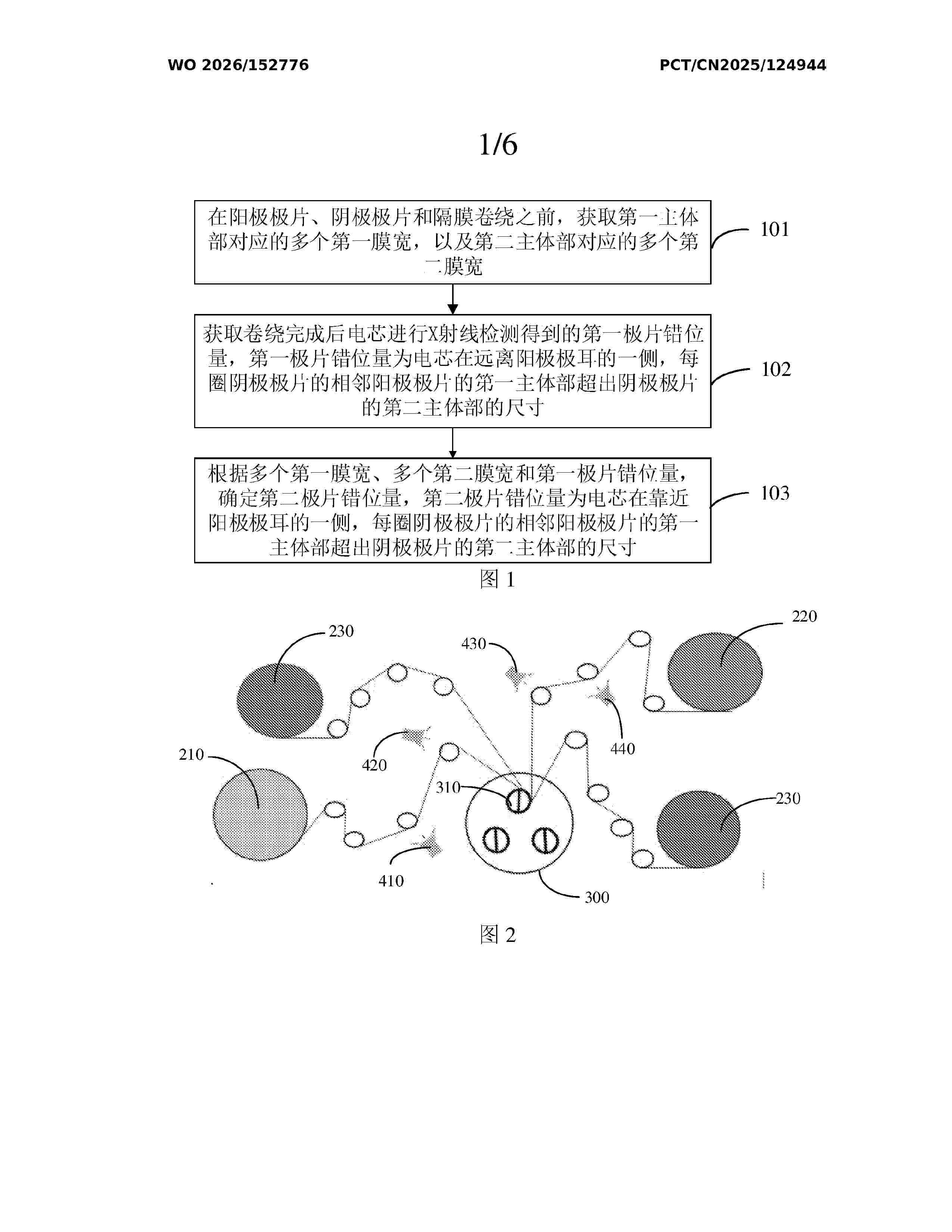
Embodiments of the present application provide a battery cell detection method and system. The method comprises: before winding an anode sheet, a cathode sheet, and a separator, acquiring a plurality of first film widths corresponding to a first main body portion of an anode film layer, and a plurality of second film widths corresponding to a second main body portion of a cathode film layer; acquiring a first electrode sheet misalignment amount obtained by performing X-ray inspection on a battery cell upon the completion of winding, wherein the first electrode sheet misalignment amount is the dimension by which, on the side of the battery cell away from an anode tab, the first main body portion of the anode sheet adjacent to each turn of the cathode sheet extends beyond the second main body portion of the cathode sheet; and on the basis of the plurality of first film widths, the plurality of second film widths, and the first electrode sheet misalignment amount, determining a second electrode sheet misalignment amount, wherein the second electrode sheet misalignment amount is the dimension by which, on the side of the battery cell close to the anode tab, the first main body portion of the anode sheet adjacent to each turn of the cathode sheet extends beyond the second main body portion of the cathode sheet.
Resumen de: WO2026153283A1
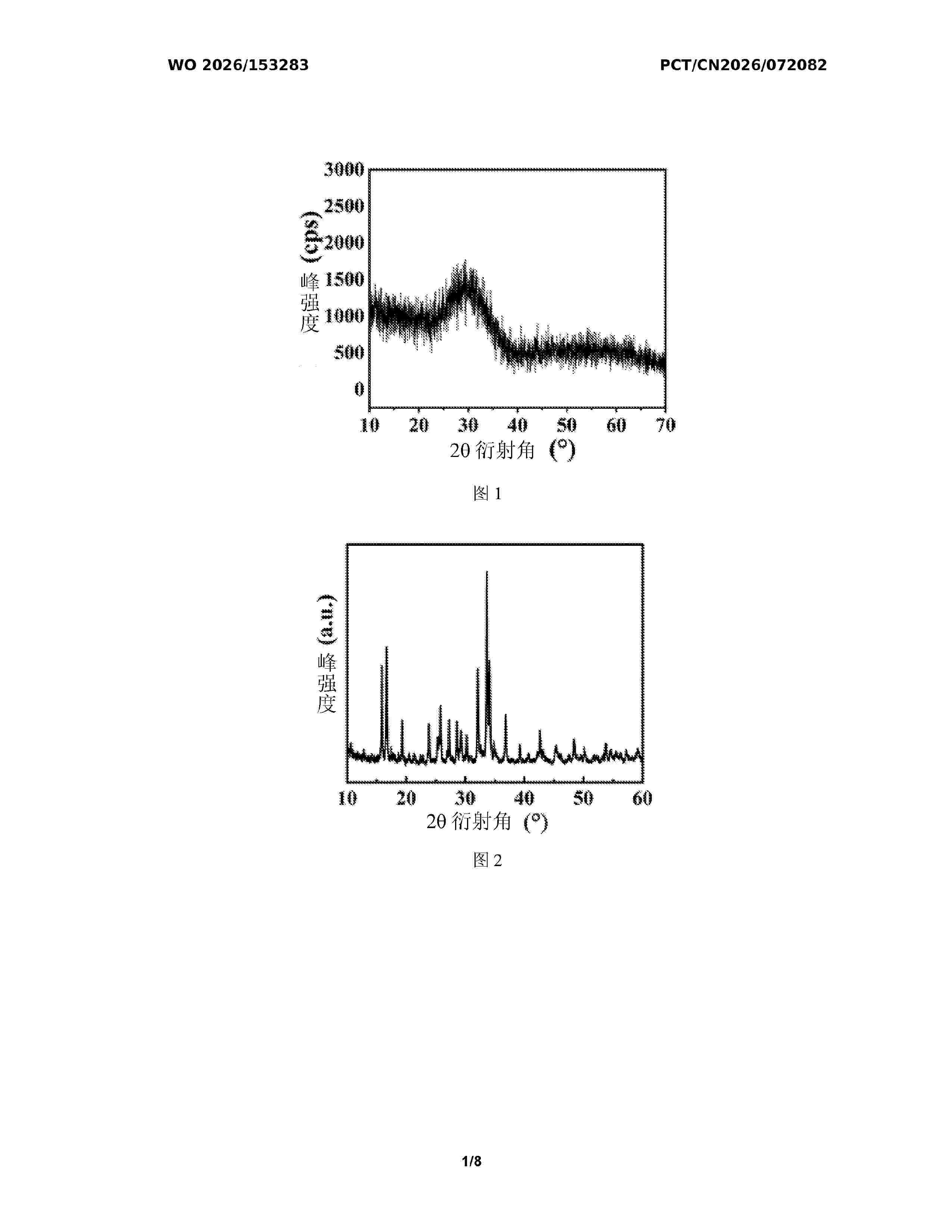
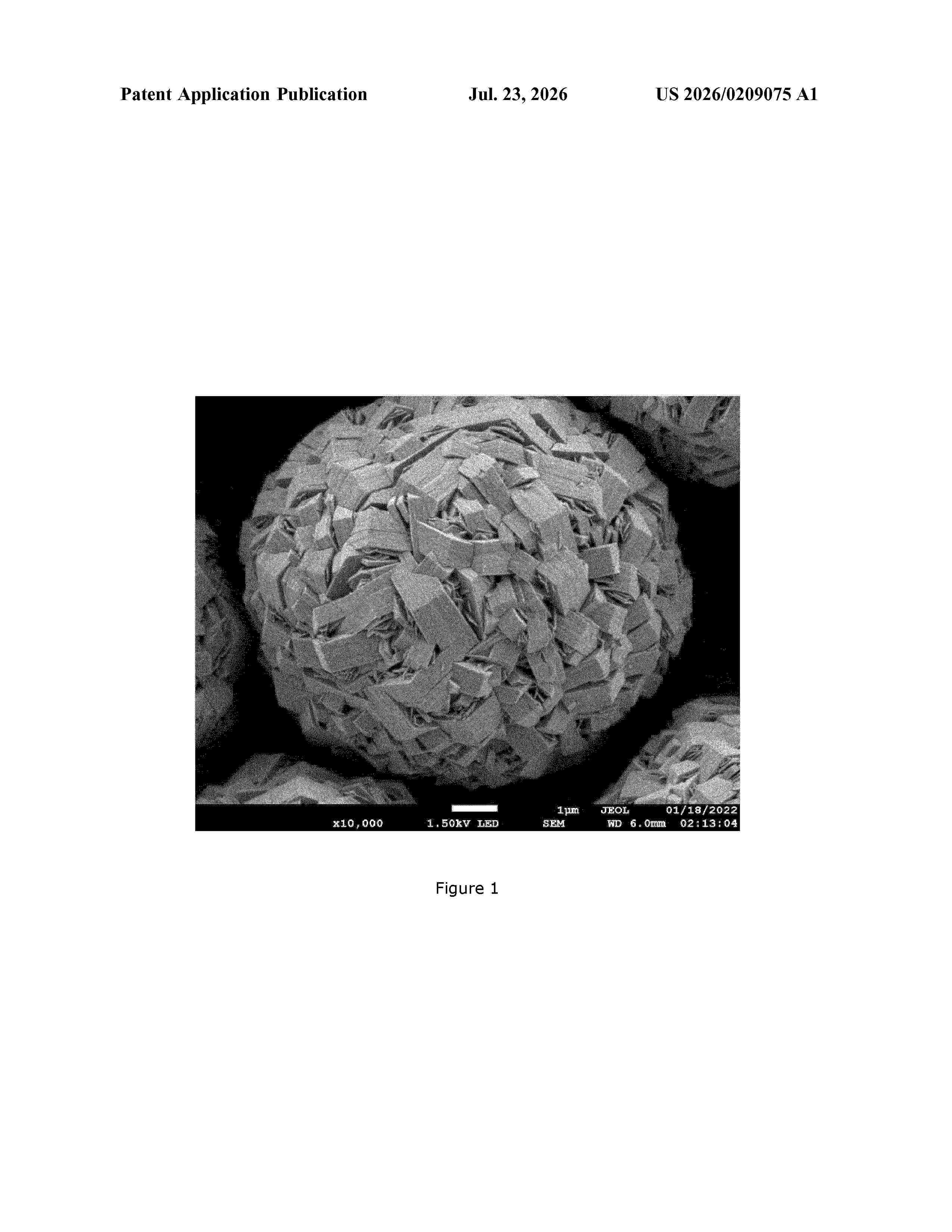
The present application relates to the technical field of electrochemistry. The present application relates to a positive electrode active material, a positive electrode sheet, a battery, and an electric device. The positive electrode active material comprises secondary particles formed by agglomeration of primary particles; the primary particles comprise a carbon-coated iron-based phosphate; and the secondary particles have an internal average porosity of less than or equal to 15%.
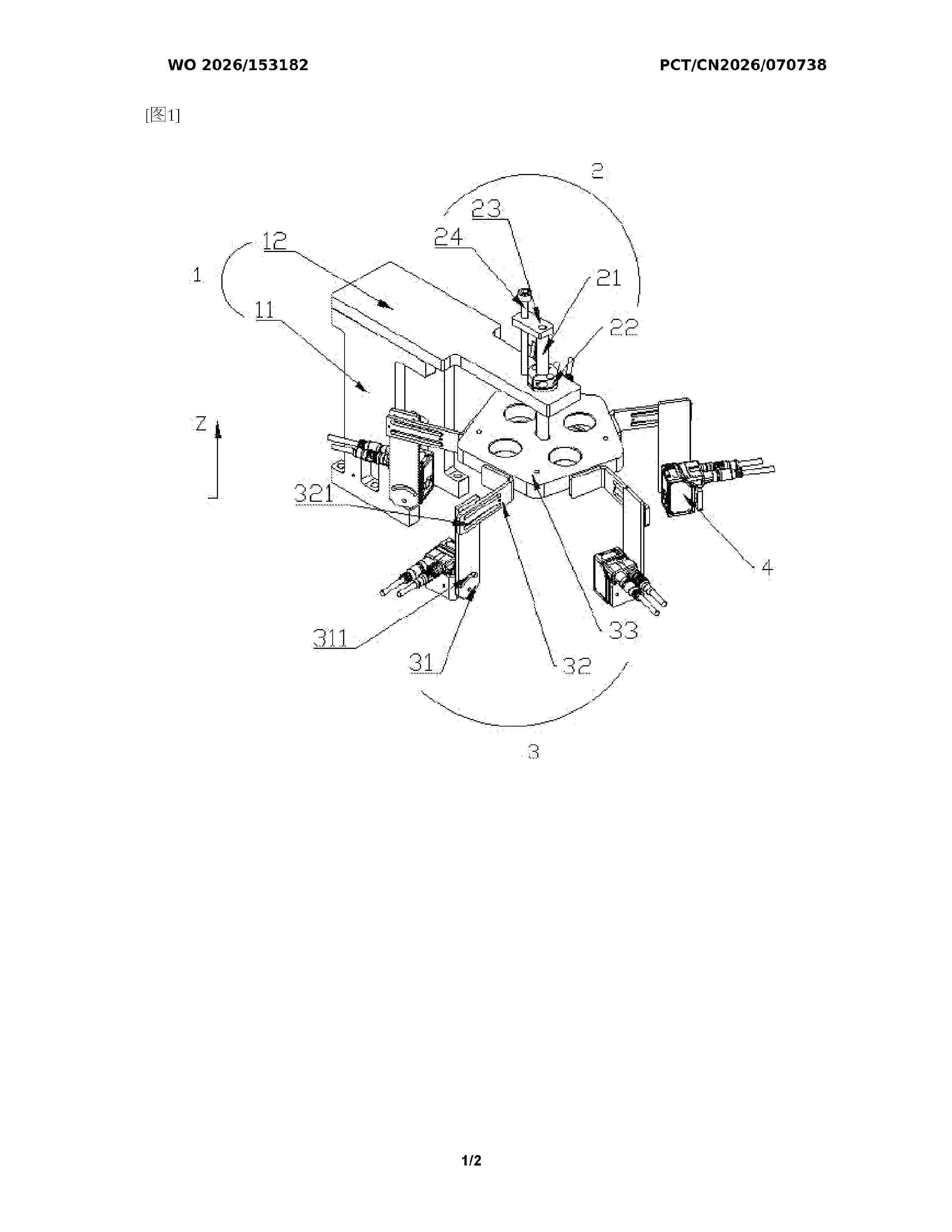
Resumen de: WO2026153182A1
The present application discloses an inspection mechanism and a conveying device. The inspection mechanism comprises a support portion, an adjustment portion, and at least two inspection portions. The support portion is used for being movably connected to a mounting platform, and is capable of moving in a first direction relative to the mounting platform. An adjustment assembly is movably connected to the support portion, and is capable of moving in a second direction relative to the support portion. A first included angle is formed between the second direction and the first direction. A mounting assembly is connected to the adjustment assembly. Each inspection portion is movably connected to the mounting assembly, and the inspection portion is capable of moving relative to the mounting assembly, so that at least one of an inspection angle and an inspection distance between the corresponding inspection portion and a material can be changed. Thus, during rotation of a conveying turntable, the at least two inspection portions can be used to achieve multi-angle rapid inspection of materials, thereby reducing the working duration occupied by an inspection process.
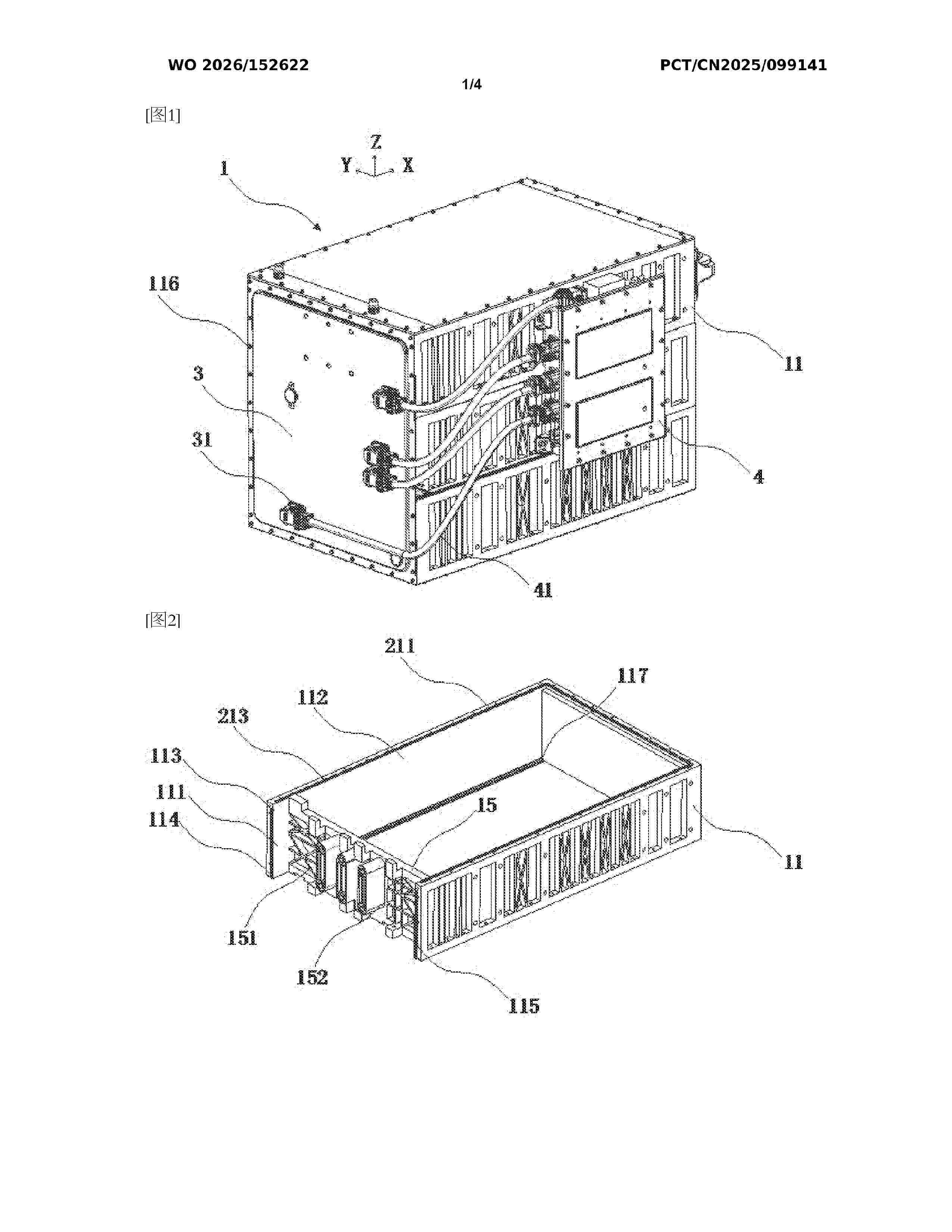
Resumen de: WO2026152622A1
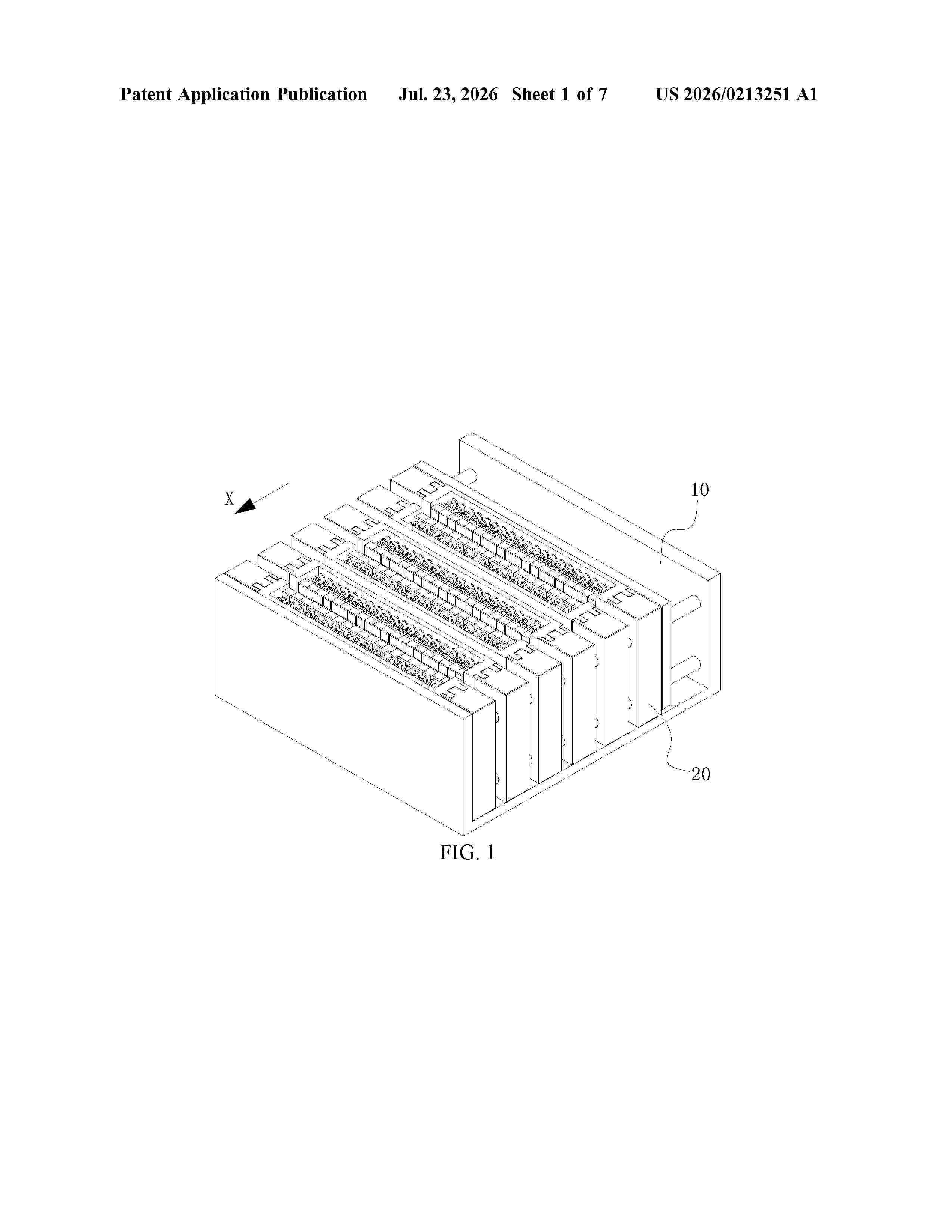
Disclosed in the present application is a battery pack, comprising: at least two battery modules, wherein recessed assembly grooves are provided at one end on an X axis, electrodes of the battery modules extend into the assembly grooves, and a busbar is integrated between the electrodes; an end cover, which is assembled at one end of the battery modules on the X axis, wherein a quick-connect socket is provided on the end cover; and a battery management system, wherein a quick-connect wire is inserted between the battery management system and the quick-connect socket.
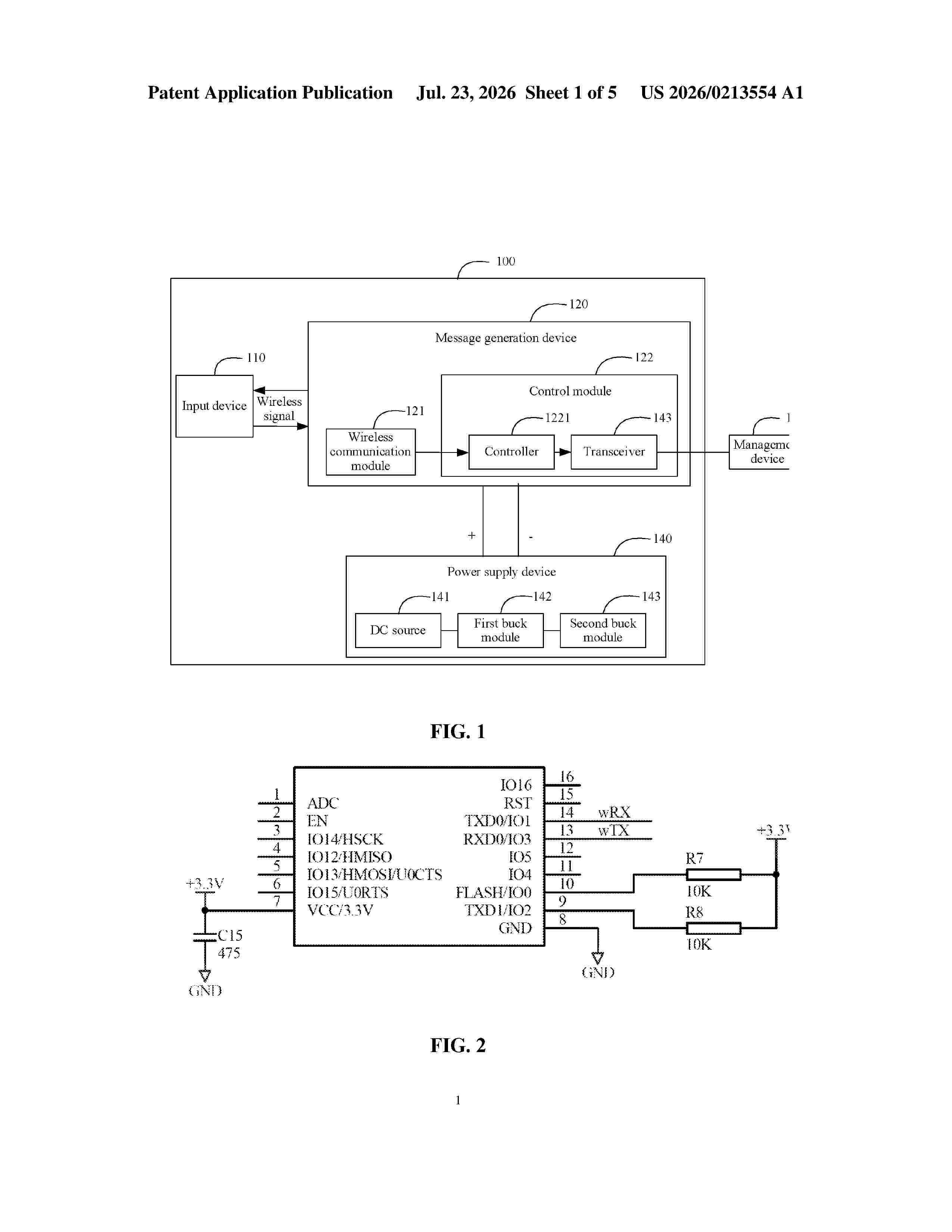
Resumen de: US20260213554A1
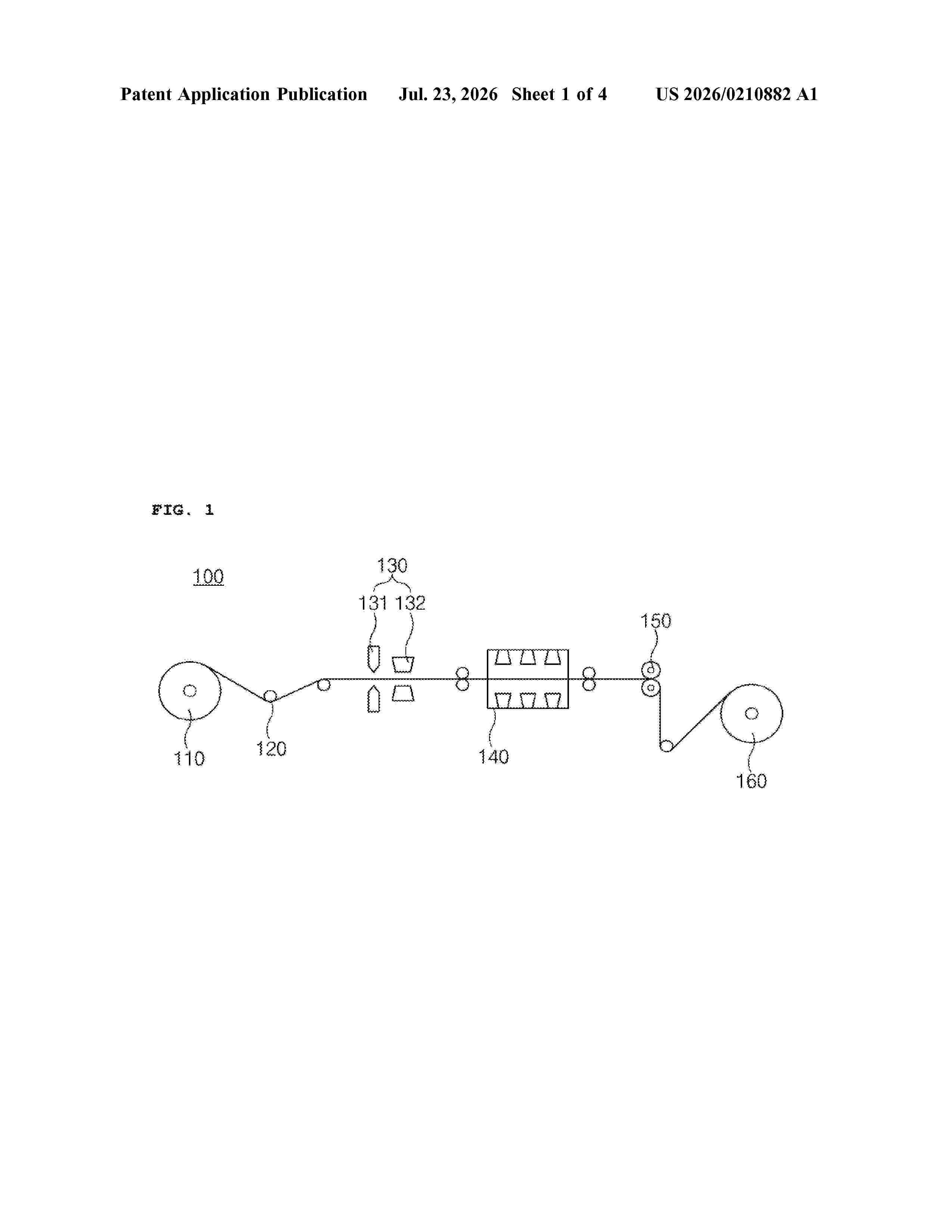
0000 A battery trigger device belonging to the field of battery technology is provided. The battery trigger device includes: an input device and a message generation device; the message generation device includes a wireless communication module and a control module; the wireless communication module is wirelessly connected to the input device; the wireless communication module is configured to acquire target data sent by the input device; the control module is connected to the wireless communication module; the control module is provided with a wired communication interface for connecting to a management device of a target battery apparatus; the control module is configured to generate a target signal based on the target data and output the target signal to the management device; and the target signal is used to trigger the target battery apparatus to output electrical energy.
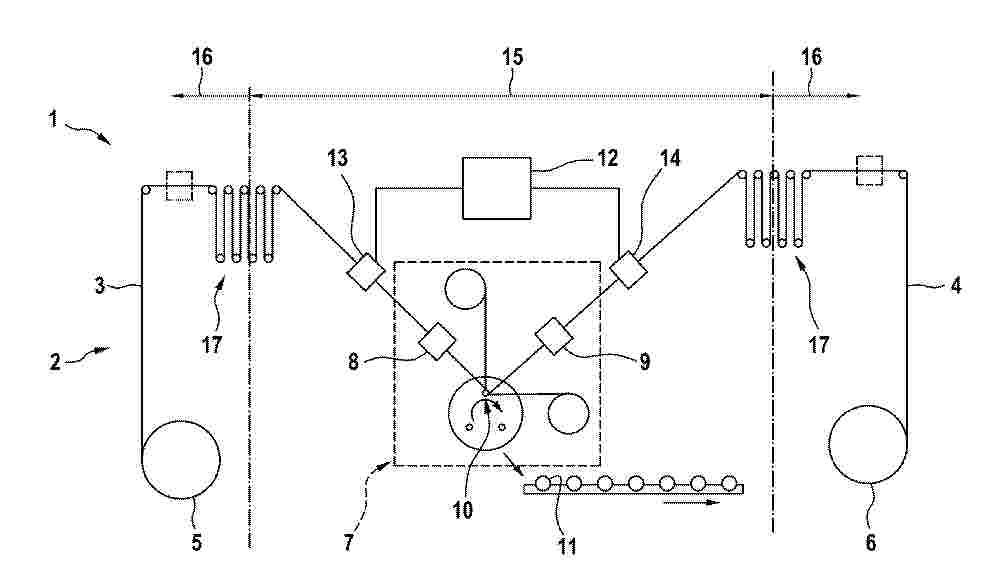
Resumen de: DE102025102215A1
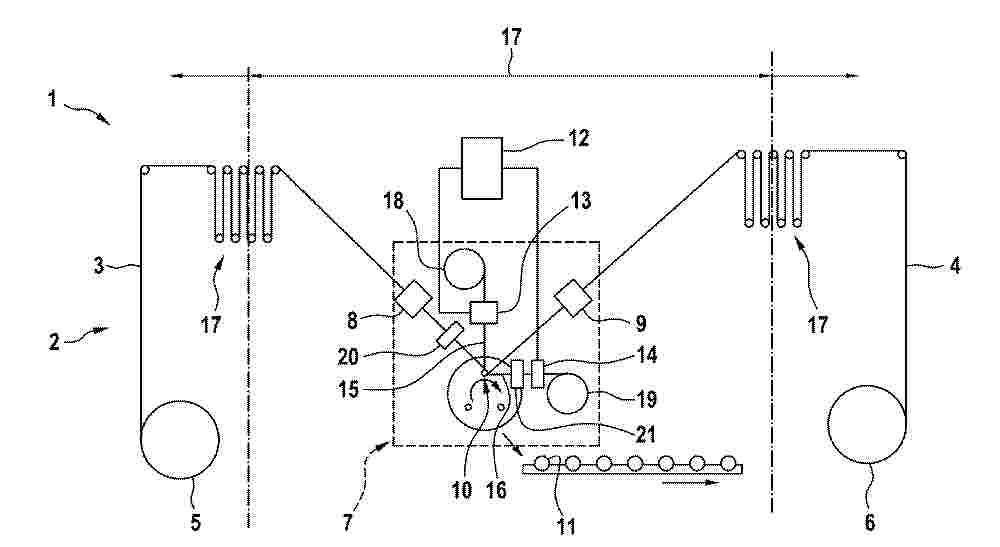
Vorrichtung (1) zur Herstellung von Elektroden für Hochvoltspeicher, insbesondere für Kraftfahrzeuge, umfassend eine Fördereinrichtung (2), die dazu ausgebildet ist, wenigstens eine Elektrodenfolie (3, 4) zu fördern, insbesondere von einer Rolle (5, 6) abzuwickeln, und eine Formungseinrichtung (7), die dazu ausgebildet ist, aus der Elektrodenfolie (3, 4), insbesondere durch Stapeln oder Wickeln, eine Elektrode einer elektrischen Energiespeicherzelle (11) zu formen, wobei die Vorrichtung (1) eine Erfassungseinrichtung (12) aufweist, die dazu ausgebildet ist, eine Dickeninformation der Elektrodenfolie (3, 4) zu erfassen, die eine Dicke (D) der Elektrodenfolie (3, 4) betrifft.
Resumen de: WO2026155219A1
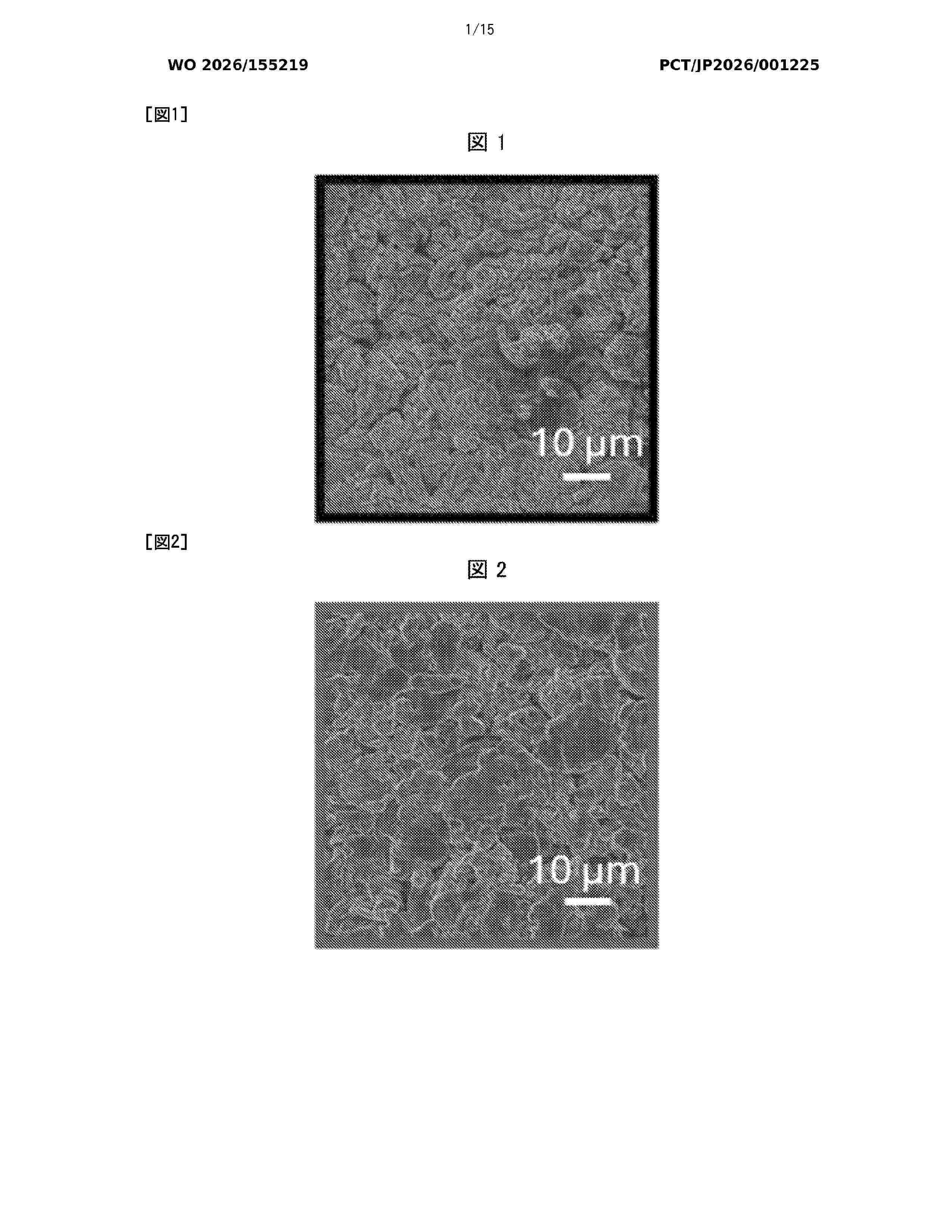
The purpose of one embodiment of the present invention is to make it possible to stably dissolve and precipitate metallic lithium (avoid or reduce dendrites and dead lithium) and achieve both a high energy density and a cycle life in a metallic lithium secondary battery. An electrolyte for a metallic lithium secondary battery according to one embodiment of the present invention comprises at least one halogenated cyclic phosphoric acid ester represented by formula (1) and a predetermined solvent. (In formula (1), X is halogen, R1-R4 are each independently an alkyl group or hydrogen, and n is an integer of 1-4, provided that when n is an integer of 2-4, the respective R3s may be the same group or different groups and the respective R4s may be the same group or different groups.)
Resumen de: WO2026154976A1
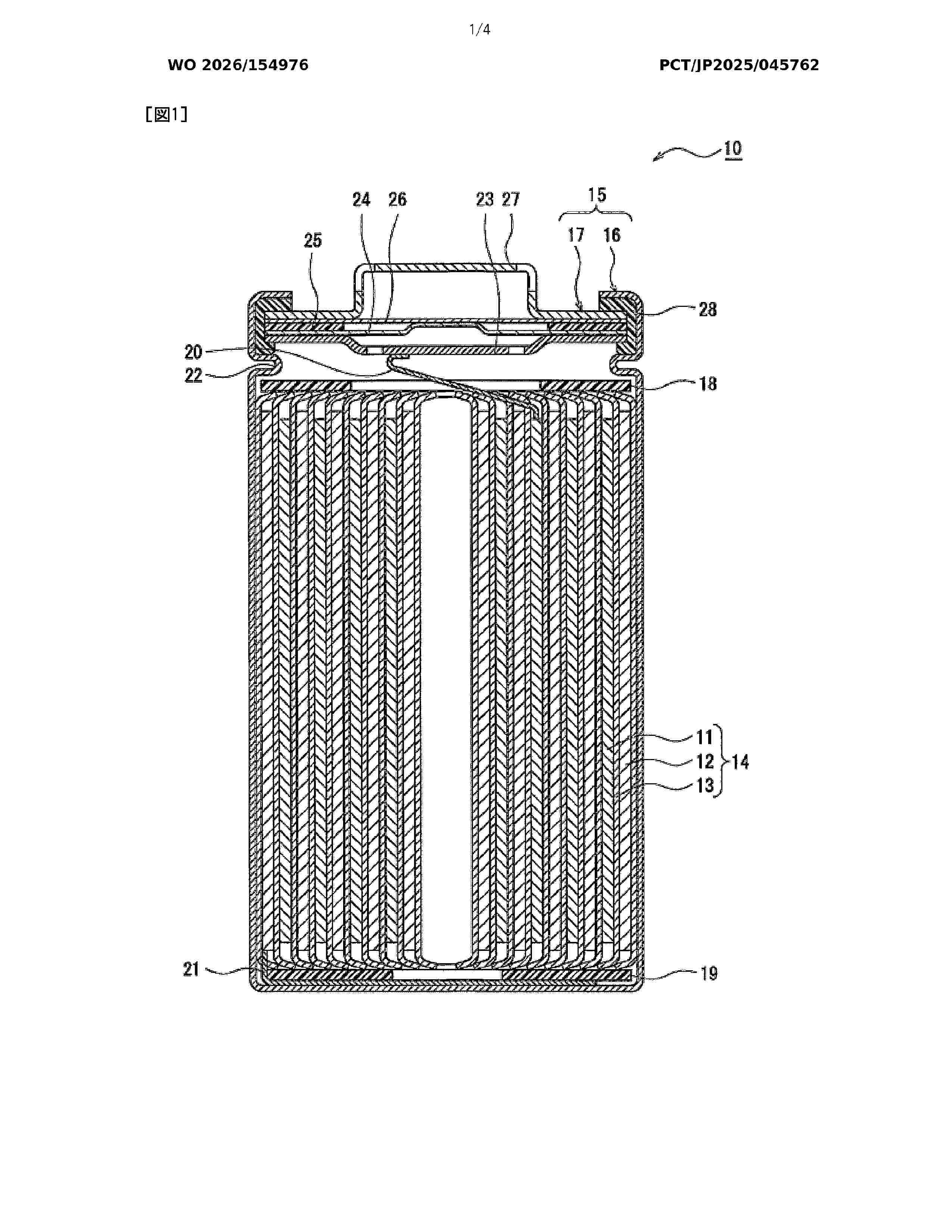
An electrode for this secondary battery is characterized by comprising a core body, a mixture layer disposed on the core body, and a plurality of tabs electrically connecting the core body and an electrode terminal, wherein the plurality of tabs include a first tab on one end side in a longitudinal direction of the mixture layer, a second tab on the other end side in the longitudinal direction of the mixture layer, and a third tab disposed between the first tab and the second tab, the tab resistance of, from among the plurality of tabs, the third tab is highest in value, and the tab resistance of, from among the plurality of tabs, at least one of the first tab or the second tab is lowest in value if the ratio (Y/X) of the distance Y in the longitudinal direction from the other end of the mixture layer to the second tab to the distance X in the longitudinal direction from one end of the mixture layer to the first tab satisfies 0.95 ≤ Y/X ≤ 1.05.
Resumen de: WO2026155197A1
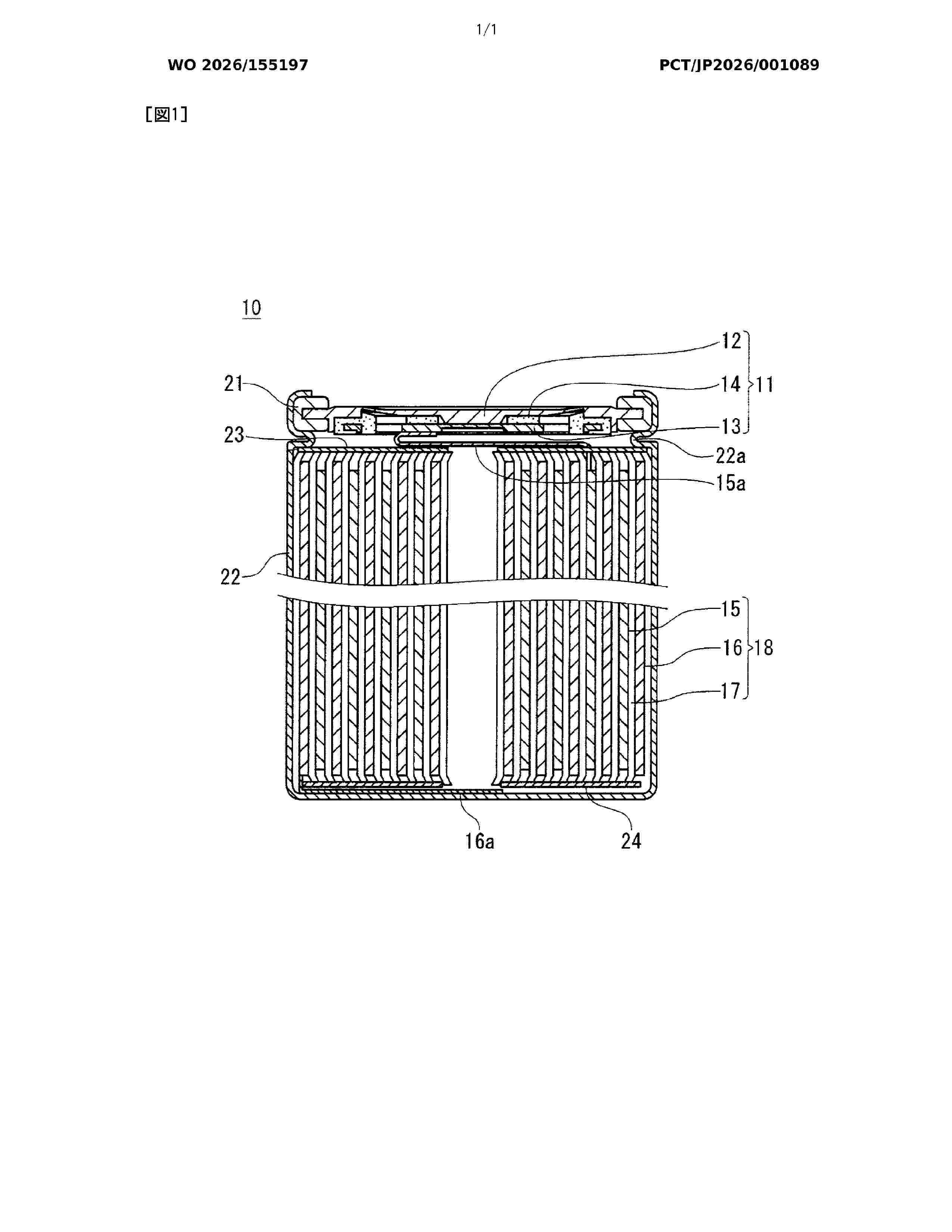
This nonaqueous electrolyte for a secondary battery contains dichloromethane and an S-containing cyclic compound. The S-containing cyclic compound has a 5- or 6-membered S-containing ring that contains a sulfur atom.
Resumen de: WO2026155566A1
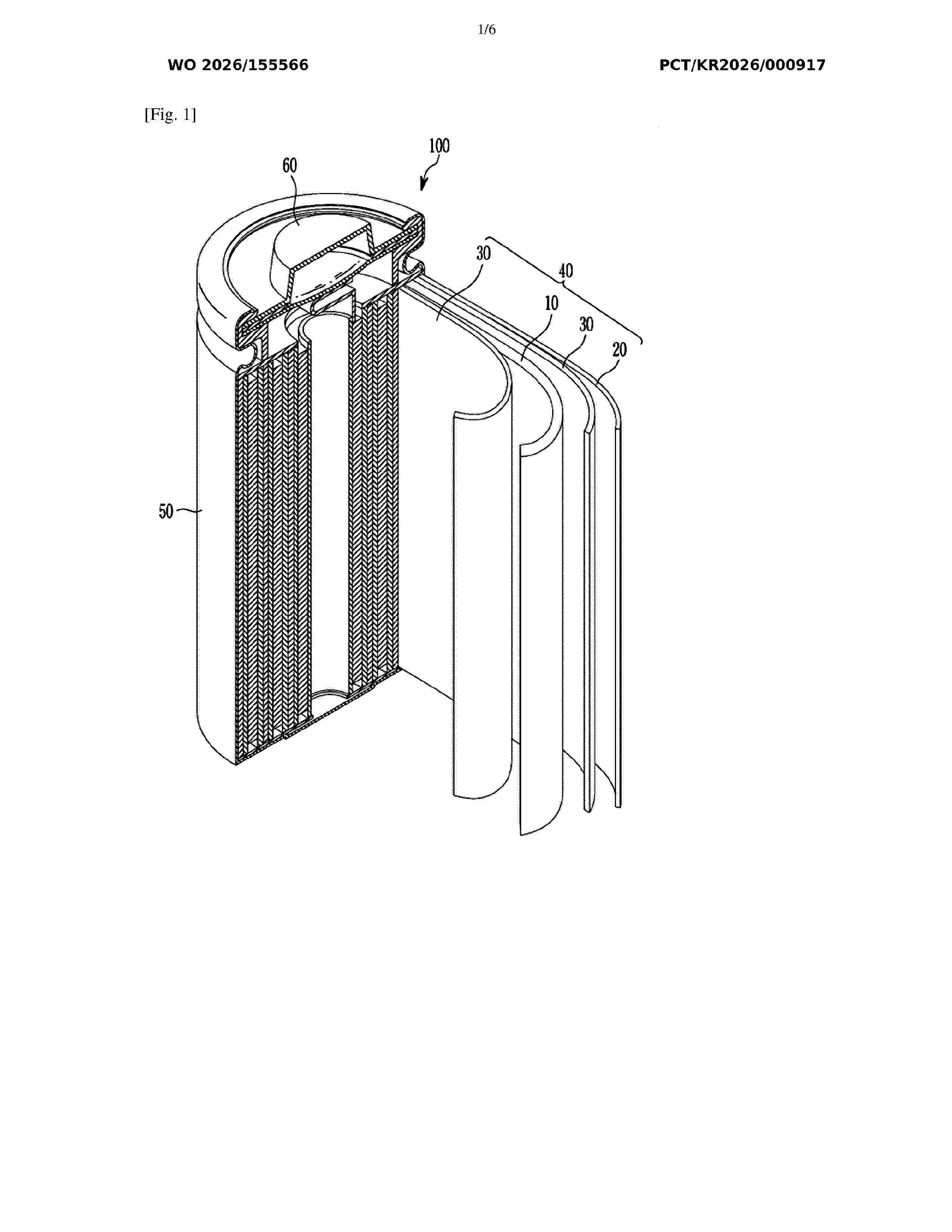
An anodeless all-solid-state battery (ASSB) and a method of making the anodeless ASSB are provided. The anodeless ASSB includes: a positive electrode, a negative electrode current collector, a solid-state electrolyte, and an interlayer including at least one additive, a carbonaceous material, and a binder. The additive may include a metal compound, nanoparticles, or a combination thereof, the metal compound may be represented by formula MxAy and the nanoparticles may include a metal represented by M of formula MxAy, x and y are integers independently selected from 1 to 6, M may be silver, zinc, indium, tin, bismuth, magnesium, aluminum, or a combination thereof, and A may be nitrate, sulfate, iodide, chloride, fluoride, or a combination thereof. The interlayer may be substantially free of organic amine compounds. A molar ratio of the metal compound to the nanoparticles may be about 100:1 to about 3:1.
Resumen de: WO2026155481A1
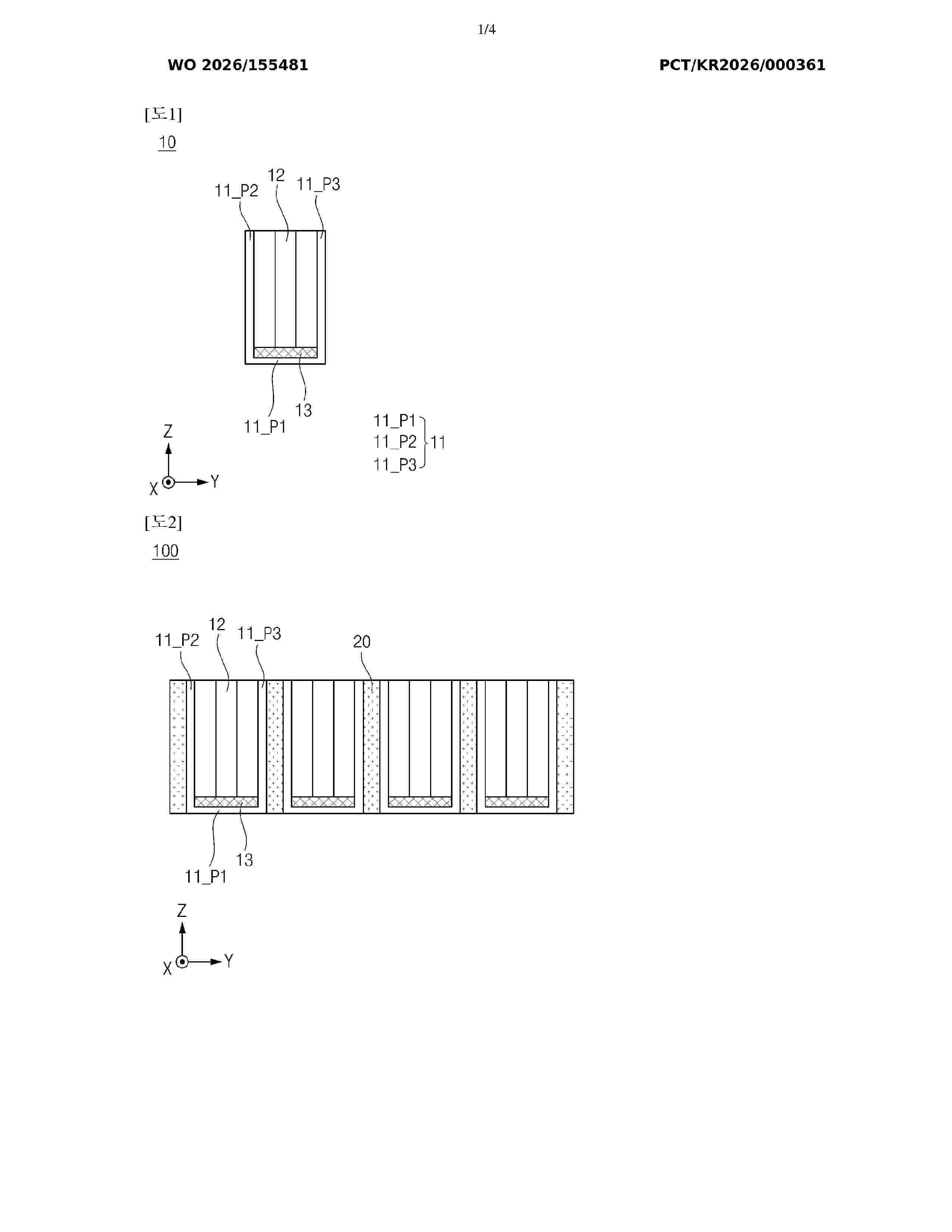
Provided is a battery unit comprising: a U-shaped barrier sheet including a first portion and second and third portions spaced apart from each other with the first portion therebetween; battery cells which are accommodated in the barrier sheet and are arranged in a first direction; and a gap filler pad between the first portion and the battery cells.
Resumen de: WO2026152278A1
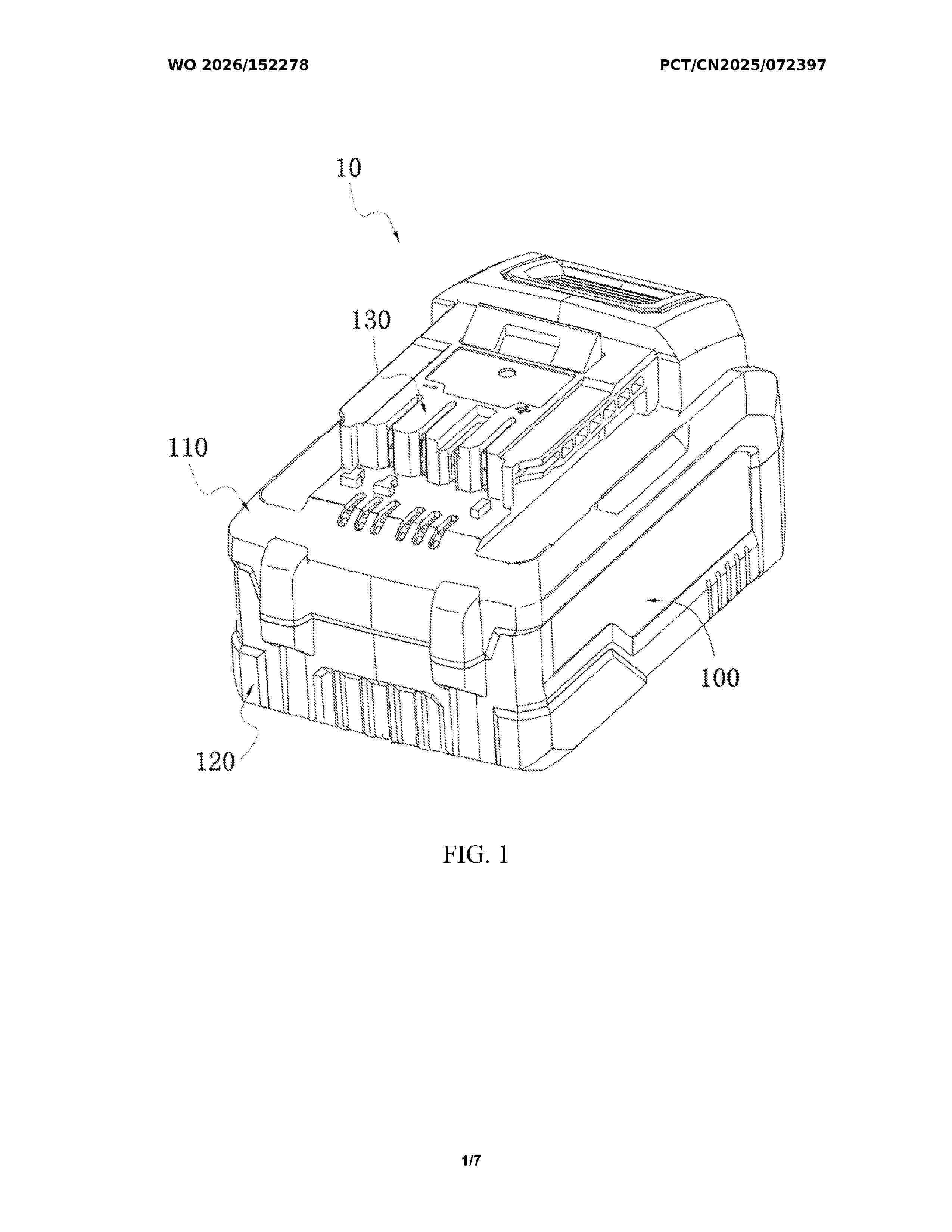
A battery pack includes a housing, a plurality of battery cells, a terminal assembly having a positive terminal and a negative terminal, and a bus bar electrically connecting the plurality of battery cells to the terminal assembly. A resistance value of the bus bar at 25℃ is less than or equal to 0.18 mΩ, and a resistance drift rate of the bus bar is less than or equal to 0.5 μΩ/℃. A distance between a temperature detector to sense the temperature of the bus bar and the bus bar is less than or equal to 5 mm. A controller is coupled to the temperature detector and configured to determine a resistance of the bus bar based on the temperature of the bus bar, and calculate a current of the battery pack based on the voltage and the resistance of the bus bar.
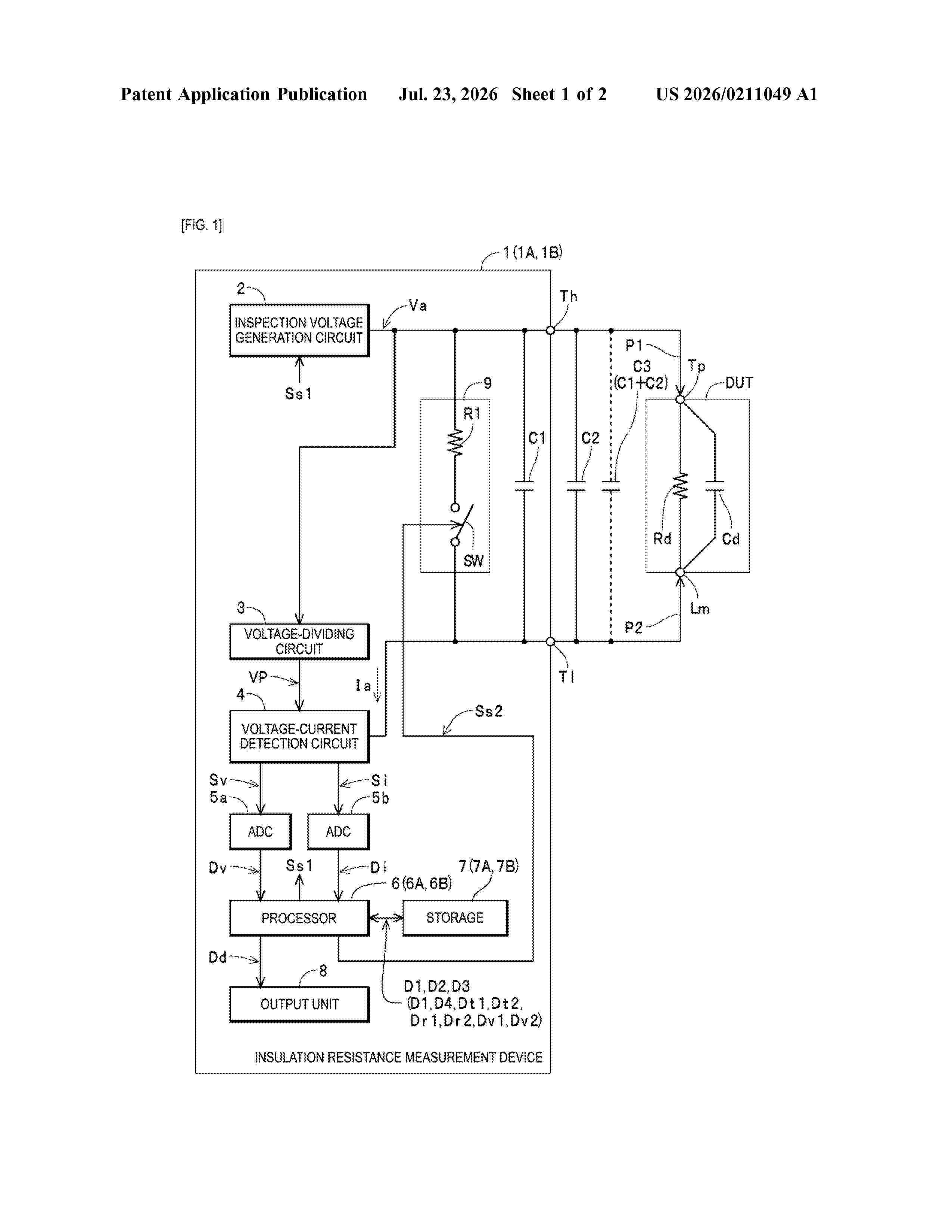
Resumen de: WO2026155989A1
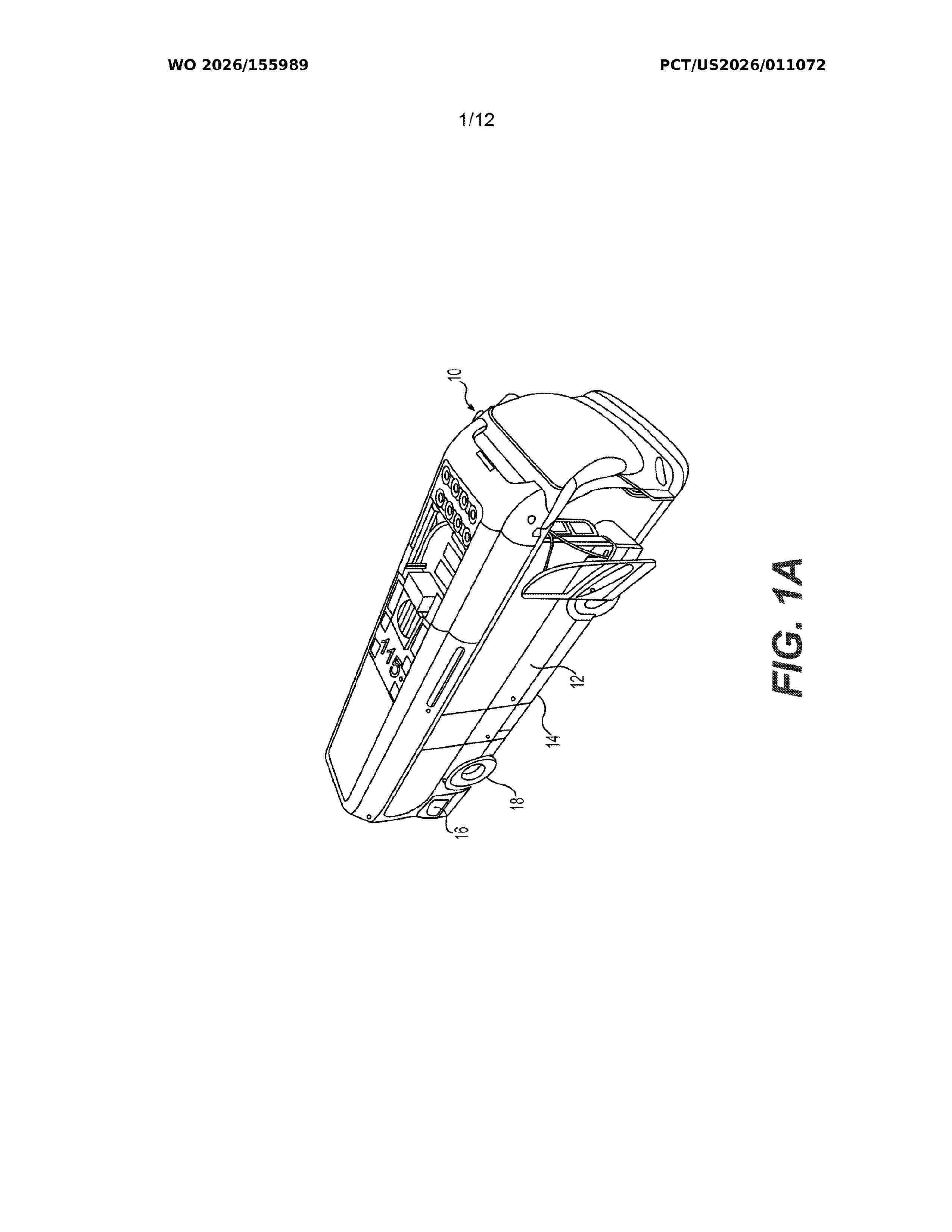
A battery system may include a plurality of high-voltage (HV) battery packs, each HV battery pack including a plurality of battery cells enclosed within a housing. A battery management system (BMS) can be electrically connected to each of the HV battery packs configured to control the plurality of HV battery packs. The BMS can include a controller configured to identify an isolation breakdown based at least on whether a low resistance connection exists between a portion of a series connection of the plurality of battery cells and a chassis ground of the electric vehicle; and determine an electrical location of a fault in the plurality of HV battery packs based at least on a battery pack positive voltage and a battery pack negative voltage.
Resumen de: US20260213434A1
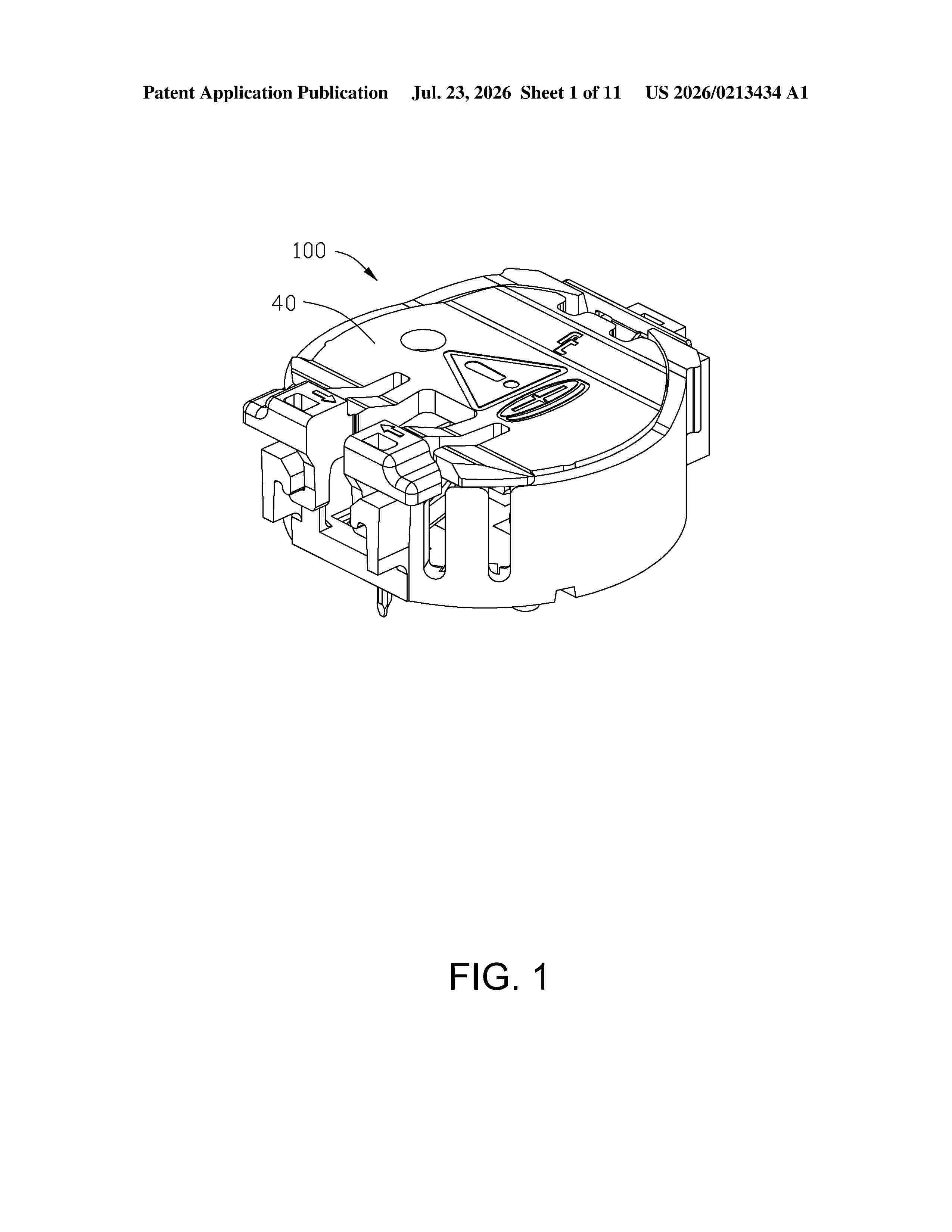
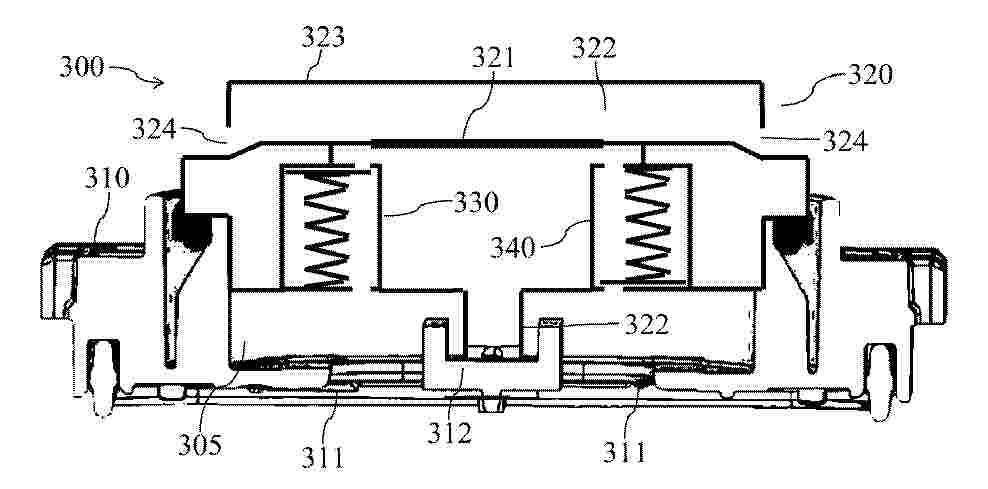
A battery connector includes an insulating base having a bottom wall, a surrounding wall and a receiving groove; a negative terminal fixed in the bottom wall and including a first elastic arm with a first contacting portion; a positive terminal having a second elastic arm and a stopping portion, the second elastic arm having a second contacting portion for contacting with a side face of the button cell and two latching portions bending from two sides thereof respectively . The stopping portion is located in a same vertical plane with two distal ends extending out of the receiving groove and abutting against an outer side of the surrounding wall and a middle portion between the two distal ends is located at an inner side of the surrounding wall, and a lower edge of the middle portion is integrally connected with the second elastic arm by an inclined portion.
Resumen de: WO2026152782A1
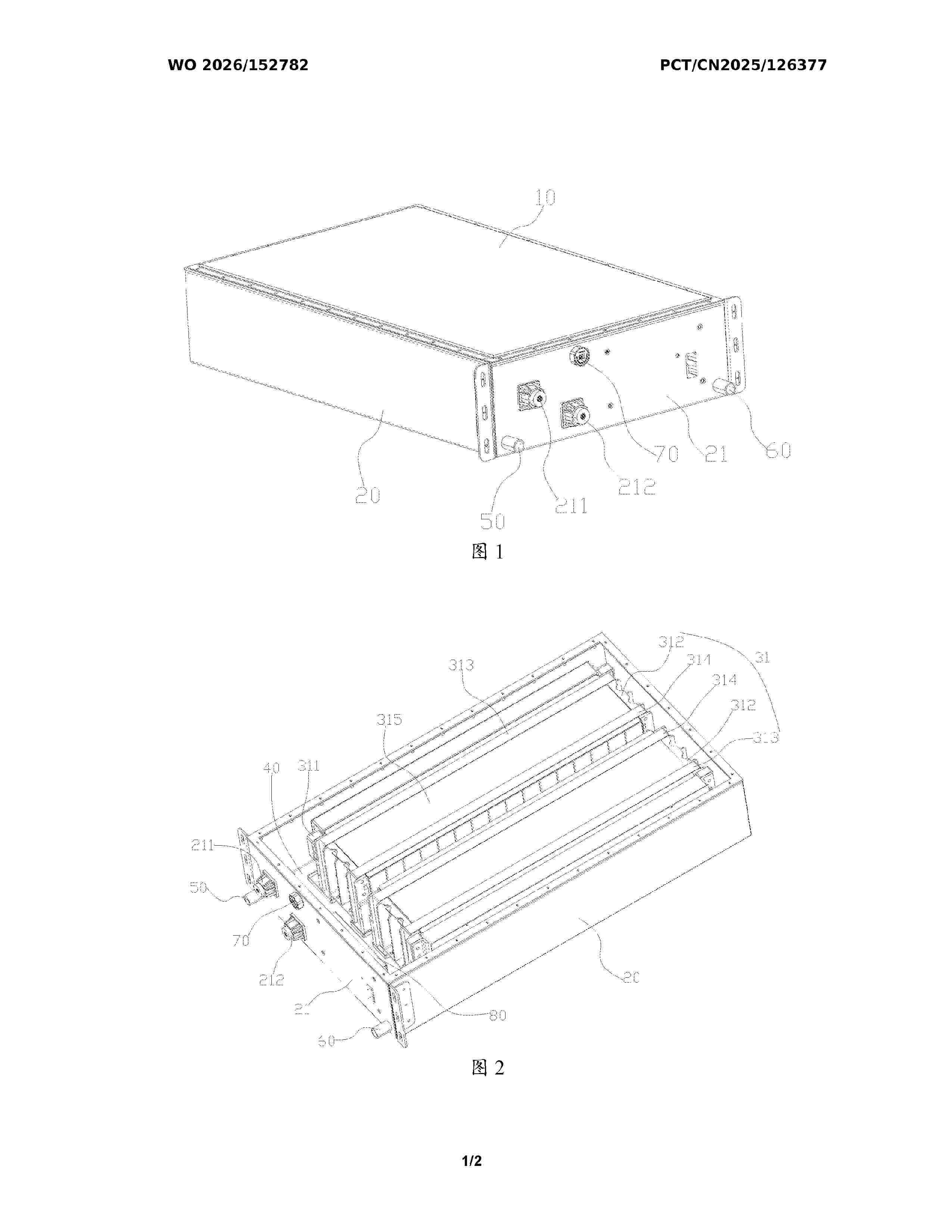
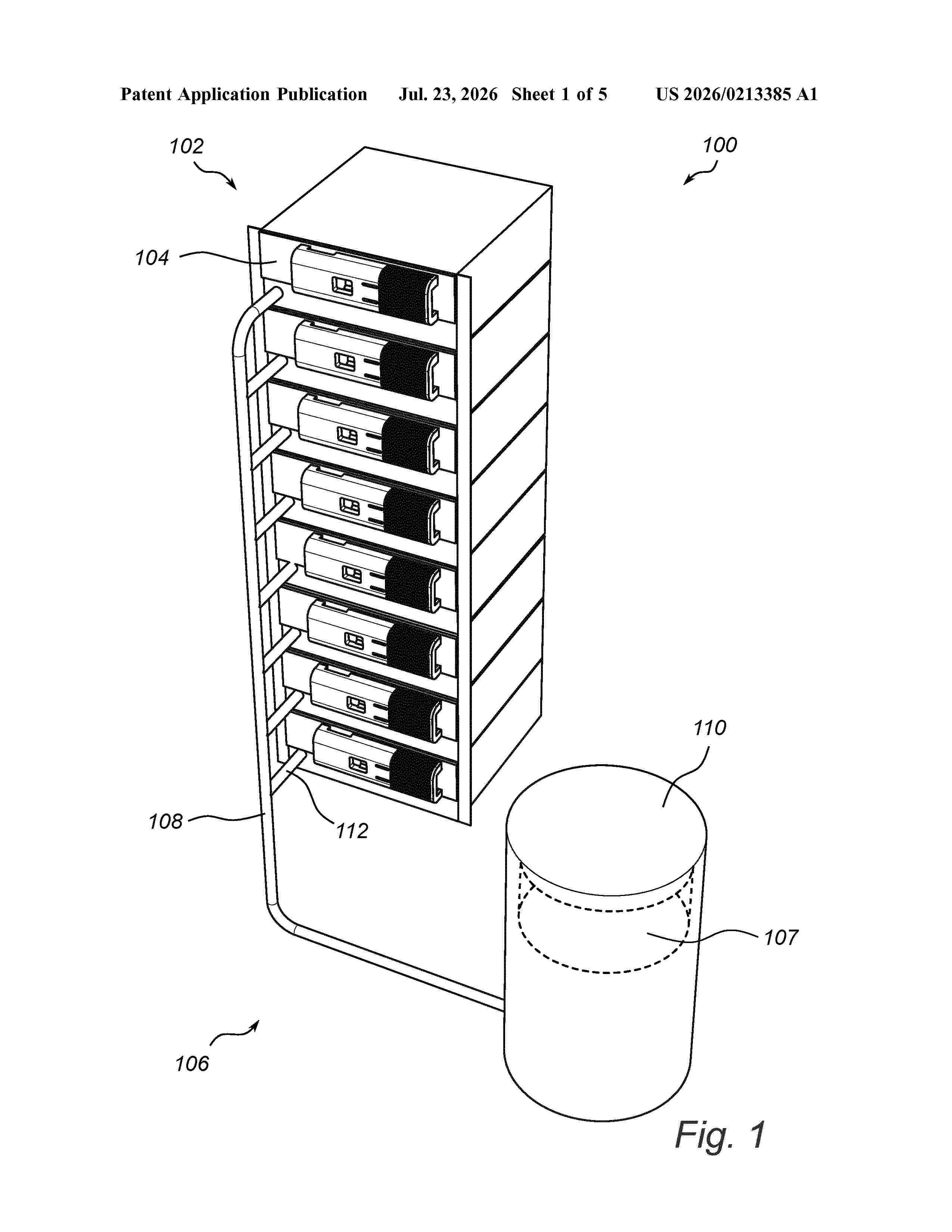
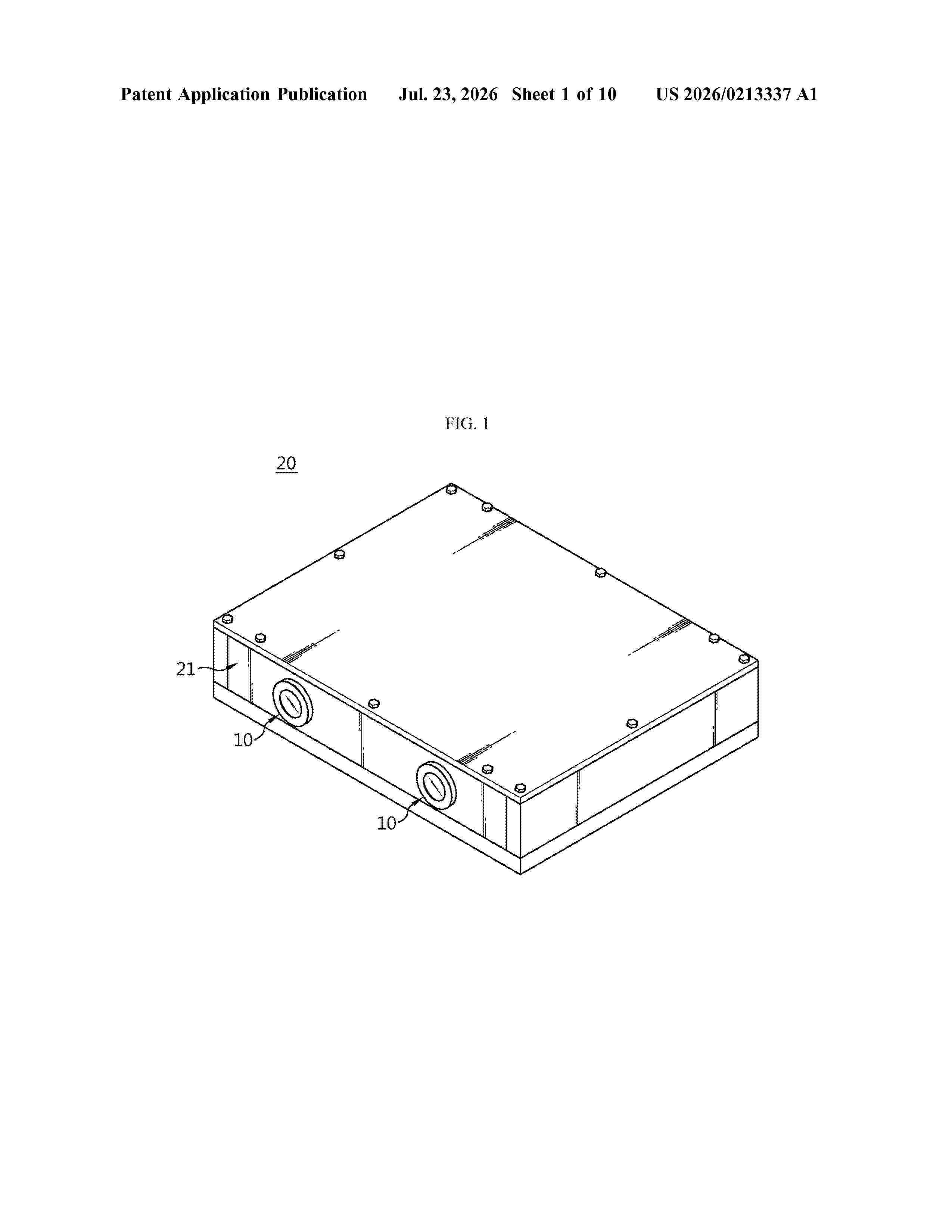
The present application relates to a liquid-cooled immersion-type UPS battery structure, comprising a cover plate, a case, a battery cell module, and a cooling liquid. The battery cell module is arranged in the case; the cooling liquid is accommodated in the case, and the battery cell module is immersed in the cooling liquid; the cover plate covers the top of the case; one end surface of the case is provided with a cooling liquid inlet, a cooling liquid outlet, and an explosion-proof valve which are independent of each other; the cooling liquid inlet and the cooling liquid outlet are separately communicated with the case; and the cooling liquid inlet and the cooling liquid outlet are both arranged close to the bottom of the end surface, and the explosion-proof valve is arranged close to the top of the end surface. The present application can achieve overall cooling of the battery cell module and of an electronic component and isolation from oxygen, when thermal runaway occurs in a battery cell, gas generated can be quickly and effectively discharged through the explosion-proof valve outside the case, preventing module explosion, and effectively prolonging the service life of a battery, and the battery structure can be produced and used as a general-purpose product.
Resumen de: WO2026153585A1
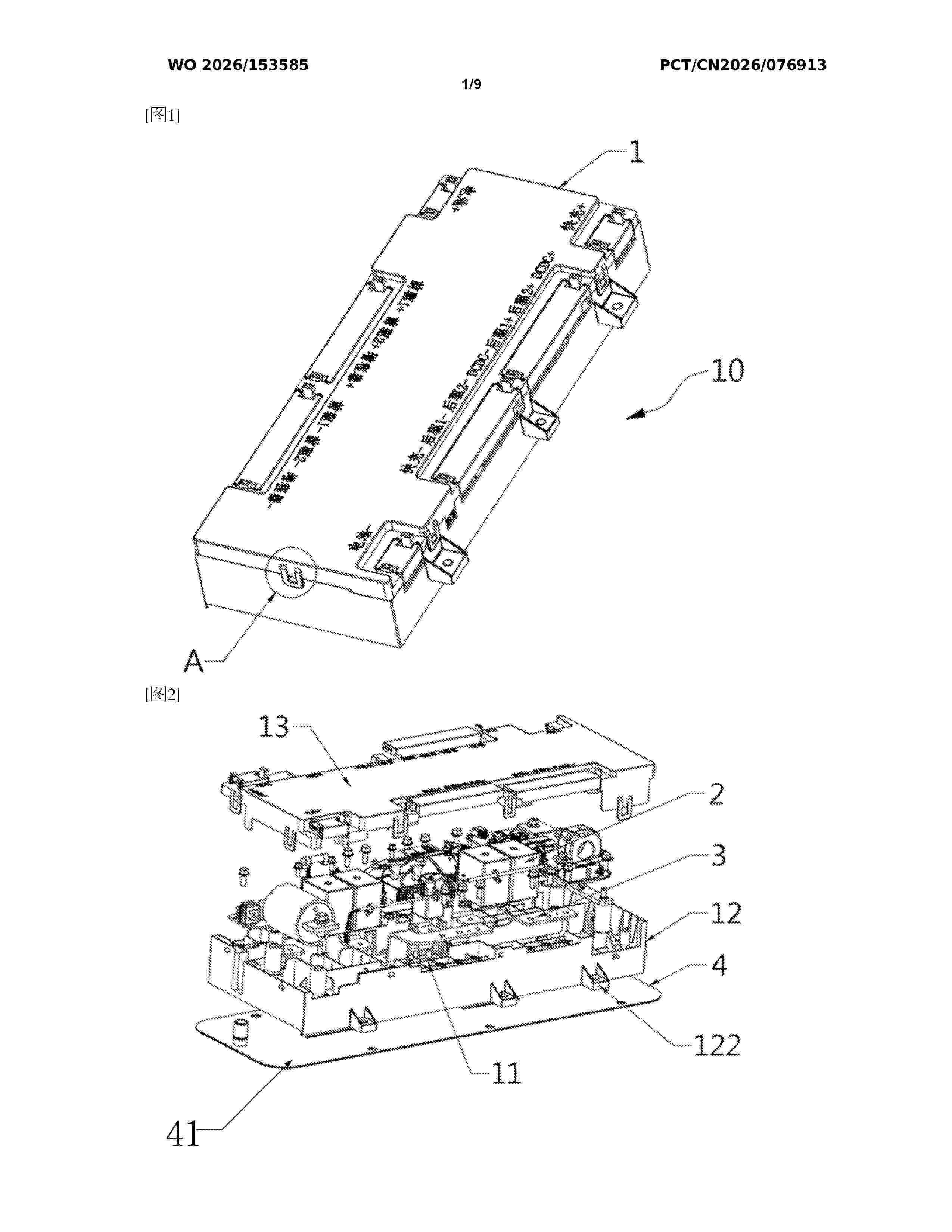
Provided in the present application are a BDU and a battery pack. The BDU comprises a housing, an electrical assembly, a busbar and a heat dissipation module, wherein the housing comprises a bottom plate; the electrical assembly is mounted in the housing, and is arranged on the bottom plate; the busbar is arranged on the bottom plate, and is electrically connected to the electrical assembly, and the busbar is integrally formed with the bottom plate; and the heat dissipation module is arranged on the housing, and is in heat transfer connection with the busbar. In the present application, the busbar is integrally formed on the bottom plate, such that the difficulty in mounting the busbar on the housing can be reduced, and the bottom plate can provide a stable support for the busbar, thereby enhancing the overall structural rigidity of the busbar, and preventing vibrations, fatigue, etc., caused by a suspended arrangement of the busbar. Moreover, the busbar is arranged on the bottom plate, such that the internal space of the housing can be saved on, the layout design and wiring process of the electrical assembly in an accommodating cavity are simplified, and the production difficulty is reduced, thereby improving the production efficiency and operational stability of the BDU and the battery pack.
Resumen de: WO2026154275A1
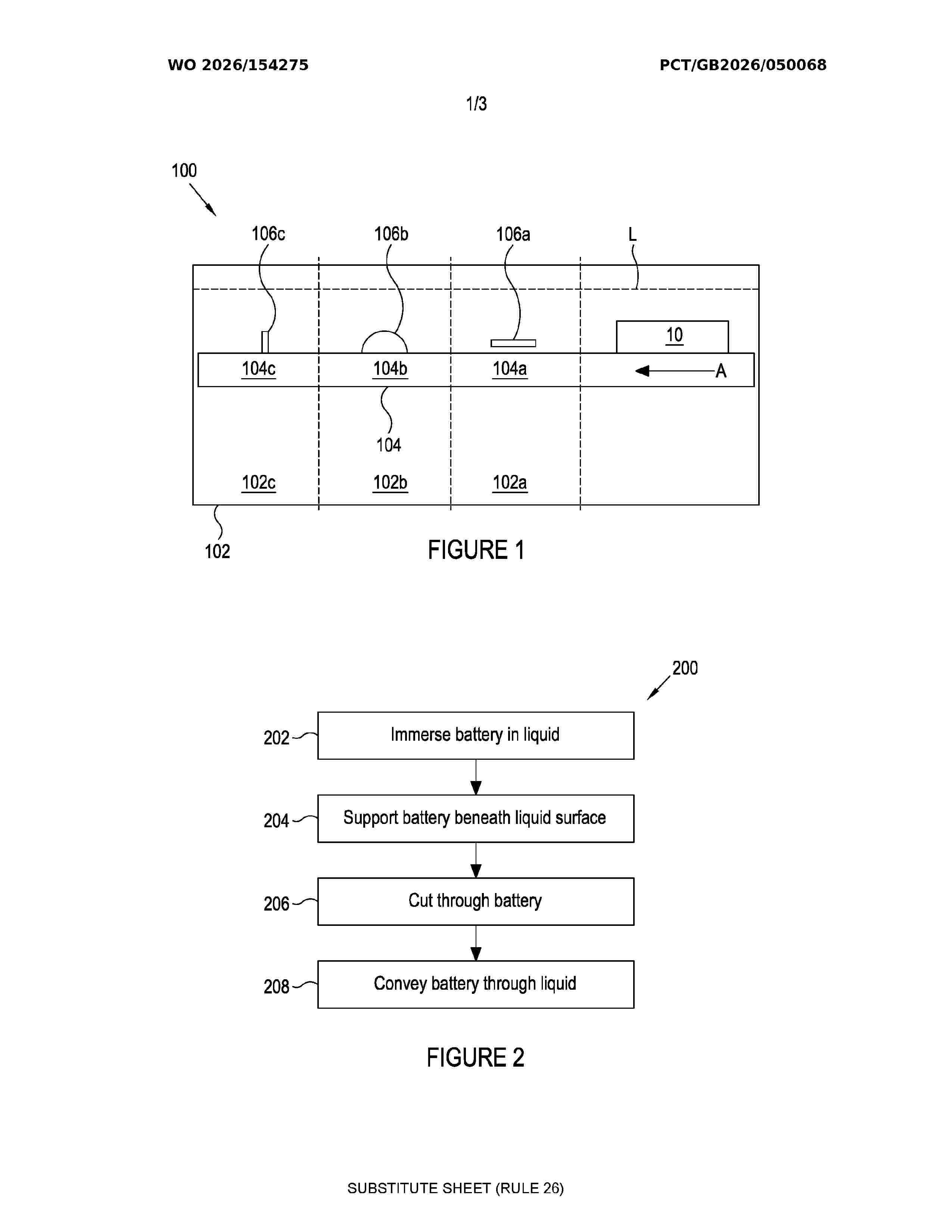
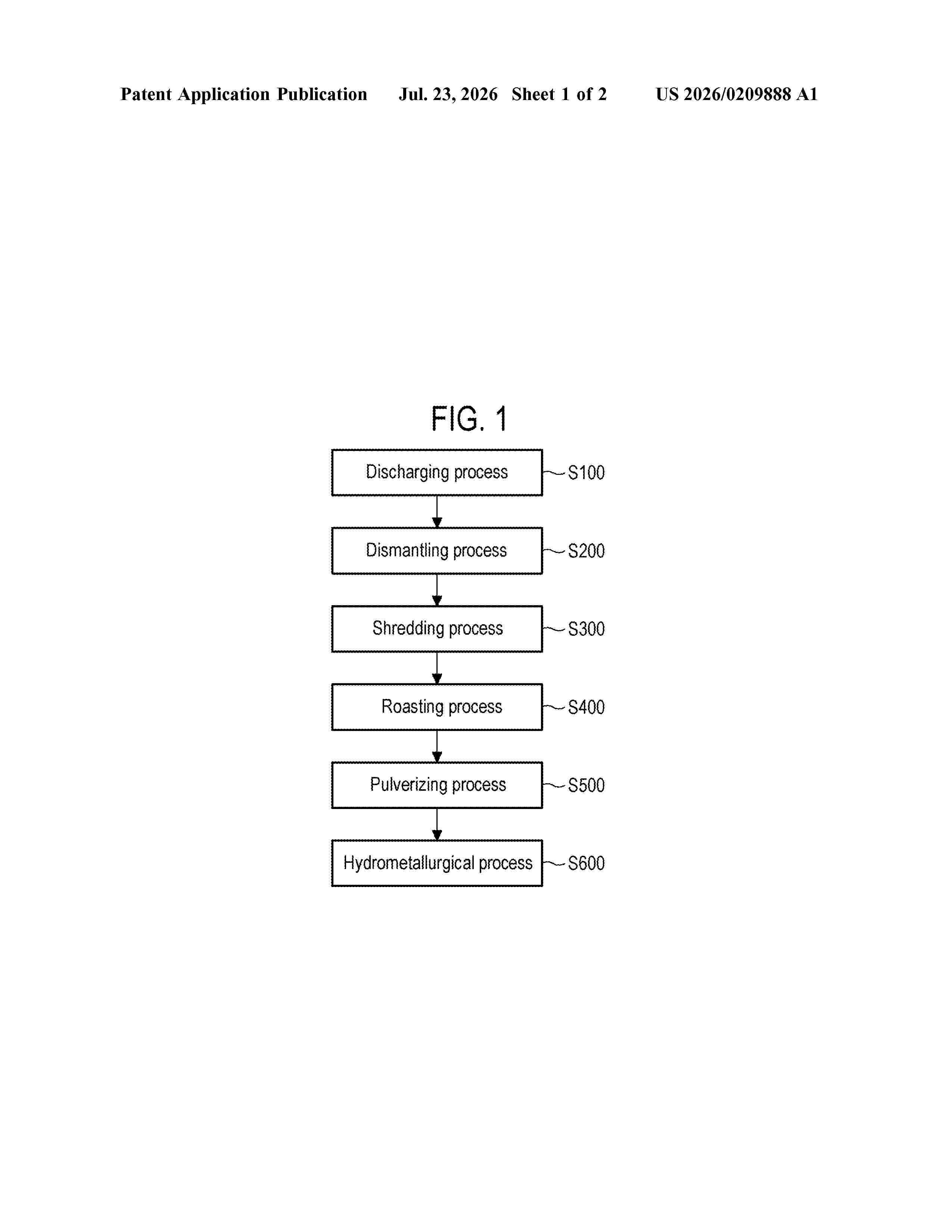
There is provided an apparatus for processing an electric battery for recycling. The apparatus comprises a tank configured to contain a liquid. The apparatus also comprises a support surface configured to support a battery within the tank. The support surface is located within the tank such that the battery is immersed in the liquid in the tank in use. The apparatus further comprises at least one cutting blade configured to be oriented within the tank so as to cut through the battery along a substantially linear path in each of a plurality of cutting directions. Each of the cutting directions is oriented at an angle relative to the other cutting directions.
Resumen de: US20260213314A1
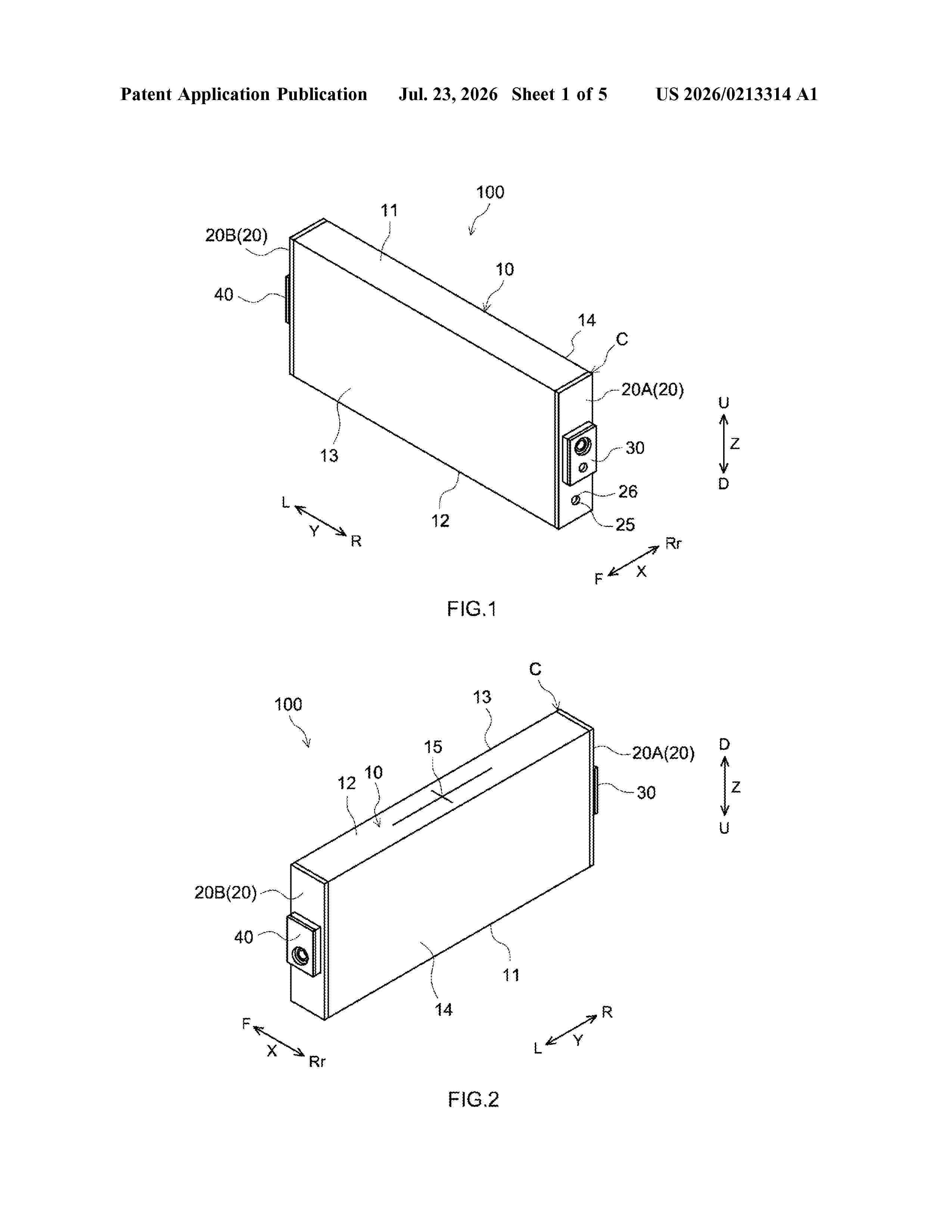
A method for manufacturing an electricity storage device includes a case body preparing step, a closing plate preparing step, and a welding step. The closing plate prepared in the step of preparing the closing plate includes: a closing portion that covers the opening of the case body, while overlapping an edge of the opening; and an insertion portion inserted into the opening along an inner side of the case body with the closing plate closing the opening. In the step of laser-welding the case body and the closing plate, an area located on the closing portion side relative to a boundary between the edge of the opening and the closing portion is irradiated with laser light, thereby welding the edge of the opening and the closing portion at their boundary.
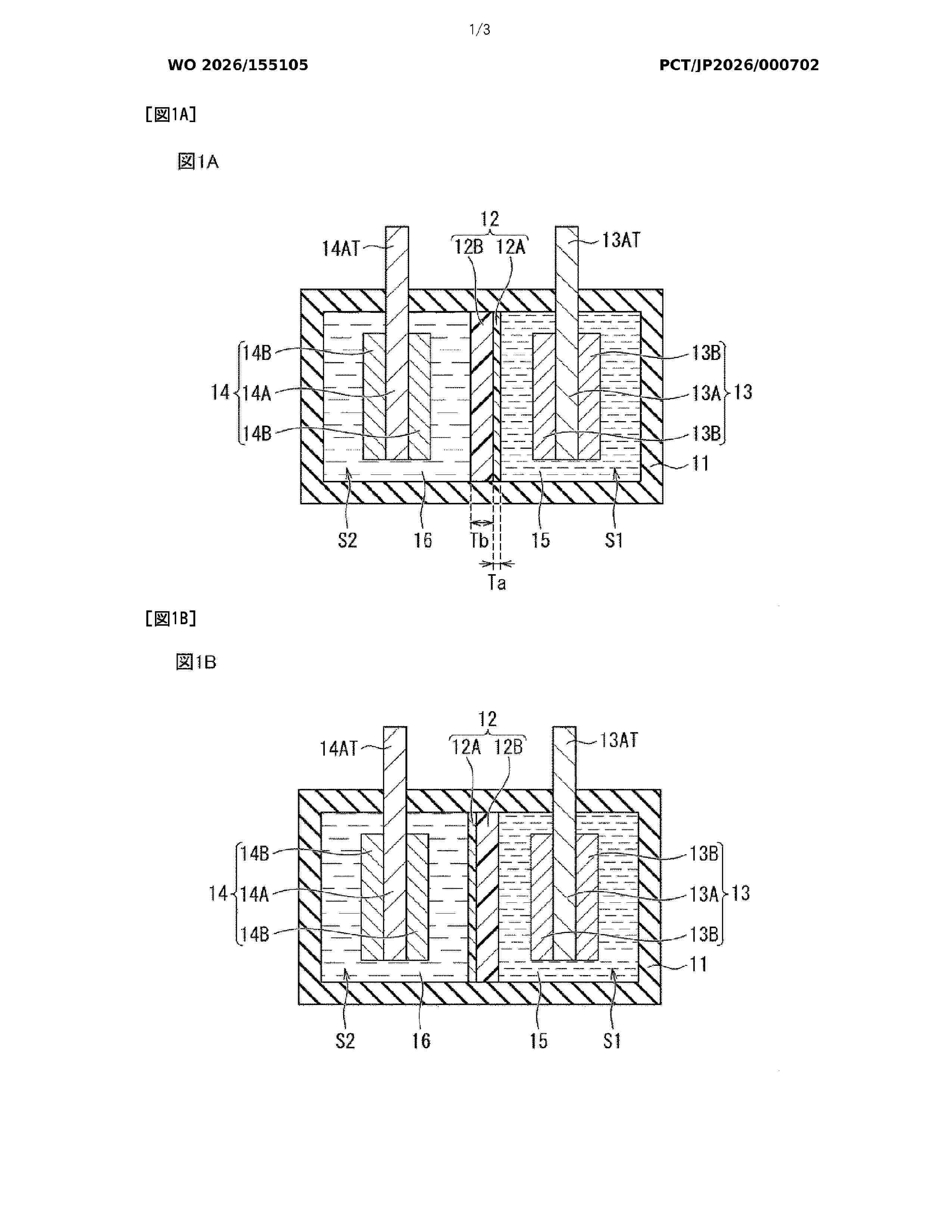
Resumen de: WO2026155105A1
The present disclosure provides a secondary battery comprising: a negative electrode that occludes and releases metal ions; a positive electrode that occludes and releases metal ions; a negative electrode electrolyte that contains an aqueous solvent; a positive electrode electrolyte that contains an aqueous solvent; a negative electrode chamber that accommodates the negative electrode and the negative electrode electrolyte; and a positive electrode chamber that accommodates the positive electrode and the positive electrode electrolyte. The negative electrode chamber and the positive electrode chamber are separated by a partition that is disposed between the negative electrode chamber and the positive electrode chamber and allows metal ions to pass therethrough. The negative electrode electrolyte has a pH greater than the pH of the positive electrode electrolyte. The partition has a structure obtained by stacking two or more layers including at least a first layer and a second layer that contain different cation exchange groups from one other. The first layer contains a polymer compound containing at least one cation exchange group selected from the group consisting of carboxylic acid groups, hydroxycarboxylic acid groups, phosphonic acid groups, phosphinic acid groups, and xanthic acid groups, and is in contact with at least one of the negative electrode electrolyte and the positive electrode electrolyte.
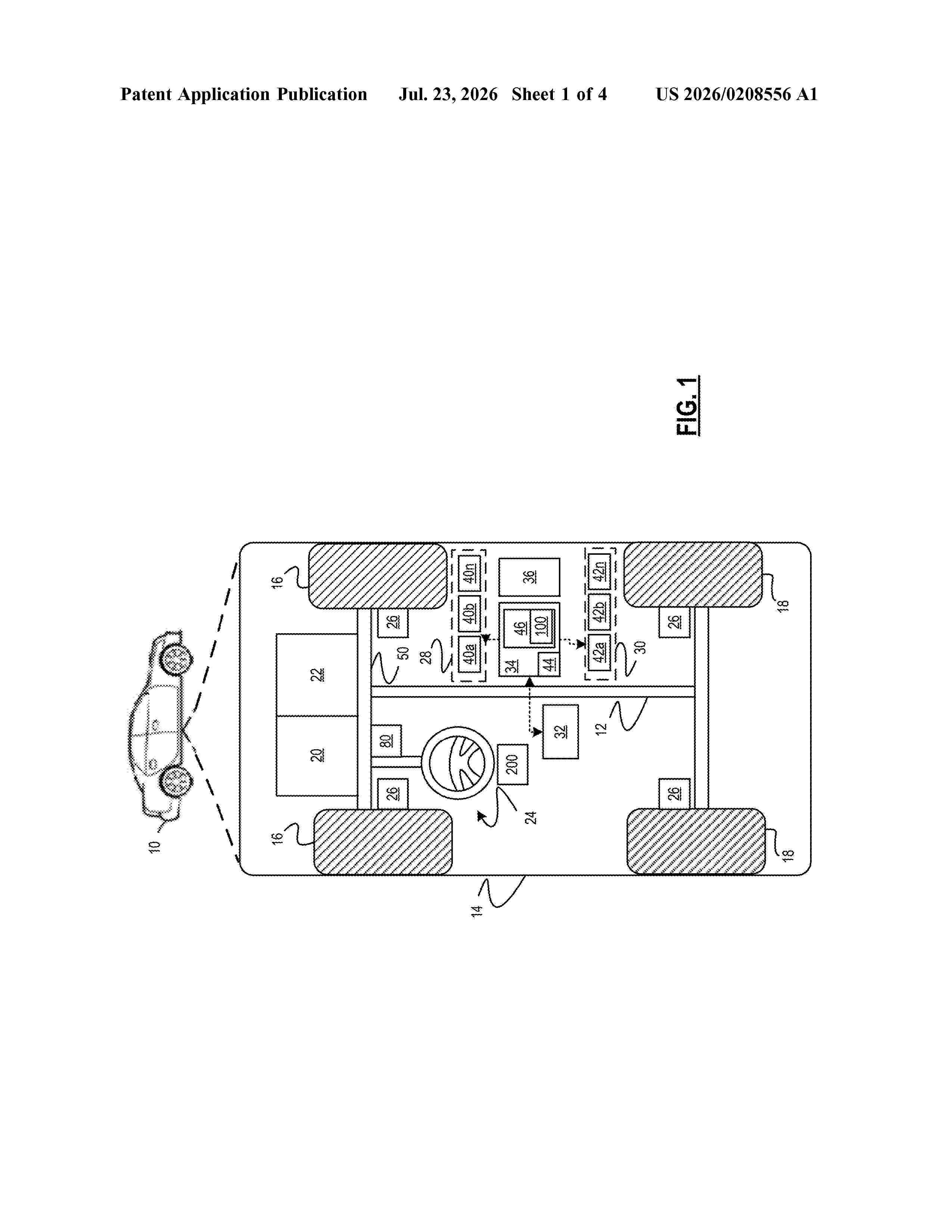
Resumen de: US20260208556A1
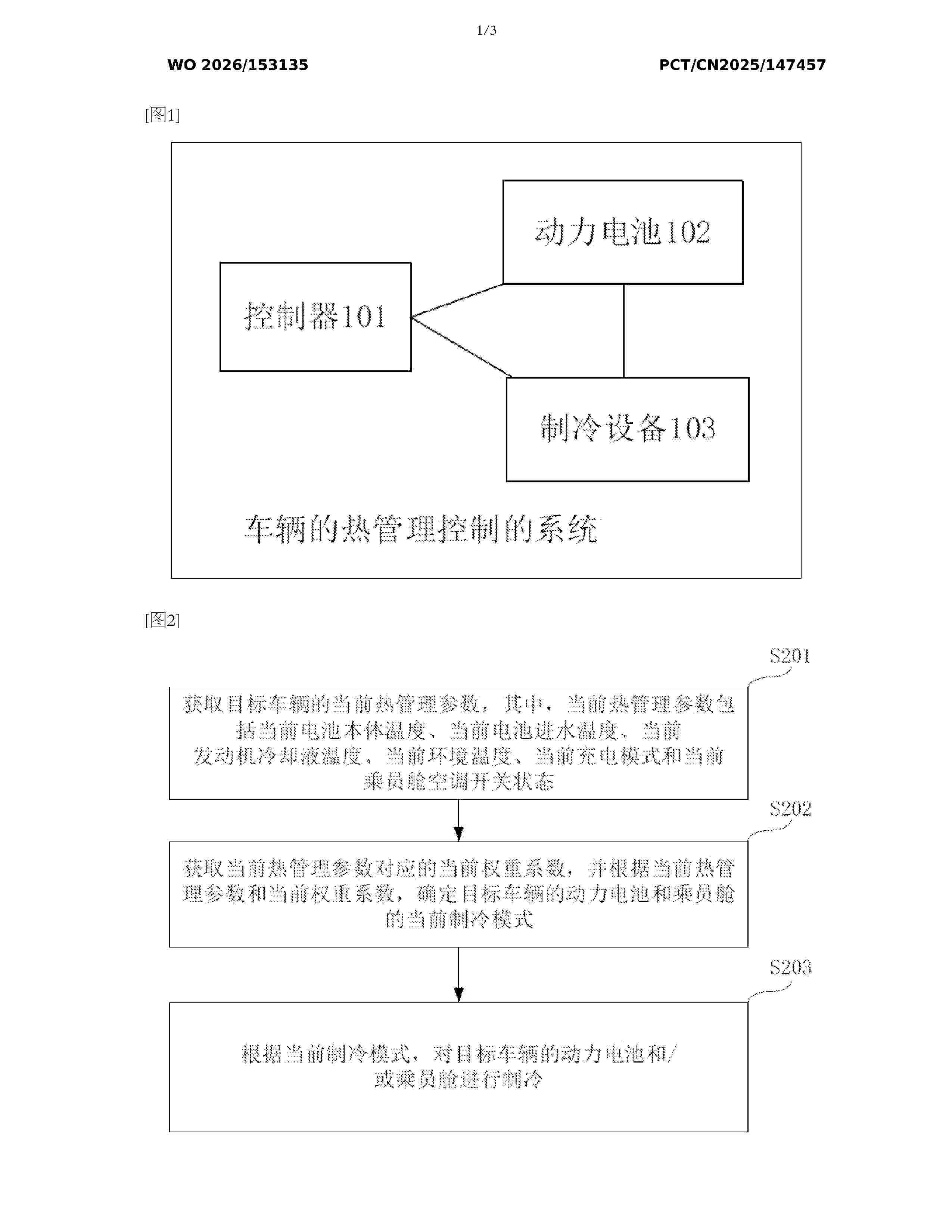
0000 A battery temperature difference between a battery temperature and a desired battery temperature, a power electronics temperature difference between a power electronics temperature and a desired power electronics temperature, and a cabin temperature difference between a vehicle cabin temperature and a desired vehicle cabin temperature are calculated. A power tuning factor is generated to determine an amount of cooling power to apply to a refrigerant and an amount of heating power to apply to a battery coolant and a power electronics coolant. Individual valves are either opened or closed to enable heat exchange between one or more of the battery coolant, the power electronics coolant, the refrigerant, and ambient air outside the vehicle to eliminate the battery temperature difference, the power electronics temperature difference, and the cabin temperature difference using the amount of cooling power and the amount of heating power associated with the power tuning factor.
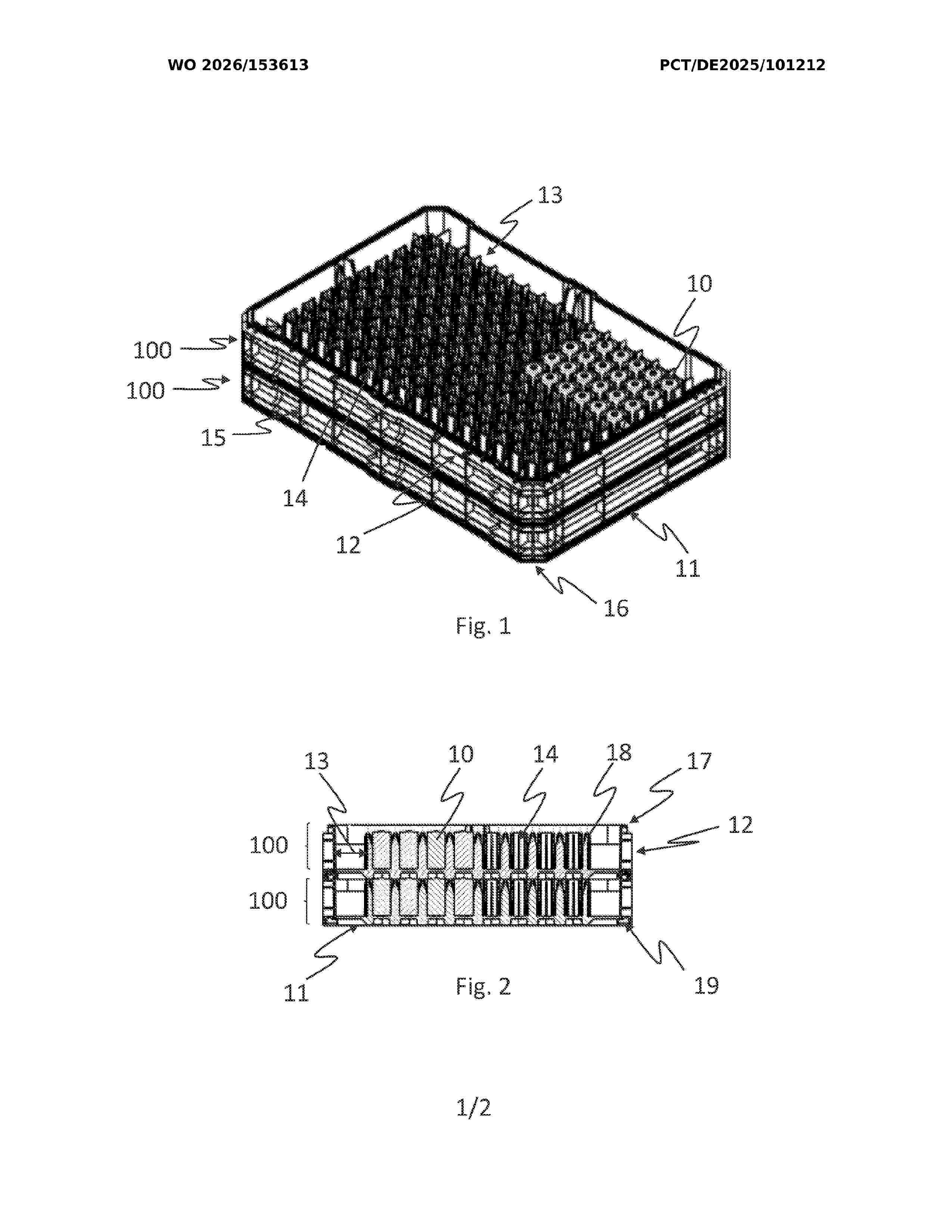
Resumen de: WO2026153613A1
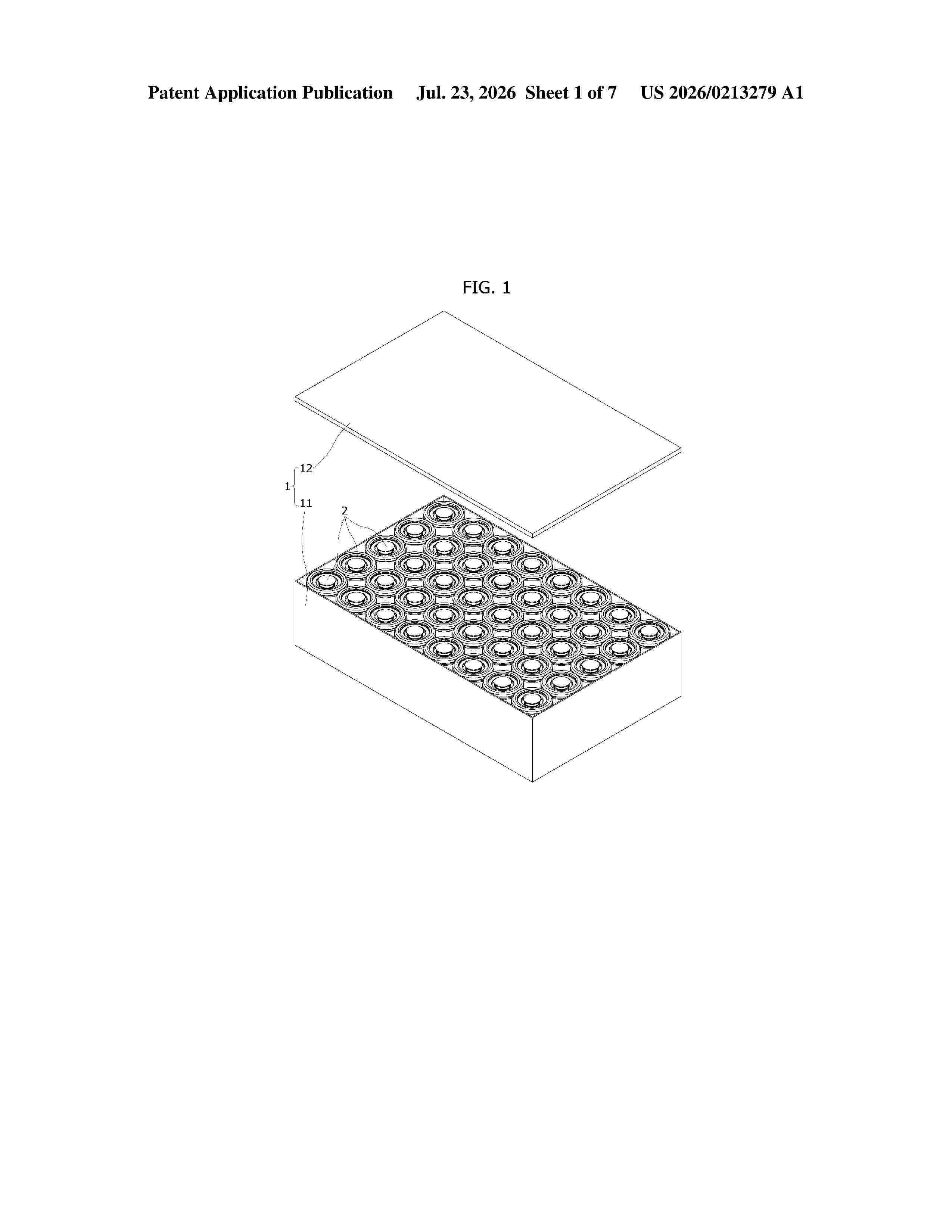
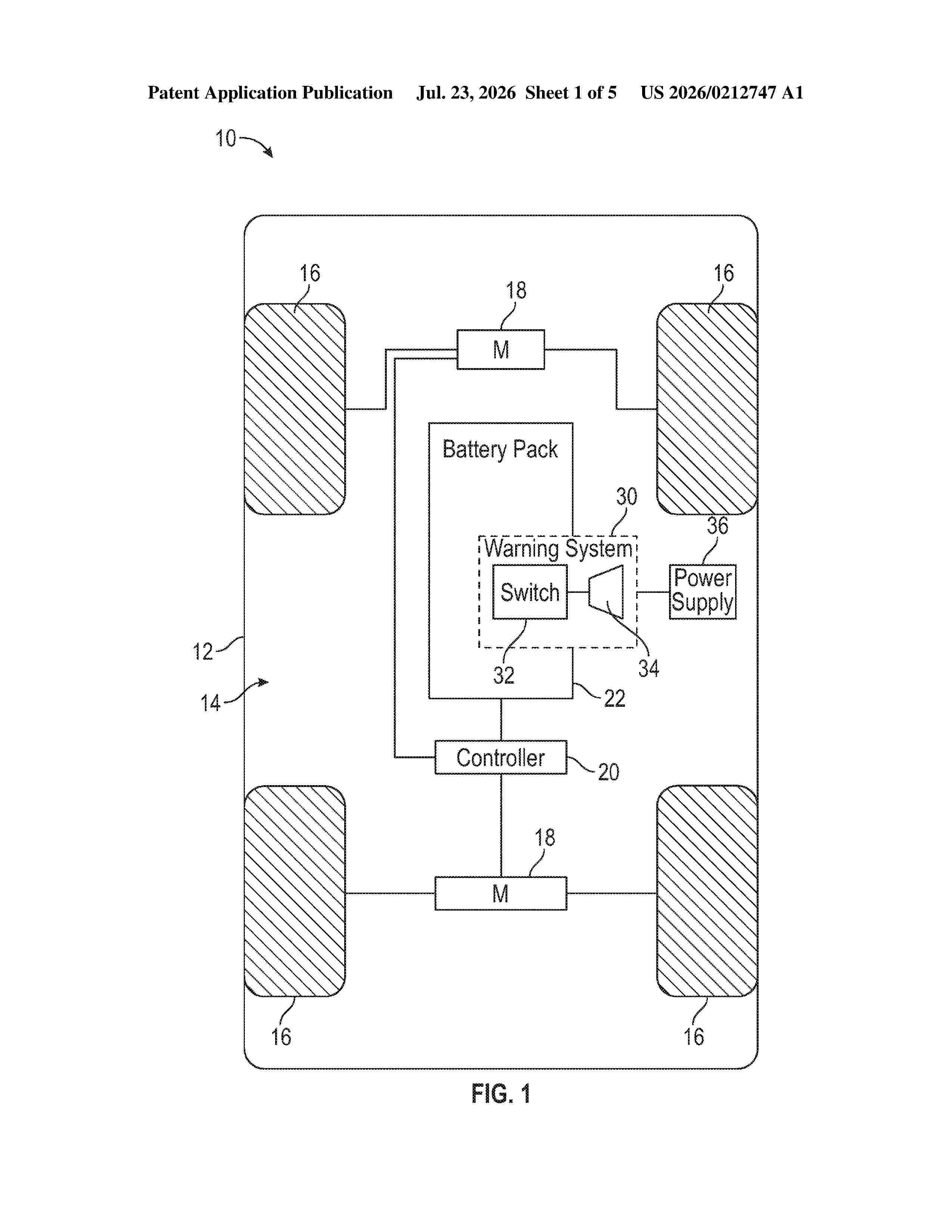
A container (100) for transporting cylindrical battery cells (10) is proposed. The container (100) comprises a container base (11) having a sealing groove (19), four side walls (12), a plurality of battery cell chambers (14), a deformation zone (13) surrounding the battery chambers (15), and at least one seal (17) formed on the end face of at least one side wall (12). The seal (17) is configured to be received in the circumferential sealing groove (19) of the container base (11) of another container (100).
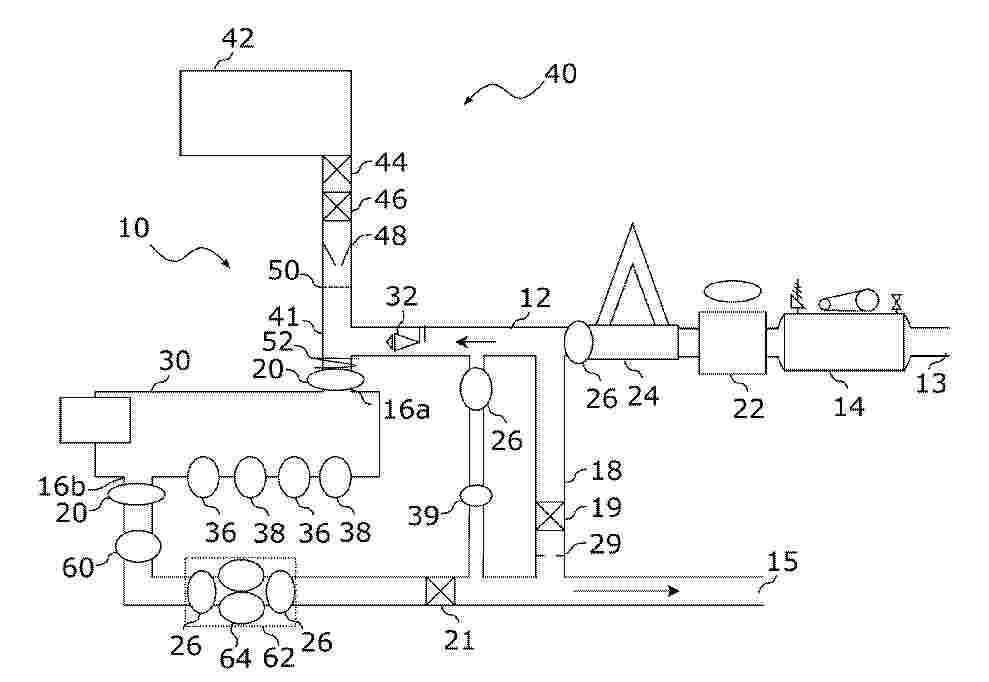
Resumen de: DE102026102409A1
Die vorliegende Erfindung betrifft eine Heißgasabscheidestreckenprüfvorrichtung (10), umfassend: eine Gasleitstrecke (12) mit einem Einlass (13) und einem Auslass (15), einen Gaskompressor (14) zur Erzeugung eines Gasflusses in der Gasleitstrecke (12); eine Anschlusseinrichtung (16) zum Anschluss einer Heißgasabscheidestrecke (30) an die Gasleitstrecke (12), wobei die Anschlusseinrichtung (16) einen Einlassanschluss (16a) und einen Auslassanschluss (16b) aufweist; eine schaltbare Bypassleitung (18), welche dazu eingerichtet ist, den Gasfluss zwischen der Anschlusseinrichtung (16) und dem Auslass (15) zu schalten; und eine Messeinrichtung (20), die dazu eingerichtet ist, einen am Einlassanschluss (16a) und/oder am Auslassanschluss (16b) vorliegenden Gasparameter zu messen.
Resumen de: US20260213381A1
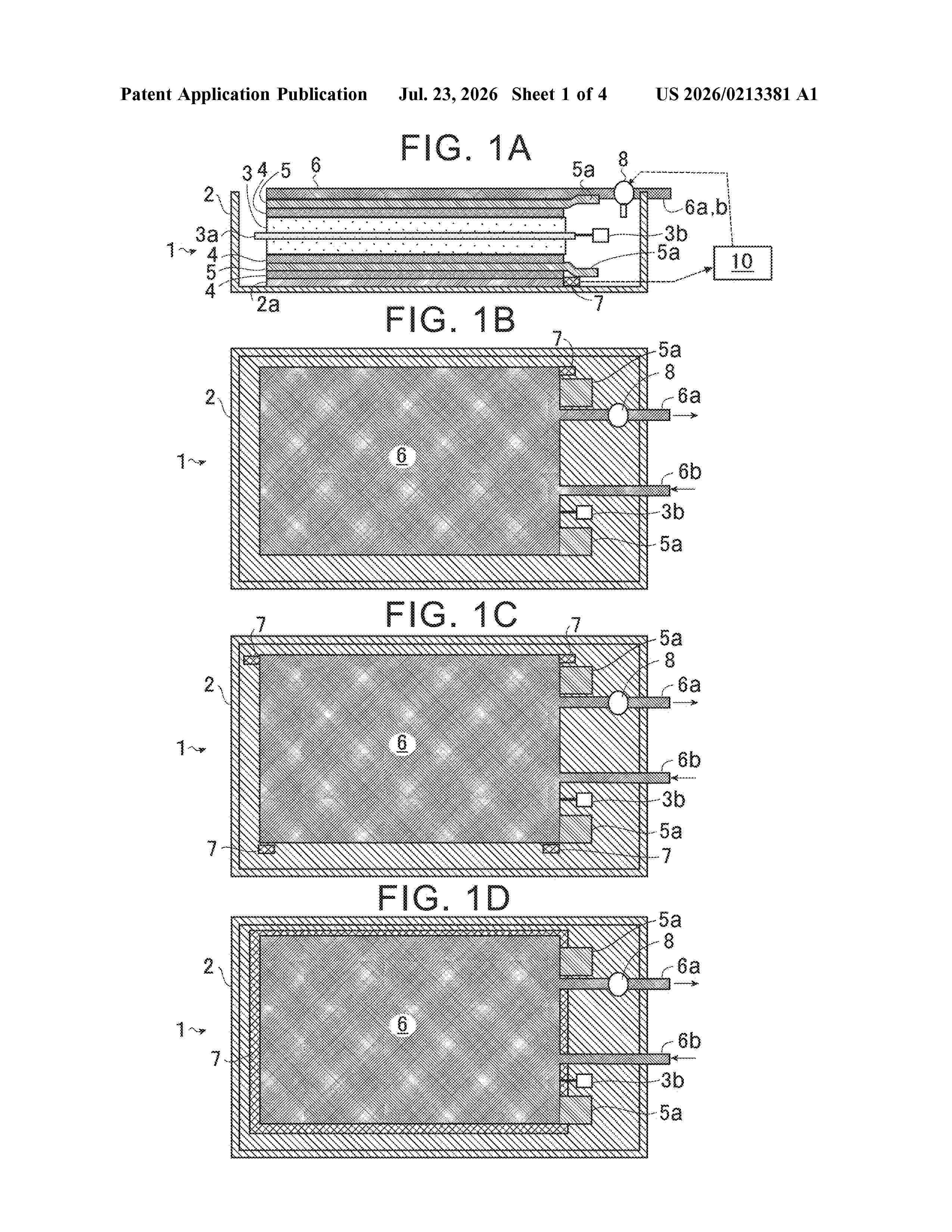
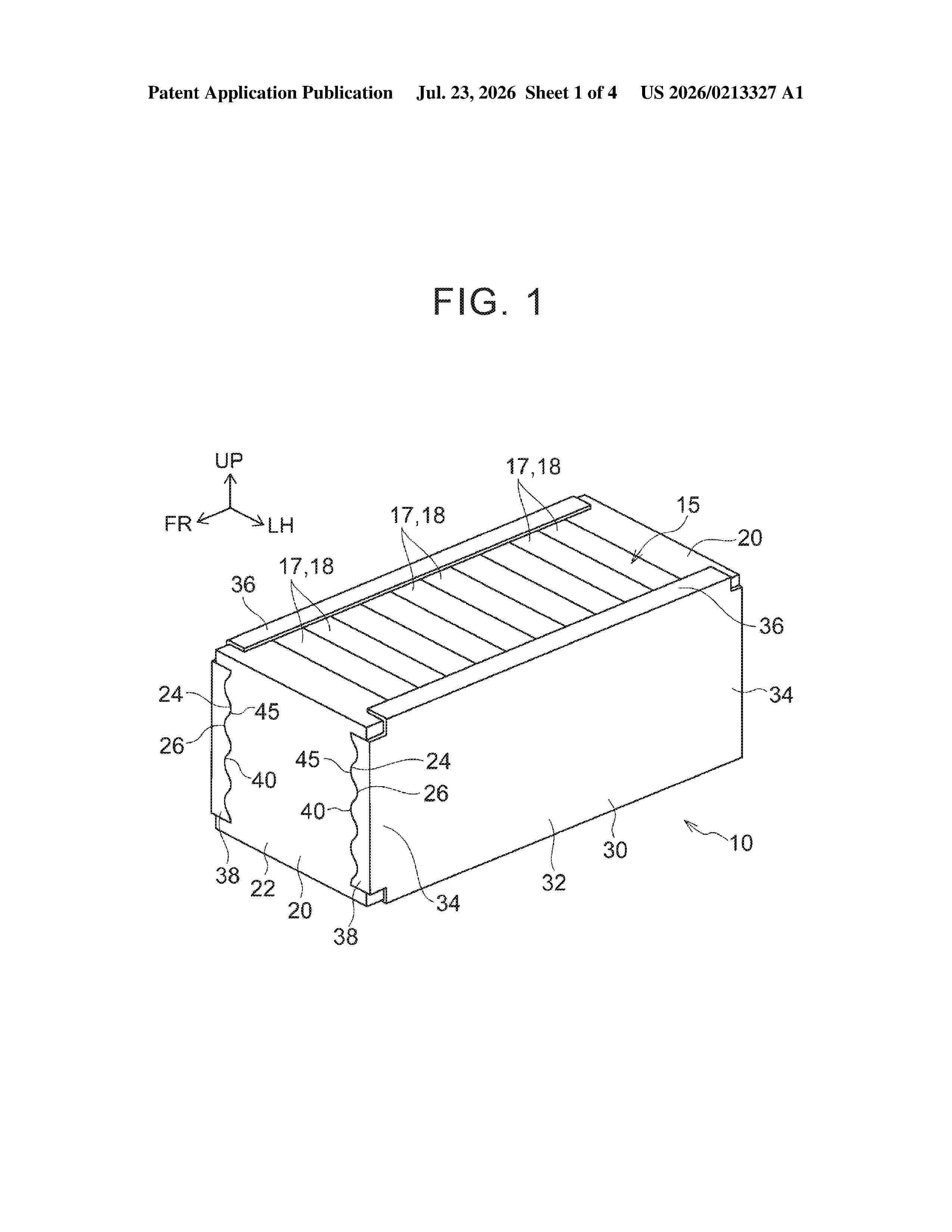
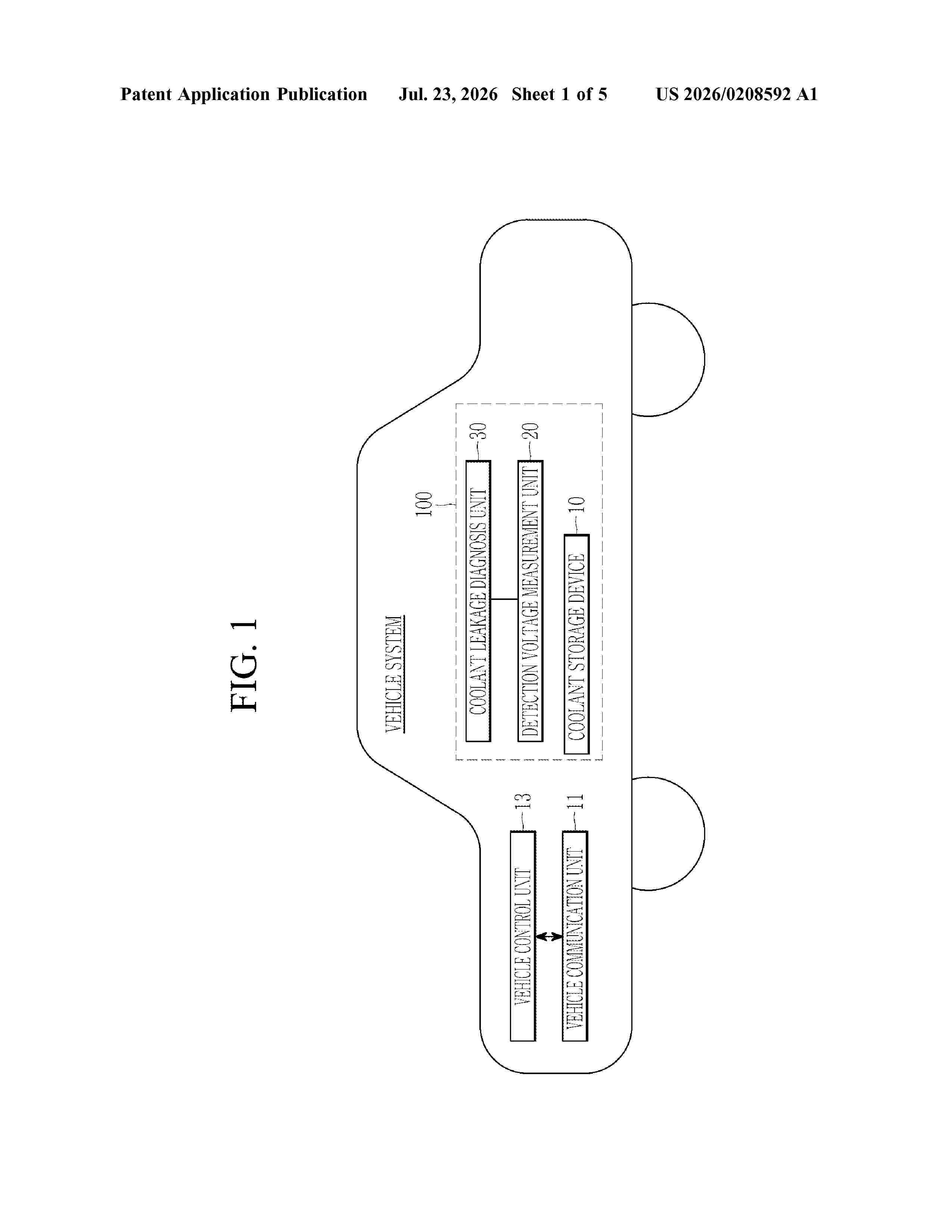
A power storage device includes a battery module in which a laminated structure where a cathode layer and an anode layer face each other with a separator interposed therebetween, immersed in an electrolytic solution, is sealed in laminated packaging, with terminals electrically connected to each of the cathode layer and the anode layer protrude externally, a battery pack that accommodates the same, a cooling channel that circulates a non-conductive coolant in the periphery of the battery module for cooling, and a coolant discharging unit that, in response to leakage of electrolytic solution from the battery module detected by a leakage sensor detecting leakage, causes coolant to be discharged from the coolant channel to the periphery of the battery module, the power storage device configured such that the coolant mixes with the electrolytic solution leaked from the battery module in the battery pack, reducing conductivity of the electrolytic solution.
Resumen de: US20260208382A1
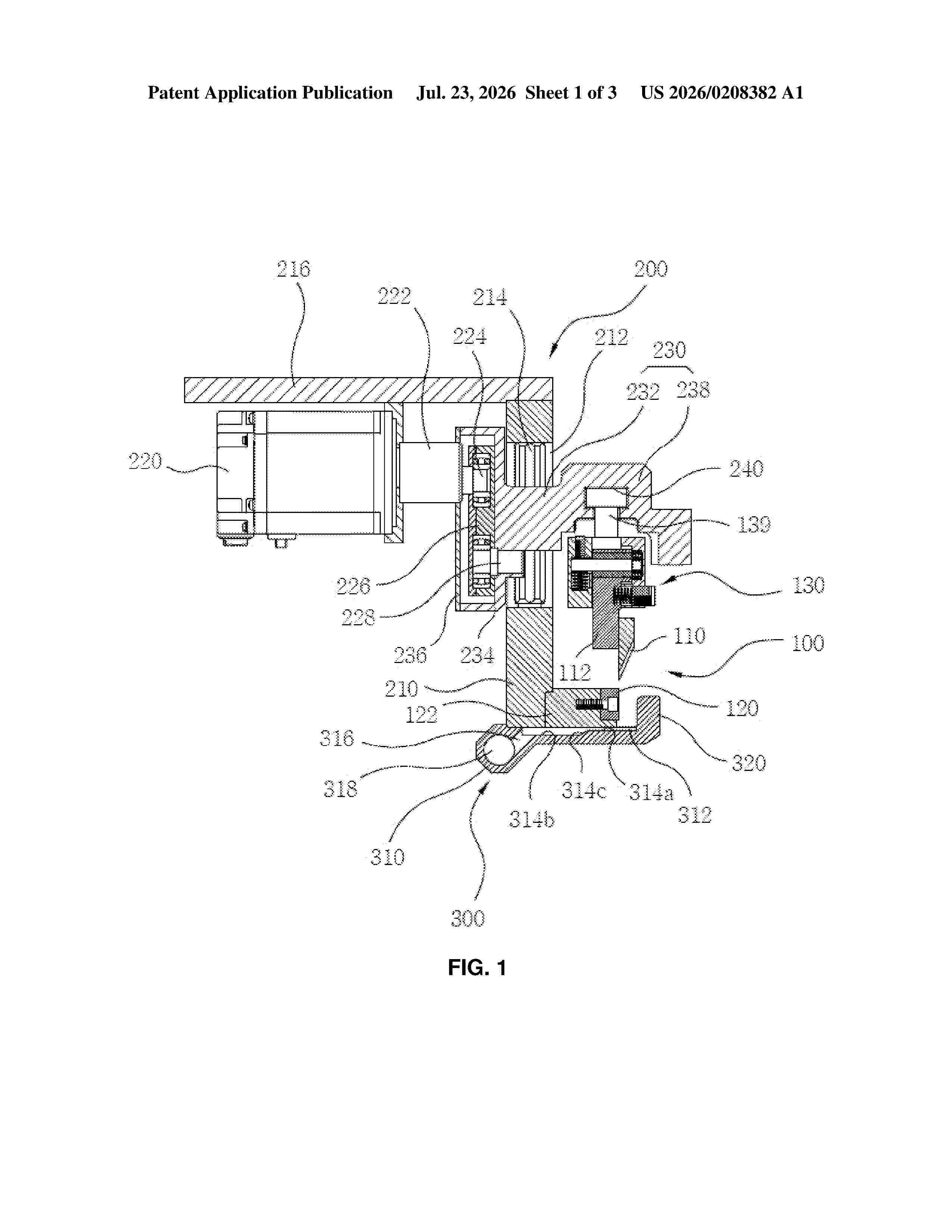
The disclosed secondary battery electrode cutting device comprises: a cutting module having an upper blade installed on an upper holder, a lower blade installed on a lower holder, and an adjustment assembly for adjusting a clearance and squareness between the upper blade and the lower blade; a cutting drive unit for operating the upper blade to move up and down toward the lower blade side to cut an electrode sheet; and a cutting byproduct remover for suctioning and discharging cutting byproducts coming from the electrode sheet during cutting of the electrode sheet. The adjustment assembly includes: an upper blade holder support for supporting the upper blade holder; and a clearance adjustment unit and a squareness adjustment unit installed on the upper blade holder support to elastically press and tilt the upper blade holder so that the clearance and squareness between the upper blade and the lower blade are adjusted.
Resumen de: WO2026152268A1
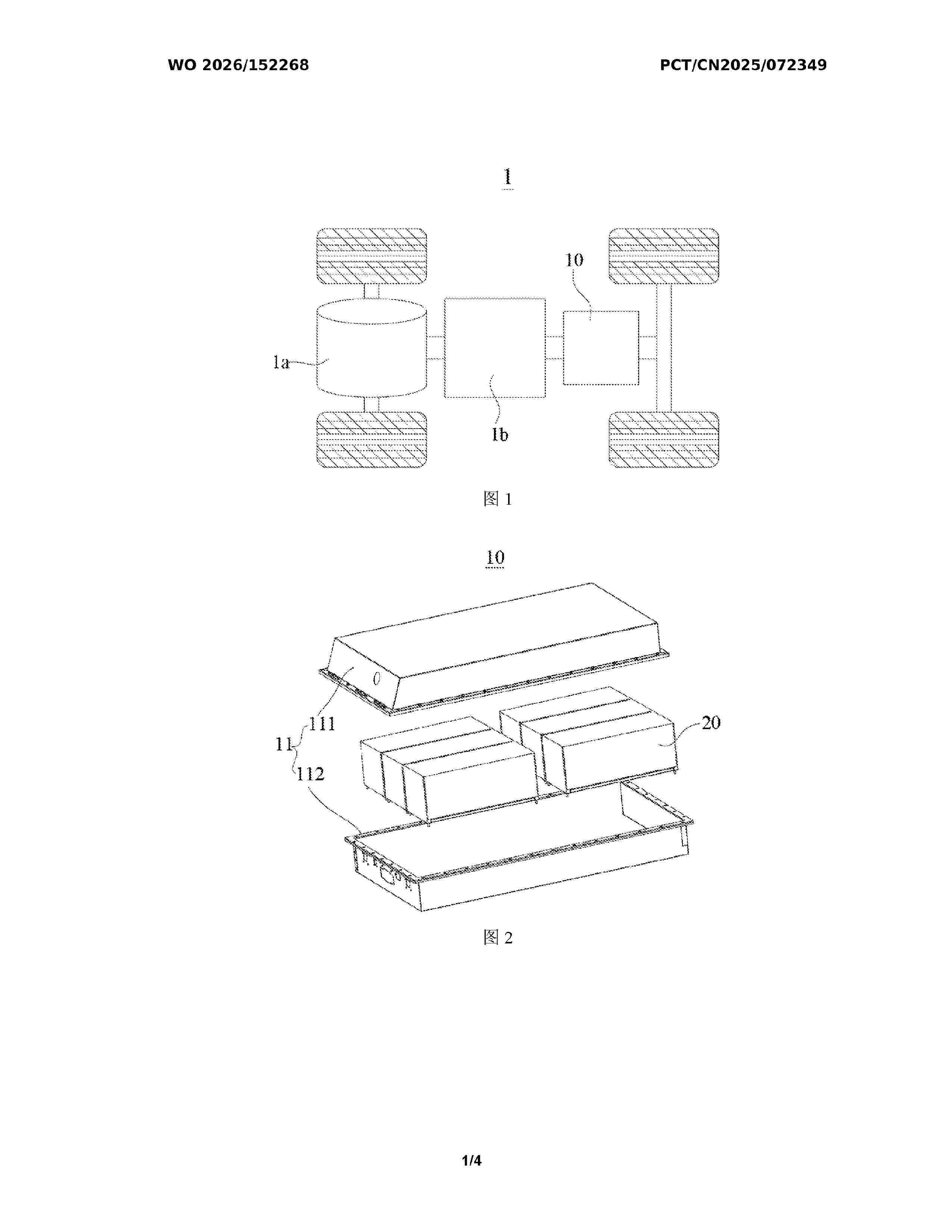
The present application provides a battery cell, a battery device, and an electric device. The battery cell comprises a casing and an electrode assembly, wherein the electrode assembly is accommodated in the casing, the electrode assembly is in a wound configuration, the electrode assembly has a straight region and bent regions, and the bent regions are provided at the ends of the straight region. The electrode assembly comprises a positive electrode sheet and a negative electrode sheet, and the positive electrode sheet and the negative electrode sheet have opposite polarities. The positive electrode sheet has a first terminating end, and the first terminating end is located at the end of the outermost ring of the positive electrode sheet. The negative electrode sheet has a second terminating end, and the second terminating end is located at the end of the outermost ring of the negative electrode sheet. At least one of the first terminating end and the second terminating end is provided in the bent region. The battery cell provided in the present application is conducive to reducing the risk of purple spots or lithium plating on electrode sheets.
Resumen de: WO2026155285A1
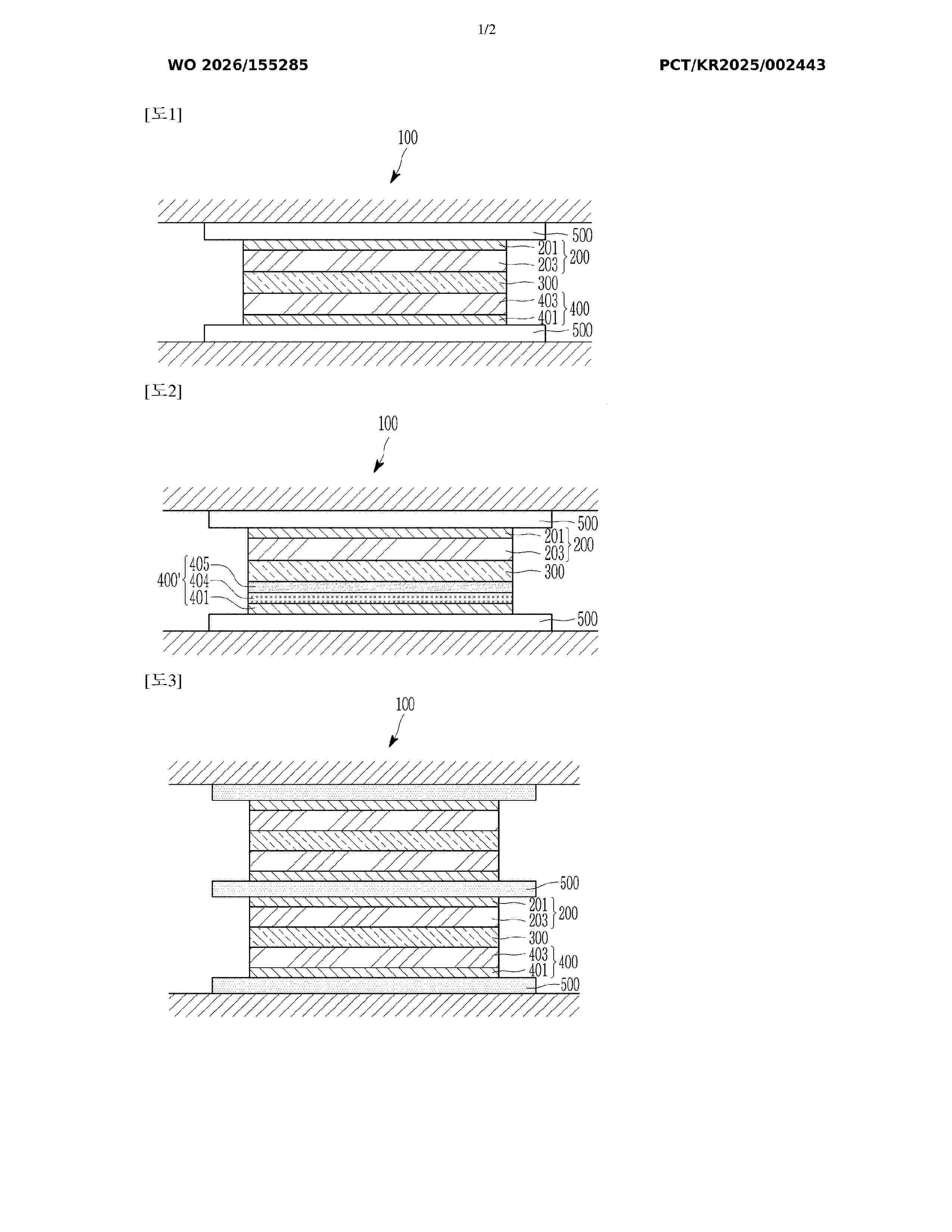
The present invention relates to finishing tapes for all-solid-state rechargeable batteries and all-solid-state rechargeable batteries comprising same, each finishing tape comprising a base layer and an adhesive layer disposed on the base layer, wherein at least one of the base layer and the adhesive layer contains fire-extinguishing capsules in an amount of 20 wt% to 50 wt%.
Resumen de: WO2026155472A1
The present invention relates to a battery pack and an electronic device comprising same, and, to a battery pack and an electronic device comprising same, which are capable of: detecting, when moisture is condensed in the battery pack, moisture condensation before an accident occurs; performing such a moisture detection function at low cost for a long period of time; inducing the condensed moisture to a location where an electrical short circuit accident is less likely to occur; removing the condensed moisture; and protecting parts vulnerable to insulation, thereby improving electrical stability. The battery pack according to the present invention comprises: a battery unit; a case unit for accommodating the battery unit therein; a moisture condensation unit, which is a portion where moisture is condensed in the case unit; and a sensor unit for sensing the moisture condensed in the moisture condensation unit, wherein the sensor unit includes: a moisture absorption member which is provided in the moisture condensation unit and which changes state if the moisture is absorbed; and a sensor unit for sensing the presence or degree of the moisture through the moisture absorption member of which the state is changed by absorbing the moisture.
Resumen de: DE102025107843A1
Eine Superträger-Anordnung für eine Batteriezellenanordnung umfasst eine linke Kühlmitteldurchgangsplatte, die einen linken Abschnitt umfasst, der einen linken gestanzten Kanalabschnitt definiert, einen rechten Abschnitt, der einen rechten gestanzten Kanalabschnitt, eine linke innere Kanalfläche und eine linke äußere Kanalfläche definiert. Eine Superträger-Anordnung umfasst eine rechte Kühlmitteldurchgangsplatte, die einen rechten Abschnitt umfasst, der einen rechten gestanzten Kanalabschnitt definiert, einen rechten Abschnitt, der einen rechten gestanzten Kanalabschnitt, eine rechte innere Kanalfläche und eine rechte äußere Kanalfläche definiert. Ein Kanalprofil, das durch den linken gestanzten Kanalabschnitt der linken Kühlmitteldurchgangsplatte definiert ist, ist ein Spiegelbild des rechten gestanzten Kanalabschnitts der rechten Kühlmitteldurchgangsplatte und ein Kanalprofil, das durch den rechten gestanzten Kanalabschnitt der linken Kühlmitteldurchgangsplatte definiert ist, ist ein Spiegelbild des linken gestanzten Kanalabschnitts der rechten Kühlmitteldurchgangsplatte.
Resumen de: US20260213286A1
A battery cell includes a battery cell stack including C cathode electrodes including a cathode active material layer arranged on one or both sides of a cathode current collector, A anode electrodes including an anode active material layer arranged on one or both sides of an anode current collector, and S separators, where C, A, and S are integers greater than one. An enclosure surrounds the battery cell stack. A piezoelectric device performing at least one of a sensing and an actuating is arranged in the enclosure and configured to at least one of generate a sensed signal and generate an acoustic signal in response to an applied signal. The piezoelectric device includes a piezoelectric layer made of a fluoropolymer, a first metal layer arranged on one side of the piezoelectric layer, and a second metal layer arranged on an opposite side of the piezoelectric layer.
Resumen de: US20260213209A1
0000 An all-solid-state battery cell includes C cathode electrodes including a cathode active material layer arranged on one or both sides of a cathode current collector, A anode electrodes including an anode active material layer arranged on one or both sides of an anode current collector, and S separators arranged between corresponding ones of the A anode electrodes and the C cathode electrodes. At least one of the cathode active material layer, the anode active material layer, and the S separators includes a solid electrolyte. At least one of the cathode active material layer and the anode active material layer includes a conductive additive including a transition metal nitride. The transition metal nitride is selected from a group consisting of Group IVb nitrides, poly-nary nitrides, and combinations thereof.
Resumen de: US20260209072A1
A cathode active material for a lithium secondary battery according to exemplary embodiments of the present disclosure includes lithium metal oxide particles and a sulfur (S)-containing compound and a sodium (Na)-containing compound present on the surface or inside the lithium metal oxide particles. The surface portion of the lithium metal oxide particle has a concentration gradient of sulfur (S). The absolute value of the slope of the XPS signal of sulfur (S) in the surface portion is 20 cps/nm to 80 cps/nm.
Resumen de: US20260209052A1
An anode active material including silicon-based particles, in which a ratio a/b of oxygen concentration a (% by mass) of the silicon-based particles determined by ONH elemental analysis, as to specific surface area b (m2/g) of the silicon-based particles determined by nitrogen gas adsorption, is a value of 0.03 or less.
Resumen de: WO2026152834A1
The present application discloses a battery cell, a battery apparatus, and an electric device. The battery cell comprises a negative electrode film layer, the negative electrode film layer comprises a binder, and the binder comprises a lithium-containing high molecular polymer; an electrolyte comprises a lithium salt; and the lithium salt comprises a lithium fluorosulfonimide salt. In the embodiments of the present application, the charging performance of the battery cell can be improved by means of a binder comprising a lithium-containing high molecular polymer; and the high-temperature charging performance of the battery cell can be improved by introducing a lithium fluorosulfonimide salt into the electrolyte. Thus, in battery cells having high energy density, the effects of wide temperature range, long service life, and fast charging can be achieved.
Resumen de: US20260213150A1
0000 A battery management system according to the present disclosure includes at least: a three-phase inverter configured to be driven by electric power from a lithium-ion secondary battery; a control unit configured to heat the lithium-ion secondary battery by supplying, to the lithium-ion secondary battery, an alternating current signal of a predetermined frequency generated by the three-phase inverter; and an impedance detection unit configured to detect, from an attenuation characteristic of a high-frequency signal in the lithium-ion secondary battery, a value of the real part of an alternating current impedance used for calculation of the amount of Li deposition. The impedance detection unit is configured to detect a peak voltage of the alternating current signal supplied from the three-phase inverter to the lithium-ion secondary battery.
Resumen de: WO2026153320A1
A heat exchange plate (1), a battery assembly, and a vehicle. The heat exchange plate (1) comprises a main plate body (11). Along a first direction (X), the main plate body (11) is divided into a first portion (111) and a second portion (112) connected to each other. A plurality of flow channels (114) are provided in the first portion (111), the flow channels (114) being used for circulating a coolant. The first portion (111) is configured to contact a first part of a battery cell (3), the first part being a part close to a terminal of the battery cell (3). The second portion (112) is configured to contact a second part of the battery cell (3), the second part being a part away from the terminal of the battery cell (3). Since the coolant does not flow into the second portion (112) of the heat exchange plate (1), the heat exchange plate (1) has a lower demand for coolant, which is conducive to reducing the self-weight of a battery pack using the heat exchange plate (1).
Resumen de: WO2026155470A1
According to exemplary embodiments, a battery pack is provided. The battery pack comprises: a pack housing including a base plate and a sidewall perpendicular to the base plate; a lead coupled to the pack housing; a plurality of battery cell assemblies on the base plate and each including an integrated circuit assembly; a communication device configured to communicate with an antenna of the integrated circuit assembly of each of the battery cell assemblies; and a junction box assembly connected to the communication device, wherein the junction box assembly includes a power connector configured to output power of the plurality of battery cell assemblies.
Resumen de: US20260213279A1
A cylindrical electrode assembly includes a first electrode, a first separator, a second electrode, and a second separator, with the first electrode, first separator, second electrode, and second separator being stacked and wound into a cylindrical electrode assembly. The first separator includes an extended portion that extends longer than a winding-end-side end of the first electrode. The first extended portion is bent to surround the winding-end-side end of the first electrode.
Resumen de: WO2026154742A1
The present disclosure provides an electrolyte composition containing a polymer, inorganic particles, and an organic solvent. When a specific surface area of the inorganic particles as measured by a multipoint BET method using N2 as an adsorption gas is defined as BET(N2) and a specific surface area of the inorganic particles as measured by a multipoint BET method using H2O as an adsorption gas is defined as BET(H2O), the ratio of the BET(H2O) with respect to the BET(N2) is not less than 0.30.
Resumen de: DE102025101982A1
Die vorliegende Erfindung betrifft eine Entgasungsvorrichtung (20), eine Traktionsbatterie und ein elektrisch oder teilelektrisch angetriebenes Kraftfahrzeug.Die Entgasungsvorrichtung (20) weist eine Einlassöffnung (21) und eine Auslassöffnung (22) auf, wobei sich zwischen der Einlassöffnung (21) und der Auslassöffnung (22) ein Strömungspfad (23) erstreckt, wobei die Einlassöffnung (21) mit einem Berstelement (24) fluiddicht verschlossen ist, wobei die Entgasungsvorrichtung (20) eine federbelastete Rückschlagarmatur (25) aufweist, wobei die Rückschlagarmatur (25) reversibel aus einer Verschlussstellung auslenkbar ist, wobei ein Auslenken der Rückschlagarmatur (25) aus der Verschlussstellung entgegen der Federkraft erfolgt, derart, dass bei Überschreiten eines Grenzüberdrucks in einem von dem Berstelement (24) und der Rückschlagarmatur begrenzten Bereich des Strömungspfads (23) gegenüber einem außerhalb der Traktionsbatterie (1) herrschenden Umgebungsdruck die Rückschlagarmatur (25) aus der Verschlussstellung ausgelenkt wird, wobei die Entgasungsvorrichtung (20) eine Sensoreinrichtung (26) aufweist, wobei die Sensoreinrichtung (26) in dem von dem Berstelement (24) und der Rückschlagarmatur begrenzten Bereich des Strömungspfads (23) angeordnet und dazu eingerichtet ist, basierend auf den Eigenschaften des in diesem Bereich des Strömungspfads (23) befindlichen Mediums ein Entgasen einer der Batteriezellen über die Entgasungsöffnung zu detektieren.
Resumen de: DE102025101999A1
Die Erfindung betrifft ein Temperiersystem (1) für ein Fahrzeug (50), mit einer zur Verbindung mit einem Fahrzeug-Wärmetauscher (30) ausgebildeten Fluidleiter-Einheit (2), die einen ersten Fluidkanal (4) für einen Zulauf-Fluidstrom (F1) und einen zweiten Fluidkanal (5) für einen Rücklauf-Fluidstrom (F2) aufweist. Um einen effizienten Betrieb eines fahrzeuginternen Wärmekreislaufs zu ermöglichen, ist erfindungsgemäß vorgesehen, dass die Fluidkanäle (4, 5) in einem zusammenhängenden Leitungskörper (3) ausgebildet und durch einen Trennbereich (7) des Leitungskörpers (3) fluidisch getrennt sind, wobei der zweite Fluidkanal (5) den ersten Fluidkanal (4) wenigstens teilweise derart umgibt, dass er zwischen dem ersten Fluidkanal (4) und einer Außenfläche (18) des Leitungskörpers (3) zwischengeordnet ist.
Resumen de: US20260213287A1
A battery health and safety management system and methods of use are provided. The battery health and safety management system may comprise a vehicle and an active sensing and venting module (ASVM) coupled to the vehicle, comprising a fan, one or more sensors, and a venting mechanism. The battery health and safety management system may comprise a battery pack comprising a plurality of battery cells, an insulator positioned between the plurality of battery cells, and one or more capsules positioned within or on the insulator. The one or more capsules may be configured to house a gas and rupture in the event of a battery pack anomaly, releasing the gas. The one or more sensors may be configured to detect the gas after a rupture of one or more of the one or more capsules.
Resumen de: DE102026102042A1
Die vorliegende Erfindung betrifft eine Flüssigkeitskühlvorrichtung und eine elektrische Übertragungsbaugruppe. Die Flüssigkeitskühlvorrichtung umfasst: eine wärmeleitende Komponente (10), die für den thermischen Kontakt mit einer elektrischen Übertragungskomponente (2) verwendet wird; und ein Flüssigkeitskühlrohr (14), das in der wärmeleitenden Komponente (10) installiert ist. Die wärmeleitende Komponente (10) ist dazu ausgelegt, die Wärme der elektrischen Übertragungskomponente (2) an die Kühlflüssigkeit im Inneren des Flüssigkeitskühlrohrs (14) zu übertragen, um die elektrische Übertragungskomponente (2) zu kühlen. In den vorgenannten beispielhaften Ausführungsformen gemäß der vorliegenden Erfindung weist die Flüssigkeitskühlvorrichtung eine einfache Struktur und geringe Kosten auf und kann die elektrischen Übertragungskomponenten effektiv kühlen.
Resumen de: US20260213174A1
Disclosed is a positive electrode active material for sodium-ion batteries that has high capacity. The positive electrode active material for sodium-ion batteries of the present disclosure comprises a Na-containing composite oxide having a chemical composition represented by NaxFeyM1-yOz (wherein 3.0
Resumen de: WO2026153062A1
The present application relates to the technical field of energy storage management, and discloses a thermal management method for an energy storage system, and an energy storage system. The thermal management method for an energy storage system comprises: acquiring battery cell temperature data and working state data of each battery cluster; and on the basis of the battery cell temperature data and/or the working state data, adjusting a flow direction of a refrigerant by means of a reversing device. The flow direction of the refrigerant flowing through each battery cluster can be managed by means of the reversing device, and on the basis of the battery cell temperature data and/or the working state data of each battery cluster, differences between the battery clusters can be determined. Thus, a battery cluster different from the other battery clusters is processed on the basis of the reversing device, thereby changing the flow direction of the refrigerant flowing through the battery cluster, reducing temperature differences between the battery clusters and thermal management power consumption, and improving thermal management performance.
Resumen de: WO2026153268A1
Provided in the embodiments of the present application are a battery cell, a separator, a battery device, and an electrical device. The battery cell comprises a separator, which is disposed between a negative electrode sheet and a positive electrode sheet. The separator comprises: a porous base film; a first coating, which is disposed on the side of the porous base film close to the negative electrode sheet; and a second coating, which is disposed on the side of the porous base film close to the positive electrode sheet. The separator satisfies: ε13>ε2, wherein ε1 represents the average porosity of the first coating, ε2 represents the average porosity of the second coating, ε3 represents the average porosity of the porous base film, and ε13 represents the average porosity of the first coating and the porous base film. The battery cell of the present application achieves good reliability and prolongs the cycle life of the battery cell.
Resumen de: WO2026153265A1
A negative electrode material, a negative electrode sheet and a secondary battery. The negative electrode material comprises an inner core and a coating layer arranged on at least part of the surface of the inner core, wherein the inner core comprises a matrix and an active material, and at least part of the active material is arranged inside the matrix. The atomic percentage content of oxygen on the surface of the negative electrode material is A1%; the atomic percentage content of oxygen in a surface layer of the negative electrode material is A2%; the atomic percentage content of oxygen in an inner layer of the negative electrode material is A3%; and A1 is greater than A2, and 2≤A3≤10. The negative electrode sheet or the secondary battery that uses the negative electrode material has a relatively high reversible specific capacity and initial Coulombic efficiency, and a good cycling stability.
Resumen de: US20260213303A1
0000 Provided are a battery apparatus and an electric device. The battery apparatus includes: a plurality of battery sets, where the battery sets are sequentially arranged along a first direction, the battery sets include a wrapping shell and at least one pouch battery cell, the pouch battery cell is disposed inside the wrapping shell, and among the plurality of battery sets, a heat insulating member is provided between at least two adjacent battery sets.
Resumen de: US20260213297A1
0000 A battery apparatus and an electric device are provided. The battery apparatus includes a plurality of pouch cells and a heat dissipation member. The plurality of pouch cells are arranged along a first direction, and the heat dissipation member is disposed between two adjacent pouch cells.
Resumen de: WO2026155773A2
Asymmetric non-fluorinated ethers (e.g.. 1,2-methoxy ethoxy ethan(EME), 1-methoxy-2-propoxy ethane (MPE), 1-methoxy-2-isopropoxy ethane (MiPE)). and fluorinated EME solvents exhibit high performance for lithium-metal batteries. Among fluorinated EME-based solvents are 1- methoxy-2-(2-fluoroethoxy) ethane (F1EME), 1-methoxy -2-(2,2-difluoroethoxy) ethane (F2EME), and l-methoxy-2-(2,2,2-trifluoroethoxy) ethane (F3EME). Electrolyte compositions obtained by mixing lithium bis(fluorosulfonyl)imide (LiFSI) with the aforementioned solvents enable high coulombic efficiency and lithium metal compatibility. Cycling with diverse electrodes (NMC811, LFP, NMC532, Ni95, SPAN (sulfurized polyacrylonitrile), and Si) reveals high lithium metal compatibility, oxidative stability, rate performance in high-voltage full cells, and excellent cyclability.
Resumen de: US20260213338A1
Provided is a battery apparatus including a plurality of pouch battery cells sequentially stacked and electrically connected and a wrapping shell wrapped outside the plurality of pouch battery cells and configured to restrain the plurality of pouch battery cells at least from three directions, a strength of the wrapping shell being higher than a strength of a flexible shell of the pouch battery cell, where a thickness of a plate of the wrapping shell for restraining the plurality of pouch battery cells is less than or equal to 5.2 mm and greater than or equal to 0.2 mm.
Resumen de: DE102025102027A1
Die vorliegende Erfindung betrifft ein Verfahren zur kühlplattenintegrierten Kompensation eines Batteriezellenschwellens, bei dem zwischen mehreren in einem Batteriemodul angeordneten Batteriezellen jeweilig eine Kühlplatte (11) positioniert wird, bei dem die Kühlplatte durch einen Plattenkörper gebildet wird, welcher auf beiden Seiten von einer jeweiligen Deckschicht umgeben wird, wobei die beiden Deckschichten über jeweilige Kanten des Plattenkörpers mediendicht miteinander verbunden werden, bei dem in einer dadurch gebildeten Umhüllung ein Kühlmitteleinlass (12) und ein Kühlmittelauslass (13) angeordnet werden, bei dem alle Kühlmitteleinlässe und alle Kühlmittelauslässe der Kühlplatten des Batteriemoduls an ein Kühlmittelumwälzungssystem mit einem vorgegebenen Kühlmitteldruck angeschlossen werden, und bei dem über den Kühlmitteldruck eine Verspannkraft zwischen den Batteriezellen geregelt wird. Ferner wird eine Vorrichtung vorgestellt, welche das Verfahren umsetzt.
Resumen de: US20260213355A1
0000 The present disclosure relates to a battery assembly comprising: a plurality of battery cells arranged along a stacking direction; a receiving case that receives the plurality of battery cells; a busbar located at a side surface of the plurality of battery cells inside the receiving case and disposed along the stacking direction; a busbar terminal portion protruding from the busbar inside the receiving case and bent to surround at least a portion of the plurality of battery cells; and a circuit portion disposed on the same plane as one bent end of the busbar terminal portion and electrically connected to the busbar terminal portion.
Resumen de: US20260213288A1
0000 The present disclosure relates to a self-checking system for an inspection device. The self-checking system for an inspection device may comprise: a stage, an object to be inspected placed on the stage, a plurality of imaging devices arranged around the object, a determination unit determining whether there is an offset between the object and placements of the plurality of imaging devices based on a plurality of images obtained from the plurality of imaging devices, and an alarm unit alerting the presence or absence of the offset determined by the determination unit.
Resumen de: WO2026152354A1
The present application provides a battery cell, a battery device, and an electric device. The battery cell is a metal battery or a sodium-ion battery. The battery cell comprises a casing, an electrode assembly, and a support member. The casing comprises a housing and a cover plate; the housing comprises side walls; the side walls define an accommodating cavity having an opening in a first direction; and the cover plate covers the opening and seals the accommodating cavity. The electrode assembly is arranged in the accommodating cavity. The support member is used for supporting the electrode assembly; the support member is arranged between the electrode assembly and the side walls and a cavity structure is formed between the electrode assembly and the side walls; and the cavity structure is communicated with the space where the electrode assembly is located.
Resumen de: WO2026155286A1
The present invention relates to a polymer pad for an all-solid-state battery, an all-solid-state battery system comprising same, and a manufacturing method therefor. More specifically, the polymer pad for an all-solid-state battery comprises crosslinked polyurethane having a melting point (Tm) of 170°C or higher in a differential scanning calorimetry (DSC) analysis, and has a thickness of 1 mm to 1.5 cm.
Resumen de: US20260211050A1
0000 In a battery monitoring system, a stimulus circuit applies a stimulus signal to a battery. A sampling circuit synchronously samples a voltage and a current, associated with the battery, at a sampling frequency to obtain a set of voltage values and a set of current values. A storage unit stores multiple datasets, each of which includes a frequency value, an imaginary impedance value, and an SOC value. A processing unit determines an imaginary part of the battery's impedance, corresponding to a stimulus frequency carried in the stimulus signal, based on the voltage values and the current values, and searches the multiple datasets for one or more matched datasets. The frequency value and the imaginary impedance value in the matched dataset “match” the stimulus frequency and the imaginary part, respectively. The processing unit determines a reference value of the battery's SOC based on the SOC value in the matched dataset.
Resumen de: US20260213358A1
0000 A battery pack includes: a plurality of battery stacks, each of the plurality of battery stacks including a plurality of battery cells stacked in a first direction; a case configured to house the battery stack; and a plurality of busbars configured to electrically connect the plurality of battery cells to each other. Th plurality of the battery stacks are arranged in a second direction perpendicular to the first direction in the case. The plurality of busbars include a first busbar arranged to span between the battery stacks adjacent to each other in the second direction and connected to terminals of the battery cells included in different battery stacks so as to electrically connect the battery cells included in the different battery stacks. The plurality of battery cells arranged in the second direction at a same position in the first direction are electrically connected in series by the first busbar.
Resumen de: US20260213329A1
A battery pack structure includes a battery module and a case that houses the battery module. The case includes a lower case that is disposed below the battery module. The case also includes an upper case that is disposed above the lower case and is made of a fiber reinforced resin.
Resumen de: US20260213214A1
0000 A current collector for a lithium-ion battery includes a polymer substrate, a first layer of functional material positioned onto a top surface of the polymer substrate and a second layer of functional material positioned onto a bottom surface of the polymer substrate, a first metal layer applied onto the first layer of functional material, and a second metal layer applied onto the second layer of functional material, wherein, the first layer of functional material is positioned between and interconnecting the first metal layer and the substrate and the second layer of functional material is positioned between and interconnecting the second metal layer and the polymer substrate.
Resumen de: US20260213218A1
A battery cell includes C cathode electrodes each including a cathode active material layer and a cathode current collector, A anode electrodes each including an anode active material layer and an anode current collector, and S separators, where C, A, and S are integers greater than one. An interlayer is arranged between each of the S separators and the cathode active material layer of each of the C cathode electrodes. The interlayer includes a porous conductive network including one of a wire mesh layer and a perforated metal layer.
Resumen de: US20260213189A1
A cathode active material for an anion battery according to the present disclosure is a compound containing a lanthanoid, sulfur, and chlorine. An anion battery according to the present disclosure includes a cathode active material layer. The cathode active material layer contains the cathode active material of the present disclosure.
Resumen de: US20260213333A1
0000 A rechargeable energy storage system (RESS) for a vehicle having thermal propagation vent gas management includes at least one battery module disposed within the RESS. The at least one battery module includes a battery module tray, a plurality of individual battery cells disposed within the battery module tray, a battery module cover arranged adjacent to a first side of the battery module tray, and a thermal propagation (TRP) hat arranged adjacent to a venting side of the plurality of individual battery cells. The TRP hat includes a diverter plate having a plurality of vent gas diverters, and a mica burst sheet arranged adjacent to the diverter plate. The TRP hat and the battery module cover define an expansion chamber.
Resumen de: US20260213379A1
An electrode includes an electrode plate including a substrate and an active material layer located on a portion of the substrate. A protective layer including two or more regions having different thicknesses is provided on the electrode plate.
Resumen de: US20260213275A1
0000 In a method for manufacturing a battery module, a first laminate is formed by sealing, with a sealing material, the periphery of a region from one outermost electrode foil to one bipolar electrode foil of the battery module. A second laminate is formed by sealing, with the sealing material, the periphery of a region from the other outermost electrode foil to one electrolyte layer of the battery module, namely to one electrolyte layer that is to face the one bipolar electrode foil. The first laminate and the second laminate are stacked on top of each other, and a thermally conductive foil is heated to thermally weld the seal portion to the thermally conductive foil.
Resumen de: US20260213255A1
An electrolyte for a lithium secondary battery according to embodiments of the present disclosure includes a sulfonamide-based compound represented by Chemical Formula 1, used as an additive, and a lithium salt. A lithium secondary battery including the electrolyte for a lithium secondary battery may exhibit improved high-temperature storage properties under high-voltage conditions.
Resumen de: US20260213363A1
Disclosed is a battery device, including a battery cell assembly and a sampling assembly. The battery cell assembly includes a plurality of battery cells sequentially connected in series. The sampling assembly includes a plurality of sampling parts, a plurality of connection wire harnesses, and an output port. Each sampling part is electrically connected to at least one connection wire harness, the plurality of connection wire harnesses is all connected to the output port. The plurality of sampling parts includes a first sampling part and a second sampling part, which are provided with a sampling point that can be electrically connected to the series path of the battery cells. In the series path of the plurality of battery cells, the number of the battery cells between the sampling points of at least two adjacent second sampling parts is greater than or equal to two.
Resumen de: US20260213354A1
A battery apparatus, an electric apparatus, and a method for processing a battery apparatus are provided, and pertain to the field of battery technologies. The battery apparatus includes multiple battery cell groups, where the multiple battery cell groups are stacked in a first direction, and each battery cell group includes at least one pouch cell; and each of the battery cell groups located between two ends in the first direction has one terminal in a second direction electrically connected to the battery cell group upstream in the first direction, and the other terminal in the second direction electrically connected to the battery cell group downstream in the first direction; where a flexible bent conductive structure is formed at a connection position of the two interconnected battery cell groups, and the first direction and the second direction are arranged at an angle.
Resumen de: US20260213361A1
A battery cell assembly, a battery apparatus, and an electric apparatus. The battery cell assembly includes: a plurality of pouch battery cells sequentially electrically connected. The pouch battery cell includes a housing, an electrode assembly, and electrode leads. The electrode assembly is disposed within the housing, the electrode leads are electrically connected to the electrode assembly, and at least a portion of the electrode lead is exposed outside the housing. The electrode leads of two adjacent pouch battery cells are directly connected.
Resumen de: US20260213564A1
The present disclosure relates to a charging and discharging apparatus and a control method thereof, the charging and discharging apparatus including: a jig for supporting a battery cell; a temperature sensor disposed at one side of the jig and configured to measure a temperature of the battery cell or a temperature of a region adjacent to the battery cell; a charging and discharging channel electrically connected to the battery cell; and a control unit configured to control a voltage and a current of the battery cell through the charging and discharging channel to charge or discharge the battery cell and to calculate an electric capacity of the battery cell.
Resumen de: WO2026154562A1
The present disclosure provides a means capable of reducing cell resistance in a lithium-deposition-type lithium secondary battery equipped with a negative electrode intermediate layer. Provided is a lithium secondary battery comprising a power generation element which has: a positive electrode having a positive electrode active material layer containing a positive electrode active material; a negative electrode which has a negative electrode current collector and in which lithium metal is deposited during charging; a solid electrolyte layer interposed between the positive electrode and the negative electrode, and containing a solid electrolyte; and a negative electrode intermediate layer that is interposed between the negative electrode current collector and the solid electrolyte layer, and contains at least one type of particle selected from the group consisting of metal particles and carbon particles. Therein, the surface roughness (Ra) of a surface X of the negative electrode current collector which faces the negative electrode intermediate layer is 0.2μm or more.
Resumen de: US20260213172A1
The present disclosure provides a method for manufacturing a high power electrode for an electrochemical cell is disclosed. The method involves mixing silicon oxide (SiOx), graphite, binders, additives, and conductive diluents to form an admixture. A water-based solvent, in the range of 40 to 50% by weight, is added to the admixture to create a slurry with a viscosity exceeding 3000 mPa·s. The slurry is uniformly coated onto a conductive foil to form a layer of coat. The coated electrode is then dried at a controlled high temperature ranging from 40° C. to 120° C. to ensure consistent coating, adherence, and optimized porosity. Subsequently, the dried electrode is calendared by applying pressure to reduce the thickness of the coated layer to 70 μm to 90 μm. This process results in a high-power electrode with enhanced mechanical stability, uniform thickness, and optimized pore structure.
Resumen de: WO2026155487A1
The technical concept of the present invention provides a battery pack comprising: a pack frame; and a battery module provided in the pack frame. The battery module comprises: a module housing including a first end plate and a second end plate; a plurality of battery cells provided between the first end plate and the second end plate and including a first battery cell and a second battery cell; an inter-cell pad provided between the first battery cell and the second battery cell; a first insulating filling layer at least partially filling a space between the first battery cell and the first end plate; and a second insulating filling layer at least partially filling a space between the second battery cell and the second end plate.
Resumen de: US20260210626A1
0000 The present disclosure relates to a system for drying a coated film on both sides, the system including a first radiation source module configured to emit first radiation toward a first side of the coated film, a second radiation source module configured to emit second radiation toward a second side of the coated film, and a transport means configured to guide the coated film along a transport direction between the first and second radiation source modules. The present disclosure further relates to a corresponding drying apparatus and a corresponding method for drying a coated film on both sides.
Resumen de: US20260210625A1
0000 The present disclosure relates to a system for controlling a drying process of a coated film, the system including a sensor configured to detect one or more drying-process characteristics of the coated film, an optical radiation source module configured to emit radiation toward the coated film, and a control device configured to control the radiation of the optical radiation source module based on the drying-process characteristics. The present disclosure also relates to a corresponding method for controlling a drying process of a coated film.
Resumen de: US20260213327A1
0000 A restraining member includes: a body extending in the predetermined direction; and fixed ends extending in a direction intersecting the predetermined direction from both ends of the body and each facing a corresponding one of opposite end faces of the end plates, each of the opposing end faces being an end face of a corresponding one of the end plates in the predetermined direction. A fixing recess configured to receive the fixed end is provided at an end of the end face on a side closer to the body. At least part of an edge of the fixing recess on a side opposite to the body and at least part of an edge of the fixed end on the side opposite to the body has a protrusion-and-recess shape. The edge of the fixing recess and the edge of the fixed end are welded to each other.
Resumen de: US20260213192A1
A positive electrode active material includes a plurality of secondary particles, wherein each of the secondary particles includes a plurality of primary particles, each of the primary particles contains an olivine-type phosphate compound, carbon is attached to at least part of a surface of the primary particle, a cross-sectional surface of the secondary particle includes a first region and a second region, the first region includes a center of the secondary particle, the second region includes a surface of the secondary particle, a minimum circumscribed circle of the cross-sectional surface of the secondary particle has a radius of D, the first region is a circle including a center of the minimum circumscribed circle and having a radius of 0.5D, a relationship of 1.1≤V1/V2 is satisfied, the V1 is a pore volume (cm3/g) in the first region, and the V2 is a pore volume (cm3/g) in the second region.
Resumen de: US20260208474A1
0000 A press device is configured to transfer a transfer body to a substrate sheet. The press device has a transfer sheet roll body around which a transfer sheet including the transfer body is wound, a transfer roller which transfers the transfer body to the substrate sheet, and an expander roll which applies a tension to the transfer sheet. The expander roll is disposed upstream of the transfer roller in a conveyance direction of the substrate sheet, and applies the tension to the transfer sheet in a width direction.
Resumen de: US20260213359A1
0000 A battery device, an energy storage device, an energy storage system, an electric device, and a charging network are disclosed. A parallel unit of the battery device includes a plurality of pouch battery cells connected in parallel. A parallel circuit is provided between at least two pouch battery cells. A thermally conductive housing accommodates the plurality of pouch battery cells in a single parallel unit. A series unit includes the pouch battery cells connected in series to form a series circuit, with cells separately located in multiple parallel units. A current limiter is provided in one of the parallel circuits and is located outside the series circuit to limit the current in the corresponding parallel circuit.
Resumen de: US20260213315A1
A battery apparatus is disclosed, along with an energy storage apparatus, an energy storage system, an electric apparatus, and a charging network. The battery apparatus includes an energy unit having a housing and a pouch battery cell disposed therein. The pouch battery cell comprises a pouch housing, an electrode assembly sealed within the pouch housing, and an electrode lead-out portion at least partially enclosed in the pouch housing and electrically connected to the electrode assembly. A sealing portion is formed at one end of the pouch housing along a first direction, and at least a portion of the electrode lead-out portion extends through the sealing portion. The battery apparatus further includes a liquid collection structure arranged at an end of the pouch battery cell in the first direction, positioned below the sealing portion to collect liquid leakage.
Resumen de: WO2026154138A1
In a first aspect of the present invention there is provided an electric water heating system. The electric water heating system comprises a fluid-cooled battery pack comprising at least one battery cell and at least one battery cooling duct thermally coupled to the at least 5 one battery cell. The electric water heating system further comprises an electrical water heating device electrically coupled to the at least one battery cell. The electric water heating system further comprises a plurality of power electronics components located above the fluid-cooled battery pack. The power electronics components are electrically coupled to the at least one battery cell. The electric water heating system further comprises 10 a power component cooler for cooling the power electronics components. The power component cooler defines at least part of a power cooling duct that is thermally coupled to the power electronics components and fluidly coupled to the battery cooling duct such that, in use, a heat exchange fluid flows through both the battery cooling duct and the power cooling duct
Resumen de: US20260214865A1
Disclosed are intelligent liquid cooling systems for electric vehicles. The systems include a coolant circulation system, a sensor, and a controller. The coolant circulation system includes a coolant circulation path filled with a liquid coolant in thermal communication with a subsystem of the electric vehicle, and a coolant circulator to flow the liquid coolant through the coolant circulation path. The sensor is configured to be circulated through the coolant circulation path by the flowing liquid coolant, where the sensor is configured to sense localized physical conditions of the liquid coolant at different locations along the coolant circulation path. In addition, the sensor is in wireless communication with a controller. The controller is configured to receive signals from the sensor indicative of the localized physical conditions at the different locations and adjust a condition of the liquid coolant in response to the received signals.
Resumen de: US20260213306A1
0000 A pouch battery cell and related battery device, energy storage device, and electric device are provided. The pouch battery cell includes a film shell and an electrode assembly. The film shell has a wall thickness of 0.2 mm or less and comprises two film parts connected in a first direction. Each film part defines an accommodating groove, and the grooves are arranged opposite to each other to form an accommodating cavity. The electrode assembly is disposed within the cavity. A dimension of the pouch battery cell in the first direction is defined as a first dimension, and a dimension of each film part in the first direction is a second dimension. The first dimension ranges from 5 mm to 70 mm, and a ratio of the second dimension to the first dimension is between 0.4 and 0.6.
Resumen de: US20260210785A1
A venting pressure measuring apparatus measures pressure at which a venting cover of a battery module ruptures, and includes: a pressure jig that allows the venting cover to be placed and supported thereon, and is provided with a pressure space formed to apply pressure to the venting cover; and a top jig that presses the venting cover into close contact with the pressure jig, and is provided with a through hole formed at a position corresponding to the pressure space. A gas flow when venting occurs in the battery module is simulated by shapes of the pressure space and the through hole.
Resumen de: DE102025102428A1
Vorrichtung (1) zur Herstellung von Elektroden für Hochvoltspeicher, insbesondere für Kraftfahrzeuge, umfassend eine Fördereinrichtung (2), die dazu ausgebildet ist, wenigstens eine Separatorfolie (15, 16) zu fördern, insbesondere von einer Rolle (18, 19) abzuwickeln, und eine Formungseinrichtung (7), die dazu ausgebildet ist, die Separatorfolie (15, 16), insbesondere an wenigstens einer Elektrodenfolie (3, 4), in eine elektrische Energiespeicherzelle (11) zu formen, wobei die Vorrichtung (1) eine Erfassungseinrichtung (12) aufweist, die dazu ausgebildet ist, eine Dickeninformation der Separatorfolie (15, 16) zu erfassen, die eine Dicke (D) der Separatorfolie (15, 16) betrifft.
Resumen de: US20260213153A1
The present disclosure relates to a charging method in an activation process of a lithium secondary battery. The charging method in an activation process of a lithium secondary battery includes a measurement step of measuring admittance values according to a state of charge of a pre-charged lithium secondary battery, a calculation step of converting each of the admittance values and calculating converted values, a determination step of determining a second charge rate by multiplying each of the converted values by a first charge rate, and a charging step of charging the lithium secondary battery by applying the second charge rate.
Resumen de: DE102025134397A1
Die vorliegende Erfindung betrifft ein Verfahren zum Herstellen einer zylindrischen Batteriezelle (10). Das Verfahren umfasst die folgenden Schritte: Bereitstellen eines Zellgehäuses (12) mit zwei Zellöffnungen (14, 16), wobei sich eine Jelly-Roll (20) in dem Zellgehäuse (12) befindet; Durchführen eines Injektionsvorgangs an der zylindrischen Batteriezelle (10), umfassend das Injizieren eines Elektrolyten (18) in das Zellengehäuse (12) durch eine Zellenöffnung (14) der Zellenöffnungen (14, 16) und das Absaugen (28) des Zellengehäuses (12) durch eine zweite Zellenöffnung (16) der Zellenöffnungen (14, 16); Schließen der ersten Zellenöffnung (14) oder der zweiten Zellenöffnung (16) der Zellenöffnungen (14, 16) des Zellengehäuses (12); Durchführen eines Formungsvorgangs an der zylindrischen Batteriezelle (10), umfassend ein Ansaugen (28) des Zellgehäuses (12) durch die erste Zellöffnung (14) oder die zweite Zellöffnung (16) des Zellgehäuses (12); und Schließen der ersten Zellöffnung (14) oder der zweiten Zellöffnung (16) des Zellgehäuses (12).
Resumen de: US20260211047A1
0000 A battery system includes a current sensor that detects a ripple current, and an ECU. The ECU reconstructs, based on an attenuation curve, the actual amplitude of the ripple current flowing through the current sensor from the amplitude of the ripple current detected by the current sensor. When the reconstructed amplitude is greater than the upper limit of the amplitude of the ripple current at which lithium deposition in a battery can be suppressed, the ECU reduces the amplitude of the ripple current.
Resumen de: US20260213301A1
0000 A cell barrier to prevent thermal runaway propagation (TRP) in a prismatic battery cell includes a fire-resistant paper having a top side and a bottom side. The cell barrier further includes a top hat with a vent feature. The top hat is attached to the bottom side of the fire-resistant paper. The cell barrier further includes a left-hand side plate and a right-hand side plate attached to the top side of the fire-resistant paper. The cell barrier further includes a flex thermal barrier attached to either of the left-hand side plate and the right-hand side plate. The top hat is disposed between the left-hand side plate and the right-hand side plate. The cell barrier is positioned adjacent to the prismatic battery cell.
Resumen de: US20260213565A1
An ECU executes a process including: acquiring a limitation history when conditions for executing transfer control are satisfied; when current limitation was performed in the previous transfer control, performing cooling control when battery temperature is greater than a start temperature; performing current limitation when the battery temperature is greater than a limit temperature; ending the cooling control when conditions for ending the cooling control are satisfied; and storing the limitation history.
Resumen de: US20260213364A1
0000 Disclosed is a battery apparatus and an electric apparatus. The battery apparatus includes a case, a pouch battery cell assembly, and an electrical member. The pouch battery cell assembly comprises multiple pouch battery cells arranged along a first direction. Each pouch battery cell is bonded to the case and includes a packaging bag and electrode leads positioned at opposite ends of the packaging bag along a second direction. The electrode leads of the pouch battery cells on the same side are sequentially arranged along the first direction. An accommodating gap is formed, along a third direction, between the electrode leads and an end of the battery cell assembly. The electrical member is disposed within the accommodating gap and electrically connected to the electrode leads. The first, second, and third directions are each oriented at an angle relative to the others.
Resumen de: WO2026155437A1
The present invention relates to a battery module for improving cooling performance, and a battery pack and a vehicle comprising same, the battery module comprising: a battery cell assembly in which a plurality of battery cells are stacked; a bus bar assembly electrically connected to the battery cell assembly; a module case accommodating the battery cell assembly and the bus bar assembly and having an opening that is open at both sides; and an end plate coupled to the module case to cover the opening at the front and rear of the battery cell assembly, wherein the end plate is provided with a cooling fan configured to cool the battery cell assembly and the bus bar assembly.
Resumen de: US20260213290A1
Disclosed are a battery apparatus, an energy storage apparatus, an energy storage system, an electric apparatus, and a charging network. The battery apparatus includes an energy unit and a sampling assembly. The energy unit includes a pouch battery cell and a conductive casing, an accommodating space is formed in the casing, and the pouch battery cell is accommodated in the accommodating space. The pouch battery cell includes a first electrode lead-out part and a second electrode lead-out part with opposite polarities. the first electrode lead-out part of at least one of the pouch battery cell is electrically connected to the casing, and the second electrode lead-out part is insulated from the casing. The sampling assembly is electrically connected to the second electrode lead-out part and the casing.
Resumen de: US20260213265A1
The present disclosure provides a lithium-ion battery comprising a non-aqueous electrolyte, wherein the non-aqueous electrolyte comprises: (1) 5-30 wt % of a fluorinated co-solvent; (2) 0.1-2 wt % of an unsaturated siloxane, a saturated siloxane and/or a triazine compound; and (3) 1-15 wt % of a combination of fluoroethylene carbonate and di-fluoroethylene carbonate as a film-forming additive. The lithium-ion battery possesses a high thermal stability and fast-charging ability. The present disclosure also provides use of an unsaturated siloxane, a saturated siloxane and/or a triazine compound as a scavenger in a non-aqueous electrolyte for a lithium-ion battery. With such compounds, trace water and HF generated by the side reaction under high temperature can be scavenged from the non-aqueous electrolyte.
Resumen de: US20260213310A1
0000 A battery cell, a battery apparatus, and an electric device are provided. The battery cell includes a flexible housing and an electrode assembly. The electrode assembly is disposed in the flexible housing, where the flexible housing has a side surface opposite a large surface of the electrode assembly, and a circumferential surface avoiding the large surface, the circumferential surface and the side surface are connected along circumference of the electrode assembly, and at least the circumferential surface is provided with a pressure relief region.
Resumen de: US20260212747A1
0000 A warning system for a battery pack of a vehicle and a method for operating the same includes melting a phase change material in a phase change housing above a temperature threshold. In response to melting, extending a push rod from the housing. The method further includes electrically coupling a static contactor and a dynamic contactor. In response to electrically coupling, an alarm is activated.
Resumen de: WO2026155613A1
A battery diagnosis apparatus according to an embodiment disclosed herein may comprise: an interface configured to obtain a plurality of open circuit voltage (OCV) data for a battery unit; and one or more processors configured to obtain a plurality of estimated states of charge (SOCs) corresponding to at least some of the OCV data, obtain a plurality of estimated states of health (SOHs) corresponding to at least some of the plurality of estimated SOCs, and diagnose a degree of occurrence of available lithium loss of the battery unit on the basis of a specific estimated SOH satisfying a threshold SOH condition among the estimated SOHs.
Resumen de: WO2026155578A1
The present invention relates to a method for preparing ferric phosphate from waste lithium iron phosphate positive electrodes, and more specifically, to a method for preparing ferric phosphate from waste lithium iron phosphate positive electrodes, the method comprising the steps of: (a) adding a basic solution to a dissolution solution containing Fe and P to precipitate impurities; (b) removing impurities from the dissolution solution; and (c) adding an acidic solution to the dissolution solution removed of the impurities and adjusting the pH to 0.8 to 1.4 to prepare a storage solution containing Fe and P. The present invention has the effect of providing a method for preparing ferric phosphate from waste lithium iron phosphate positive electrodes, wherein precipitates do not form in a storage solution containing Fe and P and prepared by adding an acidic solution to a dissolution solution removed of impurities derived from waste lithium iron phosphate positive electrode materials and adjusting the pH within a predetermined range, even when the storage solution is stored at room temperature for a long period of time, and thus the storage solution is easy to store and transport, and high-purity FePO4 is prepared.
Resumen de: WO2026154740A1
This charge/discharge test system is provided with: a charge/discharge control unit that controls charging and discharging for testing a secondary battery; an abnormality detection unit that detects an abnormality related to the test; an event identification unit that identifies an event occurring when the abnormality is detected; and a cause estimation unit that refers to cause case data defining a correspondence relationship between a cause example that may cause an abnormality and an event that may occur when the abnormality is caused by the cause example to estimate the cause of the occurring abnormality detected from the identified event.
Resumen de: US20260213271A1
There is provided a battery member, which includes a porous structure at an outermost surface of the battery member, and an adhesive layer. The adhesive layer includes one or more adhesive portions formed of an adhesive. Each of the one or more adhesive portions includes an adhesive protrusion portion Xa that is disposed on the porous structure, and an adhesive impregnation portion Xb that is disposed within the porous structure and extends onto a periphery of the adhesive protrusion portion Xa.
Resumen de: US20260213319A1
0000 A battery apparatus and an electric apparatus are provided and pertain to the field of battery technologies. The battery apparatus includes a cell array and a box; where the cell array is adhesively disposed within the box, and the cell array includes a plurality of pouch cells stacked along a thickness direction; and a reinforcing partition is provided between large surfaces of at least two adjacent pouch cells in the cell array, the reinforcing partition is connected to the box, stiffness of the reinforcing partition is greater than stiffness of a pouch shell of the pouch cell, and the reinforcing partition exchanges heat with the pouch cells.
Resumen de: US20260213285A1
0000 Systems and circuits relating to an AC battery system. An AC battery system that outputs AC power is provided. Provided are integrated energy blocks with each energy block having one or more energy storage cells and a Cell-PE block that contains power electronics components. Various configurations of the AC battery system may include an integrated full bridge or half-bridge DC/AC inverter. Various configurations of the cell-PE block may include low and high voltage half-bridge circuits, an isolation transformer, as well as a full bridge inverter.
Resumen de: US20260213334A1
0000 Disclosed are a battery apparatus and an electric device. The battery apparatus includes a case and a battery module, and the case has an accommodating cavity and a discharge cavity. The discharge cavity is provided around an outer peripheral side of the accommodating cavity, and the discharge cavity is in communication with the accommodating cavity via a communication hole. The battery module is disposed within the accommodating cavity, and includes a housing and a plurality of pouch battery cells accommodated in the housing. The housing has a weak part configured to release internal pressure of the pouch battery cells.
Resumen de: WO2026155482A1
The present invention relates to a battery module including: a plurality of battery cells stacked on each other; a plurality of cooling plates and non-conductive pads alternately arranged between the plurality of battery cells along a stacking direction of the plurality of battery cells; and cooling fins arranged between the plurality of battery cells and the non-conductive pads along the stacking direction of the plurality of battery cells.
Resumen de: DE102025101823A1
Verfahren zum Herstellen einer Batteriezellenanordnung (10). Die Batteriezellenanordnung (10) weist eine Mehrzahl von Batteriezellen (14) und eine Aufnahme (12) zum Aufnehmen der Mehrzahl von Batteriezellen (14) auf. Jede Batteriezelle (14) weist ein Gehäuse (22) auf. Das Gehäuse (22) weist einen Grundkörper (32) und eine Beschichtung (34) auf. Das Verfahren weist auf: Vorbereiten jeder Batteriezelle (14) der Batteriezellenanordnung (10) auf das Herstellen einer Klebverbindung (20) durch Herstellen einer Mehrzahl von Grübchen (24) in dem Gehäuse (22) mittels eines Laserstrahls, wobei mindestens 20% der Grübchen (24), vorzugsweise jedes Grübchen (24), die Beschichtung (34) durchdringt; Anordnen der Mehrzahl von Batteriezellen (14) in der Aufnahme (12); und Herstellen der Klebverbindungen (20).
Resumen de: WO2026155906A1
The invention is directed to radiation-curable liquid coating compositions for depositing thermally conductive dielectric coatings; intermediates comprising a substrate having a layer of radiation-curable, optionally dried, coating composition deposited thereon; an adherent layer of thermally conductive dielectric cured coating composition on a substrate, coated substrates and methods of producing the compositions, coatings, coating layers and coated substrates; and in an embodiment to a radiation-curable dielectric coating for adherence to low surface energy substrates which includes a resin matrix, an adhesion promoter, and an acid scavenger, and the coating may be adapted for dielectric protection and thermal diffusion for power conversion systems.
Resumen de: DE102025102003A1
Die Erfindung betrifft eine Deformationssensoreinrichtung (1) für ein Kraftfahrzeug (2), mit einem Trägerelement (3), mit einer an dem Trägerelement (3) angeordneten, elektrisch leitfähigen Drahtstruktur (4), welche mehrere Drahtabschnitte (5, 6, 7, 8, 10) aufweist, wobei zumindest zwei der Drahtabschnitte (5, 6) parallel zueinander elektrisch miteinander verschaltet sind.
Resumen de: US20260213162A1
The present disclosure provides negative electrode active material composite particles that can inhibit volume changes in a battery, as well as a method for producing them, a negative electrode mixture comprising the negative electrode active material composite particles, and a battery comprising the negative electrode mixture. The negative electrode active material composite particles of the disclosure comprise a carbon material and a tin alloy supported in the carbon material. The negative electrode active material composite particles of the disclosure have pores. The aspect ratio of the negative electrode active material composite particles of the disclosure is 1.60 or lower, and the d90 is 10.0 μm or less.
Resumen de: WO2026155385A1
The present invention relates to a separator for an electrochemical device, the separator comprising an inorganic heat-resistant coating layer, wherein the coating layer comprises both cubic boehmite and platelet-shaped boehmite as inorganic particles, thereby improving the stability of the separator while achieving low resistance.
Resumen de: US20260211054A1
0000 Proposed are a method and an apparatus for sorting out defective battery cells. The method includes performing constant voltage (CV) charging on a plurality of battery cells, measuring constant voltage charging capacity and constant voltage charging time of the plurality of battery cells in a constant voltage charging section, calculating a constant voltage charge value by dividing the constant voltage charging capacity by the constant voltage charging time measured in the constant voltage charging section for each of the battery cells, measuring an open circuit voltage of the plurality of battery cells after completion of the CV charging, and sorting out defective battery cells on the basis of the calculated constant voltage charge values and the measured open circuit voltages.
Resumen de: DE102025102472A1
Die Erfindung betrifft ein Verfahren (100) für eine Zwei-Phasenkühlung eines elektrochemischen Energiespeichers (10) mit einem Gehäuse (20) und einer elektrochemischen Zelle (30), aufweisend die folgenden Schritte:a) Verdampfen (101) zumindest eines Teils eines Stoffgemisches (40) in der elektrochemischen Zelle (30) bei Erwärmung des Stoffgemisches (40) in einem ersten Phasenübergang,b) Kondensieren (102) des verdampften zumindest einen Teils des Stoffgemisches (40) in einem zweiten Phasenübergang an einer Kühlvorrichtung (50),c) Rückführen (103) des kondensierten zumindest einen Teils des Stoffgemisches (40) in die elektrochemische Zelle (30),wobei das Stoffgemisch (40) ein Kühlmittel (41) und einen Elektrolyten (42.1, 42.2) umfasst.Ferner betrifft die Erfindung einen elektrochemischen Energiespeicher (10) zur Energieumwandlung mit einer Zwei-Phasenkühlung und ein Fahrzeug (200).
Resumen de: US20260213280A1
0000 The electricity storage device includes an electrode assembly, an electrolytic solution, a case, and a first current collector member. The electrode assembly contains a first electrode tab group protruding from a first end face. The electrolytic solution contains an excess electrolytic solution that is present between the electrode assembly and the case. When a height of the first end face of the electrode assembly is treated as H, a length of the first electrode tab group in a height direction is ⅕ H or more and less than ½ H. In a state where SOC is 95% or more, a height of a liquid surface of the excess electrolytic solution is 1/100 H or more and not more than 1/10 H, and a distance between the liquid surface of the excess electrolytic solution and a lower end of a first electrode tab group is equal to or more than ½ H.
Resumen de: US20260208624A1
A system is provided with which data on the internal state of a storage battery such as SOC-OCV characteristics and FCC can be obtained with high accuracy and highly accurate estimation is possible even in the case of repeating charging and discharging for a long period. The storage battery management system includes a vehicle that includes a unit enabling data transmission and reception; the vehicle includes a storage battery, a balancing circuit electrically connected to the storage battery, and a vehicle control unit having a function of controlling the balancing circuit; the storage battery includes an assembled battery including a plurality of battery cells; the vehicle control unit has a function of selecting an estimated value that most closely shows a state of each of the battery cells included in the assembled battery; and the balancing circuit has a function of being controlled in accordance with the selected estimated value.
Resumen de: US20260213168A1
0000 Disclosed are a negative electrode for a rechargeable lithium battery, and a rechargeable lithium battery including the negative electrode. The negative electrode for a rechargeable lithium battery includes a current collector, a first negative electrode active material layer on a first surface of the current collector, and a second negative electrode active material layer on a second surface of the current collector. A difference in the active mass density between the first negative electrode active material layer and the second negative electrode active material layer is in a range of about 0.02 g/cc to about 0.06 g/cc.
Resumen de: WO2026152476A1
The present application relates to the field of batteries, and discloses a cylindrical battery cell (10), a battery device (100), and an electric device. The cylindrical battery cell (10) comprises a casing (2) provided with a pressure relief portion (22111) and an electrode assembly (1) provided with a central hole (101). At least one electrode sheet (11) of the electrode assembly (1) comprises a tab (112). The tab (112) comprises a plurality of cut pieces (1121), at least one cut piece (1121) is bent towards the central hole (101), at least one cut piece (1121) is bent away from the central hole (101), a cut-off groove (102) is provided between any two adjacent cut pieces (1121), and the orthographic projection of the central hole (101) and the orthographic projection of a first groove bottom surface (103) of at least one cut-off groove (102) are both located within the orthographic projection of the pressure relief portion (22111). In this way, the directional pressure relief efficiency can be improved.
Resumen de: WO2026152465A1
The present application relates to the field of batteries, and discloses a cylindrical battery cell (100), a battery device (1000), and an electrical device. The cylindrical battery cell (100) comprises a casing (20) and an electrode assembly (10). The casing (20) is provided with a pressure relief portion (22111). The electrode assembly (10) has a winding structure and comprises two electrode sheets (1). At least one of the electrode sheets (1) comprises an electrode sheet main body (11) and a tab (12) arranged in a first direction (Z). The tab (12) comprises a plurality of tab winding portions (121) distributed along a winding direction of the electrode assembly, and a first cut-off groove (102) extending for at least one winding turn is provided between two adjacent tab winding portions (121). The first cut-off groove (102) passes through an end surface of the tab (12) away from the electrode sheet main body (11). In this way, the efficiency of directional pressure relief can be improved.
Resumen de: DE102025101592A1
Die vorliegende Erfindung betrifft ein Ladeverfahren (200) zum Laden (208) einer Speichervorrichtung (110) für elektrische Energie für ein Kraftfahrzeug (100) durch ein Ladesystem (10), das Ladeverfahren (200) umfassend:- Erfassen (202) zumindest einer Regelgröße (112) der Speichervorrichtung (110) und/oder des Kraftfahrzeugs (100) durch eine Erfassungsvorrichtung (20) des Ladesystems (10),- Bereitstellen (204) von zumindest einer Nutzungsvariable (114) der Speichervorrichtung (110) und/oder des Kraftfahrzeugs (100) durch eine Datenschnittstelle (30) des Ladesystems (10),- Prädiktion (206) von zumindest einem Systemzustand (116) der Speichervorrichtung (110) und/oder des Kraftfahrzeugs (100) durch eine Logikvorrichtung (40) des Ladesystems (10) auf Grundlage der zumindest einen erfassten Regelgröße (112) und der zumindest einen bereitgestellten Nutzungsvariable (114),- Laden (208) der Speichervorrichtung (110) für elektrische Energie, wobei das Laden (208) mittels einer Regelvorrichtung (50) des Ladesystems (10) auf Grundlage des zumindest einen prädiktiven Systemzustands (116) geregelt wird.Ferner betrifft die Erfindung ein Ladesystem (10) und ein Kraftfahrzeug (100).
Resumen de: WO2026155496A1
The present invention relates to a method for activating a lithium secondary battery, the method comprising: (1) an initial charging step of charging at a first C-rate to a first state of charge (SOC); (2) an intermediate charging step of charging at a second C-rate lower than the first C-rate to a second SOC higher than the first SOC after the initial charging step; and (3) a final charging step of completing charging by charging at a third C-rate lower than the second C-rate to a third SOC higher than the second SOC after the intermediate charging step, wherein, through the method for activating a lithium secondary battery performed at a temperature in the range of 50°C to 60°C, the activation time of the lithium secondary battery can be shortened, and the lithium plating problem can be solved.
Resumen de: US20260211048A1
A full charge capacity calculating device configured to calculate the full charge capacity of a battery includes: a setting unit configured to set, based on the electric current and the temperature of the battery, a control lower limit at which the deviation between the open circuit voltage and the closed circuit voltage of the battery is corrected; a measuring unit configured to charge the battery in a predetermined section and measure the integrated value of electric current in the section when the state of the battery reaches the control lower limit; and a calculating unit configured to calculate the full charge capacity of the battery based on the stored energy of the battery when the control lower limit is reached and the integrated value of electric current.
Resumen de: WO2026152517A1
The present application relates to the technical field of automation, and discloses a liquid injection device. The liquid injection device comprises a workbench, a moving apparatus, a clamping apparatus, and a pipetting apparatus. The workbench is provided with a first storage area and a liquid injection position, the first storage area being used for storing reagent bottles, and the liquid injection position being used for placing configuration bottles. The moving apparatus is arranged on the workbench. The pipetting apparatus is arranged on the moving apparatus, and the moving apparatus is used for driving the pipetting apparatus to move, so that the pipetting apparatus is able to move to the first storage area to aspirate liquid from the reagent bottles, and to move to the liquid injection position to inject the aspirated liquid into the configuration bottles. The technical solution of the present application reduces the number of moving apparatuses and simplifies the structure of the liquid injection device, by integrating the clamping apparatus and the pipetting apparatus on one moving apparatus.
Resumen de: US20260213154A1
0000 Embodiments of the present disclosure provide a negative electrode heteroatom-doped carbon material. The negative electrode heteroatom-doped carbon material includes carbon element, nitrogen element, and oxygen element. A weight percentage of the carbon element is in a range from 77% to 81%, a weight percentage of the nitrogen element is in a range from 8% to 12%, and a weight percentage of the oxygen element is in a range from 4% to 6.5%, based on a total weight of the negative electrode heteroatom-doped carbon material being 100%.
Resumen de: US20260213562A1
0000 The invention is a battery protection device and a current regulation system for battery power supply. It features adjustable low- and high-voltage protection. It includes a housing, circuit board, first display screen, first and second buttons, indicator light, and sealing film. The first display screen, first button, second button, and indicator light are electrically connected to the circuit board. The first and second buttons set the minimum voltage output value. The first display screen displays the set minimum voltage output value and the real-time voltage of the battery. The indicator light indicates the device's on/off state. The circuit board is inside the housing. The housing’s upper surface has multiple openings. The first button, second button, indicator light, and first display screen protrude from the housing through corresponding openings. The sealing film covers the upper surface of the housing. The device offers high safety, long life, and good waterproofing.
Resumen de: US20260213245A1
0000 A method for forming an all-solid-state battery according to an embodiment of the present invention is a method for forming an all-solid-state battery including an electrode stack in which a positive electrode layer, a negative electrode layer, and a solid electrolyte layer disposed between the positive electrode layer and the negative electrode layer are stacked. The method includes a temperature raising step of raising a temperature of the all-solid-state battery; and an aging step of holding the all-solid-state battery in which the temperature has been raised. A method of raising the temperature of the all-solid-state battery in the temperature raising step is a method of dielectrically heating the solid electrolyte layer by applying a high-frequency AC electric field along a stacking direction of the electrode stack.
Resumen de: WO2026153959A1
The present invention relates to the recycling of used lithium ion batteries and provides a method for processing black mass derived from lithium ion battery materials and comprising iron and manganese.
Resumen de: US20260213246A1
0000 Proposed are a layout of a battery cell assembly apparatus and an operating method thereof. The layout comprises a first processing line for manufacturing a first-type electrode assembly, a second processing line for manufacturing a second-type electrode assembly, a stack line for manufacturing a double electrode assembly by stacking and fixing the first-type electrode assembly and the second-type electrode assembly output from the first processing line and the second processing line, a first insertion line for manufacturing a battery cell by inserting the double electrode assembly into a case, and a second insertion line for manufacturing a battery cell by inserting the double electrode assembly into a case, wherein the first processing line and the second processing line are arranged in parallel, and the first insertion line and the second insertion line are arranged in parallel to reduce a length of an entire line.
Resumen de: DE102025112862A1
Offenbart ist eine Berstscheibe (1;101; 201; 301; 401; 501), die zum Verschließen einer Öffnung (18) eines Gehäuses oder Behälters und zum Freigeben der Öffnung (18) bei einem vorbestimmten Öffnungsdruck eingerichtet und ausgelegt ist. Die Berstscheibe weist eine scheibenartige bistabile Aktivierungsfläche (4) auf, die von einem Anlagerand (10) umgeben ist, an dem eine umlaufende Dichtung (16) befestigt oder gebildet ist. Die Aktivierungsfläche (4) ist von dem vorbestimmten Öffnungsdruck von einer gekrümmten Schließposition über einen Totpunkt in eine gekrümmte Öffnungsposition bewegbar. An der Aktivierungsfläche (4) und an der gesamten Berstscheibe ist eine dem zu dichtenden Gehäuse zugewandte Seite vorgesehen, die als Dichtungsseite bezeichnet wird. An der Aktivierungsfläche (4) sind an dieser Dichtungsseite benachbart zur Dichtung (16) mindestens zwei Schnapphaken (12) gebildet. Die Dichtung 16 läuft um die Schnapphaken (12) um. Die Schnapphaken haben jeweilige Anlagen (12a), die zum Hintergreifen des die Öffnung (18) umgebenden Randes gebildet sind. Die Anlagen (12a) spannen den Rand der Öffnung (18) zusammen mit der Dichtung (16) ein, wenn die Aktivierungsfläche (4) in Schließposition ist.
Resumen de: US20260213317A1
0000 A battery pack includes: a battery module including a plurality of battery cells stacked in a predetermined stacking direction and a plurality of separators positioned between two of the battery cells adjacent to each other and sandwiching one of the battery cells in an up-down direction; and a case configured to house the battery module. The case includes: a lower support that supports the separators from below; and an upper holder that holds the separators from above.
Resumen de: DE102025101768A1
Die Erfindung betrifft ein Verfahren, insbesondere zumindest teilweise computer-implementiertes Verfahren, zur Erkennung eines anomalen Verhaltens von Zellen einer Batterie während oder nach einem stromlosen Zustand (33), wobei für die Batterie ein Batteriemodell ausgeführt wird, umfassend:- Messen von Spannungen der Zellen zu einem ersten Zeitpunkt (32) während des stromlosen Zustands (33) und zu einem zeitlich folgenden zweiten Zeitpunkt (34) während des stromlosen Zustands (32),- Überprüfen (13), ob eine Zelle mit der gemessenen extremen Spannung an dem ersten Zeitpunkt (32) und eine Zelle mit der gemessenen extremen Spannung an dem zweiten (34) Zeitpunkt die gleiche ist,- Signalisieren einer möglichen Anomalie, wenn die Zelle mit der gemessenen extremen Spannung zu dem ersten (32) und dem zweiten (34) Zeitpunkt nicht die gleiche ist.
Resumen de: DE102025102369A1
Es wird eine Gasaustausch-Komponente zum Gasaustausch und zur Entgasung des Gehäuses eines elektrischen Energiespeichers beschrieben. Die Gasaustausch-Komponente umfasst einen Grundkörper, wobei der Grundkörper ausgebildet ist, an einer Gehäusewand des Gehäuses des Energiespeichers befestigt zu werden, wobei der Grundkörper ein oder mehreren Öffnungen aufweist, durch die Gas in und/oder aus dem Inneren des Gehäuses strömen kann, wenn der Grundkörper an der Gehäusewand des Gehäuses befestigt ist, und wobei der Grundkörper ausgebildet ist, einen Deckel mit einer Haltekraft zu halten, sodass die ein oder mehreren Öffnungen durch den Deckel fluiddicht abgedichtet werden. Die Gasaustausch-Komponente umfasst ferner den Deckel, der ausgebildet ist, einen Gasaustausch zwischen den ein oder mehreren Öffnungen des Grundkörpers und der Umgebung des Deckels über eine Membran des Deckels zu bewirken, und sich von dem Grundkörper zu lösen, wenn auf den Deckel eine von dem Grundkörper weg gerichtet Kraft einwirkt, die größer als die Haltekraft ist.
Resumen de: US20260213346A1
0000 A separator for a secondary battery according to the present disclosure includes a substrate and a coating layer on a surface of the substrate, the coating layer including inorganic particles. The substrate orientation degree, which is calculated from a puncture strength of the separator and a weight per unit area of the substrate, may be within a predetermined range. A secondary battery according to the present disclosure includes an electrode assembly including a cathode, an anode, and the separator for a secondary battery according to the present disclosure. The thermal stability of the separator and the secondary battery may be improved.
Resumen de: US20260213157A1
0000 Provided are a positive electrode and a rechargeable lithium battery, the positive electrode including a positive electrode current collector, a positive electrode active material layer disposed on the positive electrode current collector and including a positive electrode active material, and a coating layer disposed between the positive electrode current collector and the positive electrode active material layer, and including an irreversible positive electrode additive. The irreversible positive electrode additive includes at least one of a lithium cobalt-based oxide and a lithium nickel-based oxide, and further includes a lithium iron-based oxide.
Resumen de: WO2026155602A1
The present invention relates to an electrolyte for lithium-sulfur batteries, which comprises a non-aqueous solvent, a lithium salt, and an additive, wherein the non-aqueous solvent includes an acyclic ether and a conjugated heterocyclic compound, and the additive includes P2S5 and a lithium- and fluorine-containing compound.
Resumen de: WO2026153958A1
The present invention relates to the recycling of used lithium ion batteries and provides a method for processing black mass derived from lithium ion battery materials.
Resumen de: US20260213261A1
0000 Disclosed are a composite solid electrolyte, a method of preparing the same, and a lithium battery including the same. The composite solid electrolyte includes a first solid electrolyte containing a cubic garnet phase, and a second solid electrolyte containing a lithium haloboracite, where the first solid electrolyte is a garnet-containing solid electrolyte including a compound having a cubic crystal phase and represented by Formula 1, the composite solid electrolyte has a peak at about −2 ppm to about 8 ppm in a <7>Li nuclear magnetic resonance spectrum, and the peak has a full width at half maximum of about 0.3 ppm to about 4.0 ppm, the lithium haloboracite includes chlorine, bromine, iodine, or a combination thereof, and the first solid electrolyte has a larger volume than the second solid electrolyte.
0000
wherein, in Formula 1, M1, M2, A, and o are as defined in the detailed description.
Resumen de: US20260213208A1
The present disclosure relates to a rechargeable lithium battery having desired or improved rapid charge-discharge characteristics. For example, the rechargeable lithium battery of the present disclosure comprises a positive electrode, a negative electrode and a separator interposed between the positive electrode and the negative electrode, wherein the positive electrode comprises a positive electrode active material, a first binder and a first conductive material, the first conductive material comprises carbon nanotubes. A ratio of an ionic resistance of the positive electrode to an ionic resistance of the negative electrode is about 1.4 to about 2.0.
Resumen de: WO2026152281A1
The present application provides a battery cell, a battery apparatus, and an electric device. The battery cell comprises a casing and an electrode assembly accommodated in the casing. The electrode assembly comprises a positive electrode sheet, a negative electrode sheet, and a separator, wherein the positive electrode sheet, the negative electrode sheet, and the separator are wound to form a straight region and a bent region. The positive electrode sheet comprises a positive electrode current collector and a first positive electrode active substance layer. The first positive electrode active substance layer is arranged on the inner surface of the positive electrode current collector. The first positive electrode active substance layer comprises a first portion and a second portion that are arranged along the winding direction of the electrode assembly, wherein the thickness of the second portion is less than that of the first portion, at least part of the first portion is arranged in the straight region, and at least part of the second portion is arranged in the bent region. The negative electrode sheet comprises a negative electrode current collector and a first negative electrode active substance layer. The first negative electrode active substance layer is arranged on the outer surface of the negative electrode current collector. In the bent region, a gap is formed between the second portion and the first negative electrode active substance layer.
Resumen de: WO2026152394A1
The present disclosure relates to the technical field of batteries. Disclosed are a battery cell, a battery assembly, and an electric device. The battery cell comprises a housing, a first electrode terminal and a second electrode terminal, an electrode assembly, and a first insulating member. The housing comprises a first wall. The first electrode terminal and the second electrode terminal are disposed on the first wall and are spaced apart in a first direction. The first insulating member covers at least part of an outer surface of the first wall. The first wall has a first edge and a second edge that are opposite each other in the first direction, and the first insulating member is provided with a first hollowed-out region and a second hollowed-out region, such that a first exposed region is formed on the outer surface of the first wall corresponding to the first hollowed-out region, and a second exposed region is formed on the outer surface of the first wall corresponding to the second hollowed-out region. In the first direction, the first exposed region and the second exposed region are respectively located on two sides of the centerline of the first wall in the first direction. An electric device comprising the battery cell has a relatively high energy density.
Resumen de: DE102025153606A1
Verfahren zur Herstellung eines aktiven Materials der Kathode, umfassend: (a) Bereitstellen von Sekundärpartikeln, die jeweils ein Aggregat aus Primärpartikeln sind; und (b) Infiltrieren von geschmolzenem Kohlenstoff, der durch Schmelzen eines Kohlenstoffmaterials erhalten wird, zwischen die Primärpartikel. Die Primärpartikel enthalten jeweils eine Olivin-Phosphatverbindung, und Kohlenstoff haftet an mindestens einem Teil der Oberfläche eines jeden der Primärpartikel an.
Resumen de: DE102025101892A1
Eine Batteriezelle (1) mit mindestens einem Batterieelement und einem das mindestens eine Batterieelement umgebenden Gehäuse (2), wobei das Gehäuse (2) zumindest aus einem Metall ausgestaltet ist und zumindest eine erste Sollbruchstelle (11a) aufweist, ist dadurch gekennzeichnet, dass die erste Sollbruchstelle (11a) als Vertiefung (13) oder Durchgangsöffnung in einer Wandung des Gehäuses (2) ausgebildet ist, wobei die Vertiefung (13) oder Durchgangsöffnung mit einem Polymer (12) ausgefüllt ist.
Resumen de: US20260210882A1
0000 Aspects of the disclosure are directed to inspecting an electrode current collector and manufacturing an electrode with increased accuracy in evaluation of mechanical properties of the electrode current collector through non-destructive inspection. More specifically, through x-ray diffraction (XRD) analysis in selecting an electrode current collector, aspects of the disclosure allow for monitoring and/or screening mechanical properties of an electrode current collector with higher accuracy. Further, if evaluating the mechanical properties of an electrode current collector are included in the manufacturing process for the electrode, degradation in strength of the electrode current collector being heat-treated can be predicted and/or prevented, thereby resolving defects which may occur during electrode manufacturing.
Resumen de: WO2026152554A1
A positioning fixture (100) and a tab welding apparatus, wherein the positioning fixture (100) is configured to weld tabs (200) and an electrode sheet (300). The positioning fixture (100) comprises a base (1) and a pressing plate structure (2), wherein the base (1) has a positioning surface located on one side in a first direction (X), and tab positioning grooves (12) and an electrode sheet positioning groove (13), which are in communication with each other, are formed on the positioning surface, such that the tabs (200) and the electrode sheet (300) positioned therein partially overlap to form points to be welded; and the pressing plate structure (2) is detachably mounted on the base (1), tab pressing portions (2112) and an electrode sheet pressing portion (2122) are formed on the pressing plate structure (2), and the tab pressing portions (2112) and the electrode sheet pressing portion (2122) are respectively arranged corresponding to the tab positioning grooves (12) and the electrode sheet positioning groove (13).
Resumen de: US20260213281A1
0000 Provided are a winding device, a battery processing device and a battery production line, which belong to the technical field of battery manufacturing. The winding device includes a first combining mechanism, a winding mechanism, and a first detection apparatus. The first combining mechanism is configured to combine incoming materials including at least a first electrode plate, a first separator, and a second electrode plate into a first composite plate. The first detection apparatus includes a first image acquisition apparatus and a processor; the first image acquisition apparatus is disposed between the first combining mechanism and the winding mechanism an configured to obtain edge position images of at least one of the first electrode plate and the second electrode plate in the first composite plate; and the processor is configured to determine an edge distance based on the edge position images and judge whether the edge distance meets a threshold.
Resumen de: US20260213177A1
A positive electrode material and a preparation method thereof, a positive electrode (10), a sodium battery, and an electric apparatus are provided. The positive electrode material includes a layered oxide represented by a chemical formula NaqNixMnyFezZnpMiOj, where 0.8≤q≤1, 0.1≤x≤0.3, 0.2≤y≤0.5, 0.2≤z≤0.35, 0.02≤p≤0.075, 0≤i≤0.1, 1.8≤j≤2, x+y+z+p+i≤1, and Mis an active and/or inert doping metal element. A preparation method of the positive electrode material includes a step of performing sintering treatment on a precursor of NaqNixMnyFezZnpMiOj. The positive electrode (10) includes the layered oxide represented by the chemical formula. The sodium battery includes the positive electrode (10). The electric apparatus includes the sodium battery.
Resumen de: US20260213244A1
A sealing tool may include a first sealing block and a second sealing block facing each other. The first sealing block may include a first fixing part and a first replacement part coupleable to and detachable from the first fixing part. The second sealing block may include a second fixing part; and a second replacement part coupleable to and detachable from the second fixing part. At least one of the first replacement part or the second replacement part may be formed with a groove for an electrode lead to be seated in a position corresponding to the electrode lead.
Resumen de: WO2026152797A1
The present application belongs to the technical field of batteries, and provides a battery control circuit, a battery system, an electrical device, and a battery charging control method. The control circuit comprises: a first module connected to a battery, the battery comprising a first battery pack and a second battery pack, and the first battery pack and the second battery pack being separately connected to an external charging device; and a controller, configured to: acquire voltages of the first battery pack and the second battery pack during charging of the battery by the charging device; and in response to the voltage of the first battery pack and/or the voltage of the second battery pack being greater than a first threshold, control the first module such that the first battery pack and the second battery pack discharge to each other. The controller is further configured to: during the mutual discharge between the first battery pack and the second battery pack, control the charging device to charge at least one of the first battery pack and the second battery pack. The control circuit of the present application can improve the charging efficiency of a battery.
Resumen de: US20260213215A1
0000 The disclosure discloses a negative-electrode-free secondary battery, modified graphite, a modified current collector, and a method for preparing same. The method for preparing the modified graphite includes performing hydrogen-argon mixed gas plasma modification treatment on graphite to prepare the modified graphite. The thickness of the graphite is 20 nm-2 μm, the diameter is 0.1-50 μm, and the degree of graphitization is 80% or more. The power of the hydrogen-argon mixed gas plasma modification treatment is 30-250 W, and the time is 2-25 min. The modification method of the disclosure can alleviate the defects and optimize the structure of the surface of the graphite, thereby constructing physical and chemical characteristics adapted to the negative-electrode-free secondary battery to significantly improve the long cycle life of the negative-electrode-free secondary battery.
Resumen de: US20260213324A1
A battery mounting assembly and a backup power supply are provided. The battery mounting assembly includes one or more parallel-connected brackets; the parallel-connected bracket includes a positive electrode bracket and a negative electrode bracket; the positive electrode bracket is arranged with two rows of first accommodating holes at intervals facing the negative electrode bracket in a first direction; where, the line connecting the center points of two adjacent first accommodating holes in different rows and the first direction form a set included angle which is greater than 0° to form a first air duct in the parallel-connected bracket; the negative electrode bracket is arranged with second accommodating holes corresponding to the first accommodating holes facing the positive electrode bracket; in the parallel-connected bracket, each first accommodating hole and corresponding second accommodating hole are arranged to set the positive electrode and the negative electrode of a cell.
Resumen de: WO2026152805A1
A lithium-ion secondary battery and a preparation method therefor, an electric device, and the use. The lithium-ion secondary battery comprises a negative electrode sheet and an electrolyte. The negative electrode sheet comprises a negative electrode current collector and a negative electrode active material layer located on at least one side of the negative electrode current collector. The negative electrode active material layer comprises an electronegative coating active material, and the electronegative coating active material comprises a coating layer. The coating layer comprises doped carbon, the doped carbon comprises a carbon matrix and an electronegative doping element, and the carbon matrix comprises one or more of soft carbon and hard carbon. The Pauling electronegative scales of the electronegative doping element and carbon are respectively marked as χ1 and χC, and the absolute difference between χ1 and χC is 0.03-0.49. The negative electrode active material layer comprises a first negative electrode active layer and can further comprise a second negative electrode active layer located between the negative electrode current collector and the first negative electrode active layer.
Resumen de: WO2026152809A1
A lithium-ion secondary battery, an electric apparatus, and a use. The lithium-ion secondary battery comprises a negative electrode sheet. The negative electrode sheet comprises a negative electrode current collector, and a second negative electrode active layer and a first negative electrode active layer which are sequentially arranged on at least one side of the negative electrode current collector. The second negative electrode active layer is located between the negative electrode current collector and the first negative electrode active layer; and the second negative electrode active layer comprises a second negative electrode active material and quaternary ammonium salt compounds.
Resumen de: WO2026152541A1
An electrode sheet conditioning device (100) and an electrode sheet processing apparatus. The electrode sheet conditioning device (100) comprises a conveying roller (10) and a flattening mechanism (20). The conveying roller (10) is configured to convey an electrode sheet material strip (200), the electrode sheet material strip (200) comprising a material strip body (50) and tabs (60). The flattening mechanism (20) comprises an air-blowing module (30), wherein an air-accommodating cavity (33) is formed in the air-blowing module (30); air intake holes (35) and air output holes (36) are formed in the air-blowing module (30); the air-accommodating cavity (33) enables the air intake holes (35) to be in communication with the air output holes (36); and the air-blowing module (30) is configured to blow an air flow onto the tabs (60) via the air output holes (36) in a direction close to the conveying roller (10).
Resumen de: US20260213322A1
A battery and a power consuming apparatus. The battery includes an accommodating box and a battery cell, where an accommodating cavity is provided in the accommodating box, the battery cell is disposed in the accommodating cavity, the accommodating box is provided with an avoidance region, the avoidance region protrudes in a direction away from the battery cell to form a boss, so that an accommodating groove is formed on a corresponding inner wall of the accommodating cavity, and a protrusion is formed on an outer surface of the battery cell, where at least part of the protrusion is located in the accommodating groove.
Resumen de: US20260213351A1
A buffer member, a battery cell, a battery, and an electric apparatus are disclosed. The buffer member is used inside the battery cell, the battery cell) includes an electrode assembly, where the buffer member has a pressure-bearing face facing or facing away from the electrode assembly, and the pressure-bearing face is provided with a clearance groove.
Resumen de: US20260213350A1
0000 A buffer pad, a battery cell, a battery, and an electric apparatus are provided. The buffer pad, used inside the battery cell, includes a plurality of buffer members, where the plurality of buffer members are arranged along a first direction, and two adjacent buffer members have different rebound rates under a same pressure.
Resumen de: US20260208297A1
A laser welding method for joining stacked metal foils in which a plurality of copper-based foils are stacked and a tab plate formed of a copper-based material is provided. The laser welding method includes placing one end of the stacked metal foils on the tab plate; and irradiating the one end of the stacked metal foils and the tab plate with a blue laser beam by reciprocating the blue laser beam a plurality of times along a welding line on the tab plate along the one end of the stacked metal foils. The stacked metal foils and the tab plate irradiated with the blue laser beam have a joint portion in which a portion between a surface of the tab plate irradiated with the blue laser beam and the one end of the stacked metal foils is obliquely joined to the surface of the tab plate.
Resumen de: US20260213268A1
0000 An electrolyte additive composition, an electrolyte, a battery, and an electric apparatus are provided. The electrolyte additive composition includes an isocyanate additive and an impedance-stabilizing additive at a weight ratio of (0.1 to 0.8):1. In the electrolyte additive composition, the impedance-stabilizing additive and the isocyanate additive are compounded, and a content ratio of the two is controlled, so that the stability of the impedance-stabilizing additive in the electrolyte can be improved, reducing the DCR of a cell of a battery and improving the stability of the DCR of the cell of the battery during charging, discharging, and storage, thereby improving the RTE of the battery during service.
Resumen de: WO2026153429A1
A positive electrode material, a surface-reconstructed material and a lithium-ion battery. In an XPS spectrum of the positive electrode material, after peak fitting processing, a surface oxygen O1s characteristic peak of the positive electrode material can yield at least two characteristic peaks, including: a first characteristic peak within the range of 529.0±0.5 eV and a second characteristic peak within the range of 531.2±0.5 eV. The positive electrode material satisfies at least one of the following conditions: (1) the degree of separation between the first characteristic peak and the second characteristic peak is less than or equal to 1.0; and (2) the distance between the peak positions of the first characteristic peak and the second characteristic peak is less than or equal to 2.4 eV. The positive electrode material in the embodiments of the present application has a more stable structure, thereby helping to improve performance in terms of the cycling life, safety, etc. of a battery.
Resumen de: WO2026153007A1
Disclosed in the present invention are a positive electrode material, and a preparation method therefor and the use thereof. The chemical formula of the positive electrode material is: Li1+nMnxAMyTMzO2-mQm, where n is 0-0.4, and x is 0.5-0.7; AM is Na and/or K, each y independently is 0.1-0.25, and the sum of all y is less than or equal to 0.4; TM is Zr, Cu, Mg, Ti, Fe, Al, etc., each z independently is 0.01-0.1, and the sum of n, x, all y and all z is 1; and Q is F, Cl, Br, I, etc., each m independently is 0.1-0.35, and the sum of all m is less than or equal to 0.4. During preparation, all the raw materials of the components are mixed and ground, and then sintered in one step. The preparation method is simple and easy to operate, and the prepared positive electrode material also has excellent electrochemical performance, which indicates that the present invention can avoid performing doping with a metal, such as Ni or Co, which has a relatively high price, thereby lowering the cost.
Resumen de: WO2026152863A1
The present application belongs to the technical field of energy storage. Provided is an energy storage system. A power converter in the energy storage system can not only charge and discharge a battery pack, but can also supply an excitation current to the battery pack. A current sampling circuit in the energy storage system can measure the excitation current flowing through the battery pack, and transmit the measured excitation current to a BMU in the battery pack. The BMU can measure a voltage that is generated across a battery cell by the excitation current, and determine EIS of the battery cell on the basis of the received excitation current and the measured voltage. Since the power converter can supply the excitation current to the battery pack during the charging and discharging of the battery pack, and none of the current measurement process, the voltage measurement process and the EIS measurement process interferes with the normal charging and discharging of the battery pack, the EIS measurement process of the battery cell can be performed synchronously with the charging and discharging process of the battery pack, thereby enabling online EIS measurement of the battery cell.
Resumen de: WO2026153387A1
The present application relates to the technical field of batteries, and discloses a battery cell and a battery pack. The battery cell comprises a casing, an electrode assembly, a cover plate, and an explosion-proof valve. In the embodiments of the present application, the reasonable area S of the explosion-proof valve is obtained by measuring the maximum sizes L, T, and H of the casing in three directions, the thicknesses I, M, and J of a first wall, a second wall, and a third wall of the casing, and the maximum size a of the cover plate in a third direction; and the area S of the explosion-proof valve can be calculated without using complex parameters such as areal density, capacity per gram, and active substance mass, thereby avoiding errors caused by complex measurements and calculations, and simplifying the calculation method. By reasonably designing the size of the explosion-proof valve, it can be ensured that the explosion-proof valve can be opened normally for gas release when thermal runaway occurs to the battery cell, thereby improving the safety and reliability of the battery cell.
Resumen de: US20260208623A1
Battery systems and methods for balancing batteries are provided. A battery system includes groups connected in series, wherein each group has a balancing window defined between an upper voltage V1 and a lower voltage V2; each group has a minimum idle voltage V3; V1>V2>V3; each group comprises at least one cell; and each cell independently has a self-discharge current less than or equal to self-discharge current ISD; and a diode arrangement configured to passively reduce a difference in voltage between groups, wherein: the diode arrangement comprises diodes; each diode is connected electrically in parallel with a respective group; each diode is configured to drain the respective group with a same first diode current ID1 at voltage V1, with a same second diode current ID2 at voltage V2, and with same a third diode current ID3 at voltage V3; ID1>ID2>ID3>0; and ID1>ID2+ISD.
Resumen de: WO2026152891A1
The present disclosure relates to a deviation correction apparatus and a battery production device. The deviation correction apparatus comprises: a first deviation correction assembly and a second deviation correction assembly. The first deviation correction assembly comprises a first moving seat, a first deviation correction roller, and a first adjustment driving member, wherein the first deviation correction roller is arranged on the first moving seat, and the first adjustment driving member is configured to drive the first moving seat to drive the first deviation correction roller to move in a first direction. The second deviation correction assembly comprises a second moving seat, a second deviation correction roller, and a second adjustment driving member, wherein the second deviation correction roller is arranged on the second moving seat, and the second adjustment driving member is configured to drive the second moving seat to drive the second deviation correction roller to move close to or away from the first deviation correction roller in the first direction. The deviation correction apparatus provided by the present disclosure can improve the deviation correction efficiency.
Resumen de: AU2025291721A1
A battery diagnosis device according to an embodiment disclosed in the present document may comprise: an interface for acquiring state data including a current value and a voltage value of a battery cell for each diagnosis cycle corresponding to a charging cycle or a discharging cycle; and a controller for calculating a similarity between reference data and current data including the current value, extracting, from the current data, first current data having the similarity exceeding a reference value, and diagnosing whether the battery cell is abnormal, on the basis of a first voltage value corresponding to the first current data.
Resumen de: WO2026152900A1
The present application relates to a secondary battery and an electronic device. The secondary battery comprises an electrode assembly. The electrode assembly comprises a positive electrode sheet, a separator, and a negative electrode sheet that are stacked. The negative electrode sheet comprises a negative electrode current collector and a negative electrode active material layer, wherein the negative electrode active material layer comprises a negative electrode active material; the negative electrode active material comprises a silicon-based material; and at least one surface of the negative electrode current collector in the thickness direction is provided with the negative electrode active material layer. In the thickness direction of the negative electrode current collector, the negative electrode current collector comprises a first metal layer and a second metal layer attached to the surface of the first metal layer. The first metal layer is a metal foil, and the first metal layer comprises copper. The tensile strength of the negative electrode current collector is not less than 700 MPa, the elongation rate of the negative electrode current collector is not less than 8%, and the thickness of the negative electrode current collector is H1, wherein H1≥5 μm. The secondary battery and electronic device in the present application can mitigate the problems of deformation and fracture of the negative electrode sheet during cycling.
Resumen de: WO2026152567A1
The embodiments of the present application relate to the technical field of batteries. Disclosed are a battery pack, an energy storage apparatus and an energy storage system. A conductive structural adhesive is provided between an insulating layer of each battery and the bottom of a first case. When the battery pack is at a high electric field strength, even if there are bubbles inside the structural adhesive, due to the conductivity of the structural adhesive, charges in the structural adhesive move under the high electric field strength, such that the voltages at various positions in the structural adhesive reach a balance, and a high voltage difference is not to be formed at the bubbles of the structural adhesive. Therefore, partial discharge is not to be generated in the bubbles of the structural adhesive, preventing the insulating layer on the outer surface of the battery from losing an insulating effect due to aging under the long-term effect of the partial discharge, thereby avoiding thermal runaway caused by a short circuit between the battery and the first case of the battery pack, and also ensuring that the battery pack can pass partial-discharge testing and thus be put into use.
Resumen de: WO2026152929A1
The present application relates to a transfer device and a battery production apparatus. The transfer device comprises a frame, a transfer mechanism, and a cam drive mechanism. The frame comprises a fixed platform and a mounting bracket, wherein the mounting bracket is arranged on the fixed platform and extends in a first direction. The transfer mechanism comprises a mounting member and a gripping member, wherein the mounting member is movably arranged on the mounting bracket in the first direction, and the gripping member is arranged on the mounting member and can rotate relative to the mounting bracket. The cam drive mechanism comprises a cam and a swing arm, wherein the swing arm is rotatably connected to the mounting bracket, one end of the swing arm being connected to the cam, and the other end being connected to the mounting member; rotation of the cam drives the swing arm to swing, thereby driving the mounting member to move in the first direction. By providing the cam drive mechanism to drive the transfer mechanism, the transfer mechanism achieves a large moving distance and a high moving speed in the first direction. Compared with conventional robotic arms, the transfer device of the present application has a simple motion path and continuous actions, greatly improving the transfer efficiency.
Resumen de: WO2026153584A1
Provided in the present application are a battery pack equalization method, a controller and a battery pack charging system. The battery pack equalization method is applied to a battery pack charging process, and a battery pack comprises a plurality of battery cells. The method comprises: acquiring voltage values of a plurality of battery cells (S101); when the voltage values of the plurality of battery cells are all within a preset voltage range and satisfy an equalization condition, selecting a reference battery cell from among the plurality of battery cells, and using the battery cells among the plurality of battery cells other than the reference battery cell as battery cells to be equalized (S103); calculating a voltage difference between each battery cell to be equalized and the reference battery cell (S105); and on the basis of the calculated voltage difference, equalizing the corresponding battery cell to be equalized (S107).
Resumen de: WO2026152901A1
The present application relates to a secondary battery and an electronic device. The secondary battery comprises an electrode assembly. The electrode assembly comprises a positive electrode sheet, a separator, and a negative electrode sheet which are stacked. The negative electrode sheet comprises a negative electrode current collector and a negative electrode active material layer, wherein the negative electrode active material layer comprises a negative electrode active material, and the negative electrode active material comprises a silicon-based material; and at least one surface of the negative electrode current collector is provided with a negative electrode active material layer. The negative electrode current collector comprises a first metal layer and a second metal layer, which is attached to a surface of the first metal layer, wherein the first metal layer is a metal foil, the first metal layer comprises nickel, and the second metal layer comprises copper. The tensile strength of the negative electrode current collector is not less than 950 MPa, and the elongation rate of the negative electrode current collector is not less than 6%. The secondary battery and the electronic device of the present application can ameliorate the problems of the deformation and breakage of a negative electrode sheet during the cycle process.
Resumen de: WO2026152677A1
Disclosed in the present application are a cell heat-insulation pad design method, an electronic device and a storage medium. The method comprises: acquiring performance parameters of target cells; on the basis of the performance parameters, determining size data of a heat-insulation pad corresponding to the target cells; verifying the size data of the heat-insulation pad to generate a corresponding verification result; and after it is determined on the basis of the verification result that the size data of the heat insulation pad does not meet a preset requirement, adjusting the heat-insulation pad between the target cells.
Resumen de: US20260213170A1
A ceramic composite particle includes a ceramic particle and a coating layer that covers at least a part of a surface of the ceramic particle and contains two or more phases. The coating layer contains a first phase composed of an oxide-based ion conductor and a second phase composed of an amorphous-phase-containing ion conductor containing an amorphous phase. The first phase has an ionic conductivity higher than an ionic conductivity of the second phase. The second phase has a Young's modulus lower than a Young's modulus of the first phase.
Resumen de: US20260213373A1
0000 A battery cell, a battery, and an electric apparatus are disclosed. The battery cell includes: an electrode assembly including a positive electrode plate and a negative electrode plate, where the positive electrode plate includes a positive electrode current collector and a positive electrode active material disposed on the positive electrode current collector, the positive electrode active material including an active material capable of reversibly deintercalating and intercalating sodium ions, and the negative electrode plate includes a negative electrode current collector, the negative electrode current collector including a metal substrate; where a constituent material of the metal substrate includes element aluminum, and a mass percentage of the element aluminum is greater than a mass percentage of each of other elements.
Resumen de: WO2026152361A1
The present invention provides a positive electrode sheet. The positive electrode sheet comprises a positive electrode current collector and a positive electrode active material layer, wherein the positive electrode active material layer comprises a positive electrode active material, a conductive agent, and binders; the binders include a type A binder and a type B binder; the type A binder comprises a first binder; the type B binder comprises at least one of a second binder and a third binder; and the contents of the first binder, the second binder, and the third binder are α, β, and γ, respectively, and α, β, and γ satisfy: 1.0%≤α+β+γ≤3.0%, 0%<α<3.0%, 0%≤β≤1.0%, and 0%≤γ≤2.0%. In the present application, by controlling the mixing ratio of multiple binders, the solid content of a positive electrode mixture is increased, and the usage amount of a solvent is reduced, which facilitates subsequent extrusion forming of a film and effective lamination and bonding with the current collector, so that the positive electrode mixture can have good softness and tensile properties while it is ensured that the positive electrode active material layer can be laminated and bonded with the positive electrode current collector, thereby ensuring the manufacturability of subsequent extrusion and thinning, and a lamination process.
Resumen de: US20260209073A1
0000 A cathode active material for a lithium secondary battery according to embodiments of the present disclosure comprises a lithium-sulfur-metal-containing portion and lithium-transition metal oxide particles having a minimum particle diameter (Dmin) of greater than 1 μm, wherein a relative standard deviation of the sulfur signal values of the lithium-transition metal oxide particles, as measured repeatedly ten times by X-ray photoelectron spectroscopy (XPS) analysis, is 10.5% or less.
Resumen de: US20260213196A1
0000 A negative electrode material layer includes a first surface and a second surface opposite each other. From the first surface to the second surface, the negative electrode material layer sequentially includes a first region, a second region, and a third region, the third region being located on a surface of the negative electrode current collector. A thickness of the first region, the second region, and the third region each account for ⅓ of a thickness of the negative electrode material layer Based on a mass of the first region, a mass percentage of lithium element is W1, based on a mass of the second region, a mass percentage of lithium element is W2, and based on a mass of the third region, a mass percentage of lithium element is W3, where W1>W2>W3, 1.01≤W1/W2≤2.0, and 1.01≤W2/W3≤2.0.
Resumen de: WO2026152888A1
Provided are a super-ionic conductor electrolyte, a preparation method therefor, a hybrid super-ionic conductor electrolyte, a quasi-solid flexible super-ionic conductor electrolyte, a super-ionic conductor electrolyte for alkaline batteries, and an energy storage device. The super-ionic conductor electrolyte includes an ionic liquid A X, where A is derived from choline or a halide thereof, and X is derived from a pyrimidine carboxylic acid derivative. The super-ionic conductor electrolyte exhibits ultra-high ionic conductivity, thermal stability, electrochemical stability, non-volatility and non-flammability. It possesses the duality of an ionic super-ionic conductor and a green solvent.
Resumen de: US20260213300A1
0000 A battery pack and a cooling system including the battery pack are disclosed. A battery pack according to the present disclosure includes: a pack housing configured to receive coolant for immersion cooling; a battery module accommodated within the pack housing; and an electrical component accommodated within the pack housing and disposed separately from the battery module, wherein the pack housing includes: a battery module housing configured to accommodate the battery module; and an electrical component housing configured to accommodate the electrical component, wherein the coolant flows through the battery module housing and the electrical component housing.
Resumen de: US20260213380A1
0000 Disclosed herein is a battery module. The battery module includes: a first bracket including a first tray in which first wells are formed; a second bracket including a second tray in which second wells are formed; a plurality of cells configured to be at least partially inserted into the first and second wells; one or more first electrodes disposed between the first tray and the cells; one or more second electrodes disposed between the second tray and the cells; and one or more elastic coupling members configured to provide the elastic force intended to at least partially tighten the first and second brackets in a third direction.
Resumen de: WO2026154298A1
The present invention provides a cathode for electrochemical cells, comprising a combination of electroactive materials and additive active materials in a weight ratio of 85- 95%, binders in a range of 3-8% by weight, and conductive diluents in a range of 1-5% by weight. The electroactive materials include lithium manganese iron phosphate (LLMFP), lithium ferro phosphate (LFP), nickel-manganese-cobalt oxides (NMC 111, NMC 532, NMC 622, NMC 811, NMC 9 0.5 0.5), and lithium nickel cobalt aluminum oxide (NCA). The additive active materials include lithium cobalt oxide (LCO), lithium nickel cobalt aluminum oxide (NCA), and lithium-ion manganese oxide (LMO). The disclosed cathode enables formation of a high power density electrochemical cell, while maintaining optimal energy density, an extended lifecycle having a high number of charge-discharge cycles.
Resumen de: US20260213383A1
An electrode assembly includes a jelly-roll structure in which a cathode, a separator, and an anode are wound around a core. The cathode includes an active material portion in which a cathode active material is laminated on one or both sides of a cathode current collector, and a cathode non-coated portion in which the cathode active material is not laminated. The cathode further includes a protective tape covering at least a part of the cathode non-coated portion adjacent to the core. The protective tape has a cross-sectional area of 0.3 mm2 to 0.47 mm2 in a longitudinal direction of the cathode. Also provided is a secondary battery including such an electrode assembly.
Resumen de: AU2025212847A1
The present disclosure relates to systems, devices, and methods for storing and transporting used battery cells. In particular, in one or more embodiments, the disclosed systems provide a battery cell storage and transportation system that includes a plurality of battery cell storage and transportation trays. The battery cell storage and transportation trays can be stacked and can encapsulate individual battery cells in a vertical orientation within dedicated cavities. Moreover, the battery cell storage and transportation trays can include isolation cavities for terminals of the battery cells. Furthermore, in some embodiments, the disclosed systems provide for a series of battery cell storage and transportation trays to be stacked and placed onto a pallet base for storage and/or transportation.
Resumen de: US20260210851A1
0000 An electrode tape inspection device designed for continuously performing dimensional inspection of and detecting foreign substances with an electrode and tape attached to the electrode during an electrode taping process. The inspection device comprises a photographing unit and two illumination units for dimensional and foreign substance inspection. The photographing unit is configured to photograph the electrode and the tape attached to the electrode. The illumination unit designed for taking dimensional measurements is arranged to illuminate the tape in order to measure the tape and the electrode. The illumination unit for foreign substance detection is arranged to illuminate the tape to detect any foreign substances present with the tape and the electrode.
Resumen de: AU2024419457A1
In some implementations, a battery module (104) may include a battery stack comprising a plurality of battery cells (106), one or more module interconnect bus bars (208), and a printed circuit board (PCB) (204) disposed on the battery stack and defining a plurality of openings (214). The PCB (204) may be configured as a carrier for the one or more module interconnect bus bars (208). The plurality of openings (214) may be arranged such that each of the plurality of openings (214) aligns with a terminal of each of the plurality of battery cells (106). The one or more module interconnect bus bars (208) may be attached to the PCB (204) in alignment with the plurality of openings (214) and electrically connected to the plurality of battery cells (106) of the battery stack.
Resumen de: AU2024419294A1
In some implementations, a battery module (104) may include a battery stack with a plurality of battery cells (106), a leaping bus bar (204) electrically connecting multiple non-adjacent battery cells (106) of the plurality of battery cells (106), and a linear bus bar (206) electrically connecting multiple adjacent battery cells (106) of the plurality of battery cells (106). The multiple adjacent battery cells (106) may be disposed between the multiple non-adjacent battery cells (106) electrically connected by the leaping bus bar (204).
Resumen de: WO2026153200A1
The present application discloses a positive electrode material, a secondary battery, and an electronic device. The positive electrode material is rod-shaped grains having an olivine structure; the average length of the positive electrode material is I nm, wherein 150≤I≤1000; the average cross-sectional diameter of the positive electrode material is D nm, wherein 50≤D≤300; the aspect ratio of each single grain of the positive electrode material is P, and based on the total number of grains of the positive electrode material, the proportion of grains having an aspect ratio of 1.5≤P≤5 is A%, wherein 50≤A≤100. The positive electrode material provided in the present application is used for secondary batteries, can increase the lithium-ion diffusion coefficient, and has excellent high-rate discharge performance and low-temperature performance.
Resumen de: WO2026152934A1
Provided in the present application is a button battery. The button battery comprises a casing and a laminated cell, wherein the casing comprises a bottom casing, a terminal post and a top cover. The top cover is hermetically connected to the bottom casing. The terminal post is connected to the top cover. The bottom casing and the terminal post lead out different polarities. The laminated cell is arranged in the casing. In the stacking direction of the laminated cell, the laminated cell comprises a first single-sided electrode sheet and a second single-sided electrode sheet, which are located on the outermost sides. The first single-sided electrode sheet and the second single-sided electrode sheet have opposite polarities. The first single-sided electrode sheet comprises a first current collector and a first active material layer. In the stacking direction of the laminated cell, the surface of the first current collector facing the terminal post is directly electrically connected to the terminal post. The first active material layer is arranged on the surface of the first current collector facing away from the electrode post. The second single-sided electrode sheet comprises a second current collector and a second active material layer. The surface of the second current collector facing away from the terminal post is directly electrically connected to the bottom casing. The second active material layer is arranged on the surface of the second current collector facing the term
Resumen de: US20260213175A1
0000 The negative electrode active material of the present disclosure includes Li, V, M, and O, wherein M is at least one selected from the group consisting of tetravalent metal elements, excluding V, and tetravalent metalloid elements, and wherein the electronic conductivity is greater than or equal to 7.0×10<−13 >S/cm.
Resumen de: AU2024394269A1
This disclosure relates to flight control of electric aircraft and other vehicles. A computer-implemented method for estimating available range of an aircraft in flight is disclosed, comprising: receiving electrical information of one or more batteries measured using a first sensor; estimating aircraft-level energy based on electrical information of the one or more batteries; receiving one or more of an altitude of the aircraft or a current airspeed of the aircraft measured using a second sensor; estimating a steady-state force based on the one or more of the altitude of the aircraft or the current airspeed of the aircraft; estimating one or more of a vertical landing range or a horizontal landing range based on the one or more of the estimated aircraft-level energy or the estimated steady-state force; and displaying the one or more of the estimated vertical landing range or the estimated horizontal landing range on a display.
Resumen de: US20260209065A1
0000 A composition according to an aspect of the present disclosure contains a monohydric alcohol, at least one organic substance having a hydroxy group and having no carboxyl group, and at least one active material. The organic substance dissolves in the monohydric alcohol.
Resumen de: US20260209067A1
A composition according to an aspect of the present disclosure contains water, lithium hydroxide, at least one organic substance that has no carboxyl group and that dissolves in water, and at least one active material. The percentage of the lithium hydroxide relative to the water is greater than or equal to 10% as a percentage by mass.
Resumen de: US20260209066A1
The lithium vanadium oxide of the present disclosure is a lithium vanadium oxide including Li, V, M, and O, wherein M is at least one selected from tetravalent metal elements excluding V and tetravalent metalloid elements, and the lithium vanadium oxide includes both a β-phase and a γ-phase as crystal phases.
Resumen de: WO2026153135A1
A thermal management control method and apparatus for a vehicle. The method comprises: acquiring current thermal management parameters of a target vehicle, wherein the current thermal management parameters comprise the current battery body temperature, the current battery water intake temperature, the current engine coolant temperature, the current ambient temperature, the current charging mode and the current passenger compartment air conditioner on-off state (S201); acquiring current weight coefficients corresponding to the current thermal management parameters, and on the basis of the current thermal management parameters and the current weight coefficients, determining the current cooling mode of a power battery (102) and a passenger compartment of the target vehicle (S202); and on the basis of the current cooling mode, performing cooling on the power battery (102) and/or the passenger compartment of the target vehicle (S203). By means of the present application, a corresponding cooling mode can be determined on the basis of current thermal management parameters of a target vehicle, so as to perform cooling to reduce the temperature of an engine coolant.
Resumen de: AU2025297460A1
A battery case, a battery pack and a vehicle. The battery case comprises a cold plate (60), a battery frame (10), and a cold plate sealant (70), wherein the battery frame (10) is located on one side of the cold plate (60) and is arranged around the periphery of the cold plate (60). At least one of the cold plate (60) and the battery frame (10) is provided with a sealing groove (1121). Sealing grooves (1121) are formed on the sides of the cold plate (60) and the battery frame (10) that are close to each other. The cold plate sealant (70) is located in the sealing groove (1121). In the direction perpendicular to the extension direction of the sealing groove (1121), the sealing groove (1121) has a first groove edge (1122) and a second groove edge (1123) which are arranged opposite each other. The first groove edge (1122) and the second groove edge (1123) are both located on one side of the groove bottom of the sealing groove (1121).
Resumen de: US20260213203A1
0000 The present disclosure relates to a battery. The battery according to one embodiment of the present disclosure includes: a cathode; an anode spaced apart from the cathode; and a separator disposed between the cathode and the anode. The anode includes: a current-collecting layer including a metal material; an electrode layer which is spaced apart from the current-collecting layer and which includes a plurality of pores; and a buffer layer which is disposed between the current-collecting layer and the electrode layer and which includes a binder mixed with conductive carbon. The binder can include a compound having an elastic modulus.
Resumen de: US20260211058A1
0000 Provided is a battery diagnosis apparatus and a battery diagnosis method. The battery diagnosis apparatus includes a data obtaining unit configured to obtain a first target full-cell profile representing a correspondence between a capacity factor and a voltage of a target cell while a first electric stimulation is being applied to the target cell, and a control circuit configured to generate an estimated full-cell profile based on the first target full-cell profile and an overpotential profile. The control circuit determines a first performance factor group as a primary estimation result for charge/discharge performance of the target cell by applying a cell diagnosis logic to the estimated full-cell profile. The control circuit determines a second performance factor group as a secondary estimation result for the charge/discharge performance of the target cell by applying a factor correction model to the first performance factor group. The second performance factor group includes an estimation result of a positive electrode loading amount of the target cell.
Resumen de: AU2024406349A1
An energy storage container (100) and an energy storage system (1000). The energy storage container (100) comprises a housing (10), wherein a battery compartment (20), an electrical compartment (30), and a liquid cooling unit (40) are arranged in the housing (10); and the electrical compartment (30) and the liquid cooling unit (40) are arranged on the same end side of the battery compartment (20) in a first direction (O). Such arrangement can effectively improve the space utilization ratio of the energy storage container (100); and additionally, a worker can inspect the electrical compartment (30) and the liquid cooling unit (40) on the same end side of the energy storage container (100), thereby effectively improving the convenience of on-site maintenance.
Resumen de: US20260213155A1
0000 A negative electrode sheet includes a negative electrode current collector and a negative electrode material layer. Along a length direction of the unfolded negative electrode sheet, the negative electrode sheet includes a blank foil region and a single-sided negative electrode material layer region connected to the blank foil region. Based on a length of the negative electrode sheet, a length proportion of the blank foil region is A, and a length proportion of the single-sided negative electrode material layer region is B, where 1/60≤A≤1/11, and 1/20≤B≤1/5. Grooves are provided on the negative electrode material layer in the single-sided negative electrode material layer region, the grooves extend in a width direction of the unfolded negative electrode sheet and are spaced apart along the length direction of the unfolded negative electrode sheet.
Resumen de: WO2026153440A1
The present application belongs to the technical field of batteries. Disclosed is a battery cell. The battery cell comprises a cover plate assembly. The cover plate assembly comprises a cover plate body, a first terminal post and a second terminal post, wherein the cover plate body has an assembly hole; the first terminal post comprises a penetrating portion and a first main body portion, the first main body portion is arranged on one side of the cover plate body in a thickness direction, and the penetrating portion is connected to the first main body portion and is at least partially arranged in the assembly hole in a protruding manner; the second terminal post comprises a connecting portion and a second main body portion, the second main body portion is arranged on the side of the cover plate body facing away from the first main body portion, the connecting portion is connected to the first main body portion, is at least partially arranged in the assembly hole in a protruding manner and abuts against the first main body portion, the connecting portion is provided with a through hole, and the penetrating portion passes through the through hole; the penetrating portion and the connecting portion are welded to each other and form a first welding portion; and the first main body portion and the connecting portion are welded to each other and form a second welding portion. By means of double welding structures, the connection stability is increased, and the sealing performance o
Resumen de: WO2026152533A1
An electrode sheet slitting system and a battery production device. The electrode sheet slitting system (101) comprises: a first cutting mechanism (110), configured to cut a material strip to form an electrode sheet (30) and convey the electrode sheet (30), the electrode sheet (30) comprising tabs located on two sides; a second cutting mechanism (111), configured to receive the electrode sheet (30) conveyed by the first cutting mechanism (110) and slit the electrode sheet (30) into a first electrode sheet (31) and a second electrode sheet (32), each of the first electrode sheet (31) and the second electrode sheet (32) comprising a tab located on one side; and a deviation correction mechanism (112), configured to acquire images of the first electrode sheet (31) and the second electrode sheet (32), and on the basis of the images, perform deviation correction on the position at which the material strip is cut by the first cutting mechanism (110) and/or the position at which the electrode sheet (30) is slit by the second cutting mechanism (111), such that the first electrode sheet (31) and the second electrode sheet (32) formed after deviation correction have consistent width dimensions. The electrode sheet slitting system has a simplified layout while maintaining high precision in electrode sheet slitting.
Resumen de: WO2026152812A1
The embodiments of the present application relate to the technical field of computers. Provided are a battery abnormality detection method and apparatus, and an electronic device and a storage medium. The method comprises: by means of wireless communication, sending cell data of each cell in a battery module to a first storage node for storage; determining abnormal cell data from the cell data stored in the first storage node, and by means of wireless communication, sending the abnormal cell data to a second storage node for storage; and analyzing the abnormal cell data stored in the second storage node, so as to determine an abnormality cause of a cell having the abnormal cell data in a battery stack. By means of wireless communication, battery data is transmitted between and stored in structures, such that a wire harness is not required for connecting the structures during the design of a battery, a harness constraint caused when the structures of the battery are relatively complex is avoided, the harness costs can be reduced, and more battery space occupied by the wire harness can be freed up to place more cells, thereby improving the discharge capability of the battery itself.
Resumen de: WO2026153276A1
A battery apparatus (1) and an electric device, which solve the problem that electric arcing easily occurs between an upper case and live parts of battery cells (12). The battery apparatus (1) comprises: a battery cell assembly (18) comprising a plurality of battery cells (12) having electrode terminals; a case (11), comprising a first part (112) and a second part (111), wherein the second part (111) covers the first part (112) to form an accommodating cavity for accommodating the battery cell assembly (18), a first surface (1111) of the second part (111) is provided with at least one of protrusion portions (1112) and opening portions (1113), and the first surface (1111) is the surface of the second part (111) facing the electrode terminals; and an insulating member (16) located between the first surface (1111) of the second part (111) and the battery cell assembly (18). The insulating member (16) comprises a first insulating member (161) and second insulating members (162); the first insulating member (161) is arranged opposite to the first surface (1111) of the second part (111) and is provided with hollow portions (1611) exposing at least one of the protrusion portions (1112) and the opening portions (1113); and the second insulating members (162) are arranged opposite to at least one of the protrusion portions (1112) and the parts of the first surface (1111) exposed through the hollow portions (1611) and are provided with first through holes (1623) in communication with t
Resumen de: US20260213206A1
Provided is a negative electrode for secondary batteries, the negative electrode being capable of suppressing decrease in the charge/discharge cycle characteristics of a battery. A negative electrode for secondary batteries according to one aspect of the present disclosure is provided with: a negative electrode current collector; and a negative electrode mixture layer formed on the surface of the negative electrode current collector. The negative electrode mixture layer contains carbon nanotubes and a compound of a Si-containing material and a silane coupling agent. The silane coupling agent has a phenyl group and at least one of an amine group and a methyl group.
Resumen de: US20260213347A1
A method for manufacturing a power storage module includes: a restraining step of disposing a pair of restraining plates at both ends of a stack in a first direction and restraining the stack in the first direction by the pair of restraining plates; and a cutting step of cutting a part of the stack by a rotary blade with setting the first direction to an up-down direction in a state where the stack is restrained by the pair of restraining plates to form a cut surface after the restraining step. In the restraining step, the stack is restrained such that an outer frame region is exposed from the pair of restraining plates, and in the cutting step, an end portion of the outer frame region is cut to form the cut surface.
Resumen de: US20260213212A1
0000 A protective layer (20) for a lithium metal anode, according to one embodiment, comprises a fluorine (F)-containing polymer and has a crystallinity of at least 2%. According to an embodiment, provided are a protective layer for a lithium metal anode and a lithium metal anode comprising same, the protective layer for a lithium metal anode inducing uniform electrodeposition behavior and distribution of lithium ions, and having both excellent ion conductivity and excellent mechanical strength.
Resumen de: US20260213217A1
0000 A composite current collector, a preparation method therefor, an electrode, and a secondary battery. The composite current collector comprises: a polymer base film and composite layers provided on two sides of the polymer base film. Each composite layer comprises: a modified layer arranged on the polymer base film, and a metal layer arranged on the surface of the modified layer, wherein the material of the modified layer is a polymer formed by in-situ graft polymerization of a polymerized monomer and/or oligomer on the surface of the polymer base film; and the polymerized monomer comprises an acrylamide monomer, a crotonic acid monomer, or a combination thereof.
Resumen de: US20260213179A1
Provided are composite particles that can improve flexibility of an electrode and can cause a secondary battery to display excellent battery characteristics. The composite particles are used in dry forming of an electrode for a secondary battery and contain an electrode active material and a binder. The composite particles have an area circularity of not less than 0.50 and not more than 0.93 and have a porosity of not less than 65% and not more than 80%.
Resumen de: AU2024409782A1
A liquid cooling plate of a battery pack, a battery pack having same, and a vehicle. The liquid cooling plate is provided with a bottom maintenance opening, and a liquid flow channel is provided inside the liquid cooling plate; and a liquid inlet and a liquid outlet are provided in the upper surface of the liquid cooling plate, and the bottom maintenance opening is located between the liquid inlet and the liquid outlet.
Resumen de: AU2024414807A1
A battery assembly and a vehicle having same. The battery assembly comprises: battery packs (2), the battery packs (2) being arranged in sequence in a first direction, and each battery pack (2) being provided with multiple battery cells (60) arranged in sequence in a second direction; a heat exchange plate (1) is provided with a water inlet (10), a water outlet (20), a water inlet flow path in communication with the water inlet (10), and a water outlet flow path in communication with the water outlet (20); the heat exchange plate (1) is provided with heat exchange areas corresponding to the multiple battery packs (2); multiple branch flow paths corresponding to each of battery packs (2) are arranged in the heat exchange areas, the upstream end of each branch flow path is communicated with the water inlet flow path, and the downstream end of each branch flow path is communicated with the water outlet flow path.
Resumen de: AU2024412335A1
A heat exchange plate (100), and a battery assembly and a vehicle having same. The heat exchange plate (100) comprises: a heat exchange plate body (10), a heat exchange surface (11) being formed on the heat exchange plate body (10), and a cooling flow channel (13) and a water inlet (14) and a water outlet (15) in communication with the cooling flow channel (13) being formed inside the heat exchange plate body (10), the cooling flow channel (13) comprising a water inlet flow path (131) and a water outlet flow path (132), the water inlet flow path (131) being in communication with the water inlet (14), the water outlet flow path (132) being in communication with the water outlet (15), and the water inlet flow path (131) and/or the water outlet flow path (132) being provided at the edge of the heat exchange plate body (10); and plurality of branch flow paths (133), each branch flow path (133) being connected to the water inlet flow path (131) and the water outlet flow path (132) and directly facing the heat exchange surface (11) so as to be suitable for heat exchange of a battery pack.
Resumen de: AU2024410808A1
A battery pack and a vehicle. The battery pack comprises a case, a battery module, and an electrical module; the case comprises a front side wall and a back side wall, and a side inspection port is formed on the back side wall; the battery module is located in the case; the electrical module is mounted in the case; the electrical module comprises an electrical connection structure, a first electrical part and a second electrical part; the first electrical part is located on the back side of the battery module and is arranged opposite to the side inspection port; the second electrical part is located on the front side of the battery module; the electrical connection structure is configured to be electrically connected to the first electrical part, the second electrical part and the battery module.
Resumen de: WO2026152611A1
The present invention provides an ionic liquid additive for a solid-state lithium metal battery electrolyte and a method for using the ionic liquid additive to prepare the solid-state lithium metal battery electrolyte. A bis(trifluoromethanesulfonyl)imide salt containing terphenyl and lithium carboxylate obtained by means of a Michael addition reaction is captured by open metal sites of a MOF material UiO-66-NH2, which can improve the structural stability of the material and provide more transport channels for lithium ions, thereby increasing the lithium ion transference number, and helping to improve the performance of a lithium metal battery, especially in terms of charging and discharging rates. An electrolyte material of the present invention has good stability with lithium metal, which helps to prevent electrolyte decomposition and avoid unstable phenomena on the surface of an electrode, such as lithium dendrite growth, so that the lithium metal battery can exhibit excellent electrochemical performance, comprising better cycling stability, high Coulombic efficiency and longer battery life.
Resumen de: WO2026152635A1
The present application relates to the technical field of secondary ion batteries, and in particular relates to a dry binder and a preparation method therefor, and an electrode sheet and a preparation method therefor. The preparation method for a dry binder comprises the following steps: mixing a graft polymer and a metal salt, and granulating same to obtain a dry binder, wherein the graft polymer comprises maleic-anhydride-grafted polypropylene. In the present application, maleic-anhydride-grafted polypropylene is used as a polymer matrix, and is blended with a metal salt to prepare a solvent-free dry binder by means of a mixing process; and the prepared dry binder exhibits a good adhesive strength and lithium-ion conductivity, a high use safety, as well as low raw material costs.
Resumen de: US20260213202A1
0000 The binder composition for a non-aqueous secondary battery negative electrode contains a polymer and an aqueous medium, the polymer having a first structural unit derived from a monomer (a1), the monomer (a1) being a nonionic compound having only one ethylenically unsaturated bond, and satisfies the following condition (1): In a test solution obtained by diluting the binder composition with water and having a nonvolatile content of 0.4 mass %, the concentration of sodium ions detected using an inductively coupled plasma optical emission analyzer is 3.0 mg/L or less.
Resumen de: US20260210004A1
A glass fiber composite material of the present invention comprises: about 100 parts by weight of glass fibers; about 35 to about 72 parts by weight of polypropylene resin; about 12 to about 35 parts by weight of piperazine pyrophosphate; about 1 to about 20 parts by weight of a phosphagen compound; and about 1 to about 20 parts by weight of zeolite. The glass fiber composite material is excellent in lightweight properties, flame retardancy, impact resistance, and rigidity.
Resumen de: US20260213166A1
0000 A coated positive electrode active material 13 of the present disclosure includes: a first positive electrode active material 10 including lithium and a transition metal; a coating layer 11 coating the first positive electrode active material 10. The coating layer 11 includes: a first material 14 including a halide; and a second material 15 including at least one selected from the group consisting of a second positive electrode active material capable of absorbing and releasing lithium and a compound including the transition metal. A battery 100 of the present disclosure includes: a positive electrode 23; a negative electrode 26; and an electrolyte layer disposed between the positive electrode 23 and the negative electrode 26. The positive electrode 23 includes the coated positive electrode active material 13 of the present disclosure.
Resumen de: US20260213181A1
Disclosed is a process for preparing a battery material including thermal treating an aqueous suspension including partially Delithiated Lithium Nickel Oxide (DLNO) to create a thermally treated suspension and contacting the thermally treated suspension with an aqueous medium including KOH, at a temperature between 20 degrees Celsius and 90 degrees Celsius to create a stabilized slurry containing solids of the battery material. A ratio of the weight of KOH in the aqueous medium to the weight of the DLNO in the thermally treated suspension may be between about 0.2 and about 0.03.
Resumen de: US20260213263A1
The present invention relates to an electrolyte additive and an electrolyte and secondary battery including the same. According to the present invention, the present invention has an effect of providing a secondary battery that is capable of suppressing side reactions inside the battery, improving charging efficiency and output due to low charge resistance, and improving lifespan and high-temperature capacity retention.
Resumen de: US20260213204A1
0000 Disclosed is a lithium ion conducting material excellent in lithium ion input/output characteristics. The lithium ion conducting material of the present disclosure comprises a composite of a polymer and an electrolytic solution. The electrolytic solution comprises a cyclic carbonate as a solvent and a lithium amide salt dissolved in the cyclic carbonate. A molar ratio of the lithium amide salt to the cyclic carbonate is greater than 0.25 and 0.33 or less.
Resumen de: US20260213308A1
0000 A battery cell, a battery, and an electric device are described. The battery cell includes a casing and a first insulating member. The casing is provided with a pressure relief mechanism. The first insulating member wraps the outer surface of the casing, the first insulating member has a first overlapping region, and the first overlapping region does not overlap with the pressure relief mechanism. In this way, the first overlapping region of the first insulating member does not block the pressure relief mechanism, reducing the risk of the pressure relief mechanism failing to release pressure in time due to that the first overlapping region of the first insulating member blocks the pressure relief mechanism, thereby improving the timeliness of pressure relief of the pressure relief mechanism and improving the reliability of the battery cell.
Resumen de: WO2026152710A1
The present application relates to the technical field of batteries, and provides a battery control circuit, a battery system, an electric device, and a battery charging control method. The battery control circuit comprises: a first module connected to a battery, wherein the first module comprises a switch circuit and a first energy storage circuit connected to the switch circuit, and the battery comprises two battery packs connected to each other; and a controller configured to: acquire voltages of the battery packs during charging, and in response to the voltage of at least one battery pack being greater than a first threshold, control, by means of the first module, the battery to switch from a charging state to a first state, wherein the first state comprises: performing, by means of the first module, mutual discharging of the two battery packs. The battery control circuit of the present application can improve the charging efficiency of the battery.
Resumen de: WO2026152669A1
A battery pack. The battery pack comprises a bottom plate, an upper cover, a BMS board, a first battery cell, a second battery cell, a first busbar, a second busbar, and third busbars. The upper cover is detachably connected to the bottom plate. An accommodating cavity is formed between the upper cover and the bottom plate. The first battery cell and the second battery cell are accommodated in the accommodating cavity. The BMS board is arranged on the upper cover. The BMS board is provided with a positive terminal and a negative terminal. The positive terminal is electrically connected to the second busbar. The negative terminal is electrically connected to the first busbar. The first busbar is electrically connected to the negative electrode of the first battery cell. The second busbar is electrically connected to the positive electrode of the second battery cell. The positive electrode of the first battery cell and the negative electrode of the second battery cell are electrically connected by means of the third busbars.
Resumen de: US20260213366A1
2024-08-12 Disclosed is an electrode assembly, a cylindrical battery, and a battery pack and a vehicle including the same. The electrode assembly includes a first electrode, a second electrode, and a separator interposed therebetween, which are wound around one axis to define a core and an outer circumference. At least one of the first electrode and the second electrode includes an uncoated portion extending in a winding direction along a long side end thereof. The uncoated portion includes a plurality of segments separated by cut grooves formed along the winding direction and independently bendable. The plurality of segments are bent toward the core to form a bending surface area at one end of the electrode assembly. At least some of the plurality of segments include a folded end portion.
Resumen de: US20260213184A1
Disclosed is a positive electrode active material for a lithium secondary battery, a method for manufacturing the same, and a lithium secondary battery comprising the same. The positive electrode active material includes: a core comprising a lithium metal oxide; coating particles located on the core; and a diffusion coating layer located on the core, wherein the lithium metal oxide is in the form of a single particle, the diffusion coating layer is in the form of a film, and a ratio of a major axis to a minor axis of the coating particles is greater than 2.
Resumen de: US20260209075A1
0000 Generally, the present invention relates to metal hydroxides that can be used as precursors to cathode active materials for secondary batteries and methods of manufacture thereof. Particularly, however not exclusively, the present invention concerns methods for manufacturing an aqueous slurry comprising hydroxide or oxyhydroxide of at least one or more metal elements, methods for manufacturing powderous hydroxide or oxyhydroxide therefrom, and use of the aqueous slurry or the powderous hydroxide or oxyhydroxide for manufacturing a positive electrode active material for secondary batteries.
Resumen de: US20260213296A1
0000 A thermal management system of a battery module includes a thermally conductive plate where one or more cells associated with the battery module are in thermal contact with a first side of the thermally conductive plate and where a coolant with ferromagnetic materials is configured to flow in thermal contact with a second side of the thermally conductive plate. One or more coils configured at predefined positions in the battery module are on the first side of the thermally conductive plate where, in an event of heating of the one or more cells, the one or more coils are configured to get electromagnetically induced upon actuation by a DC current. One or more electromagnetically-induced coils on the first side of the thermally conductive plate are adapted to attract the ferromagnetic materials of the coolant toward the second side of the thermally conductive plate.
Resumen de: US20260208594A1
0000 The invention relates to power sources for electric vehicles and may be used in the transport industry. The purpose of the present invention is to reduce the risk of damage to the electronic components of an electric vehicle during the operation of the modular battery (100,200,300,400). The purpose is achieved by the modular battery (100,200,300,400) of the electric vehicle due to the fact that the control unit (110,210,310,410) enables the execution of the traction motor inverter capacitor precharge logic.
Resumen de: US20260213385A1
0000 An energy storage system (100) is provided. The energy storage system comprises at least one battery stack (102) comprising at least one battery module (104). Each of the at least one battery module comprises a plurality of temperature sensors. The energy storage system further comprises a cooling system (106). The cooling system comprises a pressurized cooling medium source (110), a channel system (108) arranged to selectively provide cooling medium from the cooling medium source to each of the at least one battery module by means of a valve system, and a cooling system controller. The cooling system controller is configured to determine, based on signals received from the temperature sensors of said at least one battery module, that a battery module is in thermal runaway; and activate the valve system to selectively release a predefined amount of cooling medium into the battery module in thermal runaway.
Resumen de: WO2026152577A1
Disclosed in the present invention are a large-area continuous MOF membrane, and a preparation method therefor and the use thereof. The preparation method comprises the following steps: S1, dissolving zirconium tetrachloride and 1,3,5-tris(4-carboxyphenyl)benzene in a solvent, i.e., N,N-dimethylformamide, then adding formic acid and water thereto, sealing the resulting mixed solution, placing same in an oven, maintaining the temperature, then adding a sulfonation reagent thereto, performing refluxing for a period of time, then leaving same to stand, and then performing centrifugal washing with ultrapure water to obtain a homogeneous dispersion; S2, cleaning a substrate in ethanol and deionized water respectively for later use; S3, fixing the substrate on a blade coater, blade-coating and spreading the prepared dispersion onto the surface of the substrate, and drying same to obtain an MOF membrane; and S4, transferring the MOF membrane to a vacuum oven to further stabilize the structure thereof. In the present invention, two-dimensional MOF nanosheets can be conveniently and quickly prepared by means of a solvothermal method, and a large-area continuous MOF membrane can be prepared via rapid self-assembly by means of a blade coating method, which MOF membrane exhibits a good lithium ion selectivity and permeability under the dual regulation of a size effect and the affinity effect of sulfonic acid groups.
Resumen de: US20260213216A1
0000 An electrode sheet includes: a first current collector, where the first current collector includes a first body and a tab region connected to an edge of the first body, and the first body includes a coated region and an edge region; and a first conductive layer, where the first conductive layer is disposed on a surface of the coated region; where a thickness of the electrode sheet in the edge region is less than a thickness of the electrode sheet in the coated region.
Resumen de: US20260213254A1
0000 Provided is a lithium secondary battery including a negative electrode, a positive electrode, a separator, and a non-aqueous electrolyte, wherein the negative electrode includes a negative electrode active material, the negative electrode active material includes a silicon-based active material, the silicon-based active material has an average particle diameter (D<50>) of 1 μm to 20 μm, the non-aqueous electrolyte includes a lithium salt, an organic solvent, and an additive, the organic solvent includes fluoroethylene carbonate and diethyl carbonate in a volume ratio of 5:95 to 25:75, and the additive includes a compound represented by a specific chemical formula described herein.
Resumen de: US20260213273A1
0000 Provided is an electrical storage element that can increase the cycle characteristics of a secondary battery during charge and discharge. An electrical storage element 1 includes: a solid electrolyte layer 2; an electrode layer 3 provided on one principal surface of the solid electrolyte layer 2 and containing an electrode active material 5 and a solid electrolyte 6a, 6b ; and a current collector layer 4 provided on a principal surface of the electrode layer 3 opposite to the solid electrolyte layer 2 side, wherein a first electrode layer portion 3A of the electrode layer 3 disposed on the solid electrolyte layer 2 side than a middle of the electrode layer 3 in a direction of thickness of the electrode layer 3 has a larger void fraction than a second electrode layer portion 3B of the electrode layer 3 disposed on the current collector layer 4 side than the middle of the electrode layer 3 in the direction of thickness of the electrode layer 3.
Resumen de: US20260213257A1
0000 The present invention relates to a lithium-deficient halide-rich solid electrolyte substituted with zinc. The present inventors have surprisingly found that these zinc-substituted lithium-deficient halide-rich solid electrolytes display an increased ionic conductivity and a reduced H2S gas evolution upon contact with moisture.
Resumen de: US20260213278A1
0000 A method for manufacturing a lithium secondary battery includes preparing a battery cell including a positive electrode, a negative electrode, and an electrolyte, wherein the positive electrode includes a lithium-rich manganese-based oxide in which a content of manganese in all metals excluding lithium is greater than 50 mol %, and a ratio of a number of moles of lithium to a number of moles of all metals excluding lithium (Li/Me) is greater than 1; and charging and discharging the battery cell at least once to activate the battery. Activating the battery includes charging the battery cell to a range from SOC 60 to SOC 100 in a constant current charging mode, and then charging the battery cell in a constant voltage charging mode. A cut-off current at the constant voltage charging mode ranges from 0.06C to 0.5C.
Resumen de: US20260213211A1
A cell, an energy storage or energy supply system including the cell, and to the use of the cell or the supply system to store or supply electricity.
Resumen de: AU2024401675A1
A composite lithium iron phosphate material, a positive electrode using same, and a lithium-ion battery. Raw materials for preparing the composite lithium iron phosphate material comprise an iron phosphate precursor, a lithium source and a carbon source. The carbon source coats the iron phosphate precursor and the lithium source to form the composite lithium iron phosphate material. The carbon source comprises a synthetic polymer carbon source and a biomass carbon source; and the biomass carbon source comprises carbon fibers.
Resumen de: US20260213344A1
A separator for an electrochemical device, and an electrochemical device including the same are described. The separator for an electrochemical device includes a boron nitride-containing compound in a coating layer, thereby adsorbing transition metal ions eluted from an electrode to an electrolyte liquid, and improving heat resistance of the separator.
Resumen de: US20260213386A1
0000 An O-ring includes a first part seated on a beading portion of a battery housing, wherein the beading portion of the battery housing is recessed from an inner surface of the battery housing toward an interior of the battery housing and a second part provided above the first part and configured to cover a top end surface of the battery housing.
Resumen de: US20260213277A1
An electrode assembly in which a negative electrode, a separator, and a positive electrode are sequentially stacked and wound is provided. In the core part of the electrode assembly, the negative electrode includes a negative electrode coated portion having a negative electrode current collector and a negative electrode active material layer provided on at least one surface of the negative electrode current collector, and a negative electrode uncoated portion having the negative electrode current collector provided without a negative electrode active material layer or a negative electrode tab. In a longitudinal direction, the length of the negative electrode coated portion extending from a longitudinal end portion of the positive electrode and is controlled to a specific range.
Resumen de: US20260213387A1
0000 A battery cell assembly may include a battery cell including an electrode assembly and a first case configured to surround the electrode assembly, a second case configured to cover at least a portion of the first case, and an extinguishing agent configured to fill a space between the first case and the second case.
Resumen de: US20260213349A1
An all-solid state battery includes a positive electrode; a negative electrode; a solid electrolyte layer between the positive electrode and the negative electrode; and a first columnar body located at a position in the same layer as that of the positive electrode or the negative electrode in a manner spaced apart from the positive electrode or the negative electrode with a void being sandwiched between the first columnar body and the positive electrode or the negative electrode.
Resumen de: US20260213382A1
0000 A nonaqueous electrolyte secondary battery, the negative electrode comprises a band-like negative electrode collector and negative electrode mixture layers that are formed on both surfaces of the negative electrode collector, while having a non-facing part that is wound so as not to face the positive electrode from the winding start end, with the separator being interposed therebetween; a first insulating tape is bonded to the inner winding surface of the positive electrode so as to cover the winding start end of the positive electrode; a second insulating tape is bonded to the outer winding surface of the negative electrode so as to extend across a facing part that faces the winding start end of the positive electrode; and the winding termination end of the second insulating tape is positioned closer to the winding start side than the winding termination end of the first insulating tape.
Resumen de: US20260213348A1
The first stack (110A) includes first positive electrodes (112A) and first negative electrodes (114A) alternately stacked in a predetermined direction, and a first separator (116A) at least a part of which covers the first negative electrode (114A) located on the outermost side of the first positive electrodes (112A) and the first negative electrodes (114A) in the predetermined direction. The second stack (120A) includes second positive electrodes (122A) and second negative electrodes (124A) alternately stacked in a predetermined direction, and a second separator (126A) at least a part of which covers the second negative electrode (124A) located on the outermost side of the second positive electrodes (122A) and the second negative electrodes (124A) in the predetermined direction. The interposed positive electrode (130A) is located between the first separator (116A) on the outermost side of the first stack (110A) and the second separator (126A) on the outermost side of the second stack (120A).
Resumen de: US20260213330A1
A secondary battery module includes a plurality of secondary batteries, a module case, a sensing circuit board, a first plate, and a first wire connection part. The plurality of secondary batteries include a first electrode lead disposed at one side thereof. The module case accommodates the plurality of secondary batteries and the first electrode lead passes therethrough via a plurality of slit holes defined in one surface thereof. The sensing circuit board is mounted on the module case and on which a first land part plated with an electrically conductive metal is disposed on a surface thereof. The first plate is bonded to the first land part and the first wire connection part connects the first plate to the first electrode lead through a wire.
Resumen de: US20260213313A1
0000 A cylindrical secondary cell (10) comprising a cylindrical enclosure (11) having a lid (1), an electrode roll (20) arranged in the cylindrical enclosure (11), a current collector disc (15) to be arranged in direct electrical contact with the electrode roll (20), wherein the lid (1) or the current collector disc (15) comprises a number of recessed contact portions (2), the area of the recessed contact portions (2) being 50 to 80 percent of the total area of the lid (1), and wherein the current collector disc (15) is configured to be attached to the lid (1).
Resumen de: US20260213356A1
0000 An electrical connection assembly and a battery pack signal acquisition device. The battery pack signal acquisition device has: a signal transmission bus; and an electrical connection assembly for electrically connecting a battery cell to the signal transmission bus to collect an electrical parameter of the battery cell. The electrical connection assembly and the signal transmission bus are respectively formed and electrically connected with each other. In the present invention, the electrical connection assembly can be replaced separately without replacing the signal transmission bus, which improves the convenience of use and reduces the later maintenance cost.
Resumen de: US20260208476A1
0000 Provides an aqueous binder composition for a secondary battery electrode, comprising a copolymer and a dispersion medium, wherein the copolymer comprises a structural unit (a), a structural unit (b), and a structural unit (c). The binder composition disclosed herein has improved binding capability. In addition, battery cells comprising electrodes prepared using the binder composition disclosed herein exhibits exceptional electrochemical performance.
Resumen de: US20260213291A1
0000 Provided are a battery pack, and more particularly, a battery pack in which a CMU (cell monitoring unit) may be easily and conveniently mounted by providing a CMU mounting part, on which the CMU may be mounted, on an end plate constituting a module case, and a battery pack capable of simplifying the entire manufacturing process of the battery pack and increasing space utilization inside the battery pack by applying the battery pack to the battery pack.
Resumen de: US20260213188A1
0000 A lithium secondary battery includes a cathode including a cathode active material including a lithium-transition metal composite oxide particle having a crystal grain size of greater than 500 nm measured through X-ray diffraction (XRD) analysis, and an anode disposed to face the cathode. The present invention provides a lithium secondary battery having improved life-span characteristics while suppressing gas generation due to crack of the particles by controlling the crystal grain size of the lithium-transition metal composite oxide particles.
Resumen de: US20260213260A1
0000 A production method for a halide solid electrolyte of the present disclosure includes: (A) converting a first composition containing Li, Ti, and O into a first halide containing Li, Ti, and X1; and (B) synthesizing a halide solid electrolyte containing Li, Ti, M, X1, and X2 using the first halide obtained in the (A) and a second halide containing Li, M, and X2. The M is at least one element selected from the group consisting of metal elements (excluding Li) and metalloid elements, the X1 is at least one selected from the group consisting of F, Cl, Br, and I, and the X2 is at least one selected from the group consisting of F, Cl, Br, and I.
Resumen de: US20260213258A1
0000 The present invention relates to a solid electrolyte, a method for manufacturing the same, and a lithium secondary battery comprising the same.
0000 The sulfide-based solid electrolyte according to the present invention is represented by Chemical Formula 1 below.
0000
0000 In Chemical Formula 1, A is a group IIIA element (boron group element), X is a halogen element, and 0
Resumen de: US20260213220A1
An electrode assembly includes a first electrode plate, a second electrode plate and a separator between the first electrode plate and the second electrode plate. Each of the first electrode plate, the second electrode plate and the separator has a strip shape having an aspect ratio of more than 1, and the first electrode plate, the second electrode plate and the separator are stacked such that each a length direction of each of the first electrode plate, the second electrode plate, and the separator are parallel to each other. A first side of the separator protrudes beyond a second side of the first electrode plate and is disposed on an electrode active material portion of the second electrode plate, and a second side of the separator protrudes beyond a second side of the second electrode plate and is disposed on an uncoated portion of the first electrode plate.
Resumen de: US20260213298A1
0000 A heat exchanger (10) for a battery housing comprising a first panel (12), a second panel (14), and a plurality of cooling fluid circulation channels (16) therebetween. The first panel has an exterior surface (18) and a channel surface (20) opposite the exterior surface. The second panel has a cooling surface (22) and an abutment surface (24) opposite the cooling surface, and is welded to the first panel via a network of channel seams. The plurality of cooling fluid circulation channels are defined by the channel surface and the abutment surface. Each of the plurality of cooling fluid circulation channels are disposed between a first and a second channel seam (26a,26b ) and define a central flow cavity (28) that narrows into a first and a second crevice (30a,30b ). Each of the first and the second crevice has a length (L) and a width (W), and L<2>/W that is less than 250.
Resumen de: US20260212092A1
A gas generation amount prediction apparatus includes an obtaining unit configured to obtain measurement data regarding a voltage, a current, and a temperature of a battery, a calculating unit configured to calculate a cathode side reaction (CSR) and an anode side reaction (ASR), based on the measurement data, and a predicting unit configured to predict a gas generation amount of the battery, based on the CSR and the ASR.
Resumen de: US20260213165A1
A positive electrode active material layer contains a positive electrode active material and a solid electrolyte, where the positive electrode active material contains a particle having a core-shell structure that has a core part and a shell part covering at least a part of a surface of the core part, the core part consists of a lithium transition metal oxide, the shell part consists of a compound containing oxygen and at least one halogen element selected from the group consisting of F, Cl, Br, and I, and the solid electrolyte includes a halide-based solid electrolyte.
Resumen de: US20260213205A1
Provided are a carbon nanotube dispersion composition and a non-aqueous electrolyte secondary battery by using an electrode composite material slurry and an electrode film using the composition. The carbon nanotube dispersion composition contains containing carbon nanotubes having an average outer diameter of 3 nm or less, a polymer component, and a solvent, in which the polymer component contains a polyvinylidene fluoride resin, which may have a substituent as a main component, and the carbon nanotube dispersion composition has a particle diameter D90 at 90% volume accumulation in the particle size distribution measured by laser diffraction method of 2.0 μm or more and less than 20.0 μm, and a pH of 7.5 or higher.
Resumen de: US20260213267A1
0000 A secondary battery and an electric apparatus are provided. The secondary battery includes a positive electrode plate, a negative electrode plate, and an electrolyte disposed between the positive electrode plate and the negative electrode plate. The electrolyte includes LiFSI with a mass percentage of a. The positive electrode plate includes a positive electrode active material having a Dv99 particle size of y1 μm, where y1 ranges from 5 to 15. The secondary battery satisfies the relationship 100≤y1/a≤10000. By controlling the relationship between the particle size Dv99 of the positive electrode active material and the LiFSI content in the electrolyte, the secondary battery exhibits improved temperature rise performance during fast charging while maintaining battery service life.
Resumen de: US20260213251A1
A battery pressurizing device and a battery production system. The battery pressurizing device comprises a bearing mechanism and pressurizing assemblies. Each pressurizing assembly comprises a pressurizing plate and a plurality of pressurizing units; the pressurizing plate is movably arranged on the bearing mechanism in a first direction; each pressurizing unit comprises an adjustment portion and a pressurizing portion; the adjustment portion is connected to the pressurizing plate and the pressurizing portion; the end of the pressurizing portion in the first direction is provided with an outer end surface, and the outer end surface is used for abutting against a battery cell; and the adjustment portion is used for switching the position of the outer end surface in the first direction.
Resumen de: US20260213248A1
A battery stack method and system. The battery stack system at least includes a controller, a base support, and a stacking table and a grabbing apparatus that are disposed on the base support. The battery stack method includes: in response to that a tray on the stacking table is in place, determining battery cell information stored in the tray; determining battery cell information of a target battery cell on a battery cell conveying line; and in the case that the battery cell information stored in the tray matches the battery cell information of the target battery cell, controlling the grabbing apparatus to grab the target battery cell and place the target battery cell in the tray.
Resumen de: US20260208992A1
A conveying apparatus configured to convey multiple electrode sheets formed by segmentation includes multiple conveying roller groups and an offset mechanism. The conveying roller group includes at least one conveying roller, each conveying roller being configured to convey one electrode sheet. The offset mechanism is configured to connect with at least one electrode sheet, and along a width direction of the electrode sheet, the offset mechanism is configured to offset two adjacent electrode sheets from each other.
Resumen de: US20260208592A1
0000 The present disclosure relates to a battery pack and a vehicle system, and the battery pack includes a voltage sensor including a first resistor and a second resistor connected in series between a power supply supplying a certain voltage and a ground terminal, a case surrounding the first resistor and the second resistor, and a variable resistor connected in parallel between a first end and a second end of the second resistor and located outside the case, and a coolant leakage sensor configured to diagnose a leakage of a coolant when a voltage detected at a contact point of the first resistor and the second resistor falls within a reference range calculated based on a conductivity of the coolant.
Resumen de: US20260213309A1
0000 A battery cell including an electrode assembly and a battery housing accommodating the electrode assembly through an open portion at a side, where at least part of an inside surface of the battery housing is coated by a heat resistant coating. The heat resistant coating may cover a beading portion recessed inward from the side. The heat resistant coating may include resin and ceramic particles.
Resumen de: US20260213336A1
0000 The present application provides a battery cell, a battery, and an electric device. The battery cell includes a housing, a pressure relief mechanism, and a protective member. The housing includes a wall portion. The pressure relief mechanism is provided at the wall portion, and can be actuated to release gas within the housing in a case where an internal pressure or temperature of the battery cell reaches a threshold value. The protective member has a melting point greater than or equal to 300°C, and the protective member covers at least part of the pressure relief mechanism in a thickness direction of the wall portion.
Resumen de: US20260209070A1
For a tricobalt tetraoxide, a Dv50, a grain size D(111) of crystal plane (111), and a BET specific surface area of the tricobalt tetraoxide satisfy the following relationship:3.33g-1≤BET×10-12Dv50×D(111)×lg(Dv50)3≤6.9g-1,wherein the Dv50 of the tricobalt tetraoxide is 3 μm-20 μm. The tricobalt tetraoxide is obtained by pre-sintering and calcining cobalt carbonate with a crystallinity of 30%-80% and a median particle size Dv50 of 3 μm-22 μm.
Resumen de: US20260213274A1
0000 The all-solid-state battery includes an electrode body formed by stacking a positive electrode and a negative electrode with a solid electrolyte layer interposed therebetween. The solid electrolyte layer is a stack of: a solid electrolyte layer (I) including a porous substrate and having a portion protruding from an end portion of the positive electrode and the negative electrode in a plan view; a solid electrolyte layer (II) bonded to the positive electrode and having a smaller area than that of the solid electrolyte layer (I) in a plan view; and a solid electrolyte layer (III) bonded to the negative electrode and having a smaller area than that of the solid electrolyte layer (I) in a plan view. At least one of (II) and (III) is different from (I).
Resumen de: US20260213502A1
A main line accommodating portion for accommodating a main line integrally configured by bundling the plurality of voltage detection lines and a fixing portion for fixing the main line to the protector are provided inside the protector. The main line includes a straight portion extending in a first direction and an extra length portion formed by contracting a part of the straight portion in the first direction. The main line accommodating portion includes a straight routing region for routing the straight portion, a lead-out opening for leading out the main line from inside of the protector and an extra length routing region for routing the extra length portion by being disposed between the lead-out opening and the fixing portion.
Resumen de: US20260213250A1
0000 A nonaqueous electrolyte secondary battery, the negative electrode comprises a band-like negative electrode collector and negative electrode mixture layers that are formed on both surfaces of the negative electrode collector, while having a non-facing part that is wound so as not to face the positive electrode from the winding start end, with the separator being interposed therebetween; the positive electrode comprises a band-like positive electrode collector and positive electrode mixture layers that are formed on both surfaces of the positive electrode collector; a positive electrode exposure part, in which the positive electrode collector is exposed, is formed on the inner winding side of a winding start end part of the positive electrode; and a first insulating tape is bonded to the inner winding side of the positive electrode so as to extend across the winding start ends of the positive electrode mixture layers.
Resumen de: US20260213367A1
A cylindrical secondary cell (10), comprising a cylindrical enclosure (11) having a sidewall (10c) and at least one open end (10b), an electrode roll (20) arranged in the cylindrical enclosure (11), a lid (1) closing the open end (10b) of the cylindrical enclosure (11), the lid (1) being welded to the cylindrical enclosure (11) at a first location (23), and a current collector disc (15) arranged between the electrode roll (20) and the lid (1) and in direct electrical contact with the electrode roll (20), the current collector disc (15) being welded to the cylindrical enclosure (11) at a second location (24) separate to the first location (23).
Resumen de: US20260213384A1
0000 A cylindrical battery that is one example of an embodiment comprises: an electrode body that includes a positive electrode lead and a negative electrode lead; and a bottomed cylindrical outer can that accommodates the electrode body. The cylindrical battery has a structure in which a portion where the negative electrode lead is welded to the can bottom inner surface of the outer can is formed at a section of the negative electrode lead separate from the leading end thereof. The cylindrical battery that is one example of an embodiment further comprises an insulation tape that is affixed to at least the upper surface of the leading end portion of the negative electrode lead facing toward the electrode body.
Resumen de: US20260213201A1
0000 This binder composition for a non-aqueous secondary battery contains a copolymer and a tackifier, the copolymer has a first structural unit derived from a monomer (a1) and a second structural unit derived from a monomer (a2), the monomer (a1) is a nonionic compound having only one ethylenically unsaturated bond, and the monomer (a2) is a compound having a carboxyl group and having only one ethylenically unsaturated bond.
Resumen de: US20260213282A1
0000 A battery includes a housing and an electrode assembly accommodated in the housing, an inner surface of the housing is provided with a first welding zone, the first welding zone is configured to be welded to the electrode assembly, in secondary ion mass spectrometry testing, the first welding zone (132) includes a negative ion organic peak 118, an ion count ratio of the negative ion organic peak 118 is A1%, and A1≤0.5. The housing may be welded to the electrode assembly through the first welding zone to lead out a positive electrode or a negative electrode of the electrode assembly. an impurity content thereof is significantly reduced, thereby reducing the risk of electrolyte leakage of the battery (100) to improve the safety performance of the battery (100).
Resumen de: US20260213198A1
0000 Provided is an electrode for lithium-ion secondary battery, the electrode comprising an active material layer comprising a particulate active material, the active material comprising an organic sulfur compound and an iron compound, wherein A, A×Arepresents a sulfur element content, in % by mass, in the active material, A
Resumen de: US20260213339A1
A battery storage device includes a storage housing with at least one battery cell which is arranged in the interior of the storage housing and contains an electrolyte based on sulfur dioxide. The battery storage device has a safety device with a metering device which comprises an additive for neutralizing the electrolyte, and a switchable distribution device arranged in the interior of the storage housing for releasing the additive. The switchable distribution device can be selectively switched to a first or second metering stage, where the first metering stage involves the release of the additive within the distribution device, and the second metering stage involves the release of the additive outside of the distribution device and into the interior of the storage housing.
Resumen de: US20260213341A1
A pouch cell including an electrode assembly, a degassing member for removing gas generated in the electrode assembly, and a pair of case parts accommodating the electrode assembly and the degassing member therein is provided. At least one of the pair of cases may include a cup portion molded to accommodate the electrode assembly and a terrace portion forming an edge of the cup portion, and the degassing member may be disposed on the terrace portion. A manufacturing method for a pouch cell secondary battery where the degassing member is removed when the case is cut along a cutting portion.
Resumen de: US20260213272A1
An electrode assembly and a method of manufacturing the same. Particularly, an electrode assembly which prevents the degradation of the lifespan of a battery according to Li-precipitation and a resistance rise by constructing the electrode assembly to include a single-sided positive electrode and manufacturing the electrode assembly at low pressure and temperature.
Resumen de: US20260209888A1
A waste battery processing method includes a discharging process of discharging a waste battery, a dismantling process of dismantling the discharged waste battery into battery cell units, a shredding process of shredding the dismantled waste battery, a roasting process of roasting the shredded waste battery, a pulverizing process of pulverizing the roasted waste battery, and a hydrometallurgical process of extracting and recovering metals from the pulverized waste battery.
Resumen de: US20260211044A1
A battery state prediction method and a battery system providing the same, the system including: a battery including a plurality of battery cells; and a battery management system (BMS) configured to compute a first state of charge change amount, compute a second state of charge change amount and, predict a state of health (SOH) of the battery based on the first state of charge change amount and the second state of charge change amount.
Resumen de: US20260211042A1
A battery state prediction apparatus according to an embodiment disclosed herein includes a controller configured to obtain a plurality of pieces of prediction data for predicting the gas generation amount of the battery by applying the battery data to a plurality of machine learning models trained based at least in part on battery data and features included in the battery data and predict a gas generation amount of the battery based on the plurality of pieces of prediction data.
Resumen de: US20260213340A1
A housing for automotive batteries includes an internal volume for housing one or more automotive batteries, the housing including at least one vent valve for venting a flow of fluid from the internal volume to the external environment. The housing includes, in association with each vent valve, a filter element arranged in the internal volume upstream of the vent valve, and configured for intercepting the fluid flow to be vented via the vent valve prior to passing through the vent valve, thereby achieving filtration of the fluid flow.
Resumen de: US20260213200A1
0000 The composite particle includes a copolymer and a polyrotaxane, the copolymer having a first structural unit derived from a monomer (a1) and a second structural unit derived from a monomer (a2), the monomer (a1) is a nonionic compound having only one ethylenically unsaturated bond, the monomer (a2) is a compound having a carboxy group and only one ethylenically unsaturated bond, and the polyrotaxane has a cyclic molecule having a cyclic skeleton and a chain molecule that penetrates an opening of the cyclic molecule and has stopper groups at both ends, and does not contain an ethylenically unsaturated bond.
Resumen de: US20260213357A1
A busbar for battery connection includes a laminated conductor formed by laminating a plurality of conductive bands movably relative to each other entirely in a longitudinal direction, a first insertion hole for connection formed by first through holes respectively provided in the plurality of conductive bands overlapping each other in a first end part in the longitudinal direction of the laminated conductor, the first insertion hole for connection penetrating in a lamination direction of the plurality of conductive bands, and a second insertion hole for connection formed by second through holes respectively provided in the plurality of conductive bands overlapping each other in a second end part in the longitudinal direction of the laminated conductor, the second insertion hole for connection penetrating in the lamination direction of the plurality of conductive bands.
Resumen de: US20260209517A1
A thermally conductive silicone composition comprises (A) 100 parts by mass of an alkenyl group-containing organopolysiloxane; (B) a mixture of components (B1) and (B2), where component (B1) is an organosilicon compound of 1 to 100 silicon atoms containing at least one phenylene structure and at least one silicon-bonded hydrogen atom per molecule, and component (B2) is an organohydrogenpolysiloxane containing an average of 2 to 4 silicon-bonded hydrogen atoms per molecule and having a viscosity of from 1 to 1,000 mPa·s at 25° C., but no phenylene structure in the molecule. The thermally conductive silicone composition further comprises (C) 400 to 3,500 parts by mass of a thermally conductive filler, (D) a siloxane macromonemer, and (E) a catalytic amount of a hydrosilylation reaction catalyst. A thermally conductive member comprising the thermally conductive silicone composition is also provided.
Resumen de: US20260213173A1
A negative electrode plate includes: a current collector; and an active material layer, located on the current collector. The active material layer includes a silicon-based material, a carbon material, and a binder. Mass fractions of silicon in two places of the active material layer are X1 and X2 respectively, the two places cover a same area but are located in different positions, X2>X1, M=X1/X2, and M>0.7. Mass fractions of lithium in the two places of the active material layer are Y1 and Y2 respectively, the two places cover the same area but are located in different positions, Y2>Y1, N=Y1/Y2, and N≥0.5.
Resumen de: US20260213169A1
0000 A method for fabricating a composite material includes forming an emulsion mixture of active material particles and graphene emulsion droplets containing immiscible first and second solvents and a solid-state emulsifier of graphene, wherein the first and second solvents are adapted such that the second solvent resides in an interior of the graphene emulsion droplets with the first solvent as an exterior solvent, and the active material particles reside in the interior of the emulsion droplets; wherein a boiling point of the second solvent is lower than that of the first solvent; and drying the emulsion mixture with subsequent evaporation of the second solvent and the first solvent through fractional distillation to form the composite material having each surface of the active material particles conformally coated with said graphene.
Resumen de: US20260213299A1
0000 A battery pack according to an embodiment of the present disclosure includes: a plurality of battery modules; a plurality of heat sinks formed on a lower side of each of the plurality of battery modules; a first flow path that supplies a coolant to each of the plurality of heat sinks; and a second flow path that discharges the coolant circulated in the plurality of heat sinks, wherein the coolant supplied to each of the heat sinks circulates in a space formed between the heat sink and the lower surface of the module frame, respectively.
Resumen de: US20260213307A1
The present invention relates to a pouch type battery case which includes a pouch film laminate including a sealant layer, a gas barrier layer, and a surface protection layer, wherein the sealant layer is formed of a first polymer that is an innermost layer, the surface protection layer is formed of a second polymer that is an outermost layer, and the gas barrier layer is laminated between the surface protection layer and the sealant layer and is formed of an aluminum alloy film having a thickness of 60 μm to 100 μm and a grain size of 10 μm to 13 μm.
Resumen de: US20260213241A1
The present invention relates to electrolyte compositions comprising distinct redox-active compounds, namely, a redox-active compound, which is phenazine or a phenazine derivative, and a distinct redox-active compound, which is not phenazine or a phenazine derivative. The present invention also relates to the use of such electrolyte compositions as redox flow battery electrolytes. Accordingly, the invention further provides a redox flow battery comprising said compositions.
Resumen de: US20260213294A1
0000 It is possible to effectively suppress an increase in sodium concentration when lithium is circulated in a liquid in a series of steps. A method for recovering metals from battery powder of lithium ion battery waste includes: an acid leaching step of leaching metals including lithium, sodium and a metal to be separated in the battery powder into an acidic leaching solution to obtain a metal-containing solution containing the metals; and a metal separation step of separating the metal to be separated, from the metal-containing solution, wherein the lithium in the lithium-containing solution obtained after the metal separation step is returned to the acid leaching step and/or the metal separation step to circulate the lithium within a series of steps including the acid leaching step and the metal separation step, and wherein the method further includes, after the metal separation step, a liquid removing step of removing part of the lithium-containing solution containing sodium.
Resumen de: US20260213305A1
A fibrous structure includes a plurality of fibers consisting substantially of polyimide resin. A ratio of a mass of the plurality of fibers to a mass of the fibrous structure is 70 mass % or more. A thickness of the fibrous structure is 1 mm or more. A basis weight of the fibrous structure is 40 g/m2 or more and 150 g/m2 or less. A length of each of the plurality of fibers may be 1.0 mm or more and 10.0 mm or less. A width of each of the plurality of fibers may be 1 μm or more and 100 μm or less. A thermal conductivity of the fibrous structure measured in accordance with JIS L 1927 may be 0.020 W/m·K or more and 0.040 W/m·K or less.
Resumen de: US20260213738A1
A battery management system and an electric device. The battery management system comprises a first circuit and a protection circuit, wherein the first circuit is connected to the protection circuit, and the protection circuit is used for reducing the amplitude of an interference signal entering the first circuit. The electric device comprises a battery and the battery management system.
Resumen de: US20260213160A1
A negative electrode includes a current collector and an active material layer, wherein the active material layer comprises carbon material particles and at least one metal fluoride particles selected from the group consisting of AgF, LiF, ZnF2, AlF3, CaF2, CoF3, CuF2, NiF2, and CoF2, and a lithium-ion secondary battery comprising the same.
Resumen de: US20260213337A1
A venting device according to the present disclosure includes an inlet, an outlet, and a fluid flow path from the inlet to the outlet, and the fluid flow path is configured to be bent to block movement of flame.
Resumen de: US20260213372A1
A secondary including a first electrode assembly including a plurality of first electrode tabs bonded to each other; a second electrode assembly including a plurality of second electrode tabs bonded to each other and stacked with the first electrode assembly; an electrode lead connected to the first electrode tabs; and a conductive connection member configured to connect the second electrode tabs to the electrode lead is provided. The electrode lead may include a tab bonding part bonded to the first electrode tabs; a bridge part bent or folded from the tab bonding part in one rotation direction; and a lead part bent or folded from the bridge part in another rotation direction. One end of the conductive connection member may be bonded to the bridge part or the lead part.
Resumen de: US20260211043A1
0000 A battery diagnosis apparatus according to an embodiment disclosed herein includes memory and one or more processors configured to obtain a first balancing execution time of a first battery unit, calculate a first balancing execution rate based on the first balancing execution time, calculate a first designated balancing execution rate, and diagnose abnormality of the first battery unit by comparing a first designated balancing execution rate corresponding to a first designated period of time with a reference rate.
Resumen de: US20260213376A1
0000 A battery module including a battery cell laminate having a front portion, a bus bar frame connected to the front portion of the battery cell laminate and including a terminal, a module frame having a front portion, the module frame configured to accommodate the battery cell laminate, an end plate covering the front portion of the module frame, the end plate including a terminal exposing port configured to expose the terminal to an outside and a thermal expansion member fastened together with the terminal. The thermal expansion member is configured to expand when heated.
Resumen de: US20260209528A1
The present disclosure provides aqueous binders that address challenges associated with simple linear polymer binders. In some embodiments, a binder includes Lewis acid sites and Lewis base sites that chemically interact. Different species, such as two different types of polymers or a linear polymer and particle (e.g., made of a different polymer), can be used. A first species may have only Lewis acid sites in (e.g., on) it and a second species may have only Lewis base sites in (e.g., on) it. In some embodiments, linear polymer comprising Lewis base sites (e.g., in its backbone) and polymer particles comprising Lewis acid sites are used to form a supramolecular binder where the Lewis acid sites and the Lewis base sites are chemically interacting. In some embodiments, cationic and anionic polymers are used to form a binder with chemically interacting Lewis acid sites and Lewis base sites.
Resumen de: US20260213311A1
A pouch film laminate according to the present disclosure includes a substrate layer, a gas barrier layer, and a sealant layer, which are sequentially stacked. The gas barrier layer includes stainless steel and has a thickness of 50 μm or more, and a thickness of the substrate layer ranges from 10% to 30% of the thickness of the gas barrier layer. A pouch-type battery case comprising the pouch film laminate and a pouch-type secondary battery comprising the pouch-type battery case are also disclosed.
Resumen de: US20260213332A1
A secondary battery includes an electrode assembly in which a positive electrode, a negative electrode, and a separator are stacked, a first case configured to accommodate the electrode assembly and be damaged when an internal pressure thereof increases to a predetermined pressure or more, and a second case configured to accommodate the first case in an inner space having a negative pressure and collect a gas discharged from the first case.
Resumen de: US20260213252A1
The invention relates to a method for manufacturing a battery with an electrode stack and a receiving pouch. The method involves moving a pouch blank insertion position, optically measuring features of both the pouch and the electrode stack relative to the reference system, and calculating an alignment correction. This correction ensures that for electrode stack aligns accurately with the pouch's depression during insertion. The invention also relates to an apparatus for manufacturing a battery which has an electrode stack and a pouch for receiving the electrode stack, which apparatus includes movable workpiece carriers for holding pouch blanks, a gripping device with a position-adjustable and rotatable carrier for transporting the electrode stack, optical systems for detecting component positions, and a control unit for computing necessary adjustments for proper alignment.
Resumen de: US20260213371A1
There is disclosed herein a cylindrical secondary cell (1) and methods for manufacturing the cylindrical secondary cell. The cylindrical secondary cell comprises a cylindrical can (2) having a beading groove (3) formed in a wall of the cylindrical can (2) and arranged around the circumference of the cylindrical can (2), and a first conductive sheet (4), with first electrode coating (4a), wound to form a jelly roll (5) which is arranged in the cylindrical can (2), and wherein the first conductive sheet (4) comprises a portion free of first electrode coating (4a) which protrudes on a first end side (5a) of the jelly roll (5). The cylindrical secondary cell further comprises a current collector disc (6) which is electrically conductive and arranged at the first end side (5a) of the jelly roll (5) and in direct contact with at least part of the portion free of first electrode coating (4a) of the first conductive sheet (4), wherein the current collector disc (6) abuts the apex of the beading groove.
Resumen de: US20260213370A1
There is disclosed herein a cylindrical secondary cell (1) and method of manufacture thereof. The cylindrical secondary cell comprises a cylindrical can (2) having a beading groove (3) formed in a wall thereof and arranged around the circumference thereof. The cell (1) further comprises a first conductive sheet (4), with first electrode coating (4a), wound to form a jelly roll (5) which is arranged in the can (2). The first conductive sheet (4) comprises a portion free of first electrode coating (4a) which protrudes and axially extends from a first end side (5a) of the jelly roll (5) arranged below the beading groove (3), to a can connection surface (9) above the beading groove (9). The can connection surface (9) is arranged at the first end side (5a) of the jelly roll (5) and configured to form an electrical connection from the jelly roll (5) to the can (2), by attachment of the can connection surface (9) to the portion of the first conductive sheet (4) free of first electrode coating (4a).
Resumen de: US20260213377A1
A first fuse device (40A) includes a narrow portion (414A) that functions as a fuse, and a first wide portion (412A) electrically connected to the narrow portion (414A) and having a cross-sectional area greater than the cross-sectional area of the narrow portion (414A). A first curve (404A) is provided from the outer edge of the narrow portion (414A) to the outer edge of the first wide portion (412A).
Resumen de: US20260209076A1
0000 A method for manufacturing a positive electrode active material precursor according to the present invention includes: a reaction vessel; at least one feed pipe configured to feed a reaction solution into the reaction vessel; and a stirring means disposed at a central portion inside the reaction vessel to stir the reaction solution fed through the feed pipe. The stirring means comprises a shaft and two stages of impellers, and the impellers are inclined at an angle of 5° to 90° with respect to a horizontal direction.
Resumen de: US20260213368A1
0000 A cylindrical battery includes a housing, an electrode assembly in the housing, and a current collector plate. The electrode assembly is formed by stacking and winding a first electrode plate, a separator, and a second electrode plate. Along a winding direction of the electrode assembly, the first electrode plate includes a first part and a second part. The first part includes a winding start section of the first electrode plate. Along an axial direction of the cylindrical battery, an end face of the first part extends beyond an end face of the second part. The electrode assembly includes a main portion and a flattened portion arranged along the axial direction. The flattened portion is a portion by which the first part extends beyond the second part. The electrode assembly and the current collector plate are along the axial direction. The current collector plate is connected to the flattened portion.
Resumen de: US20260209043A1
0000 An iron phosphate material is composed of secondary particles formed by agglomeration of primary particles, an equivalent particle size of the primary particles is 20 nm-600 nm, and a D<50 >of the secondary particles is 5 μm-20 μm. A hardness index of the iron phosphate material is less than or equal to 5; the hardness index is equal to 0000 L ¯ V p , 0000 wherein L is an average aspect ratio of the primary particles, which refers to a ratio of an average length of the longest axis to an average length of the shortest axis of the primary particles; and is a specific pore volume of the iron phosphate material expressed in cm<3>/g.
Resumen de: US20260213353A1
0000 A wiring module is to be attached to a plurality of power storage elements including electrode terminals, and includes a busbar and a protector including a busbar accommodating portion for accommodating the busbar. The busbar includes electrode connecting portions to be connected to the electrode terminals, a resiliently deformable flexible portion disposed between the adjacent electrode connecting portions and a conductive portion for bringing the electrode connecting portion and the flexible portion into conduction. The conductive portion projects or is recessed from a placing surface disposed on the power storage element side of the busbar. The busbar accommodating portion includes a bottom wall disposed between the busbar and the power storage elements and facing the placing surface and an engaging portion formed on the bottom wall and to be engaged with the conductive portion.
Resumen de: US20260208222A1
0000 A spacer shim includes a plate-shaped shim body with predetermined width, length, and thickness; and a flow path having a groove in one surface of the shim body. The flow path include an inflow trench into which a coating solution is introduced in the thickness direction; a first discharge trench and a second discharge trench arranged to be spaced apart in the width direction to independently discharge a coating solution in the length direction; a first bending trench and a second bending trench configured to branch from one side and the other side of the inflow trench, respectively, and extend along the width direction and the length direction; and a first connection trench and a second connection trench configured to extend from the first bending trench and the second bending trench in the length direction, respectively, and communicate with the first discharge trench and the second discharge trench.
Resumen de: US20260213164A1
0000 The present invention relates to a silicon containing composite material comprising a plurality of silicon nanoparticles located within a carbon matrix, and an amorphous carbon external shell provided encompassing the silicon nanoparticles and carbon matrix, wherein the thickness of the amorphous carbon external shell is between about 10 nm to 5000 nm.
Resumen de: US20260213352A1
0000 A bus bar assembly including a pair of busbars crossing each other, a shaft disposed at a point at which the pair of busbars cross each other to hingedly connect the pair of busbars, and an elastic member connected between the pair of busbars is provided. 0000 The busbar assembly, which is easily deformable in shape, can be connected to secondary batteries that have various types of electrode leads so as to be applied to various types of battery modules and be fixed without separate additional members
Resumen de: US20260213302A1
An enclosure comprising a plurality of receptacles each to receive a pouch battery cells and wherein each receptacle includes an aperture in a wall of the receptacle to allow material ejected from the pouch battery cell to leave the receptacle, wherein each receptacle includes a thermally insulative barrier configured to be arranged in each receptacle between the respective pouch battery cell and the respective aperture to protect the pouch battery cell of the respective receptacle from material ejected from a different one of the receptacles, wherein the insulative barrier is one or both of: (a) non-fixedly mounted in the receptacle; and (b) frangible; such that in the event of material from a thermal runaway event being ejected from one of the pouch battery cells, the insulative barrier or pieces thereof is configured to be ejected from the receptacle through the aperture with the material from the thermal runaway event.
Resumen de: US20260213342A1
The present invention discloses a polymer-coated separator with secondary agglomerates, a preparation method therefor, and a battery. The polymer-coated separator includes a separator substrate, and a polymer coating applied on a surface of at least one side of the separator substrate, wherein the polymer coating includes a plurality of randomly distributed spray coating points, the spray coating points including a plurality of polymer secondary agglomerates formed by agglomeration of polymer primary particles; any one spray coating point in the polymer coating satisfies the following conditions: 25≤A/B≤40000, and 100≤C/A≤106, wherein A represents a projected area of the polymer secondary agglomerates on the separator substrate; B represents a projected area of the polymer primary particles on the separator substrate; and C represents a projected area of the spray coating point on the separator substrate.
Resumen de: US20260213375A1
0000 A battery cell may include: a housing having an opening; an electrode assembly, accommodated in the housing, where a first tab may be disposed on the electrode assembly at an end oriented toward the opening; and an end cap, configured to fit and cover the opening, where the end cap may include a first connector and a rupturable structure. The rupturable structure may be disposed along an edge of the first connector. The end cap may rupture along the rupturable structure when an internal pressure of the battery cell reaches a threshold, so as to release the internal pressure. The battery cell may further include a fixing structure, and the fixing structure may fixedly connect the first connector to the first tab, so as to restrict movement of the first connector.
Resumen de: US20260213304A1
A battery housing accommodates a plurality of battery cells of a battery system and includes a housing frame. The housing frame has an interior space to accommodate a plurality of battery cells of a battery system. The housing frame includes side walls and a thermally insulating layer embedded in a plastic member. The plastic member includes an outer plastic layer covering an outer surface of the side walls and an inner plastic layer covering an inner surface of the side walls opposite the outer surface.
Resumen de: US20260213320A1
A cylindrical secondary battery includes: an electrode assembly including a first electrode plate and a second electrode plate; a can having a bottom part and a cylindrical side part, configured to accommodate the electrode assembly, and electrically connected to the first electrode plate; and a cap assembly. The cap assembly includes: a cap plate coupled to one end of the cylindrical side part and electrically connected to the cylindrical side part; and a rivet terminal insulated from the cap plate and electrically connected to the second electrode plate.
Resumen de: US20260213207A1
0000 A high-initial-efficiency negative electrode material comprises a porous carbon matrix, metallic lithium particles, nano silicon particles, and a carbon shell; the porous carbon matrix is a porous carbon microsphere containing through holes with an average hole size of 1 nm-50 nm; the mass of the metallic lithium particles accounts for 10%-50% of the total mass of the high-initial-efficiency negative electrode material; the particle size of the nano silicon particles is between 0.1 nm and 45 nm, and the mass of the nano silicon particles accounts for 20%-70% of the total mass of the high-initial-efficiency negative electrode material. The use of the high-initial-efficiency negative electrode material in the lithium-ion secondary battery can improve the initial Coulombic efficiency of the battery, and the initial Coulombic efficiency of the battery is 99%-105%.
Resumen de: US20260208997A1
The present disclosure relates to an electrode assembly manufacturing apparatus and a method for manufacturing an electrode assembly. Such an electrode assembly manufacturing apparatus and method for manufacturing an electrode assembly enable the electrode assembly to be manufactured using electrode plates that are not damaged in shape, are in a predetermined reference alignment state, and are free from foreign materials, and using separators that are not damaged in shape.
Resumen de: US20260213187A1
The ability of a polycrystalline cathode material to resist the generation of internal cracks during cycle is evaluated by anti-cracking strength. By providing a cathode material, which has an anti-cracking strength that satisfies a specific range, and a high-strength crystals and grain boundaries, so that the structural stability of the material can be improved, and the diffusion of the internal cracks to the interface can be effectively inhibited, thereby improving the cycle stability and lifetime of the material.
Resumen de: US20260213289A1
A battery module system for an aerosol generation device includes a battery sensor device including a light sensor. The battery module system further includes a battery cell including one or more markings. The light sensor is configured to detect a change in a characteristic of the one or more markings indicative of a change in a physical size of at least a region of the battery cell.
Resumen de: US20260213345A1
0000 A composition for an electrochemical device functional layer contains a particulate polymer having a particle diameter distribution that satisfies specific aspects and having a hydroxyl group surface localization rate of 25% or more.
Resumen de: US20260211057A1
A method for estimating the self-discharge of an electrochemical element on which a balancing current is applied, comprises: obtaining the capacity of the electrochemical element, obtaining a first measurement values comprising measurements of the current and the balancing current applied at first instants, obtaining second measurement values comprising measurements of the state of charge at second instants, and estimating the value of the self-discharge at a second estimation instant by applying an estimation function to the obtained values. The estimation function calculates a first contribution corresponding to a variation of the state of charge and a second contribution corresponding to an accumulation of charge related to the first values.
Resumen de: US20260213186A1
A single-crystal ternary cathode material has an apparent factorZ=(1S(D90))x×H1.2-19.4×0.18x,with 1.1≤Z≤3; x=D90/D10, 2≤x≤5; wherein S(D90) is a number-average circularity equal to a sum of circularities of all target particles divided by n, n is a total number of the target particles. An area and a perimeter corresponding to a two-dimensional projected image of an individual target particle are S1 and l1 respectively, a circle with the area S1 has a perimeter of l2 and a circularity=l2/l1;H=D10′D10×100%,D10′ is a particle size of a material obtained by pressing the single-crystal ternary cathode material under a pressure of 200 MPa, D10 does not exceed 2.4 μm, and D10′ does not exceed 2.3 μm.
Resumen de: US20260209074A1
0000 A ternary cathode material precursor has a general formula of NiCoM<1-a-b>(OH)<2>, wherein 0.3≤a<0.98, 0
Resumen de: US20260208465A1
A thermal insulation device comprising functional fillers enclosed in a bag. The bag is made of a film material comprising at least: an inorganic fiber layer; and a polymer layer, wherein the inorganic fiber layer is layered over the polymer layer. The bag comprises sealed sides formed by sealing the film material. The functional fillers are enclosed in the bag such that the functional fillers do not escape through the sealed sides of the bag. The functional fillers comprise thermal insulation particles in powder form.
Resumen de: US20260213182A1
0000 A highly safe or highly reliable secondary battery having high charge and discharge capacity is provided. Alternatively, a positive electrode active material which inhibits a decrease in discharge capacity during charge and discharge cycles and a secondary battery using the positive electrode active material are provided. The secondary battery includes the positive electrode active material including cobalt, in which the powder volume resistivity of the positive electrode active material under a pressure of 64 MPa is higher than or equal to 5.0×10<3 >Ω·cm and lower than or equal to 1.0×10<12 >Ω·cm. The positive electrode active material includes magnesium, nickel, and aluminum in a surface portion. The surface portion is a region extending from a surface of the positive electrode active material to a depth of 50 nm or less. The positive electrode active material includes a region where magnesium and nickel are distributed closer to the surface of the positive electrode active material than aluminum is when EDX line analysis in the depth direction is performed.
Resumen de: US20260213365A1
0000 An electrochemical apparatus includes a housing, an electrode assembly, an electrode pole, and a first connector. A first segment of the first connector is connected a first tab of the electrode assembly, a second segment of the first connector is connected to the electrode pole, and when viewed along a first direction, the first segment and the second segment do not overlap. The housing includes a first sidewall and a second sidewall connected to each other. A shortest distance from a center of the electrode pole to an end face of the first connector along a second direction is L1, a distance from the center of the electrode pole to a bottom wall of the housing is L2, and a distance from the center of the electrode pole to the second sidewall is L3, satisfying L1≤L2 and L1≤L3.
Resumen de: US20260213316A1
0000 A housing for an energy store is disclosed, wherein the housing has an extruded portion made by an extruding process, wherein the extruded portion forms a cavity extending along an extruding direction.
Resumen de: US20260213360A1
A battery cell assembly (1) is disclosed. A first battery cell (10-13) and a second battery cell (10-13) are received in a cell housing (40) of the assembly (1) and a terminal extending from the top of the first battery cell is received in a first opening (202, 203) formed in a cell mounting frame (20, 30) and a terminal extending from the top of the second battery cell is received in a second, separate opening formed in the cell mounting frame (20, 30). The cell mounting frame (20, 30) is fastened to the cell housing (40) such that the first battery cell and second battery cell are each clamped between the floor (42) of cell housing and a shoulder (210) of the cell mounting frame. A method of assembling a battery cell assembly is also disclosed.
Resumen de: US20260211045A1
0000 Systems and methods described herein can determine battery characteristics (e.g., SOC or SOH) using ML models trained with measurements from random walk battery testing. A processor can generate, according to a first constraint, a first random value for a first current to charge a battery and a second random value, according to a second constraint different than the first constraint, for a second current to discharge the battery. The processor can measure a first voltage corresponding to the first current and a second voltage corresponding to the second current. The processor can determine, based on the first current, the first voltage, the second current and the second voltage input into ML model trained using randomly generated currents and measurements for charging and discharging a plurality of batteries, a state of charge (SOC) of the battery. The processor can operate the battery according to the SOC.
Resumen de: US20260213180A1
0000 The present embodiments relate to a positive electrode active material for a lithium secondary battery, a method for manufacturing the same, and a lithium secondary battery including the same. A positive electrode active material for a lithium secondary battery according to an embodiment includes a core portion, and a shell portion positioned on a surface of the core portion, wherein the shell portion includes acicular particles whose major axes are oriented in a direction from the core portion toward the shell portion, and the positive electrode active material is represented by the following chemical formula 1.
0000
0000 In Chemical Formula 1, q, x, y, z, a, b, and w are 0≤q≤0.2, 0.0032
Resumen de: US20260213397A1
0000 An antenna-in-package (AiP) module according to one embodiment of the present invention comprises a substrate, a first chipset embedded in the substrate, a second chipset disposed on the substrate, and a radiating unit electrically connected to the second chipset, wherein the radiating unit is shaped as a cover that covers the substrate.
Resumen de: US20260213163A1
The present invention relates to a positive electrode active material for an all-solid-state battery, comprising: a core comprising a lithium transition metal oxide; and a coating layer disposed on the core and comprising a lithium boron oxide, wherein a molar ratio of lithium to boron (Li:B) in the lithium boron oxide is from 3:7 to 3:9.
Resumen de: US20260213197A1
The present invention relates to an anode material for a lithium secondary cell, a precursor for the anode material, a lithium secondary cell, and a manufacturing method of the anode material. A precursor for the anode material according to an aspect of the present invention is an anode material precursor containing graphite, wherein the graphite may have peaks in particle size ranges of 2-8 μm and 10-25 μm, respectively, and a particle size distribution with a D50 of 6-23 μm.
Resumen de: US20260213151A1
An apparatus for manufacturing an electrode according to an embodiment of the present invention includes: a transfer unit configured to transfer a sheet-shaped current collector; an application unit configured to apply a matte layer having reflectance less than that of the current collector on a first area including an edge portion in a width direction of the current collector; a coating unit configured to applying an electrode active material on a second area including a central portion in the width direction of the current collector and disposed at one side of the first area; a non-contact temperature sensor configured to measure a temperature of the matte layer; and a notching unit configured to notch the current collector so as to remove the matte layer and form an electrode tab.
Resumen de: US20260213369A1
A battery cell includes: a can with an electrode assembly received therein, in which the can has a bottom member, a sidewall member connected to the bottom member and extending upwardly therefrom in an axial direction, and a cap covering an open end of the can at an axial end opposite to the bottom member. A current collector plate is connected to an electrode tab of the electrode assembly proximate the open end. The current collector plate includes: a central portion electrically connected to the electrode tab and a peripheral portion in electrical contact with a radially inner surface of the sidewall of the can. The peripheral portion is also in contact with an underside of the cap. The radially inner surface of the sidewall member, a radially outer surface of the cap, and the peripheral portion of the current collector plate are all welded to one another.
Resumen de: US20260211052A1
A degradation diagnosis device includes a resistance calculation unit, a capacity calculation unit, a correlation determination unit configured to determine a correlation, and a capacity estimation unit configured to estimate the capacity of the storage battery between an (x−1)-th use and an x-th use of the storage battery system based on the correlation. The resistance calculation unit calculates the resistance a plurality of times in a pre-estimation interval up to the (x−1)-th use of the storage battery system and calculates the resistance in the capacity estimation interval, the correlation determination unit determines the correlation based on the resistance calculated in the pre-estimation interval and the capacity calculated in at least two uses of the storage battery system among a first use to the (x−1)-th use, and the capacity estimation unit estimates the capacity of the storage battery based on the correlation and the resistance calculated in the capacity estimation interval.
Resumen de: US20260209042A1
0000 There is provided a two-step melt process for preparing a lithium metal phosphate (LiMPO<4>) cathode material having a defined composition. The process comprises first and second melt steps and an intermediary analysis step between the two melt steps. The first melt step comprises mixing reaction precursors to form a first melt pool having a first melt pool composition. The second melt step comprises adjusting the first melt pool composition based on results obtained from the intermediary analysis step such as to obtain a second melt pool having the defined composition. The reaction precursors comprise Li-, M-, P-containing materials, spent cathode materials from used batteries, out of specification (off-spec) cathode materials, and combinations thereof, M being at least one transitional metal. The second melt step and the intermediary analysis step may be repeated a number of times, as desired, until the defined composition is obtained.
Resumen de: US20260209044A1
There is provided a melt process for preparing a lithium metal phosphate (LMP) cathode material, M being at least one transitional metal. The metal sulfate precursor is used directly with no significant transformation following its extraction from a mine material or recycling from an electrode material of a spent lithium battery. The invention also relates to an LMP cathode material obtained by such process, to a battery having a cathode comprising such material, and to a cathode or battery manufacturing plant which embodies such process.
Resumen de: US20260213256A1
0000 The present invention relates to a lithium sulfide powder and a method for producing the same. The method comprises a step of mixing a carbon material and a lithium compound to prepare a lithium-carbon compound; a step of filtering a solution obtained by mixing the lithium-carbon compound with a solvent; a step of adding sulfur powder to the filtrate such that the molar ratio of sulfur added to lithium ions is from 0.01 to 0.04; a step of drying the filtrate; and a step of heat-treating the dried material, whereby lithium sulfide having an oxygen content of from 1.0% to less than 3.5% can be produced.
Resumen de: US20260208862A1
A flotation system for an aircraft that includes a battery system providing power to the aircraft is presented. The battery system provides power to flight propulsion and/or water propulsion. The flotation system can include a water propulsion system enables maneuvering of the aircraft, such as a seaplane, on the surface of water. The system can include waterjets located on floats of the aircraft that enable maneuvering of the aircraft in forward, backward, and lateral directions as well as rotational motion. The systems are quieter in operation than the main engine of the aircraft and provide precision maneuvering for docking or active stabilization of the aircraft's position.
Resumen de: US20260209056A1
The present invention relates to an apparatus for producing lithium chloride and a method of producing the same. The apparatus for producing lithium chloride comprises: a hopper for supplying a lithium compound and a reducing agent; a selective chlorinator connected to a lower portion of the hopper, to which a chloride is supplied and which induces a chlorination reaction; and an extractor connected to the selective chlorinator and configured to extract lithium chloride generated by the chlorination reaction. The amount of residual Li in the lithium compound may satisfy 15 wt % or less, based on weight.
Resumen de: US20260213292A1
0000 There is provided a process for treating electronic waste comprising at least one of spent batteries and electronic waste. The process can comprise the following steps: fragmenting the electronic waste to produce a fragmented waste comprising a metal powder, recovering said powder from the fragmented waste wherein the metal powder can comprise rare earth elements (REEs) and basic metals, leaching the REEs and the basic metals from the metal powder to produce a residual metal-depleted solid, enriched leachates and a secondary leachate, extracting the REEs from a REEs-enriched leachate and the secondary leachate and selectively extracting the basic metals from a basic metal-enriched leachate to produce multiple extracted components, each extracted component comprising at least one of the basic metals. Depending on the composition of the electronic waste to be treated, precious metals can also be recovered from electronic waste.
Resumen de: US20260213185A1
Disclosed herein are a process for making a particulate (oxy)hydroxide or oxide, a particulate (oxy)hydroxide or oxide, and a method of using the particulate (oxy)hydroxide or oxide.Also disclosed herein is a process for making a particulate (oxy)hydroxide or oxide of TM where TM represents metals, where the process is performed in a cascade of at least three stirred tank reactors.
Resumen de: US20260209069A1
A cathode material for a battery, wherein the cathode material has an anti-fluorite crystal structure and belongs to a family represented by the formula Li5Fe(1-x)AlxO4, wherein x is greater than zero and less than or equal to one.
Resumen de: US20260213295A1
A method of thermal management of a battery, wherein the battery comprises at least one cell and wherein a heating device is configured to heat the battery in response to a heating instruction. The method comprises determining a state of charge of the cell, a cell current of the cell; a first value of a first parameter of the heating device; a reference cell temperature of the cell; a maximum cell temperature and a minimum cell temperature of the cell. In an event that the maximum cell temperature is below a first threshold temperature; the minimum cell temperature of the cell is below a second threshold temperature; and the state of charge of the cell is above a threshold state of charge; the method further comprises instructing the heating device to heat the cell.
Resumen de: US20260213161A1
The present disclosure relates to a carbon coated Silicon-Graphite composite anode material. The present disclosure also relates to a method of preparing a carbon coated Silicon-Graphite composite anode material. The present disclosure also provides a Li-ion coin cell. The carbon coating of Si-Graphite composite binds the Si nano particles on graphite matrix during Lithiation/delithiation reactions, enhancing the electrochemical cycling stability of Si-Graphite anode material, which accomplish the essential criteria of Li-ion battery anode.
Resumen de: US20260209068A1
Doped manganese-rich cathode active materials, and methods of manufacture, are described. The doped manganese-rich cathode active materials enable energy storage devices with improved performances, including but not limited to improved cycle life and capacity retention.
Resumen de: US20260213190A1
There is provided a melt process for preparing a cathode material of general formula LiFe1-xMnxPO4 in which x varies between 0 and 1. At least one intermediate composition of the process is prepared under air or under non-buffered inert atmosphere. Also, the process comprises at least one correction step for removing any oxidized iron impurities formed.
Resumen de: US20260209041A1
0000 A method for purifying a composition comprising a salt of bis(fluoro sulfonyl)imide in the form of a solution, wherein the method comprises the steps of: (I) providing a composition comprising at least one solvent, water in an amount of at least 100 ppm, and at least one salt of bis(fluoro sulfonyl)imide in a first concentration (salt-FSI 1); (II) charging the composition (COMP) into a vessel; (III) subjecting the composition (COMP) to distillation; and (IV) recovering a composition comprising at least one organic solvent, water in an amount lower than 100 ppm, and the at least one salt-FSI in a second concentration (salt-FSI 2), wherein the second concentration (salt-FSI 2) is higher than the first concentration (salt-FSI 1) in the composition (COMP).
Resumen de: US20260213159A1
0000 A cathode active material for a lithium secondary battery according to an embodiment of the present disclosure includes a first cathode active material and a second cathode active material having different average particle diameters. The first cathode active material includes large-particle-diameter lithium metal oxide and a coating layer disposed on the large-particle-diameter lithium metal oxide and including 1.0 to 7.0 wt % of boron, and the second cathode active material includes small-particle-diameter lithium metal oxide and a coating layer disposed on the small-particle-diameter lithium metal oxide and including 3.0 to 12.0 wt % of cobalt.
Resumen de: US20260209889A1
An exemplary method for recovering metals from a feed material may include processing feed material, mixing the processed feed material with one or more sulfide minerals or sulfide chemicals to generate a slurry, reacting the slurry and maintaining a target partial oxygen gas pressure, filtering solids from reacted slurry to form a pregnant leach solution, and precipitating one or more metals from the pregnant leach solution. The feed materials may comprise electrode active material recovered from Li-ion batteries.
Resumen de: US20260213210A1
The present invention relates to a lithium metal anode, an anode precursor for same, and methods for producing anode and anode precursor. A lithium metal anode according to another aspect of the present invention comprises: a current collector; a metal layer formed on the current collector; and a protective coating layer formed on the metal layer, wherein the metal layer contains an alloy of lithium in the interface in contact with the protective coating layer, and the protective coating layer is a mixture of a carbon-based material and a binder, the binder may be a polymer obtained by polymerizing a high-strength monomer grafted onto a high-ion conductivity monomer.
Resumen de: US20260209071A1
0000 The present invention relates to a powderous material of hydroxide or oxyhydroxide of one or more metal elements for preparing positive electrode active material for batteries, wherein the one or more metal elements include at least one of Ni, Co and Mn, wherein the powderous material comprises particles having a core and a shell surrounding the core, wherein the core has a total area (Ac) and the shell has a total area (As) on a cross-section plane of the particle, wherein the shell has a void area percentage of at least 20% and at most 99% based on the total area of the shell (As), as determined based on cross-section SEM image analysis; and wherein the powderous material has a BET specific surface area of at least 7.0 m2/g.
Resumen de: US20260213269A1
0000 Provided are a polycyclic compound and a method for preparing the same, use, an electrolyte, and a battery. The polycyclic compound includes a compound represented by Formula I and a chlorine-containing organic compound. Based on a mass of the polycyclic compound, a content of the compound represented by the Formula I is greater than or equal to 99 wt %, and a total content of the chlorine-containing organic compound is less than or equal to 300 ppm. In the Formula I, R<1 >and R<2 >are each independently selected from any one of H, F, alkyl, or fluoroalkyl.
0000
Resumen de: US20260213266A1
0000 A battery includes a cathode comprising a disordered rocksalt structure and an electrolyte. The electrolyte includes a solvating solvent and a lithium salt that is soluble in the solvating solvent. The electrolyte includes a diluent that is miscible with the solvating solvent. The lithium salt is at least 5 times more soluble in the solvating solvent than in the diluent, and the solvating solvent and diluent are present in the battery at a diluent ratio/solvating solvent ratio of 0.1 to less than 3.0.
Resumen de: US20260213284A1
The present disclosure relates to a battery system and method for controlling connection between battery packs using the same. The battery system includes a battery device including a plurality of battery packs; a first and a second terminals connected to a first end and a second end of the battery device; and a battery management system (BMS) configured to derive a plurality of pack voltages for the plurality of battery packs based on a plurality of voltage measurement signals received from the plurality of battery packs, determine voltages at the first end and the second end of the battery device as a first voltage or a second voltage depending on which of the first and the second terminals a driving device is connected to, and determine whether to connect the plurality of battery packs in parallel or series based on the voltages at both ends of the battery device.
Resumen de: US20260213293A1
A method for repairing a cell packet comprises the steps of: opening a defective storage cell, removing a jelly roll from a cell container of the defective storage cell, inserting a new storage cell into the cell container and electrically incorporating the new storage cell into the cell packet.
Resumen de: US20260211049A1
0000 A processor that performs determination processing for determining whether a contact state between probes P1 and P2 brought into contact with a positive electrode terminal Tp and a metal layer Lm in a secondary battery DUT having capacitance Cd between the positive electrode terminal Tp and the metal layer Lm is satisfactory or unsatisfactory, a storage 7 that stores a threshold value set to a value equal to or less than a capacitance value of capacitance C3 between the probes P1 and P2 in a non-contact state with the positive electrode terminal Tp and the metal layer Lm, and a capacitance value of the capacitance Cd between the positive electrode terminal Tp and the metal layer Lm, and a processor 6 that measures a capacitance value of capacitance (capacitance obtained by adding the capacitance C3 and the capacitance Cd) between the probes P1 and P2 in a contact state.
Resumen de: US20260213270A1
0000 An electrolyte composition that includes a solvent component, the solvent including ethyl acetate and a lithium salt component including one or more lithium salts, and where the concentration of the lithium salt component in the electrolyte composition is greater than 1.0 mol·dm<−3 >but less than 3.0 mol·dm<−3>. The electrolyte composition is as useful as an electrolyte in an alkali metal secondary cell, for example a lithium-ion cell or lithium metal cell.
Resumen de: US20260213555A1
Disclosed is a battery management system based on a wireless network and its operating method. The battery management system includes first to Nth BMUs (Battery Management Unit) and a master BMU that constitute a wireless mesh network. The master BMU is configured to determine network performance of the first to Nth BMUs, determine SOCs using the operation characteristic data received from the first to Nth BMUs, and designate a BMU coupled with a battery module having network performance above the standard and having a SOC satisfying a balancing condition as a router BMU and designate the remaining BMUs as end BMUs. The router BMU is configured to form a communication link with each end BMU, and transmit the operation characteristic data of the battery module collected from each end BMU and the operation characteristic data of the battery module coupled therewith to the master BMU.
Resumen de: US20260213178A1
The present embodiments relate to a positive electrode active material, a method for manufacturing the same, and a lithium secondary battery comprising the same. The positive electrode active material according to an embodiment may have a single particle structure with a D50 of 2 to 7 μm, and the number of grains measured within one particle may be 20 or less as determined by ASTAR analysis.
Resumen de: US20260213264A1
An electrolyte for a rechargeable lithium battery according to embodiments of the present disclosure includes: an additive including a sulfonate compound represented by a specific formula; an organic solvent; and a lithium salt. A rechargeable lithium battery including the electrolyte for a rechargeable lithium battery may have improved high-temperature characteristics and fast-charging performance.
Resumen de: US20260213362A1
0000 A battery pack includes one or more secondary battery cells, a battery holder that holds the one or more secondary battery cells, a circuit board electrically connected to the secondary battery cell, an outer case that stores the battery holder and the circuit board, and an electronic component that is mounted on the circuit board, and is visible or operable from outside of the outer case. The battery holder includes a battery storage unit that stores the one or more secondary battery cells, an attachment unit that enables attachment of at least one edge of the circuit board, and a linking unit that links the electronic component with the outer case in a state where the circuit board is attached to the attachment unit.
Resumen de: US20260213259A1
Provided herein are high performance compounds and compositions for use as electrolyte materials. Electrolyte composites materials and batteries incorporating the compounds and compositions are also disclosed. Methods of manufacturing the compounds, compositions, electrolytes and batteries are also disclosed.
Resumen de: US20260213253A1
0000 A lithium secondary battery includes a positive electrode, a negative electrode, a separator disposed between the positive electrode and the negative electrode, and a nonaqueous electrolyte having lithium ion conductivity. At the negative electrode, lithium metal deposits during charging, and the lithium metal dissolves during discharging. The positive electrode includes a first positive electrode active material having a compressive strength of 400 MPa or more. The thickness X (μm) of lithium metal deposited on the negative electrode during charging and the distance Y (μm) between the positive electrode and the negative electrode during discharging satisfy the relationship of 0.5X+15≤Y≤4X+20.
Resumen de: US20260213276A1
0000 In a cylindrical battery as an example of an embodiment, a negative electrode comprises: a non-opposing portion that is wound 0.75 times or more on a winding-start side of an electrode assembly; and, at least in the non-opposing portion, a first maximal value and a second maximal portion in which the value of radius of curvature×radius is a local maximum. The first maximal portion is positioned in a range in which an angle from a positive electrode start end toward a winding-end side with respect to a winding center of the electrode assembly is between 180° and 280° inclusive. The second maximal portion is positioned in a range in which an angle from the first maximal portion toward the winding-end side is 80°±5°.
Resumen de: US20260209563A1
0000 Provided is a new technique that can ensure high-speed formability during electrode production by powder forming while also causing an electrochemical device to display excellent rate characteristics. An adhesive coating liquid for an electrochemical device contains an adhesive and water. The adhesive includes a particulate polymer X having a degree of swelling in electrolyte solution, by mass, of not less than ×1.0 and not more than ×3.0. The adhesive coating liquid for an electrochemical device has a tack strength of 0.50 N or more as measured using a tackiness tester.
Resumen de: US20260213085A1
0000 An electric double layer capacitor (EDLC) device (1) for reflow soldering to a printed circuit board (PCB) (2). Device (1) includes a cylindrical thin-walled malleable aluminium housing (3) that extends between an open end (5) and a closed end (6). Housing (3) defines a circular opening (7) adjacent to end (5) and a cylindrical cavity (8) that extends away from opening (7) and which terminates at end (6). A cylindrical capacitor element (9) is received complementarily in cavity (8) and includes two carbon-based electrodes (11, 12). A separator, in the form of two elongate paper-based separator sheets (13, 14) are alternated, and spiral wound together with electrodes (11, 12). Sheets (13, 14) maintain electrodes (11, 12) in a spaced apart and opposed configuration. An electrolyte impregnates electrodes (11, 12) as well as sheets (13, 14) and is contained within cavity (6) for allowing ionic conduction between electrodes (11, 12). The electrolyte has at 1 atm a freezing point of less than 0° C. and a boiling point of more than 200° C. A sealing element, in the form of a rubber lid (15), extends over and seals opening (7). Two terminals (17, 18), in use, each extend between a first end (19) disposed in cavity (8) and a second end (20) disposed externally to cavity (8). Ends (19) are electrically connected to the respective electrodes (11, 12), and terminals (17, 18) extend through opening (7) such that ends (20) are available for electrical connection to PCB (2).
Resumen de: US20260213247A1
A battery cell transport system for a battery cell having a first electrode and a second electrode is provided. The system includes a basket having first, second, third, and fourth side walls coupled to a bottom wall, and an extension member. The extension member is coupled to the first side wall. The basket holds the battery cell such that the first and second electrodes point toward the first and second side walls, respectively. The system includes a transport device that holds the basket thereon. The system includes first and second vertical members disposed proximate to first and second sides, respectively, of the transport device. The extension member contacts the second vertical member when the basket is in an undesired position on the transport device such that the basket is prevented from moving past the first and second vertical members.
Resumen de: US20260213199A1
The present invention relates to: a binder comprising a polyamide polymer having a glass transition temperature of 100° C. to 250° C.; a positive electrode slurry comprising same; a positive electrode; and a secondary battery.
Resumen de: AU2024413842A1
A battery pack (100) and a vehicle. The battery pack comprises: a frame (10), a liquid-cooling plate (6), a bottom guard plate (15), a top cover (16), a battery module (2) and an electrical module (3), wherein the frame (10) is used for enclosing an accommodating cavity (V1); the frame (10) comprises a front side wall (11) and a rear side wall (12), the rear side wall (12) being provided with a side access opening (101); the liquid-cooling plate (6) covers the bottom of the frame (10); the bottom guard plate (15) is detachably connected to a lower portion of the liquid-cooling plate (6), so as to open and close a bottom access opening (61) on the liquid-cooling plate (6); the top cover (16) covers the top of the frame (10); the battery module (2) is located in the accommodating cavity (V1); the electrical module (3) is at least partially mounted in the accommodating cavity (V1); and the electrical module (3) comprises an electrical connection structure (31), a first electrical part (32) and a second electrical part (33), the first electrical part (32) being located on the rear side of the battery module (2) and directly facing the side access opening (101), the second electrical part (33) being located on the front side of the battery module (2) and directly facing the bottom access opening (61), and the electrical connection structure (31) being configured to be electrically connected to the first electrical part (32), the second electrical part (33) and the battery module (
Resumen de: US20260213374A1
The battery pack includes a circuit board having a rectangular shape with a pair of edges and a pair of side faces intersecting the pair of edges and including a plurality of electrical connection regions for respectively connecting to the plurality of lead plates, and a pair of guide walls, which is disposed on one face of the battery holder and forms a slot in which the circuit board is inserted by respectively guiding the pair of side faces of the circuit board. Each of the plurality of lead plates includes a bending piece that is to be bent and connected to each of the electrical connection regions of the circuit board. The bending piece is connected to each of the plurality of electrical connection regions in a state where the circuit board is inserted into the slot to electrically connect the plurality of lead plates to the circuit board.
Resumen de: US20260208620A1
A battery management apparatus according to an embodiment of the present disclosure includes a profile obtaining unit configured to obtain a battery profile and a differential profile based on voltage and capacity of a battery; a control unit configured to generate a comparison full-cell profile and a comparison differential profile based on a preset reference positive electrode profile and a preset reference negative electrode profile, adjust the reference positive electrode profile and the reference negative electrode profile so that the comparison full-cell profile and the comparison differential profile correspond to the battery profile and the differential profile, respectively, and determine a positive electrode profile and a negative electrode profile of the battery based on an adjustment positive electrode profile and an adjustment negative electrode profile derived from adjustments to the reference positive electrode profile and the reference negative electrode profile.
Resumen de: US20260209050A1
0000 The present invention relates to a silicon-carbon composite having a yolk-shell structure, a manufacturing method therefor, and a negative electrode active material comprising same. The silicon-carbon composite having a yolk-shell structure according to an embodiment of the present invention may be manufactured without an etching process using a strong acid and may have uniform voids formed therein by using a polymer layer having a uniform thickness as a sacrificial layer. Accordingly, the silicon-carbon composite, when used as a negative electrode active material, may accommodate the volume expansion of silicon and thus may suppress the phenomenon in which the outermost carbon thin film is peeled off. As a result, the degradation of battery performance and lifespan may be suppressed.
Resumen de: US20260213183A1
The non-aqueous electrolyte secondary battery comprises: a positive electrode; a negative electrode; and a non-aqueous electrolyte. The positive electrode has: a positive electrode current collector; and a positive electrode mixture layer formed on the surface of the positive electrode current collector. The positive electrode mixture layer includes: a first positive electrode active material; and a second positive electrode active material. The particle size ratio R1/R2 of the average particle size R1 of the first positive electrode active material and the average particle size R2 of the second positive electrode active material is 3 to 9, the volume ratio V1/V2 of the volume V1 of the first positive electrode active material and the volume V2 of the second positive electrode active material is 3 to 9, and the density of the positive electrode mixture layer is 3.35 g/cm3 to 3.70 g/cm3.
Resumen de: US20260213171A1
The present disclosure provides an electrode piece and a battery. The electrode piece includes a current collector and a functional layer located on a first surface of the current collector, the first surface is provided with a tab, and the functional layer is composed of a normal area away from the tab and a recessed area near the tab, and a thickness of the recessed area is less than a thickness of the normal area. The present disclosure can effectively prevent problems such as excessive thickness of part of a cell near the tab, thereby improving battery qualities such as safety and charging/discharging rate.
Resumen de: US20260213343A1
An embodiment of the present invention provides a separator for a non-aqueous secondary battery containing a porous substrate; a heat-resistant porous layer that is provided on one side or on both sides of the porous substrate, and that contains a binder resin and inorganic particles, the inorganic particles having an average primary particle diameter from 0.01 μm to less than 0.45 μm; and an adhesive layer that is provided on one side or on both sides of a laminated body of the porous substrate and the heat-resistant porous layer, and adhesive resin particles adhered to the laminated body.
Resumen de: US20260206874A1
An aerosol provision device is provided. The device comprises a plurality of electrical components, a heating assembly comprising a heater component for heating aerosol generating material, and a battery to power the plurality of electrical components and the heating assembly. In use, the power consumption of the plurality of electrical components is less than about 0.25 W.
Resumen de: AU2026205323A1
22989398_1 (GHMatters) P109732.AU.4 Abstract of the Disclosure An electronics module with a housing shaped to conform to the internal shape of a power tool handle. The housing can be made of a metal or a high density polymer to stabilize the handle and enclose electronics within the handle. The module can further include a potting compound provided within openings of the handle to dampen vibrations and resist impact during events that 5 are likely to cause failure at the handle. Abstract of the Disclosure ul u l
Resumen de: EP4779695A1
A positive electrode material, and a preparation method thereof, a positive electrode sheet, and a battery are provided. The positive electrode material includes a nickel-cobalt-manganese-aluminum quaternary positive electrode material and a lithium iron phosphate positive electrode material. A chemical formula of the nickel-cobalt-manganese-aluminum quaternary positive electrode material is Li(1+u)NivMnwCoxAlyAzO2, where u≥0, v+w+x+y+z=1. A chemical formula of the lithium iron phosphate positive electrode material is Li1+kFe(PO4)1+mBn, in which k, m, and n≥0; and both A and B are doping elements. A mass ratio of the nickel-cobalt-manganese-aluminum quaternary positive electrode material to the lithium iron phosphate positive electrode material is (0.5 to 7.0):(3.0 to 9.5).
Resumen de: EP4779077A1
0001 The present invention provides a wet-laid nonwoven fabric having a small thickness, high strength, high air permeability, and high uniformity of pore diameter. The wet-laid nonwoven fabric includes drawn polyarylene sulfide fibers having an average fiber diameter of 0.3 µm or more and 3.0 µm or less, has an average pore diameter of 0.5 µm or more and 50.0 µm or less, and has a basis weight of 1.0 g/m<2> or more and less than 8.0 g/m<2>.
Resumen de: EP4779769A2
Disclosed are a pouch type secondary battery, a battery pack, and a method for manufacturing the pouch type secondary battery. According to one aspect of the present invention, in an exterior accommodating an electrode assembly, a sealing part is formed along a circumference of the electrode assembly, the sealing part includes a first sealing part formed to cover an electrode lead, and one end of the first sealing part is formed on an area within a predetermined distance from an upper corner part of a circumference of the cup formed in the pouch.
Resumen de: EP4779045A2
0001 A pouch-type battery case according to an embodiment of the present invention for achieving the above objects includes: a first case and a second case, in which cup parts each of which is configured to accommodate an electrode assembly, in which electrodes and separators are stacked, therein is formed, respectively; and a bridge formed between the two cup parts, wherein the bridge has a thickness of 2 mm or less.
Resumen de: EP4779711A1
0001 A composite electrode active layer, an electrode sheet and a secondary battery are provided. The composite electrode active layer includes an active material layer and a composite insulating layer stacked in sequence. The composite insulating layer includes inorganic particles, a heat-resistant polymer and a heat-sensitive polymer. A weight ratio of the inorganic particles, the heat-resistant polymer and the heat-sensitive polymer is (50~100): (1~10): (5~50). A melting temperature of the heat-resistant polymer is 180°C to 450°C; and a softening temperature of the heat-sensitive polymer is 80°C to 120°C.
Resumen de: EP4779700A1
0001 The present application provides a positive electrode sheet, a preparation method thereof, and a battery cell. The positive electrode sheet includes a current collector, and a first film layer and a second film layer sequentially arranged on the current collector. The material of the first film layer includes a lithium-rich manganese-based material, and the material of the second film layer includes a lithium transition metal phosphate.
Resumen de: EP4779777A2
0001 A battery pack including a housing, a battery assembly, and a first cover. The housing includes an opening and a first surface opposite the opening. The battery assembly is accommodated in the housing. The first cover is coupled to the housing and covers the opening. The first side of the battery assembly is coupled to a first side of the first cover. A second side of the battery assembly is spaced apart from the first surface of the housing.
Resumen de: EP4779713A1
Disclosed are a lithium iron phosphate cathode material, a preparation method therefor, and use thereof, which belong to the technical field of lithium iron phosphate cathode materials. The lithium iron phosphate cathode material comprises a lithium iron phosphate matrix and a carbon coating layer coated on a surface of the lithium iron phosphate matrix, wherein an average standard deviation of a thickness of the carbon coating layer of the lithium iron phosphate cathode material is σ(d), and 0.05 nm≤σ(d)≤0.35 nm; and an average standard deviation of a carbon content of the lithium iron phosphate cathode material is σ(Cwt%), and 0.02 wt%≤σ(Cwt%)≤0.35 wt%. The lithium iron phosphate cathode material has a uniform carbon coating layer, the thickness of the carbon coating layer and the carbon content at each position are relatively consistent, which is beneficial to improve the carrier mobility of the lithium iron phosphate cathode material and is conducive to further improvement of electrochemical performances of a battery prepared from the lithium iron phosphate cathode material.
Resumen de: EP4779722A1
0001 A cathode slurry having improved cycle life and rate characteristics of a cathode is provided. According to one aspect of the present invention, there is provided a cathode slurry including a polysaccharide binder; an organic acid; a cathode active material; a conductive material; and an aqueous solvent, wherein the organic acid includes a carboxyl group and a sulfonic acid group.
Resumen de: EP4779933A1
An apparatus for producing a chemical product associated with a chemical product passport, the apparatus comprising:a collector configured to collect recyclate content data and/or bio-based content data associated with the chemical product, wherein the chemical product comprises a physical identifier;an assignor configured to assign the physical identifier to a decentral identifier for generating the chemical product passport associated with the produced chemical product;a chemical product passport generator configured to generate the chemical product passport by receiving a request to provide at least the decentral identifier associated with recyclate content data and/or bio-based content data of at least the chemical product and in response to the request, generating the chemical product passport including the decentral identifier and data related to the recyclate content data and/or bio-based content data of the chemical product.
Resumen de: EP4779703A1
The present application relates to the technical field of lithium batteries, and provides a lithium-ion battery, a charging method, and a lithium-ion battery system; the lithium-ion battery includes a case, a cell, and an electrolyte solution; the cell includes a positive electrode plate, a negative electrode plate, and a separator; a negative electrode active material includes graphite; a positive electrode active material includes lithium-containing phosphate and a carbon layer located on a surface of the lithium-containing phosphate; the thickness of an active material layer on one surface of the negative electrode plate is 50-95 µm; the thickness of an active material layer on one surface of the positive electrode plate is 60-105 µm; Dv50 of the negative electrode active material is 10-30 µm; a graphitization degree of the negative electrode active material is greater than or equal to 90%; a capacity of the lithium-ion battery is shown as 500Ah
Resumen de: EP4779786A1
A separator (101), an electrochemical apparatus, and an electronic device are provided. The separator (101) includes a base film (11) and a functional coating (12) disposed on the base film (11), where the functional coating (12) includes a first coating (121). The first coating (121) is disposed on one side surface of the base film (11), and the first coating (121) contains functional particles (13). The functional particles (13) are configured to melt and block pores of the base film during a thermal safety test. The separator (101) is configured in the electrochemical apparatus to improve the thermal safety performance of the electrochemical apparatus. The separator (101) does not melt to block pores during a formation stage, but can rapidly melt to block the pores of the base film during a high-temperature stage, thereby impeding short-circuit current between an anode and a cathode. When the separator (101) is configured in the electrochemical apparatus, the thermal safety performance of the electrochemical apparatus can be improved.
Resumen de: EP4778756A2
0001 A thermal management system (1) includes a first flow path (170b), a second flow path (130b), a third flow path (130a), a fourth flow path (170a), an energy storage device (173), a drive device (133), a radiator (122), a chiller (160), and switching devices (180, 190). Each flow path is configured to allow a heat medium to flow therethrough. The switching devices (180, 190) are configured to switch the connection state between the first flow path (170b), the second flow path (130b), the third flow path (130a), and the fourth flow path (170a). A reference communication pattern of a switching circuit is a pattern in which the first flow path (170b) is disconnected from and independent of the second flow path (130b), third flow path (130a), and fourth flow path (170a), the second flow path (130b) is connected to the third flow path (130a) and the fourth flow path (170a), and the third flow path (130a) is connected to the fourth flow path (170a). The switching devices (180, 190) are configured to cause the reference communication pattern formed.
Resumen de: EP4779760A2
0001 A battery pack (30), related methods and to a transport refrigeration unit of a type configured to draw power from rechargeable batteries in cooling the interior of a mobile enclosure, such as in a trailer or lorry. The battery pack (30) comprises a framework (20) by which the pack is mounted in use and a battery compartment (40) for plural rechargeable battery cells (41). The framework may include at least one shelf for supporting the plural battery cells in the compartment, the shelf having at least one fluid flow channel (67) therein and the battery pack comprises at least one fluid movement device (62) arranged to move cooling fluid through the at least one channel to cool the battery cells in use. The framework may include plural vertically spaced shelves for supporting rows of the plural battery cells in the compartment, wherein the battery cells are orientated such that the terminals for connecting to the cells vertically on top.
Resumen de: EP4779716A2
This positive electrode active material for a nonaqueous electrolyte secondary battery includes a lithium transition metal composite oxide that contains at least 80 mol% of Ni with respect to the total number of moles of metal elements excluding Li. B is present at least on the surfaces of the particles of the composite oxide. When particles having a particle diameter larger than a volume-based particle diameter of 70% (D70) are defined as first particles and particles having a particle diameter smaller than a volume-based particle diameter of 30% (D30) are defined as second particles, the molar fraction of B with respect to the total number of moles of metal elements excluding Li in the second particles is higher than the molar fraction of B with respect to the total number of moles of metal elements excluding Li in the first particles.
Resumen de: EP4779792A2
An electrode sheet has a first end and a second end opposite each other, and includes a current collector, active materials disposed on a first coated zone and a second coated zone, and a plurality of electrode tabs. The current collector includes a side edge, opposing first and second surfaces. The first surface includes a first coated zone and a first uncoated zone, and the second surface includes a second coated zone. At the first end, the first coated zone and the second coated zone are flush. At the second end, the first coated zone is misaligned with the second coated zone. The sum of the length of the first coated zone and the length of the first uncoated zone is equal to the length of the second coated zone. Each electrode tab is coupled to the current collector and protrudes beyond the side edge.
Resumen de: EP4779737A2
A method of managing a life cycle of a battery, a battery management system comprising a battery fuel gauge, and a battery fuel gauge configured to receive information relating to expansion of a battery, wherein the information relating to expansion of the battery comprises at least one of a thickness change, a volume change, and/or a pressure change of at least one cell of the battery.
Resumen de: WO2025054677A1
A method for regeneration of a cathode active material with controllable tuning of particle size from a solid electrode material containing lithium metal phosphate and impurities comprising oxidative leaching of a mixture containing solid electrode material, at least one organic acid and an oxidising agent for selectively solubilising lithium, iron and phosphorus, and manganese where present in the solid electrode material, preferentially to impurities into a precursor solution; separating solid residue containing insoluble impurities from the precursor solution; and regenerating lithium metal phosphate cathode active materials from the precursor solution with controllable tuning of particle size.
Resumen de: EP4779748A1
0001 Provided is a battery capacity estimation device and a battery capacity estimation program that can estimate a battery capacity taking the influence of a crack into account. A battery capacity estimation device for estimating a battery capacity of a secondary battery that includes a positive electrode including a positive electrode active material, a negative electrode including a negative electrode active material, and an electrolyte, the battery capacity estimation device including: a deterioration state quantity derivation unit (4) configured to derive at least one of a deterioration state quantity of the positive electrode active material due to a crack generated in the positive electrode active material as a result of volume change of the positive electrode active material occurring with charging and discharging of the secondary battery, and a deterioration state quantity of a solid electrolyte interface (SEI) film due to a crack generated in the SEI film as a result of volume change of the negative electrode active material occurring with charging and discharging of the secondary battery, the SEI film being formed on a surface of the negative electrode active material; and a battery capacity estimation unit (5) configured to estimate a battery capacity of the secondary battery after deterioration, based on the deterioration state quantity derived by the deterioration state quantity derivation unit (4).
Resumen de: EP4779712A1
Provided is a positive electrode active material layer composition including a positive electrode active material and a conductive material, wherein the conductive material comprises a carbon nanotube, and a ratio (D50/d50) of a particle diameter (D50) of the positive electrode active material at a cumulative volume of 50% to a particle diameter (d50) of the carbon nanotube at a cumulative volume of 50% satisfies Equation 1 below. 2.0≤D50/d50≤2.5
Resumen de: EP4779788A1
Embodiments provide a battery cell assembly. The battery cell assembly includes: first and second battery cells each including first and second electrode assemblies each including a positive electrode, a negative electrode, and a separator, first terminal assemblies coupled to the first and second electrode assemblies and including first terminals, second terminal assemblies coupled to the first and second electrode assemblies and including second terminals, and a cell case covering the first and second electrode assemblies and the first and second terminal assemblies; and an inter-bus bar connected to the first and second battery cells.
Resumen de: EP4779336A1
The present invention relates to a test device for testing a performance of a battery, and more specifically, relates to a cycling test device for testing a performance of a battery by repeating charging and discharging of the battery within a constant temperature for a long period of time.According to one example of the present invention, a cycling test device may be provided, which comprises: a first refrigerator having a cooling capacity for maintaining a temperature in a chamber at a constant temperature in consideration of a heat load in the chamber; a second refrigerator provided to be separated from the first refrigerator and having a cooling capacity greater than the cooling capacity of the first refrigerator, to lower the temperature in the chamber; and a control part controlling the second refrigerator to be selectively driven in cooling operation for lowering the temperature in the chamber.
Resumen de: WO2025056522A1
The present invention relates a positive electrode active material comprising lithium, oxygen, nickel, and at least one metal selected from the group consisting of manganese and cobalt, comprising Ni in a content x', wherein 40.0 ≤ x' ≤ 98.0 mol%, relative to the sum of Ni, Mn, and Co, Mn in a content y', wherein 0.0 ≤ y' ≤ 30.0 mol%, relative to the sum of Ni, Mn, and Co, Co in a content z', wherein 0.0 ≤ z' ≤ 30.0 mol%, relative to the sum of Ni, Mn, and Co, wherein the positive electrode active material has an enriched amount of silicon and boron in the surface layer. This positive electrode active material the electrochemical performance of a battery, such as the first discharge capacity and the cycling efficiency.
Resumen de: WO2025056122A1
A lithium surface, in particular for an anode of a secondary battery, is processed in that a material web (3) with a surface made of lithium is unwound from a first roll (4), exposed to laser radiation under the effect of a protective gas, and wound onto another roll (5).
Resumen de: EP4779337A1
0001 A battery monitoring device (201) includes: a signal generator that generates a control signal for controlling a first measurement circuit (1z) connected to a first assembled battery (1) and a second measurement circuit (2z) connected to a second assembled battery (2), the first assembled battery (1) and the second assembled battery (2) being obtained by dividing a plurality of batteries connected in series; and an impedance calculator (15) that calculates alternating current (AC) impedance of each of the plurality of batteries, based on (i) the measured current value of current flowing through the first measurement circuit (1z) and the measured voltage value of each battery included in the first assembled battery (1) and (ii) the measured current value of current flowing through the second measurement circuit (2z) and the measured voltage value of each battery included in the second assembled battery (2). The first measurement circuit (1z) includes a first switch. The second measurement circuit (2z) includes a second switch. The signal generator generates the control signal for turning on the first switch and the second switch in a mutually exclusive manner.
Resumen de: EP4779724A1
0001 A battery cell (1), a battery pack (100), and an electronic device (1000) are provided. The battery cell (1) includes: a housing (10); an electrode assembly (20) received in the housing (10) and comprising a winding structure (201) formed by winding a positive electrode sheet (21), a separator (22), and a negative electrode sheet (23); a first negative electrode surface (23101) and a second negative electrode surface (23102) of a negative electrode current collector (231) of the negative electrode sheet (23) are respectively covered with a first and a second negative electrode current collectors (23111, 23112). A region at a surface of the second negative electrode current collector (23112) that is away from the center hole (2011) and located between a first position (236) and a second position (237) of the negative electrode sheet (23) is a preset region (K) and is provided with a first insulating layer (25).
Resumen de: EP4779791A1
A pin structure includes a terminal connecting part and a tab connecting part. The terminal connecting part has a first section and a second section connected to each other, and the first section has a width less than a width of the second section. The tab connecting part is connected, by bending, to a side of the first section in a width direction of the first section, and is spaced apart from the second section. A smooth transition is formed between opposite respective sides of the tab connecting part and the second section in a direction in which the terminal connecting part extends.
Resumen de: EP4779787A1
0001 A composite separator is disclosed in the present disclosure. The composite separator includes a first separator and a second separator disposed in sequence, the first separator is a nonwoven separator or a cellulose separator, and the second separator is a fiberglass separator; and a porosity of the first separator is not higher than a porosity of the second separator.
Resumen de: EP4779745A1
The present application is applicable to the technical field of power batteries, and provides an electrode assembly (400) and an adhesive tape application method therefor, a battery cell (300), a battery (200), and an electric device (100). The electrode assembly comprises: a first covering member (60) provided on the surface of the electrode assembly, the first covering member being provided with an information pattern; and a second covering member (70) provided on the surface of the electrode assembly, the information pattern being exposed outside the second covering member. According to the present application, the second covering member covers the surface of the electrode assembly, so that the electrode assembly is protected by the second covering member, thus reducing the impact of the external environment on the electrode assembly; and when the second covering member covers the electrode assembly, the information pattern can be exposed outside the second covering member, thus reducing the impact of the second covering member on the first covering member, so that an identification device can identify information recorded on the first covering member.
Resumen de: WO2025059020A1
The present invention provides a dispersant for a carbon nanotube or a carbon nanotube composition comprising a reaction product of (A) a maleated natural oil, comprising a natural oil with maleated functionality; and (B) at least one lactam having at least one hydroxyl functional group. Also, the present application provides a dispersant for a carbon nanotube or a carbon nanotube composition comprising a reaction product of (A) a maleated natural oil, comprising a natural oil with maleated functionality; (B) at least one lactam having at least one hydroxyl functional group; and (C) a base. Also, the present application provides a dispersant for a carbon nanotube or a carbon nanotube composition comprising a reaction product of (A) a maleated natural oil, comprising a natural oil with maleated functionality; (B) a lactam moiety having at least one hydroxyl, thiol or amine functional group; (C) a functionalized or unfunctionalized moiety selected from the group consisting of hydrophobic moieties, hydrophilic moieties, and combinations thereof, wherein the maleated functionality has been partially reacted with the functionalized or unfunctionalized moiety; and (D) optionally, a base. The dispersant for carbon nanotubes or carbon nanotube compositions comprising reaction products of modified natural oil having lactam moieties are used in lithium-ion or sodium-ion batteries.
Resumen de: WO2025057162A1
A method of preparing an electrochemically active component made of a jellyfish-derived graphene matrix and electrochemically active material dispersed and/or entrapped within the matrix, and electrochemically active components obtained by this method are provided. The method is effected by depositing a mixture of a carbonaceous material that contains a jellyfish biomass and an electrochemically active material onto a conductive substrate, and exposing the conductive substrate to laser irradiation. Electrochemical systems integrating the electrochemically active component, for example, as an electrode such as an anode in alkali metal ion batteries and methods of preparing same are provided. A method of preparing a graphene matrix made of a jellyfish-derived graphene matrix, and a graphene matrix obtained by this method, are also provided.
Resumen de: WO2025059066A1
In one aspect, the present invention provides a setter body for sintering a solid-state electrolyte material. The setter body comprises a substrate and a coating. The substrate has a first surface, a second surface opposite the first surface, and an outer surface extending from the first surface to the second surface. The substrate comprises nickel. The coating is at least partially disposed on the first surface of the substrate. The coating comprises at least about 1 mole percent of lithium. And, the mole percent of lithium in the coating is greater than a mole percent of lithium in the substrate. Another aspect provides a method of forming a setter body. A further aspect provides a method of forming a sintered solid-state electrolyte material.
Resumen de: EP4779755A1
The present invention relates to a method for removing a high-adhesion binder and a carbon conductive material from a waste battery or waste scrap including at least one selected from the group consisting of a positive electrode material and a negative electrode material, a high-adhesion binder containing fluorine, and a carbon conductive material, the method including mixing an additive with a pulverized waste battery or pulverized waste scrap to form a mixture, heat-treating the mixture to remove a high-adhesion binder and a carbon conductive material, and washing the mixture from which the high-adhesion binder and the carbon conductive material have been removed, wherein the additive is at least one selected from the group consisting of NaOH, KOH, Ca(OH)2, and Mg(OH)2.
Resumen de: EP4779752A2
0001 The present invention discloses a battery including a battery cell, a protection board, and a potting member, where the battery cell includes an electrode assembly and a film casing, and the battery cell has a top end surface and side end surfaces. The film casing is provided with a first groove and a second groove. The film casing is provided with a top sealing edge including a first straight portion and a first bent portion. The protection board is connected to a top end of the battery cell along a height direction, and the protection board includes a protection board body and a connecting terminal. The potting member covers an outer peripheral portion of the protection board and exposes at least a portion of a side surface of the protection board body on the same side as the shallow recessed surface.
Resumen de: EP4778886A1
The present disclosure relates to the technical field of batteries, and more particularly, to a graphite and a preparation method thereof, a negative electrode plate, a secondary battery, and an energy storage device. The graphite has a first structural stability coefficient X1. The first structural stability coefficient X1 satisfies X1=(Dv90-Dv50)/(Dv90'-Dv50'), and 0.90≤X1≤1.80, where: Dv90 represents a particle size value prior to roller pressing at which 90% volume of particles of the graphite are smaller; Dv50 represents a particle size value prior to the roller pressing at which 50% volume of the particles of the graphite are smaller; Dv90' represents a particle size value subsequent to the roller pressing at which 90% volume of the particles of the graphite are smaller; and Dv50' represents a particle size value subsequent to the roller pressing at which 50% volume of the particles of the graphite are smaller.
Resumen de: EP4778664A1
0001 A dust removal laser cutting apparatus is provided, which includes a cutting chamber, a first air blowing component, an air extraction component, and a laser cutting component. The cutting chamber includes a top wall, a bottom wall, and a front wall, where the top wall is provided with a material inlet, and the bottom wall is provided with a material outlet; one end of the front wall is connected with the top wall, another end of the front wall is connected with the bottom wall, the front wall is provided with a cutting window for laser to pass through, the laser cutting component is arranged adjacent to the cutting chamber, and the laser cutting component is capable of emitting laser through the cutting window and cutting a material belt in the cutting chamber.
Resumen de: EP4779718A1
The present invention relates to a method for preparing a lithium iron phosphate-based positive electrode active material. The method for preparing a lithium iron phosphate-based positive electrode active material comprises the steps of: (A) dry-pulverizing iron phosphate (FePO4) and a carbon-containing coating raw material; (B) dry-mixing a lithium-containing raw material, the pulverized iron phosphate, and the pulverized carbon-containing coating raw material to prepare a reaction mixture; (C) compressing the reaction mixture into a pellet form; and (D) sintering the pellet-form reaction mixture to prepare a sintered product.
Resumen de: EP4779753A1
A battery system includes a battery module (11) in which battery cells (13) are connected in series, and state of each battery cell is detected by a state detection unit. A battery state detection device (20) includes an acquisition unit, a parameter change amount calculation unit, and an abnormality detection unit. The acquisition unit acquires state detection values of the respective battery cells detected by the state detection unit. The parameter change amount calculation unit uses, as a state parameter of each battery cell, either a state detection value acquired by the acquisition unit or a state calculation value, where the state calculation value is calculated based on the state detection value and indicates the state of the battery cell. The parameter change amount calculation unit also calculates, as a parameter change amount, a change in the state parameter over a predetermined period. The abnormality detection unit sequentially sets each of the battery cells, one by one, as a target cell for abnormality detection, and detects an abnormality of the target cell based on whether a predetermined deviation occurs in the parameter change amount of the target cell relative to the parameter change amount of another of the battery cells.
Resumen de: WO2025059059A1
A slurry composition comprising (i) a reaction product of (a) a maleated natural oil; and (b) base; (ii) at least one dispersed particle; and (iii) at least one solvent is disclosed in the present disclosure. Also disclosed is a ceramic coated separator; an energy storage device comprising the present ceramic coated separator, such as fuel cells, electrochemical cells, batteries, and capacitors; coating compositions; personal care composition; and agriculture compositions comprising the slurry composition of the present disclosure.
Resumen de: EP4778964A1
0001 A transfer release film according to the present invention comprises: a substrate; a release layer formed by applying a release composition including an ion conductive polymer resin and a solvent onto one surface of the substrate; and a lithium deposition layer formed by being deposited on the upper surface of the release layer. In the transfer release film according to the present invention having this configuration, the release layer is detached from the substrate and transferred to an electrode together with the lithium deposition layer, thereby serving as a protective layer of the lithium deposition layer.
Resumen de: WO2025059156A1
A powered surgical tool is provided. The powered surgical tool includes a handpiece and a battery and control module. The handpiece includes a motor and a printed circuit board storing a handpiece software algorithm. The battery and control module includes a rechargeable battery module and a module housing configured to couple with the handpiece. The battery and control module also includes a printed circuit board including a control module configured to determine a commanded value for an operational parameter of the handpiece based on execution of the handpiece software algorithm and regulate power drawn from the rechargeable battery module and provided to the handpiece based the commanded value for the operational parameter of the handpiece.
Resumen de: EP4779776A1
0001 A battery module of the present disclosure may comprise: multiple battery cells; and a thermal propagation blocking assembly positioned between at least some of the multiple battery cells. The heat propagation blocking assembly may comprise: a thermal insulation layer containing silica aerogel; a fireproof member comprising a first fireproof sheet, positioned on a first surface of the thermal insulation layer, and a second fireproof sheet, positioned on a second surface of the thermal insulation layer opposite to the first surface; and a buffer member comprising a first buffer pad positioned on the first fireproof sheet, and a second buffer pad positioned on the second fireproof sheet.
Resumen de: EP4779743A1
The present disclosure discloses an electrolyte additive, an electrolyte, a battery, and an electrical device. The electrolyte additive includes a compound represented by Formula 1 and a protective agent,The protective agent includes a chain compound with a degree of unsaturation greater than or equal to 3 and is capable of undergoing an addition reaction with a sulfonic ester group-containing free radical formed after a ring-opening reaction of the compound represented by Formula 1.
Resumen de: WO2025056565A1
The present invention relates to a binder solution for a secondary battery comprising a) at least one polymer blend and b) at least one non-aqueous solvent, wherein a) the polymer blend comprises at least one vinylidene fluoride (VDF) (co)polymer and at least one second copolymer comprising i) recurring units derived from at least one ethylenically unsaturated (meth)acrylic monomer and ii) recurring units derived from at least two different ethylenically unsaturated monomers having a nitrogen-containing heterocycle respectively. The present invention also relates to use of said second copolymer as an adhesion promoter towards a current collector of an electrode in a secondary battery.
Resumen de: EP4779767A1
Disclosed is a cell pouch for a secondary battery, which is excellent in moldability and chemical resistances such as electrolyte resistance, solvent resistance and scratch resistance as a coating layer containing a melamine resin is used.The cell pouch includes a coating layer that contains melamine resin; an external resin layer disposed on one side of the coating layer; a metal layer dispose on one side of the external resin layer; and an internal resin layer disposed on one side of the metal layer.
Resumen de: EP4779773A1
0001 The present application discloses a battery pack. The battery pack includes: a BMS control board on which a first connection terminal electrically connected thereto is provided; and a battery cell bracket which is located below the BMS control board and on which a second connection terminal is provided, where the second connection terminal extends to a position opposite and abuts against the first connection terminal such that the second connection terminal is electrically connected to the first connection terminal. In the battery pack according to the present application, the electrical connection between the second connection terminal and the first connection terminal is cleverly achieved by arranging the second connection terminal to be opposite and abut against the first connection terminal. With the above configuration, the need for connection harnesses between the battery cell bracket and the BMS control board is eliminated, such that short circuits of the battery pack caused by faults such as failure and loosening of the connection harnesses of the BMS control board or crossing of lines are avoided.
Resumen de: WO2025058861A1
The present disclosure provides a reaction system for producing a polyurethane-based elastomer foam, the reaction system comprising: component A) an isocyanate component comprising a hard block prepolymer; and component B) an isocyanate-reactive component comprising: a polyol; a first chain extender and a second chain extender which is different from the first chain extender, wherein the first and second chain extenders are each an aliphatic diol having from 2 to 6 carbon atoms; one or more adhesion promoters; a blowing agent; optionally a surfactant; and optionally a catalyst.
Resumen de: WO2025059195A1
A method laser cuts and laser pre-welds a stack of metal foils in a single laser process. The method includes clamping together the stack of metal foils, and irradiating the clamped stack with a laser beam to complete a cut through the entire stack and, while cutting the stack, form a weld joint joining the metal foils together at the cut. Subsequently, the cut and pre-welded stack of metal foils may be laser welded to a metal substrate that is significantly thicker than individual foils. The method may be applied to stacks of anode and cathode foils in electrochemical batteries, such as lithium-ion batteries.
Resumen de: EP4779739A1
0001 The present disclosure relates to a polymeric solid electrolyte film and a method for preparing same, and more particularly, a process in which a uniform thin polymeric solid electrolyte film can be obtained by forming a polymeric solid electrolyte film on a release film and then transferring it to a positive electrode or a lithium negative electrode using a transfer process.
Resumen de: EP4779761A1
0001 The present specification relates to an embodiment of a heating apparatus which divides, into a plurality of heating zones, a target part to be heated of an object to be heated, and which forms each of an upper heating device and a lower heating device as a plurality of heating modules, and thus heats each of the plurality of heating zones with the plurality of heating modules.
Resumen de: EP4779705A1
0001 A negative electrode for a non-aqueous electrolyte energy storage device according to one aspect of the present invention includes a negative electrode active material layer containing a negative electrode active material, a solid electrolyte, and a conductive agent, in which the negative electrode active material contains a substance to be alloyed with a lithium element, and the conductive agent contains a single-wall carbon nanotube.
Resumen de: WO2025056206A1
The invention relates to an electrochemical reactor (1), in particular a redox-flow battery, fuel cell, electrolyser or electrosynthesis cell, having a cell stack (Z) consisting of a plurality of cells (2) stacked in a stacking direction (R), wherein each cell (2) has at least one cell frame (12), wherein between at least two adjacent cell frames (12) a seal (13) is arranged in a manner encircling a cell interior (14) and wherein the seal (13) is in each case provided at least partially in adjacent grooves (20, 21) of the adjacent cell frames (12). So that an improved seal can be provided, the invention proposes that the cross section of at least one groove (21) has an inner region (24) with a lower-set region of the groove base (27) and an outer region (25) with a higher-set region of the groove base (27), that the inner region (24) of the groove (21) and the outer region (25) of the groove (21) are connected to one another, more particularly directly, by a step (26) in the groove base (27), and that the seal (13) rests against the at least one step (26).
Resumen de: EP4778987A1
The present invention provides an adhesive composition that is excellent in pot life properties, adhesion, heat resistance, chemical resistance to electrolyte solutions, and moldability. Specifically, the present invention provides an adhesive composition containing an acid-modified polyolefin (A), a multifunctional polyisocyanate curing agent (B), and an organoaluminum compound (C), in which the acid-modified polyolefin (A) has a weight average molecular weight (Mw) within the range of 10,000 to 200,000.
Resumen de: EP4779770A1
0001 A battery pack (1) includes a battery module (10), a pack housing (20) that accommodates the battery module (10), and an upper case (30) that is at least partially positioned between at least a part of the battery module (10) and at least a part of the pack housing (20).
Resumen de: EP4779669A1
A battery disconnect device is disclosed. The battery disconnect device according to one aspect of the present invention may comprise: and a body unit on which a relay for disconnecting or supplying electricity is mounted; and a substrate, which is coupled to one surface of the body unit, is electrically connected to the relay, and includes a control unit for controlling whether the relay disconnects or supplies electricity.
Resumen de: EP4779717A1
A cathode active material for a lithium secondary battery according to embodiments of the present disclosure includes lithium metal oxide particles containing cobalt and aluminum. The lithium metal oxide particles have a form of secondary particles formed by aggregation of primary particles, and a weight ratio of aluminum to cobalt contained within the primary particles satisfies a predetermined relationship. Accordingly, structural stability and high-temperature stability may be improved, and a cathode having high energy density and high output characteristics may be realized.
Resumen de: EP4779781A1
A pressure relief component (23), a battery cell (20), a battery (100), and an electric device. The pressure relief component (23) is provided with a score groove (231); the score groove (231) extends along a closed trajectory and defines a pressure relief area; the score groove (231) comprises a first groove section (2311) and a second groove section (2312), and the first groove section (2311) and the second groove section (2312) are both arc sections, such that the first groove section (2311) and the second groove section (2312) extend smoothly, and stress concentration points are not prone to formation, thereby reducing the possibility of premature cracking caused by the stress concentration of the first groove section (2311) and the second groove section (2312), prolonging the service life of the battery cell (20). In addition, the first groove section (2311) is bent towards a center point of the pressure relief area, and the acting force borne by the first groove section (2311) is smaller, such that the possibility of the pressure relief area deforming under force is smaller, and the possibility of premature cracking of the score groove (231) is smaller. The second groove section (2312) is bent away from the center point of the pressure relief area, such that the area of the pressure relief area is larger, and a larger pressure relief channel can be formed after the score groove (231) is opened under force, thereby reducing the possibility of thermal runaway or even expl
Resumen de: EP4779709A1
0001 This application relates to the field of battery technology, and discloses a secondary battery, an electrical device, a positive active material and a preparation method thereof, and a positive electrode plate. The secondary battery includes a positive electrode plate. The positive electrode plate includes a lithium-containing phosphate positive active particle. The lithium-containing phosphate positive active particle includes a center portion and a surface portion. The surface portion is continuously or discontinuously distributed on a surface of the center portion. A thickness of the surface portion is less than or equal to 10 nm. A lithium content of the center portion is greater than a lithium content of the surface portion. The secondary battery exhibits relatively high cycle performance.
Resumen de: EP4778992A1
The present specification discloses a composition and a use thereof. The composition can form a layer having excellent heat retardation characteristics and flame-retardant characteristics simultaneously. The present specification also discloses a use of the composition. For example, the composition is applied to a product formed by integrating a plurality of elements, whereby the heat generated from the elements can be processed efficiently. For example, even when the abnormal heat, explosion or ignition occurs in any one of the plurality of elements, the composition is applied to such a product, so that the effect of such heat, explosion, and/or ignition to other adjacent elements can be prevented or minimized. The composition can also stably perform such a function over a long period of time.
Resumen de: EP4779789A1
The present disclosure relates to a manufacturing method of a battery cell which includes an exterior material accommodating an electrode assembly therein and a lead tab electrically connecting the electrode assembly to the outside and including a stopper protruding toward one side, the method including: a pre-cutting operation for cutting a first region located at an end portion of a cutting lead tab which is connected with the electrode assembly and protrudes outwardly from the exterior material; and a main cutting operation for cutting a second region spaced apart from the stopper in the cutting lead tab by a predetermined distance to form the lead tab.
Resumen de: CN122029655A
The present specification relates to a battery device comprising:-electrodes comprising an anode and a cathode, and-an electrolyte between the electrodes comprising a crystalline material having the composition M2B2O5. X (HOH). Y (NOH), where M and N are alkali metals or hydrogen or mixtures of alkali metals or hydrogen, B is titanium, O and H represent the elements oxygen and hydrogen, respectively, and x and y are 0 to 4 and represent the presence of H +, OH-, N + ions capable of migrating in the crystalline material, in particular at least one of H +, OH-, N + and M + ions is movable to migrate within the crystalline material to at least one electrode, and the at least one electrode is made of a material adapted to chemically interact with at least one of the H +, OH-, N + and M + ions.
Resumen de: EP4779734A1
The present disclosure provides a battery, a battery pack, and an electric device belonging to the field of battery technologies. The battery includes a positive electrode plate, a negative electrode plate, and an electrolyte; where the battery satisfies: 1.5⩽V×PDc⩽3.6, and where V represents a viscosity of the electrolyte in mPa·s, PD represents a compaction density of the positive electrode sheet in g/cm3, and C represents an injection coefficient of the electrolyte in g/Ah.
Resumen de: EP4779326A1
0001 A current validity detection method, a power supply system, a medium, and a device are provided. The method includes: when a battery module is in a conducting state and a heating circuit heats the battery module, obtaining a voltage value and an effective resistance value of the heating circuit, and a first current sampling value of the battery module, where the battery system includes the battery module and the heating circuit connected in parallel, and the first current sampling value is an output current sampling value of the battery module; determining an actual current value of the heating circuit according to the voltage value and the effective resistance value of the heating circuit; and a detection result is obtained by at least detecting validity of the first current sampling value according to the actual current value.
Resumen de: EP4779715A1
0001 Provided in the present application are a positive electrode active material and a preparation method therefor, a positive electrode sheet, a secondary battery, and an electric device. The positive electrode active material comprises a first positive electrode active material and a second positive electrode active material, wherein the first positive electrode active material is a nickel-iron-manganese-copper quaternary sodium battery positive electrode active material; and the chemical formula of the second positive electrode active material is Na
Resumen de: WO2025056200A1
The present invention relates to a composition of electrochemically active materials comprising at least two active materials of the lithium manganese iron phosphate (LMFP) type, each corresponding to the following formula (LMFP1) or (LMFP2) having distinct iron contents with respect to manganese, as well as to the electrodes comprising a formulation based on this composition, and to the electrochemical elements containing said electrodes.
Resumen de: US2025087701A1
A composition suitable for an electrochemical device is shown and described herein. The composition comprises an organofunctional material with a nitrogen functional group. In aspects the nitrogen functional group is a ureido functional group. The composition can be employed in the electrodes materials employed in an electrochemical cell such as, for example, a lithium battery.
Resumen de: WO2025057028A1
Method for winding electrode foils and one or more separator strips together for making electrochemical cells, the method comprising: making a first length (25) of a first electrode foil (21) wound on a first accumulation device (32) rotatable around its own rotation axis (V2); making a first length (26) of a second electrode 5 foil (23) on a second accumulation device (37) rotatable around its own rotation axis (V3); simultaneously winding the first length (25) of first electrode foil (21) from the first accumulation device (32), the first length (26) of second electrode foil (23) from the second accumulation device (37) and a first strip-shaped separator (22) from a first separator reel (15), and winding the first length (25) of 0 first electrode foil (21), the first length (26) of second electrode foil (23) and the first strip-shaped separator (22) on a mandrel (41). A relative winding apparatus is also described.
Resumen de: EP4779719A1
The present application relates to the technical field of secondary batteries, and particularly, to a cathode active material, a preparation method therefor, a cathode plate, a battery, and an electrical device. The cathode active material includes lithium iron phosphate. The lithium iron phosphate is secondary particles formed by agglomeration of primary particles. A number-based particle size distribution curve of the primary particles has three characteristic peaks: a first characteristic peak, a second characteristic peak, and a third characteristic peak. The first characteristic peak is the highest characteristic peak. A peak position D1 of the first characteristic peak is in a range of 100 nm to 300 nm, and a number percentage N1 corresponding to the peak position D1 of the first characteristic peak ranges from 25% to 35%. A peak position D2 of the second characteristic peak of the primary particles is in a range of 320 nm to 400 nm, and a number percentage N2 corresponding to the peak position D2 of the second characteristic peak ranges from 4% to 9%. A peak position D3 of the third characteristic peak of the primary particles is in a range of 450 nm to 620 nm, and a number percentage N3 corresponding to the peak position D3 of the third characteristic peak ranges from 0.5% to 2%. These indicate that the cathode active material contains particles with various particle siz
Resumen de: WO2025057031A1
An apparatus (1 ) for making a coil winding comprises a processing path (WP) comprising a loading zone (LZ), an unloading zone (DZ) and a reject zone (SZ); a plurality of collecting devices (5) movable along the processing path (WP) between the loading zone (LZ), the unloading zone (DZ) and the reject zone (SZ); at least one control device (16) configured to detect segments of defective strip- shaped elements (100); at least one winding spindle (14) configured to wind together a plurality of segments of strip-shaped elements (100). In the loading zone (LZ) each collecting device (5) is configured to receive and to wind a respective segment of strip-shaped element (100). In the unloading zone (DZ) each collecting device (5) is configured to unwind a segment of strip-shaped element (100) received that is not defective and to feed it towards said winding spindle (14). In the reject zone (SZ) each collecting device (5) is configured to reject a segment of strip-shaped element (100) received that is defective.
Resumen de: WO2025057030A1
Winding apparatus (10) for making an assembly of electrode foils (21, 23) and one or more separators (22, 24) wound together for the production of electrochemical cells. The apparatus comprises a first unwinding roller (1 ) configured to house a first electrode reel (14) of a first electrode foil (21 ); a second unwinding roller (2) configured to house a second electrode reel (16) of a second electrode foil (23); a third unwinding roller (3) configured to house a first separator reel (15) of a first strip-shaped separator (22); a winding mandrel (41 ) rotatable around its own winding axis (V1 ) and arranged at a forming station (13); a first accumulation device (32) rotatable around its own rotation axis (V2) and configured to receive and to wind a length of the first electrode foil (25) from the first electrode reel (14), and a second accumulation device (37) rotatable around its own rotation axis (V3) and configured to receive and to wind a length of the second electrode foil (26) from the second electrode reel (16), wherein the winding mandrel (41 ) is configured to receive the length (25) of the first electrode foil (21 ) from the first accumulation device (32), the first strip-shaped separator (22) from the first separator reel (15) and the length (26) of the second electrode foil (23) from the second accumulation device (37), and the first accumulation device (32) and the second accumulation device (32) are arranged at an intermediate station (12) positioned upstream of
Resumen de: EP4779721A2
0001 The present invention relates to silicon- and carbon-based composite particles, wherein each of the silicon-based composite particles is composed of a bulk material having a plurality of nanoscaled silicon domains embedded therein, and where the bulk material comprises carbon in a total amount of from 5 to 50 atom%, based on the total mass of the silicon-based composite particles, where the bulk material comprises a plurality of nanoscaled silicon domains embedded in a first matrix comprising nanoscale silicon carbide domains, and the particles, when subjected to XRD analysis applying unmonochromated CuKα radiation, exhibit one peak at around 28° having a Full Width at Half Maximum (FWHM) in the range from 0.5° to 8° and one peak around 36° having a FWHM in the range from 1° to 10°.
Resumen de: EP4779732A1
0001 Disclosed are a cell winding apparatus and method. The cell winding apparatus comprises an unwinding mechanism, a winding needle assembly, and an electrode sheet cutting-off device. The unwinding mechanism is configured to be capable of unwinding a first electrode sheet, a second electrode sheet, and a separator. The winding needle assembly is configured to be capable of overlapping the first electrode sheet, the second electrode sheet and the separator which are unwound by the unwinding mechanism and winding same into a wound structure, and at least one layer of separator is sandwiched between a first electrode sheet and a second electrode sheet adjacent to each other, The electrode sheet cutting-off device comprises a cutter and an adjusting mechanism; the adjusting mechanism and the cutter edge side of the cutter are provided with a path for the first electrode sheet to pass through; the adjusting mechanism is configured to enable a demarcated region to be cut off of the first electrode sheet to be opposite to the cutter edge of the cutter, and the cutter is configured to be capable of cutting off the first electrode sheet at said demarcated region. The adjusting mechanism of the cell winding apparatus can adjust a demarcated region to be cut off to be opposite to the cutter edge of the cutter, and the cutter can accurately cut off a first electrode sheet, thereby improving the consistency of bare cells, and improving the use performance of batteries.
Resumen de: EP4779696A2
0001 The present invention relates to a negative electrode for a secondary battery including: a current collector; a first negative electrode active material layer provided on the current collector; and a second negative electrode active material layer provided on the first negative electrode active material layer, wherein a porosity of the second negative electrode active material layer is 5% to 20% higher than a porosity of the first negative electrode active material layer, and a secondary battery including the negative electrode.
Resumen de: EP4778775A2
0001 Disclosed is a battery diagnosis apparatus, which includes a voltage sensing circuit configured to generate a voltage signal indicating a cell voltage of a battery cell; a storage medium configured to store time series data for the cell voltage; and a control circuit operably coupled with the voltage sensing circuit and the storage medium. The control circuit is configured to (i) receive the voltage signal and record the time series data for the cell voltage in the storage medium, (ii) determine a first cell voltage slope in a first time section and a second cell voltage slope in a second time section different from the first time section based on the time series data, (iii) determine an average slope of the cell voltage in a third time section between the first time section and the second time section based on the time series data, and (iv) set the first cell voltage slope and the second cell voltage slope as boundary conditions of a normal slope range, and diagnose a voltage abnormality in response to the average slope of the cell voltage being outside the normal slope range.
Resumen de: EP4779731A1
0001 An adhesive tape attaching apparatus, an adhesive tape attaching method, and a battery production line are provided. The adhesive tape attaching apparatus includes a positioning mechanism and a sheet material attaching mechanism (200). The positioning mechanism is configured to position a sheet material (100). The sheet material (100) has an exposed first adhesive surface. The sheet material attaching mechanism (200) is configured to pick up the sheet material (100) positioned by the positioning mechanism and attach the sheet material (100) to a target position of a component to be attached. The positioning mechanism includes a base (1), a support platform (2), and a pushing assembly. The support platform (2) is disposed on the base (1) and configured to support the sheet material. The first adhesive surface of the sheet material comes into contact with a support surface of the support platform (2). The support platform (2) is provided with an anti-adhesive structure. The support surface of the support platform (2) includes at least the support surface of the anti-adhesive structure. The pushing assembly is disposed on the base (1) and configured to be able to push the sheet material (100) along a first direction and a second direction intersecting the first direction under the drive of a driving apparatus to position the sheet material (100).
Resumen de: EP4779740A1
The present disclosure discloses a secondary battery and an electrical device, and belongs to the field of battery technology. Based on the selection of a specific electrolyte, the secondary battery of the present disclosure establishes a correlation among the concentration of LiFSI in the electrolyte, the donor number of the electrolyte, and the compaction density of the negative electrode plate. When these parameters satisfy a specific range, the electrolyte of the secondary battery can minimize the desolvation energy of lithium ions while ensuring the dissociation of lithium salts. Furthermore, the electrolyte of the secondary battery can form a stable interfacial layer on the positive and negative electrodes, enhance the efficiency of lithium intercalation and deintercalation at the negative electrode, and exhibit an excellent kinetic performance, thereby achieving a rapid charge-discharge performance across a wide temperature range.
Resumen de: EP4779759A1
The application provides a thermal management assembly, a thermal management system, and a battery. The thermal management assembly includes a plurality of thermal management pieces, one of which is a first thermal management piece, and the others are second thermal management pieces. An area of at least a portion of a flow cross-section of a main flow channel of the first thermal management piece is smaller than an area of a flow cross-section of a main flow channel of the second thermal management piece.
Resumen de: EP4779710A1
A positive electrode material and a preparation method thereof, a positive electrode sheet, and a battery are provided. The positive electrode material includes lithium manganese iron phosphate particles and a first shell layer and a second shell layer that sequentially coat surfaces of the lithium manganese iron phosphate particles. A material of the first shell layer includes nano-sized SiO2 particles, and a material of the second shell layer includes nano-sized TiO2 particles. According to the present disclosure, the SiO2 layer and the TiO2 layer sequentially coat the surfaces of the lithium manganese iron phosphate particles, so that the contact between the lithium manganese iron phosphate particles and the electrolyte can be reduced, the occurrence of side reactions between the lithium manganese iron phosphate particles and the electrolyte in the electrochemical reaction process thereof can be inhibited, thereby alleviating the cycle life attenuation of the battery, reducing the dissolution of the Mn element, relieving the increase of the battery impedance caused by the deposition of Mn2+ on the negative electrode in the cycle process.
Resumen de: EP4779810A2
A connector module according to an embodiment of the present invention includes a first connector including a first connector housing that is recessed therein to define a first recessed portion and a first conductive part coupled to the first connector housing, and a second connector coupled to the first connector, wherein the second connector may include a second connector housing of which at least a portion is inserted into and coupled to the first recessed portion, a second conductive part inserted into and coupled to the second connector housing so as to be electrically connected to the first conductive part, and a coupling housing configured to pass through the second connector housing and the second conductive part so as to couple the second connector housing to the second conductive part.
Resumen de: EP4779817A1
The present disclosure discloses a conductive slip ring and semiconductor process equipment. The disclosed conductive slip ring is applied to a process chamber of the semiconductor process equipment. The conductive slip ring includes a housing, a stationary electrical connection part, and a rotary electrical connection part. The housing includes a housing cavity and a first mounting hole communicating with the housing cavity. The housing is configured to be sealingly connected to the process chamber, so that the housing cavity is in sealed connection with a chamber space of the process chamber. The stationary electrical connection part is in sealing engagement with the first mounting hole, and a first end of the stationary electrical connection part extends into the housing cavity and is rotatably electrically connected to the rotary electrical connection part, a second end of the stationary electrical connection part is located outside the housing and configured to be electrically connected to a power supply. The rotary electrical connection part is rotatably disposed within the housing and configured to be electrically connected to an electrical device within the process chamber. The above solution can solve the problem of poor sealing performance in related technologies where the process chamber uses magnetohydrodynamic structures to achieve sealing between the process space and the external environment of the process chamber.
Resumen de: EP4779762A2
Disclosed herein relates to a secondary battery, which, in one example, includes a venting device that opens when a pressure inside a case exceeds a first predetermined value, wherein the venting device includes a rupture disk formed with a bursting part that bursts at the first predetermined value, and is provided with a heat-absorbing porous member on at least one of an upstream and downstream side of the rupture disk.
Resumen de: EP4779747A1
0001 An electrode assembly according to an embodiment of the present invention is a jelly-roll type electrode assembly having a structure in which a first electrode, a second electrode, and a separator interposed therebetween are wound in one direction, wherein the first electrode includes a first electrode in-tab and a first electrode outer tab attached to the first electrode and protruding in one direction parallel to a winding axis, and the first electrode in-tab and the first electrode outer tab each include a resin application portion in which a resin is applied to at least a partial region.
Resumen de: EP4779702A2
A negative electrode active material for a rechargeable lithium battery (100) and a rechargeable lithium battery (100) including the negative electrode active material are provided. The negative electrode active material for a rechargeable lithium battery (100) includes graphite (110) and an amorphous carbon-containing layer (120) surrounding the graphite (110). The amorphous carbon-containing layer (120) includes a first region (130) and a second region (140), which have different R values of Equation 1 (R value = ID/IG, where ID and IG are a maximum peak intensity of the D band at a frequency of 1360±50 cm-1 and a maximum peak intensity of the G band at a frequency of 1580±50 cm-1, respectively, obtained by Raman spectroscopy for the negative electrode active material), and the R value of Equation 1 in the first region is 0.5 or less.
Resumen de: EP4779341A1
A system and method for managing battery reduce manufacturing costs by performing assignment of unique identification information to each of a plurality of batteries through a single hard-wired line even when the capacity of a battery required in a vehicle increases.
Resumen de: EP4779746A1
0001 According to exemplary embodiments, a battery manufacturing method is provided. The method includes: preparing a battery cell including a case including an electrode accommodating part having an electrode accommodating space and a gas pocket part having a gas pocket space, and an electrode assembly accommodated in the electrode accommodating space; inserting a needle of a gas release valve into the gas pocket part; activating the battery cell; and discharging gas collected in the gas pocket part using the gas release valve.
Resumen de: EP4778643A1
The present disclosure relates to a clamping device, and the clamping device according to an aspect of the present disclosure is designed to form an upper part of a cylindrical case accommodating an electrode assembly inside, and includes a movable block; an actuator configured to move the movable block; a fixed block fixed to one side of the movable block to limit a movement distance of the movable block; a support frame configured to move up and down in a vertical direction as the movable block moves; and a forming unit supported by the support frame and configured to form the upper part of the case.
Resumen de: EP4779340A1
0001 A battery diagnosis device according to an embodiment of this document includes a memory in which one or more instructions are stored and a processor configured to execute the at least one instruction, in which the processor is configured to identify, based on the fact that rack states of health (SOHs) of the respective elements of a plurality of battery racks are identified, a minimum SOH corresponding to a minimum value among the rack SOHs and a maximum SOH corresponding to a maximum value among the rack SOHs, identify, based on a warranty SOH of a battery including the plurality of battery racks and an accuracy of the warranty SOH, a plurality of sections according to the SOH of the battery for expressing the SOH of the battery, and acquire, based on the fact that the minimum SOH is included in a specific section among the plurality of sections, the SOH of the battery using at least one of the minimum SOH, the maximum SOH, and any combination thereof.
Resumen de: EP4779766A1
Cadre pour cellule de batterie, comprenant une bordure périphérique (6) destinée à entourer au moins partiellement la cellule (2) et comprenant un ensemble de parois intérieures (12) délimitant une ouverture centrale (5) destinée à recevoir au moins partiellement la cellule (2), et un ensemble de parois extérieures (13) positionné à distance de l'ensemble de parois intérieures (12), l'ouverture centrale (5), l'ensemble de parois intérieures (12) et l'ensemble de parois extérieures (13) s'étendant dans un plan commun, chaque paroi intérieure de l'ensemble de parois intérieures (12) comprenant une première face interne (12a) positionnée en regard de l'ouverture centrale (5) et une première face externe (12b) opposée à la première face interne (12a), chaque paroi extérieure de l'ensemble de parois extérieures (13) comprenant une deuxième face interne (13a) positionnée en regard de l'ensemble de parois intérieures (12) et une deuxième face externe (13b) opposée à la deuxième face interne (13a) et positionnée vers l'extérieur du cadre (3), l'ensemble de parois extérieures (13) et l'ensemble de parois intérieures (12) étant reliés localement par des jonctions (14) pour former une pluralité d'espaces vides (15) s'étendant entre l'ensemble de parois intérieures (12) et l'ensemble de parois extérieures (13) dans ledit plan commun à l'ouverture centrale (5), à l'ensemble de parois intérieures (12) et à l'ensemble de parois extérieures (13)
Resumen de: EP4779757A1
A barrier for preventing or delaying thermal propagation between battery pack subassemblies (10) and/or for accommodating volume changes of battery pack subassemblies, the barrier comprising: a spacer arrangement (24) arranged between the first and second barrier plates (20,22) in a thickness direction and comprising (i) a first plurality of deformable spacer portions (P1) which are configured to extend between opposing surfaces (21, 23) and provide a first deformation characteristic when the opposing surfaces (21, 23) are moved towards each other, and (ii) a second plurality of deformable spacer portions (P2) which are configured to extend between the opposing surfaces (21, 23) and provide a second deformation characteristic when the opposing surfaces (21, 23) are moved towards each other, wherein the second deformation characteristic is different from the first deformation characteristic.
Resumen de: EP4779768A1
The present disclosure relates to a secondary battery and a manufacturing method thereof, wherein the secondary battery includes: an electrode; a case having a receiving space, and accommodating the electrode in the receiving space; a current collector including a first protruding member including a first projection and a second protruding member including a second projection; and a cap coupled to the case to allow the first projection and the second projection penetrate through, and covering the receiving space.
Resumen de: EP4779723A1
This disclosure provides a secondary battery, an electric apparatus, and a binder. The secondary battery includes a positive electrode plate, a negative electrode plate, and a separator. The negative electrode plate includes a negative electrode current collector and a negative electrode film layer disposed on at least one surface of the negative electrode current collector. The negative electrode film layer includes a negative electrode active material and a first binder. A mass percentage of the negative electrode active material in the negative electrode film layer is 96%-98.4%, and a mass percentage of the first binder in the negative electrode film layer is 0.5%-3%. The first binder includes a polymer, and the polymer includes -COOM, -CONH2, -CN, and - COOR, where M represents an alkali metal, and R represents substituted or unsubstituted C1-C20 alkyl.
Resumen de: EP4778890A1
The present invention relates a new class of lithium- and sodium-rich solid-state compounds which additionally contain scandium, which significantly improves the ion conductivity. In addition, the invention relates to compositions comprising a mixture of inventive compounds and to a process for preparation of the inventive compounds. Further, the present invention relates to the use thereof as solid electrolytes or in composite cathodes in primary and secondary electrochemical energy storage devices. The invention further relates to solid electrolytes and composite cathodes comprising the inventive compounds and compositions.
Resumen de: EP4778666A1
Disclosed are a top cap welding apparatus for cylindrical battery cells, the top cap welding apparatus including a transfer unit configured to transfer a cylindrical battery case in which an electrode assembly having an outwardly exposed electrode tab is received, a pressing unit located in front of the battery case, the pressing unit being configured to press the battery case, a support unit located at the rear of the battery case, the support unit being configured to support the battery case, a top cap holder configured to locate a top cap at the rear of the electrode tab, a top cap support unit including a support member configured to support the rear of the top cap, a second driving unit configured to drive the support member forward, and a third driving unit configured to drive the support member backward, and a welding unit configured to weld the electrode tab and the top cap to each other, and a top cap welding method for cylindrical battery cells using the same.
Resumen de: EP4779775A1
0001 The application provides a battery case, including: a base; and a holder connected to the base, wherein the holder and the base together form one or more pressure relief channels so that the one or more pressure relief channel is housed by the holder and the base; wherein at least one of the holder and the base has a blocking portion located at an end of each of the one or more the pressure relief channels, and the holder and the base are in sealing connection with each other by the blocking portion to block the end of the pressure relief channel. The battery case of the present application reduces the impact of thermal runaway of the battery on the electrical device.
Resumen de: EP4779701A1
An anode for a secondary battery includes an anode current collector, and an anode active material layer disposed on a surface of the anode collector and including an alcohol. In a 1H NMR analysis of the anode active material layer, a sum of a peak area of a first peak observed in a range of 4 ppm to 4.5 ppm and a peak area of a second peak observed in a range of 3.5 ppm to 4 ppm is greater than 0, and 0.15 or less. A peak area of a third peak observed in a range of 1.5 ppm to 2 ppm is greater than 0, and 0.15 or less. A peak area of a fourth peak observed in a range of 1 ppm to 1.5 ppm is greater than 0, and 0.8 or less.
Resumen de: EP4779736A1
0001 Verfahren zum Bestimmen eines physischen Zustands einer Batterie (1), wobei die Batterie (1) eine Lithium-Ionen Batterie ist und eine Außenseite aufweist, wobei mechanische Wellen im Frequenzbereich von etwa 5 kHz bis etwa 100 kHz mittels mindestens eines Emitters (T1), der auf der Außenseite der Batterie aufgebracht ist, ausgesendet und die Wellen anschließend von mindestens einem ersten Empfänger (T2, T3), der in einem vorbestimmten Abstand (d) vom Emitter auf der Außenseite der Batterie aufgebracht ist, empfangen werden, umfassend die weiteren Schritte: Zuführen der empfangenen Wellen zu einer Auswerteeinrichtung, Auswerten der empfangenen Wellen hinsichtlich ihrer Ausbreitungsgeschwindigkeit und/oder ihrer Time of Flight (TOF) zwischen Emitter (T1) und Empfänger (T2, T3), Auswerten der empfangenen Wellen hinsichtlich ihrer Signalamplituden, sowie Errechnen des Zeitpunkts des Anfanges und/oder das Stadium von Lithiumplating der Batterie (1) auf der Basis dieser Auswertungen.
Resumen de: EP4779720A1
A positive electrode active material satisfying a specific parameter criterion for surface functional groups contained in the positive electrode active material is provided herein. A lithium secondary battery comprising the positive electrode active material is also provided herein. By introducing a parameter capable of evaluating the active material, the active material can be selected without separate evaluation of cells, thereby contributing to improving the development speed of cells. In addition, the lifespan of the secondary battery can be improved by improving the capacity retention rate of the positive electrode active material.
Resumen de: GB2703317A
A battery information display device (10) is disclosed. The device (10) includes a controller (20) configured to be in communication with sensor arrangements (22, 24, 26) associated with a plurality of batteries (30, 32, 34) as well as an electronic display (12). The controller (20) is configured to control the electronic display to display information relating to the plurality of batteries (30, 32, 34). The controller (20) is configured to be in wireless communication with the sensor arrangements (22, 24, 26). A battery-powered machine monitoring system (100) including the device (10) is also disclosed as well as a method. (Fig. 2)
Resumen de: EP4779708A2
Active material particles (100) for a lithium ion secondary battery each include a primary phase (120) comprising lithium silicate, silicon nanoparticles (122) disposed in the primary phase (120), and nitrogen-based species (128).
Resumen de: EP4779782A1
0001 A secondary battery including a case, an electrode assembly housed in the case, and a cap assembly sealing the case. The cap assembly includes a cap down above the electrode assembly and a safety vent above the cap down. The safety vent includes a first notching region. The cap down includes a second notching region. Sizes of the first notching region and the second notching region are different.
Resumen de: EP4779764A1
The battery cell may include: a first electrode assembly including a first terminal tab protruding in a first direction; a second electrode assembly which is adjacent to the first electrode assembly in a second direction intersecting the first direction, and includes a second terminal tab protruding in the first direction; a case defining a receiving space that receives the first electrode assembly and the second electrode assembly, and including an opening that is in communication with the receiving space and is opened in a third direction perpendicular to each of the first direction and the second direction; and a cap assembly covering at least a portion of the opening.
Resumen de: EP4779778A1
0001 The present disclosure relates to a battery assembly. The battery assembly comprises a plurality of battery cells, a barrier, and a housing case configured to accommodate the plurality of cells and at least one first barrier and at least one second barrier. The first and second barrier may each comprise an exterior comprising an endothermic material, and the endothermic material may comprise a hydrogel comprising a polymer and water.
Resumen de: EP4779754A1
A management device that manages a battery acquires an internal and external temperature difference saturation value of the battery, at a constant current, based on a current of the battery. The management device also acquires an internal and external temperature difference of the battery, based on the internal and external temperature difference saturation value of the battery that is acquired at the constant current. The management device also acquires the internal temperature of the battery, based on an external temperature of the battery and the internal and external temperature difference of the battery that is acquired.
Resumen de: EP4779725A1
In the negative electrode, a negative electrode current collector, a metal foil, and a negative electrode active material layer are layered in this order.
Resumen de: EP4779338A1
0001 Disclosed are a method and apparatus for analyzing impedance of a lithium-ion battery. The method according to embodiments includes a transmission line model (TLM) equivalent circuit fitting operation of analyzing measured impedance data and fitting the analyzed impedance data to a TLM equivalent circuit. The TLM equivalent circuit fitting operation includes deriving, through a complex nonlinear least square (CNLS) method, a value at which a difference between an analytical function of the TLM equivalent circuit and the measurement data is minimized. The method according to embodiments may further include a data verification operation of verifying the measured impedance data using a Kramers-Kronig relation.
Resumen de: EP4779758A1
0001 Disclosed is an immersion cooling module and an immersion cooling method. The immersion cooling module includes a housing (10) configured to contain a cooling fluid at a predetermined level and to accommodate one or more battery cells (20) that are disposed to be at least partially immersed in the cooling fluid. The housing (10) has a first end inlet (11) and a second end inlet (12) at opposite sides, respectively. The module further includes: a connection pipe (30) separately coupled below the housing (10), extending from the first end inlet (11) to the second end inlet (12), a connection conduit (41, 42, 43, 44) formed on a lower surface of the housing (10) for each of cooling spaces (L1, L2, L3, L4), with the spaces (L1, L2, L3, L4) being divided by the battery cell(s), so that the cooling fluid is flowable between the spaces and the connection pipe (30); a heat exchanger (50) coupled to the connection pipe (30) and having a cooling fluid outlet formed therein, and a fluid pump (61, 62) coupled to the connection pipe (30) and configured to control a flow direction of the cooling fluid toward the first side and the second side of the heat exchanger (50).
Resumen de: EP4779714A1
The present disclosure relates to a silicon-carbon composite anode material, which has a core-shell structure including a core layer of nano-silicon and a shell layer at least partially or fully coating the core layer of nano-silicon, the shell layer includes at least one layer of nitrogen-doped graphite. Sizes of the core-shell structure are in a range of 5 µm to 10 µm, and the nitrogen content of the nitrogen-doped graphite layer is less than or equal to 10%. Additionally, the present disclosure provides a preparation method for the silicon-carbon composite anode material and a secondary battery including the silicon-carbon composite anode material.
Resumen de: EP4779733A2
The present application discloses a battery and an electric device. The battery includes a wound core, a film housing, and a protective plate, a top sealing edge of the film housing being bent toward a top end face of the wound core, and the protective plate being located on the top sealing edge. The wound core includes a straight section, an arc section, and at least two tabs, a section of each tab protruding from the top sealing edge being bent toward the top end face of the wound core and located between the protective plate and the top sealing edge. A first buffer pad is provided between the protective plate and the top sealing edge, and the first buffer pad is located between two adjacent tabs of the wound core to compensate for a thickness difference caused by the absence of the tabs between the protective plate and the top sealing edge, so as to prevent excessive bending deformation of the protective plate, thereby reducing the risk of the tabs being pulled by the protective plate and deformed. In addition, at least one of surfaces of the straight section facing the film housing is provided with an insulation layer in a region near an end of the wound core provided with the tabs, and the insulation layer can prevent a short circuit caused by an electrode sheet at the head of the wound core folding inward or outward under pressure, thereby ensuring the safety of the battery.
Resumen de: EP4779735A1
A battery system includes a battery made of a lithium-ion secondary battery, a sensor group configured to detect a voltage, a current, and a temperature of the battery, and a control device configured to control a charging current of the battery based on detection values of the sensor group. The control device is configured to acquire a deterioration state of the battery from the detection values of the sensor group, and set a threshold voltage at which lithium metal is deposited on an electrode of the lithium-ion secondary battery with respect to the voltage of the battery, in accordance with the acquired deterioration state of the battery. The control device is configured to reduce, when the voltage of the battery exceeds the threshold voltage during charging of the battery, the charging current to a limit current.
Resumen de: EP4778768A1
To enable efficient charging to be performed on a battery in low-temperature state a thermal management system S is described including a first circuit 100 that includes an electric heater 101 and performs temperature adjustment of a battery B, a second circuit 200 that performs temperature adjustment of a drive device E, and a control unit 600. The control unit 600 determines whether the temperature of the battery B is equal to or lower than a first temperature, executes first heating control that heats a heating medium in the first circuit using the electric heater 101 when it is determined that the temperature of the battery B is equal to or lower than the first temperature, and subsequently, when the temperature of the battery B becomes higher than the first temperature, connects the first circuit 100 and the second circuit 200 and executes second heating control that heats the heating medium using waste heat of the drive device E.
Resumen de: EP4779699A1
0001 An electrode for use in energy storage devices including an electrode film formed from an electrode film mixture including water and a solvent additive, and methods thereof, are disclosed. The electrode utilizing water and a solvent additive may aid in reducing compressive stress, creases and/or curvature during formation, thereby achieving improved electrode shape and/or strength.
Resumen de: EP4779772A1
0001 A battery module includes: a plurality of battery cells; and a case accommodating the plurality of battery cells, wherein the case includes: a lower plate supporting lower portions of the plurality of battery cells; a side plate defining an accommodating space for the plurality of battery cells together with the lower plate; and a partition wall between the side plate and the plurality of battery cells, the partition wall being spaced apart from the side plate.
Resumen de: EP4779784A1
According to exemplary embodiments, a battery pack is provided. The battery pack may include: a pack housing including a bottom plate, side walls, and a lid plate; a plurality of battery cell assemblies on the bottom plate; and a first fire-resistant sheet between the plurality of battery cell assemblies and the lid plate. The first fire-resistant sheet may include a plurality of overlapping parts that are folded and overlapped.
Resumen de: EP4779756A1
0001 Provided is a two-phase immersion liquid-cooled battery pack including a case, cells, and buffer assemblies. The case is provided with a cavity, and the cavity is configured to be filled with immersion liquid. The cells are provided in the cavity at intervals. The buffer assemblies are provided among the cells. The buffer assembly includes a buffer member and spacer(s). The buffer member is connected to a side of the cell. The spacer(s) are disposed on a side of the buffer member remote from the cell to form a passage between the buffer members. The passage is configured to contain the immersion liquid.
Resumen de: EP4778640A1
0001 A secondary battery according to the present disclosure is configured to bend an electrode tab extending from an electrode body of an electrode, the electrode tab being provided in plurality, and includes a first roller configured to be located one side of the electrode and be rotated and moved and a second roller configured to be located at the opposite side of the one side of the electrode and be rotated and moved, wherein the first roller includes a first roller body configured to be in contact with the electrode body and a first pressing portion extending in a radial direction of the first roller body to press the electrode tab, wherein the second roller includes a second roller body corresponding to the first roller body and a second pressing portion corresponding to the first pressing portion, and wherein the first pressing portion and the second pressing portion are configured to alternately bend the plurality of electrode tabs in different directions.
Resumen de: EP4779738A1
0001 A solid-state battery includes: a positive electrode current collector; a positive electrode layer disposed on at least one main face of the positive electrode current collector; and a solid electrolyte layer that is disposed on the positive electrode layer and an insulating layer that is contiguous with the end portion of the solid electrolyte layer, wherein the end portion of the insulating layer opposite from the end portion contiguous with the solid electrolyte layer is in a position overlying the positive electrode layer.
Resumen de: EP4779694A1
0001 A secondary battery according to the present disclosure includes a battery case; an electrode including an electrode body and an electrode tab bent and extending from the electrode body, as an electrode accommodated in the battery case; a first electrode lead coupled to the electrode tab; a second electrode lead coupled to the first electrode lead at the opposite side of a side at which the first electrode lead faces the electrode tab, the second electrode tab extending to an outside of the battery case, and a coating member covering at least a portion of an end portion of the second electrode lead.
Resumen de: EP4778704A1
0001 The technical spirit of the present disclosure provides a folding device including: a position detector that detects a position of a battery cell and determines a position correction value based on the detected position of the battery cell and a reference position; a folding part configured to fold an edge part of the battery cell; and a moving stage configured to move the folding part based on the position correction value provided by the position detector.
Resumen de: EP4779793A1
0001 The present disclosure relates to an electrolyte injection device for injecting an electrolyte into a cylindrical battery case accommodating an electrode assembly. The device includes: a main body including an inlet formed at an upper part through which an electrolyte flows in, an outlet formed at a lower part through which the electrolyte is discharged, and an electrolyte flow path formed to communicate the inlet and the outlet; and a buffer cap coupled to the outlet, wherein the buffer cap includes an opening part formed to allow the electrolyte to pass therethrough and a buffer protrusion protruding toward the main body from a central position of the opening part to guide a discharge direction of the electrolyte.
Resumen de: EP4779780A1
0001 A battery module according to one embodiment of the present invention includes a plurality of battery cells, a module housing configured to accommodate the battery cells, and a resin portion provided in an upper region of an internal space of the module housing, configured to surround an outer circumferential surface of the plurality of battery cells, and configured to induce gas discharged from the upper portion of the battery cells to be discharged to the outside of the module housing.
Resumen de: EP4779706A2
Some example embodiments provide a negative electrode including a negative electrode current collector; a negative electrode active material layer on the negative electrode current collector and including a negative electrode active material; and an edge portion on the negative electrode current collector and provided at an edge of the negative electrode active material layer, wherein the edge portion includes metal particles that form an alloy with lithium.
Resumen de: EP4779704A1
The present invention relates to a negative electrode, and a lithium secondary battery including the same. Specifically, the negative electrode is characterized in that it includes a current collector; and a negative electrode active material layer disposed on at least one surface of the current collector, wherein the negative electrode active material layer includes a carbon-based active material and a silicon-based active material, the carbon-based active material includes artificial graphite particles in a form of a secondary particle in which a plurality of primary particles are aggregated, the primary particles have a circularity of 0.60 to 0.78, and a ratio of an average particle diameter (D50) of the silicon-based active material to an average particle diameter (D50) of the artificial graphite particles in the form of a secondary particle is in a range of 0.4 to 1.
Resumen de: EP4779779A1
0001 A battery pack according to some embodiments includes: a pack housing including a base plate and a side wall; a venting device located on the side wall; a battery cell assembly on the base plate; first and second separation walls on the base plate, wherein the first and second separation walls are spaced apart from each other with the battery cell assembly therebetween, and the first separation wall is closer to the venting device than the second separation wall; and a pack lid covering the battery cell assembly and the first and second separation walls, wherein the first separation wall includes one or more first vent holes, the second separation wall includes one or more second vent holes, and the first and second separation walls may be configured to guide the flow of gas inside the battery pack toward the venting device. 0002 Accordingly, thermal propagation inside the battery pack can be delayed or prevented.
Resumen de: EP4779261A1
Disclosed is a swelling test apparatus including a chamber having an internal space configured to accommodate a battery module, a power supply unit configured to charge and discharge the battery module, a measurement unit configured to measure changes in size of the battery module, a frame unit configured to allow the measurement unit to be mounted thereto, and a receiving unit configured to receive information about the size of the battery module measured by the measurement unit, wherein the measurement unit is disposed so as to face a side surface of the battery module disposed in the chamber.
Resumen de: EP4779698A1
0001 A stacking system according to the present disclosure may include a stack mandrel configured to support at least a part of a folded portion of a separator so that the separator is folded between electrodes and to hold an end portion of the electrode, and a pressure applying device configured to apply pressure to an edge of the separator, wherein the edge of the separator includes an overlapping edge region that overlaps the stack mandrel and a non-overlapping edge region that does not overlap the stack mandrel, and wherein the pressure applying device is configured to apply pressure to the non-overlapping edge region.
Resumen de: EP4779750A1
The present disclosure relates to an apparatus for inspecting a battery cell including a battery cell tray in which a plurality of battery cells are seated; and a sensing unit that simultaneously senses leak gas leaking from the plurality of battery cells individually for each battery cell, thereby obtaining the advantageous effect of simply and accurately testing whether a battery cell leaks.
Resumen de: EP4779783A1
0001 A secondary battery cell according to the present invention comprises: a housing in which an electrode assembly and an electrolyte are accommodated; a top cap covering an opening formed on one side of the housing; and a safety vent located at a lower portion of the top cap and including a rupture portion that ruptures due to an increase in pressure inside the housing to exhaust gas; wherein a gas-generating material is contained inside the housing, and when the secondary battery cell is exposed to a temperature at or higher than a predetermined temperature, the gas-generating material reacts with components of the secondary battery cell to generate gas, thereby inducing early venting of the safety vent.
Resumen de: EP4779749A1
0001 A system for managing battery allows cell monitoring controllers (CMCs) to be commonly used regardless of the number of battery cells included in a battery module by using the same type of cell monitoring controllers even when a battery is composed of battery modules having different numbers of battery cells.
Resumen de: EP4779771A1
0001 Disclosed is a battery pack including a plurality of battery modules, a pack housing including an outer frame and a lattice-shaped partition wall provided in the outer frame, the partition wall including a first partition wall and a second partition wall configured to form a plurality of receiving recesses configured to receive the battery modules, a BMS system electrically connected to the plurality of battery modules via a connector, and a guide unit configured to guide the connector so as to be located along an upper side of the first partition wall, wherein the guide unit is inserted into and coupled to a guide recess formed in an upper part of the first partition wall.
Resumen de: EP4779763A1
The present application discloses a battery apparatus and an electric apparatus. The battery apparatus of the present application comprises a case body, a battery cell assembly, and a heating component. The battery cell assembly is located in an accommodating space, and comprises a plurality of battery cells arranged in a first direction. The first direction intersects a height direction of the case body. The heating component is located in the accommodating space and arranged between the battery cell assembly and a bottom wall of the case body. The heating component comprises a heating member and protective layers. In the height direction of the case body, the protective layers are respectively provided on both sides of the heating member. The protective layers on both sides of the heating member are connected to each other. The protective layers of the heating member play a role of protecting the heating member, and can prevent a metal foreign body from piercing the heating component, so as to reduce the probability of damage to the heating member of the heating component, thereby improving the reliability of the operation of the heating component.
Resumen de: EP4779697A1
Disclosed is an electrode sheet manufacturing apparatus including an electrode current collector unit including an electrode current collector sheet supply roll configured to supply an electrode current collector sheet and an electrode current collector sheet winding roll configured to rewind the electrode current collector sheet, a coating unit configured to coat the electrode current collector sheet with electrode slurry, and a guide unit including a band-shaped guide member configured to prevent run-off of the electrode slurry, wherein the guide member is in contact with the electrode current collector sheet but is not attached thereto.
Resumen de: EP4779785A1
According to exemplary embodiments, a battery pack housing is provided. The battery pack housing may include: a base plate; a side wall perpendicular to the base plate; a venting device installed in a venting hole of the side wall; and a protector overlapping the venting device in a first direction and installed on an inner surface of the side wall. The protector may include first to third plates extending in a second direction perpendicular to an upper surface of the base plate. The first plate includes a plurality of first holes each having a first diameter, the second plate includes a plurality of second holes each having a second diameter, and the third plate includes a plurality of third holes each having a third diameter.
Resumen de: EP4779774A1
0001 The present application provides a battery case and a battery, the battery case includes a case having an inner bottom wall, a first inner side wall and a second inner side wall; a first bracket detachably disposed on the first inner side wall and parallel to the inner bottom wall; a second bracket detachably disposed on the second inner side wall and aligned with the first bracket. The first inner side wall and the second inner side wall are oppositely disposed and connected to the inner bottom wall.
Resumen de: EP4779751A1
The present disclosure relates to a heater and a test cell including the same, and more particularly, to a heating unit for applying heat to a separator exposed beyond a positive electrode or a negative electrode to induce thermal runaway rapidly, in order to prevent damage to an outer packaging during a test for preventing thermal propagation of a battery cell, and a test cell including the same. The test cell according to the present disclosure includes an electrode assembly, a cylindrical outer packaging accommodating the electrode assembly, and a heater formed to be bent along a circumferential direction of the outer packaging and disposed at an outer circumferential surface of the outer packaging to generate heat, and the heater is disposed closer to an end in a length direction of the outer packaging than a center in the length direction of the outer packaging.
Resumen de: EP4779707A1
0001 The present application provides a positive electrode sheet and a manufacturing method thereof, and a battery. The positive electrode sheet includes a current collector, a first active material layer and a second active material layer. The first active material layer includes a lithium iron manganese phosphate, a first conductive agent and a first lithium supplement. The second active material layer includes a lithium iron manganese phosphate, a second conductive agent and a second lithium supplement. A gram capacity K1 of the first lithium supplement is greater than a gram capacity K2 of the second lithium supplement. A content D1 of the first conductive agent is greater than a content D2 of the second conductive agent.
Resumen de: EP4779765A1
0001 The present disclosure relates to the technical field of batteries, and in particular to an all-solid-state battery. The all-solid-state battery includes a package, a cell assembly, a total positive electrode, and a total negative electrode. The package is sealedly wrapped around an outside of the cell assembly. The total positive electrode and the total negative electrode are connected to a peripheral side of the package and electrically connected to the cell assembly. A tiling area of the package is A, a thickness of the package is B mm, and C = A/B, where 5000 mm≤C≤20000 mm. The aforementioned all-solid-state battery has a better uniformity thoroughly by increasing the tiling area of the package and reducing the thickness of the package.
Resumen de: EP4779837A1
Disclosed is an energy storage system and method that performs voltage balancing between energy storage modules by direct communication between the energy storage modules connected in series without configuring a separate circuit for voltage balancing. The energy storage system includes a plurality of energy storage modules connected in series, each energy storage module including a plurality of unit cells; and a voltage balancing device installed in each energy storage module, the voltage balancing devices in the plurality of energy storage modules being configured to communicate with each other to perform voltage balancing among the plurality of energy storage modules.
Resumen de: EP4779742A1
0001 The present invention provides an electrolyte solution for a lithium secondary battery, which enables all of high energy density, favorable cycle characteristics, favorable storage stability at a high temperature, and excellent charging/discharging characteristics. The present invention relates to an electrolyte solution for a lithium secondary battery, which contains an ether having no fluorine atom, a hydrofluoroether, a cyclic compound represented by Formula (1), lithium bis(fluorosulfonyl)imide, and lithium difluorophosphate.
Resumen de: EP4779741A1
0001 The present invention provides an electrolyte solution for a lithium secondary battery, which enables all of high energy density, favorable cycle characteristics, favorable storage stability at a high temperature, and excellent charging/discharging characteristics. The present invention relates to an electrolyte solution for a lithium secondary battery, which contains an ether having no fluorine atom; a hydrofluoroether; a cyclic compound represented by Formula (1); an additive which is at least one selected from the group consisting of a sulfite ester, a sulfate ester, a sulfonate ester, and an alkyl sulfone; and lithium bis(fluorosulfonyl)imide.
Resumen de: EP4779790A1
The present disclosure provides a core, a battery, and a battery pack. The core includes: an electrode sheet assembly including a plurality of electrode sheets each including a tab; where a plurality of tabs are welded to form a weld imprint area, a height of the tabs after folded is H1, and the height of the weld imprint area is H2; and where the core further has two side surfaces opposite to each other in a thickness direction of the core, a distance between the weld imprint area and one of the side surfaces is D, and a thickness of the core is d; and where 0.42< arctan((H1-H2)/(d-D))/arctan((H1-H2)/D)≤1.
Resumen de: EP4779339A1
A calculation device 130 of a battery control apparatus calculates a first resistance value R1 of a secondary battery based on the amount of change in a voltage value during a time from a first time-point c1 to a second time-point c2 and the amount of change in a current value during the time from the first time-point to the second time-point. Next, the calculation device 130 calculates an amount of change β in a surface temperature based on a first surface temperature Ts1 within a range from the first time-point to the second time-point and a second surface temperature Ts2 at a third time-point at which a predetermined time n has elapsed from the second time-point. Next, the calculation device 130 calculates the amount of current of the secondary battery from a time point at which the first surface temperature has been measured to the third time-point c3 at which the second surface temperature has been measured. Next, the calculation device 130 estimates an internal temperature of the secondary battery based on the amount of change in the surface temperature and the amount of current. Next, the calculation device 130 estimates a second resistance value R2 that reflects a difference between the internal temperature and the surface temperature of the secondary battery, based on the estimated internal temperature with reference to a map. The calculation device 130 calculates a deterioration rate based on the first and the second resistance values.
Resumen de: WO2025104025A1
The invention relates to a sealing element (16) for use in a battery module mount (12) of an electrical energy store of an at least partially electrically driven motor vehicle, wherein the sealing element (16) is designed for arrangement on a mount plate (28) of the battery module mount (12), wherein the mount plate (28) is coupled on a top side (28) to a battery housing top part (14) and is coupled on a bottom side to a battery module (22), wherein the sealing element (16) has a radial first sealing ring (30) for sealing the sealing element (16) with respect to the mount plate (28), and the sealing element (16) has an axial second sealing ring (32) for sealing the sealing element (16) with respect to the battery module (22), and wherein in an inner region (34) of the sealing element (16) at least one connection element is guided from the battery housing top part (14) through to the battery module (22). The invention also relates to an arrangement (10) and to a method for creating an arrangement (10).
Resumen de: EP4779744A1
0001 The present invention provides an electrolyte solution for a lithium secondary battery, which enables all of high energy density, favorable cycle characteristics, favorable storage stability at a high temperature, and excellent charging/discharging characteristics. The present invention relates to an electrolyte solution for a lithium secondary battery, which contains an ether having no fluorine atom, a hydrofluoroether, an additive which is a compound having a cyano group, and lithium bis(fluorosulfonyl)imide.
Resumen de: WO2025056564A1
The present invention relates to an electrode-forming composition comprising at least one polymer blend, at least one sulfide-based solid ionic conducting inorganic particle, at least one electroactive material, at least one non-aqueous solvent and optionally at least one conductive agent. The present invention also relates to a process for preparing an electrode, to an electrode obtainable by the process, to a solid-state battery comprising the electrode, and to use of a particular copolymer as an adhesion promoter towards a current collector of an electrode in a solid-state battery.
Resumen de: CN121970146A
An improved method of forming a lithium ion cathode material is provided. The method comprises: dispersing a metal elementary substance in a liquid comprising an acid to form a dispersion, wherein the acid is substoichiometric relative to the metal elementary substance; adding a peroxide and a polycarboxylic acid to the dispersion at a rate sufficient to maintain a temperature of at least 20 DEG C to no more than 70 DEG C to form a precipitated metal salt of the polycarboxylic acid; adding a lithium salt into the liquid; removing the liquid to form a lithium ion cathode material precursor; and calcining the lithium ion cathode material precursor to form the lithium ion cathode material.
Nº publicación: PL450950A1 20/07/2026
Solicitante:
INST OCEANOLOGII POLSKIEJ AKADEMII NAUK [PL]
INSTYTUT OCEANOLOGII POLSKIEJ AKADEMII NAUK
Resumen de: PL450950A1
Przedmiotem zgłoszenia jest wieloogniwowy samoregenerujący się akumulator energii prądu stałego, którego podstawową dziedziną techniki dla jego zastosowania jest elektrochemia, zwłaszcza w zakresie wytwarzania i eksploatacji baterii oraz akumulatorów magazynujących energię elektryczną prądu stałego. Akumulator posiada korpus-obudowę (1) podzieloną wewnątrz poprzecznymi grodziami na szczelne komory wypełnione elektrolitem (2). W ścianach grodzi oraz przedniej i tylnej ścianie korpusu (1) wykonane są otwory, w których osadzone są szczelne i kwasoodporne łożyska (7), przez których otwór centralny przełożona jest izolowany wałek centralny (3). Na wale (3) w każdej komorze osadzone są elektrody katoda (4) i anoda (5) przedzielone tuleją dystansową (6). Każda komora zaopatrzona jest w indywidualny odpowietrznik (8). Na przedniej ścianie korpusu (1) zamontowany jest silnik elektryczny (9) połączony z mechanizmem przeniesienia napędu (10), przenoszącym ruch obrotowy na wałek (3). Na wałku (3) są osadzone odcinki sektorowe tulei przewodzących w takiej sekwencji, że łączą katodę (4) ogniwa poprzedniego z anodą (5) ogniwa następnego. Energia elektryczna odbierana jest przy użyciu szczotek węglowych (11a.b) i linią przewodową (12) zasila silnik (9) oraz przesyła energię do odbiorów zewnętrznych. Ruch obrotowy katody i anody w elektrolicie generuje zjawisko tarcia na styku elektrody z elektrolitem, co skutecznie usuwa warstwę pa
 BOPI
BOPI
 Sede Electrónica