Si deseas distinguir tus productos, servicios o ambos de los de otra empresa, es posible que necesites una marca o nombre comercial. Descubre qué son, en qué consiste su procedimiento de registro y qué implica.

Información sobre los plazos de presentación de solicitudes de transformación de marcas de la Unión Europea en marca nacional española. Más información


Si tienes un nuevo dispositivo, producto o procedimiento que resuelva un problema técnico o tenga una ventaja práctica, existen distintas formas de protegerlo en España y en otros países. Descubre cómo hacerlo.

¿Tu innovación reside en la estética, la ornamentación o la apariencia de tu producto? Protégela mediante un diseño industrial. Descubre qué derechos confiere el registro y cómo realizar la tramitación.

Las indicaciones geográficas protegen el nombre de un producto originario de una zona geográfica, a la cual le debe una determinada calidad, reputación u otra característica. Descubre qué son, en qué consiste su procedimiento de registro y qué beneficios conceden.

Las patentes publicadas en todo el mundo son una valiosa fuente de información científica, técnica y comercial.

Si eres emprendedor/a o una empresa y quieres potenciar y mejorar la rentabilidad de tu negocio protegiendo de forma adecuada los activos intangibles de tu organización, en este espacio encontrarás lo necesario.


 42
resultados
42
resultados
 Última actualización
24/08/2026 [08:16:00]
Última actualización
24/08/2026 [08:16:00]


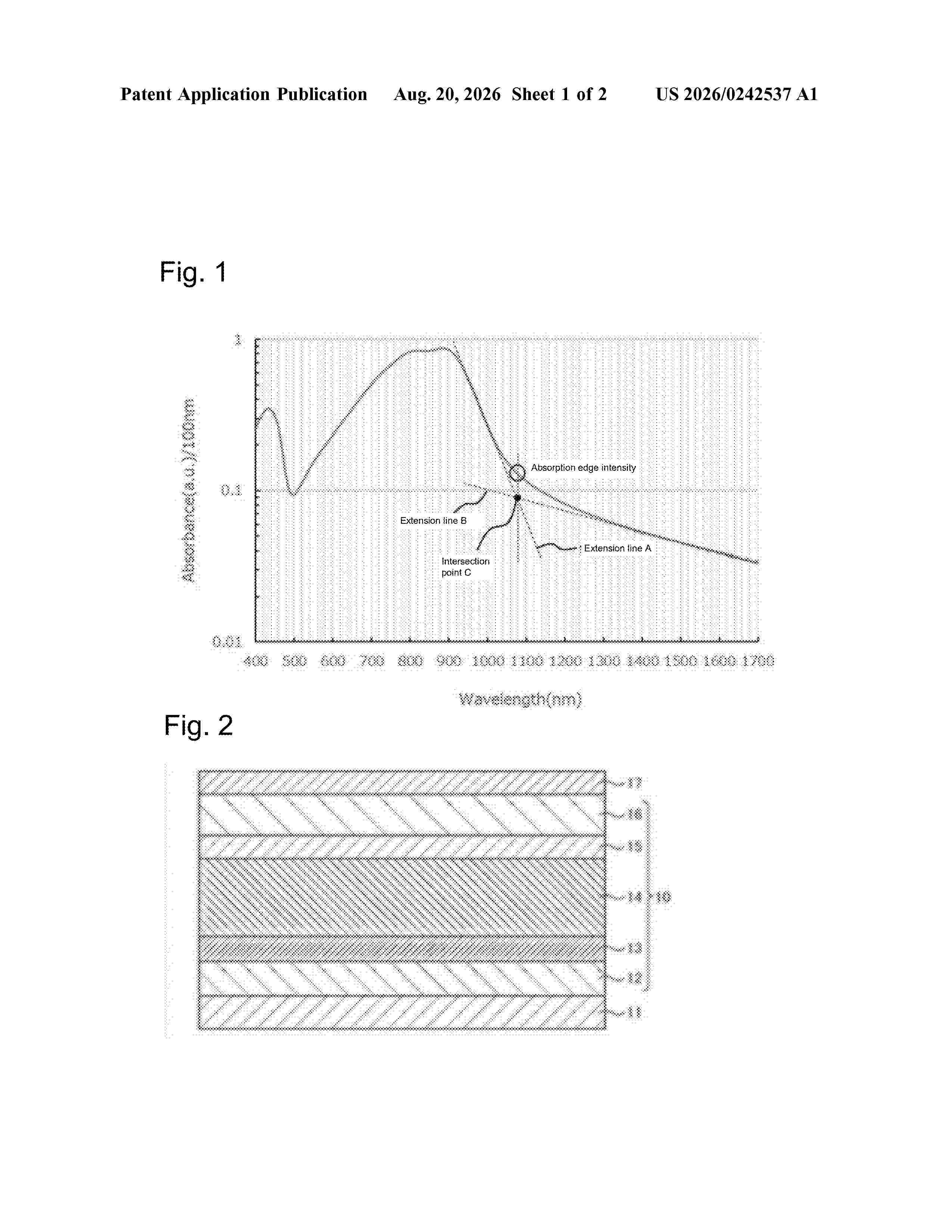
Resumen de: US20260242537A1
Provided is a polymer that suppresses dark current in a photoelectric conversion element.A polymer contains a structural unit having a main chain and a side chain, a weighted average of formula weights of the side chains weighted by a molar ratio of the structural units contained in the polymer is 160 or more, and an absorption edge intensity is 0.08 or less.

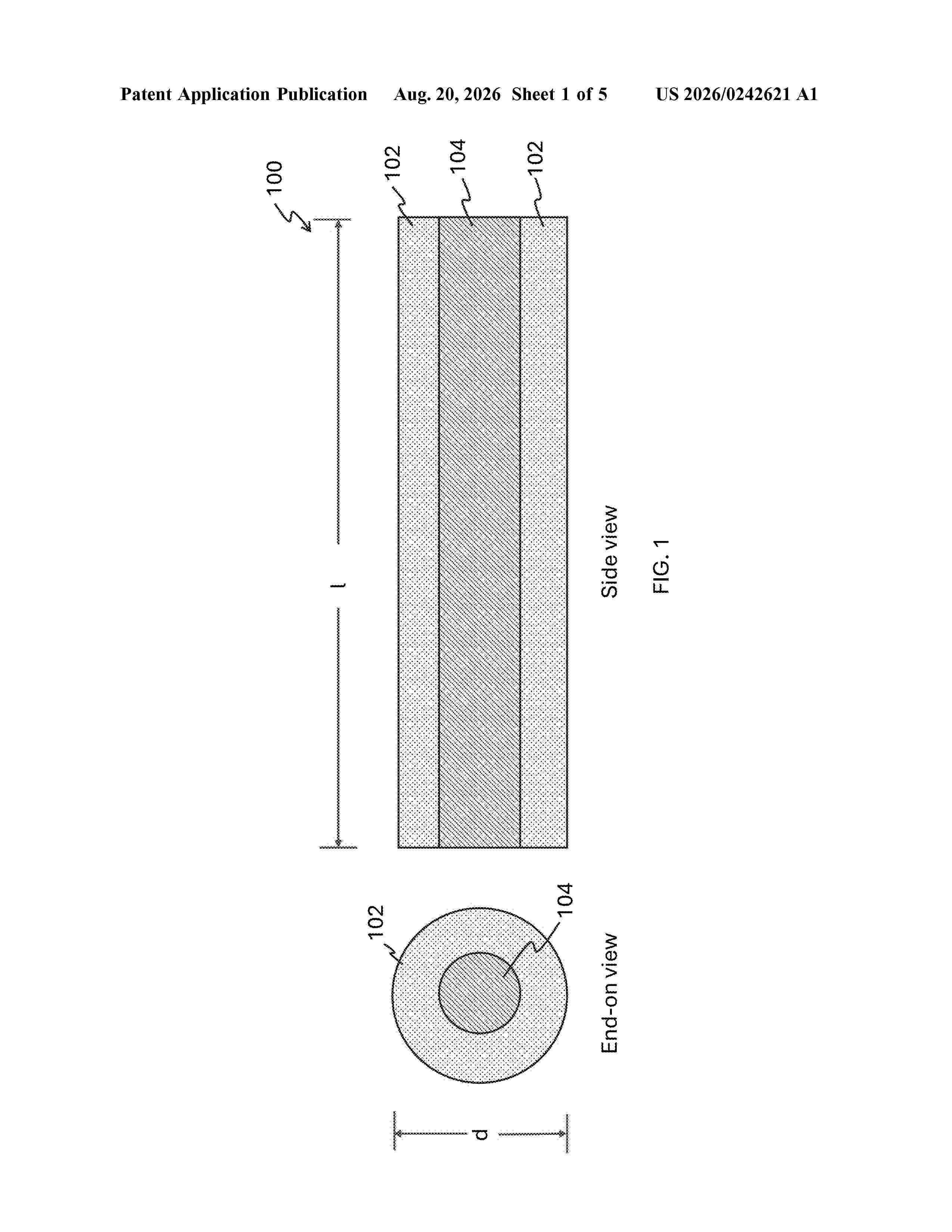
Resumen de: US20260242621A1
0000 Disclosed herein is a composition for manufacturing an electrically conducting composite, the composition comprising a polymer comprising a surface energy reducing moiety; wherein the surface energy reducing moiety comprises a silicon atom, a fluorine atom, or both a silicon atom and a fluorine atom; a liquid metal; and a solvent; wherein the composition is operative to undergo self-assembly into an electrically conducting composite that comprises a jacket that comprises the polymer and a strand that comprises the liquid metal. Disclosed herein too is an article comprising an electrically conducting composite comprising a liquid metal strand disposed in an encapsulating polymeric jacket; wherein the liquid metal strand extends continuously from one end to another end of the encapsulating polymeric jacket; and wherein the encapsulating polymeric jacket comprises a surface energy reducing moiety; wherein the surface energy reducing moiety comprises a low surface energy moiety.
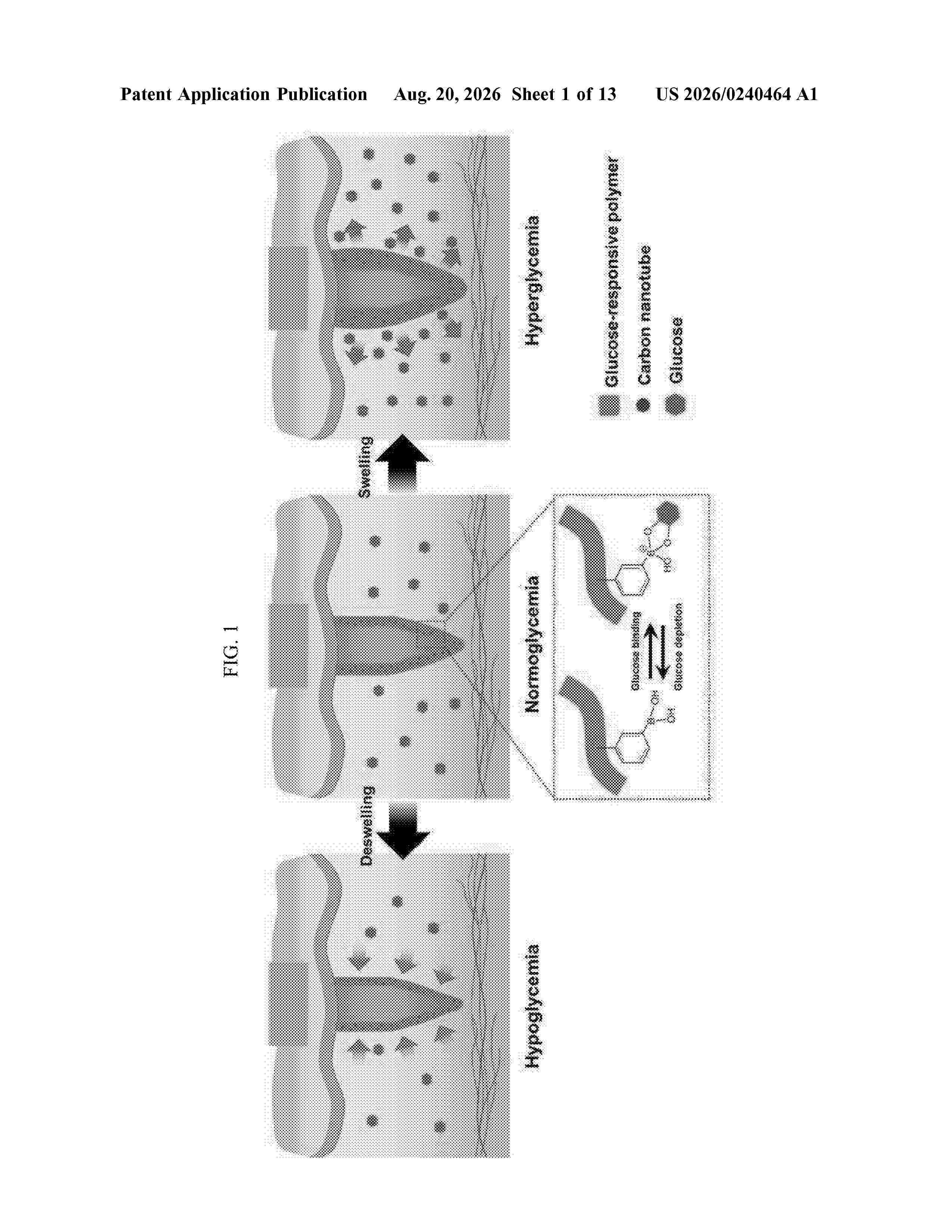
Resumen de: US20260240464A1
0000 A composition for blood glucose measurement includes a copolymer including three types of monomers having a hydrophobic group, a hydrophilic group, and a boronic acid moiety, and a conductive material mixed with the copolymer, thereby enabling volume changes in response to glucose to be converted into electrical signals. An electrochemical sensor for blood glucose measurement includes a working electrode that includes the composition.
Resumen de: US20260245905A1
0000 A power storage device binder aqueous solution includes a polyamic acid and water. The polyamic acid includes an aliphatic diamine unit. The polyamic acid is an amine salt.
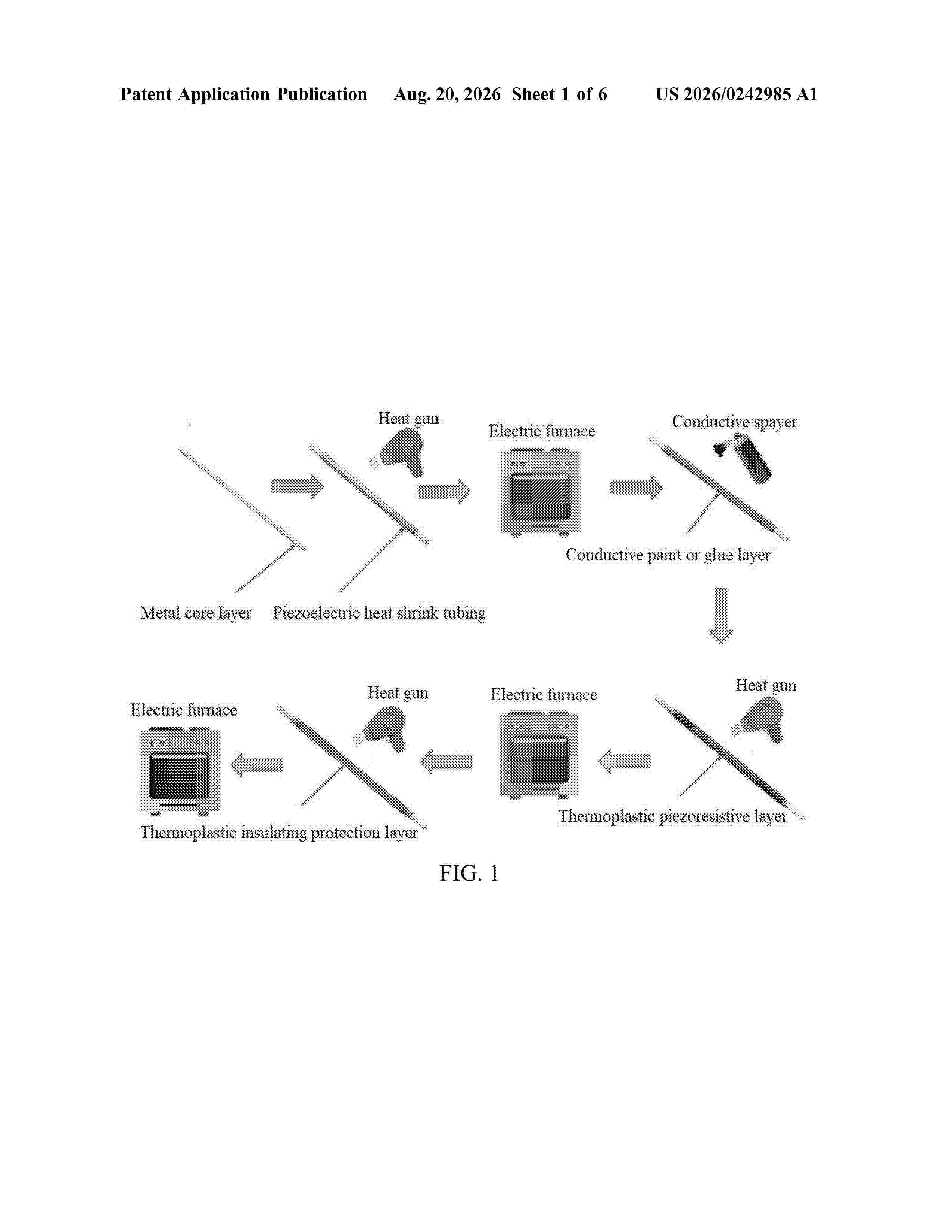
Resumen de: US20260242985A1
Composite fibers with dynamic and static sensing functions based on a thermal shrinkage process and a rapid preparation method relate to the technical field of composite fibers with core-shell structures. The composite fibers have a core-shell structure including a fiber core layer, a piezoresistive layer, a second conductive layer, a piezoelectric layer, a first conductive layer and an insulating protection layer from inside to outside in sequence, or a metal core layer, the piezoelectric layer, the first conductive layer, the piezoresistive layer and the insulating protection layer from inside to outside in sequence; a coaxial multi-layer functional structure is composited, which integrates the dynamic (piezoelectric effect) and static (piezoresistive effect) sensing functions in a single fiber, thereby breaking through the sensing limitation of a traditional single material or a single physical effect fiber, and realizing synchronous detection of broadband (dynamic and static) force and motion signals.
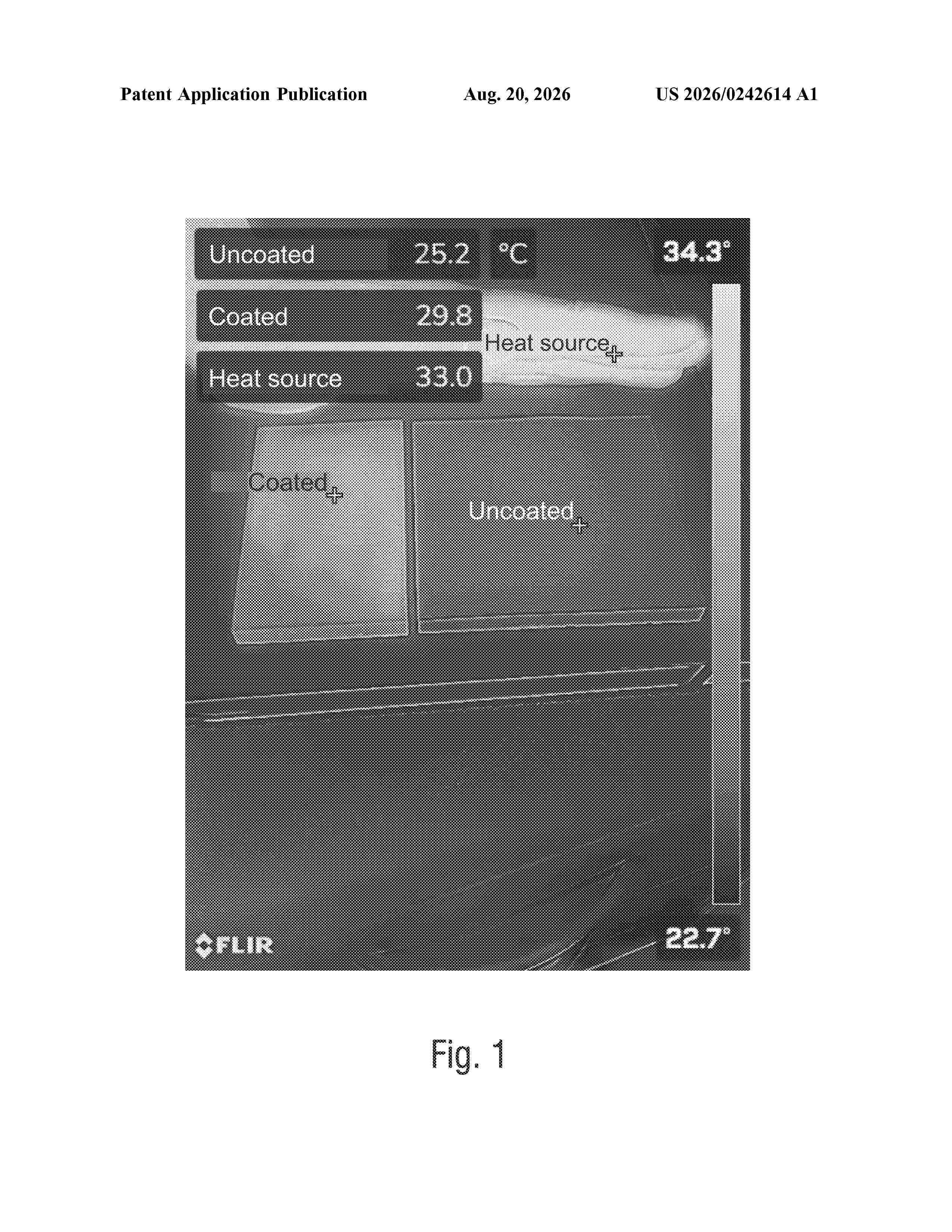
Resumen de: US20260242614A1
The invention relates to a formulation for preparing an IR radiation-reflecting coating. The formulation comprises at least one electrically conductive metallic nanomaterial, at least one binder and at least one solvent, the weight ratio of electrically conductive metallic nanomaterial to binder being greater than 0.005.
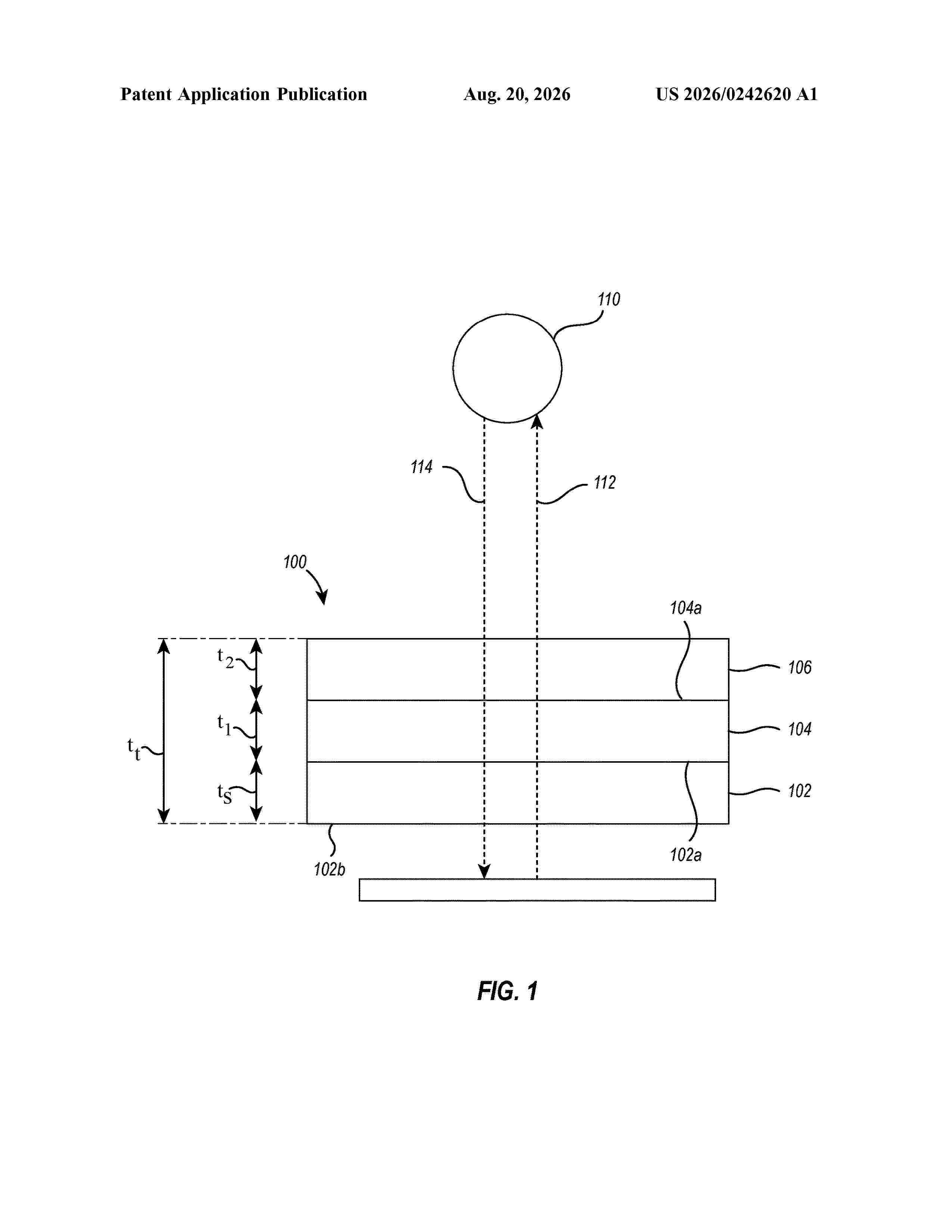
Resumen de: US20260242620A1
This invention deals with effect pigment mixture comprising platelet-like aluminum effect pigments obtained by grinding of aluminum or aluminum based alloy shot and silvery pearlescent pigments, wherein the silvery pearlescent pigments are taken from the group consisting of: a) pearlescent pigments comprising a transparent substrate which is coated with a high-refractive index layer with n>1.8, which comprises or consists of an iron-oxide with Fe(II)-ions, b) pearlescent pigments comprising a transparent substrate which is coated with a high-refractive index layer with n>1.8, which comprises or consists of titanium suboxide or a pearlescent pigment comprising a substrate with a high-refractive index with n>1.8 layer, which comprises or consists of a titanium suboxide that is optionally coated with a high-refractive index layer with n>1.8, c) pearlescent pigments comprising a transparent substrate which is coated with a high-refractive index layer with n>1.8, which comprises or consists of titanium oxynitride, d) pearlescent pigments comprising a transparent substrate which is coated with a layer comprising carbon, wherein the carbon is enclosed in a particulate form in another metal oxide layer or is formed as a separate, individual layer, e) a transparent substrate coated with a first layer comprising or consisting of a mixture of the oxides of titanium, iron and at least one of cobalt and chromium and a second layer on the first layer, wherein the second layer comprises an
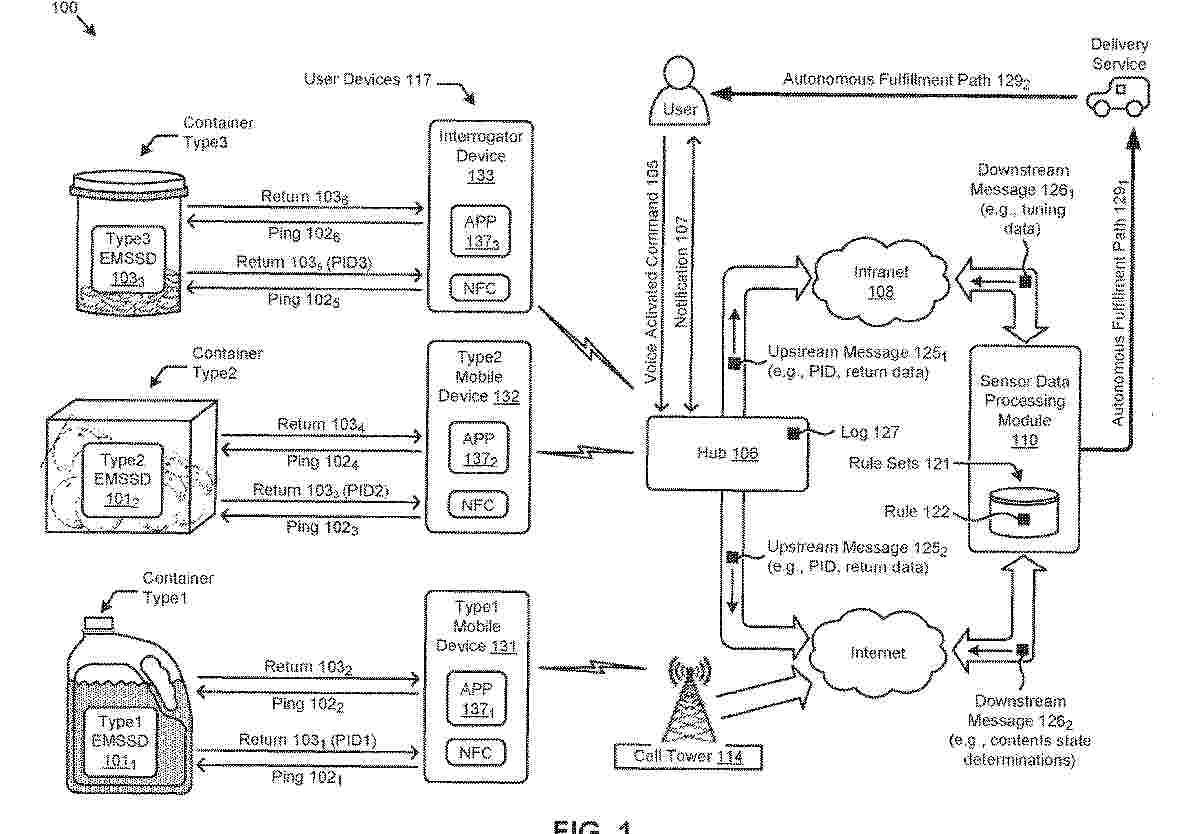
Resumen de: EP4793822A2
Methods include receiving a request from a user device to download an application and providing access to the application in response to the request. The application is configured to transmit a first electromagnetic radiation and receive, from an electromagnetic state sensing device (EMSSD) that is affixed to product packaging, a first electromagnetic radiation return signal. The first electromagnetic radiation return signal is transduced by the EMSSD to produce an electromagnetic radiation signal that encodes first information comprising a product identification code. The application is also configured to apply a rule that is selected based on the product identification code; transmit a second electromagnetic radiation ping that is tuned based on the rule; receive, from the EMSSD, a second electromagnetic radiation return signal that encodes second information pertaining to contents within the product packaging; and send, from the user device, a portion of the second information to an upstream computing device.
Resumen de: CN117050600A
The invention provides a carbon-coated current collector, the carbon-coated current collector comprises a foil and a conductive coating arranged on the surface of the foil, and the conductive coating comprises a combination of a modified conductive carbon material and a binder, the adhesive is prepared from the following raw materials in parts by weight: 40 to 60 parts of methyl isobutyl ketone, 25 to 30 parts of a solvent, 20 to 25 parts of isobornyl methacrylate, 20 to 25 parts of methyl methacrylate, 20 to 25 parts of n-butyl acrylate, 20 to 25 parts of hydroxyethyl acrylate, 18 to 22 parts of silicone oil and 50 to 55 parts of an initiator. The modified conductive carbon material is a fluorosilane modified carbon material; the modified conductive carbon material and the binder can form silanol through the hydrolysis reaction of the respective alkoxy groups, then form new hydrogen bonds with OH groups, and form covalent bonds on the surface of the carbon material, so that a highly crosslinked network structure is formed, the water resistance is further enhanced, and the water wiping resistance can reach 200 times or more.
Resumen de: US20260239786A1
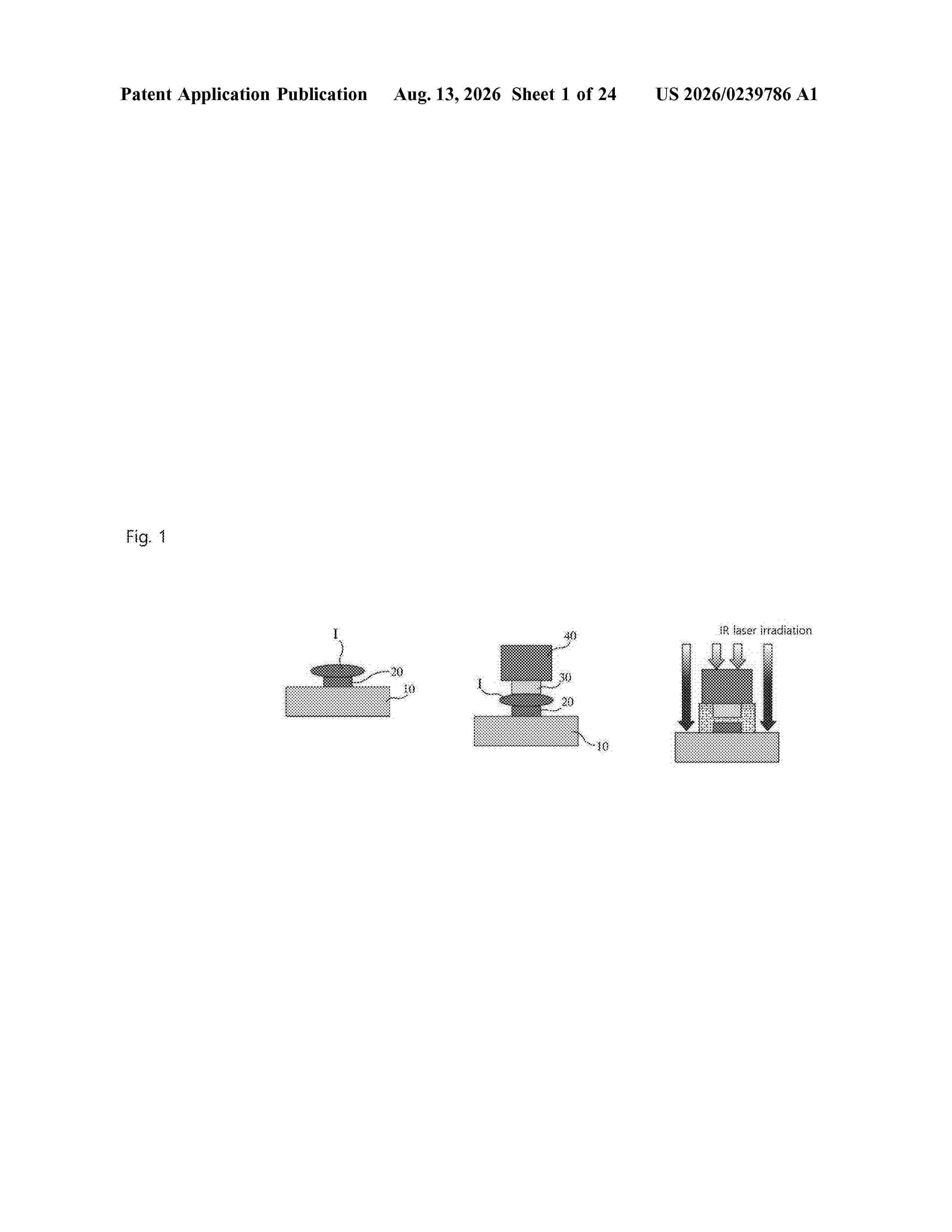
0000 The anisotropic conductive connection method according to the present invention comprises: an application step of applying an anisotropic conductive composition including a metal precursor and a curable resin to at least one first electrode to be bonded; and a pressing step of pressing the anisotropic conductive composition applied on the first electrode between a second electrode opposing the first electrode and the second electrode; a curing step of applying heat or light after applying the anisotropic conductive composition to cure the anisotropic conductive composition to form a cured product, wherein metal sintered bodies connecting the first electrode and the second electrode are formed within the cured product.
Resumen de: US20260234421A1
0000 The present invention pertains to binder compositions comprising vinylidene fluoride polymers and to their use in the preparation of electrodes for secondary batteries.
Resumen de: WO2026169953A1
Methods for fabricating 3-dimensional multi-layer electronic structures are provided. The methods comprise the steps of providing a substrate and depositing a first conductive ink on the substrate. The methods further comprise the steps of curing the first conductive ink to form a first conductive structure and depositing a first dielectric ink on the first conductive structure. The first dielectric ink is then cured to form a first dielectric structure. The steps can be repeated in order to form a multi-layer structure with the desired electrical properties by suitable patterning and alignment of each subsequent conductive and dielectric layer. Also provided are 3-dimensional multi-layer structures prepared using the disclosed methods. These structures comprise at least a substrate, a first conductive structure and a first dielectric structure, where each structure is patterned and aligned to provide the desired electrical properties.
Resumen de: US20260237668A1
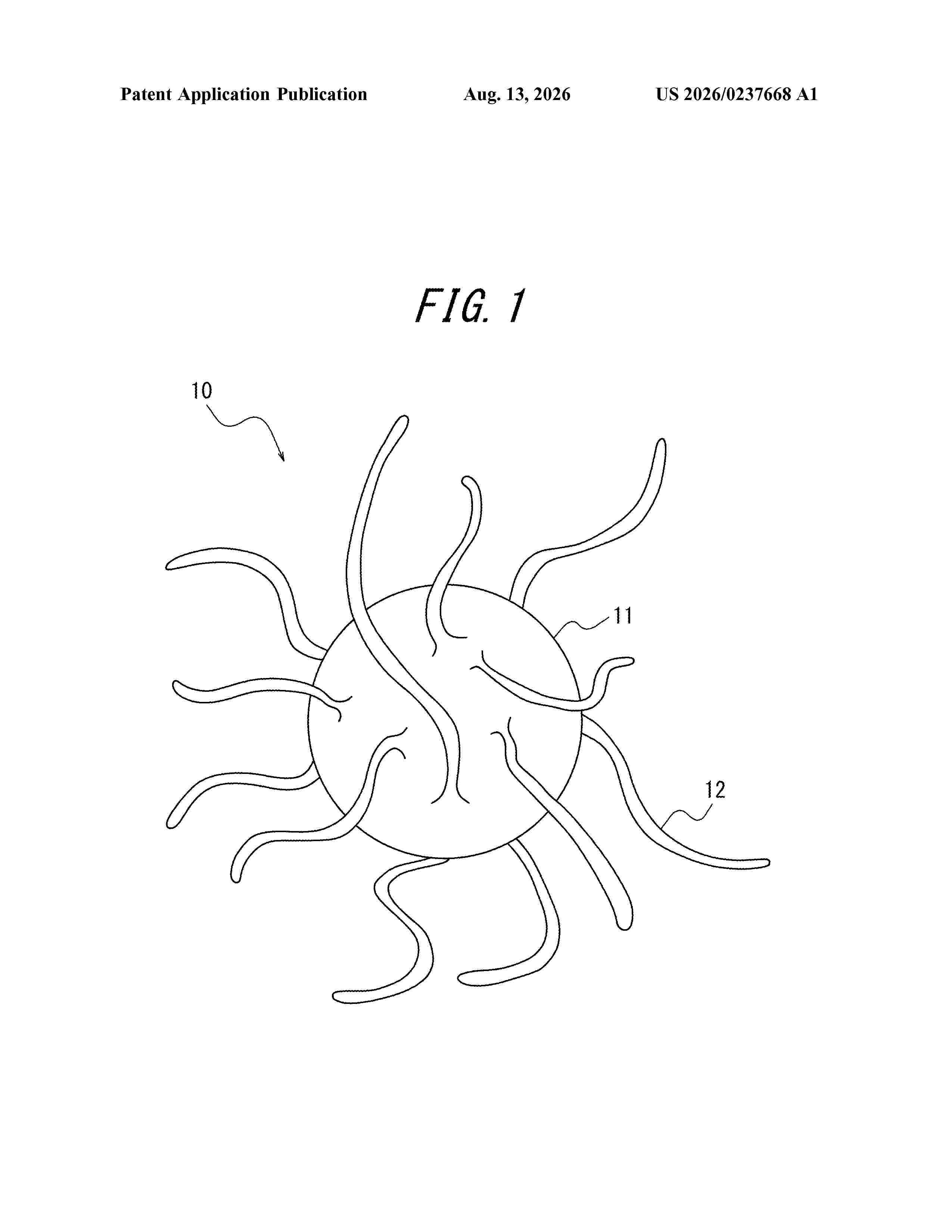
0000 Provided is a binder composition for a non-aqueous secondary battery negative electrode that can favorably suppress swelling of a negative electrode in accompaniment to repeated charging and discharging and that can cause a secondary battery to display excellent cycle characteristics. The binder composition for a non-aqueous secondary battery negative electrode contains a particulate binder and water. The particulate binder includes specific monomer units and has average particle diameters Da to Dc, measured by specific methods, that satisfy relationships in the following formulae (1) and (2):(1) Da−Db≤60.0 nm; (2) 1.40≤Da/Dc≤2.00.
Resumen de: WO2026167048A1
The invention provides an ink for a screen-printed working electrode, the ink comprising: gold microstructures having a maximum dimension of about 0.05 to about 7.5 microns; conductive carbon particles; at least one solvent having a boiling point of greater than 110°C; and at least one polymer dissolved or dispersed in the at least one solvent. The invention also provides an electrode comprising: a screen-printed working electrode comprising the ink of the first aspect of the invention.
Resumen de: WO2026167667A1
The present invention discloses a graphene-alumina nanofluid-polymer matrix for coating material (100) for quick thermal dissipation and its method of preparation, wherein the hybrid material (100) comprises graphene-alumina nano-composite powder that is processed to form a nanofluid-polymer matrix coating material having functionalized graphene with alumina (Al2O3) for improved heat dissipation in X-Y-Z direction. The addition of the alumina layer (106) in the desire process of the present invention allows to create stronger bonding and interactions with the graphene layers (108), improving the interlayer phonon coupling and allowing heat to more efficiently transfer in the z-direction, perpendicular to the graphene plane.
Resumen de: US20260234419A1
0000 A two-component magnetic coating composition system for reversible attachment of thin materials. A first coating composition contains magnetically responsive particles capable of being attracted to a magnetic field. A second coating composition contains magnetic particles capable of generating a magnetic field after forming a dried or set layer. When the first and second coating compositions are applied to separate substrates and allowed to dry or set, the coated surfaces magnetically attract one another and form a temporary connection. The connection may be repeatedly separated and reattached without adhesives or mechanical fasteners and without substantial loss of attachment functionality.
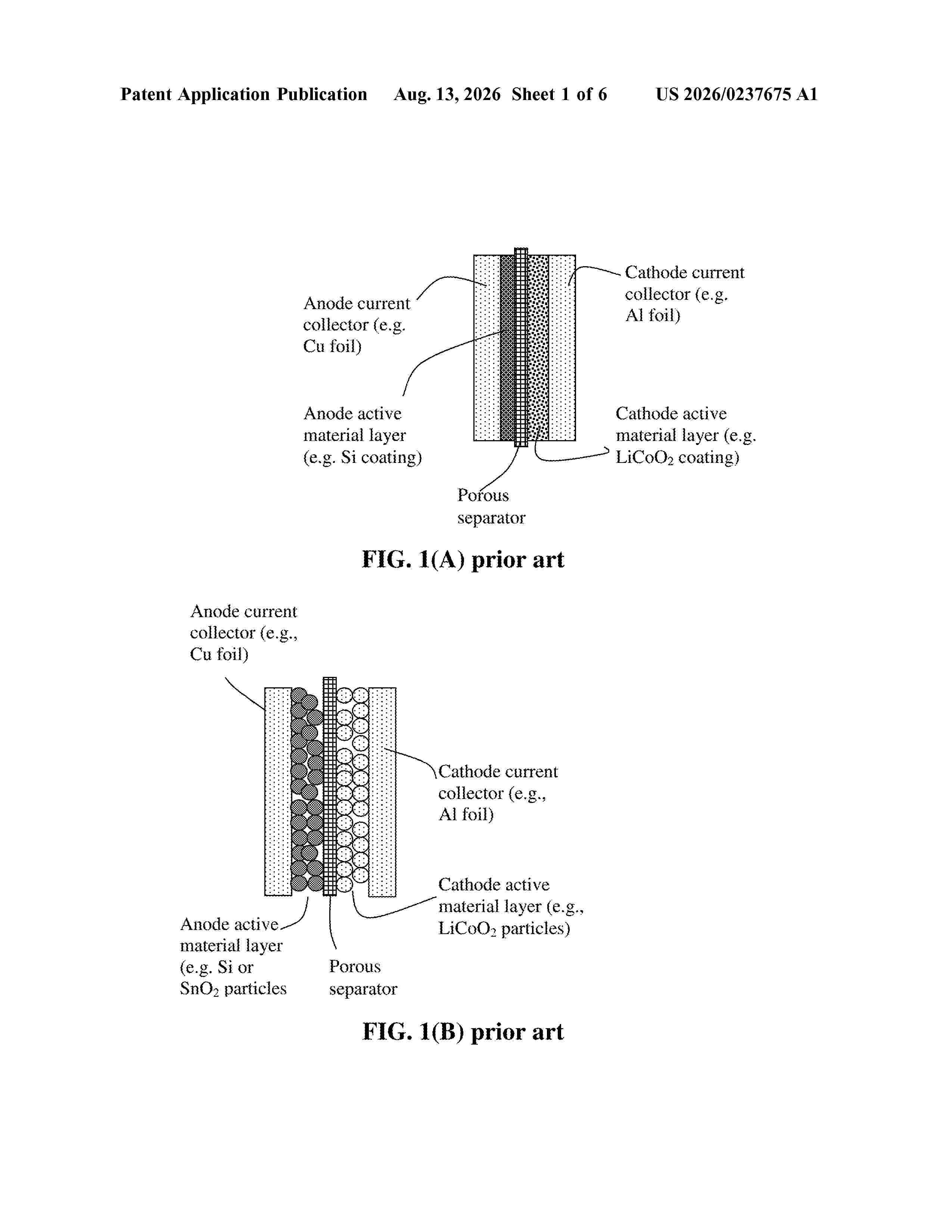
Resumen de: US20260237675A1
0000 An anode active material layer for a lithium battery, comprising: (a) 50% to 95% by weight of multiple particles of an anode active material; (b) 0.01% to 30% by weight of a conductive additive; and (c) a high-elasticity polymer having a recoverable tensile strain no less than 5% and a lithium ion conductivity no less than 10<−7 >S/cm at room temperature, wherein the high-elasticity polymer meets at least one of the following conditions: (i) the polymer comprises a thermally stable elastomer or rubber having a glass transition temperature or melting point higher than 250° C. (preferably higher than 275° C., more preferably higher than 300° C., and most preferably higher than 350° C., as measured by differential scanning calorimetry) or a thermal decomposition temperature higher than 350° C. as measured by a thermal gravimetric analyzer; (ii) the polymer comprises a flame retardant additive dispersed therein.
Resumen de: US20260234420A1
0000 There is provided a carbon material dispersion capable of forming film having improved electrical conductivity as compared to when a single carbon material is used. The carbon material dispersion contains: at least two carbon materials selected from the group consisting of single-walled carbon nanotubes, multi-walled carbon nanotubes, and carbon black; an aqueous medium; a dispersant; and a binder resin, wherein when the carbon materials are composed of a combination of a single-walled carbon nanotube and carbon black, the amount of carbon black to 1 part by mass of the single-walled carbon nanotube is 0.001 to 0.43 parts by mass, or when the carbon materials are composed of a combination of a single-walled carbon nanotube, a multi-walled carbon nanotube, and carbon black, the amount of carbon black based on 1 part by mass of the total amount of the single-walled carbon nanotube and the multi-walled carbon nanotube is 0.001 to 0.43 parts by mass.
Resumen de: WO2025076461A1
Improved conductive ink compositions and methods of making and using the conductive ink compositions are provided. The improved conductive ink compositions include a silver complex comprising a silver(I) ion and at least one complexing agent, a formate salt, and a fluoride salt. The conductive ink compositions can be used to improve the surface properties of conductive structures formed from conductive ink compositions that contain adhesion promoters or other modifying agents, in particular silicon-containing agents. Such conductive structures have been found to be difficult to wet, for example with traditional soldering pastes, and they discolor over time. Methods of forming conductive structures with improved surface properties, including improved wettability and reduced discoloration over time, are also provided, as are solderable conductive structures prepared according to these methods.
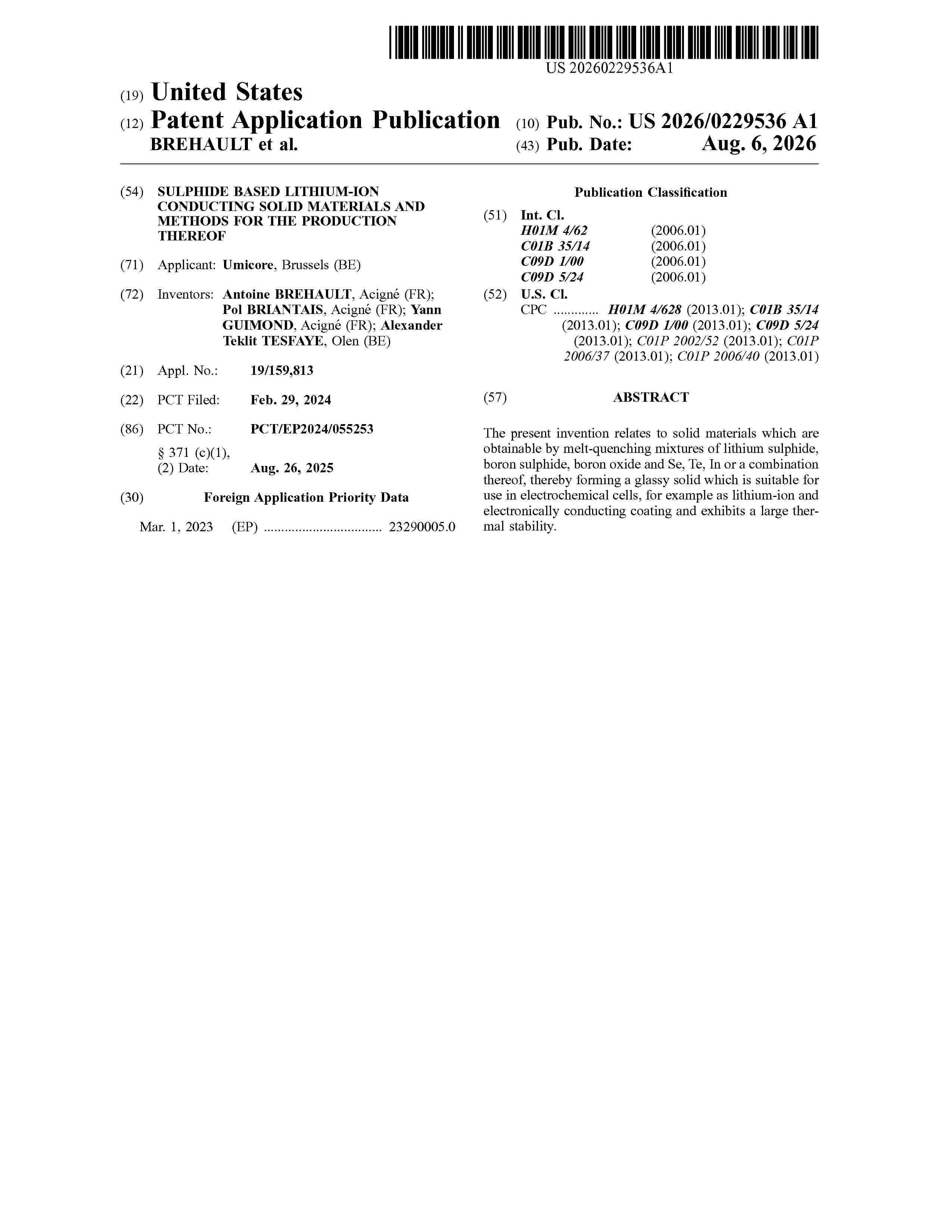
Resumen de: US20260229536A1
0000 The present invention relates to solid materials which are obtainable by melt-quenching mixtures of lithium sulphide, boron sulphide, boron oxide and Se, Te, In or a combination thereof, thereby forming a glassy solid which is suitable for use in electrochemical cells, for example as lithium-ion and electronically conducting coating and exhibits a large thermal stability.
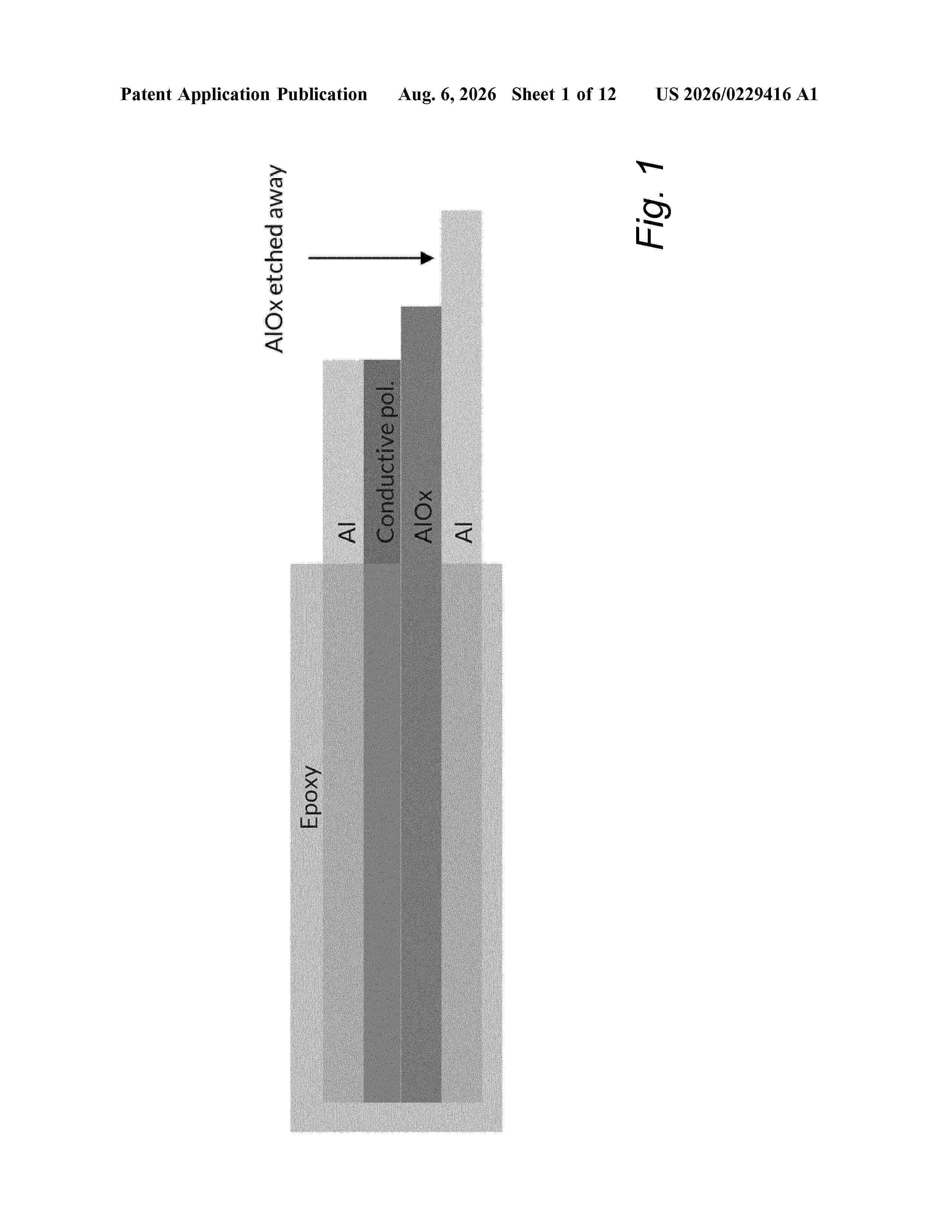
Resumen de: US20260229416A1
The present invention relates to a polymer capacitor comprising an anode, a dielectric layer and a cathode, wherein said cathode comprises a solution-processed n-type conducting polymer having conductivity of at least 100 S/cm, preferably at least 500 S/cm.
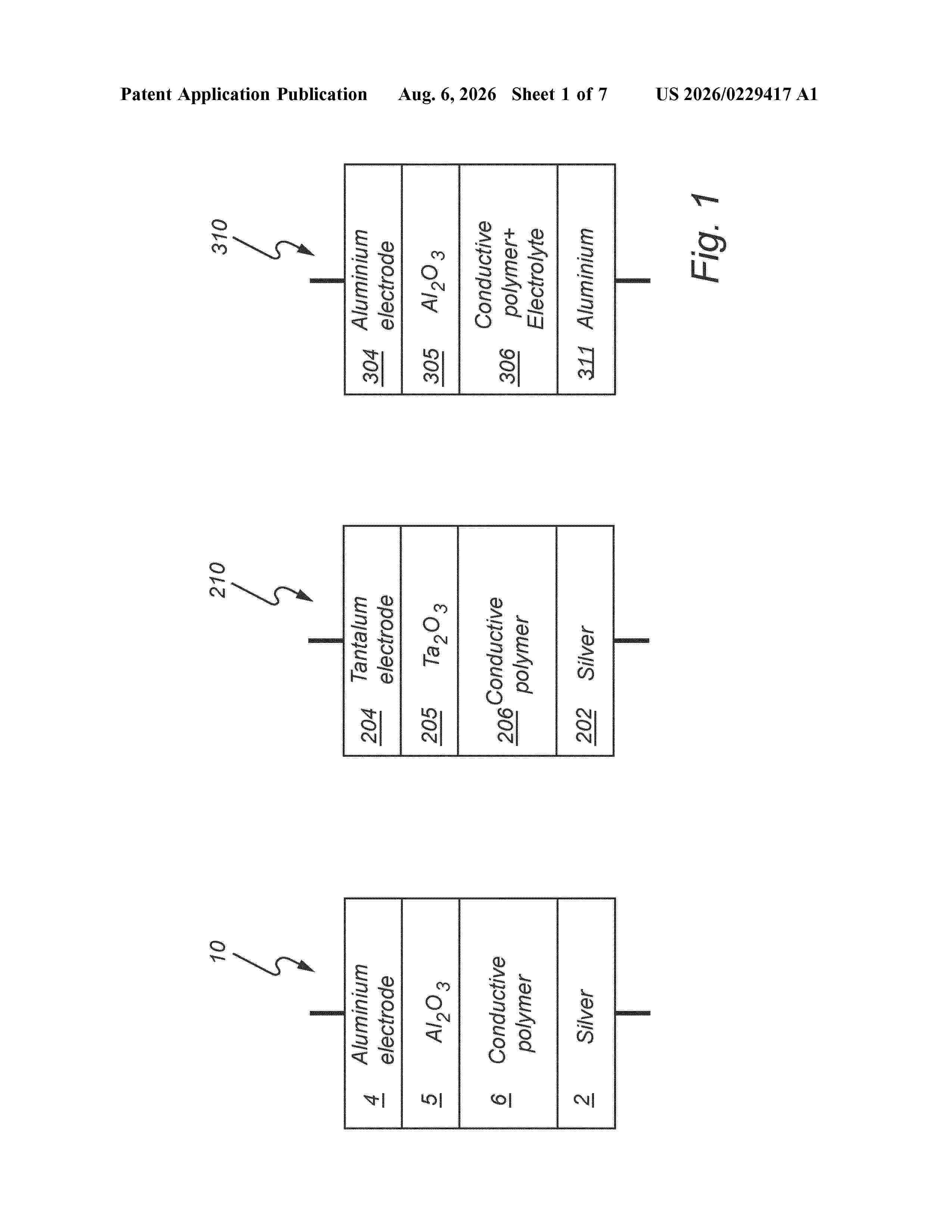
Resumen de: US20260229417A1
0000 The present invention relates to a polymer electrolytic capacitor comprising an anode, a dielectric layer and a cathode, wherein said cathode comprises a solution-processed n-type conducting polymer.
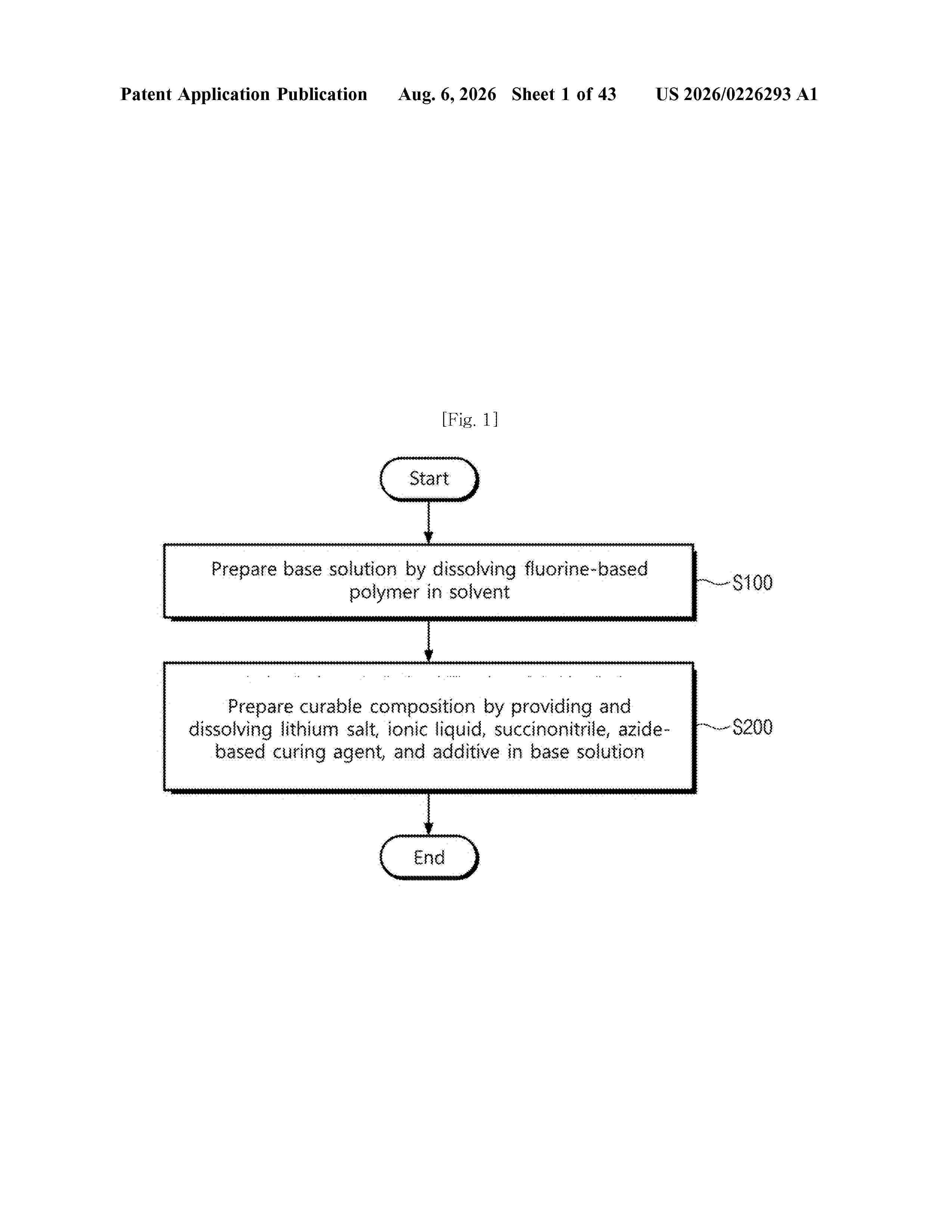
Resumen de: US20260226293A1
0000 According to the present invention, a method for manufacturing a curable composition may include: preparing a base solution by dissolving a fluorine-based polymer in a solvent; and preparing the curable composition by providing and dissolving lithium salt, an ionic liquid, succinonitrile, an azide-based curing agent, and an additive in the base solution. 0000 A substrate (e.g., a stretchable polymer film, a carbon support, lithium foil, copper foil, a positive electrode in which a positive electrode layer is formed on a positive electrode current collector, or a negative electrode in which a negative electrode layer is formed on a negative electrode current collector) may be coated with the curable composition manufactured by the above method, and the curable composition may be cured with ultraviolet light, so that a stretchable coating layer having improved electrical and mechanical properties may be manufactured. 0000 Therefore, the stretchable coating layer may be used as a solid electrolyte layer of a stretchable secondary battery, a channel layer of a stretchable transistor, and an electrolyte layer of a fuel cell, and the stretchable secondary battery, the stretchable transistor, and the fuel cell to which the stretchable coating layer is introduced may be applied to a wearable device.
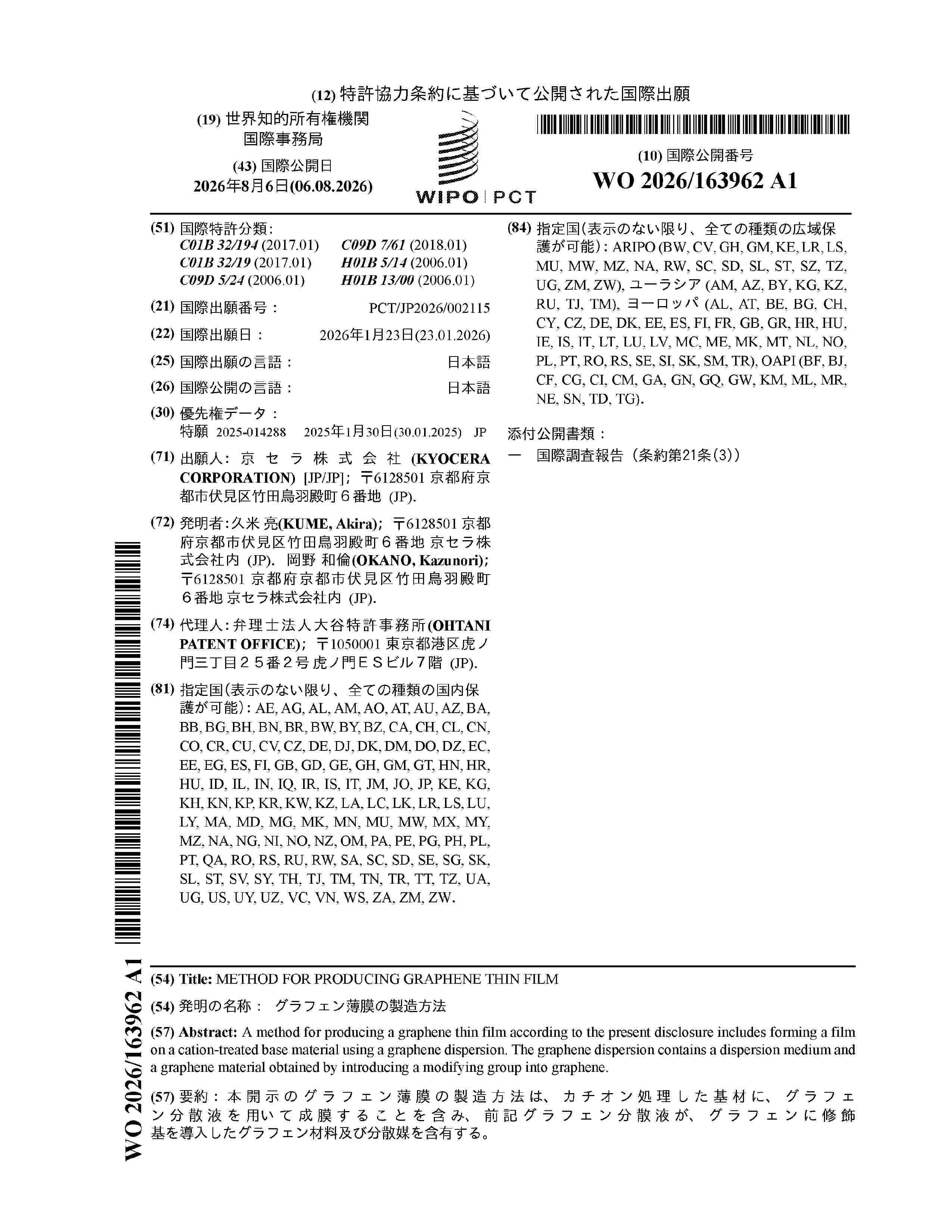
Nº publicación: WO2026163962A1 06/08/2026
Solicitante:
KYOCERA CORP [JP]
\u4EAC\u30BB\u30E9\u682A\u5F0F\u4F1A\u793E
Resumen de: WO2026163962A1
A method for producing a graphene thin film according to the present disclosure includes forming a film on a cation-treated base material using a graphene dispersion. The graphene dispersion contains a dispersion medium and a graphene material obtained by introducing a modifying group into graphene.
 BOPI
BOPI
 Sede Electrónica