Resumen de: AU2024345572A1
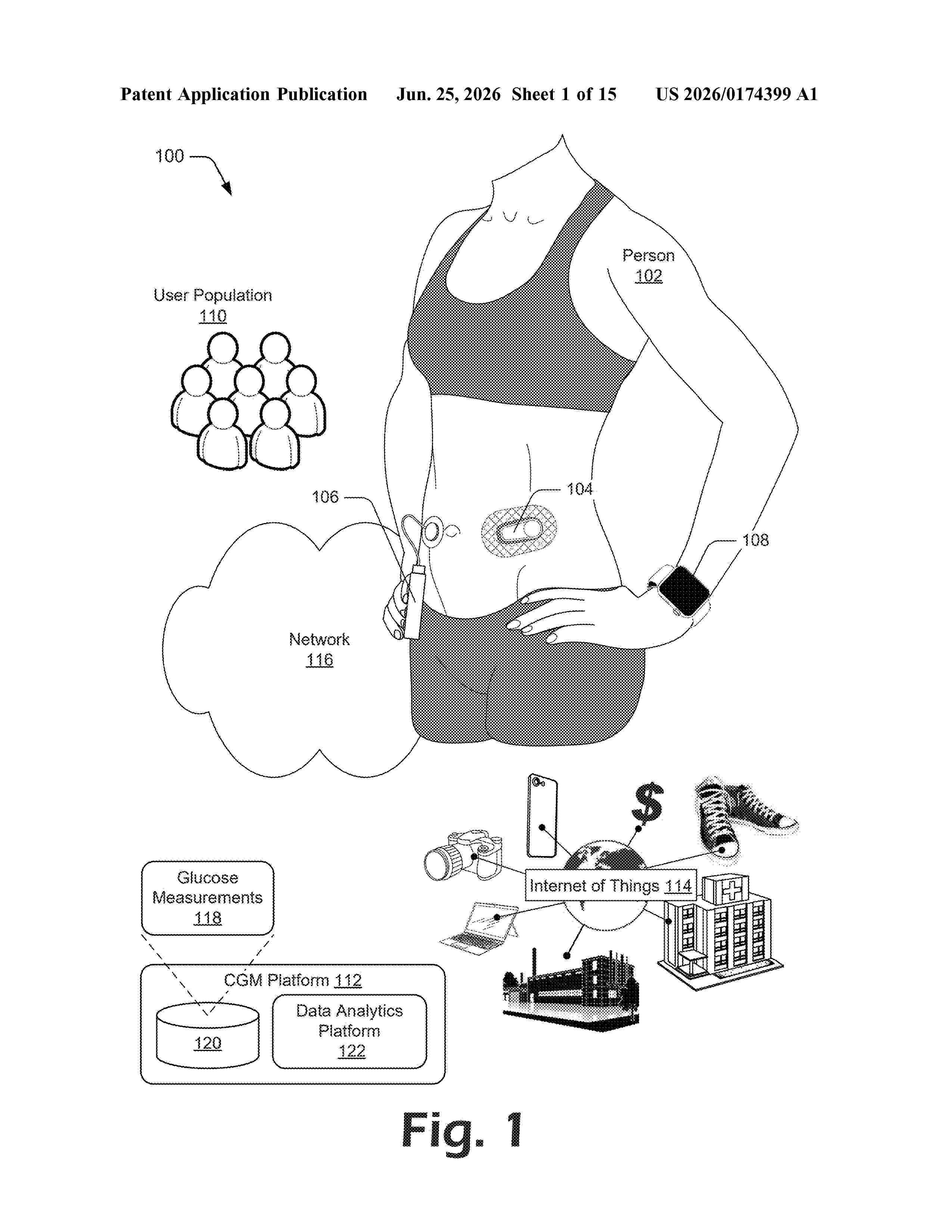
Conditions of pathophysiologic dysglycemia, associated with type 1 diabetes, can be detected early, including in children. Glycemia data is collected by continuous glucose monitoring devices connected to a cloud server. The server learns person-specific patterns of glycemia and trains a model accordingly, which may serve as a baseline for comparison or as the basis for prediction of future patterns. Such models are conditioned by risk factors and various concurrent activities such as exercise and consumption of sugars. Person-specific models trained at different time periods give different simulated patterns of glycemia. Deviations between the simulated patterns, or between the predicted and actual patterns, can indicate progression of pathophysiologic dysglycemia and type 1 diabetes. These models and comparisons can be further interpreted by the software to result in a reported recommendation for additional diagnostic testing or a reported conclusion of diagnosis and recommendation of preventative intervention.
Resumen de: EP4738376A2
The embodiments described herein may relate to methods and systems for adjusting insulin delivery. Some methods and systems may be configured to adjust insulin delivery to personalize automated insulin delivery for a person with diabetes. Such personalization may include adjusting user specific dosage parameters in response to a user provided insulin delivery amount, including a user provided insulin delivery amount that varies from a recommended insulin delivery amount.
Resumen de: US20260115379A1
0000 Disclosed herein are portable infusion pump systems that provide an ability to simultaneously track insulin on board from insulin deliveries from different sources and/or of different types. A user interface can be provided to enable the user to enter insulin delivered from a source other than the portable infusion pump. A simplified calculation for estimating IOB remaining from each insulin delivery enables such calculations to be carried out with the limited memory and processing capacity of the portable infusion pump.
Resumen de: AU2026202716A1
A method of providing an event notification in a glucose monitoring system, comprises: determining whether an event occurs; in response to the occurrence of the event, determining whether the event occurs during a signal loss; determining whether to output a notification corresponding to the event based on a preset priority between the event and the signal loss in the case where the event occurs during the signal loss; and outputting the notification corresponding to the event according to the determination of whether to output the notification. the notification. pr p r
Resumen de: WO2026087221A1
A control device for managing insulin delivery in a closed-loop system. The control device comprises a computation module. The computation module is configured to receive a target basal rate indicative of a rate of a target insulin delivery rate of an insulin pump and compute a supplemental basal rate if the target basal rate is greater than a rate threshold. The supplemental basal rate is sensibly equal to a difference between the target basal rate and the rate threshold. The control device also comprises an insulin management module. The insulin management module is configured to determine a recommendation value of a control parameter of the insulin pump. The recommendation value is based on the supplemental basal rate multiplied by a time period. The control device comprises a communication module. The communication module is configured to send the recommendation value to the insulin pump.
Resumen de: US20260120863A1
Methods and apparatus, including computer program products, are provided for processing analyte data. In some example implementations, a method may include generating glucose sensor data indicative of a host's glucose concentration using a glucose sensor; calculating a glycemic variability index (GVI) value based on the glucose sensor data; and providing output to a user responsive to the calculated glycemic variability index value. The GVI may be a ratio of a length of a line representative of the sensor data and an ideal length of the line. Related systems, methods, and articles of manufacture are also disclosed.
Resumen de: WO2026089758A1
Provided are a method, system, and computer-readable medium for recommending titration measurement for basal insulin dosing and then automatedly causing delivery of the dosing. The recommendation can be personalized to accomplish a weekly recommended dosing according to evaluation for a daily titration glucose level (TGL) determined for received CGM data over the course of a preceding weekly time period. With increased receipt of CGM data, the TGLs can be categorized according to refinement for risk of occurrence of hypoglycemia, and the recommendation may be provided commensurately. In any instance, the recommendation can be automatedly adjusted either upon the CGM data satisfying conditions for hypoglycemia or upon a patient self-reporting hypoglycemia.
Resumen de: WO2026088027A1
A system (100) for health diagnosis using breath of user and lifestyle assessment is disclosed The system includes a breath analyzer device (110) that includes a breath chamber (120) to receive exhaled breath and detect concentration level of acetone, hydrogen, ethanol, hydrogen, ammonia, carbon monoxide, hydrogen sulphide, 5 lung capacity, hydrogen, methane, ammonia and hydrogen sulphide. The plurality of sensors (130) captures a photoplethysmography signal. A receiving module (160) receives data and the photoplethysmography signal. A disorder score generation module (170) analyses the data to generate a diabetic score, liver disorder score, respiratory disorder score, digestive. A nutrient score module (180) calculates a 10 nutrient score. A lifestyle score module (190) calculates a lifestyle score. A display module (200) displays diabetic score, liver disorder score, respiratory disorder score, digestive disorder score, kidney disorder score, nutrition score, lifestyle score, and the plurality of health parameters via a user interface.
Resumen de: US20260115383A1
0000 A wearable device or system for monitoring food consumption can include a head-worn device such as eyewear which is worn by a person and a plurality of brain activity sensors on the head-worn device, wherein data from the plurality of brain activity sensors is analyzed to detect when the person is eating. This device can be used alone or as part of a closed-loop glucose level management system.
Resumen de: US20260114743A1
A biometric wearable device is embodied in a finger ring or smart watch with radiowave or microwave energy emitters/transmitters and energy receivers to measure the level of a biometric parameter such as body oxygenation, hydration, or glucose level. The energy emitter/transmitter and the energy receiver can be parallel, nested, and/or comprise a two-dimensional array. The device can further comprise a split ring resonator located between the energy emitter/transmitter and the energy receiver.
Resumen de: US20260120843A1
0000 A wearable device or system for monitoring food consumption can include a wrist-worn or finger-worn device which is worn by a person, a motion sensor on the wrist-worn or finger-worn device, eyewear which is worn by the person, and a camera on the eyewear which is activated to record food images when analysis of data from the motion sensor detects that the person is eating. This device can be used alone or as part of a closed-loop glucose level management system.
Resumen de: US20260114742A1
A biometric wearable device is embodied in a smart watch or finger ring with radiowave or microwave energy emitters/transmitters and energy receivers to measure the level of a biometric parameter such as body oxygenation, hydration, or glucose level. The energy emitter/transmitter and the energy receiver can be parallel, nested, and/or comprise a two-dimensional array. The device can further comprise a split ring resonator located between the energy emitter/transmitter and the energy receiver.
Resumen de: EP4732829A1
0001 A GLP-1-Fc-FGF21 double-target fusion protein composition and the use thereof. The composition comprises a GLP-1-Fc-FGF21 fusion protein and a buffer solution. In the composition, by means of adding the buffer solution, the generation of visible particles can be effectively controlled, and the stability of the GLP-1-Fc-FGF21 fusion protein is improved, so that the shelf life of a product can be prolonged. The composition can be used for treating and/or preventing metabolic diseases, such as diabetes, hyperlipidemia, obesity and diseases related to fatty liver.
Resumen de: WO2024263758A1
Systems and methods are provided for determining patterns, trends, anomalies, and/or abnormalities in data relating to operation of an insulin delivery pump and user outcomes relating to an insulin delivery pump and determining certain actions and/or operational adjustments to improve the user outcomes, such as blood glucose levels. For example, troubleshooting actions may be recommended upon determining a pattern, trend, abnormality, and/or anomaly in blood glucose levels that is undesirable. In another example, operation of the insulin delivery pump may be adjusted based habits and/or behaviors of the user. For example, insulin delivery timing may be adjusted based on exercise, activity and/or eating patterns. Based on the detected patterns, trends, anomalies, and/or abnormalities, a user device such as a mobile phone or smart device may present prompts for more information, alerts, status updates, and other information intended to improve the user experience.
Resumen de: WO2024263756A1
Systems and methods are provided for determining patterns, trends, anomalies, and/or abnormalities in data relating to operation of an insulin delivery pump and user outcomes relating to an insulin delivery pump and determining certain actions and/or operational adjustments to improve the user outcomes, such as blood glucose levels. For example, troubleshooting actions may be recommended upon determining a pattern, trend, abnormality, and/or anomaly in blood glucose levels that is undesirable. In another example, operation of the insulin delivery pump may be adjusted based habits and/or behaviors of the user. For example, insulin delivery timing may be adjusted based on exercise, activity and/or eating patterns. Based on the detected patterns, trends, anomalies, and/or abnormalities, a user device such as a mobile phone or smart device may present prompts for more information, alerts, status updates, and other information intended to improve the user experience.
Resumen de: US20260108215A1
0000 The present invention relates to a method for predicting the prognosis of intravitreal injection treatment, comprising the steps of: receiving OCT images and clinical information of a plurality of diabetic macular edema patients; extracting one or more major lesion information from the OCT images; training a multi-modal deep learning model by inputting the OCT images, the clinical information, and the one or more major lesion features, and outputting the intravitreal injection treatment prognosis of the diabetic macular edema patients; and predicting the prognosis of intravitreal injection treatment by inputting the OCT images, the clinical information, and the major lesion features of a specific diabetic macular edema patient to the trained multi-modal deep learning model.
Resumen de: WO2026083250A1
The objective invention provides a parenteral composition of semaglutide or a pharmaceutically acceptable salt thereof for subcutaneous administration, having a strength and composition such that it can be administered multiple times from single article of manufacture, for use in treating type 2 diabetes mellitus and for weight loss, thereby providing benefit to the patient.
Resumen de: WO2026085358A1
A method of improving glycemic control is provided. The method includes stimulating a cutaneous distribution of a subject's vagus nerve within the subject's ear with a nerve stimulating signal. The method also includes monitoring the subject's blood glucose. The method further includes administering insulin infusions to the subject.
Resumen de: WO2026084731A1
A multi-analyte sensor system is disclosed. The system includes a sensor probe that has a first set of electrodes that transduce glucose into electrical signals, a second set of electrodes that transduce lactate into electrical signals and a third set of electrodes that provide working and counter electrode functionality for the first and second set of electrodes. The system has an electronics module that electrically interfaces with the sensor probe, and includes a transceiver configured to transmit sensor data. The system also includes control circuitry communicatively coupled to the electronics module that determines a glucose state based on signals from the first set of electrodes and also determine a lactate state based on signals from the second set of electrodes. The control circuitry also generates an insulin infusion pump control signal based on signals from the first and second set of electrodes.
Resumen de: WO2026085278A1
Systems and methods are disclosed for managing a person's blood glucose concentration within a predetermined range by co-administration of insulin and pramlintide using an automated insulin delivery system. A model predictive control (MPC) algorithm that includes a glucoregulatory control model augmented with a compartment model of pramlintide pharmacokinetics and pharmacodynamics is utilized. In some embodiments, the person may announce in advance meals to be consumed and the pramlintide-aware MPC algorithm uses this data as input to the glucoregulatory control model. In other embodiments, an automatic meal detection and size estimation algorithm is incorporated into the system to relieve the person of the burden of meal entry and carbohydrate estimation.
Resumen de: WO2026085127A1
A method of administering insulin to a patient to achieve and maintain euglycemia is disclosed. The method includes administering insulin to the patient at a drip rate that is based on a current blood glucose level of the patient and a weight of the patient. Insulin is administered during an initial phase, a transition phase (during which blood glucose level decreases slower than during the initial phase), and a maintenance phase. During the maintenance phase, the method includes adjusting the drip rate periodically based on a current drip rate and a percentage change in blood glucose level during a period of time. In addition, the maintenance phase considers a lookback period in which the drip rate is adjusted based on trends during the lookback period.
Resumen de: AU2026202583A1
22573194_1 (GHMatters) P45417AU02 An insulin device configured to control an insulin dosage by adapting a basal rate profile. The insulin device includes a sensor configured to produce a blood glucose level measurement data, and detect changes of the blood glucose level measurement data over time; a processor and associated computer memory device configured to receive the blood glucose level measurement data and a basal rate profile, such that the basal rate profile includes a basal rate set point that corresponds to an insulin delivery reference for a nominal blood glucose, and the basal rate profile is stored in the computer memory device. The insulin device also includes an an insulin dispensing valve controlled by the processor to administer insulin in accordance with the received basal rate profile, such that the processor is configured to update the basal rate set point over a time period based on both an assessment of at least one of a risk of hyperglycemia and a risk of hypoglycemia from historical blood glucose data, and patterns of actions taken by the insulin device to mitigate glycemic risk during the time period. The insulin dispensing valve is controlled by the processor to administer insulin in accordance with the updated basal rate set point. pr p r
Resumen de: US20260112492A1
Provided are methods and systems for generating a model for determining blood glucose levels using voice samples. This includes receiving, at a processor: a plurality of voice samples from at least one subject at a plurality of time points; and a plurality of blood glucose levels, wherein each blood glucose level in the plurality of blood glucose levels is temporally associated with a voice sample in the plurality of voice samples; sorting, at the processor, the plurality of voice samples into two or more blood glucose level categories based on the blood glucose levels; extracting, at the processor, voice feature values for a set of voice features from each of the plurality of voice samples; selecting, at the processor, a subset of voice features from the set of voice features; and generating at the processor, the blood glucose level prediction model based on the subset of voice features.
Resumen de: US20260108186A1
0000 According to an aspect, there is provided a computer-implemented method (200) of determining a concentration of glucose in a subject's blood, the method comprising acquiring (202) first measurement data indicative of a response resulting from an electromagnetic (EM) signal interacting with the subject's blood in a body part of the subject, the EM signal having been emitted from a device in contact with the body part of the subject; acquiring (204) second measurement data indicative of a pressure applied to the body part of the subject by the device; and using (206) a predictive model to infer a concentration of glucose in the subject's blood from the first measurement data and the second measurement data, the predictive model having been trained to infer a concentration of glucose in the subject's blood from the first measurement data and the second measurement data.
Resumen de: US20260108742A1
Devices and methods described herein may, among other uses, favorably cause the activation and/or deactivation of vascular baroreceptors in order to achieve a desired impact on a physiological condition, such as baroreflex-regulated conditions, hypertension, hypotension, nervous system disorders, metabolic disorders, cardiovascular disease, heart failure, cardiac arrhythmia, renal disease, respiratory disease, diabetes, and insulin resistance. The devices and methods may be used in concert with each other and/or other treatments, medications, interventions, or behavioral regimens. They may also be used in concert with devices and methods that perform or assist with assessing or measuring a mammal's blood pressure, assessing, measuring, or predicting the impact of the described methods and devices on the patient's condition (including blood pressure), and/or protecting the surrounding anatomy from adverse effects.
Resumen de: EP4729088A1
The present application relates to the technical field of medical instruments, and disclosed thereby are a power device and a patch type insulin pump. The power device comprises a power output module, a transmission component, a lead screw and a sliding block, wherein the power output module comprises a power output shaft, and the power output shaft is in transmission connection to the transmission component. The transmission component is in transmission connection to the lead screw, and the transmission component is used to transfer power output from the power output shaft to the lead screw to drive the lead screw to rotate around its own axis. The sliding block is sleeved on the lead screw, and the sliding block is abutted to one end of a push rod away from a bolus piston. When the lead screw rotates around its own axis, the sliding block is driven to move relative to the lead screw along the axis direction of the lead screw, so that the sliding block drives the push rod to move along the axis direction of the lead screw. The axis of the power output shaft is parallel to the axis of the lead screw, and the power output direction of the power output shaft is opposite to the movement direction of the sliding block. The power device disclosed by the application is beneficial for reducing the volume of the patch type insulin pump.
Resumen de: EP4729087A1
The present application relates to the technical field of medical appliances and discloses a patch type insulin pump and an insulin injection system and its method of application. The patch type insulin pump comprises an injection module, a power module and an injection detection module. The injection module comprises a drug storage tank, a push rod piston and two conductive push rods. The bottom of the drug storage tank is provided with an injection port, and the top is provided with an opening. The push rod piston is sealed on the opening, and the push rod piston may move relative to the drug storage tank along a first direction. The two conductive push rods are respectively connected to the push rod piston. The injection detection module comprises a control circuit board, two conductive contact springs and a conductive module. The two conductive contact springs are electrically connected to the control circuit board, and the two conductive push rods are in a sliding contact with the two conductive contact springs. The power module is used to drive the conductive module to move in the first direction, and the control circuit board is used to detect the dosage injected into the drug storage tank based on the moving distance of the conductive module. The patch type insulin pump can detect the dosage injected by the patch type insulin pump.
Resumen de: US20260102473A1
There is provided inter alia an aqueous liquid pharmaceutical formulation comprising (i) an insulin compound, (ii) ionic zinc, (iii) a zinc binding species at a concentration of 1 mM or more selected from species having a log K with respect to zinc ion binding in the range 4.5-12.3 at 25° C., and (iv) a non-ionic surfactant which is an alkyl glycoside; and wherein the formulation is substantially free of EDTA and any other zinc binding species having a log K with respect to zinc ion binding of more than 12.3 at 25° C.
Resumen de: US20260104835A1
0000 A continuous glucose monitor for wirelessly transmitting data relating to glucose value to a plurality of displays is disclosed, as well as systems and methods for limiting the number of display devices that can connect to a continuous glucose transmitter. In addition, security, including hashing techniques and a changing application key, can be used to provide secure communications between the continuous glucose transmitter and the displays. Also provided is a continuous glucose monitor and techniques for authenticating multiple displays, providing secure data transmissions to multiple displays, and coordinating the interaction of commands and data updates between multiple displays.
Resumen de: US20260102471A1
Disclosed herein are an aqueous pharmaceutical formulation comprising cagrilintide and an aqueous formulation comprising semaglutide. The compositions of these two pharmaceutical formulations allow for their presentation in, and administration using, the dual-chamber medical device disclosed herein. Individuals with diseases, such as diabetes and/or obesity and/or related co-morbidities, may benefit from the co-administration of semaglutide and cagrilintide, and/or of the two liquid pharmaceutical formulations disclosed herein, using the medical device disclosed herein.
Resumen de: WO2026080527A1
Methods, systems and devices adapted to predict a glucose state of a subject. Methods may include sensing one or more biosignals with one or more wearable sensing devices; determining at least one of a heart rate (HR), heart rate variability (HRV) or information indicative thereof based on one or more sensed biosignals; predicting a glucose state of the subject based on the at least one of the heart rate, heart rate variability, or information indicative thereof; and causing the predicted glucose state to be displayed on a display of a personal device. Methods, systems and devices adapted to predict at least one of heart rate (HR), heart rate variability (HRV), or information indicative thereof, of a subject based on sensed electrical biosignals.
Resumen de: US20260102563A1
A method of administering insulin to a patient to achieve and maintain euglycemia is disclosed. The method includes administering insulin to the patient at a drip rate that is based on a current blood glucose level of the patient and a weight of the patient. Insulin is administered during an initial phase, a transition phase (during which blood glucose level decreases slower than during the initial phase), and a maintenance phase. During the maintenance phase, the method includes adjusting the drip rate periodically based on a current drip rate and a percentage change in blood glucose level during a period of time. In addition, the maintenance phase considers a lookback period in which the drip rate is adjusted based on trends during the lookback period.
Resumen de: WO2026080769A1
Systems and methods are provided for a dual needle apparatus configured to couple to a reservoir of a syringe assembly with a luer lock fitting. The dual needle apparatus may include at least a first needle and a second needle, the first needle longer than the second needle. The first needle may be configured to deliver insulin from the reservoir to the interior of a medication bladder when inserted into the medication bladder. The second needle may be configured to release air or insulin from the medication bladder to an external environment responsive the pressure caused by insulin delivery through the first needle.
Resumen de: WO2026080545A1
Systems, computer programs, devices, and methods that enable coordination across multiple devices of the mobile ecosystem. In one embodiment, smart glasses detect when a user is about to eat food or take a drink and capture the consumable and portion. The data is recorded in a "morsel track" for health activity analysis. Low-fidelity captures provide preliminary recognition, while higher-fidelity captures are selectively invoked for definitive classification. Machine-learning logic generates predicted metabolic responses, such as real-time glucose trends, based on the recorded events. Predicted responses may dynamically adjust the operation of continuous glucose monitors, heart-rate sensors, or other biomedical devices. In some embodiments, the system triggers a pharmaceutical dispenser, such as an insulin pump, inhaler, or transdermal patch, to provide closed-loop therapeutic intervention in real time.
Resumen de: WO2026079858A1
Provided are a method for predicting an emergency room visit of a diabetic patient and a system thereof. A method for predicting an emergency room visit according to some embodiments may comprise the steps of: obtaining one or more machine-learning models prepared to predict information related to an emergency room visit of a diabetic patient; obtaining state information of a target diabetic patient; and predicting emergency room visit information of the target diabetic patient from the state information through the one or more machine-learning models. According to the method, the likelihood of a diabetic patient visiting an emergency room can be accurately predicted at an early stage.
Resumen de: US20260102082A1
User interfaces for glucose insight presentation are leveraged. A glucose monitoring application is configured to process glucose measurements to determine one or more glucose insights, e.g., about a user's glucose. The glucose measurements, for example, may be obtained from a glucose monitoring device that collects glucose measurements of the user at predetermined intervals, e.g., every five minutes. The glucose monitoring application configures a user interface, based on configuration data, to present one or more visual elements representative of the one or more glucose insights. For example, the glucose monitoring application may configure the user interface to include a visual element in the form of a color field which represents whether the user's current glucose measurement (e.g., the most recent glucose measurement obtained from the glucose monitoring device) is below, within, or above a glucose range.
Resumen de: US20260102124A1
Certain aspects of the present disclosure relate to methods and systems for providing decision support around glucose management for patients with diabetes. Time-varying inputs including blood glucose, meal intake information, and amount of infused insulin are processed using a machine learning model to obtain predicted glucose levels for a plurality of prediction horizons and uncertainties for the predictions. A confidence interval is generated for each prediction and the confidence intervals are compared to hypo- and hyperglycemic thresholds. If a confidence interval is entirely below or entirely above the hypo- and hyperglycemic thresholds, respectively, then a decision support output is provided.
Resumen de: US20260106031A1
Provided is a computer-implemented device for generating a type-Il (T2DM) diabetic status prediction, including: a memory comprising a diabetic status prediction model; and a processor in communication with the memory, the processor configured to: receive a voice sample from the subject; extract at least one voice biomarker feature value from the voice sample for at least one predetermined voice biomarker feature; determine the type-II (T2DM) diabetic status prediction for the subject based on the at least one voice biomarker feature value and the diabetic status prediction model; and output, to an output device, the type-II (T2DM) diabetic status prediction for the subject or an output based on the diabetic status prediction.
Resumen de: WO2026079566A1
The present disclosure describes an apparatus for analyzing glucose level of a person. The apparatus configured to determine glucose levels of the person based on the measured electrical parameters and the continuously measured physiological parameters, identify a plurality of fluctuation patterns associated with the determined glucose levels of the person over the predefined time period, and analyze the plurality of fluctuation patterns to determine glucose level variability of the person. The fluctuation pattern corresponds to variations in glucose levels between successive measurement of the electrical parameters.
Resumen de: US20260104765A1
Systems, devices and methods for the management of glucose levels in the body of patient featuring user interface input mechanisms configured to provide haptic feedback to the user are provided.
Resumen de: US2024408303A1
0000 Disclosed herein are systems and methods for providing an alert to a user when preservative values in insulin formulations are expected to be low. Variables that affect preservative loss in insulin can be tracked by an insulin pump while insulin is being delivered by the pump. If the variables indicate that preservative values are below a threshold, an alert can be provided on the pump instructing the user to replace the insulin and/or implement another corrective action.
Resumen de: EP4725416A1
0001 The present disclosure relates to a continuous blood glucose measurement body attachment unit, and provides a continuous blood glucose measurement body attachment unit, which is manufactured in an assembled state in an applicator so as to minimize separate additional operations, such that the body attachment unit can be attached to the body with only a simple operation of the applicator and, particularly, the body attachment unit has a wireless communication chip so as to be capable of communicating with an external terminal, thereby enabling simple and convenient usage without an additional operation in which a separate transmitter must be connected and enabling maintenance to be more easily performed, and after the body attachment unit is attached to the body, an operation starts by the control of a user, such that an operation start time point can be adjusted to an appropriate time point according to the needs of the user, and an operation can start in a stabilized state, such that blood glucose can be more accurately measured.
Resumen de: WO2026063564A1
An automated device for cross-border e-commerce and a method for controlling same are disclosed. The automated device according to one embodiment of the present invention comprises: a database that stores data; and a processor that controls the automated device, wherein the processor may, when a preset word representing a popular search term is identified while scraping a web page, extract keywords searched at a preset frequency or higher and store the keywords in the database, search a shopping platform using the extracted and stored keywords, store a shopping mall URL address searched on the shopping platform in the database, and store product data of the shopping mall in the database using the stored shopping mall URL address.
Resumen de: AU2026202087A1
Methods and devices include automated coaching for management of glucose states by receiving a user's glucose levels using a continuous glucose monitoring (CGM) device, determining a time in range (TIR) value, determining a TIR state, receiving a glucose variability (GV) value, determining a GV state, determining a starting state based on the TIR state and the GV state, determining that the starting state corresponds to a non-ideal state, generating an optimized pathway to reach an ideal state based on one or more account vectors such as addressing self- management behavior including food, activity, and medication use. The optimized pathway may further be based on computer detection and classification of significant events of interest over time.20 ar a r
Resumen de: US20260096784A1
0000 A computer-implemented method and system reduce the likelihood of nocturnal hypoglycemia by predicting overnight glucose level and providing personalized recommendations. Glucose-derived features from continuous glucose monitor (CGM) data, physical-activity features, and demographic features are extracted and input into a neural network configured to output parameters of a probability distribution representing a predicted minimum overnight glucose value and an associated predictive uncertainty. Based on the network output, a probability that the glucose level will fall below a specified hypoglycemic level within an upcoming sleep period is computed and compared to a risk threshold. When the probability meets or exceeds the risk threshold, a mobile computing device displays a personalized bedtime snack recommendation selected to mitigate the predicted hypoglycemia event. The approach integrates physiological data, individualized modeling, and decision support to provide actionable guidance for avoiding nocturnal hypoglycemia.
Resumen de: EP1000000A1
The invention relates to an apparatus (1) for manufacturing green bricks from clay for the brick manufacturing industry, comprising a circulating conveyor (3) carrying mould containers combined to mould container parts (4), a reservoir (5) for clay arranged above the mould containers, means for carrying clay out of the reservoir (5) into the mould containers, means (9) for pressing and trimming clay in the mould containers, means (11) for supplying and placing take-off plates for the green bricks (13) and means for discharging green bricks released from the mould containers, characterized in that the apparatus further comprises means (22) for moving the mould container parts (4) filled with green bricks such that a protruding edge is formed on at least one side of the green bricks.
Resumen de: US20260096750A1
A device for continuously monitoring glucose levels in a patient includes a lead assembly in electrical communication with an electronics assembly. The electronics assembly is configured to be positioned in the subcutaneous tissue and the lead assembly is configured to be positioned in a vessel of the patient, such as in a vein or in an epidural space. The lead assembly has a lumen, and includes at least one electrode in electrical communication with the electronics assembly.
Resumen de: AU2024350322A1
Embodiments disclosed herein relate to systems and methods for adapting ambulatory infusion pump systems to operate with different types of continuous glucose monitoring (CGM) sensors. Infusion pump systems as disclosed herein can include software configured to store characteristics for different types of CGM sensors and can interface with a given type of CGM sensor based on specific characteristics and requirements of the given type of sensor.
Resumen de: EP4723123A1
Systems, devices, and techniques are disclosed for providing personalized insulin dosage recommendations for a patient. In some aspects, a method includes generating a physiological model for estimating glucose values of the patient based on historical data, the historical data comprising glucose value history and insulin dosage history for a time window during which the patient consumed a plurality of meals. The method also may include estimating, using the physiological model and the historical data, an impact of the plurality of meals on the glucose values of the patient, and receiving a first meal size indication of a first meal for consumption by the patient. The method may also include outputting a first meal bolus insulin dose recommendation based on the impact of the plurality of meals on the glucose values of the patient and the first meal size indication.
Resumen de: EP1000000A1
The invention relates to an apparatus (1) for manufacturing green bricks from clay for the brick manufacturing industry, comprising a circulating conveyor (3) carrying mould containers combined to mould container parts (4), a reservoir (5) for clay arranged above the mould containers, means for carrying clay out of the reservoir (5) into the mould containers, means (9) for pressing and trimming clay in the mould containers, means (11) for supplying and placing take-off plates for the green bricks (13) and means for discharging green bricks released from the mould containers, characterized in that the apparatus further comprises means (22) for moving the mould container parts (4) filled with green bricks such that a protruding edge is formed on at least one side of the green bricks.
Resumen de: EP4721659A2
0001 Devices are provided for measurement of an analyte concentration, e.g., glucose in a host. The device can include a continuous analyte sensor 34 configured to generate a signal associated with a concentration of an analyte, a reference electrode 30, and a sensing membrane 32 located over the working electrode 38. The sensing membrane comprises a diffusion resistance domain configured to control a flux of the analyte therethrough. The diffusion resistance domain comprises one or more zwitterionic compounds and a base polymer comprising both hydrophilic and hydrophobic regions.
Resumen de: WO2026071284A1
A ring-structured non-invasive blood glucose sensor according to the present invention comprises: a transmission unit which is provided in a first ring structure, and which generates electromagnetic waves and irradiates same toward the center of the first ring structure; an active element which is provided in a second ring structure that is smaller than the first ring structure and is disposed inside the first ring structure, and which amplifies the electromagnetic waves irradiated by the transmission unit so that the amplified electromagnetic waves are directed toward an object to be inspected disposed inside the second ring structure; a reception unit which is provided to be spaced apart from the transmission unit in the first ring structure, and which receives electromagnetic waves reflected or scattered from the object to be inspected; and a conductor, which is disposed to be adjacent to the first ring structure and the second ring structure, propagates the electromagnetic waves amplified by the active element toward the object to be inspected, by virtue of a space defined by a conductor, and strengthens a resonance phenomenon by strengthening an electromagnetic field within the defined space.
Resumen de: AU2026201970A1
MARKED-UP COPY MARKED-UP COPY Disclosed are systems and methods for generating graphical displays of analyte data and/or health information. In some implementations, the graphical displays are generating based on a self-referential dataset that are modifiable based on identified portions of the data. The modified graphical displays can indicate features in the analyte data of a host. ar a r
Resumen de: AU2026202005A1
Methods, devices, and kits are provided for determining a recommended insulin dose to be administered to user based upon analyte data determined by an analyte sensor. ar a r
Resumen de: US20260095261A1
Method, system and computer program product for providing real time detection of analyte sensor sensitivity decline is continuous glucose monitoring systems are provided.
Resumen de: WO2026067891A1
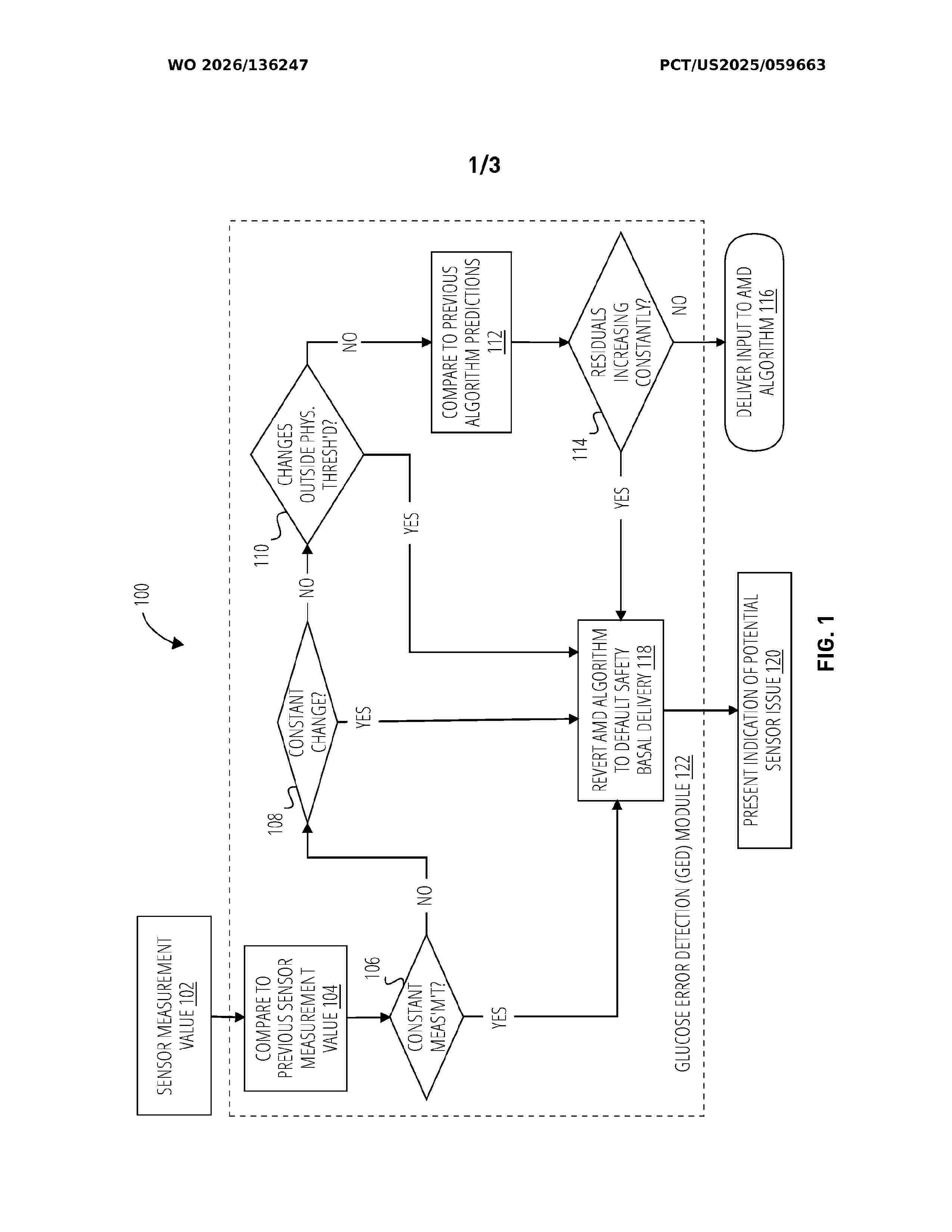
A compensation method and device for a continuous glucose monitor includes: acquiring a real-time glucose value of a user continuously(S101); determining a user type and a glucose trend type according to the real-time glucose value, where the user type includes at least a first user type and a second user type(S102); determining, based on the real-time glucose value, whether a compensation start condition is satisfied; starting a compensation algorithm if the compensation start condition is satisfied(S103); determining a compensation formula based on the real-time glucose value, the glucose trend type, and the user type(S104); and obtaining, based on the real-time glucose value and the compensation formula, a compensated glucose value until a compensation stop condition is satisfied(S105).
Resumen de: WO2026065646A1
Disclosed are a biocompatible film for a biosensor and a glucose sensor. The biocompatible film is prepared by coating a film solution by means of a coating process. The film solution comprises a cofactor-grafted polymer, an organic solvent, and a buffer solution. An end portion of each branch of the cofactor-grafted polymer has a cofactor grafted thereto. The backbone of the cofactor-grafted polymer is one or more of polyurethane, polyvinyl alcohol, a polyvinyl alcohol derivative, polyvinylpyrrolidone, a polyvinylpyrrolidone derivative, polyvinylpyridine, and a polyvinylpyridine derivative. The branches of the cofactor-grafted polymer are one or more of acetic acid, butyric acid, ethyl butyrate, caproic acid, and ethyl hexanoate. The biocompatible film can achieve precise regulation of chemical substance permeability, expand the linear detection range of the biosensor for chemical substances, and provide the cofactors required during chemical substance detection, thereby improving the stability and durability of the biosensor.
Resumen de: US20260091175A1
The invention discloses a drug delivery system with graphical user interface comprises a detection device, for detecting the blood glucose level of the user; an infusion device, for infusing a drug into the user's body; and a control device, wirelessly communicated with the detection device and the infusion device, the control device controlling the drug delivery of the infusion device, and the control device provided with a graphical user interface, the graphical user interface comprising a main screen, the main screen comprising an insulin information display area and a blood glucose information display area, wherein the insulin information display area comprising insulin infusion status information, the graphical user interface displays the insulin infusion status information in a graphical and/or textual manner, to facilitate the user to intuitively know the insulin infusion status information and blood glucose information at that time.
Resumen de: AU2026201926A1
22514182_1 (GHMatters) P118105.AU.1 Embodiments relate to an adaptive glycemia monitoring and forecasting system that includes an event monitor configured to receive blood glucose levels of an individual or information about an activity performed by the individual, and generate an event output. The system includes a control module configured to pull observation data, predictor variables, and population estimated vector of covariate weightings coefficients from a database, and generate updated estimated vector of covariate weightings coefficients for the individual user based on the event output. The updated estimated vector of covariate weightings coefficients are determined by a cross-entropy loss objective function. The updated estimated vector of covariate weightings coefficients are used to predict at least one or more of a predicted hypoglycemia state, a predicted normal glycemia state, or a predicted hyperglycemia state for the individual user. the individual user. ar a r
Resumen de: AU2026201994A1
22510489_1 (GHMatters) P117930.AU.1 Provided are a system and method for an artificial pancreas having multi-stage model predictive control to minimize and/or prevent occurrence of hypoglycemia associated with Type 1 diabetes. The control implements predictive modeling of a probability of glucose uptake associated with exercise based on at least one exercise 5 profile for a subject with Type 1 diabetes. Based on the probability, the control implements an automatic adjustment of basal insulin infusion to counteract a risk of exercise-induced hypoglycemia in advance of the subject engaging in the exercise. The control further implements adjustment of such infusion based on real-time signaling of exercise likely to induce hypoglycemia. Prior to consumption of a meal, the control 10 further implements adjustment of a meal-time bolus so as to account for the effect of delay in glucose uptake resulting from exercise previously engaged in by the subject. Consequently, the control acts to minimize and/or prevent hypoglycemia from occurring both during and immediately after the subject engages in exercise. ar a r
Resumen de: AU2026201971A1
Systems and methods are provided to provide guidance to a user regarding management of a physiologic condition such as diabetes. The determination may be based upon a patient glucose concentration level. The glucose concentration level may be provided to a stored model to determine a state. The guidance may be determined based at least in part on the determined state. ar a r
Resumen de: EP4718067A1
The present disclosure describes a multi-analyte monitoring sensor, which includes a substrate, a working electrode disposed on the substrate, an enzyme sensing layer disposed on the working electrode, and a polymer membrane layer disposed on the enzyme sensing layer; The working electrode includes a first working electrode and a second working electrode; The enzyme sensing layer includes a first analyte enzyme layer and a second analyte enzyme layer, the first analyte enzyme layer is disposed on the first working electrode and the second analyte enzyme layer is disposed on the second working electrode, the first analyte is glucose, and the second analyte is ketone; The polymer membrane layer is permeable to both the first analyte and the second analyte and covers the first analyte enzyme layer and the second analyte enzyme layer. Thus, a sensor with high sensitivity and simplified processing for continuous monitoring of blood glucose and blood ketones can be provided
Resumen de: MX2026002404A
The present disclosure describes lactate-responsive sensors, sensing systems incorporating a lactate-responsive sensor, and methods of use thereof that would be beneficial for continuously monitoring lactate levels and determining lactate thresholds (both aerobic and anaerobic thresholds). The present disclosure also relates to an analyte sensor for continuously detecting glucose and lactate levels.
Resumen de: MX2026002435A
Disclosed herein are system, method, and computer program product embodiments for improving detection and treatment of patient conditions based on continuous analyte data. The disclosed techniques utilize analyte data, such as lactate, glucose, and creatinine, provided from a continuous analyte sensor to predict patient outcomes. The prediction may also take into account other medical information associated with the patient, such as patient vital signs and medical history. The disclosed system allows for early and non-invasive prediction of patient outcomes in various settings including a hospital setting, a home setting, disease (e.g., heart failure, sepsis) detection, and high risk surgery monitoring. The disclosed system also is configured to monitor patient conditions and generating alerts and/or notifications based on the predicted patient outcomes to provide preemptive treatment of patient conditions.
Resumen de: MX2025015650A
According to an aspect, there is provided a computer-implemented method (200) of determining a concentration of glucose in a subject's blood, the method comprising: acquiring (202) first measurement data indicative of a response resulting from an electromagnetic (EM) signal interacting with the subject's blood in a body part of the subject; acquiring (204) second measurement data indicative of at least one parameter associated with the subject; and using (206) a predictive model to infer a concentration of glucose in the subject's blood from the first measurement data and the second measurement data, the predictive model having been trained to infer a concentration of glucose in the subject's blood from the first measurement data and the second measurement data.
Resumen de: AU2024280120A1
Blood glucose level measurement includes a light source configured to irradiate light to a subject; a monochrome part configured to separate wavelength components of the light that is reflected and scattered from the subject; a light receiver configured to receive the light transmitted via the monochrome part and to generate electrical signals based on the received light; and a processor configured to extract information on the blood glucose level of the subject based on a frequency shift of the light due to the Raman effect.
Resumen de: EP4717171A2
According to the present disclosure, an applicator for a continuous blood glucose measurement device, the applicator being operated by attaching a body attachment unit to the body of a user, the body attachment unit including a sensor member which is inserted into the body of the user in order to measure the blood glucose, comprises: a main case; a plunger to which the body attachment unit is detachably coupled and which is installed in the main case to be movable from a first position to a second position so that the body attachment unit can be discharged to the outer direction of the main case; a needle which is detachably coupled to the body attachment unit so as to be inserted into the body of the user along with the sensor member; and a needle separating unit which separates the needle from the body of the user by moving the needle in the direction opposite to the discharge direction of the plunger, wherein the needle separating unit includes a locking unit which can be assembled with the plunger in the manner of being engaged with one side of the plunger.
Resumen de: US12588838B1
Introduced here are diabetes management platforms able to examine glucose measurements associated with a subject to discover patterns indicative of similar behaviors/circumstances. More specifically, a diabetes management platform can acquire multiple data series generated by a glucose monitoring device that monitors the blood glucose level of an individual over multiple time intervals. The diabetes management platform can then apply a similarity algorithm to produce a distance measure (also referred to as a “similarity measure”) for each data series. For example, the diabetes management platform may, for each data series, perform dynamic time warping to produce a distance measure with respect to each of the other data series. The diabetes management platform can identify patterns indicative of similar behaviors/circumstances based on these distance measures.
Resumen de: EP1000000A1
The invention relates to an apparatus (1) for manufacturing green bricks from clay for the brick manufacturing industry, comprising a circulating conveyor (3) carrying mould containers combined to mould container parts (4), a reservoir (5) for clay arranged above the mould containers, means for carrying clay out of the reservoir (5) into the mould containers, means (9) for pressing and trimming clay in the mould containers, means (11) for supplying and placing take-off plates for the green bricks (13) and means for discharging green bricks released from the mould containers, characterized in that the apparatus further comprises means (22) for moving the mould container parts (4) filled with green bricks such that a protruding edge is formed on at least one side of the green bricks.
Resumen de: US20260088150A1
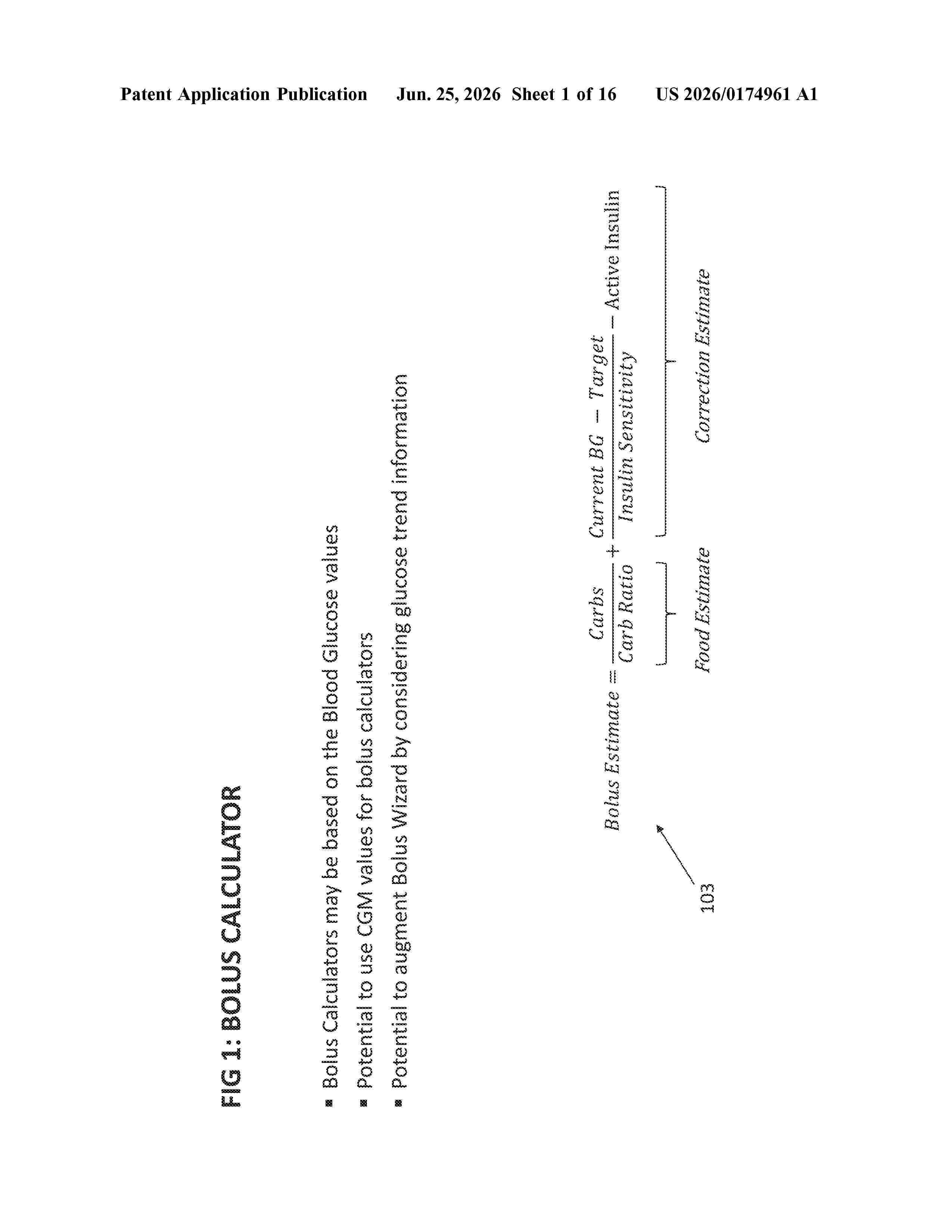
Techniques disclosed herein relate to operating a fluid delivery device in a personalized manner based at least in part on historical data of a patient. In some embodiments, the techniques involve obtaining historical meal data for the patient associated with historical meal events for the patient; determining a meal content based at least in part on the historical meal data; obtaining nutritional information associated with the meal content and historical meal events for the patient; determining, by a control system, a dosage of insulin based at least in part on the nutritional information and the historical meal events; and operating, by the control system, an actuation arrangement of the infusion device to deliver the dosage of the insulin to the patient.
Resumen de: US20260083911A1
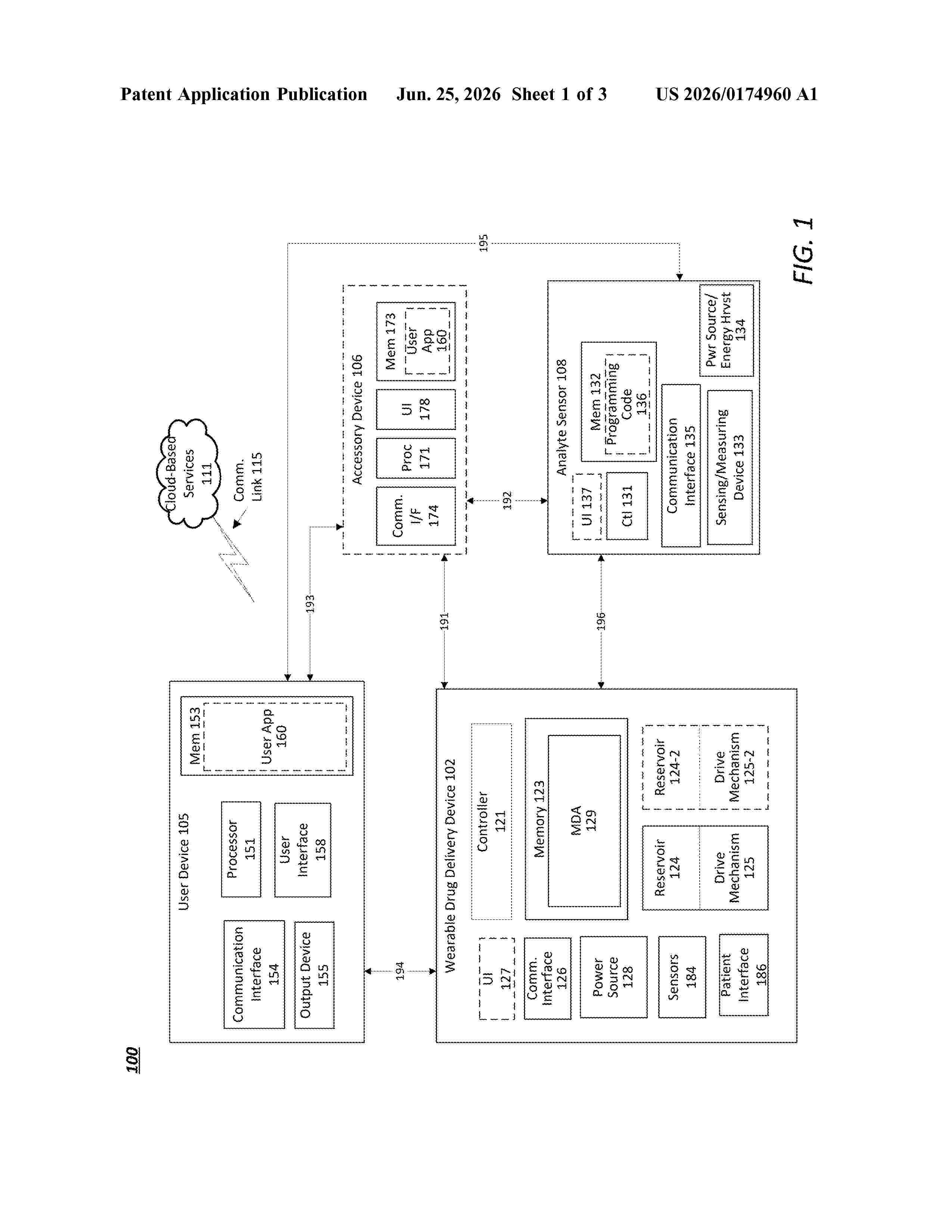
Enclosed herein are methods and systems for establishing communication protocols between wireless devices in infusion pump systems. Infusion pump systems can include a number of components capable of wireless communication with one or more other components including an infusion pump, a continuous glucose monitoring (CGM) system, and a smartphone or other multi-purpose consumer electronic device (i.e., remote control device). Communications among these devices can be coordinated to ensure reliable and consistent transmission of medical data.
Resumen de: AU2024351716A1
A method of non-invasive determination of the blood glucose concentration in the patient's tissue based on a radio noise signal received using an antenna brought close to the patient's skin according to the invention involves use of the radio noise signal is measured using a passive radiometer and additionally the method includes the following steps: a step of obtaining transformation coefficients, a step of measuring the temperature of the tissue surface, a step of measuring the temperatures of the active elements of the receiving chain of the radiometer, a step of measuring the currents consumed by the active elements of the receiving chain of the radiometer, a step of measuring the power of the radio noise signal originating from the tissue, and a step of determining the blood glucose concentration based on the aforementioned values. The invention also relates to a computer program, a radiometer, and a device for determining glucose concentration.
Resumen de: WO2026062700A1
The present disclosure relates to a system and method to predict the post- prandial glucose response in the individuals type 2 diabetes mellitus (T2DM) in India by taking sample of patients with T2DM from various locations across India and fitting them with continuous glucose monitors (CGM) and calculating the postprandial glucose response based on the different meal intakes by the patients. The present disclosure further relates to the utilization of k-means clustering models to classify food types based on nutritional information and classification of patients. The present disclosure also relates to utilizing XGBoost to predict postprandial blood glucose responses based on patient phenotypes and food categories and providing personalized recommendations taking into account meal type, preferences, and regional influences which would allow patients with T2DM to eat and drink foods to maintain their blood sugar within prescribed limits and prevent disease progression.
Resumen de: WO2026064554A1
Provided herein are methods of treating various eye disorders, including, for example, wet age-related macular degeneration (wAMD) or diabetic retinopathy (DR), using an anti-VEGF therapy, such as an anti-VEGF antibody conjugate.
Resumen de: US20260083909A1
A reinforcement learning process with self attention is used for insulin dosing decisions in an automated medical system. The State-Action-Reward-Next State (SARS) sequence is used. The state represents the current condition, including recent continuous glucose monitoring readings, insulin doses, meal information, and potentially other relevant factors like time of day or physical activity levels. Based on this state, the agent takes an action by deciding on an insulin dose. It then receives a reward, a numerical value quantifying the quality of the action, based on resulting glucose levels and their proximity to the target range. This leads to a new state, and the process repeats. Through this iterative process, the algorithm updates the neural network weights, allowing the agent to learn which actions lead to better outcomes in different states.
Resumen de: US20260089162A1
Systems, devices, and methods are disclosed for wireless communication of analyte data. In embodiments, a method of using a diabetes management partner interface to configure an analyte sensor system for wireless communication with a plurality of partner devices is provided. The method includes the analyte sensor system receiving authorization to provide one of the partner devices with access to a set of configuration parameters via the diabetes management partner interface. The set of configuration parameters is stored in a memory of the analyte sensor system. The method also includes, responsive to input received from the one partner device via the diabetes management partner interface, the analyte sensor system setting or causing a modification to the set of configuration parameters, according to a system requirement of the one partner device.
Resumen de: WO2025046158A1
The invention relates to a method for controlling glucose in a flexible-structure bihormonal artificial pancreas that manages optional meal and/or exercise alerts by means of coordinated control actions, comprising: measuring a plasma glucose signal; calculating an incremental plasma glucose measurement (y); defining a model for incremental plasma glucose; defining a carbohydrate ingestion as dependent on a carbohydrate content estimated by the patient; defining an expected postprandial incremental plasma glucose y*(s) according to an insulin bolus that has been administered; defining a corrected incremental plasma glucose y̅(s), a corrected insulin infusion ū(s) and a corrected carbohydrate ingestion d̅(s); defining a virtual control action μ(s), divided between regulatory actions μ r and counterregulatory actions μ cr ; and calculating the control actions using a 2-DOF feedback controller with a prefilter having a nominal value F r (s).
Resumen de: US20260083358A1
In implementations of systems for determining a similarity of sequences of glucose values, a computing device implements a similarity system to receive input data describing a sequence of user glucose values measured by a continuous glucose monitoring (CGM) system. The similarity system computes similarity scores for a plurality of sequences of glucose values by comparing each glucose values included in the sequence of user glucose values with ever glucose value included in each sequence of the plurality of sequences. A particular sequence of glucose values that is associated with a highest similarity score is identified. The similarity system determines an externality associated with the particular sequence. The similarity system generates an indication of the externality for display in a user interface.
Resumen de: US20260083912A1
Exemplary embodiments account for differing needs of a user over the menstrual cycle of the user to better control the blood glucose concentration of the user. The exemplary embodiments may be realized in control systems for medicament delivery devices that deliver medicaments, such as medicaments that regulate blood glucose concentration levels. Examples of such medicaments that regulate blood glucose concentration levels include insulin, glucagon, and glucagon peptide-1 (GLP-1) agonists. The exemplary embodiments are able to better tailor the dosages of the medicament delivered to the user with the medicament delivery device to reduce the risk of hyperglycemia and hypoglycemia and help reduce blood glucose concentration excursions.
Resumen de: US20260083363A1
This document describes medical systems for detecting biological analytes. For example, this document describes sensors for the continuous monitoring of biological analytes, such as glucose and/or lactate, in aqueous solutions and body fluids (e.g., blood) based on a readout of fluorescence or luminescence signals.WO
Resumen de: US20260083357A1
Systems and methods for determining a glucose value for a user are disclosed herein. The method includes receiving a plurality of data inputs associated with biometric data of the user, the plurality of data inputs including at least one data input representative of a past estimated glucose value of the user and processing the plurality of data inputs with a multi-headed temporal convolutional neural network to generate a blood glucose value for the user. The method also includes providing a notification to the user based at least in part on the blood glucose value.
Resumen de: US20260088171A1
An ambulatory glucose profile (AGP) intelligent interpretation and insulin adjustment method based on an expert system includes: establishing a knowledge base in an inference mechanism; constructing an interpretation and decision support expert system with a simplified expert system architecture based on the knowledge base; constructing a patient problem analysis tree in three dimensions of hypoglycemia, blood glucose fluctuation, and hyperglycemia of patients; expanding each rule with expert AGP interpretation and empirical data; constructing a basal insulin dosage adjustment rule and a mealtime insulin dosage adjustment rule based on an interval type-2 fuzzy expert system; and adjusting a node of the patient problem analysis tree based on the interpretation and decision support expert system and a group of the patient, and providing a decision suggestion in combination with the basal insulin dosage adjustment rule and the mealtime insulin dosage adjustment rule.
Resumen de: EP4715836A1
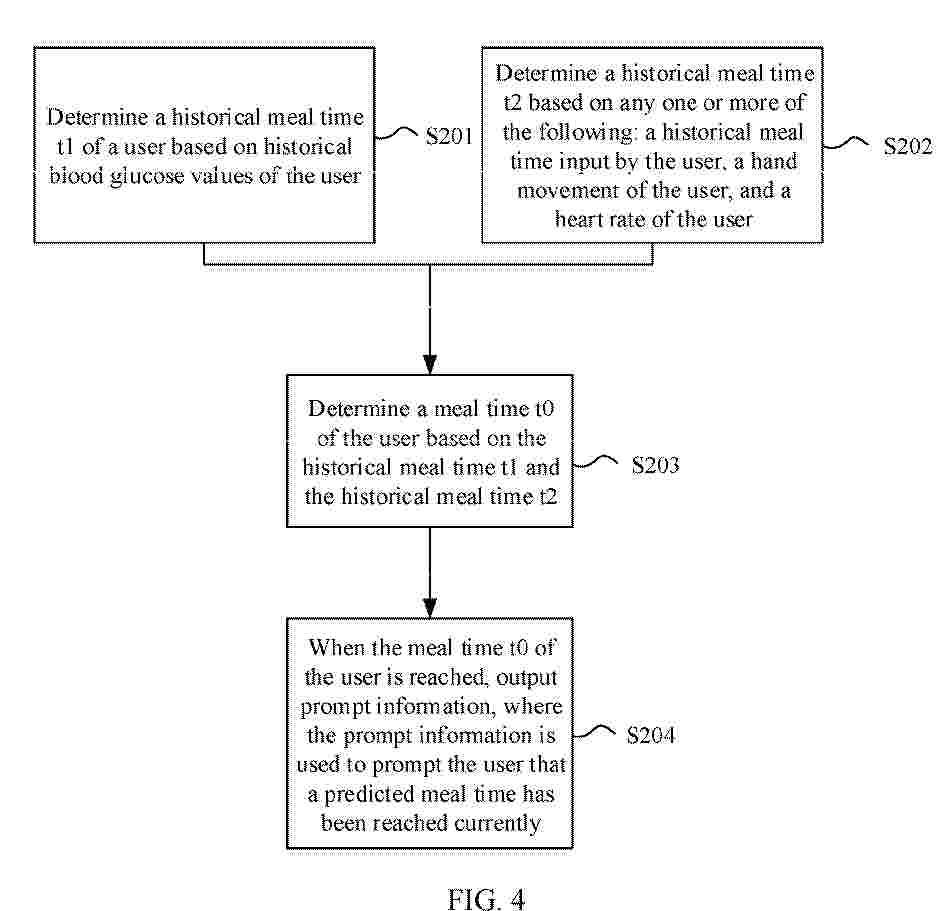
A meal monitoring apparatus according to an embodiment of the present invention includes a data receiving unit configured to receive measurement data of parameters related to an ear of a target object and blood glucose data of the target object; a first estimated time calculating unit configured to calculate a first estimated time estimated as a food intake activity time of the target object based on the measurement data; a second estimated time calculating unit configured to calculate a second estimated time estimated as a glucose absorption time of the target object based on the blood glucose data; and a meal time calculating unit configured to calculate a meal time of the target object based on the first estimated time and the second estimated time.
Resumen de: EP4671882A2
The present disclosure relates to a system for closed loop control of glycemia. In one arrangement, the system comprises: an insulin delivery device; a user interface for inputting patient data, the patient data including a basal insulin profile, an insulin-to-carbohydrate ratio, and meal data; and a controller in communication with the user interface and the insulin delivery device and configured to receive glucose data. The controller is further configured to execute: estimating an amount of active insulin in the patient, the active insulin not including the basal insulin profile, determining a meal carbohydrate value from the meal data, estimating a physiological glucose for the patient and a rate of change of physiological glucose based in part on the glucose data, determining an attenuation factor based on the physiological glucose and the rate of change of the physiological glucose, determining a meal bolus based on meal data, the insulin-to-carbohydrate ratio, and the determined attenuation factor, modifying the determined meal bolus based on the estimated amount of active insulin in the patient, and transmitting a request to deliver the modified meal bolus to the insulin delivery device.
Resumen de: EP4715554A2
One or more embodiments of the present disclosure may include an insulin delivery system that includes an insulin delivery device, a user interface that includes multiple user-selectable icons or buttons each representing different meal characteristics, memory to store one or more user-specific dosage parameter, and a processor in communication with the memory and adapted to receive blood glucose data. The processor may also be adapted to determine initial meal characteristics associated with each of the user-selectable icons or buttons based on at least one of the user-specific dosage parameters. The processor may also be adapted to update the meal characteristics associated with each of the user-selectable icons or buttons based upon the blood glucose data.
Resumen de: AU2026201602A1
Systems and methods disclosed provide ways for Health Care Professionals (HCPs) to be involved in initial patient system set up so that the data received is truly transformative, such that the patient not just understands what all the various numbers mean but also how the data can be used. For example, in one implementation, a CGM device is configured for use by a HCP, and includes a housing and a circuit configured to receive a signal from a transmitter coupled to an indwelling glucose sensor. A calibration module converts the received signal into clinical units. A user interface is provided that is configured to display a measured glucose concentration in the clinical units. The user interface is further configured to receive input data about a patient level, where the input data about the patient level causes the device to operate in a mode appropriate to the patient level. ar a r
Resumen de: US20260076591A1
Systems, devices and methods are provided for incorporating a medication delivery device into an integrated management system. The integrated management system may be an integrated diabetes management system and may include a glucose monitor, a connected insulin pen, and software. The integrated management system may produce a plurality of reports that may include data related to analyte levels (e.g., glucose levels) and medication delivered (e.g., insulin delivered). The integrated system may also include a mode in which certain types of data are no longer shared and/or stored if the user is not signed into an account. The types of data shared and/or stored when the user is not signed into an account may differ from the types of data shared and/or stored when the user is signed into an account.
Resumen de: US20260077116A1
An infusion system is disclosed comprising: a device for delivering insulin to a user, the device including a reservoir and a micropump for pumping the insulin from the reservoir into tissue of a user; and a cartridge for securing a cartridge insert that includes (a) an infusion needle configured to infuse the insulin and introduce a CGM sensor into the user or (b) an introducer needle for introducing an infusion catheter and the CGM sensor into the user, the cartridge configured to move from (1) a first position, wherein the infusion needle or an introducer needle is above the tissue of the user to (2) an second position, wherein the infusion needle or the introducer needle is in a deployed position inserted into tissue of the user, wherein the cartridge includes a locking mechanism to lock the cartridge insert into the cartridge.
Resumen de: WO2026059033A1
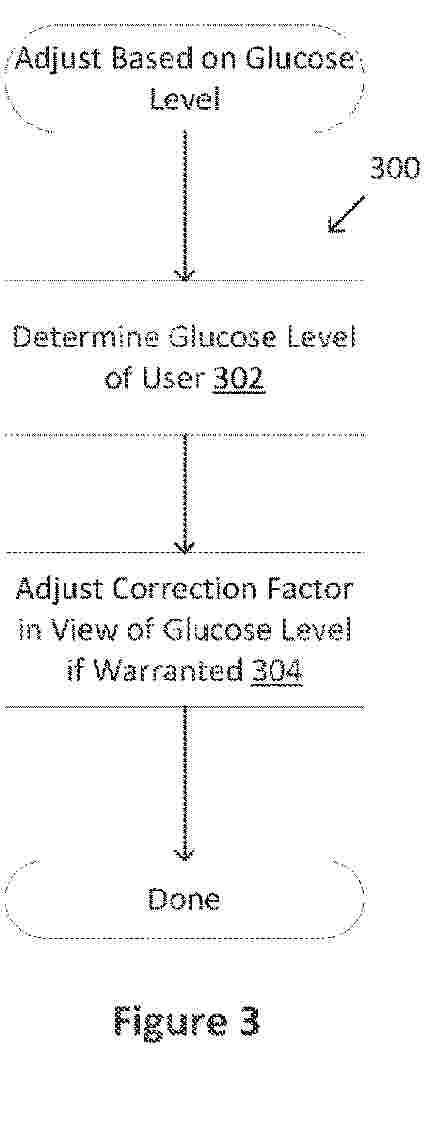
Disclosed, according to various embodiments of the present invention, is a method for adjusting an insulin injection amount based on predicted blood glucose. The method may comprise the steps of: predicting a future blood glucose value on the basis of the current blood glucose value and an insulin injection history; determining a future blood glucose state on the basis of the future blood glucose value and a predefined correction factor; and adjusting an insulin injection amount so as to correspond to the future blood glucose state.
Resumen de: WO2026060397A2
An analyte sensor system may include an analyte sensor configured to generate a raw sensor signal associated with an analyte concentration of a host. Sensor electronics may be configured to generate estimated analyte values from the raw sensor signal, determine a rate of change for the estimated analyte values or the raw signal, determine a working electrode temperature, and determine an elapsed time since sensor insertion. The sensor electronics may improve sensor performance by determining a prediction horizon as a function of at least one of the elapsed time and the working electrode temperature, determining a time-lag- compensated estimated analyte value for one of the estimated analyte values as a function of the determined prediction horizon and the rate-of-change, and adjusting estimated analyte values by applying a correction that is a function of the estimated analyte values.
Resumen de: US20260076628A1
A system is provided comprising external device(s), tracking device(s) configured to generate blood glucose level data for tracked individual(s), and an alert device for management of alerts generated at the external device(s). The alert device comprises processor(s) and memory device(s). The memory device(s) comprise computer readable code that, when executed by the processor(s), causes the processor(s) to receive input data comprising blood glucose level data received from the tracking device(s), to determine an alert setting for an alert to be generated at an external device of the external device(s) based on the input data, and to generate a signal that causes the alert to be generated at the external device. The alert setting includes an identification of the external device where the alert is to be generated, an alert magnitude, and/or the alert type, with the alert type including an audible alert, a haptic alert, and/or a visual alert.
Resumen de: EP4710855A2
A method for optional external calibration of a calibration-free glucose sensor uses values of measured working electrode current (Isig) and EIS data to calculate a final sensor glucose (SG) value. Counter electrode voltage (Ventr) may also be used as an input. Raw Isig and Vcntr values may be preprocessed, and low-pass filtering, averaging, and/or feature generation may be applied. SG values may be generated using one or more models for predicting SG calculations. Complex redundancy may be employed to take operational advantage of disparate characteristics of two or more dissimilar, or non-identical, sensors, including, e.g., characteristics relating to hydration, stabilization, and durability of such sensors. Fusion algorithms, EIS, and advanced Application Specific Integrated Circuits (ASICs) may be used to implement use of such redundant glucose sensors, devices, and sensor systems in such a way as to bridge the gaps between fast start-up, sensor longevity, and accuracy of calibration-free algorithms.
Resumen de: EP4712093A2
A method may include obtaining blood glucose level readings over a diurnal period for each of a plurality of days and determining an estimated variability of the blood glucose levels over the diurnal period for the plurality of days. The method may also include modifying, based on the estimated variability of the blood glucose level, a target blood glucose level to a modified target blood glucose level, and delivering insulin, using an insulin pump, during the diurnal period based on the modified target blood glucose level.
Resumen de: EP4712100A2
0001 An Adaptive Advisory Control (AA Control) interactive process involving algorithm-based assessment and communication of physiologic and behavioral parameters and patterns assists patients with diabetes with the optimization of their glycemic control. The method and system may uses all available sources of information about the patient; (i) EO Data (e.g. self-monitoring of blood glucose (SMBG) and CMG), (ii) Insulin Data (e.g. insulin pump log files or patient treatment records), and (iii) Patient Self Reporting Data (e.g. self treatment behaviors, meals, and exercise) to: retroactively assess the risk of hypoglycemia, retroactively assess risk-based reduction of insulin delivery, and then report to the patient how a risk-based insulin reduction system would have acted consistently to prevent hypoglycemia.
Resumen de: US12576209B1
A housing for hypodermic device including a housing assembly, a hypodermic device housed therein, twist off top and bottom caps. The housing assembly includes an upper and lower ends, exterior and interior walls. The exterior and interior walls definine a vacuum sealed in-between space, and the interior wall defines an interior cavity. The top and bottom caps include first and second tabs, respectively. The hypodermic device has proximal and distal ends. The hypodermic device includes auto injectors such as epinephrine auto injector, insulin auto injector or similar. The exterior and interior walls are vacuum sealed layers made of a rigid material that protect the hypodermic device from impact and accidental activation and keep the hypodermic device at a range of temperature for a longer period of time. A ring attachment is adjacent to the upper end, and it secures to backpacks, purses, garments or similar.
Resumen de: US20260069218A1
Disclosed is a management device for displaying glucose information. The screen of the management device is divided into the plurality of display areas, at least comprising a first display area for displaying the status of the management device, a second display area for displaying real-time glucose information, and a third display area for displaying historical glucose concentration information. The user can intuitively and easily get the glucose information in the body.
Resumen de: US20260069173A1
Various examples are directed to a glucose sensor comprising a working electrode to support an oxidation reaction and a reference electrode to support a redox reaction. The reference electrode may comprise silver and silver chloride. The Glucose sensor may also comprise an anti-mineralization agent positioned at the reference electrode to reduce formation of calcium carbonate at the reference electrode.
Resumen de: US20260069779A1
Provided is a wearable medical device that includes a processor or logic circuitry. The wearable medical device may include a memory storing instructions that, when executed by the processor or logic circuitry, configure the wearable medical device to determine, by the processor or the logic circuitry, that an event affecting a blood glucose measurement value trend of a user has occurred. Based on the occurrence of the event, the processor or the logic circuitry may select a mode of operation of the analyte sensor, and generate a signal indicating the selected mode of operation. The mode of operation may correspond to a sampling frequency of a physical attribute or physiological condition of a user of the wearable medical device.
Resumen de: US20260069765A1
An infusion system is disclosed comprising: a device for delivering insulin into tissue of a user; and a cartridge assembly including an integrated infusion catheter and CGM sensor subassembly and an introducer needle for introducing the integrated infusion catheter and CGM sensor subassembly into the tissue of the user, wherein the cartridge assembly configured to move from (a) first position, wherein the integrated infusion catheter and CGM sensor subassembly is in a first position above the tissue of the user to (b) a second position, wherein the integrated infusion catheter and CGM sensor subassembly is in a deployed position inserted into tissue of the user.
Resumen de: US20260069781A1
The exemplary embodiments attempt to identify impending hypoglycemia and/or hyperglycemia and take measures to prevent the hypoglycemia or hyperglycemia. Exemplary embodiments may provide a drug delivery system for delivering insulin and glucagon as needed by a user of the drug delivery system. The drug delivery system may deploy a control system that controls the automated delivery of insulin and glucagon to a patient by the drug delivery system. The control system seeks among other goals to avoid the user experiencing hypoglycemia or hyperglycemia. The control system may employ a clinical decision support algorithm as is described below to control delivery of insulin and glucagon to reduce the risk of hypoglycemia or hyperglycemia and to provide alerts to the user when needed. The control system assesses whether the drug delivery system can respond enough to avoid hypoglycemia or hyperglycemia and generates alerts when manual action is needed to avoid hypoglycemia or hyperglycemia.
Resumen de: WO2026054488A1
The present invention relates to a method for managing a diabetic patient using a continuous glucose monitor, the method being characterized by comprising: a data reception step of receiving measurement data from a continuous glucose monitor; a data calculation step of calculating a sensor wearing time, a time within a specific glucose range, a time less than a first glucose value, a time greater than a second glucose value, EhyperE (whether a glucose level continuously exceeds 250 mg/dL for 2 hours or more), a time during which a glucose level is less than 54 mg/dL, and food intake time detection (FITD) by using the measurement data; and a data classification step of including a matrix part for classifying into one or more cases according to a time ratio, over a period of one week, of the sensor wearing time, the time within a specific glucose range, the time less than a first glucose value, the time greater than a second glucose value, EhyperE (whether a glucose level continuously exceeds 250 mg/dL for 2 hours or more), the time during which a glucose level is less than 54 mg/dL, and the food intake time detection, and an insulin and lifestyle correction part for classifying into one or more cases according to the number of times a predetermined glucose level occurs in a predetermined time period.
Resumen de: US20260069778A1
The invention discloses an automatic detection method based on the change rate of the difference between the actual blood glucose values, including: obtaining an actual blood glucose value of the user at the current time; obtaining a historical actual blood glucose value of the user at the previous time, and calculate a difference between the actual blood glucose values at the current time and at the previous time; calculating a change rate of the difference between the actual blood glucose values at the current time; and comparing the change rate of the difference between the actual blood glucose values at the current time with a preset threshold, and determining an event type based on the comparing result. Based on the determined event type, the artificial pancreas can automatically adjust the corresponding infusion strategy to achieve closed-loop control of the artificial pancreas.
Resumen de: US20260069780A1
Techniques disclosed herein related to controlling insulin delivery. In some embodiments, the techniques may involve delivering insulin via an insulin infusion device according to a closed-loop mode of delivery. The techniques may further involve determining, at a first time point, insulin delivery is to be switched from the closed-loop mode of delivery to a second mode of delivery. The techniques may further involve switching operation of the insulin infusion device to the second mode of delivery such that insulin is delivered via the insulin infusion device according to the second mode of delivery.
Resumen de: WO2026055546A2
Methods, systems and devices for providing health information to an individual. Methods may include predicting a subject's glucose sensitivity risk based on recorded sleep brain activity signals, and optionally providing an output to the subject based on the predicted glucose sensitivity risk. Methods may include providing personalized proactive behavioral guidance for a subject for an awake period following a sleep period, the proactive behavior guidance based on at least one of predicted glucose sensitivity risk or quality of sleep.
Resumen de: US20260069776A1
Provided are a method, apparatus, and computer program for providing a notification according to a period of use of a drug infusion device. A time point at which the drug infusion device switches from an inactive mode to an active mode may be determined as a use start time point. Also, an impending expiration notification indicating that expiration of a period of use of the drug infusion device is imminent may be provided at a first time point after a certain period from the use start time point, based on a usable period and a user set time of the drug infusion device. In addition, an expiration notification indicating that the period of use of the drug infusion device has expired may be provided at a second time point after the usable period from the use start time point.
Resumen de: EP4706532A2
The present disclosure relates to a continuous blood glucose measurement body attachment unit, and provides a continuous blood glucose measurement body attachment unit, which is manufactured in an assembled state in an applicator so as to minimize separate additional operations, such that the body attachment unit can be attached to the body with only a simple operation of the applicator and, particularly, the body attachment unit has a wireless communication chip so as to be capable of communicating with an external terminal, thereby enabling simple and convenient usage without an additional operation in which a separate transmitter must be connected and enabling maintenance to be more easily performed, and after the body attachment unit is attached to the body, an operation starts by the control of a user, such that an operation start time point can be adjusted to an appropriate time point according to the needs of the user, and an operation can start in a stabilized state, such that blood glucose can be more accurately measured.
Resumen de: EP4706533A2
The present disclosure relates to a continuous glucose monitoring device, in which a body attachment unit is manufactured so as to be assembled in an applicator, thereby minimizing additional work for a user in attaching the body attachment unit to a body, and allowing attachment of the body attachment unit to the body simply by operation of the applicator. In particular, a wireless communication chip is provided in the body attachment unit to enable communication with an external terminal, thereby enabling simple and convenient use without additional work of connecting a separate transmitter, and allowing easier maintenance. In addition, the continuous glucose monitoring device is activated by a user's operation after the body attachment unit is attached to the body, such that an activation start time can be adjusted to a time appropriate to the user's needs, and the continuous glucose monitoring device can be activated in a stabilized state, and thereby can monitor blood glucose more accurately.
Resumen de: WO2024229007A2
Embodiments relate to systems and methods for developing and implementing a model. Developing the model can involve receiving an insulin dosing rule (IDR) including plural metabolic states (Xs) and corresponding insulin dosage recommendations (Us), generating a saturated data set with the plural Xs and corresponding Us so that the saturated data set has optimal data density, generating a saturated look-up table (STL) with the saturated data set, and encoding the STL into a neural network. Implementing the model can involve receiving a measurement indicative of a metabolic state (Xm), implementing a model a SLT encoded into a neural network, the SLT including a saturated data set of optimal data density, wherein implementation of the model applies the Xm to the SLT to identify a corresponding U, and monitoring, analyzing, or influencing a concentration of glucose levels in a fluid using the identified U.
Resumen de: EP4706516A1
An embodiment may provide a blood glucose measurement method using a learning model, the method including obtaining a biosignal, generating biometric data from the biosignal, training a learning model with training biometric data, so as to output a blood glucose value, obtaining a blood glucose value corresponding to the biometric data from the biometric data via the learning model when training is completed, and providing, to a user, the blood glucose value corresponding to the biometric data.
Resumen de: EP4708310A2
0001 A method of insulin delivery, the method may include obtaining one or more blood glucose readings from a flash glucose monitor, where the blood glucose readings may be obtained in response to a user invocation of the flash glucose monitor. The method may also include generating multiple insulin delivery profiles of insulin delivery actions over multiple diurnal time segments based on the one or more blood glucose readings. The method may additionally include selecting one of the delivery profiles that is projected to approximate a target blood glucose level, and delivering insulin according to the selected delivery profile.
Resumen de: EP4706531A2
The present invention relates to a sensor applicator assembly for a continuous glucose monitoring system and provides a sensor applicator assembly for a continuous glucose monitoring system, which is manufactured with a sensor module assembled inside an applicator, thereby minimizing additional work by a user for attaching the sensor module to the body and allowing the sensor module to be attached to the body simply by operating the applicator, and thus can be used more conveniently. A battery is built in the sensor module and a separate transmitter is connected to the sensor module so as to receive power supply from the sensor module and be continuously used semi-permanently, thereby making the assembly economical. The sensor module and the applicator are used as disposables, thereby allowing accurate and safe use and convenient maintenance.
Resumen de: EP4708311A2
0001 An insulin delivery monitoring system that includes an insulin delivery device and a controller configured to perform or control performance of operations. A method of insulin delivery include obtaining one or more blood glucose readings of a user, and, based on the blood glucose readings, generating a set of insulin delivery actions that may include delivery of a baseline basal rate or predefined variations of the baseline basal rate.
Resumen de: US12573507B1
A programmatically generated AI avatar includes a customizable personality module, acting as the embodied interface for a powerful AI “mind” that delivers personalized coaching to improve user health, well-being, and longevity. The system uses machine learning, large language models, and biometric modeling to synthesize real-time, multi-modal health data—including sleep, nutrition, glucose, mood, and activity—and generate forward-prescribed KHAs. Unlike human coaches, it continuously adapts based on context and behavior, targeting the root cause: metabolic dysfunction—namely by restoring healthy, sustainable body composition through the preservation or building of lean muscle mass and reduction of excess fat. KHAs can also be shared with friends or programmatically generated AI avatars, allowing for coordinated action, emotional support, and accountability through social connection—further reinforcing positive behavior and adherence. The system's reinforcement learning engine incorporates both individual response data and anonymized population-level insights to optimize recommendations over time, learning which interventions are most effective for users with similar physiological and behavioral profiles. First validated with Olympic athletes—resulting in measurable improvements and medal-winning outcomes—this system offers a scalable, emotionally intelligent coaching enginethat exceeds human capability, designed for the ultimate purpose of supporting sustainab
Nº publicación: ES3058230T3 09/03/2026
Solicitante:
I SENS INC
i-Sens, Inc
Resumen de: EP4678094A2
The present disclosure relates to a continuous blood sugar measuring sensor member, wherein: since an electrode layer formed on one surface of a substrate is connected to a sensor contact point part on the other surface of the substrate through a via hole and thus two electrode layers may be formed on different opposite surfaces without having to be formed on the same surface of the substrate, the width of the substrate may be further reduced and an overall minimized and simplified structure may be ensured; since an electrode connection layer formed at the via hole is not formed in a shape of filling the via hole but is formed only on the inner circumferential surface, a filling defect occurring in a process of filling the via hole and a fault in electrical connection according thereto may be prevented and thus a more stable structure may be ensured; and since a plurality of via holes are formed, despite damage to or the occurrence of a defect in an electrode connection layer formed at one of the via holes, electrical connection is maintained by electrode connection layers formed at the remaining via holes, and thus more stable performance may be maintained.