Si deseas distinguir tus productos, servicios o ambos de los de otra empresa, es posible que necesites una marca o nombre comercial. Descubre qué son, en qué consiste su procedimiento de registro y qué implica.

Información sobre los plazos de presentación de solicitudes de transformación de marcas de la Unión Europea en marca nacional española. Más información


Si tienes un nuevo dispositivo, producto o procedimiento que resuelva un problema técnico o tenga una ventaja práctica, existen distintas formas de protegerlo en España y en otros países. Descubre cómo hacerlo.

¿Tu innovación reside en la estética, la ornamentación o la apariencia de tu producto? Protégela mediante un diseño industrial. Descubre qué derechos confiere el registro y cómo realizar la tramitación.

Las indicaciones geográficas protegen el nombre de un producto originario de una zona geográfica, a la cual le debe una determinada calidad, reputación u otra característica. Descubre qué son, en qué consiste su procedimiento de registro y qué beneficios conceden.

Las patentes publicadas en todo el mundo son una valiosa fuente de información científica, técnica y comercial.

Si eres emprendedor/a o una empresa y quieres potenciar y mejorar la rentabilidad de tu negocio protegiendo de forma adecuada los activos intangibles de tu organización, en este espacio encontrarás lo necesario.


 143
resultados
 Última actualización
31/10/2026 [07:52:00]


 Resultados 125 a 143 de 143
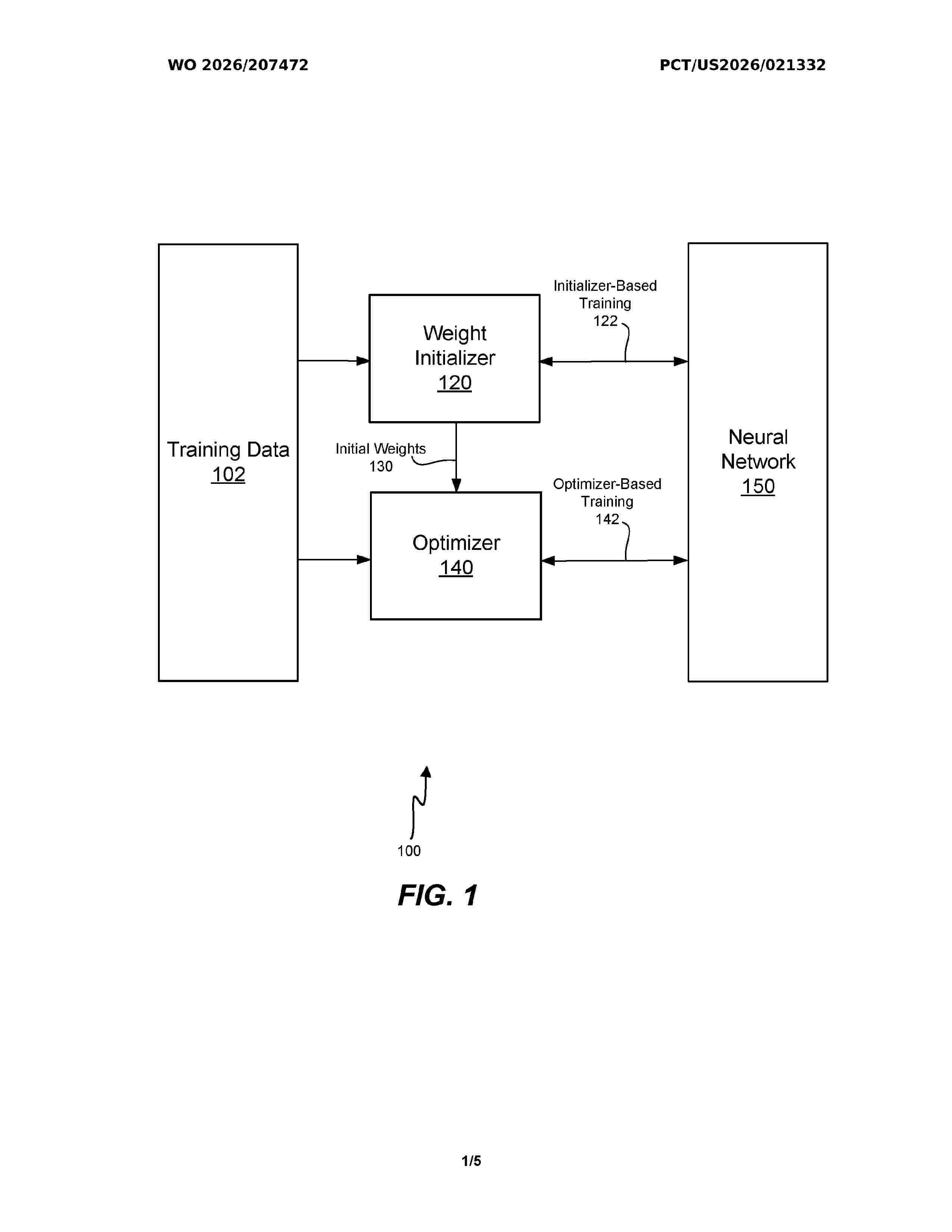
Resumen de: WO2026207472A1
A method of training a neural network includes generating an initial set of weights which provide a starting point for subsequent gradient-based optimization, the generating comprising applying multiple sets of weights to the neural network, evaluating performance of the multiple sets of weights using a loss function associated with the neural network, iteratively adjusting at least one set of weights based on the evaluated performance without computing gradients of the loss function with respect to the weights, and selecting a set of weights as the initial set of weights based on the iterative adjustments. The gradient-based optimization is then performed using the selected set of weights as the starting point, benefiting from a more advantageous initialization than conventional weight initialization techniques.

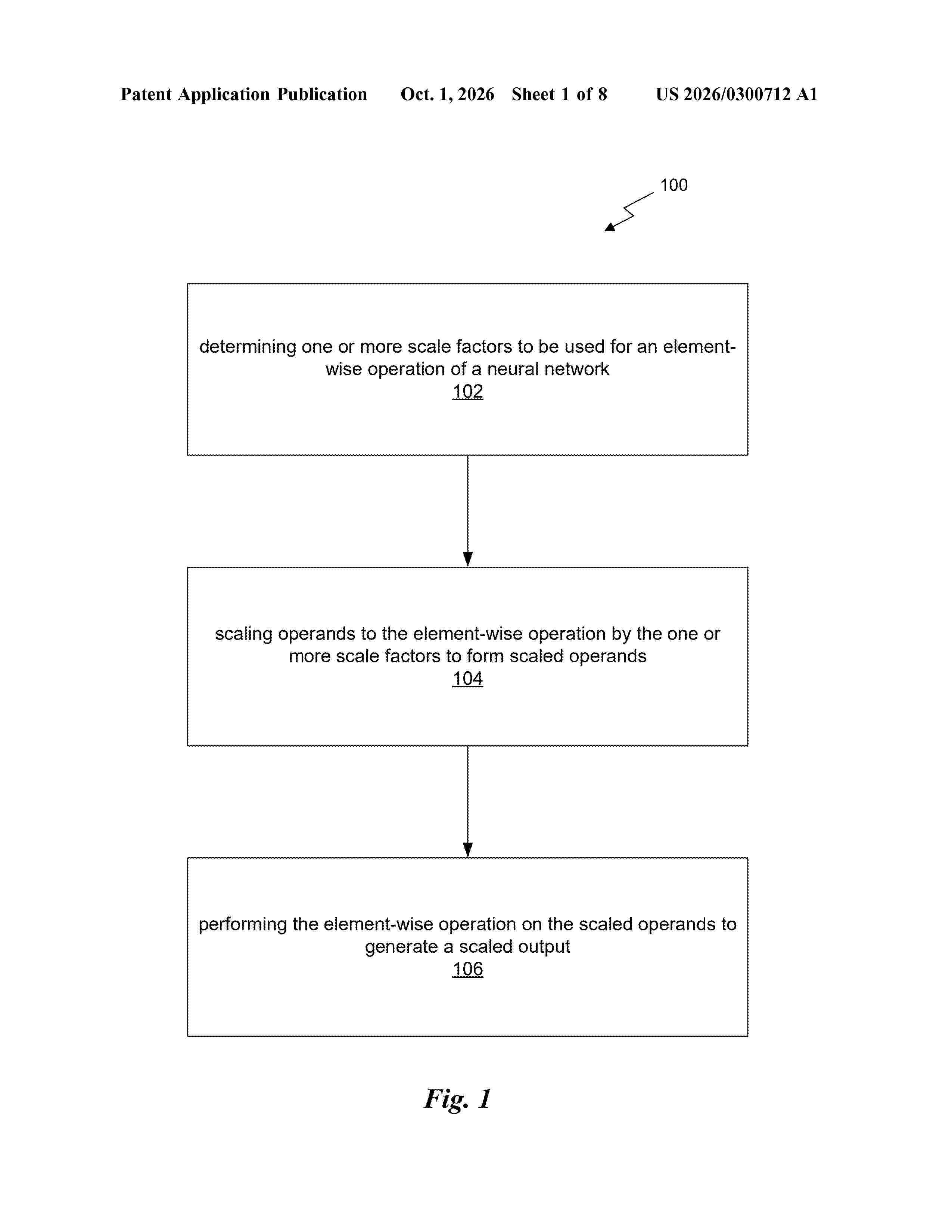
Resumen de: US20260300712A1
Neural networks, and in particular deep neural networks, are traditionally resource intensive as they require execution of a significant number of computations in order to generate an output. In an effort to accelerate neural networks, quantization has been employed in which the input/output of certain operations are scaled. However, the degree to which a neural network can be quantized is limited because current scaling methods, which do not ensure consistent scaling for operands, cannot be applied to the commonly used element-wise operations (e.g. addition and subtraction). The present disclosure provides scaling of element-wise operations in a neural network by using scale factors that are shared between operands, thus allowing for greater quantization of neural networks.
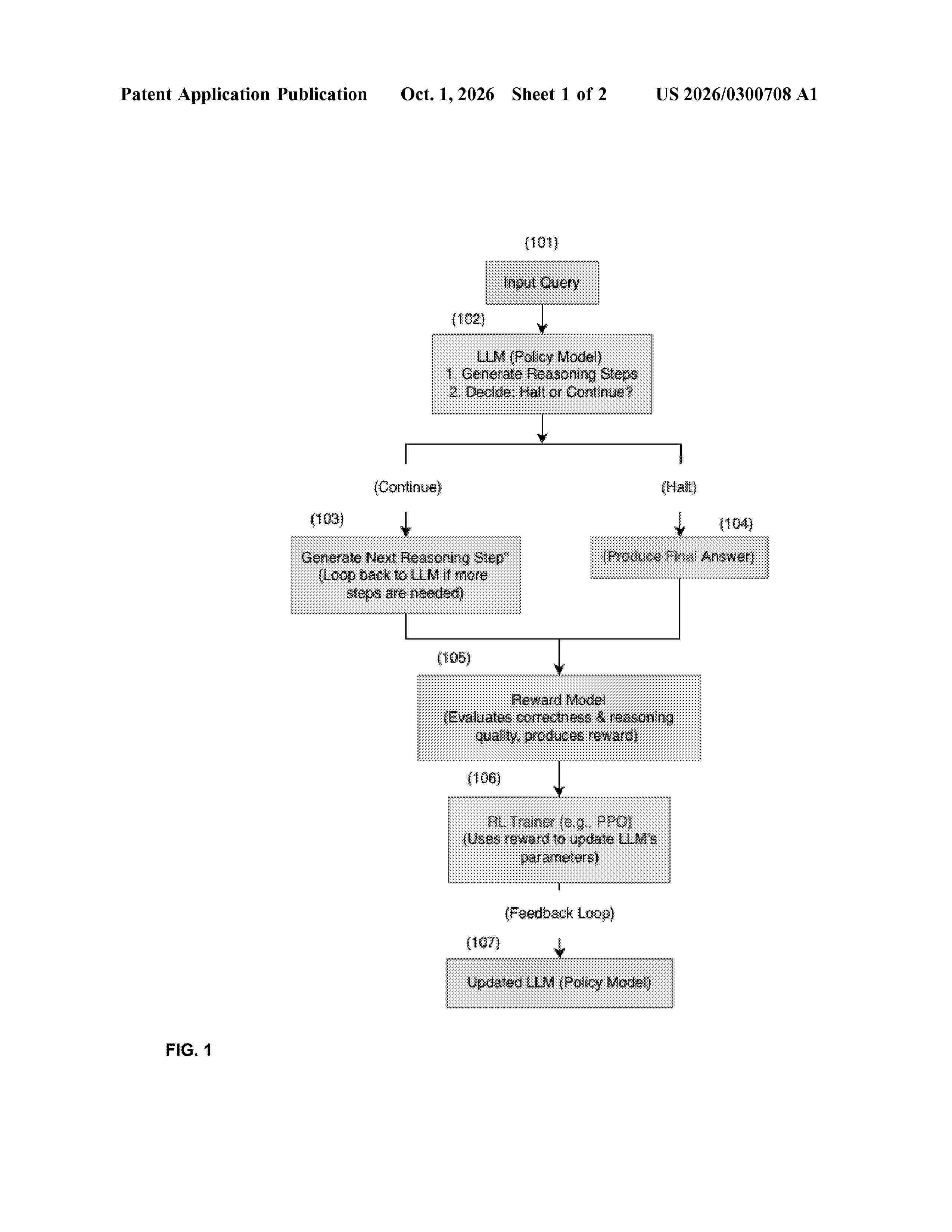
Resumen de: US20260300708A1
A hybrid CPU-GPU execution framework is disclosed for efficient large language model inference using a reinforcement learning (RL)-enhanced adaptive computation time mechanism. A large language model is fine-tuned with RL to learn when to halt further processing and output an answer, balancing accuracy and computation. This learned policy dynamically skips unnecessary neural network layers or tokens for easy inputs and engages more computation for hard inputs. The system deploys the model across heterogeneous hardware: it allocates heavy computations to GPUs (or other accelerators) and uses CPUs for lighter tasks, guided by the model's policy. The model is compressed (e.g. quantized to 8-bit) to boost CPU performance. The result is an inference system that delivers fast, reasoning-rich responses efficiently, and is scalable from cloud to edge devices by adaptively adjusting both computation depth and hardware usage per query.
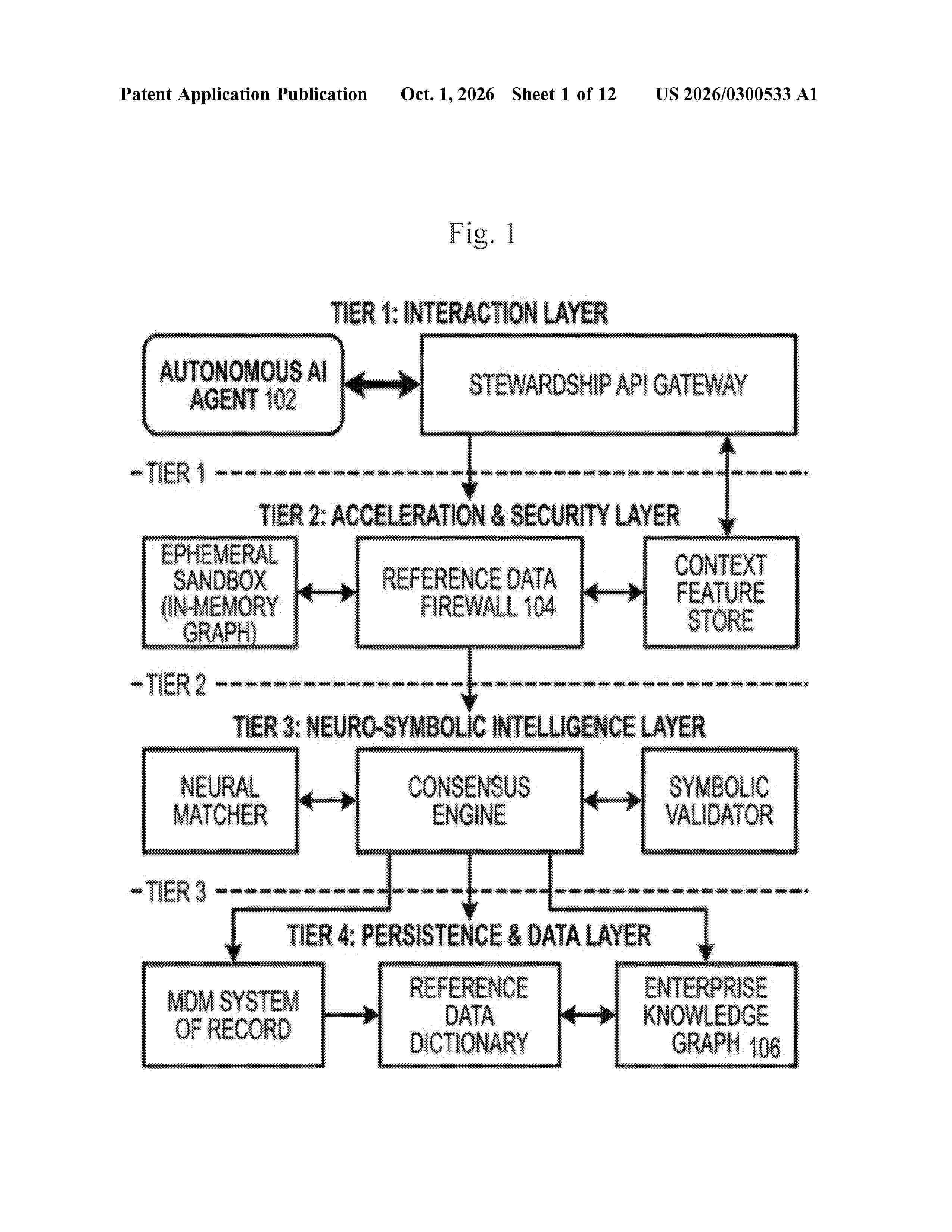
Resumen de: US20260300533A1
A computer-implemented system and method providing a four-term Graph-Enhanced Semantic Density Scoring (G-SDS) formula for reducing LLM context window consumption by 60-80% in enterprise master data management (MDM) operations, combined with a SPDZ-protocol federated secure multi-party computation (SMPC) mechanism for binary compliance-vote aggregation across distributed MDM silos, wherein individual silo veto votes remain cryptographically hidden under zero-knowledge proof guarantees while the global veto/approve decision is revealed. The system further comprises a Logical Neural Network (LNN) with AND/OR/NOT/IMPLIES/EQUIV gate neurons maintaining real-valued truth bounds L, U, integrated with a PPO reinforcement learning policy network that dynamically adapts soft-constraint thresholds to minimize false-positive vetoes. A hard symbolic veto gate permanently blocks any transaction violating governance constraints.
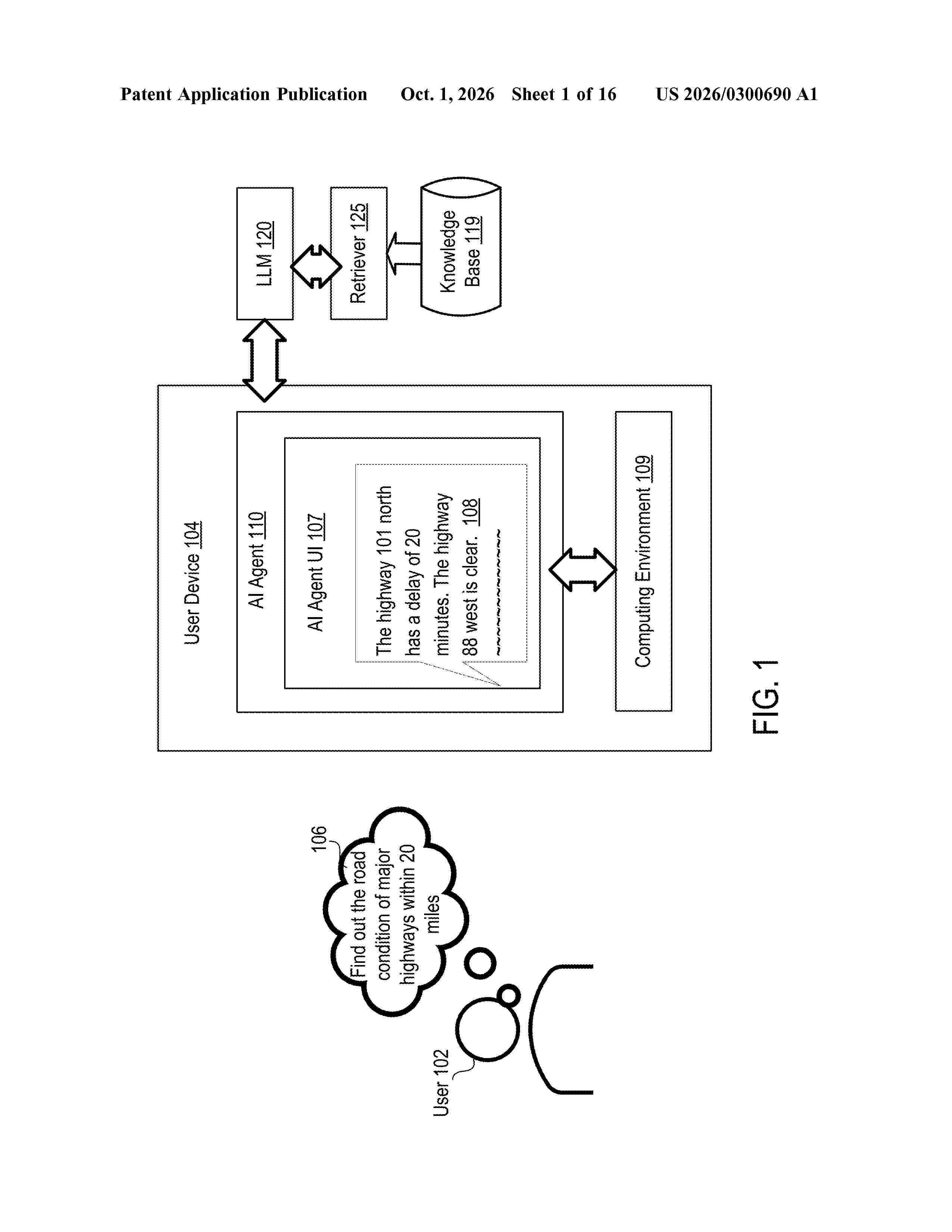
Resumen de: US20260300690A1
Embodiments described herein provide a method for multi-turn generation by an AI agent. The method includes: receiving, by a first neural network based language model, a set of context data including one or more APIs for performing actions, one or more domains, and one or more domain-specific policies; generating, by the first neural network based language model, a multi-turn task including a tuple of (task intent, groundtruth actions, groundtruth outputs); generating, by a second neural network based language model, one or more outputs in response to one or more user questions simulated based on the task intent; and executing, by the second neural network based language model, actions in response to the user questions. The method also includes: forming a training tuple including the user questions, the outputs, and the actions in response to the outputsare consistent with the groundtruth outputs and the actions are consistent with the groundtruth actions.
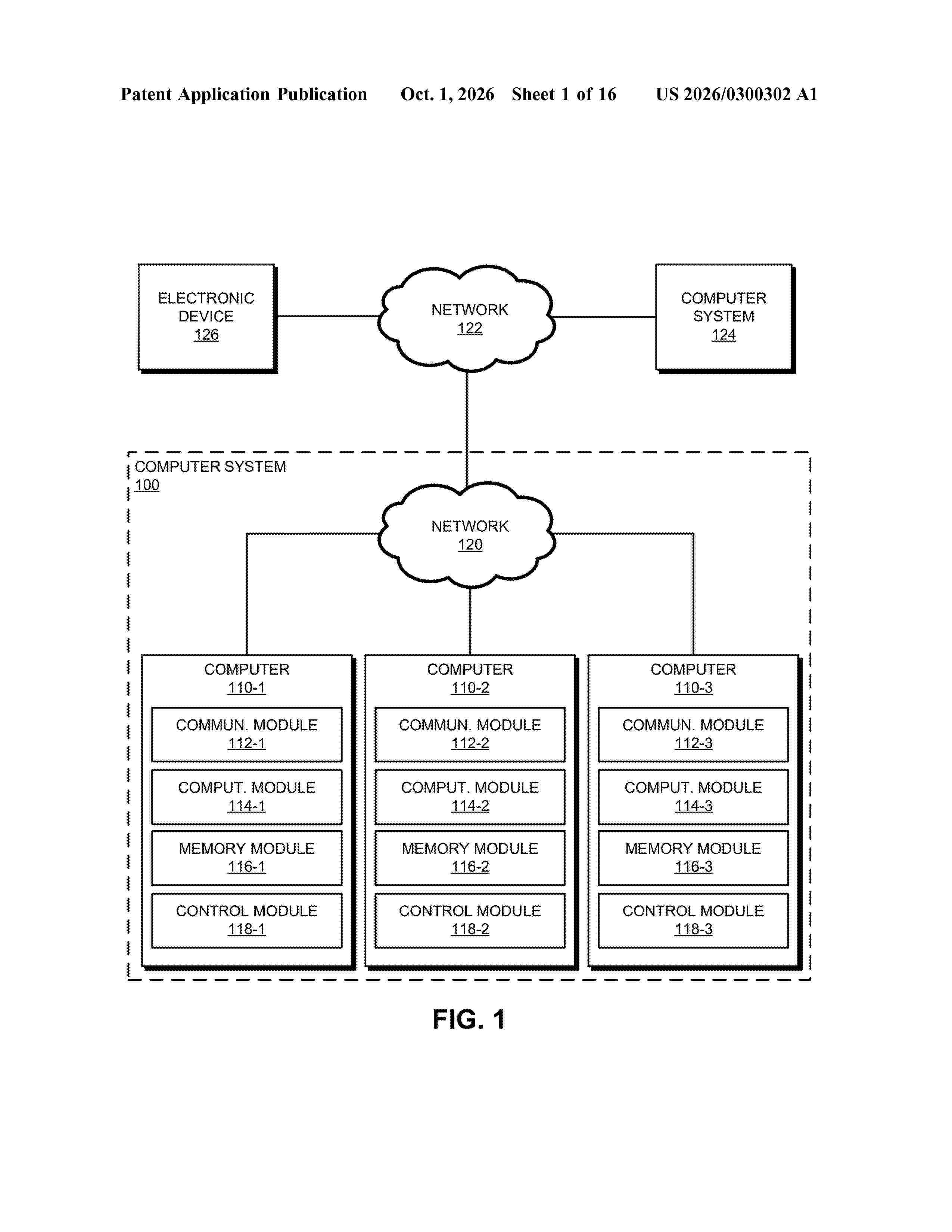
Resumen de: US20260300302A1
A computer system that determines a dynamic content window is described. During operation, the computer system receives, from an electronic device, an input vector. Then, the computer system accesses, in a graph database (such as a vector graph database), information specifying a context associated with the input vector. Moreover, the computer system determines a dynamic content window based at least in part on the context, where the dynamic content window specifies a subset of content in the input vector, and the dynamic content window has a length less than a predefined value. Next, the computer system provides, to a pretrained neural network, the input vector and the dynamic content window. Furthermore, the computer system receives, from the pretrained neural network, a response vector, and provides, addressed to the electronic device, the response vector.
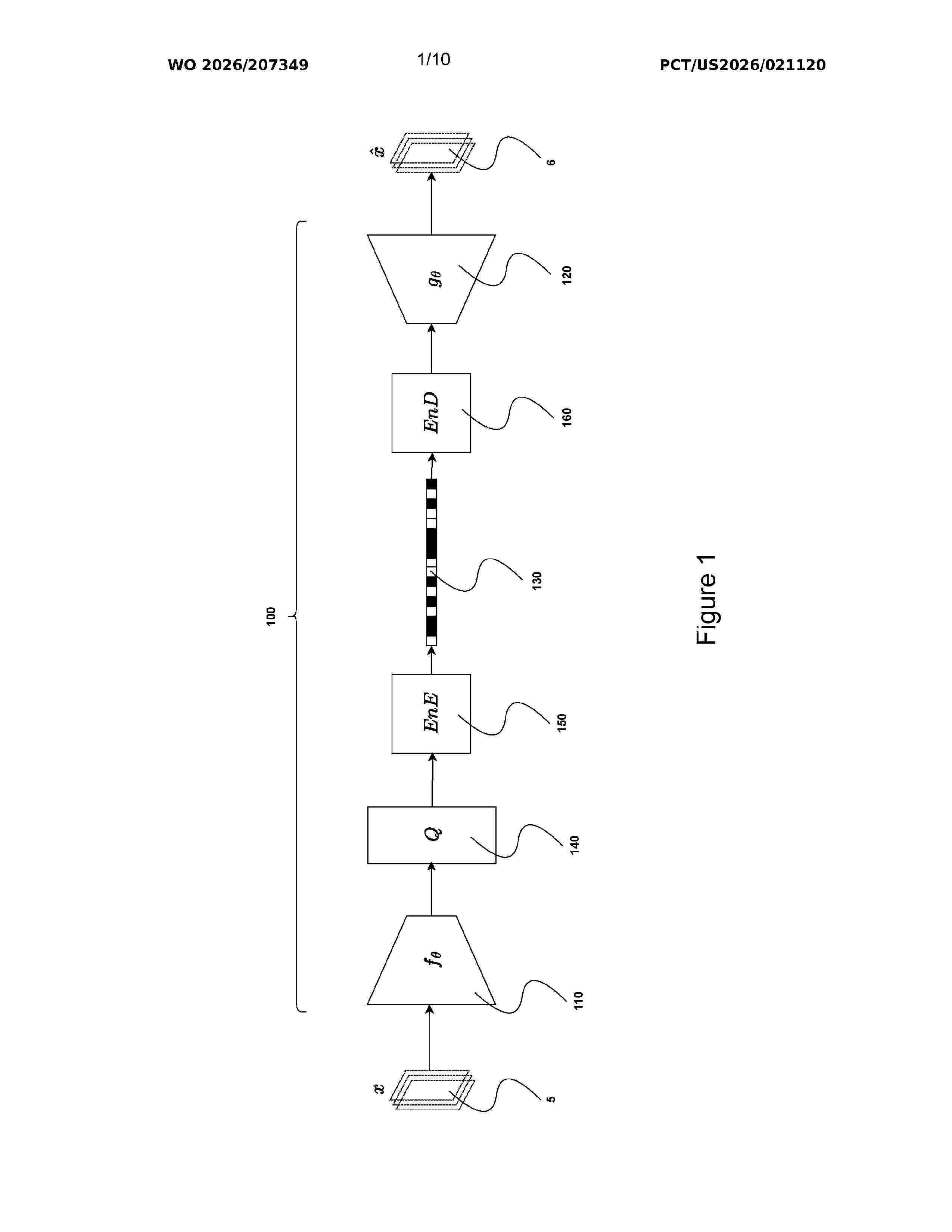
Resumen de: WO2026207349A1
A method for lossy image or video encoding and transmission, the method including receiving a first image and classification information associated with the first image at a first computer system; with a first neural network, producing a latent representation of the first image using the classification information; transmitting the latent representation of the first image to a second computer system.
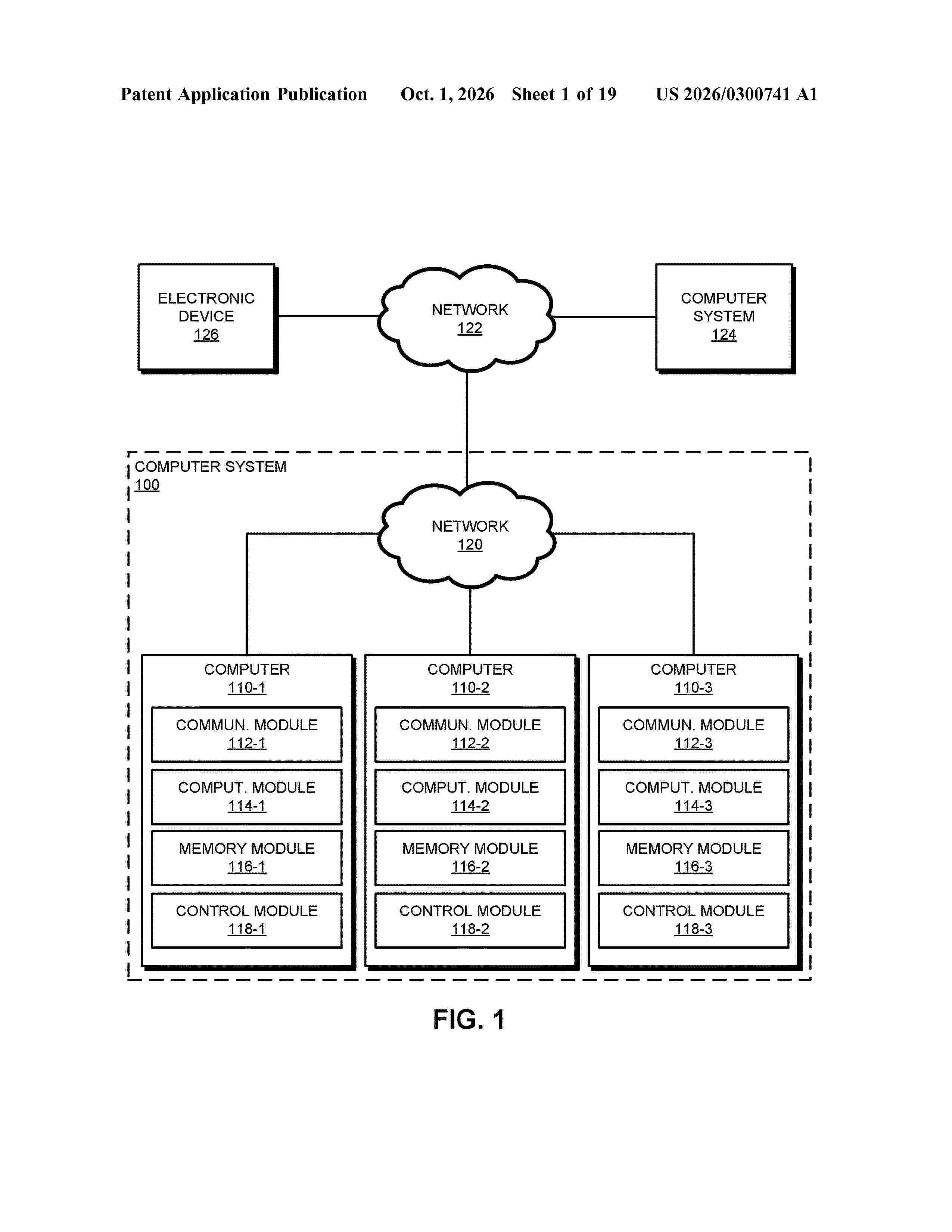
Resumen de: US20260300741A1
A computer system that determines a dynamic content window is described. During operation, the computer system may receive information associated with an environment of an electronic device. Then, the computer system may access a stored context corresponding to the information. Moreover, the computer system may determine a dynamic content window based at least in part on the information and/or the context, where the dynamic content window has a length less than a predefined value. Next, the computer system may generate an input vector based at least in part on the information, the context and the dynamic content window. Furthermore, the computer system may provide, to a pretrained neural network, the input vector and the dynamic content window. Additionally, the computer system may receive, from the pretrained neural network, a response vector, and may provide, addressed to the electronic device, the response vector.
Resumen de: US20260300489A1
A data processing system implements a model partitioning framework that partitions the layers of a neural network of an AI model into multiple partitions. Each partition includes a subset of the layers of the neural network architecture and each partition has different security requirements based on whether the layers in the partition are receiving sensitive input data or operating on data from which features of the sensitive input data can be reconstructed. The model partitioning framework determines the security requirements of each of the layers of the neural network architecture and partitioning the neural network architecture into multiple partitions based on the security requirements of the layers included in each partition and the security features of the hardware security domains available for operating each of the partitions. Each partition is operated in a hardware security domain that satisfies the security requirements of that respective partition.
Resumen de: US20260301174A1
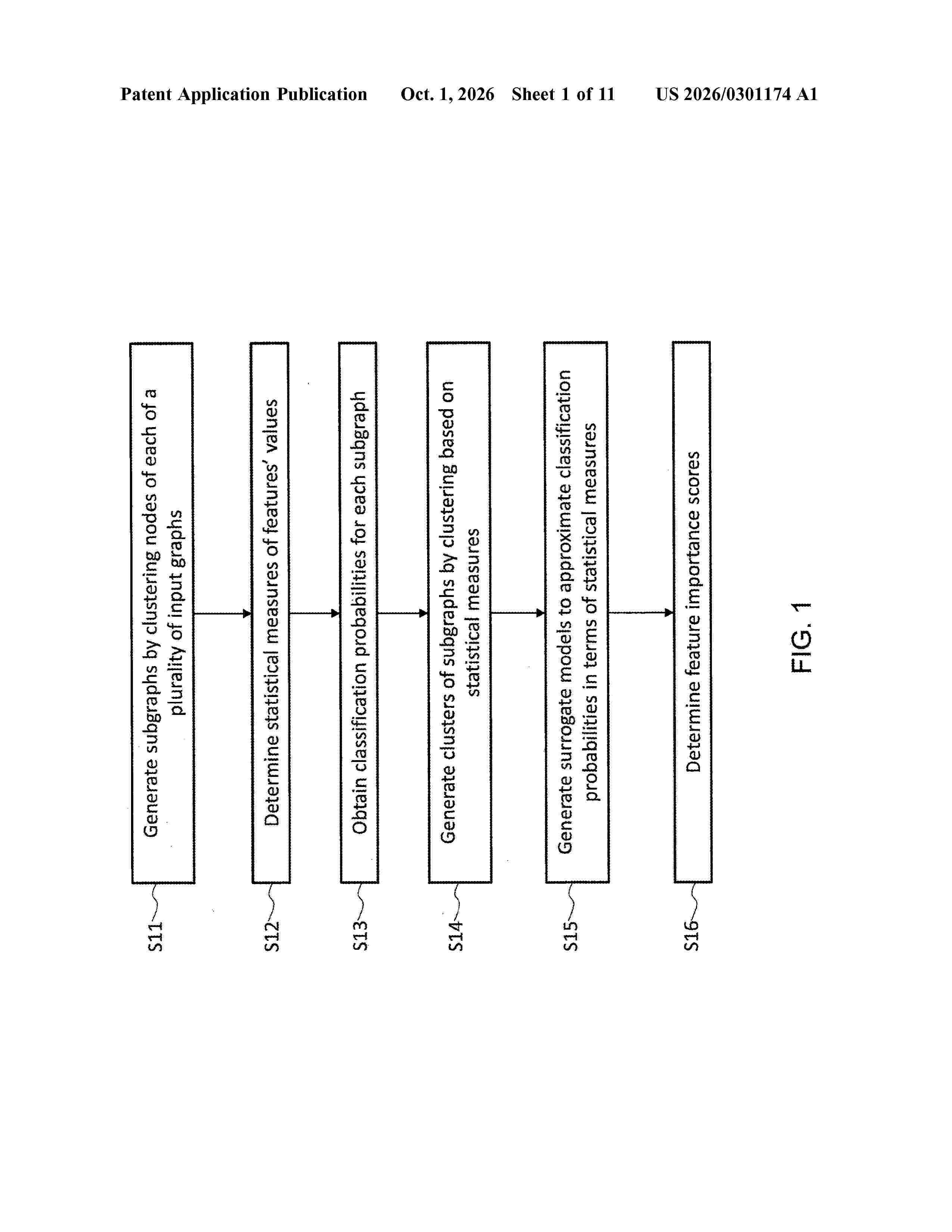
0000 A method comprising: generating subgraphs graph based on classification scores corresponding to nodes and obtained by inputting input graph into a graph neural network, GNN, wherein each node in each input graph comprises a plurality of values corresponding respectively to a plurality of features; determining statistical measures of each feature's values in the subgraphs to generate statistical measures for each subgraph, and obtaining for each subgraph classification probabilities corresponding respectively to a plurality of classes; performing k-means clustering on the subgraphs based on the statistical measures to generate a plurality of clusters of subgraphs; generating, for each cluster of subgraphs, a set of surrogate models to approximate the classification probabilities, respectively, of the subgraphs in the cluster, in terms of the statistical measures; and determining, based on the surrogate models of each set of surrogate models, feature importance scores.
Resumen de: US20260300806A1
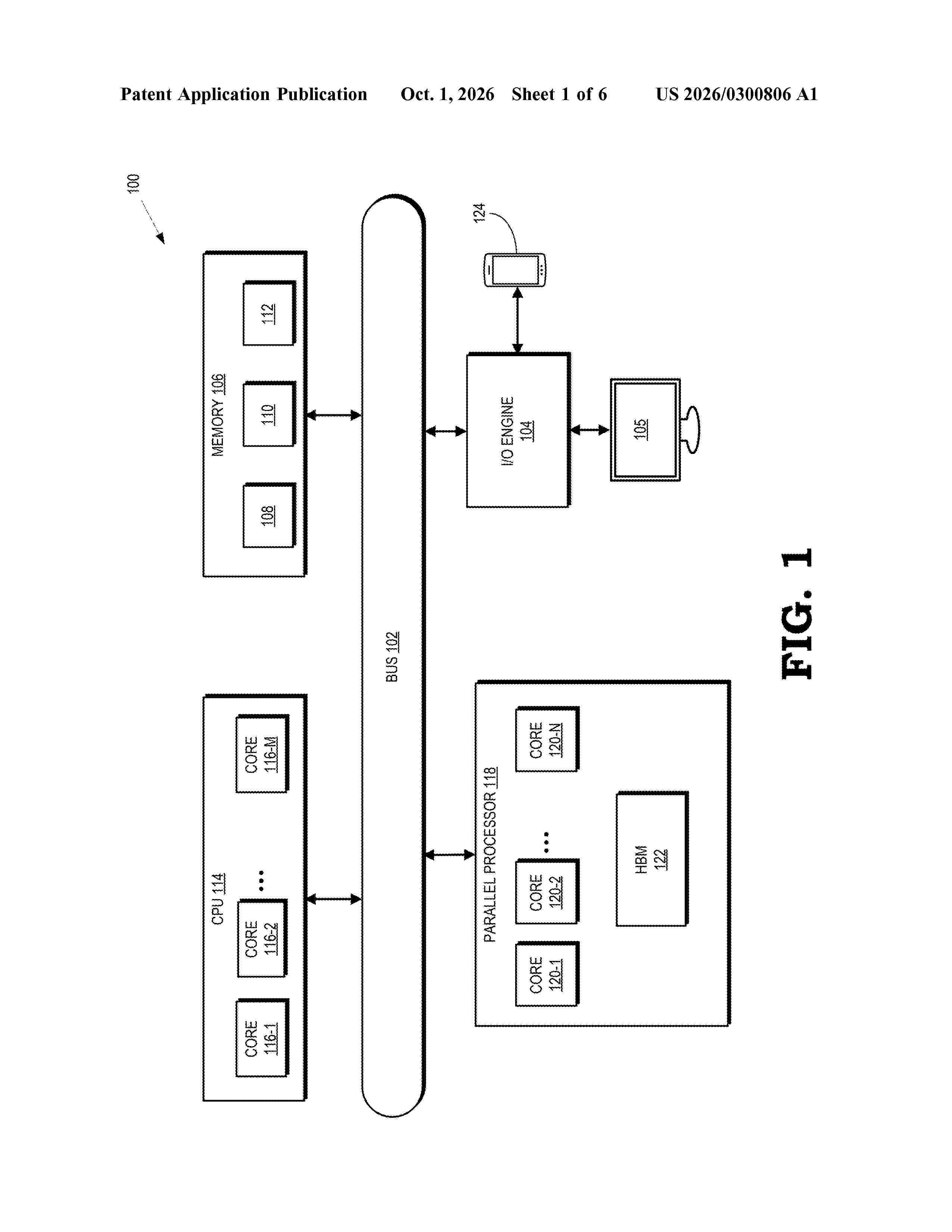
0000 A processing unit compares a first graph that represents a machine learning (ML) model and a second graph that represents a previously quantized ML model generated by quantizing a previous version of the ML model. Based on the comparison, a processing unit selectively reuses a first subset of quantization parameters from the previously quantized ML model and re-quantizes a second portion of the version of the ML model to form a second subset of the quantization parameters. The first subset is formed by quantizing a first portion of the previous version of the ML model. The processing unit combines the first subset and the second subset to form an updated quantized ML model. In some cases, the version of the ML model has a floating-point representation, and the previously quantized ML model is generated by quantizing a previous version of the ML model to form a fixed point representation.
Resumen de: WO2026206327A1
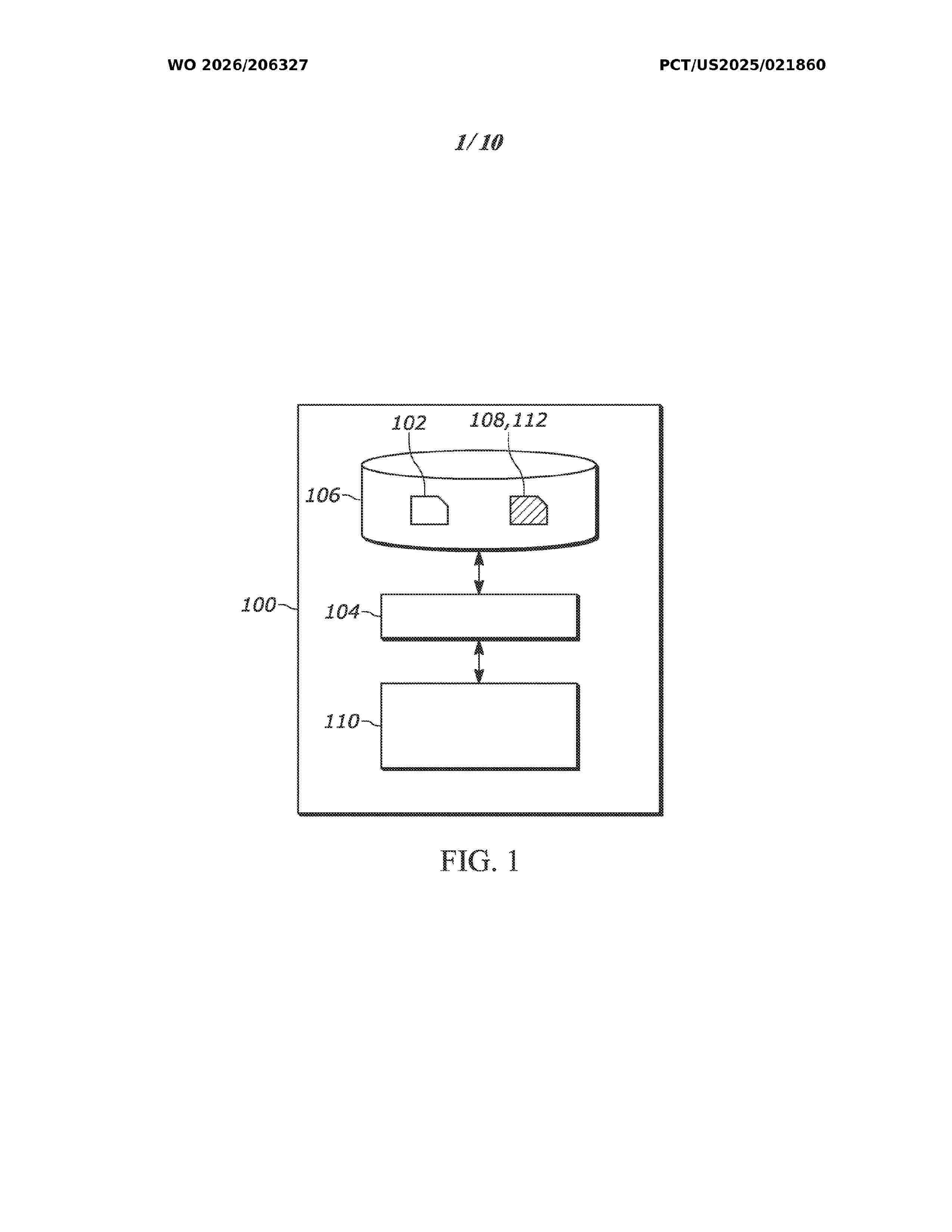
A federated learning system and method for training neural networks addresses the challenge of efficiently merging locally trained models while maintaining data privacy. The system includes a server and multiple clients, where the server dispatches machine learning models to clients for local training. The server decomposes updated model weights into common and sparse components using robust principal component analysis (RPCA), applying distinct scaling factors to enhance model accuracy and convergence speed. This approach can be particularly advantageous in scenarios where data privacy is of significant importance, such as in smart devices and medical applications. The method iteratively refines the global model by leveraging client-specific variations and shared patterns, ensuring that client-specific data is not transferred to a central server.
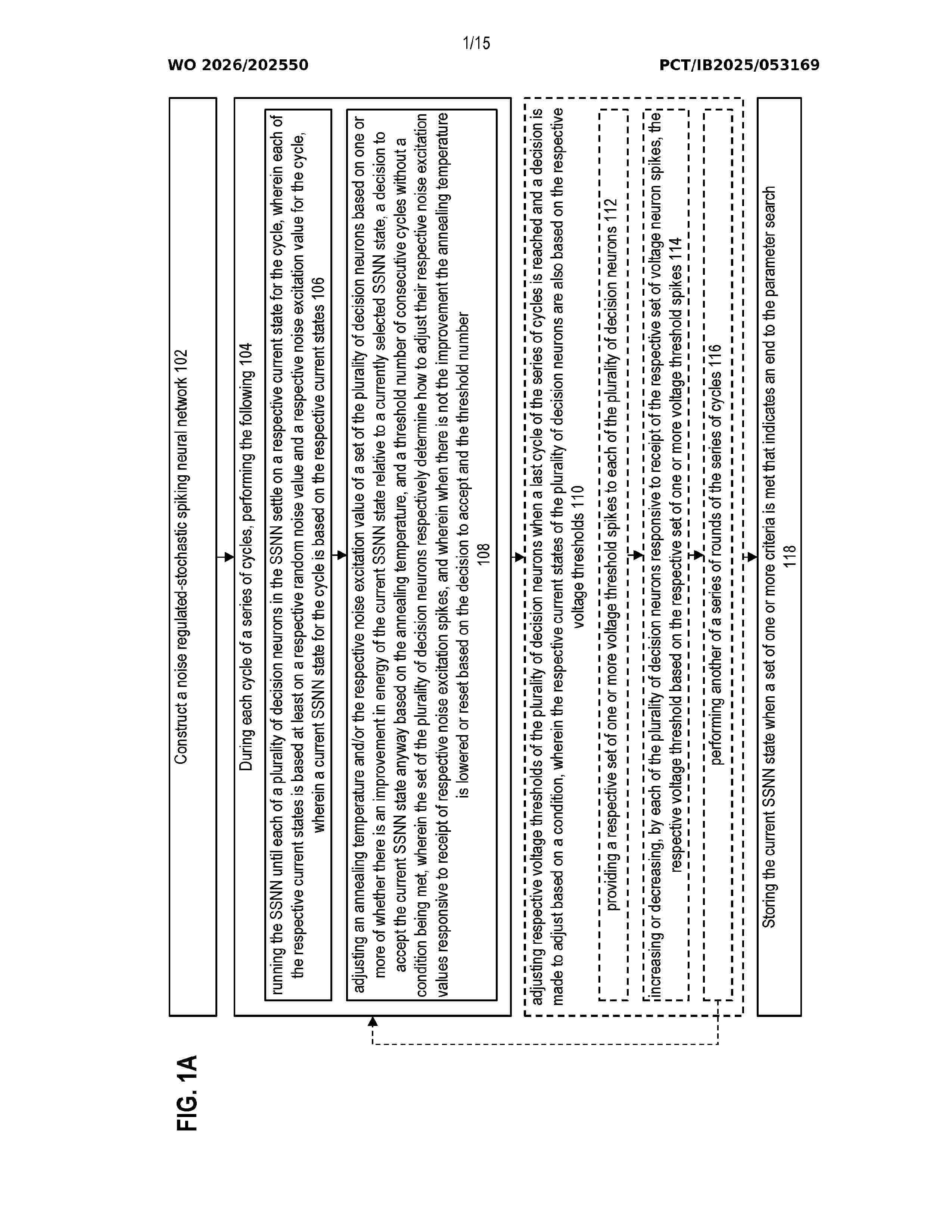
Resumen de: WO2026202550A1
Noise regulation in stochastic spiking neural network (SSNN) allows for a relatively optimal exploration of the space of configurations, looking for the satisfiability of all the constraints; if applied discontinuously, it can also force the system to leap to a new random configuration effectively causing a restart. Embodiments use of noise regulation with an SSNN representing a QUBO problem to perform a parameter search to solve that QUBO problem.
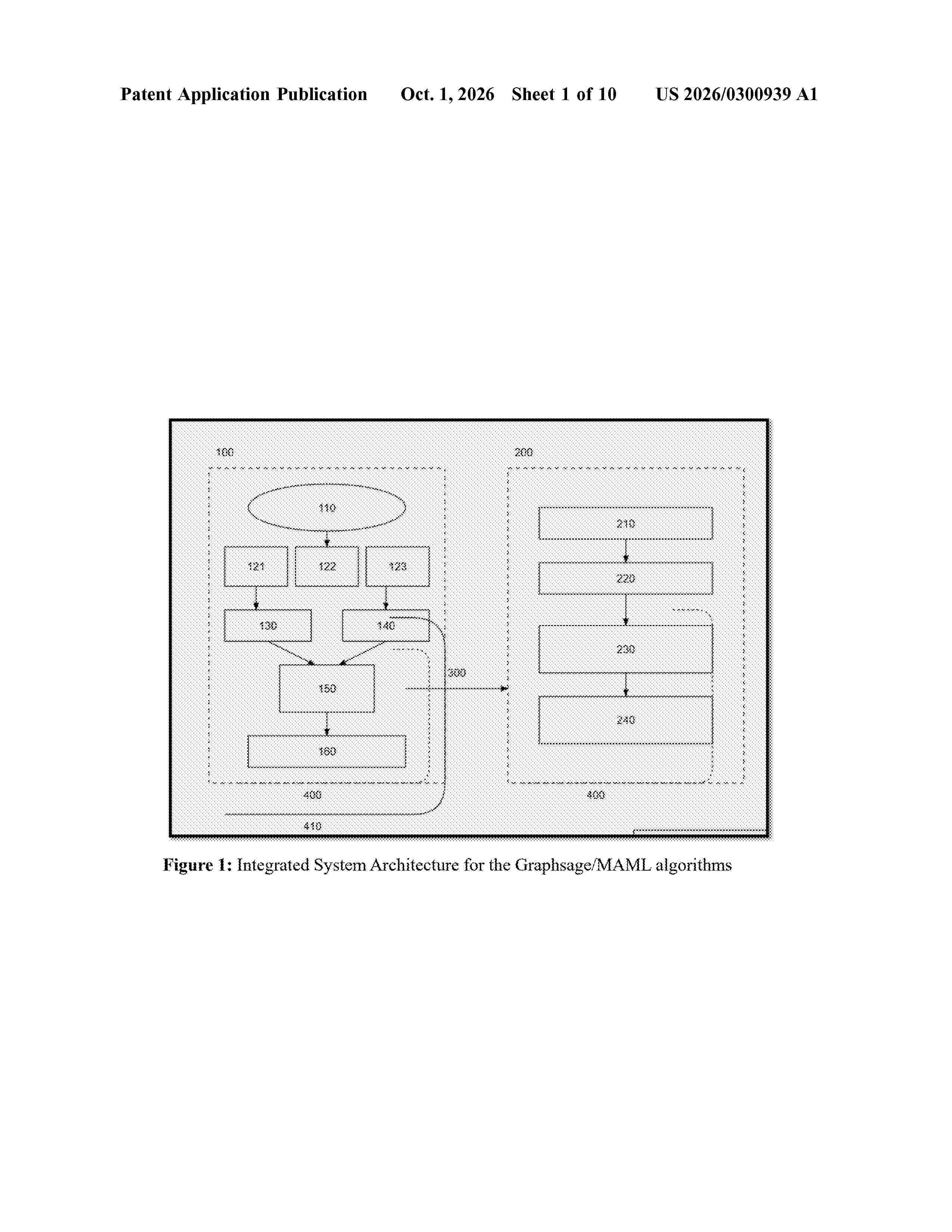
Resumen de: US20260300939A1
The present invention provides a system and method for intelligent matchmaking using Graph Neural Networks (GNNs) and Model-Agnostic Meta-Learning (MAML) to perform adaptive user clustering and personalized recommendations. Users are modeled as graph nodes with multi-dimensional feature vectors capturing demographic, behavioral, and interest-based data. The system employs GraphSAGE for inductive embedding generation and MAML for few-shot learning, enabling scalable onboarding and rapid adaptation for cold-start users. A hierarchical meta-learning framework dynamically adjusts to evolving user behavior, while subgraph matching supports context-aware group formation. Temporal attention mechanisms and similarity-based scoring enhance real-time matchmaking accuracy. The invention supports applications in social networking, professional matchmaking, healthcare, and event-driven platforms by delivering interpretable, privacy-preserving, and scalable user alignment in dynamic digital environments.
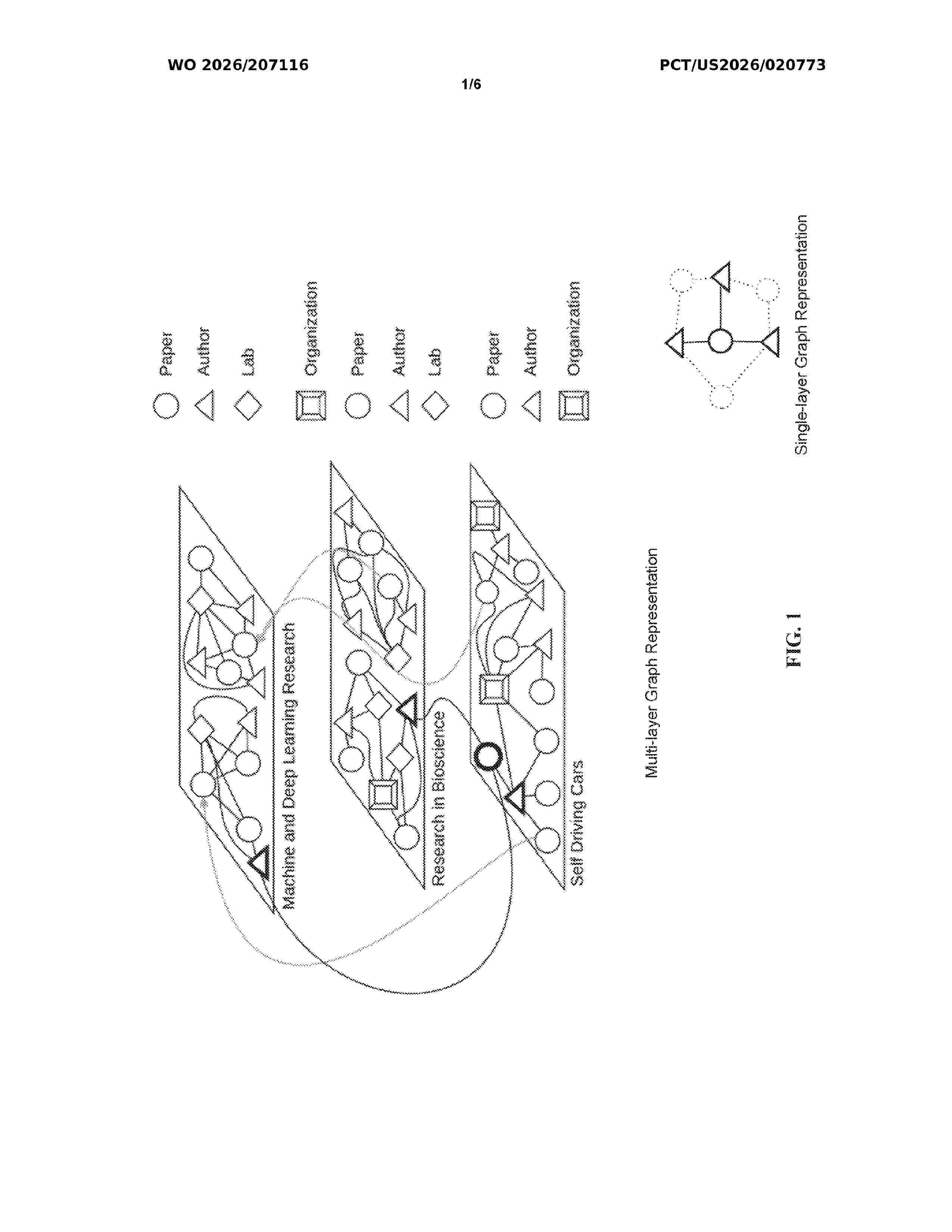
Resumen de: WO2026207116A1
A computer-implemented system integrates data from disparate sources into a multi¬ layered graph comprising domain-specific layers and an entity layer. The system includes an entity resolution engine configured to reconcile entity references by performing hash-based lookups for definitive identifiers and vector-based similarity searches for partial or ambiguous data. An ingestion pipeline parses incoming data, extracts attributes using neural network models, and updates the graph with new or matched nodes. Domain- specific Al agents, each associated with a respective layer, retrieve relevant data via retrieval-augmented generation (RAG) subsystems and generate insights using fine-tuned large language models (LLMs). A coordinating Al agent receives cross-layer queries, distributes sub-queries to domain-specific agents, and synthesizes a unified response by referencing the entity layer.
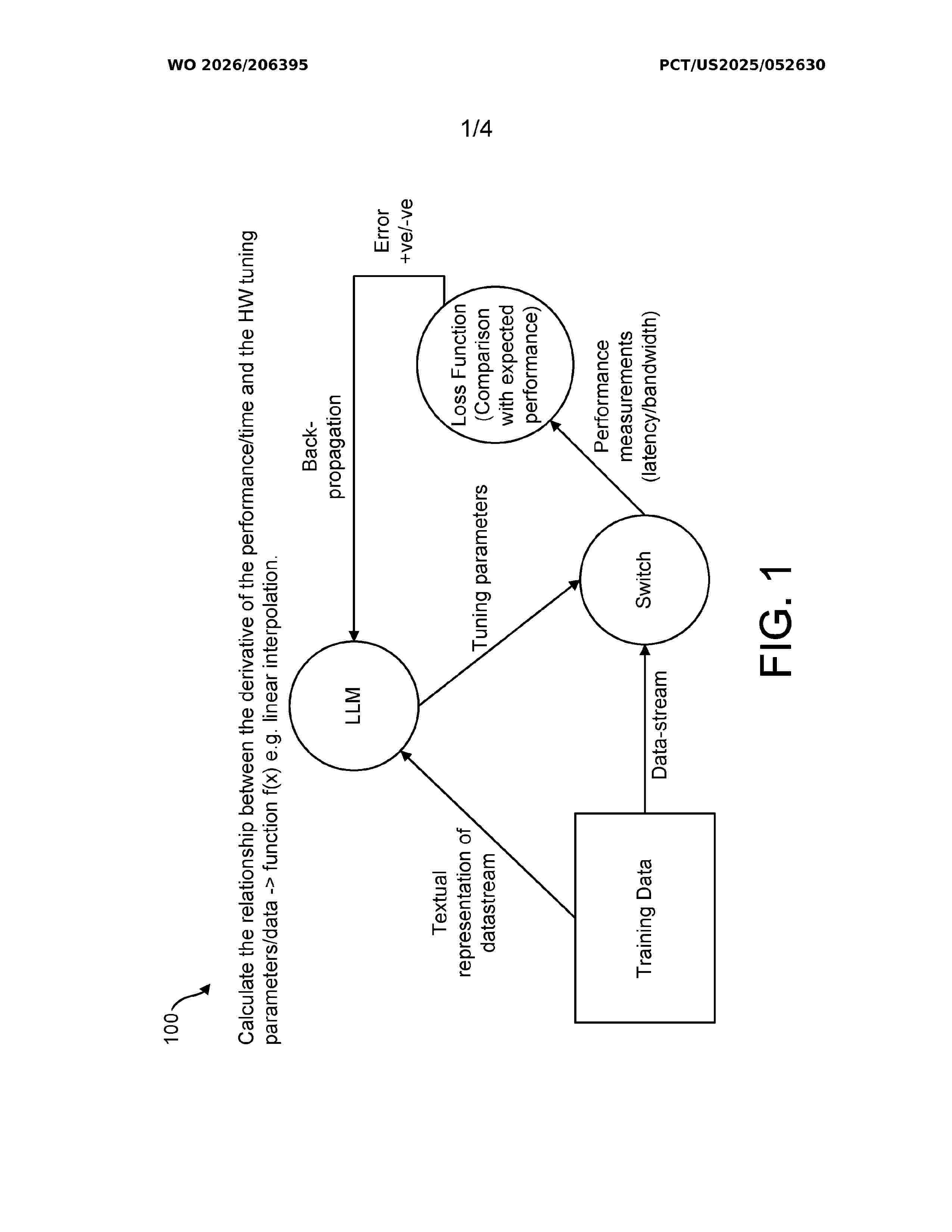
Resumen de: WO2026206395A1
Devices, computer-readable storage mediums, and methods tune performance parameters using one or more artificial intelligence models by monitoring data packets being received by a device, the data packets including one or more data characteristics, predicting, using the one or more artificial intelligence models, future data traffic patterns of the data packets, the predicting including categorizing the one or more data characteristics of the data packets, identifying, based on the predicted future data traffic patterns, one or more tuning parameters to improve bandwidth or reduce latency of the future data traffic patterns, and modifying one or more configurable parameters of the device to include the one or more tuning parameters.
Resumen de: US20260300713A1
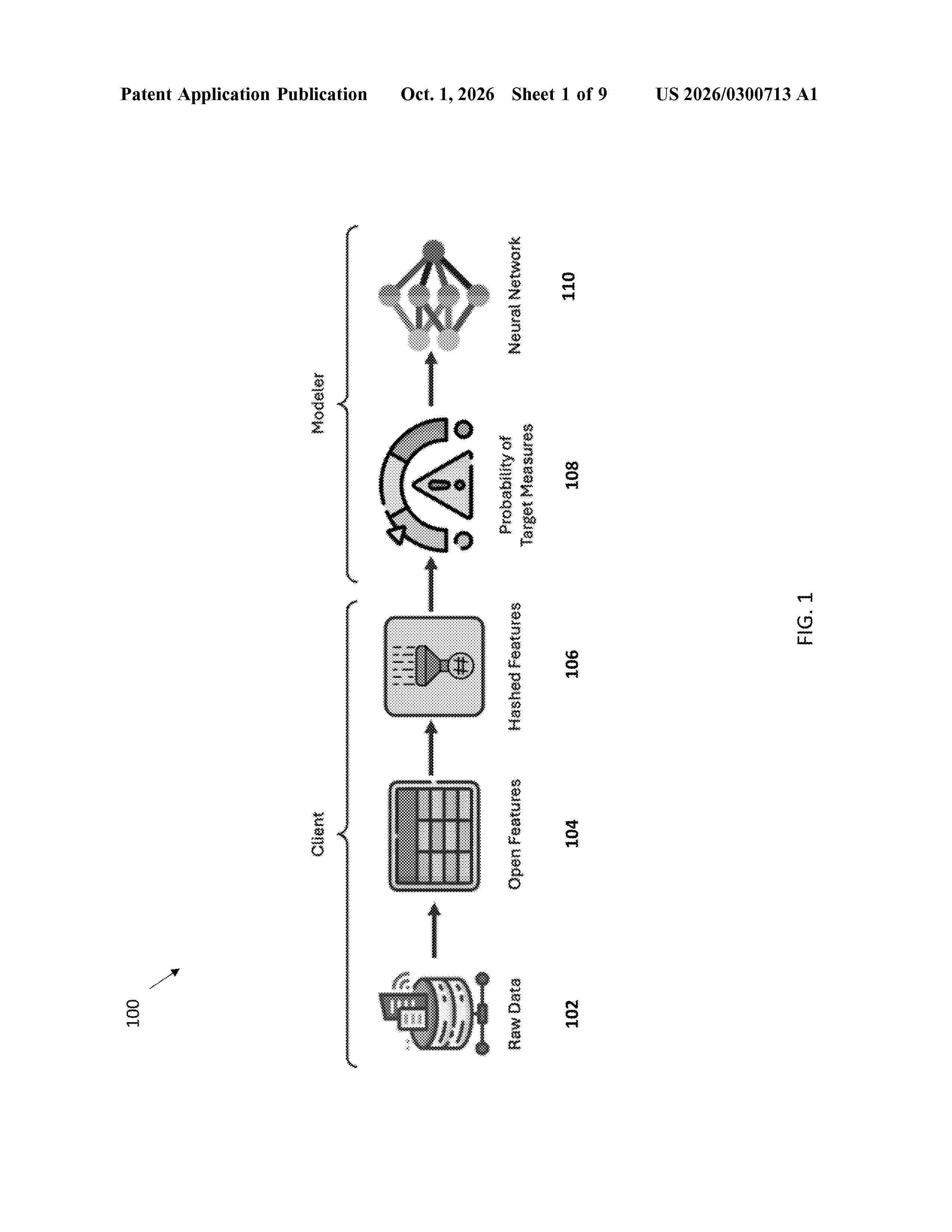
0000 A computer-implemented method, comprising obtaining a transformed dataset from a data owner, the transformed dataset comprising a plurality of transformed values derived from a list of transformed summarized features, wherein the transformed dataset is associated with an entity and is devoid of interpretable or reconstructable data regarding the entity; generating a target-related measure based on a target label associated with the transformed dataset, wherein the target-related measure comprises a numerical value that reflects a statistical relationship between a range of the transformed values and associated target label; generating an input feature vector, for the entity, wherein the input feature vector comprises the target-related measures corresponding to the list of transformed summarized features; and training a neural network classifier using a plurality of input feature vectors generated from multiple transformed datasets respectively obtained from a plurality of data owners.
Nº publicación: WO2026200907A1 01/10/2026
Solicitante:
HUAWEI TECH CO LTD [CN]
\u534E\u4E3A\u6280\u672F\u6709\u9650\u516C\u53F8
Resumen de: WO2026200907A1
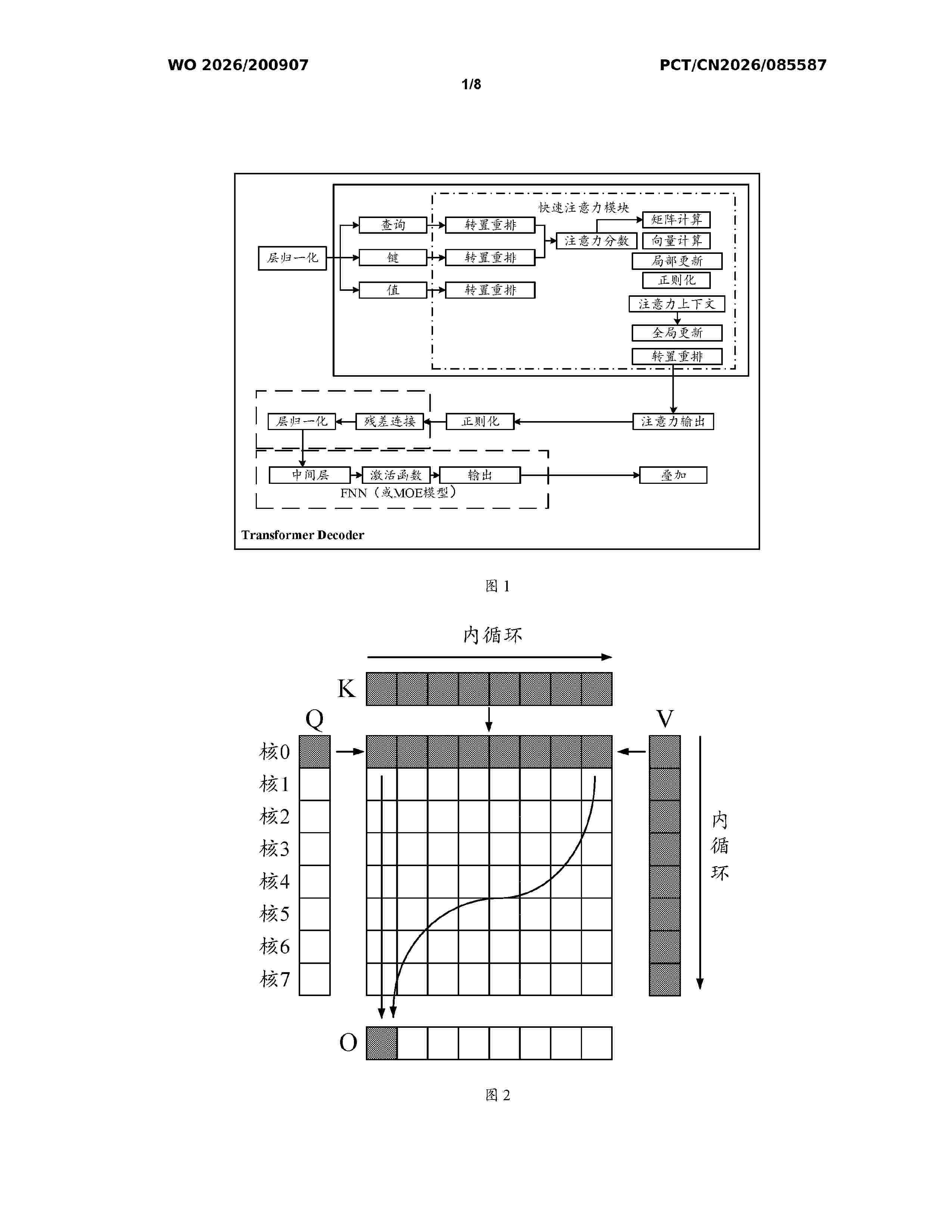
The present application relates to the technical field of data processing, and provides a neural network accelerator and a data processing method for the neural network accelerator. The accelerator comprises a matrix computation unit and at least one vector computation unit. The matrix computation unit comprises a matrix computation core and a matrix post-processing module, and a direct connection path is established between the matrix post-processing module and the at least one vector computation unit. The matrix computation core is used for performing matrix computation in a neural network model, a result of the matrix computation is a first matrix, and the first matrix is divided according to the number of vector computation units to obtain first sub-matrices corresponding to the respective vector computation units. The matrix post-processing module is used for sending, via the direct connection path with the vector computation unit, a first sub-matrix corresponding to the vector computation unit. The vector computation unit is used for performing vector computation on the basis of the received first sub-matrix. The present application can improve the training and inference efficiency of large language models. The present application is used for data processing for neural networks.
 BOPI
 Sede Electrónica