Si deseas distinguir tus productos, servicios o ambos de los de otra empresa, es posible que necesites una marca o nombre comercial. Descubre qué son, en qué consiste su procedimiento de registro y qué implica.

Información sobre los plazos de presentación de solicitudes de transformación de marcas de la Unión Europea en marca nacional española. Más información


Si tienes un nuevo dispositivo, producto o procedimiento que resuelva un problema técnico o tenga una ventaja práctica, existen distintas formas de protegerlo en España y en otros países. Descubre cómo hacerlo.

¿Tu innovación reside en la estética, la ornamentación o la apariencia de tu producto? Protégela mediante un diseño industrial. Descubre qué derechos confiere el registro y cómo realizar la tramitación.

Las indicaciones geográficas protegen el nombre de un producto originario de una zona geográfica, a la cual le debe una determinada calidad, reputación u otra característica. Descubre qué son, en qué consiste su procedimiento de registro y qué beneficios conceden.

Las patentes publicadas en todo el mundo son una valiosa fuente de información científica, técnica y comercial.

Si eres emprendedor/a o una empresa y quieres potenciar y mejorar la rentabilidad de tu negocio protegiendo de forma adecuada los activos intangibles de tu organización, en este espacio encontrarás lo necesario.


 102
resultados
102
resultados
 Última actualización
15/09/2026 [08:13:00]
Última actualización
15/09/2026 [08:13:00]


Resumen de: US20260265455A1
The present invention provides an aliphatic polyester, a polyester composition containing the same, and use thereof. The aliphatic polyester includes a dicarboxylic acid residue, a diol residue, and a branching agent residue; the dicarboxylic acid residue includes the following residues: a1) based on a total molar percentage content of a1) and a2) as 100 mol %, 71-89 mol % of a succinic acid residue; and a2) based on the total molar percentage content of a1) and a2) as 100 mol %, 11-29 mol % of a sebacic acid residue; the diol residue is selected from a 1,4-butanediol residue with a molar content at least equal to that of the dicarboxylic acid residue; and based on a total mass of the aliphatic polyester as 100 wt %, a mass percentage content of the branching agent residue is 0.09-0.22 wt %. The aliphatic polyester solves the problem of low heat sealing strength of aliphatic polyesters.

Resumen de: US20260265454A1
The present invention provides an aliphatic polyester, a polyester composition containing the same, and use thereof. The aliphatic polyester includes a dicarboxylic acid residue and a diol residue; the dicarboxylic acid residue includes the following residues: a1) based on a total molar percentage content of a1) and a2) as 100 mol %, 61.2-69 mol % of a succinic acid residue; and a2) based on the total molar percentage content of a1) and a2) as 100 mol %, 31-38.8 mol % of a sebacic acid residue; and the diol residue is selected from a 1,4-butanediol residue with a molar content at least equal to that of the dicarboxylic acid residue.
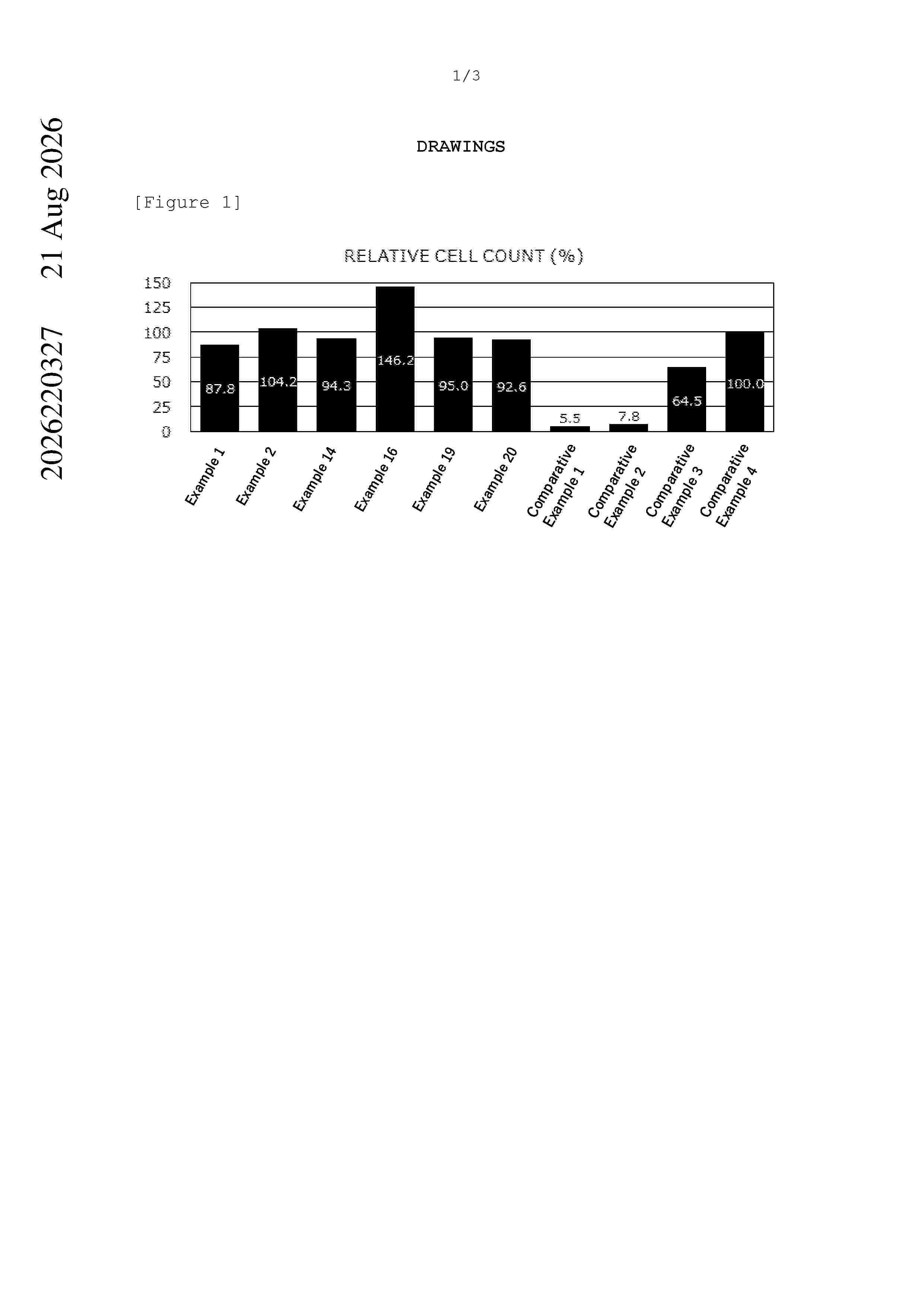
Resumen de: AU2026220327A1
Provided is a biodegradable artificial bait composition from which a practical biodegradable artificial bait having less influence on living bodies and natural environments can be manufactured. Provided is a biodegradable artificial bait composition used for a fishing artificial bait and comprising 10 to 30% by mass of a gelatine, 25 to 80% by mass of a polyhydric alcohol, 9 to 55% by mass of water, and 0.005 to 3% by mass of at least one crosslinking agent selected from the group consisting of alum, transglutaminases, monosaccharides, and polyphenols. ug u g
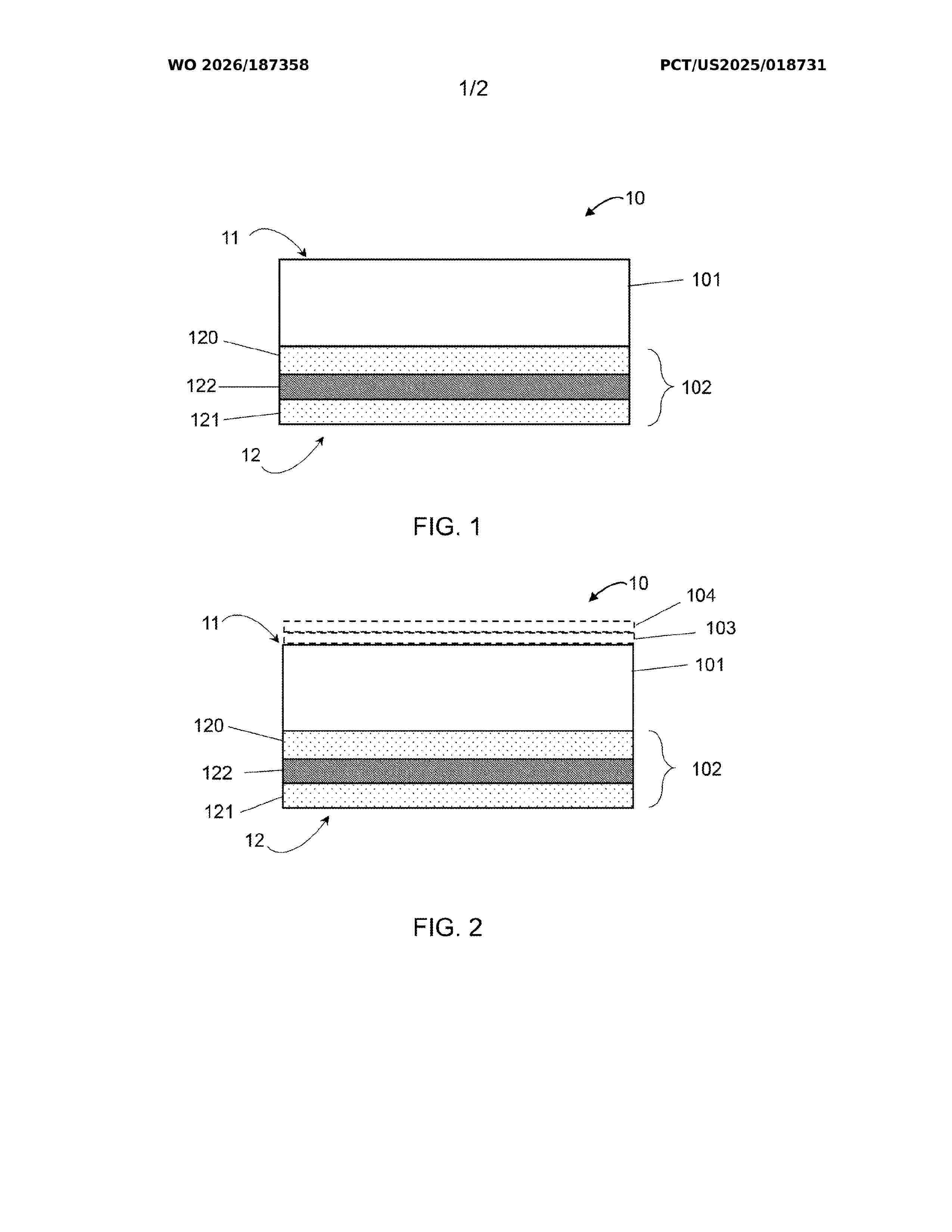
Resumen de: WO2026187358A1
A coated paper as well as hermetically packaged products using said coated paper. The coated paper includes a paper substrate portion located on a first surface (i.e., exterior of the package), the paper substrate portion is provided in a total weight within a range of about 40 gsm to 120 gsm, a film portion is positioned directly adjacent a side of the paper substrate portion comprising a first layer of biodegradable polyester, a second layer of biodegradable polyester, and a polymeric barrier between and directly adjacent each of the first layer and the second layer of biodegradable polyester. The coated paper is both compostable and recyclable.
Resumen de: WO2026185569A1
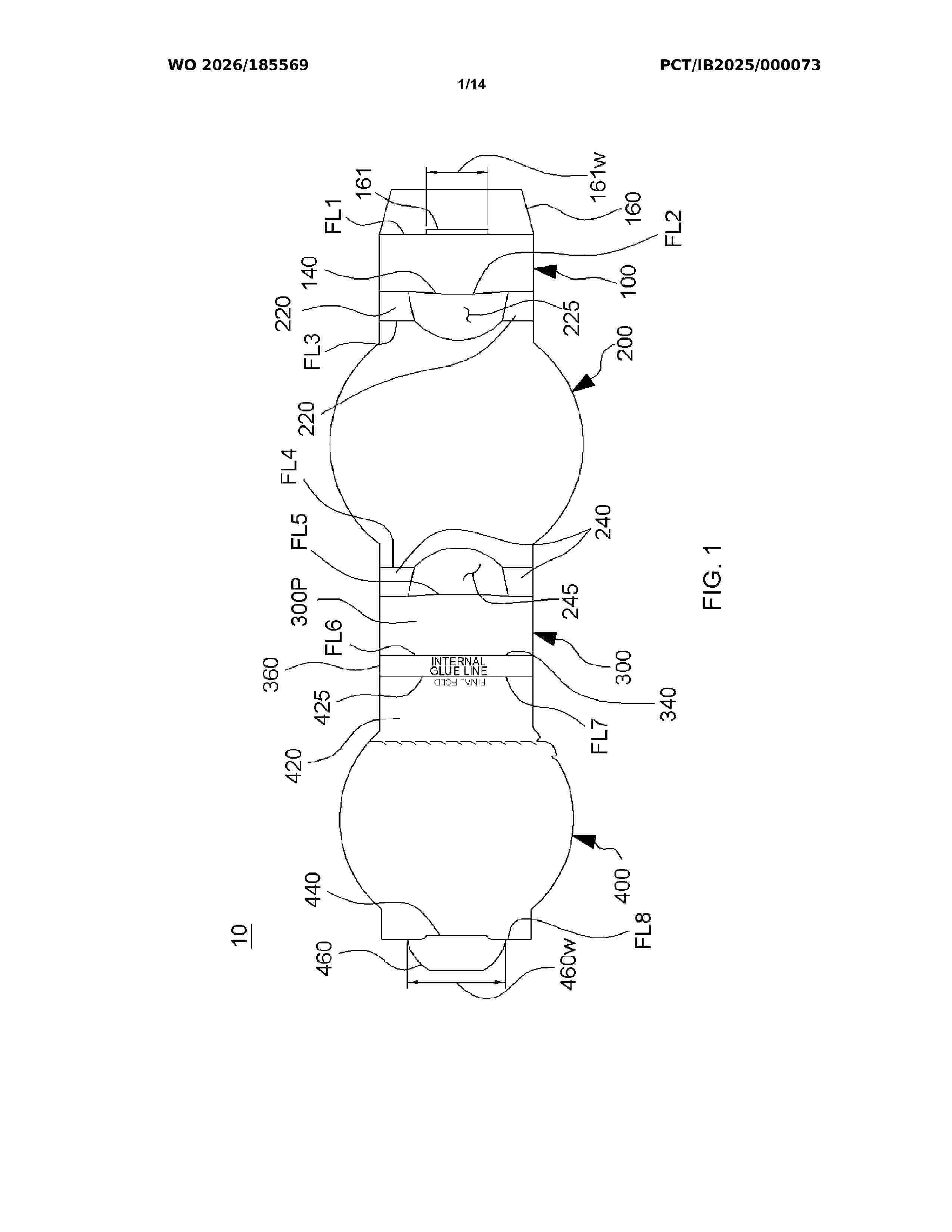
A packaging (10) for a container includes: a first member (100) having a first coupling member; a second member (200) extending from the first member; a third member (300) having at least one contact point and extending from the second member, the third member having a folded member; and a fourth member (400) coupled to the folded member, the fourth member having a second coupling member extending in a first direction, the second coupling member being coupled to the first coupling member, at least one portion of the fourth member being disposed to face the second member, the fourth member having an end edge located in an second direction, wherein both the at least one contact point and the end edge are configured to be in contact with a ground in a vertical direction, and wherein the third member extends from the second member at a first predetermined angle, the third member is coupled to the fourth member at a second predetermined angle, and the second member and the fourth member are configured to stand on the ground.
Resumen de: WO2026185358A1
The present invention in general relates to the field of adhesives, and provides an adhesive which is suitable for bonding lignocellulose based particles, fibres, layers, strands or parts, and in particular can be used for producing bonded wood products. The present invention also provides a method for preparing the adhesive. The present invention further provides products bonded with the adhesive, such as bonded wood products, as well as a method for preparing such bonded products.
Resumen de: US20260264956A1
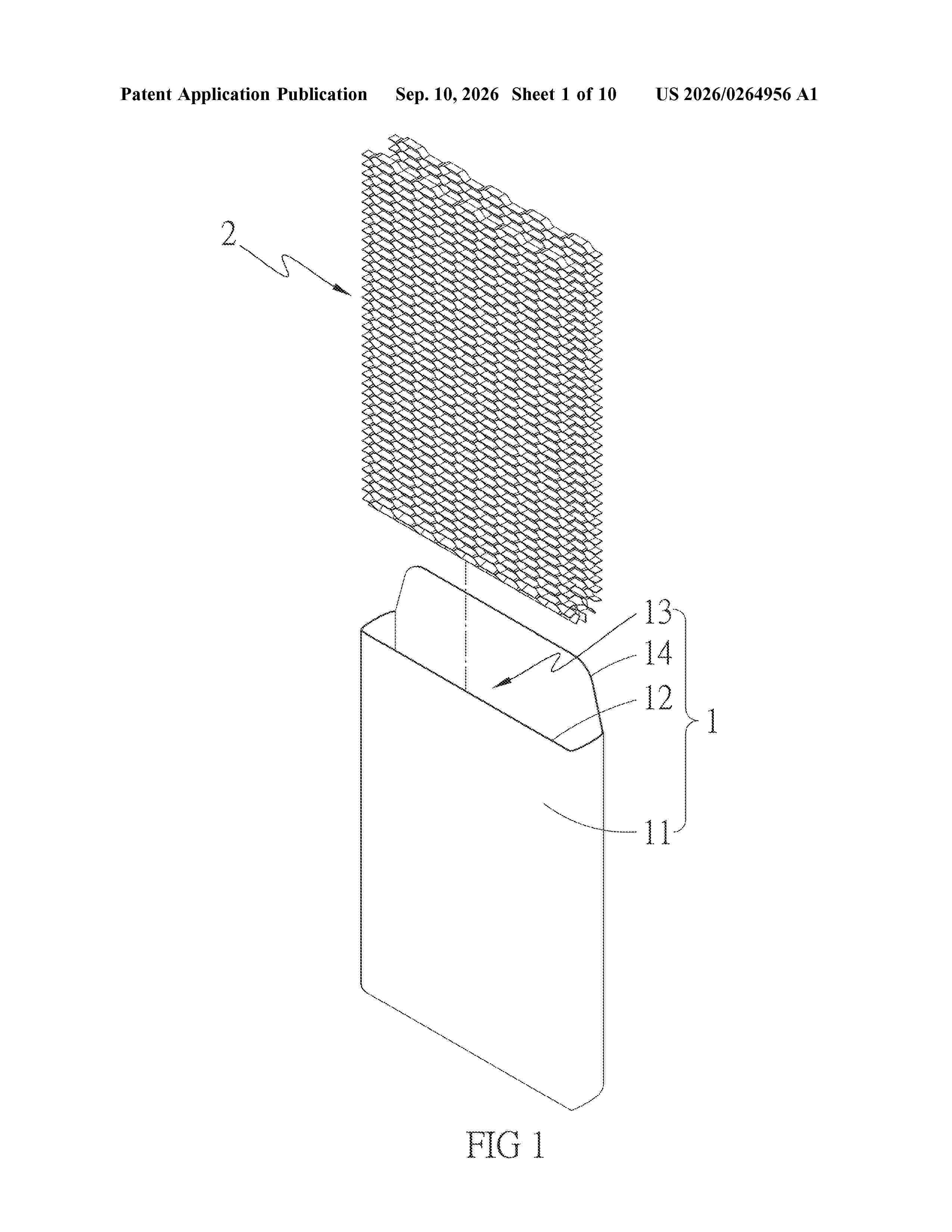
A packaging bag includes an outside wall surface, an inside wall surface, a containing space, a buffer body, an unfixed outer side surface, honeycomb cells, a peripheral edge, a high edge, cell edges, and an included angle. The buffer body is made in a prefabricated shaped form in advance to be subsequently disposed in the containing space. The unfixed outer side surface is arranged on one side of the buffer body facing the inside wall surface and is completely not fixed to the inside wall surface. The buffer body is made to present honeycomb cells in multiple three-dimensional (3D) configurations by means the cell edges of the peripheral edge, the included angle, and the high edge, so as to be directly placeable into the packaging bag in an already-expanded form without the necessity of adhesively bonding and fixing to the inside wall surface of the packaging bag.
Resumen de: US20260264926A1
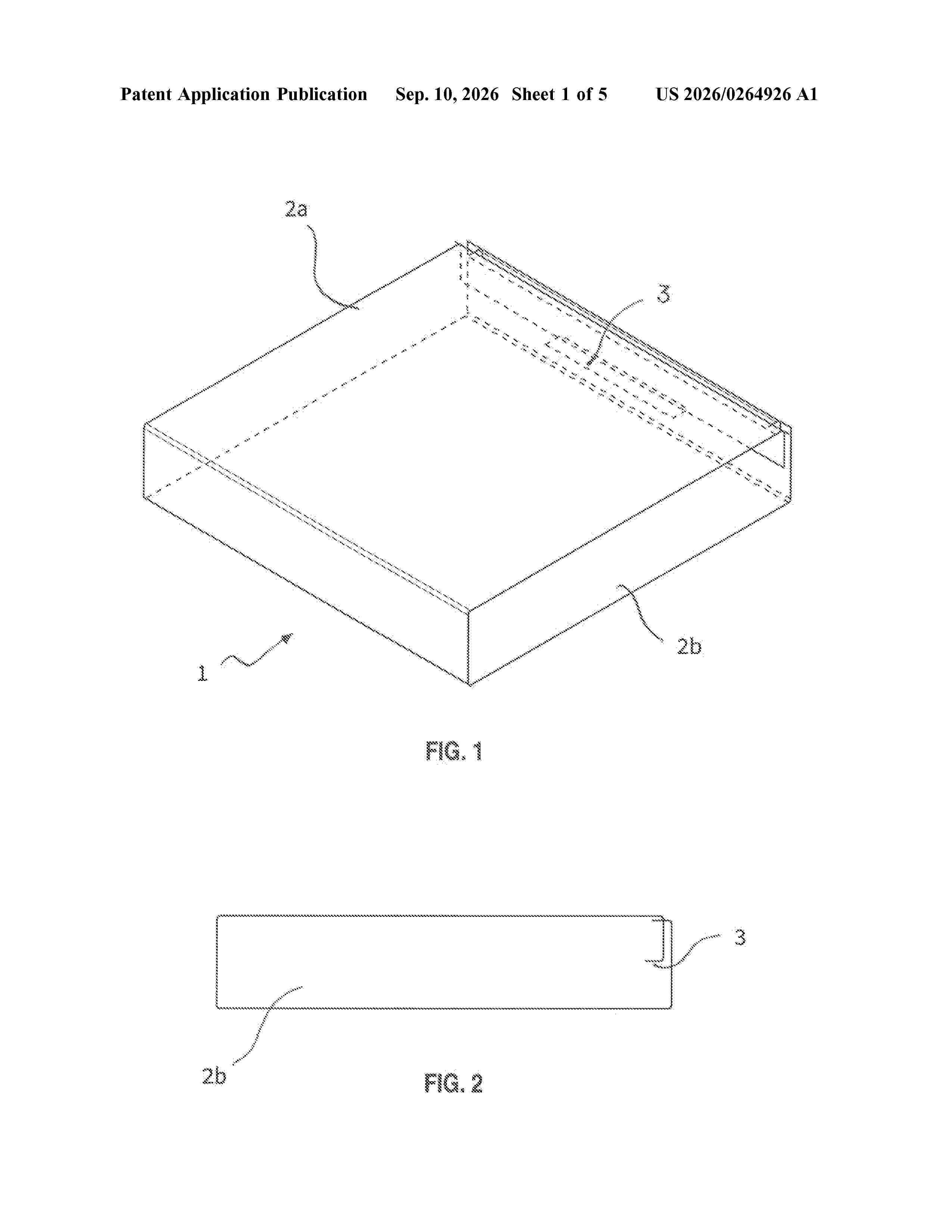
0000 A dual purpose biodegradable dispenser is designed to freshen breath with mints and enhance smiles with dental floss, The dispenser is intended for a 7-day use period and is biodegradable. It features a dual access mechanism with a locking system that allows access from both sides, ensuring controlled dispensing of mints and floss. The design prevents the tray from passing completely through either side, maintaining organized access to the contents.
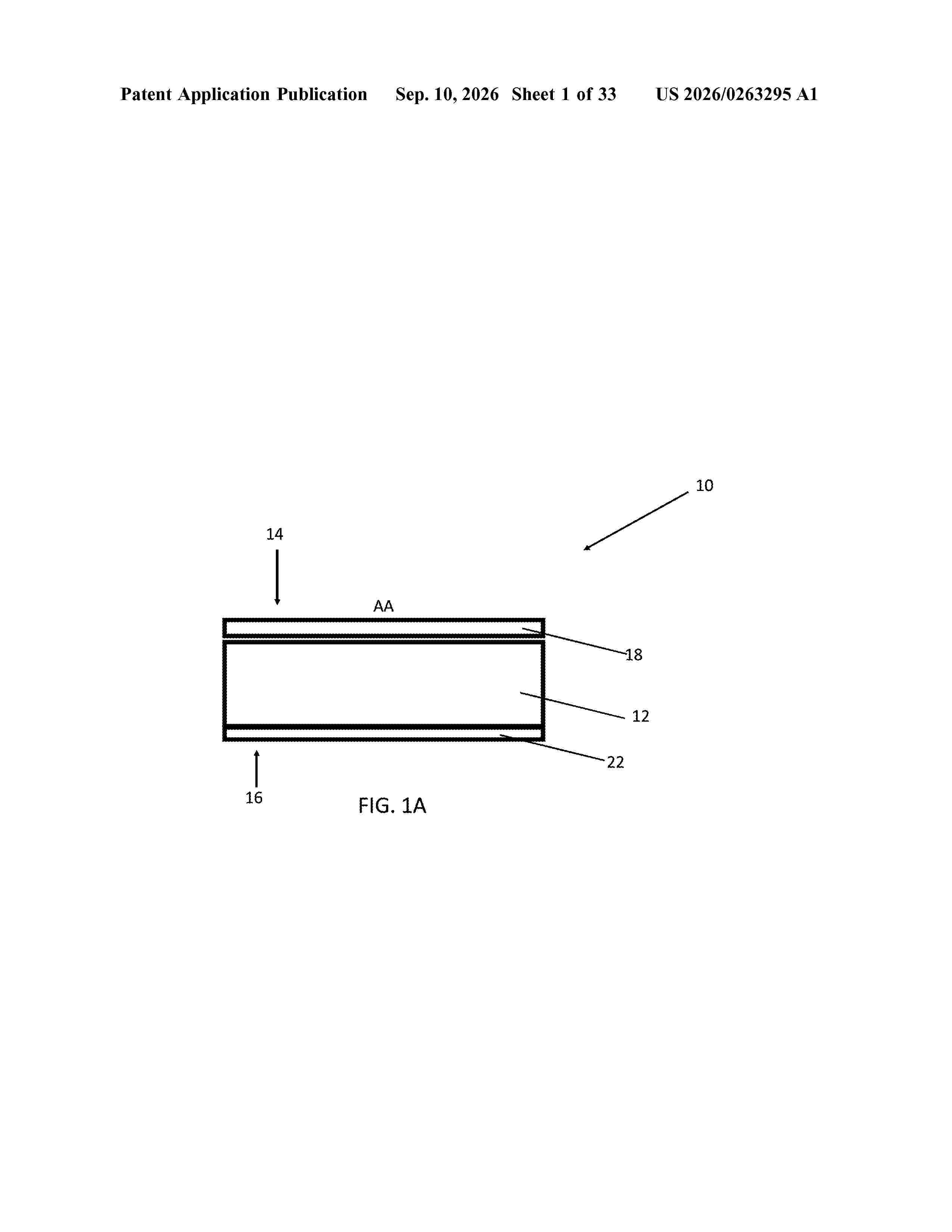
Resumen de: US20260263295A1
The present disclosure is directed to a package configured to receive one or more absorbent articles. The package comprises a package material comprising natural fibers. The package comprises a plurality of panels comprising a first panel and a back panel having one or more wicket holes in a portion thereof. The package is configured to be sealed such that the one or more absorbent articles are enclosed therein.
Resumen de: US20260265453A1
The present invention provides an aliphatic polyester and use thereof. The aliphatic polyester includes a dicarboxylic acid residue and a diol residue; the dicarboxylic acid residue includes the following residues: a1), based on a total molar percentage content of a1) and a2) as 100 mol %, 65-90 mol % of a succinic acid residue; and a2), based on the total molar percentage content of a1) and a2) as 100 mol %, 10-35 mol % of a sebacic acid residue; the diol residue is selected from a 1,4-butanediol residue with a molar content at least equal to that of the dicarboxylic acid residue; and the aliphatic polyester includes an oligomer with a number-average molecular weight<1,000 as measured by gel permeation chromatography (GPC), and a mass percentage content of the oligomer with the number-average molecular weight<1,000 as measured by GPC in the aliphatic polyester is 0.08-3.5 wt %.
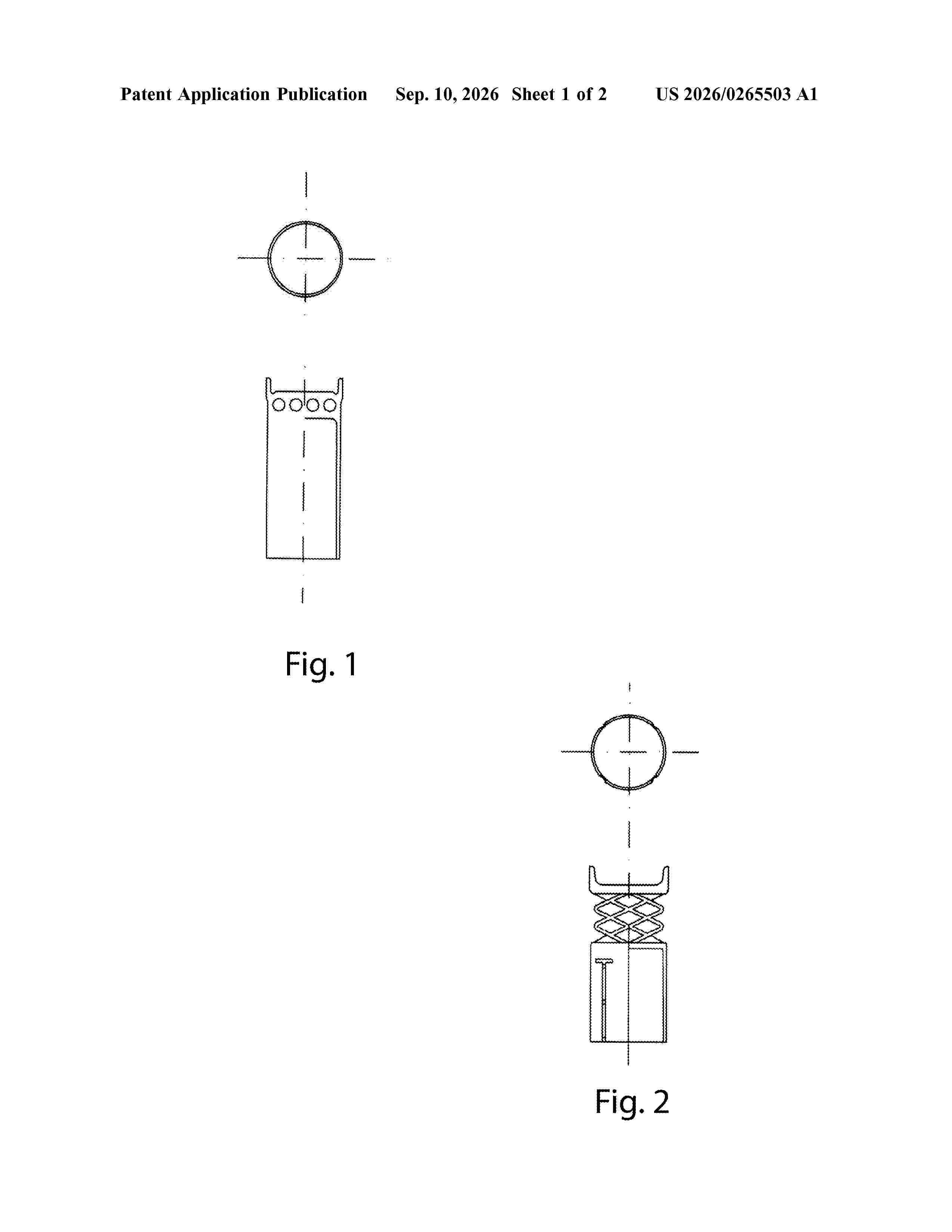
Resumen de: US20260265503A1
A wad for cartridges with characteristics of biodegradability in soil, produced with a mixture of biodegradable materials, the materials including poly(butylene succinate) (PBS) and poly(butylene adipate terephthalate) (PBAT), and the wad further including thermoplastic maize starch (TPS), previously obtained by extrusion of native maize starch with a plasticiser.
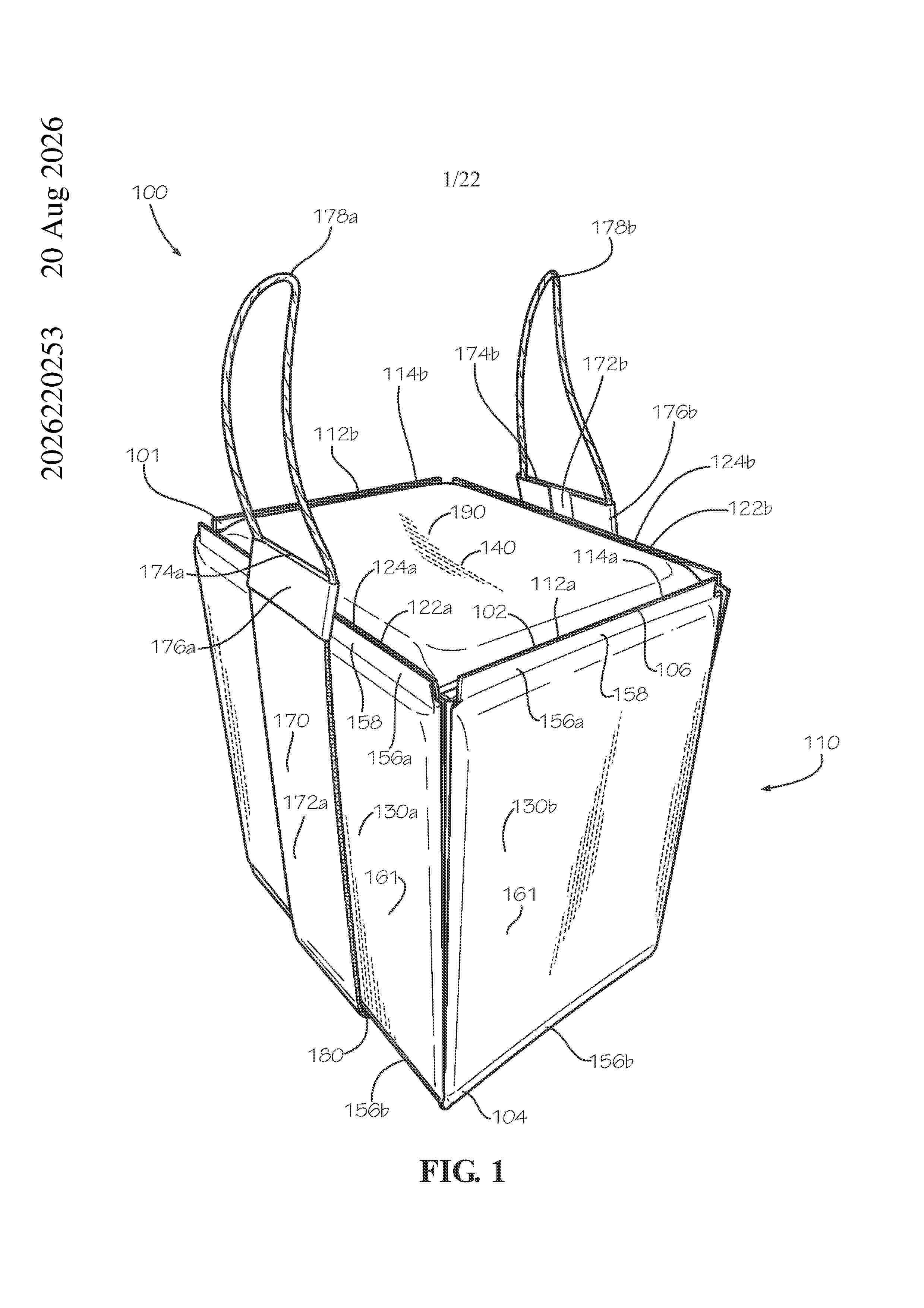
Resumen de: AU2026220253A1
A modular box assembly includes a box; a first thermal liner constructed of a first length of pre-laminated material, the pre-laminated material comprising an insulation batt in facing contact with a first sheet and with a second sheet, the first thermal liner defining three first liner panels; and a second thermal liner constructed of a second length of the pre-laminated material, the second thermal liner defining three second liner panels. A bottom box panel is covered by one of a first liner panel not covering any side box panel and a second liner panel not covering any side box panel. The insulation batt is formed from a mixture of reinforcement fibers and thermoplastic binder fibers, the reinforcement fibers comprising one of natural fibers, recycled cardboard, and a mixture of recycled cardboard and paper fibers. ug u g
Resumen de: EP4803681A1
A membrane comprises a fibrous web comprising thermoplastic polymer fibers. The web comprises at least one treated region which has been heated and compressed. Said treated region has a transparency of at least 85 %, preferably at least 90 %, more preferably at least 92 %, and a void ratio of 10 % or more and 80 % or less, preferably 20 % or more and 75 % or less, more preferably 30 % or more and 70 % or less.
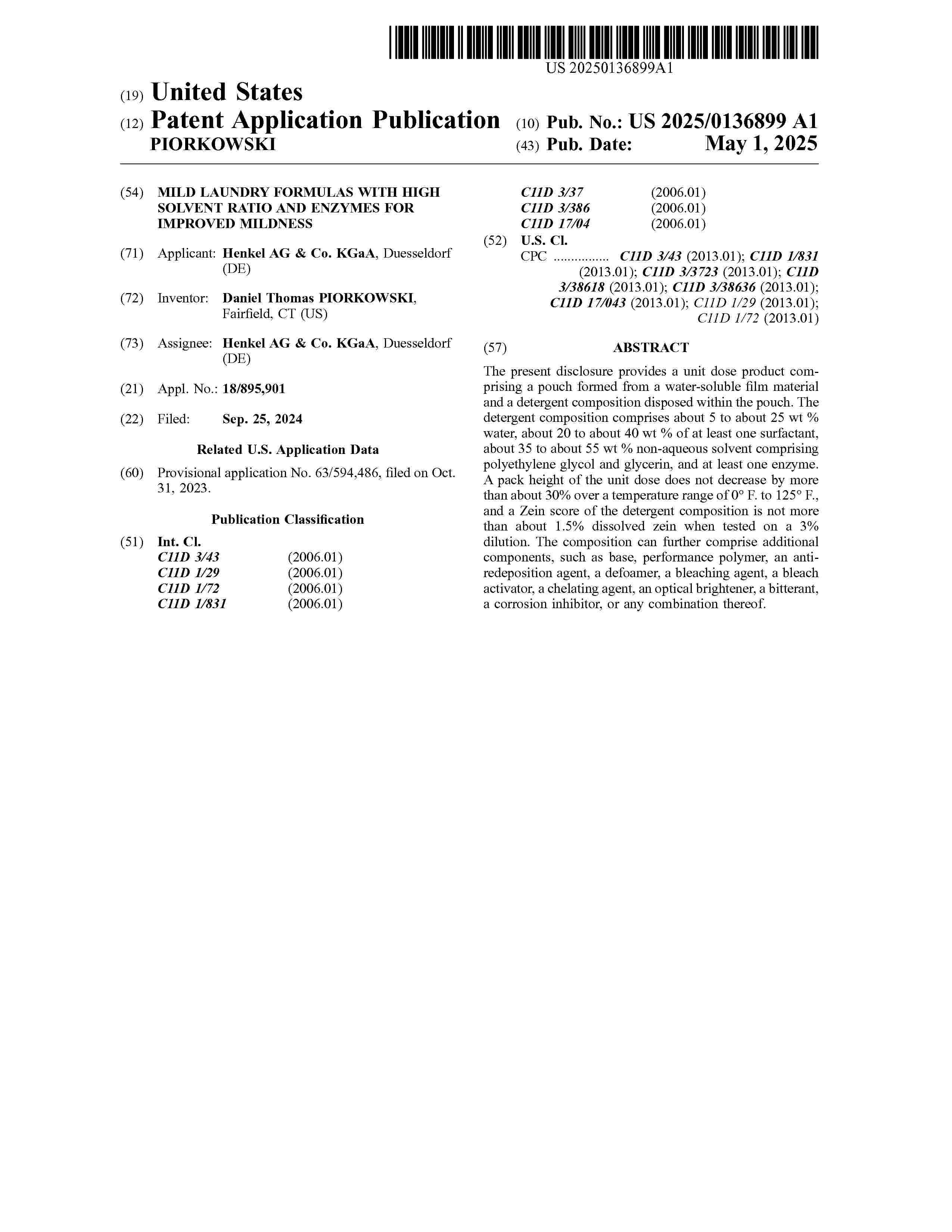
Resumen de: US20250136899A1
The present disclosure provides a unit dose product comprising a pouch formed from a water-soluble film material and a detergent composition disposed within the pouch. The detergent composition comprises about 5 to about 25 wt % water, about 20 to about 40 wt % of at least one surfactant, about 35 to about 55 wt % non-aqueous solvent comprising polyethylene glycol and glycerin, and at least one enzyme. A pack height of the unit dose does not decrease by more than about 30% over a temperature range of 0° F. to 125° F., and a Zein score of the detergent composition is not more than about 1.5% dissolved zein when tested on a 3% dilution. The composition can further comprise additional components, such as base, performance polymer, an anti-redeposition agent, a defoamer, a bleaching agent, a bleach activator, a chelating agent, an optical brightener, a bitterant, a corrosion inhibitor, or any combination thereof.
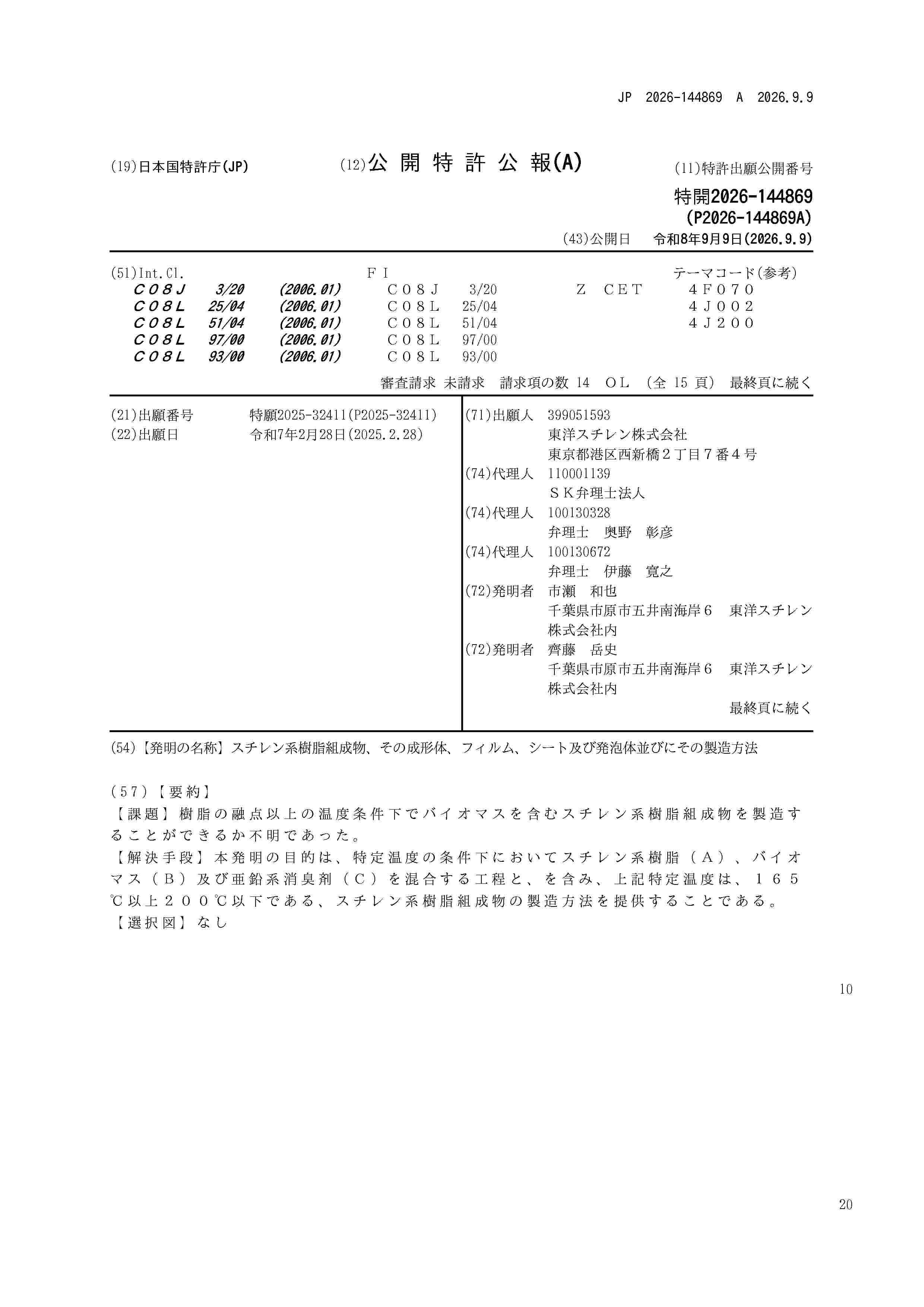
Resumen de: JP2026144869A
0001 【課題】樹脂の融点以上の温度条件下でバイオマスを含むスチレン系樹脂組成物を製造することができるか不明であった。 【解決手段】本発明の目的は、特定温度の条件下においてスチレン系樹脂(A)、バイオマス(B)及び亜鉛系消臭剤(C)を混合する工程と、を含み、上記特定温度は、165℃以上200℃以下である、スチレン系樹脂組成物の製造方法を提供することである。 【選択図】なし
Resumen de: EP3825362A1
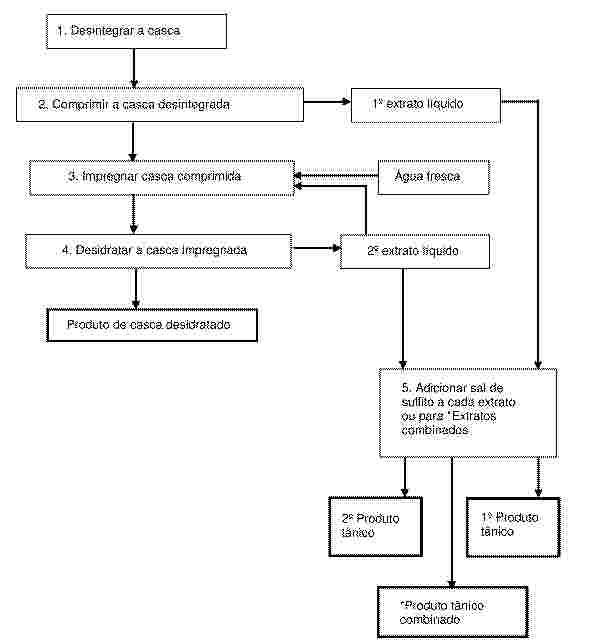
A method for production of at least one tannic product and a bark product having enhanced fuel value is disclosed. According to the invention the method comprises the steps of disintegrating bark; compressing the disintegrated bark to recover a first liquid extract comprising tannic substances; impregnating the compressed bark with a first aqueous impregnation composition at a pH below 7, and at temperature within the range of 45-80°C; dewatering the impregnated bark to recover a second liquid extract comprising tannic substances and a dewatered bark product; recirculating at least a part of the second liquid extract to the impregnation step, wherein the first aqueous impregnation composition comprises a mixture of said recirculated part of the second liquid extract and optionally fresh water; optionally combining said first liquid extract with the non-recirculated part of said second liquid extract; and adding sulphite salt to said first liquid extract and to said non-recirculated part of said second liquid extract, or to the optionally combined first and second liquid extracts in a level of 1-25 % by weight for providing a first tannic product and a second tannic product, or a combined tannic product. Also the tannic product and the bark product obtained from the method is disclosed.
Resumen de: WO2025096948A1
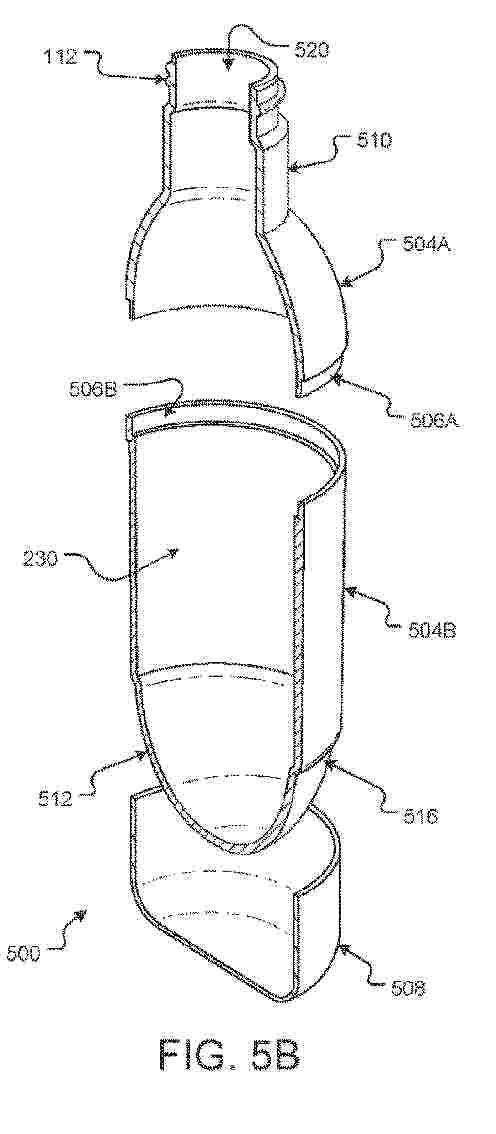
A composite fiber beverage container includes a partially spherical fiber pressure vessel capable of holding beverages at pressure. The composite fiber beverage container is made from a plurality of components made from plant-based fiber materials such as bagasse, bamboo, coconut husk, cotton, flax, hemp, jute, kenaf, paper, seaweed, straw, other fiber materials, or combinations thereof. The fiber materials are selected from recycled materials, newly made (e.g., nonrecycled) materials, or from a combination of recycled materials and nonrecycled materials.
Resumen de: EP4803438A1
The present invention relates to a pouch comprising a water-soluble film comprising at least one polysaccharide A selected from the group consisting of tamarind seed gum, locust bean gum, tara gum, and derivatives thereof.
Resumen de: GB2635139A
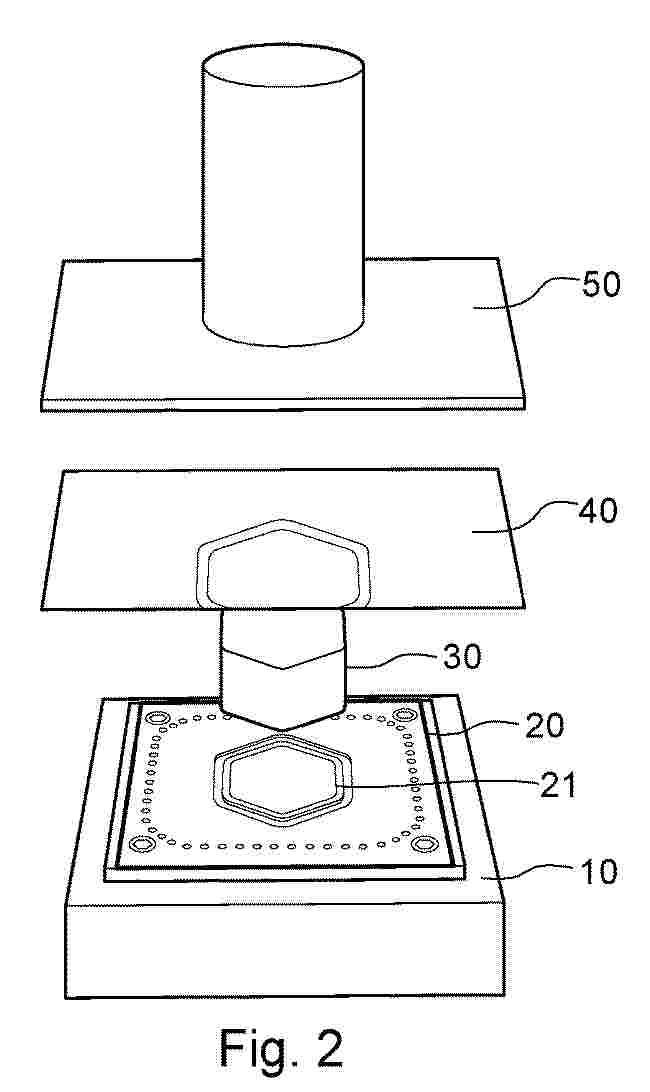
Placing a water soluble 10-75 micrometer polymeric film over a cavity in a plate; the cavity having an evacuation means; placing a cleaning composition containing surfactant over the cavity; placing another polymeric film over the entire plate; pressing a second plate down from above with a force of 150N-700N; applying heat to seal the films. Multiple metal plates, each with multiple cavities; two rollers; a vacuum component for each cavity; a loading component; another plate; a heating system. Providing a plate having multiple cavities, each with an evacuation means; placing a 10-75 micrometer film over the cavities; evacuating the cavities; placing a cleaning composition containing surfactant over each cavity; placing another film over the entire plate; pressing a second plate down from above with a force of 150N-700N; applying heat to seal the films.
Resumen de: AU2021366642A1
A method of adhering substrate surfaces to one another comprises applying a copolyester resin mixture to the surfaces and contacting the surfaces with one another in the absence of heat to form a cold seal. The copolyester resin may be sulfonated and the reaction product of (a) at least two diols comprising ethylene glycol at a mole fraction of at least about 0.25 and (b) at least three diacids or diesters comprising: (i) a sulfomonomer at a mole fraction of at least 0.02, preferably at least 0.07; (ii) at least one aromatic diacid or diester; and (iii) at least one aliphatic diacid or diester. The ratio of aromatic to aliphatic diacids or diesters may be between about 75/25 and about 45/55, and the glass transition temperature of the resin may be between about -25°C and about 15°C. The resin may be solvated and preferably is food grade compliant and compostable.
Resumen de: AU2023248670A1
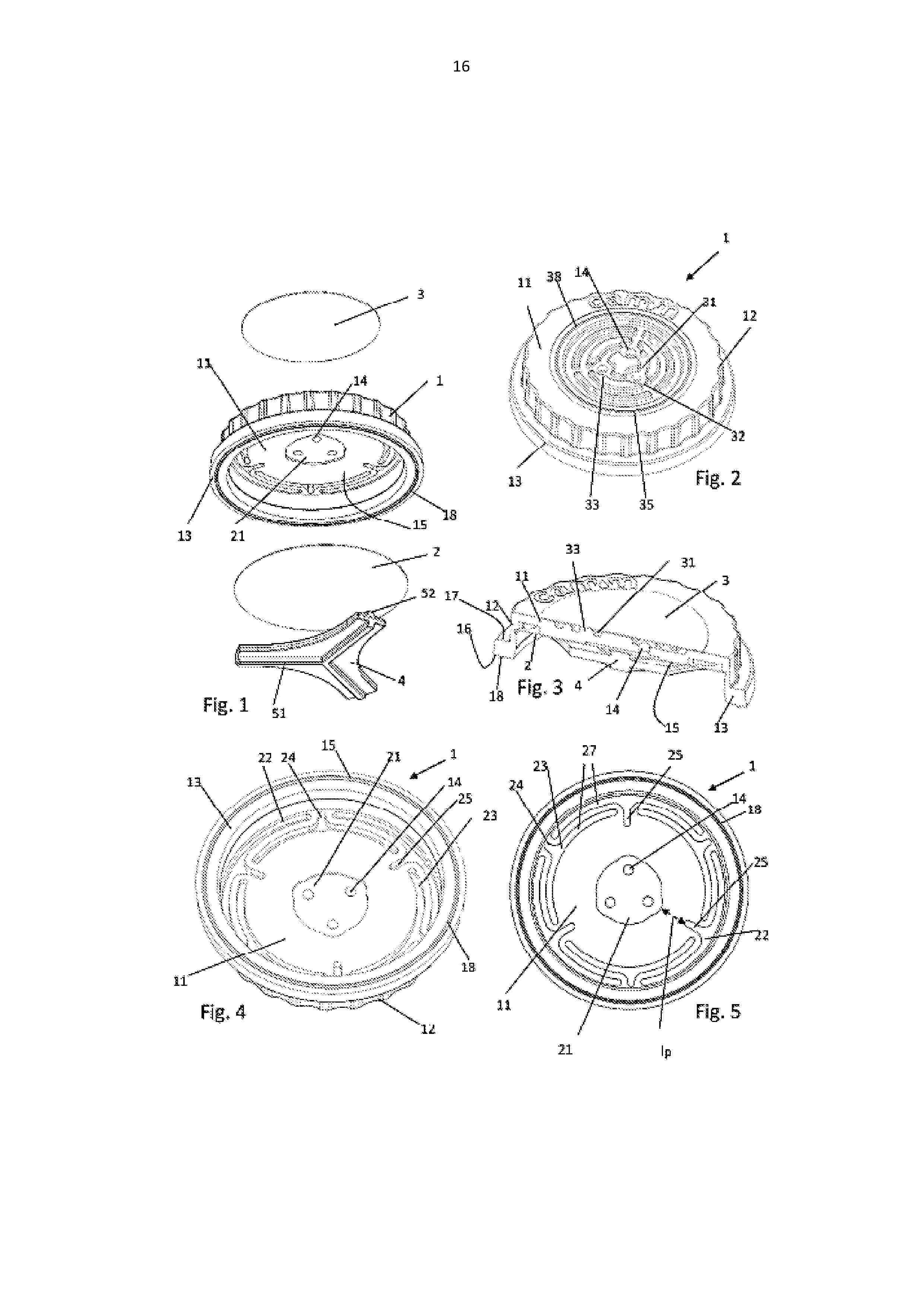
According to an aspect of the present invention, a pressure-relief valve is provided, the valve comprising a cup shaped main body (1) with a bottom (11) and a circumferential wall (12) to be fastened to a flexible package material. The bottom has at least one through hole (14) forming a passage through the main body. A valve membrane lies against the main body on a package side in a region around the through hole(s) (14), with a sealing liquid between the main body and the valve membrane. The valve membrane thereby covers the at least one through hole (14). On the package side, the bottom has a system of grease grooves (21, 22, 23) for accommodating a portion of the sealing liquid, the system of grease grooves comprising at least one outer grease groove (22, 23) having a main portion running in a circumferential direction and having a radial extension (24, 25) extending from the main portion into a radial direction.
Resumen de: WO2024056537A1
The invention concerns a system comprising an extraction device of a beverage preparation machine and a pod, wherein - the pod comprises a pod body and a top lid, and - the extraction device comprises : - upstream and downstream pod enclosing parts relatively translatable between an open position for inserting and/or ejecting the pod and a closed position for forming an extraction chamber enclosing the pod during extraction, the downstream part comprising a downstream plane piercing arrangement for opening the lid of the pod, and wherein the body and the lid of the pod are made of a multilayer paper material comprising a layer of paper coated with at least a layer of plastic, and wherein the downstream piercing arrangement and the multilayer material of the second enclosing wall (32) of the pod are designed to enable a progressive piercing of the top lid.
Resumen de: WO2026182060A1
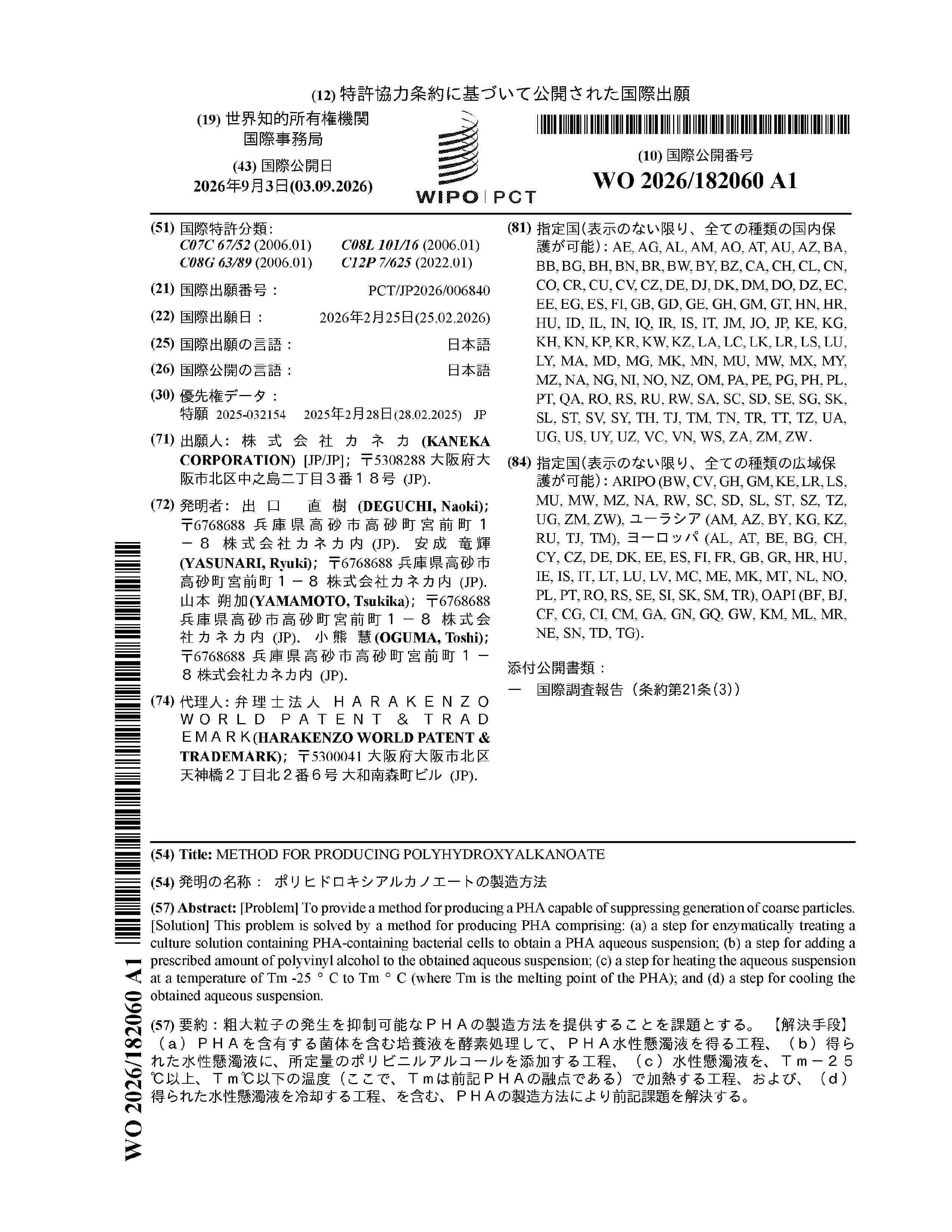
Problem To provide a method for producing a PHA capable of suppressing generation of coarse particles. Solution This problem is solved by a method for producing PHA comprising: (a) a step for enzymatically treating a culture solution containing PHA-containing bacterial cells to obtain a PHA aqueous suspension; (b) a step for adding a prescribed amount of polyvinyl alcohol to the obtained aqueous suspension; (c) a step for heating the aqueous suspension at a temperature of Tm -25°C to Tm°C (where Tm is the melting point of the PHA); and (d) a step for cooling the obtained aqueous suspension.
Resumen de: DE102025107709A1
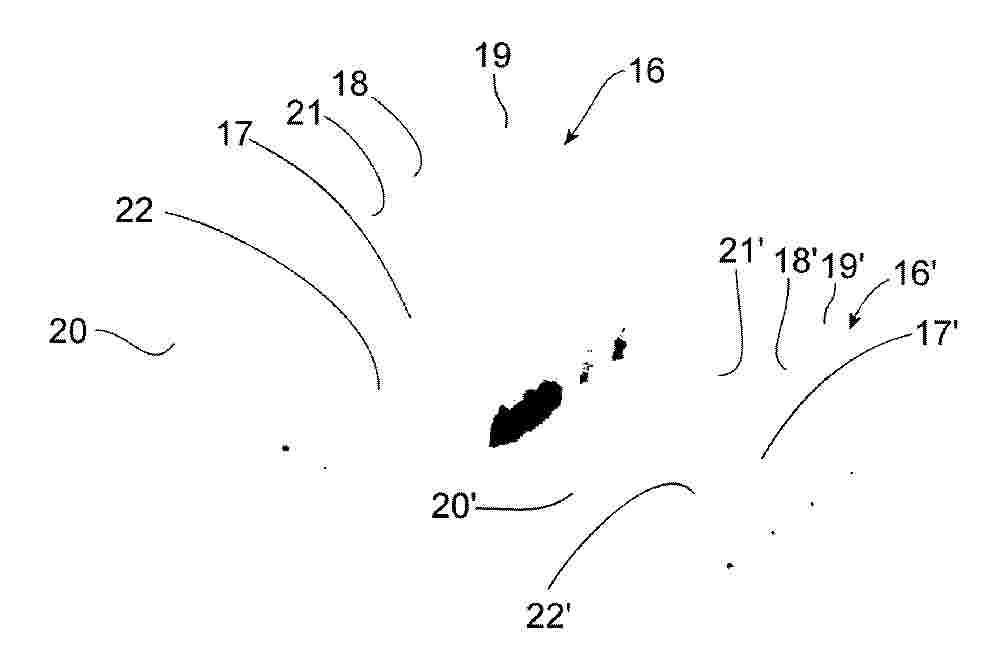
Die Erfindung betrifft Dünnwandige Verpackung aus biologisch abbaubarem Fasermaterial,- welche einen schalenförmigen Grundkörper (16, 16') mit einer Bodenwand (17, 17'), einer umlaufenden Seitenwand (18, 18') und einem oberen Rand aufweist;- und welche einen Deckel (23, 23') mit einer Deckwand (25, 25') und einem umlaufenden Deckelrand aufweist, der komplementär zum oberen Rand verläuft;- wobei der Grundkörper (16, 16') und der Deckel (23, 23') mittels einer Saugform (5) aus einer Pulpe enthaltend eine Mischung aus Wasser und Frischfaser hergestellt sind,- wobei der Pulpe alkylierte Ketendimere als Additiv zugesetzt sind;- wobei der Grundkörper (16, 16') und der Deckel (23, 23') getrocknet und nach der Trocknung gepresst sind; und- wobei der Grundkörper (16, 16') und der Deckel (23, 23') eine Wandstärke von mindestens 3 mm aufweisen.Die derart gestaltete Verpackung aus Fasermaterial ist zur Aufbewahrung gekühlter Speisen geeignet und entfaltet sowohl eine starke Isolierwirkung, um das Erwärmen gekühlter Speisen zu vermeiden, als auch eine gute Beständigkeit gegenüber Feuchtigkeit.
Nº publicación: US20260257830A1 03/09/2026
Solicitante:
SAJID MOHAMMAD IZHAR [US]
SAJID HAMZA [US]
Sajid Mohammad Izhar
Sajid Hamza
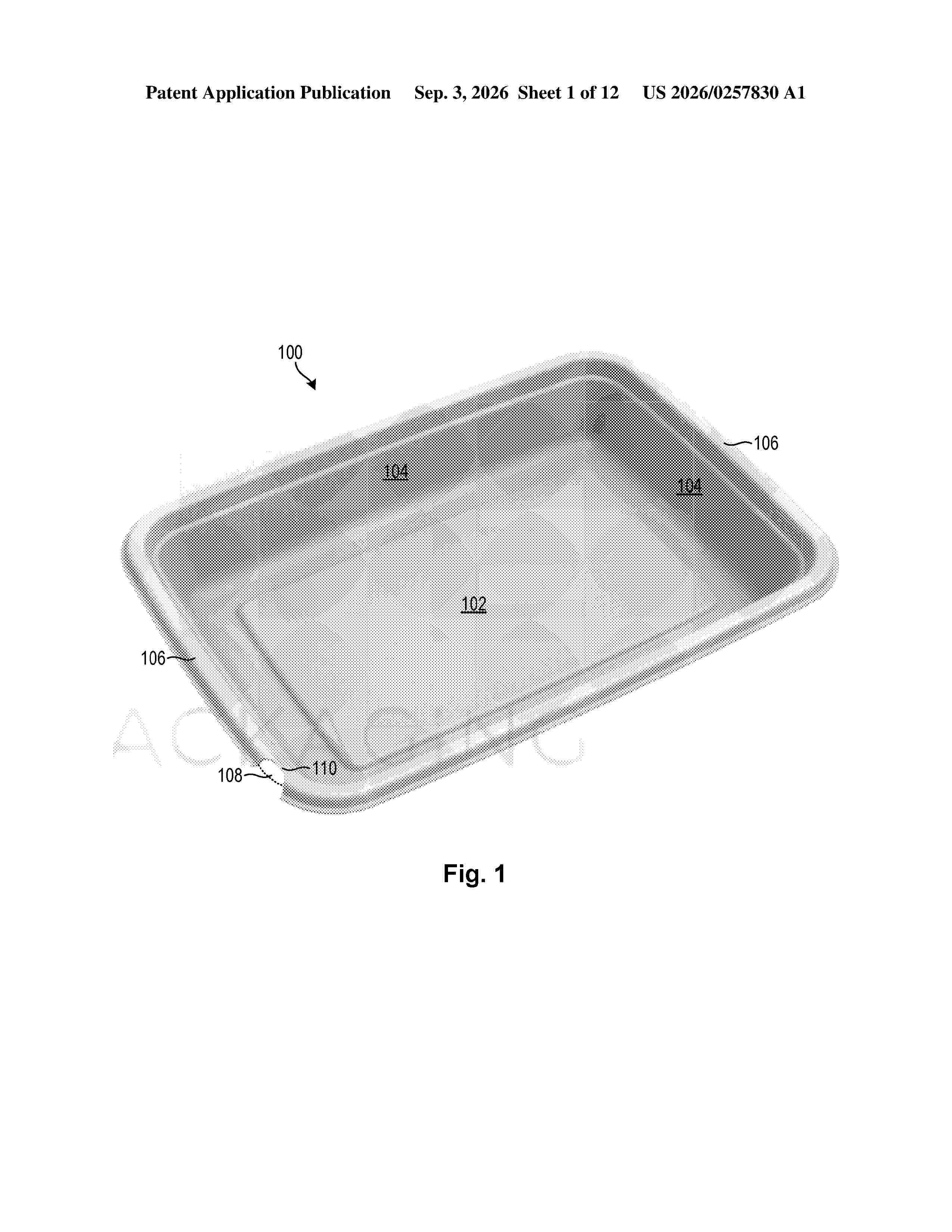
Resumen de: US20260257830A1
A container is disclosed comprising a fibrous container body and a removable liner adhered to the container. The fibrous container includes a peel-initiation feature that enables the liner to be manually separated from the container after use while the container remains substantially intact. The fibrous container may comprise molded fiber formed from materials such as bagasse, bamboo, wood pulp, agricultural fiber, recycled paper fiber, or combinations thereof. The removable liner may comprise a polymeric film including CPET, PLA, EVOH, polyethylene, polypropylene, or combinations thereof, and may provide functional attributes such as moisture resistance, grease resistance, oxygen barrier properties, and thermal resistance during use. The peel-initiation feature may comprise a semi-cut, score, groove, channel, recessed region, or void formed in the container, and may be positioned along an edge region and covered by the liner prior to separation. Methods of manufacturing the container and using the container are also disclosed.
 BOPI
BOPI
 Sede Electrónica