Si deseas distinguir tus productos, servicios o ambos de los de otra empresa, es posible que necesites una marca o nombre comercial. Descubre qué son, en qué consiste su procedimiento de registro y qué implica.

Información sobre los plazos de presentación de solicitudes de transformación de marcas de la Unión Europea en marca nacional española. Más información


Si tienes un nuevo dispositivo, producto o procedimiento que resuelva un problema técnico o tenga una ventaja práctica, existen distintas formas de protegerlo en España y en otros países. Descubre cómo hacerlo.

¿Tu innovación reside en la estética, la ornamentación o la apariencia de tu producto? Protégela mediante un diseño industrial. Descubre qué derechos confiere el registro y cómo realizar la tramitación.

Las indicaciones geográficas protegen el nombre de un producto originario de una zona geográfica, a la cual le debe una determinada calidad, reputación u otra característica. Descubre qué son, en qué consiste su procedimiento de registro y qué beneficios conceden.

Las patentes publicadas en todo el mundo son una valiosa fuente de información científica, técnica y comercial.

Si eres emprendedor/a o una empresa y quieres potenciar y mejorar la rentabilidad de tu negocio protegiendo de forma adecuada los activos intangibles de tu organización, en este espacio encontrarás lo necesario.


 125
resultados
125
resultados
 Última actualización
02/04/2026 [07:49:00]
Última actualización
02/04/2026 [07:49:00]


 Resultados 275 a 125 de 125
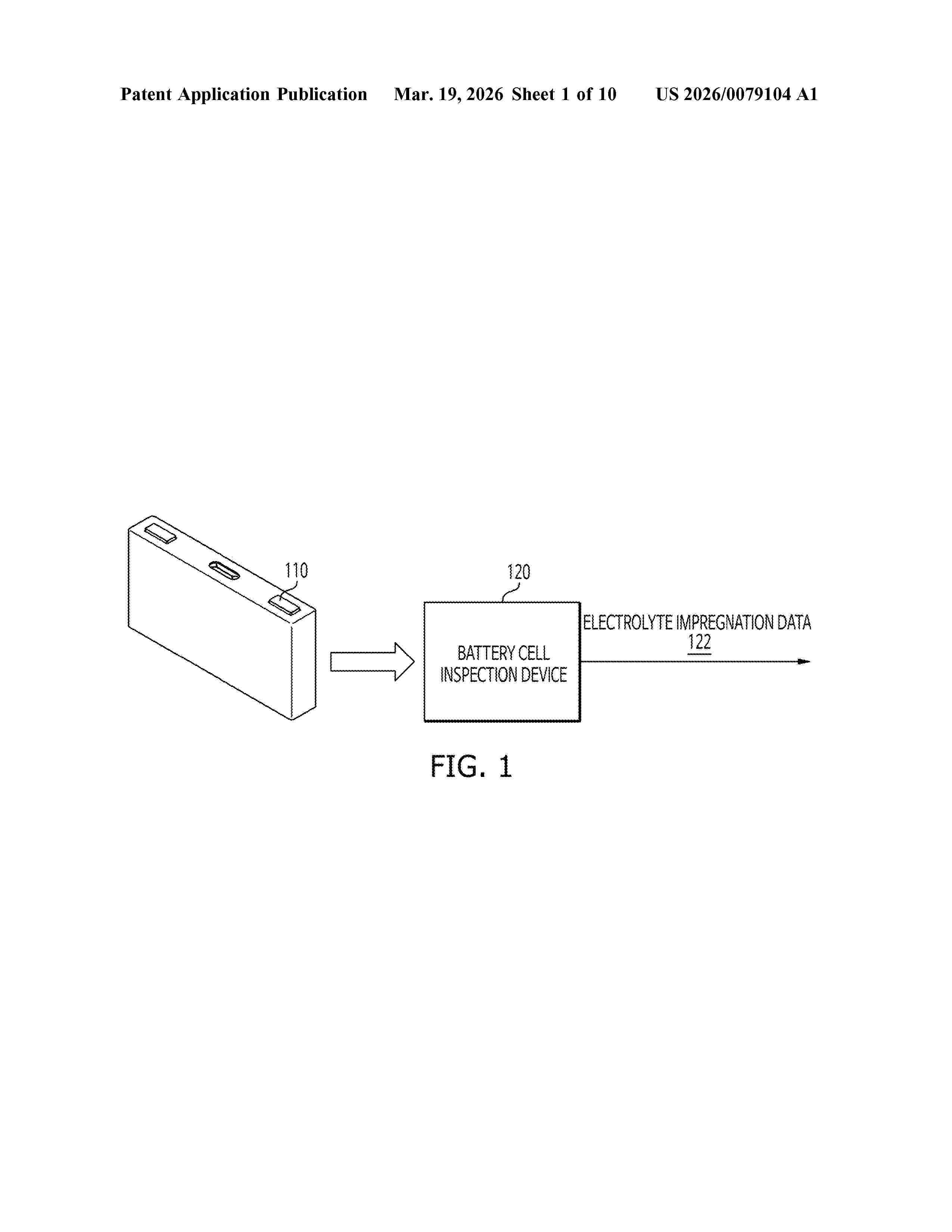
Resumen de: US20260079104A1
A method of inspecting a battery cell includes: irradiating, by a light source device, an electromagnetic wave toward the battery cell including an electrode assembly and an electrolyte; generating, by a sensing device, reflected wave data by sensing a reflected wave from the battery cell; and generating electrolyte impregnation data indicating a degree to which the electrode assembly is impregnated with the electrolyte based on the reflected wave data.

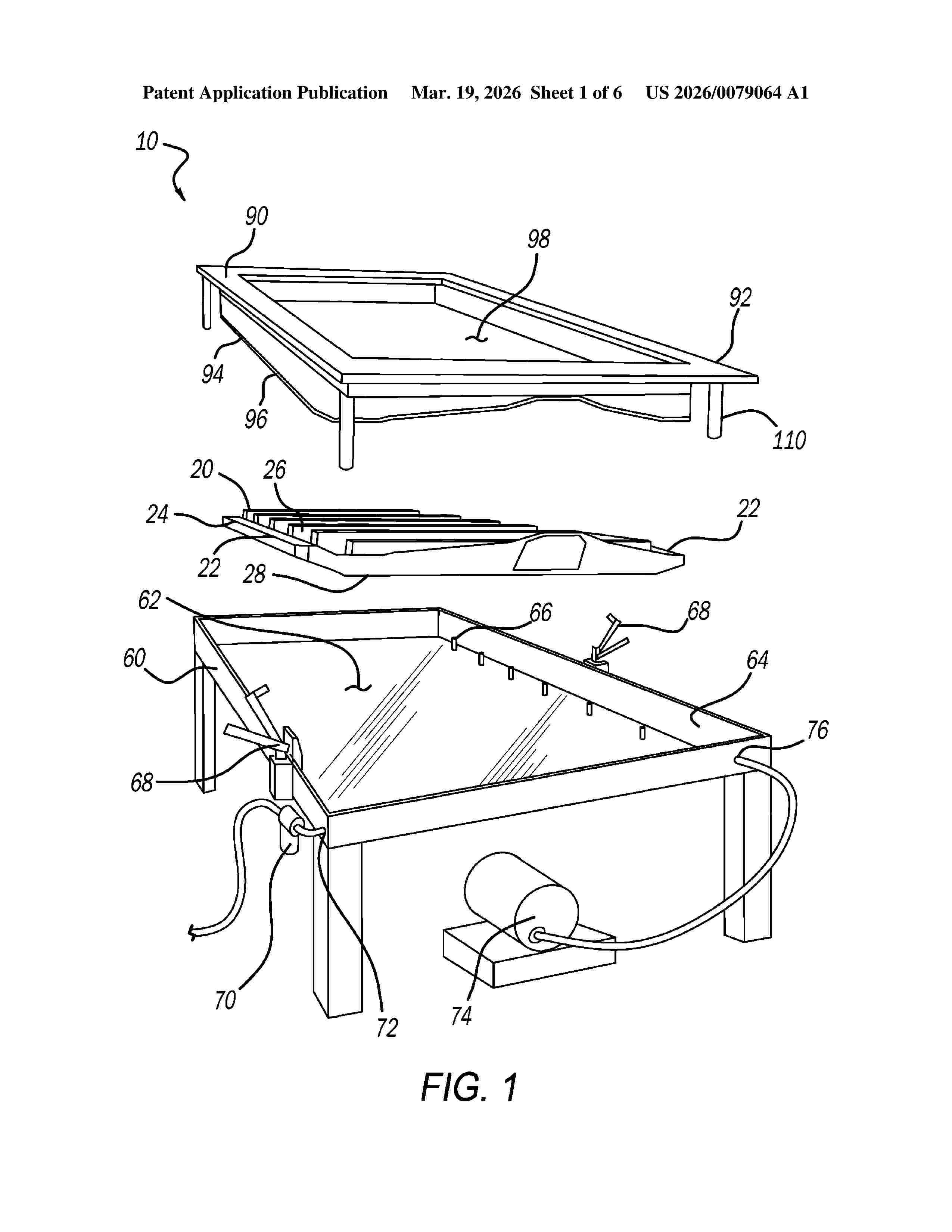
Resumen de: US20260079064A1
A system configured to assess structural integrity of a battery pack component. The system includes: a tub configured to receive the battery pack component therein; a cover configured to sit on the tub and the battery pack component within the tub, and form a seal against both the tub and the battery pack component, thereby defining a reservoir between the tub, the cover, and the battery pack component; a pump configured to pump a gas into the reservoir through an inlet at the tub; and a sensor configured to detect a leak of the gas through the battery pack component from the reservoir, the leak corresponding to an area of the battery pack component having structural irregularities.
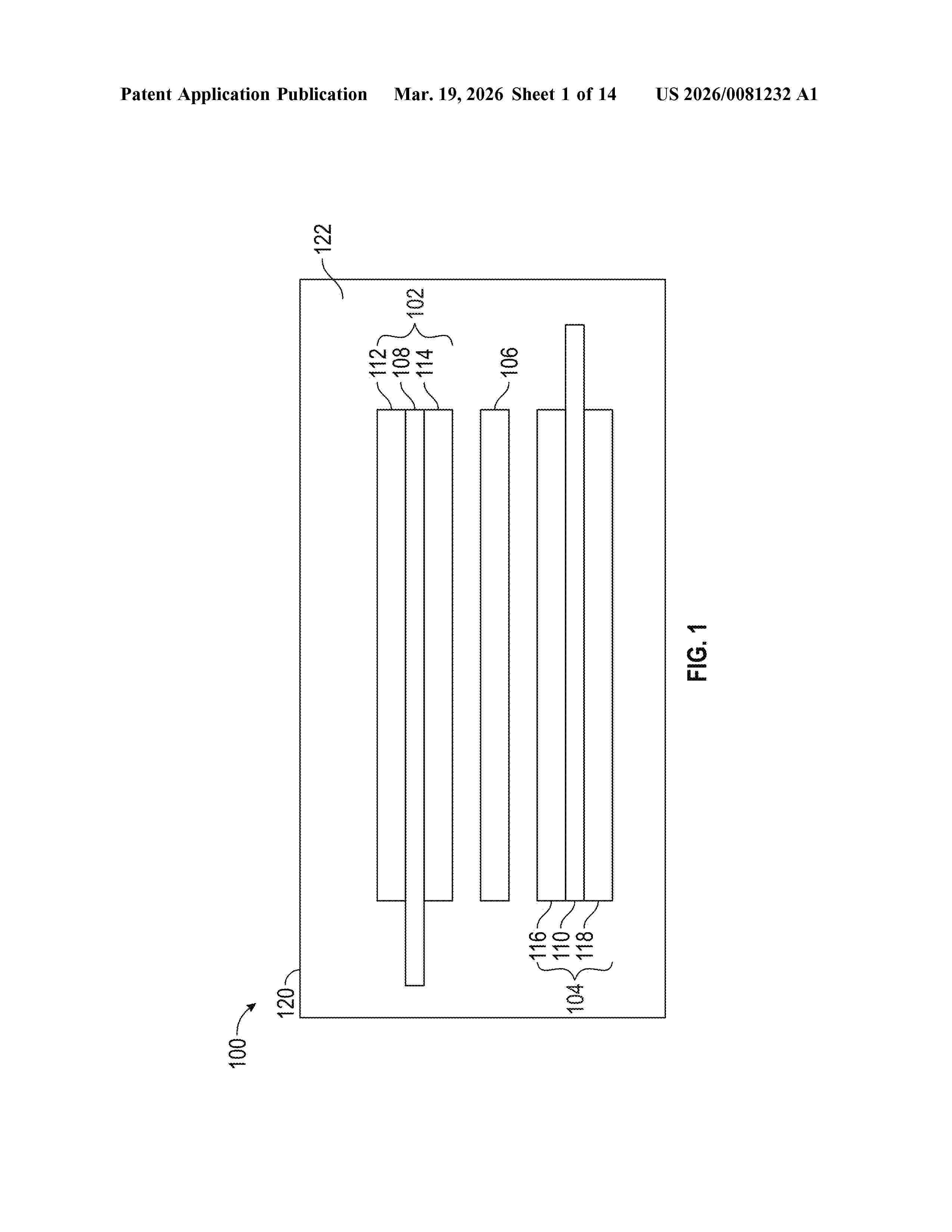
Resumen de: US20260081232A1
An electrolyte solution may include a solvent comprising: methyl acetate, ethylene carbonate. A device may include a lithium salt component.
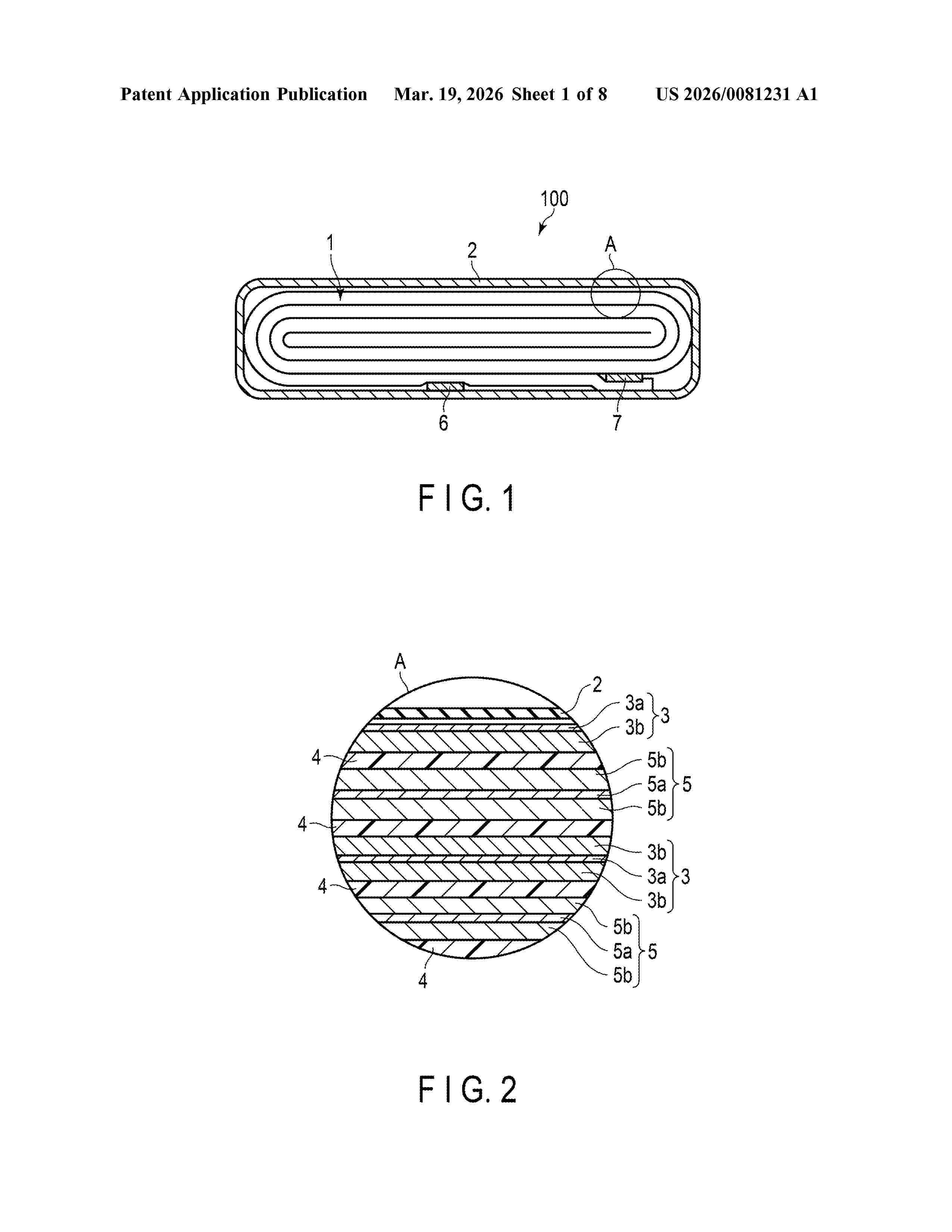
Resumen de: US20260081231A1
In general, according to an embodiment, a secondary battery includes a positive electrode, a negative electrode, and an electrolyte. The negative electrode contains a niobium-containing oxide. In hard X-ray photoelectron spectroscopy on a surface of the negative electrode, a ratio B/A of an area B in a range of 680 eV or more and 695 eV or less to an area A in a range of 200 eV or more and 215 eV or less is 1.1 or more and 4.3 or less. The electrolyte contains a lithium salt and a first carboxylate ester. A content of the first carboxylate ester is 70 mass % or more and 95 mass % or less with respect to 100 mass % of the electrolyte excluding the lithium salt.
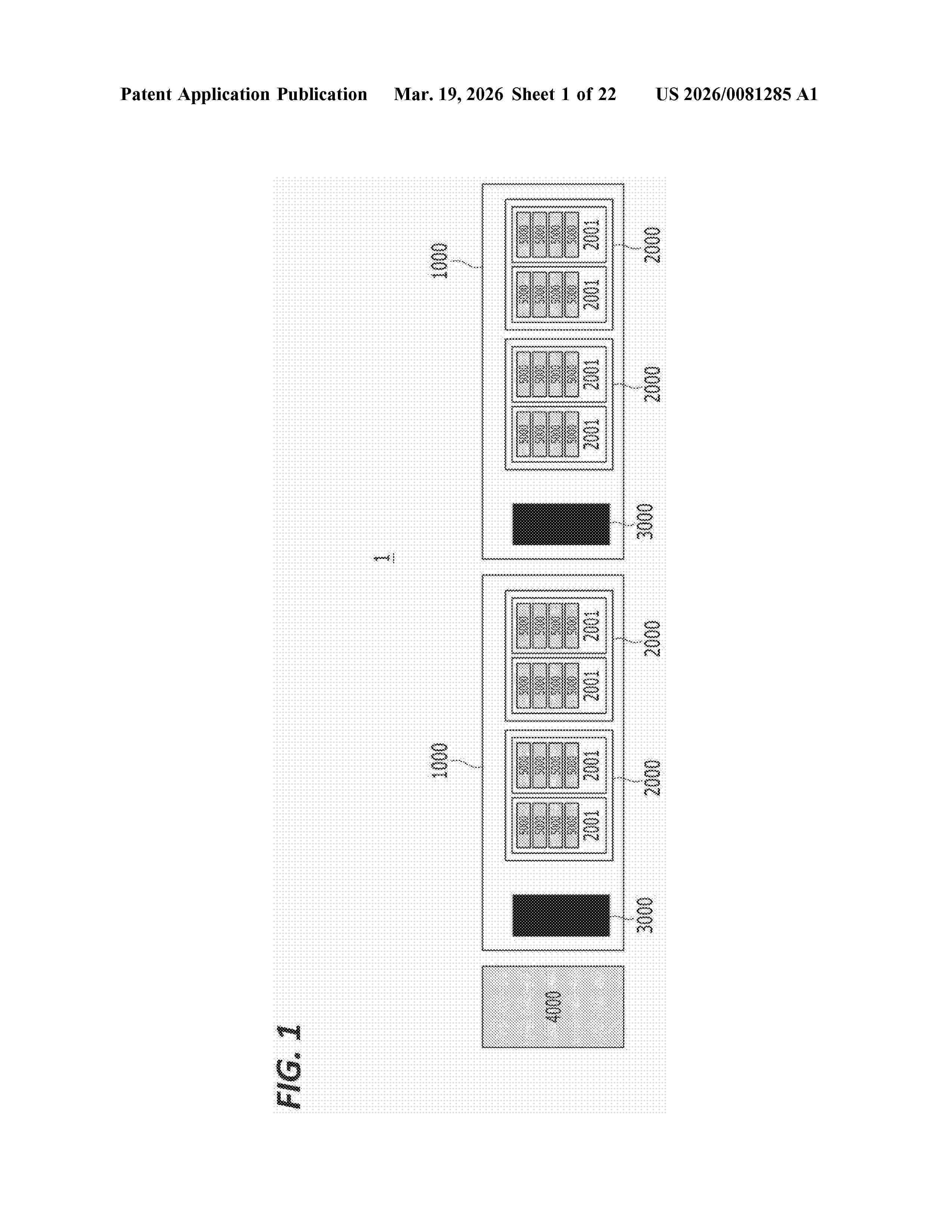
Resumen de: US20260081285A1
A battery enclosure can include an enclosure including a base fixed to an installation surface, and a battery rack being fixed to the base and configured to accommodate at least one battery. The battery rack includes at least one column extending a vertical direction. The base includes at least one horizontal beam and at least one vertical beam. The horizontal beam includes a fixture configured to fix the battery enclosure to the installation surface, and the fixture is provided at a position corresponding to a position of the column included in the battery rack. The fixture includes a middle fixture provided on the horizontal beam and a corner fixture positioned adjacent to an end of the horizontal beam or an end of the vertical beam.
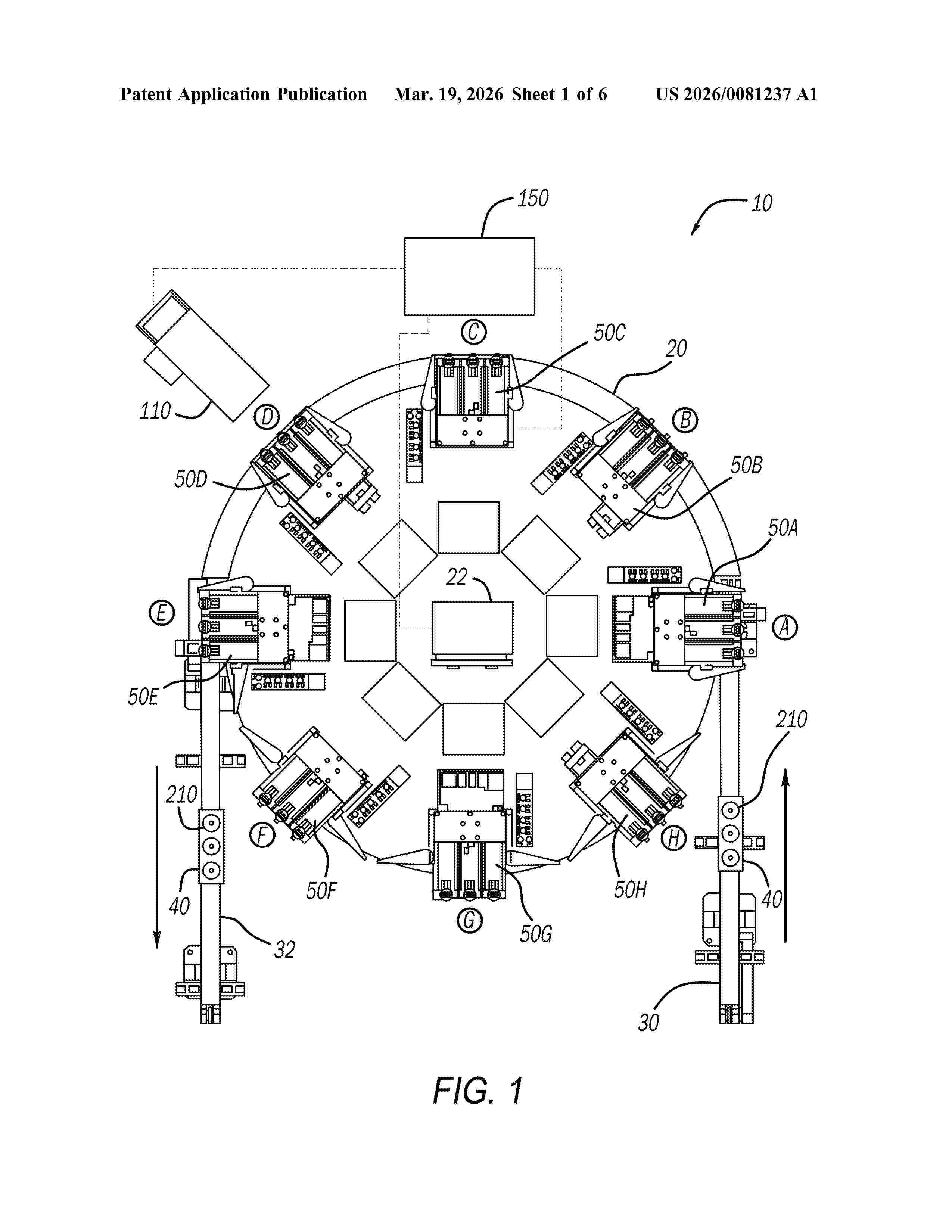
Resumen de: US20260081237A1
A system configured to test battery cells. The system includes: a movable platform; a plurality of test stations movable by the movable platform, each one of the plurality of test stations configured to cooperate with a pallet on which the battery cells are seated, each one of the plurality of test stations including probes that are movable into cooperation with the battery cells and configured to inject gas into each one of the battery cells; and a camera adjacent to the movable platform and configured to detect leakage of the gas out from within any of the battery cells.
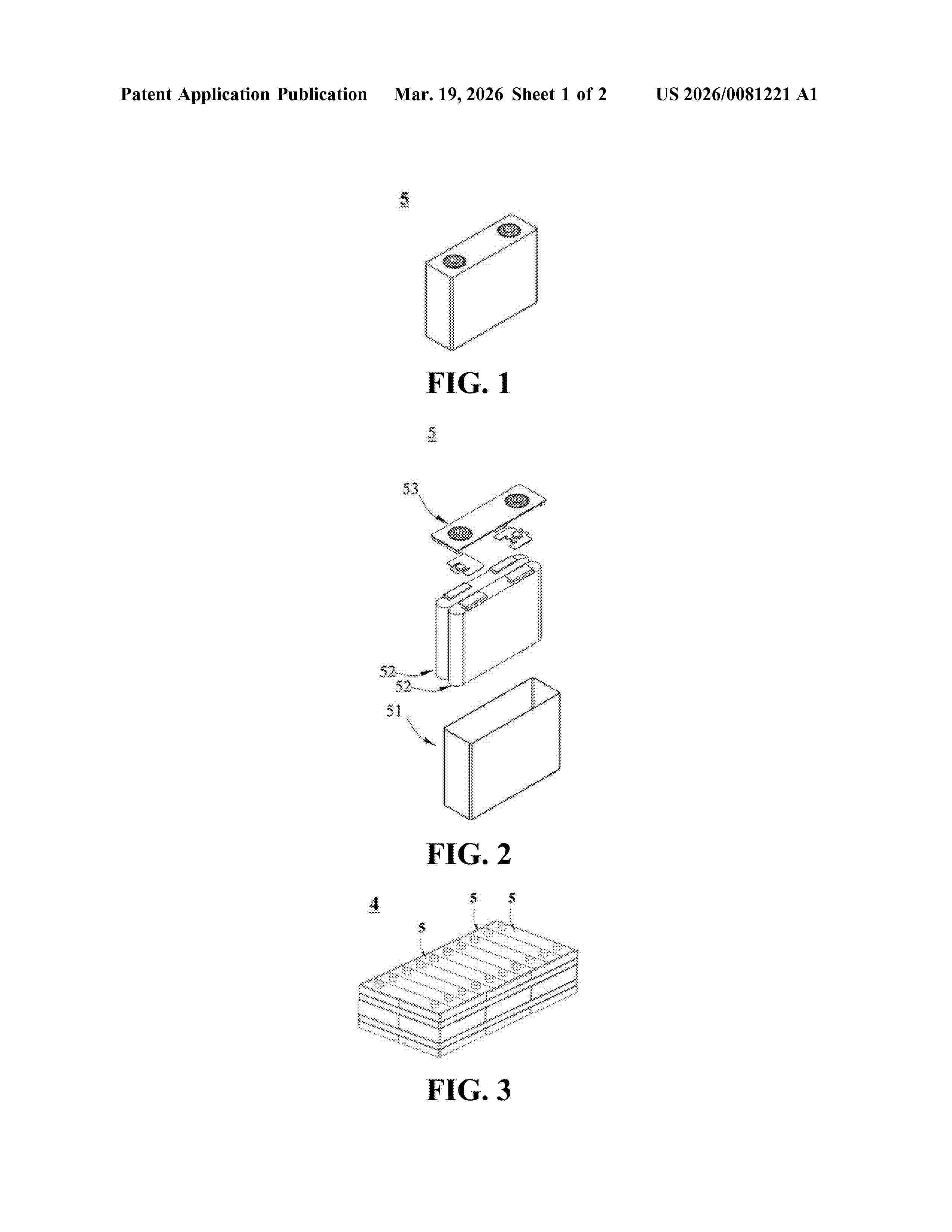
Resumen de: US20260081221A1
A secondary battery and an electrical apparatus are disclosed. The secondary battery includes a negative electrode plate and a non-aqueous electrolyte solution. The negative electrode plate includes a negative electrode active material. The volume average particle size Dv50 of the negative electrode active material is 6-20 μm. The non-aqueous electrolyte solution includes an additive and a non-aqueous solvent. The additive includes a cyclic sulfate compound represented by Formula (I). The non-aqueous solvent includes ethylene carbonate.
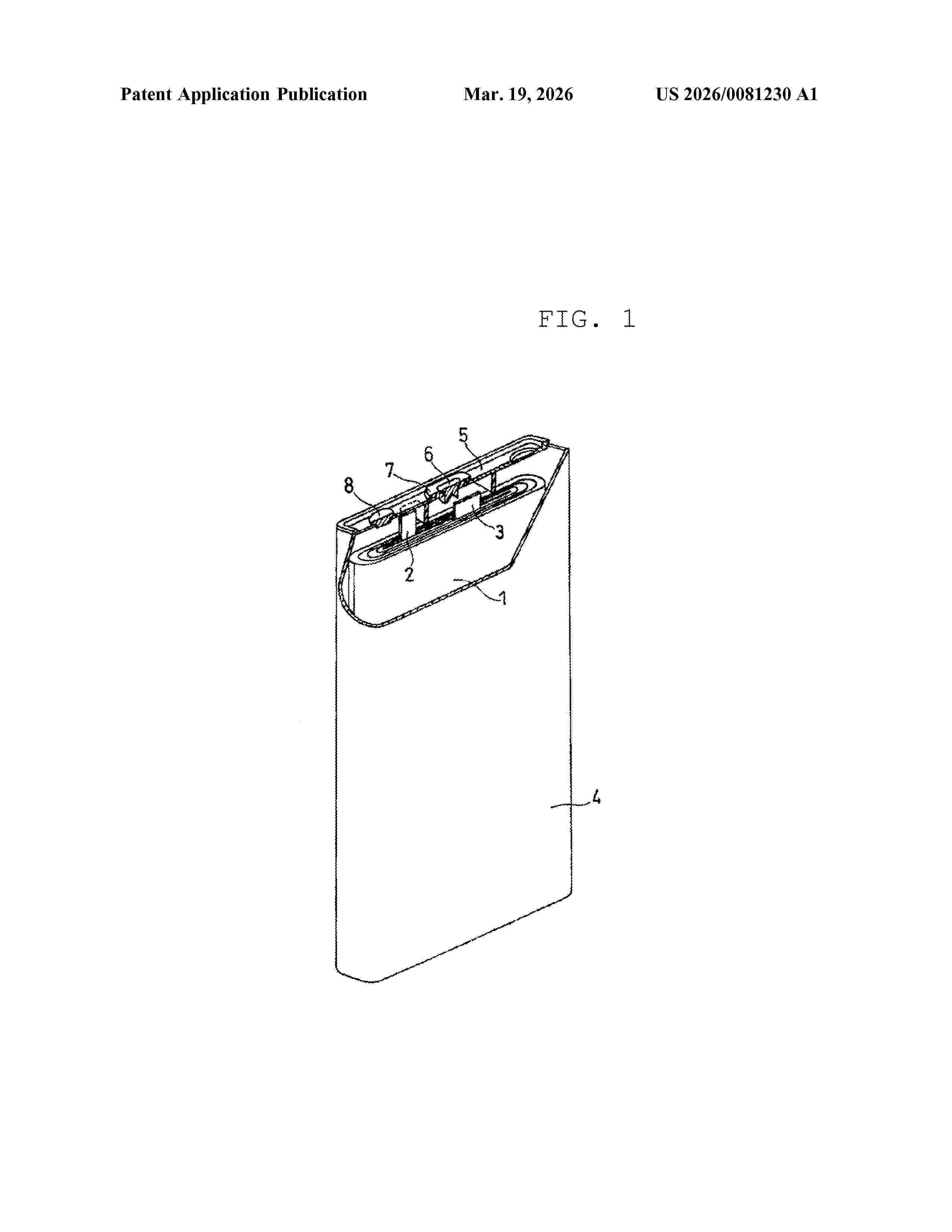
Resumen de: US20260081230A1
Electrolytic solution contains non-aqueous solvent and electrolyte salt dissolved in the non-aqueous solvent. The non-aqueous solvent contains a first compound, and the first compound is at least one type selected from a group including 1,3-diethyl-4-methyl-1-cyclobutene and a fluoro-substituted compound of the 1,3-diethyl-4-methyl-1-cyclobutene. An electricity storage element is configured using this electrolytic solution.
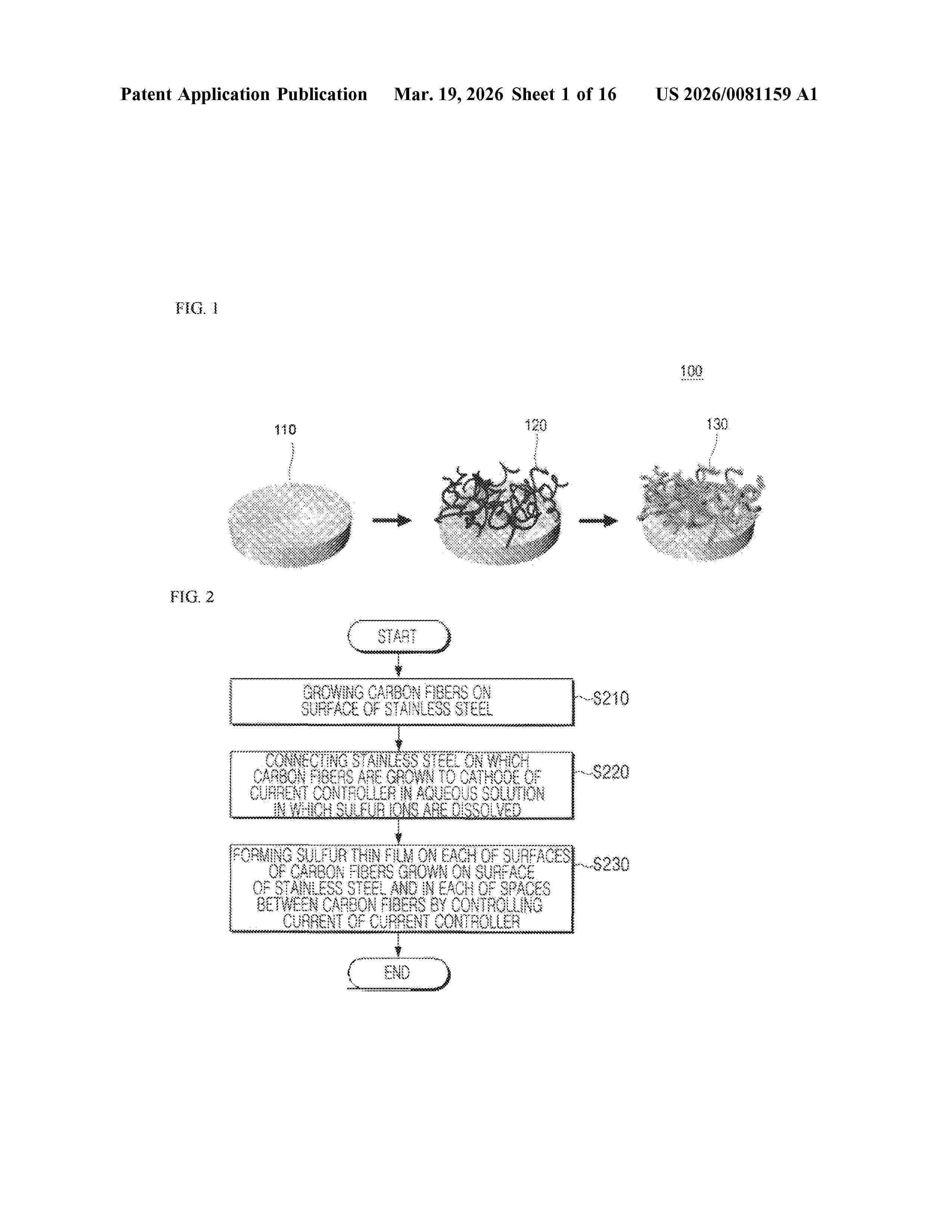
Resumen de: US20260081159A1
A sulfur electrode and a method for manufacturing the same are disclosed. The method for manufacturing the sulfur electrode includes: growing carbon fibers on a surface of stainless steel; connecting the stainless steel on which the carbon fibers are grown to a cathode of a current controller in an aqueous solution in which sulfur ions are dissolved; and forming a sulfur thin film on each of surfaces of the carbon fibers grown on the surface of the stainless steel and in each of spaces between the carbon fibers by controlling a current of the current controller.
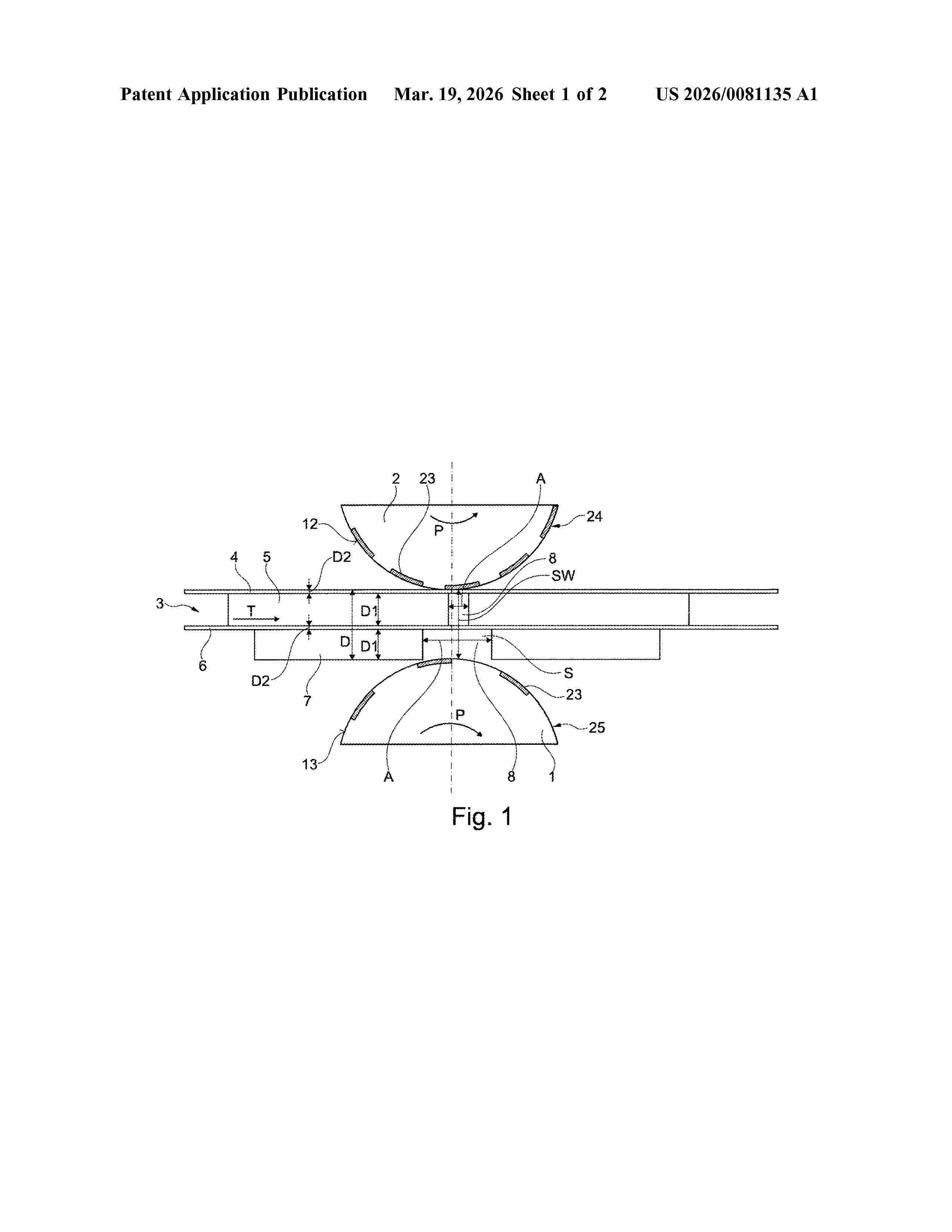
Resumen de: US20260081135A1
The invention relates to a laminating apparatus for a multilayer continuous web composed of at least one separator web and at least one electrode for producing energy cells, with a pressing device which laminates the multilayer continuous web by exerting a compressive force, wherein the pressing device has two pressing surfaces, with which it comes into contact with different sides of the continuous web, and the pressing surfaces are temperature-controlled differently.
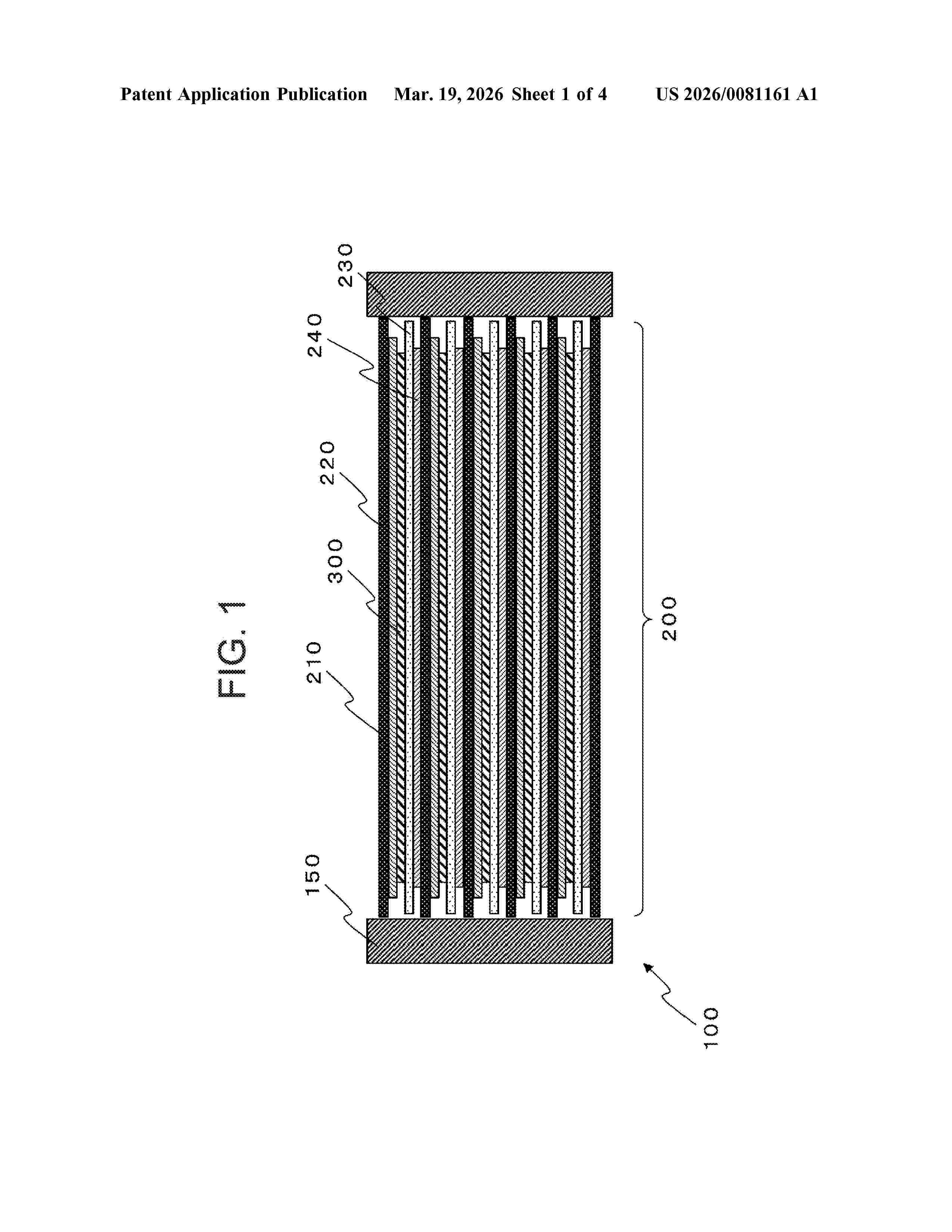
Resumen de: US20260081161A1
A method of manufacturing an electrode laminated-body module of the present disclosure includes (a) producing an electrode laminated body by laminating a positive-electrode active material layer, a separator, and a negative-electrode active material layer in the stated order, and (b) injecting an electrolytic solution into an electrode laminated-body module including the electrode laminated body and an exterior body. In (a), at least one of the positive-electrode active material layer, the separator, and the negative-electrode active material layer has an ethylene carbonate layer on at least a part of a front surface thereof.
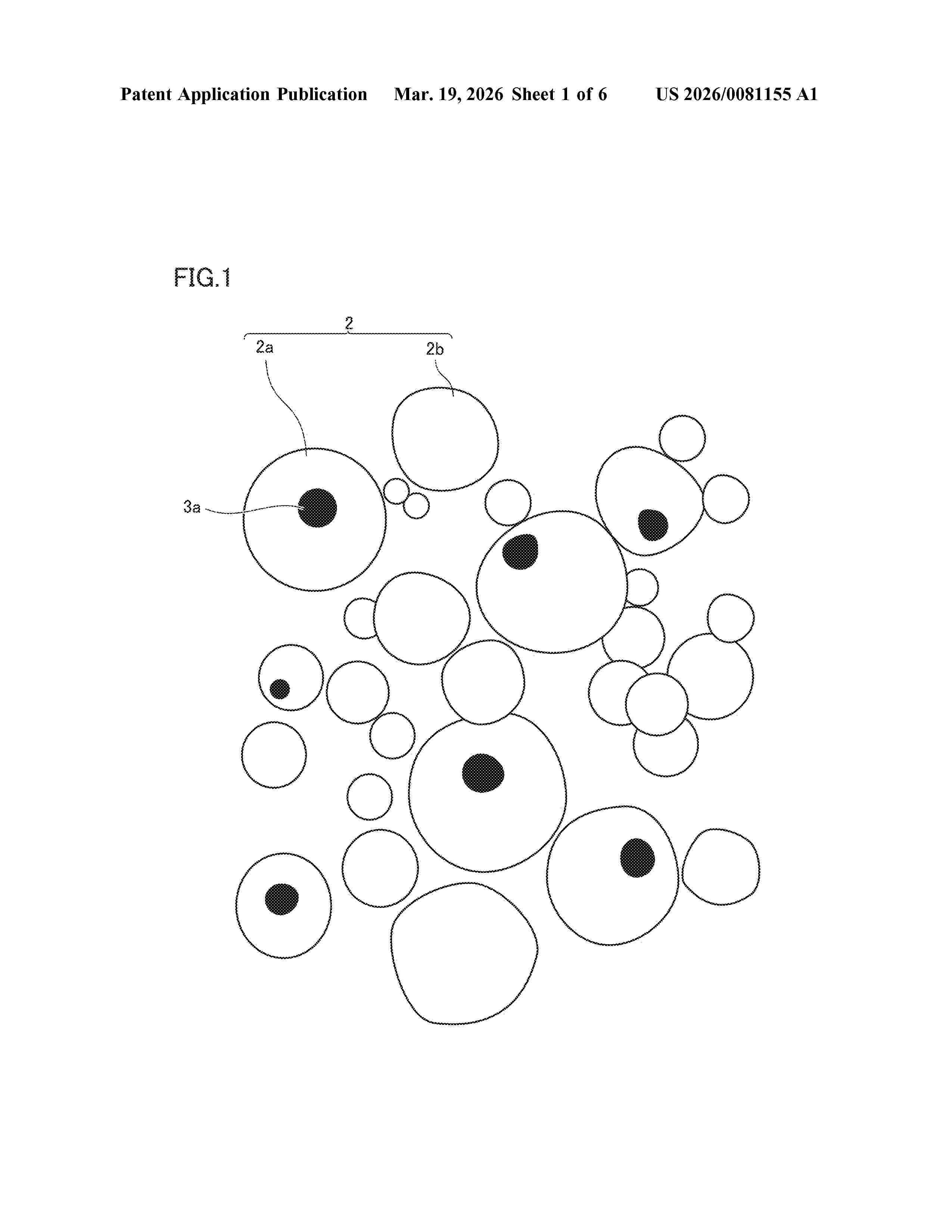
Resumen de: US20260081155A1
A positive electrode active material comprises powder. The powder includes secondary particles. Each of the secondary particles includes primary particles. Each of the primary particles includes an olivine-type phosphate compound. In an SEM image of the powder, a proportion of the secondary particles each having an open pore to the secondary particles each having a maximum Feret diameter of 5 μm or more is 40% or more.
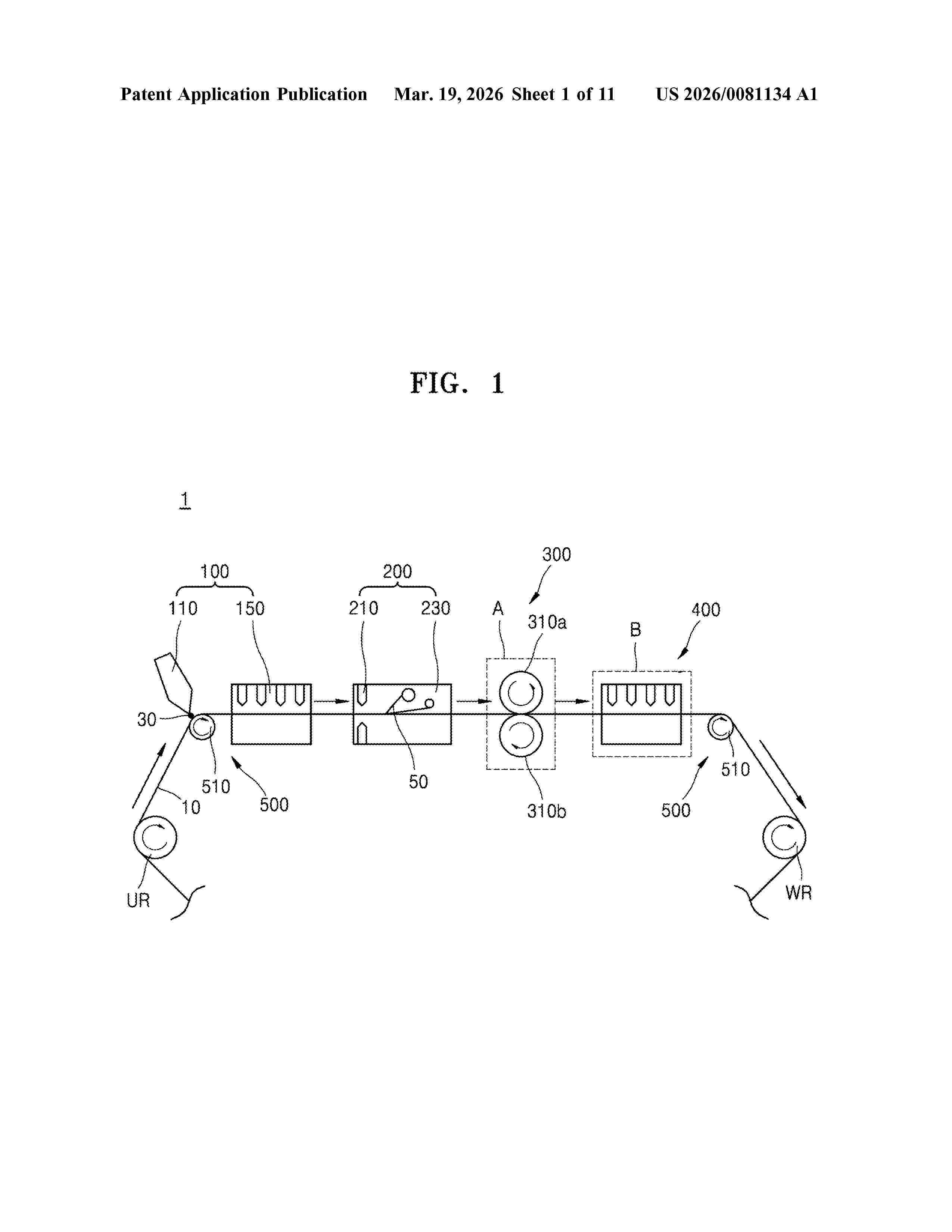
Resumen de: US20260081134A1
An electrode sheet manufacturing apparatus and a method for manufacturing an electrode sheet include a coating portion configured to apply an electrode slurry on a base material to form a coating layer, an attachment portion configured to attach a tape to the base material in a region where the coating layer is not formed, a pressing portion configured to press the coating layer and/or the tape, and a removal portion configured to remove the tape from the base material.
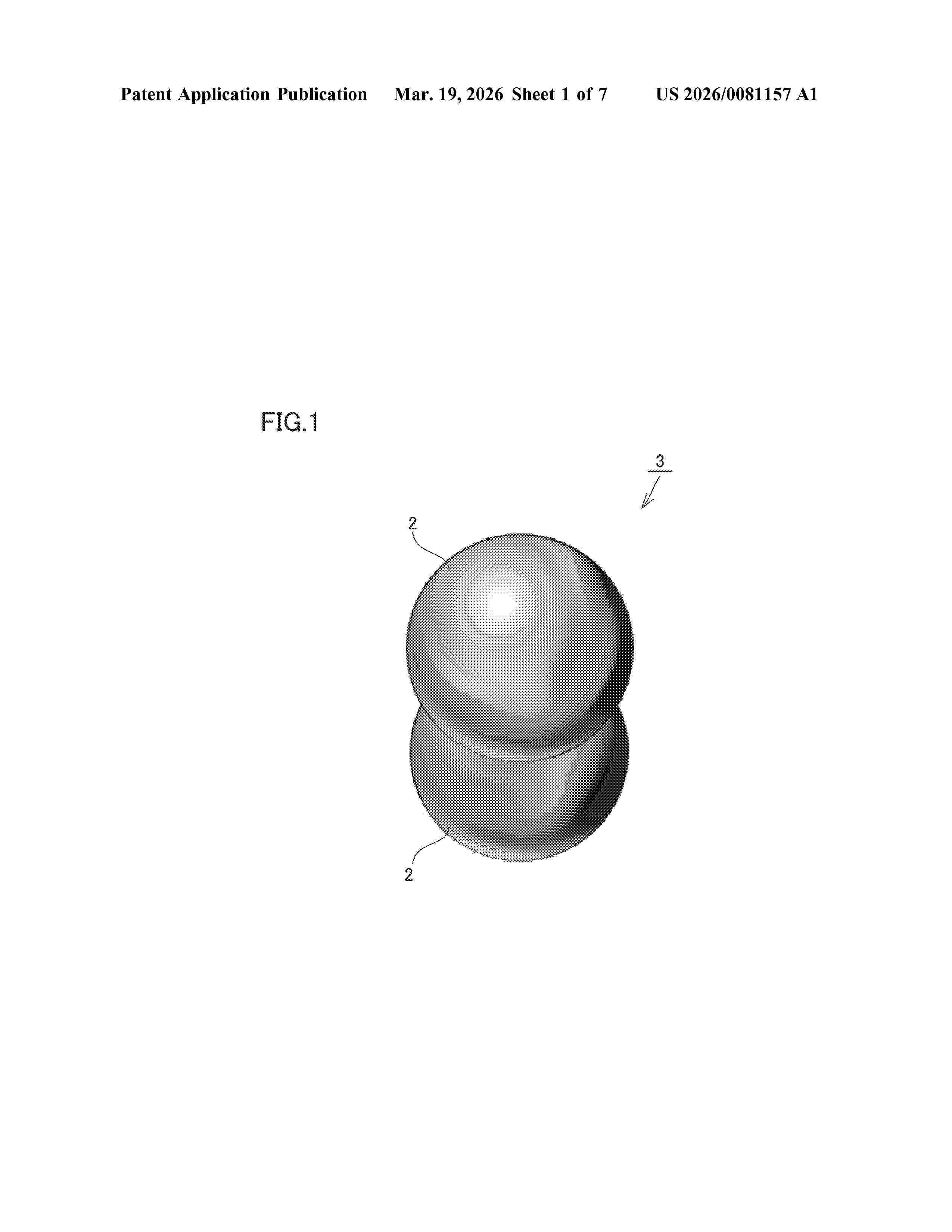
Resumen de: US20260081157A1
A positive electrode active material comprises tertiary particles. Each of the tertiary particles includes secondary particles. Each of the secondary particles includes primary particles. Each of the primary particles includes an olivine-type phosphate compound. In at least part of the tertiary particle, a vacant space is formed between the secondary particles.
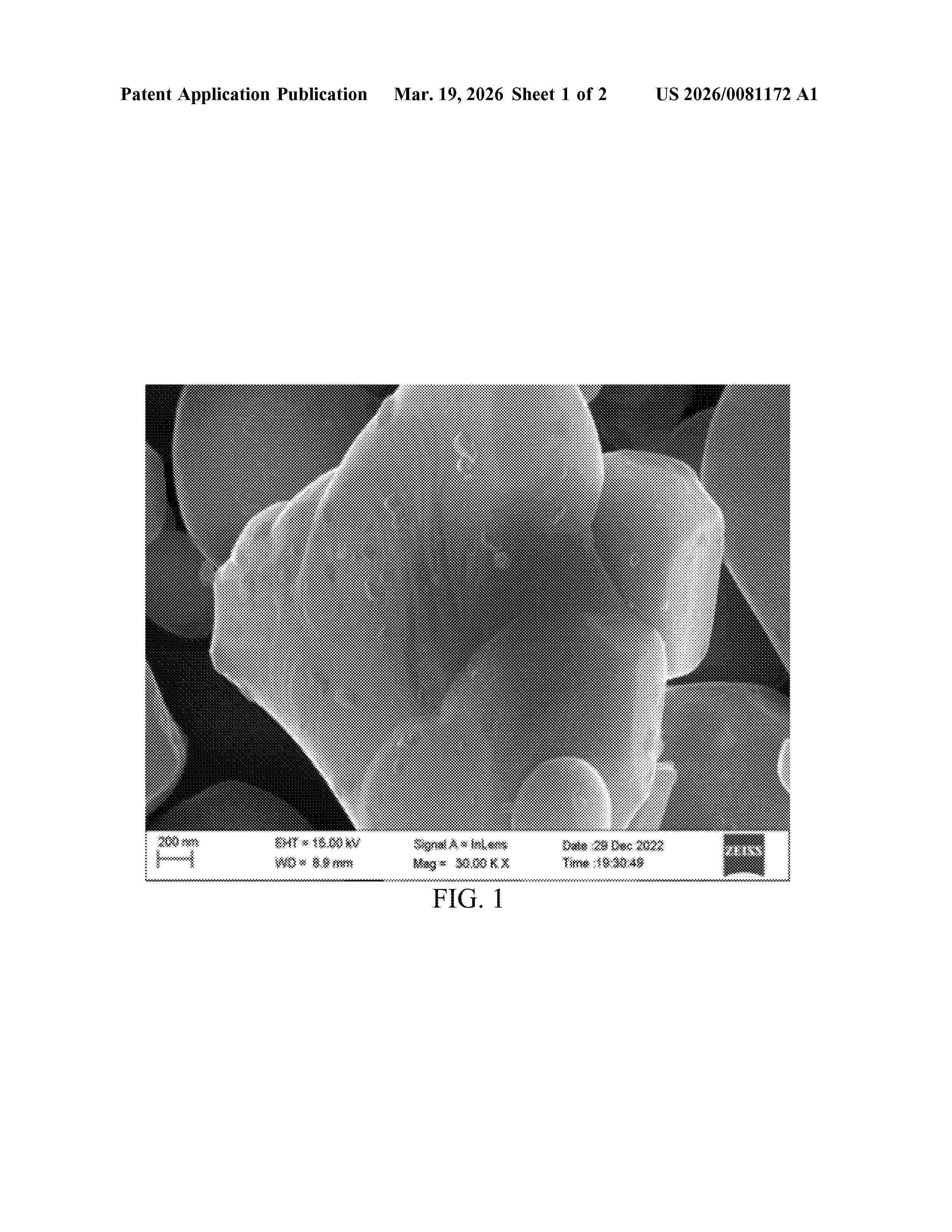
Resumen de: US20260081172A1
A positive electrode material has a chemical general formula of LiaNixCoyMnzO2·cA·dB, in which 1.00≤a≤1.20, 0.00
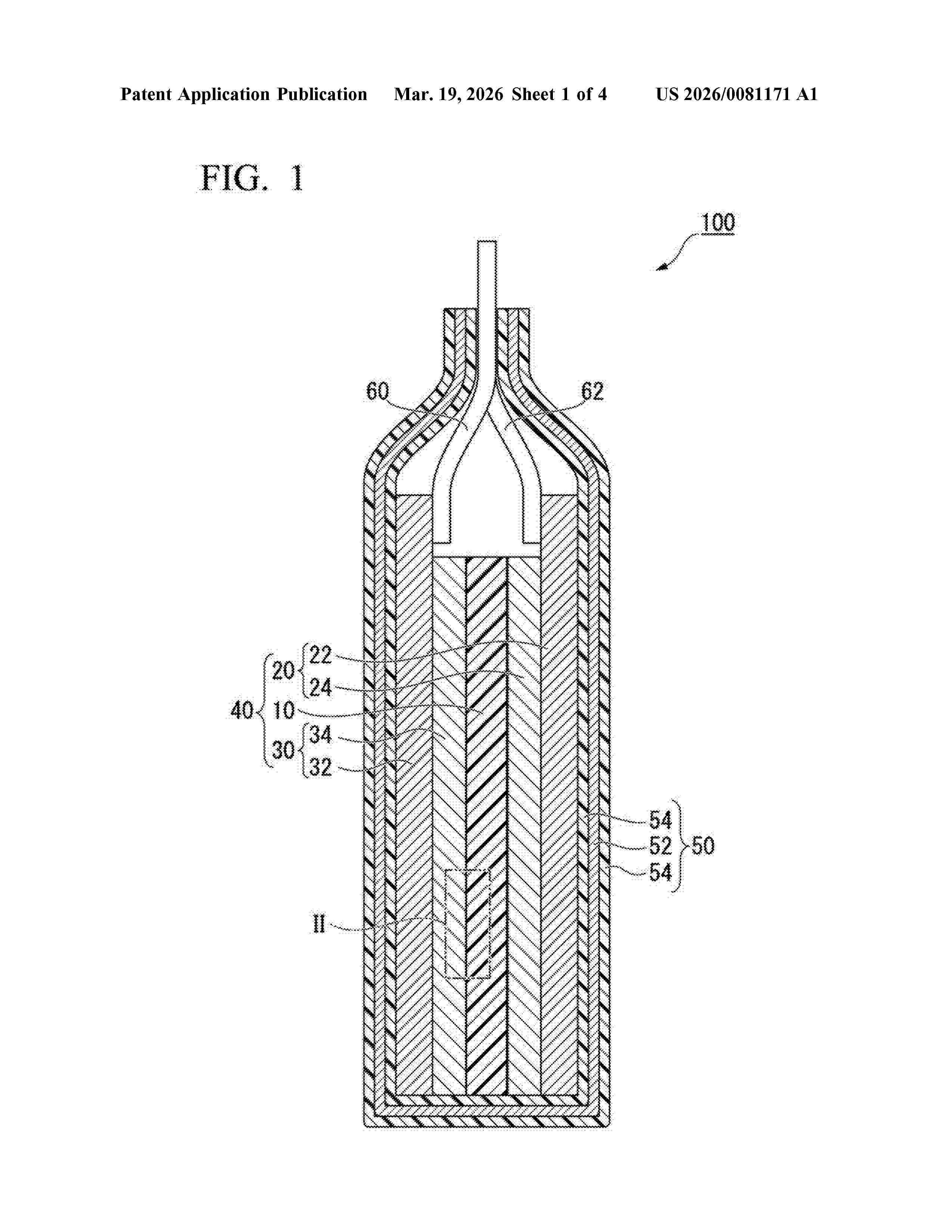
Resumen de: US20260081171A1
An all-solid-state battery includes a positive electrode layer, a solid electrolyte layer, and a negative electrode layer. A negative electrode mixture layer of the negative electrode layer contains either one or both of a negative electrode active material and a carbon material, a first phase in contact with at least a part of the negative electrode active material and the carbon material, and a second phase in contact with at least a part of the first phase. The first and second phases contain a Li element and an X element which is at least one halogen element selected from the group consisting of F, Cl, Br, and I. An X element concentration in the first phase is higher than in the solid electrolyte layer. An X element concentration in the second phase is lower than the in the first phase and in the solid electrolyte layer.
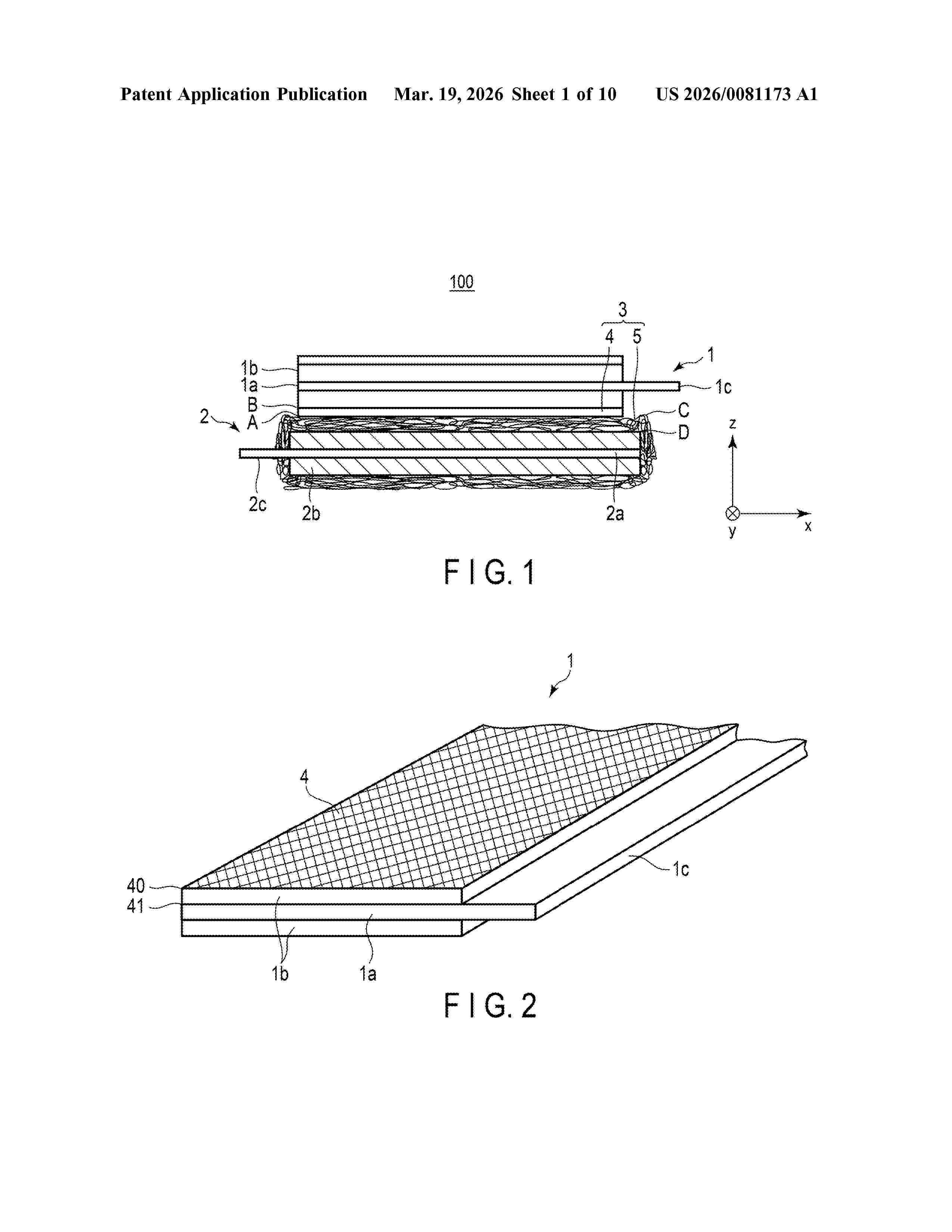
Resumen de: US20260081173A1
According to one embodiment, a stack includes a first active material-containing layer provided in at least a surface of a first current collector and a first film covering at least a part of a surface of the first active material-containing layer including inorganic material particles having a median diameter D50 of 0.6 μm or less and a polymer. The first film has an average pore diameter of 0.5 μm or less, and satisfies formula (1) of 0
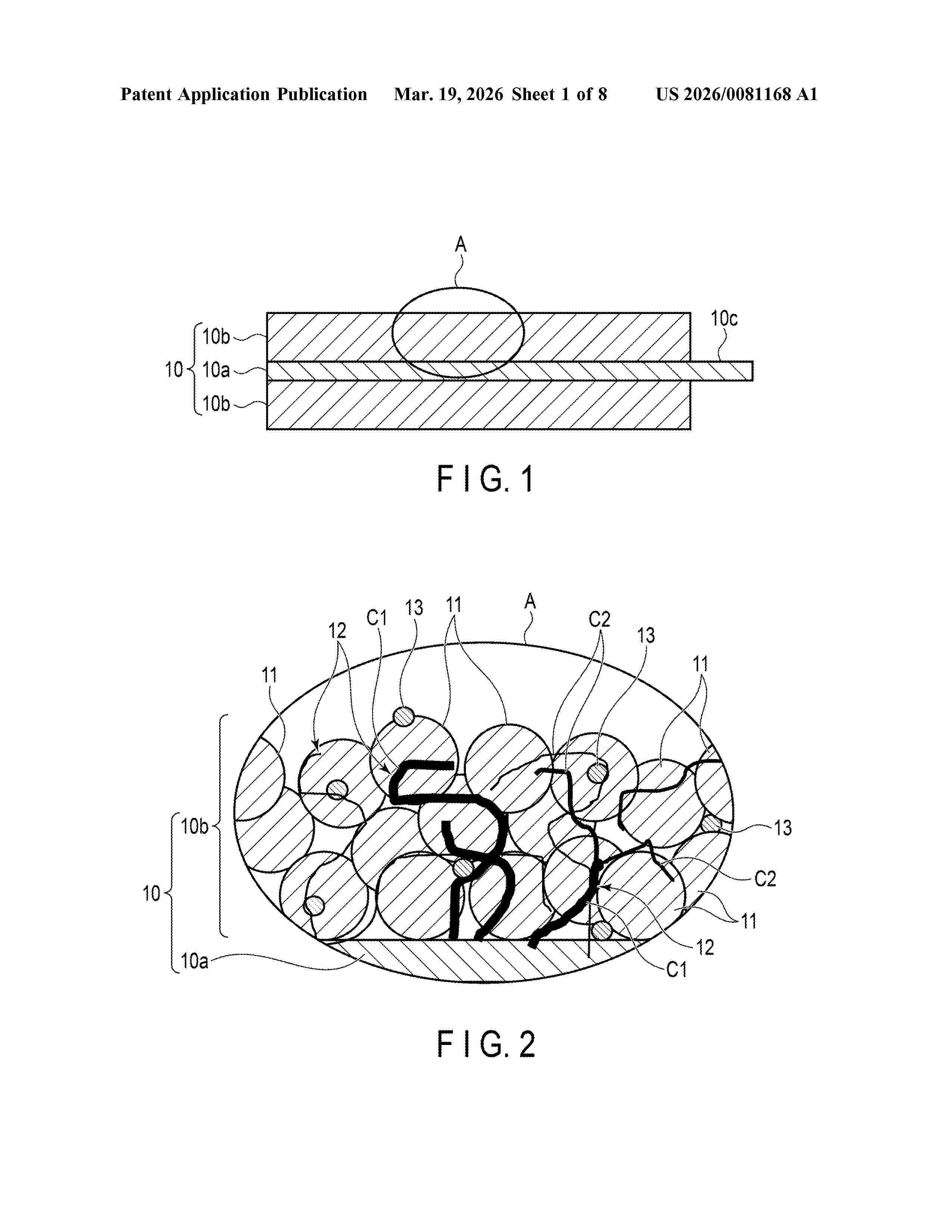
Resumen de: US20260081168A1
According to one embodiment, provided is an electrode including a plurality of active material particles and fibrous carbon. The fibrous carbon includes a first portion having a fiber diameter W1 within a range of 60 nm or more and 500 nm or less and a second portion having a fiber diameter W2 smaller than the fiber diameter W1. At least part of the second portion is in contact with plurality of the active material particles.
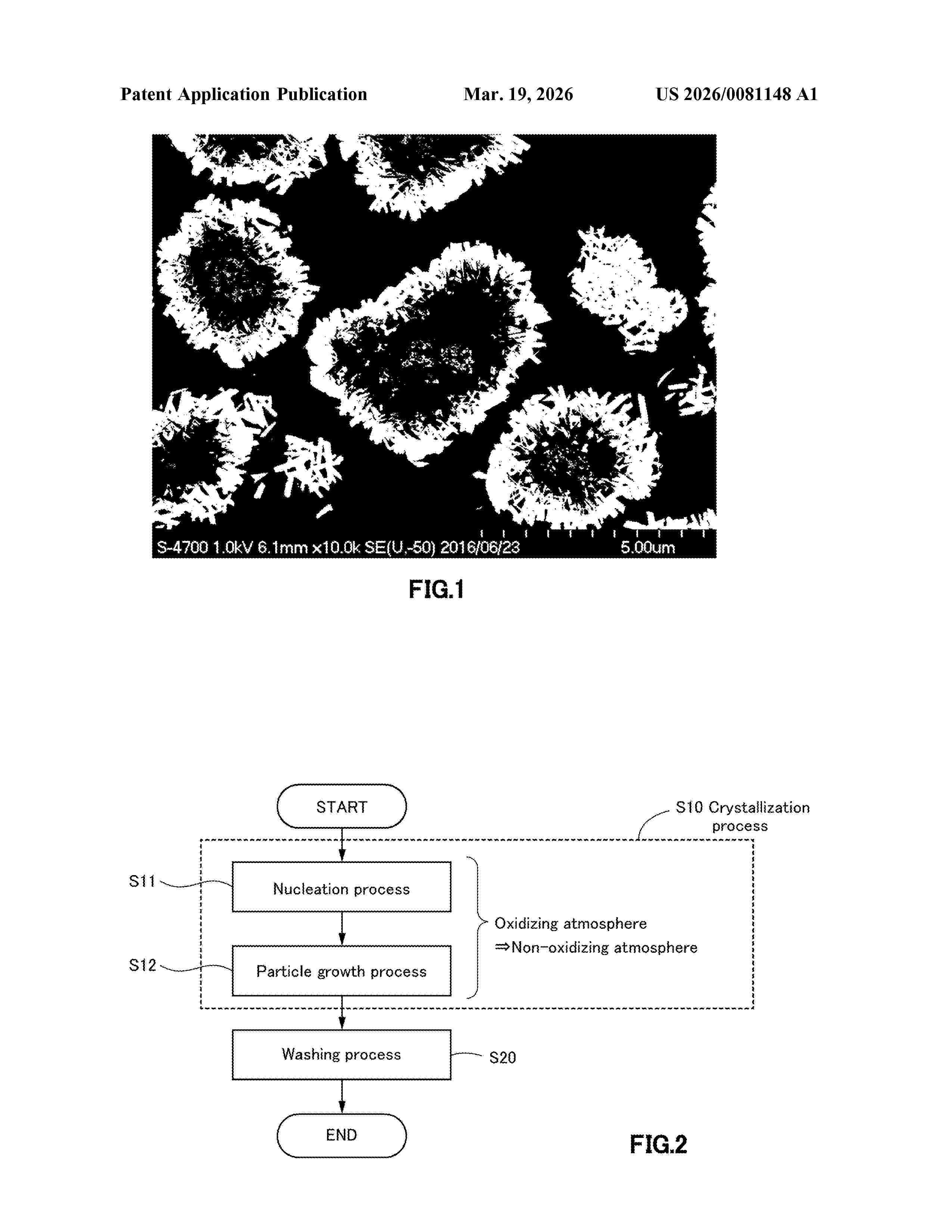
Resumen de: US20260081148A1
A nickel manganese cobalt composite hydroxide, which is a precursor of a positive electrode active material, and which is composed of secondary particles to which primary particles containing a nickel, a manganese, and a cobalt are aggregated, or composed of the primary particles and the secondary particles, wherein a sodium content contained in the nickel manganese cobalt composite hydroxide is less than 0.0005% by mass, and a void ratio of particles of the nickel manganese cobalt composite hydroxide is 20% to 50%.
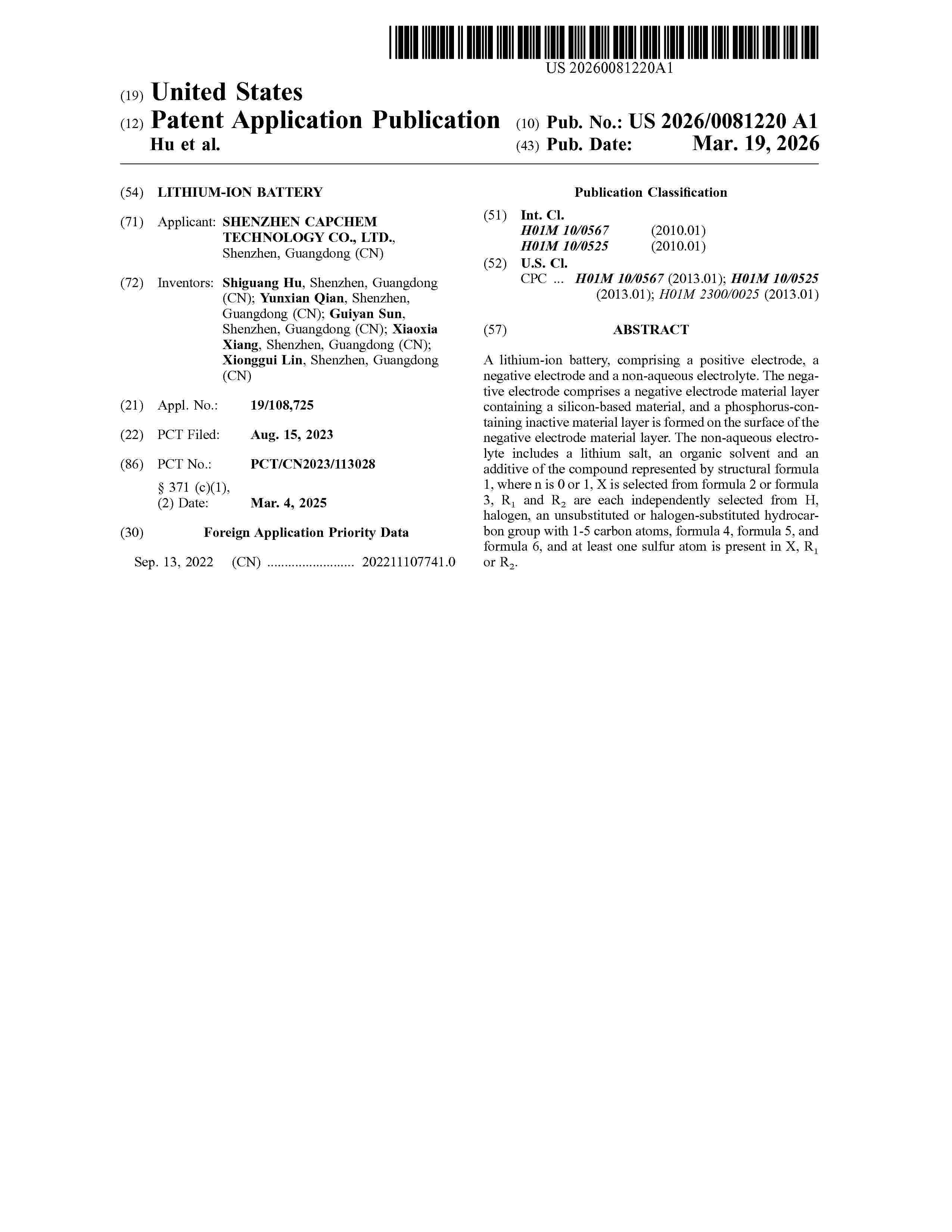
Resumen de: US20260081220A1
A lithium-ion battery, comprising a positive electrode, a negative electrode and a non-aqueous electrolyte. The negative electrode comprises a negative electrode material layer containing a silicon-based material, and a phosphorus-containing inactive material layer is formed on the surface of the negative electrode material layer. The non-aqueous electrolyte includes a lithium salt, an organic solvent and an additive of the compound represented by structural formula 1, where n is 0 or 1, X is selected from formula 2 or formula 3, R1 and R2 are each independently selected from H, halogen, an unsubstituted or halogen-substituted hydrocarbon group with 1-5 carbon atoms, formula 4, formula 5, and formula 6, and at least one sulfur atom is present in X, R1 or R2.
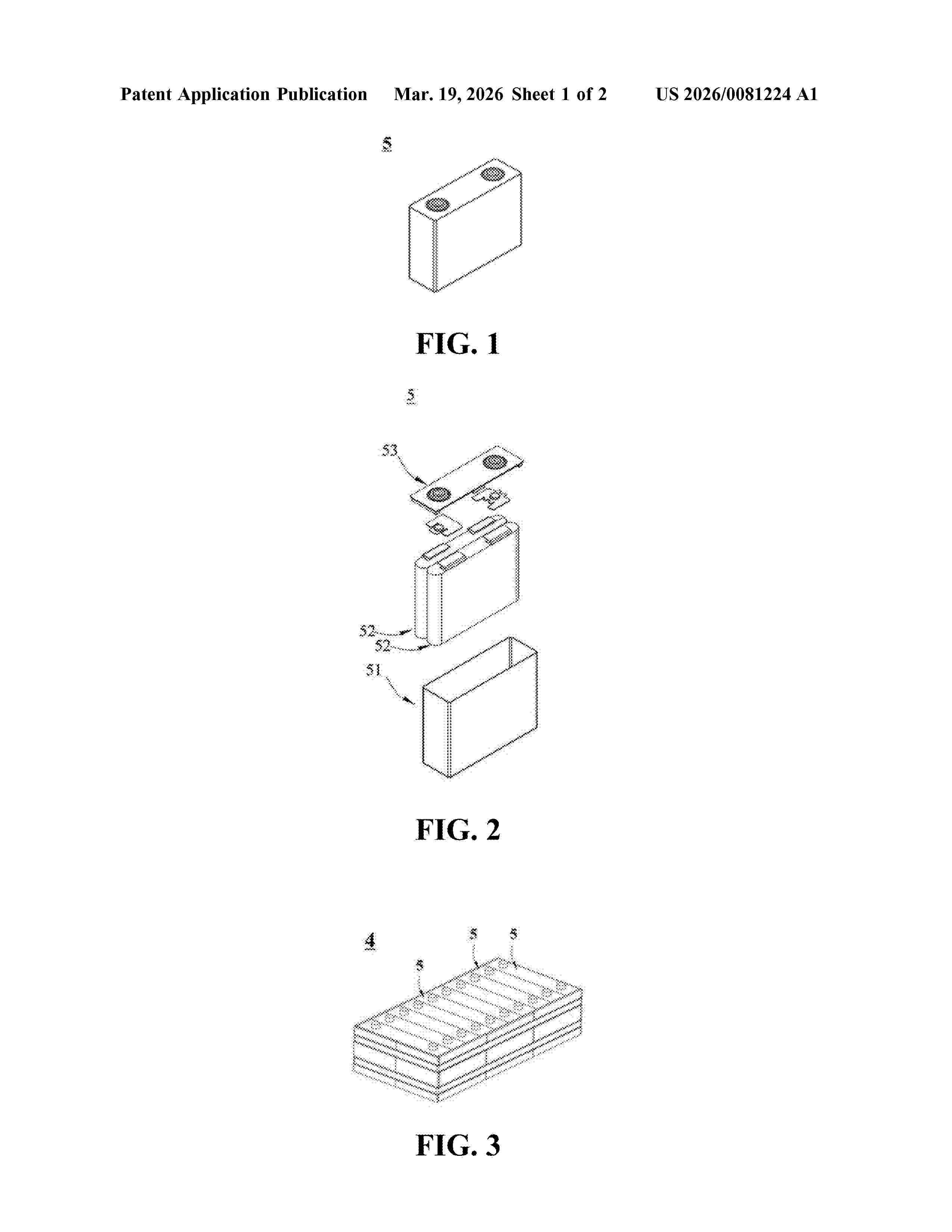
Resumen de: US20260081224A1
A secondary battery and an electrical apparatus are disclosed. The secondary battery includes a non-aqueous electrolyte solution containing a cyclic sulfate compound. An electrical apparatus including the secondary battery is also described.
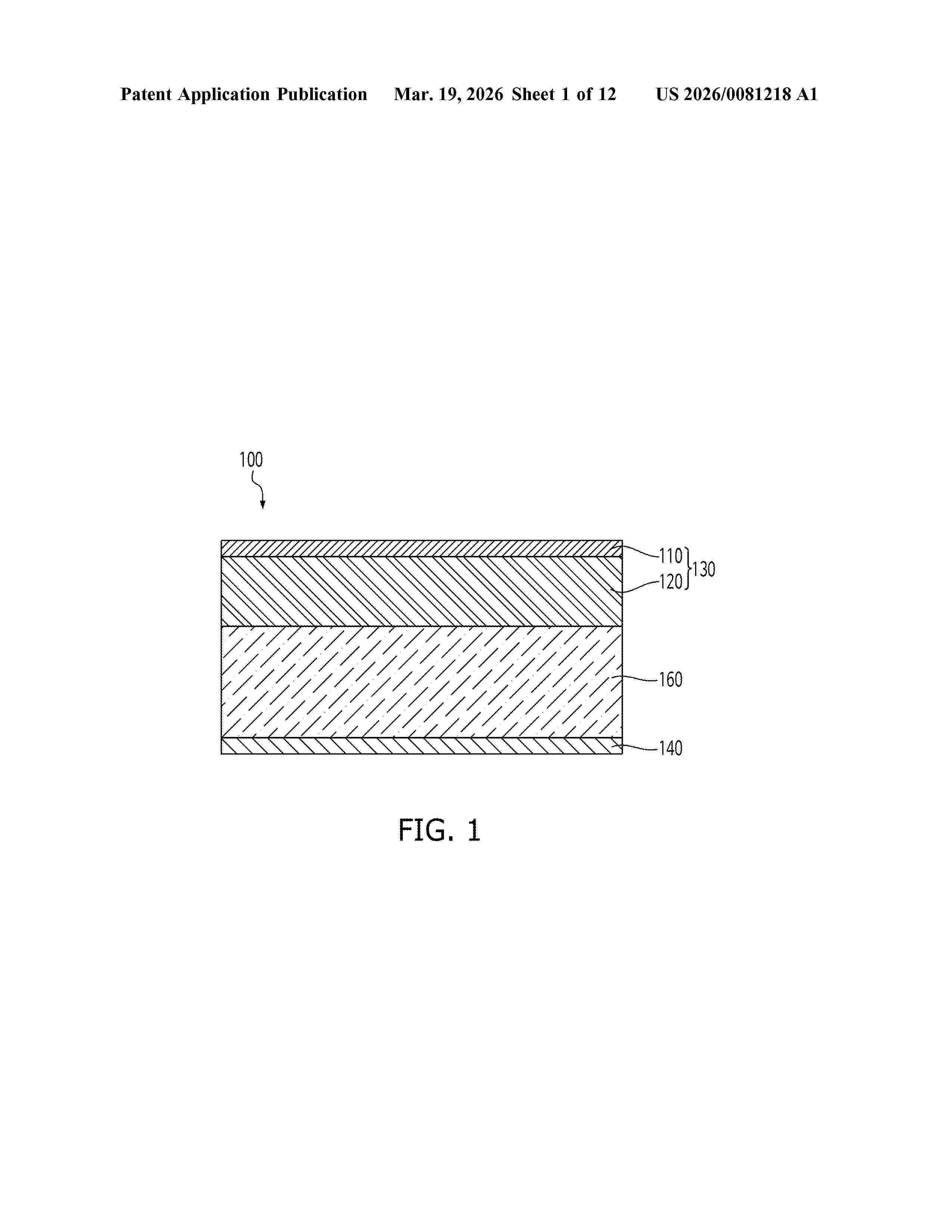
Resumen de: US20260081218A1
The present disclosure relates to an electrolyte, and a lithium secondary battery including the electrolyte. An electrolyte according to the present disclosure may include a copolymer of an acrylic monomer and a fluoroacrylic monomer, and the fluoroacrylic monomer may include 7 or more fluorine atoms. A lithium secondary battery may include a cathode, an anode including an anode current collector, and an electrolyte according to the present disclosure disposed between the cathode and the anode.
Resumen de: US20260081217A1
The present invention relates to a composition comprising a polymer P1 comprising monomer units derived from vinylidene fluoride and a polymer P2 comprising monomer units derived from a monomer M2 of formula R1R2C═C(R3)C(O)R wherein the substituents R1, R2 and R3 are, independently from each other, selected from the group consisting of H and C1-C5alkyl; R is selected from the group consisting of —NHC(CH3)2CH2C(O)CH3 or —OR′ with R′ selected from the group consisting of C1-C18 alkyl optionally substituted by one or more —OH group(s) or a five- or six-membered heterocycle comprising at least one nitrogen atom in its cyclic chain, characterised in that the difference between the melting temperature and the crystallisation temperature of the composition is greater than or equal to 40° C.
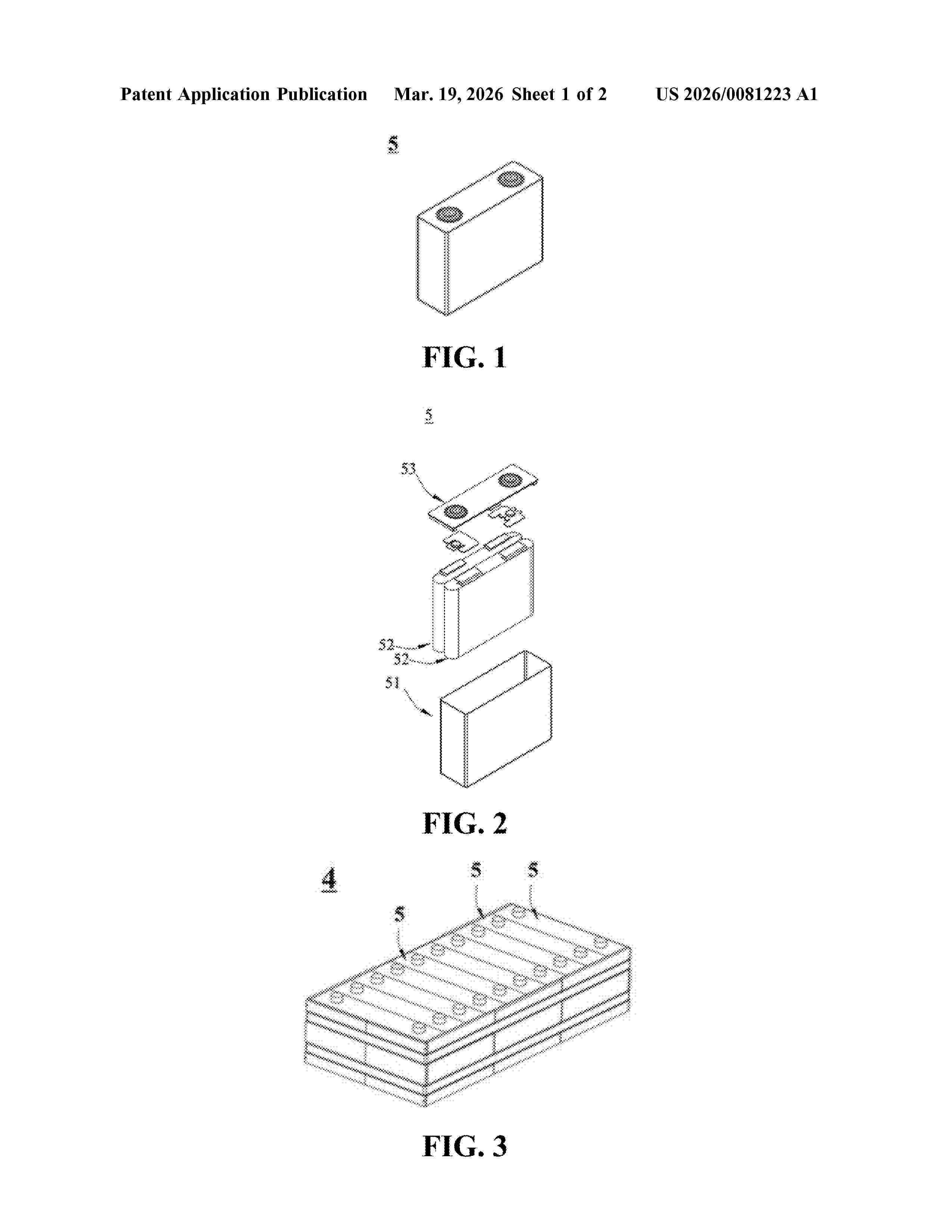
Resumen de: US20260081223A1
A non-aqueous electrolyte solution includes additives, the additives include a first additive and a second additive, in which, the first additive is any one or more cyclic sulfate compounds having a structure shown in a general formula (I), and the second additive is any one or more cyclic carbonate compounds having a structure shown in a general formula (III) or general formula (IV),
Nº publicación: US20260081212A1 19/03/2026
Solicitante:
MICROSOFT TECH LICENSING LLC [US]
Microsoft Technology Licensing, LLC
Resumen de: US20260081212A1
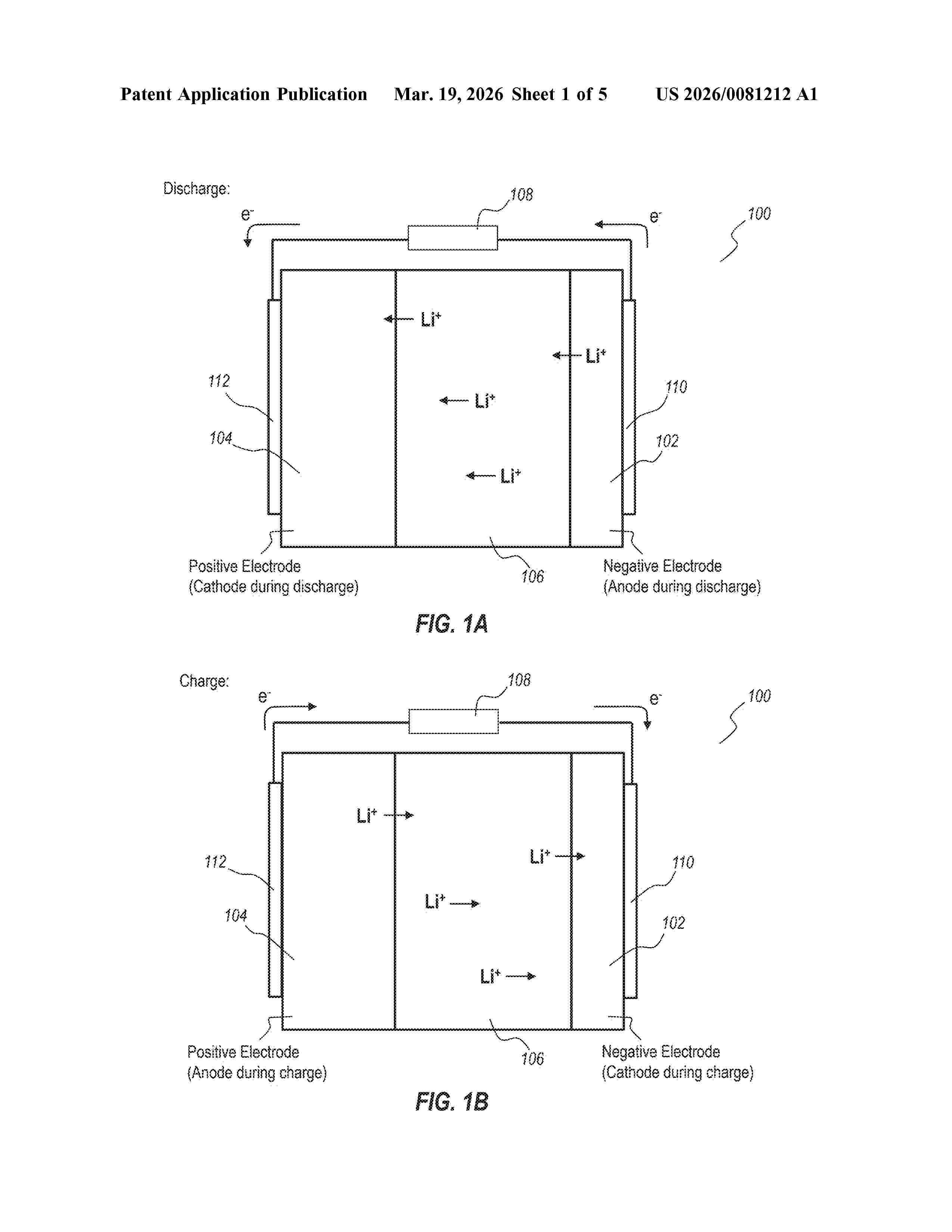
Disclosed herein is the compound (NaxLi3-x)(3-y)/3Y1-yZryCl6, where x is greater than 0 and less than 3 and where y is greater than 0 and less than 1. Where x=1 and y=0.75, the compound is Na0.75Li1.5Y0.25Zr0.75Cl6. The compound is usable as an effective solid electrolyte for a solid-state battery. The solid electrolyte can utilize lithium ions and/or sodium ions as charge carriers.
 BOPI
BOPI
 Sede Electrónica