Si deseas distinguir tus productos, servicios o ambos de los de otra empresa, es posible que necesites una marca o nombre comercial. Descubre qué son, en qué consiste su procedimiento de registro y qué implica.

Información sobre los plazos de presentación de solicitudes de transformación de marcas de la Unión Europea en marca nacional española. Más información


Si tienes un nuevo dispositivo, producto o procedimiento que resuelva un problema técnico o tenga una ventaja práctica, existen distintas formas de protegerlo en España y en otros países. Descubre cómo hacerlo.

¿Tu innovación reside en la estética, la ornamentación o la apariencia de tu producto? Protégela mediante un diseño industrial. Descubre qué derechos confiere el registro y cómo realizar la tramitación.

Las indicaciones geográficas protegen el nombre de un producto originario de una zona geográfica, a la cual le debe una determinada calidad, reputación u otra característica. Descubre qué son, en qué consiste su procedimiento de registro y qué beneficios conceden.

Las patentes publicadas en todo el mundo son una valiosa fuente de información científica, técnica y comercial.

Si eres emprendedor/a o una empresa y quieres potenciar y mejorar la rentabilidad de tu negocio protegiendo de forma adecuada los activos intangibles de tu organización, en este espacio encontrarás lo necesario.


 246
resultados
 Última actualización
29/10/2026 [08:44:00]


Resumen de: EP4832410A1
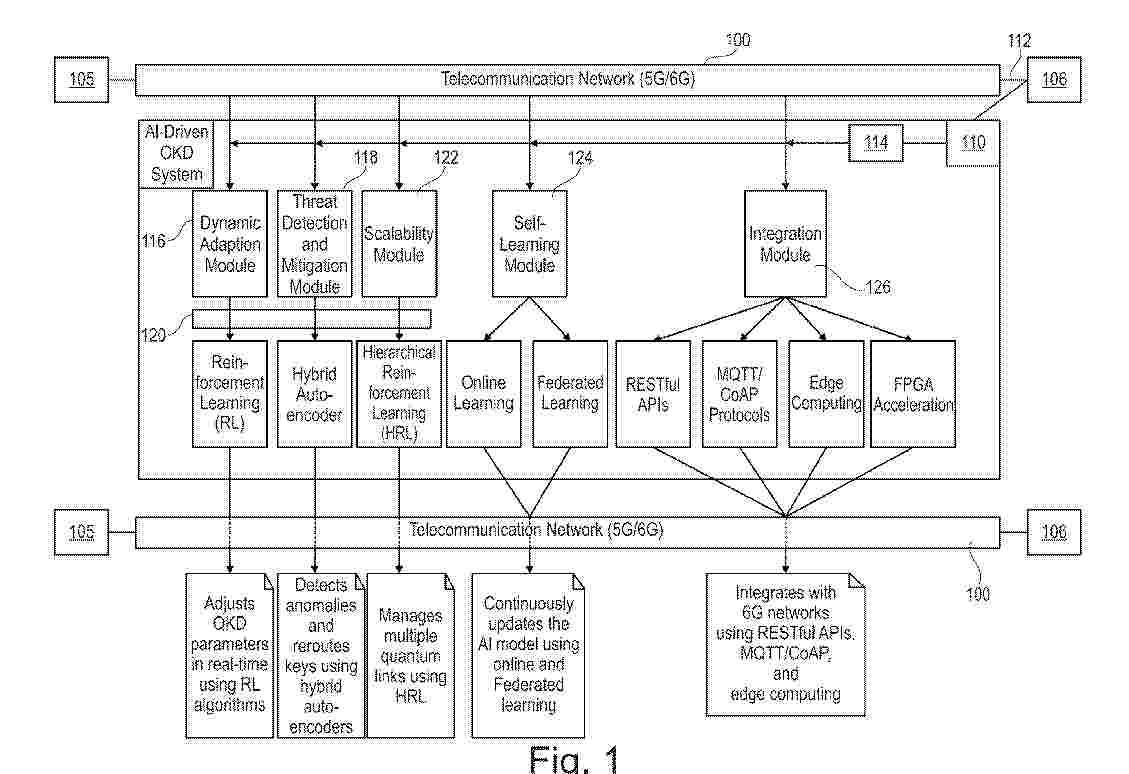
A computer-implemented method for performing quantum key distribution, QKD, in a telecommunication network between a first communication device and a second communication device, the method comprising:(a) measuring or monitoring, by a monitoring entity, quantum link values of a QKD process carried out with a first set of QKD operational parameters;(b) detecting, by an analytics entity, based on the monitored quantum link values, one or more operational conditions selected from: a condition, in particular a degradation, of the quantum link, a threat to the QKD, or a mobility event affecting a QKD communication party;(c) providing, in response to the detected at least one operational condition, at least a subset of the monitored quantum link values to a dynamic-adaptation-module, a threat-detection-module, a rerouting-module, or a hierarchical-control-module one or all of the modules are implemented within an adaptive-QKD node;(d) determining, by one or more of the modules, a second set of QKD operational parameters based on a one or more machine learning models trained on quantum link data and at least a subset of the quantum link values as input;(e) applying, by an operational module configured to interface with QKD hardware, the second set of QKD operational parameters to adjust the QKD process,wherein the second set of QKD operational parameters enables QKD to be maintained or improved.

Resumen de: WO2025132481A1
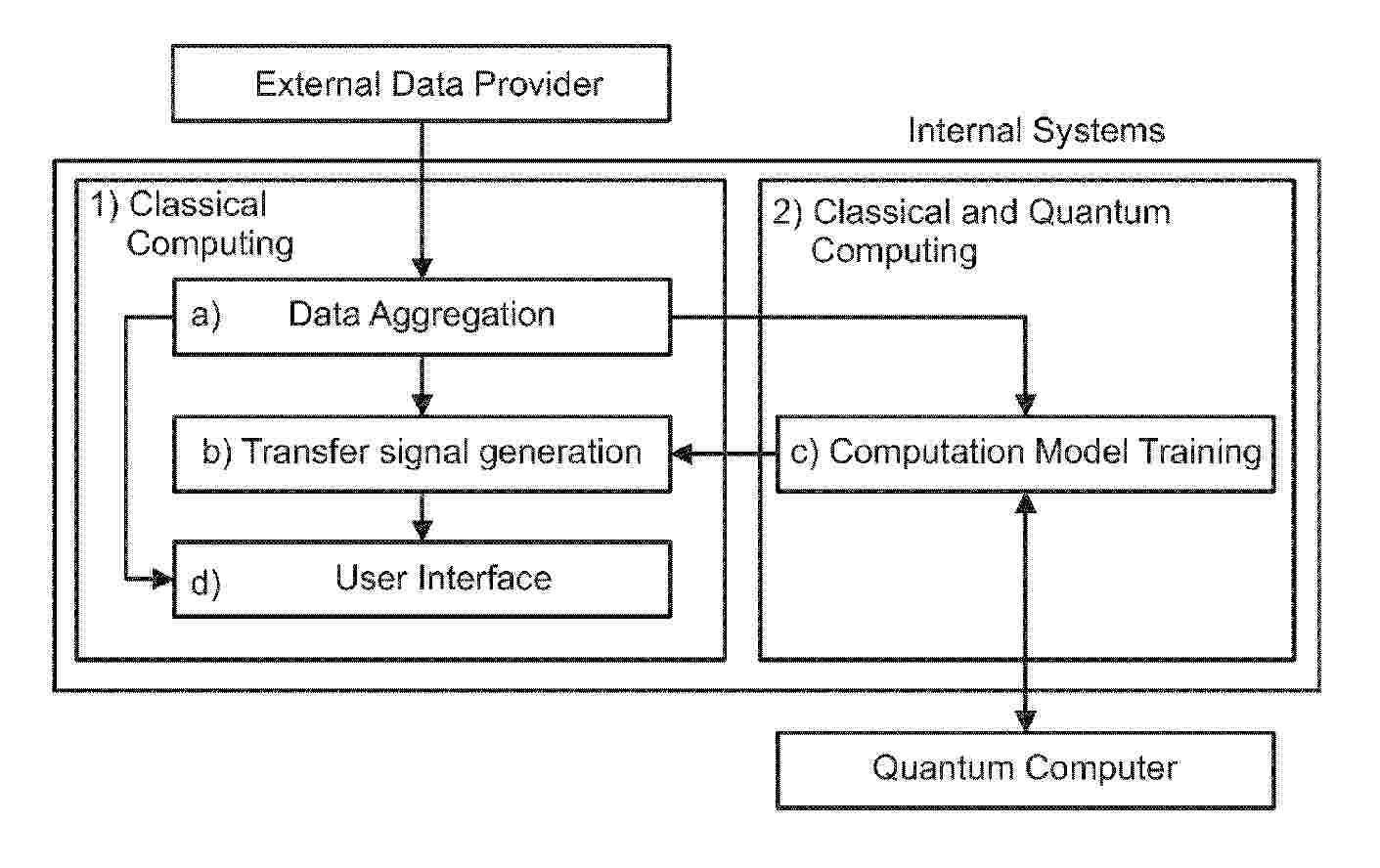
The invention refers to a controlling and/or monitoring of an asset transfer. Time series monitoring data related to the asset is provided. A trained data-driven model is provided. The data-driven model partially includes discrete weights, wherein the model has been trained i) by providing a training data set including a) control and/or monitoring data of asset transfers and b) time series monitoring data related to the asset, ii) by initializing the model on a classical computer based on the training data set and iii) by providing the initialized model for determining the discrete weights based on the training data set to a quantum computer. The trained model determines control and/or monitoring data for controlling and/or monitoring an asset transfer based on the time series monitoring data. Control and/or monitoring data are generated based on the trained data-driven model and the time series monitoring data related to the asset.
Resumen de: WO2025133377A1
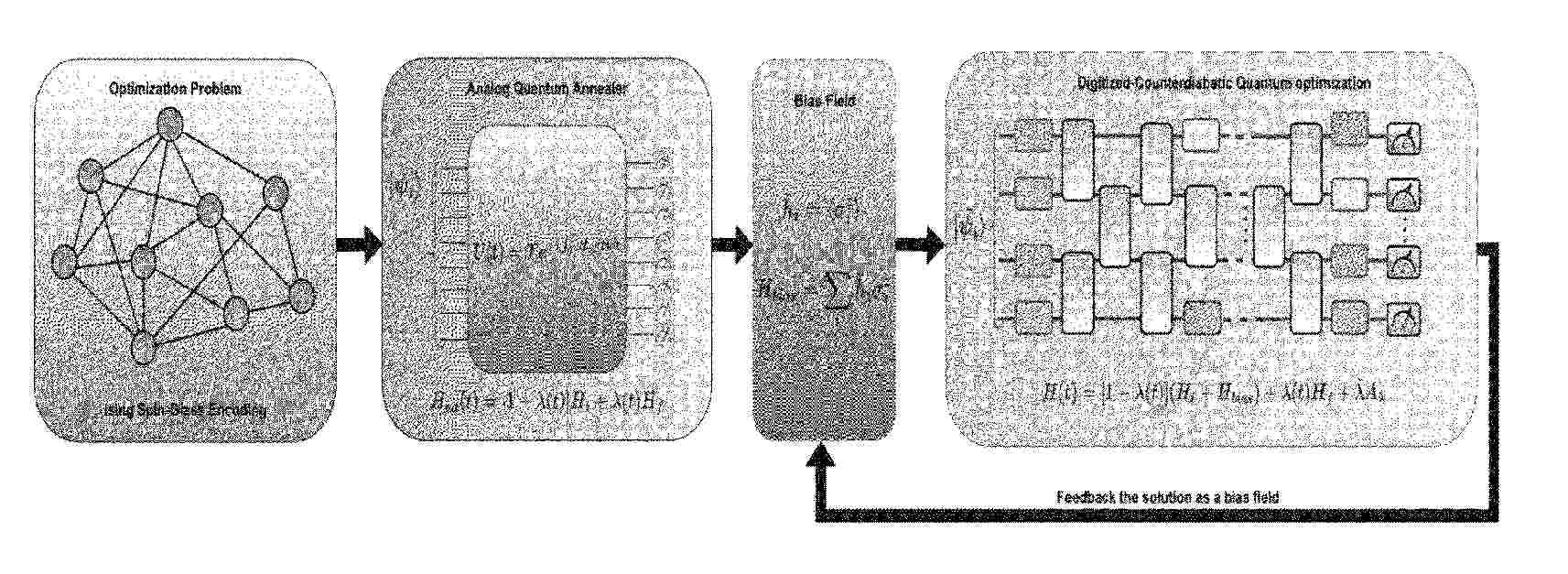
The invention relates to a computer-implemented method for solving a combinatorial optimization problem encoded in the ground state of an Ising spin-glass model. In particular, the invention introduces a method called bias field digitized counterdiabatic quantum optimization (bf-DCQO) for solving combinatorial optimization problems on digital quantum computers. This method integrates auxiliary counterdiabatic (CD) terms into the adiabatic Hamiltonian and introduces bias terms derived from classical methods, quantum annealers, or iterative DCQO applications. This approach addresses the limitations of current quantum computers, particularly their limited coherence times, and improves the time to solution for large-scale problems compared to traditional DCQO and finite-time adiabatic quantum optimization. The bf-DCQO method is entirely quantum, avoiding the trainability issues of variational quantum optimization algorithms. It significantly outperforms the Quantum Approximate Optimization Algorithm (QAOA) in success probability and approximation ratio. Experimental implementation on a trapped-ion quantum computer and a superconducting processor demonstrated its effectiveness on a maximum weighted independent set problem with 36 qubits and a spin-glass problem on a heavy-hex lattice with 100 qubits. This represents the largest such problem solved on a gate-based quantum computer using a purely quantum algorithm.
Resumen de: WO2025131294A1
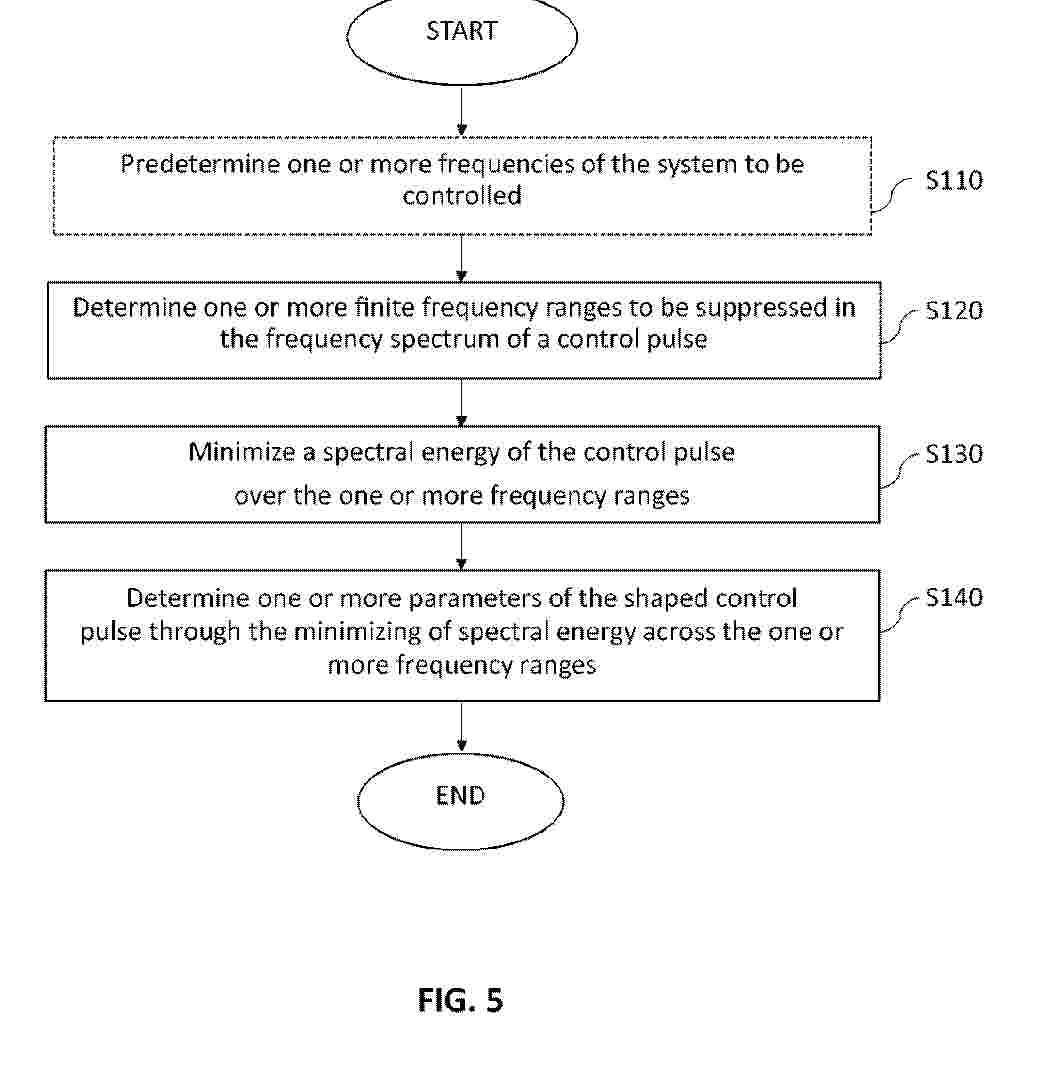
Provided is a method for shaping a frequency spectrum of a control pulse with a given control pulse duration. In one aspect, one or more finite frequency ranges to be suppressed in the frequency spectrum are determined, at least one of the finite frequency ranges defined based on one of the predetermined frequencies. Then, a spectral energy of the control pulse over the one or more finite frequency ranges is minimized and at least one of the parameters of the shaped control pulse is determined through the minimizing of the spectral energy. In this manner, the pulse can be shaped not to contain determined finite frequency ranges. Provided is also a method for generating a control pulse with a given pulse duration, said control pulse, an apparatus for generating said control pulse and a quantum computer comprising said apparatus.
Resumen de: WO2025133464A1
The disclosure presents a method for performing quantum computation The method comprises formulating a quantum Hamiltonian as a function of a first set of quantum states and providing a quantum simulator system, a set of quantum control systems, and a set of quantum resource systems. The method also comprises preparing the first set of quantum states on the set of quantum resource systems and applying a set of SWAP gates on the set of quantum simulator systems, the set of quantum control systems, and the set of quantum resource systems. The method also comprises determining the evolution of the set of quantum simulator systems by measuring one or more output quantum states from the set of quantum control systems or quantum resource systems.
Resumen de: WO2025133438A1
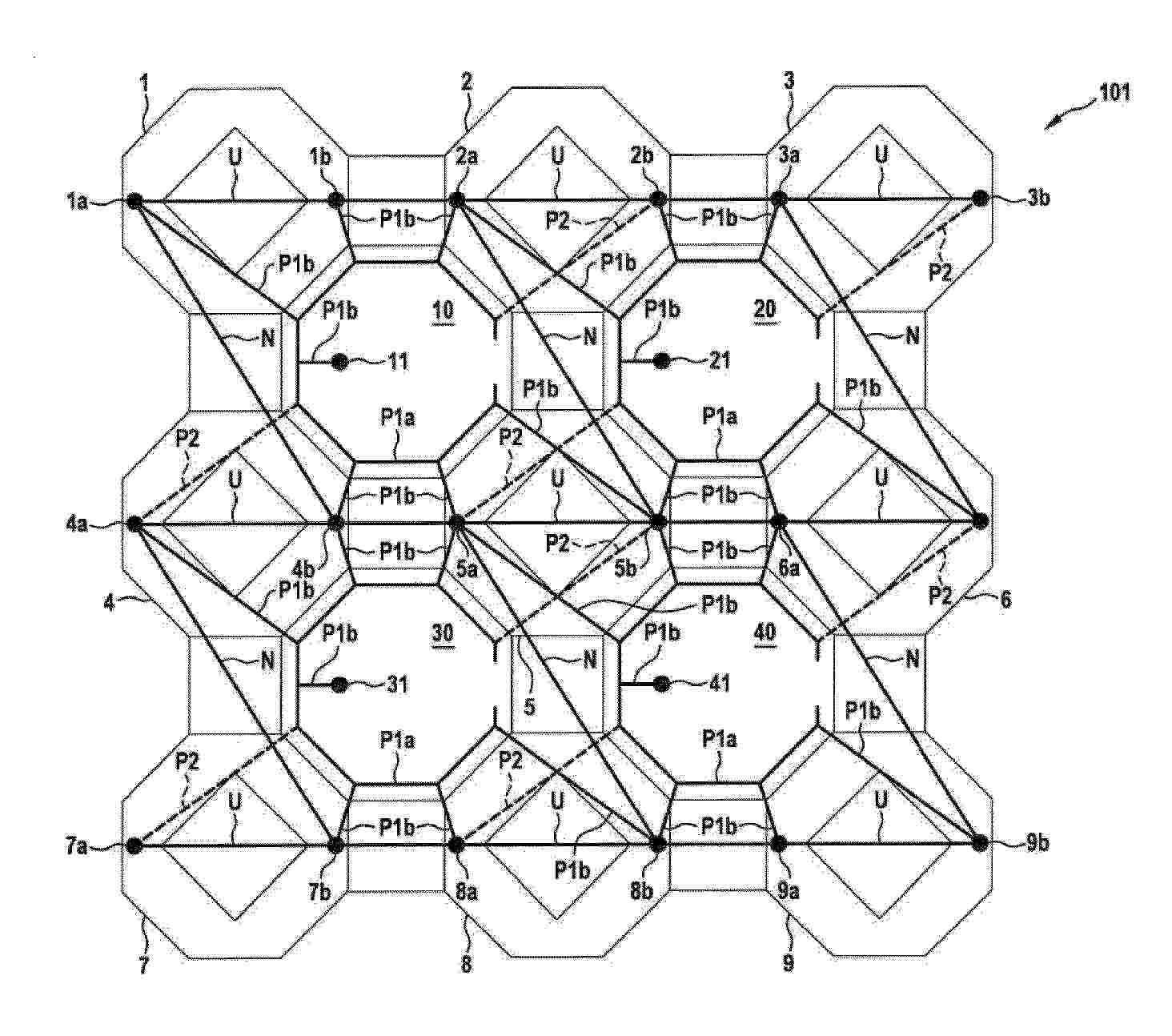
A quantum chip (101, 102, 103, 104) of qubits comprising a number of at least two superimposed layers, wherein a plurality of unit cells (1-9) is located at vertices of a lattice structure, said lattice comprises said vertices and defines a plurality of edges connecting neighboring vertices and a plurality of plaquettes, each plaquette being surrounded by a plurality of vertices, wherein each unit cell (1-9) of the plurality of unit cells (1-9) comprises a plurality of data qubits (1a, b, c, d, e, f - 9a, b, c, d, e, f) having connectivity between themselves, wherein each pair of neighboring unit cells (1-9) on the lattice has connectivity between at least one data qubit of one unit cell of the pair and at least one data qubit of another unit cell of the pair, said quantum chip (101, 102, 103, 104) further comprising for at least one plaquette (10, 20, 30, 40) of said lattice at least one syndrome qubit (11, 21, 31, 41), wherein there is connectivity between said at least one syndrome qubit (11, 21, 31, 41) and at least one data qubit of the unit cells at the vertices surrounding said plaquette (10, 20, 30, 40), wherein the connectivity of the quantum chip (101, 102, 103, 104) is distributed over at least two of the layers, and the data and syndrome qubits (1a, b, c, d, e, f - 9a, b, c, d, e, f; 11, 21, 31, 41) are located on at least one of the layers.
Resumen de: WO2025137660A1
Implementations involve generating quantum hybrid neural networks on a computing platform, by leveraging the computational advantages of both quantum and classical neural networks to enhance data processing capabilities. A hybrid neural network may include a quantum neural network and a classical neural network. The quantum neural network may process input data using a quantum processor to produce intermediate data. Subsequently, the classical neural network may process this intermediate data as its own inputs to generate output data. The hybrid neural network may then be stored back onto the electronic storage device for immediate or later use or training.
Resumen de: WO2025158256A1
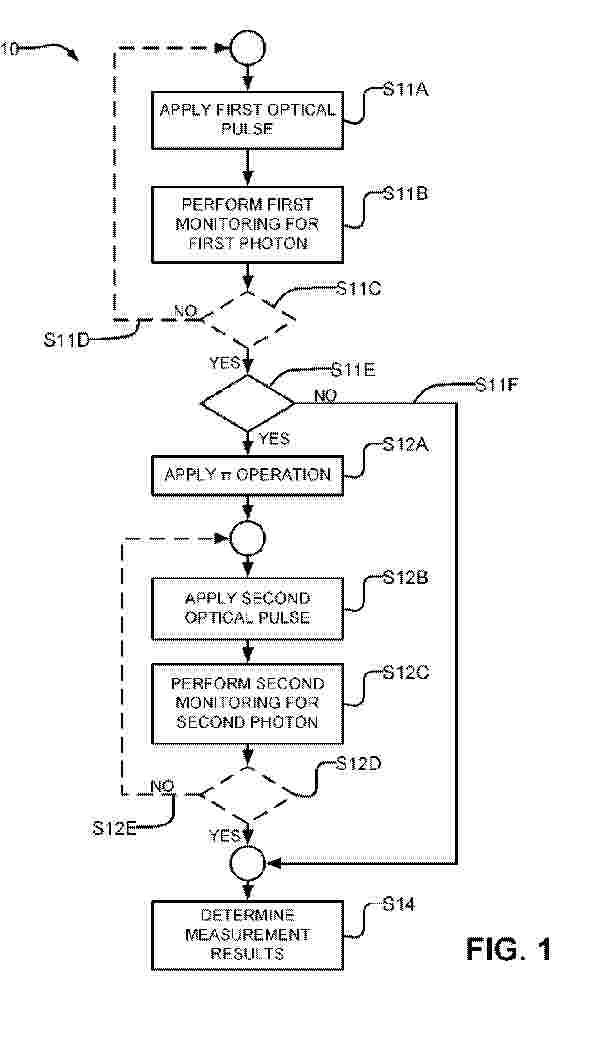
Methods and apparatus for measuring quantum systems involve: applying first optical pulses to the quantum system and monitoring for a first resulting photon after each first optical pulse; in response to detecting one or more first resulting photons, performing a π operation on the quantum system; and, after performing the π operation, applying second optical pulses to the quantum system and monitoring for a second resulting photon after each second optical pulse. The first and second optical pulses comprise a wavelength corresponding to a transition from a first basis state of the quantum system to an excited state. A measurement result is determined based on results of the monitoring.
Resumen de: WO2025166168A1
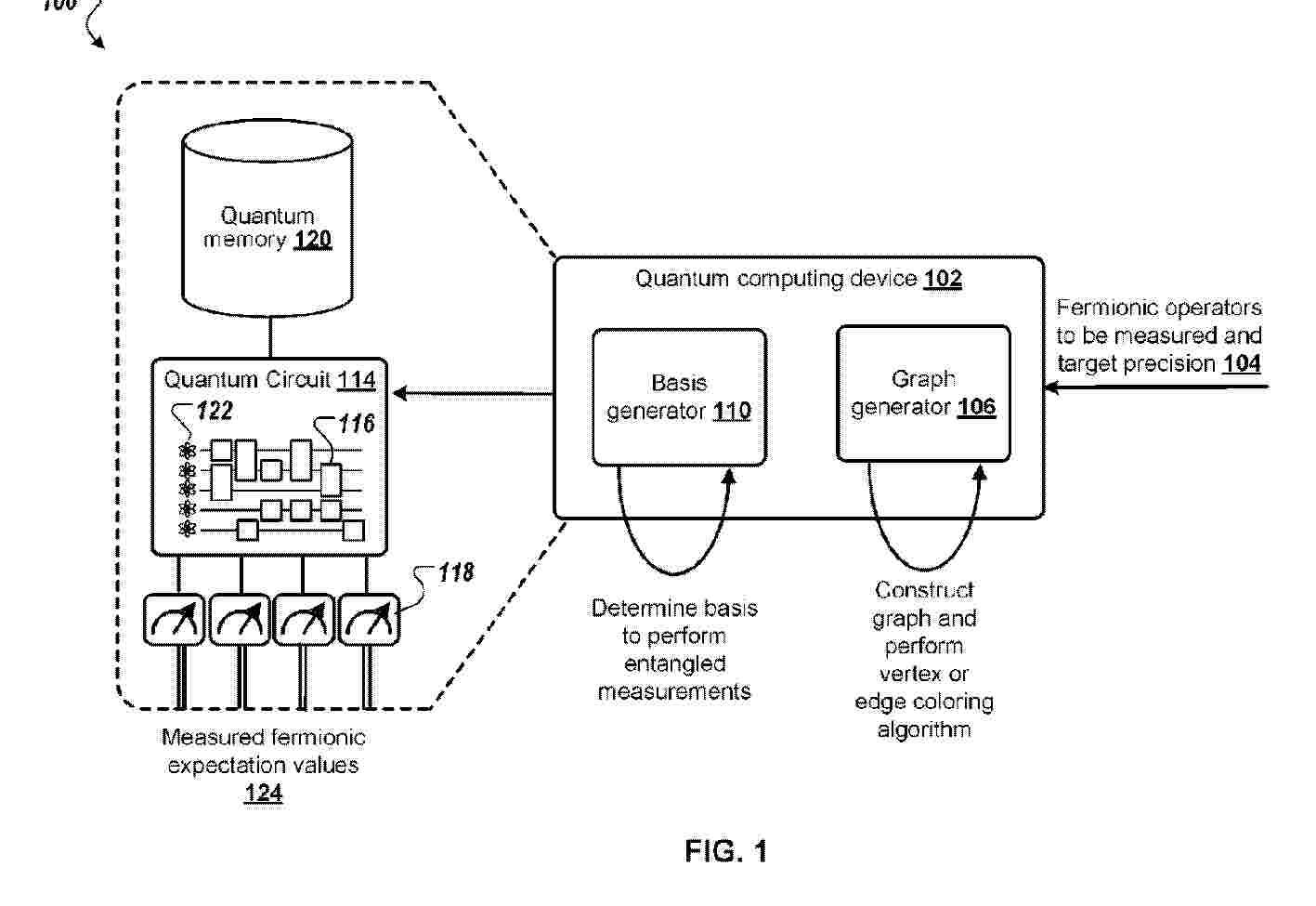
Method, systems, and apparatus for measuring fermionic operators. In one aspect, a method includes obtaining an input comprising k-body Majorana operators, a predefined precision, and copies of a tensor product of a quantum state and the quantum state. For each Majorana operator, a basis to measure the Majorana operator in is determined. The input is processed to obtain expectation values that correspond to the Majorana operators. A graph is constructed by, for each non-zero expectation value, adding a vertex to the graph that represents a Majorana operator that corresponds to the non-zero expectation value and adding edges between vertices in the graph that represent anticommuting Majorana operators. A vertex coloring algorithm is applied to the graph. For a color that corresponds to the Majorana operator, a simultaneous eigenbasis of Majorana operators in the graph with the color is determined. The Majorana operator is measured in the determined basis.
Resumen de: EP4831879A2
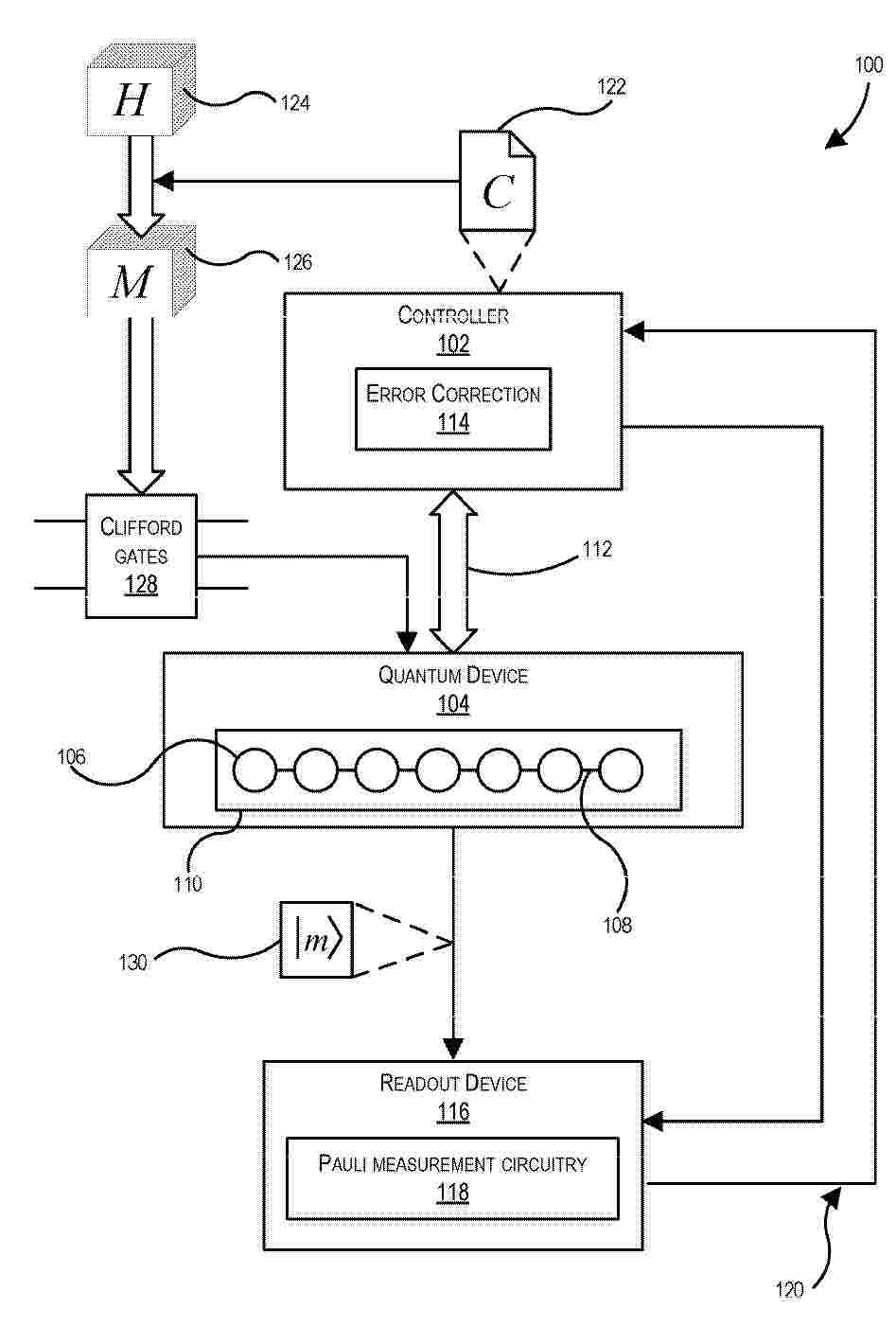
Embodiments of the present disclosure include systems and methods for magic state distillation. A first matrix is generated based on a collection of indices that reference a second matrix. A set of compressed Clifford gates is determined based on the first matrix. The set of compressed Clifford gates is applied to a set of the qubits of a quantum processor. A set of magic states of the quantum processor are obtained as a result of application of the set of compressed Clifford gates. The quantum processor may be configured based on the magic states obtained.
Resumen de: EP4577028A1
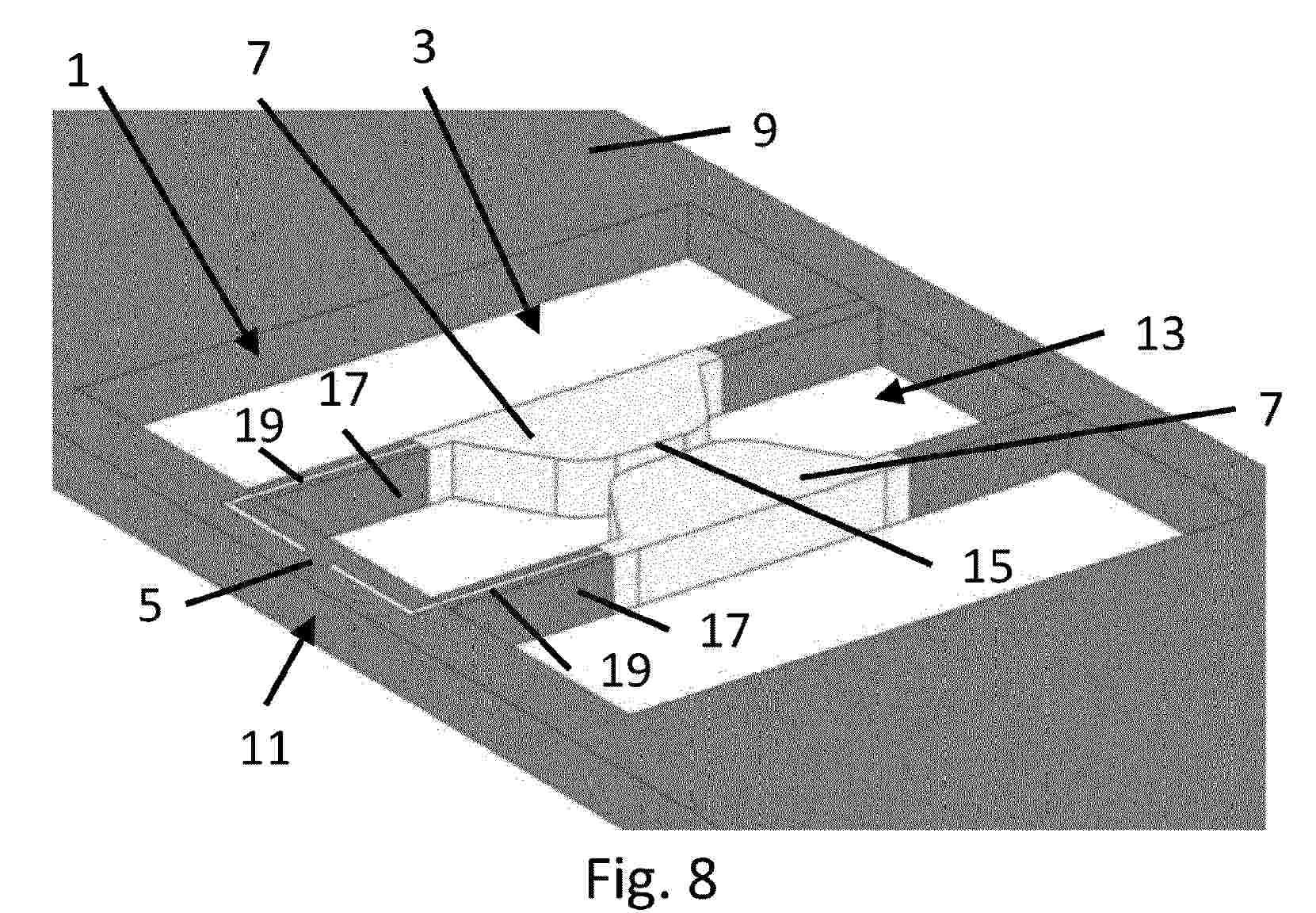
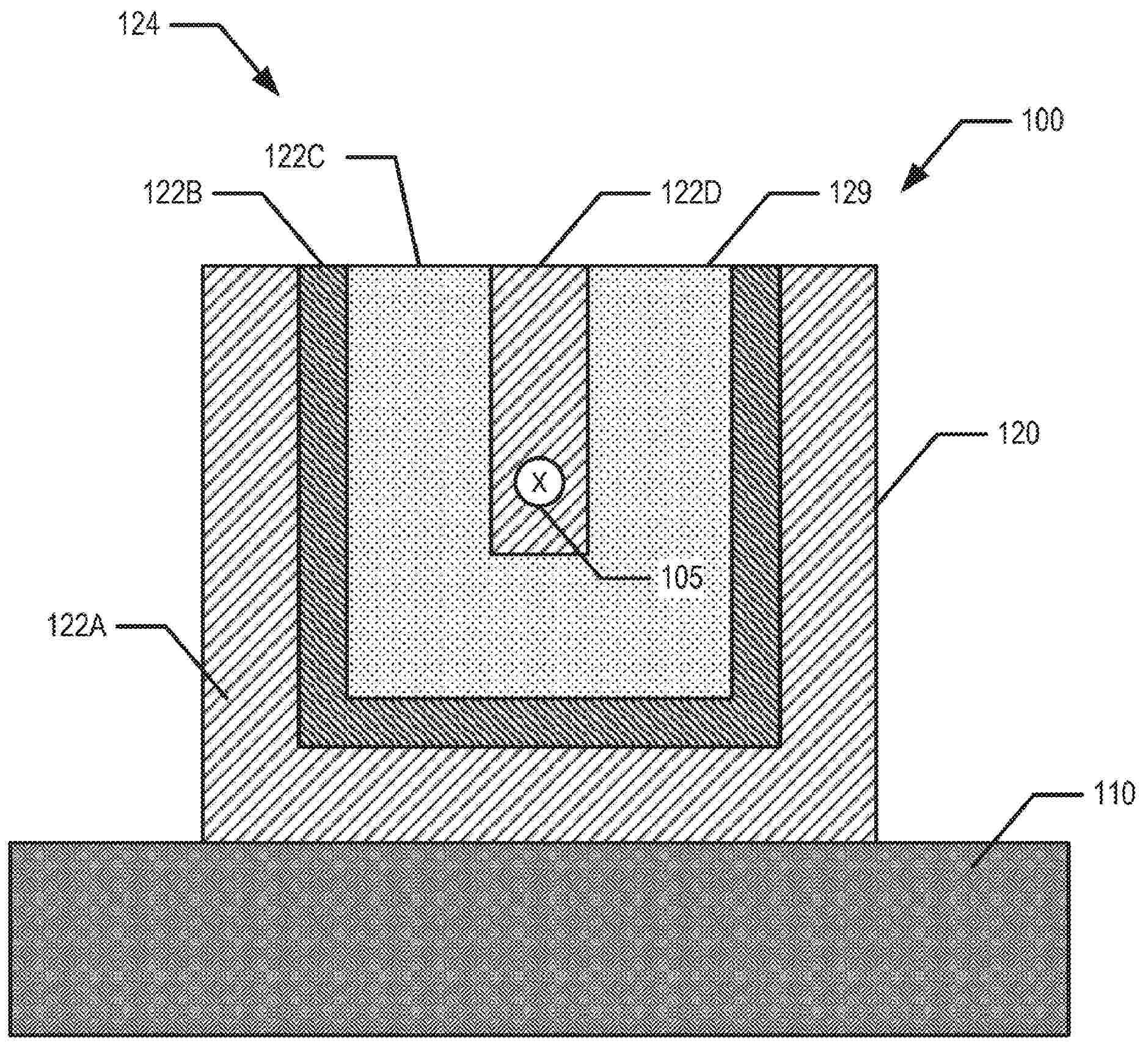
0001 Provided is a superconducting qubit comprising a capacitor and a Josephson junction connected to the capacitor. The capacitor comprises two opposing surfaces coated with a superconducting material. When the superconducting qubit is placed in a vacuum, a region between the opposing surfaces is evacuated. A configuration of the capacitor is such that an energy relaxation lifetime of the qubit is at least 100µs. The capacitor may comprise two electrode structures comprising a dielectric material coated with a superconducting material, each opposing surface provided by a corresponding electrode structure. Three mutually perpendicular lines can be drawn through the dielectric material, each line intersecting the superconducting material on two opposing sides of the electrode structure.
Resumen de: EP4575919A1
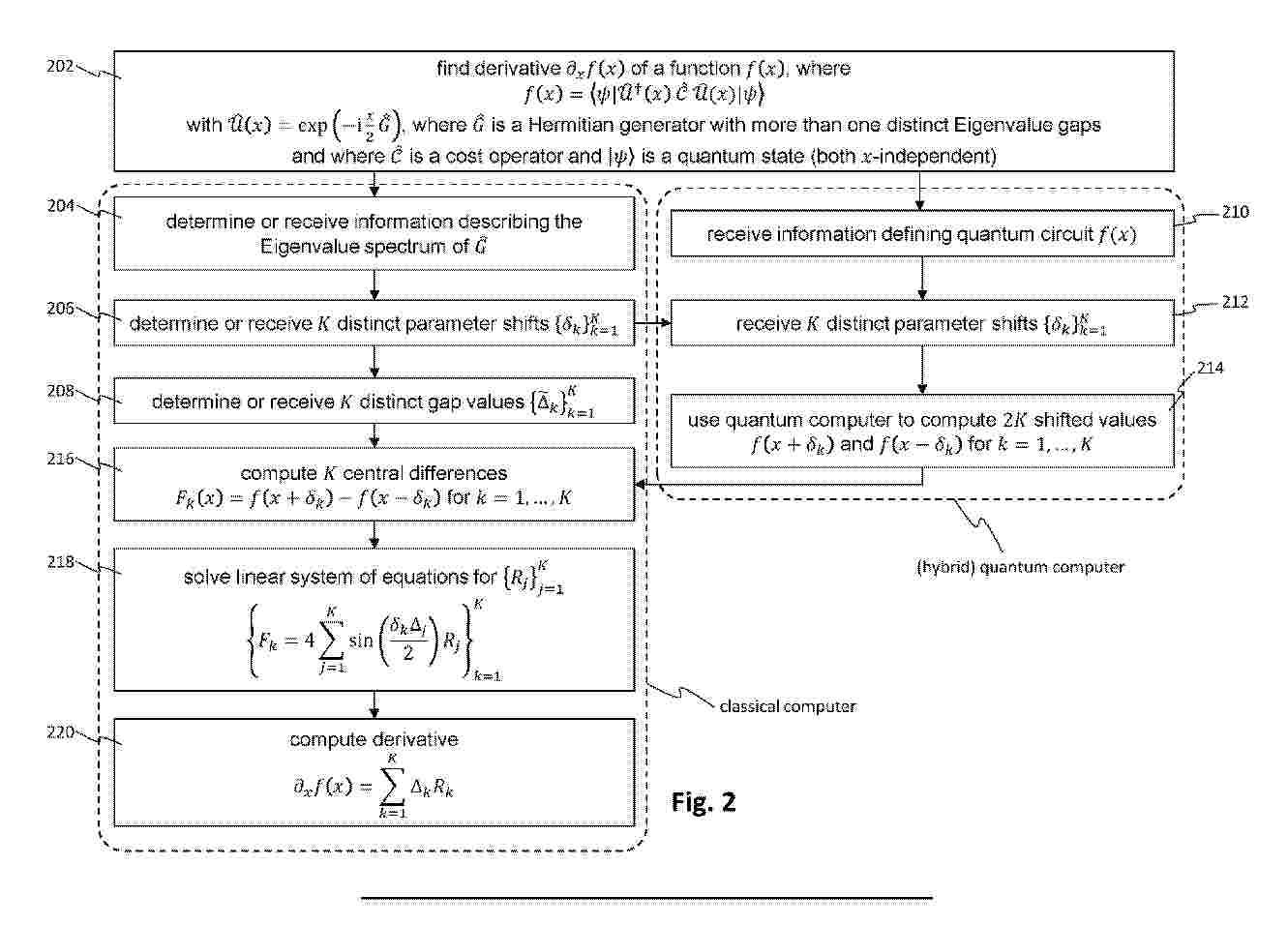
Method and systems are disclosed for computing a derivative of a quantum circuit using a hybrid quantum computing system. The method comprises receiving or determining a formulation of a parametrized quantum circuit parametrized by a continuous variable. The quantum circuit may encode a given parameter value of the continuous variable in a Hilbert space associated with a quantum elements of the quantum computer. The method further comprises determining or receiving a number of one or more distinct gap values and an equal number of distinct parameter shifts. The number of gap values is lower than the number of spectral gaps of a generator of the quantum circuit. The method further comprises executing, for each of the distinct parameter shifts, the parametrized quantum circuit with the continuous variable x increased by the respective parameter shift and with the continuous variable x decreased by the respective parameter shift. The execution of the parametrized quantum circuit comprises translating the parametrized quantum circuit into control signals for controlling the plurality of quantum elements and for readout of the plurality of quantum elements to obtain hardware measurement data; controlling the quantum computer system based on the control signals; and receiving, in response to the execution of the quantum circuit, the hardware measurement data. The method further comprises processing the hardware measurement data to obtain the derivative of the quantum circuit with r
Resumen de: NL2036660B1
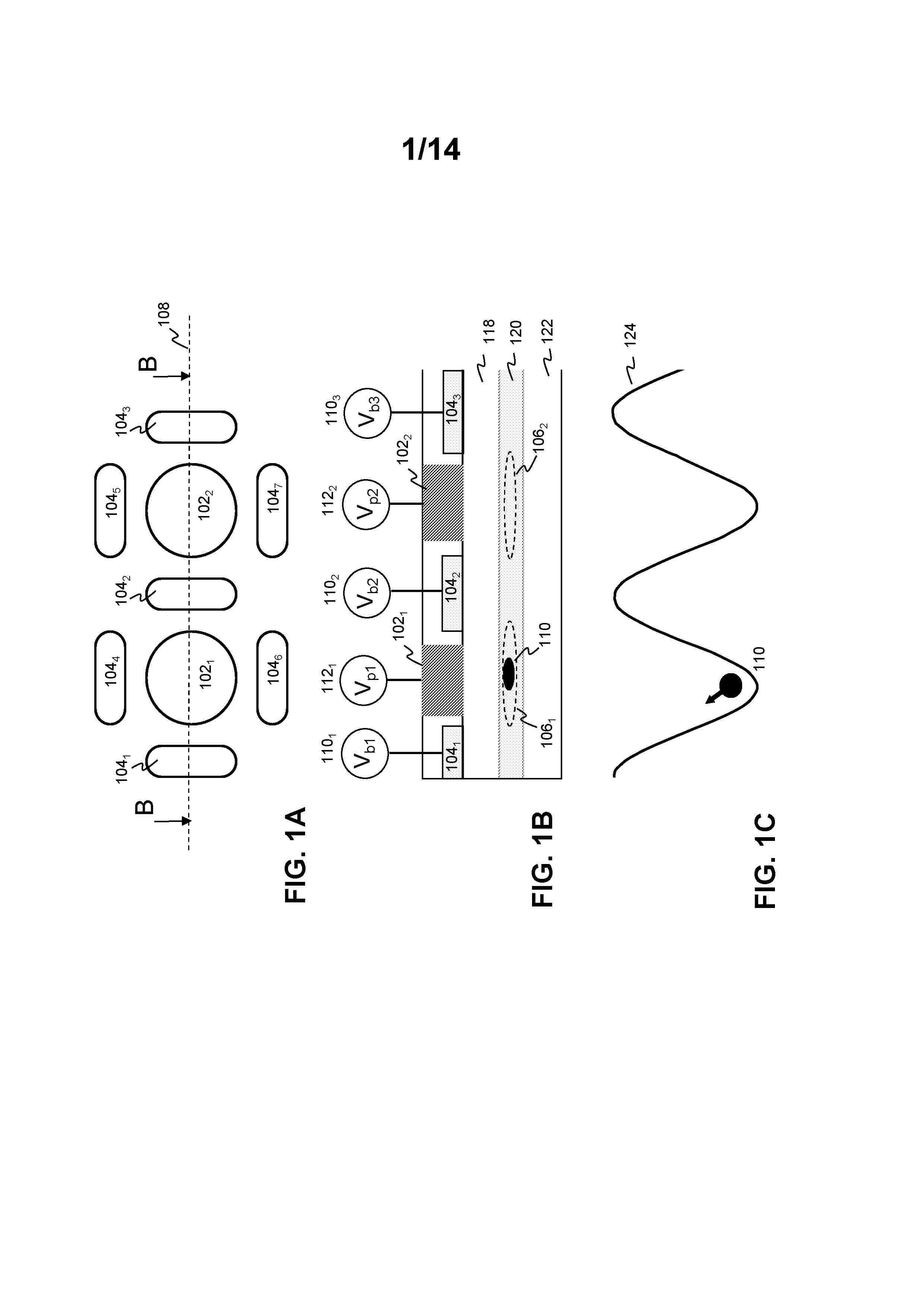
A method for operating a single-spin qubit in a quantum processor is described wherein the method comprises: preparing a single-spin qubit in a first quantum dot of the quantum processor, wherein information in the single-spin qubit is encoded in the single spin states of a charge carrier, preferably the single spin states of a hole, in the first quantum dot, preferably a type IV semiconductor quantum dot such as a silicon quantum dot or a silicon-germanium quantum dot; and, executing a single qubit gate operation on the single-spin qubit by modifying the quantization axis and/or energy splitting of the single-spin qubit for a predetermined time, the modification of the quantization axis and/or energy splitting being based on controlling an anisotropic g-tensor associated with the single-spin qubit and/or a magnetic field locally applied to the single-spin qubit. + Fig. 3B
Resumen de: NL2036638B1
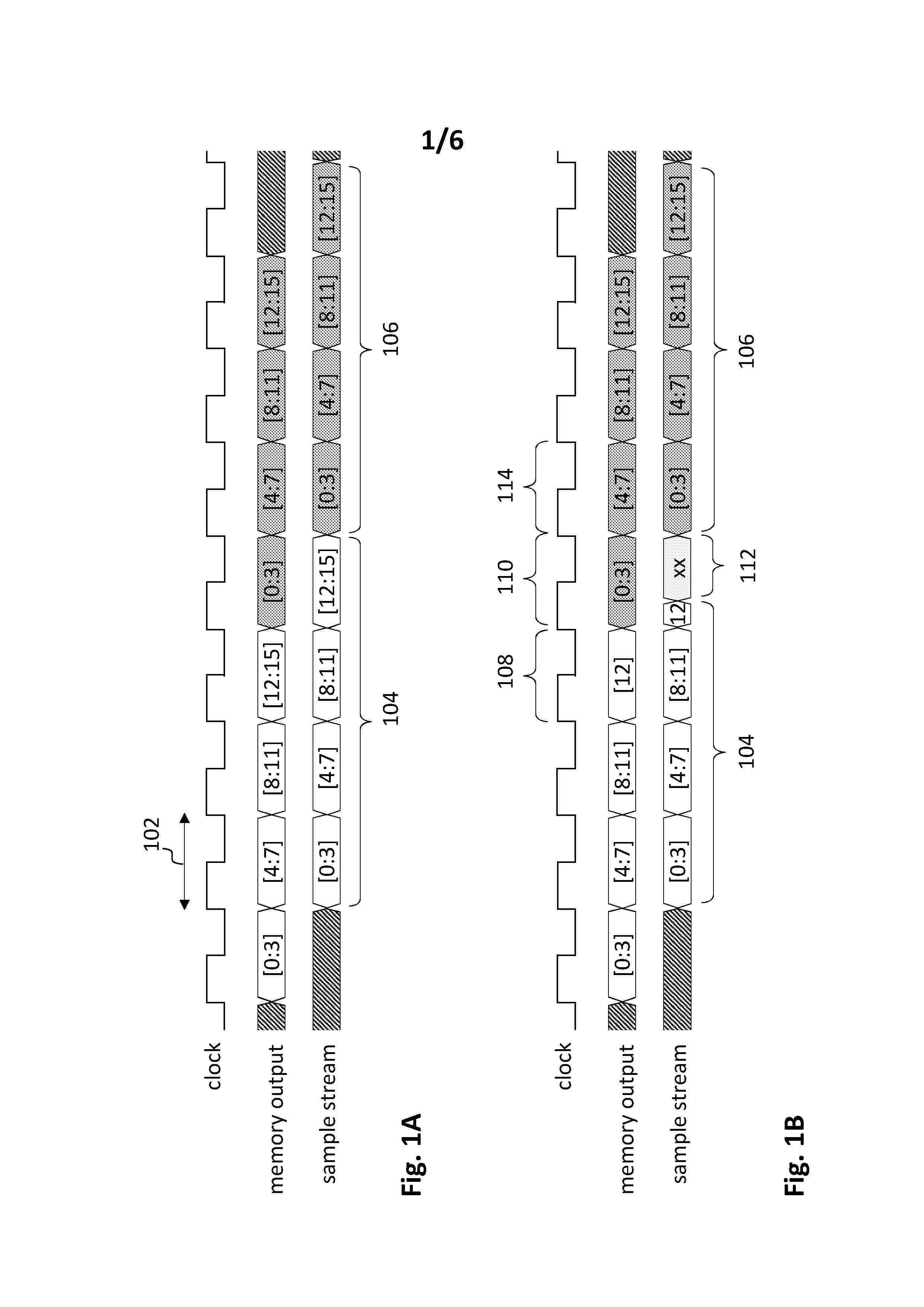
0001 A signal generator is disclosed for generating analog signals for controlling a quantum device. The signal generator comprises a memory system that is configured to store a plurality of sequences of digital samples. The plurality of sequences comprises a first sequence and a second sequence. Each sequence out of the plurality of sequences represents an analog signal for controlling the quantum device. The signal generator also comprises a digital sample stream generator for generating a digital sample stream based on sequences of digital samples obtained from the memory system. The signal generator further comprises a digital-to-analog converter, DAC, for converting the digital sample stream into analog signals represented by the sequences of digital samples obtained from the memory system. The DAC is configured to operate at a clock frequency fDAC. The memory system comprises an auxiliary memory that is configured to store, of each sequence out of the plurality of sequences, a part of the sequence comprising the first digital sample of the sequence. The memory system comprises a main memory that is configured to store, of each sequence out of the plurality of sequences, a further part of the sequence comprising the last digital sample of the sequence.
Resumen de: WO2025132625A1
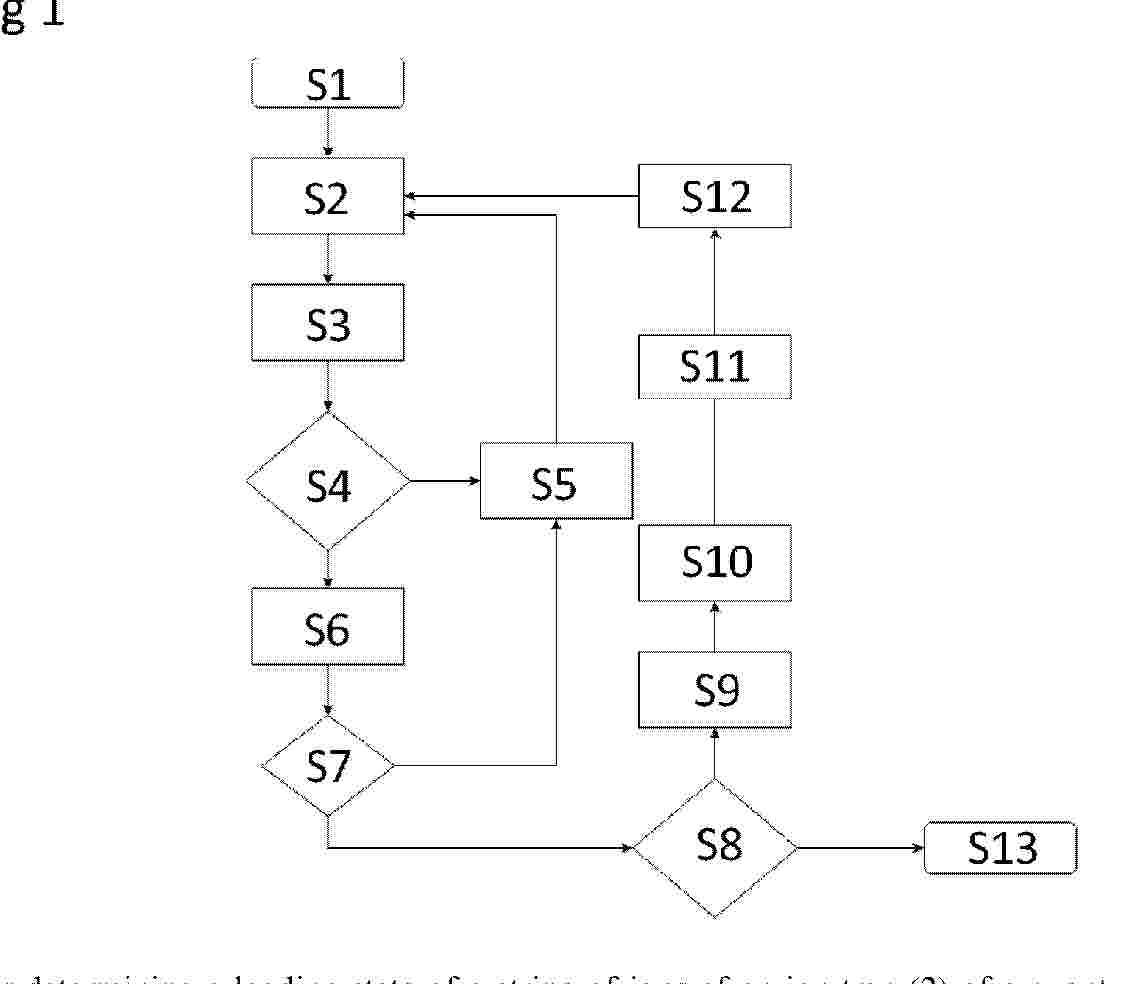
A method for determining a loading state of a string of ions of an ion trap (2) of a quantum computer is specified, comprising - providing a measurement information of the string of ions, - determining a number of ions of the string of ions dependent on the measurement information, - determining a health information dependent on the measurement information, wherein the health information is characteristic of a comparison of measurement properties of the string based on the measurement information and predetermined properties of the string being numerically calculated, and - determining the loading state of the string of ions dependent on the number of ions and the health information, wherein the loading state of the string is characteristic of a successful loading of the string or of an adjustment of the string. Further, a system (1), a computer program and a computer-readable storage medium are specified.
Resumen de: US20250208343A1
0000 Photonic structures and systems including photonic structures are provided. An example photonic structure includes a plurality of layers. Each layer includes a respective material of two or more materials. Each of the two or more materials has a respective refractive index. A first layer of the plurality of layers is at least partially disposed on a substrate. The respective refractive index of a first material of the two or more materials has a different refractive index than a second material of the two or more materials. Each layer of the plurality of layers has a thickness that is at most one tenth of an intended use wavelength.
Resumen de: WO2025136525A1
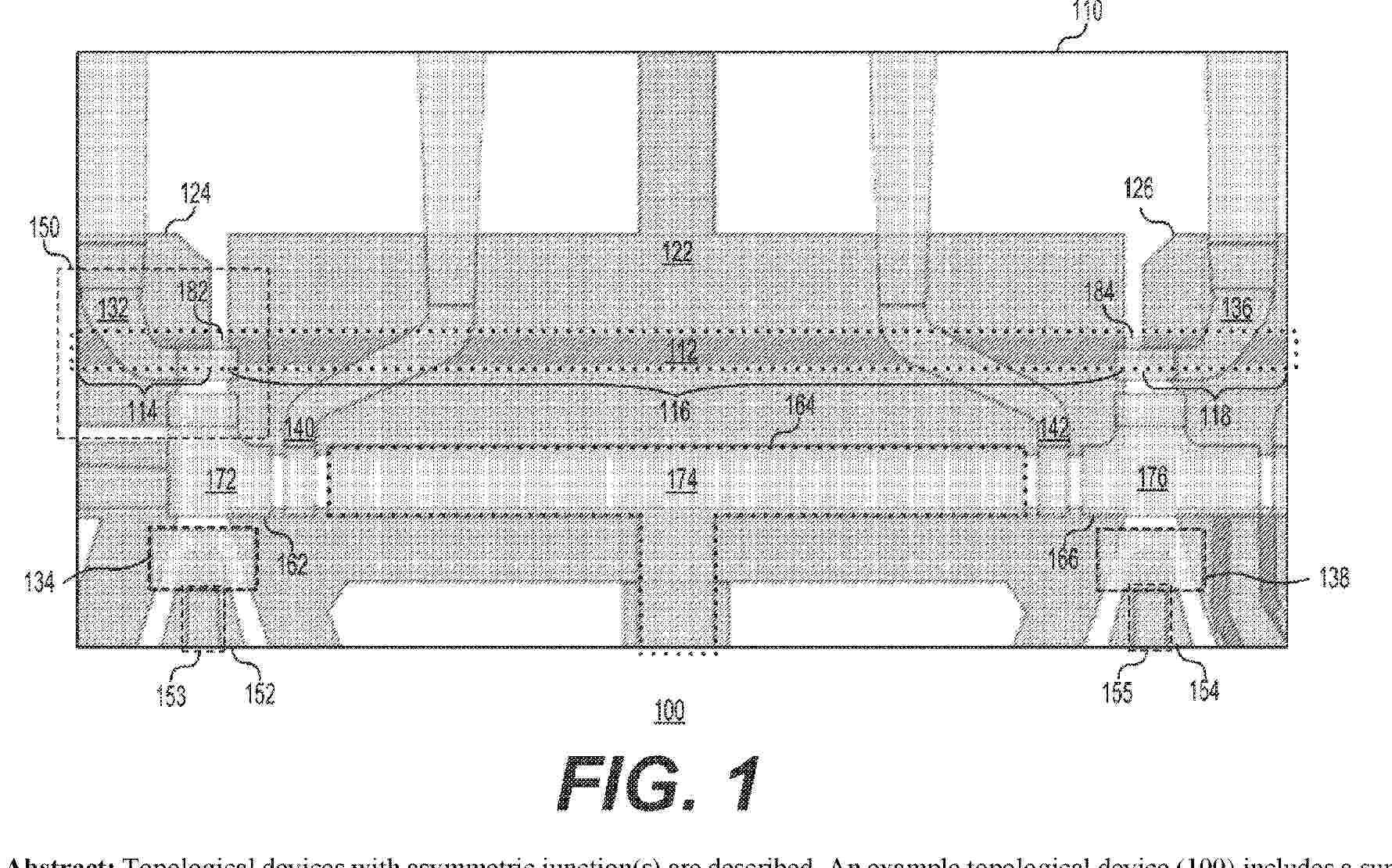
Topological devices with asymmetric junction(s) are described. An example topological device (100) includes a superconducting wire (112) comprising a first segment (114) and a second segment (116), where the first segment (114) is configurable to be in a trivial phase and the second segment (116) is configurable to be in a topological phase. The topological device further includes an asymmetric junction (182), at an interface of the first segment (114) and the second segment (116). The asymmetric junction (182) is operable to couple a Majorana zero mode, MZM, in the second segment (116) to a quantum dot (172) or a transport lead (153) such that the asymmetric junction (182) increases strength of a coupling between the MZM and the quantum dot (172) or the transport lead (153) while reducing strength of a coupling between any states formed in the first segment (114) of the superconducting wire (112) and the quantum dot (172) or the transport lead (153).
Resumen de: CN122993710A
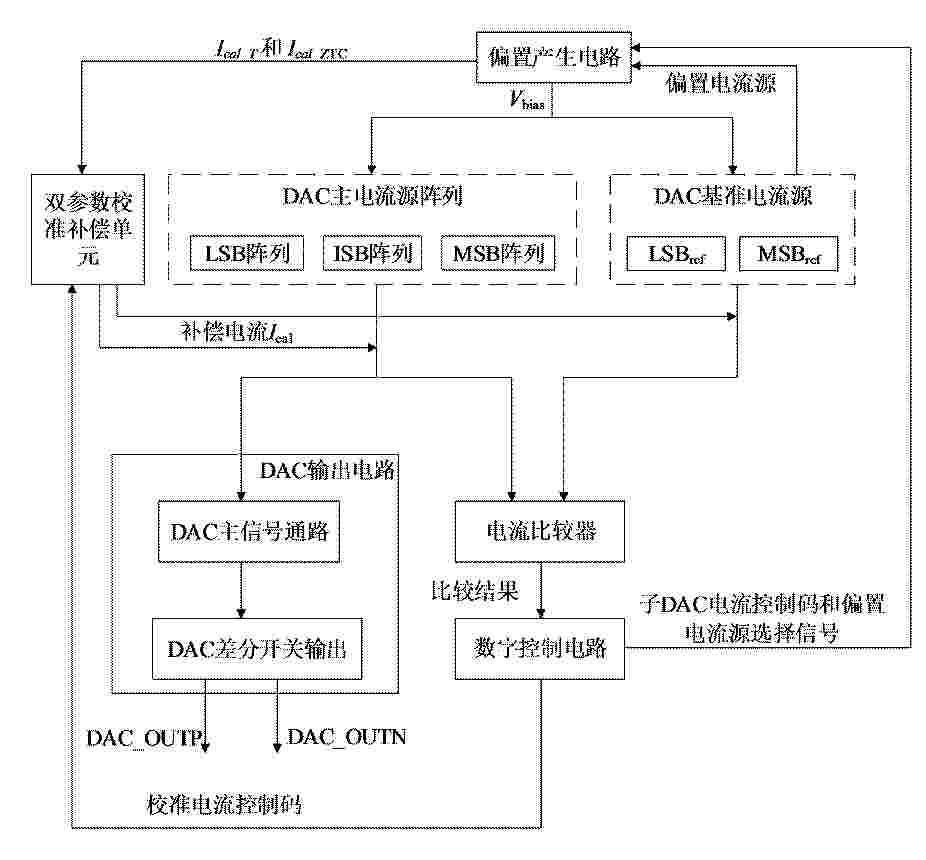
本发明公开了一种保持总电流恒定的全温度电流舵DAC校准电路,包括:偏置产生电路用于根据偏置电流源选择信号、子DAC电流控制码,产生全局偏置电压、与温度有关的第一偏置电流和与温度无关的第二偏置电流;双参数校准补偿单元用于根据与温度有关的第一校准电流控制码、与温度无关的第二校准电流控制码、第一和第二偏置电流,基于变偏置交叉迭代的单体校准逻辑产生补偿电流;DAC主电流源阵列、DAC基准电流源用于根据全局偏置电压和补偿电流,基于自底向上的基准传递校准逻辑产生主电流源电流、基准电流源电流;数字控制电路用于根据电流比较器的比较结果更新偏置电流源选择信号、子DAC电流控制码、第一和第二校准电流控制码。
Resumen de: CN122986231A
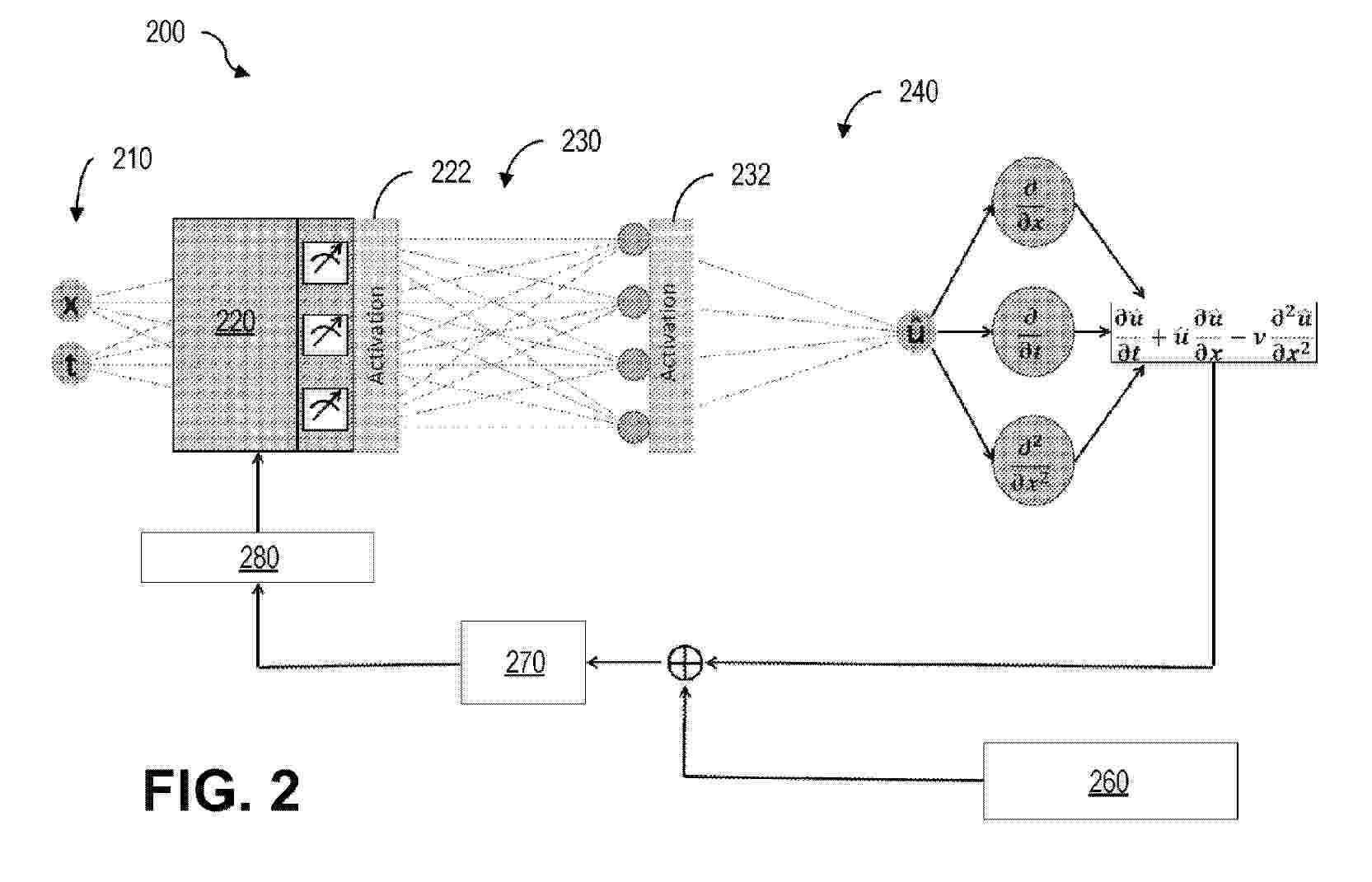
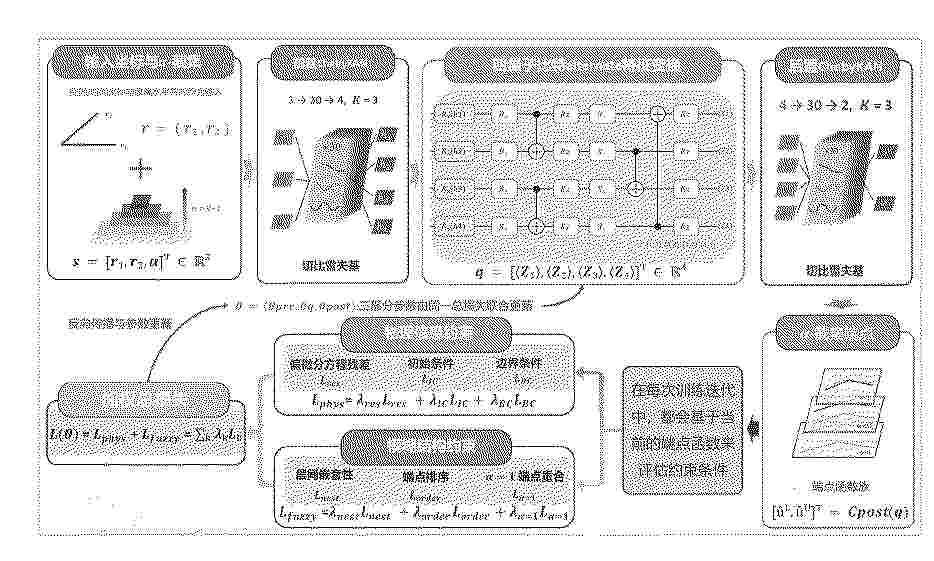
本发明公开了一种模糊微分方程的量子‑经典物理信息KAN网络求解方法,属于物理信息计算技术领域,具体步骤包括:基于截集理论拆分得到模糊偏微分方程的上下端点控制方程,构建时空坐标与隶属水平的联合输入向量;采用ChebyKAN前处理模块、参数化量子电路核心模块、ChebyKAN后处理模块串联的混合网络架构,输出对应截集的上下端点近似解;融合物理约束损失与模糊结构约束损失构建总损失函数,经梯度下降优化迭代训练得到近似求解模型。本方法能够有效提升模糊偏微分方程的求解精度,同时保障解的模糊结构合法性,适配多类含模糊参数的工程科学计算场景。
Resumen de: CN122988253A
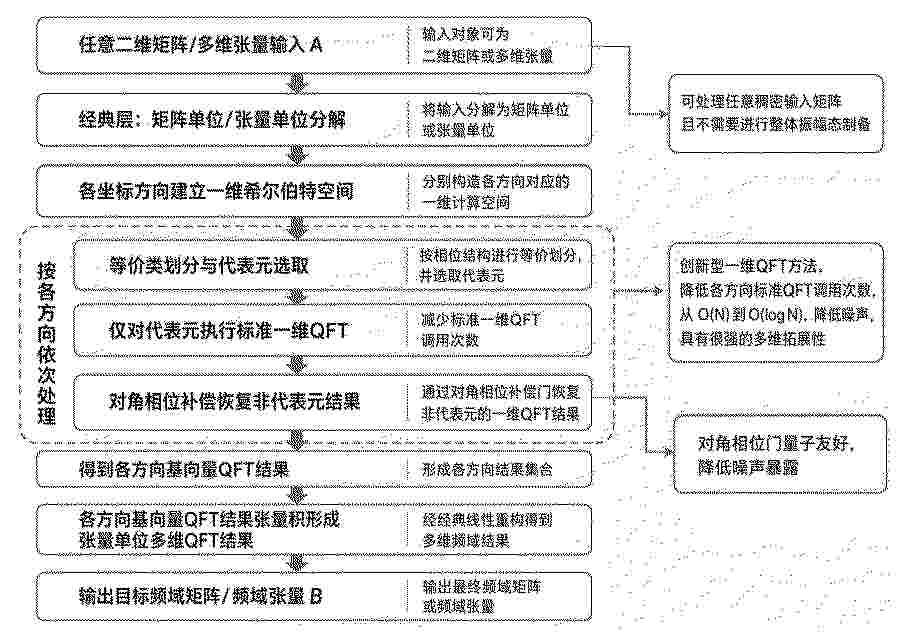
本发明公开了一种低噪声的多维量子傅里叶变换快速实现方法及系统,该方法面向二维矩阵和多维张量的傅里叶变换需求,在经典层将任意稠密输入分解为矩阵/张量单位线性组合并保留系数;在量子层按各坐标方向基编号最高二次幂因子划分等价类,仅对代表元执行标准一维量子傅里叶变换,并通过对角相位补偿恢复非代表元结果;在经典层完成多维张量积重构得到频域矩阵/张量或指定频点信息。该方法避免整体振幅态制备与重复QFT调用,降低线路深度与噪声暴露,并可作为多维傅里叶变换的量子电路实现接口应用于量子相位估计、量子模拟、量子线性代数、量子图像处理、量子机器学习、材料结构分析、电磁场采样网格分析和多维科学计算。
Resumen de: CN122988254A
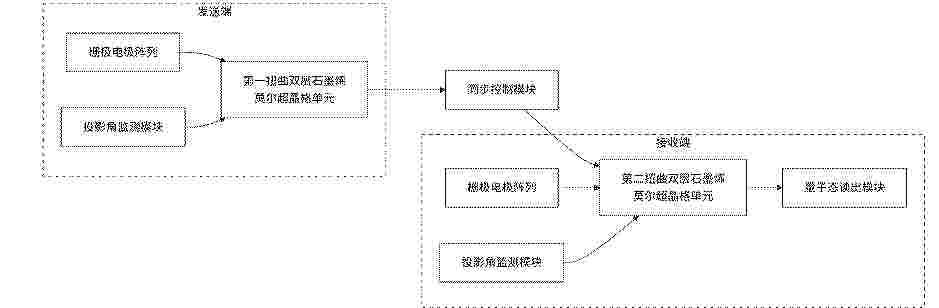
本发明公开了一种基于扭曲双层石墨烯莫尔超晶格的宏观量子态传输装置及其实现方法。所述装置包括发送端和接收端扭曲双层石墨烯莫尔超晶格元件(扭转角,具有非零拓扑陈数)、栅极电压调控系统(通过连续调控,)、投影角调制系统、同步控制系统和量子态读出系统。装置通过栅极电压将发送端和接收端的投影角同步调制至临界值,,实现宏观量子态的瞬时传输。传输保真度。本发明利用扭曲双层石墨烯莫尔超晶格的栅极可调拓扑陈数,实现了室温工作的宏观量子态传输,功耗,适用于星际通信和量子网络等场景。
Resumen de: CN122988238A
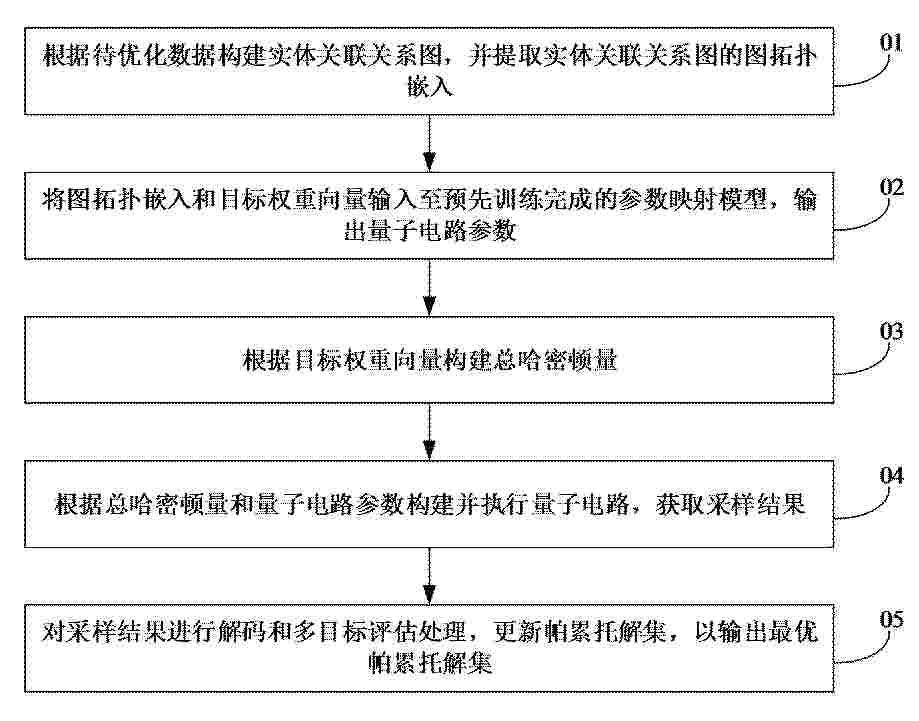
本申请公开了一种量子多目标优化方法、量子多目标优化系统和量子计算机。方法包括:根据待优化数据构建实体关联关系图,并提取实体关联关系图的图拓扑嵌入;将图拓扑嵌入和目标权重向量输入至预先训练完成的参数映射模型,输出量子电路参数;根据目标权重向量构建总哈密顿量;根据总哈密顿量和量子电路参数构建并执行量子电路,获取采样结果;对采样结果进行解码和多目标评估处理,更新帕累托解集,以输出最优帕累托解集。如此,实现量子电路参数的跨拓扑快速迁移,适配动态变化的业务场景,并通过构建总哈密顿量,依托帕累托解集迭代更新机制,持续筛选优质解,进而在一定程度上提升优化结果的全面性与准确性以及最优帕累托解集的获取效率。
Resumen de: CN122985112A
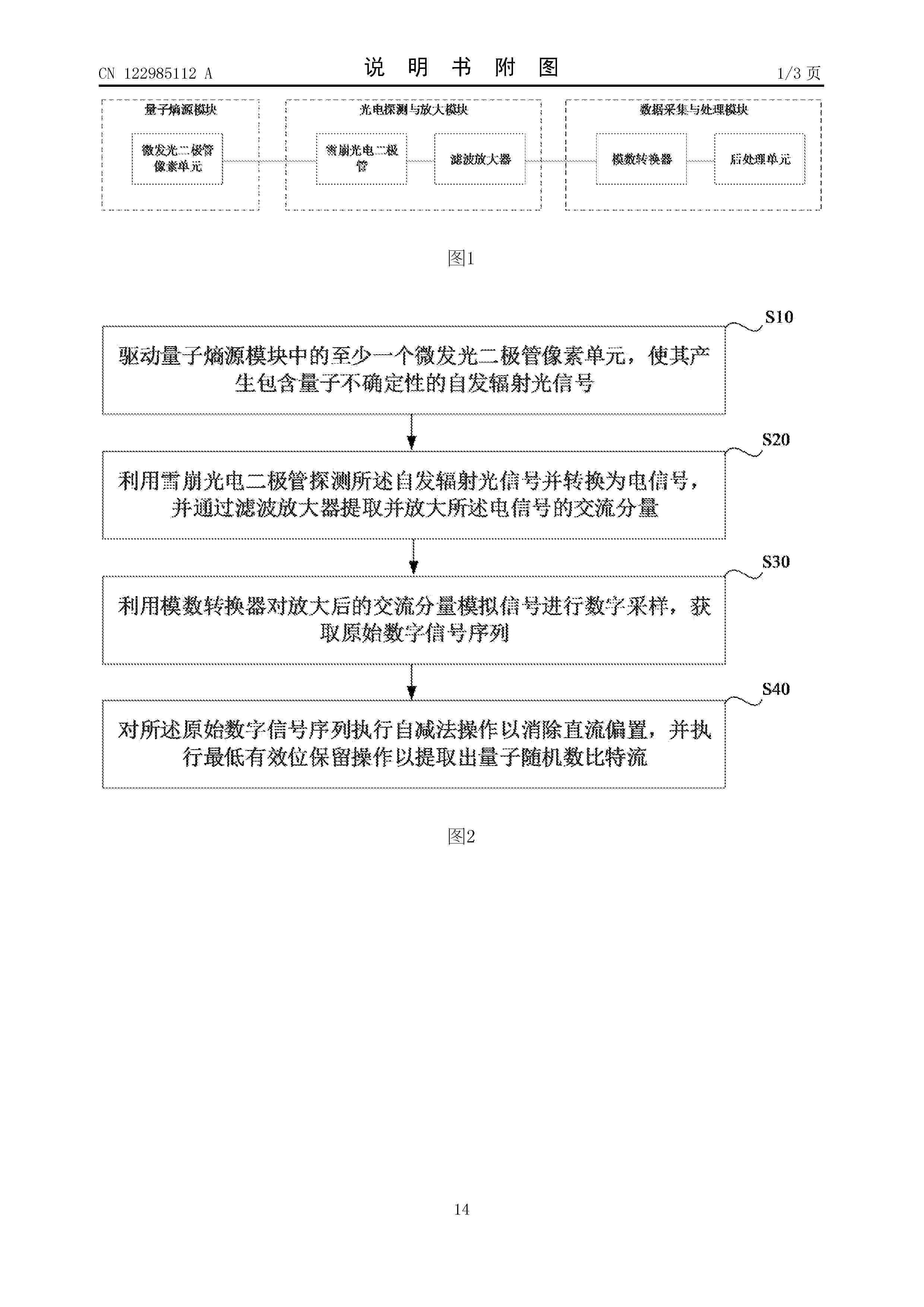
本申请实施例涉及一种量子随机数生成装置和方法。该装置包括:量子熵源模块,包括至少一个微发光二极管像素单元,微发光二极管像素单元用于在正向偏置电流驱动下产生自发辐射光子;光电探测与放大模块,包括雪崩光电二极管和滤波放大器,雪崩光电二极管用于接收自发辐射光子并转换为电信号,滤波放大器用于提取并放大电信号的交流分量;数据采集与处理模块,包括模数转换器和后处理单元,模数转换器用于将放大后的交流分量模拟信号转换为原始数字信号序列,后处理单元用于对原始数字信号序列执行自减法操作和有效位保留操作,以提取出量子随机数比特流。该装置可实现低延迟、高效率的随机性提取,无需复杂光学元件,易于单片集成。
Resumen de: CN122988257A
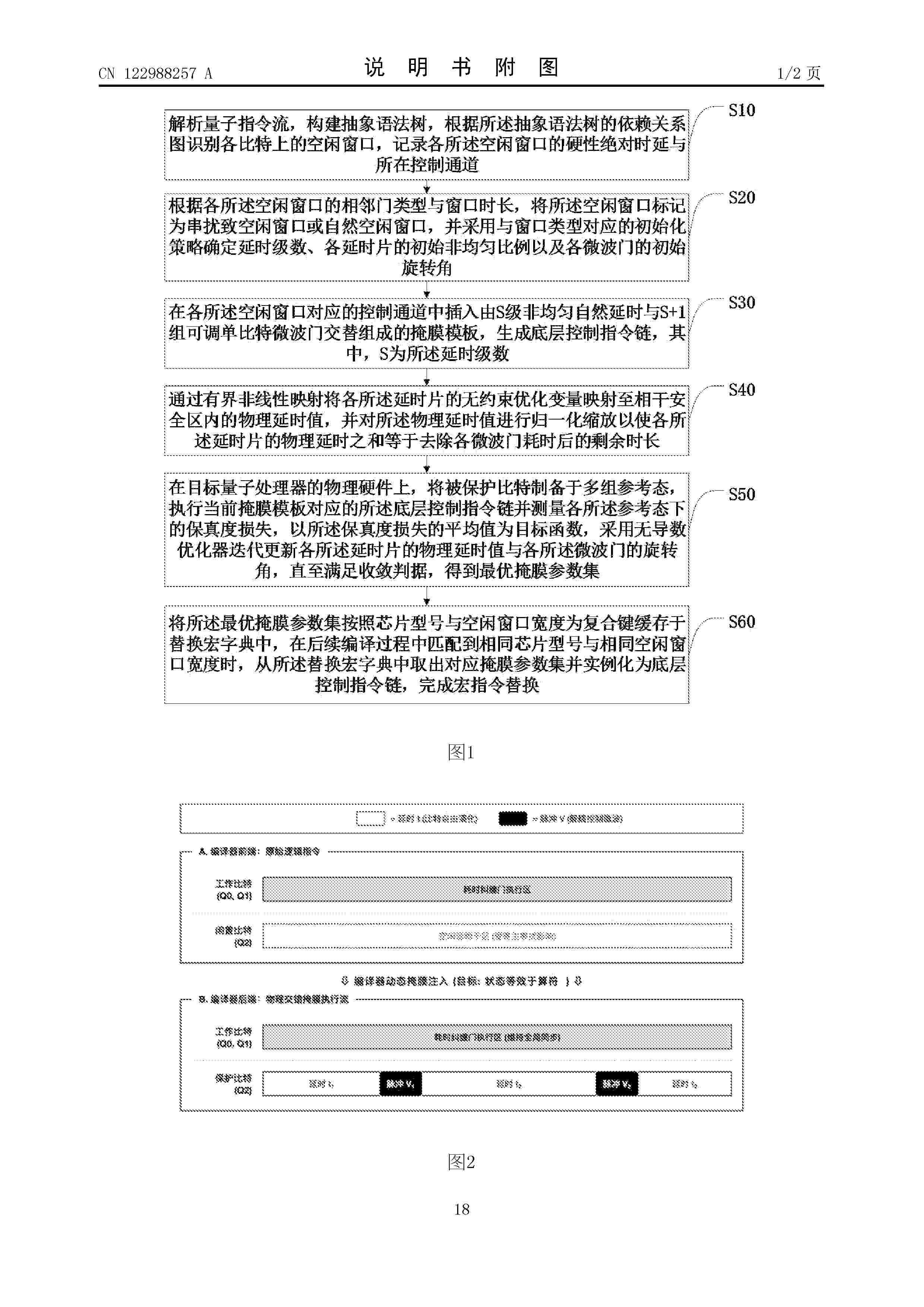
本发明涉及量子电路编译技术领域,公开了一种针对量子处理器的自适应串扰解耦编译方法、系统、终端及存储介质。所述方法包括:解析量子指令流并构建抽象语法树,根据依赖关系图识别比特空闲窗口及其硬性绝对时延;根据相邻门类型对窗口分类并差异化初始化掩膜参数;在空闲窗口内插入由非均匀延时与可调微波门交错组成的掩膜模板;通过有界非线性映射与归一化缩放将延时变量映射至满足相干安全区与全局同步约束的物理延时值;在真机上依据保真度损失进行无导数迭代优化得到最优参数集;将所述最优参数集按芯片型号与窗口宽度缓存于宏字典中供后续编译复用。本发明能够在不依赖解析噪声模型的前提下实现自适应柔性串扰解耦。
Nº publicación: CN122994927A 27/10/2026
Solicitante:
中国移动通信有限公司研究院中国移动通信集团有限公司
Resumen de: CN122994927A
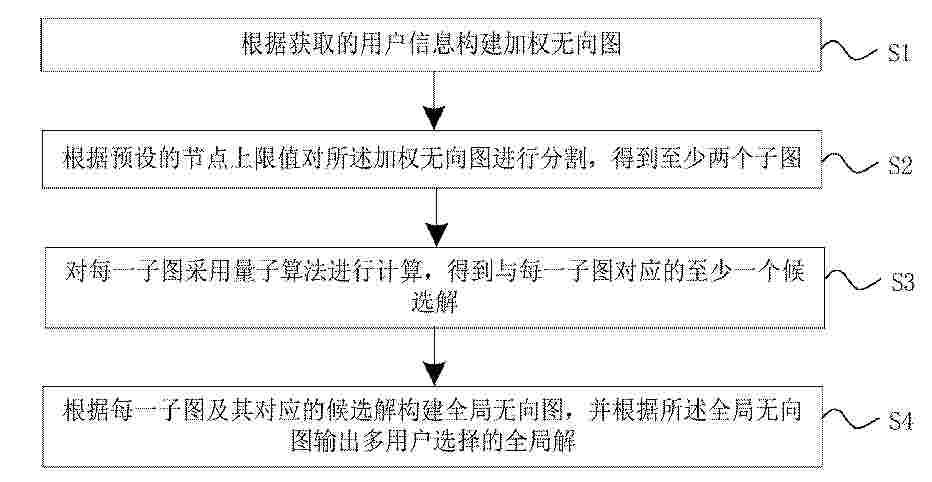
本发明公开了一种多用户选择方法、装置、设备、存储介质和程序产品,根据获取的用户信息构建加权无向图,并根据预设的节点上限值对加权无向图进行分割,得到至少两个子图;然后对每一子图采用量子算法进行计算,得到与每一子图对应的至少一个候选解;最后根据每一子图及其对应的候选解构建全局无向图,并根据全局无向图输出多用户选择的全局解。采用本发明实施例,能提高在多用户选择过程中的求解精度,从而能够为用户合理分配资源,提高通信质量。
 BOPI
 Sede Electrónica