Ministerio de Industria, Turismo y Comercio LogoMinisterior
 

Alerta

Resultados 205 resultados
LastUpdate Última actualización 25/08/2026 [08:09:00]
pdfxls
previousPage Resultados 25 a 50 de 205 nextPage  

一种量子芯片封装基板的电磁建模方法

NºPublicación:  CN122616753A 21/08/2026
Solicitante: 
量子科技长三角产业创新中心
CN_122616753_PA

Resumen de: CN122616753A

本公开提供一种量子芯片封装基板的电磁建模方法,其包括,S1、获取影响所述量子芯片封装基板中信号传递的多个影响因素;S2、确定多个所述影响因素在所述量子芯片的特定工作温度下的参数范围;S3、在所述影响因素的参数范围内,对所述量子芯片封装基板进行影响因素的敏感度分析,确定每个所述影响因素对信号传递影响的比重因子;S4、基于所述影响因素的比重因子和调整规则,进行电磁建模。本公开考虑极低温环境下多个影响因素对量子芯片封装基板的信号传递的影响,使建模方法更加精准,降低优化模型的复杂度,提升建模效率,并具有合理的设计阈值,能够节省材料和设计成本。

Binary Optimization Using Shallow Boson Sampling

NºPublicación:  US20260244702A1 20/08/2026
Solicitante: 
ORCA COMPUTING LTD [GB]
ORCA Computing Limited
US_20260244702_A1

Resumen de: US20260244702A1

The present disclosure describes a system with a boson sampler that generates an output bosonic state by performing a transformation on an input bosonic state and produces measurement outcomes indicating the presence or absence of bosons in output modes. A controller of the system receives these measurement outcomes, generates binary sequences based on the presence or absence of bosons, and determines a solution to a binary optimization problem.

Configurable Qubit Electronics with Wide Output Range

NºPublicación:  US20260244964A1 20/08/2026
Solicitante: 
INT BUSINESS MACHINES CORPORATION [US]
International Business Machines Corporation
US_20260244964_A1

Resumen de: US20260244964A1

A system comprises a memory that stores and a processor that executes computer executable components stored in the memory, wherein the computer executable components comprise a selection component that, on a per qubit basis, defines a resonating frequency (RF), wherein the RF is selected to correspond to a qubit of a quantum system, a configuration component that directs setting of an operating frequency (OF) of an oscillator of qubit control electronics, associated with the qubit, based on the RF, and a digital to analog converter (DAC), of the qubit control electronics, that determines an intermediate frequency (IF) for an IF signal that combined with the OF of the oscillator enables generation of an RF signal having the RF.

METHODS AND APPARATUSES FOR AXIAL BEAM-FREE ELECTROMAGNETICALLY-INDUCED-TRANSPARENCY COOLING

NºPublicación:  US20260245763A1 20/08/2026
Solicitante: 
IONQ INC [US]
IonQ, Inc.
US_20260245763_A1

Resumen de: US20260245763A1

Aspects of the present disclosure may include methods and systems for trapping an ion chain along a first axis, the ion chain including a plurality of trapped ions, applying a magnetic field, to the ion chain, along a second axis perpendicular to the first axis, applying a first beam, to the ion chain, at a first angle relative to the first axis, the first beam including two or more first polarization components, and applying a second beam, to the ion chain, at a second angle relative to the first axis, the second beam including two or more second polarization components, the first angle and the second angle being non-parallel to the first axis or the second axis.

SYSTEM AND METHOD OF CARRIER-FREE RAMAN TRANSITION FOR ENTANGLEMENT GENERATION WITH TRAPPED IONS

NºPublicación:  US20260244970A1 20/08/2026
Solicitante: 
DUKE UNIV [US]
Duke University
US_20260244970_A1

Resumen de: US20260244970A1

Technologies for generating entanglement in a quantum computing system include confining ions in trapping potentials that define at least one shared motional mode. First and second electromagnetic fields are generated and combined to form a Raman interaction field having a frequency difference corresponding to an internal state transition of the ions. At least one of the electromagnetic fields is spatially structured to produce an electric-field null and a transverse spatial gradient. The Raman interaction field is directed toward the ions such that at least one ion is positioned at the electric-field null. Application of the Raman interaction field induces coupling between internal states of the ions and the shared motional mode while suppressing carrier transitions by the spatial field structure. Coupling of internal states of multiple ions to the shared motional mode mediates entanglement between the ions.

ERROR MITIGATION FOR QUANTUM COMPUTING

NºPublicación:  WO2026173562A2 20/08/2026
Solicitante: 
GOOGLE LLC [US]
GOOGLE LLC
WO_2026173562_A2

Resumen de: WO2026173562A2

One example aspect of the present disclosure is directed to a method for operating a quantum computing system (QCS) that includes a set of qubits. The method includes generating a set of noisy data by repeatably measuring a noisy observable of a quantum circuit operating on the set of qubits. The set of noisy data and the noisy observable are subject to noise associated with the quantum circuit and each datapoint of the set of noisy data is associated with an eigenvalue of the noisy observable. The noisy data is modeled as a hybrid distribution, which includes a combination of a noiseless distribution and a noise-only distribution. Each datapoint of the set of noisy data is assumed to have a hidden label as coming from either the noiseless distribution or the noise-only distribution. This label is estimated for each datapoint, based on the eigenvalue associated with the datapoint, and a constructed model for any of the hybrid distribution, the noise-only distribution, and the noiseless distribution. This may require additional data to be taken from the QCS to model the noise-only distribution. A target quantity is determined based on either the model for the noiseless distribution or the datapoints combined with their attached labels.

METHODS AND SYSTEMS FOR IMPLEMENTING SHOR'S ALGORITHM WITH QUDIT RECYCLING

NºPublicación:  US20260244972A1 20/08/2026
Solicitante: 
INSTITUT NATIONAL DE LA RECHERCHE SCIENT [CA]
INSTITUT NATIONAL DE LA RECHERCHE SCIENTIFIQUE
US_20260244972_A1

Resumen de: US20260244972A1

0000 Quantum computing harnesses harness quantum mechanics to solve a range of problems extending beyond the capabilities of electronic computers. Quantum computing exploits superposition, entanglement, coherence and interference where quantum processors combine qubits to store information and perform algorithms to yield computational outcomes. One such algorithm is Shor's algorithm which enables superpolynomial speedup in factoring large integers as it can explore multiple potential solutions simultaneously rather than sequentially. However, Shor's algorithm requires the substantial computational resources, qubits, to achieve optimal precision in determining factorization solutions, even for relatively small numbers. To address an approach is presented exploiting higher-dimensional quantum units (qudits) with optimization of the dimensionality of qudits to minimize the number of recycling steps in the iterative Shor's algorithm allowing smaller circuit depths, thereby reducing circuit complexity with deterministic entangling operations to enhance circuit efficiency by utilizing two distinct photonic degrees of freedom.

Long-Range Quantum Interactions via Multi-Mode Qubits

NºPublicación:  US20260244968A1 20/08/2026
Solicitante: 
INT BUSINESS MACHINES CORPORATION [US]
International Business Machines Corporation
US_20260244968_A1

Resumen de: US20260244968A1

0000 Systems/techniques that facilitate long-range quantum interaction via multi-mode qubits are provided. In various embodiments, a device can include two multi-mode qubits coupled by a cable. In various aspects, the two multi-mode qubits can have a first excitation mode and a second excitation mode. In various instances, a dipole moment symmetry of the cable can align with that of the second excitation mode. In various cases, the device can include a signal generator that can transmit a quantum state between the two multi-mode qubits, based on biasing the two multi-mode qubits from the first excitation mode toward the second excitation mode.

CONFIGURABLE QUBIT CIRCUITS, SUPERCONDUCTING PROCESSORS INCLUDING CONFIGURABLE QUBIT CIRCUITS, AND METHODS OF CONFIGURING THEREOF

NºPublicación:  US20260247872A1 20/08/2026
Solicitante: 
1372934 B C LTD [CA]
1372934 B.C. LTD.
US_20260247872_A1

Resumen de: US20260247872A1

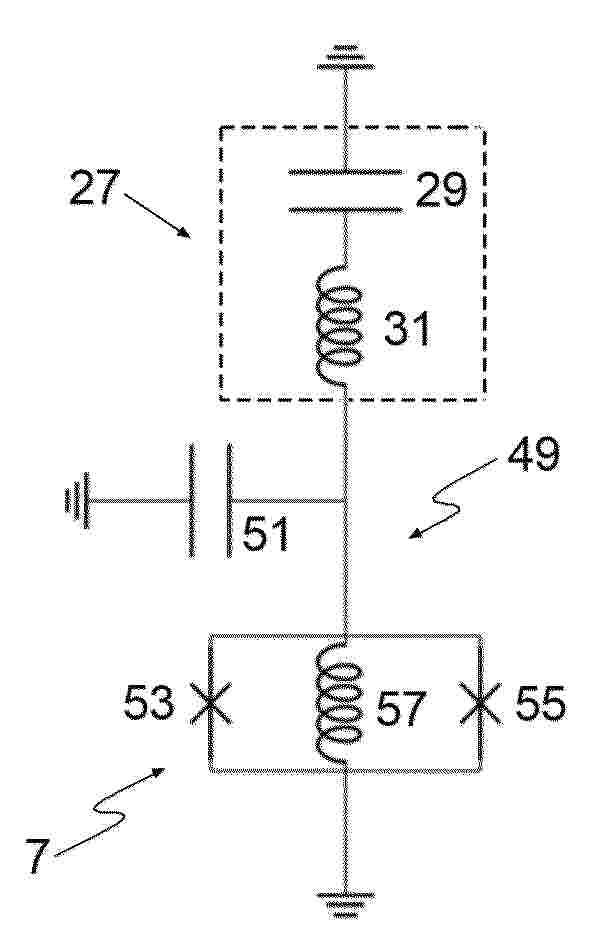
0000 Superconducting circuits providing a configurable qubit architecture may include: superconductive arms having an open shape terminating at two connection nodes; a set of Josephson junctions, each electrically arranged between connection nodes of one superconductive arm; a set of arm connection lines extending between connection nodes of each superconductive arm and connection nodes of other superconductive arms; and, a set of tunable connectors that interrupt arm connection lines. Tunable connectors can be selectively programmed to “ON” or “OFF” states, enabling or inhibiting current flow across arm connection lines, and electrically coupling or un-coupling superconductive arms to define closed superconductive paths of qubits. The superconducting circuits are configurable to provide a qubit arrangement suited to solving a problem on a quantum processor, such that embedding the problem topological representation uses fewer chains to represent relationships between problem variables. Methods of programming the superconducting circuits and performing coupling compensation are provided.

Chains of semiconductor quantum dots coupled via superconductors

NºPublicación:  US20260247873A1 20/08/2026
Solicitante: 
TECHNISCHE UNIV DELFT [NL]
Technische Universiteit Delft
US_20260247873_A1

Resumen de: US20260247873A1

0000 The invention relates to a semiconductor-superconductor hybrid structure and an integrated quantum dot structure for controllably coupling quantum dots, and further relates to an integrated quantum circuit architecture for realizing a protected qubit. The semiconductor-superconductor hybrid structure comprises a semiconductor extending in a first direction and hosting a first quantum dot and a second quantum dot; a superconductor extending in a second direction substantially perpendicular to the first direction, the superconductor being partly formed on top of a region of the semiconductor that is located in between the first and second quantum dots with respect to the first direction; and a control gate configured to control a coupling between the first and second quantum dots, the coupling being mediated by one or more electrons and involving the superconductor.

CAPACITIVE COUPLING COMPENSATION FOR DIRECT CURRENT ELECTRODES IN ION TRAPS

NºPublicación:  US20260245855A1 20/08/2026
Solicitante: 
INFINEON TECH AUSTRIA AG [AT]
Infineon Technologies Austria AG
US_20260245855_A1

Resumen de: US20260245855A1

An ion trap system and method of using an ion trap system, the system including a substrate, a radio frequency (RF) source configured to provide an RF signal, an RF electrode disposed in the substrate and connected to the RF source, a direct current (DC) source configured to provide a DC signal, a DC electrode disposed in the substrate and connected to the DC source, wherein the DC electrode is separate from the RF electrode, and a coupling compensation system configured to provide a compensating RF signal associated with the RF signal.

METHOD OF FABRICATING A-AXIS JOSEPHSON JUNCTIONS

NºPublicación:  WO2026174146A1 20/08/2026
Solicitante: 
AMBATURE INC [US]
AMBATURE, INC.
WO_2026174146_A1

Resumen de: WO2026174146A1

According to various implementations of the invention, a method for fabricating a Josephson Junction comprises: forming at least one trilayer monolith from a trilayer of a top high-temperature superconducting ("HTS") layer, an insulator, and a bottom HTS later, the trilayer monolith formed by removing a portion of the top HTS layer and a portion of the insulator layer to expose the bottom HTS layer; forming at least one wire in the bottom HTS layer by removing a portion of the bottom HTS layer; growing a second insulator layer over the at least one trilayer monolith formed from the trilayer and the at least one wire formed in the bottom HTS layer; forming at least one via hole in the second insulator layer to reveal at least one component underlying the second insulator layer; growing a top HTS wiring layer over the second insulator and the underlying component; and forming at least one wire in the top HTS wiring layer.

Quantum computing using a trapped-ion array and optical potentials

NºPublicación:  US20260244969A1 20/08/2026
Solicitante: 
QUANTUM ART LTD [IL]
YEDA RES AND DEVELOPMENT CO LTD [IL]
QUANTUM ART LTD.
YEDA RESEARCH AND DEVELOPMENT CO. LTD.
US_20260244969_A1

Resumen de: US20260244969A1

A method for quantum computing includes defining a quantum computation including a sequence of computing steps in which multiple quantum operations are performed in parallel in each step. An array of ions (40) in an ion trap (24) is segmented into first computational segments (110) including groups of adjacent ions separated by first barrier ions (112) between the groups, by optically confining the barrier ions. Excitation fields are applied to the ions in the computational segments so as to cause the groups of ions to carry out the quantum operations in a first step in the sequence. After completing the first step, the array is reconfigured into second computational segments by optically confining second barrier ions, at least some of which are different from the first barrier ions, while retaining at least some coherence from the first computational segments to the second computational segments.

METHOD FOR SOLVING A COMPUTATION PROBLEM

NºPublicación:  US20260244701A1 20/08/2026
Solicitante: 
KIPU QUANTUM GMBH [DE]
Kipu Quantum GmbH
US_20260244701_A1

Resumen de: US20260244701A1

0000 The invention relates to a computer-implemented method, to a computer program and to a computer device as described herein. In particular, the invention relates to a computer-implemented method for solving a computation problem, comprising the use of an Ising Hamiltonian in the form (I): wherein (II), Ω is the Rabi frequency of the transition and can be dynamically controlled by controlling the power of one of the coupling laser, Δ corresponds to the detuning with regards to the two-photon transition and can also easily be changed dynamically, and the term containing ∫ is the interactions term implemented via a Rydberg blockade mechanism and can optionally be rendered site-dependent or can be dynamically tuned, wherein the problem is solved by finding the ground state of the final Hamiltonian. 0000 HRyd =Ω(t)Σσx −Δ(t)Σn+JΣnn  (I) 0000 ni =(1−σz )/2,  (II)

CHARGED PARTICLE TRAP APPARATUS

NºPublicación:  US20260245764A1 20/08/2026
Solicitante: 
OXFORD IONICS LTD [GB]
Oxford Ionics Limited
US_20260245764_A1

Resumen de: US20260245764A1

0000 A charged particle trap apparatus is disclosed. The apparatus comprises a charged particle trap including a set of electrodes for transporting charged particles. The apparatus comprises a plurality of voltage sources, each voltage source having a respective output. The apparatus comprises a set of switches. Each electrode in the set of electrodes is provided with a respective switch in the set of switches. Each switch in the set of switches is configured to selectably connect the electrode to the output of one of the voltage sources and at least two switches in the set of switches are configured to be selected together.

PARALLEL LOCAL CONTROL OF OPTICALLY ADDRESSED QUBITS

NºPublicación:  US20260244073A1 20/08/2026
Solicitante: 
THE TRUSTEES OF PRINCETON UNIV [US]
THE TRUSTEES OF PRINCETON UNIVERSITY
US_20260244073_A1

Resumen de: US20260244073A1

0000 Disclosed are systems and techniques for generating and steering laser beams onto atoms for performing locally addressed quantum gate operations. A system may include (i) a high-speed acousto-optic modulator (AOM) for producing a single input beam, (ii) a phase-only spatial light modulator (SLM) for imprinting a phase pattern on the single input beam, the phase pattern being chosen such that after a lens positioned after the SLM, the single input beam is divided into a pattern of secondary beams that correspond to the positions of the atoms or ions in a quantum computer, the lens after the SLM being positioned so the secondary beams are focused to form an image on a digital micromirror device (DMD) amplitude modulator, (iii) a compensation grating after the DMD, in the path of the secondary beams, and (iv) an objective lens after the compensation grating to image the secondary beams onto an atomic array.

HIGH DENSITY CONNECTOR FOR SUPERCONDUCTING APPLICATIONS

NºPublicación:  US20260246213A1 20/08/2026
Solicitante: 
IQM FINLAND OY [FI]
IQM FINLAND OY
US_20260246213_A1

Resumen de: US20260246213A1

The invention relates to a connector for electrically connecting a plurality of transmission lines to another component. The connector comprises a ceramic body and a plurality of contacts located on a surface of the ceramic body. Each contact is connected to one of the plurality of transmission lines, and the connector is configured to be electrically connected to the other component by connecting the contacts of the connector to contacts on the other component. The invention also includes a high density attenuator or filter bank, which may be connected to the connector, and a method for forming a connection using the connector.

QUBIT CONTROL CIRCUIT

NºPublicación:  US20260244965A1 20/08/2026
Solicitante: 
NATIONAL UNIV CORPORATION YOKOHAMA NATIONAL UNIV [JP]
National University Corporation YOKOHAMA National University
US_20260244965_A1

Resumen de: US20260244965A1

This qubit control circuit includes a first power supply line through which a first excitation current, which is a current having a predetermined frequency, is input, a second power supply line through which a second excitation current, which is a current having a predetermined waveform, is input, and an output signal generation circuit including an input signal line through which an input signal indicating a logic state is input, a magnetic coupling part, and a Josephson junction, in which the Josephson junction outputs an output signal in accordance with the frequency of the first excitation current and the waveform of the second excitation current input via the magnetic coupling part, and the logic state indicated by the input signal.

CRYOGENIC COOLING SYSTEM

NºPublicación:  US20260243476A1 20/08/2026
Solicitante: 
OXFORD NANOSCIENCE LTD [GB]
Oxford Nanoscience Limited
US_20260243476_A1

Resumen de: US20260243476A1

0000 A cryogenic cooling system is provided comprising a cryogenic refrigerator assembly and two or more connected modules. The cryogenic refrigerator assembly comprises one or more cryogenic refrigerators. Each said connected module comprises: a housing defining an internal volume for the module, the housing having a plurality of side faces, and a plurality of stages arranged within the internal volume for the module, wherein one or more of the plurality of stages is thermally coupled to the cryogenic refrigerator assembly. The two or more said modules are mutually connected at respective side faces, and a first said stage of a first said module is thermally coupled to a first said stage of a second said module.

FIRST-QUANTIZATION BLOCK ENCODING FOR QUANTUM EMULATION

NºPublicación:  US20260244963A1 20/08/2026
Solicitante: 
PSIQUANTUM CORP [US]
PsiQuantum, Corp.
US_20260244963_A1

Resumen de: US20260244963A1

0000 Systems and methods for emulating a physical quantum system with a quantum computation. A model Hamiltonian that approximates a first quantization Hamiltonian of the physical quantum system is stored in memory. The physical system includes a plurality of particles. The first quantization Hamiltonian includes a plurality of first quantization energy operators, and the model Hamiltonian includes a plurality of energy terms corresponding to respective ones of the plurality of first quantization energy operators. Each energy term includes a respective energy operator, a respective energy register operator, and a respective inverse energy operator. The physical quantum system is emulated by performing a quantum computation on a plurality of qubits of the quantum computing system to emulate time evolution using the model Hamiltonian.

Method and Circuit for Implementing Two-Qubit Gate, Quantum Device, and Quantum Chip

NºPublicación:  US20260244967A1 20/08/2026
Solicitante: 
ALIBABA DAMO HANGZHOU TECH CO LTD [CN]
ALIBABA DAMO (HANGZHOU) TECHNOLOGY CO., LTD.
US_20260244967_A1

Resumen de: US20260244967A1

Disclosed are a method and a circuit for implementing a two-qubit gate, a quantum device, and a quantum chip. The method includes: applying a first quantum control signal to a first data qubit; applying a second quantum control signal to a second data qubit; and activating, by means of adjusting the first quantum control signal and the second quantum control signal, longitudinal coupling between the first data qubit and the second data qubit within a predetermined time, so as to implement the two-qubit gate. The present disclosure solves the technical problem in the related art of low precision of the two-qubit gate.

Qubit Detection Using Superconductor Devices

NºPublicación:  US20260244961A1 20/08/2026
Solicitante: 
PSIQUANTUM CORP [US]
PsiQuantum Corp.
US_20260244961_A1

Resumen de: US20260244961A1

0000 A circuit includes a resonant circuit and a detection circuit. The detection circuit includes a superconducting component coupled with the resonant circuit, and an impedance component coupled to the superconducting component. The superconducting component is configured to receive an input current. The superconducting component is configured to carry a first current that has a current density that is less than a threshold current density, while the first resonant circuit is in the first state, and carry a second current that has a current density that exceeds the threshold current density while the first resonant circuit is in the second state, thereby transitioning the superconducting component to a non-superconducting state while the resonant circuit is in the second state. A method of operating the detection circuit is also described herein.

ON-DEMAND CO-PROCESSING RESOURCES FOR QUANTUM COMPUTING

NºPublicación:  US20260244498A1 20/08/2026
Solicitante: 
AMAZON TECH INC [US]
Amazon Technologies, Inc.
US_20260244498_A1

Resumen de: US20260244498A1

0000 An algorithm execution management system of a provider network may receive a request from a user for executing an algorithm using different types of computing resources, including classical computing resources and quantum computing resources. The request may indicate a container that includes the algorithm code and dependencies such as libraries for executing the algorithm. The algorithm execution management system may first determine that the quantum computing resources are available to execute the algorithm, and then cause the classical computing resources to be provisioned. The algorithm execution management system may cause at least one portion of the algorithm to be executed at the classical computing resources using the container indicated by the user, and at least another portion of the algorithm to be executed at the quantum computing resources. The quantum task of the algorithm may be provided a priority during execution of the algorithm for using the quantum computing resources.

SYSTEM AND METHOD FOR PARALLEL IMPLEMENTATION OF MULTI-QUBIT QUANTUM GATES

NºPublicación:  US20260245766A1 20/08/2026
Solicitante: 
PRESIDENT AND FELLOWS OF HARVARD COLLEGE [US]
MASSACHUSETTS INST OF TECHNOLOGY [US]
President and Fellows of Harvard College
Massachusetts Institute of Technology
US_20260245766_A1

Resumen de: US20260245766A1

A device includes a grouping of N qubits, where N is equal to two or more, and a coherent light source configured to, given selected values for a set of parameters of at least a first and a second laser pulse, the parameters selected from a relative phase shift, a laser frequency, a laser intensity, and a pulse duration: apply at least the first and second laser pulses to all qubits within the grouping of N qubits, thereby coupling a non-interacting quantum state |1 to an interacting excited state |r, such that each qubit that begins in quantum state |1 returns to the state |1 upon completion of the at least first and second laser pulses, and such that qubits in the grouping are mutually blockaded.

ESTIMATING THE FIDELITY OF QUANTUM LOGIC GATES AND QUANTUM CIRCUITS

Nº publicación: US20260244974A1 20/08/2026

Solicitante:

GOOGLE LLC [US]
Google LLC

US_20260244974_A1

Resumen de: US20260244974A1

0000 Methods, systems and apparatus for estimating the fidelity of quantum logic gates. In one aspect, a method includes defining multiple sets of random quantum circuits; for each set of random quantum circuits: selecting an observable for each element in the set of random quantum circuits, wherein each selected observable corresponds to a respective element of the set of random quantum circuits and is dependent on the element to which it corresponds; estimating a value of a polarization parameter for the set of random quantum circuits, comprising performing a least mean squares minimization based on multiple expectation values, wherein each expectation value comprises an expectation value of a respective selected observable with respect to an output of an experimental implementation of a random quantum circuit corresponding to the respective selected observable; and processing the estimated polarization parameter values to obtain an estimate of the fidelity of the n-qubit quantum logic gate.

traducir