Si deseas distinguir tus productos, servicios o ambos de los de otra empresa, es posible que necesites una marca o nombre comercial. Descubre qué son, en qué consiste su procedimiento de registro y qué implica.

Información sobre los plazos de presentación de solicitudes de transformación de marcas de la Unión Europea en marca nacional española. Más información


Si tienes un nuevo dispositivo, producto o procedimiento que resuelva un problema técnico o tenga una ventaja práctica, existen distintas formas de protegerlo en España y en otros países. Descubre cómo hacerlo.

¿Tu innovación reside en la estética, la ornamentación o la apariencia de tu producto? Protégela mediante un diseño industrial. Descubre qué derechos confiere el registro y cómo realizar la tramitación.

Las indicaciones geográficas protegen el nombre de un producto originario de una zona geográfica, a la cual le debe una determinada calidad, reputación u otra característica. Descubre qué son, en qué consiste su procedimiento de registro y qué beneficios conceden.

Las patentes publicadas en todo el mundo son una valiosa fuente de información científica, técnica y comercial.

Si eres emprendedor/a o una empresa y quieres potenciar y mejorar la rentabilidad de tu negocio protegiendo de forma adecuada los activos intangibles de tu organización, en este espacio encontrarás lo necesario.


 224
resultados
224
resultados
 Última actualización
23/10/2026 [09:45:00]
Última actualización
23/10/2026 [09:45:00]


 Resultados 50 a 75 de 224

Resumen de: CN122932522A
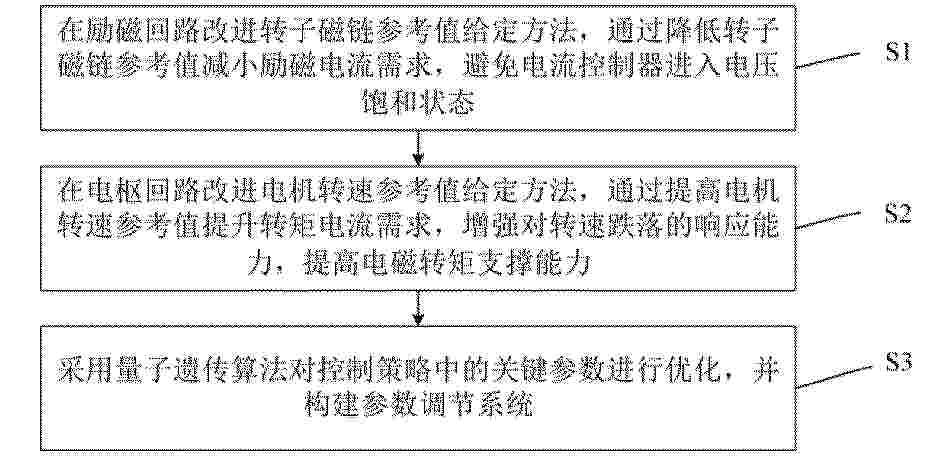
本发明涉及一种可调速驱动设备电压暂降抗扰性能提升方法及系统,在电压暂降的情况下,在励磁回路改进转子磁链参考值给定方法,基于直流母线电压变化量计算并降低转子磁链参考值,由磁链控制器根据计算获得的转子磁链参考值计算得到励磁电流参考值;在电枢回路改进电机转速参考值给定方法,基于电机转速变化量计算并提高电机转速参考值,由转速控制器根据计算获得的电机转速参考值计算得到电枢电流参考值;采用量子遗传算法进行对转子磁链参考值与电机转速参考值的计算参数以及磁链控制器与转速控制器的控制参数进行联合优化,得到转差频率内的最优参数。本发明提高了设备在复杂电网扰动条件下的连续运行能力和运行可靠性。

Resumen de: CN122927075A
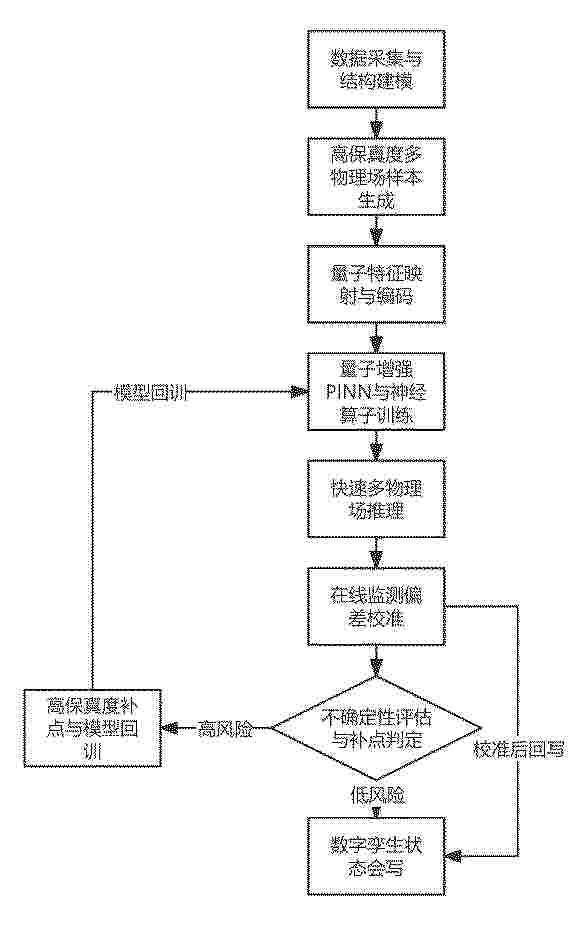
本发明提供了一种基于量子增强PINN的电力设备多物理场快速仿真方法及系统,包括:获取目标电力设备的信息参数和在线监测数据,构建高保真多物理场样本集及设备多物理场拓扑图;将不同部件的局部参数映射至量子比特子集,并根据拓扑图中的耦合关系确定纠缠连接,得到拓扑约束量子特征;构建量子增强物理信息神经网络模型,使量子核对齐损失与多物理场物理残差通过共享量子线路参数进行联合优化;根据预测状态与在线监测数据之间的偏差确定目标补点子域和偏差来源,执行局部高保真补点并选择性更新量子线路参数,将校准后的物理参数回写至数字孪生模型。本发明提高复杂工况下多物理场快速仿真的泛化能力、物理一致性和在线校准能力。
Resumen de: CN122931983A
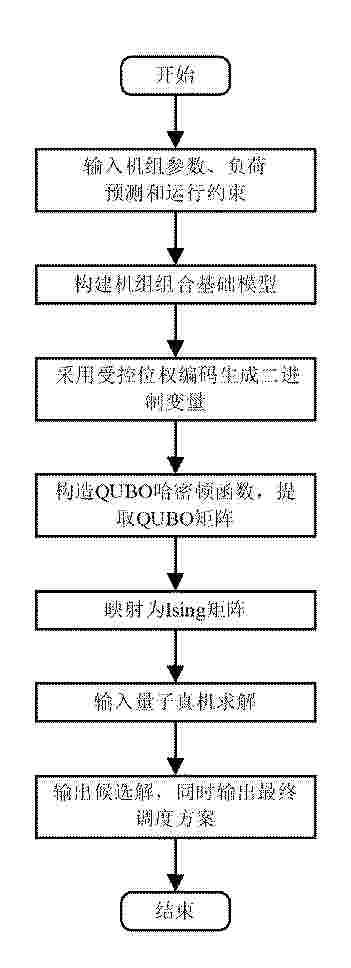
本发明本发明涉及电力系统优化调度技术领域,具体是一种基于QUBO模型的机组组合问题量子计算方法及系统,首先建立考虑发电运行成本、启停成本、功率平衡、旋转备用、机组出力上下限和爬坡约束的机组组合模型;然后采用“最小技术出力+附加出力”的出力表达方式、受控位权二进制编码方式以及爬坡约束比特共用机制,将机组组合模型转化为QUBO哈密顿函数;进一步提取标准QUBO矩阵,并将其映射为Ising矩阵输入量子真机或类量子优化器;最后对输出的多组候选解进行解还原、可行性验证和成本比对,从而获得满足机组组合运行约束的优化调度方案。
Resumen de: JP2026168991A
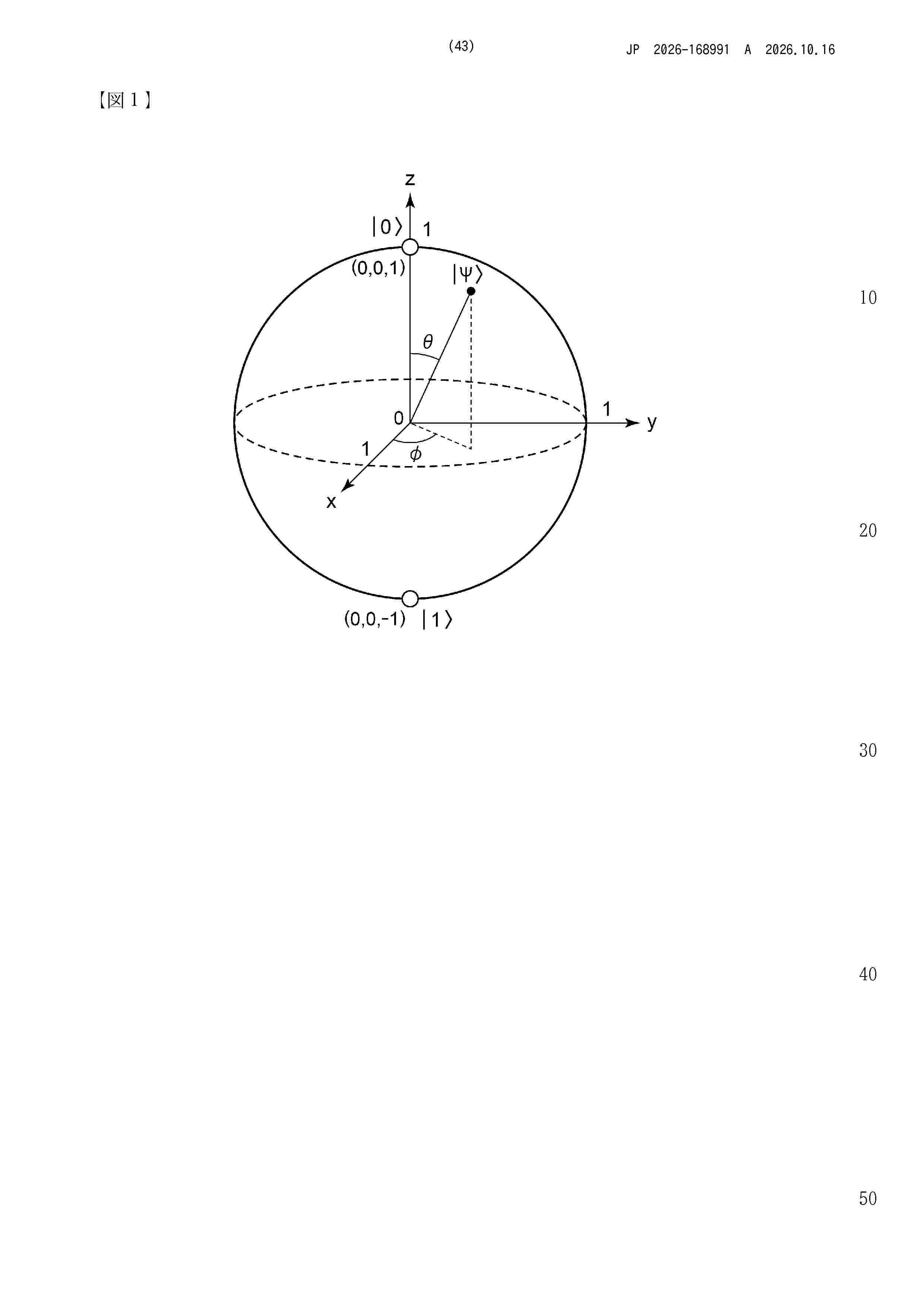
0001 【課題】量子ゲートの演算の様子や量子ゲートの実行結果を、ブロッホ球上に視覚的に表示する。 【解決手段】球面上に1量子状態を表示する量子状態表示装置1は、球面11と、球面11上に配置された複数の表示点を含む表示部12と、入力部13と、表示部12を制御する制御部14と、を備える。表示部12の各表示点は、量子ビットの量子状態を表す。入力部13は、ユーザが所望の1量子ゲートを入力できるように構成される。入力部13に1量子ゲートが入力されると、制御部14は、量子ビットに対して当該1量子ゲートを実行した結果に相当する表示点を表示させるように表示部12を制御する。 【選択図】図2
Resumen de: CN122930234A
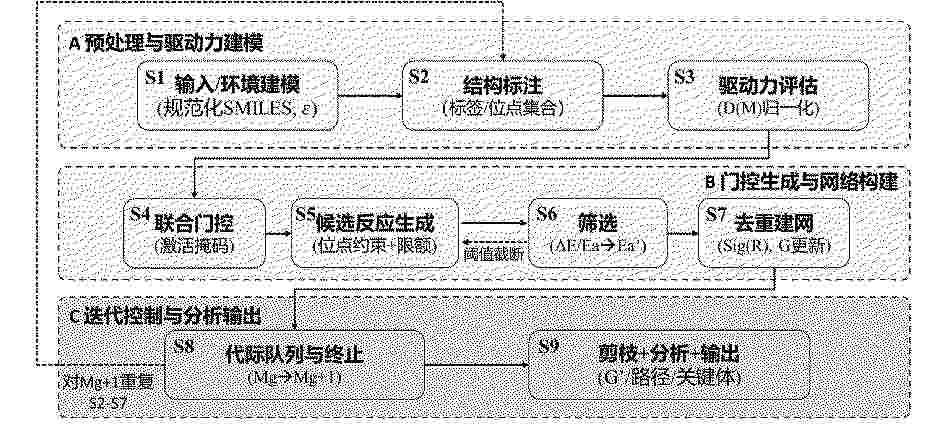
本发明公开了一种基于驱动力感知与结构门控的电化学反应网络建模方法,该方法包括:将SMILES列表解析为分子对象并构建环境对象;对各分子对象进行结构标注得到结构标签和反应位点集合;依据环境对象与结构标签计算驱动力向量;基于结构标签与驱动力向量进行联合门控,筛选出激活算子;基于反应位点集合,应用激活算子生成候选反应;对候选反应计算反应能与校正活化能,判定可行反应;构建反应签名进行去重并建立有向反应网络,通过代际队列实现迭代增长与终止控制;对网络执行剪枝、路径搜索与关键中间体识别,输出反应网络拓扑、主导路径及关键中间体。本发明能够有效控制反应网络规模,提升反应路径的物理可行性,并增强机理分析的可解释性。
Resumen de: CN122926070A
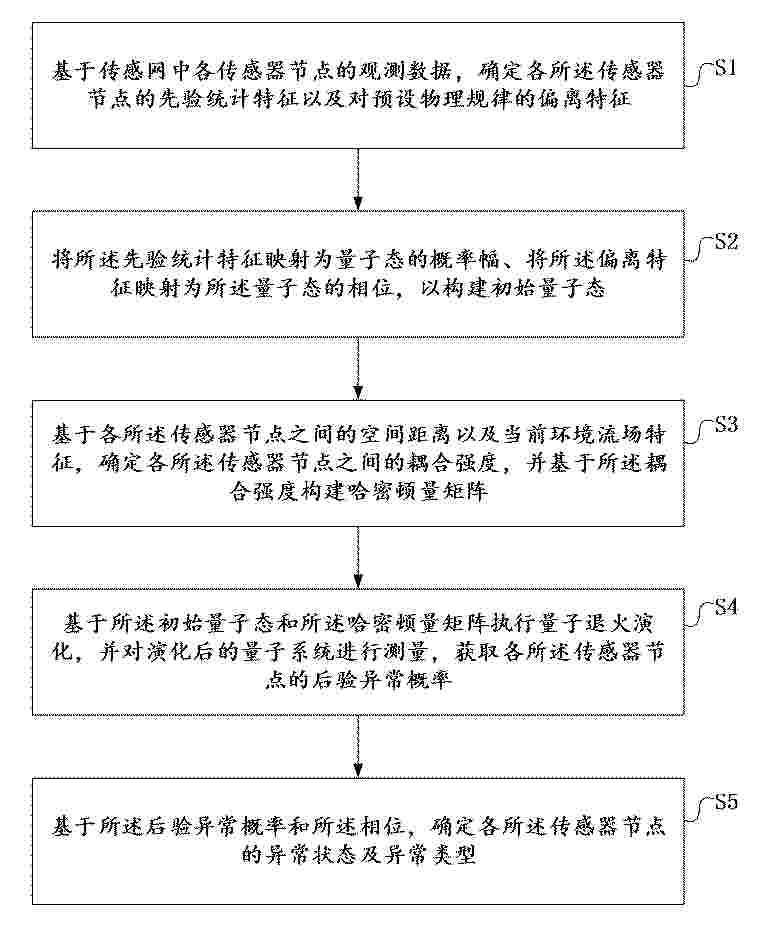
本申请属于传感数据处理技术领域,提供了一种基于量子退火态编码的传感网异常数据感知方法、系统、设备及介质,该方法包括:基于传感器节点观测数据确定先验统计特征及物理规律偏离特征并映射为量子态概率幅与相位以构建初始量子态;基于节点间空间距离及环境流场特征动态确定耦合强度并构建哈密顿量矩阵;基于初始量子态和哈密顿量矩阵执行量子退火演化并测量获取后验异常概率;基于后验异常概率和相位确定异常状态及类型。本申请融合物理约束与全局空间相关性,提升了复杂环境下异常感知的准确性。
Resumen de: CN122927566A
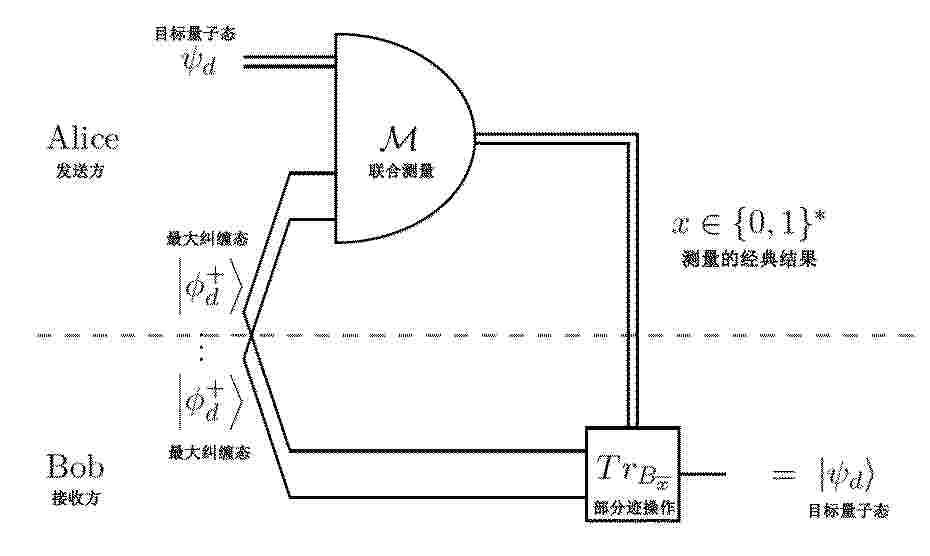
本发明涉及量子态制备,具体涉及端口基状态准备方法及通用可编程混合处理器,发送方Alice获取目标量子态的经典描述信息;发送方Alice基于经典描述信息构造一组与目标量子态相关的正算子值测度POVM;发送方Alice在预先共享的多对最大纠缠态的本地部分上执行正算子值测度POVM,获得指示目标量子态被成功投影的端口索引或协议失败的测量结果;发送方Alice将测量结果通过经典信道发送给接收方Bob;接收方Bob选择测量结果指示的端口索引对应的预先共享的多对最大纠缠态的本地部分保留,并对剩余端口进行部分迹操作;本发明提供的技术方案能够有效克服现有技术所存在的传输精度较低、资源利用效率低下的缺陷。
Resumen de: CN122932682A
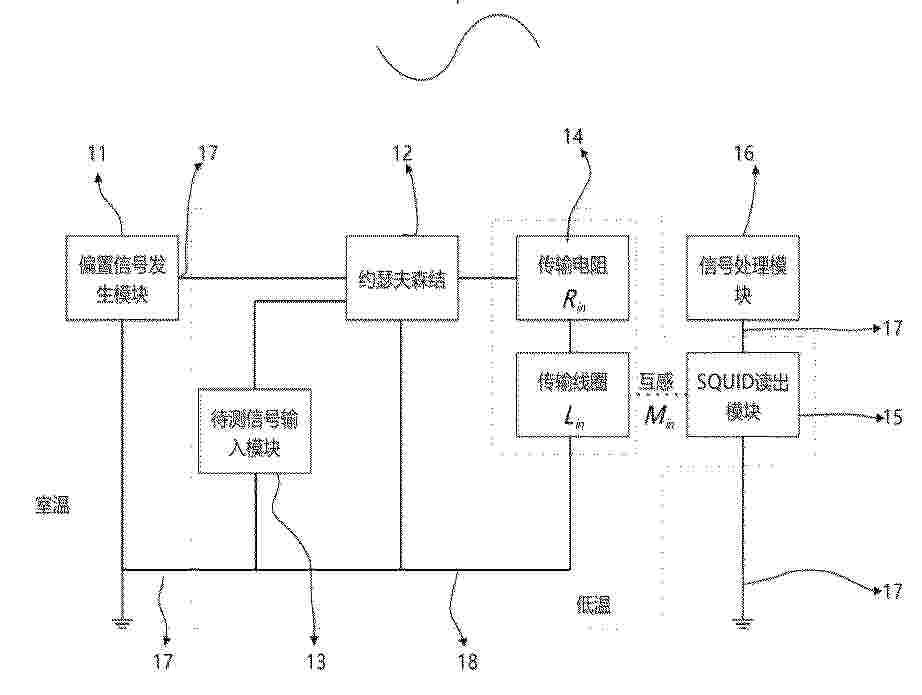
本发明公开了一种基于超导结开关的多位并行编码器及切换编码方法,属于超导集成电路技术领域;该编码器包括偏置信号发生模块、待测信号输入模块、由多个具有梯度临界电流阈值的约瑟夫森结组成的超导编码阵列、以及RL传输滤波模块与SQUID读出模块;系统利用方波偏置电流控制约瑟夫森结的工作状态,当叠加了待测模拟信号的总电流超过某一支路约瑟夫森结的临界电流时,该结翻转至电压态,将电流分流至RL传输滤波模块;RL模块利用其低通滤波特性,将约瑟夫森结产生的高频振荡噪声衰减40dB以上,并驱动SQUID输出相应的数字逻辑电平;本发明实现了低温环境下的原位模数转换,具有高集成度、低功耗和高信噪比的特点。
Resumen de: CN122933635A
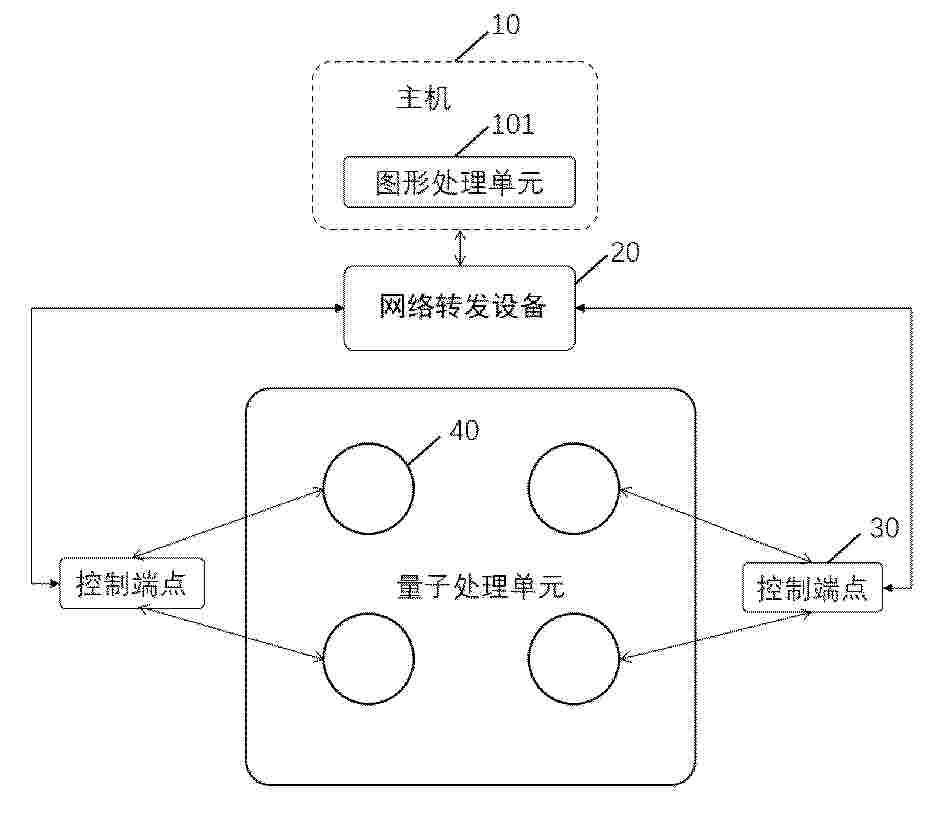
本申请公开了一种分布式通信系统、一种数据通信方法、设备和存储介质,该系统包括主机、网络转发设备、控制端点、量子处理单元;控制端点用于从连接的量子处理单元采集量子测控数据,并封装数据帧发送至网络转发设备;以及接收反馈数据帧,根据反馈数据帧中的反馈结果对连接的量子处理单元执行对应的控制动作;网络转发设备用于接收来自控制端点的数据帧并发送至主机,以使数据帧中的量子测控数据被直接写入主机中图形处理单元的内存;以及将包含反馈结果的反馈数据帧转发至控制端点;图形处理单元用于按照预设处理逻辑对量子测控数据进行处理得到反馈结果。本申请在控制端点与图形处理单元之间实现了低延迟直连数据传输。
Resumen de: CN122931893A
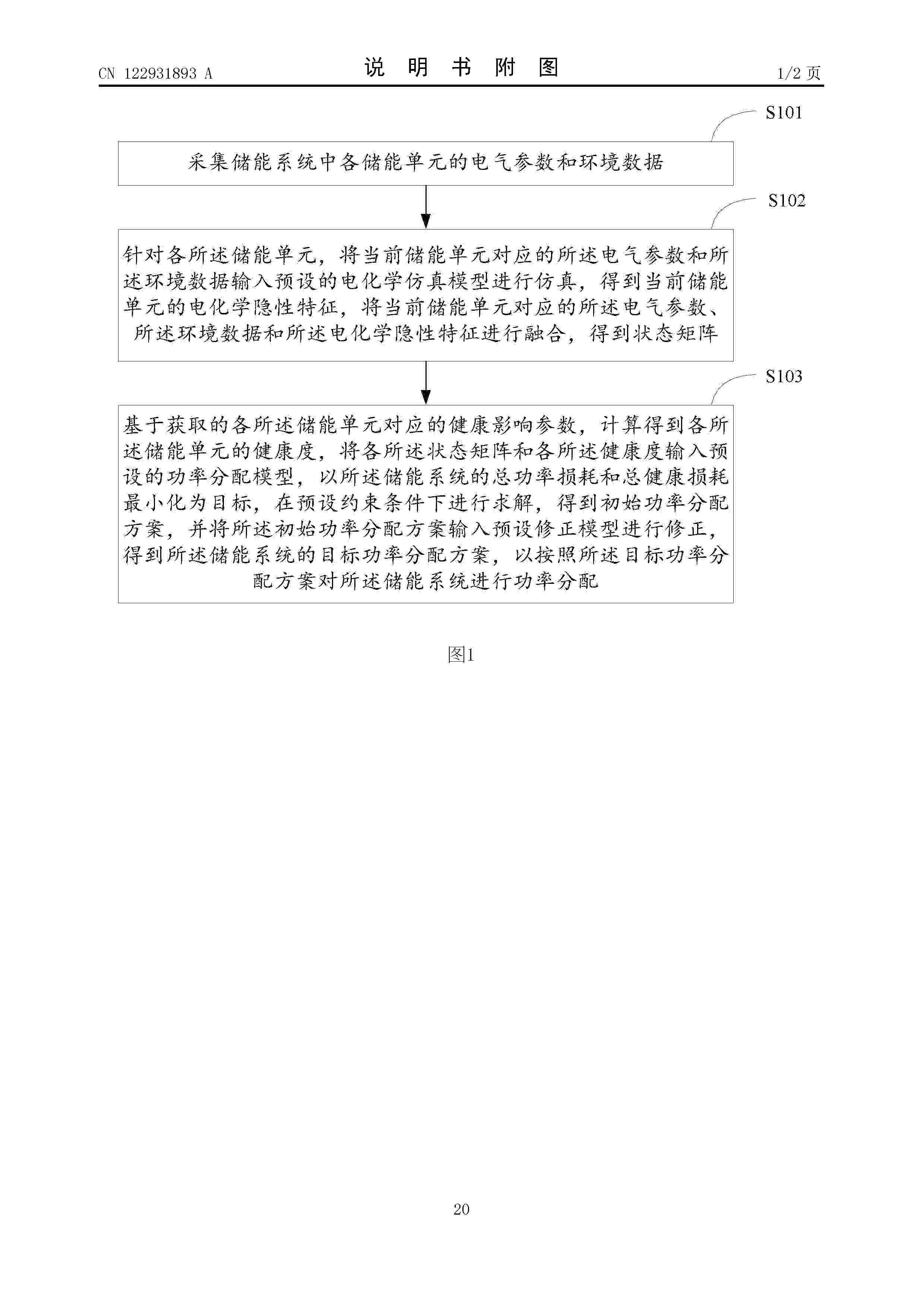
本发明公开了储能系统的功率分配方法、装置、设备、介质和产品,方法为:采集储能系统各储能单元的电气参数和环境数据;将当前储能单元的电气参数和环境数据进行电化学仿真以得到电化学隐性特征,将当前储能单元的电气参数、环境数据和电化学隐性特征融合为状态矩阵;获取各储能单元的健康影响参数并计算得到健康度,将各状态矩阵和各健康度输入功率分配模型,以储能系统的总功率损耗和总健康损耗最小化为目标,在预设约束条件下求解得到初始功率分配方案,并输入至预设修正模型进行修正,得到储能系统的目标功率分配方案,以按照目标功率分配方案对储能系统进行功率分配。本发明能够提高储能系统在复杂工况下功率分配的准确性。
Resumen de: CN122925872A
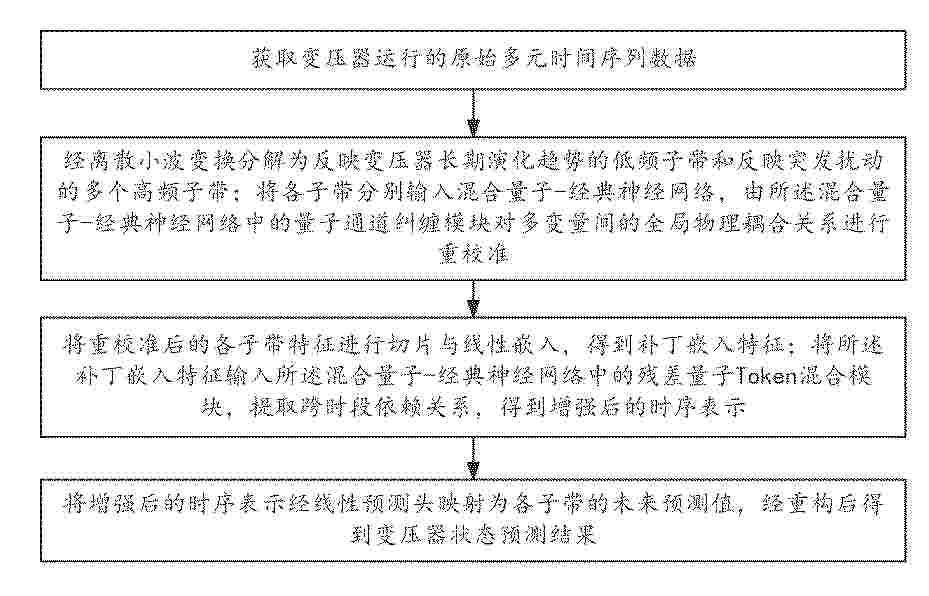
本发明公开了基于混合神经网络的变压器状态预测方法及系统,属于电力系统智能运维与时间序列预测技术领域。针对现有预测方法难以同时兼顾多变量间全局物理耦合建模与长程非线性演化稳健拟合的问题,本发明以离散小波变换将原始序列分解为独立频带,由量子通道纠缠模块精准重构多变量物理耦合,同时借助残差量子Token混合模块提取长程波动特征并保障训练稳定,最终经预测输出高精度结果。本发明在保持训练稳健性的同时实现对变压器未来状态的精准长时预测,为电网调度中心超前预警与负荷调度提供可靠决策依据。
Resumen de: CN122931645A
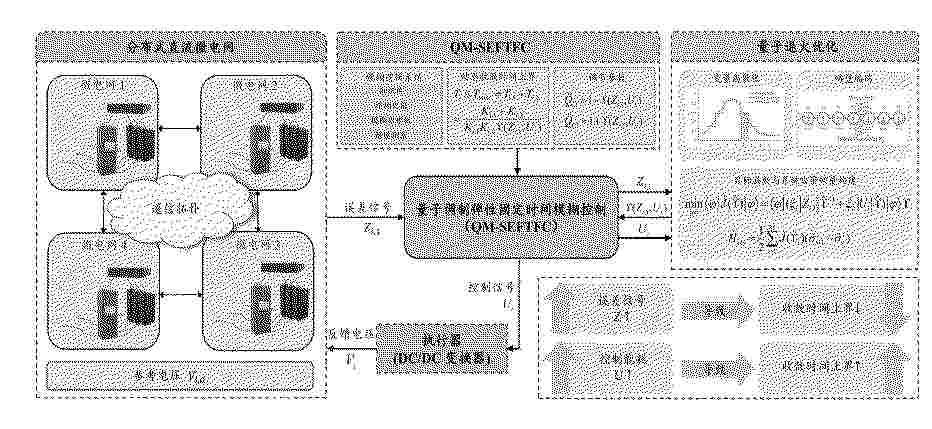
本发明属于微电网电压控制技术领域,尤其涉及量子调制弹性固定时间控制的分布式直流微电网调压方法,方法包括建立分布式直流微电网中各电源单元的动态方程,基于实时电压共识误差与控制输入构建动态调节参数,设计弹性固定时间稳定性准则,使收敛时间上界随系统状态动态调整;然后,采用量子退火优化算法对动态调节参数进行全局寻优,获取最优参数;最后,基于最优参数设计控制输入的自适应更新律,实现固定时间内的电压一致性调节。本发明在保证快速电压调节的同时有效降低控制能耗,克服了传统固定时间控制难以兼顾快速性与经济性的缺陷,适用于复杂动态环境下的分布式直流微电网。
Resumen de: CN122924504A
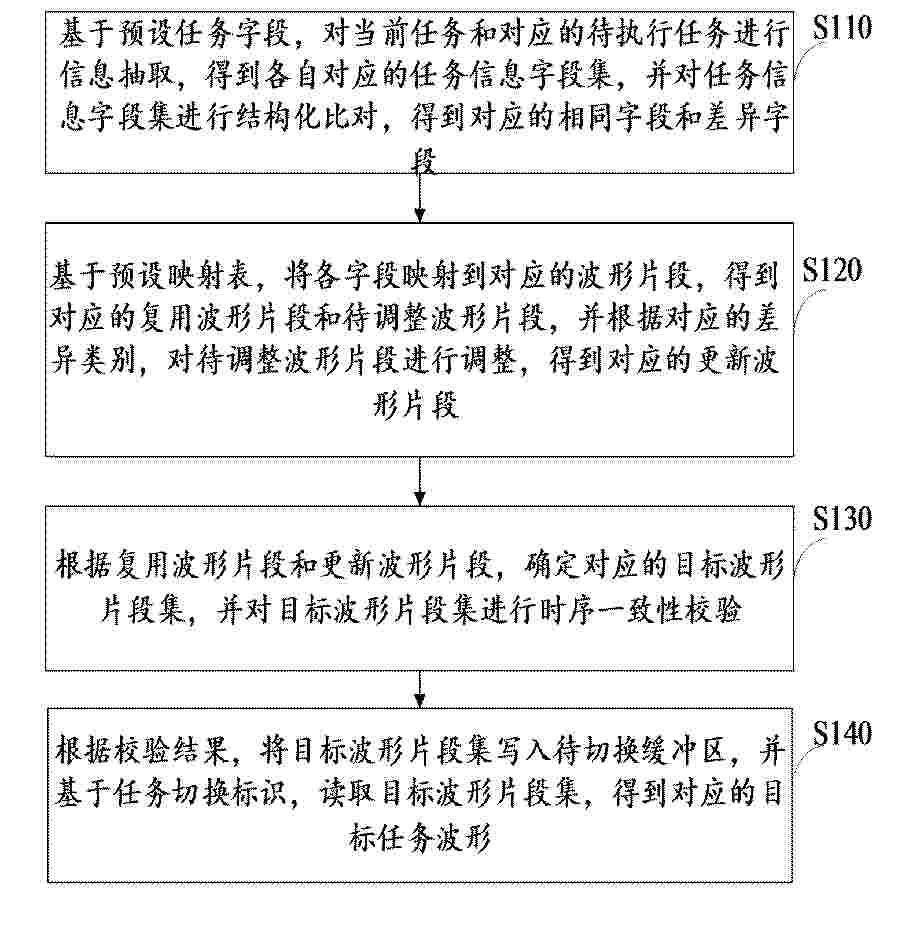
本申请提供一种基于任务切换的波形生成方法、装置、设备及介质,用于量子测控技术领域,包括:基于预设任务字段,对当前任务和对应的待执行任务进行信息抽取,得到各自对应的任务信息字段集,并对任务信息字段集进行结构化比对,得到对应的相同字段和差异字段;将各字段映射到对应的波形片段,得到对应的复用波形片段和待调整波形片段,并根据对应的差异类别,对待调整波形片段进行调整,得到对应的更新波形片段;根据复用波形片段和更新波形片段,确定对应的目标波形片段集,并对目标波形片段集进行时序一致性校验;根据校验结果,将目标波形片段集写入待切换缓冲区;如此,量子任务切换时波形的生成效率和准确率。
Resumen de: CN122930267A
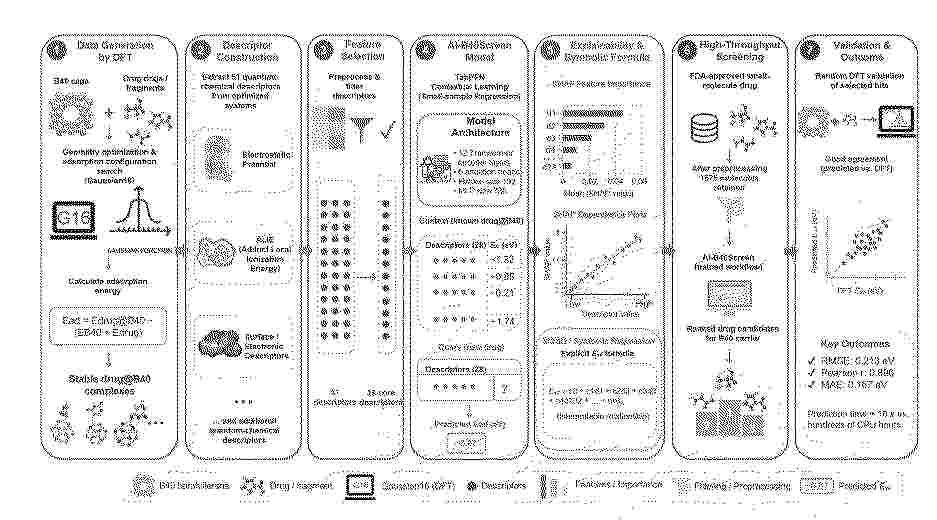
本发明提供一种小分子药物与硼富勒烯载体吸附能预测及筛选方法,属于药物化学与机器学习交叉领域。该方法包括:获取硼富勒烯载体及已知药物分子结构;构建复合物初始构型,经量子化学计算优化得稳定复合物,计算吸附能标签及量子化学描述符;筛选得与药物‑载体非共价相互作用相关的核心描述符集合;采用预训练的基于Transformer架构的小样本表格回归模型,预测时保持权重冻结、不执行反向传播;获取待预测药物并计算其核心描述符集合,将已知样本作为上下文数据,待预测药物描述符作为查询数据共同输入模型;由模型基于上下文映射关系输出预测吸附能。本发明在小样本条件下实现了吸附能的高精度快速预测与高通量筛选。
Resumen de: CN122930252A
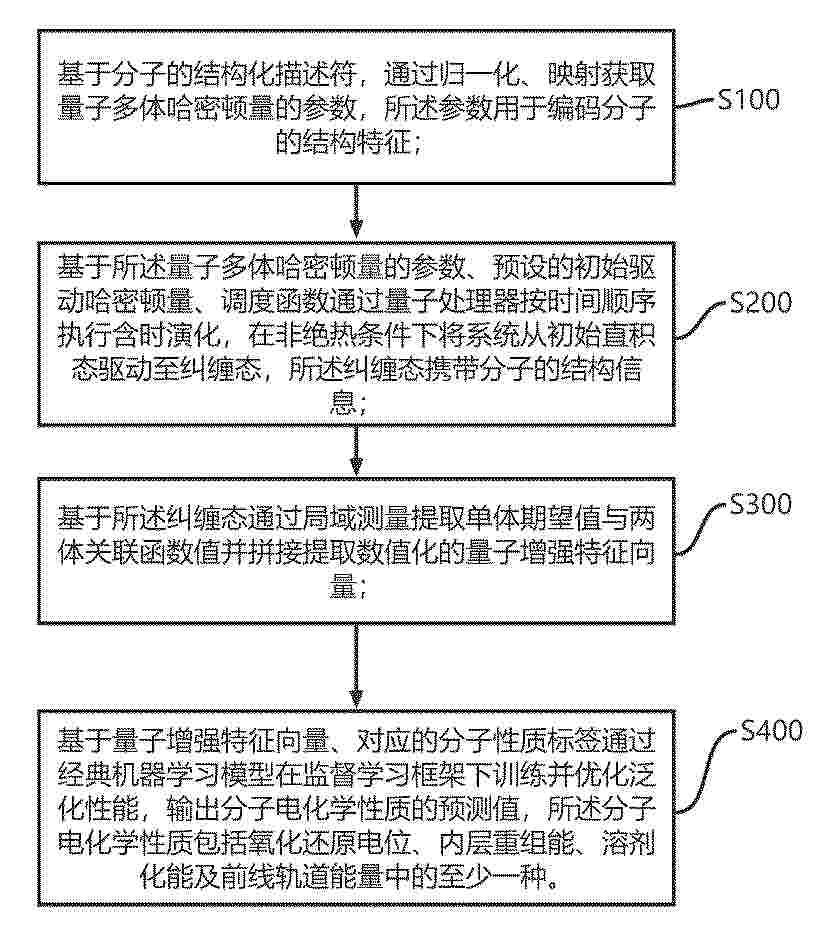
本申请公开一种基于量子淬火动力学特征增强的分子性质预测方法,包括:基于分子的结构化描述符,通过归一化、映射获得量子多体哈密顿量的参数,所述参数用于编码分子的结构特征;基于所述量子多体哈密顿量的参数、预设的初始驱动哈密顿量、调度函数通过量子处理器按时间顺序执行含时演化,在非绝热条件下将系统从初始直积态驱动至纠缠态,基于所述纠缠态通过局域测量提取单体期望值与两体关联函数值并拼接提取数值化的量子增强特征向量;基于量子增强特征向量、对应的分子性质标签通过经典机器学习模型在监督学习框架下训练并优化泛化性能,输出分子电化学性质的预测值。
Resumen de: CN122927439A
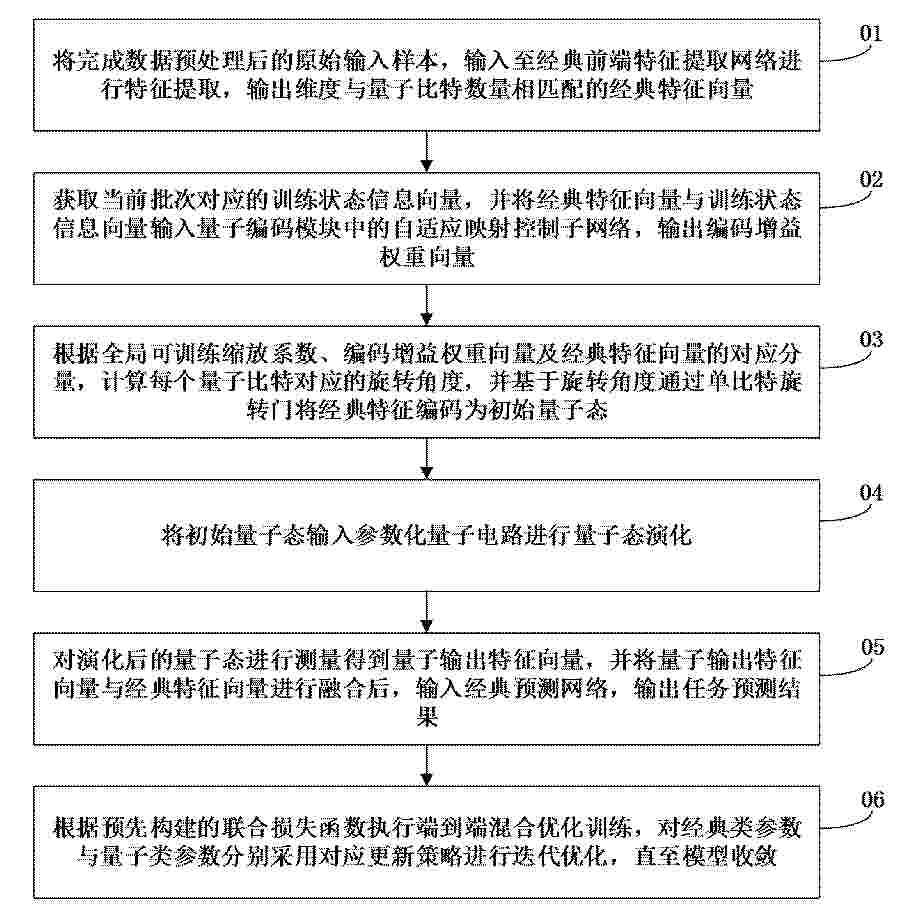
本申请公开了一种混合神经网络训练优化方法,包括:获取当前批次对应的训练状态信息向量,并将经典特征向量与训练状态信息向量输入自适应映射控制子网络,输出编码增益权重向量。根据全局可训练缩放系数、编码增益权重向量及经典特征向量的对应分量,计算每个量子比特对应的旋转角度,并基于旋转角度通过单比特旋转门编码为初始量子态。将初始量子态输入参数化量子电路进行量子态演化。对演化后的量子态进行测量得到量子输出特征向量,并将量子输出特征向量与经典特征向量进行融合后,输入经典预测网络,输出任务预测结果。根据预先构建的联合损失函数执行端到端优化训练,对经典类参数与量子类参数采用对应更新策略进行迭代优化,直至模型收敛。
Resumen de: CN122925781A
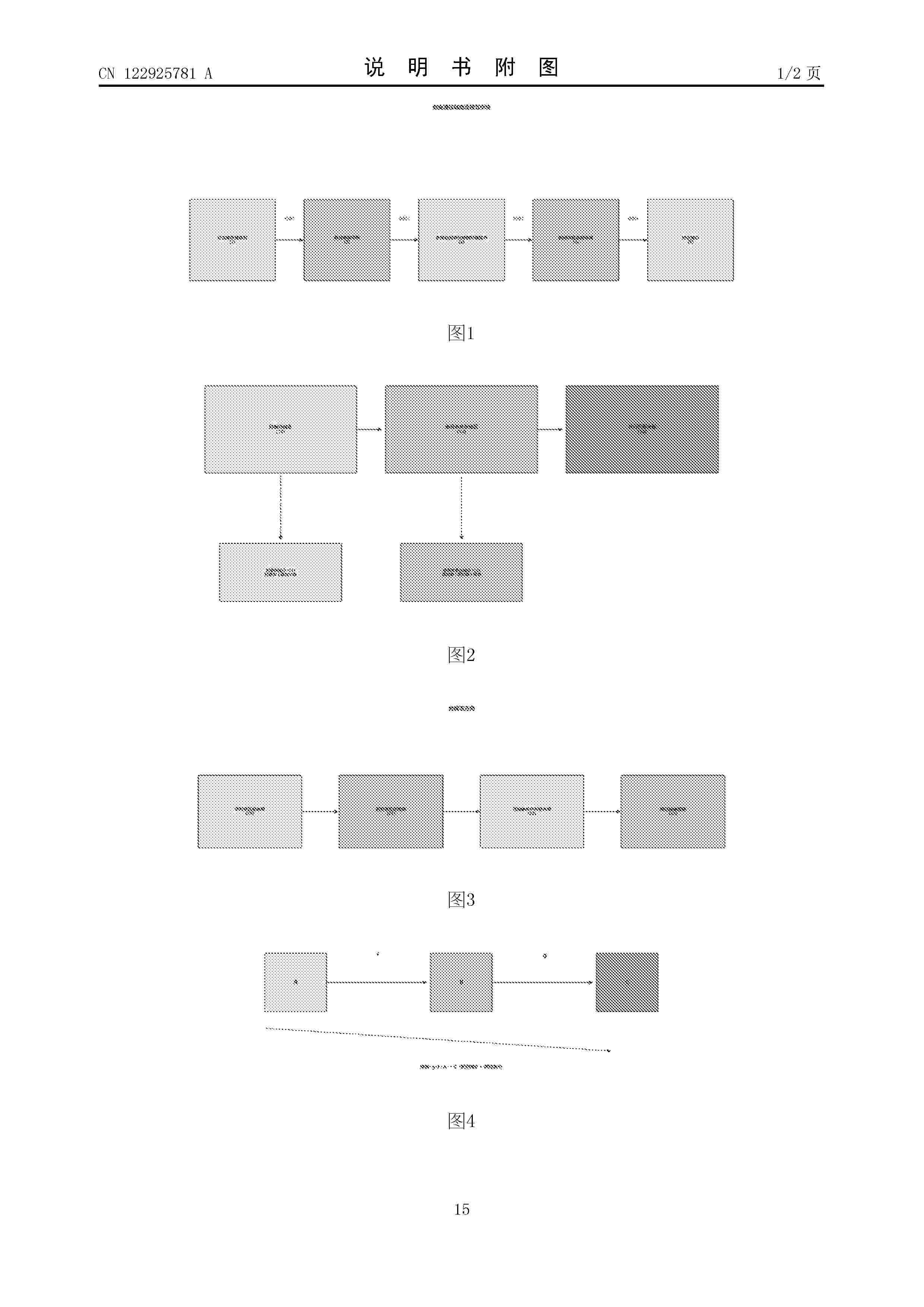
本发明属硬件加速技术领域。针对现有公式推导依赖软件遍历延迟不可控、时间演化数据难以硬件级纳秒检索的问题,提供一种范畴论驱动的公式库态射复合及多维时间感知装置及方法。其核心架构由五个协同模块组成:公式范畴存储单元、态射复合引擎、多维时间感知张量存储单元、时间演化追踪电路、验证接口,通过并行相等比较器实现推导路径的硬件级拼接,并以三维寻址张量存储实现纳秒级时间切片查询。基于同一架构派生三个应用层:实时公式库检索、量子门推导与等价性验证、因果与量子态演化追踪。本发明的算法特征与硬件结构存在特定技术关联,属专利法第2条第2款规定的技术方案,不依赖神经网络或大模型调用。
Resumen de: CN122922923A
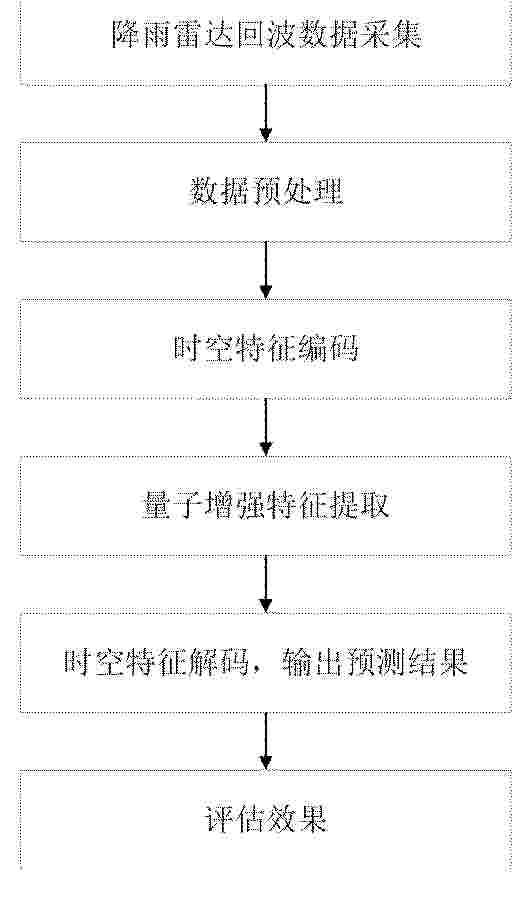
本发明公开了一种基于量子增强卷积长短期记忆网络的雷达回波降雨预测方法,包括如下步骤:1)采集天气雷达反射率数据,对所述数据进行解析、质量控制、坐标转换和归一化处理,并采用滑动窗口构建雷达回波输入序列和预测目标序列;2)将输入序列输入卷积长短期记忆网络,提取雷达回波的时间演变特征和空间结构特征;3)对卷积长短期记忆网络的中间特征图进行空间分块和线性降维,并采用角度嵌入方式将降维后的特征编码至量子比特;4)利用强纠缠量子线路和数据重上传方式对量子态进行变分变换,通过泡利Z测量和泡利ZZ关联测量获得量子测量特征;5)将量子测量特征进行升维和空间恢复,并以残差方式注入卷积长短期记忆网络的特征传递路径;6)采用均方误差和量子参数多样性损失对模型进行联合训练,以递归方式输出未来多帧雷达回波预测结果。本发明能够在有限量子比特条件下实现高维雷达特征的量子编码和关联特征提取,减轻强回波区域的强度衰减、边界平滑和局部结构信息损失,提高雷达回波降雨预测的准确性和训练稳定性。
Resumen de: CN122927572A
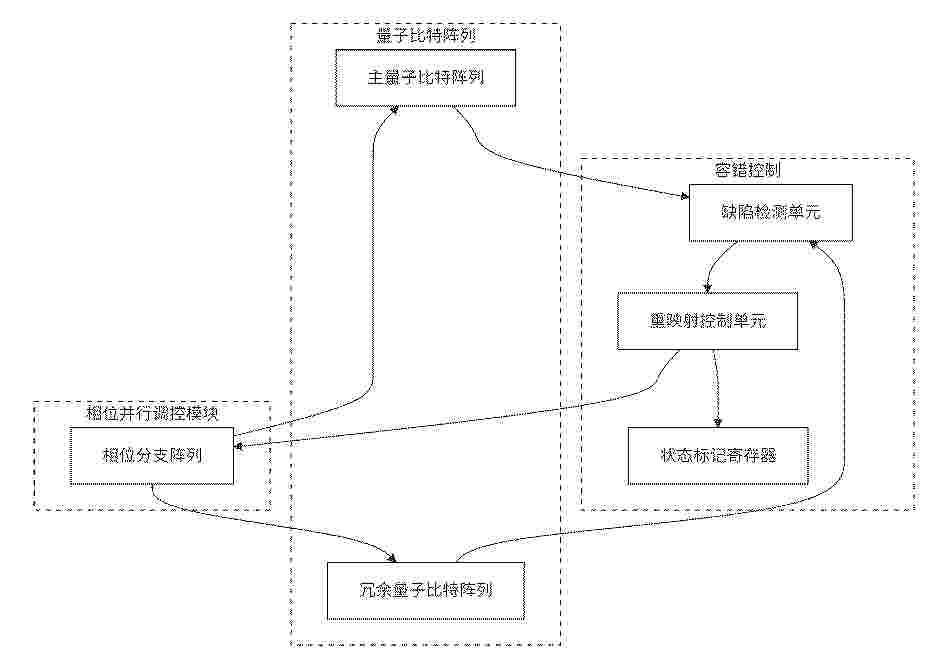
本发明公开了一种拓扑量子比特阵列的缺陷容忍设计与冗余结构。所述结构包括主量子比特阵列、冗余量子比特阵列、缺陷检测单元、重映射控制单元和状态标记寄存器。所述方法通过周期性测量所有量子比特的投影权重和投影相位识别故障量子比特;从冗余比特池中选择可用冗余比特;通过相位并行调控模块将故障比特的投影角配置转移到冗余比特;更新耦合拓扑将冗余比特接入计算网络;更新状态标记寄存器。本发明实现了量子比特阵列的低开销缺陷容忍,故障检测周期不大于1微秒,重映射完成时间不大于100纳秒,可广泛应用于大规模拓扑量子计算阵列的制造缺陷容忍和运行故障冗余管理领域。
Resumen de: AU2025360923A1
Error-corrected quantum computation using transversal gates and correlated decoding is provided. A first and second logical qubit is encoded into physical qubits according to a quantum error correcting code. Based on the quantum error correcting code, a bipartite decoding graph is constructed corresponding to the first and the second logical qubits, the bipartite decoding graph comprising a plurality of detector nodes and a plurality of error nodes, each error node corresponding to an error mechanism. A transversal gate is applied to the first and the second logical qubits. Syndrome measurement of the first and the second logical qubits is performed. For each of the plurality of detector nodes affected by the corresponding error mechanism of one of the plurality of error nodes, an edge is generated on the bipartite decoding graph therebetween. A physical error configuration is determined from the bipartite decoding graph.
Resumen de: US20260320463A1
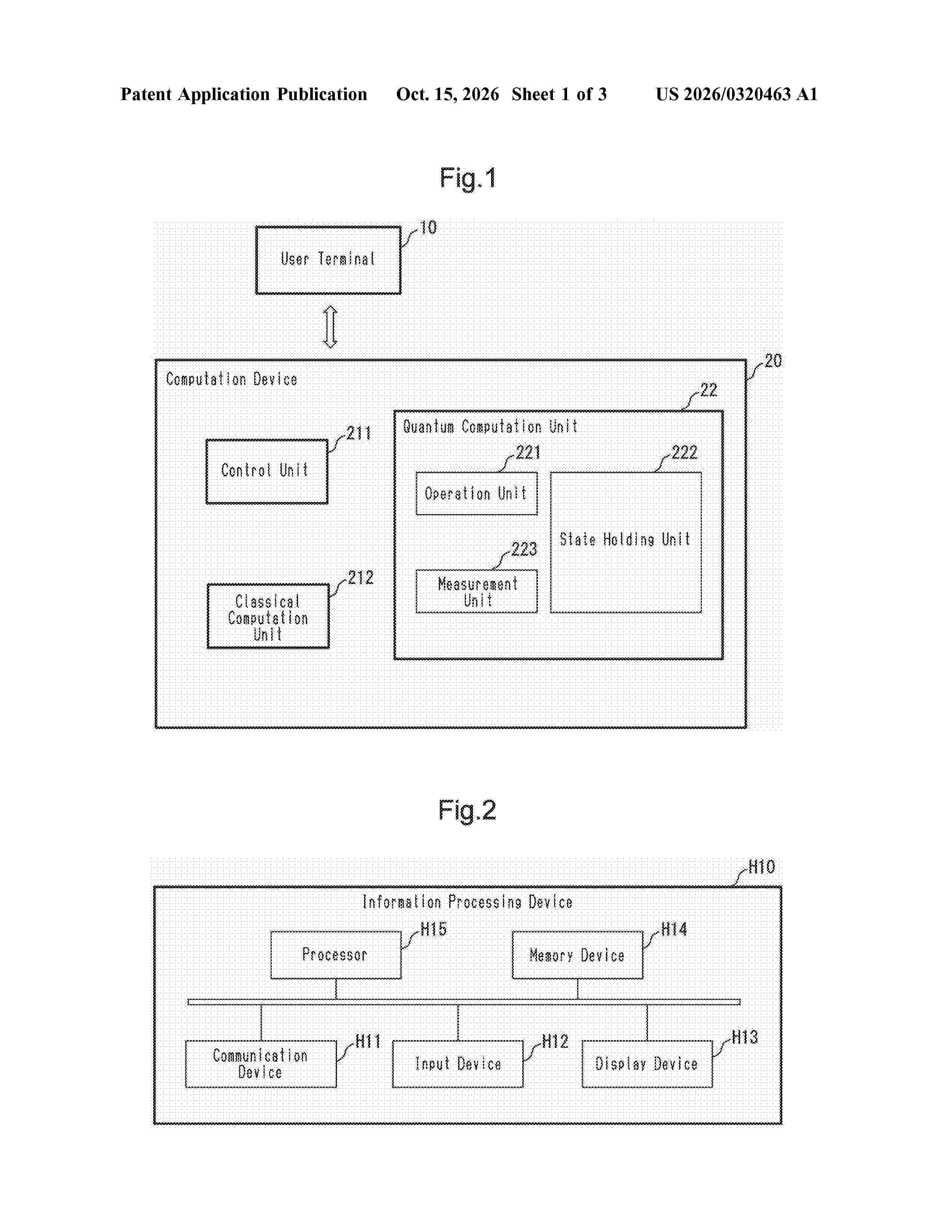
0000 A quantum computing system includes processors and memory storing executable instructions that, when executed by the processors, cause the quantum computing system to modulate, by an operation unit of a quantum computation unit, a quantum state, maintain, by a state holding unit of the quantum computation unit, the quantum state, observe, by a measurement unit of the quantum computation unit, the quantum state, obtain a first operator for use in performing an operation of embedding a parameter into an amplitude of the quantum state, form a second operator, using the first operator, apply multiple instances of the second operator in parallel to an entangled input state, measure the quantum state after applying the second operator to produce a measurement result to estimate a value of the phase, and estimate, at a classical computation unit, the parameter based on the value of the phase.
Resumen de: AU2025339478A1
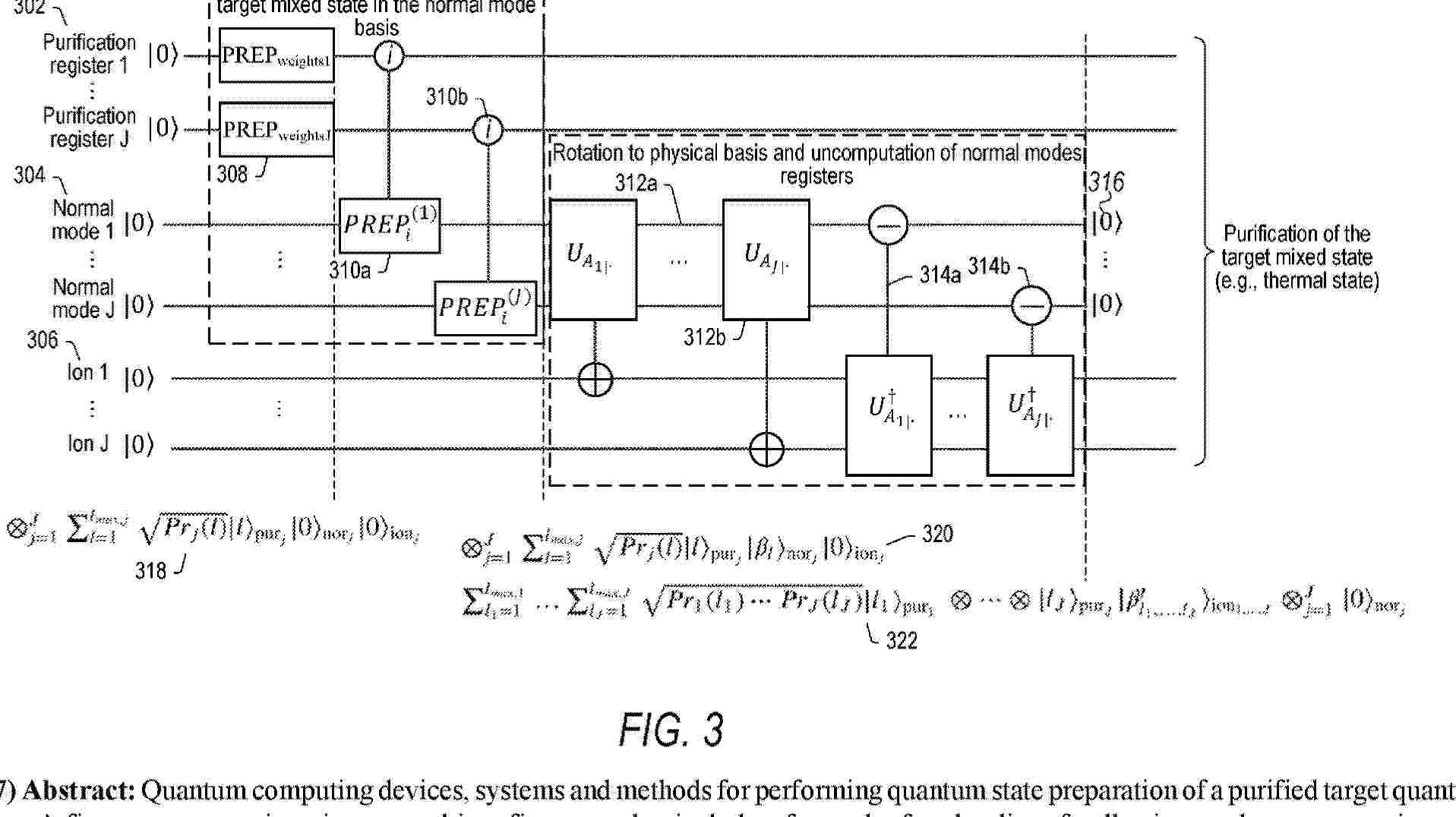
Quantum computing devices, systems and methods for performing quantum state preparation of a purified target quantum state. A first quantum register is prepared in a first state that includes, for each of a plurality of collective modes, a summation over energy label states weighted based on a Gibbs probability distribution. A second quantum register is prepared in a second state that includes, for each respective collective mode, a summation over respective eigenstates. A third quantum register is prepared in a third state by applying a plurality of third unitary operators to the second and third quantum registers to transform the collective mode coordinates of the second state to physical coordinates, and adding this transformed state into the third quantum register. The state of the second quantum register is then un-computed to return the second quantum register to the null state and the first and third quantum registers are prepared in the purified target quantum state.
Resumen de: AU2025280050A1
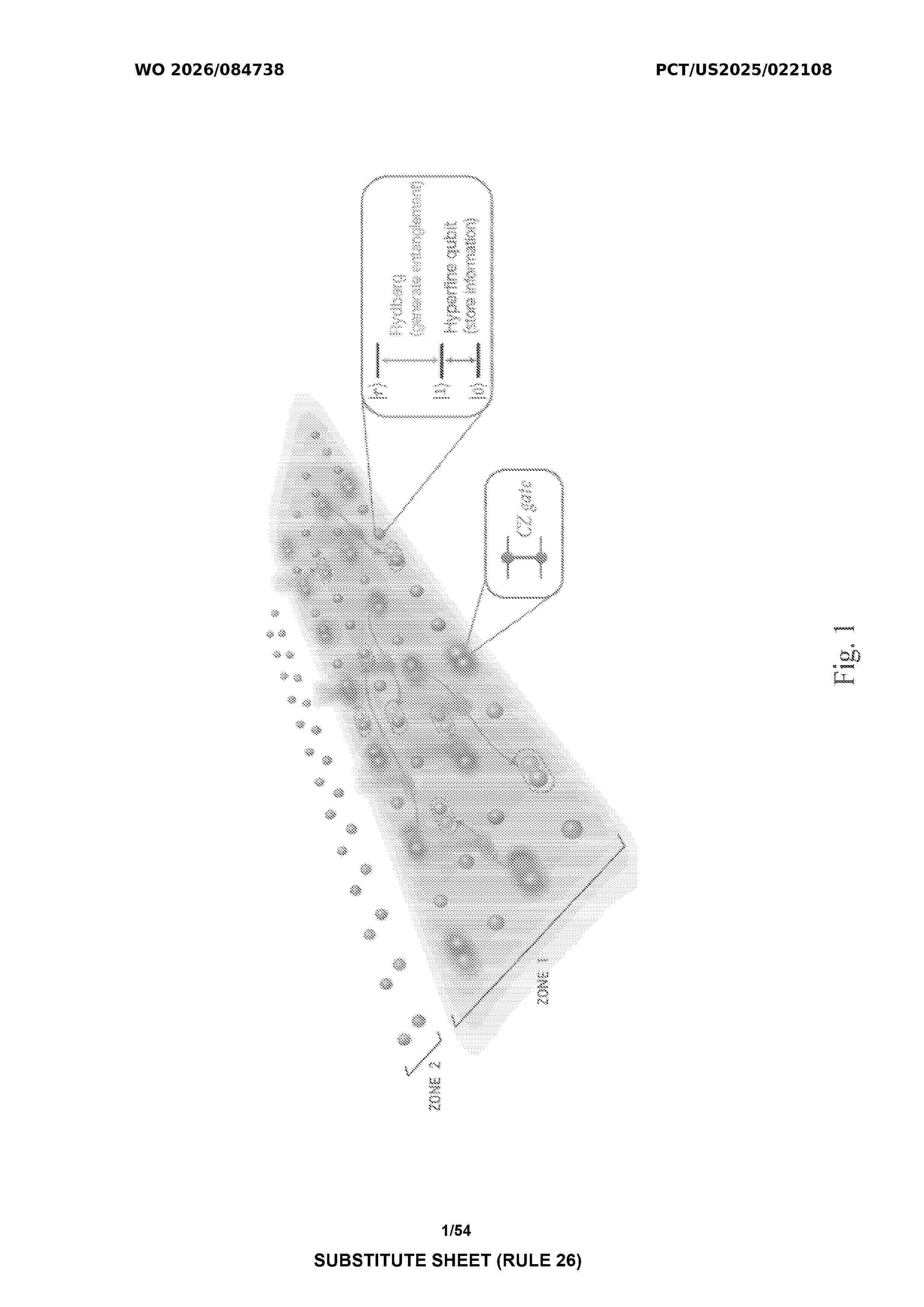
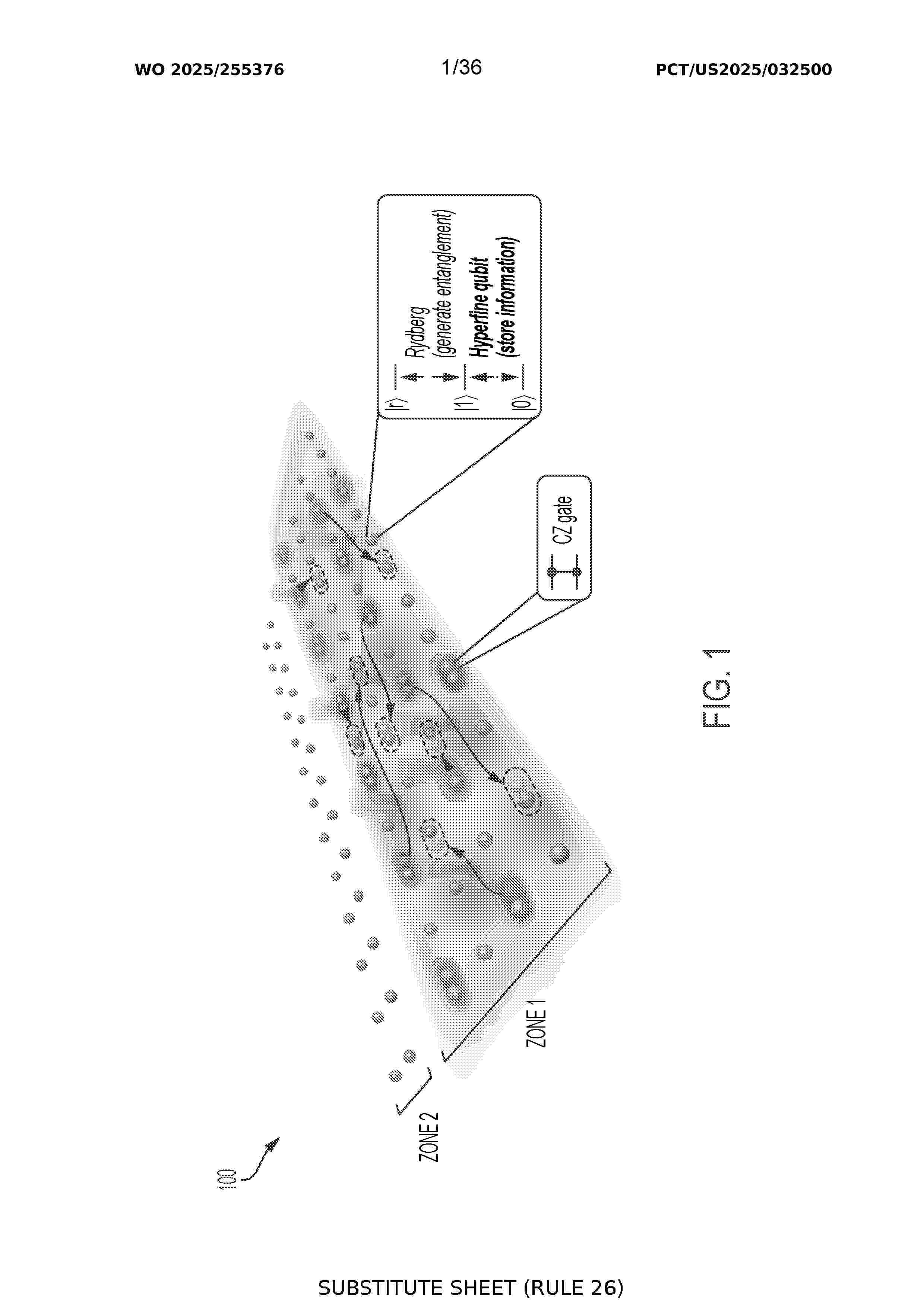
Devices and methods for reloading atomic qubits into a quantum computer via two optical conveyor belts are provided.
Resumen de: AU2025267060A1
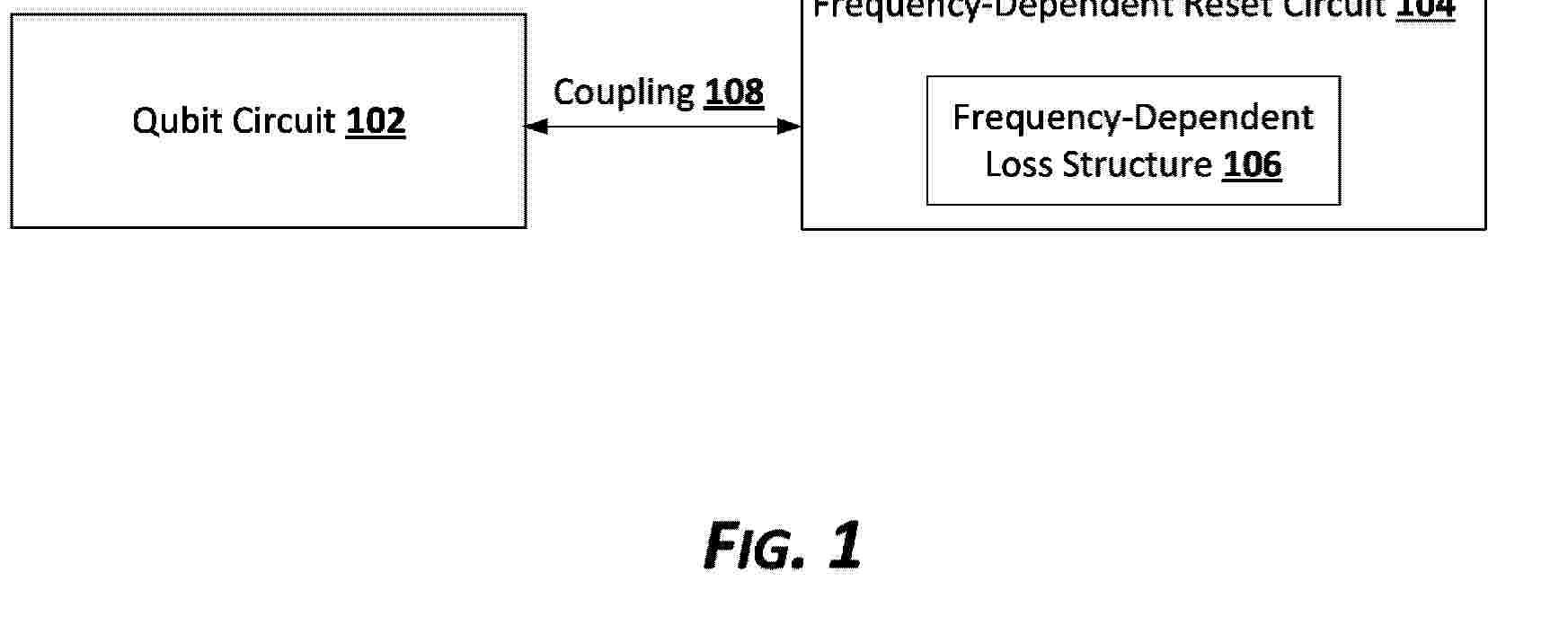
Systems and methods for resetting a qubit are provided. In one example, a reset circuit may include a resonator structure. The resonator structure may be configured to resonate at a first frequency and a second frequency. The resonator structure may include a superconducting material characterized by a superconducting energy gap. An energy corresponding to the first frequency may be below the superconducting energy gap. An energy corresponding to the second frequency may be above the superconducting energy gap. The reset circuit can further comprise a frequency converter configured to convert an excitation of the resonator structure from the first frequency to the second frequency.
Nº publicación: US20260318568A1 15/10/2026
Solicitante:
PHOTONIC INC [CA]
PHOTONIC INC.
Resumen de: US20260318568A1
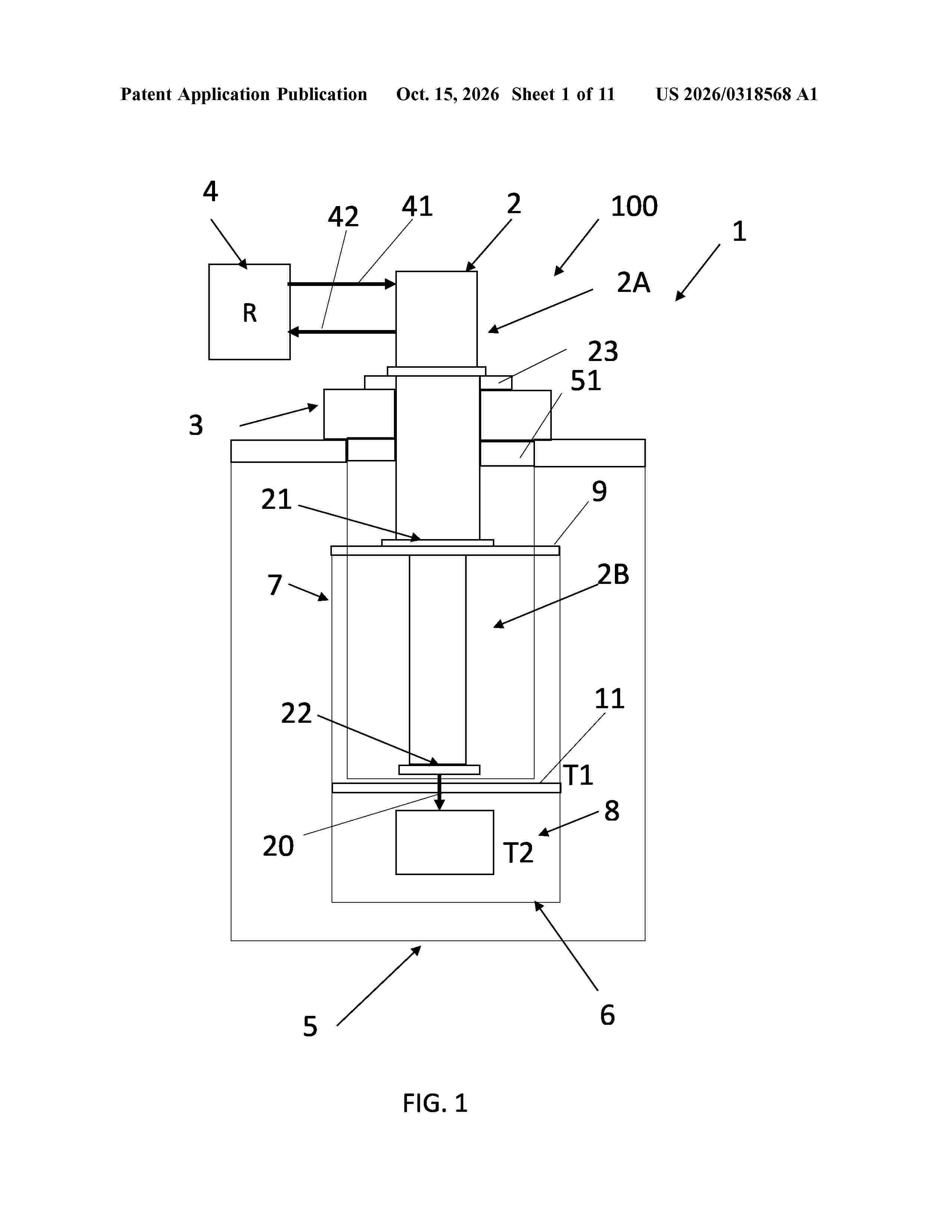
0000 The invention relates to a closed cycle cryogenic system (100) comprising a first refrigeration system (1) with a cold head (2) and a compressor (4) coupled to cold head (2); a vacuum shroud (5) at least partly receiving cold head (2); a radiation shield (6) enclosed by vacuum shroud (5); a second refrigeration system (8) at least partly enclosed by radiation shield (6) and thermally coupled to first refrigeration system (1) for providing a low temperature environment (230), wherein cold head (2) is releasable mounted in a receiving space (7) defined within radiation shield (6) and vacuum shroud (5), and the cryogenic system (100) further has a protective device (3) cooperating with cold head (2) and receiving space (7) to allow release of cold head (2) thereby preventing receiving space (7) from ingress of media differing from refrigerant. The invention further relates to a method for maintenance cryogenic system (100).
 BOPI
BOPI
 Sede Electrónica