Si deseas distinguir tus productos, servicios o ambos de los de otra empresa, es posible que necesites una marca o nombre comercial. Descubre qué son, en qué consiste su procedimiento de registro y qué implica.

Información sobre los plazos de presentación de solicitudes de transformación de marcas de la Unión Europea en marca nacional española. Más información


Si tienes un nuevo dispositivo, producto o procedimiento que resuelva un problema técnico o tenga una ventaja práctica, existen distintas formas de protegerlo en España y en otros países. Descubre cómo hacerlo.

¿Tu innovación reside en la estética, la ornamentación o la apariencia de tu producto? Protégela mediante un diseño industrial. Descubre qué derechos confiere el registro y cómo realizar la tramitación.

Las indicaciones geográficas protegen el nombre de un producto originario de una zona geográfica, a la cual le debe una determinada calidad, reputación u otra característica. Descubre qué son, en qué consiste su procedimiento de registro y qué beneficios conceden.

Las patentes publicadas en todo el mundo son una valiosa fuente de información científica, técnica y comercial.

Si eres emprendedor/a o una empresa y quieres potenciar y mejorar la rentabilidad de tu negocio protegiendo de forma adecuada los activos intangibles de tu organización, en este espacio encontrarás lo necesario.


 60
resultados
60
resultados
 Última actualización
23/10/2026 [09:39:00]
Última actualización
23/10/2026 [09:39:00]


 Resultados 25 a 50 de 60

Resumen de: CN122883147A
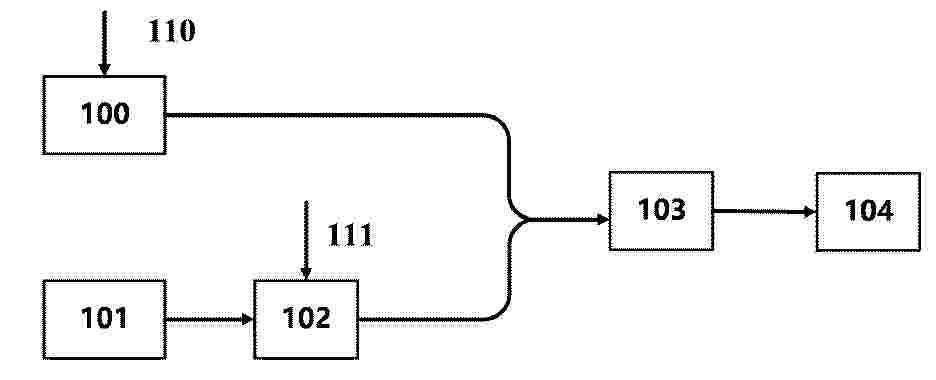
本发明公开了一种基于光外差法的宽带线性调频脉冲信号产生方法,在由三段式分布式布拉格反射激光器、可调谐激光源、声光调制器、光耦合器和光电探测器组成的系统中,利用三段式分布式布拉格反射激光器产生线性啁啾光信号,利用可调谐激光源和声光调制器产生脉冲光载波,两路光信号在光电探测器中进行光外差拍频,从而在电域产生高线性宽带线性调频脉冲微波信号。本发明具有结构简单、扫频带宽可调、中心频率可调、脉冲参数可控和线性度高等优点,适用于宽带雷达、微波光子信号产生、目标探测以及通信感知一体化系统。

Resumen de: US20260312555A1
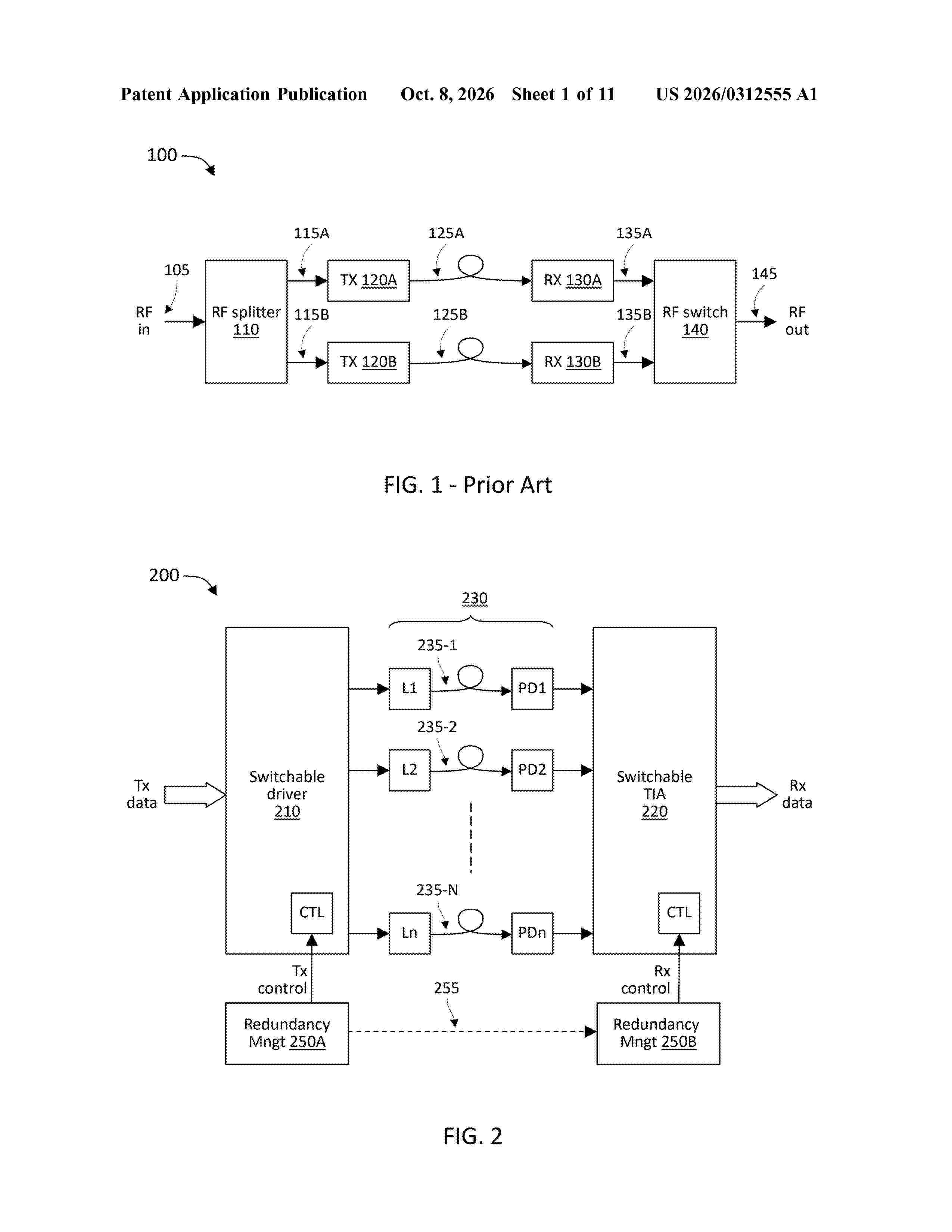
0000 A redundancy system features a switchable driver with multiple outputs, a switchable transimpedance amplifier (TIA) with multiple inputs, and multiple photonic data channels coupling the switchable driver outputs with the switchable TIA inputs. A redundancy management system assigns a photonic data channel for transmitting a data packet from the switchable driver to the switchable TIA, sends an acknowledgment upon receiving the data packet, waits for an acknowledgment within a timeout period, and reassigns a different data channel and resends the packet if no acknowledgment is received within the timeout period. The redundancy system ensures reliable data transmission by dynamically switching between photonic data channels in case of communication failures.
Resumen de: US20260309833A1
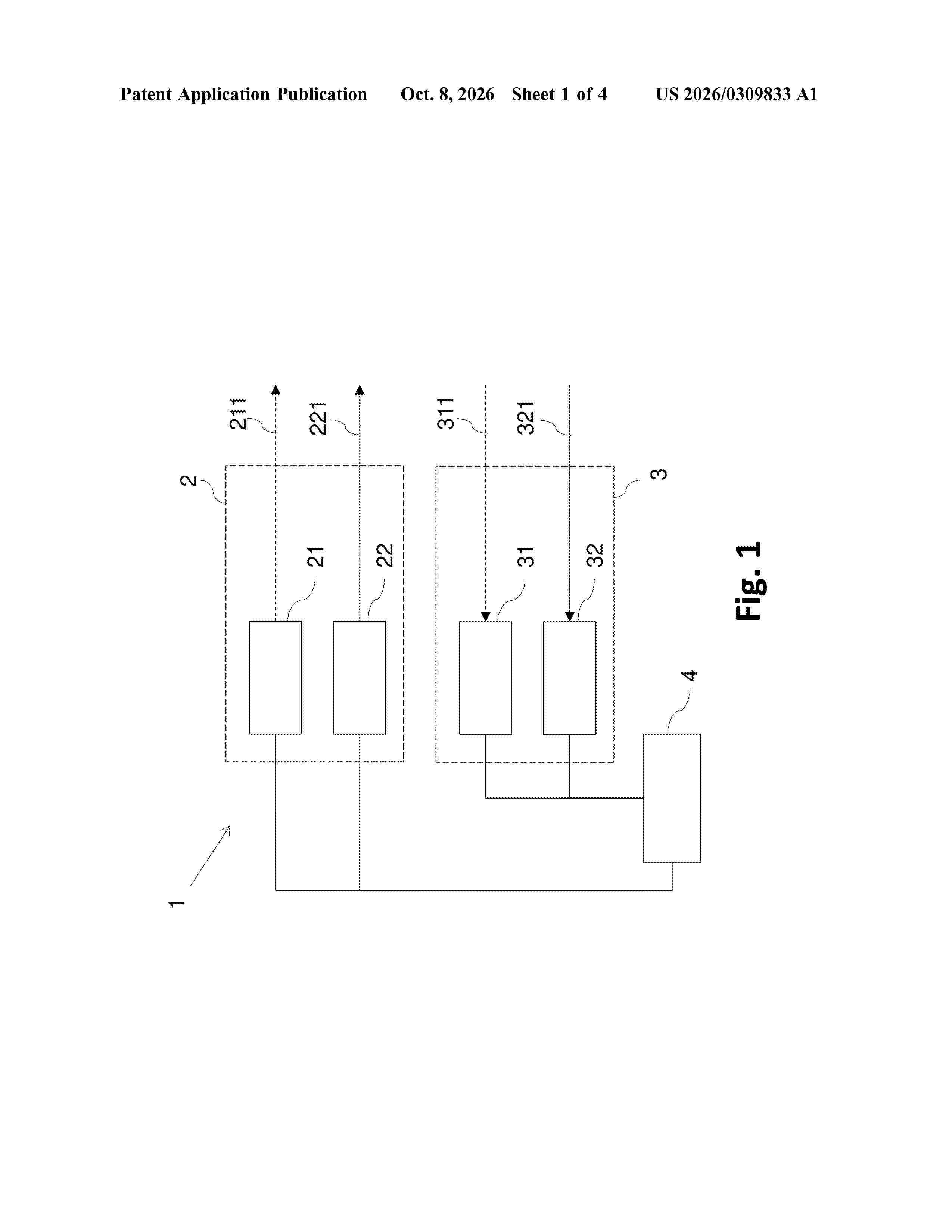
0000 An optical terminal for lidar and optical communication, with a transmitter section, including a first transmitter unit configured to emit a first communication signal at a first wavelength, a second transmitter unit configured to emit a first quantum signal at a second wavelength; and a receiver section, including a first receiver unit configured to receive a second communication signal at a third wavelength, a second receiver unit configured to receive a lidar signal at the first wavelength, and a controller configured to control an emission of the first transmitter unit and the second transmitter unit, extract data from the received communication signal, and determine a time-of-flight of the lidar signal based on the emission of the first communication signal. Also a method for operating an optical terminal.
Resumen de: US20260311016A1
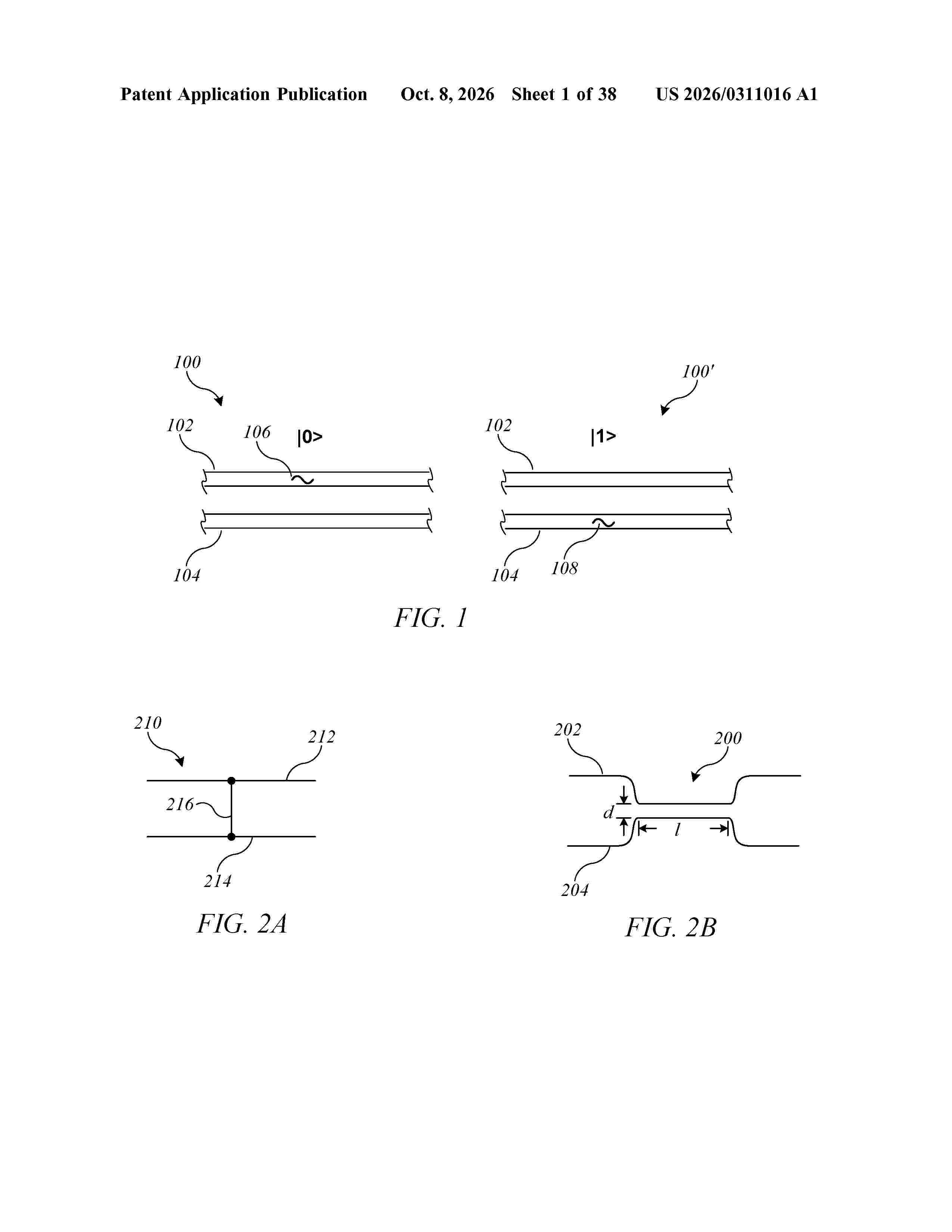
Entanglement among qubits can be generated using “rasterized” and interleaving techniques. A circuit can include a resource state generator that generates one resource state per clock cycle, with each resource state having a number of entangled qubits. The circuit can also include circuits and delay lines to perform entangling measurement operations on qubits of resource states generated by the same resource state generator in different clock cycles. With appropriate selection of delay lines, a single resource state generator can generate all of the resource states needed to generate a large entanglement structure. Hybrid techniques can also be used, where the number of resource state circuits is greater than one but less than the number of resource states needed to generate the entanglement structure.
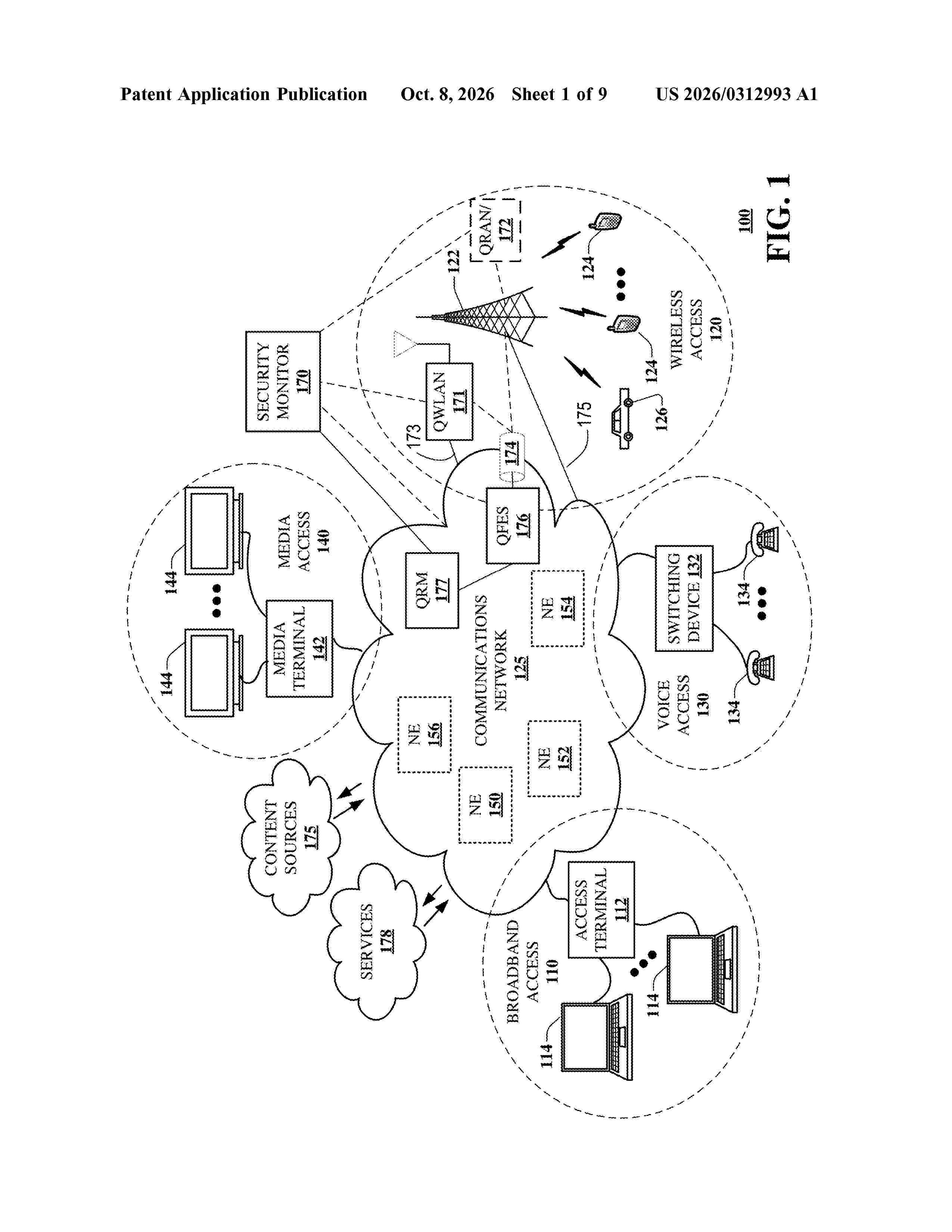
Resumen de: US20260312993A1
0000 Aspects of the subject disclosure may include, for example, monitoring a security status of a wireless communication session comprising a back-haul link supporting a classical communication channel between a wireless access point and a wireless mobility core network. The classical communication channel is adapted to transport underlying data of the wireless communication session and, responsive to determining a change in the security status, associating with the wireless communication session a quantum communication channel adapted to transport information via qubits. Information is exchanged between the wireless access point and the mobility core network via the qubits of the quantum communication channel, wherein the exchanging of the information via the qubits enhances a security level of the wireless communication session in view of a perceived threat. Other embodiments are disclosed.
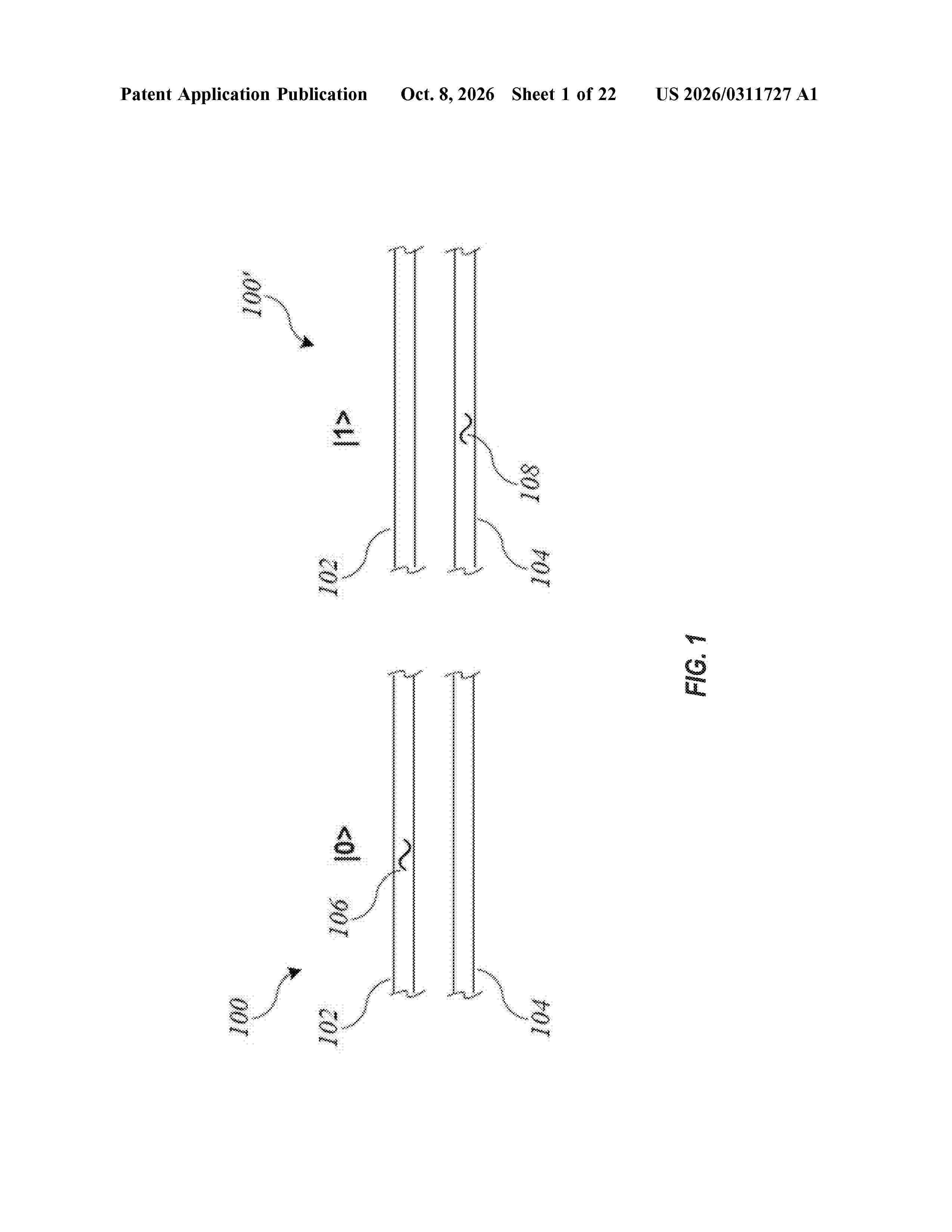
Resumen de: US20260311727A1
A system includes a first photonic integrated circuit. The circuit includes a qubit encoder configured to receive a spatial-mode qubit and convert the spatial-mode qubit to a temporal-mode qubit and an optical interconnect configured to receive and transmit the temporal-mode qubit. The system further includes a second photonic integrated circuit, itself including a qubit decoder configured to receive the temporal-mode qubit and convert the temporal-mode qubit back into the spatial-mode qubit.
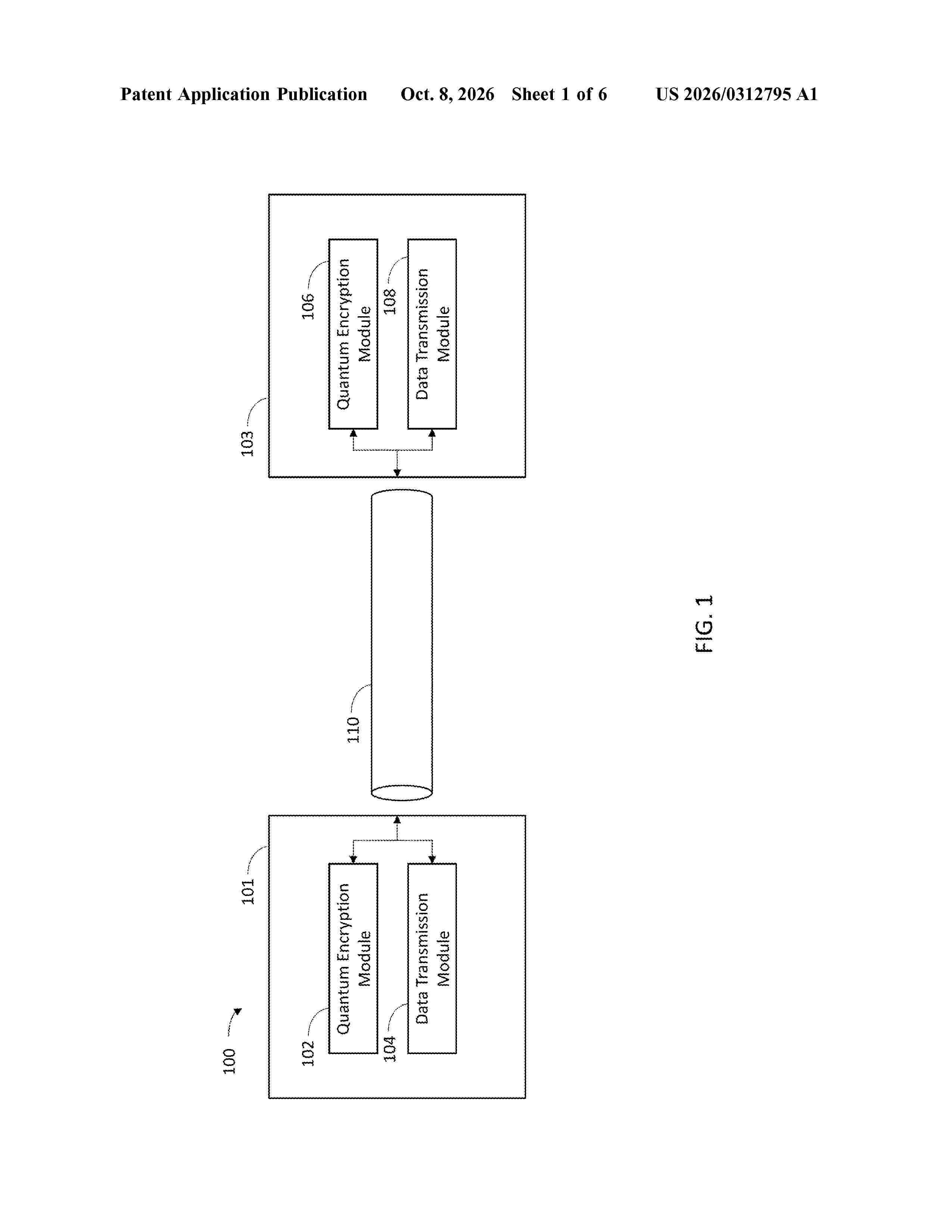
Resumen de: US20260312795A1
The inventors have developed methods and systems to address the above challenges using entangled photons with multiple colors transmitted with a classical data stream as a technique to detect eavesdropping on the data stream and to prevent reverse engineering for demodulating the entangled bits from the data stream. In some embodiments, a time gate is used to interleave the quantum and classic signals to provide quantum encryption of fiber optic communication protocols.
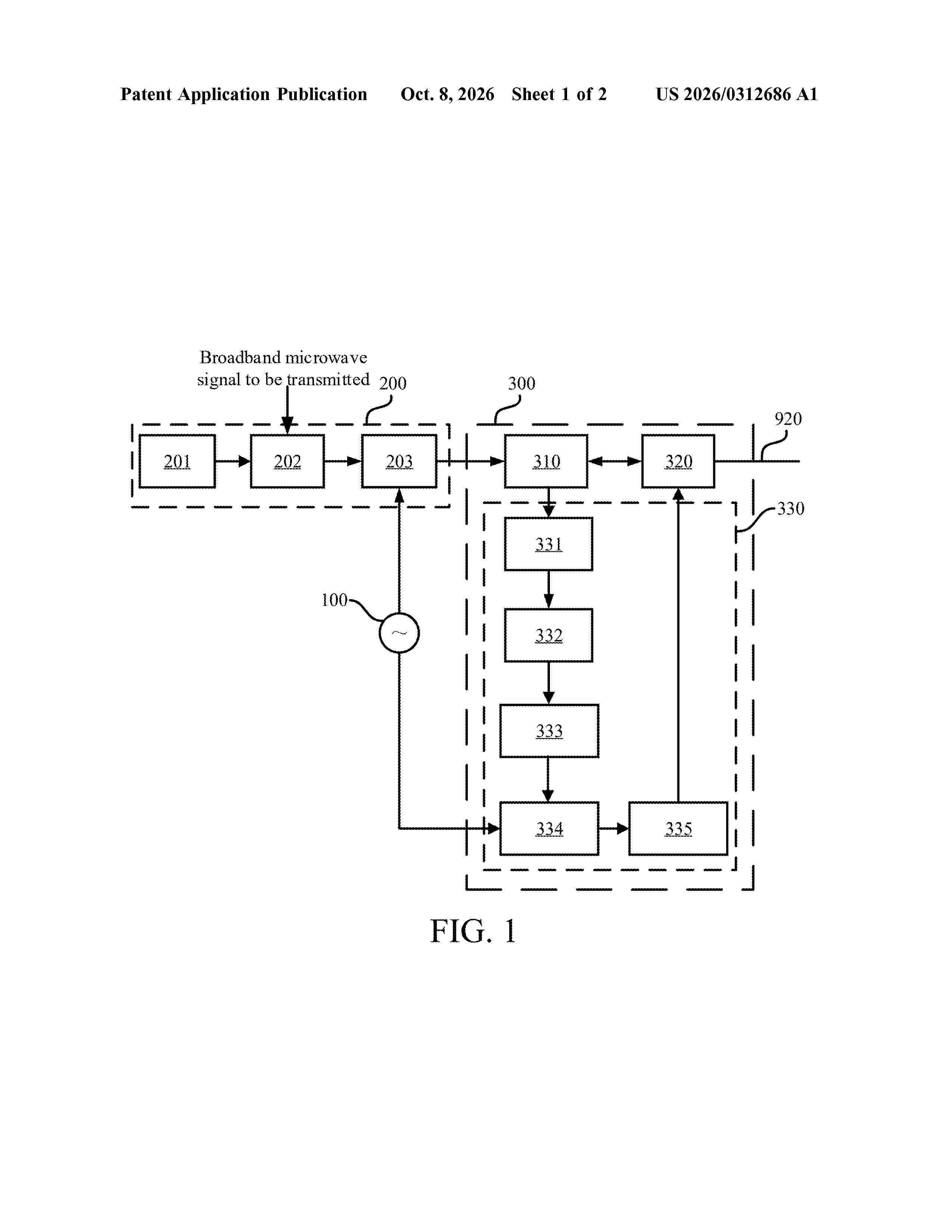
Resumen de: US20260312686A1
A microwave photon broadband phase-stabilized transmission center station based on amplitude-phase multiplexing and transmission system having the same are provided. The microwave photon broadband phase-stabilized transmission center station includes a sensing reference signal source configured to output a sensing reference signal, a modulation unit, and a delay adjustment unit. The modulation unit is configured to convert a broadband microwave signal to be transmitted to an optical domain to form a central station optical carrier broadband microwave signal, and load the sensing reference signal onto the central station optical carrier broadband microwave signal to form a composite optical carrier broadband microwave signal. The delay adjustment unit is configured to output the composite optical carrier broadband microwave signal to an optical fiber link after delaying, receive the loopback composite optical carrier broadband microwave signal, and compensate for a true delay fluctuation of the optical fiber link.
Resumen de: GB2705297A
A photon source for use in a quantum communication system, comprising: a first layer comprising an elliptical central mesa 202 surrounded by a first elliptical ring 203, the first elliptical ring 203 defining an optical cavity supporting a plurality of modes, the first elliptical ring 203 and the elliptical central mesa 202 separated by a region of relatively reduced refractive index; a solid-state quantum emitter (e.g. a quantum dot) positioned within the elliptical central mesa 202; and a magnetic field source configured to generate a magnetic field at the elliptical central mesa 202 that is oriented within a plane of the first layer, such that a transition of the solid-state quantum emitter that is resonant with a mode of the cavity is split into components by the magnetic field; such that components of the transition having a polarisation matching a polarisation of the cavity mode are enhanced. Fig. 2C
Resumen de: CN122870289A
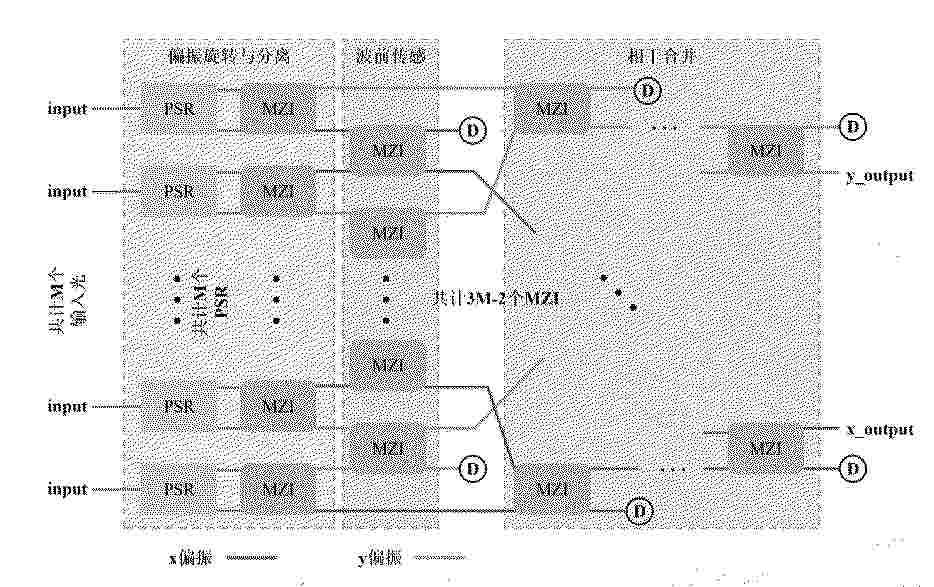
本发明的用于分集接收光通信的偏振复用快速相干合并集成光芯片,解决了传统分集接收需要多个接收机,系统复杂、时延大的问题,属于设计光通信和集成光芯片领域。本发明在模式分集接收的基础上,利用可调集成光子芯片对自由空间光通信发射的偏振复用光信号进行接收,并通过MZI对接收到的不同偏振光进行独立的相干合并。为了实现更快速的合并速率,本发明通过第一级MZI的强度相位信息反演得到入射光波前信息,然后将其发送到后面多级MZI中,提前进行控制,提升芯片的合并速率。最后将合并后的两束正交偏振光发送到片上集成的相干接收机,进行信号处理,实现片上分集相干通信接收功能。
Resumen de: CN122870391A
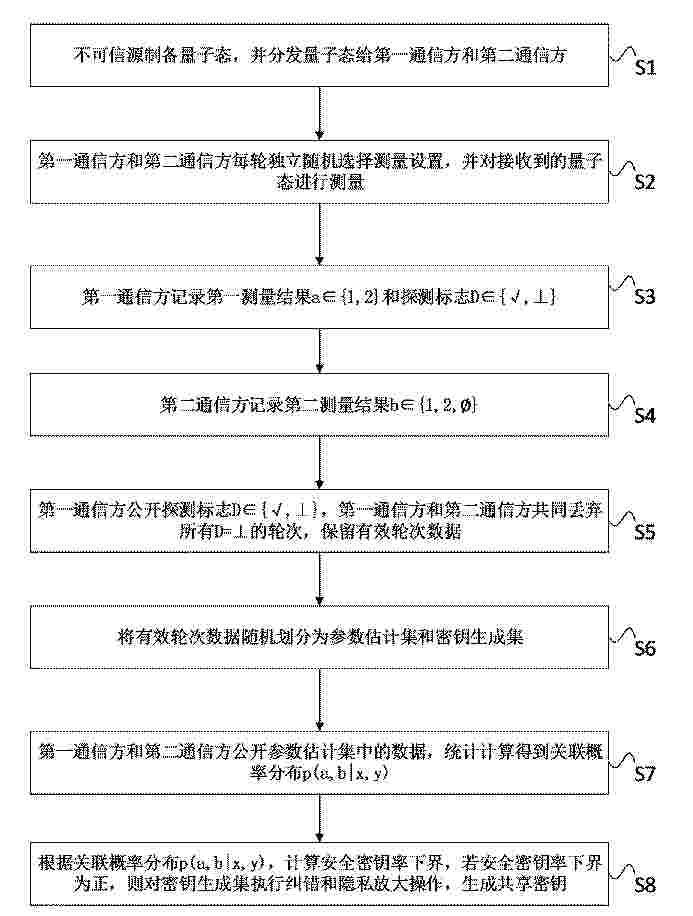
本发明公开了一种抗相干攻击的单侧设备无关量子密钥分发方法和系统,抗相干攻击的单侧设备无关量子密钥分发方法包括:不可信源制备并分发量子态;第一通信方和第二通信方对接收到的量子态进行测量;第一通信方记录第一测量结果和探测标志;第二通信方记录第二测量结果;第一通信方公开探测标志,第一通信方和第二通信方共同丢弃所有无效轮次;将有效轮次数据随机划分为参数估计集和密钥生成集;公开参数估计集中的数据,统计计算得到关联概率分布;计算安全密钥率下界,若安全密钥率下界为正,则对密钥生成集执行纠错和隐私放大操作,生成共享密钥。本发明的方法能够降低非信任方的检测效率阈值,降低了非信任方设备的硬件成本和制造难度。
Resumen de: CN122870269A
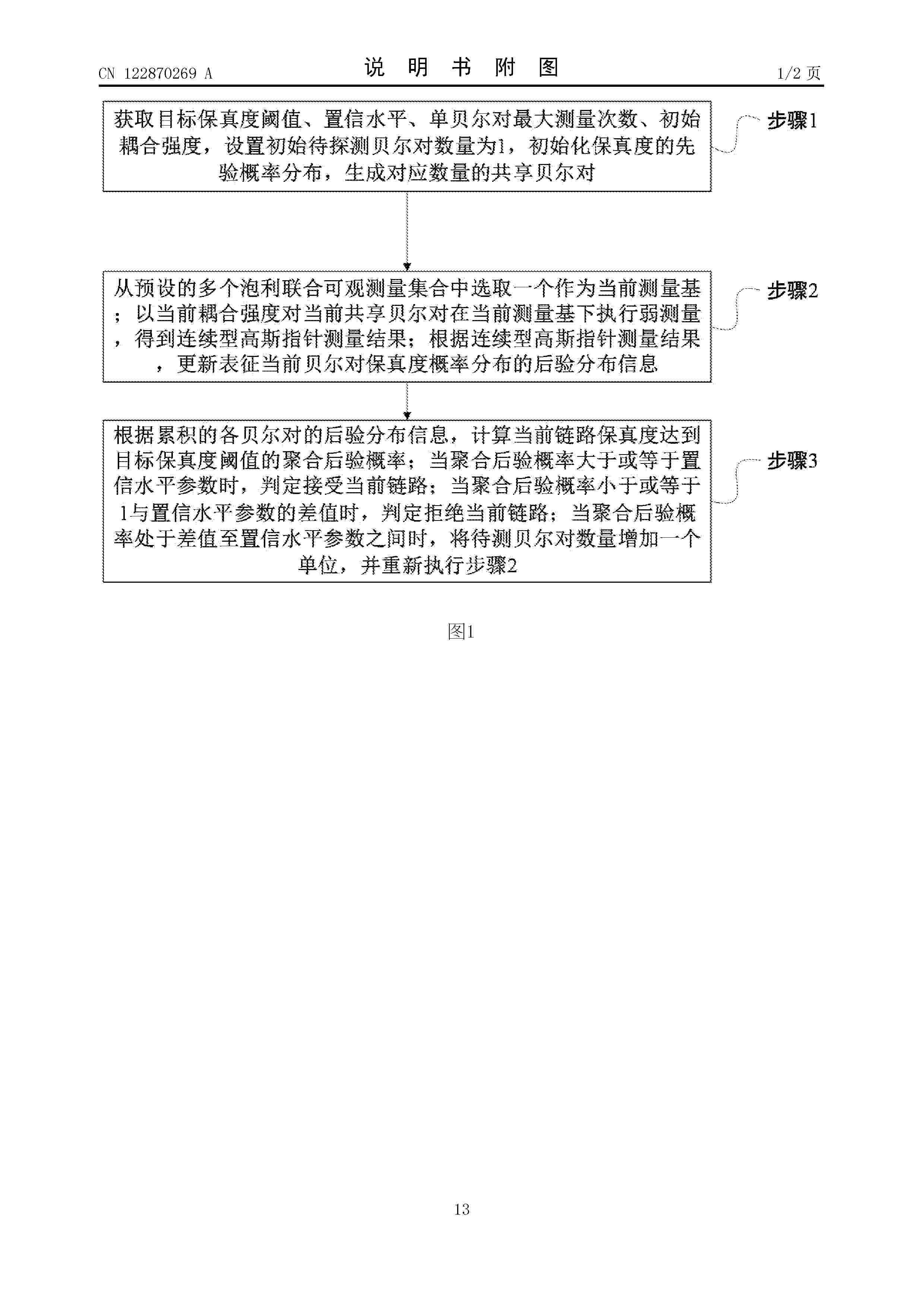
本申请涉及量子通信与量子网络技术领域,特别是涉及一种基于弱测量的主动低干扰量子链路探测方法及系统。所述方法包括:初始化目标保真度阈值、置信水平、单贝尔对最大测量次数、初始耦合强度等参数,设置初始待探测贝尔对数量为1,初始化保真度的先验概率分布,生成对应数量的共享贝尔对;对每个贝尔对随机选择泡利可观测量并执行序贯弱测量,记录连续高斯指针结果,通过贝叶斯后验更新逐步聚合保真度信息;当后验置信度达到预设阈值时做出接受/拒绝/不确定的三元决策。采用本方法能够以弱测量替代传统破坏性投影测量,使被测纠缠对在诊断后仍可复用于后续量子通信任务,显著提升量子网络的整体资源利用效率。
Resumen de: CN122870401A
本发明提供了一种对量子密钥分发系统进行多普勒频移补偿的系统及方法,可以应用于量子通信技术领域。该系统包括:生成调制子模块根据目标强度调制信号,对激光信号进行强度态调制,得到初始光信号;分束调制子模块对初始光信号进行分束和调制处理,得到并进行干涉处理,得到并输出量子光信号;光束分束子模块对量子光信号进行被动基矢分束处理,得到待调制相位基光信号;相位补偿子模块根据单光子探测子模块所探测得到的在上一窗口的第一相位基干涉光信号和第二相位基干涉光信号内的光子数,确定迭代干涉补偿相位;根据迭代干涉补偿相位,对待调制相位基光信号进行相位补偿,得到当前窗口的第一相位基干涉光信号和第二相位基干涉光信号。
Resumen de: CN122870292A
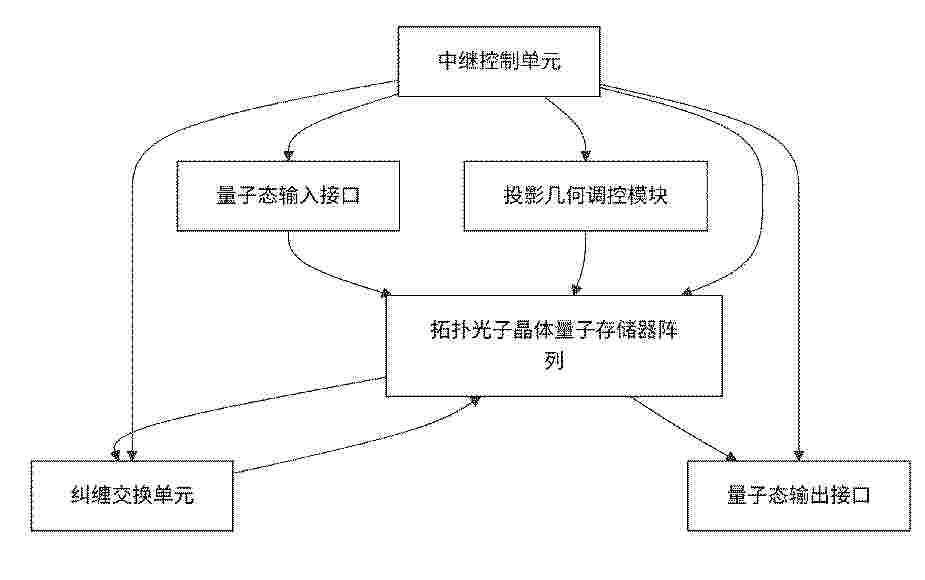
本发明公开了一种基于投影几何调控的拓扑保护量子中继器芯片及其控制方法。所述芯片包括SOI衬底、拓扑光子晶体量子存储器阵列(各微腔单元具有非零拓扑陈数)、投影几何调控模块、量子态输入/输出接口、纠缠交换单元和中继控制单元。投影几何调控模块通过外部场独立调控各微腔单元的投影角θ(θ=arctan(β_s/β_r),β_r²+β_s²=1),实现量子态的写入、拓扑保护存储和读取;纠缠交换单元对存储的量子态执行贝尔态测量和纠缠交换;中继控制单元协调量子态的接收、存储、纠缠交换和转发时序。本发明实现了芯片级量子中继器,具有拓扑保护存储、高保真度纠缠交换、多通道并行的突出优点,存储时间≥100ms,纠缠交换保真度≥0.93,可应用于量子通信网络和量子互联网等场景。
Resumen de: WO2026202896A1
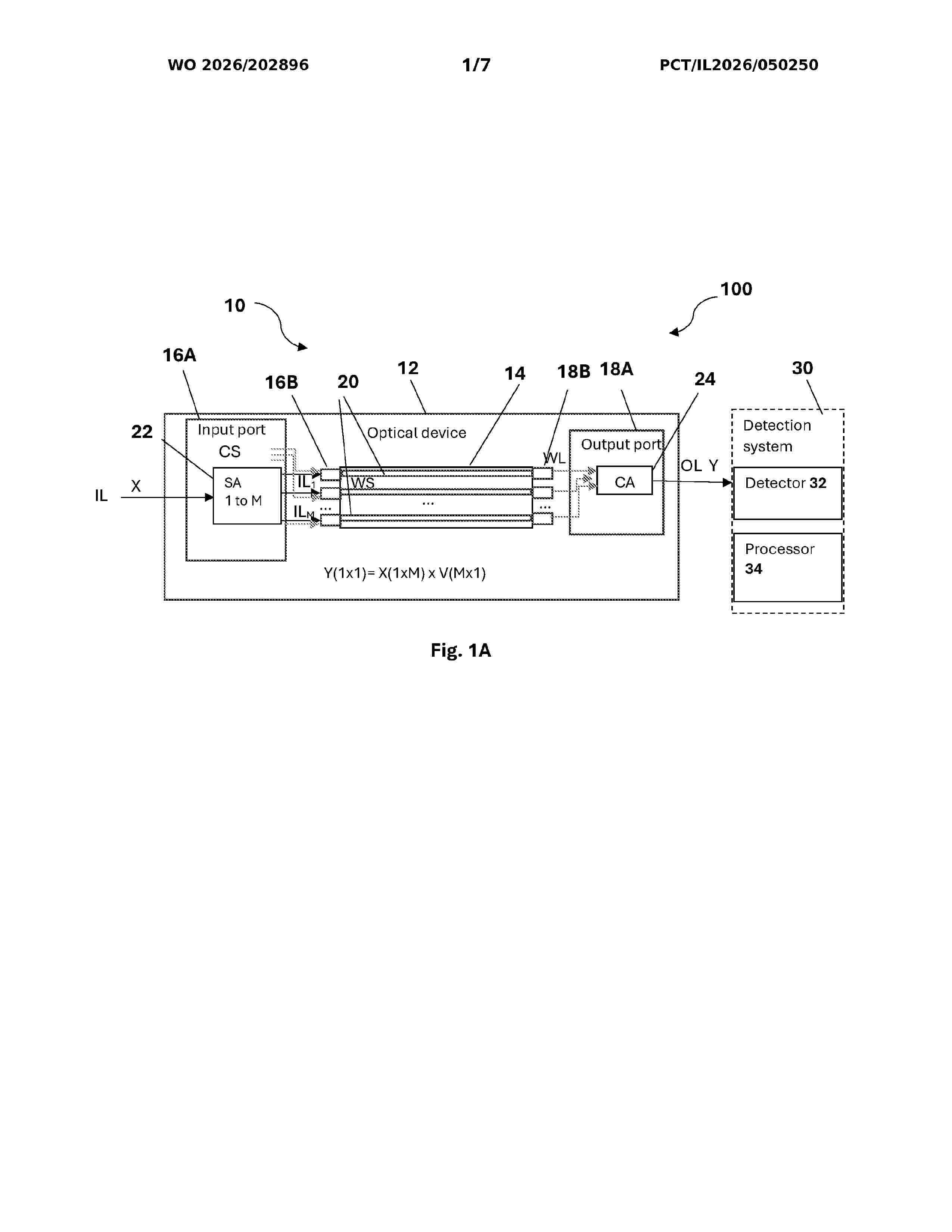
Basic block, for use in photonic processor, is presented, comprising an optical device having N (N≥1) waveguide structures between device's input and output ports. Each i-th waveguide structure defines M light guiding units (M≥2), each comprising active medium, excitable by a respective control light signal to affect intensity of j -th light signal, passing through j -th light guiding unit, with a weighting factor defined by power of the control light signal. This provides NxM weighted light signals at NxM output ports of the TV waveguide structures. The device's input port has TV splitters producing AV light signals, each of power Xy indicative of i-th component of vector X=X1,...,XN to be multiplied by matrix or vector of size NxM. The output port has a number of combiners providing output light signal of power Y j indicative of j -th component of vector Y=Y1,...Y M , presenting a matrix-vector or vector-vector multiplication of the input light signal.
Resumen de: US20260305479A1
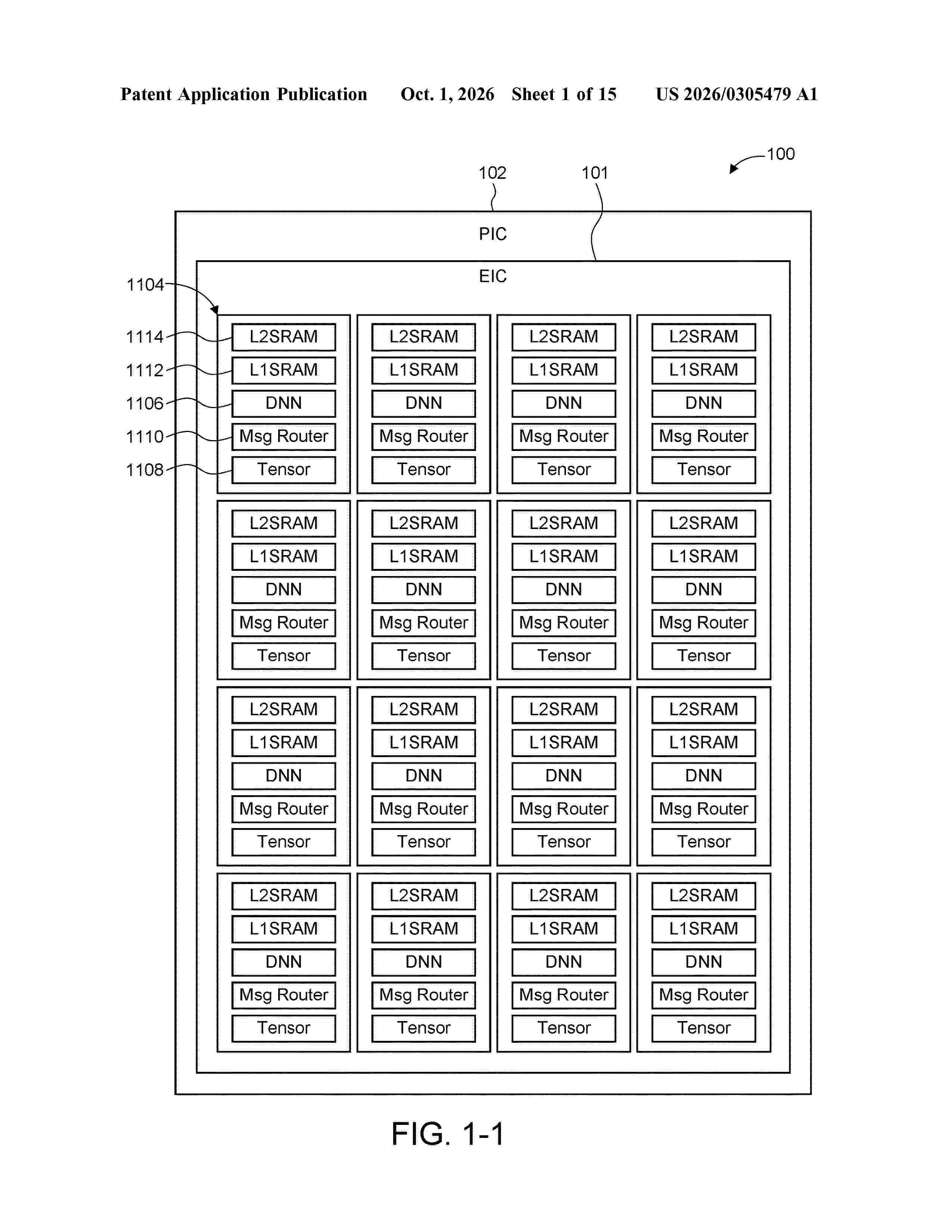
0000 A semiconductor chip includes: a photonic integrated circuit (PIC) comprising an active component electrically connected to a first landing pad at a surface of the PIC, wherein the first landing pad is configured to receive a copper pillar, which, when installed, provides at least a portion of a first electrical interconnect between the active photonic component and a second integrated circuit to be stacked on the surface of the PIC, and wherein, when viewed from above the PIC towards the PIC, a center of the active photonic component on the PIC is offset from a nearest edge of the first landing pad by about a distance less than 10 mm.
Resumen de: US20260300802A1
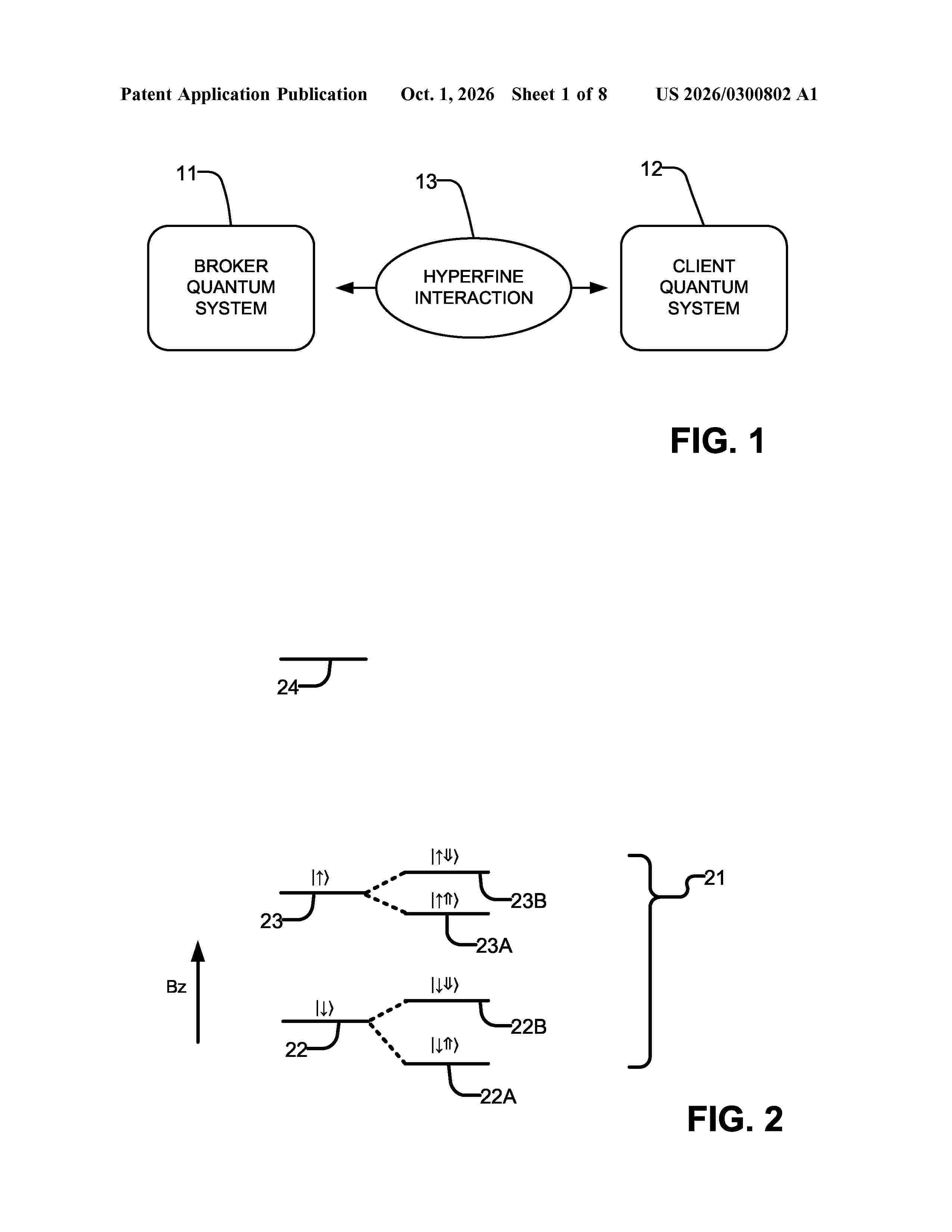
Methods and systems for protecting a quantum state of a client quantum system of a broker-client system are disclosed. The client-broker system comprises the client quantum system and a broker quantum system coupled by a hyperfine interaction. The method comprises suppressing the hyperfine interaction by applying an electromagnetic dressing field to the client-broker system in the presence of a first magnetic field. The electromagnetic dressing field comprises a second magnetic field that oscillates in a direction perpendicular to the first magnetic field. While the hyperfine interaction is suppressed, a quantum state of the broker quantum system may be altered by steps including optically exciting the broker quantum system. The method may be applied to reduce decoherence of the quantum state of the client quantum system while resetting a quantum state of the broker quantum system.
Resumen de: US20260303214A1
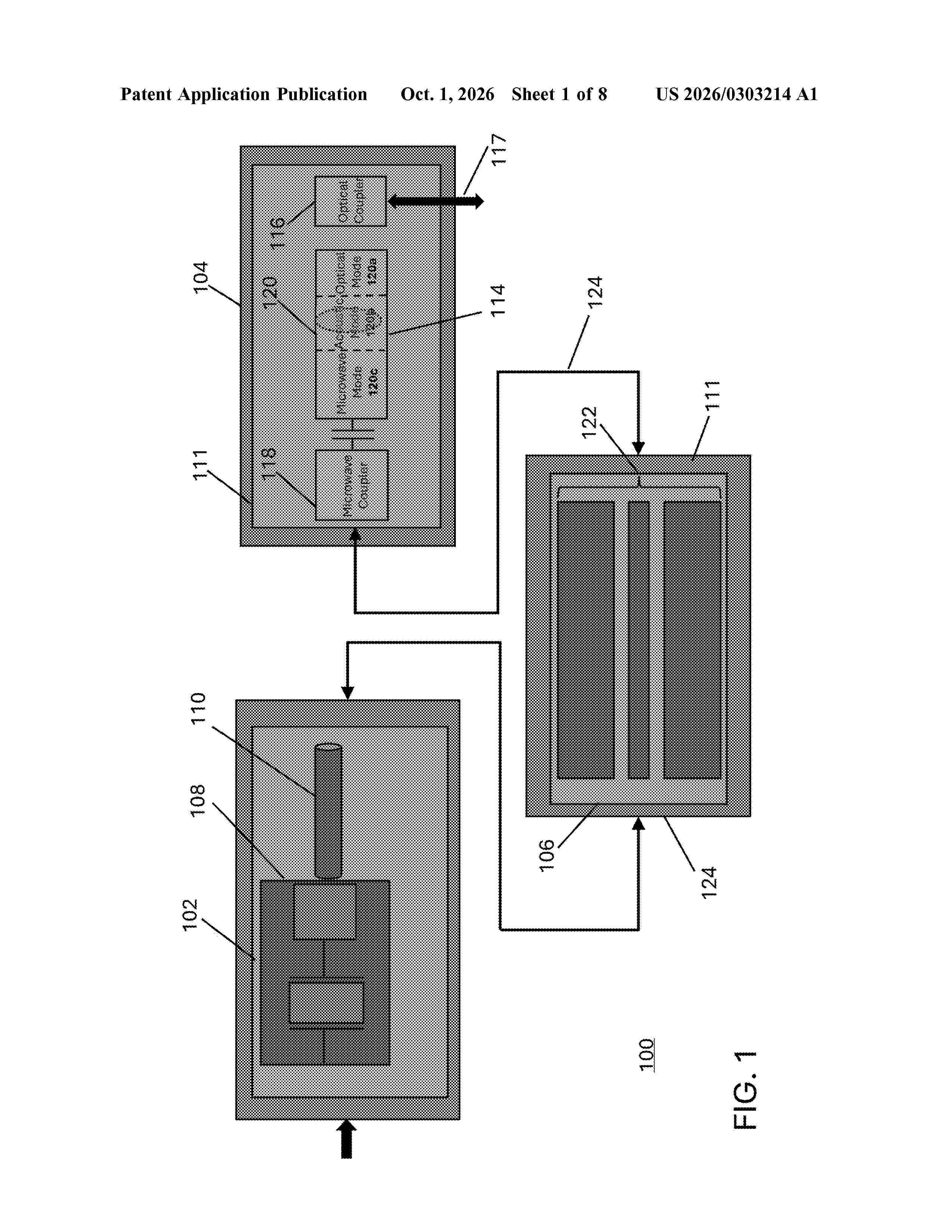
The present disclosure describes improved quantum systems, and processing thereof, that may comprise optimized transducer assembly configurations to enhance the conversion of quantum information between quantum processors and carriers for physical interactions. For ease of explanation, an exemplary transducer is a photon-insensitive transducer, but the present disclosure is not so limited. An exemplary photon-insensitive transducer module comprises a superconducting circuit, an optomechanical transducer, and a coupling circuit. The optomechanical transducer is arranged to mediate an exchange between telecom-wavelength optical modes and a microwave frequency mechanical mode. The coupling circuit is arranged to mediate coupling between the superconducting circuit and the optomechanical transducer. Each of the superconducting circuit, the optomechanical transducer, and the coupling circuit may be arranged and connected as independent modules. Each module may include one or more mitigating structures for protecting the superconducting circuit from carrier particle interaction.
Resumen de: EP4815342A1
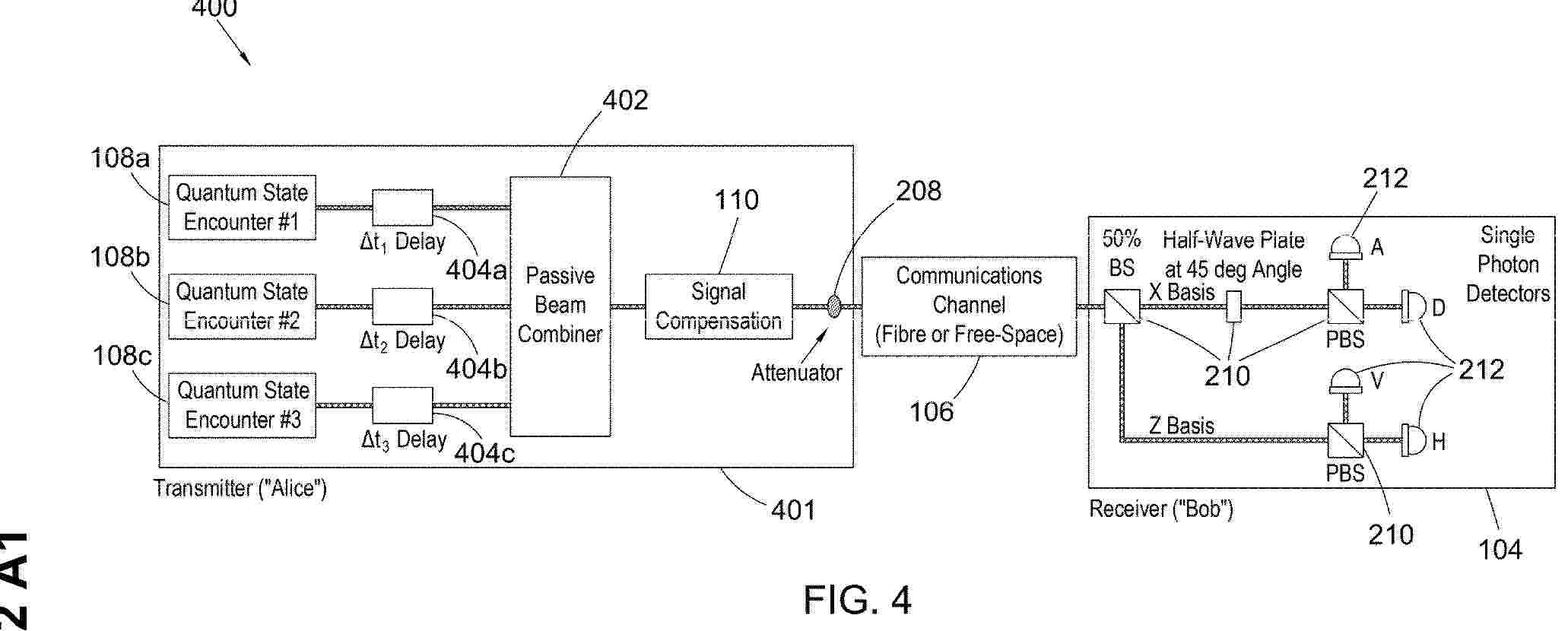
0001 A quantum transmitter for use in a quantum communication system is provided, the transmitter comprising: a plurality of quantum state encoders, each encoder configured to emit portions of light, each portion encoded with a respective quantum state; and a beam combining module configured to receive portions of light emitted from each quantum state encoder, and combine the received portions to produce output light comprising a sequence of successive portions of light emitted by each encoder. A corresponding quantum communication system is also provided.
Resumen de: WO2025221285A2
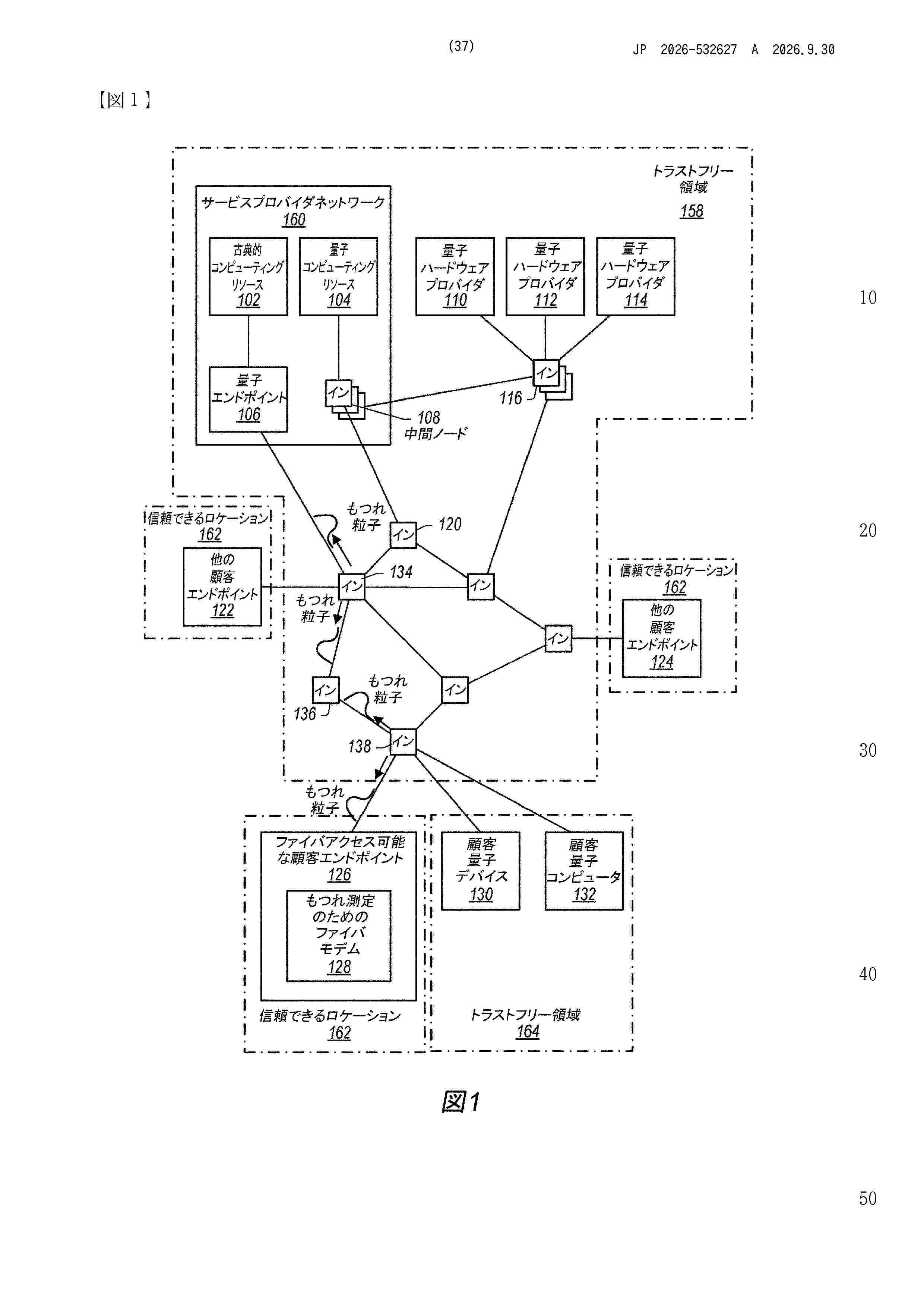
Techniques for generating and maintaining a buffer of on-demand, pairwise quantum entanglement instances using programmable optical switchboard architectures within quantum repeaters are disclosed. A rate of establishing pairwise quantum entanglement instances between quantum repeaters of a quantum entanglement network may be higher than both a rate of decay of said instances and a rate of consumption of said instances for providing distributed quantum entanglement, such that on-demand distribution of quantum entanglement may be provided for customers. Furthermore, an optical switchboard with a given quantum repeater may be configured to route between any of the quantum memory locations provided within the quantum repeater, such that an optimization of the usage of such buffers of quantum entanglement instances may be ensured.
Resumen de: CN122844981A
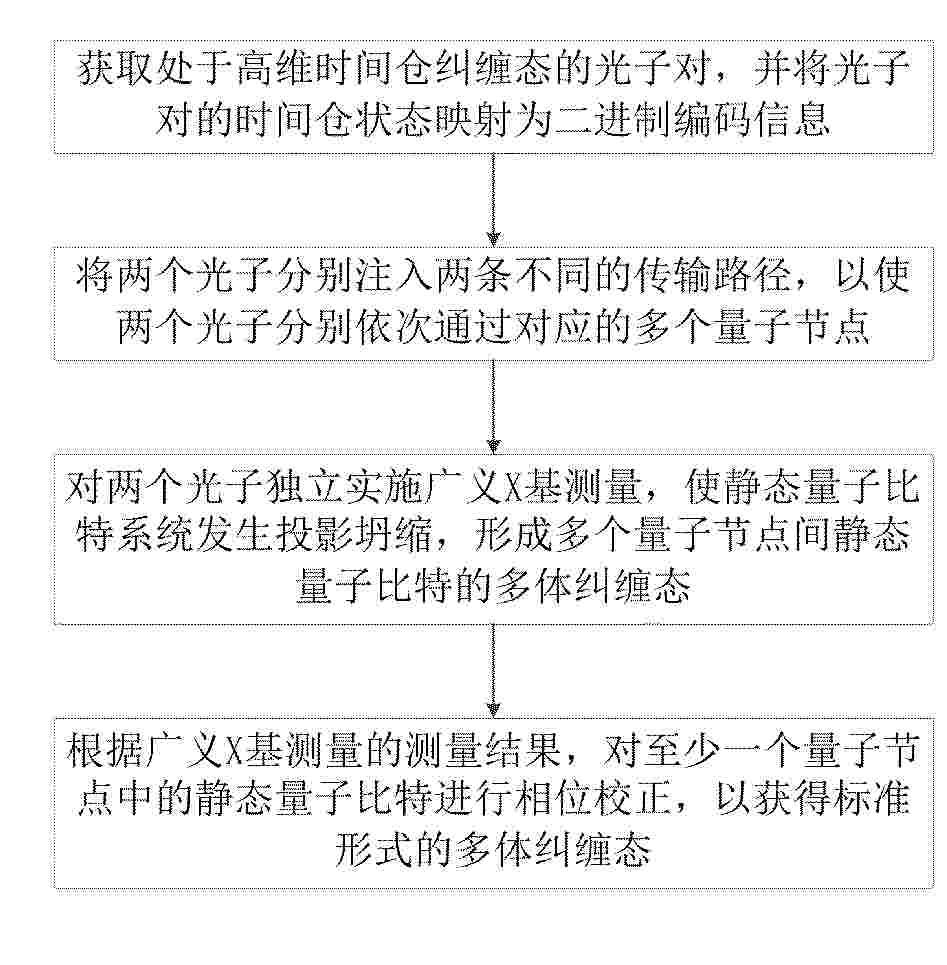
本发明公开了一种基于双光子高维时间仓纠缠分发的多对多体静态纠缠制备方法。该方法在包含N个量子节点、每个节点包含m个静态量子比特的分布式系统中,利用高维时间仓编码的纠缠光子对,结合各节点前置的可编程光开关,控制光子与特定静态量子比特发生选择性相互作用,从而沿两条路径依次通过各节点以构建光子与所有静态量子比特的杂化纠缠态。随后对光子对实施广义X基测量,使静态量子比特系统发生投影坍缩,最后经相位校正并行制备出标准形式的多体静态纠缠态。本发明仅利用一个高维编码纠缠光子对即可完成非局域多体纠缠的高效并行生成,显著降低了光子传输损耗带来的影响,并有效减少了所需光子资源、时间资源及量子存储器相干时间要求。
Resumen de: CN122844983A
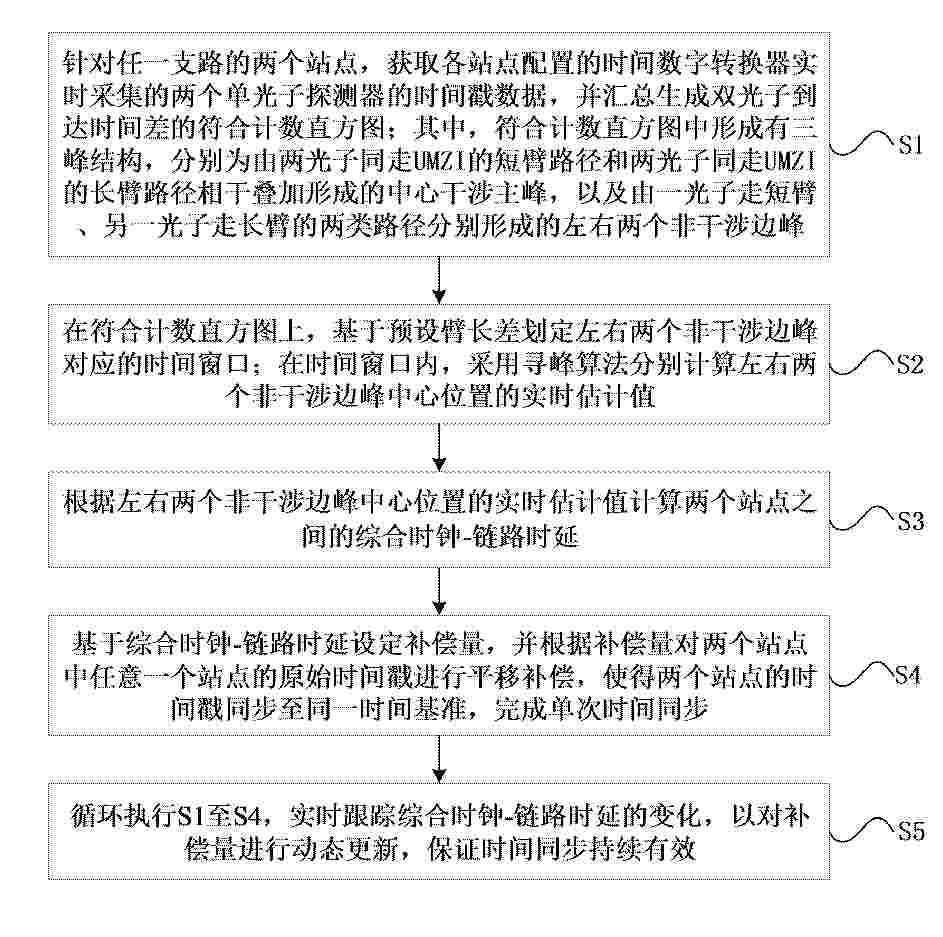
本发明公开了一种用于纠缠分发网络的自参考时间同步方法及系统,涉及量子通信技术领域;该方法包括:针对网络中配对形成Franson干涉测量支路的两个站点,获取两个单光子探测器的实时时间戳数据,汇总生成双光子到达时间差的符合计数直方图;基于预设臂长差时延划定左右边峰对应的时间窗口,计算左右边峰中心位置的实时估计值和两个站点之间的综合时钟‑链路时延;基于综合时钟‑链路时延对任意一个站点的原始时间戳进行平移补偿,完成单次时间同步;循环执行上述流程,实时跟踪综合时钟‑链路时延的变化,保证时间同步持续有效。该方法在不引入经典噪声、不额外占用光纤信道资源的条件下,实现了量子纠缠分发网络的高精度时间同步。
Resumen de: CN122844463A
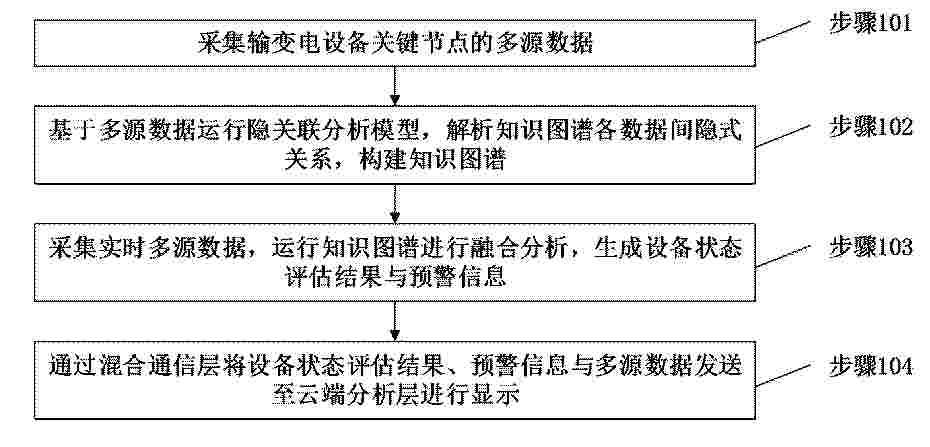
本申请提供一种输变电设备的智能监测预警方法及系统,涉及电力设备监测领域。该方法包括:采集输变电设备关键节点的多源数据,多源数据包括电信号检测数据、设备使用数据、图像数据以及天气数据。运行隐关联分析模型,解析多源数据内隐关联和节点关联网络,构建知识图谱,知识图谱包括感知层、关联层和推理层。采集实时多源数据,运行知识图谱进行融合分析,生成设备状态评估结果与预警信息。通过混合通信层将设备状态评估结果、预警信息与多源数据发送至云端分析层进行显示,混合通信层包括量子通信主链路和可见光通信备用链路。解决了数据维度割裂和融合不足,导致缺陷识别产生误判漏判技术问题。
Resumen de: CN122844982A
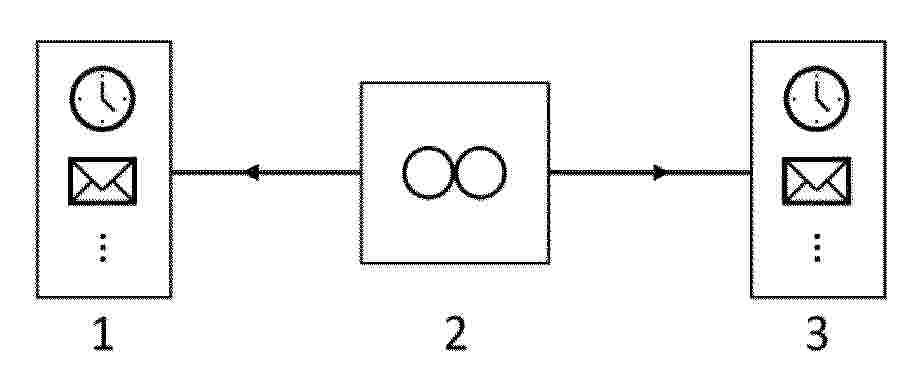
本申请涉及量子信息科学技术领域,公开了一种多业务功能量子信息互联系统及多业务量子信息互联方法。其系统包括:第一量子信息互联接收子系统、量子纠缠光源子系统与第二量子信息互联接收子系统;量子纠缠光源子系统用于产生纠缠光子对,并分别发送到第一量子信息互联接收子系统和第二量子信息互联接收子系统;两个接收子系统采用相同的光量子信息传输与探测硬件架构,分别独立完成光子接收、调控与探测,获得同源时间戳数据;二者能够协同基于同源时间戳数据,通过不同后处理算法分别实现量子通信业务功能和时间同步业务功能。本申请实现了多业务功能的量子信息互联系统,为大规模量子信息互联网的业务功能扩展提供了可行方案。
Nº publicación: CN122844974A 29/09/2026
Solicitante:
港岫科技(上海)有限公司
Resumen de: CN122844974A
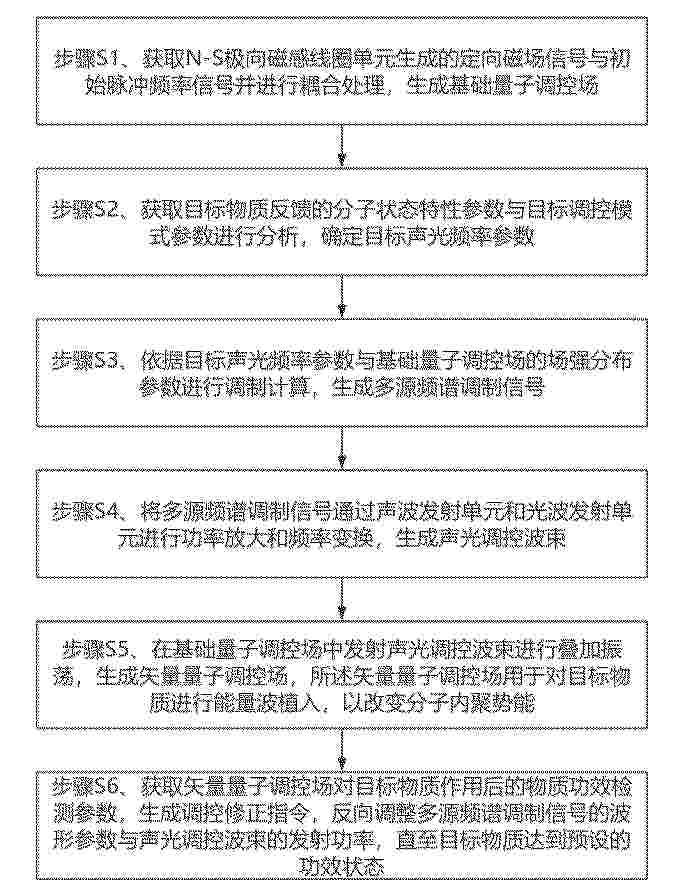
本发明公开了一种N‑S磁场定向空间内的多源频谱叠加方法及系统,涉及物理场协同的无线传输与频谱搬移技术领域,旨在解决现有多源能量场叠加能量发散、耦合效率低、调控精度差、无闭环反馈的问题。本发明通过N‑S极向静态强磁场与高频脉冲耦合生成基础量子调控场,结合目标物质分子状态参数匹配目标声光频率,经调制生成多源频谱信号与声光调控波束,在磁场约束下叠加振荡生成矢量量子调控场,同时构建功效检测闭环修正链路。本发明实现电磁‑声‑光三物理场同轴叠加,提升能量耦合效率与调控精准度,可定向改变目标物质分子内聚势能,实现分子结构有序化稳定重构。
 BOPI
BOPI
 Sede Electrónica