Si deseas distinguir tus productos, servicios o ambos de los de otra empresa, es posible que necesites una marca o nombre comercial. Descubre qué son, en qué consiste su procedimiento de registro y qué implica.

Información sobre los plazos de presentación de solicitudes de transformación de marcas de la Unión Europea en marca nacional española. Más información


Si tienes un nuevo dispositivo, producto o procedimiento que resuelva un problema técnico o tenga una ventaja práctica, existen distintas formas de protegerlo en España y en otros países. Descubre cómo hacerlo.

¿Tu innovación reside en la estética, la ornamentación o la apariencia de tu producto? Protégela mediante un diseño industrial. Descubre qué derechos confiere el registro y cómo realizar la tramitación.

Las indicaciones geográficas protegen el nombre de un producto originario de una zona geográfica, a la cual le debe una determinada calidad, reputación u otra característica. Descubre qué son, en qué consiste su procedimiento de registro y qué beneficios conceden.

Las patentes publicadas en todo el mundo son una valiosa fuente de información científica, técnica y comercial.

Si eres emprendedor/a o una empresa y quieres potenciar y mejorar la rentabilidad de tu negocio protegiendo de forma adecuada los activos intangibles de tu organización, en este espacio encontrarás lo necesario.


 292
resultados
292
resultados
 Última actualización
24/10/2026 [09:06:00]
Última actualización
24/10/2026 [09:06:00]


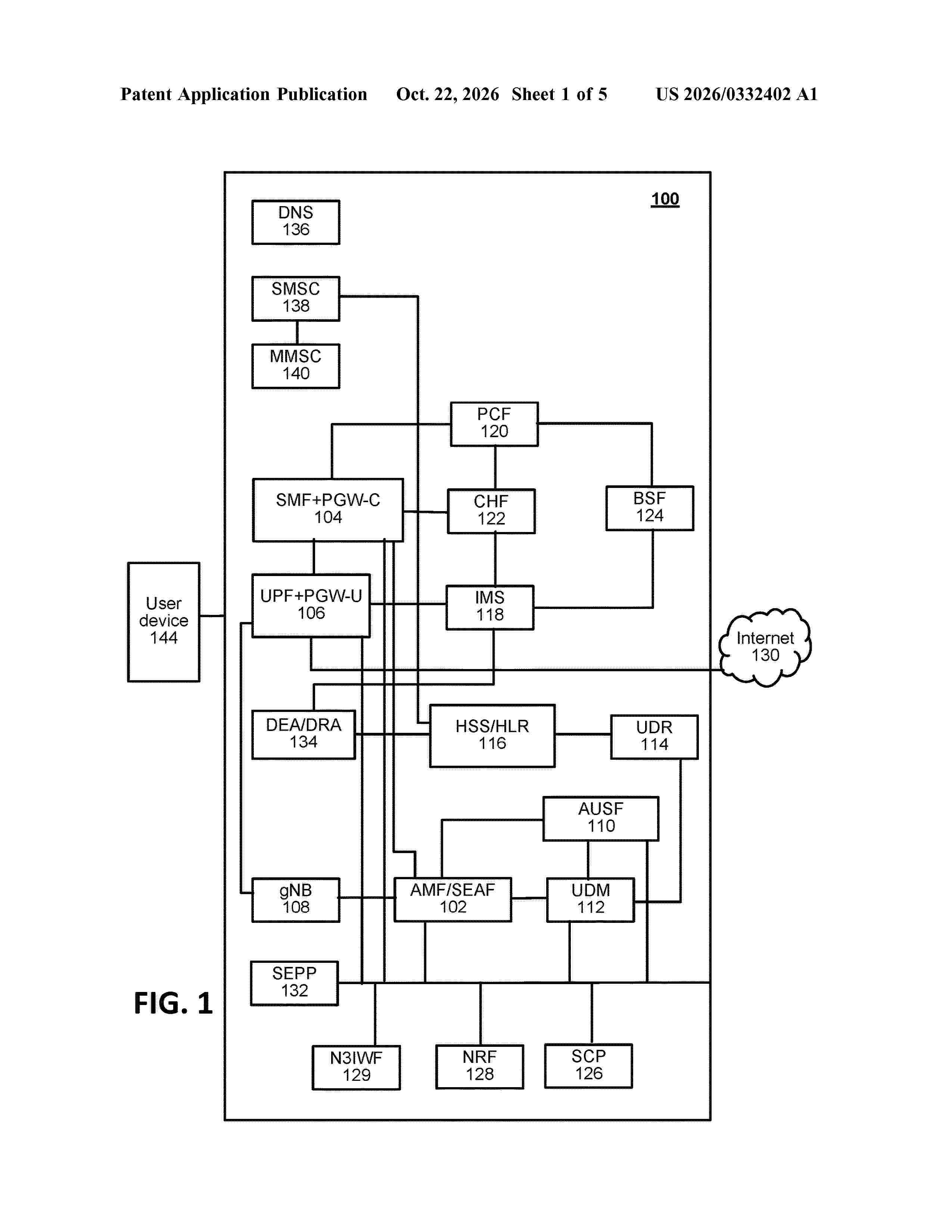
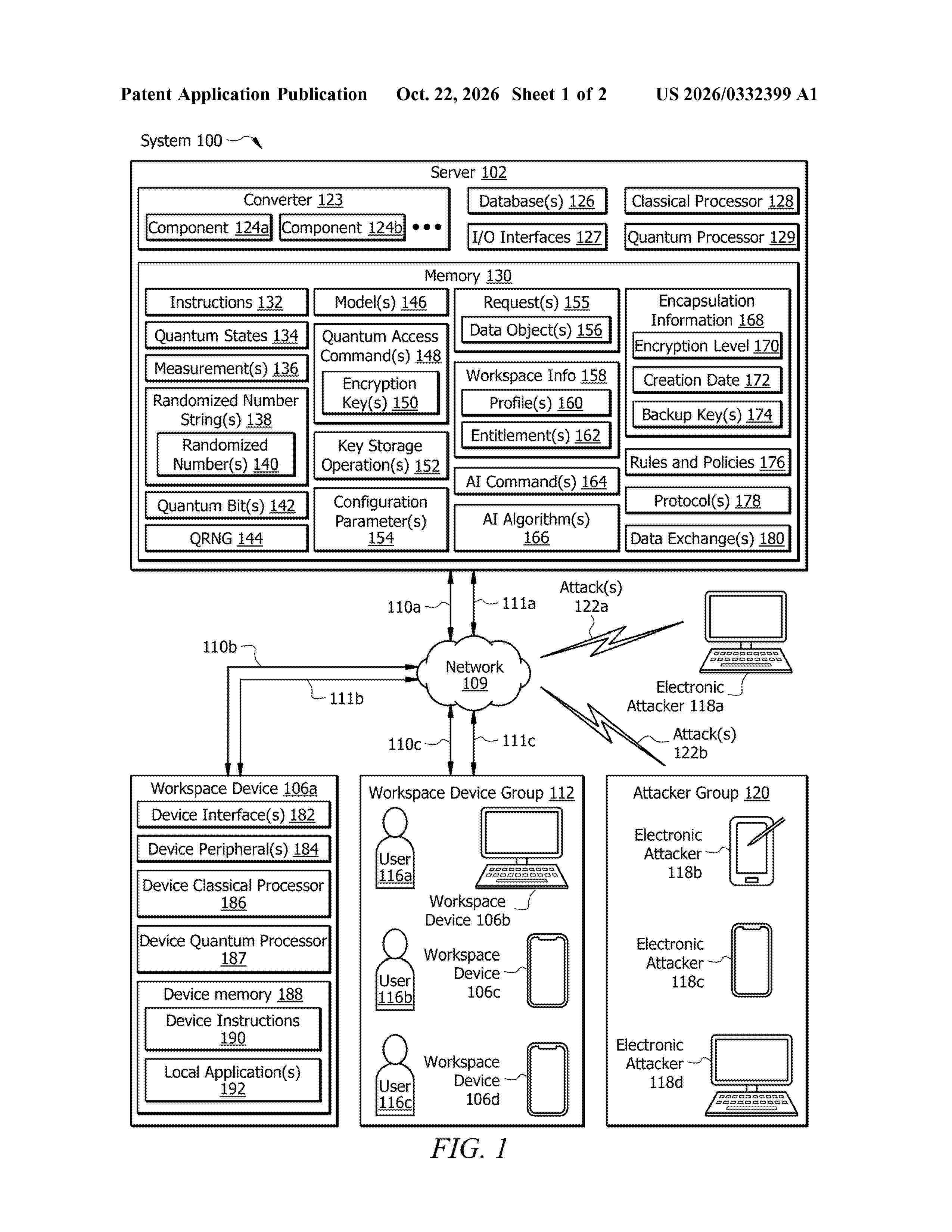
Resumen de: US20260332402A1
0000 Techniques for encrypting data within a communication network include receiving, at a first module, data packets encrypted using mathematical encryption. A machine-learning model trained to detect cybersecurity threats analyzes the data packets to determine the existence of a cybersecurity threat. In response to determining a threat, encryption is switched from mathematical encryption to quantum encryption. The data packets are encrypted using a quantum encryption key to generate quantum-encrypted data packets. The quantum encryption key is transmitted from the first module to a second module over a quantum key distribution (QKD) channel, and the quantum-encrypted data packets are transmitted from the first module to the second module.

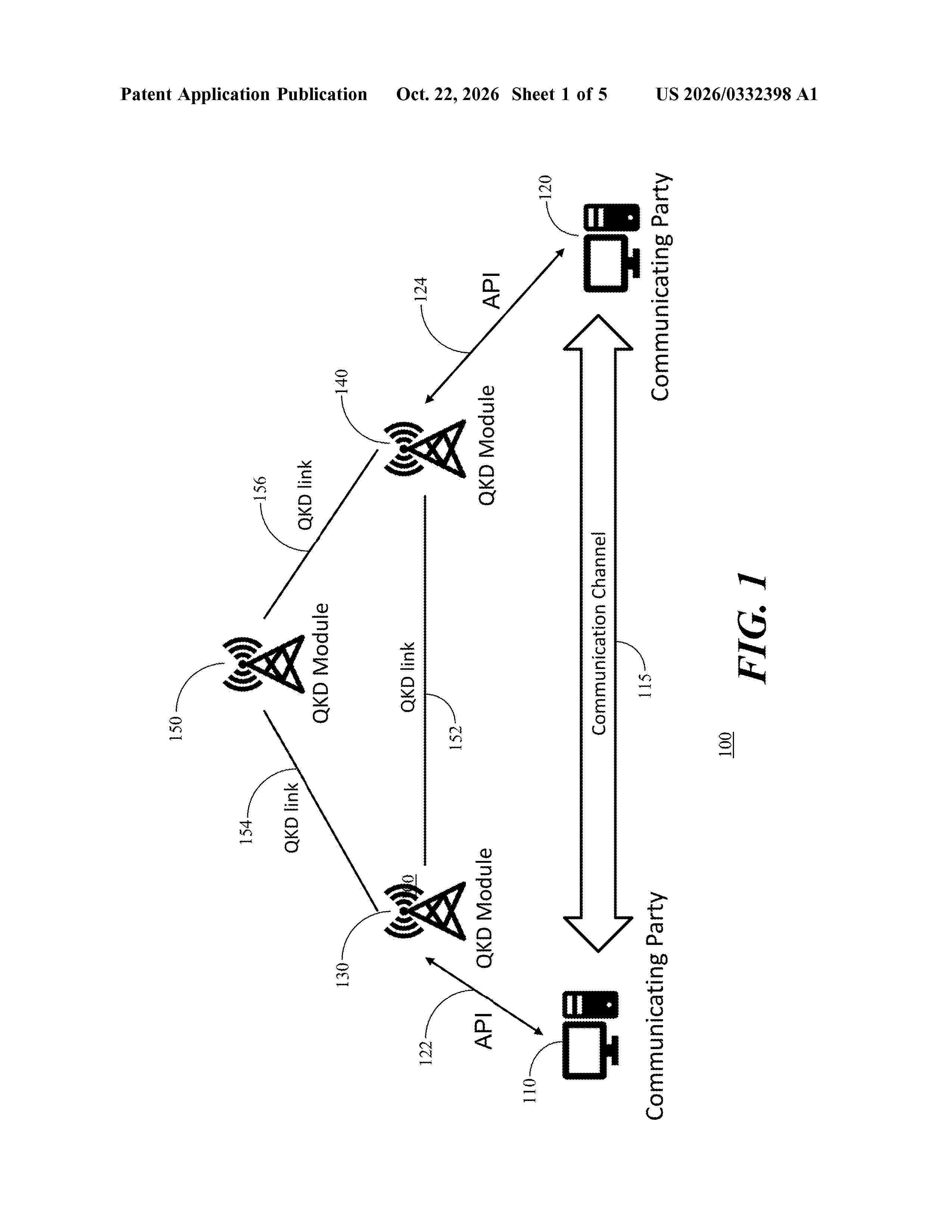
Resumen de: US20260332398A1
A system and a method for quantum-capable secure user and data authentication are provided. The system includes first and second communication devices and first and second key distribution modules. The first key distribution module is communicatively coupled to the first communication device for secure access thereto and the second key distribution module is communicatively coupled to the second communication device for secure access thereto. The first communication device and the second communication device enable quantum-safe messaging therebetween by lightweight post-quantum cryptographic communication between the first key distribution module and the second key distribution module. Also, the first communication device and the second communication device have established a pre-agreed secret password. In addition, the lightweight post-quantum cryptographic communication includes the first key distribution module and the second key distribution module establishing a shared random therebetween.
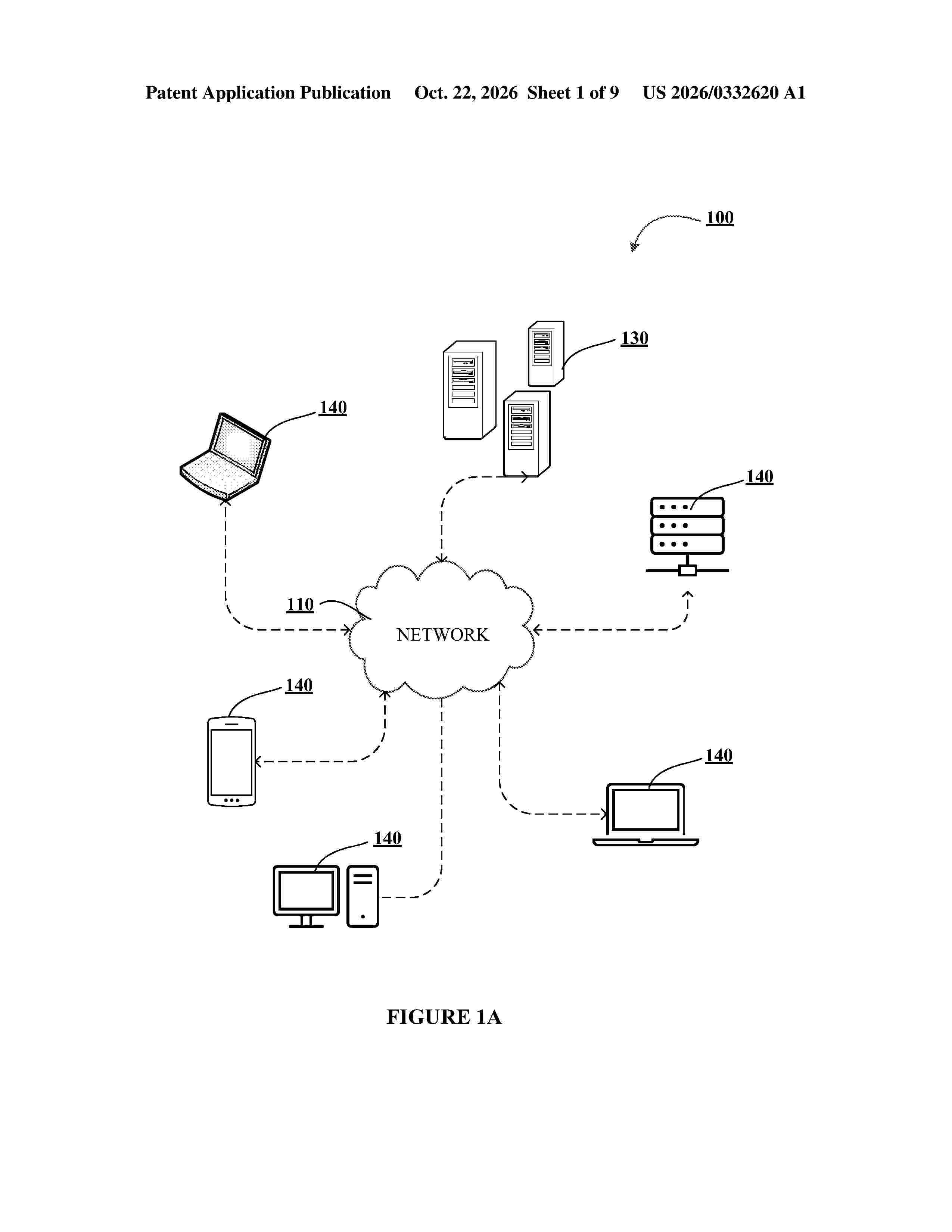
Resumen de: US20260332620A1
Systems, computer program products, and methods are described herein for securing data by detecting and preventing real-time data leakages in cloud environments. The present disclosure is configured to identify at least one data source; collect, by at least one virtual component, data from the data source(s), wherein the data comprises current user data; monitor, by the at least one virtual component, the data from the data source(s); generate, in an instance after the monitoring of the data, encrypted data by applying an encryption layer to the data; apply the encrypted data to an anomaly detection layer; determine, by the ML model, an anomaly indicator based on whether an anomaly is present in the data based on the current user data; determine, by the AI engine, a prediction for the data; and log, in a distributed ledger, the current user data and the anomaly indicator.
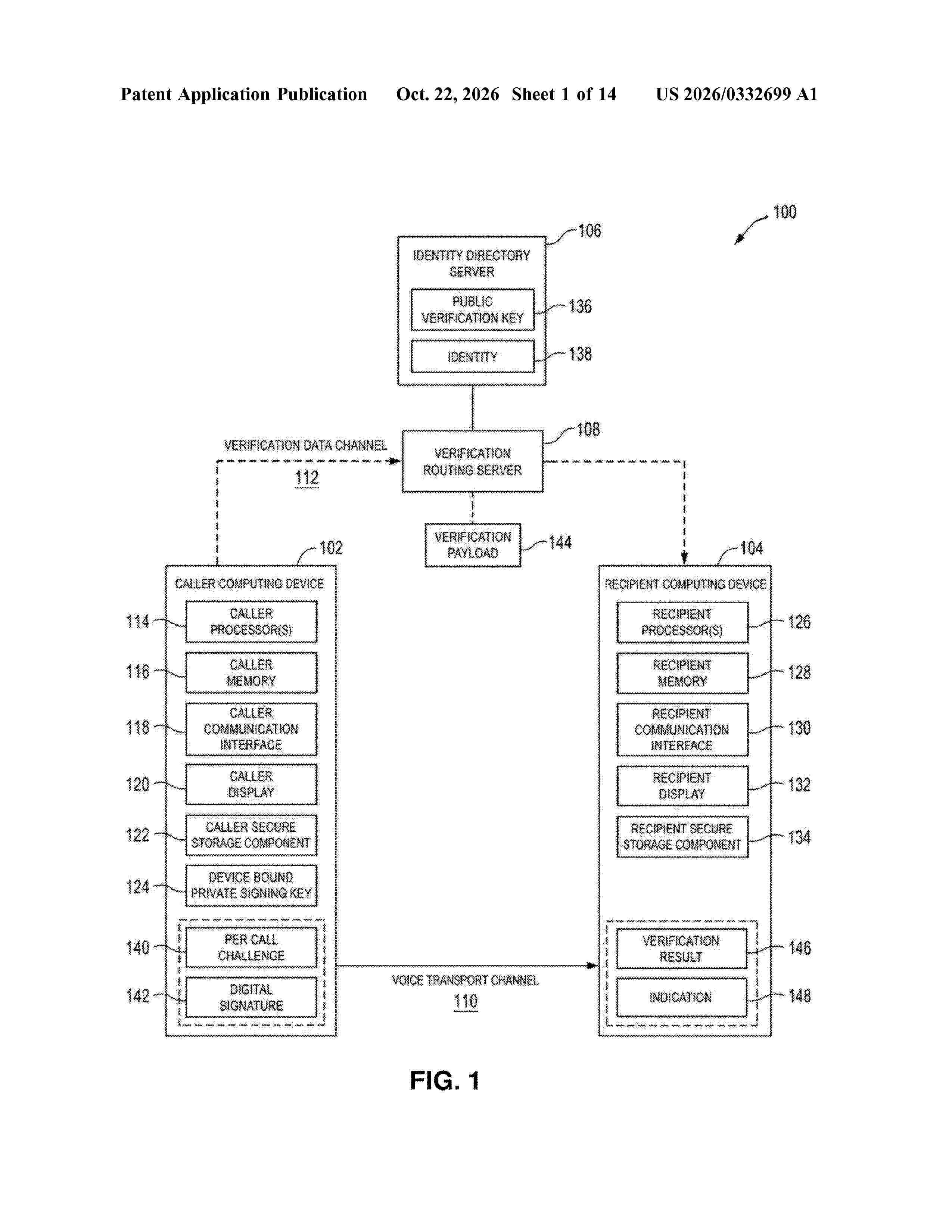
Resumen de: US20260332699A1
A system and method verify an identity associated with a voice call. A caller computing device generates a per-call challenge associated with a particular instance of the voice call and produces a digital signature over the per-call challenge using a device-bound private signing key associated with the caller computing device. The caller computing device initiates a voice call to a recipient computing device over a voice transport channel and transmits a verification payload to the recipient computing device over a verification data channel separate from the voice transport channel. The verification payload includes the per-call challenge and the digital signature. The recipient computing device obtains a public verification key associated with the identity of a caller and verifies the digital signature using the public verification key to generate a verification result locally at the recipient computing device.
Resumen de: US20260332399A1
A system comprises at least two devices equipped with one or more quantum processors. The system may be configured to coordinate operations between the one or more quantum processors to establish, control, and/or monitor encryption keys in a network. The encryption keys are concealed through multiple encryption layers as the encryption keys are shared between one or more nodes, devices, and/or network components. The system is configured to develop one or more protocols that may be used to maintain and/or control security of shared encryption keys in the network.
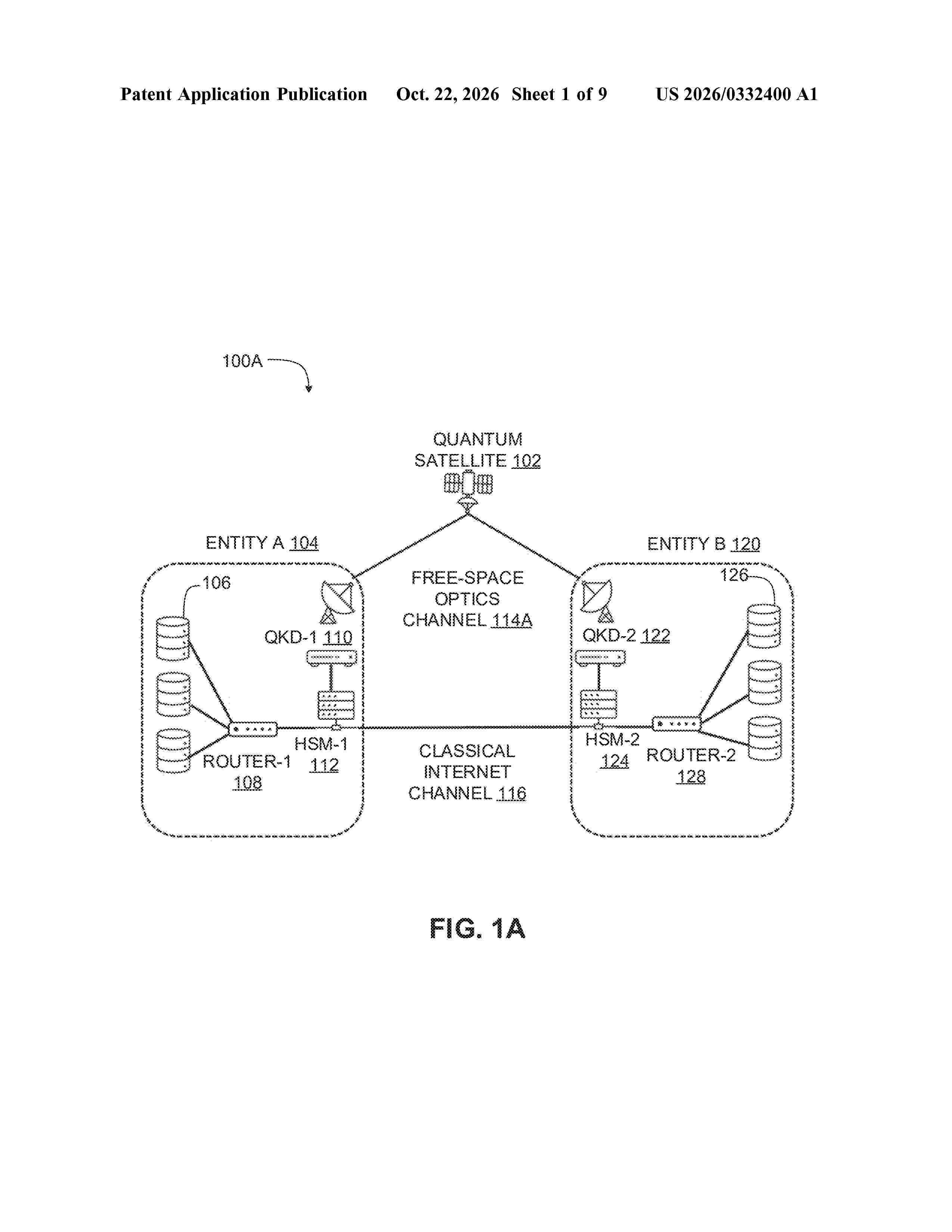
Resumen de: US20260332400A1
0000 Systems and methods for entanglement-cascaded quantum key distribution are disclosed. The processor determines set of communication parameters to be transmitted between quantum transmitter and quantum receiver. The processor generates entangled pair of qubits including first set of qubits and second set of qubits. The processor performs first quantum operation associated with first secret key on second qubits of first set of qubits and second set of qubits. The processor swaps second qubit of quantum transmitter with second qubit of receiver. The processor generates entangled qubit pairs by performing quantum entanglement operation on first qubit of quantum transmitter and second qubit of quantum receiver. The processor determines quantum measurement operation to be applied to entangled qubit pairs. The processor performs second quantum operation and generates measurement result for each of entangled qubit pairs. The processor transmits generated shared classical secret key from quantum transmitter to quantum receiver over secure communication channel.
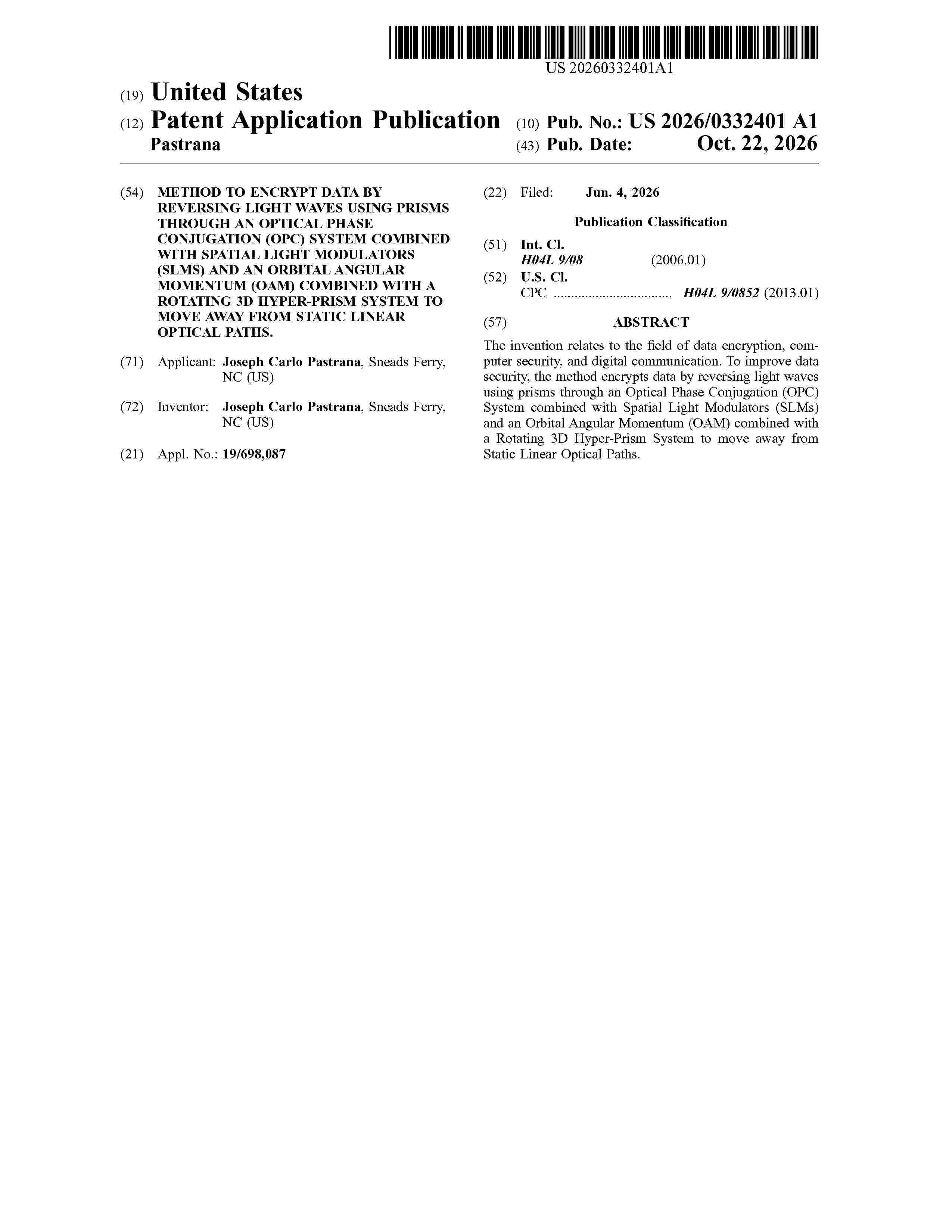
Resumen de: US20260332401A1
The invention relates to the field of data encryption, computer security, and digital communication. To improve data security, the method encrypts data by reversing light waves using prisms through an Optical Phase Conjugation (OPC) System combined with Spatial Light Modulators (SLMs) and an Orbital Angular Momentum (OAM) combined with a Rotating 3D Hyper-Prism System to move away from Static Linear Optical Paths.
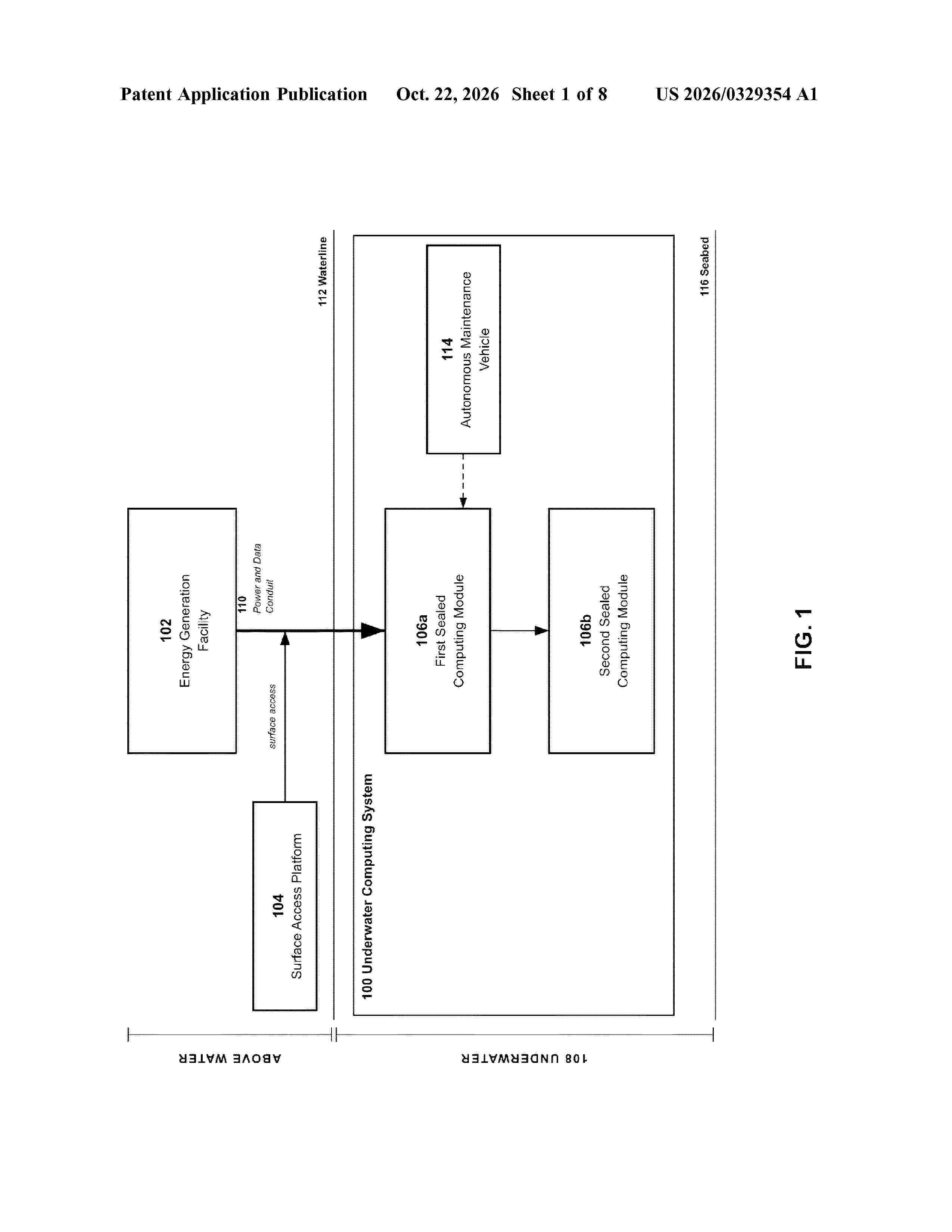
Resumen de: US20260329354A1
An underwater computing system comprises one or more sealed computing modules configured to operate submerged in a body of water. Each sealed computing module includes a pressure-resistant hull enclosing computing hardware. A wireless energy transfer system delivers electrical energy from an energy generation facility to the sealed computing modules without physical power cables. A buoyancy control system adjusts module depth within the water. A thermal regulation subsystem transfers heat to the surrounding water. A hybrid communication architecture couples the modules to a surface communication hub via a plurality of distinct channels including fiber-optic, power-line, quantum, acoustic, and optical communication. An AI control unit autonomously manages power distribution, thermal regulation, buoyancy adjustment, and workload distribution in real time based on environmental sensor data. A secure closed-loop mode gate selectively restricts communications to authenticated control instructions and health telemetry.
Resumen de: EP4827040A1
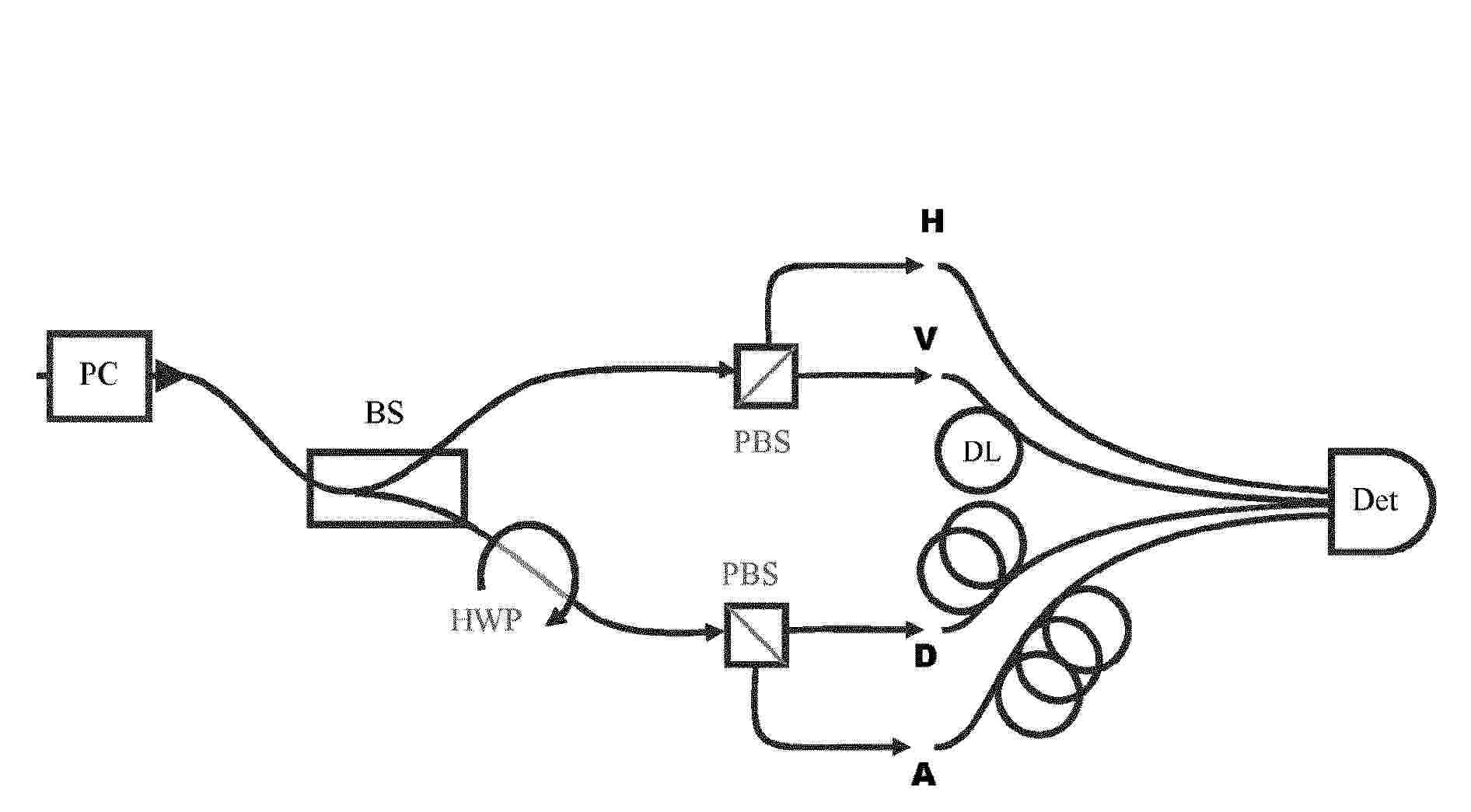
The present invention relates to a quantum key distribution receiver for a discrete variable QKD protocol comprising an optical circuit adapted to receive a signal from an emitter, split it into several states and temporally multiplex the different states at fixed time-differences, a unique single-photon detector adapted to detect said states in specific time-bins at said fixed time-differences, wherein said receiver is adapted to control said unique single-photon detector in gated mode so as to effectively activate the detector to create detection gates at said specific time-bins, the choice of the time-bins corresponding to the choice of the measurement basis of the qubits, and activate the detector to create extra detection gates at additional security time-bins different from said specific time-bins.
Resumen de: WO2026216996A1
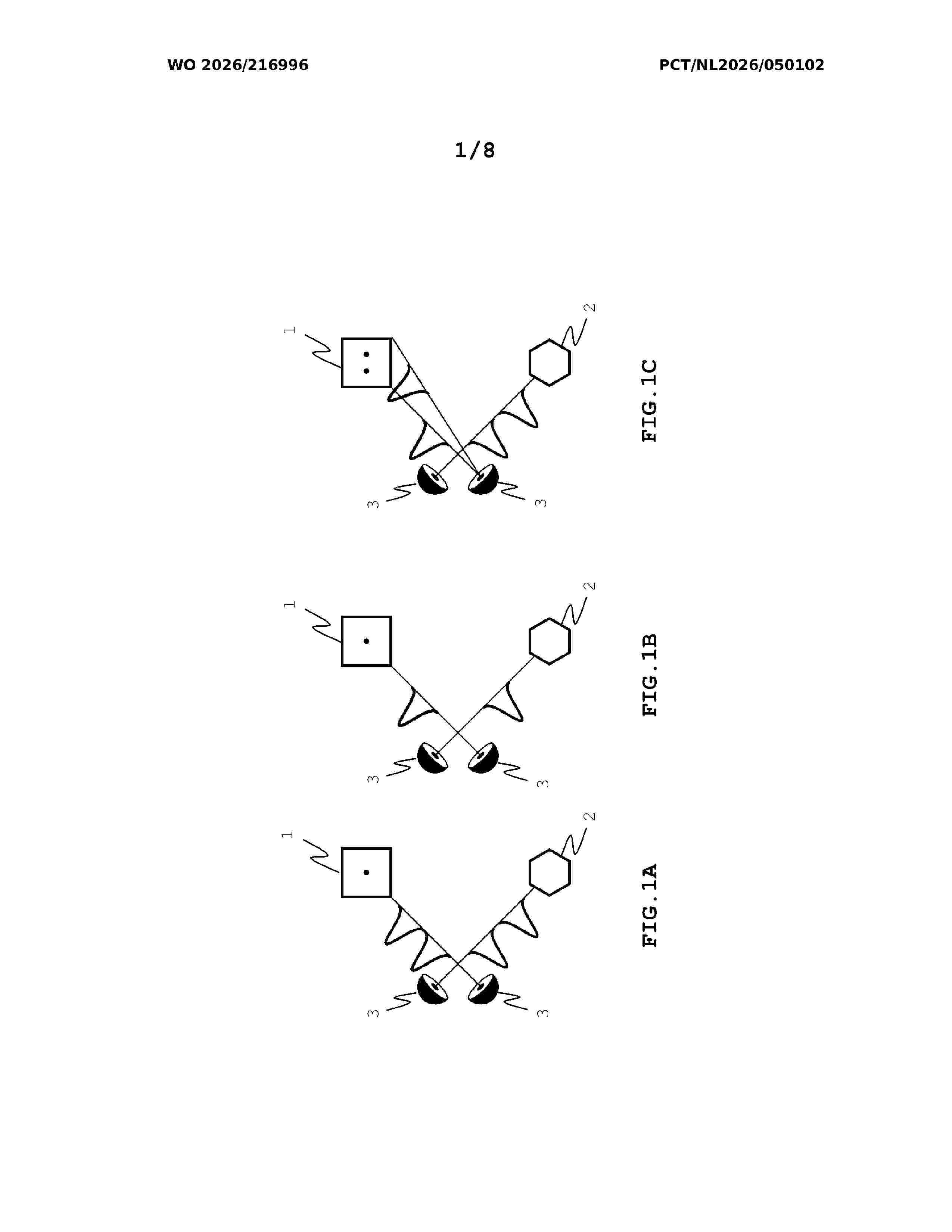
The present disclosure presents a single-click protocol for use in a quantum network, nodes of such quantum network, and related methods. The quantum network includes client nodes, server nodes, and measurement nodes, wherein at least one client node is operatively coupled via a first quantum communication link with at least one measurement node, and wherein at least one server node is operatively coupled via a second quantum communication link with the at least one measurement node, wherein the at least one server node and the at least one client node are configured to transmit quantum states toward the measurement node for remote state preparation, and wherein the server node and the client node are configured to receive heralding signals from the measurement node, wherein the measurement node is configured to transmit the heralding signals upon using a single-click protocol.
Resumen de: WO2026216997A1
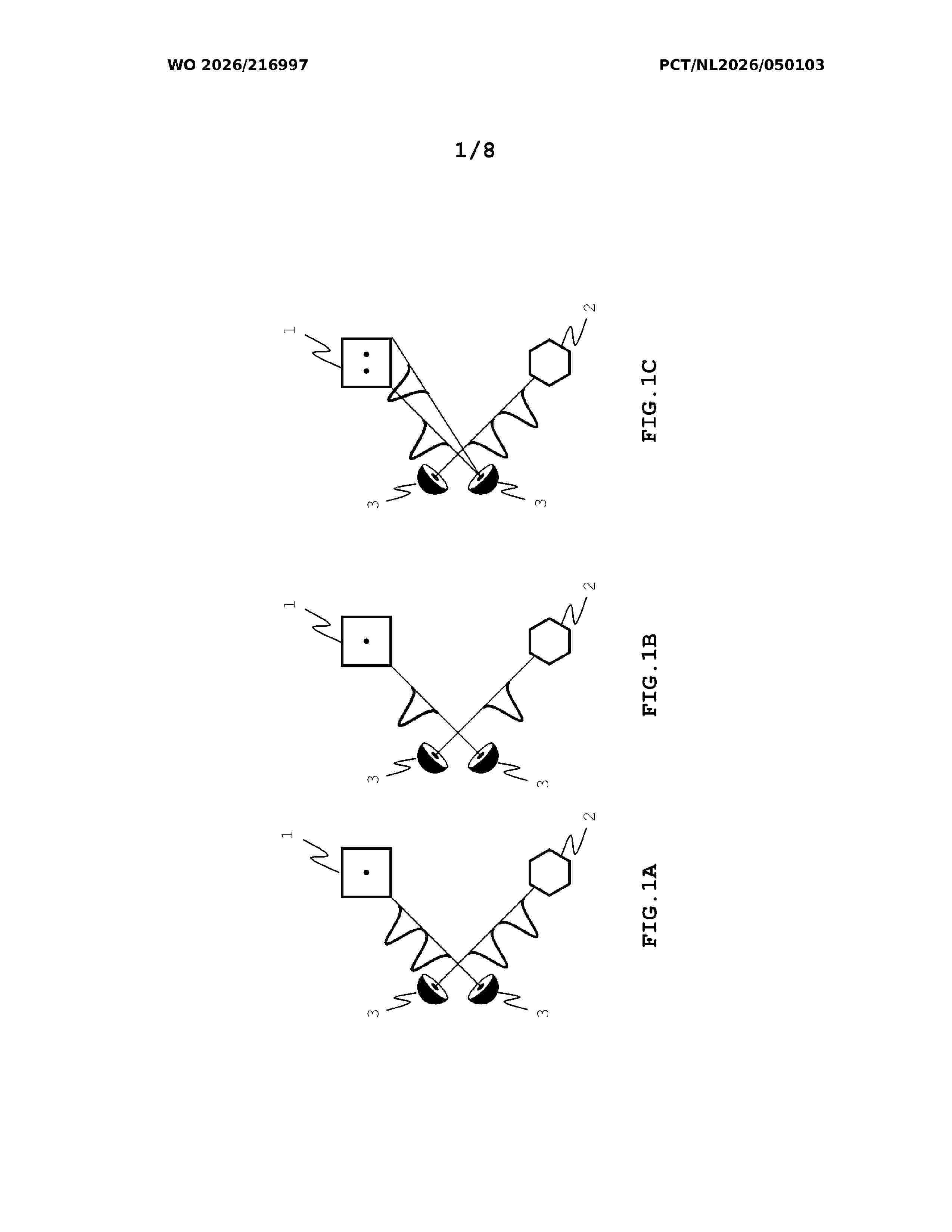
The present disclosure presents a double-single-click protocol for use in a quantum network, nodes of such quantum network, and related methods. The quantum network includes client nodes, server nodes, and measurement nodes, wherein at least one client node is operatively coupled via a first quantum communication link with at least one measurement node, and wherein the at least one server node is operatively coupled via a second quantum communication link with at least one measurement node, wherein the at least one server node and the at least one client node are configured to transmit quantum states toward the measurement node, and wherein the at least one server node and the at least one client node are configured to receive heralding signals from the measurement node, wherein the measurement node is configured to transmit the heralding signals upon using a double-single-click protocol.
Resumen de: US20260320592A1
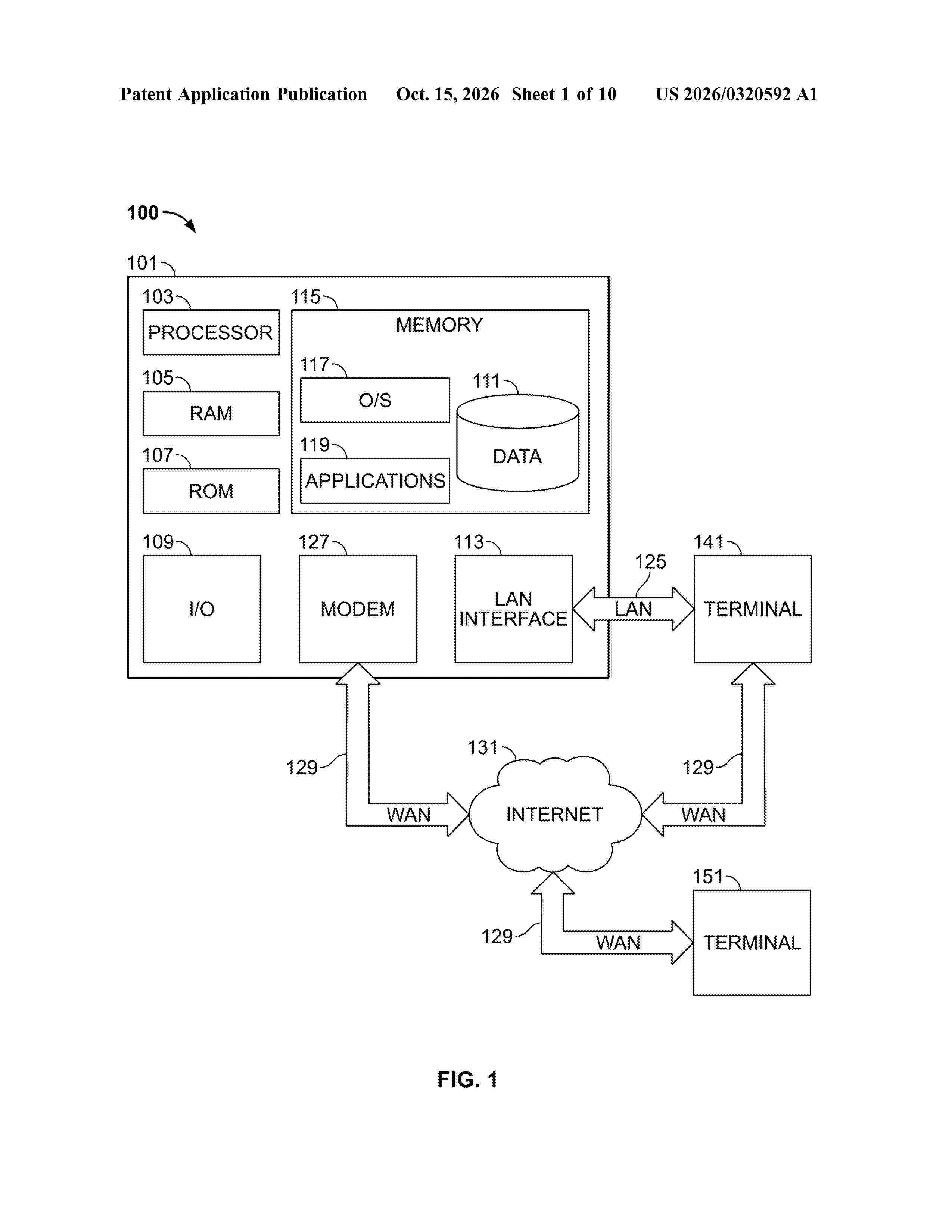
Apparatus and methods for securing a transaction. The apparatus may include a holographic signature pad. The holographic signature pad may include an array of sensors. The sensors may be configured to sense a first quantum tunneling pattern resulting from interaction between a pen and the signature pad. The pad may be configured to create a holographic interference pattern based on the first quantum tunneling pattern. The apparatus may map the digitized interference pattern onto first qubits in a quantum register. The apparatus may be configured to interact with the quantum computer to apply a quantum Fourier transform algorithm to the first qubits to produce a quantum phase-space interference matrix. The apparatus may be configured to form a key-value pair that includes a key corresponding to a quantum encrypted fingerprint matrix and a value corresponding to the quantum phase-space interference matrix.
Resumen de: WO2026215638A1
A computer-implemented method for evaluating entropy of a results string representing a set of measurement or computation results output by a computing device, to determine suitability of the results string for use in security. The method comprising generating a first estimate of a polytope representing a set of probability distributions that includes a set of allowable behaviours, wherein the first polytope estimate comprises a bounded region within multidimensional space in which the boundaries represent estimated limits for the set of allowable behaviours. The method comprises iteratively refining the first polytope estimate by: determining one or more behaviours within the polytope estimate which are inconsistent with behaviours allowed by quantum mechanics, determining constraints on the set of allowable behaviours, and modifying the boundaries of the polytope estimate to generate a refined polytope estimate. The method also comprises checking compliance of the evaluated entropy of the results string with a required minimum entropy.
Resumen de: US20260322595A1
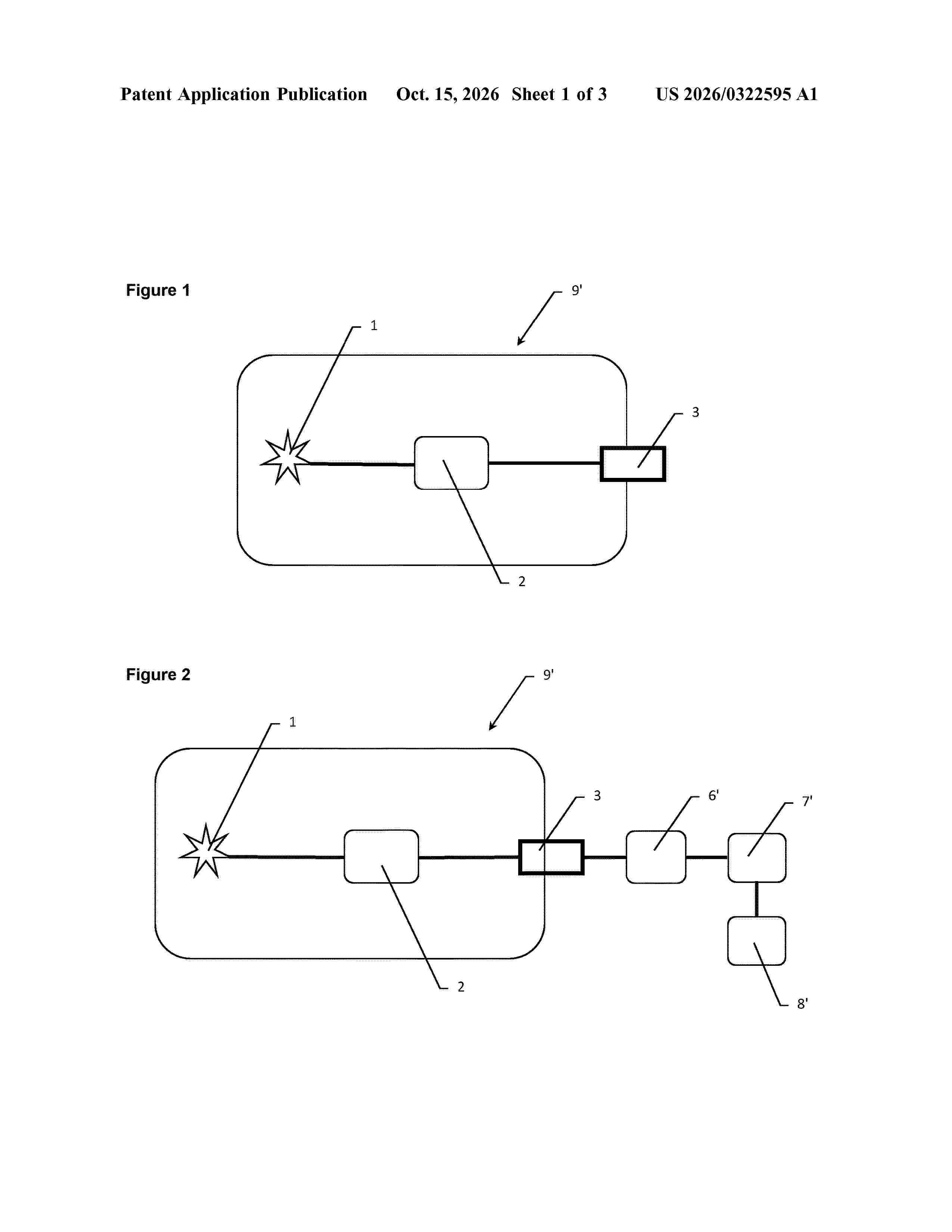
The present invention relates to Calibration system for calibrating a QKD emitter comprising said QKD emitter provided with a light source for generating light and an output connector for exiting the generated light, and a telecom characterization setup located at the output connector characterized in that the calibration system further comprises a pair of switchable connectors adapted to be switched between a first position where the connectors are exposed to the outside of the QKD emitter and a second position where the connectors are internally connected for providing a light path from the light source to the output connector, and an optical amplifier connected to the connectors switched in the first position for calibration procedure.
Resumen de: US20260322502A1
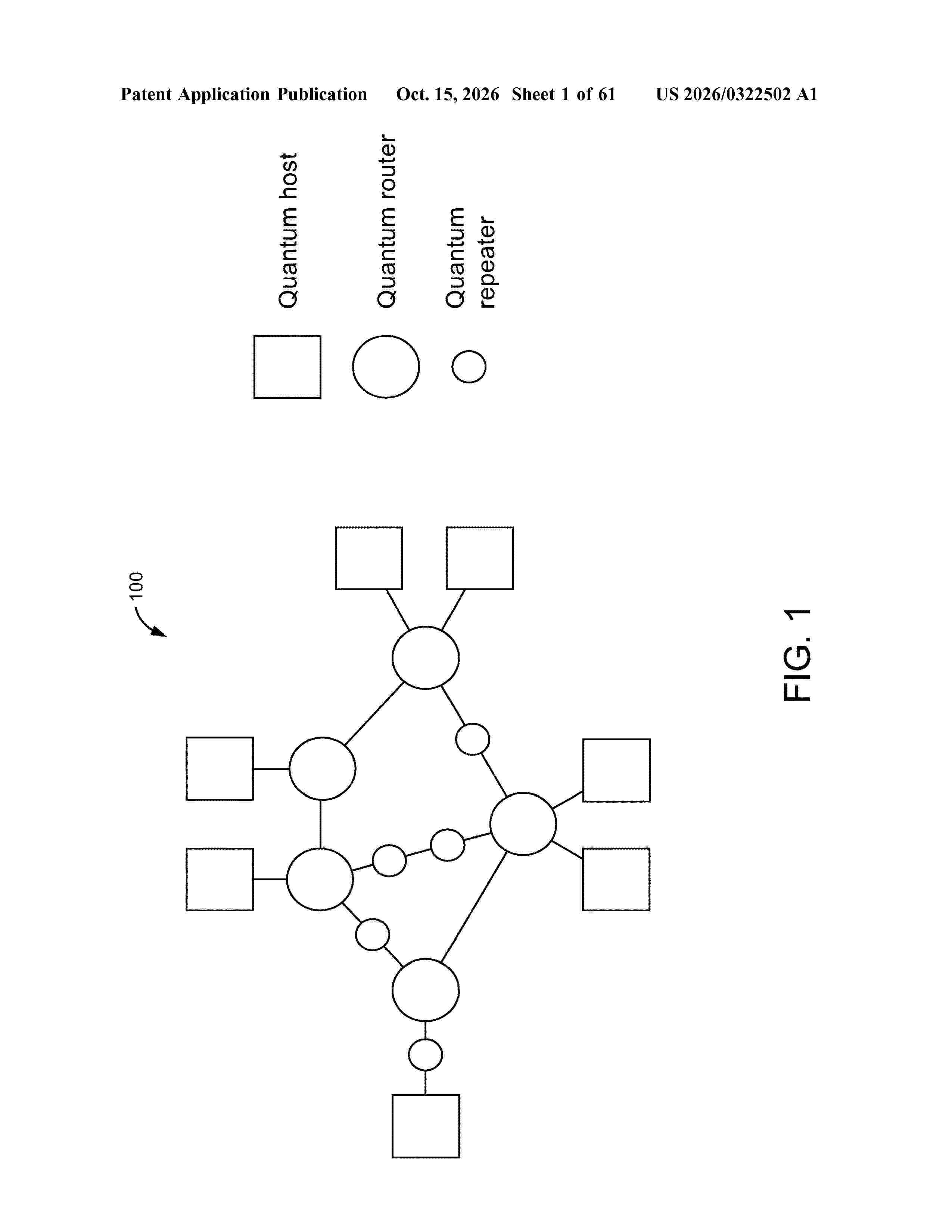
A first message is sent from a first node in a network indicating that a first quantum element at the first node is entangled with a second quantum element at a second node in the network. The first message comprises a first estimate of a fidelity of entanglement between the first and second quantum elements, and a timestamp indicating a time associated with the first estimate. Based at least in part on the first message, a second estimate of a fidelity of the entanglement between the first and second quantum elements is generated, at a second time after the time indicated by the timestamp, and is compared to each of multiple thresholds. At least a first (second) action is performed in response to a result of comparing the second estimate to a first (second) threshold.
Resumen de: US20260322594A1
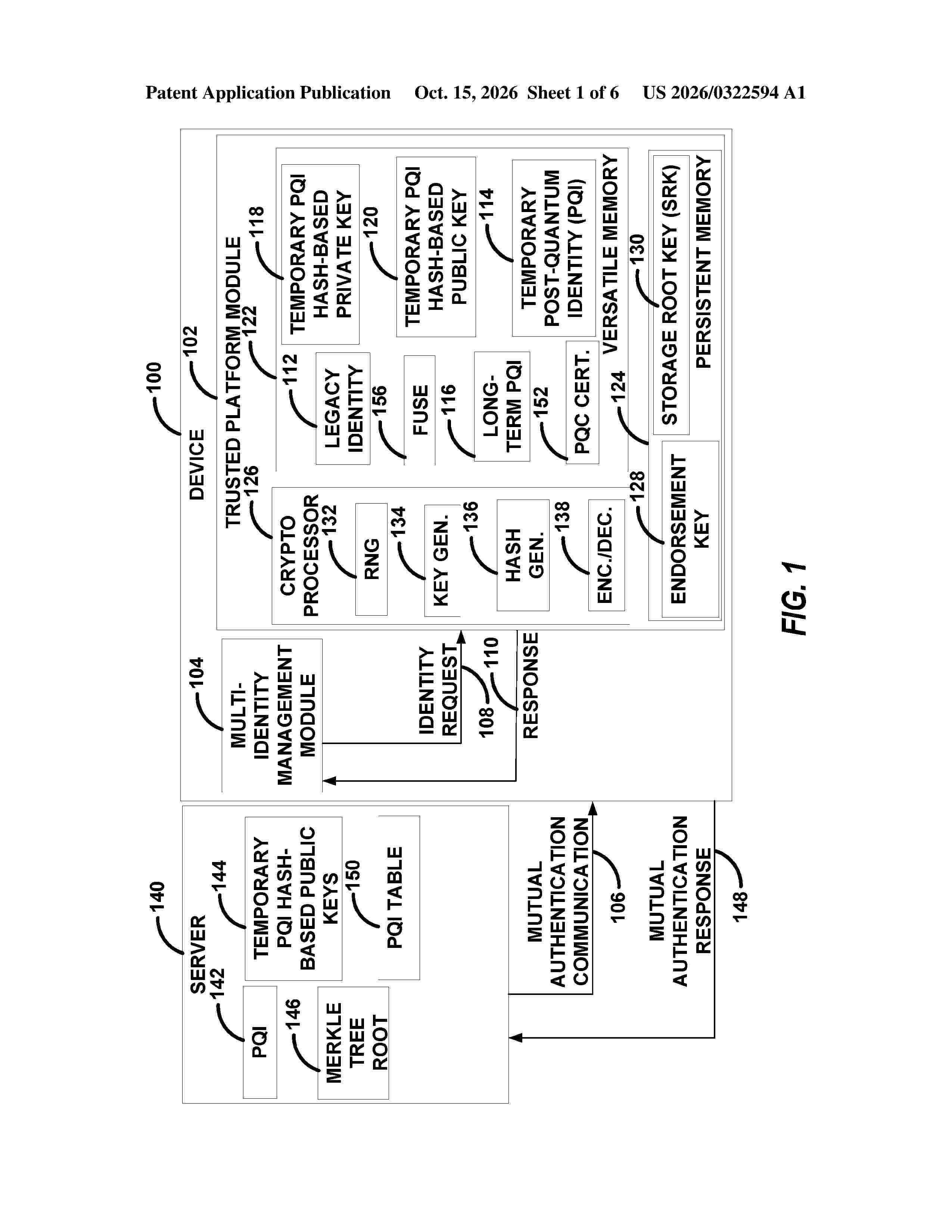
Devices, systems, and methods for post-quantum (PQ) secure (PQS) communications are provided. A method includes authenticating, by a device and with a first server, using a legacy device identity, receiving and installing, by the device, a firmware upgrade that provides the device an ability to communicate in a PQS manner, establishing a PQS communication channel between the device and a second server, mutually authenticating, by the device and with the second server, using a PQ identity (PQI) of the device, the PQI different from the legacy identity, and responsive to successful mutual authentication, communicating between the device and the second server, using the PQS communication channel.
Resumen de: GB2705434A
A cryptography system comprising a first quantum computer 2 wherein a first array of atoms comprises a first and second quantum states, the first array of atoms 6 having an initial configuration, a first quantum control module that generates predetermined output parameters to apply a quantum operation on the first array of atoms, converting the first array of atoms to a second configuration; and a first measurement module that determines the second configuration of the first array of atoms; and an encryption module 3 configured to generate an encryption key 5 based on the second configuration of the first array of atoms and to encrypt a data set using the encryption key. The cryptography system may optionally comprise a communication channel configured to transmit a public key and may be configured to transmit the public key from the first quantum computer to a second quantum computer or transmit the public key from a first party operating the first quantum computer to a second party operating the second quantum computer. The public key may comprise the initial configuration of the first array of atoms. The disclosure is also a cryptography method as such. Figure 1
Resumen de: WO2026151451A2
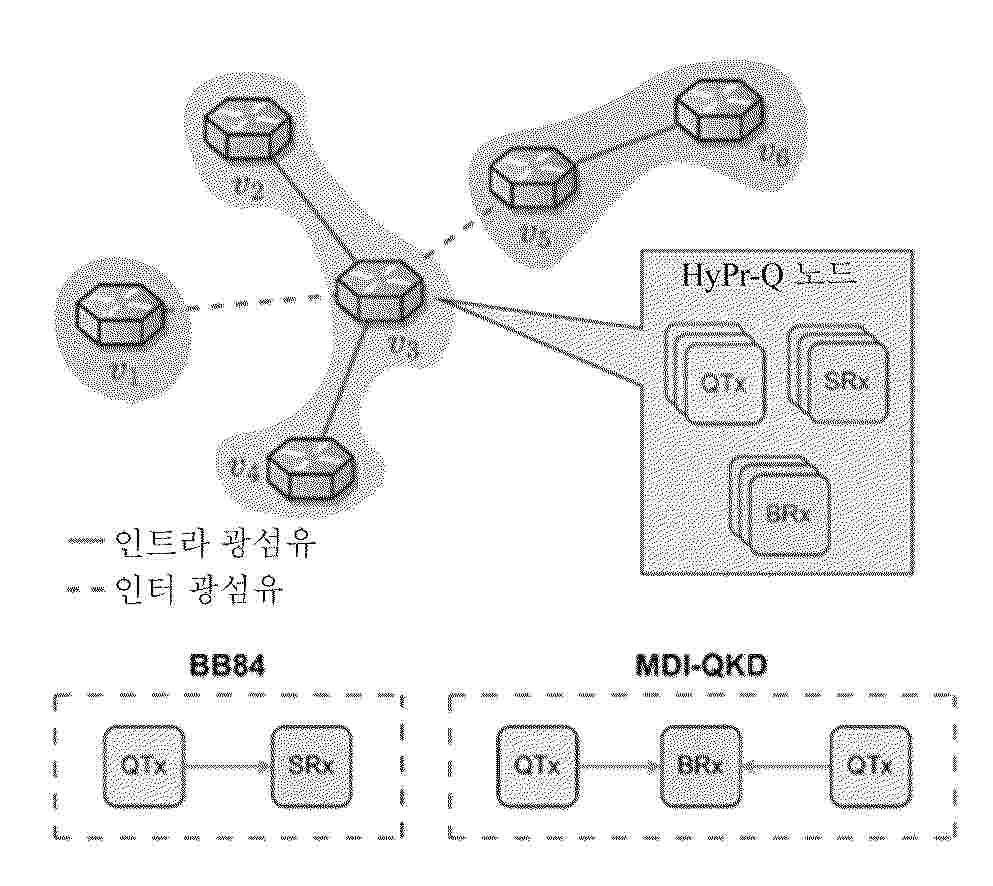
A system for implementing a quantum key distribution network, the system comprising: one or more quantum transmitters configured to transmit quantum encoded photons; a single state receiver, configured to receive the photons and determine encoded bits under a first protocol; a bell state receiver configured to receive quantum encoded photons under a second protocol; and a manager configured to determine a basis of encoding of the quantum encoded photons and to control communication between the one or more quantum transmitters and the single state receiver based on the first protocol or the bell state receiver based on the second protocol.
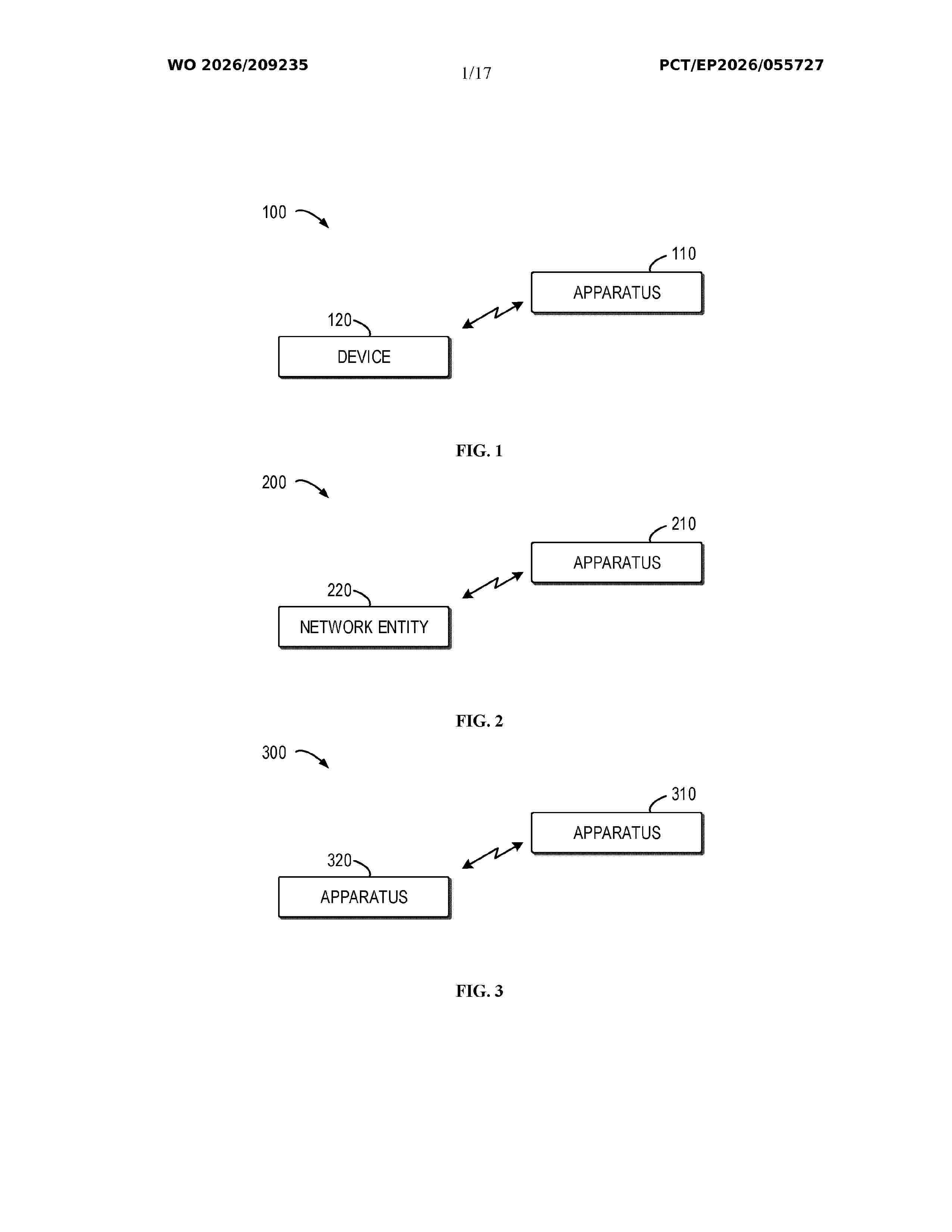
Resumen de: WO2026209235A1
Example embodiments of the present disclosure are directed to quantum random number generation (QRNG) capability verification. In a method, an apparatus obtains capability information about QRNG support of the apparatus, the capability information being generated in a trusted execution environment (TEE) of the apparatus. The apparatus transmits, to a network entity, a request for registering the apparatus for QRNG usage, the request including the capability information.
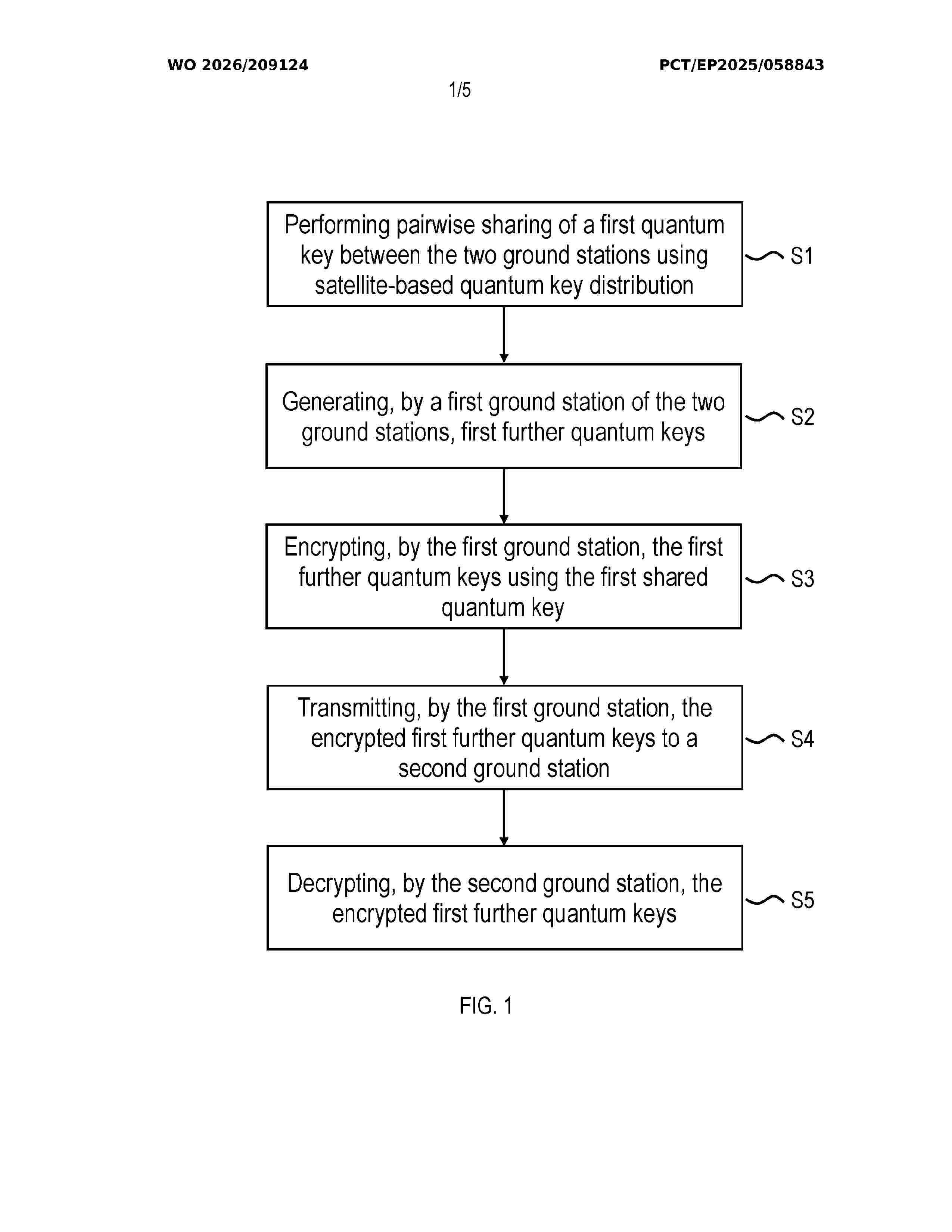
Resumen de: WO2026209124A1
Provided is a method of providing quantum keys between two ground stations, the method comprising the steps of a) performing pairwise sharing of a first quantum key between the two ground stations using satellite-based quantum key distribution; b) generating, by a first ground station of the two ground stations, first further quantum keys; c) encrypting, by the first ground station, the first further quantum keys using the first shared quantum key; d) transmitting, by the first ground station, the encrypted first further quantum keys to a second ground station of the two ground stations, the second ground station being different from the first ground station; and e ) decrypting, by the second ground station, the encrypted first further quantum keys, thereby providing the quantum keys between the two ground stations.
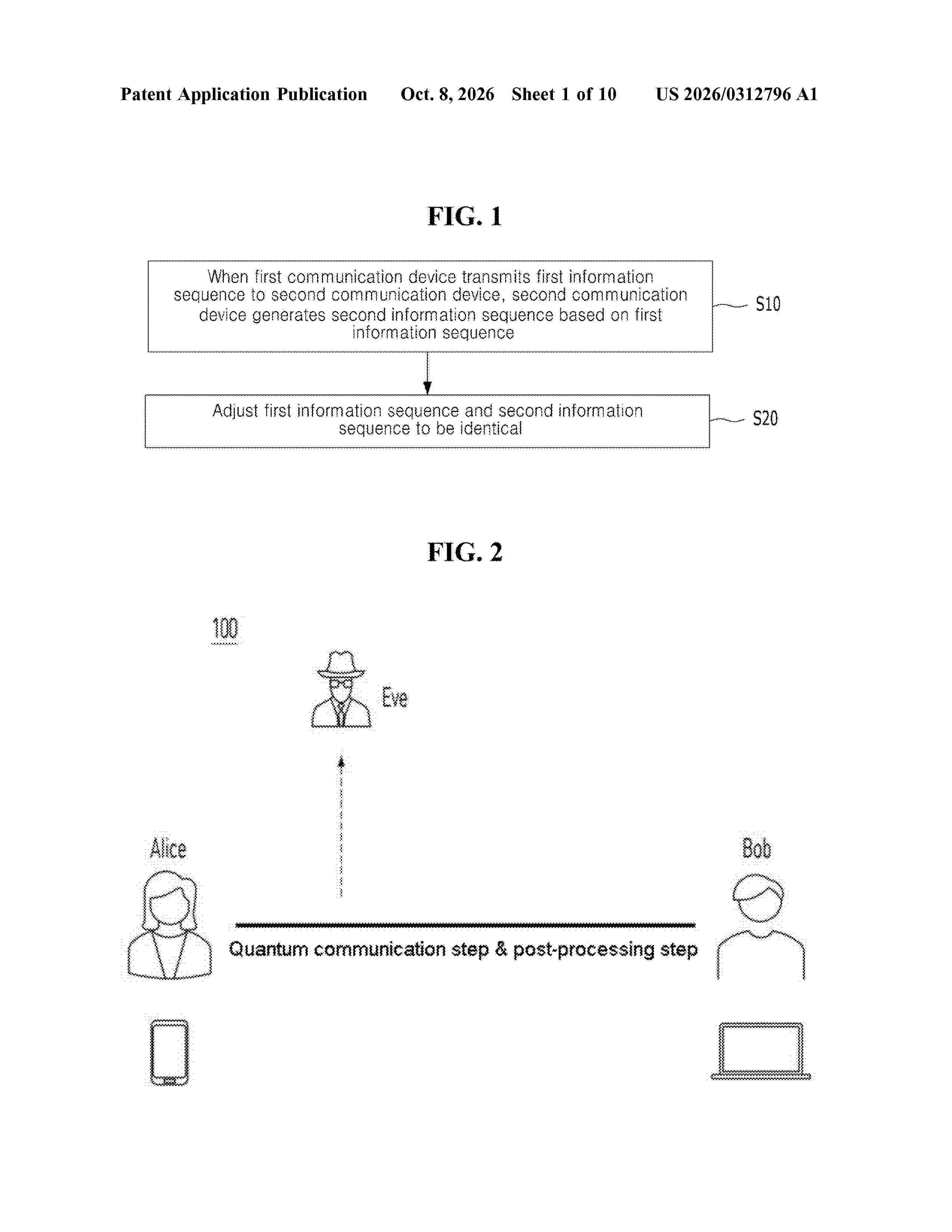
Resumen de: US20260312796A1
0000 A quantum cryptography communication method between a first communication device and a second communication device may include: a quantum communication step of generating a second information sequence based on a first information sequence by the second communication device, when the first communication device transmits the first information sequence generated by randomly modulating a phase or polarization of photons to the second communication device; and a post-processing step of adjusting the first information sequence and the second information sequence to be identical on the basis of an error correction mode selected based on a predetermined criterion. The error correction mode may be classified according to a subject of decoding parity information.
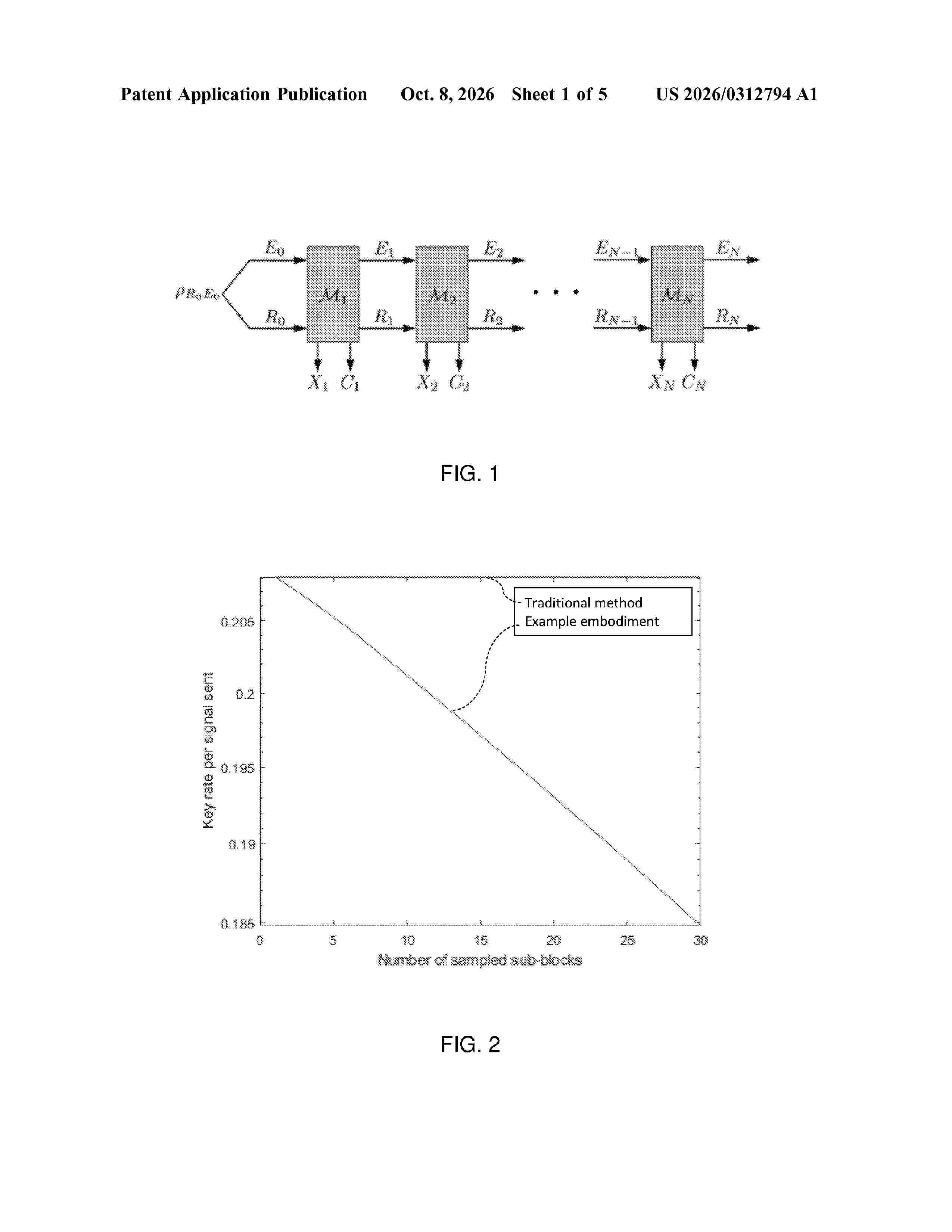
Resumen de: US20260312794A1
0000 A system and a method for randomness extraction for quantum cryptography and a method of performing quantum cryptography between two or more parties. The system for randomness extraction for quantum cryptography comprises a sampling module configured to sample a cryptographic key to generate one or more sub-blocks; an entropy module configured to determine a lower bound of the entropy in each sub-block, wherein the determining of the lower bound comprises consideration of correlations between each sub-block and unsampled bits of the cryptographic key and/or other sub-blocks; and a hashing module configured to hash each sub-block for randomness extraction on each sub-block.
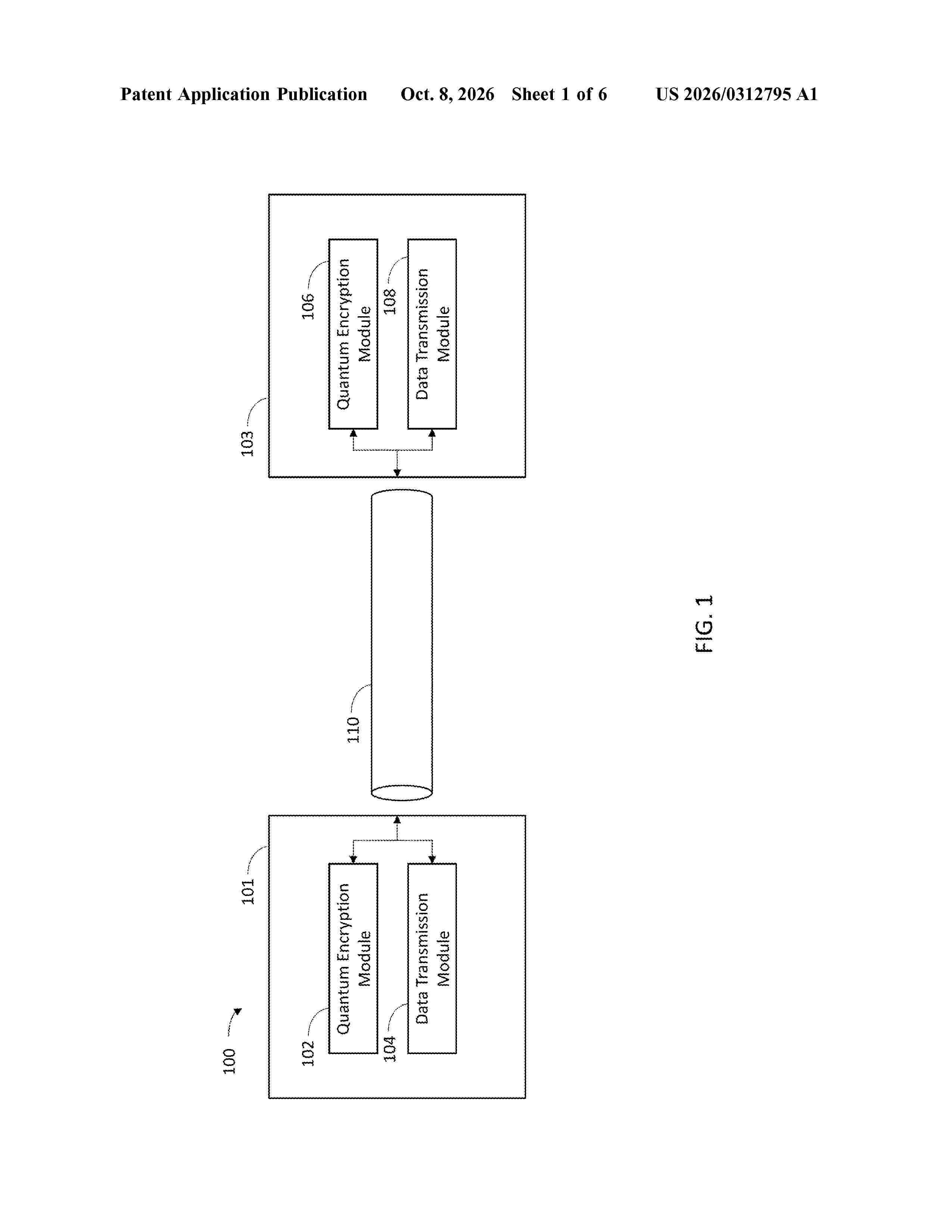
Resumen de: US20260312795A1
The inventors have developed methods and systems to address the above challenges using entangled photons with multiple colors transmitted with a classical data stream as a technique to detect eavesdropping on the data stream and to prevent reverse engineering for demodulating the entangled bits from the data stream. In some embodiments, a time gate is used to interleave the quantum and classic signals to provide quantum encryption of fiber optic communication protocols.
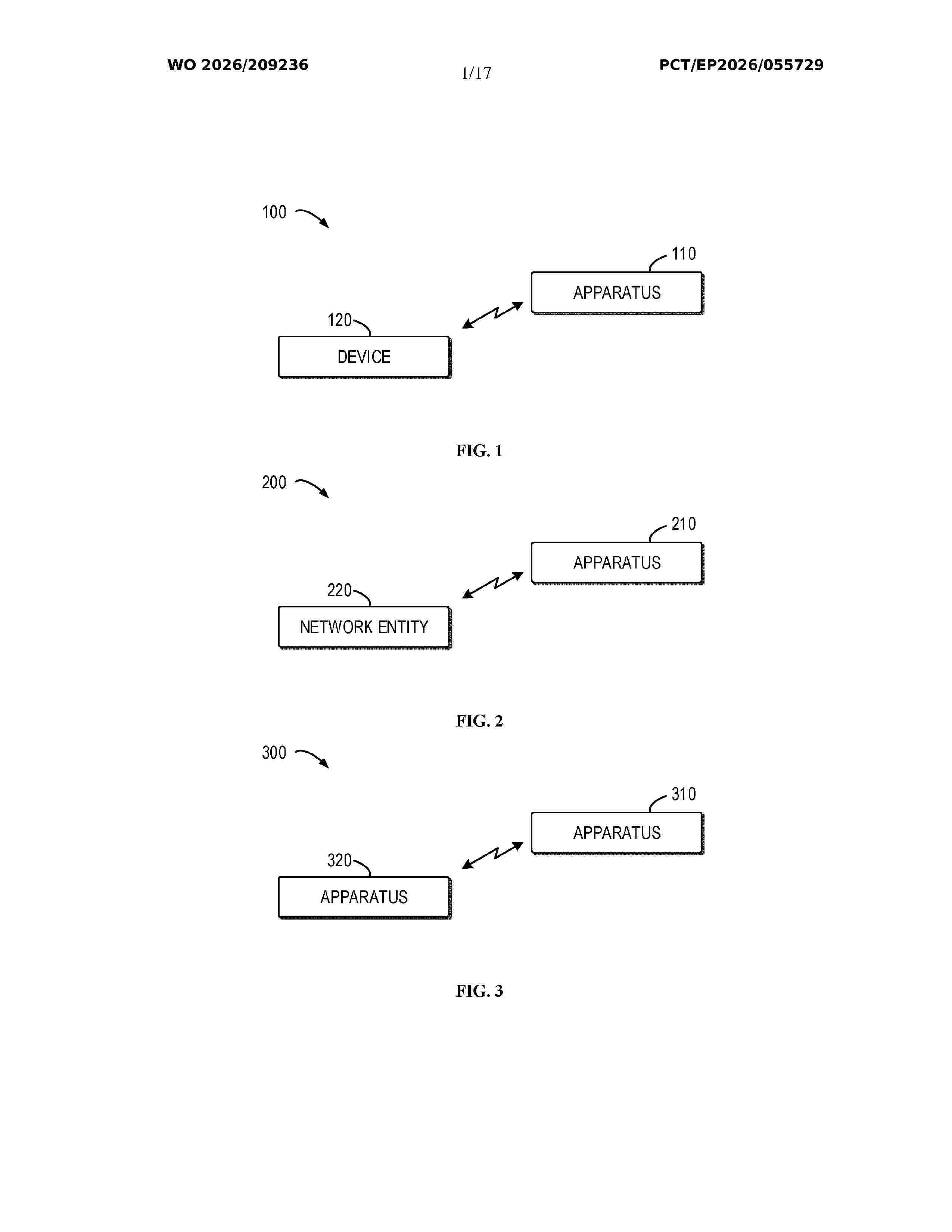
Resumen de: WO2026209236A1
Example embodiments of the present disclosure are directed to quantum random number generation (QRNG) capability verification. In a method, an apparatus obtains capability information about QRNG support of the apparatus. The capability information is generated in a trusted execution environment (TEE) of the apparatus. The apparatus transmits, to a device, a message including the capability information about the QRNG support of the apparatus. The message includes a TEE transparent container associated with the capability information.
Nº publicación: WO2026209158A1 08/10/2026
Solicitante:
SES S A [LU]
SES S.A.
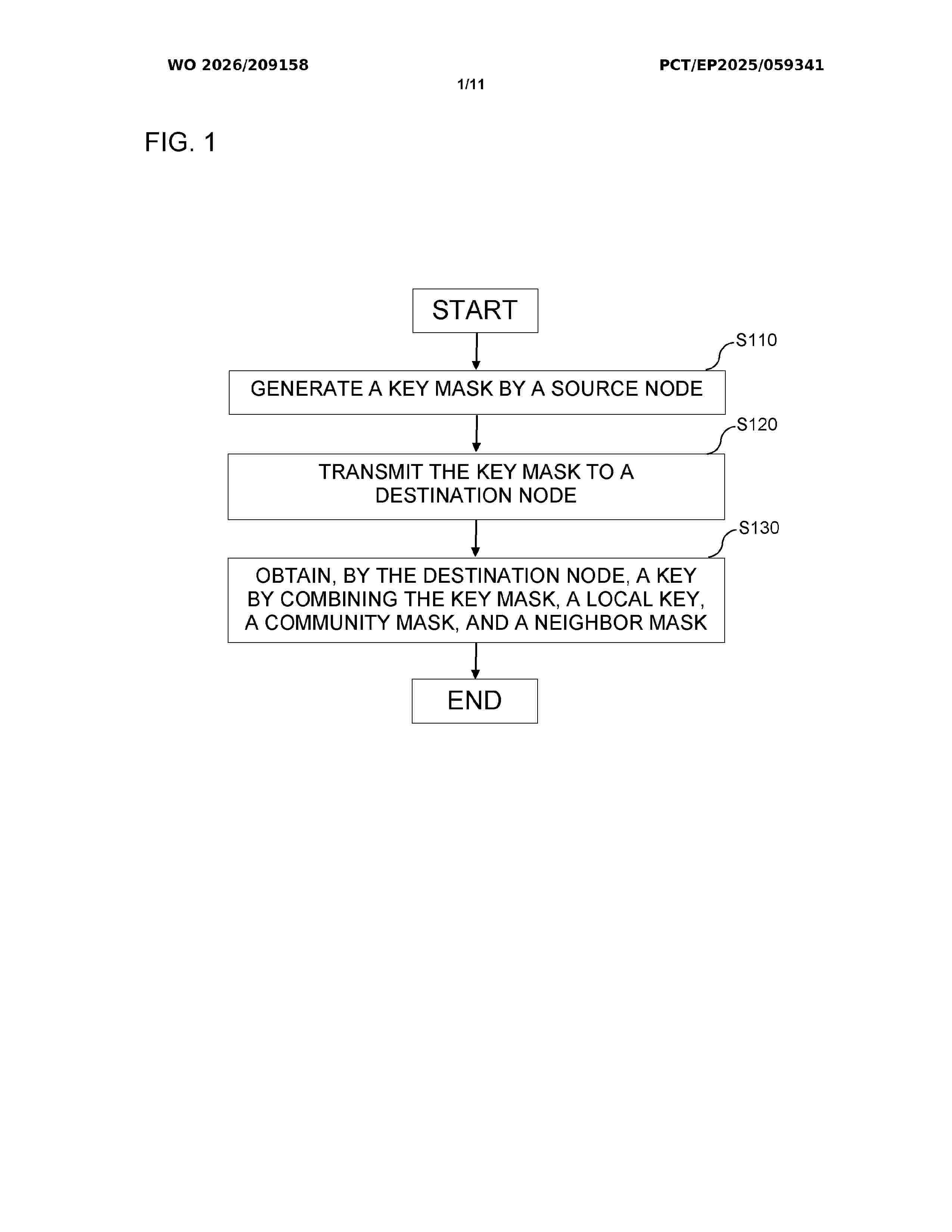
Resumen de: WO2026209158A1
Provided is a method for distributing a key from a source node to N destination nodes in a communication system, N being an integer greater than 2. The N destination nodes have a first mask, and each of the N destination nodes has a respective second mask, and a respective local key. The method comprises generating, by the source node, a key mask by combining the key to be distributed and a local key of the source node and transmitting, by the source node, the key mask to a destination node of the N destination nodes. The destination node obtains the key by combining the received key mask, the respective local key of the destination node, the first mask, and the respective second mask of the destination node.
 BOPI
BOPI
 Sede Electrónica