Si deseas distinguir tus productos, servicios o ambos de los de otra empresa, es posible que necesites una marca o nombre comercial. Descubre qué son, en qué consiste su procedimiento de registro y qué implica.

Información sobre los plazos de presentación de solicitudes de transformación de marcas de la Unión Europea en marca nacional española. Más información


Si tienes un nuevo dispositivo, producto o procedimiento que resuelva un problema técnico o tenga una ventaja práctica, existen distintas formas de protegerlo en España y en otros países. Descubre cómo hacerlo.

¿Tu innovación reside en la estética, la ornamentación o la apariencia de tu producto? Protégela mediante un diseño industrial. Descubre qué derechos confiere el registro y cómo realizar la tramitación.

Las indicaciones geográficas protegen el nombre de un producto originario de una zona geográfica, a la cual le debe una determinada calidad, reputación u otra característica. Descubre qué son, en qué consiste su procedimiento de registro y qué beneficios conceden.

Las patentes publicadas en todo el mundo son una valiosa fuente de información científica, técnica y comercial.

Si eres emprendedor/a o una empresa y quieres potenciar y mejorar la rentabilidad de tu negocio protegiendo de forma adecuada los activos intangibles de tu organización, en este espacio encontrarás lo necesario.


 292
resultados
292
resultados
 Última actualización
24/10/2026 [09:06:00]
Última actualización
24/10/2026 [09:06:00]


 Resultados 25 a 50 de 292

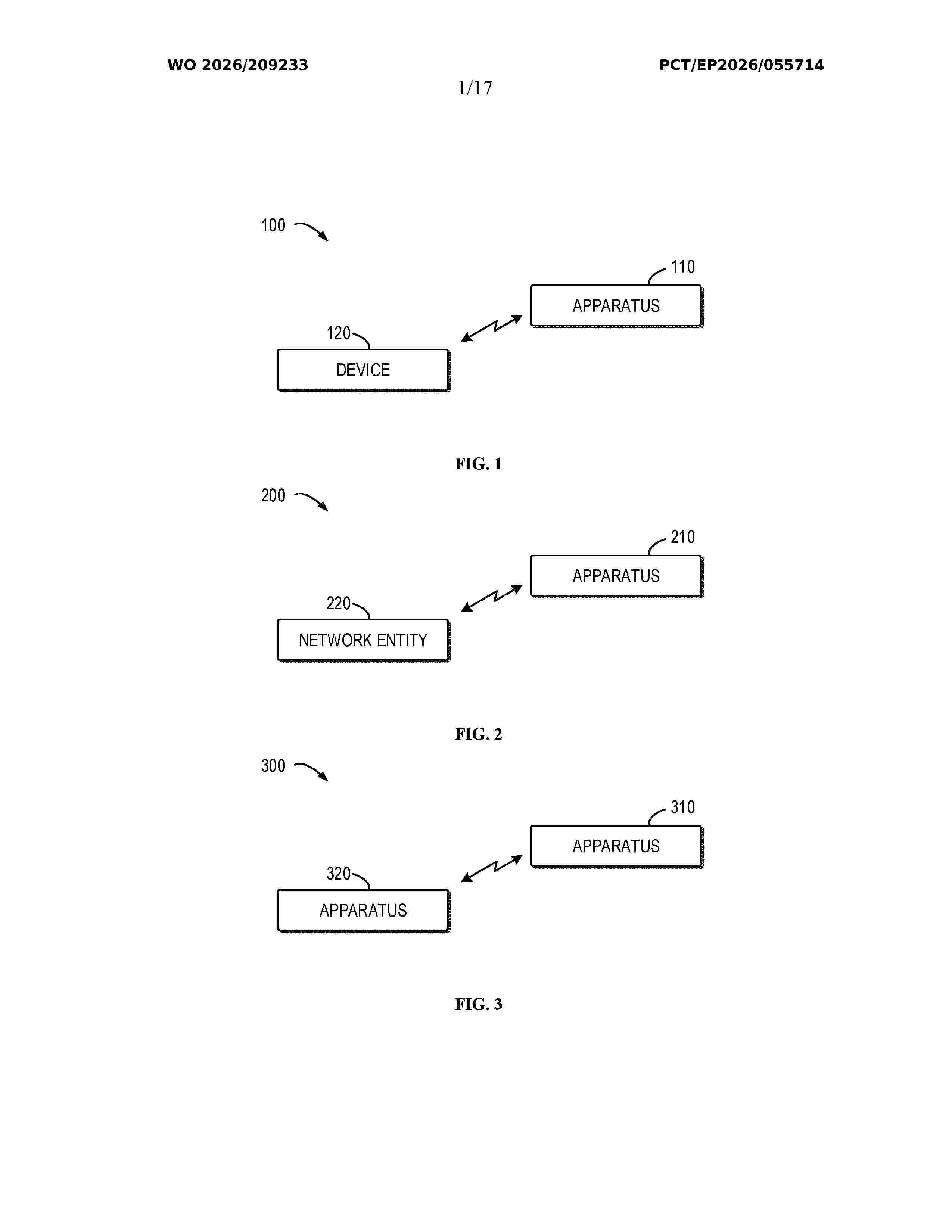
Resumen de: WO2026209233A1
Example embodiments of the present disclosure are directed to quantum random number generation (QRNG) capability verification. In a method, an apparatus receives, from a network entity, a request for checking QRNG support of the apparatus. The apparatus obtains capability information about the QRNG support of the apparatus, the capability information being generated in a trusted execution environment (TEE) of the apparatus. The apparatus transmits, to the network entity, a response to the request, the response including the capability information.

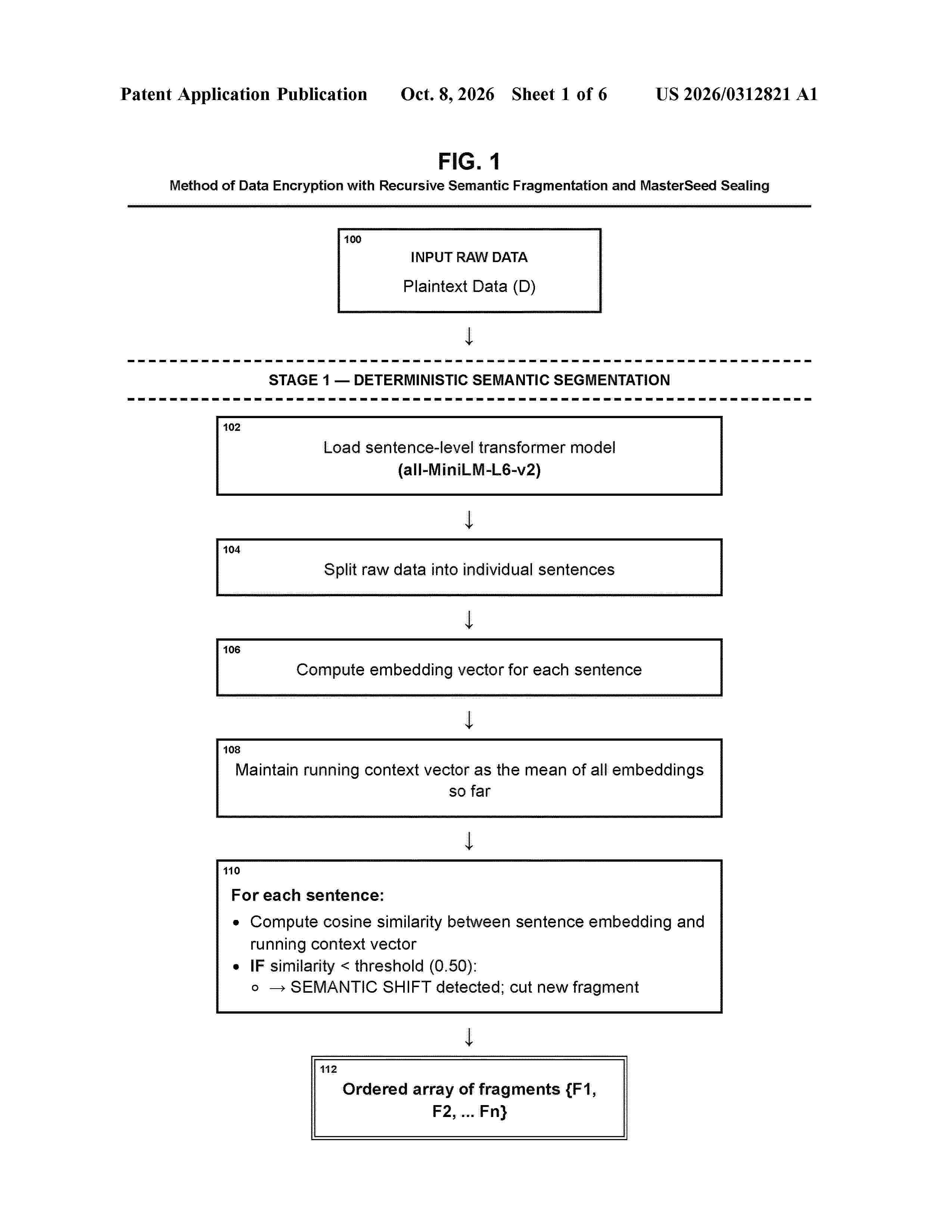
Resumen de: US20260312821A1
An encryption method and system for securing data through structure-aware semantic fragmentation. An input data stream is segmented into semantically meaningful fragments using a transformer-based neural network. Each fragment is bound by deterministic structural markers to create a tamper-evident chain. A Final Seed, derived from high-resolution timestamps and a hardware-anchored Personal Key, seeds a permutation function to shuffle the fragments. The system then applies a Quantum Lattice Transform to a subsequently derived MasterSeed, generating a post-quantum resilient symmetric key. This MasterSeed-derived key encrypts the permuted and bound fragments into a final secure payload. Decryption requires regenerating the exact permutation map and verifying the structural marker chain, ensuring data is protected against memory scraping and unauthorized access in decentralized environments.
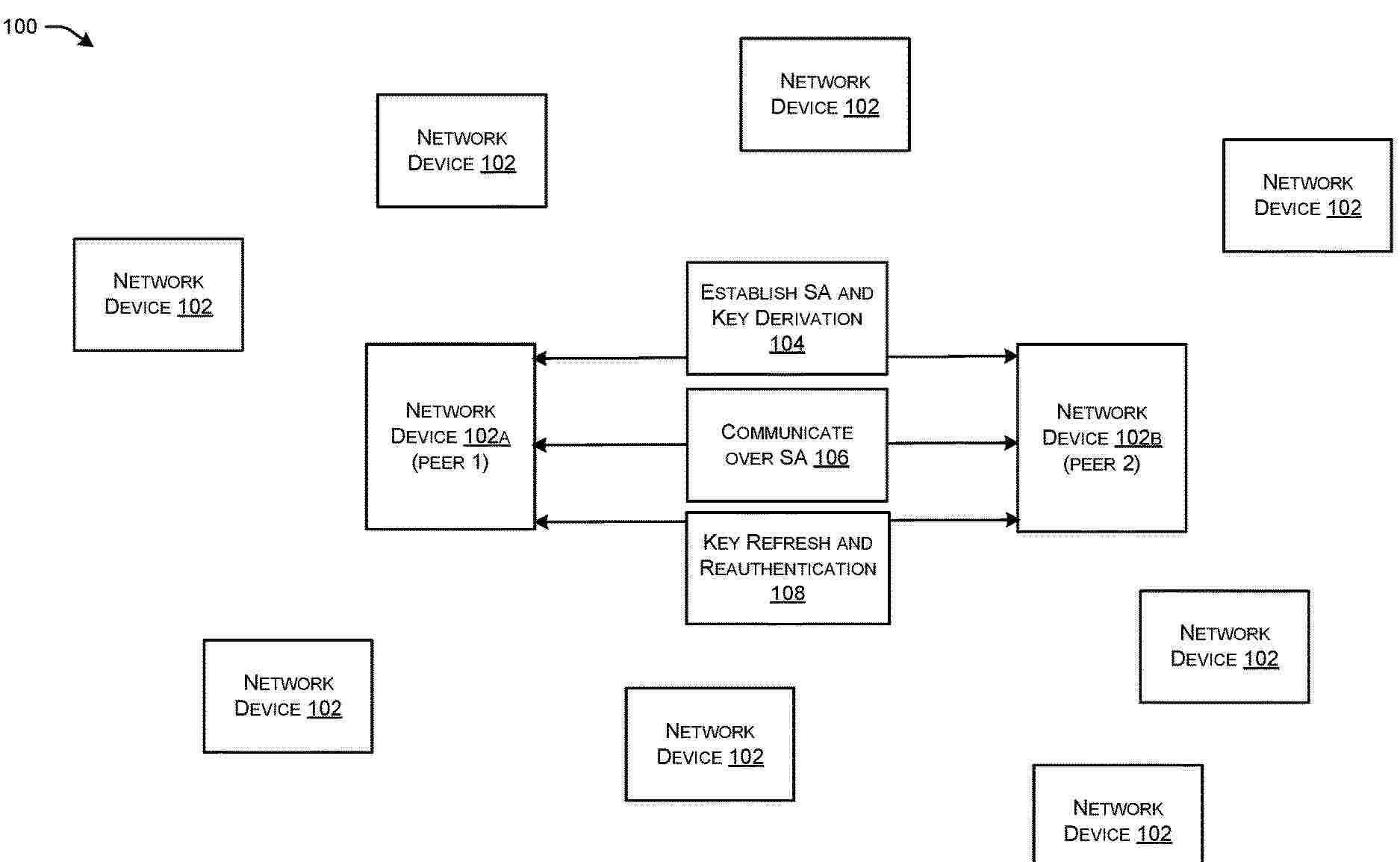
Resumen de: US20250175795A1
0000 Techniques and architecture are described for reauthentication of two IPsec peers, during a key refresh process. The peers may reauthenticate each other based upon a shared secret, which in configurations, is a PPK. In configurations the PPKs are stirred (mixed with DH/ECDH) during key derivation while refreshing the session keys during IKE_v2 and IPsec rekey. This may involve communicating the PPK-ID from a rekey initiator to a rekey responder by adding a PPK_ID payload in the rekey message exchange. This enables stronger quantum safe session keys, when dynamic PPK is used or when the manual PPK is rotated frequently. In configurations, the knowledge of the shared PPK is proved by having both peers exchange authentication payloads signed with a PPK. This involves exchanging a IKEv2 NOTIFY payload “AUTH_PPK” to carry PPK-signed authentication data. This serves the purpose of frequent re-authentication of the peers as part of the key refreshes.
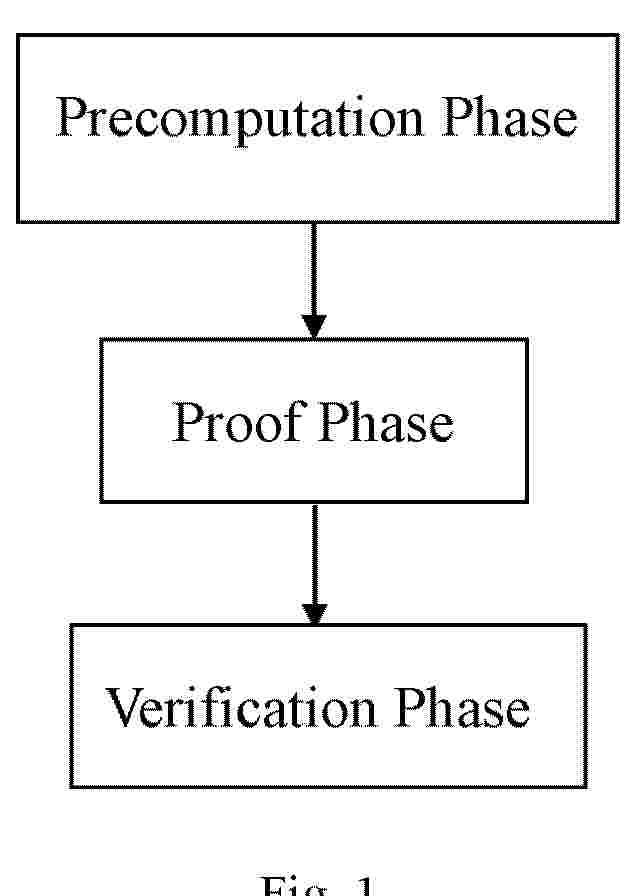
Resumen de: EP4819535A1
The present invention relates to the field of security protocols. Disclosed are a packed secret sharing-based general non-interactive zero-knowledge proof method and system. The method comprises: at a pre-computation stage, a prover and a verifier run a pre-processing algorithm to generate a verifiable random linear transformation pair required in a proof stage; in the proof stage, the prover runs a proof algorithm, computes a proof π, and sends the proof π to the verifier; and in a verification stage, the verifier runs a verification algorithm on the basis of the proof π and a corresponding common input, and verifies the correctness of execution of an arithmetic circuit C(w, x). According to the present invention, only an underlying MPC protocol needs to be run once, and the protocol can resist quantum computer attacks and does not depend on any algebraic structure. In addition, the protocol design scheme of the present invention is efficient and achievable, the proof time of the key knowledge proof of a lattice-based key encapsulation mechanism Kyber512 is only 1.08 seconds, the preprocessing time is 1.3 seconds, and the verification time is 1.16 seconds.
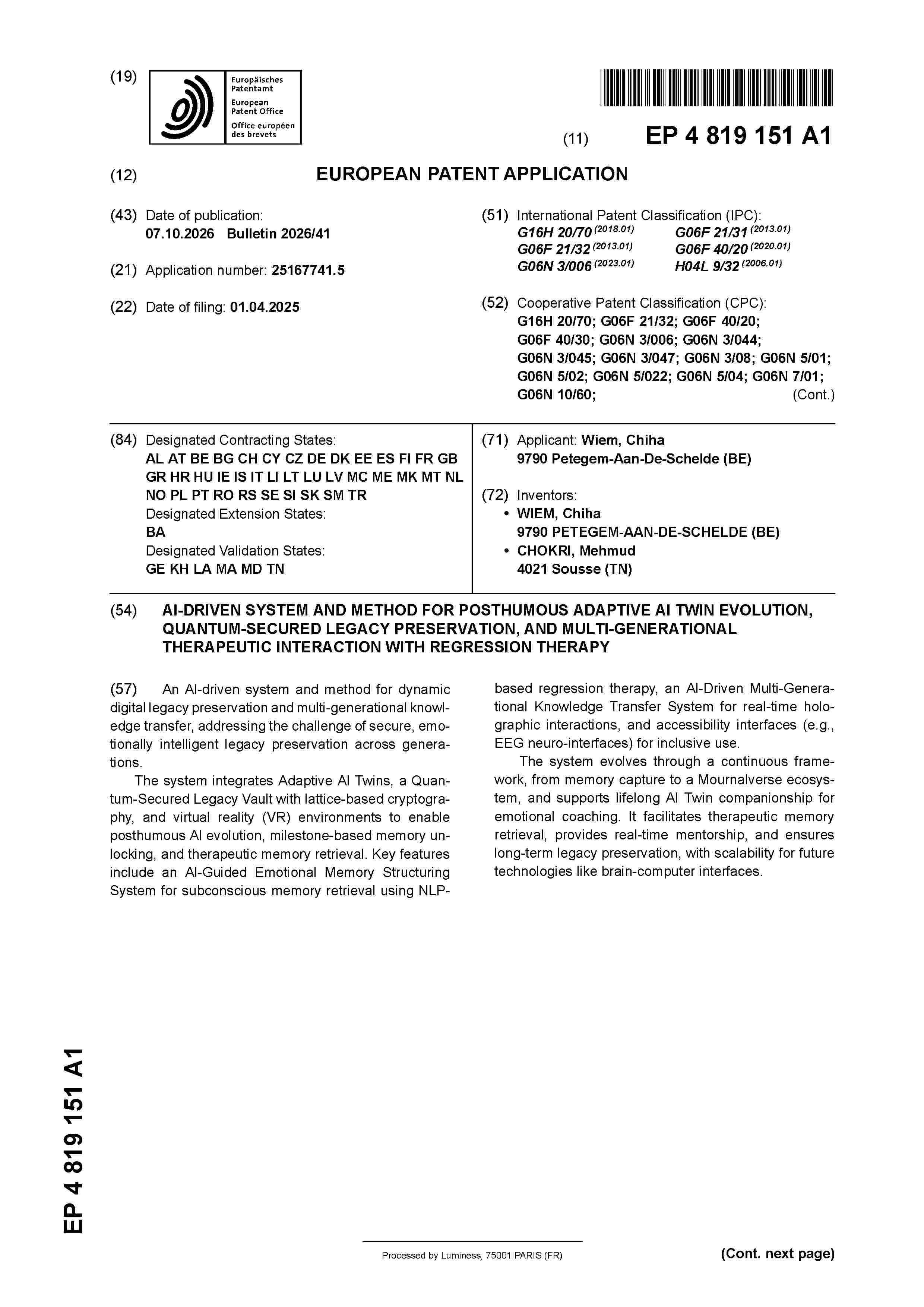
Resumen de: EP4819151A1
0001 An Al-driven system and method for dynamic digital legacy preservation and multi-generational knowledge transfer, addressing the challenge of secure, emotionally intelligent legacy preservation across generations. 0002 The system integrates Adaptive Al Twins, a Quantum-Secured Legacy Vault with lattice-based cryptography, and virtual reality (VR) environments to enable posthumous Al evolution, milestone-based memory unlocking, and therapeutic memory retrieval. Key features include an Al-Guided Emotional Memory Structuring System for subconscious memory retrieval using NLP-based regression therapy, an Al-Driven Multi-Generational Knowledge Transfer System for real-time holographic interactions, and accessibility interfaces (e.g., EEG neuro-interfaces) for inclusive use. 0003 The system evolves through a continuous framework, from memory capture to a Mournalverse ecosystem, and supports lifelong Al Twin companionship for emotional coaching. It facilitates therapeutic memory retrieval, provides real-time mentorship, and ensures long-term legacy preservation, with scalability for future technologies like brain-computer interfaces.
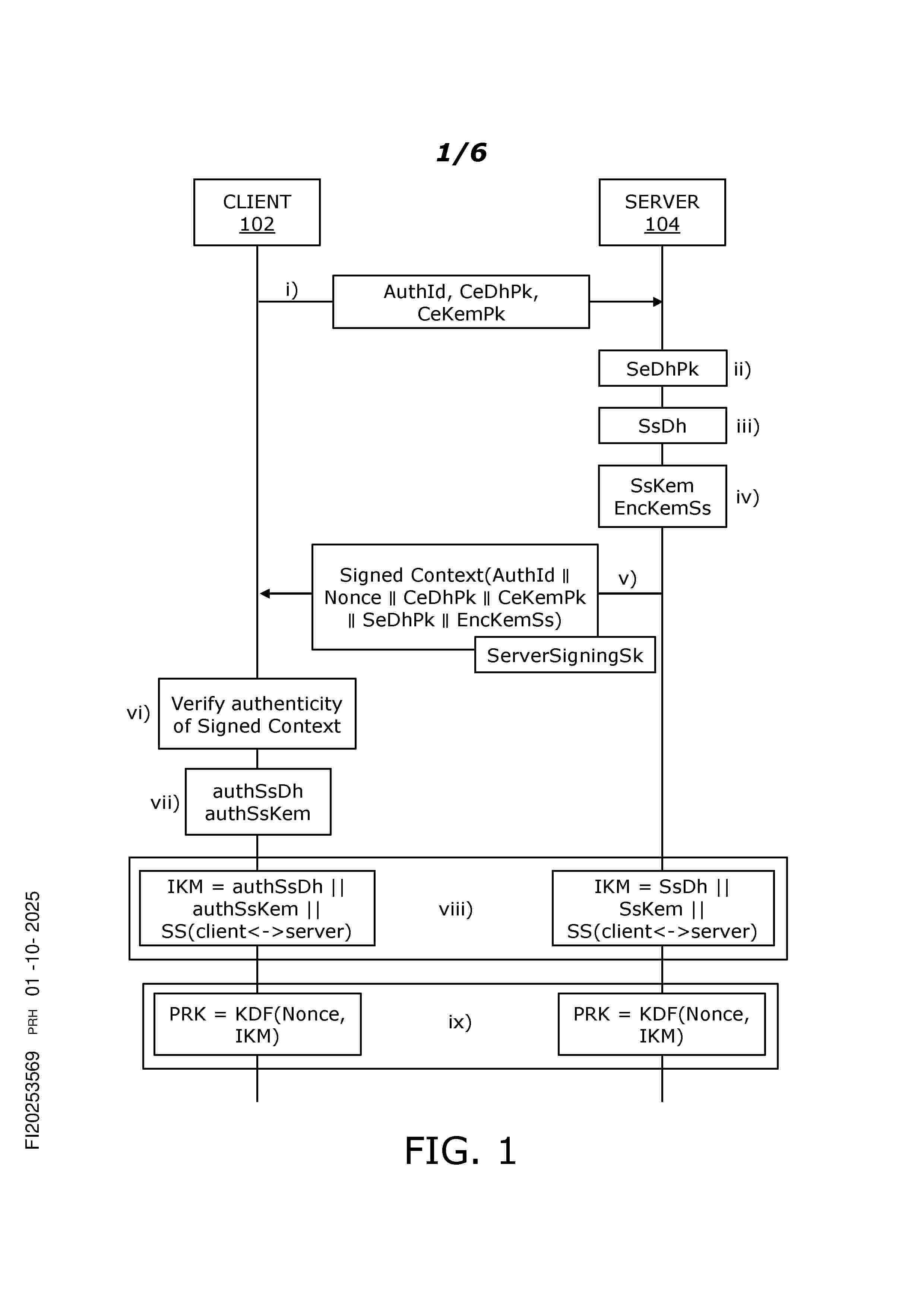
Resumen de: FI132245B1
Disclosed is a method for establishing communication session between client (102, 202, 214, 216, 400) and server (104, 204, 212, 300), by producing session-specific secret. The method comprises: (i) sending identification credential (AuthId) and ephemeral public keys (CeDhPk, CeKemPk) of client, to server; (ii) generating ephemeral public key of server; (iii) computing first classical shared secret (SsDh), at server; (iv) producing first post-quantum shared secret (SsKem) and encapsulated shared secret (EncKemSs), at server; (v) digitally signing context at server, and sending signed context to client; (vi) verifying authenticity of signed context at client; (vii) computing second classical shared secret (authSsDh) and second post-quantum shared secret (authSsKem), said secrets being identical to corresponding secrets computed at server; (viii) generating input keying material (IKM) from shared secrets and long-term secret (SS(client<->server)); and (ix) deriving pseudorandom key (PRK) as session-specific secret, using key derivation function utilising input keying material and nonce (Nonce) from context.
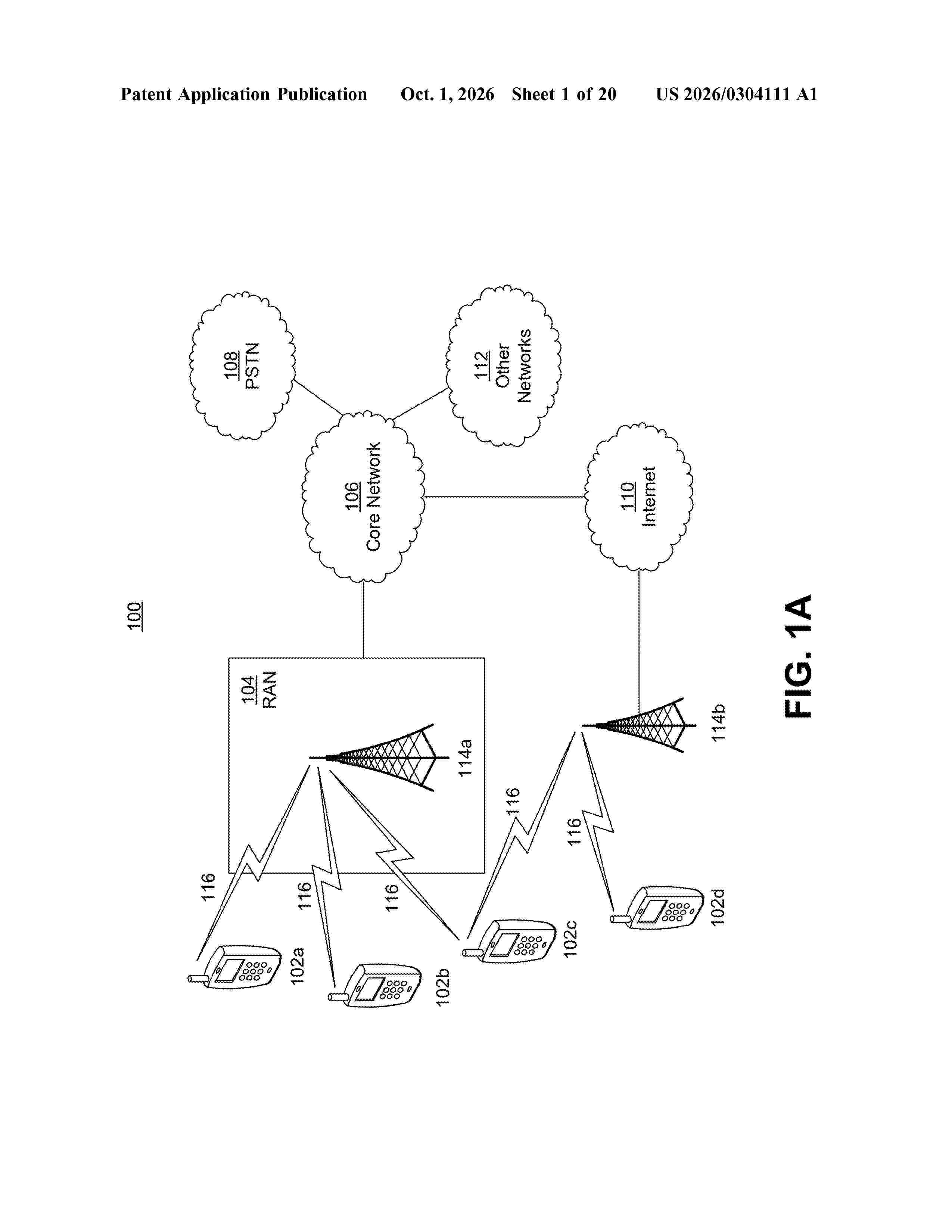
Resumen de: US20260304111A1
0000 A network node may receive a message. The message may include PQC key, for example from a second network node. The network node may determine, for example based on the PQC key, a master shared secret key (MSSK), and/or encapsulate the MSSK into a ciphertext. The network node may send the ciphertext comprising the MSSK, for example to the second network node. The network node may determine, for example based on the MSSK, a second key. The network node may establish and/or modify, for example based on the second key, a secure E2E connection with the second network node for communications. The network node may determine to use the MSSK as a pre-shared key (PSK). The network node may establish and/or modify a communication protocol with the second network node, for example using the PSK.
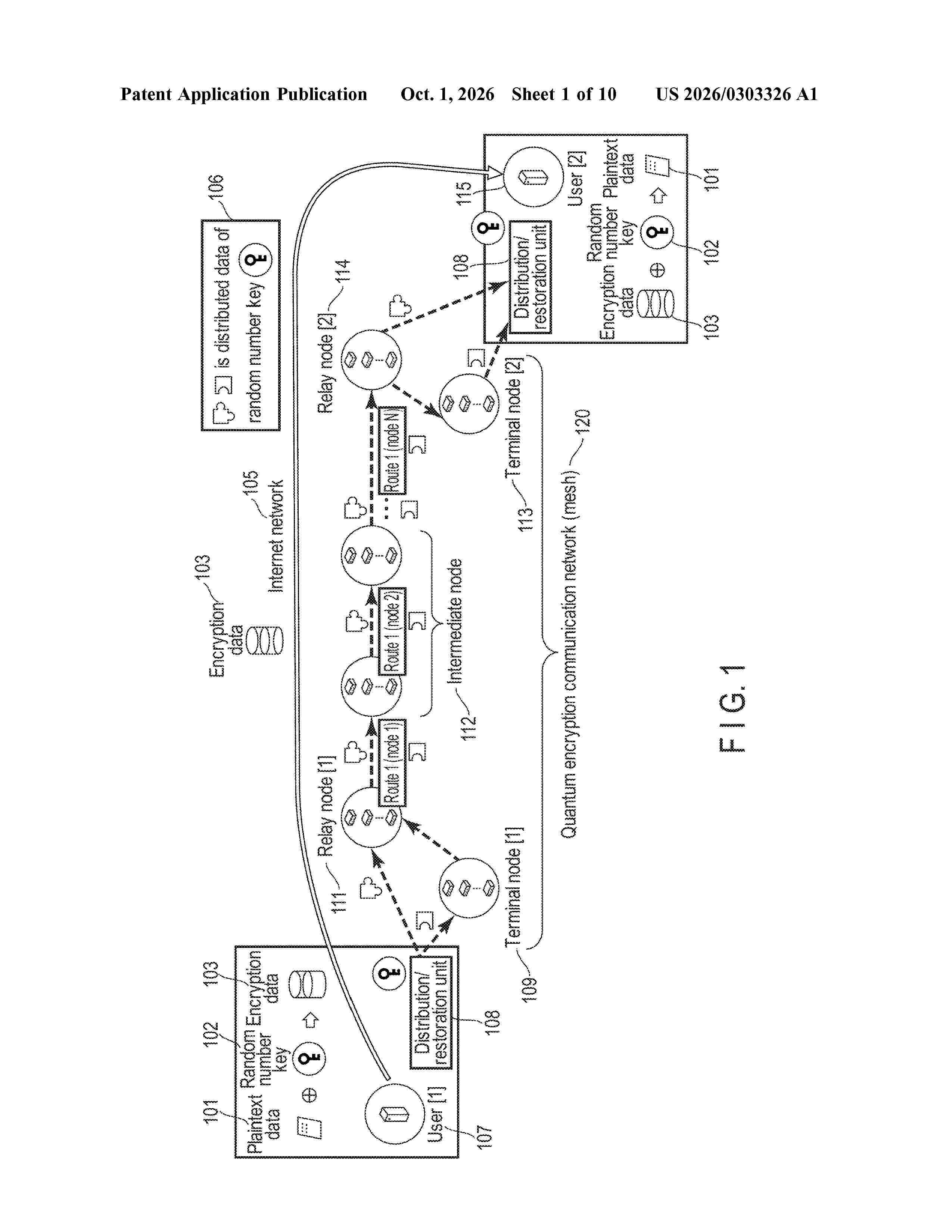
Resumen de: US20260303326A1
According to one embodiment, in an encryption communication system, a first device and a second device that execute encryption communication via a first network share an encryption key used for the encryption communication via a second network including a plurality of nodes. The first device generates n pieces of first data used for generating the encryption key, transmits the n pieces of first data to the second device by distributing the n pieces of first data to n nodes among the nodes and sending the n pieces of first data to the second network, and generates the encryption key by using the n pieces of first data. The second device receives the n pieces of first data from n nodes among the nodes, and generates the encryption key by using the n pieces of first data.
Resumen de: US20260303355A1
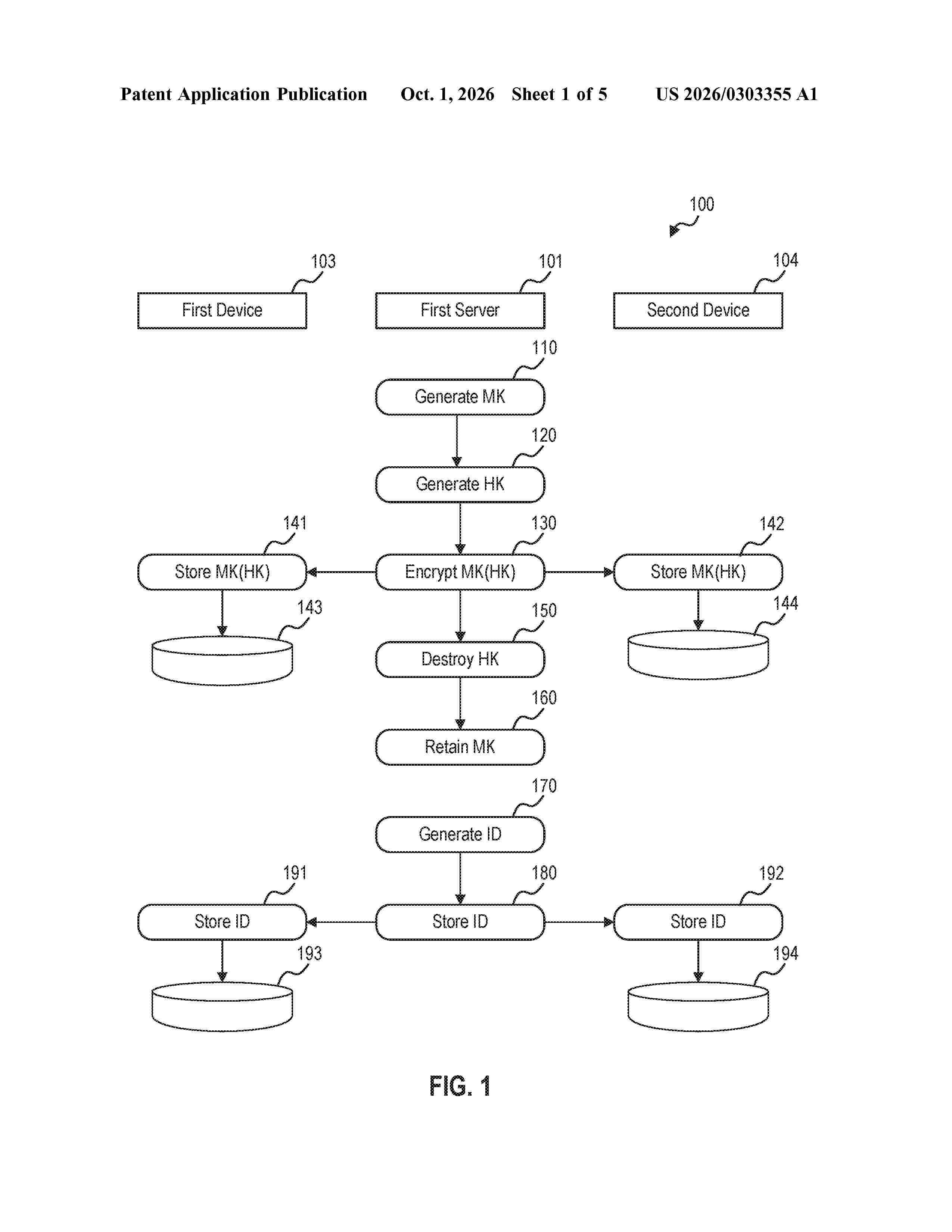
The arrangements disclosed herein relate to generating, by a first server, a first seed using a Hash-Based Message Authentication Code (HMAC) based at least in part on a Hash Key (HK), providing, by the first server to each of a first device and a second device, the first seed, providing, by a second server to each of the first device or the second device, a second seed. The second seed is based at least in part on a stream of photons. Each of the first device or the second device generates a Derived Key (DK) based at least in part on the first seed and the second seed. Each of the first device or the second device generates a first key based at least in part on the DK and a first random number generated by a Quantum Random Number Generator (QRNG). The first device encrypts first data using the first key to obtain first ciphertext and provides the first ciphertext to the second device. The second device derives the first key and decrypts the first ciphertext using the first key.
Resumen de: US20260303333A1
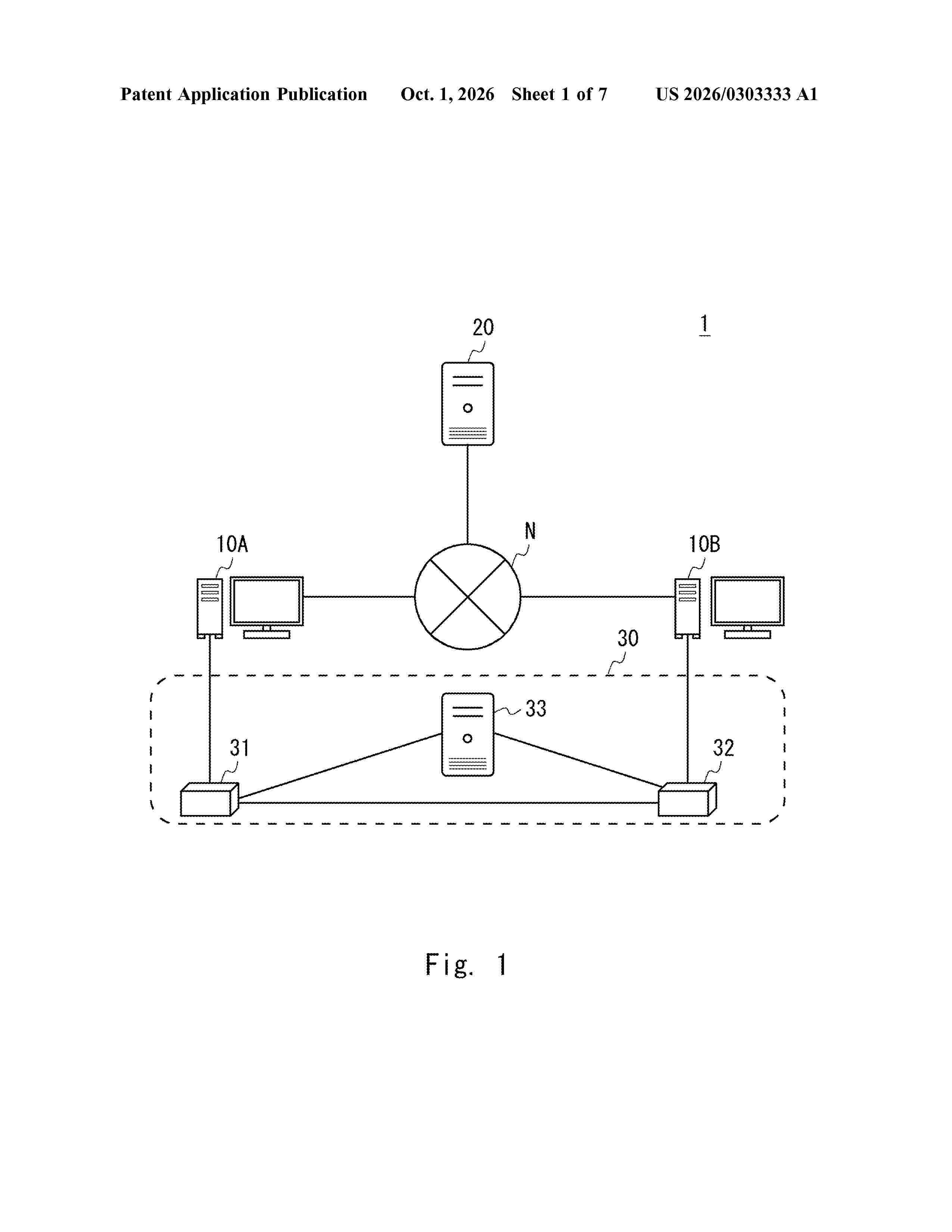
0000 The first information processing device includes: a first acquisition unit that acquires key data from the key supplying base; a generation unit that encrypts first data by means of the key data and generates second data by adding attribute information related to encryption to the encrypted first data; and a transmission unit that uploads the second data to an external device. The second information processing device includes: a second acquisition unit that acquires the key data from the key supplying base; a reception unit that downloads the second data from the external device; and a decryption unit that identifies the key data on the basis of the attribute information included in the second data and decrypts the first data included in the second data by means of the key data.
Resumen de: US20260303332A1
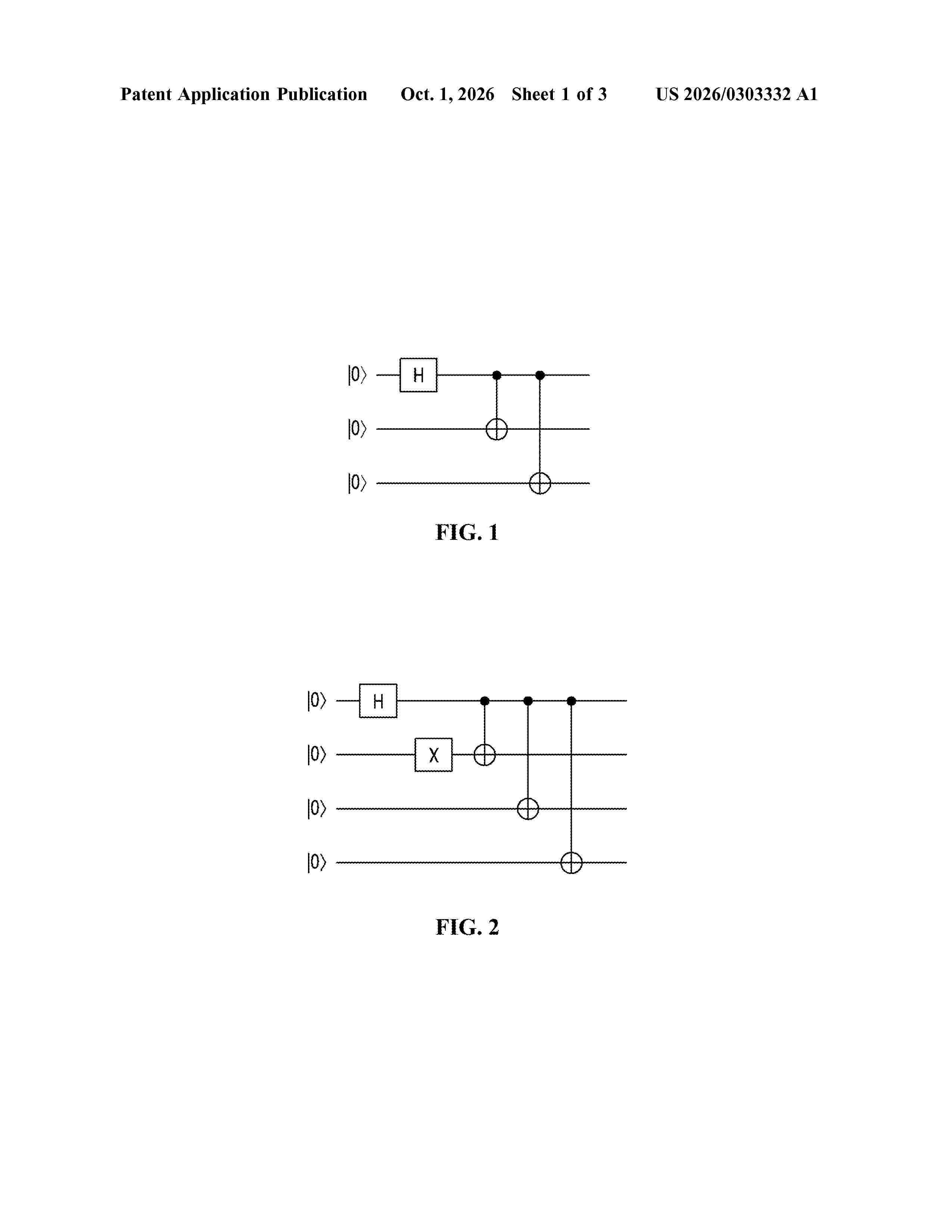
0000 Disclosed herein is an apparatus and method for key agreement based on quantum states. The apparatus divides multiple users into two groups, generates GHZ states modified according to different bases corresponding to the respective groups, shares a secret value with the multiple users using the modified GHZ states, and transmits information for generating a session key to users who request generation of the session key based on the secret value.
Resumen de: US20260303339A1
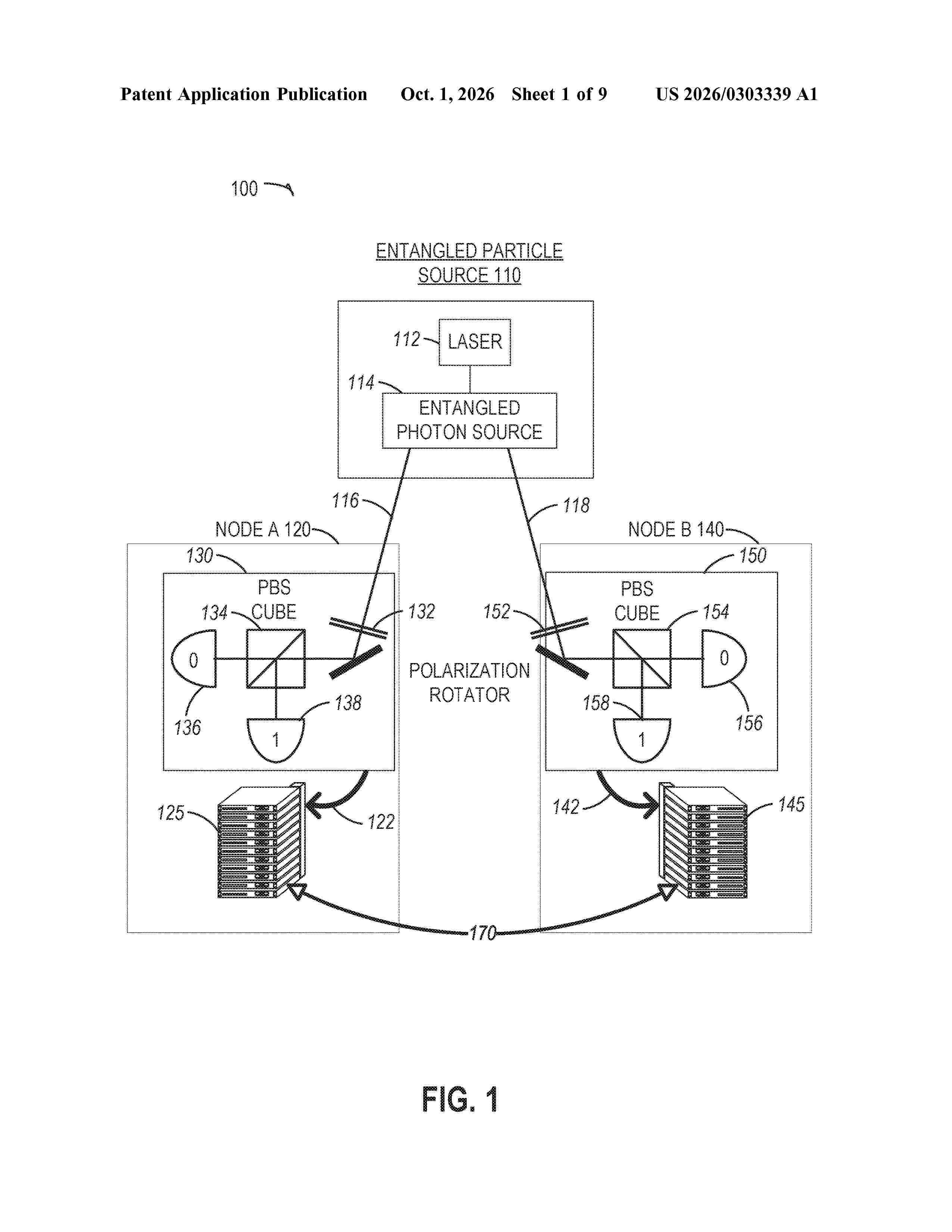
0000 Systems and techniques may generally be used for modifying quantum entangled bit communication. An example technique may include generating, at a first node in a computing network, a random number using a quantum derived seed as input to a random number generator; modifying a program using the random number while maintaining a function output of the program for a given input; receiving, at the first node from a second node, an input based on the random number; and executing the modified program at the first node using the input to obtain an output consistent with the program in an unmodified state.
Resumen de: EP4815363A1
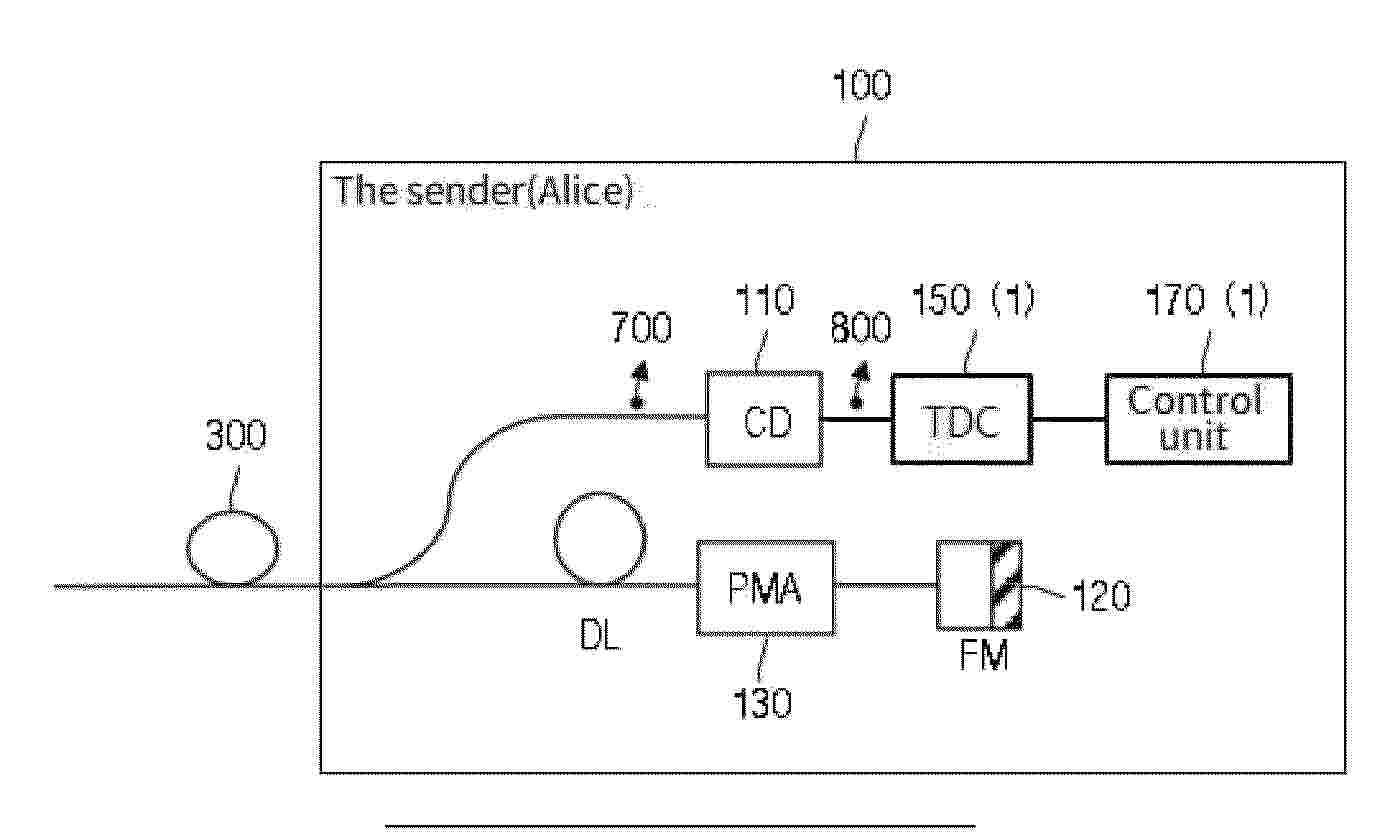
0001 A sender apparatus determining the existence of an eavesdropper present on a quantum channel in a plug-and-play type QKD system is disclosed. The sender apparatus is configured to detect a continuous pair of laser pulses delivered through the quantum channel, and includes a photodetector outputting a laser pulse detection signal including a continuous pair of electrical pulses corresponding to the detected pair of laser pulses, and a TDC measuring the time interval between the pair of electrical pulses. Information regarding the measured time interval is used to determine whether an eavesdropper exists on the quantum channel.
Resumen de: EP4815342A1
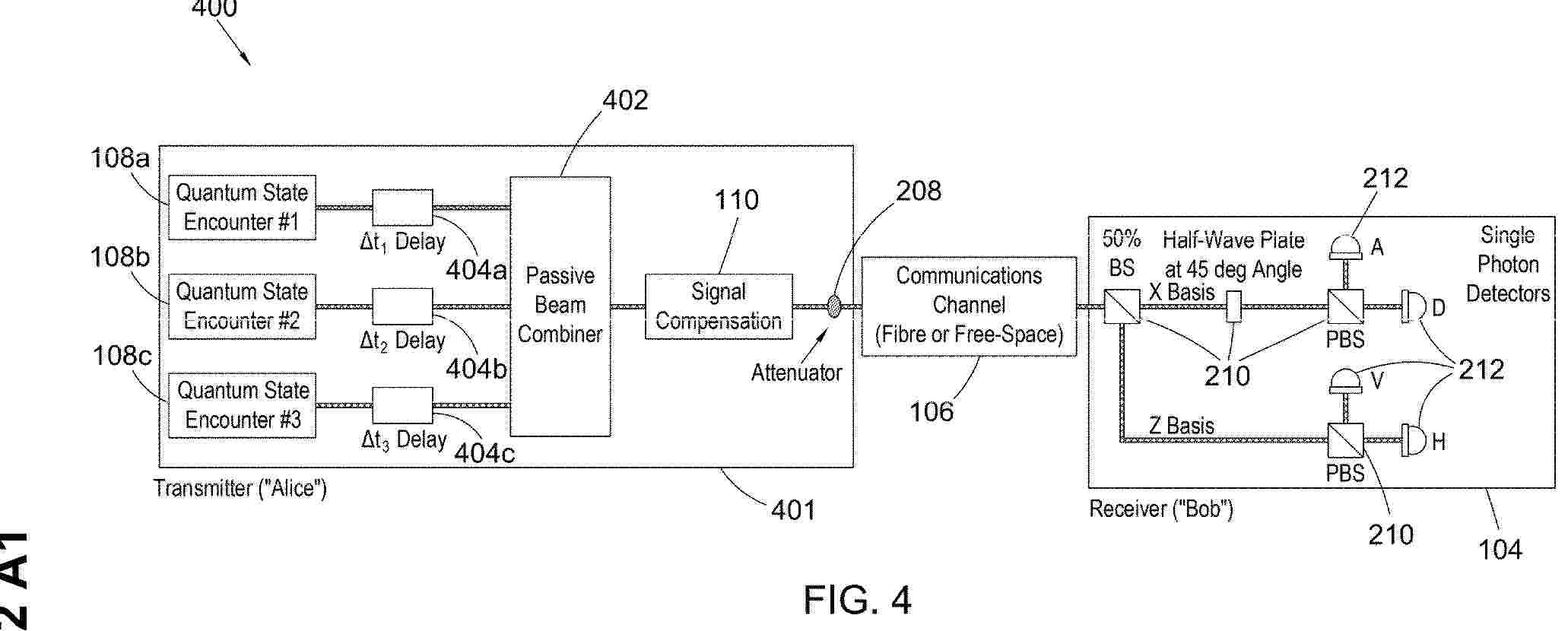
0001 A quantum transmitter for use in a quantum communication system is provided, the transmitter comprising: a plurality of quantum state encoders, each encoder configured to emit portions of light, each portion encoded with a respective quantum state; and a beam combining module configured to receive portions of light emitted from each quantum state encoder, and combine the received portions to produce output light comprising a sequence of successive portions of light emitted by each encoder. A corresponding quantum communication system is also provided.
Resumen de: EP4815362A1
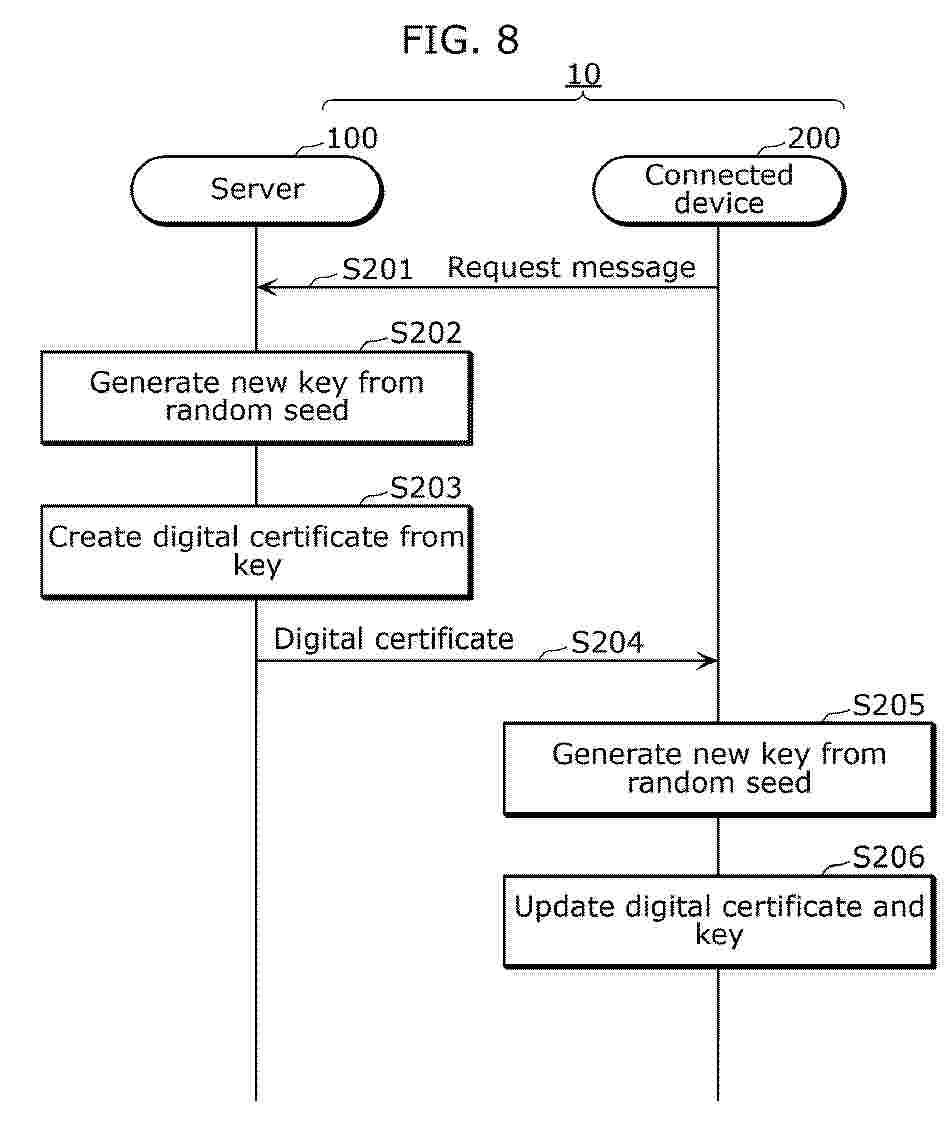
A communication method includes: generating a key (first key) including a private key and a public key using a random seed stored in advance (S202); creating, using the key generated, a digital certificate for the key (S203); and transmitting the digital certificate created to a connected device (200), the connected device (200) storing in advance a random seed identical to the random seed and generating, using the random seed stored in the connected device (200), a key (second key) identical to the key generated (S204).
Resumen de: EP4510498A1
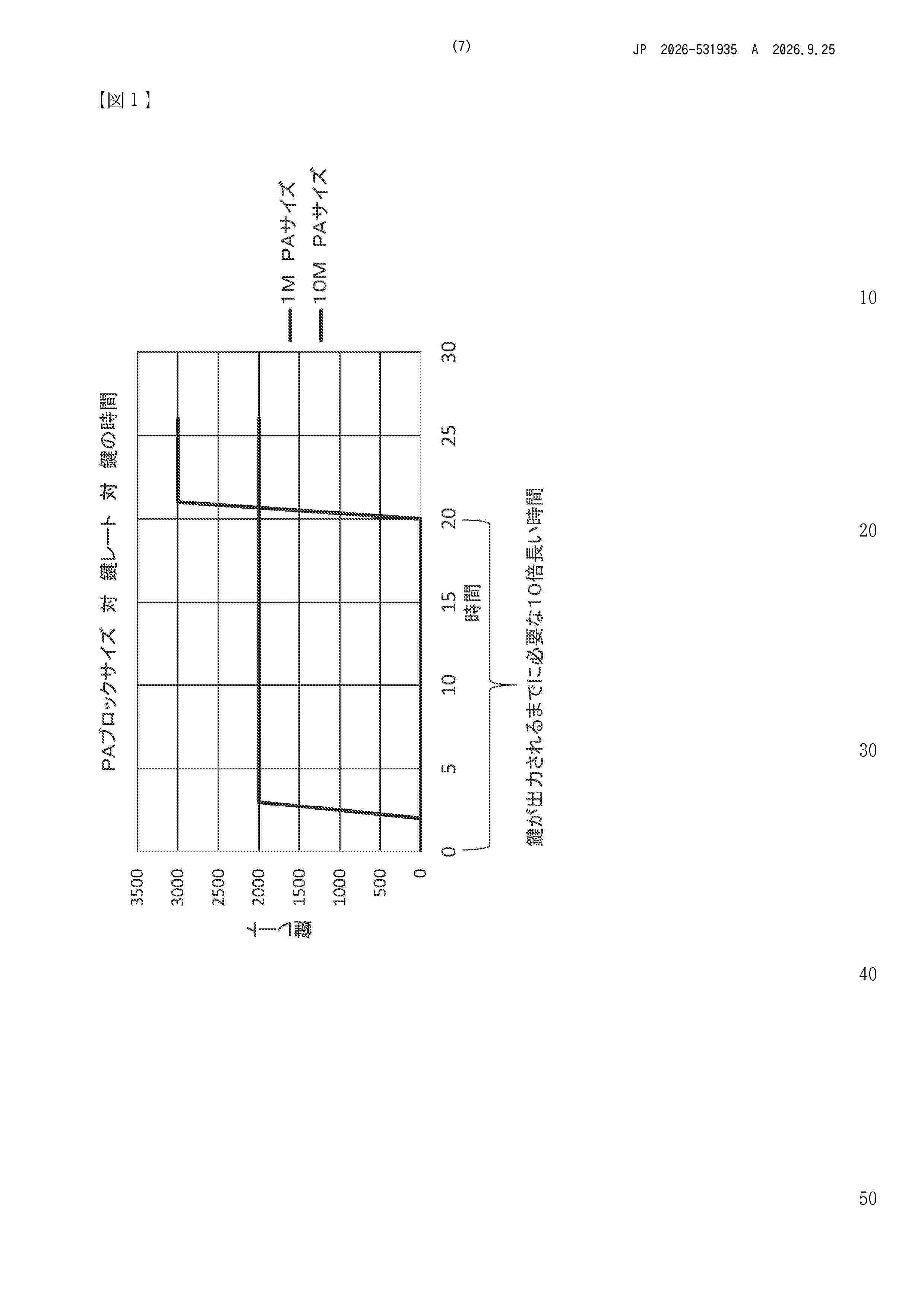
0001 The present invention relates to a QKD communication method between an emitter and a receiver comprising the steps of distilling a secret key through a Privacy Amplification characterized in that the PA size is variable so as to ramp up from a first lower value to an end greater value.
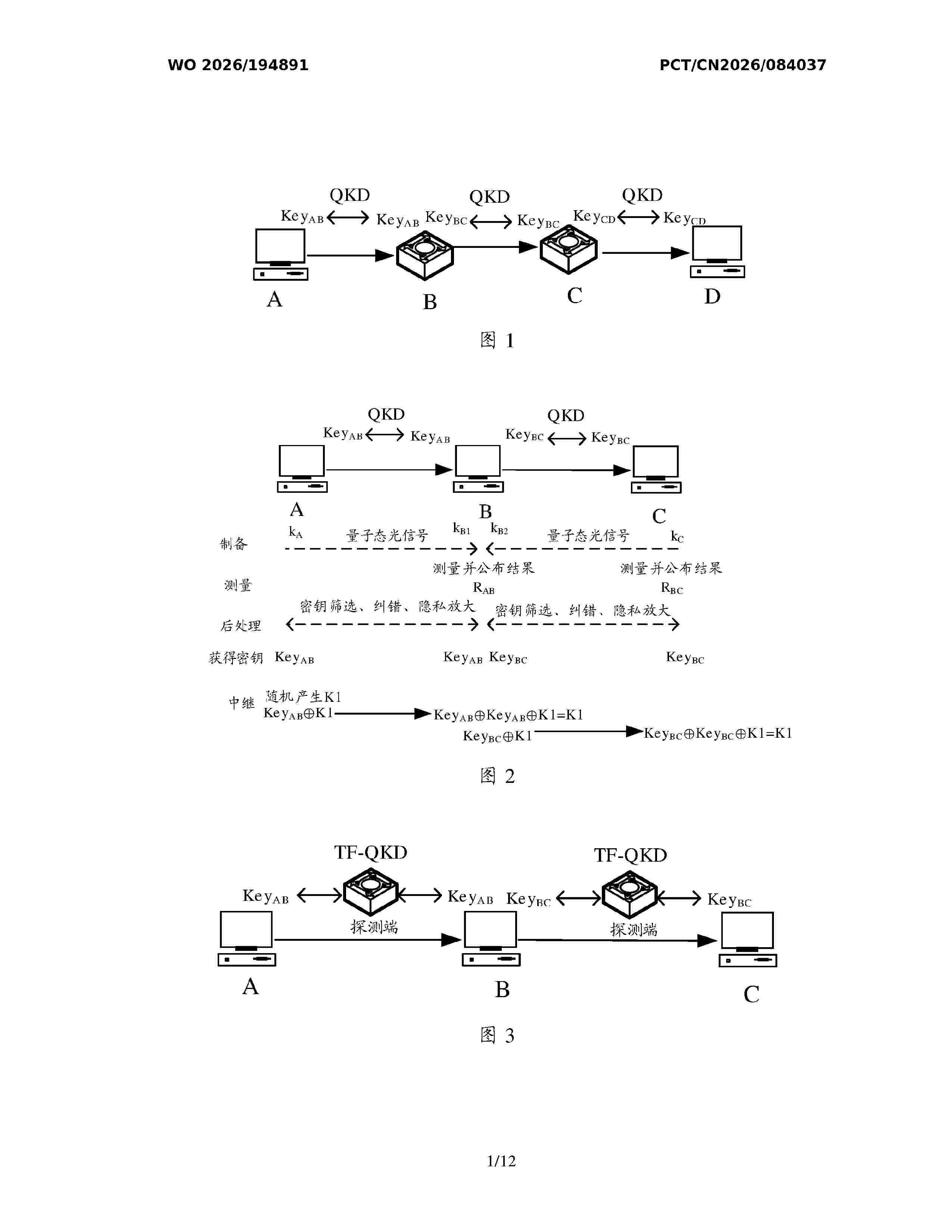
Resumen de: WO2026194891A1
Provided is a key distribution method, which is applied to a sending node. The method comprises: acquiring a first raw key of a sending node and a first raw key of a relay node; determining a first intermediate key of the sending node on the basis of the first raw key of the sending node and the first raw key of the relay node; acquiring a first intermediate key of a receiving node; and determining a first target key on the basis of the first intermediate key of the sending node and the first intermediate key of the receiving node, the first target key being used for the sending node to communicate with the receiving node by means of the relay node.
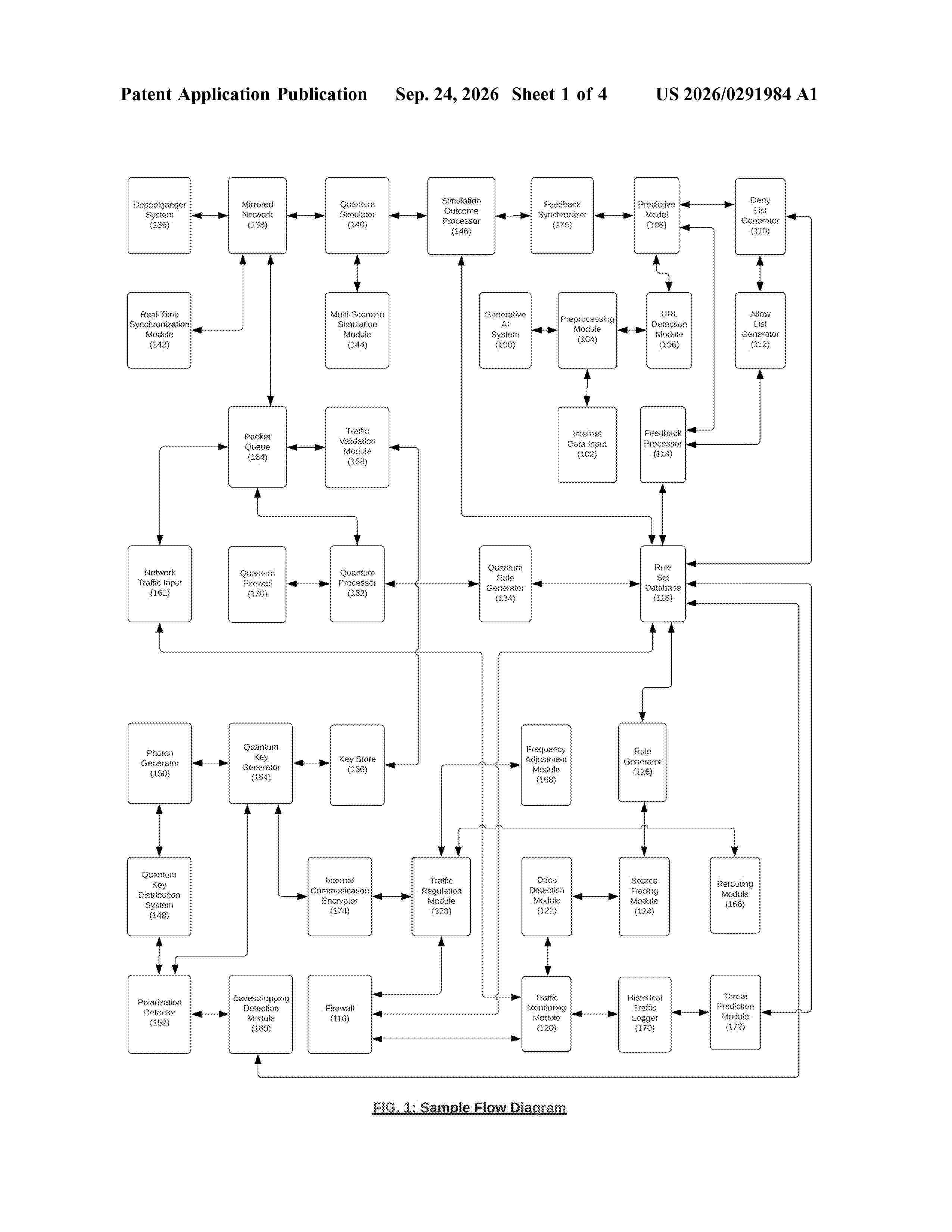
Resumen de: US20260291984A1
A network security system and method integrate generative artificial intelligence, dynamic firewall management, quantum processing, simulation, and quantum key distribution to protect digital infrastructure. The generative AI scans internet data to identify malicious URLs, generating dynamic deny and allow lists for a firewall that updates rules in real time, monitors traffic, and mitigates DDoS attacks. A quantum firewall inspects packets using a quantum processor, producing prioritized quantum rules, while a doppelganger system simulates packet effects on a mirrored network with a quantum simulator, preemptively determining outcomes. Quantum key distribution employs photon polarization to generate keys, validating traffic and detecting eavesdropping, with the firewall rerouting traffic and adjusting update frequency based on threat levels. Historical traffic analysis predicts threats, and internal communications are encrypted, ensuring comprehensive, adaptive security through interconnected components managed by a central network manager.
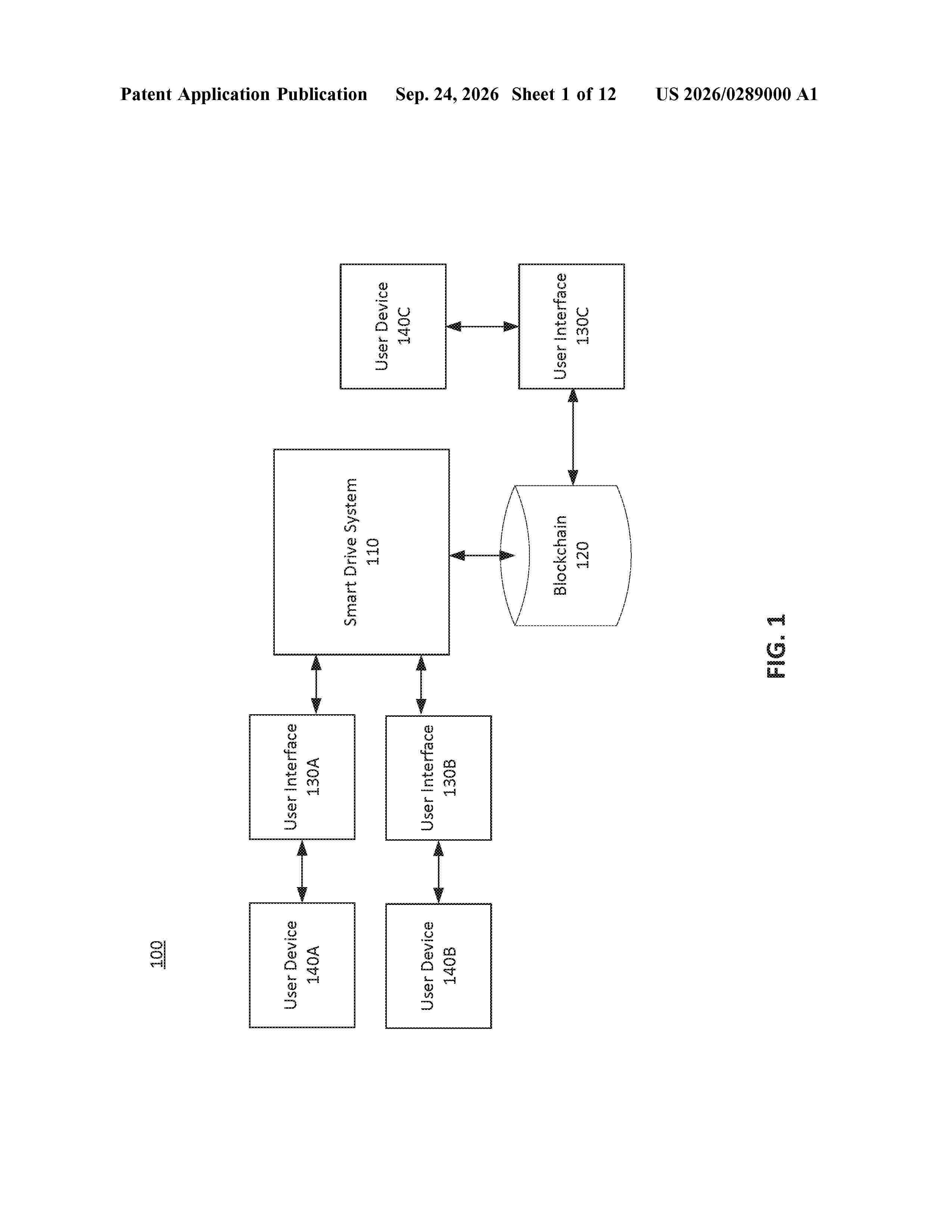
Resumen de: US20260289000A1
0000 Disclosed herein are system, method, and computer program product for managing documents using blockchain technology and quantum-safe computational architecture. A smart drive system may facilitate the creation of a project data structure encrypted using a quantum-resistant cryptographic scheme and distributed or decentralized key management functionalities. The project data structure may indicate a sequence or flow of documents and/or document types. The smart drive system may also manage groups of documents and generate documents and group tokens to manage access permissions. The smart drive system may protect these data sources from unauthorized access based on the quantum tokens corresponding to the document, document type, and/or group of documents. The smart drive system may facilitate modifications to the document from other parties, which may represent counteroffers or a negotiation process. The smart drive system may also interconnect documents of a project data structure to create documents with pre-filled data and corresponding cryptographic bindings.
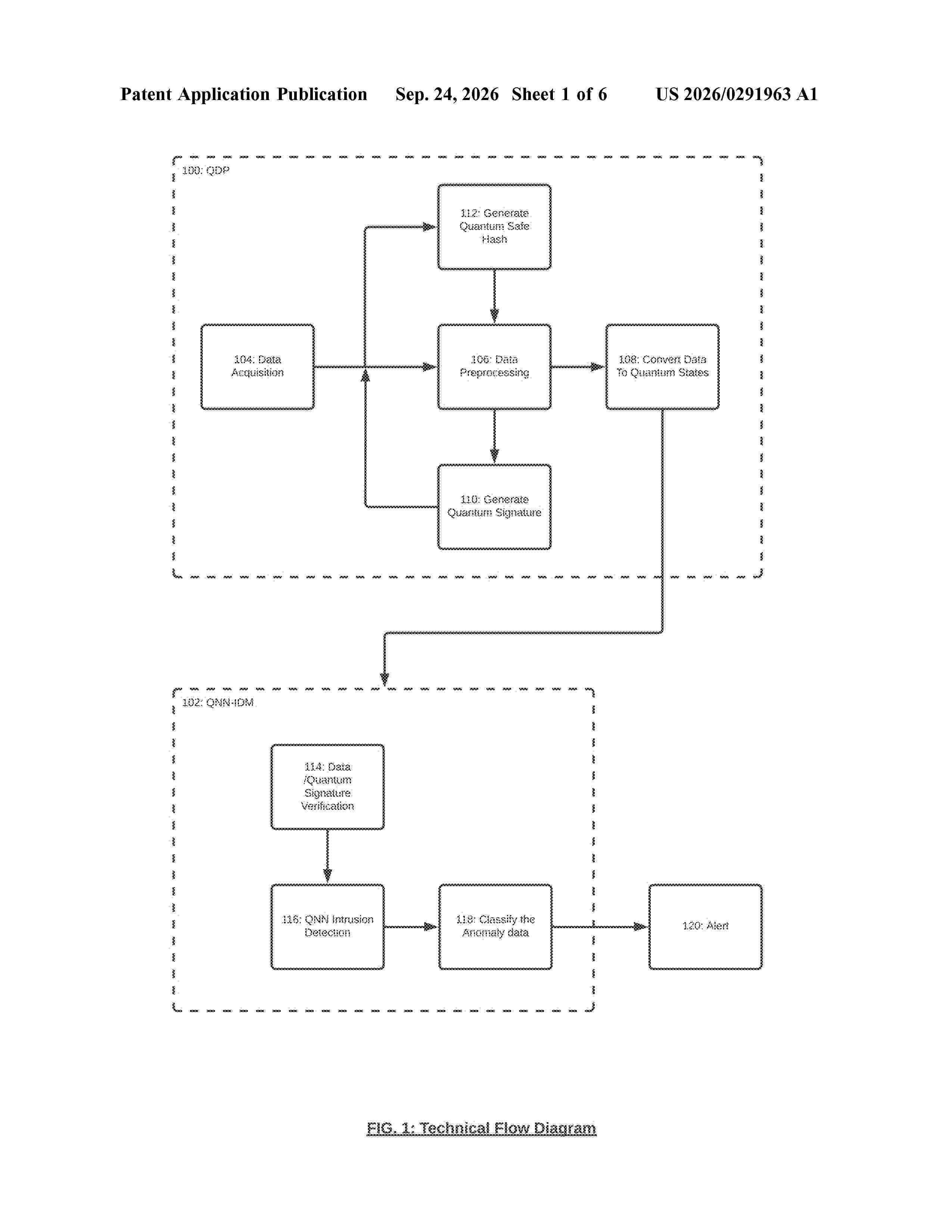
Resumen de: US20260291963A1
0000 A hybrid quantum-classical framework detects anomalies in network data by integrating quantum and classical neural networks. Data acquisition collects user inputs and network traffic, forming a raw dataset preprocessed with SHA3 hashing and SPHINCS+ quantum-safe signatures for integrity. Quantum encoding with BB84 QKD and CNOT gate entanglement secures quantum transfers, while a quantum neural network validates data, normalizes it, and applies amplitude encoding to extract features using variational quantum circuits with RY/RZ gates, optimized via gradient descent. A variational quantum recurrent network with quantum memory classifies anomalies, thresholding scores at 0.9 to generate severity-ranked alerts. A classical convolutional neural network analyzes spatial patterns, with a multi-translation layer fusing quantum and classical outputs. An integration module combines results, adjusts circuit depth, monitors latency, and logs anomalies to persistent storage, ensuring real-time, comprehensive anomaly detection across diverse network environments.
Resumen de: EP4811717A1
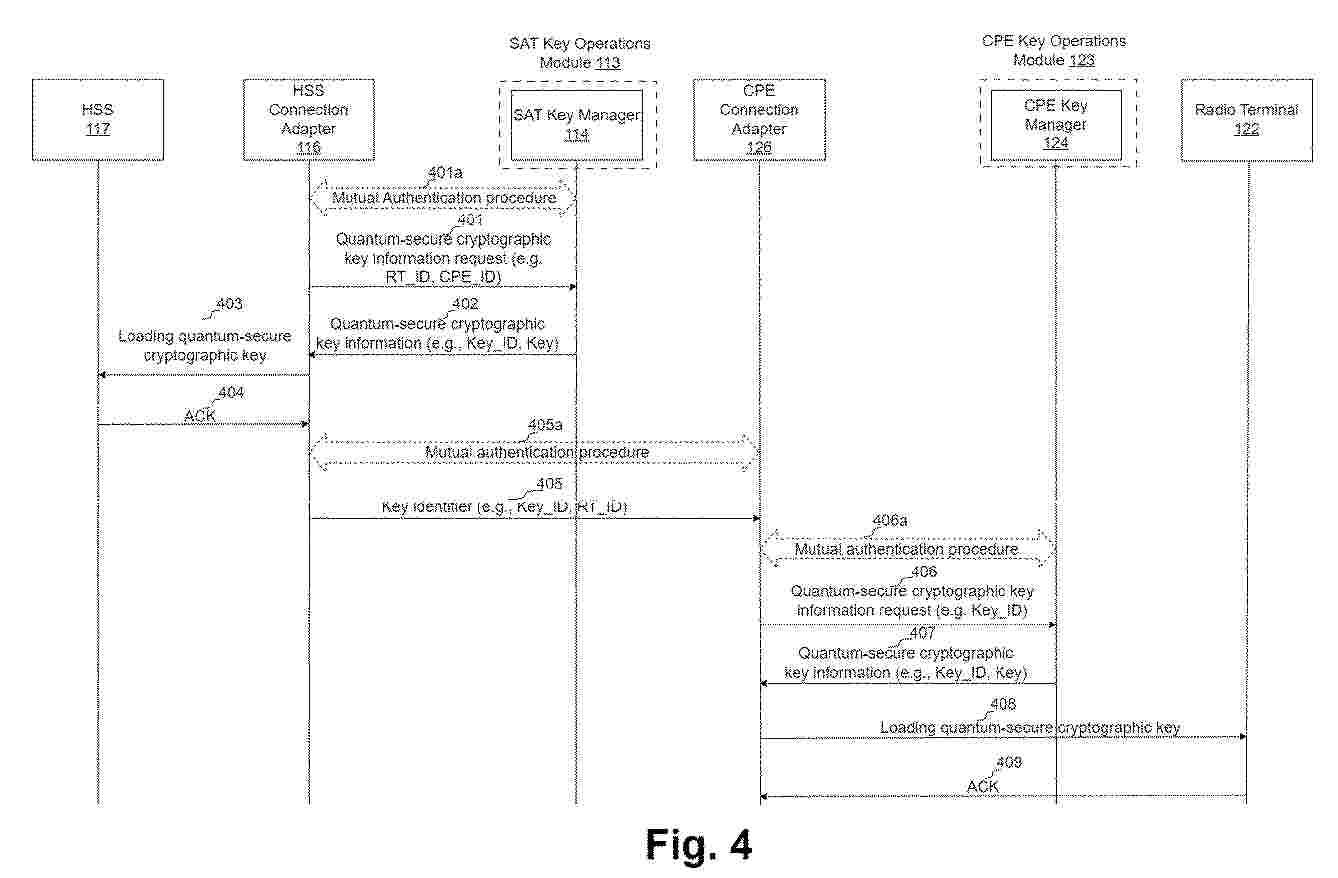
0001 A non-terrestrial communication system and method for securely synchronizing quantum-secure cryptographic keys are provided. The system comprises a satellite comprising a SAT key operations module with a SAT key manager to manage and provide quantum-secure cryptographic keys; a first connection adapter co-located with an HSS; a CPE comprising a CPE key operations module with a CPE key manager to manage and provide quantum-secure cryptographic keys, a second connection adapter, and one radio terminal. The first adapter sends a key information request to the SAT key operations module, receives quantum-secure cryptographic key information from the SAT key operations module, loads a quantum-secure cryptographic key into the HSS, and sends a key identifier to the second connection adapter. The second adapter sends a key information request to the CPE key operations module, receives quantum-secure cryptographic key information from the CPE key operations module, and loads a quantum-secure cryptographic key into the radio terminal.
Resumen de: WO2025125990A1
Methods and apparatus for generating quantum entanglement detect success of entanglement attempts by monitoring output signals from one or more detectors for heralding patterns indicating that a pair of quantum systems is in an entangled quantum state. In response to detecting a heralding pattern that indicates a successful entanglement attempt a low latency signal is output on one or more signal lines; and a higher latency message is transmitted by a messaging interface. The higher latency message contains information that identifies the pair of quantum systems entangled by the successful entanglement attempt. The pair of quantum systems may be inhibited from participating in further entanglement attempts while further entanglement attempts are performed on other pairs of quantum systems.
Resumen de: KR20260139461A
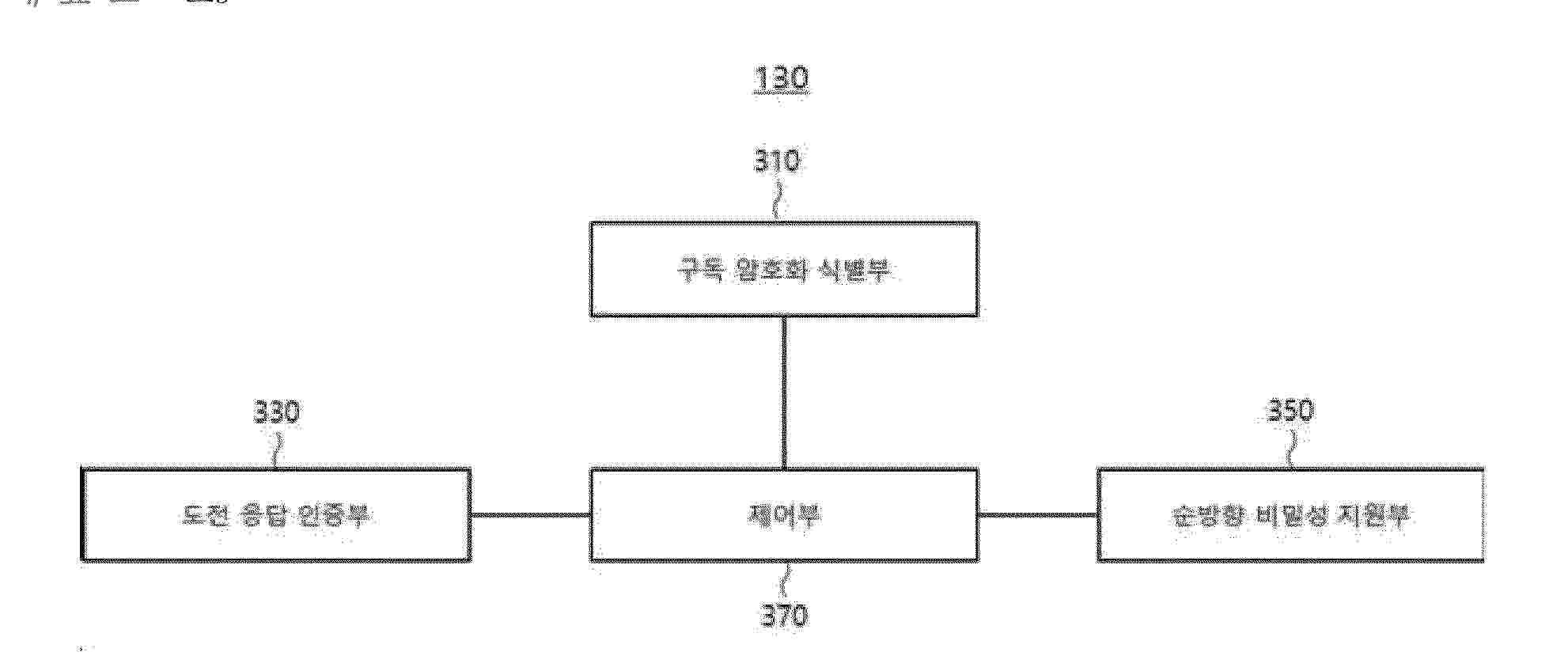
0001a 본 발명은 하이브리드 양자내성암호 기반 순방향 비밀성 지원 통신 장치에 관한 것으로, 상기 장치는 사용자 식별자에 대하여 양자내성암호 기반 암호화를 수행하여 구독자의 식별정보(SUCI, Subscription Concealed Identifier)를 생성하고 상기 구독자의 식별정보(SUCI)를 사용자 단말에 전송하는 구독 암호화 식별부; 난수(RAND)를 생성하여 상기 사용자 단말에 제공하고 상기 난수(RAND)를 밀레나지 함수(Milenage Function)에 입력하여 인증토큰(AUTN)을 생성하는 도전 응답 인증부; 및 상기 인증토큰(AUTN)을 기초로 세션 데이터를 암호화하여 상기 사용자 단말과 통신하는 순방향 비밀성 지원부를 포함한다.
Resumen de: WO2022015395A2
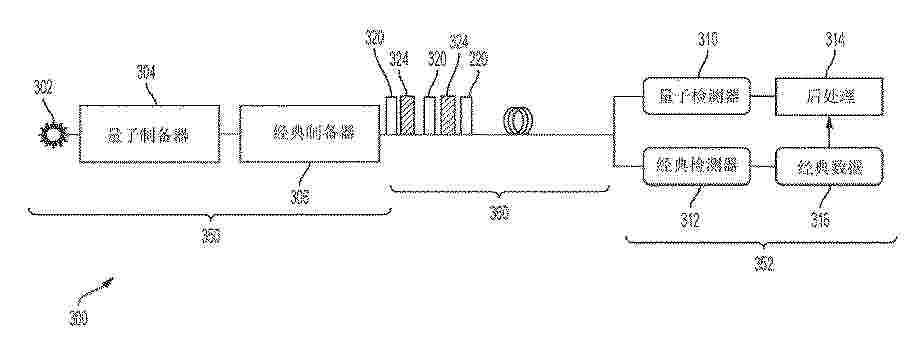
Systems for, and methods of, detecting an attack on an optical communication channel are presented. The techniques can include sending, from a sender to a receiver, and over the optical communication channel, an optical signal, where the optical signal includes a classical optical signal representing first information and a quantum optical signal representing second information. The techniques can include detecting, by the receiver, third information from at least a portion of the quantum optical signal and sending, by the receiver to the sender, the third information. The techniques can include determining, by the sender, an indication of an attack on the optical communication channel based on at least a portion of the second information and the third information. The techniques can include triggering an alarm based on the determining.
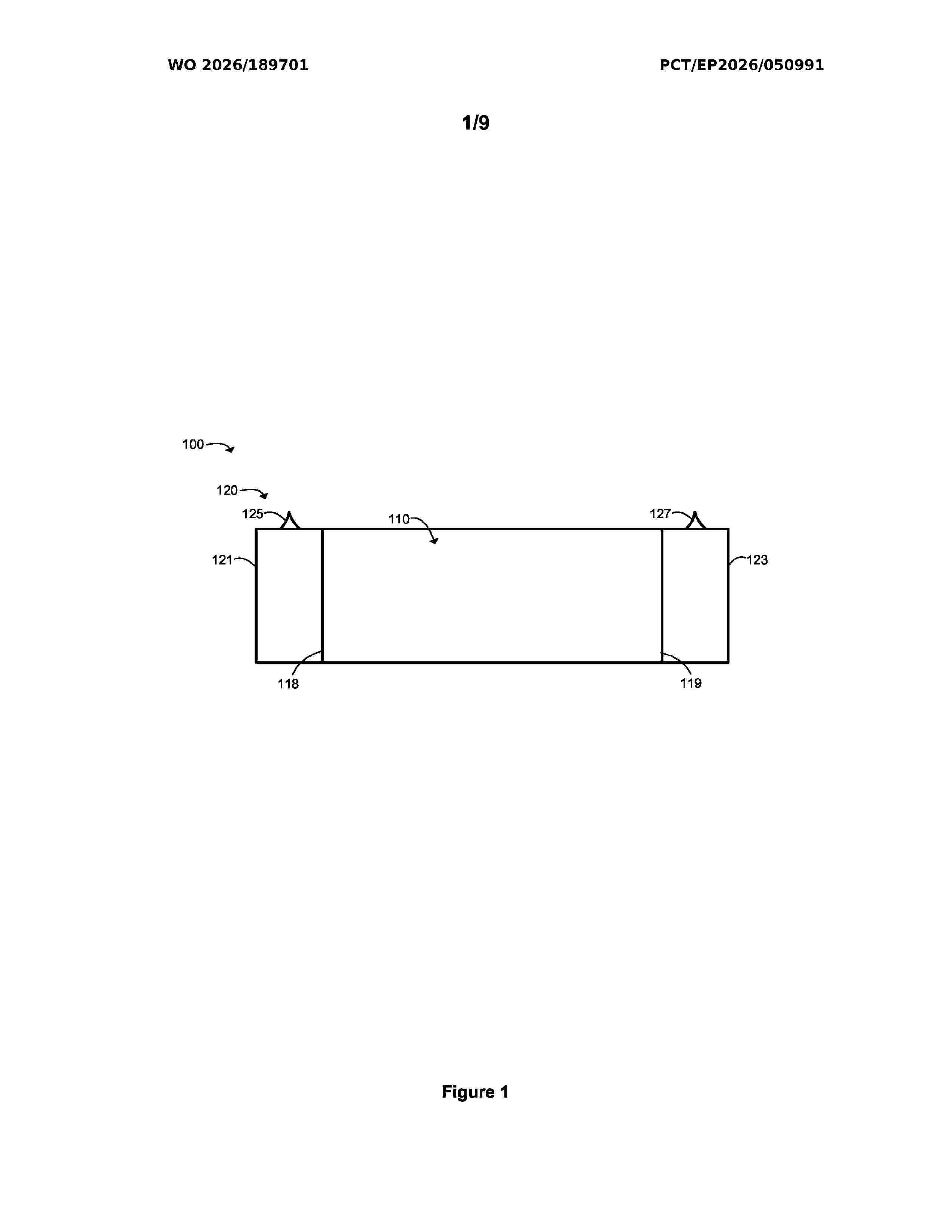
Nº publicación: WO2026189701A1 17/09/2026
Solicitante:
BRITISH TELECOMMUNICATIONS PUBLIC LIMITED CO [GB]
BRITISH TELECOMMUNICATIONS PUBLIC LIMITED COMPANY
Resumen de: WO2026189701A1
This invention provides a quantum memory device, and a method of operating the quantum memory device, the quantum memory device comprising: a structure defining a plurality of vapour containment channels extending through the structure, each vapour containment channel containing vapour; and a controller configured to selectively: couple a first optical signal to a first vapour containment channel of the plurality of vapour containment channels, wherein the first optical signal contains 10 information, and control storage of the information of the first optical signal in the first vapour containment channel.
 BOPI
BOPI
 Sede Electrónica