Si deseas distinguir tus productos, servicios o ambos de los de otra empresa, es posible que necesites una marca o nombre comercial. Descubre qué son, en qué consiste su procedimiento de registro y qué implica.

Información sobre los plazos de presentación de solicitudes de transformación de marcas de la Unión Europea en marca nacional española. Más información


Si tienes un nuevo dispositivo, producto o procedimiento que resuelva un problema técnico o tenga una ventaja práctica, existen distintas formas de protegerlo en España y en otros países. Descubre cómo hacerlo.

¿Tu innovación reside en la estética, la ornamentación o la apariencia de tu producto? Protégela mediante un diseño industrial. Descubre qué derechos confiere el registro y cómo realizar la tramitación.

Las indicaciones geográficas protegen el nombre de un producto originario de una zona geográfica, a la cual le debe una determinada calidad, reputación u otra característica. Descubre qué son, en qué consiste su procedimiento de registro y qué beneficios conceden.

Las patentes publicadas en todo el mundo son una valiosa fuente de información científica, técnica y comercial.

Si eres emprendedor/a o una empresa y quieres potenciar y mejorar la rentabilidad de tu negocio protegiendo de forma adecuada los activos intangibles de tu organización, en este espacio encontrarás lo necesario.


 292
resultados
292
resultados
 Última actualización
24/10/2026 [09:06:00]
Última actualización
24/10/2026 [09:06:00]


 Resultados 50 a 75 de 292

Resumen de: WO2026188790A1
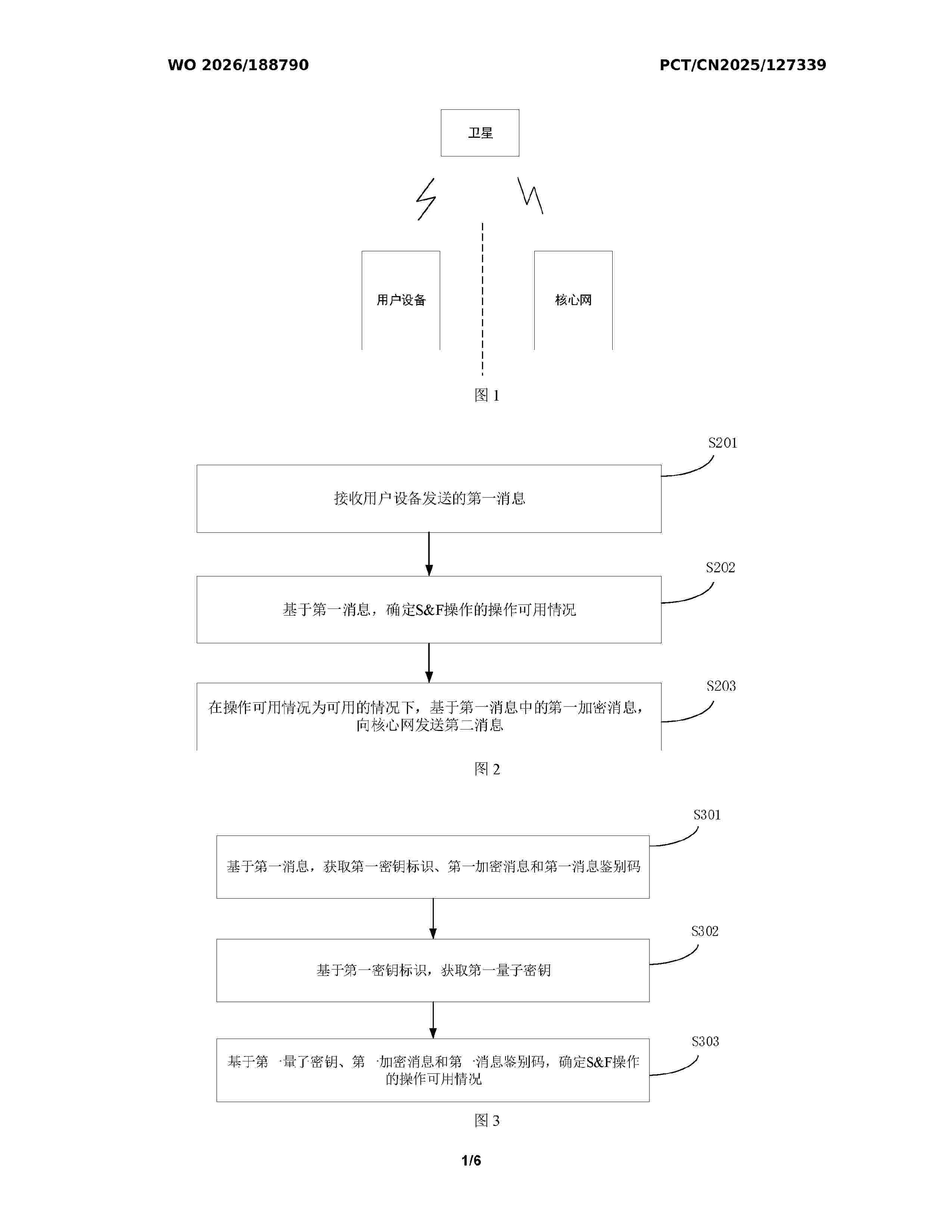
The present application relates to a communication method and apparatus, a communication device and a storage medium. The method comprises: receiving a first message sent by a user equipment, wherein the first message is generated by the user equipment on the basis of a first encrypted message, a request message and a first quantum key, and the first encrypted message is obtained by encrypting the request message on the basis of the first quantum key; on the basis of the first message, determining the operational availability of an S&F operation; and when the operational availability indicates that the operation is available, sending a second message to a core network on the basis of the first encrypted message in the first message.

Resumen de: WO2026192963A1
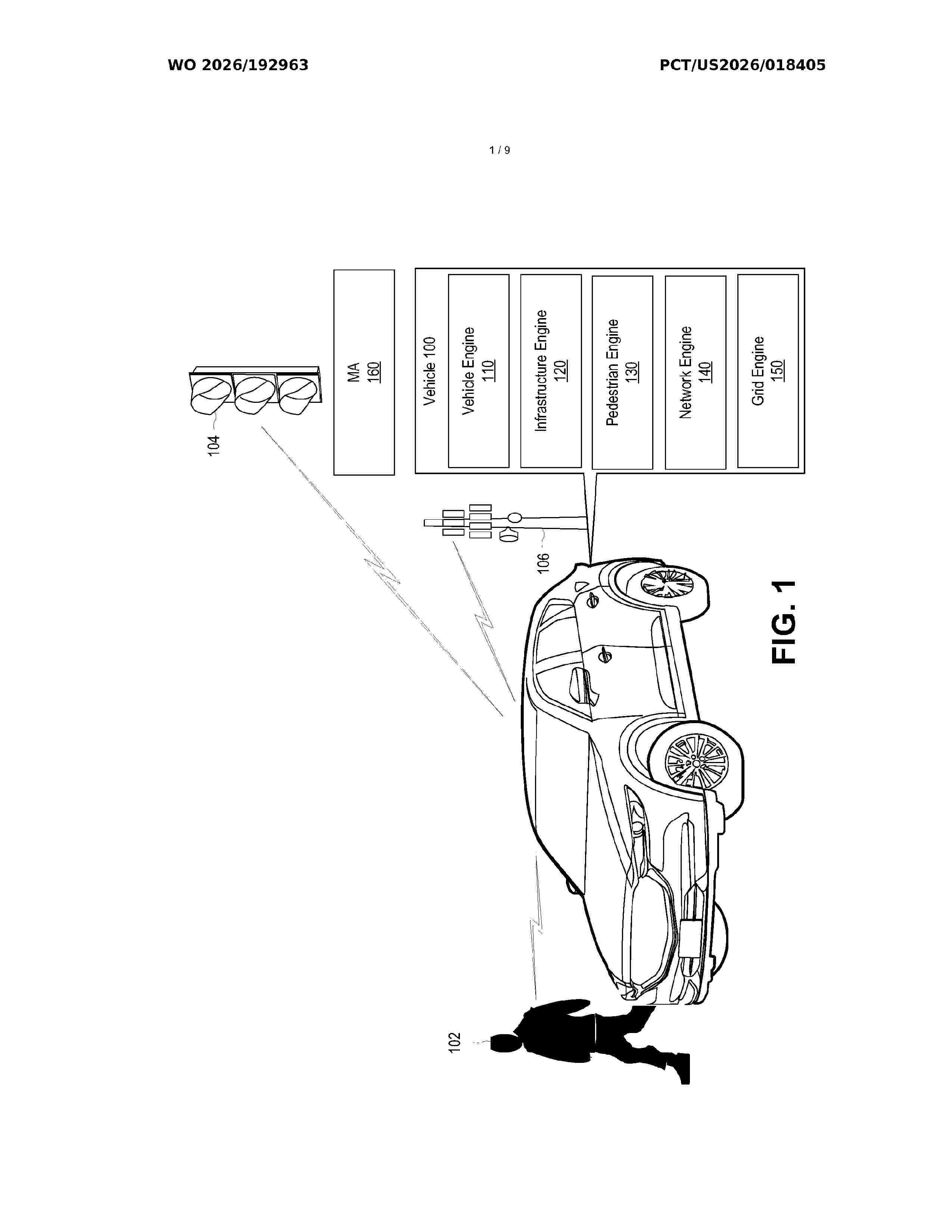
Disclosed are systems, apparatuses, processes, and computer-readable media for classical cryptography and post-quantum cryptography (PQC) protection for V2X communication. For example, an apparatus includes a processor and a memory coupled to the processor. The processor is configured to: generate a first message of a first type; generate a first authentication code for the first message with a first type of authentication key based on the first message being of the first type; generate a second message of a second type; and generate a second authentication code for the second message with a second type of authentication key based on the second message being of the second type, wherein the second type of authentication key is based on PQC.
Resumen de: WO2026189702A1
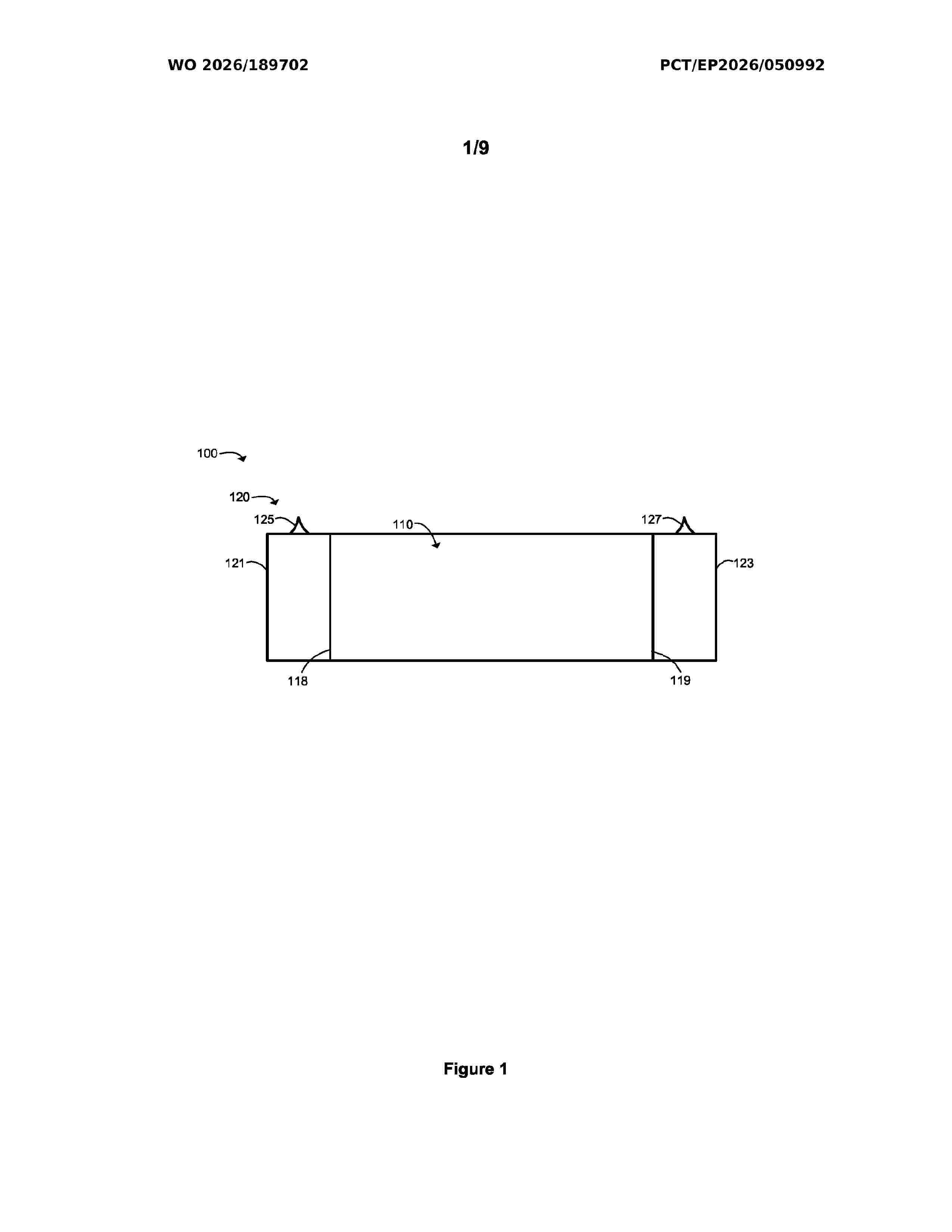
This invention provides a vapour containment array, a system comprising the vapour containment array, and a method of manufacturing the vapour containment array, the vapour containment array comprising: a housing defining an interior section containing vapour; and a structure, positioned within the interior section of the housing, the structure defining a plurality of vapour containment channels extending through the structure, wherein: a first end of the first vapour containment channel is open to the interior section of the housing for fluidic communication between the interior section of the housing and the first vapour containment channel; and the housing comprises: a first optical signal interface configured to couple a first optical signal with a first vapour containment channel of the plurality of vapour containment channels, and a second optical signal interface configured to couple a second optical signal with the first vapour containment channel, wherein an interaction between the first optical signal and the vapour contained in the first vapour containment channel induces Electromagnetically Induced Transparency, EIT, to the second optical signal in the first vapour containment channel.
Resumen de: WO2026190722A1
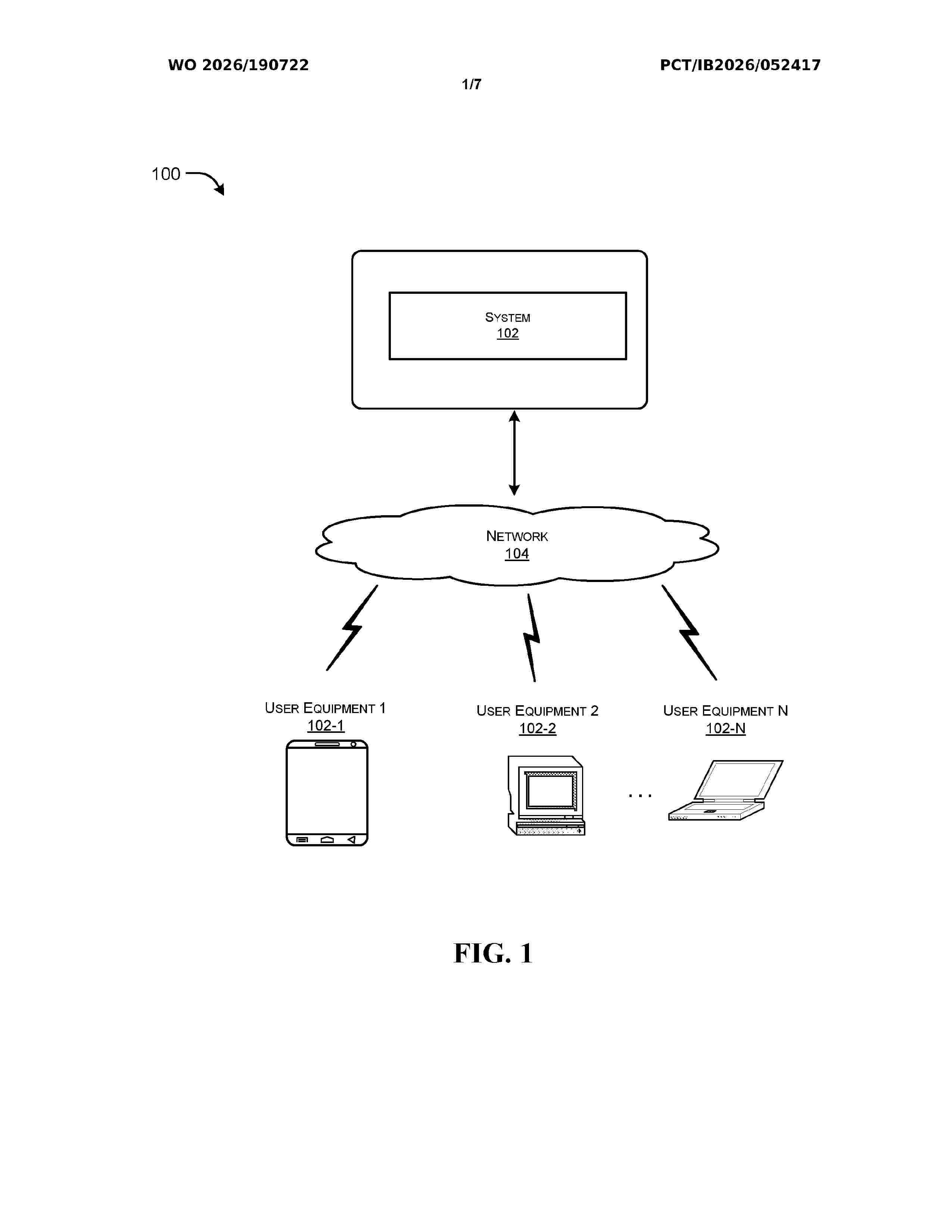
The present disclosure provides a system (102) for postquantum cryptographic partitioning and a method thereof. The system (102) generates a base wheel including a first element representing an integer and a list of prime numbers. The system (102) generates a culled list by multiplying each element of the base wheel by a selected prime number from the list of prime numbers. The system (102) generates a temporary list by using each element of the base wheel and appending one or more multiples of a primorial to each element of the base wheel, where the primorial is a product of all primes up to a selected prime number. Further, the system (102) generates a wheel by removing elements that are present in the culled list from the temporary list.
Resumen de: US20260280862A1
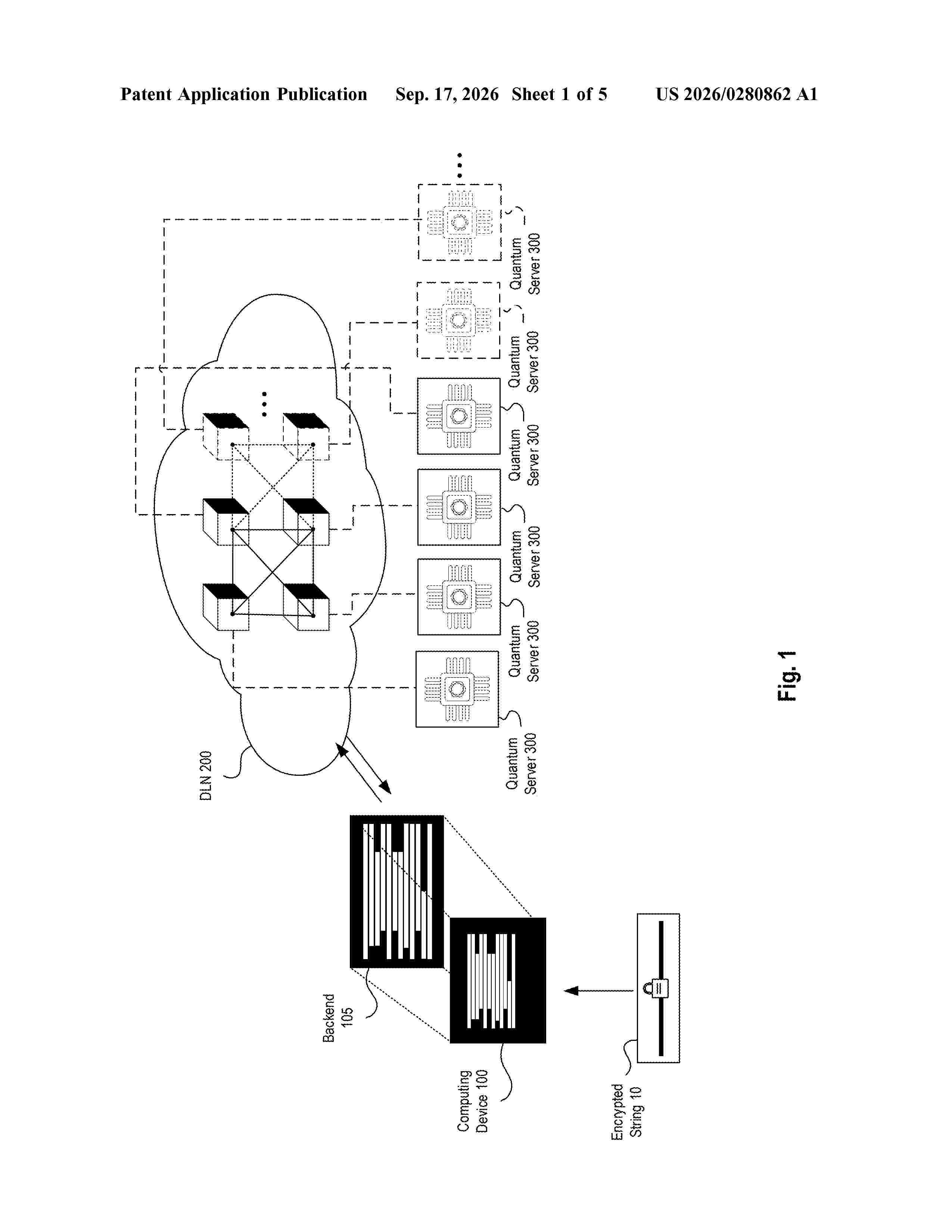
A distributed quantum evaluation network for decryption. In some embodiments, the steps comprising: receiving an encrypted string; and initiating a chaincode transaction on a plurality of nodes of a disturbed ledger network (DLN), wherein the chaincode transaction further comprises the encrypted string and computer-readable instructions for quantum decryption at each of the plurality of nodes, the instructions comprising: emitting an event for external computation by calling a quantum computing software development kit (SDK) application programming interface (API), providing the encrypted string to the quantum computing SDK API; receiving a decrypted output generated by the quantum circuit upon completion of the quantum decryption operations, validating the decrypted output among the plurality of nodes using a distributed consensus protocol, storing a validated decrypted output as a new transaction on the DLN, and updating a distributed ledger state across the plurality of nodes to reflect the storing of the validated decrypted output.
Resumen de: US20260280864A1
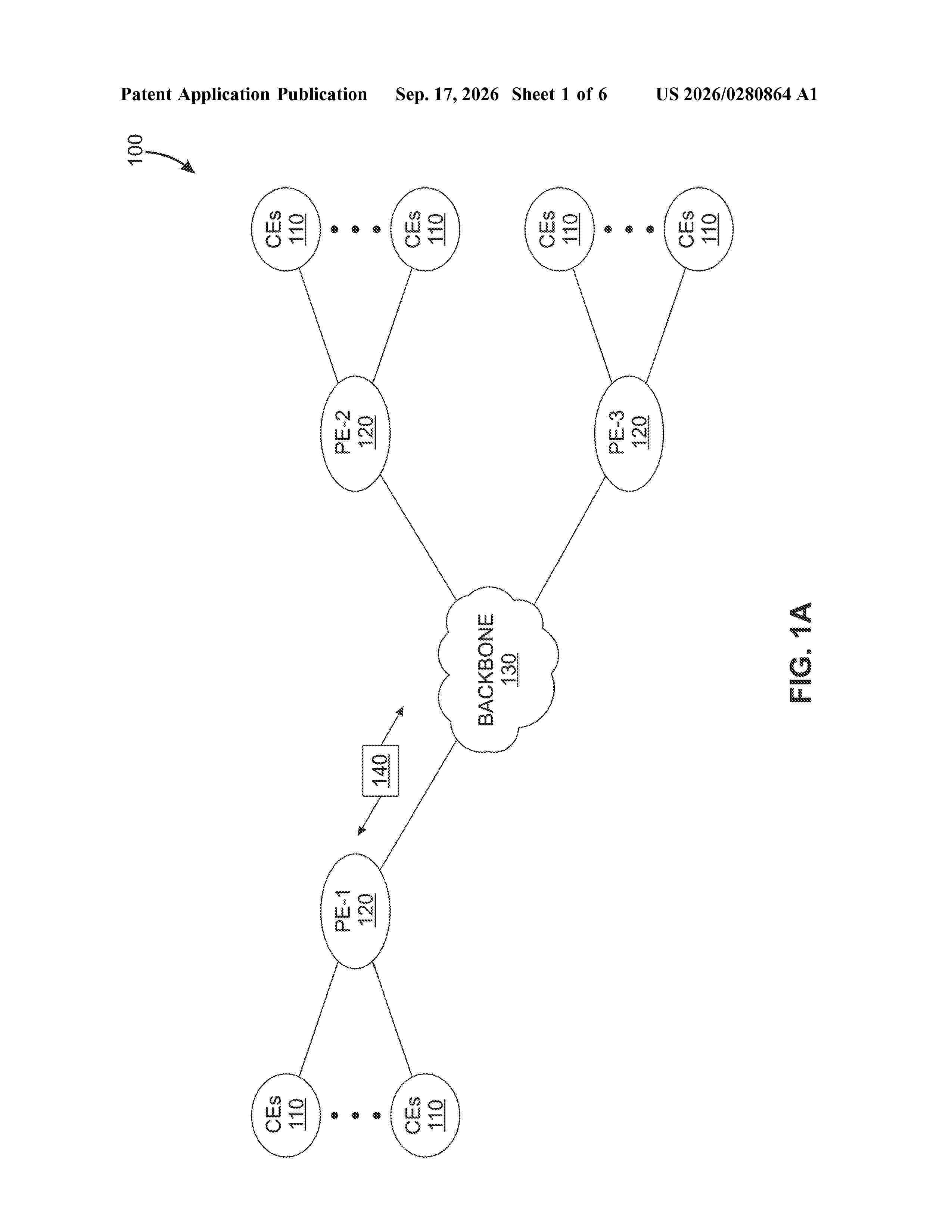
0000 In one implementation, a key management service executed by a device determines cryptographic capabilities of a wireless client and an access point in a wireless network. The key management service selects a post-quantum cryptographic key generation approach for use by the wireless client and the access point based on their cryptographic capabilities. The key management service generates a key exchange policy for the wireless client and the access point that specifies one or more out-of-band paths that differ from a Wi-Fi link between the wireless client and the access point. The key management service causes the wireless client and the access point to perform a key exchange to associate the wireless client with the access point in the wireless network in part by generating keys using the post-quantum cryptographic key generation approach and exchanged via the one or more out-of-band paths specified by the key exchange policy.
Resumen de: US20260280861A1
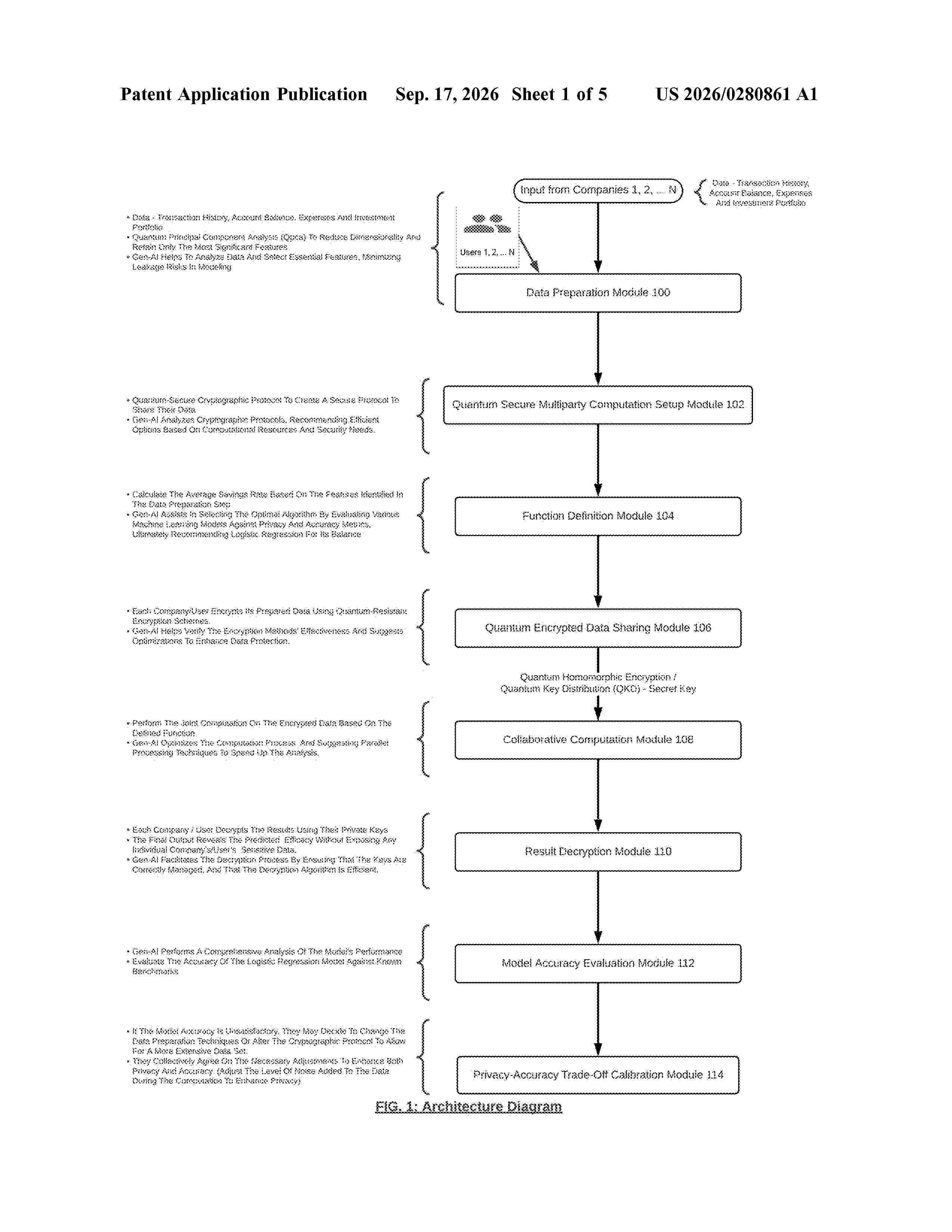
A system and method for secure collaborative analytics enable multiple parties to perform joint data analysis without exposing sensitive information. The invention integrates quantum computing, advanced cryptographic protocols, and generative artificial intelligence (GenAI) to ensure privacy, accuracy, and efficiency. Private datasets undergo quantum optimization to retain significant features, followed by encryption using quantum-resistant protocols. Encrypted data is securely transmitted and analyzed collaboratively using quantum homomorphic encryption, allowing computations directly on encrypted datasets. GenAI optimizes feature selection, computation workflows, and privacy-accuracy trade-offs, enabling iterative refinement of analytical outputs. Results are decrypted securely using quantum key authentication and validated against predefined benchmarks. The system employs differential privacy to protect individual records while preserving data utility and supports a blockchain-like ledger for immutable audit trails. Scalable, adaptable, and compatible with diverse data types, this invention addresses the evolving demands of secure, efficient, and collaborative analytics across various domains.
Resumen de: US20260280876A1
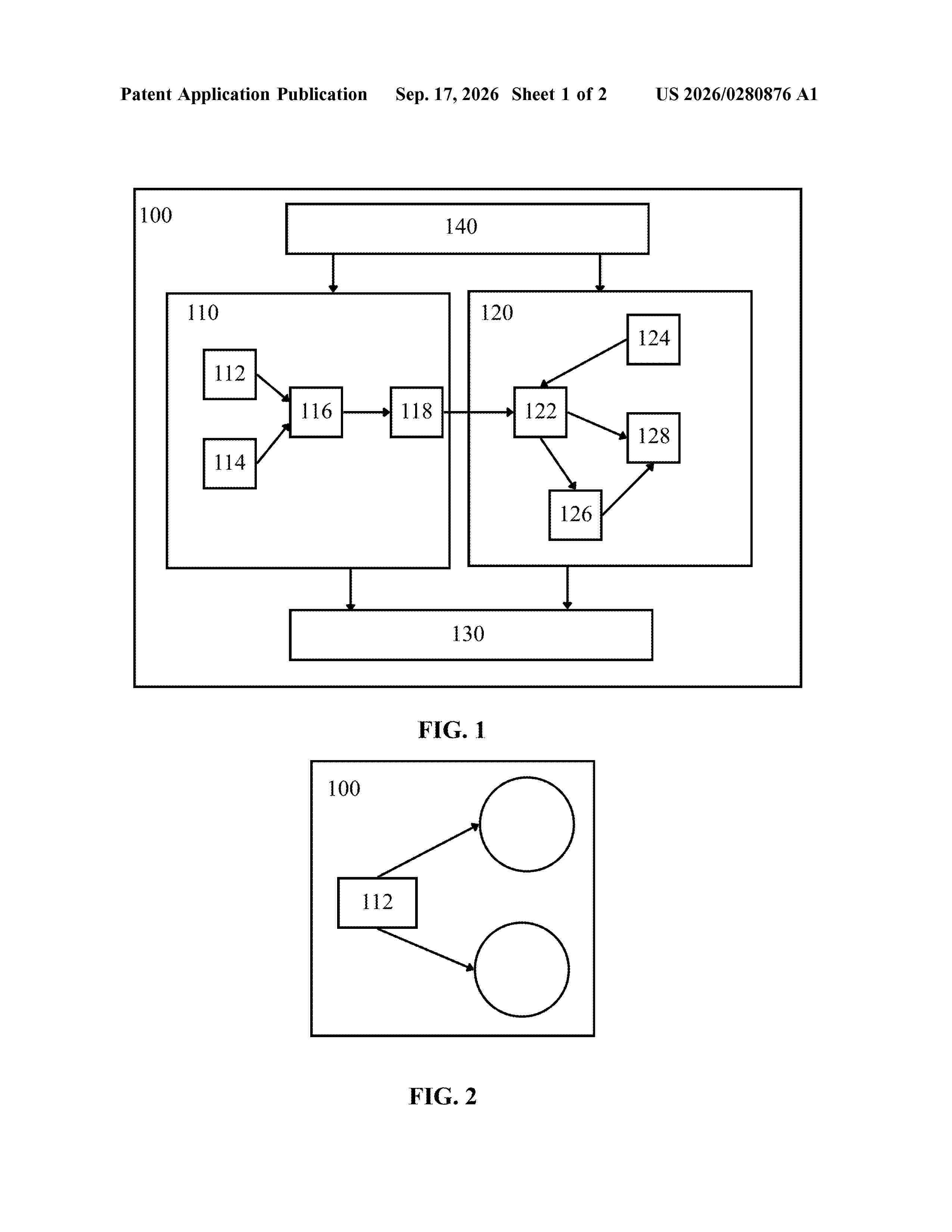
0000 A recognition-state quantum informational encryption (RSQIE) system and method provide quantum-resistant secure digital communication and data protection. Digital information is encoded into recognition-coherence scalars using a recognition mapping in which a recognition scalar R is computed as R=x/(x+X_opt), where x is a positive parameter associated with a symbol and X_opt is a predetermined constant. One or more quantum states are prepared based on the recognition scalars and encrypted using an encryption transformation derived from a recognition-coupled interaction that depends on message-associated and key-associated recognition operators. A corresponding inverse transformation decrypts the encrypted representation to recover the digital information. In some embodiments, verification includes computing a coherence deviation deltaR=abs(R_expected−R_measured) and triggering a responsive action when deltaR, or a windowed statistic derived from deltaR, exceeds a threshold, thereby providing breach indication in disturbance-sensitive implementations.
Resumen de: DE102025109510A1
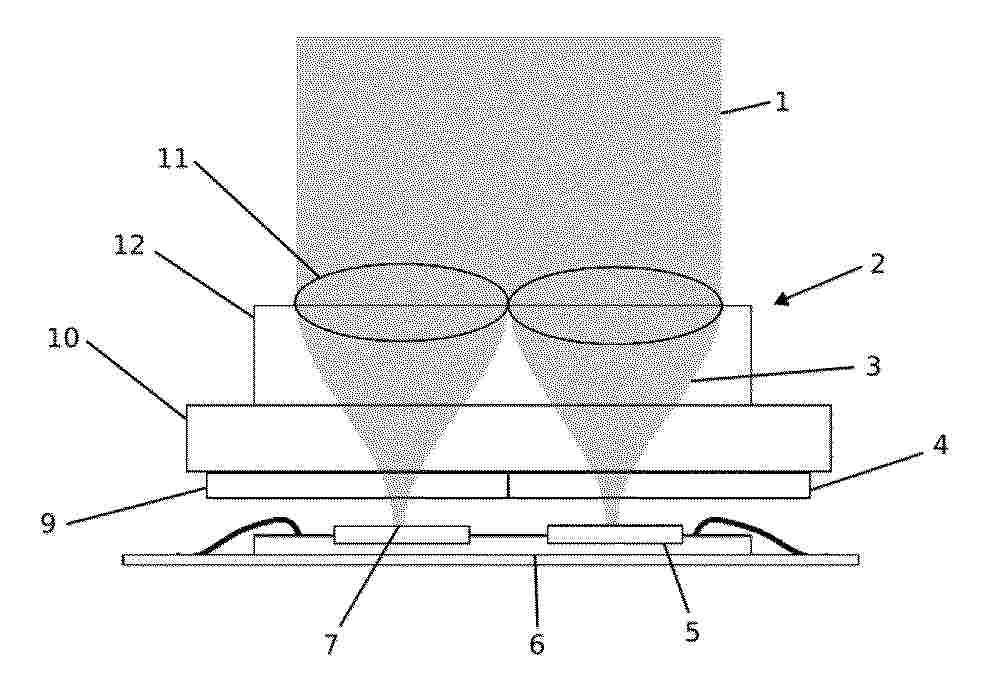
Die vorliegende Erfindung betrifft eine Vorrichtung zur Analyse eines quantenmechanischen Zustands einzelner Photonen, die in einem Eingangsstrahl in die Vorrichtung gelangen, wobei die Vorrichtung ein optisches Strahlaufteilungselement, das eingerichtet ist, den Eingangsstrahl in mehrere Analysestrahlen aufzuteilen, eine Mehrzahl von Zustandsprojektoren, die eingerichtet sind, den quantenmechanischen Zustand der einzelnen Photonen auf einen jeweiligen Analysezustand zu projizieren, wobei jedem Analysestrahl ein Zustandsprojektor zugeordnet ist, und eine Mehrzahl von Einzelphotonendetektoren zur Detektion der einzelnen Photonen, wobei jedem Analysestrahl ein Einzelphotonendetektor zugeordnet ist, aufweist, wobei benachbarte Einzelphotonendetektoren einen Abstand von höchstens 5 mm, bevorzugt von höchstens 1 mm, weiter bevorzugt zwischen etwa 50 µm und etwa 150 µm, noch weiter bevorzugt von etwa 100 µm aufweisen.
Resumen de: US20260280860A1
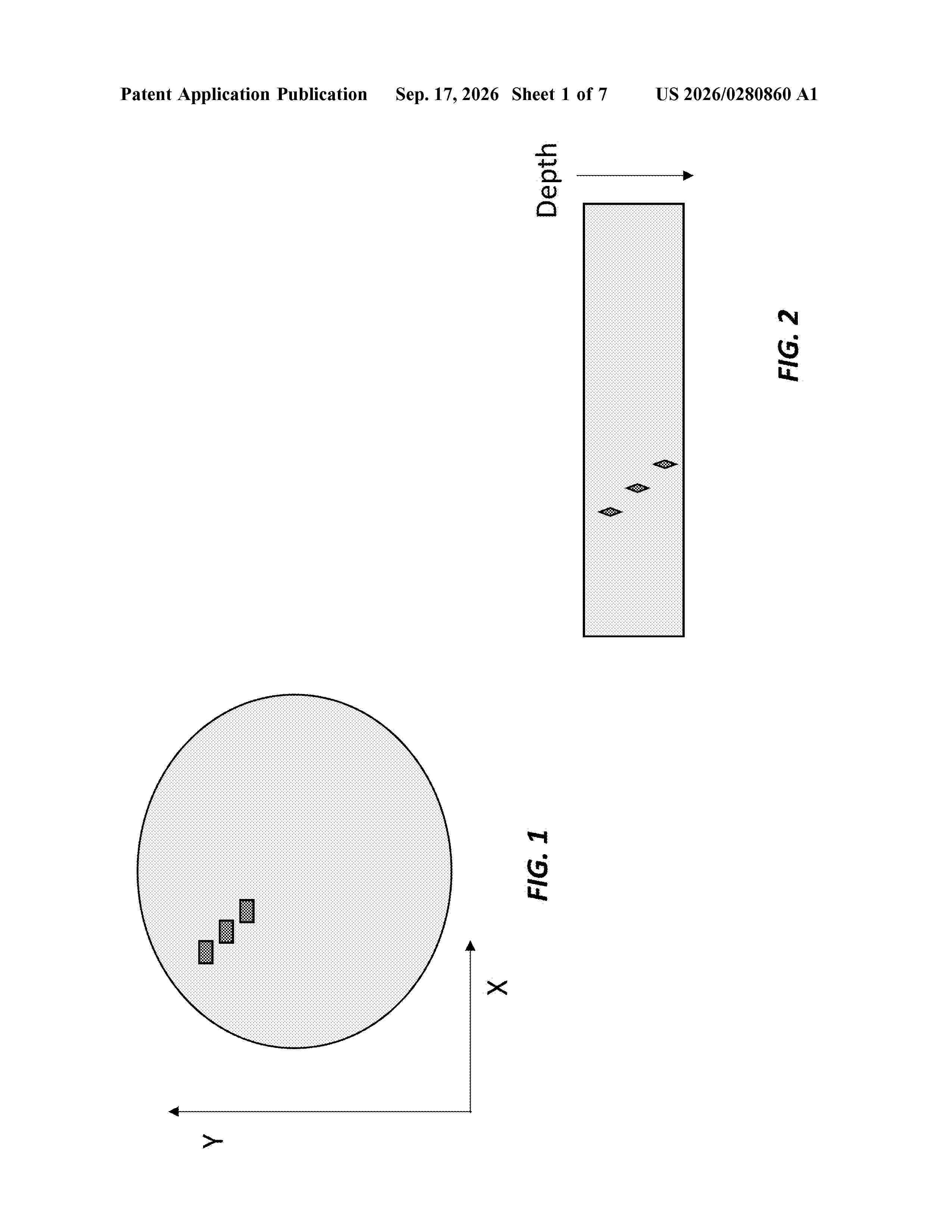
This disclosure describes a system and method for producing and reading a secure solid-state quantum storage device. The system comprises an illumination source and a detection system. The illumination source provides an excitation light to a quantum memory array. The detection system detects an emitted light from the quantum memory array. The emitted light corresponds to a plurality of quantum bits stored in the quantum memory array.
Resumen de: US20260280863A1
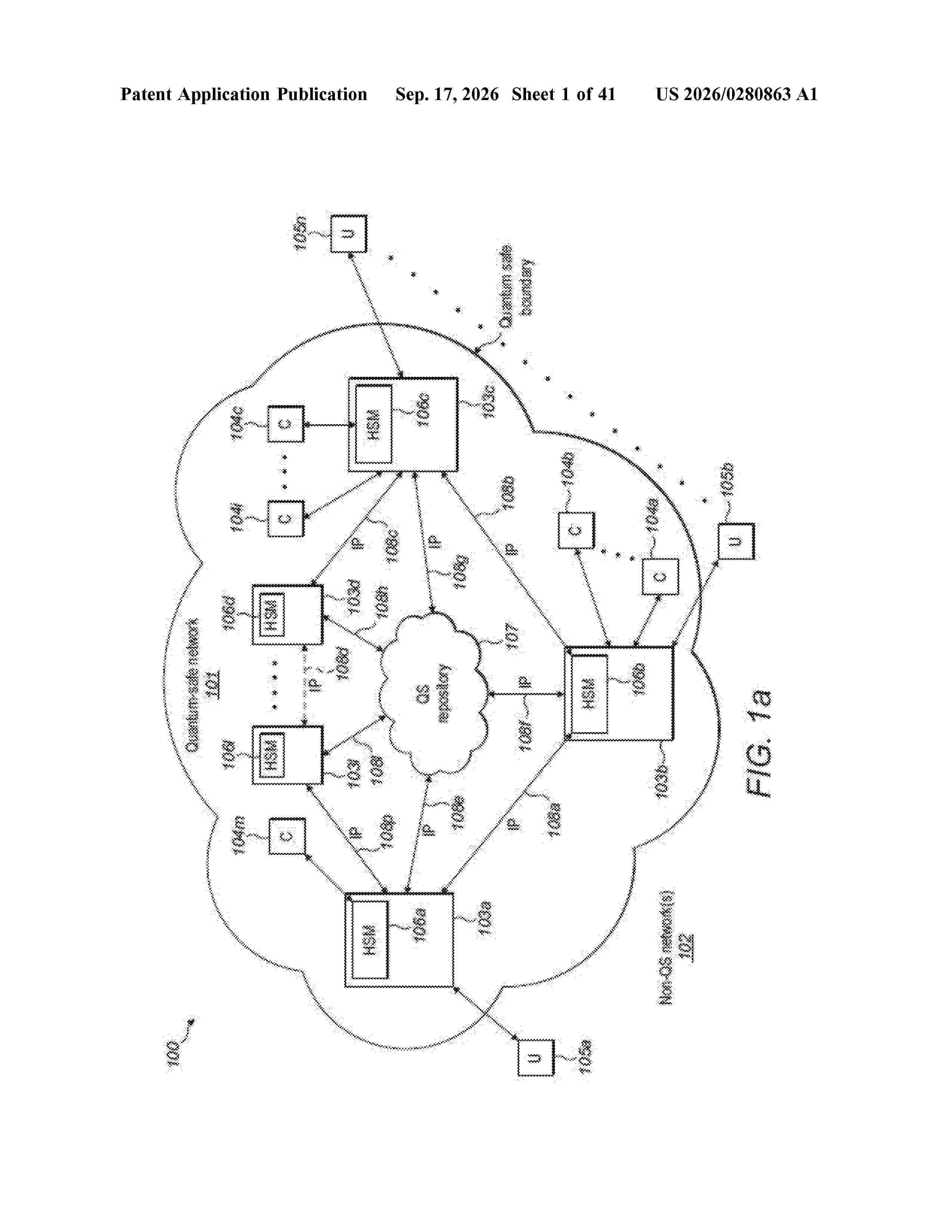
A computer-implemented method of quantum-secure (QS) minting and issuing of a digital coin by a central bank using a quantum cloud platform operable to facilitate an issuing authority, the method comprising: issuing a command, from the central bank to the issuing authority, to mint a new digital coin, wherein the command comprises: data indicative of a predetermined value of the digital coin, a unique identifier to be associated with the digital coin, and an identifier indicating which endpoint user of the quantum cloud platform, amongst a plurality of endpoint users, is to be designated as the owner of the digital coin; in response to receiving the command, signing, by the issuing authority, the digital coin with an ownership encryption key, wherein the ownership encryption key is a private key known only to the quantum cloud platform and the owner; subsequent to signing the digital coin with the ownership encryption key, signing, by the issuing authority, the digital coin with an authorising encryption key, wherein the authorising encryption key is a private key known only to the quantum cloud platform and the central bank.
Resumen de: US20260280869A1
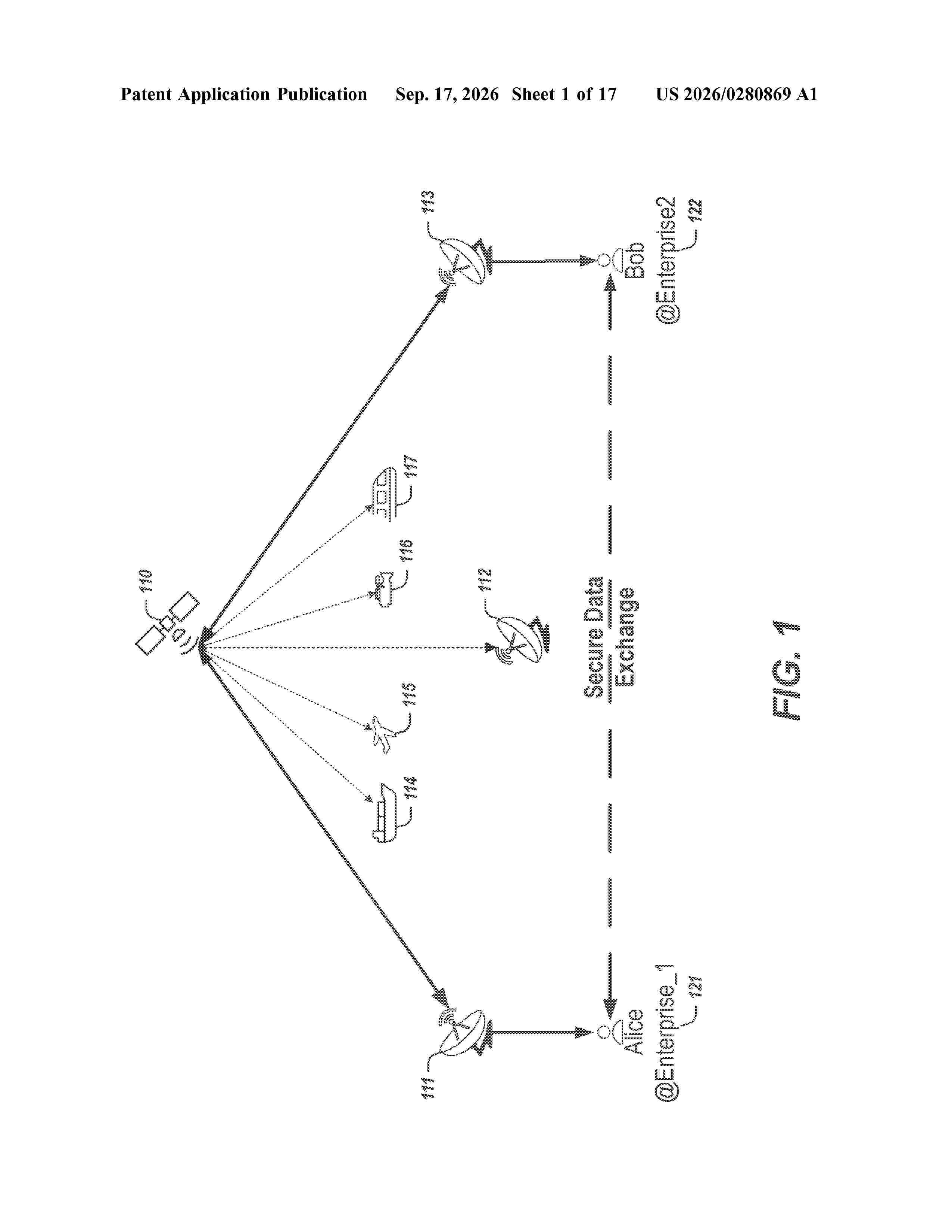
Systems and techniques for secure communications and distribution of random values, provided via satellite communications, are described. These random values are generated from one or more ground-based entropy sources (e.g., quantum random number generators (QRNGs) at terrestrial locations), and optionally combined with values from satellite-based entropy sources (e.g., QRNGs at non-terrestrial locations). An example method includes: receiving a first random value generated by a first QRNG at a terrestrial location; receiving a second random value and a third random value via at least one satellite communication, each additional random value generated by other QRNGs; and generating a cryptographic key based on the first random value, the second random value, and the third random value. The cryptographic key may be produced by a key derivation function that combines the random values, and the cryptographic key may be used to establish a secure communication session.
Resumen de: US20260280903A1
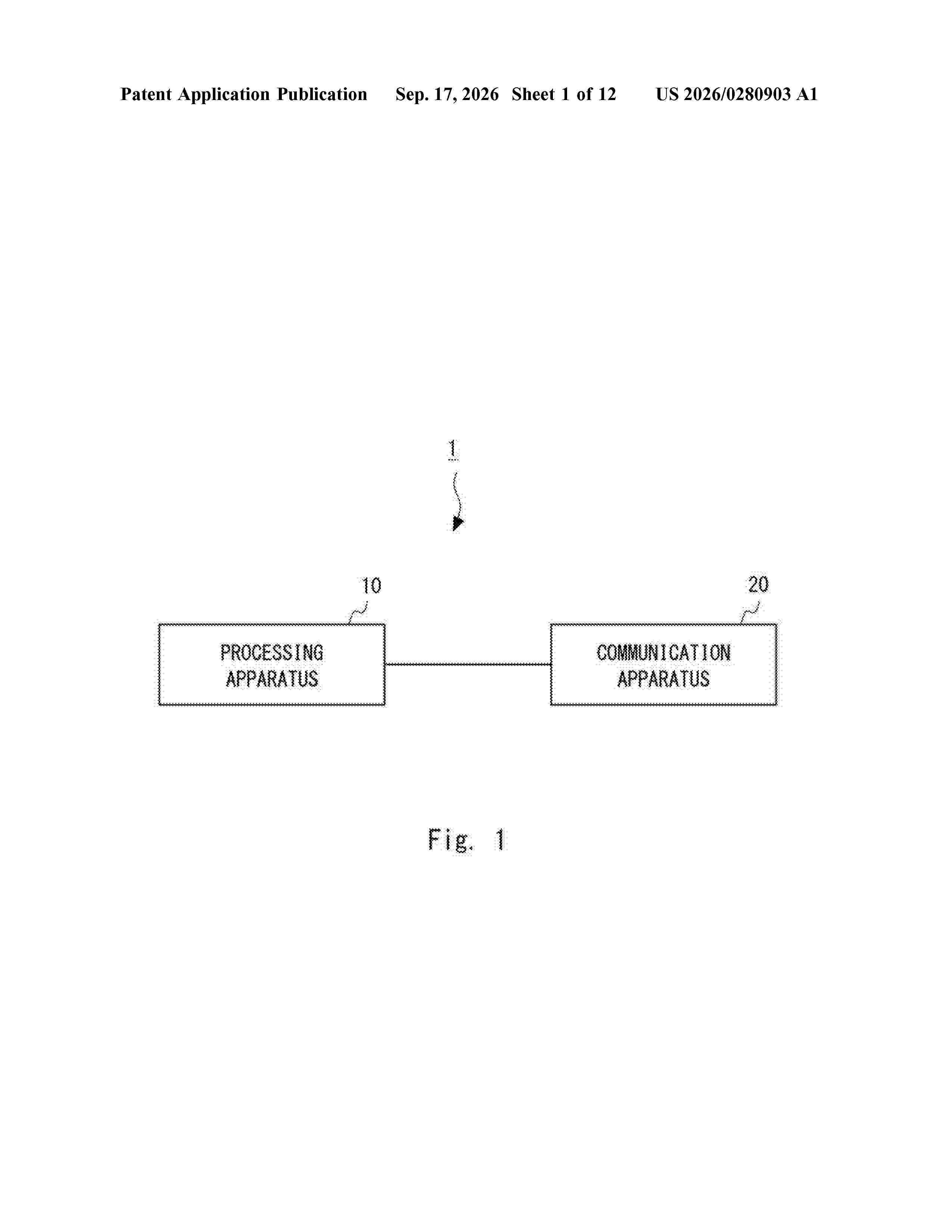
A processing apparatus for which a normal environment and a secured environment are provided, includes a validity check processing unit configured to operate in the normal environment and receive a revocation check request for a public key certificate, a validity management unit configured to operate in the normal environment and output information about validity of a public key certificate corresponding to the received revocation check request, and an inspection unit configured to operate in the secured environment and inspect normality of the validity management unit.
Resumen de: US20260276366A1
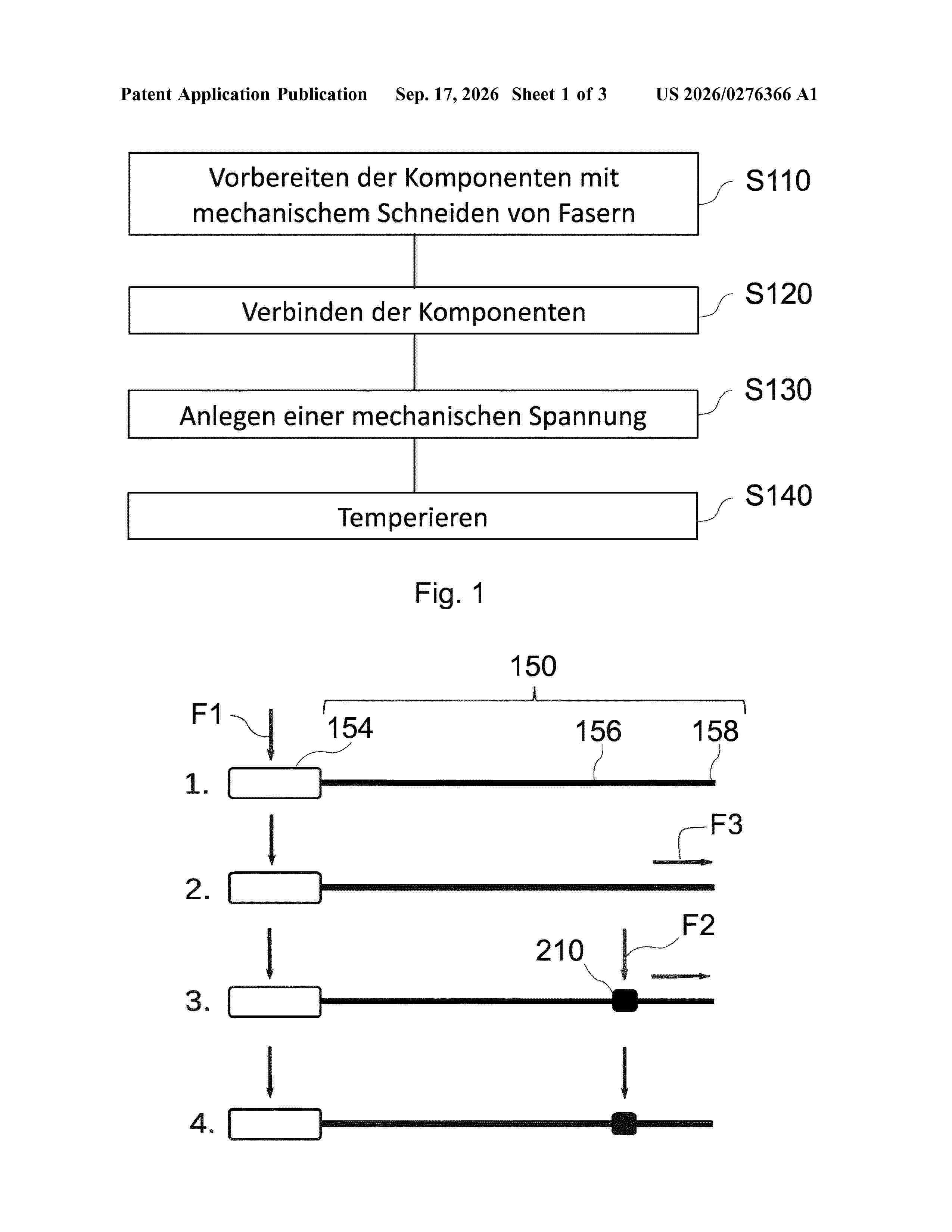
A method for providing a fiber interferometer, starting from components, wherein at least one component has a light-guiding fiber with a free end. The method includes manufacturing the fiber interferometer with a preparing of the components based on mechanical cutting of the fiber with the free end, a connecting of the components through fiber connections based on the cut fiber, and with an applying of a static mechanical tension to at least one fiber connection, so as to approximate a length of the at least one fiber connection to a prescribed value and thus provide the fiber interferometer.
Resumen de: EP4576610A1
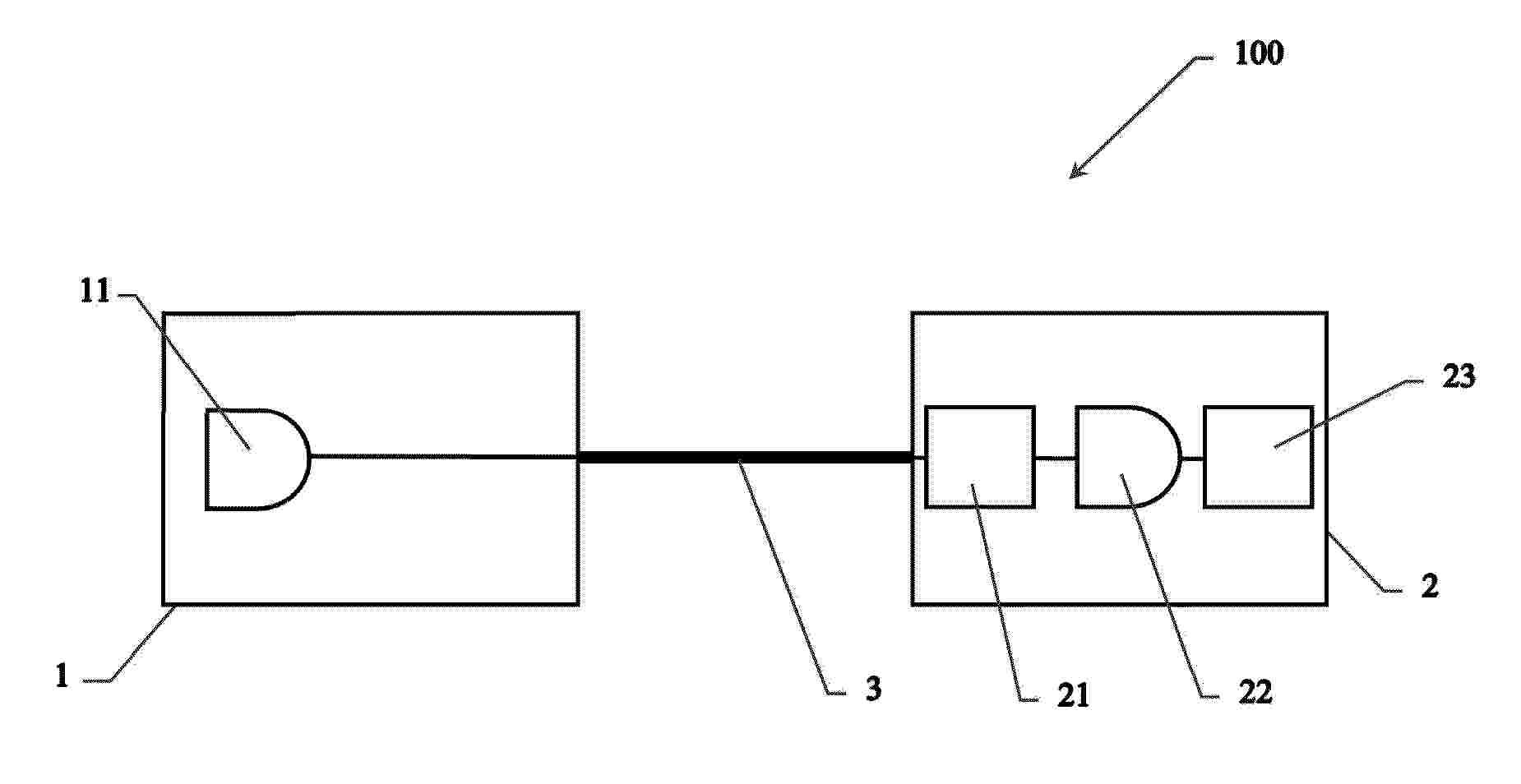
0001 The present invention relates to a quantum key distribution system (100) comprising an emitter (1) and a receiver (2) adapted to communicate through a quantum channel (3), and a channel monitoring means (11, 22, 23) adapted to measure a transmission attenuation value between said emitter (1) and said receiver (3), characterized in that said channel monitoring means (11, 22, 23) includes an optical source (11) adapted to generate an optical signal (S), an optical signal detector (22) adapted to detect said optical signal (Sz) sent by the optical source (11) and a processing unit (23) adapted to determine an transmission attenuation value between the emitter (1) and the receiver (2).
Resumen de: KR20260136813A
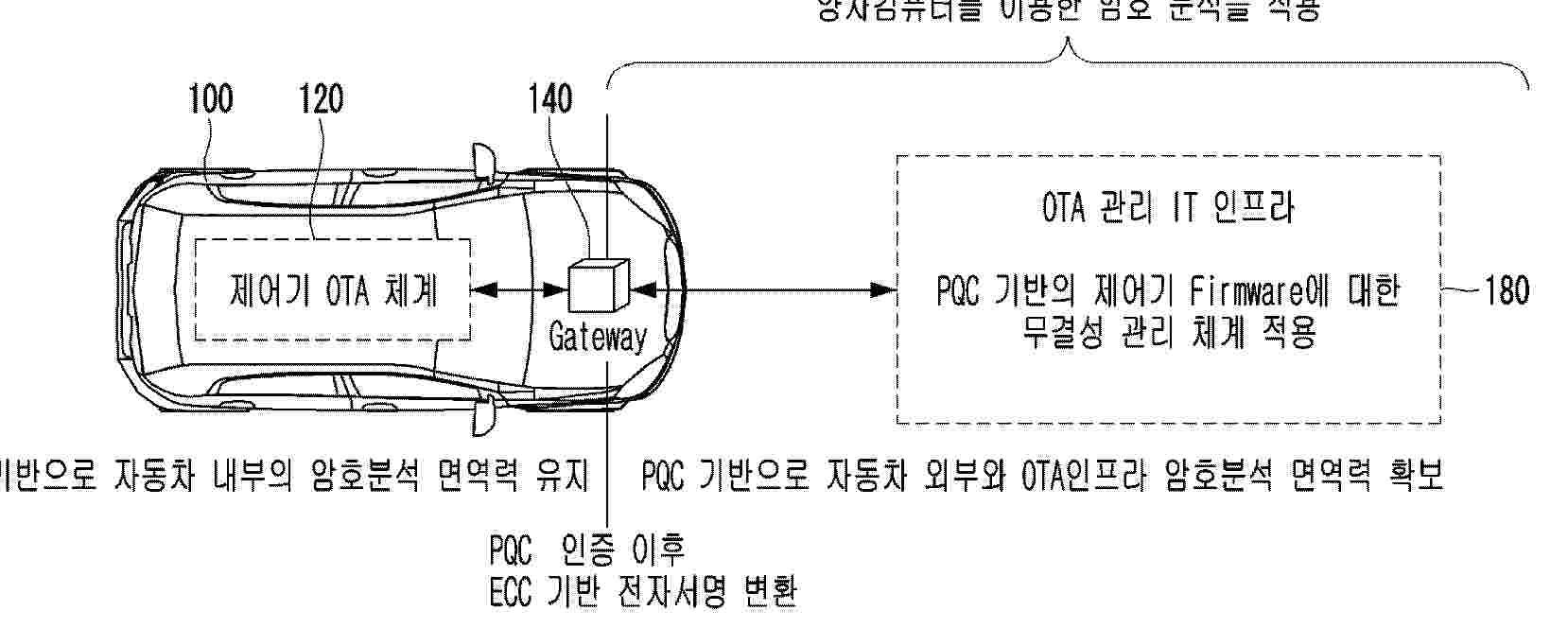
PQC 기반 차량 보안 방법 및 이를 이용하는 장치가 개시된다. 차량 보안 방법은 제1 인터페이스를 통해 OTA 데이터를 포함하는 PQC 기반 제2 데이터를 받는 단계, 제2 데이터 내 PQC 서명을 검증하는 단계, 제2 데이터와 제2 메타데이터를 묶어 ECC로 서명하는 단계, 및 ECC 서명한 제3 데이터를 제2 인터페이스를 통해 차량의 내부 네트워크 상의 적어도 하나의 ECU로 전송하는 단계를 포함한다.
Resumen de: US20260270052A1
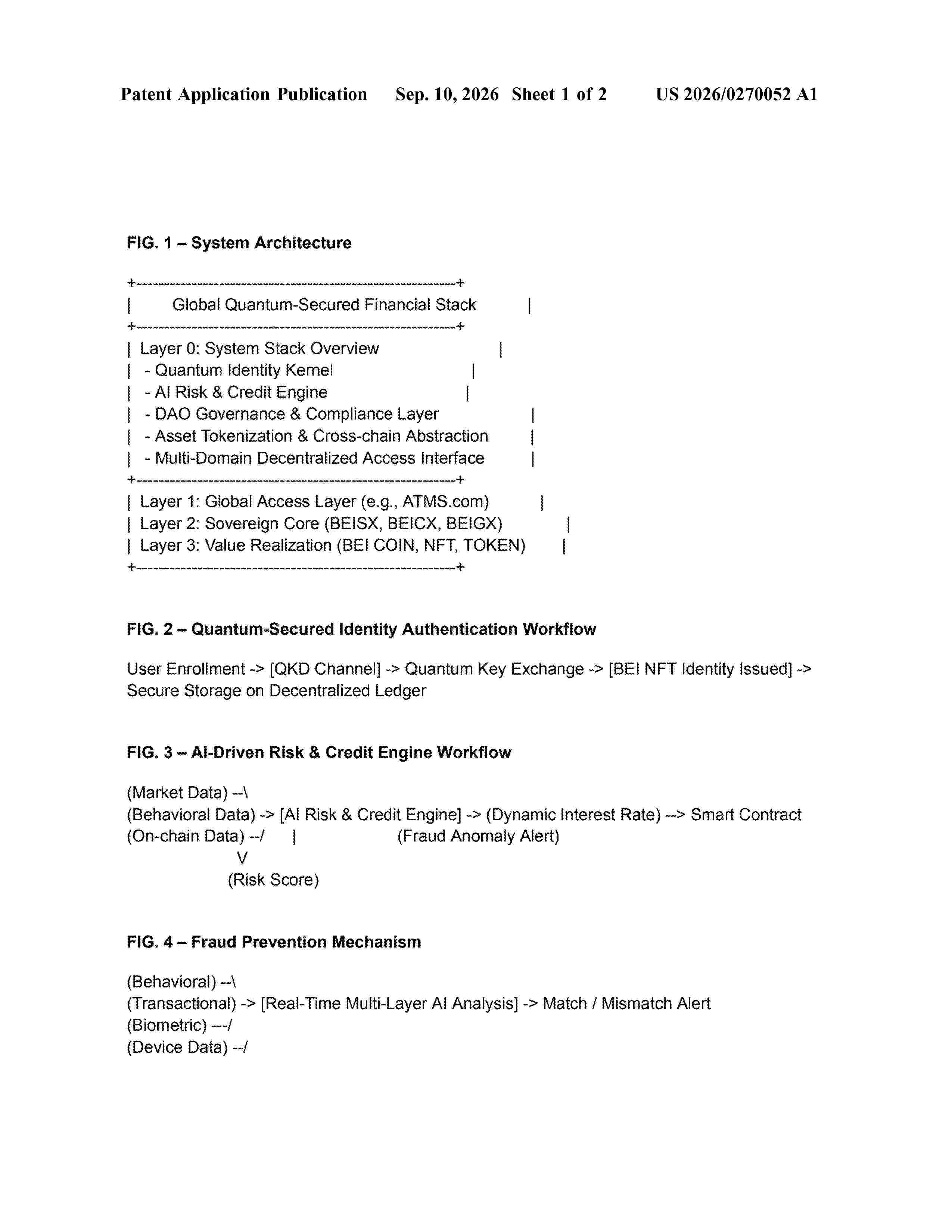
A global financial infrastructure is disclosed which integrates quantum-secured systems, artificial intelligence (AI), and blockchain-based decentralized governance to create a new paradigm for credit management and digital economies. The system utilizes quantum key distribution (QKD) and quantum random number generation (QRNG) for fundamentally secure transactions and identity verification. An AI engine performs real-time credit risk assessment and calculates a Behavior Economic Index (BEI) to enable a new class of dynamic, behavior-based financial products. Governance is achieved through a decentralized autonomous organization (DAO) with token-based profit sharing and compliance mechanisms managed by smart contracts. The system is architected for infinite scalability and is intended for commercial deployment through the ATMS. com global platform by a corporate entity, ATMSpac, Inc., providing a comprehensive, vertically integrated model for a new global digital economy with a clear path to public markets.
Resumen de: US20260270061A1
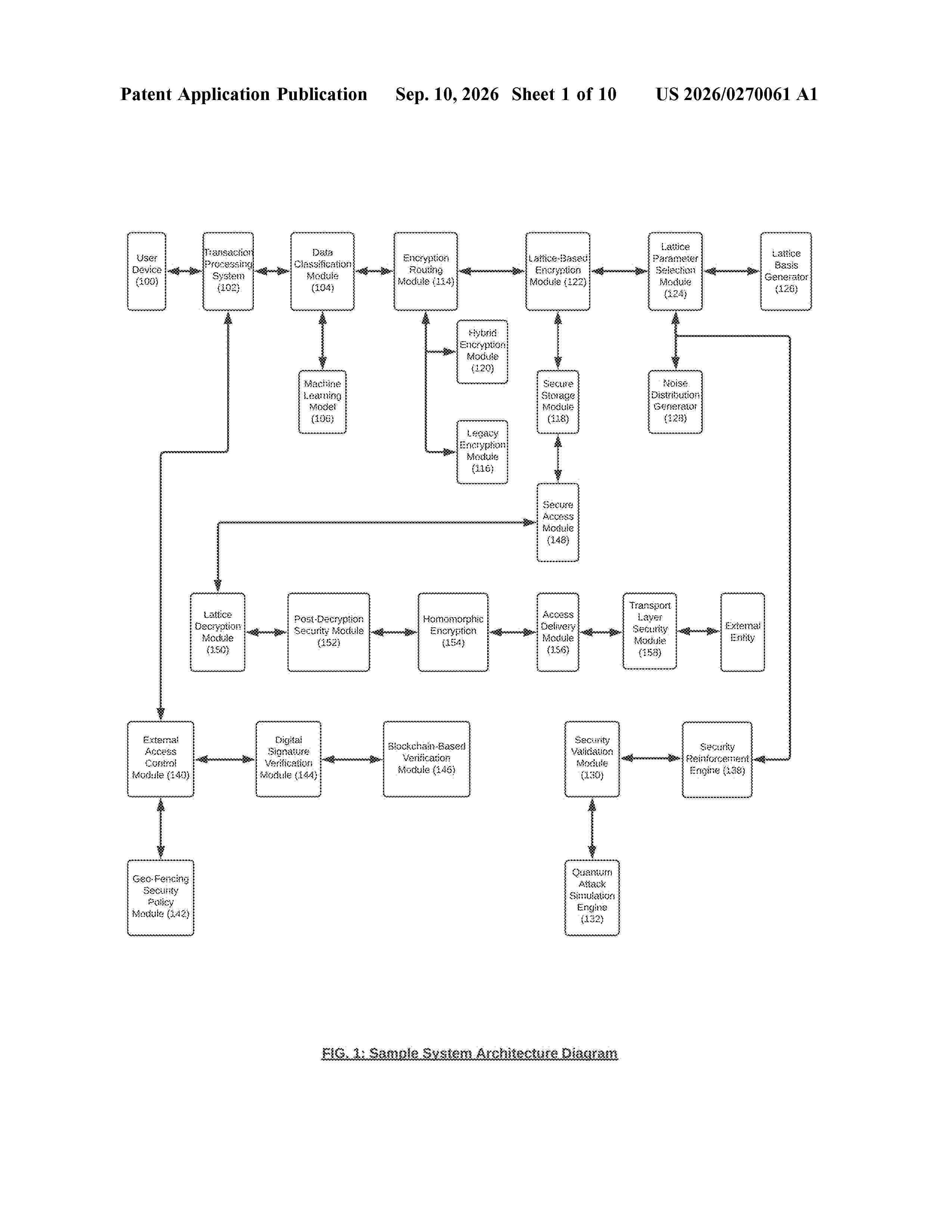
0000 A system and method for securing financial transactions using lattice-based cryptography, dynamic encryption selection, adaptive security validation, and authenticated access control are disclosed. The system classifies transaction risk using machine learning, selecting encryption based on security level, including legacy encryption, hybrid encryption, or lattice-based quantum-resistant encryption. Dynamic lattice parameter selection enhances encryption resilience, while quantum attack simulations validate security. Blockchain-based authentication, geo-fencing, and multi-factor digital signature verification control external access. Homomorphic encryption allows computations on encrypted data without decryption. Secure storage enforces access policies, and transport layer security protects transmitted data. The system continuously adapts encryption and authentication based on evolving threats, ensuring quantum-resistant, future-proof financial data protection. The invention enhances security by integrating artificial intelligence, quantum security validation, and decentralized authentication, preventing unauthorized access and ensuring regulatory compliance while enabling secure financial operations.
Resumen de: US20260269953A1
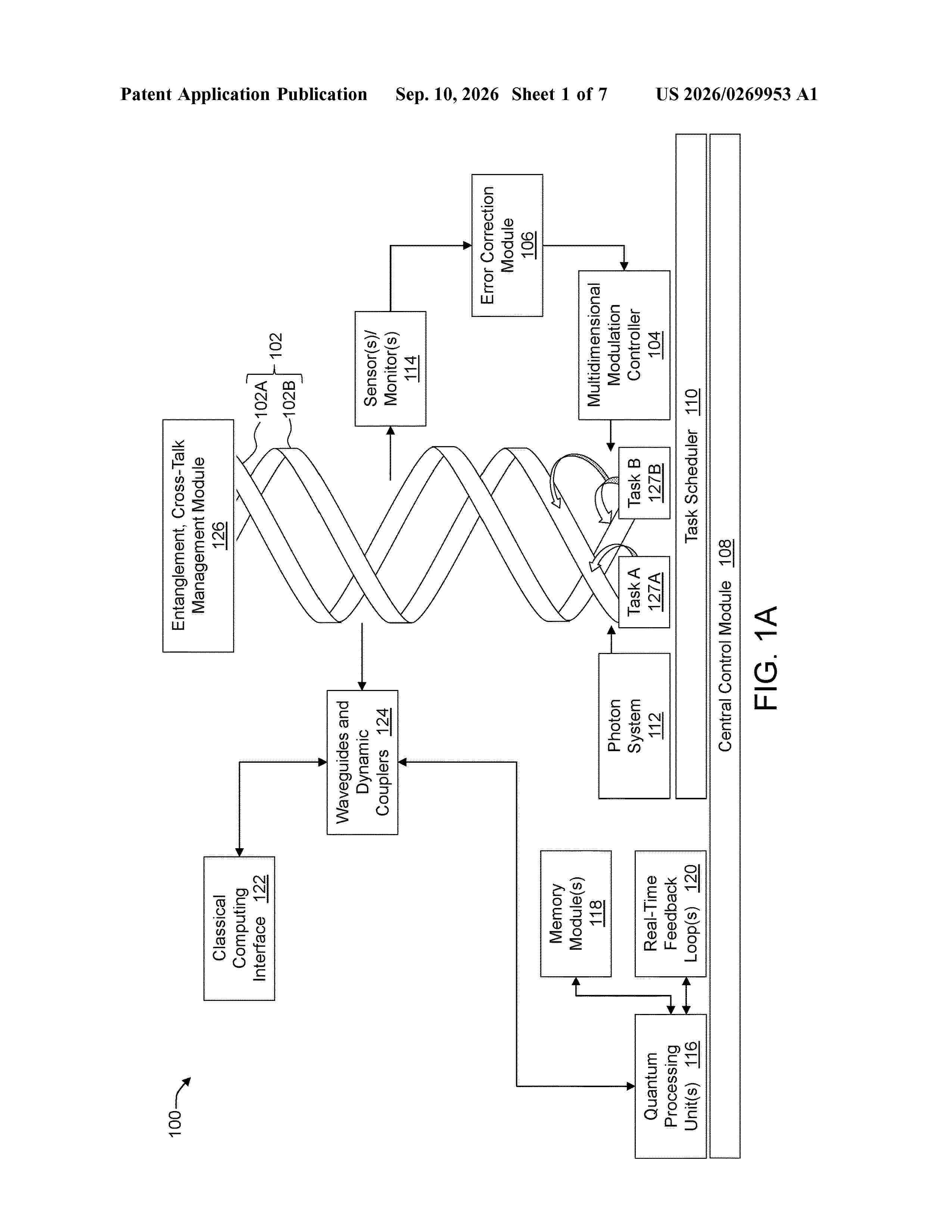
0000 An example quantum communication system configured for silent-interception detection includes a photon source, a modulation subsystem, a receiver, a trust evaluation engine, and a reconfiguration controllers. The photon source is configured to generate photons. The modulation subsystem is configured to encode the photons across: at least two quantum state dimensions, multiple spatial emission points on a structured geometry, and discrete time bins. The receiver is configured to measure quantum state properties, spatial emission positions, and temporal alignment. The trust evaluation engine is configured to compute a composite interception score based on cross-dimensional disturbance metrics. The reconfiguration controller is configured to modify transmission parameters responsive to the composite interception score.
Resumen de: WO2026188066A2
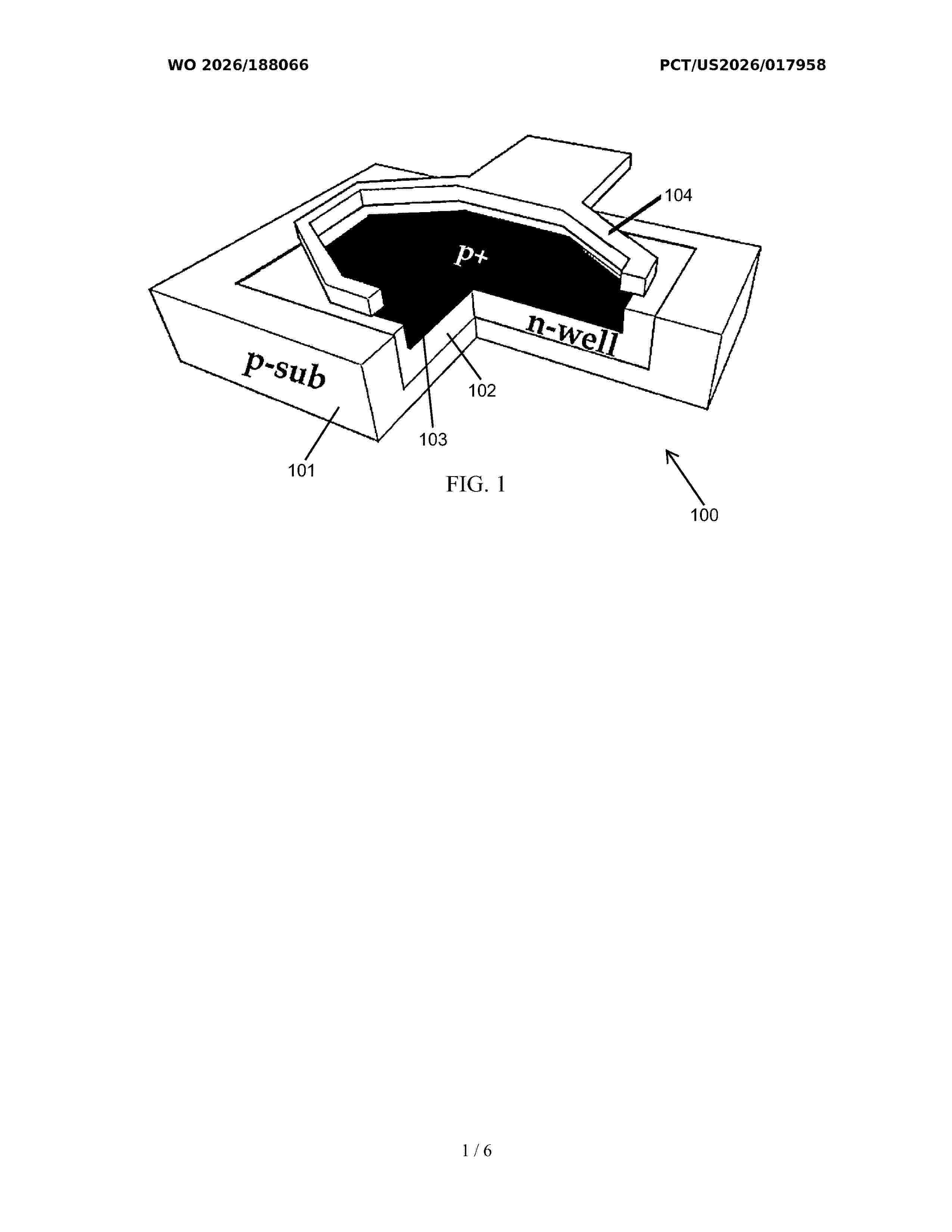
A perimeter gated single-photon avalanche diode operates a probabilistic bit device through modulation of the gate voltage to tune the dark count rate. The presence or absence of an avalanche event during a sampling interval are equivalent to a first and second logical state, similar to traditional computing bits. By modulating the gate voltage, the probability distribution of the logical states becomes sigmoidal. Multiple probabilistic bit devices can be interconnected through a weighted network to create a system useful for probabilistic computing.
Resumen de: US20260270054A1
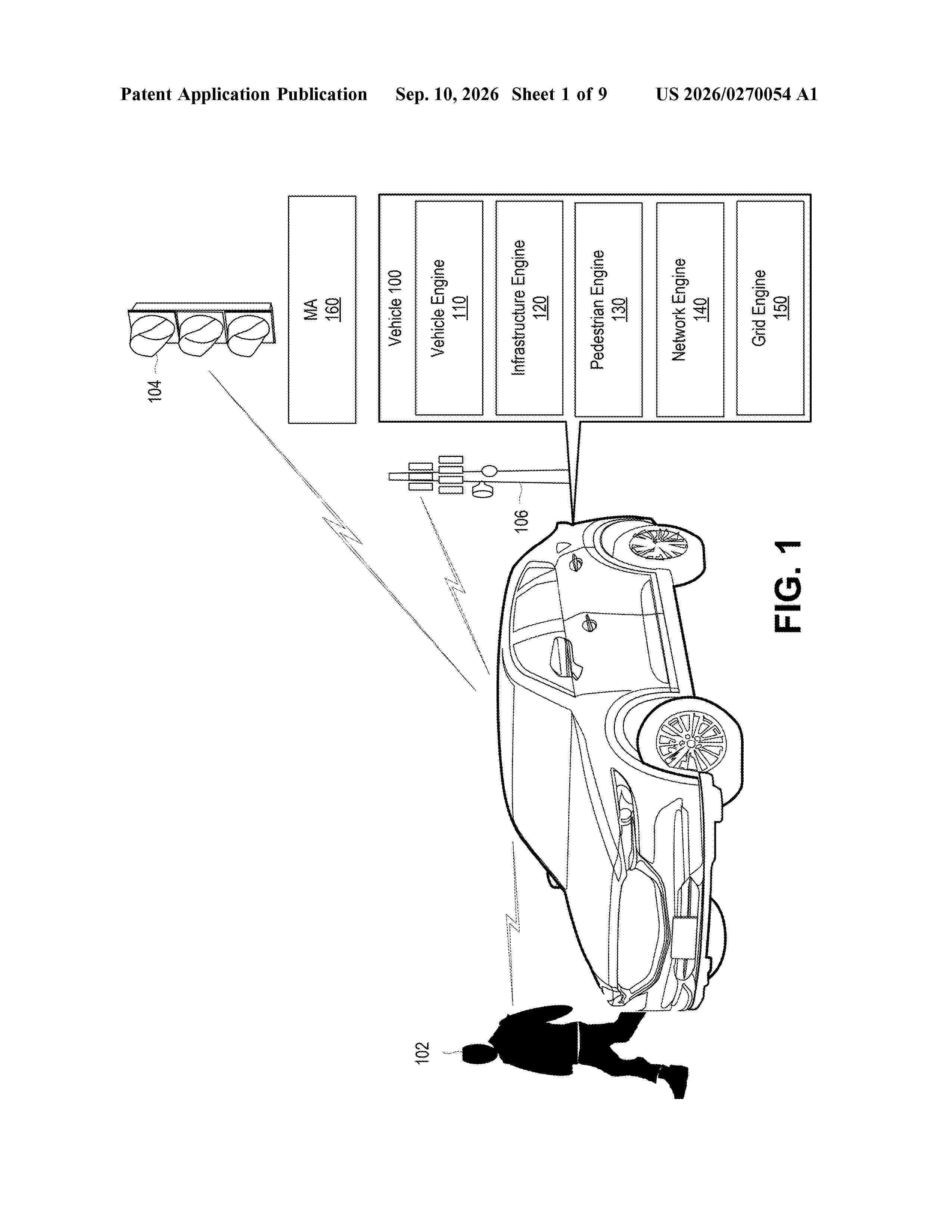
0000 Disclosed are systems, apparatuses, processes, and computer-readable media for classical cryptography and post-quantum cryptography (PQC) protection for V2X communication. For example, an apparatus includes a processor and a memory coupled to the processor. The processor is configured to: generate a first message of a first type; generate a first authentication code for the first message with a first type of authentication key based on the first message being of the first type; generate a second message of a second type; and generate a second authentication code for the second message with a second type of authentication key based on the second message being of the second type, wherein the second type of authentication key is based on PQC.
Resumen de: US20260270243A1
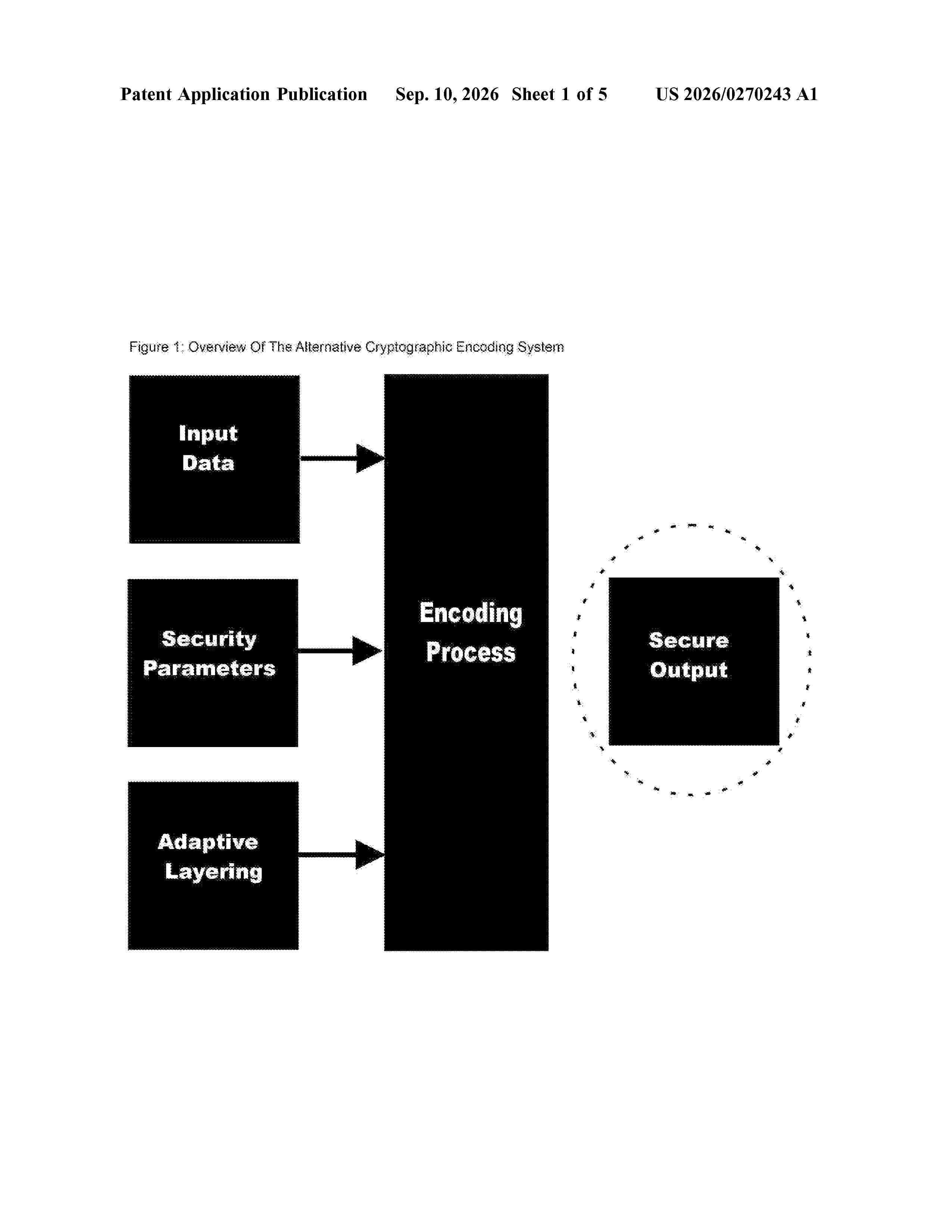
0000 This invention provides an alternative cryptographic encoding system to enhance digital security and data protection. It employs a structured encoding transformation process, ensuring protection against AI, quantum computing, and unauthorized access attempts. The system applies multi-layer security principles and configurable encryption adaptability across multiple industries. The encoding methodology is dynamically adjustable, maintaining security resilience without reliance on static encryption keys.
Resumen de: US20260270046A1
A method for generating a group key for a group of endpoint devices in a communication system that includes the group of endpoint devices and an intermediary device (ID)communicatively lined to each of the endpoint devices by a respective quantum communication channel and a respective classical communication channel, the method includes agreeing, between the ID and each of the endpoint devices, a respective QKD key, Kn, over the corresponding quantum communication channel; determining a group key for secure communication within the group of endpoint devices; sending respective group key information from the ID to each of the endpoint devices over the corresponding classical communication channel; and deriving, by each of the endpoint devices, the identity of the group key the respective group key information includes information useable by the corresponding endpoint device to derive the identity of the group key, said information being encrypted with the respective agreed QKD key.
Resumen de: US20260270049A1
A communication system according to one aspect of the present disclosure is a communication system that includes a plurality of communication apparatuses, wherein each of the communication apparatuses includes an application program configured to perform encrypted communication with another communication apparatus; and a switching unit configured to switch a key sharing scheme for generating a shared key to be used for the encrypted communication, and the switching unit is configured to switch to another key sharing scheme when the shared key cannot be generated by the key sharing scheme being used at present.
Nº publicación: US20260270244A1 10/09/2026
Solicitante:
TOSHIBA KK [JP]
TOSHIBA DIGITAL SOLUTIONS CORP [JP]
KABUSHIKI KAISHA TOSHIBA
TOSHIBA DIGITAL SOLUTIONS CORPORATION
Resumen de: US20260270244A1
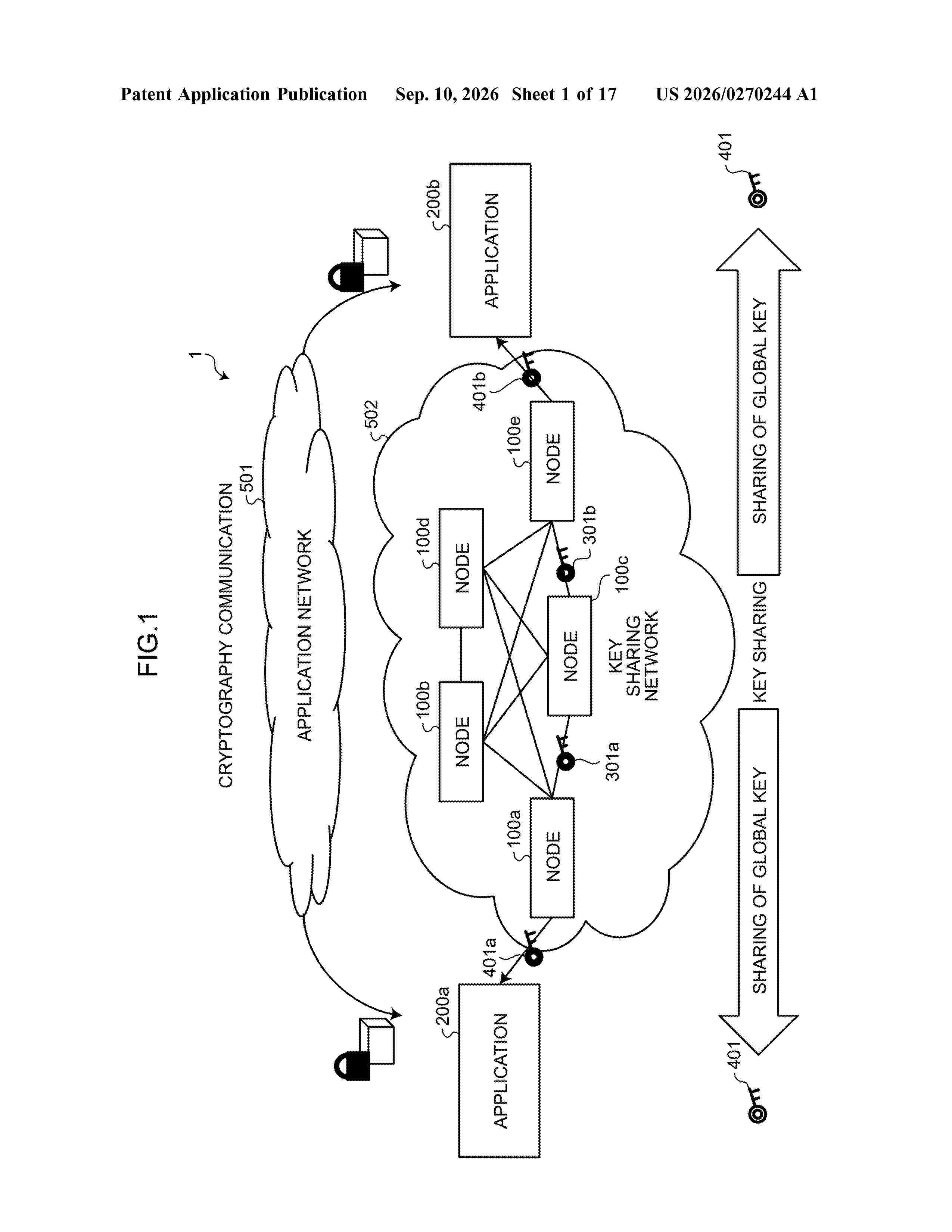
In a quantum cryptography communication control device according to one embodiment, a collection unit collects link information of a link for which a local key is generated by quantum key distribution and a guaranteed amount of the global key for each of a plurality of application pairs executing cryptography communication using a global key. A calculation unit calculates a link cost used for selecting a relay route of the global key based on the link information. A guarantee amount calculation unit calculates a guaranteed amount of a local key allocated to the link for relaying the global key of each of the plurality of application pairs such that the guaranteed amounts of the global keys for the plurality of application pairs are simultaneously satisfied. The selection unit selects the relay route of the global key based on the link cost and the local key guarantee amount.
 BOPI
BOPI
 Sede Electrónica