Si deseas distinguir tus productos, servicios o ambos de los de otra empresa, es posible que necesites una marca o nombre comercial. Descubre qué son, en qué consiste su procedimiento de registro y qué implica.

Información sobre los plazos de presentación de solicitudes de transformación de marcas de la Unión Europea en marca nacional española. Más información


Si tienes un nuevo dispositivo, producto o procedimiento que resuelva un problema técnico o tenga una ventaja práctica, existen distintas formas de protegerlo en España y en otros países. Descubre cómo hacerlo.

¿Tu innovación reside en la estética, la ornamentación o la apariencia de tu producto? Protégela mediante un diseño industrial. Descubre qué derechos confiere el registro y cómo realizar la tramitación.

Las indicaciones geográficas protegen el nombre de un producto originario de una zona geográfica, a la cual le debe una determinada calidad, reputación u otra característica. Descubre qué son, en qué consiste su procedimiento de registro y qué beneficios conceden.

Las patentes publicadas en todo el mundo son una valiosa fuente de información científica, técnica y comercial.

Si eres emprendedor/a o una empresa y quieres potenciar y mejorar la rentabilidad de tu negocio protegiendo de forma adecuada los activos intangibles de tu organización, en este espacio encontrarás lo necesario.


 57
resultados
57
resultados
 Última actualización
17/10/2026 [07:05:00]
Última actualización
17/10/2026 [07:05:00]


Resumen de: EP4822621A1
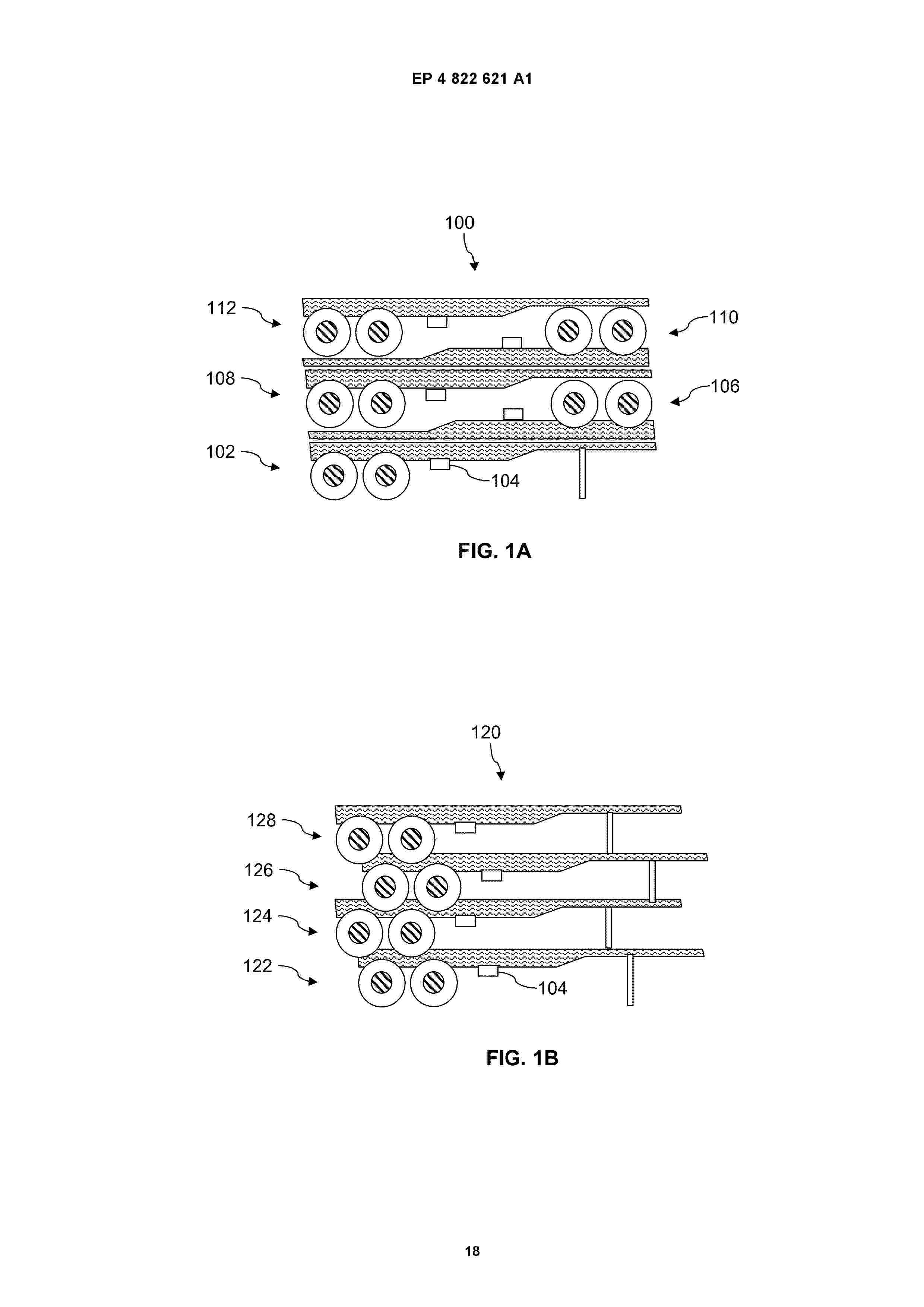
0001 A method of managing a supply of transport chassis to pick-up intermodal containers at a transshipment point. The method comprises identifying transport chassis stacks located at the transshipment point by an application executing on a computer system, wherein each transport chassis stack comprises at least one transport chassis; analyzing each of the identified transport chassis stacks by the application to determine a count of transport chassis in the transport chassis stack; for each transport chassis, determining an idle time of the transport chassis by the application, wherein the idle time of the transport chassis is determined based on a duration of time from when the transport chassis arrived at the transshipment point and a current time; building a transport chassis idle report by the application based on the idle times of the transport chassis; and transmitting the transport chassis idle report by the application.

Resumen de: EP4822657A1
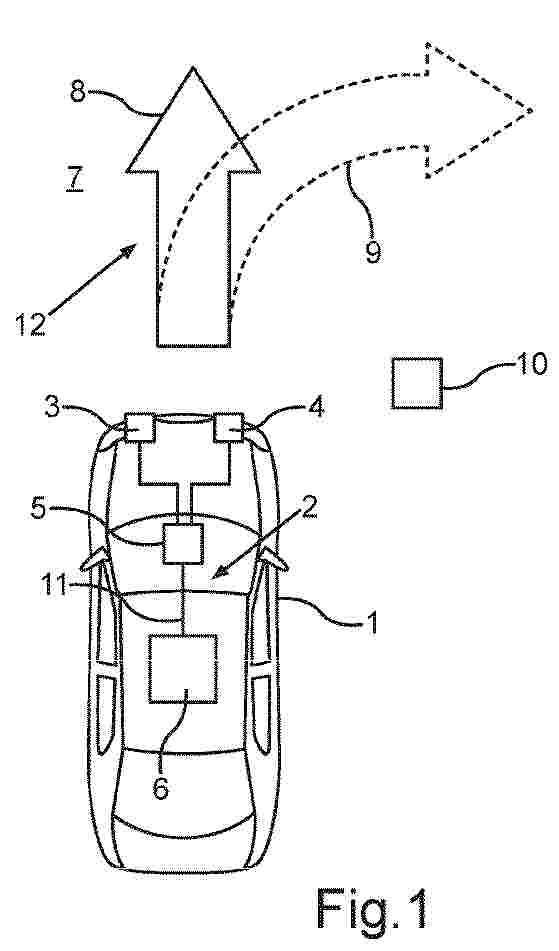
0001 The invention relates to a design for a human eye not from surroundings distinguishable marking (9) which can be active or passive and can interact with the automated vehicle through the sensors and the method described. Furthermore, a method for operating an assistance system (2) of a motor vehicle (1), comprising: capturing surroundings (7) of the motor vehicle (1) by a first optical capturing device (3) of the assistance system (2); receiving an information (10) about a presence for a for a human eye not from surroundings distinguishable marking (9) in the surroundings (7) depending on the surroundings (7) by an electronic computing device (5) of the assistance system (2); starting capturing the surroundings (7) with a further capturing device (4) for capturing the for a human eye not from surroundings distinguishable marking (9) depending on the received information (10); extracting an information for the operation of the assistance system (2) from the captured for a human eye not from surroundings distinguishable marking (9) by the electronic computing device (5); and generating a control signal (11) for a functional device (6) of the assistance system (2) depending on the extracted information by the electronic computing device (5). Furthermore, the present invention relates to a computer program product, a computer-readable storage medium, as well as to an assistance system (2).
Resumen de: EP4822672A1
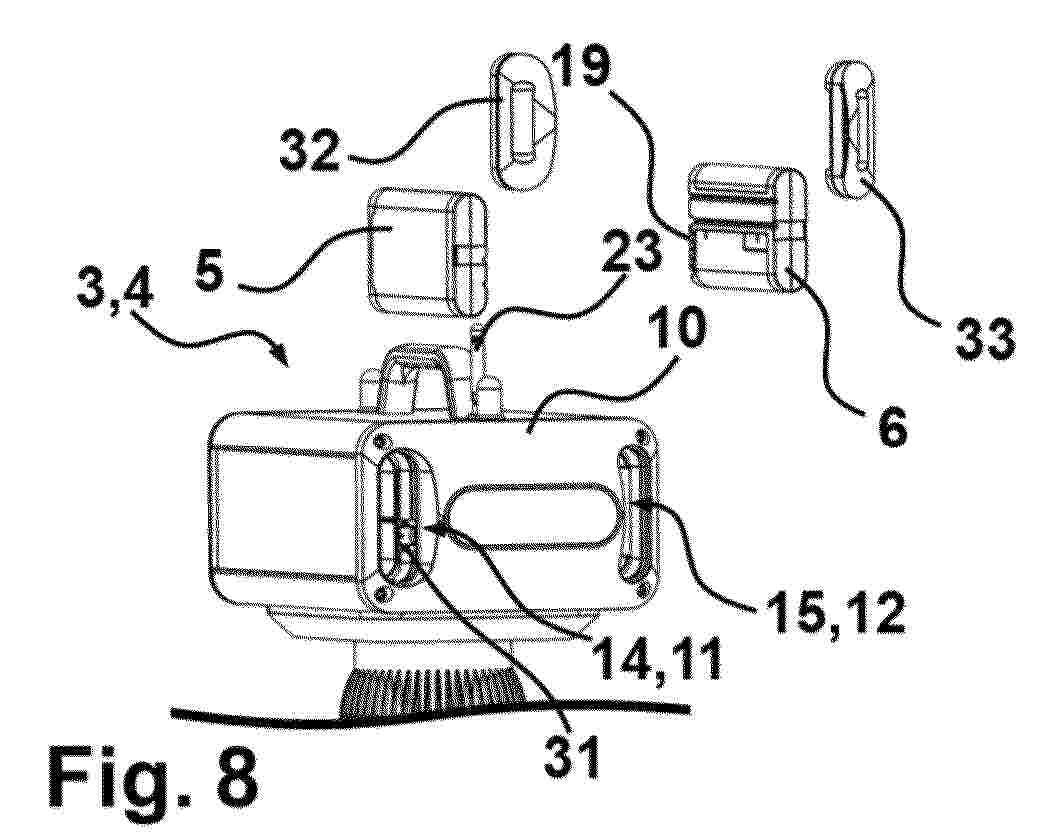
0001 Die Erfindung betrifft ein mobiles Verkehrsüberwachungssystem (1) umfassend mindestens eine Sensorvorrichtung (2) und mindestens eine Kameravorrichtung (3); wobei die Sensorvorrichtung (2) eingerichtet ist eine Geschwindigkeit eines Fahrzeuges (26) auf einer Fahrbahn (27) zu erfassen; wobei die Kameravorrichtung eingerichtet ist zumindest einen Teilbereich des Fahrzeuges (26) auf der Fahrbahn (27) zu erfassen; wobei die Komponente (2,3,4) die Sensorvorrichtung (2) oder die Kameravorrichtung (3) oder eine Beleuchtungsvorrichtung (4) ist; wobei die Komponente (2,3,4) des Verkehrsüberwachungssystems (1) mit einem ersten Energiespeicher (5) für elektrischer Energie elektrisch verbunden ist und wobei die Komponente (2,3,4) mit mindestens einem zweiten Energiespeicher (6) für elektrische Energie elektrisch verbunden ist.
Resumen de: WO2016123623A1
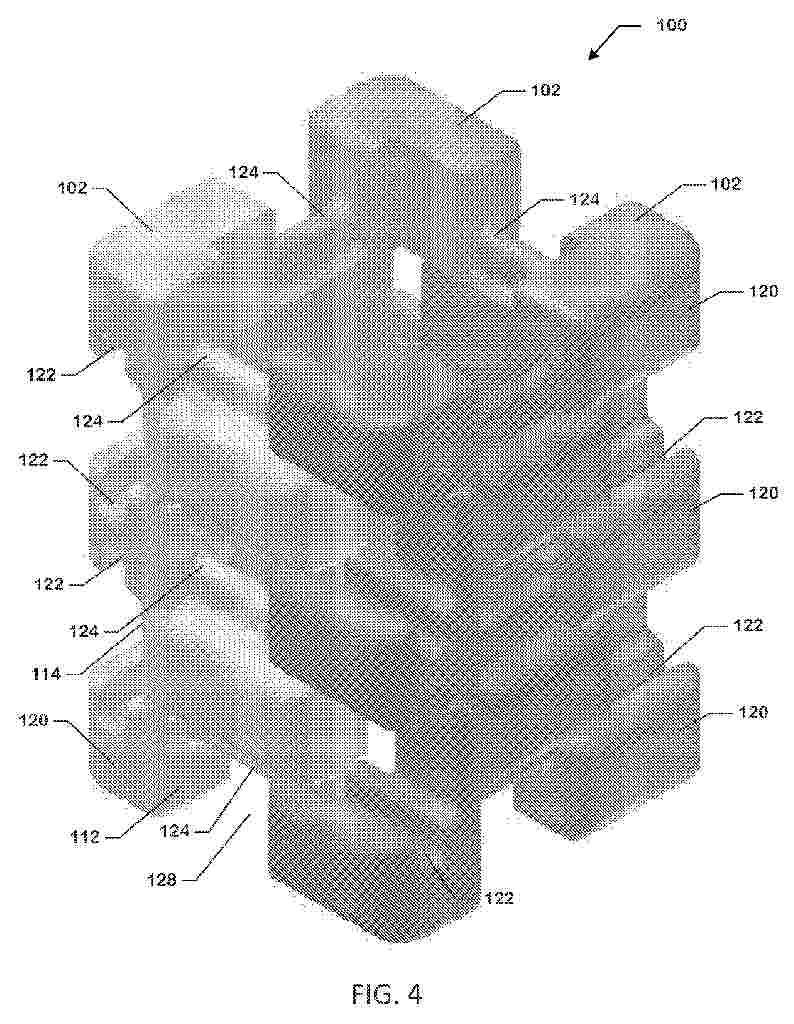
An apparatus for protection of an elongated structural support from impact, the apparatus includes an elongated impact protection component in the form of a unitary part having an inner surface, an outer surface, and a plurality of orthogonally-oriented projections spaced along a length of the elongated impact protection component. The projections of the elongated impact protection component include integrally formed connectors for interlocking connection to other same type impact protection components.
Resumen de: WO2026208668A1
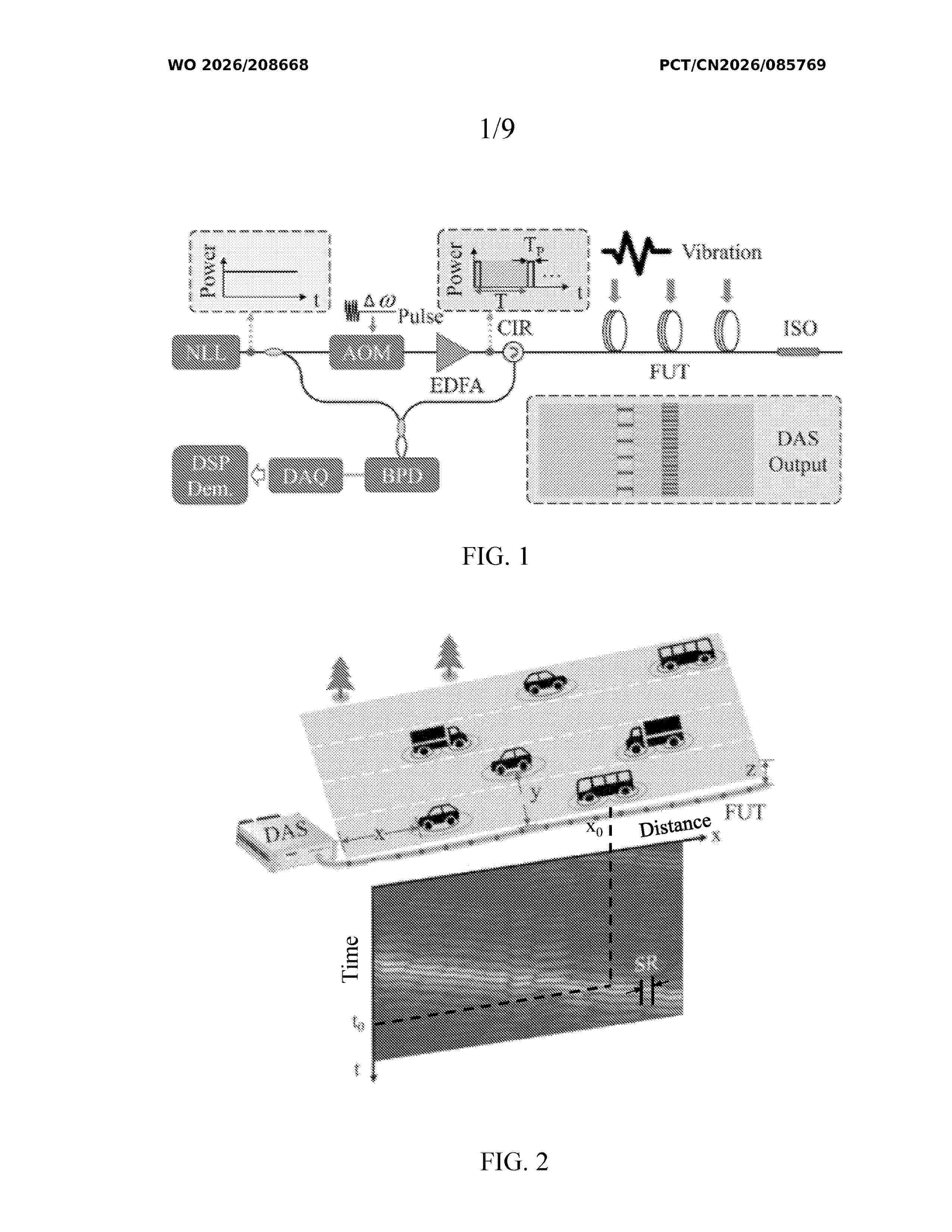
A method for traffic monitoring based on distributed acoustic sensing (DAS) comprises: receiving DAS data from an optical fiber deployed along a roadway having a plurality of lanes, the DAS data being representative of deformations induced by one or more vehicles on the plurality of lanes and obtained from the optical fiber using phase-sensitive optical time-domain reflectometry (φ-OTD); preprocessing the DAS data to generate preprocessed data; applying a deep learning network to the preprocessed data to generate a super-spatial-resolution (SSR) representation of the DAS data; and determining, based on the SSR representation, a specific lane occupied by at least one vehicle among the plurality of lanes by calculating a compression ratio of a width of a vehicle-induced signal in the SSR representation relative to a corresponding width in the preprocessed data, wherein the compression ratio is a function of a horizontal distance from the specific lane to the optical fiber.
Resumen de: WO2026211259A1
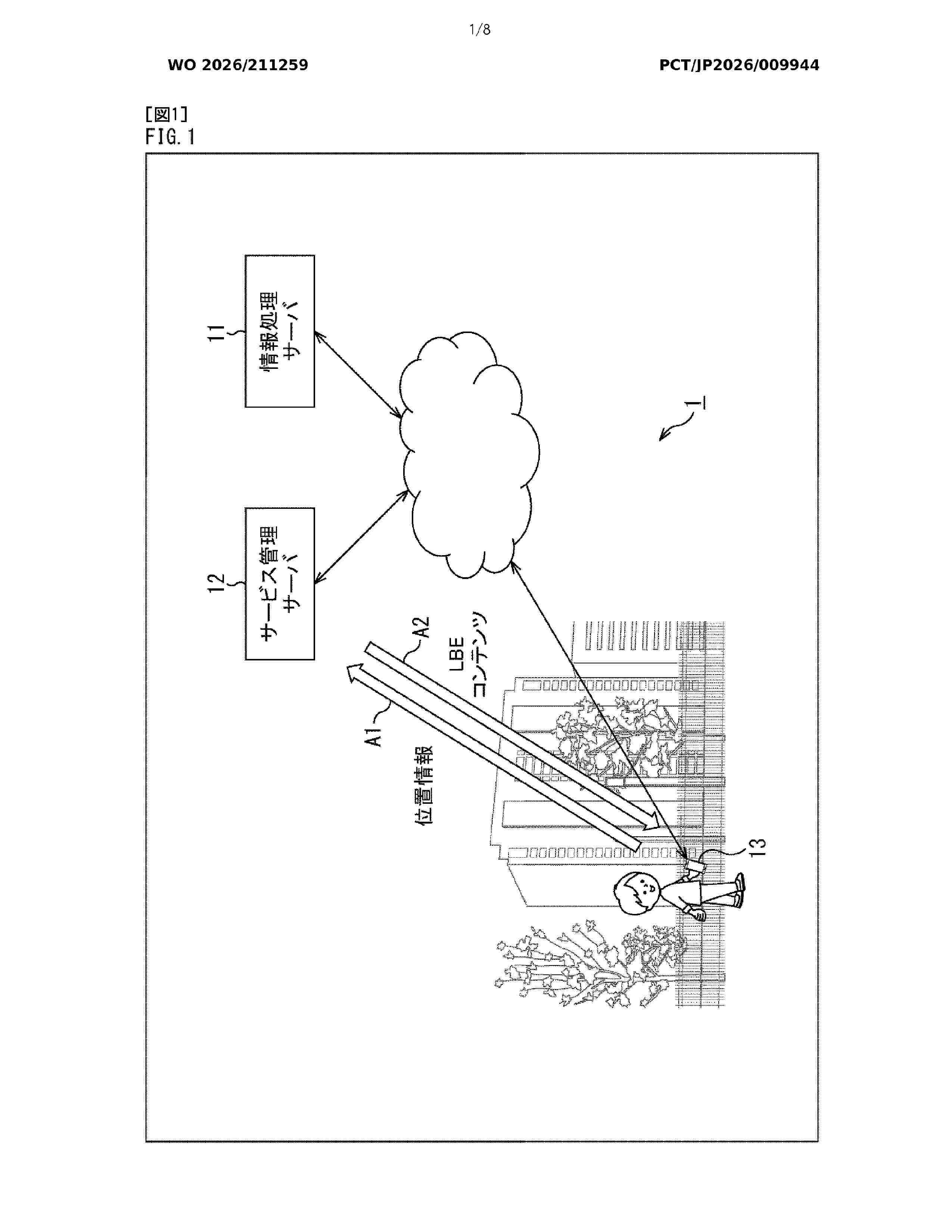
The present technology relates to an information processing device, an information processing method, and a program that make it possible to analyze a factor causing abandonment from content. An information processing device according to one aspect of the present technology analyzes a factor causing a user, who uses location content in which content corresponding to positional information is reproduced, to abandon the location content. The present technology can be applied to a system which provides location content that is ordered around touring a site.
Resumen de: WO2026210038A1
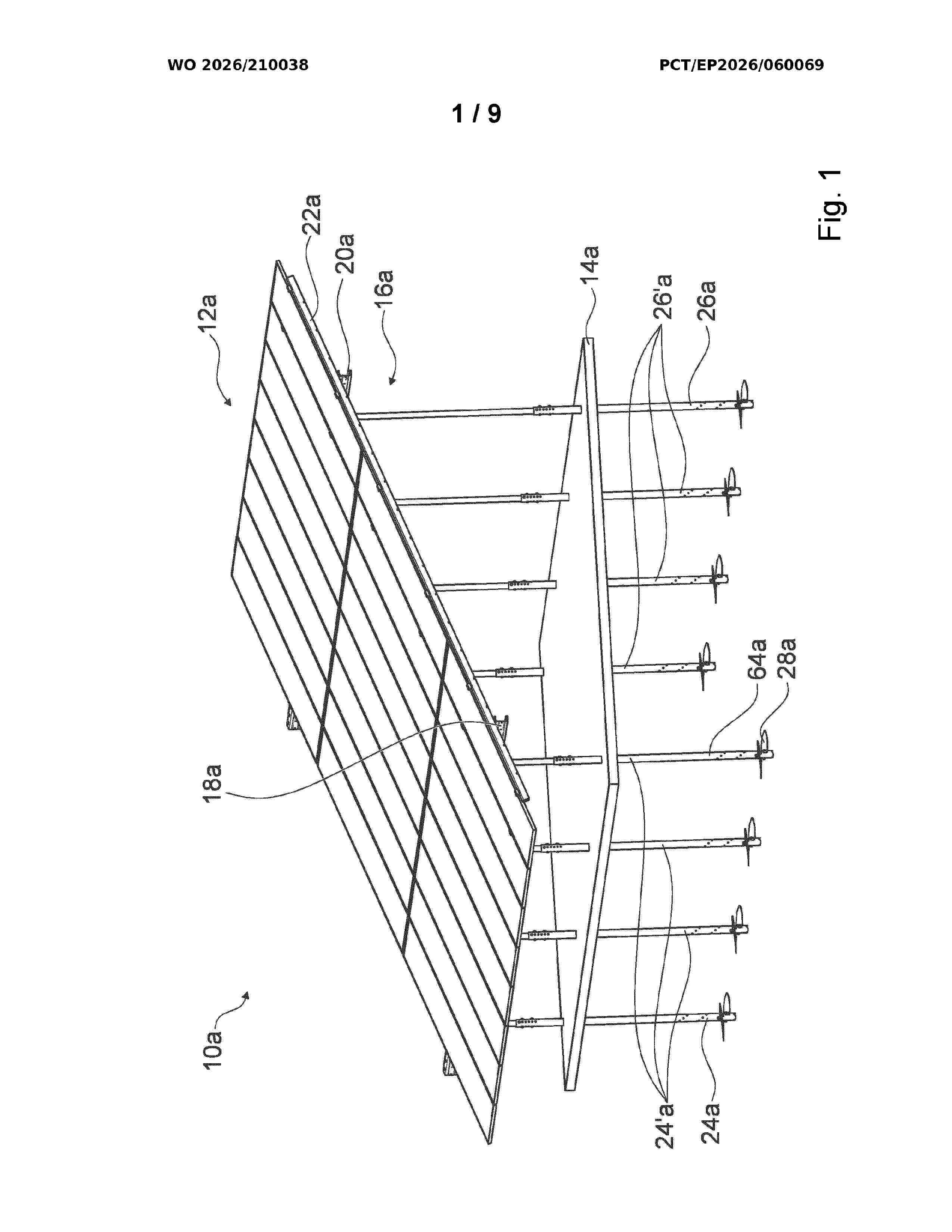
The invention relates to a ground anchoring device, in particular a solar-module ground anchoring device, for erecting solar modules (12a), comprising a fastening pile (28a; 28b) which comprises a ground anchoring portion (30a; 30b) intended to be introduced into an underlying surface (12a). According to the invention, the fastening pile (28a; 28b) comprises a plurality of fastening elements (40a, 42a, 44a, 46a, 48a, 50a, 52a, 54a, 56a; 40b, 42b, 44b, 46b, 48b, 50b) arranged at different heights in the ground anchoring portion (30a; 30b), and comprises at least one helical plate element (64a; 64b, 98b), which is intended to secure the fastening pile (28a; 28b) in the underlying surface (14a) and can be fastened to an outer side of the fastening pile (28a; 28b) frictionally and/or form-fittingly via at least one of the fastening elements (40a, 42a, 44a, 46a, 48a, 50a, 52a, 54a, 56a; 40b, 42b, 44b, 46b, 48b, 50b).
Resumen de: WO2026209320A1
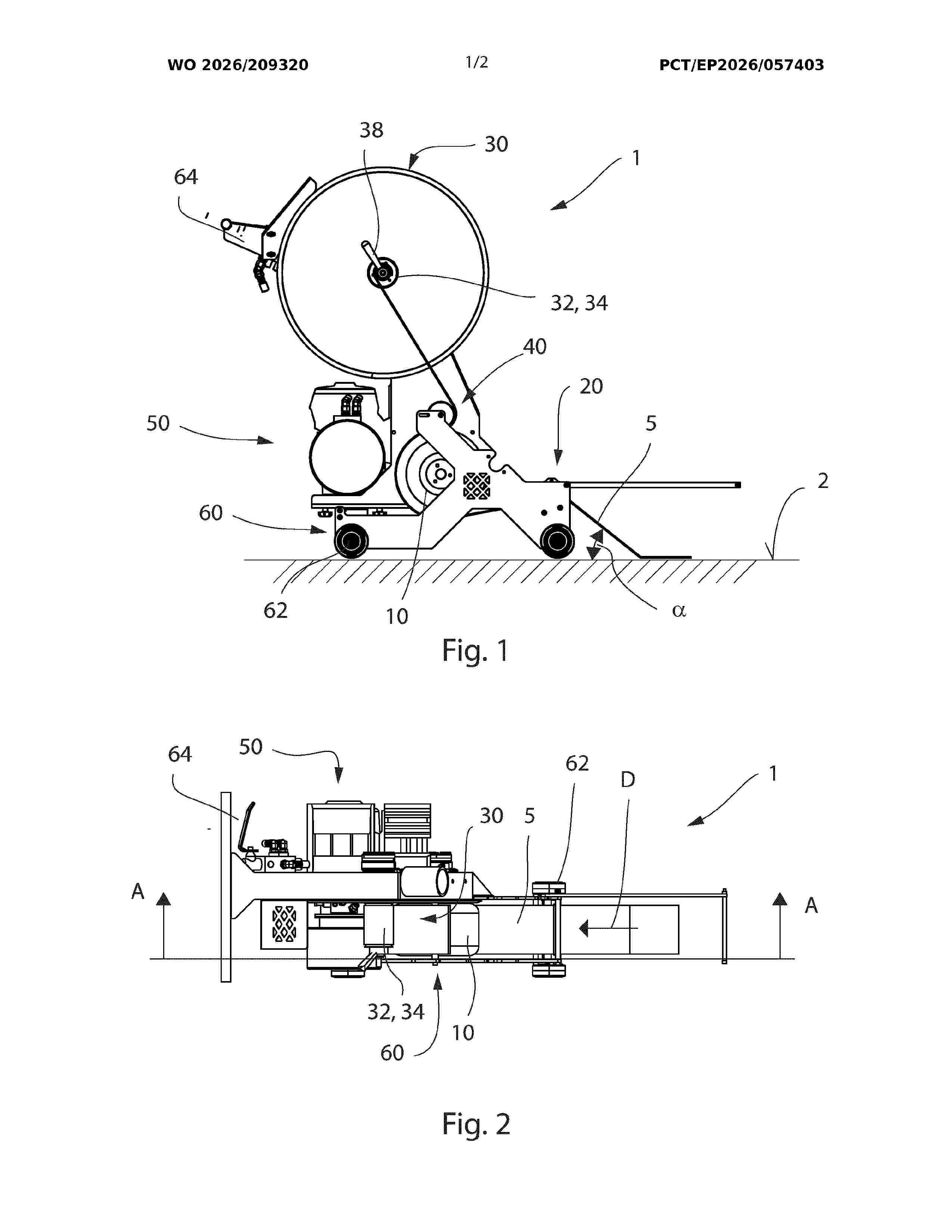
The present invention relates to a device (1) for removing a material web (5) from a ground surface (2), in particular a device (1) for removing a thin-layer or thick-layer temporary road-marking film from a ground surface (2), preferably from a roadway, comprising a drivable pulling roller (10), a receiving device (30) for receiving the removed material web (5), and a tearing device (20), wherein the pulling roller (10) tears the material web (5) away from the ground surface (2) with a tensile force and at a tear angle (α) in a pulling direction (D), and wherein the tearing device (20) is designed to apply an oscillation to the tensile force and/or the tear angle (α).
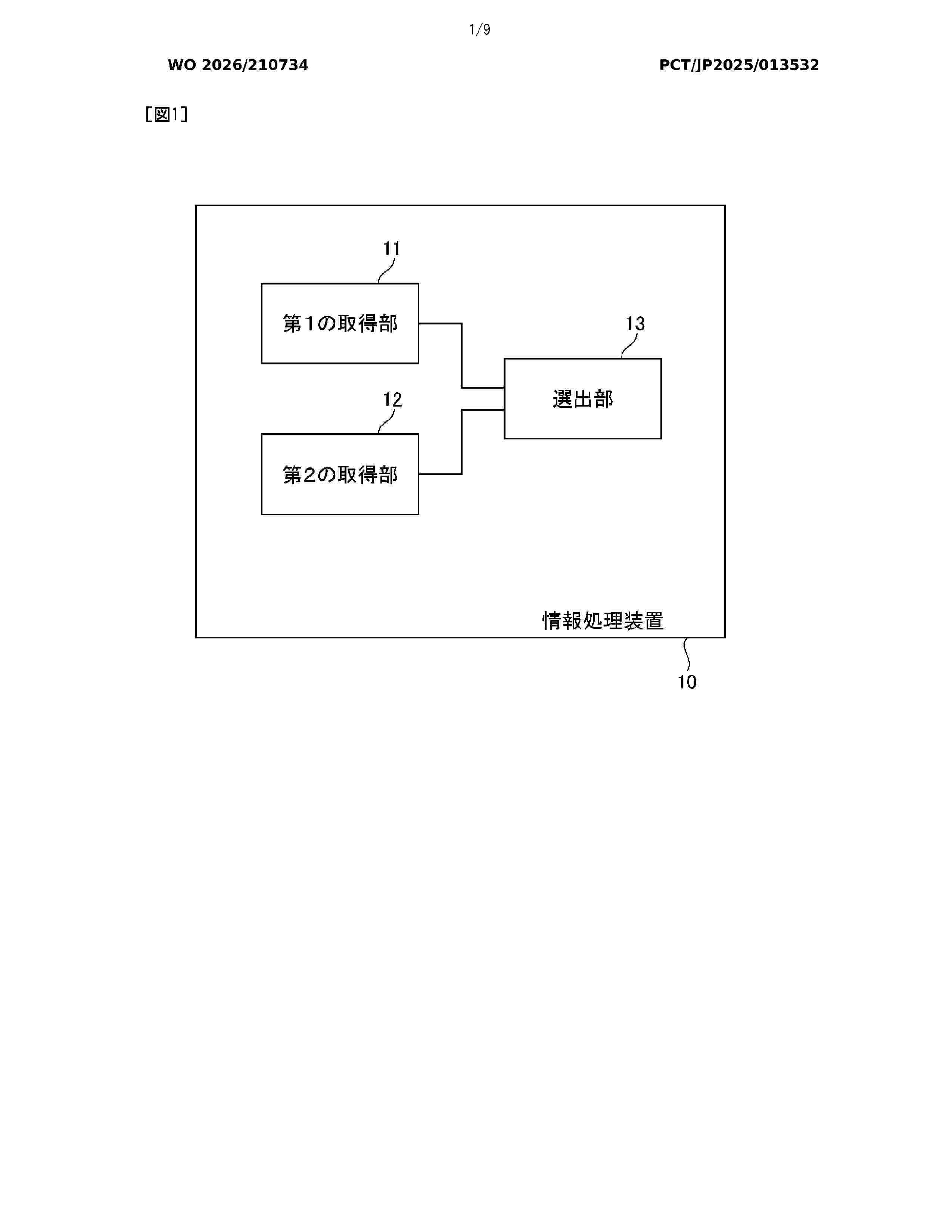
Resumen de: WO2026210734A1
A processing apparatus according to the present disclosure has a first acquisition unit, a second acquisition unit, and a selection unit. The first acquisition unit acquires a movement route from the boarding position of a passenger to the destination of the passenger. The second acquisition unit acquires a planned travel route for each of a plurality of target vehicles. The selection unit selects at least one boarding vehicle on which a passenger is to board from among the plurality of target vehicles, on the basis of an overlapping portion between the planned travel route and the movement route.
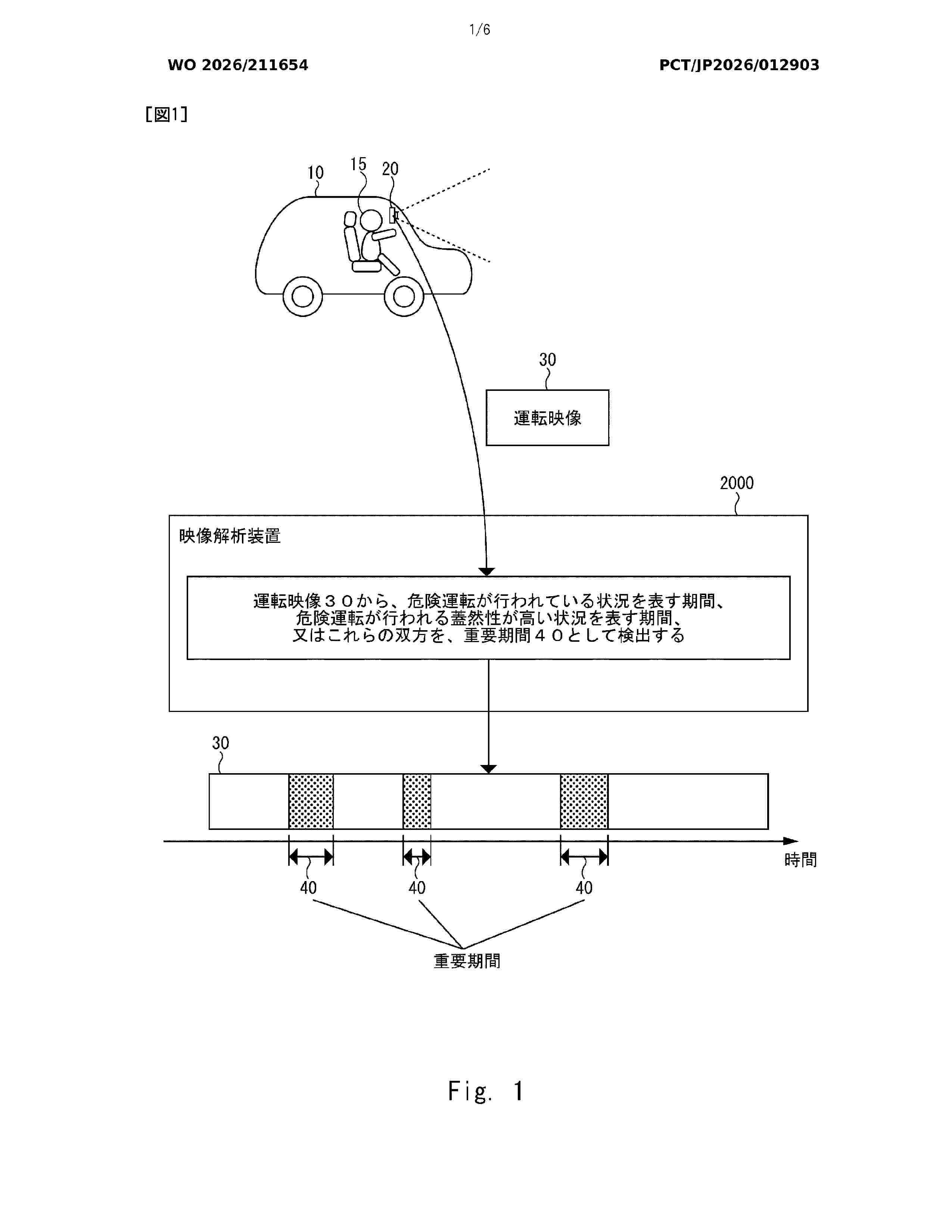
Resumen de: WO2026211654A1
A video analysis device according to the present disclosure acquires a driving video including conditions in front of a target vehicle, and detects an important period, which is a period of importance, in the driving video. The important period is either a dangerous driving period, which is the period of a situation in which dangerous driving is being performed, or a caution-required period, which is the period of a situation in which it is likely that dangerous driving will be performed, or is both of these periods.
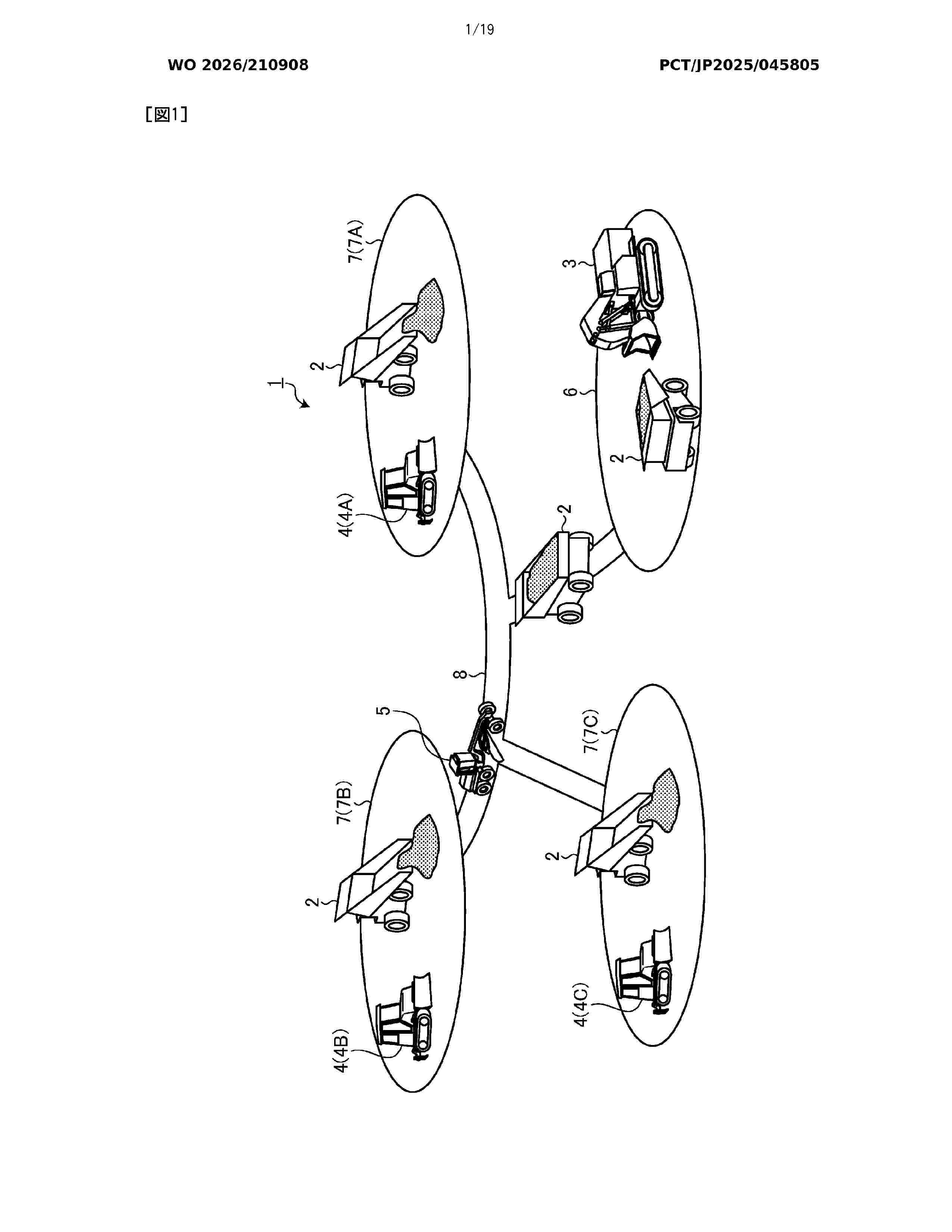
Resumen de: WO2026210908A1
A remote control system for a work machine according to the present invention comprises a processor. The processor determines a work machine to be operated from among a plurality of work machines, transmits an operation signal for operating the determined work machine to be operated, receives a peripheral image of the work machine to be operated, generates recommendation data recommending operation of a second work machine when the work machine to be operated is a first work machine, and causes an output device to output the recommendation data.
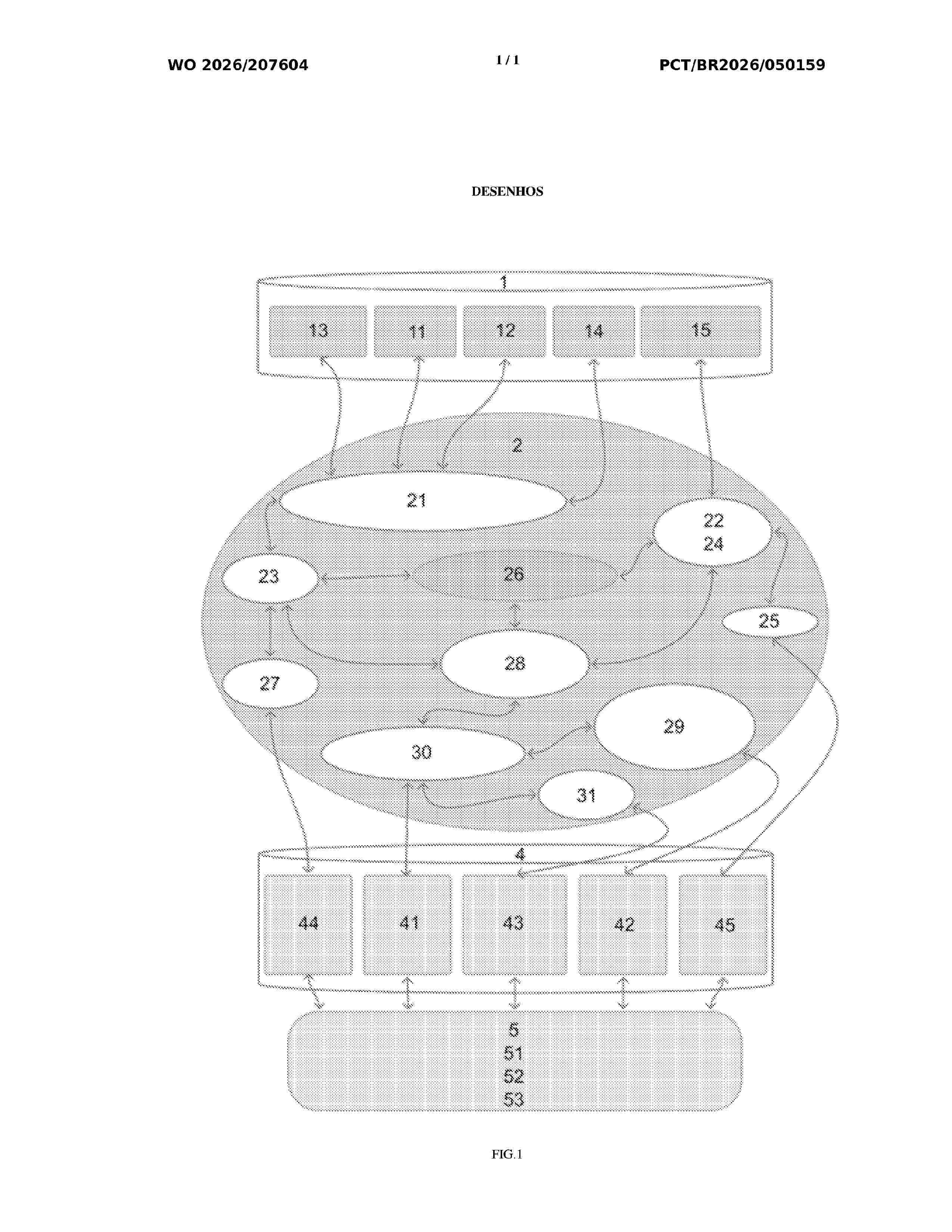
Resumen de: WO2026207604A1
SIMPIA is an innovative system for monitoring road freight journeys that does not require on-board vehicle technology. Its main innovation consists in tracking and monitoring the route travelled using images captured by fixed and mobile cameras, combined with the integration of data from external sources, such as electronic tax documents and traffic information. This approach provides a comprehensive, real-time view of the logistics operation, enabling the detection of anomalies, route optimisation and analysis of freight flows, without relying on equipment installed in the vehicles. Additionally, SIMPIA estimates CO2 emissions from the journeys, providing valuable data for environmental impact analysis. Thus, SIMPIA provides a scalable, autonomous and low-cost solution for transport operators, insurers and government authorities, offering monitoring, visibility, security and efficiency in supply chain and transport management.
Resumen de: WO2026207789A1
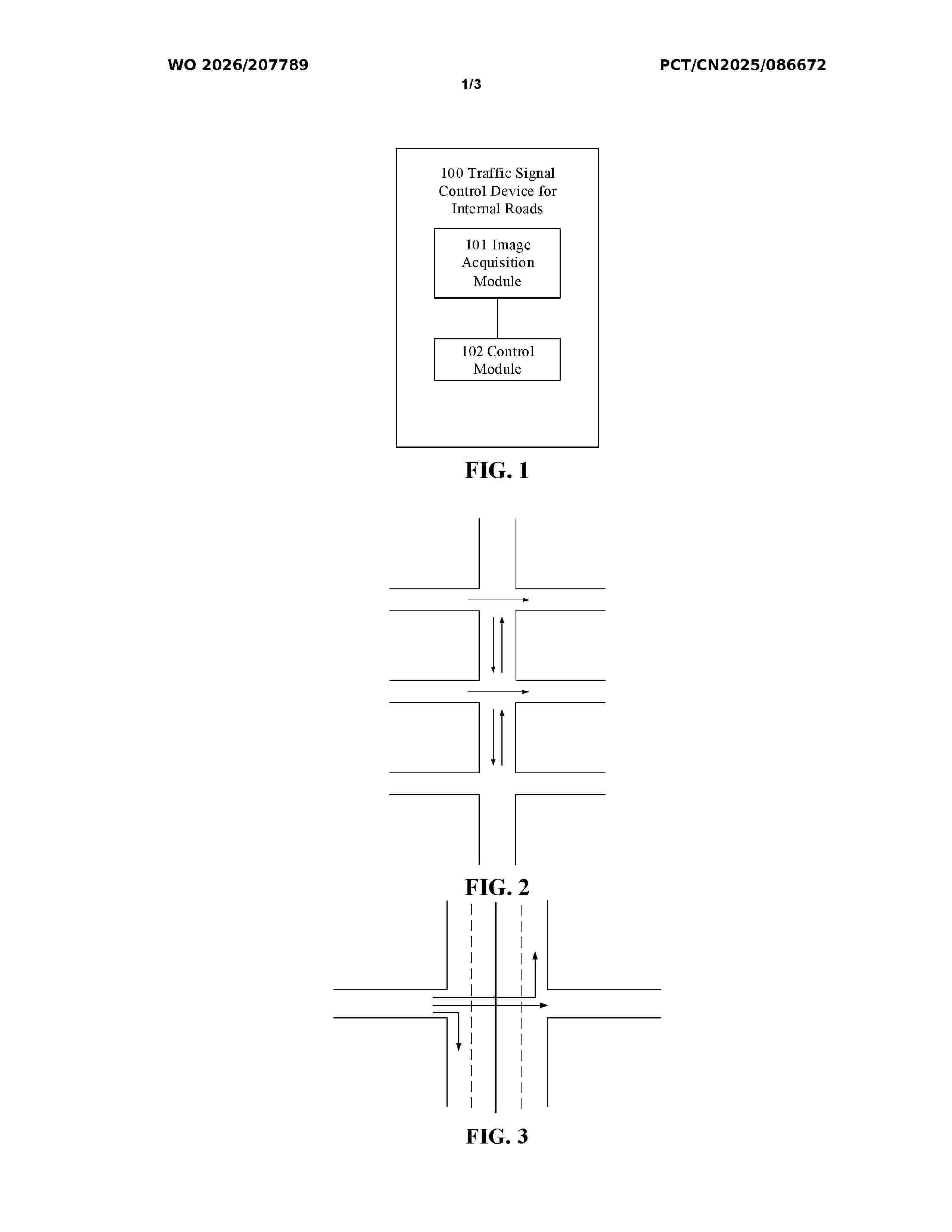
The present disclosure relates to the field of traffic signal processing. More specifically, the present disclosure relates to traffic signal control devices and electronic equipment for internal roads. It includes: an image acquisition module, configured for acquiring the road image information of the intersection; a control module, configured for receiving the road image information and determining the traffic volume of the intersection based on the road image information, and controlling the traffic lights of the intersection based on the traffic volume, wherein the traffic volume includes the traffic volume of manned vehicles and the traffic volume of unmanned vehicles.
Resumen de: WO2026207652A1
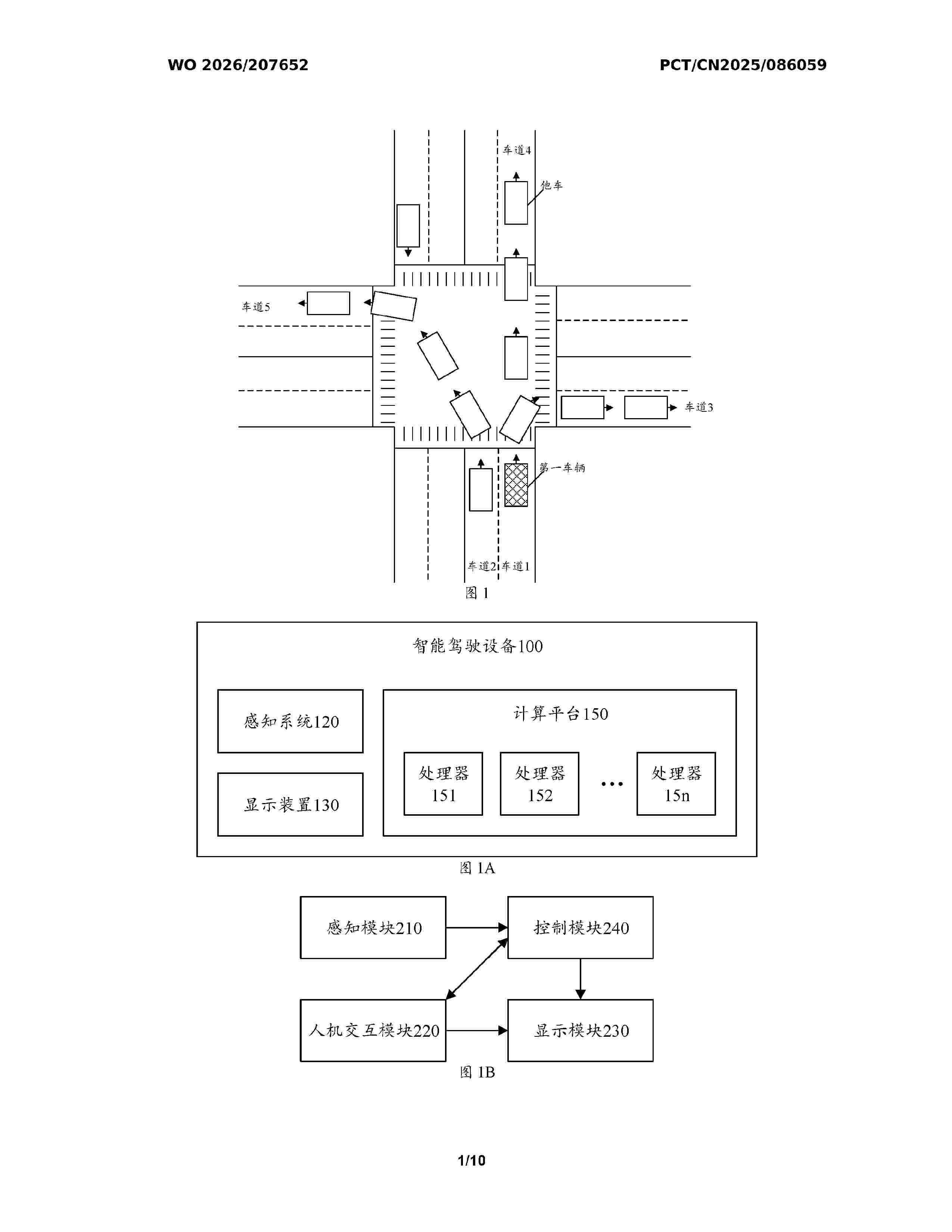
A traffic flow processing method, a model output optimization method, and a related apparatus. In the traffic flow processing method, travel trajectories of a plurality of dynamic obstacles within a preset duration are acquired as inputs of a relationship extraction model, so that a following relationship matrix between dynamic obstacles among the plurality of dynamic obstacles is efficiently generated, thereby efficiently obtaining real-time traffic flow information on the basis of the relationship matrix.
Resumen de: WO2026208278A1
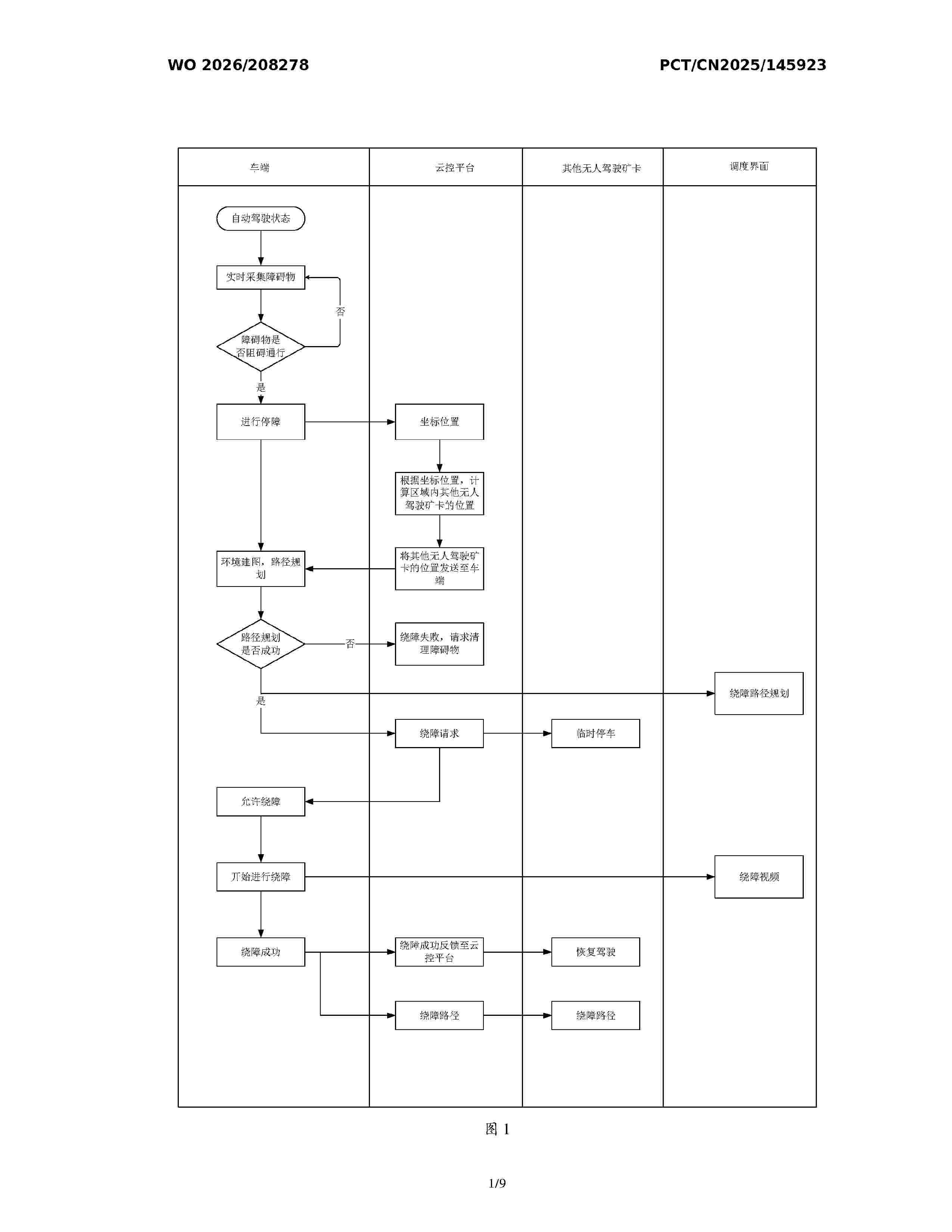
A scheduling method and apparatus for autonomous vehicles, and a device and a program product, which relate to the technical fields of cloud computing and autonomous driving. The method comprises: when there is a prohibited position on a pre-diversion path of a first autonomous vehicle, a cloud platform (210) receiving a first post-diversion path sent by a first vehicle-end platform; and the cloud platform (210) determining at least one conflict point where the first post-diversion path conflicts with travel paths of a plurality of autonomous vehicles, determining a yielding vehicle and a passing vehicle at each conflict point, and sending a control instruction to vehicle-end platforms of the yielding vehicle and the passing vehicle at each conflict point, such that the yielding vehicle stops before the conflict point.
Resumen de: EP4819092A1
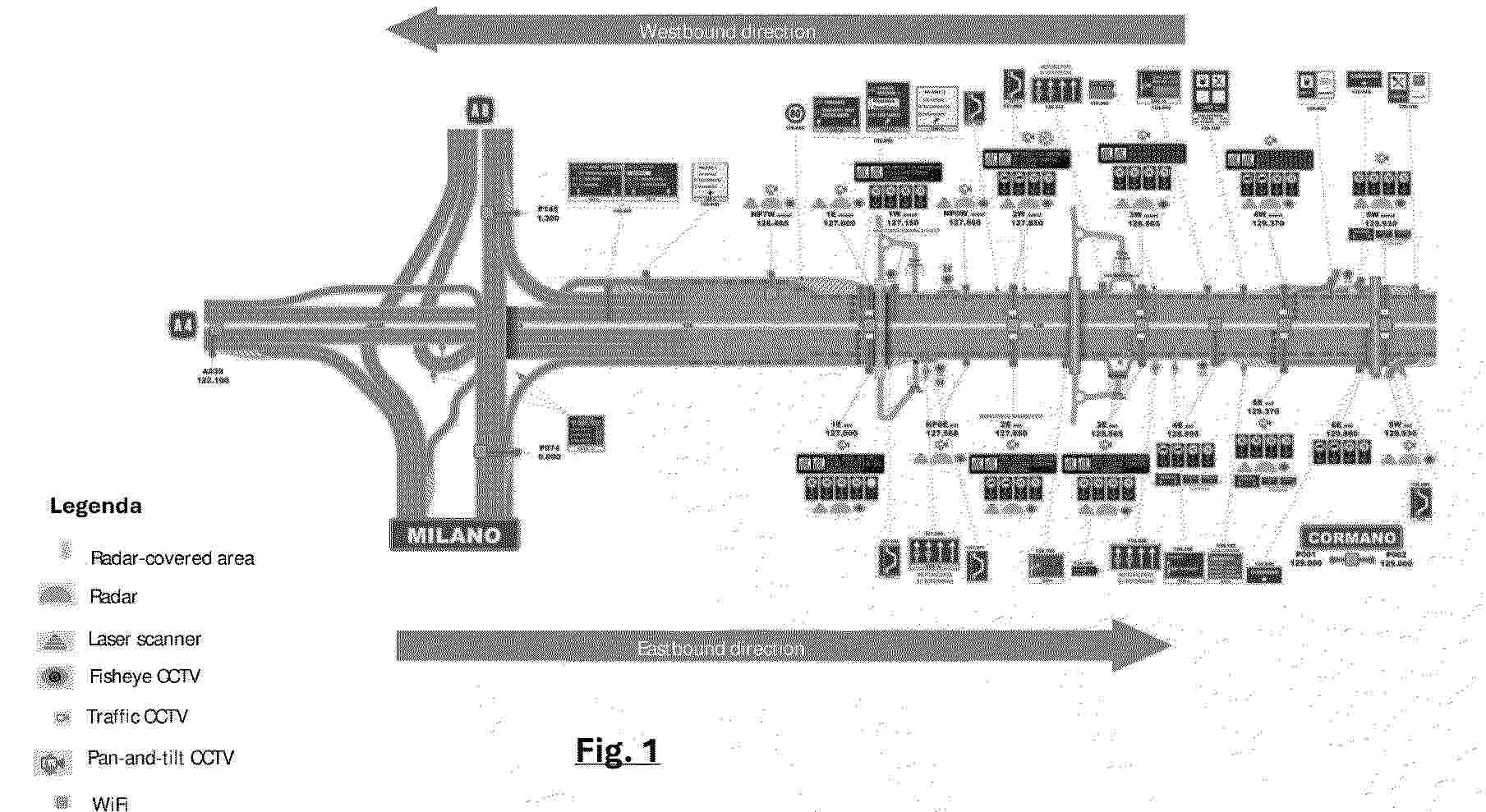
A dynamic lane management system in a multi-lane road section is disclosed, comprisinga plurality of detection sensors to detect transit vehicles,an IT infrastructure that transfers signals from said detection sensors to an area control room manned by operators, where said detection sensor signals are converted into graphical representations on display devices,a plurality of signalling apparatus placed in the vicinity of said road section to display the open/close condition of said dynamic lane, said signalling apparatus being controlled by said area control room on the basis of said graphic representations, whereinsaid plurality of sensors comprises at least first detection sensors, second verification sensors and third traffic sensors, and further comprising a central reporting system (src), arranged to process said signals of the first, second and third sensors and an area control room and a traffic management information system (sirt) of said graphical representations.
Resumen de: EP4818996A1
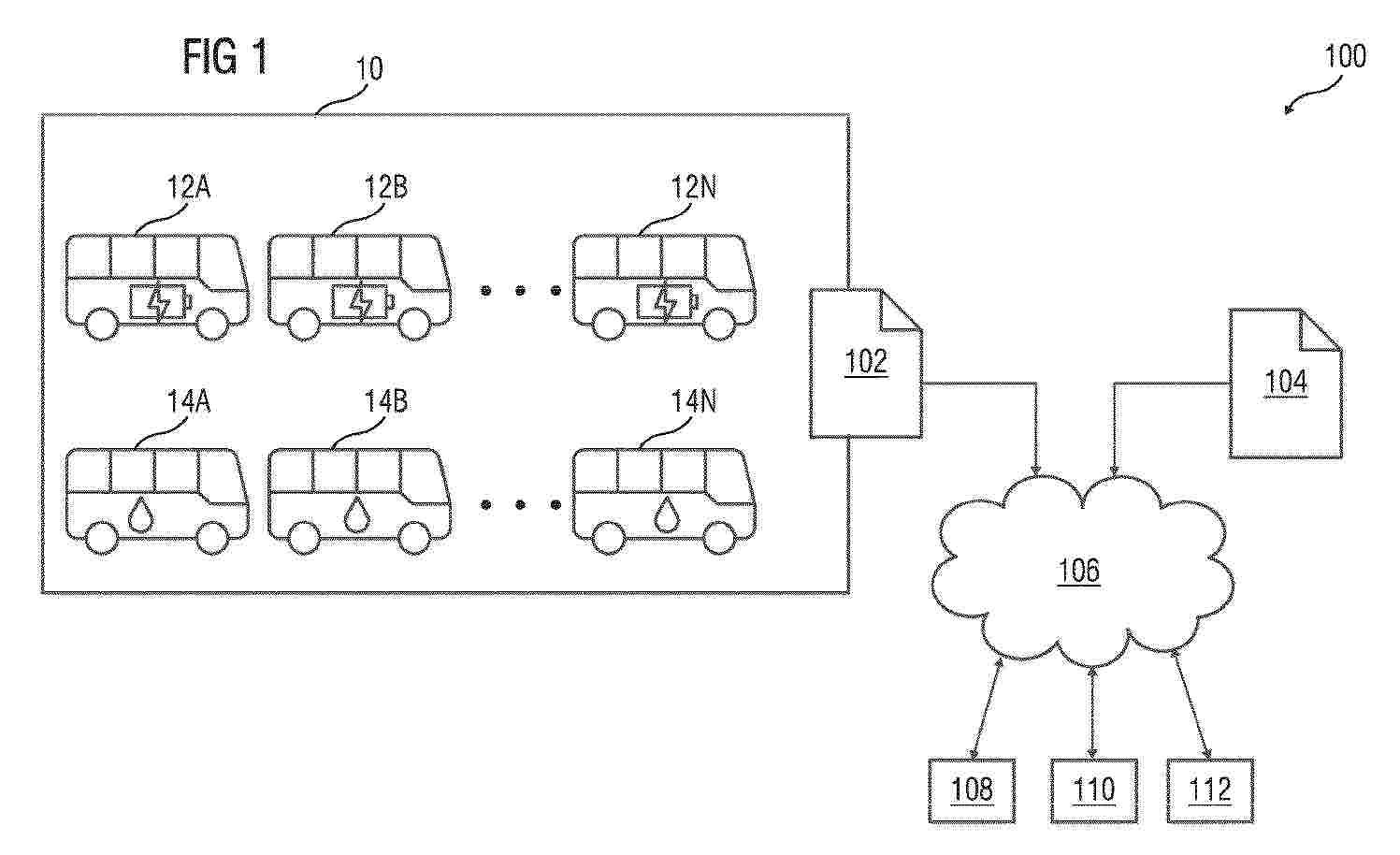
A computer-implemented method (300) and a system (100) for dispatch scheduling of a mixed fleet (10) comprising of electric vehicles (EVs) (12A-N) and non-electric vehicles (non-EVs) (14AN) are disclosed. The method includes receiving, by one or more processing units (108), vehicle parameters (102) related to travel range, and at least one of vehicle loading capacity or vehicle dimensions; and route parameters (104) concerning route distance and at least one of required vehicle loading capacity or required vehicle dimensions for the routes. A first schedule is determined (306) for the EVs (12A-N) for selected routes using a predefined optimisation model and constraints, and remaining routes are identified. A second schedule is determined (310) for the non-EVs (14A-N) by comparing corresponding vehicle parameters (102) against route parameters (104) of the said remaining routes. The schedules are then displayed (312) on an electronic display device (112) communicably connected to the processing units (108).
Resumen de: EP4819094A1
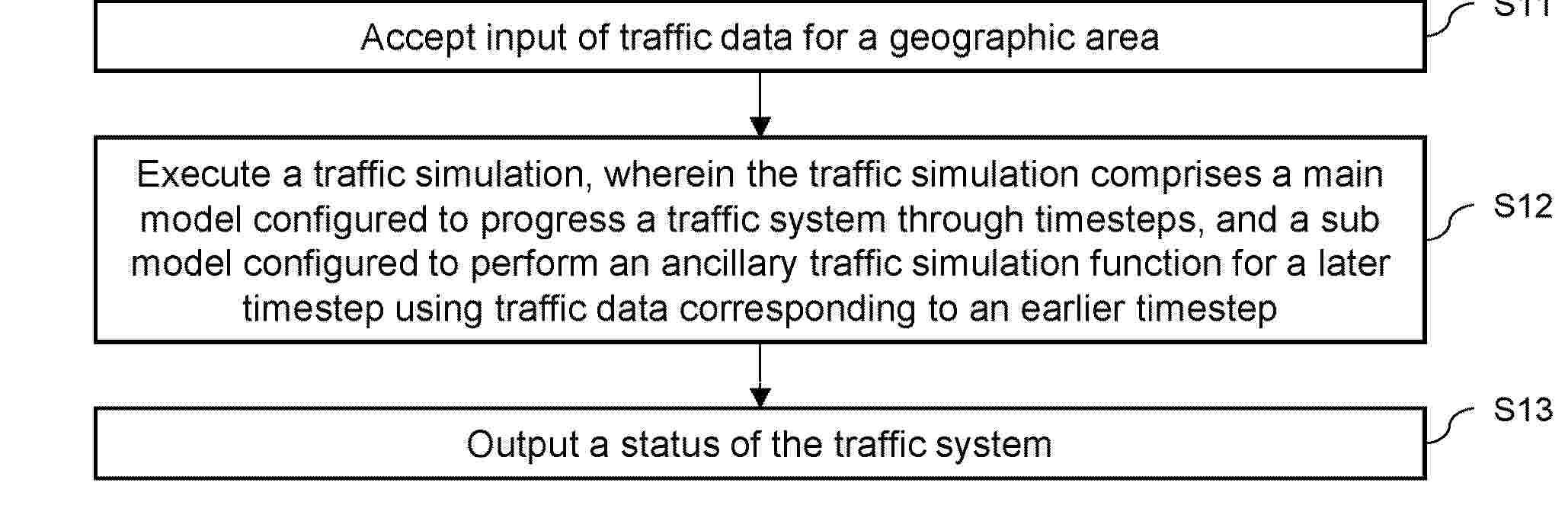
0001 A computer-implemented method for traffic simulation, the method comprising: accepting input of traffic data for a geographic area; executing a traffic simulation, wherein the traffic simulation comprises a main model configured to progress a traffic system through timesteps, and a sub model configured to perform an ancillary traffic simulation function for a later timestep using traffic data corresponding to an earlier timestep; and outputting a status of the traffic system.
Resumen de: EP4819096A1
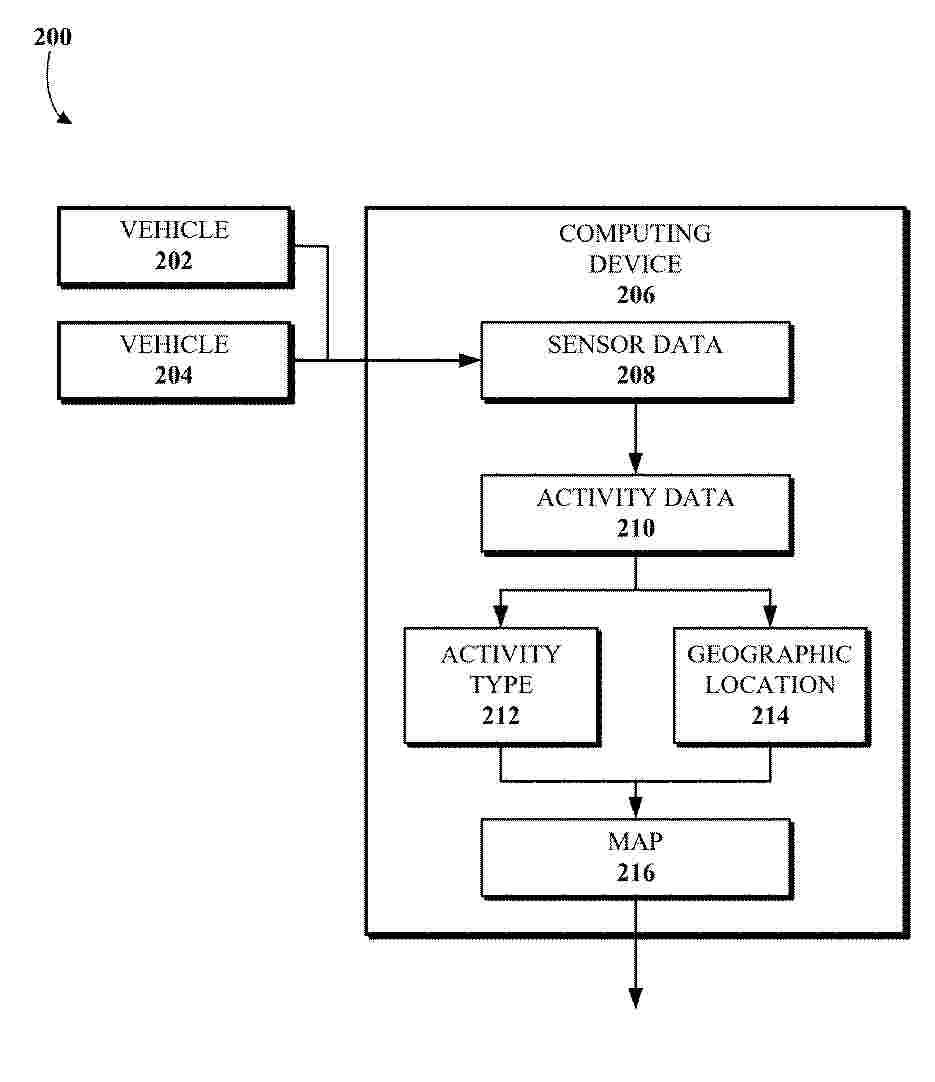
0001 A computing device obtains sensor data from multiple vehicles operating within a geographic region. The sensor data comprises operational telemetry data including at least one of a time-stamped geospatial coordinate, an environmental condition, a vehicle state, or an external machine state. The computing device determines, based on the sensor data, vehicle activity data values of the multiple vehicles, at least one vehicle activity data value of the vehicle activity data values comprising a vehicle type, a geographic location within the geographic region, or an activity type. The computing device determines, based on the vehicle activity data values, a geographic subregion of the geographic region in which the activity type is repeatedly performed over a time period. The computing device provides a graphical user interface indicating the geographic subregion. The graphical user interface is configured to allow user interaction for refinement of the geographic subregion.
Resumen de: EP4817406A1
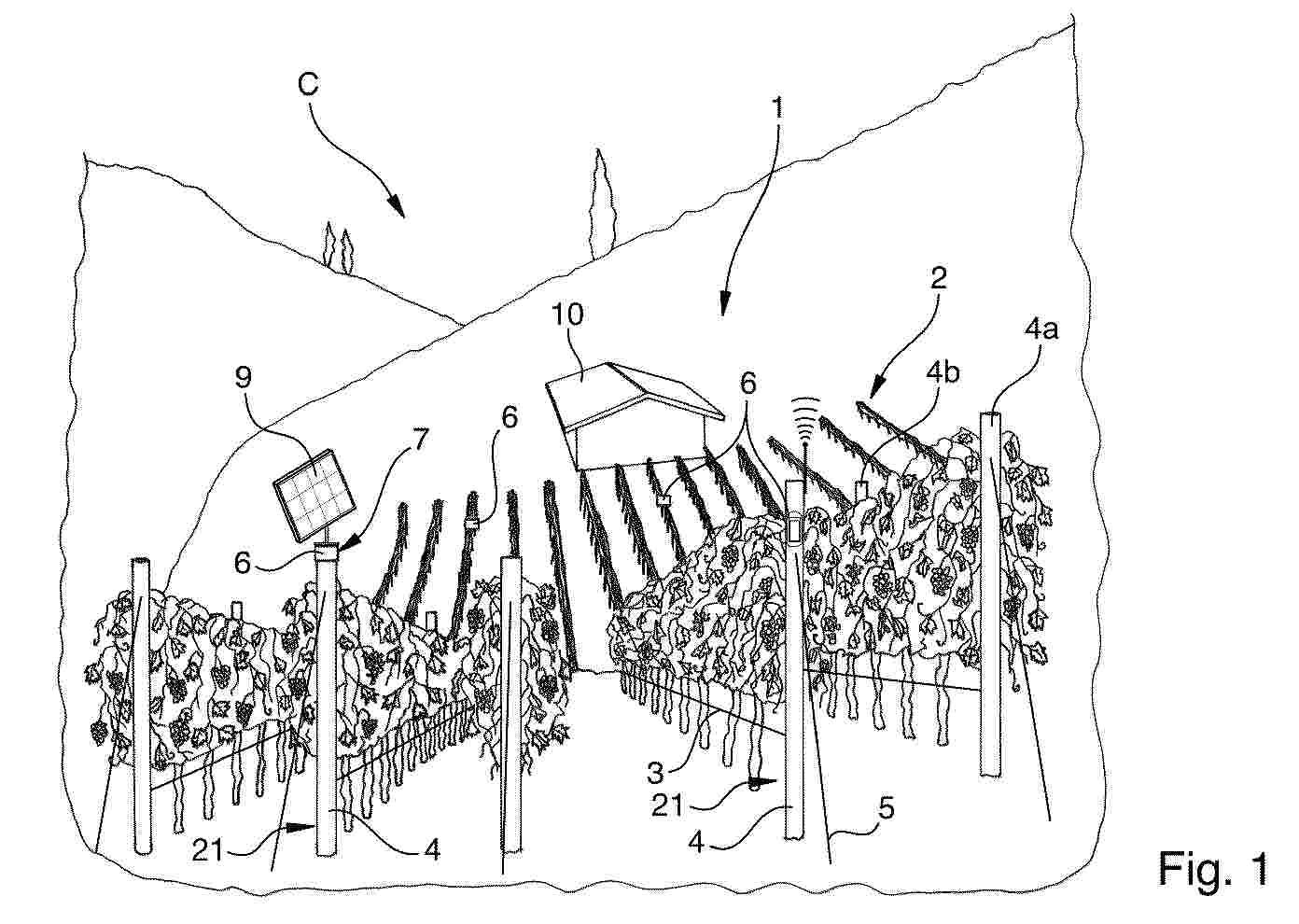
0001 A sensorized vineyard pole (21) for supporting a row in an espalier type vineyard (1), in particular on a slope, is configured to detect surface landslide phenomena. The pole has a structural body (22) which supports a detection device (6) with an electronic assembly (23). The electronic assembly (23) comprises at least one inclination and/or movement sensor (11) suitable for detecting the inclination and/or movement of the pole, an electronic controller (12) which is programmed to emit an event signal which indicates a signal which is sent to the electronic controller from the inclination and/or movement sensor (11) and a transmitter (14) which is connected to the electronic controller (12) and provided to transmit the event signal which is emitted by the electronic controller.
Resumen de: US20250171016A1
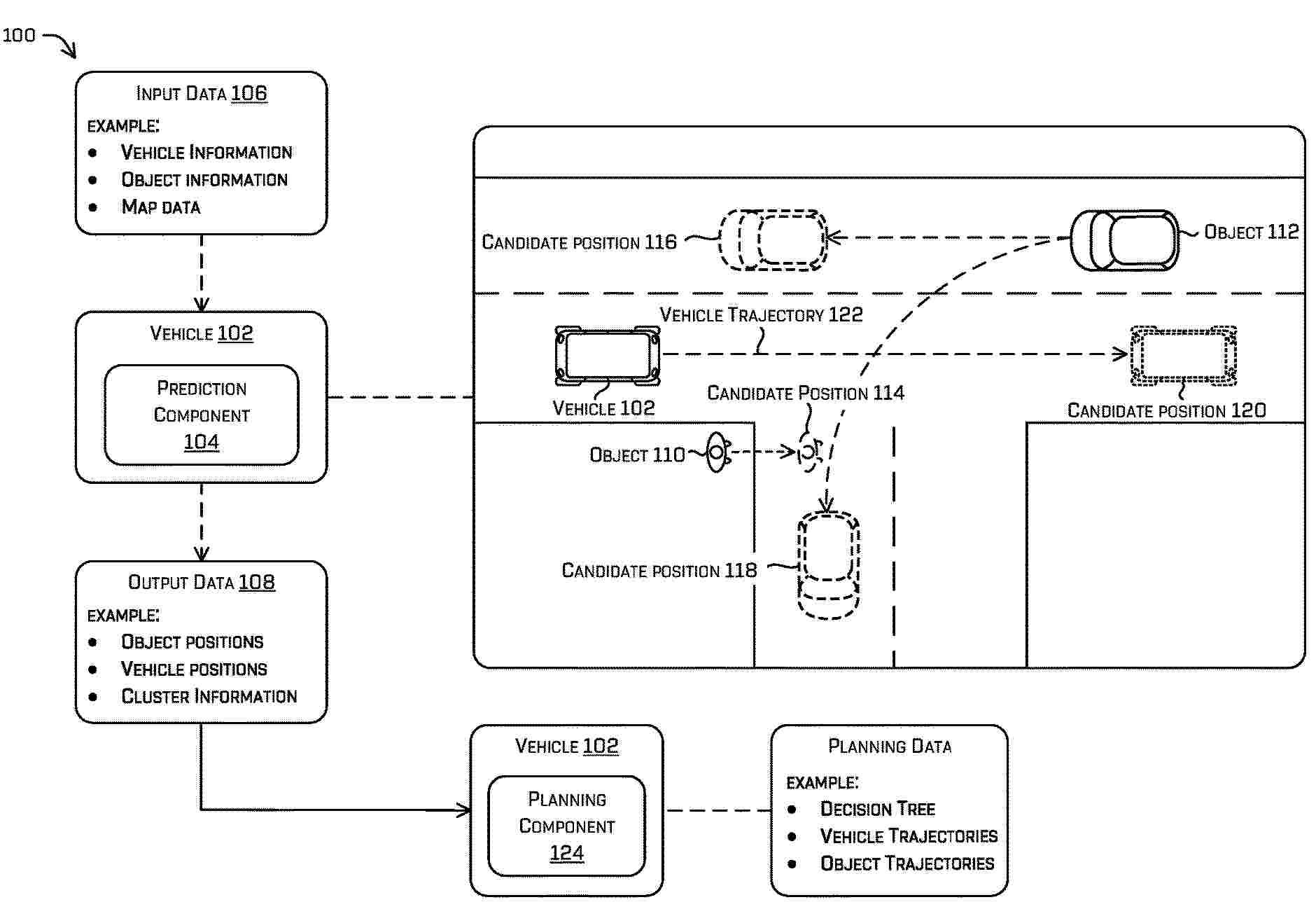
Techniques for predicting positions of objects in an environment are described herein. For example, the techniques may include clustering predicted object positions and using a representative target for one or more clusters to determine a predicted position of an autonomous vehicle. The clusters may vary in size, number of positions, etc. Object positions can be selected from one or more clusters for consideration during vehicle planning, which may include simulation.
Resumen de: WO2026203656A1
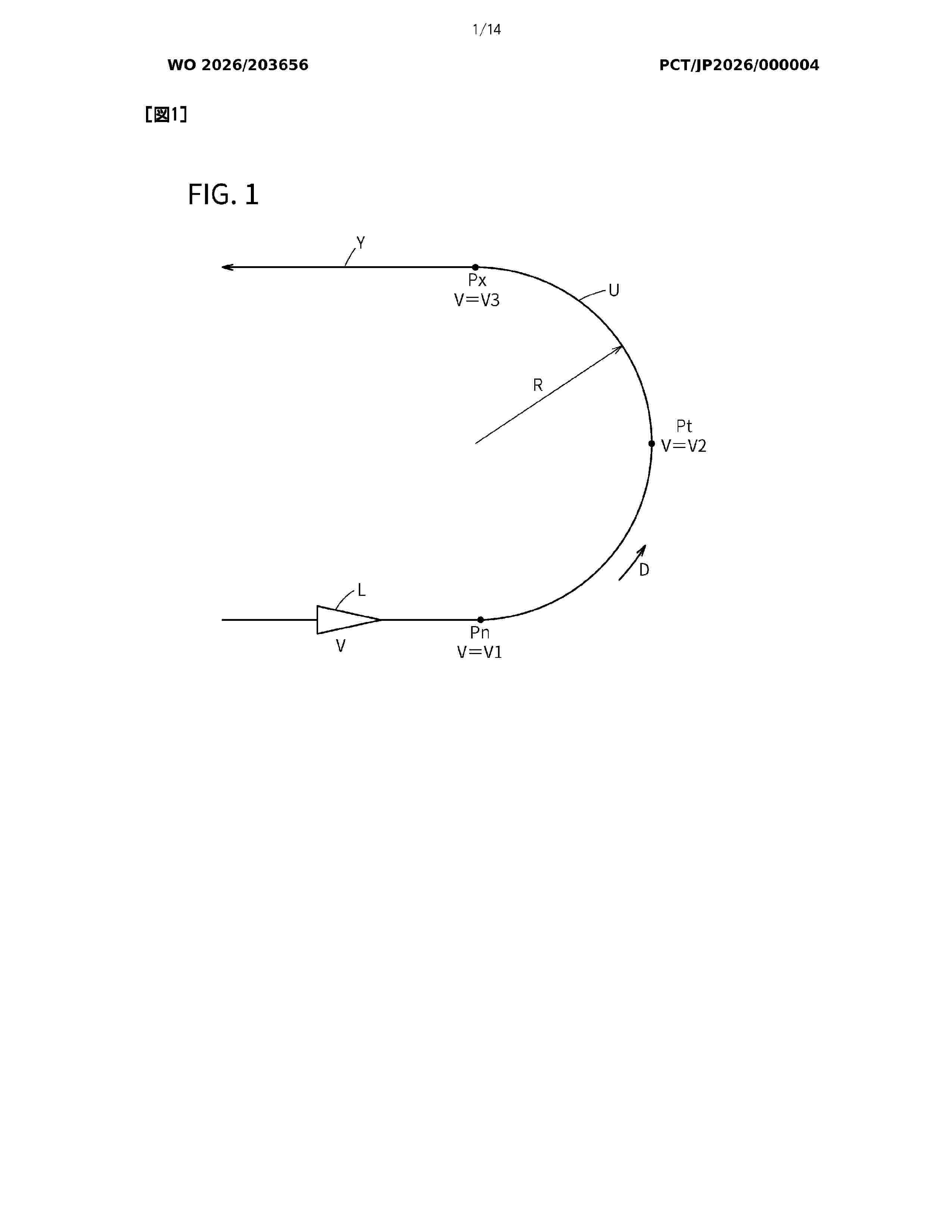
A vehicle driving skill determination system (10) comprises: a travel information acquisition unit (30) that acquires travel information of a vehicle (L); a history information acquisition unit (32) that acquires history information from travel information acquired in the past; and a driving skill determination unit (34) that determines the driving skill of a driver of the vehicle (L). The travel information includes the radius (R) of a curved portion (U) included in a travel path (Y) along which the vehicle (L) travels, and a speed (V) of the vehicle (L) traveling along the curved portion (U). The driving skill determination unit (34) determines the driving skill on the basis of a matching degree (C) of the speed (V) included in the history information of the speed (V) corresponding to the radius (R).
Nº publicación: WO2026205591A1 01/10/2026
Solicitante:
PANASONIC INTELLECTUAL PROPERTY MAN CO LTD [JP]
\u30D1\u30CA\u30BD\u30CB\u30C3\u30AF\uFF29\uFF30\u30DE\u30CD\u30B8\u30E1\u30F3\u30C8\u682A\u5F0F\u4F1A\u793E
Resumen de: WO2026205591A1
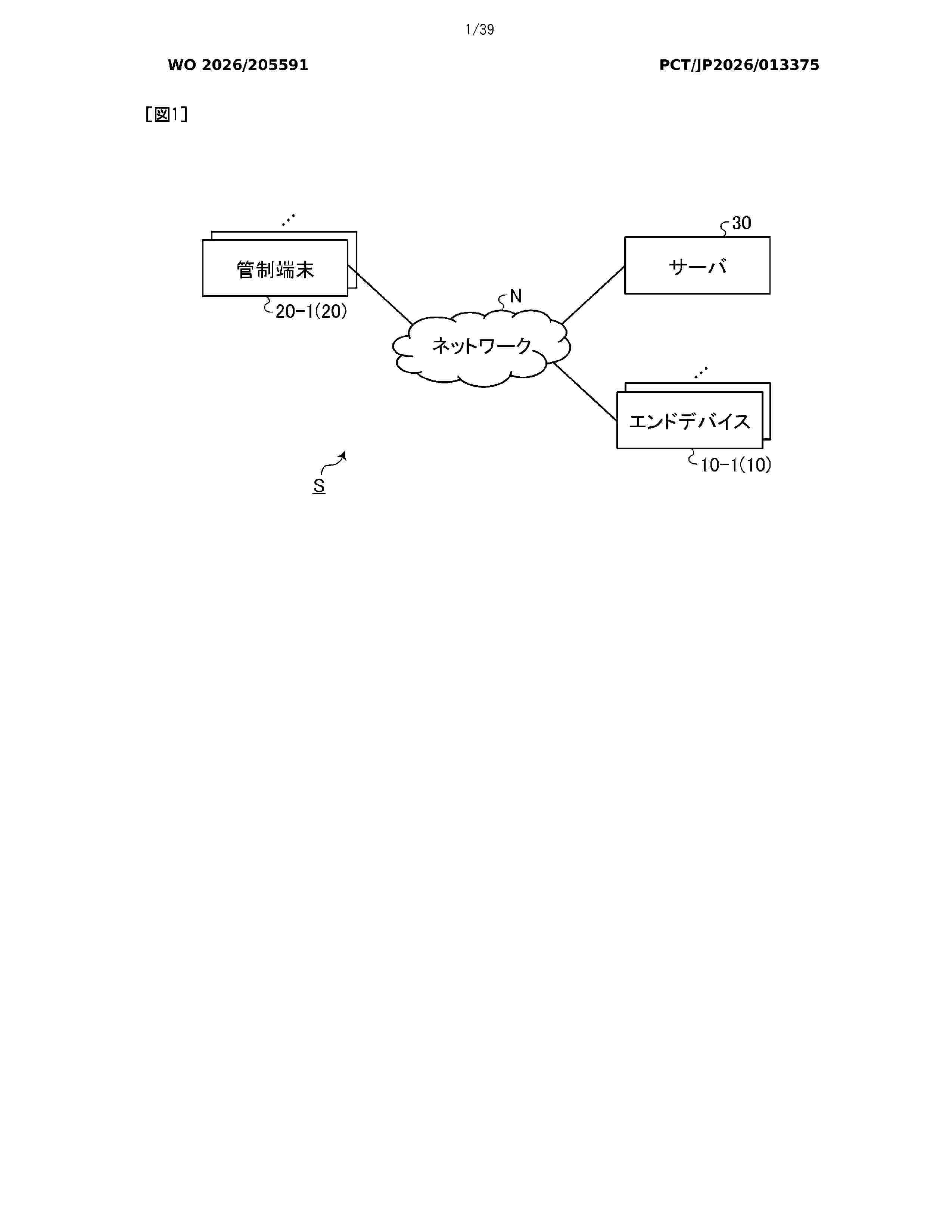
A remote operation assistance method is executed by a remote operation assistance system (S) comprising an end device (10) that is mounted on a target object and a control terminal (20) that remotely operates the target object. The end device generates a composite video from at least one camera video obtained by imaging the periphery of the target object by using at least one camera, on the basis of setting information. The end device (10) sends the composite video to the control terminal (20). The control terminal receives the composite video. The control terminal divides the composite video into a plurality of divided videos on the basis of the setting information. An assistance video based on the plurality of divided videos is displayed.
 BOPI
BOPI
 Sede Electrónica