Si deseas distinguir tus productos, servicios o ambos de los de otra empresa, es posible que necesites una marca o nombre comercial. Descubre qué son, en qué consiste su procedimiento de registro y qué implica.

Información sobre los plazos de presentación de solicitudes de transformación de marcas de la Unión Europea en marca nacional española. Más información


Si tienes un nuevo dispositivo, producto o procedimiento que resuelva un problema técnico o tenga una ventaja práctica, existen distintas formas de protegerlo en España y en otros países. Descubre cómo hacerlo.

¿Tu innovación reside en la estética, la ornamentación o la apariencia de tu producto? Protégela mediante un diseño industrial. Descubre qué derechos confiere el registro y cómo realizar la tramitación.

Las indicaciones geográficas protegen el nombre de un producto originario de una zona geográfica, a la cual le debe una determinada calidad, reputación u otra característica. Descubre qué son, en qué consiste su procedimiento de registro y qué beneficios conceden.

Las patentes publicadas en todo el mundo son una valiosa fuente de información científica, técnica y comercial.

Si eres emprendedor/a o una empresa y quieres potenciar y mejorar la rentabilidad de tu negocio protegiendo de forma adecuada los activos intangibles de tu organización, en este espacio encontrarás lo necesario.


 175
resultados
175
resultados
 Última actualización
23/10/2026 [07:08:00]
Última actualización
23/10/2026 [07:08:00]


 Resultados 100 a 125 de 175

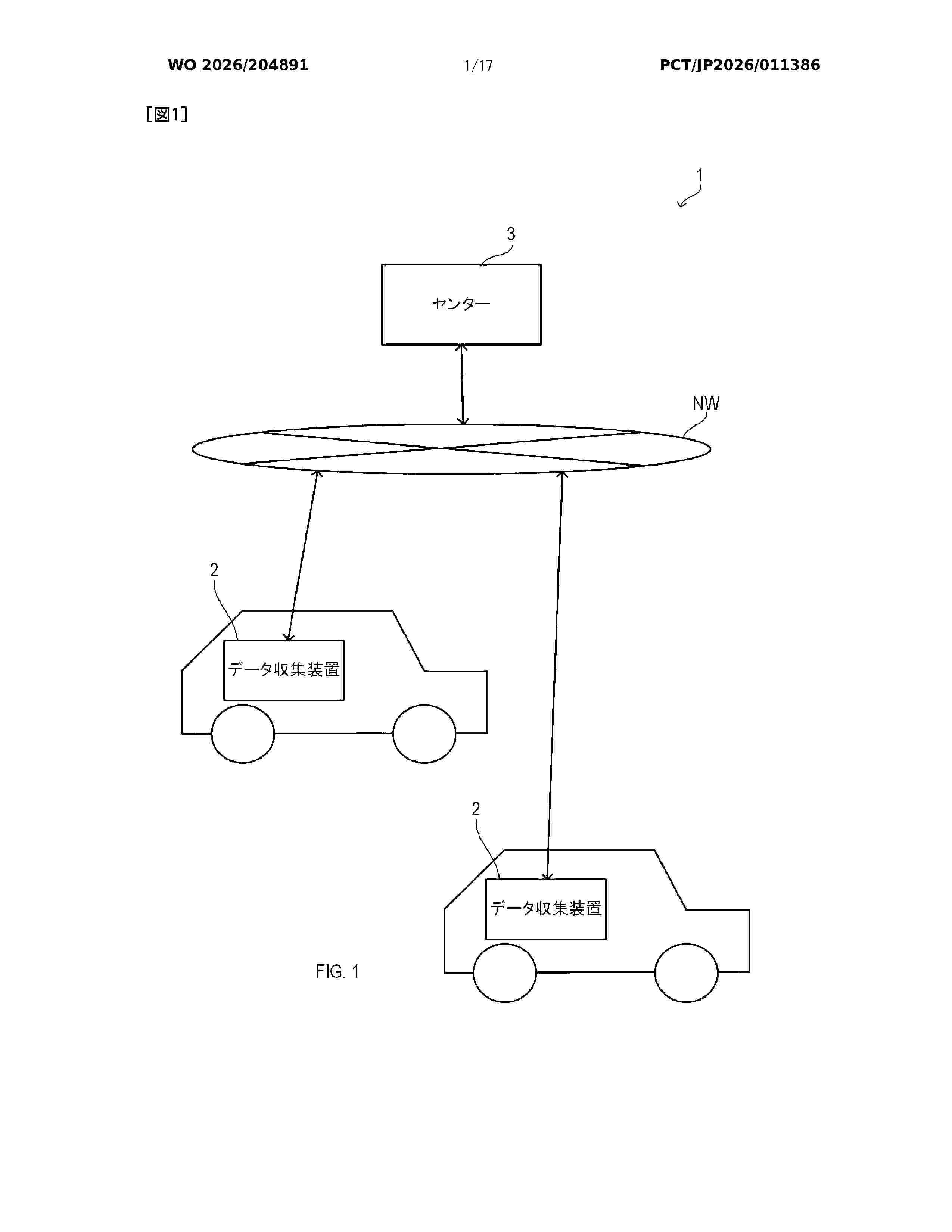
Resumen de: WO2026204891A1
A machine learning model (50) causes a computer to function as a first input unit (S10, S120), an inference result generation unit (S20, S130), a first output unit (S30, S140), a second input unit (S120), a weak point identification unit (S150 to S200), a collection condition generation unit (S220), and a second output unit (S230). The first input unit receives input of first input data. The inference result generation unit performs inference on the basis of the first input data and generates an inference result. The first output unit outputs the inference result. The second input unit receives input of second input data including a plurality of pieces of first input data and a plurality of pieces of ground truth data. The weak point identification unit identifies a weak point in the inference. The collection condition generation unit generates a collection condition corresponding to the weak point. The second output unit outputs collection condition data indicating the collection condition.

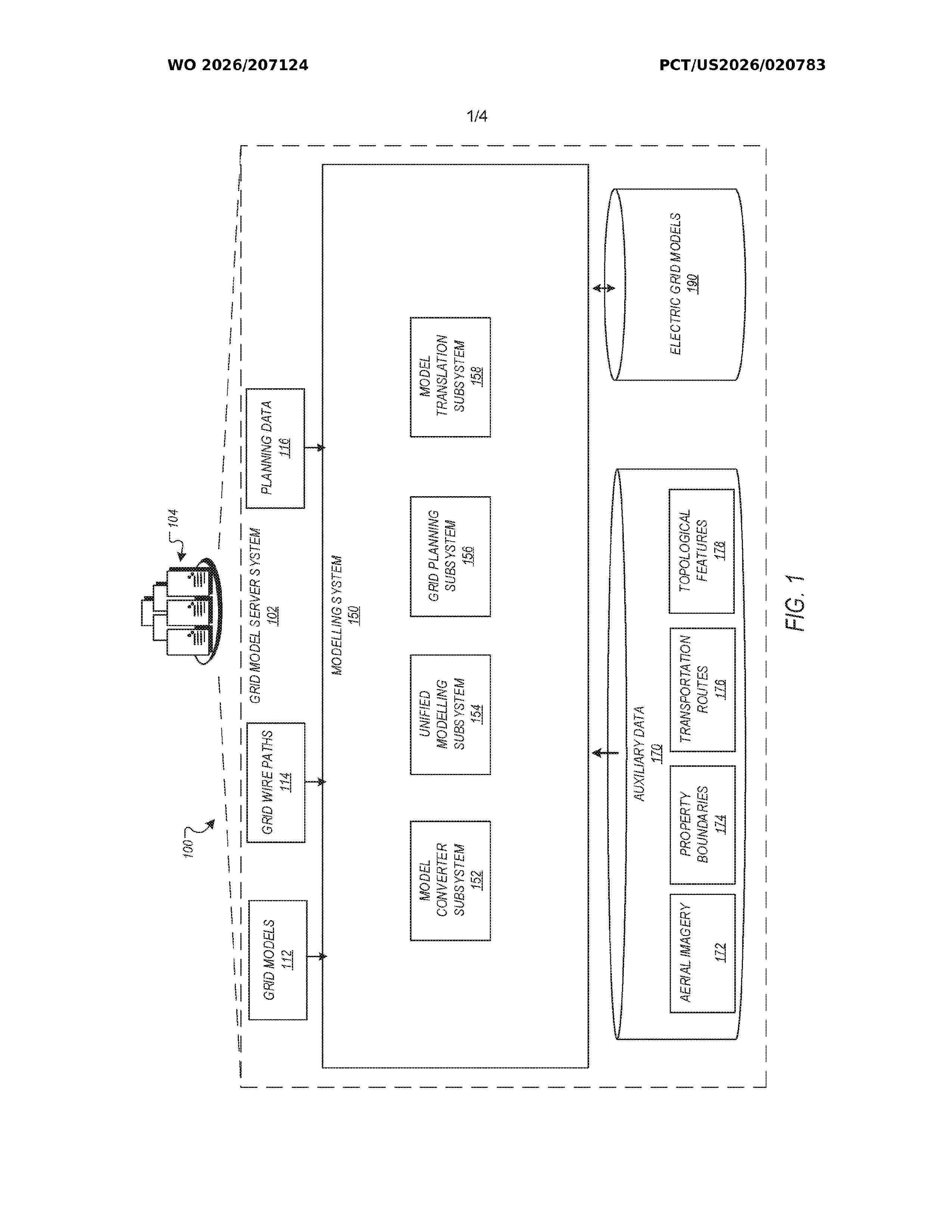
Resumen de: WO2026207124A1
Methods, systems, and apparatus, including medium-encoded computer program products, for using machine learning techniques to translate between different grid representations accurately and efficiently. Aspects include providing, as input to a machine learning model a first power grid model representation of a first type, wherein the machine learning model is trained to translate an input power grid model representations of an input type into a output power grid model representation of output type that is different from the input type, and the machine learning model is capable of translating a plurality of different input types into a plurality of different output types; and generating, by the machine learning model, a second power grid model representation of a second type that is different from the first type.
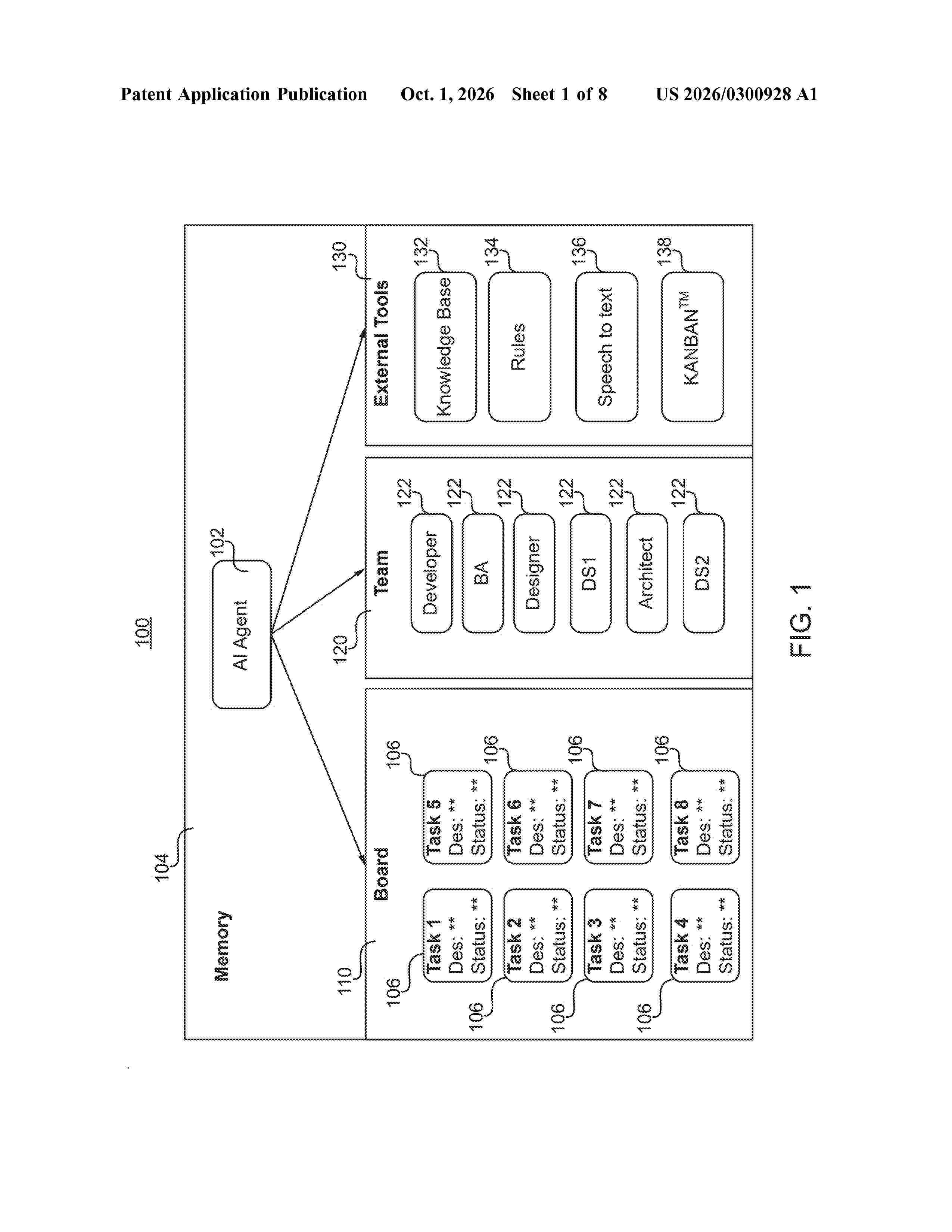
Resumen de: US20260300928A1
A method includes initializing an artificial intelligence (AI) agent configured to host and facilitate meetings; and integrating the AI agent with one or more external tools. Responsive to a request to host and facilitate a meeting, the AI agent generates meeting details including a meeting topic, participants, and a start time. The AI agent using a generative machine learning model generates a meeting plan based on the request. The AI agent executes the meeting plan by interacting with meeting participants using natural language processing, accessing relevant information from the one or more external tools, and updating meeting-related data using the one or more external tools. The AI agent using the generative machine learning model generates a meeting summary based on the executed meeting plan.
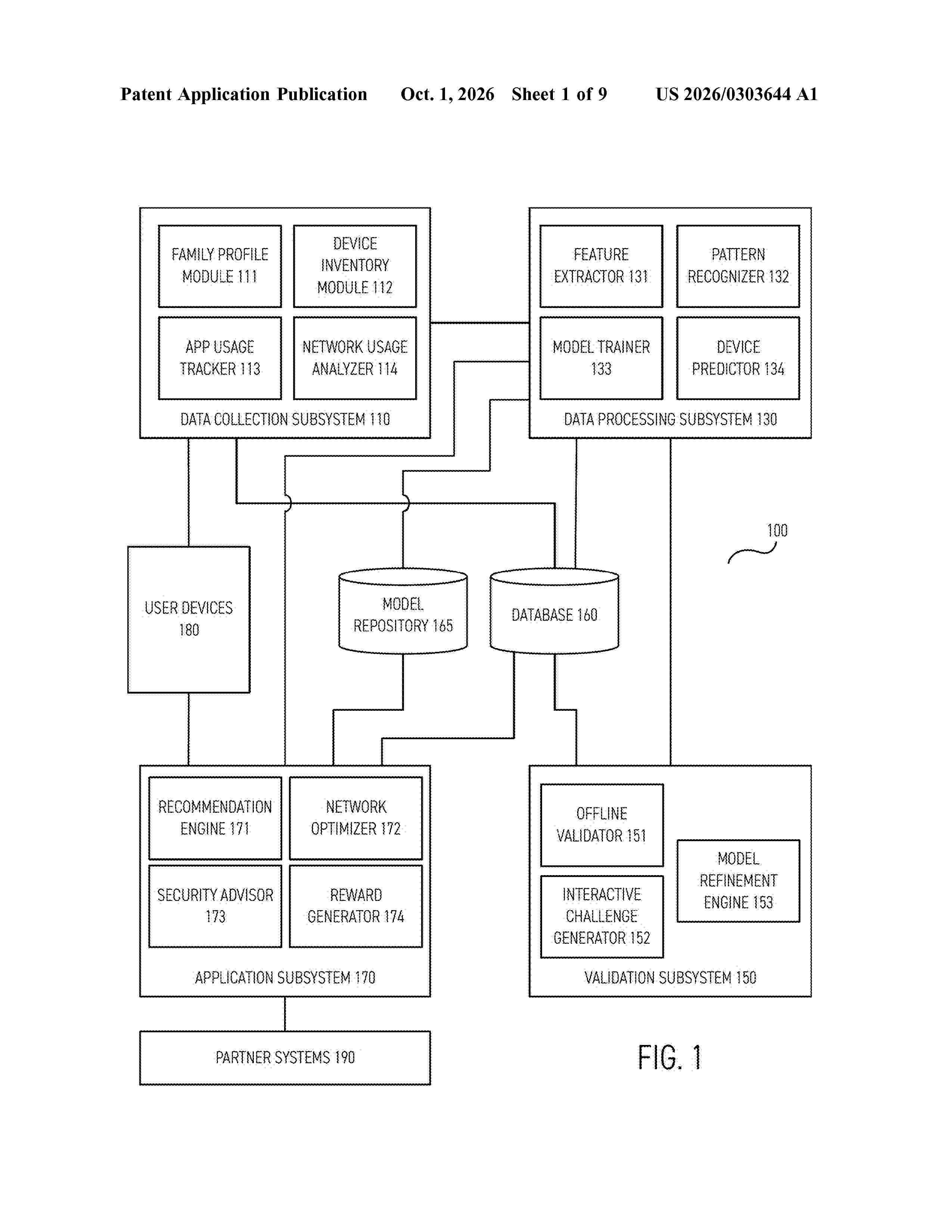
Resumen de: US20260303644A1
0000 The techniques described herein relate to a method including: collecting, by a processor, network data from a household network, the network data including one or more of device inventory data, application usage data, and network usage patterns; generating, by the processor, a feature vector based on the network data; inputting, by the processor, the feature vector into a machine learning model trained to predict future device additions to the household network; receiving, by the processor, a prediction from the machine learning model, the prediction identifying a device type predicted to be added to the household network; storing, by the processor, the prediction in a database; monitoring, by the processor, the household network to detect actual device additions; comparing, by the processor, the actual device additions with the prediction to determine a prediction accuracy value; and updating, by the processor, the machine learning model based on the prediction accuracy value.
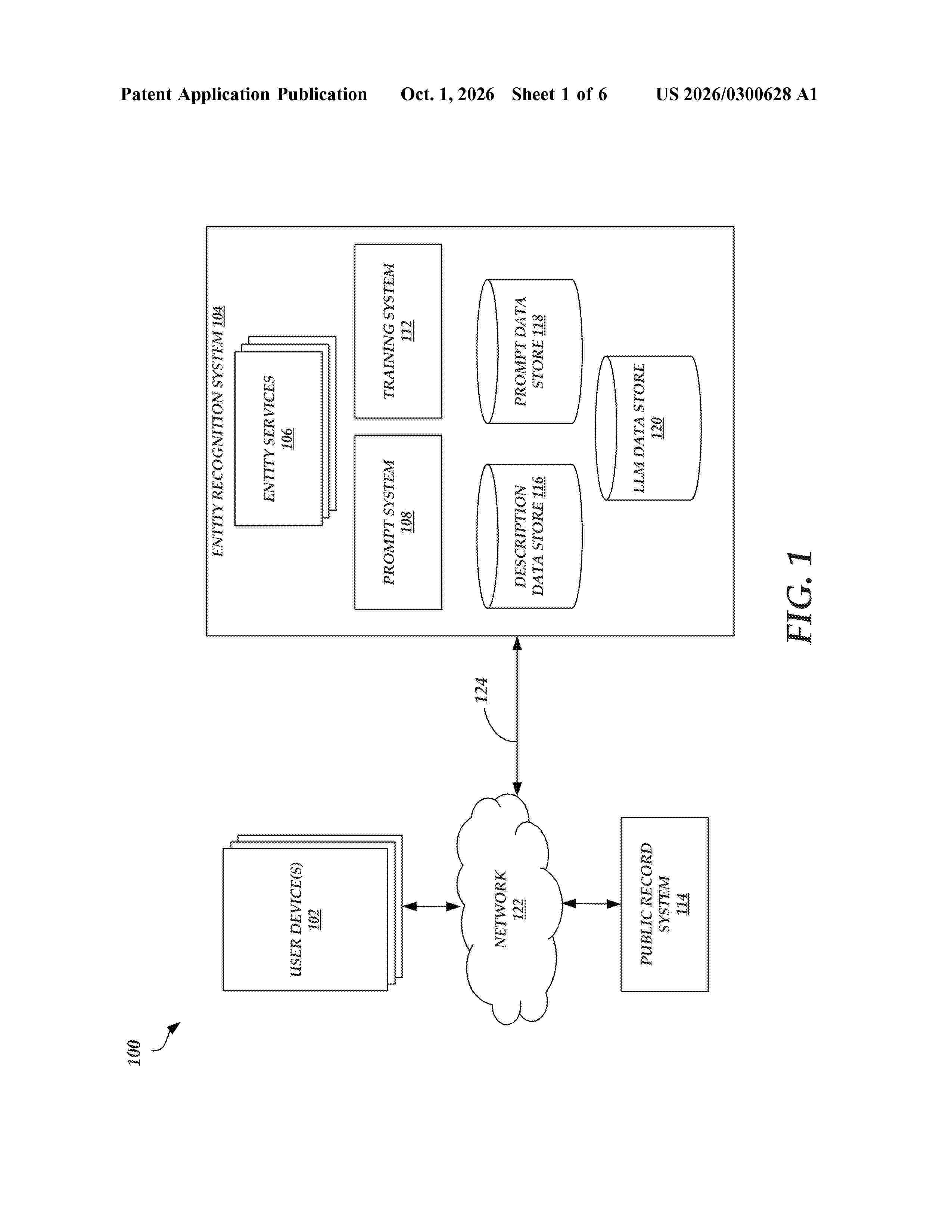
Resumen de: US20260300628A1
0000 Embodiments disclosed herein relate to systems for training and implementing models to extract entities from legal descriptions for further property-related determinations. Specifically, the entity-based search system comprises a plurality of entity services, each configured to access a model for extraction of a particular entity. In a training phase, the entity-based search system may generate a set of training data to specifically train each model for extraction of a particular entity. To curate a training data set, the entity-based search system may implement distance-based calculations to determine a diverse set of training descriptions. The training set may be labeled with ground truth data corresponding to the embedded entities within the description. In an inference phase, the entity-based search system may access a legal description and prompts for input into the model. Each model may be configured to extract entities from the legal description.
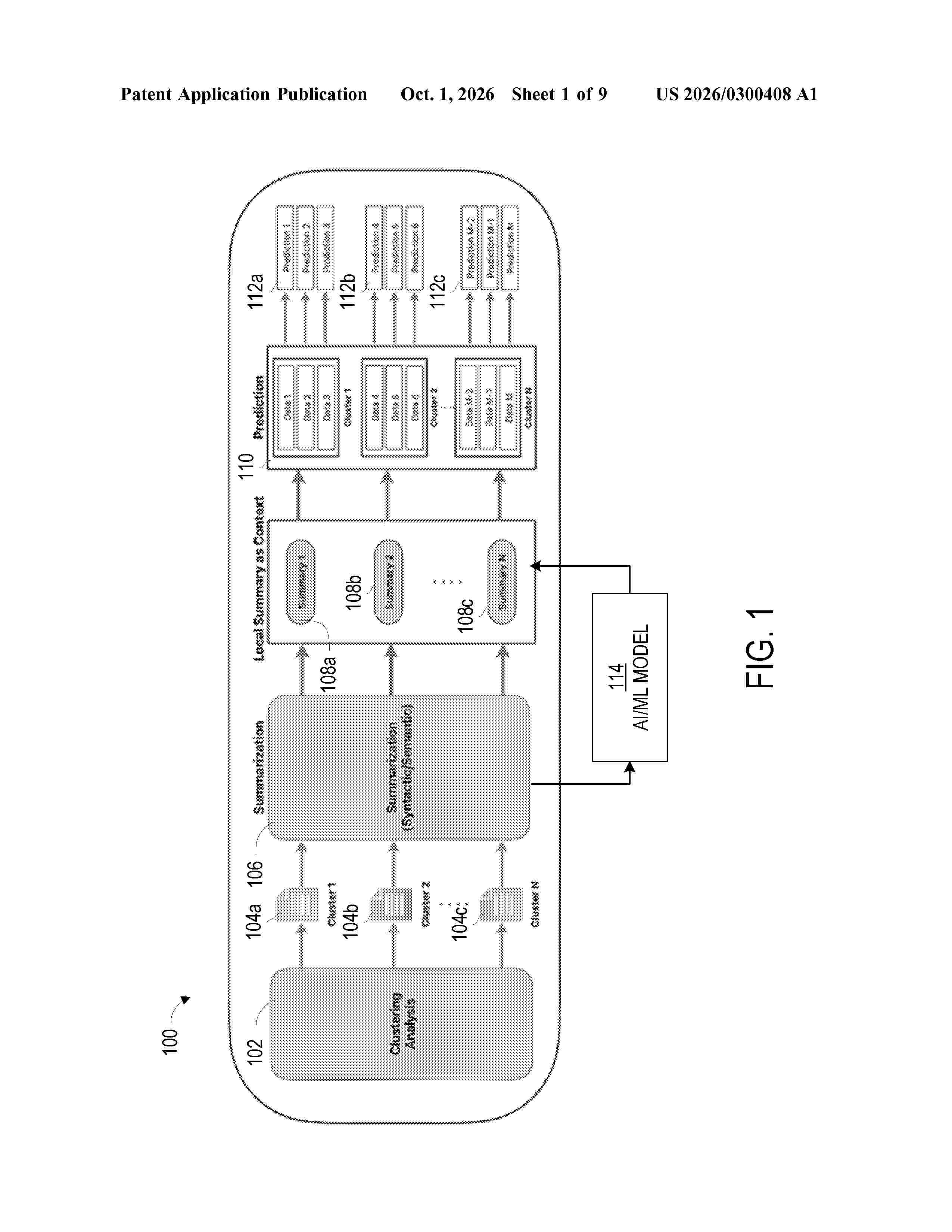
Resumen de: US20260300408A1
Systems and methods for performing analytics using context localized summaries include generating, on a data set with a machine learning system, at least one context localization (CL) summary; and creating, with the machine learning system, secondary analytics with the CL summary and at least a portion of the data set. Other embodiments may be described and/or claimed.
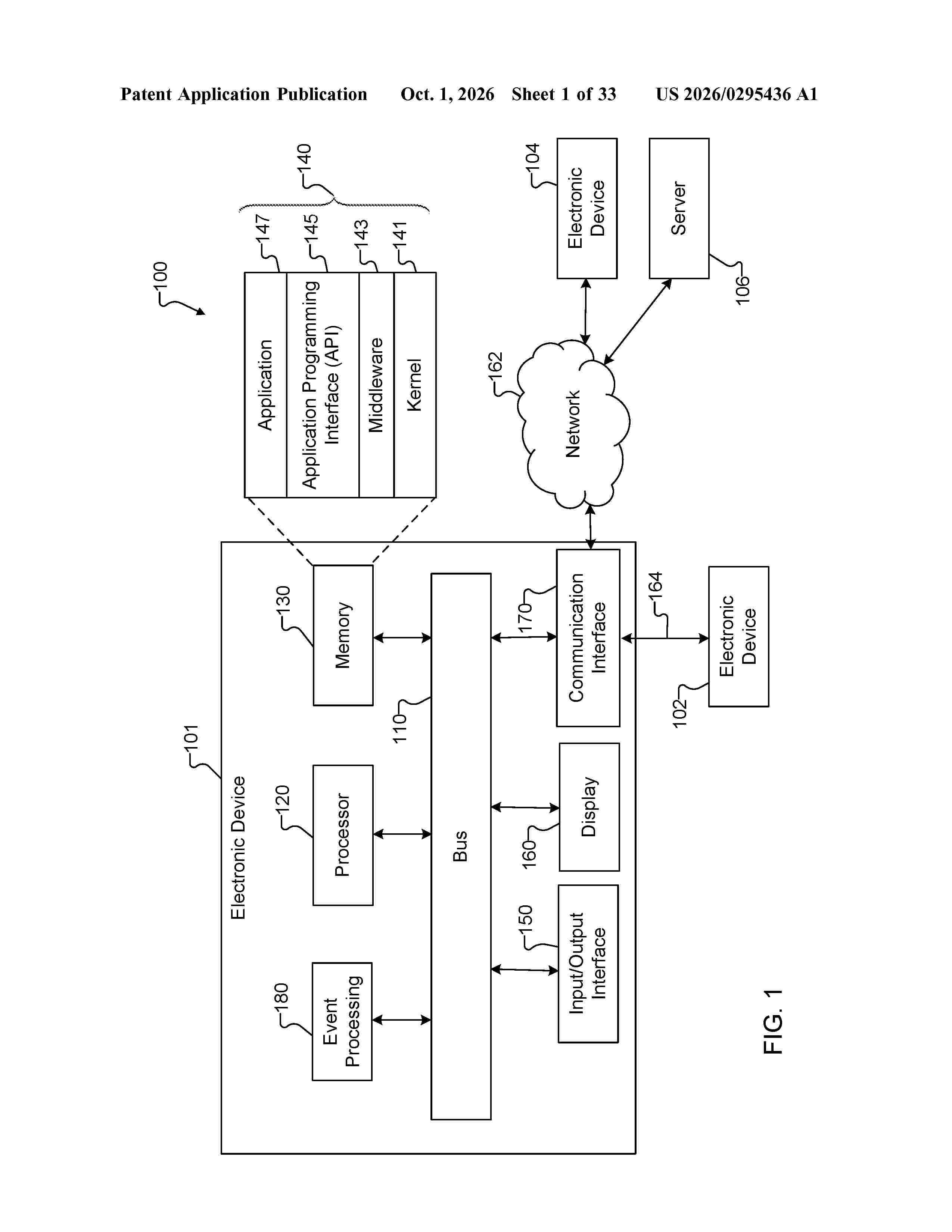
Resumen de: US20260295436A1
A method includes receiving, via an encrypted connection and based on a determination that an application programming interface (API) integration is not available for gameplay content, a video stream of the gameplay content captured from a client device. The method also includes processing the video stream by an encoder to extract key frames from the video stream. The method also includes applying, using at least one machine learning model and the extracted key frames, machine learning classifiers trained on game-specific visual patterns to determine a gameplay result associated with the video stream. The method also includes generating, using the at least one machine learning model, a confidence score for the determined gameplay result. The method also includes transmitting, to the client device based on a determination that the confidence score is above a threshold, an outcome of a peer-to-peer challenge corresponding to the determined gameplay result.
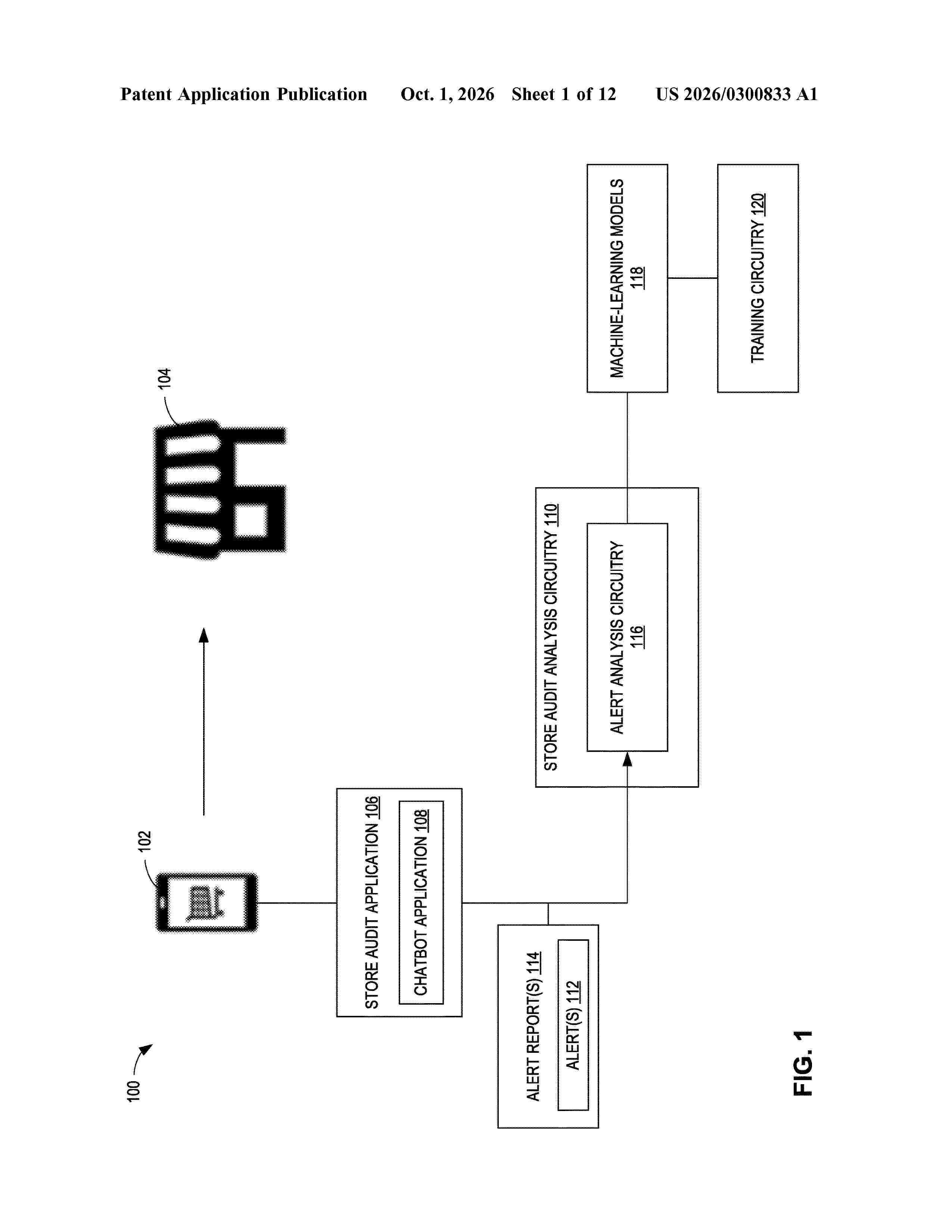
Resumen de: US20260300833A1
Apparatus, systems, and methods for store-level analysis using artificial intelligence are disclosed. An example apparatus includes at least one programmable circuit to generate a feature vector based on an alert report, the feature vector including features corresponding to alert types; execute a supervised machine learning model using the feature vector to generate a supervised output for an alert in the alert report, the supervised output representing a likelihood of the alert warranting an action; execute an unsupervised machine learning model using the feature vector to generate an unsupervised output; classify the alert based on at least one of the supervised output or the unsupervised output; and cause an electronic device to execute the action based on the classification of the alert, the action associated with a status of the alert or a request for additional store-level data.
Resumen de: WO2026207378A1
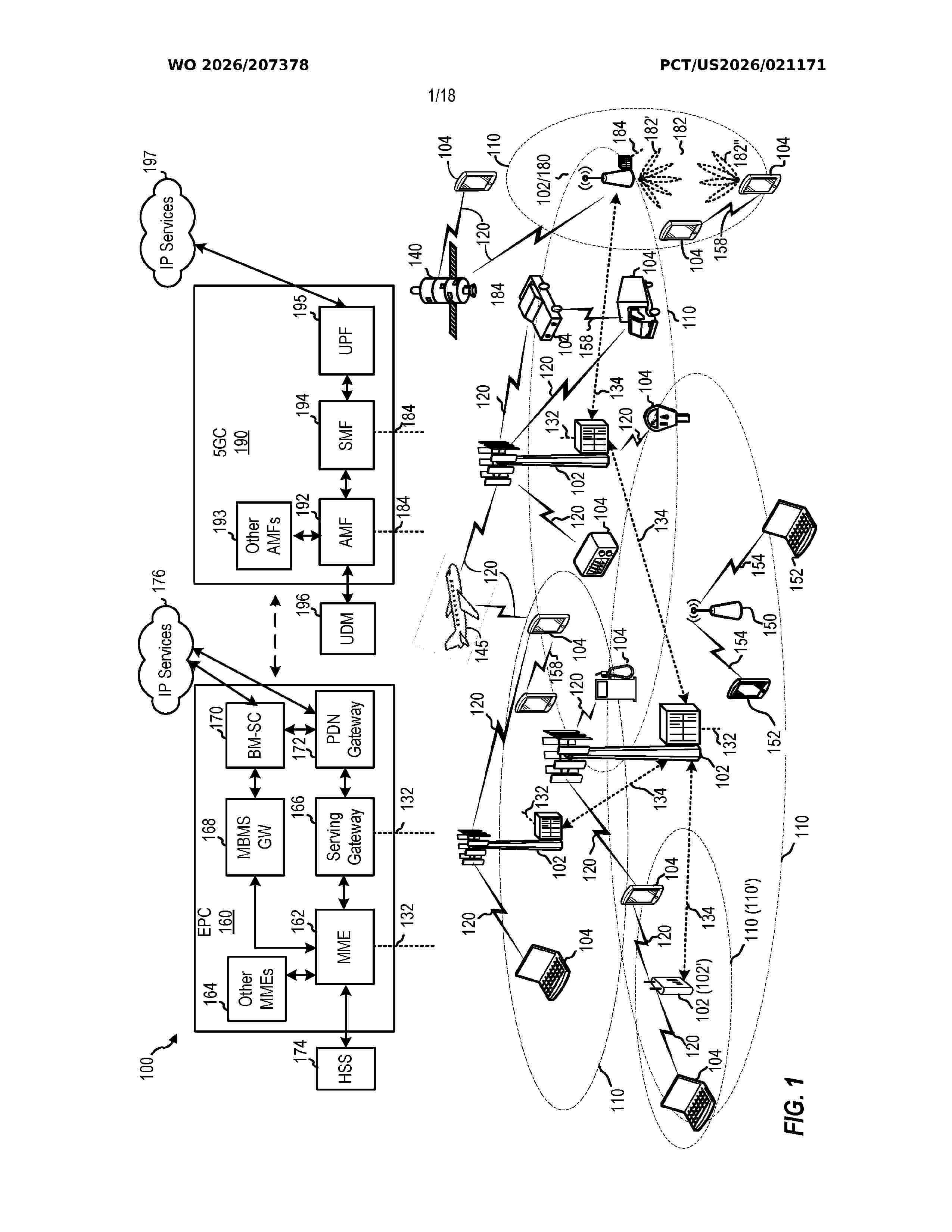
Certain aspects of the present disclosure provide techniques for reporting applicability reporting for artificial intelligence (Al) and/or machine learning (ML) inference scenarios. An example method, performed at a user equipment (UE), generally includes obtaining first signaling configuring the UE with a machine learning (ML) model associated with a use case, outputting a reference report with first information indicating a first set of one or more functionalities that are available to be applied by the UE for inference related to the use case, and outputting a subsequent report with updated information that indicates one or more changes relative to the first set.
Resumen de: US20260300739A1
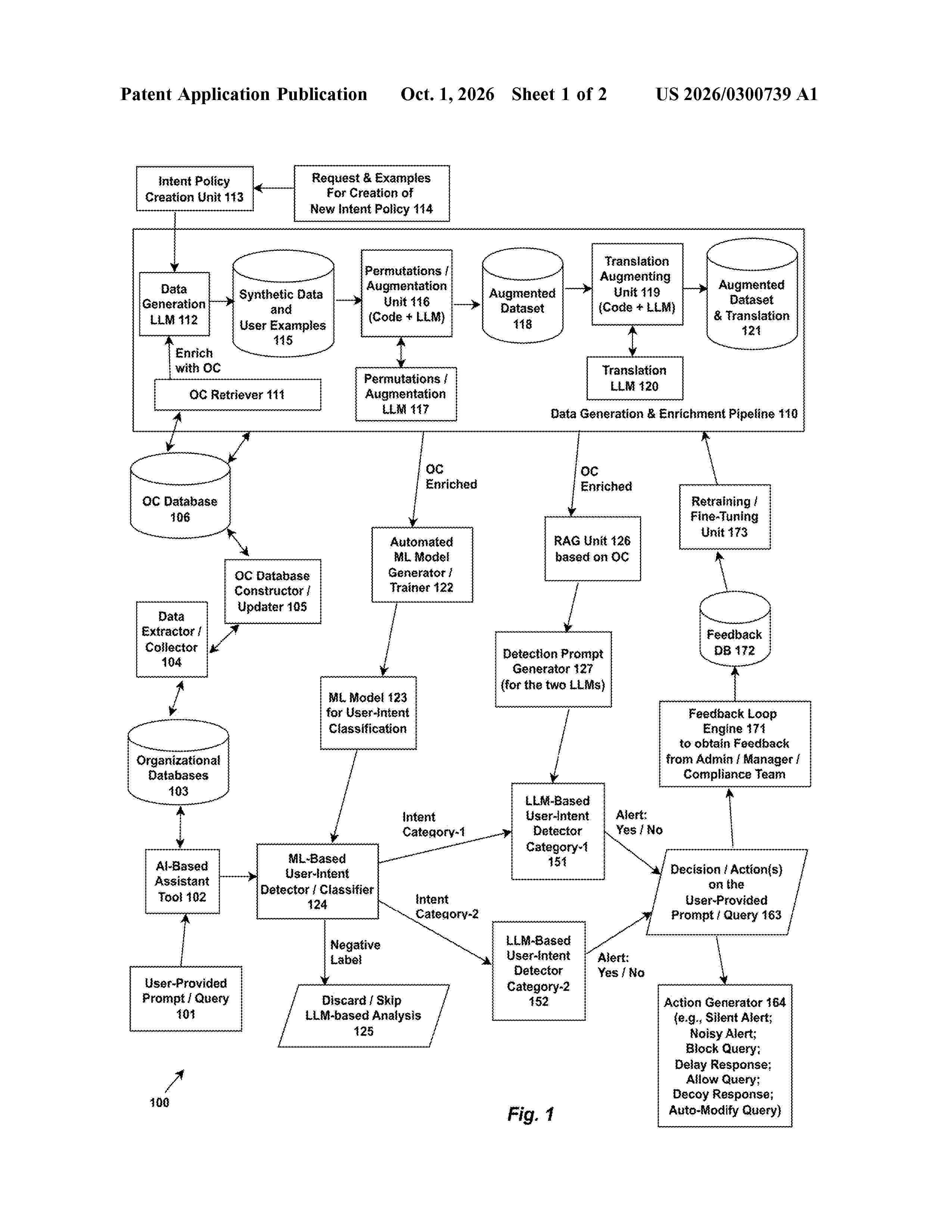
0000 A computerized method includes: (a) receiving a user-provided query directed to an Artificial Intelligence (AI) based assistant tool, that is configured to answer queries based on information from organizational databases of an organization; (b) feeding the user-provided query into a Machine Learning (ML) classification model, to classify the user-provided query as one of: (b1) a possibly-malicious query, or (b2) a non-malicious query; (c1) if the ML classification model classified the user-provided query as non-malicious, then: processing the user-provided query by the AI-based assistant tool; (c2) conversely, if the ML classification model classified the user-provided query as possibly-malicious, then: feeding the user-provided query to a Large Language Model (LLM) based Intent Detector that performs LLM analysis of the user-provided query and of organizational context, that provides LLM-generated output indicating whether the user-provided query is indeed malicious and violates organizational policies.
Resumen de: US20260300811A1
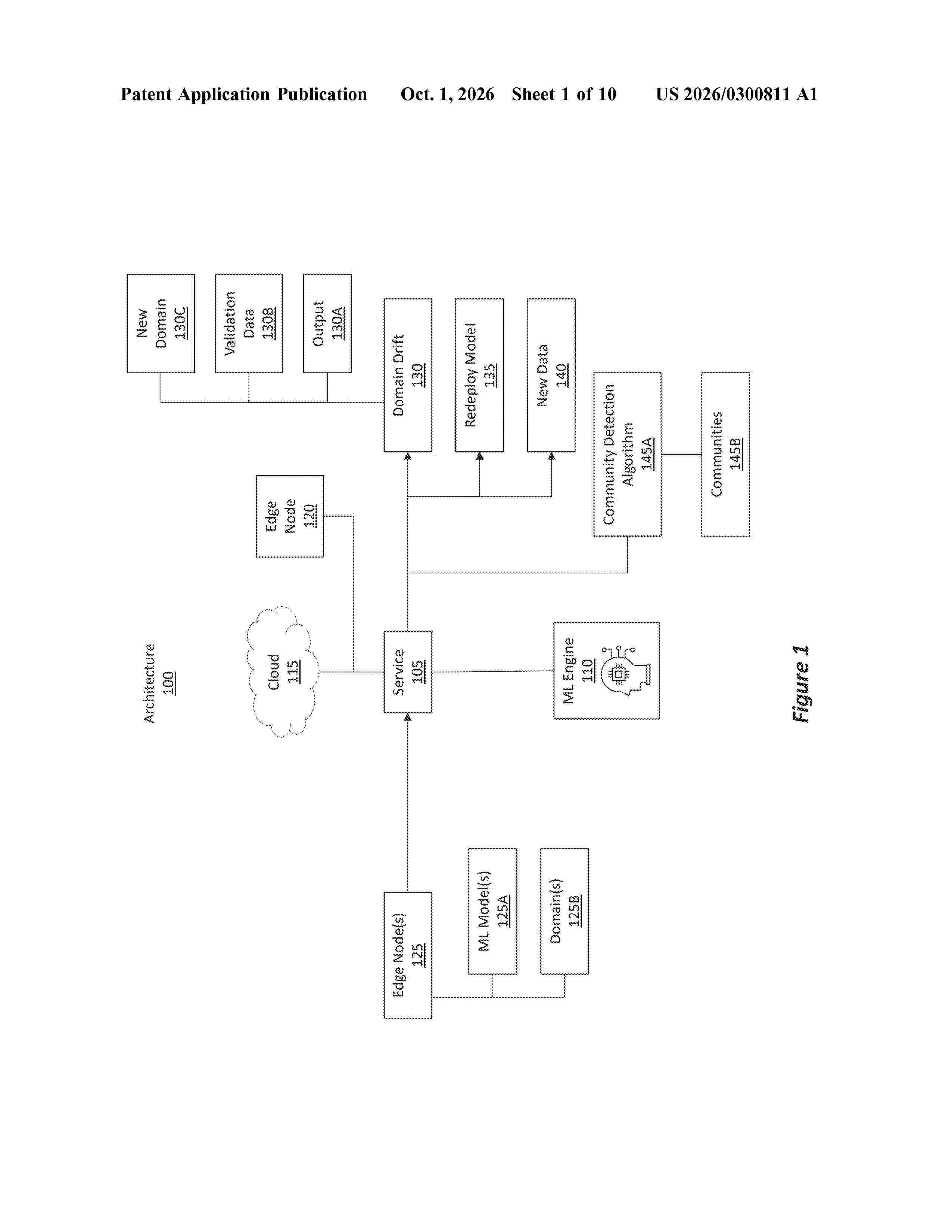
0000 Techniques for identifying and correcting domain drift in an edge node are disclosed. A service identifies edge nodes of a network. The service determines that a first edge node has experienced domain drift. As a result, the first machine learning (ML) model of the first edge node is consuming data from a new domain. The edge nodes are clustered into at least a first and second community based on domain attributes. The first community is associated with a first domain, and the second community is associated with a second domain. The service determines that the new domain of the first ML model corresponds to the first domain. The service either deploys a common ML model used by edge nodes in the first community to the first edge node or, alternatively, retrains the first ML model using domain data of the first community.
Resumen de: WO2026199095A1
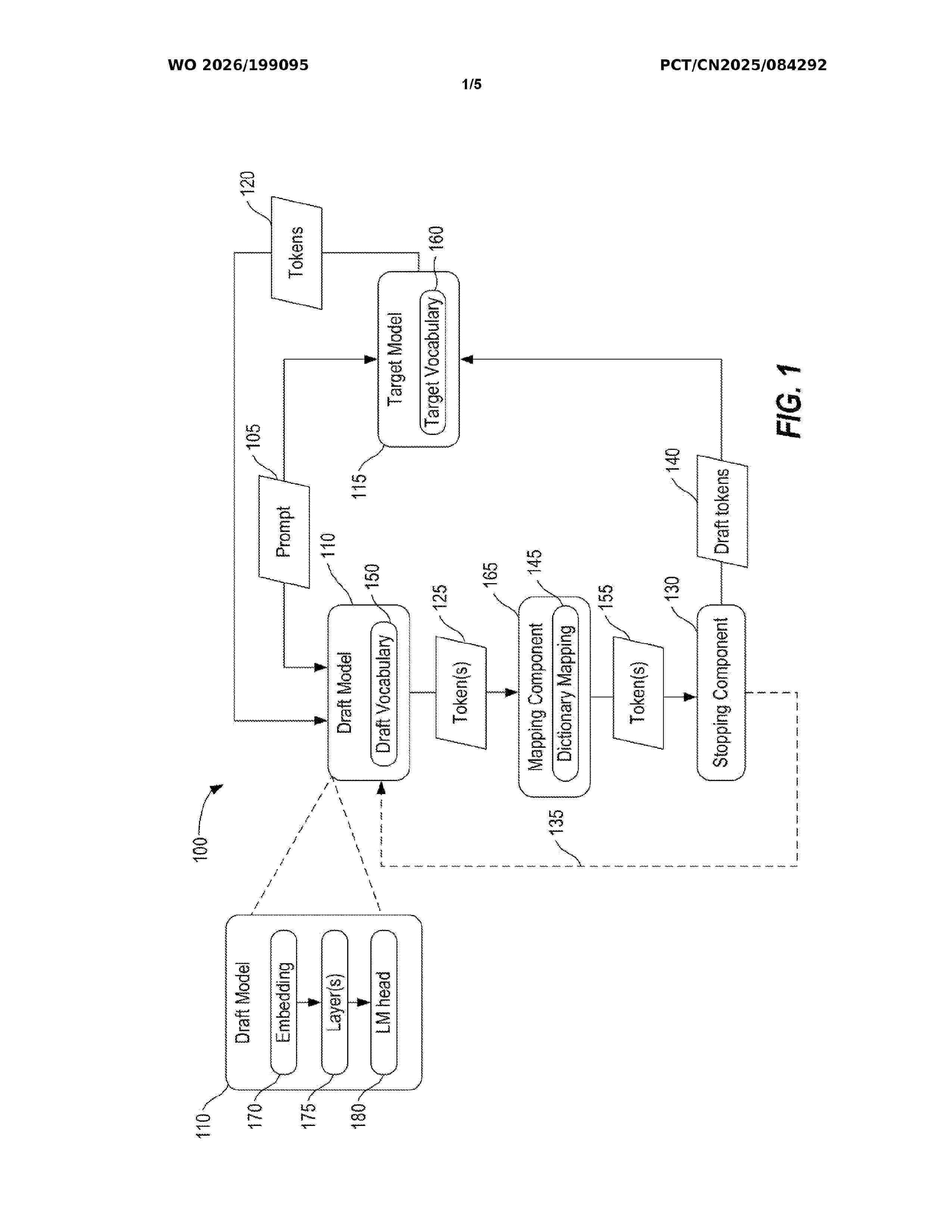
Certain aspects of the present disclosure provide techniques and apparatus for machine learning. In an example method, an input is received at a first generative machine learning (ML) model associated with a first vocabulary. Draft token (s) are generated based on the input using the first model. Generating the draft token (s) includes, for each draft token, (i) generating a first token identifier for the draft token based on processing the input using the first model, (ii) mapping the first token identifier to a second token identifier within a second vocabulary for a second generative ML model associated with the first model, where the first vocabulary is a proper subset of the second vocabulary, and (iii) associating the draft token with the second token identifier. A response to the input is generated, using the first model, based on receiving an indication that the draft token(s) have been verified by the second model.
Resumen de: US20260300325A1
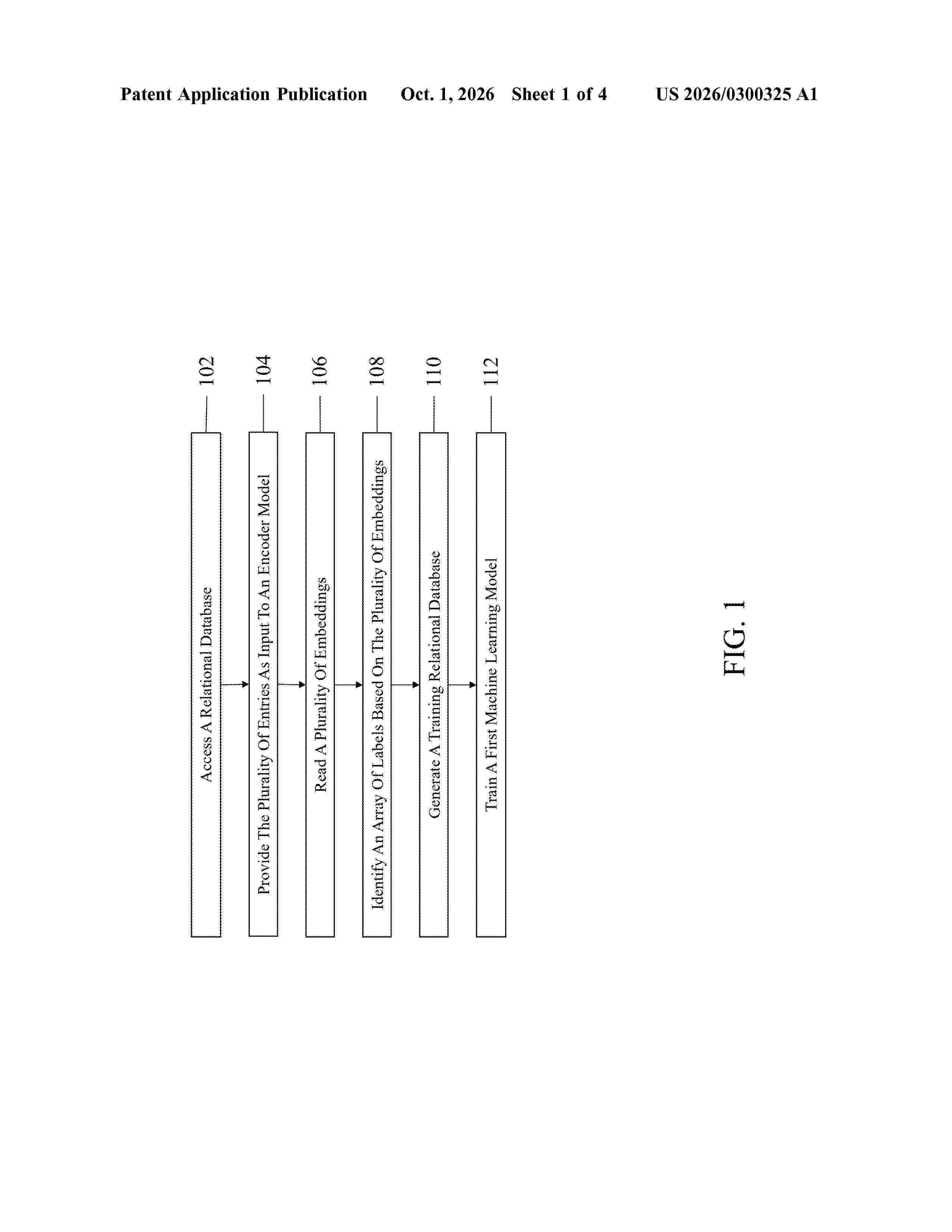
Systems, methods, and computer program products for training a machine learning model are disclosed. A method may comprise accessing a relational database comprising a first table, the first table comprising an array of entries, wherein each entry is associated with a record; providing the plurality of entries as input to an encoder model; reading a plurality of embeddings generated by the encoder model based on the input thereto such that an embedding characterizing each entry is read; identifying an array of labels based on the plurality of embeddings, wherein the array of labels comprises a label for each entry; generating a training relational database based on the relational database and the identified labels, the training relational database comprising a second table, the second table comprising the array of entries and the array of labels; and training a first machine learning model based on at least the training relational database.
Resumen de: US20260300488A1
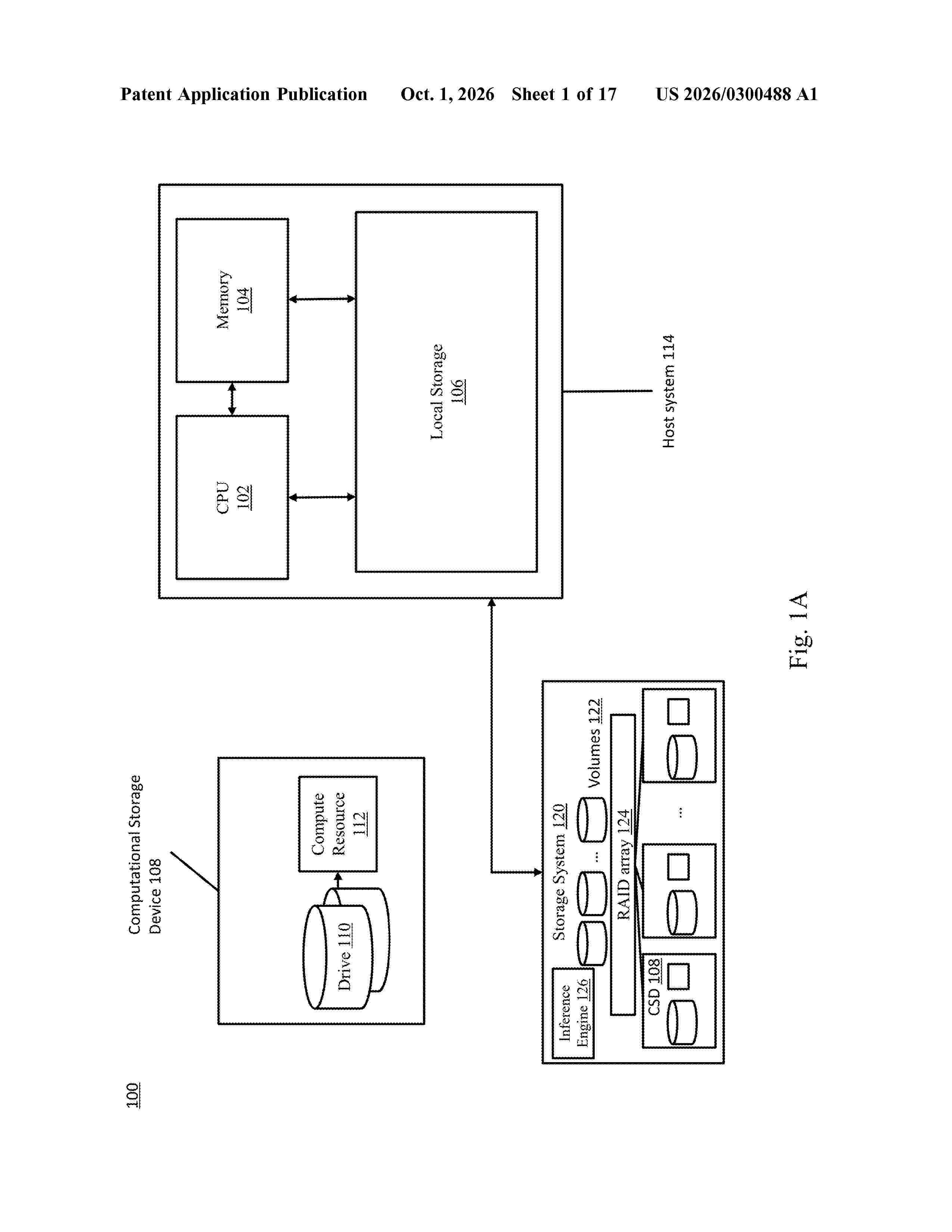
0000 In some embodiments, a method to determine a sampling frequency of input/output (I/O) requests for ransomware detection in a computational storage device (CSD). The method can comprise receiving, from a computational storage device (CSD), a plurality of features and a sampling rate, the plurality of features extracted from a plurality of I/O requests sampled by the CSD using the sampling rate. The method can further comprise providing the sample rate and the plurality of sampled I/O operations to a plurality of machine learning (ML) models. Each ML model can be trained on a training dataset comprising a plurality of training sampled operations, and a training sampling rate. The method can further comprise receiving, from each of the plurality of ML models, a compatibility metric associated with the training sampling rate of that ML model.
Resumen de: US20260300774A1
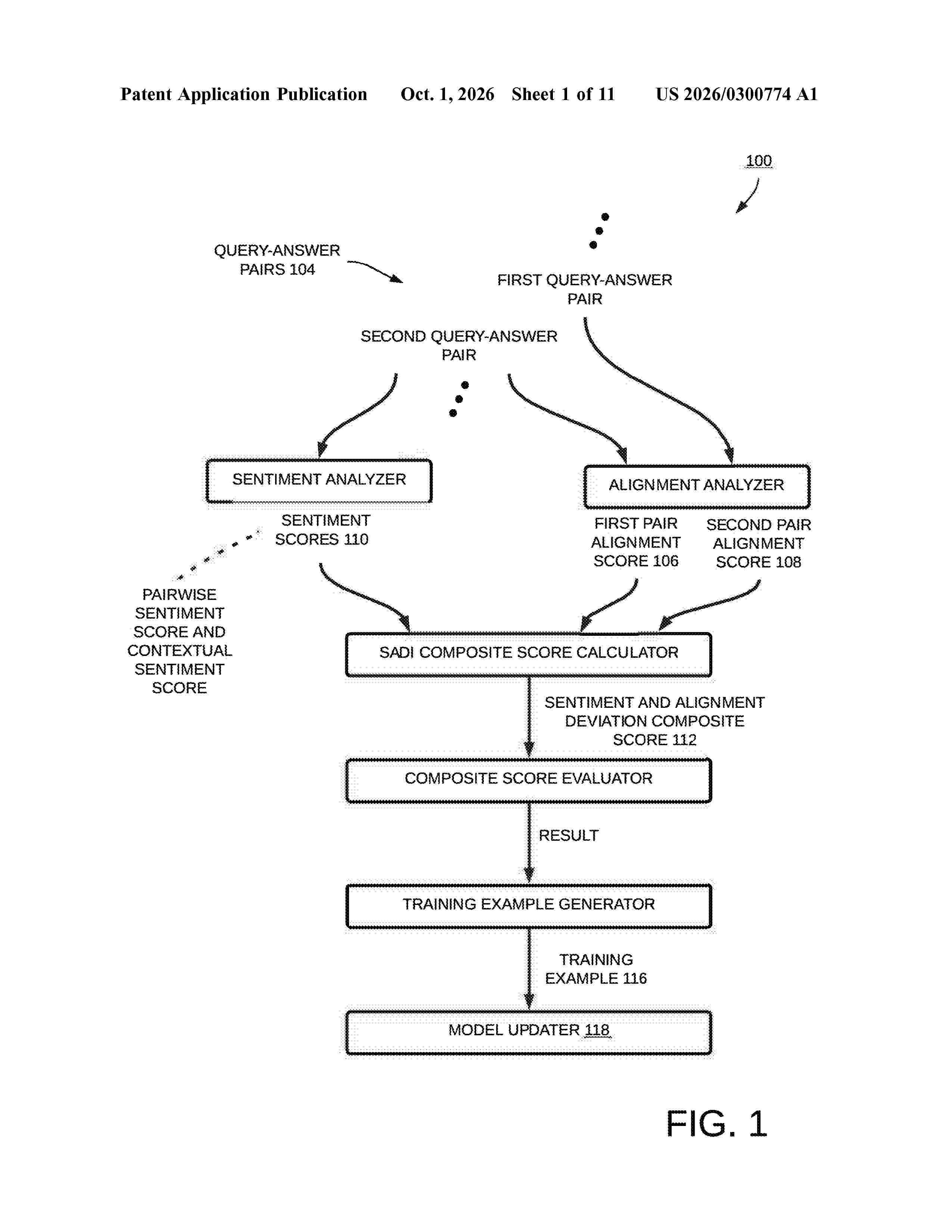
Artificial intelligence chatbot performance is improved through automated conversation quality analysis and training example generation. Chatbot conversations are processed via dual pathways, a sentiment analysis model measuring user satisfaction and an alignment analysis model evaluating query-answer semantic correspondence. These analyses produce alignment and sentiment scores that are combined into a sentiment and alignment deviation composite score called a “SADI score.” The SADI score quantifies response accuracy and satisfaction changes across conversation segments, enabling identification of problematic patterns. When SADI scores indicate significant deviations from performance thresholds, the new training examples are generated from the problematic conversations. The generated examples focus on segments showing sentiment or alignment degradation. A target machine learning model receives parameter updates using these examples, creating a feedback loop where user interactions drive model refinement. The systematic approach enables chatbot adaptation based on real interactions while addressing manual analysis limitations and implicit feedback incorporation.
Resumen de: US20260300068A1
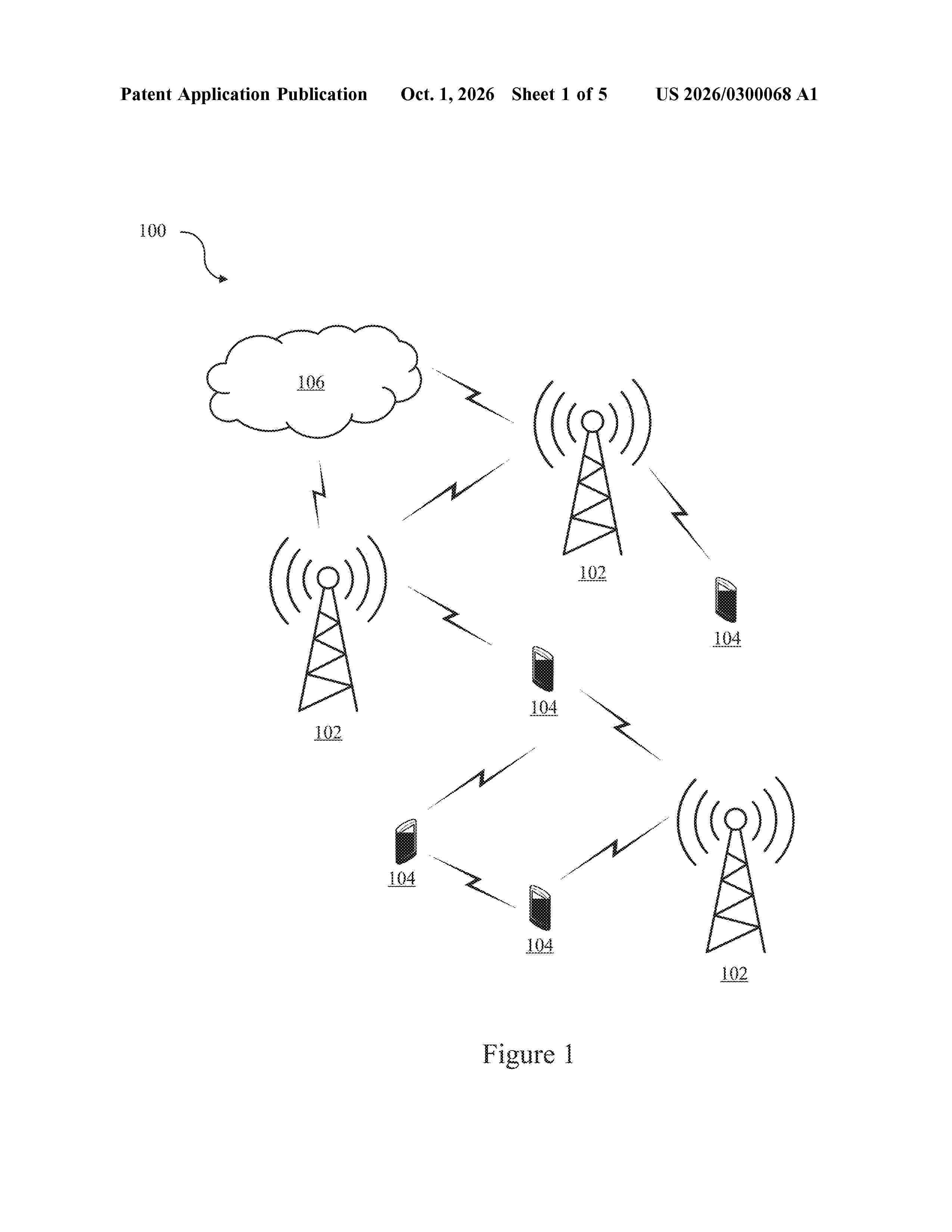
Various aspects of the present disclosure relate to a node for wireless communication, comprising: at least one memory; and at least one processor coupled with the at least one memory and operable to cause the node to: obtain a machine learning (ML) model comprising of a set of model parameters; for each model parameter in the set of model parameters, determine a sensitivity of the model parameter, and provide error protection to the model parameter based on the sensitivity of the model parameter, the sensitivity of the model parameter indicating a degree of toleration for a value of the model parameter to vary without performance of the ML model degrading beyond a tolerance threshold value; and transmit the error protected model parameters to a further node.
Resumen de: EP4814811A1
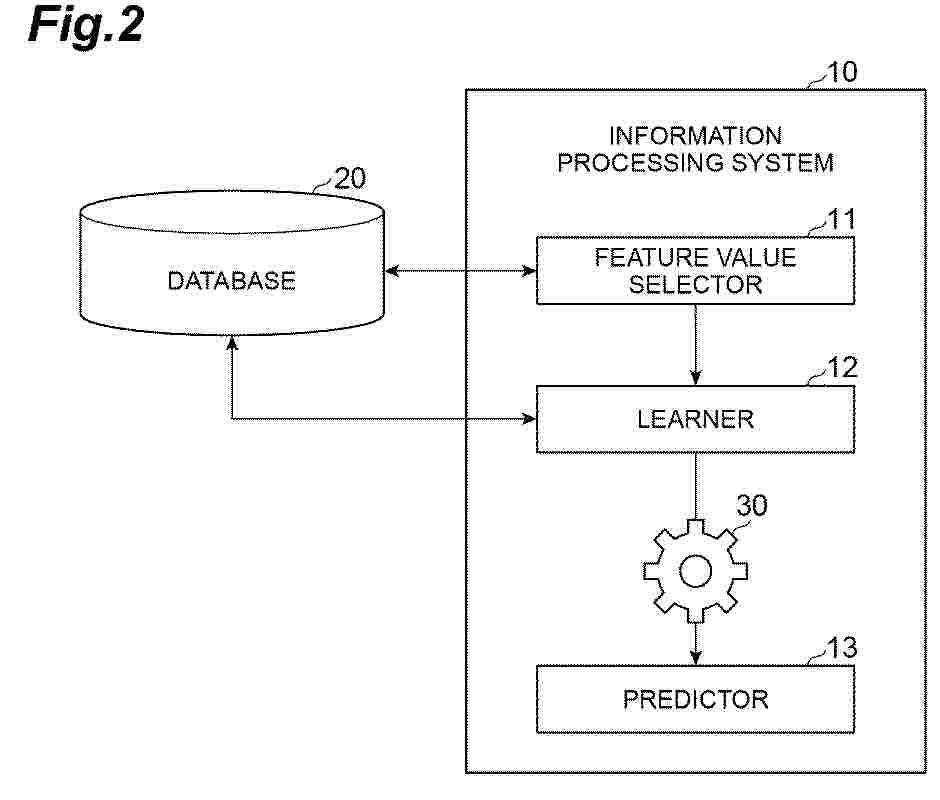
An information processing system of the present disclosure comprises at least one processor. The at least one processor acquires, for each of a plurality of first molecules, training data representing a plurality of feature values related to the first molecule, acquires, for each of a plurality of second molecules, test data representing a plurality of feature values related to the second molecule, calculates, for each of a plurality of feature values, an index based on a first probability distribution which is a probability distribution in the training data and a second probability distribution which is a probability distribution in the test data, and selects, on the basis of the index of each of a plurality of feature values, one or more of the plurality of feature values as one or more input feature values to be used as input parameters of a prediction model for predicting a characteristic value of a molecule on the basis of machine learning.
Resumen de: EP4815542A1
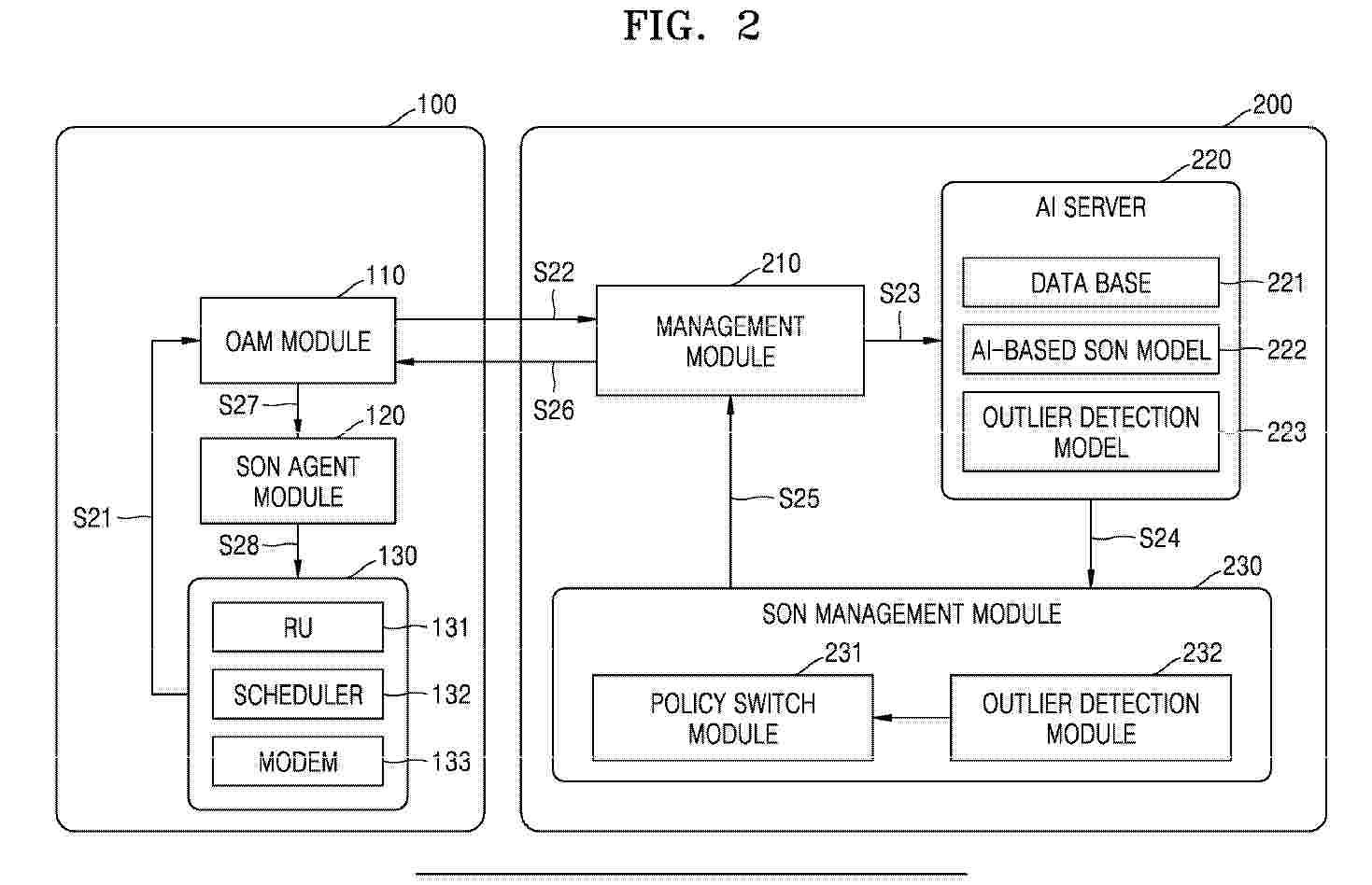
0001 A method for determining a policy for a SON is provided. The method may comprise the steps of: receiving PM data of a communication network; generating feature data representing the PM data by using a deep learning-based encoder; determining an outlier score of the feature data by using a deep learning-based outlier detection model; and selecting one of an artificial intelligence (AI)-based policy and a non-AI-based policy for performing SON in the communication network according to the outlier score.
Resumen de: EP4814814A1
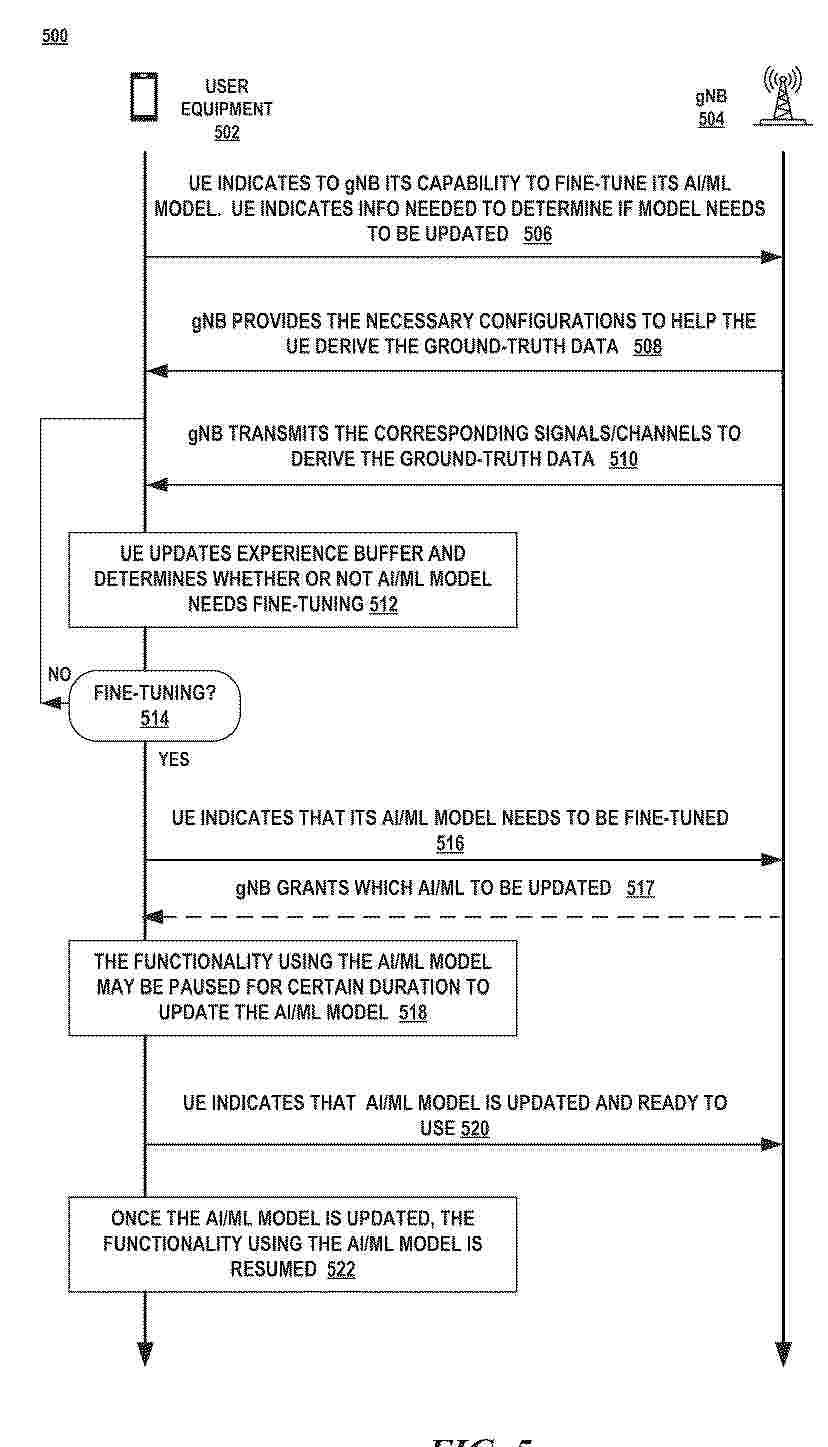
A system and a method are disclosed for fine-tuning an artificial intelligence/machine learning, Al/ML, model online in a wireless communication system. A user equipment, UE, (502) transmits to a base station (504) capability information of fine-tuning online one or more Al/ML models of the UE (502); receives, from the base station (504), channels and/or signals for the UE (502) to determine whether a first Al/ML model of the one or more Al/ML models of the UE (502) needs to be fine-tuned; determines to fine-tune the first Al/ML model online based on the channels and/or signals received from the base station (504) and model-generated output from the first Al/ML model; and fine-tunes the first Al/ML model to generate an output that is used for a downlink transmission.
Resumen de: GB2704984A
A method for calibration-based pruning of machine learning model comprises: training 110 the machine learning model; generating 120 a reliability diagram of the trained machine learning model for a plurality of samples; identifying 130 bins where the predicted confidence differs from the observed accuracy; for each of said identified bins: for each sample in the identified bin 140: deciding whether increasing or decreasing the predicted confidence for that sample will reduce a bin’s confidence-accuracy difference; computing using a feature importance method respective relevance scores of elements of the machine learning model; negating the relevance scores for those samples where a decrease instead of an increase in their predicted confidence is decided to reduce the bin’s confidence-accuracy-difference; identifying 160 elements with a lowest aggregated relevance score; and pruning 170 the elements with that lowest aggregated relevance score to obtain a pruned model. The feature importance method may comprise layer-wise relevance propagation, while the elements of the machine learning model may be neurons, filters, weights. figure 1
Resumen de: US20260288429A1
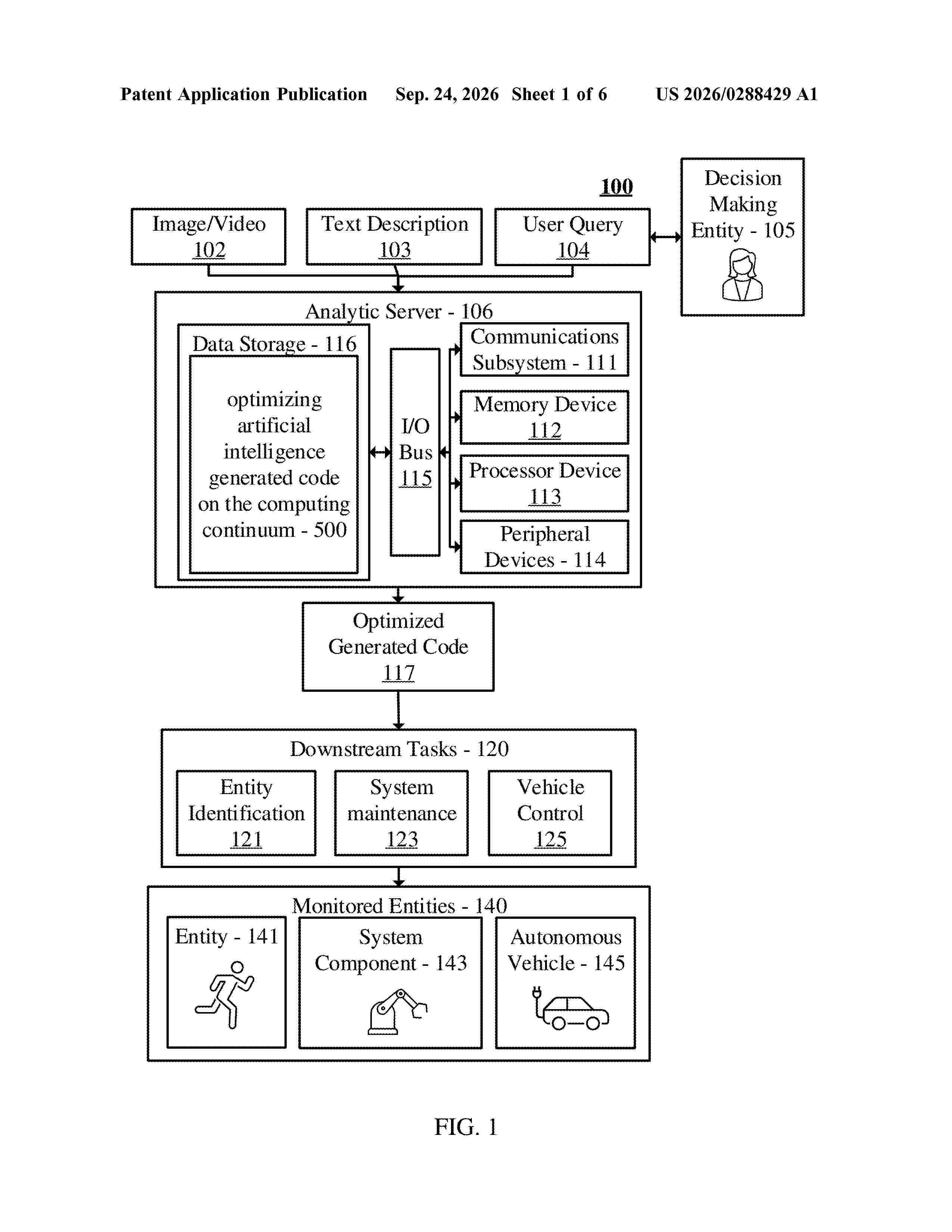
Systems and methods for optimizing artificial intelligence generated code on the computing continuum. An instruction code that instructs a machine learning model (MLM) can be modified to obtain a modified instruction code that incorporates a dynamic control flow that limits processing of software code based on a target time period. One or more candidate codes based on the modified instruction code can be generated. One or more service paths within the dynamic control flow of the one or more candidate codes can be executed to obtain an optimized generated code having detailed responses within a threshold for downstream tasks by asynchronously performing sub-tasks from the one or more service paths to optimal computing nodes.
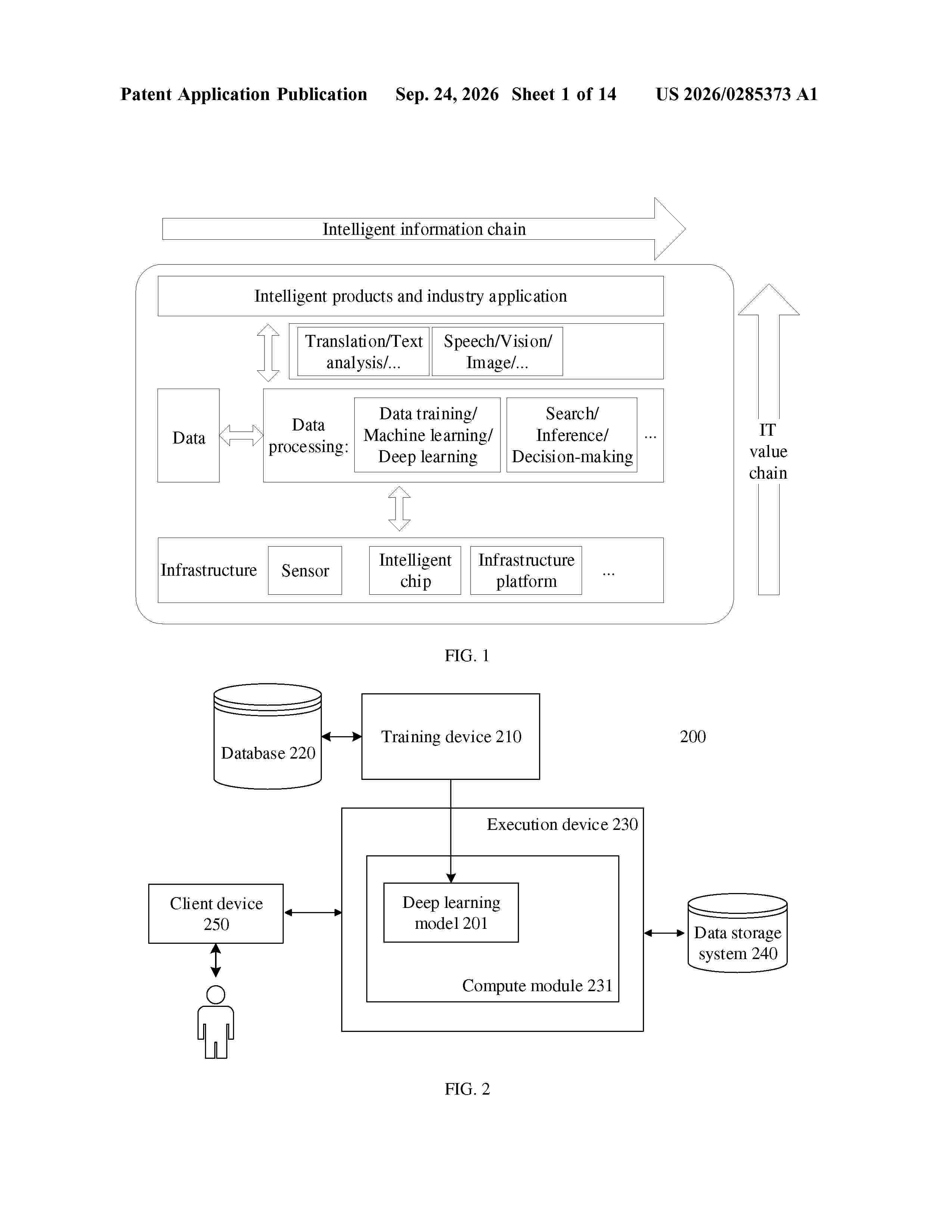
Resumen de: US20260285373A1
0000 Embodiments of this disclosure disclose an information processing method and a related device. The method may be applied to the autonomous driving field in artificial intelligence. The method includes: inputting, to a deep learning model, first information corresponding to a traffic scene around an ego vehicle, and obtaining second information corresponding to the first information, where the first information includes first text information, the second information is obtained based on the deep learning model, and the second information corresponds to any one of the following tasks: making a decision on behavior of the ego vehicle, planning a trajectory for the ego vehicle, or controlling the ego vehicle. Input information of the deep learning model provided in this disclosure includes text information that facilitates understanding by a user.
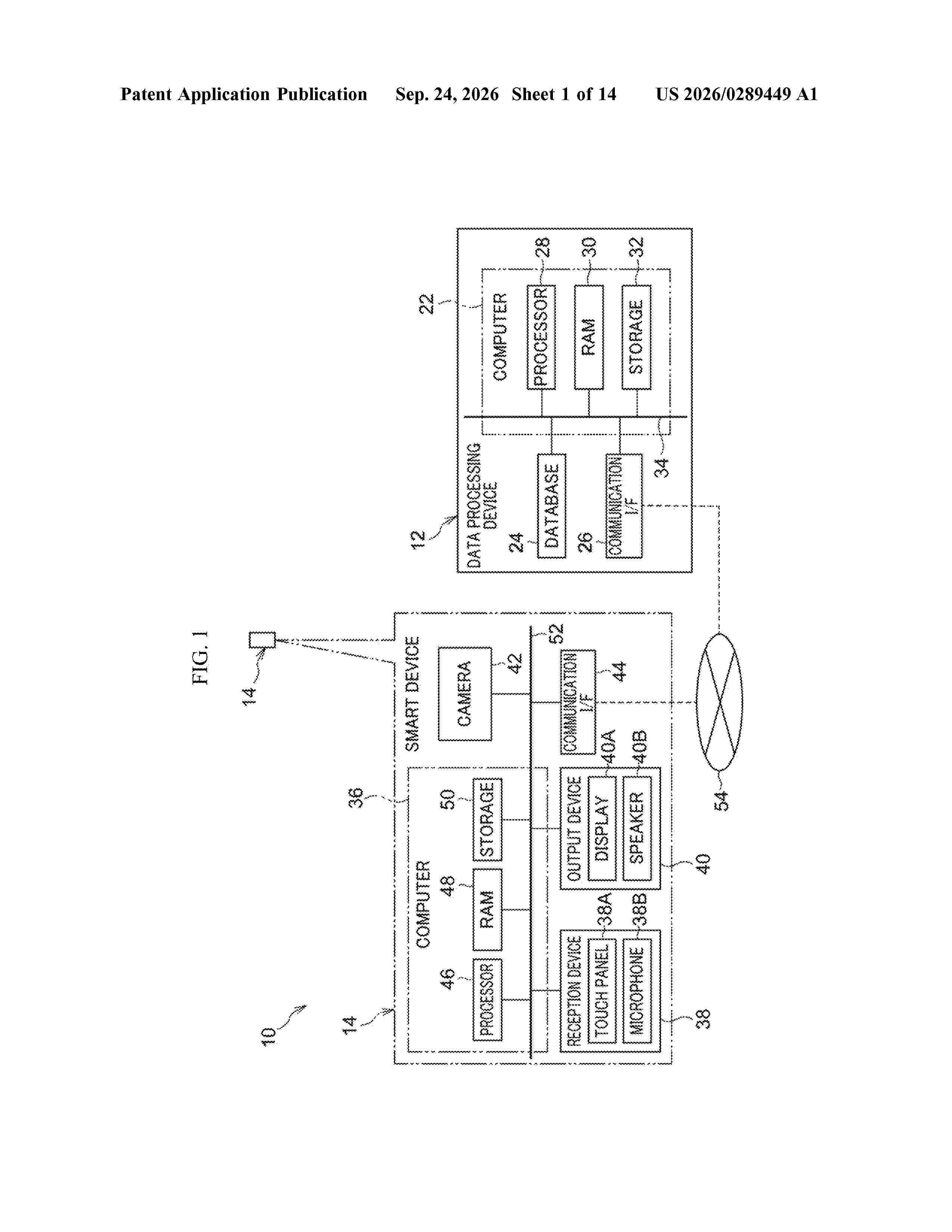
Resumen de: US20260289449A1
0000 A system includes a processor that is configured to collect information for attracting visitors to a facility from at least one sensor or at least one database and analyze the collected information by using a machine learning algorithm, acquire attributes of visitors by using at least one camera or at least one RFID sensor and analyze the acquired attributes by using a data mining technique, and generate, by using a natural language processing technique, a prompt sentence for instructing a generative artificial intelligence model to generate event content and input the prompt sentence to the generative artificial intelligence model.
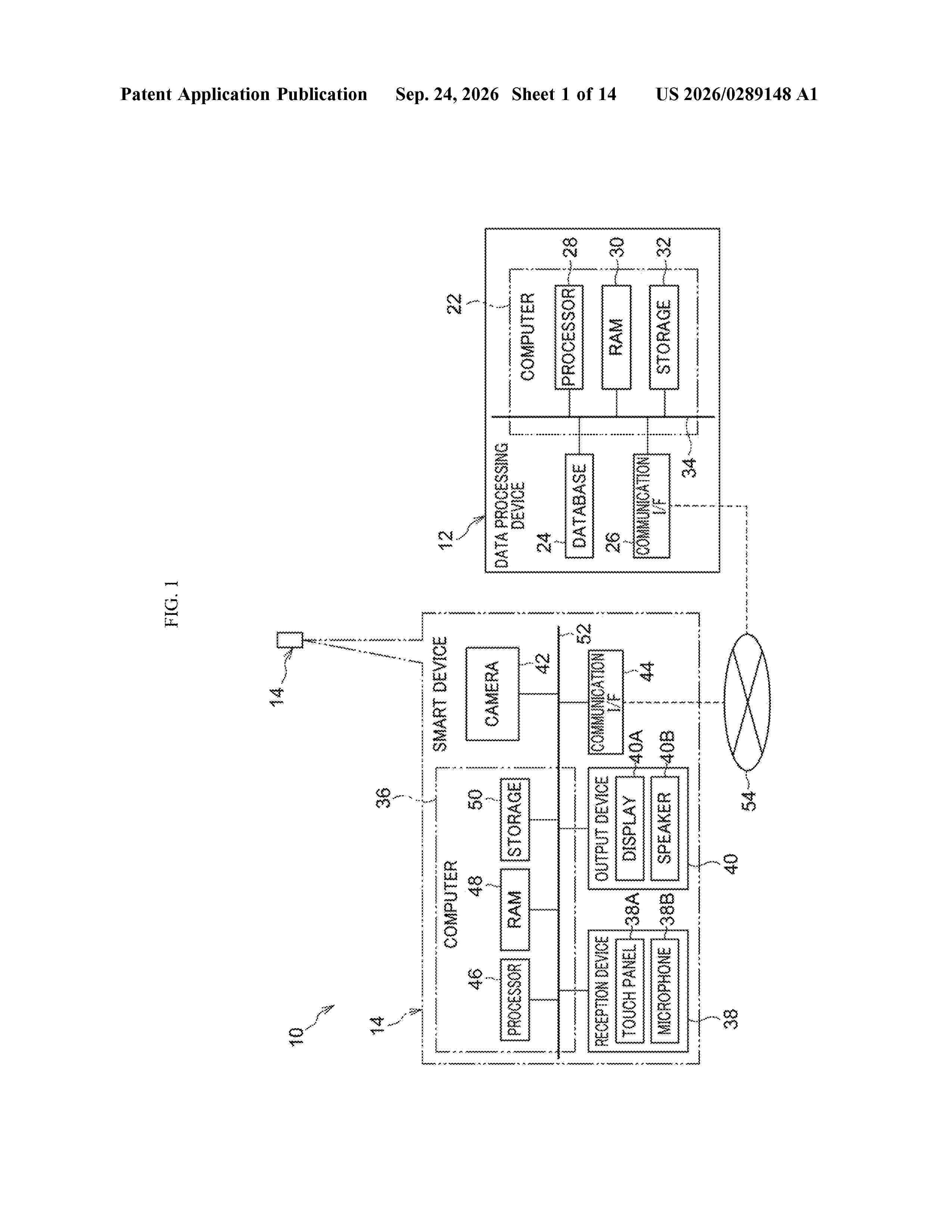
Resumen de: US20260289148A1
0000 A system includes a processor that is configured to collect historical performance information, market trend information, and competitor information, convert the collected data into a format suitable for analysis, analyze the data using a machine learning algorithm to identify factors that affect a management strategy, generate an optimal management strategy by using a generative AI model based on the identified factors, obtain emotion information by using an emotion engine that recognizes a user's emotion, and reflect the obtained emotion information in the generated management strategy, and receive feedback from a user and use the feedback to improve the generative AI model.
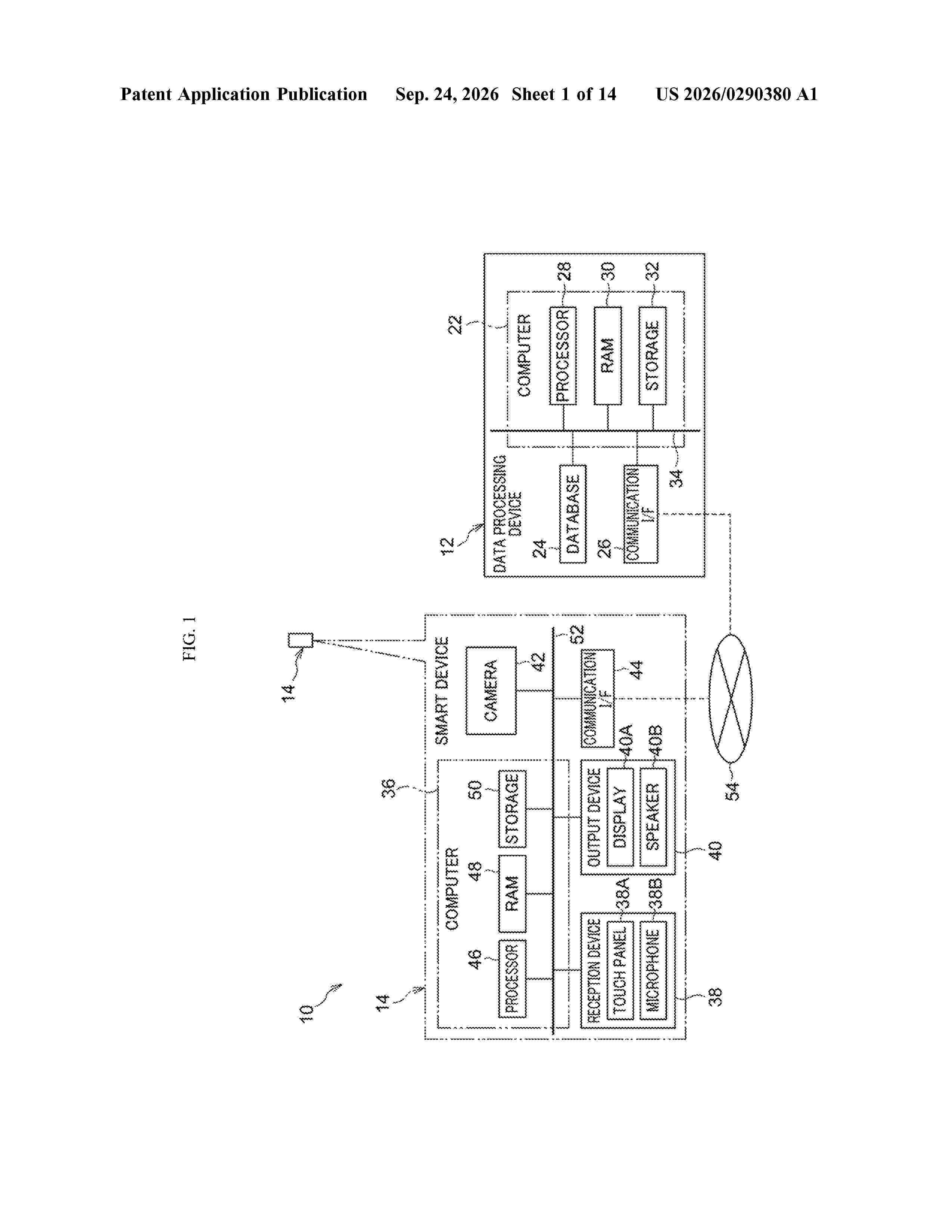
Nº publicación: US20260290380A1 24/09/2026
Solicitante:
SOFTBANK GROUP CORP [JP]
SoftBank Group Corp.
Resumen de: US20260290380A1
A system includes a processor that is configured to extract, from a database, data related to past business performance and customer traffic for a corresponding past period and analyze the extracted data using a statistical analysis technique, generate a prompt for instructing a generative artificial intelligence model to generate advice, input the prompt into the generative artificial intelligence model, and obtain advice generated by the generative artificial intelligence model, and perform preprocessing on data using an information processing device, normalize the data, and perform feature extraction on the data so as to apply a machine learning algorithm and construct a prediction model.
 BOPI
BOPI
 Sede Electrónica