Si deseas distinguir tus productos, servicios o ambos de los de otra empresa, es posible que necesites una marca o nombre comercial. Descubre qué son, en qué consiste su procedimiento de registro y qué implica.

Información sobre los plazos de presentación de solicitudes de transformación de marcas de la Unión Europea en marca nacional española. Más información


Si tienes un nuevo dispositivo, producto o procedimiento que resuelva un problema técnico o tenga una ventaja práctica, existen distintas formas de protegerlo en España y en otros países. Descubre cómo hacerlo.

¿Tu innovación reside en la estética, la ornamentación o la apariencia de tu producto? Protégela mediante un diseño industrial. Descubre qué derechos confiere el registro y cómo realizar la tramitación.

Las indicaciones geográficas protegen el nombre de un producto originario de una zona geográfica, a la cual le debe una determinada calidad, reputación u otra característica. Descubre qué son, en qué consiste su procedimiento de registro y qué beneficios conceden.

Las patentes publicadas en todo el mundo son una valiosa fuente de información científica, técnica y comercial.

Si eres emprendedor/a o una empresa y quieres potenciar y mejorar la rentabilidad de tu negocio protegiendo de forma adecuada los activos intangibles de tu organización, en este espacio encontrarás lo necesario.


 1060
resultados
1060
resultados
 Última actualización
24/10/2026 [07:27:00]
Última actualización
24/10/2026 [07:27:00]


 Resultados 500 a 525 de 1060

Resumen de: AU2025228469A1
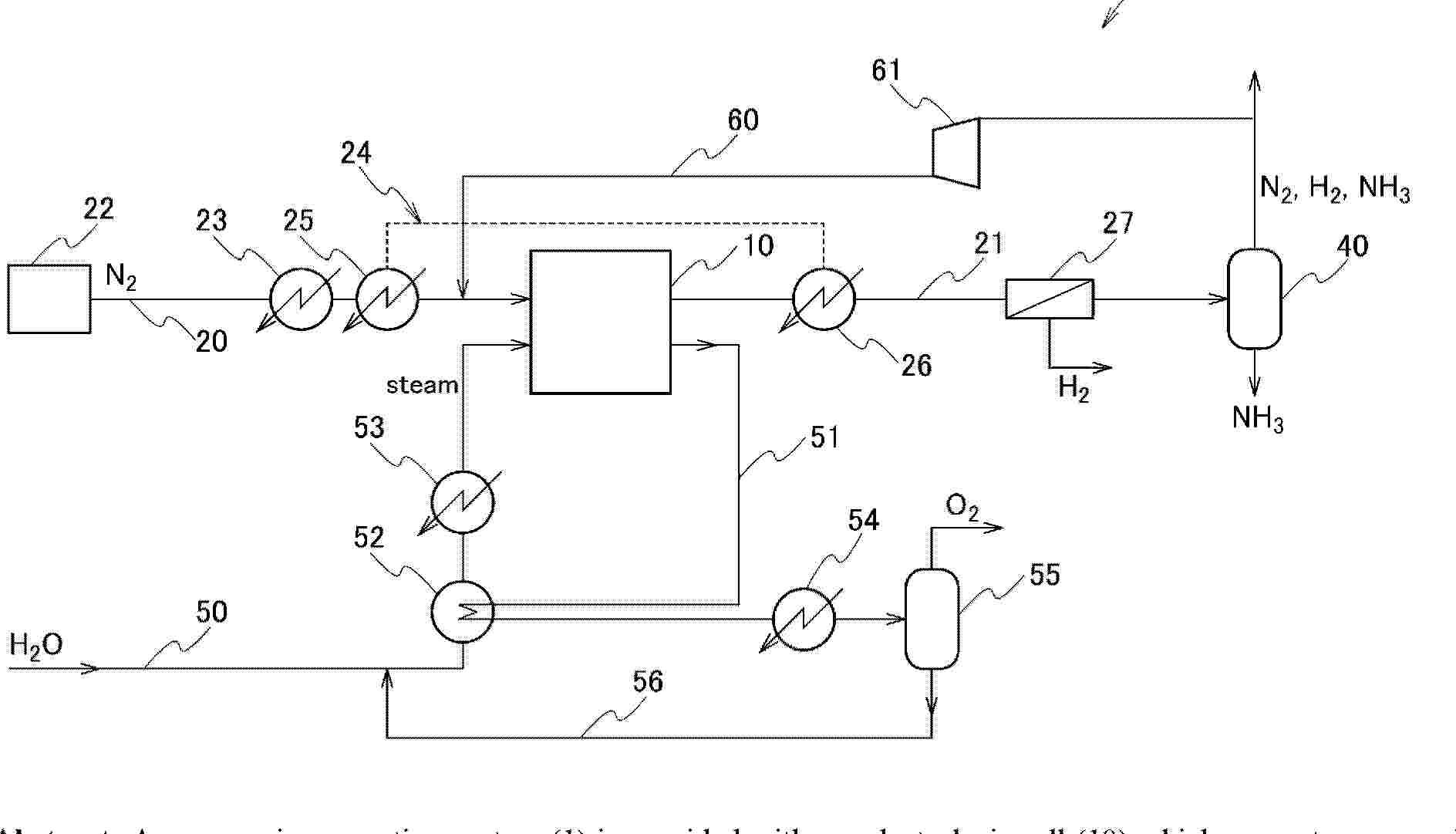
An ammonia generation system (1) is provided with: an electrolysis cell (10) which generates ammonia from nitrogen and water, and is provided with a solid electrolyte (13) that contains a phosphoric acid compound which is a proton conductor; an ammonia separator (40) which is provided in a cathode outlet-side flow path (21) and separates ammonia from the cathode off gas; and a cathode-side circulation flow path (60) which is connected to the ammonia separator (40), and which returns, to the cathode (12), the residual gas that remains after the separation of ammonia by means of the ammonia separator (40) and contains nitrogen and hydrogen.

Resumen de: WO2025059026A1
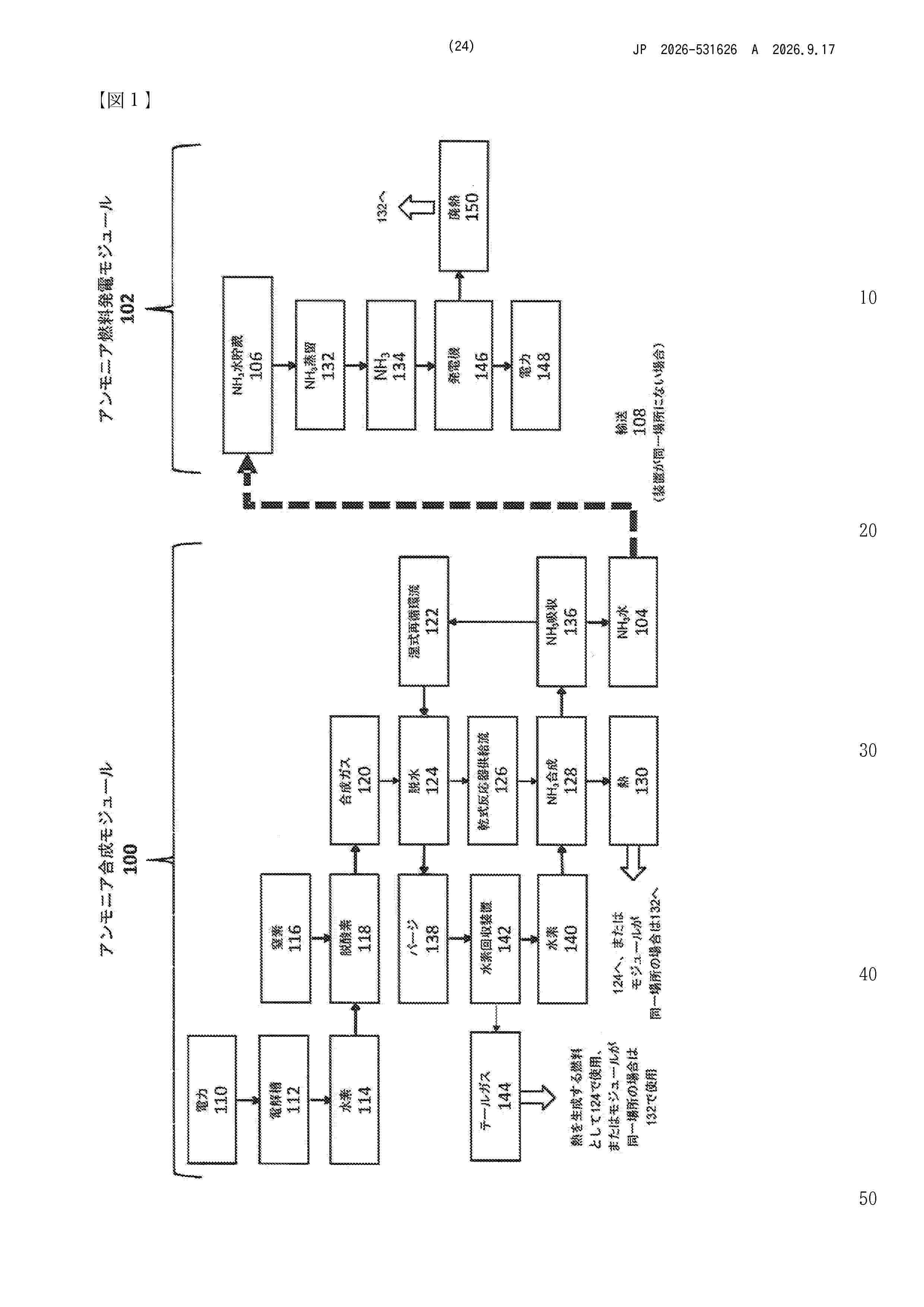
Provided herein are systems and methods for utilizing aqua-ammonia as an energy or hydrogen storage and transport medium. A method for delivering power, the method comprises converting enriched ammonia to electrical power and heat; and using the heat to remove water from aqua-ammonia, thereby producing the enriched ammonia.
Resumen de: US20260274673A1
A carbon material containing a fired product of a mixture containing a first compound and a second compound, in which the first compound is a phthalocyanine compound having bromine as a substituent, and the second compound is a compound containing at least one metal element selected from the group consisting of Fe, Co, Ni, Cu, Al, and Zn.
Resumen de: US20260275552A1
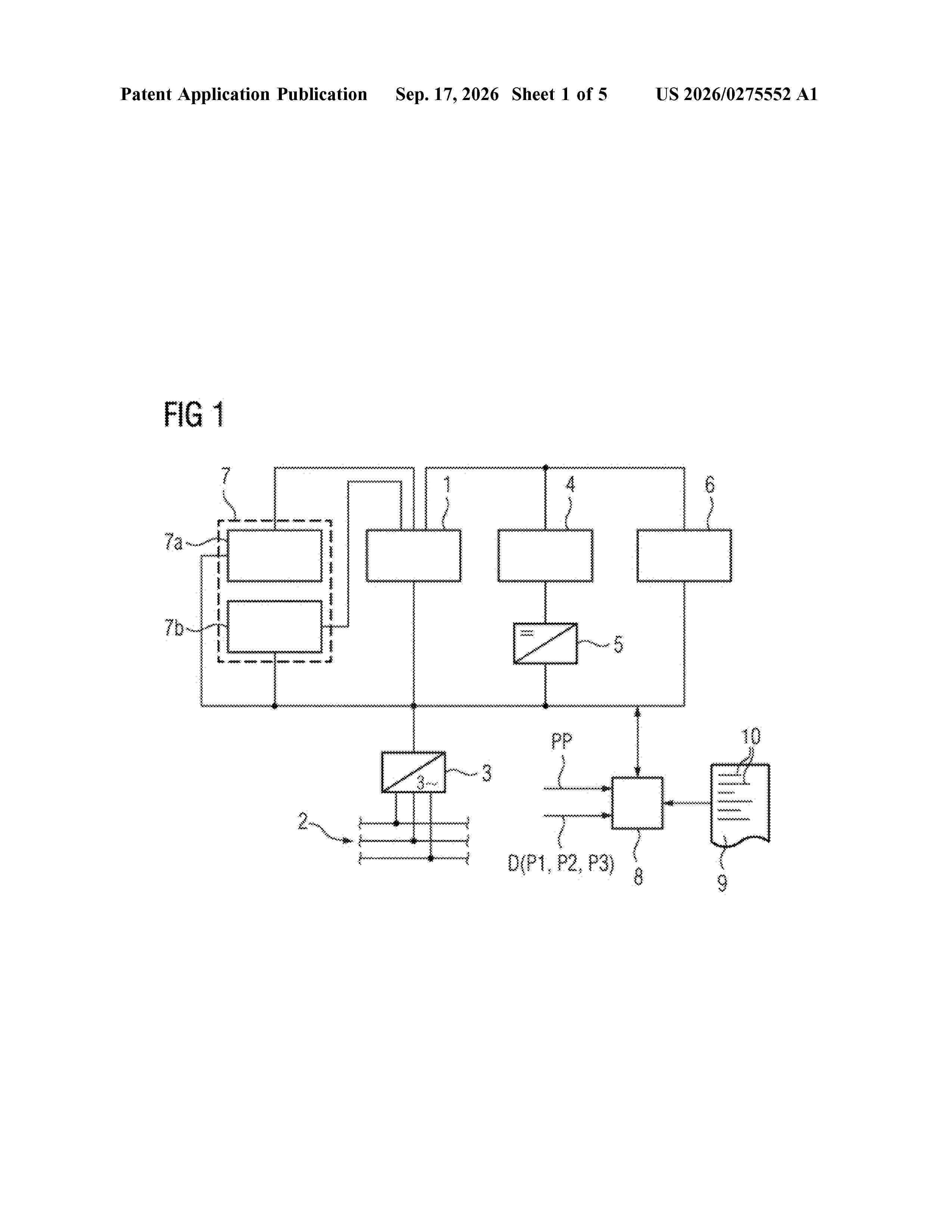
An overall system that includes, as sub-systems, a DRI system, an electrolysis system, a hydrogen store and a supply device. The DRI system and the electrolysis system are connected to an electricity-supply network for receiving electricity. The DRI system, the electrolysis system and the hydrogen store are interconnected for transferring hydrogen, and the DRI system and the supply device are interconnected for supplying the DRI system with natural gas and/or ammonia. A controller calculates operating modes (B1, B4, B6, B7) for the sub-systems for a forecast horizon (PH) and determines final states (Z1′, Z4′, Z6′, Z7′) that can be expected for the sub-systems on the basis of the current states (Z1, Z4, Z6, Z7) and the operating modes (B1, B4, B6, B7). The controller varies the final states (Z1′, Z4′, Z6′, Z7′) that can be expected so as to minimize a cost function (K).
Resumen de: AU2025400693A1
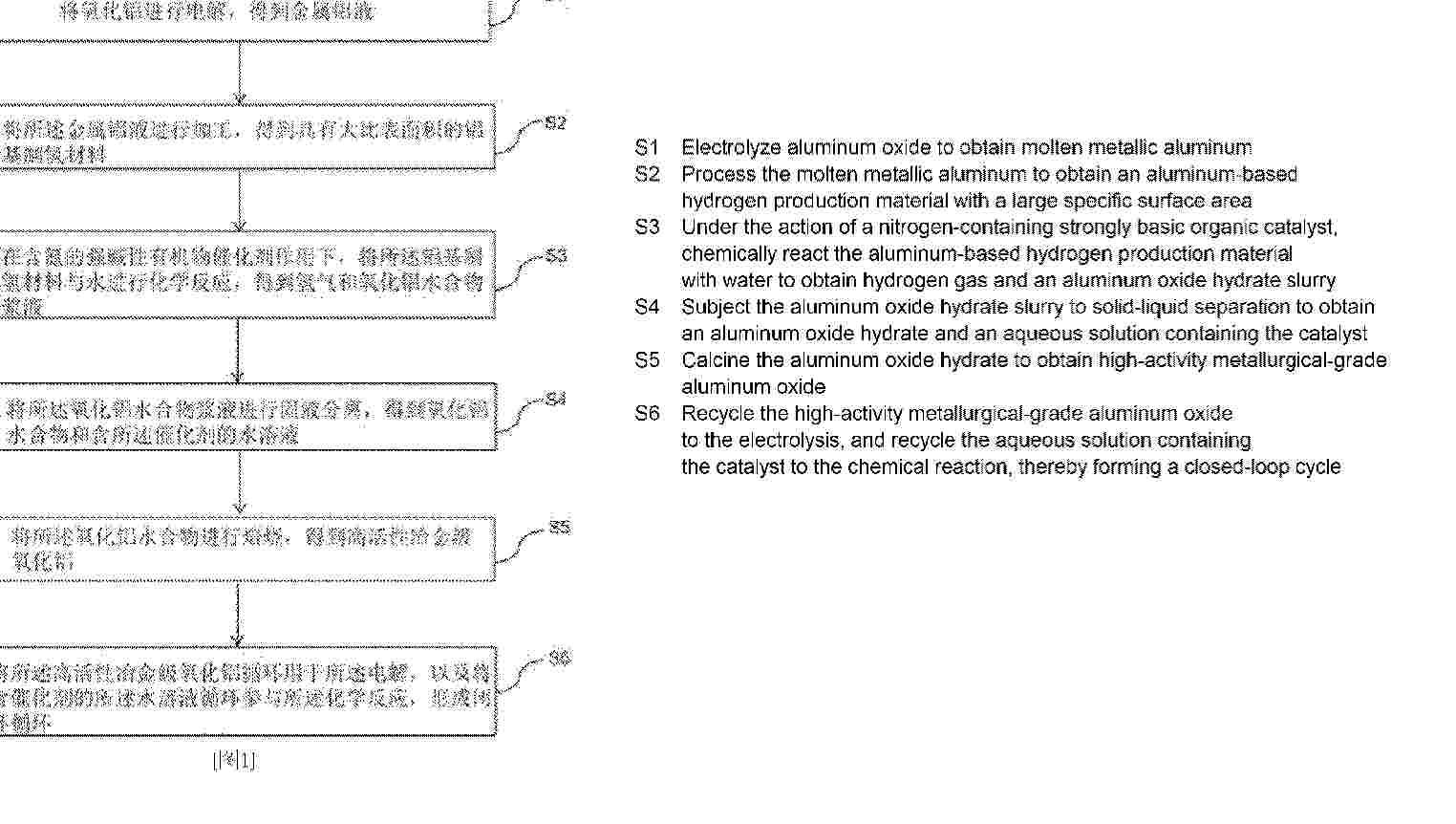
Disclosed herein is an aluminum recycling method for metallic aluminum energy storage and hydrogen production, comprising: electrolyzing aluminum oxide to obtain molten metallic aluminum; processing the molten metallic aluminum to obtain an aluminum-based hydrogen production material; under the action of a catalyst, chemically reacting the aluminum-based hydrogen production material with water to obtain hydrogen gas and an aluminum oxide hydrate slurry; subjecting the aluminum oxide hydrate slurry to solid-liquid separation to obtain an aluminum oxide hydrate and an aqueous solution containing the catalyst; calcining the aluminum oxide hydrate to obtain aluminum oxide; and recycling the aluminum oxide to the step of electrolyzing the aluminum oxide, and recycling the aqueous solution containing the catalyst to the step of chemically reacting the aluminum-based hydrogen production material with water, thereby forming a closed-loop cycle.
Resumen de: AU2025207661A1
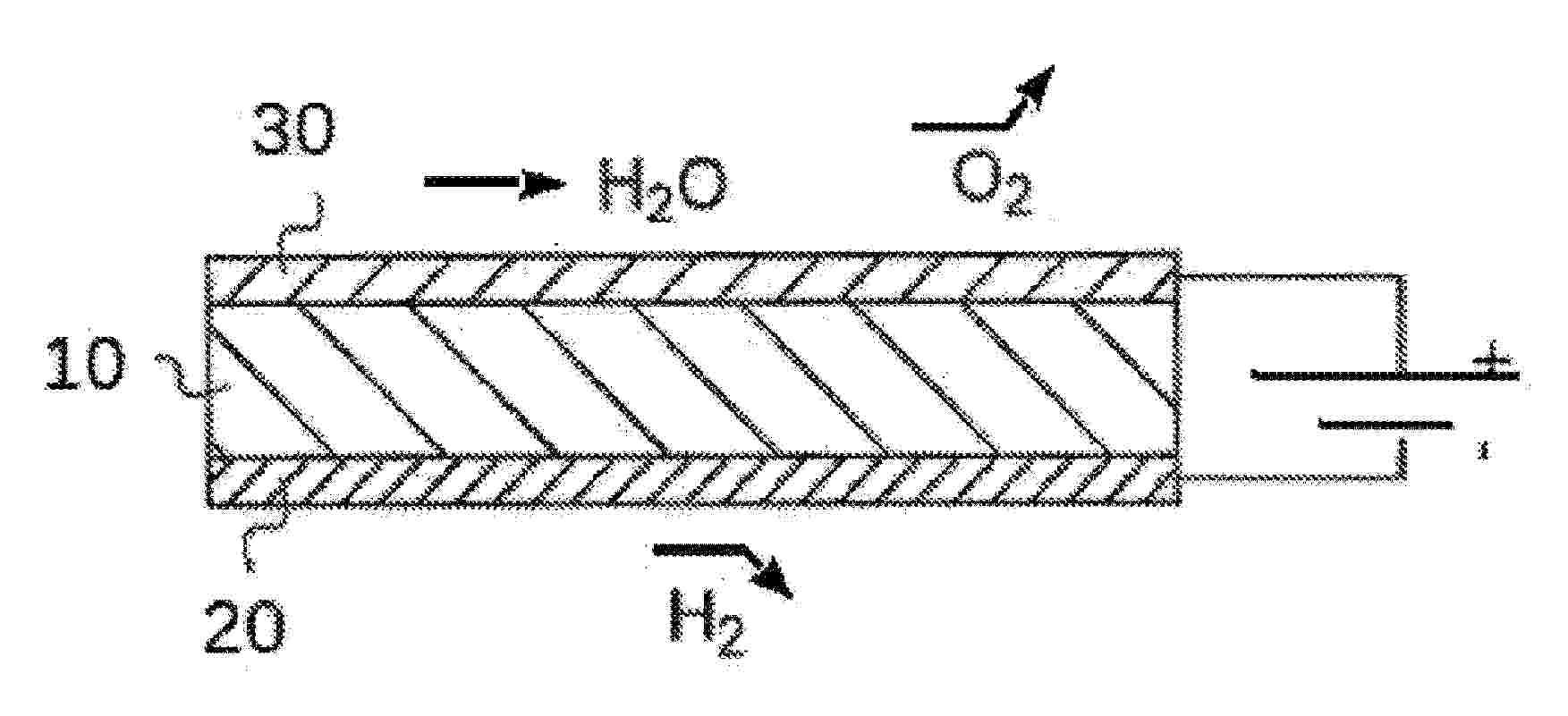
The invention relates to a layer of catalytic material for an anion-conducting membrane (10) for an electrochemical device; the layer of catalytic material comprises metal nanoparticles bound by a polymer binder. In one embodiment, the metal nanoparticles comprise a mixture of nickel nanoparticles and cobalt nanoparticles. The invention also relates to a membrane comprising a layer of catalytic material and to a method for preparing and depositing a catalytic layer.
Resumen de: WO2026192980A1
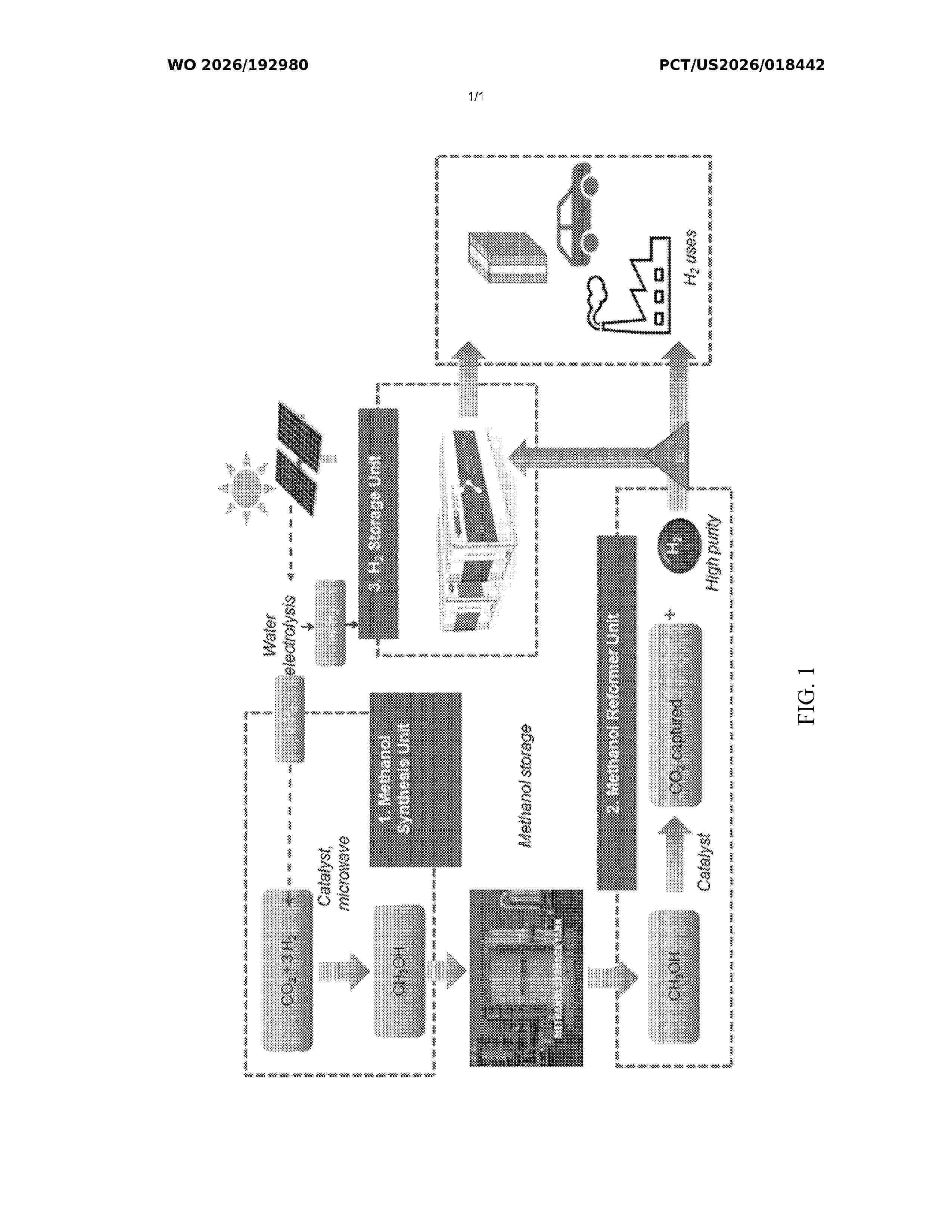
A method for providing hydrogen on demand, as follows: providing an apparatus containing (i) a hydrogen storage unit configured to release hydrogen on demand for a period of up to 24 hours; (ii) a methanol reforming unit configured to steadily release hydrogen over a period of at least 24 hours, after a lead time for the methanol reforming process to pressurize a tank with hydrogen; and (iii) an electrical device operably connected to the hydrogen storage unit and methanol reforming unit and configured to switch operation of the hydrogen storage unit and methanol reforming unit to ensure that hydrogen is released without interruption by releasing hydrogen from the hydrogen storage unit only during said lead time of the methanol reforming process; and operating the apparatus to release hydrogen without interruption by releasing hydrogen from the hydrogen storage unit only during the lead time of the methanol reforming process.
Resumen de: WO2026190457A1
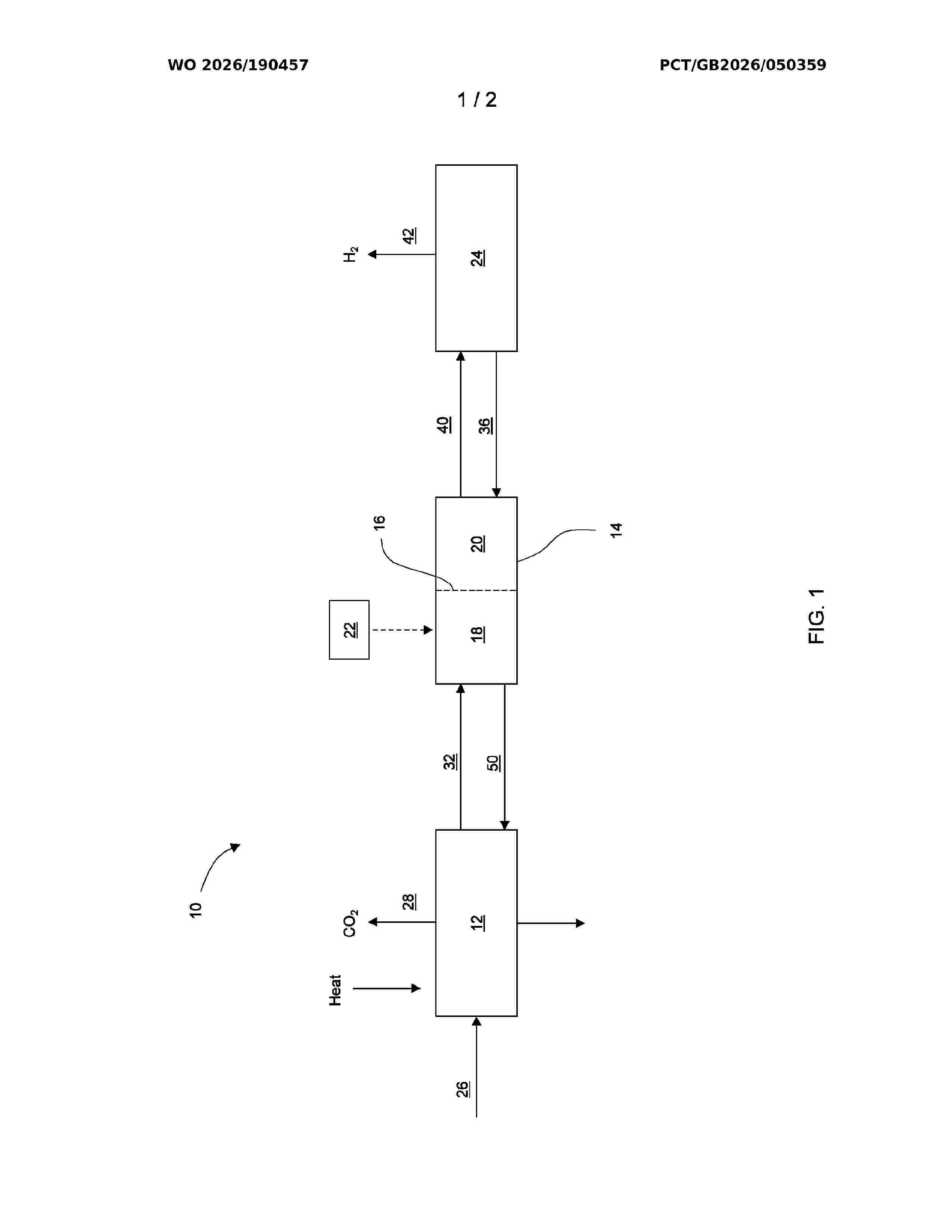
A method of continuously converting biomass into hydrogen and biogenic carbon dioxide is provided. The method comprises introducing biomass, water, an acid and an oxidised redox mediator into a first reactor; operating the first reactor to generate carbon dioxide and an anolyte solution comprising an oxidised biomass, a reduced redox mediator and H+ ions; removing carbon dioxide from the first reactor; introducing at least a portion of the anolyte solution into an anode side of an electrochemical reactor; introducing a catholyte solution comprising an acid and a catholyte redox mediator into a cathode side of the electrochemical reactor; operating the electrochemical reactor to generate hydrogen at the cathode by reducing H+ ions, and to regenerate the oxidised redox mediator at the anode by oxidising the reduced redox mediator; removing hydrogen from the electrochemical reactor; and recirculating the oxidised redox mediator from the electrochemical reactor to the first reactor.
Resumen de: WO2026191168A1
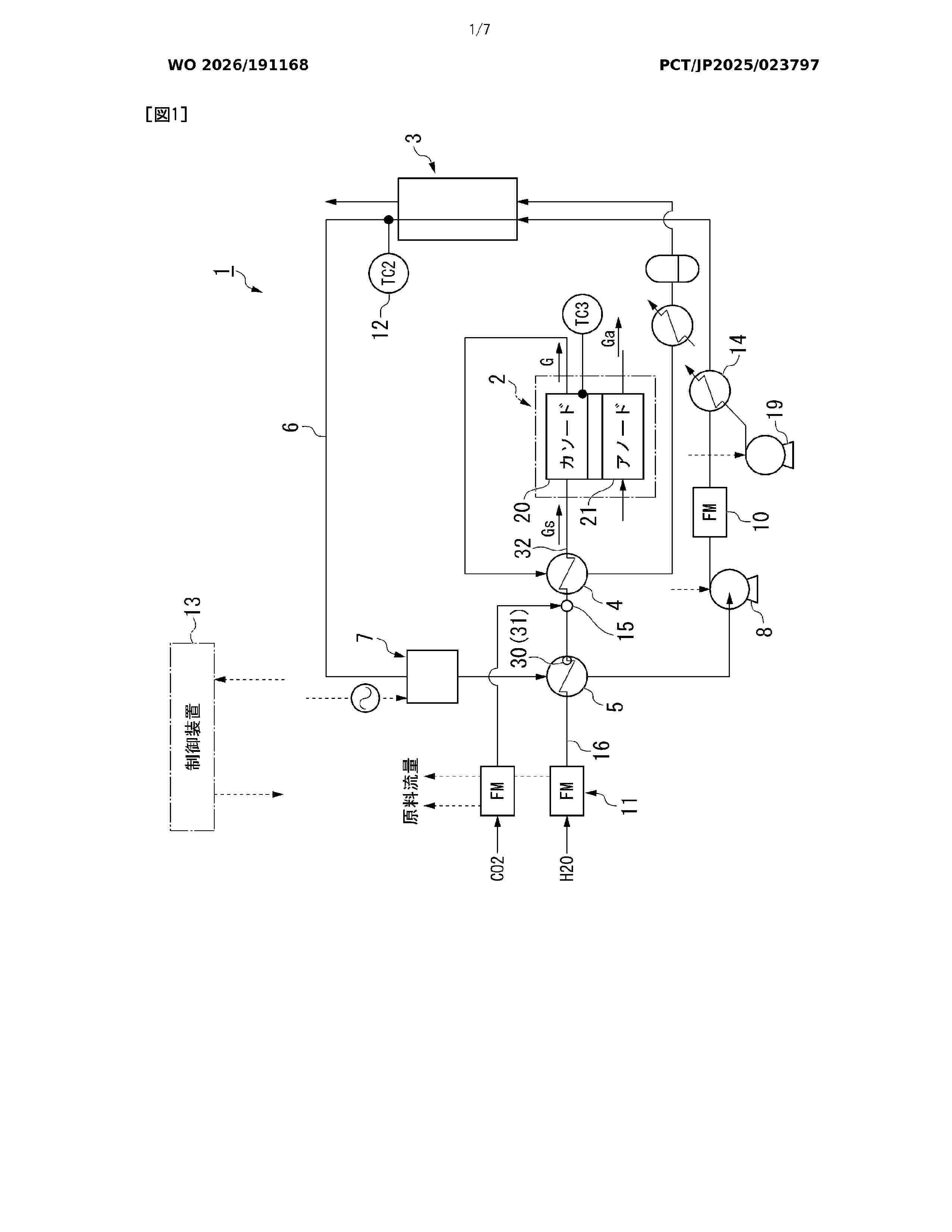
This electrolysis system comprises: an electrolysis device that generates a cathode off-gas containing hydrogen through electrolysis of a water raw material; a fuel synthesis reaction device that synthesizes fuel from hydrogen and a carbon oxide gas; a cathode regeneration heat exchanger that exchanges heat between the cathode off-gas and a cathode supply gas supplied to a cathode of the electrolysis device; a steam generator that converts the water into steam on the upstream side of the cathode regeneration heat exchanger; a heating medium circulation system in which a heating medium moves between the steam generator and the fuel synthesis reaction device; an auxiliary heating device that is provided on the upstream side of the steam generator in the heating medium circulation system and heats the heating medium; a heating medium pump that is provided on the downstream side of the steam generator in the heating medium circulation system; and a steam heating medium state estimation sensor that is provided in the steam generator and estimates a vaporization state of the water.
Resumen de: US20260275551A1
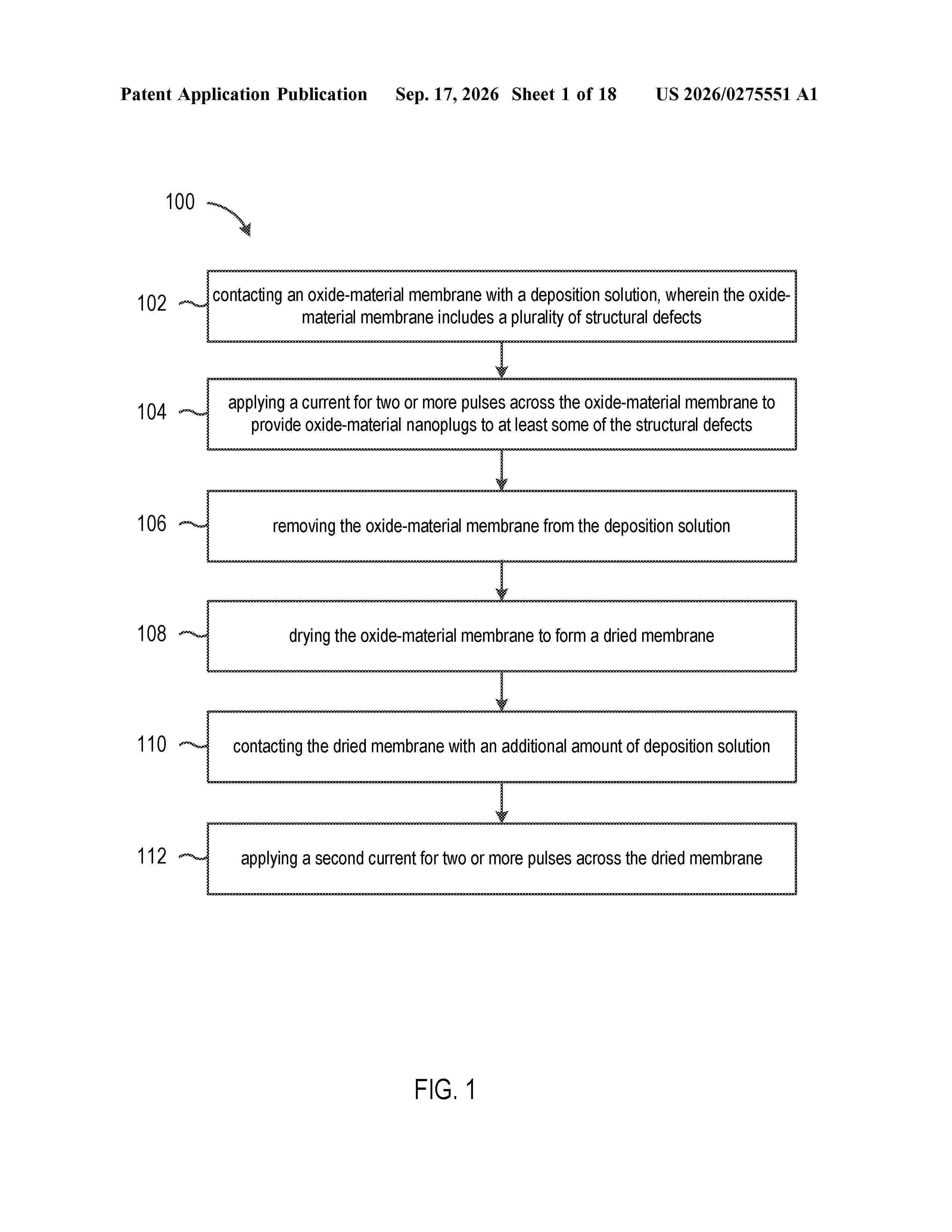
Crossover through submicron thick SiO2 membranes can be mitigated by selectively depositing oxide, e.g., carbon-containing silicon oxide (SiOxCy) “nanoplugs” into the pinholes and cracks of the membranes. Defect-containing membranes are contacted with a deposition solution including hydrolysable precursors, e.g., metal alkoxides like tetraethyl orthosilicate (TEOS), and a nanoplug directing agent, e.g., tetramethylammonium bromide (TMAB). Current is applied to the defect-containing membranes in pulses, including a shorter “on” phase where current is applied and a longer “off phase” where current is not applied. The SiOxCy nanoplugs are deposited to the structural defects during the “on” phase. The longer “off phase” enables reactants to diffuse back to the structural defects for deposition of additional nanoplugs during the next “on” phase, as well as prevent deposition of SiOxCy on non-defective regions. Treatment of plugged SiO2 membranes reduced H2 permeation rates by 5-6 orders of magnitude compared to unmodified SiO2 and 1-2 orders of magnitude compared to Nafion-117 membranes.
Resumen de: WO2026191397A1
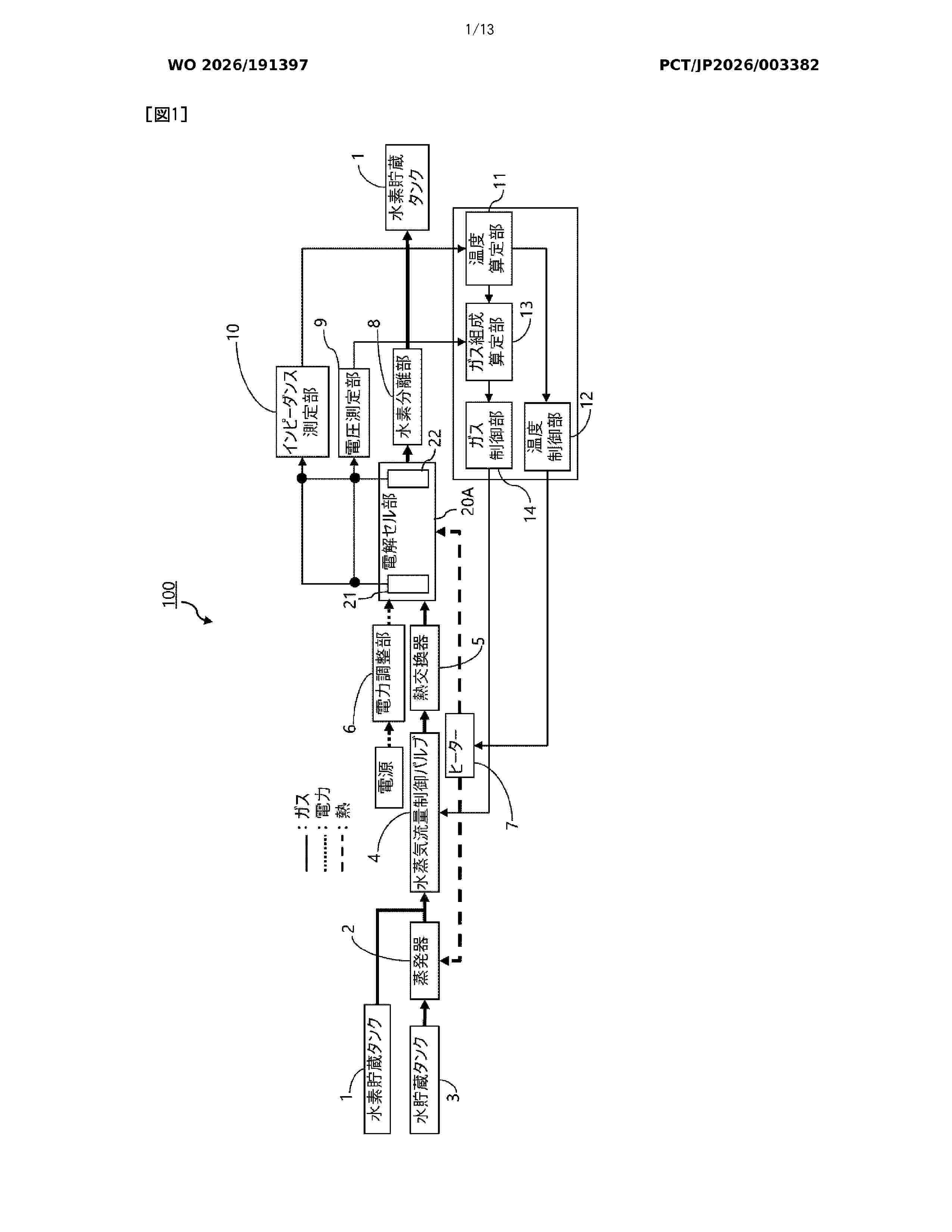
In order to calculate the state of the inside of an SOCE without deteriorating airtightness between electrodes of the SOCE, a solid oxide electrolysis cell system according to the present invention comprises: an electrolysis cell unit that generates oxygen and hydrogen by electrolyzing water vapor using a solid oxide electrolysis cell; a voltage measurement unit that measures the voltage of the electrolysis cell unit; an impedance measurement unit that measures the impedance value of the electrolysis cell unit; a temperature calculation unit that calculates the cell temperature of the electrolysis cell unit on the basis of the impedance value of the electrolysis cell unit and the activation energy of a solid electrolyte unit of the electrolysis cell unit; a gas composition calculation unit that calculates the gas composition of the water vapor to be flowed into the electrolysis cell unit on the basis of the voltage and the cell temperature; and a gas control unit that controls the gas flow rate of the water vapor to be flowed into the electrolysis cell unit on the basis of the gas composition calculated by the gas composition calculation unit.
Resumen de: WO2026191911A1
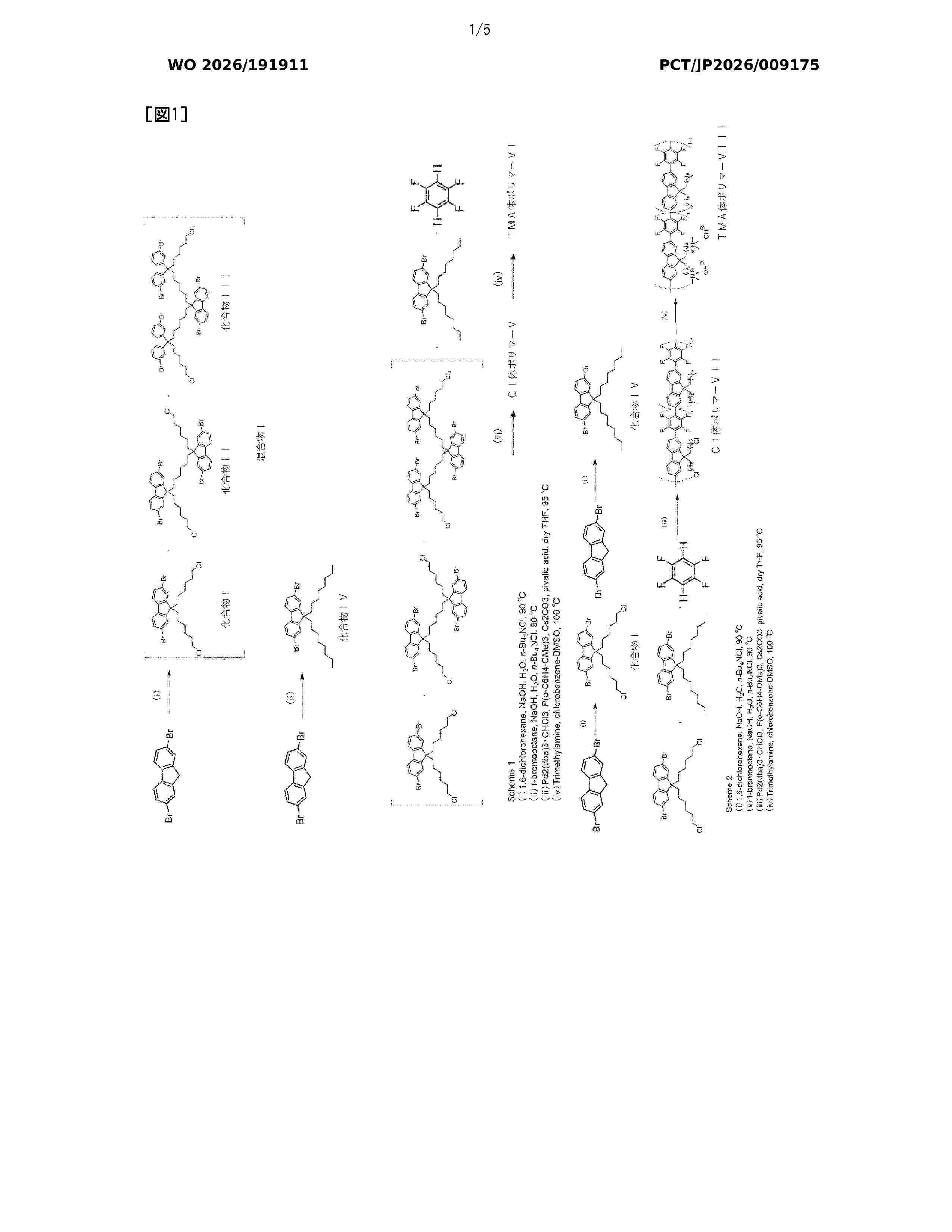
The purpose of the present disclosure is to provide: a polymer which has excellent chemical durability, particularly excellent alkali durability; and an electrolyte membrane using the polymer. The electrolyte membrane formed from said polymer is very useful in alkaline water electrolysis application. This polymer has a constituent unit represented by formula (1). (In formula (1), A is formula (2), B is formula (3), C is formula (4), and n is an integer of 0-20. In formulae (2) to (4), Z represents a halogen-containing group or an ion-exchange group; X represents a bonding position to Y; and l and m each independently represent an integer of 0-20. The symbol * represents a bond.)
Resumen de: US20260275536A1
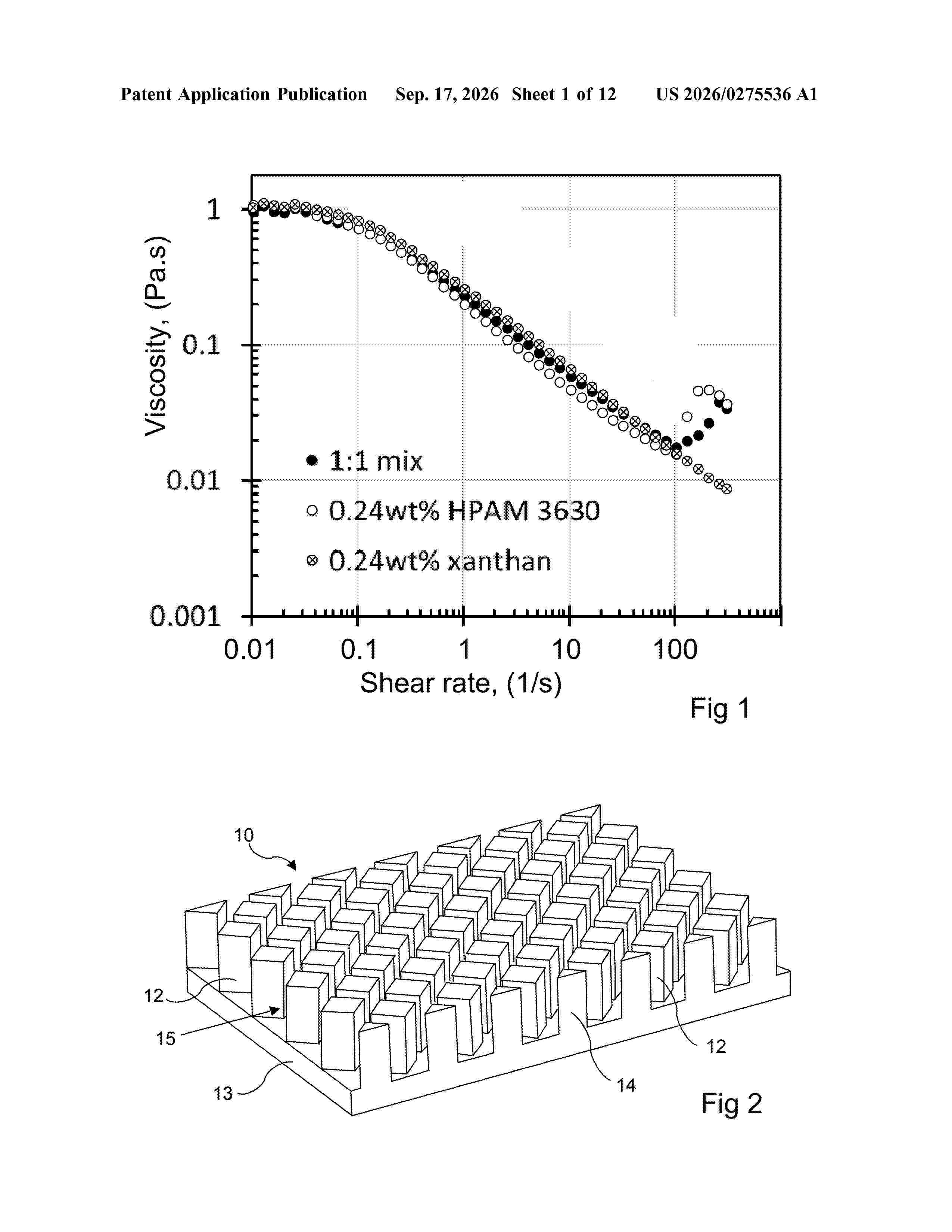
An electrochemical system produces a gas from an aqueous solution. A liquid is circulated from a half-cell to a reaction vessel and then returned to the half-cell. A redox mediator in the liquid is converted from a first state to a second state in the half-cell and reacts to form a gas in the reaction chamber while being returned to its first state. The circulating liquid also includes a high molecular weight linear polymer or a viscoelastic surfactant which forms wormlike micelles enabling it to be in a state of elastic turbulence and the reaction chamber is configured to compel changes of flow direction so that the liquid is in a state of elastic turbulence as it flows through the reaction chamber. The half-cell may be configured such that the liquid is in a state of elastic turbulence as it flows through the half-cell.
Resumen de: US20260275540A1
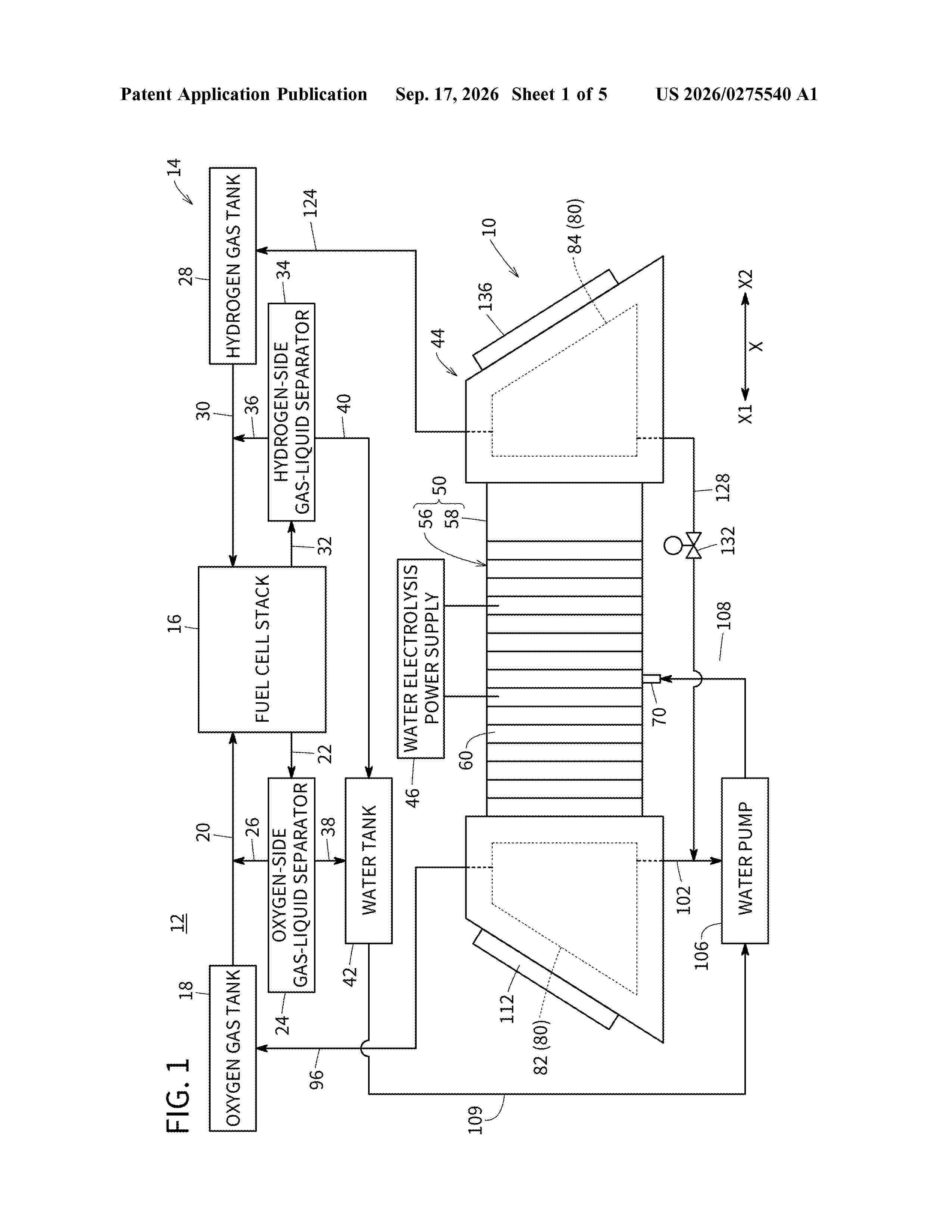
0000 A water electrolysis system includes a water electrolysis stack, the water electrolysis stack including a cell stack body in which a plurality of water electrolysis cells for electrolyzing water are stacked, and a first end member and a second end member that sandwich the cell stack body in a stacking direction of the plurality of water electrolysis cells. At least one of the first end member or the second end member includes a gas-liquid separator for separating fluid guided from the cell stack body into gas and liquid.
Resumen de: US20260275544A1
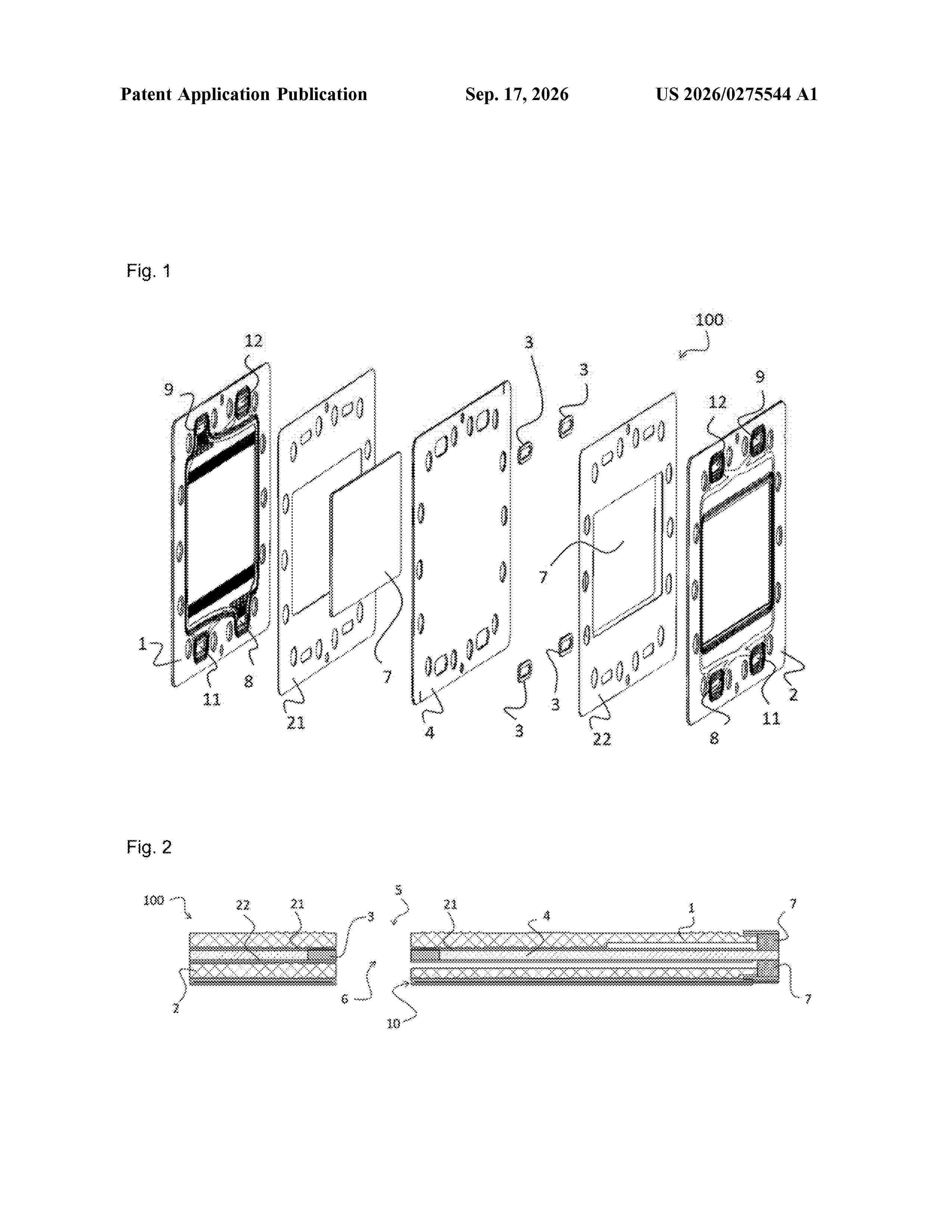
The disclosure describes an alkaline electrolyzer structure with: a bipolar plate containing four through-holes, so as to allow a first electrolyte and a second electrolyte to flow through the bipolar plate;four electrically insulating rings each containing a central void and each being intended to be inserted into each respective through-hole in the thickness of the bipolar plate, so as to reduce the cross-sectional area of the through-hole and so as to form an electrical insulation between one of the electrolytes and the bipolar plate, when one of the electrolytes passes through the central void of the ring.
Resumen de: WO2026190203A1
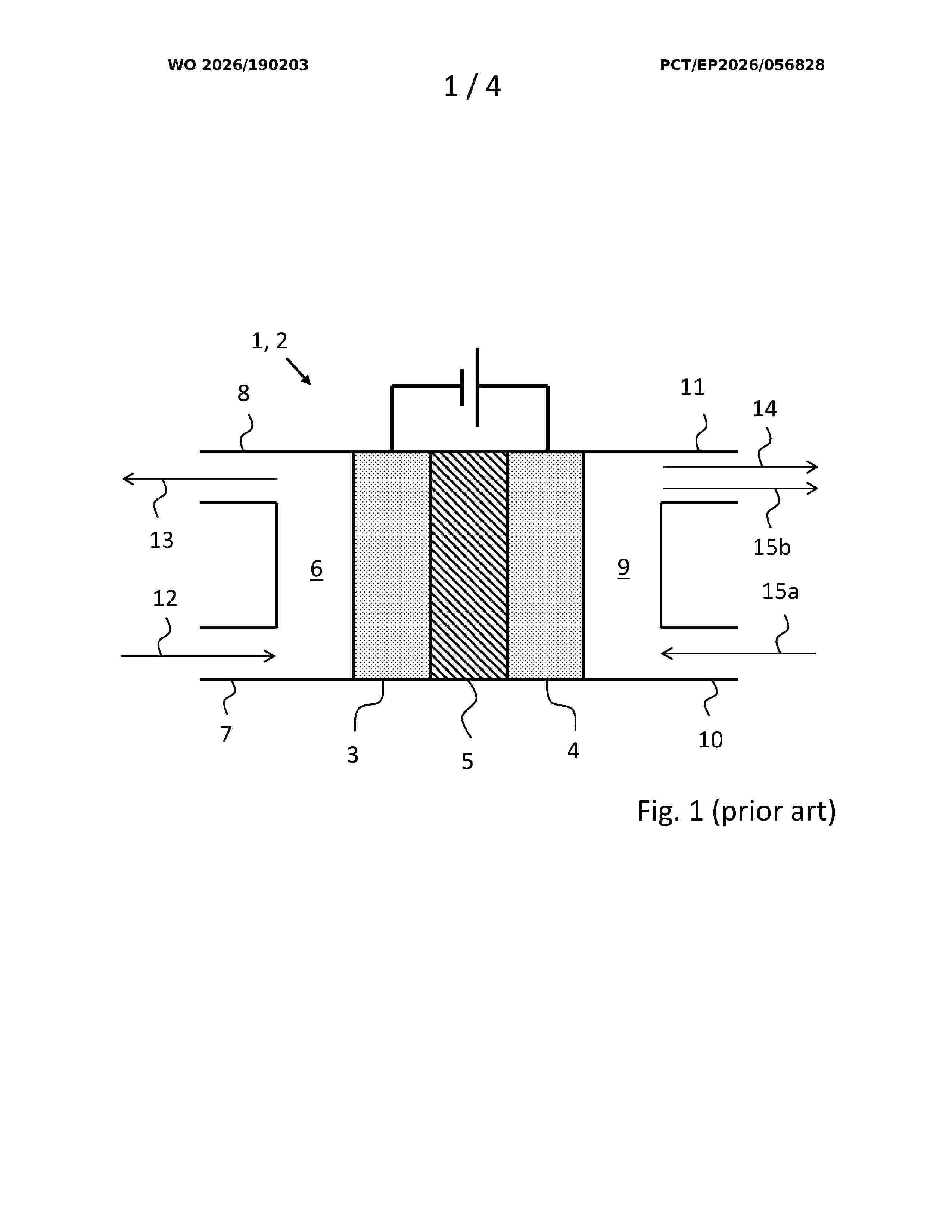
The disclosure relates to a method for operating an electrolysis unit, the unit comprising at least one solid oxide electrolysis cell. The electrolysis cell comprises: a process electrode; an oxy electrode; a solid electrolyte providing ionic contact between the process and oxy electrodes; a process chamber interfacing the process electrode; a first process opening coupled to the process chamber for supplying a process feed gas; a second process opening coupled to the process chamber for discharging a product gas; an oxy chamber interfacing the oxy electrode; a first oxy opening coupled to the oxy chamber for supplying a flush gas; and a second oxy opening coupled to the oxy chamber for discharging oxygen. The method comprises the steps of: operating the electrolysis unit to produce oxygen in the oxy chamber; and discharging said oxygen from the oxy chamber through both the first oxy opening and the second oxy opening.
Resumen de: DE102025110053A1
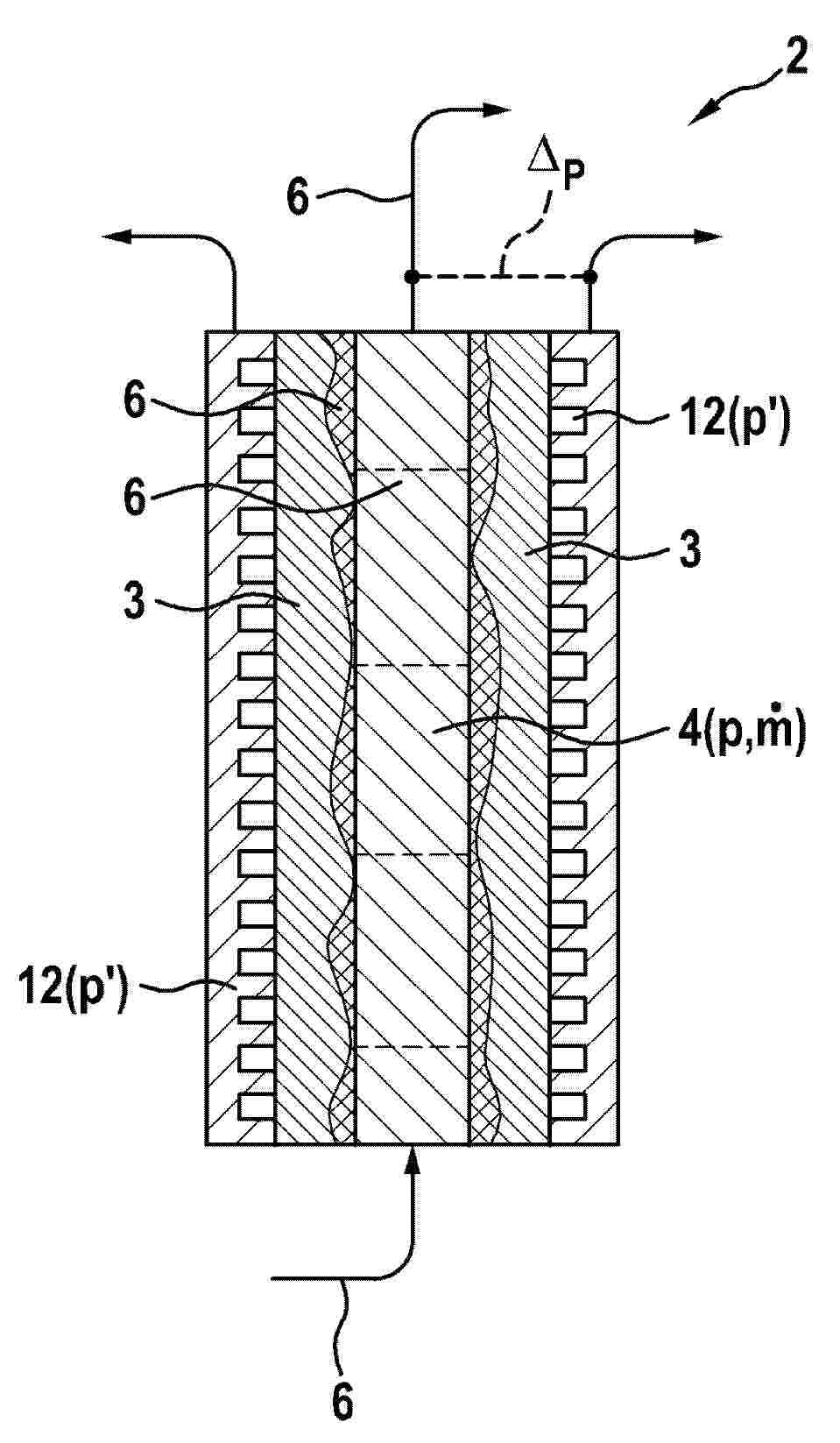
Vorgeschlagen wird ein Verfahren zum Betreiben eines Elektrolysesystems (1) mit mindestens einer Elektrolysezelle (2) zur Erzeugung mindestens eines Produktgases. Dabei weist die mindestens eine Elektrolysezelle (2) einen zwischen zwei Elektroden (3) angeordneten Elektrolytkanal (4) auf, dem über einen Elektrolytkreislauf (5) ein Elektrolyt (6) aus einem Elektrolytspeicher (7) zugeführt wird. Ferner wird mithilfe einer in den Elektrolytkreislauf (5) integrierten Pumpe (8) ein Elektrolyt-Volumenstrom (ṁ) im Elektrolytkanal (4) eingestellt. Erfindungsgemäß wird ein Druck (p) im Elektrolytkanal (4)a) mithilfe einer weiteren Pumpe (9), die über eine Elektrolytleitung (10) an den Elektrolytspeicher (7) angeschlossen ist, oderb) mithilfe einer Drosseleinrichtung (11) mit variablem Drosselquerschnitt, die stromabwärts der Elektrolysezelle (2) in den Elektrolytkreislauf (5) integriert ist, eingestellt.Darüber hinaus betrifft die Erfindung ein Elektrolysesystem (1).
Resumen de: WO2026189969A1
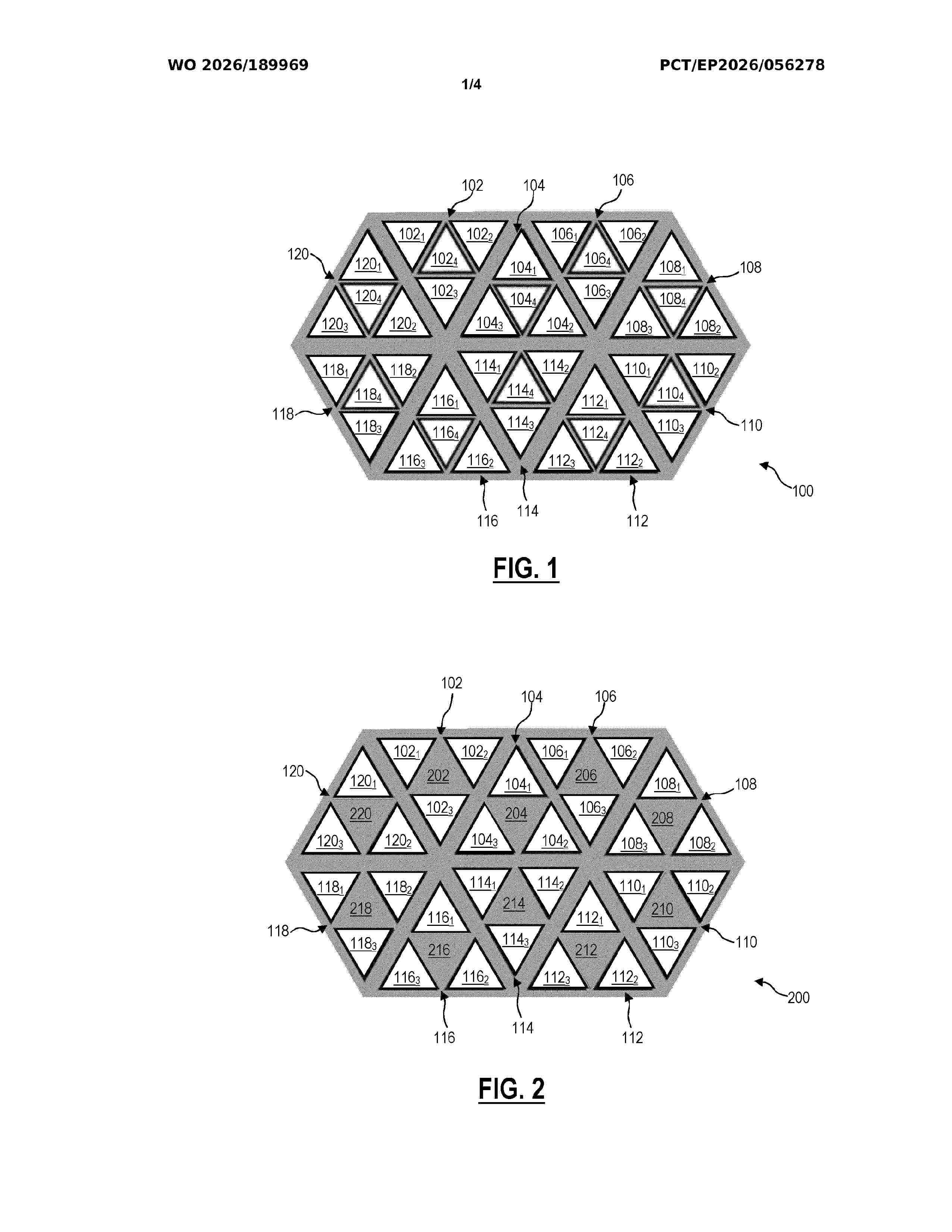
The invention relates to a heat exchanger (100) for heat exchange between several fluids; - the heat exchanger (100) being manufactured by 3D printing; - the heat exchanger (100) comprising several groups of channels (102-120), each channel, through which one of the fluids passes, connecting an inlet for the fluid into the exchanger (100) to an outlet for the fluid out of the exchanger (100); - the groups of channels (102-120) being arranged such that one channel of one group (102-120) through which one fluid passes faces another channel of another group (102-120) through which another fluid passes in order to carry out a heat exchange between the fluids. It also relates to an electrochemical system comprising such a heat exchanger.
Resumen de: DE102025109316A1
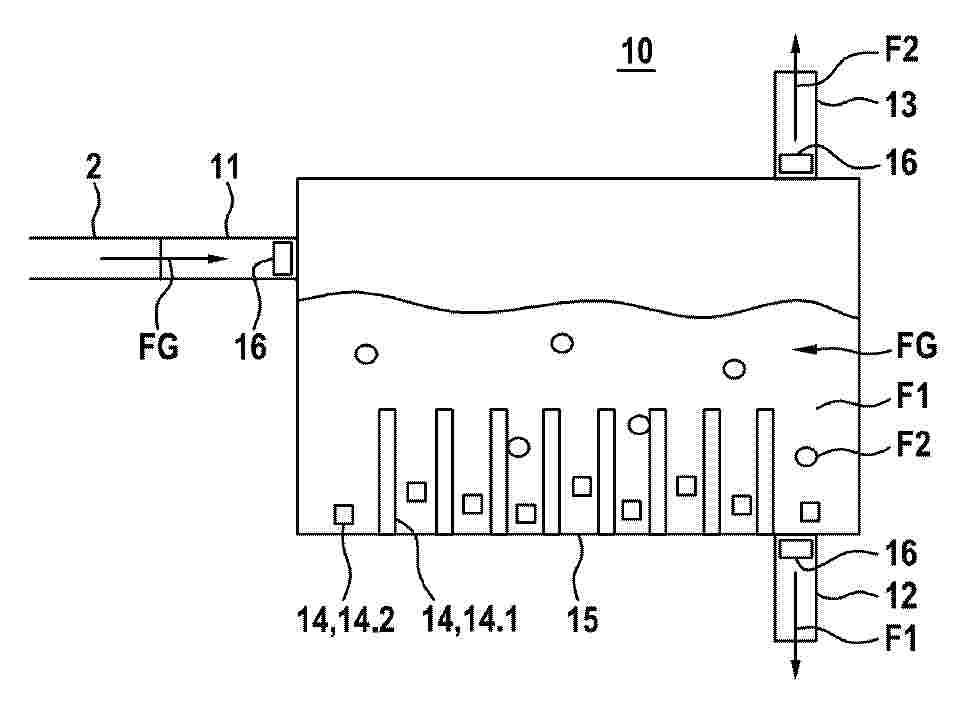
Die Erfindung betrifft einen Separator (10) umfassend zumindest Folgendes:- zumindest einen Einlass (11) zum Einleiten zumindest eines Fluidgemisches (FG) in den Separator (10), wobei das Fluidgemisch (FG) zumindest ein erstes Fluid (F1) und ein zweites Fluid (F2) umfasst,- zumindest einen ersten Auslass (12) zum Abführen des ersten Fluids (F1),- zumindest einen zweiten Auslass (13) zum Abführen des zweiten Fluids (F2), wobei in dem Separator (10) zumindest ein Auftrennungsmittel (14) zur Auftrennung des Fluidgemisches (FG) in das erste Fluid (F1) und das zweite Fluid (F2) angeordnet ist.Ferner betrifft die Erfindung einen Elektrolyseur (100).
Resumen de: WO2026190173A1
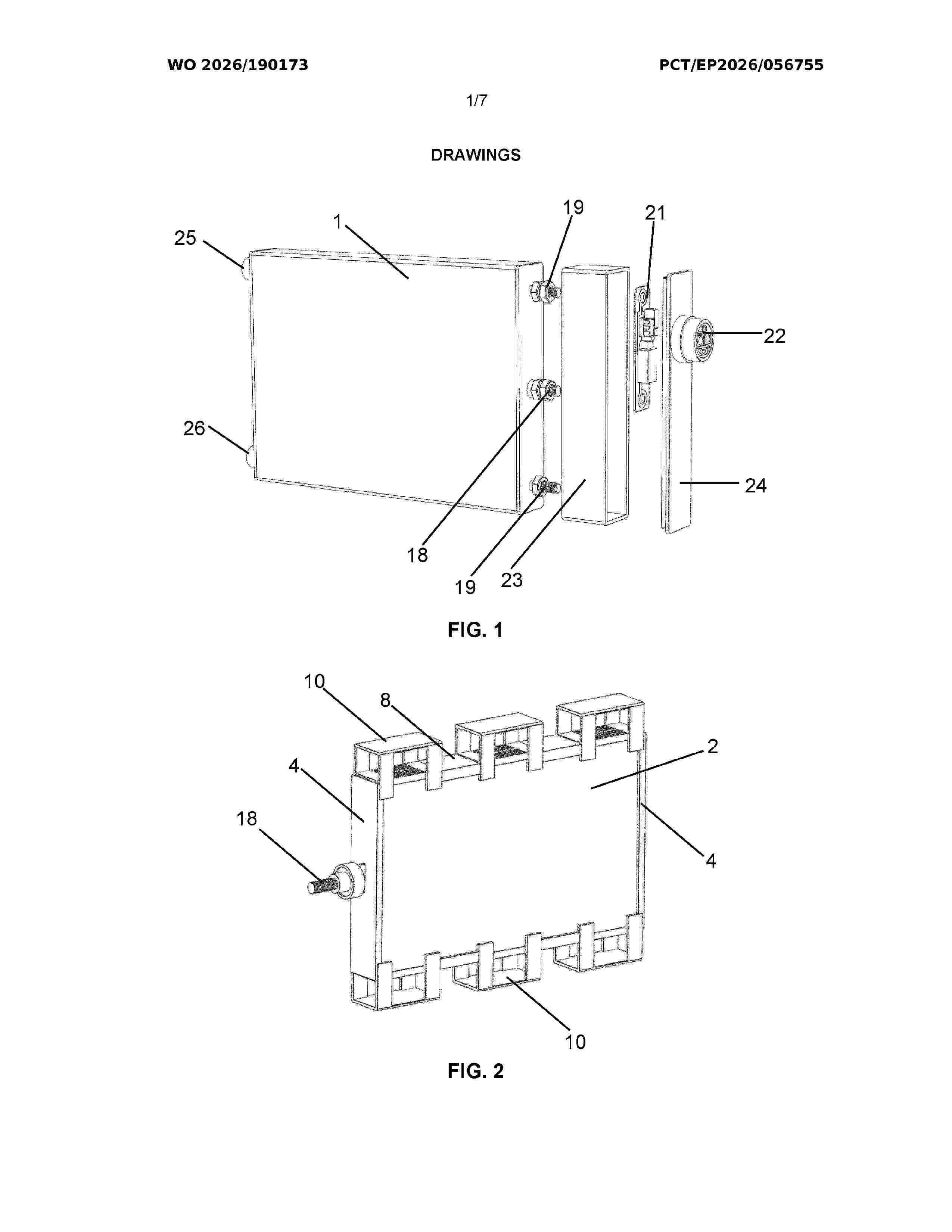
An encapsulated alkaline electrolysis device comprising a sealed casing (1), a plurality of parallel metal plates (2) separated from each other by a space (3) for water to flow between the parallel metal plates (2), comprising two first dielectric parts (4) at the ends of the parallel metal plates (2), a plurality of second dielectric parts with comb-shaped cross-section (8) at the edges of the parallel metal plates (2) with clearances (9) between the second dielectric parts (8) and a plurality of dielectric spacers (10) in the clearances (9), wherein each spacer (10) comprises an end flat face (11 ) with four legs (12) at the corners and an inner flat face (13) with a plurality of slots (14) in correspondence with the spaces (3) between the parallel metal plates (2), and some protrusions (16) on the edges of the parallel metal plates (2).
Resumen de: WO2026191634A1
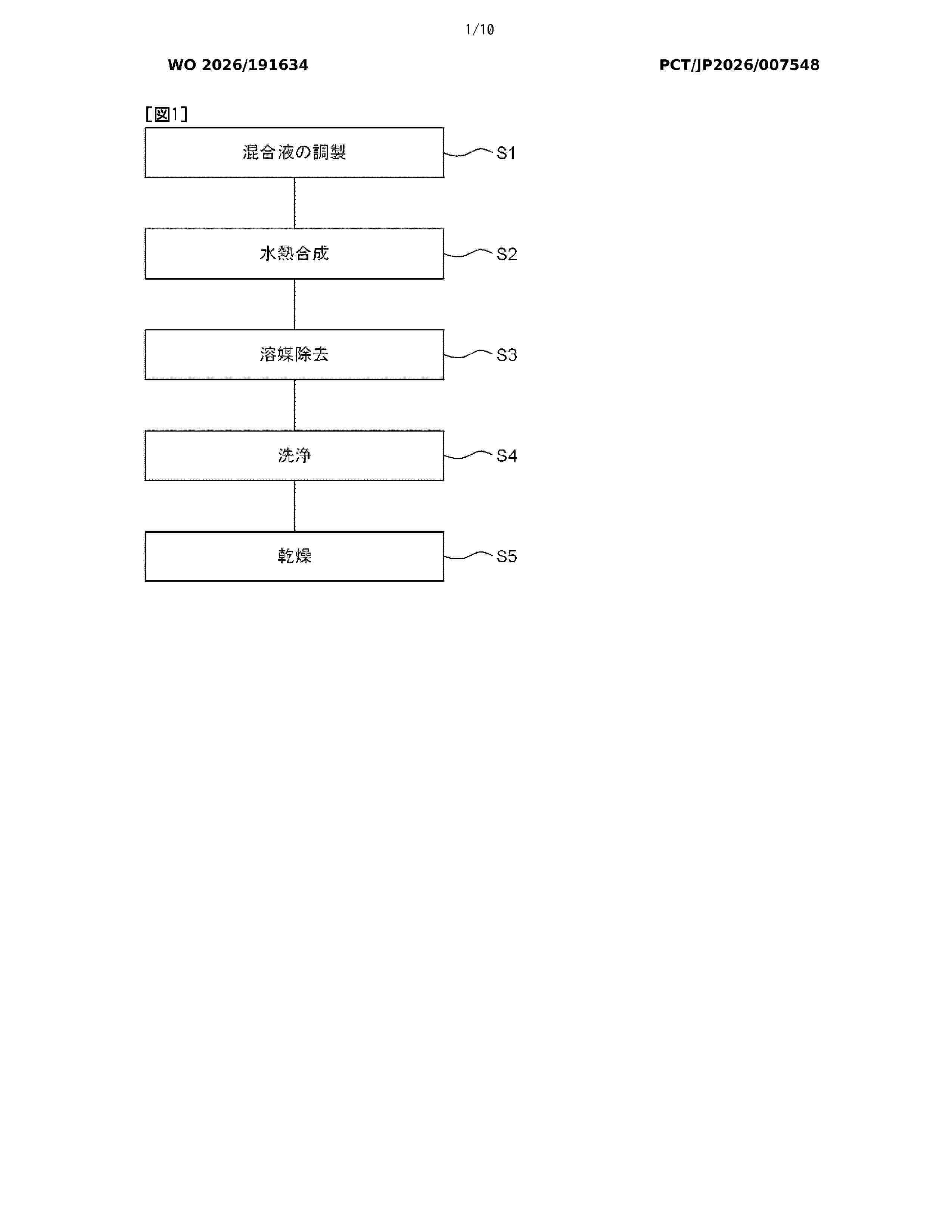
Problem To provide: a catalyst having exceptional hydrogen generation efficiency; a method for producing the catalyst; a method for producing a reusable metaborate; a hydrogen generation device provided with the catalyst; and a fuel cell system provided with the hydrogen generation device. Solution One embodiment of the present invention provides a catalyst to be used for generating hydrogen from a boron hydride salt and water, wherein the catalyst has interlayer anions and interlayer water molecules, contains a metal-containing layered double hydroxide as a main component, and is such that the interlayer anions consist only of inorganic ions.
Resumen de: DE102025110030A1
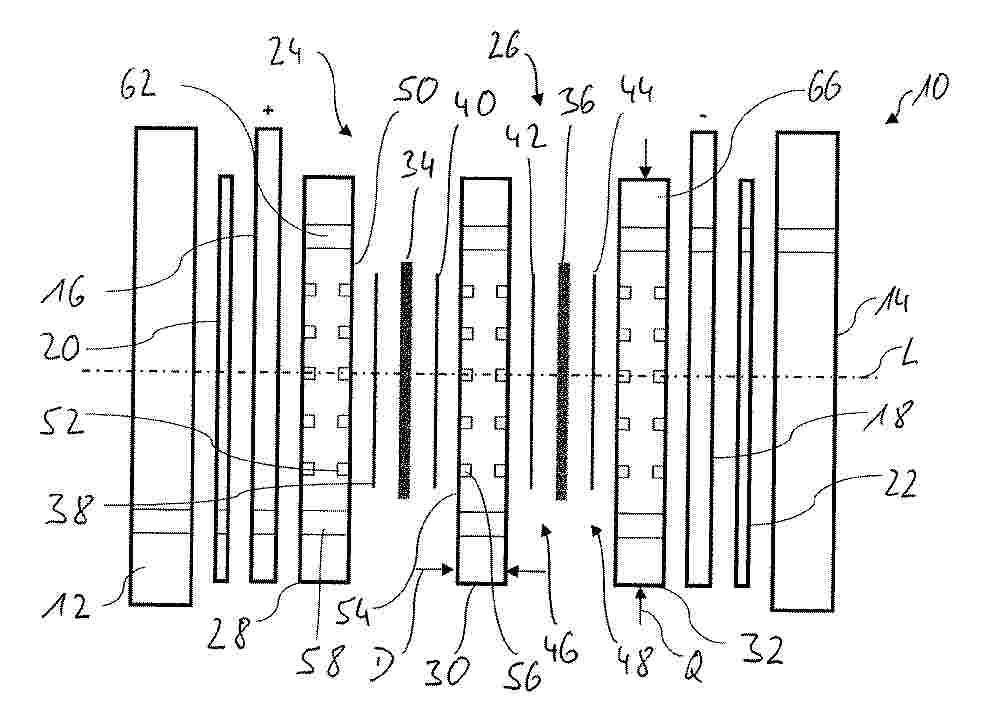
Ein Elektrolyseur zur elektrolytischen Zersetzung von Wasser in Wasserstoff und Sauerstoff umfasst wenigstens eine Elektrolysezelle (24, 26) mit einer Austausch-Membran (34, 36), einer einem Anodenbereich (46) der wenigstens einen Elektrolysezelle (24, 26) zugeordneten ersten Elektrolyseur-Bipolarplatte (28, 30) und einer einem Kathodenbereich (48) der wenigstens einen Elektrolysezelle (24, 26) zugeordneten zweiten Elektrolyseur-Bipolarplatte (28, 30). Die die erste Elektrolyseur-Bipolarplatte (28, 30) oder/und die zweite Elektrolyseur-Bipolarplatte (30, 32) ist mit polymerischem Matrixmaterial und in das polymerische Matrixmaterial eingebettetem, leitfähigem Partikelmaterial aufgebaut.
Resumen de: WO2026192129A1
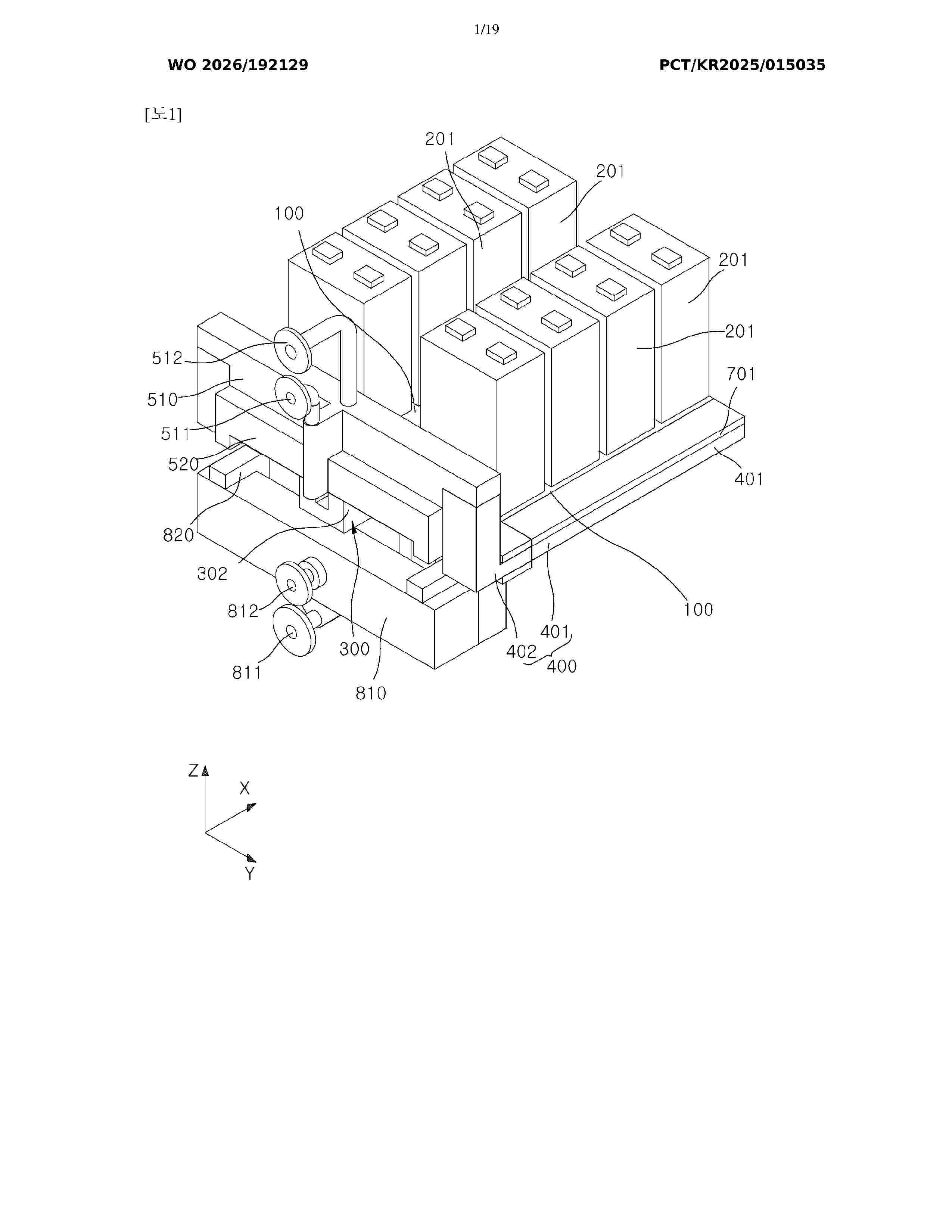
The present invention relates to an electrochemical module comprising: a base plate having a first surface and a second surface opposite to each other along a first direction; one or more first stacks disposed on the first surface of the base plate; a first supply line for supplying a first supply fluid; a first discharge line spaced apart from the first supply line; a first supply transfer line for transferring, to the first stack, the first supply fluid supplied from the first supply line; and a first discharge transfer line for transferring, to the first discharge line, a first discharge fluid discharged from the first stack.
Resumen de: WO2026190503A1
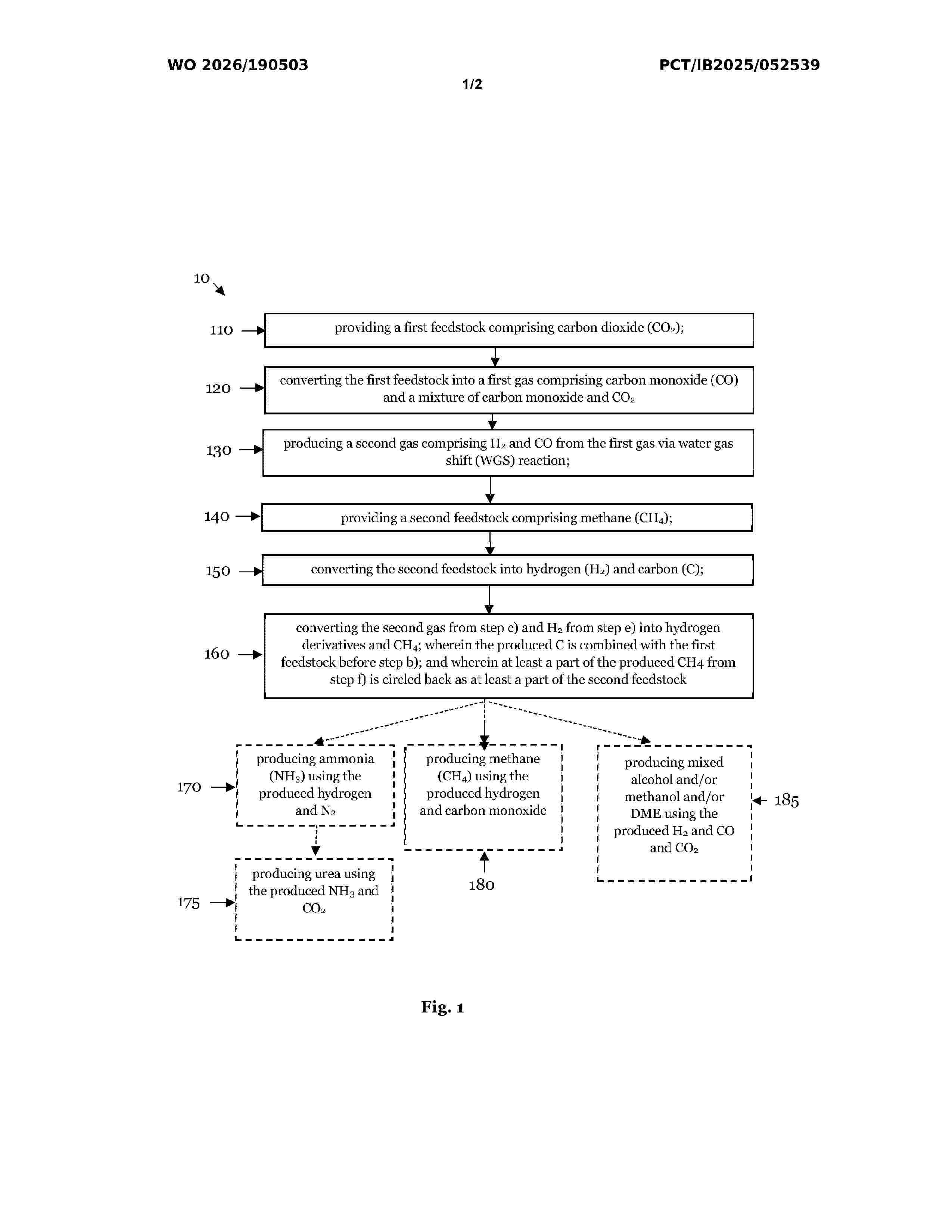
The present invention relates to a method and a system for producing synthesis gas and low carbon hydrogen and low carbon hydrogen derivatives by converting carbon dioxide (CO2) and methane (CH4) to carbon monoxide (CO), hydrogen (H2) and carbon (C), and producing low carbon hydrogen (H2) and hydrogen derivatives.
Nº publicación: WO2026191572A1 17/09/2026
Solicitante:
MITSUBISHI GAS CHEMICAL CO INC [JP]
NATIONAL INST OF ADVANCED INDUSTRIAL SCIENCE AND TECHNOLOGY [JP]
\u4E09\u83F1\u74E6\u65AF\u5316\u5B66\u682A\u5F0F\u4F1A\u793E
\u56FD\u7ACB\u7814\u7A76\u958B\u767A\u6CD5\u4EBA\u7523\u696D\u6280\u8853\u7DCF\u5408\u7814\u7A76\u6240
Resumen de: WO2026191572A1
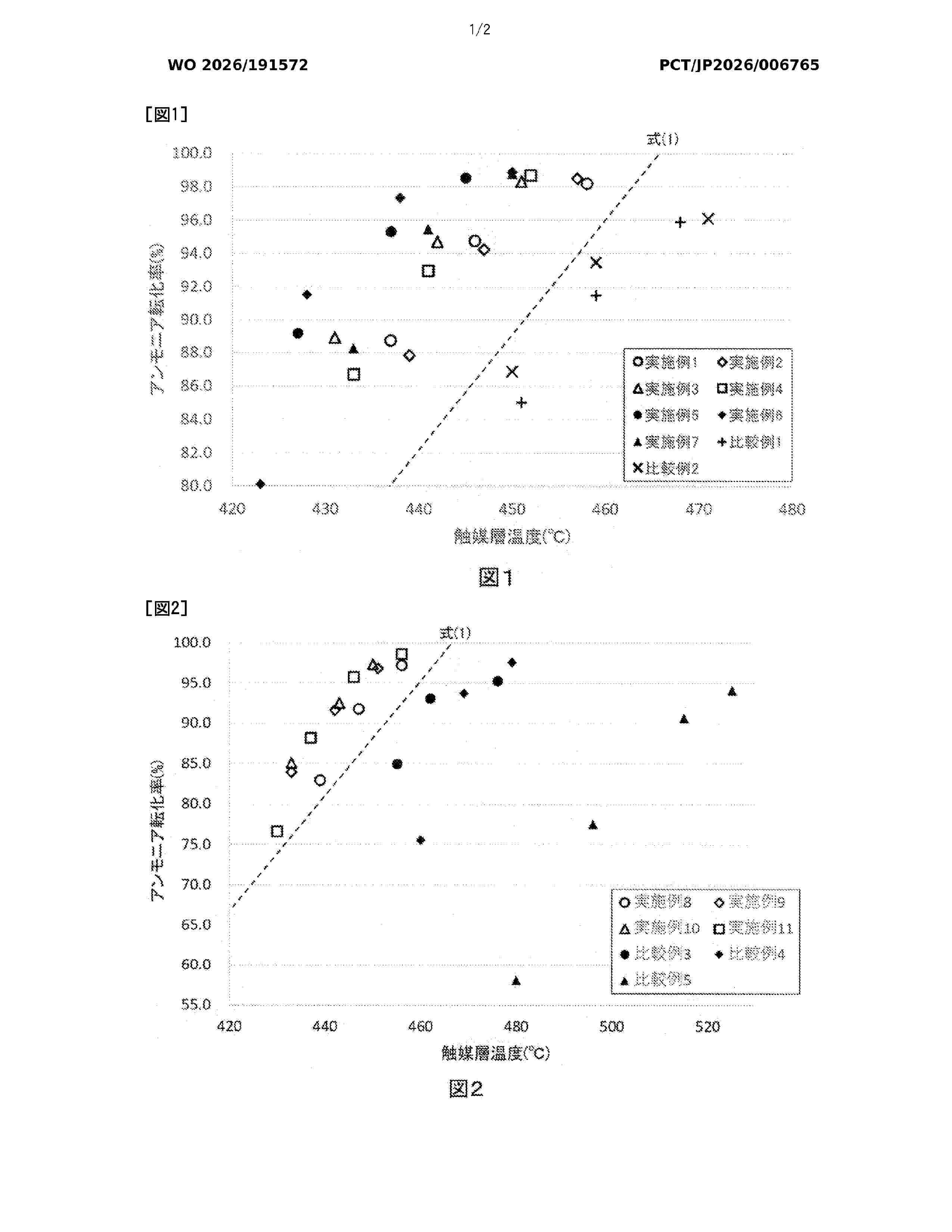
One embodiment of the present invention relates to an ammonia decomposition catalyst which contains cobalt (A), barium (B), and cerium (C), wherein the content of an alkali metal in the catalyst is 0.01 mol or less with respect to 1 mol of the cobalt (A).
 BOPI
BOPI
 Sede Electrónica