Si deseas distinguir tus productos, servicios o ambos de los de otra empresa, es posible que necesites una marca o nombre comercial. Descubre qué son, en qué consiste su procedimiento de registro y qué implica.

Información sobre los plazos de presentación de solicitudes de transformación de marcas de la Unión Europea en marca nacional española. Más información


Si tienes un nuevo dispositivo, producto o procedimiento que resuelva un problema técnico o tenga una ventaja práctica, existen distintas formas de protegerlo en España y en otros países. Descubre cómo hacerlo.

¿Tu innovación reside en la estética, la ornamentación o la apariencia de tu producto? Protégela mediante un diseño industrial. Descubre qué derechos confiere el registro y cómo realizar la tramitación.

Las indicaciones geográficas protegen el nombre de un producto originario de una zona geográfica, a la cual le debe una determinada calidad, reputación u otra característica. Descubre qué son, en qué consiste su procedimiento de registro y qué beneficios conceden.

Las patentes publicadas en todo el mundo son una valiosa fuente de información científica, técnica y comercial.

Si eres emprendedor/a o una empresa y quieres potenciar y mejorar la rentabilidad de tu negocio protegiendo de forma adecuada los activos intangibles de tu organización, en este espacio encontrarás lo necesario.


 1009
resultados
1009
resultados
 Última actualización
25/10/2026 [07:03:00]
Última actualización
25/10/2026 [07:03:00]


 Resultados 625 a 650 de 1009

Resumen de: CN122727854A
0001 本发明公开了一种富含氧缺陷的Mn<7>O<13>/NiCo‑LDH异质纳米材料及其制备方法与应用。该材料包括原位生长于支撑骨架表面的NiCo‑LDH,Mn<7>O<13>分布在NiCo‑LDH表面形成的Mn<7>O<13>/NiCo‑LDH。通过水热反应合成原位生长于支撑骨架表面的NiCo‑LDH,再通过水热反应获得Mn‑MOF/NiCo‑LDH,最后进行电化学CV重构而得。合成工艺操作简单,原料易得,可重复性强,所得材料具有丰富的氧缺陷、电催化活性位点和优化的界面电荷分布,在尿素氧化反应、析氢反应及尿素氧化反应辅助的全解水反应中展现优异的电催化性能,实现“低能耗制氢‑废水净化”双重协同。

Resumen de: CN122727860A
本发明属于电解水/海水制氢催化剂技术领域,具体涉及一种碱性水/海水电解制氢催化剂的制备方法。S2、水热生长法在泡沫镍表面原位生长NiFe‑PBA;S3、循环伏安电化学沉积法在NiFe‑PBA表面负载NixRuy合金得到O‑NixRuy/PBA催化剂:将步骤S2得到的材料组装成工作电极置于三电极体系及电解液中,在电压为‑1.6~1.0V,扫描速率为30~150mV/s,扫描圈数为30~100的条件下进行电沉积得到O‑NixRuy/PBA催化剂。与现有技术相比,本发明的有益效果:开创了一种新型高效稳定电催化析氢氧配位NixRuy/PBA催化剂的制备方法,所制备的催化剂具有较高的催化活性。
Resumen de: CN122722194A
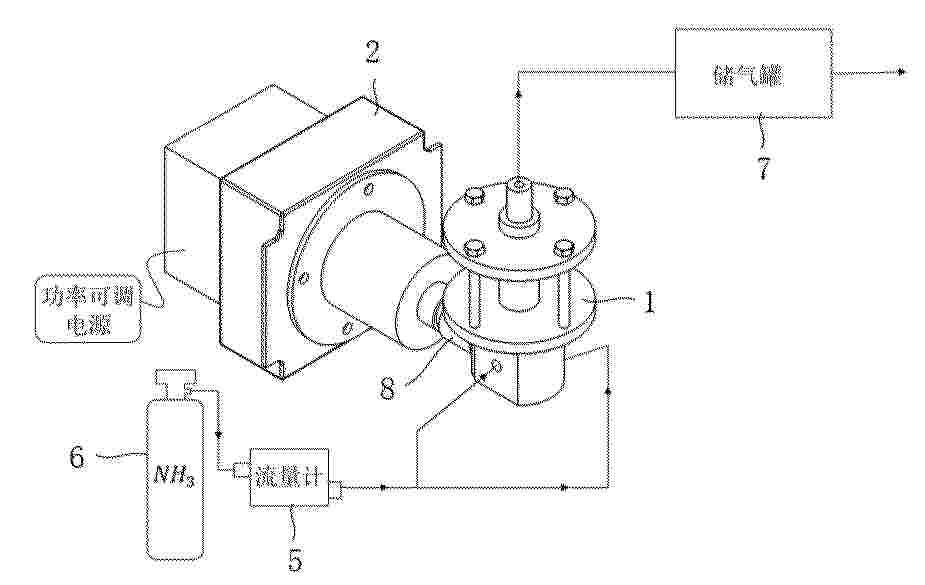
0001 本申请提供了一种微波谐振等离子体炬裂解氨制氢装置,包括:反应组件,包括:壳体,具有在第一方向上相间隔设置的封闭端和开口端,封闭端和开口端之间形成谐振腔,壳体形成与谐振腔连通的进气口;中心电极,在谐振腔内设置于封闭端,并被构造成沿第一方向延伸;微波组件,适用于产生微波,并具有与第一方向相交的第二方向上延伸的传输波导,微波通过传输波导传输后馈入谐振腔,并在谐振腔内发生谐振,以在中心电极的背离封闭端的尖端周围形成等离子体区域,使得从进气口流入的氨气在经过等离子体区域时发生裂解反应,生成包含氢气的裂解气。
Resumen de: CN122727856A
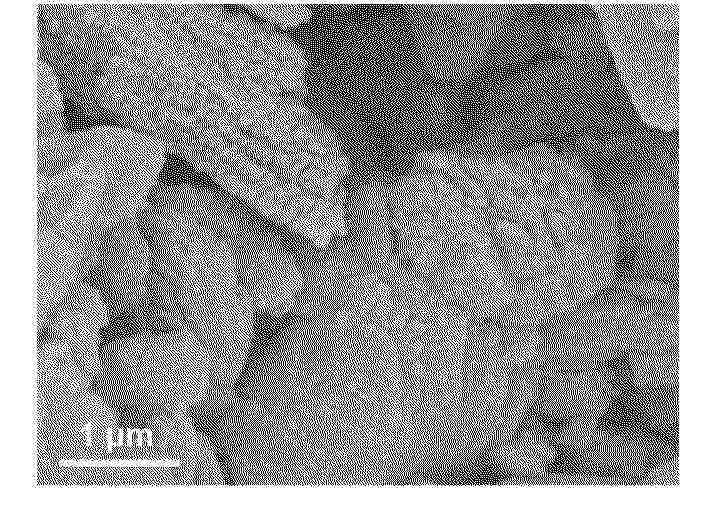
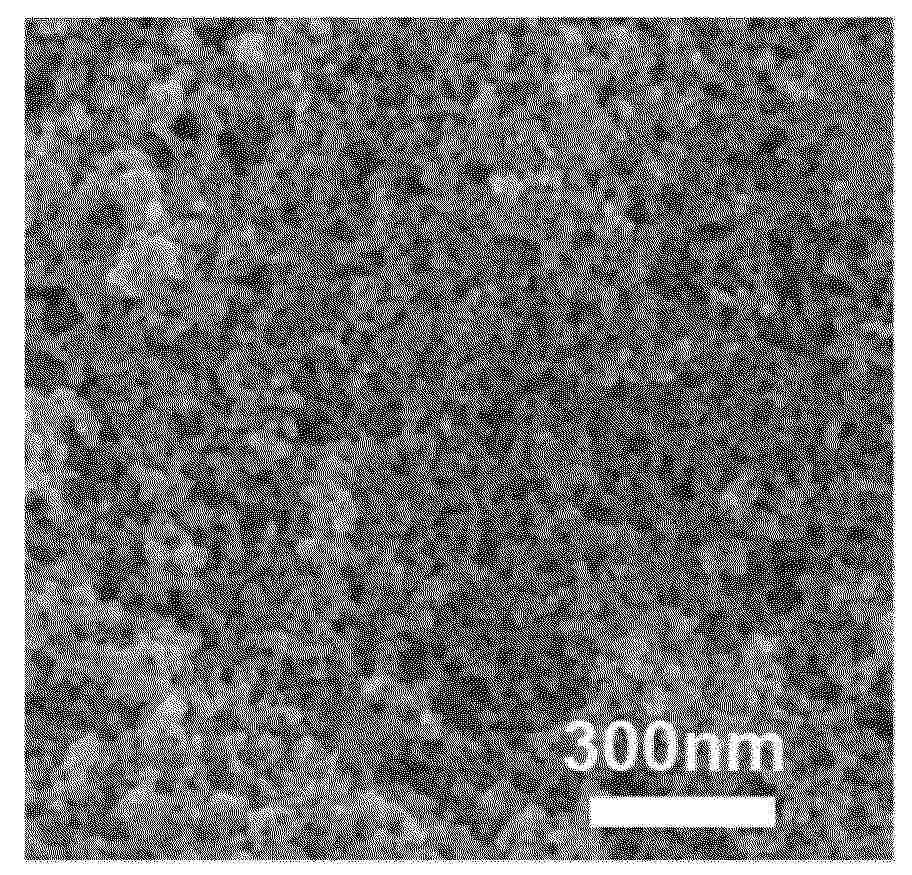
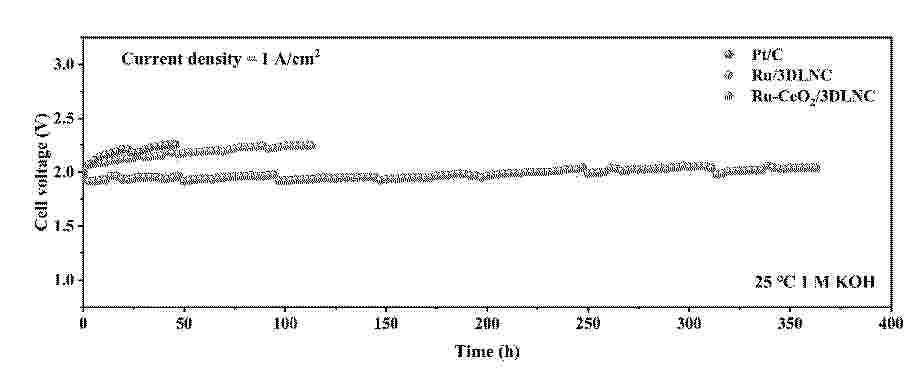
本发明公开了一种钌‑氧化铈纳米岛/三维层状氮掺杂碳电催化剂及制备方法和应用,属于电解水制氢技术领域。本发明的电催化剂包括三维层状氮掺杂碳骨架、锚定于三维层状氮掺杂碳骨架表面的富氧空位氧化铈纳米岛,以及选择性负载于氧化铈纳米岛表面和/或边缘缺陷位点的超细钌团簇。所述钌团簇与氧化铈纳米岛之间形成Ru‑O‑Ce桥联界面结构,构成“钌团簇点—氧化铈纳米岛—三维氮掺杂碳骨架”的多级协同结构。本发明的电催化剂能够在低贵金属用量条件下实现高效、稳定的碱性析氢反应,适用于电解水制氢及相关能源转化领域。
Resumen de: CN122727838A
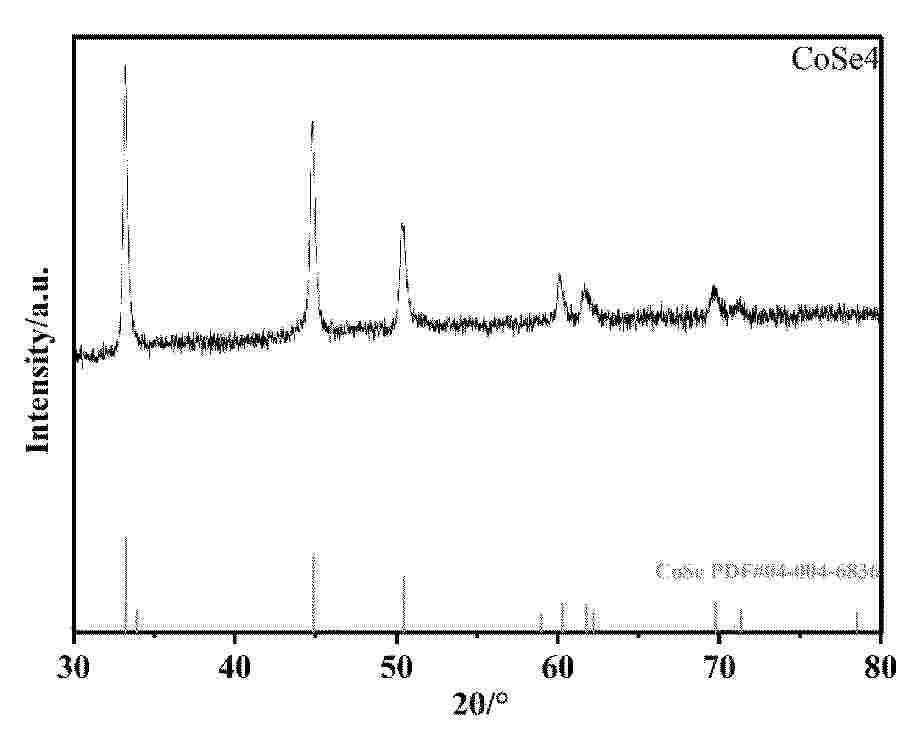
0001 本发明涉及一种碳纳米管负载CoSe电催化自支撑电极的制备方法,包括以下步骤:S1、将钴盐溶于有机溶剂中,加入碳纳米管,超声分散均匀,蒸发有机溶剂后烘干,得到前驱体;S2、将前驱体与硒粉混合均匀,进行焦耳热脉冲处理,得到碳纳米管负载CoSe电催化剂;S3、将碳纳米管负载CoSe电催化剂与有机溶剂混合,超声分散均匀,抽滤后烘干,得到碳纳米管负载CoSe电催化自支撑电极。本发明通过焦耳热脉冲处理进行硒化反应,利用其毫秒级快速升温和快速冷却的特性,精确调控硒化反应程度,定向生成高纯度单一的CoSe晶相,并有效抑制颗粒团聚、优化晶粒尺寸;同时,硒化过程使钴周围的电子密度重新分布,加快界面电荷传输速率,从而显著提升了反应速率和催化活性。
Resumen de: CN122725378A
0001 本发明属于重金属废液回收利用的技术领域,具体涉及一种镀镍镀铜废液高值化制备高熵立方八面体硫化物的方法及电解水应用,本发明通过多级预处理、双螯合树脂串联富集和梯度洗脱,实现了镀镍/镀铜废液中铜、镍回收率均≥99%,获得了超高纯金属富集液。经精准配液后,结合逆硫化聚合与一锅溶剂热法,成功制备出形貌规整、结构稳定的镂空高熵立方八面体硫化物。该材料保持了超薄多孔壳层、贯通空腔与原子级均匀掺杂的特征,在碱性电解水中表现出优异的双功能催化性能,且循环稳定性好。本发明实现了超高回收率资源化、材料形貌可控与高性能催化的统一,绿色高效、可规模化。
Resumen de: CN122726413A
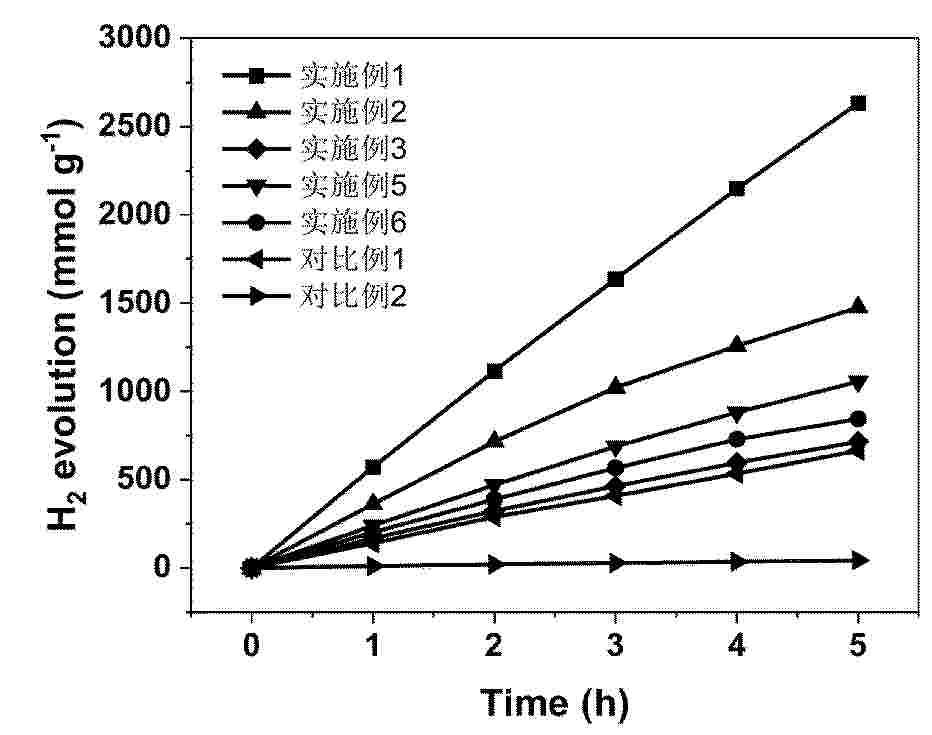
0001 本发明公开了一种共轭聚合物及其制备方法与应用,共轭聚合物的制备方法包括:将第一单体、第二单体、催化剂、添加剂和溶剂混合,在80~130 °C、氮气或惰性气体的条件下搅拌反应8~72 h,冷却至室温,得到反应液,沉降,抽滤,得到产物,将所得产物洗涤,干燥,得到共轭聚合物,其中,按物质的量份数计,第一单体和第二单体的比为1:1。本发明提供的具有D‑π桥‑A结构的共轭聚合物作为光催化剂,在天然海水中最高析氢速率超过450 mmo1·g<‑1>·h<‑1>。
Resumen de: CN122727907A
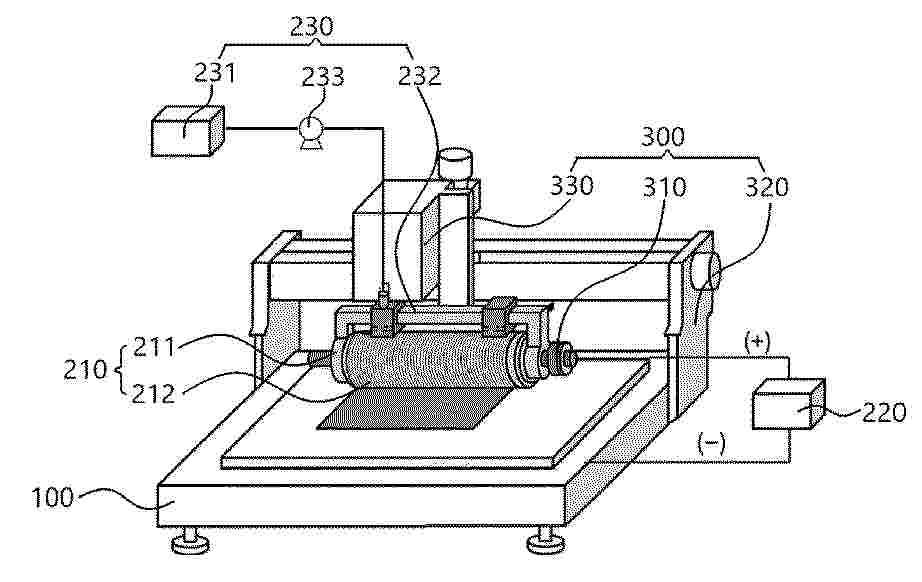
0001 本申请涉及电解水技术领域,提供了基于电刷镀的催化电极制备装置及催化电极制备方法。催化电极制备装置包括支撑件、刷镀组件和驱动组件。支撑件用于铺设待镀基底。刷镀组件设置于支撑件上,包括刷镀辊和电源。刷镀辊设置于支撑件上,用于将镀液施加于待镀基底上进行电刷镀;电源的阴极与导电辊连接,电源的阳极与支撑件上的待镀基底连接。驱动组件与刷镀辊连接,驱动组件用于带动刷镀辊在支撑件上滚动,以对待镀基底施加镀液并进行电刷镀。驱动组件还用于调节刷镀辊与支撑件在垂直于待镀基底方向上的相对距离,以调节刷镀辊与待镀基底接触状态。该装置基于电刷镀的方式实现了均匀性好的大面积催化电极的制备。
Resumen de: CN122727832A
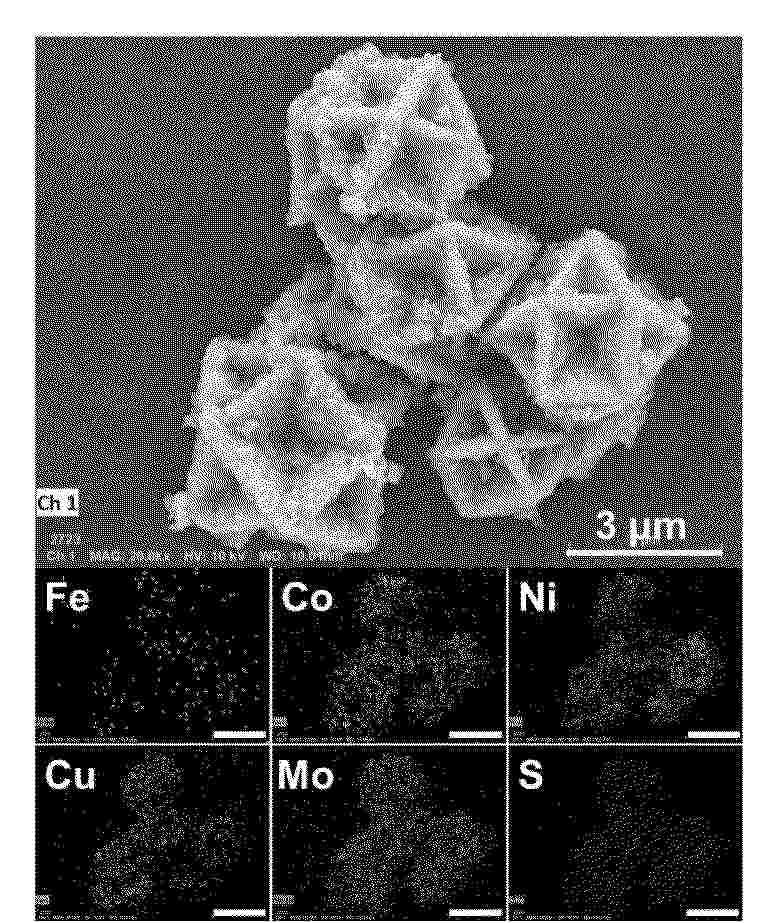
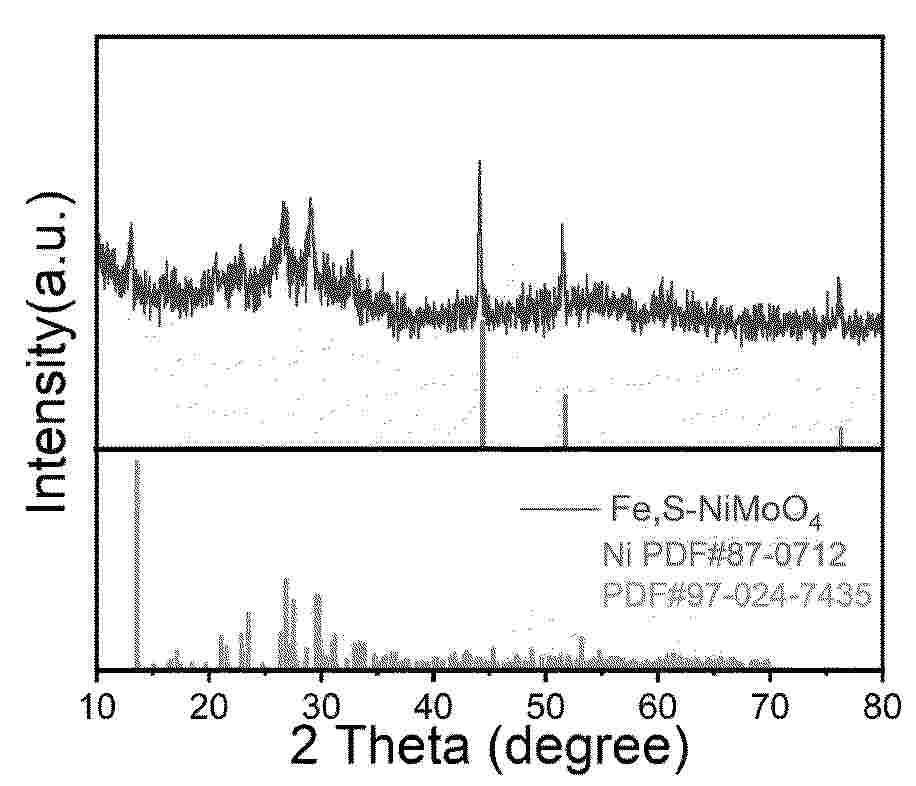
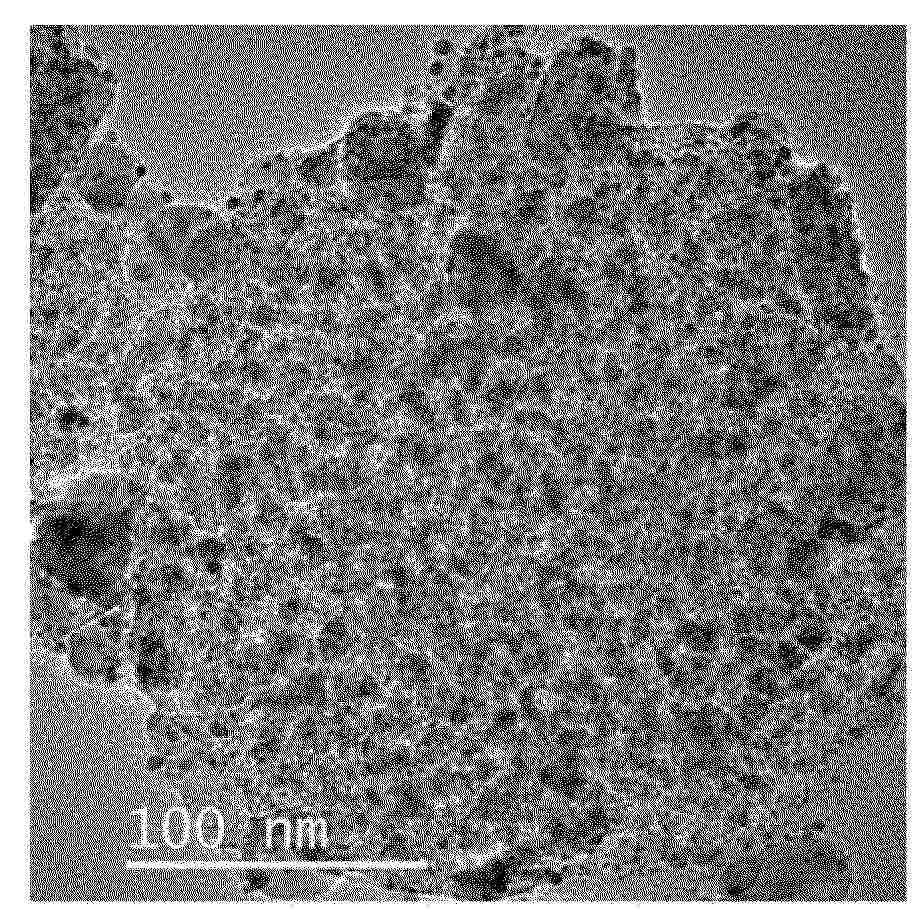
0001 本发明涉及电解水制氢技术领域,公开了一种Fe,S共掺杂钼酸镍催化剂的制备方法和在电解水制氢中应用。该制备方法包括:1)对泡沫镍进行清洗处理,干燥;2)将硫源,铁源,钼酸铵源溶解于水中,得到混合溶液;3)将泡沫镍与混合溶液混合添加至反应器中;4)将反应器在130‑150℃下反应10‑15h,冷却,洗涤,干燥;5)对产物在空气气氛中加热,冷却,得到Fe,S共掺杂钼酸镍催化剂;所得催化剂呈现为针状纳米片阵列形态,其二维纳米片状结构相互堆叠构成分级架构。Fe与S元素均匀掺杂于NiMoO<4>晶格中,两者协同调控材料的电子结构与晶体结构。电化学测试结果表明,该催化剂在1M KOH电解液中表现出优异的析氧反应催化活性和长期稳定性。
Resumen de: CN122722239A
本发明公开了一种负载型纳米钯银双金属催化剂及其制备方法和应用。所述制备方法包括:(1)以对苯二甲酸和钛酸四丁酯为原料,在N,N‑二甲基甲酰胺与甲醇的混合溶剂中,通过溶剂热法合成MIL‑125金属有机框架材料;(2)将所述MIL‑125在惰性气体氛围下进行程序升温炭化处理,得到炭化MIL‑125载体;(3)以所述炭化MIL‑125为载体,采用共还原法负载钯和银双金属活性组分,制备得到所述负载型纳米钯银双金属催化剂。本发明通过将MIL‑125高温热解得到多孔碳@氧化钛复合载体,利用多孔碳结构与氧化钛纳米颗粒的协同限域作用,有效抑制PdAg纳米粒子的生长与团聚。所制备的催化剂在低温液相甲酸分解制氢反应中展现出优异的催化性能,TOF值可达2550h‑1。
Resumen de: CN122727865A
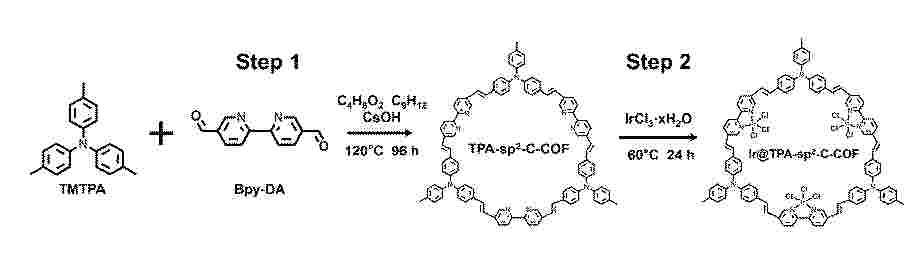
0001 本发明涉及一种铱单原子修饰的烯烃连接型共价有机框架酸性析氧催化剂及制备方法与应用,通过分子级精准设计,首先通过Knoevenagel缩合反应构建高结晶性的TPA‑sp<2>‑C‑COF共价有机框架材料,并通过浸渍法在联吡啶双齿螯合位点锚定Ir单原子,制备得到Ir@TPA‑sp<2>‑C‑COF催化剂。本发明实现电子缓冲、位点锚定、配位环境调控与质子传导的协同作用,制备的催化剂在酸性介质中展现出超低的贵金属用量、优异的OER催化活性与超长稳定性,可作为质子交换膜水电解槽(PEMWE)阳极催化剂,具有广阔的工业化应用前景。
Resumen de: GB2700593A
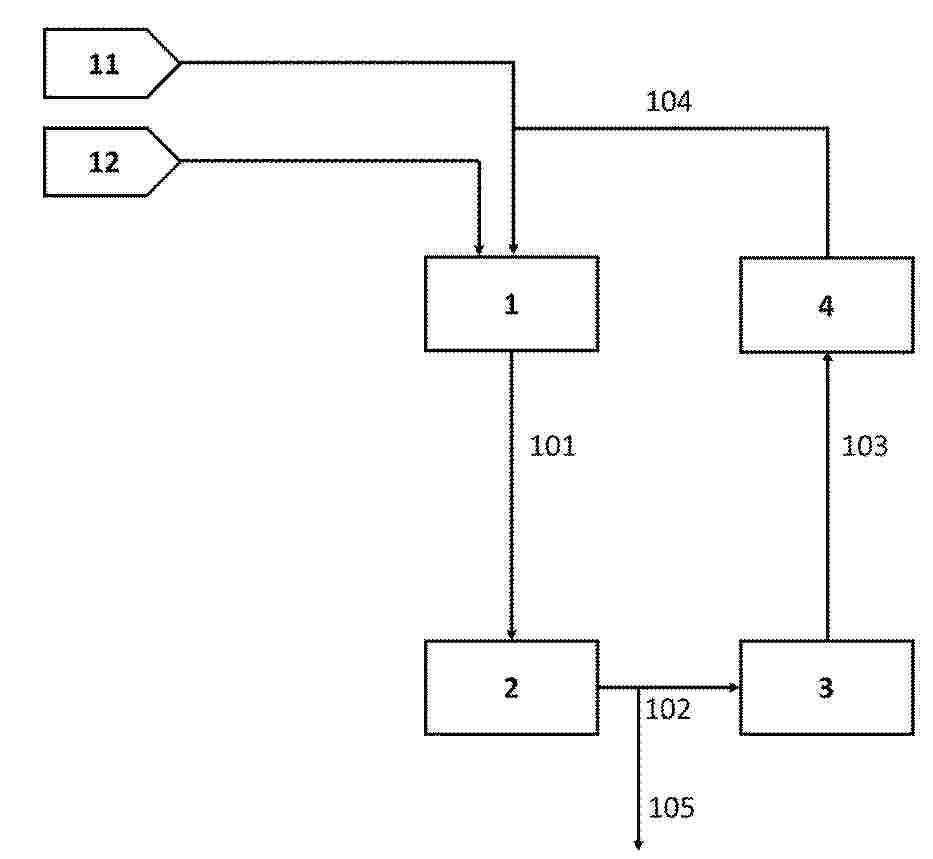
A process for controlling an ammonia cracking plant comprising a fired ammonia cracking reactor 1, may comprise the steps of: decreasing a flow of ammonia feedstock 11 to the catalyst containing reaction tube inlets, and decreasing the heat output of a fuel combustion zone of the reactor. The obtained cracked gas from the outlet of the reaction tubes may be cooled 2, increased in pressure 3, and heated 4 before recirculating the cracked gas to the inlet of the reaction tubes and passing it through the reaction tubes. An ammonia plant in a turn down state may have operated said process. The process is intended to place the ammonia cracking plant into a turndown state which enables it to rapidly return to normal operation without wasting ammonia feedstock or hydrogen. A process may return the plant from turndown by increasing ammonia feedstock flow and heat output and obtaining cracked gas. Figure 2
Resumen de: WO2026184298A1
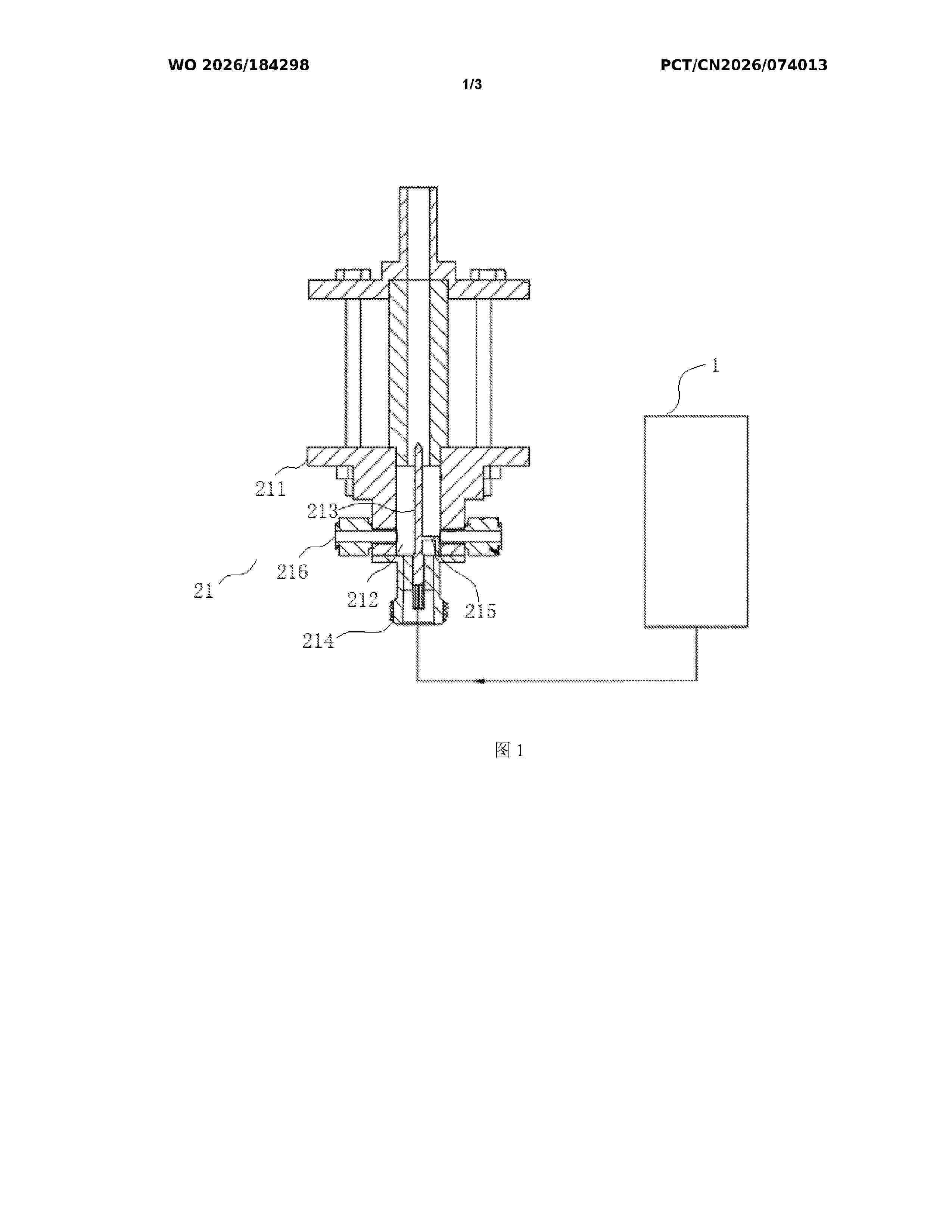
A device and method for hydrogen production via microwave resonant plasma torch-assisted ammonia cracking. The device comprises: a microwave unit (1), configured to generate microwaves; and a reaction unit (2), connected to the microwave unit (1). The reaction unit (2) comprises a resonant torch (21). The resonant torch (21) comprises a housing (211), wherein the housing (211) has a closed end and an open end, a resonant cavity (212) is formed between the closed end and the open end, the outer wall of the housing (211) is provided with a gas inlet communicated with the resonant cavity (212), and the gas inlet is configured to be communicated with an external ammonia gas source. A central electrode (213) passes through the resonant cavity (212). Microwaves are fed from the closed end into the resonant cavity (212) to establish microwave resonance therein, and a plasma region is formed around the tip of the central electrode (213) close to the open end, so that ammonia gas flowing in from the gas inlet undergoes a cracking reaction when passing through the plasma region, so as to generate cracked gas containing hydrogen gas.
Resumen de: US20260265935A1
An electrode for electrochemical cells designed to perform electrolysis is a support formed with an open porous metal structure and provided, on the outward-facing surface facing a separator of an electrochemical cell, with a coating that increases the specific surface area or with a coating that increases the specific surface area and exhibits increased catalytic activity. The coating is formed from a metal whose particles are bonded via material bonding to one another and to the surface of the open porous metal structure via sinter bridges and/or an organic binder. The coating is formed with multiple regions, between which uncoated interstices are arranged.
Resumen de: GB2633564A
A method of changing the electrolytic conversion rate within at least one electrolyser cell 10 stack 12 of an electrolyser system (figure 1, 20) is described. The stack 12 has a fluid inlet 114, fluid outlet 116 and a power control system 108. The power control system 108 is used to change the voltage, via a voltage interface 100 across the electrolyser cell stack 12, allowing the fluid outlet temperature 104 to change in response to the voltage change, setting an inlet temperature 106 to substantially match the new outlet temperature, and then allowing the voltage to revert to a substantially thermoneutral value. The electrolyser cell stack 12 is thus operating at a changed stack temperature and changed electrolytic conversion rate. A processor 110 and memory circuit 112 can also be provided for storing information such as preset current, voltage or power delivery changes. The current method may lead to a galvanostatic thermoneutral (GTN) strategy for electrolyzer stack control.
Resumen de: US20260265938A1
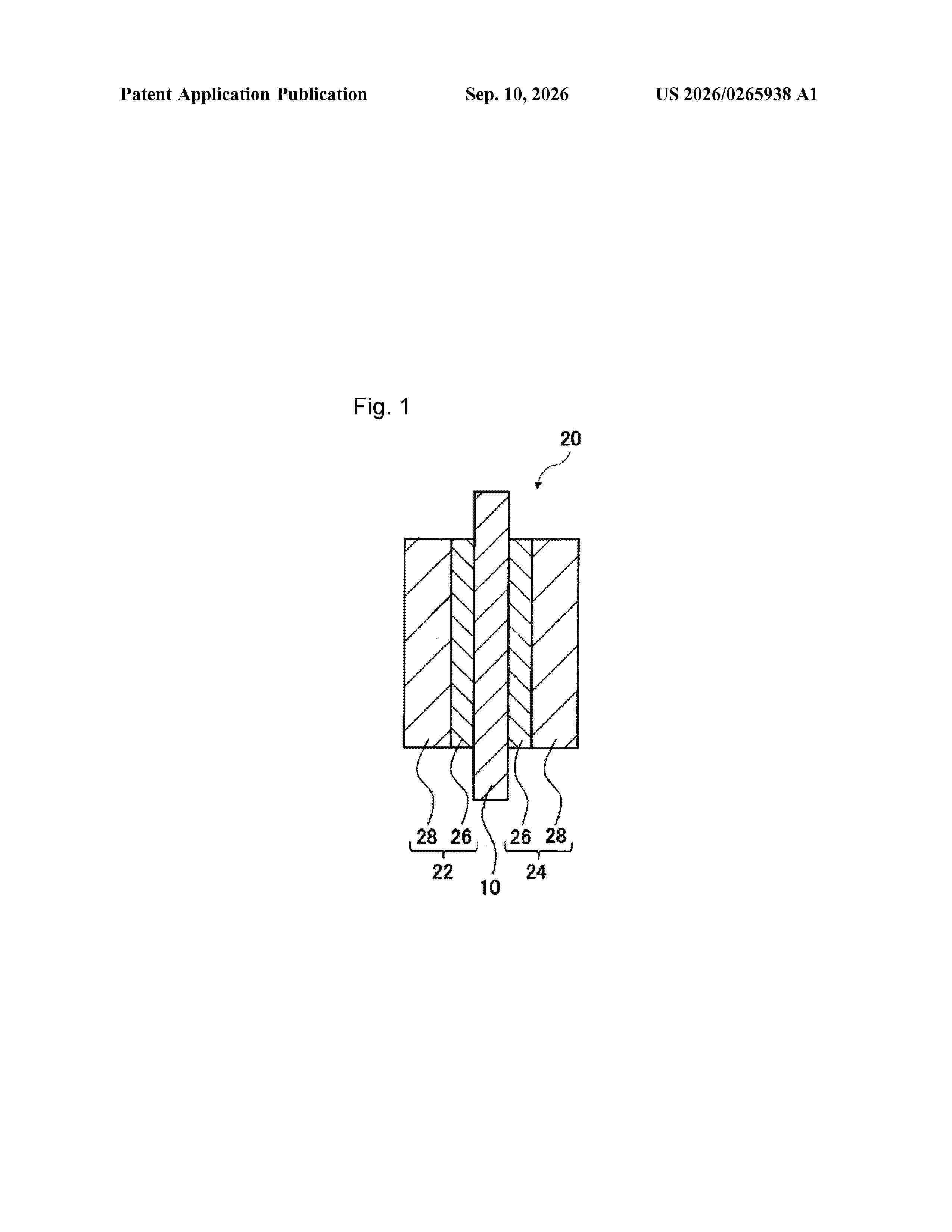
To provide a fluorinated polymer, from which such a polymer membrane can be produced that when a laminate having a polymer membrane that contains a fluorinated polymer having groups convertible to ion exchange groups sandwiched between transfer base materials is subjected to hot pressing and then the transfer base materials are peeled from the laminate, few pinholes are formed in the polymer membrane. To provide an electrolyte membrane using the fluorinated polymer, a membrane electrode assembly and a water electrolyzer. The fluorinated polymer of the present disclosure is a fluorinated polymer having units based on tetrafluoroethylene and having groups convertible to ion exchange groups, wherein no endothermic peak is observed within a range of 300 to 350° C. measured by differential scanning calorimetry.
Resumen de: US20260265939A1
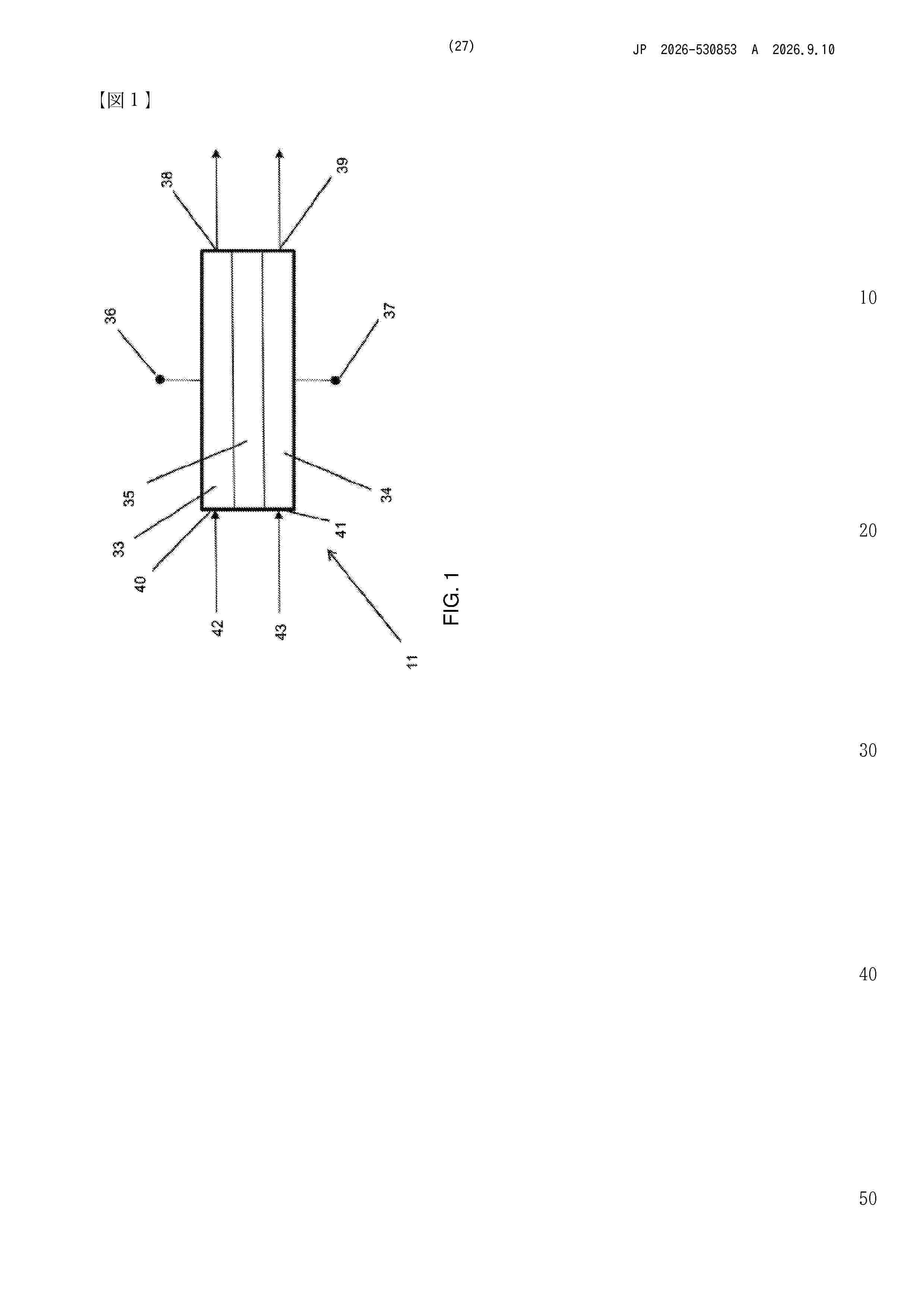
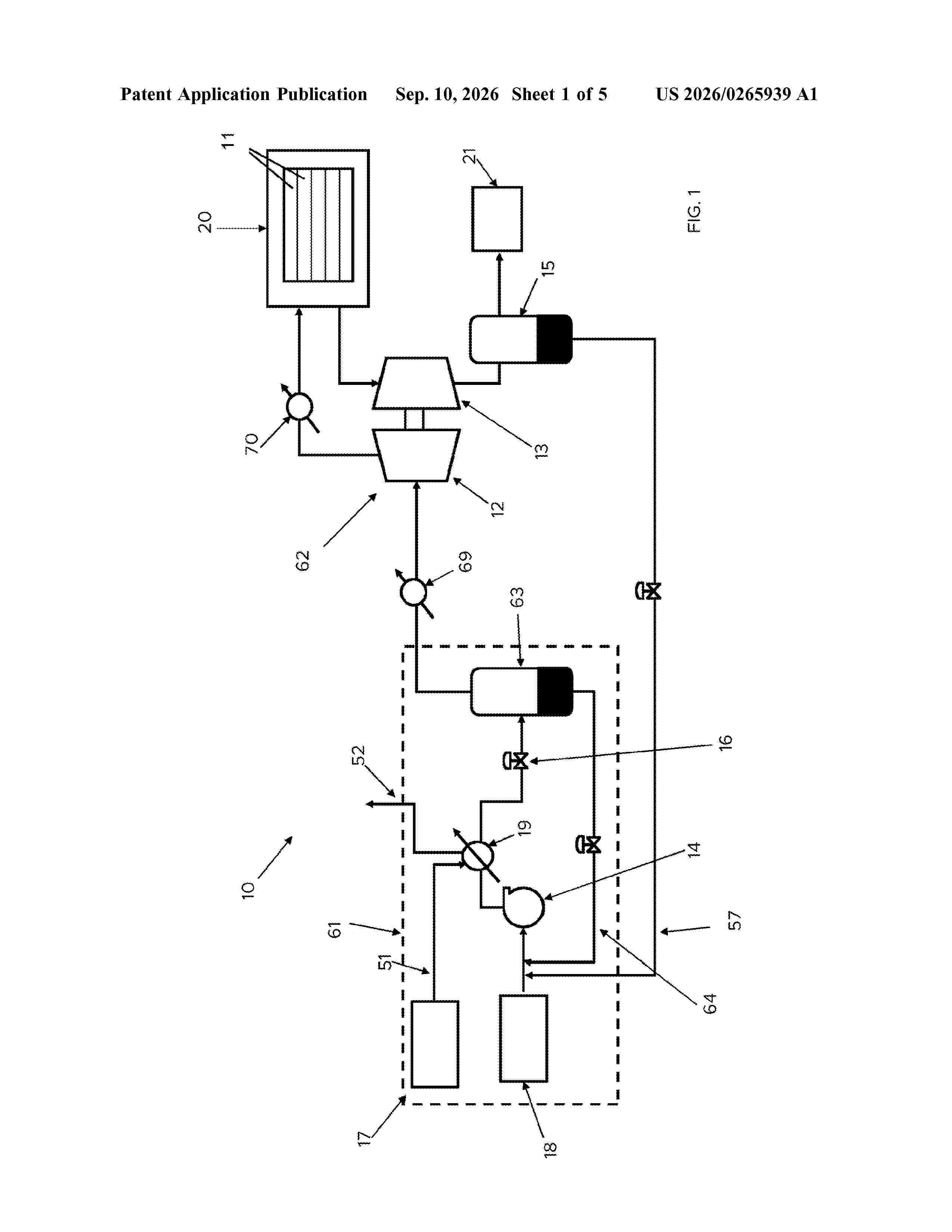
The present invention relates to an electrolyser system (10) comprising at least one electrolyser (20), the electrolyser (20) comprising at least one steam inlet (41) and at least one off-gas outlet (38; 39), and a turbocharger (62) for compressing off-gas from the electrolyser (20). The turbocharger (62) comprises a drive fluid inlet, a drive fluid outlet, a compression fluid inlet, a compressed fluid outlet, a compressor (13) and a turbine (12). The turbine (12) is configured to drive the compressor (13). The drive fluid outlet of the turbocharger (62) is fluidically connected to the at least one steam inlet (41) of the electrolyser (20). The at least one off-gas outlet (38; 39) of the electrolyser (20) is fluidically connected to the compression fluid inlet of the turbocharger (62). The system (10) can further can comprise a steam source fluidically connected to the drive fluid inlet of the turbocharger (62) for powering the turbine (12) using pressurised steam.
Resumen de: US20260269280A1
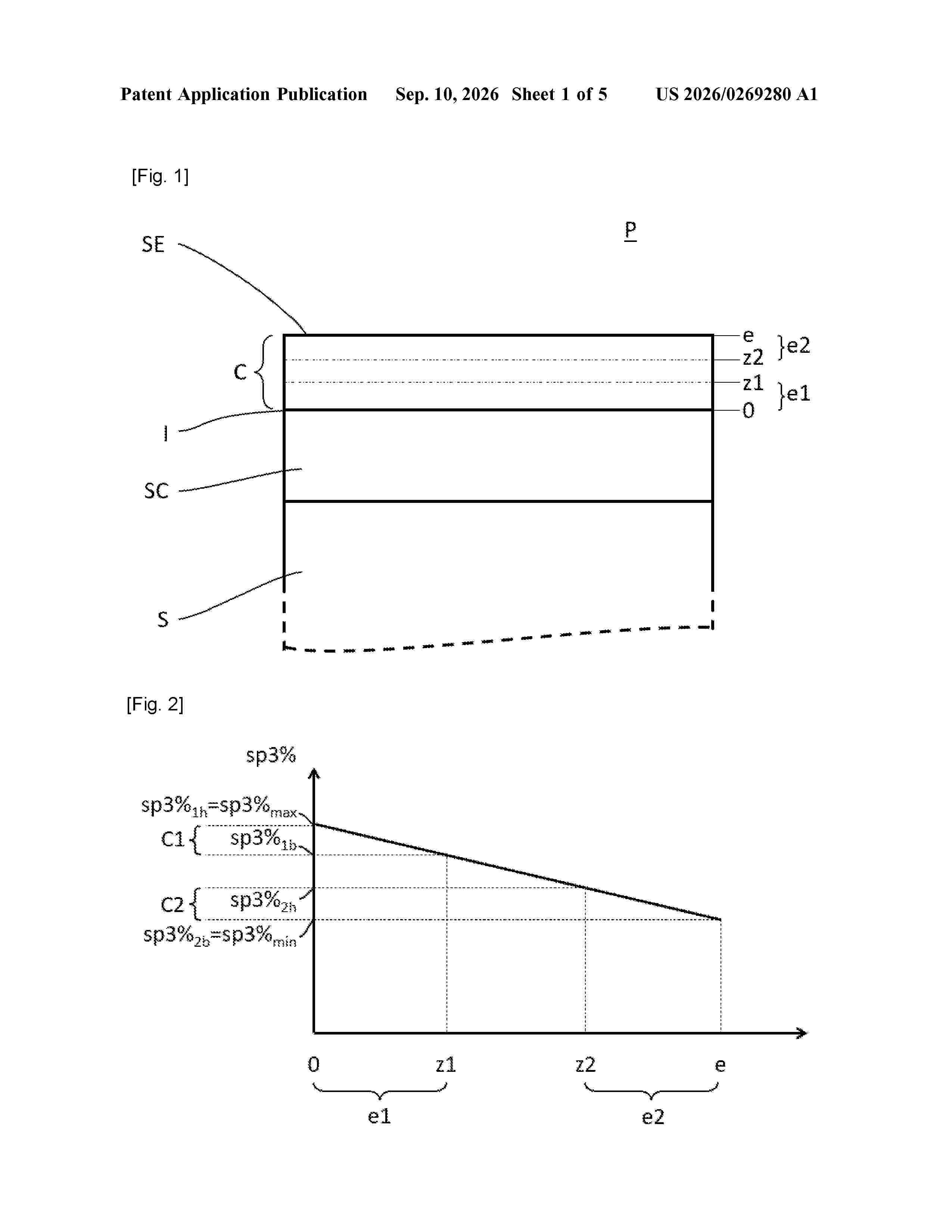
A part includes comprising a metal substrate and a layer of amorphous carbon-based material having sp2 hybridised bonds and sp3 hybridised bonds. The layer has a first content of sp3 hybridised bonds on the substrate side, anda second content of sp3 hybridised bonds on the side of an external surface of the layer,the first content being greater than the second content.An average content within the layer of sp3 hybridised bonds is between 5% and 65%and in that the content of sp3 hybridised bonds evolves continuously within the layer.
Resumen de: US20260265940A1
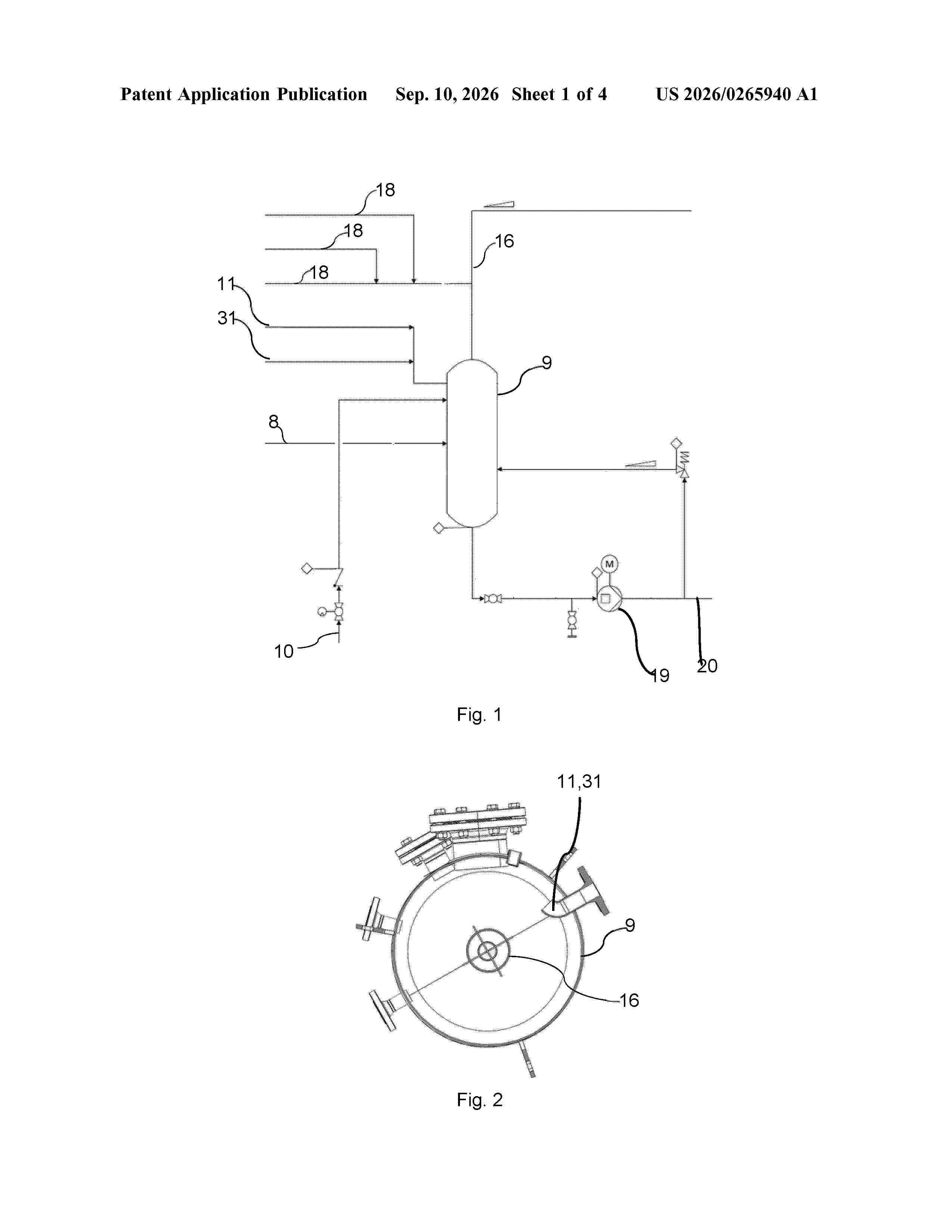
A feedwater preparation system in a water electrolyser is adapted to produce hydrogen and oxygen in one or more pressurised electrolyser stacks using alkaline water and comprises a product gas conditioning system that has a safety valve out-blow material stream pipe which is connected to a feedwater vessel, and/or has a depressurisation stream pipe from a gas cleaning vessel which is connected to the feedwater vessel.
Resumen de: US20260265612A1
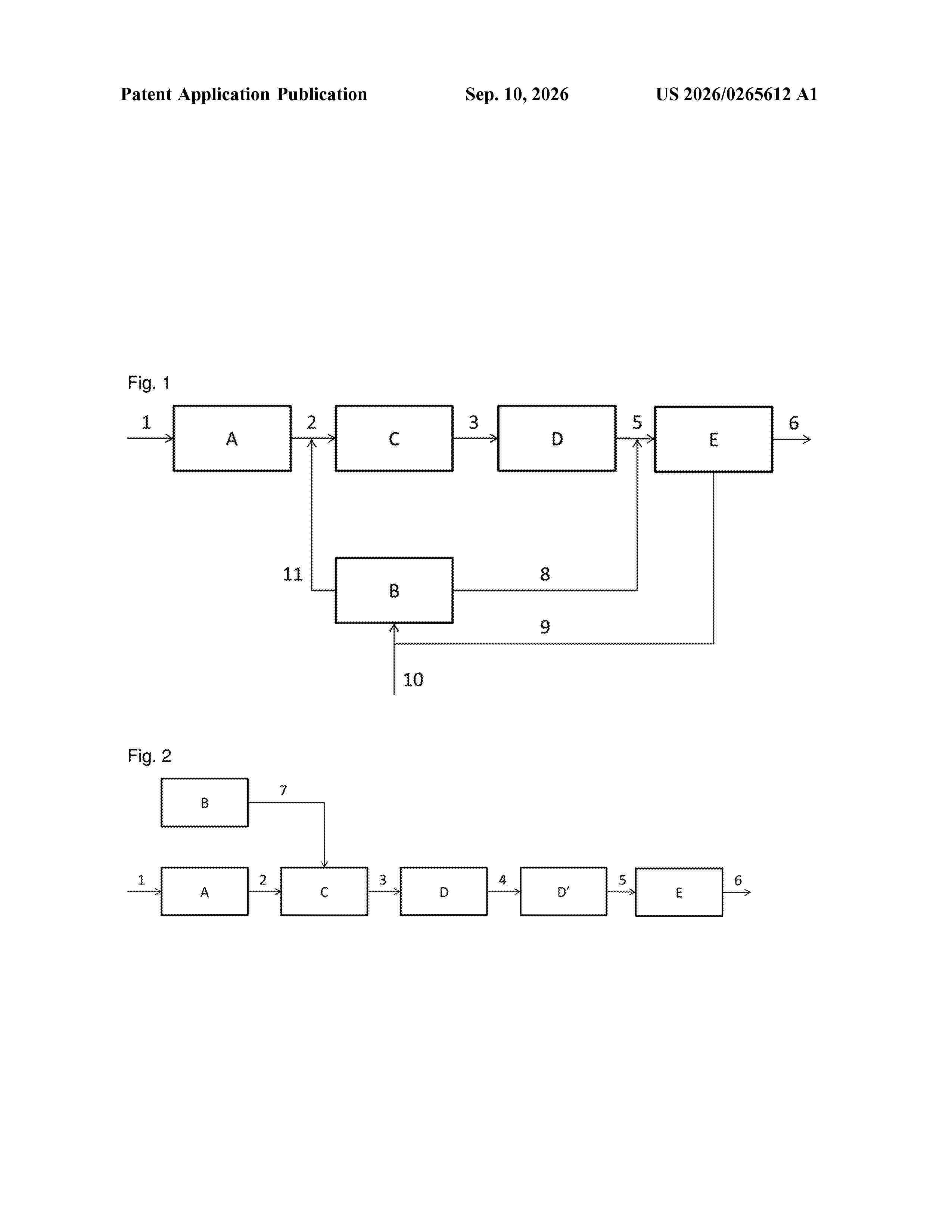
The present invention relates to a process for converting a feedstock comprising at least one biomass fraction into hydrocarbons, said process comprising a step a) of pretreating the feedstock, a step b) of electrolysis of water into oxygen and hydrogen allowing the production of a stream of hydrogen and of a stream of oxygen, in which the water is at least partly obtained from a Fischer-Tropsch synthesis step e), a step c) of gasification of the feedstock pretreated in step a), in the presence of all or part of the oxygen stream obtained from the water electrolysis step b) so as to obtain a gaseous effluent comprising a synthesis gas, an optional step d) of conditioning the gaseous effluent comprising a synthesis gas obtained from step c) and a step e) of Fischer-Tropsch synthesis of the gaseous effluent obtained from step c) or optionally from step d) in the presence of all or part of the hydrogen obtained from the water electrolysis step b) so as to produce a stream comprising synthetic liquid hydrocarbons and at least one gaseous effluent.
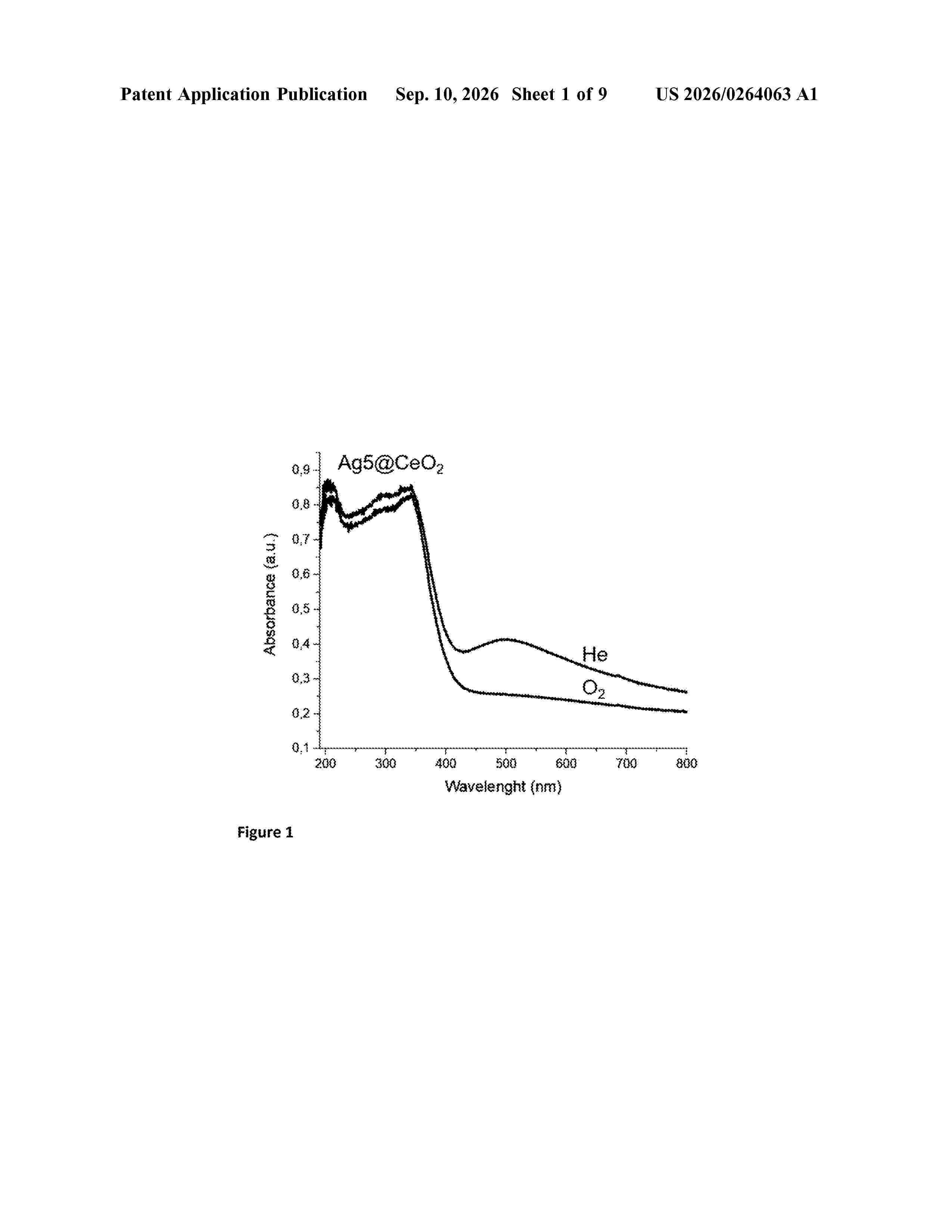
Resumen de: US20260264063A1
27 The present invention refers to a process comprising 3-10 metal atoms atomic quantum clusters (AQCs) supported on metal oxides as catalysts for oxygen release; which can be applied to the oxidation of fuels. Additionally, the present invention refers to the use of said 3-10 metal atoms AQCs supported on metal oxides as oxygen carriers in chemical looping reactions, and to catalysts and chemical compositions comprising said 3-10 metal atoms AQCs supported on metal oxides.
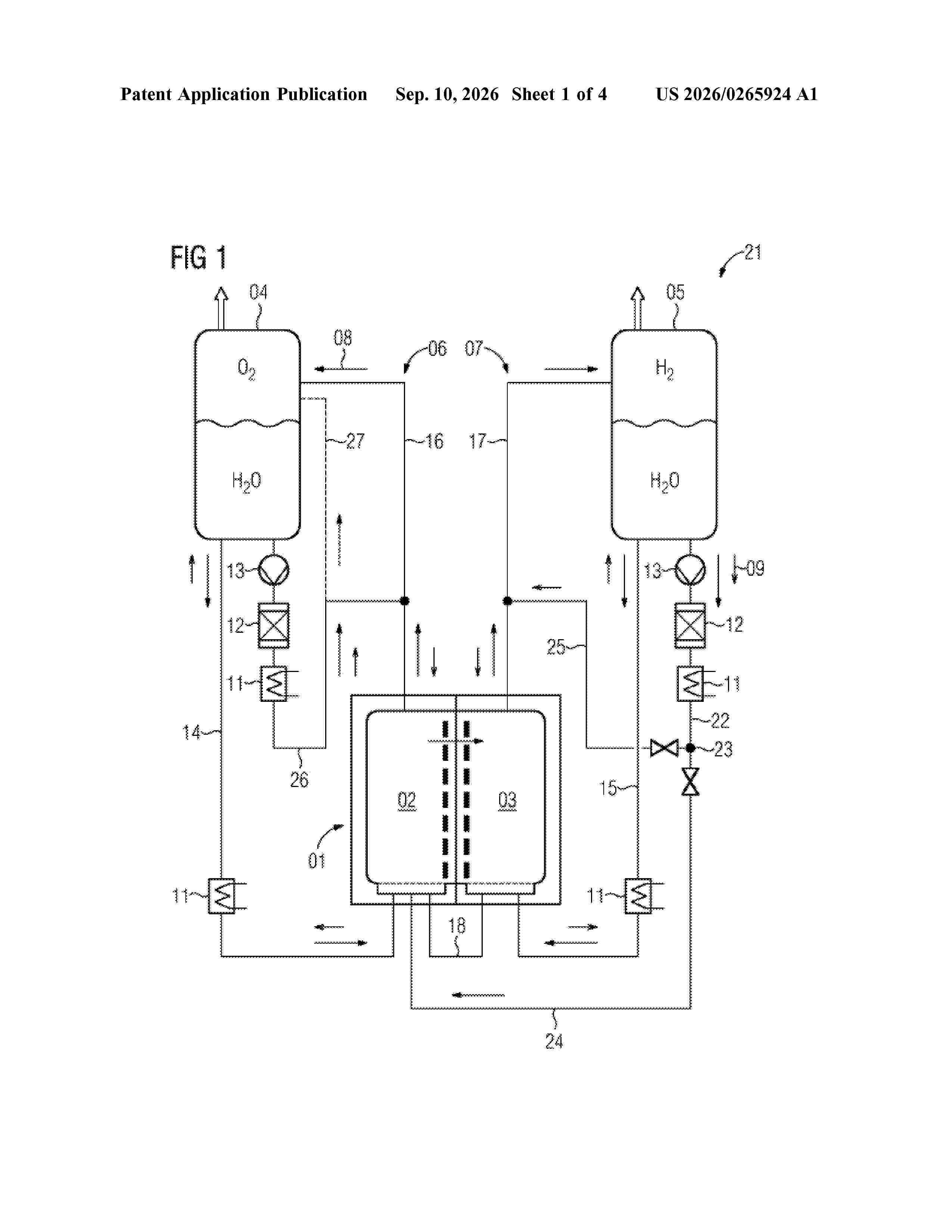
Resumen de: US20260265924A1
An electrolysis system contains: at least one electrolysis cell; a cathode-side water circuit having a hydrogen separator; an anode-side water circuit having an oxygen separator; an equalization connection which leads, coming from a cathode-side water connection, to the anode-side water circuit via a pump and an ion exchanger via a node point and an operating line; and an idle line which branches off upstream of the control line and leads to the cathode-side gas connection.
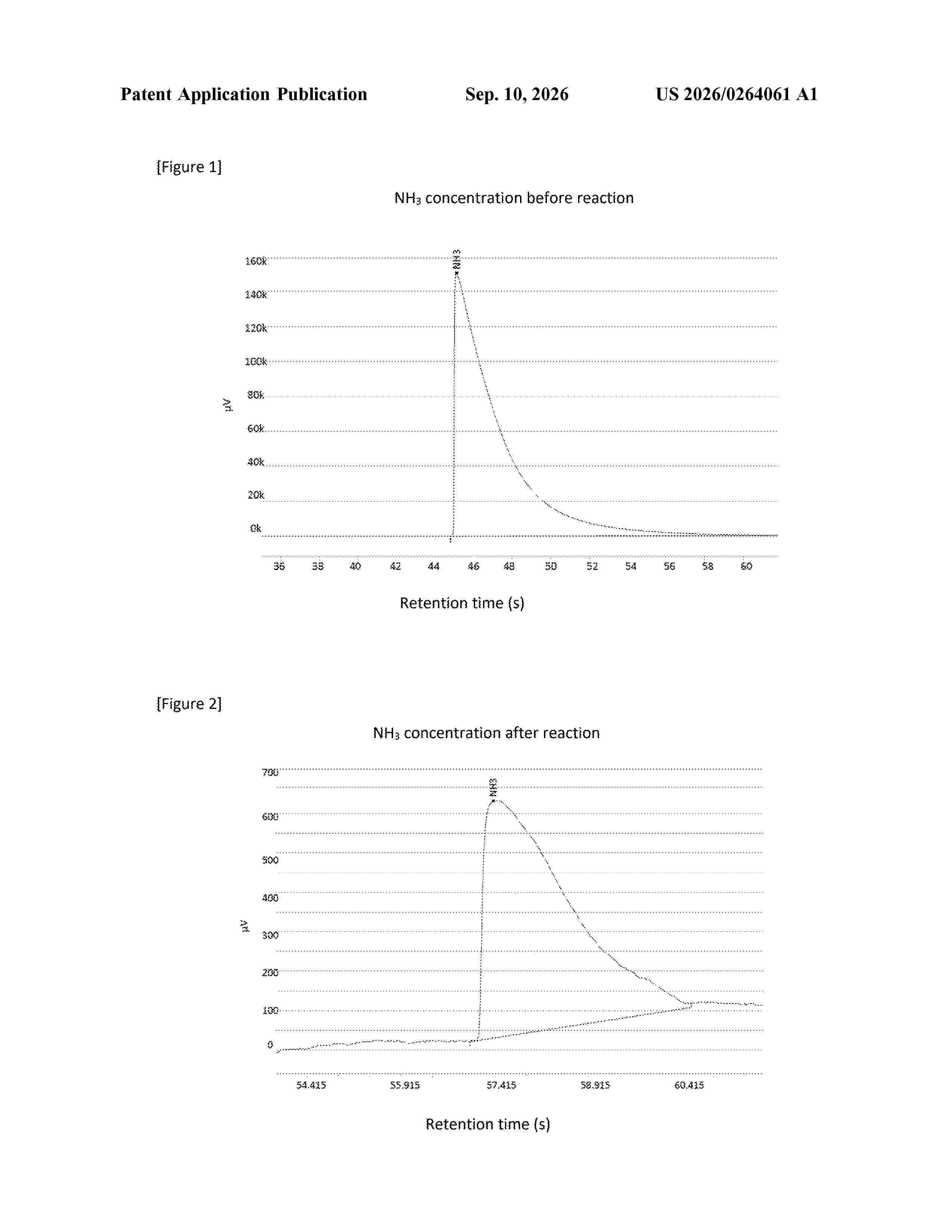
Resumen de: US20260264061A1
The present invention relates to a process for converting a gas comprising NH3 in the presence of a cold plasma, preferably a plasma generated by dielectric barrier discharge (DBD), and of a catalyst comprising a support comprising alumina, nickel, and at least one promoter comprising iron. The invention also relates to such a catalyst, and to the use thereof for producing high value-added molecules like hydrogen (H2).
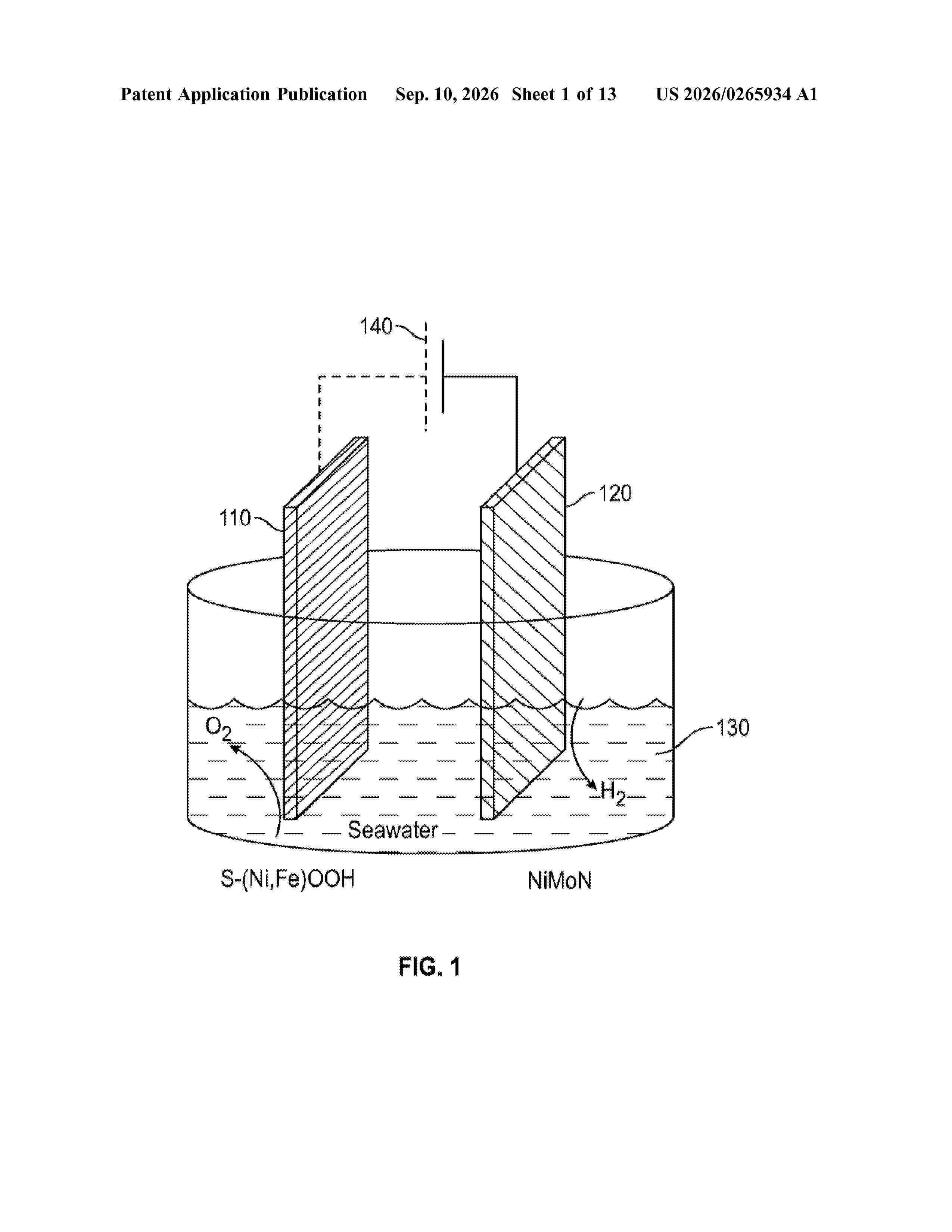
Resumen de: US20260265934A1
A water electrolyzer includes an anode formed by a sulfur-doped (Ni,Fe)OOH (S—(Ni,Fe)OOH) electrode. The water electrolyzer also includes a cathode formed by NiMoN nanowire arrays supported on Ni foam.
Nº publicación: US20260265080A1 10/09/2026
Solicitante:
HEFEI INST OF PHYSICAL SCIENCE CHINESE ACADEMY OF SCIENCES [CN]
HEFEI INSTITUTES OF PHYSICAL SCIENCE, CHINESE ACADEMY OF SCIENCES
Resumen de: US20260265080A1
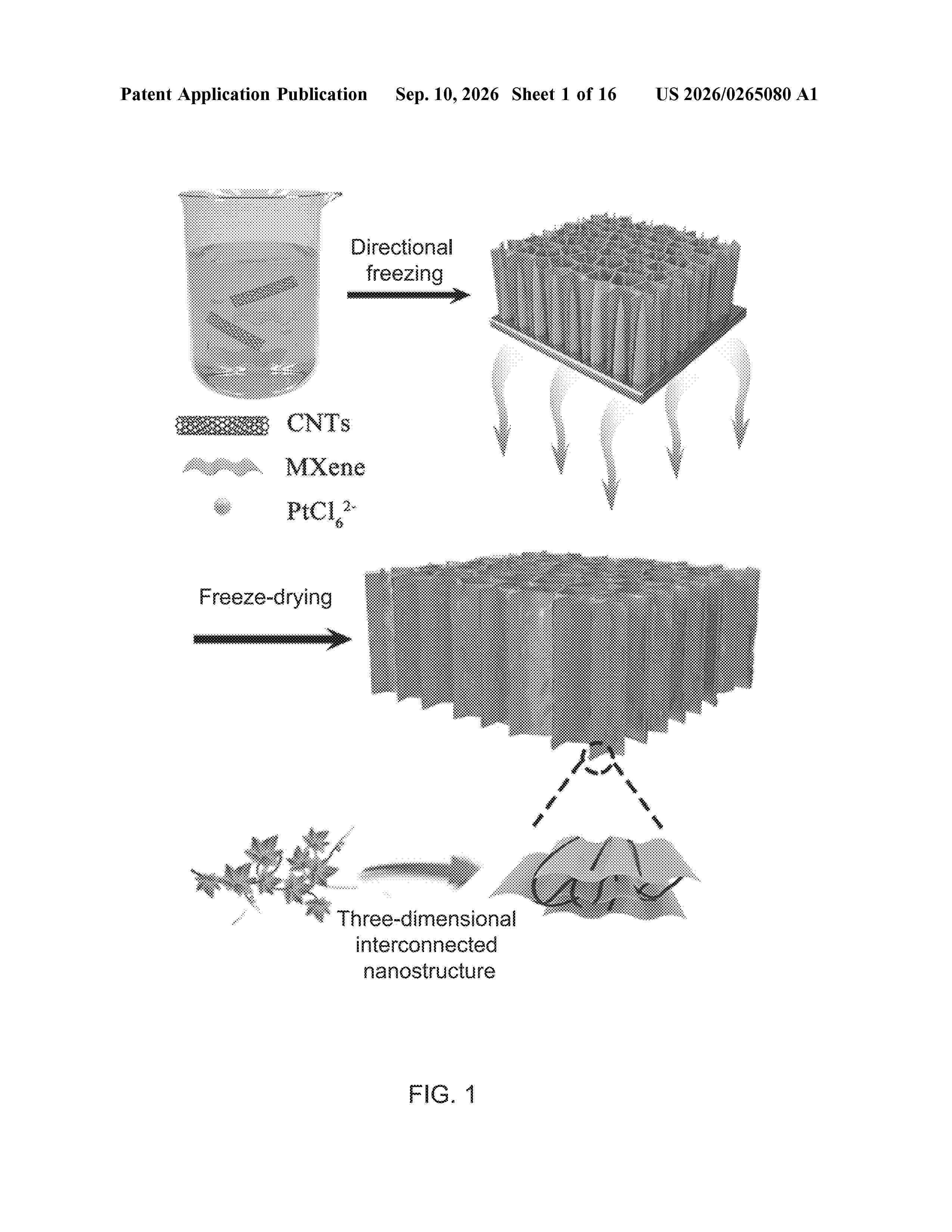
A low Pt-loaded MXene-carbon nanotube aerogel film and its preparation method are provided. The method includes adding an H2PtCl6 solution to a MXene nanosheet colloidal suspension to obtain a Pt@MXene nanosheet suspension, mixing the Pt@MXene nanosheet suspension with a carbon nanotube suspension to obtain a mixed suspension under ultrasonic treatment, and cooling a metal plate in liquid nitrogen in advance, placing the mixed suspension on a surface of the metal plate for rapid freezing, and freeze-drying to obtain a low Pt-loaded MXene-carbon nanotube aerogel film material with a vertical porous structure.
 BOPI
BOPI
 Sede Electrónica