Si deseas distinguir tus productos, servicios o ambos de los de otra empresa, es posible que necesites una marca o nombre comercial. Descubre qué son, en qué consiste su procedimiento de registro y qué implica.

Información sobre los plazos de presentación de solicitudes de transformación de marcas de la Unión Europea en marca nacional española. Más información


Si tienes un nuevo dispositivo, producto o procedimiento que resuelva un problema técnico o tenga una ventaja práctica, existen distintas formas de protegerlo en España y en otros países. Descubre cómo hacerlo.

¿Tu innovación reside en la estética, la ornamentación o la apariencia de tu producto? Protégela mediante un diseño industrial. Descubre qué derechos confiere el registro y cómo realizar la tramitación.

Las indicaciones geográficas protegen el nombre de un producto originario de una zona geográfica, a la cual le debe una determinada calidad, reputación u otra característica. Descubre qué son, en qué consiste su procedimiento de registro y qué beneficios conceden.

Las patentes publicadas en todo el mundo son una valiosa fuente de información científica, técnica y comercial.

Si eres emprendedor/a o una empresa y quieres potenciar y mejorar la rentabilidad de tu negocio protegiendo de forma adecuada los activos intangibles de tu organización, en este espacio encontrarás lo necesario.


 182
resultados
182
resultados
 Última actualización
18/03/2026 [07:03:00]
Última actualización
18/03/2026 [07:03:00]


 Resultados 175 a 182 de 182
Resumen de: WO2024224028A1
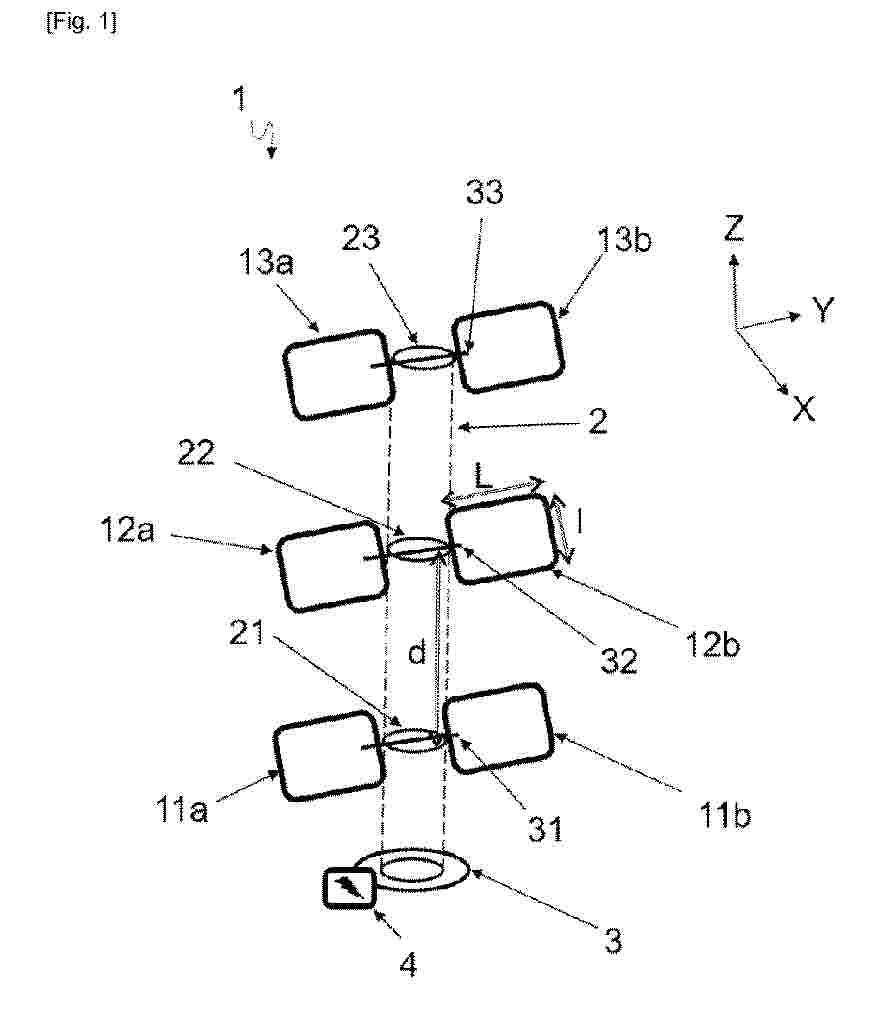
The present invention relates to a system (1) for producing electricity from solar radiation, comprising a support structure (2) and a plurality of photovoltaic modules (11a, 11b, 12a, 12b, 13a, 13c) supported by the support structure (2), characterised in that the photovoltaic modules (11a, 11b, 12a, 12b, 13a, 13c) are arranged at a plurality of levels (21, 22, 23) of the support structure (2) so as to be stacked substantially vertically, the distance between two consecutive levels of the plurality of levels (21, 22, 23) being such that the photovoltaic module or modules (11a, 11b, 12a, 12b, 13a, 13c) of one level (21, 22, 23) are never in the shadow of the module or modules (11a, 11b, 12a, 12b, 13a, 13c) of the immediately higher level (21, 22, 23).

Resumen de: WO2024223996A1
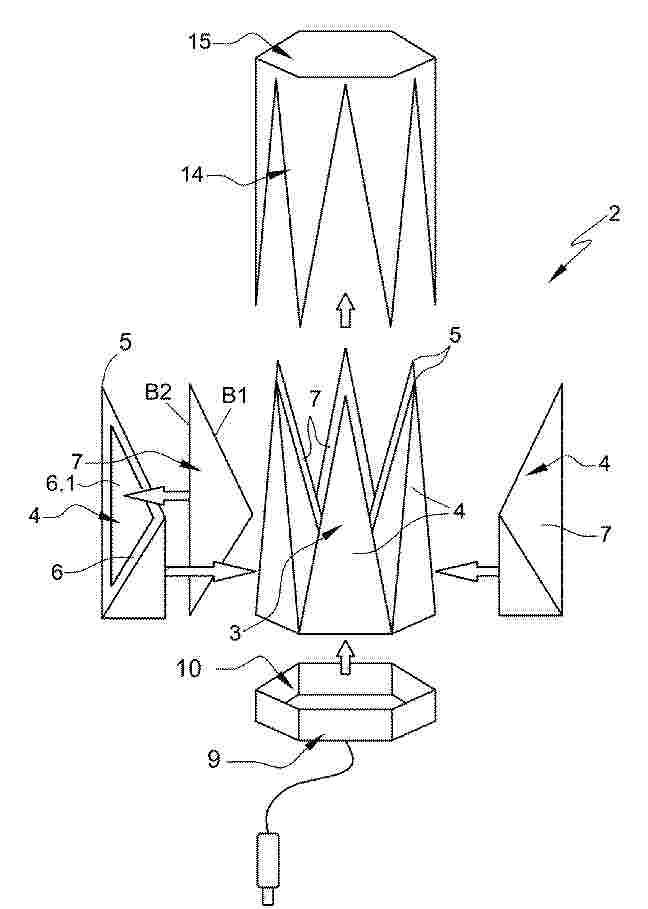
The invention relates to a three-dimensional photovoltaic module (2) provided with a central axis and comprising a three-dimensional support structure (3) having a plurality of support faces (6) distributed around the central axis; and photovoltaic coatings (7) attached to the three-dimensional support structure (3), each photovoltaic coating (7) being arranged on a respective support face and at least partially covering the respective support face (6), each photovoltaic coating (7) extending substantially along a respective extension plane. The photovoltaic coatings (7) comprise a plurality of photovoltaic coating subsets (7) distributed around the central axis that each comprise two adjacent photovoltaic coatings (7), the extension planes of the two photovoltaic coatings (7) belonging to the same subset intersecting along a respective intersection line that is inclined with respect to the central axis and upwardly extends away from the central axis.
Resumen de: WO2024223775A1
The present invention relates to a layer element comprising a polyethylene based layer (A) and a polypropylene based layer (C) sandwiching a polyolefin based layer (B) comprising a copolymer of propylene and ethylene (B- 1) having a melting temperature Tm of from 130 to 175 °C and a copolymer of ethylene and one or more comonomers selected from 4 to 12 carbon atoms (B-2) having a melting temperature Tm of from 100 to 140°C, in a structure A- B-C, an article, preferably a photovoltaic module, such as a bifacial photovoltaic module, comprising said layer element as integrated backsheet element, a process for producing said layer element, a process for producing said photovoltaic module and the use of said layer element as integrated backsheet element of a bifacial photovoltaic module.
Resumen de: WO2024223777A1
The present invention relates to a layer element comprising a polyethylene based layer (A) and a polypropylene based layer (C) sandwiching a polyolefin based layer (B) comprising a copolymer of propylene and ethylene (B- 1) having a melting temperature Tm of from 130 to 150°C and a copolymer of ethylene and one or more comonomers selected from 4 to 12 carbon atoms (B-2) having a melting temperature Tm of from 30 to 60°C, in a structure A-B-C, an article, preferably a photovoltaic module, such as a bifacial photovoltaic module, comprising said layer element as integrated backsheet element, a process for producing said layer element, a process for producing said photovoltaic module and the use of said layer element as integrated backsheet element of a bifacial photovoltaic module.
Resumen de: EP4704333A1
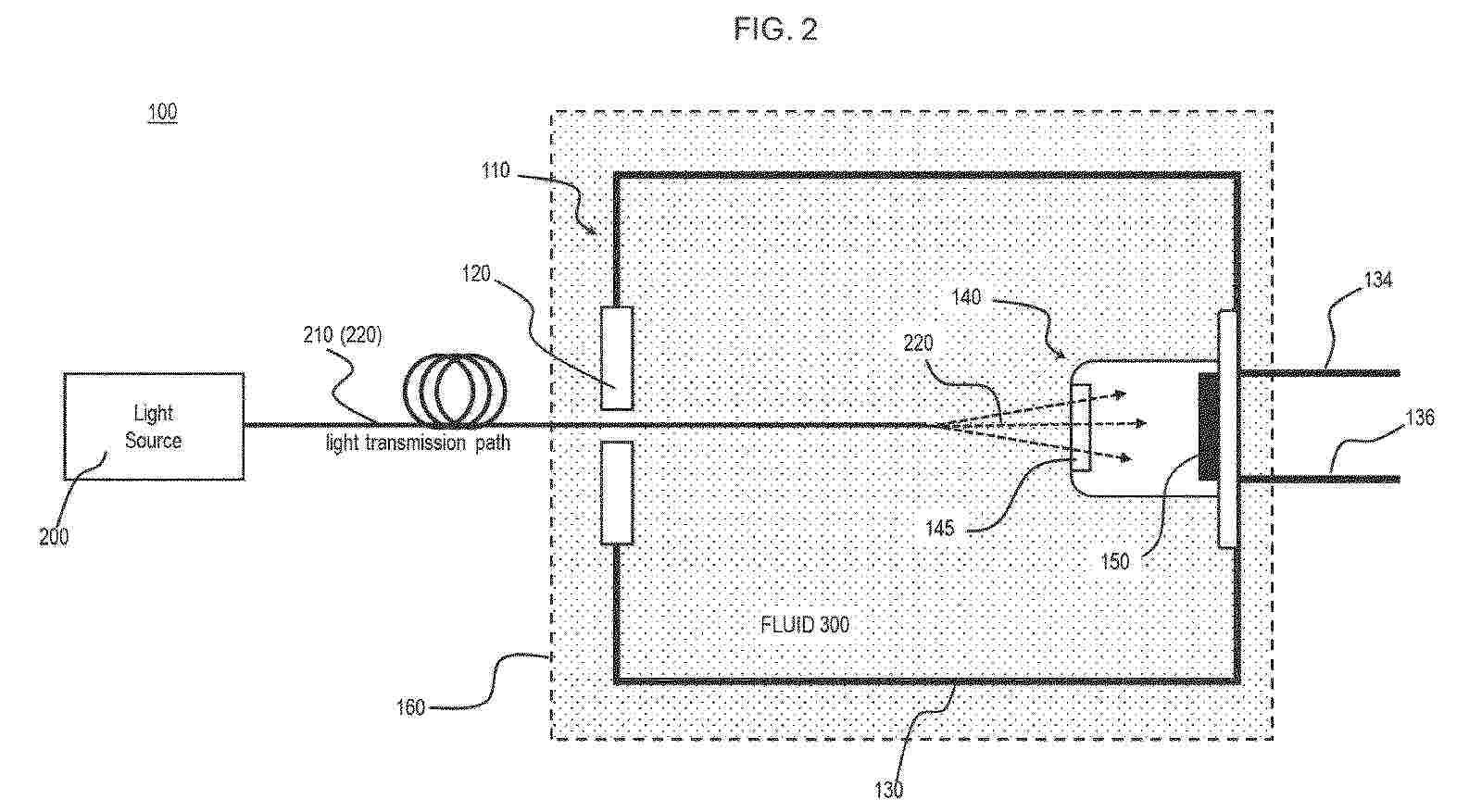
In an embodiment, an optical power converter includes a container (110) with a light input port (120) and an electrical output terminal (134, 136). A fluid can be inside the container (110). A converter device (140, 141) contacts the fluid inside the container (110). The converter device (140, 141) includes a photovoltaic element (150) that converts light into electrical power. The light travels through the fluid before reaching the converter device (140, 141). In some examples, the converter device (140, 141) may be a multijunction photovoltaic semiconductor device. The fluid (300) may be an insulating oil or a cryogenic liquid in some examples. In general, the fluid promotes heat transfer away from the converter device (140, 141) and may permit the optical power converter to function at a higher input power and/or with greater efficiency. The fluid may make direct contact with the photovoltaic element (150) in some examples.
Resumen de: EP4704523A1
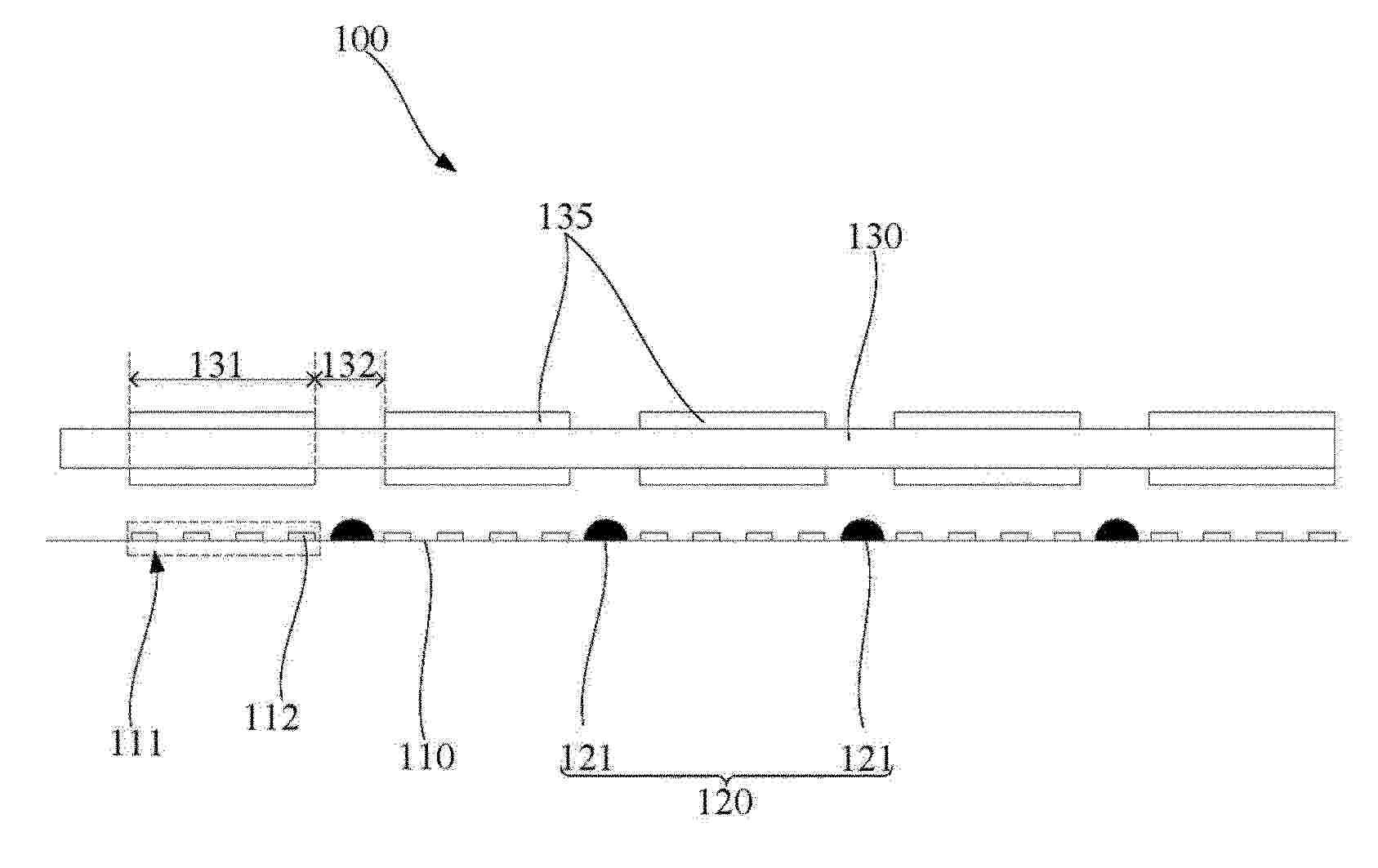
The present application relates to a conductive component, a solar cell string, and a photovoltaic module. An outer periphery of the conductive component (130) is defined with a plurality of welding regions (131) and a plurality of adhesive bonding region (132). The welding regions and the adhesive bonding regions are arranged alternately in a first direction. The outer periphery of the conductive component is provided with a plurality of flux parts (135) respectively corresponding to the plurality of welding regions. Each of the flux parts is at least partially coated, along a perimetral direction of the conductive component, on the conductive component in a corresponding one of the welding regions.
Nº publicación: EP4702588A2 04/03/2026
Solicitante:
MAXEON SOLAR PTE LTD [SG]
Maxeon Solar Pte. Ltd
Resumen de: US2025221058A1
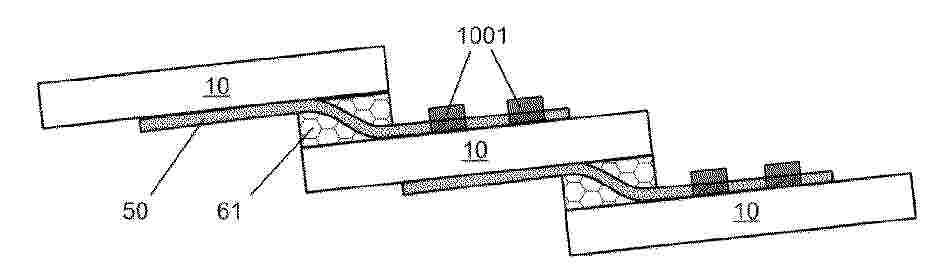
A string of shingled solar cells is disclosed. The string of shingled solar cells has flexible joints connecting the solar cells made from cured liquid polymeric adhesive. An electrically conductive interconnect passes through the flexible joint. The string of shingled solar cells also has interconnect reinforcements made from cured liquid polymeric adhesive to improve interconnect adhesion to the front surface of the solar cells.
 BOPI
BOPI
 Sede Electrónica