Si deseas distinguir tus productos, servicios o ambos de los de otra empresa, es posible que necesites una marca o nombre comercial. Descubre qué son, en qué consiste su procedimiento de registro y qué implica.

Información sobre los plazos de presentación de solicitudes de transformación de marcas de la Unión Europea en marca nacional española. Más información


Si tienes un nuevo dispositivo, producto o procedimiento que resuelva un problema técnico o tenga una ventaja práctica, existen distintas formas de protegerlo en España y en otros países. Descubre cómo hacerlo.

¿Tu innovación reside en la estética, la ornamentación o la apariencia de tu producto? Protégela mediante un diseño industrial. Descubre qué derechos confiere el registro y cómo realizar la tramitación.

Las indicaciones geográficas protegen el nombre de un producto originario de una zona geográfica, a la cual le debe una determinada calidad, reputación u otra característica. Descubre qué son, en qué consiste su procedimiento de registro y qué beneficios conceden.

Las patentes publicadas en todo el mundo son una valiosa fuente de información científica, técnica y comercial.

Si eres emprendedor/a o una empresa y quieres potenciar y mejorar la rentabilidad de tu negocio protegiendo de forma adecuada los activos intangibles de tu organización, en este espacio encontrarás lo necesario.


 53
resultados
53
resultados
 Última actualización
13/03/2026 [06:46:00]
Última actualización
13/03/2026 [06:46:00]


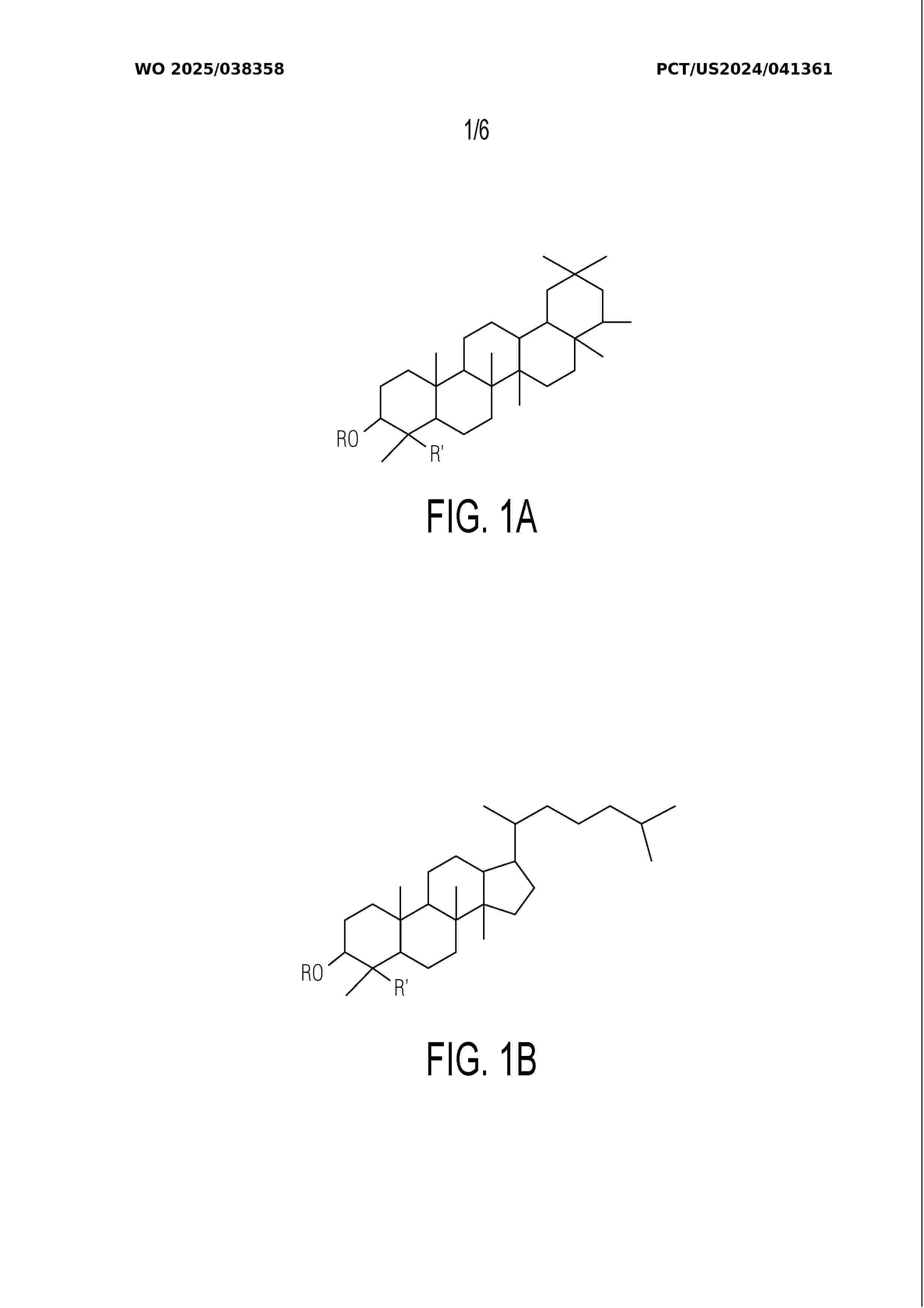
Resumen de: WO2025038358A1
Disclosed are agricultural compositions derived from a renewable source and methods of making said agricultural compositions. The agricultural compositions may comprise an extract derived from non-woody plants of the genus Hesperaloe. The extract of a non-woody plant of the genus Hesperaloe may comprise water soluble components including lipids, proteins, inorganic salts, saccharides, polysaccharides, organic acids, saponins, or combinations thereof. The extracts may be prepared with minimal processing to remove at least a portion of the water insoluble solids. The agricultural compositions have a high degree of efficacy against a range of agricultural pests and may be particularly useful in preventing or inhibiting the growth of fungal organisms.

Resumen de: EP4707379A1
The invention refers to a method for selecting at least one bacterial species to be used as a bioinoculant for the promotion of growth of a marine phanerogam, wherein the method comprises: (a) isolating phosphate-solubilising bacteria from a sample of substrate obtained from the rhizosphere of a marine phanerogam, and (b) determining exopolysaccharide production, siderophore production and phosphatase activity of the bacterial species, wherein an exopolysaccharide production, a siderophore production, and a phosphatase activity above specific threshold values are indicative that the bacterial species can be used as a bioinoculant for the promotion of growth of a marine phanerogam. The invention also refers to a bioinoculant that comprises at least one bacterium from a species selected from the group consisting of Methylobacterium phyllosphaerae, Methylobacterium sp., Microbacterium foliorum and Rhodococcus sp. and related uses.
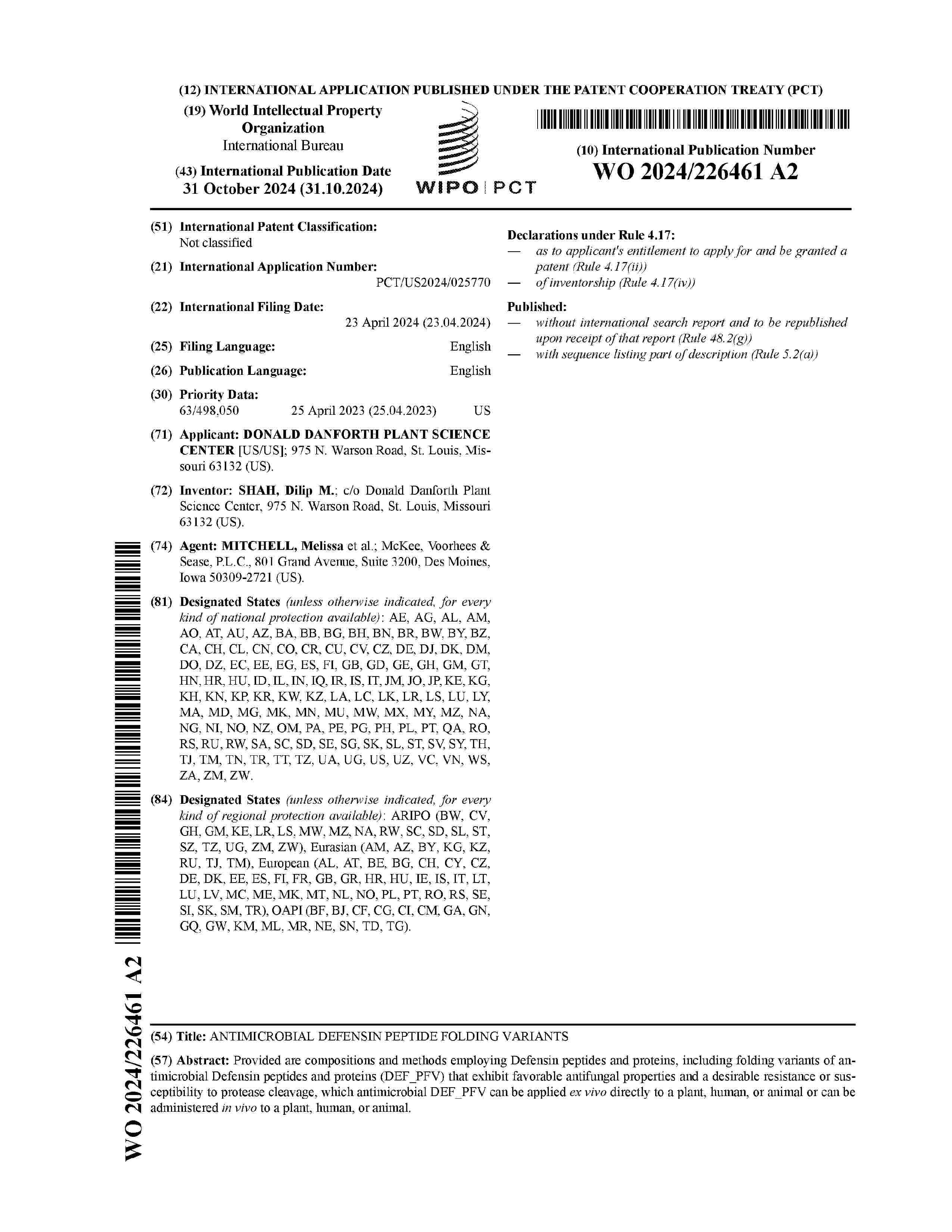
Resumen de: WO2024226461A2
Provided are compositions and methods employing Defensin peptides and proteins, including folding variants of antimicrobial Defensin peptides and proteins (DEF_PFV) that exhibit favorable antifungal properties and a desirable resistance or susceptibility to protease cleavage, which antimicrobial DEF_PFV can be applied ex vivo directly to a plant, human, or animal or can be administered in vivo to a plant, human, or animal.
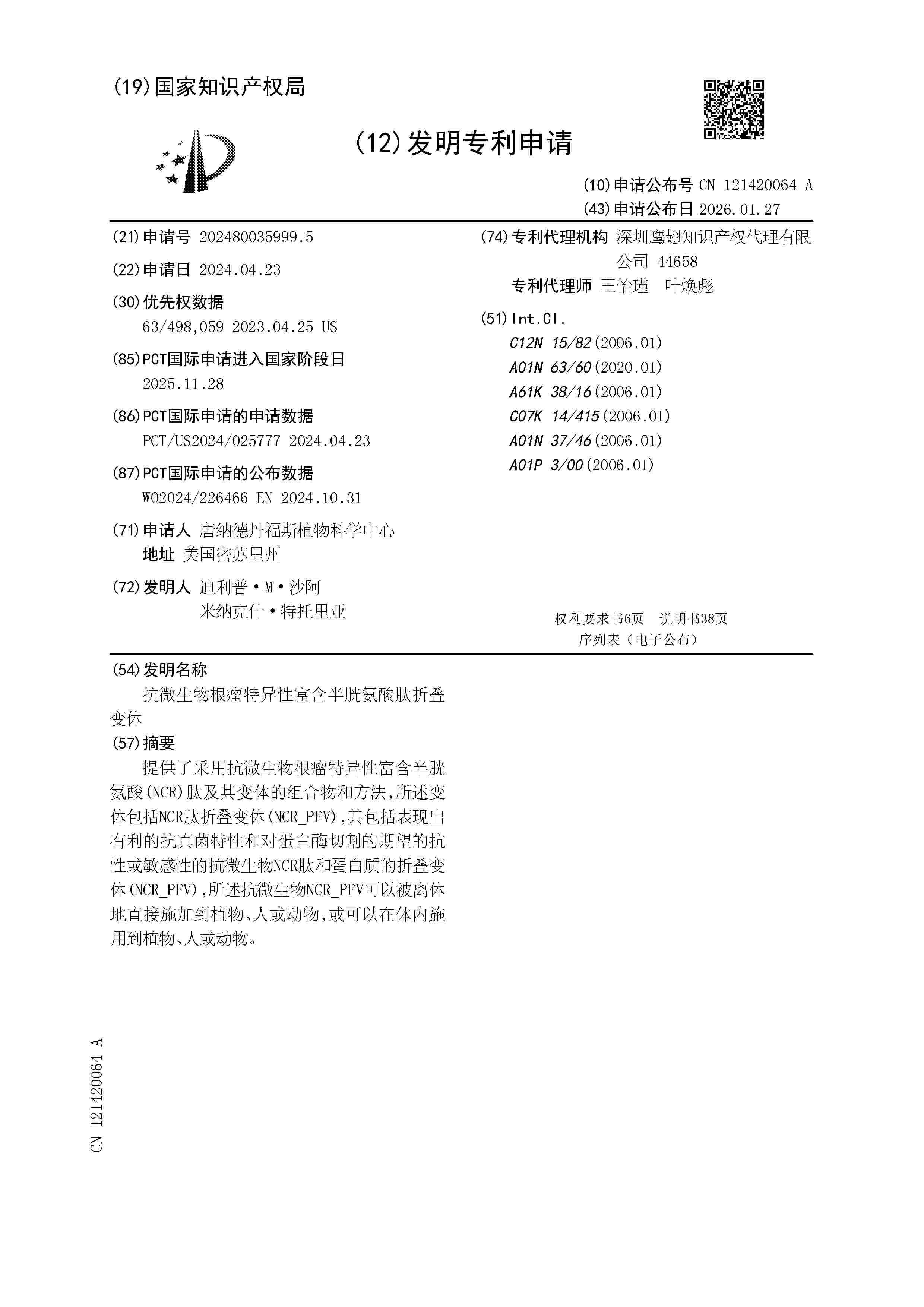
Resumen de: WO2024226466A2
Provided are compositions and methods employing antimicrobial nodule-specific cysteine-rich (NCR) peptides and variants thereof, including NCR peptide folding variants (NCR_PFV) including folding variants of antimicrobial NCR peptides and proteins (NCR_PFV) that exhibit favorable antifungal properties and a desirable resistance or susceptibility to protease cleavage, which antimicrobial NCR_PFV can be applied ex vivo directly to a plant, human, or animal or can be administered in vivo to a plant, human, or animal.
Resumen de: WO2024229320A1
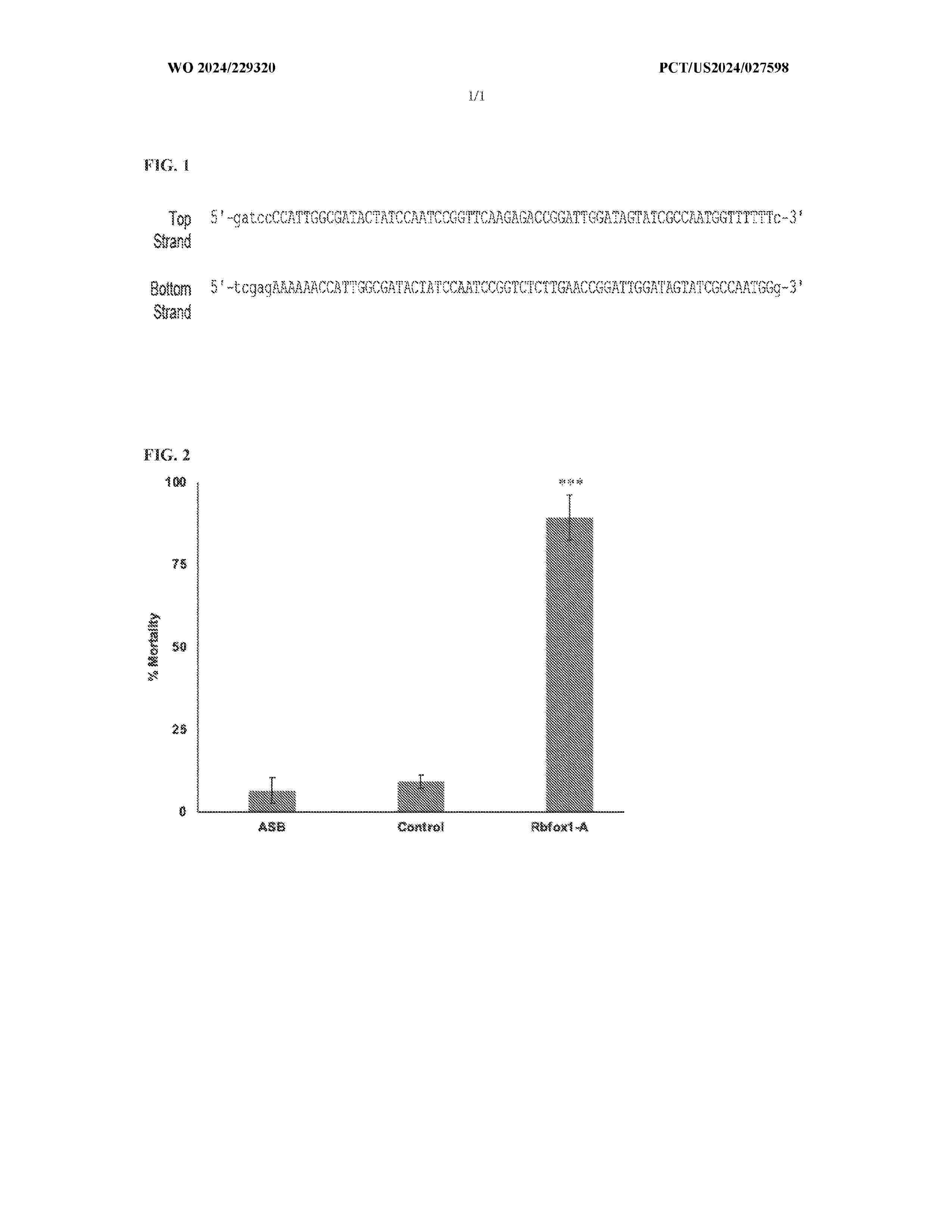
Disclosed herein are methods for producing microbial biopesticide compositions comprising interfering RNA targeting insect pests, such as invasive Drosophila species. In addition, disclosed are methods of contacting such insect pests with a microbial cell comprising interfering RNA, such as a yeast cell engineered to produce disclosed interfering RNA, effective to disrupt the expression of insect pest genes, thereby causing toxicity and undermining the fitness of the pests. Also disclosed are compositions of such biopesticides, alone and in combination with additional insecticides, attractants, and phagostimulants, such as attractive targeted sugar baits.
Resumen de: US2025361513A1
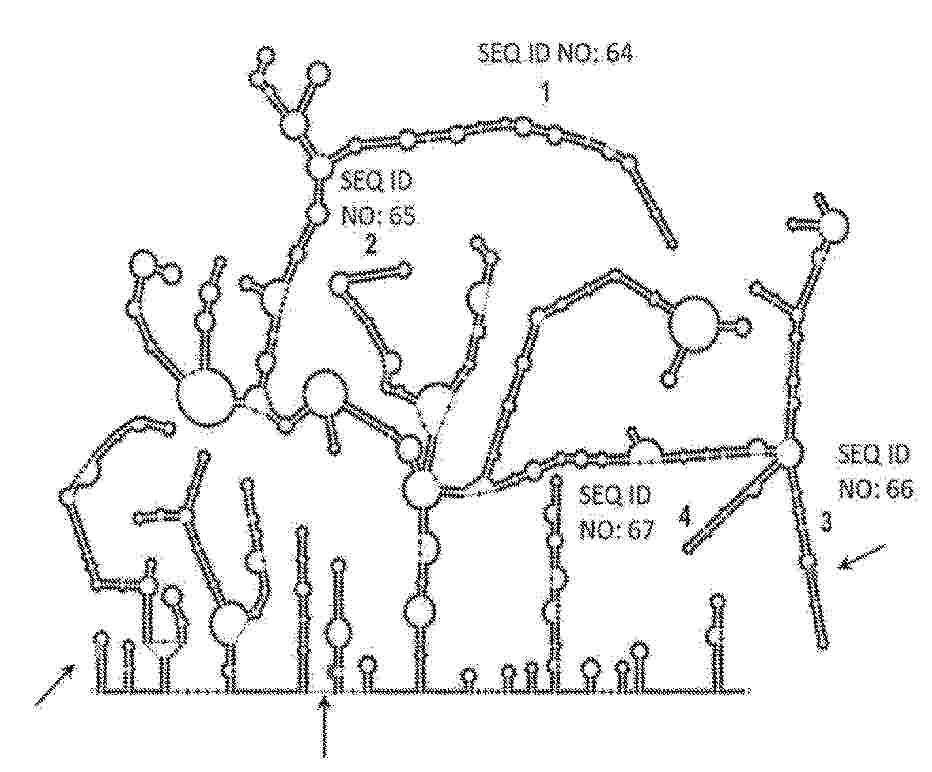
The present disclosure relates to a viral vector suitable for introducing a therapeutic agent, such as a peptide, protein or small RNA, into a host or otherwise treating a host. The vector may include an exogenous RNA segment with a hairpin-like structure or having two or more base-paired regions separated by one or more non-base-paired regions. The exogenous RNA segment may have a secondary structure, minimum free energy, average positional entropy or other attributes within specified ranges, or with values similar to one or more hairpin-like structures of a reference wild type virus. Optionally, the RNA vector may be derived from the reference wild type virus or a relative of the reference wild type virus. In some examples, the vector is capable of capable of systemic and phloem-limited movement and replication within a host plant. In some examples, the reference wild type virus is an umbravirus-like associated RNA.
Resumen de: PL449739A1
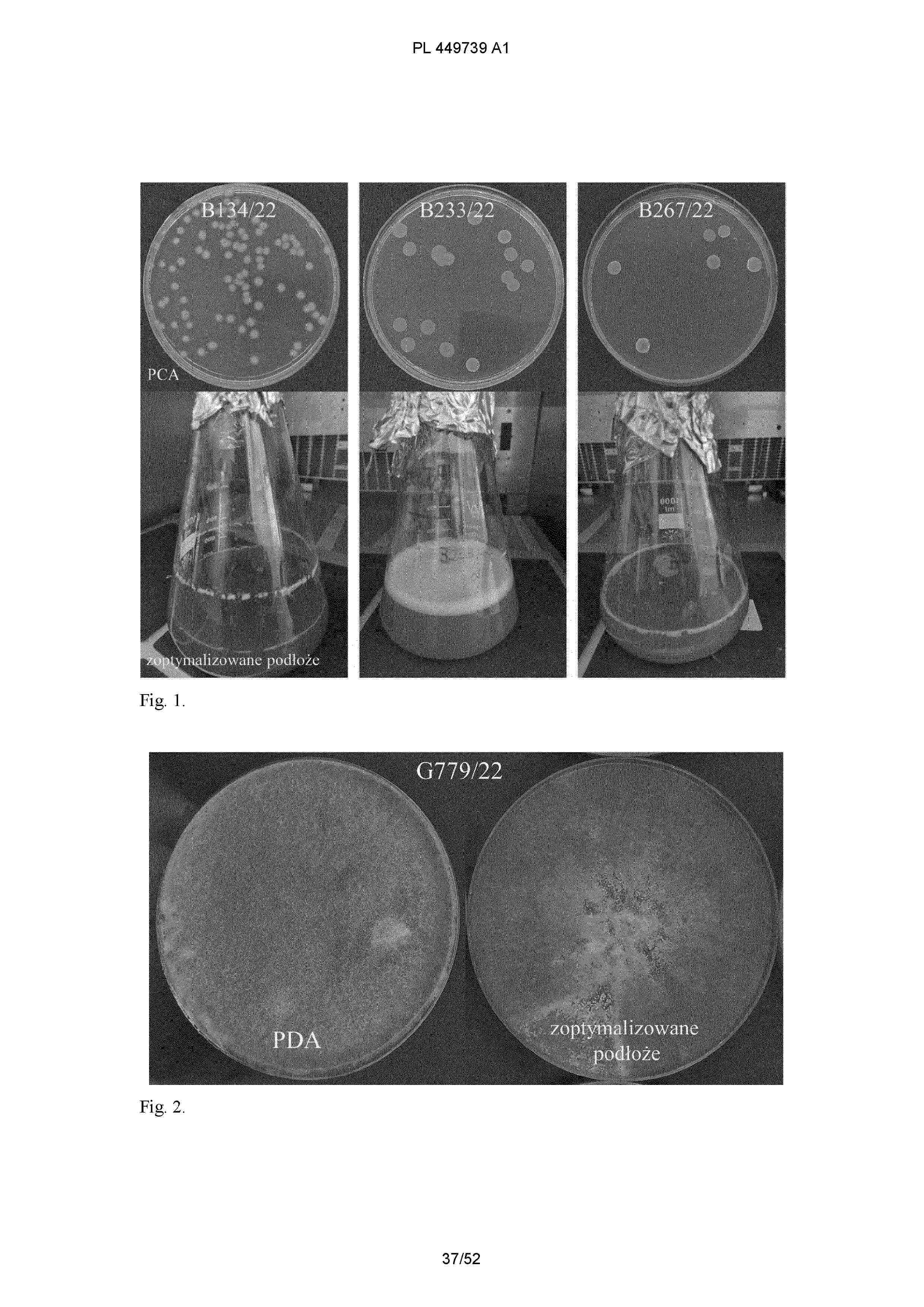
Przedmiotem zgłoszenia jest sposób otrzymywania celowanego zestawu biopreparatów i zestaw biopreparatów, który ma na celu przeciwdziałanie rozwojowi gorzkiej zgnilizny jabłek (Bull's Eye Rot), wywoływanej przez fitopatogeny z grupy Neofabraea spp. (syn. Pezicula, Phlyctema, Gloeosporium). Biopreparat jest przeznaczony do zastosowania przede wszystkim w uprawach polowych. Zgłoszenie charakteryzuje się zastosowaniem trzech wyselekcjonowanych z ryzosfery jabłoni izolatów bakteryjnych Bacillus velezensis: B134/22, B233/22 oraz B267/22. Dodatkowo, w drugim biopreparacie wykorzystywany jest jeden izolat grzybowy Trichoderma koningiopsis G779/22 również wyselekcjonowany z ryzosfery jabłoni. Biopreparaty zawierają dodatek mieszanek suplementacyjnych, które obejmują takie substancje jak: D-ryboza, D-ksyloza, D-trehaloza i odpowiednio D-asparaginian w biopreparacie z izolatami bakteryjnymi oraz guanozyna w biopreparacie z izolatem grzybowym. Przedmiot zgłoszenia stanowi również sposób ochrony przed ww. fitopatogenem z grupy Neofabraea spp. z zastosowaniem zestawu biopreparatów.
Resumen de: PL449738A1
Przedmiotem zgłoszenia jest sposób otrzymywania celowanego biopreparatu i biopreparat, który ma na celu przeciwdziałanie rozwojowi gorzkiej zgnilizny jabłek (Bull's Eye Rot), wywoływanej przez fitopatogeny z grupy Neofabraea spp. (syn. Pezicula, Phlyctema, Gloeosporium). Biopreparat jest przeznaczony do zastosowania zarówno w uprawach polowych, jak i w przechowalnictwie jabłek. Zgłoszenie charakteryzuje się zastosowaniem trzech wyselekcjonowanych z ryzosfery jabłoni izolatów bakteryjnych Bacillus velezensis: B134/22, B233/22 oraz B267/22. Dodatkowo, w biopreparacie wykorzystywany jest jeden izolat grzybowy Trichoderma koningiopsis G779/22 również wyselekcjonowany z ryzosfery jabłoni. Biopreparat zawiera dodatek mieszanki suplementacyjnej, która obejmuje takie substancje jak: D-ryboza, D-ksyloza, D-trehaloza, D-asparaginian oraz guanozyna. Przedmiot zgłoszenia stanowi również sposób ochrony przed ww. fitopatogenem z grupy Neofabraea spp. z zastosowaniem biopreparatu.
Resumen de: FR3165887A1
La présente invention concerne une composition inhibitrice d'uréase, applicable dans les secteurs agricole et pharmaceutique. La composition comprend un inhibiteur d'uréase, spécifiquement la dihydrolévoglucosénone, et peut inclure des co-solvants, des extraits de plantes, des microorganismes vivants ou leurs extraits.
Resumen de: FR3165758A1
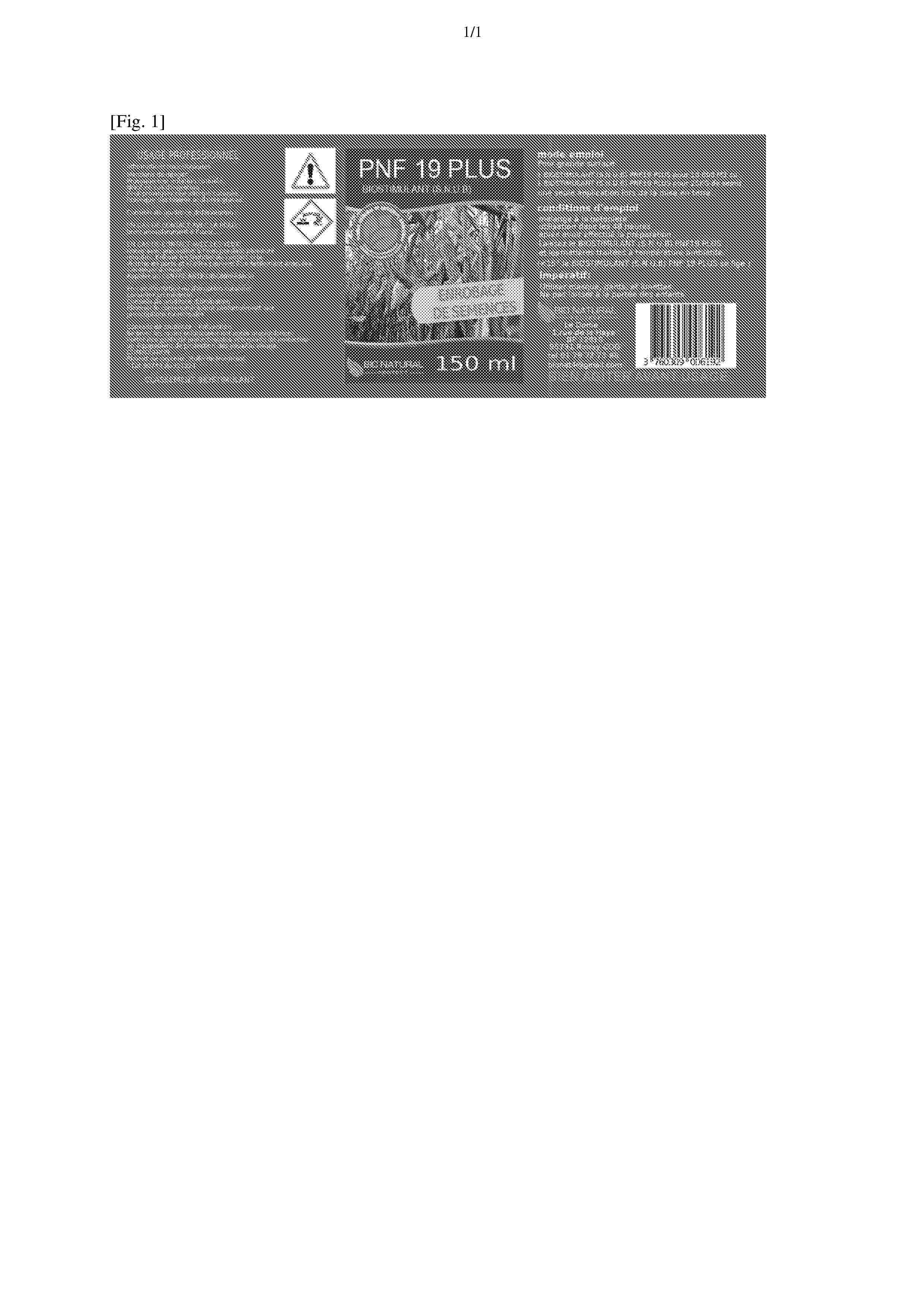
L’invention concerne un biostimulant naturel associant une action répulsive contre les gibiers nuisibles et une stimulation de la croissance des plantes. La formulation repose sur l’oléorésine de Capsicum et une base liquide (huile de tournesol ou eau). Ce biostimulant est appliqué par enrobage des semences ou par pulvérisation foliaire, offrant une solution naturelle pour protéger les cultures.
Resumen de: US20260060243A1
A pest control composition includes from about 4 wt % to about 10 wt % of sodium lauryl sulfate; one or more C5 to C9 hydrotropic salt; from about 1 wt % to about 10 wt % of one or more active ingredients selected from the group consisting of corn mint oil, peppermint oil, spearmint oil, rosemary oil, thyme oil, citronella oil, clove oil, cedarwood oil, cinnamon oil, geranium oil, eugenol, 2-phenylethyl propionate, menthol, menthone, thymol, carvone, camphor, methyl salicylate, p-cymene, linalool, geraniol, cinnamyl acetate, cinnamic alcohol, cinnamaldehyde, citronellol, eucalyptol/1,8-cineole, alpha-pinene, bornyl acetate, gamma-terpinene, and combinations thereof; and from about 60 wt % to about 95 wt % of water. The pest control composition exhibits a water peak in a 2H spectrum having a width encompassing 90% of the area of the entire water signal of about 50 Hz or more, as determined by the 2H NMR Method.
Resumen de: US20260060242A1
A pest control composition includes from about 4 wt % to about 10 wt % of sodium lauryl sulfate, from about 1 wt % to about 8 wt % of a C5 to C9 hydrotropic salt, an active ingredient comprising menthol, and from about 60 wt % to about 95 wt % water. The pest control composition can be non-Newtonian and have a first viscosity of from about 15 cP to about 1,500 cP at a shear rate of 1 sec−1 measured at 15° C. and a second viscosity of from about 1 cP to about 50 cP at a shear rate of 500 sec−1 measured at 15° C.
Resumen de: MX2025012593A
The present invention discloses a composition for the protection of crops against pathogenic comprising karaya gum and pectin, wherein karaya gum is present in an amount ranging between 5 and 15% by weight with respect to the total composition and pectin is present in an amount ranging between 20 and 60% by weight with respect to the total composition. Furthermore, the present invention discloses a method of protecting crops and seedlings against pathogenic organisms comprising the application of said composition. The present invention further discloses the use of said composition for the protection of crops and seedlings against pathogenic organisms and the use of said composition for the treatment of seeds.
Resumen de: WO2026049136A1
The present invention relates to a recombinant endolysin for controlling Clostridioides difficile infectious disease, and a use thereof, and, more specifically, to endolysin PHICD111_20024_EAD having excellent salt stability, and a use thereof. The endolysin PHICD111_20024_EAD, newly isolated in the present invention, exhibits specific activity against Clostridioides difficile, which is one of the causative bacteria of intestinal inflammation, and strains belonging to the genus Bacillus and Listeria monocytogenes, which are known as causative bacteria of food poisoning. The endolysin PHICD111_20024_EAD of the present invention does not affect humans and animals, and thus is safe and applicable to the pharmaceutical industry, food industry, biotechnology and the like, and also can effectively kill bacteria at a target site or target substance without problems related to antibacterial resistance.
Resumen de: MX2025014427A
The present disclosure relates to an agricultural composition comprising a biological extract. In particular, the present disclosure relates to an agricultural composition comprising yeast extracts. The present disclosure also relates to methods of making the yeast extracts, methods of making the composition and uses thereof. More particularly, the present disclosure relates to a biostimulant/biofertilizer composition.
Resumen de: US20260060245A1
The present disclosure relates to a biodegradable insect control medium comprised of, in some embodiments, two types of delivery mediums such as a first tablet having insecticidal active ingredients, a second tablet having oviposition influencing ingredients, and, the tablets, in combination, creating a desirable and effective insect lifecycle control method when the tablets are introduced into a body of water.
Resumen de: US20260060241A1
A pest control composition includes from about 4 wt % to about 10 wt % of sodium lauryl sulfate; a C5 to C9 hydrotropic salt; from about 1 wt % to about 12 wt % of one or more active ingredients chosen from corn mint oil, peppermint oil, spearmint oil, rosemary oil, thyme oil, citronella oil, clove oil, cedarwood oil, cinnamon oil, geranium oil, eugenol, 2-phenylethyl propionate, menthol, menthone, thymol, carvone, camphor, methyl salicylate, p-cymene, linalool, geraniol, cinnamyl acetate, cinnamic alcohol, cinnamaldehyde, citronellol, eucalyptol/1,8-cineole, alpha-pinene, bornyl acetate, gamma-terpinene, or combinations thereof; and from about 60 wt % to about 95 wt % of water. The ratio of hydrotropic salt to sodium lauryl sulfate of from about 0.15 to about 0.9. The pest control composition exhibits a receding contact angle of less than 21 degrees.
Resumen de: US20260061012A1
Embodiments relate to a composition comprising a bacteriophage or a mutant thereof and a storage solution, wherein the bacteriophage or the mutant thereof is capable of killing a Gram-positive bacterium comprising Staphylococcus aureus, wherein the composition is stable for at least about a year at 39.2-46.4° F. (4-8° C.).
Resumen de: WO2026050070A1
A pest control composition includes from about 4 wt% to about 10 wt % of sodium lauryl sulfate; a C5 to C9 hydrotropic salt, especially salts of benzoic acid or of sorbic acid; from about 1 wt% to about 12 wt% of one or more active ingredients chosen from corn mint oil, peppermint oil, spearmint oil, rosemary oil, thyme oil, citronella oil, clove oil, cedarwood oil, cinnamon oil, geranium oil, eugenol, 2-phenylethyl propionate, menthol, menthone, thymol, carvone, camphor, methyl salicylate, p-cymene, linalool, geraniol, cinnamyl acetate, cinnamic alcohol, cinnamaldehyde, citronellol, eucalyptol/l,8-cineole, alpha¬ pinene, bornyl acetate, gamma-terpinene, or combinations thereof; and from about 60 wt% to about 95 wt% of water. The ratio of hydrotropic salt to sodium lauryl sulfate of from about 0.15 to about 0.9. The pest control composition exhibits a receding contact angle of less than 20 degrees. A method of controlling weeds using the pest control composition..
Resumen de: WO2026050437A1
A pest control composition includes from about 4 wt% to about 10 wt% of sodium lauryl sulfate, from about 1 wt% to about 8 wt% of a C5 to C9 hydrotropic salt, an active ingredient comprising menthol, and from about 60 wt% to about 95 wt% water. The pest control composition can be non-Newtonian and have a first viscosity of from about 15 cP to about 1,500 cP at a shear rate of 1 sec-1 measured at 15 ̊C and a second viscosity of from about 1cP to about 50 cP at a shear rate of 500 sec-1 measured at 15 ̊C.
Resumen de: NL2040301A
The present invention discloses B. sorokiniana SZN—l and application thereof. The B. sorokiniana SZN—l is preserved in the China Center for Type Culture Collection, with a classified. name of B. sorokiniana SZN—l, a preservation number of CCTCC NO:M2024468, and a preservation date of March 11th, 2024. According to the present invention, the B. sorokiniana SZN—l having a strong inhibitory effect on fusarium wilt of S. androgynus is isolated and screened from materials such as roots, stems, leaves, flowers, fruits, etc. of S. androgynus, and is found to have a preventive effect on fusarium wilt of plants through experiments.
Resumen de: WO2026050438A1
A pest control composition includes (i) from about 4 wt% to about 10 wt% of sodium lauryl sulfate; (ii) one or more C5 to C9 hydrotropic salt; (iii) from about 1 wt% to about 10 wt% of one or more active ingredients selected from the group consisting of corn mint oil, peppermint oil, spearmint oil, rosemary oil, thyme oil, citronella oil, clove oil, cedarwood oil, cinnamon oil, geranium oil, eugenol, 2-phenylethyl propionate, menthol, menthone, thymol, carvone, camphor, methyl salicylate, p-cymene, linalool, geraniol, cinnamyl acetate, cinnamic alcohol, cinnamaldehyde, citronellol, eucalyptol/1,8- cineole, alpha-pinene, bornyl acetate, gamma-terpinene, and combinations thereof; (iv) from 1% to 5% by weight of a solvent, wherein the solvent is a C1-C4 alcohol, and (v) 60 wt% to about 95 wt % of water. The pest control composition exhibits a water peak in a H spectrum having a width encompassing 90% of the area of the entire water signal of about 50 Hz or more, as determined by the H NMR Method. A method of controlling one or more weeds by contacting the said weeds with the pest control composition.
Resumen de: WO2026050247A1
A pest control composition is disclosed herein. The composition may comprise an active ingredient, a surfactant, a salt, a solvent, and water. In some embodiments, the composition disclosed herein may remain stable over a wide range of temperatures. Related methods of use and manufacture are also disclosed.
Resumen de: WO2026050444A1
An aerosol dispensing device including an aerosol valve in fluid communication with a reservoir. A nozzle is in fluid communication with the aerosol valve. The nozzle includes a nozzle insert with an exit orifice and a nozzle body to receive the nozzle insert. The nozzle body is in fluid communication with the aerosol valve. A primary swirl chamber is in fluid communication with one or more inlet ports. The exit orifice is disposed generally concentric with the primary swirl chamber and a secondary swirl chamber and is in fluid communication therewith. The inlet port(s) are in fluid communication with the aerosol valve and may enter the primary swirl chamber non-tangentially. The secondary swirl chamber has a first and second diameter. A ratio of the first diameter to the second diameter is greater than about 1 and less than about 1.6. The pest control composition is non-Newtonian.
Nº publicación: WO2026047198A1 05/03/2026
Solicitante:
KOEBENHAVNS UNIV [DK]
K\u00D8BENHAVNS UNIVERSITET
Resumen de: WO2026047198A1
The present invention relates to engineered bacteriophages encoding and expressing at least one inhibitor of a quorum-sensing molecule. The bacteriophages of the present invention are useful for reducing, minimizing the virulence of, and/or eliminating pathogenic bacteria, such as those causing bacterial infections.
 BOPI
BOPI
 Sede Electrónica