Si deseas distinguir tus productos, servicios o ambos de los de otra empresa, es posible que necesites una marca o nombre comercial. Descubre qué son, en qué consiste su procedimiento de registro y qué implica.

Información sobre los plazos de presentación de solicitudes de transformación de marcas de la Unión Europea en marca nacional española. Más información


Si tienes un nuevo dispositivo, producto o procedimiento que resuelva un problema técnico o tenga una ventaja práctica, existen distintas formas de protegerlo en España y en otros países. Descubre cómo hacerlo.

¿Tu innovación reside en la estética, la ornamentación o la apariencia de tu producto? Protégela mediante un diseño industrial. Descubre qué derechos confiere el registro y cómo realizar la tramitación.

Las indicaciones geográficas protegen el nombre de un producto originario de una zona geográfica, a la cual le debe una determinada calidad, reputación u otra característica. Descubre qué son, en qué consiste su procedimiento de registro y qué beneficios conceden.

Las patentes publicadas en todo el mundo son una valiosa fuente de información científica, técnica y comercial.

Si eres emprendedor/a o una empresa y quieres potenciar y mejorar la rentabilidad de tu negocio protegiendo de forma adecuada los activos intangibles de tu organización, en este espacio encontrarás lo necesario.


 98
resultados
98
resultados
 Última actualización
24/10/2026 [09:12:00]
Última actualización
24/10/2026 [09:12:00]


Resumen de: US20260328439A1
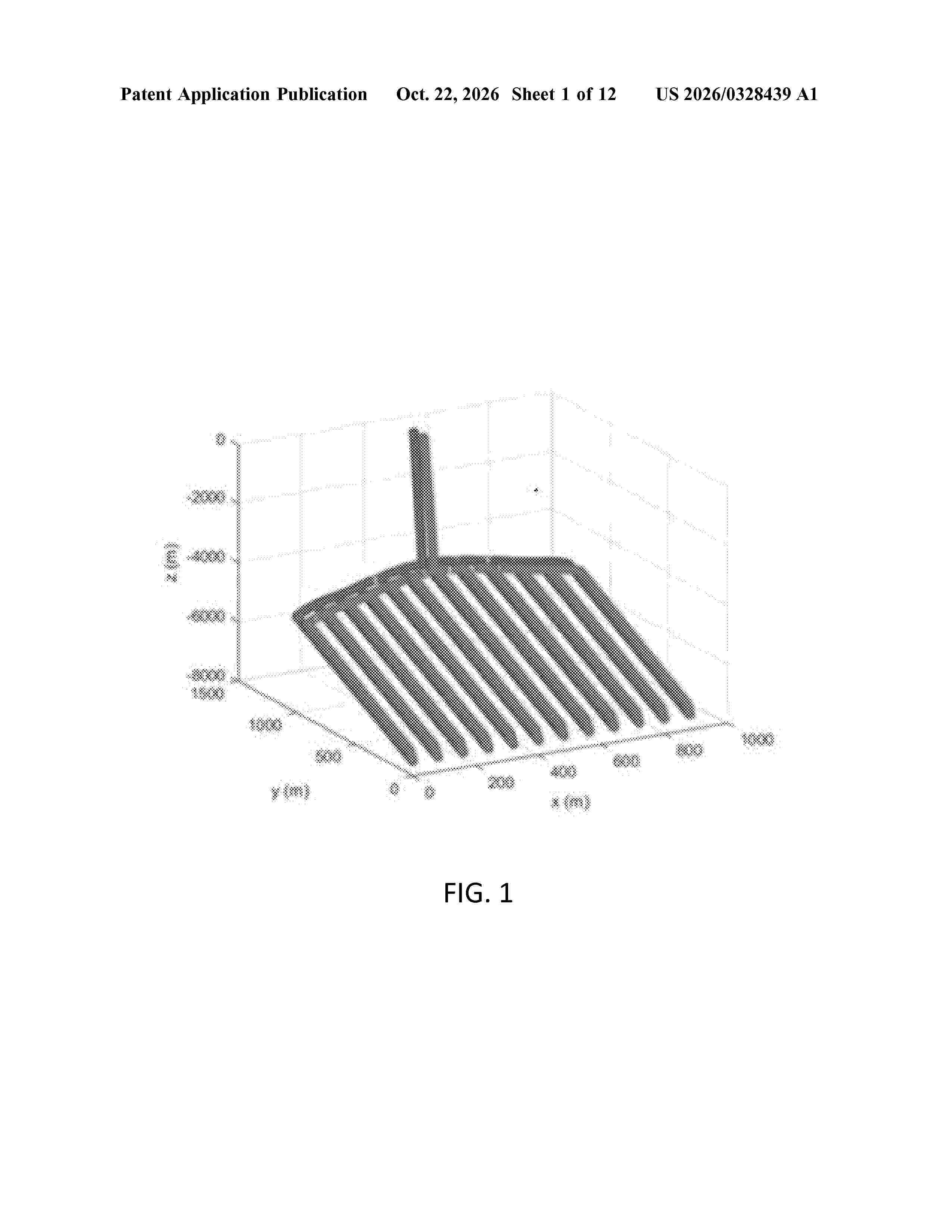
0000 A closed well loop is provided for a geothermal system. The closed well loop includes a well (single well) that traverses a subterranean formation to extract heat from the subterranean formation. The well includes a section having an inner pipe that is supported inside an outer pipe in a pipe-in-pipe arrangement. The inner pipe has an interior flow channel that defines a first flow path for circulating working fluid, and the annulus between the inner pipe and the outer pipe defines a second flow path for the circulating working fluid. The well can be configured to extract heat from the subterranean formation and transfer heat to the circulating working fluid that flows in the first and second flow paths. The inner pipe can include a thermally-insulative piping system that reduces the amount of heat transferred from the circulating fluid that flows in the first and second flow paths within the well.

Resumen de: WO2025125048A1
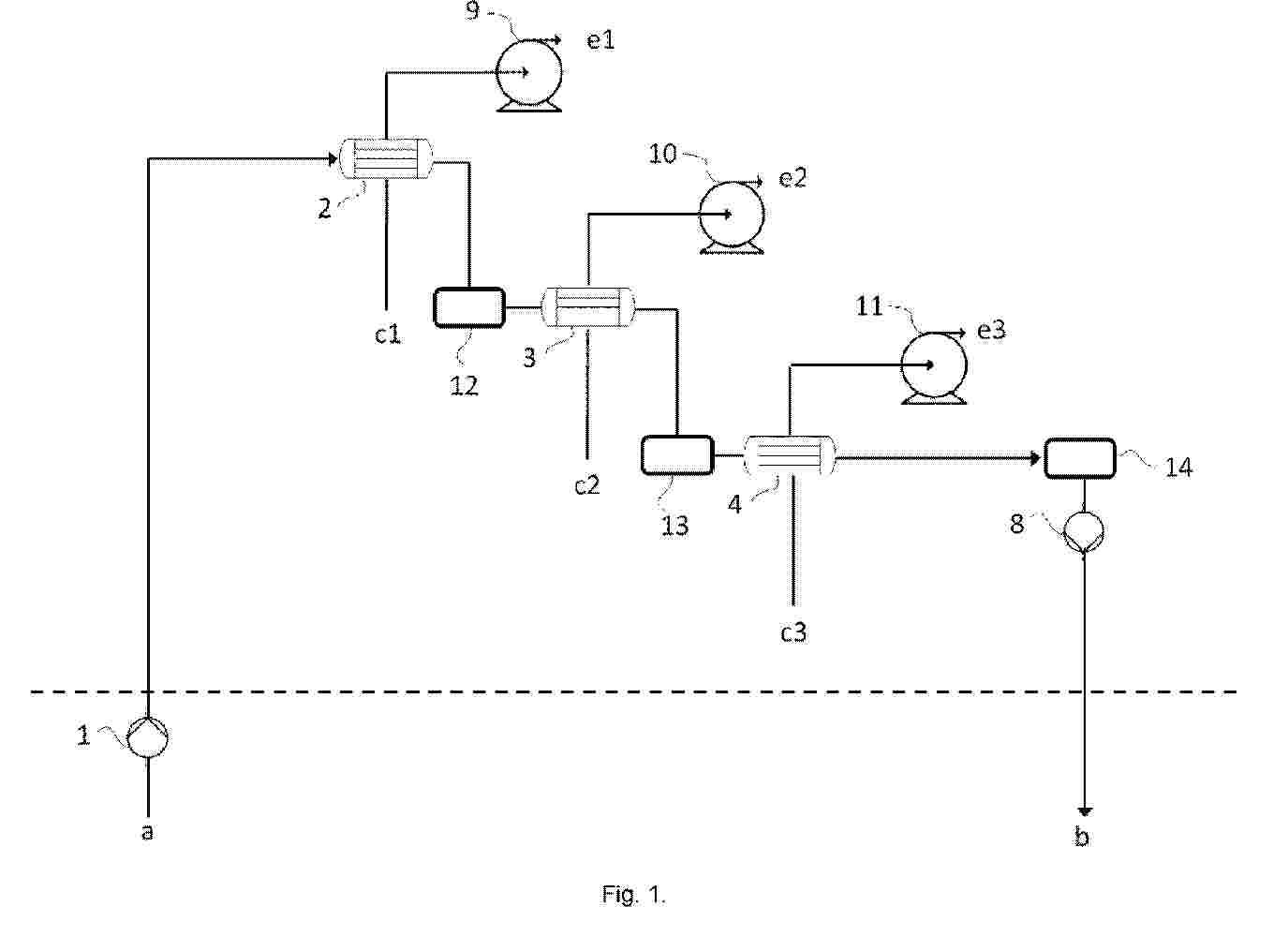
The invention relates to a geothermal installation with cascaded water vapour generators for industrial installations, comprising: (a) a geothermal source which is designed such that it provides a brine with a temperature in the range from 120 to 300 °C, (b) at least two heat exchangers (2, 3, 4) through each of which the brine can flow on their primary side, the primary side of the respective heat exchangers (2, 3, 4) being arranged in a cascaded manner with respect to its adjacent heat exchanger (2, 3, 4), wherein the respective heat exchanger (2, 3, 4) has a secondary side which is configured such that either supplied water (c1, c2, c3) evaporates as a result of the heat exchange from the primary to the secondary side, or circulating water heats up in a secondary circuit and as a result an evaporator (15, 16, 17) arranged in the secondary circuit evaporates supplied water (c1, c2, c3), (c) a first pipeline, which fluidically connects the withdrawal location (a) of the geothermal source to the cascaded primary sides of the heat exchangers (2, 3, 4), (d) each of the provided heat exchangers (2, 3, 4) has a downstream mineral withdrawal unit (12, 13, 14), (e) a first brine pump (1) which is arranged between the withdrawal location (a) and the primary side of the first heat exchanger (2) in the main flow direction, by way of which the brine is conveyed from the source to the respective cascaded primary sides of the heat exchangers (2, 3, 4) and their respective downstream min
Resumen de: CN122942698A
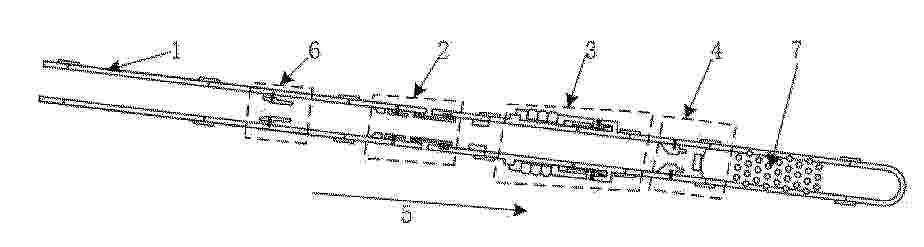
本申请涉及地热对接井技术领域,公开一种地热对接井连通点套管组合及其完井工艺方法,地热对接井连通点套管组合包括管路,以及沿第一方向上依次排布的注水泥器组件、密封组件、活盲板组件,注水泥器组件包括内管和第一固定件,第一固定件连接于内管和管路之间,密封组件包括第二固定件和活塞部件,第二固定件固定连接于活塞部件和管路之间,活盲板组件包括球座和第三固定件,第三固定件固定连接于球座和管路之间,第一固定件的剪断压力大于第二固定件的剪断压力,大于第三固定件的剪断压力;通过对第一固定件、第二固定件以及第三固定件设定不同的剪断压力,使得注水泥器组件、密封组件以及活盲板组件能够按需求先后依次启用,提高了地热对接井连通点套管组合作业的可靠性和可控性。
Resumen de: CN122940224A
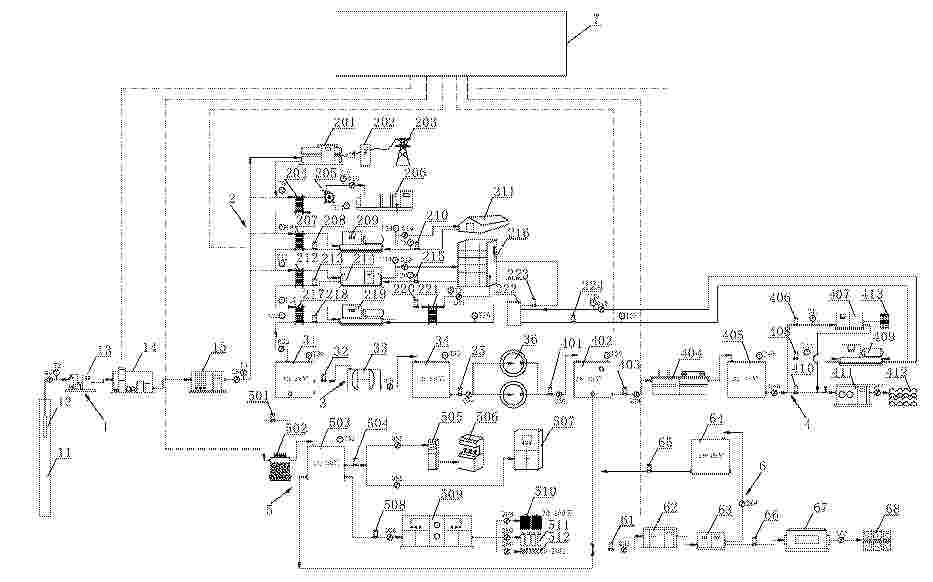
本发明提供一种地热温泉热矿水资源综合利用系统,包括实现地热温泉热矿水开发处理的地热温泉综合资源开发系统,对综合开发出的地热温泉热矿水携带热能资源进行多级换热利用并回收泡浴后温泉尾水余热的热能梯级利用系统,将热能梯级利用系统取热后的温泉原水实现温泉泡浴康养功能的温泉泡浴康养系统和温泉饮吸食一水多用的温泉深度康养系统,对取热、泡浴、提矿后的温泉尾水进行处理再利用的温泉尾水再利用系统,将温泉原水或/和温泉尾水中矿物元素进行提取得到矿物产品的地热温泉水提矿系统,用于在线管理监控各系统的智慧管控平台。本申请能有效推动地热与温泉热、矿、水资源的整合融合发展,实现地热温泉热矿水资源综合利用效能效益最大化。
Resumen de: CN122943497A
本申请涉及地源换热管施工领域,公开了一种地源换热管的施工方法及施工装置。该方法包括:完成钻孔并清孔,在孔底保留沉渣容纳段;通过孔口处的导向装置对换热管进行导向下放并矫正偏移;将孔壁自下而上划分为深部换热段和浅层隔热段;在深部换热段注入预设剂量硅基界面活化剂并配合气举扰动清孔,在浅层隔热段注入低剂量活化剂并静置浸泡;独立配制高导热灌浆料与低导热灌浆料;以第一注浆压力泵送高导热灌浆料填充沉渣段与深部换热段;当注浆至分界处时,在不停泵状态下切换抽取低导热灌浆料;以较低的第二注浆压力连续泵送低导热灌浆料,直至填满浅层隔热段。本申请实现了地源孔的分段处理与分层连续注浆。
Resumen de: CN122943377A
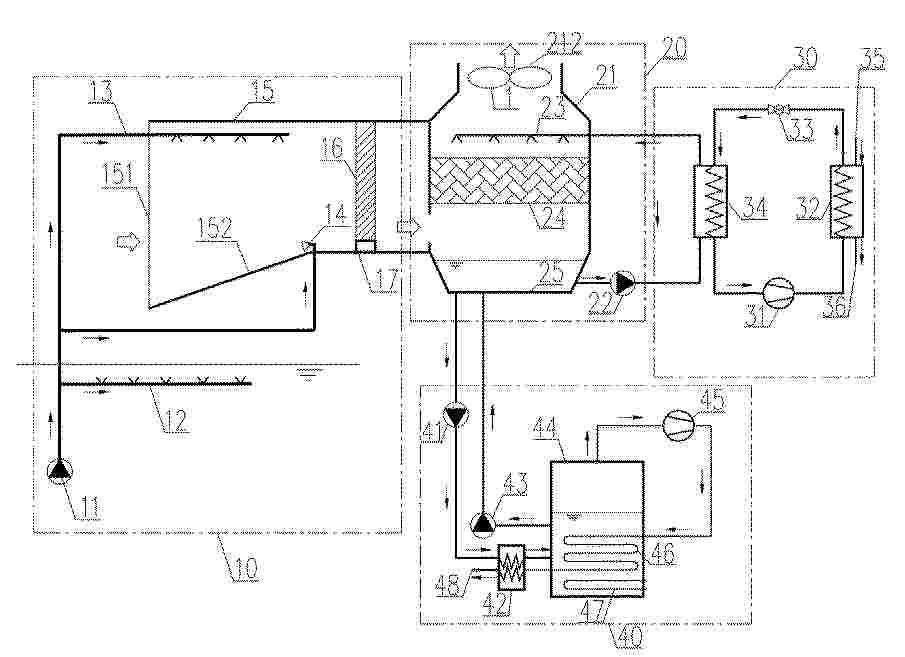
本发明涉及热质交换技术领域,公开了一种地表水余热利用装置,包括:气流驱动部件、余热提取单元、余热转化单元、热泵单元,其中,气流驱动部件用于驱动空气流动以形成依次流动通过余热提取单元、余热转化单元的空气流;余热提取单元能够将地表水分散至空气流中,使地表水与空气流进行热湿交换,以将地表水的热量传递至空气流;余热转化单元包括吸湿性换热介质,吸湿性换热介质能够与空气流进行热湿交换,以吸收空气流中的热量和水蒸气;热泵单元包括蒸发器,热泵单元与余热转化单元之间形成吸湿性换热介质的第一循环回路,蒸发器串接于第一循环回路以接收吸湿性换热介质释放的热能,以在低温环境下将地表水余热提取并转化为水源热泵可用的热源。
Resumen de: CN122943620A
本申请涉及一种散热系统和地埋管冷却装置,散热系统包括散热部件、第一管路控制阀门、第二管路控制阀门、冷却塔和地埋管冷却部件,散热部件内部循环第一冷却介质,与待散热的第二冷却介质进行隔离式热交换,冷却塔和地埋管冷却部件并联设置于散热部件,通过第一管路控制阀门和第二管路控制阀门切换第一冷却介质的流向或者混合流向,当环境温度比较高时,优先启动地埋管冷却部件对第一冷却介质进行散热,当环境温度比较低时,优先启用冷却塔对第一冷却介质进行散热,或者冷却塔和地埋管冷却部件同步对第一冷却介质进行散热,可根据具体需求切换流向,地埋管冷却部件埋设于地层预设深度,利用土地的恒温性对第一散热介质进行散热,稳定性高。
Resumen de: CN122943498A
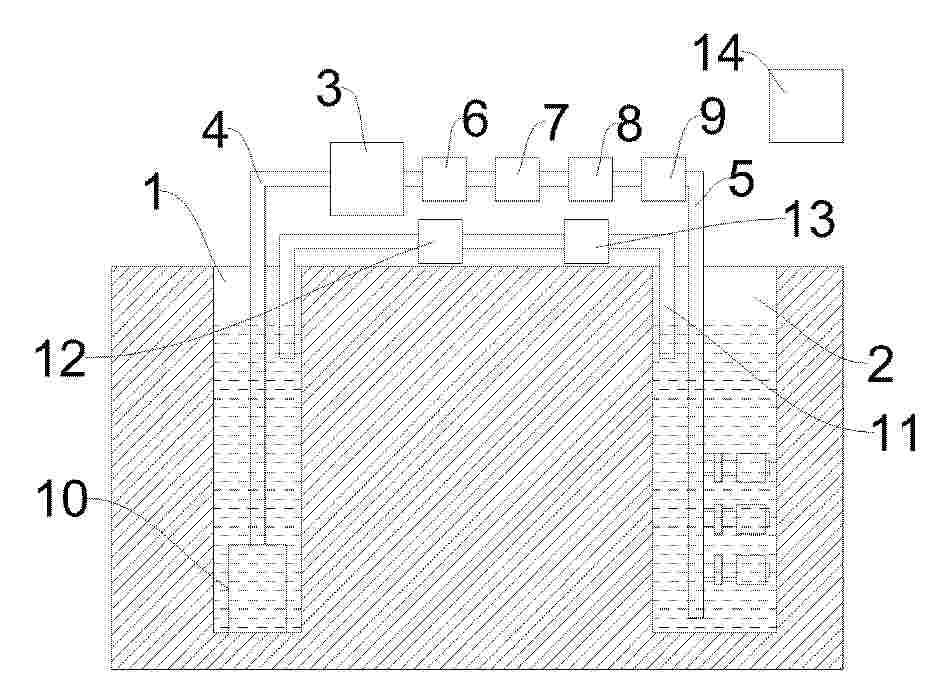
本发明属于地热能开发技术领域,尤其涉及一种中深层地热井开采回灌系统,包括生产井、回灌井、设于生产井内的潜水泵、与潜水泵出口连接的换热器、以及将换热器尾水送回回灌井的回灌管路;回灌井的热储段回灌筛管沿竖向分为上、中、下三段;回灌管路上沿尾水流向依次设有旋流微泡脱气器、晶种诱导防垢反应器、精密过滤器和回灌加压泵;生产井井口与回灌井井口之间通过互馈管路连接;还包括中央控制器,中央控制器根据生产井与回灌井的温度差及采灌累计量执行热突破预测,并在预测热突破时间小于设定值时控制潜水泵与回灌加压泵停启反转、使生产井与回灌井采灌角色互换。本发明能够解决回灌易堵塞、热突破提前及能耗高的问题。
Resumen de: CN122920657A
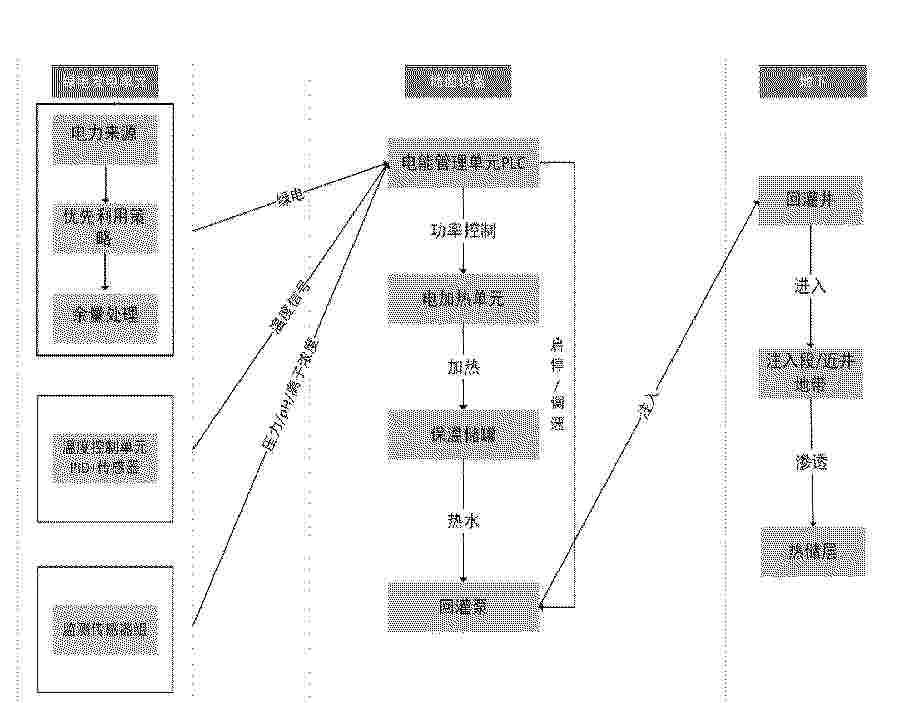
一种地热储层防堵与储能协同系统及控制方法,其包括:绿电供能单元;储热单元,其具有电加热模块,电加热模块与绿电供能单元电连接,使绿电供能单元为电加热模块供能,电加热模块用于加热储热单元内回灌水;回灌单元,其连接于储热单元,回灌单元用于将储热单元输出的回灌水输送至注入井实施回灌。通过利用绿电供能单元为电加热模块供能,使储热单元内回灌水在输入注入井前能达到较高温度,从而减小进入注入井中的回灌水与热储之间的温差,降低因温度骤变诱发的二氧化硅析出、黏土矿物水化膨胀及微粒运移等堵塞风险,解决了相关技术中采用化学除垢存在药剂消耗大、地层污染风险高且对硅质垢作用有限等问题;物理法则维护成本较高的技术问题。
Resumen de: CN122920651A
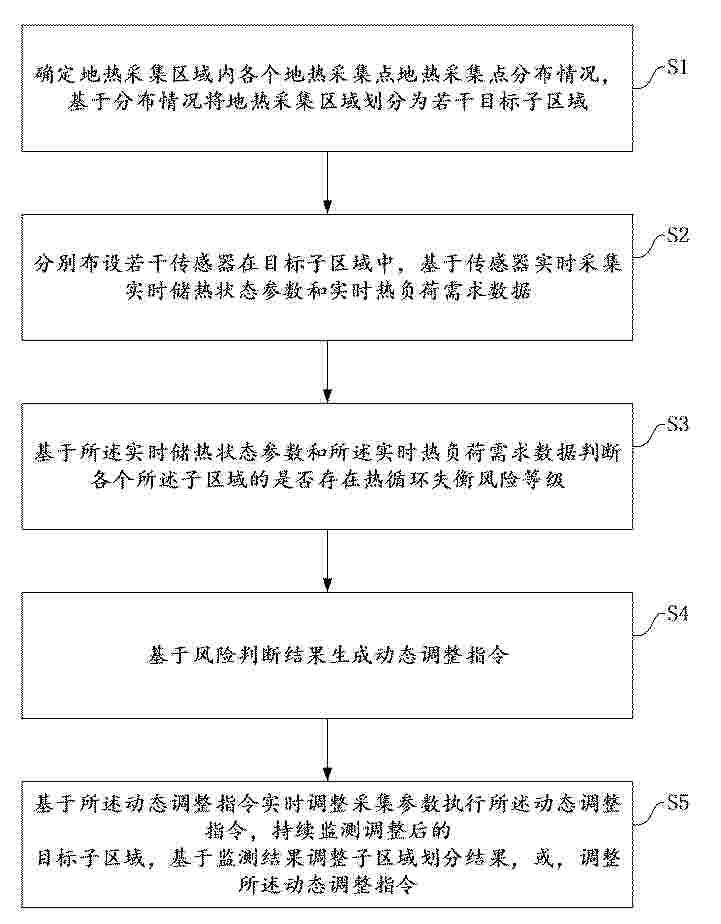
本申请属于地热开发技术领域,尤其涉及一种区域热循环改善方法、系统及设备,该方法包括:确定地热采集区域内各个地热采集点分布情况,基于分布情况将地热采集区域划分为若干目标子区域;分别布设若干传感器在目标子区域中,基于传感器实时采集实时储热状态参数和实时热负荷需求数据;基于所述实时储热状态参数和所述实时热负荷需求数据判断各个所述子区域的热循环失衡风险等级;基于风险判断结果生成动态调整指令;执行所述动态调整指令,持续监测调整后的目标子区域,基于监测结果调整子区域划分结果,或,调整所述动态调整指令。本申请提高了地热资源利用效率。
Resumen de: CN122919353A
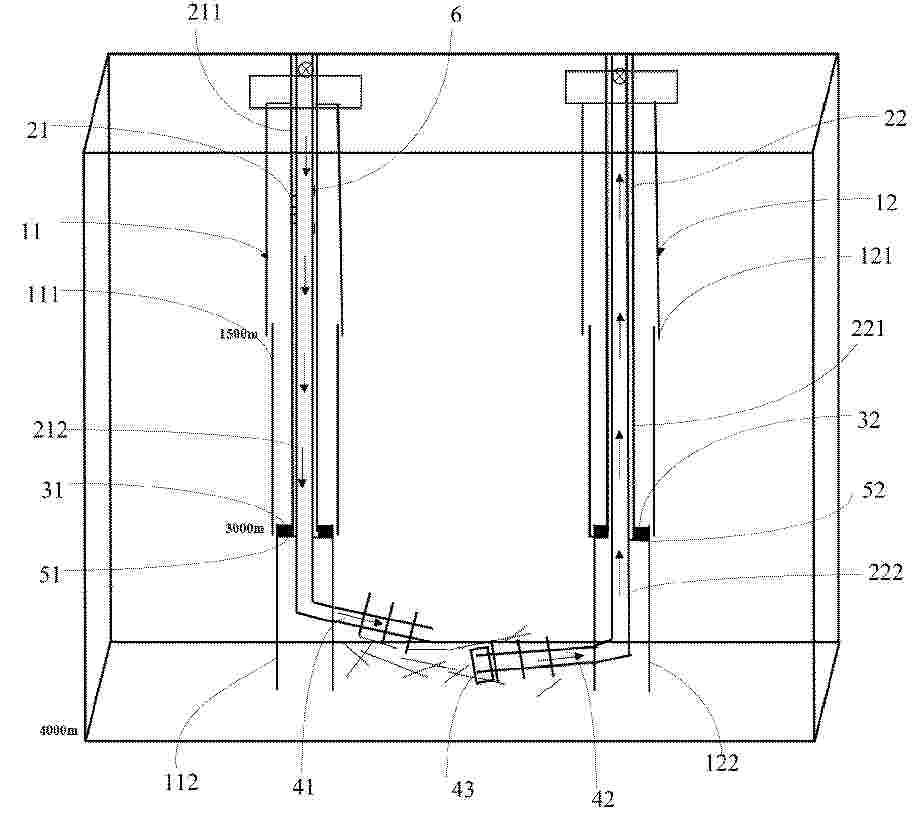
本发明公开了一种基于双井注采结构的深部废弃油气井地热化改造系统以及人工增渗改造方法,涉及油气田开采技术领域。所述深部废弃油气井地热化改造系统包括注入井和采出井、第一双层同轴结构和第二双层同轴结构、第一封隔器和第二封隔器、第一斜井和第二斜井、环形导热密封体,所述注入井具有位于上部的第一隔热输送段、以及与所述第一隔热输送段连接且位于下部的第一下段;所述采出井具有位于上部的第二隔热输送段、以及与所述第二隔热输送段连接且位于下部的第二下段,所述第一隔热输送段和所述第二隔热输送段自井口朝下延伸至少3000m。本发明解决了现有技术中井筒热损失严重、地下换热效率低、系统可控性差的问题。
Resumen de: CN122920652A
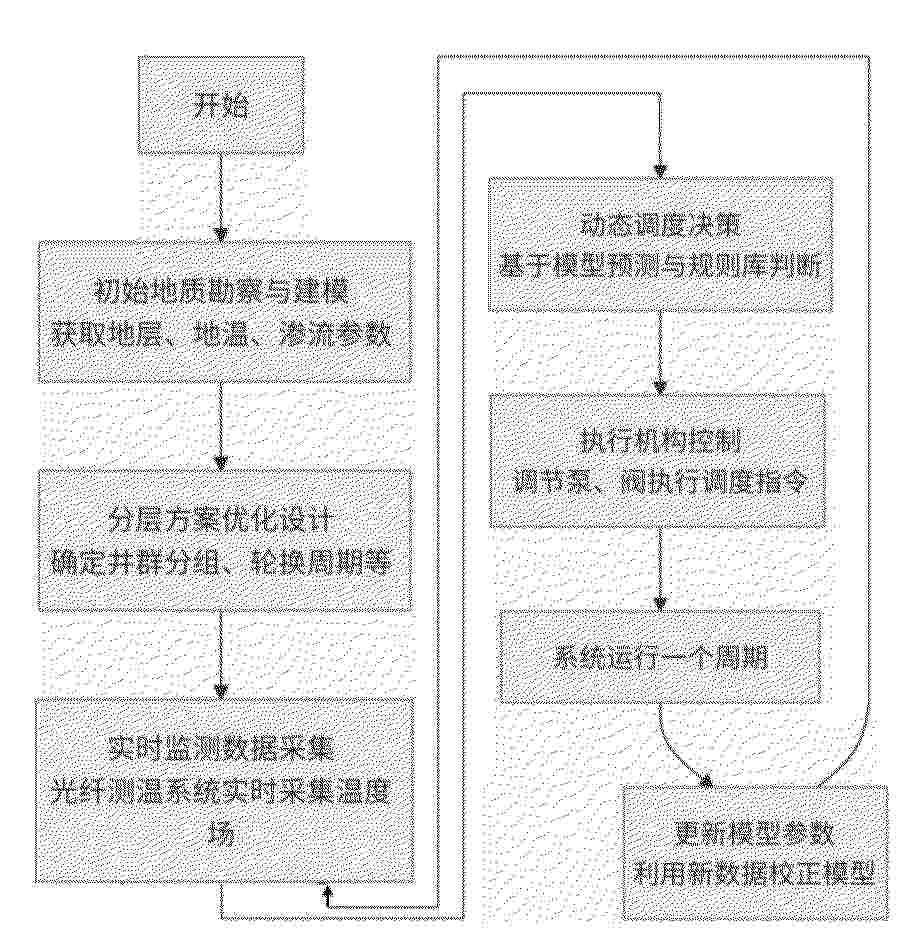
本发明属于地热能源开发与利用技术领域,涉及中深层地埋管群分层取热与热恢复系统及其协同调度方法,系统包括不同深度的多个地埋管井;地埋管井下设有可控隔离装置用于将地埋管井在纵向上划分为至少两个可独立循环的换热段,换热段拥有相互独立的流体进出口或可通过阀门切换的流道从而实现同一口井内不同深度地层的独立取热或关断;调度方法包括年际轮换和季节性分层这两种独特的调度模式;本发明打破持续取热导致的温降趋势,优化了整个供暖季的能耗分布;同时,利用高精度数值模型和实时监测实现闭环优化,确保了系统调度的科学性和精准性。
Resumen de: CN122919535A
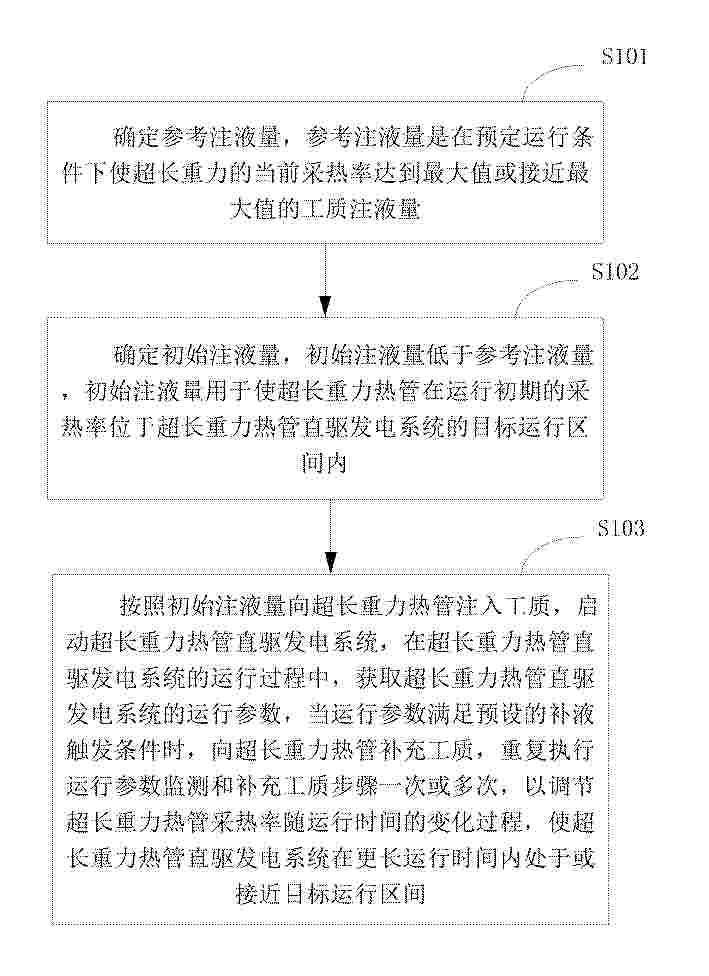
本申请适用于地热能开发技术领域与地热发电技术领域,提供了用于超长重力热管直驱发电的分阶段注液调控方法及系统,所述方法包括:确定参考注液量和低于参考注液量的初始注液量,按照初始注液量向超长重力热管注入工质,启动超长重力热管直驱发电系统,在运行过程中获取系统运行参数,当运行参数满足预设补液触发条件时,向超长重力热管补充工质,重复执行运行参数监测和补充工质步骤一次或多次,以调节超长重力热管采热率随运行时间的变化过程。本申请通过分阶段注液调控热源输出时序,使超长重力热管直驱发电系统在更长时间内处于或接近目标运行区间,有助于改善热源与发电设备的匹配问题,提高长期运行稳定性和发电效率。
Resumen de: CN122920653A
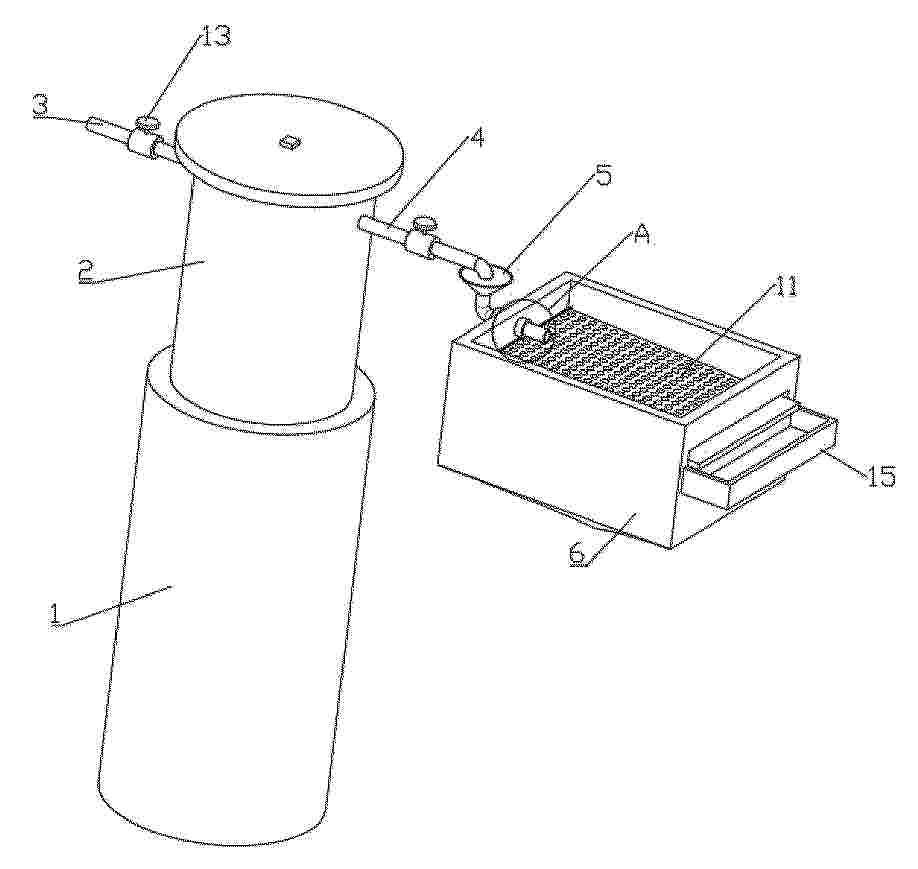
本发明公开了一种中深层地热井下换热装置及其方法,涉及换热装置技术领域。本发明包括金属固定管,金属固定管的内侧固定安装有金属连接管,金属连接管两侧固定连通有进水管和出水管,出水管固定连通有输送管,输送管贯穿过滤箱与波纹管固定连通,波纹管固定安装有套环,套环的底部固定安装有连接块,连接块螺纹连接在第一往复螺纹杆上,连接块滑动连接在过滤箱的内壁上,波纹管的下方设置有过滤网。本发明通过连接块驱动波纹管往复运动,防泥沙沉积;第一往复螺纹杆经传动带带动凸轮旋转,周期性顶起过滤网使其往复摆动,杂质在重力和惯性下脱落,沿倾斜网面滑入收集盒,实现自动清洁,无需人工清理,降低维护难度,保障系统稳定运行。
Resumen de: CN122920654A
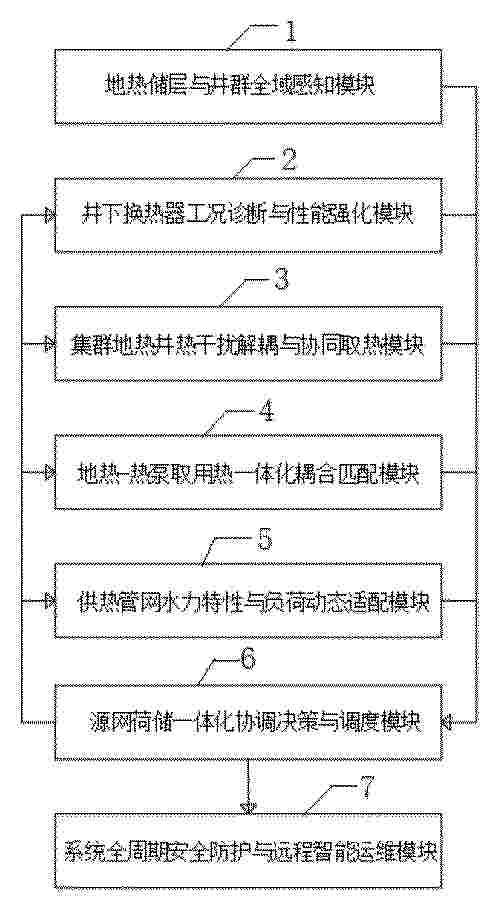
本发明公开了一种集群式地热取热与用热协调控制系统及方法,系统包括地热储层与井群全域感知模块、井下换热器工况诊断与性能强化模块、集群地热井热干扰解耦与协同取热模块、地热‑热泵取用热一体化耦合匹配模块、供热管网水力特性与负荷动态适配模块、源网荷储一体化协调决策与调度模块、系统全周期安全防护与远程智能运维模块;本发明通过热干扰叠加量化与解耦调控,从根源削弱集群井热干扰效应,采用交替/互补运行模式实现井群均衡取热,避免储层衰减,提升井群整体取热效率与运行稳定性。基于定量诊断模型实现换热器工况精准评估,配套传热强化、防腐密封监控与补偿手段,延缓设备性能衰减,延长井下换热器使用寿命,降低设备更换成本。
Resumen de: CN122919317A
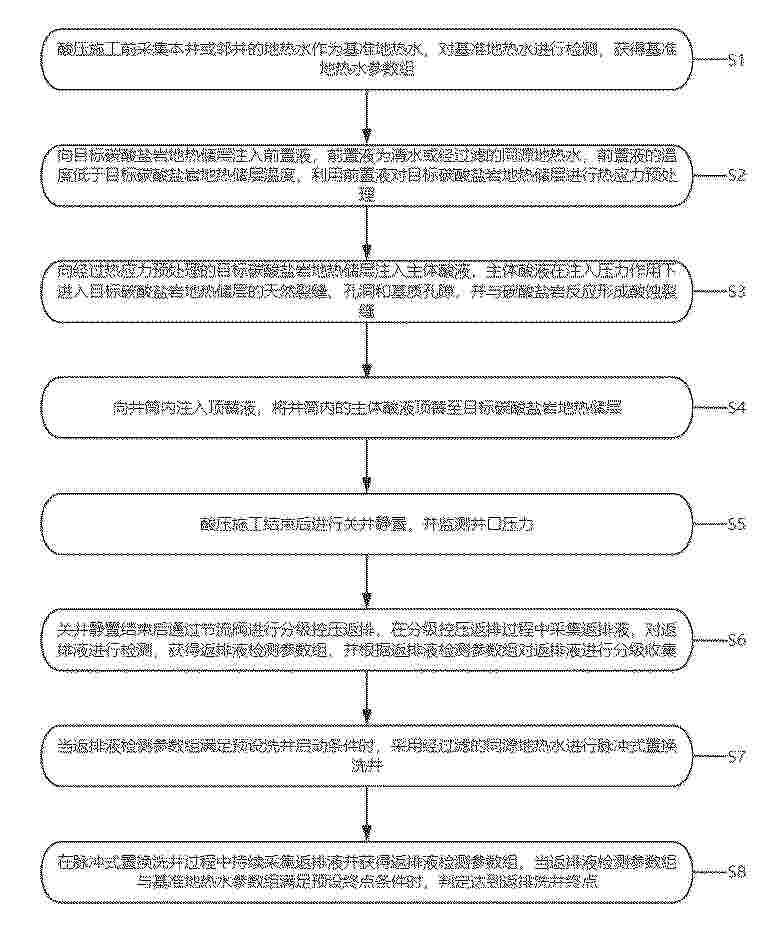
本发明涉及地热井储层改造后处理技术领域,公开了一种碳酸盐岩地热储层压裂工艺,包括以下步骤:酸压施工前采集本井或邻井地热水,获得基准地热水参数组;酸压施工结束后关井静置并监测井口压力;随后通过节流阀进行低排量返排、中排量返排和稳态返排,并根据返排液检测参数组分级收集返排液;当返排液pH达到5.0~6.5时,采用经过滤的同源地热水进行脉冲式置换洗井;当返排液检测参数组与基准地热水参数组满足预设终点条件时,判定达到返排洗井终点。通过低排量返排、中排量返排和稳态返排对酸压施工后的返排过程进行分级控制,使残酸、酸蚀反应产物和悬浮颗粒按照设定返排排量逐步排出,降低酸压施工后二次沉淀回堵风险。
Resumen de: CN122920656A
本发明涉及一种方便切换的地热回灌分流装置,涉及地热回灌分流技术领域。包括抽采管和回灌管,所述抽采管侧壁设置有抽采阀,所述回灌管侧壁设置有回灌阀,所述抽采阀与回灌阀侧壁皆转动安装有转动阀杆,所述转动阀杆端部固定有转动把手,所述抽采阀与回灌阀表面皆安装有固定座,所述固定座表面固定有按压座,所述按压座内设置有助力组件,所述固定座内设置有限位组件,本发明,通过设置的固定座、按压座和助力组件,降低手动操作的施力负荷,使运维人员能够以较小的力,推动转动把手完成解锁,通过设置的转动把手、转动阀杆和限位组件,从机械结构层面强制限制抽采阀与回灌阀的操作顺序,禁止两阀同时开启,规避误操作引发的管路压力波动。
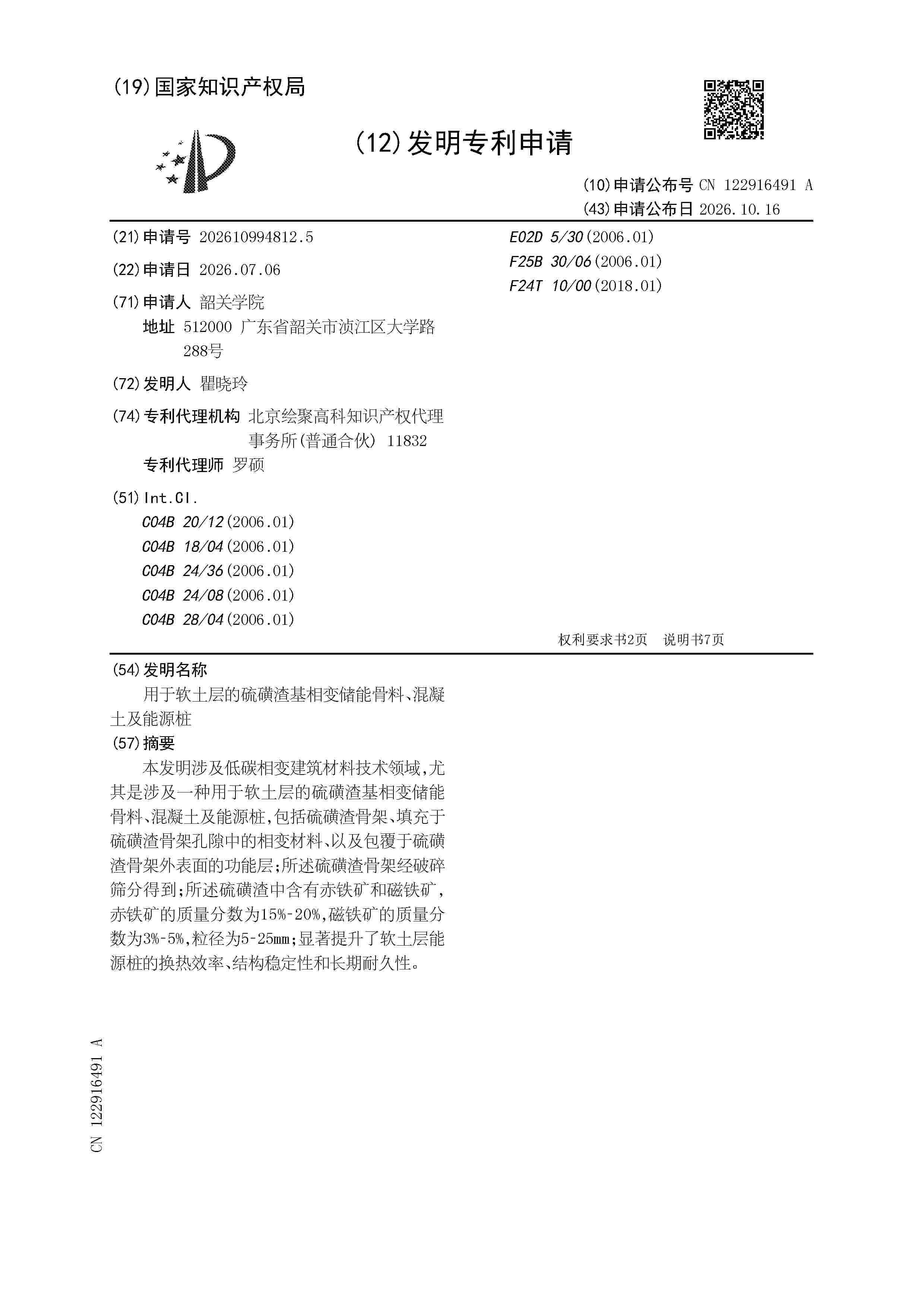
Resumen de: CN122916491A
本发明涉及低碳相变建筑材料技术领域,尤其是涉及一种用于软土层的硫磺渣基相变储能骨料、混凝土及能源桩,包括硫磺渣骨架、填充于硫磺渣骨架孔隙中的相变材料、以及包覆于硫磺渣骨架外表面的功能层;所述硫磺渣骨架经破碎筛分得到;所述硫磺渣中含有赤铁矿和磁铁矿,赤铁矿的质量分数为15%‑20%,磁铁矿的质量分数为3%‑5%,粒径为5‑25mm;显著提升了软土层能源桩的换热效率、结构稳定性和长期耐久性。
Resumen de: CN122920487A
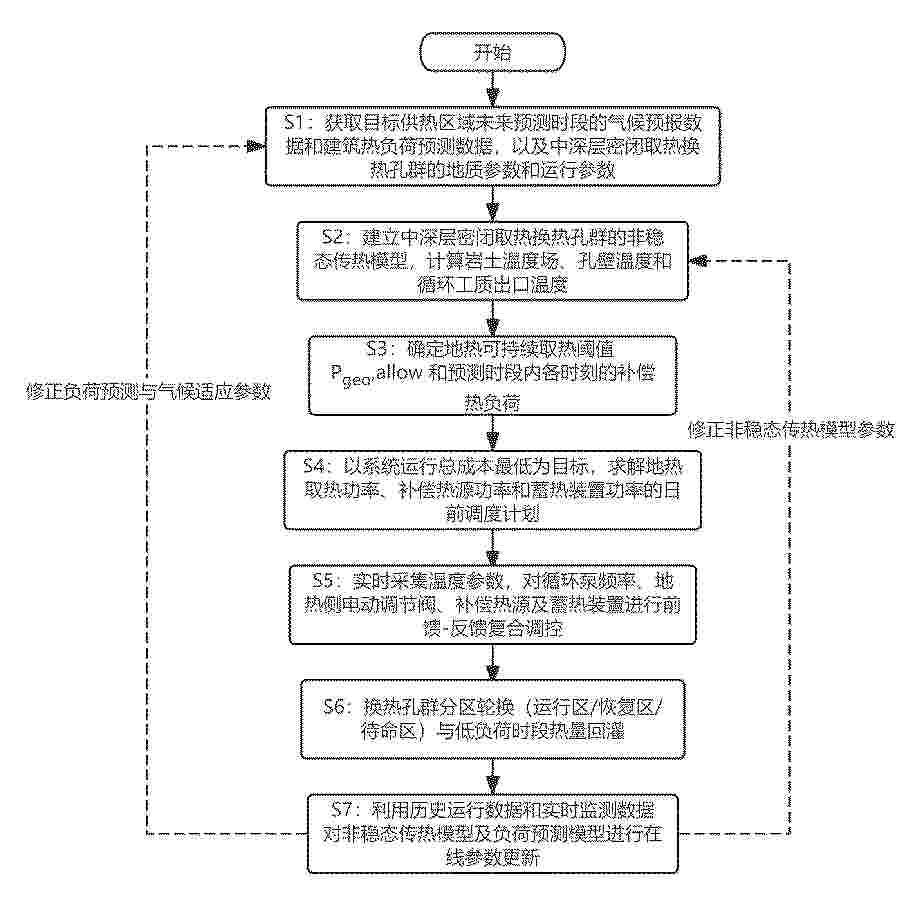
本发明公开了基于气候自适应的中深层密闭取热地热供热补偿调控方法,属于地热能开发利用与智能供热调控技术领域。该方法包括:获取目标供热区域未来预测时段的气候预报数据和建筑热负荷预测数据,以及中深层密闭取热换热孔群的地质参数和运行参数;建立中深层密闭取热换热孔群的非稳态传热模型,计算不同取热功率和间歇运行条件下的岩土温度场、孔壁温度和循环工质出口温度;依据地质参数和地温恢复特征确定地热可持续取热阈值,并基于气候预报数据确定预测时段内各时刻的补偿热负荷。本发明能够根据气候波动和建筑负荷变化自适应调节中深层地热取热功率与补偿热源出力,提高地热利用效率,缓解地温衰减,降低系统运行能耗和碳排放。
Resumen de: CN122920504A
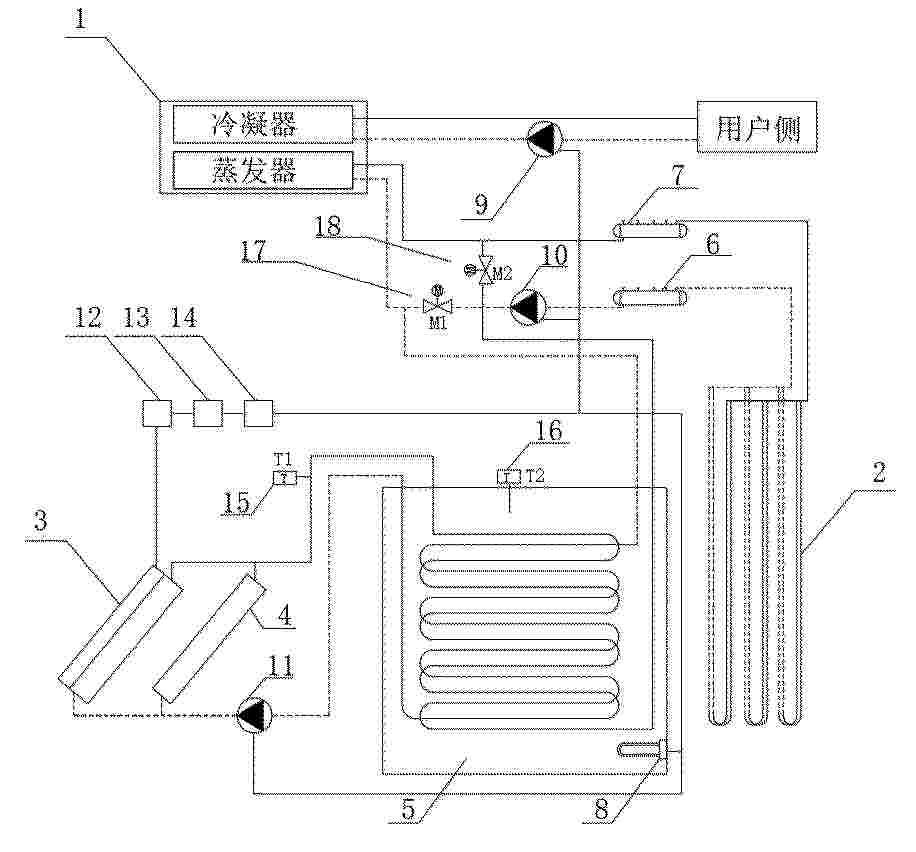
本发明公开了一种浅层地热能、太阳能、相变储能多能耦合供暖系统,涉及清洁能源综合供暖技术领域。包括地热能利用系统、太阳能集热系统、相变储能系统以及智能控制系统,相变储能水箱通过储能分支管路与地源侧换热回路并联,并通过阀门切换控制介质流向;相变储能水箱内设有电加热器,用于辅助加热。本发明利用太阳能加热相变储能水箱,在冬季通过相变潜热辅助地源热泵供暖,解决传统地源热泵土壤热失衡问题;夏季将过剩太阳能热量回灌地下,实现跨季节储能。系统通过智能控制策略,实现地热能、太阳能与相变储能的高效协同,具有能源利用率高、运行成本低、环保效益显著等优点,适用于各类建筑的清洁供暖需求。
Resumen de: CN122920655A
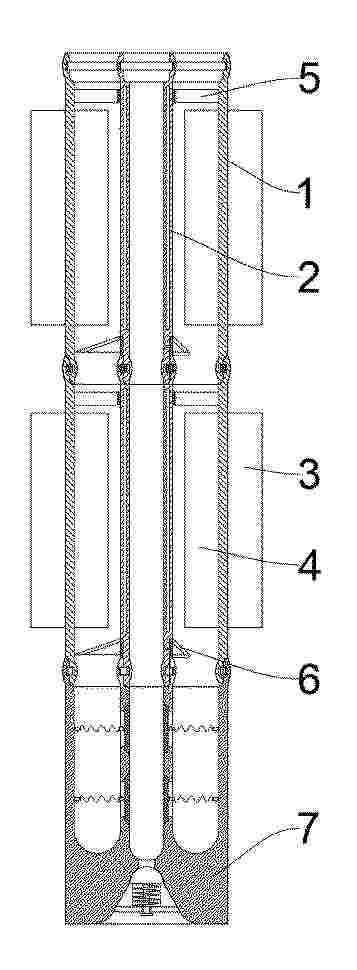
本发明公开了一种用于地热井单井闭式循环取热的双套管设备,属于地热井施工技术领域,包括浮鞋及其顶端由下至上顺序连接的多个套管结构;套管结构包括同轴设置的外管体和内管体,外管体内上部设有与内管体滑动接触的扶正器、下部设有与内管体固定的限位器;外管体外侧壁和内侧壁均周向等间隔设有多个翅片;各外管体及内管体端部分别设有适配的连接结构,浮鞋顶端同时设有适配的连接结构;本发明保证了内外管体的同心度,同时实现了内外管体地面预装配、一次下井,同时通过双侧翅片强化换热,提高了施工效率和取热能力。
Resumen de: CN122920493A
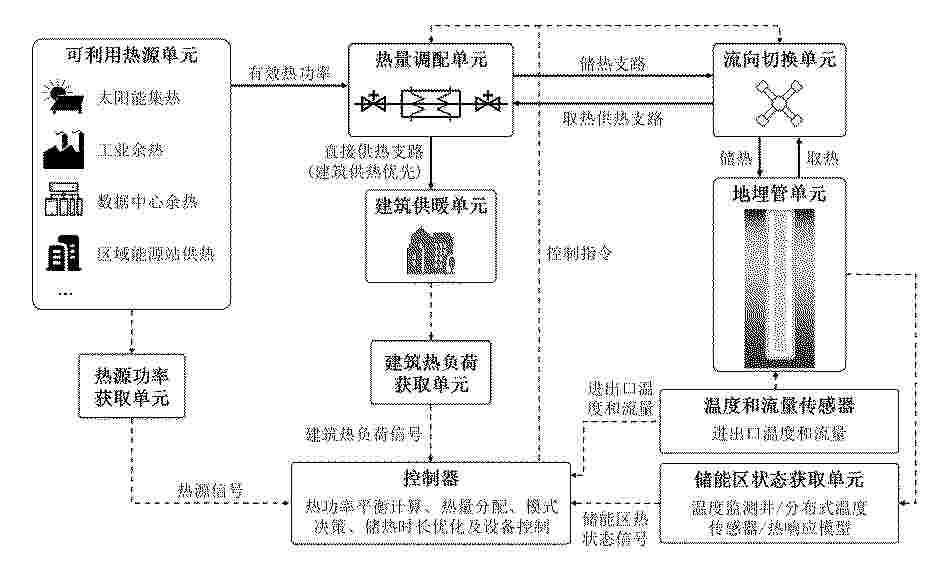
本发明涉及基于中深层地埋管换热器的地下储热与供热方法及系统,包括:实时获取可利用热源有效热功率、建筑热负荷并计算剩余热功率;若无供热功率缺口、剩余热功率与储热入口温度均达到设定阈值,启动中深层地埋管换热器储热,将供热富余热量存入岩土体;储热阶段结合热源出力、建筑热负荷、地下储能区热状态、储热收益与成本动态更新最优储热时长,时长达标后终止储热;当热源功率不足形成供热缺口时启动取热供热,缺口消除即停止。无供热缺口且不满足储热条件时,换热器维持待机。供暖季依据热源及负荷波动,动态切换储热、取热、待机工况,实现储热供热协同调控;本发明能够提高可利用热源消纳能力、地下储热利用效率以及建筑供热调峰能力。
Resumen de: WO2026217155A2
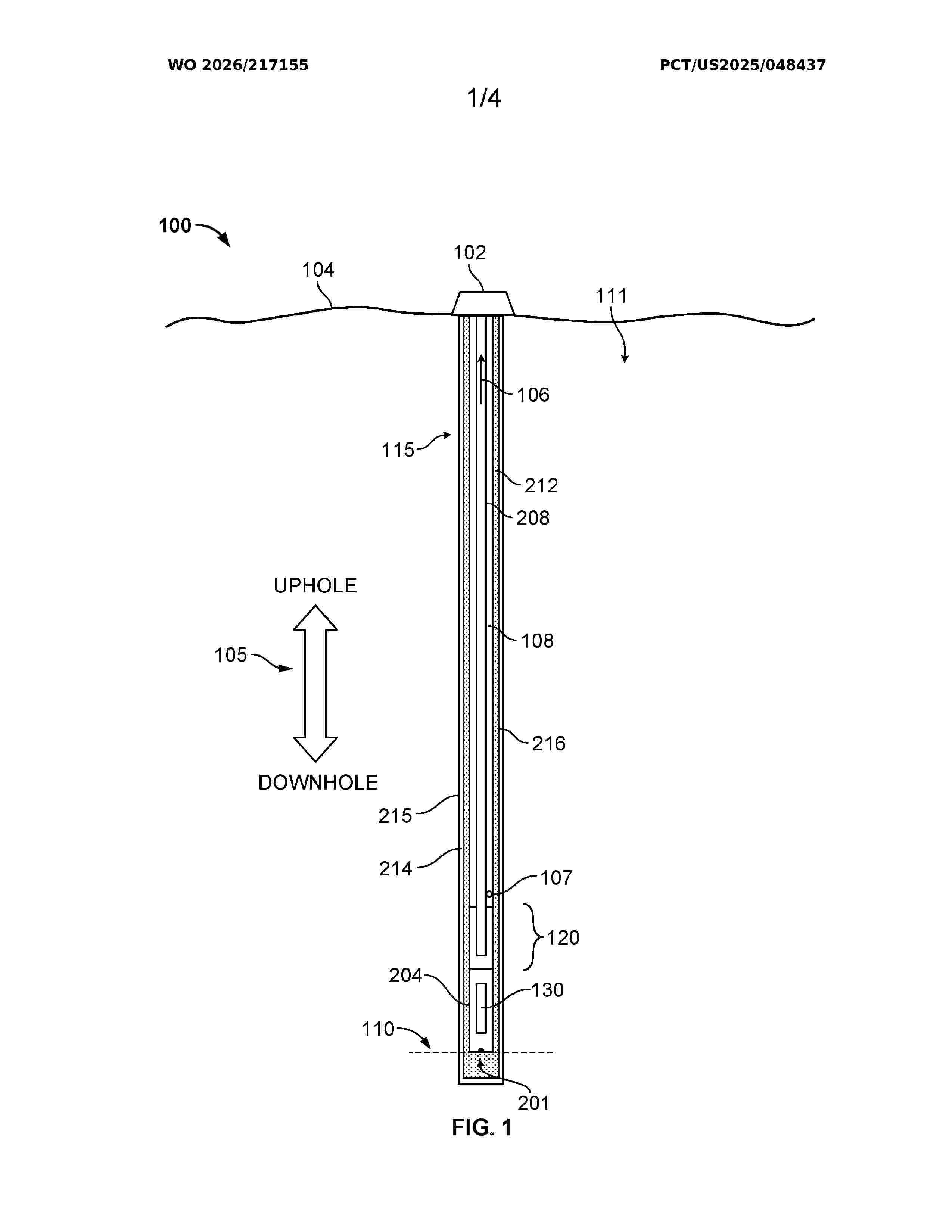
A nuclear reactor system, comprising: at least one reactor vessel positioned in a borehole that extends from a terranean surface through one or more subterranean formations, the at least one reactor vessel comprising at least one reactor core comprising at least one nuclear fuel element; a first coolant system configured to transport a first fluid coolant between the reactor core and a heat exchanger; and an emergency core cooling system, comprising: a casing installed in the borehole between the one or more subterranean formations and the reactor vessel; and a fluid column contained in a volume between the casing and the reactor vessel. The emergency core cooling system can include at least one pressure relief valve that is configured to fluidly couple the volume with an inner volume of the at least one reactor vessel at a specified pressure differential between the volume and the inner volume.
Resumen de: US20260318565A1
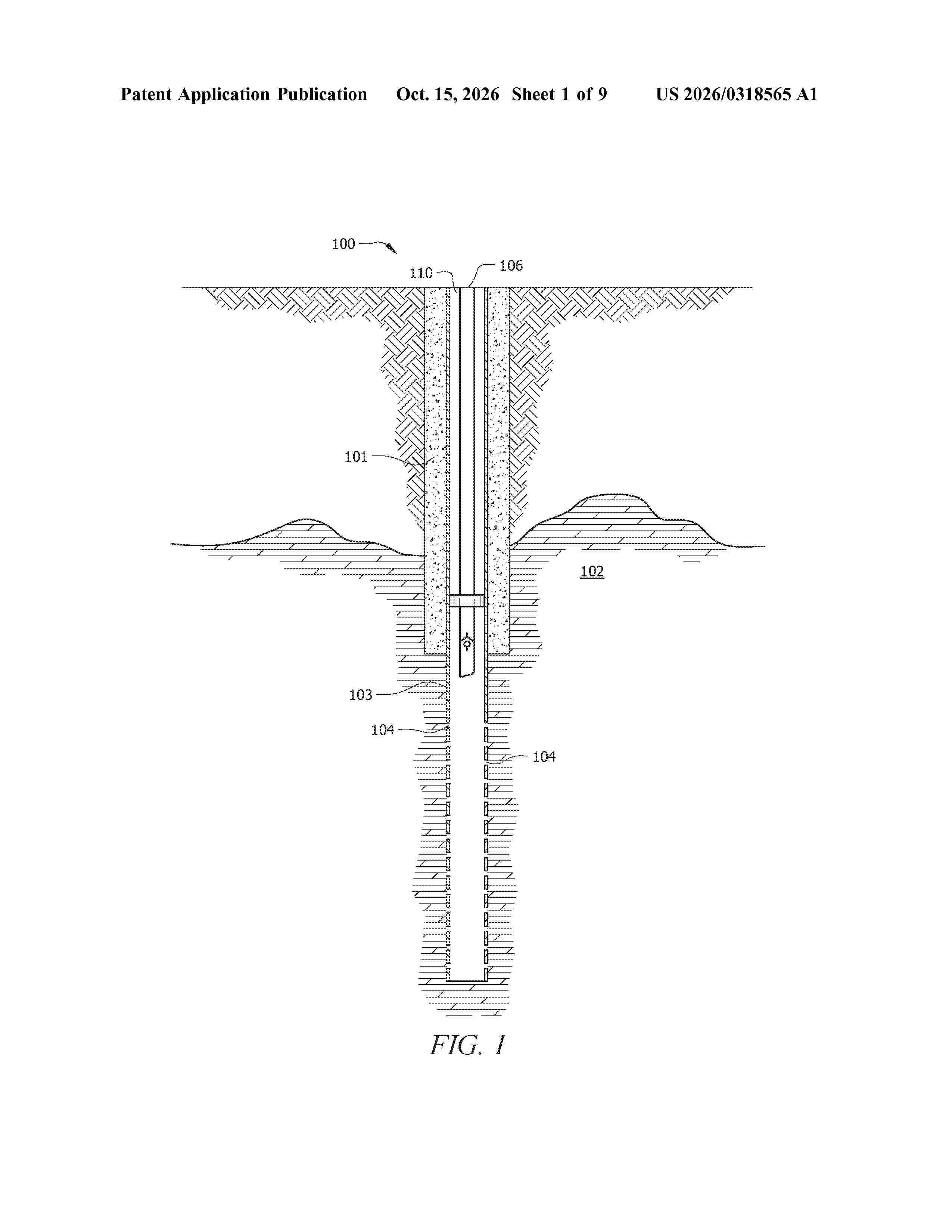
A system and method for harnessing geothermal energy. A method includes injecting a chemical reactant through a chemical injection well toward a reaction zone associated with a downhole reservoir or formation; causing an exothermic reaction at the reaction zone between the chemical reactant and water present at or introduced to the reaction zone, thereby increasing heat within the downhole reservoir or formation; and recovering, through a recovery well, a heated stream comprising at least one of hot water, steam, or gas from the downhole reservoir or formation for surface heat extraction.
Nº publicación: US20260318194A1 15/10/2026
Solicitante:
FERVO ENERGY CO [US]
Fervo Energy Company
Resumen de: US20260318194A1
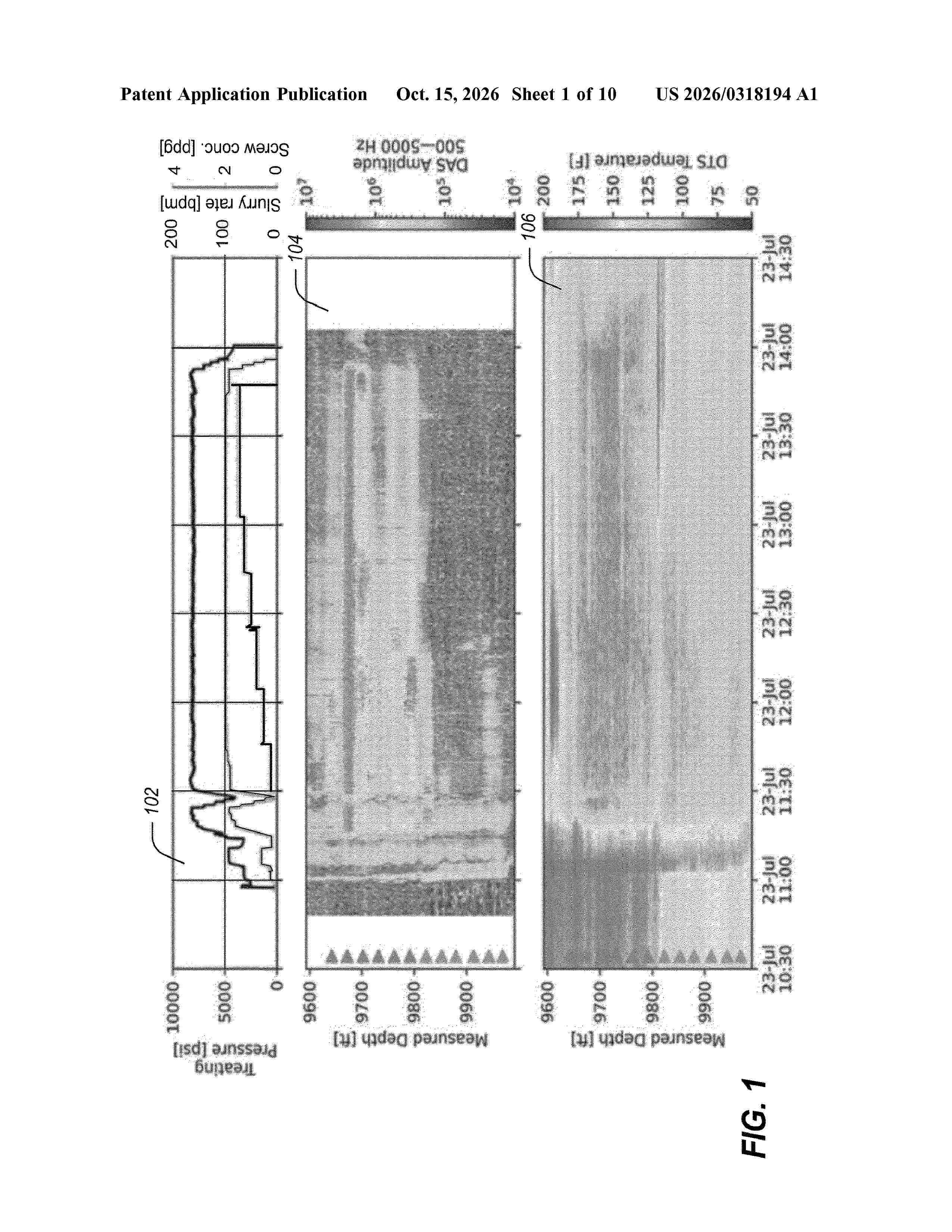
0000 Systems and techniques may be used for horizontal geothermal drilling and multistage hydraulic stimulation treatment. An example technique may include receiving in-well fiber optics data related to stimulation treatment effectiveness at a horizontal well comprising a set of hydraulically conductive fractures. The example technique may include determining a well condition of the horizontal well based on the in-well fiber optics data.
 BOPI
BOPI
 Sede Electrónica