Si deseas distinguir tus productos, servicios o ambos de los de otra empresa, es posible que necesites una marca o nombre comercial. Descubre qué son, en qué consiste su procedimiento de registro y qué implica.

Información sobre los plazos de presentación de solicitudes de transformación de marcas de la Unión Europea en marca nacional española. Más información


Si tienes un nuevo dispositivo, producto o procedimiento que resuelva un problema técnico o tenga una ventaja práctica, existen distintas formas de protegerlo en España y en otros países. Descubre cómo hacerlo.

¿Tu innovación reside en la estética, la ornamentación o la apariencia de tu producto? Protégela mediante un diseño industrial. Descubre qué derechos confiere el registro y cómo realizar la tramitación.

Las indicaciones geográficas protegen el nombre de un producto originario de una zona geográfica, a la cual le debe una determinada calidad, reputación u otra característica. Descubre qué son, en qué consiste su procedimiento de registro y qué beneficios conceden.

Las patentes publicadas en todo el mundo son una valiosa fuente de información científica, técnica y comercial.

Si eres emprendedor/a o una empresa y quieres potenciar y mejorar la rentabilidad de tu negocio protegiendo de forma adecuada los activos intangibles de tu organización, en este espacio encontrarás lo necesario.


 57
resultados
57
resultados
 Última actualización
24/10/2026 [07:49:00]
Última actualización
24/10/2026 [07:49:00]


Resumen de: EP4825559A1
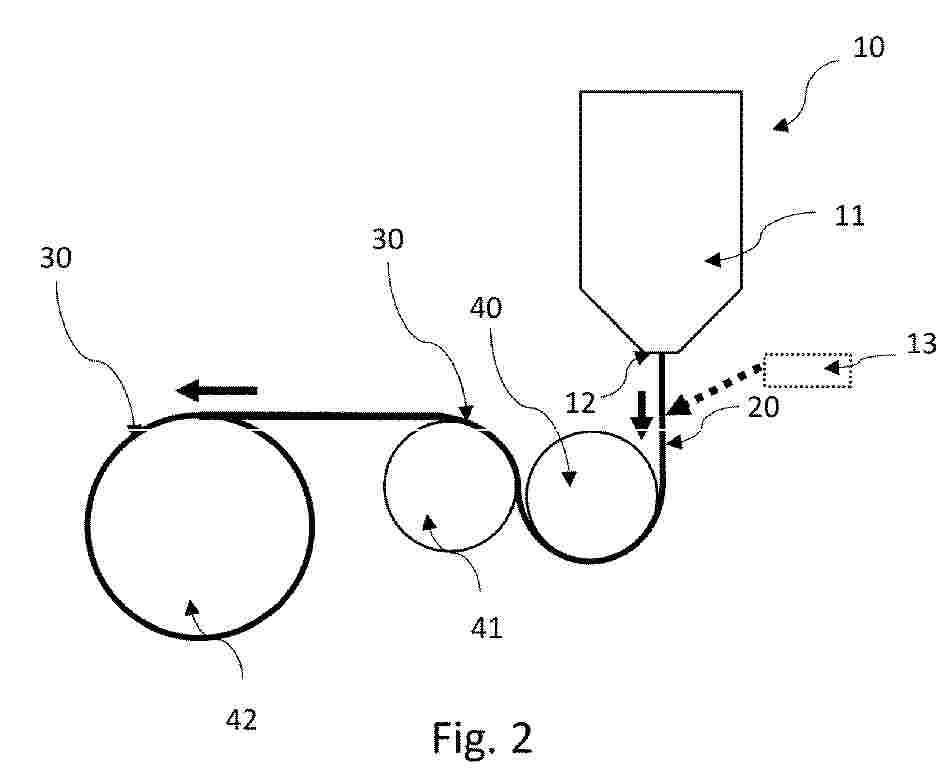
0001 Die Erfindung betrifft ein Verfahren zum Herstellen einer Folie (30) mit einem Sicherheitsmerkmal für einen kartenförmigen Datenträger (50), welches die folgenden Schritte aufweist: - Bereitstellen von wenigstens einem Folienmaterial (101); - Bereitstellen (102) von Effektpigmenten (52); - Einbringen des Folienmaterials (103) in wenigstens einen Extruder (11) einer Extrusionsvorrichtung (10); - Einbringen (104) der Effektpigmente (52) in wenigstens eine Beschleunigungsvorrichtung (13) der Extrusionsvorrichtung (10); - Erhitzen (105) des Folienmaterials im Extruder (11) zur Ausbildung einer Schmelze (20); - Extrudieren (106) der Schmelze (20) durch einen Düsenaustrittsspalt (12) der Extrusionsvorrichtung (10) zur Ausbildung einer Folie (30); - Beschleunigen (107) der Effektpigmente (52) mittels der Beschleunigungsvorrichtung (13) derart, dass die Effektpigmente (52) von wenigstens einer Öffnung der Beschleunigungsvorrichtung (13) zur extrudierten Schmelze (20) transportiert werden und wenigstens teilweise in die extrudierte Schmelze (20) eindringen, wodurch die Effektpigmente (52) innerhalb der Folie (30) zur Ausbildung eines Sicherheitsmerkmals in der Folie (30) integriert sind; und - Auskühlen (108) der Folie (30), um die Effektpigmente (52) innerhalb der Folie (30) zu fixieren. 0002 Ferner betrifft die Erfindung eine Folie (30), einen kartenförmigen Datenträger (50) sowie eine Extrusionsvorrichtung (10).

Resumen de: EP4825603A1
Die Erfindung betrifft ein Sicherheitsdokument und ein Verfahren zur Herstellung des Sicherheitsdokuments, das aus einem Substrat mit einer Vorderseite und einer Rückseite besteht, wobei die Vorderseite und/oder Rückseite mindestens teilweise mit einer Farbe beschichtet ist.Erfindungsgemäß ist der Farbton der Farbe dem Farbton des Substrats mindestens ähnlich, so dass die Farbe bei Betrachtung in Auflicht, einen ähnlichen oder bevorzugt gleichen Farbton aufweist, wie das Substrat und damit kaum oder nicht in Erscheinung tritt. Bei Betrachtung in Durchlicht hingegen erkennt der Betrachter die Farbe, da sich im Bereich der Farbe entweder die Transluzenz beziehungsweise Lichtdurchlässigkeit der Farbe und die Transluzenz des Substrats addieren oder die Transluzenz beziehungsweise Lichtdurchlässigkeit des Substrats erhöht. Erfindungsgemäß ist die Farbe taktil erfassbar.
Resumen de: FR3174095A1
L’invention concerne un document de sécurité comprenant un empilement de couches comportant une première couche transparente (11) en polycarbonate, une deuxième couche transparente (12) en polycarbonate, une couche opacifiante (13) agencée entre la première couche transparente (11) et la deuxième couche transparente (12), la couche opacifiante (13) étant formée d’une première encre, un premier motif (7) agencé entre la couche opacifiante (13) et la première couche transparente (11) et formé d’une deuxième encre, la deuxième encre étant différente de la première encre, un deuxième motif (9), identique et aligné avec le premier motif (7), agencé entre la couche opacifiante (13) et la deuxième couche transparente (12) et formé de la deuxième encre. figure pour l’abrégé : figure 4
Resumen de: WO2026215403A1
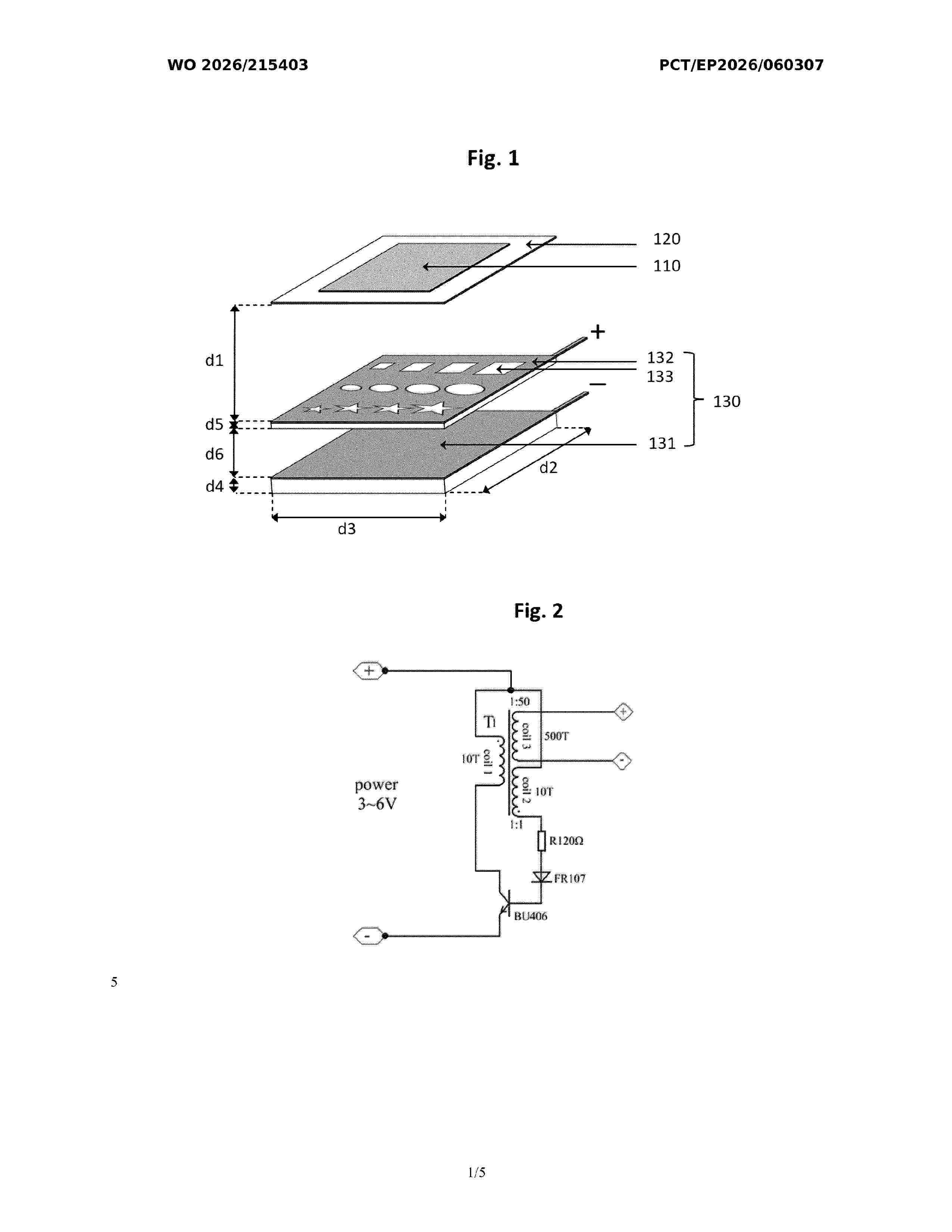
The invention relates to the field of the protection of security documents such as for example banknotes and identity documents against counterfeit and illegal reproduction. In particular, the present invention provides processes for transferring one or more indicia into a not yet hardened coating layer made of a coating composition comprising platelet-shaped pigment particles so as to produce security features as anti-counterfeit means on security documents, security articles or for decorative purposes.
Resumen de: WO2026216658A1
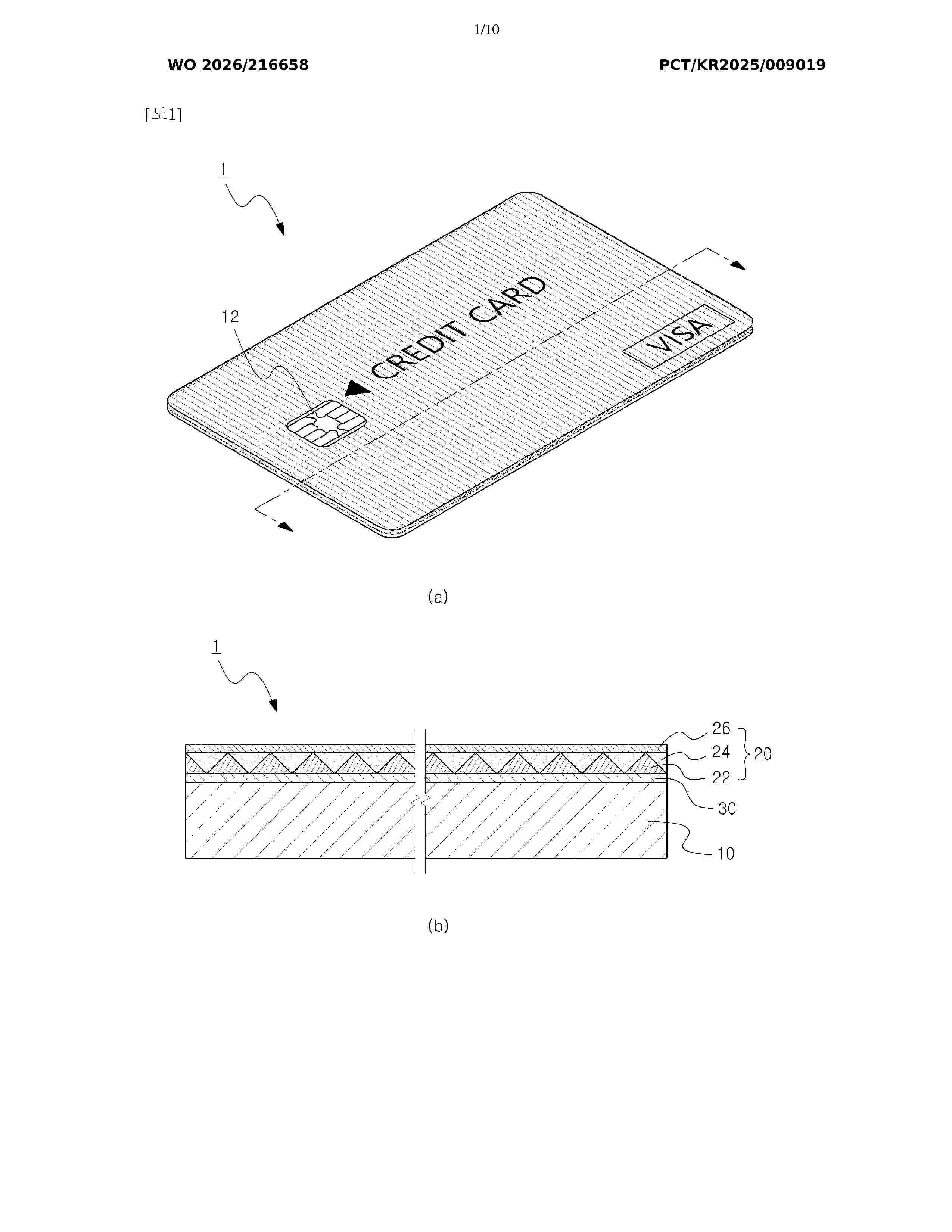
The smart card of the present invention comprises: a double-bonded UV pattern layer including stacked first and second pattern layers; a smart card body having a preset size and thickness; and a UV adhesive layer configured to couple the double-bonded UV pattern layer and the smart card body to each other, wherein one of the first and second pattern layers is formed by curing a transparent UV curing solution, and the other is formed by curing a UV curing solution having a predetermined color. The double-bonded UV pattern layer comprises: a first pattern layer composed of a first pattern in which lenses of a predetermined shape are repeatedly arranged; a second pattern layer formed on the surface of the first pattern of the first pattern layer and composed of a second pattern in which lenses having a shape opposite to that of the lenses of the first pattern are repeatedly arranged; and an upper protective layer disposed on the upper surface of the first pattern layer, wherein the color or pattern of the card changes according to the viewing angle of a user.
Resumen de: WO2026214860A1
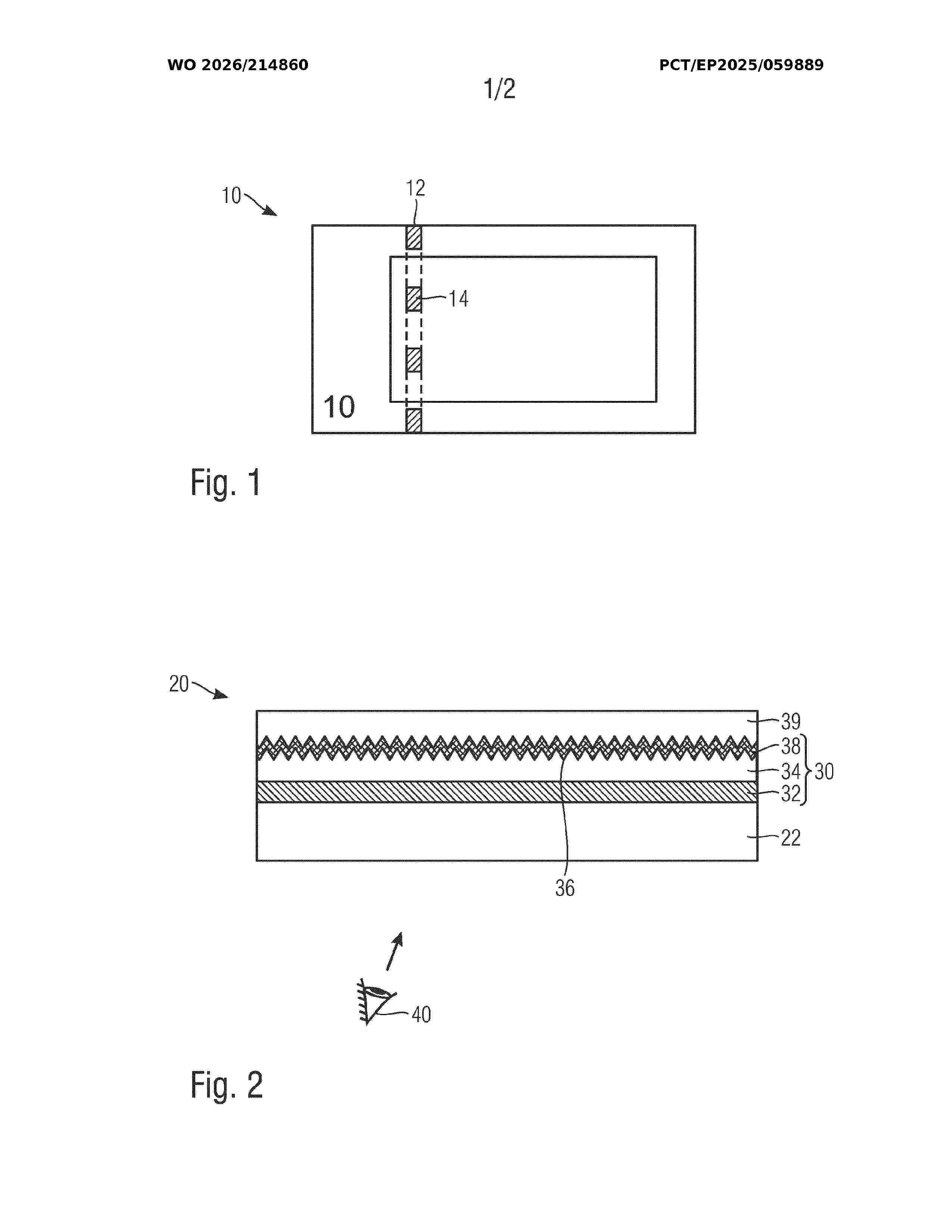
The invention relates to an optically variable security element (20) for securing valuable objects, comprising a carrier film (22) and a layer sequence (30) applied to the carrier film, which layer sequence has a UV embossing lacquer layer (34) with an embossed relief structure (36) generating an optically variable effect and a reflection-increasing coating (38) applied to at least regions of the UV embossing lacquer layer. According to the invention, the layer sequence (30) contains a homogeneous, colored UV lacquer layer (32) which is applied directly to the carrier film and forms both an anchoring layer for the embossed UV embossing lacquer layer (34) and a color-providing layer for the optically variable effect, as a result of which the security element (20) produces an optically variable effect with light/dark contrasts and consistent color tones when the illumination or viewing angle is changed.
Resumen de: AU2025243144A1
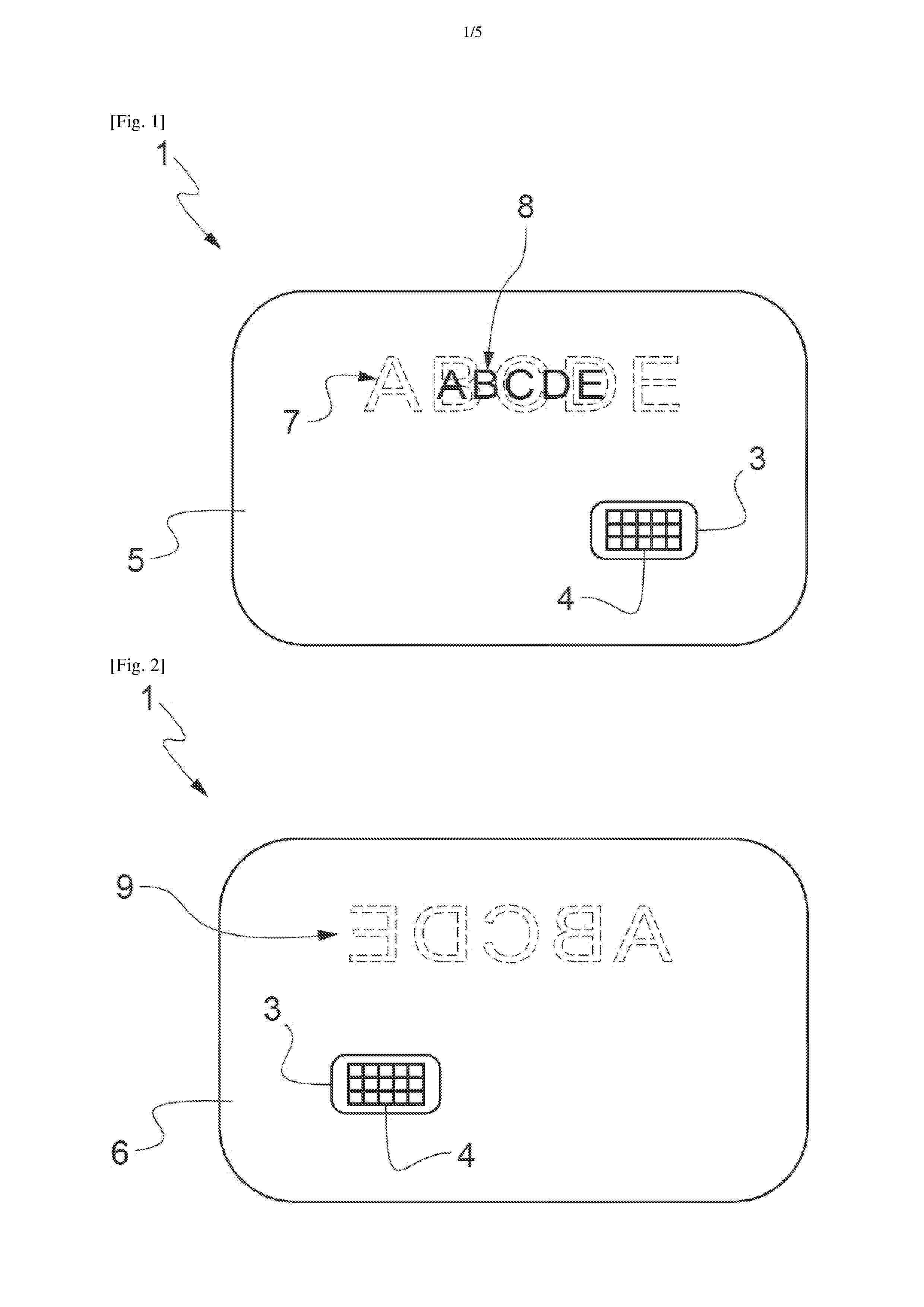
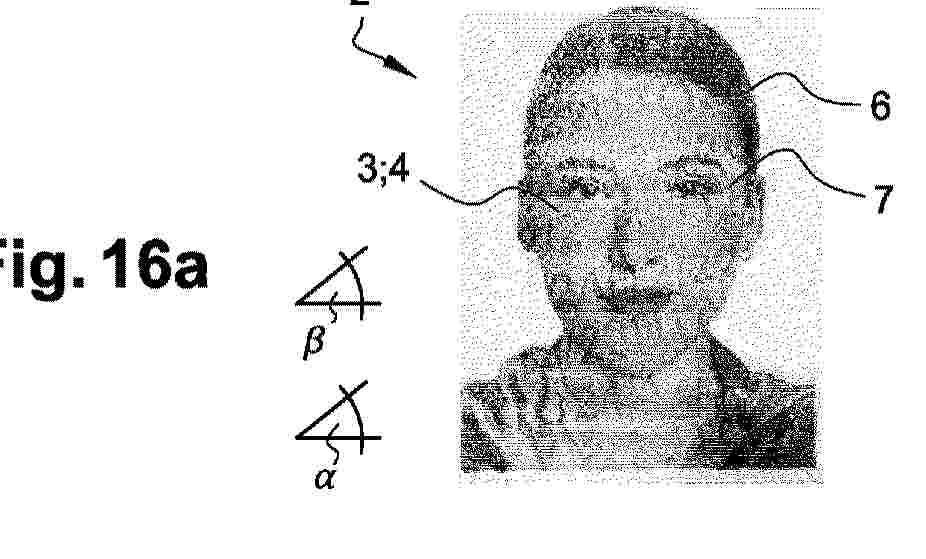
A data carrier (1) for a secure article comprises a carrier body (2), and at least one security element (3) being provided on the carrier body (2). The security element (3) comprises at least one image (4) and at least one surface structure (5). The image (4) comprises at least one primary image (6) and at least one secondary image (7) being encoded in the primary image (6). The surface structure (5) comprises at least primary surface structure elements (8) and secondary surface structure elements (9). The image (4) is at least partially printed onto the primary surface structure elements (8). At least the secondary surface structure elements (9) are configured to decode the secondary image (7) when the data carrier (1) is viewed under different viewing angles (α) and/or illuminated under different illumination angles (β), whereby the secondary image (7) becomes observable.
Resumen de: US20260316480A1
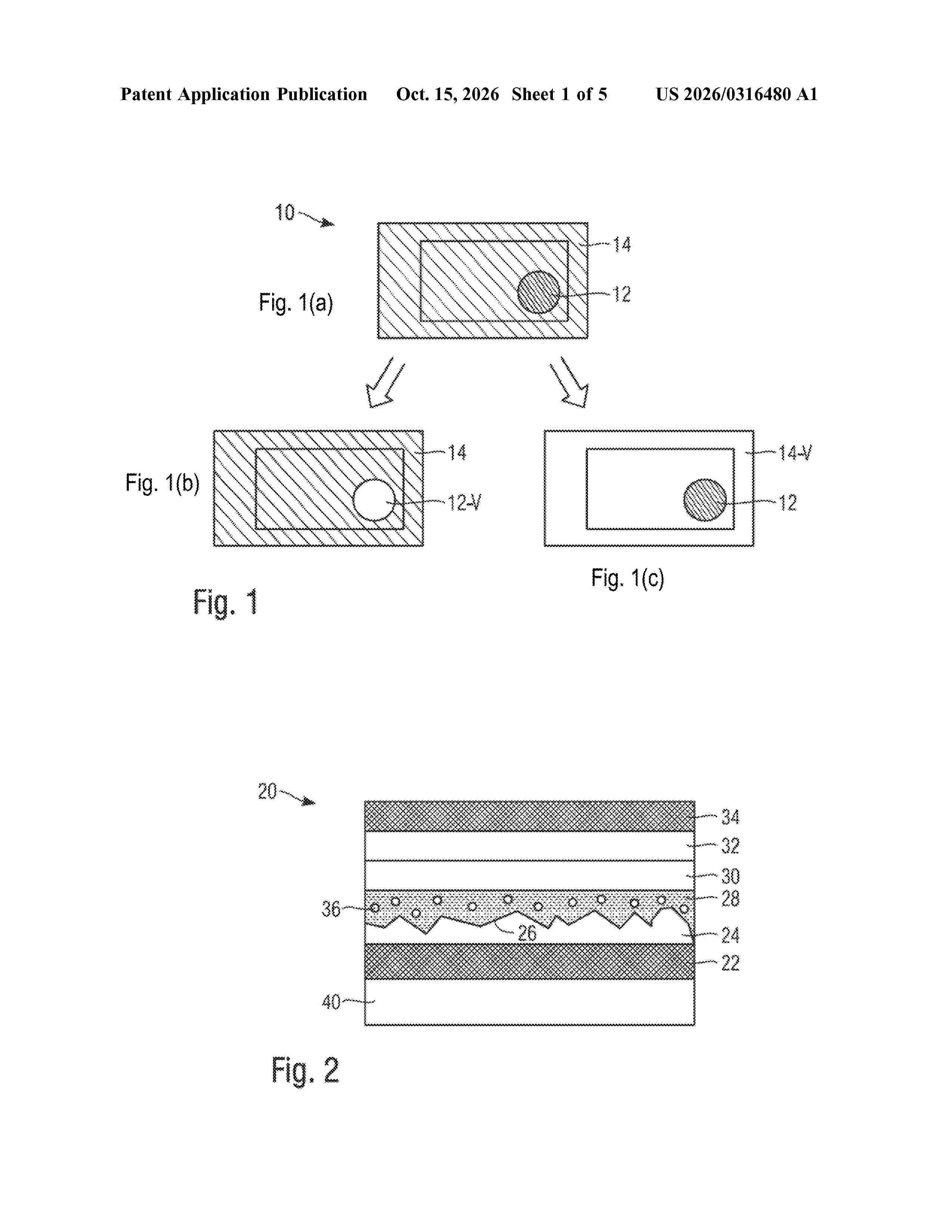
0000 An optically variable security element for protecting a document of value has a first machine-readable feature material and an optical functional layer, which imparts an optically variable appearance to the security element when viewed. Provision is made that the security element is formed in multiple layers with an internal foil sheet, which has a first side and an opposite second side, the foil sheet being provided at least on the first side with an adhesive layer for connection to the document of value and on the second side with the optical functional layer, and the first machine-readable feature material being arranged in the foil sheet or on the second side of the foil sheet.
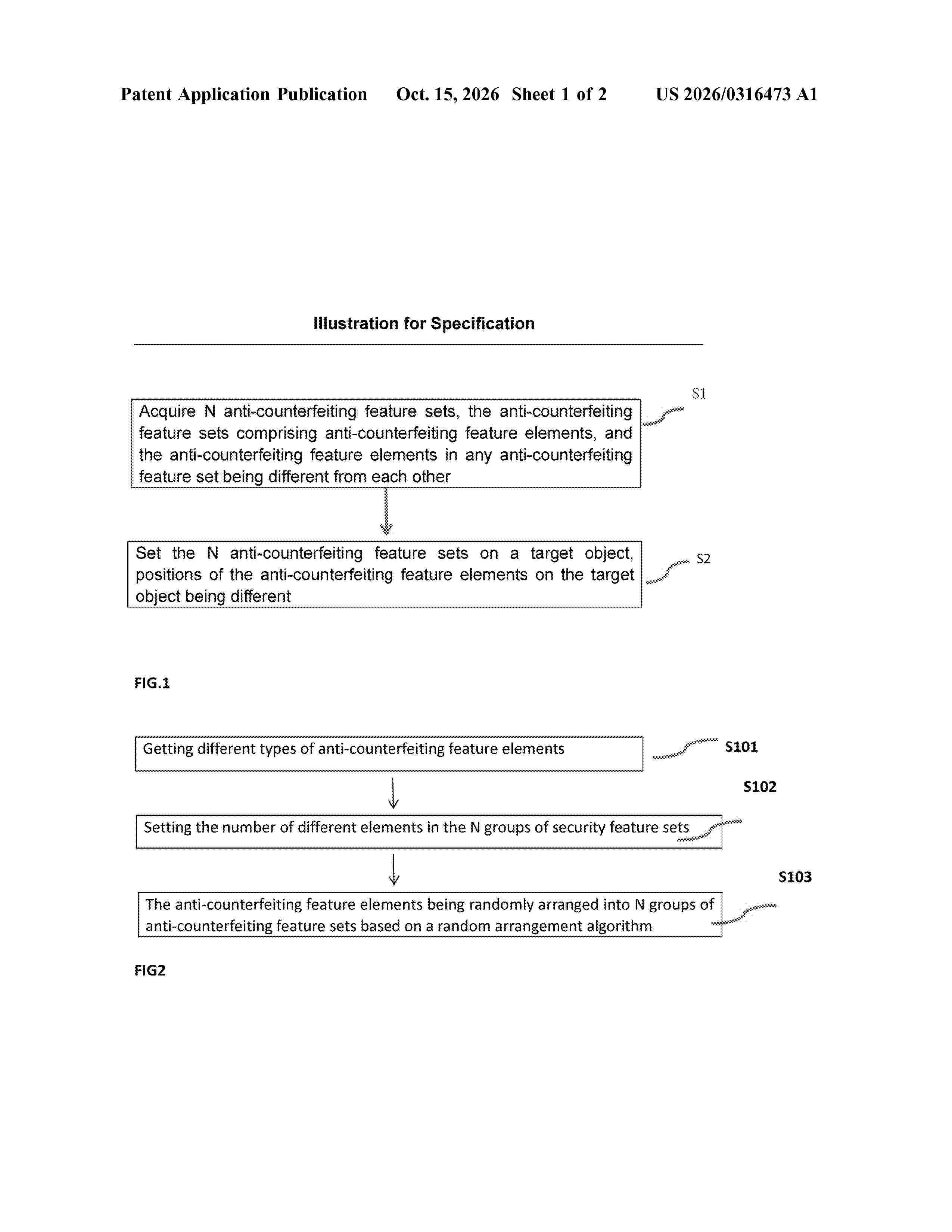
Resumen de: US20260316473A1
An anti-counterfeiting feature misaligned printing anti-counterfeiting method, an identification method, a system and a storage medium. The anti-counterfeiting method comprises: acquiring N anti-counterfeiting feature sets, the anti-counterfeiting feature sets comprising anti-counterfeiting feature elements, and the anti-counterfeiting feature elements in any anti-counterfeiting feature set being different from each other; and setting the N anti-counterfeiting feature sets on a target object, positions of the anti-counterfeiting feature elements on the target object being different. The anti-counterfeiting method facilitates achieving the effect of target objects all having different anti-counterfeiting features.
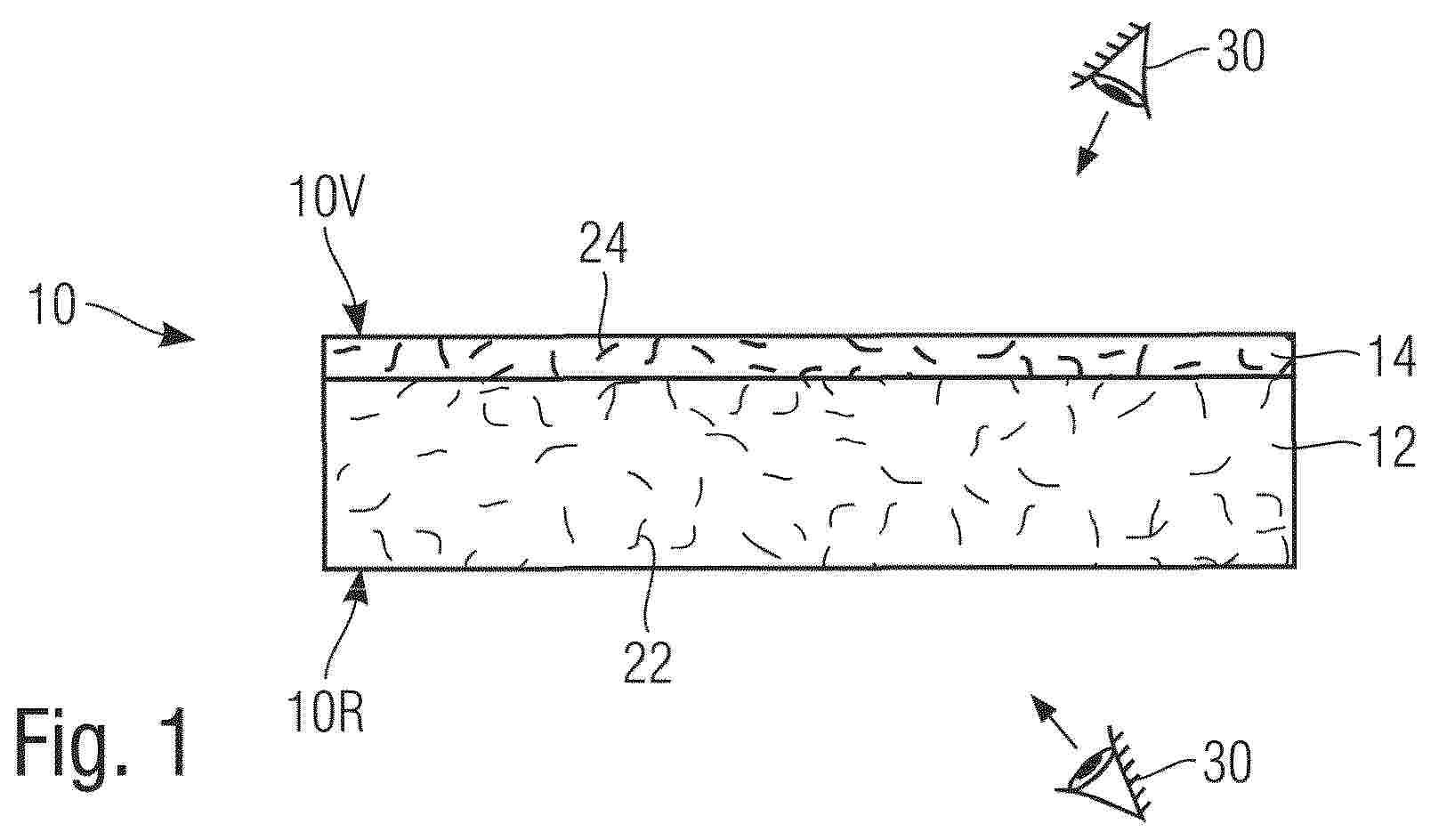
Resumen de: EP4821700A2
Die Erfindung betrifft ein Sicherheitspapier (10) für die Herstellung von Sicherheitsdokumenten, wie Banknoten, Ausweisdokumenten oder dergleichen, mit zwei gegenüberliegenden Hauptflächen (10V, 10R) und mit in das Volumen des Sicherheitspapiers eingebrachten ersten Melierfasern (22). Erfindungsgemäß ist dabei vorgesehen, dass das Sicherheitspapier (10) auf einer ersten Hauptfläche (10V) vollflächig mit zweiten Melierfasern (24) versehen ist, deren Eigenschaften sich von den Eigenschaften der ersten Melierfasern (22) unterscheiden, und die im Wesentlichen nur bei Betrachtung des Sicherheitspapiers von der Seite der ersten Hauptfläche (10V) her erkennbar sind.
Resumen de: EP4821699A1
0001 Die vorliegende Erfindung betrifft einen Artikel mit einer Sicherheitseinrichtung zur Verbesserung der Fälschungssicherheit des Artikels. Dabei ist die Sicherheitseinrichtung erfindungsgemäß aus einer ein Symbol repräsentierenden Beschichtung auf dem Artikel gebildet, wobei die Beschichtung ein Material umfasst, das ausgewählt ist aus einer Gruppe bestehend aus einem Siliziumoxid, einem Aluminiumoxid, einem Siliziumnitrid, einem Aluminiumnitrid und einem Siloxan oder einer Kombination davon.
Resumen de: EP4821701A1
0001 The invention relates to a security element in the form of a laminated layered system in which, owing to an appropriate selection of layers, a relief effect not perceptible to the touch is obtained. The invention also relates to a method for manufacturing such a security element and to the use thereof for protecting documents of value in the form of cards, such as identity documents, bank cards, credit cards, identification cards or microprocessor cards, as well as for use as components of booklet-type documents, for example polymeric pages for passports.
Resumen de: WO2026213238A2
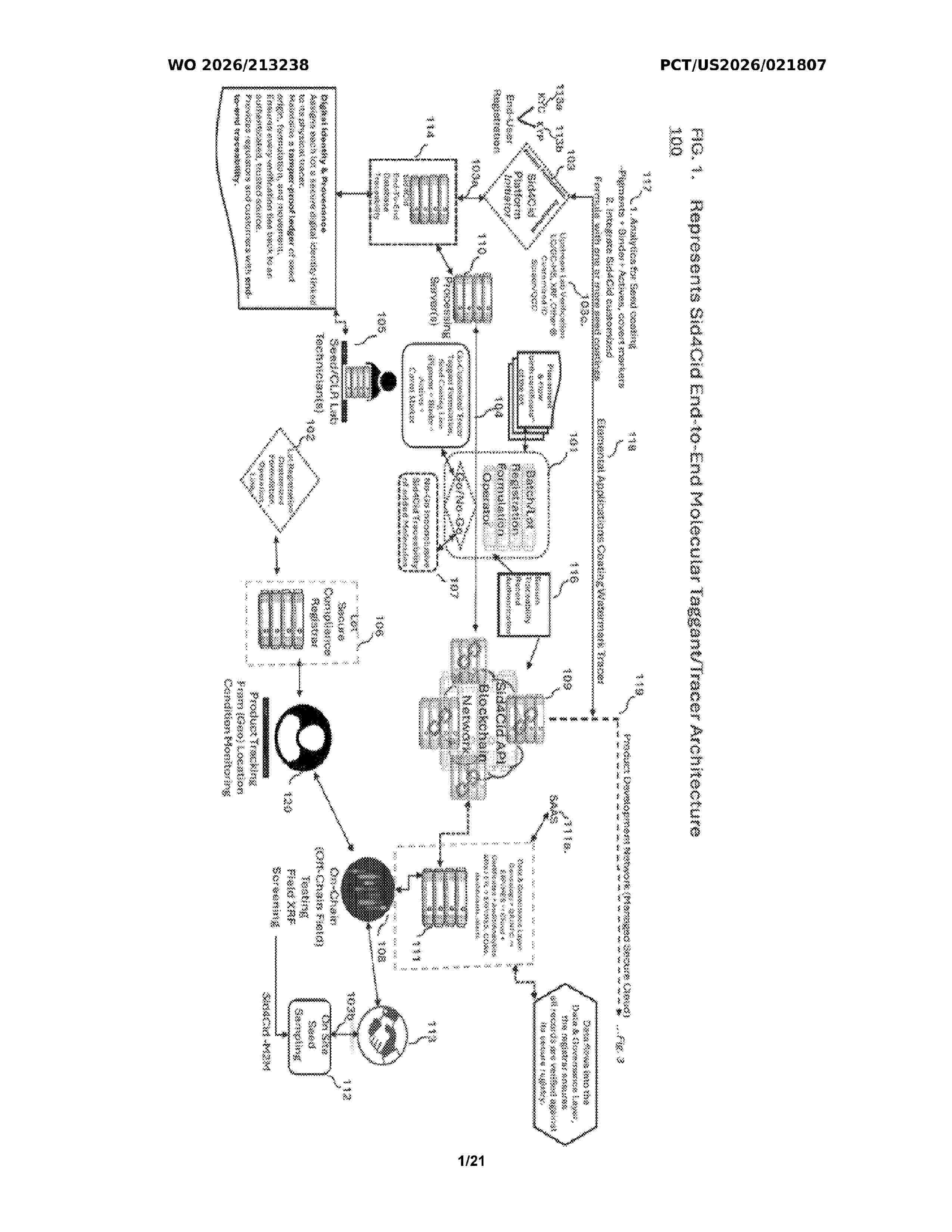
The compositions and methods described herein relate to authentication using Sid4CID substances—customized stable isotopes, rare earth elements, and precision-engineered compounds—optionally combined with CLR colorants formulated from diverse molecular combinations. These traceable taggants are incorporated at trace-level concentrations through various application modalities and integrated pathways into commercial materials or coatings. CLR compounds encompass a diverse spectrum of engineered colorant systems, designed to maintain detectability and functional integrity across varied chemical environments and coating architectures. The incorporation of taggants enables detection through a range of analytical technologies, spanning non-destructive field instruments and advanced laboratory-based assays. The system supports anomaly detection, digital governance, and blockchain-based traceability through structured APIs and secure platforms. Sid4CID-CLR materials and coatings function as covert markers for identity, provenance, and anti-counterfeiting, enhancing compliance and intellectual property protection across commercial domains.
Resumen de: US20260307424A1
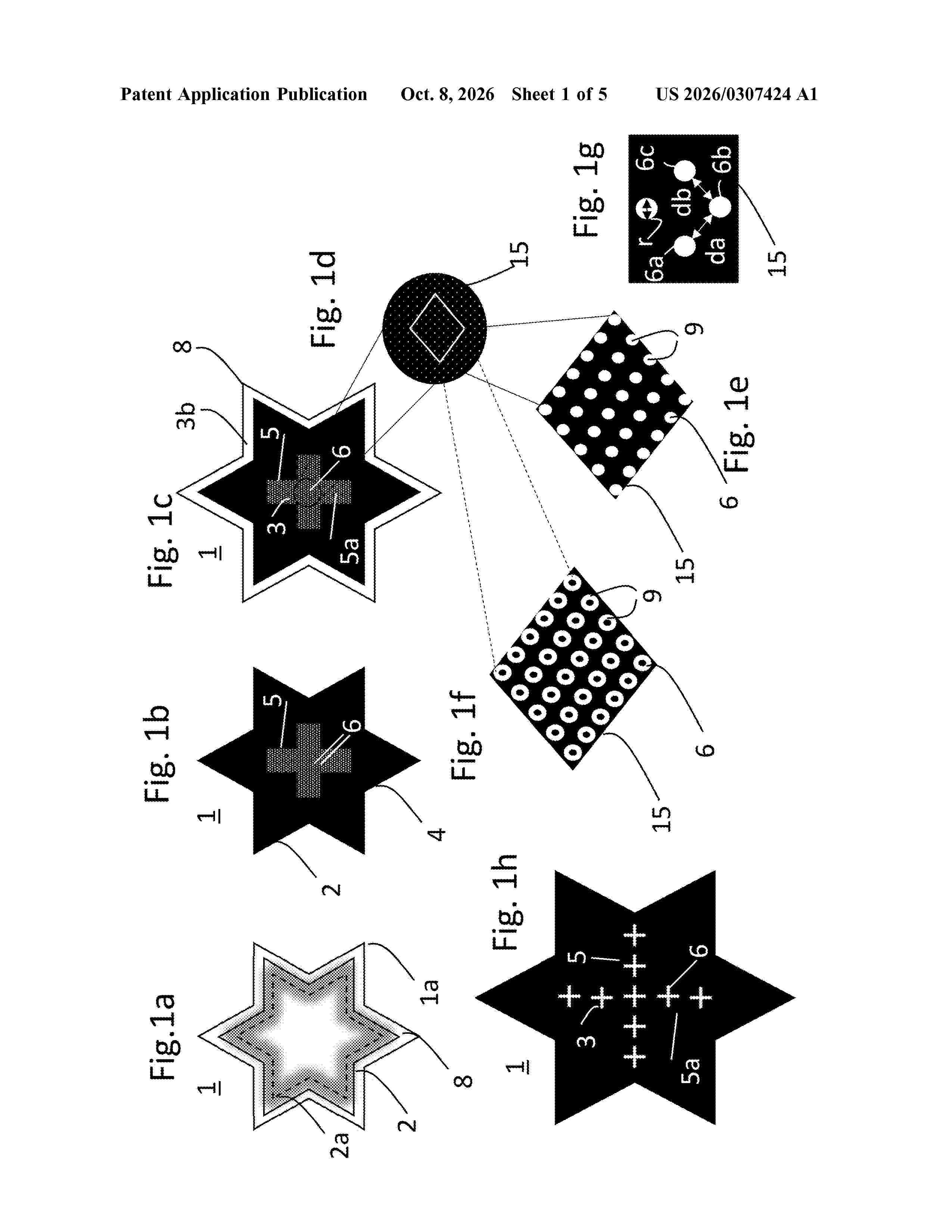
0000 A security element for a value document, wherein the security element includes: an optically variable primary surface pattern that has a metal layer with a relief structure; and at least one concealed secondary surface pattern having a plurality of elements that perforate the metal layer and at least one luminescence layer that is arranged at least in the region of the secondary surface pattern.
Resumen de: WO2026212386A1
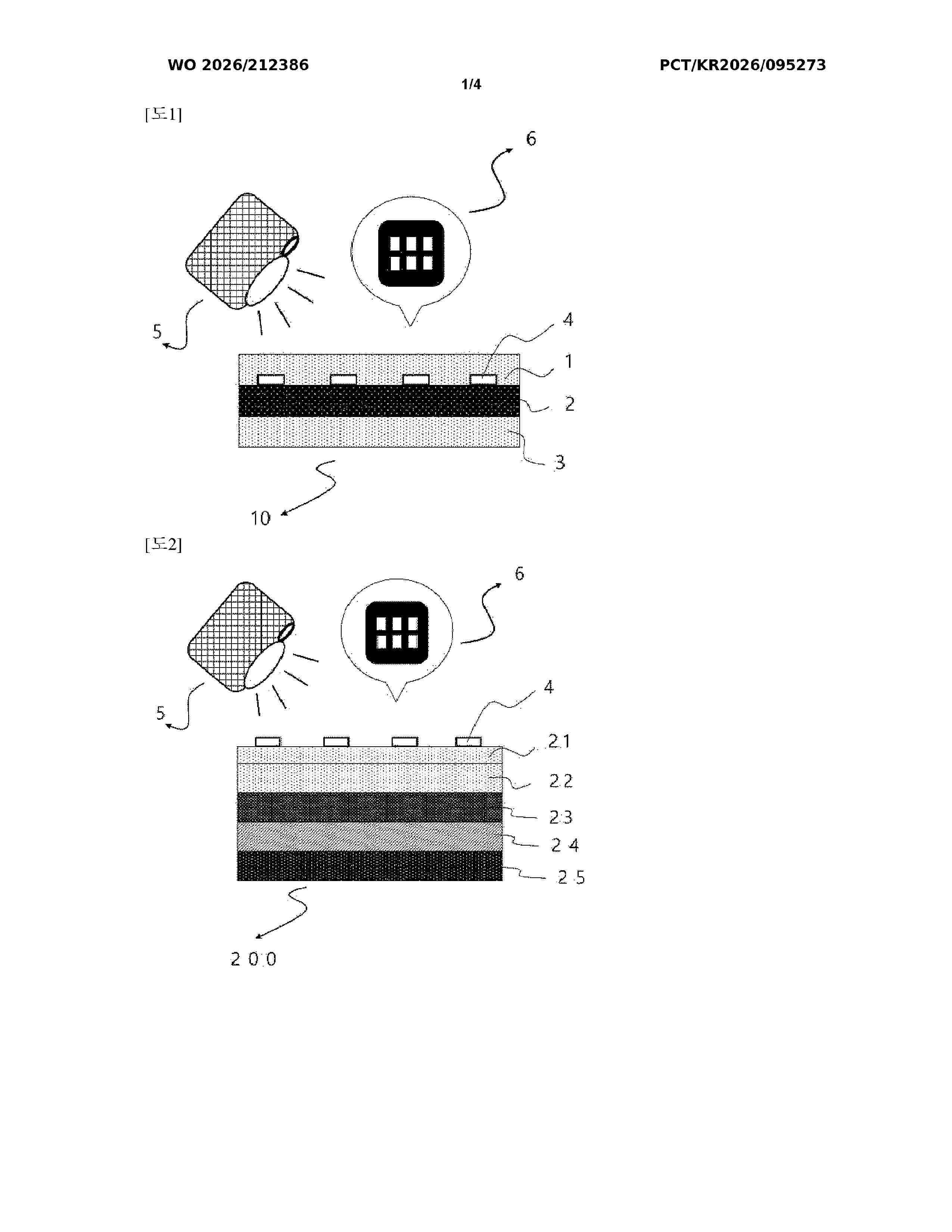
The present invention relates to an ultraviolet contrast identification sheet comprising: an ultraviolet absorption layer containing an ultraviolet absorber; and an ultraviolet scattering or reflecting agent pattern, and thus the present invention appears transparent to the naked eye but exhibits a distinct black-and-white contrast when observed with an ultraviolet blocking inspection device such that a product can be easily authenticated.
Resumen de: US20260306937A1
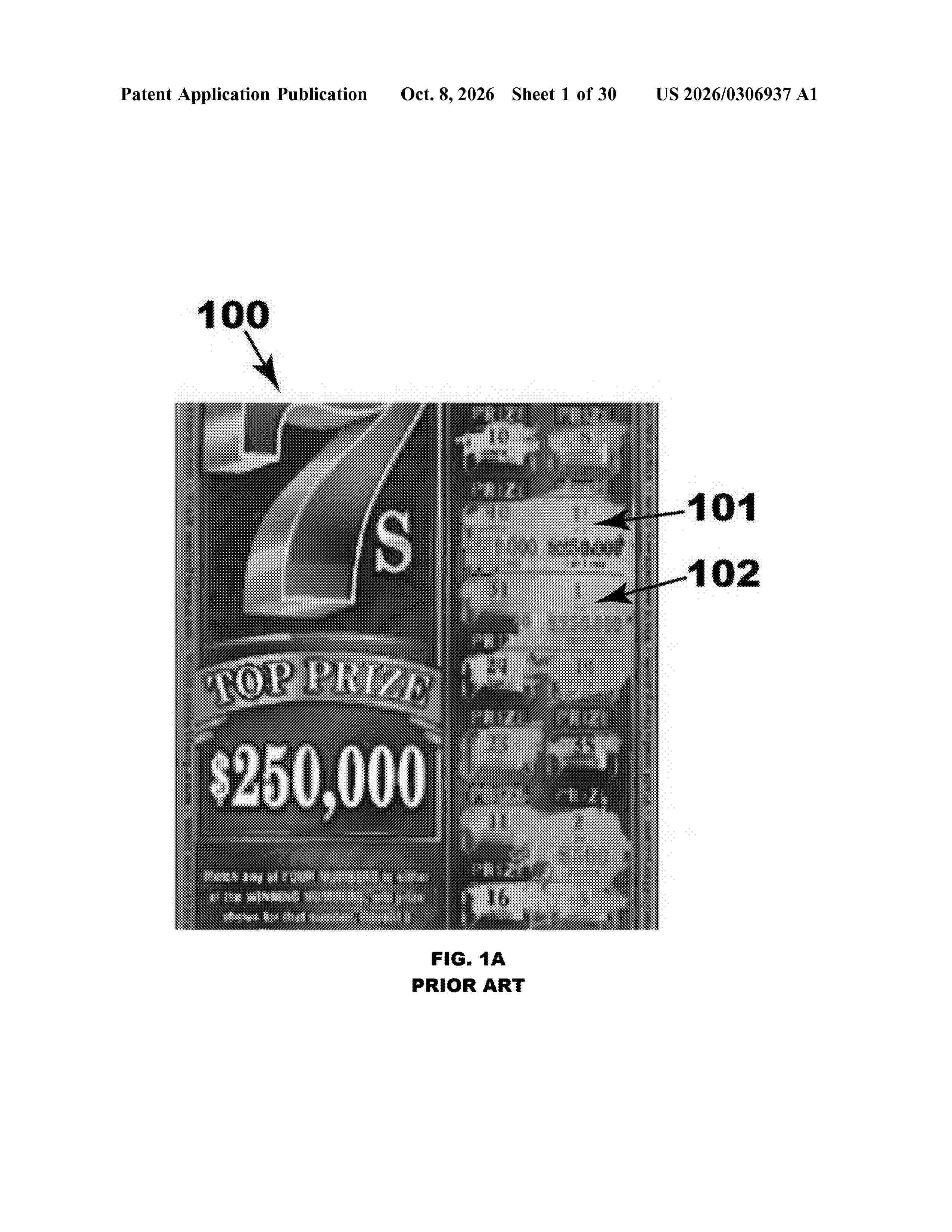
A printed security-enhanced document, printing method, and system for ensuring that any printing defects present in the variable indicia also occur in the background on the document protected. By ensuring that random printing defects in the variable indicia also appear in the same document's background, detection of the printing defects becomes more readily apparent.
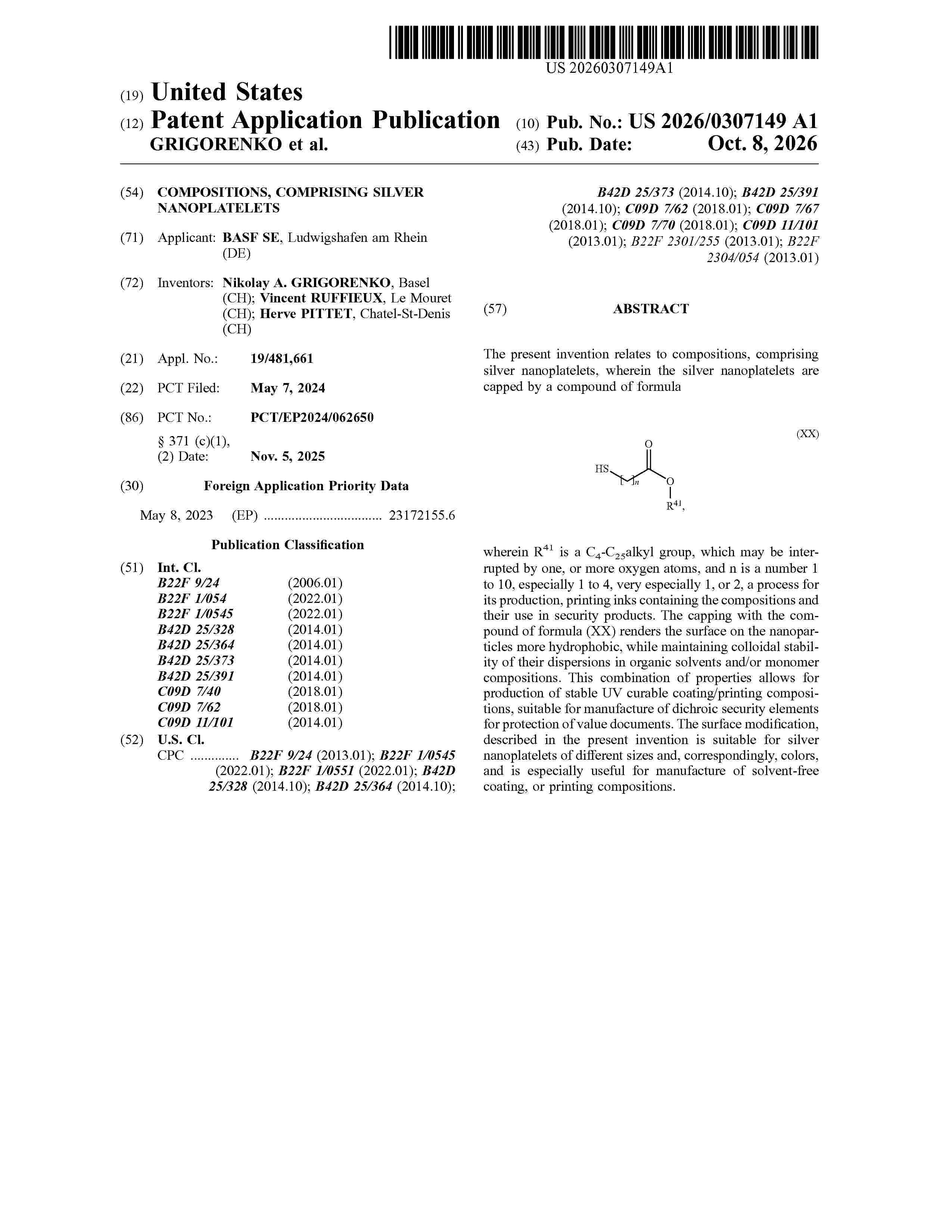
Resumen de: US20260307149A1
0000 The present invention relates to compositions, comprising silver nanoplatelets, wherein the silver nanoplatelets are capped by a compound of formula
0000
0000 wherein R<41 >is a C<4>-C<25>alkyl group, which may be interrupted by one, or more oxygen atoms, and n is a number 1 to 10, especially 1 to 4, very especially 1, or 2, a process for its production, printing inks containing the compositions and their use in security products. The capping with the compound of formula (XX) renders the surface on the nanoparticles more hydrophobic, while maintaining colloidal stability of their dispersions in organic solvents and/or monomer compositions. This combination of properties allows for production of stable UV curable coating/printing compositions, suitable for manufacture of dichroic security elements for protection of value documents. The surface modification, described in the present invention is suitable for silver nanoplatelets of different sizes and, correspondingly, colors, and is especially useful for manufacture of solvent-free coating, or printing compositions.
Resumen de: AU2025229547A1
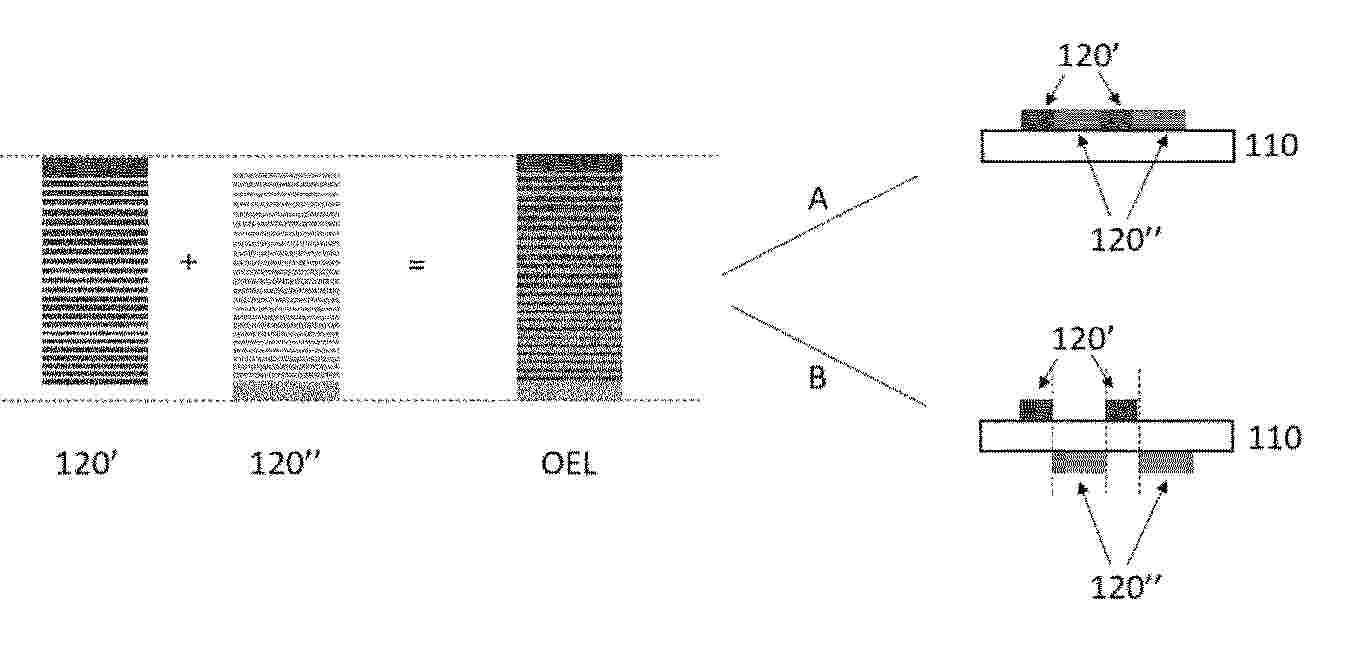
The invention relates to the field of the protection of security documents such as for example banknotes and identity documents against counterfeit and illegal reproduction In particular, the present invention provides processes for producing optical effect layers (OELs) comprising at least a first motif and a second motif, each of said motifs independently comprising platelet-shaped magnetic or magnetizable pigment particles.
Resumen de: US20260307421A1
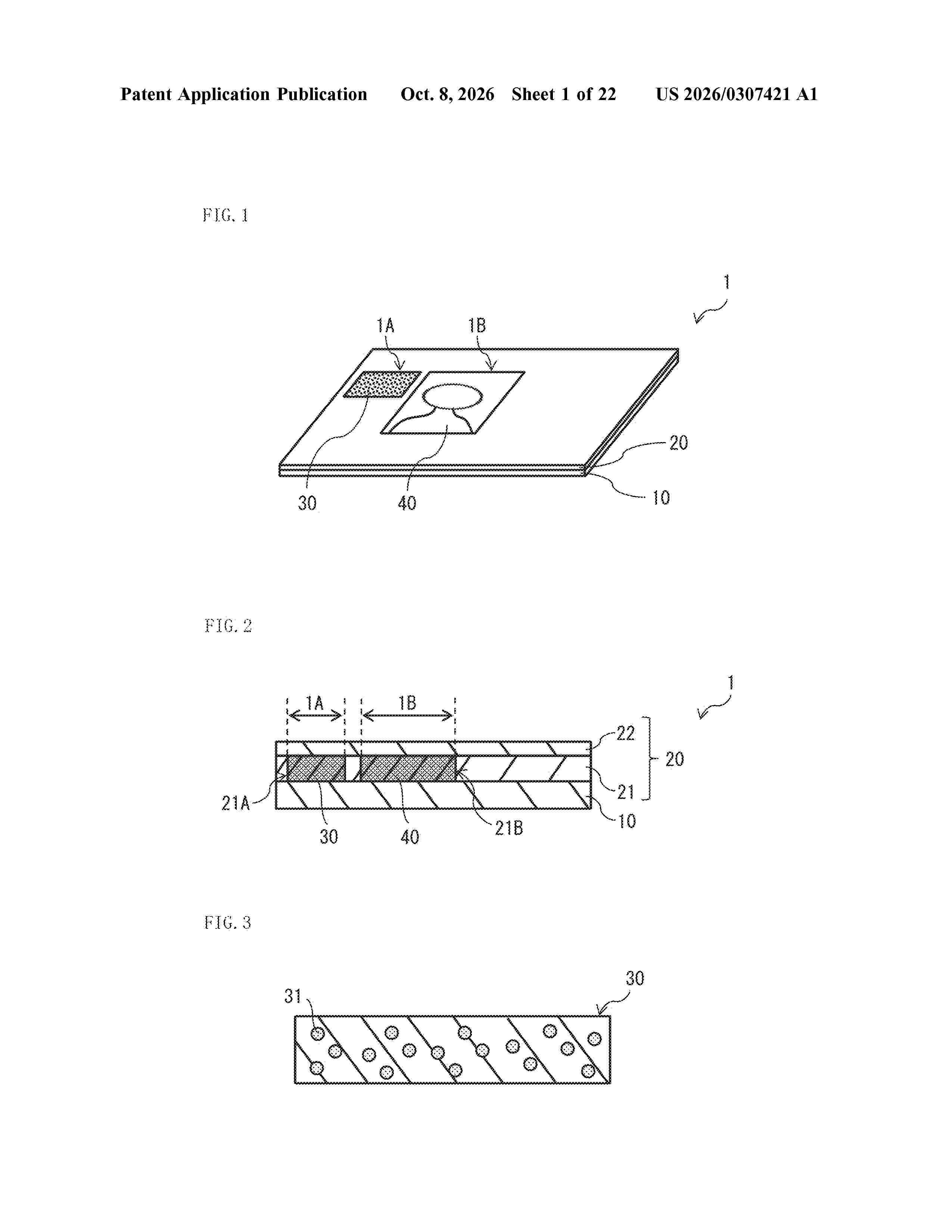
An identification element according to an aspect of the present disclosure includes a thermosensitive recording medium provided with one or a plurality of layers on a support substrate. An identification region having a unique physical feature is provided in at least a portion of the thermosensitive recording medium.
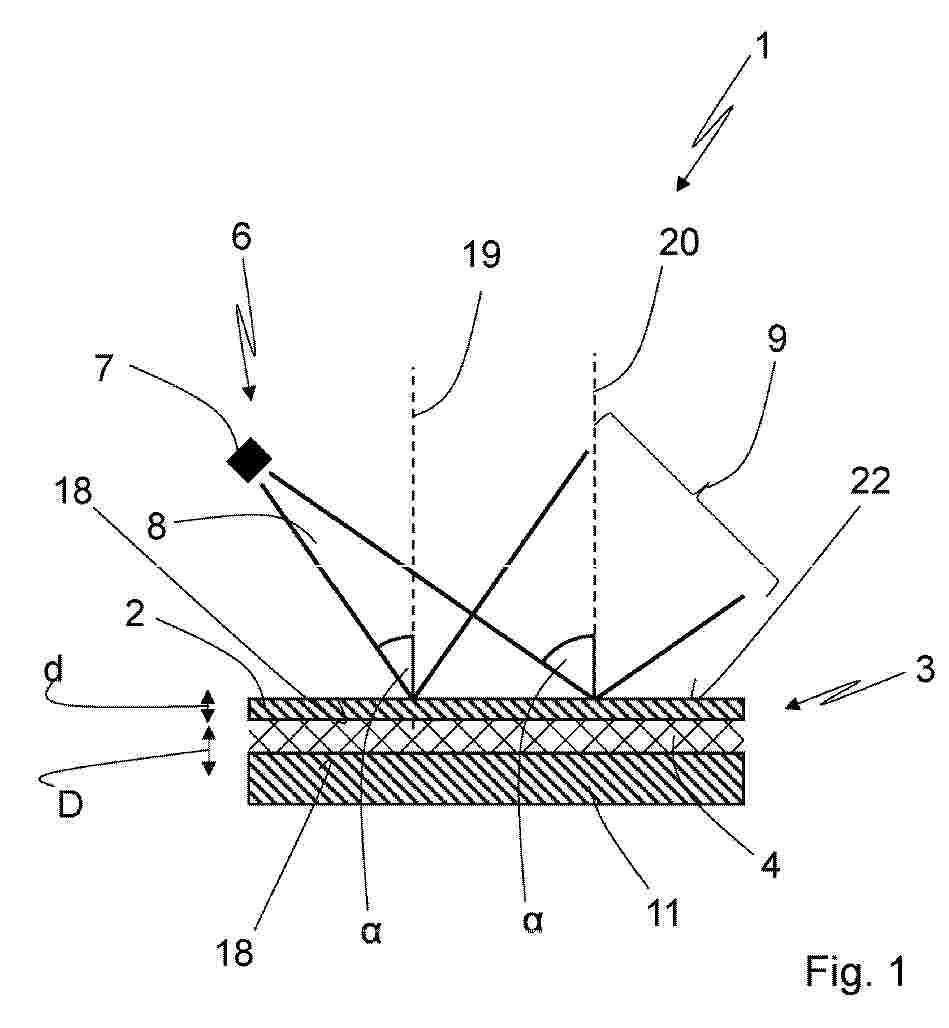
Resumen de: WO2026209702A1
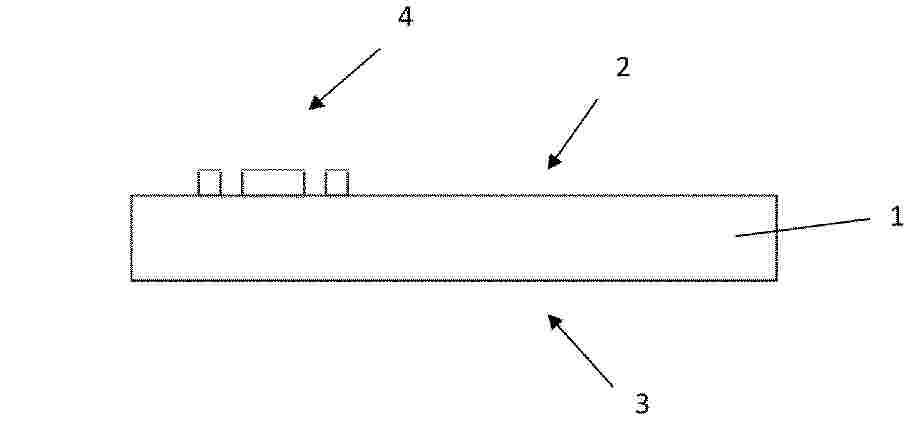
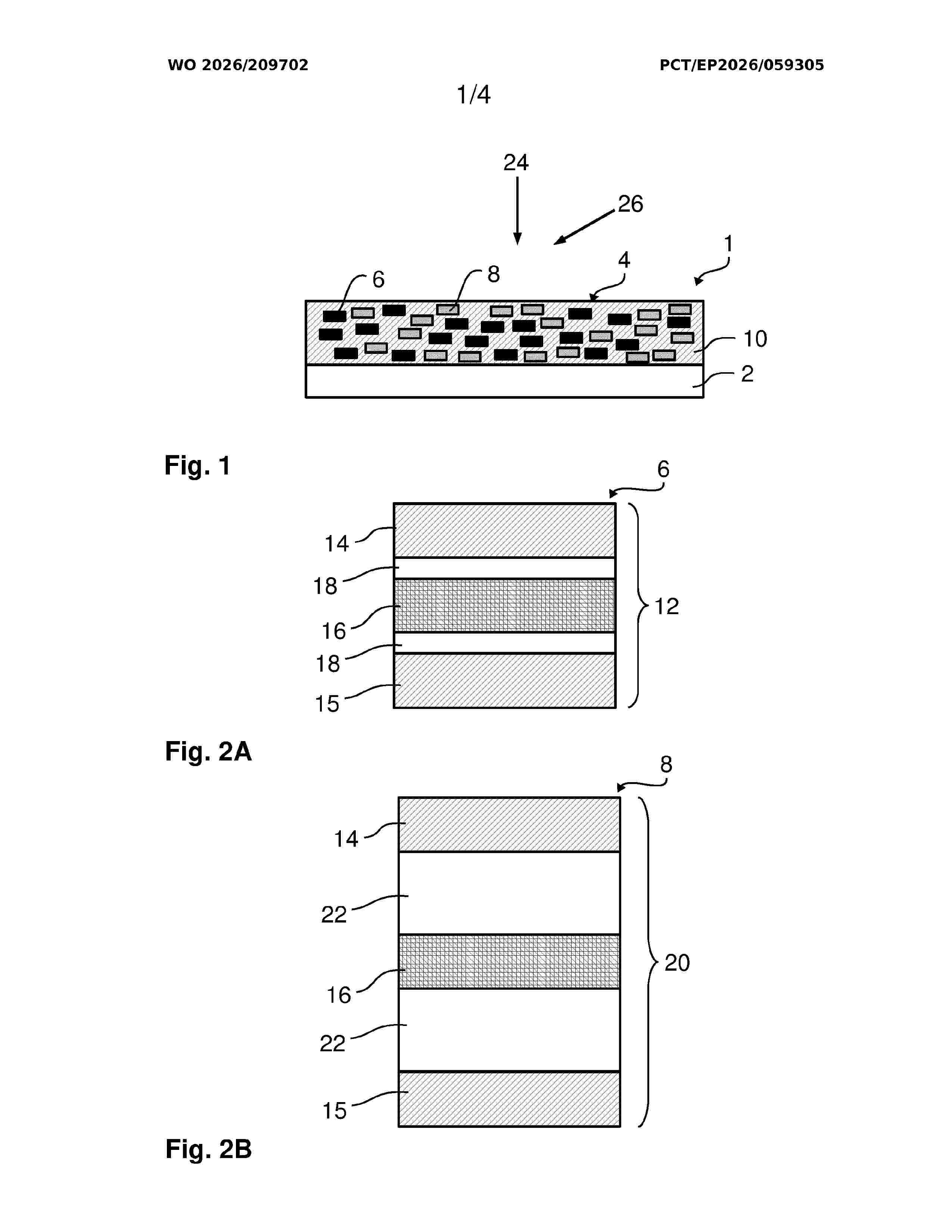
It is disclosed a security element for protecting valuables. The security element comprises a substantially flat substrate (2) having a surface defining a basic plane, and a printed layer (4) which is applied to the surface of the substrate (2) and comprises pigments (6, 8, 28) for generating a color-shift under white light illumination. The pigments (6, 8; 28) comprise at least one first dielectric layer (18) and at least one second dielectric layer (22) each as a spacer between two layers (14, 16), wherein the first (18) and second dielectric layers (22) have different layer thicknesses, the layer thickness of the first dielectric layer (18) is selected such that the pigments (6, 8, 28) are configured to generate a short wavelength color in reflection at a normal viewing angle (24) normal to the basic plane and under white light illumination, and the layer thickness of the second dielectric layer (22) is selected such that the pigments (6, 8, 28) are configured to generate a long wavelength color in reflection at an oblique viewing angle (26) of 60° relative to the normal of the basic plane and under the white light illumination.
Resumen de: US20260307420A1
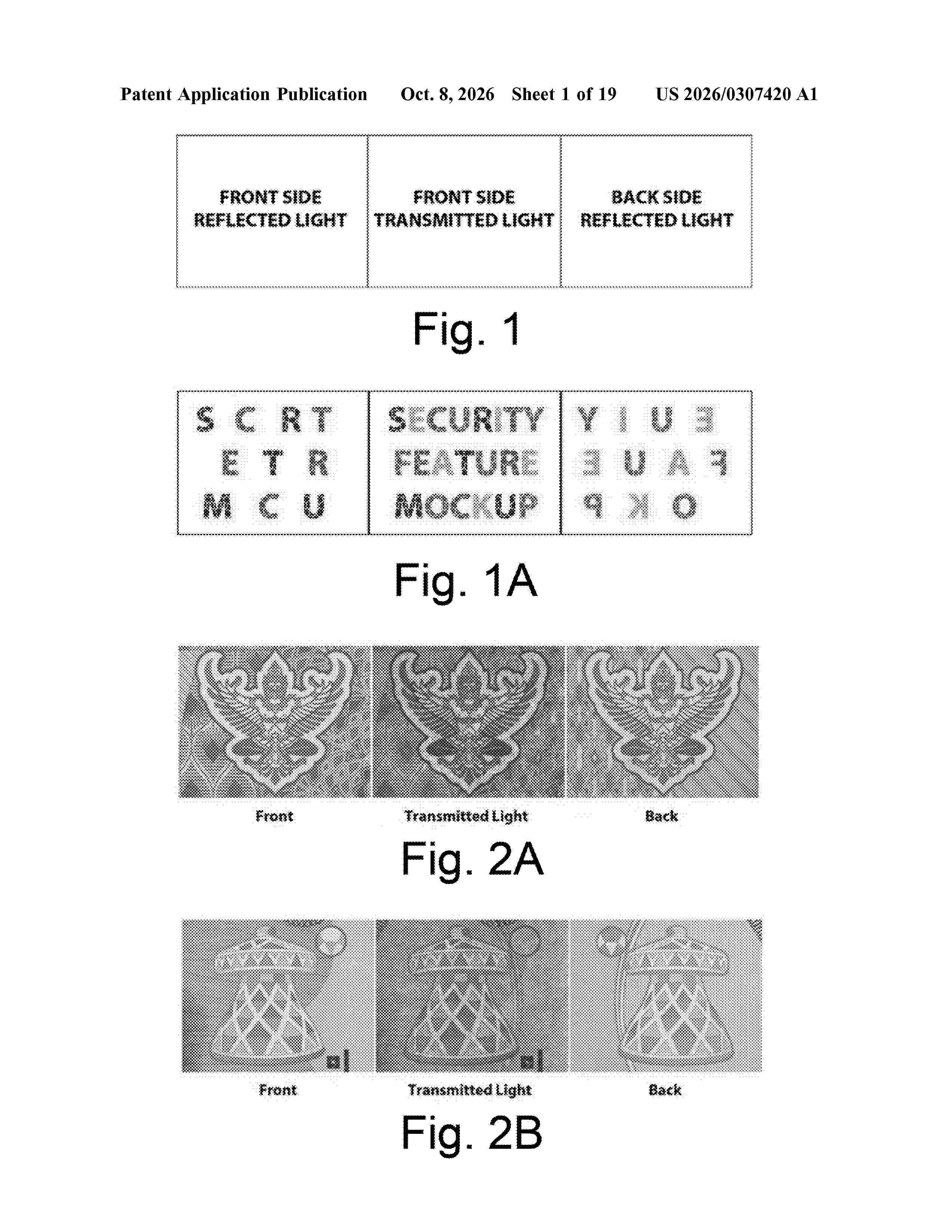
0000 A substrate is printed with front side markings and back side markings. The front side when viewed with reflected light includes a first marking printed with a first ink color in a first saturation and a first symbol with the first ink color. The back side when viewed with reflected light includes a second marking printed with a second ink color in a second saturation and a second symbol printed with the first ink color. When viewed with transmitted light, the first marking and the second marking are printed to provide an interlocking pattern, and the first symbol and the second symbol are visible in the first ink color and visually and/or spatially complementary to produce a composite image, wherein the first symbol and the second symbol are visually indistinguishable.
Resumen de: FR3173515A1
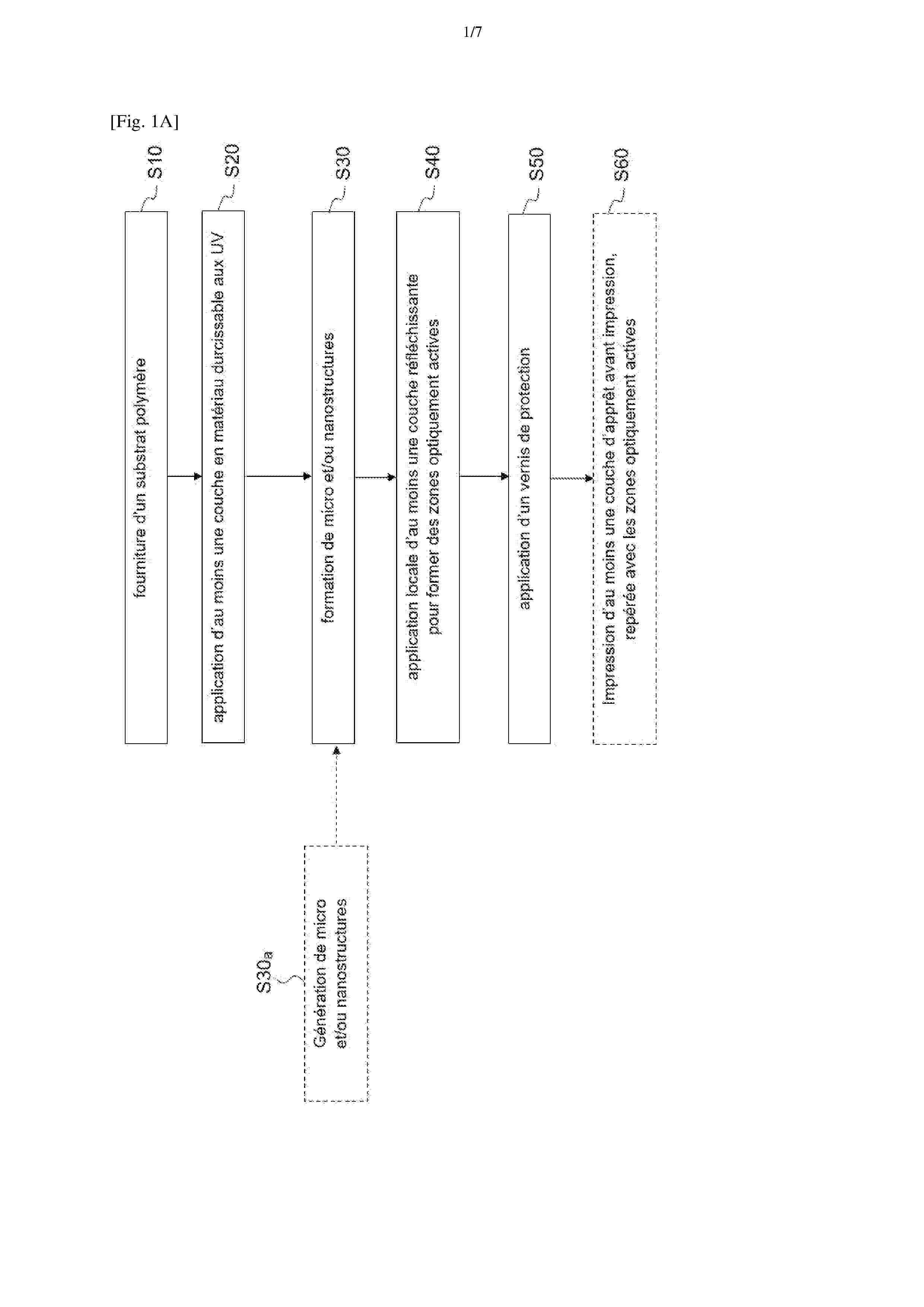
Selon un premier aspect, l’invention concerne un procédé de fabrication d'un film de sécurité configuré pour la fabrication de documents de sécurité. Le procédé comprend la fourniture (S10) d'un substrat polymère; l’application (S20) d’au moins une première couche en matériau durcissable à la lumière ultraviolette sur au moins 50% de la surface du substrat polymère ; la formation (S30) de micro et/ou nanostructures dans ladite première couche en matériau durcissable de telle sorte à générer au moins une première couche structurée, lesdites micro et/ou nanostructures étant configurées pour générer, une fois recouverte par une couche réfléchissante, un effet visuel variable en fonction des conditions d’observation; l’application (S40) de ladite couche réfléchissante dans des zones délimitées de ladite au moins une première couche structurée de telle sorte à former des zones optiquement actives où se trouve la couche réfléchissante, et des zones non optiquement actives, où la couche réfléchissante est absente ; et l’application (S50) d’un vernis de protection au moins sur l’ensemble des zones optiquement actives. Fig. 1A
Resumen de: MX2026007849A
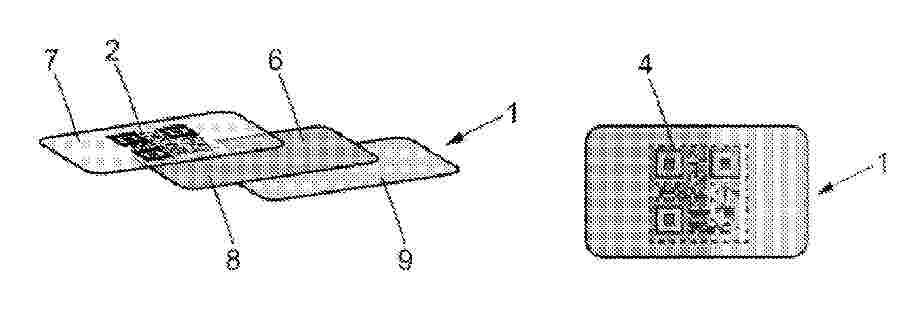
The invention relates to an authentication device (1) for an information carrier (2) configured to encapsulate at least one datum relating to a product or a person, wherein the authentication device (1) comprises a zone, referred to as the authentication zone (4), wherein the authentication zone (4) comprises at least one layer (7) provided with the information carrier (2) and an optically variable element (6) that displays a variation between a first appearance and a second appearance such that, in a first state, the authentication zone (4) and/or the information carrier (2) displays the first appearance and, in a second state, the authentication zone (4) and/or the information carrier (2) displays the second appearance, wherein the transition between the first appearance and the second appearance is caused by a variation in the viewing angle, or the lighting, or a physico-chemical stimulus.
Resumen de: AU2025226574A1
A transferring device for orienting platelet-shaped magnetic or magnetizable pigment particles contained in a radiation curable coating composition and applied on a substrate, the transferring device comprising: a number N of identical magnetic blocks (102) aligned along an alignment line provided on an outer surface of the transferring device, the magnetic blocks (102) each including M magnetic field generating devices (101) each generating a corresponding magnetic field such that the magnetic blocks (102) each generate a block magnetic field, N being greater than or equal to two, and M being greater than or equal to one; and a shielding element (105) partly isolating the block magnetic field of each magnetic block (102) from the block magnetic field of the other magnetic blocks (102), or a compensation magnetic block provided alongside the magnetic block (102).
Nº publicación: WO2026204916A1 01/10/2026
Solicitante:
DAI NIPPON PRINTING CO LTD [JP]
\u5927\u65E5\u672C\u5370\u5237\u682A\u5F0F\u4F1A\u793E
Resumen de: WO2026204916A1
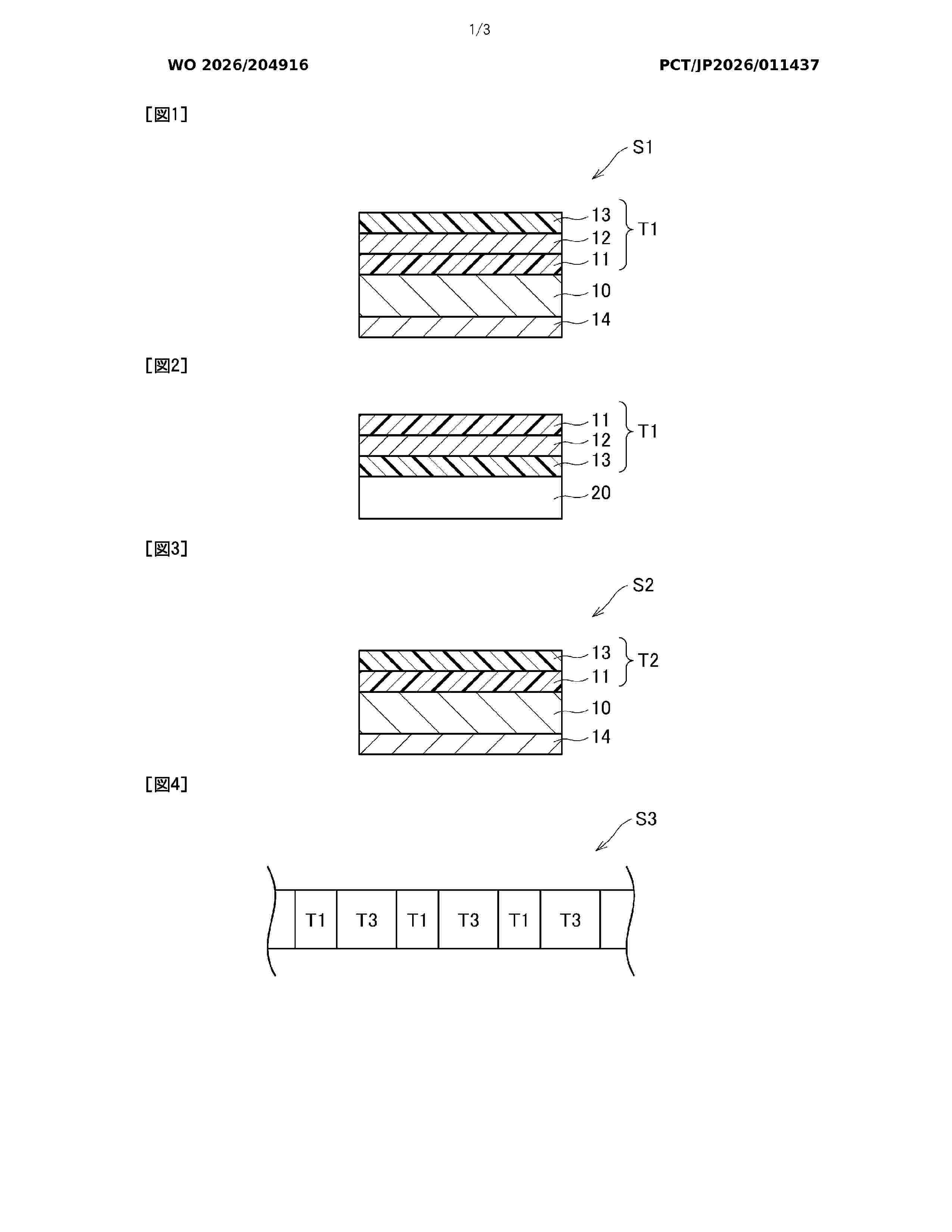
The present disclosure enables authenticity determination of a product by being used for printing on the product. A thermal transfer sheet according to the present disclosure comprises: a substrate; and a transfer layer that is provided on one surface of the substrate and is transferred to a transfer target. The transfer layer includes an identification tag having a spectral profile that is identifiable in association with predetermined information. The transfer layer may contain at least one of a coloring material and an invisible light absorbing material. Alternatively, the transfer layer may have a first transfer layer and a second transfer layer provided in surface sequence, the first transfer layer may contain the identification tag, and the second transfer layer may contain at least one of a coloring material and an invisible light absorbing material.
 BOPI
BOPI
 Sede Electrónica