Si deseas distinguir tus productos, servicios o ambos de los de otra empresa, es posible que necesites una marca o nombre comercial. Descubre qué son, en qué consiste su procedimiento de registro y qué implica.

Información sobre los plazos de presentación de solicitudes de transformación de marcas de la Unión Europea en marca nacional española. Más información


Si tienes un nuevo dispositivo, producto o procedimiento que resuelva un problema técnico o tenga una ventaja práctica, existen distintas formas de protegerlo en España y en otros países. Descubre cómo hacerlo.

¿Tu innovación reside en la estética, la ornamentación o la apariencia de tu producto? Protégela mediante un diseño industrial. Descubre qué derechos confiere el registro y cómo realizar la tramitación.

Las indicaciones geográficas protegen el nombre de un producto originario de una zona geográfica, a la cual le debe una determinada calidad, reputación u otra característica. Descubre qué son, en qué consiste su procedimiento de registro y qué beneficios conceden.

Las patentes publicadas en todo el mundo son una valiosa fuente de información científica, técnica y comercial.

Si eres emprendedor/a o una empresa y quieres potenciar y mejorar la rentabilidad de tu negocio protegiendo de forma adecuada los activos intangibles de tu organización, en este espacio encontrarás lo necesario.


 224
resultados
224
resultados
 Última actualización
23/10/2026 [09:45:00]
Última actualización
23/10/2026 [09:45:00]


 Resultados 100 a 125 de 224

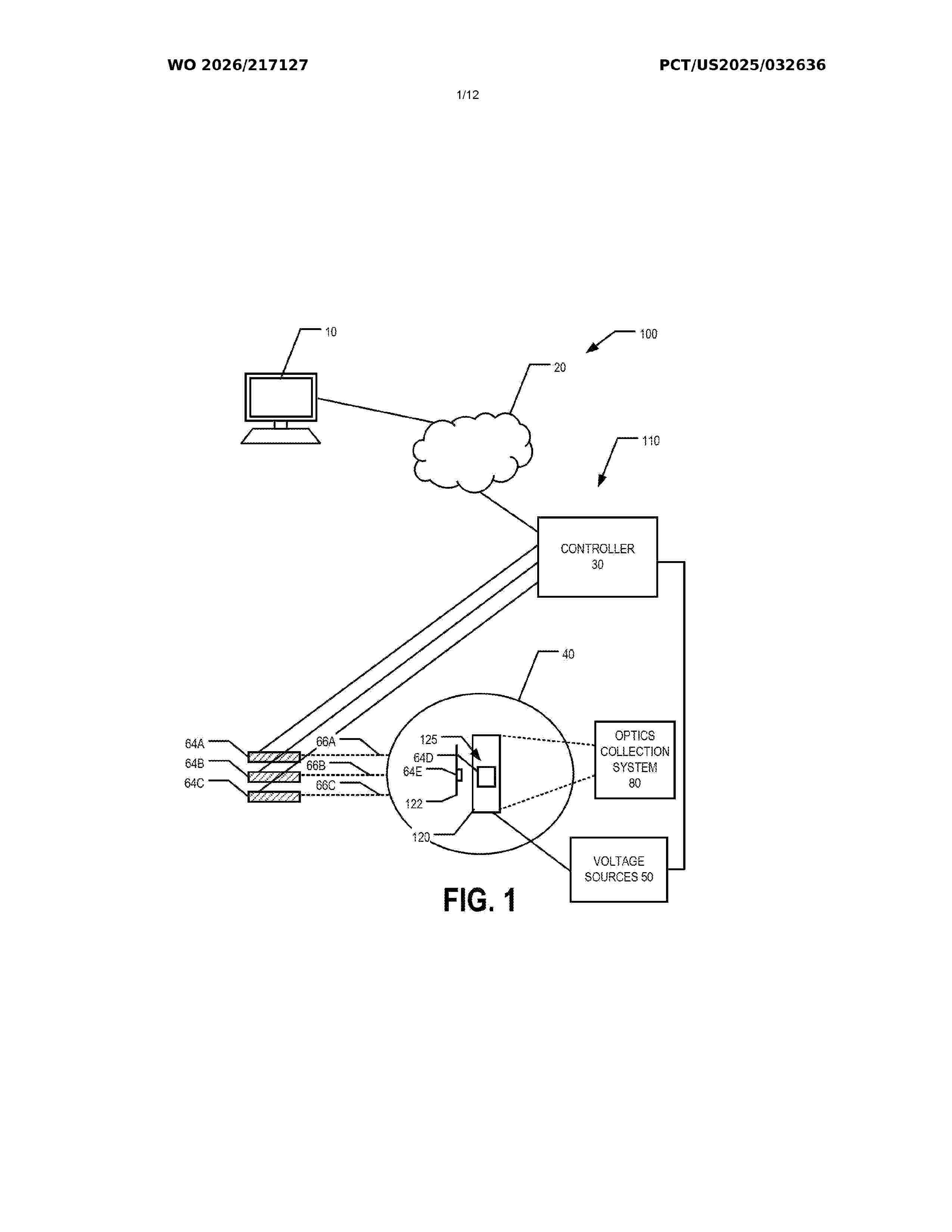
Resumen de: WO2026217127A2
An entangling gate is performed on quantum objects by causing mapping manipulation signals to be incident on the quantum objects to transfer a population of a first qubit state to a first-half gate state; causing first-half gate manipulation signals to be incident on the quantum objects to couple the first-half gate state with a first-half selected qubit state to perform a first portion of an entangling operation; causing mapping manipulation signals to be incident on the quantum objects to transfer a population of the first-half gate state to the qubit sub-space and a population of a second qubit state to a second-half gate state; and causing second-half gate manipulation signals to be incident on the quantum objects to couple the second-half gate state with a second-half selected qubit state to perform a second portion of the entangling operation. A leakage detection operation may be performed mid- or post-gate.

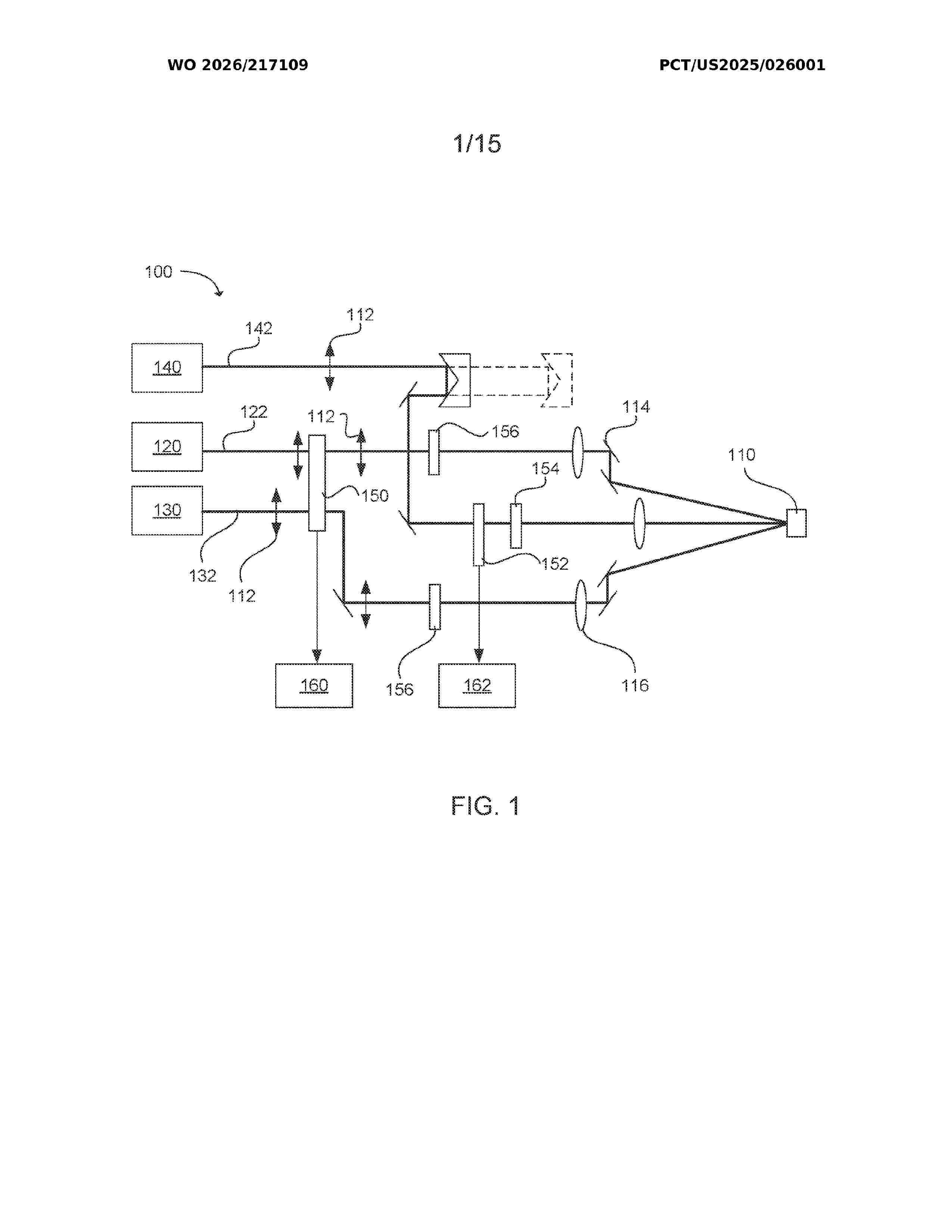
Resumen de: WO2026217109A2
A quantum bit system for use in quantum computing systems. The quantum bit system (100) can include a hybrid organic-inorganic perovskite (HO IP) (110). The quantum bit system can also include an optical pumping source (120) having a fixed circular polarization, wherein the optical pumping source is configured to induce dynamic nuclear spin polarization in the HOIP through electron-nuclear hyperfine interaction to generate an internal magnetic field on one or more electrons that modulates electron spins. The quantum bit system can include a control light source (130) associated with the optical pumping source, wherein the control light source is circularly polarized and modulates the internal magnetic field. The quantum bit system can also include an optical probe (140) associated with the control light source, wherein the optical probe measures changes in the internal magnetic field via detected changes in the electron spins.
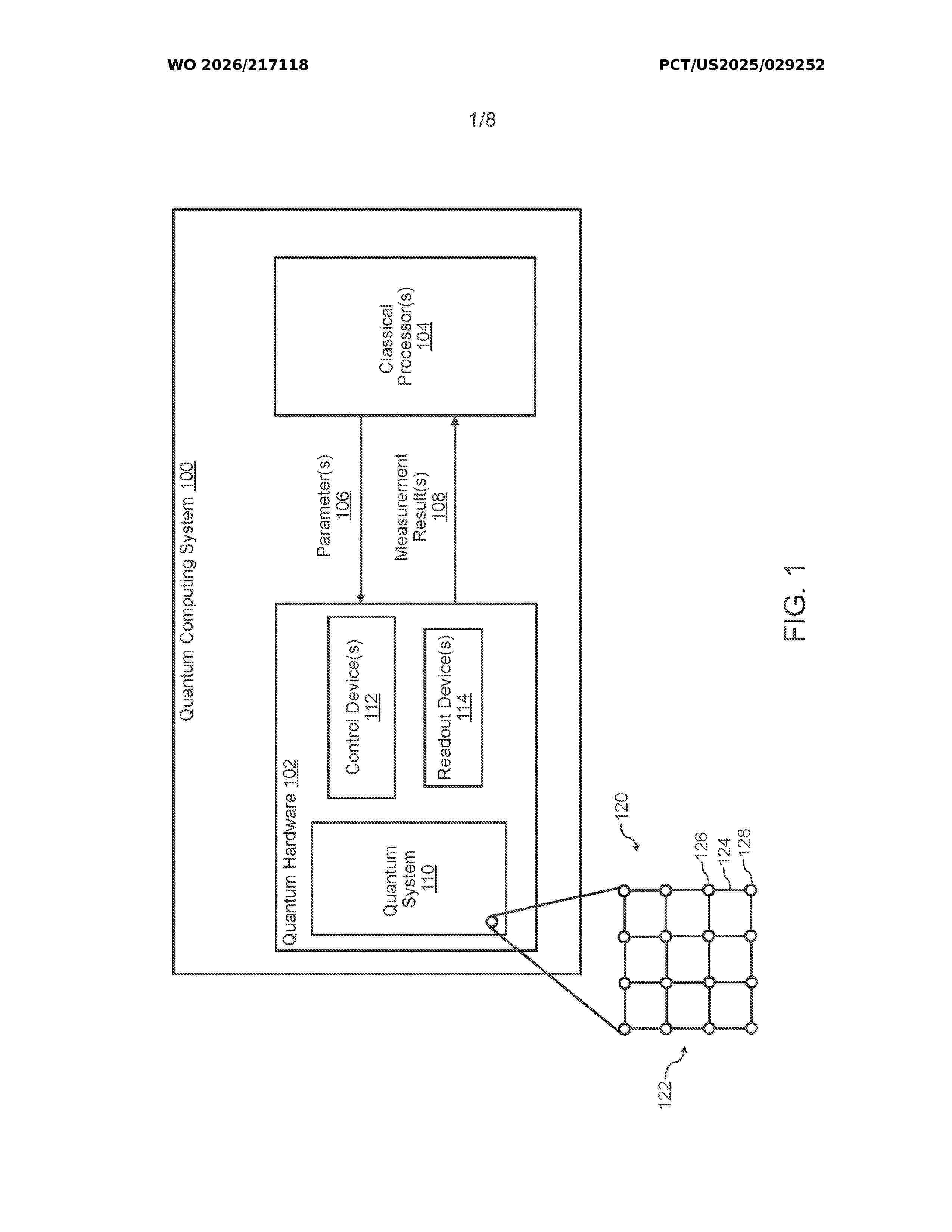
Resumen de: WO2026217118A2
One example aspect of the present disclosure is directed to a method for operating a quantum computing system (QCS). The QCS has a set of qubits. The method includes accessing detection event data that includes stabilizers measurements for a set of stabilizers of a quantum error correction (QEC) code implemented, via. the QCS, on the set of qubits. A trained detector error model (DEM) for a decoder of the QEC code is generated. The trained detector DEM is generated by iteratively updating a set of candidate DEMs based on the detection event data and an optimization algorithm that includes an objective. A. quantum algorithm is performed, via. the QCS, based on the QEC code with the decoder configured to use the DEM.
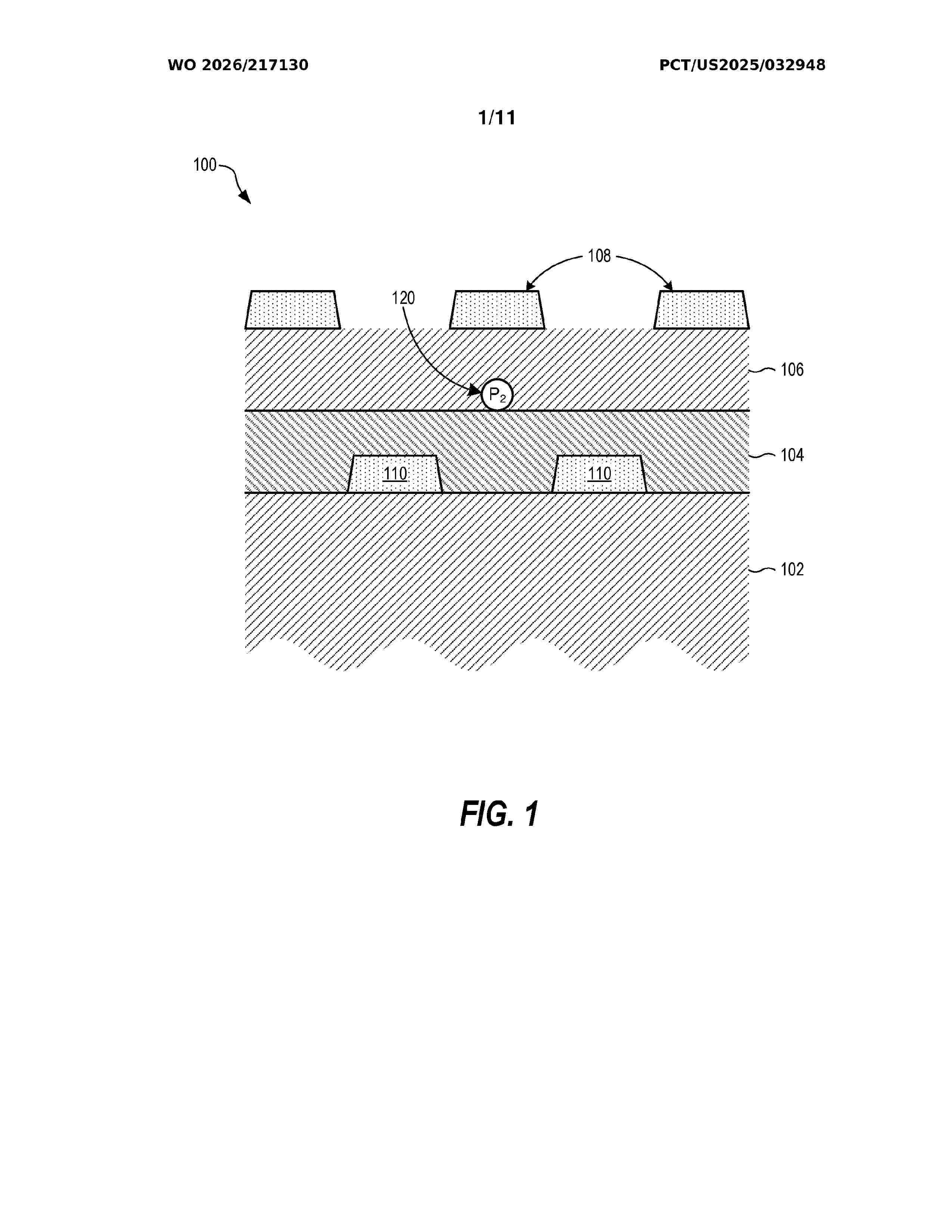
Resumen de: WO2026217130A2
A chip-based quantum processor uses homonuclear molecules with non-zero nuclear spins. Each of these molecules serves as a qubit. To fabricate the quantum processor, a thin film of semiconductor atoms is deposited on a semiconductor substrate to form a protective under layer and over layer. A Group 15 or semiconductor molecular source forms a beam of dimer, triatomic, or tetratomic molecules that is deposited between the under layer and the over layer. Alternatively, fast Group 15 or semiconductor molecular ions are slowed and compressed in an ion funnel, or confined in an ion trap, and then deposited on top of the under layer at low energy. The quantum processor may be annealed to crystalize the deposited under layer and over layer. The deposited molecular qubits may be interrogated with electrodes, optical fields, microwave fields, or a combination thereof.
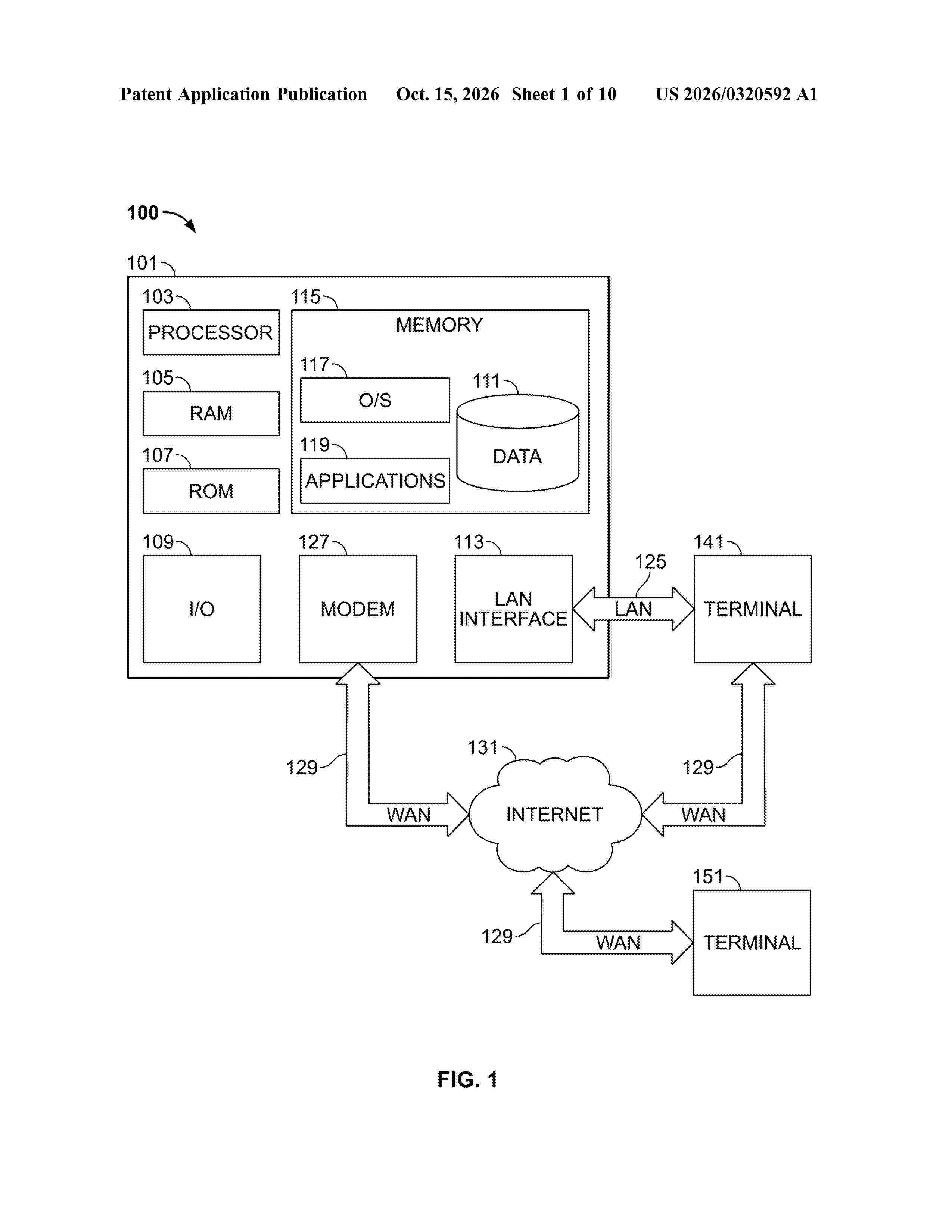
Resumen de: US20260320592A1
Apparatus and methods for securing a transaction. The apparatus may include a holographic signature pad. The holographic signature pad may include an array of sensors. The sensors may be configured to sense a first quantum tunneling pattern resulting from interaction between a pen and the signature pad. The pad may be configured to create a holographic interference pattern based on the first quantum tunneling pattern. The apparatus may map the digitized interference pattern onto first qubits in a quantum register. The apparatus may be configured to interact with the quantum computer to apply a quantum Fourier transform algorithm to the first qubits to produce a quantum phase-space interference matrix. The apparatus may be configured to form a key-value pair that includes a key corresponding to a quantum encrypted fingerprint matrix and a value corresponding to the quantum phase-space interference matrix.
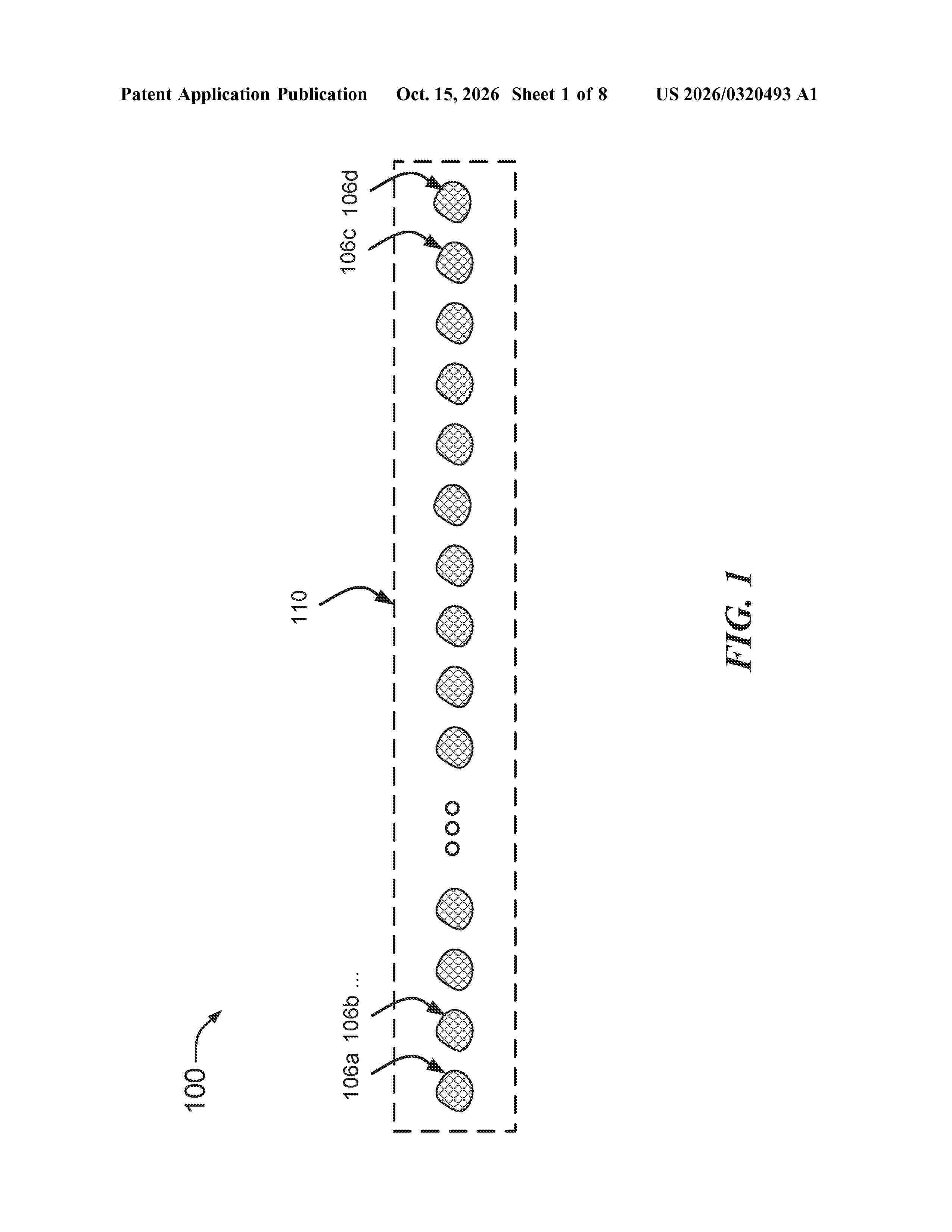
Resumen de: US20260320493A1
0000 The present disclosure introduces a differentiable framework for modeling quantum shot noise in state vector simulations used for training parameterized quantum circuits. Conventional approaches rely on multinomial sampling of measurement outcomes, which is inherently discrete and non-differentiable, blocking gradient-based optimization. To address this, the present disclosure replaces multinomial sampling with a continuous approximation using a multivariate Gaussian distribution that captures the statistical properties of shot noise. By applying a reparameterization technique, stochastic noise is expressed as a deterministic function of circuit parameters and auxiliary random variables, enabling gradients to propagate through the noise model. The method integrates noise directly into the quantum state vector, followed by normalization to maintain physical validity. This approach preserves differentiability while incorporating realistic noise effects, allowing efficient end-to-end training using standard optimization methods. The result is a scalable, noise-aware simulation framework that improves the fidelity and practicality of quantum machine learning development.
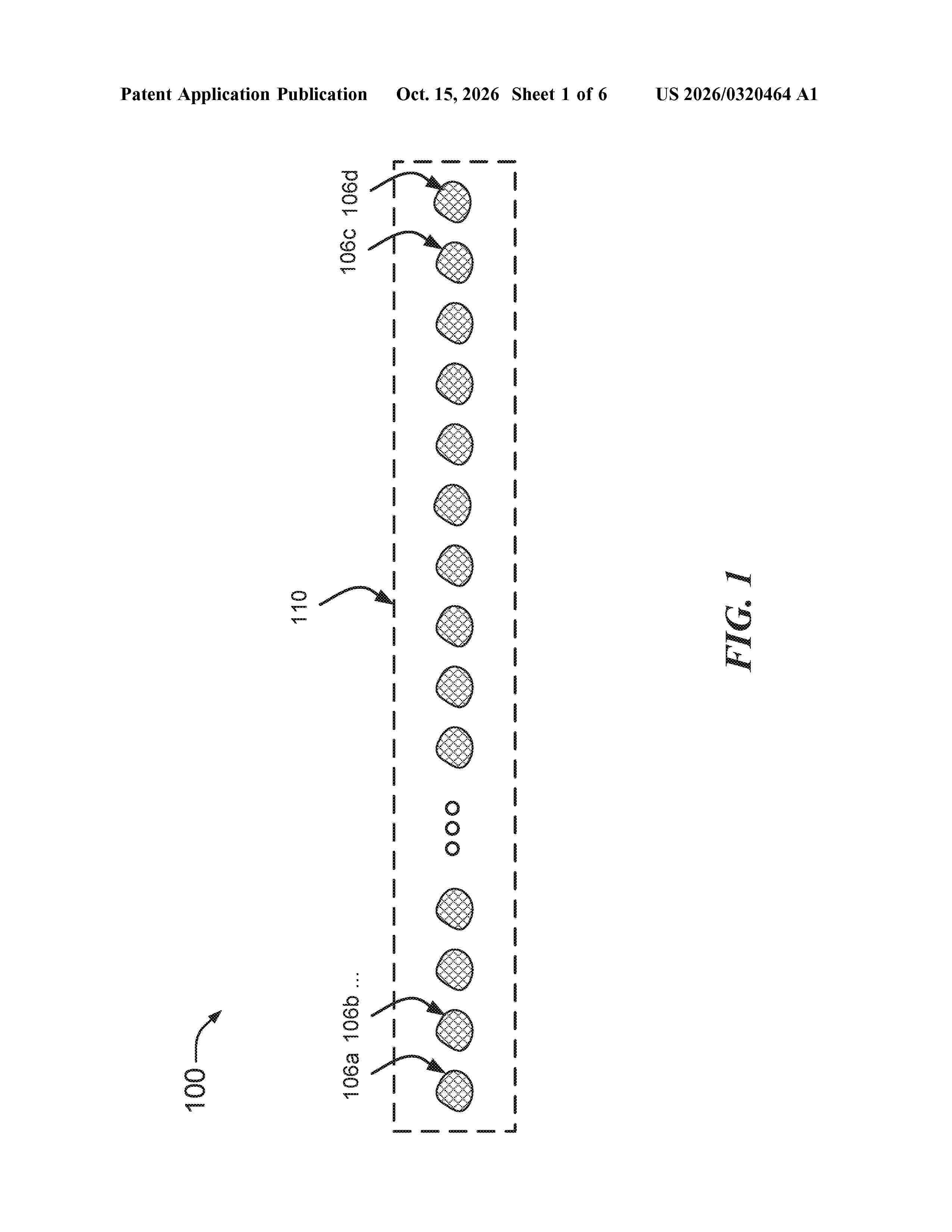
Resumen de: US20260320464A1
A system and method are provided for solving a mixed-integer optimization program having both binary and continuous variables in a power system. An exemplary method includes: obtaining a formulation of the mixed-integer program (MIP) comprising a set of binary decision variables representing on and off activation states for generation units, and a set of continuous decision variables representing operational levels associated with the generation units; determining a subset of candidate binary variable assignments by applying a quantum approach; for each candidate binary assignment, solving a continuous-variable subproblem on a classical processor to determine corresponding values for continuous decision variables that minimize an objective cost subject to one or more constraints using a classical optimization routine; evaluating a total cost for each combination of binary assignments and corresponding continuous-variable solution; and selecting a combination of binary and continuous decision variable values that yields a solution to the MIP.
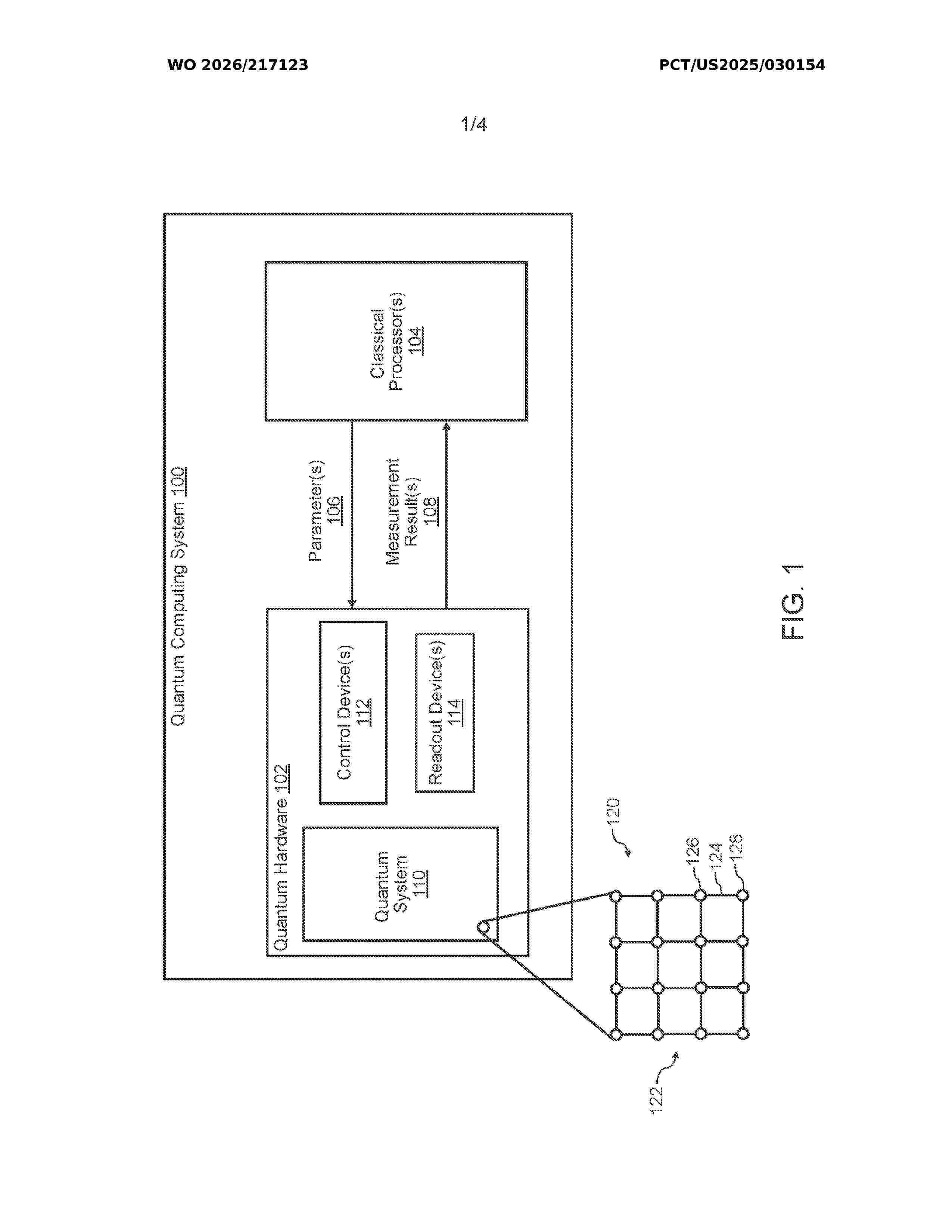
Resumen de: WO2026217123A2
One example aspect of the present disclosure is directed to a method for generative quantum learning. The method includes generating a set of classical-output objects based on a classical generative model and a set of classical-input objects. The classical generative model provides a first mapping that is from the set of classical-input objects to the set of classical-output objects. A set of quantum-input objects is generated based on an encoding schema and the set of classical-input objects. The encoding schema includes a classical-to-quantum encoding process. A set of quantum-output objects is generated based on the encoding schema and the set of classical-output objects. A unitary operator is generated based on a learning algorithm. The unitary operator at least partially provides a second mapping that is from the set of quantum-input objects to the set of quantum-output objects.
Resumen de: WO2026216997A1
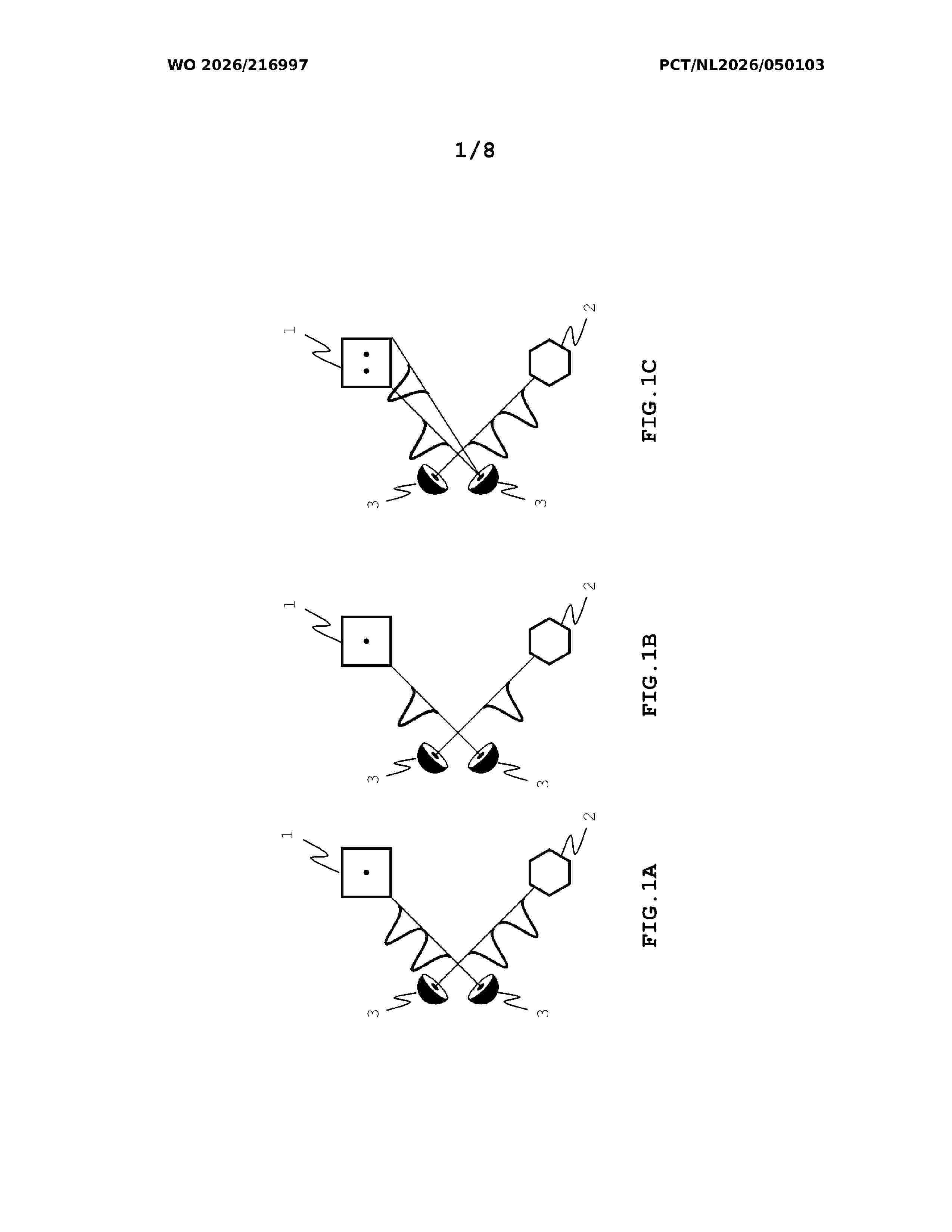
The present disclosure presents a double-single-click protocol for use in a quantum network, nodes of such quantum network, and related methods. The quantum network includes client nodes, server nodes, and measurement nodes, wherein at least one client node is operatively coupled via a first quantum communication link with at least one measurement node, and wherein the at least one server node is operatively coupled via a second quantum communication link with at least one measurement node, wherein the at least one server node and the at least one client node are configured to transmit quantum states toward the measurement node, and wherein the at least one server node and the at least one client node are configured to receive heralding signals from the measurement node, wherein the measurement node is configured to transmit the heralding signals upon using a double-single-click protocol.
Resumen de: WO2026217078A1
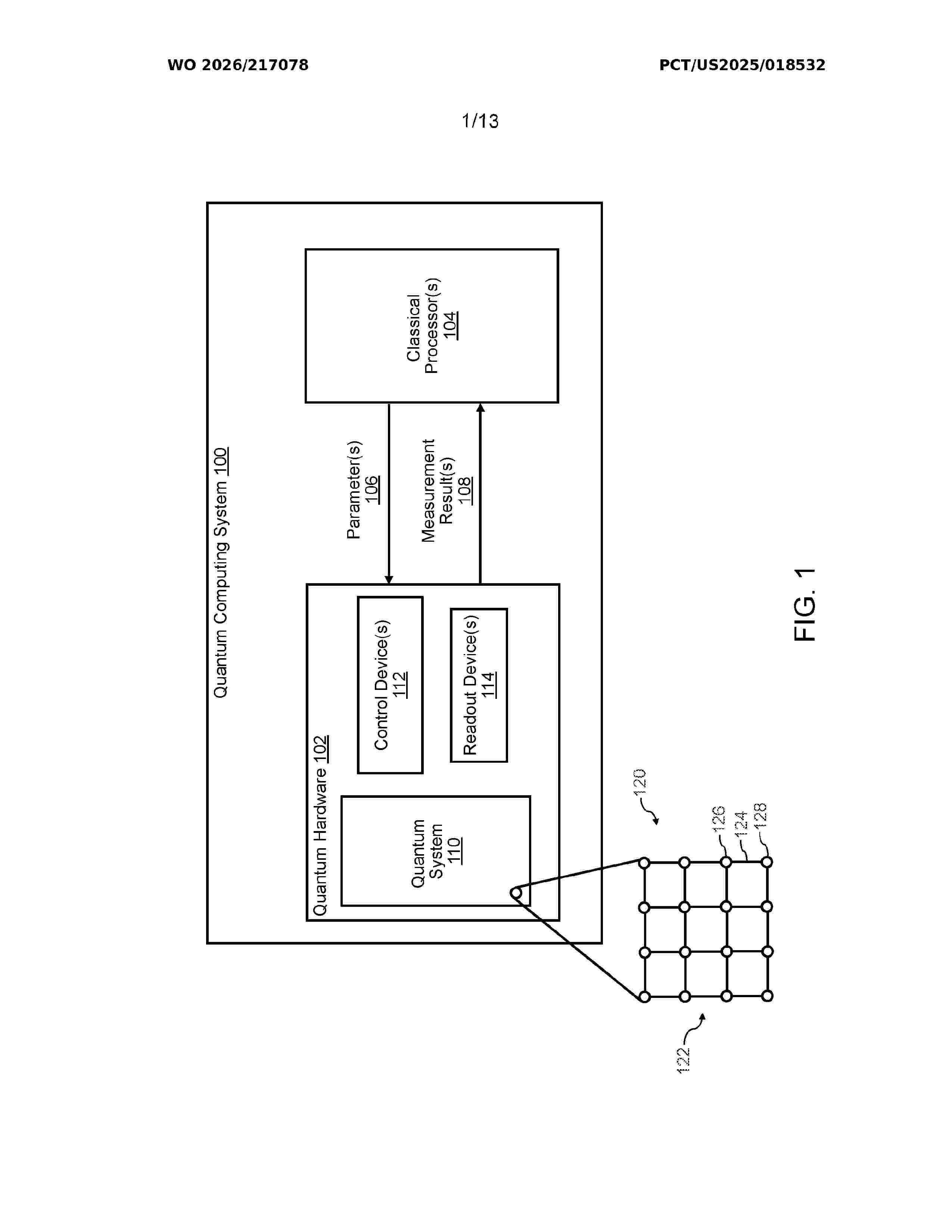
One example aspect of the present disclosure is directed to a method for operating a quantum computing system (QCS). The method includes accessing a set of physical error rates. Each physical error rate of the set of physical error rates corresponds to a physical error rate of a qubit of the set of qubits. The set of physical error rates is non-uniform. A predicted logical error rate for a quantum error correction (QEC) code is determined. The QEC code corresponds to the set of qubits. Determining the predicted logical error rate is based on the set of physical error rates and a logical error rate model for the QEC code. The QCS is operated in accordance with the predicted logical error rate for the QEC code.
Resumen de: WO2026216996A1
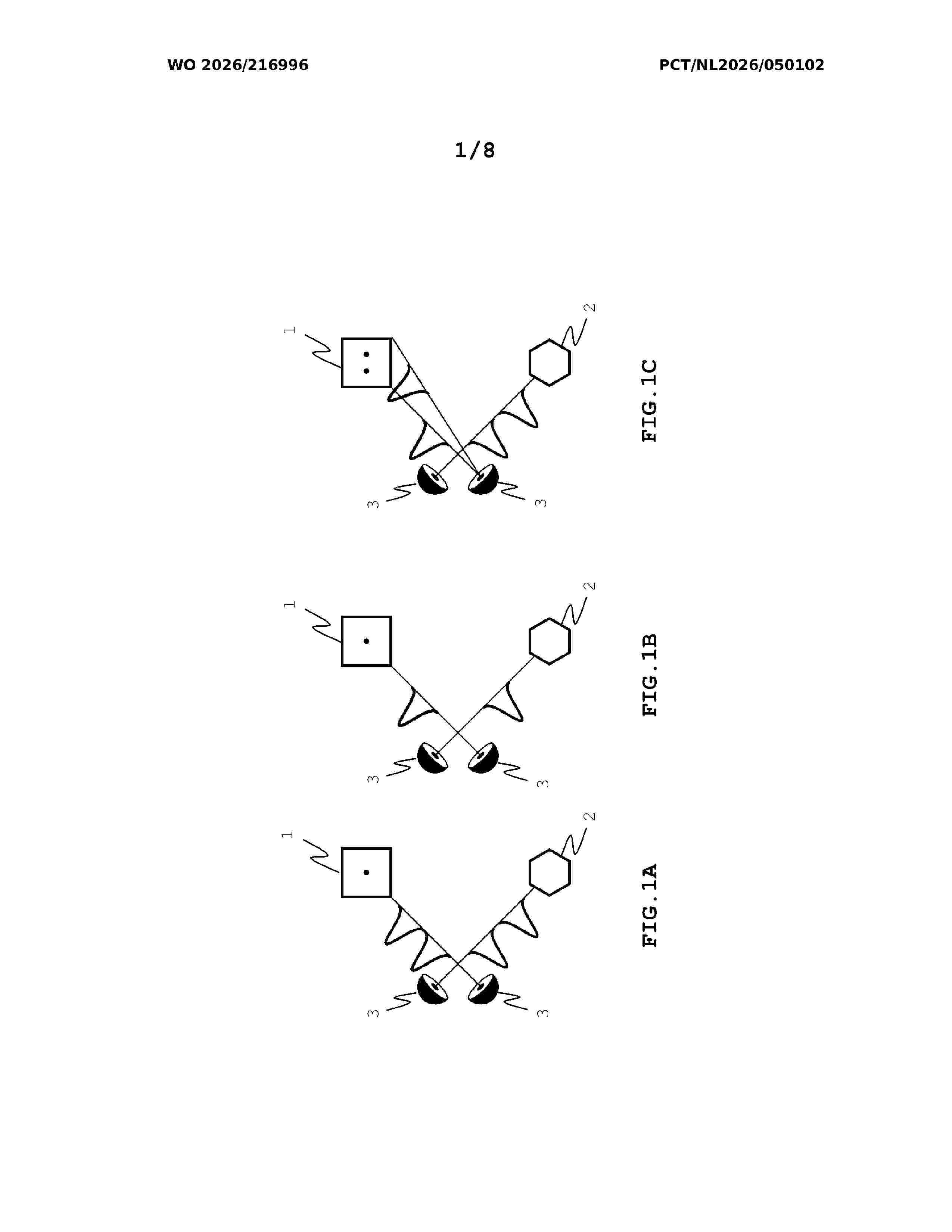
The present disclosure presents a single-click protocol for use in a quantum network, nodes of such quantum network, and related methods. The quantum network includes client nodes, server nodes, and measurement nodes, wherein at least one client node is operatively coupled via a first quantum communication link with at least one measurement node, and wherein at least one server node is operatively coupled via a second quantum communication link with the at least one measurement node, wherein the at least one server node and the at least one client node are configured to transmit quantum states toward the measurement node for remote state preparation, and wherein the server node and the client node are configured to receive heralding signals from the measurement node, wherein the measurement node is configured to transmit the heralding signals upon using a single-click protocol.
Resumen de: WO2026214675A1
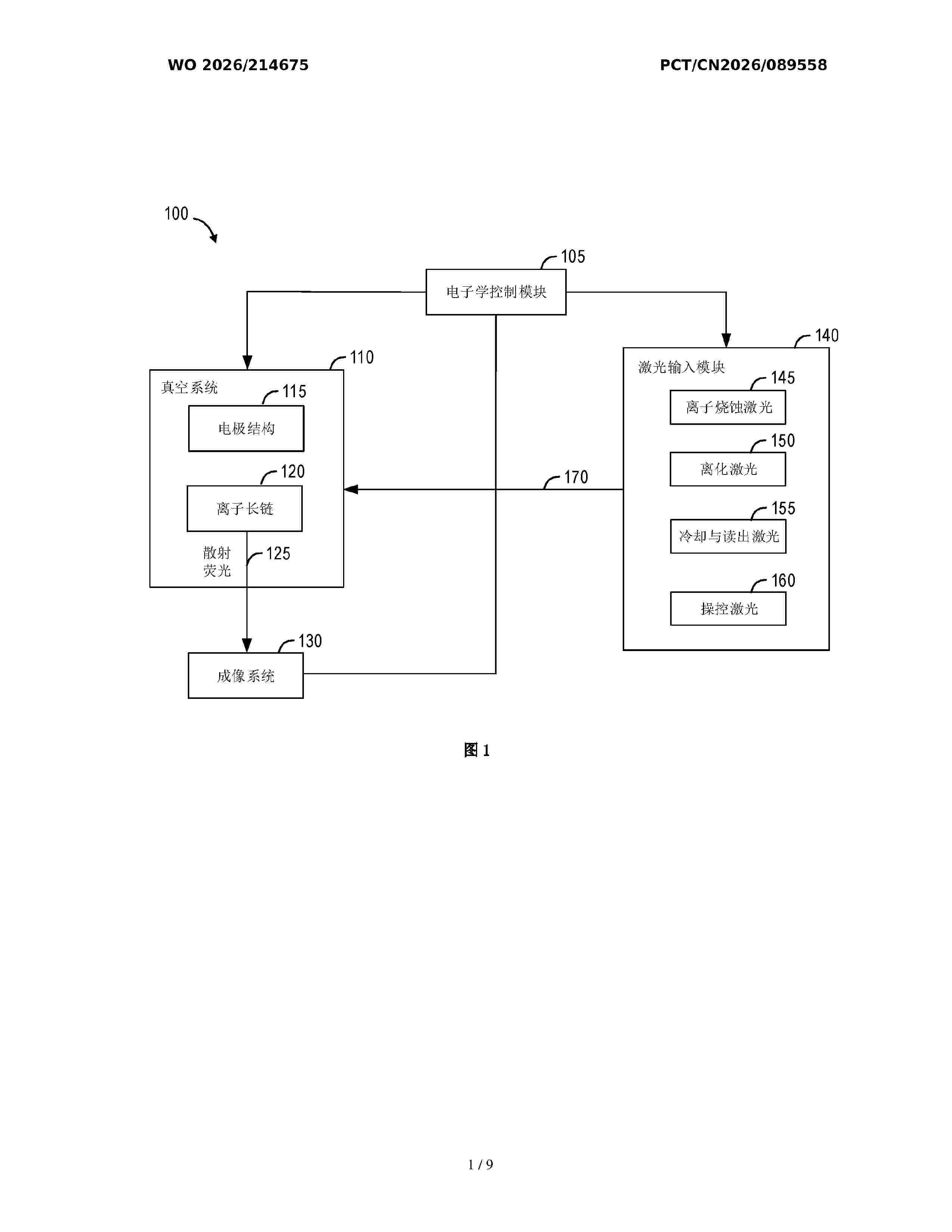
Provided in the embodiments of the present application are a quantum computer and method for quantum computing. The quantum computer comprises: a control module, an acousto-optic deflector (AOD) and an ion trap or a neutral atom array. The method comprises: the control module determining, for the ion trap or the neutral atom array using the AOD, the interference of an addressing laser on neighboring qubits of an addressed qubit; moreover, on the basis of the interference, the control module determining a target electrical signal for target interference cancellation laser for canceling the interference on the neighboring qubits; and the AOD acquiring the target interference cancellation laser on the basis of the target electrical signal, wherein the target interference cancellation laser covers the neighboring qubits. In this way, the optical intensity crosstalk of addressing light on the neighboring qubits can be effectively canceled, thereby reducing crosstalk errors in laser addressing.
Resumen de: US20250086490A1
0000 A controller of a quantum system causes a dressing field circuit to generate a dressing field at a target location where one or more target qubits are located. The dressing field modifies a set of initial states into a set of superposition states. A first (second) dressed state of the set of superposition states includes a non-zero contribution from a first (second) qubit state of the set of initial states. A dressed frequency difference between the first and second dressed states and a qubit frequency difference between the first and second qubit states are different. The dressing field is configured to generate first and second dressed states having a desired level of sensitivity (e.g., energy/frequency dependence) on the component of the external magnetic field that is in the quantization direction of the quantum system.
Resumen de: GB2705434A
A cryptography system comprising a first quantum computer 2 wherein a first array of atoms comprises a first and second quantum states, the first array of atoms 6 having an initial configuration, a first quantum control module that generates predetermined output parameters to apply a quantum operation on the first array of atoms, converting the first array of atoms to a second configuration; and a first measurement module that determines the second configuration of the first array of atoms; and an encryption module 3 configured to generate an encryption key 5 based on the second configuration of the first array of atoms and to encrypt a data set using the encryption key. The cryptography system may optionally comprise a communication channel configured to transmit a public key and may be configured to transmit the public key from the first quantum computer to a second quantum computer or transmit the public key from a first party operating the first quantum computer to a second party operating the second quantum computer. The public key may comprise the initial configuration of the first array of atoms. The disclosure is also a cryptography method as such. Figure 1
Resumen de: CN118606291A
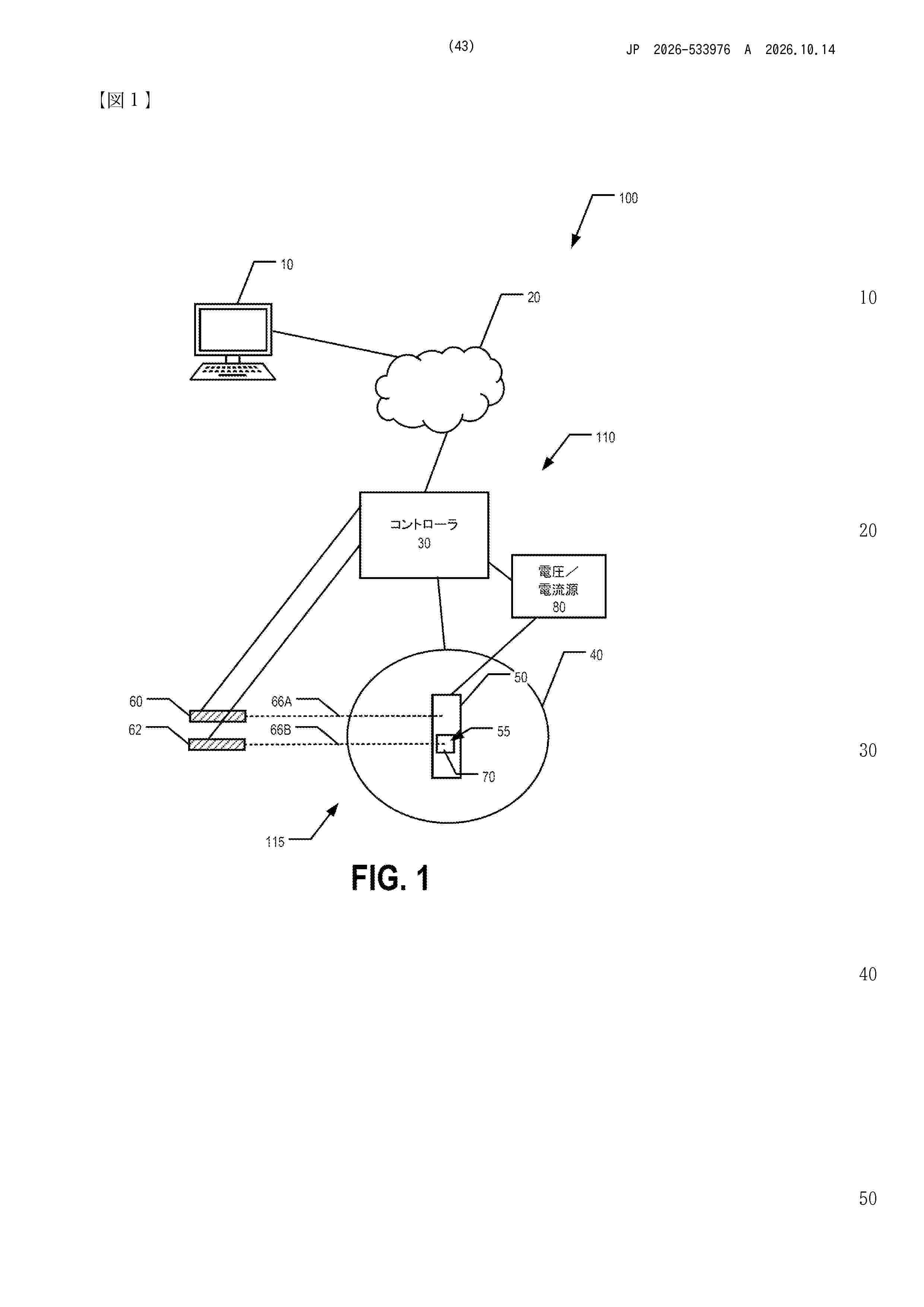
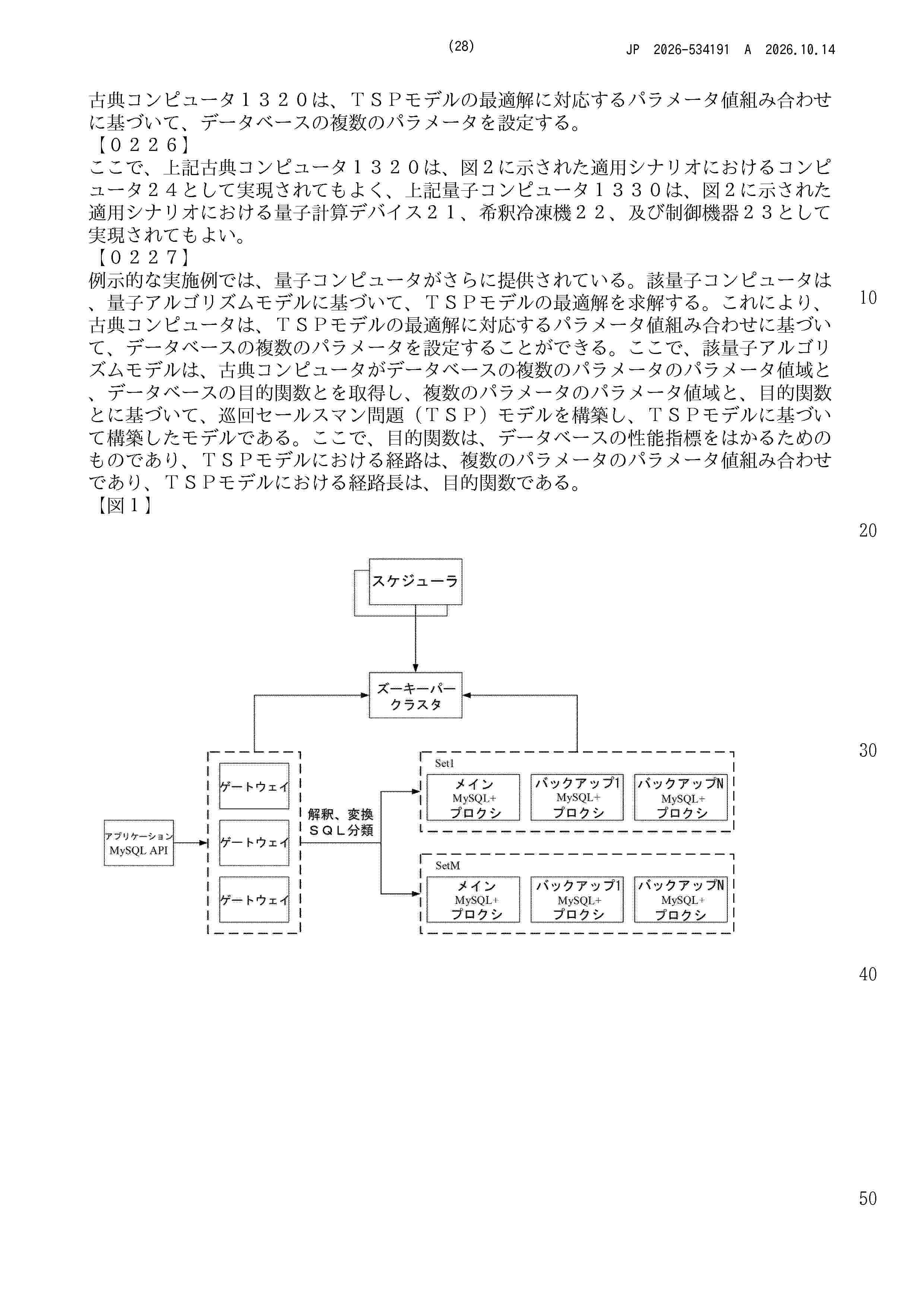
The invention relates to a parameter setting method, system and device, equipment, a storage medium and a program product, and relates to the technical field of database systems. The method comprises the steps of obtaining parameter value domains of various parameters of a database and a target function of the database; the objective function is used for measuring performance indexes of the database; constructing a traveling salesman problem TSP model based on the parameter value domains of the various parameters and the target function, wherein a path in the TSP model is a parameter value combination of the various parameters; the path length in the TSP model is a target function; constructing a quantum algorithm model based on a TSP model; based on the quantum algorithm model, solving an optimal solution of the TSP model; and setting various parameters of the database based on a parameter value combination corresponding to the optimal solution of the TSP model.
Resumen de: WO2025188360A2
One embodiment includes a method comprising receiving a first input at a distributed quantum computing system (DQCS) having a plurality of quantum nodes and a quantum communication network. A first quantum computation is performed at a first quantum node of the plurality of nodes based on the first input and a model. An output of the first quantum computation is communicated to a second quantum node of the plurality of quantum nodes over the quantum communication network. A result of a distributed computation based on the output of the first quantum computation and a quantum tomography algorithm implemented at the second quantum node.
Resumen de: WO2025183736A2
A method for optimizing a system that includes a set of degrees of freedom (DOF) and a set of constraints on the set of DOF is disclosed. Each constraint is associated with a subset of the set of DOF. The method includes determining a first polynomial function. A set of qubits of a quantum computing system (QCS) is prepared in a first quantum state Subsequent to preparing the set of qubits in the first quantum state, the QCS performs a set of unitary operations on the set of qubits. Subsequent to performing the set of unitary operations on the set of qubits, the QCS generates a first set of observables by performing a first measurement operation on each qubit of the set of qubits. A set of values is determined based on the first set of observables.
Resumen de: EP4822613A2
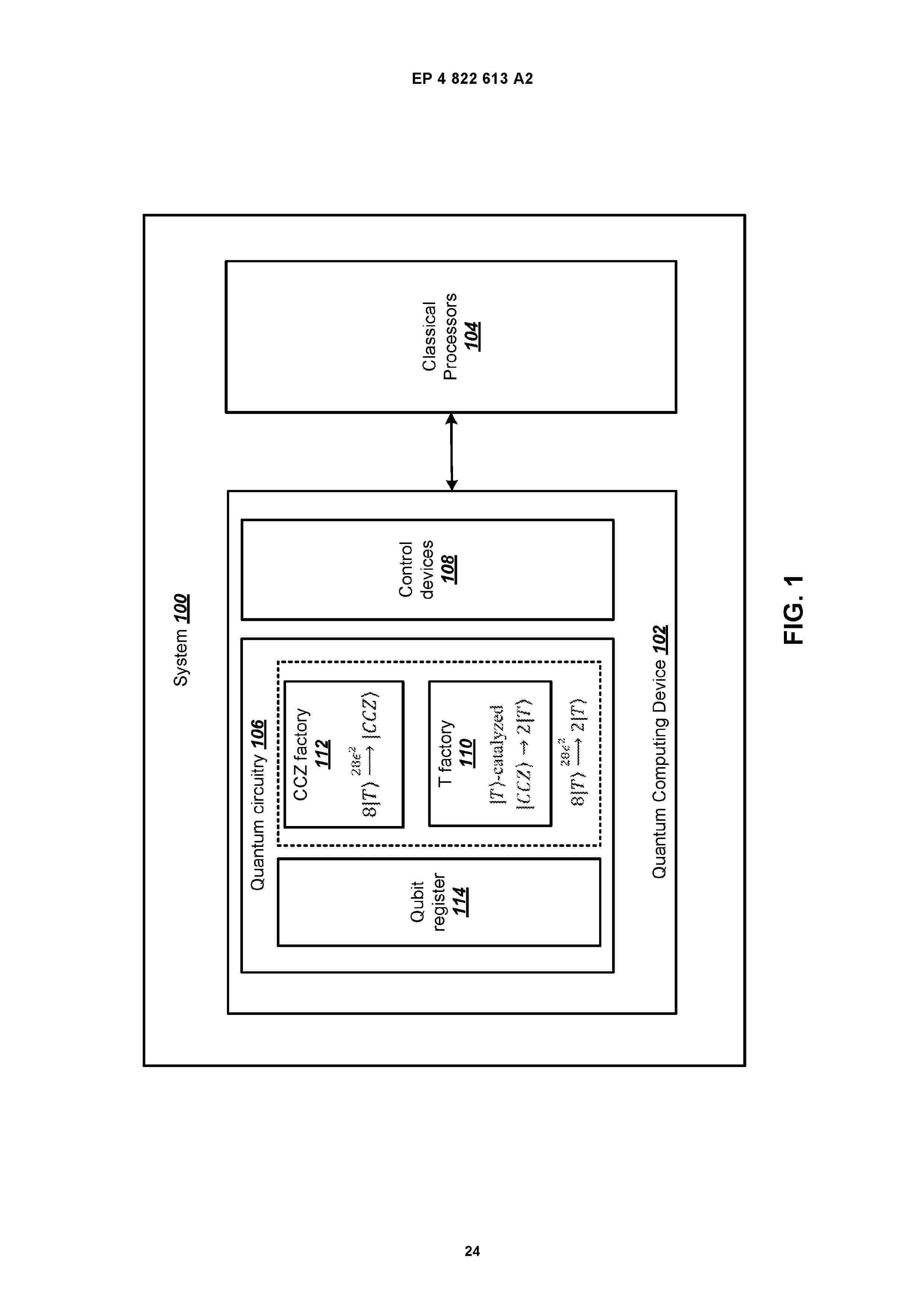
0001 Methods, systems, and apparatus for producing CCZ states and T states. In one aspect, a method for distilling a CCZ state includes preparing multiple target qubits, ancilla qubits and stabilizer qubits in a zero state, performing an X gate for each stabilizer qubit on multiple ancilla qubits or multiple ancilla qubits and one of the target qubits using the stabilizer qubit as a control, measuring the stabilizer qubits, performing, on each of the ancilla qubits, a Z1/4 gate and a Hadamard gate, measuring each of the ancilla qubits, performing, conditioned on each measured ancilla qubit state, a NOT operation on a selected stabilizer qubit, or a NOT operation on the selected stabilizer qubit and a Z gate on one or more respective target qubits, performing, on each target qubit and conditioned on a measured state of a respective stabilizer qubit, a Z gate on the target qubit, and performing an X gate on each of the target qubits.
Resumen de: US20250190840A1
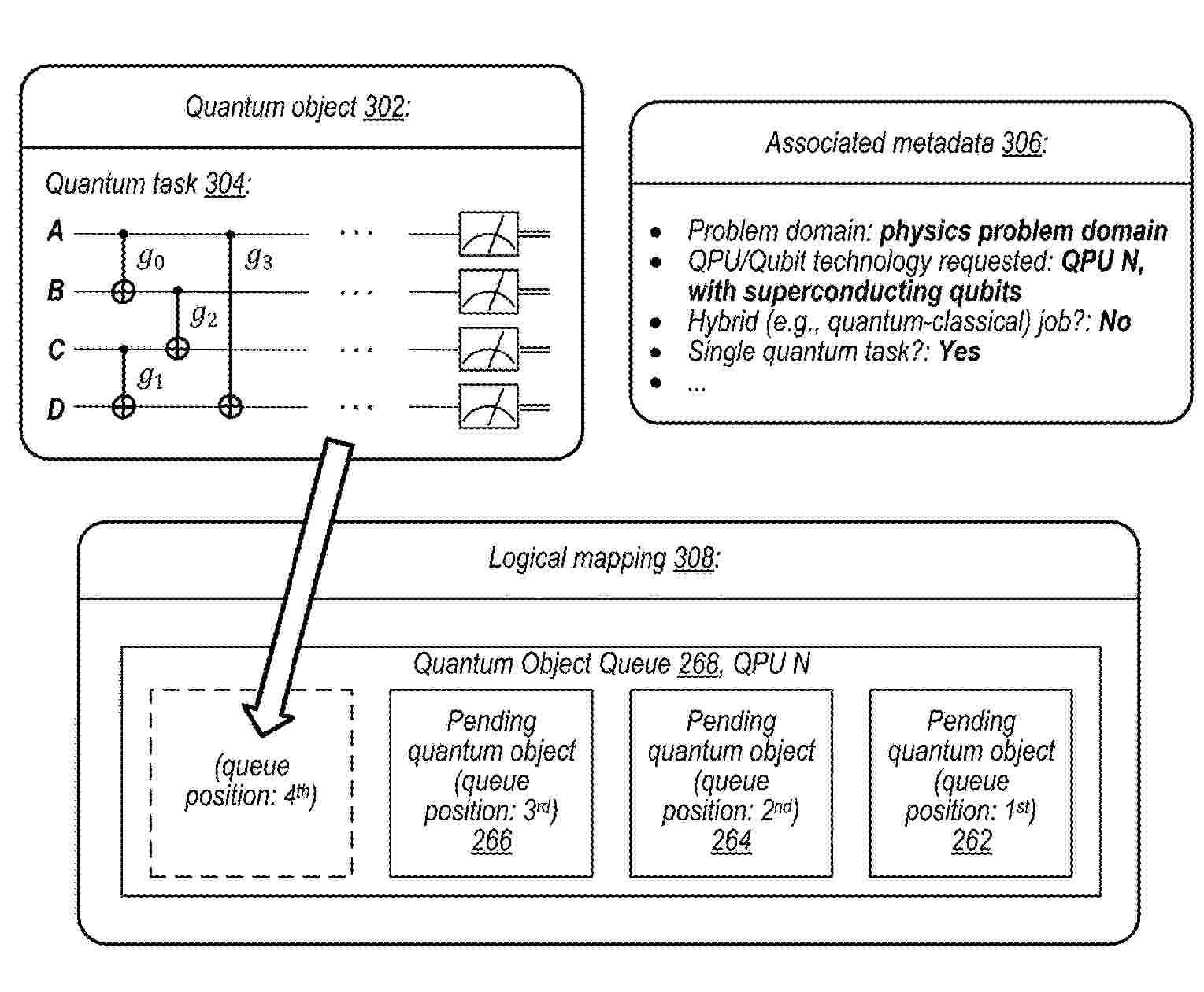
Techniques for tracking and maintaining queues used for executing pending quantum objects using respective quantum processing units (QPUs) are disclosed. An amount of time to execute a given quantum object depends on many factors, and a non-deterministic nature of quantum computing resources is such that, while knowing an expected wait time in a queue for access to a given QPU is useful, it is difficult to reliably determine. A quantum computing service that manages submission and execution of quantum objects to respective QPUs may apply QPU-specific machine learning models in order to predict expected wait times and provide that information to customers. By generating labeled datasets using ground truth wait times pertaining to already-executed quantum objects, respective machine learning models may be trained using a supervised learning technique, which may be a self-contained and re-occurring process.
Resumen de: WO2025122465A2
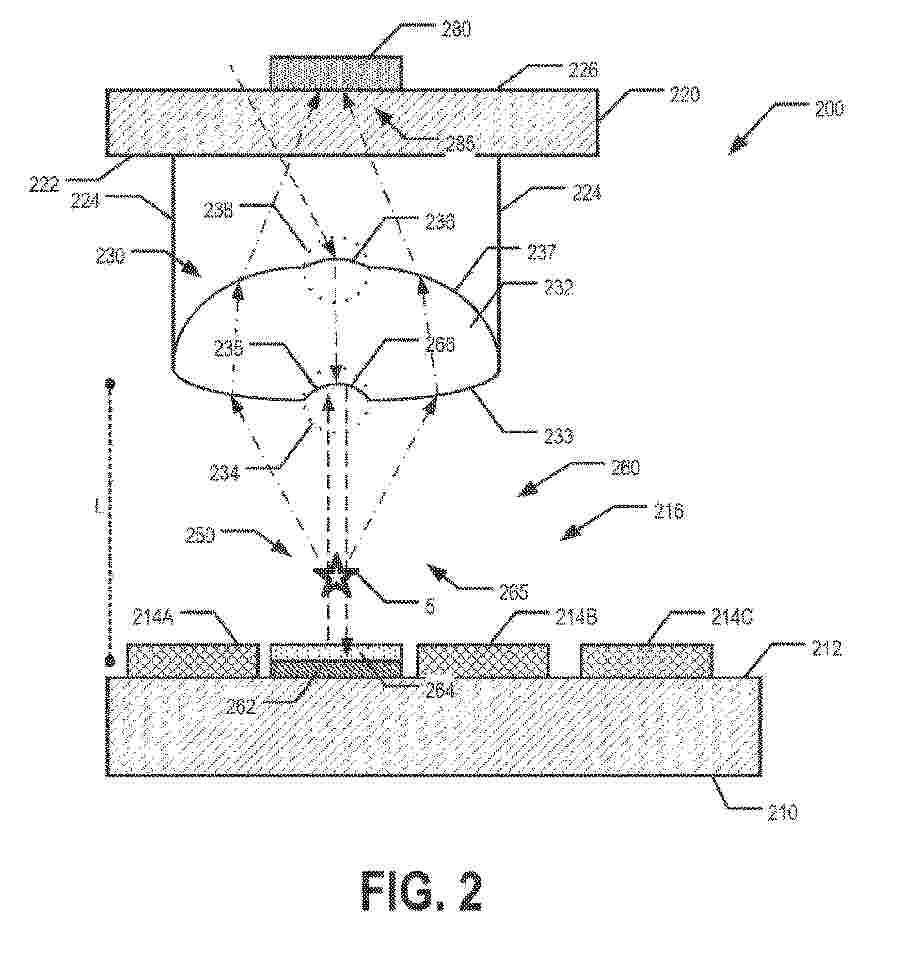
A confinement assembly includes a first substrate having a plurality of electrodes disposed on an electrode-housing surface thereof and a second substrate mounted with respect to the first substrate such that an object-facing surface of the second substrate faces the electrode- housing surface of the first substrate. The electrodes at least partially define a confinement apparatus configured to confine a plurality of quantum objects. A first mirror and gain material are disposed on the first substrate and a composite optic is coupled to the second substrate. The composite optic includes a second mirror. The first mirror and gain material and the second mirror define a vertical external cavity surface emitting laser (VECSEL) having a cavity defined between the first mirror and the second mirror. The composite optic also includes a fluorescence collection lens configured to direct light fluoresced by a quantum object confined within the cavity to a collection location.
Resumen de: WO2025120102A1
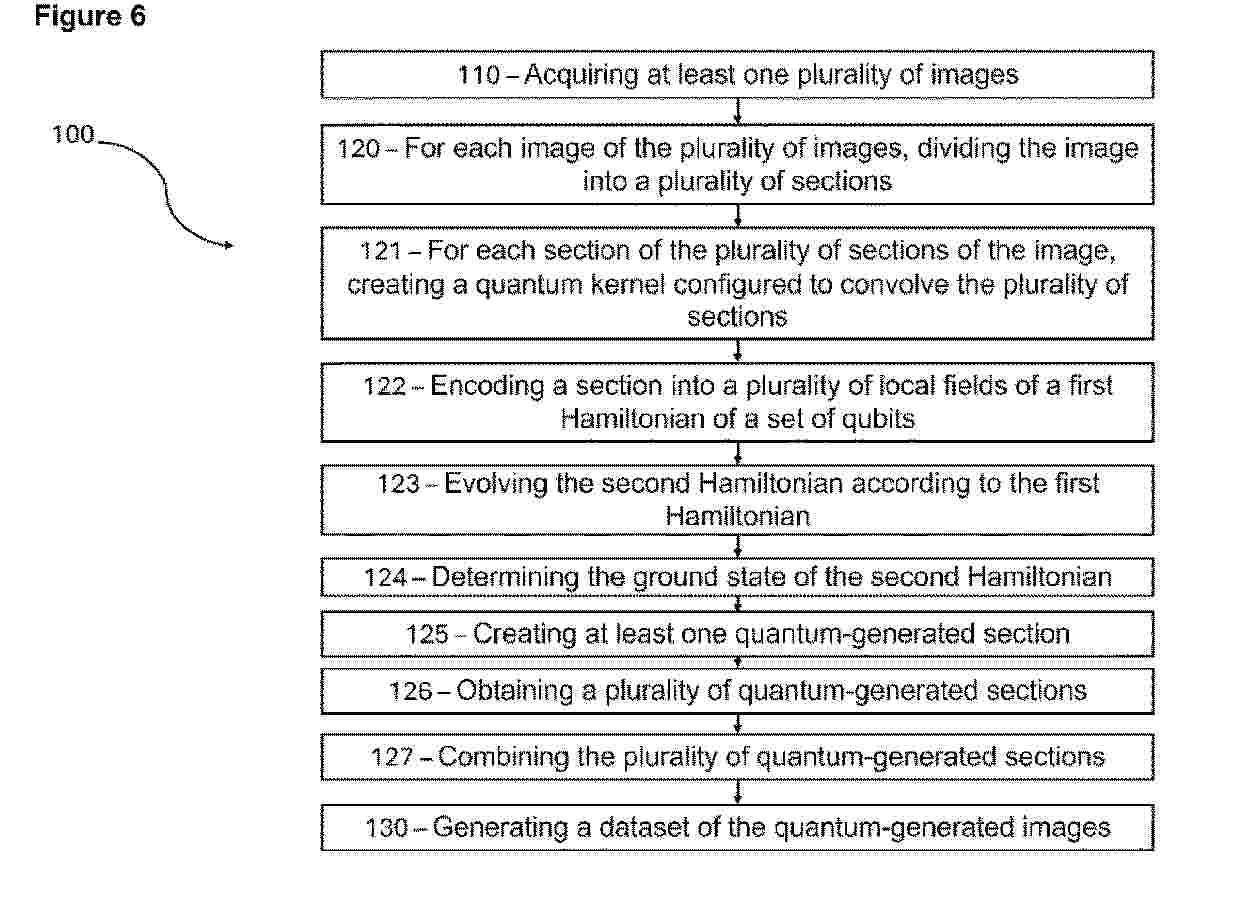
The invention pertains to a computer-implemented method for generating a dataset of quantum-generated images configured to be used to train a Convolutional Neural Network for image classification.
Resumen de: EP4822609A1
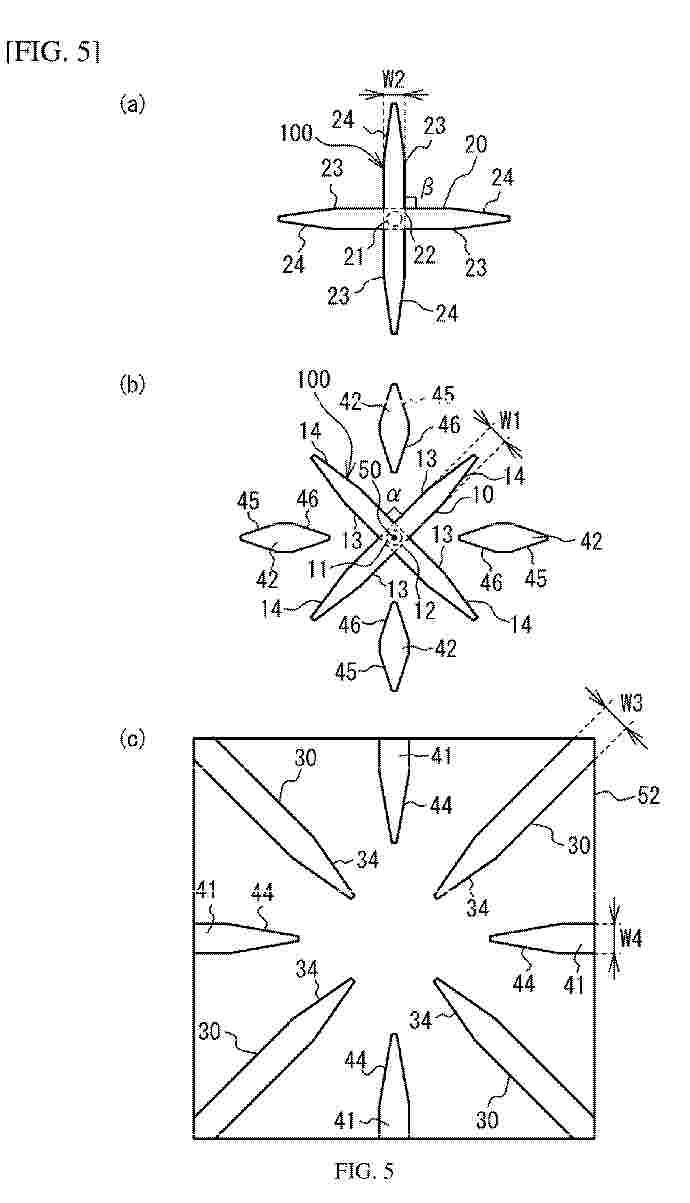
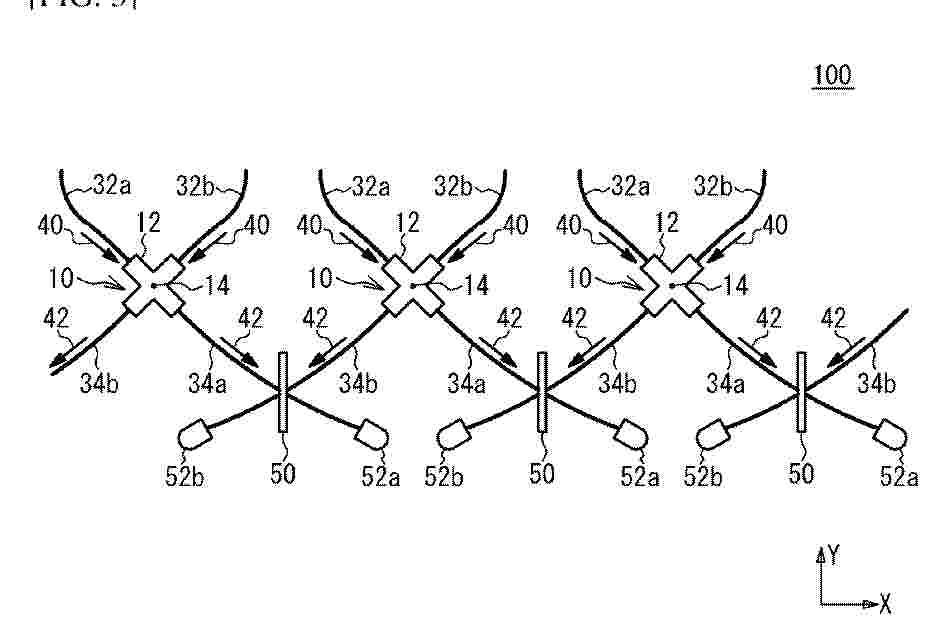
0001 A quantum device includes a quantum bit element that includes a first diamond crystal layer having a first center point and having a shape extending in four directions from the first center point so as to be orthogonal to each other, a second diamond crystal layer having a second center point and having a shape extending in four directions from the second center point so as to be orthogonal to each other, and a color center present in one of the first diamond crystal layer and the second diamond crystal layer, the first diamond crystal layer and the second diamond crystal layer being stacked so that at least parts of the first center point and the second center point overlap each other, a first optical waveguide connected to each of four first ends of the first diamond crystal layer, and a second optical waveguide connected to each of four second ends of the second diamond crystal layer.
Resumen de: EP4822608A1
A quantum device includes a plurality of quantum bit elements each including a diamond crystal layer and a color center, the diamond crystal layer having a central portion and extending portions connected to the central portion and extending in 2n directions (n is an integer of 2 or more) from the central portion, the color center being formed in the central portion, an input optical waveguide connected to each of n ends of the extending portions and configured to transmit light introduced into the color center, an output optical waveguide connected to each of n ends of the extending portions and configured to transmit a photon emitted from the color center, and a branching element connected to the output optical waveguide of a first quantum bit element of the plurality of quantum bit elements and the output optical waveguide of a second quantum bit element of the plurality of quantum bit elements.
Resumen de: CN122374581A
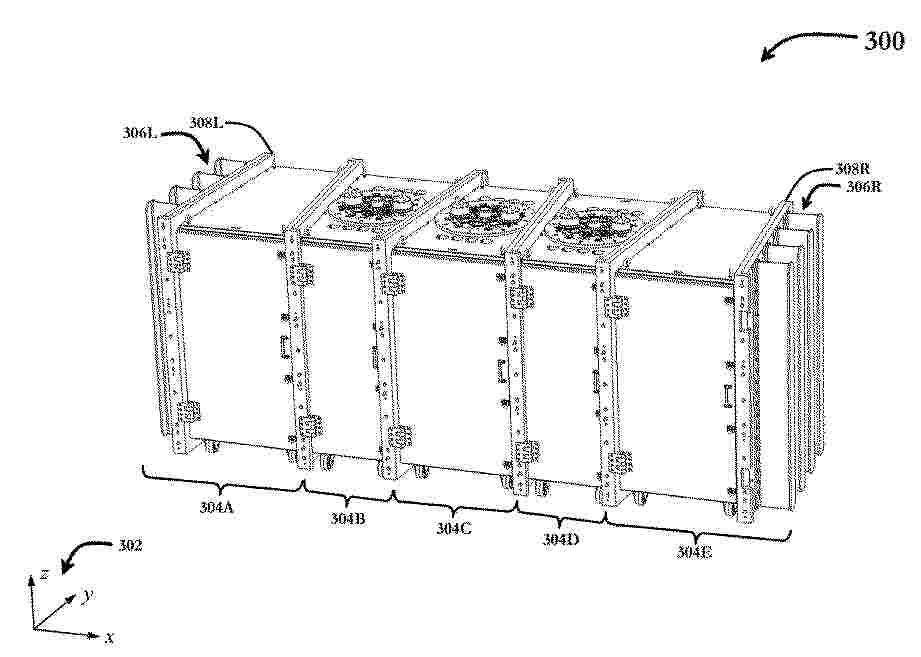
Systems and techniques are provided that facilitate scalable cryostats and cryogenic systems. In one embodiment, a cryogenic system (300) may include a plurality of unit cells (304) coupled together, where each unit cell includes: a trapezoidal frame (704) where frames from adjacent unit cells are connected in a vacuum-tight manner to form a continuous global vacuum enclosure, where each unit cell is connected to the trapezoidal frame; and wherein the unit cell can be horizontally removed from the plurality of coupled unit cells or inserted into the plurality of coupled unit cells. Further, each unit cell may include at least one temperature enclosure (508, 510, 512), where the temperature enclosures from adjacent unit cells are connected to form a continuous global temperature enclosure. Moreover, each unit cell may include at least one cryogenic payload (514) located within at least one temperature housing that is cooled by at least one retrofit version of the standard dilution refrigerator.
Nº publicación: EP4820919A1 14/10/2026
Solicitante:
PASQAL [FR]
Pasqal
Resumen de: EP4567686A1
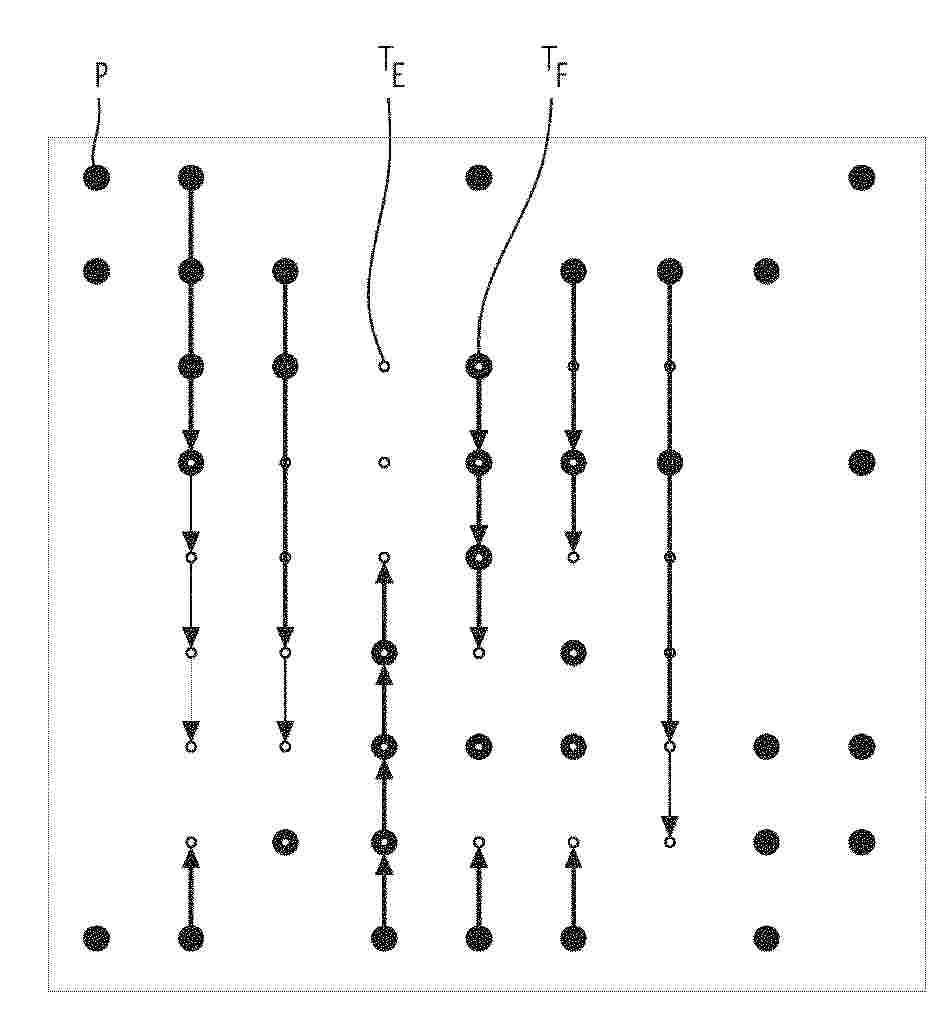
The present invention relates to a method for determining sets of moves for rearranging particles (P) of an initial array of qubits according to a target array of qubits, the method comprising:- determining a first set of compression moves for some particles (P) of the initial array of qubits as a function of initial data relative to the initial array of qubits and of target data relative to the target array of qubits so as to obtain an intermediate array of qubits, and- determining a second set of moves for some particles (P) of the intermediate array of qubits as a function of trapping sites data relative to the positions of trapping sites, of the target data and of the intermediate array of qubits.
 BOPI
BOPI
 Sede Electrónica