Si deseas distinguir tus productos, servicios o ambos de los de otra empresa, es posible que necesites una marca o nombre comercial. Descubre qué son, en qué consiste su procedimiento de registro y qué implica.

Información sobre los plazos de presentación de solicitudes de transformación de marcas de la Unión Europea en marca nacional española. Más información


Si tienes un nuevo dispositivo, producto o procedimiento que resuelva un problema técnico o tenga una ventaja práctica, existen distintas formas de protegerlo en España y en otros países. Descubre cómo hacerlo.

¿Tu innovación reside en la estética, la ornamentación o la apariencia de tu producto? Protégela mediante un diseño industrial. Descubre qué derechos confiere el registro y cómo realizar la tramitación.

Las indicaciones geográficas protegen el nombre de un producto originario de una zona geográfica, a la cual le debe una determinada calidad, reputación u otra característica. Descubre qué son, en qué consiste su procedimiento de registro y qué beneficios conceden.

Las patentes publicadas en todo el mundo son una valiosa fuente de información científica, técnica y comercial.

Si eres emprendedor/a o una empresa y quieres potenciar y mejorar la rentabilidad de tu negocio protegiendo de forma adecuada los activos intangibles de tu organización, en este espacio encontrarás lo necesario.


 499
resultados
499
resultados
 Última actualización
24/10/2026 [06:54:00]
Última actualización
24/10/2026 [06:54:00]


 Resultados 100 a 125 de 499

Resumen de: CN122950510A
本发明属于燃料电池技术领域,公开了一种具有抗盐雾功能的燃料电池气体扩散层及其制备方法。本发明的气体扩散层从双极板流道侧到催化层侧,依次包括外层、中间层和内层,其中:外层为基底层采用疏水多孔碳基材料制备,且平均孔径大,可保证气体的传输和低流阻;中间层采用双层复合单元,通过设计逆向毛细梯度,使其成为盐水的回流通道,盐水被定向排回外层而非催化层,从源头上减少了膜和催化剂接触盐分的概率;内层采用高性能微孔设计,以保证界面和导水性能。同时,本发明在中间层引入逆向梯度作为抗盐设计,且逆向排盐完全依靠多孔介质固有毛细力驱动,无需外部能量输入,也无需传感器监控或周期性冲洗,适用于海上运行的船舶等动力设备。

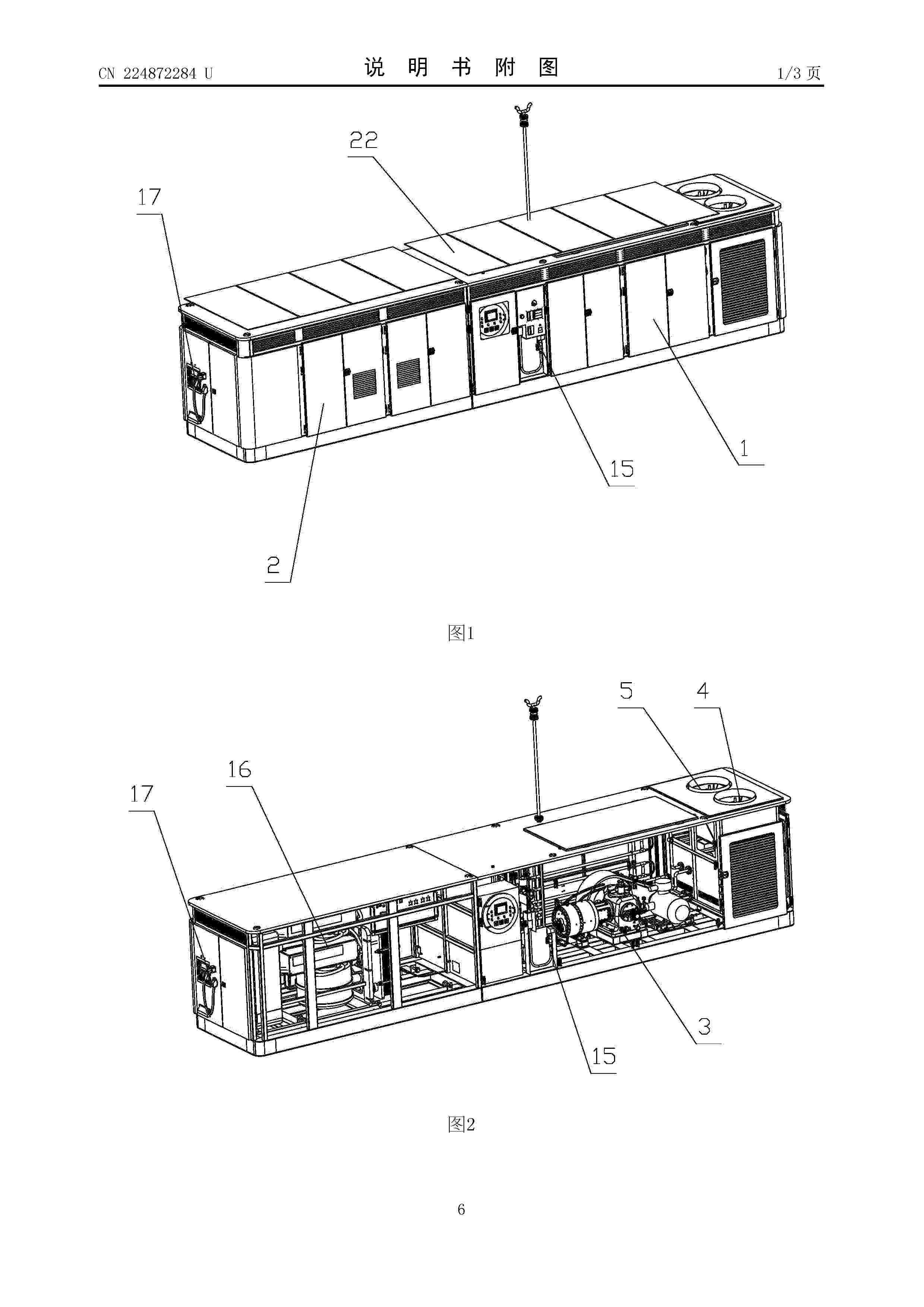
Resumen de: CN224872284U
本实用新型涉及气氢加氢技术领域,尤其涉及一种气氢加氢充电设备。包括加氢箱体和充电箱体,加氢箱体的底部安装压缩机,加氢箱体的一侧设有第一冷水机组和第二冷水机组,第一冷水机组连接有第一循环水管路,第二冷水机组连接有位于第一循环水管路上方的第二循环水管路,高压储氢瓶组通过管路与加氢枪相连接;充电箱体内设有氢燃料电池和充电桩,氢燃料电池通过管路与长罐拖车的出气口相连接,高压储氢瓶组通过管路与氢燃料电池相连接。实现了加氢撬装站中压缩机进排气温度的合理控制,实现对电车的充电功能,整体设计合理,结构紧凑,将加氢和充电集成于一体,充分利用加氢撬装站的能源及空间优势,对充电设施起到很好的补充作用。
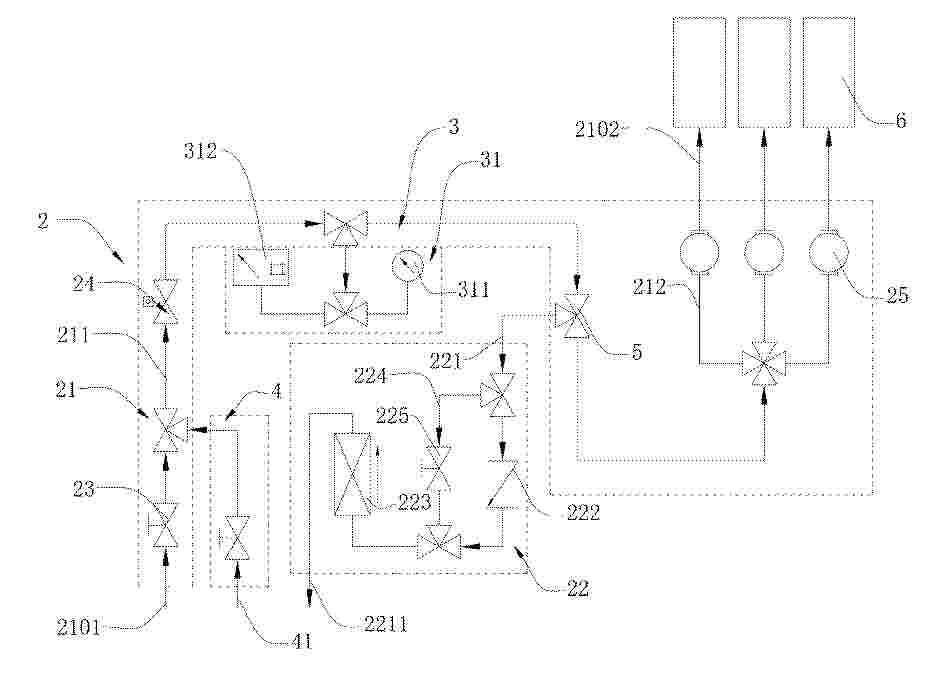
Resumen de: CN122950514A
本申请涉及一种供氢装置。供氢装置包括柜体、供氢管路、阀体组件和检测单元,所述柜体内部设有安装腔;所述供氢管路包括连通的第一管路和泄压管路,所述第一管路具有氢气进口和氢气出口,所述泄压管路具有放散口;所述阀体组件包括第一阀体、第二阀体和过滤器,所述过滤器设于所述第一管路靠近所述氢气出口的一端;所述检测单元包括压力检测模块和氢气浓度检测模块,所述压力检测模块与所述第一管路连接,所述氢气浓度检测模块安装于所述安装腔;所述压力检测模块、所述氢气浓度检测模块、所述第二阀体用于所述燃料电池发电系统的控制模块电连接。本申请的供氢装置,降低管路泄漏风险,易于维护和控制,提升燃料电池发电系统工作的稳定性。
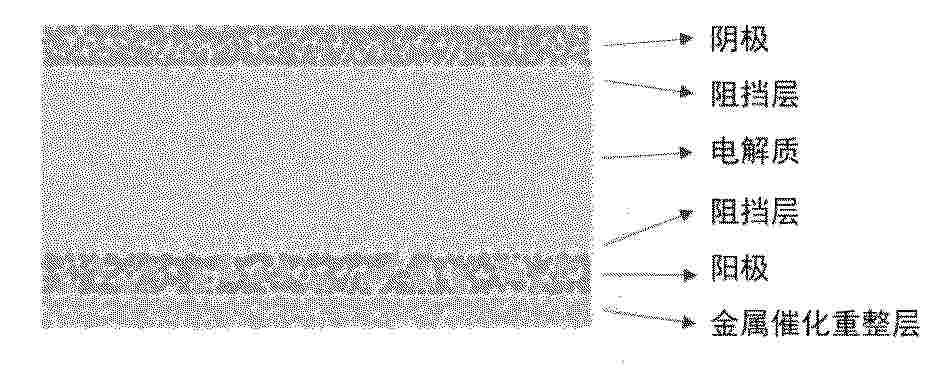
Resumen de: CN122950523A
本发明属于直接氨固体氧化物燃料电池技术领域,具体涉及一种高稳定性直接氨固体氧化物燃料电池阳极材料、结构及制备方法。本发明直接氨固体氧化物燃料电池采用以阳极为支撑体或电解质为支撑体的结构,其结构依次为阳极功能层、电解质层、阻挡层、阴极层,以及位于阳极功能层表面的催化重整层;所述阳极功能层通过Ni金属相、电解质相以及第三相氧化物相构成的三相结构从而维持阳极活性三相界面的长期稳定性。同时,催化重整层与阳极结合可有效提升氨分解效率与电池稳定性。本发明设计的直接氨固体氧化物燃料电池通过改善阳极稳定性和增设催化重整层,有效提高了直接氨固体氧化物燃料电池的使用寿命及氨分解能力。
Resumen de: CN122950519A
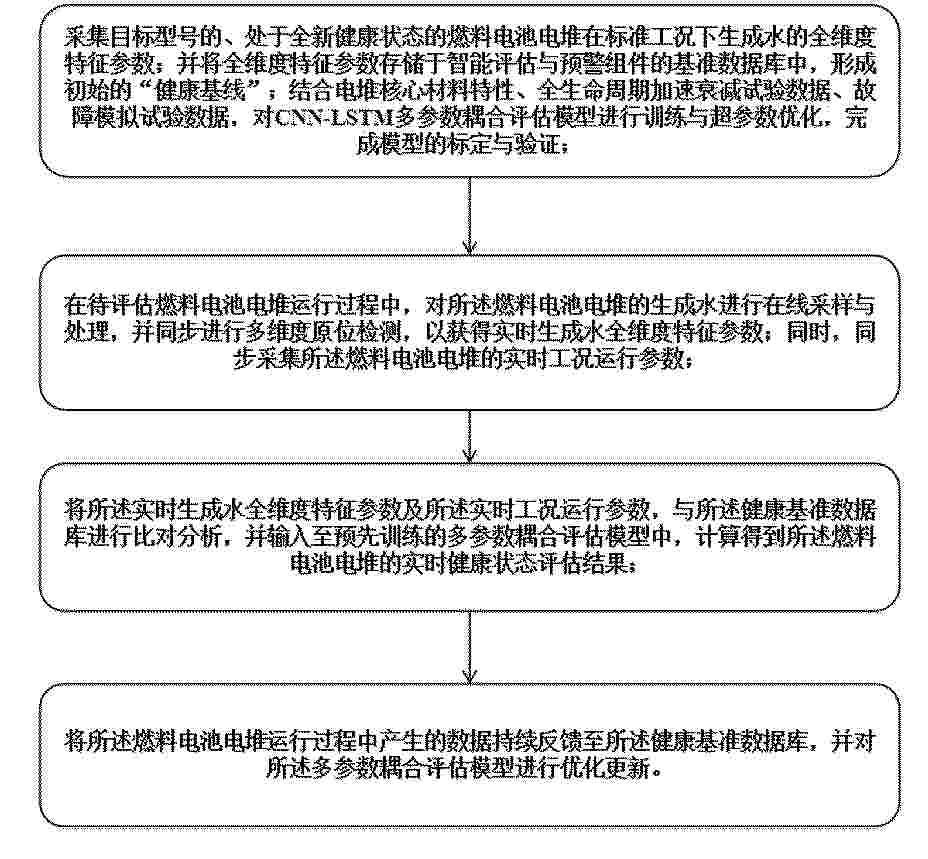
本发明公开了一种基于氢燃料电池生成水的燃料电池检测评估系统及方法,系统包括分级采样与自适应前处理组件,用于从燃料电池堆中采集生成水的代表性样品并进行预处理;多维度原位在线检测组件,用于对预处理后的样品进行实时、在线的全面检测,获取生成水全维度特征参数;工况同步数据采集组件,用于采集燃料电池运行时的全工况参数,并与多维度原位在线检测组件的检测数据实现同步;智能评估与预警组件,用于接收检测数据与工况数据,并执行智能评估,最终实现对燃料电池健康状态的全面评估、故障的精准定位与早期预警,形成从数据采集到智能决策的完整闭环;能够满足氢燃料电池原位、实时、多维度、单电池定位、全生命周期连续评估的需求。
Resumen de: CN122939763A
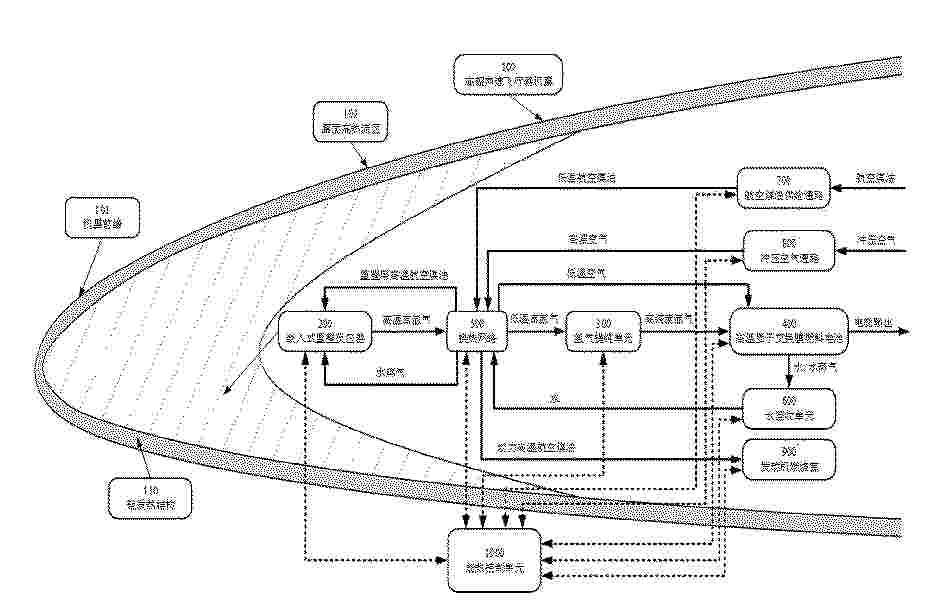
本发明公开了一种高超声速机翼热结构‑重整制氢‑发电一体化系统,包括轻质热结构和嵌入式重整反应器,轻质热结构设于高超声速飞行器机翼的高热流区域,承受并传导飞行过程中产生的气动热;嵌入式重整反应器与轻质热结构热耦合连接,利用所述气动热驱动航空煤油与水蒸气发生吸热重整反应,生成富氢气供给高温质子交换膜燃料电池进行电化学发电,同时燃料电池产生的水经回收后返回重整反应过程;通过换热网络实现重整产物余热、冲压空气热量及动力航空煤油之间的梯级换热,并利用能热控制单元对航空煤油流量、水供给量、空气流量及功率输出进行协同调节。本发明提高机载能源利用效率,并满足高超声速飞行器对高效热管理和持续电能供给的需求。
Resumen de: CN122950518A
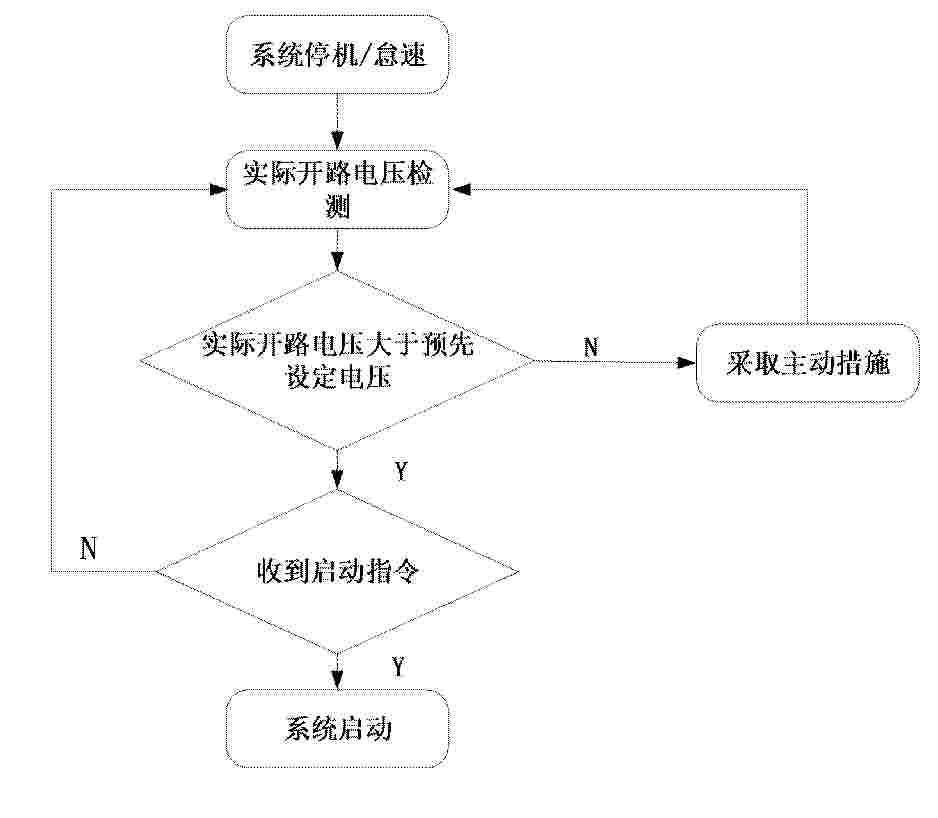
本发明公开一种动力型高温燃料电池系统不间断运行控制方法及系统,涉及燃料电池技术领域,包括:在高温燃料电池待机或怠速状态下,检测燃料电池堆的开路电压,并比较开路电压与设定的电压阈值;其中,电压阈值处于燃料电池堆正常工作开路电压和临界开路电压之间;若开路电压不大于设定的电压阈值,则采取设定的泄漏氧消耗措施,以控制氢电极侧的氧分压,使高温燃料电池保持在待机或怠速状态。使燃料电池堆可保持在高温待机和怠速状态下,最大程度避免燃料电池堆的频繁启停,解决燃料电池堆启停造成的时效性和衰减问题。
Resumen de: CN122946935A
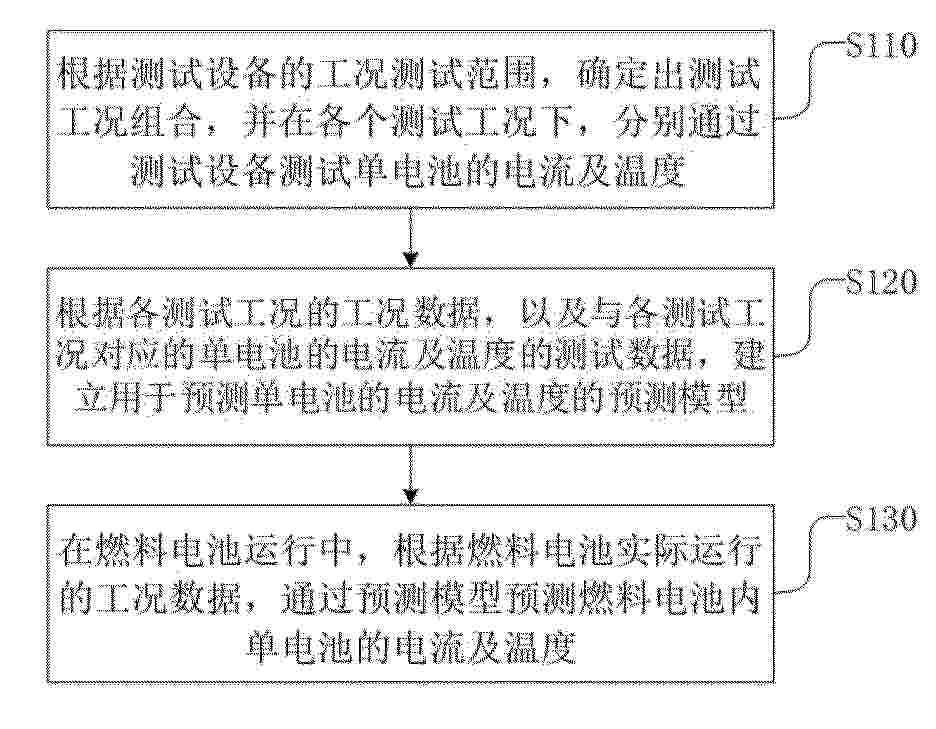
本发明涉及燃料电池测试技术领域,并具体提供了一种燃料电池运行参数的预测方法、装置及电子设备。本发明的预测方法用于预测不同运行工况下燃料电池内单电池的电流及温度,并包括:确定测试工况组合,并在各测试工况下,分别通过测试设备测试单电池的电流及温度;根据各测试工况对应的单电池的电流及温度的测试数据,建立预测模型;在燃料电池运行中,根据实际工况,通过预测模型预测单电池的电流及温度;其中,预测模型为采用K折交叉验证算法进行训练的人工神经网络模型,且人工神经网络模型的权重与偏置系数通过蝙蝠算法确定。本发明的预测方法在对燃料电池内单电池的电流以及温度进行测试时,能够节约设备投入成本。
Resumen de: CN122950516A
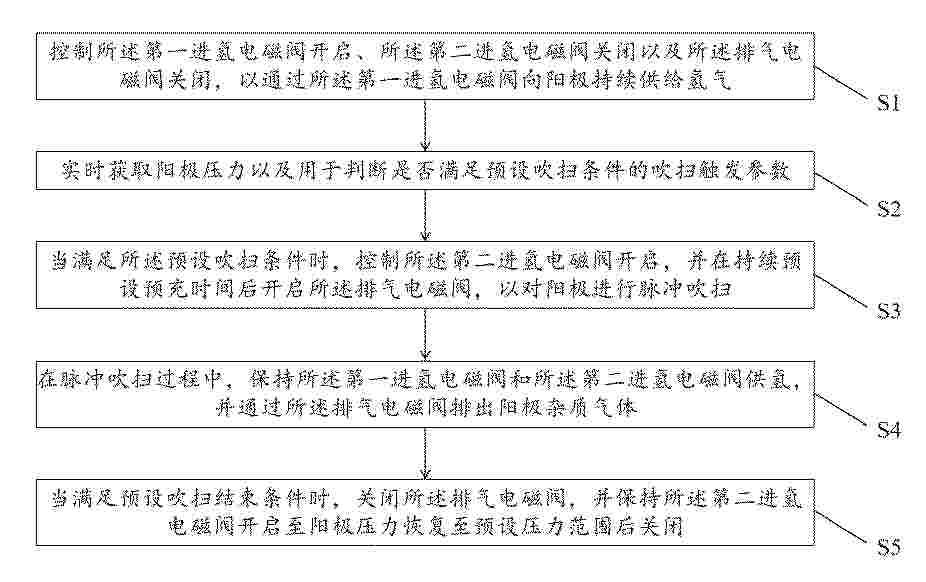
本公开涉及燃料电池阳极吹扫技术领域,提供了一种新型风冷燃料电池阳极吹扫系统及控制方法。该系统包括燃料电池电堆、呈并联设置的第一进氢电磁阀和第二进氢电磁阀、排气电磁阀、压力传感器、杂质气体浓度传感器及控制器。该控制方法包括:正常工作时第一进氢电磁阀供氢;实时获取阳极压力及吹扫触发参数;满足吹扫条件时先开启第二进氢电磁阀,经预设预充时间后再开启排气电磁阀进行脉冲吹扫;吹扫过程中双阀同时供氢以平衡压力波动;吹扫结束后关闭排气电磁阀,保持第二进氢电磁阀继续开启至阳极压力恢复至预设范围后关闭。本公开通过双阀时序控制,有效减小了吹扫过程中的压力波动,提高系统稳定性及燃料电池的使用寿命。
Resumen de: CN122950520A
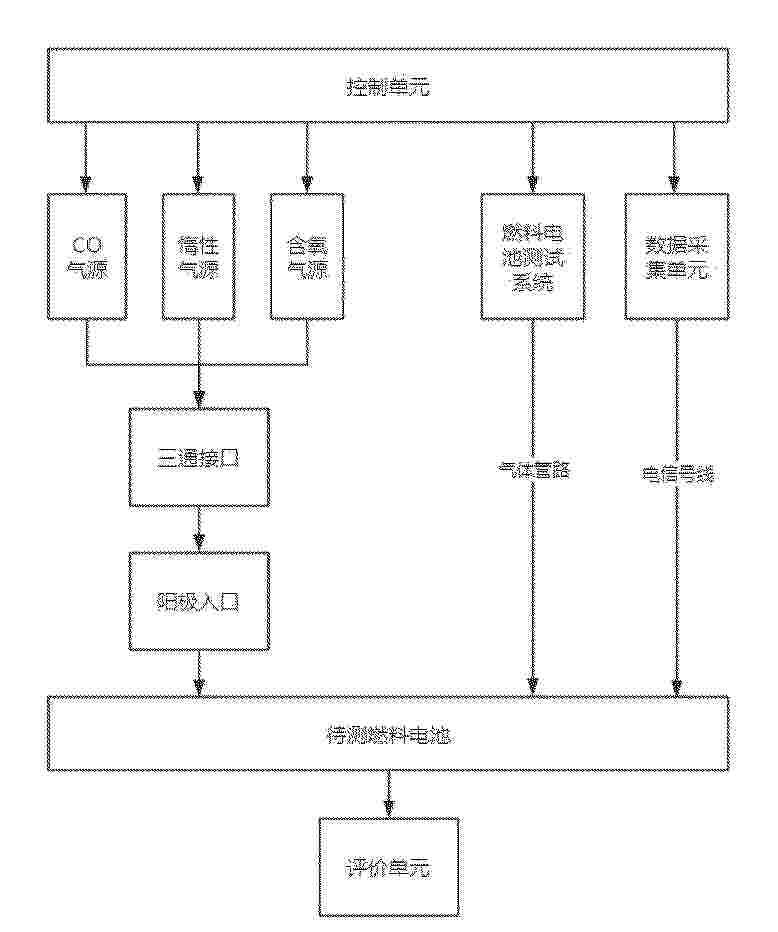
本发明公开了一种质子交换膜燃料电池阳极抗CO毒化测试方法及系统。方法包括:将燃料电池活化后记录初始电压和初始高频阻抗;通过阳极入口处的三通接口瞬时通入过量浓度的含CO气体并关闭,使阳极中毒导致电压和阻抗偏离初始值;继续恒电流运行使电压恢复至初始值;再引入惰性气体吹扫并引入含氧气体,使高频阻抗恢复至初始值;根据电压和阻抗的恢复情况评价抗CO毒化能力。系统包括燃料电池测试系统、数据采集单元、CO气源、惰性气源、含氧气源、控制单元及评价单元。本发明无需改造现有测试系统,具有简便易行、成本低、重复性高、准确性高、灵敏度高、测试时间短、安全性高的优点。
Resumen de: CN122950509A
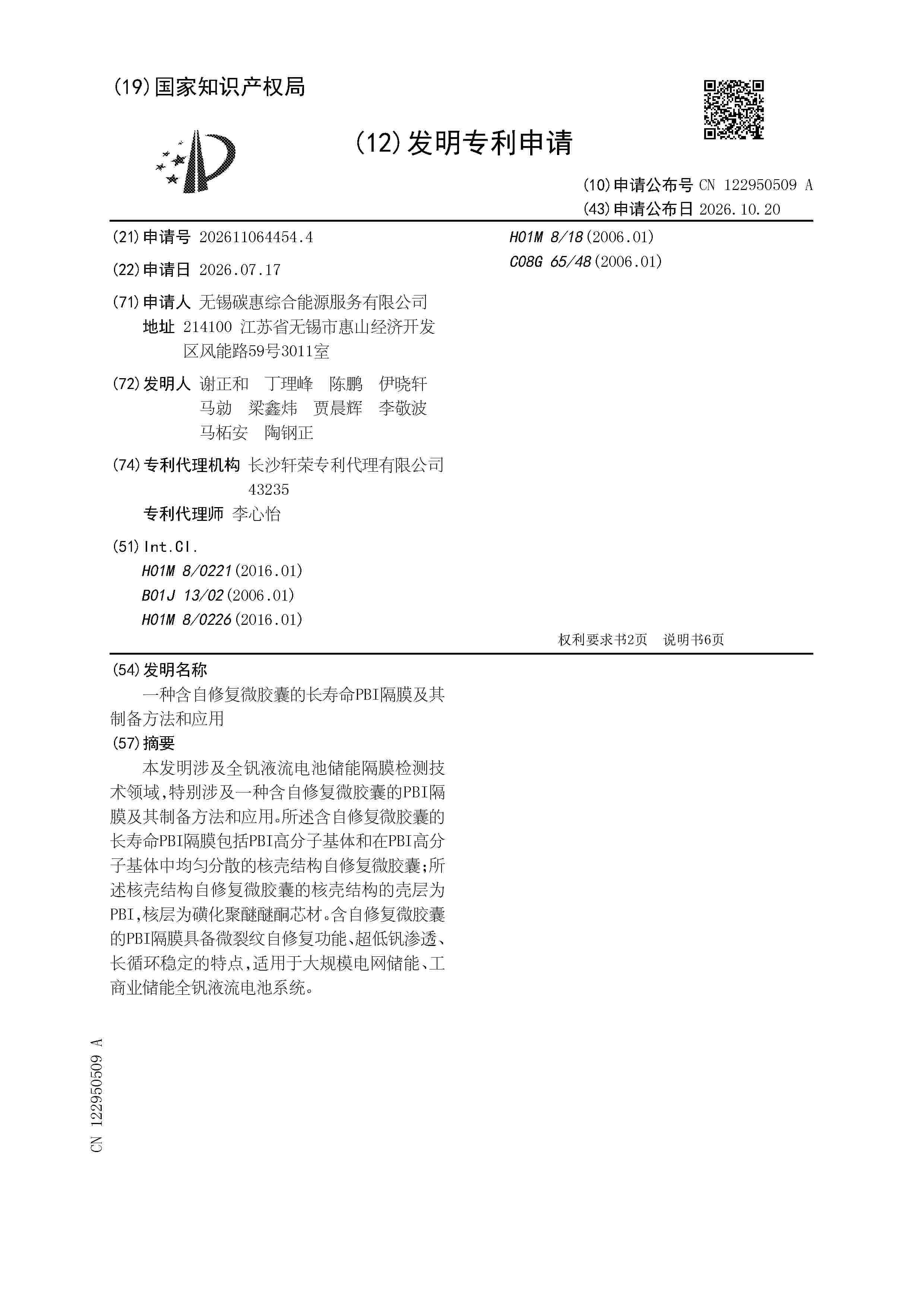
本发明涉及全钒液流电池储能隔膜检测技术领域,特别涉及一种含自修复微胶囊的PBI隔膜及其制备方法和应用。所述含自修复微胶囊的长寿命PBI隔膜包括PBI高分子基体和在PBI高分子基体中均匀分散的核壳结构自修复微胶囊;所述核壳结构自修复微胶囊的核壳结构的壳层为PBI,核层为磺化聚醚醚酮芯材。含自修复微胶囊的PBI隔膜具备微裂纹自修复功能、超低钒渗透、长循环稳定的特点,适用于大规模电网储能、工商业储能全钒液流电池系统。
Resumen de: CN122943266A
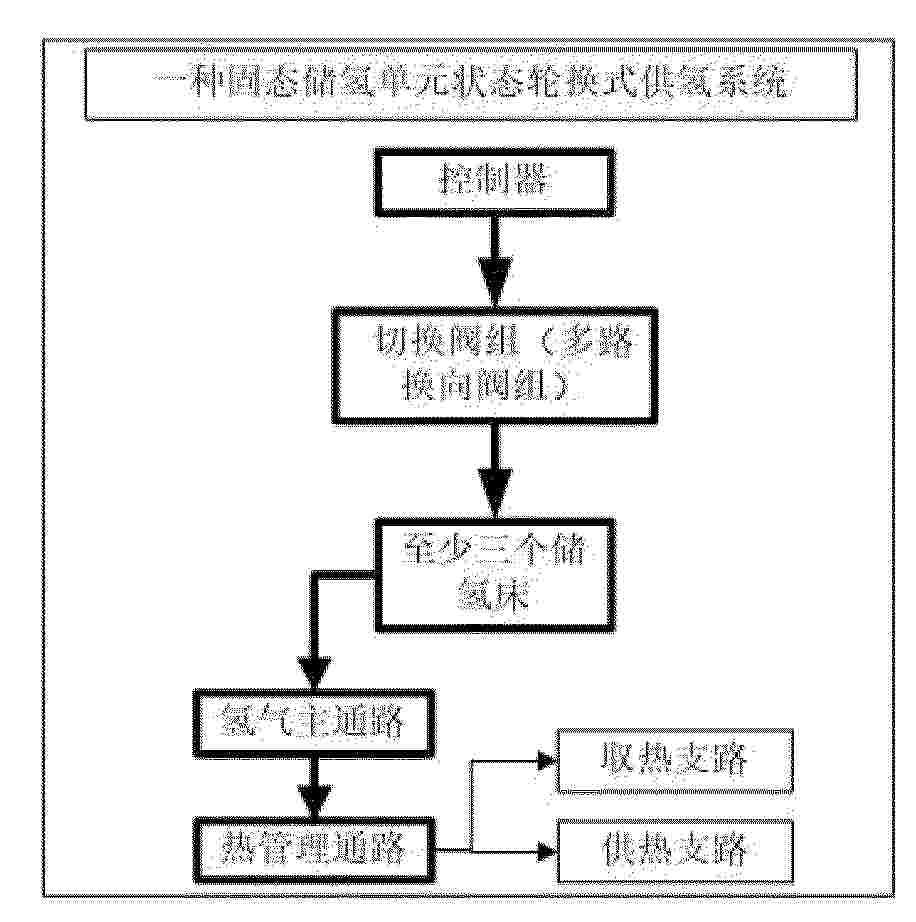
本发明公开了一种固态储氢单元状态轮换式供氢系统、热调控方法及装置;通过系统包括的至少三个储氢床、高压缓冲罐、氢气主通路、热管理通路及控制器,各储氢床具有独立的氢气进出口通路和换热介质进出口通路。将储氢床配置为在放热态、吸热态与热备用态之间交替循环,且在任一运行时刻至少一个储氢床维持于吸热态对外供氢;控制器响应于状态轮换触发条件,控制切换阀组将放热态第一储氢床与热备用态第三储氢床的换热通路串联连通,通过中间介质将第三储氢床的热能迁移至即将切换至放热态的第二储氢床。利用热备用床的显热进行床间直接预热,配合旁路供氢,消除了切换瞬态的供氢中断与热源缺口,实现了固态储氢系统的连续稳定供氢与热能梯级利用。
Resumen de: CN122943607A
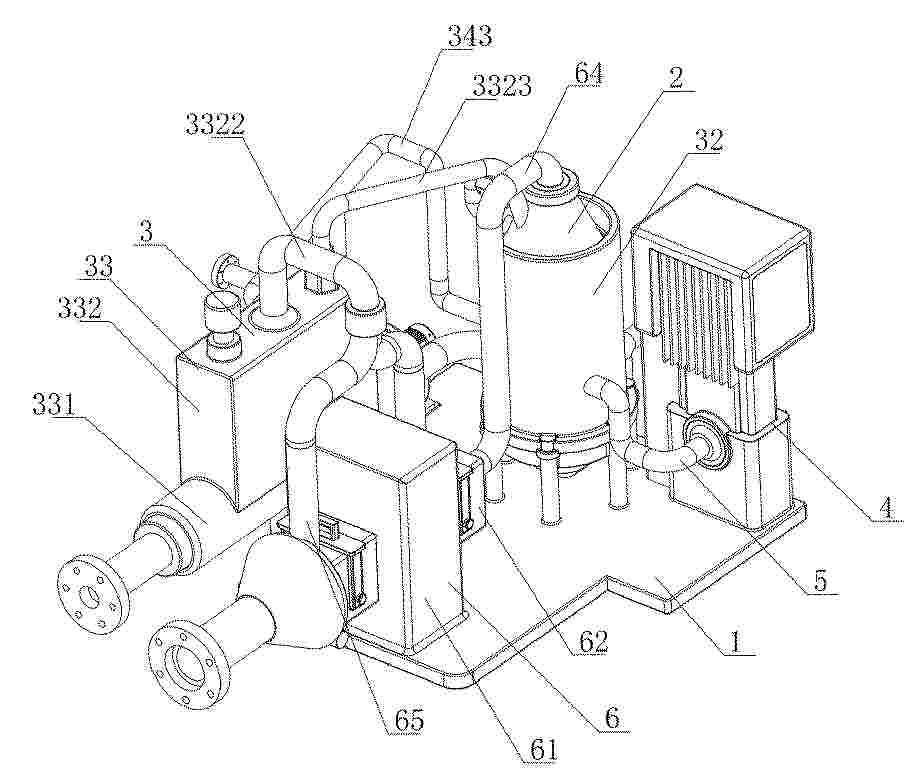
本发明发电设备技术领域,具体公开了一种高温甲醇重整制氢长效发电装置及系统,包括基座,所述基座的顶部后侧中间固定安装有反应炉,所述基座顶部一侧固定安装有加水机构,本方案利用换热罐体与螺旋导热盘管回收反应炉尾气余热,加热水体产生高压蒸汽,实现尾气余热梯级利用,既依靠蒸汽驱动脉冲压力清理模组自动清理滤网,又可泄压补入反应炉充当重整原料,减少甲醇燃料消耗,提升能源利用率,装置设置脱硫前后两级过滤箱,分级拦截甲醇外来杂质与脱硫生成微粒,保护脱硫填料与炉内催化剂,规避设备堵塞、脱硫效率下降问题,整体可减少人工运维,滤网可拆卸、杂质可便捷外排,配合炉体余热预热原料水,整机可长效稳定发电运行。
Resumen de: CN122950522A
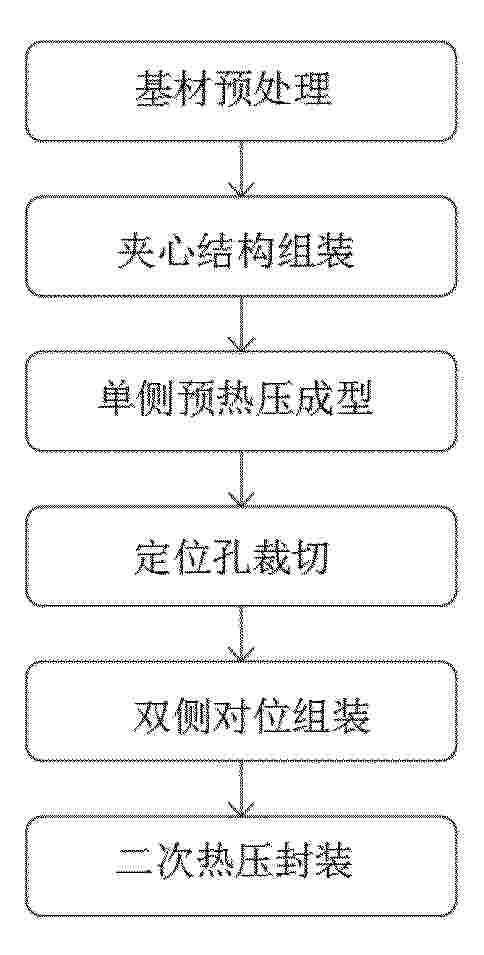
本发明涉及膜电极封装技术领域,且公开了一种膜电极封装工艺及封装固定装置,一种膜电极封装工艺,包括:步骤一、基材预处理;步骤二、夹心结构组装,将两块金属铝板、催化剂涂覆膜以及单侧边框膜,组装成夹心结构;步骤三、单侧预热压成型;步骤四、定位孔裁;步骤五、双侧对位组装;步骤六、二次热压封装;本发明按照先单侧热压成基准,再裁出定位孔,然后双侧对位二次热压的工艺路线,有效将两侧边框膜的对位精度从依赖手工目视提升至导向杆强制对位,同时避免了双侧膜材在热压过程中的相对滑移,实现了阴阳极边框膜精准错位贴合,避免出现受热卷曲变形的情况,有效提高了边框膜电极封装质量。
Resumen de: CN122950511A
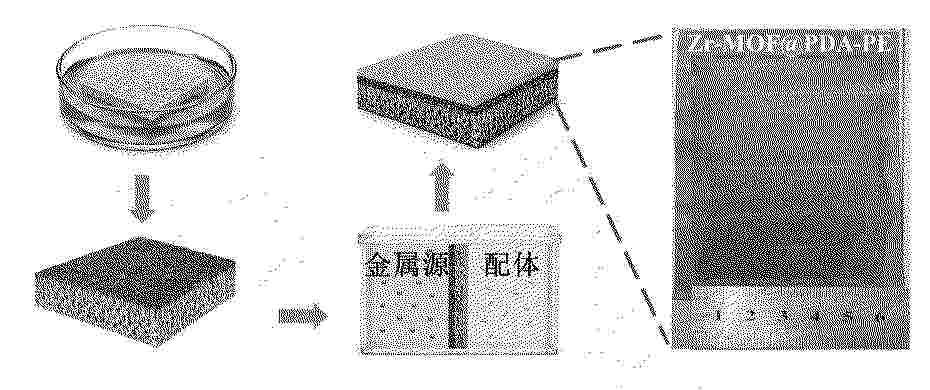
本发明公开了一种锌基卤素液流电池复合隔膜及其制备方法与应用。该复合隔膜包括聚烯烃多孔基膜、含有富含极性官能团的聚合物的界面修饰层,以及通过极性官能团原位锚定在界面修饰层上的金属有机框架连续晶体层,该连续晶体层由锆金属中心与富马酸配体配位形成。本发明通过界面修饰与双侧相向扩散结晶协同配合,克服了疏水柔性基膜成核困难与晶间缺陷问题,实现了致密晶体层的牢固生长。该隔膜允许锌离子通过并精准阻挡多卤化物络合物跨膜穿梭,同时调控离子通量抑制锌枝晶,显著提升了液流电池的循环寿命。
Resumen de: CN122950512A
本发明公开了一种无人机燃料电池双极板并联密封与多堆集成封装结构,包括双极板;若干双极板与膜电极沿垂直方向交替堆叠,相邻双极板之间设有一个膜电极和两个极板并联密封件;双极板上下表面外围开设密封槽,槽底设第一限位沟槽;极板并联密封件由闭环密封垫和贯穿嵌入的若干支撑密封块构成,闭环密封垫一面开设第二限位沟槽,另一面为平面并与膜电极的膜边框贴合形成限位约束;第一、第二限位沟槽对合形成粘接限位密封空腔并填充胶粘限位体;底端盖集成进气口与出气口,配合封装外壳与封顶盖形成一体化绝缘封装。本发明将密封、支撑、定位、限位功能集成一体,有效解决密封垫滑移、蠕变及膜电极错位问题,适配无人机轻量化与极端工况应用需求。
Resumen de: CN122950525A
本发明涉及液流电池储能技术领域,具体为一种锡碘液流电池及其双界面协同调控方法。所述电池包括经氧等离子体处理的碳毡正极、负极和含有氨基磺酸添加剂的碱性锡酸盐负极电解液,氧等离子体处理在碳毡表面引入含氧官能团,提高亲水性和电化学活性面积,氨基磺酸通过其氨基锚定于碳毡表面,其磺酸根与锡酸根离子Sn(OH)62‑产生静电排斥,提高锡成核能垒,抑制锡晶粒的过快生长,促进均匀、致密的三维扩散沉积。采用该双策略的锡碘液流电池循环寿命长,能量效率高,并具备较高的库伦效率,且具有优异的抗自放电性能。本发明成本低、工艺简单,显著提升了锡基液流电池的循环稳定性。
Resumen de: CN122947591A
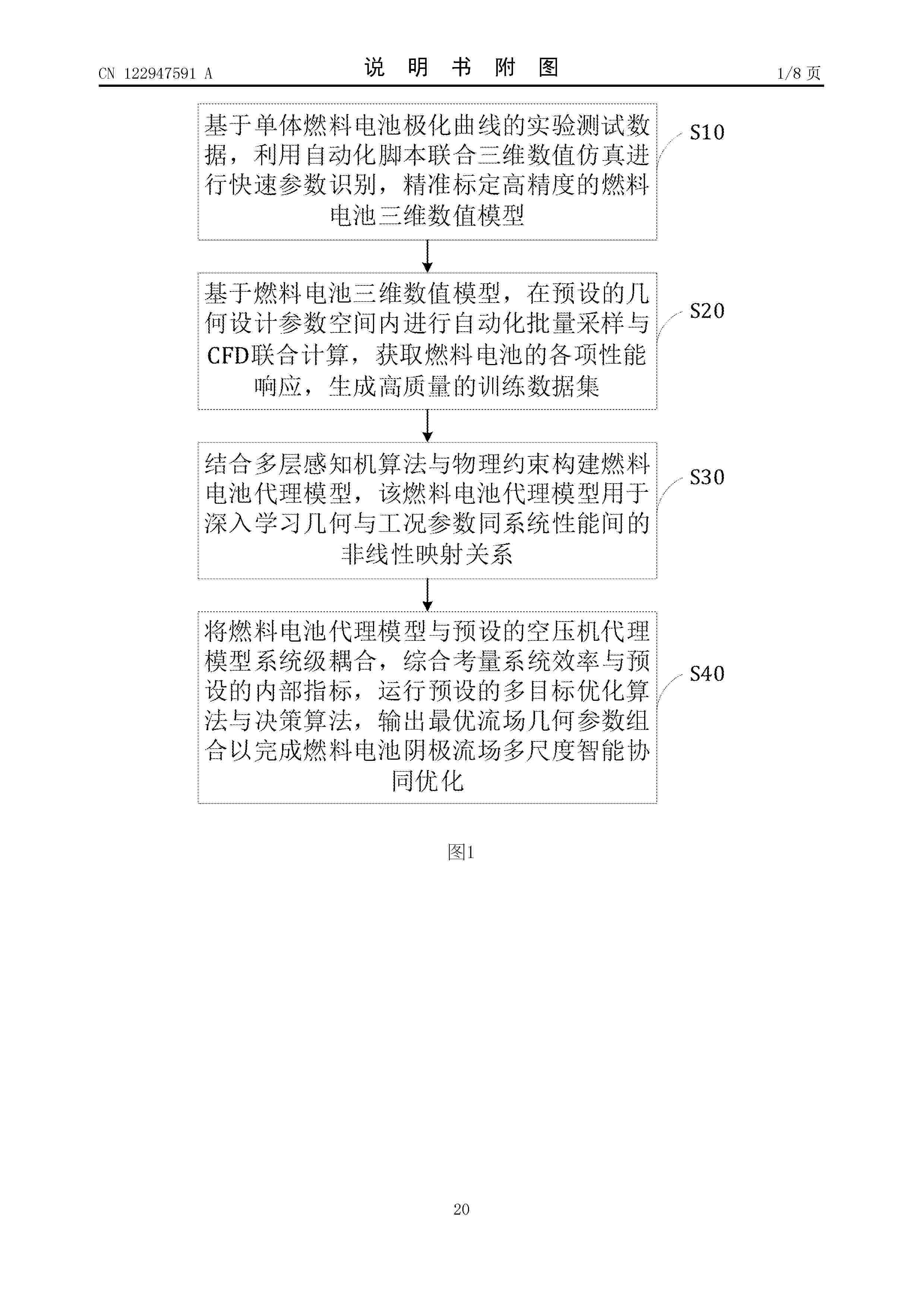
本申请涉及燃料电池设计优化技术领域,公开了一种燃料电池阴极流场多尺度智能协同优化方法及装置,该装置与该方法对应。针对仿真与实验参数失配及人工调参低效的问题,借助优化算法与自动化交互接口实现底层微观参数的智能标定;为打破传统离散寻优极易陷入局部最优且计算耗时的局限,构建融合物理双重约束的神经网络代理模型,即燃料电池代理模型;针对忽略空压机动态变化特征的缺陷,将燃料电池代理模型与空压机模型进行系统级耦合,避免了因空压机效率动态变化导致寄生功率估计高误差的研发误区;依托多目标决策机制,在全局范围内成功实现基于系统效率与内部指标的协同提升,为燃料电池的高效、高耐久双极板设计提供了科学的自动化解决方案。
Resumen de: CN122950699A
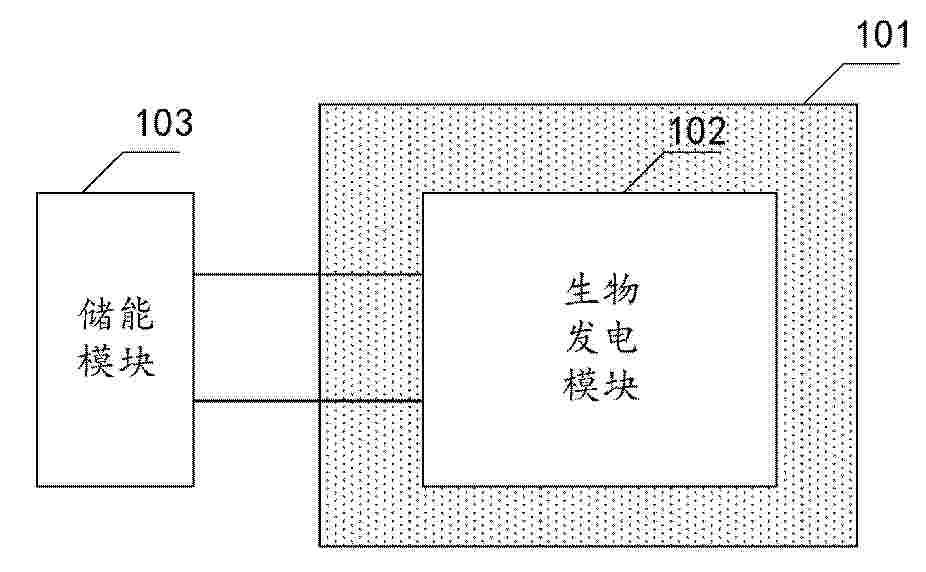
本申请实施例提供了一种可穿戴电池装置和可穿戴电子设备,该可穿戴电池装置包括水凝胶层、生物发电模块和储能模块,生物发电模块的正极端位于水凝胶层的内部,生物发电模块的负极端位于水凝胶层的外部,储能模块位于水凝胶层的外部,储能模块的正极端与生物发电模块的正极端连接,储能模块的负极端与生物发电模块的负极端连接,实现了利用水凝胶层高效提取汗液,并通过生物发电模块和储能模块的组合有效转化和存储生物能源,可以为可穿戴设备进行供电,提高设备的续航能力,该可穿戴电子设备包括可穿戴电池装置、升压转换模块、第一开关模块、充电模块、锂电池模块、第二开关模块、电源管理模块和处理器模块,可以有效管理可穿戴电池装置的供能。
Resumen de: CN122943381A
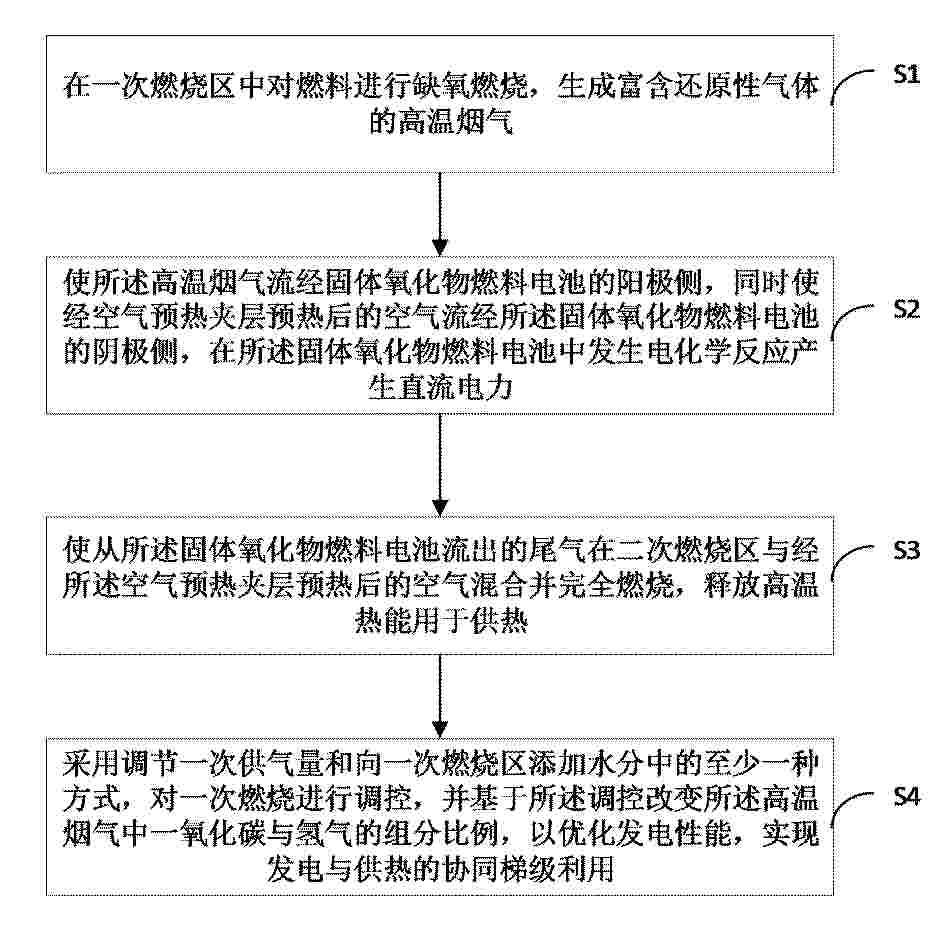
本发明公开了一种多燃料热电联供系统的热电联供方法及装置,涉及热电联供技术领域,其中方法包括:在一次燃烧区对燃料进行缺氧燃烧,使其部分氧化与气化,生成富含一氧化碳、氢气及碳氢化合物的高温烟气;使该高温烟气与预热空气分别流经燃料电池的阳极侧与阴极侧,发生电化学反应产生直流电力;使从燃料电池流出的含残余可燃气体的尾气进入二次燃烧区,与预热空气混合完全燃烧,释放热能用于炊事或供热;运行中通过调节一次供气量或向燃烧区添加水分,利用水煤气变换与蒸气重整反应改变烟气中一氧化碳与氢气比例,优化发电性能,实现发电与供热的梯级利用。本发明通过炉内嵌入SOFC构建梯级能量利用结构,实现燃料化学能分步利用。
Resumen de: CN122950505A
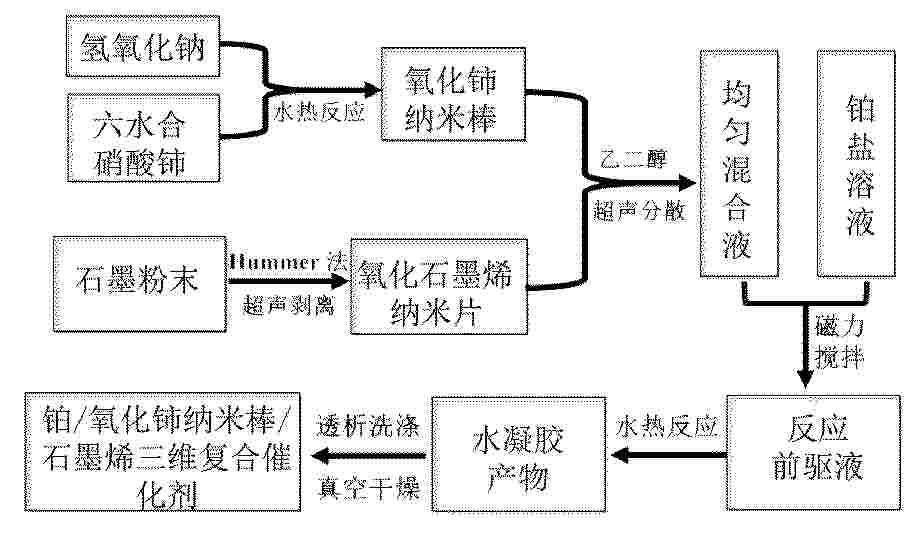
本发明公开了铂/氧化铈纳米棒/氧化石墨烯三维复合催化剂的制备方法,属于电极催化剂领域。包括以下步骤:首先将六水合硝酸铈与氢氧化钠溶于水,经水热处理制氧化铈纳米棒。再将其放入乙二醇,加石墨烯溶液超声混合,引入铂盐溶液搅拌后进行溶剂热反应,得到水凝胶状产物。最后透析水洗并冷冻干燥,制得铂/氧化铈纳米棒/氧化石墨烯三维复合电极催化剂。本发明以氧化铈纳米棒及石墨烯为模板,在其表面沉积晶体铂纳米颗粒,制备出的复合电极催化剂具有三维多孔结构、高催化活性以及高抗一氧化碳中毒的优点。
Resumen de: CN122937784A
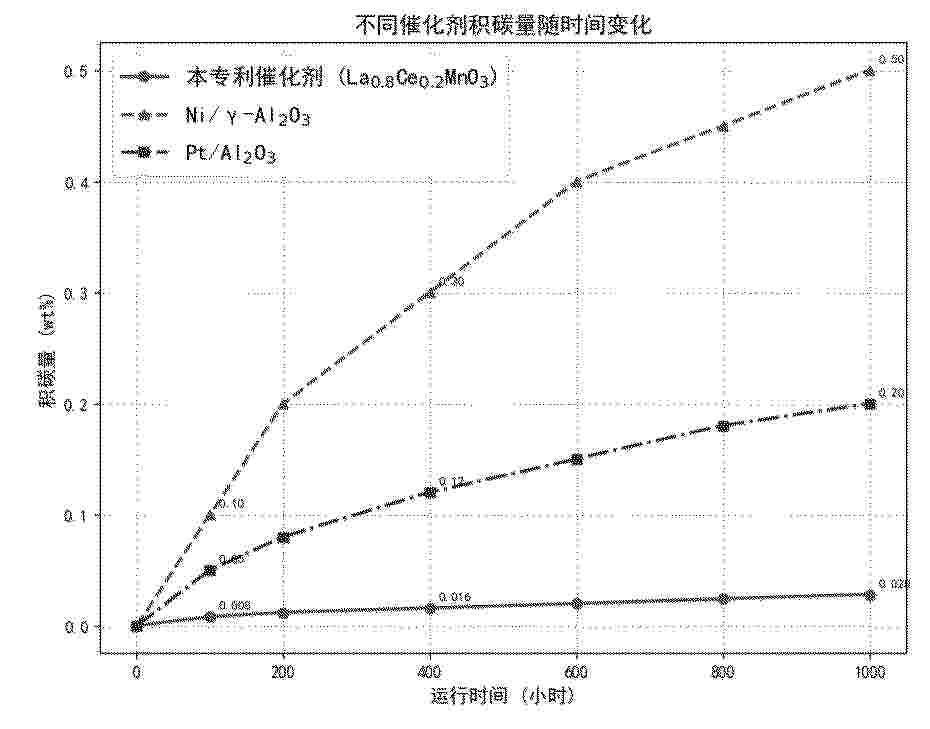
本发明属于化工领域,公开一种自清洁柴油SOFC重整催化剂及其制备方法。该催化剂为钙钛矿结构复合氧化物ABO3,A位以La为主并掺杂稀土元素,B位以Mn为主并掺杂过渡金属元素,其表面经碱金属或碱土金属掺杂、氧化物涂层、等离子体处理、贵金属修饰及表面官能团修饰中的一种或多种改性。该催化剂用于柴油或生物柴油的自热重整或蒸汽重整,在含硫燃料中长期运行积碳量低、活性保持率高,同时具有较高的燃料转化率和氢气产率,适用于固体氧化物燃料电池发电系统。
Resumen de: CN122950502A
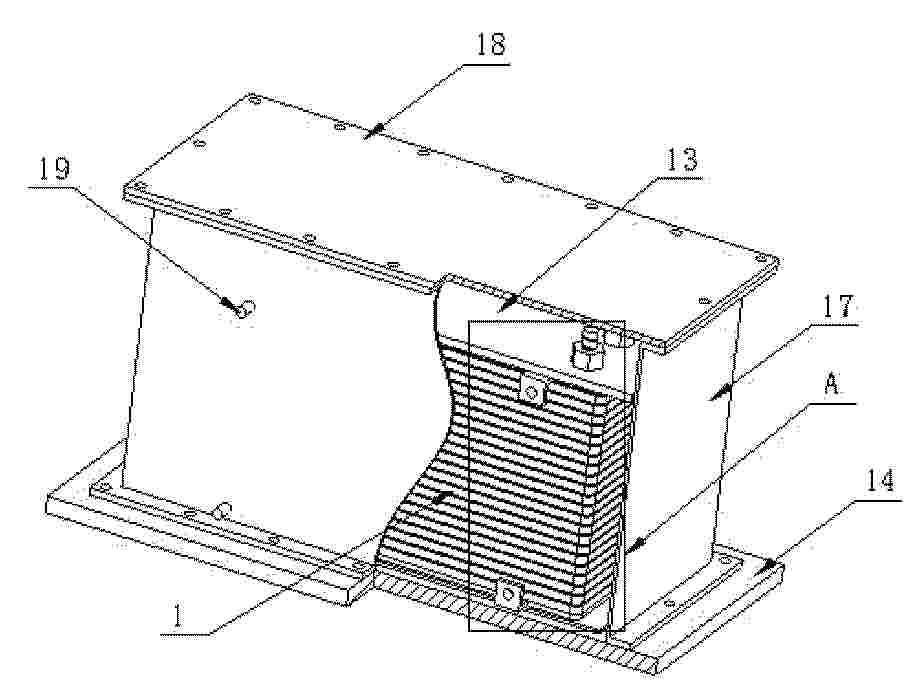
本发明公开了一种用于全钒液流电池的负极电极的制备方法及搅拌装置,涉及电化学储能电池技术领域,包括以下步骤:S1.无定形MOF的制备:将金属源溶于甲醇中,形成金属源溶液;将2‑甲基咪唑溶于甲醇中,形成配体溶液;将所述配体溶液倒入所述金属源溶液中,在室温下通过搅拌装置进行搅拌反应,得到白色沉淀物;对所述白色沉淀物进行洗涤、干燥和研磨,得到无定形MOF粉末,本发明采用无定形MOF作为功能前驱体,其本身比晶体MOF具有更多的缺陷和活性位点,通过与高导电的碳毡基体复合,构建了三维导电网络,有效克服了MOF材料本征导电性差的瓶颈,为电极反应提供了巨大的电化学活性面积和高效的电子传输路径。
Resumen de: CN122950504A
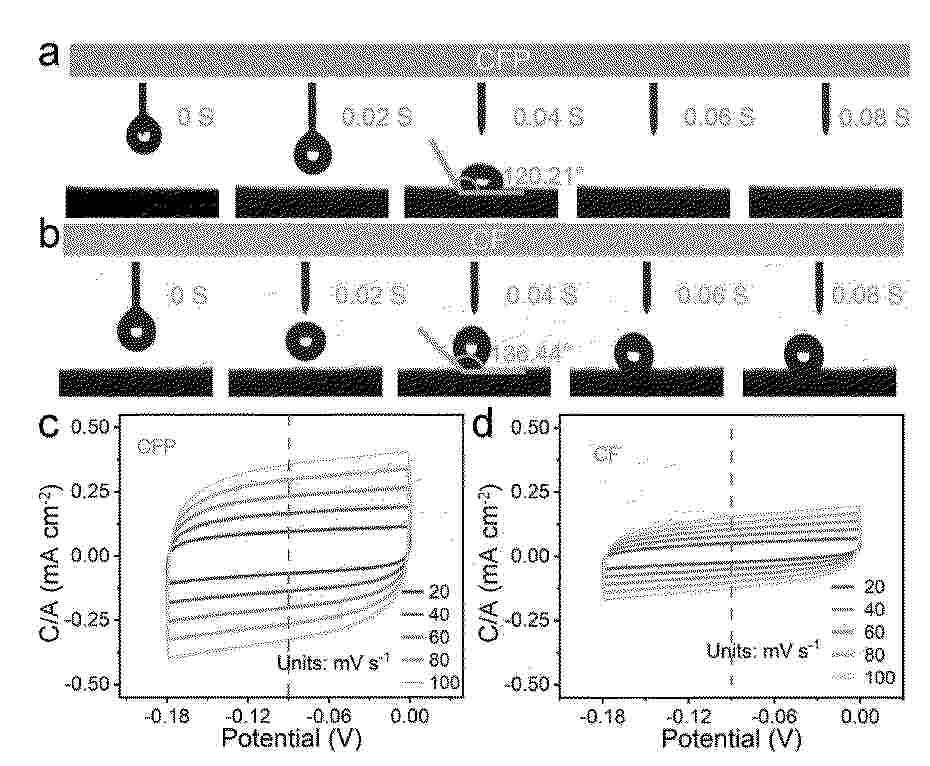
本发明公开了一种铁铬液流电池用多组分复合催化电极及其溶胶‑凝胶制备方法,通过设计多组分金属醇盐共水解‑共缩聚溶胶体系,采用一步溶胶配制与浸渍涂覆、结合高压气流吹扫和高湿原位共凝胶化工艺,可在碳布纤维表面原位一体化构建含TiO2及铋、锡、铟、铅等多组分的复合催化层;本发明通过多组分协同催化和原位化学锚定,在保证高初始性能的同时赋予了电极优异的长期循环稳定性,制备的碳布纤维表面的静态水接触角为0°,表明TiO2骨架主导了亲水性能,多组分的引入未对亲水性产生负面影响,同时制备的复合催化层在碳纤维表面实现了均匀、连续、无裂纹的包覆;为高性能铁铬液流电池电极制备提供了可靠的技术支撑。
Nº publicación: CN122950507A 20/10/2026
Solicitante:
江苏大学
Resumen de: CN122950507A
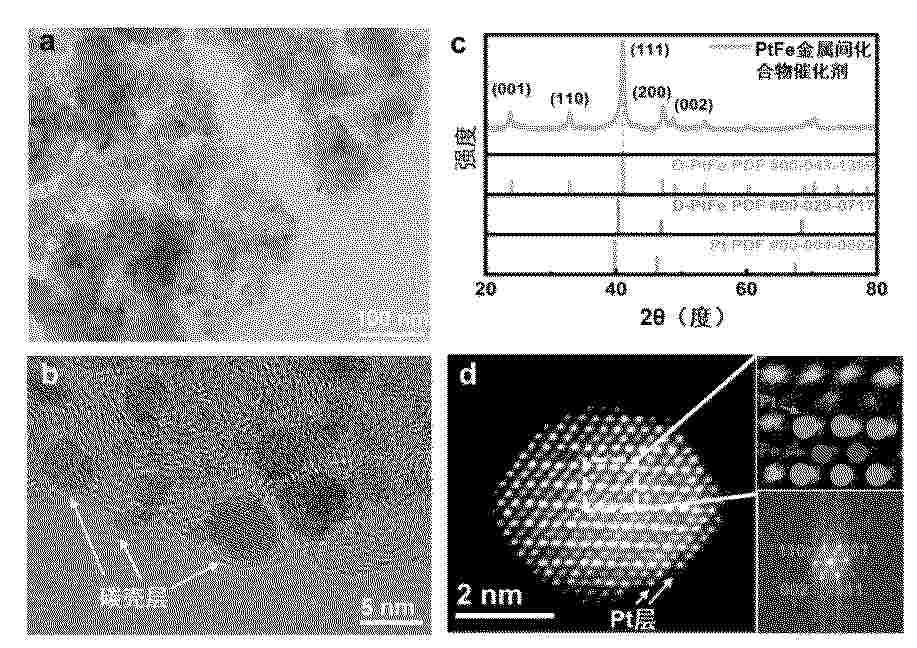
本发明公开了一种高温质子交换膜燃料电池用高稳定性的PtFe金属间化合物催化剂及其制备方法和应用,涉及燃料电池领域。首先将Pt、Fe与碳的前驱体沉积在碳载体上,经一定气氛下高温煅烧、酸洗后,获得有序度高于50%的PtFe金属间化合物催化剂。高温煅烧过程中,碳的前驱体在PtFe表面原位形成多孔碳壳层,将PtFe纳米颗粒有效控制在5 nm以下;酸洗将表层和亚表层的Fe刻蚀除去,在PtFe金属纳米颗粒表面形成薄的Pt壳层。该结构能够有效调控Pt的电子特性,在酸性与高温磷酸体系中表现出优异的氧还原活性和耐久性。在高温质子交换膜燃料电池中,将该催化剂用于阴极,表现出较高的峰值功率密度,3万圈耐久性测试后,Fe的溶出率低于1%,适用于高性能燃料电池阴极氧还原催化剂的制备与应用。
 BOPI
BOPI
 Sede Electrónica