Si deseas distinguir tus productos, servicios o ambos de los de otra empresa, es posible que necesites una marca o nombre comercial. Descubre qué son, en qué consiste su procedimiento de registro y qué implica.

Información sobre los plazos de presentación de solicitudes de transformación de marcas de la Unión Europea en marca nacional española. Más información


Si tienes un nuevo dispositivo, producto o procedimiento que resuelva un problema técnico o tenga una ventaja práctica, existen distintas formas de protegerlo en España y en otros países. Descubre cómo hacerlo.

¿Tu innovación reside en la estética, la ornamentación o la apariencia de tu producto? Protégela mediante un diseño industrial. Descubre qué derechos confiere el registro y cómo realizar la tramitación.

Las indicaciones geográficas protegen el nombre de un producto originario de una zona geográfica, a la cual le debe una determinada calidad, reputación u otra característica. Descubre qué son, en qué consiste su procedimiento de registro y qué beneficios conceden.

Las patentes publicadas en todo el mundo son una valiosa fuente de información científica, técnica y comercial.

Si eres emprendedor/a o una empresa y quieres potenciar y mejorar la rentabilidad de tu negocio protegiendo de forma adecuada los activos intangibles de tu organización, en este espacio encontrarás lo necesario.


 151
resultados
151
resultados
 Última actualización
08/10/2026 [06:47:00]
Última actualización
08/10/2026 [06:47:00]


 Resultados 75 a 100 de 151

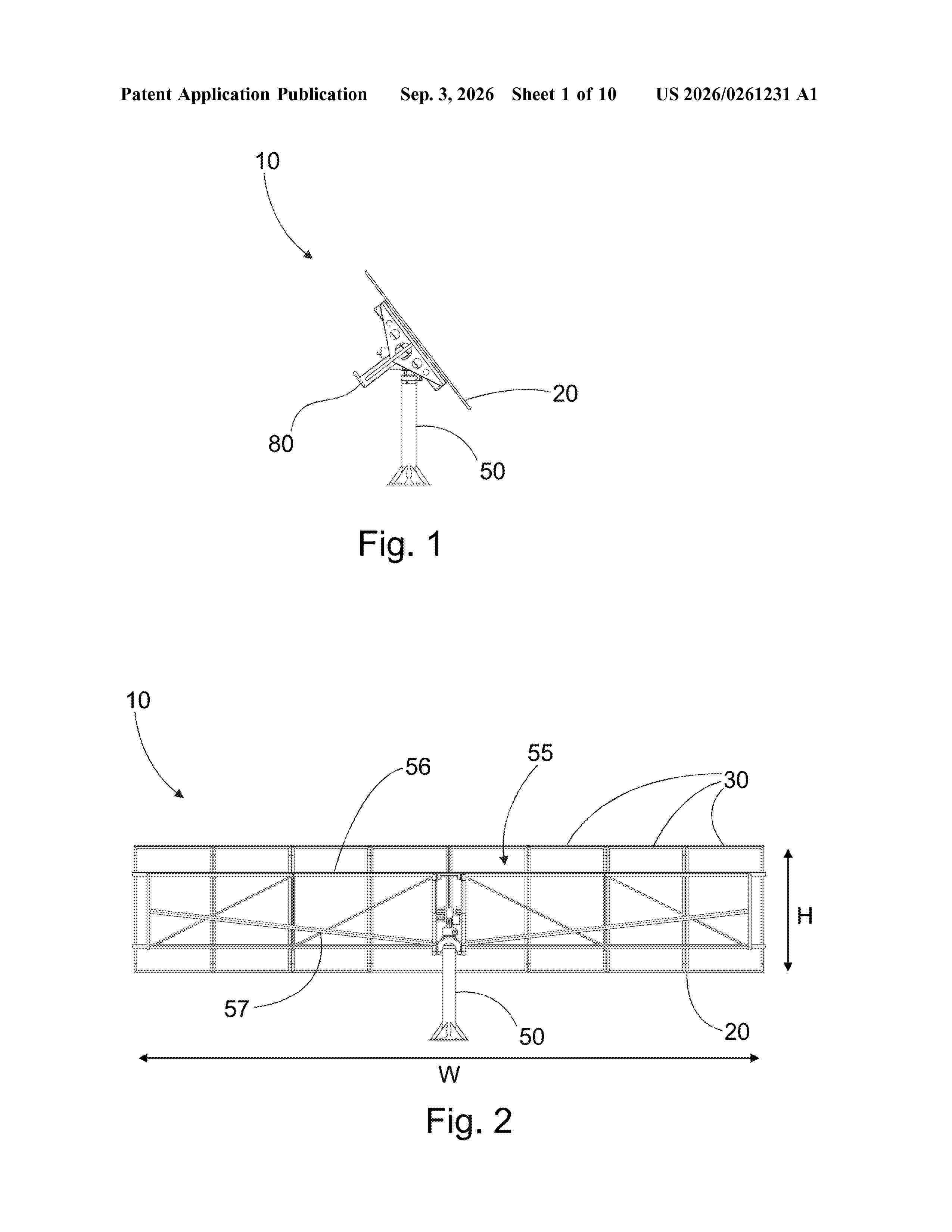
Resumen de: US20260261231A1
A system for producing electricity with solar panels includes solar panel systems arranged in a grid formation, wherein each solar panel system includes a solar cell assembly consisting of solar panels configured to be movable on a support structure. A connection of each solar cell assembly includes rotation means and tilting means. The system includes control means by means of which, at a selected moment in time, when an incoming angle of the sun's rays is greater than a selected minimum value, but less than a selected limit value, the solar cell assemblies are configured to be rotated so that an angle of rotation of the solar cell assemblies relative to the direction of incoming sunlight is 20°-50°, andtilted to reduce a three-dimensional solar incidence angle of the solar cell assemblies so that the solar cell assemblies do not overshadow one another.

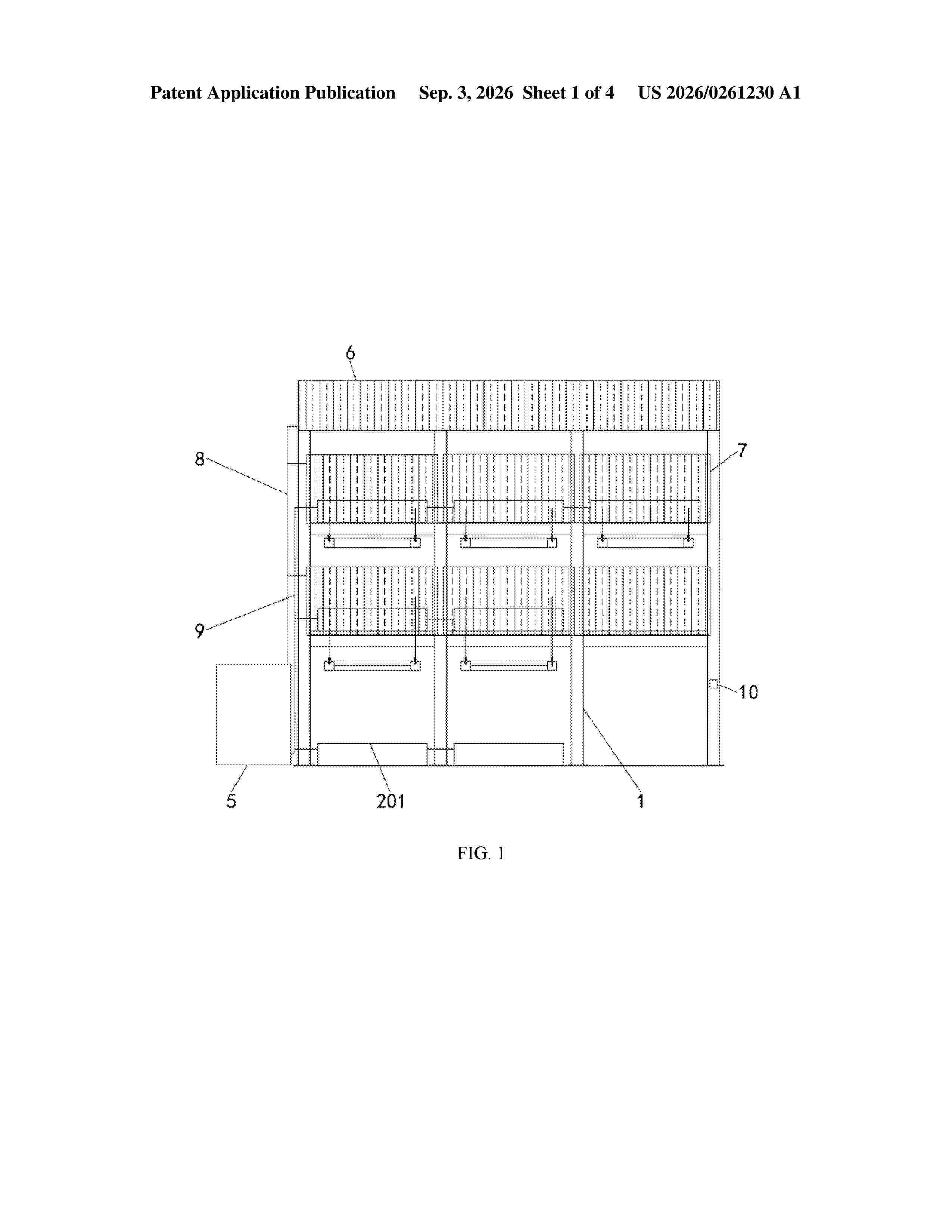
Resumen de: US20260261230A1
0000 A BIPV parking garage with thermal insulation effects includes a steel structure frame, a vehicle-carrying assembly, lifting assemblies, guide assemblies, and an energy storage device. The steel structure frame is divided into three levels or into multiple levels. A top of the steel structure frame is fixedly connected to a bottom of a first BIPV panel, and a second BIPV panel is fixedly mounted on a front side of the steel structure frame. The energy storage device is disposed on a left side of the steel structure frame. Each of the first BIPV panel and the second BIPV panel is electrically connected to the energy storage device via a charging cable. A discharge cable is fixedly mounted on a top of the energy storage cable. A parking and retrieval control panel is fixedly mounted on the front side of the steel structure frame.
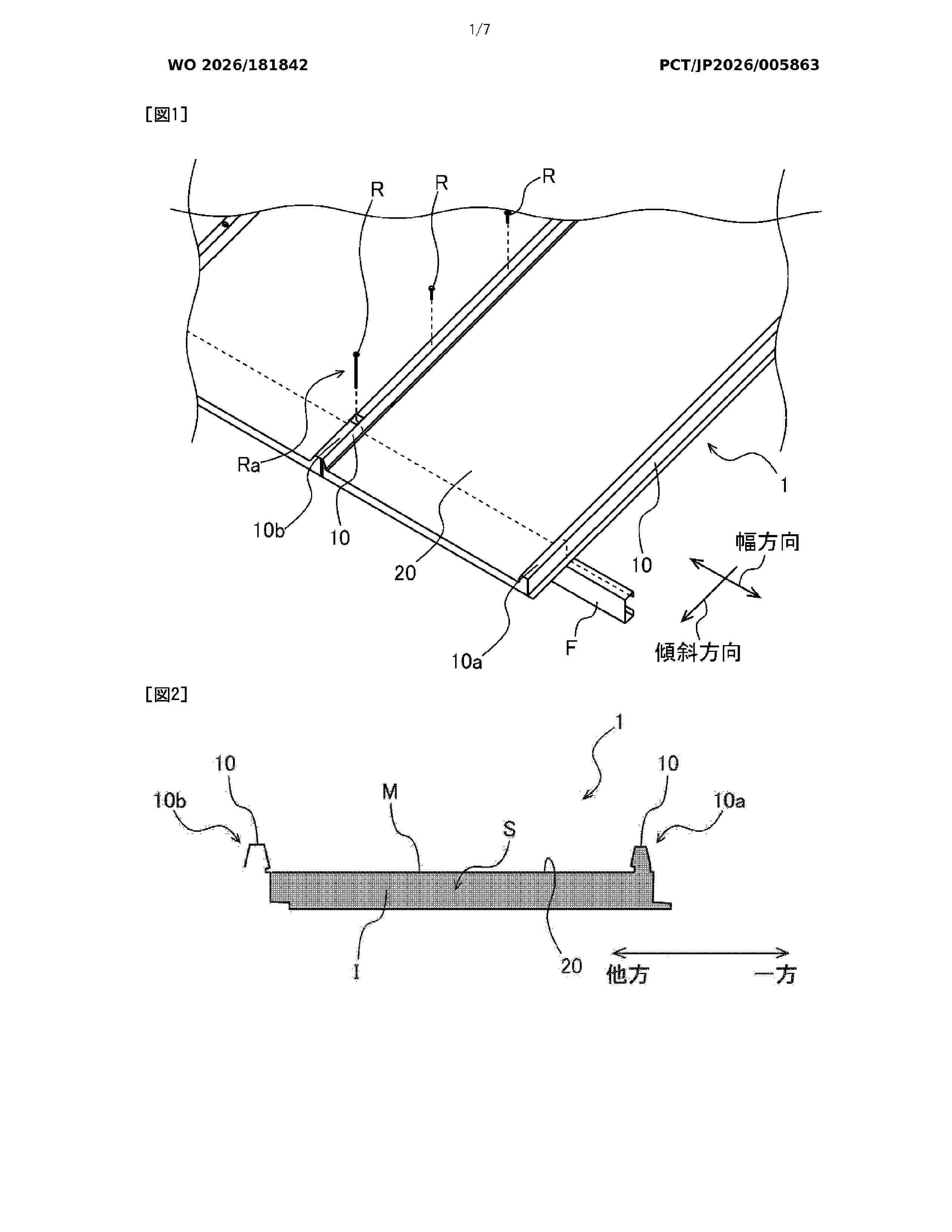
Resumen de: WO2026181842A1
Provided are a building material to which a sheet-shaped member can be more firmly mounted with less hindrance to remounting work, and a building structure. The building material (1) comprises two protrusions (10) arranged in parallel and a flat surface part (20) formed between the two protrusions (10). Each of the two protrusions (10) has an undercut part (11) which is recessed inward of the protrusion (10) at a connection portion with the flat surface part (20) and into which an end part of a solar cell panel (PV) is inserted. The protrusions (10) are connected by a rod-shaped member (R) so as to overlap each other.
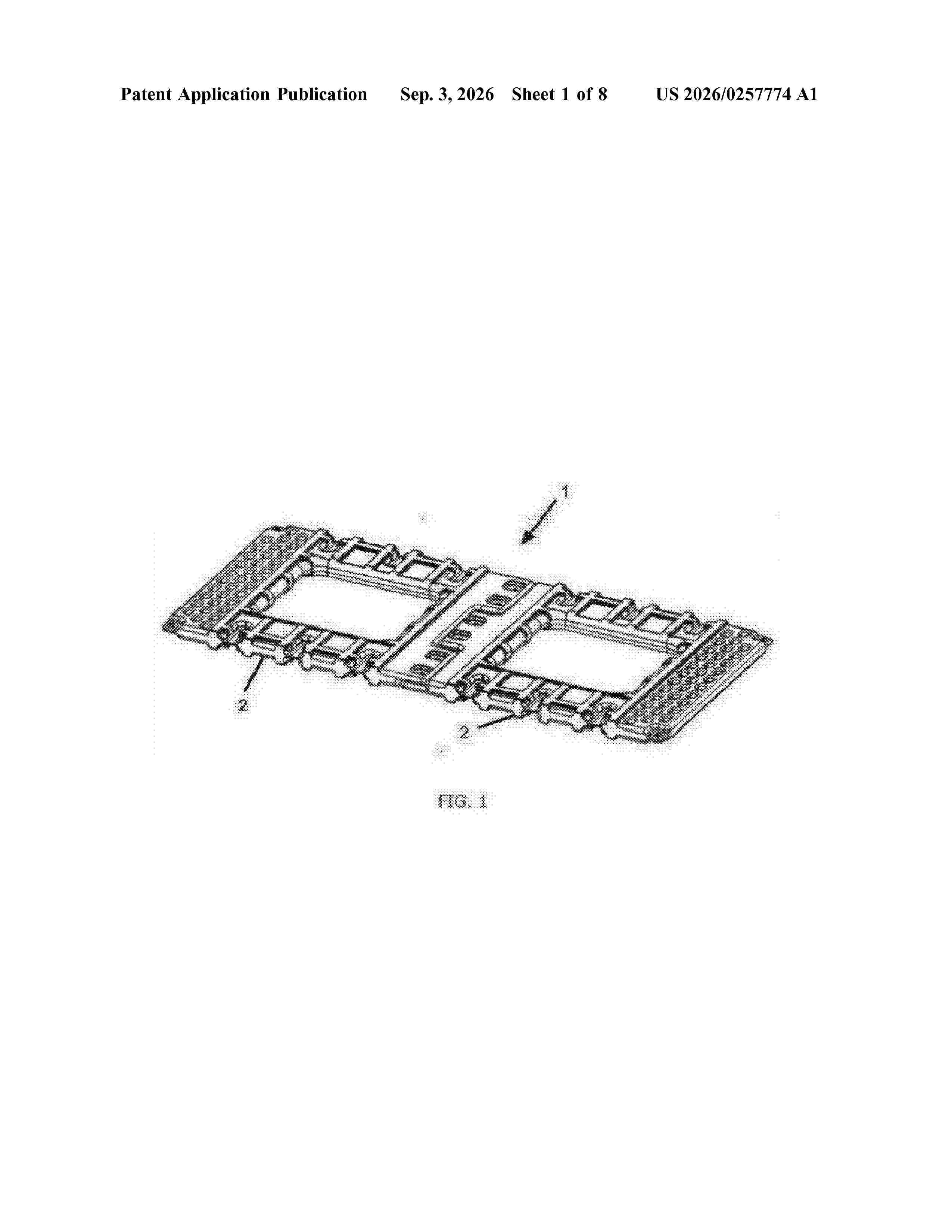
Resumen de: US20260257774A1
A floating system for photovoltaic panels, includes two assembled floats, each float having a substantially rectangular shape. Each float includes: several flanges protruding from one side of the float, two of them being end flanges and one being a central flange, the central flange being at a different level than the other two, and each flange having at least one through hole, a pair of first slits with a through hole, each of them on a corner of the side opposite to the side comprising the flanges, the side comprising the slits being adjacent to a side frame area, and several second recesses on the other two sides of the contour of the float, so that the floats are assembled by the flanges and by means of fastening means which pass through the through holes in the flanges to form the floating system.
Resumen de: WO2025050064A1
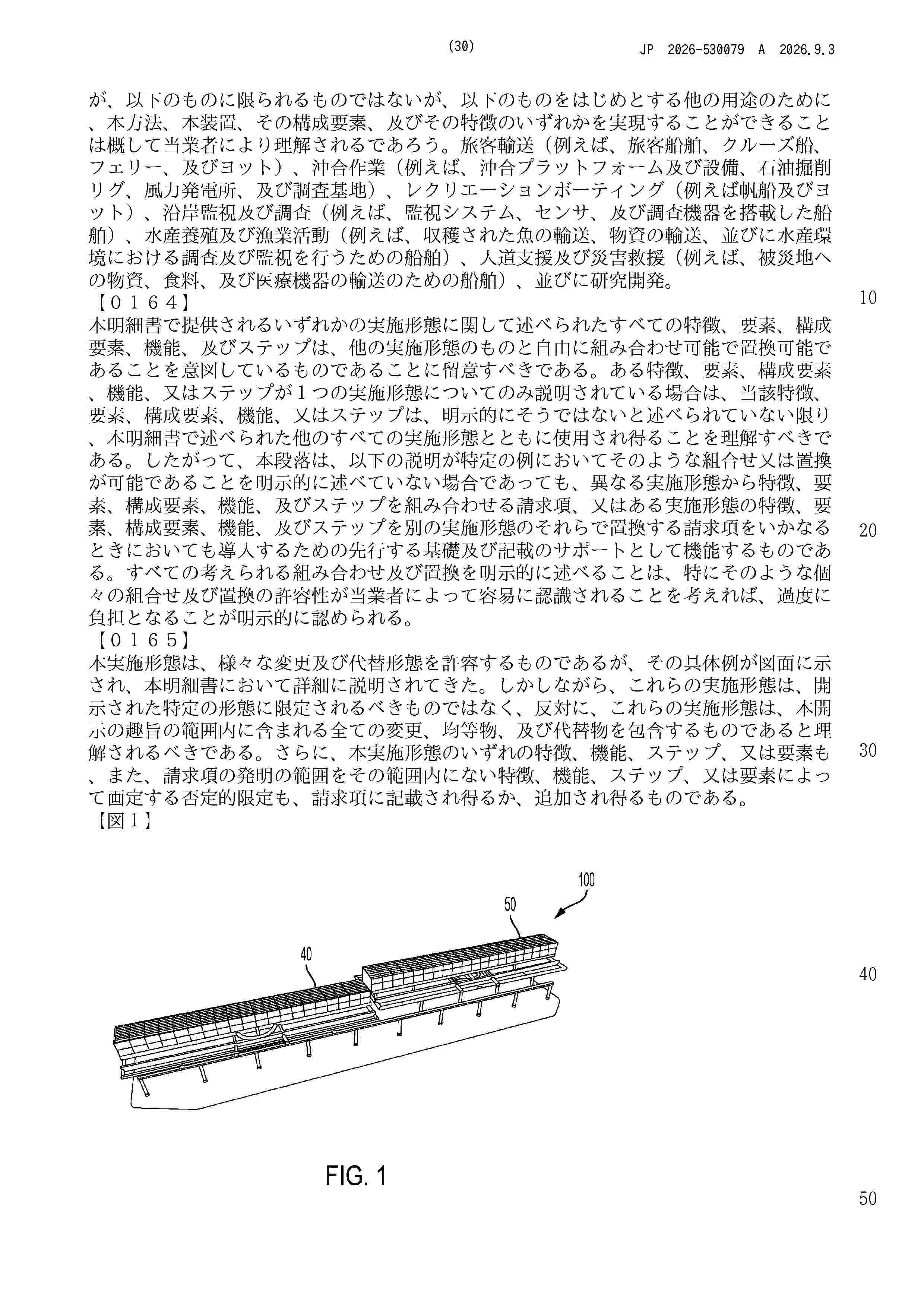
Apparatuses for marine vessels to maximize solar energy collection are provided, along with systems and methods relating thereto. In some embodiments, an apparatus is mounted on the top of a marine vessel and extends its surface area, facilitating optimal sun exposure for solar panels. In some embodiments, prior to docking, the apparatus can be folded and rotated to fit within the original ship's profile, allowing for efficient cargo loading and unloading from the top as is standard in the cargo industry. In some embodiments, an apparatus comprises a plurality of solar panels and a plurality of skids configured to trail behind a stern portion of a marine vessel.
Resumen de: AR135354A1
Es una tina quesera que incorpora el abastecimiento energético solar, a partir de lo cual resulta posible incluir un proceso de pasteurización del producto que se elabora. Comprende un panel fotovoltaico que alimenta una batería de ciclo profundo que integra su conexionado eléctrico, un tablero de control combinado con un Termotanque solar intercalado a un circuito de alimentación de agua proveniente de un tanque de reserva. Sobre el cuerpo de la tina se proyecta una torre portadora de un sensor de temperatura. El tablero de control incluye válvulas esféricas con llaves interruptoras rotativas que accionan el agitador o lira de la tina, o bien electroválvulas, a partir de llaves interruptoras rotativas. Se adicionan sensores y visualizadores para las temperaturas del agua de camisa, agua de ingreso y volumen de agua en camisa, vinculados a un microcontrolador. Se incluye un panel de visualización y una llave selectora, que permite elegir entre el programa de pasteurizado y programas de cuajado. Incorpora un aislante térmico entre la camisa y la carcasa.
Resumen de: CN122095546A
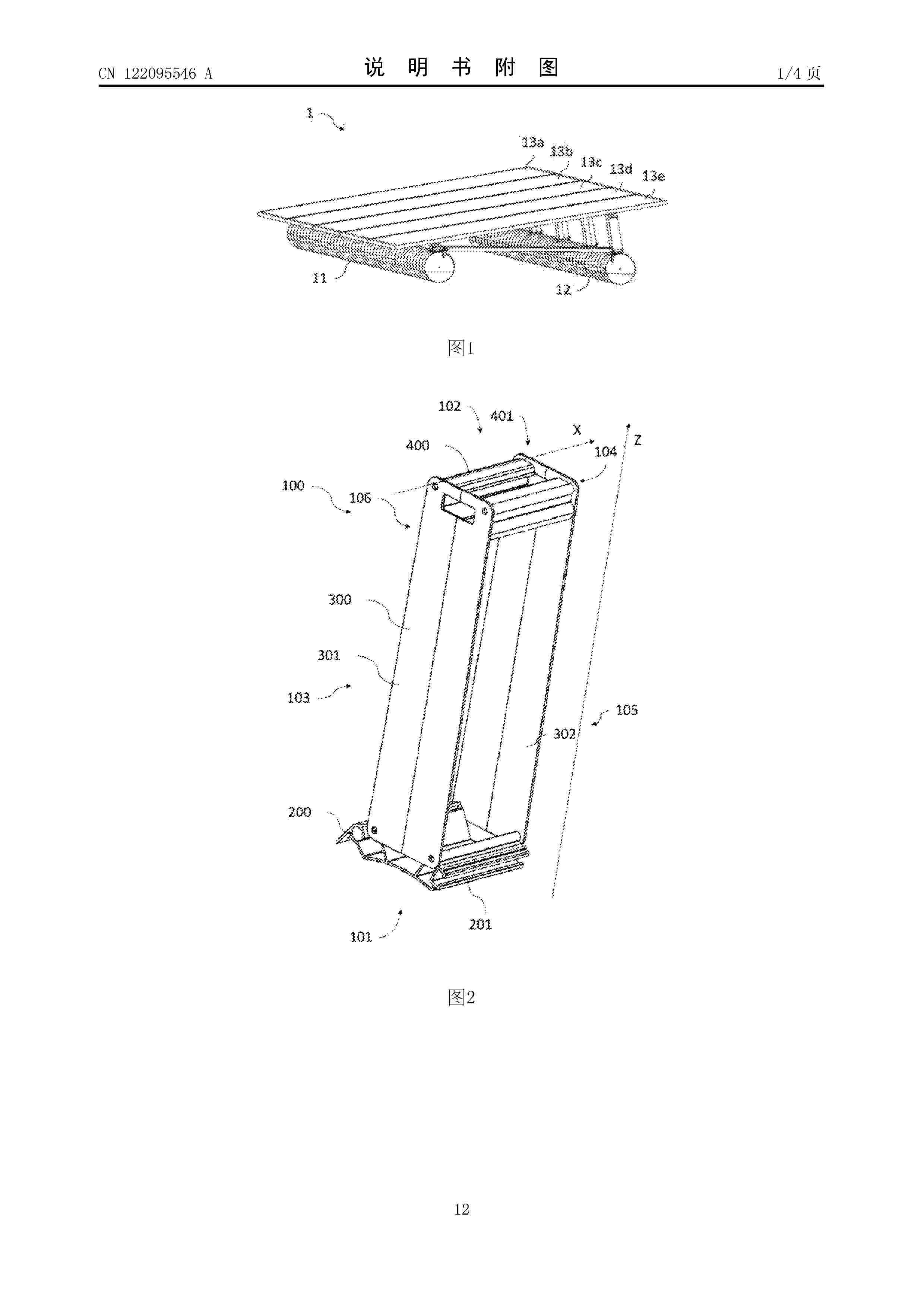
The invention relates to a holding part (100) comprising, in a main direction from a lower face to an upper face of the holding part (100): a base (200) extending between a first end face and a second end face; connecting means; and-a fastening portion (400) which is connected in a fixed connection to the base (200) using the connecting device (300). The fastening portion (400) comprises a profile extending between the two end faces, the fastening portion (400) defining a snap-fit recess (401) configured to allow an anchor clip to be inserted and snap-fitted in the recess, and the retaining member (100) comprises a lacing device configured to retain the base (200) through the lower face, the lacing device being configured to retain the anchor clip through the fastening portion (400). Such that the base is secured to the structure.
Resumen de: CN122670670A
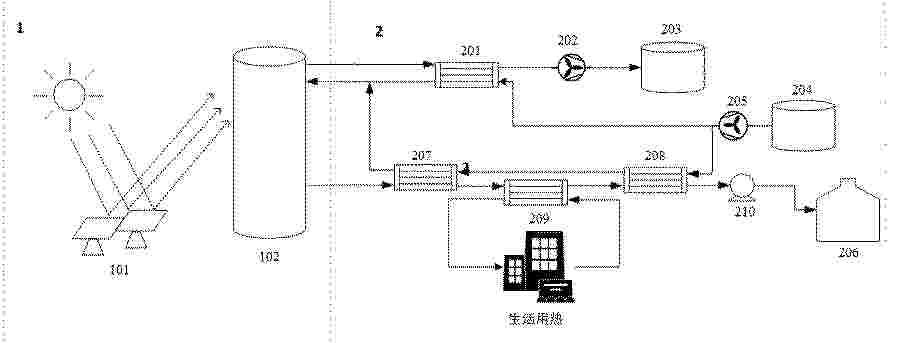
本发明公开了一种基于聚光太阳能与热化学储能的热电联供系统及运行方法,属于太阳能光热发电及储能技术领域,该系统包括储能子系统、换热网络和释热子系统。储能子系统利用聚光太阳能驱动流化床脱水反应器使钙基物料分解,从而实现热化学储能;换热网络设有气固、固液、气液等多级换热器,并设置固相分流支路,实现物料闭式循环、梯级余热回收、蒸汽混合回收,并可实现外部烟气余热回收;释热子系统利用流化床水合反应器释放的高品位热能,驱动集成分流再压缩与再热机制的超临界二氧化碳做功组件发电。本发明强化了系统内热能传递与转换过程的协同性,充分利用了钙基热化学储能在能量密度、存储周期与释热可控方面的优势。实现了灵活、可靠、高效的热电联供。
Resumen de: US12170502B1
0000 Described is a method for managing a trackable solar panel assembly and a variable reflective surface. The method can receive solar farm characteristics and location characteristics for the solar farm. The method can also receive solar panel assembly characteristics for a solar panel assembly and variable reflective surface characteristics for a variable reflective surface. The method can optimize control parameters for the solar panel assembly and the variable reflective surface, based on the solar farm characteristics, the location characteristics, the solar panel assembly characteristics, and the variable reflective surface characteristics. The method can adjust the variable reflective surface based on the control parameters.
Resumen de: CN122670539A
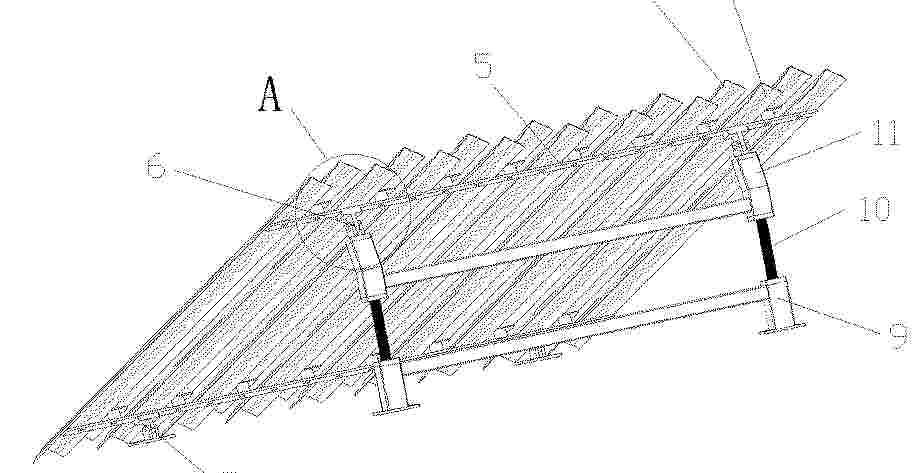
本发明涉及一种太阳能集热真空管反射增效装置,其安装于太阳能集热真空管阵列的下方,包括若干反射板、两根反射板连接件以及升降调节机构;若干反射板的截面均为波形、V型、波形与V型相结合的任意一种结构,若干反射板呈上下两层交错布置,且统一固定装配在两根反射板连接件的顶部;两根反射板连接件与升降调节机构、地面之间分别装配有第一角度调节器和第二角度调节器。本发明通过第一角度调节器和第二角度调节器同步协同调节,配合一端升降调节机构的高度适配,实现整组上下两层反射板的整体倾角统一调整与姿态定位,从而进一步实现集热管双面受光增效,且结构稳定。
Resumen de: CN122670464A
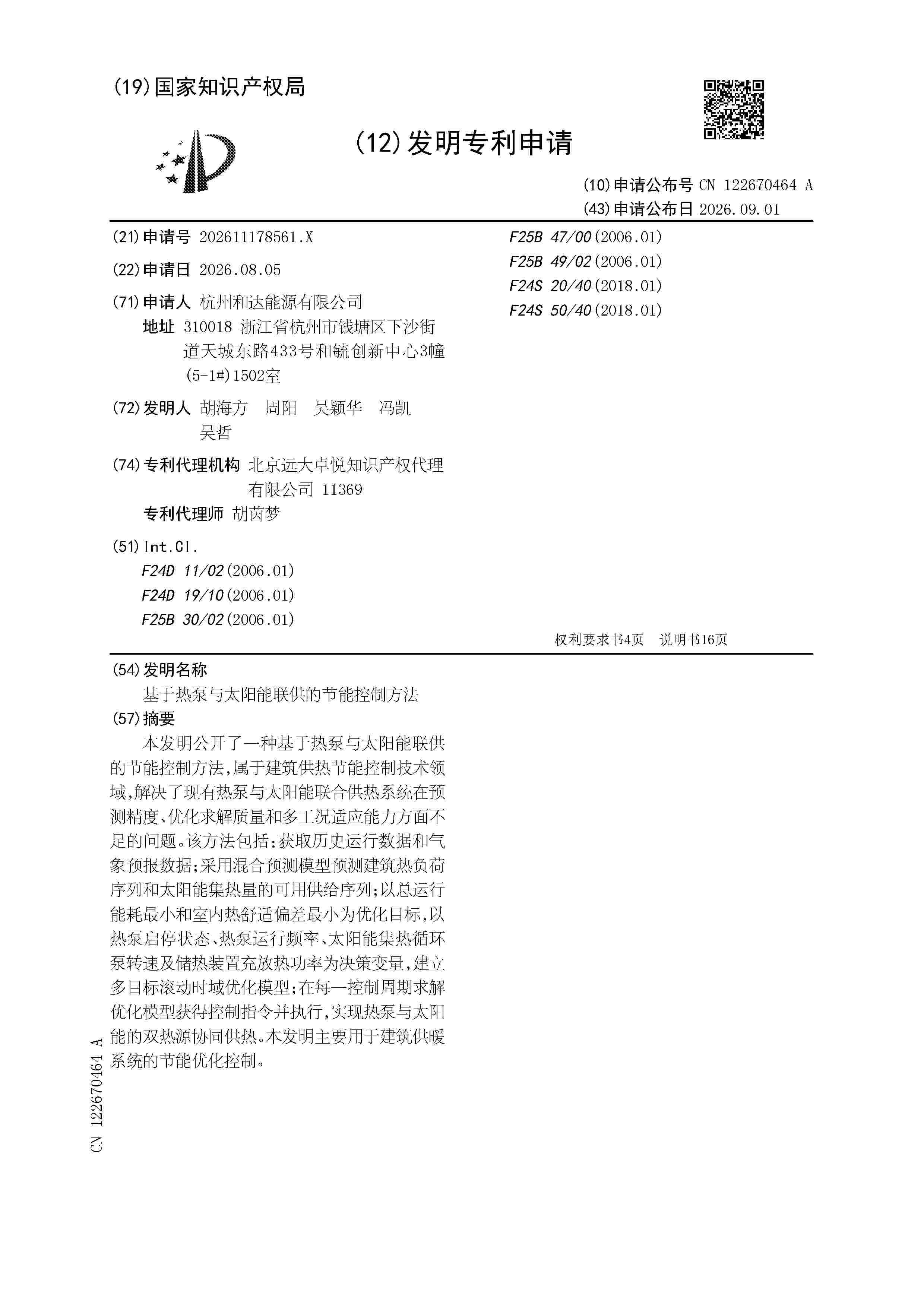
本发明公开了一种基于热泵与太阳能联供的节能控制方法,属于建筑供热节能控制技术领域,解决了现有热泵与太阳能联合供热系统在预测精度、优化求解质量和多工况适应能力方面不足的问题。该方法包括:获取历史运行数据和气象预报数据;采用混合预测模型预测建筑热负荷序列和太阳能集热量的可用供给序列;以总运行能耗最小和室内热舒适偏差最小为优化目标,以热泵启停状态、热泵运行频率、太阳能集热循环泵转速及储热装置充放热功率为决策变量,建立多目标滚动时域优化模型;在每一控制周期求解优化模型获得控制指令并执行,实现热泵与太阳能的双热源协同供热。本发明主要用于建筑供暖系统的节能优化控制。
Resumen de: CN122670419A
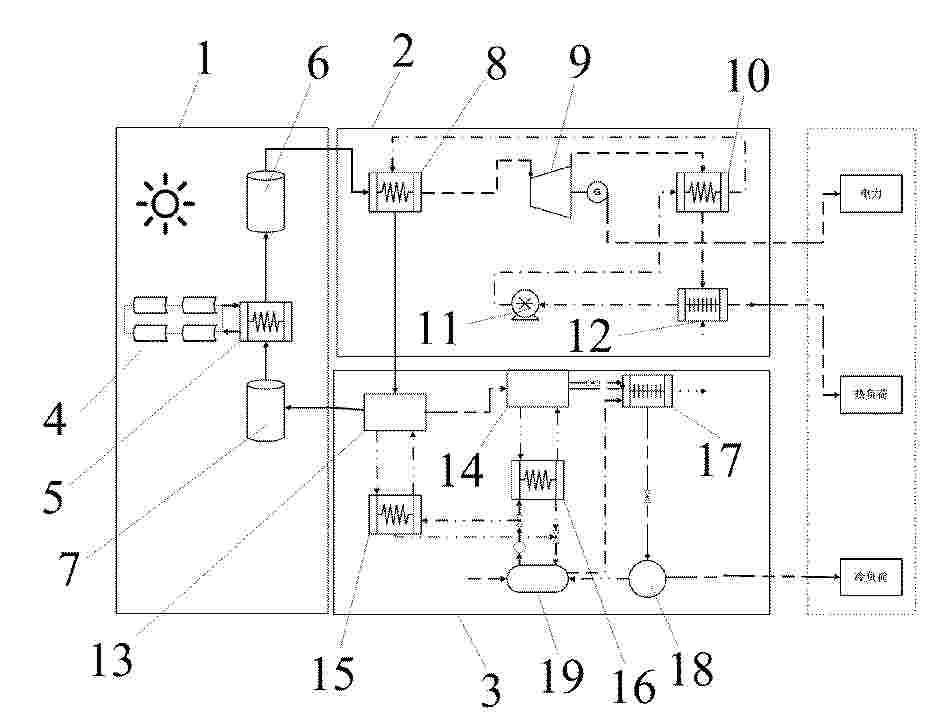
本发明公开了一种冷热电联供系统,涉及太阳能利用技术领域,包括储能介质、集热子系统、超临界有机朗肯循环子系统及制冷子系统;超临界有机朗肯循环子系统能够输出电力及热负荷;制冷子系统能够输出冷负荷;储能介质能够在集热子系统中被加热,从集热子系统离开的储能介质能够进入超临界有机朗肯循环子系统内,并为超临界有机朗肯循环子系统输出电力及热负荷提供第一驱动热能,从超临界有机朗肯循环子系统离开的储能介质能够进入制冷子系统内,并为制冷子系统输出冷负荷提供第二驱动热能;本发明能够提升能量转化效率。
Resumen de: CN122670538A
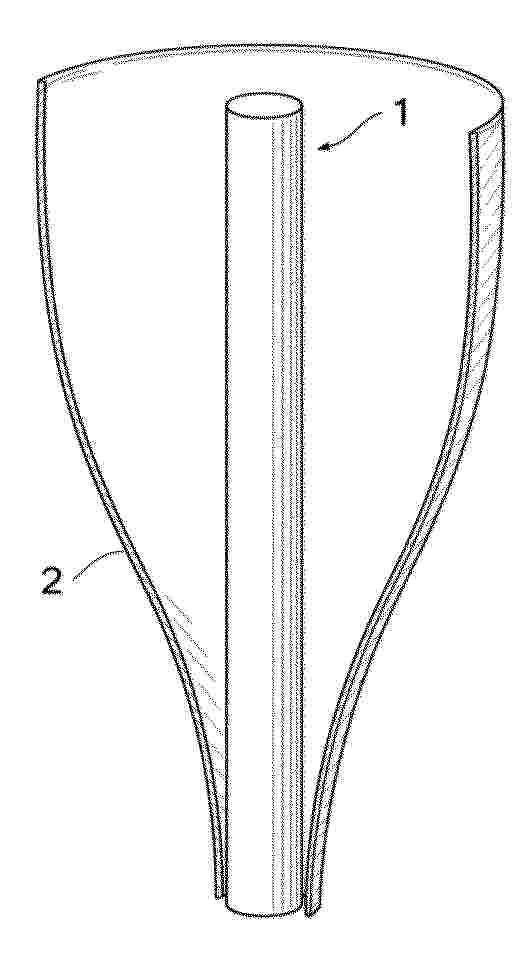
本发明公开了一种基于连续空间曲面调控的多角度太阳辐射汇聚反射结构及其应用,多角度太阳辐射汇聚反射结构包括竖向设置的受光管体以及环绕包覆在受光管体外侧的反射曲面结构,反射曲面结构用于将来自不同方向的太阳辐射反射并汇聚至受光管体表面;反射曲面结构为由上至下逐渐收敛的连续三维曲面结构,其包括上部开口区域、中部过渡曲面区域和下部收敛区域,下部收敛区域是与受光管体的外壁相贴合的收口结构。本发明既提高了太阳辐射接收范围,又能够围绕竖直受光管体形成连续包覆结构,在竖直空间上实现由开口到收敛的平滑过渡,从而提高太阳辐射的汇聚效率及利用率。
Resumen de: CN122678597A
本发明提供一种基于太阳能的光热和光电综合利用系统。所述基于太阳能的光热和光电综合利用系统,包括:机体机构和多个利用机构。本发明提供的基于太阳能的光热和光电综合利用系统,投入使用时,阳光会直接照射在光伏板和真空管上方,其中光伏板吸收直射及反射阳光并转化为电能,部分阳光经过分光膜的反射,再次将阳光传递至光伏板表面,形成二次光能利用,使得该装置通过采用分光膜的透射与反射协同作用,显著提升了单位面积阳光的能量捕获效率,且在提高阳光接收效率的同时可以有效限制真空管内温度,避免因过热导致的热损与光电转换效率下降,从而在保障光电转换效率稳定的同时,有效缓解高温对光伏组件性能的衰减影响。
Resumen de: CH722579A1
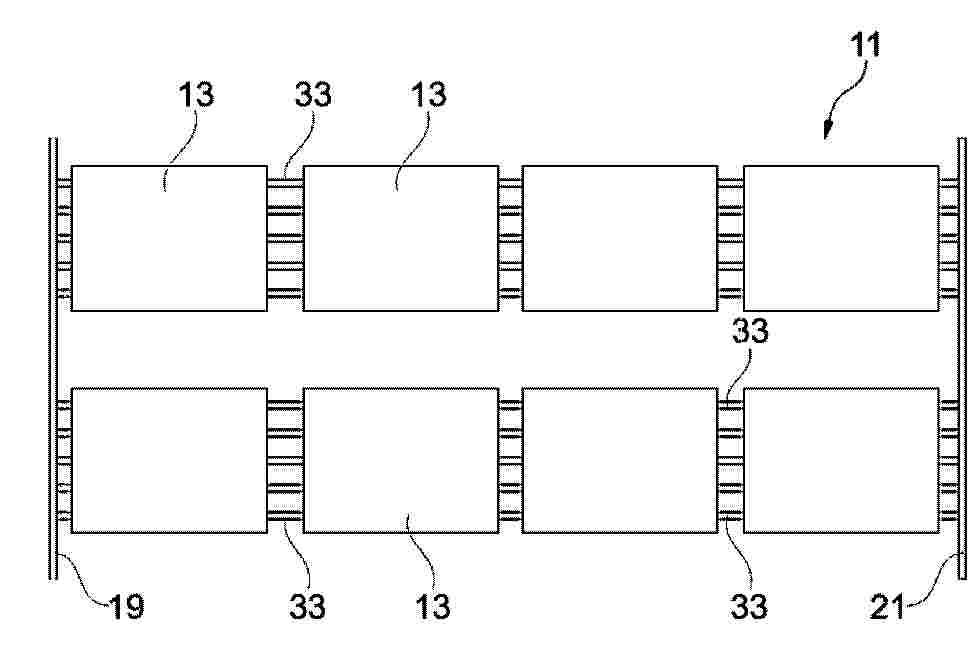
Die Erfindung betrifft eine Photovoltaik-Thermie (PVT)-Anlage (11) zur kombinierten Strom- und Wärmeproduktion aufweisend eine Mehrzahl von Photovoltaik(PV)-Modulen (13) und eine Mehrzahl von Wärmetauschern welche jeweils an der der Sonne abgewandten Rückseite der PV-Module (13) angeordnet sind und von einem Wärmeträgerfluid durchströmte Leitungen umfassen, wobei die Leitungen in einem Abstand zu den PV-Modulen (13) angeordnet sind. Die Wärmetauscher sind durch wenigstens eine von dem Wärmeträgerfluid durchströmte Rohrleitung (33) gebildet, welche Rohrleitung (33) sich über eine Mehrzahl von in einer Reihe angeordneten PV-Modulen (13) erstreckt und eine Vorlaufleitung (19) mit einer Rücklaufleitung (21) verbindet,
Resumen de: MA70688A1
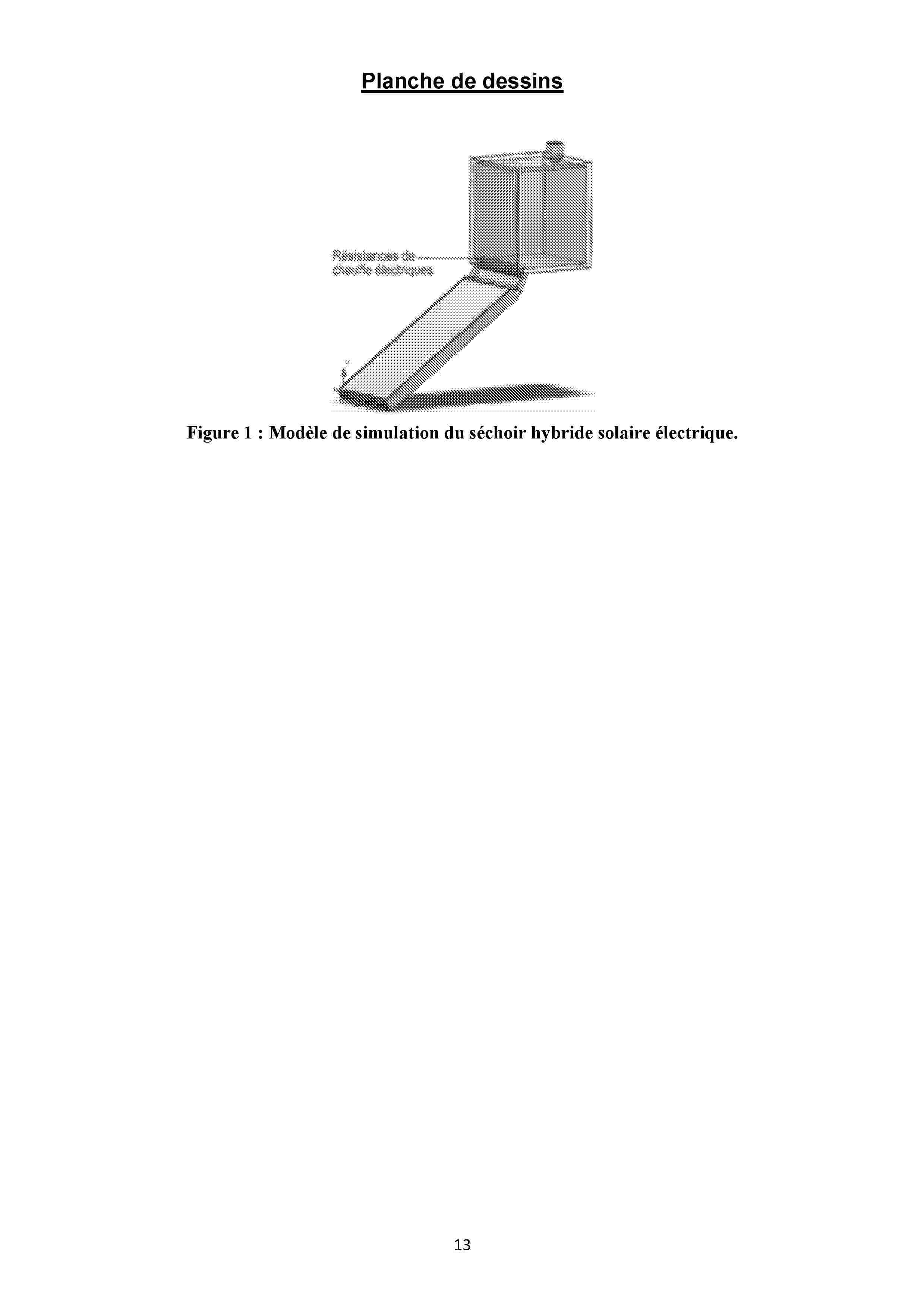
The hybrid solar dryer has been designed for continuous use under optimum energy consumption conditions, with control of temperature, humidity and air flow. The dryer enables efficient drying while preserving product quality. The operating temperature range varies from ambient to 300°C. The solar collector is powered both by solar radiation and by the combustion of drying air below the absorber. At its outlet, the collector is equipped with electric resistors with power ranging from 1 to 6 kW. The dryer is equipped with an on-board controller that monitors and controls temperature, humidity and drying air flow. The controller is linked to the temperature, humidity and airflow sensor, as well as to weather data for precise regulation of the drying process.
Resumen de: CN122650532A
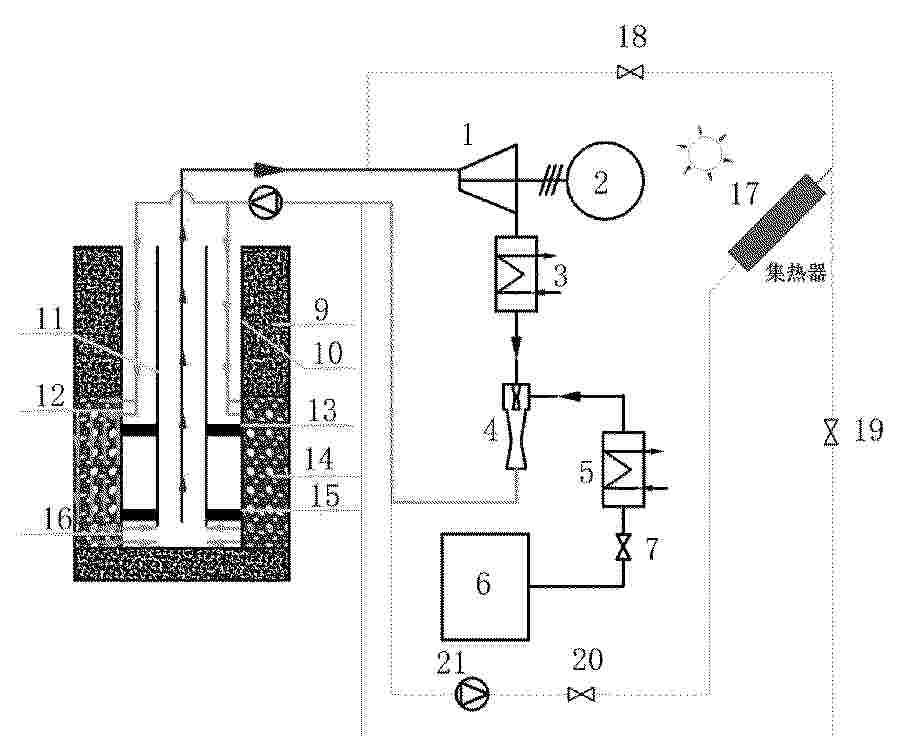
本发明公开了一种集成地下储热的槽式太阳能与超临界二氧化碳单井增强型地热冷热电系统,属于综合能源系统与可再生能源高效利用技术领域,包括膨胀机、发电机、供热换热器、喷射器、蒸发器、增压泵、井管外壁、压裂岩体、聚光集热器及连接管路,所述井管外壁深入岩石层形成地热井,所述井管外壁内部设有保温管,所述压裂岩体位于地热井底部,所述聚光集热器通过连接管路与循环工质通道连接,所述膨胀机与发电机连接,所述膨胀机通过连接管路分别与供热换热器、喷射器连通,所述喷射器通过连接管路与增压泵连通,所述增压泵通过连接管路与井管外壁和保温管形成的环空连通。
Resumen de: CN122650534A
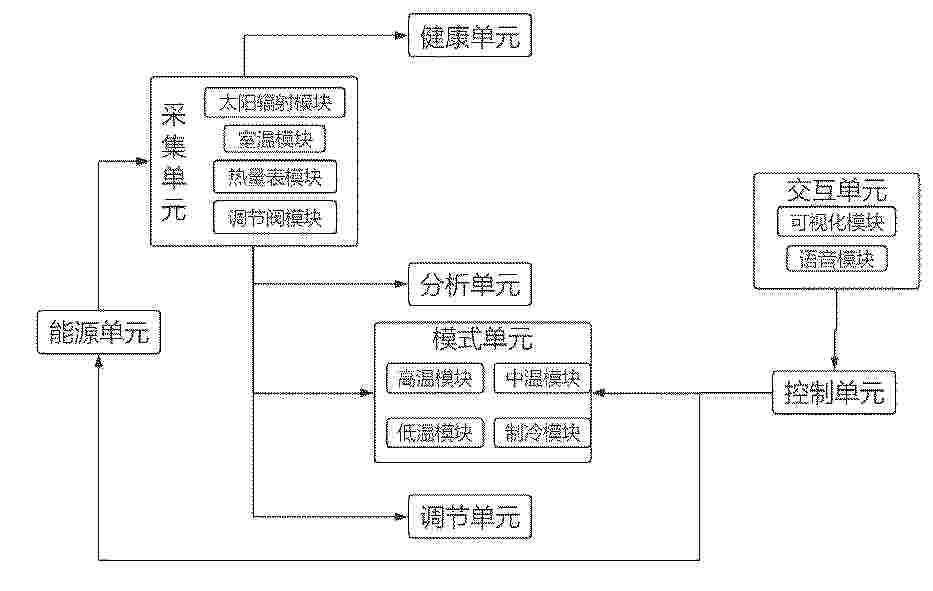
本发明涉及地热能利用技术领域,且公开了一种中深层地热能智慧控制平台,采集单元用于数据单元,能源单元用于能源提供,分析单元用于计算出综合温度ZW,模式单元用于模式切换,调节单元调节房间内阀门的开度,健康单元用于设备的健康值JK计算,交互单元用于人机交互,控制单元用于控制采集单元、能源单元以及模式单元运行;本发明通过设置采集单元与分析单元,采集太阳辐射、室外温度等参数,并计算出综合温度ZW,模式单元根据ZW值自动切换高温模块、中温模块、低温模块及制冷模块,实现太阳能、地源热泵、空气源热泵的多能源系统动态协同运行效果,进而提高对环境的自适应能力和能源利用效率,避免能源浪费与响应延迟。
Resumen de: CN122650348A
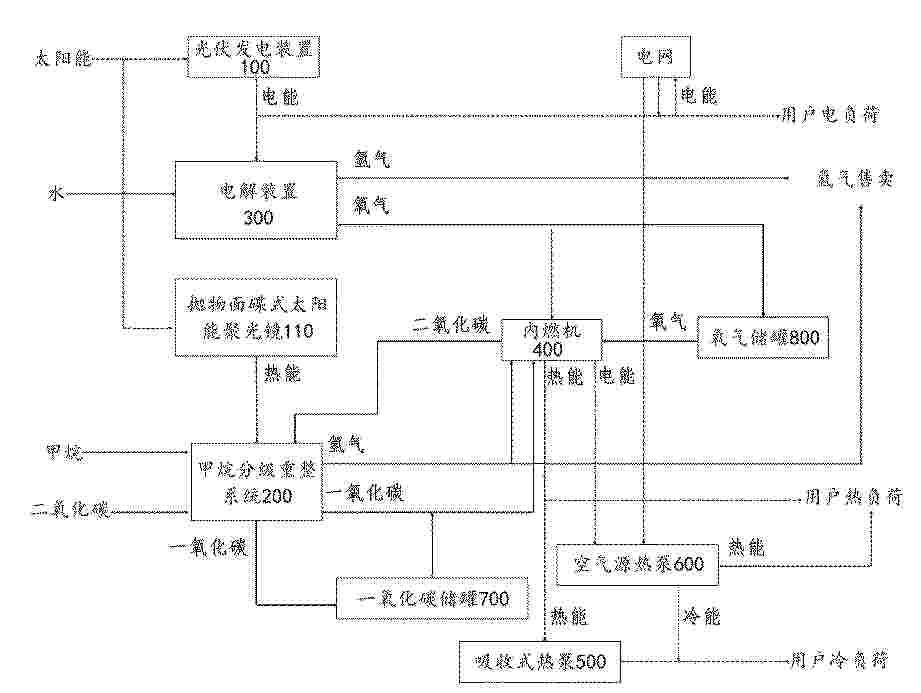
本发明属于能源系统技术领域,涉及了一种太阳能驱动的冷、热、电、氢联供系统及方法,旨在解决对化石能源依赖高、能效低、碳排放大的问题。本发明包括:光伏发电装置;甲烷分级重整系统,用于甲烷裂解生成固体碳和氢气,并使固体碳与二氧化碳歧化生成一氧化碳;电解装置,与光伏发电装置电连接,用于电解水产生氧气;内燃机,燃料进口连接一氧化碳出口,氧气进口连接电解装置的氧气出口;吸收式热泵,连接内燃机烟气出口;空气源热泵,与内燃机和/或光伏发电装置电连接;内燃机烟气出口还连接至重整系统的二氧化碳入口,用于将纯氧燃烧产生的二氧化碳回用。本发明能够实现太阳能高效转化、零能耗气体分离、近零碳排放及冷热电氢联供。
Resumen de: CN122652983A
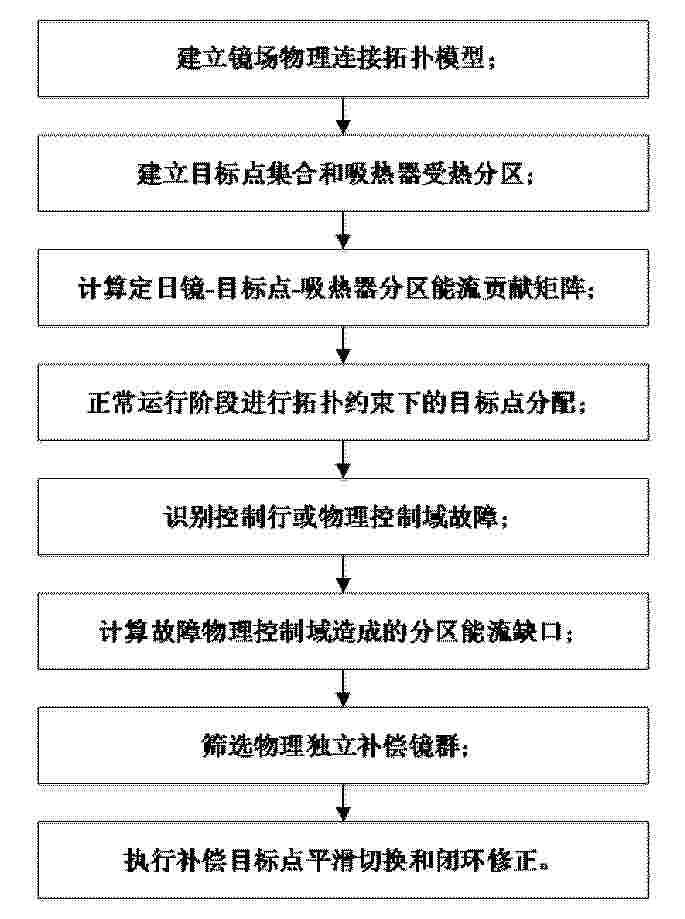
本发明公开了一种基于物理连接拓扑的塔式光热镜场能流稳定控制方法,属于太阳能热发电领域。包括获取定日镜的控制行、通信支路、供电支路等物理连接属性,建立物理连接拓扑并构建物理控制域;计算定日镜目标点吸热器分区能流贡献矩阵;在正常运行阶段引入物理控制域分散约束,限制单一物理控制域对任一吸热器受热分区的能流贡献占比;当物理控制域发生故障时,根据故障前目标点分配状态计算分区能流缺口,从物理独立的非故障控制域中筛选补偿镜群;执行补偿控制。本发明能降低物理连接故障引发的吸热器局部能流突降风险,提高故障补偿的响应速度和补偿镜群可靠性,保障吸热器热安全,适用于大规模塔式光热镜场。
Resumen de: CN122646842A
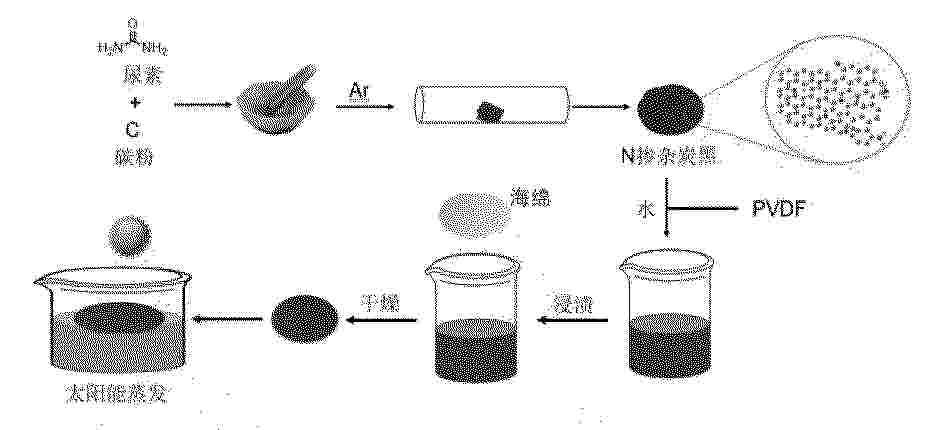
本发明公开了一种氮掺杂石墨碳材料及其制备方法与在太阳能界面蒸发中的应用。所述氮掺杂石墨碳材料的制备方法包括:将石墨碳粉末与尿素混合研磨后,在惰性气氛中于400~800℃煅烧,得到氮掺杂石墨碳材料。本发明还公开了一种复合型太阳能蒸发器,包括多孔海绵基底及负载于其上的所述氮掺杂石墨碳材料,其中以聚偏氟乙烯为粘结剂、十六烷基三甲基溴化铵为表面活性剂。该复合型太阳能蒸发器在1个太阳光强(1000 W/m2)下的蒸发速率可达4.23 kg•m‑2•h‑1,相比空白液面提升30%,且循环稳定性良好。本发明方法简单、成本低廉、氮掺杂可控,所得材料光热性能优异,适用于高盐废水的太阳能界面蒸发处理。
Resumen de: AU2025218561A1
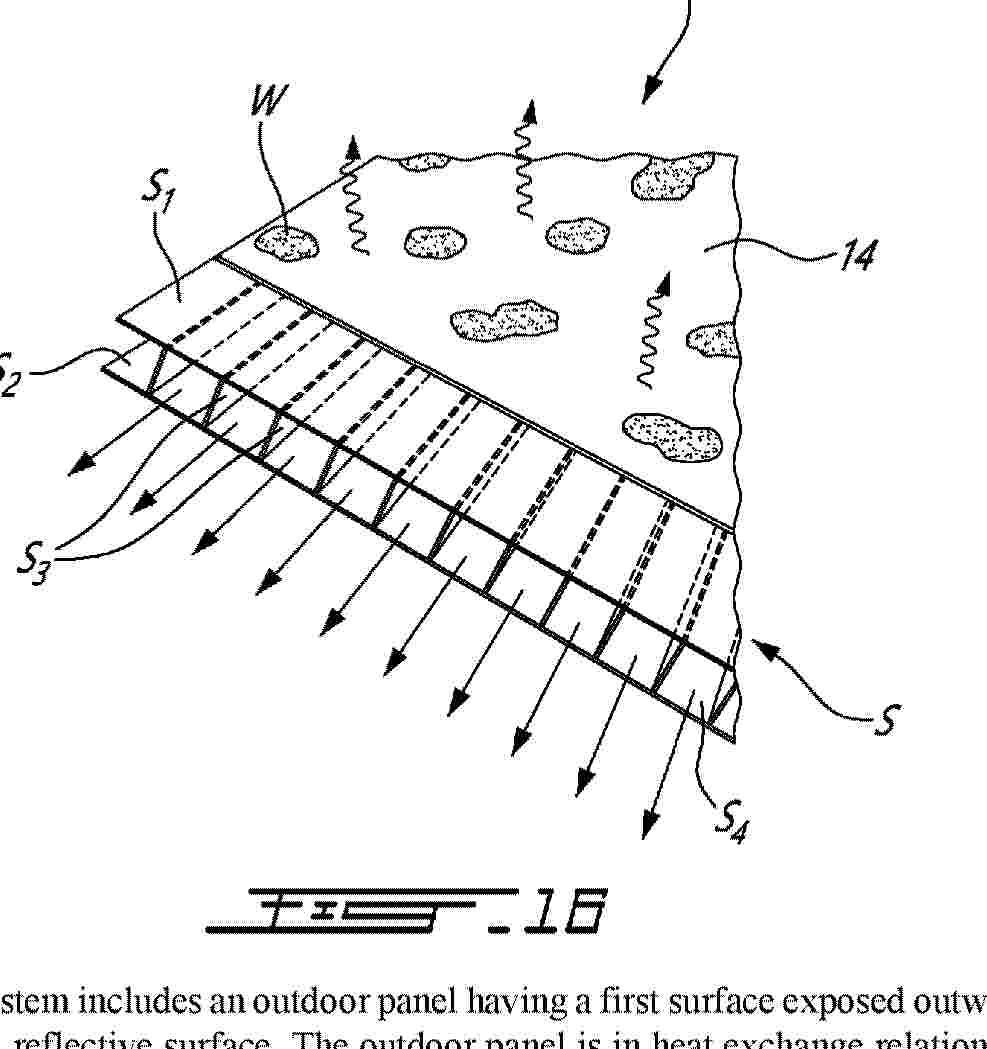
A thermal energy system includes an outdoor panel having a first surface exposed outwardly to an outdoor environment. The first surface is an emissive and reflective surface. The outdoor panel is in heat exchange relationship with an air passage adapted to be connected to a ventilation system of a building or process. A selective layer can be applied onto a second surface of the panel opposite to the first surface thereof. A system may be provided to pivot the panel from a first position in which the emissive surface faces the outdoor environment and a second position in which the selective surface faces the outdoor environment. The panel can be perforated and depression can be formed in the emissive surface to collect water between the perforations when the thermal panel is used in a cooling mode. The emissive and reflective side of the panel can be oriented to redirect solar radiations towards a solar collector to improve the performance thereof.
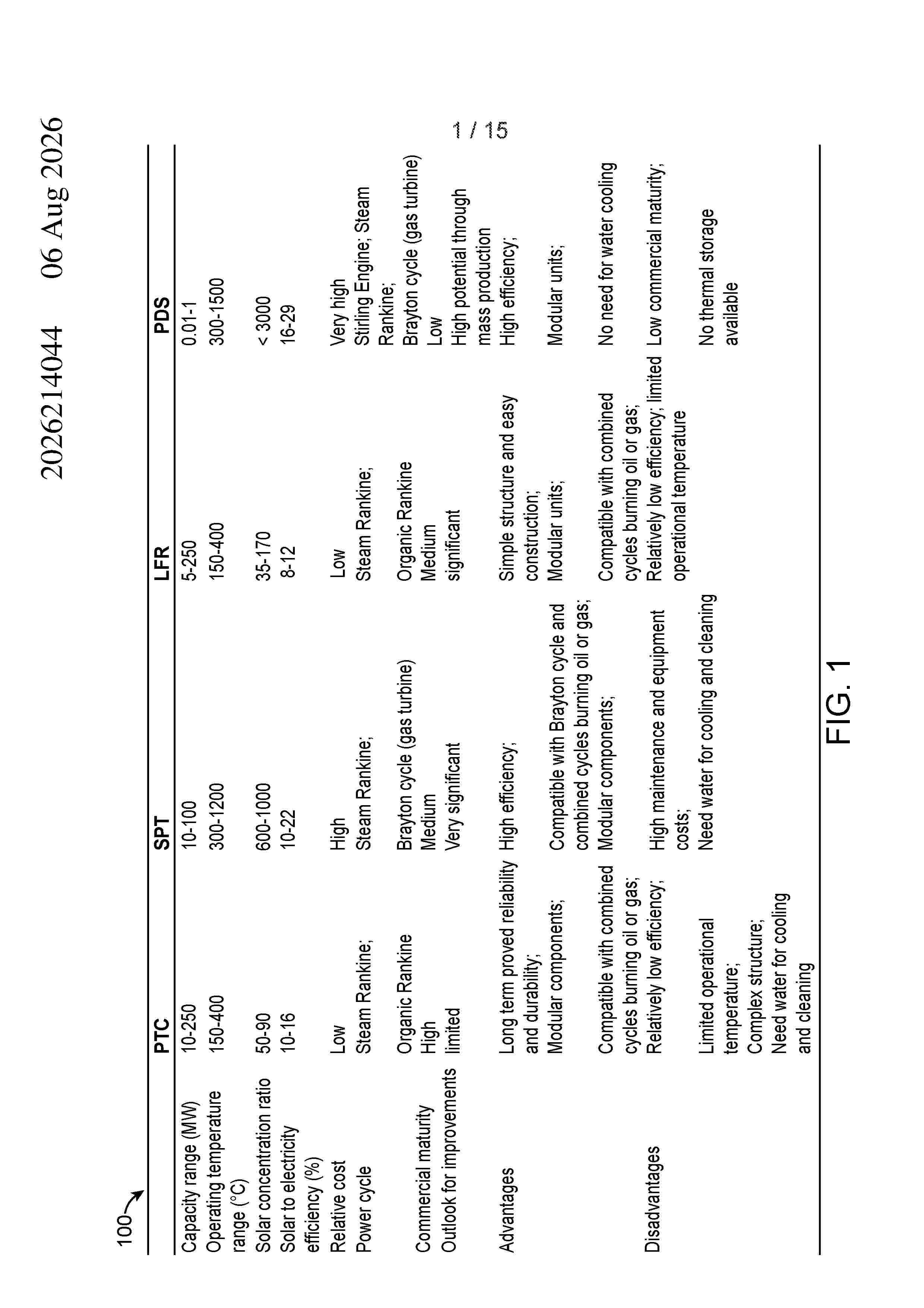
Resumen de: AU2026214044A1
Thermal energy storage systems and methods that include near-black body concentrated sunlight receivers disposed in thermal storage media for storing sunlight and extracting thermal energy for multiple end-use applications. The concentrated sunlight receivers are characterized by absorption of sunlight of at least 95%. The thermal energy storage systems are modular and transportable and can be scaled-up in capacity. Solar concentrators may be integrated with the thermal energy storage systems. ug u g
Resumen de: US20260251355A1
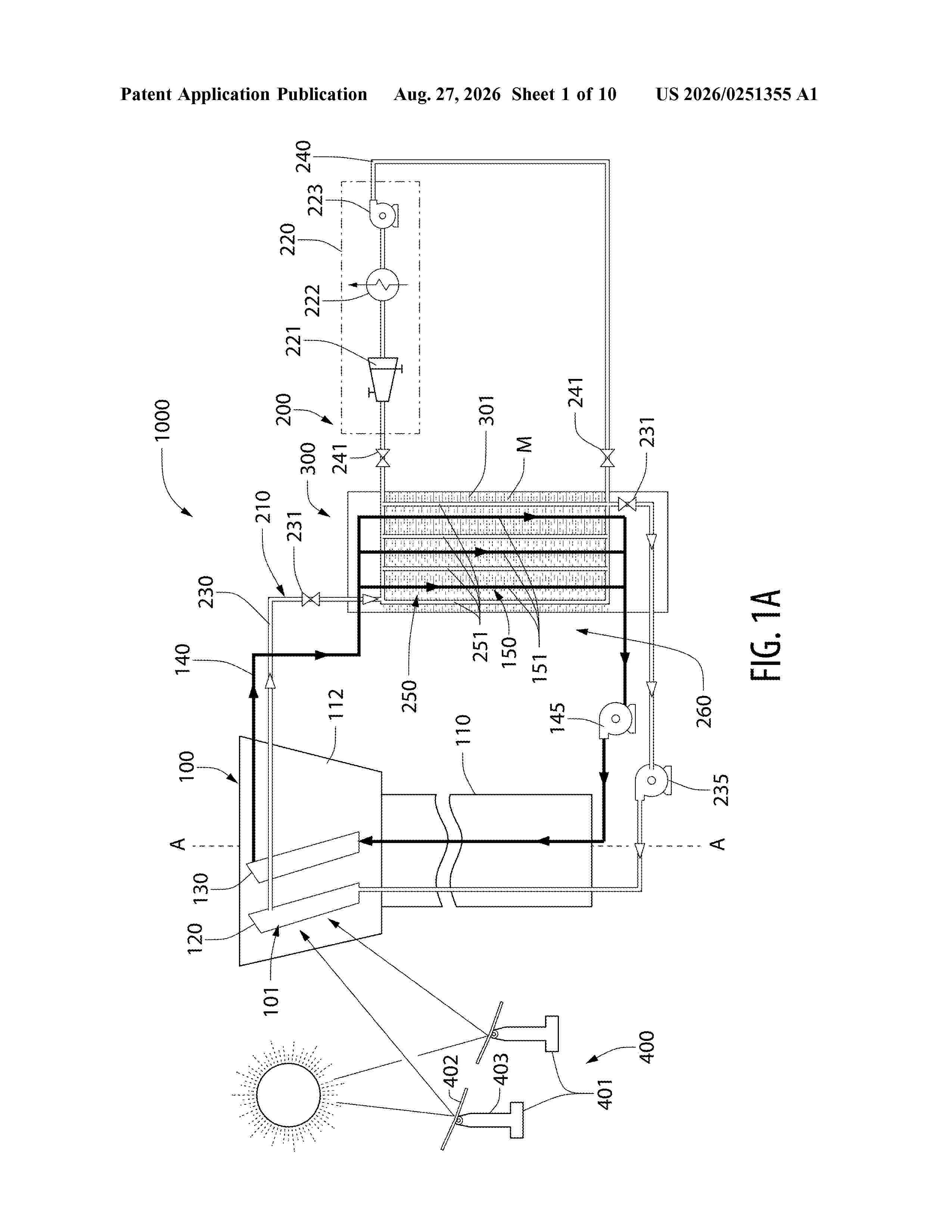
0000 A concentrated solar power system having a solar energy collection subsystem. The solar energy subsystem has tower extending along a tower axis and a first solar energy receiver movably mounted to the tower. The first solar energy receiver is alterable between a first state and a second state while remaining mounted to the tower, and the first solar energy receiver contains a first heat exchange fluid.
Nº publicación: WO2026178456A1 27/08/2026
Solicitante:
PLASTPRO 2000 INC [US]
PLASTPRO 2000, INC.
Resumen de: WO2026178456A1
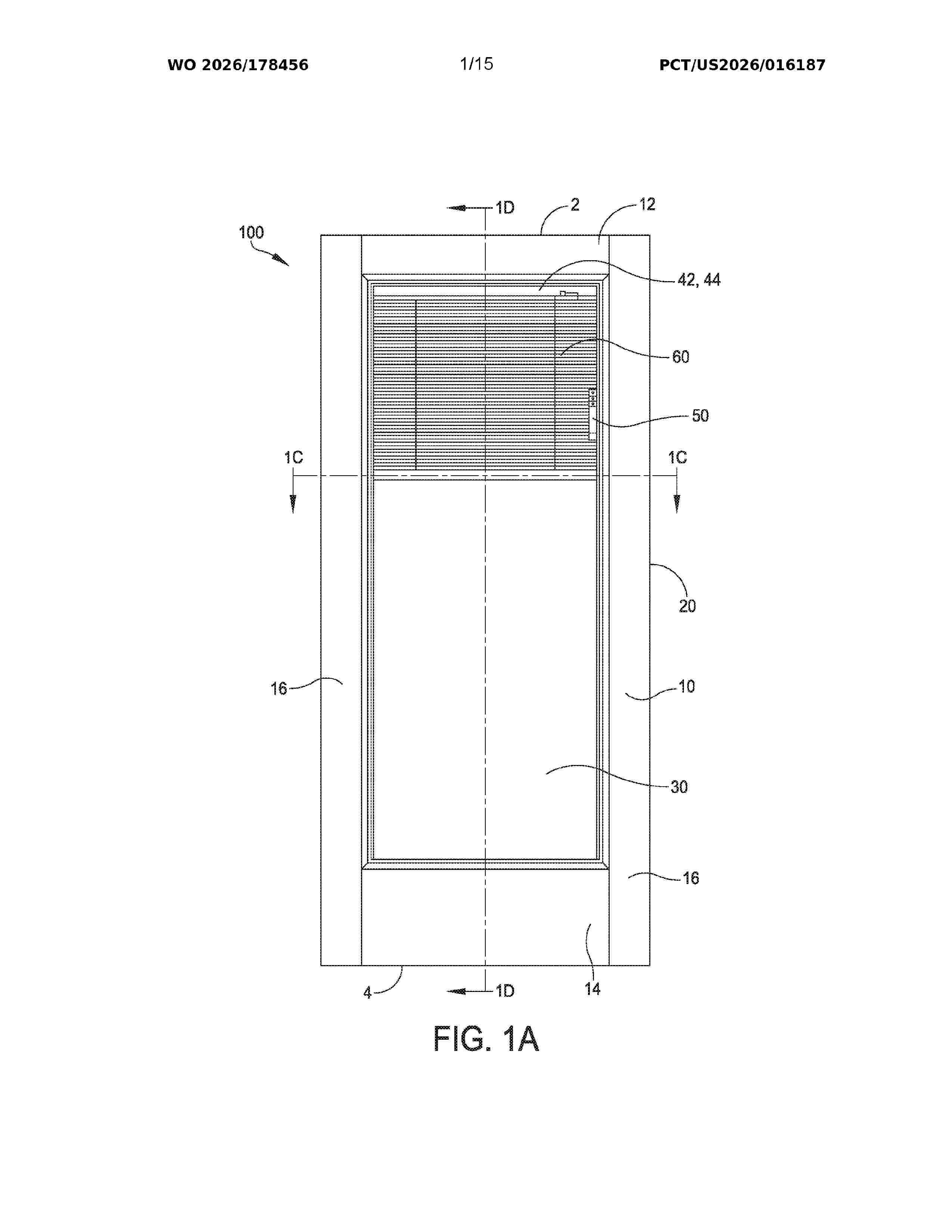
A door includes two skins and a glazing unit. Each skin has a skin body portion providing an outer door surface and defines an opening for the glazing unit. The glazing unit includes two glass panes with edge disposed between the skins. The glazing unit comprises a solar panel and a set of blinds or a switchable film. The set of blinds comprise a plurality of blades oriented in parallel. The door includes a rechargeable battery electrically connected with the solar panel and store electricity from the solar panel; and a motor mechanically connected with the set of the blinds or the switchable film and configured to direct the blinds or the switchable film by using power from the rechargeable battery. The door also includes a control on an exterior door surface, and can be also controlled via a remote control or through a mobile app on a smart phone.
 BOPI
BOPI
 Sede Electrónica