Si deseas distinguir tus productos, servicios o ambos de los de otra empresa, es posible que necesites una marca o nombre comercial. Descubre qué son, en qué consiste su procedimiento de registro y qué implica.

Información sobre los plazos de presentación de solicitudes de transformación de marcas de la Unión Europea en marca nacional española. Más información


Si tienes un nuevo dispositivo, producto o procedimiento que resuelva un problema técnico o tenga una ventaja práctica, existen distintas formas de protegerlo en España y en otros países. Descubre cómo hacerlo.

¿Tu innovación reside en la estética, la ornamentación o la apariencia de tu producto? Protégela mediante un diseño industrial. Descubre qué derechos confiere el registro y cómo realizar la tramitación.

Las indicaciones geográficas protegen el nombre de un producto originario de una zona geográfica, a la cual le debe una determinada calidad, reputación u otra característica. Descubre qué son, en qué consiste su procedimiento de registro y qué beneficios conceden.

Las patentes publicadas en todo el mundo son una valiosa fuente de información científica, técnica y comercial.

Si eres emprendedor/a o una empresa y quieres potenciar y mejorar la rentabilidad de tu negocio protegiendo de forma adecuada los activos intangibles de tu organización, en este espacio encontrarás lo necesario.


 1034
resultados
1034
resultados
 Última actualización
23/10/2026 [07:18:00]
Última actualización
23/10/2026 [07:18:00]


 Resultados 350 a 375 de 1034

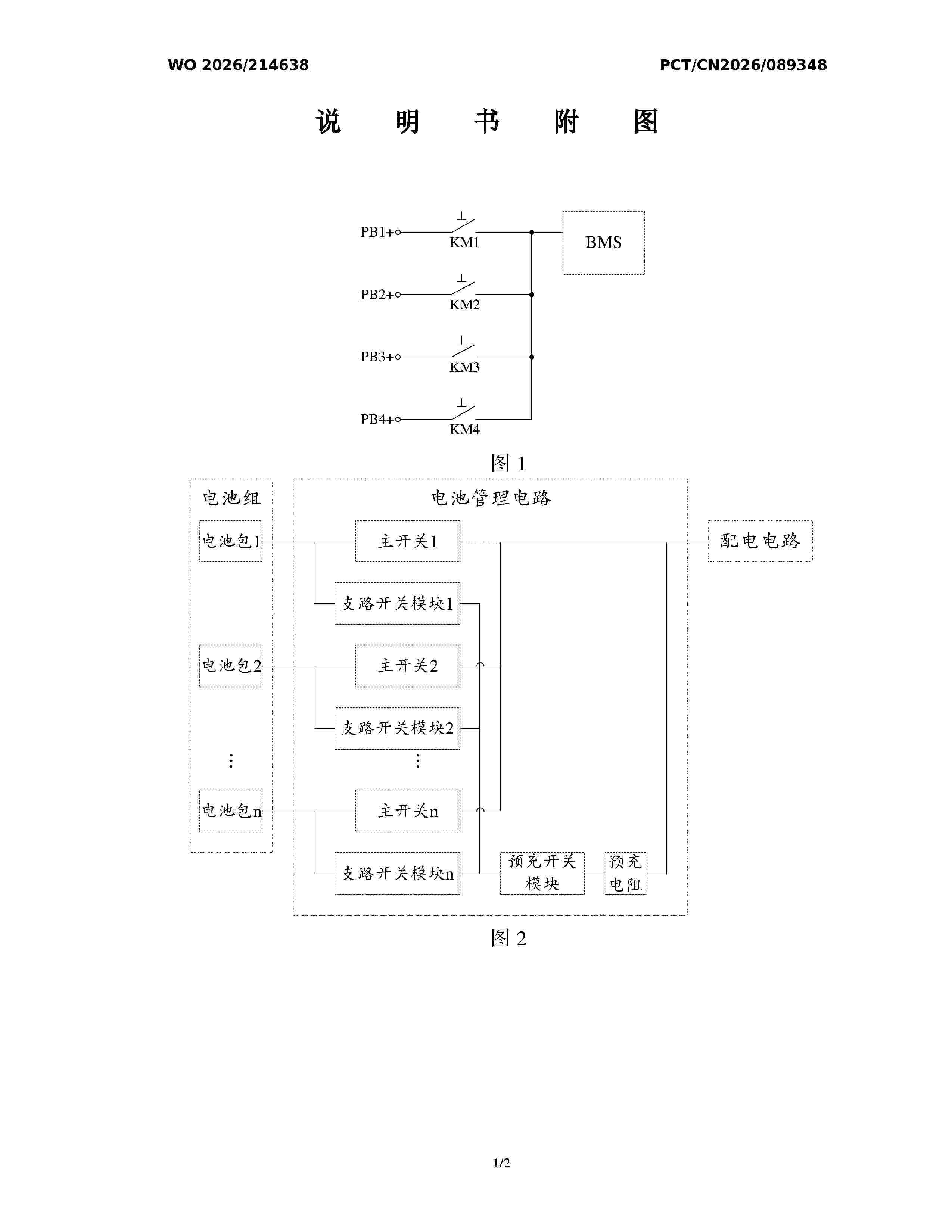
Resumen de: WO2026214638A1
Disclosed in the present application are a battery management circuit and a battery system, relating to the technical field of battery management. The battery management circuit is connected between a battery pack and a power distribution circuit; the battery pack comprises a plurality of battery modules; the battery management circuit comprises a plurality of main switches and a plurality of branch switch modules corresponding in number to the plurality of battery modules, as well as a pre-charge switch module and a pre-charge resistor; a positive electrode of each of the plurality of battery modules is correspondingly connected to one end of a respective main switch and one end of a respective branch switch module, and the other ends of the plurality of branch switch modules are all connected to one end of the pre-charge switch module; the other end of the pre-charge switch module is connected to one end of the pre-charge resistor; the other ends of the plurality of main switches and the other end of the pre-charge resistor are connected to the power distribution circuit. The present application achieves the effects of avoiding closing the main switches under load, so as to increase the service life of the components, and also ensuring consistency of the battery branches.

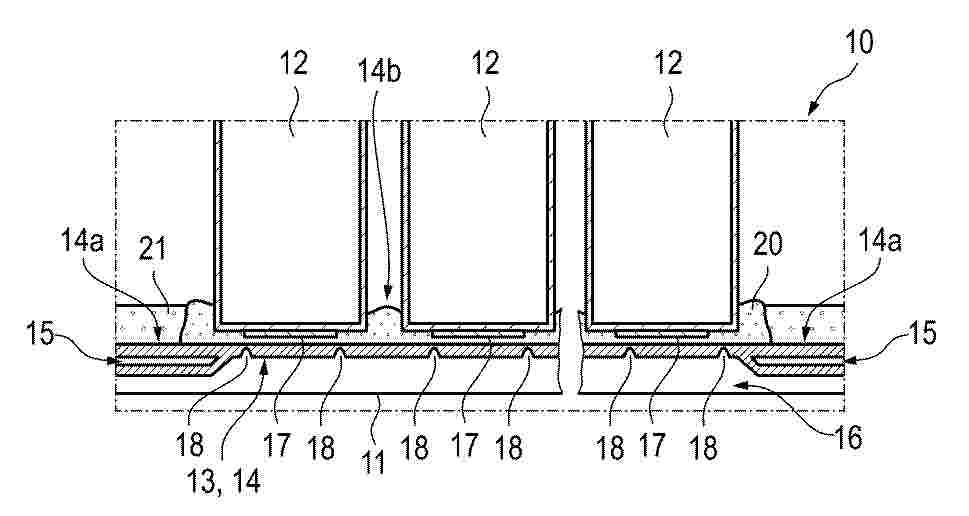
Resumen de: DE102025114199A1
Traktionsbatterie (10) eines Kraftfahrzeugs, mit einem eine Kühlplatte (14) aufweisenden Batteriegehäuse oder Batteriemodulgehäuse (13), wobei die Kühlplatte (14) eine Bodenwand des Batteriegehäuses oder Batteriemodulgehäuses (13) bildet, die einem Unterboden oder Unterfahrschutz (11) des Kraftfahrzeugs zugewandt ist, und mit mehreren im Batteriegehäuse oder Batteriemodulgehäuse (13) aufgenommen Batteriezellen (12). Entgasungsöffnungen (17) der Batteriezellen (12), über welche bei einem thermischen Durchgehen einer Batteriezelle (12) eine Entgasung der jeweiligen Batteriezelle (12) erfolgt, sind der Kühlplatte (14) zugewandt, wobei die Kühlplatte (14) in solchen Abschnitten (14b), die zu den Entgasungsöffnungen (17) der Batteriezellen (12) benachbart sind, einwandig und in anderen Abschnitten (14a) doppelwandig ausgebildet ist, und wobei die Kühlplatte (14) als geschlossene Kühlplatte ausgebildet ist und in den einwandigen Abschnitten (14b), die zu den Entgasungsöffnungen (17) der Batteriezellen (12) benachbart sind, Einkerbungen (18) aufweist, die eine jeweilige Sollbruchstelle bilden, entlang derer die Kühlplatte (14) beim thermischen Durchgehen der jeweiligen Batteriezelle (12) öffnet.
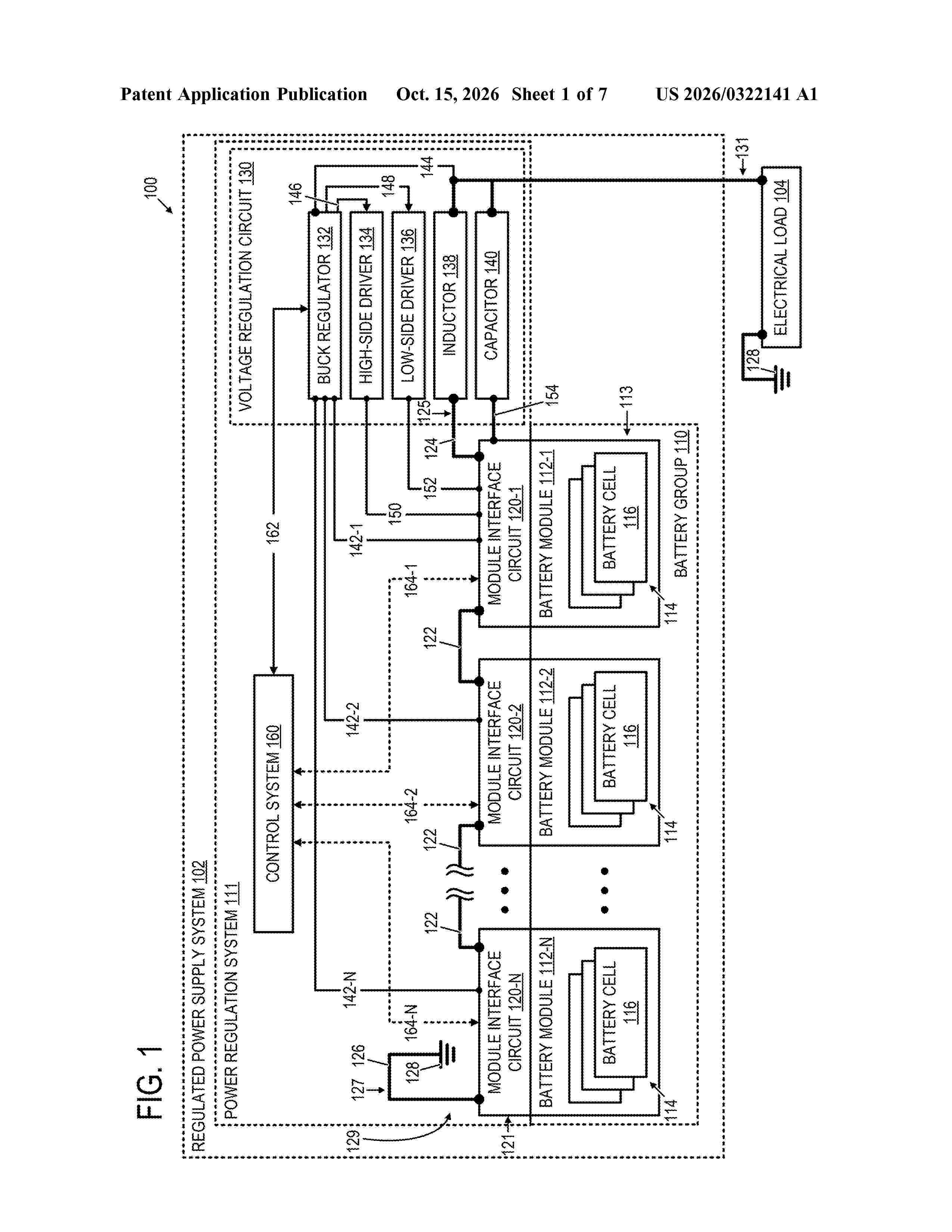
Resumen de: US20260322141A1
0000 A regulated power supply system, an integrated system, and a method are disclosed for providing regulated electrical power to an electrical load from a battery group. In an example, the regulated power supply system includes a buck regulator operable to regulate an unregulated voltage provided at an unregulated high-side interface of the battery group to a regulated voltage at a regulated high-side interface to which an electrical load can be connected. The buck regulator is configured to command a high-side driver to pass electrical energy to an inductor via the unregulated high-side interface during an on phase of a duty cycle during which the inductor is charged. The buck regulator is further configured to discontinue passing the electrical energy to the inductor during an off phase of the duty cycle.
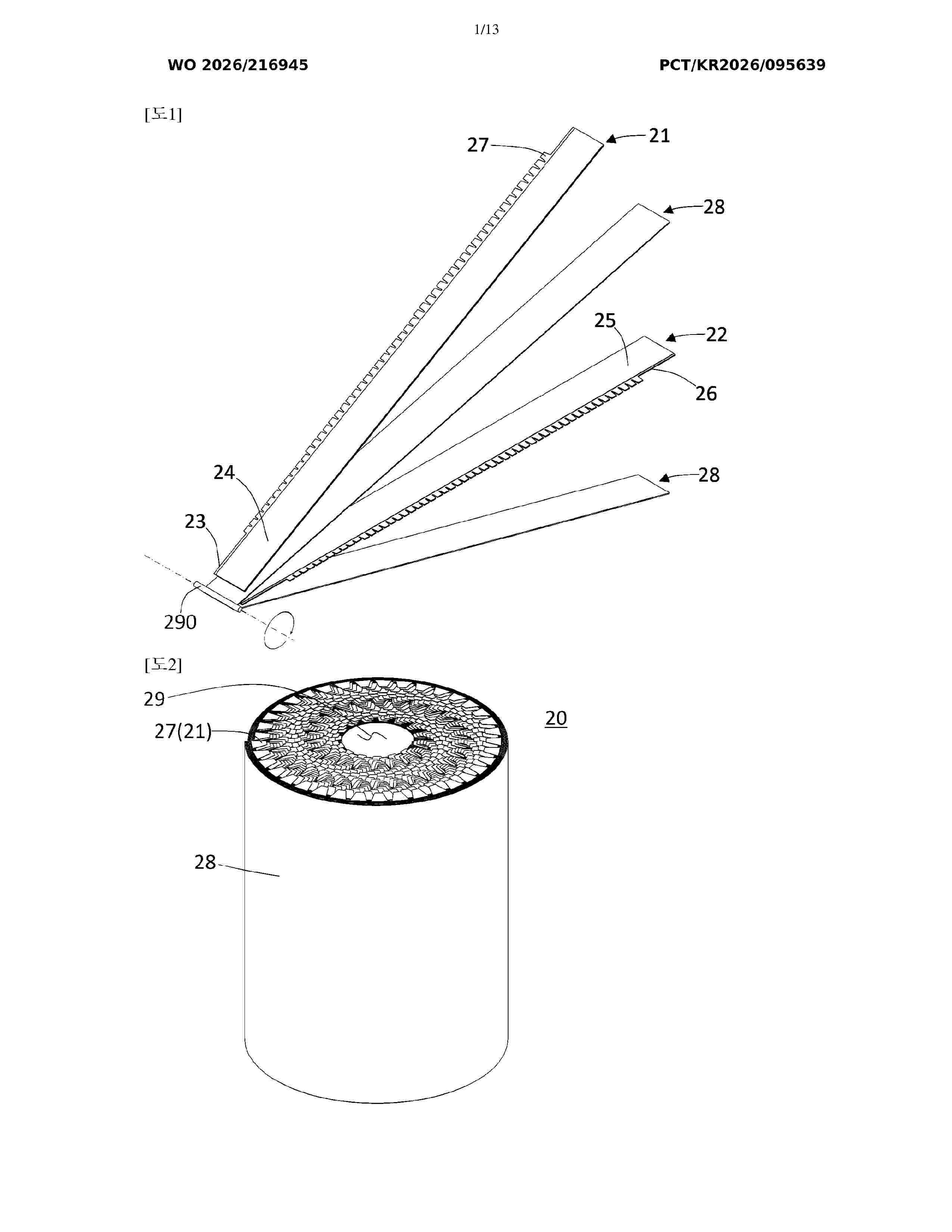
Resumen de: WO2026216945A1
Provided are a plug for blocking an injection port formed in a housing of a battery cell, and a welding structure of the housing. The housing comprises: a first ring unit surrounding the injection port to define the injection port formed through the housing in the axial direction, the first ring unit providing a first outer surface and a first inner surface on axially outer and inner sides, respectively; a second ring unit disposed on the radially outer side of the first ring unit and surrounding the first ring unit, the second ring unit providing a second outer surface disposed axially outward of the first outer surface and a second inner surface disposed axially outward of the first inner surface; and a step connection unit disposed axially between the first ring unit and the second ring unit and connecting the first ring unit and the second ring unit. The plug is stacked to be in contact with the first outer surface in the axial direction, and blocks the injection port, and the edge of the plug is welded to the housing. A first thickness of the first ring unit substantially corresponds to a second thickness of the second ring unit.
Resumen de: WO2026216148A1
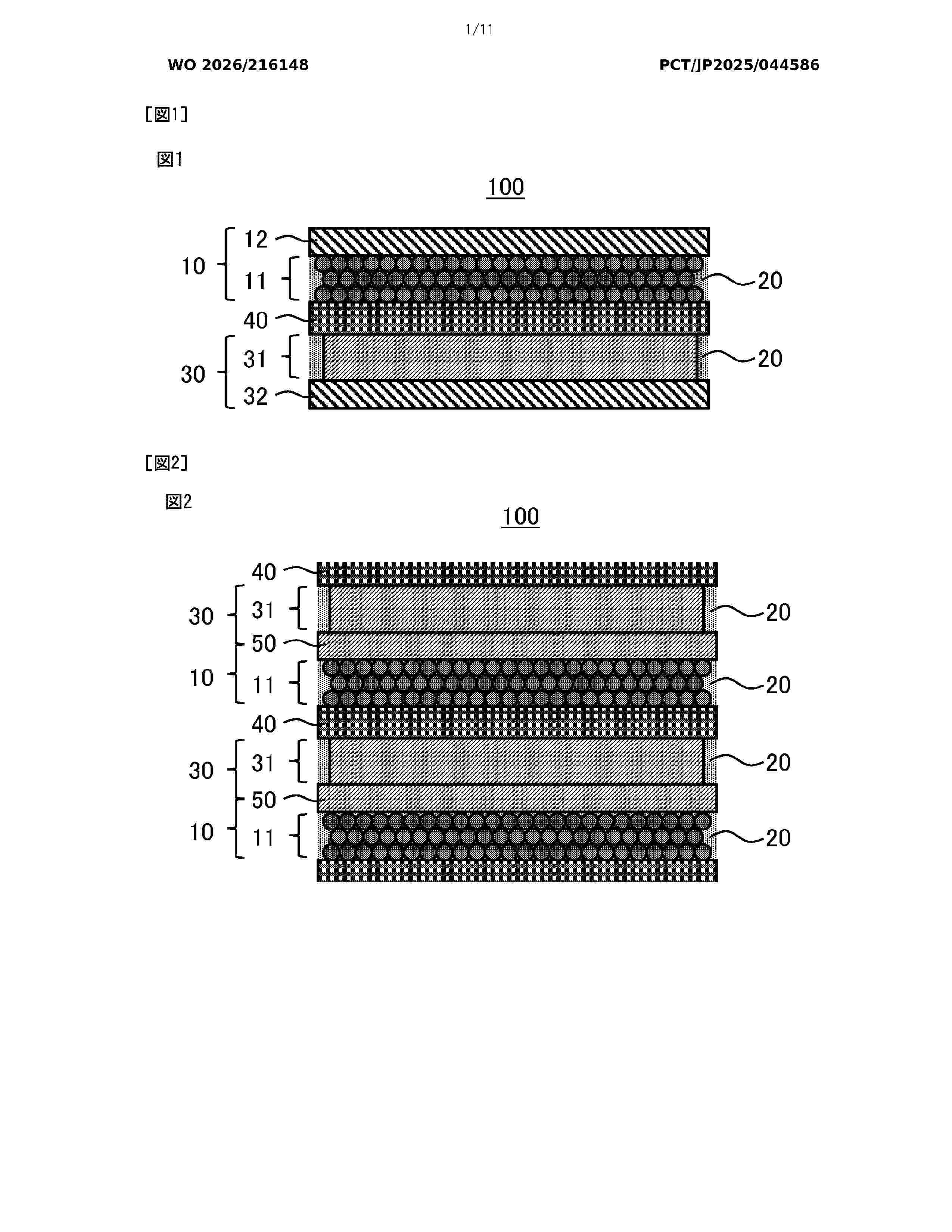
In an aqueous battery that is charged and discharged by precipitation and dissolution of zinc in a negative electrode, there is room for improvement in cycle characteristics and stability in charging and discharging. An aqueous battery according to the present disclosure comprises a positive electrode, an aqueous electrolyte solution, and a negative electrode. The aqueous electrolyte solution contains water, potassium polyphosphate dissolved in the water, and zinc phosphate and/or zinc polyphosphate dissolved in the water. The negative electrode contains zinc.
Resumen de: WO2026214206A1
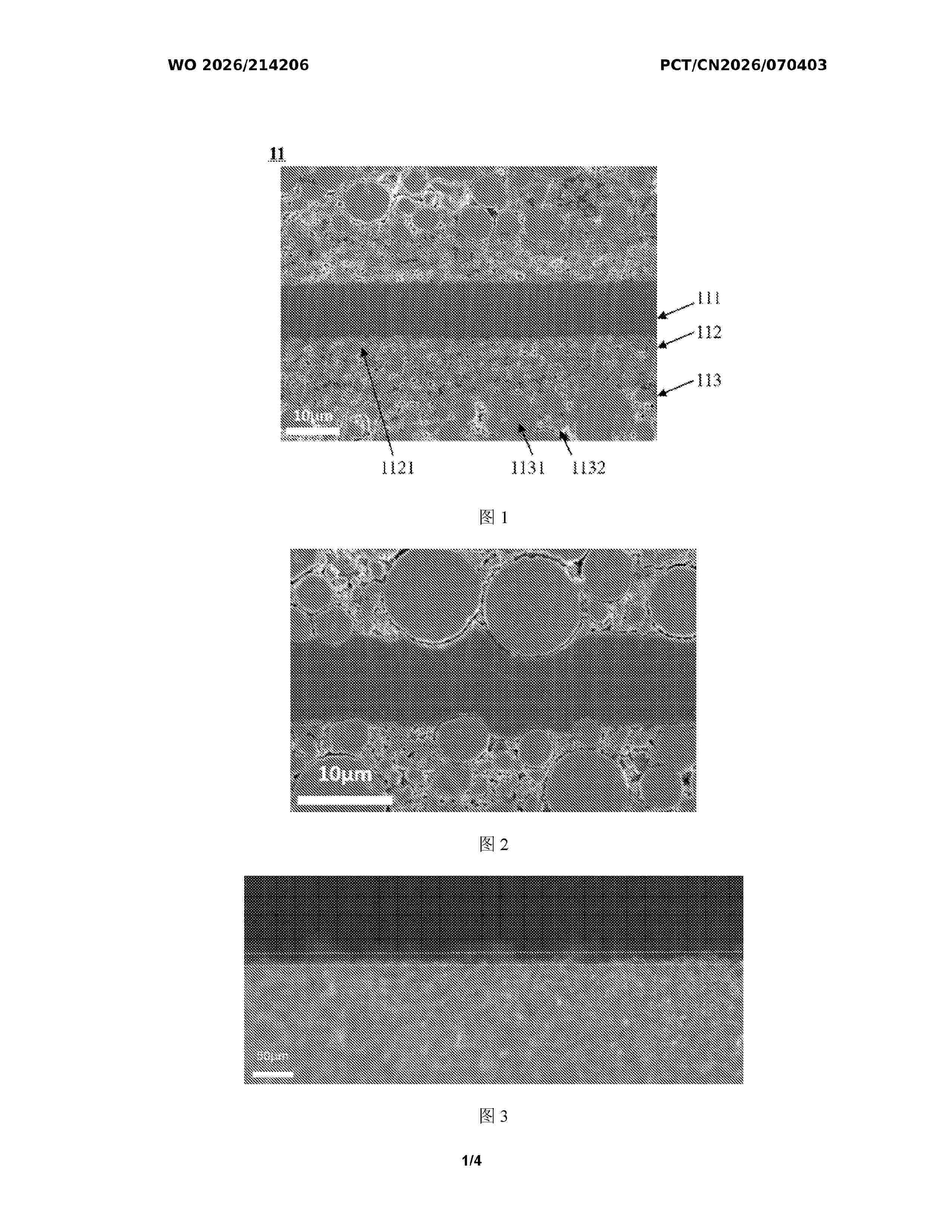
A battery cell. The battery cell comprises a positive electrode sheet, and the positive electrode sheet comprises a positive electrode current collector, a positive electrode film layer arranged on at least one side of the positive electrode current collector, and a primer coating located between the positive electrode current collector and the positive electrode film layer on at least one side, wherein the positive electrode film layer comprises polycrystalline particles, the primer coating comprises first monocrystalline particles, and the volume-based particle size Dv99 of the first monocrystalline particles is less than or equal to 16 μm. The battery cell has excellent energy density and safety performance.
Resumen de: DE102025113902A1
Die Erfindung betrifft ein Batteriemodul mit Abdichtung für ein Kraftfahrzeug, umfassend, ein erstes Akkumulatorgehäuse und ein zweites Akkumulatorgehäuse, wobei das erste Akkumulatorgehäuse einen Aufnahmeraum für zumindest einen Akkumulator umgrenzt und das zweite Akkumulatorgehäuse einen Aufnahmeraum für zumindest einen Akkumulator umgrenzt, wobei zwischen dem ersten Akkumulatorgehäuse und dem zweiten Akkumulatorgehäuse ein Spalt ausgebildet ist, wobei der Spalt durch ein Abdichtelement gasdicht abgedichtet wird, wobei das Abdichtelement einen Blechstreifen umfasst, welcher den Spalt überspannt und mit einer ersten Silikondichtung gegenüber dem ersten Akkumulatorgehäuse abgedichtet ist und mit einer zweiten Silikondichtung gegenüber dem zweiten Akkumulatorgehäuse abgedichtet ist, wobei die erste Silikondichtung an einem ersten Ende des Blechstreifens angespritzt ist und die zweite Silikondichtung an einem zweiten Ende des Blechstreifens angespritzt ist.
Resumen de: DE102025114413A1
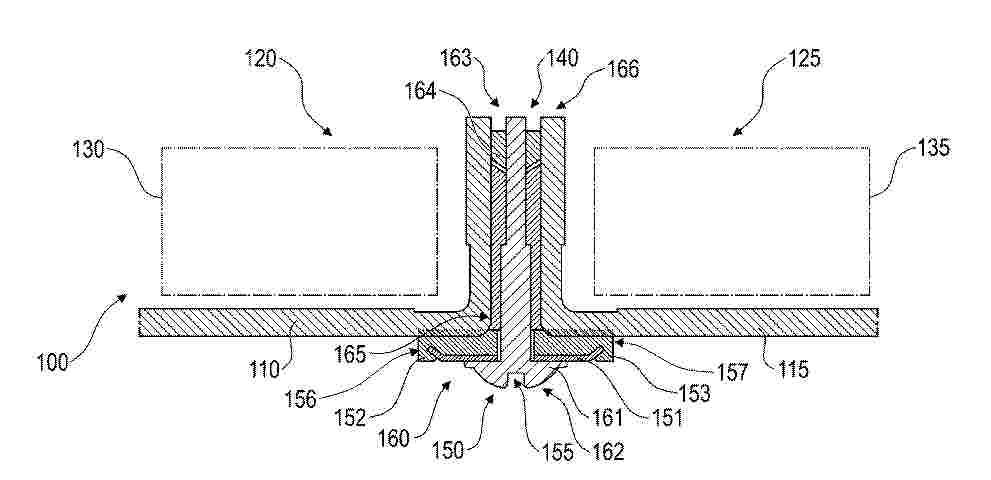
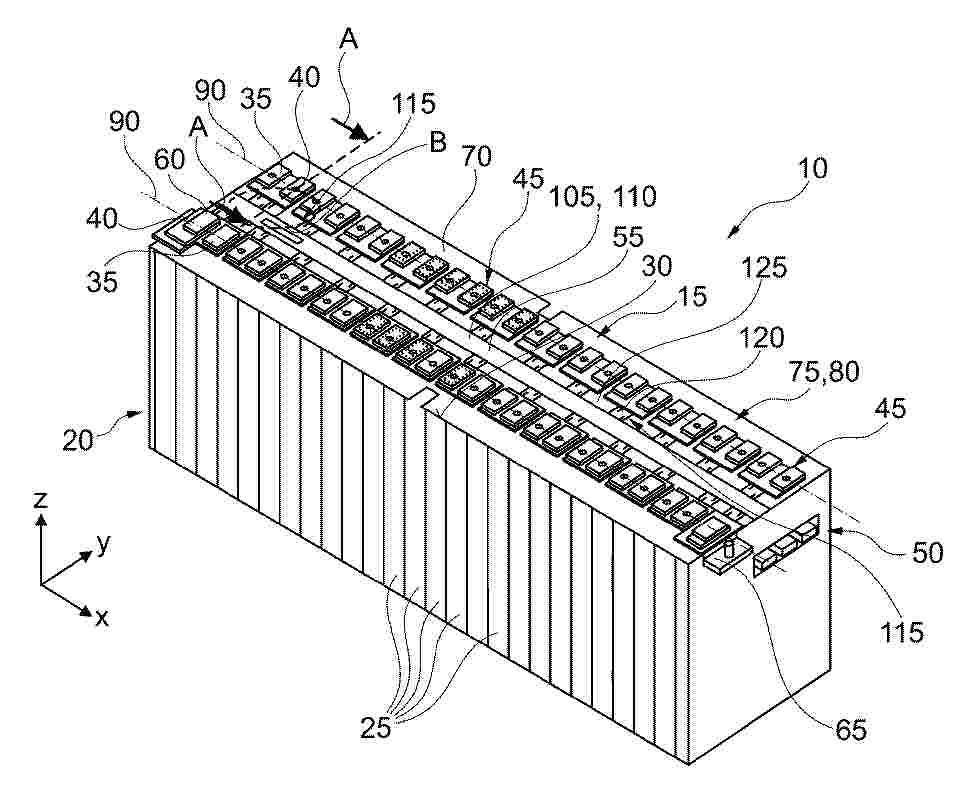
Die Erfindung betrifft ein Batteriebusbarsystem (15) und einen elektrischen Energiespeicher (10), wobei das Batteriebusbarsystem (15) eine Zellverbinderanordnung (45) mit wenigstens einer Zellverbindereinrichtung (75), eine flexible Leiterplatte (55) und eine Federkontakteinrichtung (85) aufweist, wobei die flexible Leiterplatte (55) wenigstens eine Leiterbahnanordnung (95) mit wenigstens einer Leiterbahn (100) aufweist, wobei die Zellverbindereinrichtung (75) ausgebildet ist, wenigstens zwei Energiespeicherzellen (25) einer Energiespeicherzellenanordnung (20) des elektrischen Energiespeichers (10) elektrisch zu verbinden, wobei die Federkontakteinrichtung (85) elektrisch die Leiterbahn (100) mit der Zellverbindereinrichtung (75) verbindet, wobei die Federkontakteinrichtung (85) eine Spannfeder (125), ein erstes Kontaktelement (130) mit wenigstens einer ersten Gleitfläche (140) und ein zweites Kontaktelement (135) mit wenigstens einer zweiten Gleitfläche (145) aufweist, wobei die Spannfeder (125) vorgespannt ist und die erste Gleitfläche (140) und die zweite Gleitfläche (145) derart aneinanderdrückt, dass das erste Kontaktelement (130) elektrisch mit dem zweiten Kontaktelement (135) verbunden ist und dass mechanisch das erste Kontaktelement (130) und das zweite Kontaktelement (135) relativ gegenüber einander verschiebbar sind.
Resumen de: AU2026202158A1
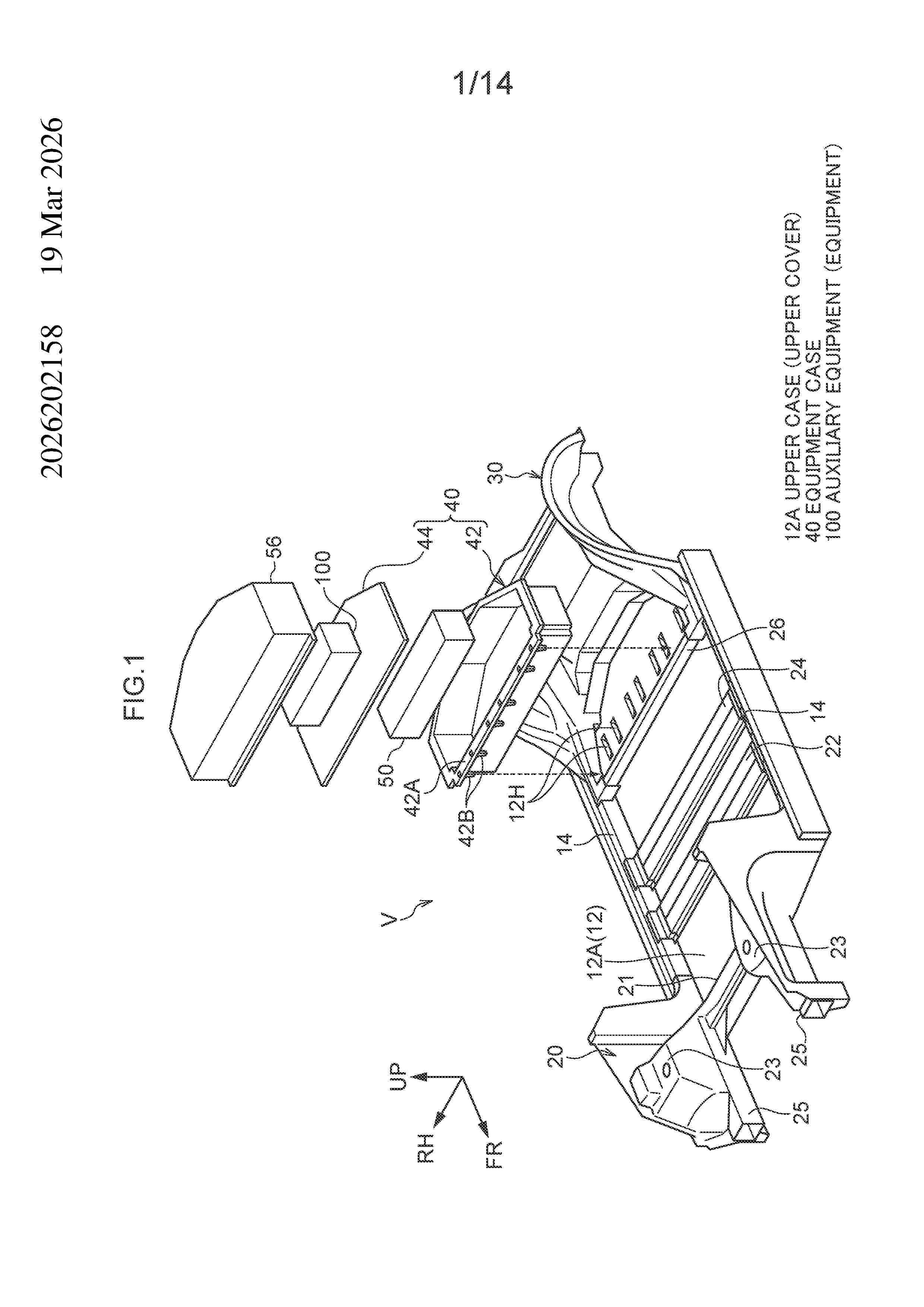
A vehicle battery installation structure including an upper cover arranged above an energy storage cell, a cross member spanning in a vehicle width direction above the upper cover, and an equipment case arranged above the upper cover and at a vehicle rear side of the cross member, with equipment housed inside the equipment case. At least part of the equipment case and at least part of the cross member are arranged so as to oppose each other in a vehicle front-rear direction. VEHICLE BATTERY INSTALLATION STRUCTUREVEHICLE BATTERY INSTALLATION STRUCTURE front-rear direction. ar a r a r A( ) ( ) ( ) 12A(12) 12A UPPER CASE (UPPER COVER) 40 EQUIPMENT CASE 100 AUXILIARY EQUIPMENT (EQUIPMENT) ar a r 12A UPPER CASE (UPPER COVER) 100 AUXILIARY EQUIPMENT (EQUIPMENT) a r 100 AUXILIARY EQUIPMENT (EQUIPMENT)
Resumen de: AU2026202157A1
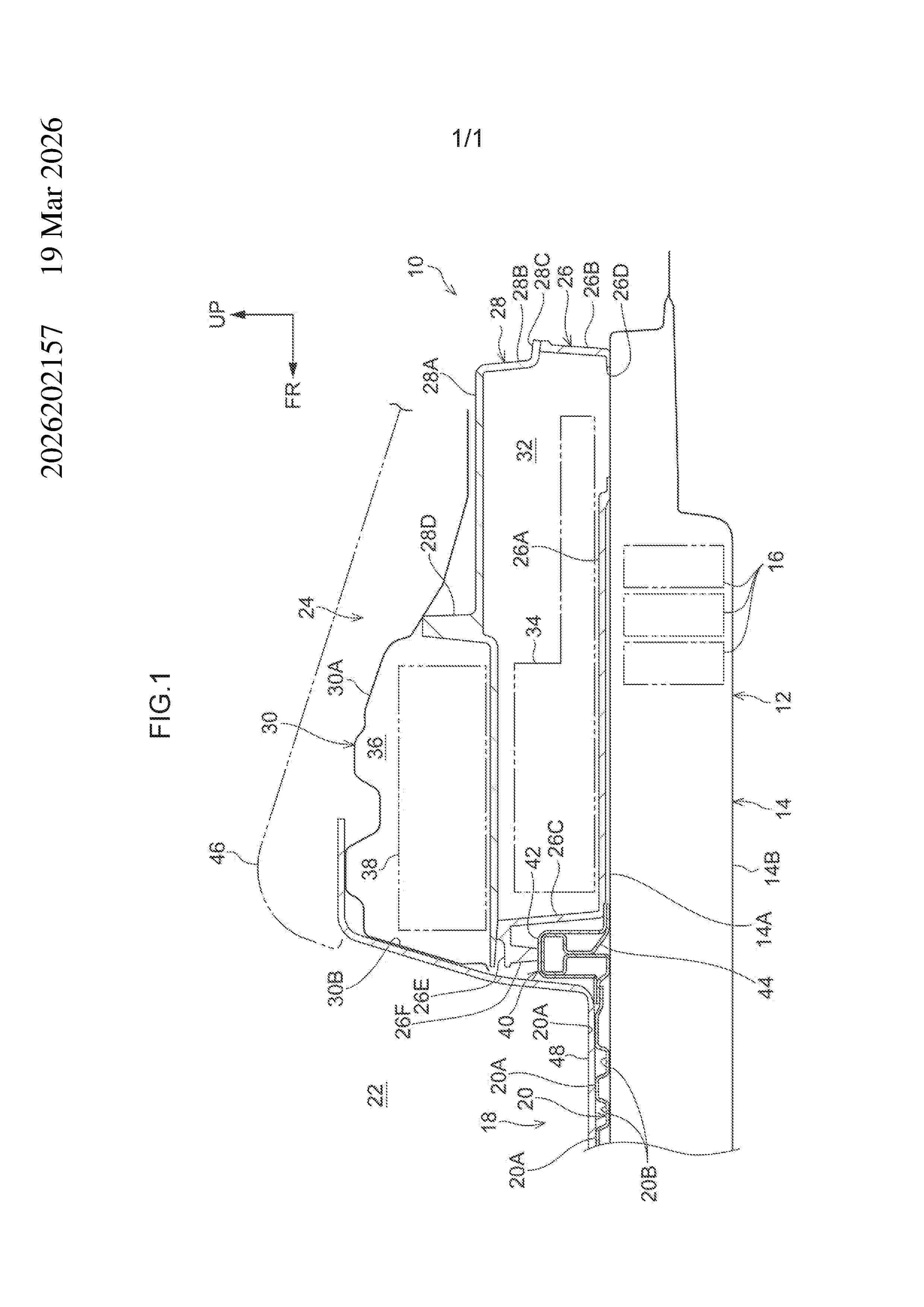
A vehicle structure includes a battery case that is arranged along a floor of a vehicle and that houses a battery cell inside; a battery equipment case that is arranged at a cabin side of an upper side of the battery case, that includes a battery equipment upper case and a battery equipment lower case having a structure divided in a vehicle height direction, and that houses a first equipment between the battery equipment upper case and the battery equipment lower case; and a cover case that configures part of the battery equipment case while covering the battery equipment upper case from a vehicle upper side, and houses a second equipment between the cover case and the battery equipment upper case. VEHICLE STRUCTUREVEHICLE STRUCTURE ar a r a r ar a r a r
Resumen de: AU2026202186A1
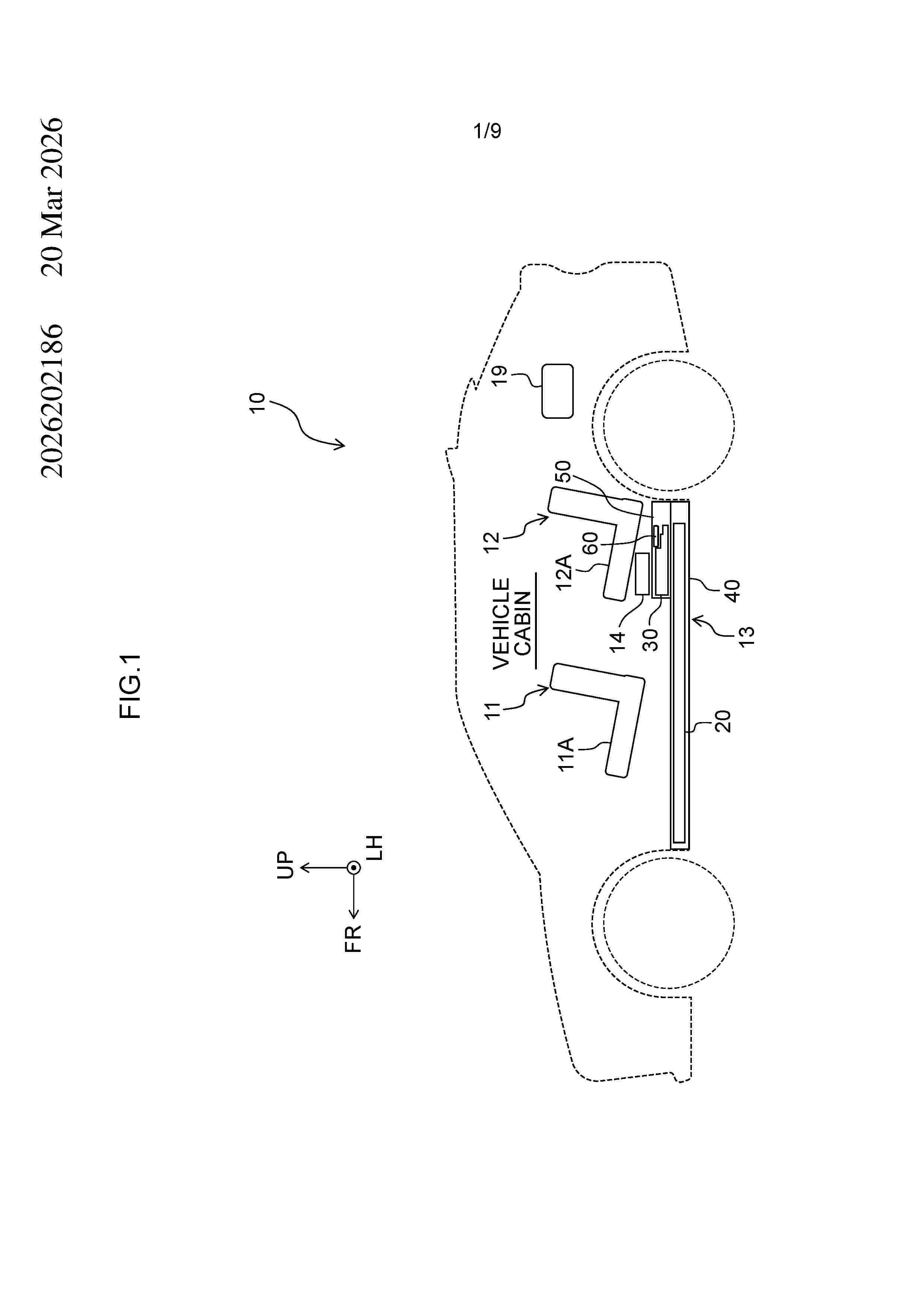
A battery pack 13 includes a battery case 40 and an equipment case 50 arranged above the battery case. The battery pack 13 also includes an electrical connection member 70 configuring at least part of wiring for connecting a first component 20 inside the battery case 40 to a second component 30 inside the equipment case 50. The battery case 40 includes an upper wall 44 provided with an upper wall opening portion 44H, and the equipment case 50 includes a lower wall 53 provided with a lower wall opening portion 53H, with the electrical connection member 70 provided so as to pass through both the upper wall opening portion 44H and the lower wall opening portion 53H. BATTERY PACKBATTERY PACK ar a r a r F( ) A( ) 60A(60) 54F(54) ar a r a r
Resumen de: AU2026202262A1
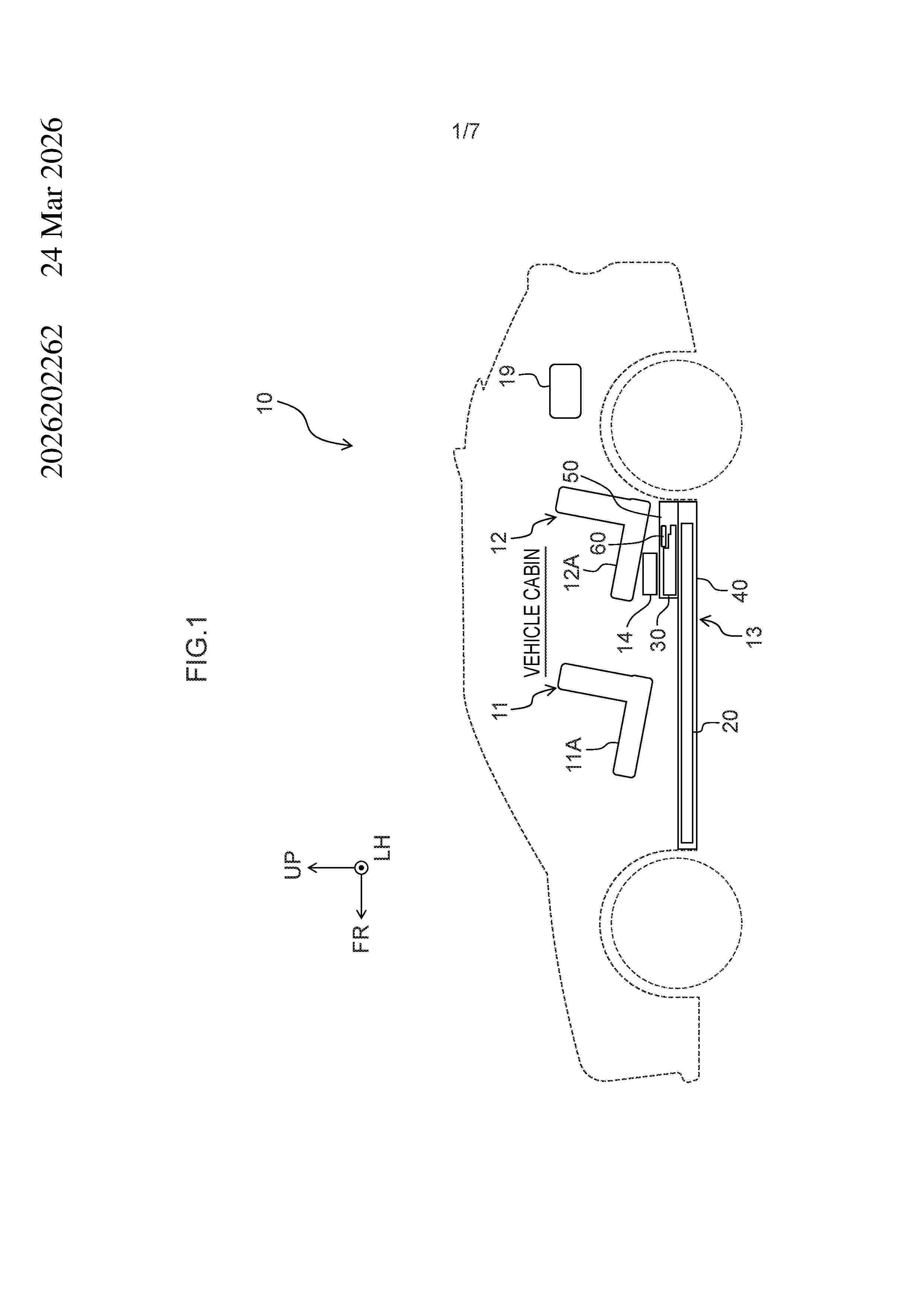
A vehicle 10 includes a battery pack 13 arranged below a vehicle cabin, an external battery equipment 14 electrically connected to the battery pack 13, and a rear seat 12. The external battery equipment 14 is arranged above the battery pack 13 and below the rear seat 12 such that an entirety of the external battery equipment 14 overlaps with at least part of the battery pack 13 in plan view and at least part of the external battery equipment 14 overlaps with at least part of a seating face 12A of the rear seat 12 in plan view. VEHICLEVEHICLE ar a r a r VEHICLE CABIN ar a r a r
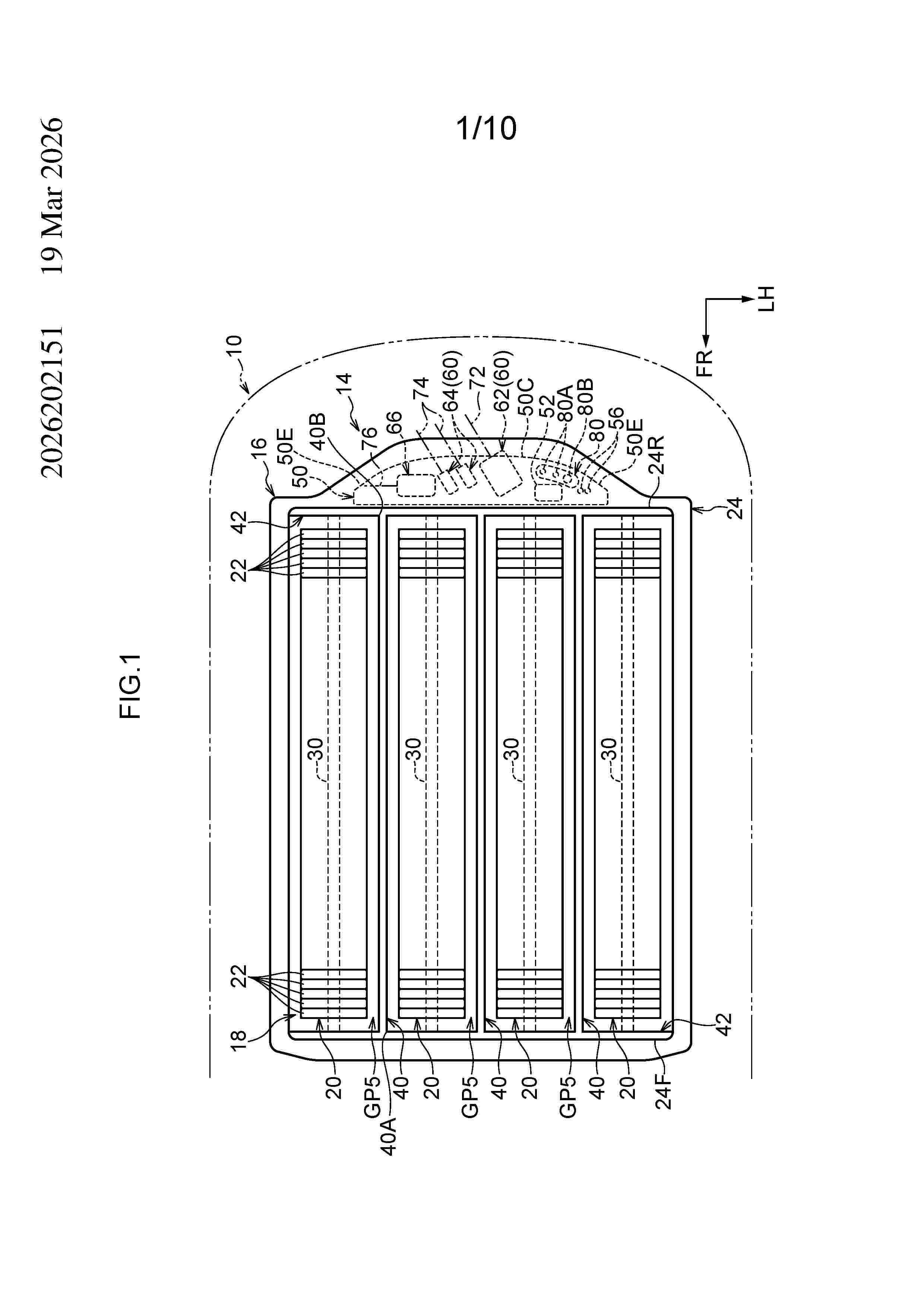
Resumen de: AU2026202151A1
A vehicle rear section structure including a channel member configuring a smoke discharge channel into which smoke generated from a storage battery cell flows, a smoke discharge vent that allows one-way outflow of gas from inside the smoke discharge channel to outside the smoke discharge channel, a membrane member that allows movement of gas with respect to the smoke discharge channel and that prevents movement of liquid with respect thereto, and a protection member that is arranged further to a vehicle rear side than the membrane member and that surrounds and protects a routing member of a vehicle. VEHICLE REAR SECTION STRUCTUREVEHICLE REAR SECTION STRUCTURE ar a r a r (6 0) (6 0) 64(60) 62(60) ar a r a r
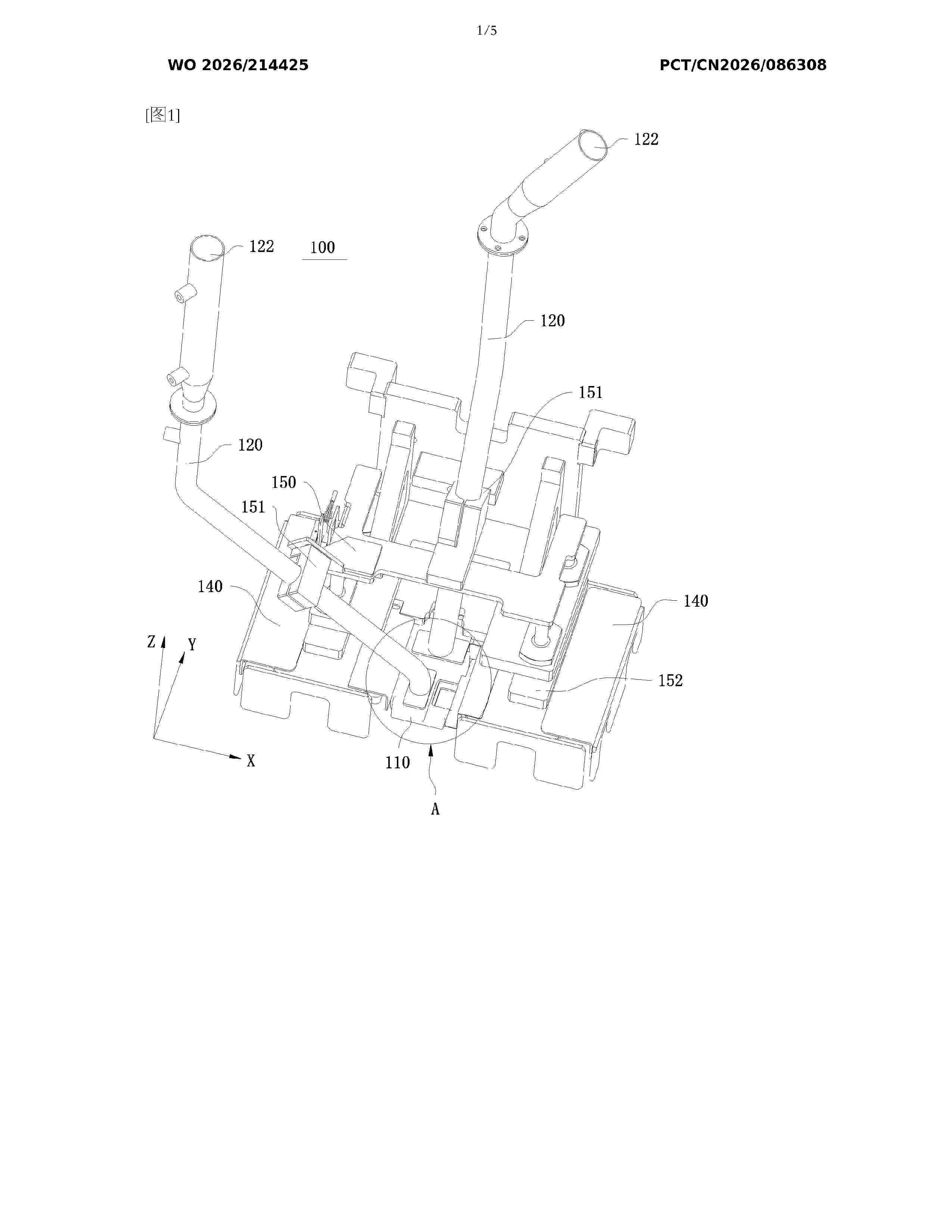
Resumen de: WO2026214425A1
An ultrasonic welding dust removal device (100), comprising: a dust hood (110), which is disposed on one side of a welding area, the dust hood (110) being provided with an opening (113) for a welding head to pass through; and at least two negative pressure pipes (120), each of the negative pressure pipes (120) comprising a first end (121) and a second end (122), the first end (121) of each negative pressure pipe (120) being connected to the dust hood (110), and the second end (122) of each negative pressure pipe (120) leading to an external negative pressure supply device. The device can achieve small-scale isolation within the welding area, reduces the degree of dust diffusion and splashing during welding, and achieves a favorable dust removal effect, thereby improving the welding quality. The present invention further relates to an ultrasonic welding apparatus (200).
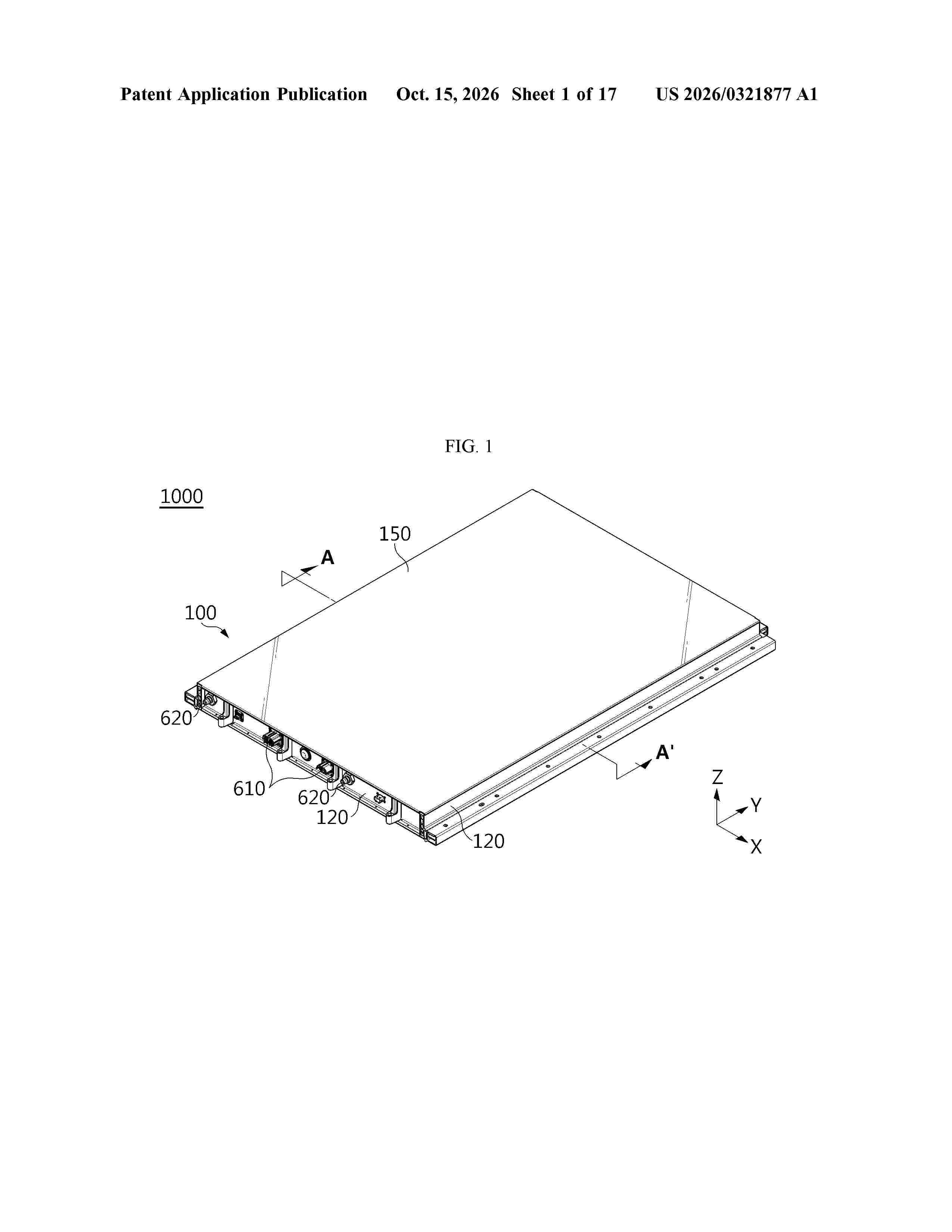
Resumen de: US20260321877A1
A battery pack includes a base plate; an upper plate including a coupling portion coupled to an upper surface of the base plate, a protruding portion extending rearward from the coupling portion and providing an internal space, and a buffering portion extending forward from the coupling portion and providing an internal space; and a battery module including a venting portion facing the buffering portion and being in contact with the protruding portion.
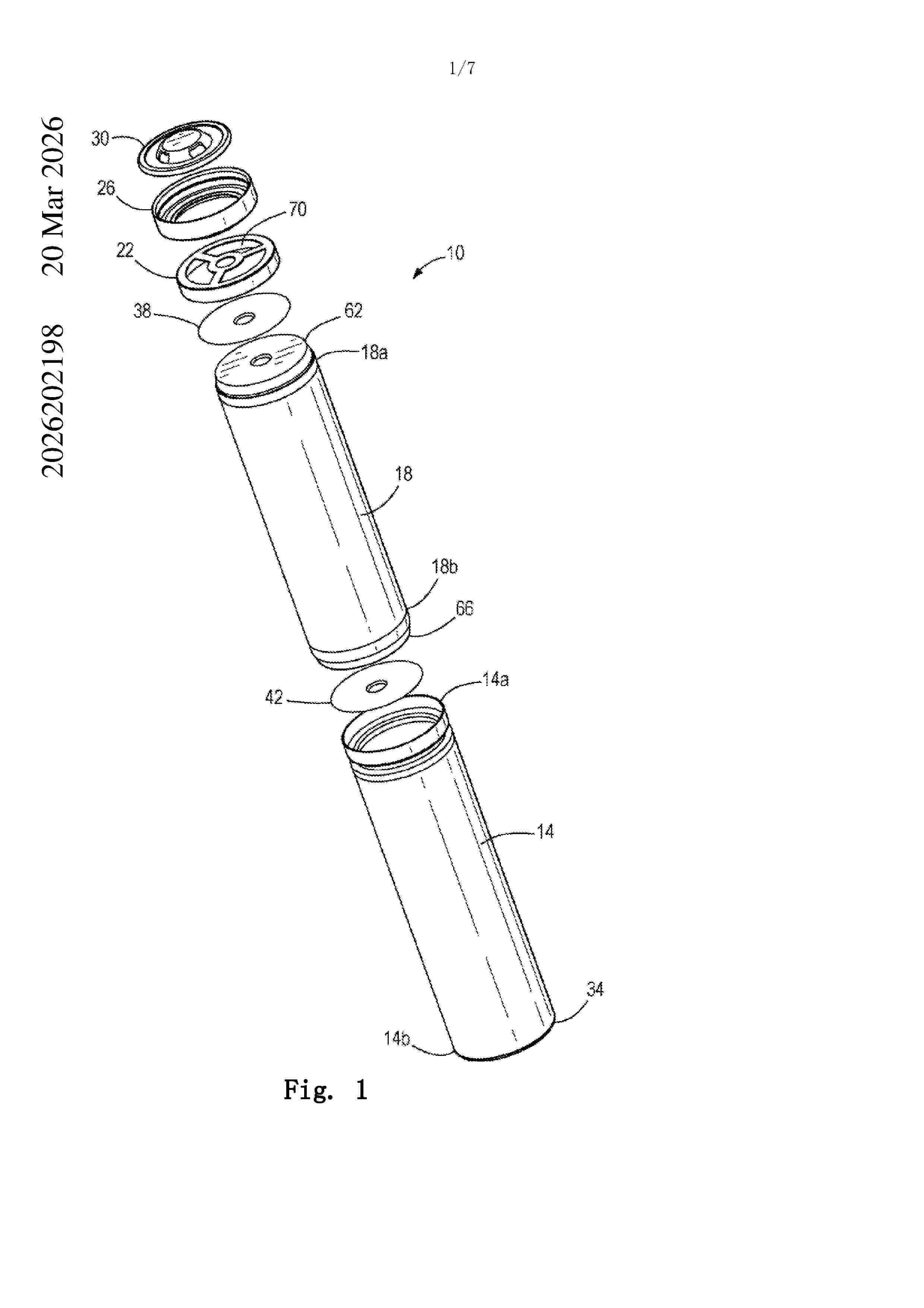
Resumen de: AU2026202198A1
Abstract 55 56 The present utility model provides a current collecting plate for a battery unit, the current collecting plate comprising: a central part; and an extension part, the extension part comprising at least two blade 5 components that are spaced apart from each other in a circumferential direction around the central part, each blade component comprising: two radial extension edges; and a circumferential extension edge located between the two radial extension edges, the circumferential extension edge connecting the two radial extension edges at an outer peripheral side of the 10 blade component, wherein a slot that extends radially outward from the central part is provided between a first blade component and a second blade component that are directly adjacent, a width of the slot gradually reducing radially outward from the central part. A battery unit comprising the current collecting plate is also provided. The current collecting plate 15 of the present utility model can at least partially solve problems in the prior art such as poor welding due to thermal stress deformation of a current collecting plate during welding, and improves the reliability and welding performance of a current collecting plate. Abstract ar b s t r a c t a r a r b s t r a c t Fig. 4 4212 4223 4224 42b 42a ar a r b a r b
Resumen de: DE102025114728A1
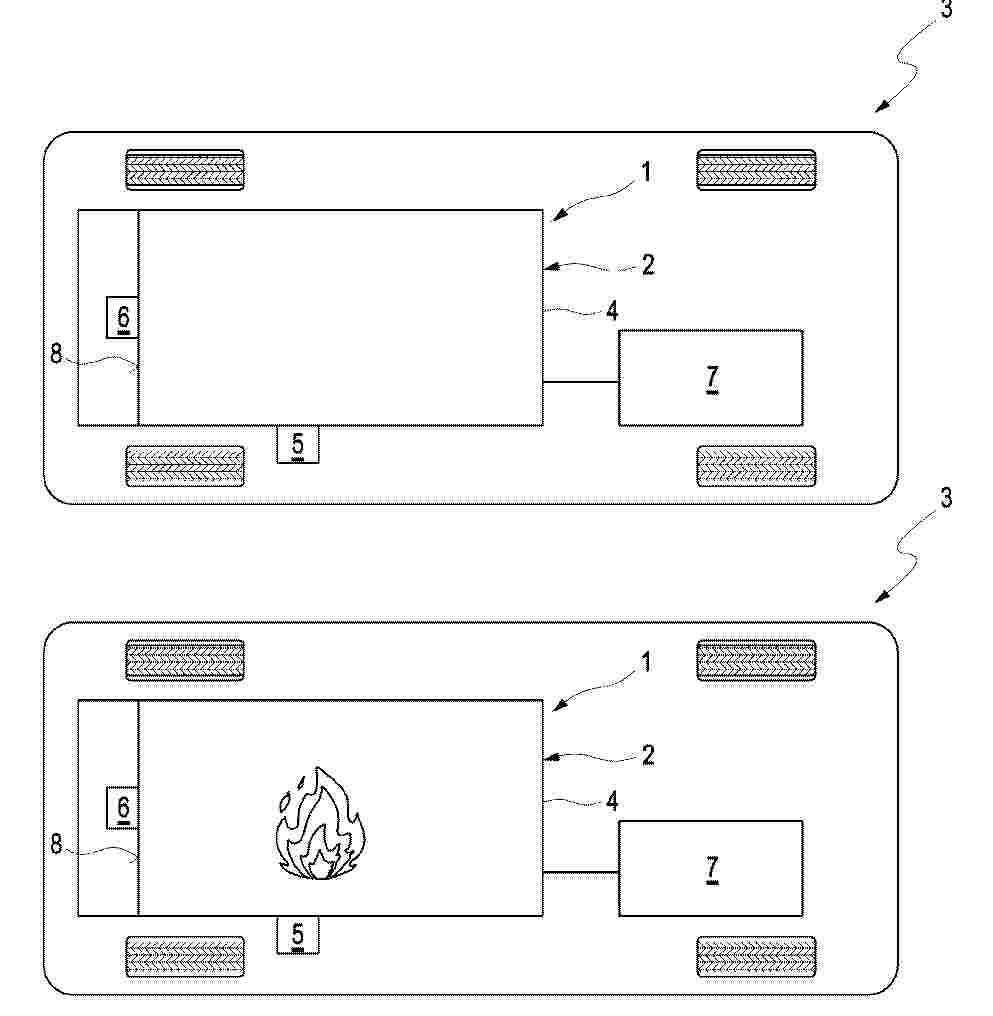
Verfahren zur Branderkennung in einer Batterie (2), umfassend die Schritte: Bereitstellen eines Batteriegehäuses (4) mit einem Ventil (5), insbesondere einem Venting-Ventil,Detektieren eines Druckanstiegs im Batteriegehäuse (4) infolge eines Zellbrands mittels eines Druckschalters (6),Erzeugen eines Branderkennungssignals mittels einer Steuereinheit (7) basierend auf einem Signal des Druckschalters (6).
Resumen de: WO2026216154A1
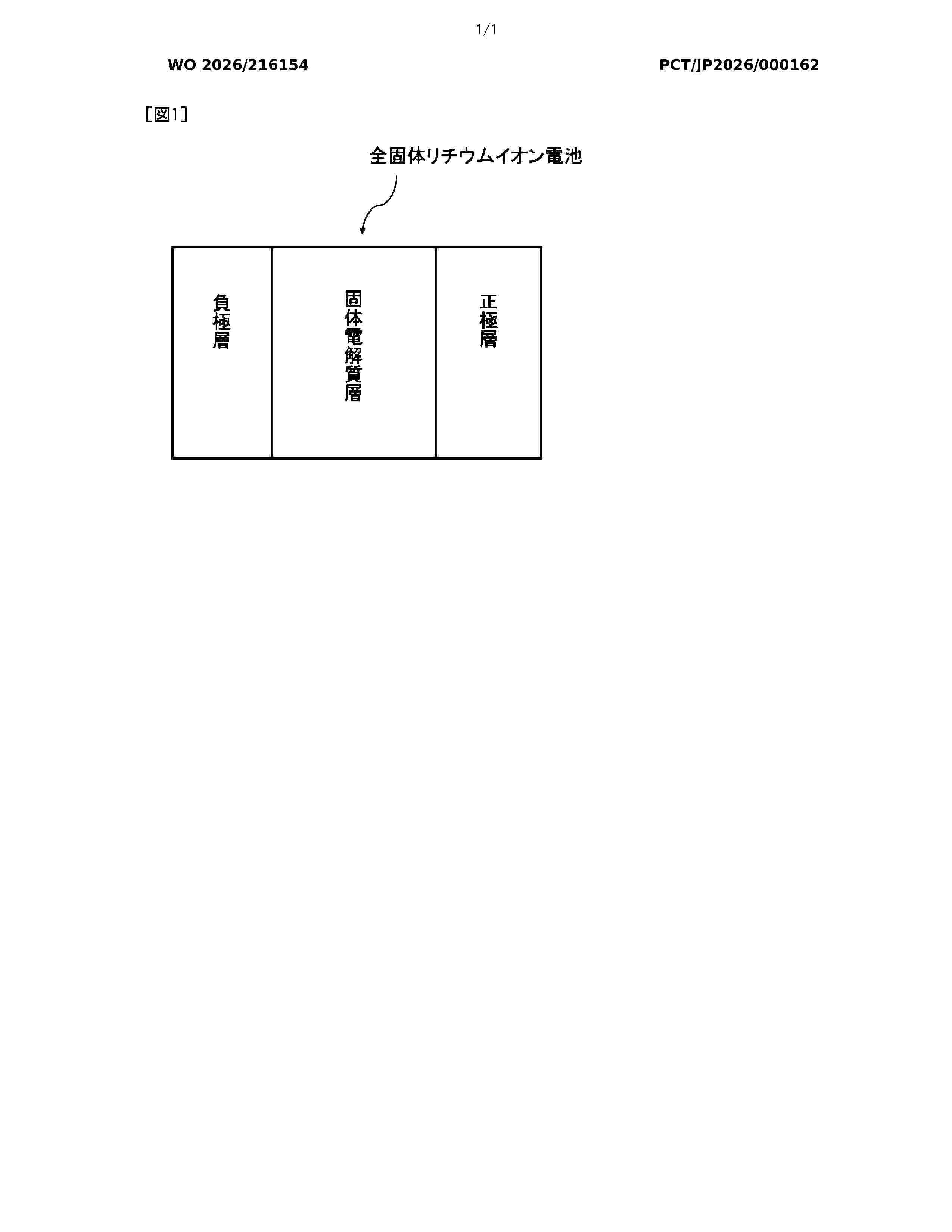
Provided is a positive electrode active material for a lithium ion battery, which is expressed by a composition represented by the following formula (1): LiaNibCocMndMeOf. (In the formula (1), M is Nb and W, or Nb and Ta, 1.0 ≤ a ≤ 1.07, 0.88 ≤ b ≤ 0.92, b + c + d + e = 1, 1.8 ≤ f ≤ 2.2, and 0.005 ≤ e/(b + c + d + e) ≤ 0.007.) The positive electrode active material for a lithium ion battery has a crystallite size of the (003) plane of 420-570 Å and a 50% cumulative volume particle size D50 of 5-8 μm.
Resumen de: US20260321820A1
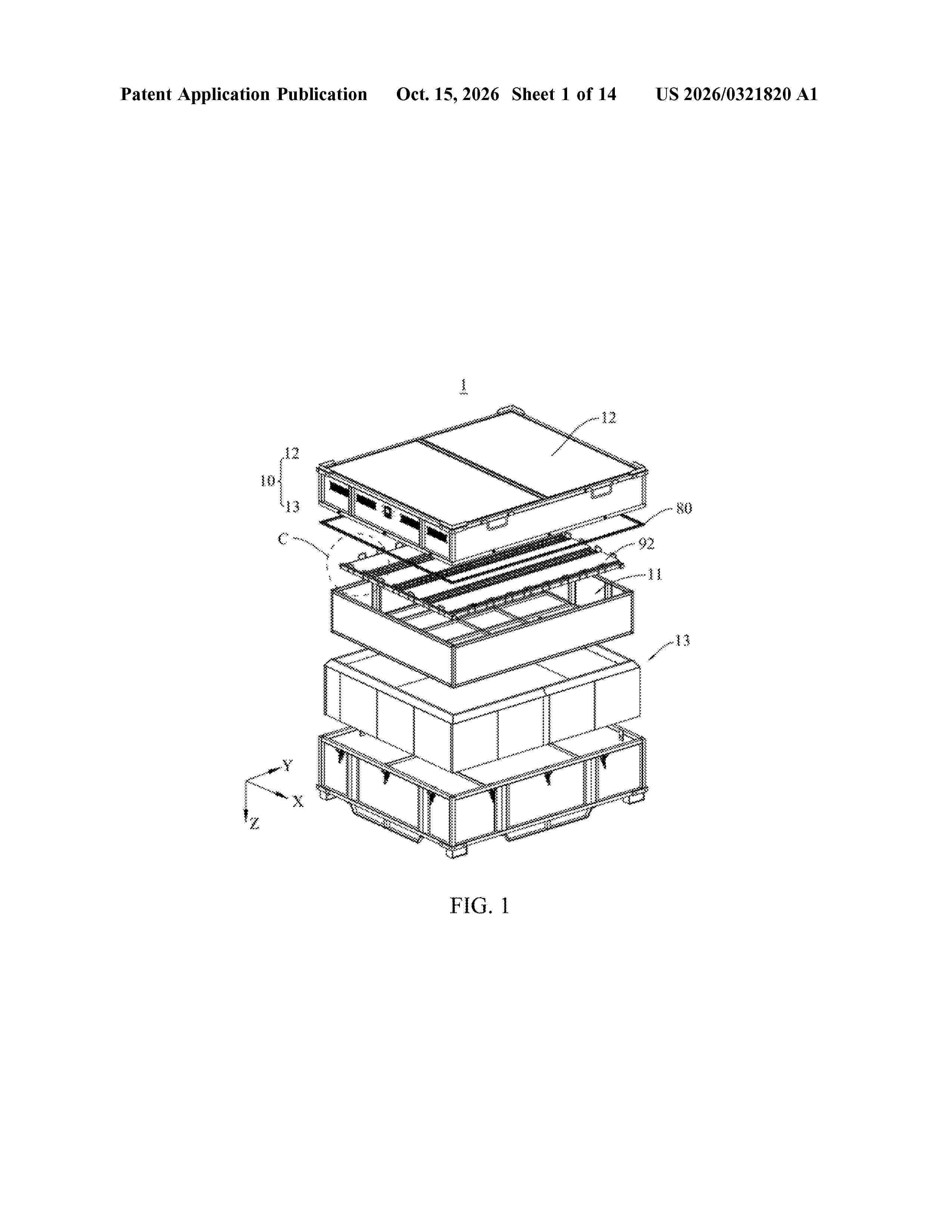
A battery transportation protection device. The battery transportation protection device includes a case, a detection component, and a firefighting mechanism. The case has a first accommodation cavity for accommodating a battery. The detection component is disposed on the case, where the detection component is configured to detect an environmental parameter within the first accommodation cavity. The firefighting mechanism is disposed on the case, where the firefighting mechanism is configured to release a firefighting medium into the first accommodation cavity when the environmental parameter exceeds a threshold. The detection component is disposed to detect an environmental parameter within the first accommodation cavity, and when the environmental parameter detected by the detection component exceeds a threshold, the firefighting mechanism releases the firefighting medium into the first accommodation cavity to implement firefighting functions (extinguishing flames, cooling, or the like) for a battery.
Resumen de: US20260321854A1
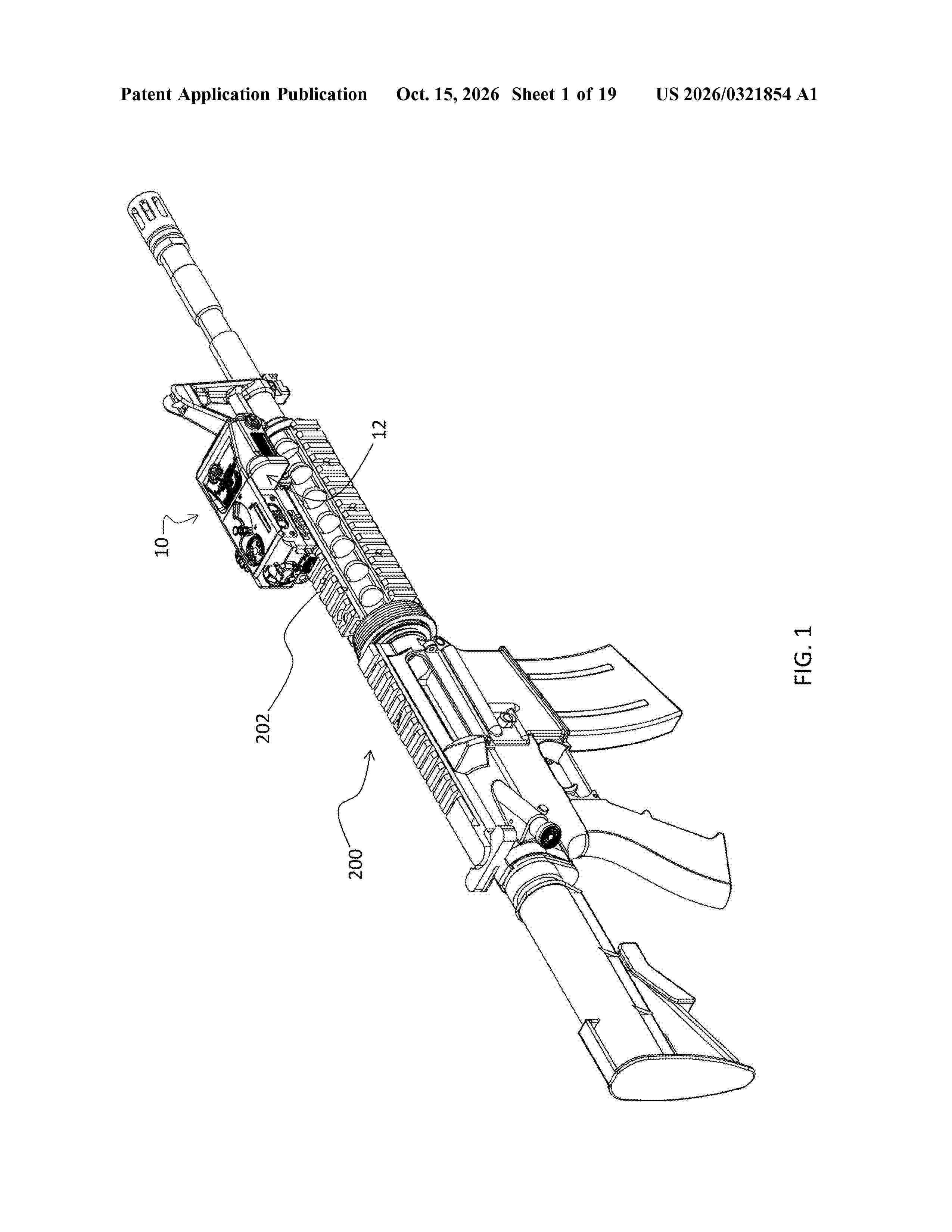
0000 A modular battery system and interface includes a weapon-mounted device and battery module. A battery recess is configured to receive the battery module or a connector from a modular battery system. Electrical contact pins in the battery recess contact aligned, facing contact pads in the battery module. The device includes a battery retention mechanism including a release lever; a retention button; and locking lugs that move in a forward direction when the retention button is pressed and a rearward direction when the retention button is released. The release lever and retention button are in mechanical communication such that the retention button can only be pressed when the release lever is depressed. The battery module includes a protrusion that mates with a receptacle of the device and a lug engagement recess that accepts the locking lugs of the device and locks the locking lugs in place in the rearward position.
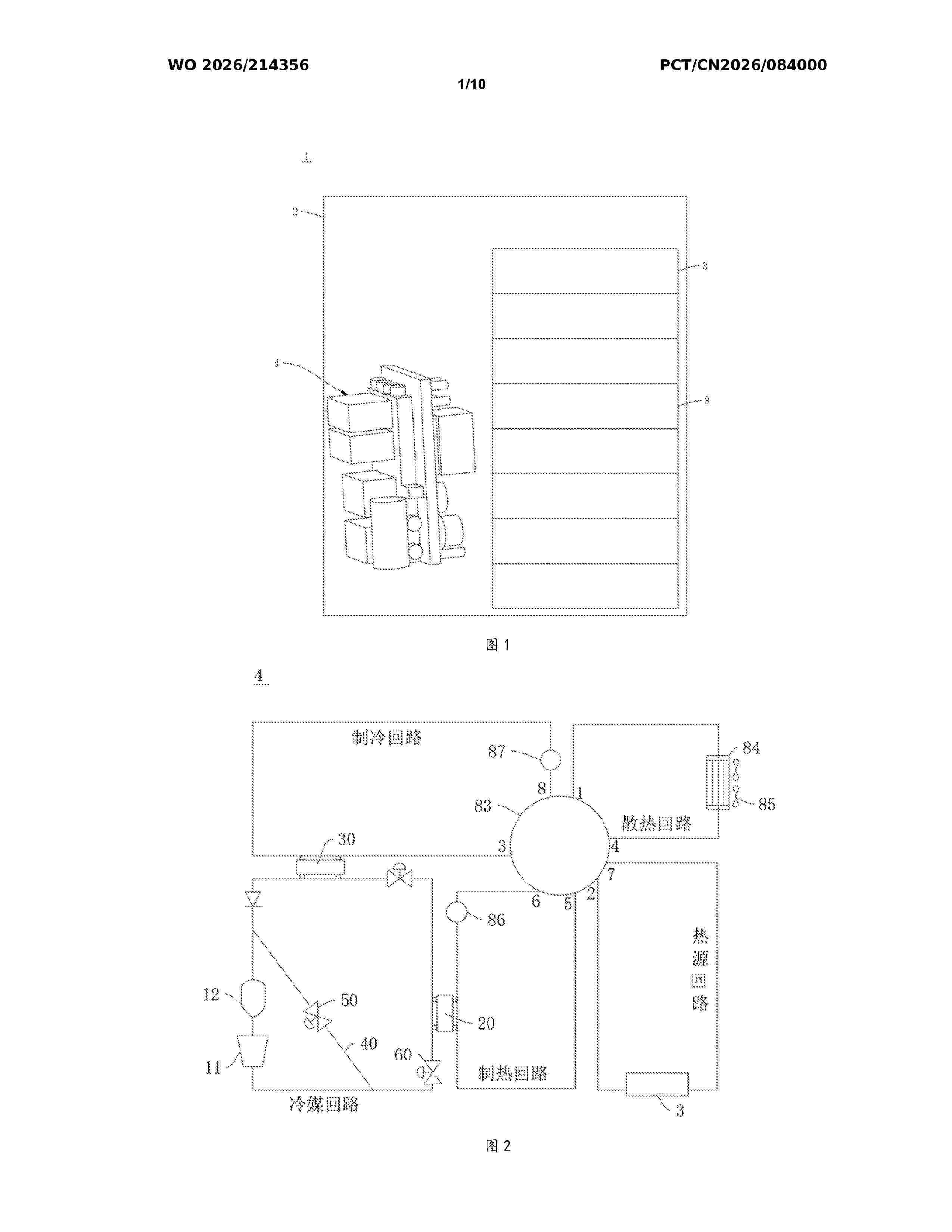
Resumen de: WO2026214356A1
The present application relates to the technical field of energy storage, and provides a thermal management system (4) and an energy storage device (1). The thermal management system (4) comprises two condensers (20), wherein the two condensers (20) are separately in communication with a load, so as to selectively output a coolant to the two condensers (20) by means of the load. A first regulating valve (61) is connected to a branch where one of the condensers (20) is located, and the first regulating valve (61) can be used for regulating the flow rate of a refrigerant outputted by a compressor (11) to the two condensers (20), so that the temperature and pressure of the thermal management system (4) can be dynamically regulated by using the branch, where one of the condensers (20) is located, as a hot gas bypass branch. Moreover, in the present application, two condensers (20) are used, therefore the diameter of the first regulating valve (61) adapted to the condensers (20) can be appropriately reduced, so that when the first regulating valve (61) is used for dynamically regulating the flow rate of the refrigerant outputted by the compressor (11) to the two condensers (20), a wider range of opening degree can be used, thereby effectively regulating the temperature and pressure of the thermal management system (4), and thus avoiding pressure robustness issues of the thermal management system (4).
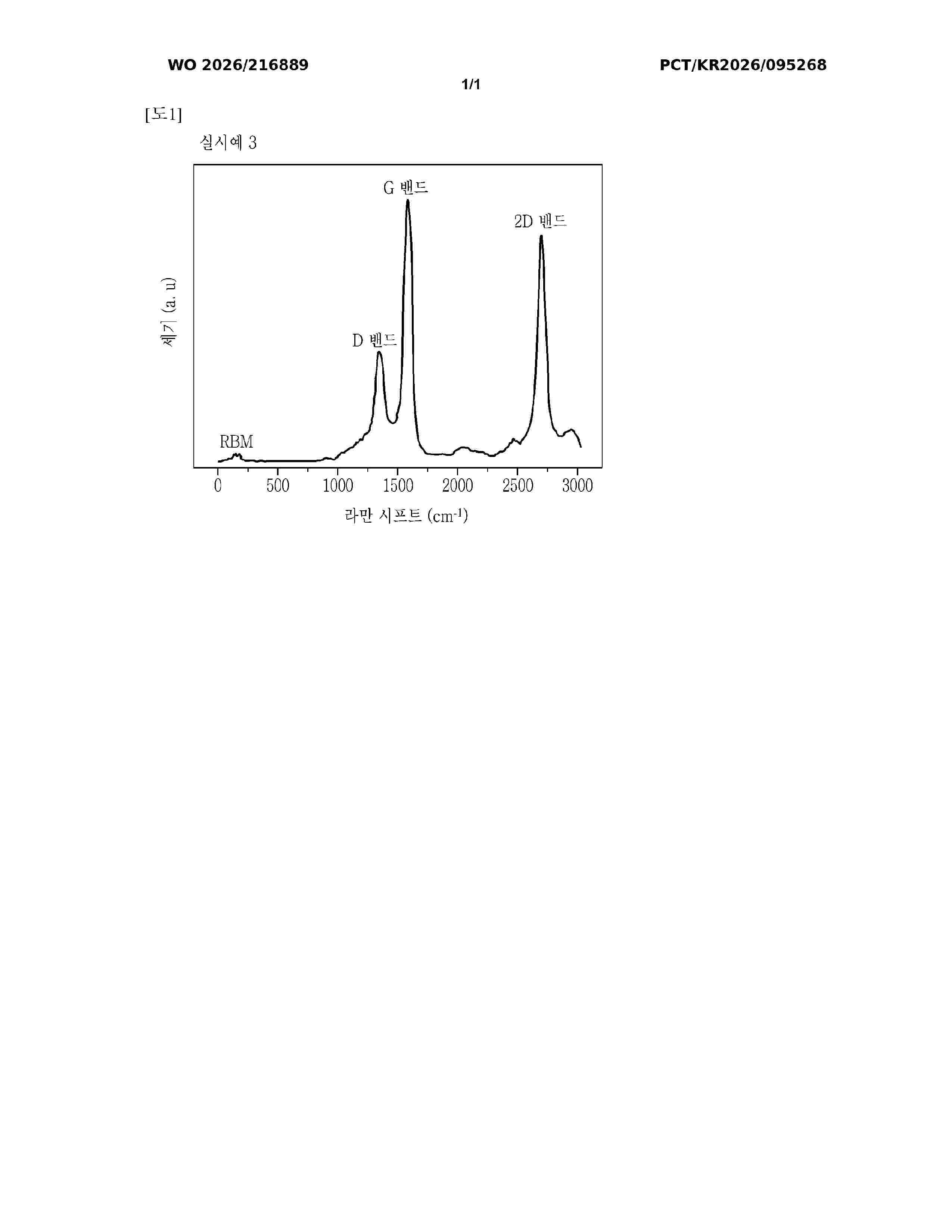
Resumen de: WO2026216889A1
The present invention relates to: a carbon-based composite having improved structural stability, a low impurity content, and high powder conductivity; and an electrochemical device comprising same. According to an aspect, provided is a composite including a carbon support and carbon nanotubes on the carbon support, wherein the ratio (I2D/IG) of the intensity of the 2D band (I2D) to the intensity of the G band (IG) of the composite as measured by Raman spectroscopy is greater than or equal to 0.5.
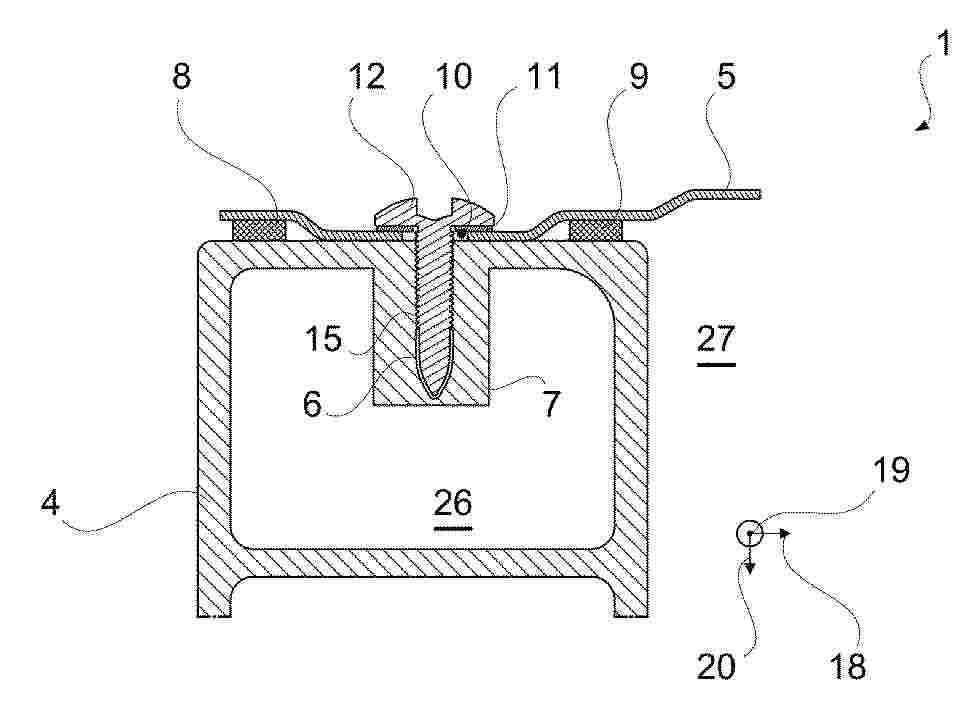
Resumen de: DE102025113903A1
Die Erfindung betrifft ein Batteriegehäuse für eine Hochvoltbatterie eines Kraftfahrzeugs, aufweisend zumindest die folgenden Komponenten:- ein Strangpressprofil;- eine Gehäuseabdeckung; und- eine zumindest eine Befestigungsschraube, mittels welcher der Gehäuseabdeckung an dem Strangpressprofil verschraubt ist. Das Batteriegehäuse ist vor allem dadurch gekennzeichnet, dass das Strangpressprofil eine vorgefertigte, integrale Materialaufweitung aufweist, in welcher die zumindest eine Befestigungsschraube mit dem Strangpressprofil verschraubt ist.Es ist ein Batteriegehäuse mit Strangpressprofil für eine Hochvoltbatterie vorgeschlagen, welche eine besonders dichte und kostengünstige Abdichtung des Batteriegehäuses ermöglicht
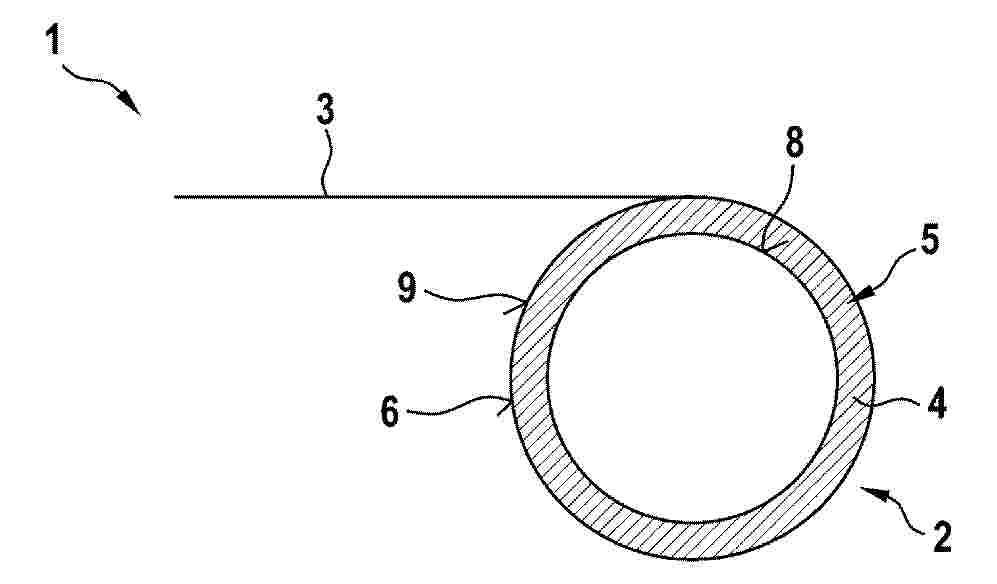
Resumen de: DE102025114144A1
Wickelkern (2) für die Herstellung von Elektrodenmaterial für elektrische Energiespeicherzellen für Hochvoltspeicher, insbesondere für Kraftfahrzeuge, wobei der Wickelkern (2) dazu ausgebildet ist, durch Aufwickeln einer Elektrodenfolie (3), insbesondere einer Trägerfolie, die Elektrodenfolie (3) auf dem Wickelkern (2) aufzunehmen und/oder durch Abwickeln der Elektrodenfolie (3) die Elektrodenfolie (3) bereitzustellen, wobei der Wickelkern (2) wenigstens eine Nut (7) aufweist, in der ein, insbesondere ringförmiger, Halteabschnitt (5) aus einem Gecko-Effekt-Material (4) angeordnet ist.
Nº publicación: AU2026202261A1 15/10/2026
Solicitante:
TOYOTA JIDOSHA KK
Toyota Jidosha Kabushiki Kaisha
Resumen de: AU2026202261A1
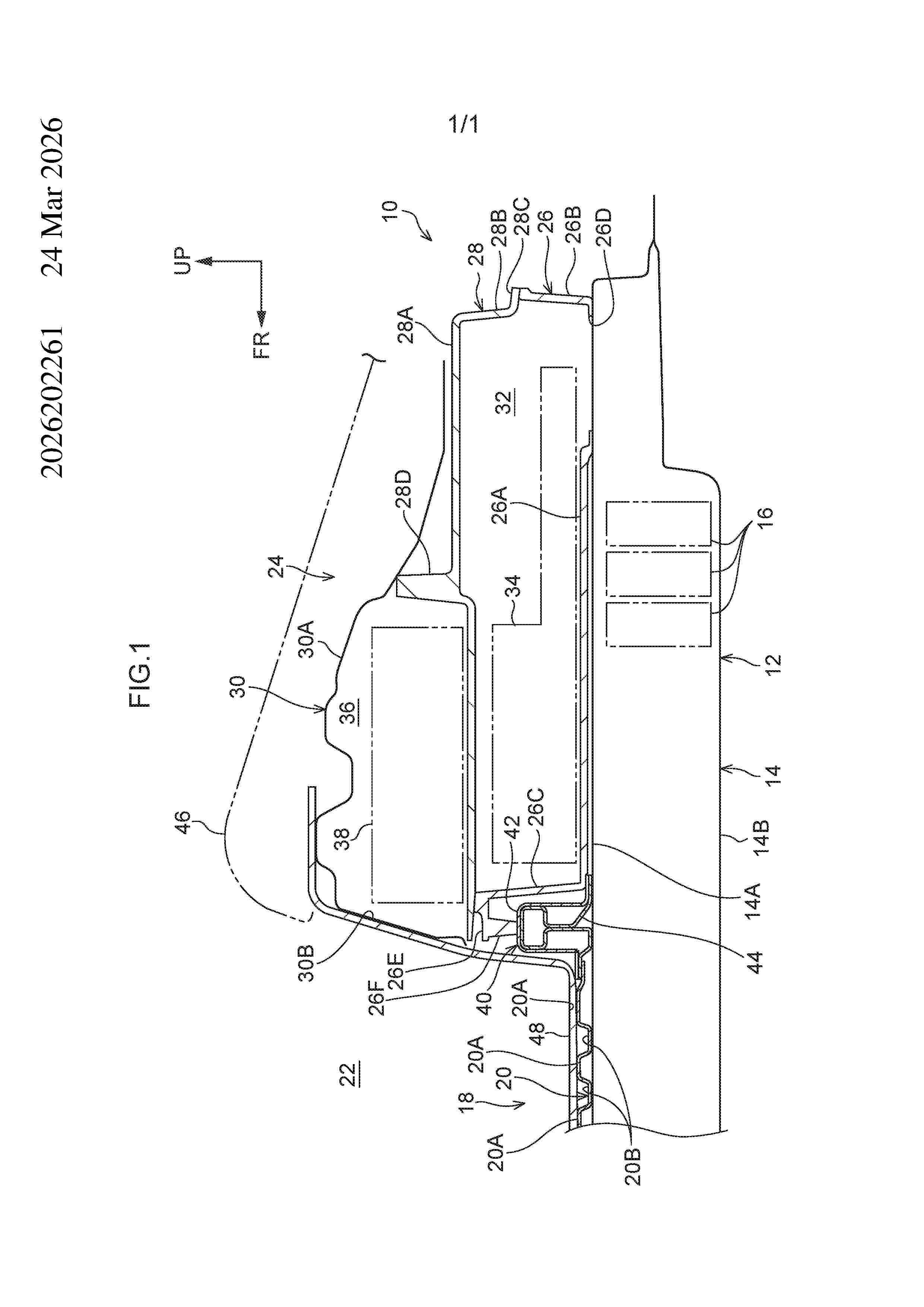
A vehicle structure that includes: a battery case that is disposed along a floor of a vehicle and houses battery cells inside; a battery device case that is disposed on the upper side of the battery case on a cabin side and houses a battery device inside; and a charging device that is disposed on the vehicle upper side of the battery device and is fixed to the battery device case. VEHICLE STRUCTUREVEHICLE STRUCTURE device case. ar a r a r ar a r a r
 BOPI
BOPI
 Sede Electrónica