Si deseas distinguir tus productos, servicios o ambos de los de otra empresa, es posible que necesites una marca o nombre comercial. Descubre qué son, en qué consiste su procedimiento de registro y qué implica.

Información sobre los plazos de presentación de solicitudes de transformación de marcas de la Unión Europea en marca nacional española. Más información


Si tienes un nuevo dispositivo, producto o procedimiento que resuelva un problema técnico o tenga una ventaja práctica, existen distintas formas de protegerlo en España y en otros países. Descubre cómo hacerlo.

¿Tu innovación reside en la estética, la ornamentación o la apariencia de tu producto? Protégela mediante un diseño industrial. Descubre qué derechos confiere el registro y cómo realizar la tramitación.

Las indicaciones geográficas protegen el nombre de un producto originario de una zona geográfica, a la cual le debe una determinada calidad, reputación u otra característica. Descubre qué son, en qué consiste su procedimiento de registro y qué beneficios conceden.

Las patentes publicadas en todo el mundo son una valiosa fuente de información científica, técnica y comercial.

Si eres emprendedor/a o una empresa y quieres potenciar y mejorar la rentabilidad de tu negocio protegiendo de forma adecuada los activos intangibles de tu organización, en este espacio encontrarás lo necesario.


 1450
resultados
1450
resultados
 Última actualización
08/05/2026 [07:34:00]
Última actualización
08/05/2026 [07:34:00]


 Resultados 1275 a 1300 de 1450

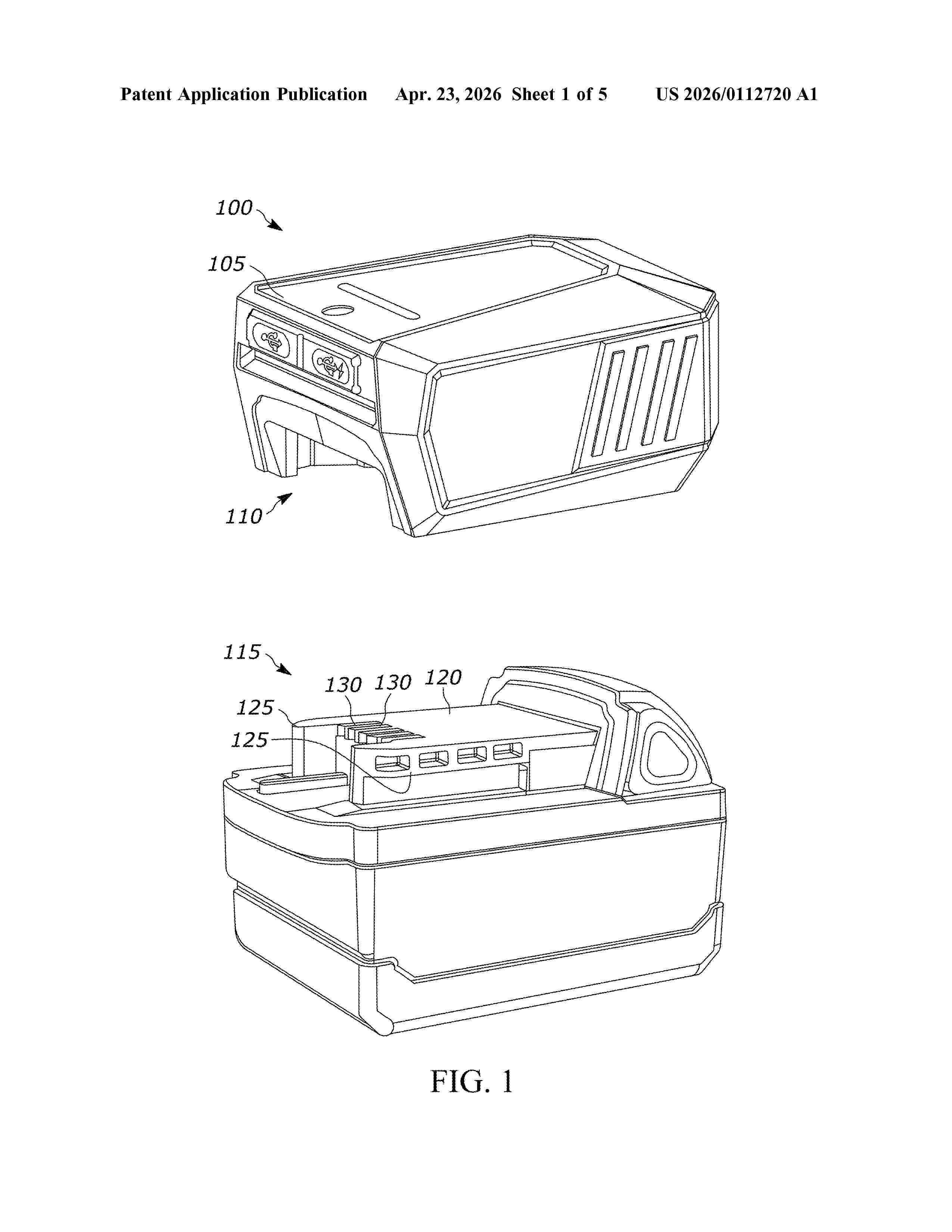
Resumen de: US20260112720A1
0000 A method of charging a battery pack includes receiving a current request, setting a charging setpoint based on the current request and a maximum output current; and configuring a converter based on the charging setpoint.

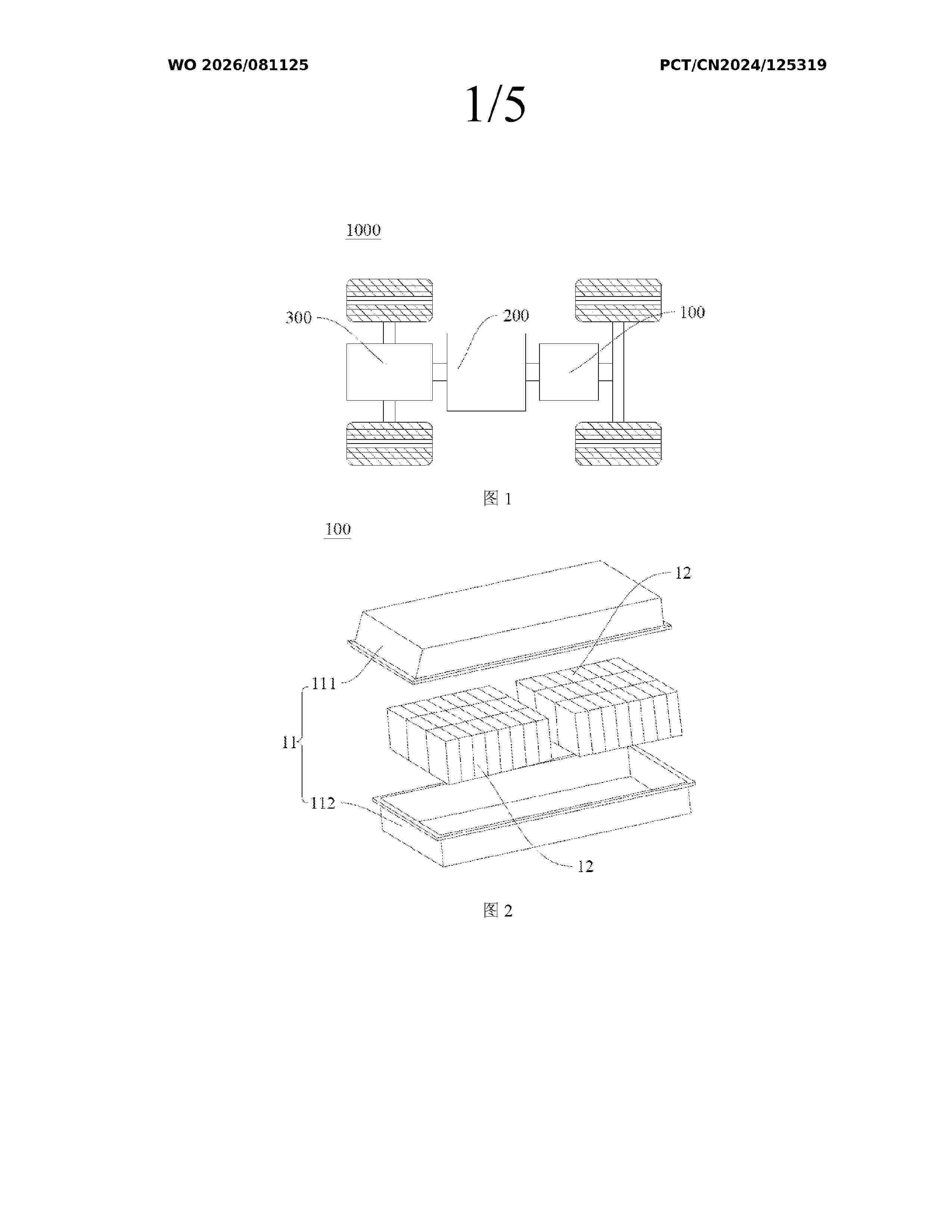
Resumen de: WO2026081125A1
Provided are a battery cell (12), a battery apparatus (100), and an electric apparatus, relating to the technical field of batteries. The battery cell (12) comprises a casing (121), an electrode assembly (122), and a first insulating member (123), wherein the casing (121) comprises a first wall (1210). The electrode assembly (122) is arranged in the casing (121); the electrode assembly (122) comprises electrode sheets; each electrode sheet comprises a straight area (1221); and the straight areas (1221) are stacked in a first direction. The first insulating member (123) is provided between the first wall (1210) and the electrode assembly (122); a boss (1231) is formed on the side of the first insulating member (123) facing the electrode assembly (122); the boss (1231) is arranged on at least one end of the first insulating member (123) in a second direction; a recess (1232) at the position corresponding to the boss (1231) is formed on the side of the first insulating member (123) facing away from the electrode assembly (122); and the second direction, the first direction, and the thickness direction of the first wall (1210) are perpendicular to each other. A first reinforcing rib (1233) is provided in the recess (1232), and the length direction of the orthographic projection of the first reinforcing rib (1233) on a plane perpendicular to the thickness direction of the first wall (1210) intersects the second direction. The battery cell (12) has high reliability.
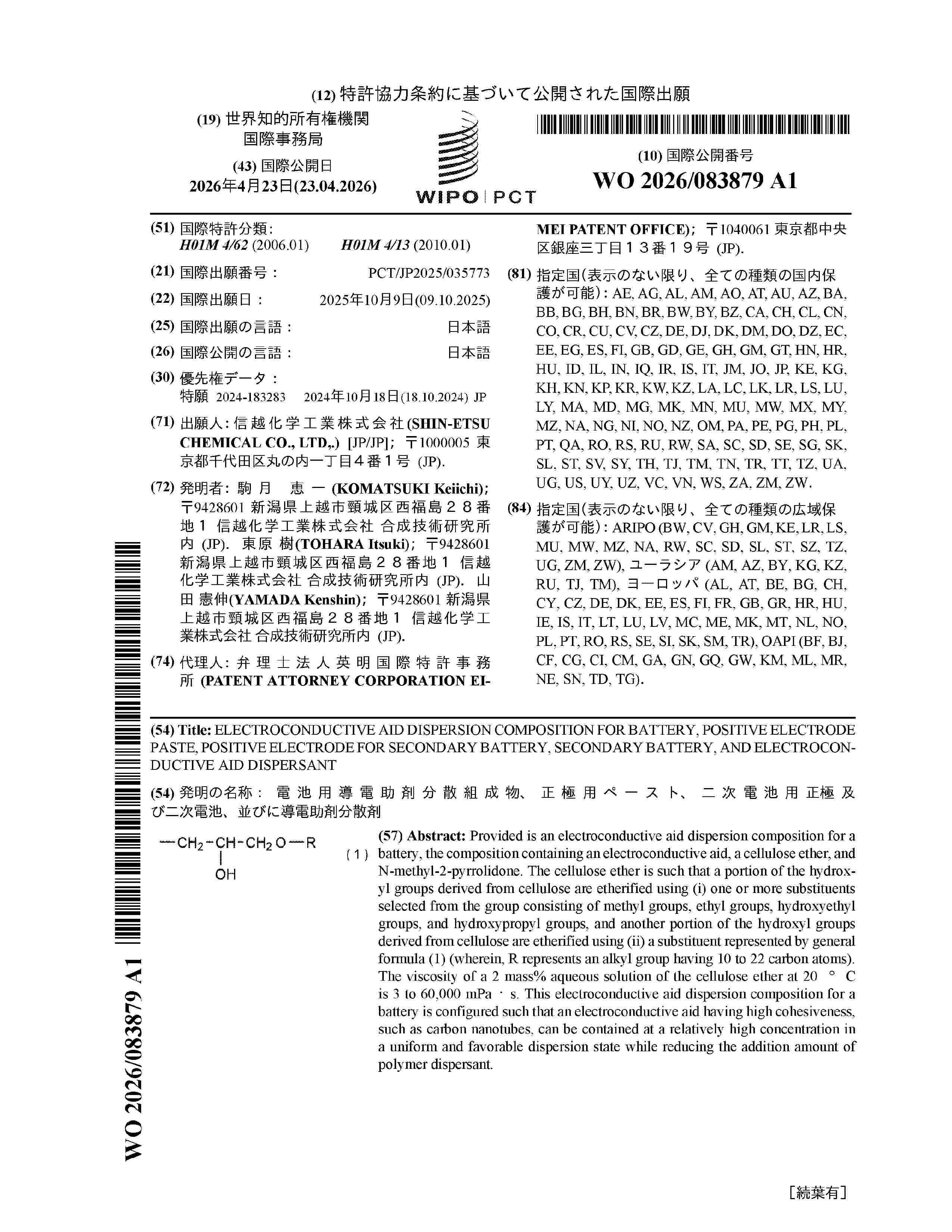
Resumen de: WO2026083879A1
Provided is an electroconductive aid dispersion composition for a battery, the composition containing an electroconductive aid, a cellulose ether, and N-methyl-2-pyrrolidone. The cellulose ether is such that a portion of the hydroxyl groups derived from cellulose are etherified using (i) one or more substituents selected from the group consisting of methyl groups, ethyl groups, hydroxyethyl groups, and hydroxypropyl groups, and another portion of the hydroxyl groups derived from cellulose are etherified using (ii) a substituent represented by general formula (1) (wherein, R represents an alkyl group having 10 to 22 carbon atoms). The viscosity of a 2 mass% aqueous solution of the cellulose ether at 20°C is 3 to 60,000 mPa·s. This electroconductive aid dispersion composition for a battery is configured such that an electroconductive aid having high cohesiveness, such as carbon nanotubes, can be contained at a relatively high concentration in a uniform and favorable dispersion state while reducing the addition amount of polymer dispersant.
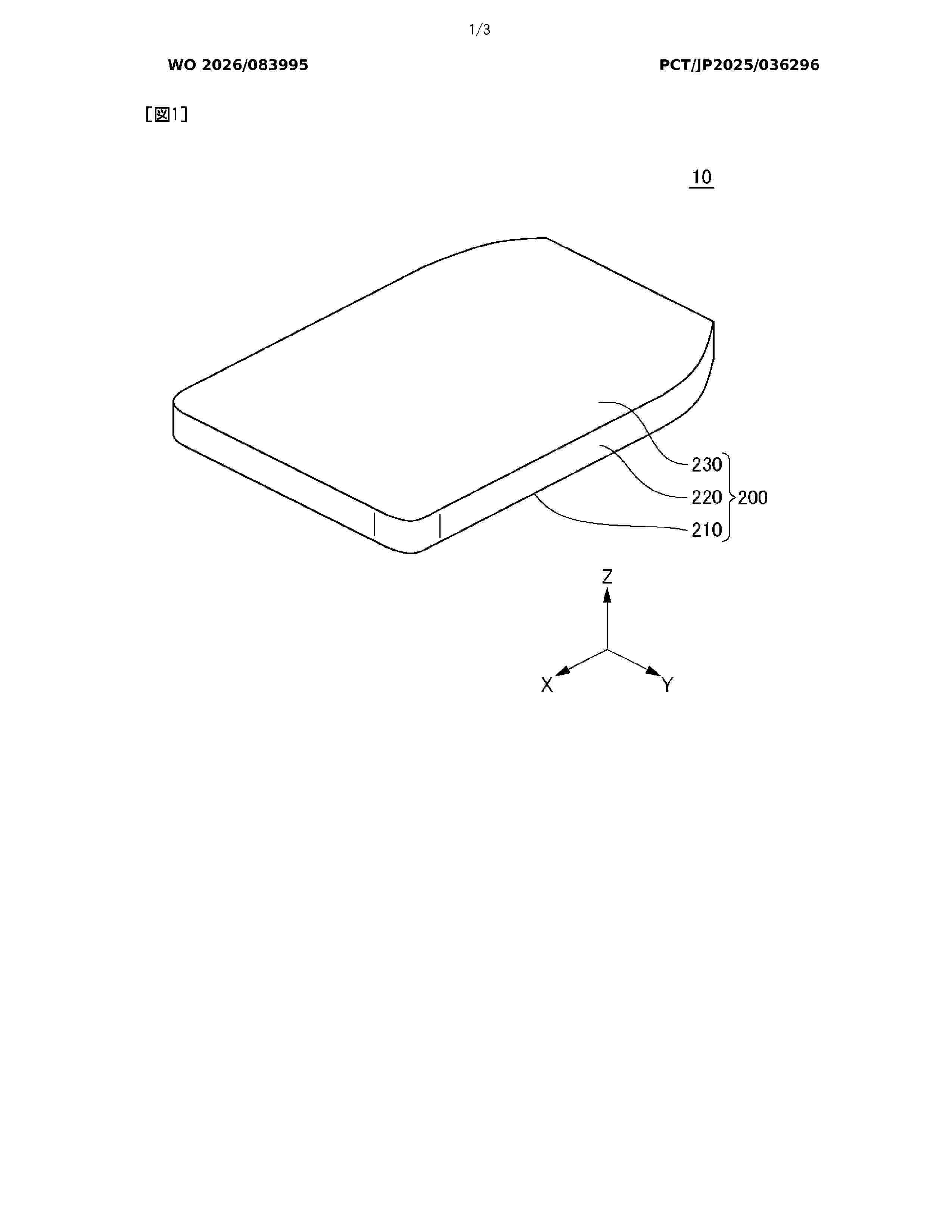
Resumen de: WO2026083995A1
This battery pack (10) comprises: a lower plate (210); a first battery module (100a) that is mounted on the lower plate (210); a wire (300) that is led out from a region that is positioned on the same plane as at least a portion of the first battery module (100a) in a direction parallel to the lower plate (210), toward another region that is positioned offset from said region in a direction perpendicular to the lower plate (210); and a support base (420) and a clip (500) for supporting the wire (300) at least partially obliquely with respect to a plane that is parallel to the lower plate (210) from said region toward said other region.
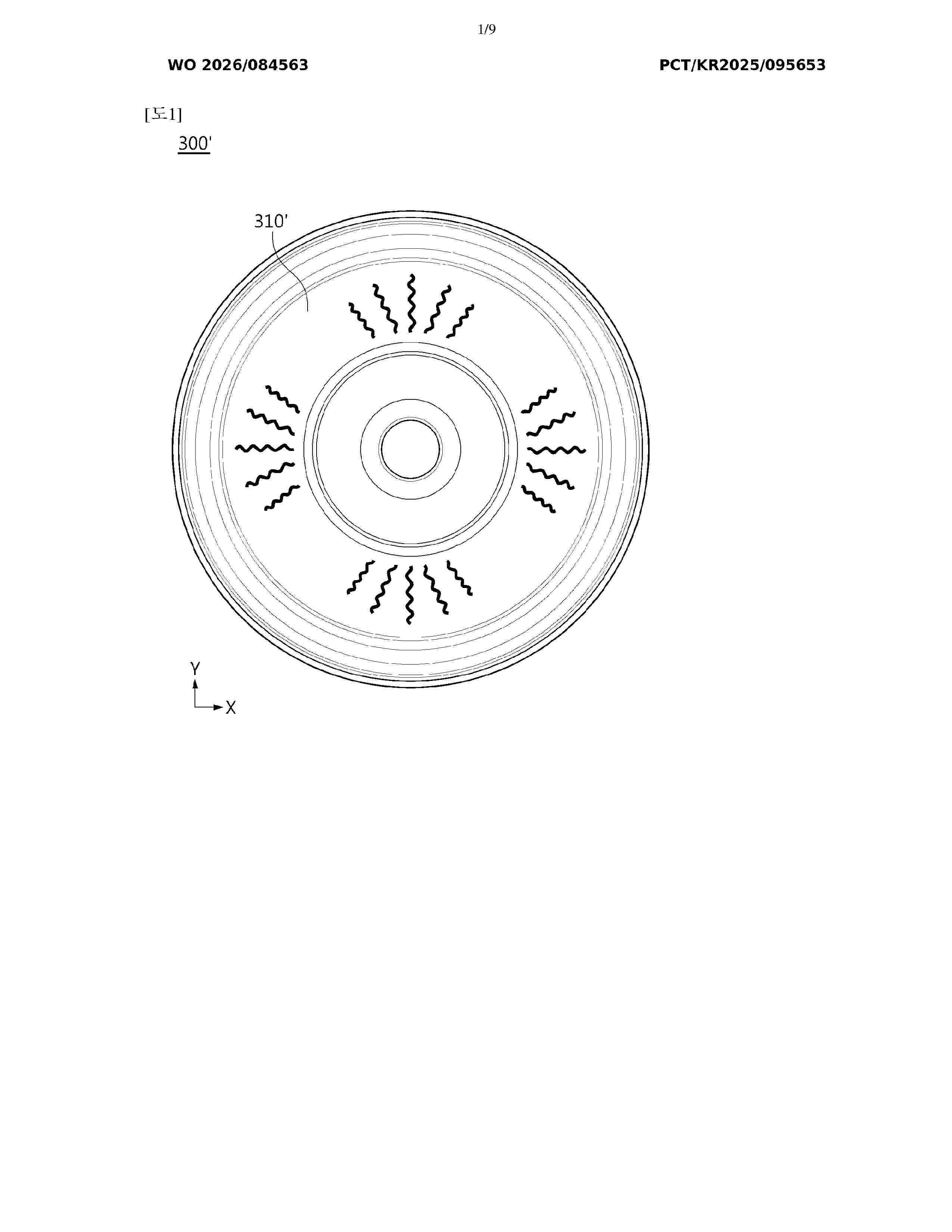
Resumen de: WO2026084563A1
A battery cell according to the present invention comprises: an electrode assembly provided by winding electrodes of different polarities around a central axis of a winding center hole in a state in which a separator is interposed between the electrodes; a cell housing accommodating the electrode assembly and having an opening at one side thereof; and a can lid coupled to one end of the cell housing and the electrode assembly, wherein the can lid and the electrode assembly are spaced apart from each other in at least one region to form an empty space therebetween.
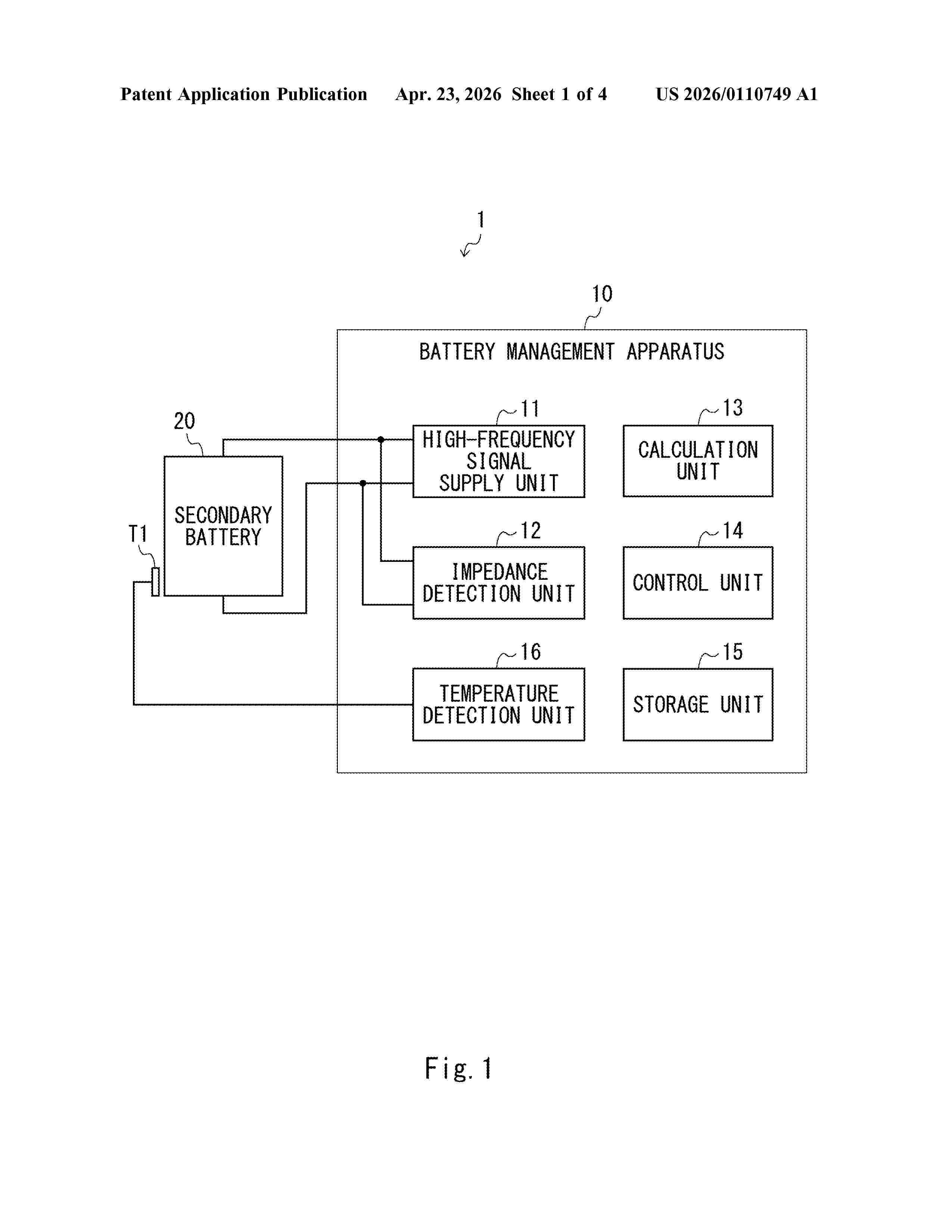
Resumen de: US20260110749A1
A battery management apparatus according to the present disclosure includes: a temperature detection unit configured to detect a temperature of a lithium-ion secondary battery; a high-frequency signal supply unit configured to supply a high-frequency signal of 0.1 MHz or higher to the lithium-ion secondary battery; an impedance detection unit configured to detect a value of a real part of an AC impedance from the lithium-ion secondary battery to which the high-frequency signal has been supplied; a calculation unit configured to calculate an amount of Li precipitation in the lithium-ion secondary battery from the detected value of the real part of the AC impedance; and a control unit configured to, based on the calculated amount of Li precipitation in the lithium-ion secondary battery, control an allowable charging power for the lithium-ion secondary battery and control an upper limit temperature of the lithium-ion secondary battery.
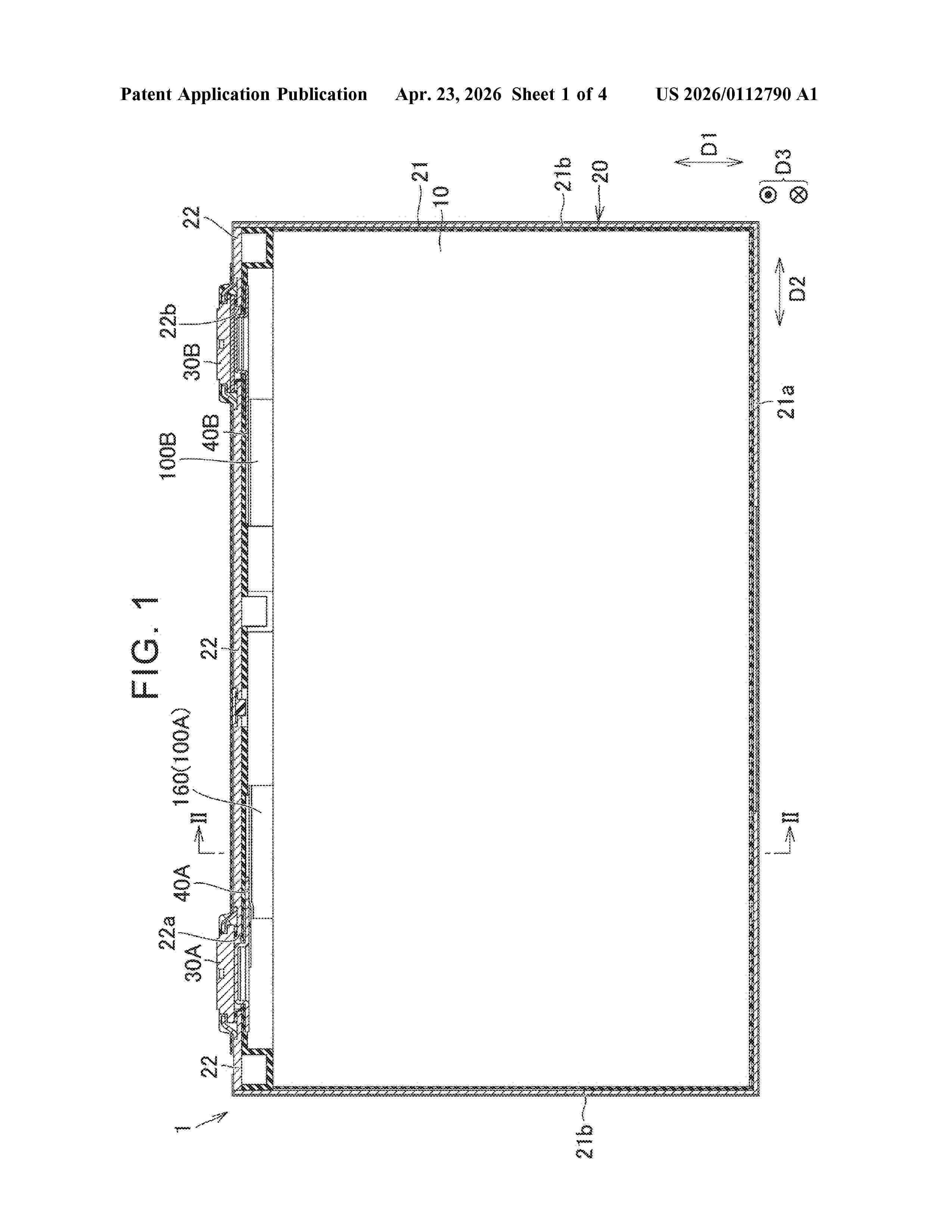
Resumen de: US20260112790A1
0000 A current collector includes a support layer, a conductive layer, an adhesive layer, and a tab. The support layer is made of an electrically insulating resin composition. The conductive layer includes a body portion and an extension portion. The body portion is laminated on the support layer via the adhesive layer. The extension portion extends from the body portion. The extension portion is laminated on the support layer not via the adhesive layer. The tab is joined to the extension portion.
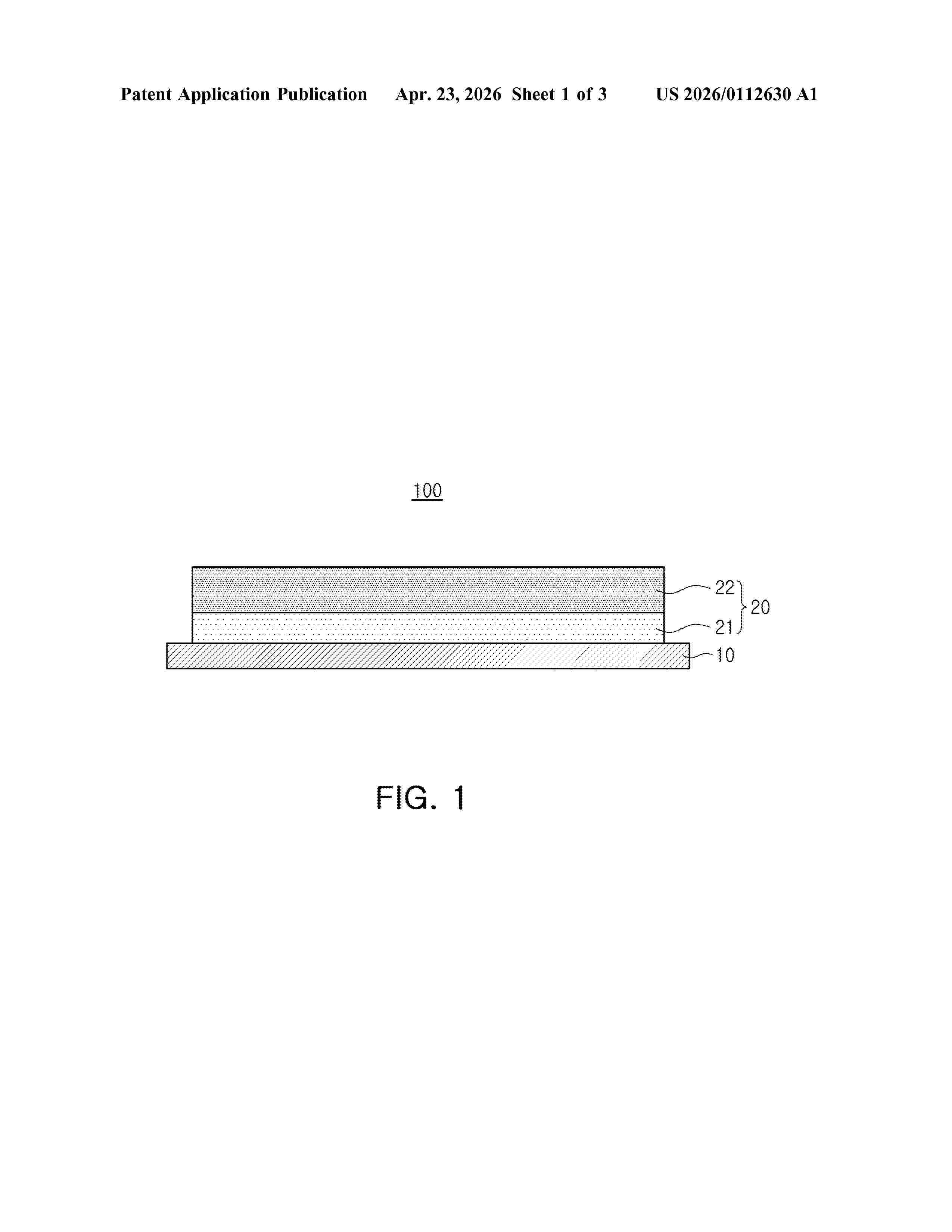
Resumen de: US20260112630A1
0000 An anode for a lithium secondary battery includes an anode current collector, a first anode mixture layer on at least one surface of the anode current collector, and a second anode mixture layer on the first anode mixture layer. The first anode mixture layer includes natural graphite, the second anode mixture layer includes artificial graphite, and the first anode mixture layer does not include a conductive material. The rapid charging performance of an anode for a lithium secondary battery may be improved.
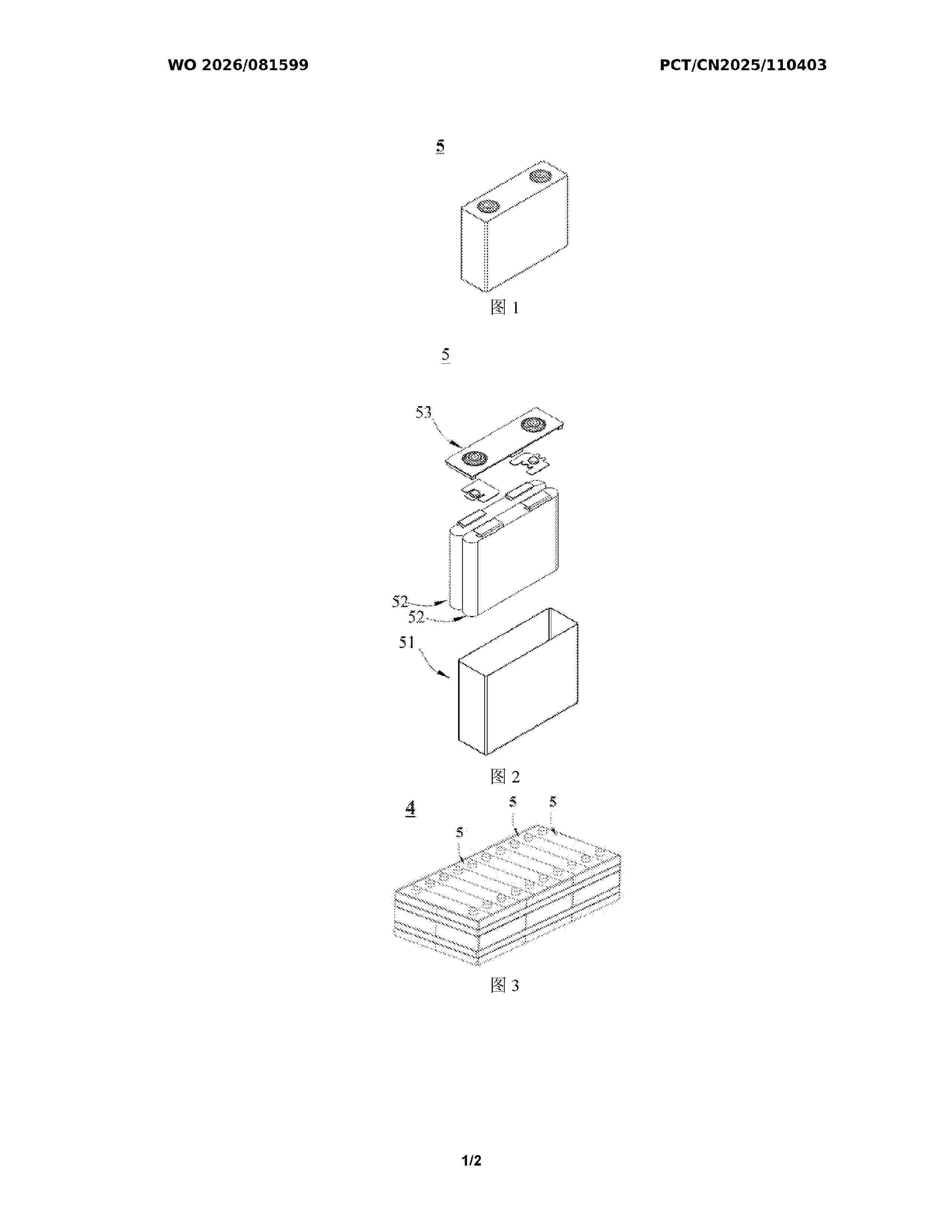
Resumen de: WO2026081599A1
Provided is a battery cell (5), comprising an electrode assembly (52). The electrode assembly (52) comprises a positive electrode sheet, a negative electrode sheet, a separator, and an electrolyte. The negative electrode sheet comprises a negative electrode current collector and a negative electrode active layer arranged on at least one side of the negative electrode current collector. The negative electrode active layer comprises a negative electrode active material. The negative electrode active material comprises a silicon-based negative electrode material. The electrolyte comprises an additive. The additive comprises fluoroether. Also provided are a battery device comprising the battery cell (5) and an electric device comprising the battery cell (5).
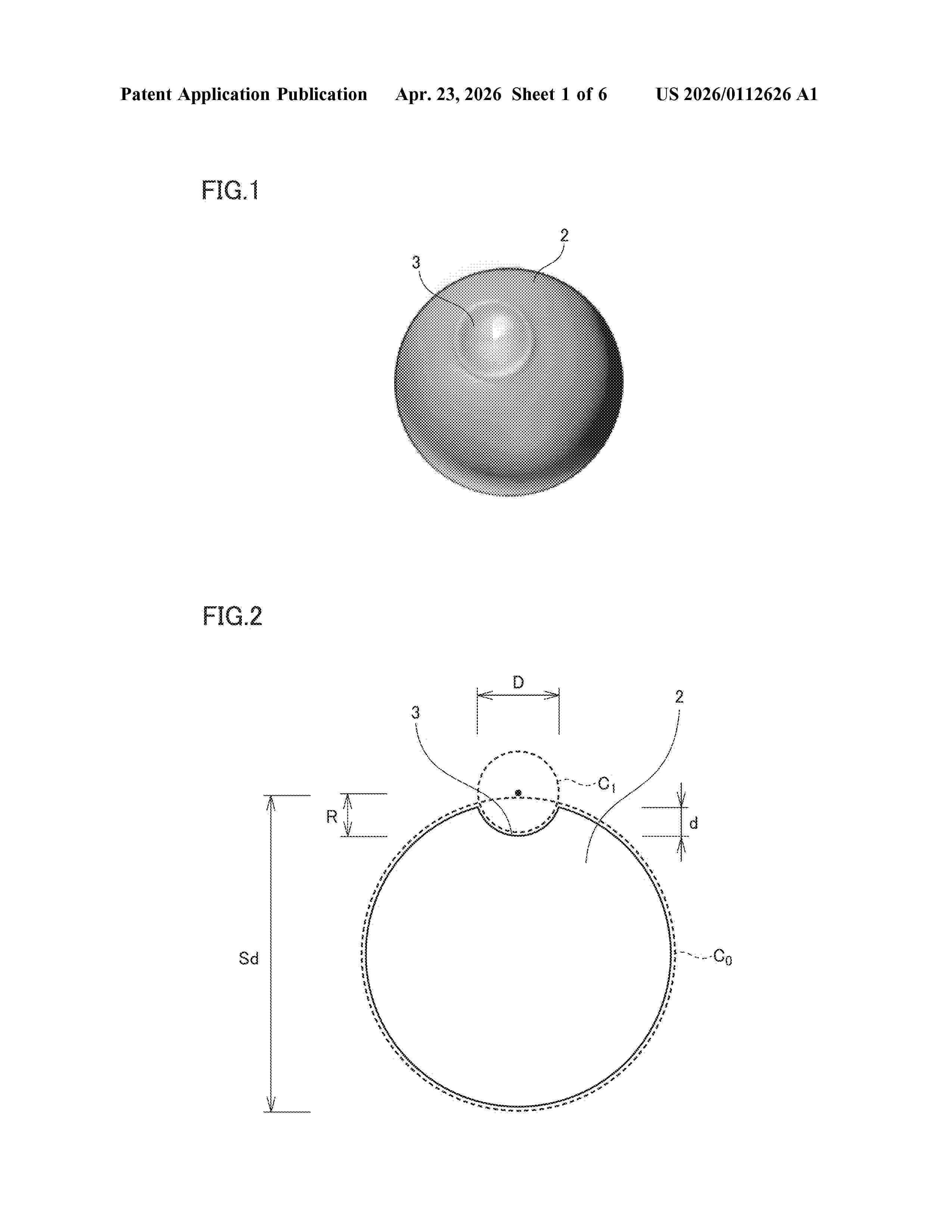
Resumen de: US20260112626A1
A positive electrode active material includes secondary particles. Each of the secondary particles includes primary particles. Each of the primary particles includes an olivine-type phosphate compound. A part of a surface of the secondary particle has a depression. At the depression, the surface of the secondary particle is depressed in a shape of a concave surface. A cross section of the secondary particle satisfies a relationship of “0.41≤Sa/Ca≤0.95”. “Sa” represents an area of the cross section of the secondary particle. “Ca” represents an area of a smallest circumcircle of the cross section of the secondary particle.
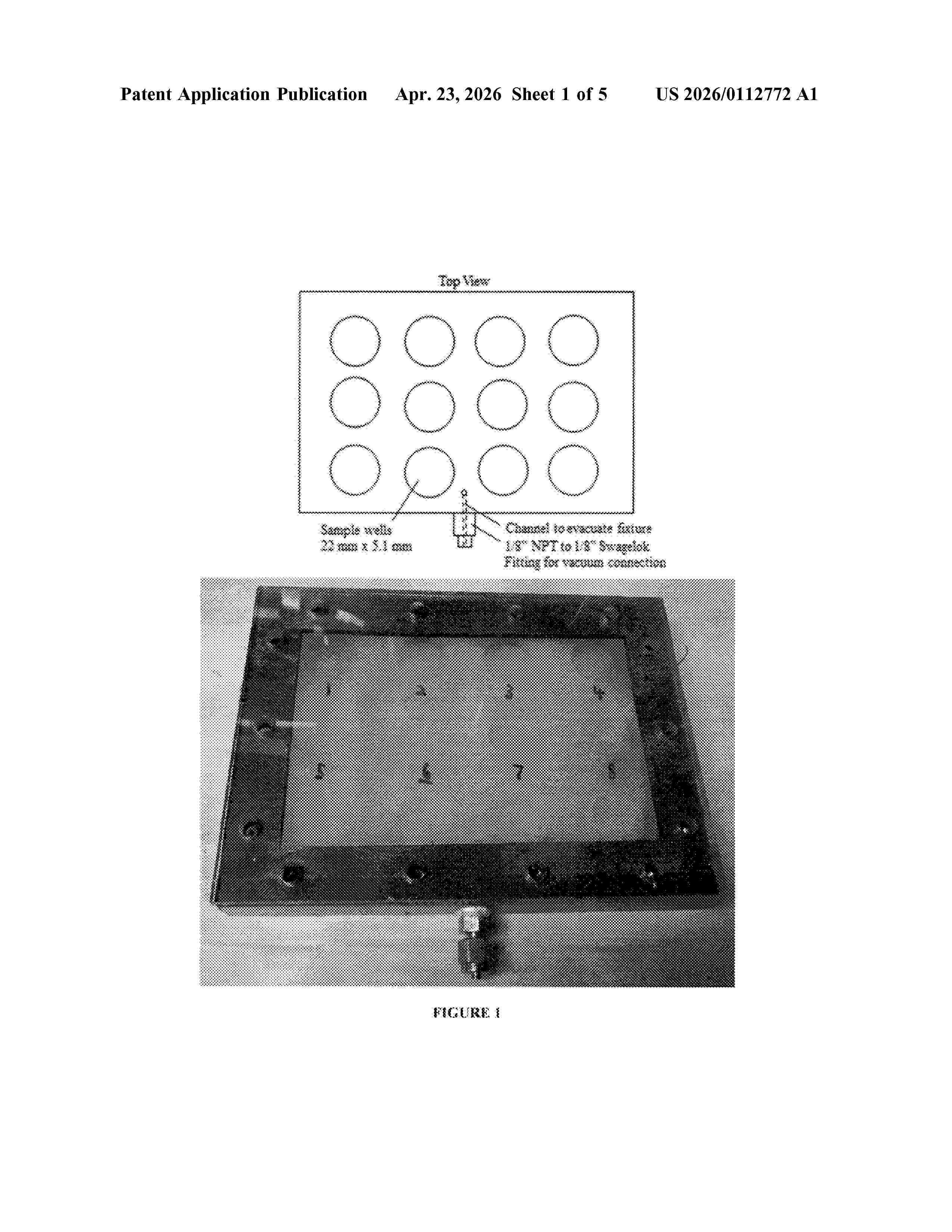
Resumen de: US20260112772A1
Disclosed herein are porous separators having a surface energy of at least 50 dynes/cm, which separators can be prepared by radiating oxygen plasma on a microporous polymer film. The oxygen plasma treatment yields significant reduction in electrolyte contact angle and wetting time of said separators when they are in contact with an electrolyte with high salt concentration. As a result, the oxygen plasma treatment improves the wetting by the electrolyte with high salt concentration and enables its use for high capacity and long cycle life rechargeable lithium metal batteries, which are also described herein.
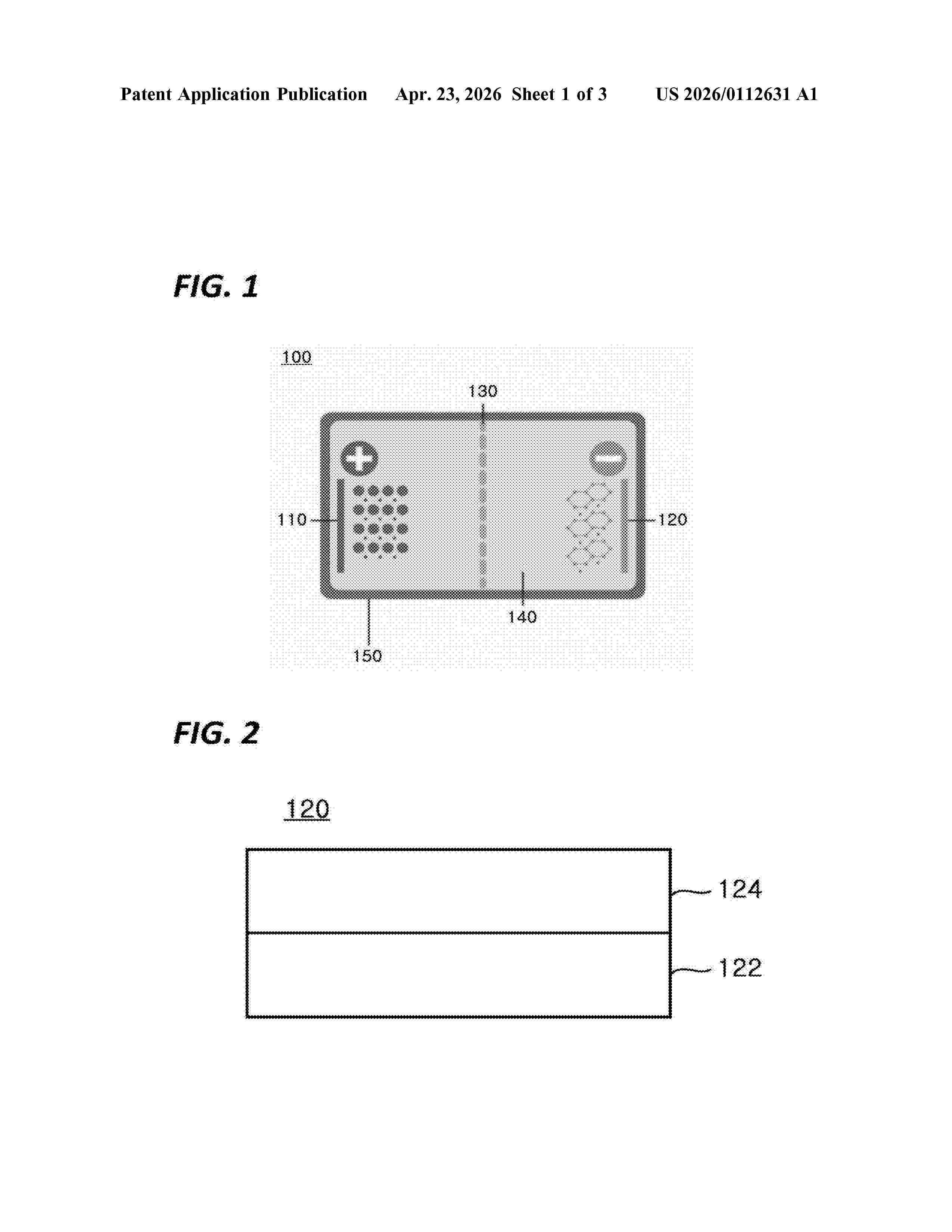
Resumen de: US20260112631A1
A silicon-carbon composite in which, when subjected to etching with an argon (Ar) ion beam at an energy of 1,000 eV for 5,000 seconds followed by XPS analysis, a ratio of a proportion of Si measured from an Si2p spectrum to a proportion of N measured from an N1s spectrum is 35 to 200, a negative electrode active material including the silicon-carbon composite, a negative electrode composition, a negative electrode, a lithium secondary battery, a battery module, and a battery pack.
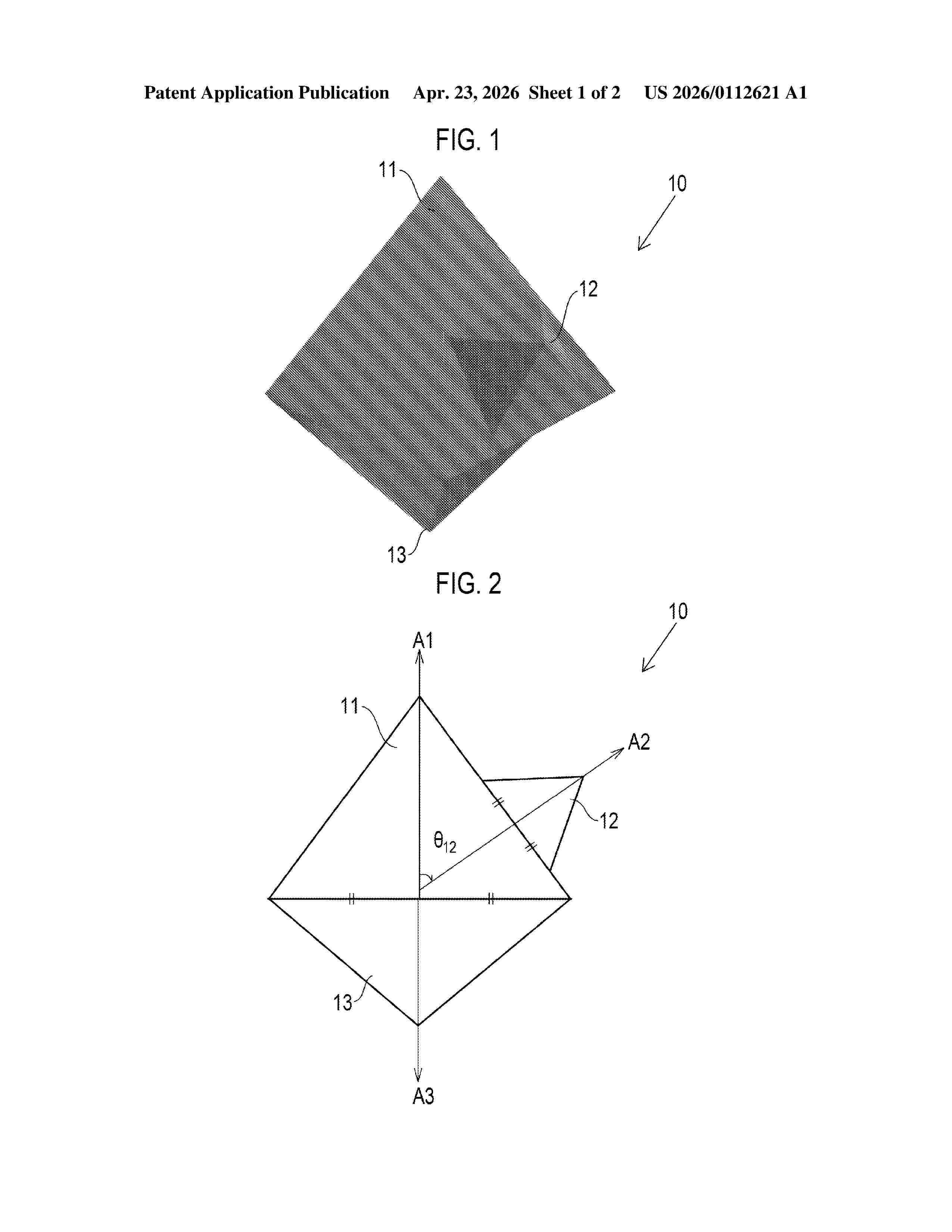
Resumen de: US20260112621A1
0000 A positive electrode active material for a lithium-ion secondary battery contains monocrystalline particles. The monocrystalline particle includes a first pyramidal portion and a second pyramidal portion. The first pyramidal portion protrudes in a first direction. The first pyramidal portion has a first outer diameter. The first outer diameter indicates a diameter of a minimum circumscribed circle with respect to the first pyramidal portion. The second pyramidal portion protrudes in a second direction. The second pyramidal portion has a second outer diameter. The second outer diameter indicates a diameter of a minimum circumscribed circle with respect to the second pyramidal portion. The first outer diameter is larger than the second outer diameter. An angle between the first direction and the second direction is greater than 0° and 45° or less.
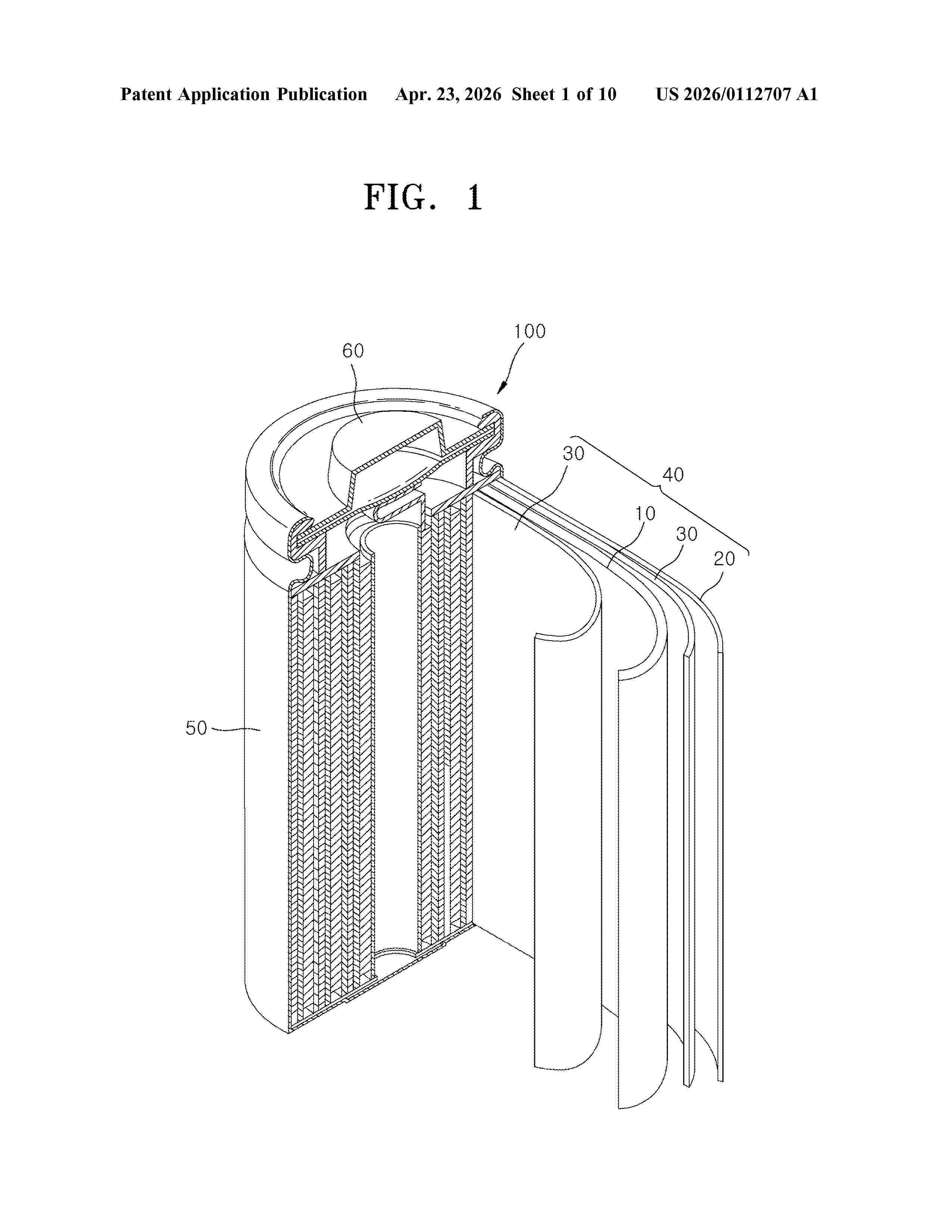
Resumen de: US20260112707A1
An electrode manufacturing device includes a winding unit configured to wind an electrode plate including an active material layer on a substrate into a wound electrode plate, and a jig configured to fix an outside of the wound electrode plate and prevent expansion of the wound electrode plate. The electrode manufacturing device is configured to control spring back of the electrode plate and/or improve thickness dispersion of the electrode plate.
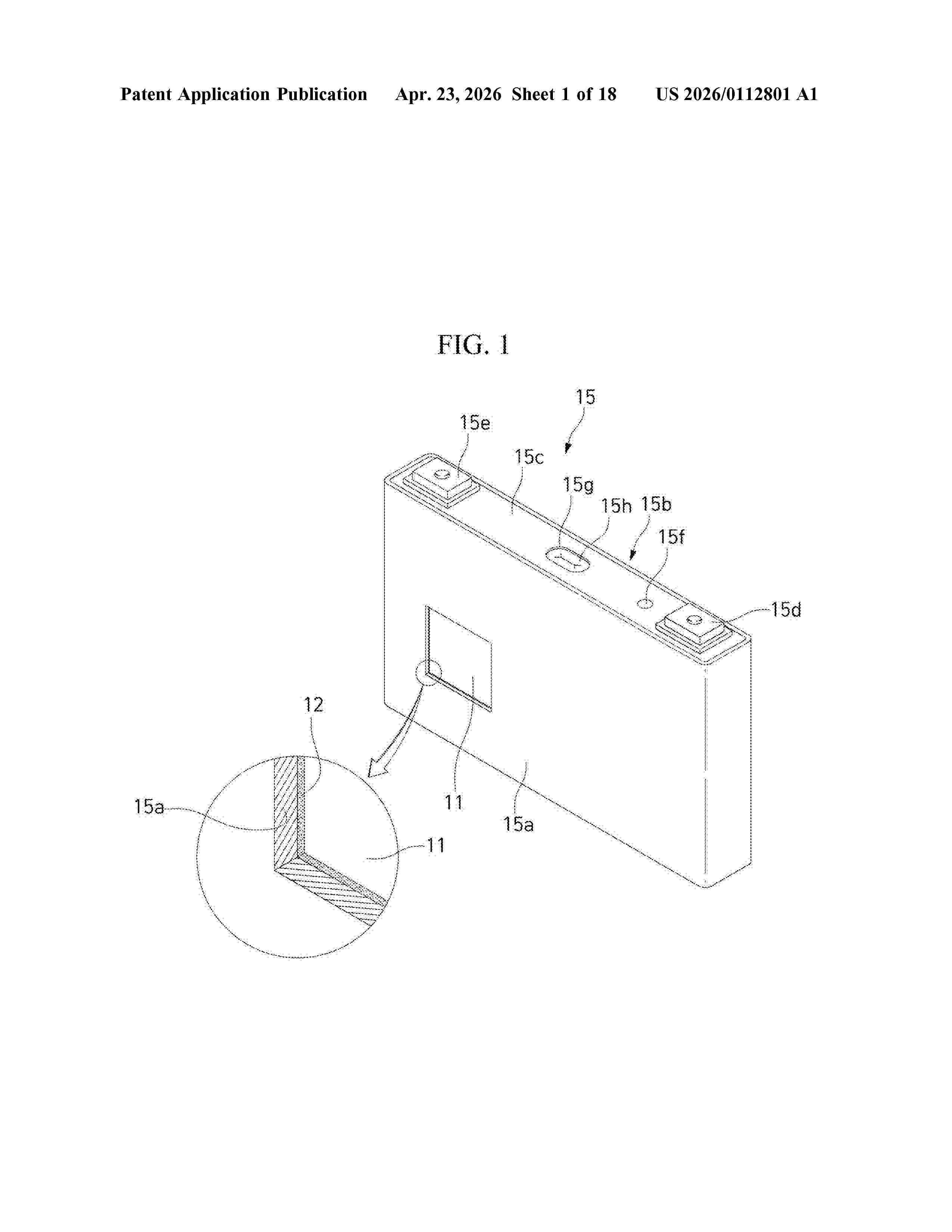
Resumen de: US20260112801A1
The present disclosure relates to an apparatus and method for taping an electrode assembly of a battery, in which an attachment reference point and a management reference point are unified, and thus there is little risk of degrading adhesive quality due to an increase in size of an electrode assembly. An overlapping section may be placed on a side surface portion, and thus degradation of quality due to tilting does not occur. The apparatus for taping an electrode assembly of a battery includes a first taping unit that attaches a first tape to a partial surface of an electrode assembly of a battery of which an upper side is provided with a terminal part and a second taping unit that attaches a second tape to another surface of the electrode assembly in a state in which the first tape is attached.
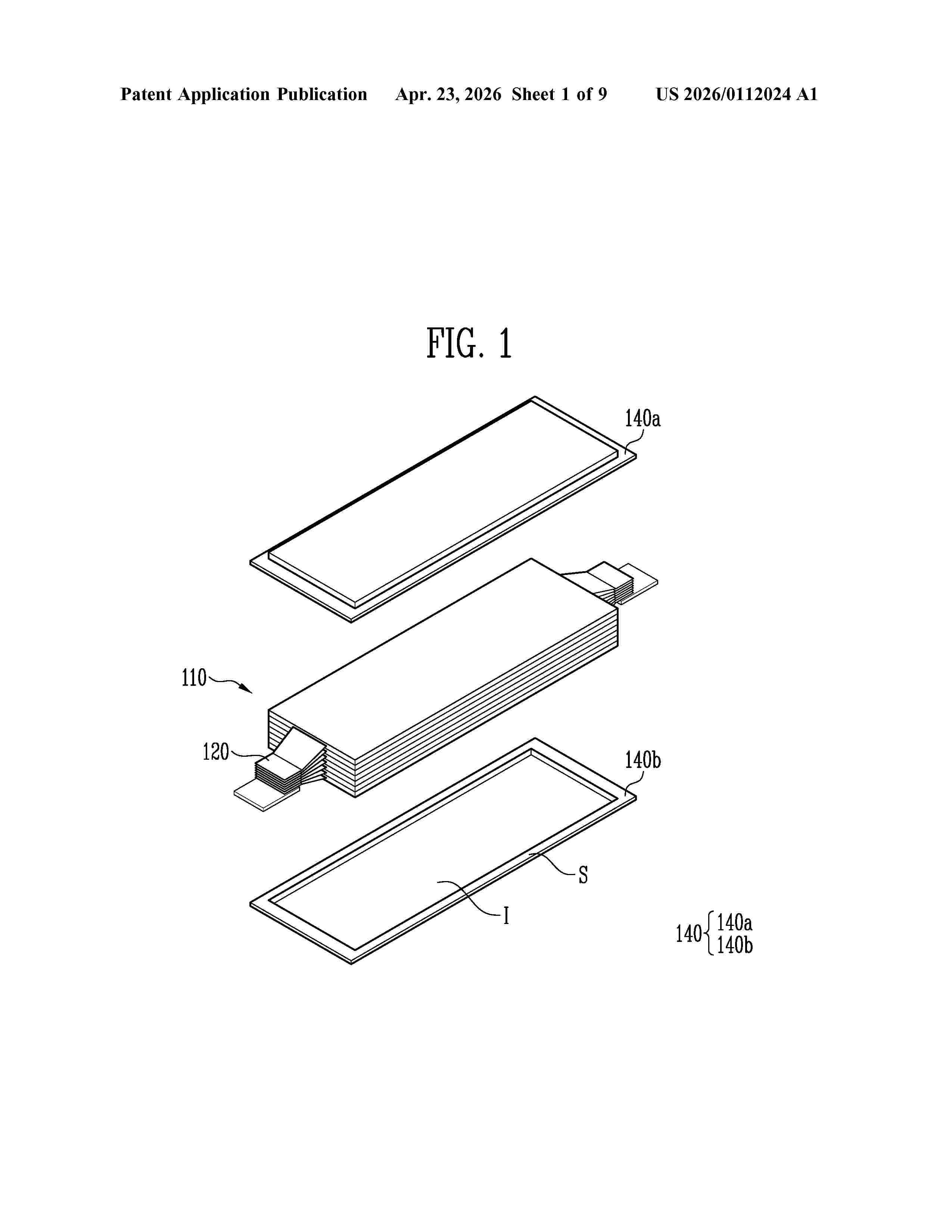
Resumen de: US20260112024A1
The present disclosure relates to a battery manufacturing system for manufacturing a battery cell including an electrode assembly in which a plurality of electrodes are stacked, and may include a vision device for inspecting a foreign object disposed on the electrodes, wherein the vision device may include a moving unit, a shooting unit, an illuminating unit, and a controller.
Resumen de: DE102024003474A1
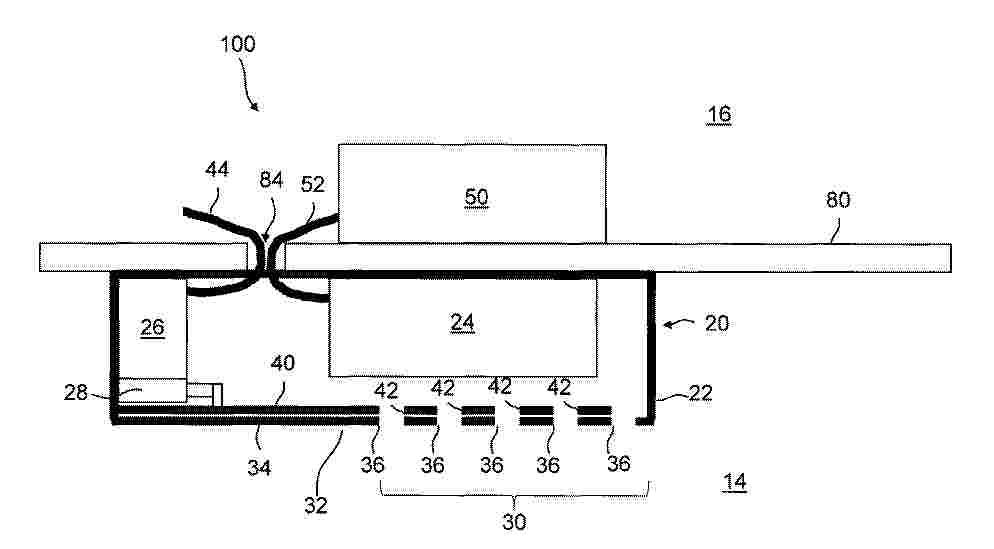
Die Erfindung betrifft eine Vorrichtung (100) zur Detektion eines thermischen Ereignisses einer Traktionsbatterie (10) eines elektrisch betreibbaren Fahrzeugs, wenigstens umfassend eine Detektionseinrichtung (20) mit einem Gehäuse (22), in welchem eine Kohlenmonoxid-Sensoreinheit (24), eine Steuereinheit (26) mit einer Bewegungssensorik und ein Aktor (28) angeordnet sind, welcher Aktor (28) von der Steuereinheit (26) ansteuerbar ist. Die Detektionseinrichtung (20) ist in einer Nähe wenigstens einer Entgasungseinheit (12) der Traktionsbatterie (10) angeordnet. Dabei weist das Gehäuse (22) der Detektionseinrichtung (20) eine reversibel verschließbare Öffnung (30) zu einer Umgebung (14) auf, wobei die Öffnung (30) mittels einer durch den Aktor (28) betätigbaren Öffnungsvorrichtung (32) öffenbar und verschließbar ist. Die Detektionseinrichtung (20) ist mit einer Kohlenmonoxid-Warneinheit (50) in einem Innenraum (16) des Fahrzeugs elektrisch gekoppelt.Die Erfindung betrifft ferner ein Verfahren zur Detektion eines thermischen Ereignisses einer Traktionsbatterie (10) eines elektrisch betreibbaren Fahrzeugs mit einer Vorrichtung (100).
Resumen de: WO2026083820A1
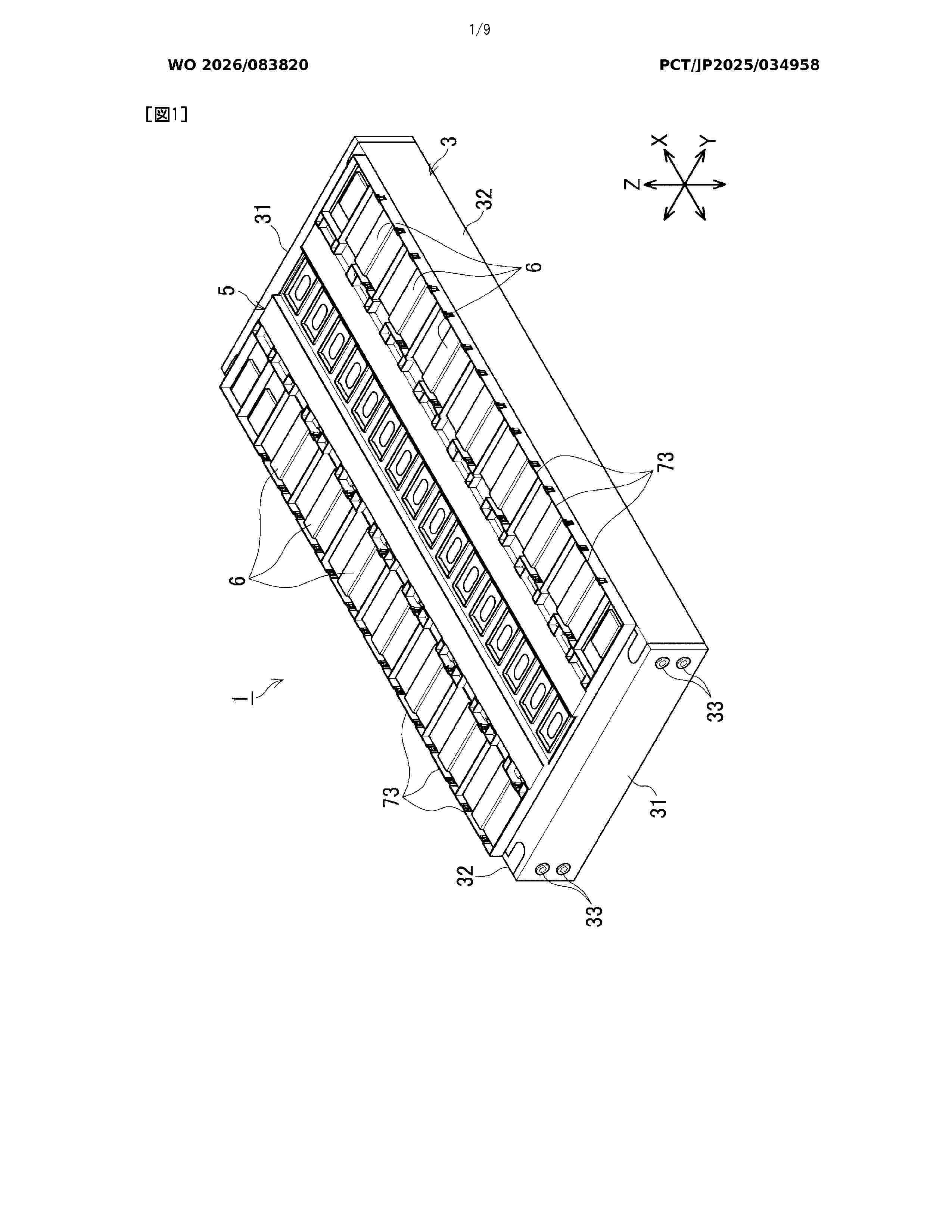
A power storage device according to this embodiment is characterized by comprising: a layered body that includes a first power storage element and a second power storage element arranged in a first direction; a bus bar that conects the first power storage element and the second power storage element; a first member that is positioned in a second direction intersecting the first direction of the layered body and retains the bus bar; and a pressing part that presses the first member toward the layered body.
Resumen de: WO2026081116A1
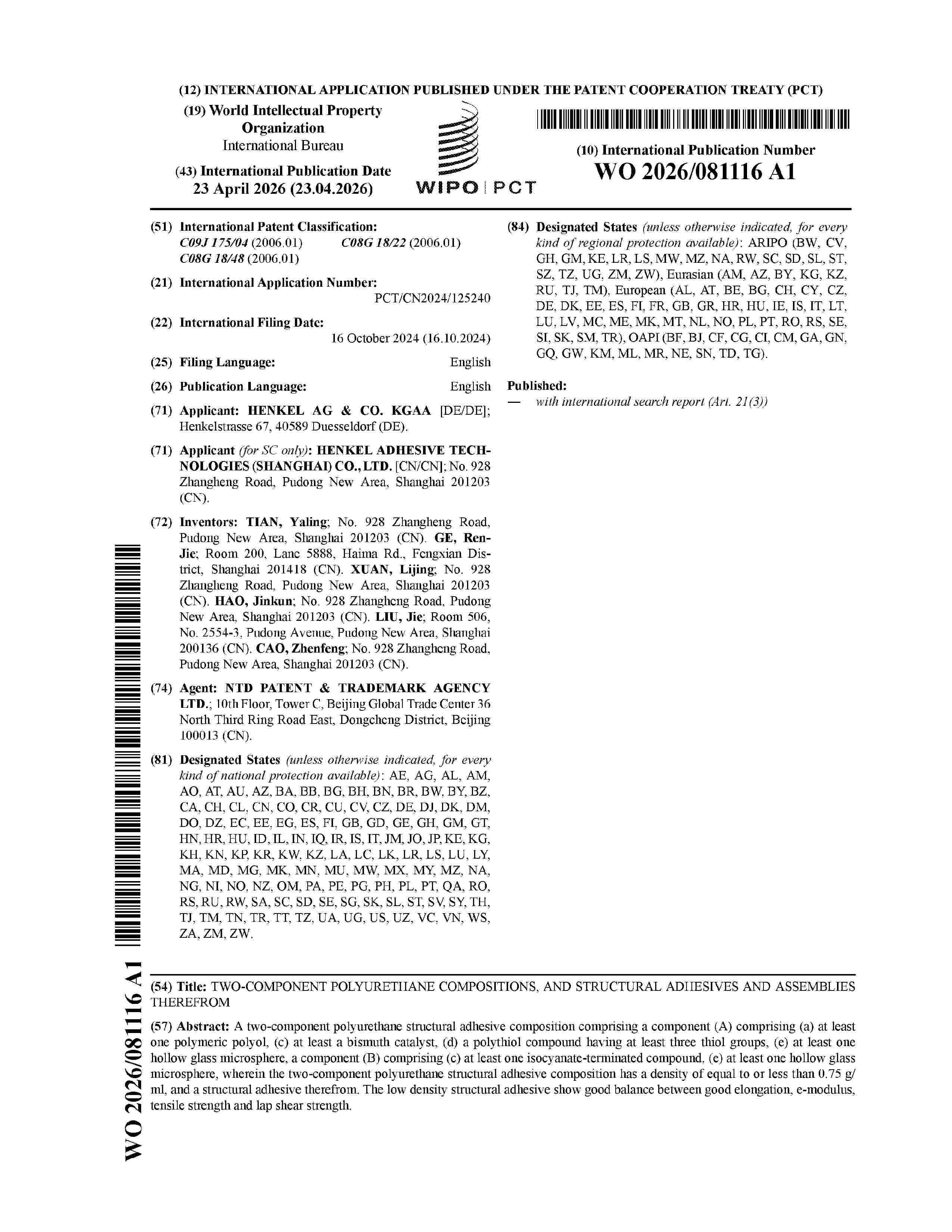
A two-component polyurethane structural adhesive composition comprising a component (A) comprising (a) at least one polymeric polyol, (c) at least a bismuth catalyst, (d) a polythiol compound having at least three thiol groups, (e) at least one hollow glass microsphere, a component (B) comprising (c) at least one isocyanate-terminated compound, (e) at least one hollow glass microsphere, wherein the two-component polyurethane structural adhesive composition has a density of equal to or less than 0.75 g/ml, and a structural adhesive therefrom. The low density structural adhesive show good balance between good elongation, e-modulus, tensile strength and lap shear strength.
Resumen de: WO2026081048A1
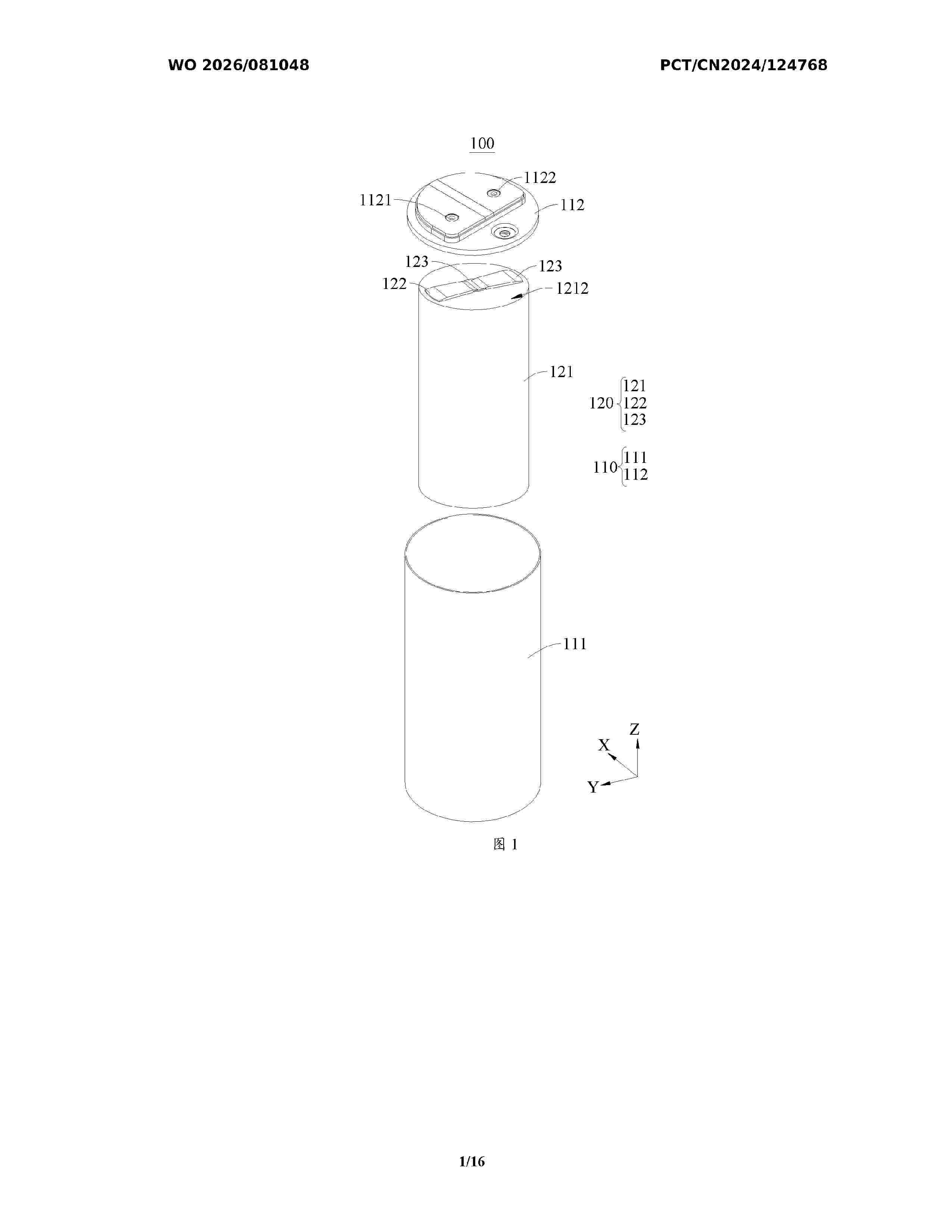
The present application discloses a battery cell, a battery device, an energy storage device, an energy storage system, an electric device, and a charging network. The battery cell comprises a casing, an electrode assembly, and an insulating member; the casing is provided with a first electrode lead-out portion; at least part of the electrode assembly is located in the casing; the electrode assembly comprises a main body portion, and a first tab portion used for being electrically connected to the first electrode lead-out portion; the main body portion comprises a central hole and a first end surface; the central hole passes through the first end surface; the first end surface comprises a first tab lead-out area and a first tab non-lead-out area; a plurality of first tabs are leaded out from the first tab lead-out area, and the plurality of first tabs form the first tab portion; the first tab non-lead-out area is located between the central hole and the first tab lead-out area; and the insulating member covers at least part of the first tab non-lead-out area.
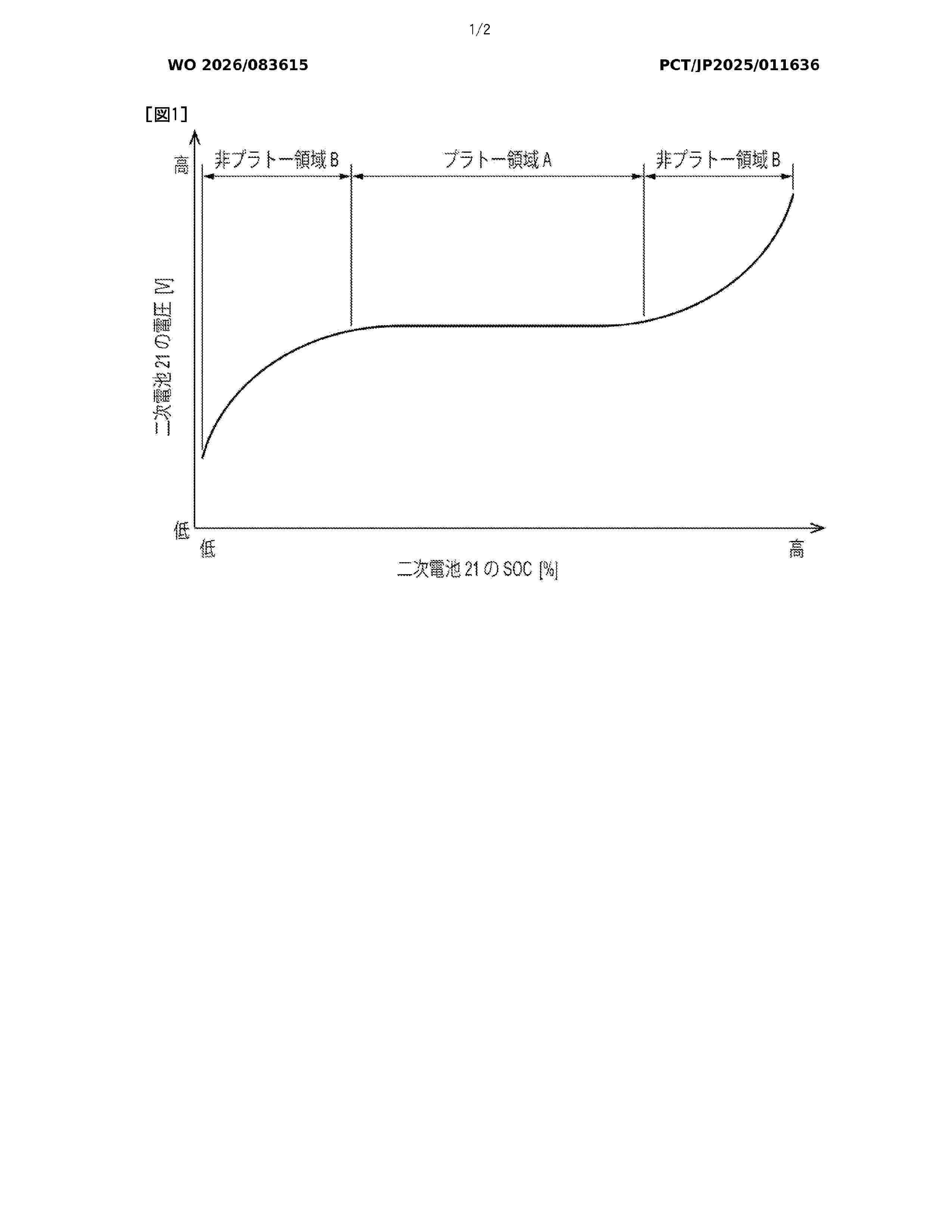
Resumen de: WO2026083615A1
The present invention addresses the problem of estimating the state of charge of a secondary battery with prescribed accuracy even within a prescribed range of state of charge in which changes in the state of charge in relation to changes in the voltage value of the secondary battery are relatively small. An estimation device 100 for the state of charge (SOC) of a secondary battery 21 estimates the SOC within a prescribed range (plateau region A). The fluctuations (ΔV) of the voltage value (OCV) of the secondary battery 21 in the plateau region A are smaller than the fluctuations (ΔV) of the OCV of the secondary battery 21 outside the prescribed SOC range (non-plateau region B). The estimation device 100 computes a first state of charge (SOCV) as the SOC of the secondary battery 21 and computes a second state of charge (SOCi) as the SOC of the secondary battery 21. The estimation device 100 reflects SOCi relatively greater than SOCv when estimating the SOC of the secondary battery 21 in the plateau region A than when estimating the SOC of the secondary battery 21 in the non-plateau region B.
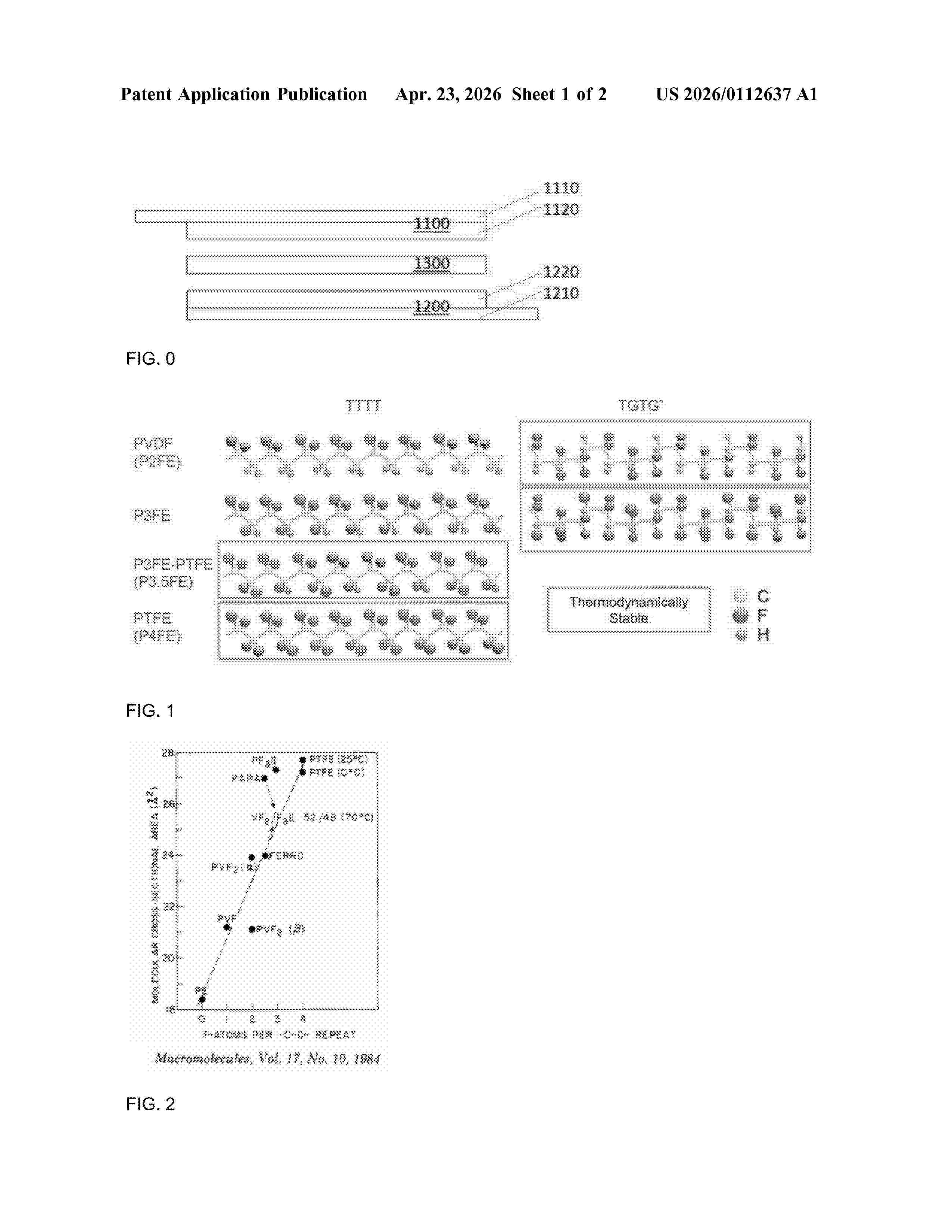
Resumen de: US20260112637A1
Disclosed is a novel fibrillizable binder for electrode production aimed at achieving better electrochemical performance than existing binders. The proposed binders are P3FE and copolymers of P3FE with PTFE, containing between 3-3.95 fluorine atoms per monomer unit.
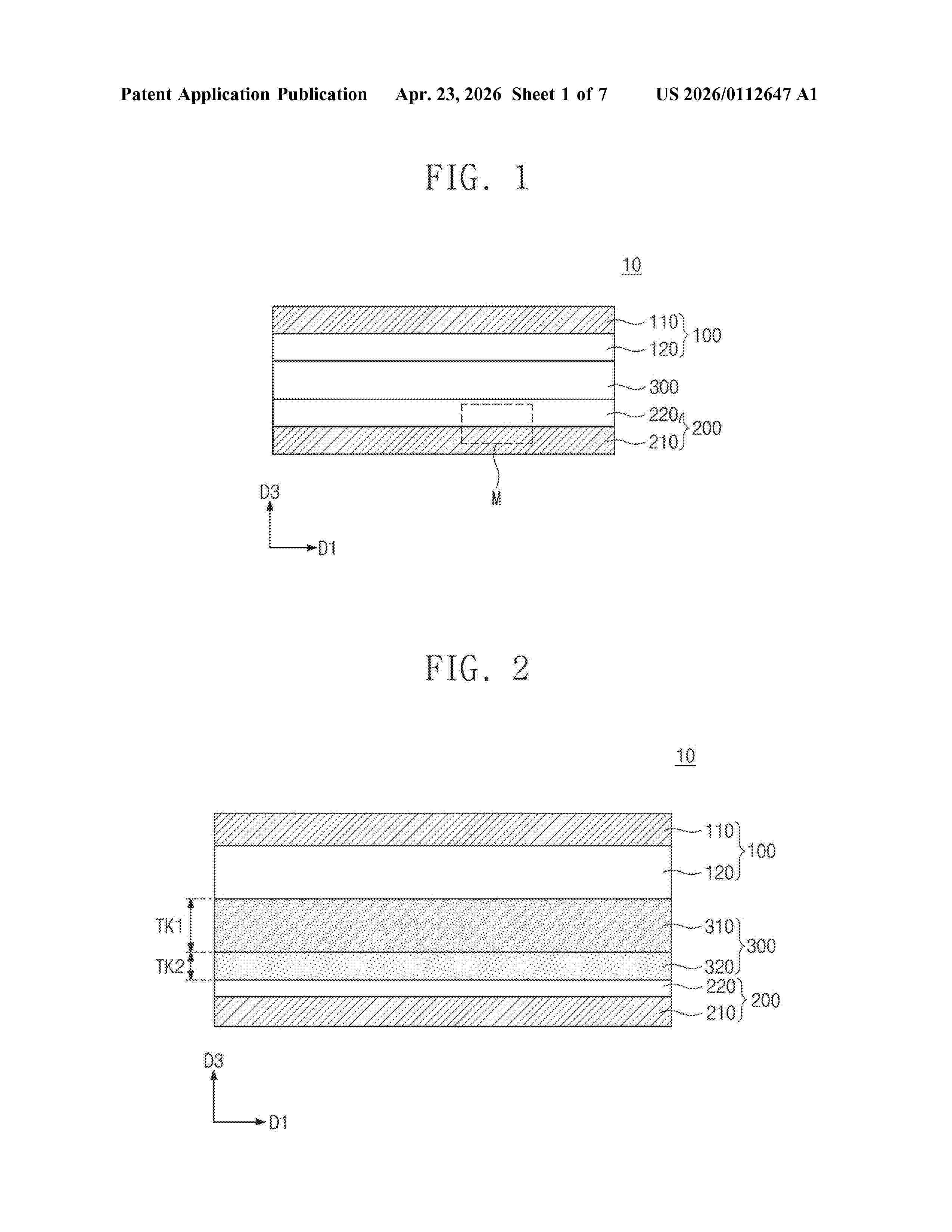
Resumen de: US20260112647A1
0000 Disclosed are negative electrodes for all-solid-state batteries, all-solid-state batteries including the same, and methods of manufacturing negative electrodes for all-solid-state batteries. The negative electrode comprises a negative electrode current collector and a negative electrode active material layer. The negative electrode active material layer comprises a negative electrode active material and a solid electrolyte. The negative electrode active material includes a porous support and silicon (Si). The silicon fills at least a portion of a pore of the porous support.
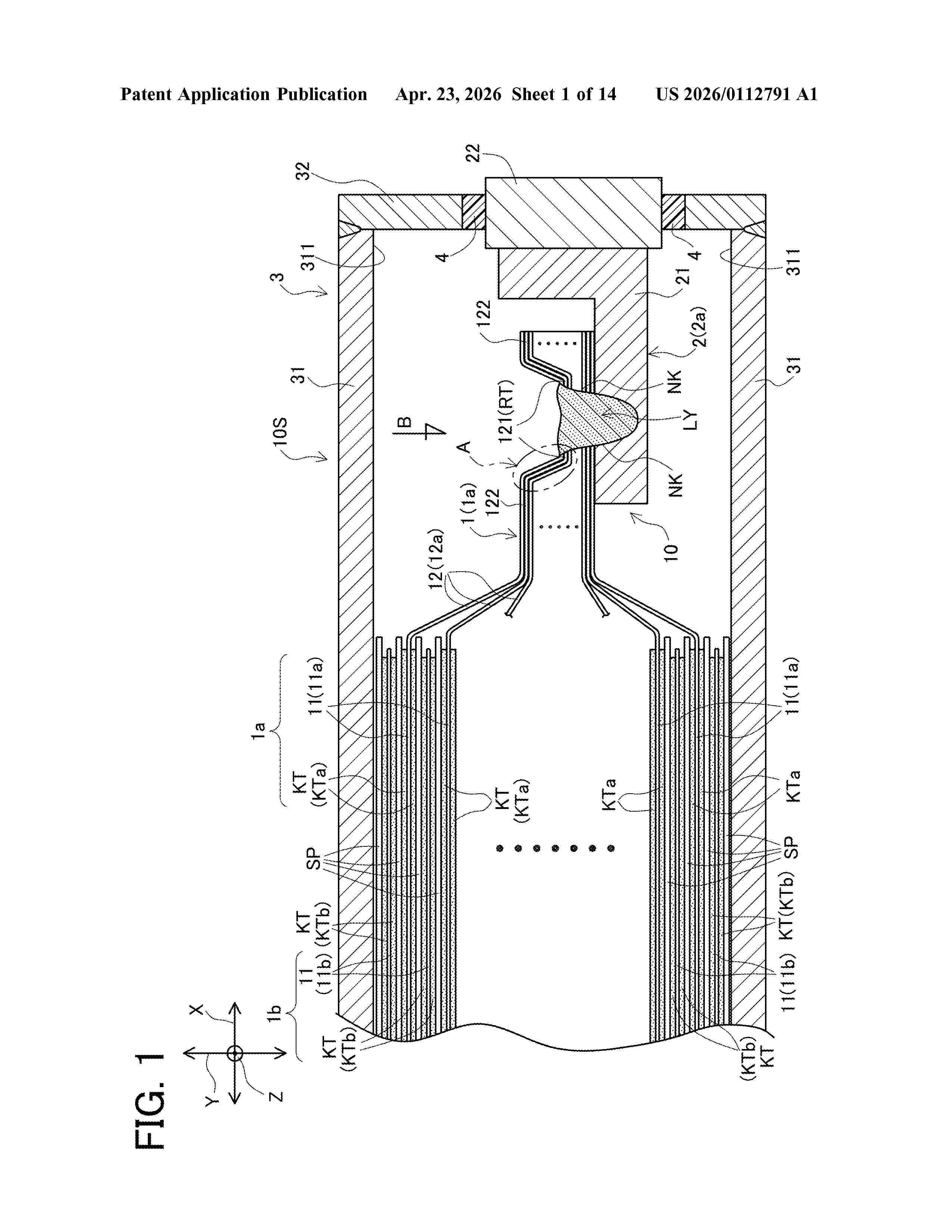
Resumen de: US20260112791A1
0000 A method of manufacturing a battery cell including an electrode body including electrode foils having active material layer formed portions and active material layer non-formed portions, and a current collecting terminal joined to the active material layer non-formed portions is provided. The method includes a first step of causing the electrode foils to contact with and adhere to each other in the active material layer non-formed portions, to form a reduced thermal resistance portion of the electrode foils in which thermal resistance in a contact adhered portion of the electrode foils is lower than that in a discrete portion of the electrode foils, and a second step of joining the electrode foils and the current collecting terminal by laser welding while the reduced thermal resistance portion is in contact with the current collecting terminal to connect a nugget boundary of a laser welded portion to the reduced thermal resistance portion.
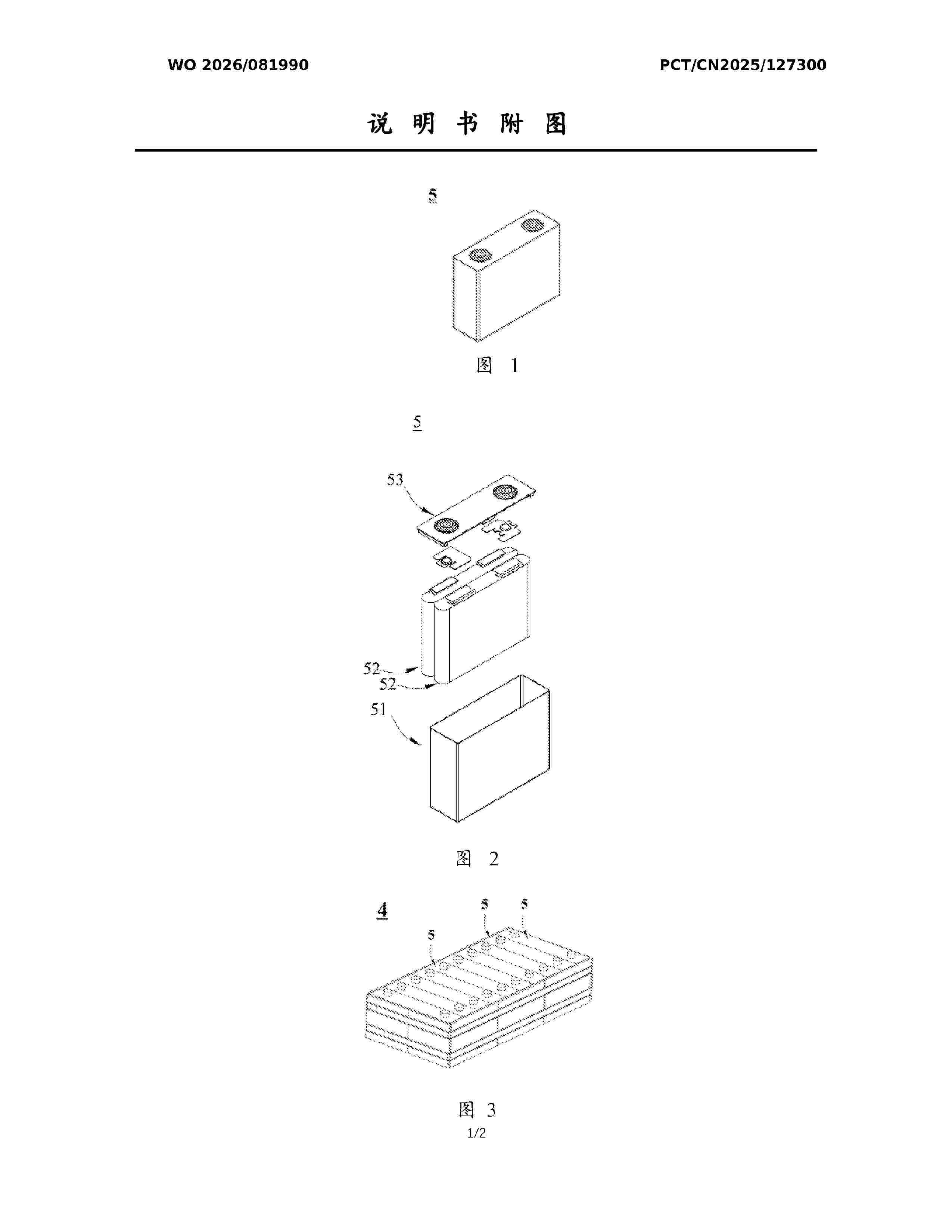
Nº publicación: WO2026081990A1 23/04/2026
Solicitante:
CONTEMPORARY AMPEREX TECH CO LIMITED [CN]
\u5B81\u5FB7\u65F6\u4EE3\u65B0\u80FD\u6E90\u79D1\u6280\u80A1\u4EFD\u6709\u9650\u516C\u53F8
Resumen de: WO2026081990A1
Provided in the present application is a sodium-ion secondary battery. The sodium-ion secondary battery comprises a positive electrode sheet, wherein the positive electrode sheet comprises a positive electrode current collector and a positive electrode film layer arranged on the positive electrode current collector, the positive electrode film layer comprising a positive electrode active material and a binder. The binder comprises a copolymer, and the copolymer comprises a first structural unit as represented by formula I and a second structural unit as represented by formula II, wherein R11, R12, R13, R14, R21, R22 and R23 are each independently selected from hydrogen and an unsubstituted or substituted C1-3 alkyl, with the substituent of the substituted C1-3 alkyl being selected from at least one of an ester group, a carboxyl salt, an acid anhydride, a hydroxyl, an amido and a carboxyl; and R24 is selected from hydrogen, an inorganic cation, and an unsubstituted or substituted C1-3 alkyl, with the substituent of the substituted C1-3 alkyl being selected from at least one of an ester group, a carboxyl salt, an acid anhydride, a hydroxyl, an amido and a carboxyl.
 BOPI
BOPI
 Sede Electrónica