Si deseas distinguir tus productos, servicios o ambos de los de otra empresa, es posible que necesites una marca o nombre comercial. Descubre qué son, en qué consiste su procedimiento de registro y qué implica.

Información sobre los plazos de presentación de solicitudes de transformación de marcas de la Unión Europea en marca nacional española. Más información


Si tienes un nuevo dispositivo, producto o procedimiento que resuelva un problema técnico o tenga una ventaja práctica, existen distintas formas de protegerlo en España y en otros países. Descubre cómo hacerlo.

¿Tu innovación reside en la estética, la ornamentación o la apariencia de tu producto? Protégela mediante un diseño industrial. Descubre qué derechos confiere el registro y cómo realizar la tramitación.

Las indicaciones geográficas protegen el nombre de un producto originario de una zona geográfica, a la cual le debe una determinada calidad, reputación u otra característica. Descubre qué son, en qué consiste su procedimiento de registro y qué beneficios conceden.

Las patentes publicadas en todo el mundo son una valiosa fuente de información científica, técnica y comercial.

Si eres emprendedor/a o una empresa y quieres potenciar y mejorar la rentabilidad de tu negocio protegiendo de forma adecuada los activos intangibles de tu organización, en este espacio encontrarás lo necesario.


 59
resultados
 Última actualización
30/10/2026 [08:21:00]


 Resultados 50 a 59 de 59
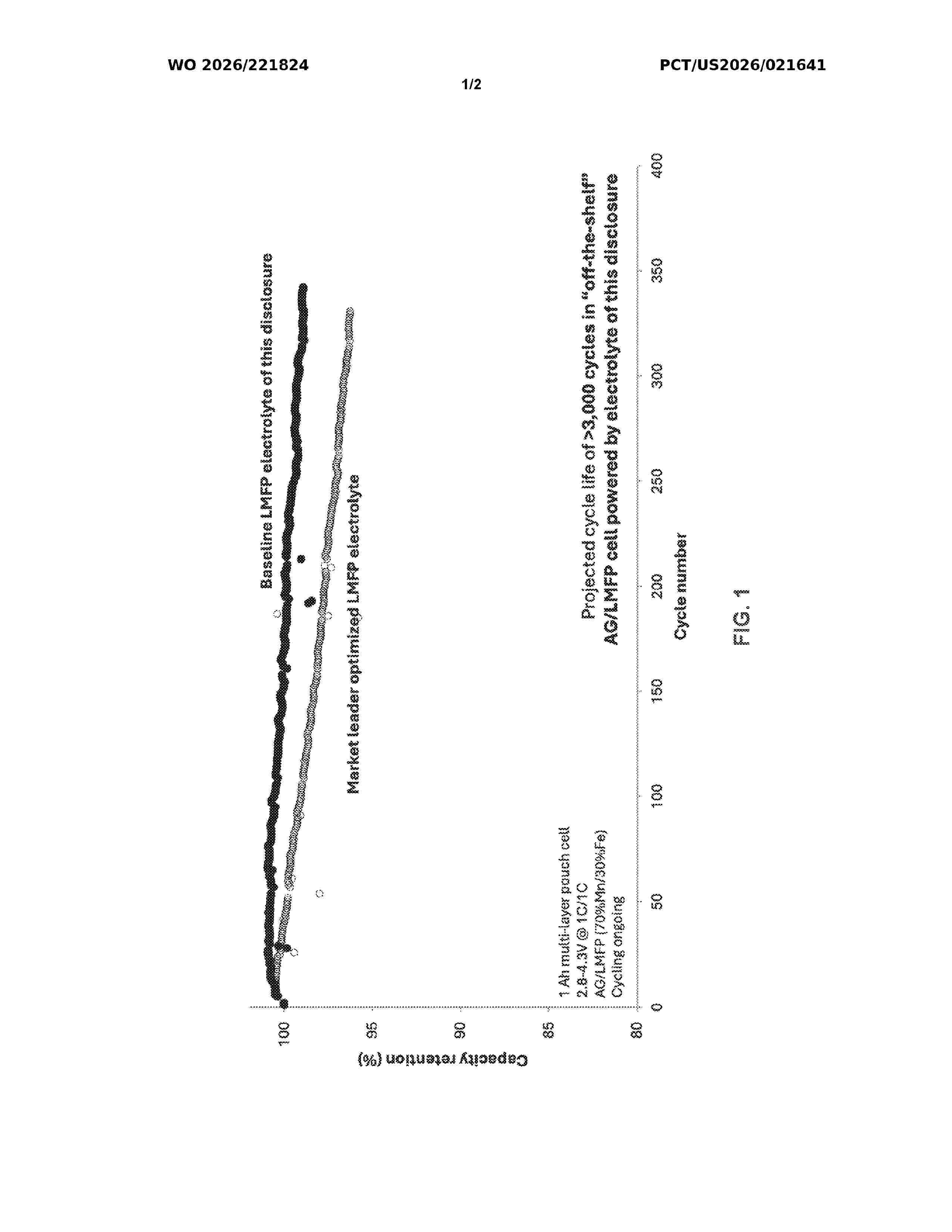
Resumen de: WO2026221824A1
Herein discussed is an electrochemical device comprising an anode, a cathode, and an electrolyte, wherein the cathode comprises lithium manganese iron phosphate (LiFexMn1-xPO4, LMFP), or lithium iron phosphate (LiFePO4, LFP), or Lithium Manganese Oxide (LixMnyOz, LMO), or Lithium Nickel Oxide (LNO), or Lithium Nickel Manganese Oxide (LNMO), Lithium-and-Manganese-Rich (Li1+x(NiaMnbCoc)1-xO2), (Li2MnO3)x(LiNiaMnbCocO2)(1-x), LMR), or combinations thereof, wherein the anode comprises artificial graphite or synthetic graphite or natural graphite or hard carbon, wherein the anode comprises no more than 10 wt% of silicon, wherein the anode comprises no more than 10 wt% of lithium metal, wherein the electrolyte comprises a solvent and a salt, wherein the salt is substantially dissolved in the solvent, wherein the solvent comprises a linear carbonate of no less than 30 wt% based on the electrolyte weight, and wherein the solvent comprises a sulfonamide.

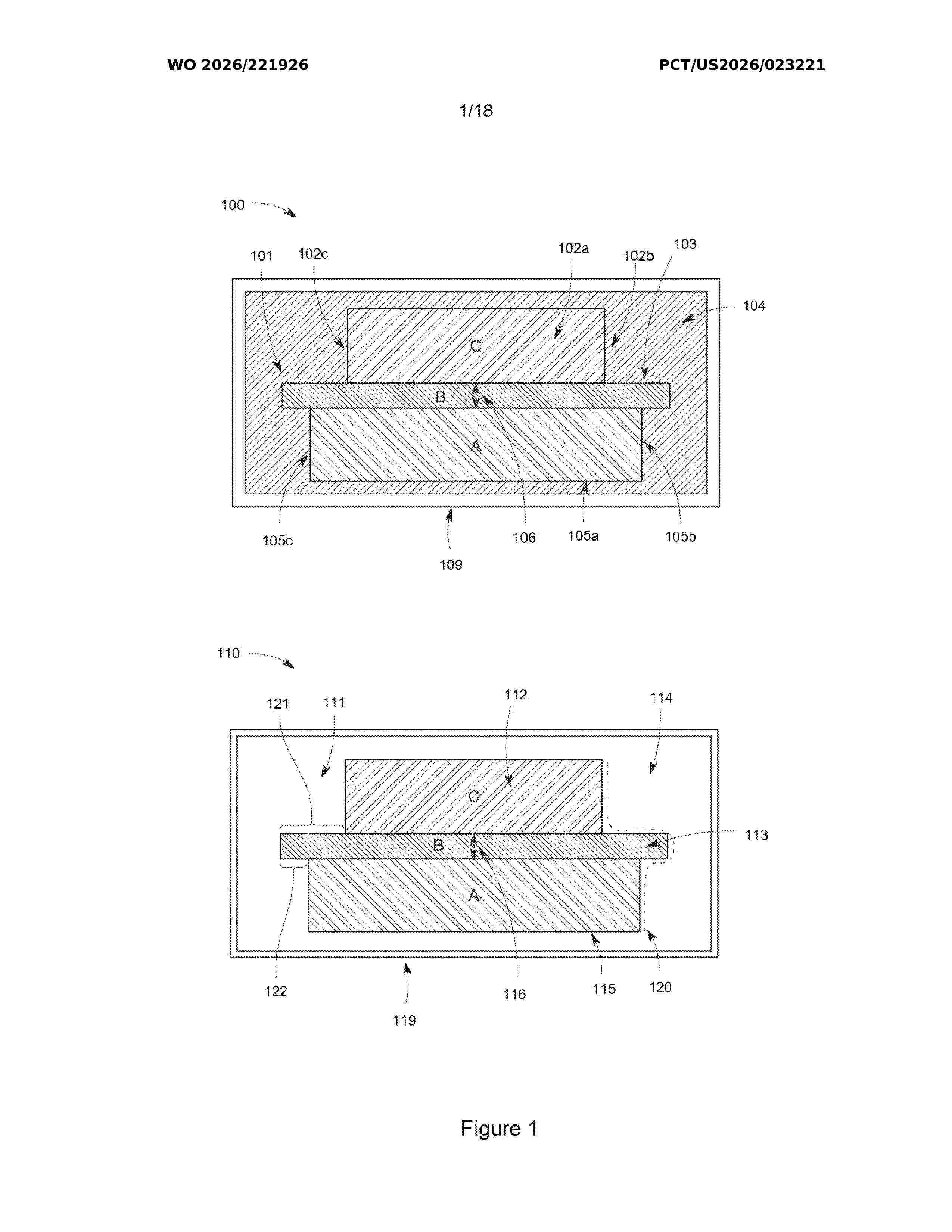
Resumen de: WO2026221926A1
The present inventions relate to methods, systems, apparatuses, controllers, software, and composition of matter associated with forming electrodes. The electrodes are formed by a controlled electrode conditioning process such as a buffering process, cleaning process, and/or buffer exchange process. Such electrode formation enables optimized charge carrier uptake, uniform formation of passivation layer, uniform charge distribution, and/or electrochemical stabilization, before electrode integration into an electrochemical cell. Such electrode formation allows for regulation of electrolyte composition, charge carrier diffusion, active material passivation, process automation, and/or environmental control, promoting consistent electrode performance and scalability for high-throughput manufacturing.
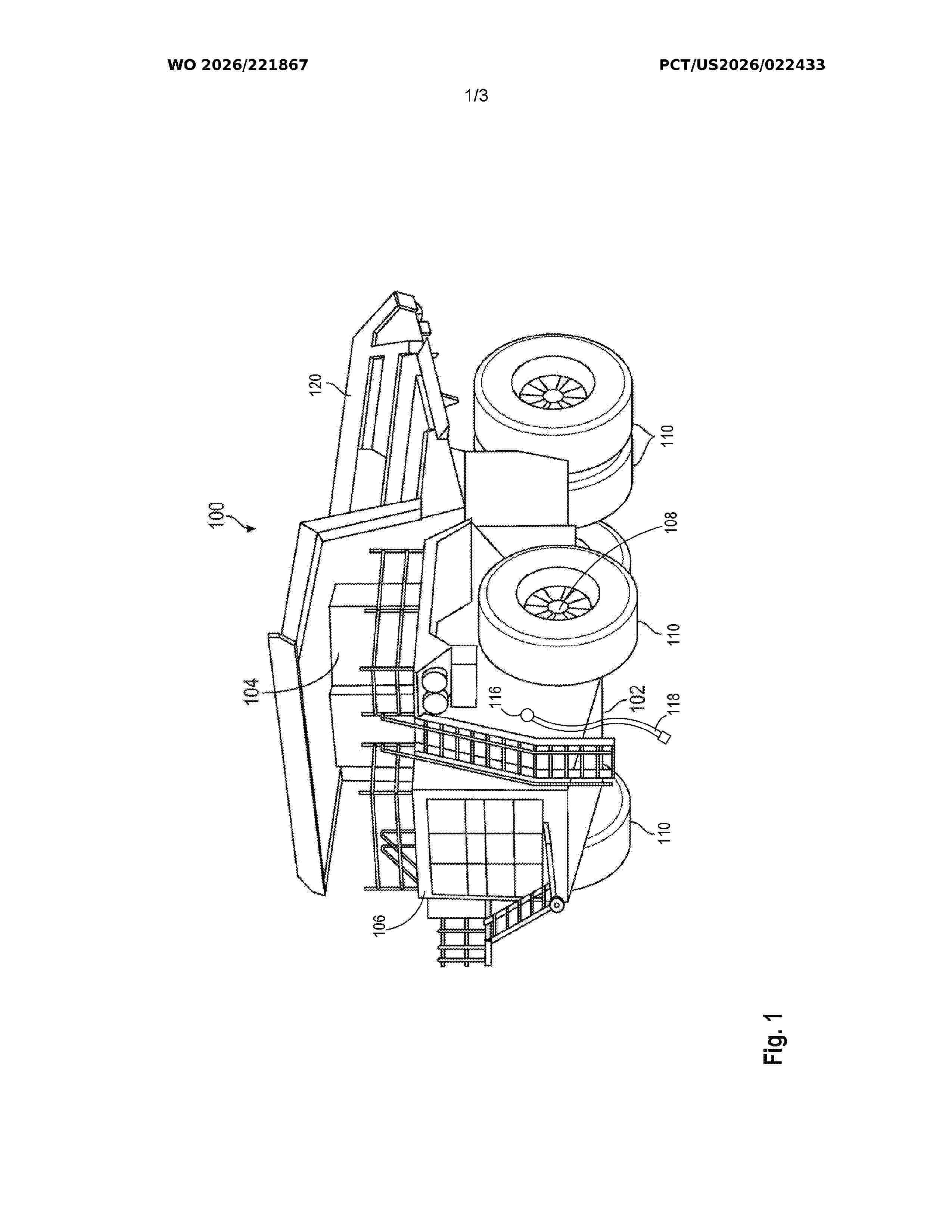
Resumen de: WO2026221867A1
A system may include a battery to operate a motor of a work machine, a sensor to measure an electrical property of the battery, an energy-dissipation device on the work machine and electrically connected to the battery, and a controller. The controller may detect that a charging connection point of the work machine is connected to a charger, initiate a performance test for the battery while the battery is connected to the work machine, cause charging of the battery to an upper level, cause discharging of the battery to a lower level using the energy-dissipation device to obtain, from the sensor, discharge data indicating the electrical property during discharging of the battery, cause charging of the battery back to the upper level to obtain, from the sensor, charge data indicating the electrical property during charging of the battery, determine a battery capacity, and output information indicating the battery capacity.
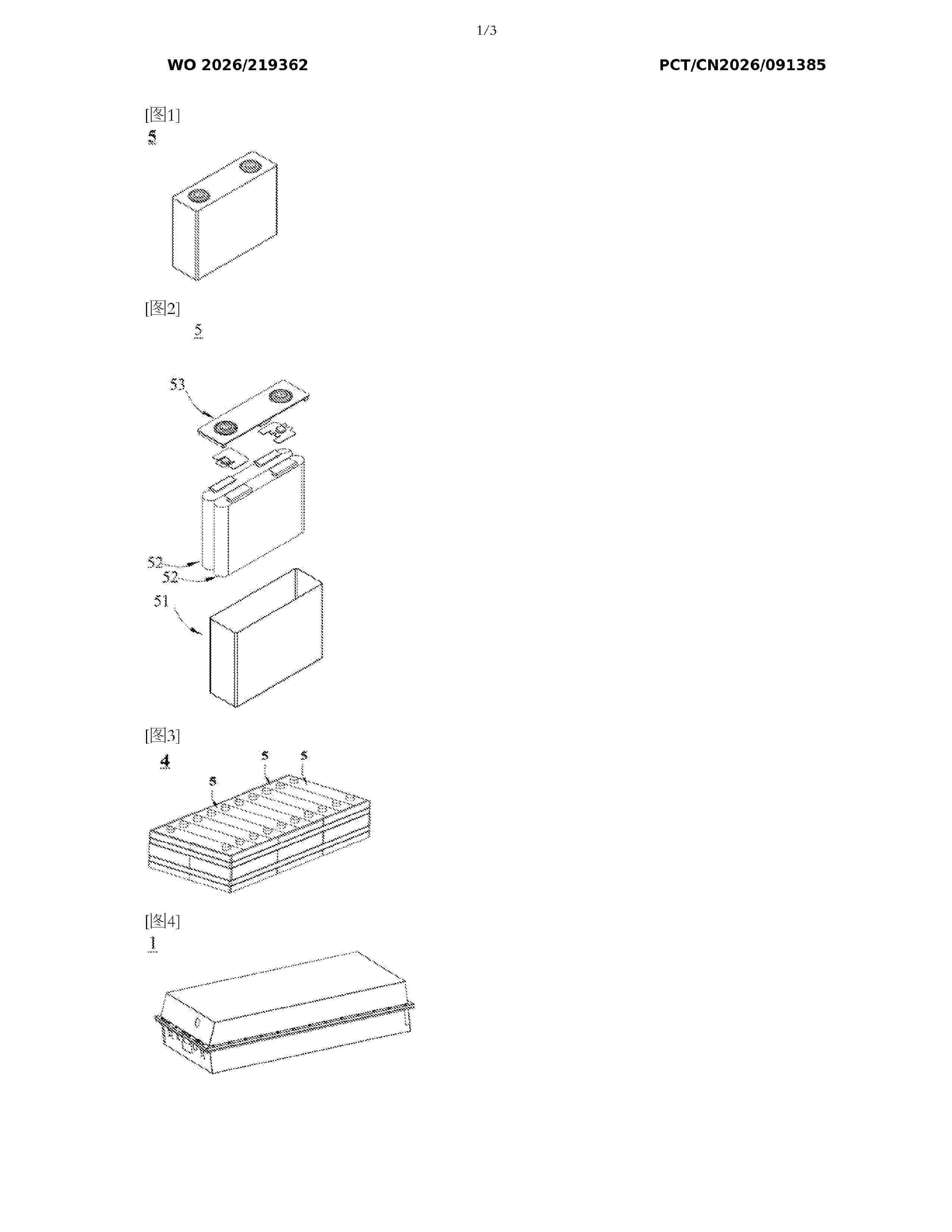
Resumen de: WO2026219362A1
The present disclosure provides a lithium-ion secondary battery, an electric device, and a positive electrode material. The lithium-ion secondary battery comprises a positive electrode sheet; the positive electrode sheet comprises a positive electrode current collector and a positive electrode film layer arranged on at least one side of the positive electrode current collector and comprising the positive electrode material; the positive electrode material comprises a lithium transition metal oxide; the lithium transition metal oxide comprises nickel, cobalt, and an element M; the element M comprises manganese and/or aluminum; on the basis of the total molar amount of nickel, cobalt, and the element M, the molar percentage of nickel is 50% or more and less than 100%; the lithium transition metal oxide comprises primary particles having a particle size of 0.5 μm to 6 μm; and on the basis of the total number of the primary particles having a particle size of 0.5 μm to 6 μm, primary particles having a particle size of 0.5 μm to 2 μm account for 86% to 93%.
Resumen de: WO2026218703A1
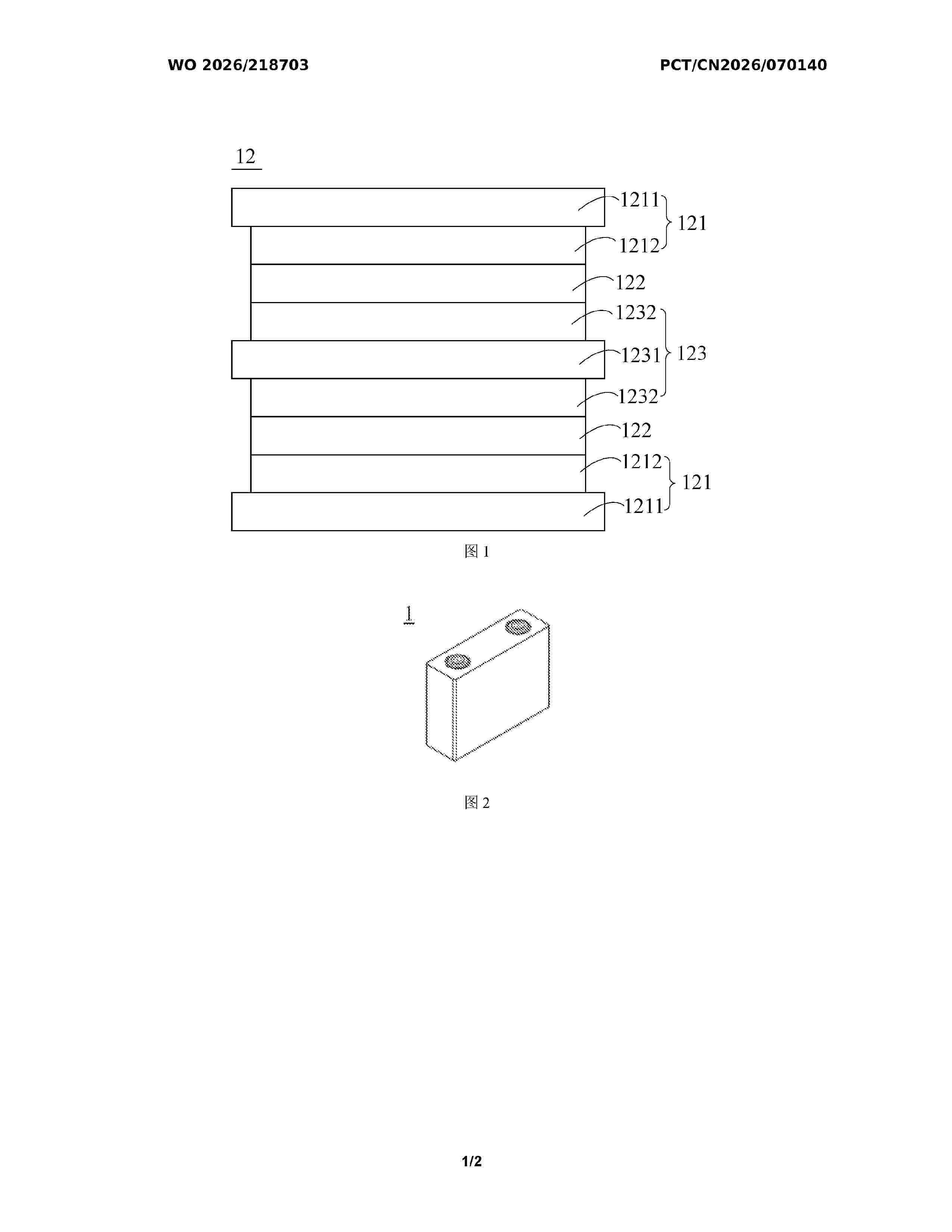
A solid-state battery, a urea-based binder and a preparation method therefor, and an electric device. The solid-state battery comprises a positive electrode layer, a solid-state electrolyte layer, and a negative electrode layer. The solid-state electrolyte layer is located between the positive electrode layer and the negative electrode layer. The negative electrode layer comprises a negative electrode current collector and a negative electrode active layer provided on at least one surface of the negative electrode current collector. The negative electrode active layer comprises a negative electrode active material and a urea-based binder. The negative electrode active material comprises a silicon-carbon composite material. The silicon-carbon composite material comprises a porous carbon material and a silicon material located in pores of the porous carbon material. The molecular structure of the urea-based binder comprises a urea-based group.
Resumen de: WO2026221190A1
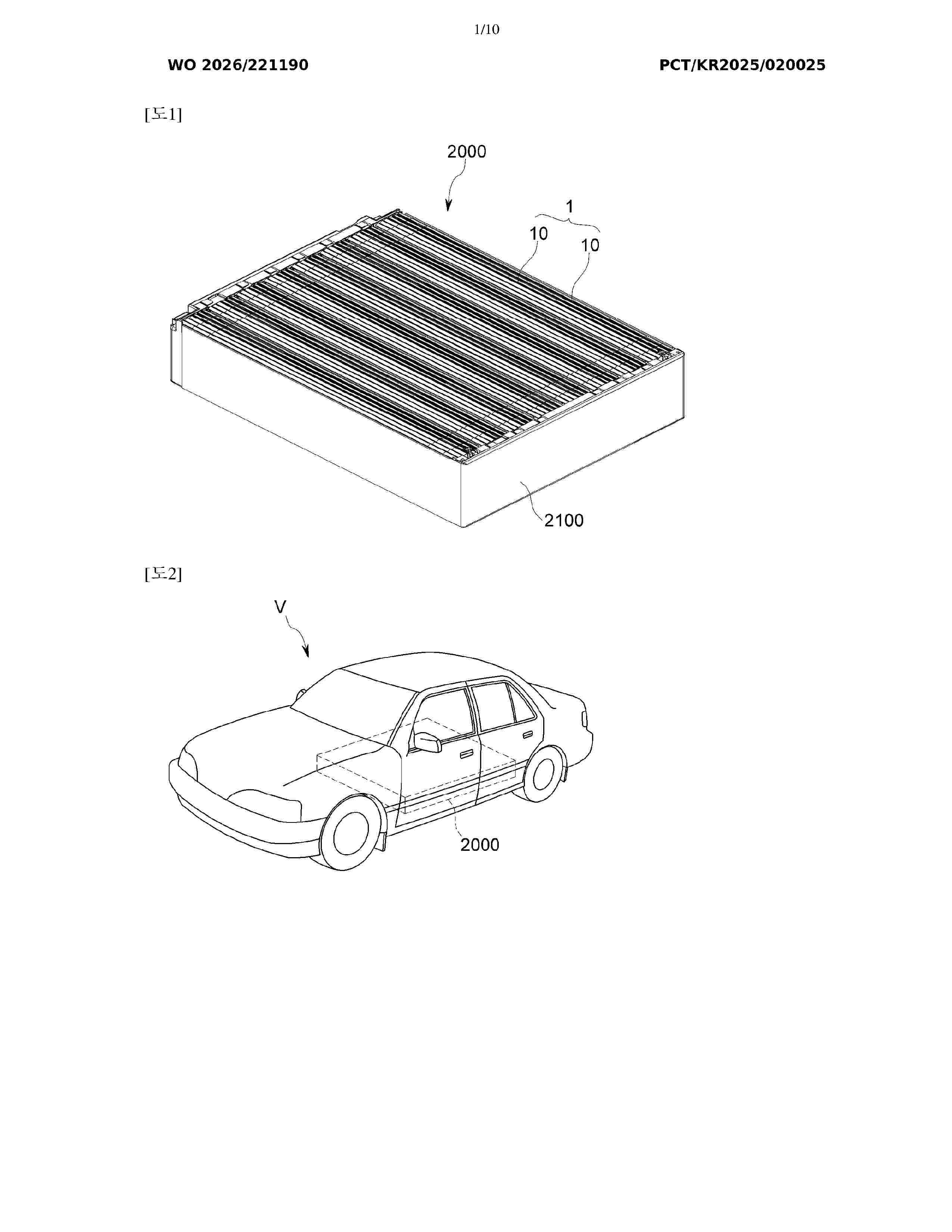
Provided are: an electrode lead welding jig device configured to prevent jig deformation due to thermal energy generated when welding electrode leads; a battery pack using same; and a method for manufacturing same. The electrode lead welding jig device, which is configured to weld a battery cell stack having stacked therein a plurality of battery cells each including a battery case and electrode leads protruding outward from the battery case, comprises: jigs disposed to be movable between the electrode leads and the battery cases so as to prevent thermal energy for welding adjacent electrode leads of the plurality of battery cells from transferring to the plurality of battery cells through the battery case; palettes connected to the lower portions of the jigs so as to vertically move the jigs; and a base connected to the palettes so as to rotate the jigs.
Resumen de: WO2026221379A1
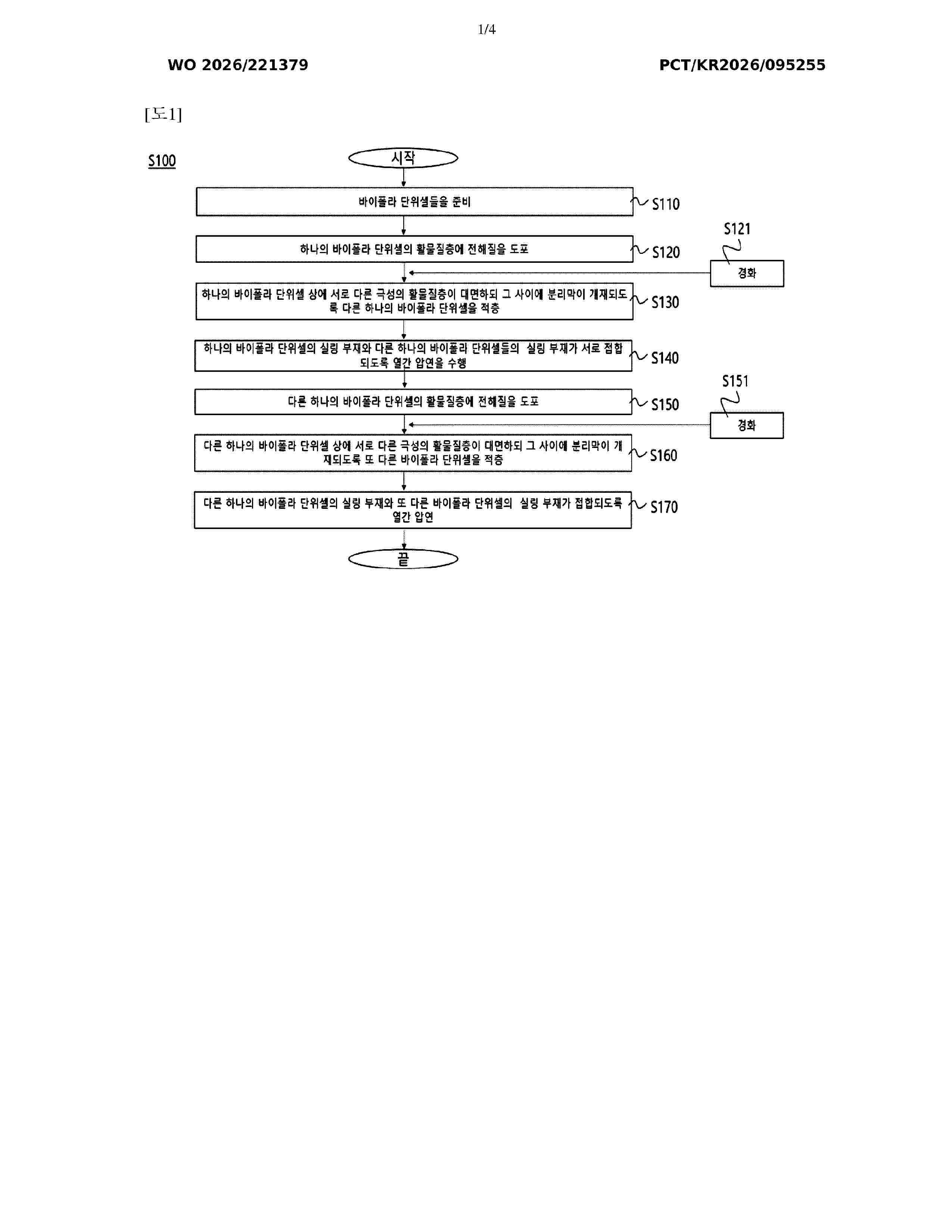
Provided is a manufacturing method of a bipolar electrode assembly, the manufacturing method according to an embodiment of the present invention preparing two or more bipolar unit cells, each including a current collector, a sealing member formed to surround the edges of the current collector, and an active material layer formed on one surface or both surfaces of the current collector, and stacking the bipolar unit cells such that a separator is interposed between the bipolar unit cells where the active material layers of different polarities face each other, and comprising the steps of: (a) applying an electrolyte onto the active material layer of one bipolar unit cell before stacking the another bipolar unit cell thereon; and (b) stacking another bipolar unit cell on the one bipolar unit cell, and then hot-rolling the sealing members.
Resumen de: WO2026221211A1
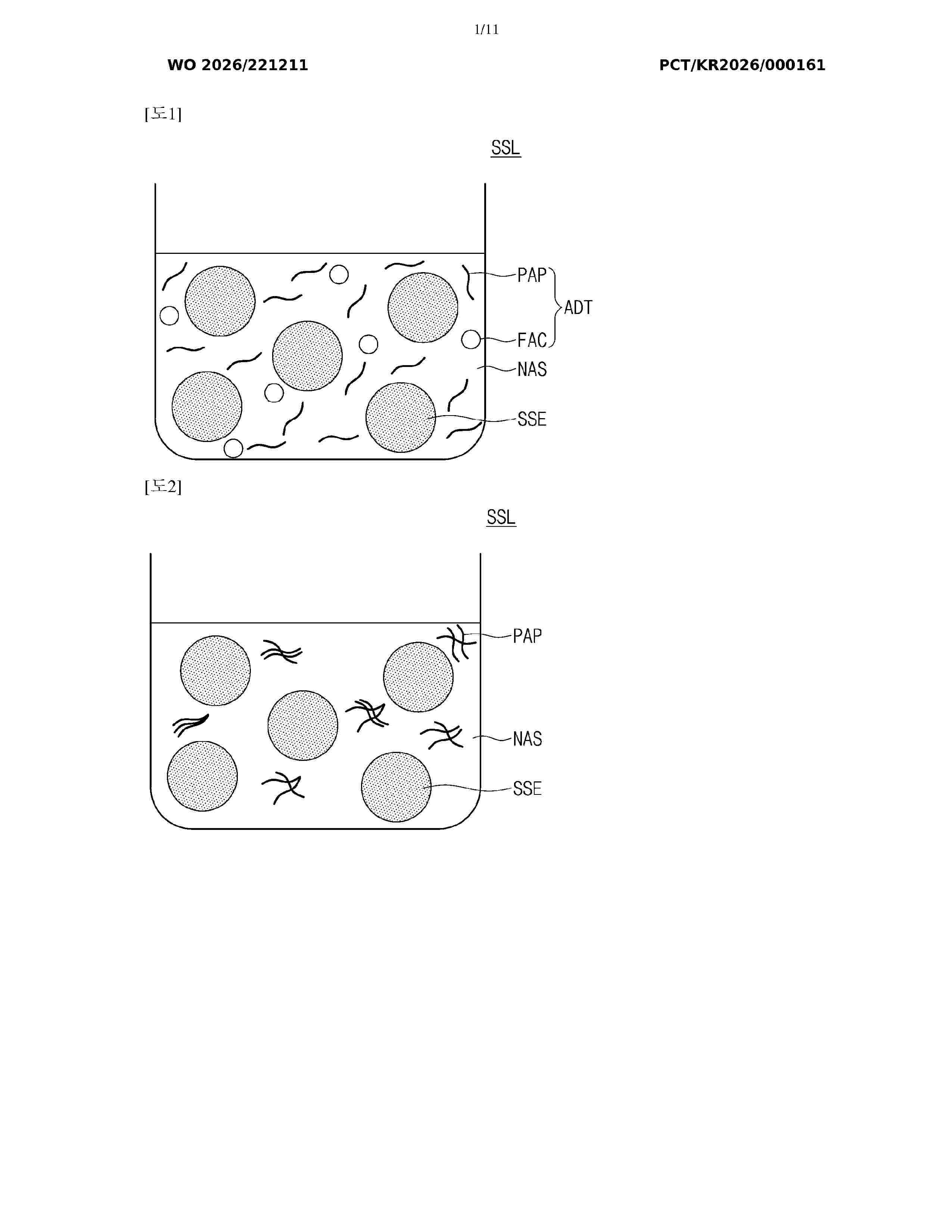
The present invention relates to: a slurry for an all-solid-state battery; a positive electrode for an all-solid-state battery, the positive electrode being produced using the slurry; and an all-solid-state battery. More specifically, the slurry for an all-solid-state battery comprises a sulfide-based solid electrolyte, a non-aqueous solvent, and an additive, wherein the additive may include an amine-based polymer and a fatty acid compound.
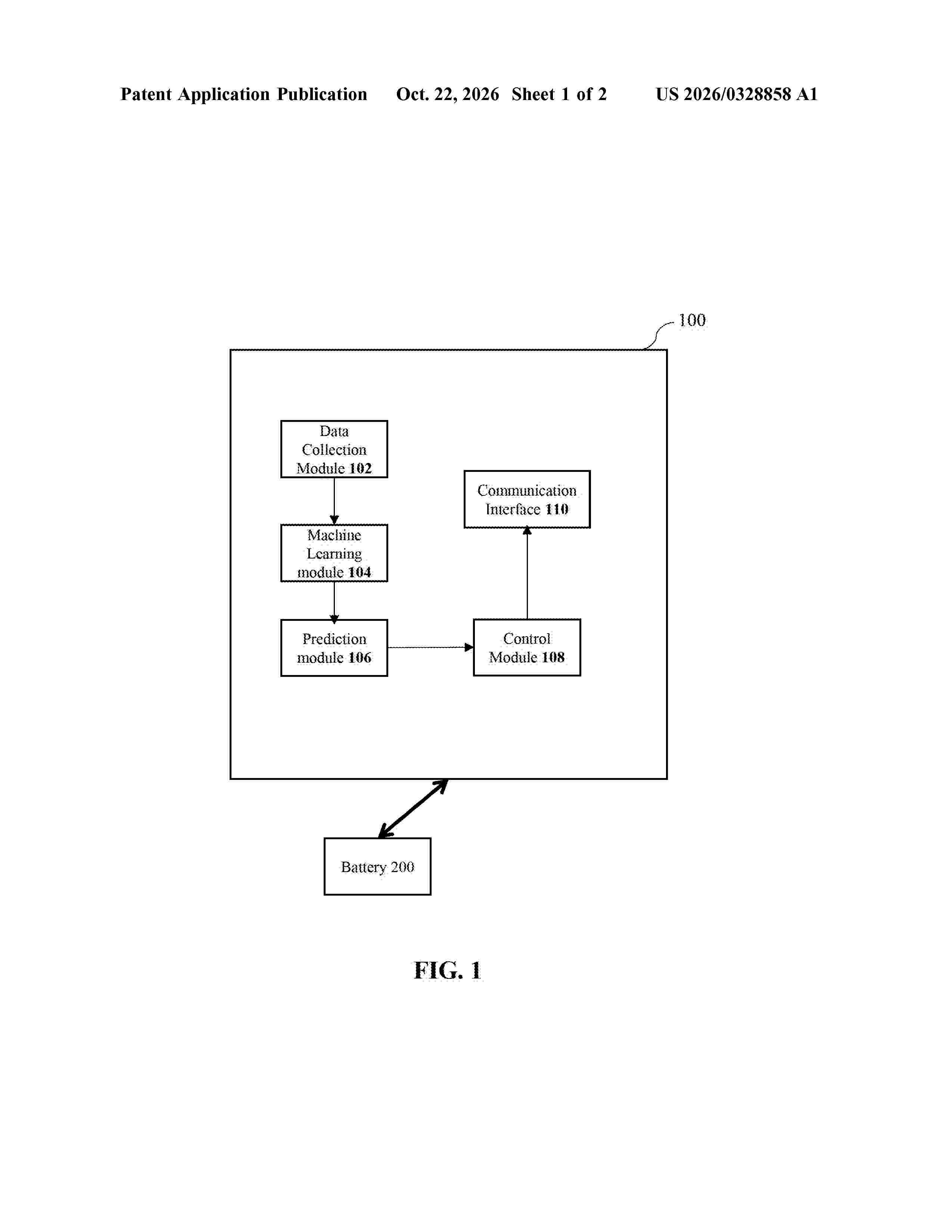
Resumen de: US20260328858A1
A battery health monitoring and fault detection system is disclosed. The system comprising a data collection module to collect real-time data during a controlled charging phase of a battery; a machine learning analysis module to analyze the collected data using machine learning program to identify patterns, anomalies, and deviations in the charging behavior of the battery; a prediction module operatively connected to the machine learning analysis module, to estimate a battery life and detect early stage potential battery fault based on the analyzed data; a control module configured to regulate the controlled charging phase of the battery based on the outputs of the prediction module; and a communication interface configured to enable data transmission to a remote server or cloud-based platform for further analysis and integration with external battery management systems.
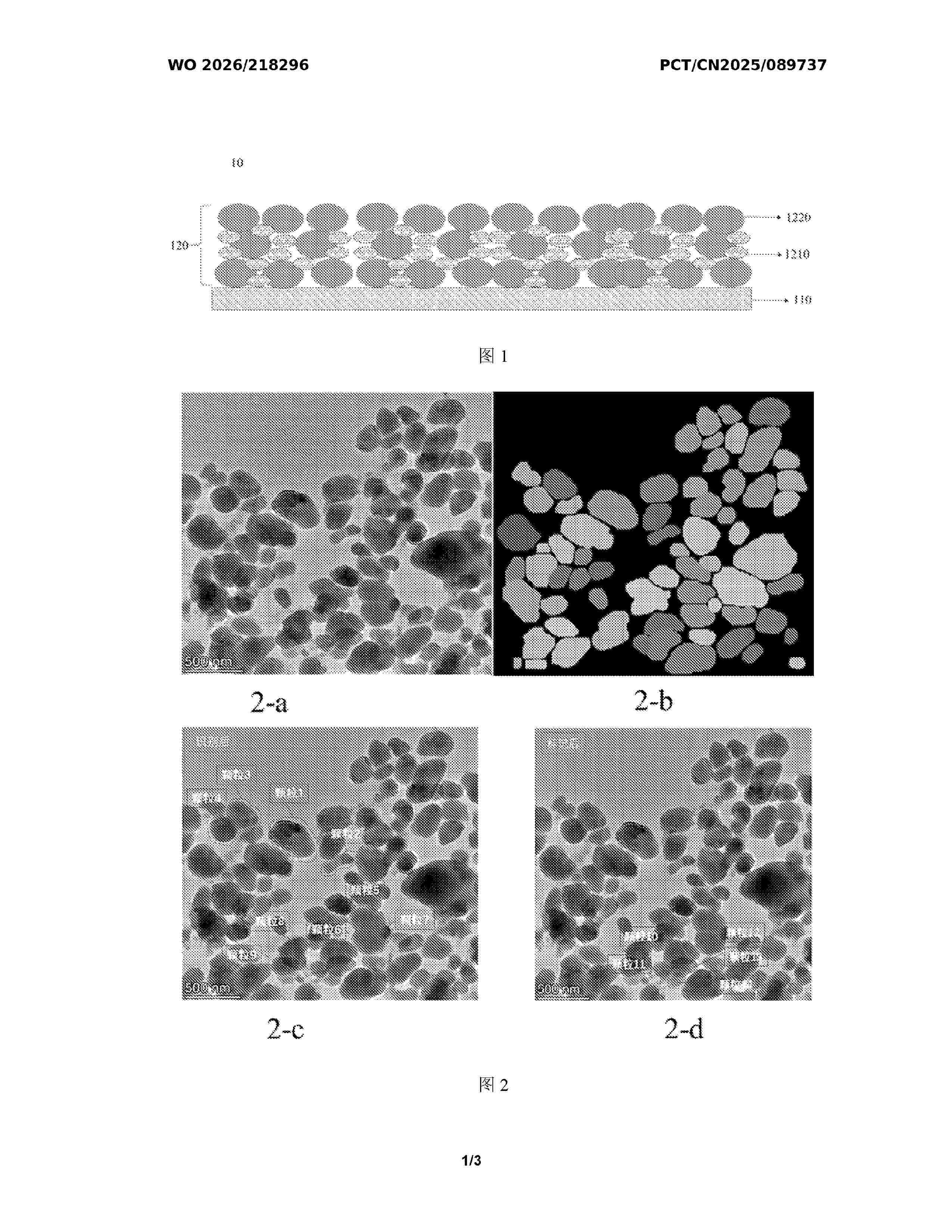
Resumen de: WO2026218296A1
Provided are a battery cell, a battery device, an electric device and an energy storage device. A positive electrode sheet of the battery cell comprises a positive electrode film layer, wherein the positive electrode film layer comprises a first type of particles and a second type of particles; the first type of particles and the second type of particles comprise a lithium-containing transition metal phosphate material; the primary particle size of the first type of particles is greater than or equal to 50 nm and less than or equal to 180 nm, and the primary particle size of the second type of particles is greater than 180 nm and less than 900 nm; and the average value of the molar proportions of Mn in the first type of particles is smaller than the average value of the molar proportions of Mn in the second type of particles, the molar proportion of Mn referring to the proportion of the number of moles of Mn relative to the total number of moles of Mn and Fe. The electrolyte solution of the battery cell comprises a linear carbonate solvent, wherein on the basis of the total mass of the electrolyte solution, the mass fraction of the linear carbonate solvent is 50%-80%.
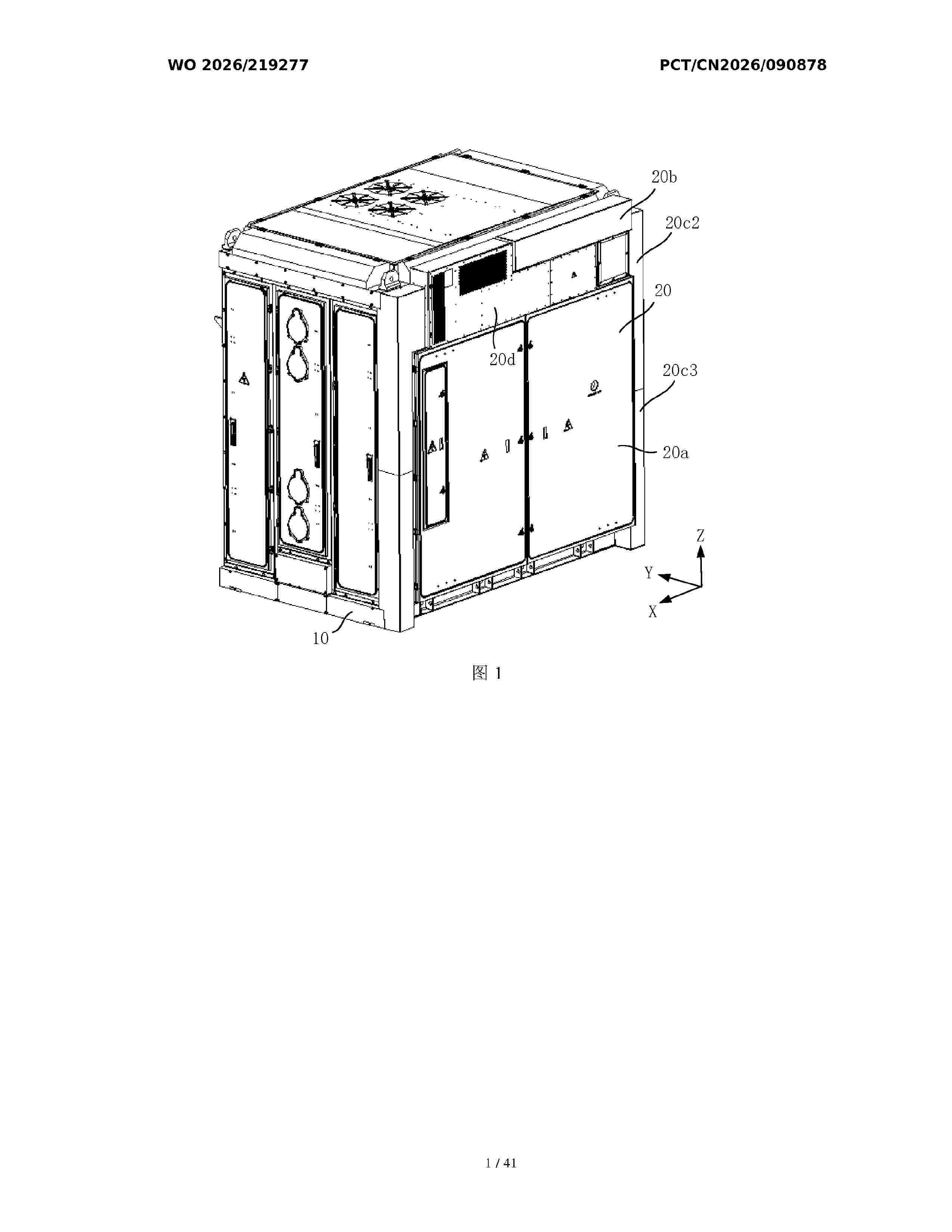
Resumen de: WO2026219277A1
The present application relates to the technical field of energy storage cabinets. Provided are a cabinet, an energy storage cabinet, an energy storage system and an electric device. The cabinet comprises a housing, wherein the housing comprises a plurality of modular structures, the plurality of modular structures being adapted to enclose an energy storage module externally. The embodiments of the present application can simplify the structure of the energy storage cabinet and improve the assembly flexibility of the energy storage cabinet.
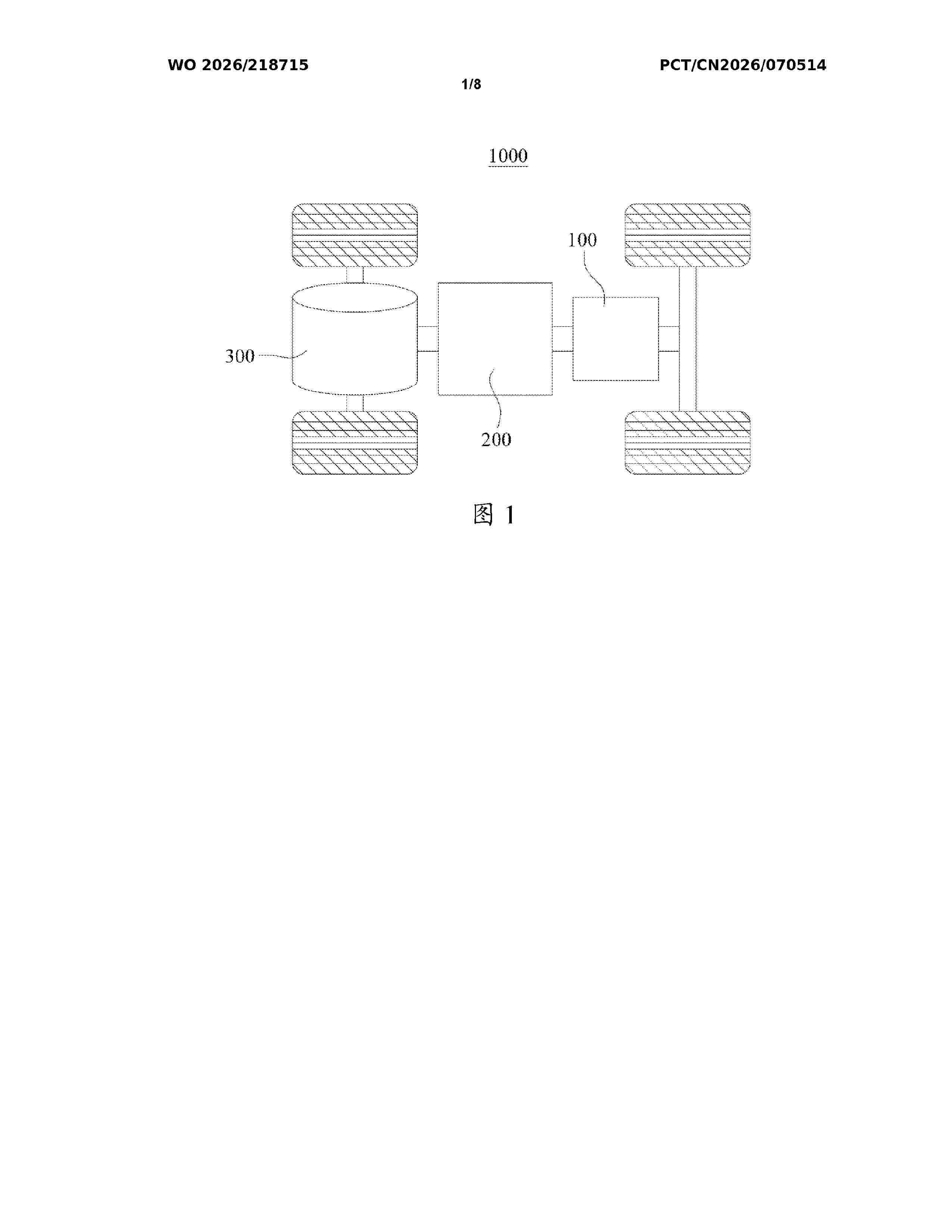
Resumen de: WO2026218715A1
The present disclosure relates to the technical field of batteries. Provided are a battery apparatus and an electric device. The battery apparatus comprises a case, at least two battery cells, and a heat exchange assembly. The case has a top cover. The at least two battery cells are located within the case. The heat exchange assembly is disposed on the top side of the at least two battery cells. The heat exchange assembly comprises at least two heat exchange members; at least one heat exchange member is configured as a flexible member, and at least one heat exchange member is configured as a rigid member; the flexible member and the rigid member are stacked to form a medium flow channel, the medium flow channel is adapted for flow-through of a heat exchange medium, the heat exchange medium being used for exchanging heat with the at least two battery cells. The heat exchange assembly is integrated into the top cover. By integrating the heat exchange assembly into the top cover, the heat exchange assembly being connected to the top cover or the heat exchange assembly being part of the top cover, the top cover can provide support for the heat exchange assembly, helping improve the overall structural strength and stability of the battery apparatus.
Resumen de: WO2026218061A1
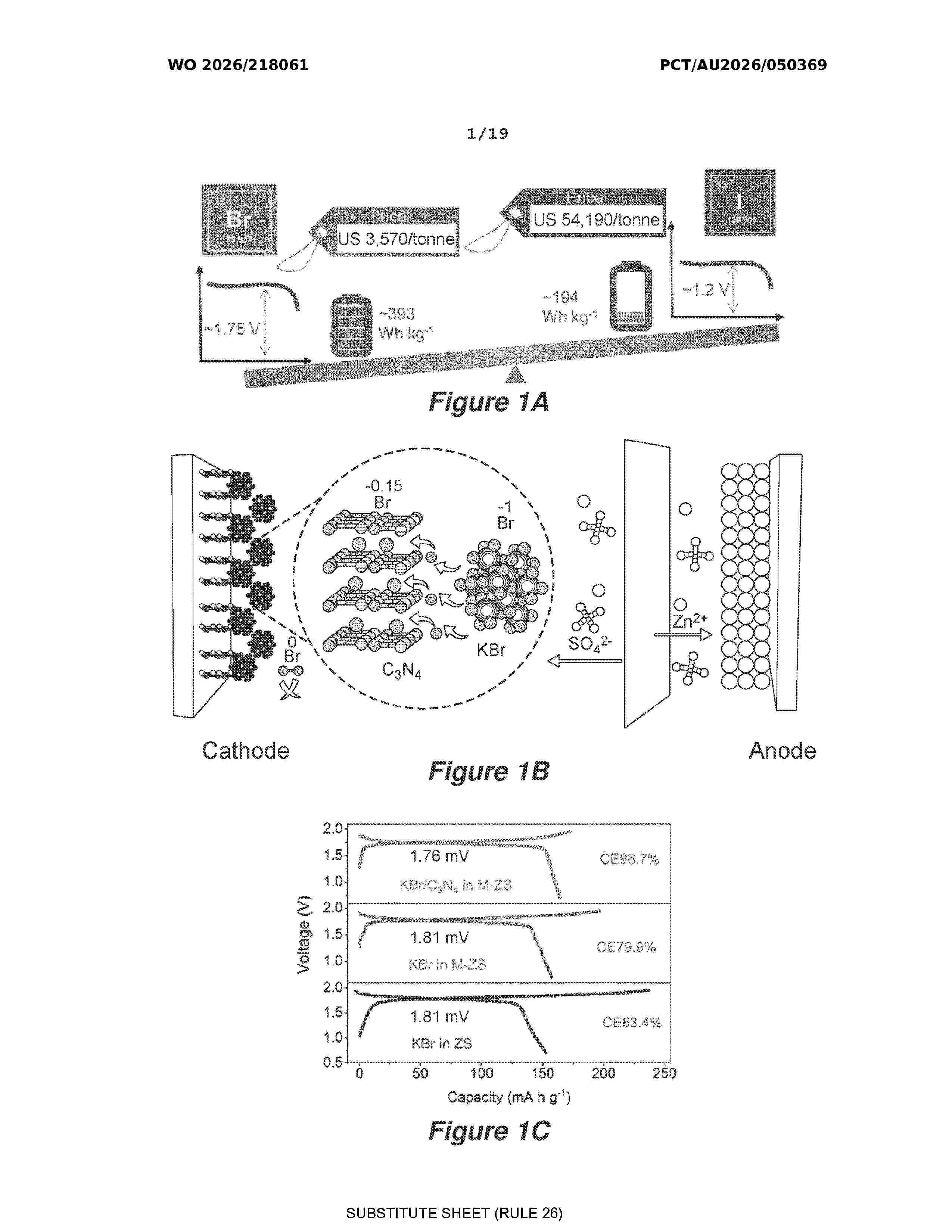
The disclosure relates to an electrochemical device comprising a positive electrode, wherein the positive electrode is loaded with a layered material as an additive. Optionally, the electrochemical device comprises an electrolyte solution, the electrolyte solution comprises an ionic liquid additive, which is capable of interacting with polyiodide and/or polybromide species to mitigate shuttle effects.
Resumen de: WO2026220428A1
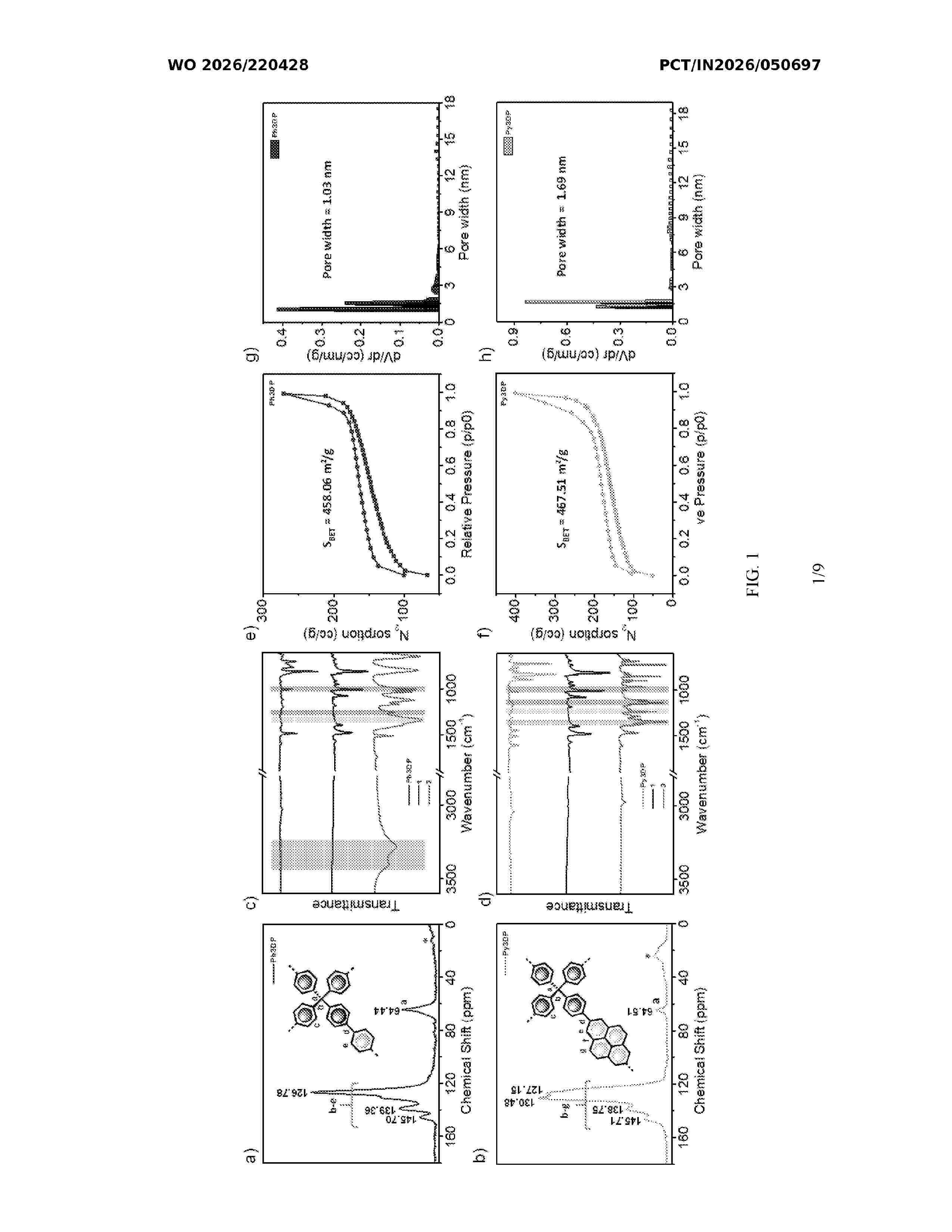
The present invention generally relates to porous aromatic framework host material for batteries. Particularly, the present invention relates to a porous aromatic framework host material for lithium sulfur battery, comprising carbon porous 3D polymers (3DPs) that do not contain heteroatoms or functional groups and do not require post-functionalization, and a process of preparation thereof. The present invention also relates to a lithium sulfur battery comprising said porous aromatic framework host material as cathode/working electrode.
Resumen de: WO2026218717A1
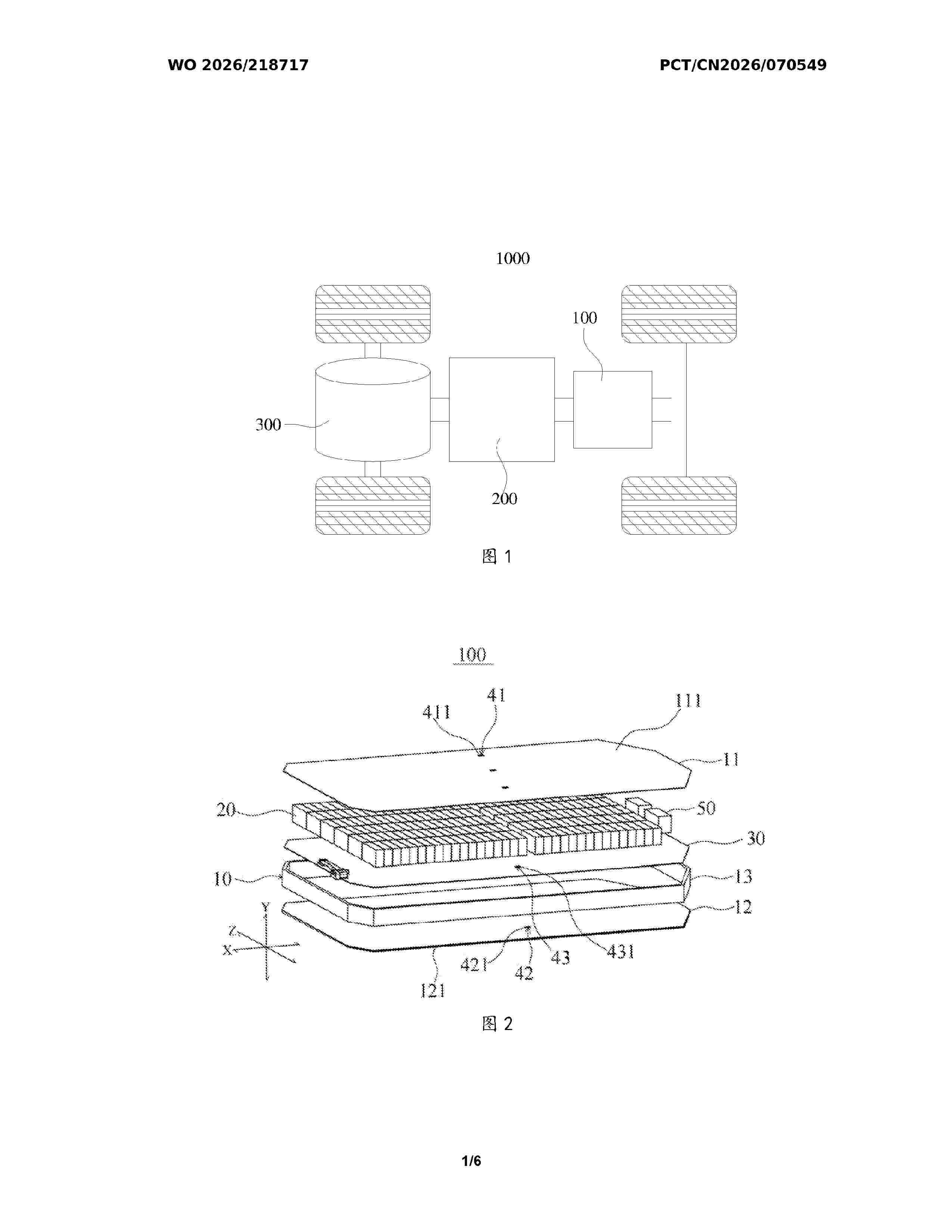
A battery apparatus (100) and an electrical device, relating to the technical field of batteries. The battery apparatus (100) comprises a battery case body (10) and a battery cell (20) mounted in the battery case body (10); the battery case body (10) comprises a first wall (11) and a second wall (12) opposite to each other; the battery apparatus (100) comprises a middle portion (101) and side portions (102) located on two sides of the middle portion (101); the middle portion (101) is provided with a first connection structure (40), the first connection structure (40) passing through the first wall (11), an inner cavity of the battery case body (10), and the second wall (12). By means of the first connection structure (40) connecting to an electrical device, the overall structure of the middle portion (101) of the battery apparatus (100) can be connected to the electrical device, thereby improving the stability of connection between the middle portion (101) of the battery apparatus (100) and the electrical device and reducing the possibility that the middle portion (101) of the battery apparatus (100) resonates when the electrical device vibrates, and thus improving the structural stability and reliability of the battery apparatus (100).
Resumen de: WO2026219161A1
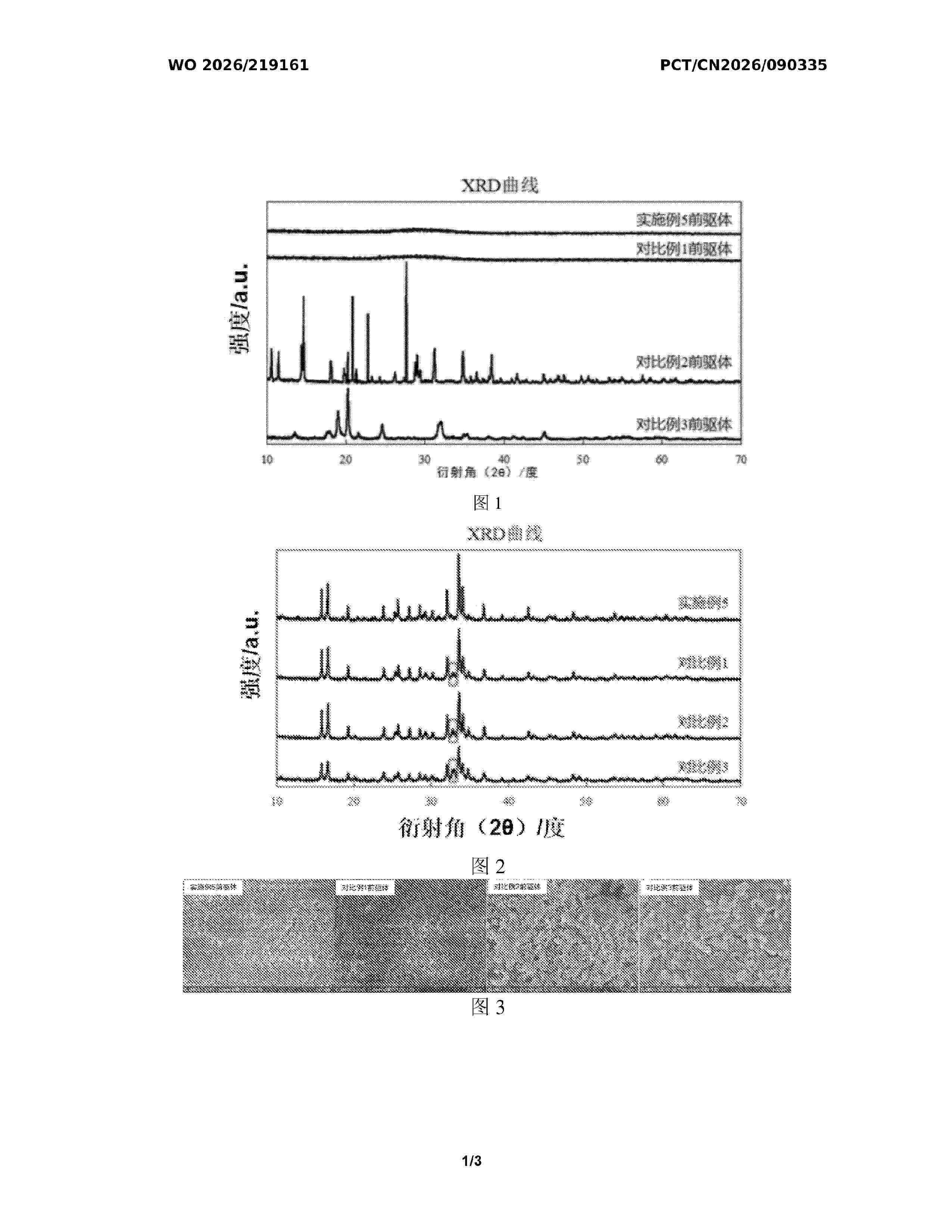
A positive electrode active material precursor and a preparation method therefor, a positive electrode active material, a secondary battery, and an electric device, relating to the field of sodium-ion battery positive electrode materials. The positive electrode active material precursor has a chemical formula of NawFexAyPzOm, wherein 0.60≤(x+y)/z≤0.90, 0
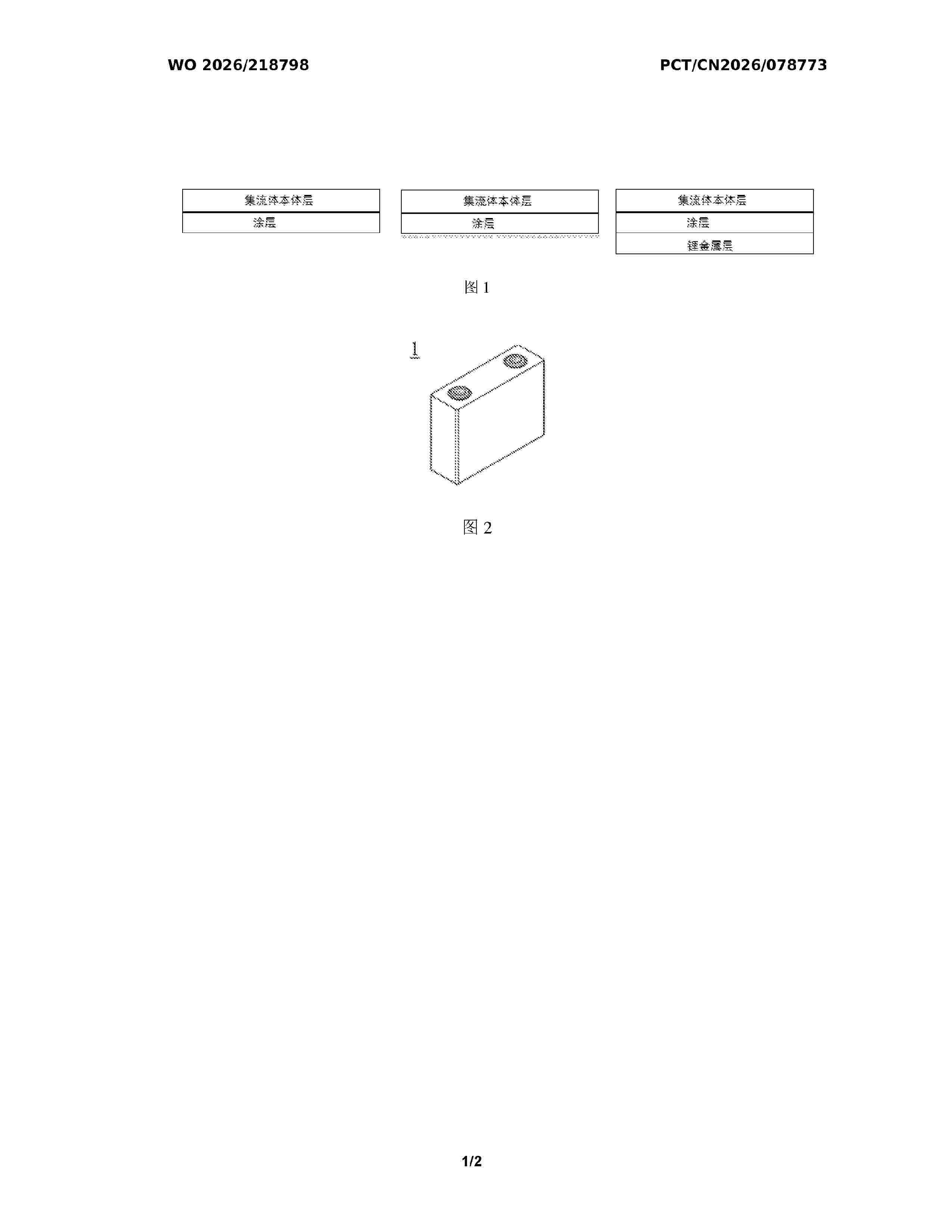
Resumen de: WO2026218798A1
Provided are a lithium metal battery, a negative electrode current collector, and an electric device. The lithium metal battery comprises a negative electrode sheet. The negative electrode sheet comprises a negative electrode current collector. The negative electrode current collector comprises a current collector body and a coating applied to at least one side surface of the current collector body. The coating comprises a carbon material. The resistivity of the carbon material is greater than or equal to 0.1 Ω·m. The lithium metal battery has good cycle performance.
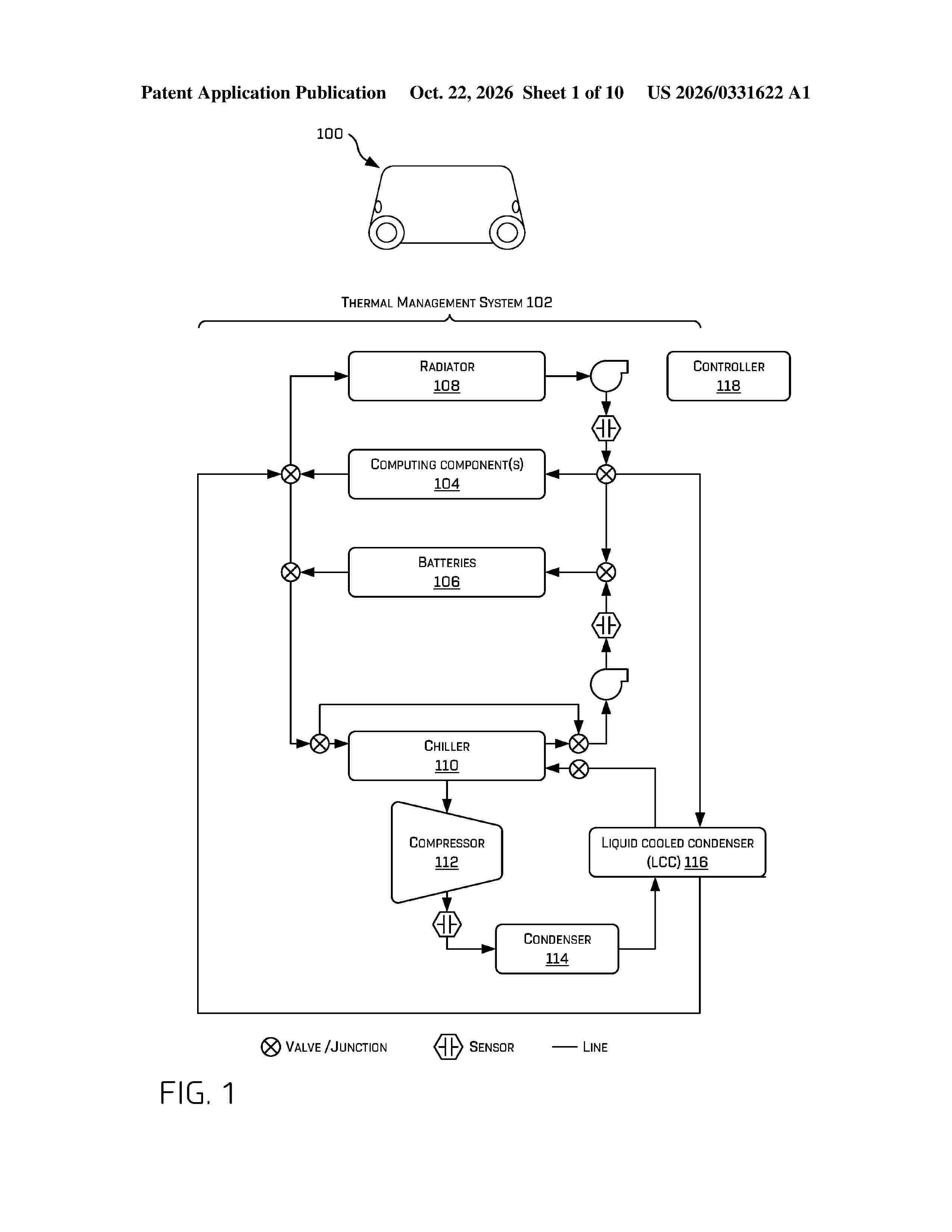
Resumen de: US20260331622A1
0000 A thermal management system for a vehicle includes a radiator and a chiller. The thermal management system may include multiple configurations to provide cooling to components of the vehicle. In a first configuration, the components may be cooled via a radiator. In a second configuration, some of the components may be cooled via the radiator while other components may be cooled via a chiller. In a third configuration, the components may be cooled via the chiller. The configuration of the thermal management system may be based on the temperature of the components.
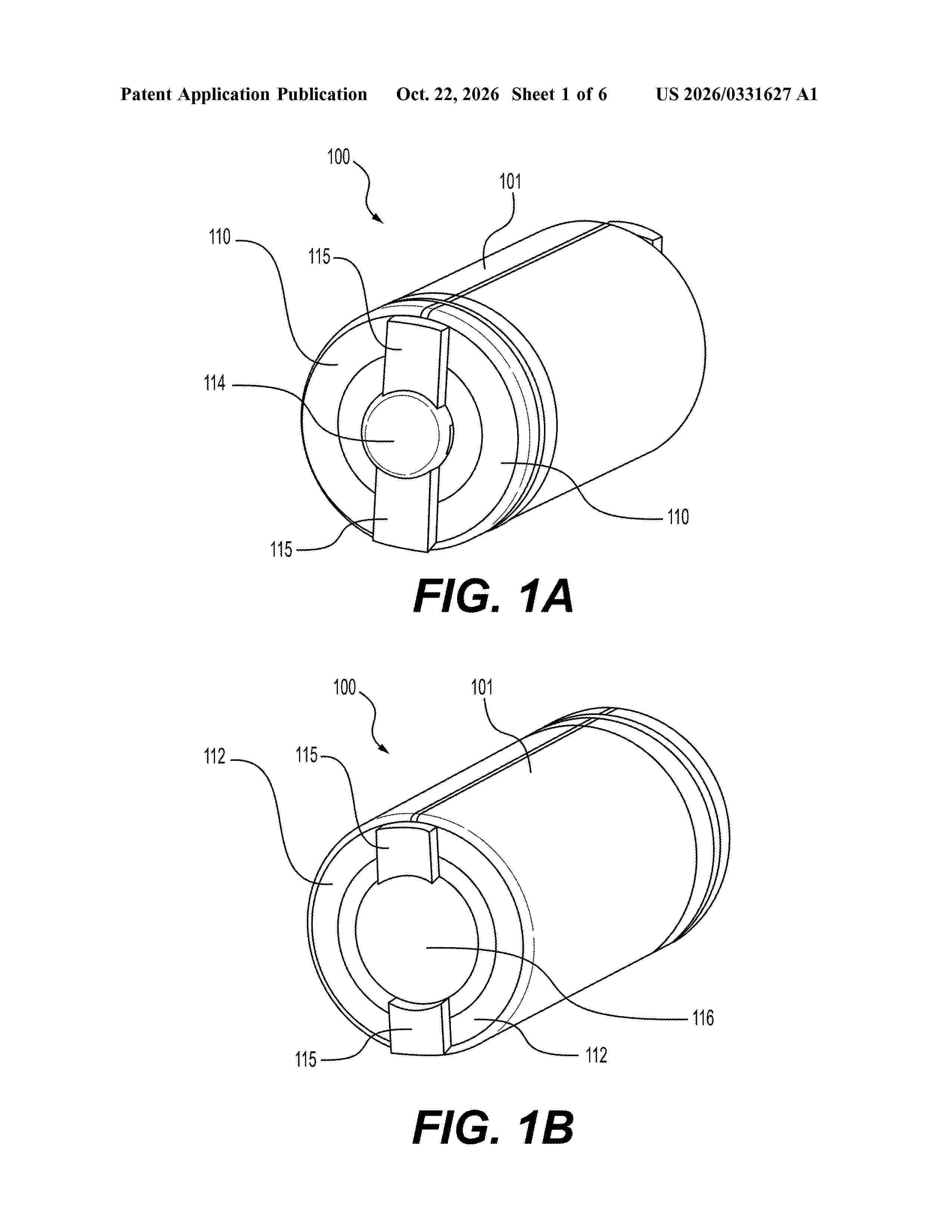
Resumen de: US20260331627A1
0000 An integrated battery heating system configured to provide heat and measure the temperature of a battery cell structure. The system includes a heating element and a temperature measurement device disposed onto a layer of the battery cell structure and configured to directly heat and measure the temperature of the battery cell structure. The heating element and temperature measurement device are electrically connected to contact terminals configured to receive energy and power the heating element and temperature measurement device.
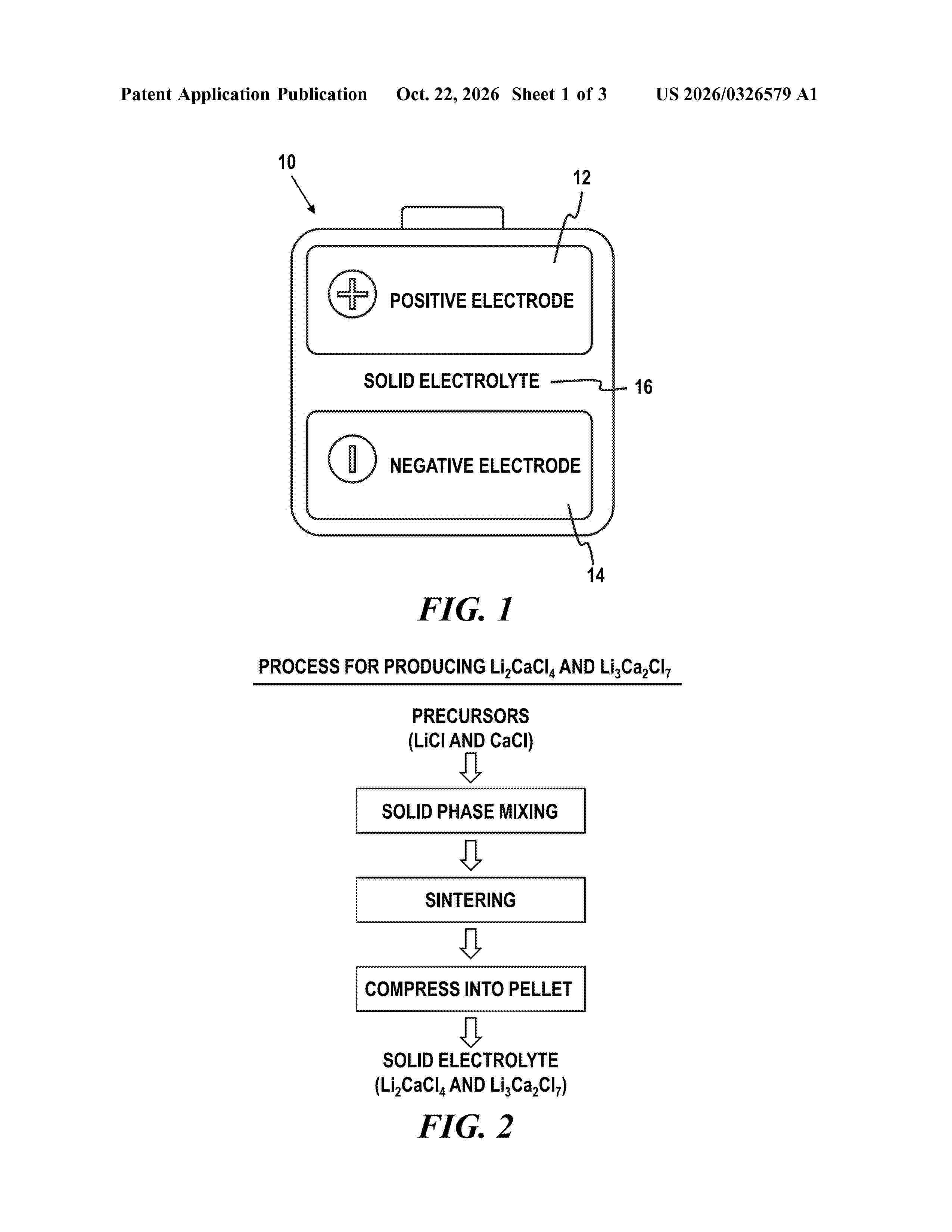
Resumen de: US20260326579A1
Electrolyte materials having the formulas Li2CaCl4 or Li3Ca2Cl7 are provided, wherein the electrolyte material crystallizes in a space group selected from the group consisting of Cm, Imma, Cmmm, and P1. A solid-state battery comprising Li2CaCl4 or Li3Ca2Cl7 electrolyte materials is provided. Methods for making Li2CaCl4 and Li3Ca2Cl7 electrolyte materials are also provided.
Resumen de: US20260331607A1
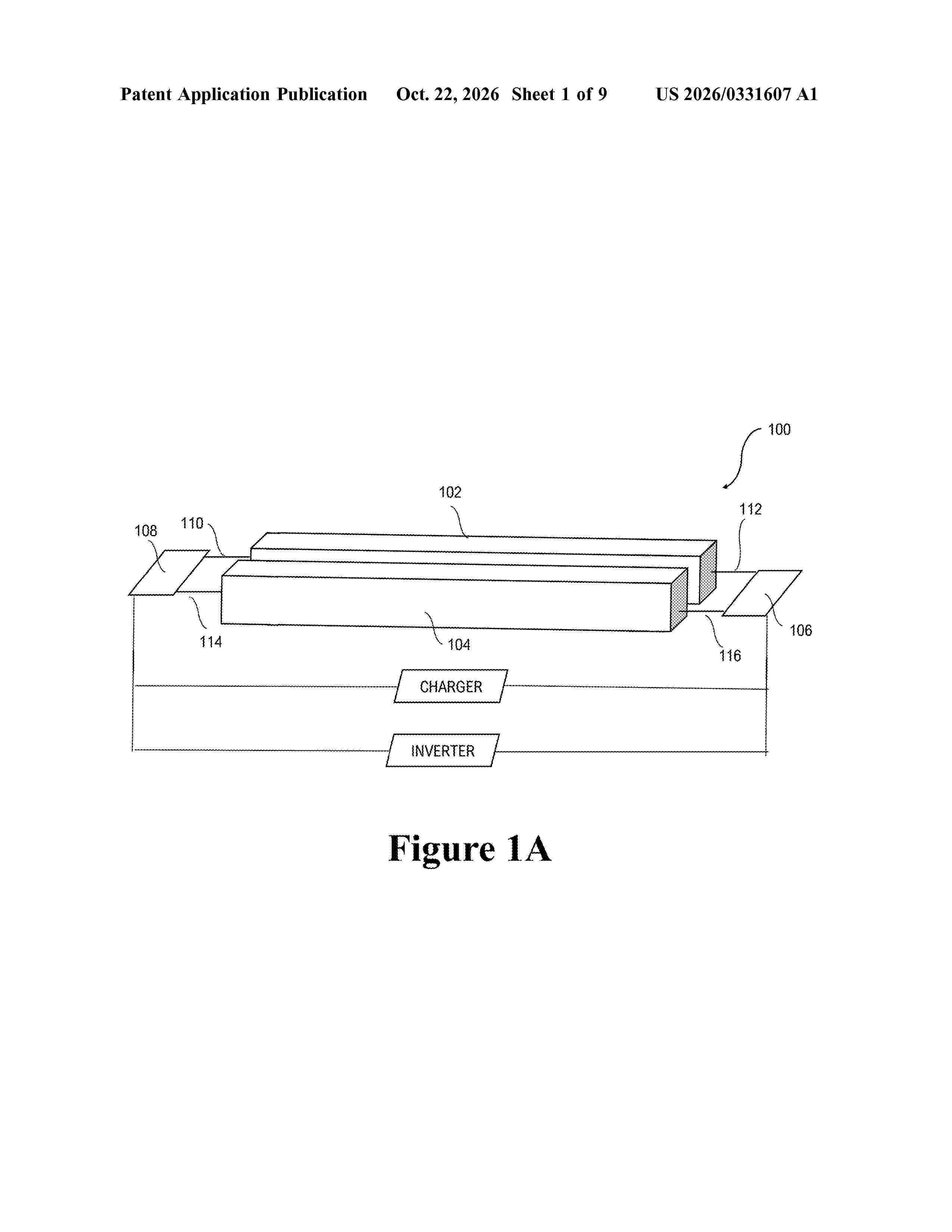
0000 The present invention is directed to a portable battery pack connection scheme which provides a synchronized direct current (“DC”) environment for every battery unit in the pack. The connections within the present invention are be made via respective conductive paths each including a high-power DC precision cable segment and having a low resistance suitable to allow a high charge or discharge rate. In some embodiments of the present invention, there may be multiple rows of parallel-connected batteries arranged in a series to provide higher output voltage.
Resumen de: US20260331738A1
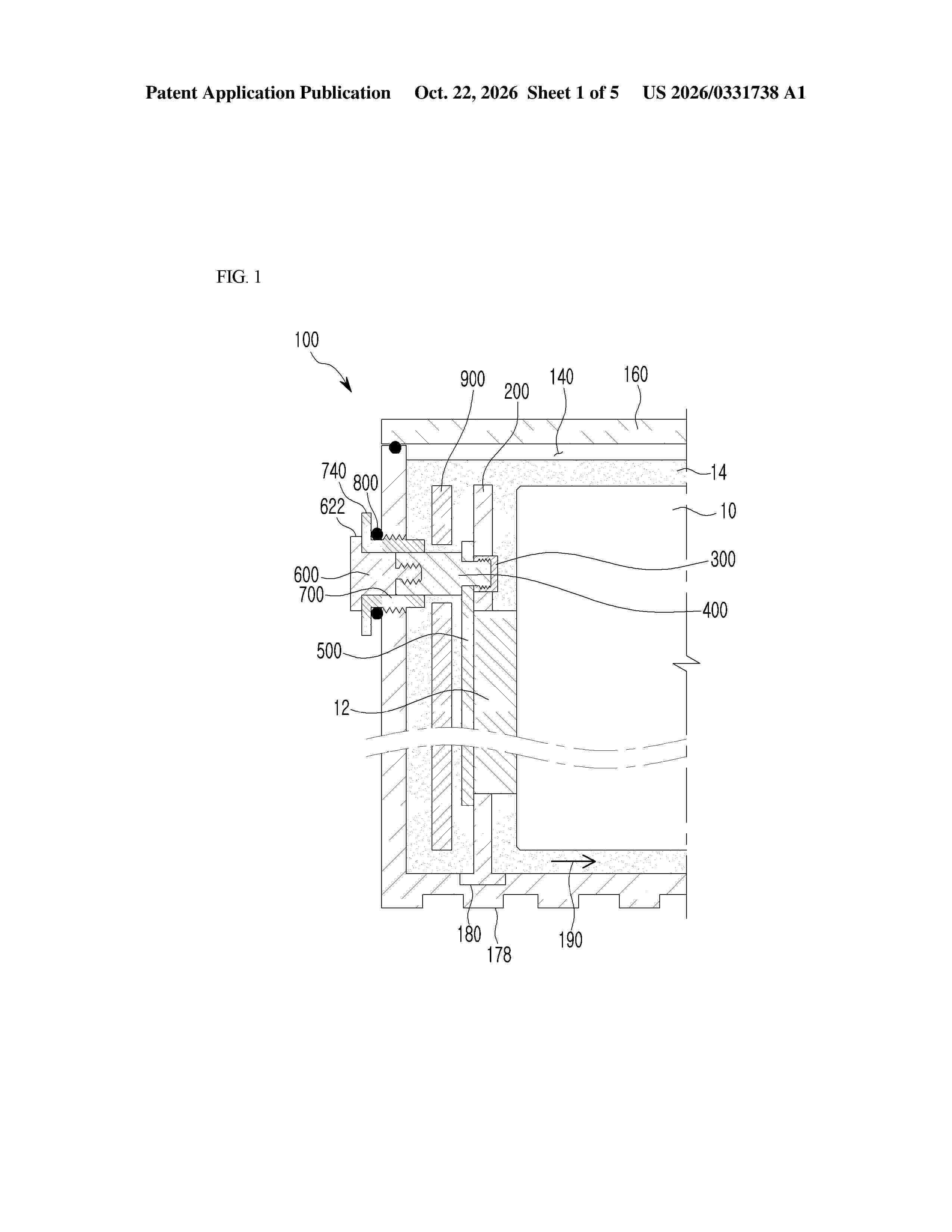
Systems and methods disclosed herein include an immersion cooling system configured to cool a battery. The immersion cooling system comprises a housing including a flow space configured to be filled with an insulating cooling fluid and to accommodate a cell module, and a through-hole. A high voltage terminal block device is configured to be installed into the through-hole and includes a conductive fastening part configured to be in electrical contact with a cell tab of the cell module. An outer conductive part is configured to attach to the conductive fastening part and to protrude to an outside of the housing when the high voltage terminal block device is installed into the through-hole and to electrically connect to an external power terminal. An insulating injection-molded part is configured to surround outer circumferences of the conductive fastening part and the outer conductive part.
Resumen de: US20260331634A1
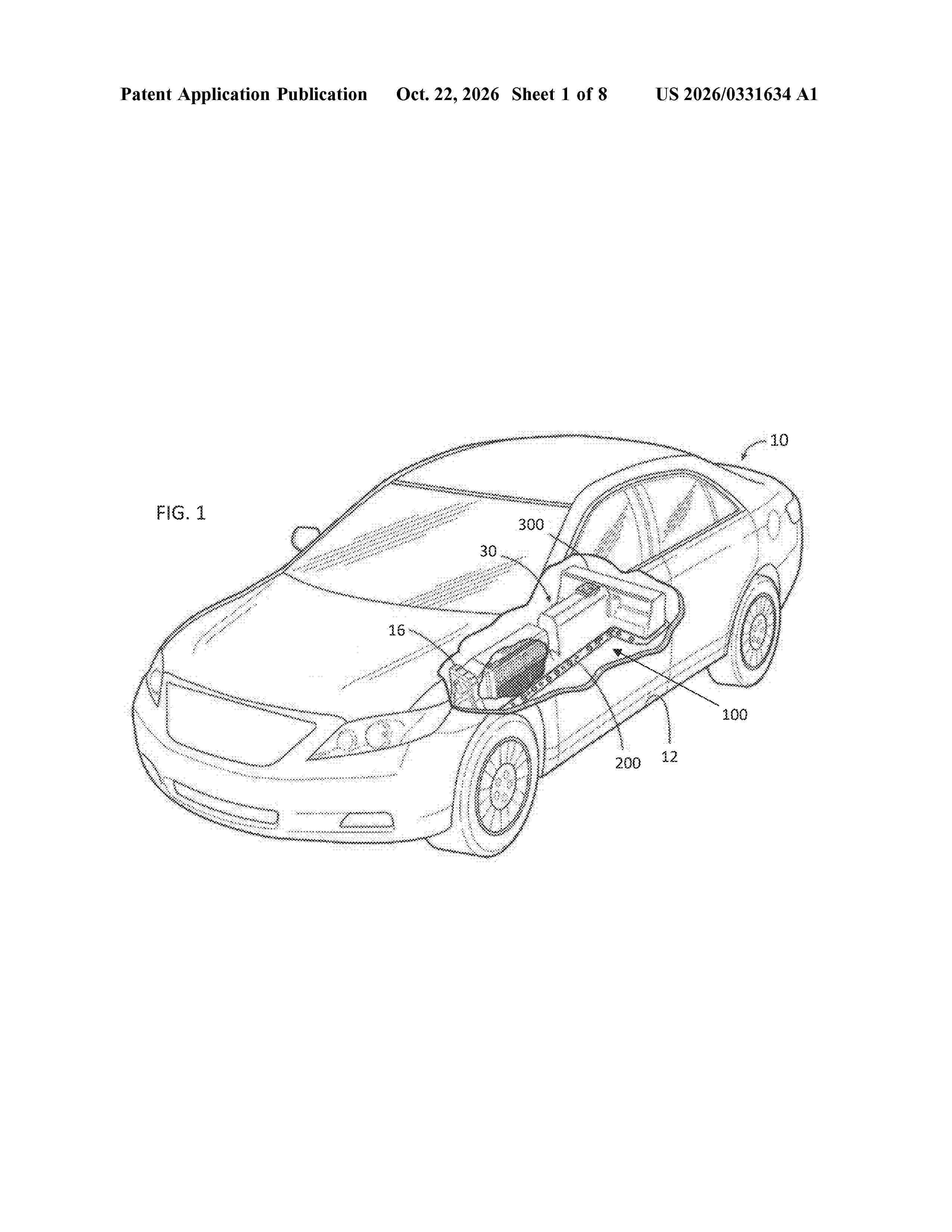
Battery enclosure systems and methods for cooling batteries are provided. A method for cooling a battery includes locating a metal cold plate in a mold, wherein the metal cold plate includes an internal channel; filling the mold with resin and cooling to form an overmolded battery tray including an outer part surrounding the metal cold plate; wherein the overmolded battery tray has a bottom surface formed by the outer part and an upper surface formed by the metal cold plate; connecting the internal channel with a coolant supply; locating the battery on the metal cold plate; and attaching a cover to the overmolded battery tray to enclose an internal volume, wherein the battery is in the internal volume.
Resumen de: WO2026221059A1
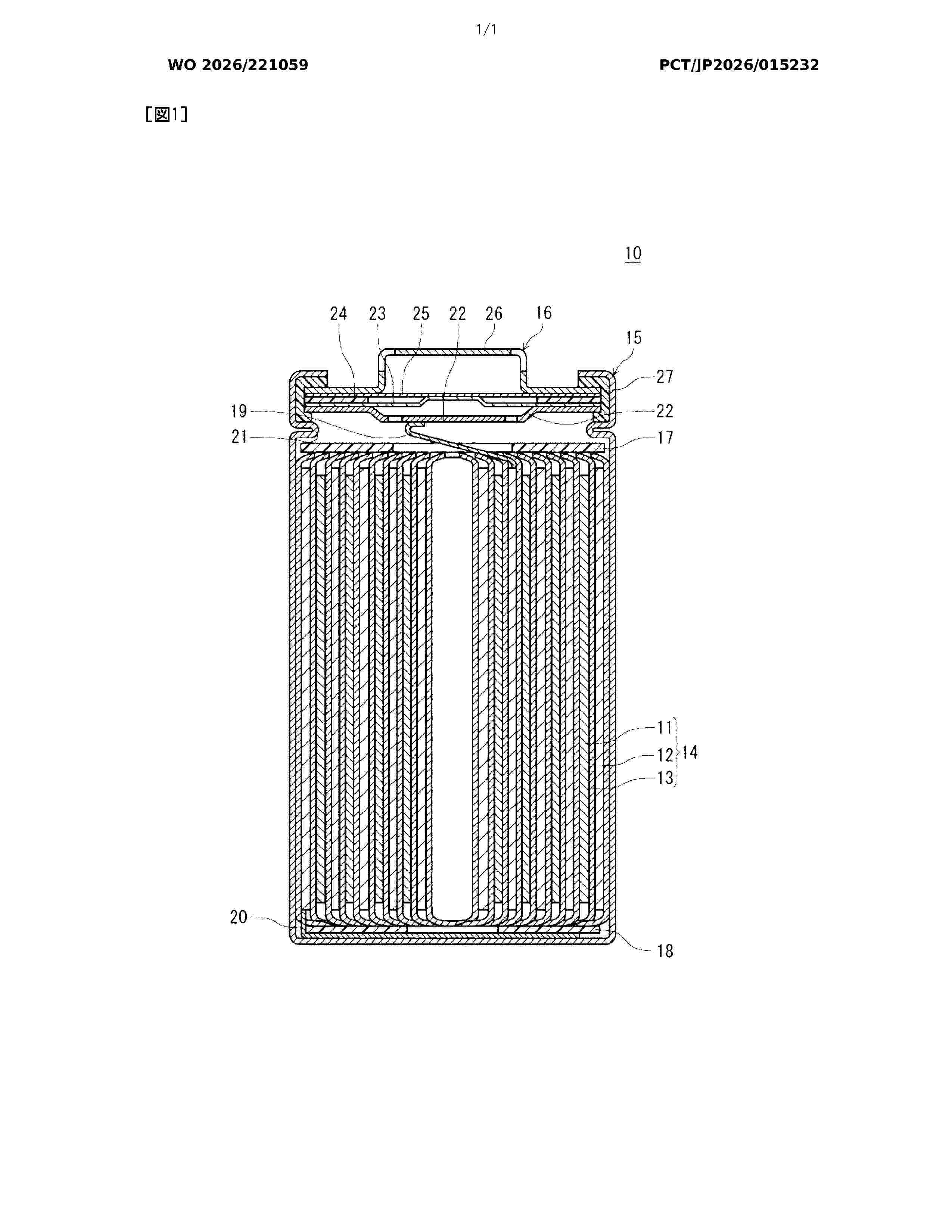
A non-aqueous electrolyte secondary battery according to an embodiment of the present disclosure comprises: an electrode group that includes a positive electrode, a negative electrode, and a separator that is between the positive electrode and the negative electrode; and a non-aqueous electrolyte. A protective layer that includes a polymer is provided to the surface of the negative electrode, and the non-aqueous electrolyte includes a cyclic imide compound, the cyclic imide compound content of the non-aqueous electrolyte being no more than 100 ppm.
Nº publicación: US20260326619A1 22/10/2026
Solicitante:
HYUNDAI MOTOR CO [KR]
KIA CORP [KR]
HYUNDAI MOTOR COMPANY
KIA CORPORATION
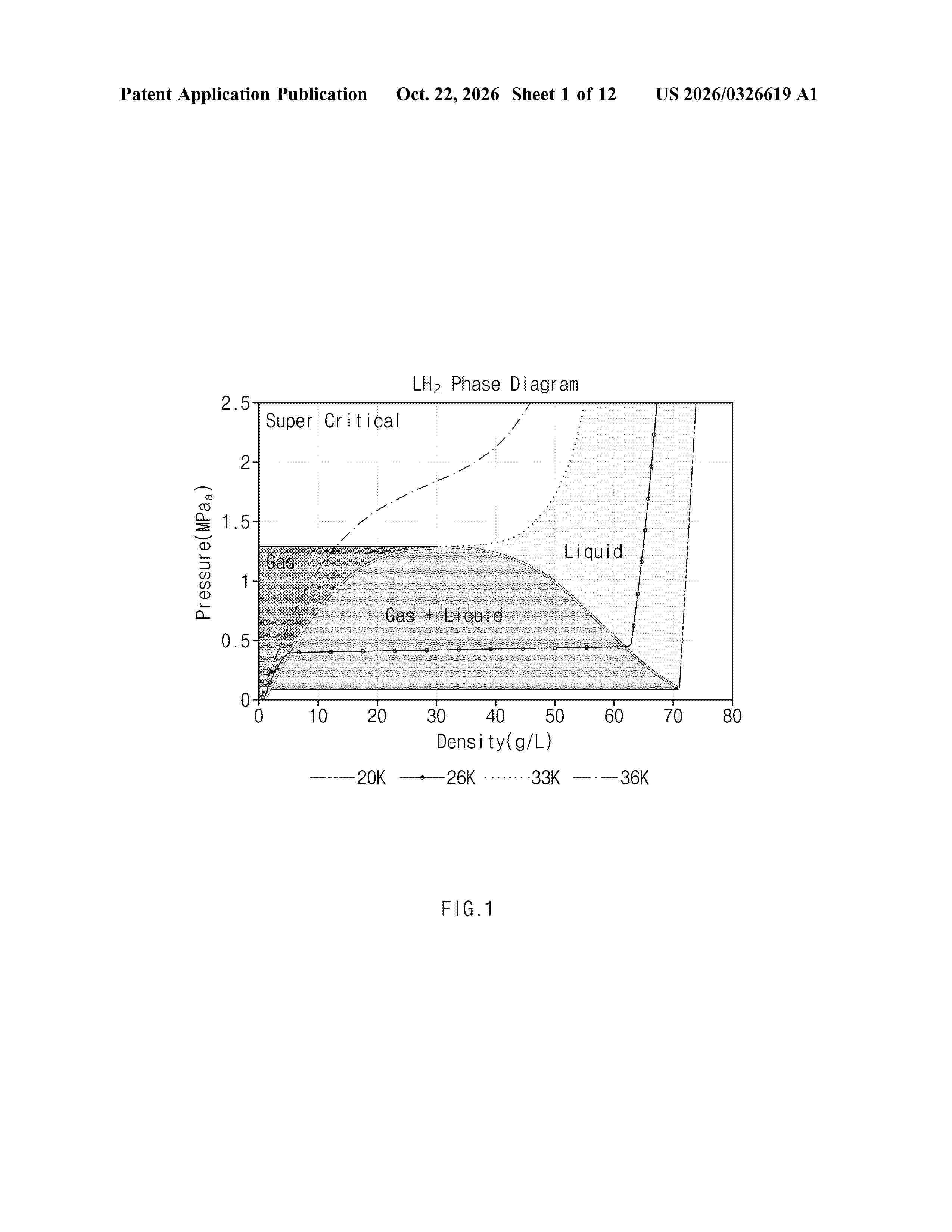
Resumen de: US20260326619A1
Disclosed are a method of controlling a hydrogen electric vehicle and an apparatus therefor. The hydrogen electric vehicle is equipped with a hydrogen storage system and a fuel cell system. The method includes charging a battery by consuming a hydrogen fuel through an operation of the fuel cell system based on an ignition off command for the vehicle being input, and controlling an ignition off of the vehicle based on the charging of the battery being completed.
 BOPI
 Sede Electrónica