Resumen de: EP1000000A1
The invention relates to an apparatus (1) for manufacturing green bricks from clay for the brick manufacturing industry, comprising a circulating conveyor (3) carrying mould containers combined to mould container parts (4), a reservoir (5) for clay arranged above the mould containers, means for carrying clay out of the reservoir (5) into the mould containers, means (9) for pressing and trimming clay in the mould containers, means (11) for supplying and placing take-off plates for the green bricks (13) and means for discharging green bricks released from the mould containers, characterized in that the apparatus further comprises means (22) for moving the mould container parts (4) filled with green bricks such that a protruding edge is formed on at least one side of the green bricks.
Resumen de: EP1000000A1
The invention relates to an apparatus (1) for manufacturing green bricks from clay for the brick manufacturing industry, comprising a circulating conveyor (3) carrying mould containers combined to mould container parts (4), a reservoir (5) for clay arranged above the mould containers, means for carrying clay out of the reservoir (5) into the mould containers, means (9) for pressing and trimming clay in the mould containers, means (11) for supplying and placing take-off plates for the green bricks (13) and means for discharging green bricks released from the mould containers, characterized in that the apparatus further comprises means (22) for moving the mould container parts (4) filled with green bricks such that a protruding edge is formed on at least one side of the green bricks.
Resumen de: EP1000000A1
The invention relates to an apparatus (1) for manufacturing green bricks from clay for the brick manufacturing industry, comprising a circulating conveyor (3) carrying mould containers combined to mould container parts (4), a reservoir (5) for clay arranged above the mould containers, means for carrying clay out of the reservoir (5) into the mould containers, means (9) for pressing and trimming clay in the mould containers, means (11) for supplying and placing take-off plates for the green bricks (13) and means for discharging green bricks released from the mould containers, characterized in that the apparatus further comprises means (22) for moving the mould container parts (4) filled with green bricks such that a protruding edge is formed on at least one side of the green bricks.
Resumen de: EP1000000A1
The invention relates to an apparatus (1) for manufacturing green bricks from clay for the brick manufacturing industry, comprising a circulating conveyor (3) carrying mould containers combined to mould container parts (4), a reservoir (5) for clay arranged above the mould containers, means for carrying clay out of the reservoir (5) into the mould containers, means (9) for pressing and trimming clay in the mould containers, means (11) for supplying and placing take-off plates for the green bricks (13) and means for discharging green bricks released from the mould containers, characterized in that the apparatus further comprises means (22) for moving the mould container parts (4) filled with green bricks such that a protruding edge is formed on at least one side of the green bricks.
Resumen de: EP1000000A1
The invention relates to an apparatus (1) for manufacturing green bricks from clay for the brick manufacturing industry, comprising a circulating conveyor (3) carrying mould containers combined to mould container parts (4), a reservoir (5) for clay arranged above the mould containers, means for carrying clay out of the reservoir (5) into the mould containers, means (9) for pressing and trimming clay in the mould containers, means (11) for supplying and placing take-off plates for the green bricks (13) and means for discharging green bricks released from the mould containers, characterized in that the apparatus further comprises means (22) for moving the mould container parts (4) filled with green bricks such that a protruding edge is formed on at least one side of the green bricks.
Resumen de: EP1000000A1
The invention relates to an apparatus (1) for manufacturing green bricks from clay for the brick manufacturing industry, comprising a circulating conveyor (3) carrying mould containers combined to mould container parts (4), a reservoir (5) for clay arranged above the mould containers, means for carrying clay out of the reservoir (5) into the mould containers, means (9) for pressing and trimming clay in the mould containers, means (11) for supplying and placing take-off plates for the green bricks (13) and means for discharging green bricks released from the mould containers, characterized in that the apparatus further comprises means (22) for moving the mould container parts (4) filled with green bricks such that a protruding edge is formed on at least one side of the green bricks.
Resumen de: EP1000000A1
The invention relates to an apparatus (1) for manufacturing green bricks from clay for the brick manufacturing industry, comprising a circulating conveyor (3) carrying mould containers combined to mould container parts (4), a reservoir (5) for clay arranged above the mould containers, means for carrying clay out of the reservoir (5) into the mould containers, means (9) for pressing and trimming clay in the mould containers, means (11) for supplying and placing take-off plates for the green bricks (13) and means for discharging green bricks released from the mould containers, characterized in that the apparatus further comprises means (22) for moving the mould container parts (4) filled with green bricks such that a protruding edge is formed on at least one side of the green bricks.
Resumen de: US20260096990A1
0000 A polymeric delivery system delivers a biologic to cells. In some embodiments, the polymeric delivery system includes polyplexes. Each polyplex includes at least one charged polymer and at least one biologic. The at least one charged polymer includes a polyester copolymer of a polyol and a polycarboxylic acid modified with at least one charged moiety having an opposite charge from a net charge of the at least one biologic. In other embodiments, the polymeric delivery system includes self-assembled particles including a block copolymer and a biologic associated with the block copolymer. The block copolymer includes a first block of a polyester copolymer of a polyol and a polycarboxylic acid and a second block of a second monomer or a second polymer.
Resumen de: US20260096998A1
0000 The present disclosure provides complexes and methods of use. In some embodiments, a complex described herein is a complex comprising a cationic polymer, an anionic polymer, and a monomeric RNA molecule, wherein the cationic polymer and the monomeric RNA molecule form a core complex encapsulated by the anionic polymer. In some embodiments, a complex comprises a linear cationic polymer, an anionic polymer, and a monomeric RNA molecule, wherein the cationic polymer and the monomeric RNA molecule form a core complex encapsulated by the anionic polymer.
Resumen de: US20260098826A1
Magnetic particles capture a biological target molecule for cryo-electron microscope imaging. The magnetic particles include paramagnetic beads. At least two spacer modules extend from a periphery of the paramagnetic beads comprising a first spacer module and a second spacer module. The first spacer module binds the nanoparamagnetic beads and the second spacer module is located outwardly of the first spacer module and binds the first spacer module. The first spacer module includes first spacer proteins and the second spacer module includes second spacer proteins. A capture module is linked to an outer location of the second spacer module. The capture module includes capture proteins that are adapted to capture target molecules. At least two spacer modules are arranged so that a combined length of the at least two spacer modules locates the capture module a distance that is spaced from the nanoparamagnetic beads. A method is also provided of using cryo-electron microcopy and the magnetic particles to image a biological target molecule.
Resumen de: US20260098974A1
0000 A Purcell enhanced metamaterial scintillator structure comprises a conducting structure and a dielectric structure disposed adjacent to the conducting structure. The dielectric structure comprises a structure of scintillating nanoparticles.
Resumen de: WO2026075025A1
This thermally-conductive sheet includes: a metal layer; and a plurality of protrusions having thermal conductivity on at least a first surface of the metal layer. When a contact area of the protrusions arranged in a central portion having an area of 1/2 of the first surface and being centered on the centroid of the planar shape of the first surface is defined as Ac, and a contact area of the protrusions arranged in a peripheral portion that is a portion other than the central portion of the first surface is defined as Ap, a value obtained by dividing Ac by Ap (Ac/Ap) is 1.2-10.
Resumen de: AU2024219964A1
Abstract Patent Application Method for Enhancing Thermal Management and Mechanical Durability of Lightweight Metal Components in Robotics, Drones, and Aerospace Applications through Novel Boron-Doped Diamond Coatings Applicant name: SENSE2 Title: Method for Enhancing Thermal Management and Mechanical Durability of Lightweight Metal Components in Robotics, Drones, and Aerospace Applications through Novel Boron-Doped Diamond Coatings Abstract This invention presents a novel method for enhancing the thermal conductivity and mechanical durability of lightweight metal alloy components used in robotics, drones, aerospace, and other high-performance industries. The method involves a unique surface preparation and seeding technique that enables strong adhesion of Boron-Doped Diamond (BDD) coatings grown via Chemical Vapor Deposition (CVD). The key innovations include: • Advanced Surface Activation: Utilizes a proprietary chemical activation solution comprising sodium hydroxide (NaOH), potassium permanganate (KMnO₄), and surfactants to activate the substrate surface without using hydrofluoric acid (HF) and nitric acid (HNO₃). • Unique Nanodiamond Seeding Suspension: A specially formulated suspension containing nanodiamond particles, sodium dodecyl sulfate (SDS), and polyethylene glycol (PEG) to ensure uniform dispersion and strong adhesion during ultrasonic seeding. • Optimized CVD Parameters: Specific gas compositions, flow rates, pressures, temperatures, and deposition tim
Resumen de: JP2026061649A
【課題】本発明は、粒径が制御されており、かつ、有機溶媒に分散させることができる表面修飾銀ナノキューブの提供を目的とする。【解決手段】本発明は、金属ナノクラスターと、前記金属ナノクラスターを覆う銀とを含み、前記銀の表面に疎水性チオールが配位修飾してなる、表面修飾銀ナノキューブに関する。【選択図】図1
Resumen de: JP2026061888A
0001 【課題】イオン結晶の耐熱性をより向上させることのできる新しい手法を用いたイオン結晶を提供すること。 【解決手段】イオン結晶の表面が、2つ以上の双性イオン構造を側鎖部分に有する繰返し単位である第1繰返し単位を含む第1ポリマー、及び1つのみの双性イオン構造を側鎖部分に有する繰返し単位である第2繰返し単位を含む第2ポリマーで被覆されてなる、表面被覆イオン結晶。 【選択図】なし
Resumen de: WO2026075024A1
A thermally-conductive sheet according to the present invention comprises a metal layer and a plurality of protrusions on at least one first surface of the metal layer, wherein the protrusions contain sinterable metal particles.
Resumen de: US20260097967A1
Aspects of the present disclosure are directed towards a method for producing an activated carbon/bismuth oxy-iodide nanocomposite. The method includes heating a glycol solution including Bi(NO3)3·5H2O and activated carbon to 100° C. The method includes heating a glycol solution includes potassium iodide to 100° C. The method includes adding the glycol solution including Bi(NO3)3·5H2O and activated carbon and the glycol solution including potassium iodide to a reaction vessel including a solvent to form a reaction mixture. The method includes chilling the reaction mixture to ambient temperature. The method includes filtering the reaction mixture to obtain the activated carbon/bismuth oxy-iodide nanocomposite.
Resumen de: EP4722153A1
0001 Provided is a carbon nanotube dispersion liquid that has excellent dispersion state stability over time and can form a shaped product having excellent electrical conductivity or that can form a shaped product having excellent electrical conductivity. In one aspect, the carbon nanotube dispersion liquid contains a plurality of carbon nanotubes, a solvent, and a thickener, wherein the carbon nanotubes include single-walled carbon nanotubes, at least some of the carbon nanotubes form carbon nanotube bundles, upon observation of the bundles using a scanning electron microscope, an average length of the bundles is more than 1.50 µm, an average diameter of the bundles is 18.0 nm or less, and a number of bundles having a diameter of more than 30.0 nm among 100 of the bundles is 15 or less, and upon observation of the bundles using an optical microscope, an average length of the bundles is 8.0 µm or more.
Resumen de: EP4722164A1
0001 The present application relates to a positive electrode material precursor and a preparation method thereof and an application thereof. The positive electrode material precursor is a core-shell structure, including an inner core, an outer shell, and an intermediate layer provided between the inner core and the outer shell; where the inner core is formed by accumulating a first sheet-like material, and the first sheet-like material is formed by stacking a plurality of layers of a primary sheet-like material; the intermediate layer is formed by accumulating the primary sheet-like material; the outer shell is formed by accumulating a second sheet-like material, and the second sheet-like material is formed by stacking a plurality of layers of the primary sheet-like material; and a layer number of the layers of the primary sheet-like material in the second sheet-like material is less than a layer number of the layers of the primary sheet-like material in the first sheet-like material; the positive electrode material precursor has a specific surface area of 10 m<2>/g to 20 m<2>/g. The precursor described in the present application has a unique structure with compact inner core and outer shell, and the loose intermediate layer, and has a large specific surface area, resulting in a high tap density and a sintering yield when it is used to prepare a positive electrode material, and excellent cycle stability and rate capability can be achieved when it is used in a battery.
Resumen de: WO2026051709A1
The present application discloses a copper slurry, an electrode, a preparation method therefor, and a use thereof. The electrode comprises copper powder, the copper powder comprises copper nanoparticles and flaky copper powder, the copper nanoparticles include at least two connected primary copper nanoparticles, and adjacent primary copper nanoparticles are connected in a surface contact manner. According to the electrode of the present application, the copper nanoparticles formed by connecting two or more primary copper nanoparticles are used to fill a void region between large-sized flaky copper powder, so as to be in direct contact with the flaky copper powder, so that conductive channels between conductive particles are smoother; moreover, the filling of the copper nanoparticles makes the structure of the electrode more dense, significantly reducing the bulk resistance of the electrode, and achieving conductivity comparable to that of silver electrodes; the copper nanoparticles can also serve as an auxiliary binder after sintering and curing, which improves the adhesion between copper grid lines and a solar cell, thereby achieving firmer connection between the grid lines and the solar cell.
Resumen de: CN121802458A
本发明公开了一种煤基碳材料负载氧化钌电催化剂及其制备方法与应用,属于电催化剂技术领域,以煤基炭材料与钌源为原料,通过离子吸附‑烧结法得到煤基碳材料负载氧化钌电催化剂;本发明利用煤基碳材料作为钌氧化物颗粒的载体,使钌氧化物颗粒均匀分散在煤基碳材料表面,使其更多的活性位点暴露在表面,并且钌氧化物在碳材料表面结合较紧密,从而提高了其在酸性条件下的OER性能和稳定性;本发明煤基碳材料负载氧化钌电催化剂的制备方法简单,煤基碳材料廉价丰富,极大地降低了OER催化剂的制备成本,有利于规模化生产,在目前的电解水制氢领域具有良好的应用前景。
Resumen de: CN121813912A
本发明公开了一种硅纳米线水伏器件、制备方法及水伏电池,该硅纳米线水伏器件包括:n型硅纳米线层、设于所述n型硅纳米线层顶面的顶电极以及设于所述n型硅纳米线层底面的底电极;其中,所述n型硅纳米线层表面的Si‑OH基至少部分被吸电子能力弱于Si‑OH基团的化学键或化学基团所取代。本发明提供的硅纳米线水伏器件、制备方法及水伏电池,通过将硅纳米线表面的Si‑OH基团至少部分替换为具有较弱电子吸引能力的化学键或化学基团,这种替换可以显著增加硅纳米线中的自由电子数量,使得当水蒸发引发的微循环使硅纳米线中电荷载体定向运动时,更多的电子可以参与到这一过程中,从而增强水伏效应,使硅纳米线水伏器件的电学性能显著提升。
Resumen de: CN121812524A
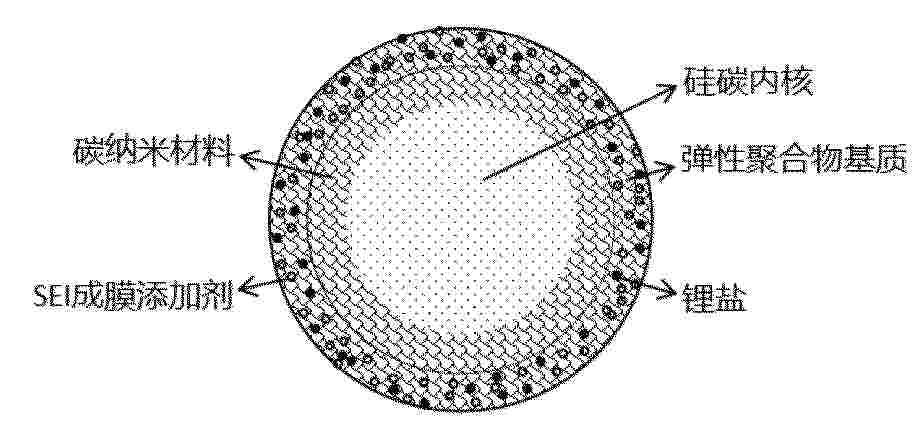
本发明公开了一种锂硅负极材料及其制备方法和应用,属于锂离子电池负极材料技术领域。本发明的锂硅负极材料,包括:二次颗粒,依次包覆于二次颗粒表面的碳包覆层和钝化层;二次颗粒通过内核单元组装形成;内核单元包括锂硅合金颗粒及包覆于所述锂硅合金颗粒表面的无定形碳层;二次颗粒是多个内核单元间通过粘结介质作用得到。本发明的锂硅负极材料具有多级缓冲与导电一体化结构,通过锂硅合金的预嵌锂设计和多级碳包覆协同作用,既保证了高首效又有效抑制循环过程中的体积变化。本发明硅碳负极制备的电池具有高首次库伦效率、长循环寿命及优异倍率性能,且充放电过程的体积膨胀小,为下一代高能量密度锂离子电池提供了可靠的解决方案。
Resumen de: CN116240572A
The invention belongs to the technical field of hydrogen production through water electrolysis, and particularly discloses a catalyst for oxygen production through water electrolysis, a preparation method of an electrode plate and application of the electrode plate. Preparing an agent A, an agent B and an electro-deposition solution; sequentially carrying out in-situ growth and electrochemical deposition on the base material to form a catalyst, and preparing an electrode plate loaded with the catalyst; the obtained catalyst is a nickel-iron-based multicomponent alloy and has an ordered nanowire or nanochain microstructure, and the surface of the obtained electrode plate is yellow green; furthermore, the electrode plate has a uniformly distributed latticed appearance by using a mold method; the catalyst prepared by the method and the electrode plate are applied to hydrogen production by alkaline electrolysis of water, and have the advantages of high catalytic activity, low energy consumption and the like.
Nº publicación: CN121804736A 07/04/2026
Solicitante:
深圳安培龙科技股份有限公司
Resumen de: CN121804736A
本发明提供一种机器人指关节用全平面式八边形六维力传感器,涉及力学传感器技术领域,包括弹性体,所述弹性体中包括固定台和中心加载台,所述固定台和所述中心加载台之间固定设有八边形梁;本发明利用24个应变片组成六组惠斯通电桥,分析发生弹性形变时的拉应力与压应力,使耦合方向桥路中的4个应变片桥臂电压相互抵消,直接从结构设计上消除维间耦合;采用全平面式工艺贴装硅应变片,引线键合难度小,贴片尺寸较小,降低机械装配难度;通过引入量子隧穿效应增强结构,实现对指关节微小形变的高灵敏度检测;通过非线性耦合模型实现对量子隧穿电流和应变片的形变值实现输出的六维力信号的总和。