Si deseas distinguir tus productos, servicios o ambos de los de otra empresa, es posible que necesites una marca o nombre comercial. Descubre qué son, en qué consiste su procedimiento de registro y qué implica.

Información sobre los plazos de presentación de solicitudes de transformación de marcas de la Unión Europea en marca nacional española. Más información


Si tienes un nuevo dispositivo, producto o procedimiento que resuelva un problema técnico o tenga una ventaja práctica, existen distintas formas de protegerlo en España y en otros países. Descubre cómo hacerlo.

¿Tu innovación reside en la estética, la ornamentación o la apariencia de tu producto? Protégela mediante un diseño industrial. Descubre qué derechos confiere el registro y cómo realizar la tramitación.

Las indicaciones geográficas protegen el nombre de un producto originario de una zona geográfica, a la cual le debe una determinada calidad, reputación u otra característica. Descubre qué son, en qué consiste su procedimiento de registro y qué beneficios conceden.

Las patentes publicadas en todo el mundo son una valiosa fuente de información científica, técnica y comercial.

Si eres emprendedor/a o una empresa y quieres potenciar y mejorar la rentabilidad de tu negocio protegiendo de forma adecuada los activos intangibles de tu organización, en este espacio encontrarás lo necesario.


 392
resultados
 Última actualización
18/10/2026 [06:52:00]


 Resultados 325 a 350 de 392

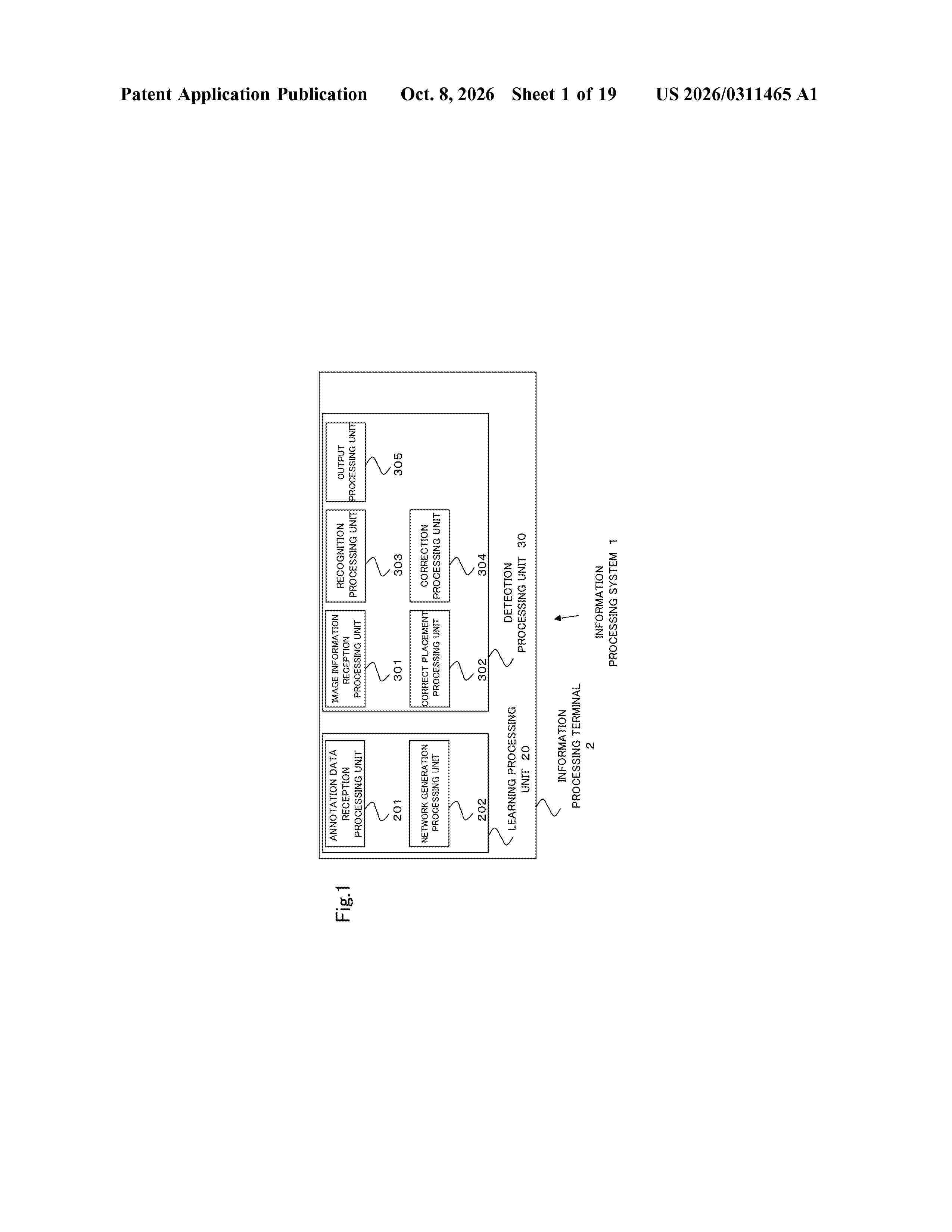
Resumen de: US20260311465A1
An information processing system includes a learning processing unit that generates a network of machine learning, and a detection processing unit that performs processing of detecting a predetermined area from image information using the network, the learning processing unit including an annotation data reception processing unit that receives an input of annotation data obtained by annotating a goods display area and/or a price tag area in the display shelf, and a learning processing unit that performs learning processing using the received annotation data and generates a network of machine learning, and the detection processing unit including an image information reception processing unit that receives an input of image information in which a display shelf to be processed is captured, and a recognition processing unit that recognizes the goods display area and/or the price tag area in the display shelf captured in the image information using the generated network.

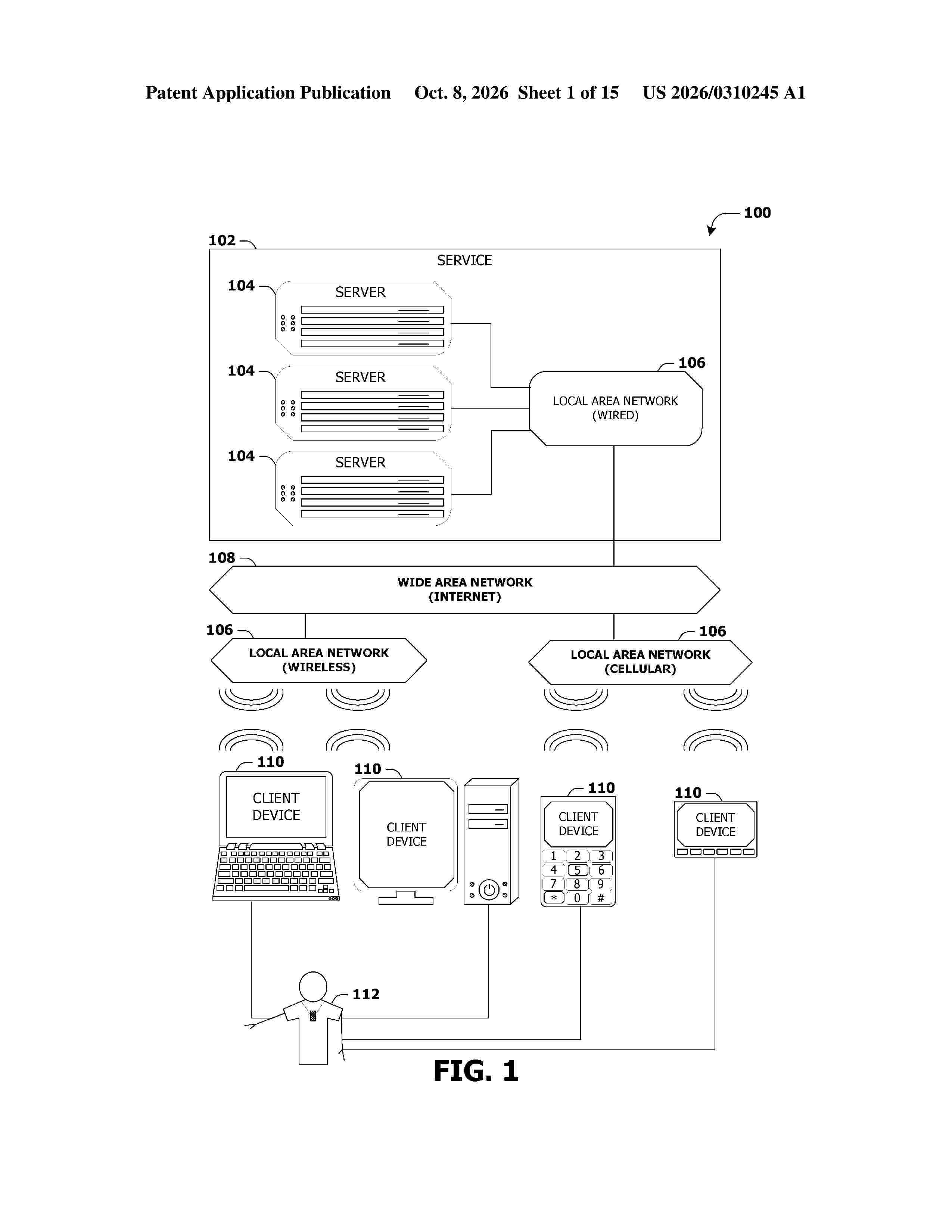
Resumen de: US20260310245A1
0000 One or more computing devices, systems, and/or methods are provided. For example, a controller of a dispenser may determine usage data of the dispenser. In association with a replenishment event in which a second refill component mounted to the dispenser is replaced by a first refill component, the controller may (i) determine a next replenishment time of the dispenser based upon the usage data, and/or (ii) transmit an indication of the next replenishment time to a first tag of the first refill component.
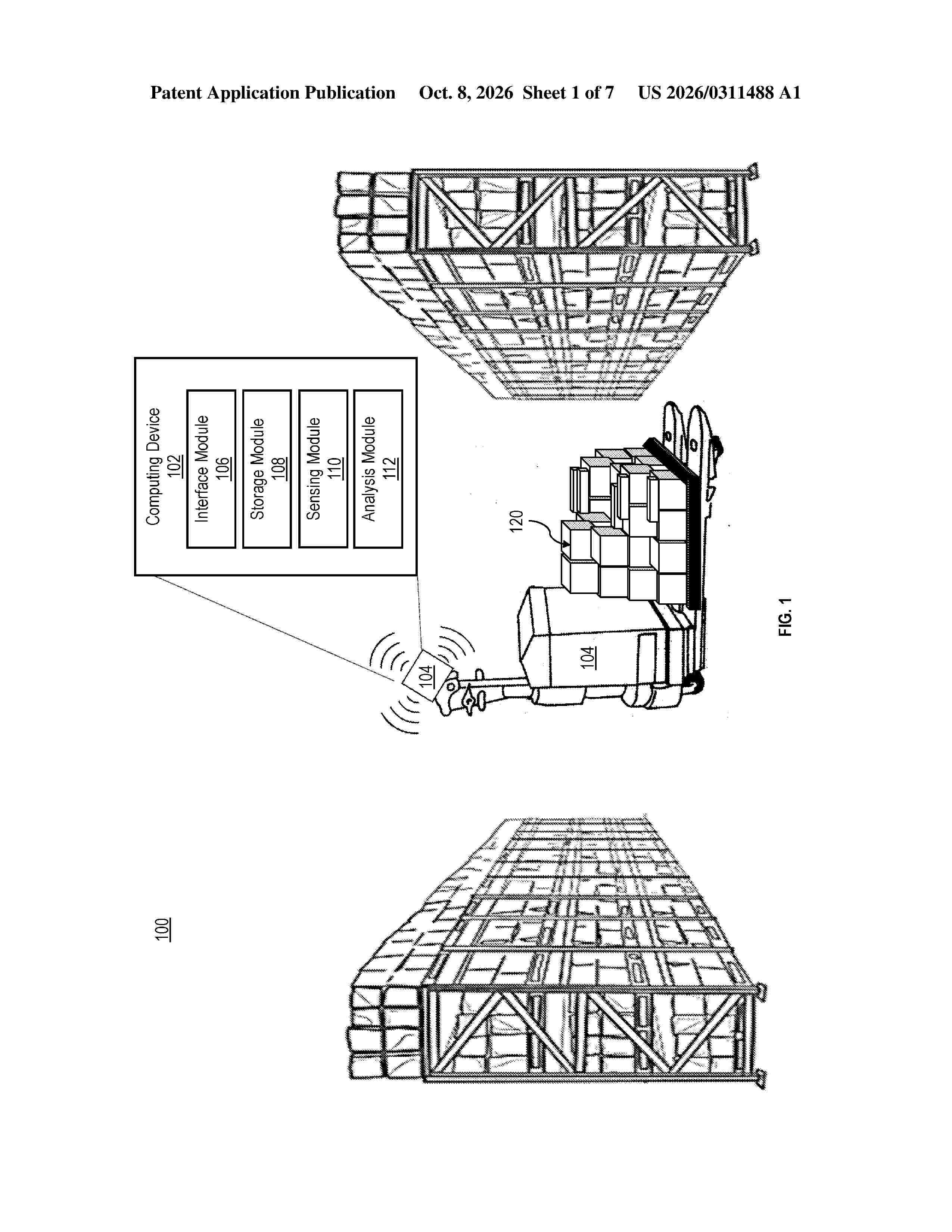
Resumen de: US20260311488A1
0000 Disclosed herein are system, method, and computer program product embodiments for multi-sensor perception for resource tracking and quantification. An embodiment operates by receiving resource information indicating a resource identifier, a resource location, and a resource amount. Based on sensor data received from a first sensing device and the resource identifier, a resource removed from the resource location and placed at a predefined location may be tracked. An amount of the resource placed at the predefined location may be determined based on depth information from sensor data received from a second sensing device. A notification that indicates that additional resources that match the resource should stop being removed from the resource location and placed at the predefined location may be generated based on a match between the resource amount and the amount of the resource placed at the predefined location.
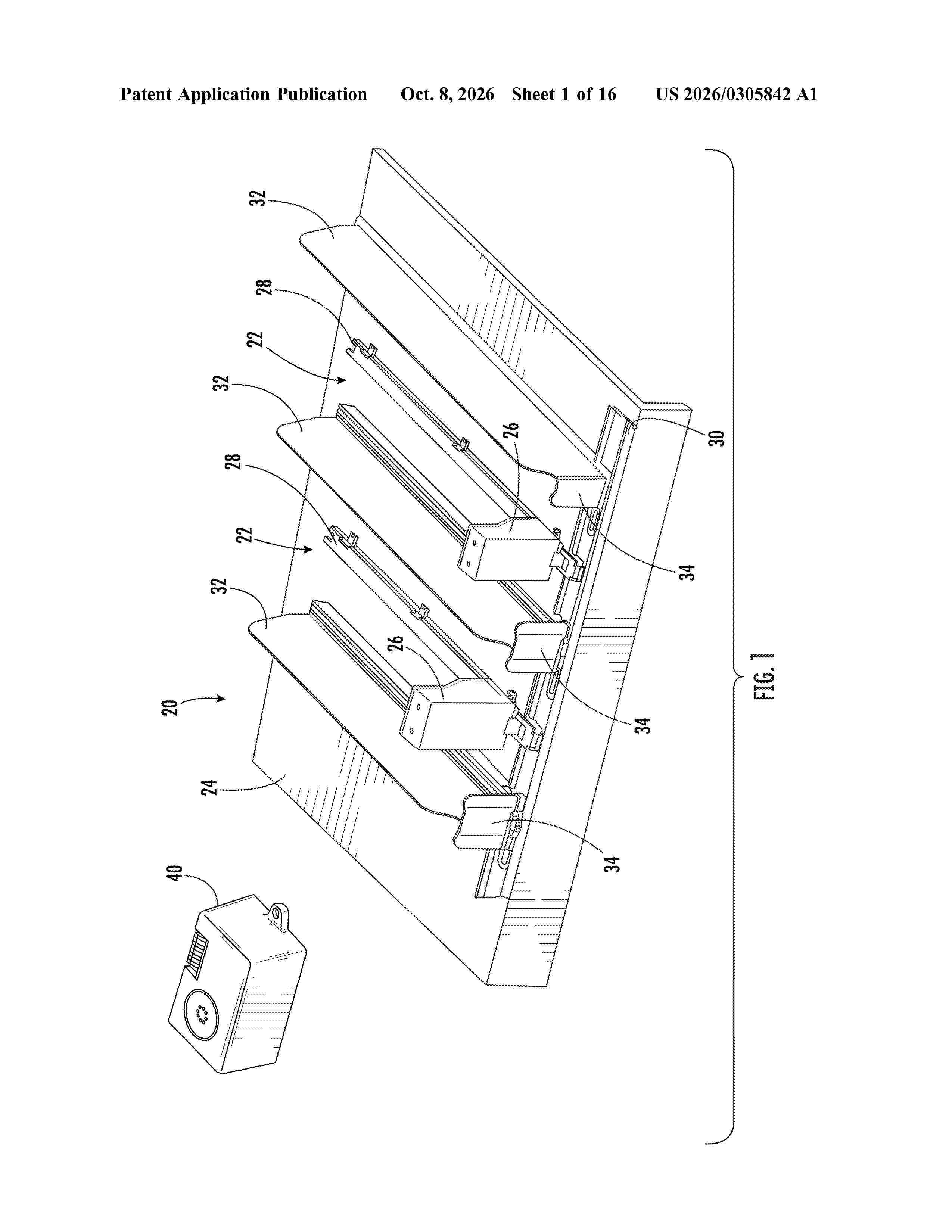
Resumen de: US20260305842A1
A retail merchandise pusher is configured for sliding along a pusher assembly track. The pusher assembly is mountable to a retail merchandise shelf. The pusher includes a pusher controller that is coupled to a sensor arrangement within a housing. The sensor arrangement has a spring drum sensor for detecting rotation of a spring drum. A direction sensor detects a direction of rotation of the spring drum. An incremental distance sensor detects incremental movement of the pusher. The controller is configured to calculate, based on data from the sensor arrangement, a total distance and direction of travel by the pusher, and to generate an alarm when the pusher travels more than a threshold distance within a predetermined period of time.
Resumen de: US20260311121A1
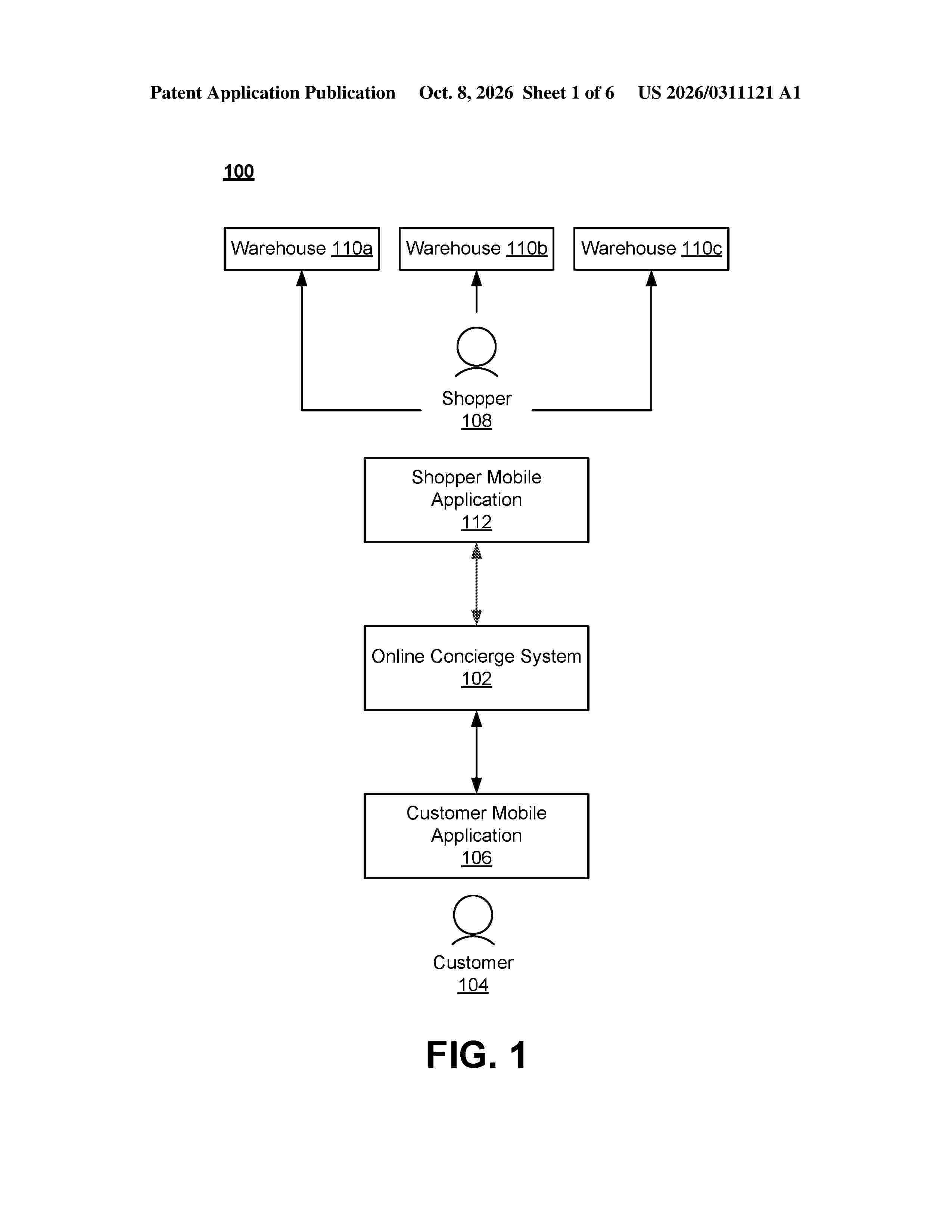
0000 An online concierge system displays an ordering interface to users that displays items offered by various warehouses. The online concierge system includes machine learning availability model that estimates an item's availability and visually distinguishes items offered by a warehouse having less than a threshold availability from other items. Because information from a warehouse that an item that was out of stock is now in stock is often delayed, the online concierge system transmits a request to a shopper fulfilling an order to check for an item’s availability at a warehouse. For example, the online concierge system allows users to include a request for an indication of an item’s availability when placing an order. When the online concierge system receives a threshold number of requests for the item, the online concierge system prompts a shopper fulfilling an order including items near the item for the item’s availability.
Resumen de: US20260305847A1
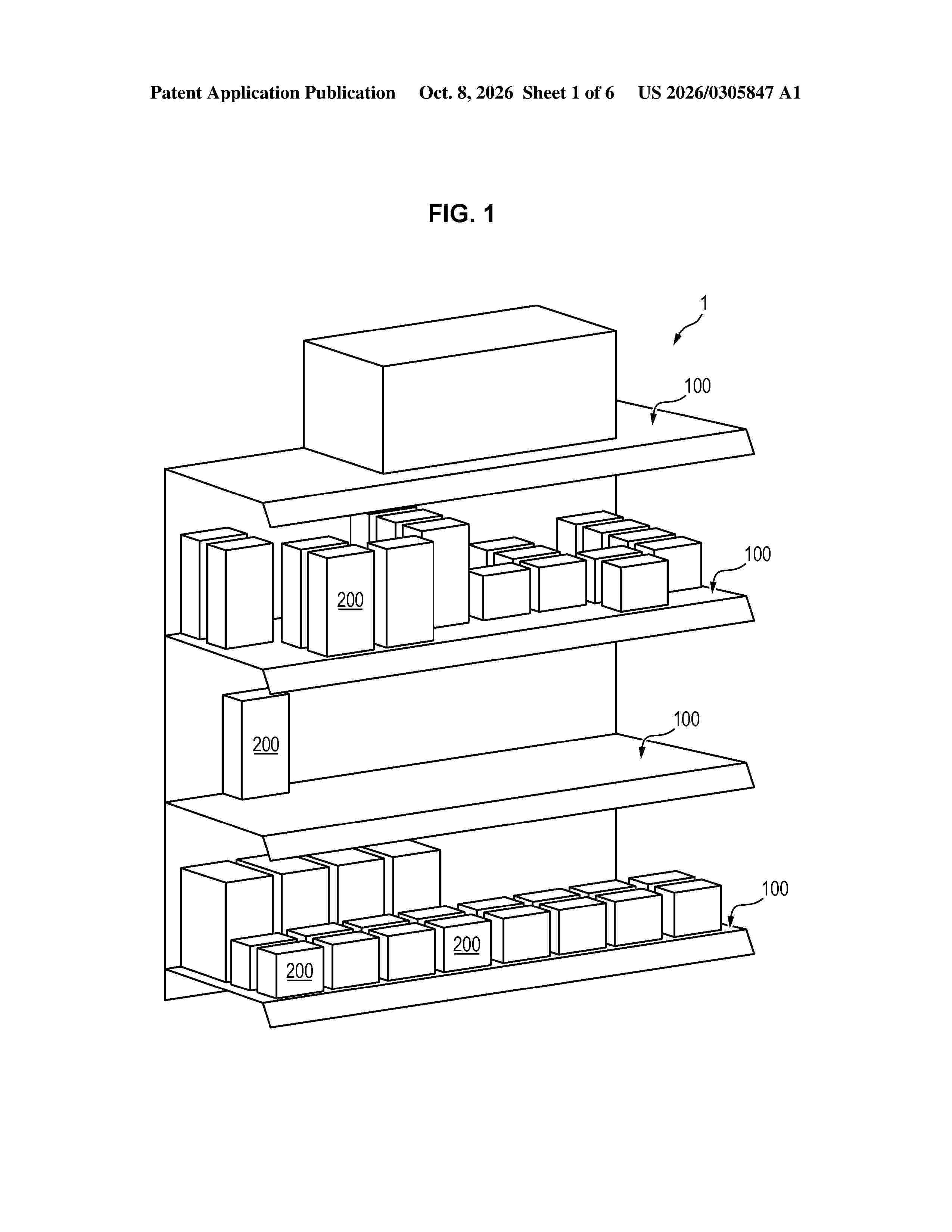
The invention relates to a spacer adapted to be fixed on a shelf support so as to delimit a column of the shelf support, wherein the spacer comprises a light-emitter integrated in the spacer and configured to emit light, wherein the light emitted by said light emitter forms a signal corresponding to a blinking sequence which is specific to said light emitter and allows identification of the spacer in which the light emitter is integrated.
Resumen de: US20260309776A1
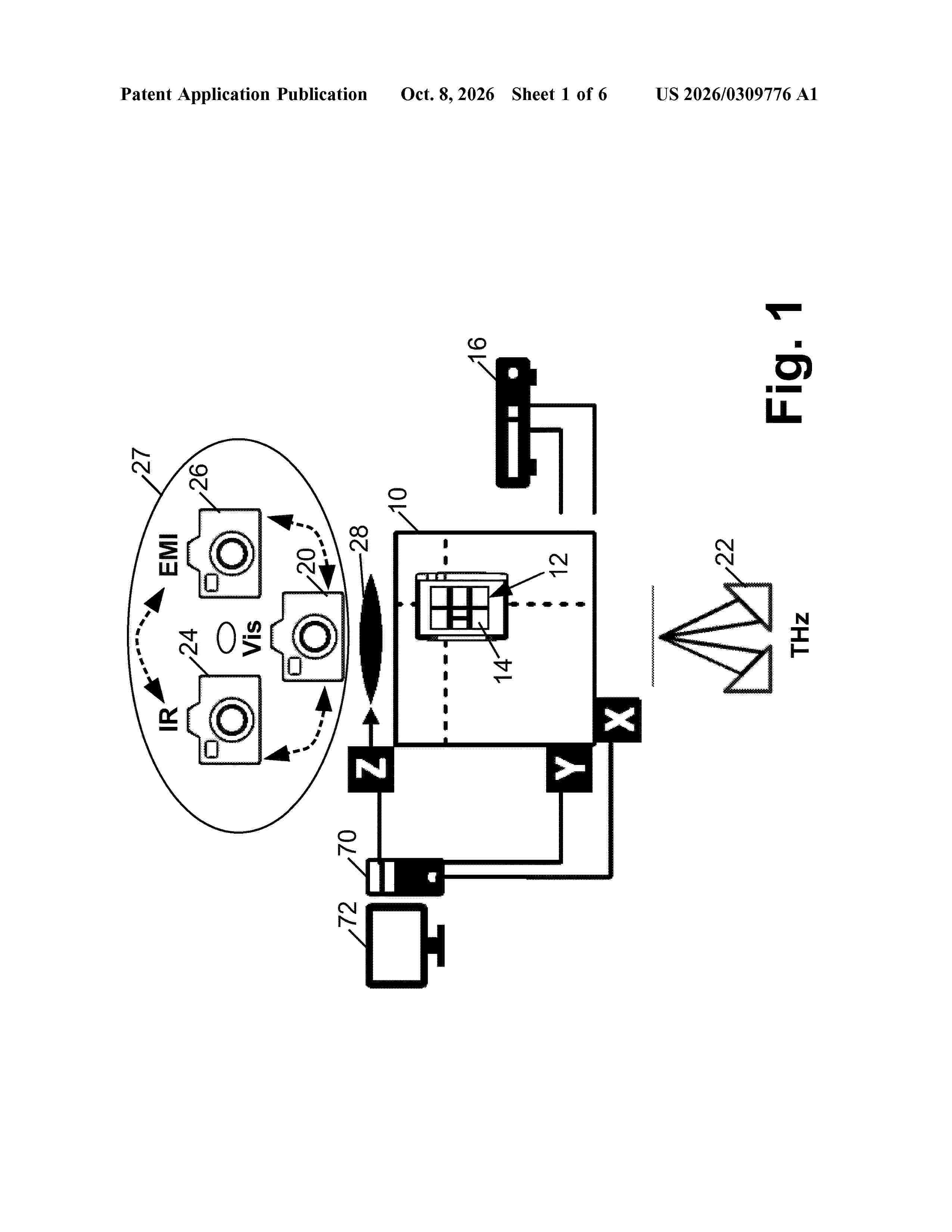
A multispectral inspection (MSI) device for analyzing an electronic item having a printed circuit board (PCB). An electronic power supply powers the electronic item in accordance with one or more test vectors. An optical imaging scanner, terahertz (THz) imaging scanner, and a functional imaging scanner are each operative to scan the electronic item. An electronic processor is programmed to scan the various scanners and control the power supply to acquire optical, THz, and functional images of the electronic item. The images are combined to form a standard three-dimensional (3D) signature and artificial intelligence (AI) classifiers are applied to the 3D signature to perform non-destructive analyses of the electronic item.
Resumen de: EP4818993A2
A method is provided that includes receiving, in a server, a request from a service provider, the request including a consumer identification code associated with a consumer, and obtaining a personalized list of universal product codes based on the consumer identification code and a purchase history log in a database. The method also includes providing the personalized list of universal product codes to the service provider, and receiving a tracking pixel indicative that the consumer has interacted with a consumer payload, wherein the consumer payload is associated with at least one product from the personalized list of universal product codes. A system and a non-transitory, computer-readable medium storing instructions which cause the system to perform the above method are also disclosed.
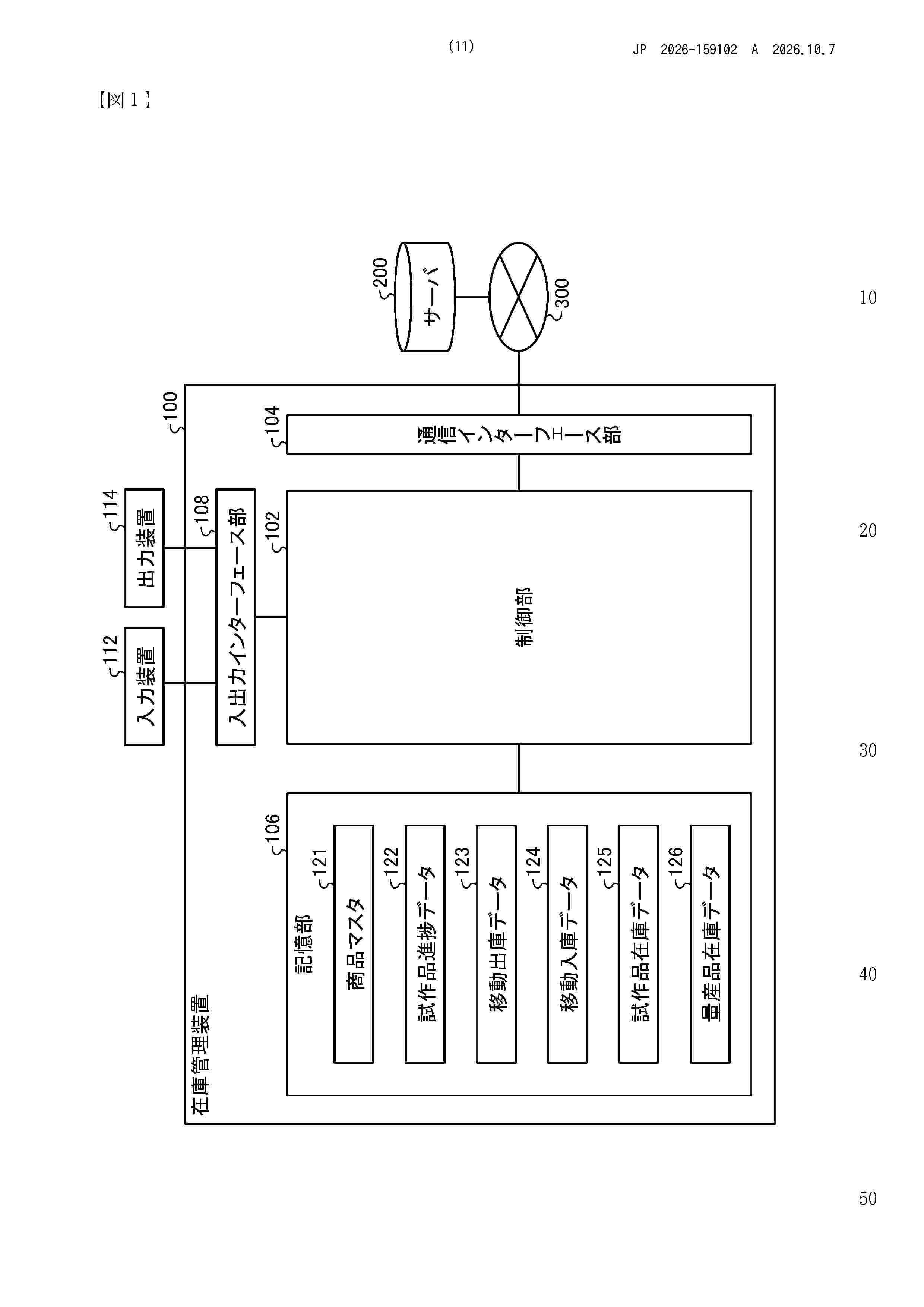
Resumen de: JP2026159102A
【課題】試作品であっても、量産品として商品の在庫を管理する。【解決手段】試作品及び量産品を含む商品の在庫を管理する制御部を備える在庫管理装置であって、試作品進捗データと移動出庫データと移動入庫データと試作品在庫データと量産品在庫データとにアクセス可能であり、試作品進捗データは、製番と、量産品への振替対象となる試作品であるか否かを区分する振替区分と、を含み、制御部は、振替区分に基づいて、製番に対応する試作品が、振替対象であると判定した場合、振替対象となる試作品を出庫するデータ処理を実行して、移動出庫データを更新し、振替対象となる試作品を量産品として入庫するデータ処理を実行して、移動入庫データを更新し、更新後の移動出庫データに基づいて、振替対象となる試作品の在庫を減らすデータ処理を実行し、更新後の移動入庫データに基づいて、振替対象となる試作品を量産品の在庫として増やすデータ処理を実行する。【選択図】図8
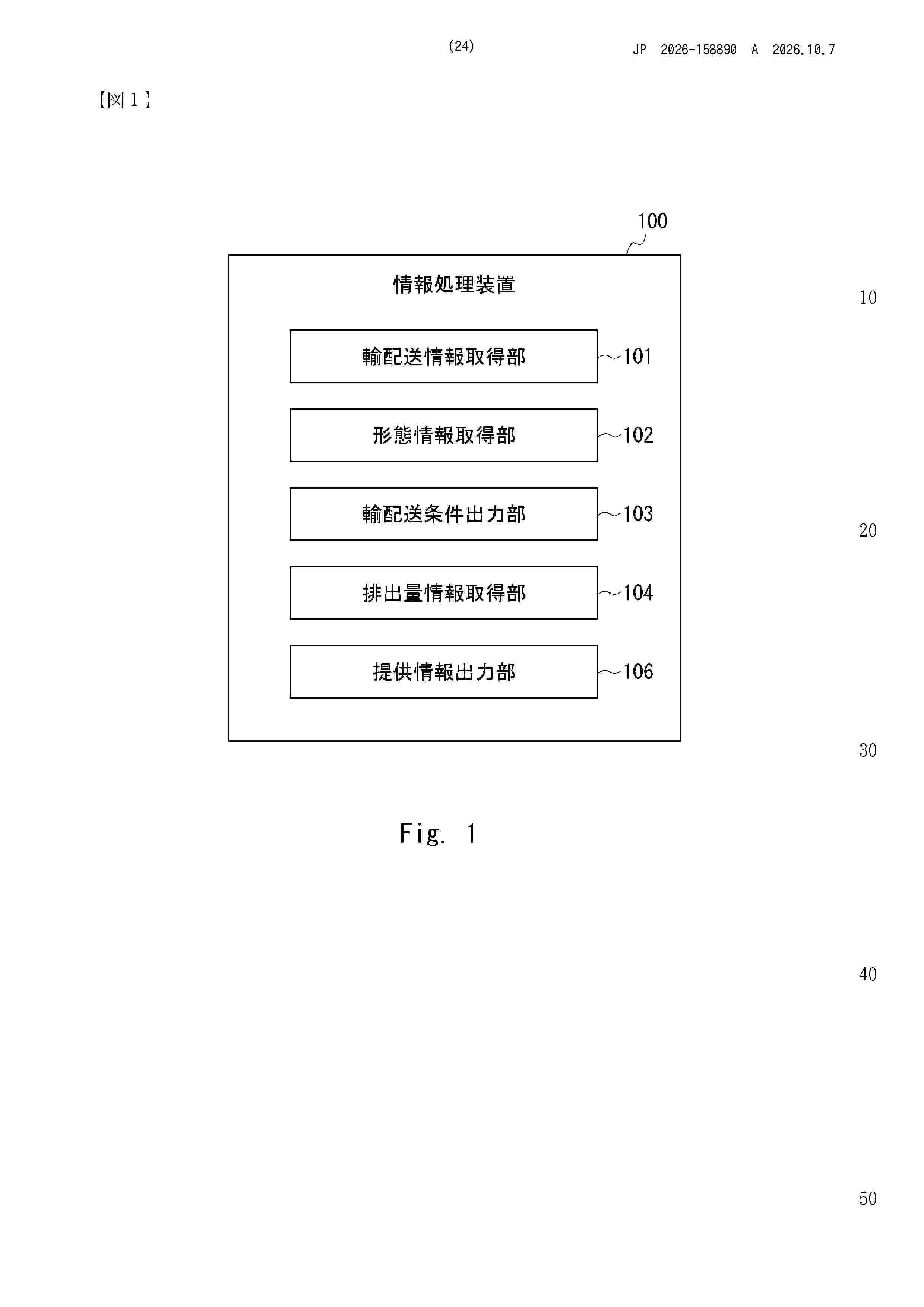
Resumen de: US20260300904A1
0000 An information processing device according to the present disclosure includes a transportation/delivery information acquisition unit that acquires first transportation/delivery information regarding transportation/delivery of a first shipping provider who is entrusted with joint transportation/delivery and second transportation/delivery information regarding transportation/delivery of a second shipping provider who outsources the joint transportation/delivery, a form information acquisition unit that acquires form information regarding a form of the joint transportation/delivery, a transportation/delivery condition output unit that outputs a transportation/delivery condition including the first transportation/delivery information, the second transportation/delivery information, and the form information, an emission information acquisition unit that acquires first emission information regarding a carbon dioxide emission of the first shipping provider and second emission information regarding a carbon dioxide emission of the second shipping provider, the first emission information and the second emission information being estimated based on the transportation/delivery condition, and a provision information output unit that outputs provision information.
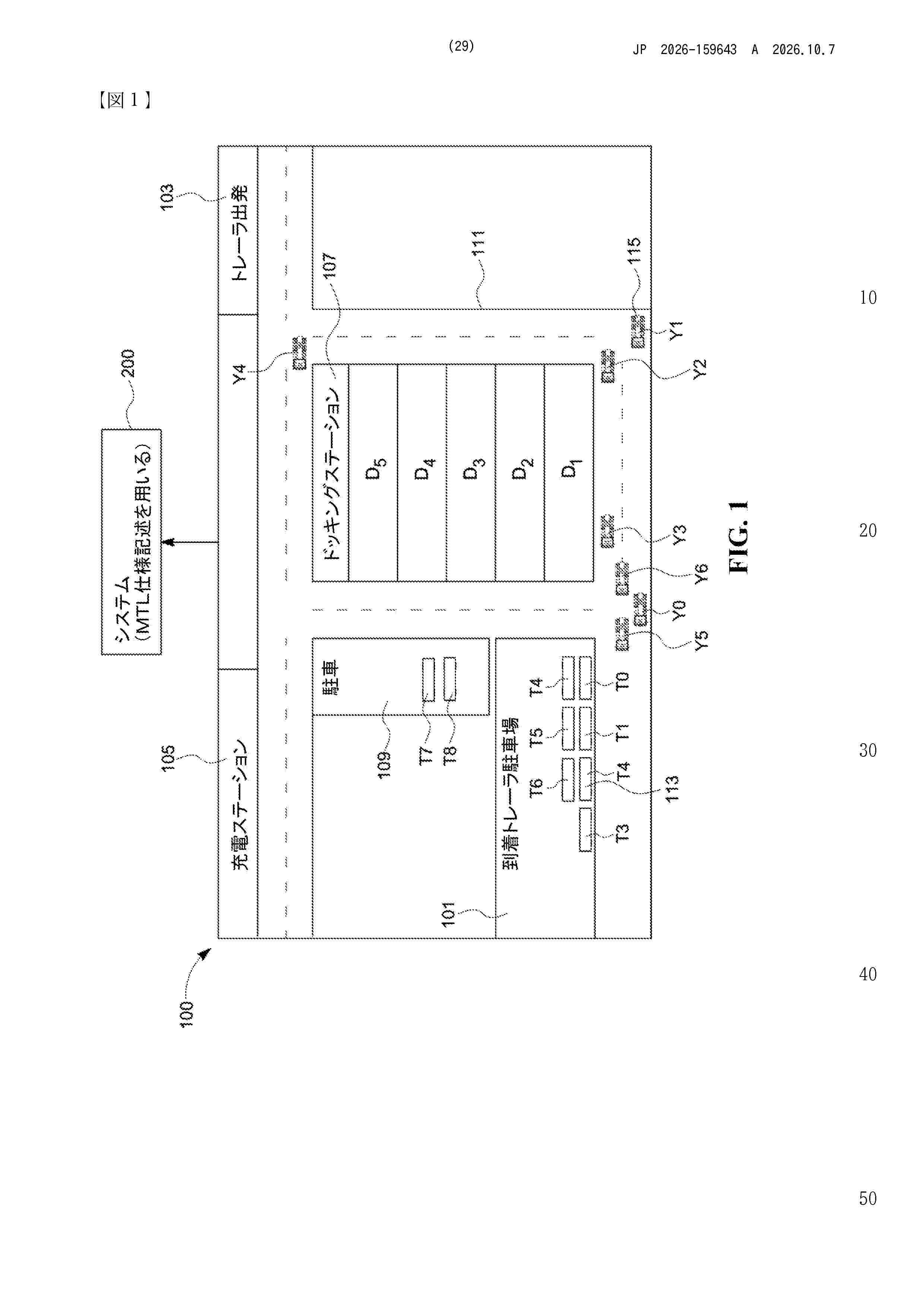
Resumen de: US20260289499A1
0000 The present disclosure provides a system and a method for coordinating and controlling the movement of trailers by a fleet of vehicles within a logistics environment. The method comprises receiving a set of trailer transportation jobs, each job comprising a temporal requirement defining conditions to be satisfied by a trailer or a vehicle at a location during a time interval, and encoding the temporal requirement of each job as a set of constraints on one or more of vehicle motion dynamics, trailer motion dynamics, and energy consumption behavior using metric temporal logic (MTL) specification. The method further solving a constrained optimization problem optimizing a cost function subject to the set of constraints and a set of vehicle operation constraints to generate a plan comprising one or more trailer assignments, vehicle trajectories, and charging actions, and executing at least a portion of the plan within the logistics environment.
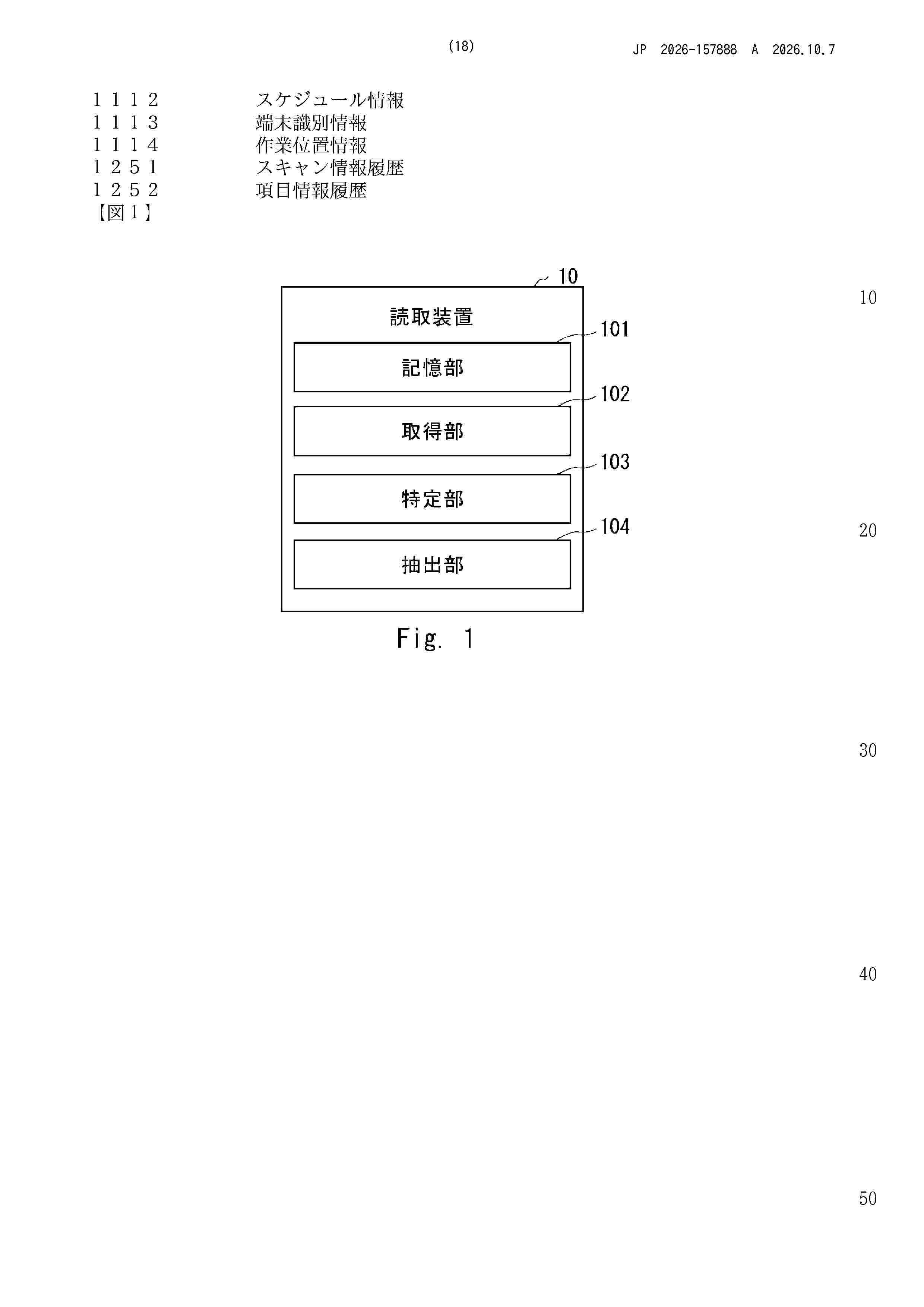
Resumen de: US20260289442A1
0000 A reading device according to the present disclosure includes a storage unit, an acquisition unit, a specification unit, and an extraction unit. The storage unit stores work identification information for identifying work content and necessary item information indicating a target item included in a target label necessary for execution of the work content in association with each other. The acquisition unit acquires scan information indicating information obtained by collectively reading a plurality of labels attached to an article. The specification unit acquires work information related to work to be worked on by the worker, and specifies work identification information relevant to the work information. The extraction unit detects a target label from a plurality of labels of the scan information based on the target item information associated with the specified work identification information, and extracts description contents of the target item from the target label as the target information.
Resumen de: EP4811239A1
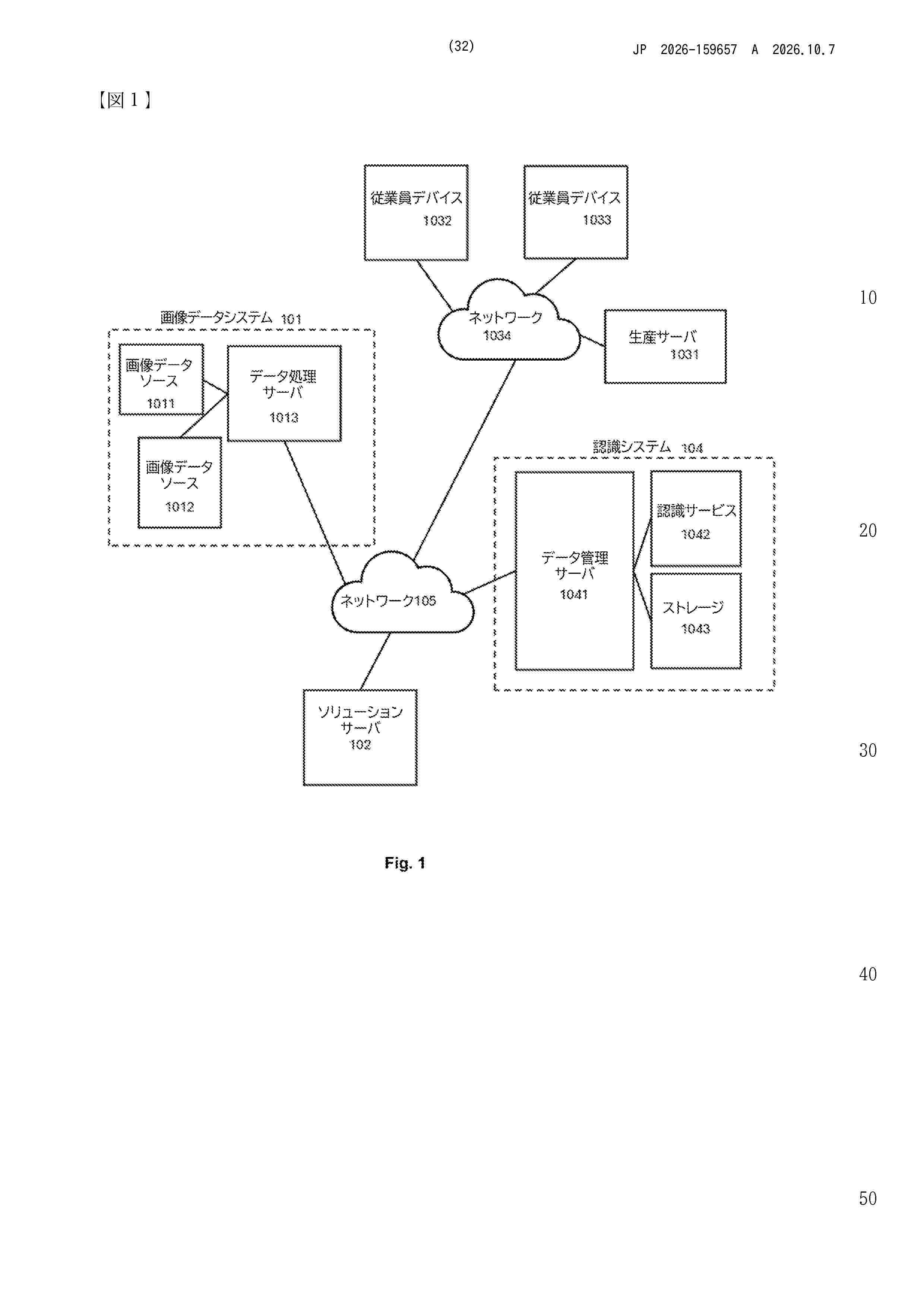
Disclosed is a computer-implemented method of determining a transport destination of an object, the method comprising the following steps:a) image data is acquired from a plurality of image data sources which describes images of the object taken with different ones of the image data sources;b) object identifier data is acquired which describes an identifier of the object to be assigned to pieces of the image data acquired from different ones of the plurality of image data sources;c) image association data is determined based on the image data and the object identifier data, wherein the image association data describes an association between the pieces of the image data and the identifier;d) image classification data is determined based on the image data, wherein the image classification data is determined by inputting the image data and the image association data into a recognition service trained to classify the images according to the object which the images of the object describe and according to a transport destination of the object which the images of the object describe; ande) notification data is determined based on the image classification data, wherein the notification data describes a notification indicating a transport destination to which the object shall be transported.
Resumen de: GB2705208A
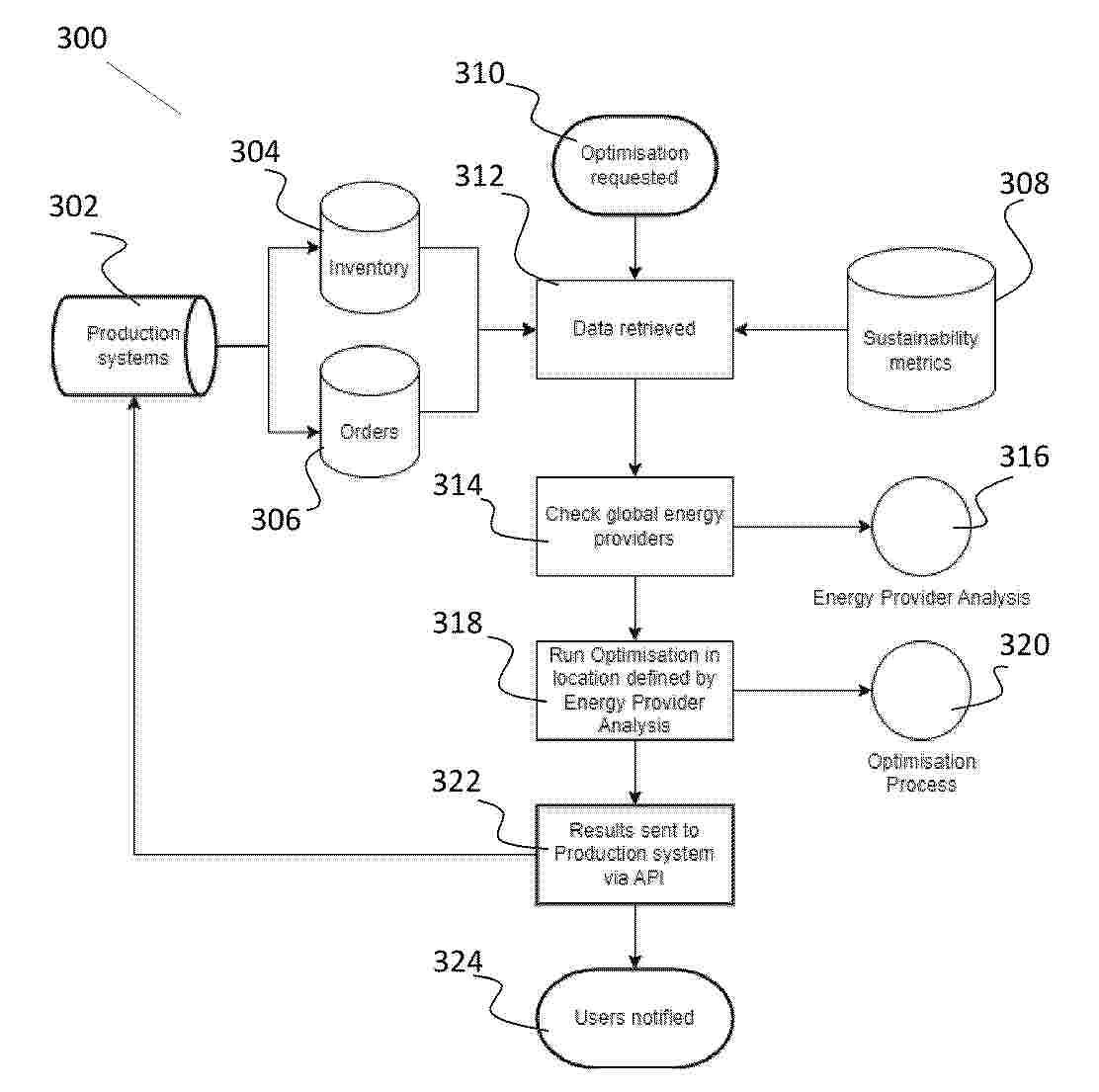
This invention relates to a computer-implemented method of optimizing a reinforcement steel (rebar) cutting process. The method comprising the steps of creating and maintaining an inventory of rebar stock, receiving a plurality of disparate orders for cut lengths of rebar, performing an optimization process on the orders comprising the steps of: determining the plurality of possible cutting patterns applicable to satisfy the orders, and determining the optimal cutting pattern from the plurality of possible cutting patterns. The optimal cutting pattern factors in both the minimum amount of waste; and the minimum amount of carbon (CEQ) in the waste. In this way, the amount of waste, and in particular the amount of carbon waste, is significantly reduced. Figure 3
Resumen de: EP4819085A1
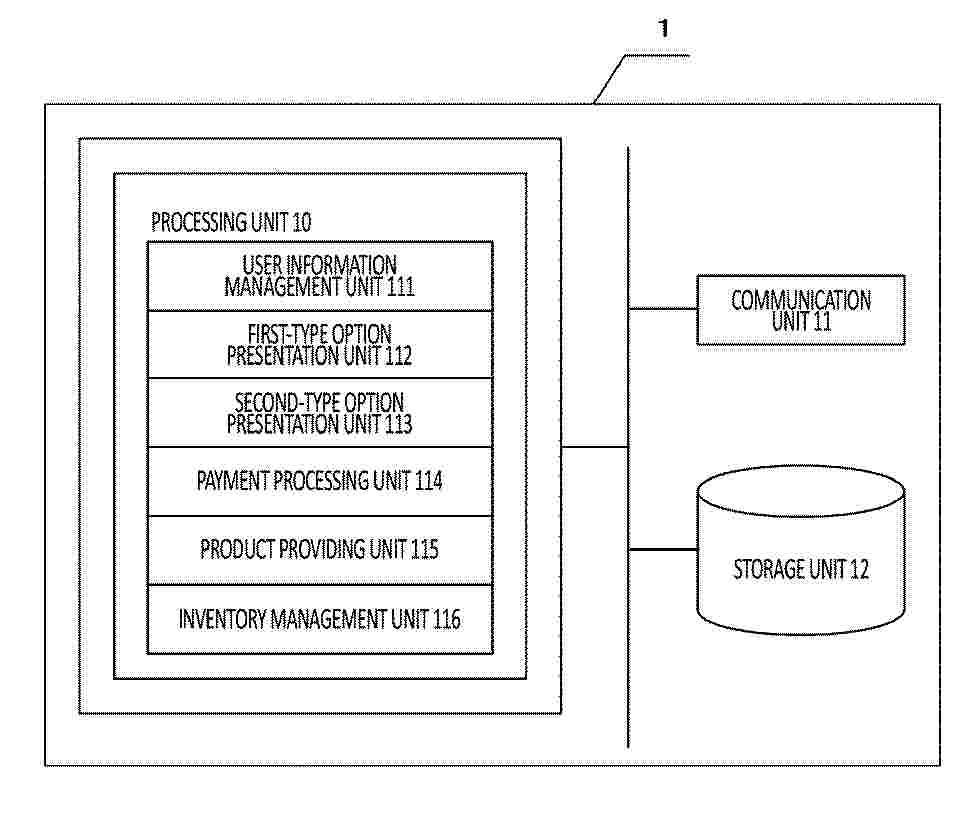
0001 (Problem to be solved) To notify a user of an inventory status of products and the like at an appropriate timing. 0002 (Solution) Provided is a product providing device capable of communicating with a terminal of a user. The product providing device includes: a first-type option presentation means which presents, to a terminal, a plurality of first-type options each associated with a product group composed of a plurality of products, to be selectable by a user; and an inventory management means which manages an inventory status of products of a product group associated with each first-type option of a plurality of first-type options. The first-type option presentation means confirms an inventory status of products of a product group associated with the first-type option and presents the inventory status of products for each screen transition.
Resumen de: WO2025117688A1
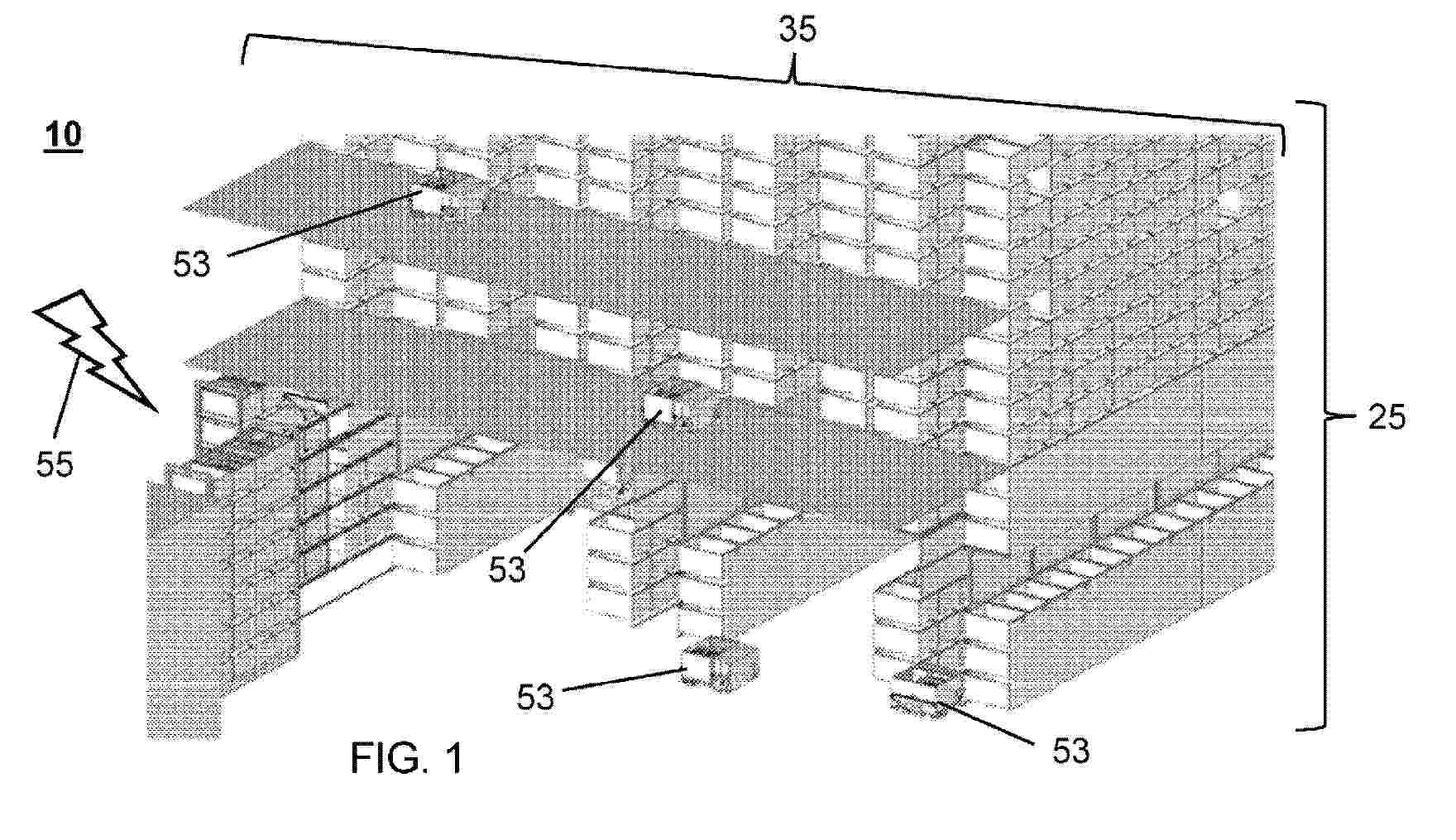
A mobile robot configured to operate in a multilevel structure within an Automated Storage and Retrieval System (ASRS) to fulfill incoming customer orders. The mobile robot can perform a variety of tasks to fulfill said orders and can have status indicator/s to communicate tasks performed and/or health parameters of the robot. The robot may have a container transfer mechanism to safely onboard or offload a container and transfer the container within the ASRS. The robot may travel in a vertical or inclined passage having a track and a charge rail. The robot may climb the vertical or inclined passage via a vertical drive assembly that may be operatively coupled to a charge toe assembly for allowing the robot to charge during motion. The vertical drive assembly and charge toe assembly synchronously extend or retract components to perform vertical motion and safe charging of the mobile robot.
Resumen de: US20250182880A1
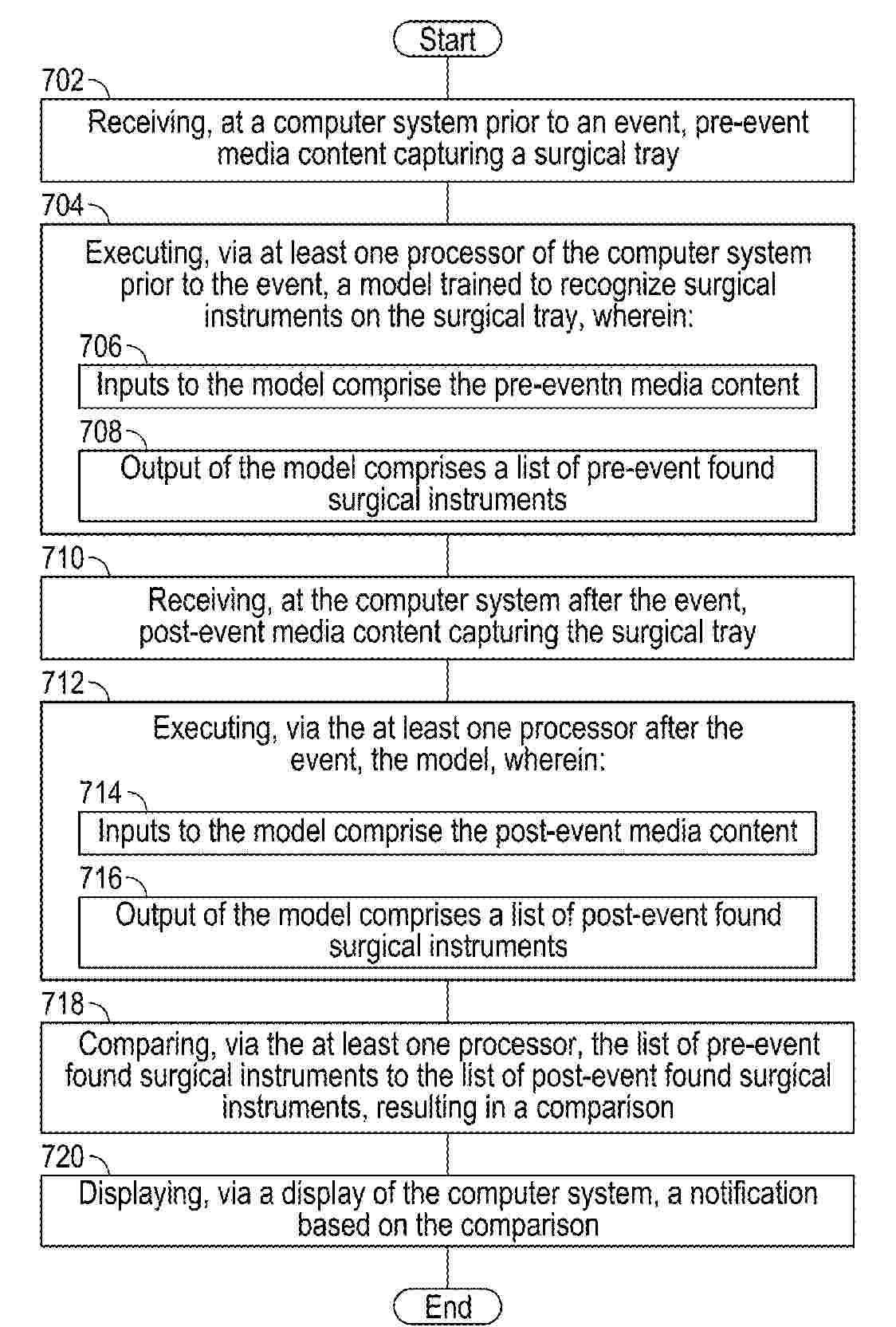
Systems, methods, and computer-readable storage media for scanning medical instrument trays to determine which items are present and which are missing. This is accomplished by receiving, prior to an event, pre-event media content capturing a medical tray, then executing a model trained to recognize instruments on the medical tray, resulting in a list of pre-event found medical instruments. After the event, post-event media content capturing the medical tray is received, and the model executed again, resulting in a list of post-event found medical instruments. The list of pre-event found medical instruments is compared against the list of post-event found medical instruments, resulting in a comparison, and the results displayed.
Resumen de: GB2636120A
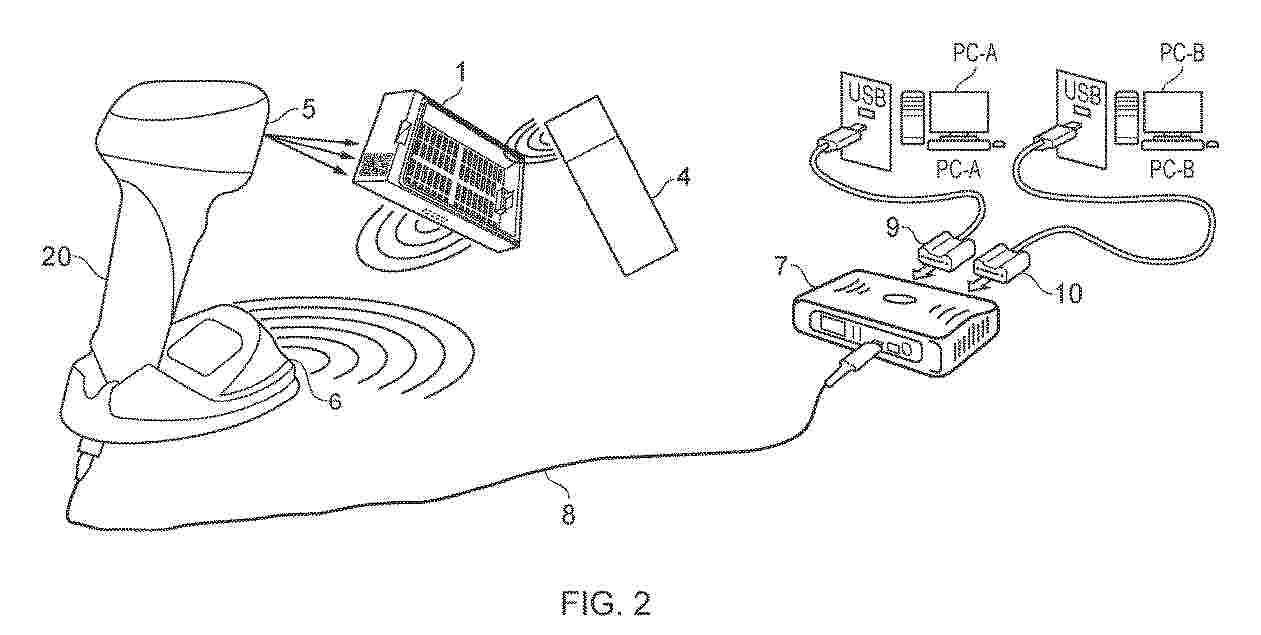
A system and method for scanning data from items such as histopathology cassettes 1 or histopathology slides 4. Each item is provided with both a radio frequency identification (RFID) tag and with an optically readable identifier such as a barcode. The system comprises a scanner 20 having an RFID reader 6 and an optical reader 5 which respectively read first data from the RFID tag and second data from the optical identifier. The second data comprises a data format selected from a group of predetermined data formats. The scanner communicates the first and second data to a signal splitter 7. The signal splitter inspects the second data and if it matches a given one of the predetermined formats, the first and second data are directed to a first computer database PC-B. If the second data does not match a given one of the predetermined formats, the splitter directs only the second data to a second computer database PC-A. The first and second data may be read in a single scanning operation. The given one of the predetermined data formats may be histopathology cassette identification data or histopathology slide identification data. The second database may be a legacy computer system.
Resumen de: WO2025111708A1
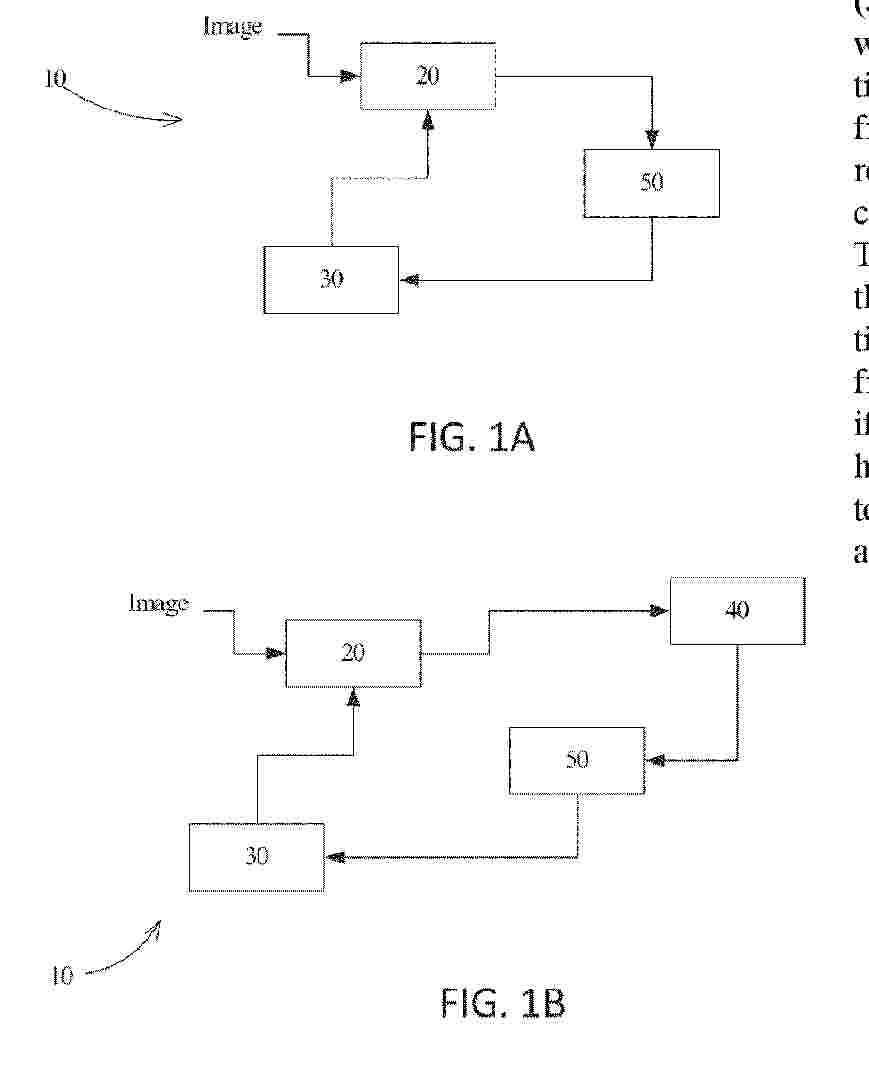
Systems and methods for automatic determination whether a configured display fixture conforms to an expected configuration. An image of the configured display fixture is received from a confirmation user and this image is processed by a recognition module that recognizes elements in the image by way of either a computer readable code on the image or by way of an AI-based image recognition process. The recognized elements in the image are automatically compared with the expected configuration. If all the elements in the expected configuration are present in the recognized elements, then the configured display fixture conforms to the expected configuration. If elements are missing or if elements are not recognized, these unrecognized/missing elements are highlighted/listed. The system also allows for a user to confirm/accept or to reject the results of the comparison between the recognized elements and the expected configuration.
Resumen de: EP4819653A1
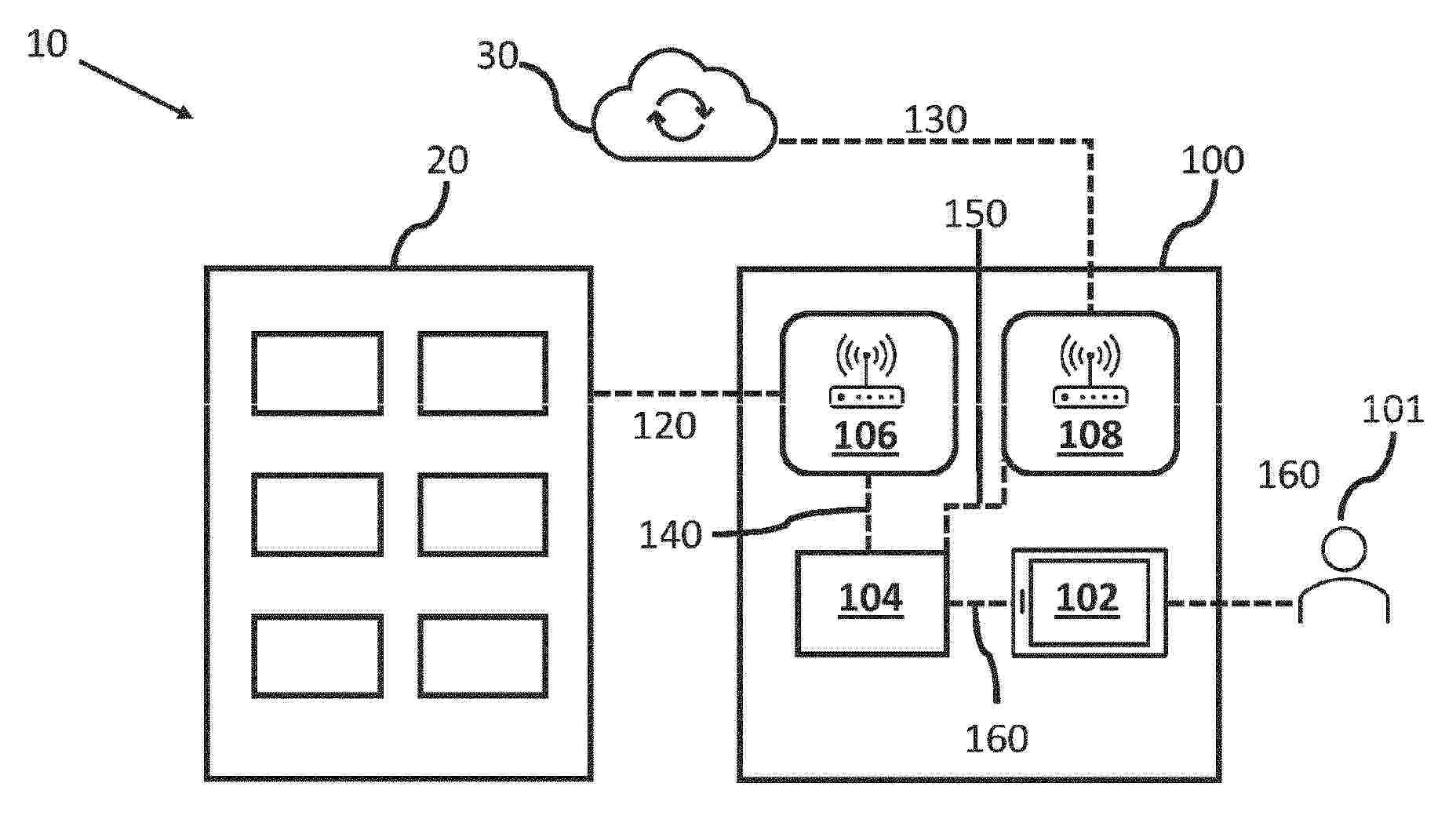
An auxiliary device (100) configured to be paired with a parcel locker device (20) through a wireless connection comprising a user interface (102) configured to interact with a user (101), a processor (104), a short-range communication module (106) comprising a short-range antenna for communication with the parcel locker device (20), a long-range communication module (108) comprising a long-range communication antenna, for communication with a server (30).
Resumen de: EP4819008A1
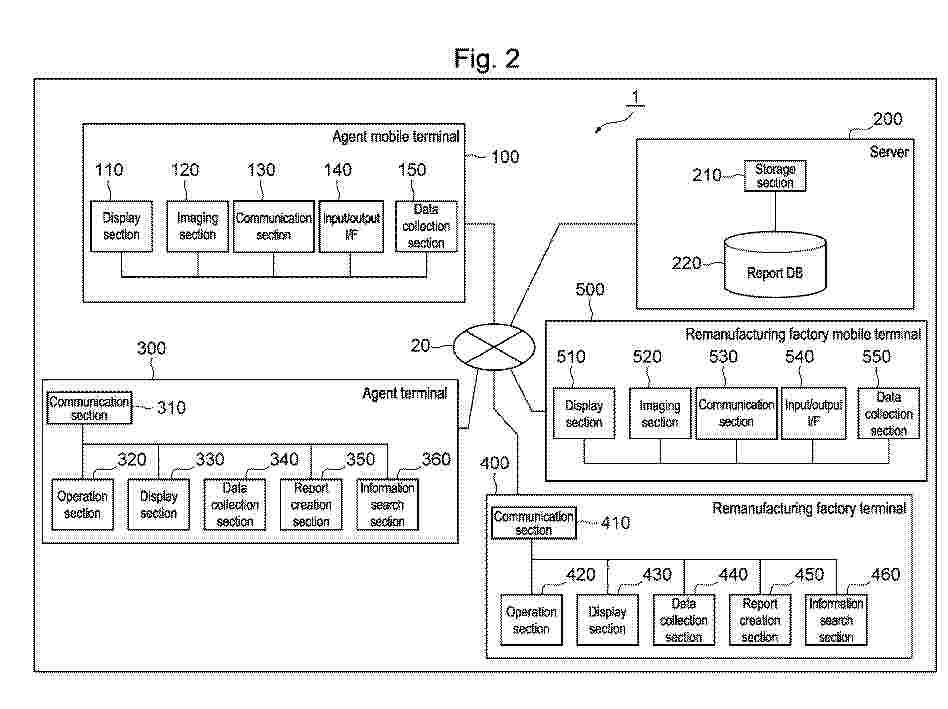
A remanufactured product management system according to the present invention is a remanufactured product management system including a first terminal provided at a service base for a machine, a second terminal provided at a remanufacturing base for a part of the machine, and a server. When a part of the machine is replaced, the second terminal transmits part information relating to a part remanufactured at the remanufacturing base to the server, the server generates remanufactured product management information based on the part information received, the first terminal obtains information relating to part replacement from the part removed from the machine and the part to be installed in the machine and transmits the obtained information relating to part replacement to the server, the server updates the remanufactured product management information based on the information relating to part replacement received from the first terminal, and transmits guidance for determining whether the part removed from the machine can be remanufactured to the first terminal, the first terminal generates one of a return report or a scrap report of the part removed from the machine based on a selection result in the guidance received from the server and transmits the generated return report or scrap report to the server, and the server updates the remanufactured product management information based on the information relating to part replacement received from the first terminal, and information
Resumen de: JP2026157829A
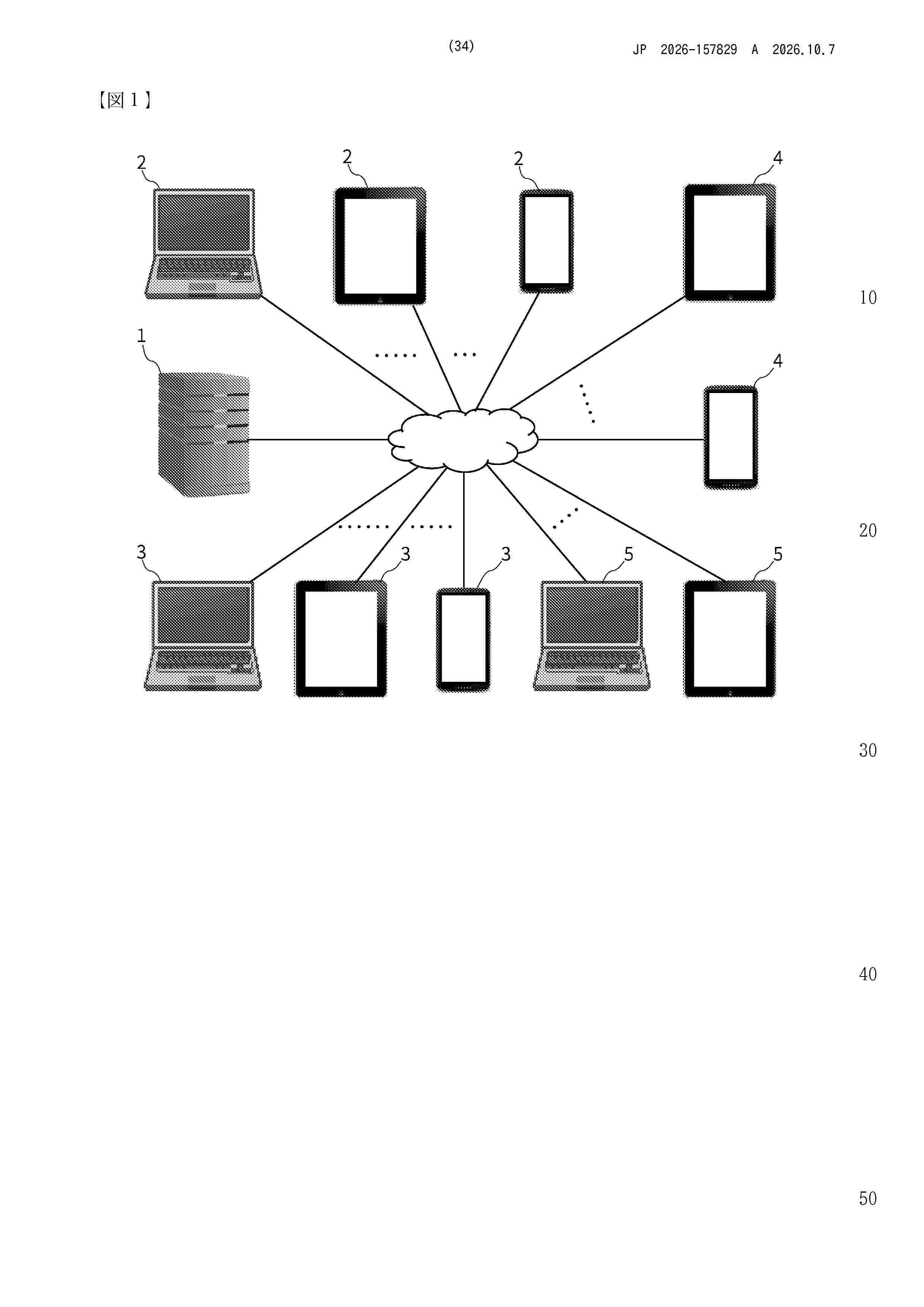
【課題】従来、企業間物流における異なる組織の異なる拠点間において、予約管理情報を共有できず、その結果、異なる拠点間における予約管理情報を有効に利用できなかった。【解決手段】ドライバー識別子と拠点識別子と時間帯情報とを有する配送予約を受信する予約受信部121と、予約受信部121が受信した配送予約を用いた予約管理情報を、ドライバー識別子と拠点識別子とバース識別子と時間帯情報とを有する2以上の予約管理情報が格納される配送予約管理部113に蓄積する予約蓄積部132と、一のドライバー識別子と対になる2以上の予約管理情報を決定する検索部134と、当該2以上の各予約管理情報の少なくとも一部の情報を端末に送信する予約送信部141とを具備する配送予約管理装置1により、上記課題を解決できる結果、異なる拠点間における予約管理情報を有効に利用できるプラットフォームを提供できる。【選択図】図3
Resumen de: JP2026158711A
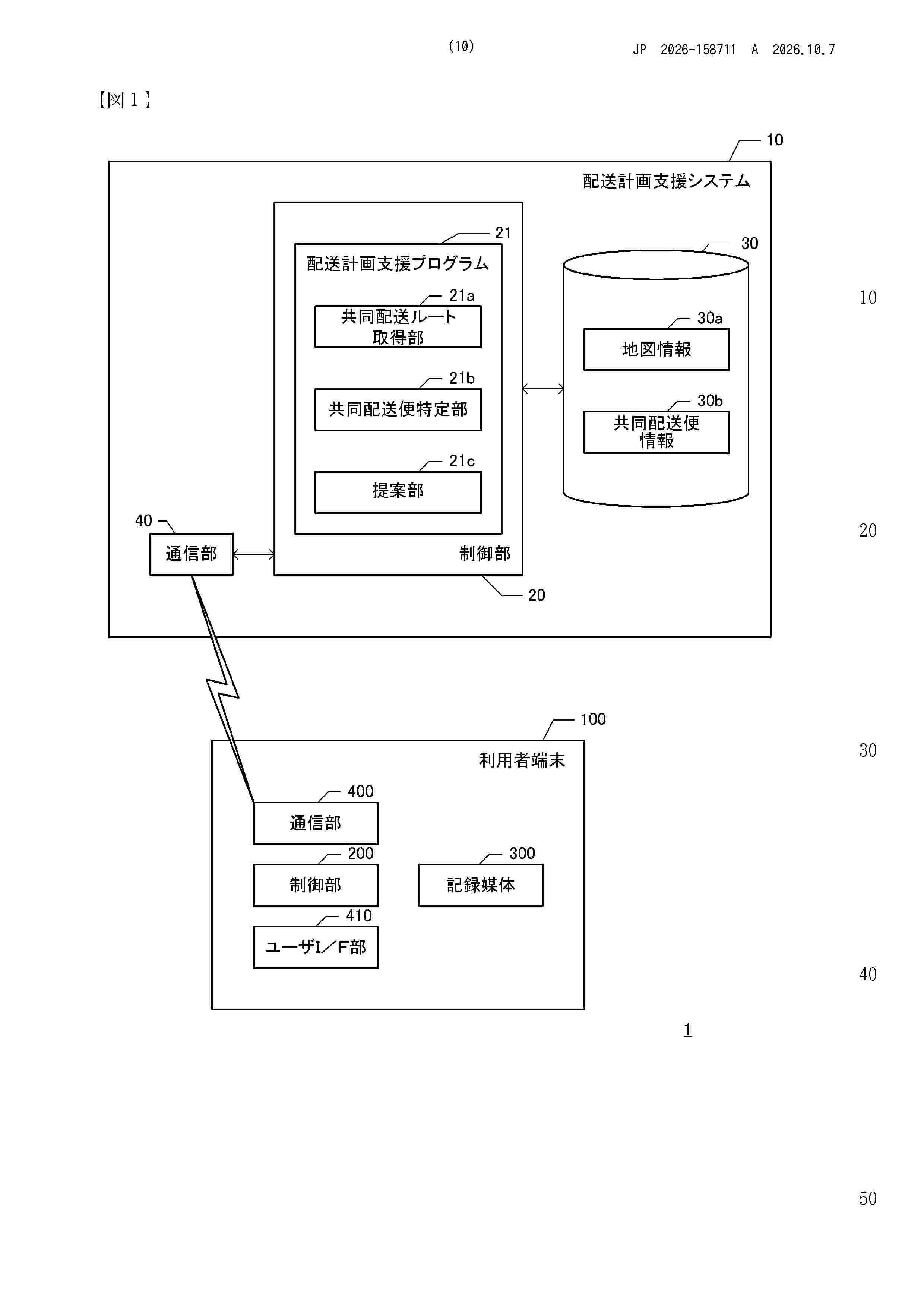
【課題】既定時間帯に目的地に到着できる共同配送便がない場合であっても、既定時間帯に目的地に到着できる可能性がある共同配送便を特定する技術の提供。【解決手段】複数の荷主の荷物を共同配送車両によって配送する共同配送便が複数登録された共同配送便情報に基づいて、出発地から目的地に対象の荷物を配送するための共同配送ルートを取得する共同配送ルート取得部と、前記共同配送ルートでは前記目的地に既定時間帯に到着できない場合、または、前記目的地に着発する前記共同配送便が登録されていない場合に、前記目的地を含む既定範囲内を前記既定時間帯に通過する前記共同配送便を特定する共同配送便特定部と、を備える配送計画支援システムを構成する。【選択図】図1
Resumen de: JP2026158689A
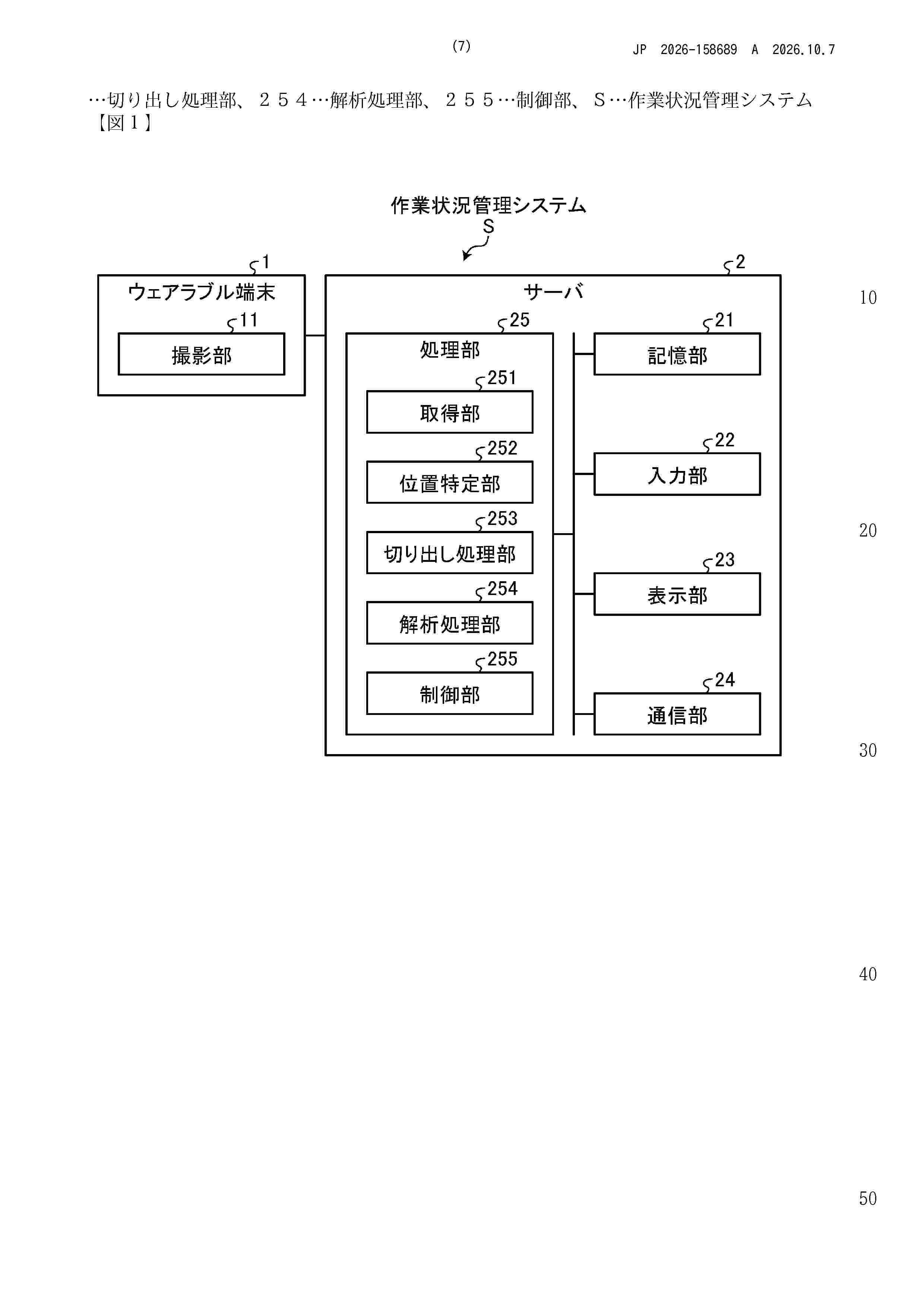
【課題】作業工程の順番が決まっていない作業に関しても、作業を撮影した映像について一連の作業の部分を容易に切り出す。【解決手段】本実施形態の作業状況管理システムは、所定の作業領域内で所定の開始終了領域を出た作業者が複数種類の作業を行ってから前記開始終了領域に戻る場合の作業の状況を管理する作業状況管理システムであって、前記作業者によって所持され、前記作業者が行う作業の状況を撮影して映像データを出力する撮影部と、前記作業者の位置を特定する位置特定部と、前記位置特定部により特定された前記作業者の位置の履歴を示す位置履歴情報に基づいて、前記映像データから、前記作業者が前記開始終了領域を出てから戻るまでの部分を一連作業映像データとして切り出す切り出し処理部と、を備える。【選択図】図4
Nº publicación: JP2026159357A 07/10/2026
Solicitante:
株式会社JVCケンウッド
Resumen de: JP2026159357A
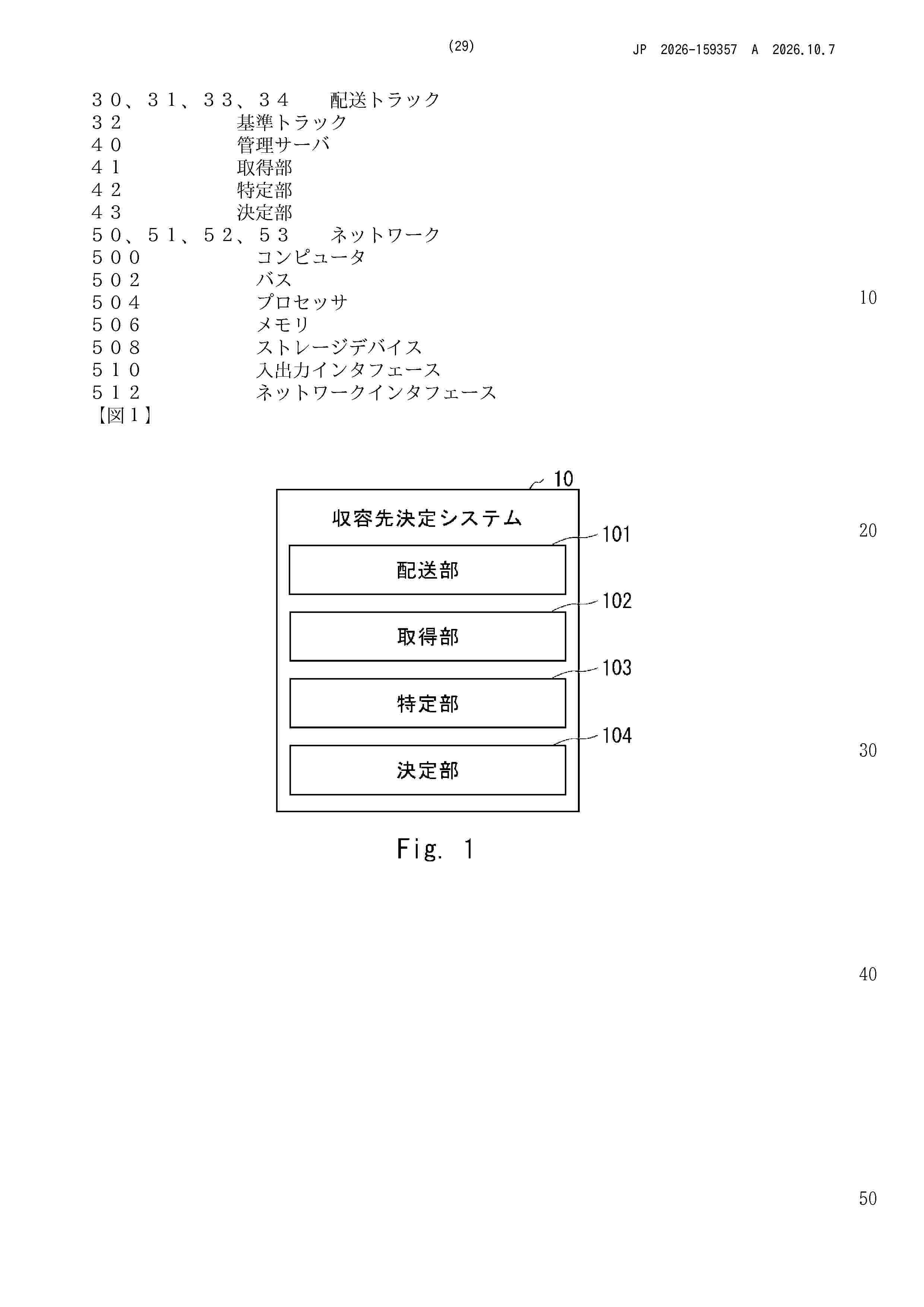
【課題】配送機体を収容するのに適した収容車両を好適に決定する収容先決定システム等を提供すること。【解決手段】収容先決定システムは、配送部と、取得部と、予測部と、特定部と、決定部と、を備える。配送部は、配送機体を用いた品物の配送について完了の可不可を判定する。取得部は、配送機体及び品物の収容先となる収容車両の候補車両を検出する。取得部は、候補車両の移動経路、停車予定地点、到達予定時刻、及び停車予定時間の内少なくとも一つ以上の情報を含む移動スケジュール情報を取得する。予測部は、移動スケジュール情報に基づいて、配送機体及び候補車両が合流する予定時刻である合流時刻を予測する。特定部は、候補車両が合流時刻に停車しているかを示す停車状態を特定する。決定部は、停車状態に基づいて収容車両を決定する。【選択図】図9
 BOPI
 Sede Electrónica