Si deseas distinguir tus productos, servicios o ambos de los de otra empresa, es posible que necesites una marca o nombre comercial. Descubre qué son, en qué consiste su procedimiento de registro y qué implica.

Información sobre los plazos de presentación de solicitudes de transformación de marcas de la Unión Europea en marca nacional española. Más información


Si tienes un nuevo dispositivo, producto o procedimiento que resuelva un problema técnico o tenga una ventaja práctica, existen distintas formas de protegerlo en España y en otros países. Descubre cómo hacerlo.

¿Tu innovación reside en la estética, la ornamentación o la apariencia de tu producto? Protégela mediante un diseño industrial. Descubre qué derechos confiere el registro y cómo realizar la tramitación.

Las indicaciones geográficas protegen el nombre de un producto originario de una zona geográfica, a la cual le debe una determinada calidad, reputación u otra característica. Descubre qué son, en qué consiste su procedimiento de registro y qué beneficios conceden.

Las patentes publicadas en todo el mundo son una valiosa fuente de información científica, técnica y comercial.

Si eres emprendedor/a o una empresa y quieres potenciar y mejorar la rentabilidad de tu negocio protegiendo de forma adecuada los activos intangibles de tu organización, en este espacio encontrarás lo necesario.


 159
resultados
159
resultados
 Última actualización
25/10/2026 [07:00:00]
Última actualización
25/10/2026 [07:00:00]


 Resultados 125 a 150 de 159

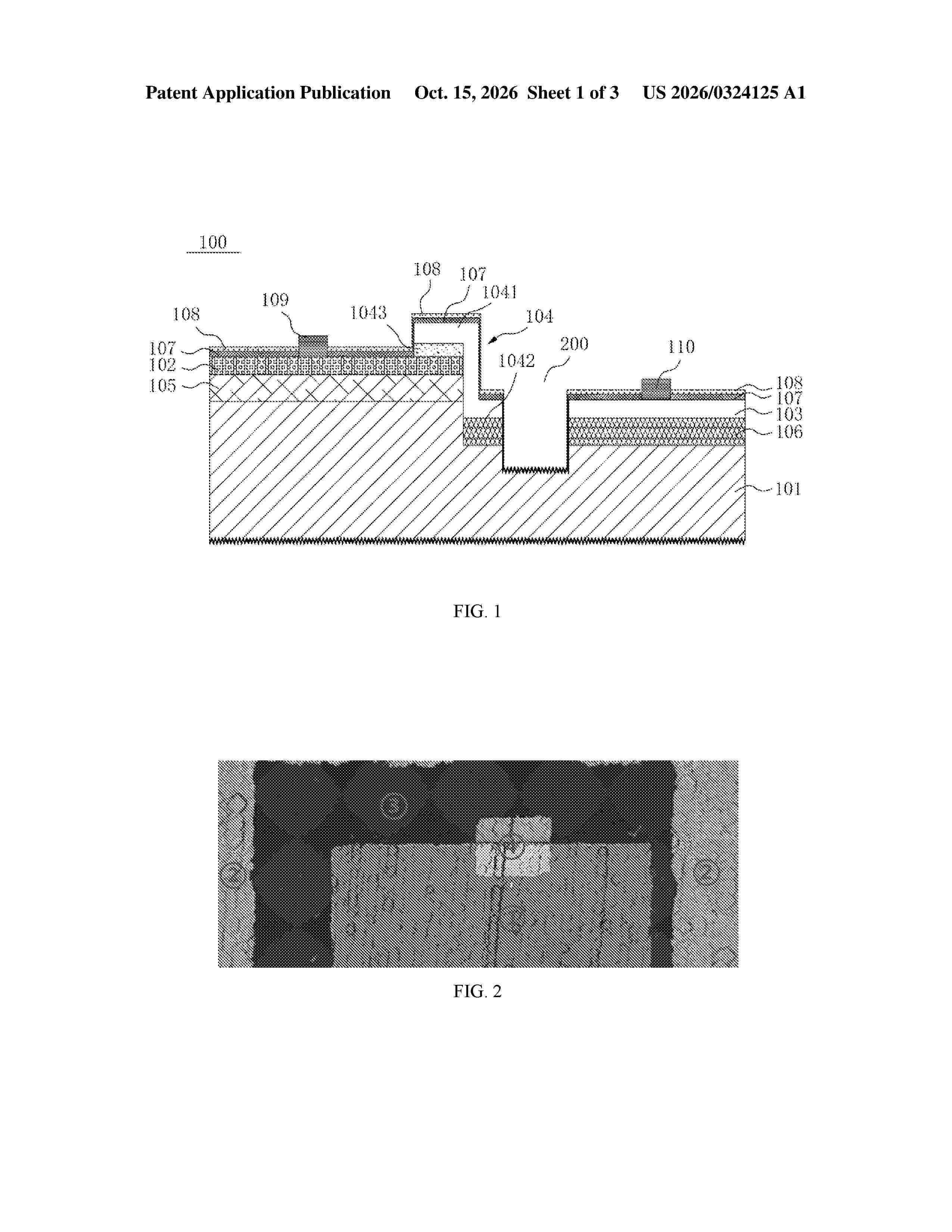
Resumen de: US20260324125A1
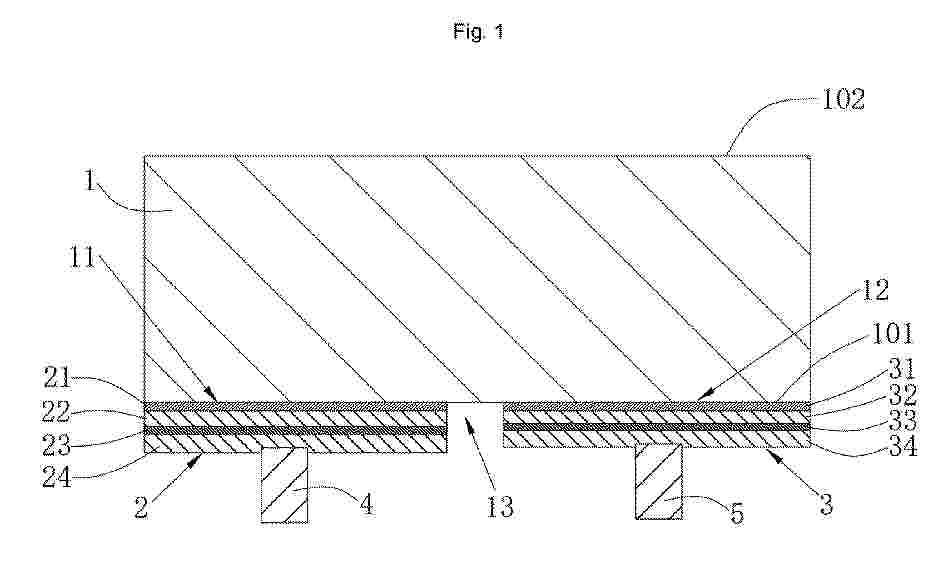
A back-contact solar cell includes a silicon substrate, a first doped silicon layer, a second doped silicon layer, and a conductive block. The first doped silicon layer and the second doped silicon layer are provided on a back side of the silicon substrate, having opposite doping types and being separated by an isolation region. The conductive block is provided on the back side of the silicon substrate, partially located on the first doped silicon layer and partially located in the isolation region. The conductive block includes a third doped silicon layer having a same doping type as the second doped silicon layer and the silicon substrate. The first doped silicon layer and the third doped silicon layer are in electrical contact via an isolation buffer layer.

Resumen de: AU2025260322A1
Embodiments of the present disclosure may include a power beaming system for power beaming, the system including a power transmitter configured to transmit light at a first wavelength and a second wavelength. Embodiments may also include a power receiver including one or more retroreflectors, configured to retroreflect the transmitted light at the first wavelength back to the power transmitter, and set to pass through or avoid the transmitted light at the second wavelength for optical-to-electrical power conversion. Embodiments may also include one or more processors configured to influence operation of the power transmitter based on any retroreflected light at the first wavelength received at the power transmitter.
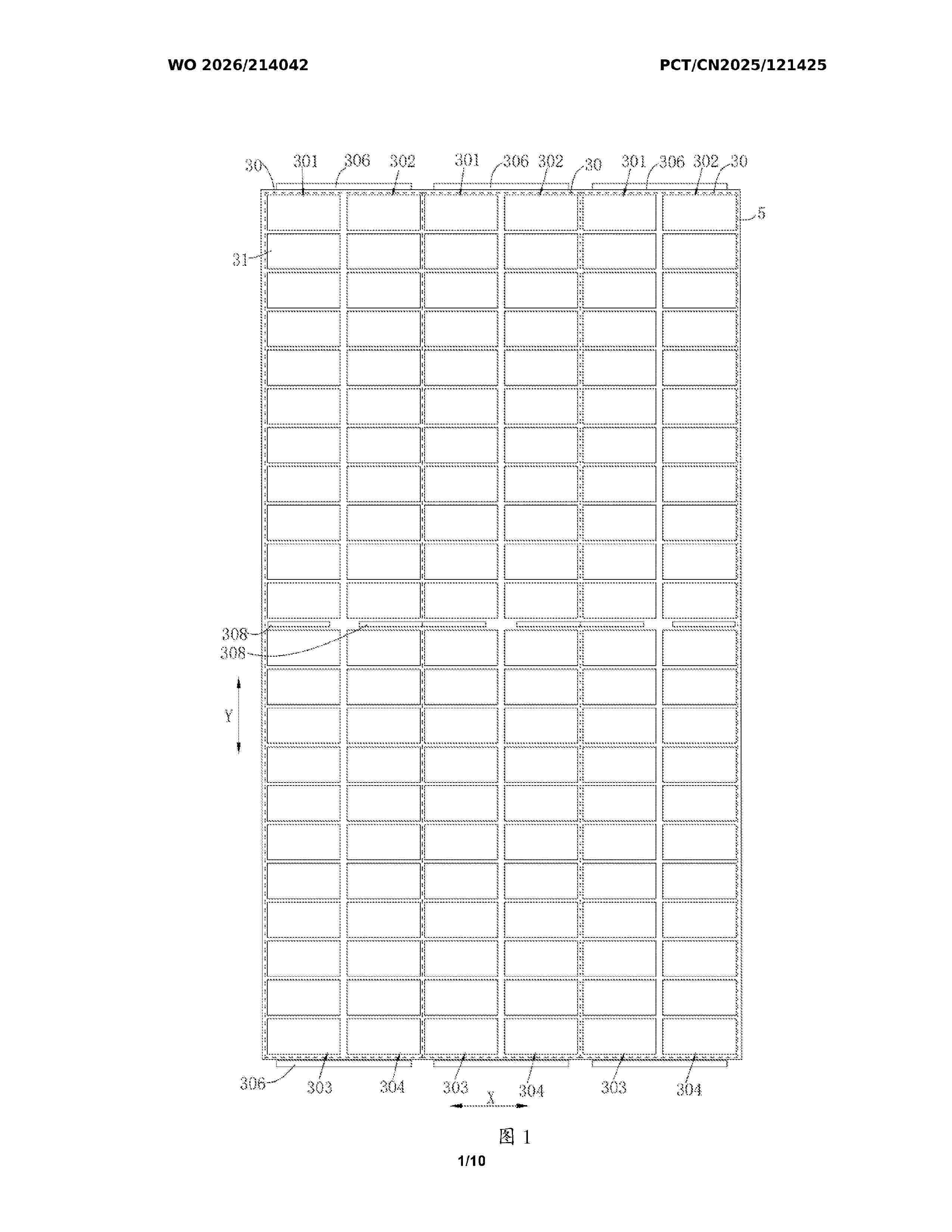
Resumen de: WO2026214042A1
The present invention is applicable to the technical field of solar cells, and provides a photovoltaic module and a photovoltaic system. Every two cells of the photovoltaic module are connected by means of a solder ribbon; the solder ribbon comprises first soldering portions provided on a first surface; a plurality of first prefixing films are provided on the first soldering portions of the solder ribbon; and extending portions of the first prefixing films are connected to a first adhesive film and a second adhesive film.
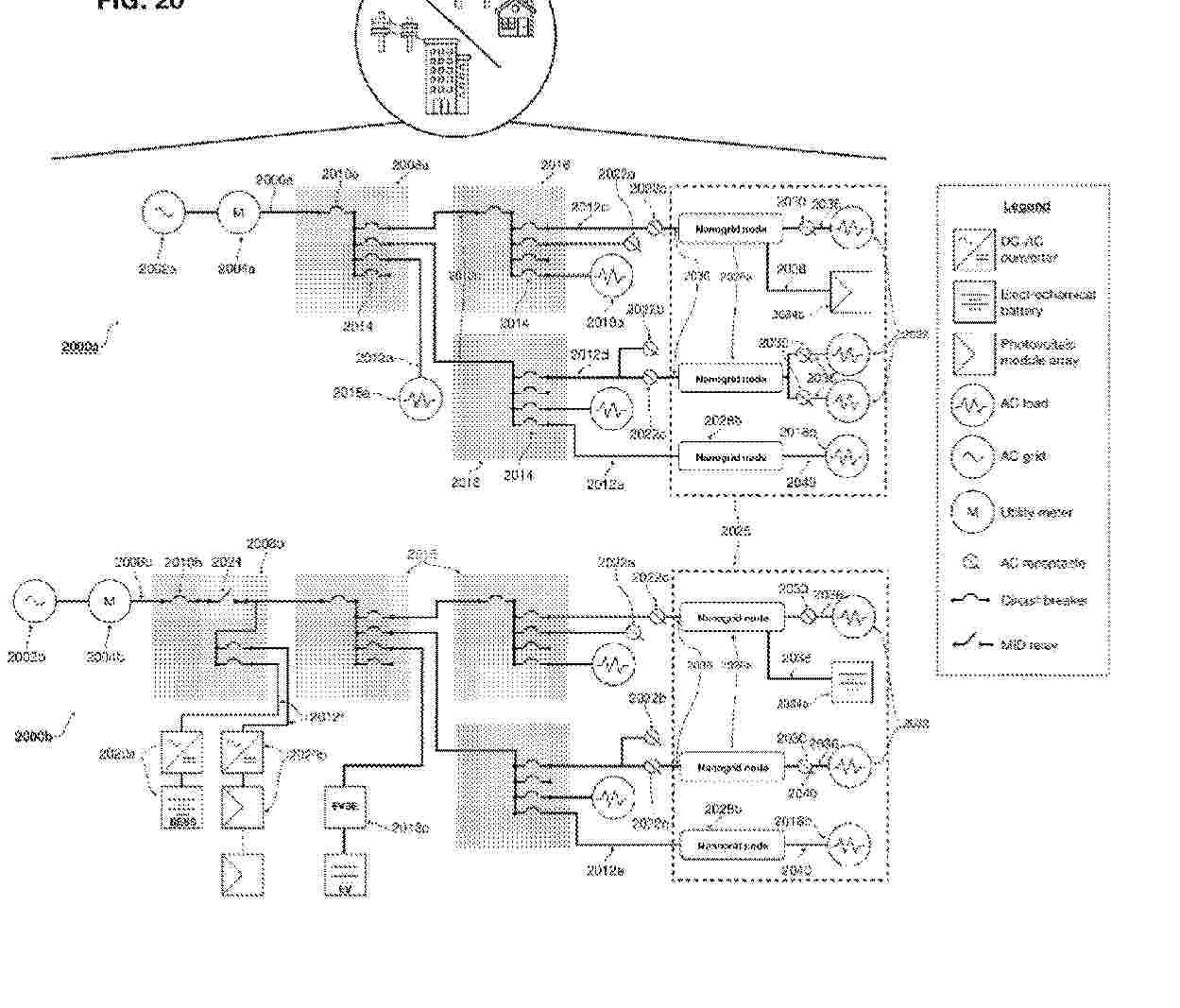
Resumen de: AU2025247954A1
A backup power system comprises a power supply input, a battery, a plurality of power outputs, a processing unit, and an enclosure that includes the battery and the processing unit and at least partially includes the power supply input and the plurality of power outputs. The power supply input is configured to receive AC power distributed via an electrical system of a building. The processing unit is configured to selectively provide power to the plurality of power outputs from the battery or the power supply input based on a status of the received AC power.
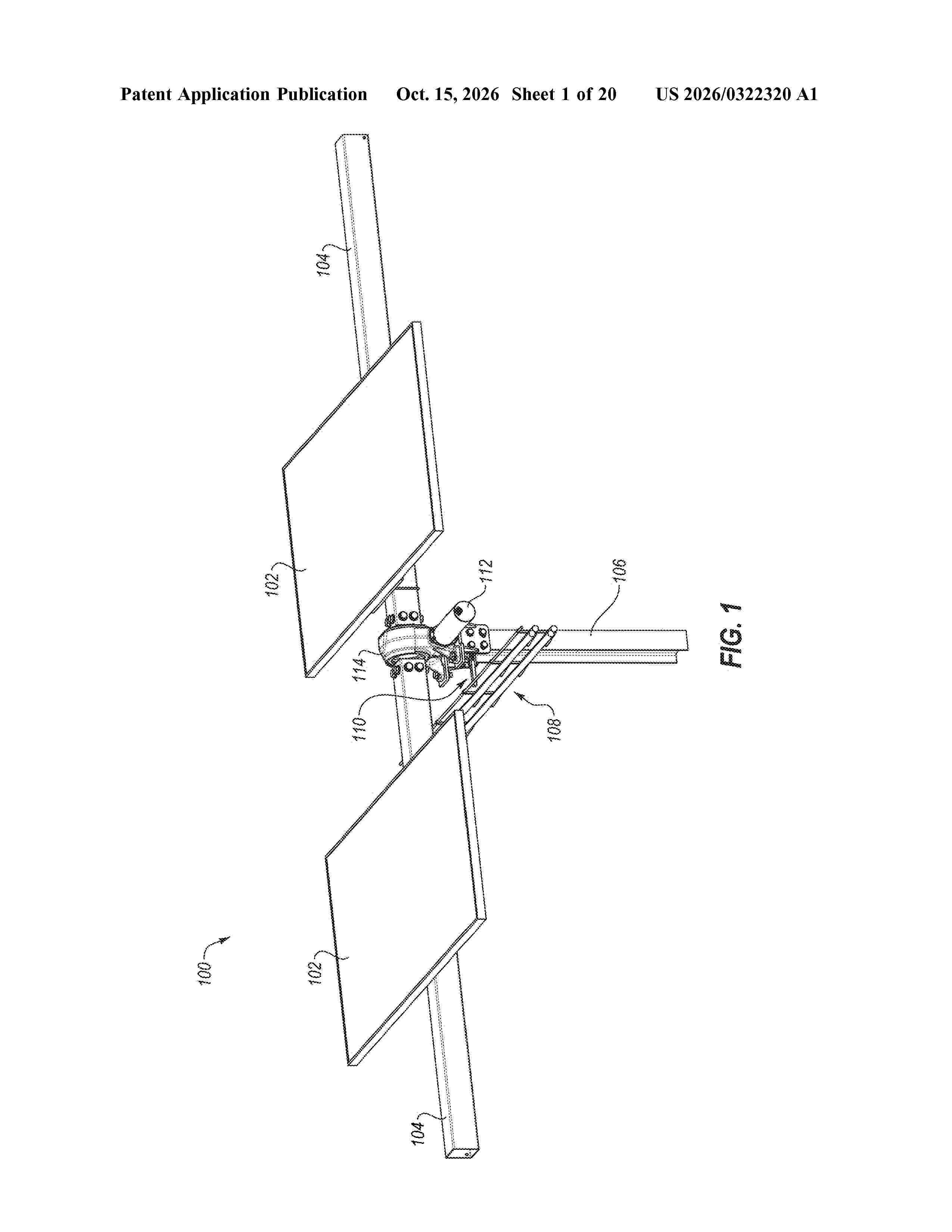
Resumen de: US20260322320A1
An adjustable cable management device may include a mounting bracket configured to be coupled to a center structure of a photovoltaic (PV) system. The adjustable cable management device may further include a bracket extension coupled to the mounting bracket. The adjustable cable management device may further include a means for selectively adjusting the bracket extension relative to the mounting bracket. A cable retention portion may be coupled to the bracket extension, and the cable retention portion may be configured to be coupled to one or more cables.
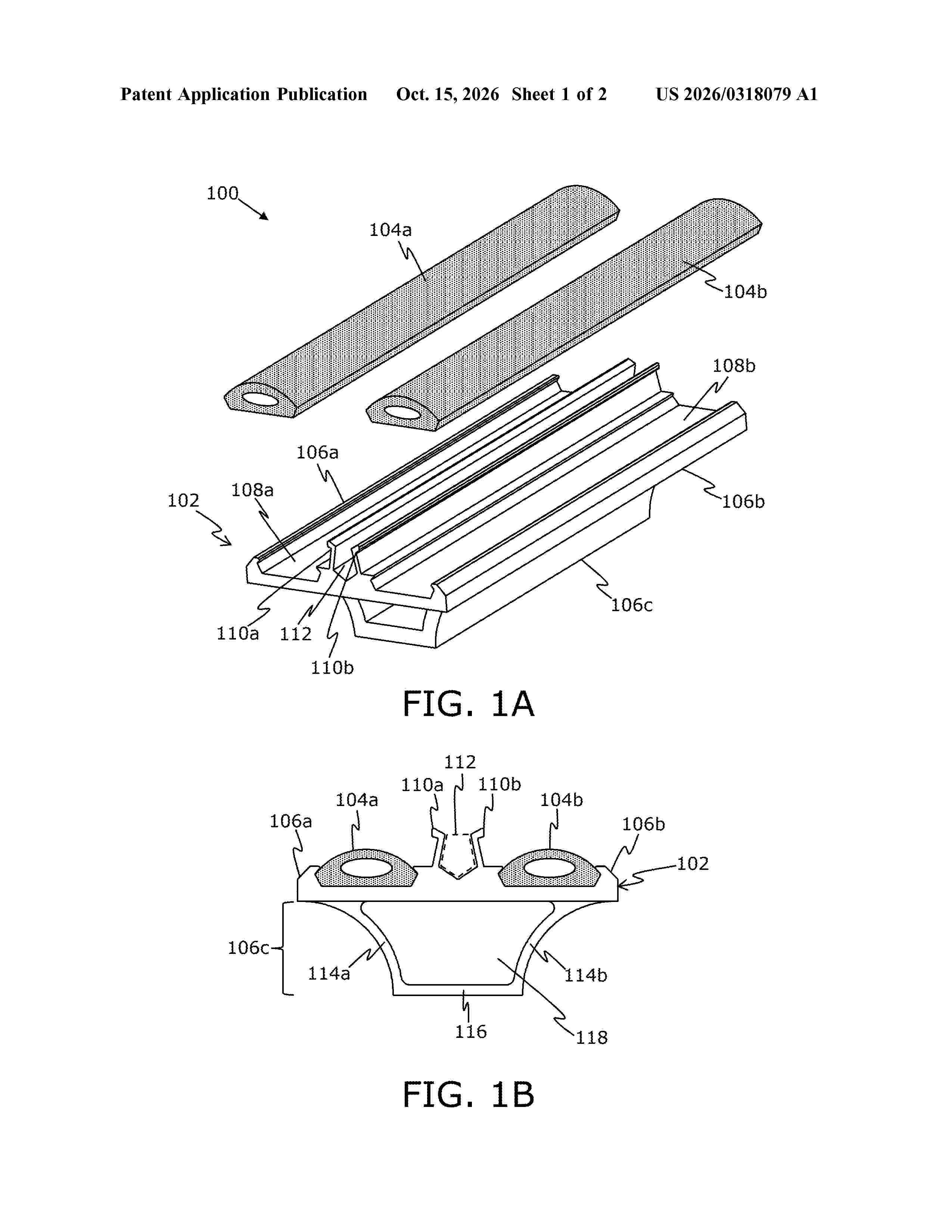
Resumen de: US20260318079A1
0000 Disclosed is a spacer assembly for water leakage prevention in a photovoltaic tile arrangement. The spacer assembly comprises: an extruded aluminium profile; a first ethylene propylene diene monomer (EPDM) profile; and a second EPDM profile. The extruded aluminium profile comprises: a first part having a first groove and a first projecting lip (PL); a second part having a second groove and a second PL, a space between the first PL and the second PL forming a water flow channel; and a third part extending vertically downward from the first part and the second part. The spacer assembly is arranged between a first photovoltaic tile and a second photovoltaic tile in a manner that a first end of the first photovoltaic tile is installed between the first groove and the first PL, and a first end of the second photovoltaic tile is installed between the second groove and the second PL.
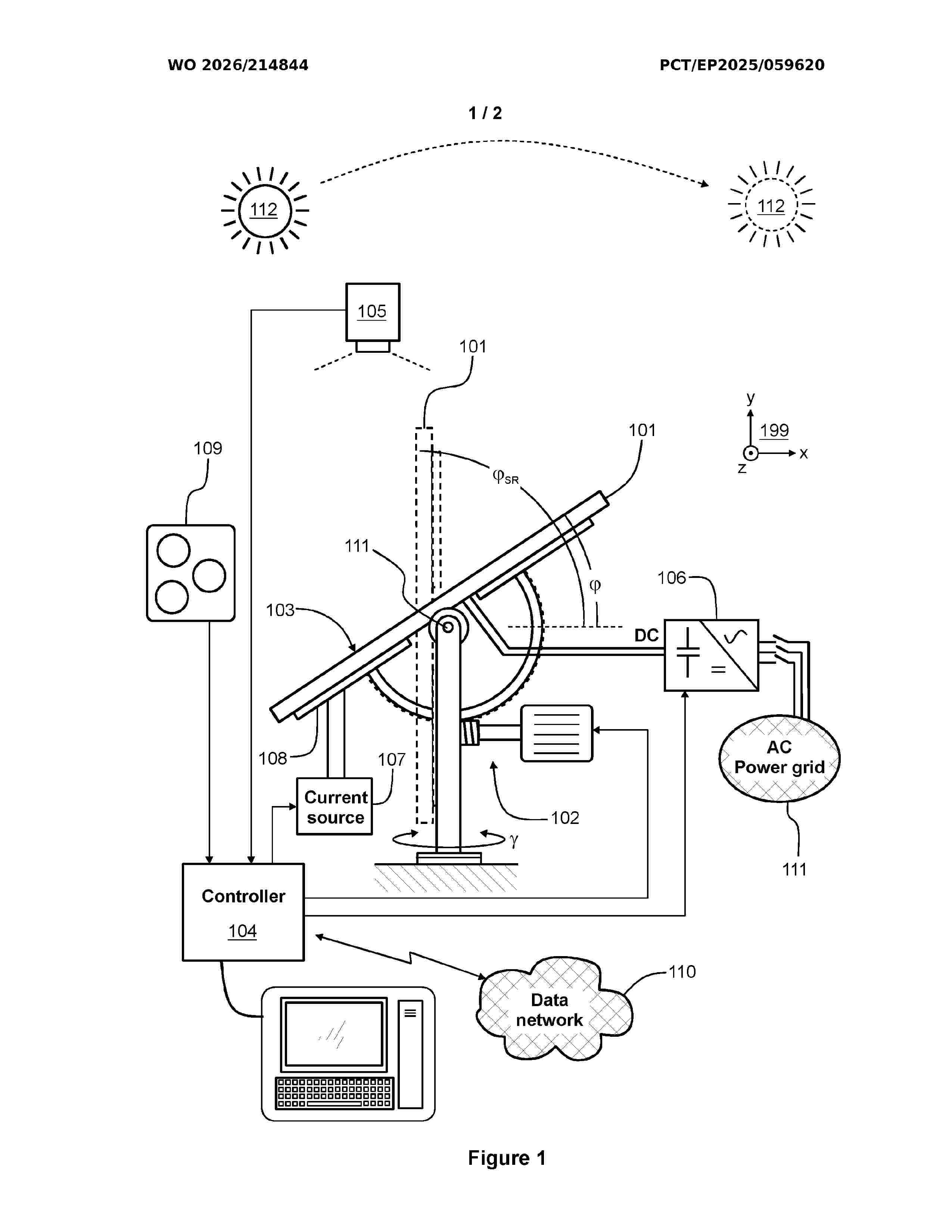
Resumen de: WO2026214844A1
A control system for controlling a photovoltaic module (101) comprises a drive mechanism (102) configured to adjust the tilt angle () of the photovoltaic module and a controller (104) communicatively connected to the drive mechanism and configured to control the tilt angle The control system comprises a snow detector (105) communicatively connected to the controller and configured to detect snow accumulated on a photovoltaic surface (103) of the photovoltaic module. The controller is configured to drive the tilt angle to a snow removal value (SR) in response to a detection of snow accumulated on the photovoltaic surface. The snow removal value of the tilt angle is at least 80 degrees. Thus, the photovoltaic surface is turned to a vertical or near vertical position when there is snow accumulated on the photovoltaic surface to shed to snow away from the photovoltaic surface.
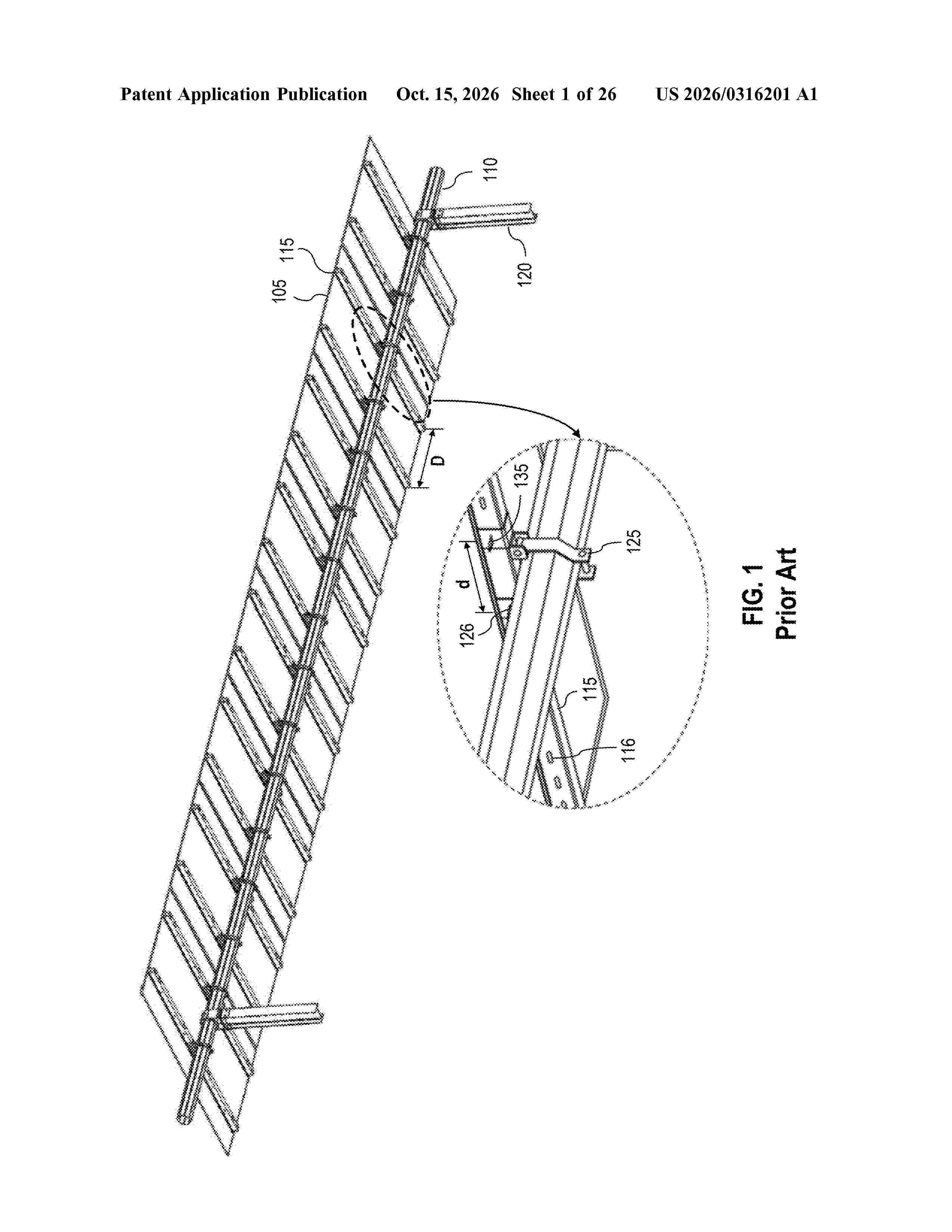
Resumen de: US20260316201A1
0000 During the installation of solar panels, multiple mounting brackets are attached to solar panel frames, typically implemented manually by an installer. Systems and methods for automatic fastener loading and installation are disclosed to facilitate an automatic assembly process for solar tables. The fasteners are aligned and loaded automatically onto an automatic fastener installer for installation. The automatic fastener comprises fastener holders, fastener driving blocks, lifters, and actuators to enable an automatic installation process. The automatic fastener loading and installation may be performed separately or in combination for solar table assembly.
Resumen de: WO2026215527A1
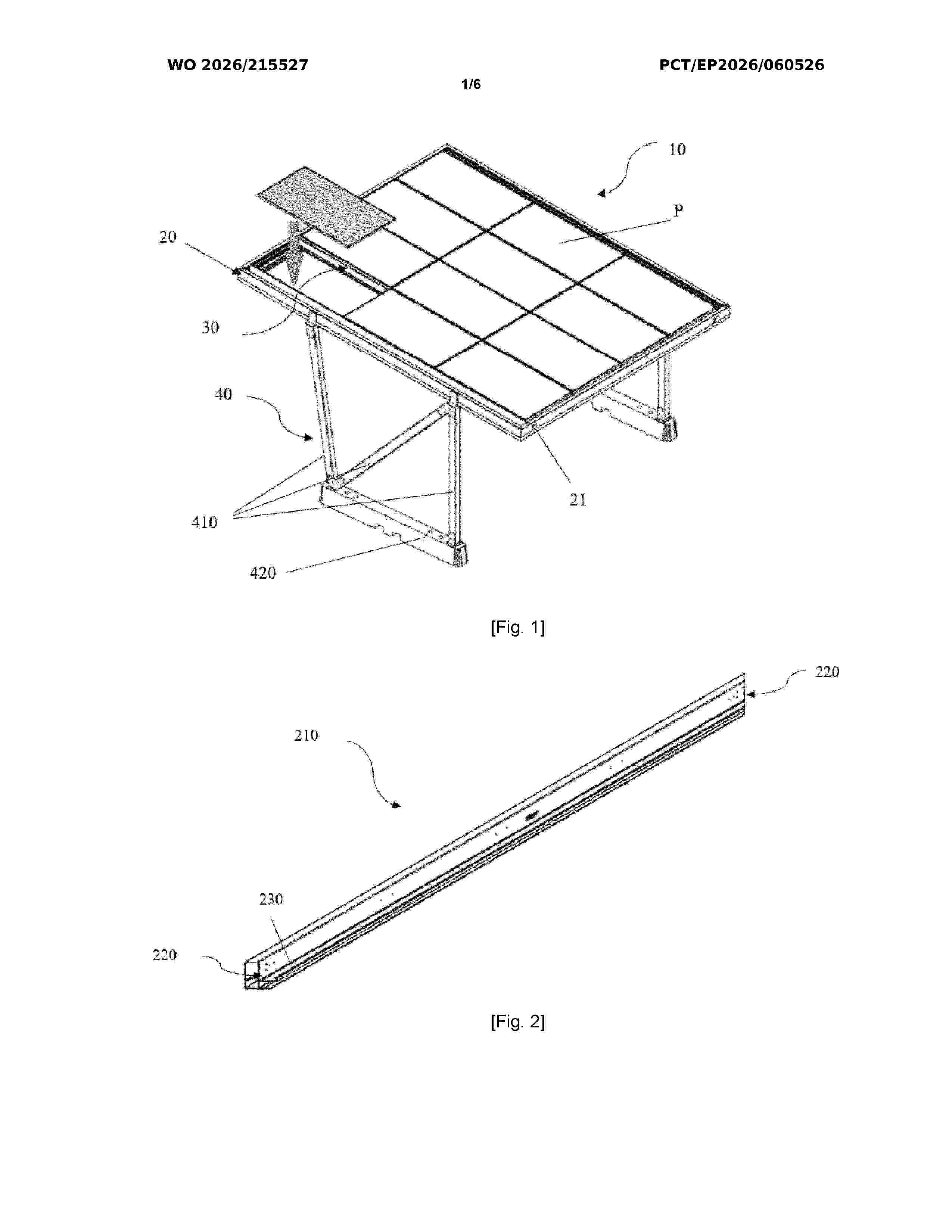
The invention relates to a gutter beam intended to form part of a frame (20) of a structure forming a protective roof (10) provided with covering elements in the form of panels (P), in particular solar panels, the gutter beam being characterised in that it has ends (210) bevelled at substantially 45°, a channel (230) for collecting rainwater, and a technical passage for accommodating wiring means intended to be connected to the panels (P), the gutter beam (200) having a J-shaped profile having a vertical web in the form of a box (240) having an external wall (246) from which there extends at least one first horizontal branch (260) terminated by a rim (262), the rim (262) protruding from the upper surface of the first horizontal branch (260) in order to form the channel (230) for collecting rainwater.
Resumen de: DE102025114790A1
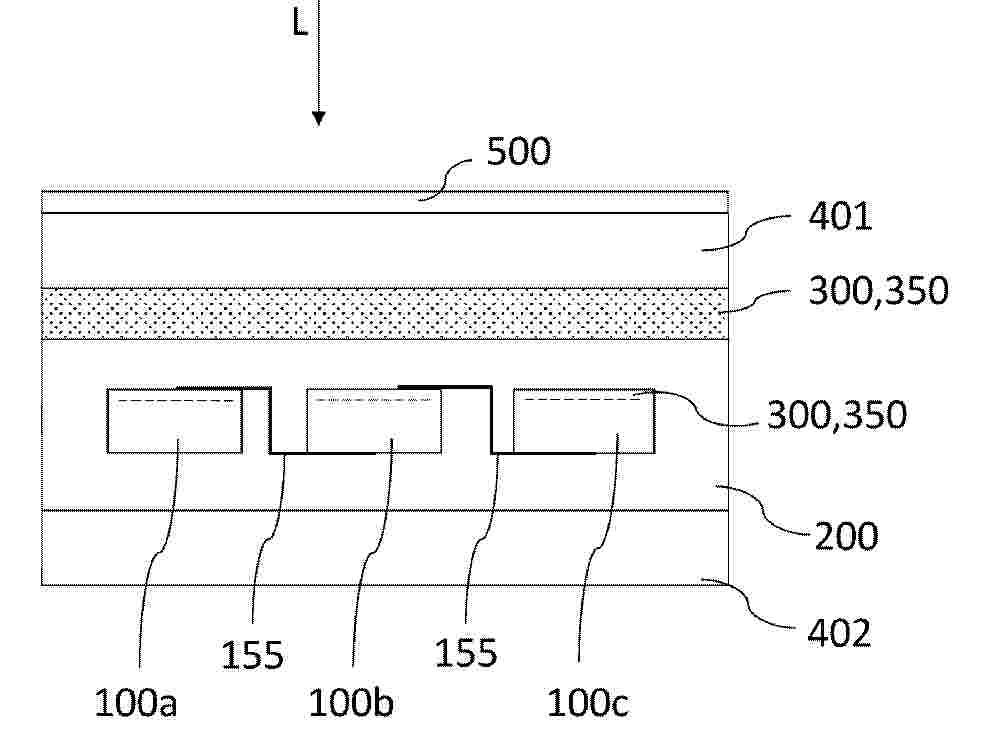
Ein Photovoltaikmodul ist offenbart. Das Photovoltaikmodul umfasst: zumindest eine Solarzelle (100); eine Verkapselung (200), in die die zumindest eine Solarzelle (100) eingebettet ist; eine Glasscheibe (401), die der Lichteinfallsrichtung (L) zugewandt ist und einer Rückseitenabdeckung (402), wobei die eingebettete zumindest eine Solarzelle (100) zwischen der Glasscheibe (401) und der Rückseitenabdeckung (402) angeordnet ist; und eine Absorptionsschicht (300) aus einem Metallsulfid zur Absorption von ultravioletter, UV-, Strahlung. Die Absorptionsschicht (300) ist zwischen der Glasscheibe (401) und der Verkapselung (200) oder auf der zumindest einen Solarzelle (100) innerhalb der Verkapselung (200) ausgebildet, um die UV-Strahlung vor dem Auftreffen auf die zumindest eine Solarzelle (100) zu absorbieren.
Resumen de: US20260324127A1
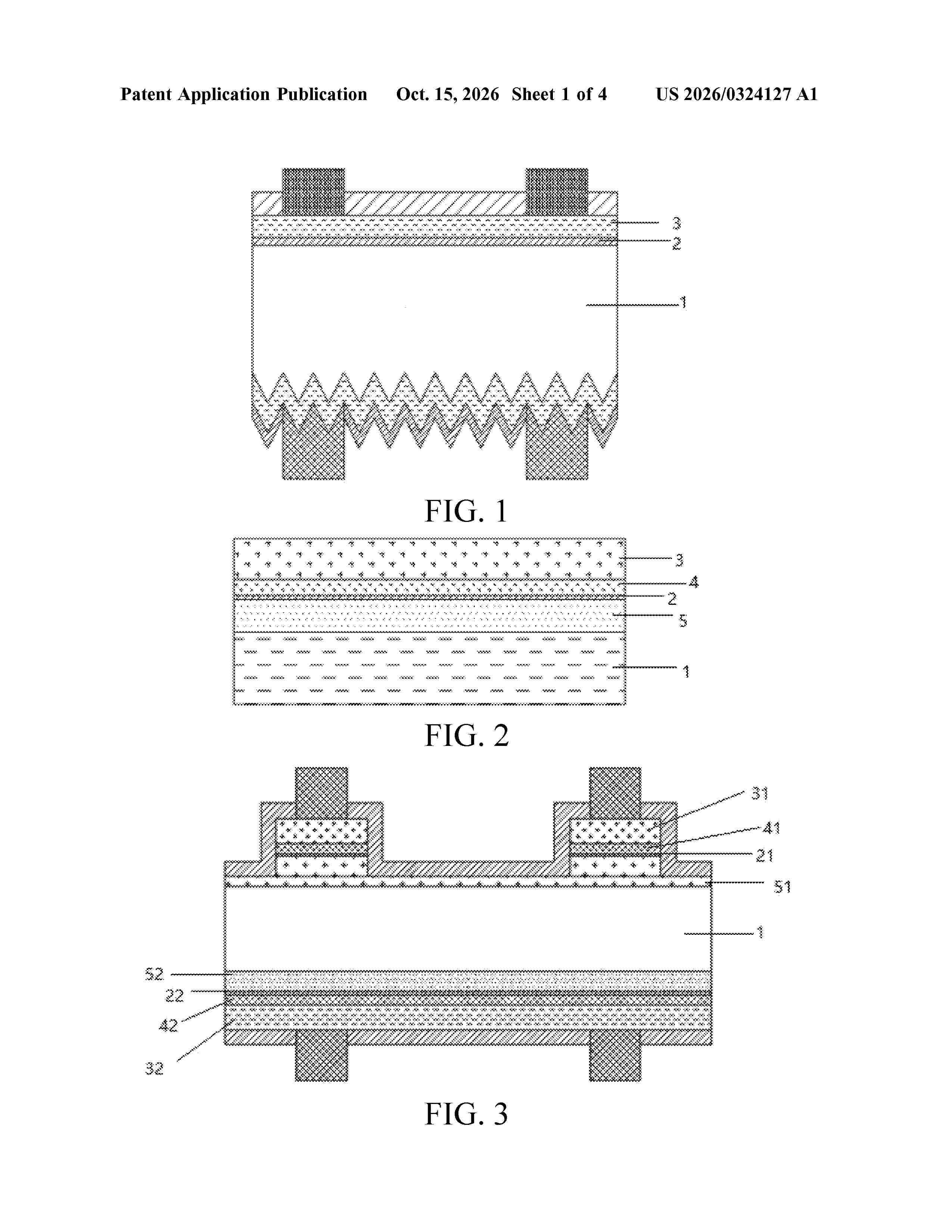
0000 The present application relates to a silicon solar cell, including: a silicon substrate, where the silicon substrate includes an antimony element; and a carrier separation layer, formed on the silicon substrate. At least some regions of the carrier separation layer on a side close to the silicon substrate have an antimony-containing layer. The antimony-containing layer includes the antimony element. A peak concentration of the antimony element in the antimony-containing layer is a<1>, and a<1 >is equal to or greater than 8E15 atoms/cm<3>.
Resumen de: US20260324123A1
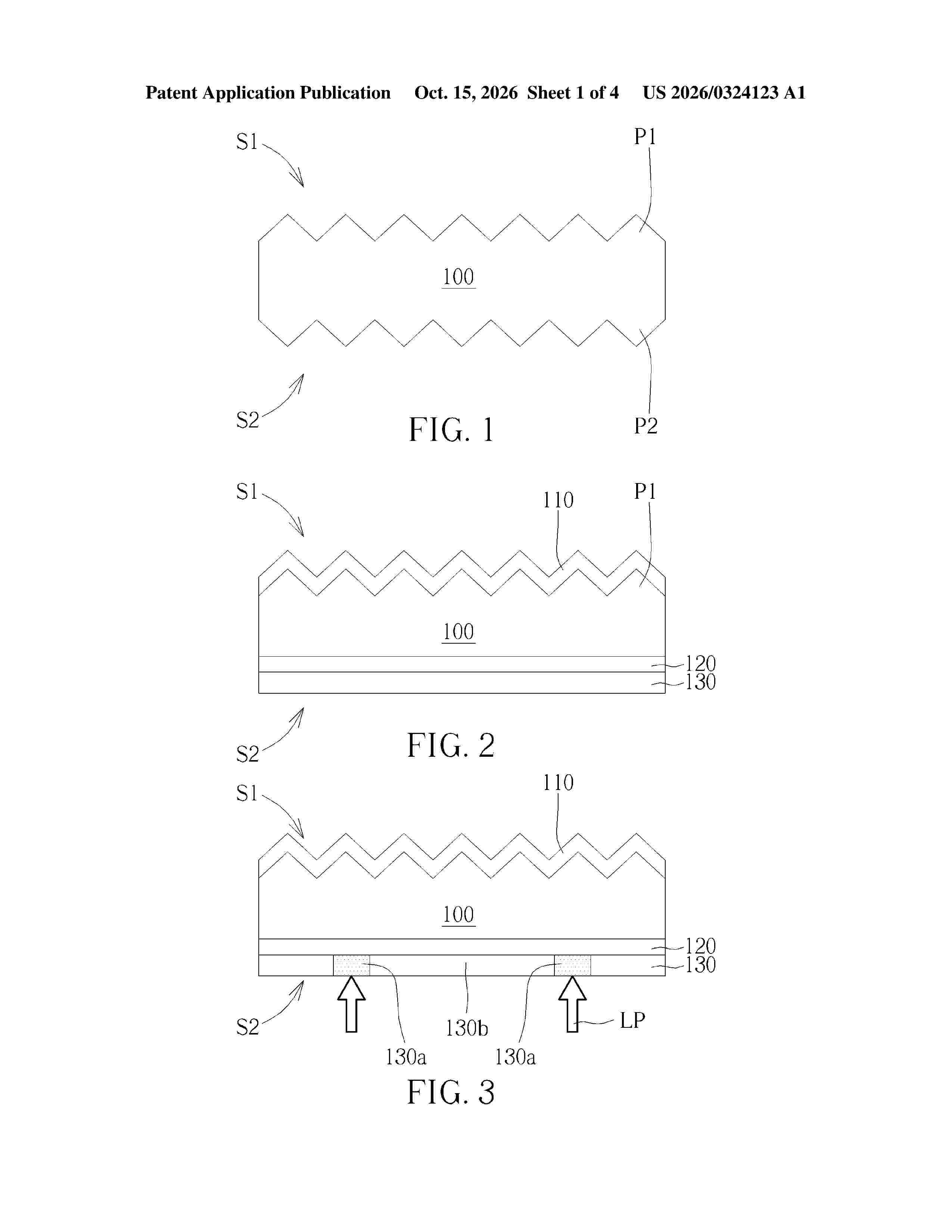
0000 A tunnel oxide passivated contact solar cell includes a substrate; an emitter layer disposed on the front side of the substrate; a front passivation layer disposed on the emitter layer; a front anti-reflection layer disposed on the front passivation layer; a front metal electrode passing through the front anti-reflection layer and the front passivation layer, contacting the emitter layer; a tunnel oxide layer disposed on the rear side of the substrate; a laser-activated doped semiconductor layer disposed on the tunnel oxide layer; a rear anti-reflection layer disposed on the laser-activated doped semiconductor layer; and a rear metal electrode passing through the rear anti-reflection layer, directly contacting the laser-activated doped semiconductor layer.
Resumen de: CH722706A1
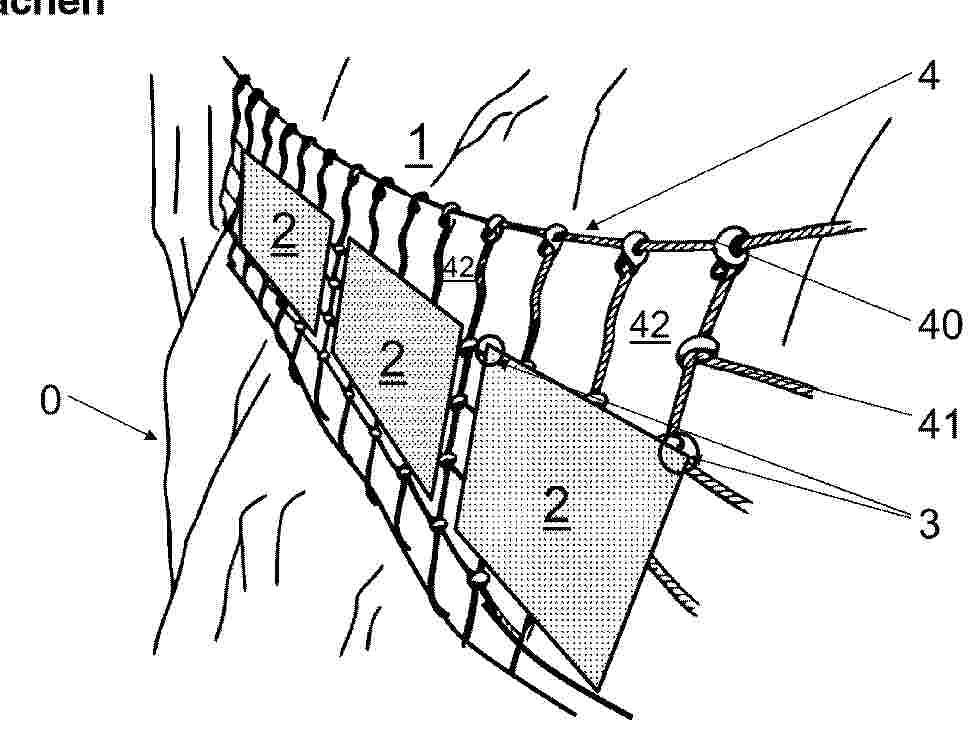
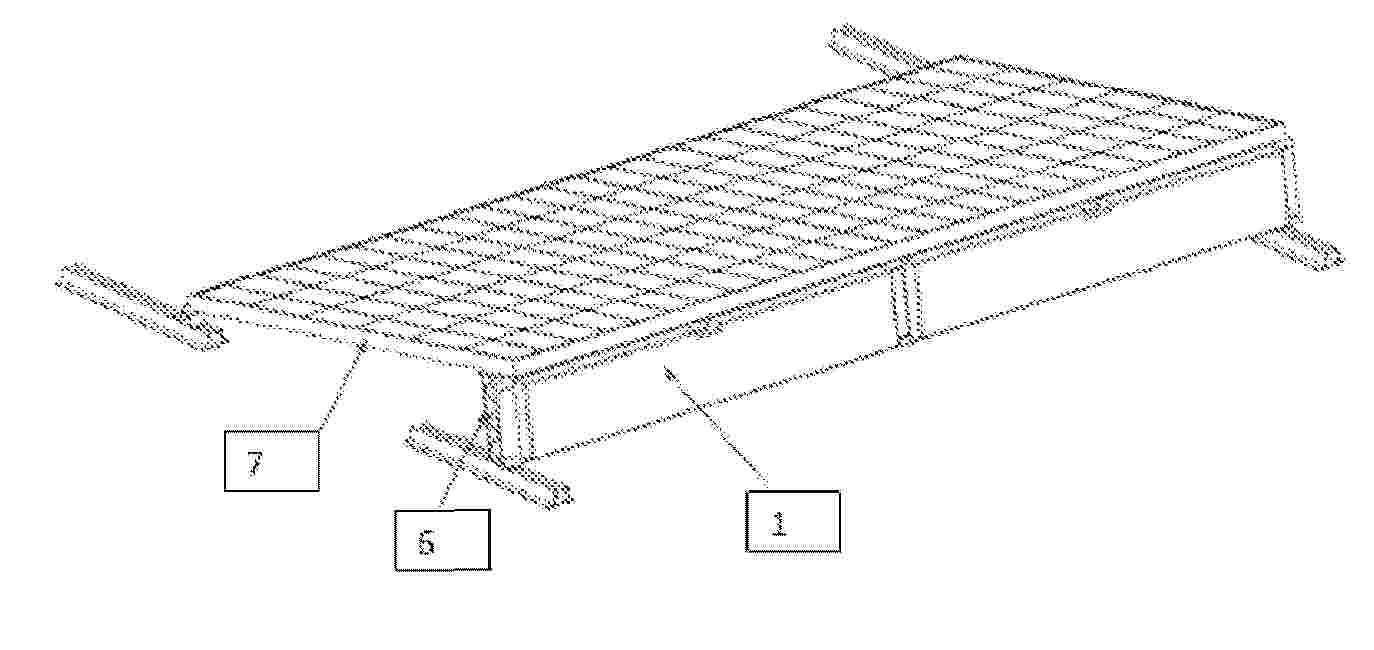
0001 Die vorliegende Erfindung hat sich zur Aufgabe gestellt eine neuartige Montageidee für PV-Module an einer Felswand zu schaffen, welche schnell, kostengünstig und flexibel ist, technisch möglichst einfach ausgeführt ist und eine jahrzehntelange Halterung von mindestens einem PV-Modul (2) ermöglicht. Dies wird durch eine Montageeinrichtung erreicht, welche ein Felssicherungsnetz (4) aus mehreren Seilen (41), welche mehrere Maschen (42) bilden, wobei das Felssicherungsnetz (4) mit mehreren Ankern (40) an der Felswand (1) befestigt ist, umfasst, wobei das mindestens eine PV-Modul (2) mit mindestens drei PV-Befestigungsmitteln (3) direkt am Felssicherungsnetz (4) und damit indirekt an der Felswand (1) befestigt ist.
Resumen de: WO2026215625A2
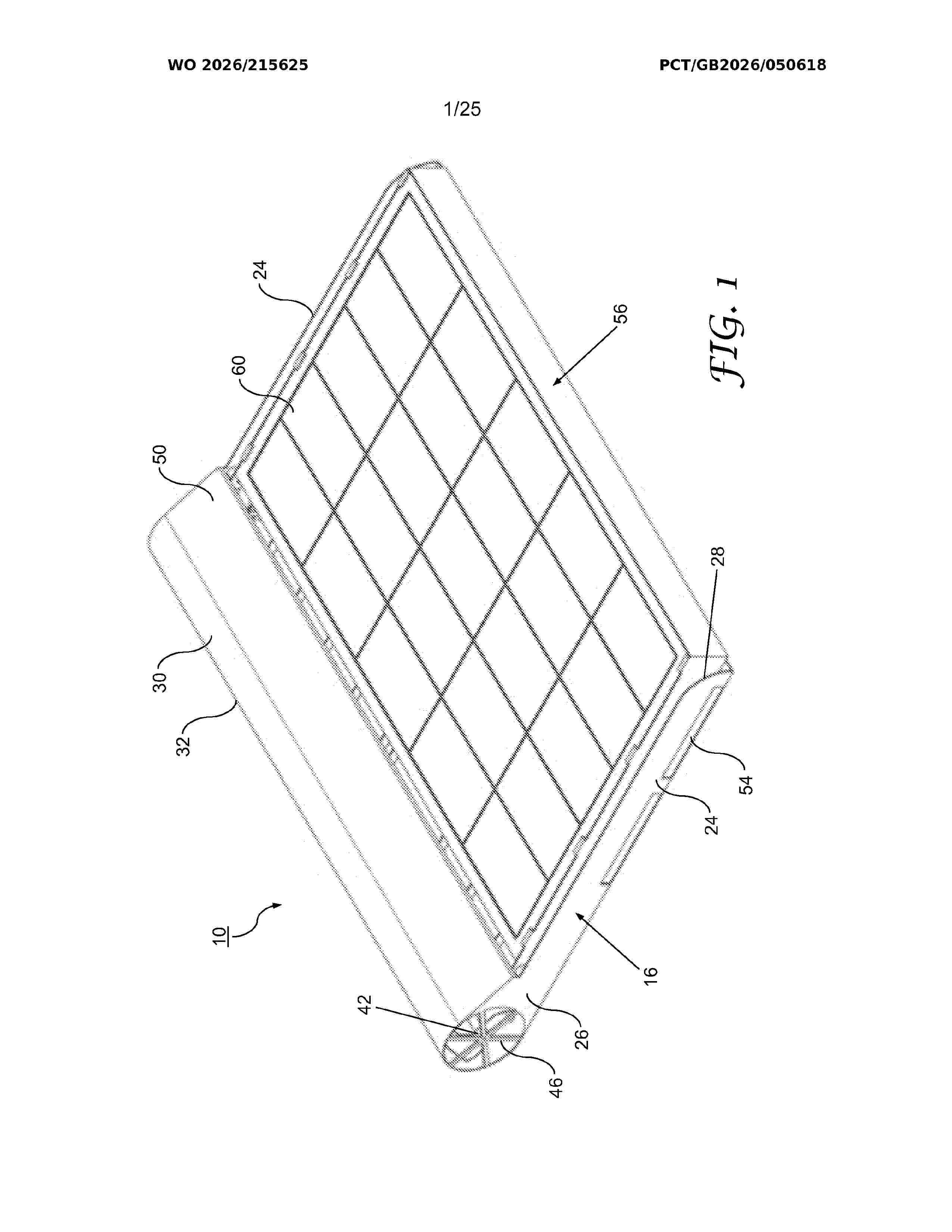
The present invention relates to a solar-wind generation apparatus for a pitched roof structure, the apparatus comprising: a base unit being attachable to the roof structure; a turbine housing disposed along an edge of the base unit, the turbine housing receiving a wind turbine rotatably supported therein; a positionable air-directing member pivotally connected to the base unit, the air-directing member being positionable to direct airflow into the turbine housing; and a solar energy collector affixed to the air-directing member, wherein the solar-wind generation apparatus generates electrical energy from both solar and wind sources.
Resumen de: WO2025120642A1
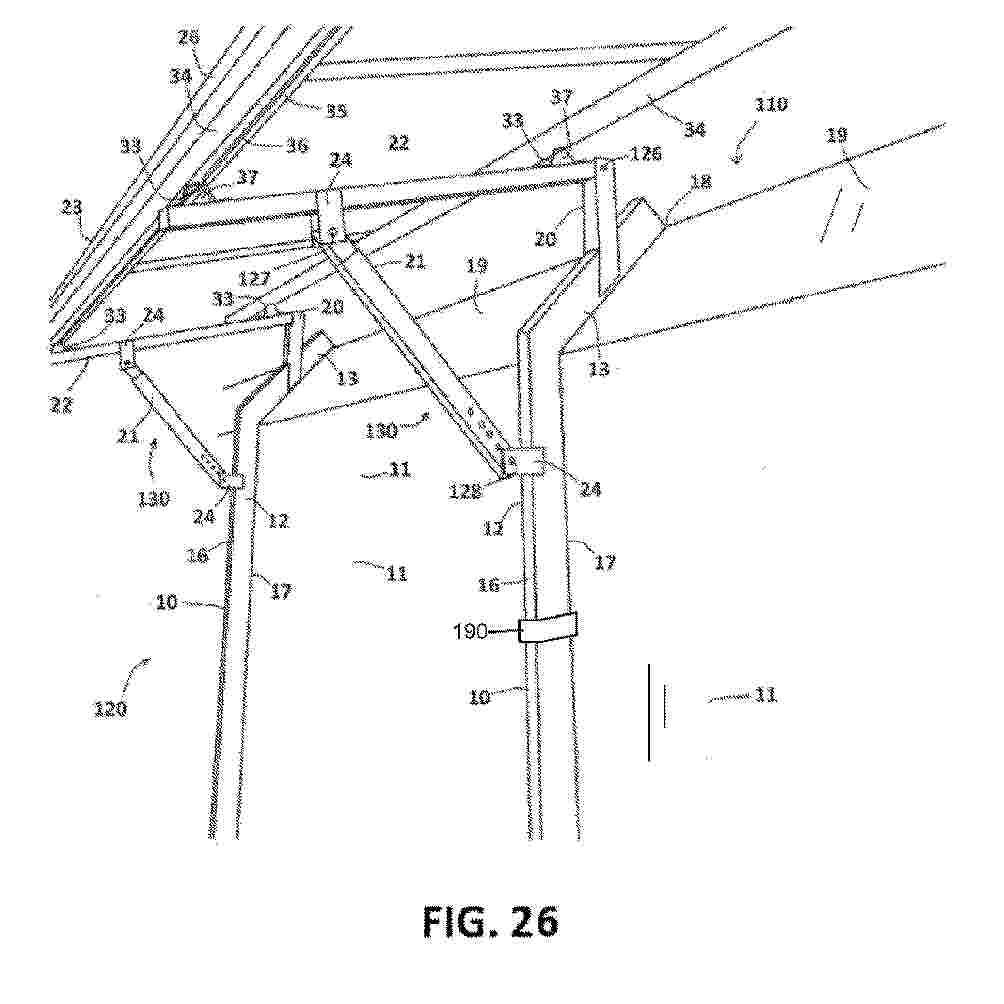
A solar panel support system for use with a security fence including fence posts, each fence post including a vertical fence post portion and an upper fence post portion extending at an oblique angle relative to the vertical fence post portion, the solar panel support system comprising at least two solar panel support arrangements configured to support at least one solar panel, each solar panel support arrangement being configured for attachment to a corresponding fence post in spaced relation relative to one another along the security fence, wherein each solar panel support arrangement comprises a first support member configured to be attached to the upper fence post portion of the corresponding fence post, and a second support member configured to be attached to the vertical fence post portion of the corresponding fence post.
Resumen de: EP4823283A1
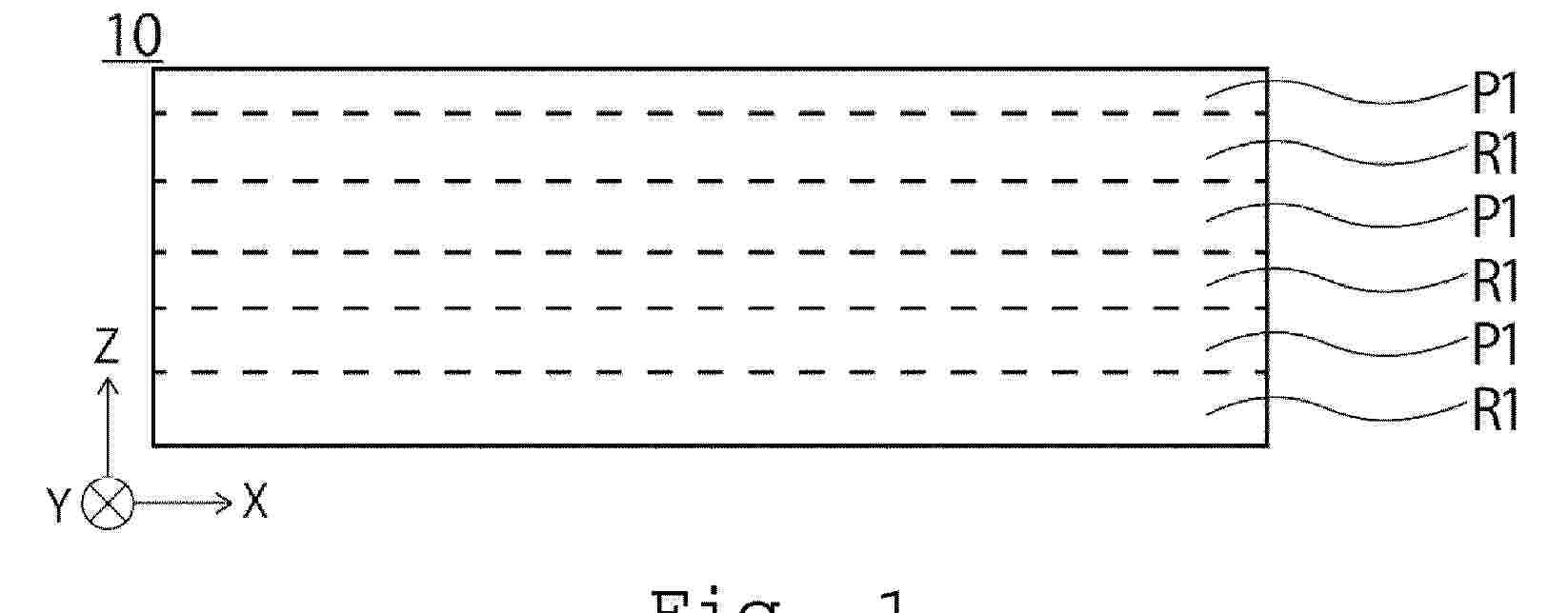
0001 A transparent electrode according to an embodiment includes a compound as a main component including Zn, O and an element denoted by M0. The element denoted by M0 is dispersed in the compound including Zn, O and the element denoted by M0 with sparse-dense distribution in the thickness direction.
Resumen de: WO2025119864A1
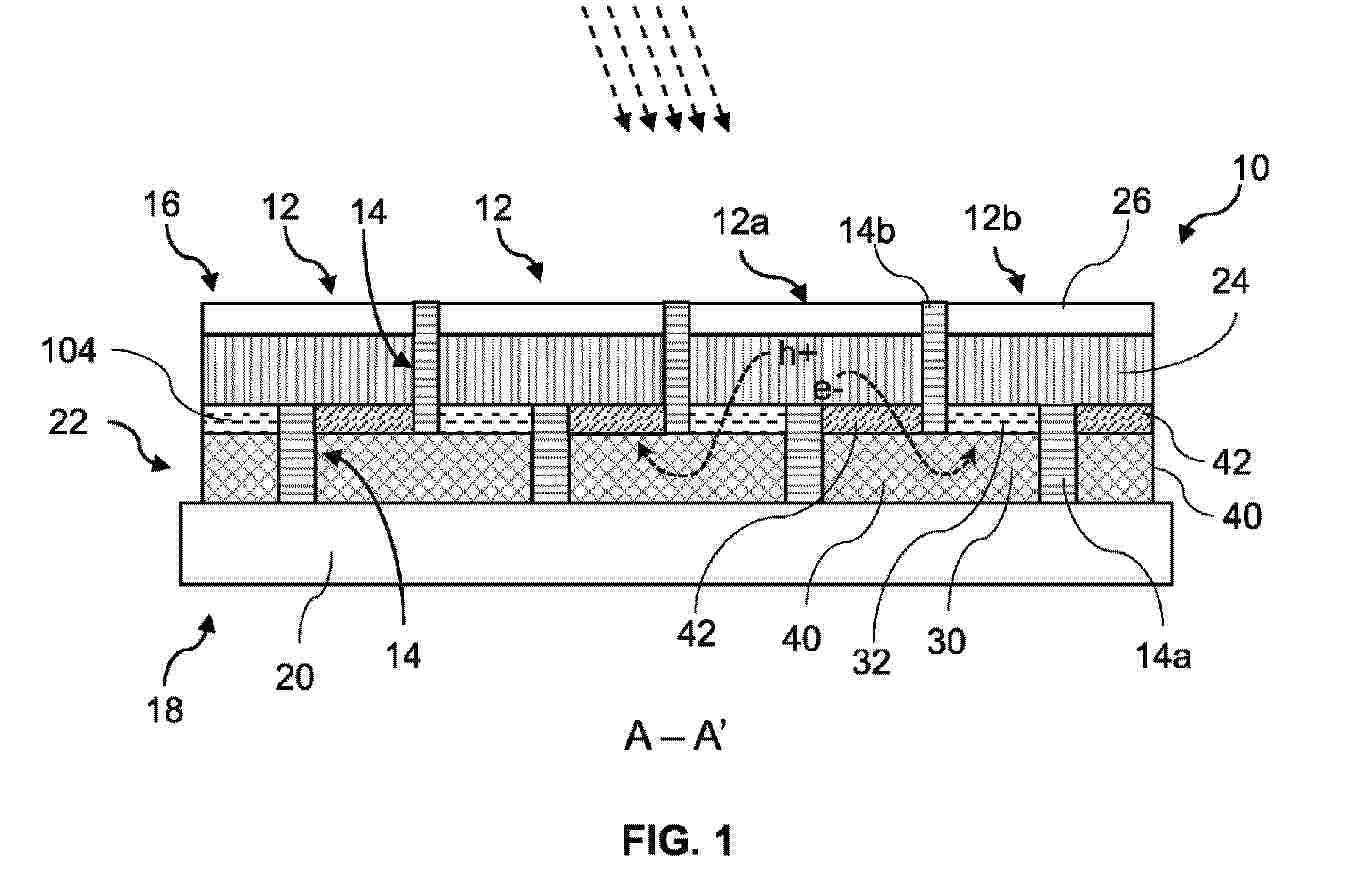
Various embodiments provide a back-contact solar cell. The back-contact solar cell comprises a substrate (20). The back-contact solar cell comprises a first solar cell portion (12a) and a second solar cell portion (12b) arranged on the substrate. Each of the first and second solar cell portions comprises a light-absorber element (24) and a back-contact structure interposed between the light-absorber element and the substrate. The back-contact structure comprises a first electrode (30) and a second electrode (40), the first and second electrodes arranged on the substrate. Each of the first and second electrodes is electrically connected to the light-absorber element. The back-contact solar cell comprises an insulator assembly (14) comprising, for each solar cell portion, a first insulator (14a) that insulates the associated first electrode from the associated second electrode. The first solar cell portion is electrically connected in series with the second solar cell portion. Some other embodiments provide a method of manufacturing a back-contact solar cell.
Resumen de: WO2025122860A1
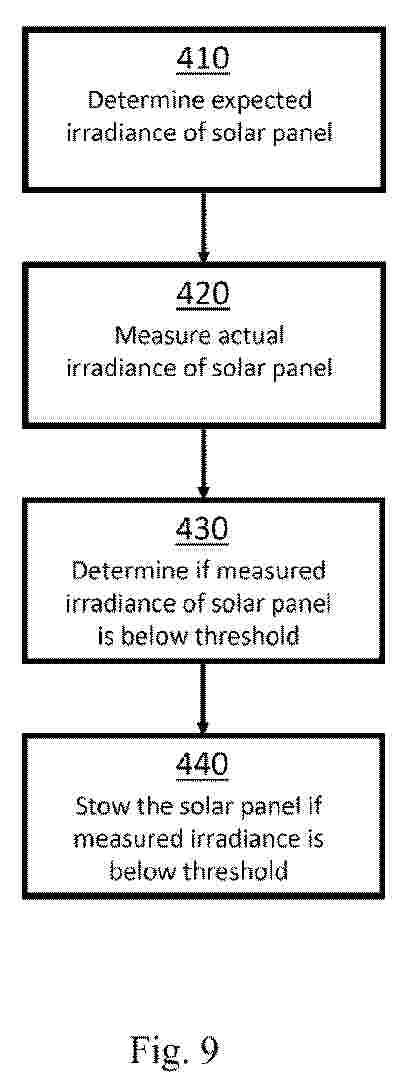
Solar trackers and control systems prevent damage from weather events – such as hail – by orienting solar panels at optimal angles during such weather events. These angles may be achieved and managed by the physical stops of the slew drives and mechanical stop assemblies in the tracker. Control systems may trigger stowing of the solar panels during such weather events in a variety of ways, including comparing irradiance measured from the solar panels with expected irradiance.
Resumen de: EP4567904A1
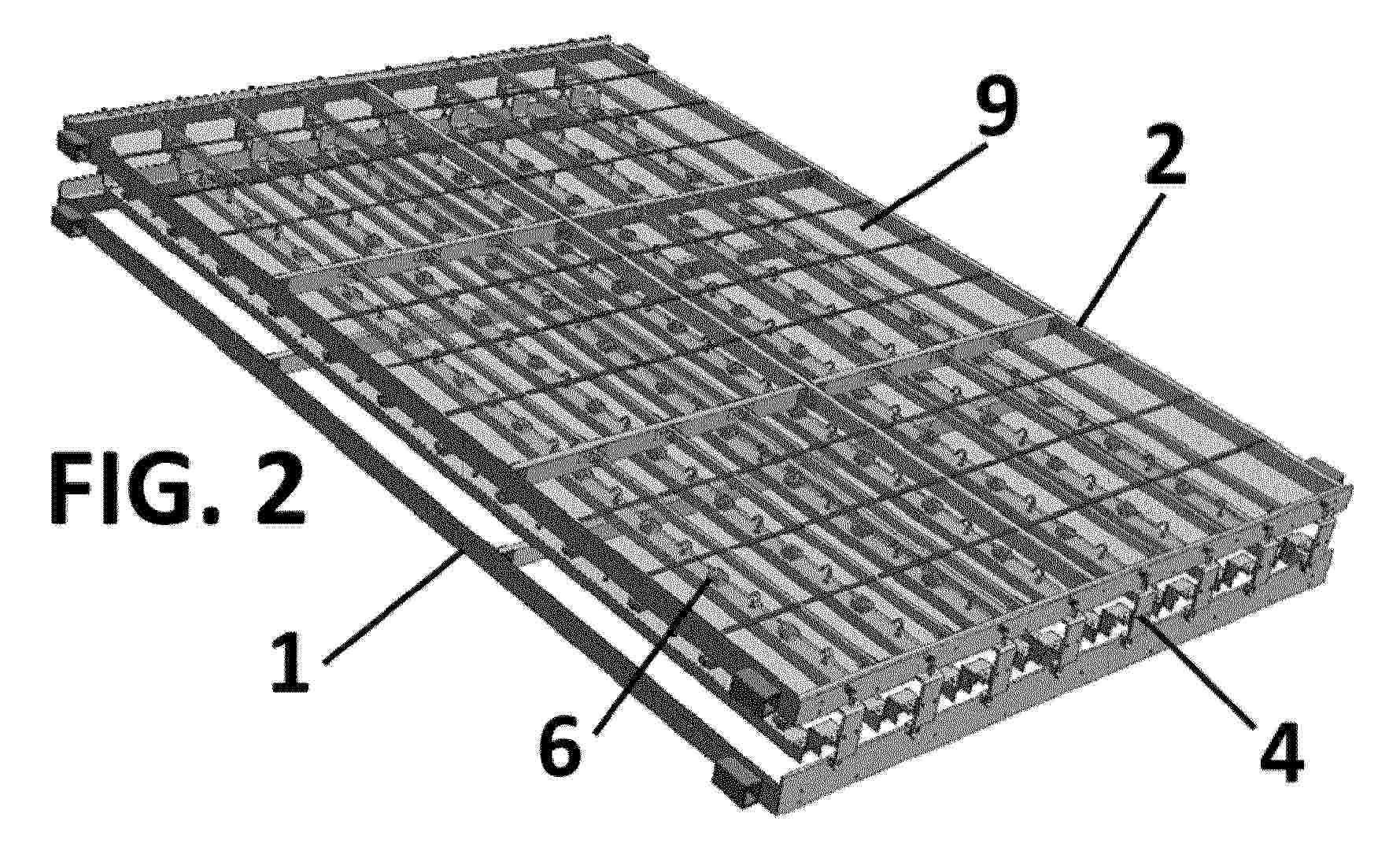
The photovoltaic module for agricultural installations comprises a plurality of photovoltaic cells (5), a first frame (1) and a second frame (2) which is located above the first frame (1), the first frame (1) being movable relative to the second frame (2), the plurality of photovoltaic cells (5) being located in the first frame (1) and/or in the second frame (2).It provides a photovoltaic module for agricultural installations that combines the needs for electricity production with the insolation needs of the plants underneath it.
Resumen de: WO2025119536A1
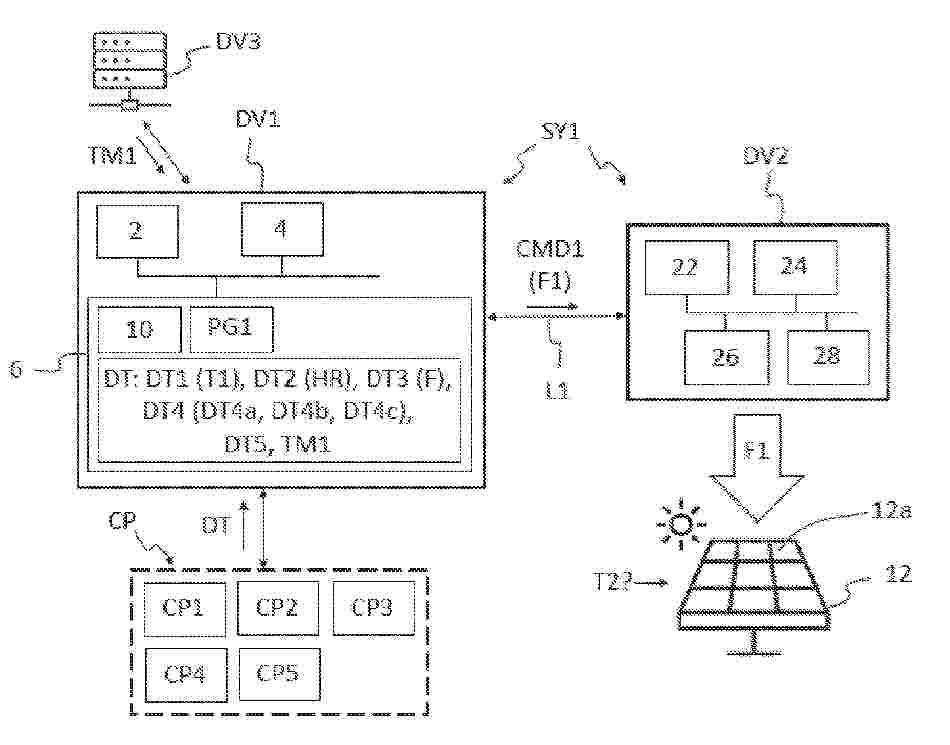
The present invention relates to a method and a device (DV1) for controlling a solar panel (12) cleaning robot (DV2). The method comprises: obtaining, via sensors (CP), environmental data (DT) comprising temperature data (DT1) representative of a temperature (T1) of the ambient air, hygrometric data (DT2) representative of a relative humidity (HR) and wind data (DT3) representative of a wind force (F); b) verifying conditions indicative of the presence of water condensation on the surface (12a), comprising: verifying that the temperature (T1) and the relative humidity (HR) fulfil a first condition indicating that the dew point has been reached; and verifying as a second condition that the wind force (F) is less than or equal to a threshold value; and upon detecting that the first and second conditions are fulfilled, activating a cleaning function (F1) of the cleaning robot.
Resumen de: EP4823278A2
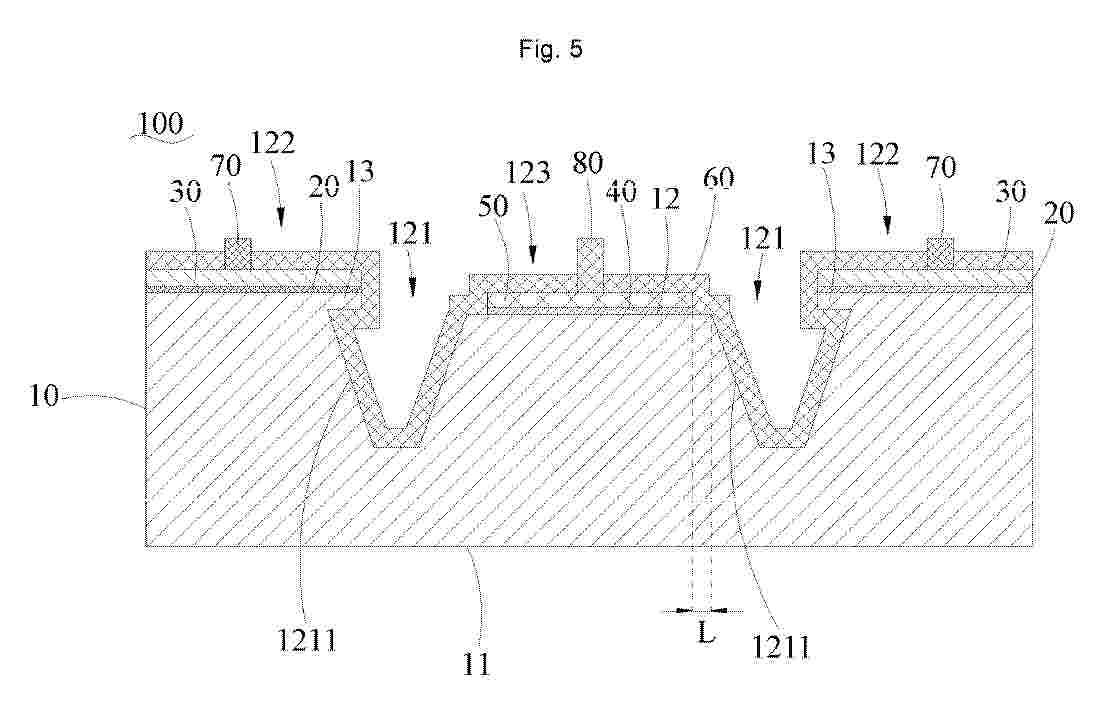
0001 The present application is applicable to the technical field of solar cells, and provides a back-contact solar cell (100), a battery assembly (200) and a photovoltaic system (1000). In the back-contact solar cell (100), several grooves (121) arranged at intervals are formed in a back surface (12) of a silicon wafer (10), so as to divide the back surface (12) of the silicon wafer (10) into several first regions (122) and second regions (123) that are alternately arranged in sequence, in an arrangement direction of the first regions (122) and the second regions (123), the silicon wafer (10) is provided on the first regions (122) and the edges of the grooves (121) with extension portions (13) that extrude to the upper side of the grooves (121), and second polarity doping layers (50) are disposed on second tunneling layers (40) in a stacked manner and have a preset distance (L) with the edges of the grooves (121).
Resumen de: EP4823285A1
Provided are a back-contact solar cell, a cell assembly and a photovoltaic system, which are applicable to the technical field of solar cells. The back-contact solar cell includes: a silicon substrate, where a back surface of the silicon substrate including P regions and N regions; a first passivation contact structure including a first passivation layer, a first P-type doped polysilicon layer, a first barrier layer and a second P-type doped polysilicon layer; and a second passivation contact structure including a second passivation layer, a first N-type doped polysilicon layer, a second barrier layer and a second N-type doped polysilicon layer. A doping concentration of a P-type dopant in the first P-type doped polysilicon layer is greater than a doping concentration of a P-type dopant in the second P-type doped polysilicon layer, and a doping concentration of N-type dopant in the first N-type doped polysilicon layer is a doping concentration less than a doping concentration of an N-type dopant in the second N-type doped polysilicon layer. The back-contact solar cell of the disclosure can reduce inward diffusion of impurities into the silicon substrate, and can improve a light transmittance of the P regions, thereby improving cell efficiency.
Resumen de: EP4822268A1
The present invention relates to a water-ballasted air deflector for solar structures, in particular photovoltaic solar structures.The invention is characterised by the particular design and configuration of the deflector, which has a dual function: it acts as an air deflector to minimise wind loads on a photovoltaic panel or structure and is also configured to be filled with water in order to provide ballast for the solar structure.
Resumen de: EP4823282A1
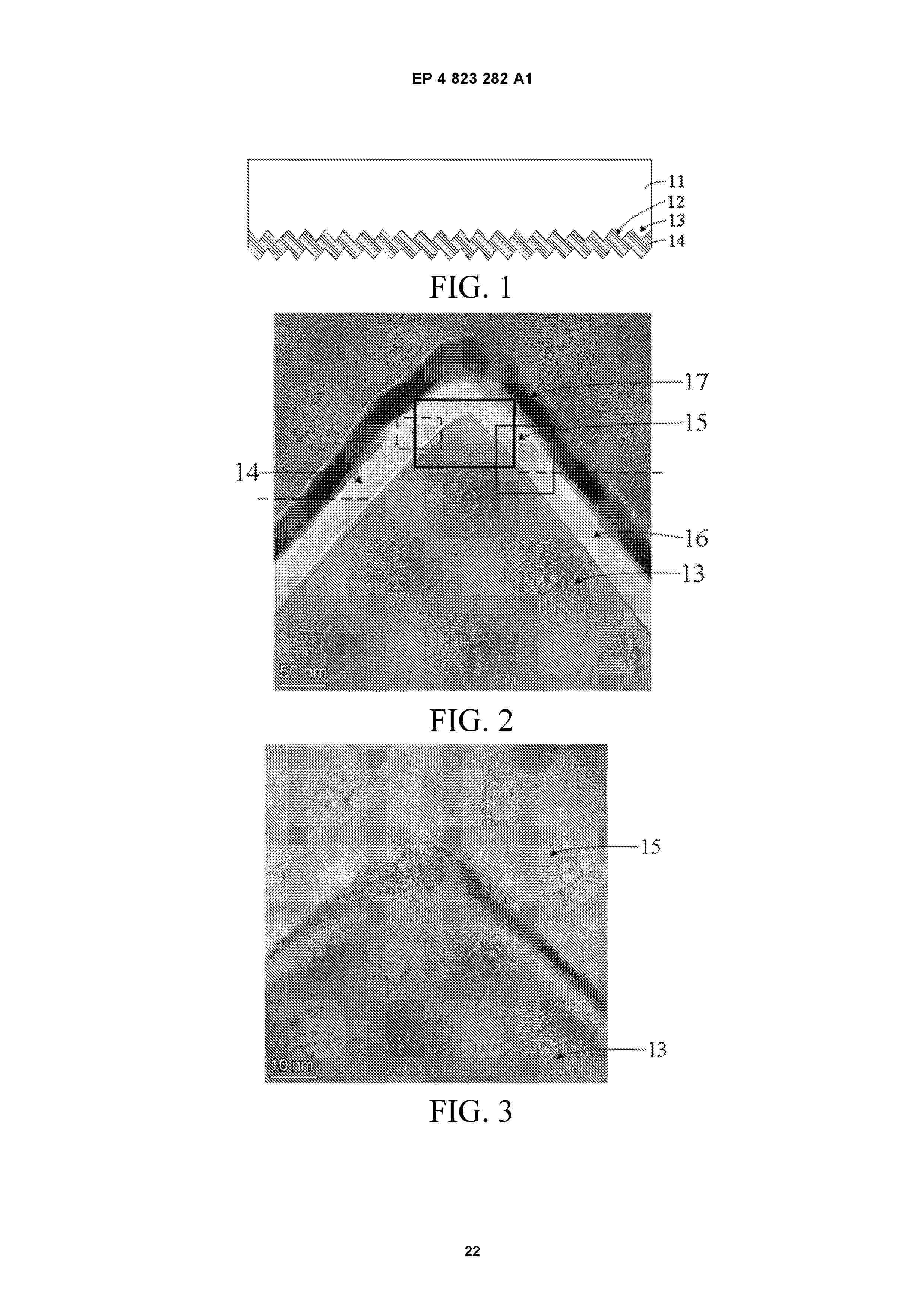
The present application discloses a solar cell and a manufacturing method therefor, and relates to the field of photovoltaic technologies, to increase an electrical conductivity and an effective doping concentration of a first part of a first semiconductor layer that covers at least a part of a top of a quasi-pyramid, and reduce a transmission loss of transmitting carriers collected in the first semiconductor layer to a conductive material. The solar cell includes a semiconductor substrate and a first semiconductor layer. The semiconductor substrate includes a first surface and a second surface that are opposite to each other. At least one of the first surface and the second surface is a target surface. A surface of at least a partial region of the target surface is a textured surface, and the textured surface includes a plurality of quasi-pyramids. The plurality of quasi-pyramids include first quasi-pyramids. The first semiconductor layer is arranged on the textured surface. A material of the first semiconductor layer includes amorphous silicon and/or nanocrystalline silicon. The first semiconductor layer includes a first part covering tops of the first quasi-pyramids and a second part covering bases of the first quasi-pyramids, and a degree of crystallization of the first part is greater than a degree of crystallization of the second part.
Nº publicación: EP4823286A1 14/10/2026
Solicitante:
PAMA SRL [IT]
PAMA srl
Resumen de: EP4823286A1
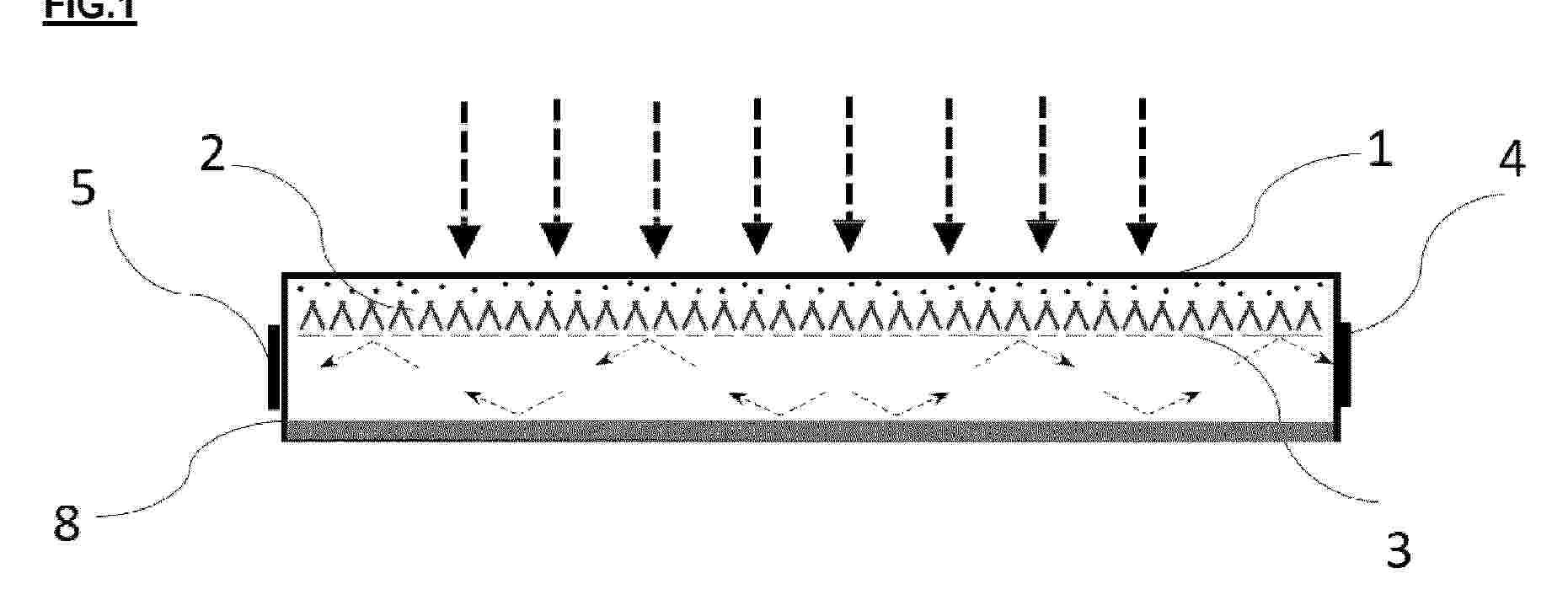
0001 The invention relates to the development of an enhanced luminescent solar concentrator panel employing a unique method for capturing and concentrating the maximum amount of solar energy in a specific area using an "inverse" focusing effect. The solution involves a luminescent solar panel that absorbs all incident energy without dispersion in the opposite wall (no semitransparency). 0002 This type of enhanced luminescent solar concentrator operates with sunlight and consists of a transparent material, an intermediate zone made up of a diffusive layer and multiple internally reflecting and focusing cones, a horizontal discontinuous reflective layer beneath the cones, a second reflective layer at the panel's base, and photovoltaic strips positioned along the lateral edges of the transparent portion. 0003 Sunlight striking the panel is diffused by the pigment and trapped underneath through a funnel-shaped zone directed by an inverse optical lens. Thanks to reflection between the intermediate layer and the lower reflective base of the panel, the trapped light remains concentrated and is transferred by reflection to the photovoltaic elements. 0004 This invention is innovative because it enables the creation of an enhanced luminescent solar concentrator (LSC) panel that absorbs the majority of incident energy while reducing losses. This application is highly effective as it can be used as a cladding for opaque surfaces (non-glazed) for green energy generation, and i
 BOPI
BOPI
 Sede Electrónica