Si deseas distinguir tus productos, servicios o ambos de los de otra empresa, es posible que necesites una marca o nombre comercial. Descubre qué son, en qué consiste su procedimiento de registro y qué implica.

Información sobre los plazos de presentación de solicitudes de transformación de marcas de la Unión Europea en marca nacional española. Más información


Si tienes un nuevo dispositivo, producto o procedimiento que resuelva un problema técnico o tenga una ventaja práctica, existen distintas formas de protegerlo en España y en otros países. Descubre cómo hacerlo.

¿Tu innovación reside en la estética, la ornamentación o la apariencia de tu producto? Protégela mediante un diseño industrial. Descubre qué derechos confiere el registro y cómo realizar la tramitación.

Las indicaciones geográficas protegen el nombre de un producto originario de una zona geográfica, a la cual le debe una determinada calidad, reputación u otra característica. Descubre qué son, en qué consiste su procedimiento de registro y qué beneficios conceden.

Las patentes publicadas en todo el mundo son una valiosa fuente de información científica, técnica y comercial.

Si eres emprendedor/a o una empresa y quieres potenciar y mejorar la rentabilidad de tu negocio protegiendo de forma adecuada los activos intangibles de tu organización, en este espacio encontrarás lo necesario.


 966
resultados
966
resultados
 Última actualización
04/04/2026 [07:06:00]
Última actualización
04/04/2026 [07:06:00]


 Resultados 375 a 400 de 966

Resumen de: US20260063249A1
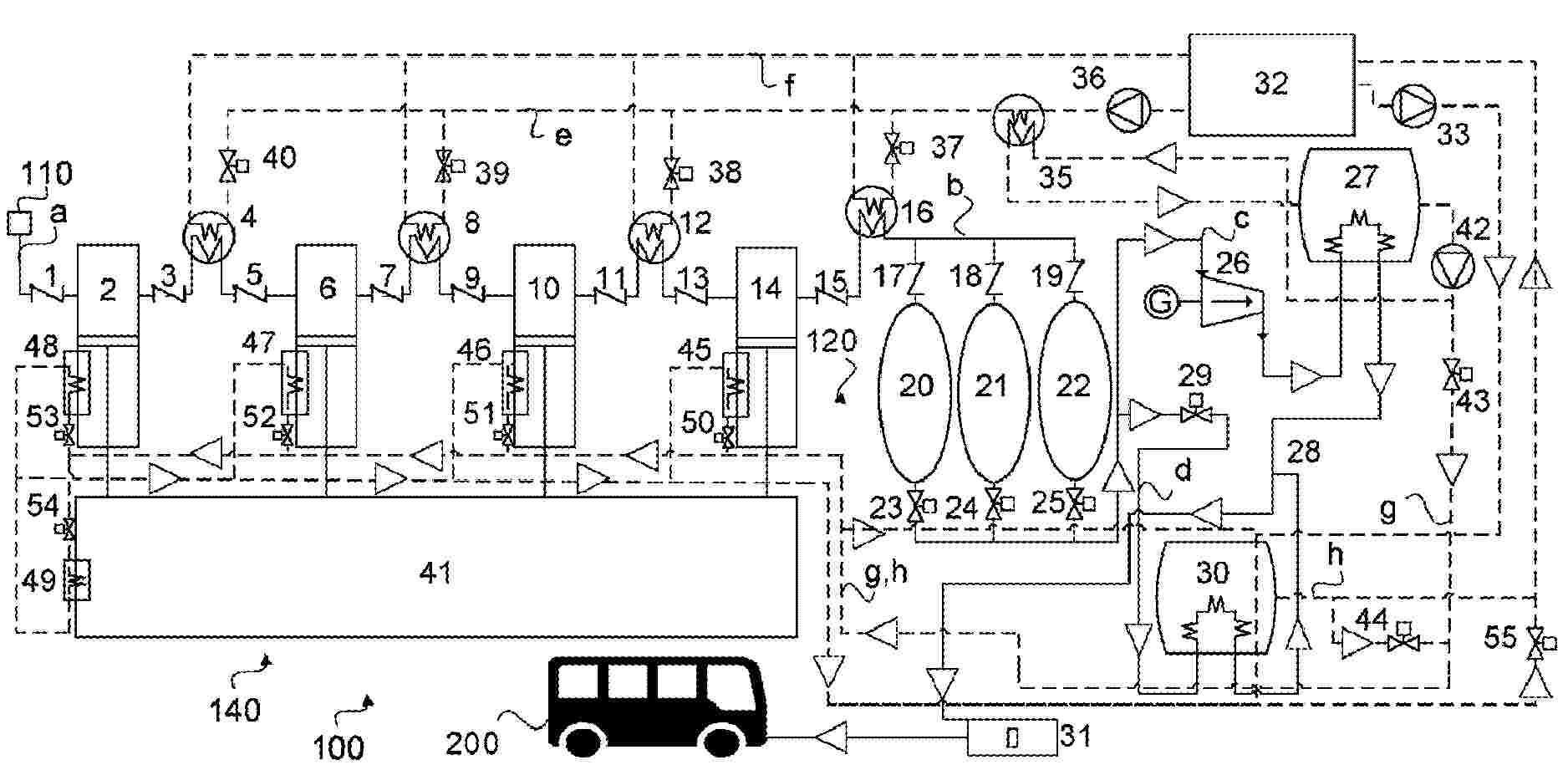
A system for compressing, storing and providing gas, in particular hydrogen, having a compressing device, a storage device, an expansion machine and a refrigeration machine, in particular an absorption-type refrigeration machine, wherein the system is configured to compress received gas by means of the compressing device, in particular in multiple stages, and to store the compressed gas in the storage device, wherein the system is configured to refrigerate the compressing device using the refrigeration machine and the expansion machine.

Resumen de: US20260066650A1
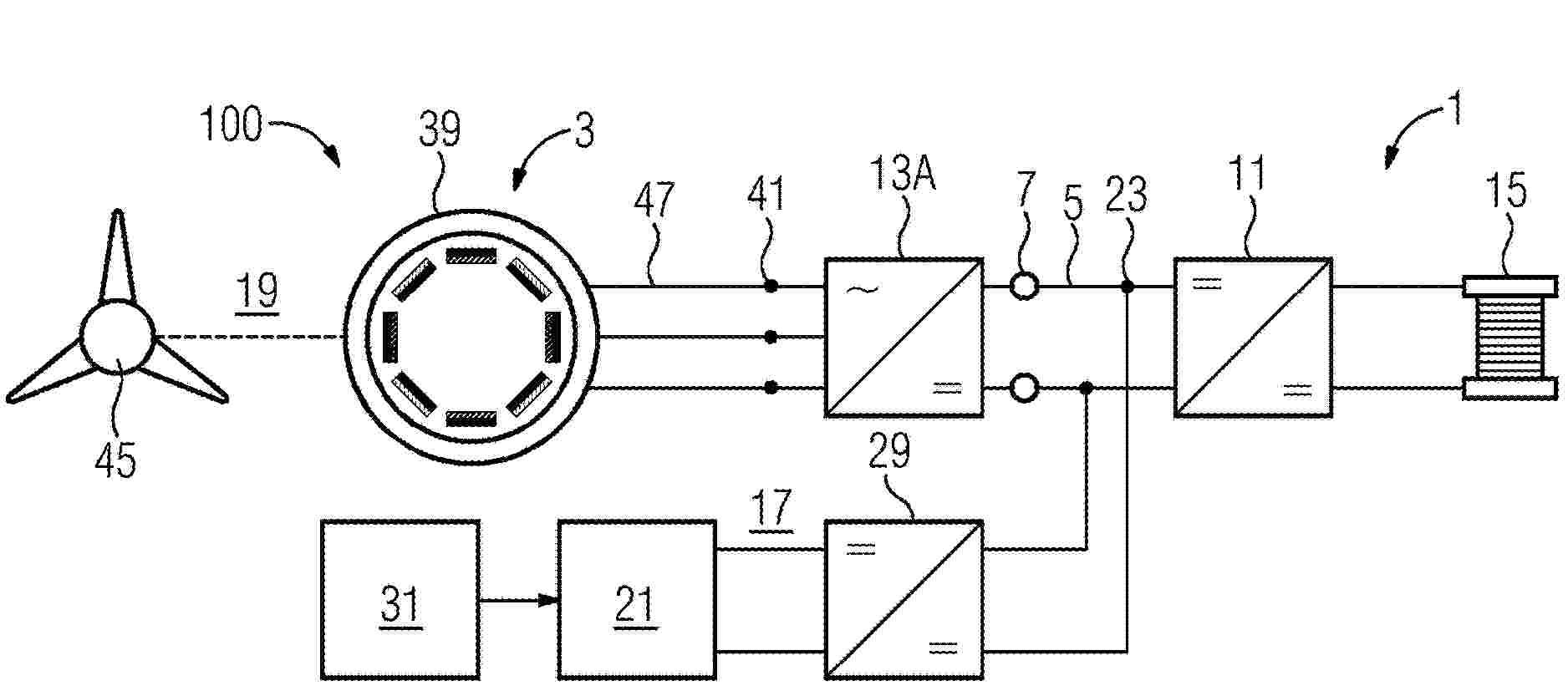
A plant network has an electrolysis plant, a power supply source, and a central supply line connected to a DC voltage output of the power supply source for feeding a direct current into the central supply line. The electrolysis plant is connected to a central DC network for a high voltage via the central supply line. The power supply source has a wind turbine as a power generator and a rectifier with a DC voltage output for the high voltage. An energy storage system can feed a direct current into the central supply line. A DC supply network controls three different DC voltage levels independently, namely, a first DC voltage for charging and discharging an electrical storage battery of the energy storage system, a DC-Bus high voltage on the central supply line, and a DC operating voltage of the electrolysis plant.
Resumen de: US20260062820A1
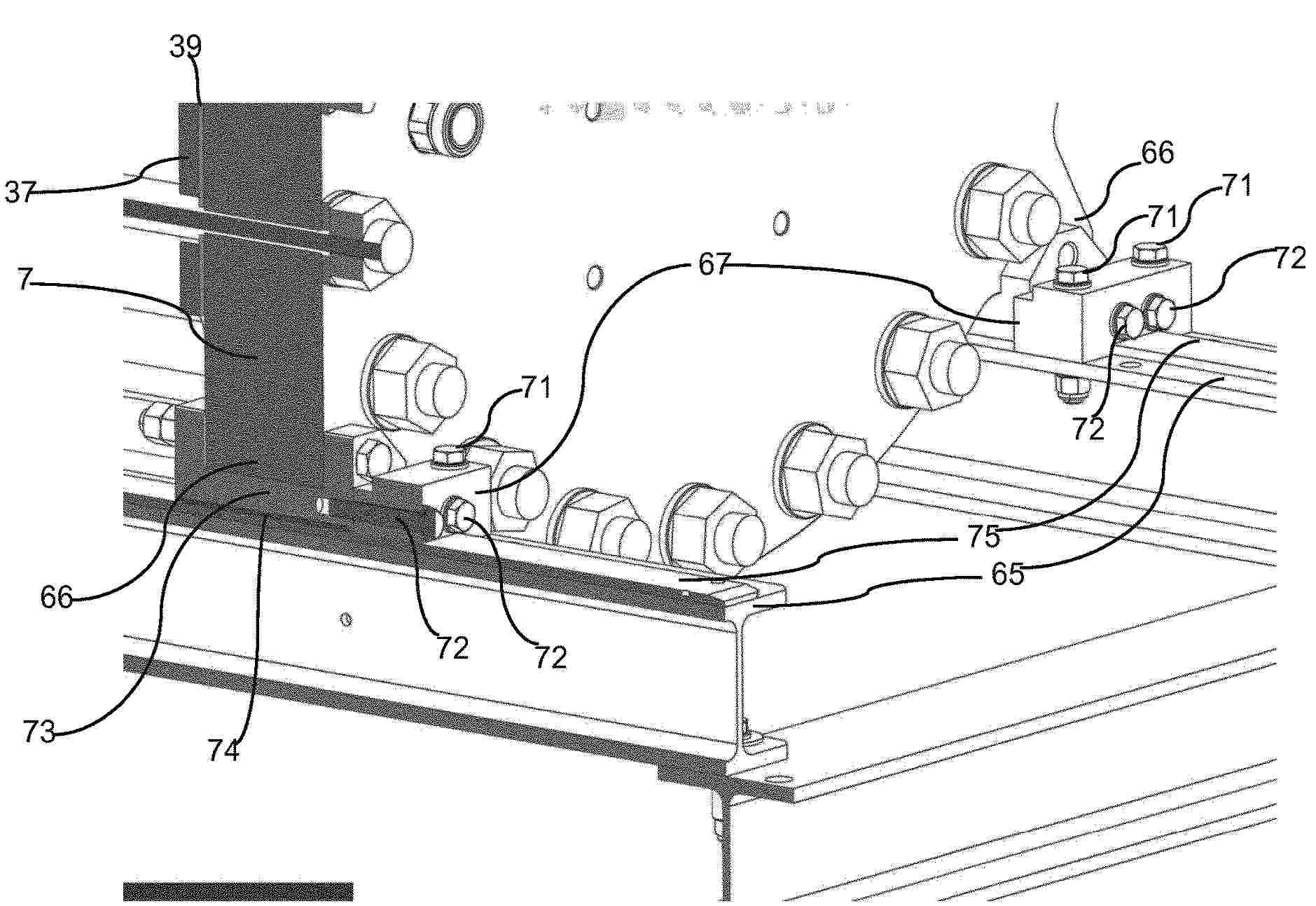
In a method for connecting a pair of electrolyser stacks with electrolyte, electric current and gas drain piping, each pair of stacks of the electrolyser: through interconnection endplates are supplied with alkaline electrolyte at elevated pressure by common electrolyte supply pipes and further, through the interconnection endplate drain off oxygen gas containing electrolyte, and hydrogen gas containing electrolyte, to common gas separation vessels for oxygen and hydrogen respectively, pull first electrically interconnected current injection electrodes adjacent to interconnection endplates to zero electrical potential through a zero potential conductor, and supply second current injection electrodes placed adjacent to distal endplates with electric current at potentials equally higher and lower respectively than the zero potential at the first electrodes.
Resumen de: US20260055519A1
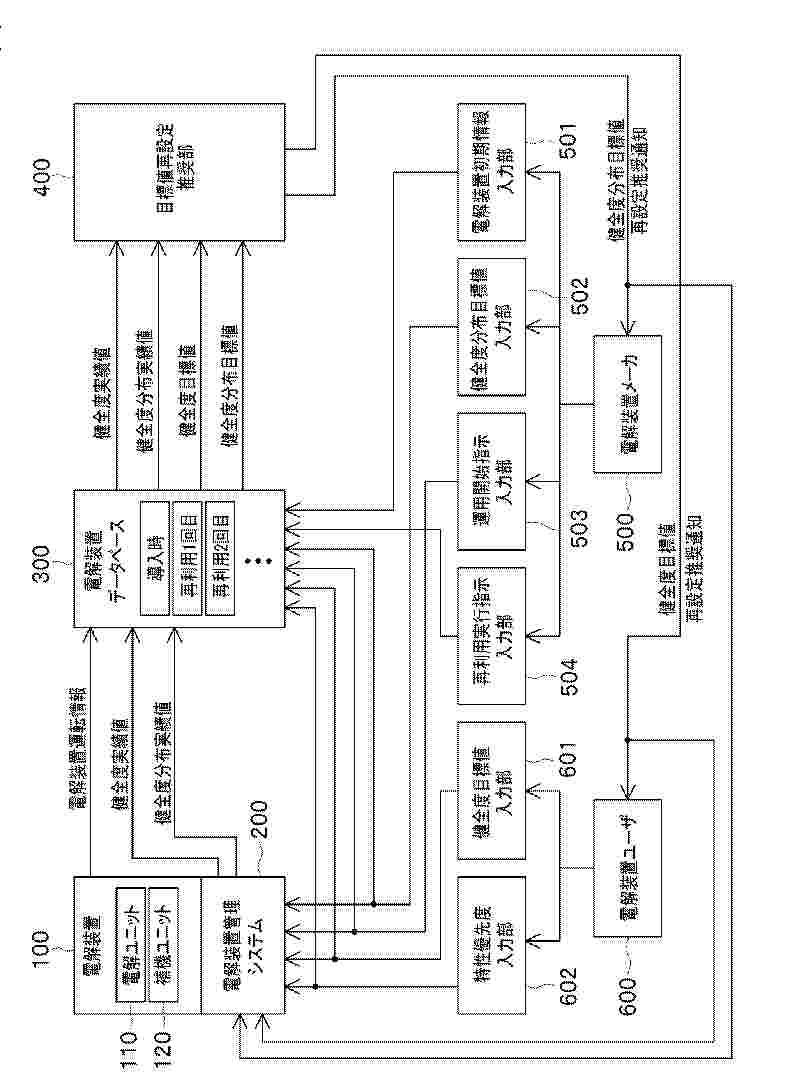
An electrolysis apparatus operation system includes an electrolysis apparatus, a control unit, a target state-of-health value input unit, and a control parameter calculating unit. The electrolysis apparatus has a plurality of electrolytic stacks in which a plurality of electrolytic cells that produce hydrogen by electrolyzing water are stacked. The control unit controls a controlled subject based on a control parameter that affects state-of-health of the controlled subject. The target state-of-health value input unit allows a system user to input a target state-of-health value that is a target value for state-of-health. The control parameter calculating unit calculates a control parameter of the controlled subject based on the target state-of-health value. The controlled subject is the electrolysis apparatus.
Resumen de: US20260061384A1
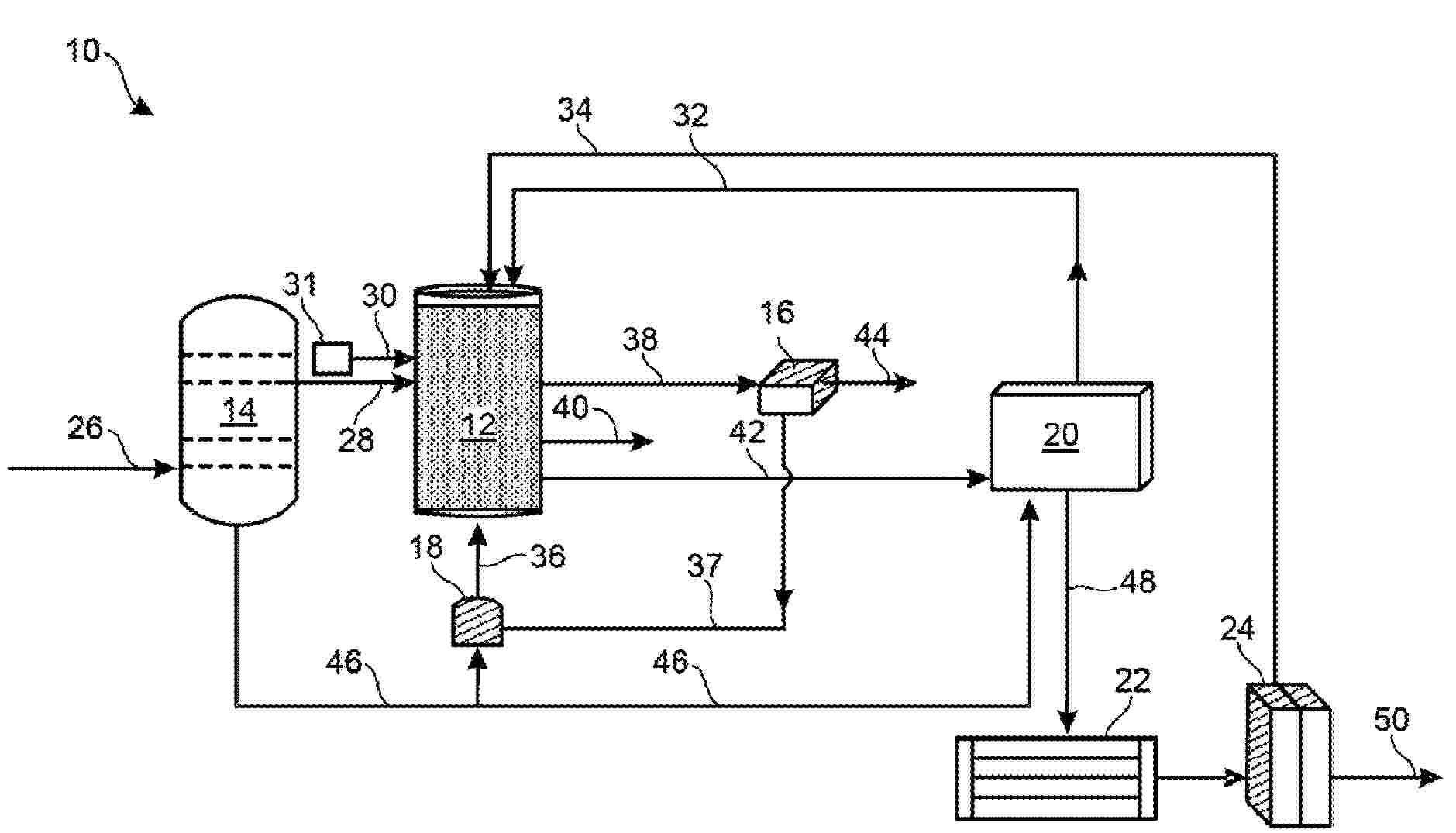
An autothermal ammonia reactor includes a chamber, a hydrogen-separation membrane within the chamber, and an ammonia decomposition catalyst. The chamber receives ammonia and air. The chamber including a combustion zone, a catalytic zone, and a hydrogen zone. The catalytic zone is in thermal communication with the combustion zone. The chamber directs the air and a portion of the ammonia from the fluid inlet to the combustion zone to allow the air and ammonia to exothermically react to generate thermal energy. The chamber directs another portion of the ammonia into the catalytic zone to decompose into hydrogen and nitrogen as the ammonia is exposed to the thermal energy from the combustion zone and contacts the catalyst. The chamber directs the hydrogen from the catalytic zone, through a surface of the hydrogen-separation membrane, to the hydrogen zone to allow the hydrogen to exit the chamber through the fluid outlet.
Resumen de: US20260062824A1
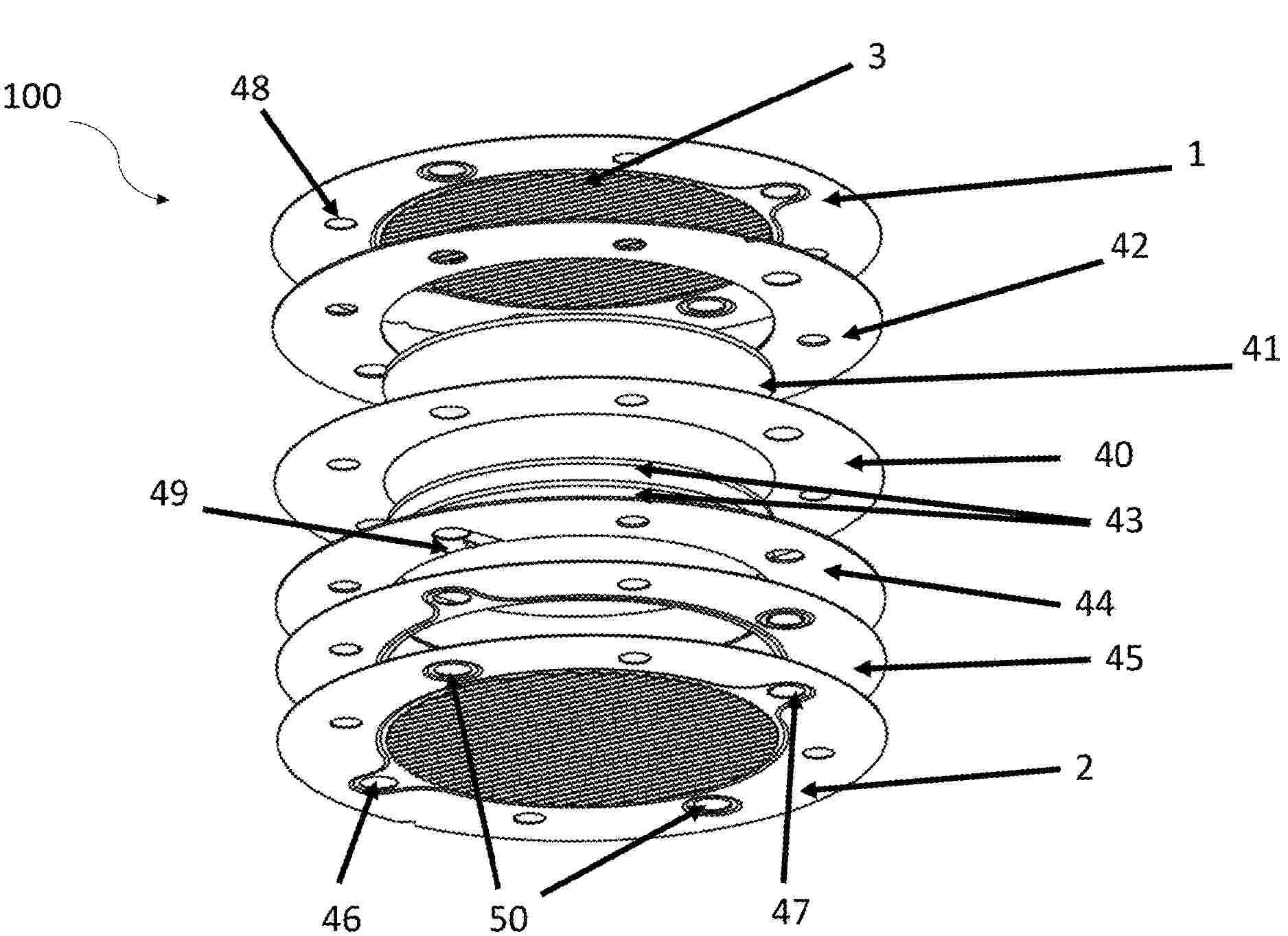
The present disclosure relates to a separator plate for an electrolyser, comprising a metal layer which has a surface structuring in sections, and an elastomer coating designed as a sealing element and applied to the metal layer for sealing at least one region of the separator plate. The surface structuring comprises a plurality of channel-shaped depressions produced by laser surface treatment. The elastomer coating is arranged at least in some regions on the surface structuring. The present disclosure additionally relates to a method for manufacturing the separator plate.
Resumen de: AU2024337380A1
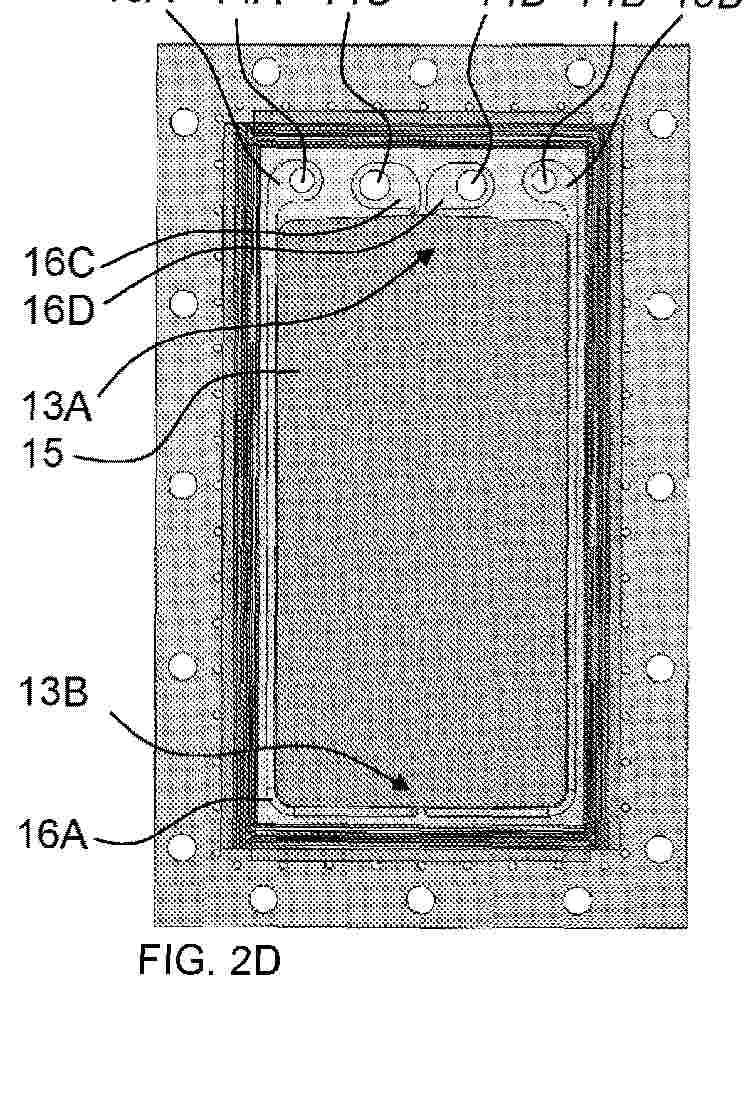
An electrolyzer stack in which gas passages (16C, 16D) and thin and long shunt-current reducing liquid passages (16A, 16B) are provided inside a gasket that is a combination of a first and a second gasket part (12A, 12B) for ease of assembly.
Resumen de: WO2026048903A1
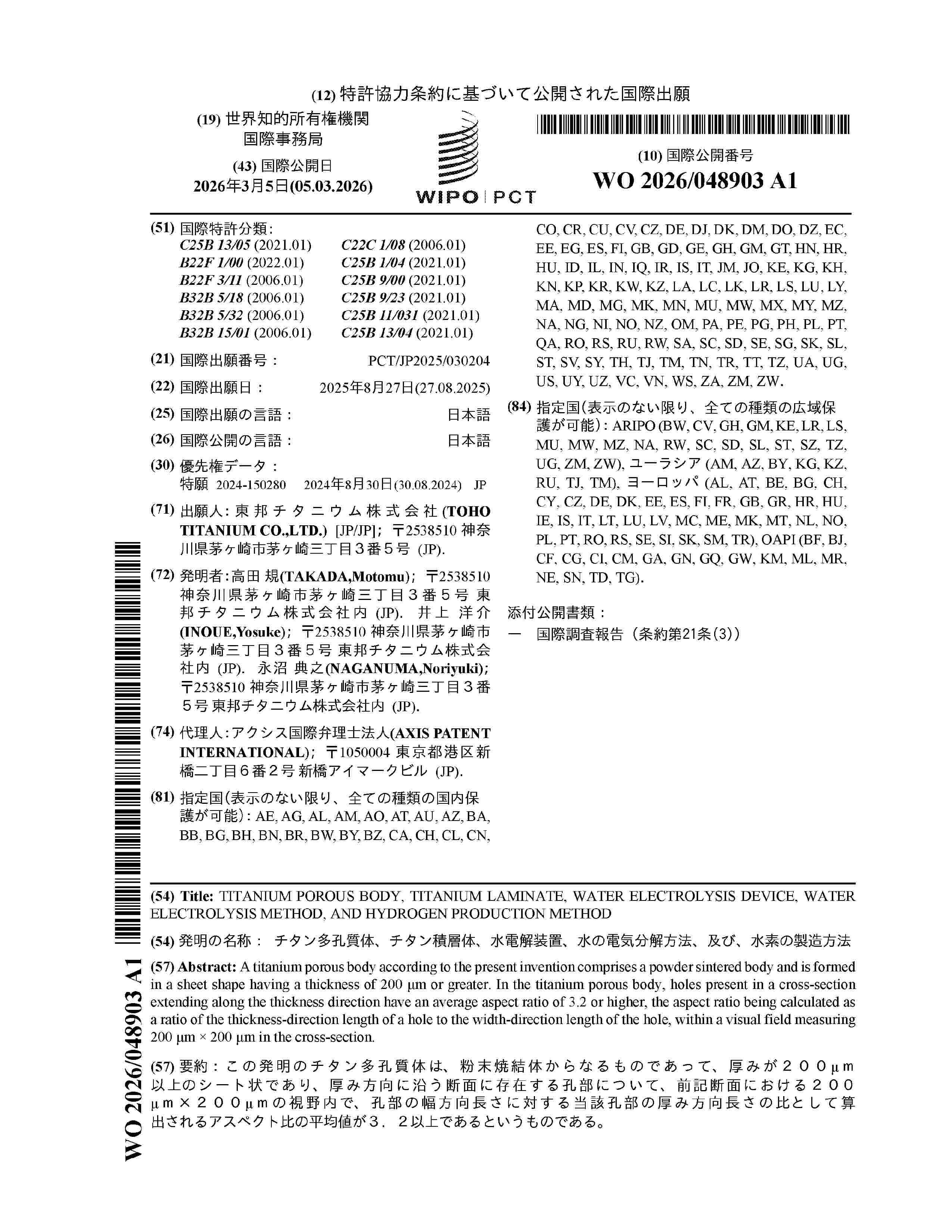
A titanium porous body according to the present invention comprises a powder sintered body and is formed in a sheet shape having a thickness of 200 μm or greater. In the titanium porous body, holes present in a cross-section extending along the thickness direction have an average aspect ratio of 3.2 or higher, the aspect ratio being calculated as a ratio of the thickness-direction length of a hole to the width-direction length of the hole, within a visual field measuring 200 μm × 200 μm in the cross-section.
Resumen de: WO2026048251A1
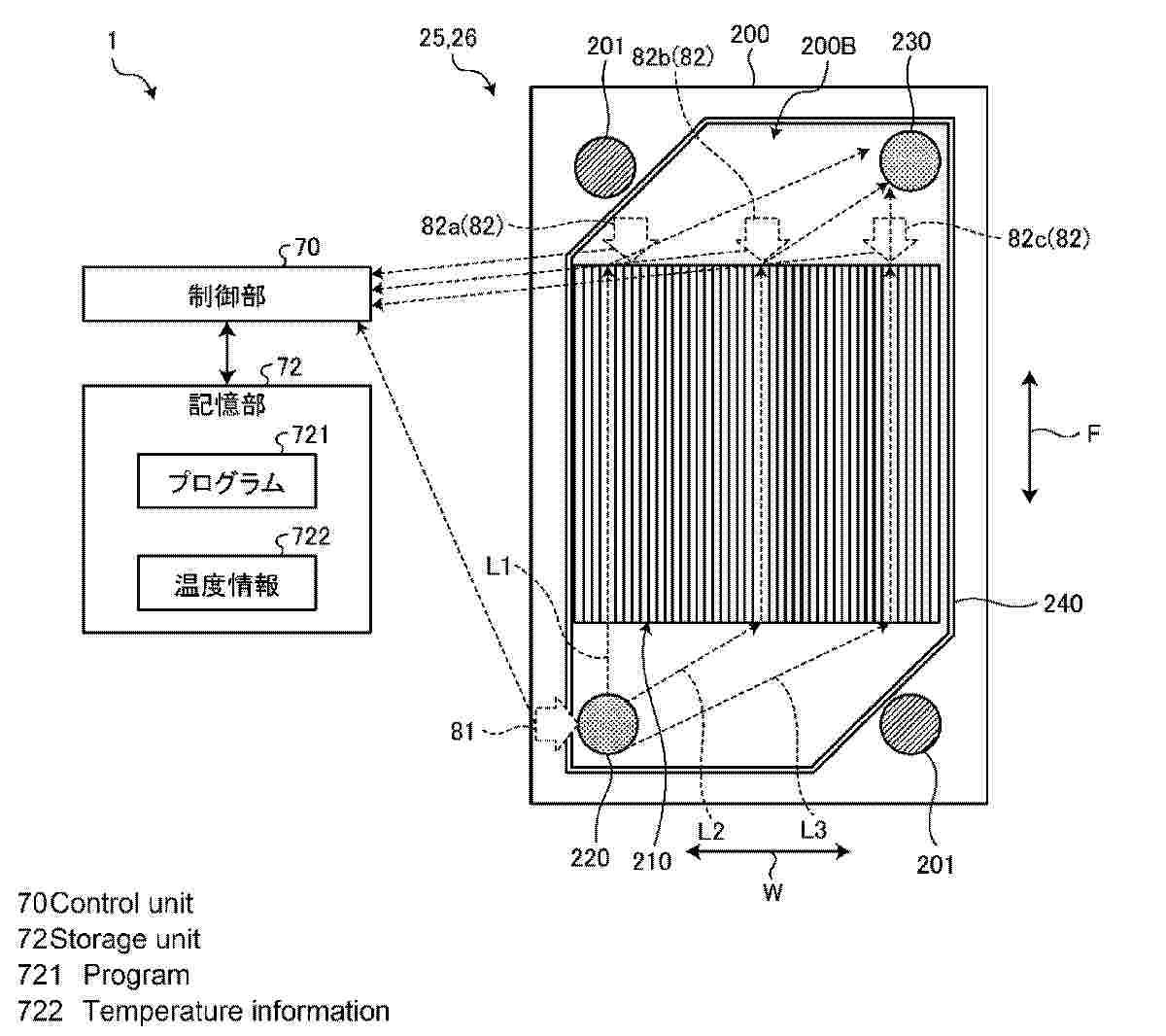
This water electrolysis device comprises: a water electrolysis stack that has a water electrolysis cell having a solid polymer electrolyte membrane disposed between a pair of separators, and that electrolyzes an electrolytic solution by using the water electrolysis cell; a power supply unit that is electrically connected to the water electrolysis stack; an electrolytic solution path that circulates and supplies the electrolytic solution to the water electrolysis cell; a first temperature sensor that is capable of measuring an inlet temperature of the electrolytic solution flowing through an inlet of the water electrolysis stack; a second temperature sensor that is capable of measuring flow-path outlet temperatures of the electrolytic solution flowing through outlets of a plurality of flow paths formed in electrolysis units of the separators; and a control unit that performs, on the basis of the inlet temperature from the first temperature sensor and the flow-path outlet temperatures from the second temperature sensor, control on the electrolysis units to regulate at least one of the flow rate, temperature, and electric current of the electrolytic solution so as to lower a temperature that has increased in a portion of the electrolysis units of the separators.
Resumen de: WO2026048152A1
Provided are a structure and a reduction device capable of more efficiently generating hydride ions. A structure according to an embodiment of the present invention comprises a first electrode, a second electrode, and an electrolyte. The first electrode and the second electrode are porous and allow a fluid to pass therethrough. The electrolyte is a solid disposed between the first electrode and the second electrode. The electrolyte is electrically connected to the first electrode and the second electrode. Hydride ions can move through the electrolyte.
Resumen de: WO2026045952A1
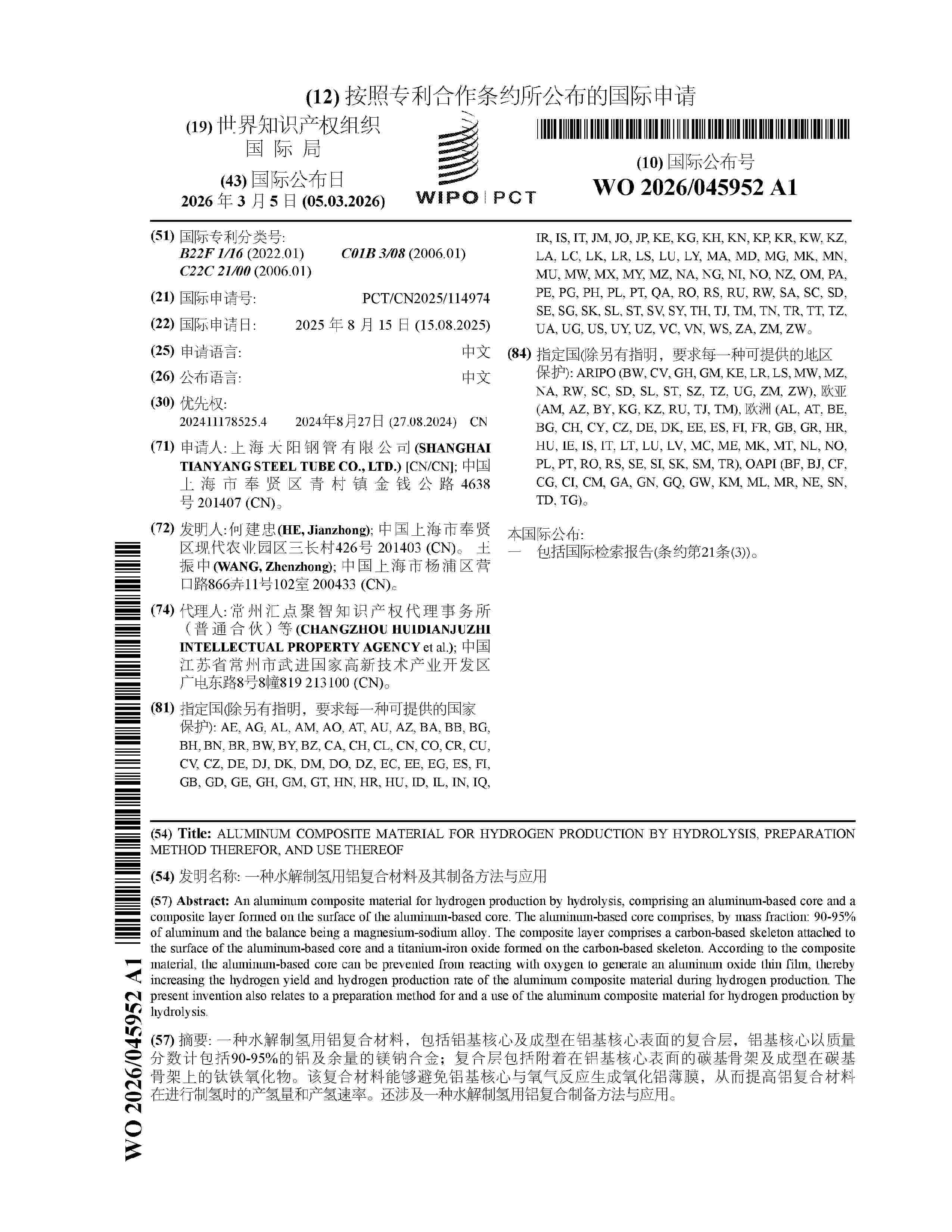
An aluminum composite material for hydrogen production by hydrolysis, comprising an aluminum-based core and a composite layer formed on the surface of the aluminum-based core. The aluminum-based core comprises, by mass fraction: 90-95% of aluminum and the balance being a magnesium-sodium alloy. The composite layer comprises a carbon-based skeleton attached to the surface of the aluminum-based core and a titanium-iron oxide formed on the carbon-based skeleton. According to the composite material, the aluminum-based core can be prevented from reacting with oxygen to generate an aluminum oxide thin film, thereby increasing the hydrogen yield and hydrogen production rate of the aluminum composite material during hydrogen production. The present invention also relates to a preparation method for and a use of the aluminum composite material for hydrogen production by hydrolysis.
Resumen de: WO2026048255A1
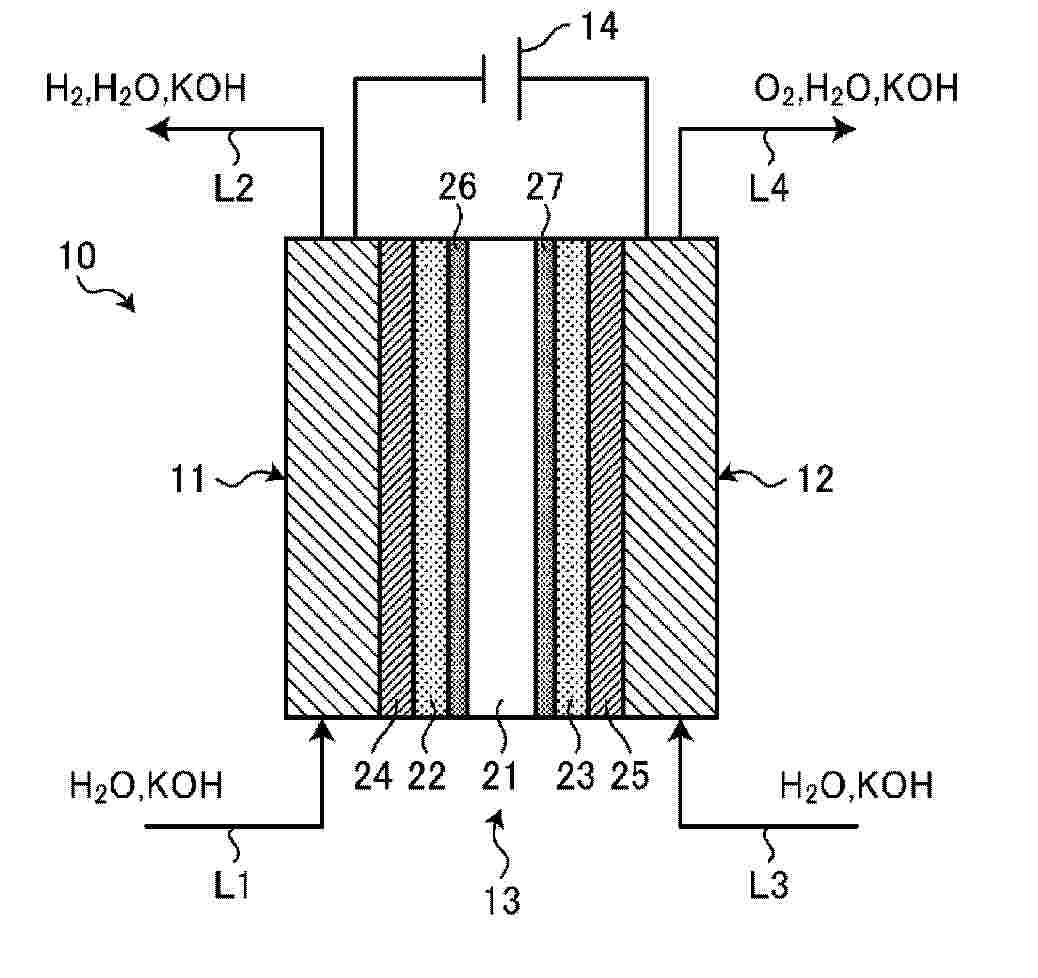
A water electrolysis cell and a water electrolysis system comprising: an ion exchange membrane; a cathode-side catalyst layer disposed on one side of the ion exchange membrane; an anode-side catalyst layer disposed on the other side of the ion exchange membrane; and a metal impurity removal layer disposed between the ion exchange membrane and the cathode-side catalyst layer and/or between the ion exchange membrane and the anode-side catalyst layer.
Resumen de: WO2026045877A1
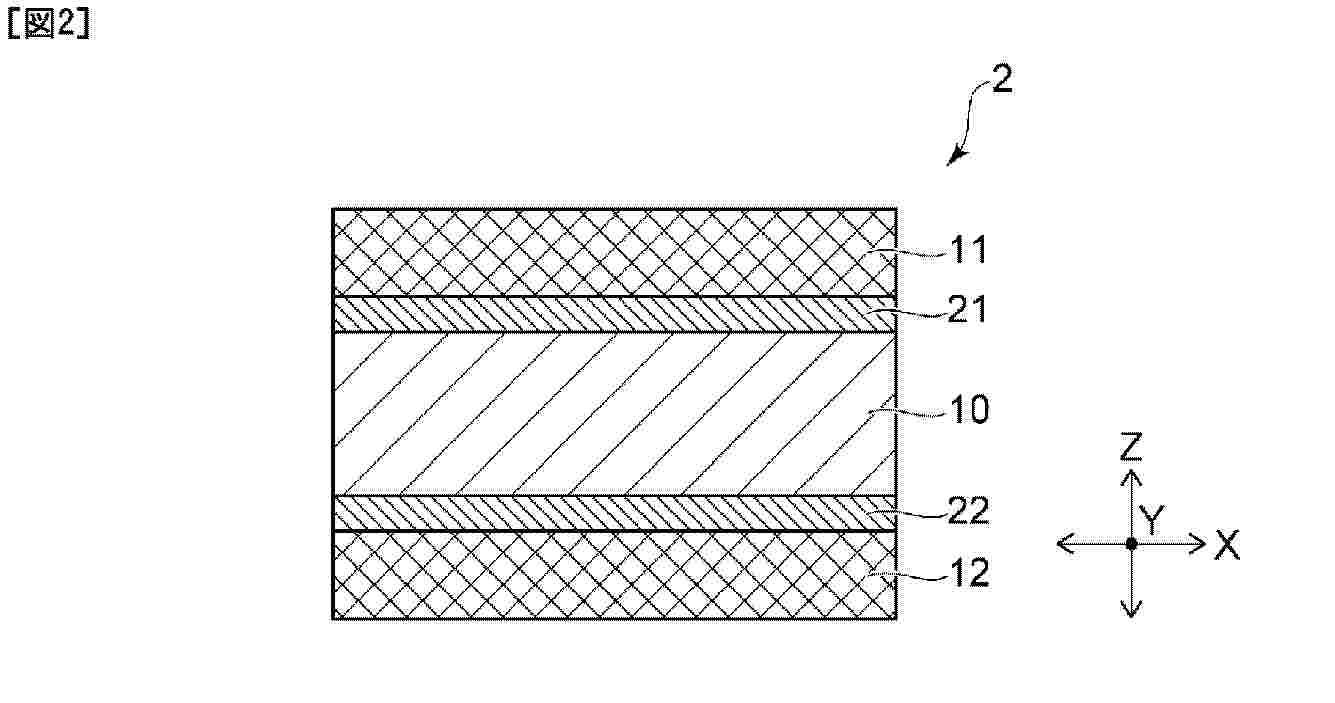
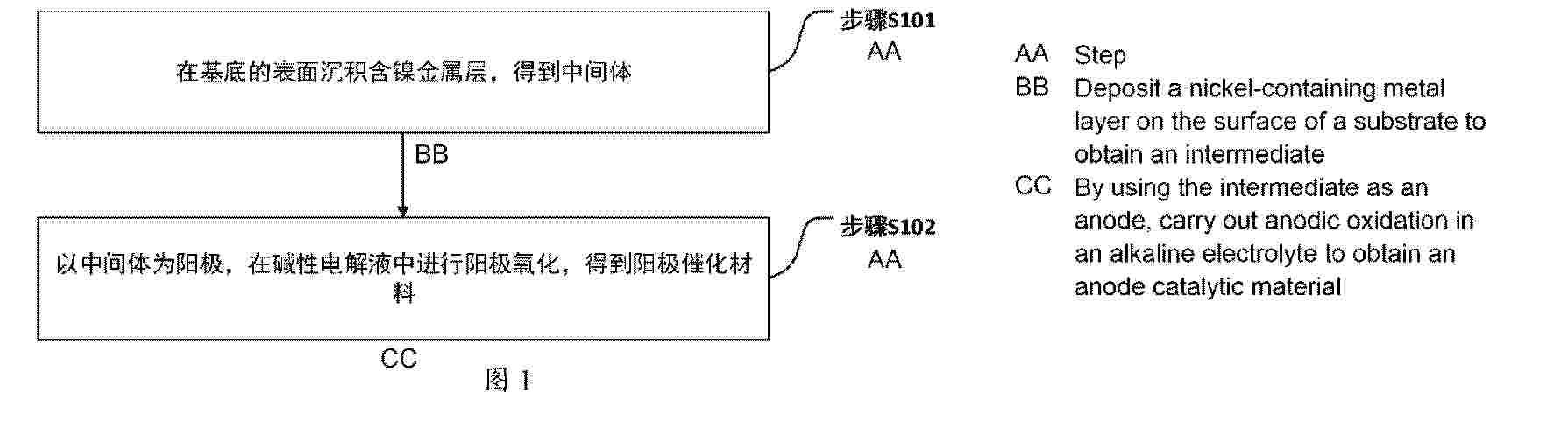
The present application provides an electrolytic cell, an anode catalytic material, a preparation method therefor, and a use thereof. The anode catalytic material in the present application comprises: a substrate, which is an alloy comprising nickel and iron elements; and a nickel-rich oxide layer, which covers the surface of the substrate, wherein the nickel-rich oxide layer comprises nickel oxide and/or nickel hydroxide, and the mass content of nickel element in metal components of the nickel-rich oxide layer is greater than 70%. The anode catalytic material uses a nickel-iron alloy as a substrate, and the addition of iron element can effectively reduce the oxygen evolution overpotential of the substrate material; the nickel-rich oxide layer covering the surface of the substrate can passivate the substrate, and inhibit the dissolution of metal ions, preventing collapse of the skeleton structure of the alloy substrate, thereby maintaining mechanical stability; when the nickel-rich oxide layer is used as an anode, the thickness of the nickel-rich oxide layer does not increase significantly, thus not affecting the catalytic performance thereof; the nickel oxide and/or nickel hydroxide contained in the nickel-rich oxide layer and nickel iron hydroxide which may also be contained therein are also used as active components, thereby further ensuring the catalytic activity of the material.
Resumen de: US20260062823A1
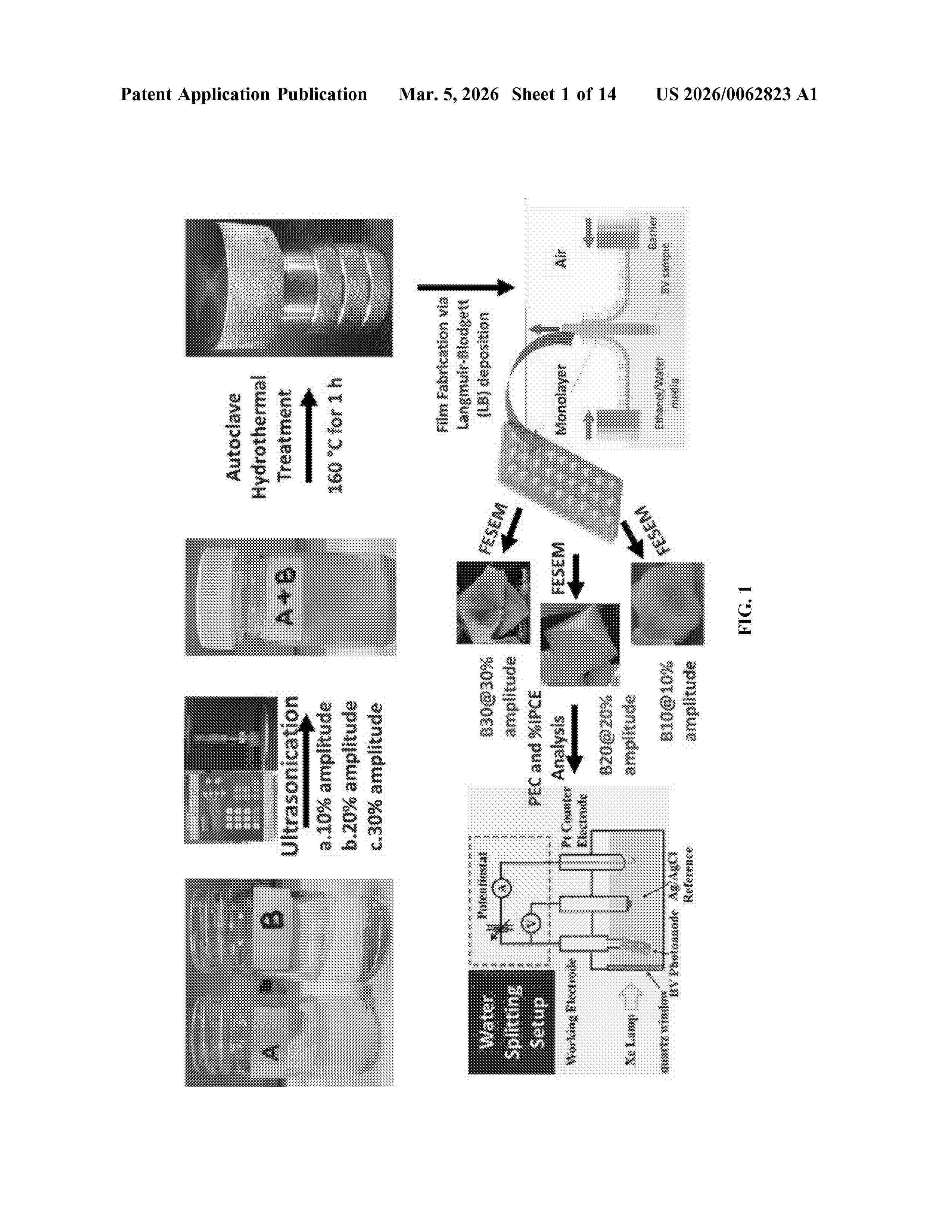
A method of preparing bismuth vanadate particles is described. The bismuth vanadate particles prepared via ultrasonication and hydrothermal treatment exhibit controlled morphology (e.g., octahedral shape) and crystallinity (e.g., tetragonal crystal symmetry). A photoelectrode containing bismuth vanadate particles and a method of using the photoelectrode in a photoelectrochemical cell for water splitting is also provided.
Resumen de: US20260062819A1
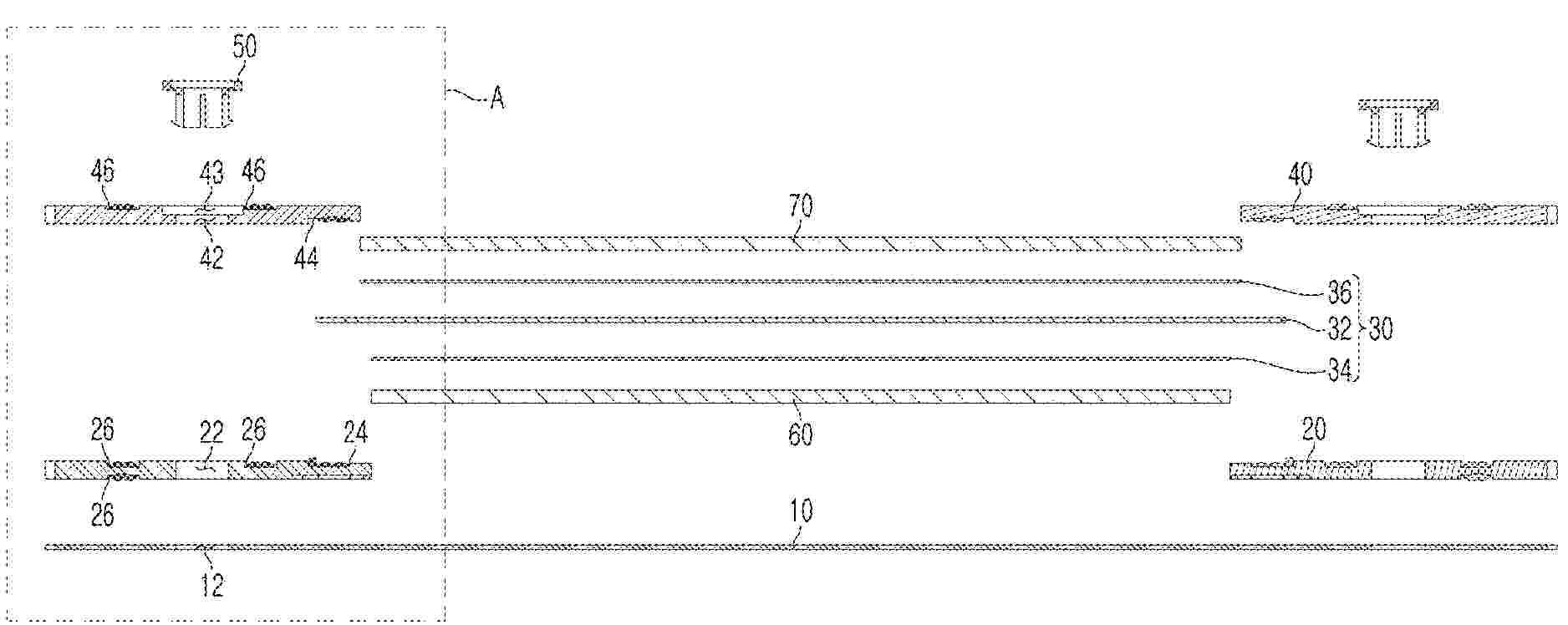
There is disclosed a water electrolysis stack in which a current collector, a cathode cell frame, a membrane electrode assembly, and an anode cell frame are sequentially stacked and fastened by a fastening member, wherein the water electrolysis stack has one or more through holes through which the current collector, the cathode cell frame, and the anode cell frame pass, the anode cell frame has a counter bore continued from the through hole and has a greater size than the through hole, and the fastening member includes a head seated on the counter bore, a shaft extending from the head and passing through the through hole, and a hook provided along an outer circumferential surface of one end portion of the shaft and protruding outward from the through hole to provide a compression force in a stacking direction.
Resumen de: US20260062816A1
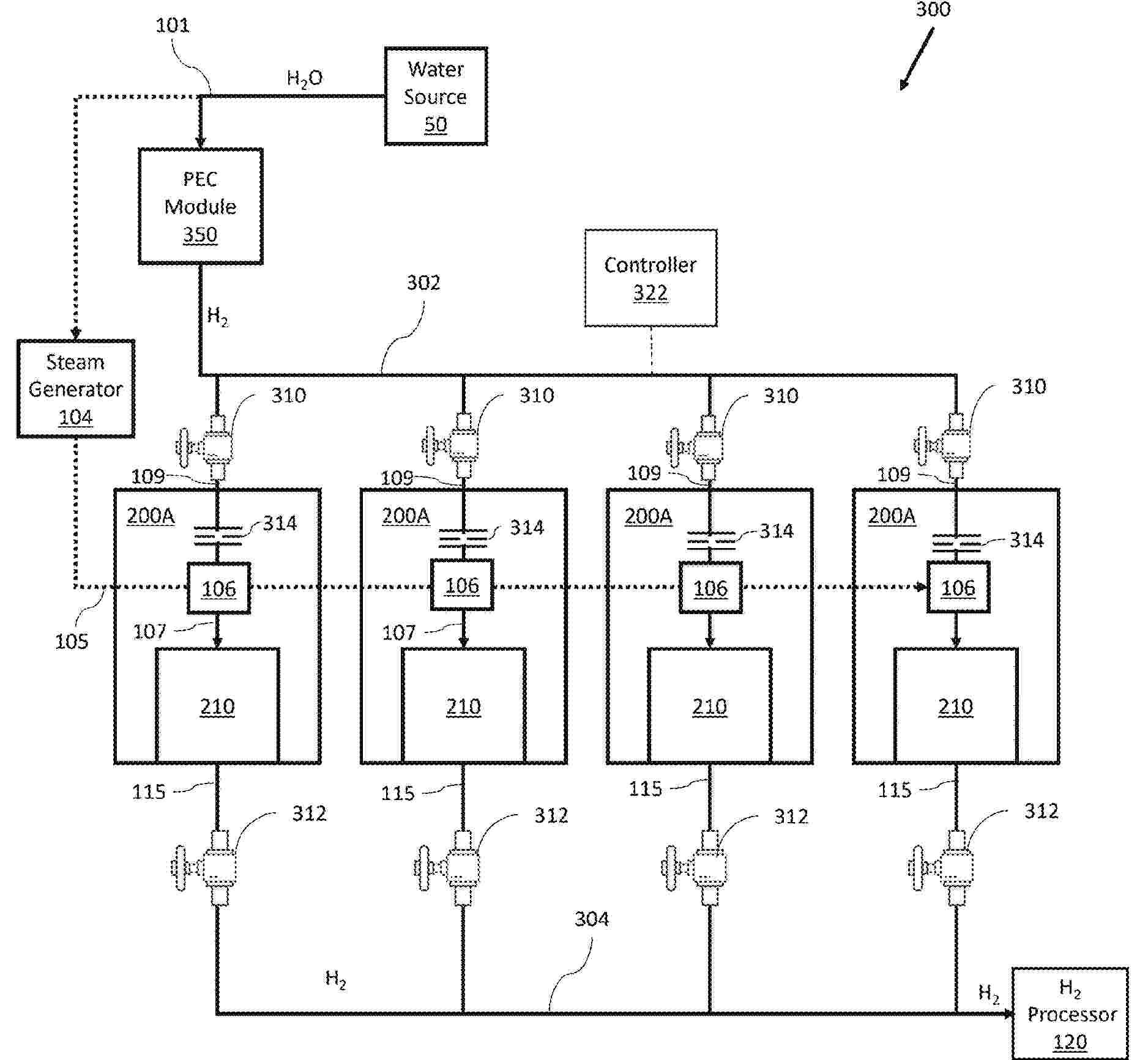
A method of operating an electrolyzer system includes electrolyzing water into oxygen and inlet hydrogen using a polymer electrolyte cell (PEC) module including PECs, providing the inlet hydrogen to solid oxide electrolyzer cell (SOEC) modules that each include at least one SOEC stack, providing steam to the SOEC modules, and electrolyzing the steam to generate oxygen and a main product stream containing hydrogen.
Resumen de: US20260063069A1
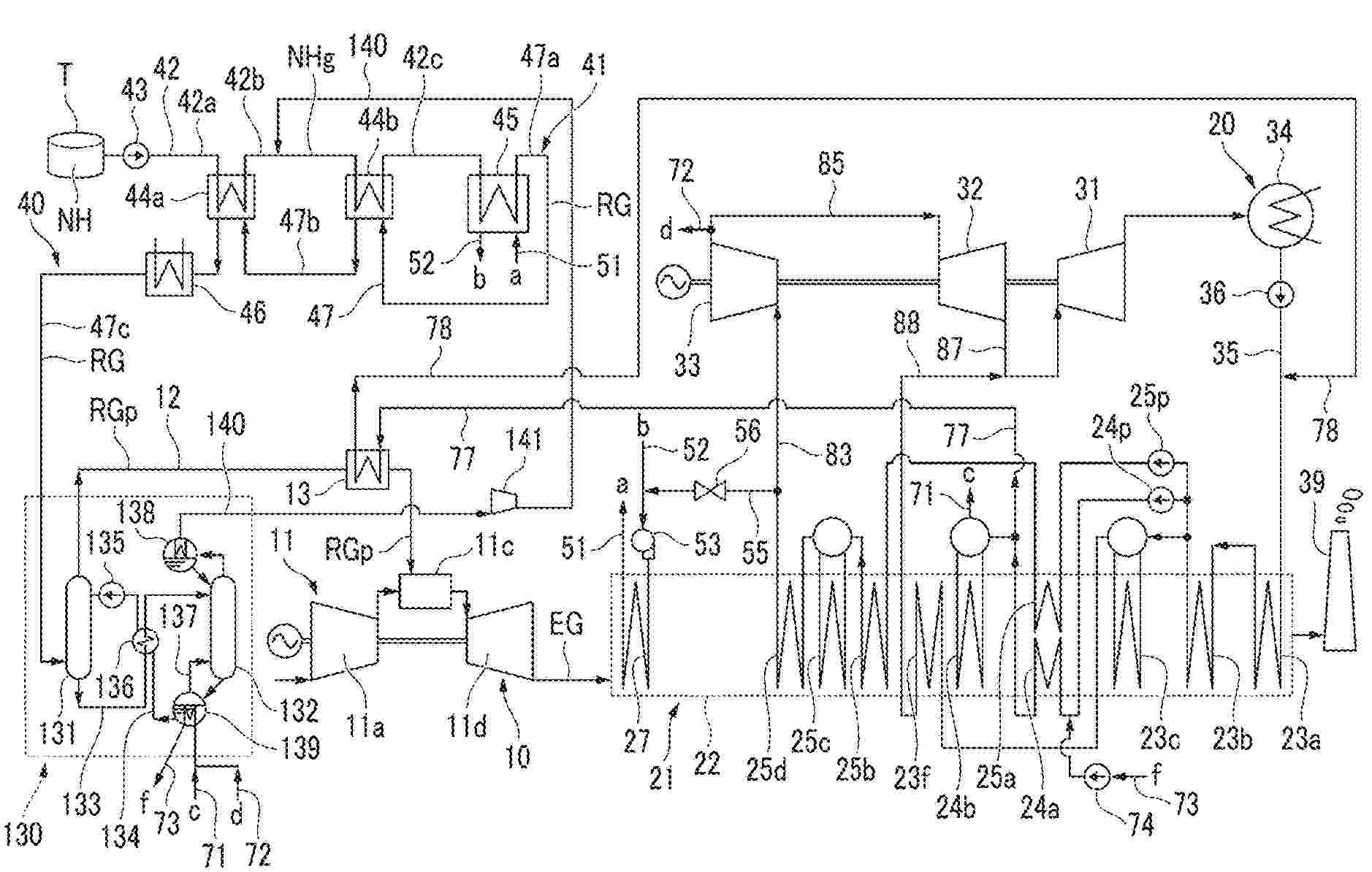
A raw material fluid treatment plant is provided with a raw material reaction apparatus for reacting a raw material fluid to form a reaction gas. The raw material reaction apparatus includes preheaters and a reactor. The preheaters are heat exchangers that perform heat exchange between a second heat transfer medium and the raw material fluid to heat the raw material fluid. The reactor is a heat exchanger that performs heat exchange between a first heat transfer medium differing from the second heat transfer medium and the raw material fluid having been heated by the preheaters to heat and react the raw material fluid.
Resumen de: US20260063035A1
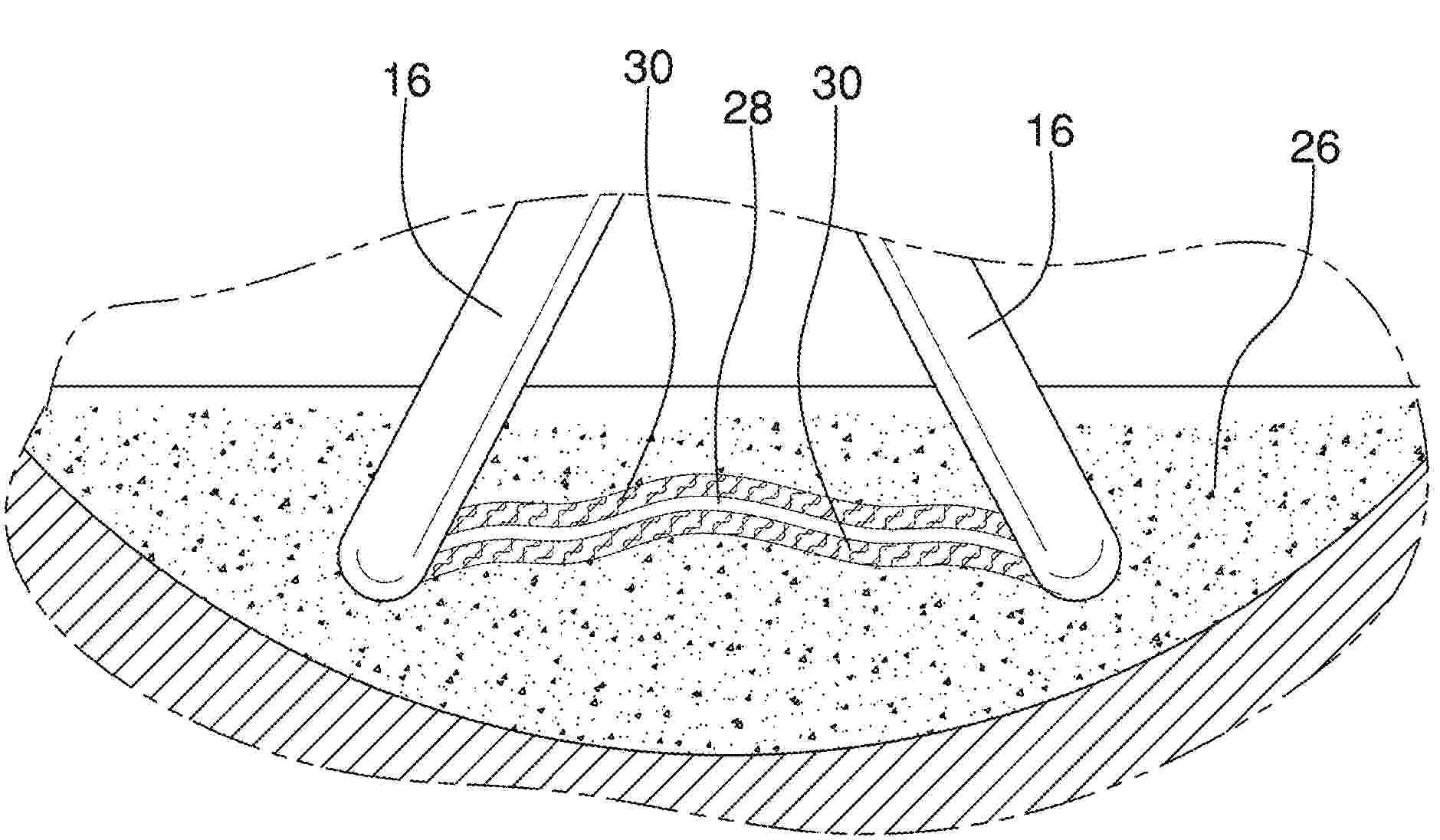
A lunar regolith reduction reactor system includes a housing, a crucible, and a pair of electrodes. The housing includes a base structure and a cover structure detachably connected to the base structure, a gas input port to permit input of hydrogen gas into the housing, and a gas output port to permit outgassing of water vapor and gases. The crucible is designed to hold an amount of lunar regolith in the housing. The electrodes are disposed apart from one another and adjacent the crucible, wherein the electrodes are connectable to a power source to generate an electric arc to heat lunar regolith in the crucible and initiate a reduction reaction to separate oxygen gas and reduce separated material into a molten state.
Resumen de: KR20260029661A
본 발명은 유입된 암모니아 기체가 유동하며, 상기 유입된 암모니아 기체를 수소 기체와 질소 기체로 분해하는 촉매 물질을 포함하는 반응부, 상기 반응부를 가열하여, 상기 반응부에서 암모니아 분해를 가능하게 하는 히터 및 상기 히터의 질화 현상을 방지하기 위하여, 상기 히터의 일부 또는 전체를 덮도록 배치되는 질화 방지용 금속층을 포함하는 암모니아 분해 장치를 제공한다. 따라서 히터의 일부 또는 전체를 덮도록 질화 방지용 금속층이 형성되어 있어서, 암모니아 분해 반응이 고온에서 장시간 동안 진행되더라도 질화 현상이 감소되고, 따라서 질화 현상에 의해 경화가 되어 내구도가 저하되는 문제를 미연에 방지할 수 있는 장점이 있다.
Resumen de: KR20260029969A
본 발명은 수전해 반응을 통해 수소와 산소를 생산하는 수전해 스택; 상기 수전해 스택의 작동에 필요한 에너지를 공급하는 전력 공급부; 상기 수전해 스택에서 생산된 수소와 산소를 이용하여 수소 가스 및 산소 가스를 물과 분리하는 기액 분리기; 상기 기액 분리기의 압력을 측정하고 차압 데이터를 획득하는 차압 센서; 상기 수소 가스 및 상기 산소 가스를 배출시켜, 상기 기액 분리기의 압력을 유지시키는 역 압력 조절기; 및 상기 차압 데이터를 기초로 필요한 수소 가스 및 산소 가스의 양을 자동으로 계산하고, 계산 데이터를 기초로 상기 역 압력 조절기를 제어하는 제어부를 포함하는 수전해 시스템을 제공한다.
Resumen de: KR20260029968A
본 발명은 수전해 반응을 통해 수소와 산소를 생산하는 수전해 스택; 상기 수전해 스택의 작동에 필요한 에너지를 공급하는 전력 공급부; 상기 수전해 스택에서 생산된 수소와 산소를 이용하여 수소 가스 및 산소가스를 물과 분리하는 기액 분리기; 상기 수소 가스 및 상기 산소 가스를 배출시키는 압력 제어 밸브; 상기 기액 분리기의 압력을 측정하고 차압 데이터를 획득하는 차압 센서; 상기 수소 가스 및 상기 산소 가스를 배출시켜, 상기 기액 분리기의 압력을 유지시키는 역 압력 조절기; 및 상기 차압 데이터를 기초로 필요한 수소 가스 및 산소 가스의 양을 자동으로 계산하고, 계산 데이터를 기초로 상기 압력 제어 밸브 및 상기 역 압력 조절기 중 적어도 하나를 제어하는 제어부를 포함하는 수전해 시스템을 제공한다.
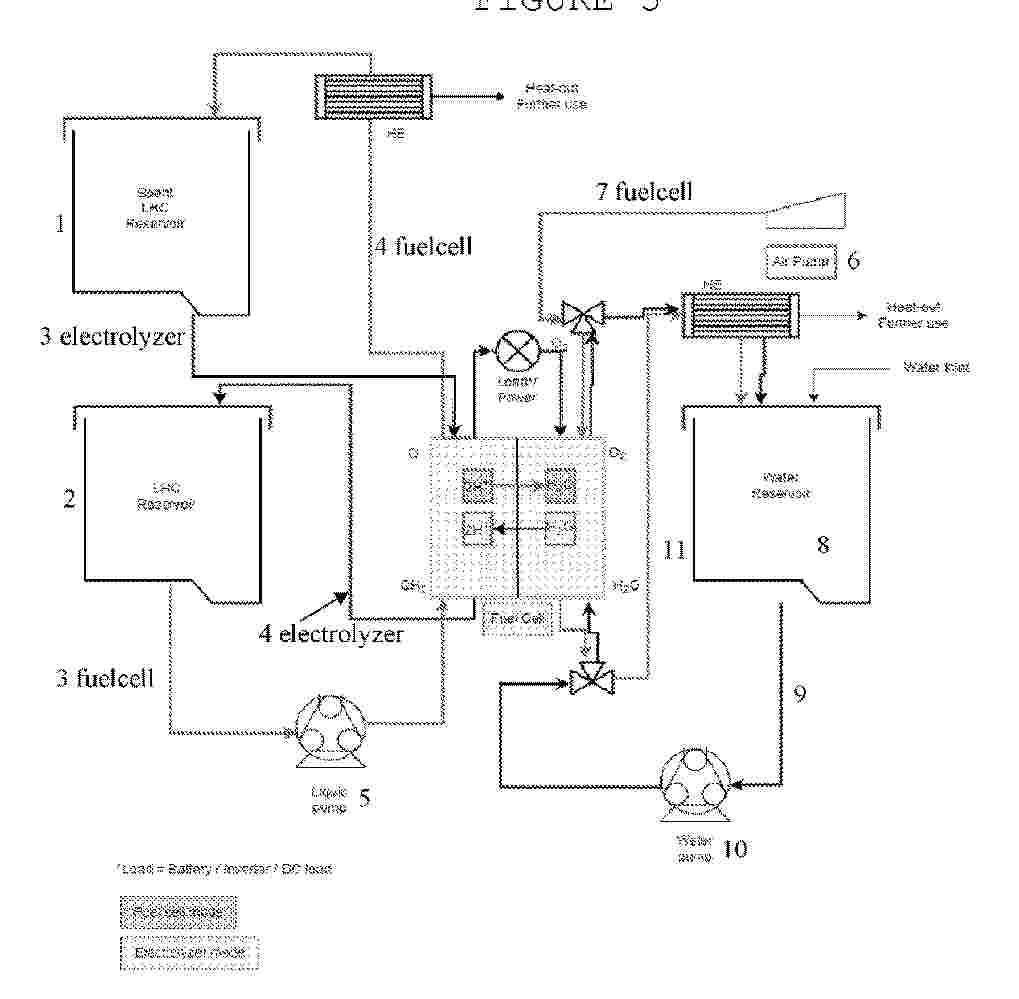
Resumen de: WO2026047670A1
The invention provides Pt 1-99- Ir1-99-Mo-99 aerogel useful as a bifunctional electrocatalyst in a unified regenerative fuel cell. Also provided is a unified regenerative fuel cell and a method of storing and producing energy with the aid of a liquid hydrogen carrier (LHC) as a fuel material in a unified regenerative fuel cell.
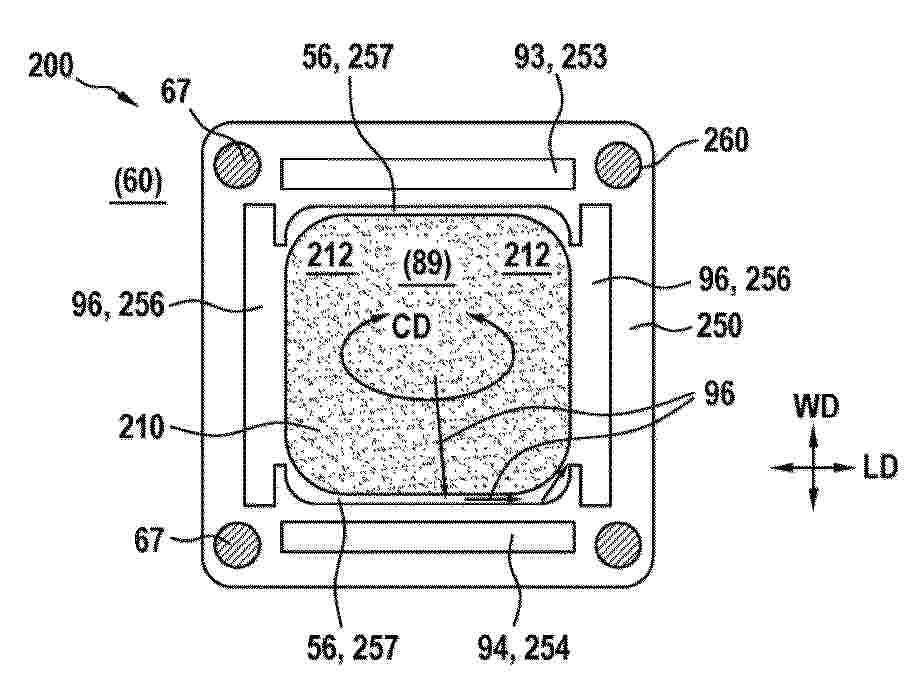
Resumen de: CN121013919A
The invention relates to a cell layer (200) for an electrolysis cell stack (60) of an electrolysis device group (51), in particular a water electrolysis device group (51), comprising a frame (250), in particular a cathode frame (250), in the main central region of which a transport structure (210) of the electrolysis cell stack (60) is accommodated, said frame (250) comprising at least one circumferentially open through-passage opening (256), in which the transport structure (210) of the electrolysis cell stack (60) is accommodated, the access through hole is used for electrolyzing an effluent product medium (56) of the cell stack (60); a fluid flow path (257) is arranged between the inner edge of the frame (250) and the outer edge of the transport structure (210) beside the product medium passage through-holes (256), the fluid flow path (257) leading to at least one of the product medium passage through-holes (256).
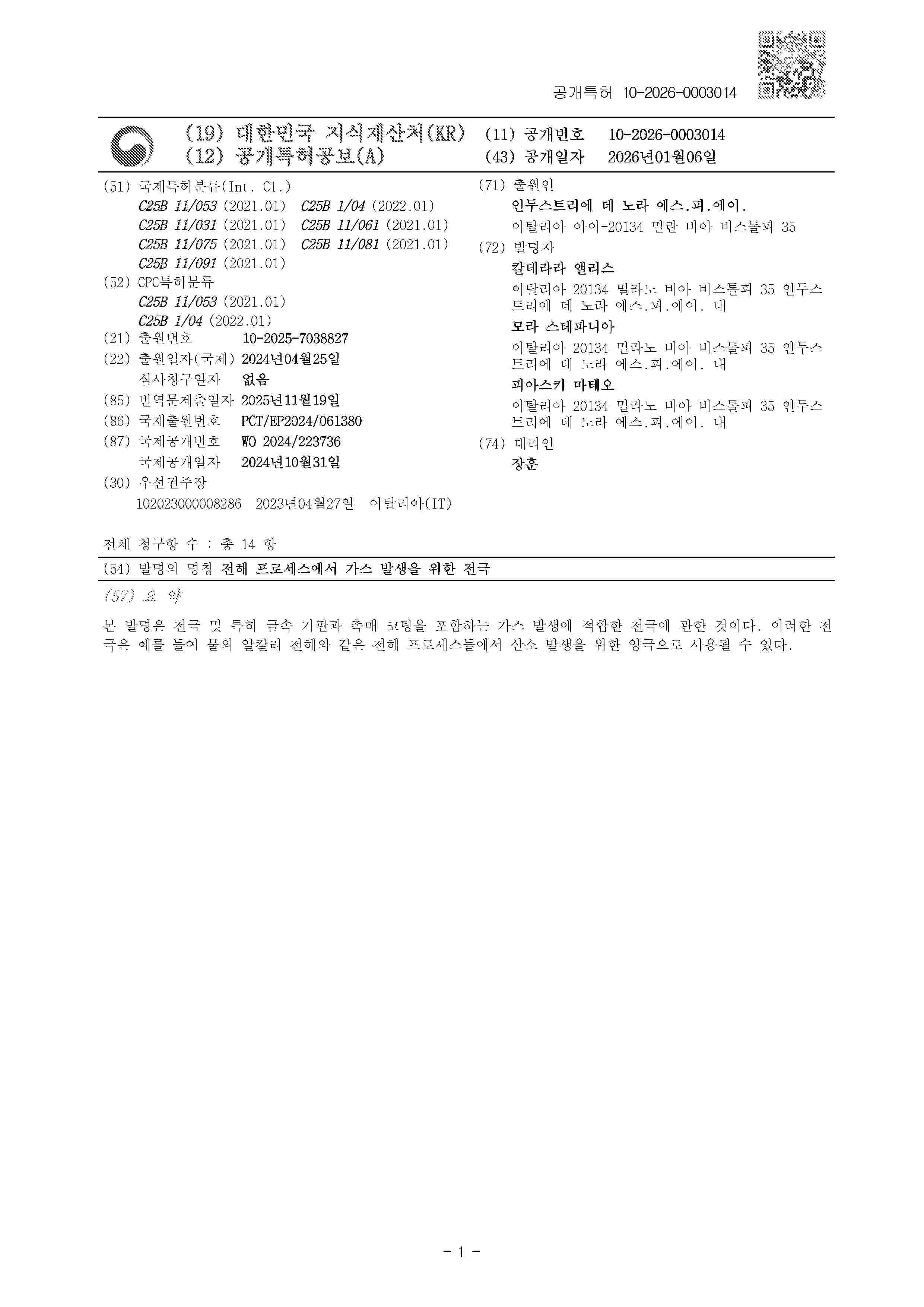
Resumen de: AU2024263112A1
The present invention relates to an electrode and in particular to an electrode suitable for gas evolution comprising a metal substrate and a catalytic coating. Such electrode can be used as an anode for the development of oxygen in electrolytic processes such as, for example, in the alkaline electrolysis of water.
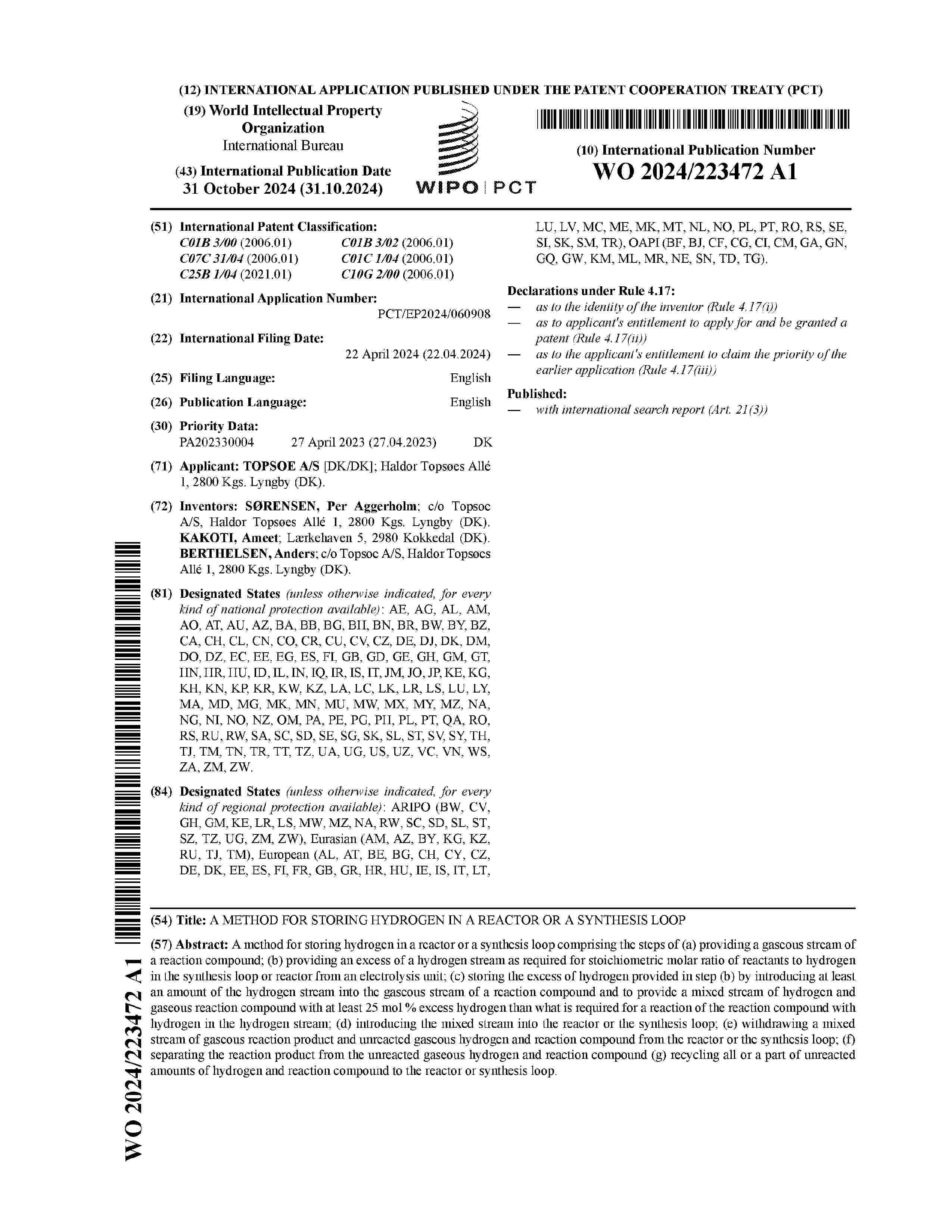
Nº publicación: EP4701983A1 04/03/2026
Solicitante:
TOPSOE AS [DK]
Topsoe A/S
Resumen de: WO2024223472A1
A method for storing hydrogen in a reactor or a synthesis loop comprising the steps of (a) providing a gaseous stream of a reaction compound; (b) providing an excess of a hydrogen stream as required for stoichiometric molar ratio of reactants to hydrogen in the synthesis loop or reactor from an electrolysis unit; (c) storing the excess of hydrogen provided in step (b) by introducing at least an amount of the hydrogen stream into the gaseous stream of a reaction compound and to provide a mixed stream of hydrogen and gaseous reaction compound with at least 25 mol % excess hydrogen than what is required for a reaction of the reaction compound with hydrogen in the hydrogen stream; (d) introducing the mixed stream into the reactor or the synthesis loop; (e) withdrawing a mixed stream of gaseous reaction product and unreacted gaseous hydrogen and reaction compound from the reactor or the synthesis loop; (f) separating the reaction product from the unreacted gaseous hydrogen and reaction compound (g) recycling all or a part of unreacted amounts of hydrogen and reaction compound to the reactor or synthesis loop.
 BOPI
BOPI
 Sede Electrónica